TL;DRThis is the first instalment of a road-trip series following two Czech travellers through Uganda, where only 3 of the planned 14 days were actually booked in advance – accommodation for the first and last night, plus a gorilla-trekking excursion. The trip kicks off with a drone drama at Cairo airport, which then gets confiscated at Entebbe airport. From there, the pair drive through the former capital Entebbe and on to Kampala, the current capital. The piece covers classic tourist situations in Uganda: locals repeatedly asking for extra cash, a confusing mix of shillings and dollars for payments, and life grinding to a halt during rainy season. The Guest House Via Via in Entebbe gets a recommendation as a safe, welcoming spot, with breakfast featuring banana pancakes. This is part one of the RoadTrip Uganda series, with the next instalment covering wildlife and the drive to a national park.
“You absolutely must plan Uganda, otherwise you won’t make it back from Africa.” My long-time friend was doing his best to prepare me for our African trip. But in the end, we failed miserably at planning anyway.
We booked accommodation for the first and last night, sorted out a car, and bought a gorilla trekking trip. That covered 3 out of 14 days. And honestly, that was more than usual for us. We were counting on mobile internet — though we had no idea how well it would work. Some people on Facebook had a very clear opinion about how our Uganda road trip would end: “You two will definitely die in Uganda.”
We had no idea what Uganda would actually look like. None whatsoever.
Not planning wasn’t exactly a free choice. Fresh information about Uganda is surprisingly hard to come by — it’s not exactly the most popular tourist destination in the world.
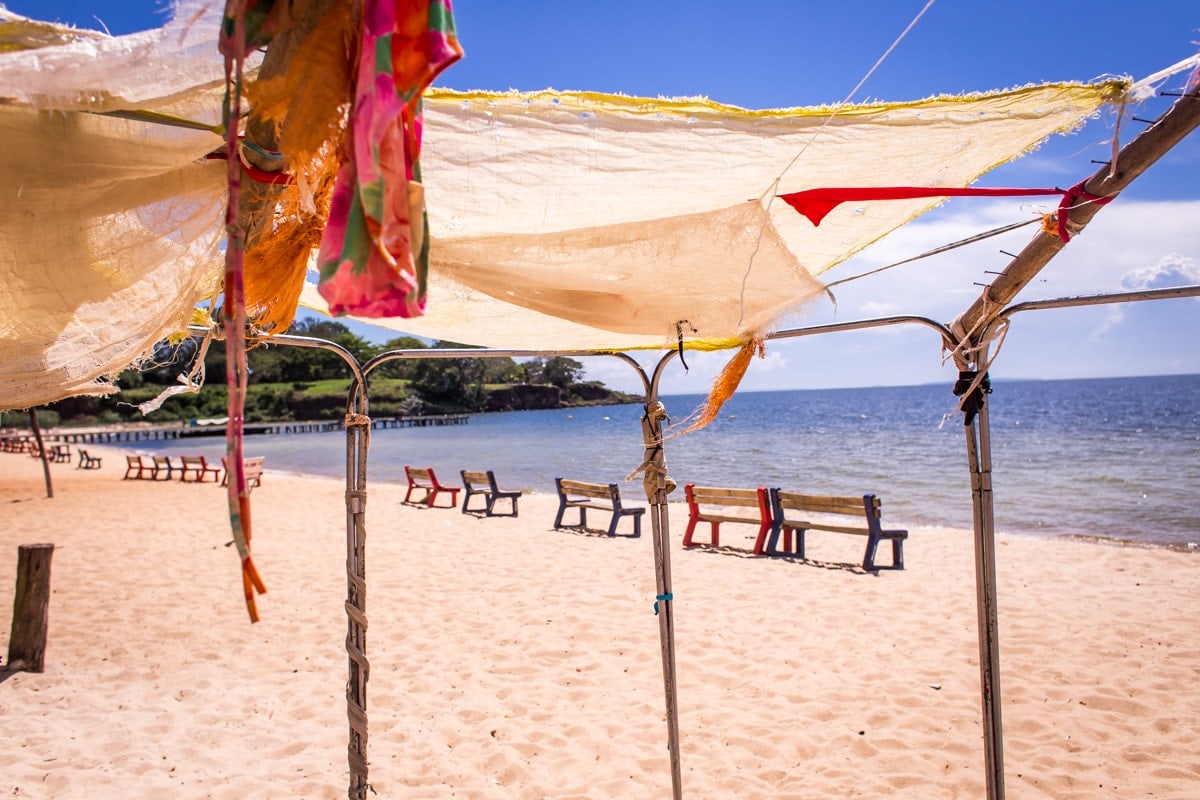
A composition from the plane over a local beach. We flew in on something like this.
Our conversation at the airport pretty much sums it up:
“Do you live in Uganda?”
“No, we’re going there on holiday.”
“Is Uganda good for tourists?”
“Well, we certainly hope so.”
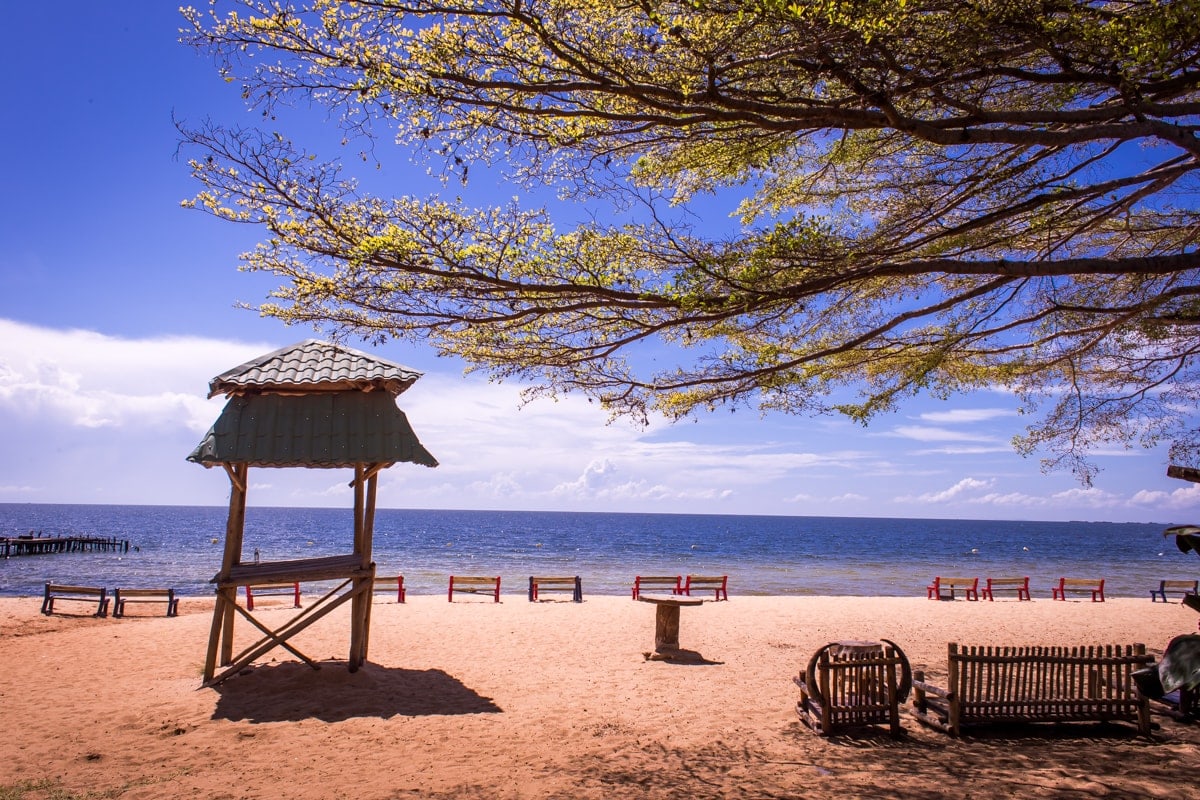
Lake Victoria. It looks idyllic, but if you wade in, you’ll probably catch some nasty disease. Even the locals don’t risk it.
Guidebooks are only available in English, and even getting hold of one proved a nightmare. We ordered from an online bookshop and waited three weeks, with them reassuring us every other day that it would arrive within three days. It never did. Eventually they admitted they didn’t have it in stock. Looking back, maybe they were just giving us a preview of how things work in Uganda.
You definitely don’t go to Uganda for a beach holiday
That’s when the nerves kicked in. A week before departure, we had nothing. The internet offered only scraps of information. Because when tourists do go to Uganda, they travel with a tour company or a private driver. Not on their own, camping in a tent, and certainly not without a proper plan. But that’s exactly what we did.
We nearly ended up in an Egyptian prison
The adrenaline hit before our feet even touched Ugandan soil — we nearly ended up in prison in Egypt. After landing in Cairo, we spotted a massive sign right before the security checkpoint: DRONES PROHIBITED. There was no time to think or discuss. We’d noticed the sign about a minute before our bag went through the scanner. I stood on the other side of the conveyor belt, watching our carry-on with the drone go through the tunnel again and again, silently reciting every prayer my grandmother had taught me as a child.
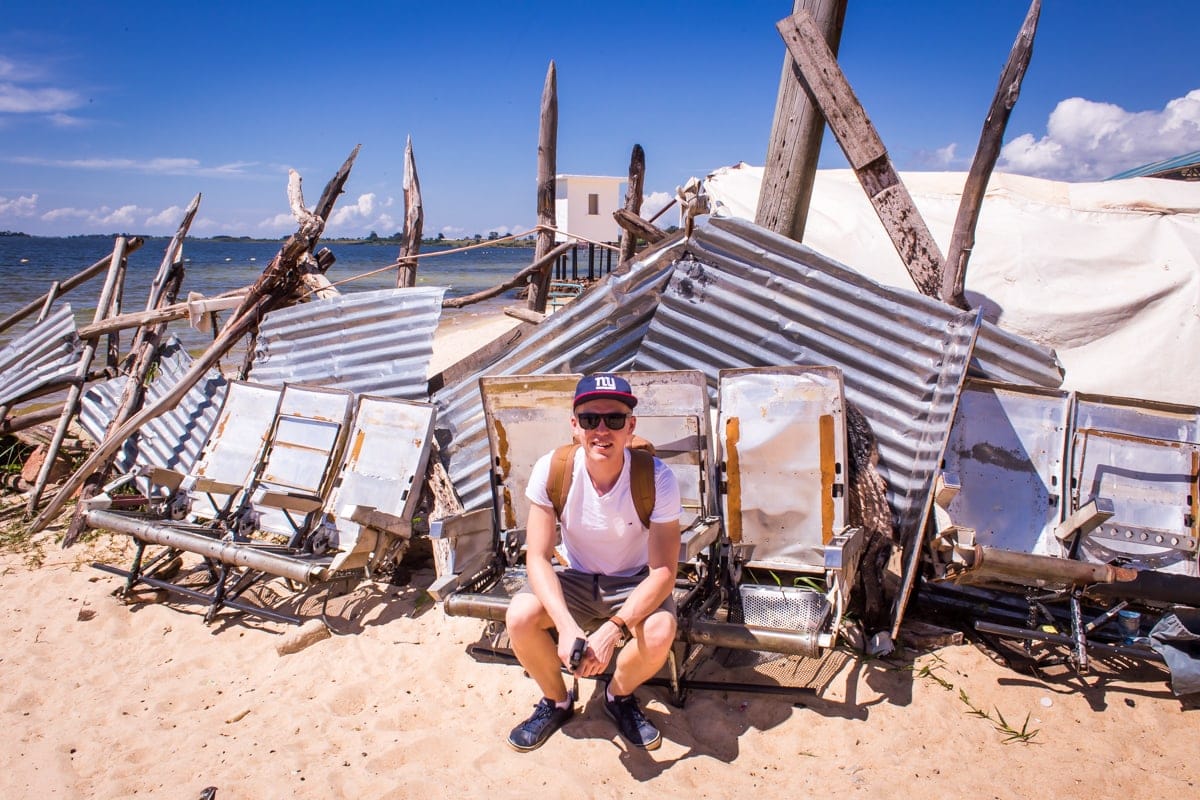
They have beaches, you just can’t swim at them. But there are planes on them.
“Open it,” said the Egyptian officer, pointing at something on the monitor. But it wasn’t the drone. What looked suspicious to her was the drone’s external battery. She examined it for a moment, then handed it back. We were free.
Africa’s greatest enemy: The drone
The relief vanished when we discovered there would be another round of scanning before boarding. We hadn’t found any mention of a drone ban on EgyptAir’s website.
“Apparently it’s illegal to even own a drone in Egypt. It says here they can just lock you up.”
“Fine, we’ll hand over the drone. Someone online says they just took their propellers.” Almost resigned to our fate, we stepped up to the second checkpoint. It passed through again.
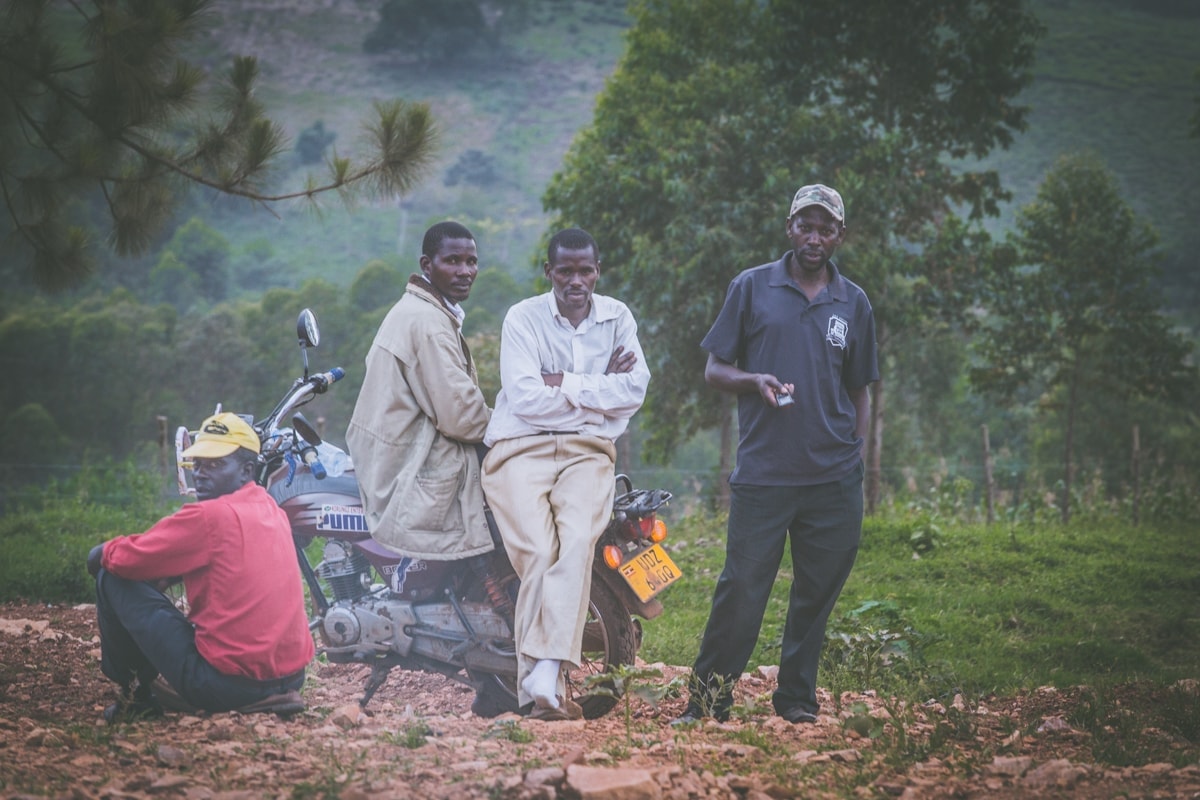
You can tell immediately that they don’t see white people very often
But they confiscated it anyway. Right at Entebbe airport. It turned out that when it comes to Uganda, you can’t find accurate drone information online either. The lovely Ugandans were incredibly apologetic. “We have a special room for drones here, so you can just pick it up later.” We later found out that if you slip them 200 dollars (roughly €185), they’ll let you walk away with it.
“We have about 54 tribes and they all have their own language. That’s why it’s good that English is the official language.” It’s four in the morning and we’re driving through dusty streets in a car that’s at least twenty years old. Our lift from Guest House Via Via is passionately telling us about Ugandan culture, describing the customs of individual tribes.
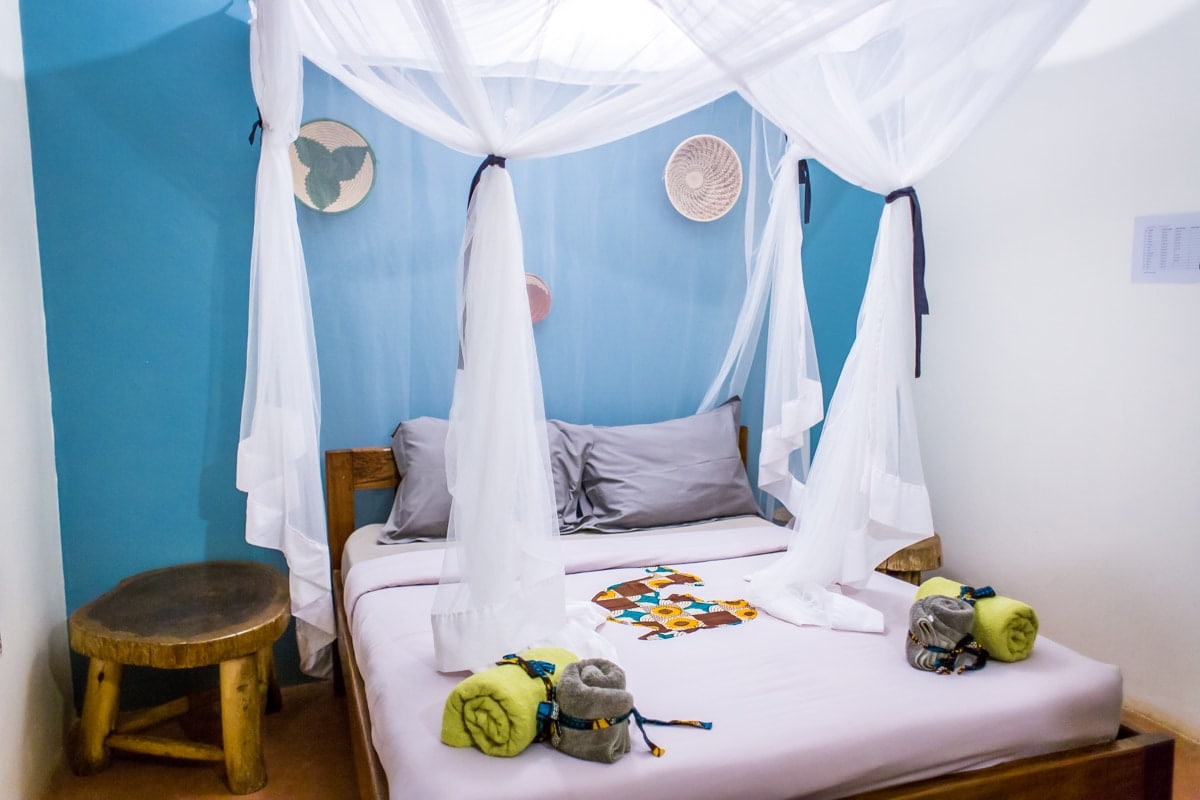
A mosquito net isn’t just decoration. Uganda has one of the highest malaria risks in the world.
“And then there are tribes that practise circumcision. On women too. And that’s really horrific,” he comments matter-of-factly before moving on, while the road keeps getting worse and we’re hoping we’ll arrive soon. Then he stops by a concrete wall topped with barbed wire. We see the sign for our accommodation and an enormous gate slowly swinging open.
“What’s the barbed wire for? Is it to keep animals out?” Lukáš ventures, though we both already know the answer.
“No. It’s for people. Even this neighbourhood has its problems.”
Guest House Via Via is a safe haven. Paradise behind a fence topped with barbed wire.
To Ugandans, I’m just a walking dollar sign
We woke up to our first Ugandan morning in the former capital, Entebbe. I’m sipping coffee at the guest house, chewing on banana pancakes piled high with exotic fruit. It feels like paradise. Everyone is lovely to us, and I start saying they’re like the Canadians of Africa. But that only lasts until I realise that to them, we’re nothing more than walking dollar signs.
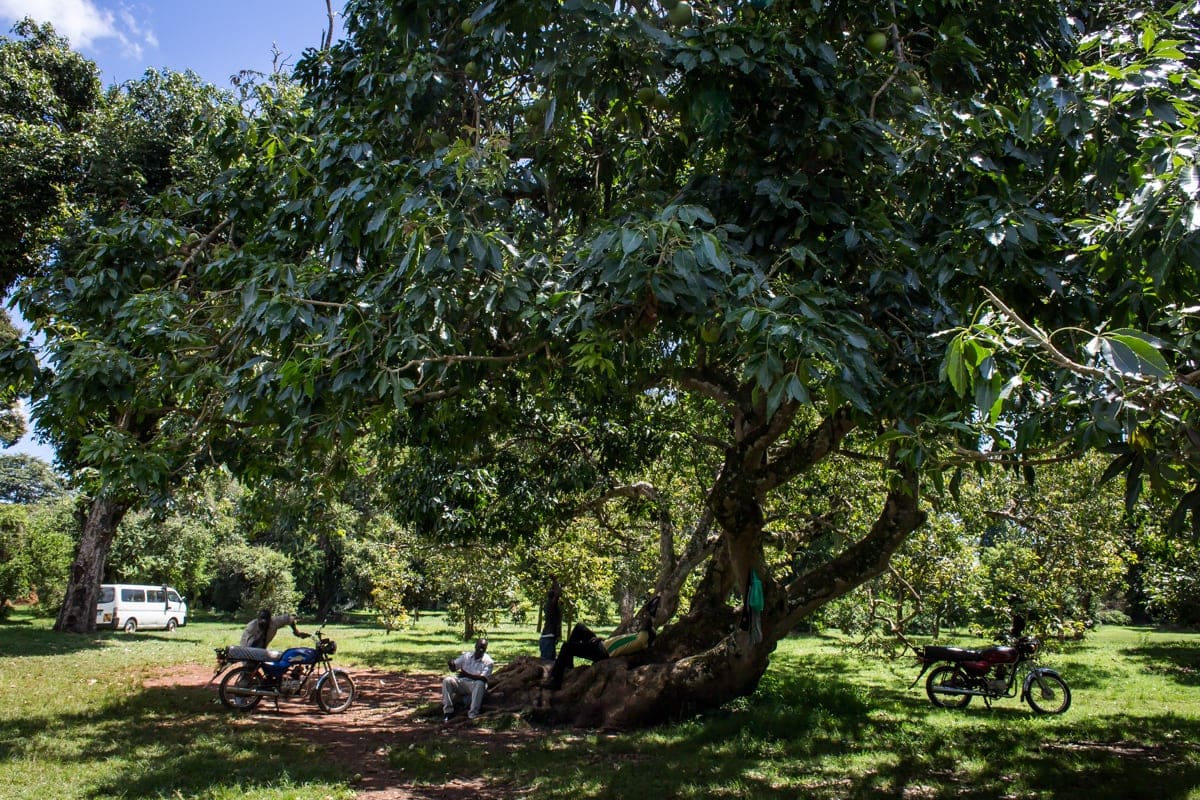
The Botanical Garden in Entebbe.They emerge from a filthy shack — wearing their finest clothes
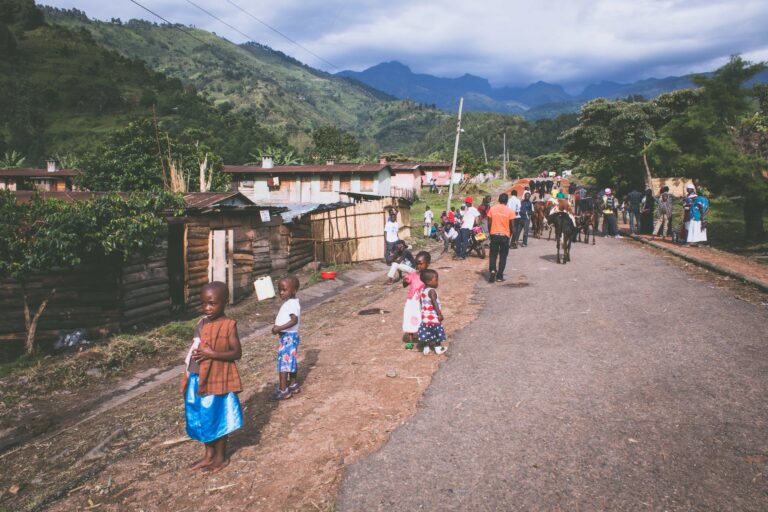
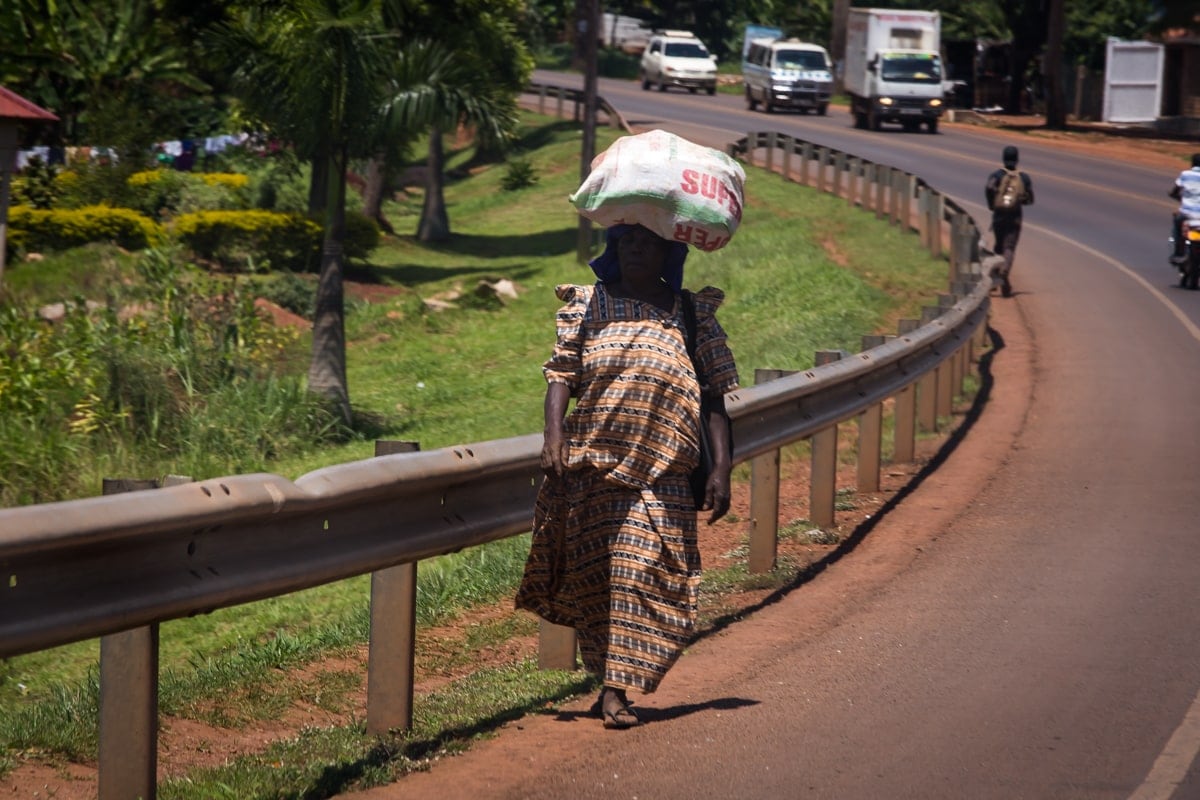
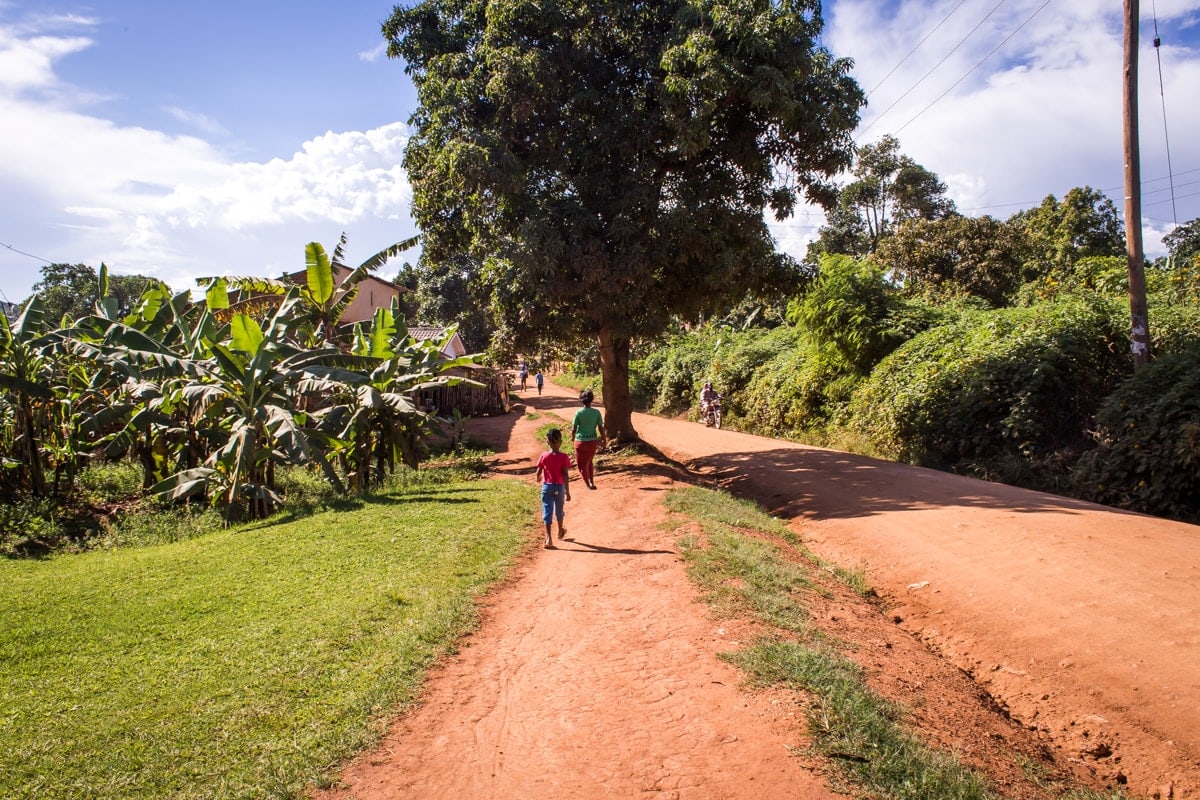
Our car isn’t arriving until the next day, so we set off exploring on foot. Children wave at us, adults stare or wave too, as if they’ve never seen white skin before. Women here carry absolutely everything on their heads — straw, petrol cans, even logs.
You can carry absolutely anything on your head
Men do it too, but it’s the women who fascinate us more. No matter how rundown the house they step out of, they’re always elegantly dressed in colourful clothes with flawless hairdos. Standing in front of a dirty straw hut, these apparitions look like walking oxymorons.
Ugandan women are the most elegant women I’ve ever met“I’m a volunteer guide here. For free. But now pay up.”
At the local botanical garden, we paid admission and a camera fee, already picturing a romantic stroll through the jungle surrounded by monkeys. But the moment we handed over the money, we noticed a Ugandan man standing next to us, telling us in his African-accented English that the tree ahead was a mango tree.
Avoiding monkeys in Uganda is impossible
“I work here as a volunteer guide. I don’t get paid because I’m a university student. I want to become a ranger.”
Neither Lukáš nor I are great at saying no to people, so we let him tell us about flowers, turning our romantic monkey walk into a botany lecture.
“And now it’s time for you to pay me.” Lukáš stared at him, then handed over 10,000 Ugandan shillings (about €2.50).
“That’s not enough. I normally get 10,000 per person.”
Learning to say no
People always try to get more money out of you. Sometimes they’re upfront about asking, but usually they venture into emotionally manipulative territory. So we’d spend a few minutes each day listening to how poor they are, or our guide-ranger would ring his wife in English right in front of us, saying they didn’t have enough money for Christmas. We might not have twigged he was angling for cash — if he hadn’t called her in Swahili just ten minutes earlier. Why would he suddenly switch to English?
Other times they’ll invent road fees for the national park, or try to convince you that camping costs $20 (€18.50) per person when their website clearly says $10 (€9). We usually cough up the extra, but gradually our funds start running out. Uganda is paradoxically quite expensive for tourists. So we learn to say no. The Ugandans take it in their stride. “$10 per person works too.”
“I’m a volunteer guide for free,” and then he asked for money.
You won’t forget you’re in a developing country
Time works differently here. Buses leave when they’re full, so you might wait an hour — or an entire day. When we ask the receptionist what time the bar closes, she answers “Later.” At first we think it’s a joke, but “later” is a perfectly standard unit of time here. We don’t know how many hours that is, or whether it’s even a specific number, but supermarkets sometimes have it on their signs too: “Open until later.”
We’d reminisce about Via Via’s breakfast for the next 2 weeks. Most places have no fridges, it’s not tourist season, so they have nothing. And if they do, it’s been sitting there for a while.The bar is open until later
Numbers seem to be a genuine Ugandan struggle. Entry fees are sometimes listed half in Ugandan shillings and half in dollars. Admission for people is in dollars, but the car fee is in shillings. If you want to convert it all into one currency, it takes them an awfully long time. Subtracting 13,000 shillings from 20,000 is a job for a calculator. Not occasionally — always.
For some reason, they also refuse US dollars issued before 2011. They get a worse exchange rate in shillings for them. Why? We never found out.
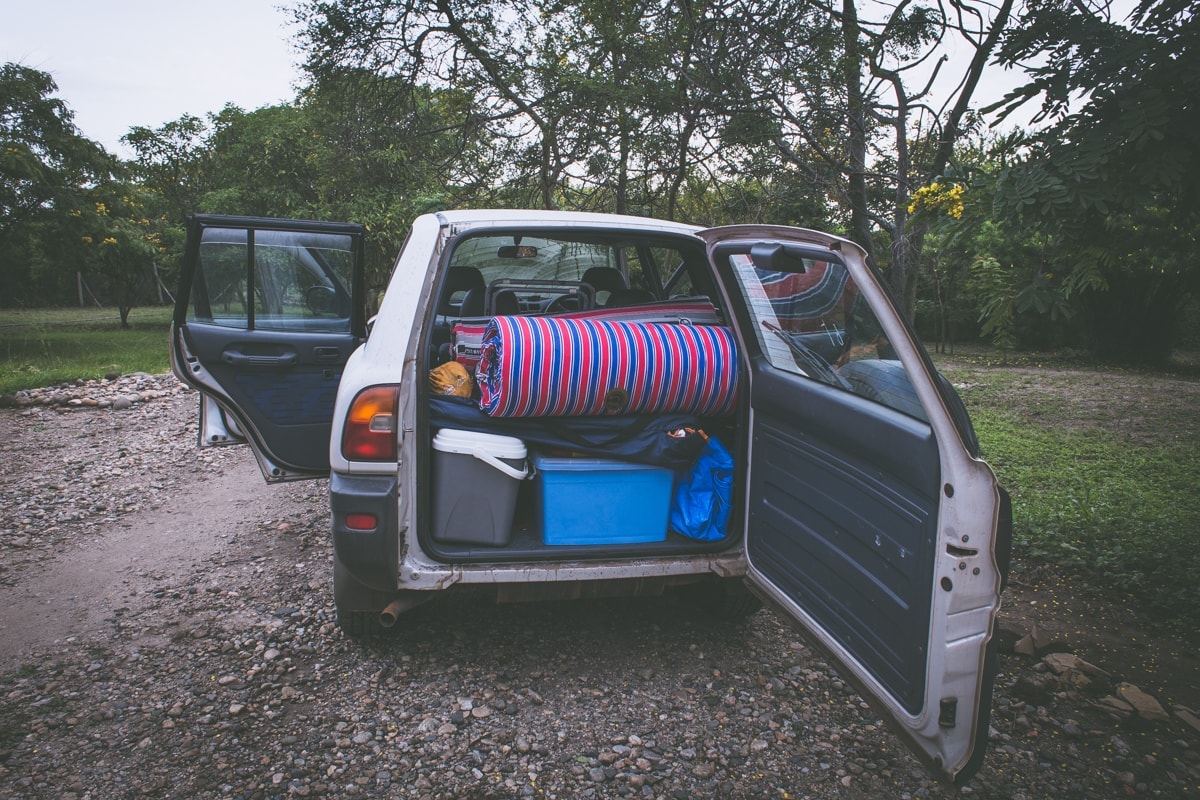
We hired a car with a full camping setup
In the morning, a Ugandan man delivered our car. Ugandans are generally not the best at organisation, but this particular guy was perhaps the most scatterbrained Ugandan we encountered on the entire trip. He had to come back to us several times. First he forgot to give us a phone, which he then sent over with another local. “I’ve just noticed he forgot to buy you a SIM card, so you’ll have to get one yourselves.” If you’re heading to Uganda, consider getting an eSIM from Holafly before you leave — it’ll save you the hassle.
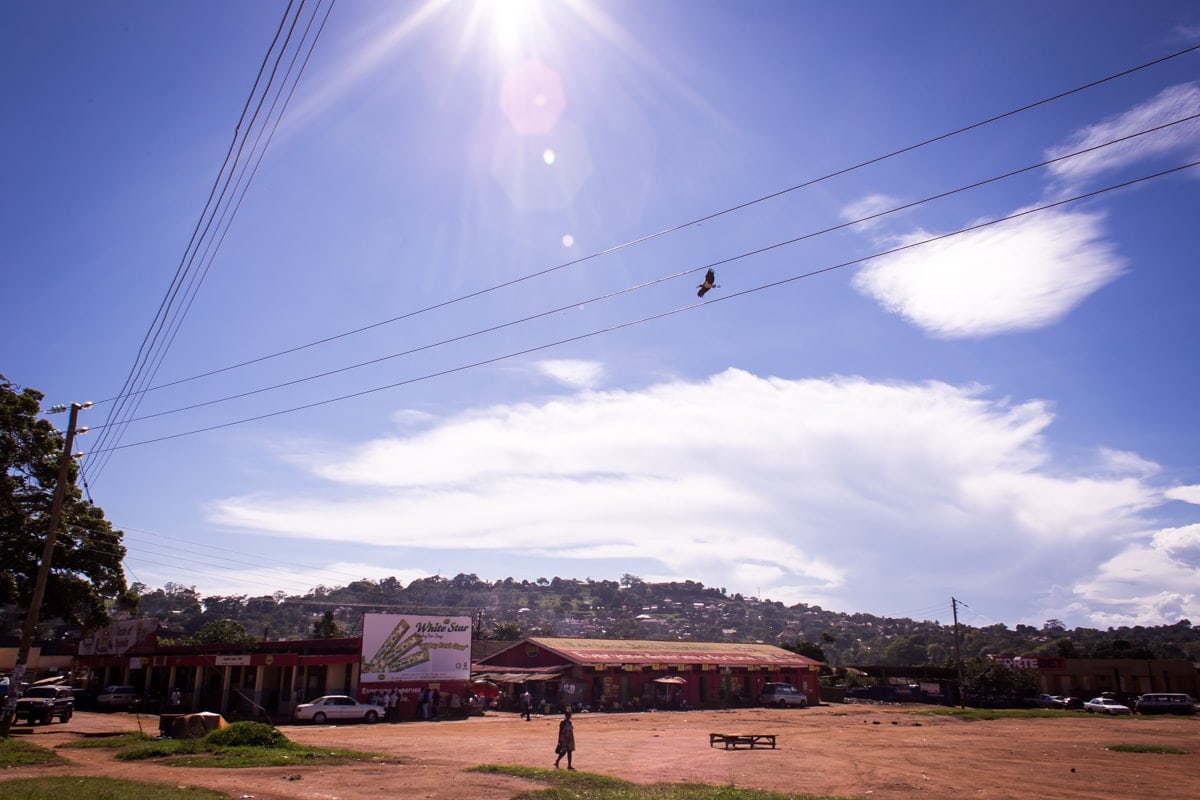
At first Entebbe struck us as a pretty dirty city. But after 14 days, we considered it a paradise of cleanliness.
But it didn’t end there. Four hours later, we’re chasing our forgetful friend through the streets of Entebbe again, trying to correctly interpret his African-accented English and hoping we’ll actually manage to leave today. He’d forgotten to hand over the most important thing of all — our gorilla trekking permit.
Why Ugandans are afraid of rain
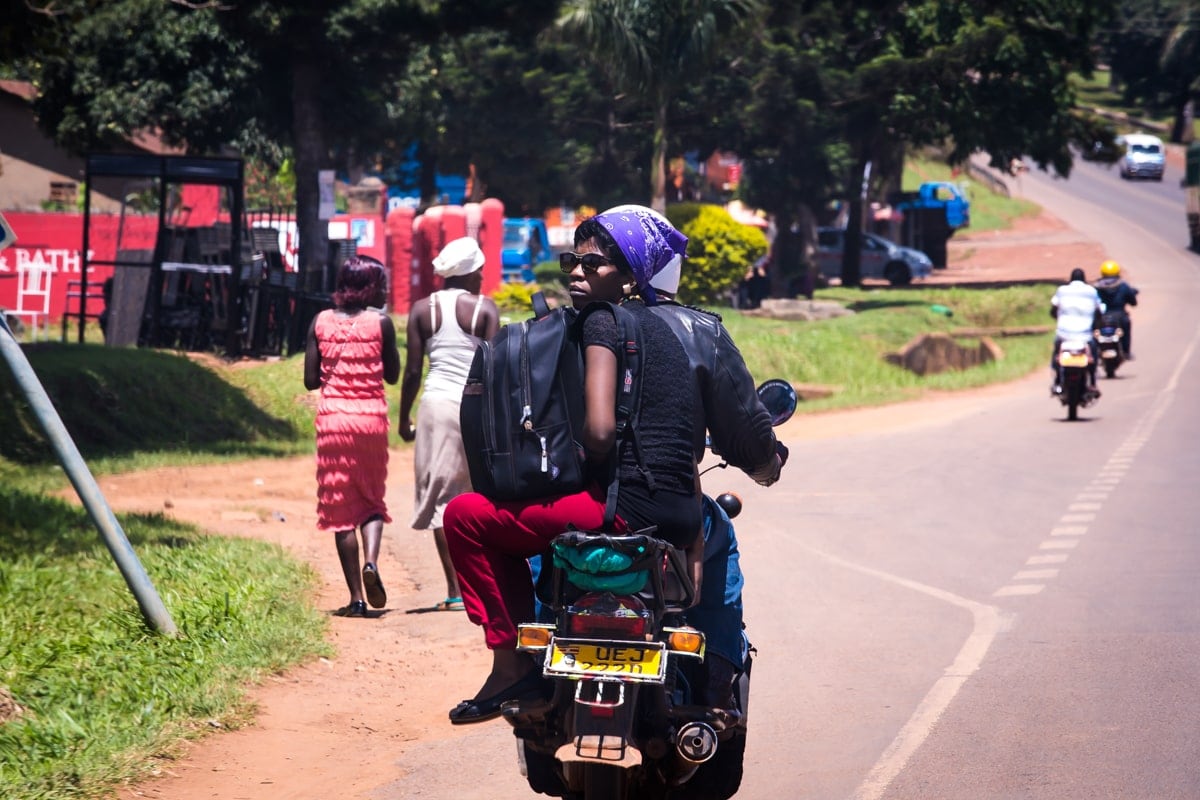
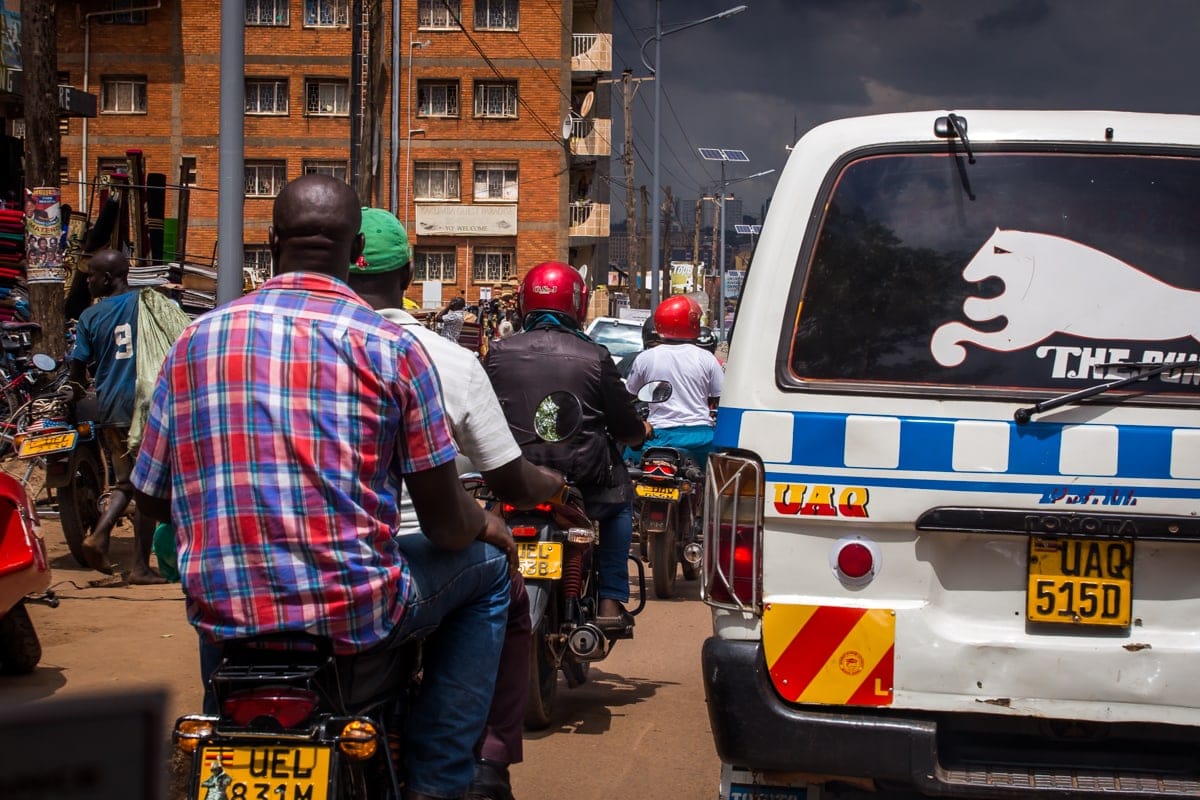
When we finally leave Entebbe, it’s noon. To reach our destination, we have to drive through the capital, Kampala. It’s impossible to tell whether you’ve entered the city or not — buildings stretch on without a single gap, and the traffic just gets denser by the mile. Signs? Forget about it. Two original lanes morph into five through sheer Ugandan creativity, with taxis and boda bodas (motorcycle taxis) honking all around us. Lukáš’s knuckles are white from gripping the steering wheel. African roads are nothing like European or American ones. Oh, and they drive on the left here. Then the rain arrives.
This is roughly what I imagined Uganda would look like, but it turned out my expectations were as limited as always
At first we’re delighted. With the first drops, the streets empty. When it rains in Uganda, people do absolutely nothing — except sprint for the nearest dry spot. Life comes to a standstill. The boda bodas vanish and we can drive freely.
Kampala. A place where two lanes are merely a suggestion.
Soon enough we understand why. We stop celebrating. Within 10 minutes the road is completely flooded and it feels like a biblical deluge has hit. The road beneath the water takes on entirely new shapes, and eventually we have to stop too. Getting caught in a downpour at the worst possible moment would become a regular feature of our trip. But we were glad for the rainy season. An hour-long shower once every four days is perfectly survivable, and in return, nature rewards you with lush greenery. Stunning, vivid green that in the dry season quickly fades to a barren yellow landscape.
📶 DATA FOR YOUR TRIP · Uganda
Mobile internet on your holiday — with an eSIM
⚡ QR activation in 2 min · 📱 no physical SIM · 🌍 103 countries · from 9 €
Search for flights on Kayak. It’s our favorite search engine because it scans the websites of all airlines and always finds the cheapest connection.
Book Your Accommodation Smartly
The best experiences we’ve had when looking for accommodation (from Alaska to Morocco) are with Booking.com, where hotels, apartments, and entire houses are usually the cheapest and most widely available.
Search with the DiscoverCars comparison engine — it compares prices from dozens of local and international rental companies, and most bookings come with free cancellation.
✓ DiscoverCars comparison✓ free cancellation on most bookings✓ no hidden fees
Don’t Forget Travel Insurance
Good travel insurance will protect you against illness, accidents, theft, or flight cancellations. We’ve had a few hospital visits abroad, so we know how important it is to have proper insurance arranged.
Where we insure ourselves: SafetyWing (simple monthly subscription) and TrueTraveller (for extra-long trips).
Find the Best Experiences
Get Your Guide is a huge online marketplace where you can book guided walks, trips, skip-the-line tickets, tours, and much more. We always find some extra fun there!
Manila is no longer merely a stopover, but Asia’s rising culinary star, with a restored historic centre that may pleasantly surprise you. Two to three days are enough to explore its highlights.
Chengdu, China: 22 tips from giant pandas (book 14 days ahead) and teahouses in People's Park to the Leshan Buddha and Mount Emei, plus visa advice and vegetarian dining.
Where to stay in Taipei? 18 selected hotels by district from hostels to luxury palaces, pricing guide, traps like windowless rooms, service charges, and illegal Airbnb.








 🚗 Car rental on the roadVerified rental cars in Uganda