TL;DRDrumheller sits in Alberta, roughly 135 kilometres (about 90 minutes’ drive) northeast of Calgary, right in the heart of Canada’s badlands. The big draw is the Royal Tyrrell Museum of Palaeontology, one of the world’s top ten dinosaur museums, with more than 40 complete skeletons and entry around 25 CAD. Give the museum at least four hours — you can do the whole trip from Calgary in a day, but if you want to add the UNESCO-listed Dinosaur Provincial Park near Brooks, plan on two days instead. Beyond the museum, don’t miss the sandstone formations of the Drumheller Hoodoos, the Horseshoe Canyon viewpoint, the World’s Largest Dinosaur statue, and the Last Chance Saloon in the tiny village of Wayne. May to September is the best time to come, with late spring and early autumn bringing milder weather and smaller crowds than the busy summer months. You’ll need your own or a rented car to get around.
Alberta isn’t just about majestic Rocky Mountains and endless prairies. Just an hour and a half’s drive east of Calgary lies a place that looks like it doesn’t quite belong on this planet. From the main road, the earth suddenly opens up before you and you plunge into a deep canyon filled with bizarre sandstone towers, striped cliffs, and parched clay. Drumheller Canada is the dinosaur capital of the country and the heart of the Canadian badlands.
Welcome to the Canadian badlands — a place where dinosaurs once roamed and where you’ll now find one of the ten most important palaeontology museums in the world. Drumheller is an absolute must if you’re spending time in Calgary or planning a road trip through Alberta, and you really shouldn’t skip it. Especially if you’re travelling with kids, or if there’s still a part of you that loves Jurassic Park. 😁
So what’s in store? We’ll walk you through the Royal Tyrrell Museum — from dinosaur skeletons to real scientists working behind glass — hike out to the hoodoos, stop by a pub at the end of the world, and I’ll tell you where to grab the best Alberta beef burger. Let’s get into it.
Photo: Ymblanter / CC BY-SA 4.0 / Wikimedia Commons
TL;DR
If you’re packing your bags right now and just need a quick overview, here are the key points for your visit:
Location: Drumheller is in the province of Alberta, roughly an hour and a half’s drive northeast of Calgary.
Main attraction: Royal Tyrrell Museum of Palaeontology is one of the ten largest and best dinosaur museums in the world. Allow at least four hours for your visit.
Landscape: The entire area sits in what’s known as the badlands — an arid, erosion-carved landscape full of canyons and rock formations called hoodoos.
Time needed: From Calgary, it’s easily doable as a full-day trip. But if you also want to see the more distant Dinosaur Provincial Park (a UNESCO World Heritage Site), you’ll need two days.
Best time to go: The weather is best from May to September, but be prepared for the museum being extremely crowded in summer.
Getting around: You absolutely need a rental car — public transport in this part of Canada is very limited.
Before we dive into the specific sights, let’s set the scene. Drumheller is a small, slightly quirky town in southeastern Alberta with a permanent population of roughly 8,000 people. It was named after pioneer Sam Drumheller, who bought land here in the early twentieth century and launched a coal mining operation. Nobody cares much about coal anymore — these days the whole town lives and breathes tourism and dinosaurs, quite literally. They’re on the streets, on signs, outside every other shop — genuinely everywhere. 😅
Climate-wise, we’re talking desert and semi-desert conditions, which means summers are hot and dry. If you visit in July or August, expect the sun in the badlands to be absolutely relentless, with temperatures regularly climbing to around 30°C. This is also peak tourist season, when the Royal Tyrrell Museum is packed to the rafters. The ideal time to visit is late spring (May–June) or early autumn (September), when the canyon colours are stunning, the crowds thin out, and the weather is pleasant for hiking. In winter, the museum is still open and you’ll practically have it to yourself, but the outdoor viewpoints and hoodoos are often buried under snow and ice, which rather takes away from the parched-landscape experience.
How to get to Drumheller
As I mentioned, getting around Canada without a car is pretty tough at the best of times, and for Drumheller that goes double. From central Calgary it’s roughly 135 kilometres and the drive takes a good hour and a half. The easiest route is to head north out of Calgary and pick up Highway 9 East, which takes you right to the edge of the famous canyon.
The drive is dead straightforward and, honestly, for the first hour you won’t see anything but endless fields and cattle ranches. Which makes the moment the highway suddenly drops into the Red Deer River valley all the more jaw-dropping — you’re suddenly in a completely different world. If you’re flying into Calgary from the UK, you’ll want to hire a car at the airport. We’ve been using DiscoverCars.com for years — it compares all the major hire companies in one place, making it easy to find the best deal. Airlines like Air Transat, WestJet, and British Airways operate routes from London to Calgary, so it’s worth checking flight comparison sites well in advance.
Where to stay and how much it costs
Most visitors treat Drumheller as a day trip from Calgary, which makes perfect logistical sense — Calgary has a much wider selection of nice accommodation and better restaurants. But if you want to experience the real atmosphere of the badlands without the tourist crowds, catching an early morning or a sunset, it’s worth staying at least one night.
The town has a very specific, slightly retro vibe. Don’t expect any super-luxurious resorts — think classic North American motels and smaller hotels. Prices for accommodation in Drumheller typically run around €70–110 per night for two people, though rates can jump higher during peak summer season.
If you do decide to overnight in town, among the nicer and well-reviewed options is the SureStay Plus Hotel by Best Western, which includes a solid breakfast and an indoor pool — a welcome treat after a full day of walking in the heat. Another pleasant choice is the Heartwood Inn, a cosy family-run guesthouse with a more personal touch than the big chains.
Your trip budget will mainly consist of fuel, a possible car hire, and entry fees. Alberta certainly isn’t a cheap destination, but the museum and parks are absolutely worth every penny. To compare prices and book in advance, we always start with Booking.com.
Drumheller: 10 best things to see and do
Right, let’s get to the good stuff. I’ve picked ten spots that beautifully combine prehistory, Alberta’s more recent industrial history, and truly unique natural wonders. I’d recommend plotting them logically along your route so you’re not doubling back unnecessarily.
1. Royal Tyrrell Museum of Palaeontology: the main reason to visit
Photo: Chris Woodrich / CC BY-SA 4.0 / Wikimedia Commons
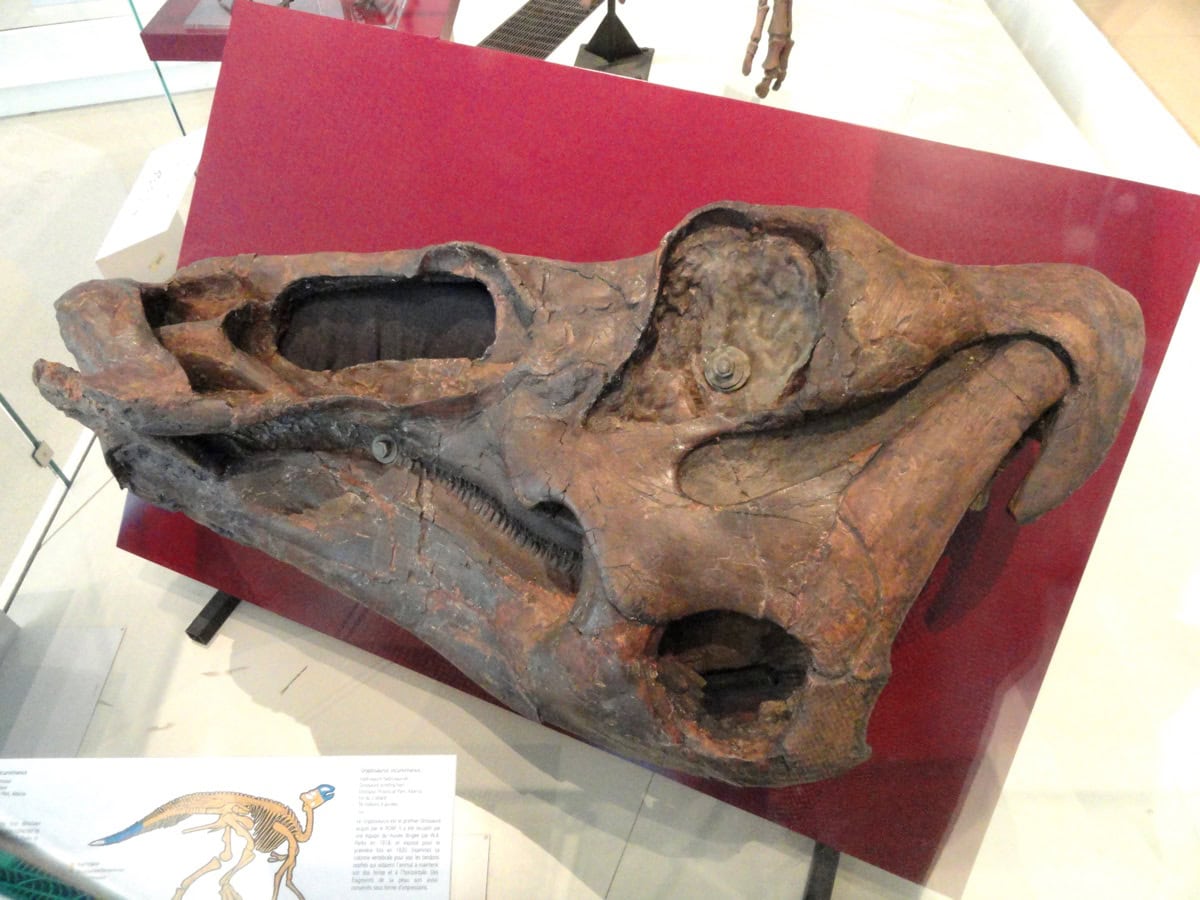
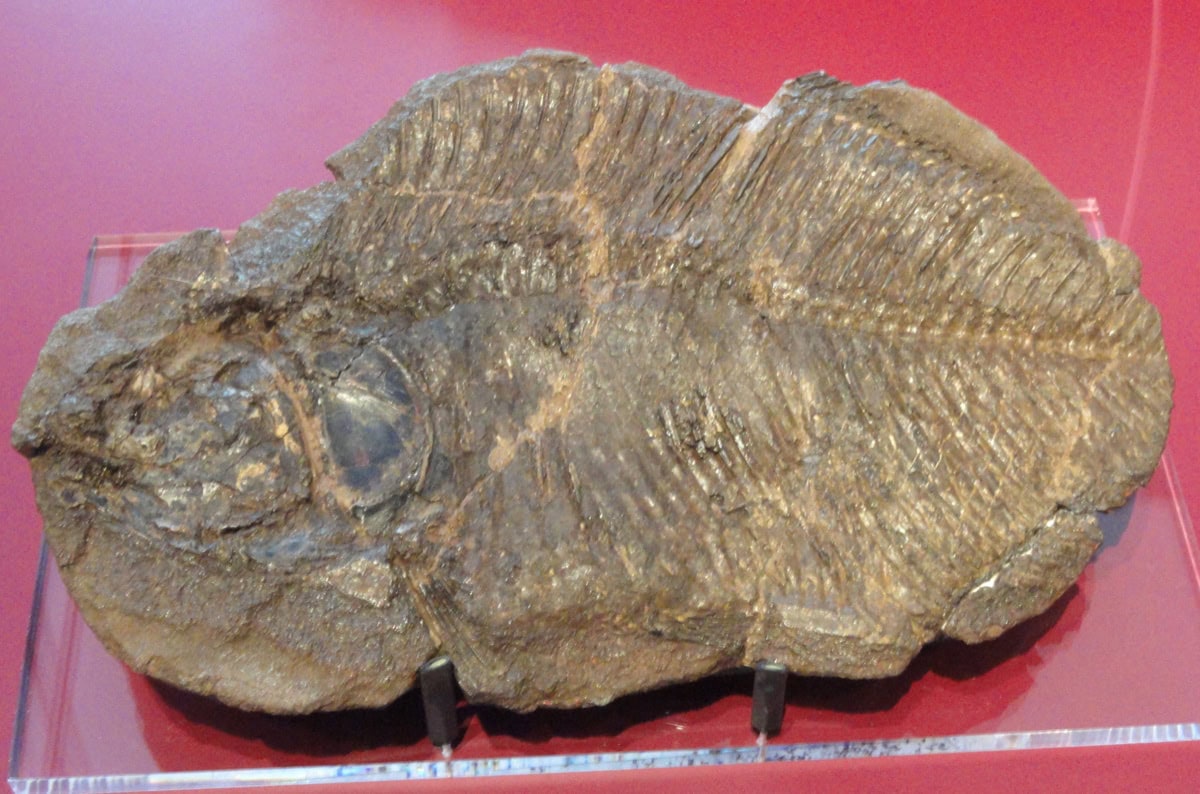
This is the absolute centrepiece of the entire valley and probably the main reason you’ve come to Drumheller in the first place. The Royal Tyrrell Museum isn’t just some provincial bone display — it’s a massive research centre and one of the finest museums of its kind on the planet. Most visitors arrive planning to spend two hours and end up staying half the day. ☺️
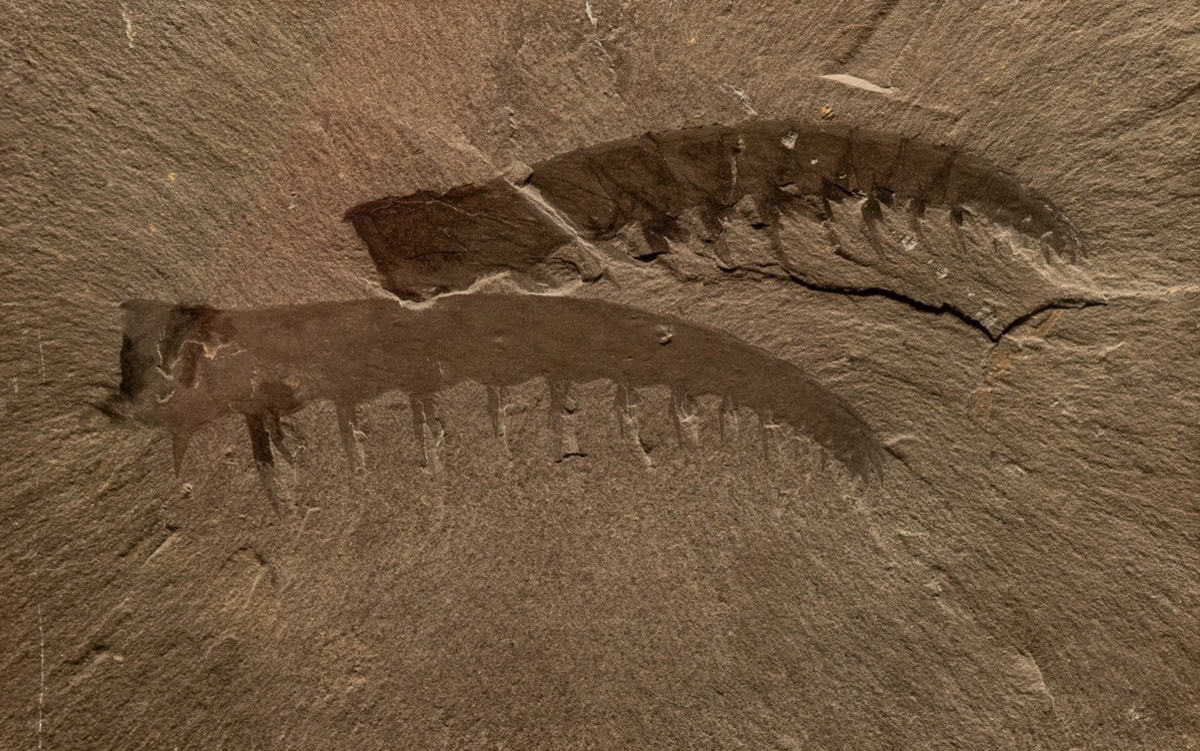
You’ll find over 40 complete dinosaur skeletons here, and we’re talking genuine fossils, not plastic replicas. The entire exhibition is laid out chronologically, so you walk through millions of years of Earth’s history — from the earliest microorganisms right through to the Ice Age. The section called Dinosaur Hall is absolutely breathtaking, with a towering Tyrannosaurus rex skeleton and massive herbivores looming above you.
Admission is around 25 CAD (roughly €17) for an adult, and in summer they’re open daily from nine in the morning until nine at night. I highly recommend arriving right when it opens so you get at least the main halls to yourself before the school groups and tour buses descend.
2. Drumheller Hoodoos: iconic sandstone pillars
Photo: Chris Woodrich / CC BY-SA 4.0 / Wikimedia Commons
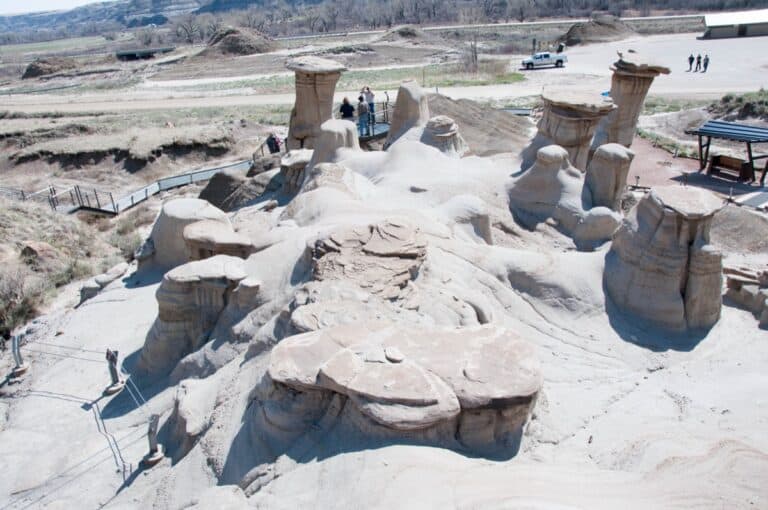
Head about fifteen minutes southeast of the town centre along Highway 10 and you’ll reach one of Alberta’s most iconic natural formations. Hoodoos are peculiar stone towers — or mushroom-shaped pillars — formed over millions of years as softer sandstone eroded away, leaving a cap of harder rock perched on top like a hat. They look genuinely otherworldly, as if someone deliberately arranged them across the landscape.
I do need to add one small, honest caveat though. Photos in tourist brochures often make it look like a vast rock city similar to Bryce Canyon in the USA. In reality, it’s a fairly compact fenced-off area with a few dozen of these formations. It’s definitely a gorgeous spot for photos, especially in the late-afternoon sun, but your visit will take twenty minutes at most. Entry is a token 5 CAD (about €3.50) and you park right by the road.
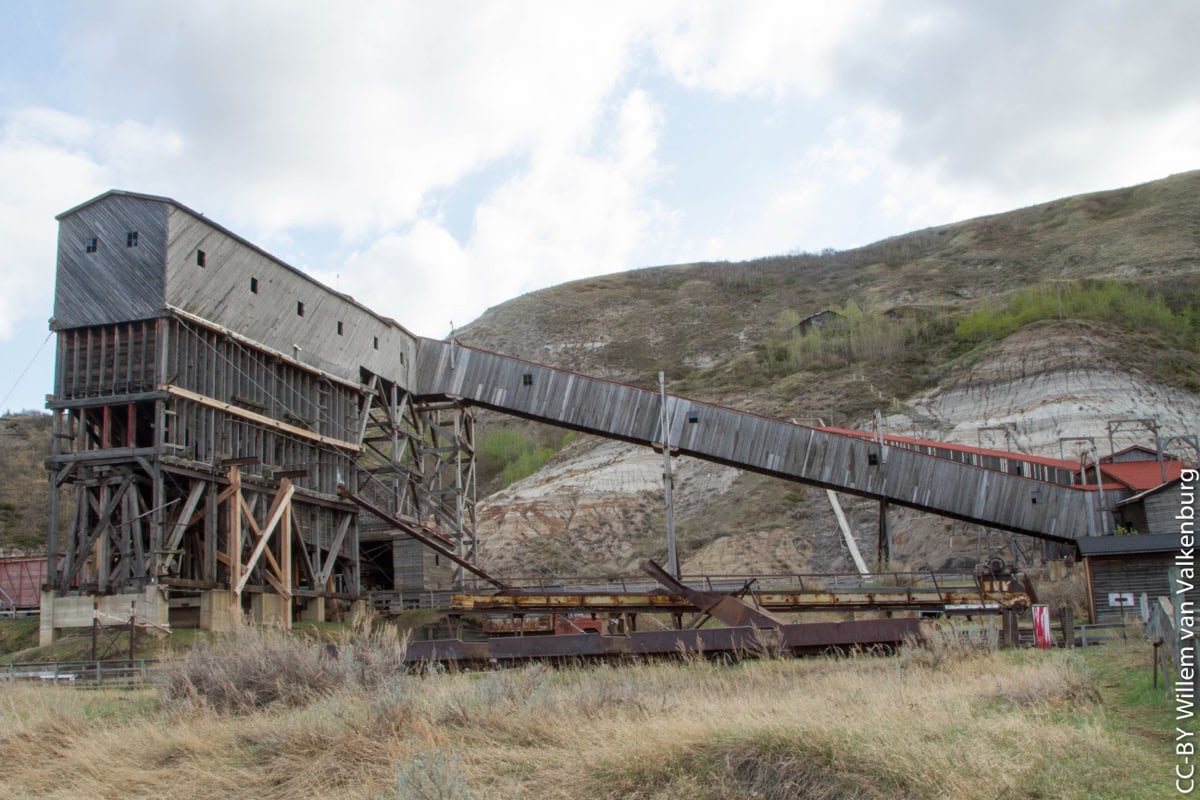
3. Atlas Coal Mine: a journey into industrial history
Photo: Willem van Valkenburg from Delft, Netherlands / CC BY 2.0 / Wikimedia Commons
About 30 kilometres from the town centre you’ll find a site that offers a brilliant contrast to all the prehistoric history. The Atlas Coal Mine is a huge open-air industrial museum capturing the era when coal was king in this valley and life was incredibly tough. Alberta as we know it today essentially grew up on mining, and this is a fascinating window into that past.
The highlight of the entire site is the preserved wooden tipple — the last of its kind in the whole country. You can wander the grounds on your own, but I’d absolutely recommend paying extra for a guided tour. The guides often dress in period costume and tell jaw-dropping stories about how miners lived, the working conditions they endured, and how frequently cave-ins occurred. It’s a slightly chilling but incredibly compelling experience.
4. Horseshoe Canyon viewpoint
Photo: Daderot / CC0 / Wikimedia Commons
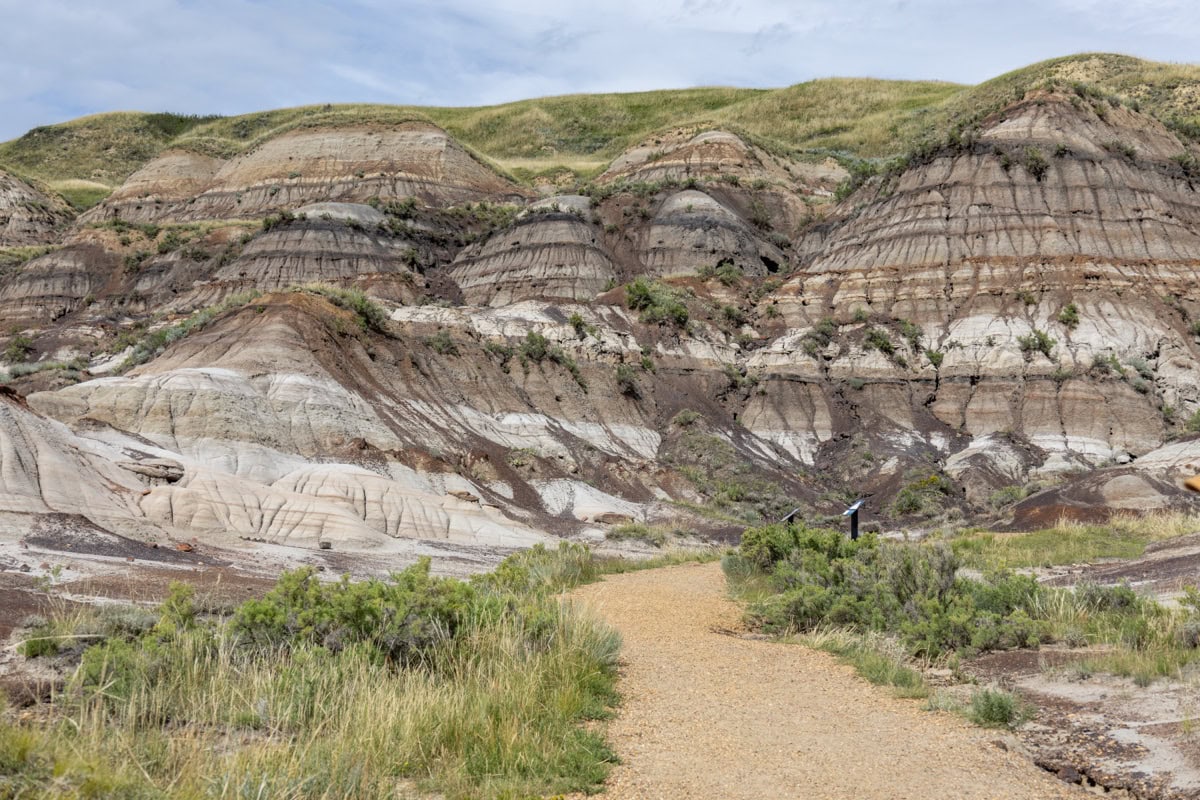
This will likely be your very first stop, as the canyon sits right along Highway 9 just fifteen minutes before you reach Drumheller itself. As the name suggests, the valley forms a huge horseshoe shape and offers the best panoramic view of the entire badlands.
From the canyon rim, you can clearly see the individual geological layers striped in ochre, brown, and reddish hues. You can simply admire it all from the viewing platform, or take the stairs down into the canyon and walk along the bottom. If you go for the second option, make sure you bring plenty of water. Heat gets trapped between the rocks down there and the air is completely still, so you’ll work up quite a sweat.
5. World’s Largest Dinosaur: gloriously cheesy downtown landmark
Photo: Ymblanter / CC BY-SA 4.0 / Wikimedia Commons
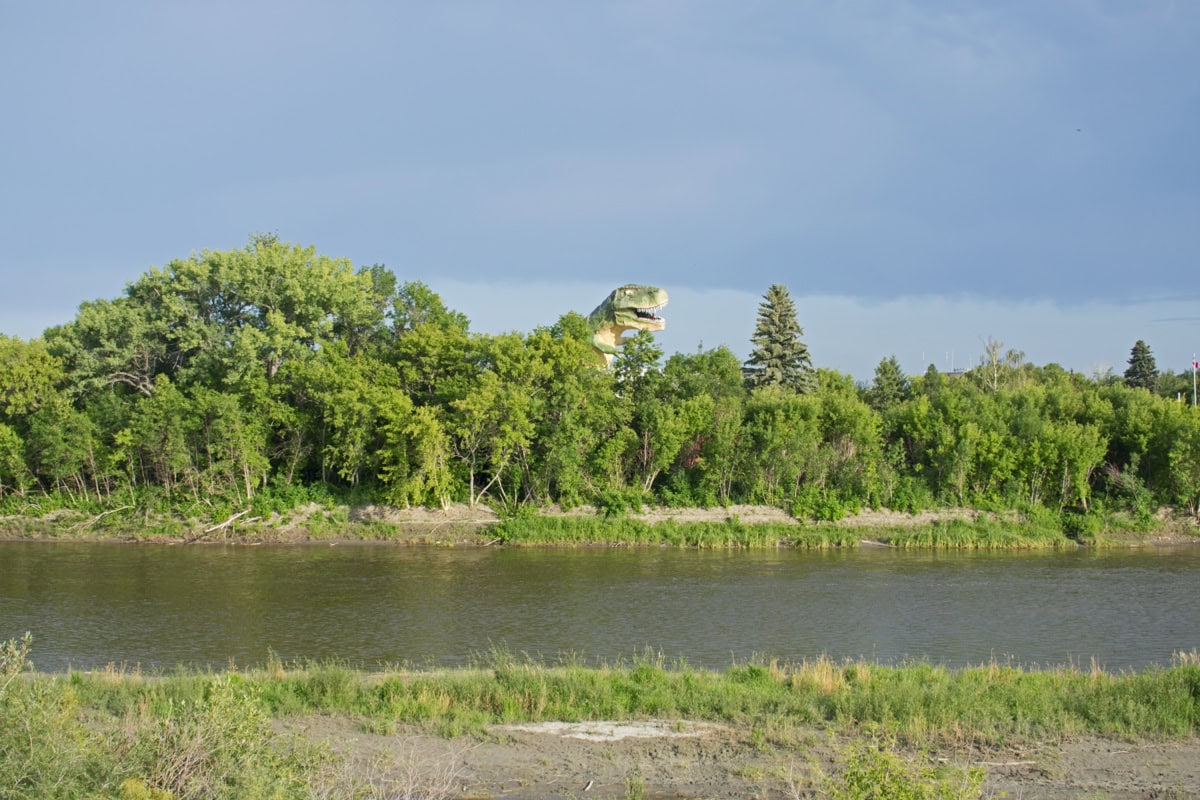
I can’t write about Drumheller without mentioning this beauty. Right in the town centre stands a 25-metre-tall fibreglass Tyrannosaurus rex statue that locals proudly claim is the world’s largest dinosaur. It’s huge, it’s colourful, and it’s gloriously cheesy — but you absolutely have to get a photo with it. 😁
For a small fee of around four to five Canadian dollars, you can climb the stairs inside the statue all the way up into the dinosaur’s open jaw, which gives you a view over the whole town and the river valley. It’s not exactly a profound cultural experience, but it’s precisely the kind of fun tourist attraction you’ll look back on with a grin when flipping through your holiday photos.
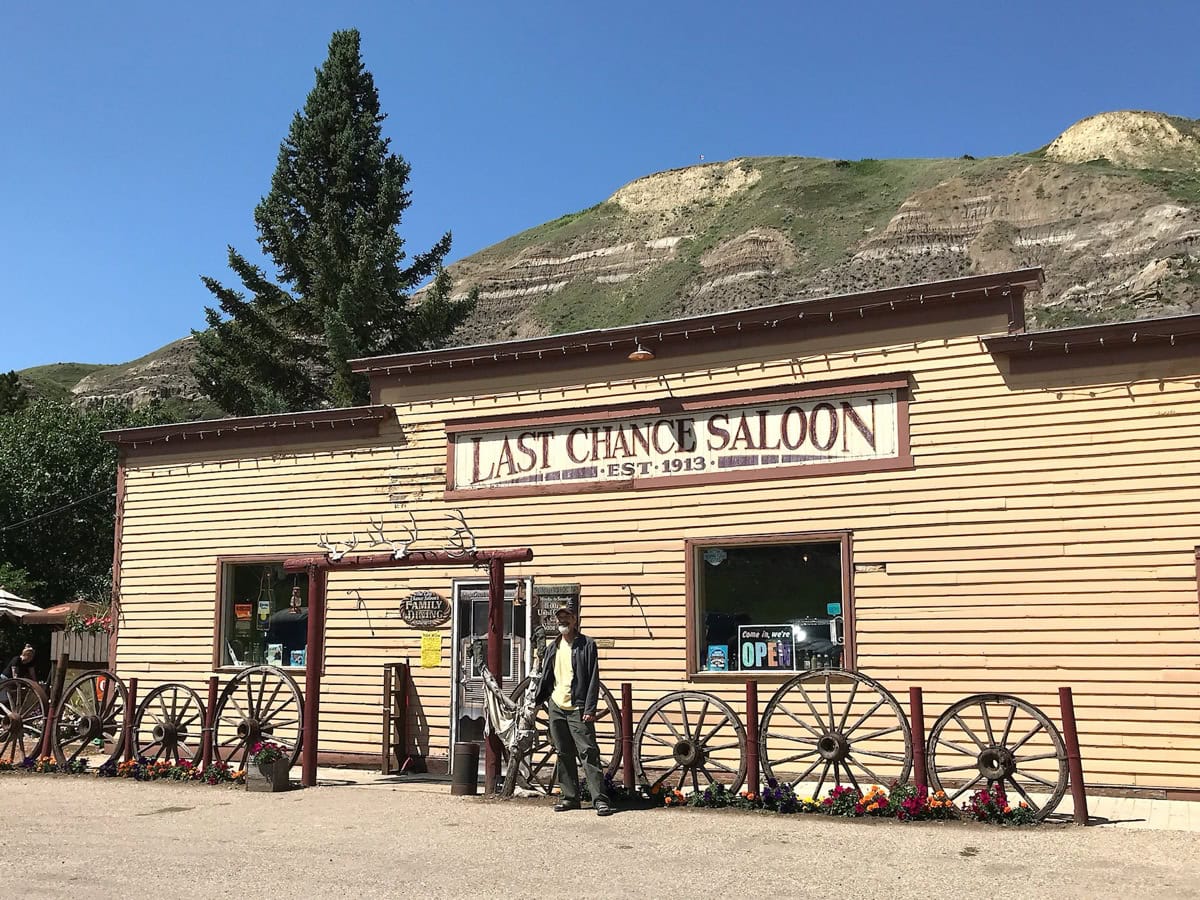
6. Last Chance Saloon in the village of Wayne
Photo: dvs from Vermont, USA / CC BY 2.0 / Wikimedia Commons
If you want a taste of the dusty old Wild West, take the turn-off to the hamlet of Wayne. Getting there is an adventure in itself — over just six kilometres of road, you have to cross eleven wooden bridges over a winding river. It was once a bustling mining town full of workers; today, only a handful of people live there permanently.
The main draw is the historic Last Chance Saloon. It looks exactly how you’d picture a pub at the end of the world. The walls are plastered with old photographs, taxidermy animals hang from the rafters, and there are supposedly bullet holes still visible from old bar brawls. It’s a fantastic spot for lunch — the ribs and burgers are excellent — and you’ll soak up a wonderfully authentic local atmosphere.
7. Dinosaur Provincial Park (UNESCO): a big detour that’s absolutely worth it
Photo: Daderot / CC0 / Wikimedia Commons
This one can easily cause confusion, so heads up: Dinosaur Provincial Park is not in Drumheller. It’s about an hour and a half to two hours’ drive southeast, near the town of Brooks. But I have to mention it here because if you’re into dinosaurs, it’s an absolute must.
While Drumheller has the museum, Dinosaur Provincial Park is the actual dig site — a UNESCO World Heritage Site. Many of the skeletons displayed in the Royal Tyrrell Museum were unearthed right here. The landscape is even more vast and wild than around Drumheller itself. The crucial tip is that you can’t access the best parts of the park on your own — you need to book a guided tour well in advance, where a real palaeontologist walks you through the terrain and shows you bones sticking directly out of the rock face.
8. Dam and riverside relaxation
After a full day exploring sun-scorched rocks, you might fancy a bit of downtime by the water. Although the badlands area is very dry, the Red Deer River winds through the valley and you’ll find several recreation areas and reservoir spots along its banks. Locals often roll up at weekends with camper vans, unfold their camping chairs, and spend the day fishing.
You can hire a kayak or canoe and see the badlands from a completely different perspective — right from the water. It’s wonderfully relaxing, and you’ll often spot deer on the riverbanks or birds of prey circling on thermal currents above the canyon.
9. Hand Hills and Rattlesnake Lake
If you love places that most tourists never reach, consider a small detour to the Hand Hills area and Rattlesnake Lake. This is that vast Canadian emptiness in the very best sense of the word. You’ll find gorgeous open prairie views and fantastic birdwatching opportunities.
The lake itself isn’t one of those crystal-clear glacial pools you might know from Banff National Park, but it has an enormous, slightly melancholic charm of its own. Just be warned — as the name Rattlesnake suggests, watch where you step in summer. Rattlesnakes are genuinely common in this area and love to bask on rocks in the heat.
Lukáš and Lucie recommend
Where to Stay in Drumheller
3 accommodations — hotels and other lodging options
My final tip is one for the thrill-seekers. About ten minutes’ drive from the museum, a long wooden suspension bridge for pedestrians spans the Red Deer River. It was originally built by miners in the 1920s to get across the river to the coal mine on the other side.
The bridge has been restored and is perfectly safe these days, but when you’re walking across and a gust of wind picks up, it gives you a proper wobble. Once you reach the far side, you’ll find remnants of old mines and several hiking trails that wind up into the hills above the river.
Drumheller with kids: little palaeontologists in paradise
If you’re travelling with school-age children, trust me — Drumheller is probably the best place in all of Alberta to take them. For any little dinosaur fan, this is pure paradise.
The Royal Tyrrell Museum is brilliantly set up for kids. The whole exhibition is visually stunning, with clever use of lighting and sound effects, so it’s far from just staring into glass cases. Children can watch real scientists through glass walls as they painstakingly clean bones from rock with delicate tools. At the hoodoos, kids love running between the weird rock formations and exploring the terrain. Just make sure they drink plenty of water and wear a hat — the sun in the badlands is fierce and shade is hard to come by.
Ideal day trip plan from Calgary
If you’re going for a single-day trip, here’s exactly how I’d structure it for the smoothest flow:
Get an early start and leave Calgary by 7:30 at the latest. You’ll reach the Horseshoe Canyon viewpoint around 8:45, where the morning light is gorgeous for photos and the tourist coaches haven’t arrived yet. By nine o’clock, park up at the Royal Tyrrell Museum. Give yourself a good four hours there — you won’t regret it.
After noon, once your brain is thoroughly saturated with dinosaurs, head into the town centre. Snap a photo with the big T-rex and grab some lunch. Then spend the afternoon driving southeast: stop for a walk across the Rosedale suspension bridge, drive through the eleven bridges to the Last Chance Saloon, check out the hoodoos, and round off the day at the Atlas Coal Mine. On the drive back to Calgary, you’ll be treated to a beautiful sunset over the flat prairie.
Where to eat in Drumheller
Speaking of lunch, I have to mention an Alberta classic. Alberta is world-renowned for its beef (Alberta Beef), and locals are incredibly proud of it. If you fancy trying it, everyone in town will point you to Bernie & The Boys Bistro right in Drumheller, which is widely considered one of the best burger joints in the area.
It’s a casual, unassuming little place that doesn’t look like much from the outside, but the reviews speak for themselves. They serve enormous burgers made with locally sourced meat, and if you love milkshakes, they do about eighty different varieties. Vegetarians will find meat-free options and salads too. It’s often packed, but the wait is absolutely worth it.
Practical information, prices, and rules
Let’s quickly run through a few numbers and practical details that might come in handy. One Canadian dollar (CAD) is currently around €0.67, or roughly £0.58.
Royal Tyrrell Museum admission: Adults pay around 25 CAD (≈ €17), children aged 7–17 around 15 CAD (≈ €10). Children under 6 get in free. The car park is spacious and free of charge.
Hoodoos entry: A maintenance fee of 5 CAD (≈ €3.50) per vehicle is charged at the site.
Important drone rule: If you travel with a drone, be extremely careful in Canada. Flying drones is strictly prohibited in both provincial and national parks (this includes Dinosaur Provincial Park and Midland Provincial Park where the museum is located), and the fines are astronomical.
Tips and tricks for travelling to Canada
Before I wrap up, here are a few tried-and-tested travel tips that have been saving us time and money for years — not just in Alberta but everywhere.
Finding flights
For affordable flights to Calgary, search on Kiwi.com or Skyscanner — both are great comparison tools where you can set various filters and find the best combinations of flights from London, Manchester, or other UK airports.
We always keep an eye out for deals well in advance, because flights to Canada can skyrocket during the summer months. It’s worth checking connections with one sensible layover — you can save a significant amount that way and put it towards more experiences on the ground.
Hiring a car
Without a car, you’re pretty lost in Canada. We’ve been using DiscoverCars.com for years — it pulls together all the major hire companies and often offers better insurance deals than you’d get at the counter.
Don’t leave your car booking to the last minute, especially in summer when the most affordable models sell out fast. You’ll need a valid driving licence (your UK licence is accepted in Alberta) and a credit card in the driver’s name to pick up the vehicle.
Booking accommodation
Booking.com is our go-to, mainly because of the detailed guest reviews. Before we book any accommodation, we pore over the comments with the thoroughness of a forensic examiner. 😄
In Alberta, it’s worth knowing that nice places in smaller towns like Drumheller get snapped up quickly. If you already know your travel dates, book everything a good six months ahead with free cancellation — that way you’ve got flexibility without the stress.
Don’t forget travel insurance
Canada has excellent healthcare, but it’s eye-wateringly expensive. Any medical issue without insurance could cost you your life savings. For shorter trips we often go with a comprehensive policy from a UK provider, and for longer stays or digital nomad lifestyles, we can’t recommend SafetyWing highly enough.
From personal experience, don’t rely solely on the travel insurance that comes with your bank account or credit card — it’s often nowhere near enough for North American medical bills. Spend a little extra on a policy with proper coverage limits, so you can enjoy the canyons and cliffs with total peace of mind.
Where to go next in Canada
Once you’ve finished exploring prehistory in the badlands, Alberta and western Canada have loads more to offer. Below are links to our other articles on places well worth visiting.
If you’re craving city life and great coffee, check out our guide to Edmonton in Canada, the provincial capital with an incredible shopping centre and lovely parks. If you’re more of a nature person, don’t miss the stunning Waterton Lakes National Park, which sits on the southern border with the US and is far quieter than touristy Banff.
🔗 These are affiliate links — they don't change your price and help us create content. · All experiences →
Tips and Tricks for Your Vacation
Don’t Overpay for Flights
Search for flights on Kayak. It’s our favorite search engine because it scans the websites of all airlines and always finds the cheapest connection.
Book Your Accommodation Smartly
The best experiences we’ve had when looking for accommodation (from Alaska to Morocco) are with Booking.com, where hotels, apartments, and entire houses are usually the cheapest and most widely available.
Don’t Forget Travel Insurance
Good travel insurance will protect you against illness, accidents, theft, or flight cancellations. We’ve had a few hospital visits abroad, so we know how important it is to have proper insurance arranged.
Where we insure ourselves: SafetyWing (best for everyone) and TrueTraveller (for extra-long trips).
Why don’t we recommend any Czech insurance company? Because they have too many restrictions. They set limits on the number of days abroad, travel insurance via a credit card often requires you to pay medical expenses only with that card, and they frequently limit the number of returns to the Czech Republic.
Find the Best Experiences
Get Your Guide is a huge online marketplace where you can book guided walks, trips, skip-the-line tickets, tours, and much more. We always find some extra fun there!
TL;DRHomer, Alaska sits at the end of the Sterling Highway on the Kenai Peninsula, overlooking Kachemak Bay, about 350 kilometres (4–5 hours’ drive) from Anchorage. Highlights include the Homer Spit with its Salty Dawg Saloon, boat-only Kachemak Bay State Park, the hike to Grewingk Glacier Lake (just under 5 km), and flightseeing trips to Katmai National Park for bear-watching. The best time to visit is June to August, when temperatures hit 15–18°C and the salmon run is at its peak. A full day of halibut fishing costs $400–$550, while a bear-watching trip can run over $1,000 per person.
When we road-tripped through Alaska back in 2017 in our old campervan Chiquita and headed south toward Homer, I had no idea it would become one of my all-time favourite experiences. The asphalt of Sterling Highway comes to an unyielding stop after more than 300 kilometres of driving from Anchorage, where there’s simply nothing beyond — just the deep ocean. You suddenly find yourself in a place that has rightfully earned the nickname End of the Road, and it’s easy to see why Homer Alaska is one of the most unforgettable stops on the Kenai Peninsula.
This is Homer, Alaska — a little town of roughly five and a half thousand residents that has proudly carried the slightly eccentric nickname “the cosmic hamlet by the sea” for years. The moment you pull up, step out of your warm car, and draw in that first deep breath of damp, salty air, you’ll instantly understand why. ☺️ The local community is an incredible, colourful mix of hardened sailors, bearded fishermen, passionate artists, and old hippies who once came for a single short summer season and simply never managed to pack up and return to civilisation. People smile at you on the street, and there’s this strange, soothing slow rhythm everywhere you go.
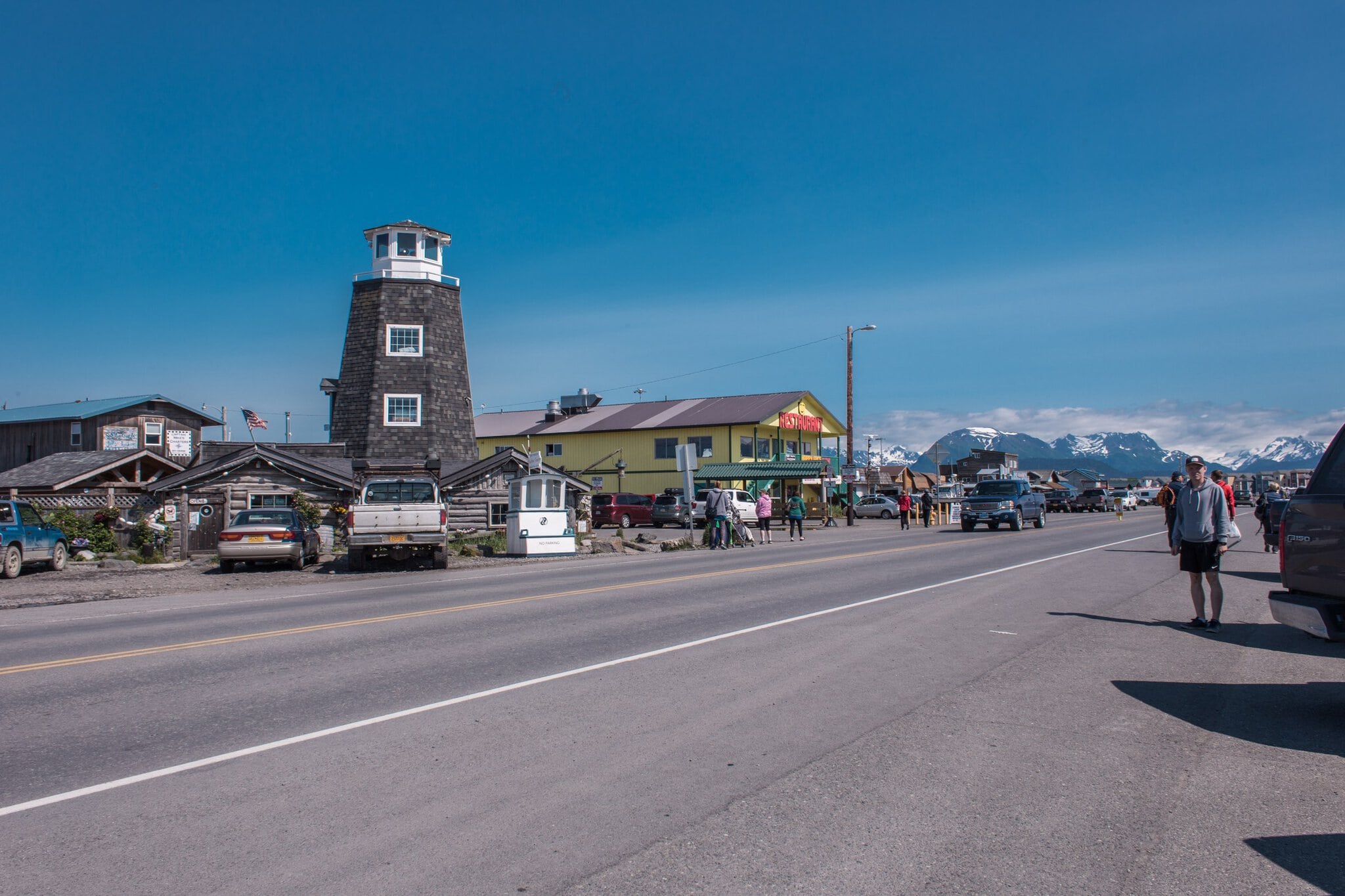
Main road on Homer Spit with the lighthouse
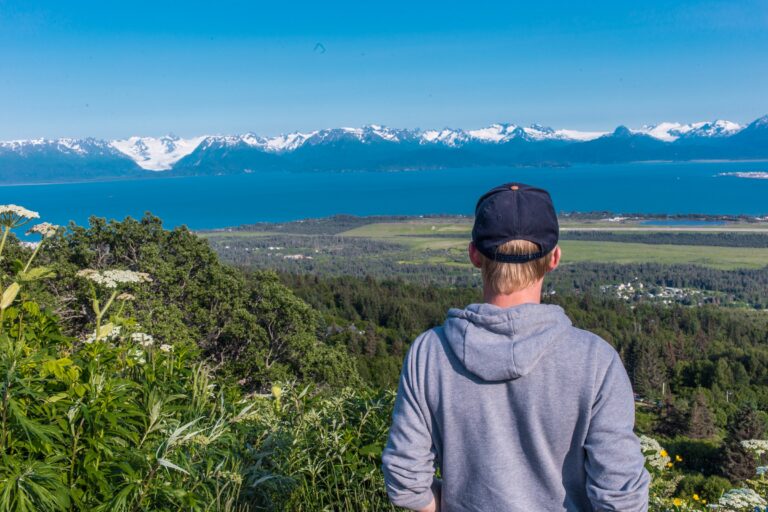
As you park up by the beach and step out into the cool northern breeze, the view across Kachemak Bay will stop you in your tracks. The horizon is dominated by majestic, ice-and-glittering-snow-capped peaks of the Kenai Mountains. In the distance, the active volcanoes Mount Iliamna and Mount Redoubt watch over you like sleeping giants, and occasionally you can even spot a lazy wisp of smoke drifting from one of the craters. Homer has an atmosphere you simply won’t find anywhere else in the world, and even though it’s essentially a small fishing settlement, you can easily spend several days — or even weeks — here exploring the wild nature.
Let’s dive deep into how to squeeze every last drop out of your visit to this famous Halibut Capital of the World, step by step.
TL;DR
Best time to visit: June to August, when the majestic salmon runs peak, temperatures hover comfortably around 15 °C, and all local water taxis and tour boats are in full operation.
Top attractions: Homer Spit (a long gravel peninsula lined with colourful shops and the harbour), Kachemak Bay State Park, and the stunning Grewingk Glacier.
Jaw-dropping experiences: A fly-out bear viewing trip from Homer to the legendary Katmai National Park, or an all-day charter halibut fishing adventure.
Most iconic pub: Salty Dawg Saloon, an original log cabin plastered with thousands of pinned-up dollar bills — the kind of place you simply must stop by for an evening pint with friends.
Getting there: Homer is reached by a single road (Sterling Highway from Anchorage). We recommend booking a rental car well in advance — months ahead if possible.
If you’re planning a dream trip to Alaska, you probably already know that the tourist season here is extremely short and unforgiving of any planning mistakes. Alaska essentially opens its doors to visitors at the end of May and firmly shuts down again by mid-September, so your window for a visit isn’t exactly generous. We learnt this the hard way when we once tried to change plans last minute, only to find park gates closed and docks pulled out of the water.
Best Months to Visit
The climate and wildlife window on the beautiful Kenai Peninsula runs roughly from mid-May to mid-September. If you go in May, the big advantage is slightly lower accommodation prices and noticeably thinner crowds, though you’ll need to accept that many animals are still lazily making their way into the bays and tour boat operators are cautiously launching their fleets. It’s a wonderful time, though, as the coveted King Salmon (Chinook) run begins, so riverbanks are already lined with eager anglers and you can practically smell summer on its way.
June and July are the absolute peak. We experienced it first-hand in July, when temperatures climbed to a pleasant 15–18 °C, the rivers were teeming with salmon, and every morning we couldn’t stop marvelling at how any of this was even real. In June, the sun doesn’t set until well past midnight, so it feels like the days never end and your energy multiplies with every hour outdoors. Accommodation and boats tend to be fully booked by this time, so don’t delay your reservations.
August is a fantastic month for watching breaching whales and admiring nesting seabirds on the cliffs, but temperatures start dipping towards 10 °C and there’s a noticeable increase in that classic northern drizzle. By mid-September the season comes to a hard, unapologetic end — most water taxis haul their anchors ashore for good, and the locals start preparing for long months of snow and darkness.
How to Get to the End of the Road
The vast majority of travellers fly into Anchorage first. From the UK, you can find connecting flights via Seattle, Minneapolis, or other US hubs — keep an eye out for deals on flight comparison sites. Once you land, the key is to pick up a rental car or campervan right at the airport. We’ve had consistently great experiences with Booking.com for accommodation, and for car hire, booking well in advance is essential. In Alaska’s summer, demand for any kind of rental vehicle wildly outstrips supply, so if you don’t book ahead, you might genuinely find yourself walking out of the airport on foot.
From Anchorage airport, you’re looking at roughly a 350-kilometre drive that takes four to five hours of pure driving time — but realistically, you could easily spend a whole day on it. Especially the first time. The route winds through absolutely breathtaking mountains, along the dramatic Turnagain Arm (where we spent a good hour standing in the icy wind trying to spot beluga whales), and eventually onto the scenic Sterling Highway. This road meanders past wild salmon rivers, through dark-green forests, and offers so many irresistible photo stops that it eventually spits you out right on the windswept shore of Kachemak Bay in Homer.
Where to Stay in Homer and How Much It Costs
Alaska has always been one of the priciest US states, and during its short, packed summer season you’ll feel it in your wallet at every turn. We stuck to our strict daily budget of $50 for both of us and slept the entire time in our van Chiquita, but if you’re looking for a solid roof over your head, there are plenty of options. You can choose whether to stay in town on firm ground close to all the shops, or pay a bit more for the utterly unique atmosphere on the iconic narrow Homer Spit, where you’ll have the rolling ocean and bobbing fishing boats right outside your window.
For budget travellers, a great choice is Driftwood Inn Homer, offering cosy rooms and camping spots near Bishop’s Beach. A solid mid-range option with good value is Best Western Bidarka Inn Homer, located near the town centre and airport. And if you fancy real luxury with the best ocean views right at the very tip of the peninsula, go for Land’s End Resort Homer Spit.
Your overall costs will obviously depend on how you eat and how much you indulge in local restaurants. If you go for camping in a rented campervan (which is, by the way, probably the most typical way to travel in Alaska — and it gives you an incredible sense of freedom), you’ll save a fortune on accommodation. Just make sure to book your spots at the better RV parks on Homer Spit a good six months in advance, because the best pitches with beach views vanish at lightning speed, and spending the night crammed beside a dusty road will put a damper on the experience.
Homer, Alaska: 12 Best Things to See and Do
Honestly, when I was putting this list together, I had a hard time trimming it down to twelve. Homer offers far more than most people would expect from a town where the tarmac simply runs out. But here are the things we’d do again without a moment’s hesitation. If you don’t want to arrange all your excursions on the spot at the visitor centre — risking everything being hopelessly sold out — check out some of the top-rated activities below that you can book online well in advance.
1. Homer Spit: The Heart of Town
The geological and commercial backbone of this fascinating town is, without a shadow of a doubt, the famous Homer Spit. Picture a narrow gravel bar that juts out like a long, thin finger more than 7 kilometres into the blue ocean of beautiful Kachemak Bay. This landform was created some fifteen thousand years ago as a natural moraine of a retreating glacier, but today it’s the pulsating heart of the local fishing tourism scene, buzzing with incredible energy from the early foggy morning until the late, chilly night.
Main road on Homer Spit with the lighthouse
Lining both sides you’ll find absolutely everything you need for a proper Alaskan adventure. Long wooden boardwalks are flanked by charming souvenir shops, professional fishing gear stores, and buzzing restaurants wafting the irresistible smell of freshly fried fish and chips — and of course, the enormous, overflowing harbour full of boats of every kind. Cheeky seagulls screech at you everywhere, and every now and then you have to dodge men in waterproofs hauling carts of ice.
The Spit also carries a rather dramatic and harrowing history, though. During the devastating 1964 earthquake, a large section of the land here unexpectedly sank by several metres, and many historic buildings had to be painstakingly salvaged by the local community and moved on stilts beyond the reach of the tide. Today you can stroll along in perfect peace with a hot coffee in hand, watch sea otters bobbing between the waves, and breathe in that unmistakable, sharp maritime air.
2. Pacific Halibut Fishing
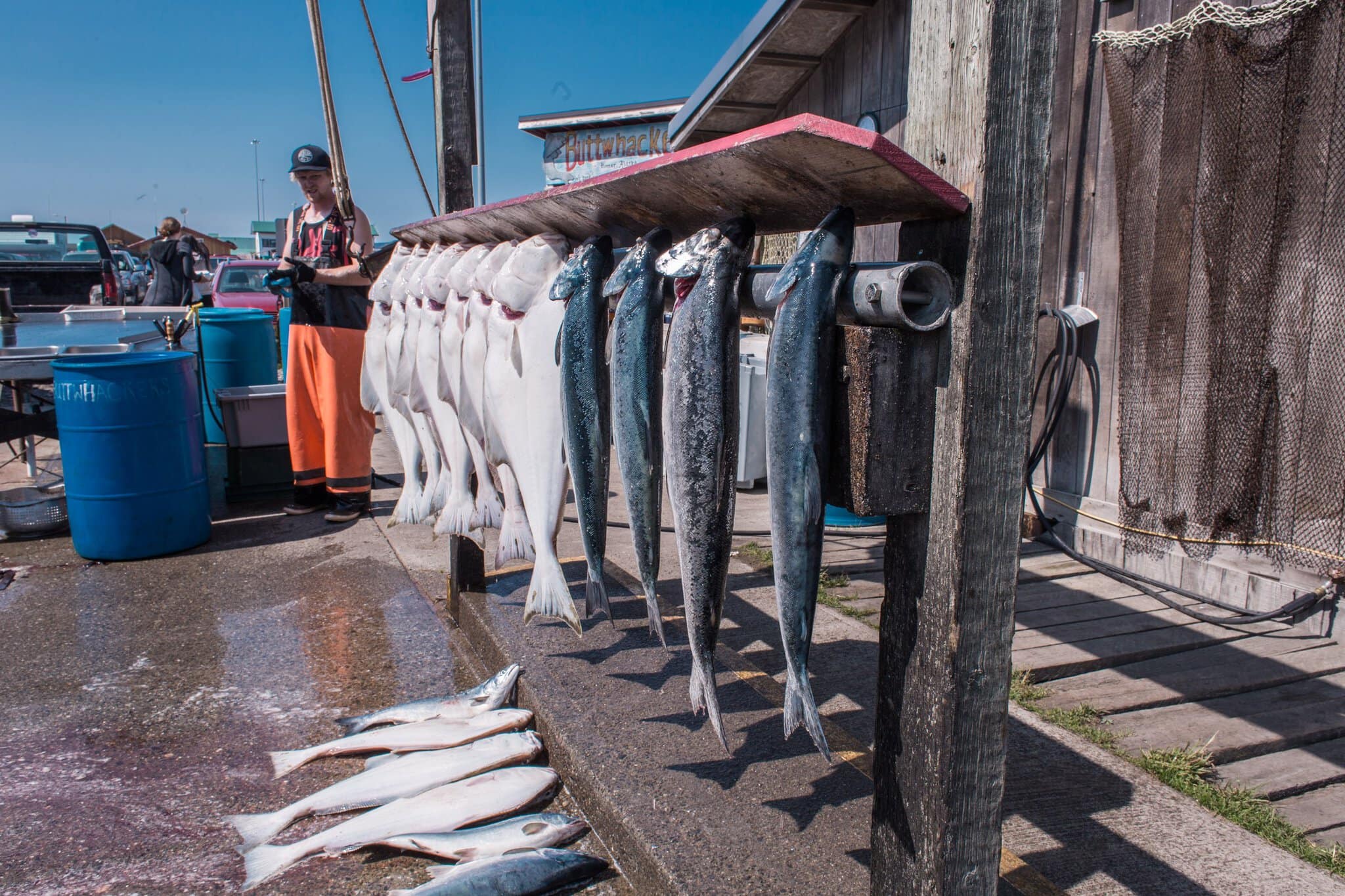
Homer proudly holds the official — and it must be said, thoroughly deserved — title of Halibut Fishing Capital of the World. As soon as you take even a short stroll along the wooden harbour docks, you’ll see that passionate sport fishing absolutely dictates the pace and atmosphere of the entire summer here. Every day, hundreds of eager anglers in waterproof suits head out after massive trophy Pacific halibut, which regularly weigh well over 100 kilograms. When these enormous fish are hoisted onto the scales in the afternoon, it’s a sight that truly takes your breath away.
Caught halibut on the dock in Homer
If you’d like to treat yourself to this wet, fragrant, and rather rugged experience, be prepared to part with a fair chunk of cash — charter boat prices boldly reflect the huge summer demand. Half-day to full-day trips on the choppy, rolling sea with a professional guide currently run at roughly $400–$550 per person. In return, though, you get full service from the crew, all the heavy-duty tackle included, and a pretty good chance of grilling your own catch over the fire that evening.
3. Grab a Pint at the Salty Dawg Saloon
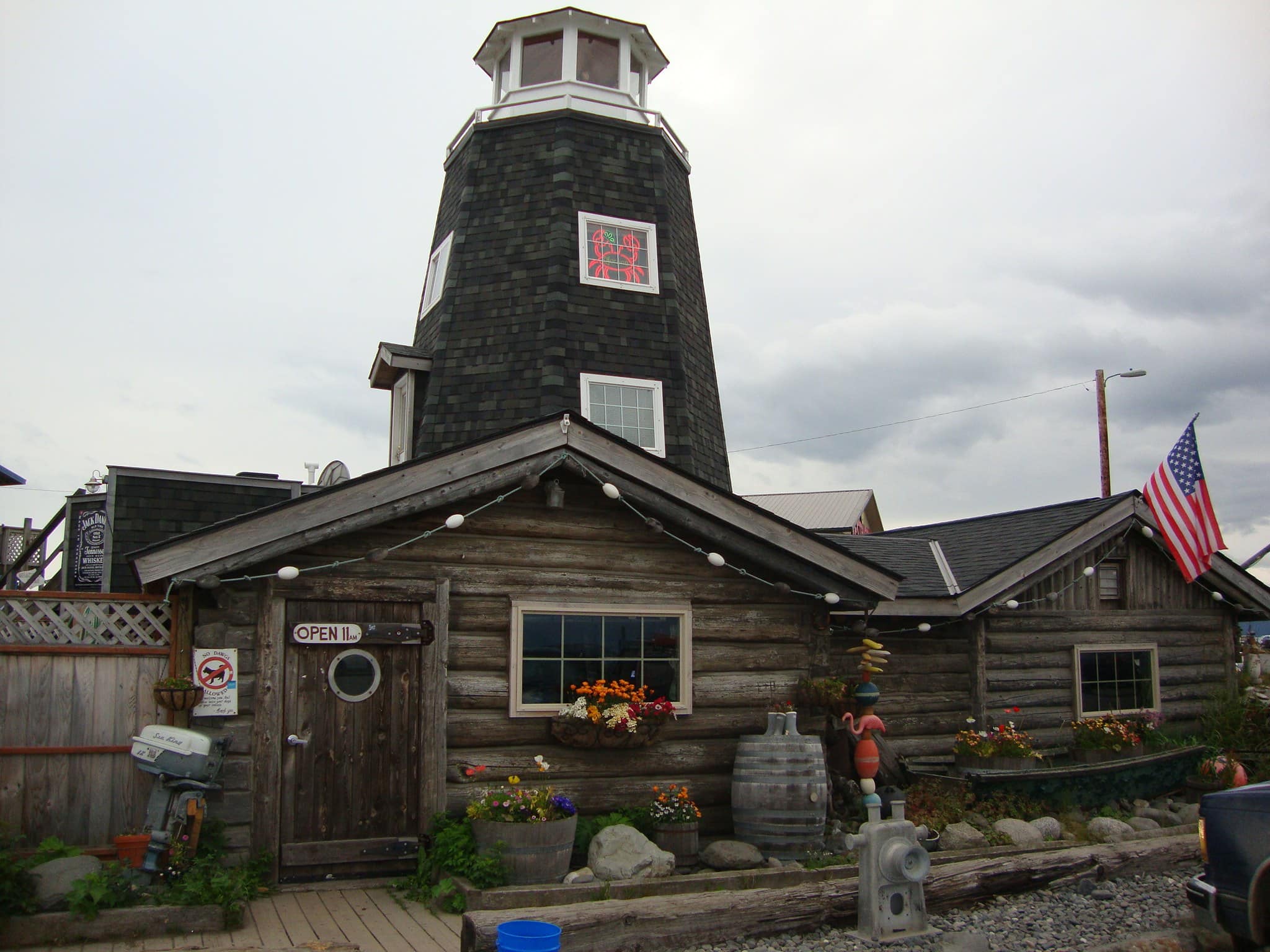
After any successful big-fish outing, a demanding afternoon hike through the mountains, or simply out of curiosity and a summer whim, every adult visitor to Homer must pop into the Salty Dawg Saloon at least once. This original, somewhat weathered little log cabin from 1897, with an unmissable lighthouse tacked onto its side, has served over the years as a post office, a tiny railway station, and a general store. It wasn’t until the 1950s that a group of local enthusiasts converted it into this one-of-a-kind watering hole. After the devastating earthquake, it even had to be moved a short distance to its current spot right on the firm edge of the Spit.
The famous Salty Dawg Saloon on Homer Spit (Photo: Laura Alier / Wikimedia Commons, CC BY 4.0)
When you push through the creaky door into the dim interior, you probably won’t know where to look first. The entire place — floor to ceiling — is covered in tens of thousands of scrawled, signed dollar bills that have been frantically nailed to every wall, beam, and post for decades, dangling in incredible clusters from the low ceiling. Life rings hang alongside random bras, uniform patches, and the scent of spilt beer mingles with woodsmoke from the stove.
Don’t bother looking for food on the menu here (head next door for that), but ordering an ice-cold draught beer or their famous lemonade, then searching for a tiny patch of bare wood to pin up your own crumpled one-dollar bill with a message from home, and chatting with the loud local fishermen while you’re at it — that’s a quintessential Alaskan ritual you simply can’t skip. 😅
4. Kachemak Bay State Park: Wilderness Without Roads
Directly across from bustling Homer, just a short hop over the shimmering cold waters of the bay, lies a forgotten world of 400,000 acres of rugged mountains, dense old-growth forests, and wild rocky beaches, all carefully protected within Kachemak Bay State Park. It’s actually the very first state park ever established in Alaska, back in 1971, and it has one enormous catch that makes it so incredibly special: not a single metre of road leads into it.
Panorama of Kachemak Bay State Park from Homer
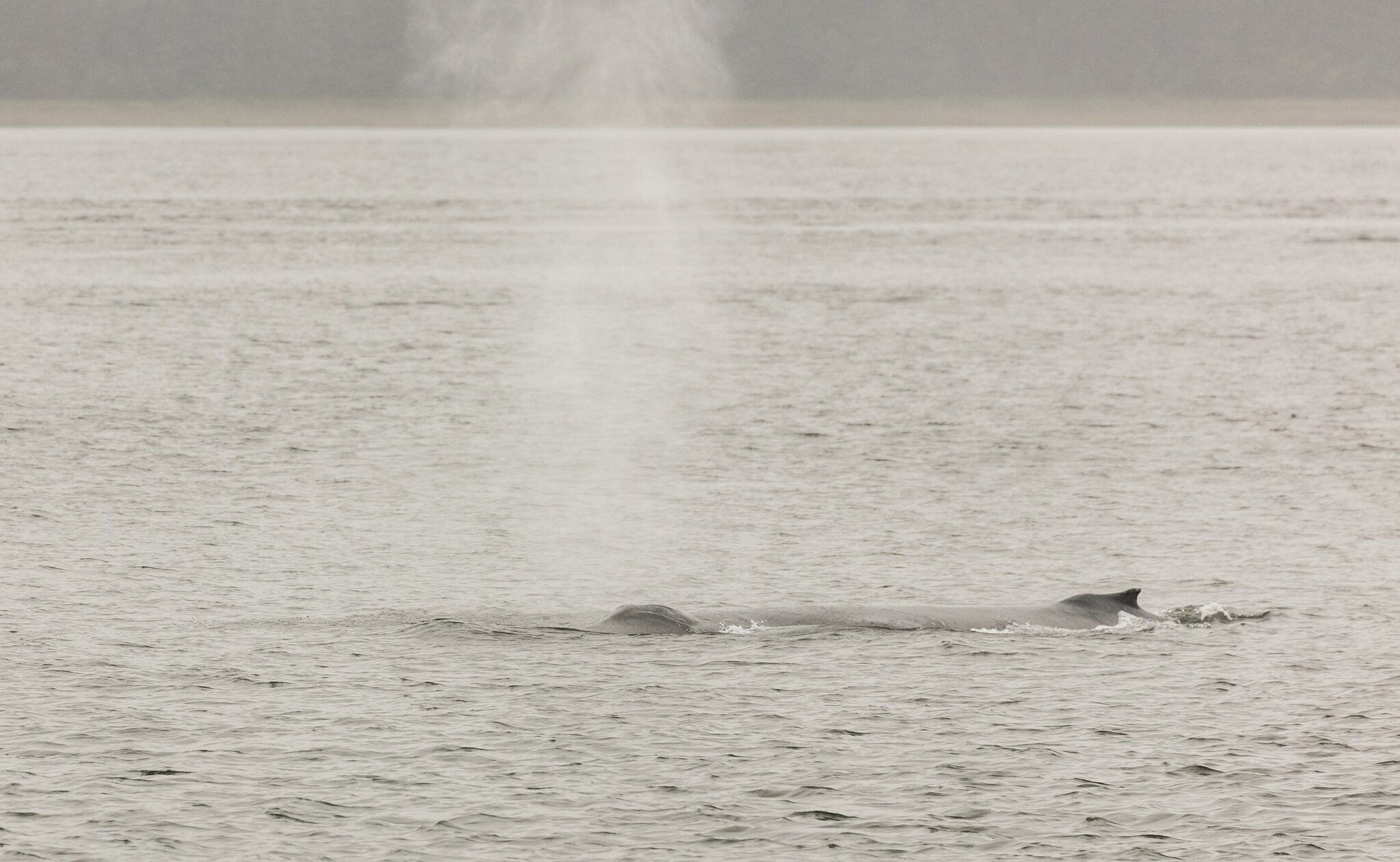
In practical terms, this means you can only get there by commercial water taxi, which departs every morning from the harbour on Homer Spit. We used the local fleets, which cheerfully load you into a smallish but incredibly sturdy aluminium boat. After about twenty to thirty minutes of bouncing across the waves, the seasoned skipper drops you on a beach right in the heart of untouched wilderness. During the ride, there’s a great chance of spotting whales blowing spray into the air or the ever-curious sea otters bobbing alongside.
A return trip across the bay costs just under $100 per person (which includes the small park entry fee), but the extraordinary chance to suddenly find yourself completely alone in the middle of northern wilderness with no phone signal and no crowds is absolutely worth every penny. Just make sure to very clearly agree on the exact afternoon pick-up time with your skipper, because spending an unplanned night there without proper gear is something nobody wants.
5. Hike to Grewingk Glacier Lake
Once you’ve happily paid for the water taxi across the bay to the state park, make sure to get dropped off right at the start of the marked Grewingk Glacier Lake Trail. This particular route is, in my opinion, an absolute gem — and it’s genuinely great even if you’re not exactly seasoned mountaineers in expensive boots. The elevation gain is truly negligible, and the trail runs just under five kilometres one way from the beach, so with a bit of goodwill it’s manageable even for families with younger children.
View of Kachemak Bay with mountains
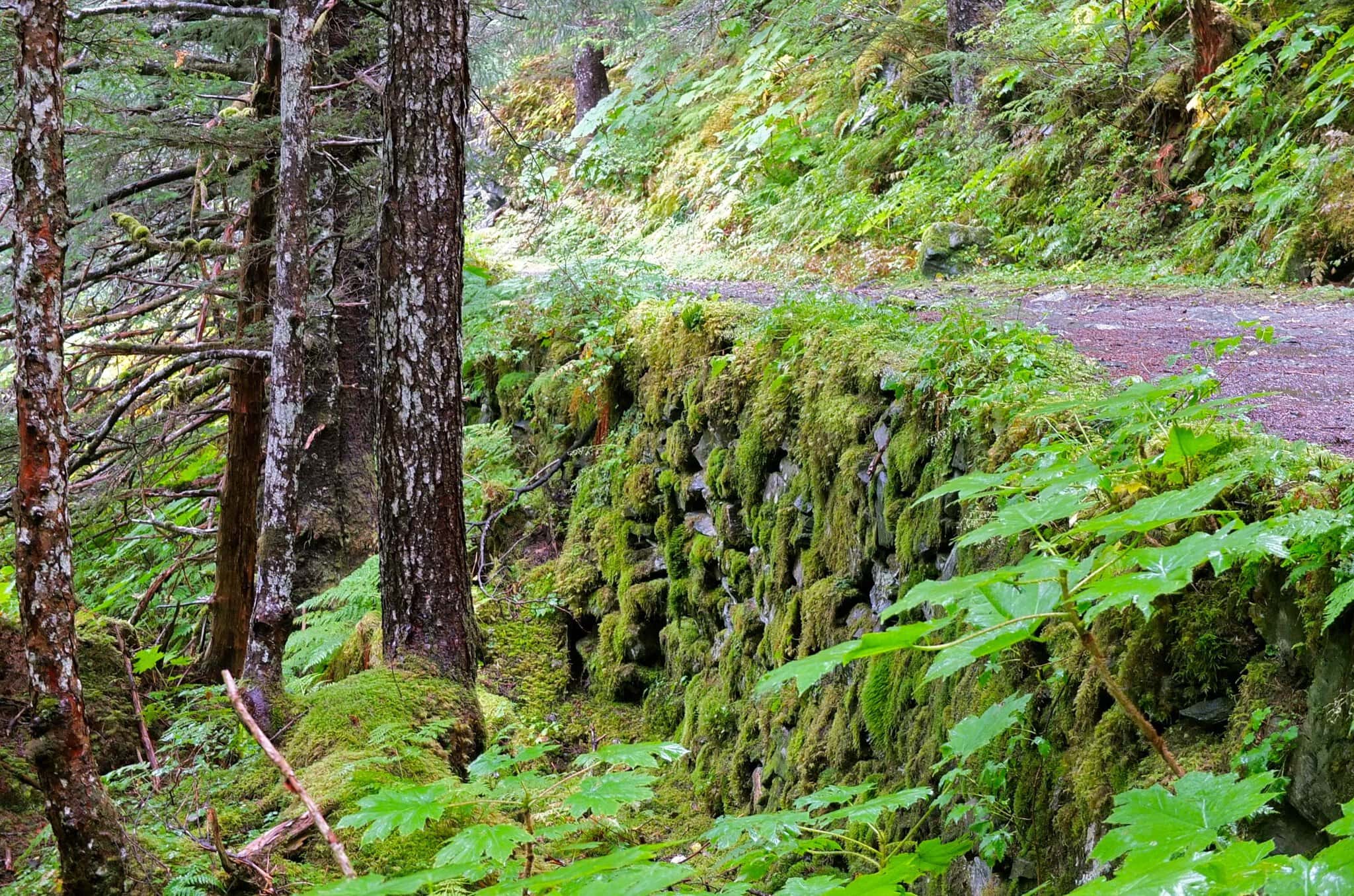
The first half of the trek leads you slowly through a gorgeous, dark-green, hushed boreal forest filled with giant fallen cottonwoods and classic Sitka spruce. These ancient trees are draped on all sides in thick green moss, like something out of a fairy tale about dinosaurs. Every now and then you half-expect something to peek out at you from behind the ferns. The whole way, we deliberately made as much noise as possible, constantly calling out our trusty “Hey bear!”, because visibility through the densely packed trees was often zero and encountering a grizzly here is more common than you’d think.
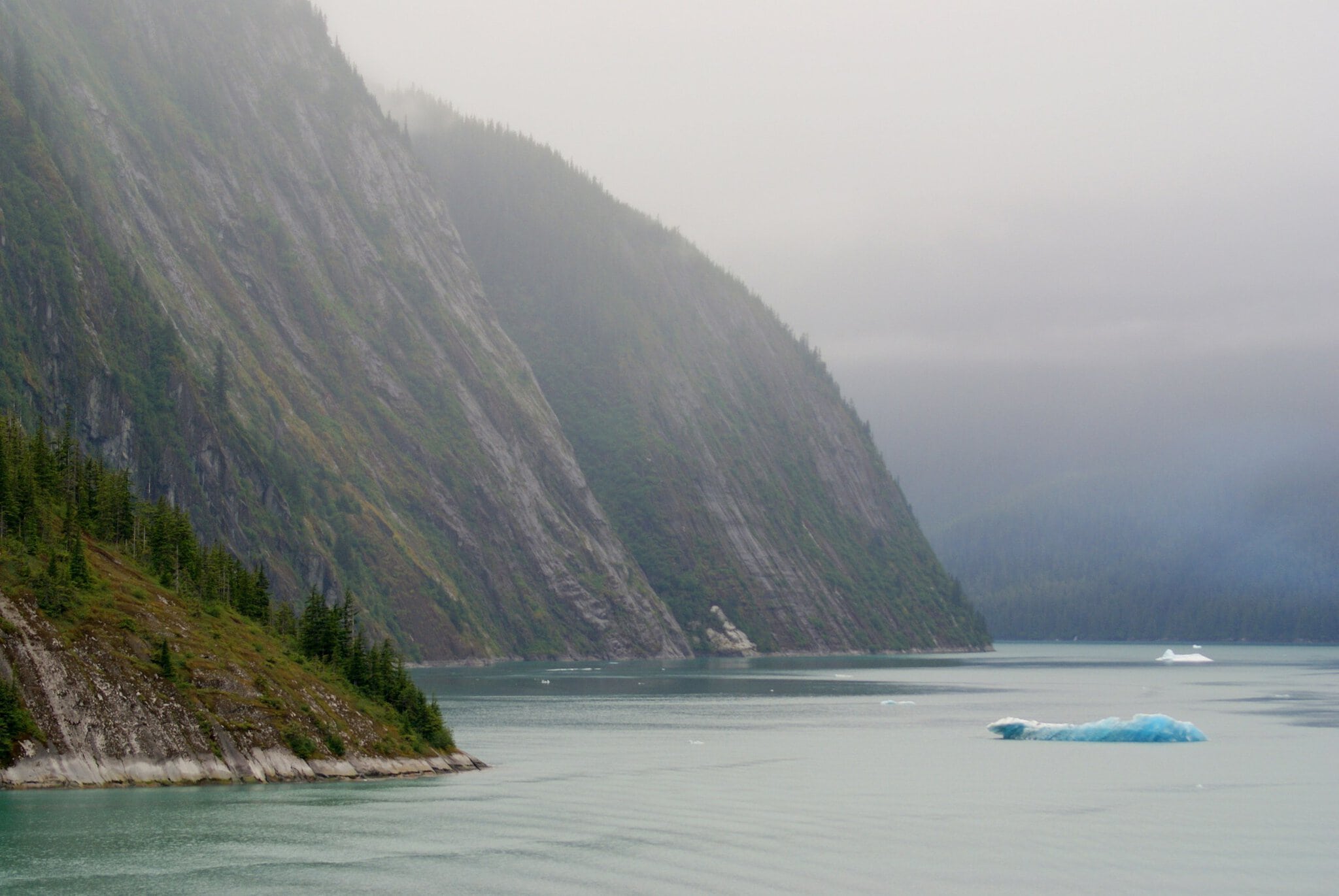
Eventually the trail opens out onto a grey moraine, and suddenly, without any warning, a breathtaking, cold panorama unfolds before you — the enormous glacial Grewingk Glacier Lake. Right there on the water’s surface, huge, brilliantly turquoise icebergs drift along, constantly calving from the ancient glacier mass somewhere in the distance with a deep, thunderous rumble.
While the commercial Homer Spit is almost always bustling with hurrying tourists and noisy fishermen, the pebble-strewn Bishop’s Beach offers a much calmer refuge on the completely opposite side of town near the old centre. It’s especially magical during the regular summer low tide — the foaming ocean retreats hundreds upon hundreds of metres from the shore, revealing a vast, fascinating expanse of little hollows, pools, and salty puddles.
Bishop’s Beach in Homer with rocks by the sea
These little pools are called tide pools, and they’re teeming with fascinating miniature marine life. You’ll spot purple sea stars creeping across rocks, tiny crabs, orange anemones, and all sorts of strange seaweed left draped over the pebbles when the tide goes out. Locals love coming here to walk their dogs, build small bonfires from beautifully bleached driftwood in the evenings, or simply wander alone in search of glinting agates and other treasures that the ocean kindly delivers overnight.
7. Treat Yourself at Salmon Sisters
If you’re the kind of traveller who loves bringing home something genuinely beautiful, high-quality, practical, and truly local from every trip, make sure to stop by the wonderfully fragrant Salmon Sisters shop during your wander. This young brand was founded a few years ago by two real sisters from a tough Alaskan commercial fishing family. In just a few years of sheer determination, they turned it into an unexpected commercial hit that’s now proudly worn across the entire state.
Colourful cabins and shops on Homer Spit
In their shop you’ll find gorgeous clothing with wave and fish motifs, sturdy high-quality wellies for wet weather, and heaps of accessories — all lovingly inspired by the ruggedly harsh daily life on the open sea and the wild Alaskan nature all around. By buying something here, your money goes directly to people who live and work in this community, and personally, that feels far better than picking up souvenirs from a nameless stall on the Spit.
8. Kayaking with Whales and Otters
If you and your travel mates are at least a little adventurous, unafraid of deep water, and sufficiently tough (the water in Kachemak Bay is a long way from a pleasant dip even in midsummer — falling in would be a serious problem), then definitely rent a tandem sea kayak with an experienced local guide for at least half a day.
Larger local operators like Mako’s Water Taxi can load you and your yellow plastic kayaks onto their boat and ferry you to more remote, quiet, and wind-sheltered coves like beautiful Tutka Bay or the calmer Peterson Bay. Conditions there are far more forgiving for novice paddlers than the treacherous open water of the main bay.
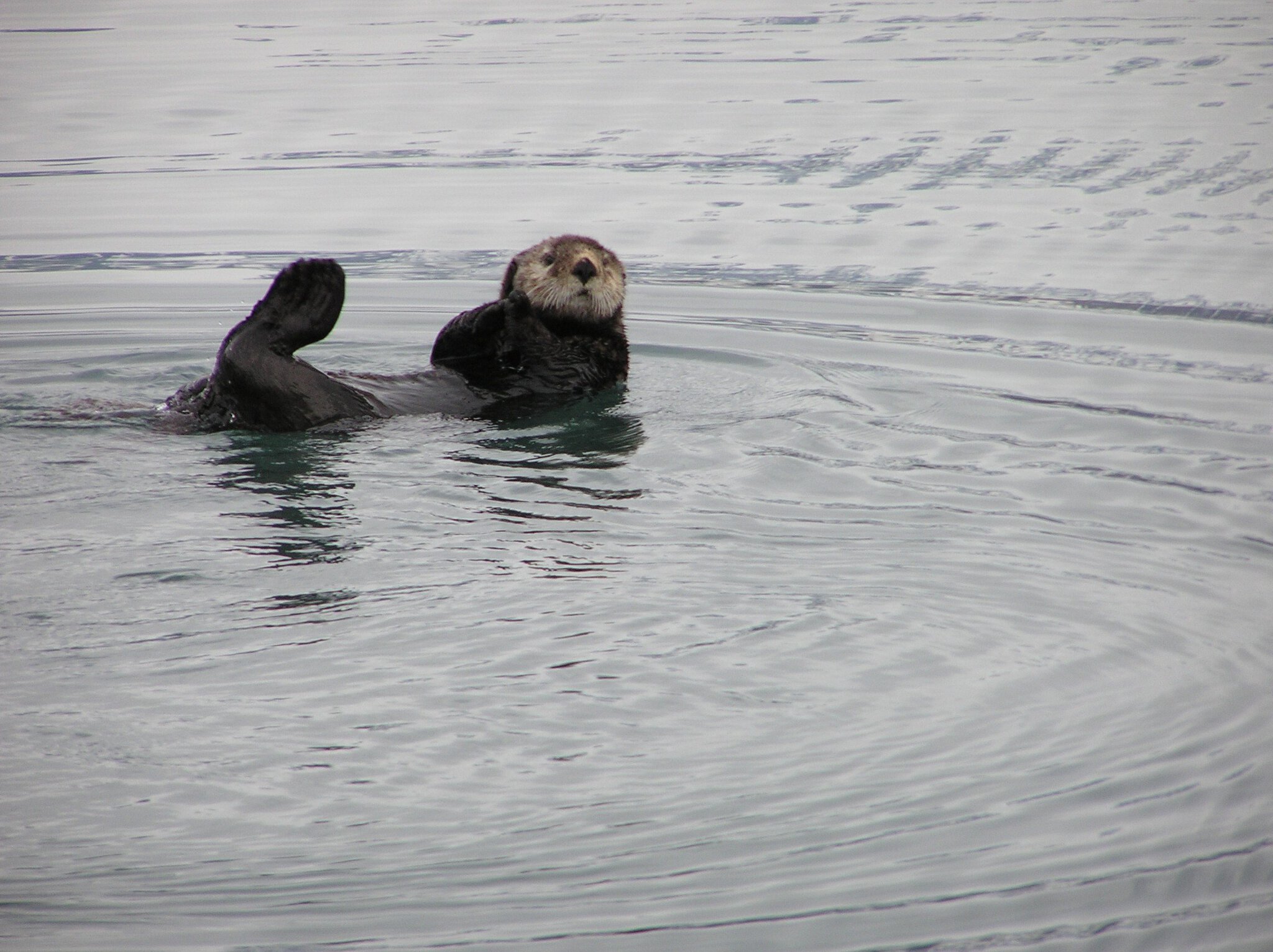
Sea otter in Alaskan waters (Photo: Wikimedia Commons, CC0)
Seeing Alaska’s nature from the water’s surface is a completely different dimension: curious sea otters with pups on their bellies will pop up around your kayak, and with a bit of luck you’ll hear whales blowing in the distance. Just don’t forget proper waterproof layered clothing, because the wind off the glaciers is genuinely freezing.
Heading out on the water does mean wrestling occasionally with the fear of an unwanted capsize, plus the surprisingly exhausting battle of squeezing into the tight rental dry suit. But the reward is absolute silence, broken only by the rhythmic sound of your alternating paddle strokes in the water. And the profound respect for the ocean that you feel on that thin shell of fibreglass — that stays with you for a very, very long time.
9. Stop at Cooper Landing and the Russian River Madness
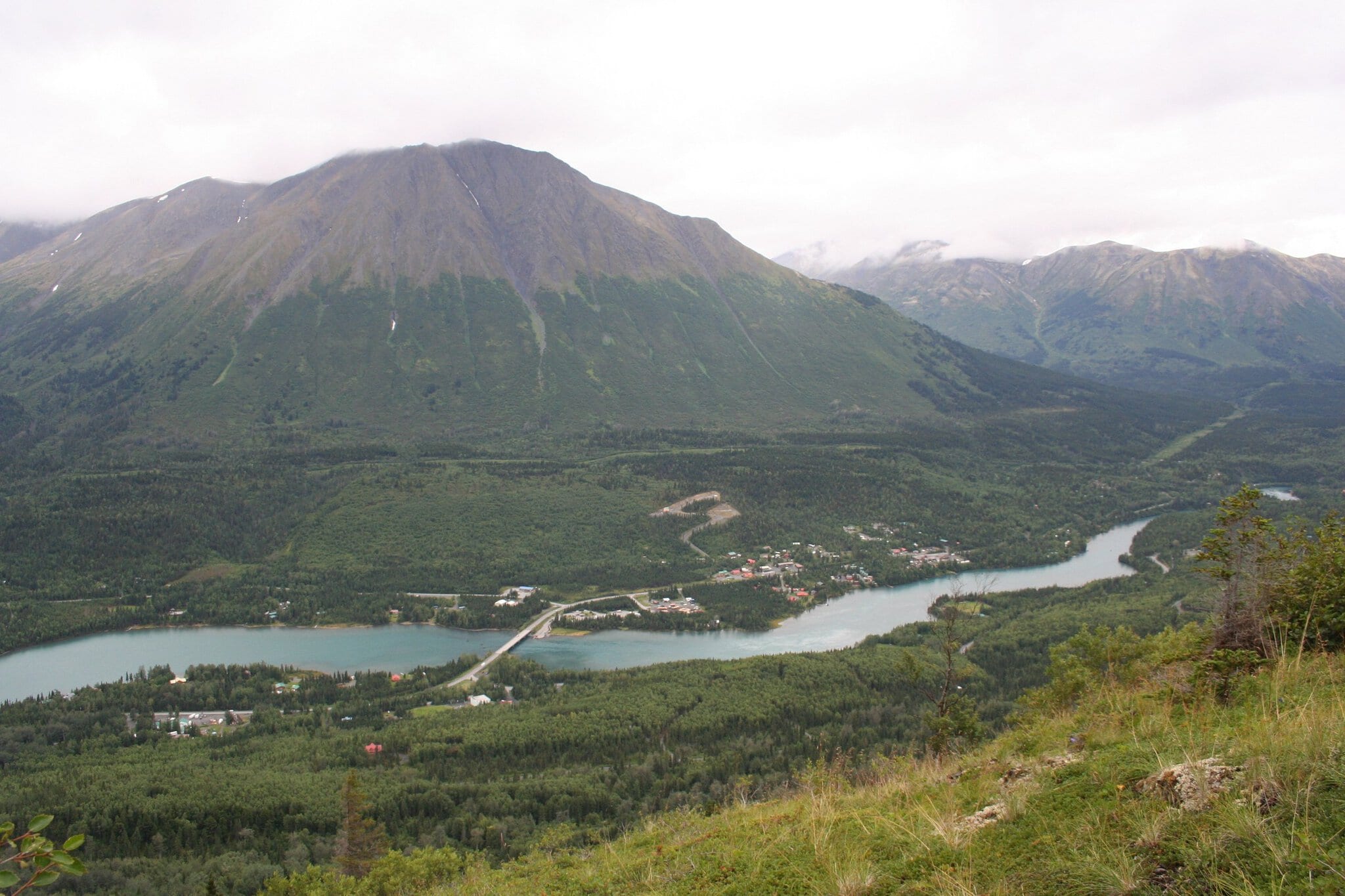
This little practical tip doesn’t technically sit within the town of Homer itself, but since you’ll inevitably drive right through it on your journey down Sterling Highway, I simply can’t leave it out of this guide. The sprawling, hilly area known as Cooper Landing, which straddles the stunning turquoise confluence of the Kenai River and Russian River, is the annual, boisterous epicentre of another wave of classic Alaskan madness: the mass sport fishing of Sockeye Salmon.
Cooper Landing at Russian River (Photo: calliopejen / Wikimedia Commons, CC BY-SA 2.0)
Particularly around the turn of July and August, enormous runs of hundreds of thousands of these beautifully crimson, powerful fish arrive, determinedly making their way from the deep ocean hundreds of kilometres upstream to spawn on shallow gravel beds — and then, sadly, immediately die. It’s an awe-inspiring and rather poignant natural cycle. Pull into the huge car park at the turnoff and walk down to the river for at least ten minutes to witness hundreds of anglers packed shoulder to shoulder in the icy water — something the locals affectionately and aptly call “combat fishing.”
10. Visit the Old Gold Rush Town of Hope
As you make your weary way down the Kenai Peninsula toward Homer, take a short detour to the wonderfully lost little historic village of Hope. It was founded by optimistic, penniless gold prospectors back in 1896, at the height of Alaska’s wildest gold rush. Thanks to its complete isolation from the wider world, this settlement has preserved an incredibly romantic and deeply authentic old-time character of wooden cabins, currently home to a year-round population of just about 160 hardy souls with generators.
11. Bear Viewing: Fly-Out from Homer to Katmai
If there’s one single thing I believe every visitor to Alaska should experience at least once (budget permitting, after all the accommodation costs), it’s the thrilling, awe-inspiring all-day fly-out trip in a small floatplane to watch hundreds of wild brown bears in their completely natural habitat in the river valleys. Homer’s perfect location makes it the ideal launching point. Local air services like the family-run Smokebay Air operate safe day flights in good weather toward the remote Katmai National Park or the forested Lake Clark area.
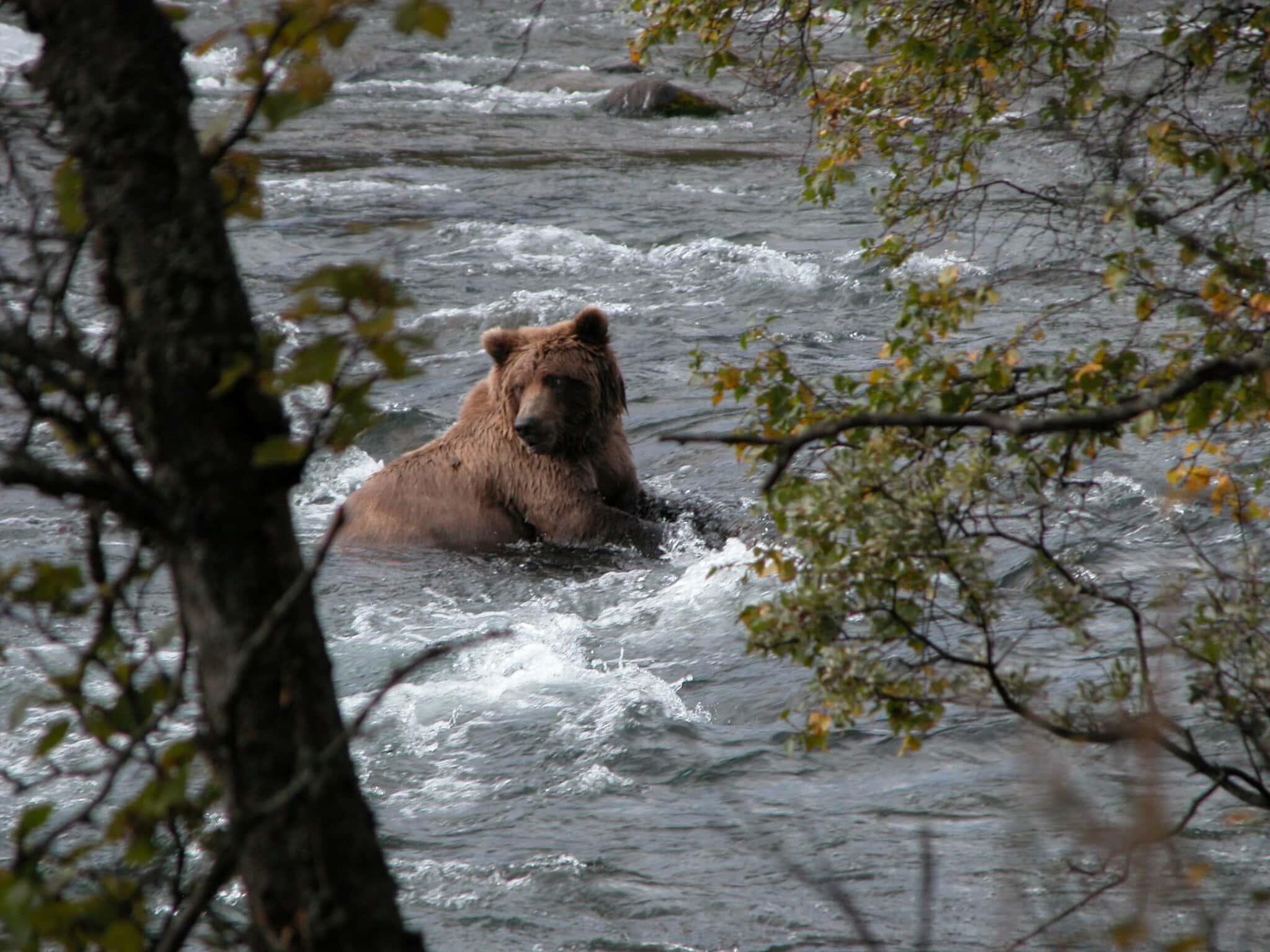
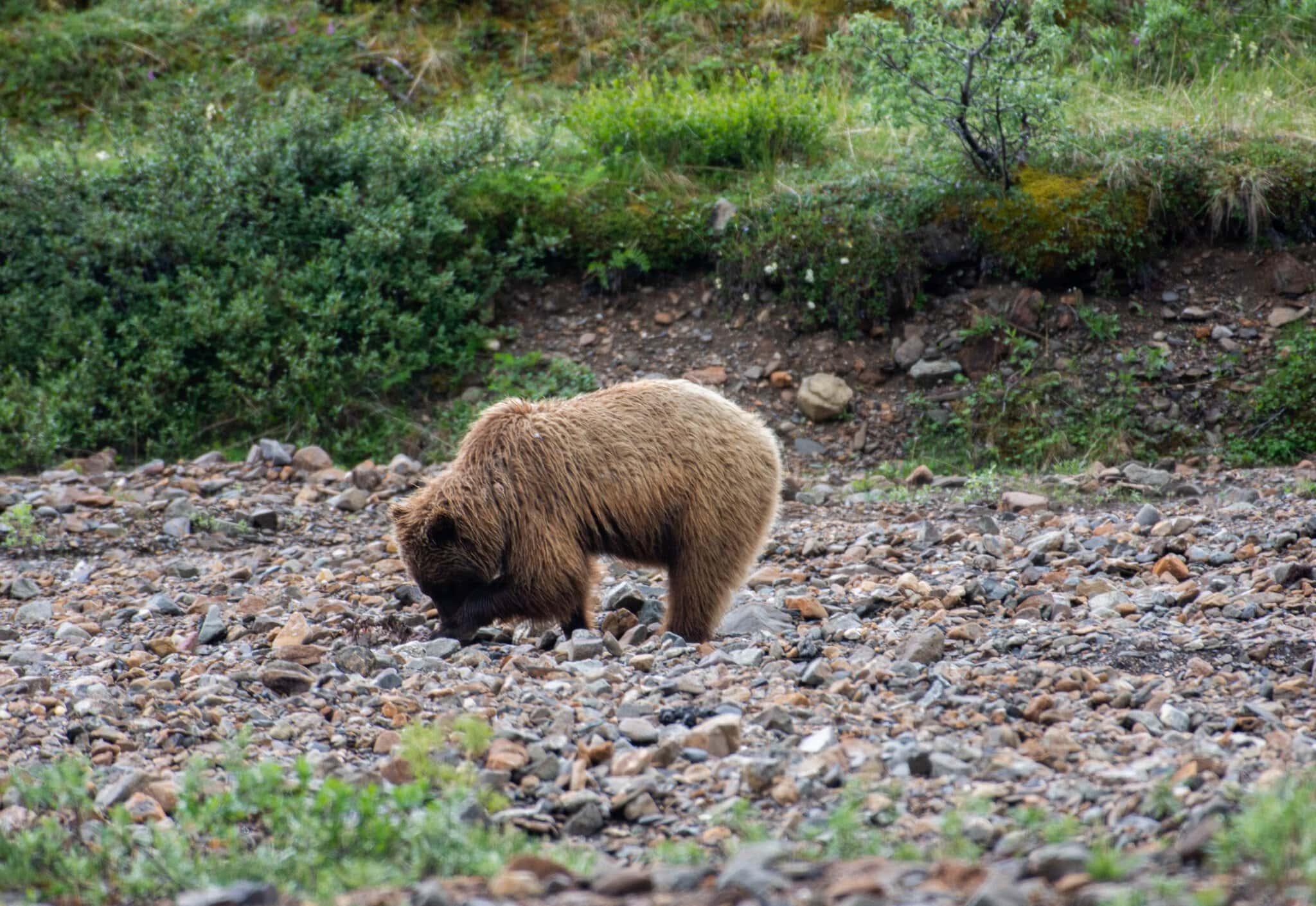
Brown bear in Katmai National Park (Photo: Charlie Kindel / Wikimedia Commons, CC BY-SA 2.0)
In the morning, you boldly climb aboard a tiny, droning plane on the Spit’s runway with a small group of fellow adventurers (Lukáš usually suffers a bit of anxiety in the cramped seat, gripping the handle white-knuckled, while I’m glued to the side window with enormous headphones on, snapping away in pure delight). During the flight you’ll skim low over snow-capped peaks, massive steaming volcanoes, and silver bays, before touching down rather firmly on some wide, deserted sandy beach quite literally in the middle of nowhere.
Under the strict, professional watch of a highly experienced, heavily armed pilot-guide, you’ll then spend long, chilly hours quietly crouching behind dry grass or standing with your camera by a shallow, rushing river, watching in speechless awe as huge, shaggy bears deftly swat thrashing salmon out of the water with their paws.
You can watch them playing on the banks with their curious, fluffy cubs, squabbling over the best fishing spot, or simply lying clumsily on the rocks with full bellies, digesting their fatty feast. It’s precisely the kind of moment you’ll live off for years — one of those times when you realise just how small we are compared to nature. These all-day fly-out trips understandably come with a steep price tag (in peak season you’ll often pay well over $1,000 per person), but trust me — hand on heart — every single dollar is worth it, and you won’t regret a second of it.
12. The Artists’ Colony of Halibut Cove
Our very last tip for today takes you to a truly magical, remote spot that you can once again only reach by water from the harbour. The picturesque settlement of Halibut Cove is a charming little cluster of cabins perched on massive wooden stilts rising straight out of the dark, calm water of a sheltered inlet. You can get there either on foot from the edge of the state park via the descending Saddle Trail loop and then call a pick-up boat from shore, or simply catch a direct water taxi from Homer first thing in the morning.
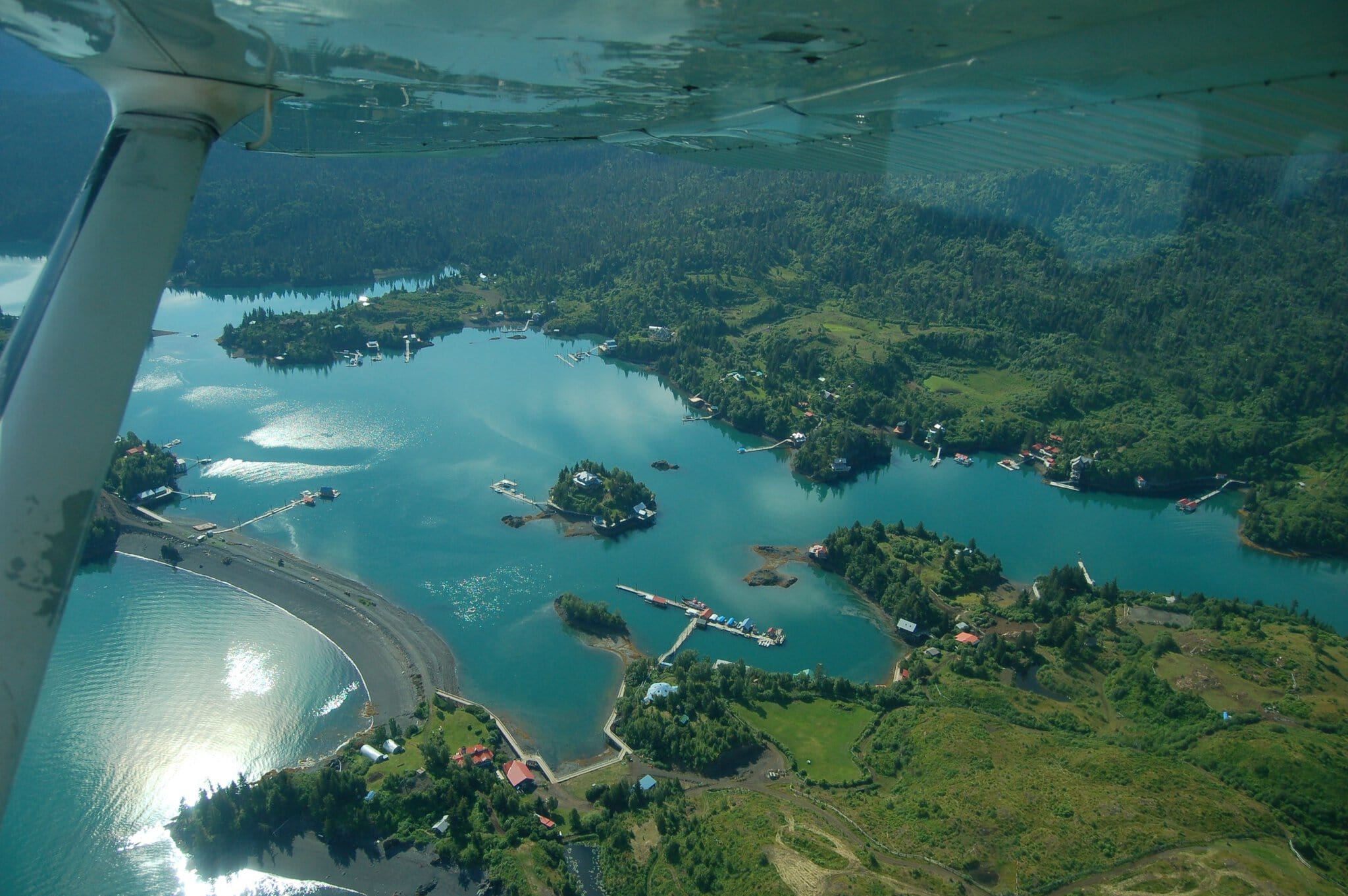
Aerial view of Halibut Cove, the artists’ colony (Photo: Andrew Otto / Wikimedia Commons, CC BY-SA 2.0)
Today this sheltered settlement has become a wonderfully peculiar, semi-private, and highly exclusive colony of artists, eccentric yet talented painters, and permanent residents who love spending their entire northern summer here, tucked away from the noise of everyday civilisation. There are no gravel roads, let alone paved ones for cars, so everyone here gets around either on elevated, slightly wobbly wooden boardwalks connecting the buildings or in tiny motorboats. And the silence is simply extraordinary — broken only by waves lapping against the stilts beneath the cabins.
In summer, there’s also a truly renowned (and predictably eye-wateringly expensive) local restaurant called The Saltry, famous for its seafood specialities. But even if you don’t end up having a formal multi-course dinner, the quiet stroll alone past tiny shops, open private art galleries, and miniature waterside cafés is a beautifully fairy-tale, romantic, and slow-paced ending to your wild Alaskan adventure.
Where to Eat and Drink in Homer
Since we’re vegetarians and our daily budget was a mere $50 for both of us, we cooked a lot ourselves in Chiquita using supplies from the local Safeway supermarket. Honestly, though, Homer absolutely surprised me with what’s on offer. For a fishing settlement at the end of the world, the food scene here seriously delivers. Whether you’re craving a nice, quiet dinner at the end of the day or just need to dash in and grab a quick, filling breakfast before an early hike and morning boat ride, you really won’t be disappointed.
Restaurants, Bakeries, and Breweries Worth a Visit
At the very top of my recommendation list I have to mention the cosy, family-run Two Sisters Bakery, tucked away in the historic part of the quiet Old Town centre near the pebbles of Bishop’s Beach. This charming little community bakery has been running since 1993, and honestly, they make — without a word of exaggeration — the absolute best giant cinnamon rolls on the entire peninsula (and from my personal perspective, possibly on the entire planet 😅). If you’re after great coffee and a little something for breakfast, don’t miss it. For beer lovers, a visit to the local Homer Brewing Company is an absolute must, where you can sample excellent craft beers at a reasonable price.
And restaurants? Even though we didn’t eat fish, for most visitors Homer is paradise. If you’re looking for something a bit more upmarket, the acclaimed Fat Olives is your spot. They do fantastic seafood and halibut for meat-eaters, but we appreciated their excellent vegetarian margherita pizza and hot soup. For the ultimate classic Alaskan fisherman’s lunch packed with fried goodies, tourists often head to Captain Pattie’s Fish House right in the bustling heart of windswept Homer Spit.
And if you’re desperately running late in the morning and just need a quick, cheap, and seriously filling bite on the go for a few dollars, head straight to the counter at the cramped, packed little place called The Bagel Shop. They’ll whip you up the most honest hot breakfast bagel around — for fish fans with smoked salmon, or for vegetarians like us with a generous helping of cream cheese and veg.
Frequently Asked Questions (FAQ)
When is the best time to visit Homer?
June through August, hands down. The weather is most stable (54-64°F), the salmon runs are in full swing, and everything from water taxis to bear-viewing tours is up and running. We chose July and it was a perfect choice, just make sure you book well in advance.
Is the drive from Anchorage to Homer difficult?
Not at all—you’re on paved highway the entire way along the Sterling Highway. It’s just under 220 miles from Anchorage, which takes about 4 to 5 hours of pure driving time. That said, plan for a full day trip because of the beautiful stops along the way and summer RV traffic.
How much does it cost to charter a boat for halibut fishing?
Homer is the halibut fishing capital, which means demand is high. During summer season, a full-day guided group charter runs about €360-500 per person. Gear is typically included, and they’ll often professionally filet your catch for you.
Can you drive to Kachemak Bay State Park?
No, there’s no road access to Kachemak Bay State Park. Your only option is to take a water taxi departing from the harbor on Homer Spit. The boat ride takes 20-30 minutes and a round-trip ticket costs around €80-90 per person.
Do I need bear spray for hikes around Homer?
Yes, absolutely. Alaska is wilderness, and even on popular trails you can easily encounter a bear. Always carry spray attached to your belt or backpack, and make noise when you’re in areas with limited visibility.
What is Homer Spit and should I stay there?
Homer Spit is a gravel peninsula stretching more than 4.5 miles out into the ocean. It’s where you’ll find all the tourist action—restaurants, the harbor, and camping spots. Staying there is an amazing experience, but expect higher prices and more crowds than in town.
Can kids handle the hike to Grewingk Glacier?
Yes, the Grewingk Glacier Lake Trail is relatively easy with no major elevation gain. It’s about 3 miles one way to the lake with floating icebergs. The trail is well-maintained and very popular for family outings.
Tips and Tricks for Your Vacation
Don’t Overpay for Flights
Search for flights on Kayak. It’s our favorite search engine because it scans the websites of all airlines and always finds the cheapest connection.
Book Your Accommodation Smartly
The best experiences we’ve had when looking for accommodation (from Alaska to Morocco) are with Booking.com, where hotels, apartments, and entire houses are usually the cheapest and most widely available.
Don’t Forget Travel Insurance
Good travel insurance will protect you against illness, accidents, theft, or flight cancellations. We’ve had a few hospital visits abroad, so we know how important it is to have proper insurance arranged.
Where we insure ourselves: SafetyWing (best for everyone) and TrueTraveller (for extra-long trips).
Why don’t we recommend any Czech insurance company? Because they have too many restrictions. They set limits on the number of days abroad, travel insurance via a credit card often requires you to pay medical expenses only with that card, and they frequently limit the number of returns to the Czech Republic.
Find the Best Experiences
Get Your Guide is a huge online marketplace where you can book guided walks, trips, skip-the-line tickets, tours, and much more. We always find some extra fun there!
TL;DRThe northern lights over Alberta are best seen from October to March, when the nights are longest, and the 2024–2026 solar maximum means displays are showing up more often and more intensely than usual. Top spots include Jasper National Park (the world’s second-largest dark sky reserve), with Maligne Lake and Pyramid Lake as prime viewing points, Banff National Park around Vermilion Lakes, Two Jack Lake and Lake Minnewanka, and Elk Island National Park, under an hour from Edmonton. Apps like My Aurora Forecast or Aurora Forecast 3D help you track activity — aim for a KP index of 5 or above, when the lights are visible to the naked eye. Accommodation nearby runs about 150 to 250 CAD a night, and night-time temperatures regularly drop to -20 to -30°C, so pack accordingly.
When Lukáš and I worked in Banff and Lake Louise during the winter of 2016–2017, we never managed to catch the northern lights in Alberta — the solar minimum was unforgiving, and we didn’t see our first aurora until much later in Iceland. But the locals told us so many stories about nights when the sky lit up with green ribbons that it became crystal clear: this province is every bit as good for aurora hunting as Scandinavia or the Yukon. And in 2024–2026, you’re hitting the solar maximum, meaning the sky lights up far more often. That feeling when you step outside at night and see green waves of light rippling across the sky — nothing can truly prepare you for it. It’s pure magic. ☺️
If you’ve been dreaming of witnessing this celestial dance with your own eyes, we’ve got absolutely fantastic news. We’re currently in what’s known as the solar maximum, which means the sun is at its most active in eleven years between 2024 and 2026. The northern lights in Alberta are putting on far more frequent and intense shows than you might expect. You don’t need to fly all the way up to the remote Yukon — some of Canada’s most stunning national parks will do just fine.
So — where exactly should you set up your tripod, and is it really worth the frozen fingers? And how do you actually photograph the aurora if you’re not a professional photographer? That’s exactly what we’ll cover here. We’ll also look at costs, what to wear, and where and when to see the northern lights so spectacular they’ll knock you off your feet.
TL;DR
Even if you can’t quite picture it right now, trust us — every sleepless night is absolutely worth it. You just need to plan well and arm yourself with a pinch of patience, because Mother Nature always has the final say.
Solar Maximum (2024–2026): We’re in a period of peak solar activity — the highest in 11 years. The aurora is visible more often, stronger, and much further south. Alberta is an ideal choice right now, no need to trek up to the remote Yukon.
When to go: Your best chances are from October to March, when nights are longest and skies darkest. During strong solar storms, you can also spot the lights in autumn or spring.
Best spots:Jasper National Park (the world’s second-largest Dark Sky Preserve), Banff National Park, and Elk Island near Edmonton.
What you need: Download Aurora Forecast 3D or My Aurora Forecast, layer up with the warmest clothing you own (hand warmers are a lifesaver), and don’t forget a tripod — you simply can’t photograph the aurora without one.
Expectations: Your eyes see the northern lights differently than a camera sensor. Sometimes it looks like a faint grey cloud, but on your camera screen it glows vivid green.
And if you want specific tips and our secret spots, make sure to read the full article — it’s well worth it.
What Are the Northern Lights and Why Go Now (Solar Maximum)
Before we head out into the freezing Canadian darkness, let’s quickly cover what exactly we’ll be looking for in the sky and why this particular period is absolutely exceptional for any traveller.
What Is the Aurora Borealis
It sounds complicated, but it’s actually pretty simple: the Sun sneezes, the Earth lights up. 😁 Technically speaking, the northern lights — or Aurora Borealis — are a light phenomenon that occurs when particles ejected from the Sun (known as the solar wind) collide with Earth’s magnetic field.
These particles are pulled toward the poles by the magnetic field, where they react with gases in our atmosphere. The result is those gorgeous green, pink, or purple ribbons of light dancing beautifully across the sky. It’s such a breathtaking sight that even after all these years, we still stand there with our jaws on the floor.
Why 2024–2026 Is So Special
You may have already heard the term Solar Maximum. Solar activity runs in eleven-year cycles, and we’re currently right at the absolute peak of this cycle. During this period, the Sun produces far more eruptions and sunspots, which means stronger solar winds are heading toward Earth.
As a result, the northern lights are far more intense, appear more frequently, and most importantly, reach much further south. While you’d normally need to travel to the northern edge of Canada, during these years Alberta puts on a show that will have you standing outside for hours, even long after your fingers have gone completely numb.
What Is the KP Index
If you want to hunt the aurora successfully, you need to learn just one value: the KP Index. It’s a scale from 0 to 9 that measures geomagnetic activity. For Alberta, a KP index of around 3 or 4 means you might catch a faint aurora on the northern horizon.
But when the KP index climbs to 5, 6, or higher, you’re looking at a powerful solar storm. The entire sky directly overhead will be ablaze with colour, and you’ll clearly see the aurora with the naked eye. We always nervously check our phones, and the moment it creeps past four, we start packing the thermos flasks with tea.
Best Time to See the Northern Lights in Alberta
Chasing the northern lights isn’t just about being in the right place — you also need good timing, clear skies, and above all, patience.
Your best chances of success come during the winter months, roughly from late October through to the end of March. The reason is dead simple: nights in Canada during this period are incredibly long, giving you a much wider window for viewing. We saw our first aurora in late November, and it appeared fairly regularly through December. Winter frost also tends to bring beautifully clear, dry skies with no cloud cover.
You do have to accept, however, that nighttime temperatures in Alberta routinely drop to −20 °C or even −30 °C. If extreme cold isn’t your thing, you can try your luck in autumn or early spring. During the solar maximum, geomagnetic storms are so powerful that locals and photographers have been capturing fantastic displays even in September, when you can still camp by the lakes without risking frostbite. One golden rule though: avoid full moon periods, as the moonlight can easily wash out even a strong aurora.
Essential Apps for Finding the Northern Lights
If you think you can just drive into the mountains, sit on a bench, and casually wait for the green show to begin, you’ll probably freeze unnecessarily — and quite quickly. To hunt successfully, you need the right apps on your phone.
The absolute essential is My Aurora Forecast & Alerts, which has a clean interface showing you the current KP index and visibility probability for your location — and here’s the real reason we recommend it — sends you push notifications when activity suddenly spikes. Another brilliant app is Aurora Forecast 3D, which offers a visualisation of the auroral oval over the globe so you can see exactly whether the green band is approaching Alberta. For the data geeks who want to track raw readings straight from the meteorologists, there’s the NOAA (Space Weather Prediction Center) website and app, where you can monitor the current speed and density of the solar wind in real time.
8 Best Spots in Alberta to Set Up Your Tripod
Alberta is a massive playground for aurora hunters. Let’s look at the specific locations where you won’t have to battle light pollution from cities and where you’ll take home the best photographs — with reflections in lakes or snow-capped mountain peaks in the background.
1. Jasper National Park and Its Dark Skies
Photo: Stephanie Macleod / CC BY-SA 4.0 / Wikimedia Commons
Jasper National Park is the absolute pinnacle for night sky viewing because it’s been designated the world’s second-largest Dark Sky Preserve. This means strict regulations on artificial lighting are in place, so even just a short drive from the town of Jasper you’ll find pitch-black darkness. In winter, an incredible stillness settles over the park, occasionally broken only by the howling of wolves in the distance.
If you’re heading here, we recommend checking out our comprehensive guide to Jasper National Park, where you’ll find loads of tips on what to do during the day before darkness falls. Then at night, simply drive a little way out of town and take in views you won’t easily find anywhere else on the planet.
2. Maligne Lake and the Iconic Spirit Island
Photo: dennisflarsen / CC0 / Wikimedia Commons
While you’re in Jasper, make your way to Maligne Lake. The drive takes about 45 minutes from town, and at night you need to go very carefully because of wildlife on the road. We once encountered an enormous caribou that had absolutely no intention of moving off the tarmac and just stood there curiously staring into our headlights.
Your reward, however, is one of the most beautiful lakes in Canada. If you manage to capture the northern lights right above Maligne Lake, you’ve hit the jackpot. The shores are fairly accessible, so you can set up your tripod right at the water’s edge and photograph the green light reflecting off the frozen surface.
3. Pyramid Lake and Its Scenic Pier
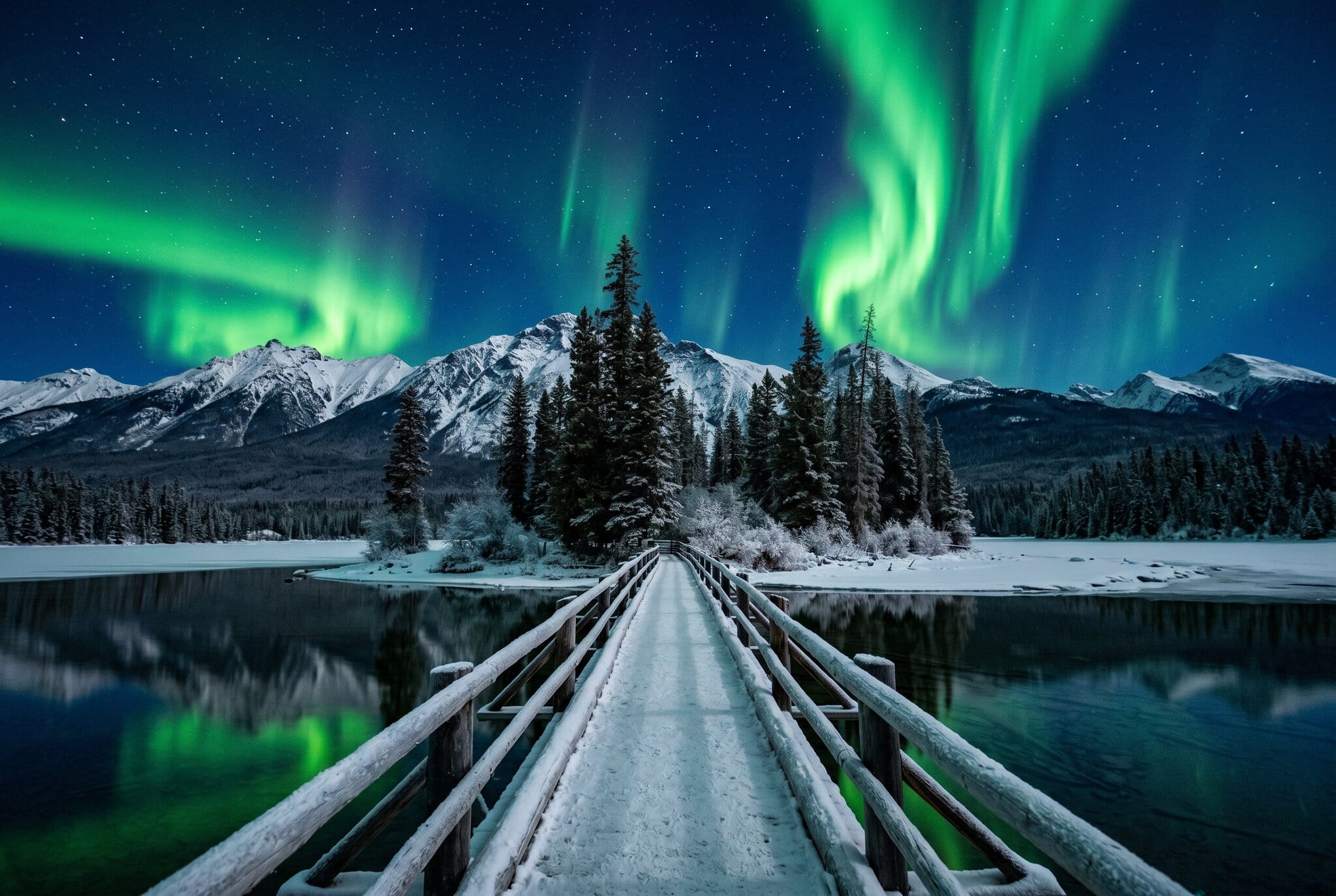
Northern lights over Pyramid Lake — the iconic bridge to the island and green ribbons swirling behind Pyramid Mountain.
This is an absolute classic that you must try if you don’t fancy driving too far at night. Pyramid Lake is just a few minutes’ drive from central Jasper and features a small wooden bridge leading to a tiny island (Pyramid Lake Island). This island is an iconic spot among photographers.
From here you get a brilliant view of Pyramid Mountain, behind which the aurora very often pulses. 😅 Just be prepared: when the KP index is high, you probably won’t be alone — it’s an extremely popular spot. During long waits for the perfect shot, photographers’ cameras regularly freeze to their tripods, so factor that in and bring a spare battery in an insulated pouch.
4. Vermilion Lakes Near Banff
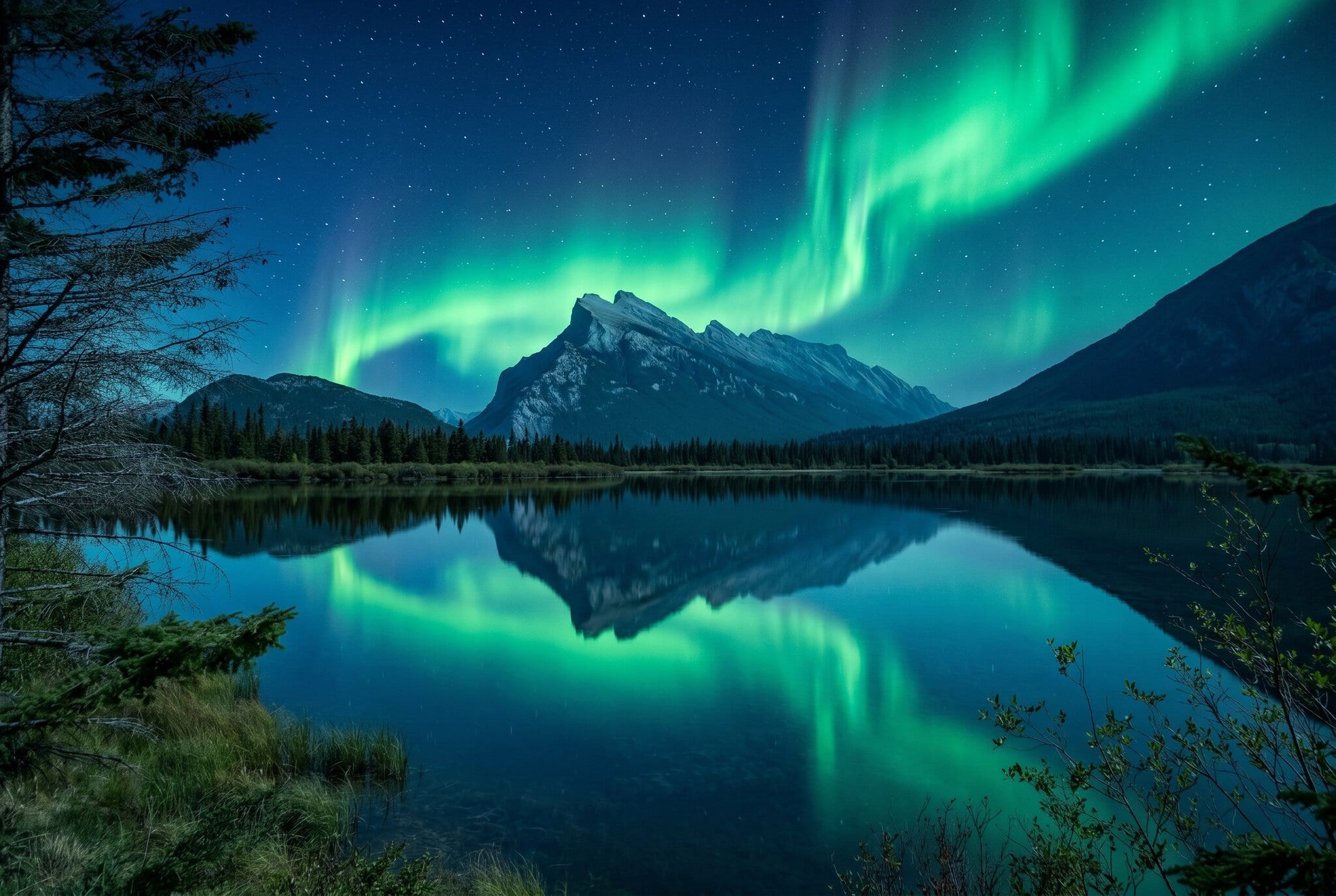
Northern lights over Vermilion Lakes — Mount Rundle and a mirror-like aurora reflection on the water’s surface.
Moving south to Banff National Park, the first place you should head after dark is Vermilion Lakes. They’re just a few minutes from the town of Banff itself. A narrow road leads right to the lakes with parking alongside, so in the bitter cold you can regularly dash back to your warm, running car.
The wait goes by much better with a hot chocolate in hand. If you’re photographing, you’ll have the iconic Mount Rundle in your frame, which combined with the northern lights creates absolutely magical scenery that you’ll immediately want as your phone wallpaper.
5. Two Jack Lake and Fantastic Reflections
Photo: DXR / CC BY-SA 4.0 / Wikimedia Commons
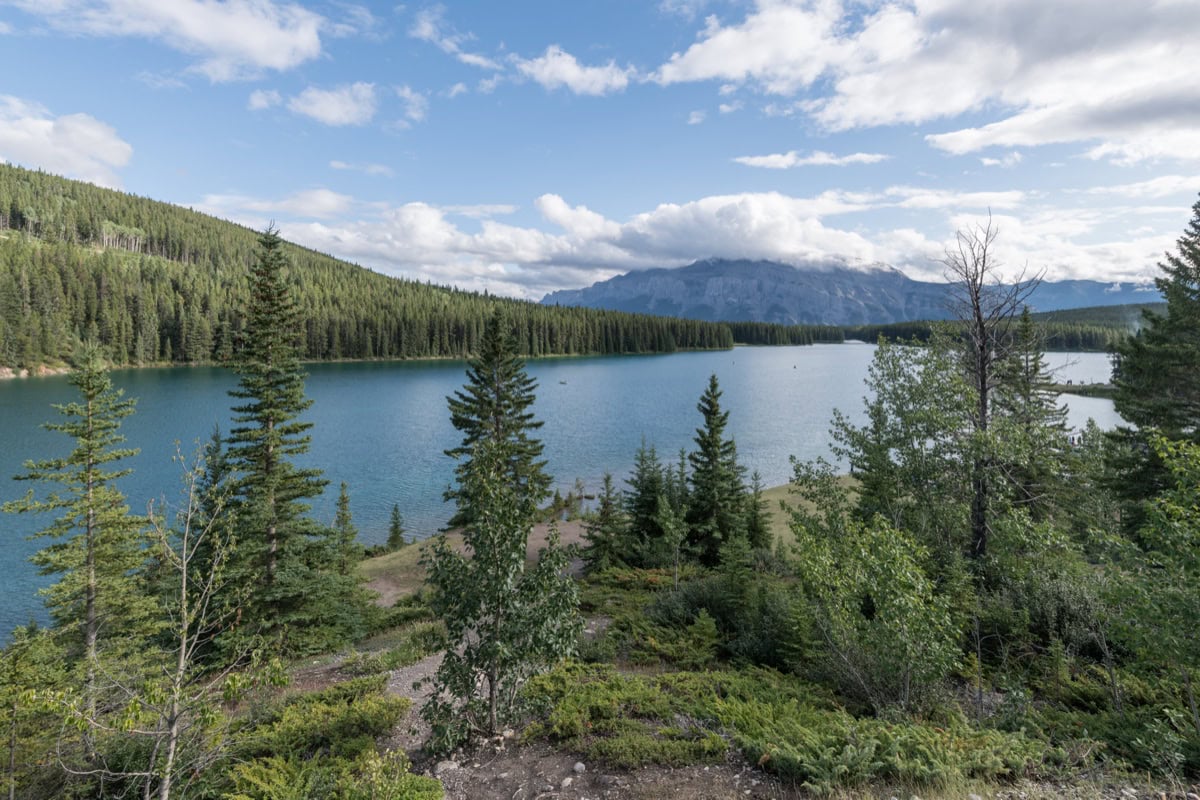
Another gorgeous location near Banff is Two Jack Lake, situated on the same road as the popular Lake Minnewanka. It offers a stunning view toward the north — which is exactly the direction you need to be looking when searching for the aurora.
In winter the lake is usually locked under a thick layer of ice and snow, but if you visit in autumn before freeze-up, you can photograph a perfect mirror reflection of the aurora in the water. A fairly biting wind sometimes whips around the camping area, so a thermos of hot tea is worth its weight in gold here.
6. Lake Minnewanka for Total Darkness
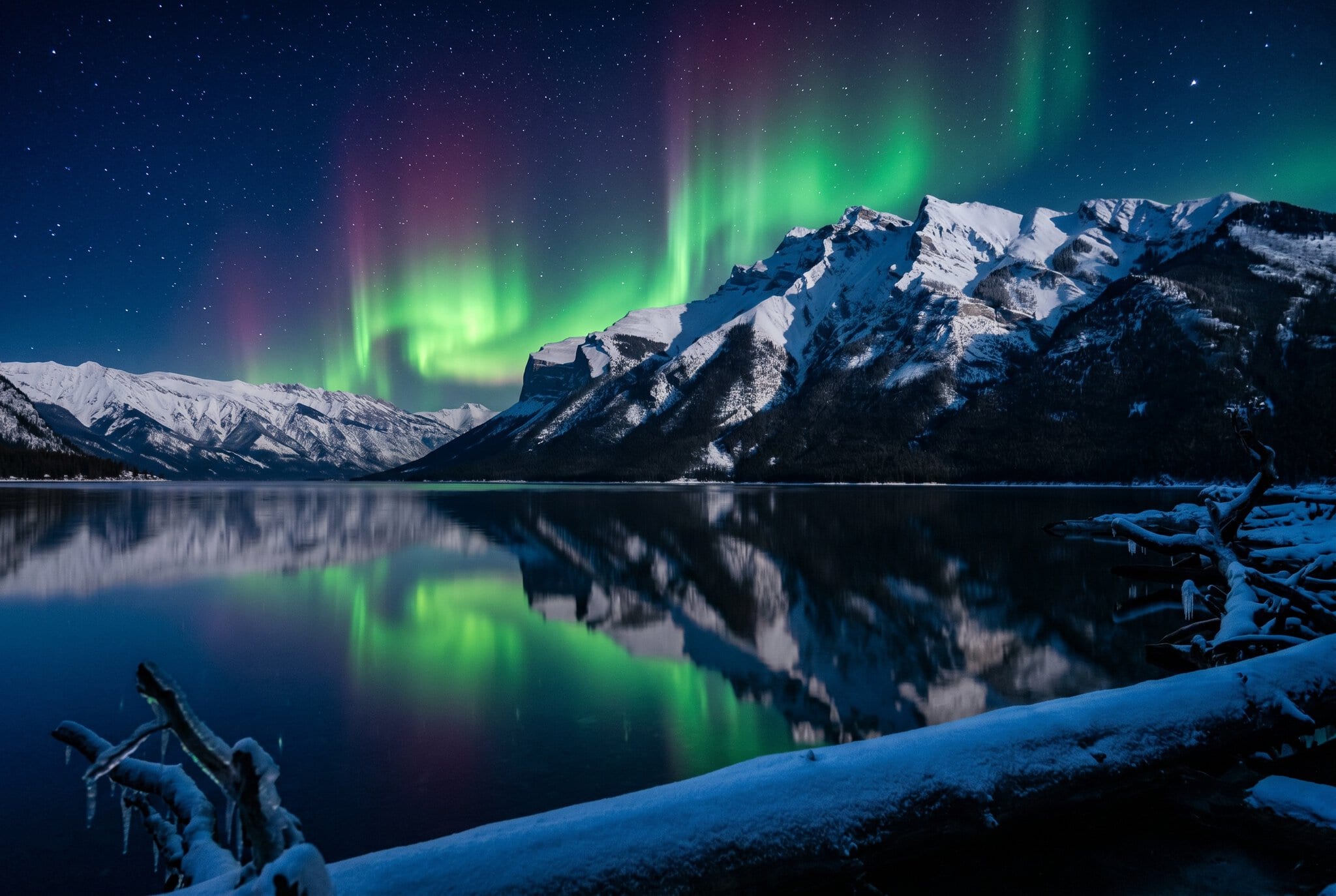
Northern lights over Lake Minnewanka — green and magenta ribbons above snow-covered mountains and a mirror-like reflection on the ice.
Lake Minnewanka is a massive glacial lake just outside Banff and one of the best spots in the area, because the dense forest surrounding it does a brilliant job of shielding any light pollution from town. The sky here feels enormous and wide open, giving the aurora room to put on a full display.
It does get brutally cold though, as the wind blows straight off the mountains across the frozen lake surface, so thermal base layers are an absolute must. Drive carefully on the way to the lake — there are plenty of deer and elk standing by the road at night, and in the dark you’ll only spot them at the last second.
7. Mount Norquay Viewpoint Above the Town
Photo: Thank you for visiting my page from Canada / CC BY 2.0 / Wikimedia Commons
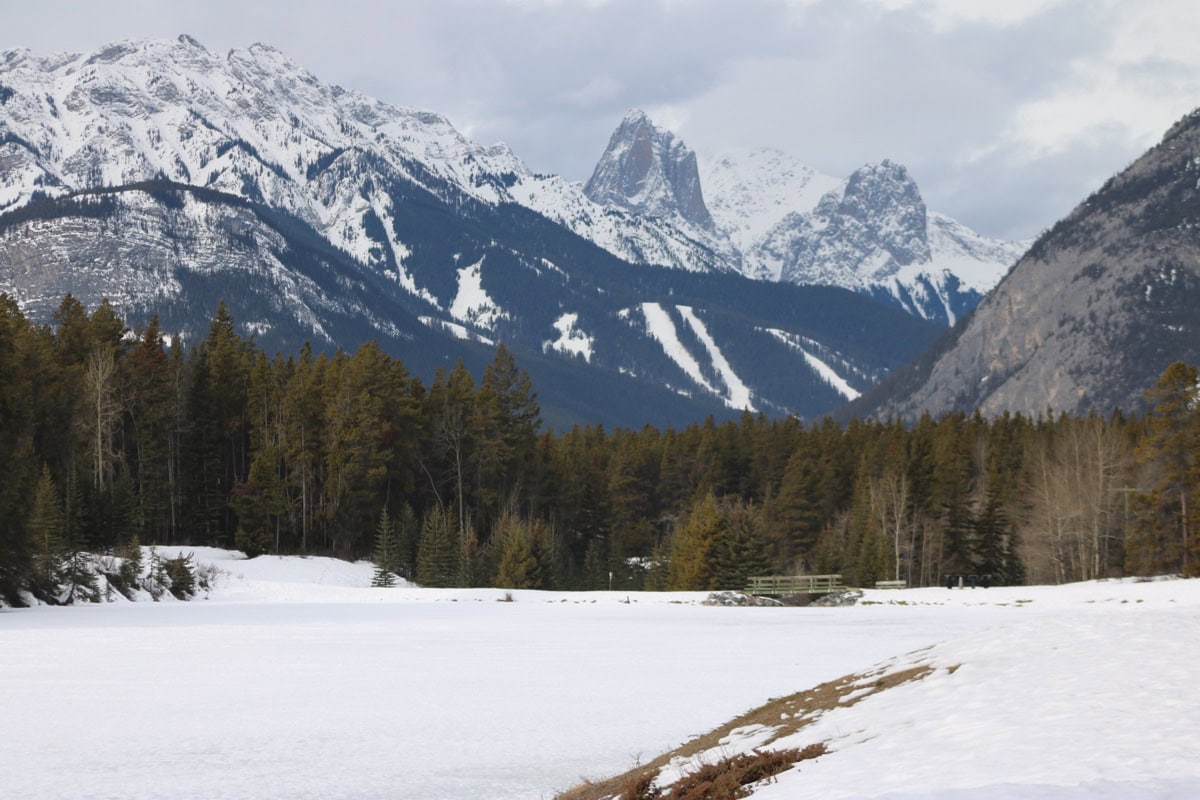
If an extremely strong solar storm is forecast (KP index 6 or higher), head to the viewpoint on the road leading up to the Mount Norquay ski resort. You’ll have the entire town of Banff spread out below you like a postcard.
Normally the town lights would interfere with viewing, but when the aurora is powerful enough, it creates a truly unique photo composition — a glowing valley beneath a luminous sky. The road up is quite winding and can be icy in winter, so take it slow and drive carefully.
8. Elk Island National Park Near Edmonton
Photo: Khoshhat / CC BY 4.0 / Wikimedia Commons
If you’re not spending all your time in the mountains and stop by the provincial capital as well, definitely make a trip to Elk Island National Park, which lies less than an hour’s drive from Edmonton. This park is also a designated Dark Sky Preserve.
According to Edmonton locals and photographers who regularly hunt the aurora here, Elk Island’s flat terrain and wide-open skies offer a completely different experience compared to the mountains. Just watch out for the bison — they love to bed down right in the middle of the road, and you simply have to wait politely until they decide to move on.
Where to Stay for Aurora Hunting and How Much It Costs
Alberta offers a huge range of accommodation, but keep in mind that the Banff and Jasper national parks are among the pricier destinations in Canada. In winter (which is the ideal time for aurora viewing) prices are somewhat lower than during peak summer season, but still expect to pay roughly 100–170 € (150–250 CAD) per night for a decent double hotel room.
Given that you’ll likely be awake half the night and sleeping through the day, look for accommodation with blackout curtains and ideally a kitchenette. We always appreciated being able to make a hot bowl of soup or a cup of tea at 3 a.m. when we got back from the cold, rather than having to wait for a café to open in the morning.
In Jasper, we recommend staying as close to the centre as possible or somewhere with quick access to Pyramid Lake Road. We absolutely loved the Fairmont Jasper Park Lodge. It’s a bit on the pricier side, but those wooden cabins on the lakeshore have an incredible atmosphere, and all you have to do for stargazing is step out onto the terrace.
In Banff, hotels along Banff Avenue are a great choice, because you can be out in the darkness by the lakes within a 10-minute drive. We’re personally big fans of the Moose Hotel & Suites, which also has rooftop hot pools. Trust us, after five hours of freezing outside, that hot pool will feel more heavenly than anything else in the world.
Where to Eat Before (or After) a Night of Aurora Hunting
Hunting the northern lights is a surprisingly serious physical feat. When you’ve been standing by a frozen lake at minus twenty for an hour, you burn through so many calories that you come back absolutely ravenous. Here are a few tried-and-tested spots where you can refuel properly:
Luckily, Canadian mountain towns are packed with excellent restaurants and bistros that’ll get you back on your feet in no time. We’ve picked the places we personally return to again and again, where they always take great care of you.
Our Favourite Spots in Banff and Jasper
In Banff, you absolutely must visit The Bear Street Tavern. They make incredibly good pizza that you dip in honey with chilli oil. It might sound a bit odd, but once you try it, you’ll never want to eat pizza any other way. It’s the perfect calorie bomb before a long night out.
If you’re in Jasper, don’t miss Jasper Brewing Company. They’ve got excellent craft beer and, most importantly, classic Canadian poutine — chips smothered in cheese curds and drenched in hot gravy. This hearty dish will warm you up reliably after even the coldest night of shooting.
Jasper Dark Sky Festival 2026: An Event Not to Miss
If you want to combine sky watching with a truly special cultural experience, pencil October 2026 into your diary. During the solar maximum, Jasper National Park will once again host the wonderful Jasper Dark Sky Festival.
The programme is absolutely packed — we’d probably skip the academic lectures (sorry, scientists) and head straight for the photography workshops, where photographers from around the world teach beginners how to properly capture the night sky. The atmosphere in town during this time is fantastic: the streets smell of mulled wine, people gather around campfires, and the moment phones ping with a KP index alert, the entire town collectively migrates to the lakes.
Lukáš and Lucie recommend
Where to Stay in Alberta
3 accommodations — resorts, hotels and other lodging options
How to Photograph the Northern Lights: Gear and Settings
If you think you can just rock up, whip out your iPhone, snap a photo, and get a National Geographic-worthy shot — we’re sorry to disappoint. Modern phones do have impressive night modes and can occasionally capture a decent green glow, but for truly sharp, detailed images, they usually fall short. If you want genuinely beautiful photos, you’ll need a DSLR or mirrorless camera and, crucially, a tripod. Without a tripod you don’t stand a chance, because we’re talking long exposures here.
So how should you set up your camera?
Lens: Use the widest lens you have (ideally 14mm to 24mm) to fit as much sky and foreground landscape into the frame as possible.
Aperture: Open it up as wide as it goes so the sensor captures maximum light. Values of f/2.8, f/2.0, or even f/1.4 are ideal.
ISO: This depends on your camera’s capabilities, but don’t be afraid of values between 1600 and 6400.
Shutter speed: Set your exposure between 5 and 25 seconds. If the aurora is dancing rapidly across the sky, use a shorter time (around 5–10 s) so the ribbons don’t blur into a green mush.
Focus: You need to switch off autofocus and manually focus the lens to infinity (often just a touch before the infinity mark). Try checking the sharpness on a bright star or during the daytime using your screen.
💡 Practical tip: At temperatures around −20 °C, camera batteries drain before your eyes. Two fully charged batteries that would last a week in summer will be dead within an hour in winter. Keep your spare batteries in an inside pocket close to your body so they stay warm.
What to Wear and Pack: How Not to Freeze in a Canadian Winter
Standing in the middle of the night on a frozen lake in the Rocky Mountains and waiting an hour for the first green flicker is a real test of willpower. Success isn’t just about what’s in your camera — it’s mainly about what’s on your body. We seriously underestimated the cold on our first night outings and were shivering pretty badly. 😅
Layer up as much as physically possible. At least five layers on your upper body isn’t overkill at all. Start with quality merino wool base layers, add a warm fleece mid-layer, then an insulated down jacket, and top it off with a solid windproof outer shell. Pay the same attention to your legs: we routinely pulled ski trousers over insulated bottoms. Invest seriously in your footwear — proper winter boots (snow boots are perfect) and wool socks are the absolute essentials.
Three things you absolutely must have in your backpack:
Hand warmers (disposable heat packs): Those little sachets that heat up for several hours once opened. Pop them inside your gloves, because your fingers will be exposed when adjusting camera settings and they freeze in seconds.
Head torch with a red light mode: If you use white light, you’ll destroy your own night vision and probably infuriate every other photographer nearby. Red light is gentle on the eyes.
Hot tea in a thermos and snacks: There’s nothing better than pouring yourself a steaming cup of tea in that frozen silence. And always make sure your car is parked nearby so you can jump in and warm up whenever you need to!
Expectations vs. Reality: What the Northern Lights Actually Look Like
When people head out to see the northern lights for the first time, they’re often a little surprised. The photographs you see online (and in this article) are taken with a camera using a long exposure. This means the sensor collects light over several seconds, whereas the human eye simply doesn’t work that way.
If the KP index is weaker (say around 3 or 4), you might look at the sky and see only a strange, motionless grey smudge that has no business being there. Point your camera at it, though, and — boom — a vivid green ribbon appears on your screen. It’s a bit like a magic trick that only reveals itself through the lens.
But when you’re lucky enough to catch a strong solar storm with a KP index of 6 or higher (which is very realistic during 2024–2026), that gap disappears. The aurora will dance across the entire sky, you’ll clearly see vivid green and often purple with the naked eye, and you’ll be so spellbound that you’ll forget about the cold and even about your fancy camera altogether.
Practical Tips for Your Trip to Canada
Hunting the northern lights in Alberta probably won’t be your only reason for visiting, so here are a few practical tips to help you plan the whole trip.
Finding Cheap Flights to Canada
From the UK, you can find great deals on flights to Calgary with airlines like Air Transat, WestJet, or by connecting through major hubs. We always recommend comparing prices well in advance. Just remember: in winter, always make sure you add checked luggage, because there’s no way you’re fitting five layers of clothing into a carry-on. 😅
Don’t leave booking to the last minute. If you plan your trip six months ahead, you’ll save money that you can then splash out on a nicer hotel with a hot tub. Trust us, in a Canadian winter, you’ll appreciate every penny spent on that.
Frequently Asked Questions (FAQ)
If you’re planning a trip to Canada and your head is buzzing with questions about the northern lights, you’re not alone. These are the questions we get asked most often.
Where can I see the northern lights today?
The northern lights can’t be predicted months in advance—accurate forecasts work about 2 to 3 days out. To check today’s activity, your best bet is to download the My Aurora Forecast app or check the NOAA Space Weather Prediction Center website, where you’ll find a 3-day forecast plus a short-term 30-minute auroral oval outlook.
When and where is the best time to see the northern lights?
The ideal time is winter from late October through March, when nights are longest and skies are darkest. You’ll need a location with minimal light pollution for viewing. In Canada, dark sky reserves are perfect—like Jasper National Park or Elk Island—or remote mountain lakes in Banff National Park (such as Lake Minnewanka or Vermilion Lakes).
When will the northern lights appear in 2026?
2026 still falls within what’s called solar maximum, a period when solar activity is at its highest in the 11-year cycle. The aurora will appear much more frequently and be visible even at more southern latitudes throughout the year. That said, even in 2026 you’ll still get the best viewing during the long, dark nights of winter months (October through March).
Where can I see the northern lights in Sweden? (And is it better than Canada?)
In Sweden, the best spot is Abisko National Park in Swedish Lapland above the Arctic Circle, thanks to the so-called ‘blue hole’ (frequently clear skies). Both Sweden and Canada are fantastic destinations. Canada has one huge advantage though—during the day you can hike to a glacial lake and at night photograph the aurora, without having to pay Scandinavian prices for accommodation above the Arctic Circle. 😉
Can I photograph the northern lights with my phone?
Yes, modern smartphones (like the latest iPhones or Samsung models) can capture the green glow in the sky during strong aurora displays using night mode. However, results are often grainy and lack sharpness. For truly stunning photos, we recommend using a DSLR camera, a sturdy tripod, and exposures lasting several seconds.
Will I see the northern lights in color with the naked eye?
It depends on the strength of the geomagnetic storm (KP index). During weaker activity (KP 3 or 4), the aurora may look like a moving whitish or gray cloud to the naked eye, while your camera will pick up the green through long exposure. But when the aurora is strong (KP 6 and above), you’ll easily see vivid green, and during truly extreme storms, even red or purple colors with your own eyes.
Is it safe to be out at night in Canadian parks?
You need to follow the rules. In winter (November through April), most bears are hibernating so the risk of an encounter is minimal, though wolves or cougars can be active. The biggest threats are extreme cold (risking a frozen car or frostbite) and collisions with large wildlife (moose, elk) on dark roads. Drive very slowly and always have a safe place to warm up.
Tips and Tricks for Your Vacation
Don’t Overpay for Flights
Search for flights on Kayak. It’s our favorite search engine because it scans the websites of all airlines and always finds the cheapest connection.
Book Your Accommodation Smartly
The best experiences we’ve had when looking for accommodation (from Alaska to Morocco) are with Booking.com, where hotels, apartments, and entire houses are usually the cheapest and most widely available.
Don’t Forget Travel Insurance
Good travel insurance will protect you against illness, accidents, theft, or flight cancellations. We’ve had a few hospital visits abroad, so we know how important it is to have proper insurance arranged.
Where we insure ourselves: SafetyWing (best for everyone) and TrueTraveller (for extra-long trips).
Why don’t we recommend any Czech insurance company? Because they have too many restrictions. They set limits on the number of days abroad, travel insurance via a credit card often requires you to pay medical expenses only with that card, and they frequently limit the number of returns to the Czech Republic.
Find the Best Experiences
Get Your Guide is a huge online marketplace where you can book guided walks, trips, skip-the-line tickets, tours, and much more. We always find some extra fun there!
TL;DRHaines and Skagway in southern Alaska come with 14 solid tips on what to see and do — from watching up to 3,500 bald eagles at the Chilkat Bald Eagle Preserve to riding the historic White Pass & Yukon Route Railway for around $135. Haines is a quiet fishing town steeped in Tlingit culture, home to Fort William H. Seward, while Skagway lives and breathes gold rush history, including the Klondike Gold Rush National Historical Park, which is free to visit. Summer (May to September) is best for sightseeing, while November is the time for the eagle festival. Give yourself 3 to 4 days for the two towns combined — a catamaran connects them in 45 minutes, and the ferry from Juneau takes just under five hours and costs around $50.
When you cross the Canadian-American border by car and begin descending the Haines Highway from the Yukon towards the ocean, your heart simply stops at the sheer beauty unfolding before you. Lukáš and I chose this classic road trip route, and that moment when turquoise water starts mirroring the deep shadows of towering mountains is something you never forget. The air is so crisp and clean you drink it in with every breath. Every time we return to Alaska, I’m struck all over again by the raw, untamed majesty of this landscape. The northern tip of the famous Inside Passage hides two towns that couldn’t be more different — and yet they make the perfect Alaskan pair. On one side, there’s quiet, fishing-village Haines, brimming with bald eagles, where we arrived from the Canadian side of the mountains. On the other, there’s Skagway, the wild gateway to the Klondike Gold Rush era, where the doors never stop swinging in summer. If you’re planning a trip to Haines and Skagway in Alaska, this guide covers everything you need to know.
I’ve got fourteen tips for you, but first a word of warning — once you find out how much a hotel room costs here, close your eyes for a moment and remember those incredible mountain views. We’ll walk through everything from thousands of raptors on the Chilkat River to a historic train ride into the mountains, plus advice on how to plan the whole thing without breaking the bank. Alaska isn’t cheap, but it’s a love affair that lasts a lifetime.
Lupins and wildflowers above the fjord near Haines
TL;DR
Best time to visit: Summer (May to September) for general sightseeing and open attractions, but for nature lovers and photographers, the absolute highlight is November, when thousands of eagles descend on Haines.
How to get there: The ideal option is a road trip from the Canadian Yukon along the stunning Haines Highway. For travellers without a car, the Alaska Marine Highway System ferry runs from Juneau, or you can take a fast catamaran between Haines and Skagway.
Two different faces: Haines is a quiet town with authentic Tlingit culture and rugged wilderness. Skagway is a buzzing tourist hub packed with Gold Rush history and massive cruise ships.
Top experiences: The White Pass Railway train ride in Skagway (book well in advance) and eagle watching at the Chilkat Preserve in Haines.
Budget: Brace yourself for high prices. A ferry crossing without a car costs around $49 (approx. €46), the historic train ride is over $135 (approx. €125), and accommodation in peak season rarely drops below €160 per night.
Planning a trip to Alaska requires a bit of strategic thinking and a lot of early booking, because the season here is incredibly short. Skagway has just over a thousand residents in winter and feels like a ghost town, but the moment the first massive cruise ships arrive in May, the daytime population can swell by four thousand people. If you want to enjoy all the attractions, restaurants and hassle-free travel, aim for between May and September. However, if you want to witness the largest gathering of bald eagles on the planet, you’ll need to head to Haines in November, when the famous festival takes place.
Getting here is half the adventure. Lukáš and I drove in from Whitehorse in Canada via Haines Junction. The drive along the Haines Highway offers some of the most breathtaking mountain scenery you’ll ever see and gives you incredible freedom. If you don’t have a car, you can reach Haines from Juneau either by small plane or on the state-run Alaska Marine Highway System ferry. The crossing takes just under five hours and costs roughly $49 (about €46) for a walk-on passenger. The ferry works like a Nordic public transport system, and the views of glaciers from the deck are priceless. From Haines, a private fast catamaran runs to Skagway in just 45 minutes, making them a perfect pair for a day trip. But buy your summer ferry tickets as soon as the booking system opens — seats vanish in the blink of an eye! For travellers coming from the UK, the easiest route is to fly into Seattle (direct flights run from London Heathrow with several airlines) and then connect to Juneau or take a domestic flight up to the Yukon to start the road trip.
Where to Stay and How Much It All Costs
Let’s be honest — a holiday in Alaska has never been and never will be cheap, and we need to make peace with that right from the start 😅. We paid more for a single night in an average motel than for three nights in Barcelona, and nobody even apologised. But you know what? The nature makes it all worthwhile. For a week-long stay in this area for two people, budget roughly €1,600 to €2,200 just for accommodation, transport and basic meals — and that’s before you’ve paid for any expensive excursions.
Haines harbour with mountains in the background and flowers
Haines is generally a touch cheaper and offers great camping options. If you’re looking for a solid roof over your head, here are three recommendations. For those who love maximum comfort, Aspen Suites Hotel Haines offers modern, spacious rooms. A happy middle ground with gorgeous bay views and wonderfully friendly staff is The Captain’s Choice Motel. And for a tighter budget, the cosy Lynn View Lodge does the job beautifully.
In Skagway, there’s something magical about staying in historic buildings from the late 19th century — you genuinely feel like a gold prospector. For a more luxurious historic experience right in the centre, try the Historic Skagway Inn. Great quality and comfort at a mid-range price comes from the popular Westmark Inn Skagway. Travellers looking for a more affordable yet still very pleasant stay often choose At the White House.
Haines: 8 Places to Visit and Things to Do
While Skagway is like a noisy, fun-packed theme park, Haines is the quiet, rugged older sibling who doesn’t need to prove anything to anyone. This unassuming lumber town of roughly 1,700 residents has held on to its authentic atmosphere, deep Tlingit cultural roots, and offers access to absolutely spectacular wilderness. Let’s dive into the best things you can experience here, whether you’re in the mood for a punishing mountain climb or hunting down quirky museums.
1. Chilkat Bald Eagle Preserve (Eagle Paradise)
This is the crown jewel of the entire region. The state preserve protects a vast area and hosts the largest concentration of bald eagles on Earth. From October to December, an incredible 3,500 of these magnificent raptors flock to the Chilkat River. The secret behind this natural wonder is geothermal activity that heats the riverbed from below, keeping parts of the river ice-free even in the most bitter cold.
Bald eagle at Chilkat Bald Eagle Preserve near Haines (Photo: NARA / Wikimedia Commons, Public domain)
The eagles gather here for a late salmon run — essentially an all-you-can-eat buffet — and the best spots for photography are the pullouts along the Haines Highway, which follows the river the entire way. Pack a seriously long telephoto lens and, more importantly, warm clothing, because standing for hours in freezing wind with your finger on the shutter is a sport only for the truly dedicated.
2. Alaska Bald Eagle Festival
If you want to combine eagle watching with a cultural experience, plan your trip for early November when the town holds its official festival. The event is organised by a local foundation and, alongside the eagle viewing itself, you can look forward to expert talks, the release of rescued birds back into the wild, and plenty of local food.
During the festival, special shuttle buses run from town to the best viewing spots in the preserve, which is incredibly convenient since roads can get pretty treacherous by November. It’s a wonderful example of how the local community lives in harmony with nature.
3. Climbing Mount Ripinsky (For the Bold Only)
Mount Ripinsky dominates the entire town’s panorama, and if you’re reasonably fit, it’s a challenge you simply can’t refuse. But I’ll be upfront with you: it’s going to hurt. The main route is a 12-kilometre loop with a brutal elevation gain of over 1,000 metres packed into a very short distance.
Hiker above the fjord on Mount Ripinsky, a climb for the bold
The terrain is officially rated as very strenuous — after rain it turns into a mudslide of slippery roots — but the view from the summit makes every drop of sweat worthwhile. You’ll see the entire Lynn Canal, glaciers, and the Chilkat River spread out beneath you like a living map. Since you’re moving through prime bear country, following bear safety rules is absolutely essential, and having bear spray within arm’s reach is a must. Little bells on your backpack simply won’t cut it here!
4. Hammer Museum (A World First)
Alaska is full of oddities, and Haines certainly doesn’t disappoint in that department. Right on Main Street, you’ll spot a museum with a six-metre hammer replica out front. It’s the world’s first museum dedicated entirely to hammers, and it’s every bit as bizarre and charming as it sounds.
Exhibits at the Hammer Museum in Haines, a world first (Photo: Wikimedia Commons, CC BY-SA 4.0)
Admission is $7 (about €6.50), and inside you’ll find over 2,500 exhibits ranging from ancient threshing tools to specialised surgical hammers. The owner is a true enthusiast who talks about hammers with such passion that you’ll inevitably spend far more time here than you originally planned.
5. Fort William H. Seward
History buffs with a thing for military heritage will love this former fort dating back to 1903, which now holds National Historic Landmark status. The US Army decommissioned it right after World War II, but the complex of original buildings arranged around a sprawling parade ground has been beautifully preserved and today forms a picturesque neighbourhood within the town.
Fort William H. Seward, historic fort in Haines (Photo: Wikimedia Commons, CC BY-SA 4.0)
You can wander freely, soak up the early 20th-century atmosphere, and admire the handsome wooden officers’ quarters with sea views. Some of the buildings now house galleries or cosy cafés, so grab an afternoon coffee and pretend you live in an officers’ flat overlooking the fjord.
6. Indigenous Culture and the Tlingit Indian Trail
If you’re interested in Alaska’s Indigenous peoples, head about 36 kilometres northwest of Haines to the traditional village of Klukwan. It sits along the Chilkat River and is home to the Tlingit people.
Lupins and wildflowers above the fjord near Haines
At the heart of the village, you’ll find the modern Jilkaat Kwaan Heritage Center, which showcases stunning carved totems, traditional canoes, and the incredibly rare ceremonial Chilkat blankets. Local guides walk you through the complex clan system and a history stretching back thousands of years. Honestly, this was one of the most powerful moments of our entire trip, because suddenly Alaska stopped being just about nature and became about people.
7. The Easy-Going Battery Point Trail
If you’re travelling with kids, or you simply don’t fancy gasping for air on the brutal climb up Mount Ripinsky, the Battery Point Trail is made for you. It’s a very easy, just-under-4-kilometre walk that takes you through gorgeous coastal rainforest.
Hiker with a fjord view near Haines
The path is flat, fragrant with evergreens, and ends at the scenic pebble beach of Kelgaya Point. From here, you can often spot seals, and if you’re really lucky, whales passing in the distance. It’s the perfect spot for an afternoon picnic.
8. Warning: Kroschel Films Wildlife Center
I’m including this point more as an important warning than a recommendation. You may come across older guidebooks mentioning an animal rescue centre run by filmmaker Steve Kroschel, where visitors could get up close to wolves, wolverines and reindeer.
The problem is that the centre lost its official USDA public exhibition licence in 2024 due to repeated violations of safety and hygiene regulations (including the rather amusing but dangerous escape of a moose named Duck Moses). Before you try planning a visit, thoroughly check the official town website to see whether the centre has regained its certification — you don’t want to drive all the way out there only to find a locked gate.
Skagway: 6 Tips for Experiences in the Footsteps of Gold Prospectors
The moment visitors arrive in Skagway, they feel the shift in energy. This town lives and breathes Klondike history — wooden boardwalks line historic façades, and the air is thick with the smell of grilled meat and fresh beer. Yes, it can sometimes feel like a giant open-air museum packed with cruise ship passengers, but the town wins everyone over regardless. The Gold Rush of 1897–1898 left such a deep mark here that the town still thrives on it today.
1. White Pass & Yukon Route Railway
This is the absolute highlight of any visit to Skagway and, frankly, one of the most spectacular train rides in all of North America. The historic narrow-gauge railway was blasted and carved into the rock with enormous effort and plenty of dynamite back in 1898. The train, with its antique carriages, climbs from sea level to over 900 metres in just 32 kilometres, and the views down into deep canyons are utterly breathtaking.
White Pass and Yukon Route train near Skagway (Photo: Wikimedia Commons, CC BY-SA 4.0)
Book your tickets well in advance! The classic three-hour return trip costs around $135 (approx. €125). If you were to buy the same excursion aboard a cruise ship, the price can easily jump past $230. Rattling along cliff edges in a creaking carriage on the very route gold prospectors once drove their horses is an experience you won’t soon forget.
2. Strolling Through Klondike Gold Rush National Historical Park
The entire centre of Skagway along the main drag, Broadway Street, is protected by the US National Park Service. And the best part? Entry is completely free. There’s no blanket admission fee — just pop into the visitor centre, grab a map, and set off on a self-guided walking tour.
Historic centre of Skagway, Klondike Gold Rush National Historical Park (Photo: Diego Delso / Wikimedia Commons, CC BY-SA 4.0)
The Park Service maintains over twenty original wooden buildings from the Gold Rush era, and you can peek inside many of them — from old saloons and shops to historic brothels.
3. The Extreme Challenge of the Chilkoot Trail
For travellers with adventure in their veins and plenty of time on their hands, this is a legendary route. The Chilkoot Trail stretches 53 kilometres, starting near Skagway at the settlement of Dyea and ending at Lake Bennett across the border in Canada. Thousands of gold prospectors once streamed along this very path, each carrying hundreds of kilograms of mandatory supplies on their backs.
Wooden cabin on the Chilkoot Trail near Bennett, an extreme challenge (Photo: Wikimedia Commons, CC BY-SA 3.0)
The most famous section is the so-called Golden Stairs, a steep icy slope where men had to carve 1,500 steps into the snow. Today it’s a multi-day, very demanding backpacking trip with a heavy pack. You’ll need a special permit from both the US and Canadian park services to complete it, and these tend to sell out months in advance.
4. Cruising to the Glaciers at Tracy Arm Fjord
A cruise to Tracy Arm is a jaw-dropping spectacle where you won’t know where to look — a narrow fjord hemmed in by towering cliffs, and at the end, the blue Sawyer Glaciers that look like something from another planet. A full-day trip on a small vessel costs around $329 (approx. €305), but it’s worth every penny.
Cruising to the glaciers at Tracy Arm Fjord (Photo: Wikimedia Commons, CC BY 2.0)
Smaller catamarans, unlike the massive ocean liners, can weave between floating icebergs right up to the towering glacier wall. You’ll often witness enormous chunks of ice the size of a block of flats calving into the water, and the thunderous crack that echoes around the fjord sounds like a cannon shot.
5. An Escape to Norwegian Petersburg
If the summer crowds in Skagway feel too overwhelming, here’s a secret local tip. Head off the main tourist trail south to the town of Petersburg on Mitkof Island. Large cruise ships can’t reach it due to shallow waters, so it enjoys blissful tranquillity and is home to a community of about three thousand locals.
Petersburg, a Norwegian town on the Inside Passage (Photo: NOAA / Wikimedia Commons, Public domain)
The town was founded by Norwegian immigrants and still retains a strong Scandinavian character to this day. In May, the Little Norway Festival takes over, featuring Norwegian folk dances, open-faced sandwiches, and the utterly surreal competition of throwing raw herring at a target. It’s the kind of Alaskan quirk you can’t help but fall in love with.
6. Fast Catamaran Between the Two Towns
A clever bit of logistics is to use the private Haines-Skagway Fast Ferry. Instead of dedicating separate days to each town and paying for two different accommodations, you can hop between them easily.
The ferry takes foot passengers only, the crossing takes 45 minutes, and it gives you amazing flexibility. You can sleep in quieter, cheaper Haines, zip over to Skagway by fast boat in the morning, ride the historic train, grab a fantastic burger, and cruise back to your woodland retreat in the evening — all without having to drive the long way around the enormous fjord.
Where to Eat and Drink Well
Alaskan cuisine is all about seafood, massive portions of meat, and excellent local beer. Since you’ll need to refuel properly after all those hikes, here’s a breakdown of our favourite spots by mood and budget.
Restaurants in Haines
If you get hungry in Haines, you certainly won’t be short of options. We tried just about everything from fancier dinners to street food stalls, and the quality genuinely surprised us.
For a romantic dinner for two: Head to The Pilot Light. They do fantastic modern cuisine with a strong focus on local ingredients and a lovely atmosphere for an evening over wine.
Family-friendly:Lighthouse Restaurant sits right in the harbour, so you get views of boats cruising through the Lynn Canal. They serve reliable classics — excellent fish and chips and juicy burgers that’ll fill you up even after a full day on the trails.
Where the locals go: For morning coffee and legendary breakfast burritos, you have to visit Mountain Market & Cafe. It’s an institution where you’ll rub shoulders with every lumberjack and guide in town. In the afternoon, check out Sarah J’s, a wonderfully relaxed café.
When you’re watching the pennies: Look for the Big Foot Dogs stand. It’s right on the street, they make proper Alaskan hot dogs, and for a few dollars you’ll eat till you burst.
Restaurants in Skagway
In Skagway, the food scene is all about hearty calories and Gold Rush atmosphere. The fare is heavier, honest, and built to refuel you after a full day clambering over hills.
A touch of luxury, prospector-style:Olivia’s at the Skagway Inn is a historic bed and breakfast with a truly beautiful restaurant. The kitchen turns out superb fish and fresh vegetables — something of a rarity in Alaska.
Beer and mountains of food: An absolute classic is the mighty Skagway Brewing Co. Be sure to try their Spruce Tip Blonde Ale — a wonderfully refreshing beer brewed with young spruce tips. It’s been a house staple forever and pairs perfectly with their ribs.
A rowdy evening out: For a proper Alaskan pub experience, just push through the doors of Bonanza Bar & Grill. It’s packed, it’s loud, and they do cracking burgers.
Breakfast of champions: Before the morning train ride, the ideal stop is Sweet Tooth Café. A classic old-school American diner where they pour filter coffee from a glass pot and serve pancakes the size of dinner plates.
Practical Travel Tips (How to Save Money and What to Arrange)
Lukáš and I travel pretty intensively, and over the years we’ve found a handful of services we simply can’t do without. Planning a trip to Alaska demands precision, so here are some of our tried-and-tested helpers.
Finding Flights
We always start our flight search on Kiwi — no debate — because flights to Alaska are complicated cocktails of different airlines, and Kiwi handles the mixing for you. Flights here typically involve multiple connections, so keep a close eye on layover times to avoid getting stranded at an airport. From the UK, most routes go via Seattle, which is the main gateway hub for all of Alaska. I’d recommend leaving at least three hours for your connection there, because US immigration can take its sweet time.
Car Hire
If you’re planning a road trip through the Canadian Yukon and an overland crossing into Haines, you’ll need a decent car (ideally a 4×4, though a standard SUV will do in summer). We’ve had consistently good experiences with DiscoverCars, which we use all over the world. It neatly compares offers from all the major rental companies at the airport.
TL;DRGates of the Arctic in Alaska is the least visited national park in the US — fewer than 15,000 people made it here in 2023, since there are no roads, no trails and no mobile signal anywhere in the park. The only way in is by bush plane from Bettles or Coldfoot, both home to ranger stations, with a shared flight into the wilderness costing around $2,000 a person and a short scenic flight from Pump Station 5 running about $500. The season really only runs from mid-June to the end of August — from September on you’re looking at snowstorms and lakes starting to freeze. Stay at Bettles Lodge or the Inn at Coldfoot Camp for $269 a night, and budget from $3,000 a person for a few days out here.
If you’re planning an Alaskan expedition to Gates of the Arctic National Park, brace yourself — this place gives the word “isolation” an entirely new meaning. Gates of the Arctic Alaska is an enormous draw for those seeking untouched nature far from the crowds, but what awaits you here is a genuine extreme. Forget paved paths, forget overpriced coffee stands, and frankly, don’t expect to bump into another soul out there.
This massive chunk of wilderness, stretching entirely beyond the Arctic Circle, is the embodiment of the rawest Alaska you could possibly imagine. In 2023, according to official figures, fewer than 15,000 people visited — making it by far the least visited national park in the United States. And for good reason: there is absolutely zero infrastructure here, and I mean that in the most literal sense. No roads lead in, there are no maintained campgrounds, and if something goes wrong, you’re completely on your own. In this article, you’ll find tips on what to see and do in Gates of the Arctic National Park (or rather, how to actually survive and organise this visit), advice on accommodation in the surrounding settlements, and a realistic look at how much this whole adventure actually costs.
Thunder Valley in Gates of the Arctic National Park
TL;DR
Total wilderness: There are no roads, trails, or mobile signal in the park. You’re entirely reliant on yourself and your own survival skills.
How to get there: Most people opt for an air taxi (a small bush plane) that drops you in the middle of nowhere. Access is primarily from the settlements of Bettles or Coldfoot.
Extremely short season: The ideal time to visit is from mid-June to the end of August. By September, you risk snowstorms and frozen lakes.
High costs: This isn’t a budget trip. Backcountry flights alone will set you back thousands of dollars unless you share the plane with other adventure-seekers.
Wildlife comes first: The park is home to enormous caribou herds, grizzly bears, and wolves. You’re just a visitor here, and you need to act accordingly.
Accommodation nearby: You can stay at the historic Bettles Lodge or at the rugged trucker camp in Coldfoot on the famous Dalton Highway.
When to Go and Getting Your Bearings at the End of the World
Planning a trip into the Arctic wilderness isn’t like booking a cheap weekend flight to Paris. Nature dictates absolutely everything here, and the window when you can realistically visit without fighting for your life in the cold is frighteningly narrow. Unless you’re a seasoned polar explorer, you’ll need to squeeze your trip into a few summer months and arm yourself with a hefty dose of patience, because the weather here can change your plans from one day to the next.
The only sensible time for a summer visit starts around mid-June and firmly closes with the last day of August. During this period, you’ll also experience the midnight sun, meaning you’ll have daylight even at three in the morning and can explore the landscape virtually non-stop. But once the calendar flips to September, the Brooks Range can show its dark side. Heavy snowstorms roll in, lakes begin to freeze rapidly, and float planes can no longer find anywhere to land — leaving you potentially stranded in the wilderness for a very long time.
How to Actually Get to Gates of the Arctic
This is the single biggest challenge of the entire trip — and the line item most likely to put a serious dent in your wallet. There’s no tarmac road leading into the park, so you have to rely on specialised aviation. Most adventurers use small bush planes equipped with either floats for landing on lake surfaces or oversized tundra tyres that allow them to touch down on gravelly riverbanks. It looks like something out of an action film, and the feeling when the pilot drops you off in the wilderness and flies away is utterly indescribable.
The main jumping-off points are two isolated settlements on the park’s edge: Bettles and Coldfoot. Experienced pilots from companies such as Brooks Range Aviation and Coyote Air Service operate from here. Chartering an entire aircraft runs into the thousands of dollars, so unless you fancy selling a kidney, the smart move is to find other travellers and split the cost. You can find stories online of people who got into the backcountry for around $2,000 per person by sharing a flight. If you want a cheaper option and aren’t set on a multi-day trek, you can book a short twenty-minute scenic flight from Pump Station 5 on the Dalton Highway for roughly $500.
Where to Stay and How Much It All Costs
When I talk about accommodation, you need to understand that there are no hotels or maintained campgrounds inside Gates of the Arctic itself. You either pitch your own tent in the middle of the wilderness, or you stay in the nearby settlements of Bettles and Coldfoot, which serve as the gateway to the park. Prices here don’t reflect luxury — they reflect the fact that every roll of toilet paper and morsel of food has to be flown in or trucked hundreds of miles down a terrifying gravel road.
Budgeting for a trip like this is notoriously difficult because it depends mostly on how deep into the wilderness you want to be flown. But expect to spend no less than $3,000 per person for a few days in northern Alaska — and you won’t be dining in any kind of luxury. Bed prices up here are steep, and groceries in the tiny shops often cost three times what you’d pay in Fairbanks.
Accommodation in Coldfoot and Bettles
In the settlement of Coldfoot, which sits on the legendary Dalton Highway, you can stay at the Inn at Coldfoot Camp. This place has the utterly unique atmosphere of a genuine truck stop, where grizzled truckers rub shoulders with tourists in overpriced outdoor jackets. The rooms are actually converted construction trailers from the pipeline-building era. Don’t expect a TV, Wi-Fi, or mobile signal, but you’ll get a clean bed and a hot shower — which, after returning from the Arctic tundra, is worth its weight in gold. A night here costs a flat $269 (roughly €250) regardless of whether you’re sleeping alone or sharing.
If you fly via the isolated village of Bettles (which, incidentally, has just 12 permanent residents), the centre of everything is the wonderful historic Bettles Lodge from the 1950s. They have older rustic rooms with shared bathrooms as well as a newer Aurora Lodge wing with en-suite facilities and sauna access. Stays are often sold not as individual nights but as all-inclusive experience packages.
Gates of the Arctic: 11 Tips for True Adventurers
Given that the park has no official landmarks or promenades, I’ve put together a list of experiences and places that make this area so magical. Think of it more as inspiration for how to approach this wild and elusive corner of the world.
1. Scenic Flight Over the Brooks Range
If you don’t fancy spending several nights in a tent surrounded by bears, a scenic flight is hands-down the best way to grasp the sheer scale of this park. From the air, you don’t need a map at all. All you see are endless jagged peaks of the Brooks Range, deep turquoise valleys, and meandering rivers stretching into infinity.
Sukakpak Mountain in the Brooks Range (Photo: BLM / Wikimedia Commons, Public domain)
These flights typically depart from Bettles or Coldfoot and last from one to several hours. The pilots are also incredible treasure troves of stories, so you’ll hear plenty of tales about rescue missions and the harsh realities of life in the north. The bonus is that you can admire the park from the comfort of a heated aircraft cabin and enjoy a cold beer back in civilisation by evening.
2. Backpacking in Absolute Wilderness
For the bravest souls, backpacking in Gates of the Arctic is a dream come true — and for the unprepared, a swift nightmare. The rules are simple: a pilot drops you at a lake with an agreed pick-up date, and from that moment on, you’re on your own. There are no marked trails whatsoever, so you bushwhack through tall grass, wade across icy streams, and slog through endless bogs.
Arrigetch Peaks in Gates of the Arctic, absolute wilderness (Photo: NPS / Wikimedia Commons, Public domain)
It’s physically gruelling because you’re moving across soft terrain while carrying all your food and gear on your back. But the reward is a sense of absolute freedom that you simply can’t find anywhere in Europe anymore. You drink crystal-clear water straight from the streams and fall asleep under a sky completely free of light pollution.
3. Encountering the Park’s Wildlife
If you’re curious about the animals that call Gates of the Arctic home, you’ve come to the right place — just don’t expect a zoo. This land belongs to the wildlife, and you’re the intruder. The main draw is the Western Arctic Caribou Herd, a massive herd of over 200,000 caribou that migrates through the park each year.
Besides caribou, you’ll fairly regularly encounter grizzly bears — and not always from a safe distance. It’s therefore absolutely essential to carry bear spray and know how to behave in bear country. On steep slopes, you can spot majestic Dall sheep through binoculars, and with a bit of luck, you might come across wolf pack tracks as well.
4. Self-Reliant Survival and Navigation
This might sound trivial, but one of the greatest experiences in this park is the simple fact of not getting lost and staying alive. Electronics fail quickly out here — batteries drain fast, and mobile coverage is nothing but a distant dream. You have to learn to trust a compass again and read a paper map, which in today’s digital age is practically a forgotten art.
Glacier near Arrigetch Peaks, self-reliant survival (Photo: NPS / Wikimedia Commons, Public domain)
Experienced travellers always recommend carrying a satellite communicator (such as a Garmin inReach), which allows you to call for help in case of a broken leg or other emergency. Trust me, when you’re standing in the middle of the tundra and realise the nearest doctor is hundreds of miles away, you start watching every single step.
5. The Trucker Vibe at Coldfoot Camp
Although it doesn’t sit within the national park boundaries, a stop at Coldfoot Camp is an experience in itself. This place, which sprang up during the construction of the Trans-Alaska Pipeline, has an incredibly rugged vibe. You’ll walk past enormous trucks emblazoned with mining company logos and meet people at reception caked in road dust.
World’s Northernmost Truck Stop at Coldfoot Camp (Photo: Wikimedia Commons, CC BY 2.0)
It’s the perfect spot to pick up information from locals or meet other adventurers gearing up to head into the wild. You can pitch your tent here for free, or pay $14 for a hot shower — which sounds like a lot, but believe me, after a week in the tundra you’d happily pay ten times that.
6. Visiting the Historic Settlement of Wiseman
Just north of Coldfoot, about 13 miles up the Dalton Highway, lies the old gold-mining settlement of Wiseman. It’s a living museum of Alaskan history and one of the few surviving villages from the gold rush era in the Brooks Range. Only a handful of permanent residents live here, striving to maintain a traditional way of life.
Historic settlement of Wiseman beyond the Arctic Circle (Photo: Wikimedia Commons, Public domain)
Walking among the old wooden cabins feels like stepping back a hundred years in time. The locals are often wonderfully chatty and happy to tell you what it’s like to survive winters where temperatures plunge to minus fifty and they don’t see the sun for months on end.
Lukáš and Lucie recommend
Where to Stay in Gates of the Arctic
4 accommodations — hotels and other lodging options
You might be surprised to learn that if you went looking for a visitor centre inside the park, you’d collapse from exhaustion in the attempt. There simply isn’t one within park boundaries. The official contact points for visitors are cleverly located in Coldfoot (Arctic Interagency Visitor Center) and in Bettles (Bettles Ranger Station).
Stopping in at one of these is absolutely mandatory before heading into the wilderness. Rangers will brief you on current conditions, advise which areas to avoid due to flooded rivers, and you can also borrow certified bear canisters (bear-proof food containers) — without which you really shouldn’t set foot in the park at all.
8. Diving into Alaskan History
Although the park looks like an empty landscape, the history of Gates of the Arctic is remarkably rich. The Nunamiut people nomadically followed caribou herds here for thousands of years, and to this day the territory remains vitally important to local indigenous communities for maintaining their traditional hunting and gathering practices.
While moving through the park, you may occasionally stumble upon old campsites or traces of gold prospecting expeditions from the early twentieth century. All these artefacts are protected, so you can admire them but must never take anything as a souvenir.
9. The Historic Bettles Base and National Park Collecting
If you’ve got money to burn and want to tick off national parks, Bettles Lodge offers an absolutely unique service. They have a package called the National Park Collector Package, which loads you into a small plane and lands you in both Gates of the Arctic and the neighbouring Kobuk Valley National Park — all in a single day.
Bettles and Evansville, the historic base for Gates of the Arctic (Photo: Wikimedia Commons, Public domain)
It’s admittedly a bit of a tourist shortcut, but for national park passport stamp collectors, it’s often the only feasible way to check these two most inaccessible locations off the list. Plus, the village of Bettles itself, with its historic wooden bar, has all the charm of the old pioneer days.
10. Chasing the Northern Lights in Winter
While the summer season offers hiking and endless daylight, in winter the area transforms into one of the best places on Earth for viewing the aurora borealis. The village of Bettles in particular — sitting directly beneath the auroral oval and suffering absolutely zero light pollution — draws photographers from around the globe.
Northern Lights over a house in Wiseman, aurora hunting beyond the Arctic Circle (Photo: Wikimedia Commons, CC BY 2.0)
Bettles Lodge runs multi-day winter packages where they lend you specialist Arctic clothing for extreme cold, and you can watch the green spectacle dancing across the sky from an outdoor hot tub. You can’t really do this deep inside the national park itself (where you’d likely freeze to death in winter), but the visual experience from the surrounding area is breathtaking.
11. Photographing Untouched Wilderness
The stunning photos from Gates of the Arctic exist precisely because the landscape bears no trace of human activity. You won’t see any power line towers, no tyre tracks from vehicles — just the raw geological power of the Brooks Range.
Untouched wilderness of Gates of the Arctic National Park (Photo: NPS / Wikimedia Commons, Public domain)
If you’re a photographer, prepare for a battle with gear weight — a tripod and telephoto lens really add up on your back. But the results are worth every ounce, especially if you manage to capture the autumn tundra at the turn of August and September, when it blazes in impossibly rich shades of red and gold while the mountaintops are already dusted with the first snow.
Food and Drink Beyond the Arctic Circle
If you’re expecting fine dining, you’d better stay home. Food in northern Alaska is defined by logistics and the sheer necessity of survival. All supplies must travel enormous distances, which predictably affects both prices and quality. If you venture into the park on a trek, you’ll obviously be eating only what you carry on your back — mostly freeze-dried meals rehydrated with hot river water. On the park’s fringes in civilisation, options are very limited but all the more authentic for it.
The beating heart of Dalton Highway gastronomy is undoubtedly the Trucker’s Cafe at Coldfoot Camp, which operates 24 hours a day, 7 days a week, serving as the main refuelling station for truckers. You sit at the same table as blokes in overalls, tuck into massive portions of burgers, pancakes, or chilli con carne, and wash it all down with proper, strong American coffee. It’s not exactly health food, but after a day in the Arctic cold or a long flight, it’s exactly what your body needs. If you stay at Bettles Lodge, meals are often included in the accommodation package. Food is served in the historic building and has the feel of home cooking. It’s a wonderfully cosy spot where you can have a post-dinner drink at the old bar dating from 1950, play pool, and listen to the unbelievable stories of pilots who’ve just returned from flights over the wilderness.
Practical Tips and Tricks Before Your Trip
Given that this destination is somewhat off the charts, preparation is absolutely key.
Car hire: If you decide to drive the Dalton Highway to Coldfoot yourself, bear in mind that most standard rental companies prohibit driving on gravel roads. You’ll need to hire a specially equipped vehicle (for example from Arctic Outfitters). For all our regular road trips, we typically use the comparison site DiscoverCars.com.
Finding flights: Flights from the UK to Alaska (ideally to Fairbanks) aren’t the cheapest. Look for deals on Kiwi — it’s our favourite portal where you can find good connections via Seattle or through major European hubs.
Don’t forget insurance: This one should go without saying. An air rescue operation in Gates of the Arctic will cost tens of thousands of dollars. For trips to remote areas, we always choose robust insurance and never skimp on it (we’ve had excellent experience with SafetyWing, for example).
Internet connectivity: There’s no signal in the park, but for driving around Alaska and in the towns, it’s handy to have data. Check out our Holafly eSIM review so you can be online as soon as you land in Anchorage or Fairbanks.
Where Else to Go in Alaska
If you’re already making the long journey north, it would be a shame not to stop at some more accessible yet equally stunning locations. We have several other articles on the blog that will definitely help you plan your Alaska itinerary.
Interested in national parks but not quite ready for total trail-free wilderness? Head to Alaska’s most famous park, which we’ve covered in our detailed guide: Denali National Park: hiking tips and accommodation.
Frequently Asked Questions (FAQ)
How do you get to Gates of the Arctic National Park?
There are no roads or established trails leading into the park. The most common way to get there is by chartering a small bush plane from nearby settlements, though you can also hike into the park’s outer areas via a multi-day trek from the Dalton Highway. Visitors arrange flights through local air taxi services.
How much does it cost to visit the park?
Entry to the national park itself is completely free with no fees required. The biggest expense is chartering a plane, which typically ranges from $400 to $1,000 per person. The price depends on the distance, flight duration, and your specific drop-off point in the wilderness.
When is the best time to visit Gates of the Arctic?
The ideal window for visiting is very short, usually from mid-June through the end of August. During this period, temperatures are most pleasant and snow at lower elevations has melted. From September onward, you risk severe freezing temperatures and snowstorms that make both flying and camping unsafe.
Are there campgrounds in the park, and do I need a permit?
You won’t find any developed campgrounds, visitor centers, or marked trails anywhere in the park. Camping is allowed anywhere in the backcountry without needing to obtain special permits. However, visitors must strictly follow Leave No Trace principles and carry a certified bear-resistant canister.
What wildlife can you see in the park?
The area is home to massive caribou herds whose migrations are among the greatest natural spectacles in Alaska. You’ll also commonly encounter grizzly bears, wolves, moose, and Dall sheep. When traveling through the park, it’s essential to carry bear spray and maintain a safe distance from all wildlife.
What’s the difference between starting from Bettles versus Coldfoot?
Coldfoot sits right on the Dalton Highway, so you can drive there, and it serves as a popular base for hiking entries or shorter flights. Bettles is an isolated settlement accessible only by plane from Fairbanks, but it offers a more strategic location for flights deeper into the central and western parts of the park. Both locations have ranger stations where you can get information and rent equipment.
Is there a less extreme alternative to this park?
For travelers looking for more accessible Alaskan wilderness, Denali National Park is ideal. Unlike Gates of the Arctic, it offers partial road infrastructure, organized bus tours, and developed campgrounds. Still, it maintains a rugged character and provides excellent wildlife viewing opportunities.
Tips and Tricks for Your Vacation
Don’t Overpay for Flights
Search for flights on Kayak. It’s our favorite search engine because it scans the websites of all airlines and always finds the cheapest connection.
Book Your Accommodation Smartly
The best experiences we’ve had when looking for accommodation (from Alaska to Morocco) are with Booking.com, where hotels, apartments, and entire houses are usually the cheapest and most widely available.
Don’t Forget Travel Insurance
Good travel insurance will protect you against illness, accidents, theft, or flight cancellations. We’ve had a few hospital visits abroad, so we know how important it is to have proper insurance arranged.
Where we insure ourselves: SafetyWing (best for everyone) and TrueTraveller (for extra-long trips).
Why don’t we recommend any Czech insurance company? Because they have too many restrictions. They set limits on the number of days abroad, travel insurance via a credit card often requires you to pay medical expenses only with that card, and they frequently limit the number of returns to the Czech Republic.
Find the Best Experiences
Get Your Guide is a huge online marketplace where you can book guided walks, trips, skip-the-line tickets, tours, and much more. We always find some extra fun there!
TL;DRWrangell-St. Elias covers more than 33,000 square kilometres, making it America’s largest national park — roughly the size of Switzerland — and it’s home to 9 of North America’s 16 highest peaks. Matanuska Glacier, by contrast, sits outside the park right off the Glenn Highway, stretches 43 kilometres, and a guided walk with crampons runs about $55, plus roughly $115 for the full guided trek. The only way into the heart of the park is the 96-kilometre gravel McCarthy Road, which leads to the historic settlement of McCarthy (population 28) and the abandoned mining town of Kennecott. The best time to visit is late May to early September, and you’ll want at least four days there. Since 90% of the park has no roads at all, a scenic flight from McCarthy is the best way to take in the glaciers and volcanoes.
When Lukáš and I set off towards the gigantic Wrangell-St. Elias National Park back in 2017, we had no idea just how wild and raw the landscape ahead of us would be. I still remember the moment we first caught sight of Matanuska Glacier from the road — we just stood there, jaws dropped, staring at the sheer mass of ice. The area covered by Wrangell-St. Elias National Park is almost beyond comprehension. This park is so enormous it could comfortably swallow the whole of Switzerland.
If you’re considering a trip to this corner of Alaska, let me give you a fair warning upfront. This isn’t Yellowstone, where you cruise along smooth tarmac from one viewpoint to the next. Most of Wrangell-St. Elias is inaccessible by road, and tourist infrastructure is virtually non-existent. But the reward for all that discomfort? Turquoise glaciers, majestic volcanoes, abandoned mining ghost towns, and the unmistakable feeling that you’ve stumbled upon the true end of the earth — a place where wild nature still reigns supreme.
Want to know what lies beyond that dusty road? I’ve put together 13 places that are absolutely worth the effort. I’ll also share where to sleep and how to eat here, even on a tight budget.
Planning a trip to Alaska can be overwhelming. So I’ve pulled the most practical information right to the top.
Largest park in the USA: Wrangell-St. Elias covers over 33,000 square kilometres and is home to 9 of the 16 highest peaks in North America.
Matanuska Glacier isn’t in the park: This glacier sits along Glenn Highway. Access is regulated, and you can only walk on the ice with a paid guide.
Brutal roads: The dusty McCarthy Road stretches 60 miles into the park and is a tyre killer. Most car rental companies prohibit driving here.
Ghost town: The historic Kennecott Mine with its iconic red buildings is a must-see. You reach it on foot and by shuttle van from the settlement of McCarthy.
View from above: Since 90% of the park has no roads, the best way to see the glaciers and volcanoes is by flightseeing tour.
Get your wallet ready: Alaska is expensive. Food, accommodation, and tours here cost significantly more than in Anchorage.
When to visit Alaska and how to get there
Planning a trip to Alaska is dictated by nature’s strict schedule. Anchorage serves as the main gateway, and you can get there from the UK with connections through major US hubs. I’d recommend searching for cheap flights well in advance — we use Kiwi. British Airways, Icelandair, and various US carriers offer connecting routes from London. From Anchorage, you’ll need your own wheels.
Best time to visit
The ideal window is a narrow one — late May through early September. We were here in the middle of summer and still found ourselves shivering on the glaciers. Alaskan nature shows no mercy. It was perfectly normal to cycle through shorts, a waterproof jacket, and a woolly hat all in a single day.
Flightseeing tours shut down in the first week of September, hotels inside the park close for winter, and roads become impassable. Wintertime here is strictly for the extreme. But if you time your trip for July, you’ll be rewarded with the magic of white nights, when the sun barely dips below the horizon.
Renting a car and navigating the treacherous roads
Lukáš and I have had great luck using DiscoverCars to find deals. But in Alaska, you need to pay close attention to the rental terms. Most companies explicitly state in their contracts that you’re not allowed to take their vehicles on unpaved roads.
Only two roads lead into the national park, and both are dusty and riddled with potholes. McCarthy Road was built on an old railway bed, and to this day, old railroad spikes occasionally poke through the surface and puncture tyres. If you’re planning to drive all the way to the settlement of McCarthy, you’ll need to find a specialist rental company in Anchorage that permits driving on gravel roads. The alternative is to leave your car on the tarmac and arrange transfers for the rest — though that option is pricey.
Where to stay and how much it all costs
Alaska isn’t a budget destination. The deeper you venture into the isolated park, the higher the prices climb. Everything has to be shipped in at great expense. A typical day with a car, accommodation, petrol, and food will set you back around $250 to $400 per person.
That daily figure doesn’t include the big-ticket attractions like flightseeing tours or guided glacier hikes. Accommodation can be broken down into three zones, depending on how close to the wilderness you want to sleep.
1. Inside the park in the heart of history (McCarthy & Kennecott)
This is the dream for anyone wanting to soak up the raw atmosphere. For a truly immersive historical experience, there’s the iconic Kennicott Glacier Lodge — a red-painted hotel designed to echo the original mining buildings, with glacier views from the windows. It’s not cheap, but the view is worth every penny.
For an authentic Gold Rush vibe, check out Ma Johnson’s Hotel in the tiny town of McCarthy. It’s been running since 1916 and oozes Wild West character. Families might prefer the cabins at Currant Ridge Cabins or Kennicott River Lodge, both set in peaceful woodland near the river.
2. With glacier views on Glenn Highway (Glacier View area)
If you’d rather skip the bone-rattling gravel roads into the park’s interior, you can stay along the scenic highway instead. The standout is Sheep Mountain Lodge. Besides cosy cabins, they have a terrace where you can scan the hillsides with binoculars for Dall sheep.
If you’re after something more luxurious, look into Matanuska Lodge. The rooms have floor-to-ceiling glass walls with direct views of Matanuska Glacier. Waking up to the morning sun painting a sea of ice is an experience you won’t forget.
3. A practical base camp (Glennallen)
The small town of Glennallen is an unassuming crossroads where the highways meet and the tarmac ends. It’s not the spot for a romantic getaway, but it’s a practical base for filling up the tank and stocking up on supplies.
Glennallen, a small town in the Alaskan mountains
The no-frills Caribou Hotel works well for an overnight stop before heading towards McCarthy Road. The supermarket is just a short walk away. We loaded up on water barrels and food supplies before the next stretch, making sure we wouldn’t go hungry in the backcountry.
13 things to see and do at Wrangell-St. Elias and beyond
I’ve put together a route and tips covering both the heart of the national park and the must-see spots along the way. Nearly everyone begins their road trip in Anchorage and drives along Glenn Highway.
1. Matanuska Glacier: an ice giant right by the road
This was our very first encounter with Alaska’s icy reality. Matanuska Glacier stretches 27 miles long and is the largest glacier in Alaska accessible by car. The brilliantly blue crevasses and towering ice formations look like something straight out of a sci-fi film. The glacier doesn’t sit inside the national park — it’s along Glenn Highway.
The land around the access point is privately owned, and there’s a strict ban on exploring the glacier independently. We headed out onto the ice field wearing crampons, and it was a proper adrenaline rush. The ice crunched underfoot as we stepped across streams of turquoise meltwater.
Expect to pay around $55 at the access gate (national park passes don’t apply here), plus the cost of a guide. A tour with NOVA Alaska Guides runs about $115. They provide crampons, a helmet, and experienced guides who take you deep into the ice formations. Drone flying is strictly prohibited.
2. Glenn Highway: a scenic drive that takes your breath away
The route to the national park along Glenn Highway is a fantastic destination in its own right. This road follows ancient hunting trails of the indigenous peoples and proudly holds National Scenic Byway status. The views of the Matanuska River, boreal forests, and snow-capped peaks of the Chugach Mountains are absolutely stunning.
River and snow-capped Wrangell Mountains
The route is under 190 miles. Set aside more time than your sat-nav suggests. Lukáš and I stopped at practically every viewpoint. At one of them, we brewed coffee on our camping stove and just sat there, taking in the sheer vastness of the landscape before us.
3. Eklutna Lake and the spirit houses: a stop with a mystical atmosphere
Just outside Anchorage, make a detour to Eklutna Lake. It’s a mountain-framed body of water fed by glacial melt, and it serves as Anchorage’s drinking water supply. In summer, the water turns a crystalline turquoise.
Eklutna Lake in Chugach State Park with a mystical atmosphere (Photo: Wikimedia Commons, CC BY 4.0)
Even more fascinating is the adjacent historical park. Here you’ll find a cemetery of the Dena’ina people, where instead of headstones there are brightly coloured wooden “spirit houses.” It’s a striking example of how indigenous beliefs blended with Russian Orthodox Christianity.
4. Sheep Mountain: hills that burst with colour before your eyes
Around mile 113 on Glenn Highway, Sheep Mountain rises up in vivid shades of orange, yellow, and red. The striking colours come from iron oxidation and minerals in the rock. The contrast against the surrounding green mountains is a visual knockout.
Mount Drum or Mount Sanford, a snow-covered volcano near Glennallen
The mountain is named after the Dall sheep that live high on its cliffs. If you’ve got a good pair of binoculars, scan the slopes below the summit. You’re practically guaranteed to spot white dots bounding across the rocks.
5. McCarthy Road: a nightmare for cars, a paradise for adventurers
This is where the tarmac ends and the raw Alaskan reality begins. McCarthy Road is a 60-mile-long dusty track into the heart of Wrangell-St. Elias National Park. It was built on the bed of a former mining railway.
The road is narrow, corrugated, and caked in dust. Old railway spikes still poke through the surface, acting as lethal tyre poppers. After a few miles of bone-shaking driving — and with the weather turning nasty — Lukáš and I had to admit defeat and turn the car around. Pushing on with our standard rental was simply too big a risk. But for those with a properly insured 4×4 and a sense of adventure, the road continues deep into the wilderness.
6. Crossing the river and the settlement of McCarthy: a town of 28 souls
When visitors reach the end of McCarthy Road, they discover the road simply stops. You must leave your car in a car park on the bank of the Kennicott River. A steel pedestrian footbridge spans the water, and tourists have to haul their luggage across on foot.
Main Street in McCarthy, a settlement of 28 residents in Wrangell-St. Elias (Photo: Wikimedia Commons, CC BY-SA 3.0)
About a kilometre’s walk brings you to the historic settlement of McCarthy. It has around 28 year-round residents and looks like a Wild West outpost at the edge of the known world. Shuttle vans run regularly from the centre of the settlement, ferrying visitors up to the abandoned mine complex.
7. The ghost town of Kennecott: a red icon among the glaciers
Kennecott Mines National Historic Landmark is the park’s most famous attraction. Picture vivid red wooden buildings clinging to a steep hillside above a glacier. The town was founded around 1900 to mine copper and was remarkably advanced for its time.
Red buildings of Kennecott Mines, a ghost town among the glaciers (Photo: Wikimedia Commons, CC BY-SA 2.0)
Today the buildings are maintained by the National Park Service. Visitors can book a guided tour of the fourteen-storey mill building (offered by St. Elias Alpine Guides, for example). Walking through these silent wooden structures in the middle of nowhere is a genuinely haunting experience.
8. Root Glacier Trail: touch the ice for free
A popular outing from Kennecott is the Root Glacier Trail. It’s a roughly four-mile rocky path with minimal elevation gain. The trail starts at the mine buildings and leads right to the edge of Root Glacier.
Mountain pools reflecting peaks near Worthington Glacier
Walking on the ice itself requires crampons and experience navigating tough terrain. A safer bet is to hire mountain guides — Kennicott Wilderness Guides, for instance — who’ll kit you out with ropes and take you to ice caves and glacial pools.
9. Bonanza Mine Trail: a brutal climb into the clouds
For the physically fit, there’s Bonanza Mine Trail. It’s a demanding 9-mile route with over 3,000 feet of elevation gain on steep, dusty slopes strewn with loose scree.
Bonanza Mine above Kennecott, a brutal climb into the clouds (Photo: Wikimedia Commons, Public domain)
The reward at the top? More wooden mine ruins and a bird’s-eye view over the glacier and the peaks of the Wrangell Mountains. Essentials for this trek include plenty of water, trekking poles, and a solid level of fitness.
Lukáš and Lucie recommend
Where to Stay in Wrangell-St. Elias and Matanuska Glacier
6 accommodations — wellness hotels, hotels and other lodging options
10. Flightseeing tours: 90% of the park is invisible from the ground
The vast majority of the national park consists of impenetrable glaciers and mountains. The best way to appreciate its sheer scale is to book a flightseeing tour from the dusty airstrip in McCarthy. Flights are offered by companies like Wrangell Mountain Air.
Hikers on Root Glacier in Wrangell-St. Elias National Park (Photo: NPS / Wikimedia Commons, Public domain)
Basic routes last around 50 minutes, but the best value is widely considered to be the 90-minute “Bagley – University Range Tour.” From the small plane, you’ll see the majestic Mt. Bona and massive ice fields stretching to the horizon. Seeing Alaska’s wilderness from the air completely transforms your perspective.
11. Bagley Icefield: an ice field the size of a county
Bagley Icefield is a colossal ice field on the park’s southern edge. It stretches over 125 miles and the ice reaches up to 3,000 feet thick. It’s the largest sub-polar ice field in North America.
There’s no chance of seeing this mass of ice from the ground — the only option is from a plane. The view from above reveals the crushing power of nature that shaped this landscape. Only isolated rocky peaks poke through the frozen sea below.
12. Worthington Glacier and the descent to the ocean
Driving south from Glennallen along the Richardson Highway, you’ll come across Worthington Glacier State Recreation Site. This glacier creeps down the mountainside and stops tantalisingly close to the road. We were genuinely surprised to see it so close — right from the car park.
A hiker with a view of Worthington Glacier
The facilities here are excellent — a large car park, a viewing pavilion, and toilets. A paved path leads you to the glacier’s face. It’s a cheaper and simpler option for families who don’t fancy paying for demanding guided tours.
13. The town of Valdez: rugged beauty and oil tankers
The port town of Valdez sits on the coast, hemmed in by towering mountains. It’s been nicknamed “Alaska’s Little Switzerland,” but the weather here tends towards overcast and damp. Rain is frequent and fog hangs low over the boats. In the evenings, we warmed ourselves up with hot soup and local craft beer at wooden tables by the harbour.
Valdez harbour with a wooden shack on stilts
Valdez is famous as the terminus of the Trans-Alaska Pipeline. At the terminal, crude oil is pumped into tankers. The port is also forever linked to the Exxon Valdez oil spill of 1989. You can learn about that disaster — and the devastating 1964 earthquake — at the local museum, which is well worth a visit.
Where to eat when hunger strikes
After a full day in Alaska’s cold, you’ll work up a serious appetite. If you’re travelling on a budget — and especially if you’re vegetarian — the remote wilderness might seem daunting, but it’s perfectly manageable. Forget expensive steakhouses.
For backpackers, supermarkets in the larger hubs like Glennallen are your best friend. We stocked up on instant noodles, tinned beans, porridge oats, and bread. For a quick bite, larger petrol stations often serve hot soup, veggie sandwiches, or at the very least, hot coffee and doughnuts.
Right in the settlement of McCarthy, you’ll find the laid-back bistro The Potato. It’s got a great backpacker vibe, with outdoor seating made from pallets. They serve brilliant American fries and enormous breakfast burritos stuffed with eggs and cheese that’ll easily fuel you through half the day.
And for a proper taste of Wild West atmosphere, don’t miss the Golden Saloon. This wooden pub smells of draught craft beer. You’ll find grizzled locals and weary hikers rubbing shoulders at the same table. It’s the perfect spot to reward yourself after a tough day with a pint of local ale and a bowl of hot chips.
Where next: more Alaska reading
Alaska is massively vast, and this national park is just one piece of the puzzle. If you’re planning a wider road trip, let our other articles inspire you.
Before heading into the wilderness, you’ll likely land in Anchorage. Check out our article on the city’s highlights, where you’ll find out the best spots for coffee and where to see moose wandering the streets.
To the south lies a marine world of fjords and whales. We’ve written a guide to Kenai Fjords National Park and its glaciers calving into the sea.
If you’re keen on the financial side of things, dive into our article covering flight logistics, car rental pitfalls, and the overall budget for the whole expedition.
For staying connected in remote areas, we use eSIM cards — the Holafly app has served us well. For peace of mind in case of injury in the backcountry, we recommend travel insurance from SafetyWing.
🔗 These are affiliate links — they don't change your price and help us create content. · All experiences →
Frequently asked questions about Wrangell-St. Elias (FAQ)
Planning an Alaskan trip can be confusing. I’ve compiled the most common questions and myths that land in my Instagram inbox, and I’m answering them straight.
What makes Wrangell-St. Elias National Park so special?
Wrangell-St. Elias is exceptional for its absurd size of 33,000 square kilometers and minimal civilization. It’s home to 9 of the 16 highest peaks in North America, active volcanoes, and massive ice fields. Unlike overcrowded parks, you won’t encounter any lines here—just real, raw wilderness.
Can you drive to the national park in a regular car?
Physically yes, but it’s logistically complicated. Only two dusty, pothole-ridden roads lead into the park, and the most famous one, McCarthy Road, is notorious for destroying tires. Most standard rental car companies prohibit driving here, so you’ll need to find a specialized rental agency in Anchorage that allows gravel roads.
Are there wolves and other wild animals in the park?
Yes, the nature here is pristine and wildlife is everywhere. The park is home to wolves, grizzly bears, black bears, moose, and Dall sheep on the slopes. When hiking, it’s essential to make noise and carry bear spray with you.
Is visiting McCarthy and Kennecott worth the nerve-wracking drive?
Absolutely yes—historic Kennecott is breathtaking. The bright red buildings of the old copper mines stand in stark contrast to the surrounding glaciers. It’s a fascinating mix of wild nature and human industrial history.
Do I have to pay any fees to enter the park?
No, entry to Wrangell-St. Elias National Park itself is completely free. However, you’ll need money for the shuttle service in McCarthy, guided mine tours, or flightseeing trips.
Can I access Matanuska Glacier with a national parks pass (America the Beautiful)?
No, the America the Beautiful pass doesn’t work at Matanuska Glacier. Access to the glacier goes through private property, where you’ll pay an entrance fee of around 55 USD. Additionally, hiring a local guide is now mandatory.
How many days should I set aside to explore the area?
I recommend setting aside at least four full days. One day will be taken up by the drive along the scenic Glenn Highway and the dusty McCarthy Road. You can use the remaining days for exploring Kennecott, hiking to Root Glacier, and possibly taking a flightseeing tour.
Tips and Tricks for Your Vacation
Don’t Overpay for Flights
Search for flights on Kayak. It’s our favorite search engine because it scans the websites of all airlines and always finds the cheapest connection.
Book Your Accommodation Smartly
The best experiences we’ve had when looking for accommodation (from Alaska to Morocco) are with Booking.com, where hotels, apartments, and entire houses are usually the cheapest and most widely available.
Don’t Forget Travel Insurance
Good travel insurance will protect you against illness, accidents, theft, or flight cancellations. We’ve had a few hospital visits abroad, so we know how important it is to have proper insurance arranged.
Where we insure ourselves: SafetyWing (best for everyone) and TrueTraveller (for extra-long trips).
Why don’t we recommend any Czech insurance company? Because they have too many restrictions. They set limits on the number of days abroad, travel insurance via a credit card often requires you to pay medical expenses only with that card, and they frequently limit the number of returns to the Czech Republic.
Find the Best Experiences
Get Your Guide is a huge online marketplace where you can book guided walks, trips, skip-the-line tickets, tours, and much more. We always find some extra fun there!
TL;DRGlacier Bay National Park in Alaska is a one-off UNESCO site with no access road at all — you get here only by cruise ship, the Alaska Marine Highway ferry, or a small plane via the settlement of Gustavus and Bartlett Cove. While 95% of visitors just sail past on big cruise ships without ever setting foot on land, independent travellers pair the park with historic Sitka, once the capital of Russian America. The star attractions are the tidewater Margerie and Johns Hopkins glaciers, whose calving into the ocean comes with a deafening roar, along with rich wildlife including humpback whales and seals. The season runs only from 1 May to 30 September, it rains here on average 230 days a year, and a day cruise to the glaciers from Bartlett Cove costs around $250 per person. There are 13 practical tips here, from the glaciers to the Fortress of the Bear rescue centre to the best fish restaurants in Sitka.
When people think of Alaska and Glacier Bay National Park, most picture that classic wilderness scene — bears roaming free and enormous chunks of ice crashing into the ocean. But I have to warn you about something. The reality at Glacier Bay Alaska is a thousand times more dramatic, more spectacular, and considerably wetter than you could ever imagine. ☺️ It’s the absolute end of the world in the best possible sense, where nature shows no mercy and you’re merely a very humble guest.
Glacier Bay National Park is a place where absolutely no roads lead, yet hundreds of thousands of people flock here every year to witness the vanishing ice giants with their own eyes. Most of them see it from the deck of massive cruise ships, but we’ll also show you how to do it independently and combine it with the wonderful historic town of Sitka. Pack your warmest layers, a solid pair of wellies, and let’s dive into this Alaskan wilderness that’s guaranteed to send shivers down your spine (and not just because of the temperatures 😁).
Here’s what I’ve put together for you: 13 tips covering everything from glacier theatrics and bear rescue centres to the best fish restaurants in Sitka, where nobody will judge you for turning up in soggy wellies.
Margerie Glacier in Glacier Bay National Park, an iconic ice wall
If you’re in a rush and just need the key takeaways before diving into the details, here’s a lightning-fast summary. Think of it as a life raft packed with the most essential information about the whole area, so you know exactly what you’re signing up for.
No roads at all: There are no roads leading to Glacier Bay or Sitka. You can only get here by cruise ship, ferry (Alaska Marine Highway), or small aircraft.
Two ways to visit: 95% of visitors arrive on huge cruise ships (and never set foot on land), while the remaining 5% travel independently via the small settlement of Gustavus and Bartlett Cove.
Main highlights: Monumental tidewater glaciers (Margerie, Johns Hopkins) that thunder into the ocean, plus an incredible concentration of wildlife.
When to go: The season is very short — everything operates only from May to September. The rest of the year, the area is essentially shut down for winter.
Weather: Expect a temperate rainforest climate. It rains an average of 230 days a year, so a quality waterproof jacket and wellies are absolute necessities.
The town of Sitka: The former capital of Russian America, packed with history, lovely little cafés, and brilliant hiking trails — often combined with Glacier Bay on the same trip.
When to visit and how to get to Glacier Bay
Planning a trip to Southeast Alaska is a bit of a logistical puzzle, because you can toss any notions of simply hiring a car right out the window. Let’s look at when it makes sense to fly here and the different ways you can reach this icy kingdom without having to swim.
Southeast Alaska runs on an unforgiving seasonal rhythm. The only sensible window to visit is from 1 May to 30 September. We prefer coming in the middle of summer, when the days are long and the chances of your fingers not going numb are slightly higher. From October to April, the little towns go quiet, hotels shut up shop for winter, and the bay is fully reclaimed by nature. And if you’re hoping for the Northern Lights, I’m afraid I’ll have to disappoint you — the constant cloud cover and relatively low latitude mean you won’t spot them here. For that, you’d need to head further north to Fairbanks.
So how do you actually get here? You essentially have two options, and each one defines your entire experience. The first, chosen by 95% of all visitors, is an Alaska glacier bay cruise on a large ship. These typically depart from Seattle or Vancouver and, as part of a roughly seven-day itinerary, sail into the national park for one full day. The crucial thing you need to know is that the ship doesn’t dock anywhere — you never step ashore. Once the vessel crosses the park boundary, rangers board from a small boat and spend the rest of the day narrating over the ship’s PA system, pointing out what you’re seeing and alerting passengers to whale sightings.
The second option — the one we more adventurous types choose — is travelling independently. The gateway in this case is the tiny settlement of Gustavus, which is served by commercial flights from Juneau or by Alaska Marine Highway ferries. From the airport, a single 14-kilometre paved road leads to Bartlett Cove, the only spot in the entire enormous national park where you’ll find any semblance of civilisation, a bed, and a hot meal. If you’re already travelling around Alaska, be sure to search for cheap flights on comparison sites — we often snag great deals on inter-Alaskan hops between Juneau, Sitka, and Anchorage. Flying from the UK, your best bet is usually to fly into Seattle or Anchorage via airlines like British Airways, Virgin Atlantic, or Icelandair, then connect on Alaska Airlines to Juneau.
The journey often involves a tiny prop plane that bounces around in the wind like a paper kite. But the aerial views of endless rainforests and labyrinthine fjords are absolutely worth the slightly queasy stomach. I’d strongly recommend packing some motion sickness tablets, even if turbulence doesn’t normally bother you.
Where to stay and how much it all costs
If you don’t opt for a cruise ship with a cabin included, you’ll need to sort accommodation well in advance. Capacity in Southeast Alaska is extremely limited, and during the peak summer season, everything tends to be hopelessly sold out a good six months ahead.
Inside Glacier Bay National Park itself, there is exactly one hotel: the Glacier Bay Lodge in Bartlett Cove. It has just over fifty rooms, so you can imagine how quickly they vanish. It’s a beautiful timber lodge nestled in the rainforest, from where small catamarans depart each morning for the glaciers. If you’re on a very tight budget and love sleeping outdoors, Bartlett Cove Campground is right next door and camping is free — but caravans are strictly prohibited and you need to arrive early enough to grab a spot.
When you camp out here, you might be woken in the middle of the night by the odd snap of twigs. Your mind immediately conjures up an enormous bear, even though it often turns out to be a very curious fox. Trust me, camping in this wilderness is truly a once-in-a-lifetime experience. Most independent travellers therefore combine their visit to the bay with a stay in the town of Sitka, which is the historic hub of the region and offers much better facilities.
How much accommodation and living costs in Sitka
Alaska is definitely not a budget destination, and it’s important to plan for that. A standard double room in a decent hotel like the Sitka Hotel or Westmark Sitka will easily set you back €185–260 per night in July. Food prices are also higher because everything has to be shipped in by boat or flown in.
Mid-range budget: Accommodation in hotels like the Aspen Suites Hotel Sitka, including domestic flights, works out to roughly $1,700 (around €1,570) per person for a four-day stay.
Eating out: A basic burger and chips at a pub will run you $20–25 (about €19–23), while a nicer seafood dinner easily exceeds $40 per person.
Excursions: A full-day boat trip from Bartlett Cove to the glaciers costs roughly $250 (around €230) per person — but honestly, it’s the single best investment you can make here.
Car hire: We normally use comparison sites like DiscoverCars.com, though in Sitka and Gustavus you’d only need a car to drive a few kilometres. Most people get by with hotel transfers or on foot.
Honestly, the budget for a trip like this can balloon quickly if you’re not careful. You can save money by occasionally picking up supplies from local supermarkets and making yourself a simple salmon sandwich on a bench by the harbour. Funnily enough, those moments — sitting there with a roll in hand, gazing out at the sea — end up being some of the very best of the whole holiday.
Glacier Bay and Sitka: 13 places and experiences you can’t miss
I remember standing there for the first time, completely lost for words — and believe me, that doesn’t happen to me very often. 😅 Here are thirteen places that make it all worthwhile.
Whether you opt for a leisurely stroll through town with a steaming cup of coffee in hand or set out on a rugged expedition to the vanishing glaciers, one thing is certain. Every corner of this wilderness holds a quiet, indescribable magic that burrows deep under your skin and never lets go.
1. Margerie Glacier (the iconic ice wall)
If you’ve ever seen a photo from Glacier Bay, chances are it featured Margerie Glacier. It’s the absolute visual icon of the entire park — stretching an incredible 34 kilometres and plunging into the sea as a colossal wall of blue and white ice, over 60 metres high. Every time we sail up to it, we just stand silently on deck, staring at that immense mass.
Close-up of Margerie Glacier with cracking ice (Photo: Wikimedia Commons, CC BY-SA 4.0)
The ice here flows at roughly 1.8 metres per day, which in practice means one thing: something is always happening. Because the glacier doesn’t rest on the fjord floor but on an underwater ledge, blocks of ice tear away with an absolutely deafening roar and crash straight into the waves. This process is called calving, and it’s a spectacle guaranteed to give you goosebumps — the sound is like a massive thunderstorm or an explosion.
When a truly large piece breaks off, it takes a few seconds before that booming sound even reaches you. There’s a strange delay that utterly captivates you. I always pack an enormous flask of hot tea and happily freeze on deck for hours, just so I don’t miss that moment.
2. Johns Hopkins Glacier (home of seal pups)
This is the fastest-moving glacier in the park, advancing at four and a half metres per day, its surface streaked with dark bands of moraine that make it look like some kind of giant motorway. The local speciality here is underwater calving — huge blocks break off deep beneath the surface and then explosively shoot up like torpedoes, which means ship captains have to be extremely careful.
Johns Hopkins Glacier in Glacier Bay, home of seal pups (Photo: Wikimedia Commons, CC BY-SA 2.0)
But there’s something else that makes this place truly extraordinary. In summer, thousands of harbour seals gather here, using the floating ice floes as safe, floating maternity wards. The floes protect both the mothers and their newborn pups from hungry orcas. To safeguard nursing mothers, cruise ships are strictly banned from entering the inlet from early May through early September — engine noise would frighten the mothers, which could mean certain death for the pups.
Visitors take home stacks of photos showing tiny seal pups like little white balls scattered across the ice. Occasionally they bark comically at each other, the sound carrying beautifully across the water. It’s no wonder the park service works so hard to protect this unique animal nursery from the outside world.
3. Lamplugh Glacier (intensely blue ice)
While Margerie and Johns Hopkins trade on sheer drama, Lamplugh Glacier wins you over with its unbelievable colour. From a distance, it looks as though it’s radiating an intense blue neon glow. This optical phenomenon occurs because immense pressure forces all the air out of the ice, and the crystals then absorb every colour of the spectrum except blue.
Lamplugh Glacier with intensely blue ice (Photo: Diego Delso / Wikimedia Commons, CC BY-SA 4.0)
Currently, Lamplugh is what’s known as a grounded glacier — it doesn’t sit directly in the water but on land, with the sea only lapping at its face during very high tides. It’s a phenomenal spot for photographers, because against the backdrop of the dark Fairweather Range mountains, that blue ice simply glows in the distance.
We were standing right by it when the sun briefly peeked through heavy rain clouds and lit up the ice face. The colour was something I can barely describe — somewhere between sapphire and crushed ice drenched in blue syrup. Whatever you do, bring a proper camera, because phone photos simply can’t capture that depth of colour.
4. Grand Pacific Glacier (the unassuming creator of the bay)
At first glance, you might think this glacier is nothing special, because it doesn’t look anything like those pristine white ones you see in documentaries. Grand Pacific actually resembles an enormous quarry — most of its surface is covered in rock, mud, and gravel. But don’t let its earthy appearance fool you, because this is the very colossus that carved out the entire Glacier Bay in the past.
Grand Pacific Glacier, the unassuming creator of the bay (Photo: Wikimedia Commons, CC BY-SA 4.0)
As recently as 1750, it filled the entire present-day bay as a single massive river of ice over a kilometre thick. In the span of just under three centuries, it has retreated an astonishing 105 kilometres deeper inland and today effectively forms the border between Alaska and Canada’s British Columbia. You stand before this enormous muddy wall and wonder how on earth this was once pure ice. Nature is quite literally rewriting the map right before your eyes.
Remarkably, when the first explorers ventured into this area, the glacier was in a completely different position than it is today. You can’t help but wonder how they felt, sailing into the unknown and seeing nothing but an endless wall of ice. It’s fascinating to witness in real time how such tremendous forces shape and transform our planet.
5. Bartlett Cove (the only slice of civilisation)
If you’re visiting the park independently from Gustavus, your entire life will revolve around Bartlett Cove. It’s a gorgeous spot in the heart of the rainforest where you’ll find the main visitor centre, park headquarters, and an excellent café inside the Glacier Bay Lodge. We always love grabbing a hot coffee here before heading out into the rain.
Beach at Bartlett Cove, the only slice of civilisation in Glacier Bay (Photo: Wikimedia Commons, CC BY-SA 4.0)
Bartlett Cove is also home to the only two maintained hiking trails in the entire park, so if you fancy stretching your legs, I’d definitely recommend the Forest Loop Trail. The route winds through dense spruce rainforest carpeted in soft moss and enormous ferns — you’ll feel a bit like you’ve stepped into Jurassic Park. Just stay alert, because moose and bears wander through here pretty regularly.
We were once lost in our thoughts when we suddenly heard heavy footsteps and cracking wood right next to us. Thankfully it was just a cow moose, who completely ignored us and carried on contentedly munching leaves. Our hearts were still pounding though, and we promptly started singing out loud to let the forest know we were there.
6. Humpback whale watching and bubble-net feeding
Thanks to the absence of commercial fishing, Glacier Bay is an absolute paradise for whales. During the summer, hundreds of humpbacks migrate here from the warm waters of Hawaii to feast after their long journey. If you’re lucky — and we’ve been lucky a few times — you’ll witness their mesmerising hunting technique known as ‘bubble-net feeding’.
Humpback whale breaching in Glacier Bay (Photo: NPS / Wikimedia Commons, Public domain)
Here’s how it works: a group of whales coordinate, blowing a ring of bubbles underwater to trap a huge shoal of fish inside a kind of cylindrical net, then surge upward together with their mouths gaping wide right through the centre. It’s an absolutely jaw-dropping display of animal cooperation. On the surface, you’ll also spot sea otters, which regularly float on their backs and crack open shellfish on their bellies with a stone. They’re impossibly cute.
When a whale exhales its massive spout on the surface, it comes with a characteristic fishy odour that hits your nose before you even see the animal. But that majestic arc of the tail fluke as the creature slowly dives back into the ocean depths is simply breathtaking — an experience that never gets old, even after the fiftieth time.
Lukáš and Lucie recommend
Where to Stay in Glacier Bay and Sitka
6 accommodations — wellness hotels, campgrounds and other lodging options
This is probably the best tip for those of you who crave real adventure and don’t mind getting a bit wet. A kayak rental operates right at Bartlett Cove, and the bay looks completely different from the water’s surface than it does from the deck of a big ship. Suddenly you realise just how incredibly small you are against those mountains and glaciers.
Sea kayak among ice floes in Glacier Bay (Photo: Wikimedia Commons, CC BY 2.0)
A hugely popular service here is the “camper drop-off.” In practice, the morning boat loads you up along with your kayak and tent and deposits you dozens of kilometres deep in the wilderness, leaving you to your own devices. You can then spend days paddling among floating ice near Reid Glacier, sleeping on deserted beaches, listening to nothing but the swish of water and the occasional whale’s breath. Just make sure you bring proper waterproof hiking boots and pack everything in dry bags, because as I’ve said — it rains here all the time.
Sitting in a fragile little kayak while chunks of ice the size of a small car drift past you takes some seriously steady nerves. Trying to take photos and paddle at the same time can easily end in a very unwelcome and freezing cold swim. If you go for it, definitely take the time to plan your route carefully — your reward will be total, uninterrupted freedom.
8. Sitka National Historical Park (a rainforest of totems)
When we shift from Glacier Bay to nearby Sitka — as many travellers naturally do — your first stop should be the local historical park. Entry is free, and it offers a beautiful, roughly two-kilometre flat trail through the rainforest, lined with stunning wooden totem poles carved by the indigenous Tlingit people.
Totem Square in Sitka, a rainforest full of totems (Photo: Wikimedia Commons, CC BY-SA 4.0)
This very spot was the site of the famous 1804 battle in which the Tlingit tribe fell to Russian settlers, an event that changed the face of Alaska for decades. Walking among the towering, dripping trees while carved eagle and bear faces gaze down at you from every direction is an atmosphere of incredible mystery.
With every step along those well-kept paths, a profound stillness washes over you — even though the local history is, at times, quite wild and bloody. The totems themselves hold entire family stories and mythological legends. I love coming here early in the morning, when wisps of mist still linger between the trees and the whole place looks like something from an ancient fairy tale.
9. Fortress of the Bear (rescuing orphaned cubs)
Seeing a bear in the wild is an amazing experience, but let’s be honest — it doesn’t always happen, and not everyone is keen to come face-to-face with one on a deserted forest trail. In Sitka, make sure you visit Fortress of the Bear, a wonderful rescue centre for orphaned bear cubs that wouldn’t have survived in the wild on their own.
Fortress of the Bear in Sitka, rescuing orphaned cubs (Photo: Wikimedia Commons, CC BY-SA 4.0)
A fun fact: the enclosures were built inside the huge empty tanks of a former pulp mill, so the animals have plenty of space and you can safely watch them from an elevated platform as they swim or play. In peak season, definitely buy your tickets online in advance — the moment a cruise ship pulls in, enormous queues form.
It was an incredibly emotional experience for me, especially when the handlers share the stories of each individual furry resident who wouldn’t have stood a chance in the wild after losing its mother. You’ll sometimes see bears wrestling with enormous enthusiasm over an old tyre, or just lazily chewing on a paw. It’s wonderful to see that tourist money can fund such meaningful and vital projects.
10. Alaska Raptor Center (the eagle clinic)
Just a stone’s throw from the bear fortress sits another brilliant rescue project, this time dedicated to birds. The Alaska Raptor Center operates as a rehabilitation clinic primarily for injured bald eagles, receiving roughly 200 birds each year. Many have collided with power lines or been hit by cars.
Handler with a snowy owl at the Alaska Raptor Center in Sitka (Photo: Wikimedia Commons, CC BY-SA 4.0)
They have an enormous flight training hall where eagles practise flying again before being released back into the wild. Those that sadly can’t return due to permanent injuries live in large outdoor aviaries and serve as avian ambassadors. Standing face-to-face with a majestic eagle is an experience that roots you to the spot. 😁 You won’t forget it in a hurry.
Their piercing gaze seems to look straight into your soul, and up close, they’re staggeringly large and regal. The clinic does truly incredible work, and besides bald eagles, you’ll also encounter various owls and falcons that the carers patiently feed with tweezers. If you love birds, set aside an entire afternoon for this place.
11. Saint Michael’s Cathedral and Sitka’s Russian heritage
Sitka is a town that catches you off guard at first glance, because its centrepiece looks as though it’s been airlifted straight from Moscow. Right in the middle of the main crossroads stands the unmissable Russian Orthodox Cathedral of St Michael, complete with its distinctive onion domes. The original 19th-century building sadly burned down in the 1960s, but the townspeople managed to rescue the precious icons and rebuilt the church.
Saint Michael’s Cathedral in Sitka, Russian heritage (Photo: Wikimedia Commons, CC BY-SA 2.0)
Between 1808 and 1867, Sitka served as the capital of Russian America and was known as Novo-Arkhangelsk. The historic Russian Bishop’s House is definitely worth a visit — it’s managed by park rangers and is one of the oldest Russian structures in the United States, reportedly built without a single nail, which sounds utterly unbelievable. And if you still have the energy, climb the small hill of Castle Hill, where the official transfer of Alaska to the United States took place.
The whole town is full of unexpected contrasts — Orthodox crosses mingling with a modern American harbour and indigenous culture. Sometimes it’s enough to just wander the streets, soak up that remarkable blend, and imagine what it must have been like when the fur trade was booming and this place was the centre of everything.
12. Indian River Trail (a trail teeming with salmon)
If you have a free afternoon in Sitka and want to get out for a proper walk, the trail along Indian River is probably our favourite pick for a more relaxed day. It’s a shade over four kilometres through dense forest, ending at the rather lovely Indian River Falls.
The real reason to come here, though, arrives in autumn. The river is absolutely packed with spawning salmon making their way upstream. And where there are thousands of salmon, there are inevitably bears — so on this hike you genuinely need to make a lot of noise. A bear bell on your rucksack isn’t just for laughs here; it’s essential prevention. We chat, clap, and occasionally even sing to make sure we don’t surprise any furry friend around a bend.
Watching those fish fight with every ounce of strength against the current in desperately shallow water, battered and utterly exhausted, is a powerful display of raw instinct. And honestly, the smell of all those fish in various stages of decomposition is a far cry from a French perfumery. But this is Alaska at its purest and most raw, and it’s exactly this kind of thing that draws us all here.
13. Mt Verstovia (for those who want a challenge)
The last tip is for those of you with solid fitness who want to earn the best possible views over the entire bay, dotted with tiny islands. Mt Verstovia is a fairly gruelling 5-kilometre trail with a brutal 760 metres of elevation gain, so it’ll cost you plenty of sweat and perhaps a few choice words before you scramble to the top.
Mount Verstovia above Sitka, for adventurous hikers (Photo: Wikimedia Commons, CC BY-SA 3.0)
The path climbs steeply through rainforest, sometimes requiring you to clamber over roots and push through scrub, but when you finally reach the viewpoint known as Picnic Rock, you’ll understand why it was all worth it. You’ll see all of Sitka laid out before you, the volcanic cone of Mt. Edgecumbe on the horizon, and the deep blue ocean waters far below. Just make sure to bring a warm jacket, because it’s usually incredibly windy up top.
Trudging up those endless root-formed steps, there are moments when you’d love nothing more than to turn around and head to a café for something sweet. But if you reach the summit just as the clouds part, you’ll forget every aching muscle. Definitely bring trekking poles too, because the descent is arguably even harder on the knees than the climb up.
Where to eat in Sitka
After a full day in the rain, we’re always ravenous, and after all those adventures you absolutely deserve a good dinner. 😉 Here are our favourite finds.
For local seafood, the absolute number one is Beak Restaurant. The food is fantastic, and the interesting thing is they categorically refuse tips because they pay their staff a fair wage upfront. The laid-back atmosphere over a massive plate of halibut really does the trick. If you’re after something a bit more refined and manage to snag a reservation, try Ludvig’s Bistro. They have a small, incredibly cosy space and serve wonderful Mediterranean cuisine using Alaskan ingredients — their seafood chowder is famous far and wide. It’s the ideal spot to order a superb meal with a glass of good wine and simply unwind.
When you fancy a quick classic and a great pint, head to the Bayview Pub — a thoroughly authentic Alaskan watering hole where you can tuck into excellent fish and chips and wash it down with beer from a local brewery. If you’ve got kids in tow or a craving for Italian, Mean Queen Pizza is your lifesaver — they do genuinely good pizza and have a lovely view of the harbour. And for your morning kickstart? Definitely Highliner Coffee, where all the local commercial fishermen in their wellies come for breakfast and a brew. It’s got a wonderfully gritty atmosphere. I’d recommend ordering their speciality roast and just watching the buzz around you.
Where to go next
If you’re currently planning an Alaska trip and gathering tips for other great destinations in the area, be sure to check out our other published articles, where we cover specific places in much more detail.
We’re constantly adding new insights from our travels, because Alaska is simply too vast to cover in a single visit. Trust me — the moment you first set foot here, you’ll already be planning your next expedition on the flight home.
Want to read more about how cruise ships work? Check out our Alaska Cruise Guide, where we untangle the whole logistical maze.
Curious about what else Alaska’s capital has to offer? We’ve put together an awesome Juneau guide for you.
And if you’re planning to spend more time among Russian history and totem poles, don’t miss our detailed article on things to see in Sitka.
Tips and tricks before travelling to Alaska
Planning a trip to such a remote corner of the world can be pretty stressful, because you simply don’t know exactly what to expect once you’re there. Over the years, we’ve come to rely on a handful of tried-and-tested services and tricks that save us not just money, but crucially, time and nerves.
The foundation of everything is solid preparation from the comfort of home, whether that’s buying flights or securing a reliable connection to the rest of the world. Here are three things without which our northern adventures would be far more complicated — and honestly, a lot riskier. UK citizens don’t need a visa for stays under 90 days but must apply for an ESTA before departure.
Cheap flights: Flight comparison works well even up here in the north. Search for deals on sites that cover Alaskan domestic hops — especially handy for connecting between Juneau, Sitka, and Anchorage. From the UK, look for connecting flights via Seattle or Anchorage on airlines like British Airways, Icelandair, or Condor.
Travel insurance for the edge of the world: In Alaska, you never know what might happen. For wilderness trips, we always go with comprehensive travel insurance — do your research and make sure it covers emergency evacuation, which is essential in such remote areas.
Mobile data even in the rainforest: Want to send photos home the moment you land? Check out our review of Holafly, which keeps us connected even in the most remote places thanks to eSIM technology.
Frequently Asked Questions (FAQ)
How do you get to Glacier Bay National Park?
There are no roads leading to the park, so the only way in is by water or air. Most visitors arrive aboard large cruise ships, which simply sail through the park without stopping on land. Independent travelers can take a ferry from the Alaska Marine Highway system or catch a small plane from Juneau to the settlement of Gustavus, which is just a short distance from the visitor center at Bartlett Cove.
How much does a cruise to Glacier Bay cost and why is the number of vessels limited?
Multi-day Alaska cruises typically range from 800 to 2,500 USD per person depending on cabin type and the specific cruise line. Due to strict protection of the local ecosystem, the park limits daily vessel traffic to just 153 boats total. Of these, only two large cruise ships are allowed to enter the bay each day, which is why these cruises often sell out well in advance.
When is the best time to visit Glacier Bay?
The main tourist season runs from late May through early September, when the area enjoys its warmest weather and longest days. During these summer months, daytime temperatures average between 10 and 15°C (50-59°F), and you’ll have the best chance of witnessing active glacier calving. Outside this season, the park is virtually inaccessible to regular tourists and most visitor services are completely closed.
Which glaciers in Glacier Bay are the most famous?
Among the most popular is Margerie Glacier, a tidewater glacier renowned for its activity and frequent calving of massive chunks of ice directly into the ocean. Another spectacular sight is Johns Hopkins Glacier, though boats can only approach it from a greater distance due to seal breeding protection. Overall, the national park contains more than 1,000 glaciers, with several dozen reaching all the way to sea level.
What wildlife can I see during a cruise through the park?
Glacier Bay is one of the best places in the world to spot humpback whales, which migrate here in summer to feed. Harbor seals often rest on floating ice floes, and with a bit of luck you might see orcas, sea otters, or sea lions. On shore, both brown and black bears are commonly seen, and steep cliffs provide nesting sites for puffins and bald eagles.
Can you camp in Glacier Bay National Park?
Yes, the only official maintained campground is located at Bartlett Cove near the visitor center. Camping there is free, but requires advance registration and completion of mandatory bear safety training due to the ever-present bears. Experienced adventurers can also obtain permits for backcountry camping along the remote coastline throughout the bay.
Is there a cheaper alternative to a Glacier Bay cruise?
If a Glacier Bay cruise is too expensive or already sold out, Tracy Arm fjord makes an excellent and more affordable alternative. This narrow glacial inlet lies south of Juneau and offers similarly breathtaking scenery with steep cliffs and the majestic Sawyer Glaciers. Day trips on smaller boats to Tracy Arm can easily be booked as a day excursion directly from the harbor in Juneau.
Tips and Tricks for Your Vacation
Don’t Overpay for Flights
Search for flights on Kayak. It’s our favorite search engine because it scans the websites of all airlines and always finds the cheapest connection.
Book Your Accommodation Smartly
The best experiences we’ve had when looking for accommodation (from Alaska to Morocco) are with Booking.com, where hotels, apartments, and entire houses are usually the cheapest and most widely available.
Don’t Forget Travel Insurance
Good travel insurance will protect you against illness, accidents, theft, or flight cancellations. We’ve had a few hospital visits abroad, so we know how important it is to have proper insurance arranged.
Where we insure ourselves: SafetyWing (best for everyone) and TrueTraveller (for extra-long trips).
Why don’t we recommend any Czech insurance company? Because they have too many restrictions. They set limits on the number of days abroad, travel insurance via a credit card often requires you to pay medical expenses only with that card, and they frequently limit the number of returns to the Czech Republic.
Find the Best Experiences
Get Your Guide is a huge online marketplace where you can book guided walks, trips, skip-the-line tickets, tours, and much more. We always find some extra fun there!
TL;DRThe best months for travelling round Alaska are July and August, when the full tourist infrastructure is running and you can watch bears fishing for salmon in Katmai National Park, while your best shot at the Northern Lights is from mid-September through to March, most reliably in February and March in Fairbanks. The main tourist season only lasts around 100 days, from June to mid-September, and a hotel room in Anchorage costs $350 to $500 a night in July, against $120 in February. May and September are cheaper shoulder months, though May brings melting snow and by mid-September plenty of places have already shut for the winter. For a loop taking in Anchorage, Talkeetna and Denali National Park, or the Kenai Peninsula and Seward, allow at least 7 to 10 days — budget 14 to 21 days if you want to get a proper feel for the state.
When Lukáš and I first started planning when to visit Alaska, I had to laugh at my own naivety. I genuinely thought we’d drive across the whole of Alaska in a fortnight, spot five bears along the way, snap the perfect glacier photo and then romantically watch the northern lights in the evening. Reality set us straight very quickly. Alaska is an enormous, utterly uncompromising wilderness — it’s more than twice the size of the entire UK, with plenty of room to spare.
It’s a place where geography and weather absolutely dictate what you’ll do and how much you’ll pay for it. Whenever someone asks me when to visit Alaska, my first response is always a question back: what is it you actually want to experience there? Because salmon-run and bear-watching season is completely incompatible with northern lights season. It took us hours of googling to work out what opens where and when, how much it costs and what to watch out for. So I’ve written it all up for you — month by month, no sugar-coating. Bottom line: I don’t want you flying home feeling like all you got for your money was fog and mosquitoes. 😅
If you’re already packing your bags and don’t have time to read the whole article, here are the most important points you absolutely need to know:
Foggy gravel road in Hatcher Pass — typical Alaskan weather
The main season is extremely short: The tourist season realistically lasts only around 100 days, from June to mid-September.
Don’t expect a cheap holiday: Hotels in July easily cost $350 to $500 (roughly £275 to £390) a night, and a basic rental car will set you back hundreds.
You won’t see the northern lights in summer: Thanks to the midnight sun, it stays light even at night in summer, so for the aurora you’ll need to head out in autumn or winter.
The name confusion (2026): North America’s highest peak was called Denali, then briefly McKinley, then Denali again, and since 2025 federal agencies once more call it McKinley. The national park, however, is still Denali.
Mosquitoes are pure evil: Don’t even think about heading into the interior in June without repellent containing at least 40% DEET and a head net. Locals call them the state bird, and trust me, they’re not exaggerating.
Half the national park is closed: Due to a massive landslide, the only road in Denali National Park (the Denali Park Road) is closed at mile 43 for 2026.
When to Visit Alaska and How to Actually Get There
Sorting out your flights and dates is probably the most important step of the whole trip. You can’t just head to Alaska “whenever it suits”. The aerial gateway is almost always Ted Stevens International Airport in Anchorage (ANC), served in peak season by plenty of connections via Seattle or Chicago — but from the UK, brace yourself for a long journey with multiple stops.
Return flights from London in peak summer season tend to run around £900 to £1,100, often via Seattle or another West Coast hub. Hunt for cheaper fares on Kiwi — it’s our go-to portal, where we often stumble across surprisingly good combinations. Let’s take a look at what each month has in store so you can pick the one that’s right for you.
Alaskan taiga and mountains along the Alaska Highway in summer
1. May: A Cheaper Start, but Plenty of Mud
May is a curious shoulder season. There are far fewer tourists and accommodation prices are more bearable, which is a huge plus for your budget. The catch is that many lakes at higher elevations are still covered in a thick layer of ice.
A river in a forested Alaskan valley during the snowmelt season
The hiking trails you might be looking forward to are often impassable, buried in melting snow or bottomless mud. It’s really not the ideal month for hiking, but if your main goal is a road trip and watching nature wake up, you can save quite a bit. 😉
2. June: The Midnight Sun and Bloodsucking Dragons
In June Alaska comes alive and the main season kicks off. You’ll experience the fascinating midnight sun, when it’s light all night long — so you can happily set off on a hike at 2am without needing a headtorch. Meadows burst into wildflowers and the animals are highly active.
Summer mountains and a green valley in Alaska under the June sun
But then comes the harsh reality of the Alaskan interior: mosquitoes. Locals on Reddit joke that Alaska doesn’t have mosquitoes, it has immortal, never-ending bloodsucking dragons. Trust me, don’t venture into the interior in June without a proper head net, or these little monsters will eat you alive.
3. July and August: Peak Season and the Salmon Run
July is the absolute peak of the season. Everything is open, every tour is running, and this is when the legendary sockeye salmon run begins, drawing dozens of bears down to the rivers. It’s the best time for the famous bear-watching at the waterfalls in Katmai National Park.
Green Alaskan mountains above a forested valley in July
In recent years, though, July has also brought a huge risk of wildfires. If it’s a hot summer, expect the valleys to be shrouded in a yellow haze of smoke, with the mountains completely hidden from view. Then in August the first night frosts arrive, which has one miraculous upside: the cold finally kills off the mosquitoes and breathing gets noticeably easier.
4. September: Autumn Colours and the End of the Fun
For me, September is one of the most beautiful months. The tundra turns unbelievable shades of red, orange and gold, and the air is crisp and sharp. On top of that, as the nights lengthen, the chance to finally catch the northern lights opens up.
Autumn tundra colours in Noatak National Preserve (Photo: NPS Photo / Wikimedia Commons, Public domain)
There’s one big catch, though. In mid-September the summer season ends abruptly and without mercy. Most hotels, small guesthouses and restaurants outside the big towns simply shut their doors and stay closed until May.
5. October to March: Winter for the Hardy
From November to March, Alaska is firmly in the grip of a brutal winter. It’s the absolute peak for watching the northern lights, dog sledding, skiing and ice fishing. March also sees the start of the iconic Iditarod race from Anchorage.
First October snow on the Denali Park Road (Photo: NPS Photo / Emily Mesner / Wikimedia Commons, Public domain)
That said, temperatures in the interior routinely drop to -40°C. October and April are the transitional months, known as “mud season”, and of all the months they’re probably the least appealing for travel. Everything is melting and squelching, so you might as well cross this part of the year straight off your planning list.
Where to Stay and What It All Costs
Get your wallet ready, because Alaska really isn’t a cheap destination. Those hundred summer days have to earn the locals enough to live on all year, and that logically shows up on the price tags. Lukáš and I stared at Booking with our mouths hanging open.
While a decent room in Anchorage in February might cost $120 (around £95), in July and August that very same room routinely sells for $350 to $500 (£275 to £390). So book your accommodation many months in advance, ideally through Booking.com, which is our favourite search engine.
Where to Rest Your Head in Anchorage
Most travellers spend both their first and last night in Anchorage, the state’s largest city. It has a fairly industrial feel and is grappling with a sizeable homelessness crisis, but it’s the one place where you can reliably stock up on supplies and gear at normal prices.
A good base is the Hotel Captain Cook — pricier, sure, but it offers stunning views from the upper floors and a fantastic location right in the centre. If you’re after something more affordable, look for smaller B&Bs on the edges of town towards the mountains. We personally love that more personal touch of staying in someone’s home.
Where to Stay on the Way to the National Parks
If you head north to Denali National Park, a great halfway stop is the little town of Talkeetna. It’s a gorgeous, slightly hipster settlement with incredible mountain views, and scenic flights take off from here too. The atmosphere in the local cafés is just perfect.
Right at the park entrance to Denali there are several large hotel complexes built primarily for cruise ship passengers (for example the McKinley Chalet Resort). Expect mass catering and astronomical prices here, but the location is simply priceless — in the morning you can be first in line for the buses.
Alaska in 13 Steps: What You Need to Know Before You Go
Planning an Alaska itinerary is a bit like a logistical nightmare combined with a struggle not to declare personal bankruptcy. Europeans constantly underestimate the distances, and I completely get it — on the map it looks like a hop and a skip.
A red camper van named Chiquita on an Alaskan mountain road
1. The Name Confusion (Denali versus McKinley)
If you buy a paper map or punch your destination into the GPS, in 2026 you’ll run into absolute chaos over the name of North America’s highest peak. For many years the mountain was called Mount McKinley, after the US president who, incidentally, never once set foot in Alaska. In 2015 the Obama administration restored its original Native name, Denali. We all got used to it.
But at the start of 2025 the US president issued an executive order officially restoring the name McKinley. To make matters worse, the national park is still called Denali National Park & Preserve. In practice this means recently printed physical maps use the name Denali, while newer systems for 2026 will direct you to Mount McKinley. The locals and Native tribes, however, ignore all of this and stubbornly keep calling the mountain Denali. So don’t let it throw you.
2. Renting a Car Will Cost You a Fortune
A car is an absolute necessity for exploring Alaska, unless you fancy spending your whole holiday on buses. But the rental prices are brutal. A standard SUV in summer easily runs $150 to $300 (£120 to £235) a day. Campervans start somewhere around $260 a night.
Lukáš and I have long had good experiences with RentalCars, which we use all over the world to compare prices between rental companies. Definitely book your car at least six months ahead, otherwise in summer you’ll be left with nothing but the priciest luxury models.
3. Most Rental Companies Won’t Let You on Gravel Roads
On the map it might look like a normal road, but the moment you turn off the main paved routes you’ll hit a harsh reality. Plenty of fascinating places — like the famous settlement of McCarthy in Wrangell-St. Elias National Park or the iconic Dalton Highway leading north towards the Arctic — are only accessible via dusty, pothole-ridden gravel roads.
Most car rental companies have a strict ban on gravel roads in their terms, and if you break it and get a flat tyre (which happens all the time), you’re looking at several thousand dollars for a tow from the middle of nowhere. So for venturing into the wilderness, look straight away at local firms like Go North, which explicitly allow 4x4s on gravel.
4. The 30% Club in Denali
The continent’s highest peak towers up to a respectable 6,190 metres, so you’d think it must be visible from everywhere. The opposite is true. The weather around this gigantic massif is so unpredictable that the mountain constantly creates its own cloud cover.
There’s even a term for it: “The 30% Club”. It means that only around thirty percent of all visitors to the park actually see the mountain in full, free of cloud. The rest just photograph grey fog and leave empty-handed. Even people who work in the park all season sometimes don’t see the mountain for weeks. So definitely don’t allow just a single day for the park — I recommend staying in the area at least two nights to boost your chances.
5. Half of Denali National Park Is Closed
This is absolutely crucial information for planning a trip in 2026. The only road that leads deep into Denali National Park (the Denali Park Road) is currently closed at roughly the halfway point. At mile 43 there’s been a massive landslide caused by melting permafrost (an area known as Pretty Rocks).
This means the popular full-day bus tours that used to carry tourists all the way to the gorgeous Wonder Lake, with its perfect view of the mountain, simply don’t exist at the moment. The buses turn around before the landslide, and full operation of the entire park isn’t expected before the 2027 season.
6. Bear Watching in Katmai Will Cost You a Month’s Wages
When you type Alaska into Google, you’re guaranteed to be hit with photos and videos of huge brown bears standing in a waterfall, catching flying salmon in their jaws. These iconic falls are called Brooks Falls and lie in the remote Katmai National Park in the southwest of the state. But beware — no roads lead here.
To see the bears, you have to fly from Anchorage to the town of King Salmon (return flight around $500) and there transfer to a small floatplane (another $450). Add to that accommodation near the park, which starts at $500 a night. A stay in the iconic and famous Brooks Lodge works out at an insane $1,200 to $1,600 a night. It’s a spectacular experience, but you’ll need to have a seriously fat pile of cash set aside for it.
7. The Inside Passage and Rainy Cruises
The southeastern tip of Alaska (the Southeast region) looks on the map like a shattered jigsaw of islands and deep fjords. There’s no connection to the American highway network here, and you can only reach towns like Juneau (the state capital) or Ketchikan by plane or boat. It’s the main corridor for the enormous cruise ships.
I’ll admit it — I pictured it much the same way too: breaching whales, calving glaciers, sunshine. The reality is a little different. In Juneau, for instance, it rains an average of 230 days a year, and summer temperatures happily drop to 10°C. Experiences from online forums and from friends confirm that it’s quite common to spend an entire cruise in such thick fog that you can’t even see the tip of your own ship. Definitely pack a top-quality waterproof jacket for this part.
8. Don’t Plan More Than 5 Hours of Driving a Day
Alaska is incredibly vast. If you set off on a classic road-trip loop, don’t try to see absolutely everything. From Anchorage to Seward it takes 2.5 hours (about 200 kilometres); from Anchorage to the more distant Fairbanks it’s 6 hours of pure driving time. But that’s talking about driving without stops.
The roads are often clogged with RVs, every now and then you’ll have to slow down for a moose by the roadside, and every few minutes you’ll want to pull over for a photo because the views simply won’t let you sit still. Experienced travellers agree that the moment you write more than four or five hours of driving into your itinerary, your holiday turns into an exhausting driving marathon and you won’t enjoy the beauty at all.
Seward, Alaska.
9. Anchorage: Necessary Evil or Great Base?
The Anchorage metro area, home to most of the state’s population, is a huge contrast to the surrounding wilderness. Plenty of travellers are tempted to cut the city out of their itinerary entirely and flee straight from the airport into the mountains. Honestly, Anchorage has a pretty rough industrial vibe and you won’t want to spend a whole week here.
On the other hand, it’s the only place with large, perfectly stocked supermarkets. Our advice is to stay at least one night after you arrive. You can top up everything you need, buy a proper can of bear spray (which you’re not allowed to take on the plane), soak up the atmosphere in some local café and recover from the enormous time difference.
Lukáš and Lucie recommend
Where to Stay in Alaska
4 accommodations — resorts, hotels and other lodging options
10. You’re Wasting Your Time Looking for the Aurora in Summer
It sounds obvious, but loads of people keep making the same mistake. They fly to Alaska in July on their summer holiday and secretly hope to see that beautiful green dance across the sky. They won’t. Alaska lies far to the north, and in summer there’s simply too much light at night.
To see the northern lights, you need a proper dark night. The aurora-hunting season realistically begins only from mid-September, although in October and November you obviously have a far better chance. So if the aurora is your main goal, seriously, don’t book August flights.
11. Pick Your Direction If You Only Have a Week
If you’ve only set aside 7 to 10 days for Alaska, don’t attempt a classic mega road trip. You’ll need to choose one of the two main directions out of Anchorage airport. Either you head north to the mountains (a combination of Anchorage, charming Talkeetna and Denali National Park).
Or instead you head south to the stunning Kenai Peninsula. There you’ll find glaciers tumbling into the sea near the port of Seward, scenic cruises, and the town of Homer, the launch point for plenty of fishing trips. The moment you try to squeeze both north and south into seven days, you’ll spend half your time staring through the windscreen at a strip of tarmac.
12. Don’t Expect European Camping Culture
If you’re planning to save on the astronomically expensive hotels by renting a campervan and sleeping out in nature, get ready for some local quirks. Free camping (boondocking) is tolerated at many pull-offs, but the official state and national campgrounds don’t have European-style luxury.
There are no flushing toilets (just dry pit toilets), you can forget about hot showers, and signal? It’s simply not there, sometimes for several days on end. And then there are the bear rules: fragrant food can’t sit out in front of the car for even a moment. Having seen bears outside our hotel window back in Canada, we were fairly well prepared for this. But according to the locals, the bears here are quite a bit more aggressive.
13. Smoke and Fire Can Ruin Your Holiday
Besides the occasional rain, there’s another summer bogeyman that travel brochures don’t talk about much. In Alaska (and neighbouring Canada), extensive wildfires are completely normal in June and July. Unfortunately, climate change is making things worse, too.
During our trip we saw plenty of disappointed tourists whose satellite apps reported hundreds of fires in the area. The sky was often greyish to yellow with heavy smoke, and visibility of the mountains dropped to zero. It’s something you simply can’t do anything about. In Alaska in summer there’s a simple equation: if it’s warm and clear, you’re breathing wildfire smoke; if it’s grim and cold, you’re grumbling that you didn’t even get to enjoy the holiday.
Where to Eat: Our Food and Drink Tips (Anchorage)
If you’re expecting refined dining on every corner, Alaska will disappoint you a little. Lukáš and I mostly cooked for ourselves. Restaurant prices are noticeably higher than in the rest of the US, and don’t forget to add the obligatory 15 to 20% tip to your bill. Let’s take a look at where to go in the largest city, Anchorage.
If you’re out with the kids or just fancy something laid-back, an absolute legend is Moose’s Tooth Pub & Pizzeria. It’s the highest-grossing independent pizzeria in the entire US and also runs as a microbrewery. The locals absolutely adore it. They take no reservations and in peak summer season you can easily wait over an hour and a half before being seated. Their giant “Large Avalanche” pizza is iconic. Be warned — inside it’s buzzing and pretty noisy. You’ll pay around $14 for their amazing Smoked Salmon Spread, and they also do excellent large salads.
Moose’s Tooth — photo: Google Maps
For a romantic, seriously upmarket dinner for two, go for Crow’s Nest. It sits on the 20th floor of the Hotel Captain Cook, so over dinner you’ll enjoy a fantastic 360-degree view of the mountains and the bay. The menu revolves mainly around fresh King Crab and enormous halibut, and they have a wine list running to an incredible 10,000 bottles. Just bear in mind that dinner for two with wine will easily set you back more than $200 (over £155). They also require a smarter dress code — they won’t let you in wearing hiking boots.
When you’re after a great breakfast, definitely stop by Snow City Cafe right in the centre. It’s quite possibly the most popular café in town (open only until 3pm). The locals flock here for their famous “Deadliest Catch”, which is Eggs Benedict with a generous helping of Alaskan crab.
Snow City Cafe — photo: Google Maps
And if you want to try something a little more hipster, I recommend Spenard Roadhouse. Their tater tots drizzled with truffle oil and bacon bits rolled in pecans are an unbelievable, indulgent treat you’ll be remembering for ages. Even more so when you wash it down with a glass from their massive collection of quality bourbons.
Spenard Roadhouse — photo: Google Maps
Tips and Tricks for Smooth Travel in the US
Travelling around the United States has its own quirks, and in Alaska that goes double. We’ve put together a few practical pointers that will save you plenty of stress and money on the road. From experience, we know that cutting corners on the prep here simply doesn’t pay off.
Before you even pack your bags, focus mainly on safety and connectivity. Here are the three absolute essential pillars you mustn’t forget:
Insurance: We never fly to America without good insurance — medical bills here can be devastating. For trips around the US, we recommend looking into a quality travel insurance policy.
eSIM for internet: Alaska sometimes has huge black holes with no signal, but in the towns data comes in handy. Before you sort out expensive US roaming, check out our review of Holafly.
Hiking: Alaska is full of wet mud, melting snow and streams. Quality gear is essential — a good pair of waterproof hiking boots will get far more use here than you might think right now.
🔗 These are affiliate links — they don't change your price and help us create content. · All experiences →
Frequently Asked Questions (FAQ)
When we shared our Alaska plans with our families and friends, we got a whole avalanche of questions. And the same ones kept coming up over and over! So I’ve gathered the most important ones here, so you have everything neatly in one place and don’t have to dig through forums.
When and for how much did America buy Alaska?
The United States purchased Alaska from the Russian Empire in 1867. American Secretary of State William H. Seward negotiated the purchase for approximately 7.2 million dollars. Americans heavily criticized the purchase at the time, calling it “Seward’s Icebox,” until gold was discovered in Alaska and, decades later, enormous oil reserves. Today it’s one of the most profitable investments in history.
How long is it dark in Alaska?
It depends enormously on where exactly you are, as the state is huge. In the northernmost city of Utqiagvik (formerly Barrow), there’s a polar night when the sun doesn’t rise above the horizon for a full 65 days straight, from November to January. In Anchorage, which is much further south, the sun rises every day in winter, but the shortest winter days have only about five and a half hours of daylight.
What’s the temperature in Alaska in winter?
Alaska has five different climate regions. In the south and southeast along the coast (Juneau, Sitka), winters are mild and temperatures stay around freezing or slightly below. But in the interior, for example around the city of Fairbanks and in Denali National Park, temperatures in January and February regularly drop to -30°C to -40°C. It’s truly harsh cold that paralyzes life and even regular equipment.
How expensive is Alaska?
Very. Alaska logistically functions like an island and most supplies have to be imported. A typical daily budget for two people in high season (July), including rental of a regular car, gas, rather basic motel accommodation, and buying food partly at supermarkets and occasionally at restaurants, comes to roughly 400 to 600 USD (€360 to €540) per day. If you’re planning expensive plane excursions, the budget skyrockets.
Is it safe to rent a car in Alaska?
Yes, it’s perfectly fine to drive on the main paved roads. We never once felt like we were taking a risk. The only thing we were really afraid of was moose on the road (and moose reflexes are terrible). But watch out for remote gravel roads without cell signal where few people pass through. Otherwise, the pavement is mostly in very good condition (although every spring road crews patch up huge potholes from the frost).
When’s the best chance to see the Northern Lights?
Definitely from October to March. You need complete darkness, clear skies, and of course a certain amount of solar activity. People most often go to Fairbanks for the aurora in February and March, when it’s not as brutal and crushing cold as in December, but the nights are still sufficiently dark and clear.
Can I see Alaska in a week?
No. In a week you’ll only manage to see a tiny fraction of the state and you’ll have to make very tough compromises. A week-long itinerary typically covers either just the area around Anchorage and the Kenai Peninsula heading south, or you’ll drive north from Anchorage to visit Denali National Park. For a more comprehensive experience of the main sights, you need at least 14 to 21 days.
Tips and Tricks for Your Vacation
Don’t Overpay for Flights
Search for flights on Kayak. It’s our favorite search engine because it scans the websites of all airlines and always finds the cheapest connection.
Book Your Accommodation Smartly
The best experiences we’ve had when looking for accommodation (from Alaska to Morocco) are with Booking.com, where hotels, apartments, and entire houses are usually the cheapest and most widely available.
Don’t Forget Travel Insurance
Good travel insurance will protect you against illness, accidents, theft, or flight cancellations. We’ve had a few hospital visits abroad, so we know how important it is to have proper insurance arranged.
Where we insure ourselves: SafetyWing (best for everyone) and TrueTraveller (for extra-long trips).
Why don’t we recommend any Czech insurance company? Because they have too many restrictions. They set limits on the number of days abroad, travel insurance via a credit card often requires you to pay medical expenses only with that card, and they frequently limit the number of returns to the Czech Republic.
Find the Best Experiences
Get Your Guide is a huge online marketplace where you can book guided walks, trips, skip-the-line tickets, tours, and much more. We always find some extra fun there!
TL;DRJuneau, Alaska’s capital, has no road link to the rest of the world — you get here by flying into Juneau International Airport or by taking the Alaska Marine Highway System ferry, which takes just under five hours from Haines. Among the 12 tips, Mendenhall Glacier stands out, 19 kilometres from the centre (entry $15, though the famous ice caves have since collapsed), along with a walk to Nugget Falls, humpback whale watching from Auke Bay, and a full-day cruise into Tracy Arm Fjord for upwards of $300. Plan on at least two to three days, ideally in early June or late August, and pack waterproofs — Juneau sees rain on as many as 230 days a year.
When you picture Juneau, Alaska, you probably imagine busy highways, traffic jams and endless access roads. Then you actually arrive and discover there’s no road leading here at all. The city is completely cut off from the rest of the world by impassable mountains and glaciers, so the only way in is by boat or plane. That fact alone sounds fascinating — and according to pretty much every traveller, what usually greets you on arrival is a proper downpour 😅.
So what’s waiting for you? A glacier, whales, crab that costs about as much as a small car, and a few tips on how not to mess up the logistics right from the start.
Panoramic view of Juneau, the capital of Alaska
TL;DR
If you’re sitting on the ferry right now and just need a quick hit of inspiration, here are the most important points to keep in the back of your mind:
A rain jacket is non-negotiable: Juneau sees rain on an average of 230 days a year, an umbrella is useless in the wind, and waterproof boots will reliably save your holiday.
The Mendenhall Glacier is vanishing before your eyes: From 2026, entry to the visitor centre costs $15, and the famous ice caves have sadly collapsed, so you can no longer reach them on foot.
A whale-watching paradise: Boats head out from the nearby port of Auke Bay to spot humpback whales, and it’s an experience worth every penny.
Think twice about the crab feast: The famous Tracy’s King Crab Shack down by the docks is legendary, but a single crab leg will set you back over $80.
Ferry travel: The Alaska Marine Highway system is the best way to get here with a car, but tickets sell out at lightning speed months in advance.
When to Go and How to Reach the City With No Roads
Planning a trip to Juneau, Alaska takes a bit more logistics than your average road trip, simply because you can’t drive here. The high season runs during that short Alaskan summer from May to September, when the city is flooded by over a million passengers from the enormous cruise ships. Personally, I’d recommend going right at the start of June or towards the end of August, when there are at least a few less people around and you have a chance to enjoy the gorgeous local scenery in relative peace.
There are basically only two ways to get to Juneau. The faster option is to fly, landing at the small local Juneau International Airport. For independent travellers like us, though, the far bigger adventure is using the state-run Alaska Marine Highway System ferries. These huge vessels are the absolute backbone of Alaskan transport and connect Juneau with surrounding towns like Skagway or Haines. The crossing from Haines takes just under five hours and a 2026 ticket costs around $49 per person. But be extremely careful with bookings — if you want to bring a car or have a sleeping cabin, you have to reserve everything many months ahead through the state portal.
Where to Stay in Juneau and What It All Costs
Juneau accommodates government officials, backpackers and families all at once, so the choice is pretty decent. Unfortunately, those summer prices really do hurt. Expect to pay anywhere from $200 to $350 a night for an ordinary double room in an average hotel in summer, plus local fees and taxes on top. If you’re planning to head out into nature and don’t need luxury, you can find cheaper options too, but those are the first to disappear.
For those after a slice of history, the historic Westmark Baranof Hotel is an absolute classic. It opened back in 1939 in a beautiful Art Deco style and plenty of well-known American politicians have slept in its rooms. If you prefer a more modern standard and want everything close by, a great choice is Four Points by Sheraton, strategically positioned right opposite Seadrome Marina — the pier where all those giant cruise ships set off from, so you get a free show straight from your window. If you need to save your budget, you could try the Juneau International Hostel, or the classic Days Inn motel chain.
The absolute one-off for adventurers is the Mendenhall Lake Cabin, a rustic cabin managed directly by the Forest Service. It offers a beautiful, unspoiled view of the glacier, but forget about electricity, running water or any kind of signal. You’re heading into genuine wilderness here, so bring your sleeping bags and supplies, and book at least six months ahead — otherwise you don’t stand a chance.
Juneau, Alaska: 12 Things to See and Do
So here are our tips — and I’ll admit right away that the order is roughly as random as Alaskan weather. We’ll start with the glacier, because there’s really no other way to do it.
1. The Massive Mendenhall Glacier and Visitor Centre
You’ve probably seen Mendenhall in photos a hundred times, but when you step off the shuttle and see it in person for the first time, it still takes your breath away. Twenty-one kilometres of ice creeping straight into the lake. And there you stand, feeling like an absolute ant. It sits just 19 kilometres from the city centre in the Tongass National Forest and is probably the most beautiful natural sight you can reach here without any complicated travel.
Mendenhall Glacier near Juneau (Photo: Diego Delso / Wikimedia Commons, CC BY-SA 4.0)
Sadly, you’ll also witness the relentless force of climate change with your own eyes, because the glacier is retreating at an incredible pace. It has pulled back nearly three kilometres since 1929, and scientists even warn that by 2050 it will most likely disappear entirely from view of the visitor centre itself. Entry to that centre rose to $15 per person from the 2026 season, but if you have a nationwide America the Beautiful pass, they’ll happily accept it here.
2. An Easy Walk to Nugget Falls
Right within the Mendenhall Glacier area you’ll find several perfectly maintained trails that even a complete beginner can handle. Our favourite is the route to Nugget Falls, a totally easy, flat walk just over a kilometre each way.
Nugget Falls near the Mendenhall Glacier (Photo: Joe Mabel / Wikimedia Commons, CC BY-SA 4.0)
It leads you straight to a massive waterfall that thunders into the lake right beside the glacier’s face, creating the perfect backdrop for photos. If you’ve got a pushchair or someone with limited mobility, I’d recommend the short paved Photo Point Trail, which is just half a kilometre and offers a lovely panoramic view over the whole icy kingdom.
3. The Collapsed Mendenhall Ice Caves
For many years, the stunning blue ice caves were among the biggest draws in all of Juneau, and photos of them went viral across pretty much the entire internet. I do have one very honest warning for you, though, that you sadly won’t read in many older guides. Due to rapid melting, the caves collapsed dramatically over the winter of 2023–2024.
The blue Mendenhall ice caves (Photo: Gillfoto / Wikimedia Commons, CC BY-SA 4.0)
For the 2026 season they’re simply closed and off-limits, and honestly, that makes me sadder than I expected. I’d admired those famous shots of the blue tunnels for years. The only option now is a guided helicopter tour, but brace yourself mentally for the prices. These aerial expeditions typically run between three and five hundred dollars per person.
4. Magical Whale Watching From Auke Bay
Juneau is probably one of the best places in the entire world for watching cetaceans in their natural habitat. The boats operate mainly out of Auke Bay just outside the city, and the main targets are majestic humpback whales and occasionally the black-and-white orcas.
Humpback whale near Auke Bay, Juneau (Photo: Diego Delso / Wikimedia Commons, CC BY-SA 4.0)
They call it bubble-net feeding. The whales essentially coordinate, herd an entire shoal of fish using a ring of bubbles, and then all surface at once with their mouths wide open right in front of your boat. Seeing it live takes your breath away, even when you know what to expect. The competition between operators here is so fierce that companies routinely guarantee a 100% sighting success rate, and if you happen not to see a whale, they’ll refund the whole amount. Though apparently that almost never happens. A three-hour trip costs an average of around $150 to $250.
5. The Goldbelt Tram up Mount Roberts
Right from the cruise ship docks at sea level, the Goldbelt Tram climbs steeply upwards and, in just six minutes, whisks you to an altitude of 540 metres above sea level. The views over the whole valley, the Gastineau Channel and the rows of cruise ships far below are truly stunning from up here.
Mount Roberts Tramway in Juneau (Photo: Wknight94 / Wikimedia Commons, CC BY-SA 3.0)
The standard ticket price for 2026 is a rather painful $65, but it’s worth picking up the Alaska TourSaver discount coupons, which get you a second ticket at half price. From the upper station you can set off on further alpine hikes, pop into the local bar or watch a film about the culture of the native tribes. Sadly, you’ll no longer find the popular bald eagle rescue centre, which was closed a few years back.
6. A Boat Expedition Into Tracy Arm Fjord
If you have a whole free day in Juneau and crave untouched wilderness, book a full-day boat expedition into Tracy Arm Fjord, which cuts deep into the mainland south of the city. The cruise usually lasts over eight hours and a ticket with the better companies comes to more than $300, but it’s worth every penny.
Boat expedition into Tracy Arm Fjord (Photo: Randy Roach / Wikimedia Commons, CC BY-SA 2.0)
You’ll see a narrow, ice-filled fjord, sheer granite walls and, if you’re lucky, you’ll reach the active Sawyer glaciers, where massive chunks of blue ice break off with an enormous roar straight into the sea. The whole area recently faced major landslides, which mean the huge cruise ships aren’t allowed in — actually a huge advantage for the smaller expedition vessels, since you’ll have far more peace and quiet there.
7. The Historic Perseverance Trail
For history lovers and families with children, the Perseverance Trail is made to measure. It starts right behind the city and runs through the picturesque Gold Creek valley. The route is just under three and a half kilometres long and takes you through places where the history of the Alaskan gold rush was once written.
Perseverance Trail near Juneau (Photo: Joseph / Wikimedia Commons, CC BY-SA 2.0)
Historically, this is actually the very first road in Alaska, built here by desperate prospectors with enormous effort. Today the trail leads you to the ruins of old gold mines, and in spring beautiful Alaskan wildflowers bloom along the path, so don’t forget to bring a good camera. It’s easy to get stuck here for two hours just photographing every other bush and imagining how those poor gold miners once froze in their canvas tents. It’s a genuinely powerful experience.
8. A Challenge for the Experienced: The Mt Juneau Hike
If you enjoy your legs aching for three days after a hike and you’re looking for a proper physical challenge, the trail to the summit of Mount Juneau is exactly for you. It’s a tough eight-kilometre route with an extreme elevation gain of almost a thousand metres, starting at the end of Basin Road.
The path winds up in brutal switchbacks, and honestly I’d only recommend the climb to those who are genuinely fit and not just paying lip service to being keen hikers. In spring, add in a real avalanche risk on top, so always stop at the info point first and find out what’s currently passable.
9. Black Sand at Sandy Beach
A slightly different take on Alaskan nature is offered by the unique Sandy Beach, lying on Douglas Island just across the bridge. It’s a bit of a geological anomaly, because the whole beach is covered in fine black volcanic sand that contrasts beautifully with the cold ocean water.
An interesting detail is that when a big tide goes out, the sea reveals the old rusted remains of the enormous mining infrastructure that once belonged to the notorious Treadwell mine. It’s a great and very photogenic spot for an afternoon picnic with a cup of hot coffee in hand, and we ended up wandering here right until sunset.
10. Shelter From the Rain at the Alaska State Museum
As already mentioned, it simply rains constantly in Juneau, and when the downpour becomes unbearable, the ideal move is to hide out in a museum. The new and very modern Alaska State Museum building sits right in the city centre and, for fifteen dollars, offers an amazing insight into the history of the whole state.
Alaska State Museum in Juneau (Photo: Gillfoto / Wikimedia Commons, CC BY-SA 4.0)
Inside you’ll find carefully curated collections of beautiful artefacts from the native Tlingit, Haida and Aleut peoples. Equally fascinating is the section devoted to the era of Russian America, where you can view valuable historical relics from a time when Alaska didn’t yet belong to the United States.
11. The Authentic Last Chance Mining Museum
A completely different atmosphere awaits at the old mining museum at the end of Basin Road, set in the original, slightly crumbling compressor building of the former Jualin mine. For a ridiculous five-dollar entry fee, you get a raw industrial experience that takes you a century back.
The main attraction here are the absolutely gigantic nineteenth-century air compressors that once powered the pneumatic drills deep underground, and you genuinely won’t be able to work out how they managed to haul them up these steep hills back then without heavy machinery.
Lukáš and Lucie recommend
Where to Stay in Juneau
6 accommodations — wellness hotels, resorts and other lodging options
The heart of Alaskan politics sits right in the downtown streets and, unlike almost every other state capitol in the USA, it lacks a dome. They simply didn’t put one on. From the outside the building looks like a slightly oversized brick office, but the entrance hall is surprisingly nice — and free, too.
Alaska State Capitol in Juneau (Photo: James Brooks / Wikimedia Commons, CC BY 2.0)
Inside you can take in the interesting decor and historical photographs from the days when Alaska was still fighting for its statehood. If you have a moment and you’re curious where the important laws get made in this remote state, it’s definitely worth at least a peek.
Where to Eat and Drink in Juneau: From Luxury Crab to Soviet Dumplings
The Alaskan food scene can be wonderfully fresh, but also absolutely brutally expensive. The dominant feature of the whole Juneau waterfront is the famous Tracy’s King Crab Shack, founded here by Tracy LaBarge. They specialise in giant king crab and their crab bisque is renowned, but the prices here are genuinely harsh. By 2026, a single crab leg already costs over eighty dollars, and a whole bucket will set you back as much as two hundred. The place teeters right on the edge of being an outright tourist trap, and plenty of locals will confirm that you can find similar quality away from the port for a fraction of the price. It’s worth weighing up whether you’d rather save that money for the tram or a boat trip.
If you’re after an authentic experience that won’t cost you a whole paycheck, head to a small, unassuming spot called Pel’meni in the Merchant’s Wharf arcade. It’s an absolute cult institution that serves nothing but Russian pelmeni dumplings filled with meat or potatoes. Hot pelmeni combined with sour cream and spicy sriracha are exactly what you need after a long, cold day. They’re open into the late hours of the night and tirelessly rescue hungry locals after the bars close.
For lovers of honest American food, I’d recommend the classic McGivney’s Sports Bar with its enormous burgers, or for a traditional hearty breakfast, drop into Donna’s Restaurant in the valley by the Mendenhall Glacier, where you can have a proper stack of pancakes with maple syrup and a bottomless mug of drip coffee from local roaster Heritage Coffee.
Final Tips and Tricks (Not Just) for Your Trip to Juneau
Putting together a great itinerary is one thing, but surviving the rougher Alaskan reality is quite another 😅. Lots of travellers learn on the go and sometimes it really hurts, so I’ve gathered a few purely practical pieces of advice. Whether it’s the endless layering of clothes or hunting down the best flight, with these tips Juneau hopefully won’t catch you out with anything.
What to Pack and What Not to Forget
For Alaska there’s one golden rule: layers, like an onion. Layer up, layer up and layer up again, even if you’re travelling in July. The basics are functional base layers, a proper fleece and an absolutely top-notch waterproof jacket with a hood. Don’t forget quality hiking boots either, because walking across glacial moraine in trainers really isn’t a good idea and soaked feet will ruin your whole day here.
Besides clothing, definitely toss a reliable power bank into your backpack, because in the cold and damp your phone battery drains at lightning speed. We always carry a small thermos for hot tea too, which has saved us more than once on the boat when that typical icy ocean wind was blowing.
Where to Find the Cheapest Flights
You simply can’t get to Juneau without wings or a ferry ticket. From the UK, look for flights via Seattle or Anchorage well in advance — the most common routings go through London Heathrow and then on with carriers like Alaska Airlines or Delta. Kiwi is our absolute favourite portal, where we’ve often come across connections we’d never have thought of ourselves.
Personally, I’d recommend setting up price alerts about six months ahead, because the summer dates get snapped up in a flash. And a little tip from experience: try to leave at least one day’s buffer in your connecting city, because flights to Alaska quite often get delayed thanks to the unpredictable weather.
Hiring a Car
Even though no roads lead into the city, a car is incredibly handy for exploring the surroundings, Douglas Island or the more distant corners near the glacier. We’ve had consistently good experiences with RentalCars, which we use all over the world, and their comparison tool has always shown us the best price so far.
You’ll find the car hire desks mainly by the airport, but be aware that the overall fleet here is fairly limited. If you don’t book a car ahead of time, you may find there simply isn’t one left for you, or you’ll end up with a huge, expensive pick-up that doesn’t actually suit the narrow downtown streets at all.
Don’t Forget Insurance and Connectivity
Travelling around the American north can be unpredictable, whether it’s the weather or potential health issues from getting chilled on a boat. Definitely don’t set off without proper travel insurance from SafetyWing, which protects us even during various outdoor activities far from civilisation.
And so you can send whale photos to family back home right away, sort out your internet in advance with an eSIM. For trips outside Europe we go with Holafly, where we have unlimited data without the hassle of hunting down local operators, and we caught a lovely signal even in fairly remote spots by the water.
🔗 These are affiliate links — they don't change your price and help us create content. · All experiences →
FAQ: The Most Common Questions About Juneau and Alaska
Before we first flew off to Alaska, my head was full of worries and questions. What’s the deal with the bears? Will we freeze there in summer? Here are the answers to the most common things you keep asking me, so you can set off with peace of mind.
Is it possible to drive to Juneau by car?
No, there are absolutely no roads leading to Juneau. The city is surrounded by steep mountains, deep fjords, and ice fields, so you can only get here by plane to JNU international airport, or by water via the state-run Alaska Marine Highway System ferries.
What animals live in Alaska and is it safe?
Alaska is synonymous with wilderness and you’ll encounter grizzly bears and black bears, massive moose, wolves, bald eagles, and in the ocean humpback whales or orcas. It’s safe in nature as long as you follow the rules, travel in groups, make noise, and carry bear spray, which is an absolute necessity on hiking trails here.
When is the best time to visit Mendenhall Glacier?
The best time to visit is during the summer season from May to September, when the visitor center is fully operational and temperatures are at least somewhat more bearable. However, keep in mind that July and August are the busiest months, when thousands of tourists from cruise ships crowd around the visitor center.
How do I get from the airport to downtown Juneau?
From the airport, which is located quite far from downtown in the Mendenhall Valley area, you can use local bus service (Capital Transit), which is very cheap but takes longer. Much faster are regular taxis or apps like Uber and Lyft, which work fairly reliably in the city.
Can you walk into the ice caves at Mendenhall?
Currently, walking into the caves is no longer allowed at all for safety reasons. Due to rapid melting, a large portion of the cave complex massively collapsed at the turn of 2023 and 2024, and the terrain is extremely unstable, so the only way to get onto the ice today is through expensive helicopter tours.
How many days do I need to explore Juneau?
If you’re arriving independently and not on a giant cruise ship, I recommend setting aside at least two to three full days for Juneau. Spend one day at Mendenhall Glacier and the museums, the second day go whale watching or take the tramway up, and the third day you can book an amazing full-day cruise to Tracy Arm fjord.
Do I need waterproof clothing in Juneau?
Absolutely essential, no question about it. Juneau can easily get rain 230 days a year, the wind will flip your umbrella inside out before you even open it, and wet boots on day three means a ruined vacation. A quality rain jacket, waterproof pants, and proper Gore-Tex boots will be your best friends throughout your entire stay.
Tips and Tricks for Your Vacation
Don’t Overpay for Flights
Search for flights on Kayak. It’s our favorite search engine because it scans the websites of all airlines and always finds the cheapest connection.
Book Your Accommodation Smartly
The best experiences we’ve had when looking for accommodation (from Alaska to Morocco) are with Booking.com, where hotels, apartments, and entire houses are usually the cheapest and most widely available.
Don’t Forget Travel Insurance
Good travel insurance will protect you against illness, accidents, theft, or flight cancellations. We’ve had a few hospital visits abroad, so we know how important it is to have proper insurance arranged.
Where we insure ourselves: SafetyWing (best for everyone) and TrueTraveller (for extra-long trips).
Why don’t we recommend any Czech insurance company? Because they have too many restrictions. They set limits on the number of days abroad, travel insurance via a credit card often requires you to pay medical expenses only with that card, and they frequently limit the number of returns to the Czech Republic.
Find the Best Experiences
Get Your Guide is a huge online marketplace where you can book guided walks, trips, skip-the-line tickets, tours, and much more. We always find some extra fun there!
TL;DRDenali National Park in Alaska is only accessible by bus as far as Mile 43 in 2026, thanks to the Pretty Rocks landslide — you won’t reach Wonder Lake until the bridge is finished in 2027. Entry costs $15 per person for 7 days, and the cheaper green Transit Bus comes in at $33.50, running to the same point as the pricier Tundra Wilderness Tour at $145 — so this year, the tour simply isn’t worth it. Only around 30% of visitors actually get to see Denali itself (6,190 m), and your best odds are from late May through June. Good bases are the hotels near the entrance in Glitter Gulch, or the far more charming town of Talkeetna, which also runs scenic flights over the glaciers.
When travellers plan a trip to Denali Alaska, they usually have a pretty clear picture in their heads. Most people want to see those endless forests, wild bears, and above all that majestic snow-capped mountain towering over the landscape and reflecting in a serene lake. The reality of Alaska, though, will set you straight pretty quickly. If you’re thinking about visiting the famous Denali National Park for a holiday, there’s something I need to tell you right from the start. It’s an absolutely breathtaking and raw wilderness that will grab your heart and never let go — but it comes with its own very specific (and sometimes downright brutal) rules. ☺️
This park has rules that nobody tells you about beforehand. I learned the hard way. Let me show you how to outsmart the massive road closure in 2026, where to stay without breaking the bank, and how to survive encounters with local mosquitoes that are roughly the size of small birds. 😅
The main road is closed in 2026: Due to a massive landslide called Pretty Rocks, buses only run to Mile 43. A huge bridge is under construction beyond that point, and there’s simply no way to reach Wonder Lake by land.
Bus ticket money trap: Because of the closure, the basic green Transit Bus (around $33) ends at the exact same spot as the expensive Tundra Wilderness Tour (roughly $145). Buy the cheaper one this year.
The 30% Club: Expect that you may not see the majestic Mount Denali at all. It’s shrouded in clouds up to 70% of the time, and locals say that anyone who spots it becomes a member of the exclusive thirty-percent club.
Hiking here is pure freedom: You can stick to marked trails like the stunning Savage Alpine Trail, but the park also allows you to wander completely off-trail anywhere in the backcountry.
Watch out for signal and bears: Mobile coverage is virtually non-existent (unless you have AT&T), so definitely download offline maps. And buy bear spray on your first day after landing — it’s an absolute necessity here.
When to visit Denali and how to get there
Planning a trip to Alaska requires a bit of strategic thinking, because the summer window for visiting is incredibly short. Most tourists head here from late May to mid-September, when the park buses are running and the snow has (mostly) melted from the main roads.
Late May and June reportedly offer the best chance of clear skies and views of the mountain, though the weather here is always a lottery. When it’s cold and rainy, you’ll curse the chill. When there’s a rare hot summer, Alaska gets hit by massive wildfires and instead of clouds, thick smoke blocks your mountain views — which has been the case in recent years. You simply can’t win, so I’d recommend packing a quality rain jacket, layers, and a good attitude. 😉
The gateway to Alaska for most travellers is the city of Anchorage. From the UK, you’ll typically fly via Seattle, Minneapolis, or another US hub — airlines like British Airways, United, and Alaska Airlines serve these routes. From the airport, it’s about a 4-hour drive along the George Parks Highway. And here comes the first financial shock. Renting a car in Alaska during peak season is the kind of expense that’ll make your eyes water. Locals on forums joke that it’ll cost you a kidney, and unfortunately they’re not far off. It’s entirely normal for a two-week rental to run upwards of two thousand dollars. That’s why I’d recommend using a comparison site like DiscoverCars, where with a bit of luck and — crucially — early booking, you can still snag a reasonable price.
Where to stay and how much a Denali holiday costs
Accommodation near Denali National Park falls into three basic categories. You can camp inside the park, spend a fortune at one of the massive resorts near the entrance, or choose a more authentic base a bit further away. Book your accommodation a good six months in advance. We once left it too late and ended up in a room that cost as much as a second-hand car, where only hot water came out of the taps and the view was of a car park.
There are no traditional Denali National Park hotels inside the park itself — the park service only operates campgrounds. For 2026, due to the road closure, only those near the beginning of the road are accessible, such as Riley Creek or Savage River. If you love sleeping under canvas or have a rented campervan, this is the most beautiful and cheapest option by far.
Most regular tourists cluster in an area called “Glitter Gulch,” a strip of hotels, restaurants, and souvenir shops right by the park entrance on the banks of the Nenana River. You’ll find massive complexes like Holland America Denali Lodge or Grande Denali Lodge, which perch high on the hillside and look impressive. Inside, though, you get the feeling you’ve just stepped back onto the cruise ship that half the guests arrived on. We felt a bit like we were in the wrong film.
We’d much rather recommend the wonderfully quirky little town of Talkeetna as your base. It’s about two hours south of the park, but it has incredible character and is the best starting point for flightseeing tours. We recommend staying at the cosy Susitna River Lodge right on the river.
So how much does it all cost? Alaska is expensive — you just have to accept that. A standard room in peak season easily runs $300 to $500 a night (roughly £240–£400). Park entry itself costs $15 per person (valid for seven days), but if you’re planning to visit multiple US national parks, the annual America the Beautiful pass at $80 is well worth it. A park bus ticket costs another $35 or so. Add the eye-watering restaurant prices on top, and you’re looking at a budget that can be genuinely breathtaking — in the financial sense. But then a view opens up from the bus window, where excited visitors frequently mistake a random boulder for a bear, and you instantly know it was all worth it. ☺️
What to know before visiting: Key rules and the 2026 road closure
Before we get into which hikes to pick, we need to explain two absolutely crucial things that define a visit to the park this season — otherwise you’ll be very disappointed on arrival. Imagine an enormous park with precisely one road running through it, stretching 92 miles (Denali Park Road). You can only drive your rental car to Mile 15 at Savage River — not an inch further. Beyond that point, a strictly regulated system of park buses takes over, and you have to switch to one of those.
The second major restriction is a massive landslide called Pretty Rocks. Thawing permafrost has caused a section of the road to shift at a rate of over 30 centimetres per day, and the park service had to step in. The entire area from Mile 43 onwards is completely closed in 2026. Construction of a colossal $100 million steel bridge is underway during the summer, but full access to the iconic Wonder Lake won’t resume until 2027. This year, all buses simply turn around at Mile 43 near the East Fork Bridge and head back.
The name debate: Denali or McKinley?
If you ever dive into a Google search about the mountain’s history, you’ll discover that the naming situation is an incredible political tangle. The indigenous Koyukon Athabascan people always called the mountain Denali, meaning “The High One.” In the late 19th century, a gold prospector renamed it after President William McKinley, and that name stuck for over a century. The Obama administration officially changed the name back to Denali in 2015, which was widely celebrated.
But the story doesn’t end there. In early 2025, President Trump issued an executive order directing federal agencies to revert to the name Mount McKinley. The national park and preserve itself (Denali National Park and Preserve) kept its name, but in guidebooks, on maps, and among locals you’ll now hear both names used interchangeably. We’re sticking with the beautiful and original name — Denali.
Denali Alaska: 12 best things to see and do
Let’s take a look at the best things this vast stretch of wilderness has to offer. Although the road is partially closed, there are still jaw-dropping hikes, incredible wildlife-watching opportunities, and experiences you’ll remember for the rest of your life.
1. Go wildlife spotting from the Transit Bus
As I mentioned, beyond Mile 15 you can only travel by official bus. For 2026, your best bet is the standard green or yellow Transit Bus. A ticket costs about $33.50 for adults, and children under 15 ride free (you just need to make a reservation for them). The bus works on a hop-on/hop-off basis, so you can get off anywhere, explore the backcountry, and then flag down the next bus heading your way.
Wonder Lake with a panoramic view of Denali in Denali National Park (Photo: Gregory Slobirdr Smith / Wikimedia Commons, CC BY-SA 2.0)
The drivers aren’t technically professional guides, but they’re all Alaska enthusiasts through and through. When someone on the bus spots a bear or caribou, all you need to do is shout “Stop!” and the driver immediately hits the brakes so everyone can take photos. Definitely bring a good pair of binoculars — without them, you’ll only see brown dots somewhere in the distance.
2. Tundra Wilderness Tour: the 2026 trap
On the official ReserveDenali.com website, you’ll also see the popular Tundra Wilderness Tour (TWT), which costs nearly $145. In normal years, it’s an excellent choice because you get a certified guide and a camera system that zooms in on wildlife and displays it on screens inside the bus.
Tundra Wilderness Tour bus in Denali (Photo: Denali NPS / Wikimedia Commons, Public domain)
The problem is that in the 2026 season, this overpriced bus has the exact same turnaround point as the cheap Transit Bus. Both lines go to Mile 43, turn around, and head back. A price difference of over $110 just to have someone narrate facts through a microphone really isn’t worth it this year, in our opinion. We’d rather put those savings towards a great dinner or a flightseeing trip.
3. Discover the park’s history on the Denali Natural History Tour
The third bus option is a tour focused primarily on culture and the past. The Denali Natural History Tour takes you just beyond the private vehicle limit, specifically to Primrose Ridge at Mile 17. The whole trip lasts just under five hours and you’ll learn a wealth of information about the indigenous peoples and the origins of the park itself.
Entrance to Denali National Park with a view of the Alaska Range (Photo: NPS Photo / Tim Rains, Public domain)
It costs just under $117, and honestly, it makes sense mainly if you’re less interested in wildlife and prefer to sit back and listen to stories about the indigenous history without having to anxiously scan the horizon through binoculars. For us personally, it would be a bit too mellow, but I know plenty of people who’d love it.
4. Earn your views on the Mount Healy Overlook Trail
If you want a proper workout and to escape the crowds, head for this challenging 5.4-mile (8.7 km) out-and-back trek. It starts near the visitor centre, and I won’t sugarcoat it — it’s a serious slog. You’ll gain over 500 metres of elevation through dense spruce forest before finally breaking above the treeline and catching your breath.
Mount Healy Overlook in Denali National Park (Photo: Wikimedia Commons, CC BY 2.5)
Your reward for those destroyed calves? Gorgeous alpine meadows and unbelievable views across the valley of the wild Nenana River. If you’re lucky enough to have a cloudless sky, the mighty massif of the mountain itself will reveal itself on the horizon. The hike takes around three to four hours, depending on how often you stop to catch your breath. 😅
5. Search for Dall sheep on the Savage Alpine Trail
This is arguably one of the most beautiful marked trails in the entire park. It’s just under 4.5 miles (7 km) long and takes roughly four hours. It’s not a loop but a point-to-point route, connecting the campground at Mile 13 with the Savage River area at Mile 15.
Hikers on the Savage Alpine Trail in Denali (Photo: Denali NPS / Wikimedia Commons, Public domain)
The path leads you out of the forest and up into slate-grey rocky ridges covered in typical low, mat-like alpine vegetation. It’s on these ridgelines that you have an excellent chance of spotting Dall sheep with their trademark curled horns. You can then comfortably get back to your parked car via the free shuttle bus.
If you’re not exactly mountain goats or you’re travelling with small children, this is the perfect choice. The trail to horseshoe-shaped Horseshoe Lake is only about 2.2 miles (3.5 km) long with minimal elevation gain. The whole walk takes barely an hour and a half.
Horseshoe Lake in Denali National Park (Photo: Denali NPS / Wikimedia Commons, Public domain)
The path gently descends to the lake and follows the riverbank, offering peace and quiet. It’s also a fantastic spot for watching wildlife from a safe distance. Beavers regularly work on their massive dams in the water, and enormous Alaskan moose often feed in the shallows. Just remember to keep a very wide berth from any moose — they’re incredibly large and unpredictable animals.
7. Push your limits on the Triple Lakes Trail
This is the longest maintained trail in the entire park and represents a full-day mission for determined hikers. The trek stretches a solid 9.5 miles (15 km), connecting the George Parks Highway directly with the visitor centre campus.
Triple Lakes Trail in Denali National Park (Photo: Denali NPS / Wikimedia Commons, Public domain)
Along the way, you’ll pass three beautiful glacial lakes, walk through dense forest, and at one point cross a stunning suspension bridge over Riley Creek. Since it’s a fairly long stretch through the woods, make sure you have bear spray within easy reach at all times and keep making plenty of noise so the furry locals know you’re coming.
8. Experience total freedom with off-trail hiking
Most national parks in the US strictly keep you on marked paved or beaten trails. Denali National Park and Preserve has a wonderful exception. The park operates a “discretionary use” policy, which in practice means that once you step off the bus, you can head absolutely anywhere into the wilderness. No signs, no restrictions.
You can wade across rivers, scramble up nameless hills, or simply wander through the colourful tundra. It gives you a sense of incredible freedom that you just can’t find in more commercialised parks anymore. Naturally, it does require common sense, good navigation skills, and enormous respect for nature.
9. Flightseeing from Talkeetna: Denali mountain from above
This is probably the biggest hit to your budget, but hand on heart, it’s an experience that leaves you utterly speechless. The little town of Talkeetna serves as the main base camp for mountaineers and is packed with small aviation companies like Talkeetna Air Taxi and K2 Aviation, which offer flightseeing tours in small ski-equipped planes.
A one-hour flight over the snow-covered peaks costs around $300 (about £240). But if you want the ultimate experience, pay the extra for a glacier landing — touching down on the vast Ruth Glacier right beneath the mountain. It costs around $450 per person (roughly £360), but it’s an unforgettable moment. You step out of the plane into absolute silence, surrounded by towering walls of ice and snow, and often you can’t even find words. There simply aren’t any.
10. Meet the feline mayor of Talkeetna
If you’re heading to Talkeetna, you need to acquaint yourself with the local political scene. This isn’t a conventional city but a historic community, which means it doesn’t have a typical human mayor. Since 1997, the role was held by a ginger cat named Stubbs, who conducted his civic duties from the local general store and sipped water from a margarita glass.
Talkeetna, a charming Alaskan town (Photo: Wikimedia Commons, CC BY-SA 4.0)
Stubbs the cat lived to the ripe age of twenty, and after his passing, an adorable cat named Aurora took the reins — and she’s still ruling the town in 2026. It’s a brilliant example of the local sense of humour. Talkeetna is full of colourful characters, bush pilots, and frost-bitten mountaineers, so a pint at one of the local pubs is where you’ll experience the real Alaska.
11. Visit the legendary sled dogs
When researching the park, you’ll almost certainly come across the phrase “Denali National Park sled dogs,” and for good reason. Denali is the only national park in the United States that actively uses sled dogs to patrol its territory and deliver supplies during the winter months.
The park service runs its own kennel facility where you can visit for free during the summer season. You can pet the puppies, see how the dogs live, and several times a day there are demonstrations where trainers explain the entire history and workings of this traditional Alaskan mode of transport.
12. Survive an encounter with true Alaskan wildlife
Alaska is not a zoo. Animals here live in complete freedom, and the park is famous for its “Big Five”: grizzly bears, moose, caribou, Dall sheep, and — with enormous (and sadly dwindling) luck — wild wolves. The wolf population has dropped dramatically in recent years due to legal hunting outside park boundaries, which is a massive tragedy.
Grizzly bear in Denali National Park (Photo: Denali NPS / Wikimedia Commons, Public domain)
What you certainly won’t have trouble finding are bears. Along the 92 miles of road, there are roughly three hundred of them. A bear encounter is a real danger here that locals take very seriously. As soon as you land, head to a shop and buy bear spray. It costs about $50 (around £40), you can’t bring it on a plane, but don’t venture into the backcountry without it.
And then there’s the enemy that’s smaller but will ruin your day far more reliably. Locals joke that mosquitoes don’t exist here — what they have are blood-sucking dragons. Tundra mosquitoes attack with incredible aggression and in swarms. A head net and repellent with 100% DEET (the kind that’ll melt through plastic) is quite simply the only thing standing between you and total madness.
Where to eat and drink: Food tips in Talkeetna
If you base yourself in Talkeetna as we suggest, you’ll find a surprisingly brilliant food scene. After a full day of hiking or a flightseeing tour, you’ll be famished — so where should you go?
Our absolute favourite spot for an enormous breakfast is Talkeetna Roadhouse. It works on a communal table system, so you sit down next to strangers, and within minutes you’re swapping bear stories and stuffing yourself with their legendary cinnamon rolls. I guarantee that after this breakfast, you won’t be hungry until dinner.
For an authentic atmosphere and a taste of true mountaineering punk, head to West Rib Pub & Grill. It’s a loud, wood-panelled pub packed with pilots and mountain guides. They serve excellent local brews like Ice Axe Ale and turn out no-frills but incredibly hearty pub grub. For pizza, pop into Mountain High Pizza Pie — an unmissable purple building where you can sit on the terrace in summer listening to live music and order toppings like fiddlehead ferns or smoked salmon.
For a romantic dinner for two, we’d recommend the restaurant inside Talkeetna Alaskan Lodge. You’ll spend a bit more, but you’ll have the finest views of the mountain peaks.
Tips and tricks for travelling to the USA
Preparing for Alaska takes a bit of logistics, so here’s a summary of what we use and what’s worked well for us over the years.
Finding flights
We search for flights on Kiwi. Alaska doesn’t tend to pop up in those jaw-dropping flash sales you see shared on forums, but with a bit of patience and a connection via Seattle, you can find a reasonable fare. From the UK, look for routes through hubs like Seattle or Minneapolis — airlines like British Airways, United, and Condor often serve these connections. We bought our tickets six months in advance last time and had no regrets.
Renting a car
We use DiscoverCars.com, which I already mentioned in the transport section, but it bears repeating: book your car as early as possible, or you’ll pay a price that’ll make your head spin.
Booking accommodation
Booking.com is our favourite hotel search engine. It works brilliantly even in the wilderness — just be aware that many properties have strict cancellation policies.
Don’t forget travel insurance
Medical care in the US — and especially in the Alaskan wilderness — is astronomically expensive (a helicopter rescue alone can cost tens of thousands of dollars). For shorter trips, we recommend True Traveller, which offers excellent coverage for UK residents at competitive prices. For longer trips or digital nomads, have a look at SafetyWing’s annual insurance — we’ve reviewed it separately on our blog. Whatever you choose, do not set foot in Alaska without comprehensive travel insurance.
Internet on the go
Standard roaming data in the US from UK networks can be shockingly expensive. Before flying out, we pick up an eSIM. Have a look at Holafly, which offers unlimited data — handy for looking up maps, even though in Denali you’ll often be off the grid anyway. 😅
FAQ: Frequently asked questions about Denali National Park
Is the road in Denali closed, and is it worth visiting in 2026?
Due to a massive landslide in the Pretty Rocks area, Denali Park Road is impassable beyond mile 43, and the new bridge isn’t expected to be completed until 2027 at the earliest. Despite this limitation, the park is definitely still worth visiting. You’ll still see wildlife, majestic mountains, and have access to many popular hiking trails and campgrounds.
Are Mount McKinley and Denali the same mountain?
Yes, they’re the same mountain—the highest peak in North America at 20,310 feet. In 2015, the Obama administration officially restored the mountain’s original indigenous name, Denali, which means “The Great One” in the Koyukon language. The name Mount McKinley, which honored a former U.S. president, is no longer used officially.
When is the best time to visit Denali National Park?
The main tourist season runs from late May through mid-September, when park buses operate and visitor centers are open. For the best chance of spotting wildlife and experiencing fall tundra colors without mosquitoes, late August through early September is ideal. During winter months, most services are closed and the park is only accessible by snowshoe or cross-country skis.
Which bus should I choose for touring Denali?
For most visitors, the green Transit Bus is the best option—it’s cheaper and allows you to hop off anytime, go hiking, and catch the next bus. The brown Tour Buses are more expensive and include narration from a guide, but don’t allow flexible on-and-off privileges during the journey. Always book your bus tickets online several months in advance.
What are my chances of actually seeing Denali (the 30% Club)?
Denali is so massive that it creates its own microclimate and remains shrouded in clouds most of the year. Statistically, only 30% of park visitors get to see the mountain in all its glory, earning them membership in the so-called “30% Club.” Your best chances for clear skies are early morning or late evening.
Is it better to stay in Talkeetna or right at the Denali entrance?
Talkeetna is a charming town that’s perfect for flightseeing tours around Denali, but it’s about 2.5 hours by car from the actual park entrance. If you want to ride the park buses and go hiking, stay right at the park entrance in the Healy area or in the tourist zone known as Glitter Gulch.
How much does it cost to enter Denali, and do I need a special permit?
Park entrance costs $15 per person and is valid for 7 days, or you can use the annual America the Beautiful pass. You only need a special Backcountry Permit if you’re planning to camp in the wilderness outside of official campgrounds. This permit is free, but you must obtain it in person at the visitor center after watching a safety video.
Tips and Tricks for Your Vacation
Don’t Overpay for Flights
Search for flights on Kayak. It’s our favorite search engine because it scans the websites of all airlines and always finds the cheapest connection.
Book Your Accommodation Smartly
The best experiences we’ve had when looking for accommodation (from Alaska to Morocco) are with Booking.com, where hotels, apartments, and entire houses are usually the cheapest and most widely available.
Don’t Forget Travel Insurance
Good travel insurance will protect you against illness, accidents, theft, or flight cancellations. We’ve had a few hospital visits abroad, so we know how important it is to have proper insurance arranged.
Where we insure ourselves: SafetyWing (best for everyone) and TrueTraveller (for extra-long trips).
Why don’t we recommend any Czech insurance company? Because they have too many restrictions. They set limits on the number of days abroad, travel insurance via a credit card often requires you to pay medical expenses only with that card, and they frequently limit the number of returns to the Czech Republic.
Find the Best Experiences
Get Your Guide is a huge online marketplace where you can book guided walks, trips, skip-the-line tickets, tours, and much more. We always find some extra fun there!