Edmonton doesn’t usually make the shortlist when people plan a trip to western Canada. Most travellers automatically fly into Calgary and head straight down to Banff. But if you want to experience the majestic Jasper National Park to the north without having to drive the entire route back and forth, Edmonton makes perfect sense as a base. Although it’s a city that travellers often overlook — treating it as little more than a one-day layover — the reality of the things to do in Edmonton, Canada might pleasantly surprise you.
During our thorough exploration of everything Edmonton and Canada have to offer, we discovered that this city in the middle of Alberta’s endless prairies has an atmosphere that genuinely caught us off guard. We expected an industrial prairie city; what we got was a festival frenzy where one massive event follows another all summer long. There’s a shopping centre so enormous it houses its own amusement park and a giant beach, and just beyond the city limits, huge herds of bison roam freely and will happily block your car on the road.
So, let’s get into it. I’ll be your guide from the best coffee shops to the bonkers shopping mall with its own roller coasters, all the way to how to get from here to the glaciers of Jasper as smoothly as possible — whether you’re planning two nights or a whole week.
The full destination guide: Canada — guide and what to see
TL;DR
- Why visit Edmonton: It’s the perfect northern gateway to Jasper National Park, and the city proudly holds the title of “Festival City” — meaning summers are packed with an incredible atmosphere of live music, theatre, and street food.
- Biggest oddity: West Edmonton Mall is the third-largest shopping centre in the world, and inside you’ll find a massive water park with artificial waves, an ice rink, and a fully functioning roller coaster alongside hundreds of shops.
- Where to stay: Ideally around Whyte Avenue for lovers of independent cafés and nightlife, or Downtown for easy walking access to museums, galleries, and stunning river views.
- Nature in the city: Edmonton River Valley is the largest connected stretch of urban parkland in North America — 22 times larger than New York’s Central Park — with hundreds of kilometres of cycling trails.
- Just outside town: A mere 40-minute drive east lies Elk Island National Park, where you can safely observe free-roaming bison, elk, and plenty of waterfowl right from your car.
- Road to Jasper: From Edmonton, it’s roughly 365 kilometres to Jasper via Highway 16 (the Yellowhead Highway) — about 4 to 5 hours of easy driving through flat prairie that gradually rises into dramatic mountain peaks.
When to Visit and How to Get to Edmonton
Planning a trip to Alberta takes a bit of strategic thinking. The local weather can be truly unforgiving — winters are long, dark, and brutally cold, with temperatures regularly dropping to minus thirty degrees Celsius and snow lingering for months on end. Let’s focus on when the best time to visit is for us mere mortals, and how to get here from the UK without spending two days stuck in airports.
We timed our visit perfectly in July — the city was buzzing with festivals, temperatures hovered around a pleasant 23°C, and there was live music somewhere every single evening. August is equally brilliant. Autumn in September brings gorgeous colours, but the nights are surprisingly chilly. If you’re heading straight to the mountains, the summer months have the huge advantage that virtually all high-altitude roads and trails are finally snow-free and safely passable.
When sorting out the practical details before your trip, keep in mind that Edmonton sits in the Mountain Standard Time (MST) zone. That means it’s 7 hours behind the UK (8 behind most of mainland Europe), so when you’re having your afternoon tea, they’re just waking up. If you’re flying from the UK, most connections will route you through Toronto, Montreal, or via major European hubs like Amsterdam or Frankfurt. You can find direct flights from London Heathrow with airlines like WestJet or Air Canada. Edmonton International Airport sits just south of the city, and you can reach the centre by bus number 747 or with a hire car — which you’ll absolutely need if your trip continues into the wilderness.
Where to Stay in Edmonton and How Much It Costs
Edmonton is a sprawling city by European standards, and choosing the right neighbourhood for your accommodation can save you a lot of time and frustration sitting in traffic. Canadian hotel prices can be a bit of a shock, especially during the peak summer season, but thankfully there’s a decent range from budget-friendly hostels to gorgeous luxury hotels overlooking the river valley.
A standard clean double room in a mid-range hotel will set you back roughly 150 to 250 CAD per night during summer (around €100 to €170). If you’re on a tighter budget, there are classic highway motels on the outskirts of the city or solid Airbnb apartments hovering around 100 CAD (about €65). But don’t forget one classic North American gotcha: the price you see online in Canada almost always has taxes added on top — usually another 9 to 11 percent — so don’t be caught off guard when you check out 😅. We’d recommend spending around two to three nights in the city, giving you plenty of time to soak up the atmosphere and stock up on supplies before heading towards the Rocky Mountains.
If you want to be right in the thick of the evening action and love long strolls between cafés and restaurants, your best bet is the area around Whyte Avenue in the Old Strathcona neighbourhood. It’s the hipster heart of the city — always buzzing — and you’ll find great boutique hotels like the Metterra Hotel on Whyte. On the other hand, if you’re travelling primarily with kids and your main goal is the famous mall with the amusement park, it makes sense to stay closer to the western part of the city — or even right inside the iconic Fantasyland Hotel, which has unbelievable themed rooms ranging from a space station to a Polynesian island. For classic city exploring of galleries and museums, Downtown is perfect — everything’s within walking distance, plus you can ride the glass funicular straight down into the beautiful green river valley.
12 Best Places to Visit and Things to Do in Edmonton
When people think of Edmonton, Canada, most immediately picture brutal winters, oil, and famous hockey — but the reality is far more colourful and diverse. Let’s take a detailed look at the very best this sprawling city has to offer, whether you’re into wild nature on the doorstep, modern art, colossal shopping centres, or pulsating summer festivals bursting with food and music.
1. West Edmonton Mall: A City Within a City
Lukáš and I promised each other we’d spend an hour there, tops. We came home four hours later. West Edmonton Mall is so absurdly vast that you lose all sense of time — it covers nearly fifty city blocks and is the third-largest shopping centre in the world. While we normally give mega-malls a wide berth on our travels, this place has a kind of indescribable, bizarre charm that makes you laugh and shake your head in disbelief at every turn. The official West Edmonton Mall website does offer a map, but trust me — you’ll get lost in there instantly.
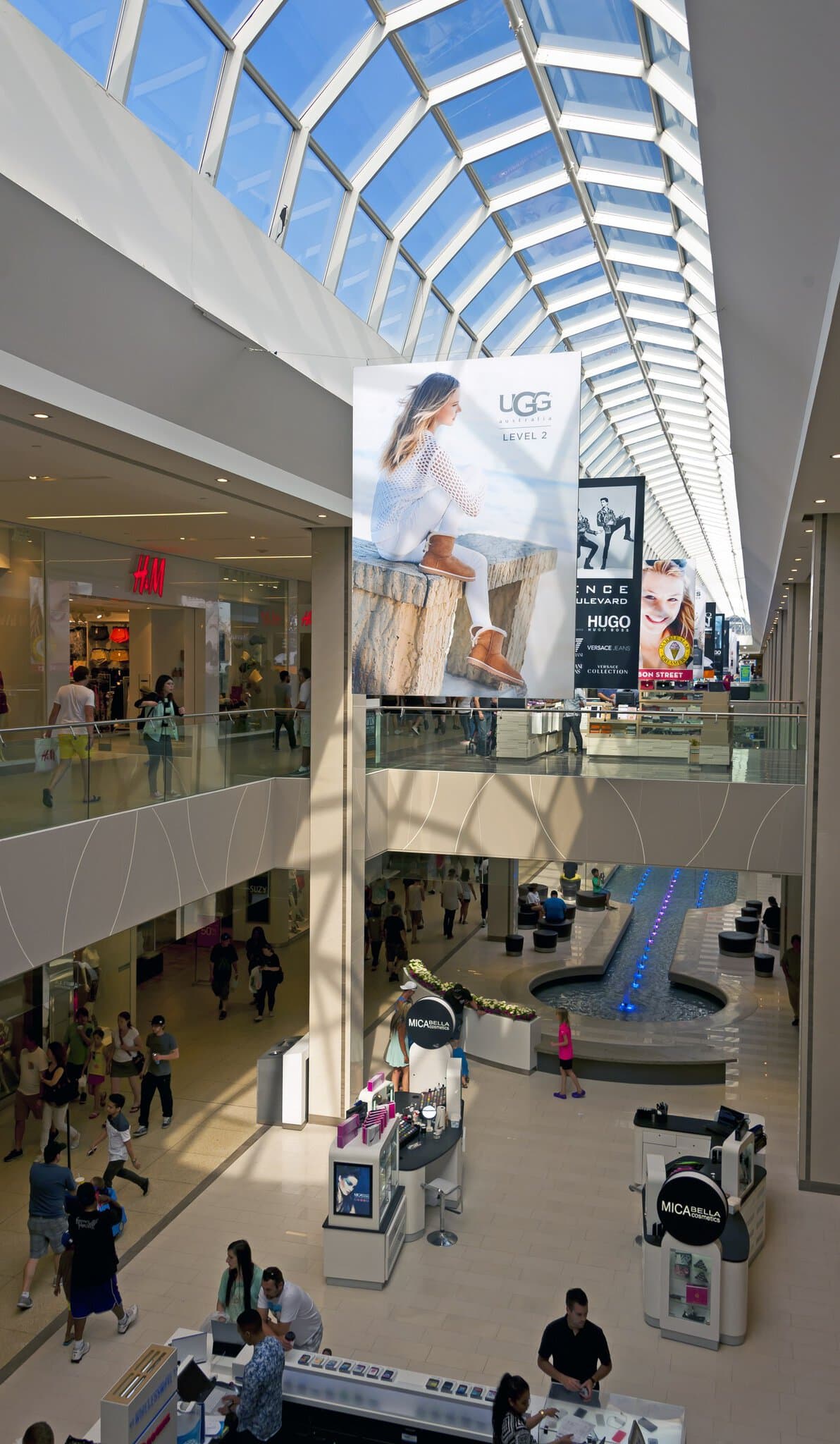
Beyond hundreds of high-street and luxury shops and endless restaurant zones, you’ll find the enormous indoor World Waterpark with the largest artificial wave pool in North America and wild water slides. And as if that weren’t enough, right next door is Galaxyland — a massive indoor amusement park with a proper roller coaster whose cars zoom high above the heads of bewildered shoppers below. There’s even a professional NHL-sized ice rink and, in one of the main halls, an exact wooden replica of Christopher Columbus’s ship bobbing on an artificial lake. Entry to the mall itself and outdoor parking are free, but the big attractions come with fairly hefty admission fees.
2. Edmonton River Valley: The Green Heart of the City
After all that retail overload, we needed some fresh air, and Edmonton River Valley was exactly the right antidote. This valley is the largest continuous stretch of urban parkland in all of North America — twenty-two times bigger than Central Park, no less. The city with its modern skyline and glass towers sits high on the bluffs above the North Saskatchewan River, so getting down into the green valley means descending numerous wooden staircases or hopping on the convenient funicular. But once you’re down by the water, the noise of the city vanishes instantly and you feel like you’re deep in the wilderness.
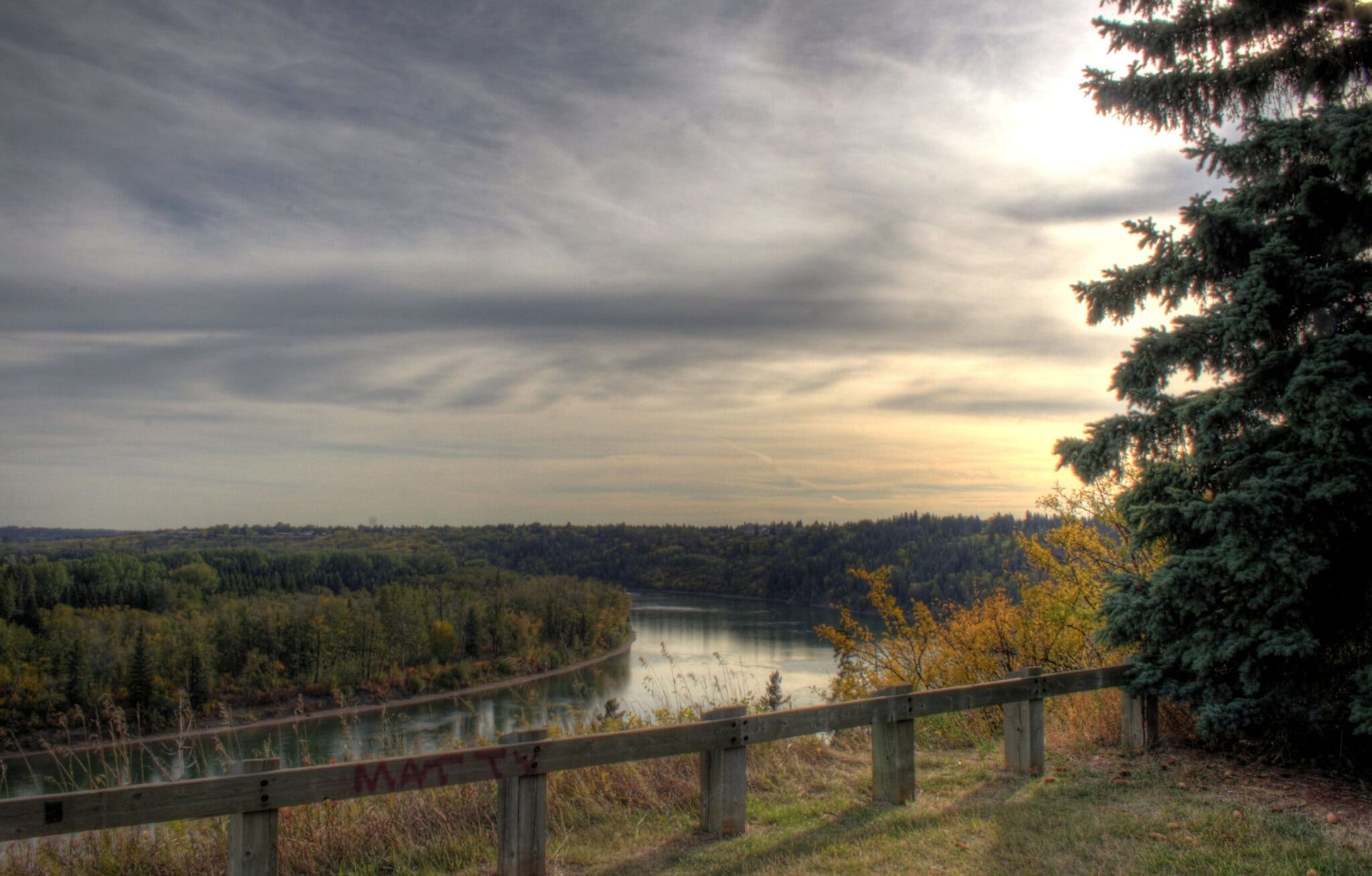
It’s the best spot in the city to lace up a good pair of hiking boots and set off on endless walks, or rent a bike from one of the many hire shops. The network of paved and gravel trails stretches an incredible 160 kilometres and weaves through several massive interconnected parks. In the warm summer months, locals enthusiastically hire canoes and colourful paddleboards to cruise the wide river, while in winter — once a metre of snow has settled — all these parks transform into a beautifully maintained cross-country skiing paradise. Stunning views of the glass-towered skyline open up from many viewpoints along the valley edges, and at sunset the whole scene is pure romance.
3. Muttart Conservatory: Glass Pyramids Full of Life
When gazing across Edmonton’s skyline from the valley’s edge, you’ll inevitably notice four peculiar glass pyramids that look a bit like the entrance to the Louvre in Paris — but what’s inside is something else entirely. The Muttart Conservatory is essentially a beautifully designed indoor botanical garden, and for many locals it’s a lifeline during those endless, freezing winter months when they desperately need to see some fresh greenery, breathe in humid air, and warm up for a while.
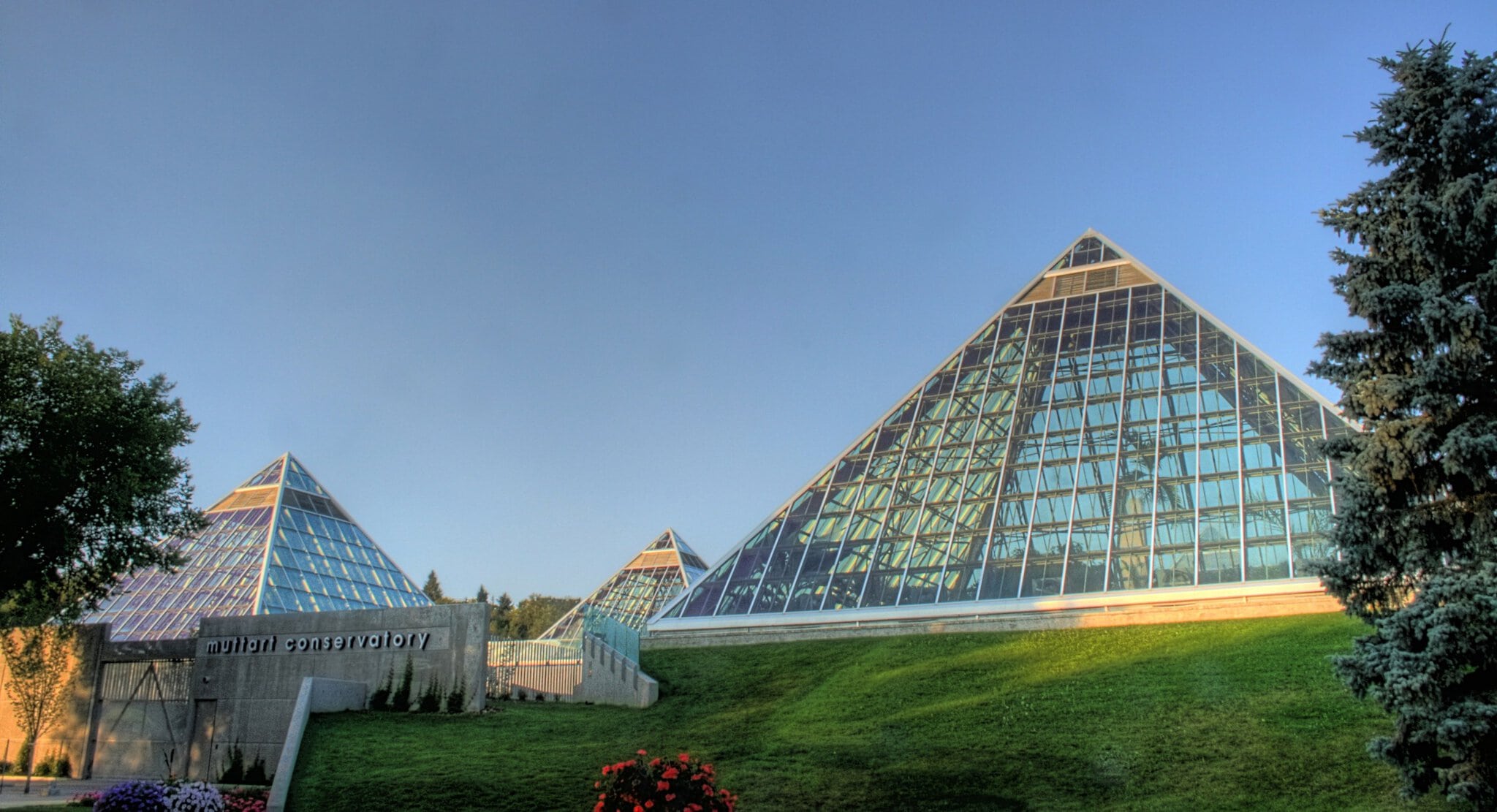
Each of the three main pyramids represents a different global climate biome — there’s a tropical rainforest full of giant ferns, a temperate zone, and a stunning arid section bristling with prickly cacti. The fourth pyramid is special in that its exhibition changes throughout the year depending on the season, from spring blooms to winter holiday displays. Wandering through a steamy tropical jungle in your T-shirt while it’s bitterly cold outside and snow is piling up on the glass is a magical, almost meditative experience. Admission is around 15 CAD per adult (roughly €10), and a relaxed visit will take you just over an hour.
4. Whyte Avenue and the Historic Old Strathcona District
If you’re looking for the soul of the city, head south from the modern Downtown across the river to the historic Old Strathcona neighbourhood. Its main artery is Whyte Avenue, renowned for its relaxed, slightly hipster vibe, historic brick buildings, and an incredible concentration of independent shops, bakeries, and speciality coffee houses.
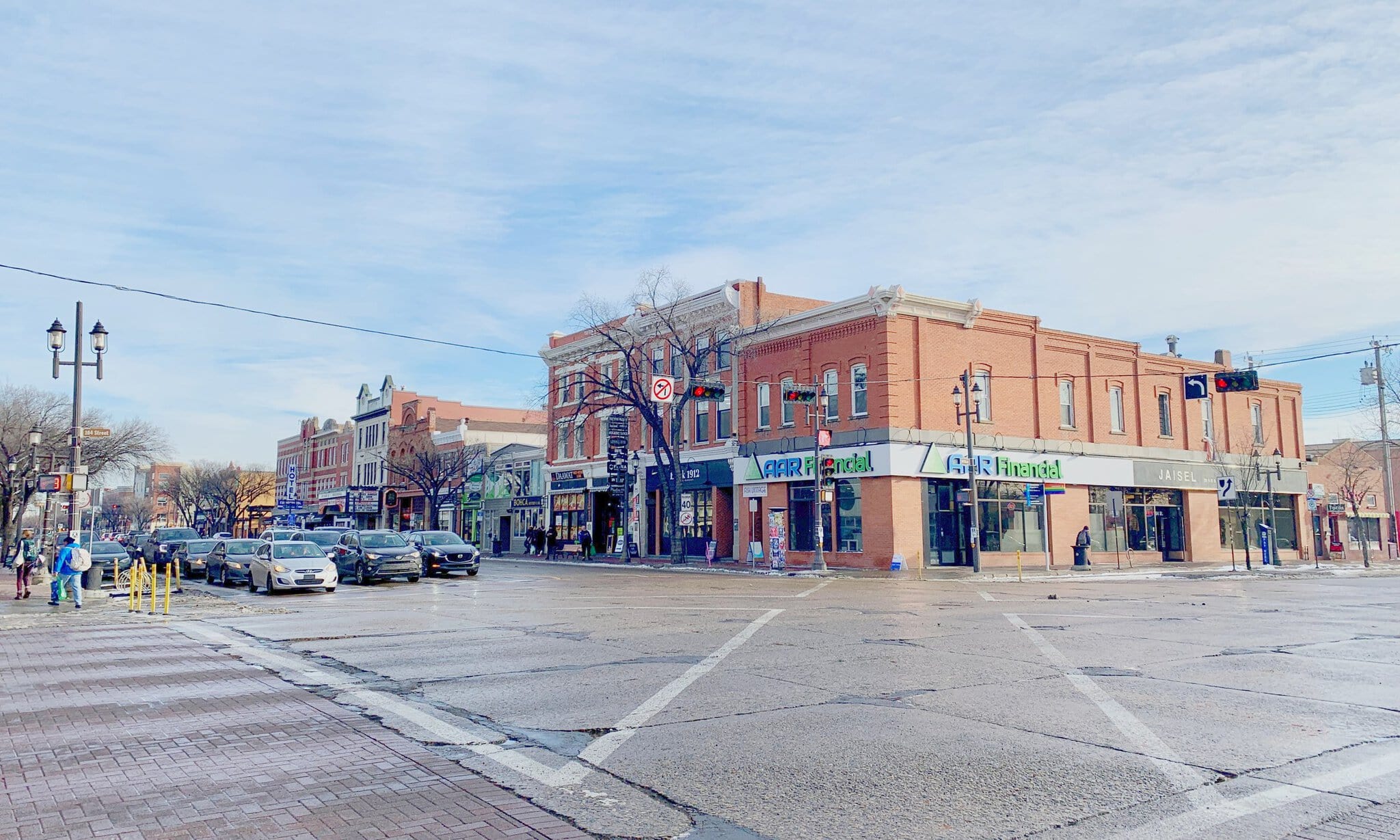
On weekends, the place really comes alive at the famous year-round Old Strathcona Farmers’ Market. It’s held in a large old hall where you can buy everything from fresh blueberries to artisan goat cheese and, of course, proper Canadian maple syrup in beautiful glass bottles from local farmers and producers. Come evening, the whole street transforms into a buzzing nightlife hub lined with excellent bistros and stylish pubs where locals enthusiastically pour craft beer from Alberta’s thriving brewery scene.
5. Hockey Madness and the Edmonton Oilers
Whether you’re a die-hard hockey fan who follows every match or couldn’t care less, the phenomenon that is the Edmonton Oilers simply cannot be ignored during your visit — because this city breathes hockey. The team, where the legendary Wayne Gretzky dazzled in the iconic 1980s and won multiple Stanley Cups, remains a massive source of pride not just for the city but for the entire province of Alberta. These days, superstar Connor McDavid tears up the ice, and whenever there’s a big game, practically every street is draped in blue and orange.
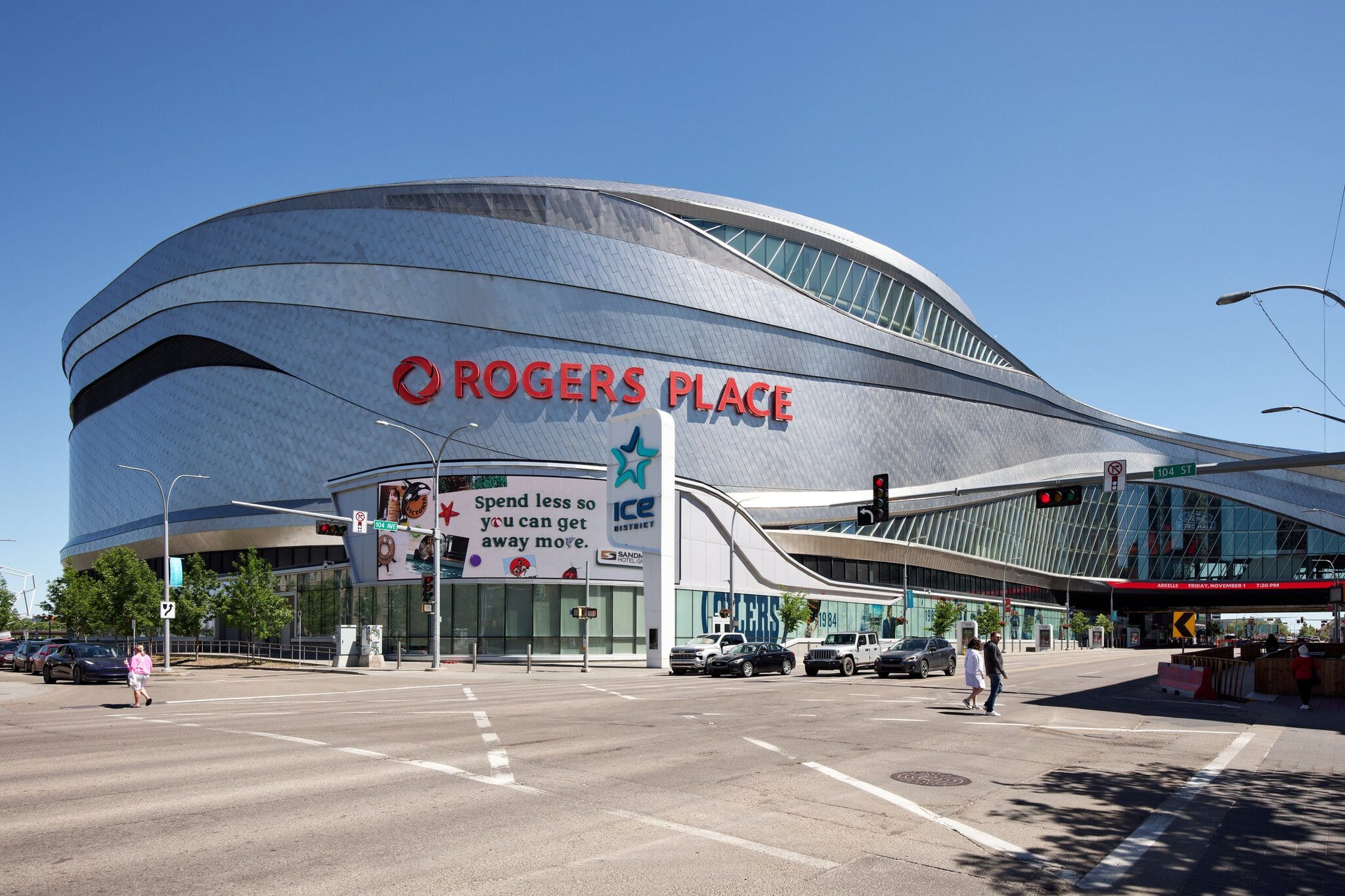
Games are played in the massive, ultra-modern Rogers Place arena, sitting right in the heart of Downtown in the fittingly named Ice District. The building boasts jaw-dropping modern architecture resembling a giant droplet of steel and gleaming glass. If you’re lucky enough to be in town during the NHL season — typically October through April — definitely try to grab tickets through official sellers. They’re not exactly cheap, but experiencing that incredible roar of a Canadian crowd rising from their seats is something you’ll never forget.
6. Royal Alberta Museum
Honestly, we went to the museum a bit out of duty, but the dinosaur skeletons on the ground floor won me over embarrassingly quickly — they’re enormous. And the section on Indigenous peoples (First Nations) is handled with such sensitivity and detail that we ended up spending nearly an entire morning there, despite originally planning just an hour. This brand-new museum is located right in Downtown and rightfully holds the title of the largest museum in all of western Canada, which you’ll grasp the moment you step into its glass-walled lobby.
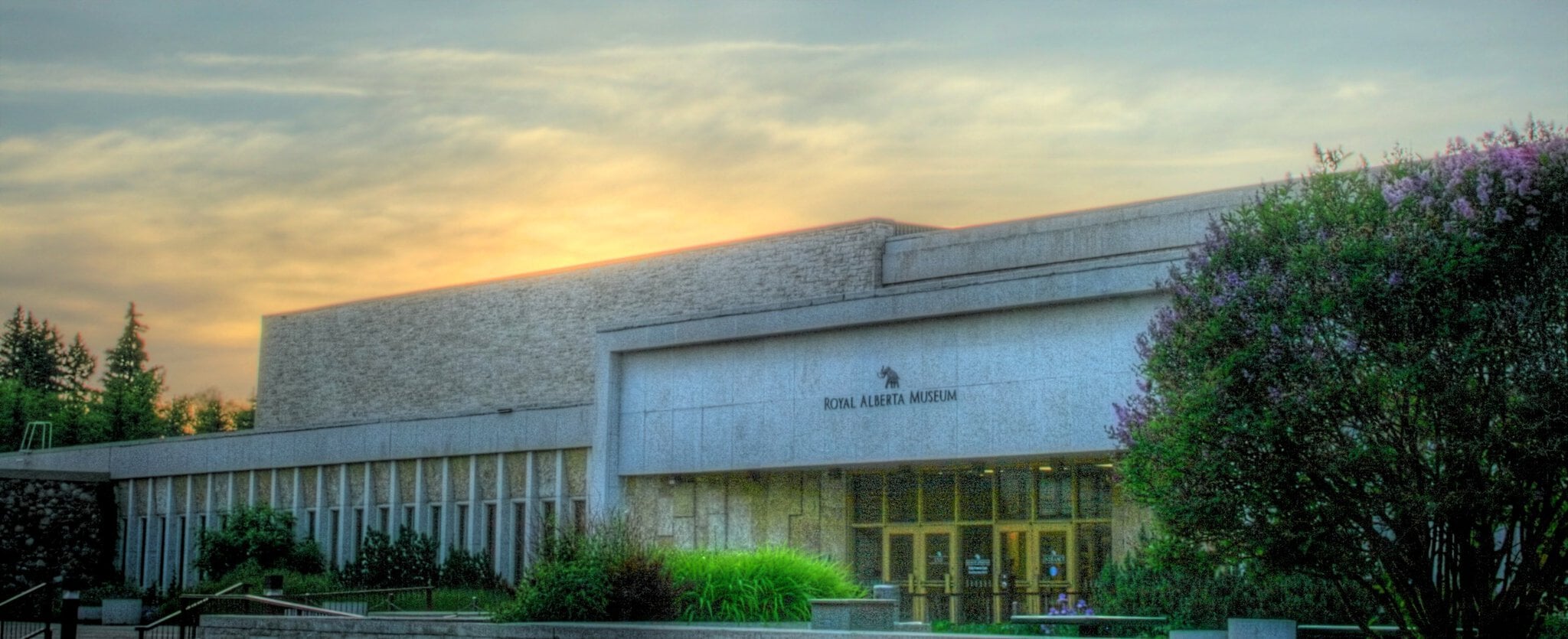
Beyond those awe-inspiring prehistoric skeletons and mammoth bones — a reminder that Alberta is one of the richest palaeontological sites in the world — you’ll also encounter a genuinely fascinating giant insect exhibit. Interactive displays tell centuries-old stories of people and wildlife in a thoroughly modern and engaging way. It’s simply the ideal way to build a deeper respect for the local landscape and culture before you fire up the car and head west into the mountains.
7. Art Gallery of Alberta (AGA)
Even if you’re not particularly into fine art when travelling and would rather be out tramping over hills, the Art Gallery of Alberta building is absolutely worth seeing just for its jaw-dropping exterior alone. Its striking, photogenic façade is a wild swirl of curved matte zinc, glass, and steel. According to the architect, these shapes are meant to evoke the northern lights and the frozen currents of the Saskatchewan River — and amid the stern, sharp-edged skyscrapers of the business district, the whole thing feels like something out of a sci-fi film.
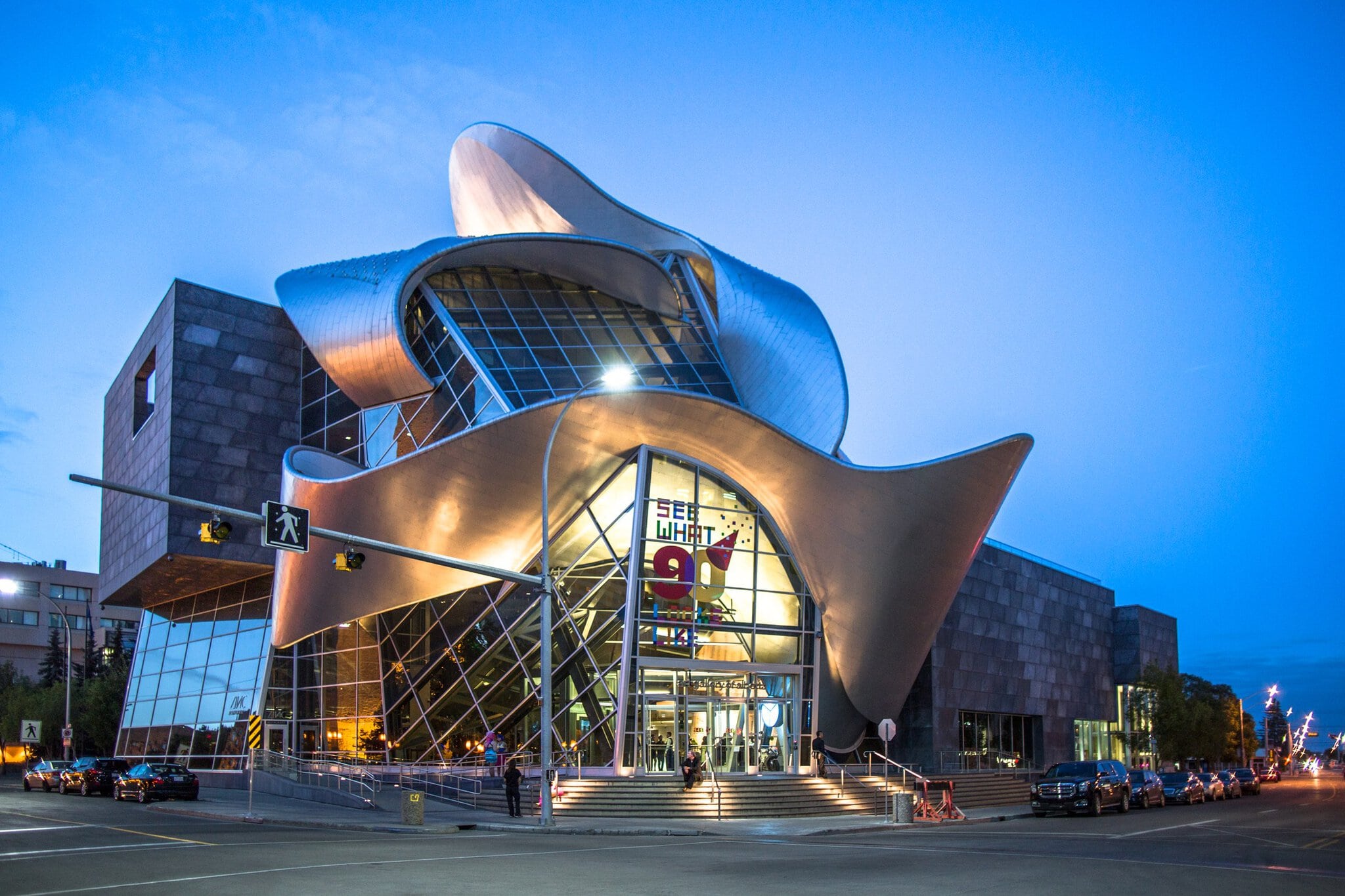
Inside, you’ll find three huge, light-filled floors packed primarily with modern Canadian and international contemporary art. Excellent temporary exhibitions rotate regularly, and the space itself is beautifully quiet and airy. If you’d like to save a few quid, the gallery frequently offers special days or evenings when admission is completely free — just check their website beforehand.
8. K-Days: July’s Festival Frenzy
If you visit Edmonton in late July, you’ll very likely stumble upon a massive event that locals have been raving about since the depths of winter. K-Days is a gigantic ten-day summer festival best described as a turbocharged funfair crossed with a music festival and an agricultural show. This grand tradition originally grew out of gold rush celebrations in the late nineteenth century, and today it’s simply the defining event of the Edmonton summer.
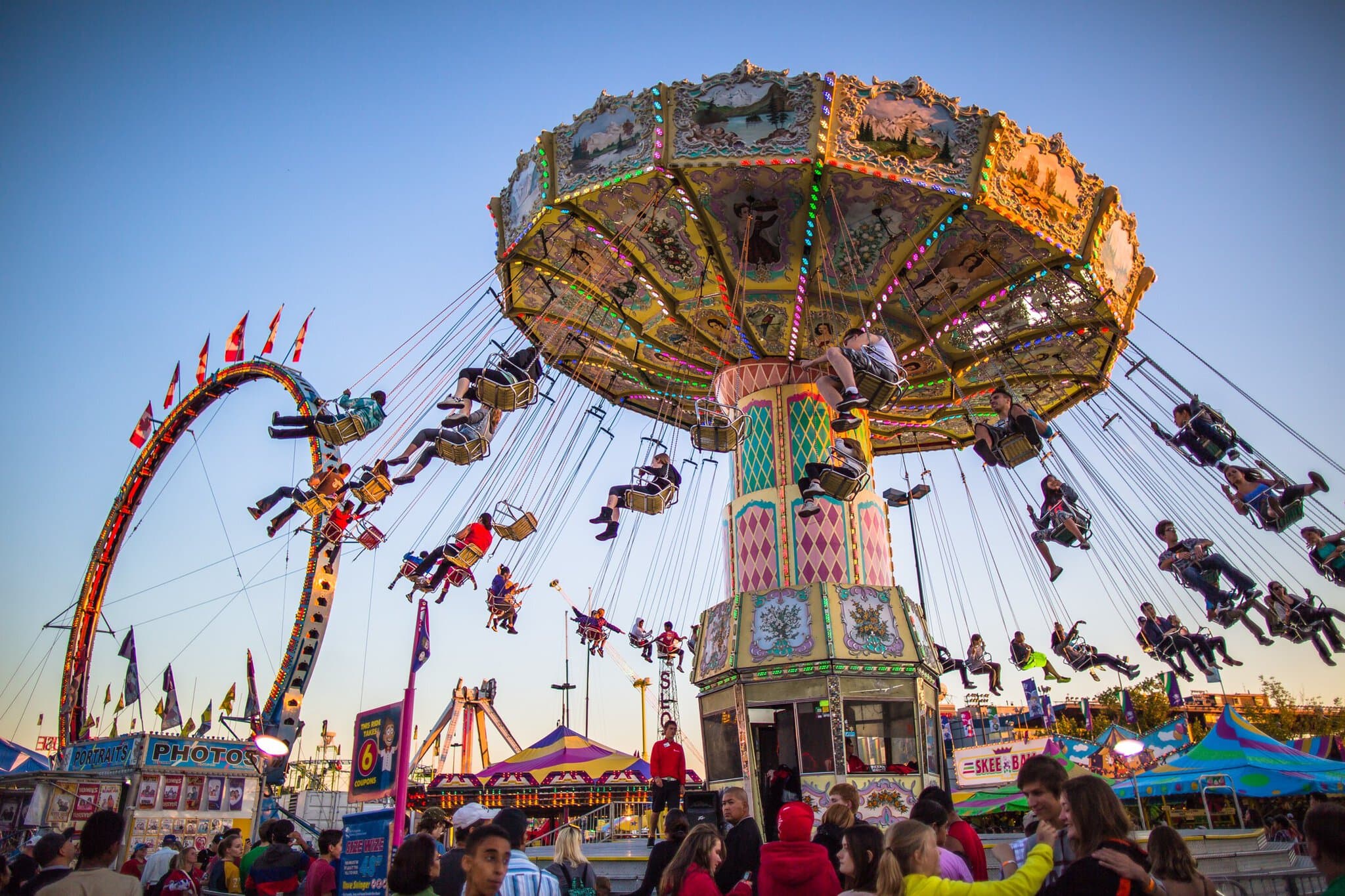
At the sprawling exhibition grounds, you’ll find dozens of neon-lit fairground rides that’ll turn your stomach just looking at them, and — crucially — countless stalls serving indescribable and often deep-fried food. Yes, you can genuinely find deep-fried Snickers bars, massive turkey legs, and every conceivable (and inconceivable) over-sweetened treat on a stick. During the day, you can catch wild rodeo events; evenings bring concerts by well-known and local bands on massive stages; and every single night wraps up with a long, spectacular fireworks display.
9. Edmonton International Fringe Theatre Festival (August)
Canada and theatre? You might not immediately put the two together when picturing lumberjacks and bears, but every August Edmonton hosts the second-largest alternative Fringe festival in the entire world. Only the original — and far more famous — Edinburgh Fringe in Scotland is bigger. During these wild eleven days, the already lively Old Strathcona neighbourhood transforms into one enormous open stage. Traffic stops and the streets are suddenly teeming with roaming street performers, buskers, comedians, jugglers, and tens of thousands of enthusiastic spectators.
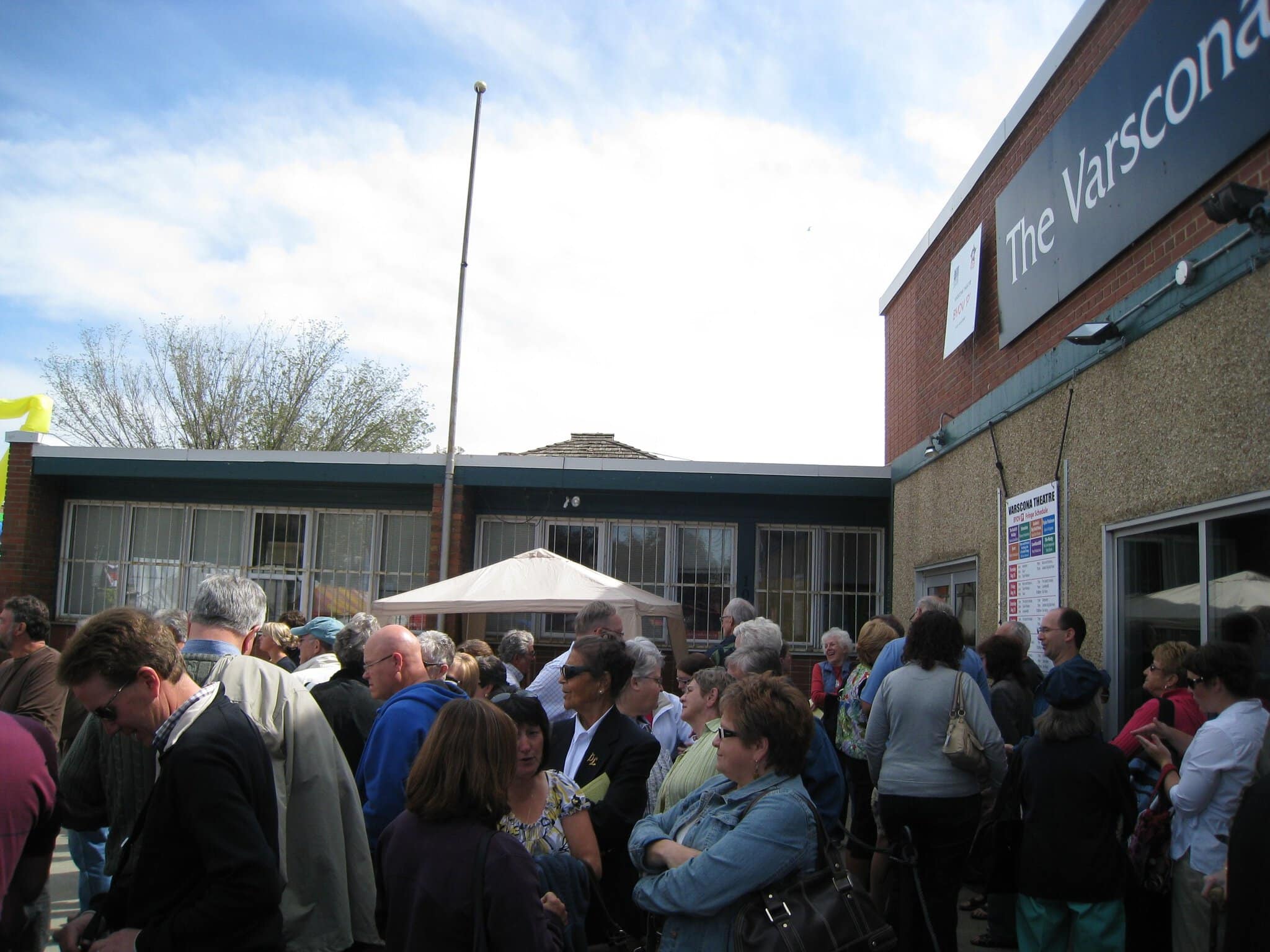
The official theatre performances don’t just take place in traditional venues. You’ll find them absolutely everywhere — in back rooms of clubs, tiny cafés, school gymnasiums, and hastily erected tents in parks. Genres range from serious dramas to absurd comedies that leave you unsure whether to laugh or cry, all the way to utterly bewildering experimental avant-garde. The brilliant thing about the whole concept is that one hundred percent of ticket revenue goes directly to the performers themselves.
10. Elk Island National Park: A Safari 40 Minutes from the City
This is an absolute natural gem you really shouldn’t miss during your stay — especially if you’re using Edmonton primarily as a launchpad for the national parks and you can’t wait for your first encounter with true Canadian wildlife. Just under 45 minutes of easy driving east along the motorway from the city, you’ll find Elk Island National Park. Think of it as a miniature, fenced-in Canadian safari surrounded by quiet lakes, deep forests, and flowering wetlands that smell incredible at dawn.
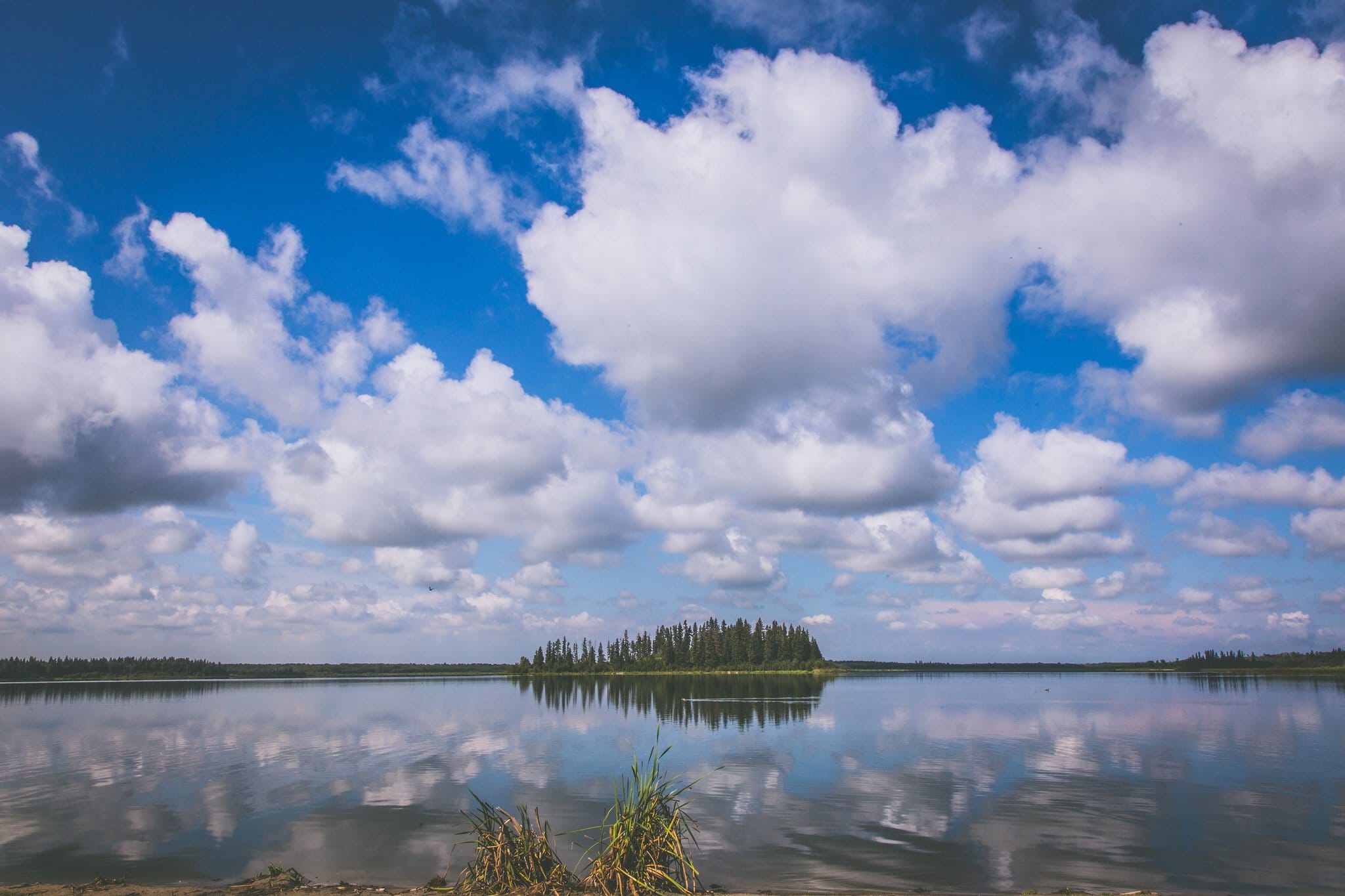
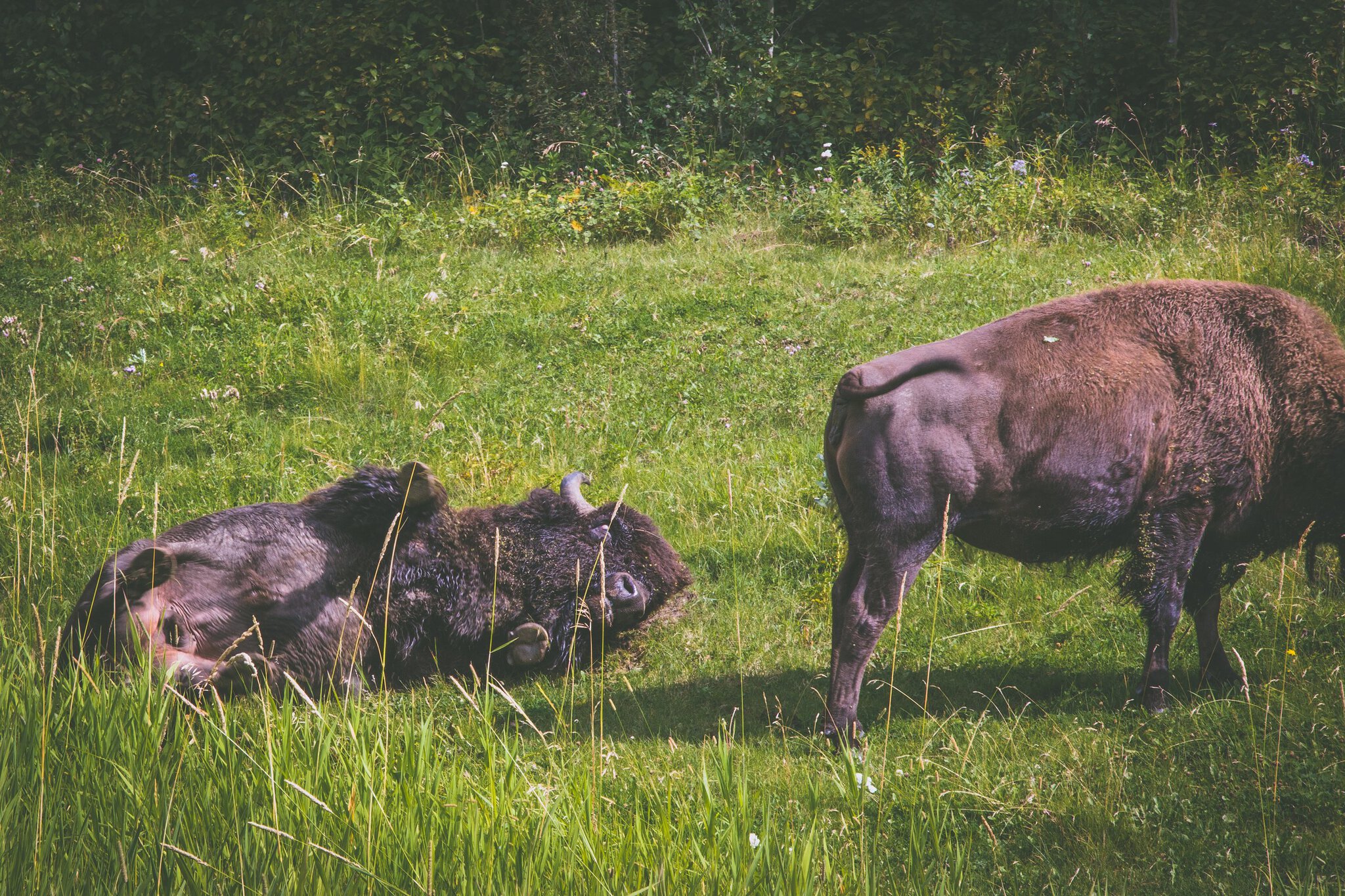
This protected pocket of wilderness is home to one of the largest bison populations on the entire North American continent. Both the rarer and more massive wood bison and the smaller plains bison live peacefully here side by side. There’s a very high chance that during a slow drive through the park, these enormous, majestic creatures will simply block the road and you’ll have to wait fifteen minutes until they graciously decide to move. One golden rule applies here, though: bison are incredibly powerful and unpredictable animals, and even though they’re used to cars, absolutely do not get out of your vehicle for a better Instagram shot 😅. Just roll down the window and observe them with respect from the safety of your seat.

11. The Road to Jasper National Park
Flying into Edmonton is hands down the best logistical — and northern — gateway into the Canadian Rockies, specifically the wilder, more expansive, and thankfully slightly less crowded Jasper National Park. Highway 16, also known by its historic name the Yellowhead Highway, leads you straight there from the edge of the city. The entire route is roughly 365 kilometres, and if you don’t feel the need to stop for photos and coffee along the way, the relaxed drive will take approximately four to five hours.
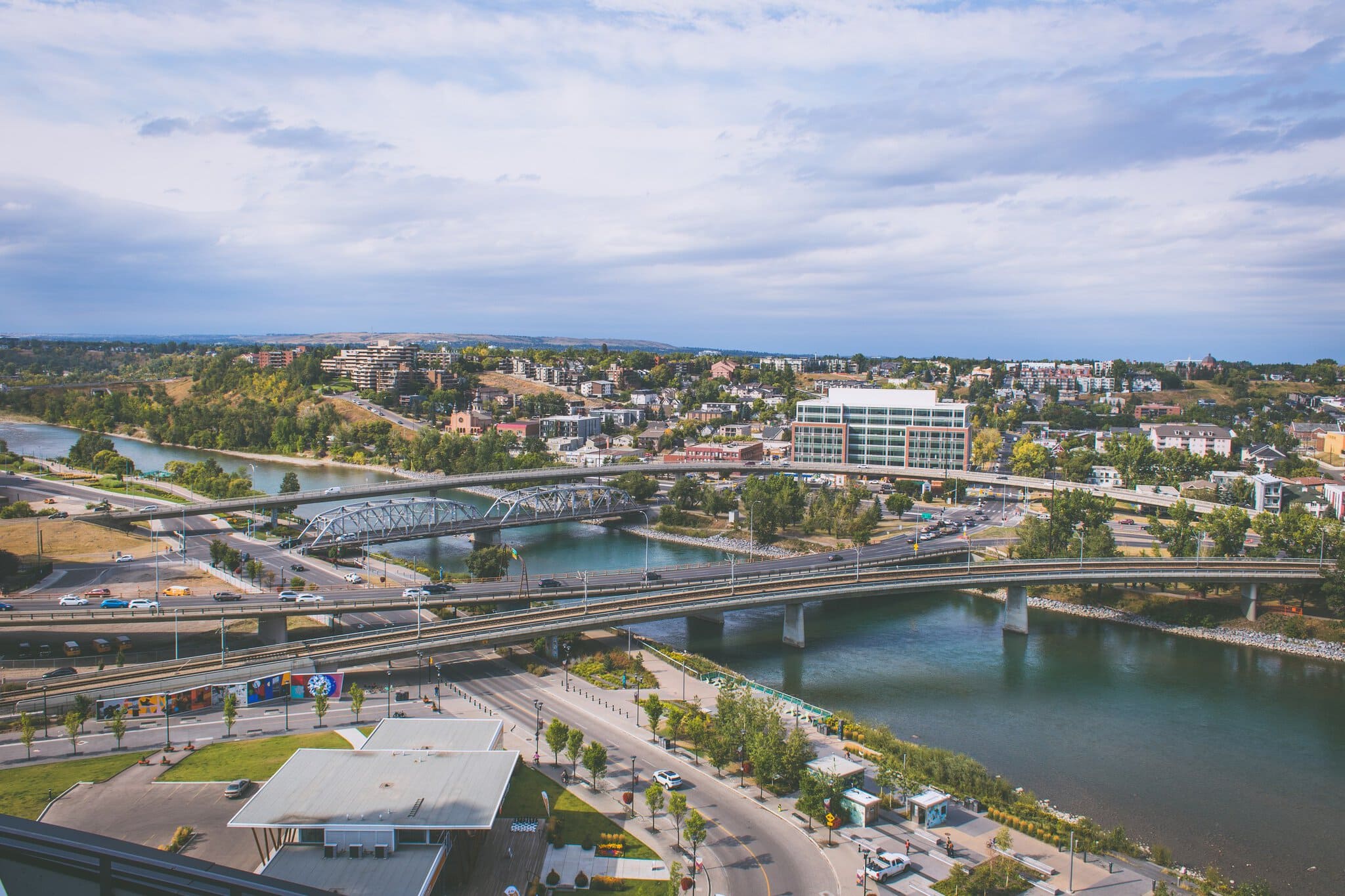
The first stretch takes you through flat, agricultural prairie that at times feels almost monotonously endless. But as you approach the small resource town of Hinton, the flatness suddenly ends and snow-capped, majestic mountain peaks begin to rise on the horizon out of nowhere. That’s the moment you understand exactly why people come here. If you want to do the drive stress-free, we recommend getting up early, grabbing a coffee at a café or classic Tim Hortons in Edmonton to take away, and then simply enjoying from the car that breathtaking gradual transformation of the landscape. And make sure you’ve got a full tank of petrol, of course.
12. The 100 Street Funicular
Here’s one last lovely little tip — a practical gem that’ll make your exploration of the city much more pleasant, especially on days when your legs have already racked up tens of thousands of steps. As you already know, much of Downtown Edmonton sits high above the green river valley, and connecting these two very different worlds has always been a bit of a logistical challenge. A few years ago, the city came up with an elegant, modern solution: a short, glass-enclosed ground-level funicular that whisks you completely free of charge from Downtown down to the promenade in the valley below.
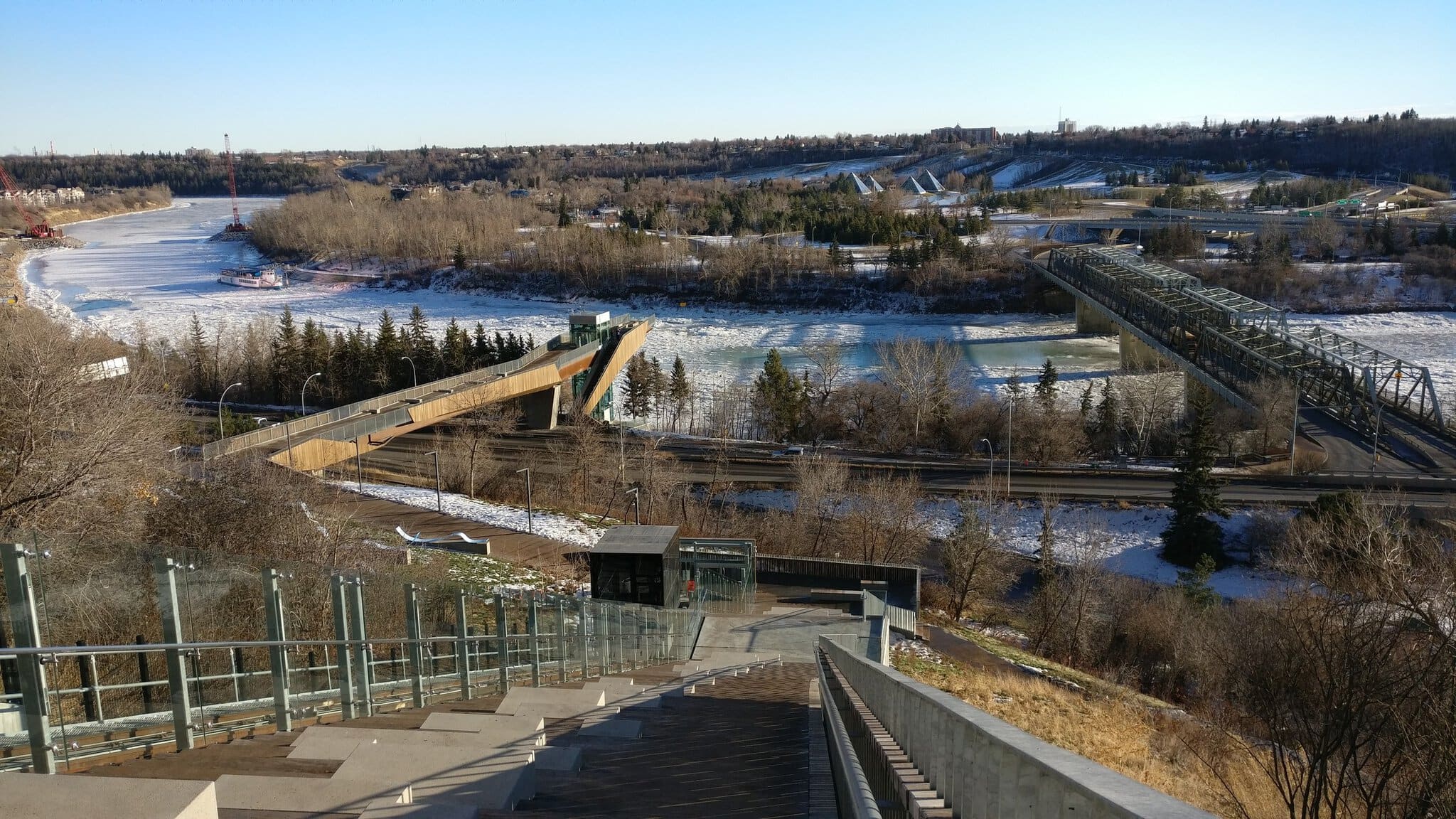
The cabin is entirely glass-walled, offering fantastic panoramic views of the blue river during the ride. The whole structure, along with its connecting pedestrian bridge, is architecturally impressive and blends beautifully into the surroundings. For parents with heavy pushchairs, cyclists, or anyone with dodgy knees, it’s an absolute godsend — but do ride it at least once regardless. It’s a fun little experience and, most importantly, it saves you the gruelling climb back up those endless steep stairs after a big, heavy lunch in the city ☺️.
Map of points of interest for your phone
Where to Eat: Bistro Praha and More Tips
Edmonton is a modern, highly cosmopolitan city full of immigrants, which means you’ll find brilliant food from every corner of the globe — from perfect, cheap Asian eateries in the suburbs to the most upscale classic Canadian steakhouses where you’ll pay handsomely for dinner. But if you happen to get a craving for hearty Central European comfort food during those long weeks on the road, we’ve got a surprisingly good tip right in the centre.
Right on the main street in Downtown, literally a stone’s throw from the Rogers Place hockey arena, you’ll find Bistro Praha. It’s a beloved institution with a long and rich history, founded by passionate Czech emigrants back in the 1970s. Inside, there’s a wonderfully old-world wooden interior, walls covered in pictures, and — most importantly — an extensive menu packed with beautifully slow-roasted duck, mountains of sauerkraut, proper fried cheese, and superb homemade apple strudel.
If you’d rather try something more local and contemporary, our other favourite spots are mostly along the aforementioned Whyte Avenue. For a seriously filling dinner and a warm, friendly atmosphere, head to a place called MEAT. The name might be slightly misleading for a restaurant that, while originally famous for the best smoked BBQ around, now also has excellent lighter vegetarian options and absolutely fantastic cocktails. For a morning pick-me-up coffee and pastries, you absolutely must stop by Transcend Coffee on the corner — locals swear it does the best flat white in the city. And don’t forget: in Canada, it’s completely standard to leave a tip of 15 to 20 percent on the pre-tax bill when dining at restaurants with table service.
Practical Tips Before Your Trip
Whether you’re still in the planning stages for Canada or already packing your bags, we’ve put together a few more practical links and bits of advice that Lukáš and I regularly rely on — and they might save you a few grey hairs before you fly out.
Hiring a Car Is a Must
Alberta is enormous, and relying on public transport outside the cities is simply not an option. If you’re heading into the national parks, a car is non-negotiable. Lukáš and I have long relied on DiscoverCars — they have a massive selection and clear insurance terms. We usually pick up the keys right at the airport desk upon landing, which lets you hop straight onto the motorway into the centre and skip the overpriced airport taxis.
Driving in Canada is generally an absolute breeze, especially if you hire an automatic — which you’ll get used to in about five minutes. Roads and motorways are incredibly wide, drivers are reasonably considerate, and the motorway speed limit is fairly low (around 110 km/h or 68 mph), which you’ll genuinely want to stick to thanks to frequent police patrols. Just watch out for one quirk before your first junction: in Canada, you’re allowed to turn right on a red light after stopping and checking it’s clear — unless a sign specifically says otherwise.
 🚗 Car rental on the roadVerified rental cars in Canada
Search with the DiscoverCars comparison engine — it compares prices from dozens of local and international rental companies, and most bookings come with free cancellation.
Compare car prices in Canada →Don’t Skimp on Travel Insurance
Never, under any circumstances, underestimate travel insurance for a trip to Canada. Even if you’re only planning gentle lakeside strolls in the mountains and have no intention of tackling challenging peaks, a simple sprained ankle can get very expensive very quickly. For all our longer trips, we often go with SafetyWing — you can read more about how it works and what it covers in our detailed SafetyWing review.
Healthcare in Canada is extremely and ruthlessly expensive for all visitors without local insurance. A basic, short A&E visit for something trivial can easily cost you several hundred dollars just for the doctor glancing at you, let alone any prescribed medication from the pharmacy. Make sure to check at home what your policy covers for a potential helicopter evacuation from the mountains — these figures often fall well short with cheaper bank account travel insurance packages.
Mobile Data and Internet on the Road
Messing about at an airport kiosk trying to sort a local physical SIM card after thirteen hours of flying has always driven both Lukáš and me mad, so we switched to virtual eSIMs a while back and haven’t looked back. If your current phone supports this relatively new feature (which most newer models do these days), it’s hands down the quickest and easiest option for peace of mind. Check out our comprehensive Holafly review for details — with an eSIM from Holafly, you can have reliable data on your phone sorted while you’re still sitting on the sofa at home.
Do bear in mind, though, that strong mobile signal is largely limited to the big cities and the main motorway corridors. The moment you turn off the main road into more remote valleys or drive deep into national parks like Jasper or Banff, your signal will vanish quickly and you’ll be grateful for even a slow text message. That’s why we strongly recommend downloading all your offline maps, navigation, and ideally saving your accommodation confirmations to your phone while you’re still on the fast hotel Wi-Fi in Edmonton — so you’re not frantically trying to pull up a booking confirmation outside a cabin reception in the middle of nowhere with no internet.
FAQ — Frequently Asked Questions About Edmonton
If there’s anything still missing from this comprehensive Edmonton guide, we’ve rounded up quick answers to the most common questions people search for before their trip.
When did Edmonton last win the Stanley Cup?
The Edmonton Oilers last won the Stanley Cup in 1990. It was a legendary era just after Wayne Gretzky’s departure, when a strong team led by Mark Messier showed the entire hockey world they could bring home the championship even without their biggest star. The city has been eagerly waiting for another triumph ever since.
What’s the population of Edmonton?
The city of Edmonton itself has just over 1 million residents (roughly 1,010,000 according to the latest data). If you include the surrounding metropolitan areas and suburbs (the Greater Edmonton Area, which includes the airport), the total number exceeds 1.4 million, making it the fifth-largest city in Canada.
What can you see in Edmonton in one day?
If you only have one day in the city, we recommend skipping the giant shopping mall and instead heading out for a morning walk through the lush Edmonton River Valley. Then stroll across the bridge to the historic Old Strathcona neighborhood along vibrant Whyte Avenue, grab lunch and coffee there, and spend the afternoon admiring the glass tropical pyramids of the Muttart Conservatory.
Is it better to fly into Edmonton or Calgary?
It depends on which national parks you’re planning to visit. If Banff and Lake Louise are your main destinations, the Calgary airport is a bit closer from the south. But if you want to explore the more northern Jasper first and then drive south along the glaciers on the famous Icefields Parkway, flying into Edmonton and renting a car is an unbeatable strategic choice.
Is Edmonton safe at night?
Yes, Edmonton is generally a very safe and peaceful city for tourists. The usual rules apply as in any major city. At night, it’s best to avoid dark alleys right on the edge of Downtown, where there may be higher concentrations of homeless people or those struggling with issues. But in the main tourist areas, you don’t need to worry about anything during the day.
What’s the time difference in Edmonton compared to Central Europe?
Edmonton is in the Mountain Standard Time (MST) zone. Compared to Central European Time, it’s 8 hours behind. So if it’s noon here, it’s only 4 a.m. in Edmonton and most of the city is still fast asleep.
Can you see the northern lights in or around Edmonton?
Yes, and surprisingly often for people from Europe! Edmonton is far enough north and the surrounding Canadian prairies offer wide horizons without hills. Just drive a bit outside the city limits on a clear, frosty night away from light pollution (Elk Island National Park is ideal) and your chances of spotting the aurora borealis are pretty good—especially in late fall and winter when the nights are darkest.
Tips and Tricks for Your Vacation
Don’t Overpay for Flights
Search for flights on Kayak. It’s our favorite search engine because it scans the websites of all airlines and always finds the cheapest connection.
Book Your Accommodation Smartly
The best experiences we’ve had when looking for accommodation (from Alaska to Morocco) are with Booking.com, where hotels, apartments, and entire houses are usually the cheapest and most widely available.
Don’t Forget Travel Insurance
Good travel insurance will protect you against illness, accidents, theft, or flight cancellations. We’ve had a few hospital visits abroad, so we know how important it is to have proper insurance arranged.
Where we insure ourselves: SafetyWing (simple monthly subscription) and TrueTraveller (for extra-long trips).
Find the Best Experiences
Get Your Guide is a huge online marketplace where you can book guided walks, trips, skip-the-line tickets, tours, and much more. We always find some extra fun there!