

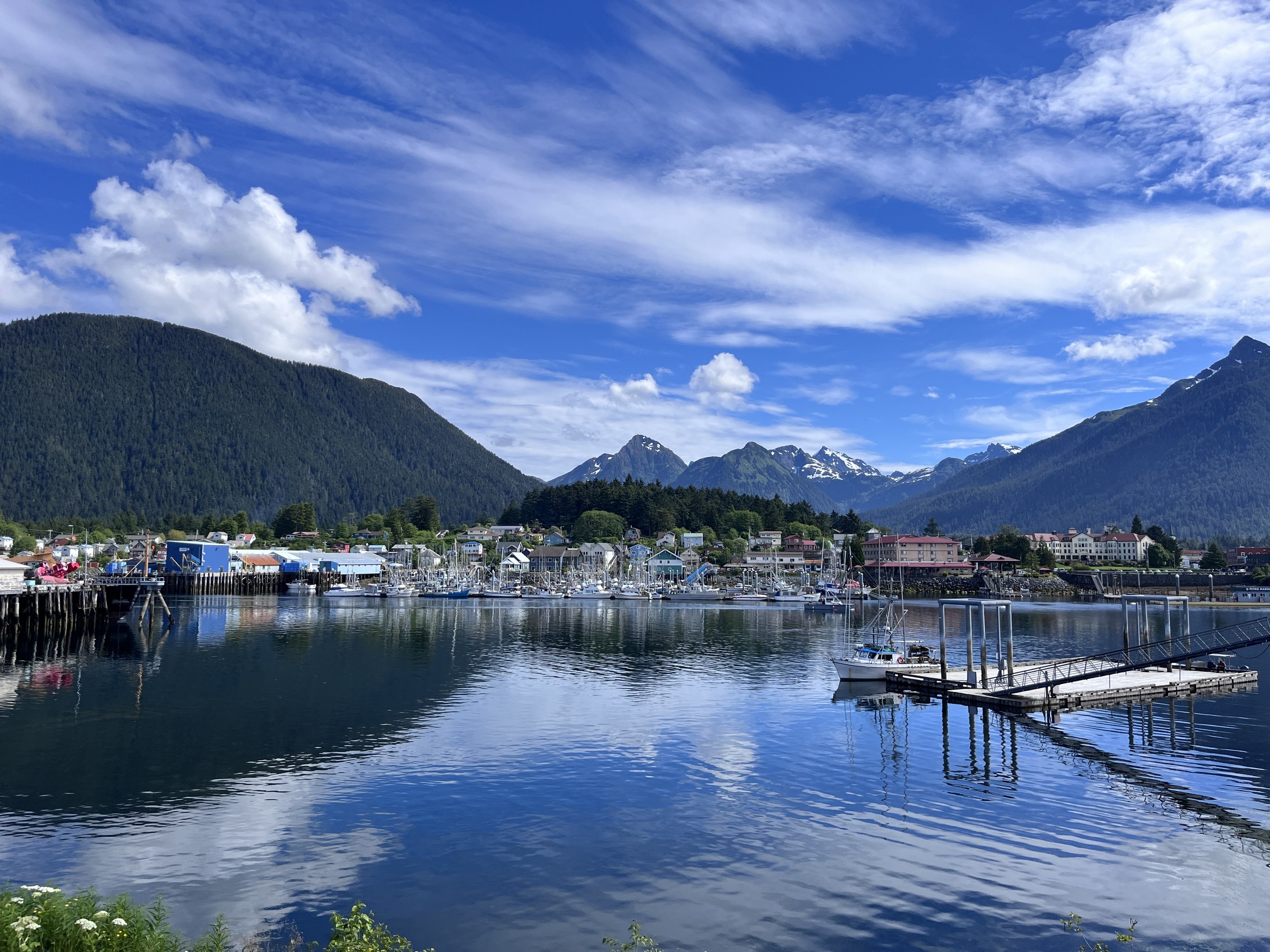
The first time you step off a small plane onto a runway lashed by the ocean on every side, it hits you immediately: Sitka, Alaska is a completely different world. An overcast sky, the ever-present scent of pine and salt, and then — right in the middle of the American wilderness — an Orthodox cathedral with onion-shaped domes. It looks as though someone took a slice of Tsarist Russia and accidentally dropped it into the heart of an Alaskan rainforest. And, as it happens, that’s pretty much what did happen.
This town, which absolutely no roads lead to, wins you over on day one. Maybe it’s the bald eagles perched on the spruce trees like pigeons back home, or maybe it’s sitting in a pub eating fresh salmon next to burly fishermen in rubber waders. Sitka is simply a place where the bloody history of Russian colonisers blends with the ancient culture of the Tlingit people and the wildest nature you can possibly imagine.
We’ll go from the Russian cathedral to bears, from orphaned eagles to whales that hunt inside rings of bubbles — I’ll simply show you twelve things that will make you fall head over heels for Sitka. And I’ll also tell you honestly what costs more here than you’d expect.
TL;DR
- No roads lead here: You can only reach Sitka by plane or boat. Leave the car at home, you won’t need it.
- Russian history: Don’t miss Saint Michael’s Cathedral and the Russian Bishop’s House — they’re a striking contrast to the surrounding wilderness.
- Bears and eagles: Fortress of the Bear and the Alaska Raptor Center are absolute musts, especially if you don’t have time to track down animals in the forest.
- Weather: Expect rain. It rains here on average 230 days a year, so a quality Gore-Tex jacket and waterproof boots are survival essentials.
- Book accommodation months ahead: Capacity here is tiny and the summer season is short. Hesitate and you’ll be sleeping in a tent (in the rain, with bears around).
The full destination guide: Alaska — guide and what to see
When to Visit Alaska and How to Get to Sitka
Planning a trip to southeast Alaska is governed by an unforgiving calendar and Mother Nature. Trying to improvise off-season trips here is a losing battle from the start. The town comes alive in May, when the first cruise ships arrive, and by the end of September it settles back into hibernation.
Peak Season and What to Pack
The best time is from June to the end of August, but even then temperatures barely scrape eighteen degrees and it usually drizzles during the day. Sitka lies in a temperate coastal rainforest, where snow drifts and bitter frosts belong to the interior — here, water rules.
The constant rain will leave you feeling a bit despairing at times, but you’ll come to understand it’s simply part of the deal. Quality waterproof layers and high rubber boots — which the locals affectionately call “Alaskan sneakers” — really aren’t optional. Without them you’re completely lost in Sitka (trying it in ordinary trainers is a mistake you won’t forget). If you’re coming with hopes of the Northern Lights, I have to disappoint you — thanks to the constant cloud cover and the location, you probably won’t see them here. But you’ll get your fill of whales in summer.
Getting to a Town With No Roads
This is probably the biggest shock for most British travellers. You simply cannot drive to Baranof Island, where Sitka sits. The absolute rule here is “no road access”. The only way in is Sitka Rocky Gutierrez Airport on the neighbouring islet of Japonski Island, which is connected to the centre by a substantial bridge.
The quickest option is to fly in, but plenty of people use the ferries of the Alaska Marine Highway system. The boat journey from nearby Juneau is gorgeous — you glide through bays full of forested islets — you just need to set aside considerably more time for it. From the UK, the easiest route is a transatlantic flight to Seattle or Anchorage with the likes of British Airways or Virgin Atlantic, then a regional Alaska Airlines hop to Sitka. To compare connections and find cheaper fares, we always check the booking portals first.
Where to Stay in Sitka and How Much It Costs
Finding good accommodation in this Alaska town for a reasonable price is a real art. Hotels here can be counted on one hand, the season lasts only a few months, and anyone who doesn’t start looking around January ends up staring at vacancies at the campground (in the rain, with bears nearby). Prices stay fairly high, which is typical for Alaska, because almost everything has to be shipped in at great effort.
🏨 Recommended Hotels in Sitka
- Luxury: Westmark Sitka Hotel
- Mid: Aspen Suites Hotel Sitka
- Budget: Sitka Hotel
Browse all hotels in Sitka on Booking.com (via our affiliate link, aid 2397601).
As a rule, expect to pay between $250 and $400 (roughly €230 to €370) per night for an ordinary mid-range room during the summer months. It’s not cheap, but if you want a peaceful, dry night’s sleep, you don’t have many other options.
Historic Charm or Modern Comfort
If you want to treat yourself, probably the best-known spot is the Sitka Hotel right on the main drag, Lincoln Street. It has undergone a wonderful renovation that married Victorian style with modern touches, and the windows look straight out over the harbour. We really love these old buildings with soul, even if the walls can occasionally be a touch thin 😅. Sometimes you can even hear the gulls as if they were standing right on your nightstand, but that’s simply part of the harbour atmosphere.
For families or anyone planning to stay several days, the Aspen Suites Hotel Sitka is a huge win. They have fully equipped kitchenettes, which will save you absurd sums on restaurant meals. Shopping at the local supermarket isn’t exactly cheap either, but it still works out better than eating breakfast and dinner out every day.
Options for a Tight Budget
If you’re travelling with a backpack and watching every penny, your only salvation will be the Sitka International Hostel. It’s a classic hostel with shared rooms and a kitchen, but be prepared for fairly strict rules, including a curfew.
Plenty of people also try their luck with small Bed & Breakfasts run by locals, who often even offer to pick you up from the airport for free. That contact with local people who were born here and know every stone is often simply priceless.
Things to See and Do in Sitka: The 12 Best Tips
Russian icons of incalculable value in the morning, feeding orphaned bears at noon, and panting up a steep hill through dense rainforest in the afternoon — that’s Sitka in a nutshell. So let’s get to it.
1. Sitka National Historical Park
This is the smallest national historical park in all of Alaska, and personally I rank it among the most magical places of all. There’s no need to worry about boring, dusty display cases — instead, an amazing trail runs right through the coastal rainforest. Sitka National Historical Park hides a roughly two-and-a-half-kilometre trail that runs along perfectly flat ground, lined the whole way by enormous, hand-carved totem poles of the indigenous Tlingit people.
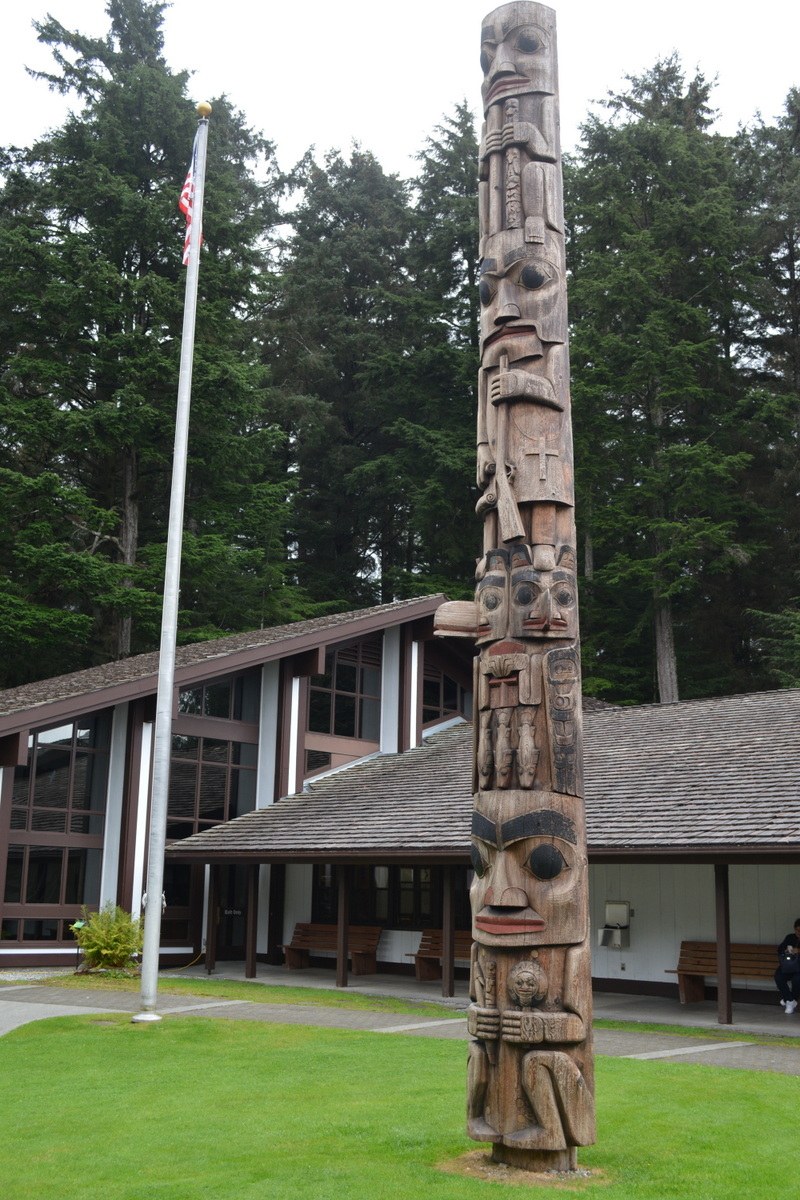
The park protects the site where, in 1804, a bloody battle was fought between the Tlingit and Russian settlers. The silence that now reigns there makes those events weigh on you in a strange way. Only the ocean murmurs, and somewhere above you an eagle cries. I realised there that I’d never in my life walked through such a charged place. A huge bonus is that for 2026, admission to the entire park and visitor centre is completely free. Be sure to set aside at least two hours for it.
2. Saint Michael’s Cathedral
Walking down the main road, you suddenly come upon a roundabout with no obelisk in the middle, but a beautiful Orthodox cathedral. The green domes and golden crosses look utterly surreal against the backdrop of the rugged Alaskan mountains. The original wooden structure stood here from 1844 and was the nerve centre of the Russian Church in North America.
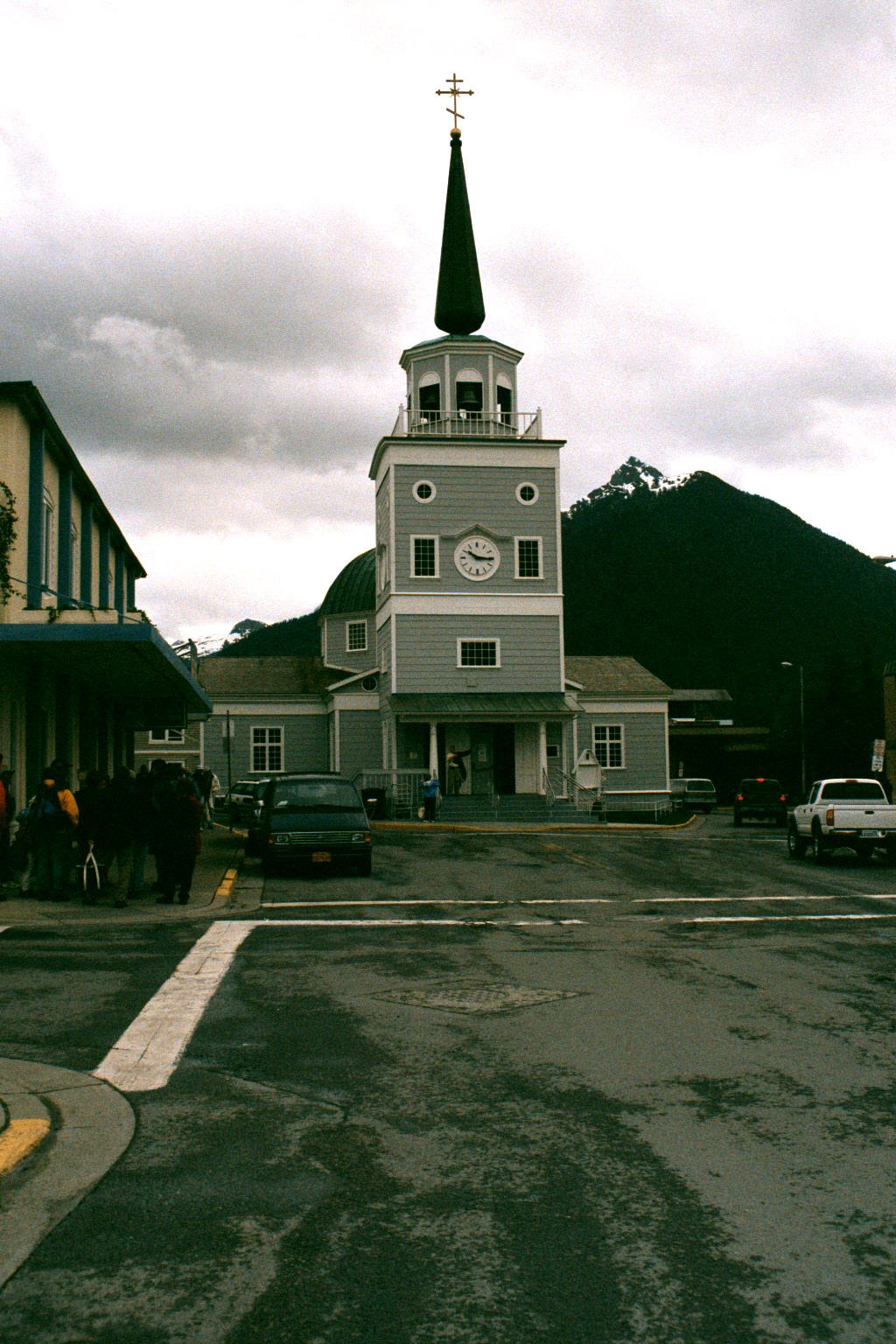
As beautiful as the building is, it carries a sad yet heroic history. In 1966, the original cathedral burned to the ground. The locals at the time, regardless of which god they happened to believe in, ran into the flames and rescued almost all the precious icons and artefacts with their bare hands. The cathedral was then rebuilt to the exact original plans.
When you step inside, you’re immediately enveloped by the heavy scent of incense and beeswax from the candles. Visitors stand there utterly spellbound before the embossed frames of the rescued icons — the whole atmosphere inside has an incredible power, despite the newer walls.
3. Fortress of the Bear (Bear Rescue Centre)
I’ll admit I didn’t know what to expect from a bear rescue centre built on the grounds of an old paper mill, but this turned out to be one of our biggest experiences in Sitka. Fortress of the Bear is home to orphaned bear cubs that state authorities would otherwise have ordered to be put down. It’s about 8 kilometres from the centre, and the amazing thing is its setting — the enclosures are formed from the huge tanks of a former pulp factory. It looks like something out of a post-apocalyptic film, but the bears get excellent care here.
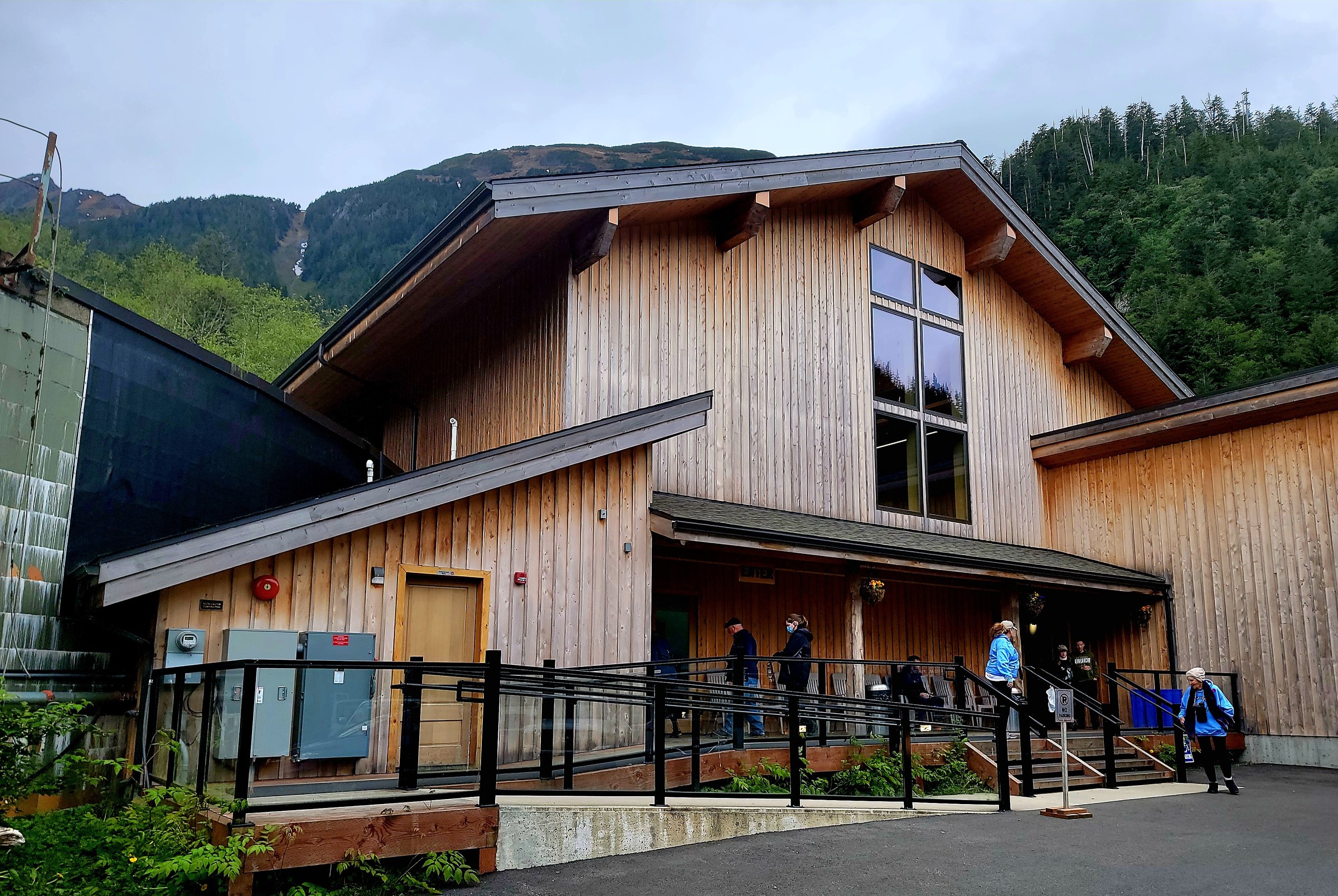
Admission is $15 (about €14) for an adult, and children under seven go free. Since lots of people arrive from the giant cruise ships, the centre sometimes limits walk-in entries, so if you’re travelling independently like we were, I warmly recommend buying tickets online in advance so you don’t end up standing disappointed outside the gate.
Visitors here often catch little scenes, like a young brown bear spending a good half hour determinedly trying to sink a plastic barrel. It’s incredible fun, and for a moment you completely forget what unbridled predators they are out there in the wild.
4. Alaska Raptor Center
Just a stone’s throw from the national park you’ll find another top-class rehabilitation centre, this time dedicated to birds of prey. The Alaska Raptor Center takes in and treats around two hundred injured bald eagles, owls and other raptors each year. Their main goal is to release the birds back into the wild, which they mostly manage.
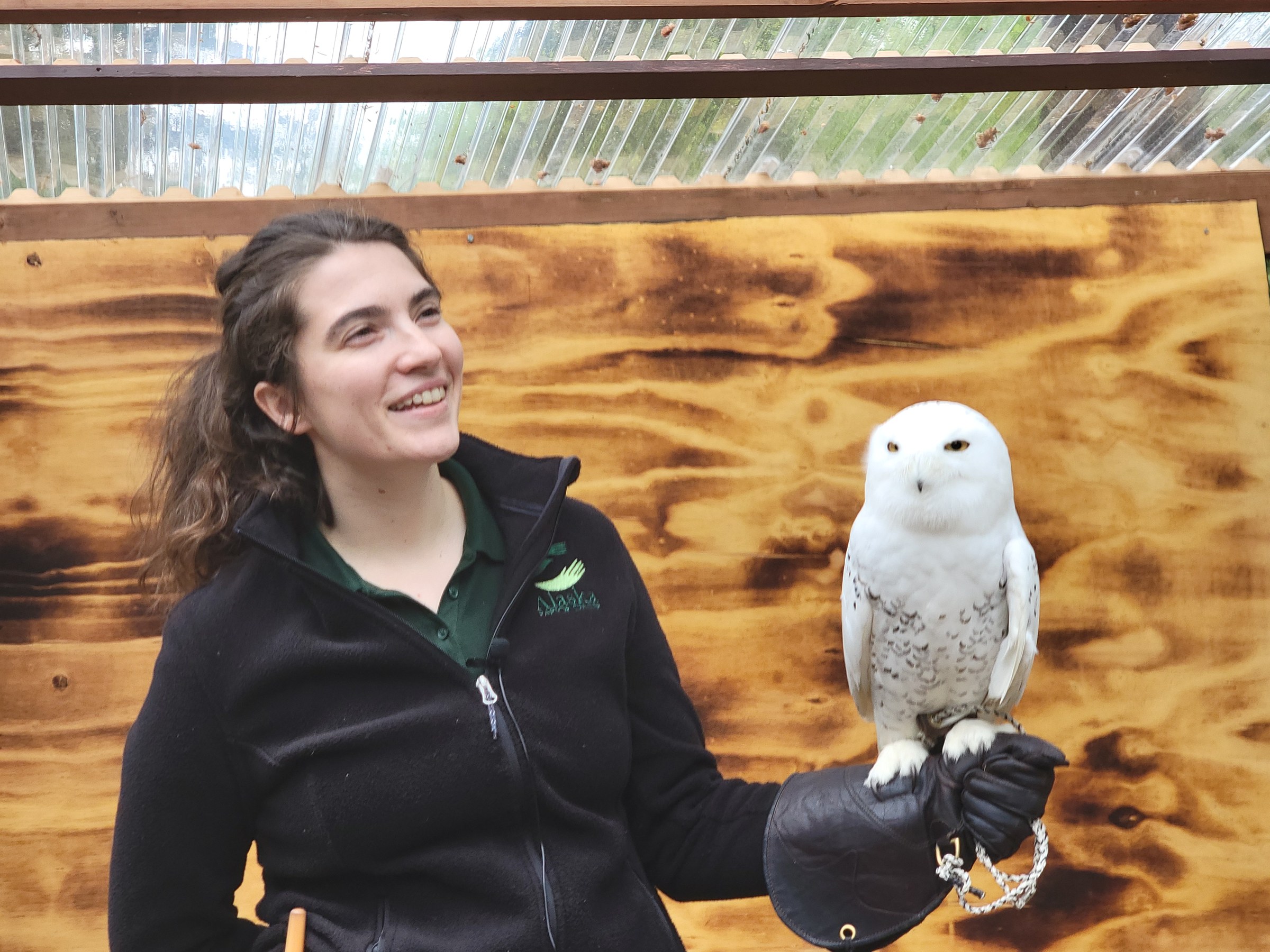
Some birds, however, suffer injuries so severe that they wouldn’t survive in the wild, and they stay on as permanent ambassadors. And seeing a bald eagle from two metres away, staring at you with those huge pale eyes, is an experience that sent shivers down our spines for a good hour after we left. Adult admission is $17 (about €16), and honestly? Very cheap.
They also have a huge flight aviary here, where the birds retrain their muscles after treatment before release. It’s like an avian gym, and watching their gradual return to form, with those enormous wingspans, is incredibly moving and worth every cent of the admission.
5. Russian Bishop’s House
At first glance you don’t expect any miracle here — another museum, another historic building. But it really gets you. It’s the oldest Russian building in the entire United States, dating from 1842, and the whole massive log structure of spruce timber was built back then without using a single nail. Today it’s one of only four surviving buildings from the Russian era.
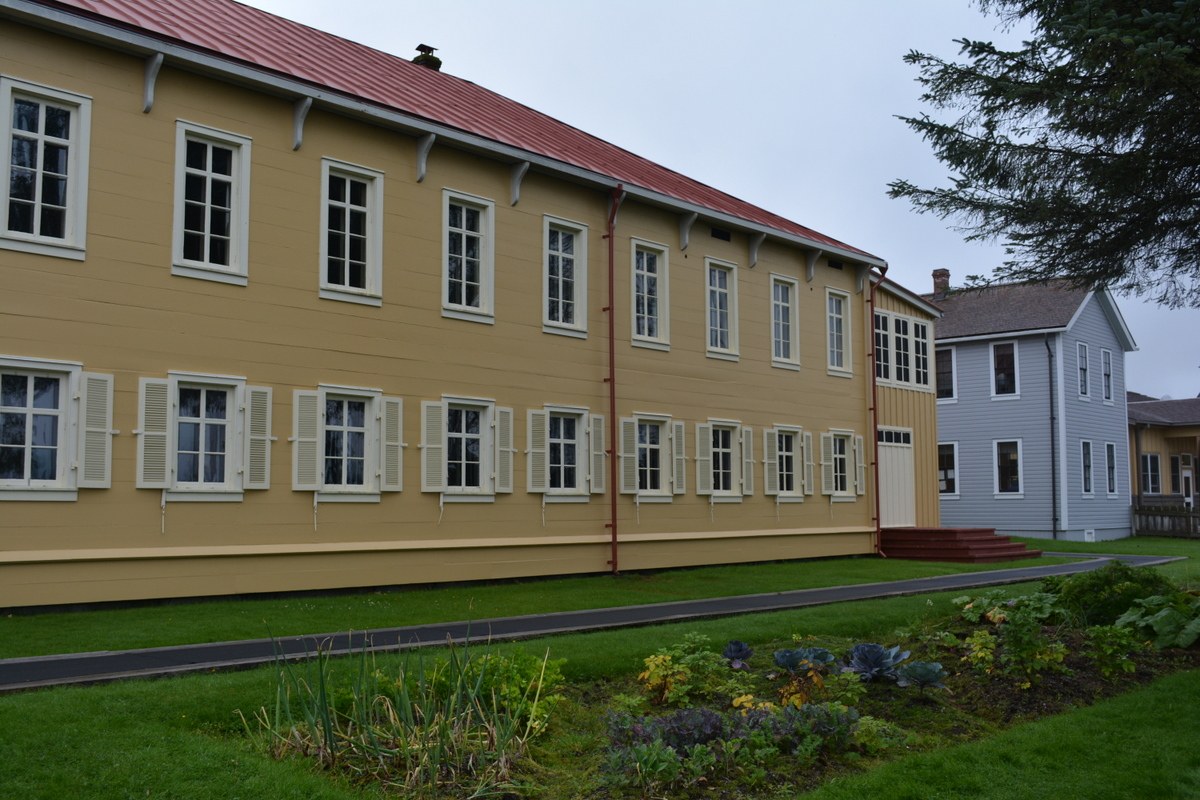
The house is now managed by the rangers of the National Park Service, and the interiors are restored with incredible precision. As you wander through rooms full of original furniture, you genuinely feel transported back to the nineteenth century.
In one of the rooms you’ll see a beautiful old samovar, and suddenly you can vividly imagine all the building’s residents gathering around hot tea during those harsh Alaskan winters. That raw historical atmosphere simply hangs in the air and pulls you in, even if you’re not exactly a history buff.
6. Whale Watching and Bubble-Net Feeding
The waters around Sitka and the whole Inside Passage are bursting with life in summer. We were mainly interested in the humpback whales, which migrate an enormous distance all the way from Hawaii to fatten up here. If you come in August, you have a huge chance of seeing something absolutely unique — so-called bubble-net feeding.
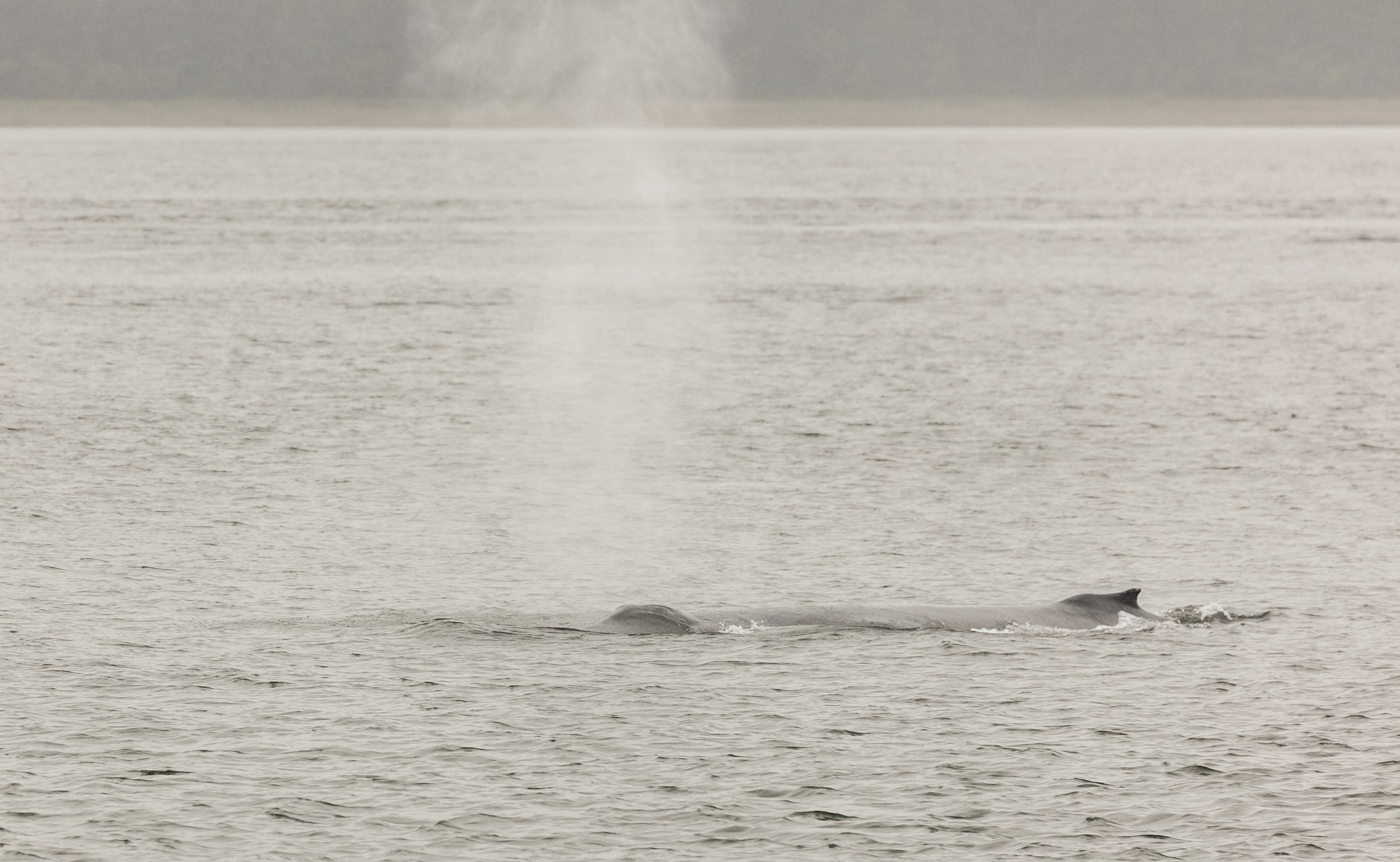
It’s a hunting technique in which the whales create an impenetrable ring of bubbles underwater, drive entire shoals of fish into it, and then surface together with their mouths gaping wide open. Anyone who sees it with their own eyes will never forget the sight and sound for the rest of their life. On top of that, sea otters routinely loaf around the boats, lying on their backs and looking like they haven’t a care in the world.
One tip well worth following: skip the giant cruise catamarans built for a hundred people and pay a bit extra for a small boat with a local skipper instead. That feeling, when you’re sitting just above the surface and feel yourself rocked on the wave with every breach of a huge whale, simply can’t be put into words.
7. Castle Hill
At first glance it’s just an ordinary bare little hill near the harbour, but world history was rewritten here. It was on this very mound, on 18 October 1867, that the ceremonial handover of Alaska to the United States took place. The Russian flag with its double-headed eagle came down, and the American one went up.
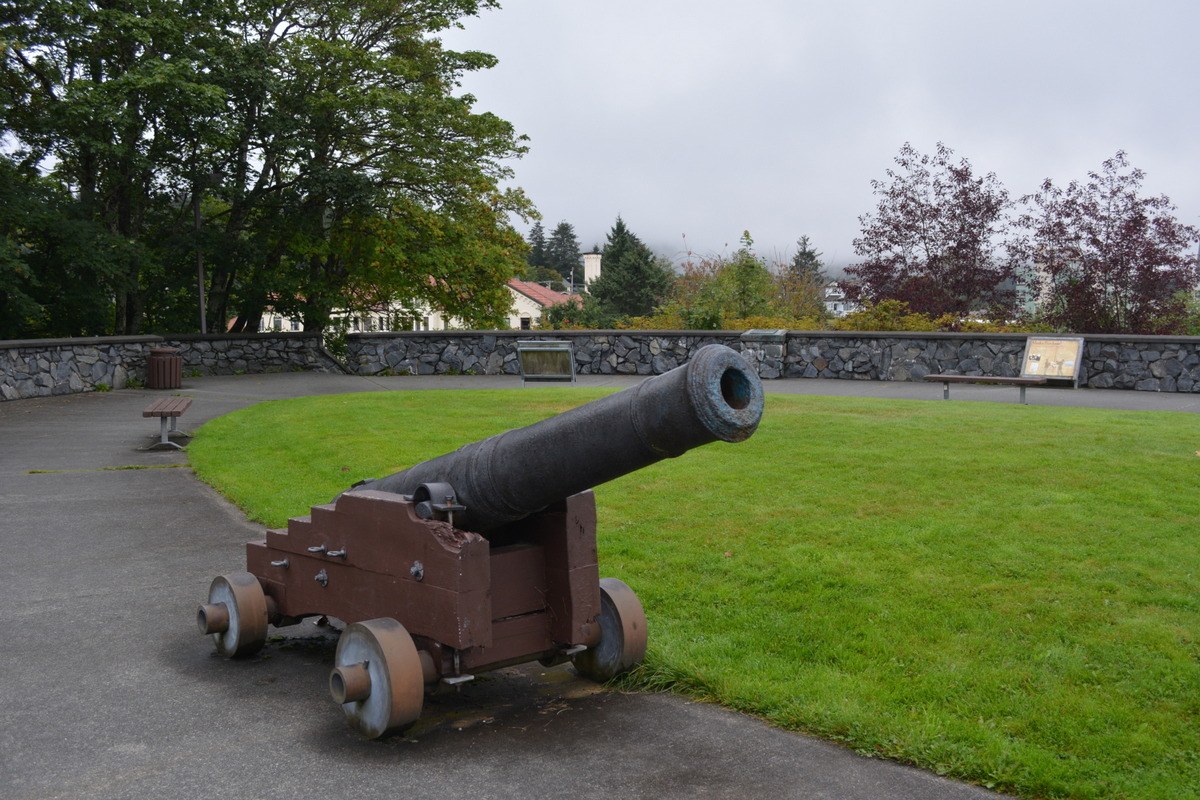
Today you won’t find any castle here, even though the name Baranof Castle State Historic Site suggests one, but the view of Sitka Sound and Mt. Edgecumbe volcano in the distance is absolutely phenomenal. There’s no admission fee — you just climb a few steps, lean into the cold wind and soak up the view.
It’s genuinely incredibly windy up top, though, so even in the August summer you’ll happily pile on just about every layer you’ve got in your backpack. The stunning photos with the volcano in view will absolutely make up for those frozen fingers — photographers here usually burn through about half a memory card.
8. Sheldon Jackson Museum
This unassuming museum, founded in 1887, is actually the oldest museum in Alaska. We expected some small exhibition, but inside it took our breath away. The Sheldon Jackson Museum hides an incredible collection of indigenous artefacts, put together by a rather active missionary of the same name.
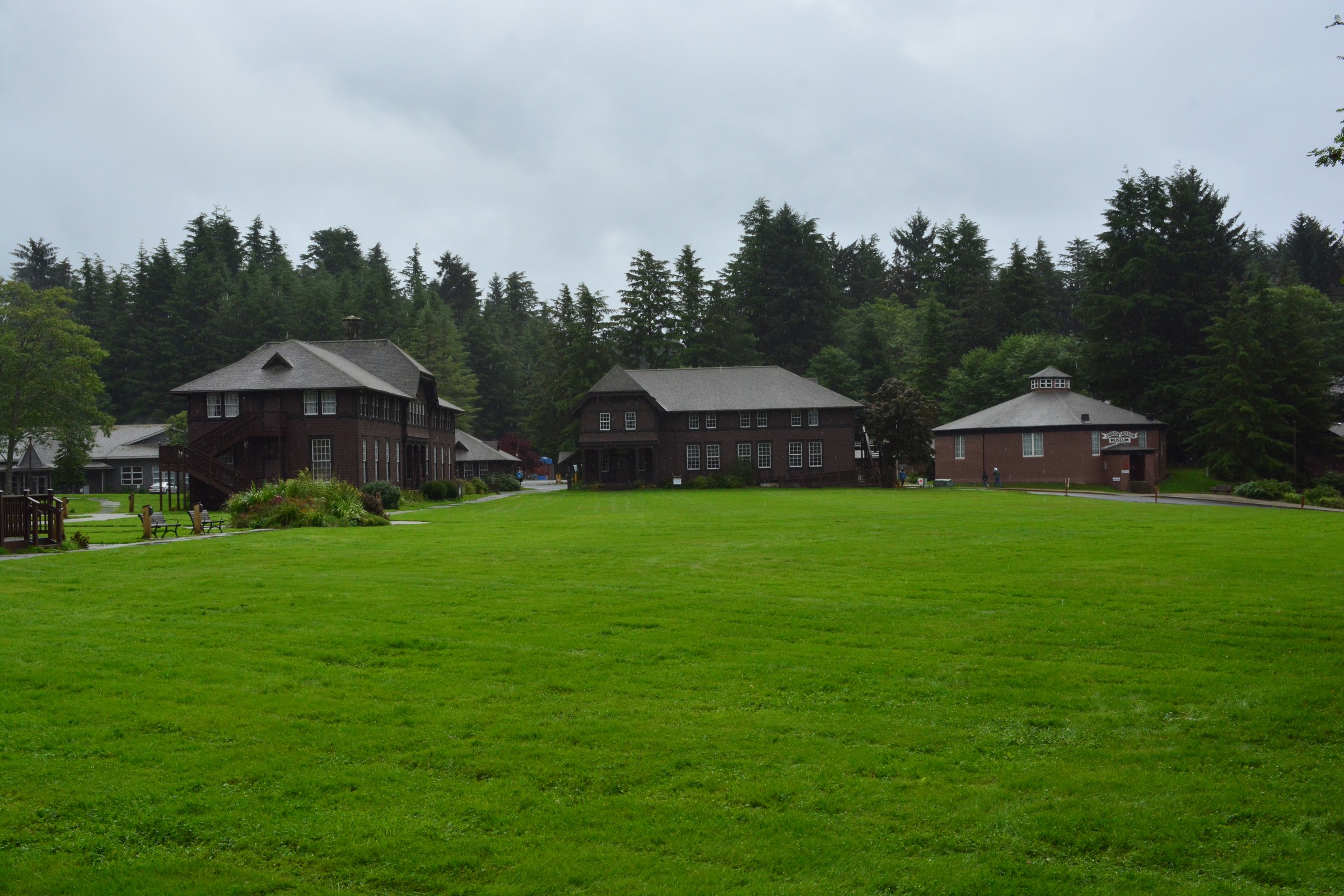
You’ll find goods and tools of the Inuit, Aleut and Tlingit from the days before the modern American world steamrollered their traditional culture. From masterfully carved masks to skin-covered kayaks, this museum is a gem for anyone interested in anthropology.
For me personally, the most fascinating thing by far was the huge collection of wooden ritual masks. Some look quite terrifying, others almost comical, but each of them breathes the age-old skill of the people who carved them through long, dark evenings by a crackling fire.
9. A Walk Along the Indian River Trail
Sitka offers incredible hiking options right on the edge of town. If you’re not exactly a mountaineer and would rather have an easy stroll, head out on the Indian River Trail. The trail measures a little over four kilometres one way, is essentially flat, and leads through gorgeous rainforest along the river to a smaller waterfall.
This route is truly beautiful, but you need to be on your guard. In autumn the river fills with migrating salmon, which naturally attracts the local furry residents. If you set off here, definitely take bear spray with you and chat loudly the whole time so you don’t surprise anyone in the bushes.
It’s recommended to walk the trail in groups of two or more and to loudly sing or holler every few minutes, so every bear within a kilometre knows you’re coming. It feels a bit comical at first, but all the local rangers will confirm with a straight face that this really is the best possible life insurance.
10. Hiking Mount Verstovia for the Bold
If you’re in good shape and want to see Sitka from a bird’s-eye view, this is the hike for you. The Mt. Verstovia route is only five kilometres there and back, but over that short distance you climb a brutal 760 metres of elevation. It’s essentially an endless ascent up steps made of roots and mud.
You’ll swear a few times on the way up 😅, but once you finally scramble onto the viewpoint called Picnic Rock, you forget all your aching muscles. A view opens up over the whole bay with its hundreds of green islets. People don’t tend to go up to the actual rocky summit any more, as the ridge is unmaintained and dangerous.
The way down is perhaps even a touch worse than the slog up, because that ever-present mix of mud and roots is unbelievably slippery. My knees remembered that descent for a good three days afterwards, but with hindsight I have to admit that epic feeling at the top was worth the effort — and the swear words.

11. Mt. Edgecumbe: Alaska’s Fuji
When you look out over the ocean from Sitka, your eye is immediately drawn to the perfect cone of the dormant Mt. Edgecumbe volcano, rising nearly a thousand metres on neighbouring Kruzof Island. Because of its shape it’s often nicknamed the Japanese Fuji, and it’s a huge challenge for all capable hikers.
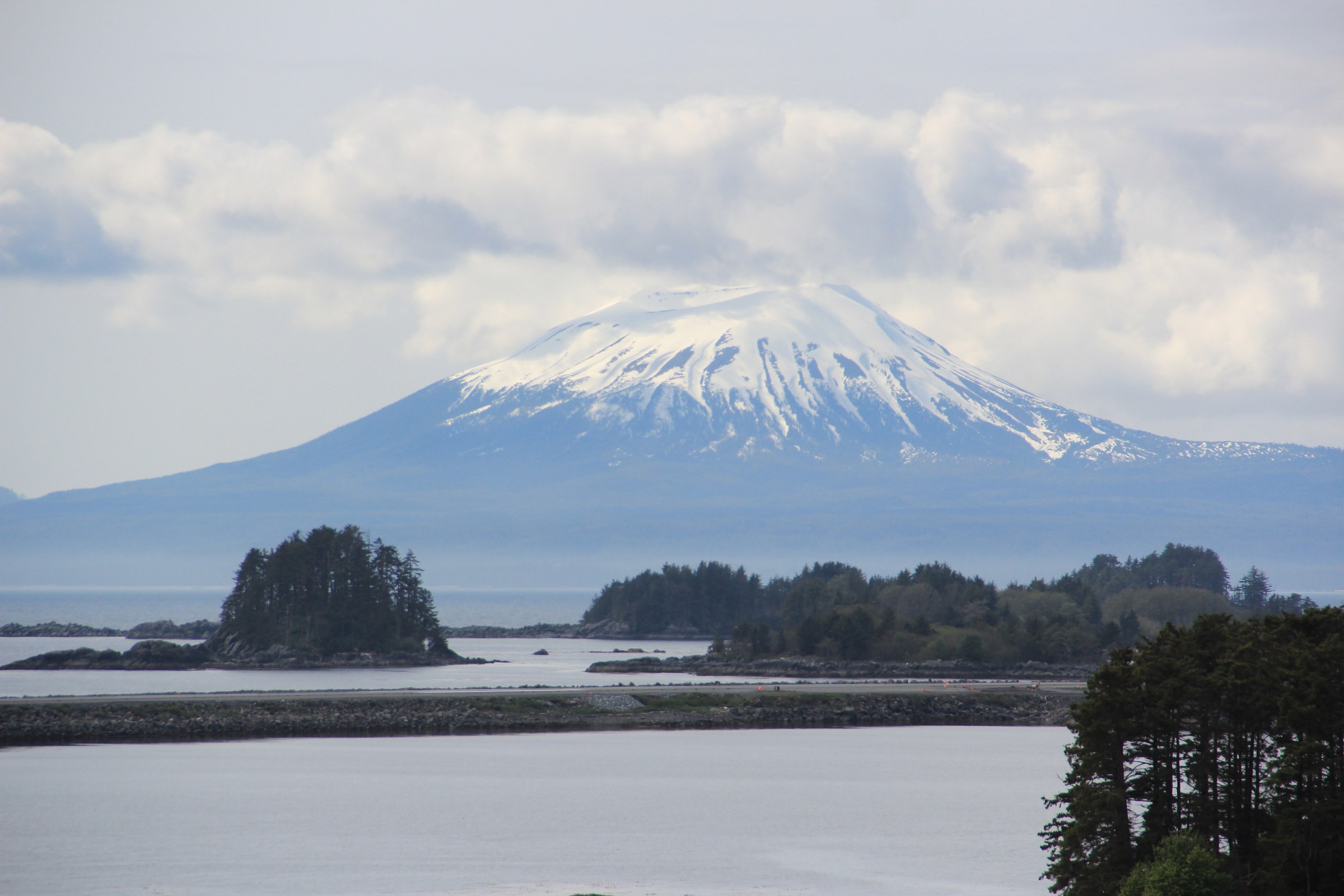
Getting to it is no joke, though. You have to rent a boat in town, get dropped off on a beach, and then face an 11-kilometre trek one way. The route starts in annoying bogs (locals call them muskeg), continues through forest, and ends with a climb through loose volcanic ash. This is definitely not a Sunday-afternoon outing for beginners.
During the small-boat crossing to the island, it often gets pretty rough on the more open water, so seasickness tablets should probably be mandatory kit for any landlubber. But this gruelling sea voyage is simply an inseparable part of the whole rugged adventure.
12. Sitka Sound Science Center
If you have time left over or have children with you, be sure to stop by the mouth of the Indian River, where the local research centre and aquarium are based. The Sitka Sound Science Center is no enormous sea world, but they have excellent touch tanks with starfish and sea anemones that you can carefully feel.
The centre is also home to a fully functioning salmon hatchery. You’ll learn everything about the harsh life cycle of Alaskan fish, and overall it’s a very pleasant stop for an hour, especially when it’s bucketing down outside (which is pretty likely here).
I was initially quite reluctant to touch anything in those touch tanks at all, but in the end I gently stroked a purple starfish and, to my surprise, it was remarkably hard. It may be a complete trifle, but it somehow connects you with that fascinating underwater world far more personally.
Map of points of interest for your phone
Where to Eat Well: Alaskan Seafood and Coffee
In Sitka you eat what the fishermen pulled out of the ocean that morning, and you can tell instantly on the plate. Halibut, wild salmon and fantastic Dungeness crab don’t travel halfway around the world here — they journey from the icy water almost straight onto your plate. Eating out is fairly expensive, with an average dinner for two with drinks easily setting you back $100 (around €92), but the experience is usually superb.
If you want to experience something special and don’t mind paying extra, head to Beak Restaurant. They cook with the best of the morning’s catch, and the salmon there is an experience in itself. What’s more, as one of the few establishments in the USA, they refuse tips because they simply pay their people a decent wage. Refreshing. Another huge hit is Ludvig’s Bistro, a little slice of the Mediterranean in Alaska, but the space is genuinely microscopic and you’ll need a reservation roughly from the moment you book your flights.
For families with children or a laid-back evening, Mean Queen Pizza is great. It’s fairly loud, they make excellent pizza, and you can look straight out at the bay and harbour from your table. For a quick energy boost after a hike, or when you need a good coffee to perk you up, pop into Highliner Coffee, where even rugged commercial fishermen come to soak up caffeine in the morning before heading out to sea. And if you’re after something cheaper, the Mangiare restaurant on the ground floor of the Sitka Hotel serves fairly affordable Italian classics.
Where to Go Next in Alaska
Alaska is enormous, and Sitka is often just one stop while travelling along the southeast coast. If you’re planning to explore the Inside Passage region further, definitely take a look at our article about the capital, Juneau, which is an easy hop by plane from Sitka.
If you’re planning to travel by boat, we’ve put together a comprehensive guide to Alaska cruises, where you’ll find tips on what to expect and how to choose the right route. The amazing gold-rush towns of Haines and Skagway are also well worth a stop — they’ll instantly transport you back in time more than a hundred years.
Tips and Tricks for Travelling (Not Only) Around Alaska
When you’re packing for wilderness like this, logistics play the leading role. Planning a trip like this takes a fair few evenings, and a few things can really catch you off guard.
So that you don’t have to google everything from scratch, I’ve gathered the most important practical tips neatly in one place. It’ll save you a lot of time, nerves and, in the end, a bit of money too, which you can then better spend on a nicer dinner or a boat trip.
Where to Find Flights
For searching out flights, especially here in North America, we constantly use the same approach. From the UK, you’ll fly transatlantic to a hub like Seattle and then connect on a regional Alaska Airlines flight, so it pays to compare combined routes on a good flight search engine to nab the cheapest fares.
Always pay close attention, though, to the permitted baggage weight — on small Alaskan planes this is taken very strictly for safety reasons, and oversized cases attract hefty fines.
Renting a Car
Although you won’t need a car in Sitka, you can’t get around the rest of Alaska without one. We’ve used RentalCars long-term all over the world — we first tried them in Canada, where they bumped us up to a bigger car on the spot at no extra charge, and we haven’t switched since. They have good insurance and so far haven’t surprised us with anything unpleasant.
On top of that, in Alaska’s peak season the best and most reliable SUVs disappear very quickly. I’d definitely recommend locking in a car as soon as you have your paid flights in hand, so you don’t end up stuck with some tiny city runabout on muddy roads.
Booking Accommodation
Booking.com is our favourite hotel search engine — I recommend setting up reservations as early as possible (this goes double for places like Alaska), because they often offer free cancellation up to a few days before arrival.
For the first few days it pays to make two backup reservations at different places (where free cancellation is allowed) and then make your final decision based on the current itinerary and weather.
Don’t Forget Insurance and Connectivity
Don’t even think about heading to the States without proper insurance. For shorter holidays we choose insurance from AXA, where we have a 50% discount for you, while for longer adventures and long-term trips we swear by SafetyWing. And to avoid ruining our wallet on roaming, and to have data even in the rainforest where possible, we use the Holafly eSIM.
Thanks to the ever-present mud and rain, ordinary trainers won’t cut it in Alaska. If you’re not sure what to put on your feet, take a look at our article on how to choose the right hiking boots.
 🚗 Car rental on the roadVerified rental cars in Alaska
Search with the DiscoverCars comparison engine — it compares prices from dozens of local and international rental companies, and most bookings come with free cancellation.
Compare car prices in Alaska →Frequently Asked Questions (FAQ)
When we flew to Alaska all those years ago, I had a huge number of questions in my head, and I’ll admit some of them were probably pretty naive. We’d read up on plenty, but reality occasionally looked a bit different.
So here I’ve gathered the most common questions our friends ask when we tell them over a glass of wine about our experiences in and around Sitka. Maybe it’ll help you form a more complete and better picture of this amazing and wild corner of the world.
Who lives in Alaska?
Alaska’s population is a diverse mix. You’ll find indigenous peoples (Inuit, Yupik, Aleut, and here in the south primarily the Tlingit tribe), descendants of Russian settlers, tough commercial fishermen, and plenty of modern-day adventurers who escaped from big American cities seeking peace in the wilderness. I personally loved chatting with locals in shops and on the street. They have that typical calm, down-to-earth approach to life, and almost nothing is an unsolvable problem for them.
What is typical of Alaska?
Alaska is most characterized by untamed nature, glaciers, thousands of bears, and rivers full of migrating salmon. In the Inside Passage region, the cold temperate rainforest is also typical, along with enormous distances between towns, which often have no roads at all and require flying by plane. But for me, above all else, it’s that completely unique scent. It smells of clean salt water, decaying wet conifer needles, and rain in a way you simply won’t experience anywhere else on the planet.
How many lakes are there in Alaska?
It sounds almost unbelievable, but across Alaska’s vast territory there are more than three million natural lakes. Most of them are completely untouched by civilization and inaccessible to humans. It’s precisely for this practical reason that float planes, or seaplanes, are so popular here. These small winged machines can safely land on water even in places that would otherwise take you a whole week to hack through impenetrable forest with a backpack.
What does Alaska border?
Alaska doesn’t border any other U.S. state. Its land border to the east is shared with Canada (specifically with Yukon territory and British Columbia province). To the west, across the Bering Strait, it shares a maritime border with Russia, and at the narrowest point these two superpowers are just over three kilometers apart. The sense of geographical remoteness here is truly overwhelming at every turn. Sometimes you genuinely feel with amazement that it’s just you, a few trees, and then the actual end of the world.
Is it extremely cold in Sitka in winter?
Surprisingly not. Sitka lies in a temperate zone by the ocean, so winters here are almost laughably mild by Alaskan standards. Temperatures average above freezing (around 4–6 °C) and it mostly rains instead of snowing. The problem here isn’t the cold, but the constant dampness. Locals explain with humor that classic snow doesn’t usually last long on the roads here and typically melts into wet slush within a few hours.
When is the best time for whale watching?
You have the best chance of seeing hundreds of humpback whales and their unique bubble-net feeding method during the summer months, ideally in August. I highly recommend bringing a good pair of binoculars on the boat and arming yourself with a really good dose of patience, because whales, despite what the captains want, swim wherever they please.
Can you drive to Sitka from the American mainland?
Absolutely not. Sitka is located on an island and the no road access rule applies. The only option is to fly here by plane or use a boat, whether a commercial cruise ship or the state-run Alaska Marine Highway ferries. Cars in town belong only to locals who had to have them shipped here by boat with considerable effort. It may sound a bit impractical to a European at times, but honestly, it’s precisely because of this huge barrier that the town still maintains its incredibly peaceful atmosphere completely free of traffic jams.
Tips and Tricks for Your Vacation
Don’t Overpay for Flights
Search for flights on Kayak. It’s our favorite search engine because it scans the websites of all airlines and always finds the cheapest connection.
Book Your Accommodation Smartly
The best experiences we’ve had when looking for accommodation (from Alaska to Morocco) are with Booking.com, where hotels, apartments, and entire houses are usually the cheapest and most widely available.
Don’t Forget Travel Insurance
Good travel insurance will protect you against illness, accidents, theft, or flight cancellations. We’ve had a few hospital visits abroad, so we know how important it is to have proper insurance arranged.
Where we insure ourselves: SafetyWing (simple monthly subscription) and TrueTraveller (for extra-long trips).
Find the Best Experiences
Get Your Guide is a huge online marketplace where you can book guided walks, trips, skip-the-line tickets, tours, and much more. We always find some extra fun there!
More from Alaska
Full guide →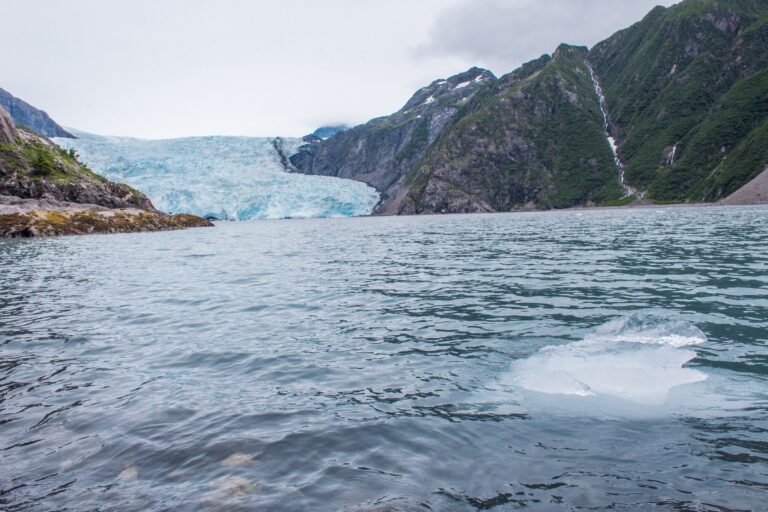 ItineraryAlaska Road Trip: The Best Itinerary for 7, 10, 14 and 21 Days
 What to seeWrangell-St. Elias & Matanuska Glacier: Exploring America’s Largest National Park
 What to seeGlacier Bay National Park, Alaska: A UNESCO Gem With No Roads
 What to seeKenai Fjords National Park, Alaska: 12 Tips on What to See and Do
 PricesAlaska Cruise: The Complete 2026 Guide (Inside Passage, Glacier Bay, Prices)


