

When you wake up on your Alaska cruise, pull back the cabin curtains, and instead of a boring stretch of ocean you see majestic snow-capped peaks rising straight out of turquoise water, you’ll know this is going to be an absolutely spectacular experience. Lukáš and I learned one crucial lesson in Alaska: organising a road trip eats up most of your energy and budget, because in remote areas you’re hunting for overpriced motels and praying you don’t hit a moose on a dark highway.
A cruise ship, on the other hand, takes roughly five percent of the effort — you simply board in Seattle and your floating hotel-restaurant carries you through some of the most breathtaking bays on Earth. ☺️ So next time, it’s definitely by ship.
So what’s in store here? I’ll help you choose the right ship, cabin, and route, reveal exactly how much this adventure cost us in 2026, and share local tips from every port — including the ones the guidebooks don’t mention.
TL;DR
- Best route: The most popular and logistically easiest option is a seven-day roundtrip cruise from Seattle or Vancouver. No complicated domestic flights to worry about.
- Glaciers are the main event: Always pick an itinerary that includes Glacier Bay National Park or Hubbard Glacier. That’s what you’re here for.
- A balcony is a must: Saving money on a windowless interior cabin is a huge mistake. In Alaska, you want to watch whales from your bed, not fight for a spot on the open deck in the rain.
- When to go: The season runs from May to September. July is the warmest, but the best prices and smaller crowds come in May or September.
- Budget: Expect roughly $1,500 to $2,500 (around €1,400 to €2,300) per person for a seven-day balcony cabin cruise, plus flights and spending money for excursions.
The full destination guide: Alaska — guide and what to see
When to go on an Alaska cruise and how it all works
The Alaska cruise season is ruthlessly dictated by unpredictable weather. The first ships set sail in late April and the last ones leave the glacial bays around the end of September. If you’re looking for the sweet spot between a good price and bearable weather, I’d recommend targeting late May or early September. Seattle’s cruise terminal is expecting record numbers in 2026, so planning a year ahead isn’t just an advantage anymore — it’s an absolute necessity. The secret to surviving Alaska also lies in layering. It’s freezing in the morning, you’re stripping down to a T-shirt in the midday sun, and by evening on deck you’re reaching for a beanie again.
The 2024 Alaska cruise season already shattered every historical visitor record, and 2026 promises even bigger crowds as new cruise lines enter Alaskan waters. If you’re sailing from Seattle or Vancouver, you simply need to book a standard transatlantic flight from the UK. From the airport, you can easily get to the cruise terminal by Uber or a dedicated ship transfer.
People often ask us how to reach the port of Seward, and there are essentially two options. From Anchorage (where you’d fly into) you can get to Seward either on the scenic Alaska Railroad train (which is an experience in itself) or by a dedicated bus service. The journey takes roughly two and a half to three hours through jaw-dropping scenery.
How to choose a cabin
When it comes to picking a cabin, I need to give you a strong warning. Interior cabins with no window might look temptingly cheap — starting at around $400 to $700 for the week — but for Alaska, it’s probably the worst possible idea. The weather outside is often cold and drizzly, and the thought of battling three thousand other passengers for a view of a calving glacier on the open top deck in howling wind is hardly romantic.
Personally, I consider a balcony cabin an absolute must. Trust me, the feeling of wrapping yourself in a blanket with a hot cup of tea on your own private balcony while blue icebergs drift past is simply priceless. Interior cabins are fine for the Caribbean, where you spend all day by the pool, but Alaska is all about the views.
Prices in 2026 average between $1,300 and $2,500 (roughly €1,200 to €2,300) per person. It’s a premium, sure, but the moment you carry your morning coffee out to your private balcony in a dressing gown and spot an orca gliding past, you’ll forget every dollar you spent. The traditional market leaders are Princess Cruises and Holland America Line, which have priority access to the glacial bays. Celebrity Cruises is a superb choice for more discerning adults. On the other hand, if you’re travelling with kids and don’t mind livelier entertainment, Norwegian Cruise Line Alaska or the magical Disney Cruise Alaska will be right up your street.
The base cruise fare is just the beginning, though, so definitely factor that into your budget. You’ll need to add port fees and taxes (around $250), mandatory crew gratuities (roughly $18 to $25 per day), and optional packages for Wi-Fi or alcohol, which can easily drain another $100 a day from your wallet.
Before embarkation (or after disembarkation) you’ll almost certainly need to spend at least one night in the port city. Never fly in on the day of departure — any flight delay could mean the ship simply leaves without you. In Seattle, we like to stay near Pike Place Market, which is a short hop to the Pier 66 cruise terminal. You could try the lovely Edgewater Hotel, which sits right on the waterfront. For finding and comparing hotels, we always use Booking.com.
Itineraries: Where to sail and how to pick the right route
This is the decision that agonises everyone the most. A roundtrip from Seattle, or a one-way sailing from Vancouver? Spoiler: it mostly depends on how much logistical hassle you want with flights. Roughly four out of five people go for a roundtrip, and it’s also our recommendation for a first-time Alaska cruise. Each route has its own quirks and trade-offs, though. If you’re prone to seasickness, for instance, this is something you really need to consider.
The most popular choice is a roundtrip cruise from Seattle. The voyage starts and ends in the same place, which saves you a fortune on return flights from the UK. These ships, however, must round the western coast of Vancouver Island through the open Pacific, where the waves can occasionally get a bit rough. A typical itinerary takes you to Juneau, Skagway, Ketchikan, and a scenic glacier cruise.
The second very popular option is a roundtrip from Vancouver, Canada. The advantage here is that from day one the ships sail through the sheltered waters of the Inside Passage, where the surrounding islands mean there are virtually no waves. Seasickness is genuinely minimal on this route — making a Vancouver to Alaska cruise a brilliant choice for nervous first-timers.
2. Humpback whale watching from small boats
If you love wildlife and want to see whales — specifically humpbacks and occasionally orcas — Juneau is arguably the best place on Earth for it. The whales migrate here in summer to feed and linger in the shallow waters near the port.
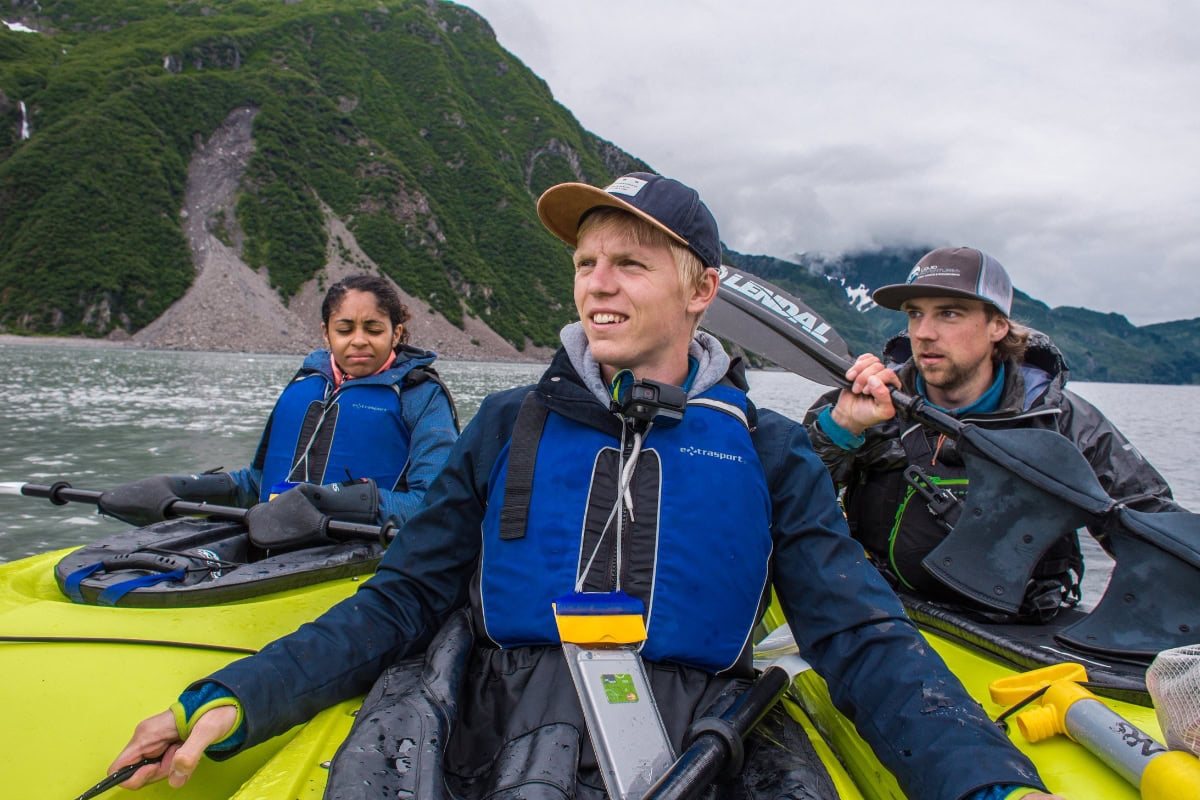
The biggest mistake you can make is buying a mass excursion through the cruise line on an enormous catamaran carrying a hundred people. Instead, book a trip with a local independent operator (such as Harv & Marv’s Outback Alaska), who’ll take you out on a small boat with a maximum of six passengers.
The price ranges from $180 to $360 (around €165 to €330), but the whales are so unbelievably close that Lukáš and I practically forgot to breathe — and there’s no annoying jostling at the railing. The local skippers know exactly where to go and guarantee you’ll spend a solid three hours on the water. Plus, these established operators guarantee they’ll get you back to the ship on time.
3. The town of Skagway and Gold Rush atmosphere
Skagway sits at the northernmost tip of the Inside Passage and essentially functions as a living museum of the legendary 1898 Klondike Gold Rush. Walking through the centre feels like stepping onto the set of a Wild West film. Close your eyes and you can almost picture desperate prospectors wading through the mud here over a century ago.
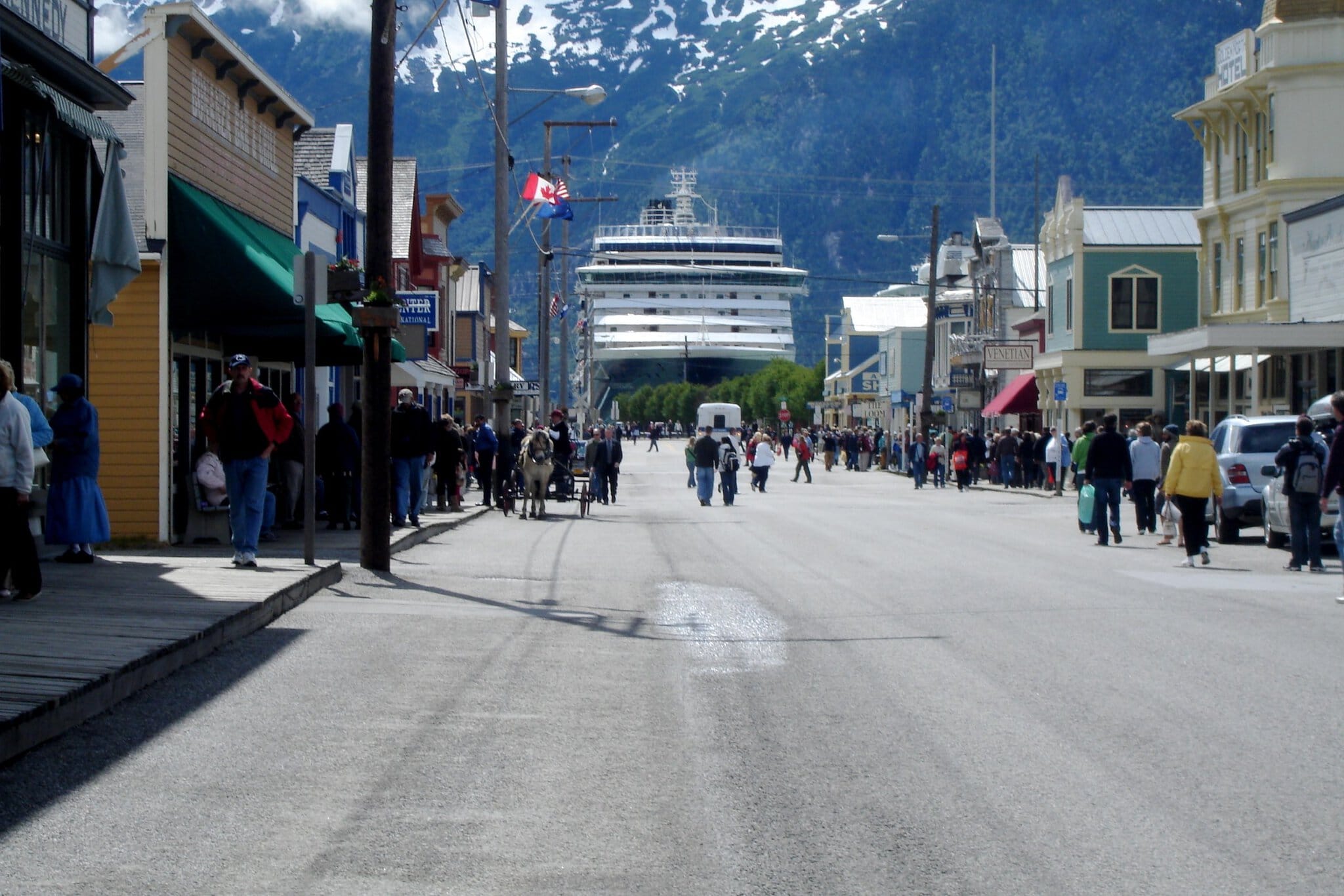
The entire centre is lined with wooden boardwalks, historic buildings, and period saloon bars. It’s incredibly photogenic, although I’ll be honest — in peak season up to four thousand tourists disembark here daily, which makes it a pretty crowded affair. 😅
Don’t miss the famous Red Onion Saloon, which used to operate as an upscale brothel for gold miners. Today you can enjoy a great beer while waitresses in period corsets cheerfully regale you with the raciest stories from its colourful past.
4. White Pass & Yukon Route train ride
While Skagway is a charming town, the real reason people come here is the train. The historic narrow-gauge White Pass & Yukon Route railway is an engineering marvel. Prospectors built it in an incredible twenty-six months, blasting through over 450 tonnes of explosives into solid granite rock.
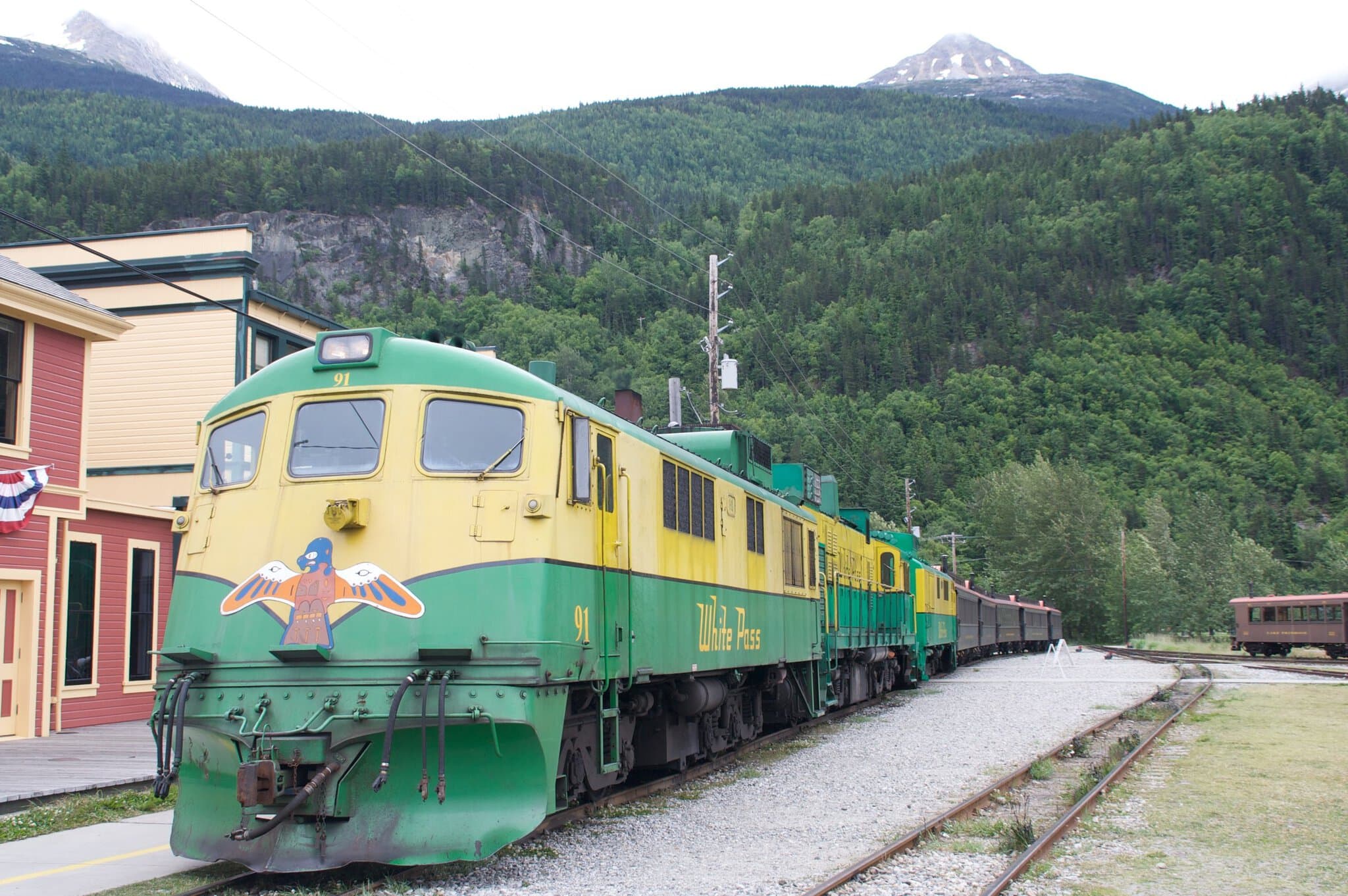
Today, this gorgeous vintage train takes you on a three-hour breathtaking journey through a mountain pass, climbing to nearly a thousand metres. You’ll pass sheer cliffs, deep gorges, and thundering rivers. It’s arguably the most popular and most sold-out excursion in all of Alaska.
You have two options for buying tickets. Purchasing through the cruise line means peace of mind — you board the train conveniently right at the dock beside the ship (expect to pay around $170). If you buy directly from the railway, you’ll save a few dollars ($155), but you’ll need to walk about fifteen minutes from the port to the historic train station in the town centre.
5. Ketchikan, salmon, and totem pole culture
Ketchikan is the first Alaskan port that ships enter when sailing north. It’s nicknamed the Salmon Capital of the World, and you’ll find five different species here (fish lovers will be in seventh heaven). Ketchikan is also reportedly the rainiest city in America, and we can confirm that. It rained the entire afternoon we were there, but it gave the place that authentic northern atmosphere. We bought a hot tea and sheltered under the awning of one of the wooden houses on Creek Street.
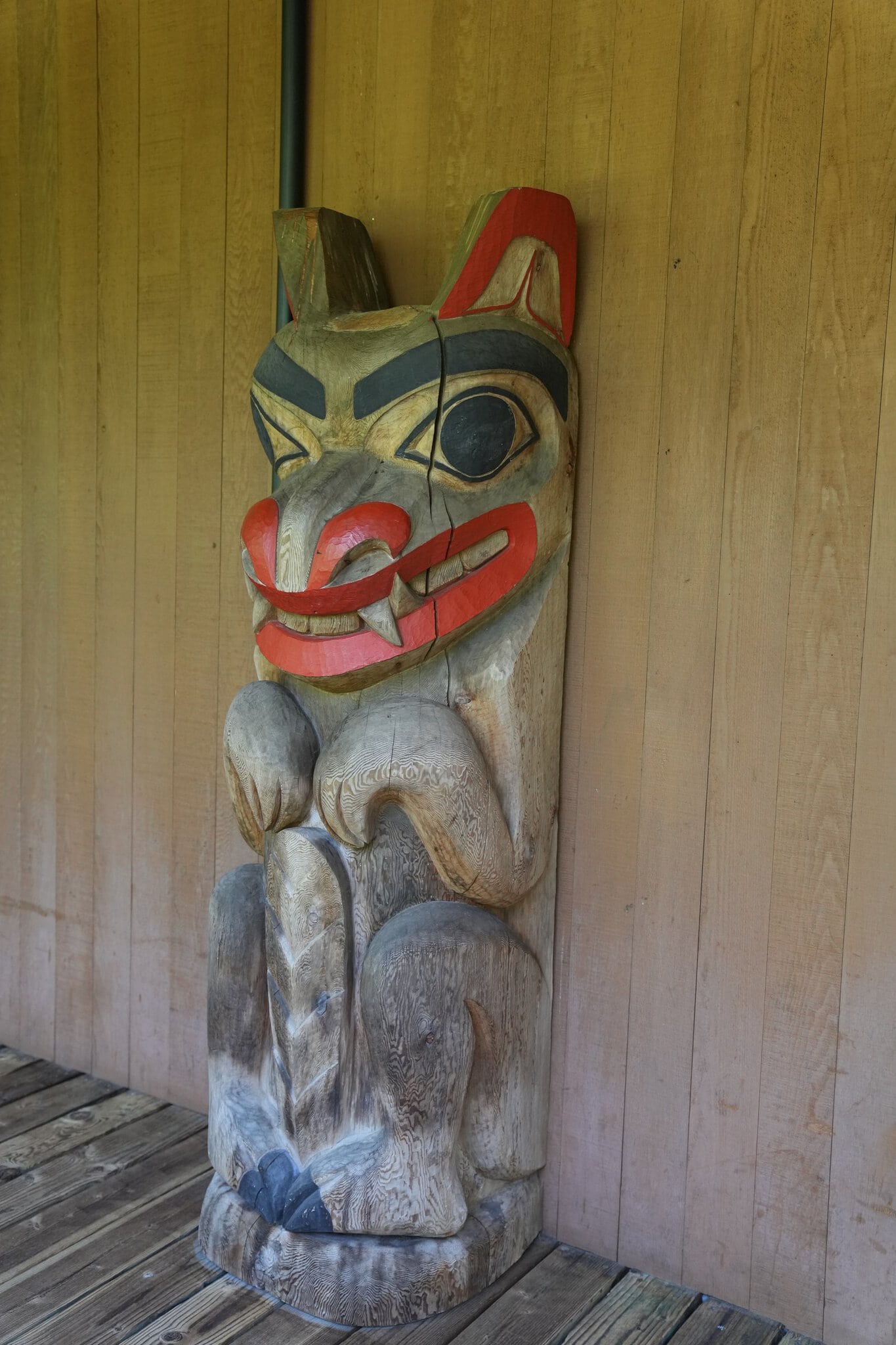
It’s also home to the world’s largest collection of hand-carved wooden totem poles. If you’re interested in the culture of the indigenous Tlingit people, head to Saxman Native Village or the Totem Heritage Center, both near the port. It’s fascinating to watch the carvers at work, shaping enormous cedar trunks into art.
Right in the town centre, don’t miss the famous Creek Street. It’s a historic boardwalk built entirely on wooden stilts over a salmon-filled creek. It was once a red-light district full of bootleggers and ladies of the night; today the houses hold charming cafés, galleries, and souvenir shops. From the walkway, you can often spot seals playing in the water below.
6. Floatplane flight over Misty Fjords
If you’ve got budget left in Ketchikan and want an experience you’ll remember for the rest of your life, book a floatplane flight over Misty Fjords National Monument.
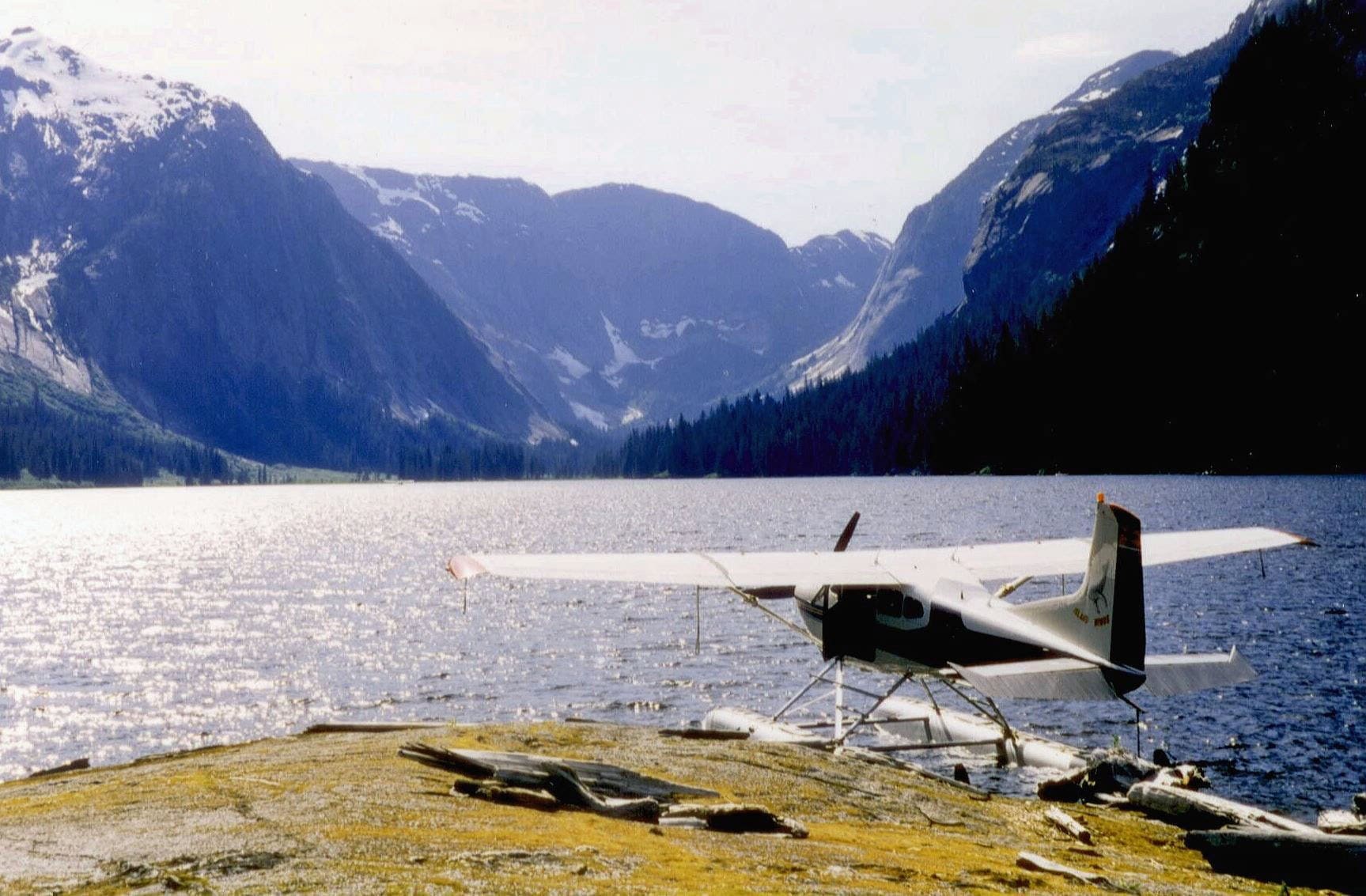
It’s a vast area of dramatic, glacier-carved granite fjords where no roads lead and no large ship can reach. The floatplane takes off directly from the water in the harbour and carries you over an incredible landscape of majestic mountains, deep lakes, and dense forests. Most pilots land on the surface of a remote mountain lake in the middle of absolute wilderness so you can soak in the silence and photograph the surrounding beauty.
The excursion costs a premium $300 to $400 (around €275 to €370), but everyone who’s done it agrees it’s the best investment of the entire holiday. Just be aware that these flights are quite often cancelled at the last minute due to low cloud cover and poor weather.
7. Sitka and a taste of Russian history
Sitka is the former capital of Russian Alaska (once known as Novo-Arkhangelsk) and has a completely different atmosphere from the other ports. The tourist crowds aren’t as overwhelming and the town has retained a much more authentic local character, partly because it sits on the open ocean coast.
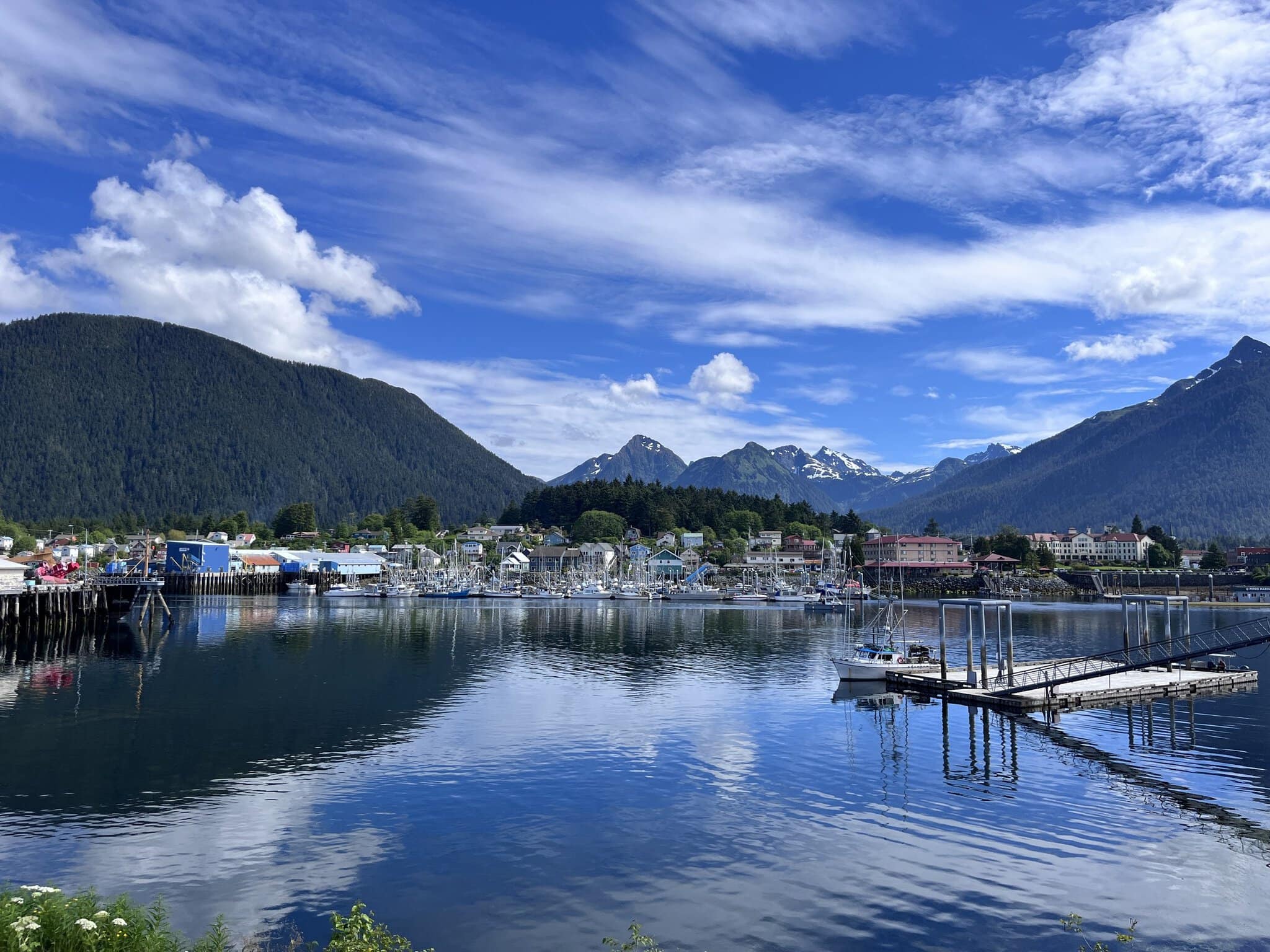
The Russian legacy is palpable at every turn. The centrepiece is the beautiful wooden Saint Michael’s Cathedral with its distinctive onion domes, which I’d definitely recommend popping into.
Just outside town lies Sitka National Historical Park, with a coastal trail lined by ancient spruce trees and indigenous totem poles. When Lukáš and I walked it early in the morning, we barely saw another soul. After days spent jostling in crowds, it was pure luxury.
8. Icy Strait Point and an escape from commercialism
Icy Strait Point (near the village of Hoonah) is a slightly different kind of port. It’s privately owned by the local Tlingit tribal corporation. If you’re tired of diamond shops and tacky souvenirs in Skagway or Juneau, you’ll love this place. The emphasis here is on preserving local culture and respecting nature.
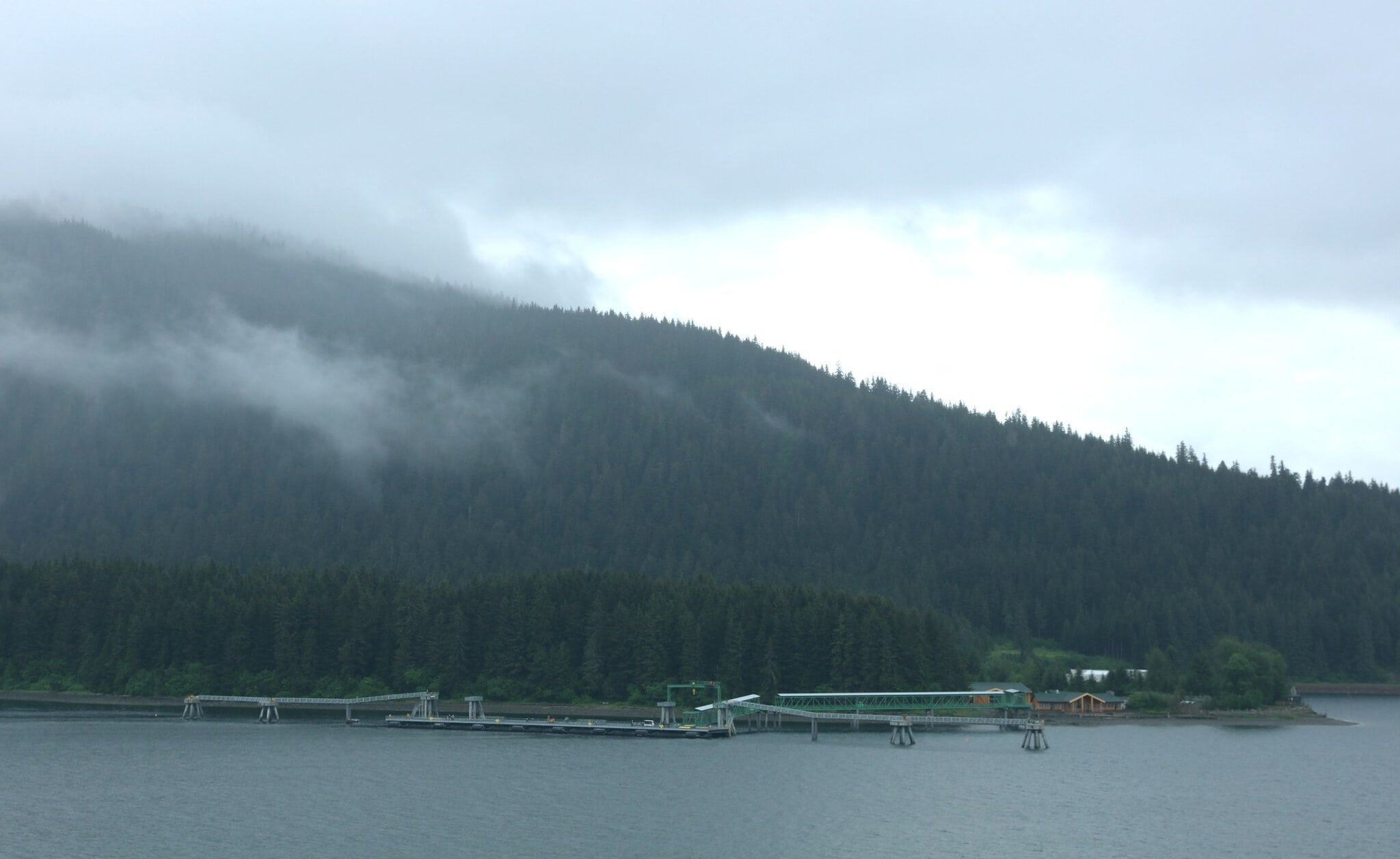
Besides fantastic, intimate whale watching, you’ll also find one big adrenaline highlight here. They have one of the world’s longest ziplines, called ZipRider. The seat whisks you at tremendous speed from the mountaintop straight down to the beach by the port.
Or you can simply sit by a fire on the shore, try the local halibut tacos, and chat with indigenous residents about what life is like in Alaska during the harsh, dark winter months.

9. Fortress of the Bear rescue centre
Seeing a bear in the wild in Alaska is probably everyone’s dream, but let’s be honest — bears keep well away from ports swarming with noisy tourists. If you want to see them, I’d recommend visiting the Fortress of the Bear rescue centre, located just outside Sitka.
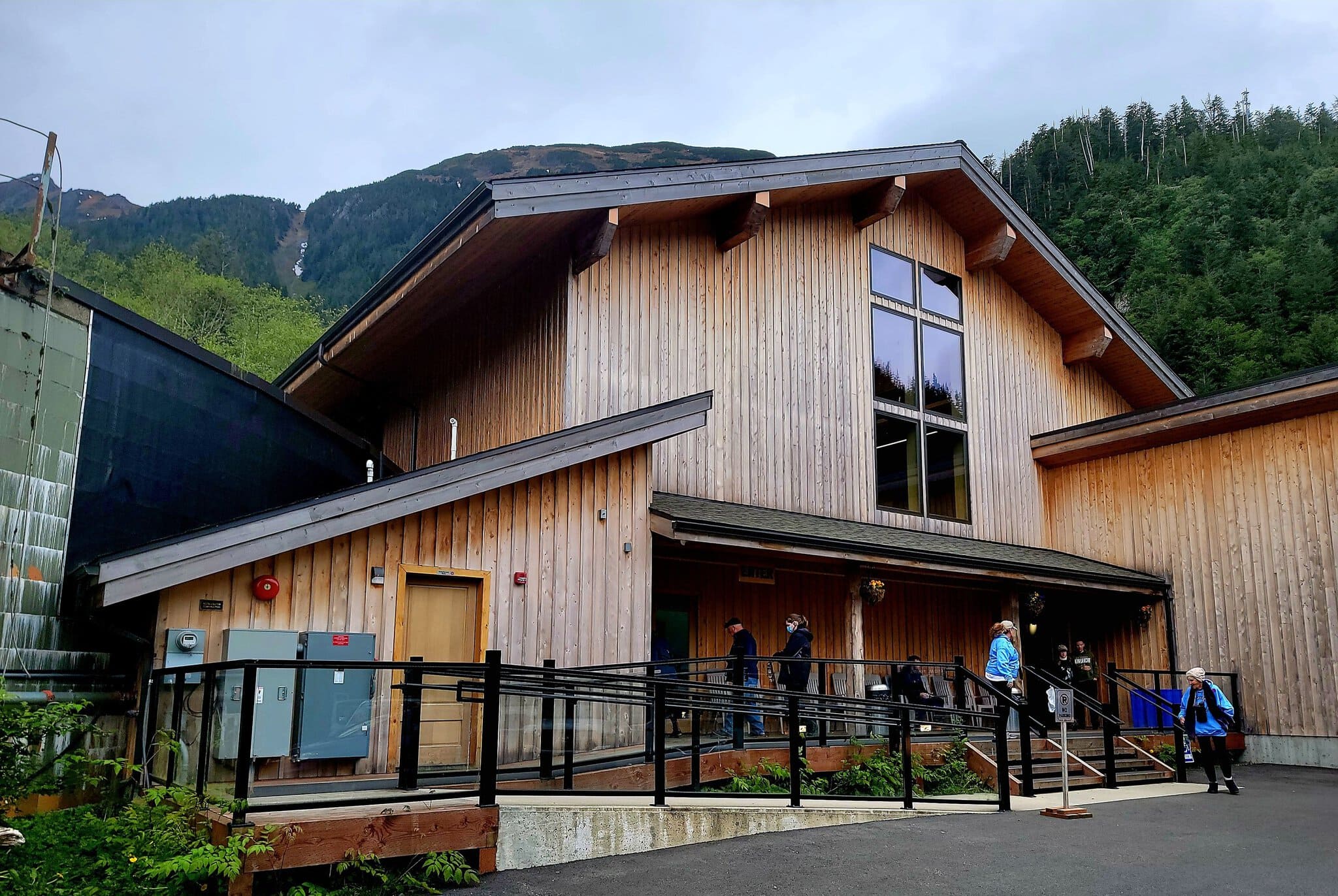
This isn’t a zoo — it’s a non-profit organisation caring for orphaned bear cubs whose mothers were often killed in collisions with cars or by poachers. The bears live in huge enclosures converted from former paper mill water treatment tanks, which doesn’t look the most natural, but the animals have safety and first-class care.
Admission is just around $15, and honestly, seeing those bears up close made me wish I’d donated more. The keepers will tell you incredible stories about each animal by name.
10. A mandatory stop in Victoria, Canada
If your cruise starts and ends in American Seattle, you’ll almost certainly have a short stop in the Canadian port of Victoria on Vancouver Island. The reason is purely bureaucratic. US law (the Passenger Vessel Services Act, or PVSA) prohibits ships under a foreign flag from carrying passengers between two American ports without a foreign port call.
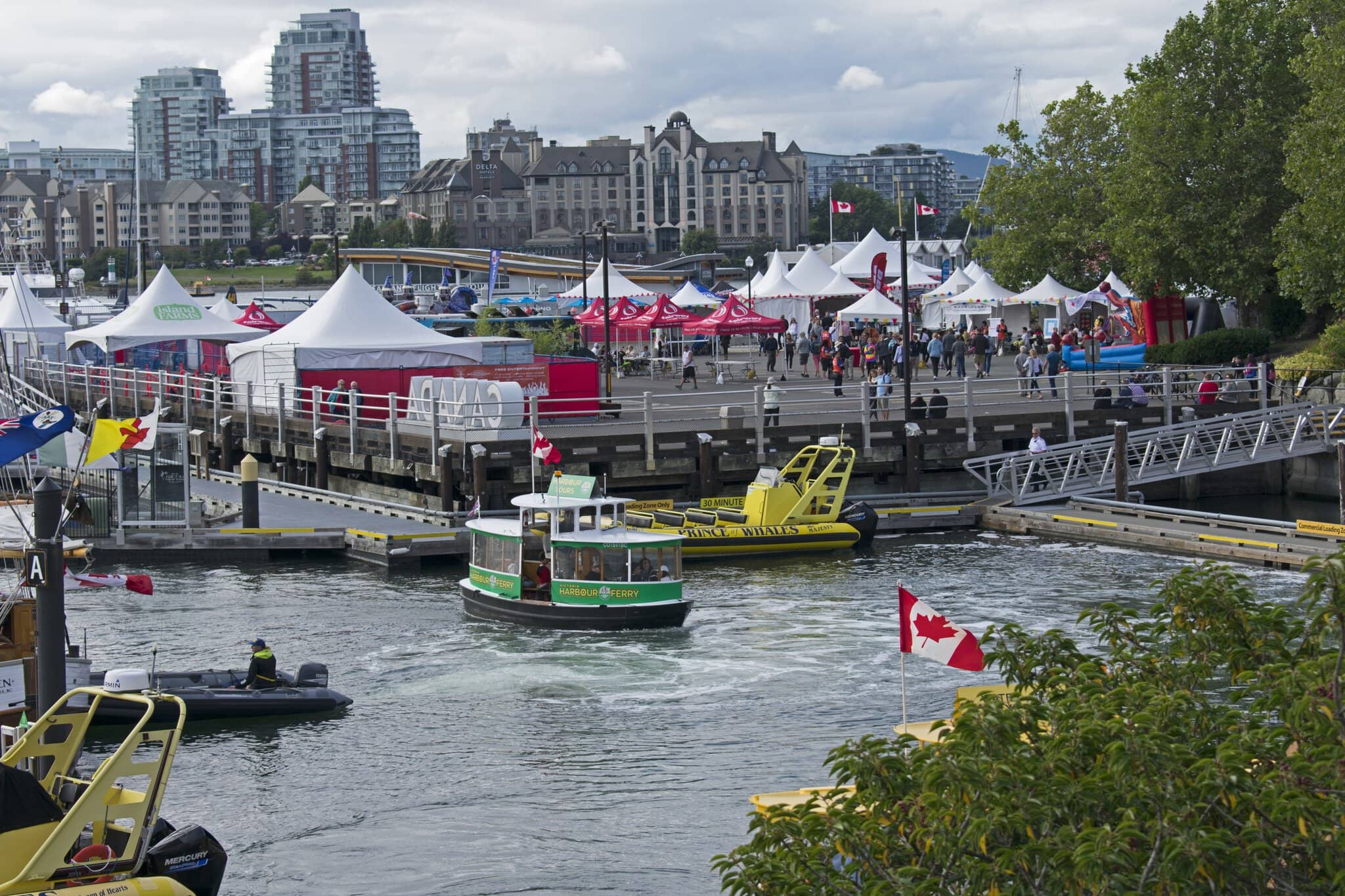
The ship typically docks in the evening, often for just four to six hours. Most people immediately rush off to catch buses heading to the famous Butchart Gardens — one of the most beautiful and immaculately maintained botanical gardens in the world.
If you’d rather not pay for the garden excursion, I’d suggest grabbing a taxi from the port or simply walking into Victoria’s centre. It’s a gorgeous little city with a deep British heritage, a beautifully illuminated Parliament building, and the elegant Fairmont Empress hotel.
11. Ship excursions vs. independent shore trips
Buying port excursions is the moment that makes or breaks your budget. Cruise lines charge an enormous mark-up on their excursions (commonly thirty to fifty percent). The trade-off for that price is peace of mind: a ship excursion guarantees the vessel will never leave without you, even if your tour bus gets a flat tyre.
Personally, we prefer booking independent local operators in Alaska. It means lower prices, much smaller groups, and a more personal touch (as I mentioned with the whale watching). There’s one massive caveat, though. If you miss the ship’s departure, the captain won’t wait. Hotel costs and a flight to the next port come straight out of your own pocket, with zero sympathy from anyone. Always give yourself at least a two-hour buffer before the all-aboard time.
12. Ferries for slow adventurers (AMHS)
If the thought of being crammed onto a mega-ship with four thousand other passengers and having to dress up for dinner frankly terrifies you, there’s a brilliant local alternative: the Alaska Marine Highway System (AMHS), the state-run ferry network.
It works like a highway on water for local residents. A one-way adult ticket from Washington State to Alaska costs roughly $250 to $350 (around €230 to €320). There are no pools or casinos on these vessels — just honest transport. You can slash your budget even further by skipping the pricey cabin altogether and pitching your own tent on the open rear deck, sleeping under the stars like a proper adventurer. ☺️
Map of points of interest for your phone
Where to eat
Food on the ship is a topic Lukáš and I can talk about for hours. Included in your fare is a main dining room with a multi-course evening menu and a massive buffet that’s open practically from dawn to midnight — which posed a certain danger for us. We were pleasantly surprised to find salmon served often on board, and it was excellent. What’s not included are the so-called specialty restaurants (steakhouses, sushi bars), which charge a cover of $30 to $50 per person. Remember that drinks beyond basic water, drip coffee, and morning juice at the buffet are all charged separately. If you enjoy wine with lunch and dinner or a few cocktails by the pool, definitely do the maths before sailing to see if an all-inclusive drinks package pays off.
Once you’re ashore, give yourself a break from ship food. In Skagway or Juneau you’ll find local restaurants serving Salmon Bake — huge fillets of fresh Alaskan salmon slow-roasted on a grill over open alder wood outdoors in the forest. It’s not the cheapest meal, but the aroma and flavour are something you won’t experience anywhere else on Earth. In Juneau, Lukáš and I always happily queue for the insanely good crab at Tracy’s King Crab Shack. And if you fancy a proper seafood feast with a harbour view right in Skagway, head straight to Skagway Fish Company — they do the best fish and chips under the sun.
Further reading
If you’re fascinated by America’s wild north and Alaska, make sure to check out our other detailed articles on this breathtaking destination, where we dive even deeper:
- Juneau, Alaska: 15 Things to See and Do
- Glacier Bay National Park: The Complete Guide
- Sitka, Alaska: The Most Beautiful Town with a Russian Soul
- When to Visit Alaska: A Weather and Season Guide
Tips and tricks for a smooth voyage
These are our tried-and-tested websites and services that Lukáš and I have used for years and never travel without.
Where to find flights
Search for cheap flights on Kiwi — it’s our favourite portal that brilliantly combines even budget airlines across America. For flights from the UK to Seattle or Vancouver, always book at least six months in advance. British Airways, Virgin Atlantic, and various oneworld and Star Alliance partners fly direct or with one stop from London.
Car hire
If you want to explore Alaska independently or travel before or after the cruise, we regularly use the comparison site DiscoverCars.com. We’ve had consistently great experiences with them worldwide, and they show you prices from all major rental companies in one place.
Don’t forget travel insurance
On a cruise — and especially in the US with its notoriously expensive healthcare — quality travel insurance is an absolute must. For shorter trips we typically go with a standard UK provider, and for longer exploratory journeys we rely on True Traveller. You can read more in our SafetyWing review.
Mobile data in Alaska
Don’t waste money on overpriced roaming from your UK network. I’d recommend setting up an eSIM from Holafly before you leave, which gives you fast unlimited data across the entire United States.
FAQ — Frequently asked questions about Alaska cruises
Here are the answers to the questions I get asked most often by readers planning their first Alaska cruise.
What’s the best month for an Alaska cruise?
You’ll find the best weather with the longest days and least chance of persistent rain in July and August. However, this is peak season, so expect the highest prices and tourist crowds. If you’re looking for a good compromise, we love late May and early June. There’s still plenty of dramatic snow on the mountain peaks and the bears are just waking up.
Which cruise line is best for Alaska?
There’s no one-size-fits-all answer—it depends on who you’re traveling with. Princess and Holland America have been doing this for years and have virtually guaranteed entry to Glacier Bay, which in our opinion is the number one reason to choose them. If you’re going with kids, Disney Cruise Line or NCL with their top-deck entertainment areas are your best bets. Try browsing reviews for individual ships based on your priorities.
How much does a week-long Alaska cruise cost?
For a week-long cruise per person in a nice balcony cabin, you’ll pay on average between $1,500 and $2,500 depending on the month and cruise line. But you’ll also need to factor in flights to Seattle or Vancouver, port fees (around $250), gratuities (about $150 per week), and shore excursions (typically $100–300 per tour).
What’s the cheapest month for an Alaska cruise?
The cheapest months (known as shoulder season) are May and late September. Cruise lines need to fill their massive ships at the edges of the season, so cabin prices can drop by as much as a third. May is a bit cooler and you might encounter bigger waves at sea, while September tends to be damper with more frequent rain, but the scenery is gorgeous.
What about seasickness on an Alaska cruise?
The Inside Passage itself is protected by a mass of islands, so the sea is calm as a pond for most of the journey. If you’re sailing from Vancouver, you’re protected virtually the entire time. However, if you’re departing from Seattle, you’ll have one day of open ocean sailing where it can get a bit choppy. I definitely recommend bringing motion sickness patches or Dramamine as a precaution.
Do I need visas for a cruise to the USA or Canada?
Yes, and pay close attention to this. Because most ships start, end, or stop in Canada (Vancouver, Victoria) while also entering U.S. ports in Alaska, you’ll need approved electronic visas for both countries. That means the U.S. ESTA and the Canadian eTA. Ship staff check these very thoroughly during boarding, and without them you simply won’t be allowed on the ship.
Can you work seasonally on an Alaska cruise?
Absolutely—working on a cruise ship in Alaska sounds like an amazing adventure. Cruise lines are constantly hiring thousands of employees for positions like servers, bartenders, cabin stewards, or receptionists. Just be prepared for hard work. It’s common to work 10 to 14 hours a day, seven days a week for several months. The upside is decent earnings since you have no expenses for food and accommodation on board, and you’ll spend your free hours exploring Alaskan ports.
Tips and Tricks for Your Vacation
Don’t Overpay for Flights
Search for flights on Kayak. It’s our favorite search engine because it scans the websites of all airlines and always finds the cheapest connection.
Book Your Accommodation Smartly
The best experiences we’ve had when looking for accommodation (from Alaska to Morocco) are with Booking.com, where hotels, apartments, and entire houses are usually the cheapest and most widely available.
 🚗 Car rental on the roadVerified rental cars in Alaska
Search with the DiscoverCars comparison engine — it compares prices from dozens of local and international rental companies, and most bookings come with free cancellation.
Compare car prices in Alaska →Don’t Forget Travel Insurance
Good travel insurance will protect you against illness, accidents, theft, or flight cancellations. We’ve had a few hospital visits abroad, so we know how important it is to have proper insurance arranged.
Where we insure ourselves: SafetyWing (simple monthly subscription) and TrueTraveller (for extra-long trips).
Find the Best Experiences
Get Your Guide is a huge online marketplace where you can book guided walks, trips, skip-the-line tickets, tours, and much more. We always find some extra fun there!
More from Alaska
Full guide →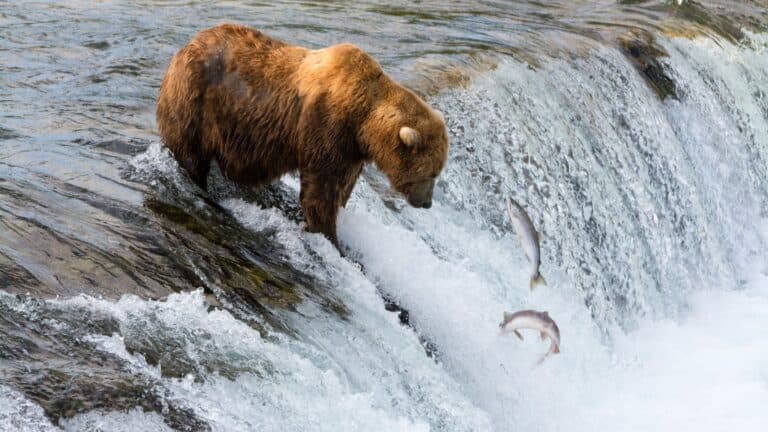 What to see · most readBears in Alaska: Where to See Them & Safety Tips (Complete Guide)
 ItineraryAlaska Road Trip: The Best Itinerary for 7, 10, 14 and 21 Days
 When to goWhen to Visit Alaska: The Best Month for Northern Lights and Travel (2026)
 ActivitiesKatmai & Brooks Falls, Alaska: Iconic Bear Viewing (Fat Bear Week)
 Getting thereAlaska from the UK: Flights, ESTA, Car Hire & Money (2026 Logistics Guide)


