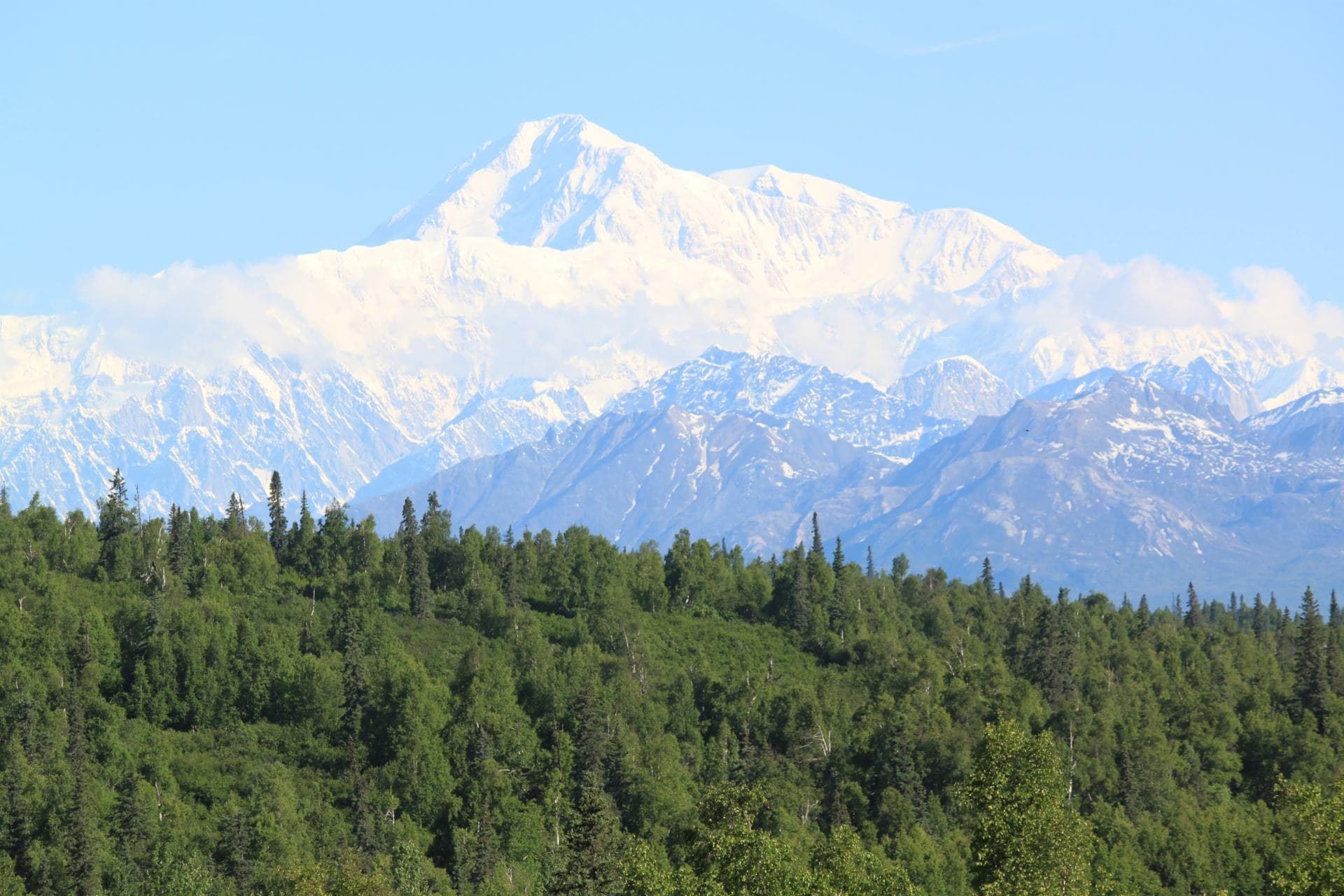
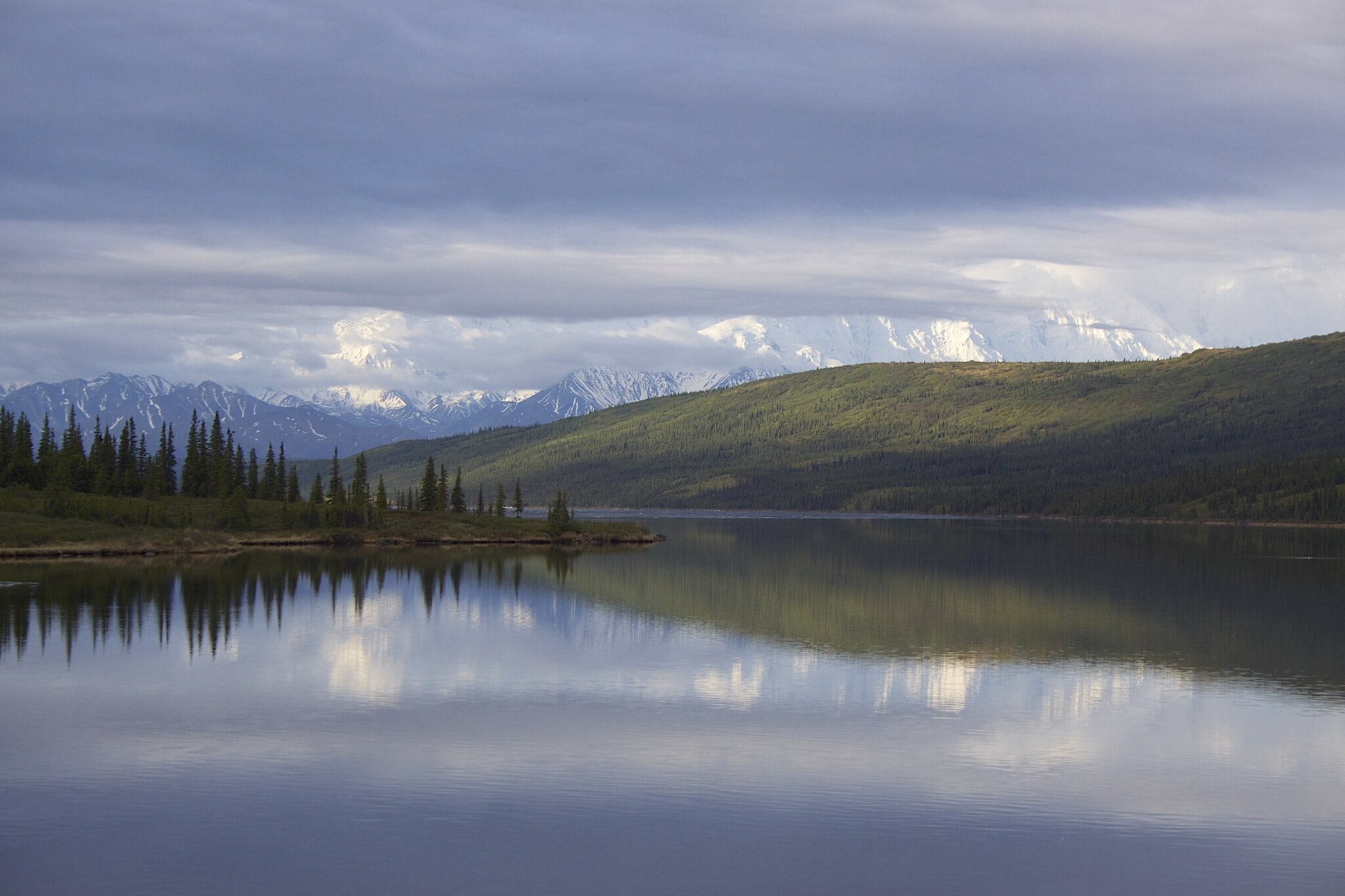
When travellers plan a trip to Denali Alaska, they usually have a pretty clear picture in their heads. Most people want to see those endless forests, wild bears, and above all that majestic snow-capped mountain towering over the landscape and reflecting in a serene lake. The reality of Alaska, though, will set you straight pretty quickly. If you’re thinking about visiting the famous Denali National Park for a holiday, there’s something I need to tell you right from the start. It’s an absolutely breathtaking and raw wilderness that will grab your heart and never let go — but it comes with its own very specific (and sometimes downright brutal) rules. ☺️
This park has rules that nobody tells you about beforehand. I learned the hard way. Let me show you how to outsmart the massive road closure in 2026, where to stay without breaking the bank, and how to survive encounters with local mosquitoes that are roughly the size of small birds. 😅
The full destination guide: Alaska — guide and what to see
TL;DR
- The main road is closed in 2026: Due to a massive landslide called Pretty Rocks, buses only run to Mile 43. A huge bridge is under construction beyond that point, and there’s simply no way to reach Wonder Lake by land.
- Bus ticket money trap: Because of the closure, the basic green Transit Bus (around $33) ends at the exact same spot as the expensive Tundra Wilderness Tour (roughly $145). Buy the cheaper one this year.
- The 30% Club: Expect that you may not see the majestic Mount Denali at all. It’s shrouded in clouds up to 70% of the time, and locals say that anyone who spots it becomes a member of the exclusive thirty-percent club.
- Hiking here is pure freedom: You can stick to marked trails like the stunning Savage Alpine Trail, but the park also allows you to wander completely off-trail anywhere in the backcountry.
- Watch out for signal and bears: Mobile coverage is virtually non-existent (unless you have AT&T), so definitely download offline maps. And buy bear spray on your first day after landing — it’s an absolute necessity here.
When to visit Denali and how to get there
Planning a trip to Alaska requires a bit of strategic thinking, because the summer window for visiting is incredibly short. Most tourists head here from late May to mid-September, when the park buses are running and the snow has (mostly) melted from the main roads.
Late May and June reportedly offer the best chance of clear skies and views of the mountain, though the weather here is always a lottery. When it’s cold and rainy, you’ll curse the chill. When there’s a rare hot summer, Alaska gets hit by massive wildfires and instead of clouds, thick smoke blocks your mountain views — which has been the case in recent years. You simply can’t win, so I’d recommend packing a quality rain jacket, layers, and a good attitude. 😉
The gateway to Alaska for most travellers is the city of Anchorage. From the UK, you’ll typically fly via Seattle, Minneapolis, or another US hub — airlines like British Airways, United, and Alaska Airlines serve these routes. From the airport, it’s about a 4-hour drive along the George Parks Highway. And here comes the first financial shock. Renting a car in Alaska during peak season is the kind of expense that’ll make your eyes water. Locals on forums joke that it’ll cost you a kidney, and unfortunately they’re not far off. It’s entirely normal for a two-week rental to run upwards of two thousand dollars. That’s why I’d recommend using a comparison site like DiscoverCars, where with a bit of luck and — crucially — early booking, you can still snag a reasonable price.
Where to stay and how much a Denali holiday costs
Accommodation near Denali National Park falls into three basic categories. You can camp inside the park, spend a fortune at one of the massive resorts near the entrance, or choose a more authentic base a bit further away. Book your accommodation a good six months in advance. We once left it too late and ended up in a room that cost as much as a second-hand car, where only hot water came out of the taps and the view was of a car park.
🏨 Recommended Denali lodges in Alaska
- Luxury: Denali Princess Wilderness Lodge
- Mid-range: Holland America Denali Lodge
- Budget: Earthsong Lodge Healy
There are no traditional Denali National Park hotels inside the park itself — the park service only operates campgrounds. For 2026, due to the road closure, only those near the beginning of the road are accessible, such as Riley Creek or Savage River. If you love sleeping under canvas or have a rented campervan, this is the most beautiful and cheapest option by far.
Most regular tourists cluster in an area called “Glitter Gulch,” a strip of hotels, restaurants, and souvenir shops right by the park entrance on the banks of the Nenana River. You’ll find massive complexes like Holland America Denali Lodge or Grande Denali Lodge, which perch high on the hillside and look impressive. Inside, though, you get the feeling you’ve just stepped back onto the cruise ship that half the guests arrived on. We felt a bit like we were in the wrong film.
We’d much rather recommend the wonderfully quirky little town of Talkeetna as your base. It’s about two hours south of the park, but it has incredible character and is the best starting point for flightseeing tours. We recommend staying at the cosy Susitna River Lodge right on the river.
So how much does it all cost? Alaska is expensive — you just have to accept that. A standard room in peak season easily runs $300 to $500 a night (roughly £240–£400). Park entry itself costs $15 per person (valid for seven days), but if you’re planning to visit multiple US national parks, the annual America the Beautiful pass at $80 is well worth it. A park bus ticket costs another $35 or so. Add the eye-watering restaurant prices on top, and you’re looking at a budget that can be genuinely breathtaking — in the financial sense. But then a view opens up from the bus window, where excited visitors frequently mistake a random boulder for a bear, and you instantly know it was all worth it. ☺️
What to know before visiting: Key rules and the 2026 road closure
Before we get into which hikes to pick, we need to explain two absolutely crucial things that define a visit to the park this season — otherwise you’ll be very disappointed on arrival. Imagine an enormous park with precisely one road running through it, stretching 92 miles (Denali Park Road). You can only drive your rental car to Mile 15 at Savage River — not an inch further. Beyond that point, a strictly regulated system of park buses takes over, and you have to switch to one of those.
The second major restriction is a massive landslide called Pretty Rocks. Thawing permafrost has caused a section of the road to shift at a rate of over 30 centimetres per day, and the park service had to step in. The entire area from Mile 43 onwards is completely closed in 2026. Construction of a colossal $100 million steel bridge is underway during the summer, but full access to the iconic Wonder Lake won’t resume until 2027. This year, all buses simply turn around at Mile 43 near the East Fork Bridge and head back.
The name debate: Denali or McKinley?
If you ever dive into a Google search about the mountain’s history, you’ll discover that the naming situation is an incredible political tangle. The indigenous Koyukon Athabascan people always called the mountain Denali, meaning “The High One.” In the late 19th century, a gold prospector renamed it after President William McKinley, and that name stuck for over a century. The Obama administration officially changed the name back to Denali in 2015, which was widely celebrated.
But the story doesn’t end there. In early 2025, President Trump issued an executive order directing federal agencies to revert to the name Mount McKinley. The national park and preserve itself (Denali National Park and Preserve) kept its name, but in guidebooks, on maps, and among locals you’ll now hear both names used interchangeably. We’re sticking with the beautiful and original name — Denali.
Denali Alaska: 12 best things to see and do
Let’s take a look at the best things this vast stretch of wilderness has to offer. Although the road is partially closed, there are still jaw-dropping hikes, incredible wildlife-watching opportunities, and experiences you’ll remember for the rest of your life.
1. Go wildlife spotting from the Transit Bus
As I mentioned, beyond Mile 15 you can only travel by official bus. For 2026, your best bet is the standard green or yellow Transit Bus. A ticket costs about $33.50 for adults, and children under 15 ride free (you just need to make a reservation for them). The bus works on a hop-on/hop-off basis, so you can get off anywhere, explore the backcountry, and then flag down the next bus heading your way.
The drivers aren’t technically professional guides, but they’re all Alaska enthusiasts through and through. When someone on the bus spots a bear or caribou, all you need to do is shout “Stop!” and the driver immediately hits the brakes so everyone can take photos. Definitely bring a good pair of binoculars — without them, you’ll only see brown dots somewhere in the distance.
2. Tundra Wilderness Tour: the 2026 trap
On the official ReserveDenali.com website, you’ll also see the popular Tundra Wilderness Tour (TWT), which costs nearly $145. In normal years, it’s an excellent choice because you get a certified guide and a camera system that zooms in on wildlife and displays it on screens inside the bus.
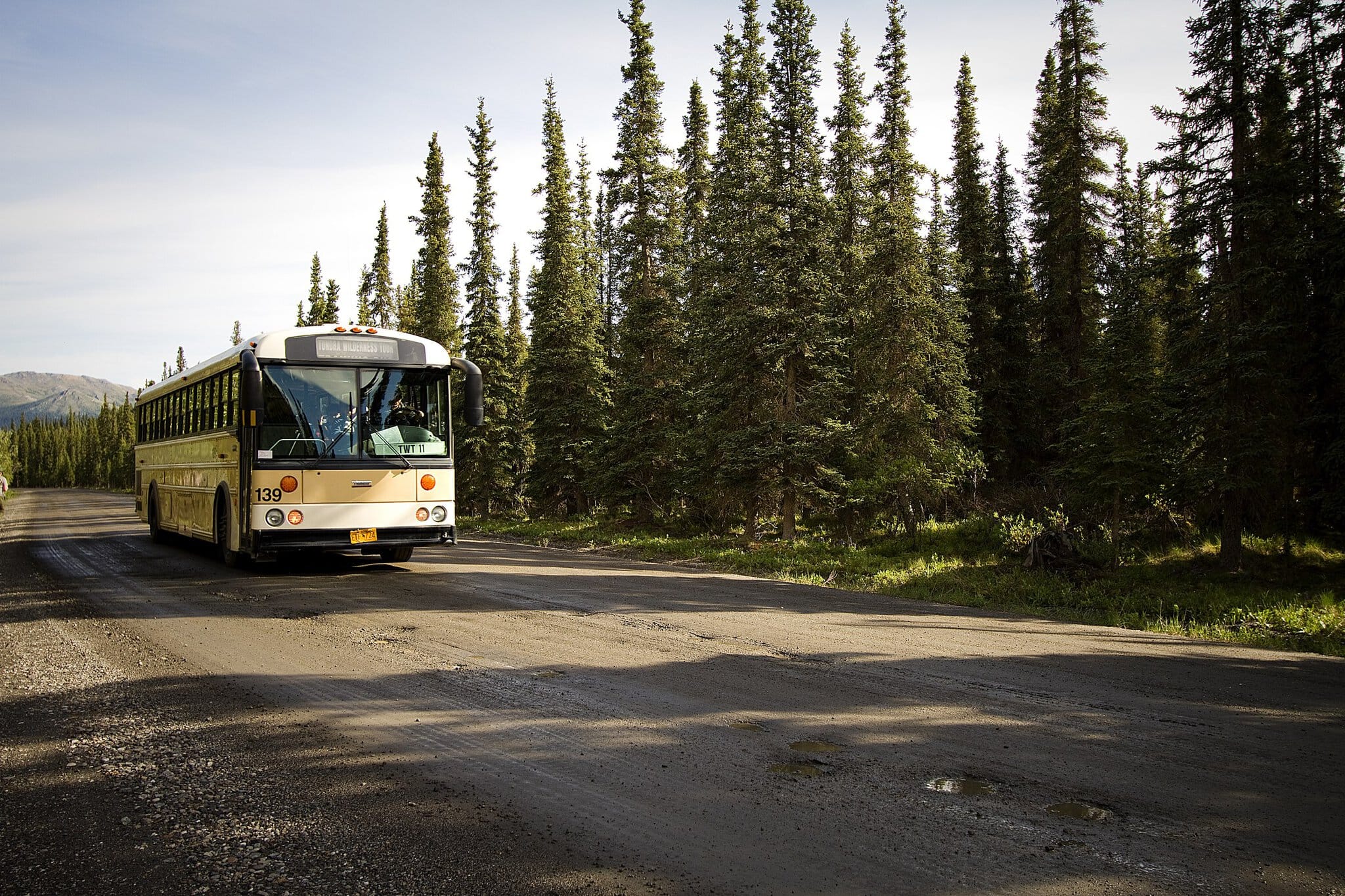
The problem is that in the 2026 season, this overpriced bus has the exact same turnaround point as the cheap Transit Bus. Both lines go to Mile 43, turn around, and head back. A price difference of over $110 just to have someone narrate facts through a microphone really isn’t worth it this year, in our opinion. We’d rather put those savings towards a great dinner or a flightseeing trip.
3. Discover the park’s history on the Denali Natural History Tour
The third bus option is a tour focused primarily on culture and the past. The Denali Natural History Tour takes you just beyond the private vehicle limit, specifically to Primrose Ridge at Mile 17. The whole trip lasts just under five hours and you’ll learn a wealth of information about the indigenous peoples and the origins of the park itself.
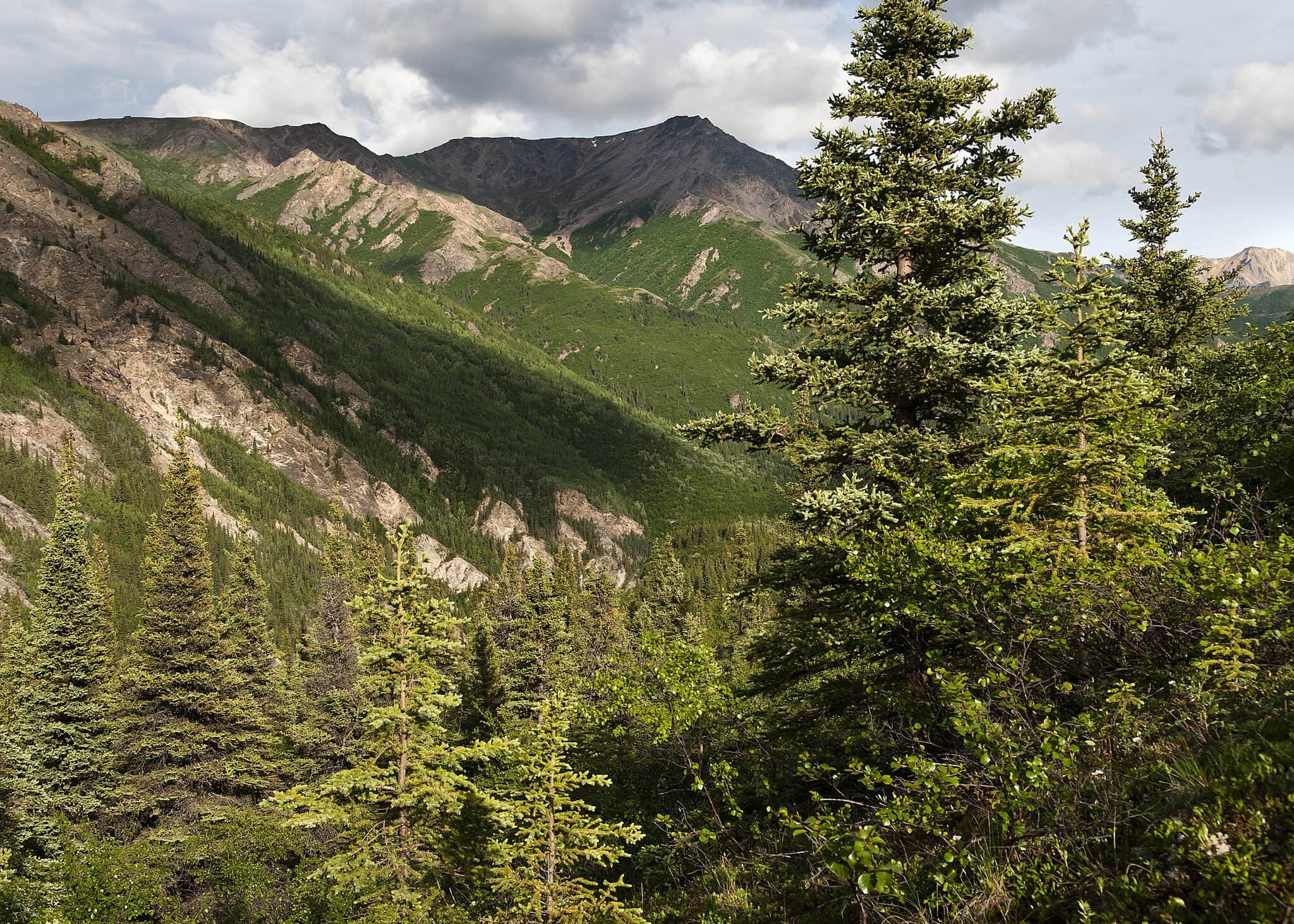
It costs just under $117, and honestly, it makes sense mainly if you’re less interested in wildlife and prefer to sit back and listen to stories about the indigenous history without having to anxiously scan the horizon through binoculars. For us personally, it would be a bit too mellow, but I know plenty of people who’d love it.
4. Earn your views on the Mount Healy Overlook Trail
If you want a proper workout and to escape the crowds, head for this challenging 5.4-mile (8.7 km) out-and-back trek. It starts near the visitor centre, and I won’t sugarcoat it — it’s a serious slog. You’ll gain over 500 metres of elevation through dense spruce forest before finally breaking above the treeline and catching your breath.
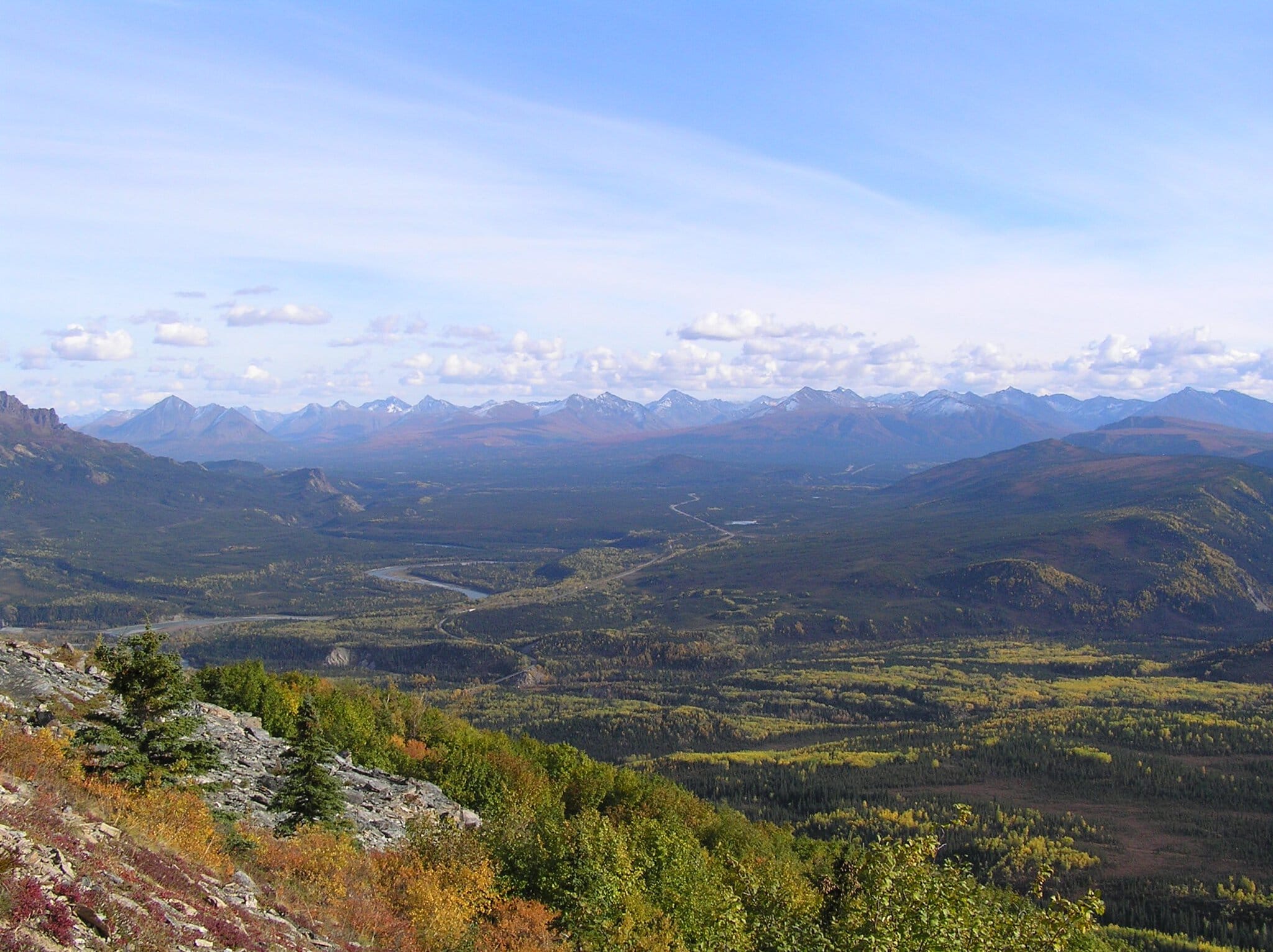
Your reward for those destroyed calves? Gorgeous alpine meadows and unbelievable views across the valley of the wild Nenana River. If you’re lucky enough to have a cloudless sky, the mighty massif of the mountain itself will reveal itself on the horizon. The hike takes around three to four hours, depending on how often you stop to catch your breath. 😅
5. Search for Dall sheep on the Savage Alpine Trail
This is arguably one of the most beautiful marked trails in the entire park. It’s just under 4.5 miles (7 km) long and takes roughly four hours. It’s not a loop but a point-to-point route, connecting the campground at Mile 13 with the Savage River area at Mile 15.
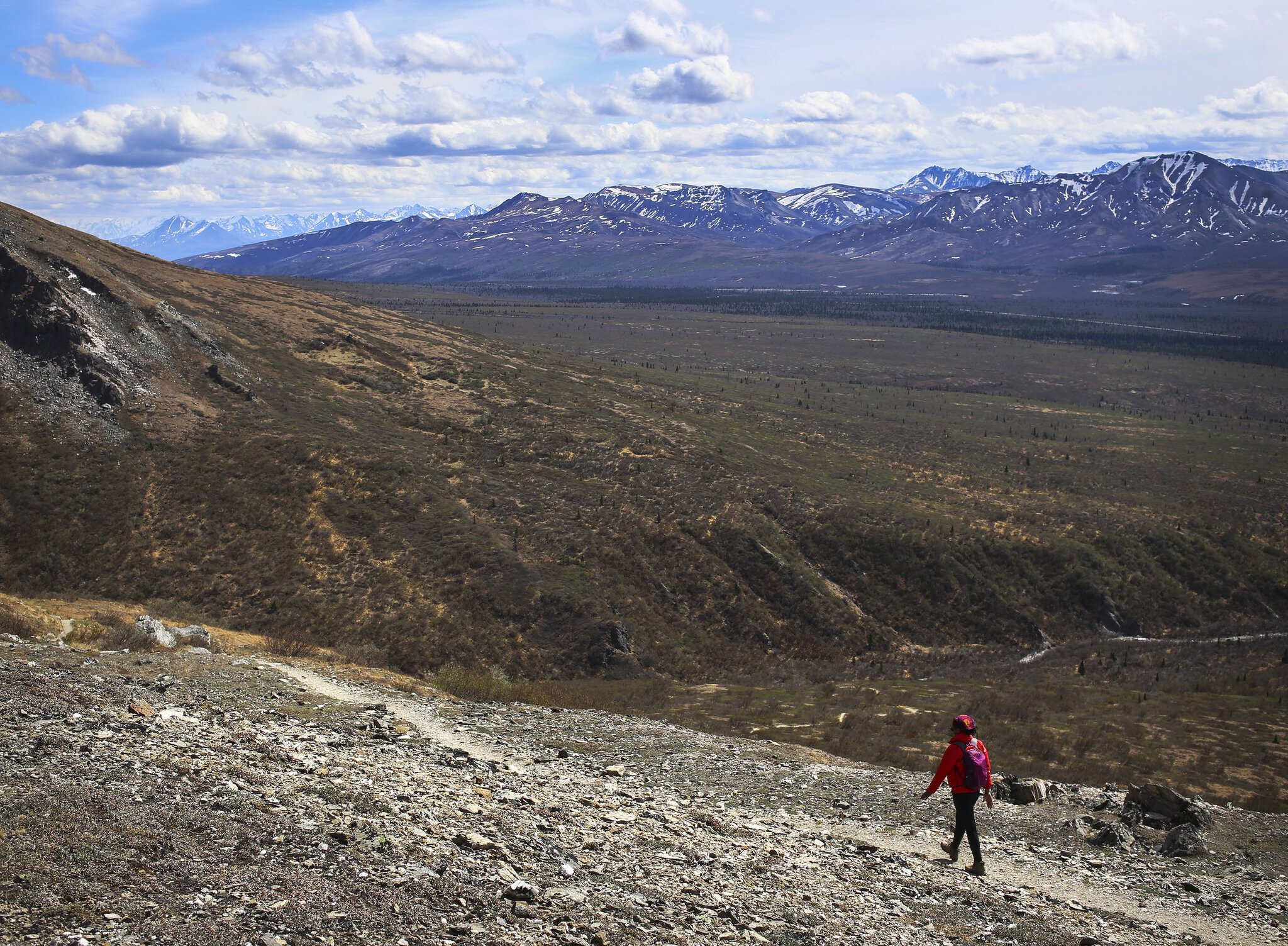
The path leads you out of the forest and up into slate-grey rocky ridges covered in typical low, mat-like alpine vegetation. It’s on these ridgelines that you have an excellent chance of spotting Dall sheep with their trademark curled horns. You can then comfortably get back to your parked car via the free shuttle bus.

6. Family-friendly walk to Horseshoe Lake
If you’re not exactly mountain goats or you’re travelling with small children, this is the perfect choice. The trail to horseshoe-shaped Horseshoe Lake is only about 2.2 miles (3.5 km) long with minimal elevation gain. The whole walk takes barely an hour and a half.
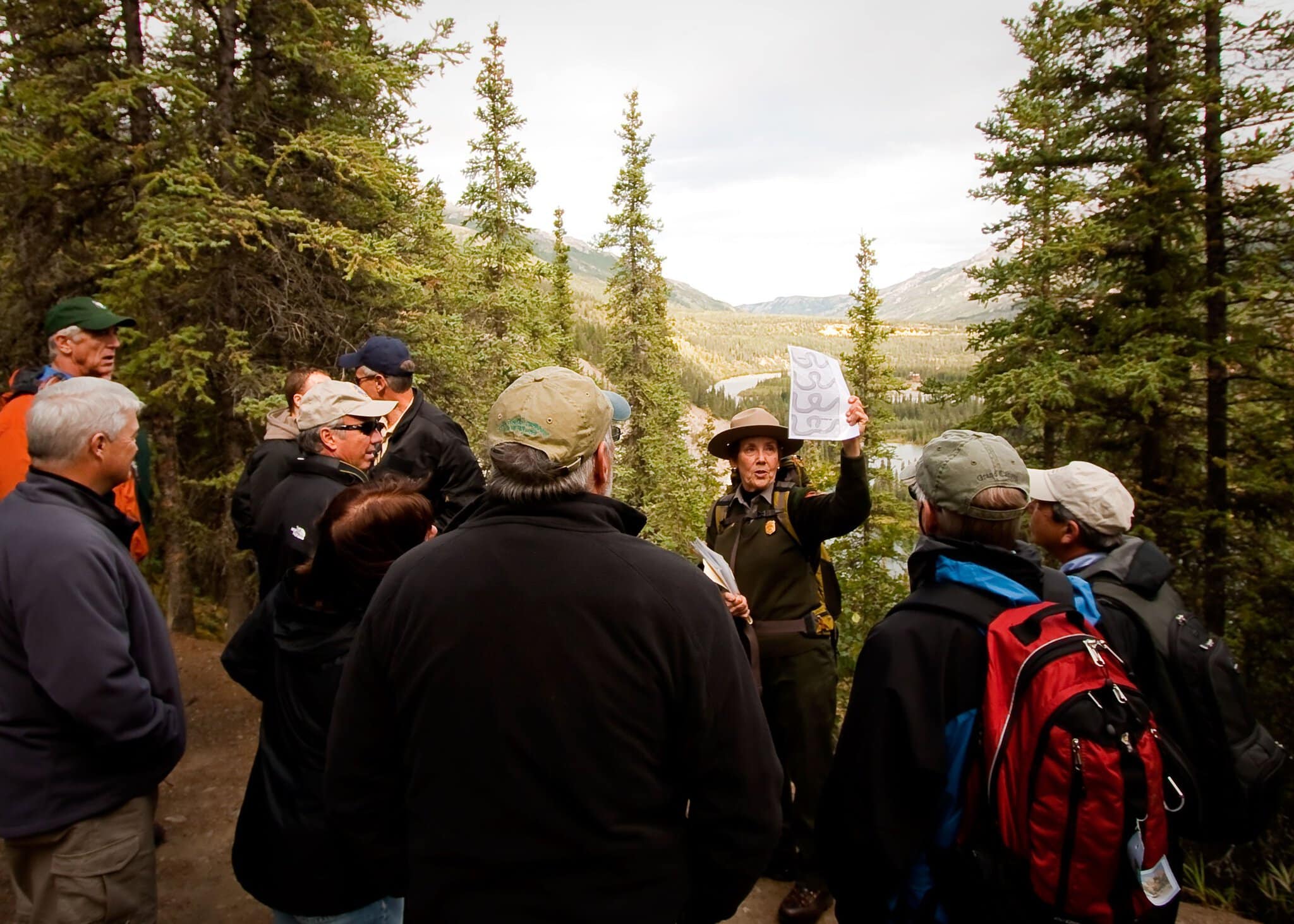
The path gently descends to the lake and follows the riverbank, offering peace and quiet. It’s also a fantastic spot for watching wildlife from a safe distance. Beavers regularly work on their massive dams in the water, and enormous Alaskan moose often feed in the shallows. Just remember to keep a very wide berth from any moose — they’re incredibly large and unpredictable animals.
7. Push your limits on the Triple Lakes Trail
This is the longest maintained trail in the entire park and represents a full-day mission for determined hikers. The trek stretches a solid 9.5 miles (15 km), connecting the George Parks Highway directly with the visitor centre campus.
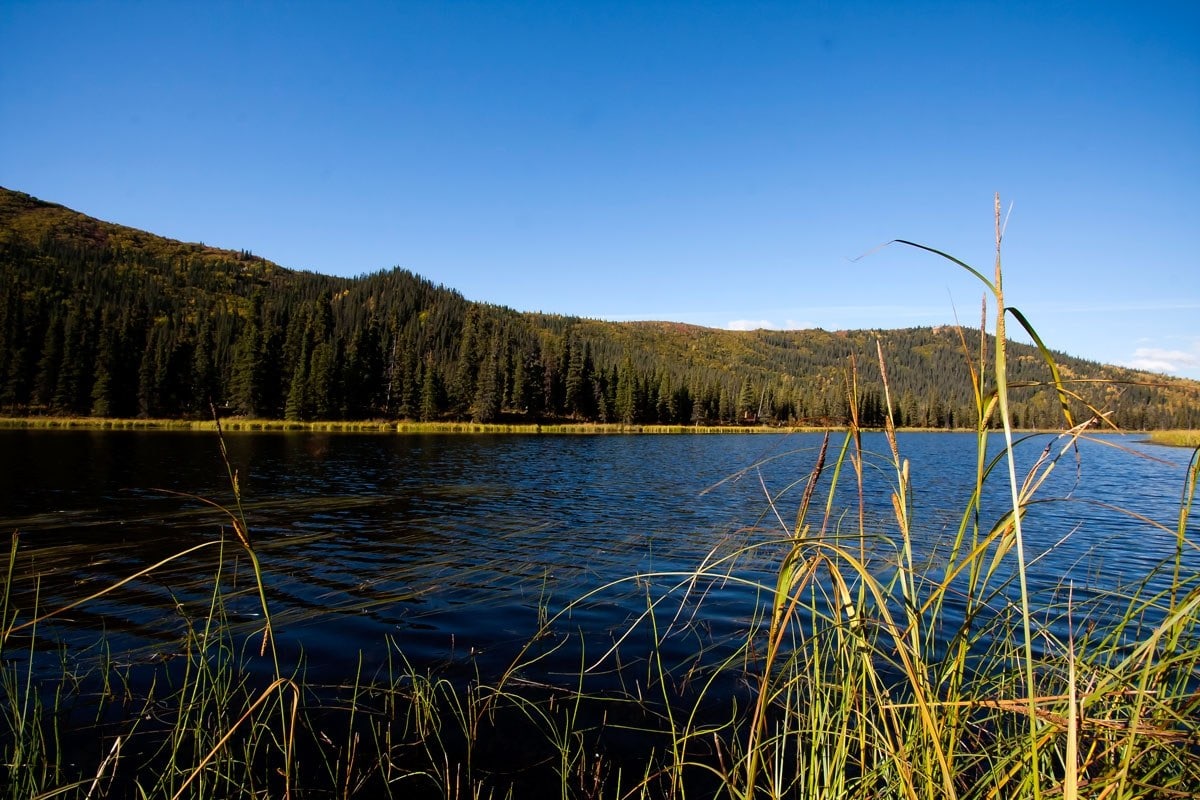
Along the way, you’ll pass three beautiful glacial lakes, walk through dense forest, and at one point cross a stunning suspension bridge over Riley Creek. Since it’s a fairly long stretch through the woods, make sure you have bear spray within easy reach at all times and keep making plenty of noise so the furry locals know you’re coming.
8. Experience total freedom with off-trail hiking
Most national parks in the US strictly keep you on marked paved or beaten trails. Denali National Park and Preserve has a wonderful exception. The park operates a “discretionary use” policy, which in practice means that once you step off the bus, you can head absolutely anywhere into the wilderness. No signs, no restrictions.
You can wade across rivers, scramble up nameless hills, or simply wander through the colourful tundra. It gives you a sense of incredible freedom that you just can’t find in more commercialised parks anymore. Naturally, it does require common sense, good navigation skills, and enormous respect for nature.
9. Flightseeing from Talkeetna: Denali mountain from above
This is probably the biggest hit to your budget, but hand on heart, it’s an experience that leaves you utterly speechless. The little town of Talkeetna serves as the main base camp for mountaineers and is packed with small aviation companies like Talkeetna Air Taxi and K2 Aviation, which offer flightseeing tours in small ski-equipped planes.
A one-hour flight over the snow-covered peaks costs around $300 (about £240). But if you want the ultimate experience, pay the extra for a glacier landing — touching down on the vast Ruth Glacier right beneath the mountain. It costs around $450 per person (roughly £360), but it’s an unforgettable moment. You step out of the plane into absolute silence, surrounded by towering walls of ice and snow, and often you can’t even find words. There simply aren’t any.
10. Meet the feline mayor of Talkeetna
If you’re heading to Talkeetna, you need to acquaint yourself with the local political scene. This isn’t a conventional city but a historic community, which means it doesn’t have a typical human mayor. Since 1997, the role was held by a ginger cat named Stubbs, who conducted his civic duties from the local general store and sipped water from a margarita glass.
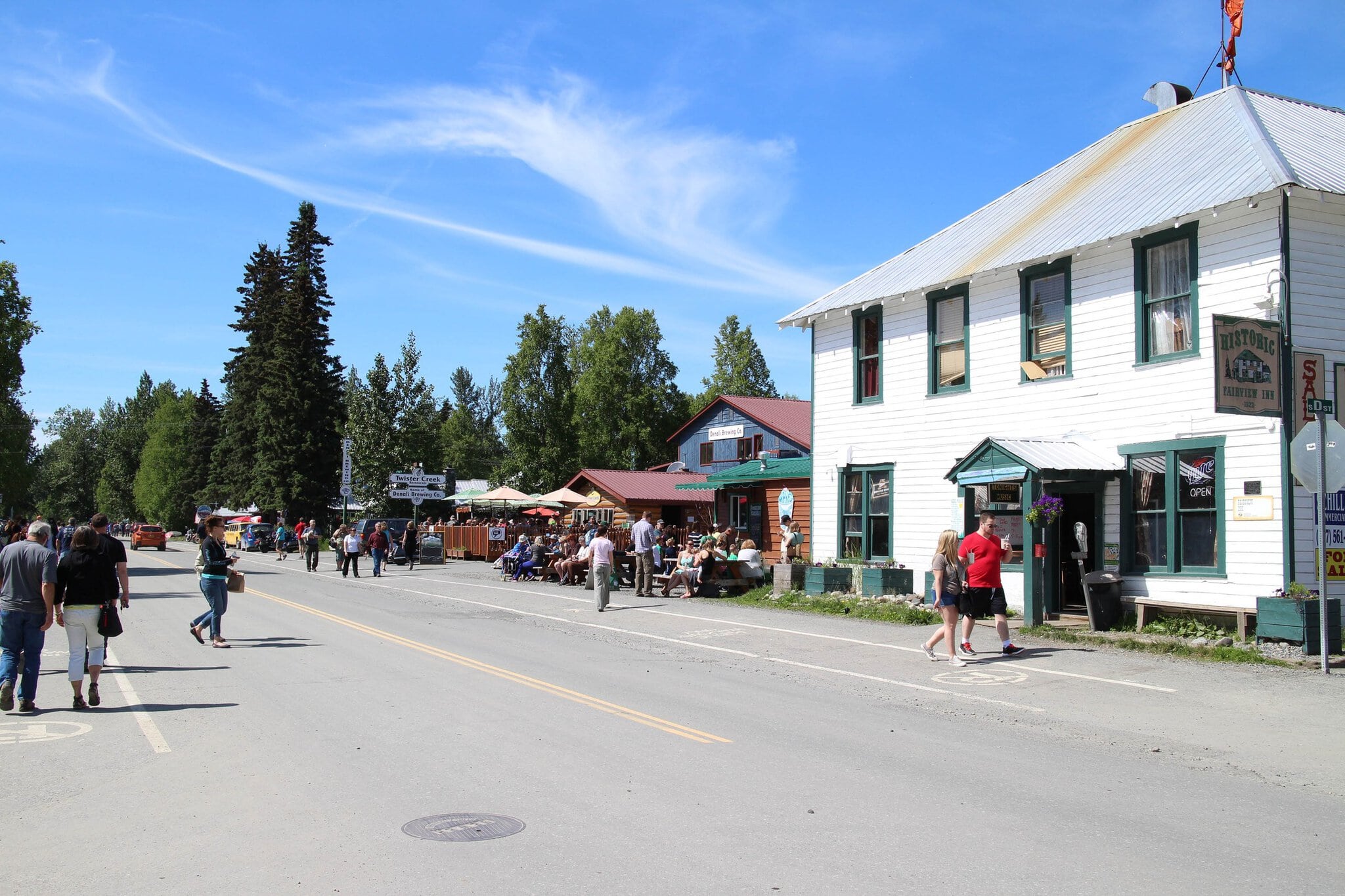
Stubbs the cat lived to the ripe age of twenty, and after his passing, an adorable cat named Aurora took the reins — and she’s still ruling the town in 2026. It’s a brilliant example of the local sense of humour. Talkeetna is full of colourful characters, bush pilots, and frost-bitten mountaineers, so a pint at one of the local pubs is where you’ll experience the real Alaska.
11. Visit the legendary sled dogs
When researching the park, you’ll almost certainly come across the phrase “Denali National Park sled dogs,” and for good reason. Denali is the only national park in the United States that actively uses sled dogs to patrol its territory and deliver supplies during the winter months.
The park service runs its own kennel facility where you can visit for free during the summer season. You can pet the puppies, see how the dogs live, and several times a day there are demonstrations where trainers explain the entire history and workings of this traditional Alaskan mode of transport.
12. Survive an encounter with true Alaskan wildlife
Alaska is not a zoo. Animals here live in complete freedom, and the park is famous for its “Big Five”: grizzly bears, moose, caribou, Dall sheep, and — with enormous (and sadly dwindling) luck — wild wolves. The wolf population has dropped dramatically in recent years due to legal hunting outside park boundaries, which is a massive tragedy.
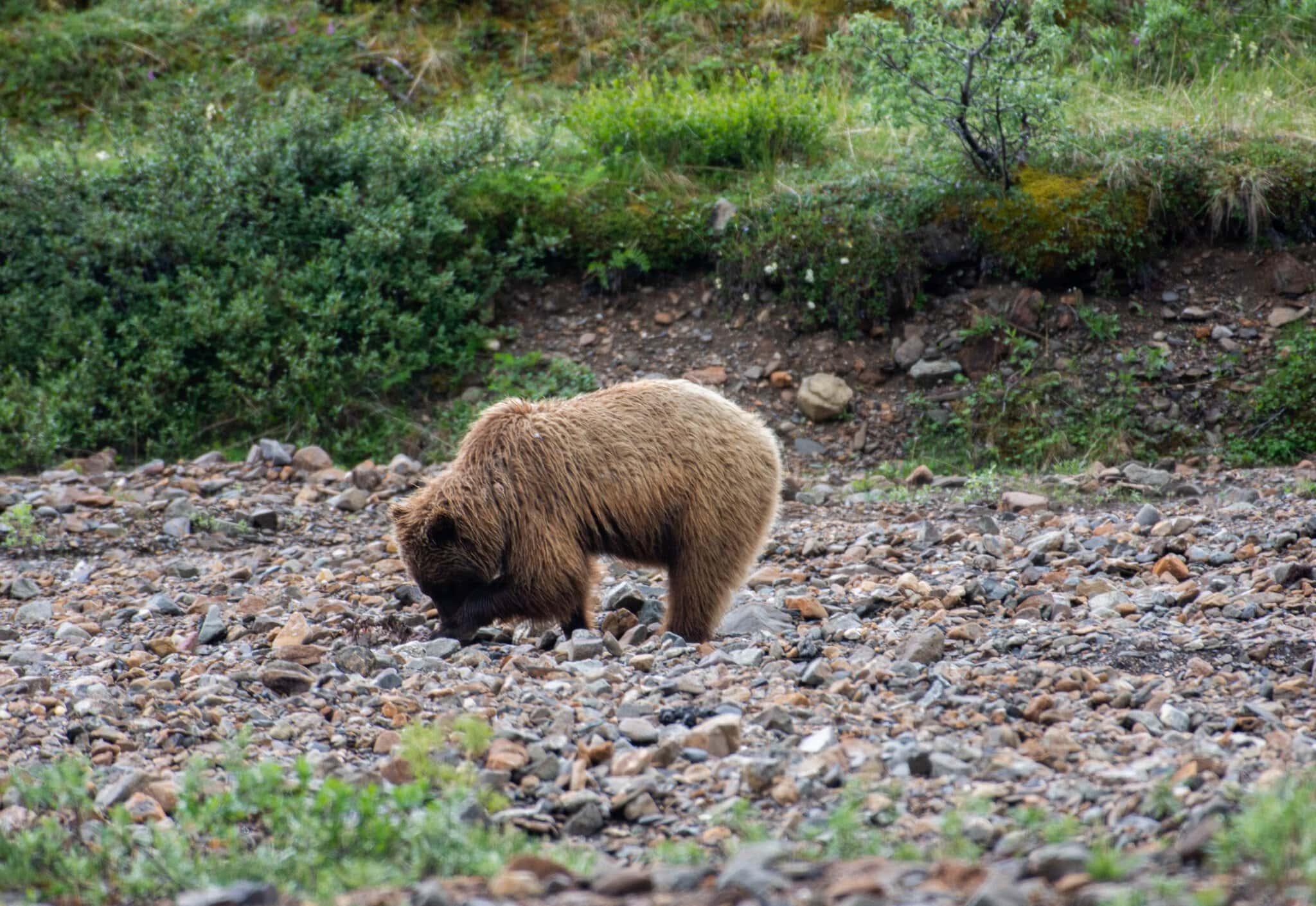
What you certainly won’t have trouble finding are bears. Along the 92 miles of road, there are roughly three hundred of them. A bear encounter is a real danger here that locals take very seriously. As soon as you land, head to a shop and buy bear spray. It costs about $50 (around £40), you can’t bring it on a plane, but don’t venture into the backcountry without it.
And then there’s the enemy that’s smaller but will ruin your day far more reliably. Locals joke that mosquitoes don’t exist here — what they have are blood-sucking dragons. Tundra mosquitoes attack with incredible aggression and in swarms. A head net and repellent with 100% DEET (the kind that’ll melt through plastic) is quite simply the only thing standing between you and total madness.
Map of points of interest for your phone
Where to eat and drink: Food tips in Talkeetna
If you base yourself in Talkeetna as we suggest, you’ll find a surprisingly brilliant food scene. After a full day of hiking or a flightseeing tour, you’ll be famished — so where should you go?
Our absolute favourite spot for an enormous breakfast is Talkeetna Roadhouse. It works on a communal table system, so you sit down next to strangers, and within minutes you’re swapping bear stories and stuffing yourself with their legendary cinnamon rolls. I guarantee that after this breakfast, you won’t be hungry until dinner.
For an authentic atmosphere and a taste of true mountaineering punk, head to West Rib Pub & Grill. It’s a loud, wood-panelled pub packed with pilots and mountain guides. They serve excellent local brews like Ice Axe Ale and turn out no-frills but incredibly hearty pub grub. For pizza, pop into Mountain High Pizza Pie — an unmissable purple building where you can sit on the terrace in summer listening to live music and order toppings like fiddlehead ferns or smoked salmon.
For a romantic dinner for two, we’d recommend the restaurant inside Talkeetna Alaskan Lodge. You’ll spend a bit more, but you’ll have the finest views of the mountain peaks.
Tips and tricks for travelling to the USA
Preparing for Alaska takes a bit of logistics, so here’s a summary of what we use and what’s worked well for us over the years.
Finding flights
We search for flights on Kiwi. Alaska doesn’t tend to pop up in those jaw-dropping flash sales you see shared on forums, but with a bit of patience and a connection via Seattle, you can find a reasonable fare. From the UK, look for routes through hubs like Seattle or Minneapolis — airlines like British Airways, United, and Condor often serve these connections. We bought our tickets six months in advance last time and had no regrets.
Renting a car
We use DiscoverCars.com, which I already mentioned in the transport section, but it bears repeating: book your car as early as possible, or you’ll pay a price that’ll make your head spin.
Booking accommodation
Booking.com is our favourite hotel search engine. It works brilliantly even in the wilderness — just be aware that many properties have strict cancellation policies.
 🚗 Car rental on the roadVerified rental cars in Alaska
Search with the DiscoverCars comparison engine — it compares prices from dozens of local and international rental companies, and most bookings come with free cancellation.
Compare car prices in Alaska →Don’t forget travel insurance
Medical care in the US — and especially in the Alaskan wilderness — is astronomically expensive (a helicopter rescue alone can cost tens of thousands of dollars). For shorter trips, we recommend True Traveller, which offers excellent coverage for UK residents at competitive prices. For longer trips or digital nomads, have a look at SafetyWing’s annual insurance — we’ve reviewed it separately on our blog. Whatever you choose, do not set foot in Alaska without comprehensive travel insurance.
Internet on the go
Standard roaming data in the US from UK networks can be shockingly expensive. Before flying out, we pick up an eSIM. Have a look at Holafly, which offers unlimited data — handy for looking up maps, even though in Denali you’ll often be off the grid anyway. 😅
FAQ: Frequently asked questions about Denali National Park
Is the road in Denali closed, and is it worth visiting in 2026?
Due to a massive landslide in the Pretty Rocks area, Denali Park Road is impassable beyond mile 43, and the new bridge isn’t expected to be completed until 2027 at the earliest. Despite this limitation, the park is definitely still worth visiting. You’ll still see wildlife, majestic mountains, and have access to many popular hiking trails and campgrounds.
Are Mount McKinley and Denali the same mountain?
Yes, they’re the same mountain—the highest peak in North America at 20,310 feet. In 2015, the Obama administration officially restored the mountain’s original indigenous name, Denali, which means “The Great One” in the Koyukon language. The name Mount McKinley, which honored a former U.S. president, is no longer used officially.
When is the best time to visit Denali National Park?
The main tourist season runs from late May through mid-September, when park buses operate and visitor centers are open. For the best chance of spotting wildlife and experiencing fall tundra colors without mosquitoes, late August through early September is ideal. During winter months, most services are closed and the park is only accessible by snowshoe or cross-country skis.
Which bus should I choose for touring Denali?
For most visitors, the green Transit Bus is the best option—it’s cheaper and allows you to hop off anytime, go hiking, and catch the next bus. The brown Tour Buses are more expensive and include narration from a guide, but don’t allow flexible on-and-off privileges during the journey. Always book your bus tickets online several months in advance.
What are my chances of actually seeing Denali (the 30% Club)?
Denali is so massive that it creates its own microclimate and remains shrouded in clouds most of the year. Statistically, only 30% of park visitors get to see the mountain in all its glory, earning them membership in the so-called “30% Club.” Your best chances for clear skies are early morning or late evening.
Is it better to stay in Talkeetna or right at the Denali entrance?
Talkeetna is a charming town that’s perfect for flightseeing tours around Denali, but it’s about 2.5 hours by car from the actual park entrance. If you want to ride the park buses and go hiking, stay right at the park entrance in the Healy area or in the tourist zone known as Glitter Gulch.
How much does it cost to enter Denali, and do I need a special permit?
Park entrance costs $15 per person and is valid for 7 days, or you can use the annual America the Beautiful pass. You only need a special Backcountry Permit if you’re planning to camp in the wilderness outside of official campgrounds. This permit is free, but you must obtain it in person at the visitor center after watching a safety video.
Tips and Tricks for Your Vacation
Don’t Overpay for Flights
Search for flights on Kayak. It’s our favorite search engine because it scans the websites of all airlines and always finds the cheapest connection.
Book Your Accommodation Smartly
The best experiences we’ve had when looking for accommodation (from Alaska to Morocco) are with Booking.com, where hotels, apartments, and entire houses are usually the cheapest and most widely available.
Don’t Forget Travel Insurance
Good travel insurance will protect you against illness, accidents, theft, or flight cancellations. We’ve had a few hospital visits abroad, so we know how important it is to have proper insurance arranged.
Where we insure ourselves: SafetyWing (simple monthly subscription) and TrueTraveller (for extra-long trips).
Find the Best Experiences
Get Your Guide is a huge online marketplace where you can book guided walks, trips, skip-the-line tickets, tours, and much more. We always find some extra fun there!