Braga, Portugal: 14 Best Things to See in the Baroque Gem of the North

TL;DRBraga, in northern Portugal, comes with 14 essential tips, topped by the pilgrimage site of Bom Jesus do Monte, with its baroque staircase and a unique water-powered funicular dating from 1882, the country’s oldest cathedral Sé do Braga from the 11th century, and the Marian shrine of Santuário do Sameiro, with views from over 500 metres above sea level. The historic centre is flat and easy to explore on foot — Braga plus a trip to Bom Jesus takes one day, while adding neighbouring Guimarães means at least two nights. A suburban train from Porto gets you there in about an hour. The best months to visit are September and October, when there are fewer crowds and the weather’s pleasant, whereas November to March often brings days of solid rain.

If you’re thinking about heading to northern Portugal, brace yourself for a completely different world from the sun-drenched south. The north is proud, granite-built, and incredibly authentic. Braga Portugal, often nicknamed the Portuguese Rome, is one of those places that instantly draws you into its history while surprising you with a wonderfully youthful energy. The city is brimming with students from the local university, so historic baroque churches sit naturally alongside bustling cafés and bars. Come and explore a city where deep spirituality meets laid-back student life, and where breathtaking architecture awaits around every corner.
TL;DR

  • The Portuguese Rome: Braga is the religious heart of the entire country, home to dozens of stunning churches and Portugal’s oldest cathedral.
  • Bom Jesus do Monte: This absolutely iconic pilgrimage site with its baroque stairway and unique water-powered funicular is an unmissable highlight.
  • Young blood: Thanks to the university, the city is full of life, excellent cafés, and the streets truly come alive in the evenings.
  • Watch the weather: Northern Portugal gets a lot of rain, so a decent waterproof jacket and sturdy shoes are absolute essentials.
  • Ideal base: Braga makes a perfect jumping-off point for day trips to Guimarães or the Douro Valley.
  • Getting there: You can reach Braga from Porto easily and cheaply by commuter train in roughly an hour.

When to Visit Braga Portugal

This is an absolutely crucial question to ask yourself before booking flights. Northern Portugal is exposed to the Atlantic and gets far more rain than Lisbon or the Algarve. Those green hills surrounding Braga aren’t green by accident. From November to March, weather fronts roll in from the ocean and it can easily rain for a week straight. Winters are damp and chilly — you definitely won’t survive without an umbrella — with temperatures hovering around just 13 to 15°C.

On the flip side, from June to August you can expect lovely summer weather, with sunny and pleasantly warm days. Mornings can be slightly misty, but afternoon temperatures climb to around 25°C. If you want to explore the city without the crowds and in comfortable temperatures, September and October are the ideal months. September is absolutely perfect for strolls and day trips, while in October you’ll need to factor in a higher chance of rain. Spring (March to May) is quite changeable with frequent showers, but nature is beautifully in bloom and it’s an ideal time for sightseeing.

Where to Stay in Braga

💡 Accommodation & experiences tip: We love searching for places to stay on Booking.com, which tends to have the best cancellation policies. For tickets, tours, and activities, it’s worth comparing options on GetYourGuide.

When searching for accommodation, you’ll encounter similar rules to nearby Porto, as the entire region is working to regulate short-term rentals. The supply of private apartments in the centre is shrinking, so travellers are increasingly turning to traditional hotels or guesthouses. Be prepared for a city tourist tax, which hotels collect on site at check-in (usually a couple of euros per person per night). The best neighbourhood to stay in is undoubtedly the historic centre (Centro Histórico), from where you can walk to all the main sights and have the best restaurants right on your doorstep.

If you prefer peace and quiet and don’t mind hopping on a bus, the Tenões neighbourhood near Bom Jesus do Monte offers gorgeous views and an escape from the city buzz. For booking accommodation, we’ve consistently had the best results with Booking.com. Among the top-rated hotels right in the centre is Vila Galé Collection Braga, which occupies a historic building and oozes incredible atmosphere. If you’re after something more modern, the Melia Braga with its lovely spa is an excellent choice, as is the popular boutique hotel Bracara Augusta.

14 Best Things to See and Do in Braga Portugal

Let’s dive into the very best that this stunning city in the north has to offer. Braga is very compact and you can easily explore the centre on foot, but for some of the hilltop attractions you’ll need to use local transport. Wear comfortable shoes, because traditional Portuguese cobblestones (calçada) can be treacherously slippery after rain.

1. Bom Jesus do Monte and Its Baroque Stairway
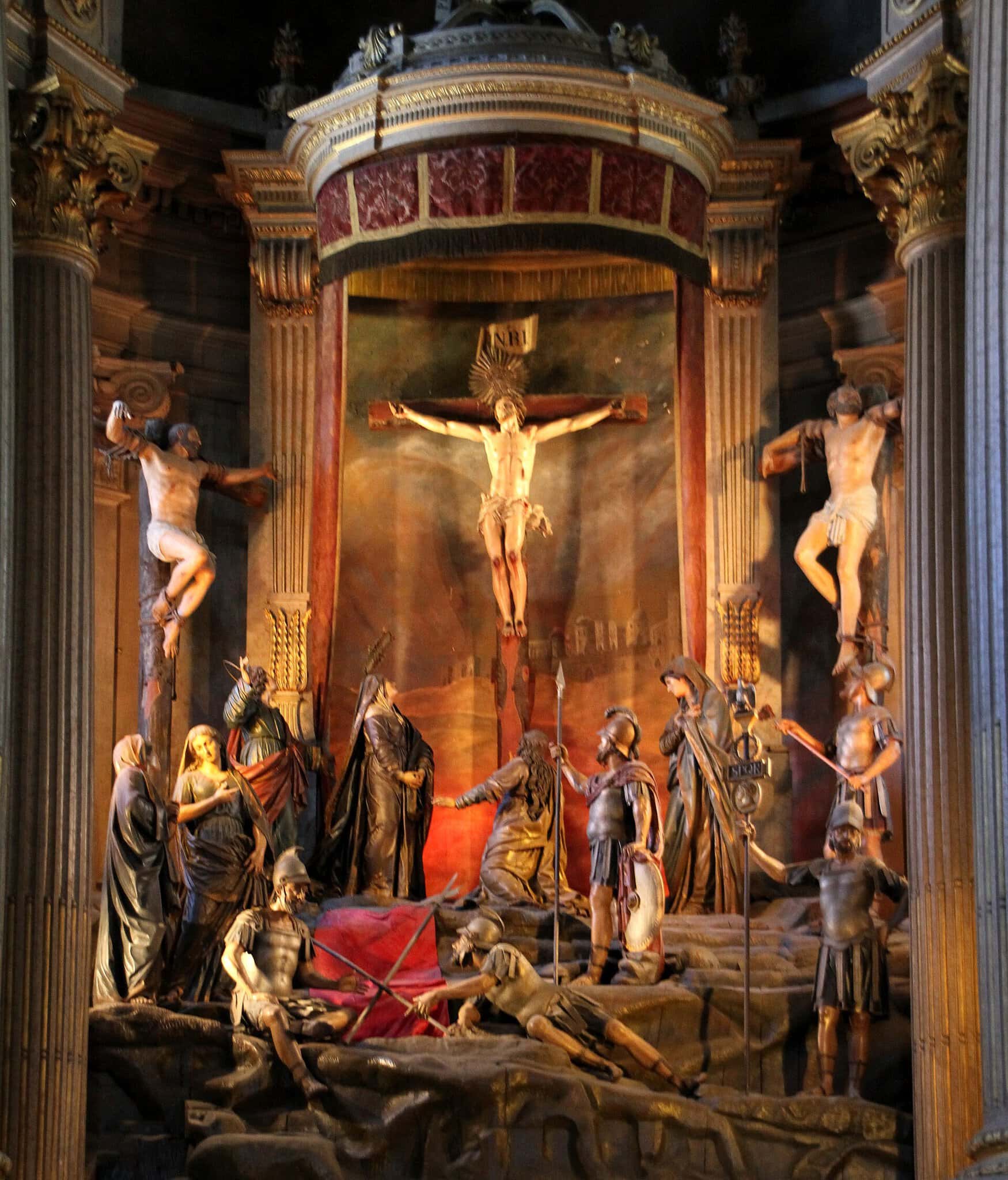
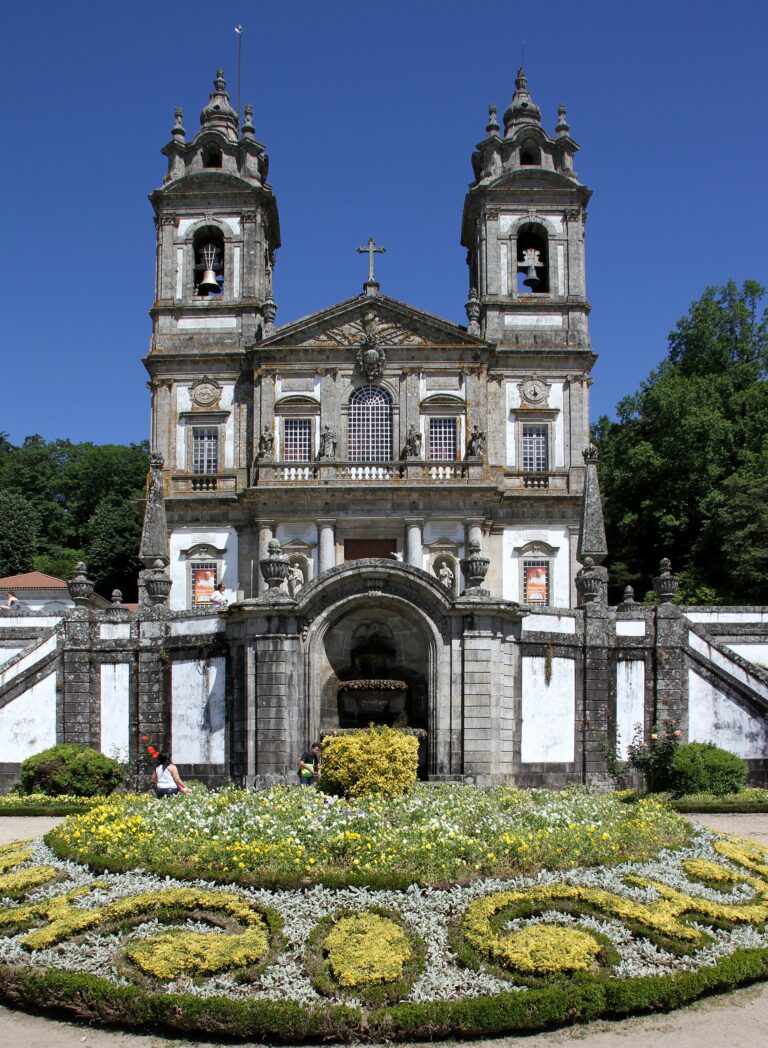
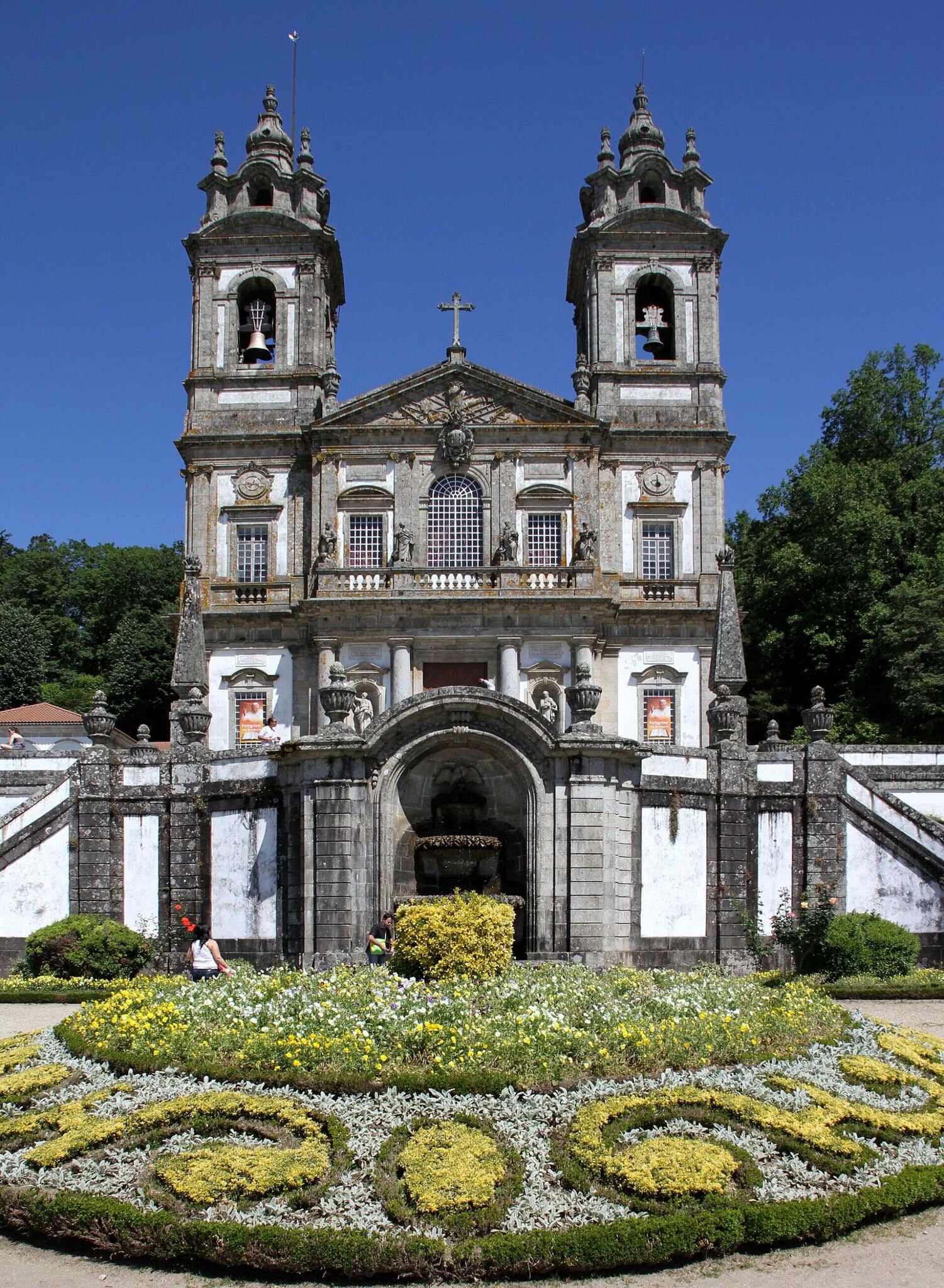
This UNESCO-listed pilgrimage site is the ultimate symbol of Braga and the main reason people flock here. Perched on a hill above the city, its sheer monumentality grabs your attention from miles away. An incredible stairway lined with Stations of the Cross leads up to the baroque basilica, creating a mesmerising optical illusion when viewed from below that looks absolutely stunning in photos.

The stairway is divided into several sections, and each terrace symbolises one of the human senses and virtues. You’ll find beautiful fountains, statues, and meticulously manicured gardens along the way. The climb is quite physically demanding, but the panoramic views over the whole of Braga are more than worth the effort.

💡 Insider tip: Head here first thing in the morning or just before sunset. You’ll dodge the biggest tourist crowds and catch the best light for your photographs.

2. The Unique Water-Powered Funicular

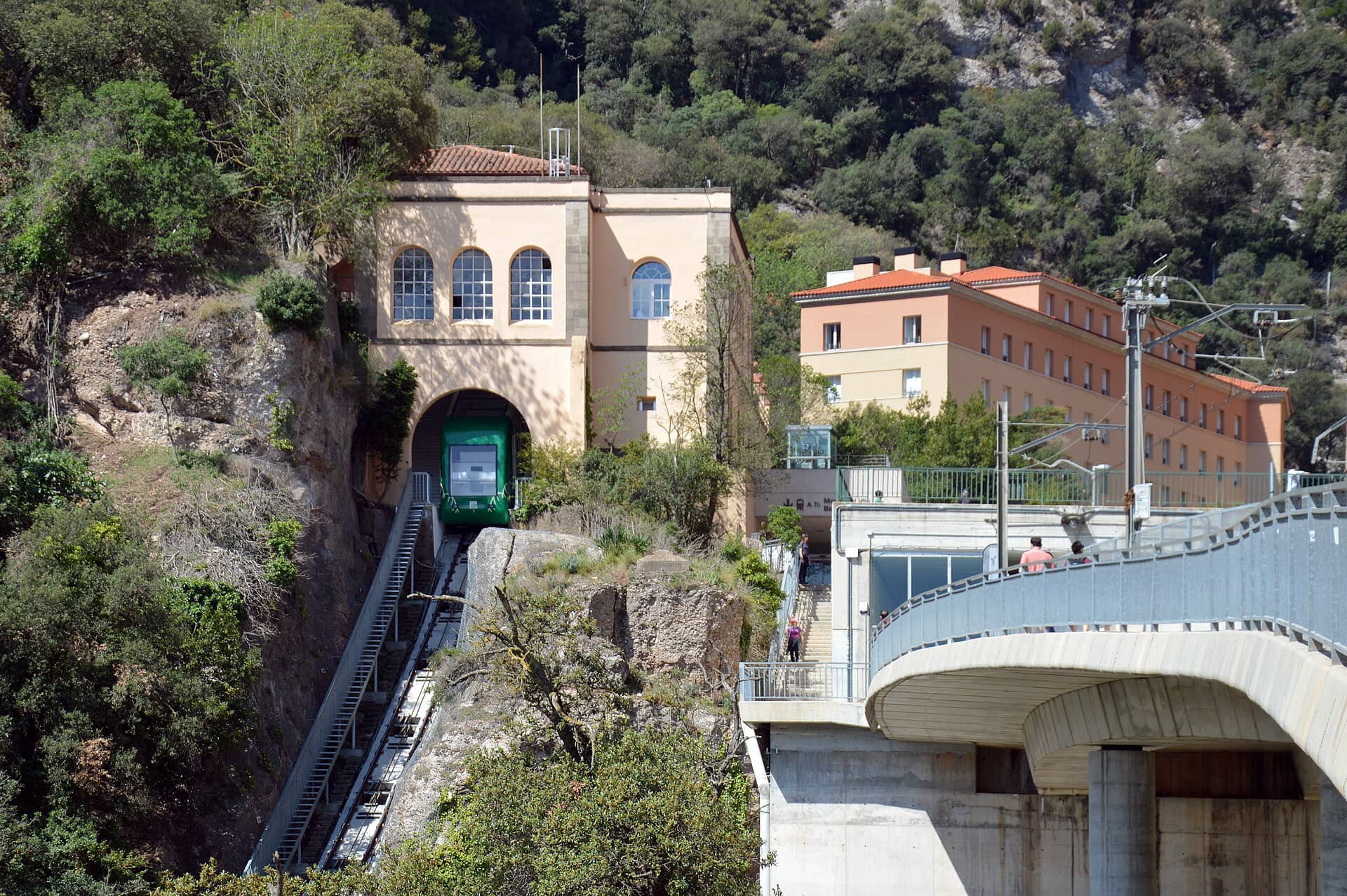
If you’d rather not tackle hundreds of steps to reach Bom Jesus on foot, take advantage of a local engineering marvel dating back to 1882. This historic funicular (Elevador do Bom Jesus) is the oldest functioning water-powered funicular in the world. Riding in the wooden carriage is an incredible experience, and it whisks you to the top in just three minutes.

The system works on a brilliantly simple counterweight principle. The tank of the upper carriage is filled with water, making it heavier, and its weight naturally pulls the empty lower carriage uphill. At the bottom, the water is released from the upper carriage and the whole process repeats. A ticket costs just a few euros and it’s an experience you really shouldn’t miss.

3. Sé Cathedral – The Oldest in Portugal
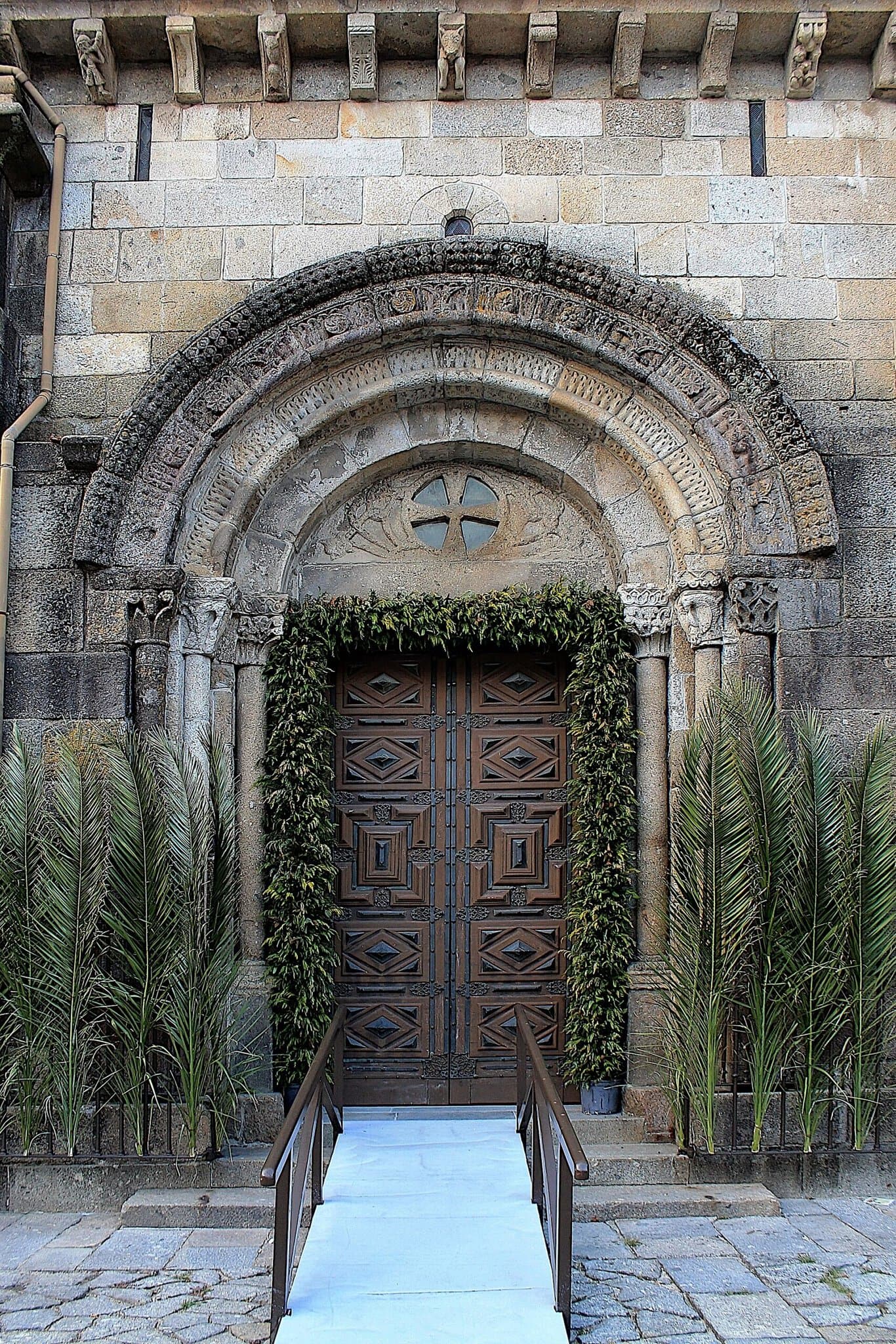
The Sé de Braga is the oldest cathedral in the entire country, dating all the way back to the 11th century. From the outside, it looks more like an impenetrable fortress than a typical church. Over the centuries it’s been remodelled numerous times, so you’ll find an incredible mix of Romanesque, Gothic, and baroque styles all in one building.

I’d definitely recommend paying the modest admission fee to visit the interior and treasury. Inside, you’ll be blown away by the majestic baroque organs adorned with rich woodcarvings and a stunning choir. The cathedral also houses the tombs of the parents of Portugal’s first king, which speaks volumes about the immense historical significance of this place.

💡 Insider tip: During your visit, don’t forget to look up and admire the beautifully decorated ceilings — something many visitors rush right past.

4. The Historic Centre and Arco da Porta Nova
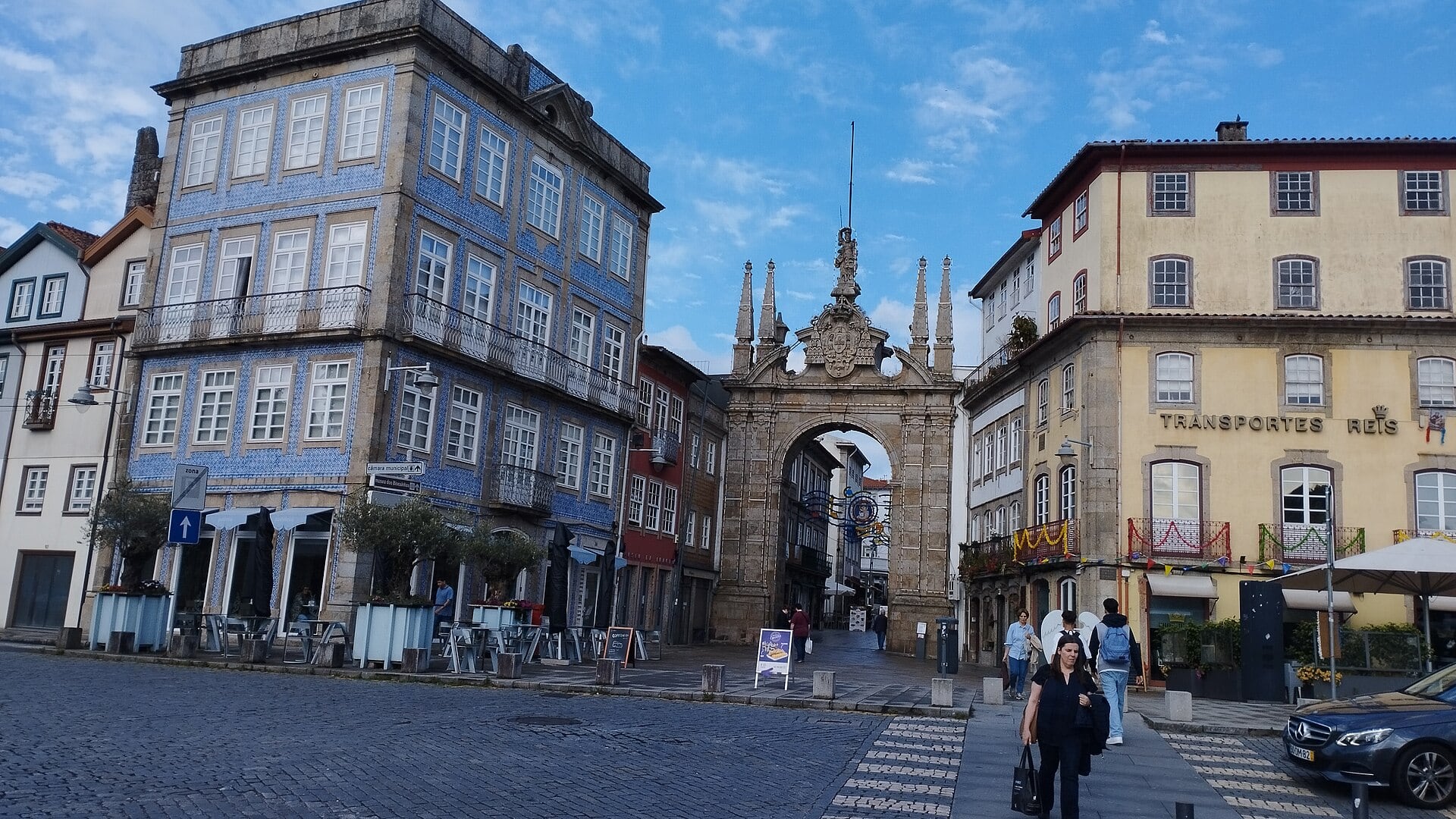
The heart of Braga is its gorgeous historic centre, a maze of narrow streets and colourful houses. The gateway into this labyrinth is the Arco da Porta Nova, which once served as the main entrance to the medieval city. Fun fact: the gate never actually had doors.

This quirk gave rise to a famous Portuguese saying. Whenever someone leaves a door open, locals will often ask: “És de Braga?” (Are you from Braga?). Strolling from the arch towards the centre takes you along Rua do Souto, the main shopping street lined with little shops and traditional bakeries.

5. Santuário do Sameiro and Heavenly Views
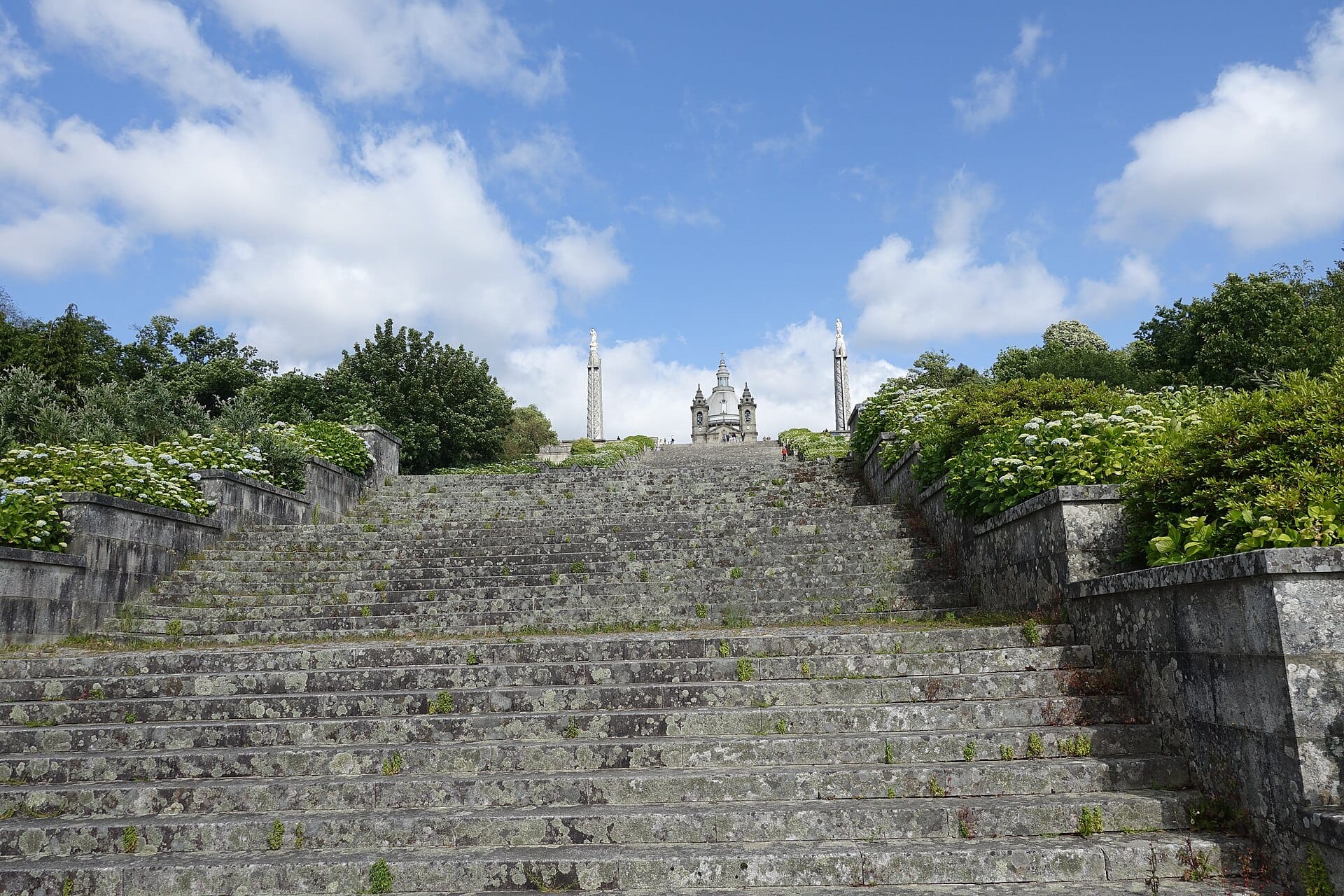
If you’re already at Bom Jesus do Monte, definitely continue a little further up to Santuário do Sameiro. This is the second-largest Marian shrine in Portugal (right after the famous Fátima). The 19th-century basilica itself is imposing and deeply impressive.

The real draw, though, is the vast esplanade in front of the church. From over 500 metres above sea level, you’ll get the finest panoramic views across the entire Minho region. On a clear day, you can see all the way to the mountains of Peneda-Gerês National Park.

6. Cafés and the Buzzing Student Scene

Braga isn’t just a city of churches — it’s also home to the University of Minho. Thanks to thousands of students, the city has an incredibly fresh and vibrant atmosphere. The main gathering spot is Praça da República with its iconic Arcada building, where you’ll find the most popular café terraces.

Make sure you grab a seat at the legendary Café A Brasileira, order a coffee, and soak up the lively buzz. In the evenings, the streets in the centre fill up with young people, bars open their doors, and the city takes on a completely different, much more relaxed vibe. It’s a fascinating contrast to the solemnity of the local monuments.

7. Jardim de Santa Bárbara and Medieval Ruins
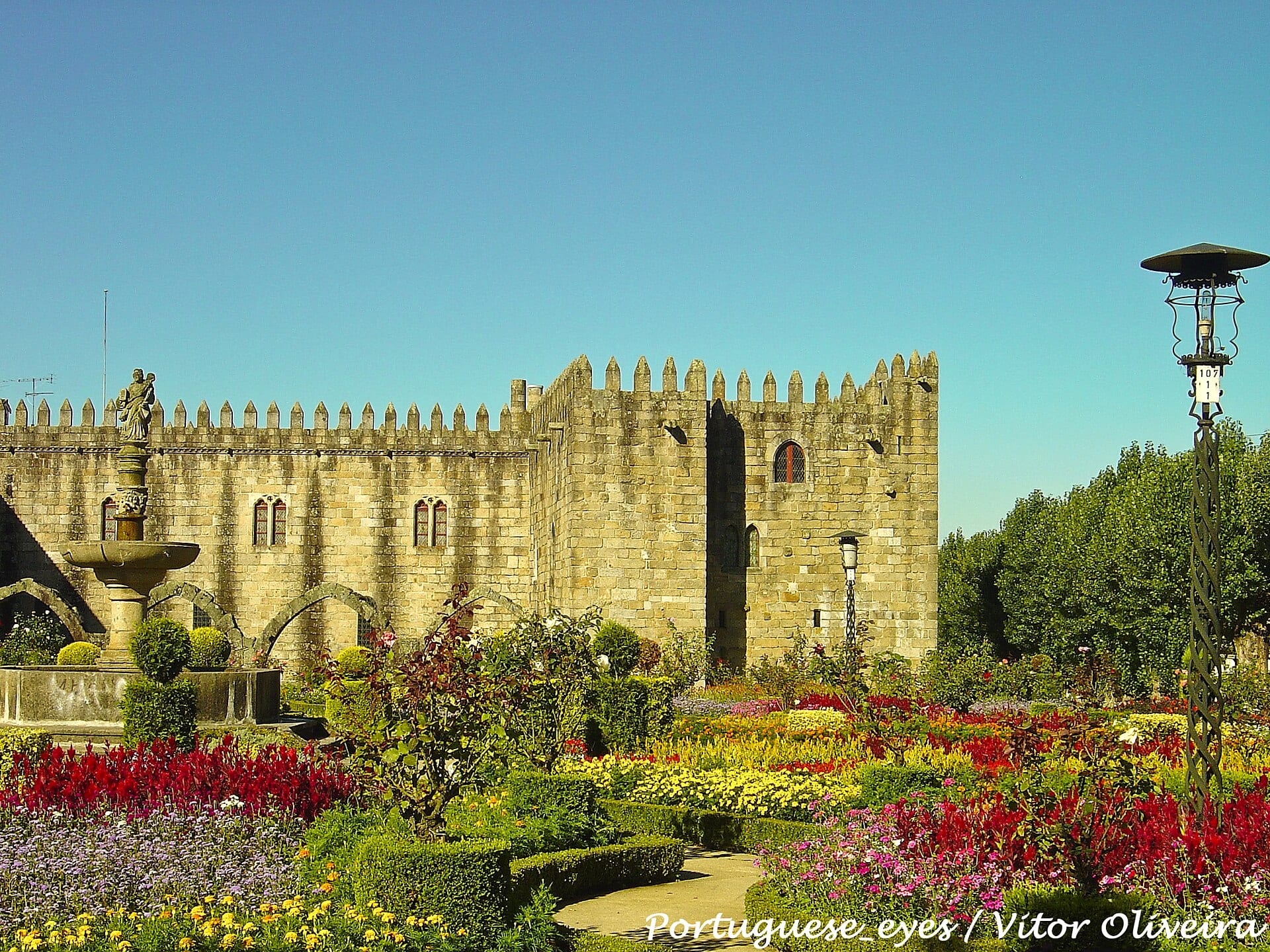
Right in the city centre, you’ll discover a little oasis of calm in the form of the Jardim de Santa Bárbara gardens. This beautifully maintained public park from the 17th century is bursting with colourful flowers and geometrically trimmed hedges. A fountain with a statue of Saint Barbara stands in the middle.

What truly makes the gardens magical, though, is their backdrop. The flowerbeds are framed by the romantic ruins of a medieval archbishop’s palace. It’s arguably the most photogenic spot in the entire historic centre and the perfect place for a quick rest while exploring the city.

lukas a lucka
Lukáš and Lucie recommend
Where to stay in Braga
4 accommodations — hotels, wellness hotels and other lodging options

8. Palácio do Raio and Blue Azulejos

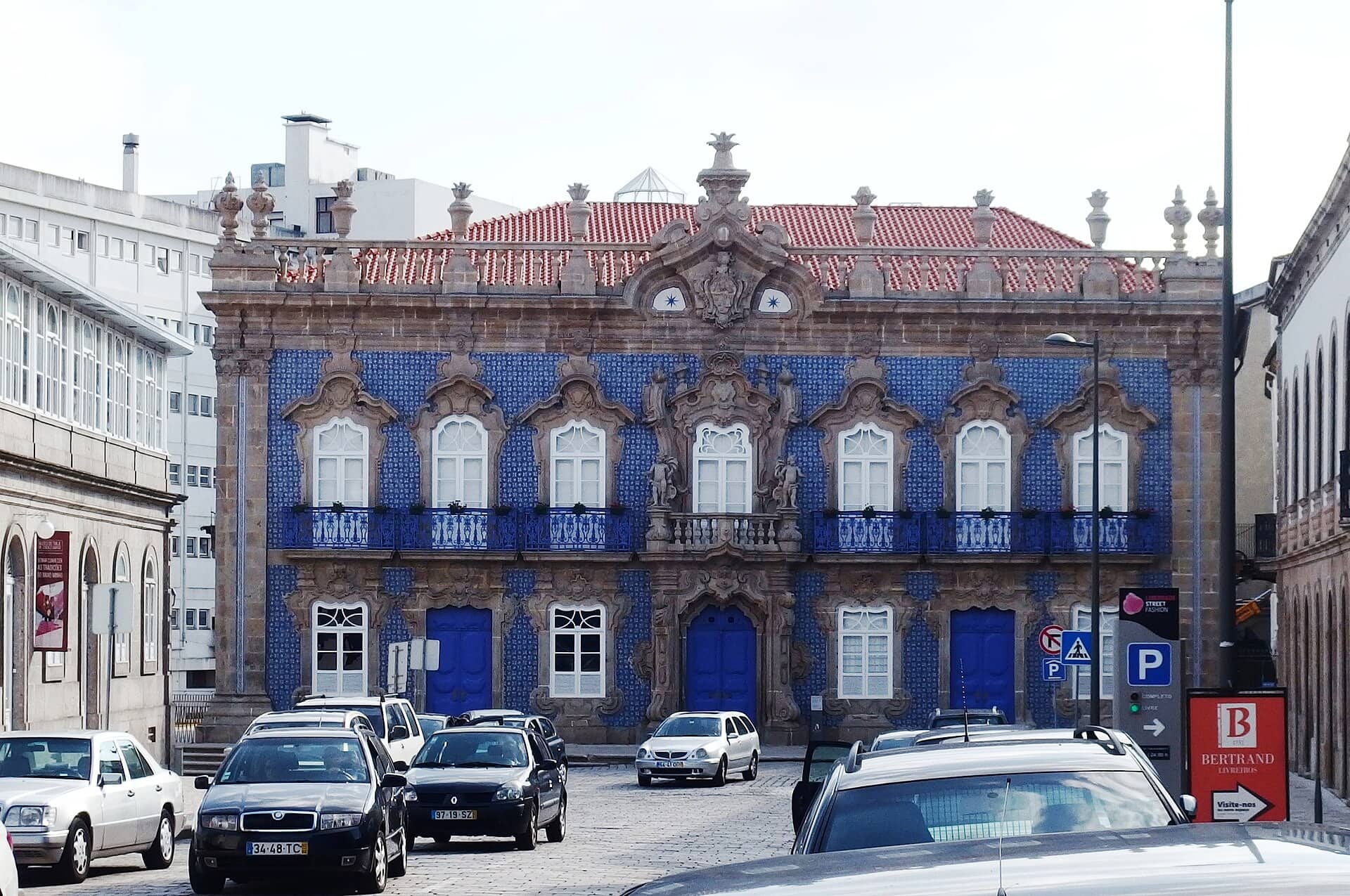
Architecture lovers and fans of Portuguese azulejo tiles will be in seventh heaven here. Palácio do Raio is a jaw-dropping baroque palace from the 18th century that stands out for its lavishly decorated façade. Designed by the celebrated architect André Soares, the building looks more like an elaborate confection than an ordinary structure.

The entire front wall is covered in gorgeous blue-and-white tiles that contrast sharply with the ornate granite portals and carved balconies. Today the interior houses a small museum, but even just admiring it from outside is one of the greatest aesthetic experiences in Braga.

💡 Insider tip: The best photos of the façade are taken in the morning, when the early sunlight hits the blue tiles and the colours are at their most vivid.

9. Easter Processions (Semana Santa)

If you’re planning a spring trip, seriously consider timing your visit for Holy Week (Semana Santa). Braga is the religious heart of Portugal and its Easter celebrations have an utterly unforgettable atmosphere that draws visitors from all over the world.

The streets are adorned with flowers and purple banners. Silent, mysterious processions wind through the city, with hooded figures and barefoot penitents carrying heavy statues of saints. It’s a profoundly spiritual experience, filled with the fragrant smoke of incense and the muffled beat of drums.

10. Museu dos Biscainhos and Noble Life
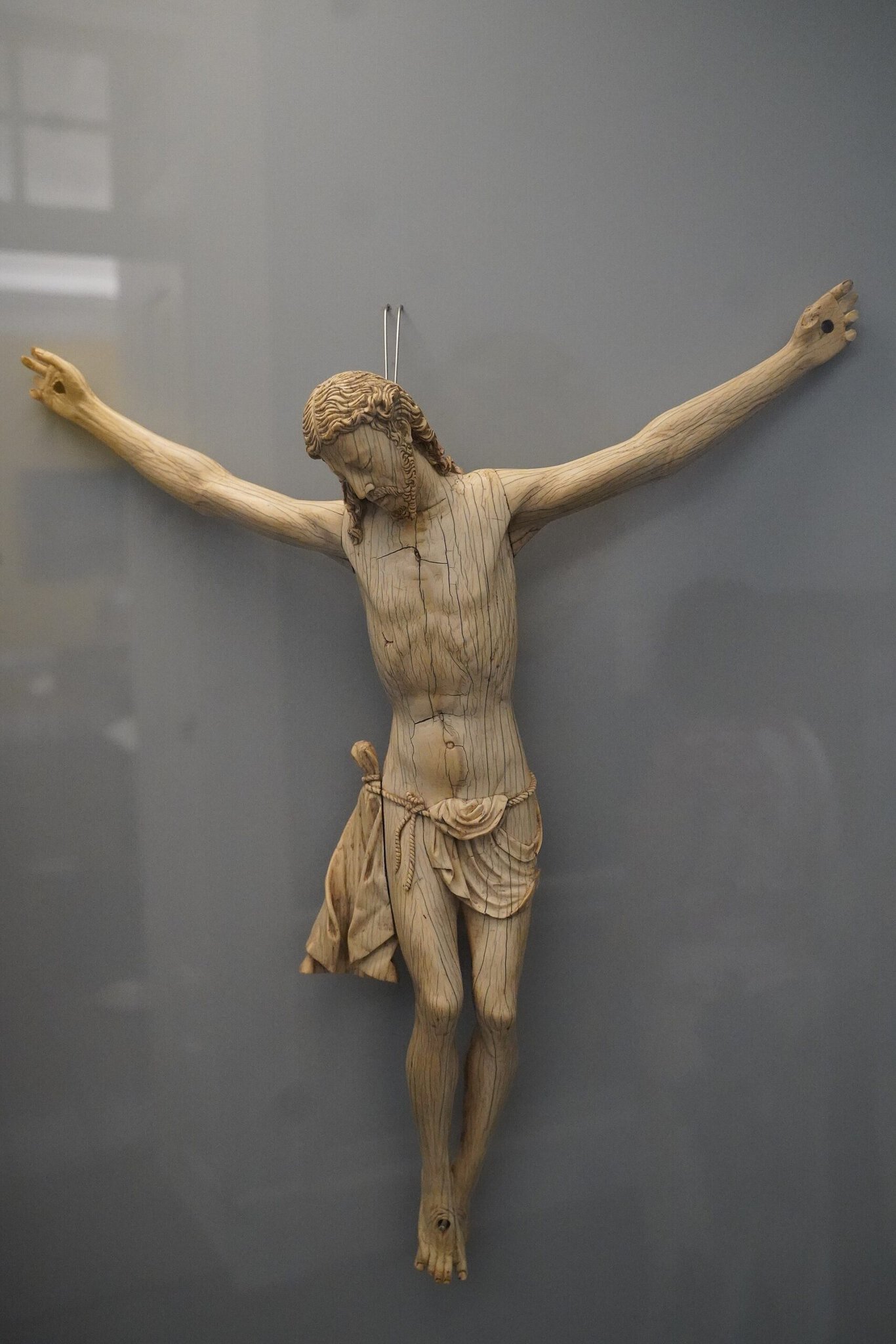
Want to see how Braga’s wealthy aristocracy lived during the baroque period? Head to the Museu dos Biscainhos, housed in a stunning 17th-century palace. You’ll wander through richly decorated halls filled with original furniture, tableware, and a collection of rare clocks.

The real gem, however, is the palace garden. It’s one of the best-preserved baroque gardens in all of Portugal, brimming with fountains, statues, and hedge labyrinths. Entry to the gardens has historically been free, and it’s a wonderful spot to escape the summer heat.

11. Capela de São Frutuoso – A Hidden Gem
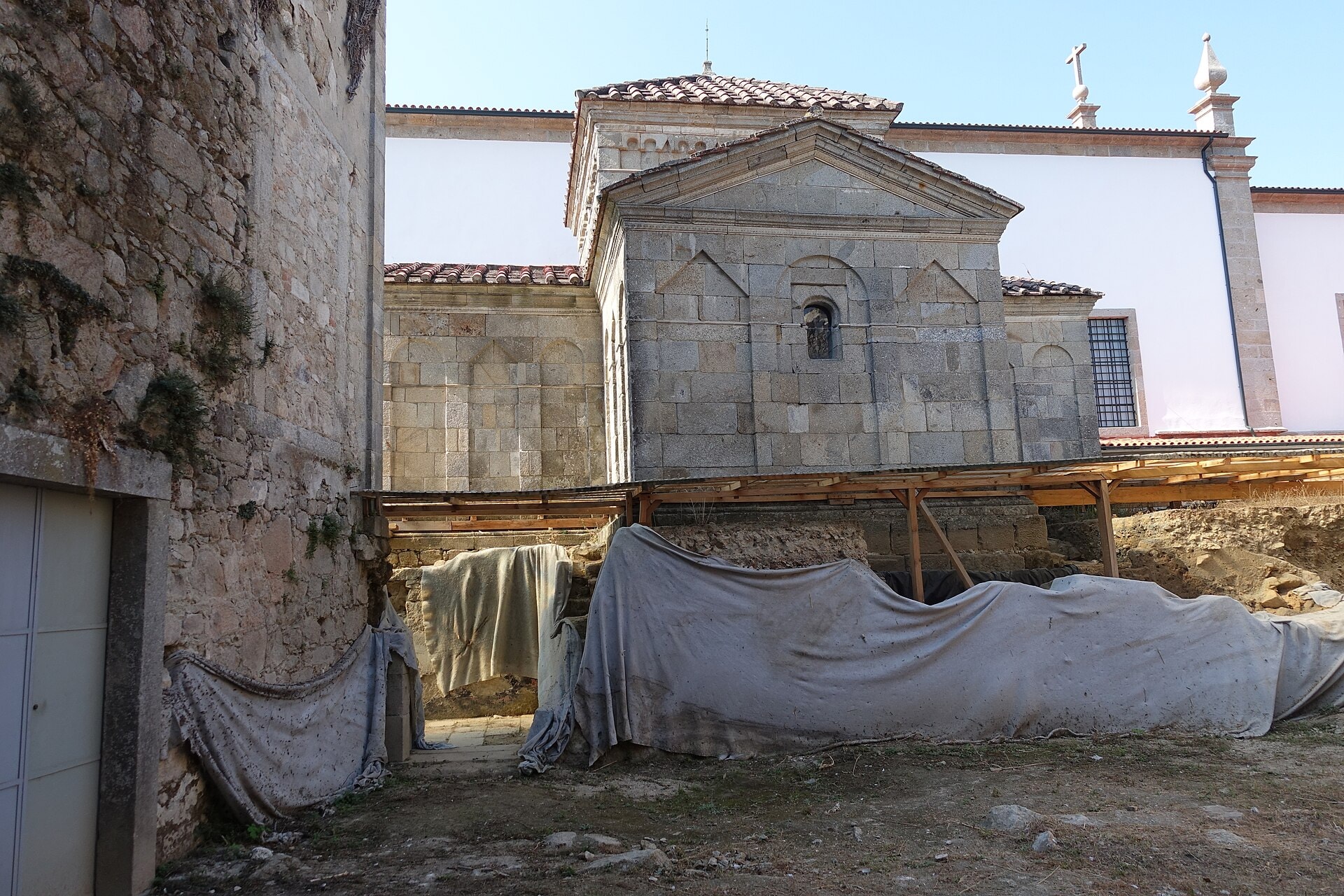
Just outside the city centre lies an attraction that most regular tourists completely overlook. The Capela de São Frutuoso is a rare pre-Romanesque chapel dating back to the 7th century that survived the Moorish occupation. It has a unique Greek cross floor plan.

This tiny stone building radiates an incredibly mystical aura, and you can feel the weight of centuries the moment you step inside. The chapel is now part of a larger monastery complex, and while a visit only takes a few minutes, architecturally it’s one of the most important sites on the entire Iberian Peninsula.

12. Taste Sweet Braga and Superb Coffee

Portugal is paradise for anyone with a sweet tooth, and Braga is no exception. While for lunch I’d recommend trying one of the many modern vegetarian restaurants that have popped up thanks to the student population, in the afternoon you absolutely must visit a traditional pastelaria.

The local speciality is the so-called Tibias de Braga — delicious crispy pastries filled with sweet custard cream and dusted with icing sugar. Pair them with a strong Portuguese espresso (bica) and enjoy the afternoon like a true local.

💡 Insider tip: Avoid restaurants with touts on the main squares. The best family-run places with authentic food and excellent vegetable soups are tucked away in the side streets.

13. Day Trip to Guimarães: The Birthplace of Portugal

While you’re in Braga, it would be a real shame not to visit the neighbouring city of Guimarães, which is just a short journey away. A famous inscription on a wall in the historic centre reads “Aqui nasceu Portugal” (Portugal was born here), as this is where Portugal’s first king was born in the 12th century.

The city boasts a perfectly preserved UNESCO-listed medieval core. Narrow lanes are packed with cafés, and a majestic castle with a mighty square tower looms above the town. It’s a very compact and photogenic place with an incredibly proud atmosphere that you can easily explore in half a day.

14. Day Trip to Porto and Wine Tasting in the Douro Valley

Braga makes an excellent base for exploring the entire north. You can reach central Porto by commuter train in roughly an hour and admire the iconic Dom Luís I Bridge, the São Bento railway station clad in blue tiles, or wander the steep alleyways of the Ribeira quarter.

From Porto, I’d recommend continuing east to the Douro River valley. This valley is the world’s oldest demarcated wine region, where vines grow on steep terraced slopes tumbling straight down to the river. The train journey along the Linha do Douro is one of the most romantic experiences in all of Portugal.

Where to Go Next from Braga

If you’ve hired a car or enjoy travelling by train, northern Portugal has a huge amount to offer. You could head to the captivating city of Porto, which will charm you with its melancholic atmosphere. On your way south, be sure to stop in Aveiro, often dubbed the Portuguese Venice thanks to its network of canals. For giant waves and an incredible surf vibe, make your way to the legendary Nazaré.

If you’re planning to explore the whole country, don’t miss our Lisbon Guide and the fairy-tale town of Sintra, full of colourful palaces. Just a stone’s throw from Lisbon lies the laid-back seaside town of Cascais. And if you’re drawn to the sun-drenched south, head to the stunning Algarve, where rugged cliffs await in Sagres, gorgeous beaches in Lagos and Carvoeiro, and historic towns like Silves, Tavira, Faro, Loulé, and Olhão.

Frequently Asked Questions

How do I get from Porto to Braga?

Travel is incredibly easy and cheap. The best option is the suburban trains (CP – Comboios de Portugal), which depart from Porto’s São Bento or Campanhã stations. The journey takes about an hour and a ticket costs just a few euros. The trains run very frequently throughout the day.

How many days do I need to see Braga?

For the historic centre itself and a trip to Bom Jesus do Monte, one full, packed day will be plenty. But if you want to add a trip to neighbouring Guimarães or enjoy the evening atmosphere of this student city, I’d recommend staying at least two nights.

Is the city centre hilly?

The historic core of Braga itself is surprisingly flat and very easy to walk, which is a pleasant change from the steep lanes in Porto or Lisbon. You can comfortably reach pilgrimage sites such as Bom Jesus do Monte and Sameiro, which sit on the surrounding hills, by bus, funicular or car.

Do Uber and Bolt work in Braga?

Yes, apps like Uber and Bolt work absolutely reliably here and are very affordable. It’s a great and often the fastest way to get from the city centre to the more distant sights up on the hills if you don’t want to wait for the local buses.

Is there a tourist tax in Braga?

Just like in most major Portuguese cities, tourist fees are gradually being introduced here too. Expect to pay a small fee per person per night when staying in a hotel or apartment, collected right at reception during check-in.

Does the Bom Jesus funicular run all year round?

The historic water-powered funicular runs all year, but outside the main summer season it has shortened opening hours. Always check the current timetable on the official website in advance so you don’t miss out on this unique piece of engineering.

Where’s the best place to park a rental car?

In the historic centre, street parking is tricky and often restricted. The best bet is the paid underground car parks on the edge of the centre, for example under Praça da República square. At the Bom Jesus and Sameiro pilgrimage sites there are large free or very cheap car parks.

Tips and Tricks for Your Vacation

Don’t Overpay for Flights

Search for flights on Kayak. It’s our favorite search engine because it scans the websites of all airlines and always finds the cheapest connection.

Book Your Accommodation Smartly

The best experiences we’ve had when looking for accommodation (from Alaska to Morocco) are with Booking.com, where hotels, apartments, and entire houses are usually the cheapest and most widely available.

Don’t Forget Travel Insurance

Good travel insurance will protect you against illness, accidents, theft, or flight cancellations. We’ve had a few hospital visits abroad, so we know how important it is to have proper insurance arranged.

Where we insure ourselves: SafetyWing (best for everyone) and TrueTraveller (for extra-long trips).

Why don’t we recommend any Czech insurance company? Because they have too many restrictions. They set limits on the number of days abroad, travel insurance via a credit card often requires you to pay medical expenses only with that card, and they frequently limit the number of returns to the Czech Republic.

Find the Best Experiences

Get Your Guide is a huge online marketplace where you can book guided walks, trips, skip-the-line tickets, tours, and much more. We always find some extra fun there!
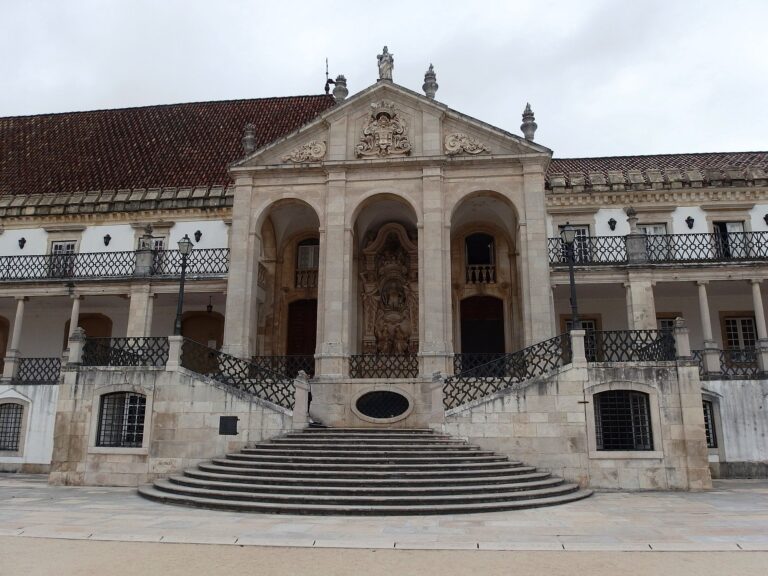
Coimbra, Portugal: 14 Best Things to See in This University City

TL;DRCoimbra, the university city perched on a hill above the Mondego river in central Portugal, comes with 14 essential tips, including the baroque Joanina Library, the Romanesque cathedral Sé Velha, the 1290 university complex Paço das Escolas, the botanical garden, the Santa Clara monasteries and a trip out to the Roman ruins of Conímbriga, 16 kilometres away. One day and one night is enough for the basics; add a second night if you want to fit in the trip out of town. The best time to go is April, May, September or October, when temperatures sit at 20 to 25 degrees, or early May for the Queima das Fitas student festival. Entry to the university complex and library costs around €13, accommodation in high season runs €100–€150 a night, plus a tourist tax of roughly €3 per person per night.

When people think of Portugal, Lisbon’s sun-drenched streets and Porto’s melancholic charm usually spring to mind first. But if you’re looking for the true historical and intellectual heart of the country, you need to head to central Portugal. Coimbra Portugal is a fascinating university city perched on a steep hill above the River Mondego, where students still stroll the narrow alleyways wearing traditional black capes. These very capes are said to have inspired J.K. Rowling when she was creating the wizarding world of Harry Potter. Once the medieval capital of Portugal, Coimbra today offers an incredible mix of ancient history, monumental monasteries, and youthful energy. I’ve put together a detailed guide to help you discover the greatest treasures of this unique destination. You’ll find exactly 14 things to see and do in Coimbra, along with tips on where to stay and how to avoid the biggest tourist traps.

TL;DR

  • The Joanina Library is a must: One of the world’s most beautiful baroque libraries requires a timed-entry ticket — ideally booked online several days in advance.
  • Prepare for hills: The historic centre (Alta) and the lower town (Baixa) are connected by very steep lanes with slippery cobblestones, so comfortable shoes are absolutely essential.
  • Fado is different here: Local fado is sung exclusively by men, and you don’t clap afterwards — appreciation is shown with a discreet cough.
  • Two train stations: Intercity trains stop at Coimbra-B on the outskirts, from where you need to catch a local shuttle train to the central Coimbra-A station.
  • The university is the heartbeat: The entire city revolves around its UNESCO-listed university, which has been running continuously since 1290.
  • Watch out for the tourist tax: Hotels charge a fee of around €3 per person per night, payable in cash at reception.

When to Visit Coimbra

When planning your trip, keep in mind that Coimbra is first and foremost a student city, which fundamentally shapes its atmosphere. If you visit in July or August, the streets will feel half-empty as most students head home for the holidays. Summer also brings extreme heat to central Portugal, with temperatures in the Mondego valley regularly pushing towards 40°C. Trudging up steep hills in that kind of heat can be truly exhausting and far from enjoyable.

The best time to visit is spring or early autumn. In April, May, September, and October, temperatures hover around a pleasant 20–25°C. If you want to experience something truly unique, plan your trip for the first half of May. That’s when the Queima das Fitas (Burning of the Ribbons) takes place — one of the biggest student festivals in Europe. The city barely sleeps, with massive parades, concerts, and an incredible sense of euphoria everywhere you go ☺️. Just be aware that accommodation will be pricier and books up well in advance during this period.

During the winter months between November and February, Coimbra Portugal weather tends to be damp and rainy. Conditions are similar to Porto in the north, so you’ll need a waterproof jacket and a good umbrella. Temperatures rarely drop below 10°C, but historic buildings aren’t well heated, so you might feel cold even inside cafés and museums. The upside of a winter visit? Minimal tourist crowds and significantly lower accommodation prices.

Where to Stay in Coimbra

💡 Accommodation & experience tips: We like to search for places to stay on Booking.com, which usually has the best cancellation policies. For tickets, tours, and activities, it’s worth comparing options on GetYourGuide.

Choosing the right area to stay in Coimbra is absolutely key, because the city is split into the lower town (Baixa) and the upper town (Alta). The upper part is incredibly romantic and packed with historic alleyways, but if you arrive with heavy suitcases, you’ll curse every single step. Baixa, on the other hand, is flat, full of great shops, and sits close to the main Coimbra-A train station. Also bear in mind that since 2026, stricter EU regulations on short-term rentals have come into effect. The supply of private apartments in the centre has thinned out, so sticking with traditional hotels is often the better bet.

Have some cash ready at check-in, as the city charges a tourist tax of around €3 per person per night. If you want comfort without the uphill slog with a backpack, stay in the lower town. A great choice is the traditional Hotel Oslo, which offers fantastic city views from its rooftop terrace and free parking — a genuine miracle in Coimbra’s narrow streets. You can easily book your room through Booking.

If you prefer a historic atmosphere and don’t mind a bit of climbing, opt for accommodation in the upper Alta district. Solar Antigo Luxury Coimbra offers a wonderful experience — you’ll sleep in beautifully restored historic rooms with original stone walls. Prices for a decent double room in peak season hover around €100–150 per night, though you can find much cheaper deals outside the high season. Always check in advance whether your accommodation has air conditioning, because summer nights in Coimbra can be stifling.

14 Best Things to See and Do in Coimbra

You can explore the entire city on foot, but be prepared for your calves to get a serious workout. Let’s take a look at the most beautiful sights and experiences you absolutely shouldn’t miss.

1. University of Coimbra & Paço das Escolas

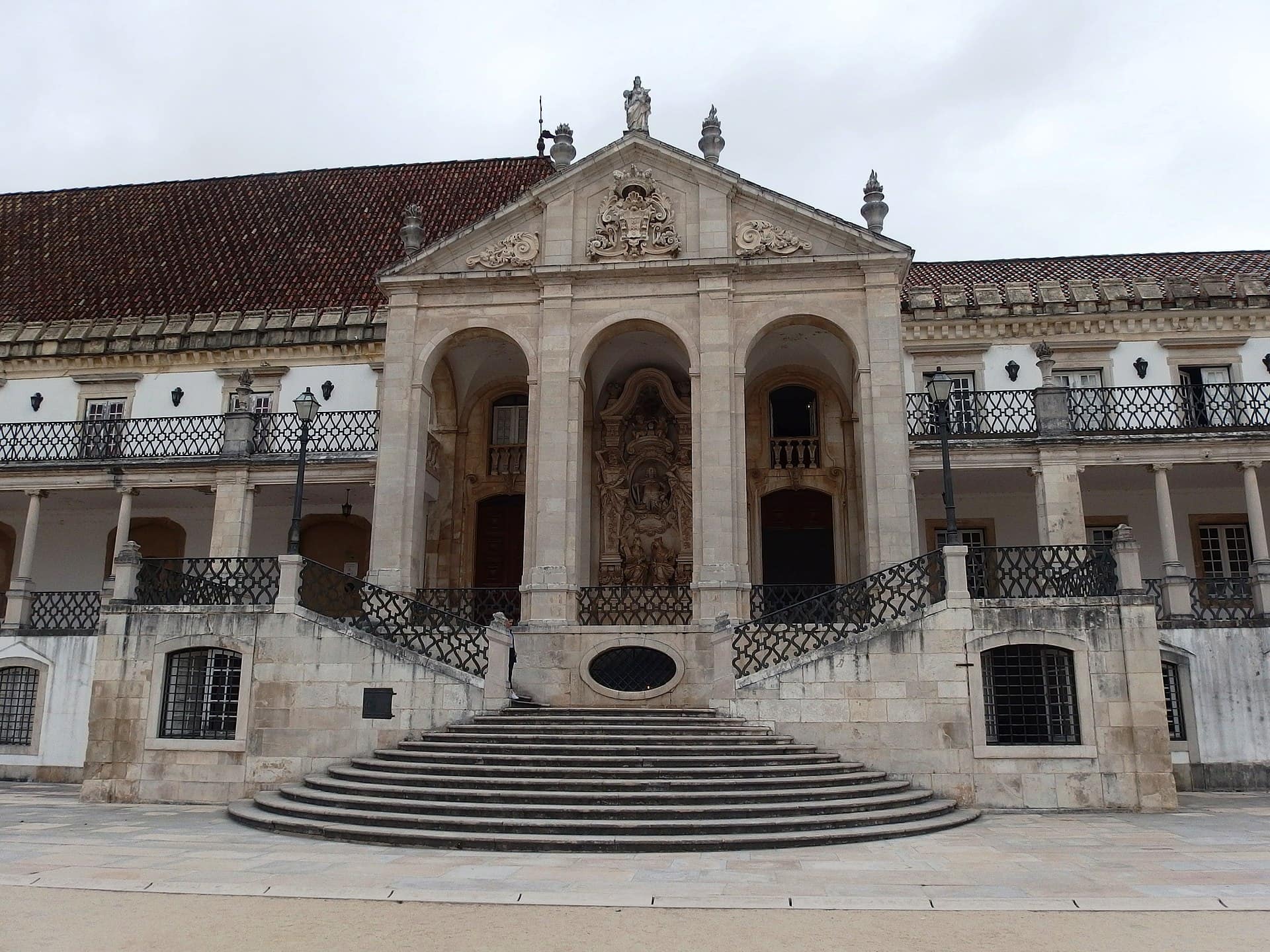
The beating heart of the city is the majestic university complex, founded back in 1290 and ranking among the oldest continuously operating universities in the world. The main historic campus is called Paço das Escolas and originally served as a royal palace. Today, this area is a UNESCO World Heritage Site and offers breathtaking views over the River Mondego and the red rooftops of the lower town.

As you step through the ornate Iron Gate (Porta Férrea) into the main courtyard, you’ll feel transported to another world. At the centre stands the statue of King John III, who permanently relocated the university to Coimbra. Flanking the square are historic faculty buildings that still serve their original purpose to this day. You don’t need a ticket to enter the courtyard — it’s freely open to the public.

💡 Local tip: The best light for photography of the entire complex is in the early morning or late afternoon. At midday, the white buildings reflect the sunlight so harshly that you won’t be able to open your eyes without sunglasses.

2. Joanina Library (Biblioteca Joanina)

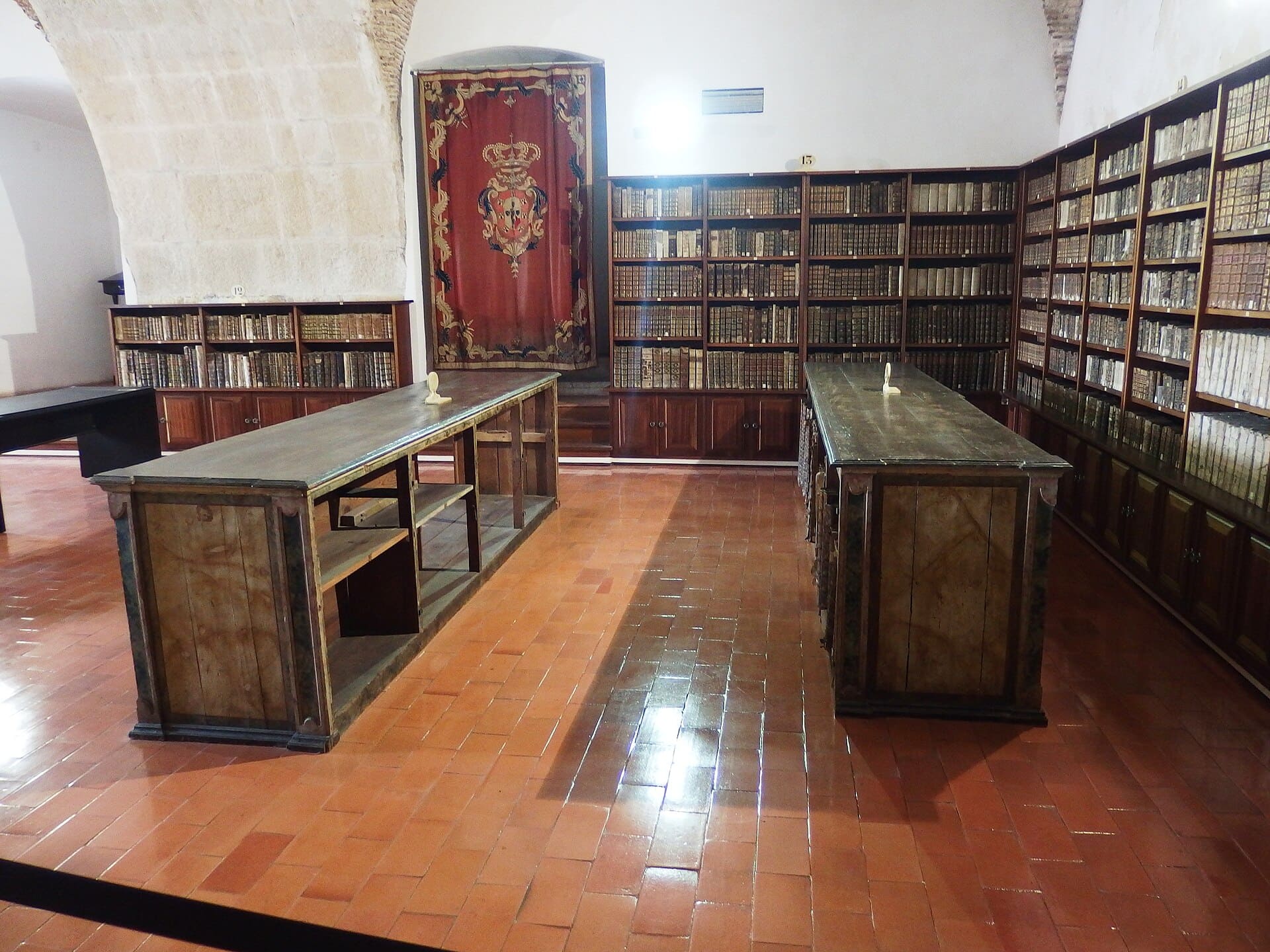
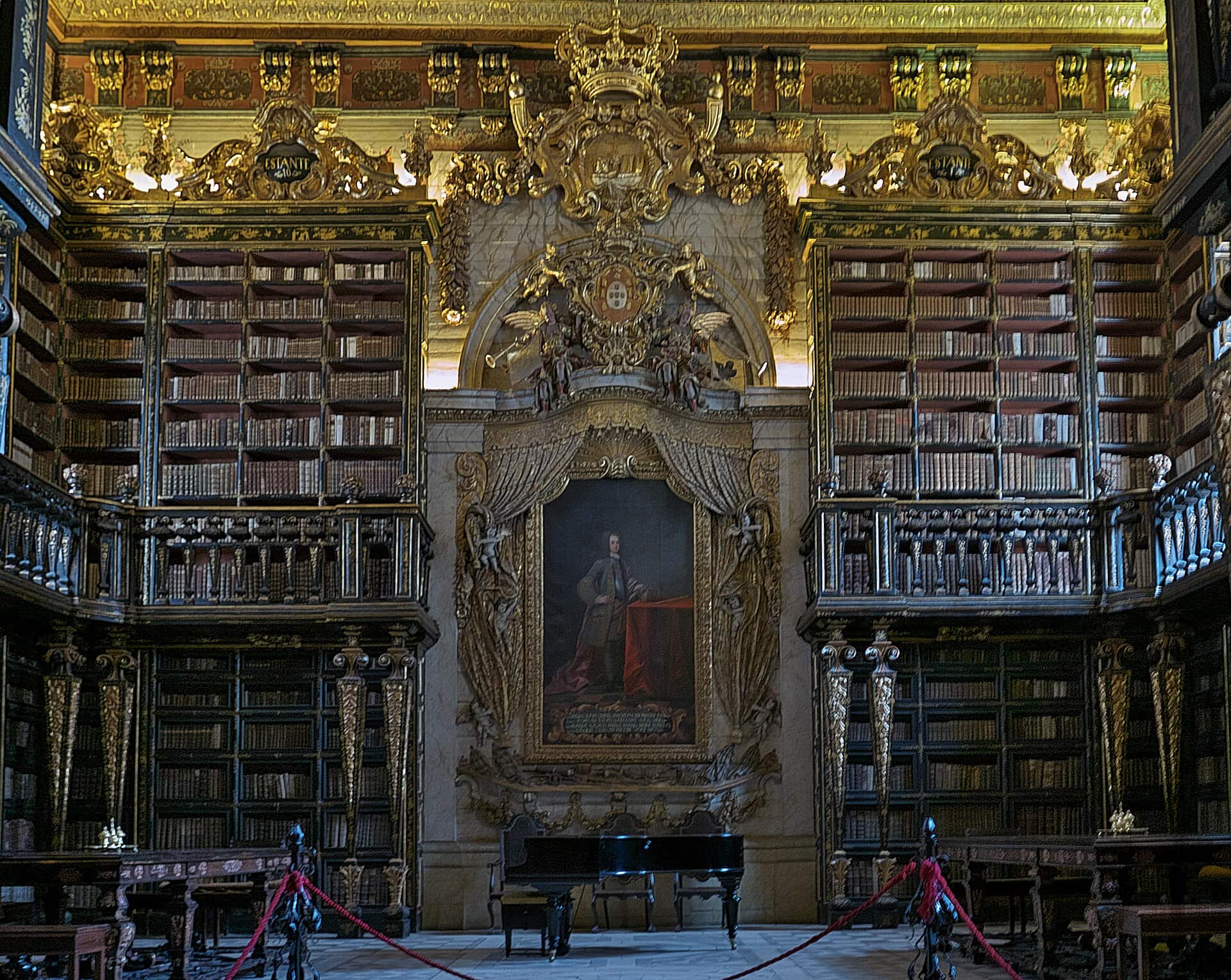
This is, without exaggeration, the crown jewel of all Portugal and the main reason most tourists come to Coimbra in the first place. The 18th-century Biblioteca Joanina looks like something straight out of a fairy tale. Its walls are lined with wood adorned in gold leaf, and the shelves house more than 60,000 rare volumes. Stepping inside this magical space will quite literally take your breath away.

Here’s a fun fact: the library has its own living guardians — a colony of bats. They hide behind the shelves during the day and emerge at night to catch insects that could damage the precious books. Every evening, the tables are covered with leather cloths to protect them from bat droppings. Photography is strictly forbidden inside the library, and the guards enforce this rigorously.

You need to buy your tickets well in advance online, as capacity is strictly limited and on-site tickets are often sold out days ahead. A ticket covering the entire university complex costs around €13, and the time printed on your ticket is specifically for your library entry slot. If you’re even five minutes late, the guards won’t let you in. For easy planning, I recommend checking portals like GetYourGuide, where you can often find options that include a local guide.

3. Clock Tower & Ceremonial Hall

Right next to the library stands the defining landmark of the entire square — the university tower known as Torre da Universidade. Students affectionately call it “Cabra” (the Goat) because of the sound its oldest bell makes. For centuries, this bell summoned students to lectures and set the rhythm of academic life. If you’ve got the energy, you can tackle the narrow spiral staircase and enjoy the panoramic view from the top.

As part of the tour circuit, don’t miss the Ceremonial Hall — Sala dos Capelos. This former royal throne room is now used for the university’s most important academic events, such as doctoral defences. The walls are adorned with portraits of every Portuguese king, and the ceiling features magnificent colourful frescoes.

As you walk through these spaces, soak in the unique atmosphere steeped in tradition. If you’re lucky, you’ll spot students dressed in their black uniforms with long capes. These aren’t just a tourist attraction — they’re everyday attire worn during exam periods and ceremonial occasions.

4. Old Cathedral (Sé Velha)

As you descend from the university hill, you’ll come across a building that at first glance looks more like an impregnable military fortress than a place of worship. The Old Cathedral (Sé Velha) is one of the most important Romanesque monuments in Portugal, built in the 12th century. Its massive stone walls with battlements and narrow windows were designed to protect the Christian city at a time when the border with Moorish territory was dangerously close.

For an admission fee of around €2.50, you can explore not only the dark and atmospheric nave but also the stunning Gothic cloister. It’s an oasis of calm in the middle of a bustling city. Stone arches surround a small green courtyard, and you’ll find beautifully carved column capitals featuring plant and animal motifs.

💡 Local tip: The cathedral has superb acoustics. Every year in May, a monumental student fado concert takes place on the steps in front of the main entrance, drawing thousands of people from across Portugal. It’s a truly magical experience.

5. New Cathedral (Sé Nova)

Despite the name “New,” this cathedral was actually founded in 1598 as a Jesuit church. It sits just a few steps from the main university square, and its monumental baroque façade stands in sharp contrast to the austere Romanesque style of the Old Cathedral. When the Jesuits were expelled from Portugal in the 18th century, the bishopric took over the building.

The interior is incredibly ornate, housing massive gilded altarpieces from the 17th century — outstanding examples of Portuguese woodcarving artistry. The space is vast and bright, which only amplifies the sense of grandeur. Admission is nominal, and you’ll often find hardly any other tourists here, as most rush straight to the Joanina Library.

In front of the cathedral there’s a small square offering lovely views of the surrounding faculty buildings. If you’re into architectural history, notice how the lower storey of the façade follows a strict Renaissance style, while the upper section gives way to exuberant baroque ornamentation.

lukas a lucka
Lukáš and Lucie recommend
Where to stay in Coimbra
3 accommodations — wellness hotels, hotels and other accommodation options

6. Traditional Fado de Coimbra

No visit to Coimbra is complete without hearing the local fado. Unlike the Lisbon version, which is performed by both men and women in taverns, Fado de Coimbra is an exclusively male tradition. The singers wear black student capes, and the songs are far more melancholic. The lyrics often revolve around farewells to student life, unrequited love, and longing for youth.

The most distinctive quirk is that at the end of a song, you absolutely do not clap in Coimbra. Instead, the audience expresses appreciation with a quiet, discreet cough. If you were to burst into enthusiastic applause, the locals would give you some very disapproving looks. This tradition originated in the days when fado was sung secretly at night beneath the windows of young women.

For an authentic experience, I recommend visiting the Fado ao Centro cultural centre or the À Capella club, housed in a deconsecrated 14th-century chapel. Shows usually run in the afternoon and evening, last just under an hour, and tickets cost around €12. It’s best to reserve your spot in advance, as these intimate venues have very limited capacity.

7. Machado de Castro Museum & Roman Cryptoporticus

This national museum ranks among the finest in all of Portugal, and not just for its art collections. Housed in a former bishop’s palace, the building itself is an architectural gem. But the real treasure lies beneath street level. Here you’ll find a perfectly preserved Roman cryptoporticus — a two-storey underground structure dating back to the 1st century AD.

Wandering through the dark, damp Roman corridors is an unforgettable experience. These passageways originally served as a massive foundation for the Roman forum that stood above. Today, they feel like a mysterious labyrinth. On the upper floors of the museum, you can admire outstanding collections of medieval sculpture and religious art.

💡 Local tip: The museum café boasts a stunning outdoor terrace with panoramic views across the entire old town. Even if you decide to skip the exhibitions, you can still pop in for a coffee and a traditional pastry without any problem.

8. University Botanical Garden

If you need a break from the steep cobbled streets, head to the sprawling botanical garden that cascades down the slopes below the university. Founded in 1772, it originally served medical students studying medicinal plants. Today, it’s the largest green oasis in the city centre — and admission is completely free.

The garden is laid out across several terraces. You’ll find a majestic bamboo forest, old greenhouses filled with exotic plants, and magnificent trees brought over from former Portuguese colonies in Brazil and Africa. It’s the perfect spot for a leisurely stroll or a rest on a bench in the shade of enormous fig trees.

The historic Aqueduct of São Sebastião also runs through the area, creating a gorgeous backdrop for your photos. During the scorching summer months, the garden provides much-needed shade, and temperatures here feel several degrees cooler than on the sun-baked squares above.

9. Santa Clara-a-Velha & Santa Clara-a-Nova Monasteries

Cross the bridge to the other side of the River Mondego and you’ll uncover yet another layer of the city’s rich history. Here you’ll find two monasteries dedicated to Saint Clare. The first, Santa Clara-a-Velha, was built in the 14th century. Unfortunately, it stood too close to the river and was repeatedly flooded over the centuries, until the nuns were finally forced to abandon it in the 17th century. Today you can explore its romantic ruins, which were only recently painstakingly excavated from layers of silt.

The nuns moved further up the hill and built a new complex — Santa Clara-a-Nova. This houses a beautiful church with lavish baroque decoration. The main reason to visit, however, is the silver reliquary containing the remains of Queen Isabel of Portugal, the city’s patron saint.

From the new monastery, you get one of the best views of Coimbra’s historic centre across the river. Admission to the grounds costs around €4 and is well worth the little effort of the uphill walk.

10. Portugal dos Pequenitos Park

If you’re travelling with kids, this is a place you can’t skip. Portugal dos Pequenitos (Portugal for Little Ones) is a unique theme park full of miniature replicas of Portugal’s most important monuments. It was created back in the 1940s and still retains its charm with a delightful retro feel.

You’ll find tiny versions of traditional rural houses from every region of Portugal — small enough for children to duck inside. The park also features scaled-down replicas of iconic landmarks like Lisbon’s Belém Tower and the Batalha Monastery, plus a pavilion dedicated to Portugal’s former overseas territories.

Admission is around €15 for adults and €10 for children. Be warned that weekends get really busy, so it’s best to arrive first thing when the gates open. The park is located on the south bank of the river, near the ruins of the old Santa Clara monastery.

11. Romantic Penedo da Saudade

This is the most beautifully melancholic spot in all of Coimbra. Penedo da Saudade is a park set on a rocky outcrop overlooking the valley. Legend has it that King Pedro I came here to grieve after his beloved Inês de Castro was murdered. Today, it’s where students come to reflect on their years at the university.

The entire park is dotted with stone plaques engraved with poems. These are added by each graduating class as a way to leave their mark for future generations. Walking among the trees and reading these inscriptions (if you have a smattering of Portuguese or simply use your phone’s translator) is incredibly moving.

The park is a little further from the main tourist routes, in the eastern part of the city. It’s the perfect spot for a picnic and relaxation with a view, especially around sunset. There’s no admission fee, and you’ll find barely a soul here.

12. River Mondego & Parque Verde

The River Mondego gives Coimbra its unmistakable charm. The riverbanks have been beautifully revitalised in recent years, creating the expansive Parque Verde do Mondego. You’ll find kilometres of flat cycling paths, green lawns ideal for lounging, and plenty of modern pavilions with restaurants and cafés.

If you prefer an active break, you can hire a pedalo or paddleboard right in the park and see the city from the water. The river is very calm and safe in this stretch. Scenic boat trips are also available, lasting about an hour with tickets at a reasonable €10.

💡 Local tip: The riverside cafés are the perfect spot for an evening drink. The food is excellent, and they serve great local craft beer. If you’re vegetarian, you’ll easily find places offering superb cheese boards, olives, and grilled vegetables served tapas-style.

13. Praça da República & Café Santa Cruz

If you want to feel the true student pulse of the city, head to Praça da República. This square is the hub of nightlife, lined with dozens of bars and cafés. In the evenings it buzzes with energy — students perched on walls, soaking up the atmosphere.

During the day, don’t miss a visit to the historic Café Santa Cruz, located in the lower town right next to the town hall. The café was built inside a former 16th-century church and features a gorgeous vaulted ceiling and stained-glass windows.

Order a proper Portuguese coffee and make sure to try the pastries called crúzios, baked to a secret recipe. The interior is wonderfully elegant, and in the evenings the café often hosts free fado performances for its guests.

14. Day Trip: Roman Ruins of Conímbriga

If you have more than one day in Coimbra, take a trip to nearby Conímbriga, about 16 kilometres south of the city. These are the largest and best-preserved Roman ruins in all of Portugal. The settlement was founded in the 2nd century BC, and you should set aside at least two hours to explore it properly.

The biggest draw is the stunning floor mosaics, which have retained their vivid colours even after two thousand years. You can admire the remains of bathhouses, an intricate underfloor heating system, and vast villas of wealthy patricians. The House of the Fountains (Casa dos Repuxos), with its working water jets, is absolutely mesmerising. A combined ticket for the site and adjoining museum costs €4.50.

Getting there is easy by Transdev suburban bus, which departs from the bus station in Coimbra. The journey takes just under half an hour, and you can buy tickets directly from the driver. If you’ve hired a car, remember that Portuguese motorways use electronic tolling, so you’ll need a Via Verde device in your vehicle or you can register your number plate for temporary toll access online before your trip.

Where to Go from Coimbra

Coimbra sits in a wonderfully strategic position right in the middle of the country, making it easy to continue in any direction. If you’re travelling by train, just remember that the city has two railway stations. Long-distance services (Alfa Pendular and Intercidades) only stop at Coimbra-B on the outskirts. From there, you need to transfer to a short local shuttle train which takes you — free of charge on the same ticket — into the centre at Coimbra-A station.

  • If you’re drawn to the ocean and a fishing-town atmosphere with monster waves, head to Nazaré, just an hour away.
  • For lovers of romance and fairy-tale palaces, the mystical Sintra is the obvious choice — reachable by train with a change in Lisbon.
  • If you’re heading north, don’t miss the stunning city of Porto, famous for its port wine and the bridge designed by a pupil of Gustave Eiffel.
  • In just half an hour by train you can reach Aveiro, nicknamed the Portuguese Venice for its canals and colourful boats.

Frequently Asked Questions

How many days do I need to explore Coimbra?

One full day and one night is enough to see the main highlights. You can visit the university and library in the morning, explore the lower town in the afternoon, and catch a fado performance in the evening. However, if you want to visit the Conímbriga ruins or the miniature park as well, plan to stay for two nights.

Is the Joanina Library really that strict about entry times?

Yes, absolutely. The system is set up to admit a specific number of people every 20 minutes. If you’re late, your ticket becomes invalid and the guards won’t let you in. It’s best to arrive at the Paço das Escolas courtyard at least fifteen minutes early.

Can I manage the city with a stroller or limited mobility?

It will be very challenging. The historic streets in the Alta district are extremely steep, narrow, and the cobblestones are bumpy and slippery. I recommend using the yellow minibuses on the Linha Botânico route, which shuttle between the lower and upper town and will save you a lot of effort.

What’s the difference between fado in Lisbon and Coimbra?

Lisbon fado can be sung by both men and women, often involves audience participation, and includes applause. Coimbra fado is sung exclusively by men—students or university graduates wearing black capes. It’s more academic, more melancholic, and after the performance, instead of applause, people show respect with a quiet cough.

Where’s the best place to park in the city?

Parking in the historic center is a nightmare. If you’re arriving by car, leave it at the large free parking lot by Parque Verde do Mondego on the left bank of the river, or use the underground garage at Praça da República. From there, you can walk to the center.

Are there good restaurants for vegetarians in the historic center?

Definitely. Although traditional Portuguese cuisine is heavily based on fish and meat, Coimbra is a university town, so you’ll find plenty of modern establishments. Almost every restaurant offers excellent vegetable soups, cheese boards, and olives, and the modern bistros in the lower town regularly serve vegetarian dishes.

Do Uber or Bolt work here?

Yes, both apps work perfectly in the city and are often cheaper than regular taxis. A ride from Coimbra-B train station to a hotel in the center will cost you around 4 to 6 euros, which is definitely worth it when you’re traveling with heavy luggage.

Tips and Tricks for Your Vacation

Don’t Overpay for Flights

Search for flights on Kayak. It’s our favorite search engine because it scans the websites of all airlines and always finds the cheapest connection.

Book Your Accommodation Smartly

The best experiences we’ve had when looking for accommodation (from Alaska to Morocco) are with Booking.com, where hotels, apartments, and entire houses are usually the cheapest and most widely available.

Don’t Forget Travel Insurance

Good travel insurance will protect you against illness, accidents, theft, or flight cancellations. We’ve had a few hospital visits abroad, so we know how important it is to have proper insurance arranged.

Where we insure ourselves: SafetyWing (best for everyone) and TrueTraveller (for extra-long trips).

Why don’t we recommend any Czech insurance company? Because they have too many restrictions. They set limits on the number of days abroad, travel insurance via a credit card often requires you to pay medical expenses only with that card, and they frequently limit the number of returns to the Czech Republic.

Find the Best Experiences

Get Your Guide is a huge online marketplace where you can book guided walks, trips, skip-the-line tickets, tours, and much more. We always find some extra fun there!
Funchal, Madeira: 15 Best Things to See in the Island’s Capital

TL;DRFunchal, Madeira’s capital, comes with 15 solid tips, from the colourful Old Town (Zona Velha) with its painted doors to the Mercado dos Lavradores market and the cable car up to Monte, where a fifteen-minute ride for around €13 climbs 600 metres, followed by a wicker toboggan ride down with the Carreiros do Monte for roughly €35 for two people. Other highlights include the Monte Palace Garden, the Cabo Girão cliff with its skywalk 580 metres above the sea, Funchal Cathedral (Sé), the Forte de São Tiago fortress, and the CR7 museum. The best months to visit are April to June, when Funchal sits around 22°C, while summer (July–September) brings highs of 26°C and winter hovers around 20°C. Thanks to the island’s tunnel network, you can reach almost anywhere on Madeira from Funchal within an hour, making it the perfect base for exploring the whole island.

Picture an island born from a violent volcanic eruption, rising so dramatically from the depths of the Atlantic that many call it the Hawaii of Europe. Even landing here is an experience — the airport runway is held above the ocean by 180 massive concrete pillars. The moment you step off the plane, you’re hit by humid, salty air laced with the scent of flowers. Funchal Madeira is an incredibly intense destination, with the island’s capital forming a natural amphitheatre that climbs from the deep blue ocean high into lush green hills. It’s not your typical week-on-the-beach kind of holiday, but if you’re after an active getaway packed with jaw-dropping views, exotic botany, and outstanding food, you’ve come to the right place.

In this article, we’ll walk you through 15 top things to see and do in Funchal. You’ll find out which alleyways to explore for street art, how the famous wicker toboggan ride works, and what to watch out for at the island’s notorious market. We’ve also included practical tips on the best time to visit and which neighbourhoods make the most strategic base for exploring the entire island.

TL;DR

  • Don’t trust global weather apps: Phone apps are useless here — always check live webcams via NetMadeira instead, because the island has extreme microclimates.
  • Beware of the famous Mercado dos Lavradores: Vendors will offer you sugar-coated exotic fruit samples, then cheerfully charge up to €30 per kilo.
  • You need a powerful car for the hills: If you’re hiring a car, pay extra for a stronger engine (ideally 1.2 TSI or above) or an automatic gearbox — you’ll be grateful on the steep hairpin bends.
  • Take the cable car up and the toboggans down: Head up Monte hill on the modern Funchal cable car and ride back down in the historic wicker toboggans steered by men in white.
  • Madeira has no natural sandy beaches: The coastline is all cliffs and pebbles. For swimming, head to the imported sand beach in Calheta or the stunning natural volcanic pools on the island’s north coast.
  • Funchal is the perfect base: Thanks to a network of modern tunnels, you can reach almost anywhere on the island from the capital within an hour.

When to Visit Funchal Madeira

Madeira has rightfully earned the nickname “island of eternal spring,” but that doesn’t mean the weather is predictable. The island has dramatic microclimates, and Funchal sits in what’s known as the “banana line” — meaning that at elevations below 200 metres above sea level, it’s warm and sunny year-round. However, as soon as you start climbing into the mountains behind the city, the temperature drops roughly one degree for every hundred metres of altitude. During the spring months from April to June, the island is gloriously in bloom and temperatures in Funchal hover around a pleasant 22°C — absolutely perfect conditions for exploring the city and the mountain levada walks.

If you visit during the peak summer season from July to September, you can expect temperatures around 26°C in Funchal and the ocean warms up nicely for swimming. Bear in mind, though, that the city will be packed with tourists and accommodation prices rise noticeably. On the flip side, winter months offer cheaper flights and a welcome escape from the British cold. Funchal still enjoys a balmy 20°C, although up in the mountains on Pico Ruivo it can easily snow in January. The golden rule of Madeira weather is simple, no matter when you visit: never rely on standard weather apps. Instead, check the NetMadeira app with live webcams every morning and head wherever the sky is blue.

Where to Stay in Funchal

💡 Tip for accommodation and experiences: We usually search for places to stay on Booking.com, which tends to have the best cancellation policies. For tickets, tours, and activities, it’s worth comparing options on GetYourGuide.

Choosing the right area in Funchal can make or break your holiday. The city is built on a seriously steep hillside, and if you pick accommodation too high up, you’ll face a gruelling uphill trek every day or constantly fork out for taxis. By far the most popular area for tourists is the São Martinho neighbourhood, specifically the zone known as Lido. Here you’ll find lovely promenades, modern Funchal Madeira hotels, plenty of excellent cafés, and — most importantly — great access to the ocean via managed bathing complexes. This part of town is flatter, making evening strolls a real pleasure.

Another excellent option is staying right in the historic centre near the Sé district or on the edge of the Funchal Madeira old town, Zona Velha. Here you’ll have all the sights, restaurants, and the cable car within walking distance, though you should expect a bit more noise from the busy streets. I always recommend booking well in advance on Booking.com, where you can easily filter for hotels with parking. A parking space is a huge advantage in Funchal, as the narrow streets and lack of spots can be a real headache for drivers. The Pestana hotel chain offers particularly comfortable options, along with smaller boutique guesthouses tucked away in historic buildings.

15 Best Things to See and Do in Funchal Madeira

1. Old Town (Zona Velha) and the Painted Doors

The oldest part of Funchal, known as Zona Velha, was a neglected neighbourhood just a few decades ago — one that tourists tended to avoid. Today, it’s the most vibrant and colourful spot on the entire island, buzzing with life from morning until late at night. Narrow cobblestone lanes lined with historic houses create an incredibly romantic backdrop for evening strolls.

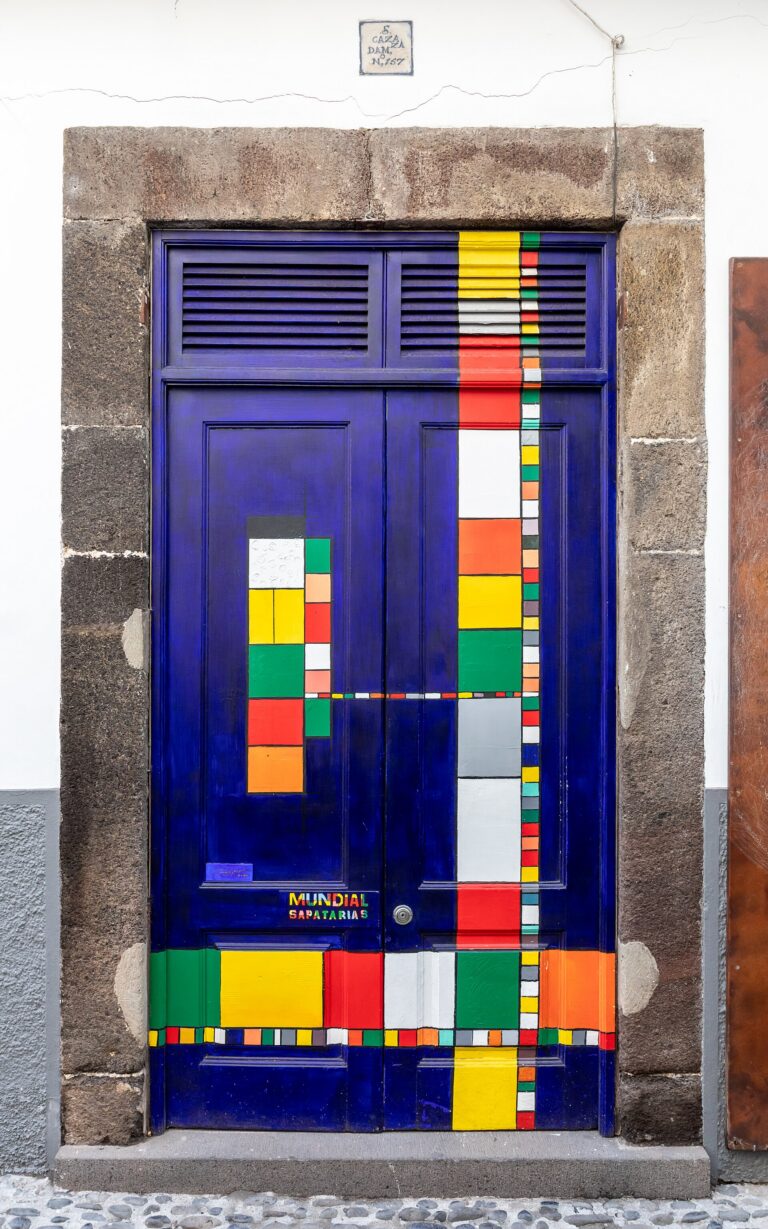
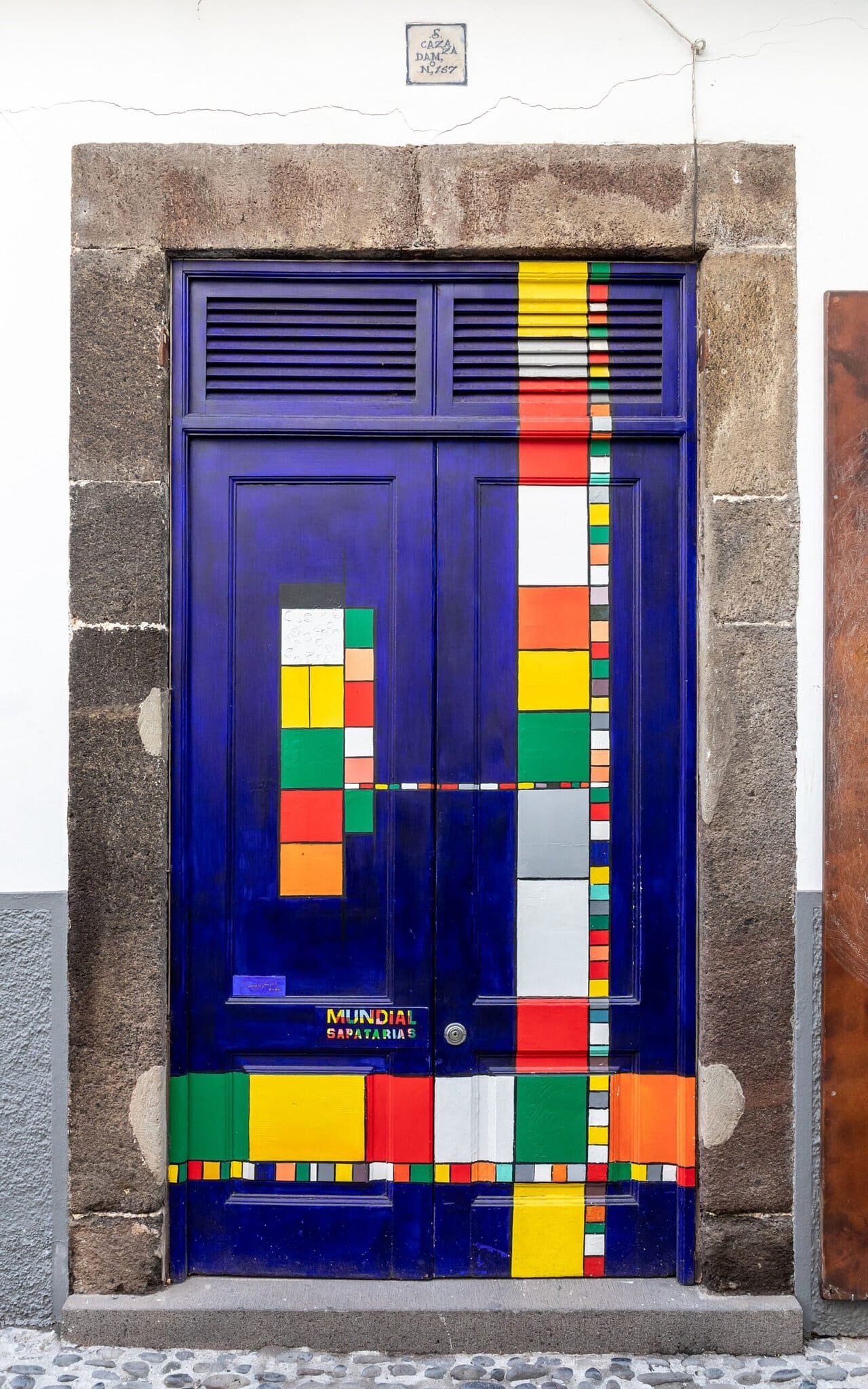
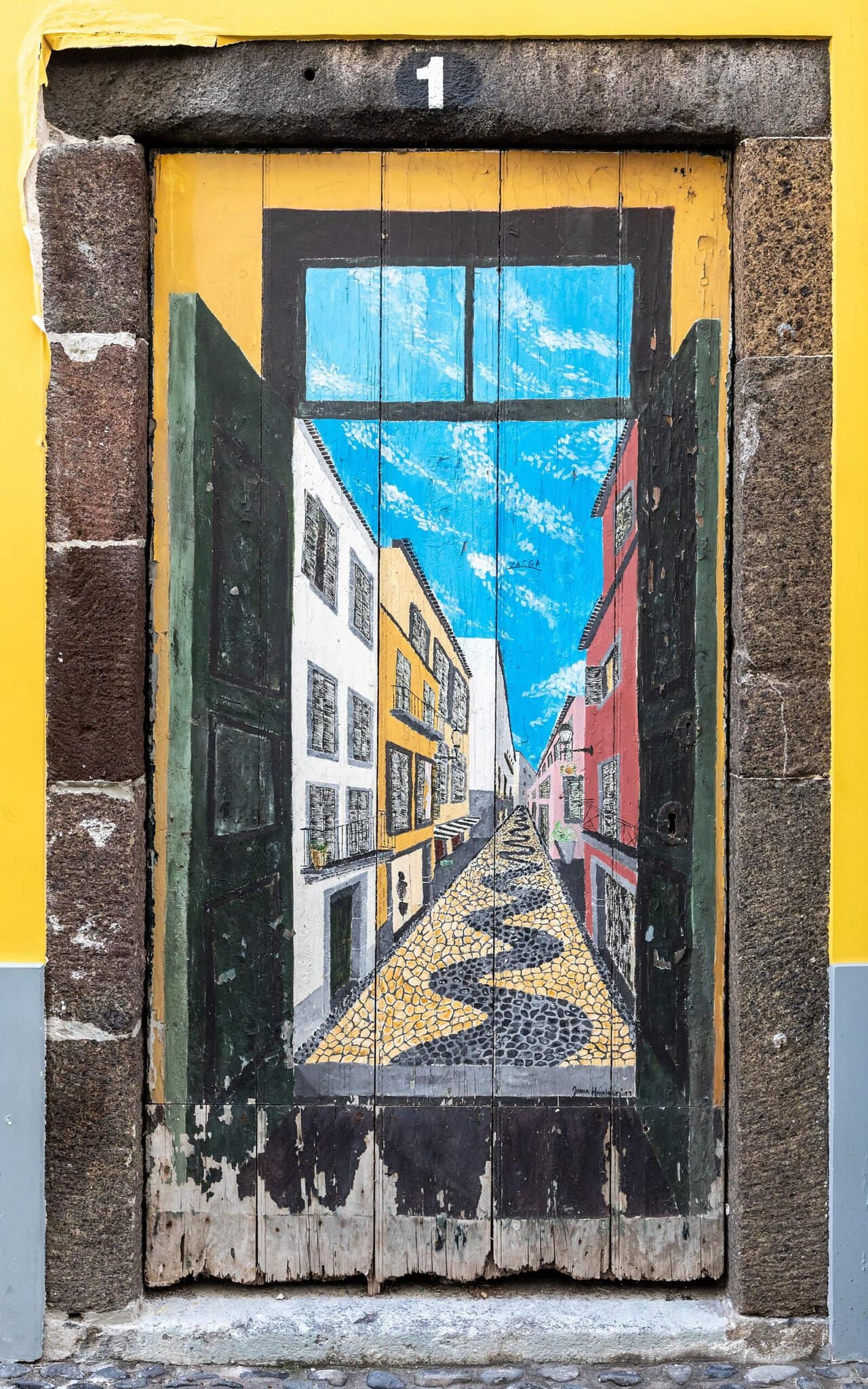
The main draw is the Arte das Portas Abertas project, through which local artists have painted dozens of old, peeling doors with stunning murals. Rua de Santa Maria has essentially become an open-air gallery, where every door tells a different story. Just be prepared — this is also the main strip for restaurant touts trying to lure you in.

💡 Local tip: If you want to eat in peace without being constantly hassled by someone waving a picture menu at you, head two or three streets away from the main Rua de Santa Maria. You’ll find more authentic — and often cheaper — places to eat.

2. Mercado dos Lavradores Market and Its Secrets

Funchal’s farmers’ market is an architectural gem bursting with incredible colours and aromas, operating since 1940. On the ground floor, you’ll find a noisy fish market where you can watch fishmongers deftly filleting the fearsome-looking black scabbardfish — Madeira’s national fish, with enormous eyes and razor-sharp teeth.

The real visual spectacle, though, happens on the first floor at the exotic fruit stalls. Vendors in traditional costumes will eagerly push samples of every imaginable passion fruit hybrid — crossed with banana, lemon, and even strawberry. It sounds wonderful and smells even better, but this is the island’s most notorious tourist trap.

The fruit they offer as samples is often sprinkled with sugar to make it taste utterly irresistible. Once you pick a few pieces and pop them into a paper bag, they weigh it up and cheerfully ask for something like €30 per kilo. My advice? Walk through the market, soak up the atmosphere, take your photos — and then buy your fruit at a regular supermarket for a fraction of the price.

3. Funchal Madeira Cable Car to Monte

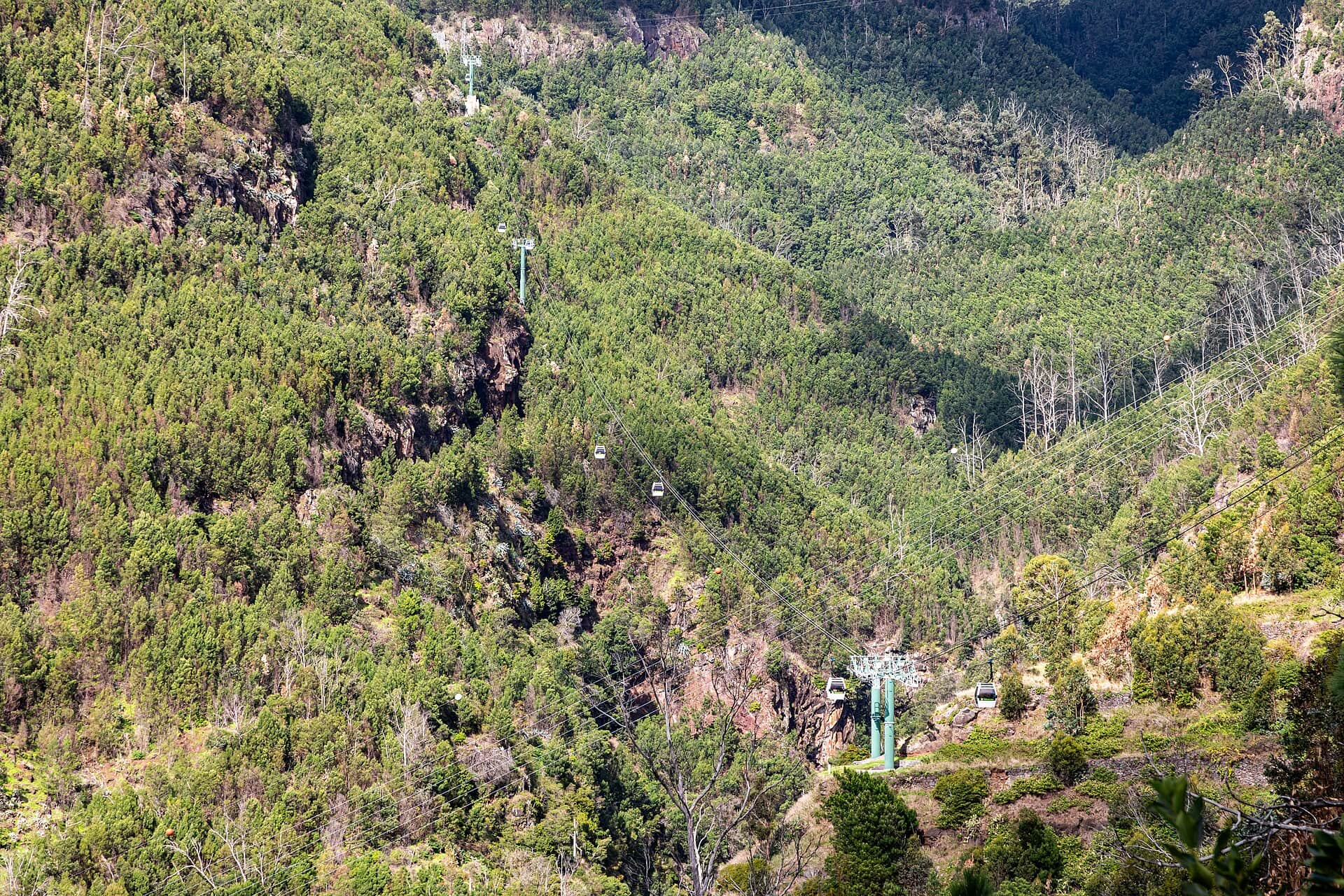
One of the most iconic attractions in the capital is the modern Teleférico do Funchal cable car. The lower station is right on the waterfront near the old town, and during the fifteen-minute ride, you’ll ascend an impressive 600 metres in altitude. The journey is remarkably smooth and quiet.

From the glass cabin, you’ll be treated to breathtaking views over the entire Funchal amphitheatre — the red rooftops, terraced hillside plots, and the endless blue ocean beyond. A one-way ticket costs around €13, and it’s well worth going first thing in the morning to avoid the long queues that form after the big cruise ships dock in the harbour.

Up in the Monte neighbourhood, the atmosphere is completely different from down in the city. The air is noticeably cooler and more humid, and everything is enveloped in lush greenery. You’ll also find the beautiful church of Nossa Senhora do Monte, where the last Austro-Hungarian Emperor, Charles I, is buried.

4. Monte Palace Tropical Garden

Once you’ve taken the cable car up, your first stop should be the Monte Palace Tropical Garden. This isn’t just an ordinary park — it’s more of a fascinating emerald labyrinth filled with exotic plants from around the world. The entire complex sprawls over several hectares, blending wild nature with carefully designed architecture.

As you wander through, you’ll stumble upon oriental gardens with red Japanese bridges, Buddha statues, ponds full of colourful koi carp, and peacocks strolling freely. The garden boasts an enormous collection of rare cycads — plants that date back to the age of the dinosaurs. It’s a place where time seems to slow down and you feel like an explorer in the jungle.

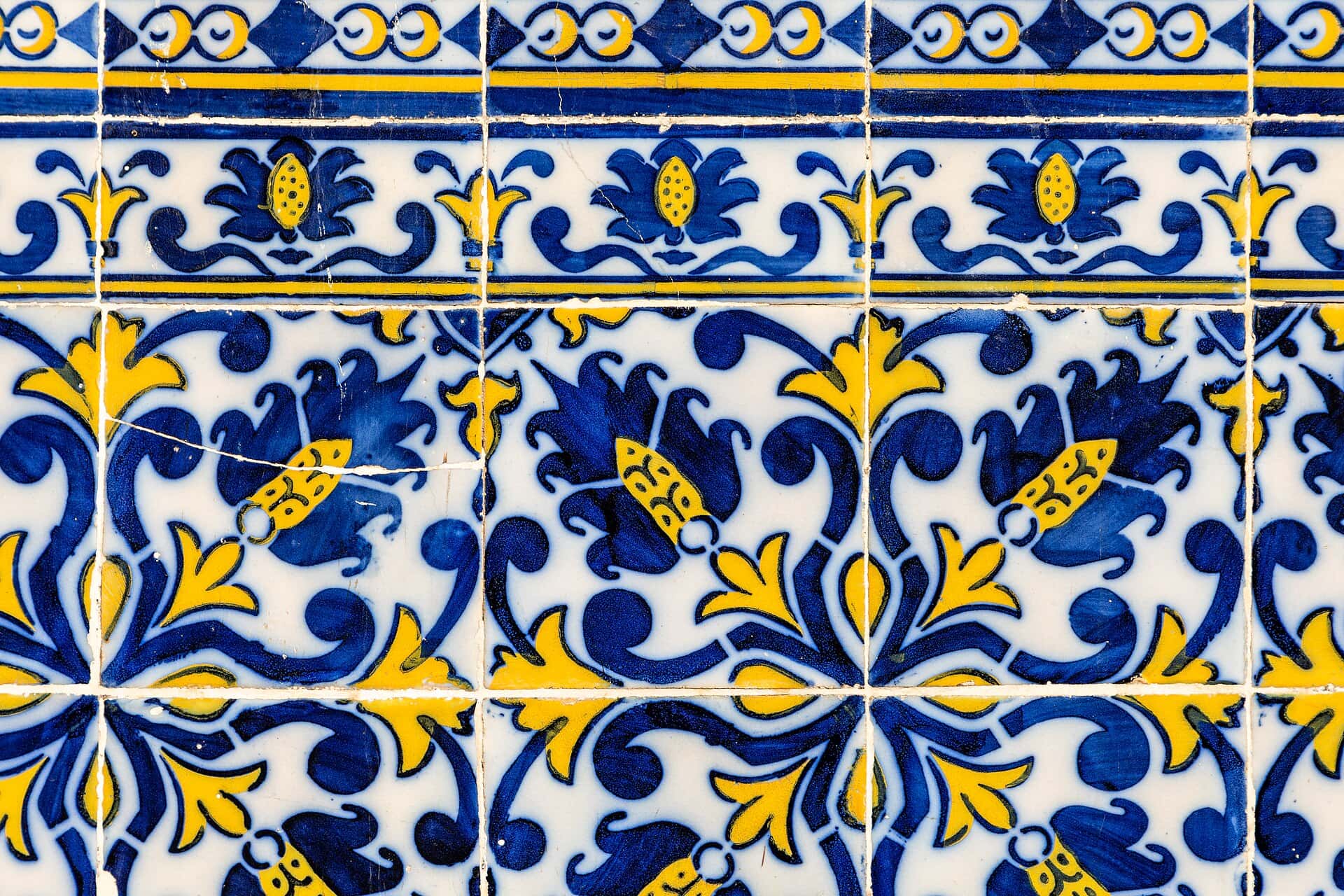
The grounds also house one of the most significant collections of Portuguese azulejo tiles in the country, lining the main walkways and telling the story of Portugal’s history. Set aside at least two to three hours for your visit, as the grounds are truly vast and full of hidden corners, benches, and viewpoints overlooking the city.

5. The Thrill of the Wicker Toboggan Ride

Getting back down from Monte to Funchal offers an experience that’s truly unique in the world. Since the 19th century, the so-called Carreiros do Monte have been operating here. It’s a tradition where two sturdy men dressed in white with straw hats seat you in a large wicker basket mounted on wooden runners.

They then push you down the steep hill over smooth tarmac, steering and braking using only their special boots with thick rubber soles made from old tyres. The ride lasts roughly ten minutes; the basket occasionally reaches surprising speeds, and it’s pure, old-fashioned adrenaline that’ll set you back around €35 for two people.

💡 Local tip: The wicker toboggans don’t take you all the way to Funchal’s centre — the ride ends in the Livramento neighbourhood. From there, you’ll either need to walk steeply downhill for about thirty minutes or grab a taxi. Local taxi drivers here can be quite pushy, so always agree on a price before you get in.

6. Sé Cathedral and the Historic Centre

Right in the heart of modern Funchal stands the understated but historically significant Sé Cathedral. Built at the end of the 15th century, it’s one of the few buildings to have survived devastating earthquakes and French pirate attacks completely intact. From the outside, it looks austere, combining dark volcanic stone with white plaster.

Step inside, however, and you’ll be amazed by the stunning ceiling carved from local cedar wood. It’s adorned with ivory inlays and represented the pinnacle of craftsmanship in its day. Entry to the cathedral is free, and it offers a welcome cool escape from the midday sun.

Around the cathedral stretches a network of elegant pedestrian zones paved with traditional black-and-white Portuguese calçada tiles. You’ll find renowned cafés with outdoor seating, upmarket boutiques, and historic pharmacies with their original wooden fittings. It’s the perfect spot for an afternoon coffee while watching the world go by.

7. Forte de São Tiago Fortress

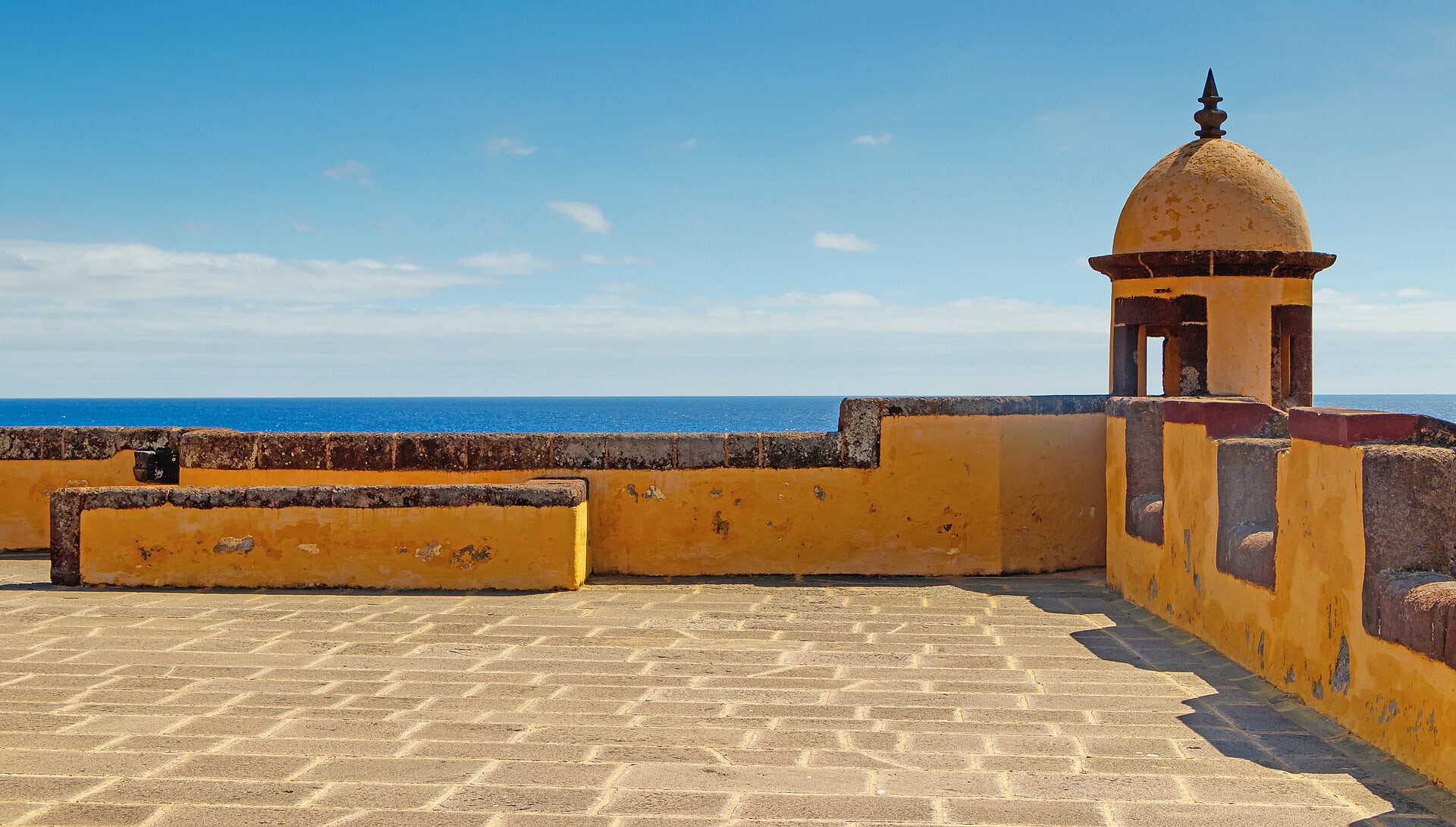
At the very end of Zona Velha, you can’t miss the striking yellow-and-red Forte de São Tiago. Built in the 17th century, this fortress was designed to protect the harbour from the relentless raids of corsairs and pirates who terrorised the North Atlantic at the time. Its vivid yellow walls create a gorgeous contrast against the deep blue ocean.

Today, you can wander freely through the fortress, explore the old watchtowers, and enjoy sweeping coastal views through the historic cannons. It once housed a contemporary art museum, but even without it, the architecture and views alone make it well worth a brief stop.

Just below the fortress lies the small rocky beach of Praia do Almirante Reis. It’s not the best spot for a full day of swimming, but locals love coming here for an evening dip — and it’s a brilliant place to watch the sunset with colourful fishing boats bobbing on the waves.

lukas a lucka
Lukáš and Lucie recommend
Where to stay in Funchal
2 accommodations — hotels and other lodging options

8. Madeira Wine Tasting

Visiting Madeira without tasting its famous wine would be a crime. This unique fortified wine has a fascinating history stretching back to the Age of Discovery. To stop the barrels from spoiling on long voyages to India, sailors added sugarcane spirit to the wine. The wine then heated up and oxidised in the ship’s hold as it passed through the tropics, developing its unmistakable caramel flavour.

Funchal is home to several historic wine lodges where you can go for a tasting. Among the most renowned is Blandy’s Wine Lodge, right in the city centre. During the tour, you’ll see dark cellars filled with old oak barrels and learn everything about the ageing process — a method that’s truly unique in the world of winemaking.

The tour culminates in the tasting itself. Madeira wine comes in four main styles based on sweetness — from the dry Sercial, through medium-dry Verdelho and medium-sweet Bual, to the very sweet Malmsey. It’s a rich, concentrated experience best savoured in small glasses alongside a piece of quality cheese.

9. The Harbour and Waterfront Promenade

Funchal is a city that lives and breathes the ocean, and the harbour is living proof. This is where the sprawling waterfront promenade begins, stretching several kilometres all the way to the Lido area. In the morning, you’ll see joggers and locals walking their dogs; by afternoon, the promenade fills with tourists and street performers.

In the harbour itself, enormous cruise ships often dock — up close, they look like floating tower blocks. But you’ll also find a replica of Columbus’s ship the Santa Maria, which you can board for a trip along the coast and, with a bit of luck, spot dolphins and whales — the local waters are teeming with them.

While strolling, don’t miss the Pontinha pier, which juts far out into the sea and offers the best view of Funchal’s amphitheatre from a distance. This is exactly the spot where all those iconic postcard photos of Funchal nestled into green mountains are taken from.

10. Culinary Highlights: Bolo do Caco and Poncha

Madeiran cuisine is wonderfully rustic and distinctive. While Funchal Madeira restaurants tempt you with beef skewers called espetada or the fearsome-looking peixe-espada preto fish, if you’re after a superb vegetarian treat, you absolutely must try traditional bolo do caco bread. It’s a round, slightly sweet bread made from sweet potatoes, baked on a hot stone. It’s served still warm, sliced in half, and generously slathered with garlic-herb butter.

To wash it down, order a poncha. This traditional alcoholic drink will warm you right up after a long day hiking the levadas. It’s made from local sugarcane rum, honey, and fresh lemon juice, mixed with a special wooden stick called a caralhinho.

💡 Local tip: Never — and I mean never buy pre-mixed poncha in a bottle from the supermarket. The real thing must always be freshly prepared right in front of you. The very best ponchas are made in the small bars of the neighbouring fishing village of Câmara de Lobos, just a few minutes’ drive from Funchal.

11. Day Trip to the Glass Cliff at Cabo Girão

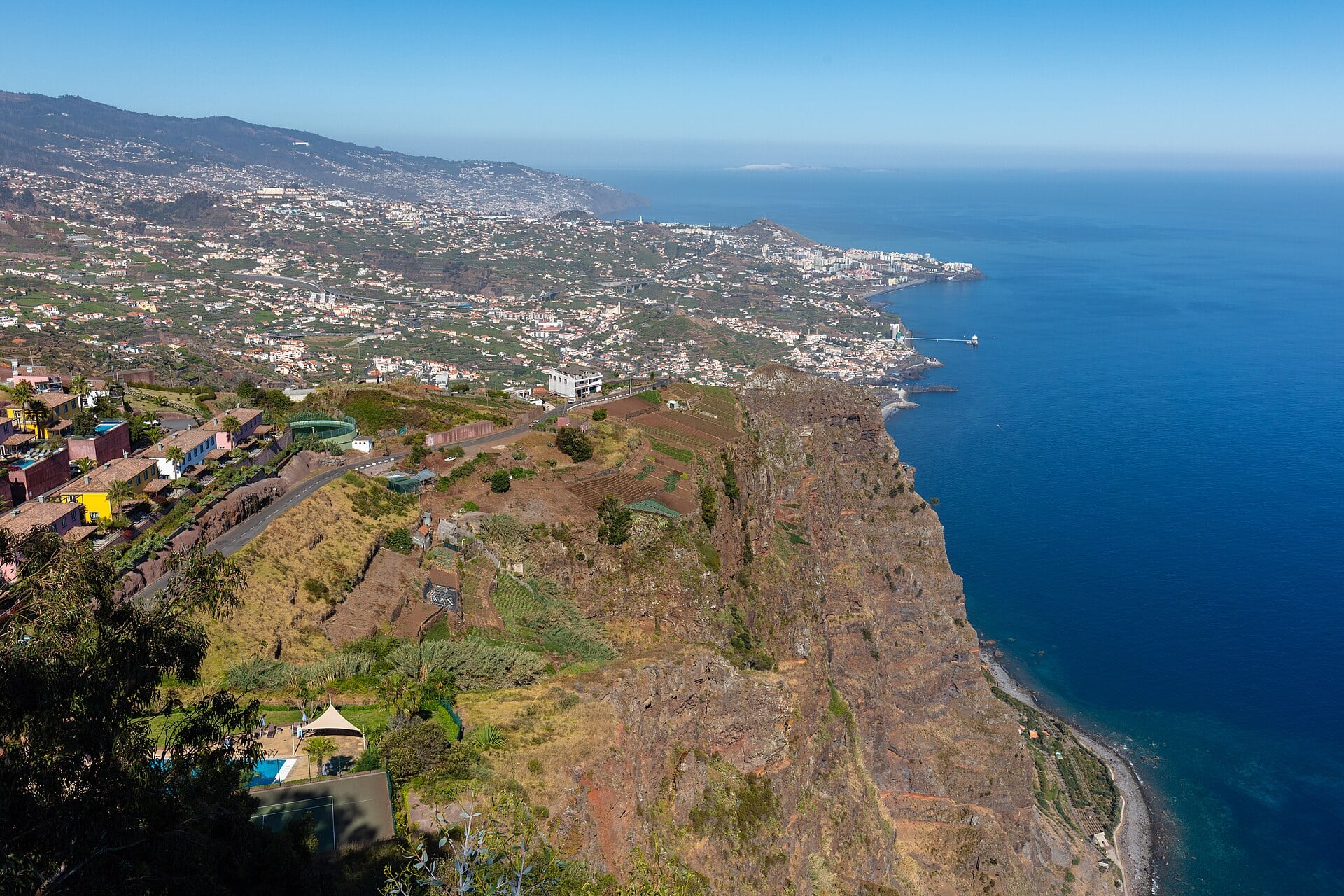
Just a short drive west of Funchal lies one of the highest sea cliffs in Europe. Cabo Girão plunges straight down into the ocean from an incredible height of 580 metres. It’s a spot that’s guaranteed to get your heart racing — especially if you don’t suffer from vertigo.

The main attraction is a viewing platform with a glass floor that juts out directly over the cliff edge. When you stand on the glass and look down, you’ll see waves crashing against the shoreline far below and tiny terraced plots called fajãs — which local farmers could once only reach by boat.

You can easily get here by hire car or local bus from central Funchal. There’s a small entrance fee for the viewpoint, and I’d recommend visiting in the later afternoon, when the sun beautifully lights up the coastline and you avoid the biggest crowds that pour in from tour buses during the morning.

12. Jardim Botânico — The Botanical Garden

If one garden wasn’t enough and you’re a nature lover, Jardim Botânico da Madeira will blow you away. Perched on yet another steep hillside above the city, you can reach it via a second, smaller cable car that connects directly from the Monte area. It’s a more scientific and systematic garden compared to Monte Palace.

Across an area of 80,000 square metres, more than 2,000 species of exotic plants from every continent thrive here. Thanks to Madeira’s climate, almost anything can grow on the island — so desert cacti sit happily alongside rainforest orchids and Himalayan rhododendrons.

The most famous section is the celebrated flower carpet, planted in precise geometric patterns, offering a fantastic view of the city far below. You’ll also find an exotic bird park and a small natural history museum.

13. Relaxing in Parque de Santa Catarina

When you feel like you’ve had enough of climbing hills, head to Parque de Santa Catarina. This large, beautifully maintained public park sits on a gentle slope right above Funchal’s harbour. It’s an absolute oasis of calm in the middle of the bustling city.

Locals come here for picnics, families with children spend time by the large pond with swans and ducks, and you can simply sit on a bench in the shade of enormous trees and just unwind. The park is filled with sculptures, gorgeous flower beds, and even a small chapel.

The park’s greatest asset, though, is its views. From here, you get a stunning panorama of all of Funchal and the bay. Particularly when tall ships are moored in the harbour, you’ll feel as though you’ve been transported back to the Age of Discovery.

14. CR7 Museum for Football Fans

Funchal is the birthplace of one of the most famous footballers of all time — Cristiano Ronaldo. His presence is felt everywhere on the island; even the international airport bears his name. For football fans, a visit to the CR7 Museum on the harbour promenade is an absolute must.

The museum houses the complete collection of his trophies, including the famous Ballon d’Or and Golden Boot awards, thousands of fan letters, shirts, and interactive exhibits tracing his career from humble beginnings on Madeira to global stardom.

Outside the museum stands the iconic — and much-debated — bronze statue of the player himself, which practically every tourist wants a photo with. Even if you’re not a football fan, it’s fascinating to see just how much influence one person can have on an entire island’s identity and pride.

15. Funchal as a Base for Mountain Adventures

This final tip isn’t about a specific sight in the city, but about Funchal’s strategic location. The capital is the perfect base for exploring the entire island. Madeira is threaded with an incredible network of over 150 tunnels (the so-called Via Rápida), which have cut cross-island journey times from hours to mere minutes.

From Funchal, you can easily drive to famous levada walks like the dark, jungle-like PR9 Levada do Caldeirão Verde, or tackle more demanding high-altitude treks. A classic example is the drive up to Pico do Arieiro, the third-highest peak, for sunrise — you can reach it from the city centre on a paved road in about 40 minutes.

Just remember that once you leave the main motorways for the old rural roads (marked ER), you’ll face climbs with jaw-dropping gradients and blind corners. A more powerful car (at least a 1.2 TSI) is essential for mountain trips from Funchal — otherwise you’ll be stuck in first gear on the hills, praying you don’t have to stop.

Where to Go from Funchal

If you’re keen to explore more of Portugal and wondering what to combine with a Madeira trip, the mainland offers endless possibilities. Flights from Funchal Madeira airport to the mainland are frequent and affordable.

  • Mainland cities: Direct flights connect Madeira to the capital, so be sure to read our comprehensive Lisbon guide, or head north to discover the enchanting city of Porto.
  • Romance and waves: Near Lisbon lies the fairy-tale town of Sintra, packed with palaces, and the coastal resort of Cascais. If you’re fascinated by giant waves, don’t miss Nazaré.
  • Algarve gems: For sun-seekers and cliff lovers, there’s Portugal’s south. Check out our tips for Lagos, the wild western tip of Sagres, or the picturesque town of Carvoeiro.
  • More southern treasures: In the Algarve, we also recommend exploring historic Silves, romantic Tavira, and finding out what to do in Loulé. Don’t forget the regional capital Faro and the fishing town of Olhão.
  • The Venice of Portugal: On your way north, stop at the canal-laced city of Aveiro.

Frequently Asked Questions

Are there sandy beaches in Madeira?

You won’t find natural beaches with fine golden sand in Madeira—the coastline is made up of cliffs and pebbles. However, there are two artificial beaches (Calheta and Machico) with sand imported from the Sahara, plus stunning natural lava pools in the north of the island, such as in Porto Moniz or Seixal, where you’ll also find black volcanic sand.

How much does the cable car and toboggan ride in Funchal cost?

A one-way trip on the modern cable car from Funchal up to Monte costs around €13. If you want to ride back down in the traditional wicker toboggans, expect to pay approximately €35 for one basket that seats two people.

Is it better to visit Madeira or the Azores?

If you’re looking for dramatic views, guaranteed excellent food, well-developed infrastructure, and more reliable warmth on the south side of the island, choose Madeira. The Azores (such as São Miguel island) are much wilder, greener, less touristy, and offer thermal springs, but the weather there is extremely changeable and it rains frequently.

Do I need a car in Madeira?

To explore the entire island and especially to reach the trailheads for the mountain levadas, a car is pretty much essential. Public transport only works reasonably well along the coast. When renting a car, definitely pay extra for a more powerful engine—the hills here are extremely steep.

Are the levadas dangerous?

Some sections of the levadas run along narrow ledges above deep ravines with no safety railings. If you suffer from vertigo, carefully choose flatter and safer routes (such as Vereda dos Balcões). Always wear sturdy hiking boots, as the paths can be very slippery after rain.

How can I tell what the weather will be like?

Global weather forecast apps don’t work well for Madeira due to the dramatic microclimates. Your best bet is to download the NetMadeira app, which has live webcam feeds from all over the island, and head out in the morning to wherever the cameras are showing sunshine.

What is Bolo do caco?

Bolo do caco is a delicious traditional Madeiran round bread made from flour and sweet potatoes. It’s baked on a hot stone and usually served warm, split open and generously slathered with garlic and herb butter. It’s an excellent vegetarian option.

Tips and Tricks for Your Vacation

Don’t Overpay for Flights

Search for flights on Kayak. It’s our favorite search engine because it scans the websites of all airlines and always finds the cheapest connection.

Book Your Accommodation Smartly

The best experiences we’ve had when looking for accommodation (from Alaska to Morocco) are with Booking.com, where hotels, apartments, and entire houses are usually the cheapest and most widely available.

Don’t Forget Travel Insurance

Good travel insurance will protect you against illness, accidents, theft, or flight cancellations. We’ve had a few hospital visits abroad, so we know how important it is to have proper insurance arranged.

Where we insure ourselves: SafetyWing (best for everyone) and TrueTraveller (for extra-long trips).

Why don’t we recommend any Czech insurance company? Because they have too many restrictions. They set limits on the number of days abroad, travel insurance via a credit card often requires you to pay medical expenses only with that card, and they frequently limit the number of returns to the Czech Republic.

Find the Best Experiences

Get Your Guide is a huge online marketplace where you can book guided walks, trips, skip-the-line tickets, tours, and much more. We always find some extra fun there!
Girona, Spain: 16 Best Things to See and Do

TL;DRGirona in Catalonia packs in 16 essential tips on its medieval sights, top of the list being the Cathedral of Saint Mary with its baroque staircase of ninety steps, the Jewish quarter of El Call, and those iconic colourful houses lining the Onyar river. The AVE high-speed train gets you here from Barcelona in just 38 minutes, and while you can cover the main sights in an afternoon, it’s worth staying at least two nights. Spring (April, May) or early autumn (September, October) are the best times to come, avoiding the worst of the heat. The city doubled as a filming location for Game of Thrones (Braavos, the Great Sept of Baelor) and makes a great base for day trips to the Costa Brava coast or to Figueres for the Salvador Dalí museum.

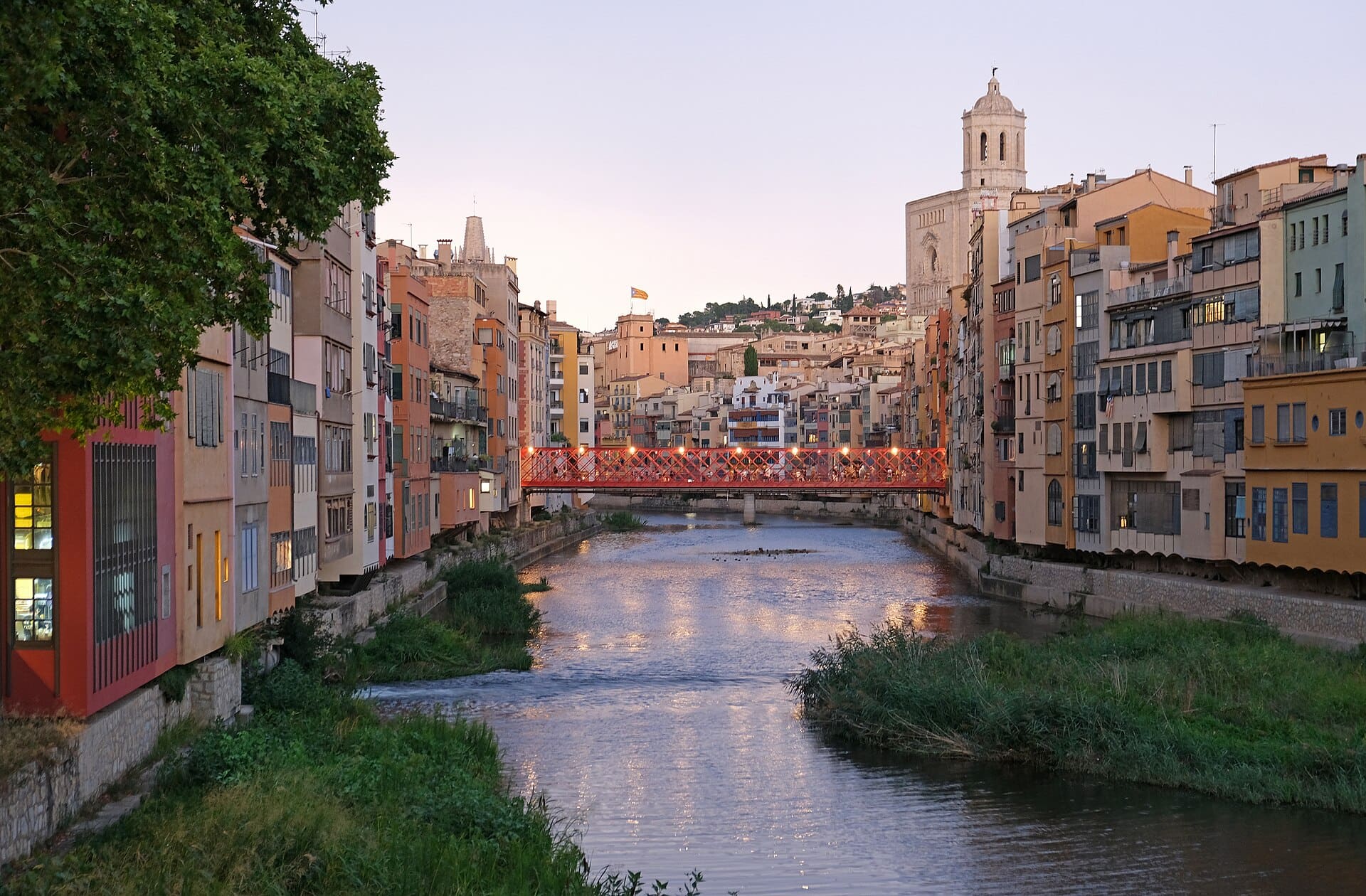
If you’re spending your holiday in Catalonia, sooner or later you’ll start wondering where to go beyond the famous metropolis of Barcelona. Try leaving the crowds streaming toward the Sagrada Família behind you and discover a region full of surprising medieval contrasts. Girona, Spain pulls you into its story instantly and offers a completely unique atmosphere that the locals guard rather jealously. A real treasure hides around every corner here, and it absolutely deserves your attention.

This is a city that looks as if time stopped somewhere deep in the Middle Ages. The historic core is a fascinating labyrinth of narrow cobbled lanes, steep stone staircases, and hidden, picturesque little squares. Its raw medieval aesthetic naturally attracted the creators of the hit series Game of Thrones, so you’ll feel as though you’re walking through a real film set. The vast majority of these are ordinary public streets and squares, which you can wander entirely for free.

One huge advantage is the excellent transport links from every direction. The AVE high-speed train from Barcelona arrives here in just 38 minutes, so you can easily pop over even for a short day trip. You’ll manage to tick off the main sights in a single afternoon, but I’d strongly recommend lingering longer and ideally spending the night in town. The magic of the historic centre only truly comes alive after dark, when the tour buses leave and the lanes pleasantly empty out.

TL;DR

  • Getting here from Barcelona: The AVE high-speed train whisks you from the centre of the Catalan capital in under 45 minutes.
  • Best sights: The Cathedral of Saint Mary, the El Call Jewish quarter, and the iconic colourful houses rising right above the River Onyar.
  • Game of Thrones: The city stood in for the free city of Braavos and the Great Sept of Baelor.
  • When to visit: The best weather without scorching heat comes in spring or early autumn.
  • Where to stay: The historic Barri Vell quarter is ideal, or the more modern Mercadal for a slightly quieter night’s sleep.
  • Day trips: The city is a great base for exploring the cliffs of the Costa Brava and the surreal museums of Salvador Dalí.
  • Tickets: For popular attractions like the Arab baths or the museums, it’s best to buy tickets online in advance via GetYourGuide.

When to visit Girona

Getting the timing right is absolutely key for a trip to Catalonia. The loveliest time to visit is undoubtedly spring and autumn, when temperatures sit at very pleasant levels. During April and May everything bursts into bloom and the city comes alive with local festivals. September and October bring beautiful sunny days, perfect for long walks along the walls and exploring the narrow lanes without breaking a sweat.

Summer, by contrast, can be very demanding and exhausting in this area. In recent years Catalonia has battled extreme heatwaves and historic drought. During the summer months strict water-use restrictions can even come into force, including bans on filling pools or limits on beach showers along the nearby coast. If you’re heading here in July or August, prepare for temperatures climbing well above 30 °C and crowds of tourists.

Winter, on the other hand, is very mild here and offers a completely different view of the city. Temperatures mostly hover around 10 to 15 °C, which is still very comfortable for sightseeing. The big advantage of the winter months is the half-empty lanes and significantly lower accommodation prices. Just don’t forget to pack a warmer jacket, because evenings can get rather chilly thanks to the damp coming off the river.

For the historic core alone, one packed day will do. But if you want to soak up the real evening atmosphere, it pays to stay at least two nights. The city also works as an absolutely perfect base for exploring all of northern Catalonia. From here you can comfortably make day trips out to the sea or into the mountains, so a week-long stay flies by in no time.

Where to stay in Girona

💡 Tip for accommodation and experiences: We love searching for places to stay on Booking.com, where the cancellation policies tend to be the best. Tickets, tours, and activities are worth comparing on GetYourGuide.

Choosing the right neighbourhood can make your whole visit immensely more enjoyable. The most enchanting part to stay in is undoubtedly the historic Barri Vell quarter, where you’ll have every sight literally around the corner. Accommodation here offers the unrepeatable atmosphere of old stone houses and romantic views. Just bear in mind that cars often can’t drive in, so you’ll be hauling heavy suitcases a little way across the cobbles.

If you prefer slightly more modern facilities and easier access by car, focus on the Mercadal district on the other bank of the river. This part is much flatter, full of great cafés, and you can reach the historic centre on a comfortable five-minute walk across one of the bridges. It’s the ideal compromise between accessibility, price, and proximity to all the main sights.

Accommodation prices vary a lot depending on the season and the exact location. I’d recommend sorting your reservation well in advance via Booking.com, especially if you’re coming during the spring festivals or summer holidays. A lovely experience is offered, for example, by the popular Hotel Històric right in the heart of the old town, which breathes history. In the more modern part you could try the elegant Nord 1901 with its lovely indoor pool.

lukas a lucka
Lukáš and Lucie recommend
Where to Stay in Girona
3 accommodations — hotels and other lodging options

For families with children or longer stays, renting an apartment in the Eixample district makes sense. This area is very quiet, full of greenery and local shops, where you can buy fresh groceries at normal prices. You’ll also find plenty of parking spaces here, which you’ll especially appreciate if you plan to rent a car and head out on trips to the Costa Brava.

16 best things to do in Girona, Spain

Let’s take a look together at the most beautiful sights and experiences this Catalan city has to offer. Get your comfy shoes ready, because the historic centre is full of stairs and uneven stone lanes. Your reward will be views and an atmosphere you won’t forget in a hurry.

1. The Cathedral of Saint Mary and its famous staircase

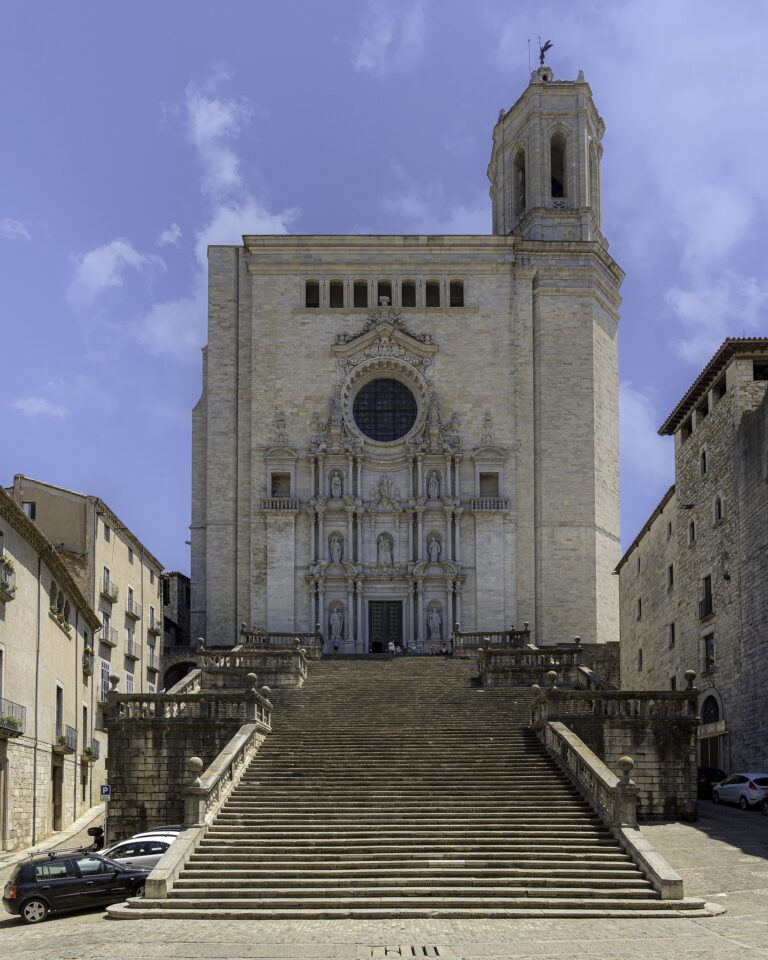
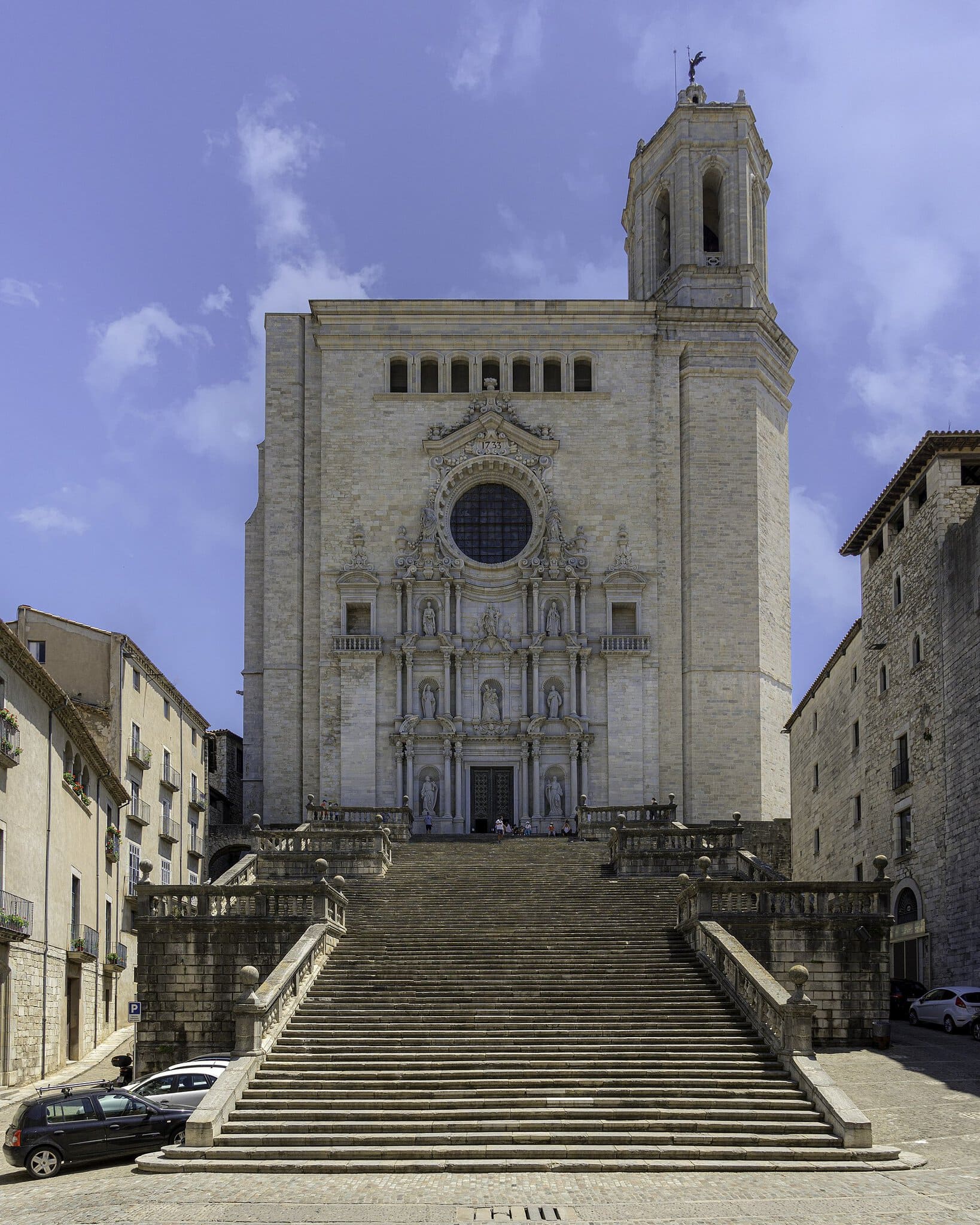
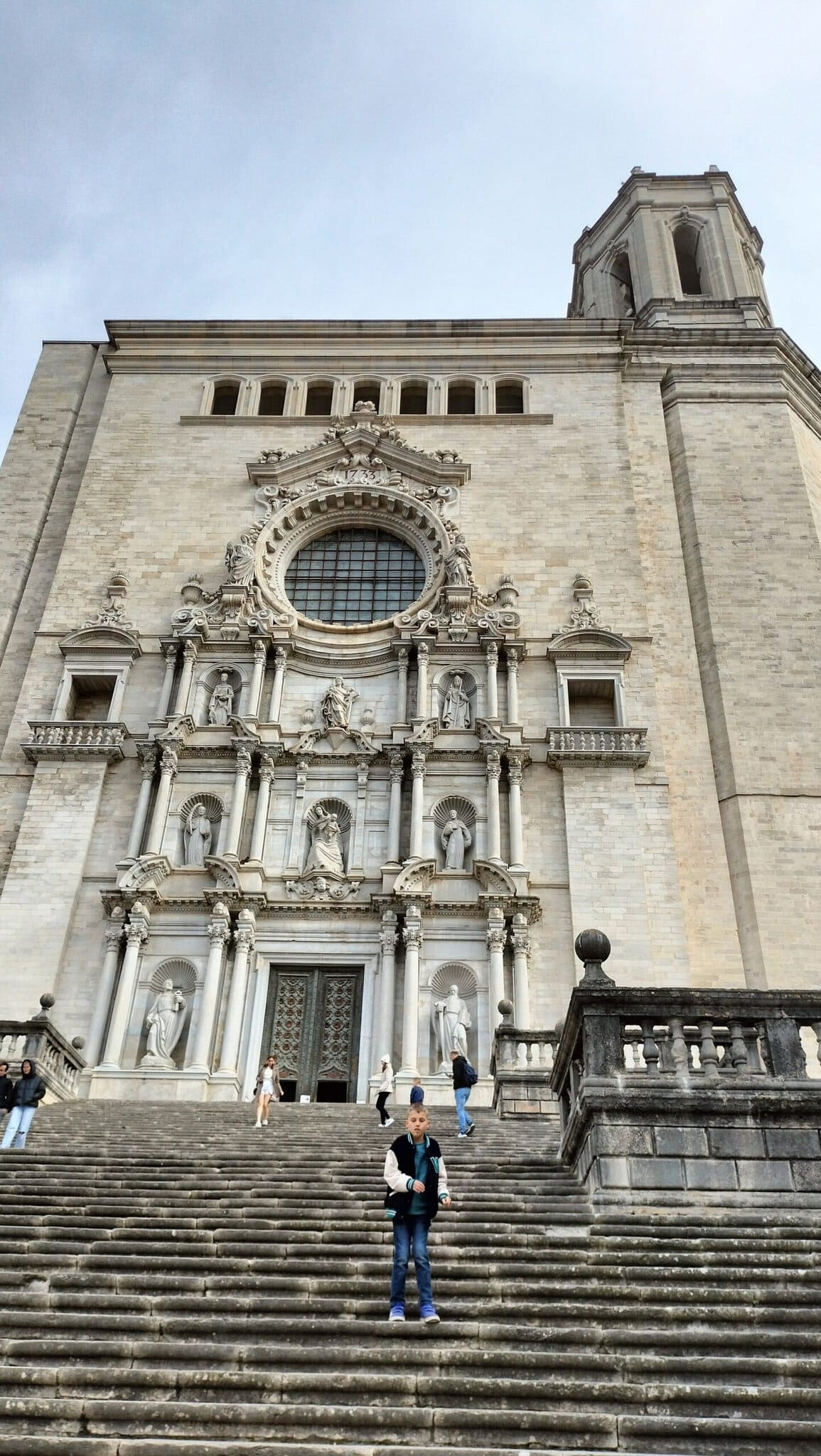
The undisputed landmark of the entire city is the Cathedral of Saint Mary (Catedral de Girona), which towers majestically over the whole historic centre. This monumental building will amaze you at first glance, thanks to the incredibly photogenic Baroque staircase of ninety steps leading up to it. This very spot served filmmakers as the perfect set for the Great Sept of Baelor in the famous series Game of Thrones. Conquering all those steps takes a bit of effort, but the feeling at the top makes it worthwhile.

Inside the cathedral, a huge architectural surprise awaits — one you might not expect from the outside. It boasts the widest Gothic nave in the world, measuring an incredible 23 metres across. It’s actually the second-widest church nave of any kind, right after St Peter’s in Rome. The sense of vast, uninterrupted space inside completely absorbs you and makes you quietly marvel at the astonishing craft of those medieval builders.

Part of the complex is also a beautiful Romanesque cloister, which offers a quiet, peaceful refuge from the bustle outside. You can stroll beneath its vaults and admire the finely carved capitals depicting all sorts of biblical scenes. You can buy tickets on the spot or online, and the price often includes an audio guide that explains the rich history of this magical place in detail.

💡 Tip: If you want to photograph the staircase without the crowds, set an early alarm and arrive first thing in the morning. Around eight o’clock it’s usually completely peaceful here, and the rising sun beautifully lights up the whole ornate façade.

2. The El Call Jewish quarter

Right below the cathedral spreads the Jewish quarter known as El Call, one of the best-preserved in all of Europe. It’s an incredibly intricate maze of stone lanes that twist and climb up the hillside like some medieval labyrinth. The history of the local Jewish community reaches back to the twelfth century, and for a long time this was one of the most important centres of Kabbalah and Jewish learning on the entire Iberian Peninsula.

As you walk these lanes, genuine history breathes from every stone. The houses are crammed tightly together and the lanes are in places so narrow that two people can barely pass side by side. Notice the small details on the façades, the ancient wooden doors, and the little windows behind which a lively community once thrived. It’s exactly the kind of place where it pays to put away the map and simply let yourself get lost.

The atmosphere is especially captivating on autumn evenings, when mist settles over the old town and the lanes are lit only by old lanterns. Definitely don’t miss Carrer de la Força, which formed the main artery of the quarter back then and is now lined with interesting shops and small galleries. It’s right here that you’ll best appreciate just how enormously important this quarter was to the development of the whole city.

3. The colourful houses over the River Onyar

The city’s iconic skyline is made up of pastel-coloured houses that literally balance right above the bed of the River Onyar. These colourful façades in shades of yellow, ochre, and red form the city’s unmistakable calling card, and you’ll find them on every postcard. The houses mostly date from the late Middle Ages and were originally built directly on the remains of the old city walls that protected the town on this side.

The most beautiful view of this colourful splendour opens up from one of the bridges crossing the river. When the water is calm, the houses reflect beautifully in it and create the perfect composition for your photos. The palette of the façades is no accident either — the city has precise rules on which shades owners may use during renovations, in order to keep the riverfront looking unified and harmonious.

Although the houses look very uniform from the outside, inside they hide a labyrinth of corridors and extensions. One of them, Casa Masó, is even open to the public and offers a unique glimpse into early twentieth-century middle-class interiors. Visiting this house lets you see the river and city from a completely new perspective — specifically from the charming wooden balconies suspended over the water.

4. The Gustave Eiffel bridge (Pont de les Peixateries Velles)

Among the many bridges connecting the two banks of the Onyar, one stands out as truly unique. The red iron Pont de les Peixateries Velles was designed by Gustave Eiffel himself — and several years before he built his famous tower in Paris, no less. Its bold red structure sharply contrasts with the pastel colours of the surrounding houses, creating an interesting industrial touch in the middle of the medieval streetscape.

The bridge was built in 1877 and replaced the original wooden footbridges that spring floods often swept away. Thanks to its ingenious lattice design, the bridge is incredibly light yet strong, a hallmark of Eiffel’s engineering firm. A stroll across its wooden planks offers one of the very best views of the colourful houses along the river and the bed below you.

Interestingly, the bridge is for pedestrians only and to this day serves as one of the main arteries linking the historic centre with the newer part of town. During the afternoon rush hour it gets lively here, as locals head home from work and tourists stop for the perfect shot. Be sure to drop by after dark too, when the bridge is beautifully lit and the whole steel structure feels incredibly romantic.

5. The Arab baths (Banys Àrabs)

Just behind the cathedral you’ll come across the fascinating complex known as the Arab Baths. Don’t be fooled by the name, though — they actually date from the twelfth century and were built in a purely Romanesque style by the city’s Christian inhabitants. Their architecture was simply heavily inspired by North African and Moorish traditions, which gives them a thoroughly exotic and singular appearance.

The most beautiful part of the whole baths is undoubtedly the central changing room, or apodyterium. In the middle of this room sits a lovely octagonal pool surrounded by ornate columns, over which rises an impressive star-shaped dome. It’s through this star-shaped opening that sunlight pours in, creating a magical play of shadows and reflections on the water and the stone walls.

The whole complex is fairly small but incredibly well-preserved and finely detailed. You can walk through the individual rooms of varying temperatures, from cold through tepid to a hot steam bath, just as was customary back then. This place was also a favourite with filmmakers, so lovers of history and cinema will definitely get their money’s worth. Admission is very modest and the visit takes about half an hour.

6. The city walls (Passeig de la Muralla)

If you’re after the best panoramic views over the whole city, you have to head up to the city walls. The Passeig de la Muralla is a beautiful promenade running right along the top of the ancient fortifications that encircle a substantial part of the historic centre. These walls grew over time from Roman days through the Middle Ages and today rank among the city’s most popular attractions.

The walk along the walls is roughly three kilometres long and offers countless breathtaking views in every direction. On one side you have the jumble of old-town rooftops and the cathedral tower laid out below you, while on the other a view opens up over green hills and the distant peaks of the Pyrenees. Along the way you’ll come across several watchtowers you can climb for the best bird’s-eye photos.

Access to the walls is completely free, and you can get up there from several different points in the historic centre. The best time for this walk is late afternoon, when the sun slowly sinks toward the horizon and bathes the whole city in golden tones. In the summer months, however, avoid the midday heat, because there’s practically no shade on the walls and the stones can radiate enormous warmth.

💡 Tip: Start the walk at the Arab Baths and head south toward the university. This direction is far more pleasant, because you’ll avoid the steepest steps right at the start and the route will tend to slope gently downhill.

7. The Sant Pere de Galligants monastery

Right next to the walls and the Arab Baths hides the beautiful Benedictine monastery of Sant Pere de Galligants. This building is one of the most significant examples of Catalan Romanesque architecture, and its massive octagonal bell tower forms an unmissable landmark. The monastery was founded back in the tenth century, and its austere stone beauty instantly transports you a thousand years back in time.

This place, too, belongs firmly on the map of Game of Thrones locations. The monastery’s beautiful interior played the role of the Citadel in Oldtown, where Samwell Tarly came to train as a maester. The moment you step inside and see those mighty stone columns and the perfect symmetry of the space, you’ll instantly recognise those famous scenes. Today the monastery houses an archaeological museum that’s definitely worth a look.

Besides the church itself, don’t forget to admire the adjoining cloister. It may be smaller than the one at the cathedral, but it shines with incredibly detailed sculptural decoration on the column capitals, where you’ll find various mythological creatures and plant motifs carved in stone. The whole place feels incredibly calm and meditative, far from the worst of the tourist bustle on the main streets.

8. The Sant Feliu basilica

Before today’s vast cathedral was built, the Sant Feliu basilica served as the city’s main church. Its slender bell tower with its sheared-off spire is utterly unmissable and, together with the cathedral, forms the city’s signature silhouette from most viewpoints. The basilica was built outside the walls of the original Roman town, exactly where, according to legend, the city’s first Christian patrons were martyred.

Stepping inside, you’ll be surprised by an interesting mix of architectural styles. While the floor plan is purely Romanesque, the vaults are Gothic and the main façade Baroque, which beautifully illustrates how the church was gradually added to and altered over the long centuries. This historic blend gives the whole interior a very unusual and intriguing character that’s a pleasure to explore.

The basilica’s greatest treasure is a set of eight early Christian sarcophagi from the third and fourth centuries. These rare marble coffins were discovered during construction work and are now built directly into the walls of the presbytery. They’re carved with beautiful, highly detailed biblical scenes that are a genuine rarity within all of Spain and are admired by historians from around the world.

9. Plaça de la Independència square

When you cross the River Onyar into the newer part of town, your steps will surely lead you to Plaça de la Independència. This huge neoclassical square is lined with regular arcades and forms the true social heart of the whole city. It was built in the nineteenth century on the site of a former monastery and is named today in honour of the city’s defenders during the Napoleonic Wars.

Beneath the arcades you’ll find countless excellent restaurants, tapas bars, and traditional cafés. It’s the perfect place to sit down on an outdoor terrace, order a glass of good wine, and watch the lively local scene. The atmosphere comes alive especially in the early evening, when the square fills with families, street musicians, and friends gathering for dinner together.

If you get hungry, be sure to try the typical local specialities here. Among the vegetarian options, I’d recommend the excellent patatas bravas (fried potatoes with a spicy sauce) or pimientos de padrón (sautéed green peppers with salt). If you come in early spring, don’t miss the seasonal calçots — sweet spring onions roasted over a fire and served with a wonderful romesco nut sauce.

10. The Girona lioness (El Cul de la Lleona)

Every self-respecting historic town has its legend, and Girona is no exception. On Carrer de Calderers you’ll find a small stone column topped with a statue of a lioness, tied to a very specific and rather amusing ritual. The statue dates from the twelfth century, and according to an old legend every visitor must kiss the lioness’s backside if they ever wish to return to the city in the future.

This tradition is incredibly popular among tourists. To make the kissing easier, the city has even built small metal steps up to the statue, which you can comfortably climb. The original statue is now kept in the art museum for safety and conservation reasons, so on the street you’ll be planting kisses on a very faithful, detailed copy. Even so, it makes for a fun stop during your stroll.

Clusters of laughing tourists often gather around the lioness, photographing each other in this unusual act. It’s a very picturesque little corner in its own right, located just a short walk from the Sant Feliu basilica. And even if you don’t believe in such superstitions at all, it’s a nice tradition that’s simply an inseparable part of visiting this city.

11. Parc de la Devesa

If you need a break from the sun-baked stone lanes for a while, head to the huge Devesa park. This green island of forty hectares is the largest urban park in all of Catalonia and offers a perfect escape into nature. The park is famous for its majestic plane trees, of which more than two and a half thousand grow here, some reaching a staggering height of up to sixty metres.

These enormous trees were planted back in the nineteenth century and today create a beautiful green canopy that provides pleasant, cooling shade even on the hottest summer days. Locals come here to jog, picnic, or simply rest on the benches with a good book. The park is criss-crossed by wide sandy paths, ideal for long, romantic walks beneath the trees.

What’s more, huge open-air markets are held here every week. If you come on a Tuesday or Saturday morning, you’ll experience incredible bustle, as farmers from all around arrive to sell fresh fruit, vegetables, cheeses, and local crafts. It’s a great chance to buy authentic produce and experience genuine Catalan atmosphere among the locals.

12. The Art Museum (Museu d’Art de Girona)

Lovers of art and history definitely shouldn’t skip the local Art Museum. It’s housed in the magnificent rooms of the former Bishop’s Palace right next to the cathedral, which in itself promises a grand experience. The palace, with its majestic courtyard and beautiful halls, makes the perfect backdrop for one of the most important art collections in the entire region.

The museum’s collection takes you through art from the pre-Romanesque period right up to the early twentieth century. The greatest jewels are undoubtedly the vast collections of Romanesque and Gothic art, which include beautiful wooden altars, detailed sculptures, and old liturgical objects. Many of these artefacts were rescued from abandoned monasteries and churches in the surrounding Pyrenean valleys, which lends them enormous historical value.

Besides the exhibits themselves, the well-preserved palace interiors will amaze you too. During the visit you’ll see an old eighteenth-century pharmacy, an ancient palace prison, and a lavish throne room where the bishops received important guests. The exhibition is very well labelled and logically arranged, so even if you’re not exactly a die-hard art expert, you’ll spend a very pleasant and enlightening hour here.

13. Pujada de Sant Domènec

While exploring the historic centre, sooner or later you’ll come across the Pujada de Sant Domènec staircase. This cascade of stone steps is considered one of the most romantic spots in the city and regularly appears on the front pages of travel guides. The staircase is lined with old stone houses, and at its top stands the beautiful Baroque church of Sant Martí with its elaborately decorated portal.

What makes this place so special is the small arch that spans the steps and connects two houses on opposite sides. Right on the steps beneath this arch sits the terrace of the iconic Le Bistrot café, one of the most popular spots in town. Sitting down here for a coffee or an evening glass of wine and watching the comings and goings on the steps is an experience you really shouldn’t miss.

The whole staircase is also a very popular location for filmmakers and photographers. It featured, for example, in the hit film Perfume: The Story of a Murderer, and of course in the aforementioned Game of Thrones. During the May flower festival (Temps de Flors), the entire staircase transforms into a huge floral installation bursting with colour, drawing thousands of admirers from around the world.

14. The Museum of Jewish History (Museu d’Història dels Jueus)

For a deeper understanding of the importance of the Jewish community in this region, a visit to this museum is an absolute must. The museum sits right in the heart of the El Call Jewish quarter, on the site of what was once the last medieval synagogue before the expulsion of the Jews from Spain in the late fifteenth century. The location alone lends all the exhibits enormous authenticity and depth.

The exhibition guides you through the everyday life, traditions, and culture of the local Jewish community. You’ll see a unique collection of medieval Hebrew tombstones discovered on the nearby hill of Montjuïc (Jewish Mountain). The museum sensitively explains the significance of Kabbalah, the role of Jewish doctors and scholars, and also the difficult period of the Inquisition and the final exodus from the Iberian Peninsula.

The visit also includes access to a beautiful inner courtyard, where the ritual mikveh baths once stood. An audio guide is available in several world languages and is genuinely excellent, so I warmly recommend picking one up at the entrance. It will help you connect the historical facts with the specific places you walked through earlier in the quarter’s narrow lanes.

15. The Sant Daniel valley (Vall de Sant Daniel)

If you have more time in the city and want a break from the cobblestones, head just beyond the walls into the green Sant Daniel valley. This picturesque valley begins just a few hundred metres past the Sant Pere de Galligants monastery and is an absolute oasis of calm that tourists generally don’t reach at all. It’s a favourite outing for locals, who come here for weekend walks with their dogs or a jog.

The little River Galligants flows through the valley, with pleasant shady trails winding alongside it, lined with trees and small fields. The main goal of the walk is usually the namesake Sant Daniel monastery, which has operated continuously since the eleventh century and is still home to a community of nuns today. The monastery itself hides a beautiful Romanesque-Gothic cloister you can visit during set hours.

The route through the valley is very easy and flat, so even families with small children will manage it with ease. You can bring along picnic things and spend a peaceful afternoon in nature, all while feeling miles away from civilisation, even though the city centre lies literally around the corner. To return to town you can then take a slightly higher path, which offers lovely views over the surrounding hills.

16. Plaça del Vi square and the town hall

We’ll end our tour of the city on one of its most important historic squares, Plaça del Vi (Wine Square). This intimate, very elegant square surrounded by ancient palaces served for centuries as the main marketplace and centre of the wine trade — hence its name. Today you’ll find a beautiful arcade here with several pleasant cafés and shops.

The most significant building on the square is the Gothic town hall (Ajuntament), next to which stands the lovely city theatre. Notice the interesting details on the façades of the surrounding houses, from wrought-iron balconies to old coats of arms carved into the stone. It’s right here that all manner of civic celebrations are often held, human towers (castells) are built, and during festivals the atmosphere is incredibly lively and joyful.

Several important shopping streets branch off the square, where you’ll find both well-known brands and small local boutiques. It’s a great starting point for buying souvenirs, from traditional ceramics to excellent local cheeses and wine. End the day here with a great coffee, watch the passers-by, and let all your impressions of this beautiful medieval city sink in.

Where to go next from Girona

Girona is an absolutely ideal springboard for exploring other parts of Catalonia and Spain as a whole. If you have a car, I’d definitely recommend heading to the stunning Costa Brava coast, which lies just a little over half an hour’s drive to the east. Here you’ll find pine groves sloping down to the sea and hidden coves of turquoise water. Some of the loveliest stretches are around the town of Begur or the whitewashed fishing village of Cadaqués.

Art lovers really shouldn’t miss a trip to the nearby town of Figueres, home to the fascinating Salvador Dalí museum. It’s an utterly bizarre, dream-like building full of optical illusions, designed by the surrealist genius himself. If, on the other hand, the mountains call to you, head for the jagged peaks of the Montserrat massif, where the famous monastery with its Black Madonna hides and from where the views over the countryside are simply breathtaking.

Among the big cities, there’s of course the direct high-speed train to Barcelona, which you shouldn’t skip when visiting this region. If ancient history interests you, take the train south to Tarragona, where you’ll find a beautiful Roman amphitheatre right on the seafront. And if you’re planning a longer journey through Spain, you can take inspiration from our itinerary of the most beautiful places in Andalusia and explore Madrid or wonderful Valencia. Have a look too at typical Spanish food, so you know exactly what to order in the restaurants.

Frequently asked questions

Can Girona be done as a day trip from Barcelona?

Yes, absolutely no problem. Thanks to the AVE high-speed trains, you can get from central Barcelona to Girona in just 38 minutes. The historic center is quite compact, so you can comfortably see the main sights like the cathedral, city walls, Jewish quarter, and colorful houses along the river in one afternoon.

Which landmarks were featured in Game of Thrones?

The city served as the backdrop for several important locations in the sixth season. The most famous is the baroque staircase at the cathedral (the Great Sept of Baelor), the Arab Baths, and the monastery of Sant Pere de Galligants, which represented the free city of Braavos. All these sites are located close to each other in the historic center.

Is Girona expensive?

Compared to nearby Barcelona, prices here are noticeably more affordable, both for accommodation and in restaurants. Museum tickets usually range around five to seven euros, and walking along the city walls is completely free. Excellent tapas and wine at Plaça de la Independència can be found for very reasonable prices.

Where’s the best place to park if I come by car?

Entry into the historic quarter of Barri Vell is prohibited or heavily restricted for non-residents. Your best bet is to leave your car at the large free park-and-ride lot near Parc de la Devesa, from where you can walk to the center in about ten minutes. Alternatively, you can use the paid underground garages in the Mercadal district.

What do you recommend for vegetarians to try?

Definitely don’t miss the classic pa amb tomàquet (rustic bread with tomatoes and olive oil), excellent patatas bravas, or pimientos de padrón. While suquet de peix is a typical delicacy (but usually with meat or fish), treat yourself instead to the wonderful crema catalana for dessert, which is the local version of crème brûlée.

How many days should I set aside for northern Catalonia?

If you want to see not only the city but also explore the wild Costa Brava coastline, visit the Dalí Museum, and take a trip to the mountains, three to four days is ideal. Renting a car will save you a lot of time on such a trip, as public transport between smaller coastal villages can be quite time-consuming.

Is the city suitable for families with small children?

Yes, but keep in mind that the historic center is full of steep stairs and uneven cobblestones, so getting around with a stroller can be a bit challenging. However, children will be thrilled by the walk along the city walls with views or the huge Devesa park, where they have plenty of space to run around safely.

Tips and Tricks for Your Vacation

Don’t Overpay for Flights

Search for flights on Kayak. It’s our favorite search engine because it scans the websites of all airlines and always finds the cheapest connection.

Book Your Accommodation Smartly

The best experiences we’ve had when looking for accommodation (from Alaska to Morocco) are with Booking.com, where hotels, apartments, and entire houses are usually the cheapest and most widely available.

Don’t Forget Travel Insurance

Good travel insurance will protect you against illness, accidents, theft, or flight cancellations. We’ve had a few hospital visits abroad, so we know how important it is to have proper insurance arranged.

Where we insure ourselves: SafetyWing (best for everyone) and TrueTraveller (for extra-long trips).

Why don’t we recommend any Czech insurance company? Because they have too many restrictions. They set limits on the number of days abroad, travel insurance via a credit card often requires you to pay medical expenses only with that card, and they frequently limit the number of returns to the Czech Republic.

Find the Best Experiences

Get Your Guide is a huge online marketplace where you can book guided walks, trips, skip-the-line tickets, tours, and much more. We always find some extra fun there!
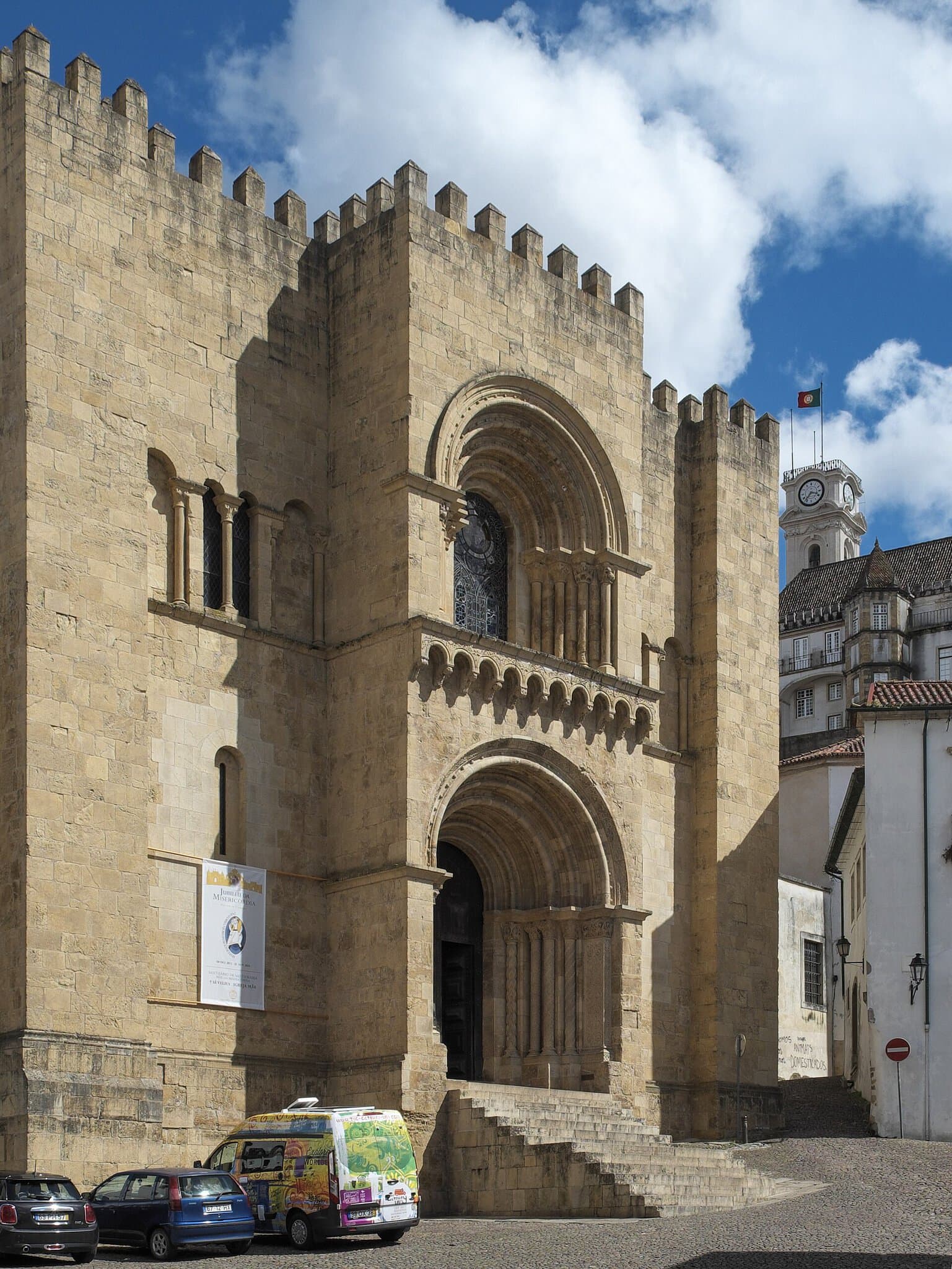
Montserrat Spain: A Day Trip from Barcelona to the Monastery in the Mountains

TL;DRMontserrat is an hour from Barcelona by train from Plaça Espanya station on line R5, and from there either the historic Cremallera rack railway or the Aeri de Montserrat cable car takes you up to the Benedictine monastery of Santa Maria de Montserrat. The big draw is the statue of the Black Madonna (La Moreneta), catching the Escolania de Montserrat boys’ choir singing at 1pm, and the Creu de Sant Miquel viewpoint, a twenty-minute walk away. Half a day is enough to see the monastery, but if you want to hike up to the Sant Jeroni summit (1,236m) as well, set aside a full day. The best time to come is April to mid-June or September and October, when it’s around 20 degrees.

Once you leave behind the crowds flocking to the Sagrada Família and escape the edges of Barcelona’s suburbs, you’ll discover a region of absolutely stunning contrasts. Roughly an hour from the bustling metropolis, the bizarre limestone massif of Montserrat Spain rises abruptly from the flat landscape, looking for all the world like giant stone fingers reaching towards the sky. Nestled safely among the rounded mountain peaks lies a legendary Benedictine monastery — the most important spiritual centre in all of Catalonia.

This full-day trip from Barcelona will truly take your breath away, combining spectacular nature with deep history and jaw-dropping views. You can look forward to the mysterious Black Madonna statue, the angelic singing of one of Europe’s oldest boys’ choirs, and dozens of kilometres of gorgeous mountain trails. In this guide, I’ll walk you through exactly how to get to Montserrat from Barcelona, which tickets to choose, and everything you absolutely cannot miss on this magical mountain.

TL;DR

  • Getting there from Barcelona: A direct R5 train runs from Plaça Espanya station. The journey to the foot of the mountain takes about an hour.
  • Getting up the mountain: You can ride either the historic rack railway (Cremallera) or the aerial cable car (Aeri) to the monastery. I recommend buying a combined ticket in Barcelona.
  • Black Madonna: Queues to see the patron saint of Catalonia are extremely long, so book a timed entry ticket online well in advance.
  • Boys’ choir: The Escolania de Montserrat typically sings in the basilica at 13:00 (except weekends and school holidays) — arrive at least half an hour early.
  • Best viewpoint: The most iconic photos can be taken after a 20-minute walk to the Cross of Saint Michael (Creu de Sant Miquel).
  • Hikes: If you love mountain hiking, make sure to set aside time for the trek to the highest point, Sant Jeroni, where on a clear day you can see all the way to Mallorca.
  • Food: There’s a farmers’ market right by the monastery where you absolutely must try fresh Mató cheese drizzled with honey.

When to Visit Montserrat Spain

Catalonia has been battling extreme heatwaves and historic droughts in recent years, which inevitably affects mountain hiking. During the peak of summer, temperatures often soar to unbearable levels and the sun-baked limestone rocks on Montserrat act like a giant radiator. The ideal time to visit is definitely spring, from April to mid-June, or the autumn months of September and October. During these periods, you’ll enjoy pleasant temperatures around 20°C — absolutely perfect for hiking uphill.

The winter months can also be surprisingly beautiful, but up in the mountains it can get quite cold and windy, so a decent layered jacket is essential. If you have no choice but to travel in July or August, catch the very first morning train from Barcelona to reach the mountain before nine o’clock. Not only will you avoid the worst of the afternoon heat, but you’ll also briefly outpace the enormous crowds of tourists and pilgrims that start flooding in around ten in the morning.

For the monastery itself and the nearby area, half a day will suffice, but it would be a real shame to rush straight back to the city. If you want to fit in one of the longer mountain hikes, listen to the boys’ choir, and soak up the atmosphere at a relaxed pace, set aside the entire day for Montserrat. It’s an incredibly intense experience — you’ll collapse into bed that evening with wonderfully tired legs 😅.

Where to Stay for Your Montserrat Trip

💡 Accommodation & experiences tip: We love searching for places to stay on Booking.com, which usually has the best cancellation policies. For tickets, tours, and activities, it’s worth comparing on GetYourGuide.

The vast majority of visitors choose to stay in Barcelona, which serves as the perfect base for exploring the entire region. If you want to be literally around the corner from the Plaça Espanya train station, book accommodation in the Eixample or Sants-Montjuïc neighbourhoods. An excellent choice is the Hotel Gran Vía, which offers modern rooms and is just a few minutes’ walk from the R5 train platform, saving you precious time in the morning.

For those of you craving a truly profound spiritual experience — or who love astrophotography at night — there’s another magical option. You can stay right on top of the mountain, steps from the monastery. Once the last cable car and rack railway depart in the evening, the entire complex empties out and an incredible stillness descends. The iconic Hotel Abat Cisneros occupies a 16th-century building right on the main square. Rooms are easy to book via Booking, but during high season they sell out months in advance, so don’t delay your reservation.

If you’re travelling on a tighter budget or in a larger group, you can also make use of the nearby Cel·les Abat Marcet apartments, which feature fully equipped kitchenettes. This is a huge advantage, by the way, because dining options at the summit are pretty limited in the evenings. Whatever option you go for, a night on Montserrat under the starry sky is an experience that will stay with you forever ☺️.

14 Things to See and Do at Montserrat Monastery in Spain

I’ve put together a detailed list of the most amazing places and activities this magical mountain has to offer — from practical transport tips to hidden mountain trails.

1. The Journey: Cremallera Rack Railway & R5 Train

The journey from Barcelona to Montserrat is a fantastic experience in itself. From Barcelona’s Plaça Espanya station, take the R5 line train (towards Manresa), which will deliver you to the foot of the massif in about an hour. From here, you have two ways to conquer the steep ascent to the monastery, and one of them is the historic rack railway known as the Cremallera. For this option, get off the R5 train at Monistrol de Montserrat station.

The green rack railway then slowly and majestically climbs the steep mountainside, treating passengers to absolutely breathtaking views into the deep valley. The ride up takes roughly 15 minutes, and the carriages have huge panoramic windows that make you feel like you’re floating above the landscape. 💡 Local tip: On the way up, grab a seat on the left side of the carriage — that’s where you’ll get the most photogenic views of the Llobregat river valley.

If you’d rather not fuss with individual tickets, pick up a combined Trans Montserrat ticket in Barcelona. This covers the return metro journey in Barcelona, the R5 train, the rack railway up and down, and even unlimited rides on the mountain funiculars within the monastery grounds. It works out significantly cheaper and saves you a lot of hassle at the ticket counters.

2. Riding the Aeri de Montserrat Cable Car

If you’re after a bit of adrenaline and the rack railway sounds too tame, choose the second route up: the yellow aerial cable car, the Aeri de Montserrat. In this case, you need to get off the R5 train one stop earlier, at the aptly named Montserrat-Aeri station. A cabin carrying around 35 people whisks you high above sheer cliffs to the monastery complex in just five minutes.

This historic cable car has been running reliably since 1930 and tackles an incredible gradient of up to 45 degrees. The ride may be short, but it’s absolutely exhilarating — the mountain walls whizz past just metres from your face. Walking the whole thing on foot would be quite the ordeal, so you’ll definitely appreciate this engineering marvel 😅.

When buying combined tickets in Barcelona, you must choose in advance whether you want to go up by rack railway or by the Aeri cable car. Unfortunately, tickets aren’t transferable between the two, so you have to decide at Plaça Espanya station. Personally, I’d recommend taking the cable car up for that initial wow factor and then riding the comfortable rack railway back down.

3. Santa Maria de Montserrat Monastery

The beating heart of the entire mountain is, of course, the Benedictine monastery of Santa Maria de Montserrat, whose history stretches all the way back to the 11th century. The grounds consist of a huge complex of buildings clinging to the rock face, encompassing not only the basilica but also living quarters for around seventy monks who still reside here permanently. The square in front of the basilica, known as Plaça de Santa Maria, is a stunning space lined with arcades and statues of saints.

The 16th-century basilica itself is an architectural gem. As you pass through the courtyard with its beautiful black-and-white floor tiles and enter the main nave, you’ll be immediately struck by the lavish decoration and mystical half-light. Entry to the main part of the basilica is free, but you must observe fairly strict dress code rules. Forget sleeveless tops or overly short shorts — the monks take this seriously and may turn you away at the door.

The monastery isn’t just a tourist attraction — it’s first and foremost a living spiritual centre. Regular services take place throughout the day, and the air is filled with the scent of incense mingled with the cool mountain breeze. I recommend finding a quiet spot in one of the side chapels and simply sitting for a while, absorbing the incredibly powerful energy this place has radiated for centuries.

4. The Black Madonna (La Moreneta)

The main draw that brings thousands of pilgrims from around the world every day is a small wooden statue of the Virgin Mary and baby Jesus, known as La Moreneta. This patron saint of Catalonia sits in an elevated alcove directly above the main altar inside the basilica. Her face and hands are a deep black colour — historians believe this wasn’t intentional but rather the result of centuries of candle smoke and chemical reactions in the varnish.

A narrow staircase on the right side of the basilica leads up to the statue, and it’s customary to touch the wooden orb she holds in her right hand. Due to the enormous demand, it’s absolutely essential to book a timed entry slot online several days in advance. Without this reservation, the guards won’t let you through to the staircase, and you’d miss the single most important highlight of the entire trip.

If you can’t get up close to the statue, don’t despair. You can still see her from a distance in the main nave, and you can also walk the Path of Light (Camí de la Llum). This is a corridor filled with thousands of burning candles that pilgrims bring along with their prayers and wishes. It’s an incredibly photogenic and emotionally moving place, where the warm candlelight reflects off the colourful stained-glass windows.

5. The Escolania de Montserrat Boys’ Choir

Another truly unique experience is listening to the Escolania de Montserrat, one of the oldest boys’ choirs in all of Europe. It comprises around fifty boys aged 9 to 14 who live, study, and devote themselves intensively to music right here in the monastery. Their angelic voices soaring majestically beneath the vaulted ceiling of the basilica are guaranteed to give you goosebumps.

The choir typically sings the Salve Regina prayer and the Virolai hymn every weekday at precisely 13:00. On Sundays and feast days, they perform at 12:00. ⚠️ Be very careful when planning your visit — the boys don’t sing during the summer holidays or over the Christmas break when they go home to their families. Always check the current schedule on the monastery’s official website.

To secure a decent spot where you can actually see and hear properly, I recommend arriving at the basilica at least 30 to 45 minutes early. The space fills up incredibly fast, and if you arrive at the last minute you’ll be crammed somewhere near the entrance behind a forest of mobile phones. Settle into a pew, go quiet, and let the sublime acoustics — the very reason music lovers travel here from across the globe — wash over you.

6. The Sant Joan Funicular

If you want to escape the biggest crowds around the monastery and head out on a proper mountain hike, the Funicular de Sant Joan is your best friend. You’ll find its lower station just above the basilica, and it carries you another 250 metres higher right into the heart of the sandstone towers. The ride in a glass-walled carriage at a staggering 65% gradient is quite an experience in itself.

The upper station serves as the starting point for the most beautiful hikes on Montserrat. The air up here is noticeably cooler, the panoramic views over the Llobregat river valley are spectacular, and all you can hear is birdsong and the whisper of the wind. If you’ve purchased a Trans Montserrat ticket, the ride on this funicular is already included in the price.

Right by the funicular exit, there’s a small Geopark visitor centre where you can learn all about the geological origins of these peculiar mountains. You can also refill your water bottle here, which I’d strongly recommend — further along the trails, there are no springs or refreshment stalls to be found.

lukas a lucka
Lukáš and Lucie recommend
Where to Stay in Montserrat
4 accommodations — wellness hotels, hotels and other lodging options

7. Hiking to the Highest Peak: Sant Jeroni

This is, without question, the best hike you can do on the mountain. The ascent to the highest point of the entire massif — the summit of Sant Jeroni at 1,236 metres above sea level — is fairly challenging, but the reward is worth every drop of sweat. The trail begins at the upper station of the Sant Joan funicular, and it takes roughly an hour and a half of brisk walking along a well-marked path to reach the top.

Along the way, you’ll pass fascinating rock formations whose shapes resemble animals or human faces. The final stretch below the summit consists of steep concrete steps that will truly test your fitness 😅. The path is safe, but in summer the sun is absolutely relentless, so a hat, sun cream, and a generous supply of water are absolute essentials.

Once you stand on the very summit by the orientation marker, a full 360-degree panorama unfolds before you. On a clear day, you can spot the snow-capped peaks of the Pyrenees on the horizon, while in the opposite direction the Mediterranean Sea shimmers in the distance. Locals even claim that on exceptionally clear winter days, you can make out the outline of the island of Mallorca on the horizon. This is precisely the kind of place where you realise just how vast and beautiful the world truly is.

8. The Cross of Saint Michael Viewpoint (Creu de Sant Miquel)

If you don’t fancy a strenuous high-altitude trek but still want to capture the most iconic photo of the entire monastery, head to the Creu de Sant Miquel viewpoint. It’s an easy, roughly twenty-minute stroll along a wide path that starts just beyond the funicular station heading south. You can manage it perfectly well in ordinary trainers or even with a pushchair.

At the end of the path, a large iron cross stands on the edge of a cliff. From here, you get that classic postcard view of the entire monastery complex nestled under the protection of the mighty sandstone fingers. Morning light is fantastic for photography here, while in the evening the rocks catch a gorgeous golden and pinkish glow.

💡 Local tip: Most tourists walk to the cross and turn straight back. But if you continue along the trail for another ten minutes to the small Sant Miquel chapel, the crowds magically disappear and you’ll have the views practically to yourself. It’s the perfect spot to sit on a low wall and enjoy a quiet snack.

9. The Holy Cave — Santa Cova

Another hugely important pilgrimage site is the Holy Cave, or Santa Cova. According to an ancient legend from 880 AD, this is where local shepherds discovered the Black Madonna statue after seeing dazzling lights and hearing angelic singing descending from the heavens. Today, the cave has been transformed into a tiny chapel, half-carved into the rock face, with an incredibly magical atmosphere.

The path to the cave begins below the monastery, with a carved trail winding closely along steep cliff faces. The return walk takes approximately an hour and a half, and the way back involves a fairly punishing climb. Your reward, however, will be the fantastic views over the Llobregat valley spread out below you like a map.

Inside the chapel itself, absolute silence reigns, broken only by the crackling of candles. You’ll find an exact replica of the La Moreneta statue and a small courtyard where you can rest for a while in the shade of overhanging rocks. Compared to the busy main basilica, this is a beautifully intimate spot, perfect for a moment of quiet reflection.

10. The Stations of the Cross with Works by Gaudí

The path leading to the Santa Cova Holy Cave isn’t just any mountain trail. It’s lined with the so-called Monumental Rosary (Rosari Monumental), a series of fifteen large sculptural stations depicting the mysteries of the rosary. These works were created at the turn of the 19th and 20th centuries by some of the finest Catalan artists of the era.

And the highlight? One of the stations — specifically the First Sorrowful Mystery — was created by none other than the genius architect Antoni Gaudí. His trademark style of organic forms and intertwined stone is completely unmistakable here. It’s fascinating to see Gaudí’s work set within the wild mountain landscape, far from the bustle of Barcelona’s streets.

Each station is an architectural gem in its own right, blending elements of Catalan Modernism with the rugged beauty of the sandstone cliffs. Walking through this open-air gallery is completely free, and I recommend pausing at each monument to study the incredible details of the bronze and stone sculptures.

11. The Santa Cova Funicular

If you’d rather not tackle the steep descent to the start of the Stations of the Cross and the gruelling climb back up to the monastery, there’s an elegant solution. Just like the funicular heading up to Sant Joan, there’s one going down into the valley called the Funicular de la Santa Cova. It comfortably carries you 120 metres lower, saving you a lot of energy and time.

This funicular is a historic piece of engineering, and its lower station drops you right at the start of the path with Gaudí’s sculptures. Once again, if you have a Trans Montserrat combined ticket, you can ride this funicular for free and as many times as you like. In the summer heat, every bit of saved energy is priceless 😉.

Bear in mind, though, that from the lower funicular station you still need to walk about 20 minutes along the clifftop path to reach the Santa Cova cave itself. The trail is relatively flat at this point, but comfortable shoes are an absolute must — leave the flip-flops and heels safely in your hotel suitcase.

12. The Art Museum — Museu de Montserrat

Most visitors head straight off on a hike after touring the basilica, which is a huge mistake. Hidden directly beneath the main square is the Museu de Montserrat, home to one of the most surprising and valuable art collections in all of Catalonia. You might expect nothing but old religious relics, but you’d be completely wrong.

The museum is divided into several exhibitions featuring works by genuine masters. Hanging on the walls are original paintings by Caravaggio, El Greco, and modern greats including Picasso, Dalí, and Monet. Finding Impressionist canvases inside a mountaintop monastery is quite extraordinary. The collections are the result of generous donations from wealthy Catalan families and private collectors who supported the monastery over centuries.

Beyond painting, the museum also boasts a remarkable archaeological collection with artefacts from Mesopotamia, Egypt, and the Holy Land. Admission is often included in the expanded Tot Montserrat ticket, or you can buy it on site. Allow about an hour for the visit — it’s also the perfect hideaway from the midday heat.

13. The Espai Audiovisual Interactive Exhibition

Want to understand how monks actually live in such an isolated environment and learn the history of this extraordinary mountain? Right next to the tourist information centre, you’ll find the Espai Audiovisual, a modern interactive exhibition called “Montserrat portes endins” (Montserrat Behind Closed Doors). It’s a brilliantly produced multimedia space that draws you right into the daily routine of the brotherhood.

Through modern video projections and interactive panels, you’ll peek into the closed-off parts of the monastery that ordinary visitors never get to see. You’ll see the monastic library, the spaces where the boys’ choir rehearses, and discover fascinating details about how the monastery stood up to the dictatorship of General Franco, protecting the Catalan language and culture.

The exhibition isn’t particularly long — about 30 minutes — but it adds enormous depth and context to your visit. Suddenly, it’s not just pretty buildings and rocks; you’ll understand why locals guard their identity so fiercely and why Montserrat is the very heart of an entire nation.

14. Mató Cheese Tasting & the Local Market

After all those walks and spiritual experiences, you’ll definitely have worked up an appetite. Every day, stalls run by local farmers and producers from the surrounding valleys line the path between the rack railway station and the monastery. This is exactly the place where you need to try the traditional Catalan delicacy known as Mel i Mató.

It’s a fresh, delicate cheese made from sheep’s or goat’s milk with a texture similar to ricotta. The vendors generously drizzle it with thick local honey and often top it with walnuts. It’s a perfect, sweet, and completely vegetarian treat that will give you an instant energy boost. You can buy it in small plastic pots and eat it right there on the spot, gazing out over the valley.

At the market, you’ll also find excellent local figs, almonds, herbal liqueurs called Aromes de Montserrat (still produced by the monks themselves), and enormous loaves of traditional bread. I recommend stocking up and having a picnic at one of the viewpoints, because while the on-site restaurants serve decent food, they tend to be overpriced and packed with tourists.

Where to Go Next in Spain

If Catalonia has won you over and you’re planning to explore more of Spain, there’s no shortage of options from Barcelona. High-speed AVE trains or cheap domestic flights will whisk you to entirely different worlds in no time.

  • Barcelona: This goes without saying. If you managed Montserrat as a day trip, head back into the lanes of the Gothic Quarter and marvel at Gaudí’s immortal masterpieces.
  • Valencia: A train ride along the coast takes you to the city that gave the world paella. The stunning futuristic City of Arts and Sciences and wide sandy beaches await.
  • Granada: Tempted by the south? A flight to Andalusia and a visit to the fairy-tale Alhambra with views of the snow-capped Sierra Nevada is a once-in-a-lifetime experience.
  • San Sebastián: If you love gastronomy and want to escape the summer heat, head north to the Bay of Biscay coast. The Basque Country is a culinary paradise on earth.
  • Bilbao: Stay up north and visit the industrial city that reinvented itself as a world centre of modern art thanks to the iconic Guggenheim Museum.
  • Traditional Spanish Food: If you loved the Mató cheese and want to know what else to confidently order in Spain, check out our detailed guide to local gastronomy.

Frequently Asked Questions

How long does it take to get from Barcelona to Montserrat?

From boarding the R5 train at Plaça Espanya station to getting off the rack railway or cable car at the monastery, expect around an hour and a half. But you’ll also need to factor in time for navigating the Barcelona metro and waiting for connections.

What’s the difference between the Trans Montserrat and Tot Montserrat tickets?

The basic Trans Montserrat includes transport from Barcelona, both ways up the mountain (by rack railway or cable car), and unlimited rides on the Sant Joan and Santa Cova funiculars. Tot Montserrat is the premium version, which also includes museum entry and lunch at the on-site cafeteria.

Do I need to buy tickets in advance?

Yes, absolutely! Especially if you want to see the Black Madonna statue up close – without an online reservation for a specific time slot, you won’t be able to get near it at all. I also recommend buying the combined transport ticket online the day before.

Where can I eat up on the mountain?

Right next to the monastery there are several snack bars and one large restaurant, but the prices match a high-mountain tourist hotspot. An excellent vegetarian choice in the restaurants is the traditional Pa amb tomàquet (toasted bread rubbed with tomato) or grilled escalivada vegetables. The locals do love a hearty fish stew called Suquet de peix, but you’ll definitely be perfectly happy with fresh Mató cheese from the local farmers.

Can I drive to Montserrat?

Yes, there’s a paid parking lot with limited capacity just below the monastery. However, during summer season it’s usually completely full by 9am. A much better option is to leave your car for free at the huge park-and-ride lot at Monistrol-Vila train station and take the rack railway up.

Is the trek to Sant Jeroni summit very difficult?

It’s a moderately challenging hike. The path is perfectly maintained and you don’t need to do any rock scrambling, but the elevation gain and endless stairs will give your legs a workout. It’s definitely not a walk in the park – proper trainers or hiking boots are essential.

When does the Escolania boys’ choir sing?

They usually perform in the basilica Monday through Friday at 1:00 PM and on Sundays at noon. They never sing on Saturdays. The choir takes vacation during July and August, and also over the Christmas holidays.

Tips and Tricks for Your Vacation

Don’t Overpay for Flights

Search for flights on Kayak. It’s our favorite search engine because it scans the websites of all airlines and always finds the cheapest connection.

Book Your Accommodation Smartly

The best experiences we’ve had when looking for accommodation (from Alaska to Morocco) are with Booking.com, where hotels, apartments, and entire houses are usually the cheapest and most widely available.

Don’t Forget Travel Insurance

Good travel insurance will protect you against illness, accidents, theft, or flight cancellations. We’ve had a few hospital visits abroad, so we know how important it is to have proper insurance arranged.

Where we insure ourselves: SafetyWing (best for everyone) and TrueTraveller (for extra-long trips).

Why don’t we recommend any Czech insurance company? Because they have too many restrictions. They set limits on the number of days abroad, travel insurance via a credit card often requires you to pay medical expenses only with that card, and they frequently limit the number of returns to the Czech Republic.

Find the Best Experiences

Get Your Guide is a huge online marketplace where you can book guided walks, trips, skip-the-line tickets, tours, and much more. We always find some extra fun there!
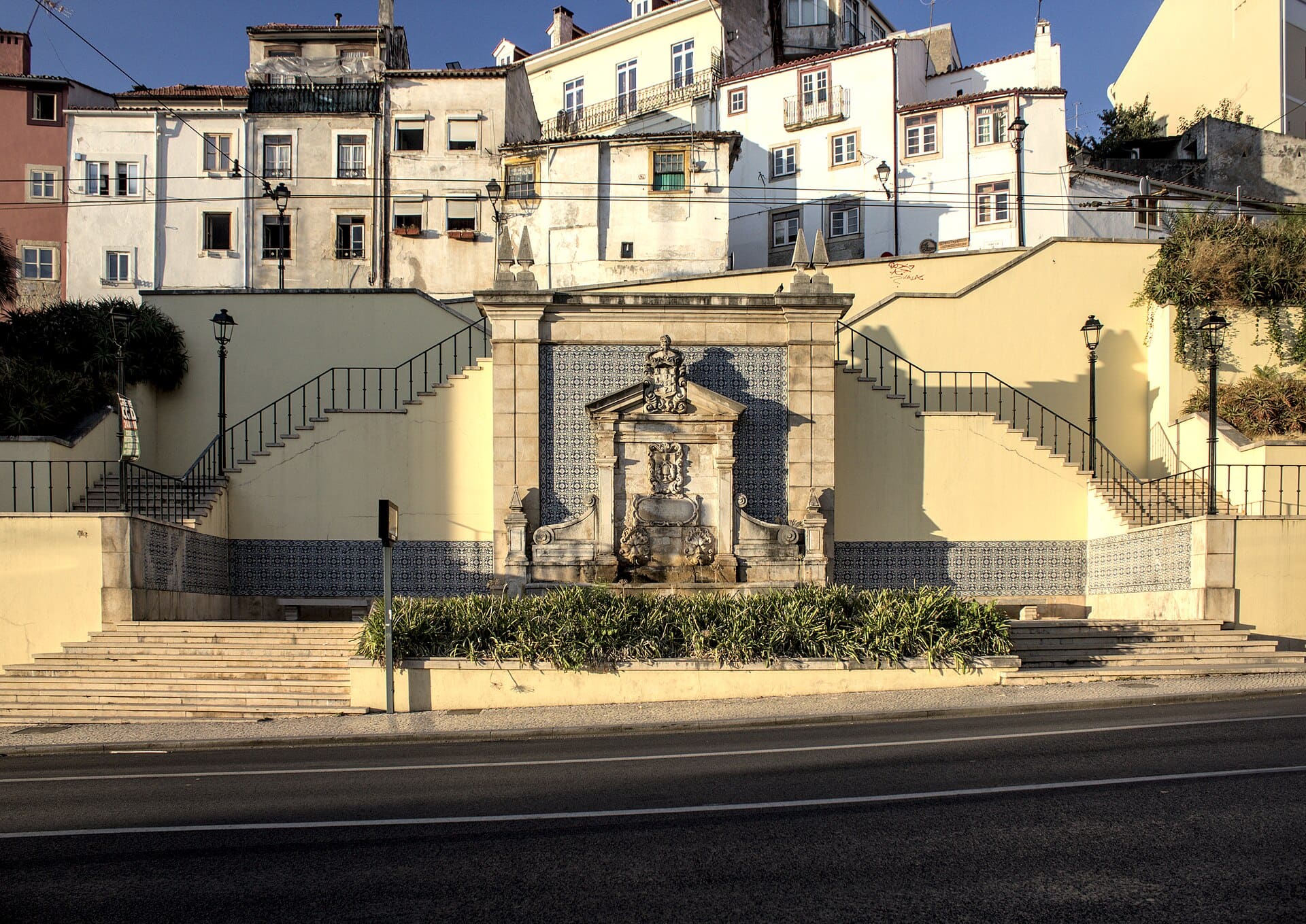
Alicante and Costa Blanca: 20 Best Things to See and Do

TL;DRAlicante and the Costa Blanca come with 20 solid ideas for day trips: the standout is Santa Bárbara castle, perched 166 metres up on Mount Benacantil with sweeping views, with the picturesque Barrio Santa Cruz tucked below it. The TRAM light rail makes it easy to hop between coastal resorts like Benidorm, Altea and Calpe, and near Calpe it’s well worth the climb up the 332-metre Peñón de Ifach rock. Boats run out to the protected island of Tabarca or up to the mountain village of Guadalest with its turquoise reservoir. Two days is enough for Alicante itself, or four to five days if you want to explore the surrounding area. For the beach, come from mid-June to the end of September; for sightseeing, April, May, October or November are better.

If you’re dreaming of a Spanish getaway filled with sunshine and looking for the ideal combination of stunning beaches, rich history, and incredible food, Alicante Spain and the surrounding Costa Blanca coastline are guaranteed to win you over. This region on the southeastern coast of the Iberian Peninsula boasts the mildest climate in the entire country, making it a perfect destination for year-round travel. Today, I’m bringing you a detailed guide with exactly twenty tips on spectacular places and experiences.

I’ll show you how to easily get around between the charming towns dotted along the coast, where to find the most breathtaking viewpoints, and which hidden alleys are worth exploring. You’ll also discover why the local gastronomy is so celebrated and how to enjoy your holiday without unnecessary stress or battling through tourist crowds. Let’s dive into the secrets of the White Coast and start planning your next unforgettable trip.

TL;DR

  • Santa Bárbara Castle: The iconic landmark of Alicante, offering the best panoramic views over the entire city and the open sea.
  • Barrio Santa Cruz: A picturesque historic quarter full of narrow stairways, whitewashed houses, and colourful flower pots.
  • TRAM coastal railway: The most comfortable and scenic way to travel, connecting Alicante with resorts like Benidorm, Altea, and Calpe.
  • Costa Blanca gems: Don’t miss the hike up the Peñón de Ifach rock in Calpe or a romantic wander through artistic Altea.
  • Tabarca Island: A former pirate hideout and now a protected marine reserve, easily reached by boat from the harbour.
  • Mountain village of Guadalest: A fascinating castle complex perched high among the rocks with views over a turquoise reservoir.
  • When to go: For sightseeing and hiking, choose spring or autumn; for a pure beach holiday, late June to early July is ideal.

When to Visit Alicante and Costa Blanca

The Costa Blanca coastline sits in a unique microclimatic bubble, shielded from the interior by a range of mountains. Thanks to this, the area enjoys more than three hundred days of sunshine a year, and winters here are incredibly mild and pleasant. It’s no wonder this spot acts as a huge magnet for digital nomads and Northern Europeans who flock here to escape the cold months.

If swimming and soaking up the sun on the beach is your main goal, the best conditions are from mid-June to the end of September, when the sea is beautifully warm. August is traditionally the hottest month and by far the busiest, so if you’re not keen on overcrowded beaches and inflated prices, it’s best to avoid it. Summer temperatures regularly climb above 30°C, which can be quite exhausting for a full day of sightseeing.

For an active holiday focused on hiking, exploring towns, and mountain excursions, spring (April and May) or autumn (October and November) is absolutely ideal. Temperatures hover around a pleasant 20–25°C, the tourist crowds thin out, and you can fully soak up the authentic atmosphere of the entire region.

Where to Stay in Alicante and the Surrounding Area

💡 Accommodation and experience tip: We love searching for accommodation on Booking.com, which tends to have the best cancellation policies. For tickets, tours, and activities, it’s worth comparing options on GetYourGuide.

When planning your trip, it’s key to think about what type of holiday you’re after. For a first visit and easy day-tripping around the area, the city of Alicante itself makes the best base, as it offers excellent connections to the airport and train station. I’d recommend looking for accommodation right in the centre or near Postiguet beach so that all the main sights and restaurants are within walking distance. You can conveniently book your stay through Booking, where you’ll find a wide range from small guesthouses to luxury sea-view hotels.

If you’re travelling with kids or looking for a buzzing nightlife scene, head to nearby Benidorm, which offers enormous resorts with pools and water parks. This city is famous for its superb tourist infrastructure and endless sandy beaches, though you’ll struggle to find an authentic Spanish atmosphere here. Benidorm is all about carefree fun and maximum comfort.

For peace-seekers and romantics, the clear winner is the little town of Altea with its winding alleys and boutique hotels. Accommodation here often comes with gorgeous clifftop views and a personal touch, which is especially lovely when travelling as a couple. Another excellent choice for slow tourism is Jávea, which tempts visitors with stays near some of the most beautiful hidden coves on the entire coast.

20 Best Things to See and Do in Alicante and Costa Blanca

Now let’s take a closer look at the most interesting places that absolutely deserve a spot on your itinerary. This list combines the best of history, nature, and modern entertainment, so there’s truly something for everyone.

1. Santa Bárbara Castle

This majestic fortress perched atop Mount Benacantil at 166 metres above sea level forms the unmistakable silhouette of the city. Santa Bárbara Castle is one of the largest medieval fortresses in Spain, and its history stretches back to the ninth century when it was founded by the Moors. Over the centuries it has undergone numerous renovations and today offers a fascinating cross-section of military architecture from different eras.

You can make your way up either on foot along winding paths through a pine forest, or take the convenient lift carved directly into the rock, located opposite Postiguet beach. Entry to the castle itself is completely free — you only pay a small fee for the lift. At the top, you’ll find sprawling courtyards, old dungeons, and remnants of artillery batteries that you can freely explore.

The main reason people come here, though, is the jaw-dropping panoramas. From the ramparts, you get a perfect 360-degree view over all of Alicante, the endless blue sea, and the distant mountain peaks in the interior.

💡 Local tip: Head up to the castle about an hour before sunset, when the sky turns incredible shades of pink and orange — it’s the perfect time for the most stunning photographs.

2. Barrio Santa Cruz Old Town

Sprawling just below the castle is the oldest and arguably most charming quarter in all of Alicante. Barrio Santa Cruz is a labyrinth of steep alleys and hundreds of steps, completely car-free, so you can enjoy total peace and quiet away from the hustle and bustle. It’s a place where time seems to have stood still — and while you might feel an almost Andalusian vibe, you’re actually in the Valencia region.

The locals lovingly tend to their homes, which is why all the façades are a brilliant white, decorated with hundreds of colourful ceramic flower pots bursting with geraniums and climbing plants. Every door and shutter has its own distinctive shade of blue or green, creating the perfect backdrop for your holiday snaps. During your wander, you’ll also come across the small chapel Ermita de Santa Cruz, which offers yet another gorgeous view of the harbour.

Make sure to set aside plenty of time to explore this quarter, and wear comfortable shoes, because all those stairs can be quite tiring in the summer heat. After a challenging climb, you can reward yourself at one of the small authentic cafés tucked away in the lower part of the neighbourhood, enjoying an iced coffee or a refreshing lemonade.

3. Explanada de España Promenade

The heart of social life in Alicante beats along this iconic seafront promenade, which runs parallel to the harbour. Explanada de España is famous for its unique mosaic pavement, made up of an incredible six and a half million marble tiles in three colours. The wave pattern in red, white, and blue creates an optical illusion that’ll delight you with every step.

The promenade is lined with four rows of towering date palms that provide much-needed shade during the hot summer days and create a pleasant cool spot for resting on the benches. During the day, you’ll encounter plenty of street performers, painters, and stall-holders selling local handmade crafts — perfect for picking up some original souvenirs.

The Explanada is at its most magical after dark, when it comes alive with the traditional evening stroll. Local families and tourists alike come here for the so-called paseo — an evening walk combined with chatting and breathing in the sea air. On both sides of the promenade, you’ll find countless restaurants and bars where you can settle in with a glass of fine wine and watch the wonderful buzz all around you.

4. Playa del Postiguet City Beach

Right in the city centre, just a few steps from the promenade and under the watchful gaze of Santa Bárbara Castle, lies the main city beach. Playa del Postiguet offers nearly a kilometre of fine golden sand and a very gentle slope into the water, making it an ideal spot for families with small children and less confident swimmers.

Thanks to its strategic location, the beach is incredibly easy to reach — there’s no need for a lengthy journey, and you can pop in for a quick dip right after exploring the city. The beach holds a Blue Flag for cleanliness and quality of services, so you’ll find excellent facilities including showers, toilets, lifeguards, and sun lounger and parasol hire.

In the summer season, Postiguet understandably gets very busy, so I’d recommend heading here first thing in the morning when the sea is at its calmest and you can easily grab the best spot by the water. Along the beach, there’s another promenade packed with chiringuitos — typical Spanish beach bars — where you can cool down with a chilled drink or enjoy a light lunch with a view of the waves.

5. Mercado Central Market

If you want to experience the true soul of a Spanish city, always head to its main market. Mercado Central in Alicante is an architectural gem from the early twentieth century that blends Modernist and Art Deco elements, offering an incredible spectacle of colours, aromas, and bustling life. The building itself boasts a huge dome and a monumental staircase that leads you into a gastronomic paradise spread across two floors.

On both floors, you’ll find nearly three hundred stalls overflowing with fresh local produce. It’s the ideal place to pick up the finest ingredients for a beach picnic — whether that’s enormous fleshy tomatoes, fresh olives, aged cheeses, or fragrant bread. Vegetarians will be spoilt for choice with the fresh fruit and veg from local farmers, which taste nothing like what you’d find in a supermarket.

💡 Local tip: Don’t just come here to shop — make it a social occasion. Around midday, locals gather at the small tapas bars inside the market and in the surrounding streets, where they have their first glass of beer or vermouth accompanied by patatas bravas or a traditional Spanish omelette (tortilla).

6. Marina Harbour and Volvo Ocean Race Museum

Alicante has a strong maritime tradition and the modern harbour is a shining example of that. The Marina is an elegant zone full of luxury yachts, wide wooden piers, and modern leisure complexes where you can easily spend a pleasant afternoon. It’s a great spot for a leisurely stroll while admiring the moored boats and enjoying the refreshing sea breeze.

Right in the harbour, you’ll come across one very unique attraction — the museum dedicated to the toughest and most famous round-the-world yacht race, the Volvo Ocean Race. Alicante proudly serves as the starting port for this extreme competition. Entry to the museum is free and you’ll learn fascinating details about life as a sailor on the open ocean, try interactive simulators, and explore the insides of a real racing yacht.

In the evening, the harbour transforms into one of the nightlife hotspots. In the modern Panoramis complex and along the piers, dozens of stylish bars and clubs throw open their doors, with music playing into the small hours. Even if you’re not into wild parties, it’s well worth coming here for an evening cocktail and soaking up the gorgeous view of the illuminated Santa Bárbara Castle reflected on the water.

7. St. Nicholas Co-Cathedral (Concatedral de San Nicolás)

While wandering through the historic centre, you’ll come across an unassuming building that you might initially walk right past. St. Nicholas Co-Cathedral has a rather austere and simple Renaissance façade that deliberately conceals the riches within, so don’t be put off by the plain exterior — make sure you step inside.

Once you cross the threshold, you’ll be blown away by the stunning interior with a magnificent dome soaring to forty-five metres, which lets in soft natural light. The cathedral was built in the seventeenth century on the remains of an old mosque, and its most precious section is the Holy Communion Chapel — a masterpiece of Spanish Baroque brimming with ornate details.

Entry to the cathedral is free, but do keep an eye on opening times, as it typically closes for several hours over midday for the traditional Spanish siesta. The cathedral also shares its title as the main church of the diocese with the cathedral in neighbouring Orihuela, which is why it’s officially called a co-cathedral.

8. Basilica of Santa María (Basílica de Santa María)

Just a stone’s throw from Postiguet beach stands the oldest surviving church in all of Alicante. The Basilica of Santa María was built in the fourteenth century on the foundations of the city’s largest Islamic mosque, beautifully illustrating the turbulent history of cultural shifts on the Iberian Peninsula. Originally Gothic, the building was gradually modified and extended, so today you’ll find traces of various architectural styles.

The most striking feature of the basilica is its richly decorated Baroque portal, which resembles a sculptural work of art more than a typical church entrance. Inside, you can admire a beautiful golden Rococo altarpiece and imposing sixteenth-century organ. The whole space feels deeply intimate and mystical, especially if you visit outside peak tourist hours.

The area in front of the basilica also forms a small, quiet square that makes an excellent starting point for the subsequent climb into the alleys of Barrio Santa Cruz. The surrounding narrow streets are full of traditional cafés where you can enjoy an excellent coffee and soak up the local atmosphere far from the busiest tourist drags.

9. MARQ Archaeological Museum

If you think archaeological museums are just boring collections of dusty shards in glass cases, MARQ will quickly change your mind. This museum has won the prestigious European Museum of the Year award and offers an incredibly modern, interactive approach to the region’s history — entertaining even those who don’t usually have much time for history.

The exhibitions are divided into several themed halls spanning prehistory, Iberian and Roman cultures, and the Middle Ages. Thanks to brilliant audiovisual effects, holographic projections, and elaborate set designs, you’ll feel like you’ve genuinely stepped right into historical events. The underwater archaeology section is particularly impressive — you walk across a glass floor above ancient shipwrecks.

💡 Local tip: The museum often has free or reduced entry on Sundays and public holidays, so it’s worth planning your visit accordingly. While some labels are in Spanish, you can borrow an audio guide in several languages at the entrance, which will comfortably walk you through all the exhibits.

10. Playa de San Juan Beach

While the city beach at Postiguet is great for a quick dip, the real beach paradise lies just north of the centre. Playa de San Juan is a stunning stretch of fine light sand that extends an incredible seven kilometres all the way to the neighbouring town of El Campello. It’s one of the most beautiful and highest-rated beaches in all of Spain.

Thanks to its enormous size, you’ll never feel cramped here — there’s always plenty of personal space for your parasol and beach towel. The beach is flanked by a long promenade, perfect for a morning jog or an evening rollerblade. Facilities are absolutely top-notch, from numerous beach volleyball courts to a wealth of excellent restaurants and cafés.

Getting here couldn’t be easier — from the centre of Alicante, you can comfortably ride the coastal tram (lines 1, 3, or 4) in around twenty-five minutes. This means you can easily base yourself in the centre with all the cultural action and commute to this fantastic beach with its open sea and crystal-clear water during the day.

lukas a lucka
Lukáš and Lucie recommend
Where to stay in Alicante and Costa Blanca
2 accommodations — hotels and other lodging options

11. Boat Trip to Tabarca Island

One of the absolute best experiences you can treat yourself to on the Costa Blanca is a full-day trip to the tiny island of Nueva Tabarca. This island was once a feared hideout for Barbary pirates and is now a celebrated marine reserve with crystal-clear water, offering the finest snorkelling conditions in the entire area.

You can reach the island on regular boat services directly from the harbour in Alicante — the journey takes about an hour and the sail along the coast is an experience in itself. The island is very small, barely two kilometres long, and there are no cars, so you can easily explore it on foot. You’ll find well-preserved fortifications, a picturesque village of white houses, and an old lighthouse surrounded by untamed nature.

Make sure to pack your snorkelling gear, because thanks to its reserve status, the marine life around Tabarca is incredibly rich and full of colourful fish. For lunch, you can head to one of the local tavernas for a traditional caldero — a one-pot rice dish — or enjoy superb vegetarian tapas overlooking the waves crashing against the cliffs.

12. El Palmeral Park

When you need a break from the sun-baked streets and the city buzz, head to this oasis-like park on the southern edge of Alicante. Parque El Palmeral is a vast area filled with hundreds of towering palm trees, trickling waterfalls, and ornamental ponds, offering much-needed shade and cool during the sweltering afternoons.

The park was designed for maximum relaxation — you can hire a small boat and paddle around the lake, or simply stretch out with a book on one of the many well-kept lawns. It’s also an absolutely ideal spot for families with children, as the grounds include several excellent playgrounds, a BMX track, and plenty of space for kids to run around safely.

You can easily reach the park by city bus or tram (San Gabriel stop) from the centre in just ten minutes. Entry to the entire grounds is completely free, and you’ll find plenty of picnic tables, so you can bring along fresh goodies bought at Mercado Central and enjoy a lovely picnic under the palms.

13. TRAM d’Alacant Coastal Railway

Getting around the Costa Blanca isn’t just a necessity — thanks to this special railway, it’s a full-blown experience. The TRAM d’Alacant network is a modern transport system somewhere between a tram and a commuter train, connecting Alicante with the resorts to the north and offering absolutely stunning views of the sea and cliffs throughout the journey.

While in the centre of Alicante the tram runs underground like a regular metro, once it leaves the city it transforms into a scenic sightseeing ride, with the tracks winding right along the coastline and threading through mountain tunnels. Line 1 will reliably take you to Benidorm, from where you can transfer to line 9, which continues north to towns like Altea and Calpe, all the way to Dénia.

💡 Local tip: Buy a day pass and turn the tram into your own hop-on-hop-off sightseeing bus. The journey takes a bit longer than driving along the motorway, but you’ll skip the stress of finding parking in narrow old-town streets — and the views you’ll get as a reward are ones you’d otherwise have to hike to a viewpoint to see.

14. Calpe and the Peñón de Ifach Rock Hike

The town of Calpe, lying north of Benidorm, is best known for one of the most impressive natural landmarks on the entire coast. The Peñón de Ifach is a massive limestone rock towering 332 metres straight up from the sea, serving as a kind of beacon for the whole Costa Blanca and forming an incredibly photogenic landmark.

The entire rock and its immediate surroundings are designated a natural park, and if you’re reasonably fit and don’t suffer from vertigo, you can hike the trail all the way to the very summit. The route is split into two sections — the first follows a wide path to a tunnel blasted through the rock and is manageable even for families with children; the second section beyond the tunnel is more demanding, requiring sturdy footwear and caution as the path is narrow and secured with chains.

Your reward for the tough climb will be absolutely spectacular views over the entire coastline, both sandy beaches in Calpe, and on a clear day, you might even spot the island of Ibiza in the distance. Beyond the rock, Calpe also has the beautiful Las Salinas lagoon right in the heart of the town, where you can watch flocks of pink flamingos in the wild.

15. Altea: The Artistic Soul of the Coast

If there’s one place that consistently wins polls for the most beautiful town on the Costa Blanca, it’s undoubtedly Altea. This picturesque little town is renowned for its historic centre full of cascading whitewashed houses, crowned by a church with iconic blue-tiled domes that have become one of the symbols of the entire region.

Despite the tourist footfall, Altea has managed to preserve its bohemian soul and laid-back atmosphere. Its narrow cobbled streets are home to many painters, ceramicists, and artisans, so during your wander you’ll stumble upon dozens of small art galleries and independent boutiques. It’s the perfect place to pick up original handmade jewellery or beautiful ceramics.

The beaches here aren’t sandy but consist of smooth white pebbles, which means the sea water in Altea is absolutely crystal clear and ideal for diving and paddleboarding. In the evening, I’d recommend heading to Plaza de la Iglesia at the very top of the hill, where locals and visitors gather for dinner al fresco with views of the glittering sea below.

16. Mountain Village of Guadalest

About twenty-five kilometres inland from the coast hides one of Spain’s greatest historical treasures. El Castell de Guadalest is a tiny village dramatically perched among rock towers high in the mountains, instantly transporting you several centuries back in time. The only way to reach the old part of the village is through a unique pedestrian tunnel carved directly into the massive rock.

The main draw is the Castle of San José itself, which towers on the highest rocky pinnacle. From the ramparts and viewpoints, you’ll see an absolutely breathtaking panorama of the surrounding mountains and, below them, a reservoir with water tinted an incredibly vivid turquoise — a sight you won’t easily forget.

Another fascinating thing about Guadalest is its unusual concentration of quirky micro-museums. In such a tiny space, you’ll find a museum of miniatures where you can see the Statue of Liberty in the eye of a needle, a museum of salt and pepper shakers, and a museum of historic vehicles. Although it’s a very popular day-trip destination, just arrive early in the morning and you’ll have the winding streets practically to yourself.

17. Jávea (Xàbia) and Cala Granadella Beach

For those who embrace slow tourism and want to escape the high-rises, Jávea is an absolute revelation. This town is divided into three distinct parts: the historic centre inland, the harbour quarter, and the beach zone of Arenal, offering something for everyone while maintaining a wonderfully authentic and relaxed character without any mega hotel complexes.

The real treasure of Jávea, though, is its rugged coastline full of hidden coves surrounded by pine forests. Cala Granadella regularly wins votes as the most beautiful beach in all of Spain, offering a perfect combination of dramatic cliffs, pebbles, and crystal-clear water that practically begs you to go snorkelling or hire a kayak.

Beyond the beaches, it’s worth exploring the Ruta de los Miradores. This is a series of fifteen viewpoints along the coast, reachable by car, offering mesmerising views of jagged cliffs and the wild sea. It makes a brilliant afternoon activity when the sun eases off a little and you can take in the natural beauty with the wind in your hair.

18. Villajoyosa: The City of Chocolate and Colour

On the tram ride north from Alicante, the first town to catch your eye has a name that fittingly translates to “The Joyful Town.” Villajoyosa is famous for its iconic waterfront promenade lined with rows of brightly painted fishermen’s houses, which originally helped sailors navigate their way home from the sea. Each house is a different, incredibly vibrant colour, creating an absolutely fairy-tale setting for your photos.

The beach here is wide and sandy, and considerably quieter compared to neighbouring Benidorm. The town retains its deeply Spanish character and is an ideal place to enjoy traditional tapas in tucked-away streets and soak up the local atmosphere without hordes of international tourists. The local market also offers superb produce for lovers of quality vegetables and cheeses.

But Villajoyosa has another sweet secret — it’s the capital of Spanish chocolate. The famous Valor chocolate factory is based here and offers tours with tastings completely free of charge, giving you a peek into the history and present-day production of this treat — plus the chance to take home the best edible souvenir imaginable.

19. Benidorm: Entertainment and Skyscrapers

Neighbouring Benidorm is a phenomenon that reliably divides opinion, but it’s definitely worth seeing with your own eyes. With its unique skyline packed with high-rise buildings, it’s been nicknamed the European Manhattan and boasts the highest concentration of skyscrapers per capita in the world, creating a fascinating contrast with the surrounding mountains.

If you’re after top-notch infrastructure and entertainment, Benidorm won’t disappoint. It offers two enormous, immaculately maintained sandy beaches — Levante and Poniente — separated by a rocky headland with the Balcón del Mediterráneo viewpoint, which gives a stunning view in both directions across the bay. The city is packed with theme parks like Terra Mítica, water parks, and huge cabaret shows.

While you’ll struggle to find traditional Spanish culture here, for families with children or groups of friends seeking non-stop nightlife and a carefree holiday with guaranteed sunshine, it’s an absolutely perfect base. And if you bag a room on one of the upper floors of the skyscrapers, you’ll have a view that very few places can match.

20. Fuentes del Algar Waterfalls and Springs

The final tip takes us a little further from the coast, to a place where you’ll find the refreshment you’ve been craving during the hot summer months. The Fuentes del Algar nature reserve is located just outside the town of Callosa d’en Sarrià and offers a gorgeous setting of cascading waterfalls and natural pools filled with crystal-clear but fairly chilly mountain water.

A well-maintained wooden boardwalk and hiking trail guide you through the entire site. Along the way, you can swim in the crystal-clear pools beneath the waterfalls at several designated spots — an absolutely priceless experience in the scorching Valencian summer. The water hovers around eighteen degrees, but after the initial shock, it’s a fantastic way to cool off.

💡 Local tip: A trip to the Algar waterfalls pairs perfectly with a visit to the mountain village of Guadalest, as both are right next to each other. Head out in the morning to explore the castle, then swing by the waterfalls in the afternoon to cool down — creating the ideal full-day itinerary.

Where to Go from Alicante

If you have time left over or you’re planning a longer road trip around Spain, Alicante is a brilliant springboard for further adventures. Thanks to excellent high-speed AVE train connections, you can reach the capital in under two and a half hours, making Madrid an ideal destination for a long weekend. You can also head north to explore the nearby city of Valencia, or hop on a short flight to marvel at Gaudí’s architecture in the breathtaking Barcelona.

Many travellers combine a Costa Blanca visit with exploring the south of the country. If you’re drawn to the fiery south, dive into our guide to the 20 Most Beautiful Places in Andalusia. A little further along the coast, the laid-back Holiday in Malaga awaits, from where you can tackle the adrenaline-pumping Caminito del Rey trail or visit the famous clifftop city of Ronda. While exploring the south, don’t miss our Seville Guide to Andalusia, the Moorish treasures hidden in Granada, and the stunning mosque we write about in Cordoba: 15 Things to See.

Frequently Asked Questions

How do I get from the airport to the centre of Alicante?

Getting from Alicante-Elche Airport (ALC) to the city centre is very easy and quick thanks to bus line C-6, which runs roughly every twenty minutes all day long. The journey takes about twenty minutes, the bus stops at strategic spots such as the train station or Postiguet beach, and the ticket costs you just under four euros.

How many days do I need to visit Alicante and the surrounding area?

For the city of Alicante itself, two full days will be plenty, during which you can take in the castle, the historic centre, and time on the beach. But if you also want to explore the surrounding towns like Altea and Guadalest, or take a boat trip to the island of Tabarca, I recommend setting aside at least four to five days.

What is traditional paella and where should I try it?

Traditional Valencian paella has strict rules and is originally a rural dish that in its original recipe is made with rice, chicken and rabbit meat, and green beans, not seafood. In Alicante and the surrounding area, though, you’ll find plenty of excellent variations in the restaurants, and for vegetarians there’s usually a delicious vegetable paella or wonderful local tapas full of fresh vegetables and cheeses available.

Can you get around the Costa Blanca without a car?

Absolutely, the Costa Blanca coast is one of the best places in Spain for travelling without a car thanks to the excellent TRAM d’Alacant tram network. These tram-trains will take you comfortably, cheaply, and with gorgeous views from Alicante to most of the popular towns along the coast all the way north.

Is the tap water in Alicante safe to drink?

Yes, the tap water along the entire Costa Blanca coast is hygienically safe and drinkable, but due to the high mineral content and the specific process of desalinating seawater, it can have an odd, slightly chlorinated taste. Many locals therefore prefer bottled water in jugs, but you can use tap water without any worries for brushing your teeth or cooking.

Is Alicante expensive?

Compared to big cities like Madrid or to the Balearic Islands, Alicante is still a very affordable destination where you can get great food and accommodation for reasonable money. If you avoid the busiest tourist restaurants right on the promenade and slip into the side streets, you’ll come across excellent daily menus (menú del día) for a fraction of the price.

When is Alicante busiest with tourists?

The absolute peak of the tourist season falls in August, when not only foreign tourists flock to the area but also the Spanish themselves from inland, fleeing the heat of Madrid. During this period the beaches are maximally crowded and accommodation prices hit their peak, so it’s better to choose the turn of June and July or September for your trip.

Tips and Tricks for Your Vacation

Don’t Overpay for Flights

Search for flights on Kayak. It’s our favorite search engine because it scans the websites of all airlines and always finds the cheapest connection.

Book Your Accommodation Smartly

The best experiences we’ve had when looking for accommodation (from Alaska to Morocco) are with Booking.com, where hotels, apartments, and entire houses are usually the cheapest and most widely available.

Don’t Forget Travel Insurance

Good travel insurance will protect you against illness, accidents, theft, or flight cancellations. We’ve had a few hospital visits abroad, so we know how important it is to have proper insurance arranged.

Where we insure ourselves: SafetyWing (best for everyone) and TrueTraveller (for extra-long trips).

Why don’t we recommend any Czech insurance company? Because they have too many restrictions. They set limits on the number of days abroad, travel insurance via a credit card often requires you to pay medical expenses only with that card, and they frequently limit the number of returns to the Czech Republic.

Find the Best Experiences

Get Your Guide is a huge online marketplace where you can book guided walks, trips, skip-the-line tickets, tours, and much more. We always find some extra fun there!

Toledo, Spain: 15 Best Things to See in the City of Three Cultures

TL;DRToledo is Spain’s historic city of three cultures, perched on a rocky outcrop looped by the Tajo river, where Christian, Muslim and Jewish landmarks sit side by side. From Madrid’s Atocha station, the AVE high-speed train gets you there in just 33 minutes. Among the 15 key tips are the Catedral Primada, the Alcázar fortress, the synagogues of Santa María la Blanca and El Tránsito, the Cristo de la Luz mosque dating from 999, and the Mirador del Valle viewpoint. You can cover the main sights in a single day — it’s worth getting the Toledo Monumental wristband, around €12, which gets you into seven of the monuments. The best time to visit is spring or autumn (April, May, September, October), with temperatures around 20 to 25 degrees, while summer sees them climb past 40°C. The old town is hilly, but outdoor escalators will carry you up for free — and don’t skip a taste of traditional Toledo marzipan.

If you’re looking for a place that instantly transports you several centuries back in time, Toledo Spain is an absolutely perfect choice. This stunning historic city sits perched on a rocky promontory, encircled on three sides by the River Tagus, and looks like a flawless film set. It’s a magical place where the fates of Christians, Muslims, and Jews intertwined for centuries, earning it the proud nickname — the City of Three Cultures.

Thanks to high-speed trains, it’s just a stone’s throw from the capital, making it an ideal day trip if you’re spending your holiday in central Spain. Be prepared, though — the old town is one giant labyrinth of narrow alleyways where you’re guaranteed to get lost sooner or later. But that’s precisely where the magic lies, because around every corner you’ll discover an ancient mosque, a Gothic chapel, or a charming little square brimming with cafés.

Let’s take a look together at the most beautiful sights and experiences you absolutely shouldn’t miss during your visit. You’ll find out where to catch the best views, which churches are worth the admission fee, and why you shouldn’t leave without a box of traditional sweet pastries. ☺️

TL;DR

  • Main highlight: Toledo is a breathtaking medieval city inscribed on the UNESCO World Heritage List, where Gothic cathedrals, ancient mosques, and richly decorated synagogues stand side by side.
  • Getting there from London: Fly from London to Madrid (around 2.5 hours with British Airways, Iberia, or Ryanair), then catch the AVE high-speed train from Madrid Atocha station — just 33 minutes — making it a perfect destination for a day trip or weekend getaway.
  • Must-sees: The enormous Gothic Primate Cathedral, the Alcázar fortress towering over the city, and the old Jewish Quarter with its stunning synagogues.
  • Getting around: The historic centre is very hilly, but thankfully there are free outdoor escalators that whisk you up from the car parks below straight into the heart of town.
  • Local souvenirs: The city is famous for its Damascene steelwork and for baking the finest marzipan in all of Spain.
  • Tourist wristband: If you’re planning to visit multiple monuments, grab the Toledo Monumental wristband, which gives you access to seven major historic buildings for a single price.

When to Visit Toledo

Central Spain has a very specific and rather harsh climate, which locals jokingly describe as nine months of winter and three months of hell. The best time to visit is undoubtedly spring or autumn, when temperatures are perfect for long strolls through the city. In April, May, September, and October, you can expect a lovely 20–25 °C.

If you’re heading here in summer, brace yourself for genuinely extreme heat. During July and August, temperatures in this part of Spain regularly exceed 40 °C in the shade, and Toledo’s stone alleyways turn into a furnace. In that case, I’d recommend hitting the streets early in the morning, taking a long siesta in your air-conditioned hotel over midday, and venturing out again only as the sun sets.

Winters here, on the other hand, can be surprisingly cold and damp. In January and February, morning temperatures can hover near freezing, so you’ll definitely need a warm jacket and a decent hat. On the bright side, during the winter months you’ll have the historic monuments practically to yourself — which has its own undeniable charm. 😅

Where to Stay in Toledo

💡 Accommodation & experiences tip: We love searching for places to stay on Booking.com, which usually offers the best cancellation policies. For tickets, tours, and activities, it’s worth comparing options on GetYourGuide.

Choosing the right location is absolutely crucial in this city, because constantly trudging up steep hills with heavy suitcases could put a real damper on the start of your holiday. The best strategic base is around the main square, Plaza de Zocodover, which is easily reachable by bus from the train station and puts you within walking distance of all the major sights.

If you’re after truly beautiful accommodation with character, definitely check out Boutique Hotel Adolfo, which sits right in the heart of the historic centre and offers gorgeous views from its windows. Another excellent choice is Sercotel Alfonso VI, where the rooms are very comfortable and the staff are happy to help you plan excursions around the area.

The old Jewish Quarter is also a very popular area to stay, and it’s a touch quieter than the main square surroundings. When booking via Booking.com, always carefully check whether the hotel has its own parking if you’re arriving by car. Most of the historic centre is completely closed to regular vehicles, so you’ll need to park in the car parks below the city walls.

15 Best Things to See and Do in Toledo Spain

This city is absolutely bursting with history, and around every corner you’ll stumble upon something fascinating. I’ve put together a list of fifteen incredible places and experiences that will help you fully soak up the unique atmosphere of the former capital of the Spanish kingdom.

1. Toledo Cathedral (Primate Cathedral)

This jaw-dropping building is without question the main landmark of the entire city and ranks among the most beautiful Gothic cathedrals in the world. Its construction took nearly three centuries, which accounts for the incredible wealth of architectural detail waiting for you both inside and out. The main portal alone, with its rich sculptural decoration, is enough to leave you awestruck.

Once you step inside, you’ll gasp at the vast space illuminated by hundreds of magnificent stained-glass windows. Don’t miss the main altarpiece, which is incredibly intricately carved from wood and lavishly gilded. It depicts scenes from the New Testament and is a masterpiece of late Gothic art, crafted by dozens of artists.

The visit also includes the treasury and sacristy, which today functions more like a world-class art gallery. You’ll find original paintings by masters such as El Greco, Goya, Titian, and Caravaggio. I’d strongly recommend buying your tickets online in advance to avoid the long queues that build up here, especially on weekends and public holidays.

2. The Alcázar Fortress

Right after the cathedral, this massive square structure with four towers is the most prominent feature of the entire Toledo skyline. The Alcázar stands on the highest point of the city, from where its defenders had a commanding view over the surrounding landscape, and its history stretches all the way back to Roman times. Over the centuries, the building has served as a royal palace, a military academy, and a fortress.

The structure has endured a turbulent history and was destroyed several times by fire or war. It suffered the most severe damage during the Spanish Civil War, when it was nearly razed to the ground after a prolonged siege. Today it has been beautifully restored to its appearance from the era of King Charles V and cuts a truly majestic figure.

Inside, you’ll now find the extensive Army Museum (Museo del Ejército), which chronicles the entire military history of Spain. More interesting than the weapon exhibitions themselves, however, is the architecture of the inner courtyard and, above all, the breathtaking views from the palace windows. Allow at least two hours for your visit, as the complex is genuinely huge.

💡 Local tip: The best photos of the Alcázar can be taken from the opposite bank of the river or from the outdoor terrace of the nearby library, which is completely free to enter — plus you can grab an excellent coffee there.

3. Synagogue of Santa María la Blanca

When you step inside this building, you’ll probably feel as though you’ve wandered into a beautiful mosque somewhere in Andalusia. Gleaming white walls and horseshoe arches supported by elegant columns are a textbook example of the Mudéjar style. And yet this is actually one of the oldest surviving synagogues in all of Europe, built at the end of the 12th century.

This building perfectly illustrates why Toledo is called the City of Three Cultures. The synagogue for the Jewish community was designed and built by skilled Moorish architects on Christian territory. It’s precisely this blending of influences that creates an utterly unique atmosphere you won’t experience anywhere else in the world. The columns are adorned with detailed stucco work featuring pine cone and plant motifs.

At the beginning of the 15th century, the building was unfortunately confiscated and converted into a Christian church, which gave it its current name — Santa María la Blanca (Saint Mary the White). Today the monument no longer serves a religious purpose but functions as a museum and is one of the most popular spots in the entire old Jewish Quarter.

4. Synagogue of El Tránsito and the Jewish Quarter

Just a few steps from the previous monument, you’ll find another incredible gem of Sephardic history. The Synagogue of El Tránsito was built in the 14th century, and its main prayer hall is something that will literally take your breath away. The cedarwood coffered ceiling is a masterwork of woodcarving, and the walls are adorned with beautiful Hebrew calligraphic inscriptions interwoven with floral motifs.

The building now houses the fascinating Sephardic Museum (Museo Sefardí), which traces the history of Jews on the Iberian Peninsula from Roman times through to their expulsion in 1492. You’ll learn a wealth of information about their culture, customs, and the enormous influence they had on the development of Spanish society, science, and commerce.

After visiting the museum, I’d recommend simply wandering the narrow lanes of the old Jewish Quarter (Judería). You’ll find plenty of small shops, artisan workshops, and cosy little cafés. If you look carefully at the pavement, you’ll also spot small ceramic tiles bearing the menorah symbol or the Hebrew word Sefarad (Spain), marking the boundaries of this historic neighbourhood.

5. Monastery of San Juan de los Reyes

This beautiful Franciscan monastery was commissioned by the famous Catholic Monarchs, Isabella of Castile and Ferdinand of Aragon, as a symbol of their victory at the Battle of Toro. It was originally intended to serve as their royal burial place, but they ultimately chose to be interred in Granada Cathedral instead. Even so, it remains one of the most significant monuments in the city.

From the outside, you’ll likely be struck by a rather eerie detail on the church facade. Dozens of rusty iron shackles and chains hang from the walls, said to have belonged to Christian prisoners freed from Moorish captivity during the conquest of Andalusia. The monarchs had them hung here as a symbol of Christianity’s triumph, and they still make quite an unsettling impression to this day.

The real beauty, however, lies hidden inside the monastery. I highly recommend visiting the cloister, which is an absolutely stunning example of late Gothic architecture filled with intricate stone tracery and gargoyles. On the upper level you’ll find a gorgeous Mudéjar wooden ceiling. The entire place radiates incredible peace and harmony, especially if you sit on a bench in the garden courtyard surrounded by orange trees.

6. Museo del Greco (El Greco’s House)

Few artists are as closely associated with Toledo as the celebrated Cretan-born painter Doménikos Theotokópoulos, known the world over simply as El Greco. This brilliant artist spent much of his life in the city, and it was right here that he created his most iconic works — full of elongated figures and dramatic colours.

Although the museum is called El Greco’s House, it isn’t actually the building where the artist lived — his real home burned down long ago. In the early 20th century, however, a meticulous reconstruction of a period nobleman’s residence was created here, giving you a glimpse of what life in 16th-century Toledo was like. You’ll find period furniture, a lovely courtyard, and an old kitchen.

The main draw, of course, is the art collection itself. The museum displays a fine selection of original canvases from the artist’s later period, including the famous series of portraits of the twelve apostles. The paintings are beautifully lit, and without throngs of tourists, you can examine every brushstroke of this visionary painter up close.

7. The Burial of the Count of Orgaz at Santo Tomé

Speaking of El Greco, one of his most famous works of all doesn’t hang in some grand museum but in the rather unassuming church of Santo Tomé. The monumental canvas titled The Burial of the Count of Orgaz draws art lovers from around the world to Toledo and represents the absolute pinnacle of Spanish Mannerism.

The painting is split into two halves and depicts a local legend about how Saints Stephen and Augustine themselves descended from heaven to attend the funeral of a generous benefactor. The lower half shows the earthly realm filled with realistic portraits of Toledo’s high society, while the upper half portrays the celestial sphere with El Greco’s signature elongated figures and swirling clouds.

Be prepared to arm yourself with a little patience for viewing this masterpiece. The church is often packed with tour groups, and it gets quite crowded in front of the painting. I’d definitely recommend going first thing in the morning right when it opens, or just before closing time, when it’s a bit quieter and you can take in the canvas in relative peace.

💡 Local tip: If you look carefully at the figures in the earthly part of the painting, the man looking directly at you is believed to be the artist El Greco himself. The small boy in the foreground is thought to be his son, Jorge Manuel.

lukas a lucka
Lukáš and Lucie recommend
Where to stay in Toledo
3 accommodations — hotels and other lodging options

8. Mosque of Cristo de la Luz

This unassuming brick building is one of the best-kept secrets in the entire city, and it’s guaranteed to enchant you. It’s the oldest standing monument in Toledo, built back in 999 AD during the Cordoban Caliphate. It has survived centuries of war and architectural change, and still stands today in almost its original form.

From the outside, the building looks like a small fortress, but inside hides a tiny architectural miracle. A space measuring just eight by eight metres is divided by slender columns and nine different vaults, each with a completely unique geometric pattern. It’s astonishing how the Moorish builders managed to create such an interplay of light and shadow in so compact a space.

After the Christian reconquest, the mosque was converted into a chapel, as evidenced by the well-preserved Romanesque frescoes on the apse walls. This monument is a perfect example of cultural fusion, with Islamic architecture meeting early Christian art under a single roof. Outside, you’ll also find a small manicured garden with lovely views over the northern part of the city.

9. Mirador del Valle Viewpoint

If you want the most iconic photo of your entire trip, you need to venture beyond the city walls to the opposite hillside and the Mirador del Valle viewpoint. This is where that famous panorama of Toledo unfolds — the very one that inspired El Greco himself. You’ll see the River Tagus curving around the old town, the commanding Alcázar, and the cathedral towers rising above the skyline.

The walk from the centre is quite steep, and I wouldn’t exactly recommend it in the summer heat. A far more comfortable option is the tourist train, which departs from Plaza de Zocodover and takes you on an hour-long ride around the entire city, with a brief stop at this very viewpoint. Alternatively, just grab a taxi from the centre — it’ll only cost a few euros.

The most beautiful light here comes in the late afternoon just before sunset. The golden rays illuminate the stone facades and lend the whole city an incredible romantic atmosphere. If you have time, stay until dusk when all the main monuments are dramatically lit up and Toledo looks like a glowing jewel set in the dark Castilian landscape.

10. Puente de Alcántara (Roman Bridge)

For centuries, the fortified city could only be reached via a handful of bridges, and the most important one on the eastern side was the Puente de Alcántara. Its foundations date back to the days of the Roman Empire, though its current appearance is largely medieval. The bridge’s name comes from the Arabic word al-qantarah, which simply means “the bridge.”

The structure arches high above the deep gorge of the River Tagus, protected at both ends by massive defensive towers. Walking across this bridge is an absolutely fascinating experience, as you realise just how impregnable the city must have seemed to potential attackers in medieval times. The views of the river and the surrounding walls from here are truly breathtaking.

Below the bridge, you can spot the remains of old mills and waterwheels that once supplied the city with water and ground grain. I’d recommend coming here early in the morning, when a light mist rises from the river and the bridge is still free of camera-toting crowds. It’s the ideal spot for a peaceful start to your day of exploration.

11. Puente de San Martín (Western Bridge)

While the Alcántara guarded the city from the east, the Puente de San Martín served as the main gateway for travellers arriving from the west. This stunning 14th-century Gothic bridge boasts five elegant arches, with the central one spanning an impressive forty metres. Legend has it that the builder discovered an error in his calculations, so his wife crept out at night and set the bridge ablaze to save him from public humiliation.

From the bridge, you get wonderful views of the Monastery of San Juan de los Reyes and the steep cliffs plunging down to the river. If you’re a bit of an adrenaline junkie, right next to the bridge you’ll find an attraction called Fly Toledo — the longest urban zipline in Europe, letting you soar over the River Tagus on a steel cable with the historic city as your backdrop.

This bridge is also a popular spot for evening strolls among locals. When the sun sets and the lanterns flicker on, the atmosphere takes on an incredibly romantic feel. Be sure to stop here if you’re walking back along the riverside path (Senda Ecológica) that skirts the city on three sides.

12. Plaza de Zocodover

No matter where you wander in the city, all roads will eventually lead you to the Plaza de Zocodover. This is the absolute heart of Toledo, where all of the city’s social life unfolds — locals and tourists mingle here, and you’ll find plenty of cafés. The name comes from Arabic and means “market of draught animals,” which perfectly describes its original purpose.

In the past, however, it wasn’t just ordinary markets held here. The square served as a venue for bullfights, public celebrations, and even the grim executions ordered by the Spanish Inquisition. Fortunately, these days it’s a far cheerier place with lovely trees, benches, and typical architecture lined with arcades where you can shelter from the blazing sun.

The main tourist information centre is also located on the square, and popular walking tours of the city start from here. Be sure to sit down for a coffee or a drink, even though prices are a touch higher than elsewhere in town. Watching the bustling scene and street musicians is well worth those extra euros.

13. Toledo Swords and Damascene Steel

As you stroll through the historic centre, you simply can’t miss the dozens of shop windows gleaming with swords, daggers, and jewellery. For centuries, Toledo was renowned across Europe as the centre for crafting the finest and sharpest blades. Even today, Toledo swords are used as props in Hollywood films and as ceremonial weapons at military academies.

Alongside weaponry, a specific art form known as Damascene work (Damasquinado) developed here. This technique involves inlaying gold or silver threads into grooves etched in steel, creating stunning geometric and floral patterns. Skilled artisans still produce these ornaments by hand right before customers’ eyes in small workshops scattered throughout the city.

If you’d like to take home a truly valuable souvenir — a beautiful pendant or a pair of earrings, for instance — be very careful about which shop you choose. Don’t buy cheap imitations from souvenir shops, where the goods are often nothing more than machine-printed tin from China. Genuine handcrafted jewellery will come with a certificate of authenticity and, naturally, a price to match.

14. Tasting Famous Toledo Marzipan

The food scene in the city is rich, but if there’s one thing you absolutely must do, it’s sampling the local sweet treasure. Toledo marzipan is famous throughout Spain, and its recipe dates back to the time of Moorish rule. It’s made from only the finest almonds, sugar, and honey — and is naturally gluten-free and vegetarian.

The most famous place to buy this delicacy is the traditional confectionery Santo Tomé on Plaza de Zocodover, which has been in business since 1856. They sell marzipan in every shape imaginable — from classic crescents and little figurines to beautifully decorated boxes that make a perfect edible souvenir for your family and friends back home.

For an even more authentic experience, though, buy your marzipan directly from the nuns. Some enclosed convents in the city (such as the Convento de San Clemente) sustain themselves by selling these baked goods. The purchase often takes place through a torno — a rotating wooden drum built into the wall — meaning you never actually come face to face with the nuns at all.

15. Getting Lost in the Winding Alleyways

The monuments are amazing, but the very best experience of the entire city comes when you simply ditch the map or your phone’s navigation. The old town is one glorious labyrinth of narrow cobbled lanes, staircases, and passageways that follow no logical order. This is where you’ll discover the raw, authentic atmosphere of medieval Toledo.

As you wander, you’ll inevitably stumble upon hidden terraces, tiny squares with fountains, or ancient stone gateways that don’t even appear in the guidebooks. I’d urge you to veer off the main tourist arteries linking the cathedral to Plaza de Zocodover. Just turn down two or three side streets and you’ll suddenly find yourself in complete silence, far from the crowds.

When your legs start to ache and you feel like you can’t take another step, don’t despair. The city is fitted with a system of hidden outdoor escalators (Remontes Mecánicos) that carry you comfortably — and completely free of charge — from the lower areas near the river back up to the centre. It’s a brilliant example of how modern infrastructure can be sensitively integrated into a historic environment.

Where to Go from Toledo

As I mentioned at the beginning, Toledo has absolutely brilliant transport connections thanks to its high-speed trains. You can get back to Madrid in just thirty minutes, so if you were only here for a quick visit, I’d definitely recommend also checking out our tips on what to see in neighbouring Madrid. From Madrid’s Atocha station, the doors to the rest of Spain swing wide open.

If you love Moorish architecture and Toledo has captured your imagination, you’ll absolutely fall head over heels for southern Spain. Have a read of our detailed Guide to Andalusia for inspiration on your next holiday. You could head off to marvel at the spectacular Alhambra palace, for which you’ll find all the essential info in our Granada Guide.

For more unique monuments where Islamic and Christian influences blend together, make your way to the city famed for its awe-inspiring mosque — read all about it in our article Córdoba: 15 Things to See. And if you’re after romance with the scent of orange blossoms, you’ll be enchanted by Andalusia’s capital, covered in our Seville Guide.

Frequently Asked Questions

How many days do I need to visit Toledo?

You can tour the main sights during one packed day, which makes the city an ideal destination for a day trip from Madrid. But if you want to enjoy the romantic evening atmosphere without crowds of tourists and soak up the city’s calmer pace, I warmly recommend staying here at least one night.

What’s the best way to get from Madrid to Toledo?

By far the best choice is the high-speed AVE train, which departs from Madrid’s Puerta de Atocha station. The journey takes just 33 minutes and the trains run very frequently. But be sure to buy your tickets several days in advance online through the carrier Renfe’s website, because the connections often sell out.

Is the city suitable for people with limited mobility?

The historic center is built on a steep hill and the streets are paved with cobblestones, which can be demanding. But the city has built a system of modern outdoor escalators (Remontes Mecánicos) that carry you comfortably from the lower parking lots all the way up to the center, so you can avoid the worst climbs.

Can I drive into the historic center by car?

Access to the historic center for non-residents is heavily restricted and the streets are extremely narrow. The best option is to park at the large free Safont parking lot near the bus station, from where you can walk to the escalators leading up to Zocodover square.

Where to look for vegetarian food?

Although the Castile region is known more for its meat dishes, you’ll find plenty of vegetarian tapas here, such as patatas bravas (roasted potatoes with spicy sauce), tortilla de patatas (potato omelet) or fried eggplant with honey. Plus you can sample the excellent local Manchego cheese.

Is there a tourist card for the sights?

Yes, it’s definitely worth getting the so-called tourist bracelet (Pulsera Turística Toledo). It costs only around 12 euros and grants you entry to seven significant monuments (including the Monastery of San Juan de los Reyes and both synagogues). If you plan to visit at least three of them, the bracelet already pays for itself financially.

When is the best time to photograph the city from afar?

You’ll get the most beautiful shots from the Mirador del Valle viewpoint on the opposite hill in the late afternoon and at sunset. The light beautifully illuminates the buildings, and after dark the whole city, including the cathedral and the Alcázar, lights up in a gorgeous golden glow.

Tips and Tricks for Your Vacation

Don’t Overpay for Flights

Search for flights on Kayak. It’s our favorite search engine because it scans the websites of all airlines and always finds the cheapest connection.

Book Your Accommodation Smartly

The best experiences we’ve had when looking for accommodation (from Alaska to Morocco) are with Booking.com, where hotels, apartments, and entire houses are usually the cheapest and most widely available.

Don’t Forget Travel Insurance

Good travel insurance will protect you against illness, accidents, theft, or flight cancellations. We’ve had a few hospital visits abroad, so we know how important it is to have proper insurance arranged.

Where we insure ourselves: SafetyWing (best for everyone) and TrueTraveller (for extra-long trips).

Why don’t we recommend any Czech insurance company? Because they have too many restrictions. They set limits on the number of days abroad, travel insurance via a credit card often requires you to pay medical expenses only with that card, and they frequently limit the number of returns to the Czech Republic.

Find the Best Experiences

Get Your Guide is a huge online marketplace where you can book guided walks, trips, skip-the-line tickets, tours, and much more. We always find some extra fun there!
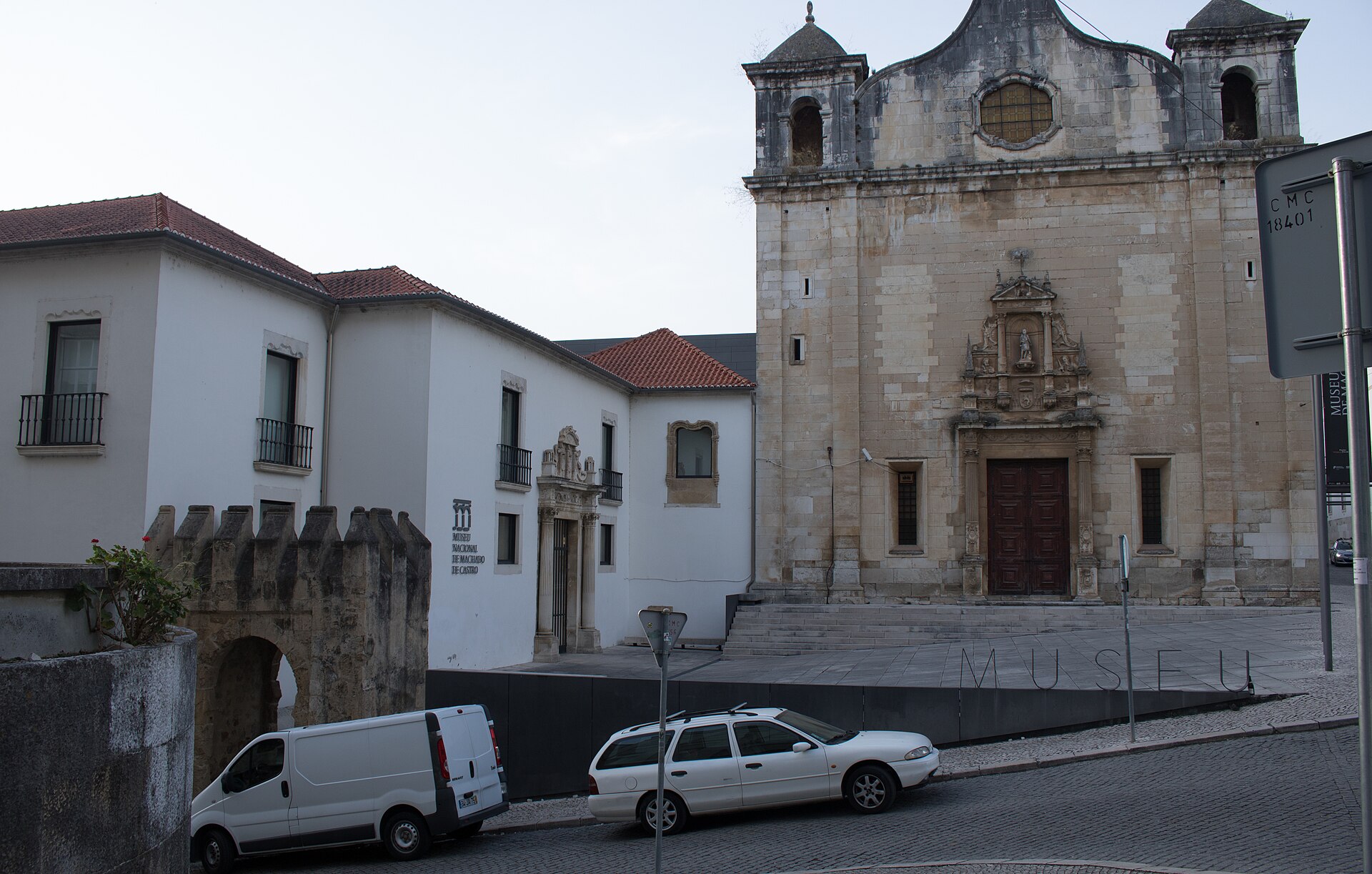
Segovia, Spain: 14 Best Things to See and Do

TL;DRSegovia in Spain comes with 14 essential tips, topped by the ancient Roman aqueduct, built from more than 20,000 granite blocks without a scrap of mortar, the fairytale Alcázar castle with its 152-step tower, and the Gothic cathedral known as the Lady of Cathedrals. From Madrid, the AVE train gets you there in under 30 minutes, and one or two days is enough to cover the main sights. Spring and autumn are the best times to go, with temperatures around 20 to 25 degrees, while summer brings scorching heat above 40°C. Round off your trip with a visit to the La Granja de San Ildefonso palace, about ten kilometres away, and a taste of the local speciality, cochinillo asado.

If you’re planning a trip to central Spain and looking for the perfect day trip or weekend escape from the bustling capital, the medieval city of Segovia, Spain will absolutely enchant you. This picturesque town perched on a rocky ridge in the Castile and León region offers a fascinating journey through the centuries — from ancient Rome through the golden age of Spanish kings to the present day. While nearby Madrid buzzes with the endless energy of its grand boulevards, Segovia maintains a more intimate and wonderfully romantic atmosphere filled with narrow alleyways and ancient monuments.

Thanks to modern infrastructure, getting here is incredibly easy, making the city one of the most popular day trip destinations for anyone spending their holiday in the Spanish capital. Be prepared to be blown away by monumental structures and sweeping views of the rugged yet beautiful Castilian landscape the moment you arrive. Let’s explore the very best that this UNESCO-listed historic city has to offer.

TL;DR

  • Fastest route: High-speed AVE trains whisk you from Madrid to Segovia in under 30 minutes.
  • Roman aqueduct: A 1st-century engineering marvel held together without a single drop of mortar — the city’s iconic landmark.
  • Fairytale castle: Segovia’s Alcázar with its slate turrets is said to have been one of Walt Disney’s inspirations for his iconic castle.
  • Lady of Cathedrals: The local Gothic cathedral is the very last of its kind built in Spain, and its stunning stained-glass windows will take your breath away.
  • When to go: Spring and autumn are ideal — summers bring scorching heat across the region, while winters can be bitterly cold.
  • Local gastronomy: The city is famous for cochinillo (roast suckling pig), but you’ll also find plenty of excellent meat-free options in the local tapas bars.
  • Book ahead: Always buy tickets for the Alcázar and cathedral tower online in advance — they often sell out during peak season.

When to Visit Segovia

The geographic heart of Spain sits on a vast plateau surrounded by mountains, which has blessed it with a rather harsh climate. Locals often sum it up with a touch of humour, saying that Castile has nine months of winter and three months of hell. Winters here can be genuinely freezing, windy, and temperatures frequently drop below zero. If you visit between December and February, make sure to pack a really warm jacket and a hat — the biting wind can make strolling along the city walls a pretty miserable experience.

Summers, on the other hand, are scorching and incredibly dry. During July and August, temperatures regularly climb above 40 °C, and exploring the sun-baked stone streets becomes quite the endurance test. The historic centre also faces its biggest tourist crowds during the summer months, meaning long queues at the main attractions. If you’re after a more relaxed experience, it’s best to avoid the peak holiday season altogether.

The best time to visit is therefore without a doubt spring or autumn. During April, May, September, and October, you’ll enjoy lovely sunny weather with temperatures hovering around 20–25 °C. The countryside around the city turns beautifully green in spring and takes on gorgeous golden hues in autumn, adding the perfect atmosphere to your photos. One or two days is plenty to explore all the key sights.

Where to Stay in Segovia

💡 Tip for accommodation and experiences: We love searching for places to stay on Booking.com, which tends to have the best cancellation policies. For tickets, tours, and activities, it’s worth comparing options on GetYourGuide.

If you decide you’d rather not rush through the city on a quick afternoon trip and plan to spend a night, choosing the right accommodation is absolutely key. Segovia’s historic centre is fairly compact, so I’d recommend looking for a hotel right inside the old town or within easy walking distance of the aqueduct. You’ll save yourself loads of commuting time and have all the main sights literally just steps from your bed.

One of the best options is the charming Hotel Infanta Isabel, located right on the main Plaza Mayor. It offers gorgeous views of the cathedral, classically elegant rooms, and the perfect starting point for morning strolls before the day-trippers arrive from Madrid. Another excellent choice is the more luxurious Eurostars Convento Capuchinos, a sensitively restored former convent. Beyond its stunning architecture, guests will love the beautiful spa where you can unwind after a long day on your feet.

It’s definitely worth booking well in advance through platforms like Booking.com. The best hotels fill up fast, especially on weekends and during Spanish public holidays. If you’re arriving by hire car, pay close attention to parking. The historic centre falls within strict low-emission zones, and driving in without a special permit really isn’t worth the hassle. Always look for accommodation that offers its own dedicated car park or can advise you where to safely and legally leave your car on the outskirts of town.

14 Best Things to See and Do in Segovia

Let’s take a closer look at the specific places and experiences that make a trip to the heart of Castile absolutely worthwhile. You’ll find the city offers far more than just one iconic structure — there’s a rich mix of history, architecture, and jaw-dropping views waiting to be discovered.

1. The Stunning Roman Aqueduct

Right at the entrance to the historic centre, you’ll be greeted by the majestic Roman aqueduct — the undisputed symbol of the city and one of the best-preserved ancient structures in the world. This incredible feat of engineering likely dates back to the 1st century AD and spans directly above the bustling Plaza del Azoguejo. The most fascinating fact? The aqueduct is made up of more than 20,000 granite blocks assembled without a single drop of mortar.

At its highest point, the structure reaches nearly thirty metres, and its monumental arches look utterly surreal set against the backdrop of everyday city life. The aqueduct once carried water from mountains nearly seventeen kilometres away, and it remains a testament to the astonishing precision of ancient Roman engineers. Make sure to walk not just beneath it, but also head up to the surrounding viewpoints for the best perspectives.

💡 Top tip: To get the best photos without the tourist crowds, head up the steps known as Postigo del Consuelo, which you’ll find right next to the tourist information centre. From the upper terrace, a breathtaking panorama of the entire structure stretching deep into the city unfolds before you.

2. The Fairytale Alcázar Castle

At the opposite end of town, perched on a sheer cliff above the confluence of the Eresma and Clamores rivers, rises the incredibly photogenic Alcázar. This castle in Segovia, Spain, with its distinctive pointed slate turrets, looks as though it has leapt straight out of a storybook. It’s no wonder that, according to many sources, it served as one of the main inspirations for Walt Disney’s iconic castle, the one you know from the famous film studio’s logo.

Throughout its long history, the Alcázar has served as a fortress, a favourite residence of Castilian kings, a state prison, and an artillery academy. Inside, you’ll find lavishly decorated halls with magnificent coffered ceilings, collections of historic weapons, and suits of armour. Each room tells a different story from the golden era of the Spanish Empire and offers stunning views down into the deep valley below the ramparts.

Whatever you do, don’t miss the climb up the imposing Torre de Juan II. You’ll need to tackle 152 rather narrow spiral steps, but the panoramic views of the entire city and the surrounding Sierra de Guadarrama mountains are more than worth the effort. Buy your tickets online in advance to avoid unnecessary queuing in the courtyard.

3. The Majestic Cathedral on Plaza Mayor

At the highest point of the city stands a building rightfully nicknamed the Lady of Spanish Cathedrals. This awe-inspiring structure dedicated to the Virgin Mary was built in the 16th century and is the very last great Gothic cathedral constructed in Spain — at a time when the Renaissance was already in full swing across the rest of Europe. Its elegant pinnacles and flying buttresses dominate the entire Segovia skyline.

The interior will immediately impress you with its vast space, light, and magnificent stained-glass windows that shimmer in every colour. Wander through the peaceful cloister, which was moved here stone by stone from an older destroyed cathedral, and admire the richly decorated side chapels. Pay special attention to the main altarpiece made of marble and jasper.

Just as with the Alcázar, I’d recommend buying a special ticket for the cathedral tower. Guided tours run at set times and take you into fascinating spaces beneath the roof and up into the bell tower. The view from nearly 90 metres up, looking down onto the historic square and the labyrinth of old rooftops, is one of the most unforgettable experiences in the entire city.

4. A Stroll Through the Jewish Quarter (Judería)

South of Plaza Mayor stretches the historic Jewish Quarter, one of the best-preserved and most authentic corners of the entire city. Narrow winding lanes, stone houses, and shady little squares instantly transport you back to a time when different cultures coexisted relatively peacefully in Spain. This quarter was once home to one of the wealthiest and most influential Jewish communities in all of Castile.

During your walk, be sure to pop into the former Main Synagogue, which today serves as the Christian church of Corpus Christi. Although the interior has undergone many changes over the centuries, it still retains its distinctive Moorish arches and unique architectural features more reminiscent of palaces in Andalusia. If you’re interested in the history of southern Spain, have a look at our guide to Seville.

For a deeper understanding of this quarter’s history, stop by the Didactic Centre of the Jewish Quarter, housed in the beautifully restored home of patriarch Abraham Seneor. You’ll learn fascinating details about daily life, customs, and sadly, the tragic end of the community that was expelled from Spain at the end of the 15th century.

5. Medieval City Walls and Gates

Segovia still retains an almost complete ring of its original medieval walls, stretching over three kilometres in length and enclosing the entire historic centre. This massive defensive system was built from the 11th century onwards and protects the city on the sides where it wasn’t naturally shielded by steep cliffs. A walk along these ancient walls offers a completely different perspective and an escape from the busiest tourist routes.

Five main gates once pierced the walls, three of which survive today as beautifully restored gems. The most famous and most impressive is the Puerta de San Andrés on the southern side of the city. Its massive towers and portcullis still command respect and perfectly complement the medieval atmosphere of the place.

💡 Top tip: At the information centre right by the San Andrés gate, you can pick up a ticket and walk along the top of the city walls. The stroll along the rampart walkway isn’t particularly long, but it offers gorgeous and unusual views of both the rooftops of the old Jewish Quarter and the green valley of the River Clamores below the city.

6. Plaza Mayor

Every self-respecting Spanish city has its main square, and Segovia is no exception. Plaza Mayor is the true beating heart of the historic centre, where locals and visitors from around the world come together. The somewhat irregularly shaped square is elegantly lined with arcades hiding dozens of inviting cafés, traditional restaurants, and small shops.

Beyond the already-mentioned majestic cathedral, the square is home to several other notable buildings. Look out for the historic town hall with its neoclassical façade and the church of San Miguel. It was at this very church in 1474 that a momentous event took place — the famous Isabella of Castile was proclaimed Queen of Spain.

The square is the perfect spot for an afternoon coffee break. Grab a seat on one of the terraces, order a cortado, and simply watch the world go by. Just bear in mind that given the prime location right in the centre of the action, prices for drinks and food here will be a touch higher than in the quieter side streets.

7. Mirador de la Pradera de San Marcos Viewpoint

If you’re after the ultimate photo of the fairytale Alcázar, you’ll need to leave the historic centre and head down into the valley. The Mirador de la Pradera de San Marcos offers precisely that iconic view from below that you know from every travel brochure and magazine.

The green meadow on the banks of the River Eresma provides a stunning view of the sheer rock face topped by the castle itself. From here, you truly appreciate the strategic genius of the original builders — the fortress looks utterly impregnable from this angle. The whole scene is incredibly dramatic and majestic.

The best time to visit this viewpoint is definitely late afternoon or early evening. The sun beautifully illuminates the limestone cliffs and the slate turrets of the castle at that hour, creating gorgeous golden tones. You can also spread out a picnic on the grass and enjoy the peace away from the main tourist trails.

lukas a lucka
Lukáš and Lucie recommend
Where to stay in Segovia
3 accommodations — wellness hotels, hotels and other accommodation options

8. Gastronomy and Famous Restaurants

Castilian cuisine is hearty, honest, and built on quality local ingredients. Segovia is famous across Spain for one huge culinary tradition in particular: cochinillo asado, or roast suckling pig. Local restaurateurs slow-roast it in traditional ovens until the meat is impossibly tender and the skin perfectly crispy. Following an age-old custom, the meat is often carved in front of diners using nothing but a ceramic plate, which is then smashed on the floor to prove that no knife is needed.

If, like us, meat isn’t really your thing, don’t worry — you definitely won’t go hungry in Segovia. Spanish cuisine offers an abundance of excellent vegetarian options. Don’t miss the classic potato tortilla, superb patatas bravas with spicy sauce, or the beloved pimientos de Padrón — small green peppers fried in olive oil and sprinkled with coarse sea salt.

Another wonderful local dish is judiones de La Granja — large white beans from the nearby royal estate. Traditionally they’re often cooked with sausage, but many of the better restaurants will happily prepare a purely vegetable version that’s equally delicious. If you’d like to learn more about local specialities, check out our article on typical Spanish food.

9. The Mysterious Vera Cruz Church

While wandering through the valley below the Alcázar, you’ll come across a very unusual and somewhat isolated building. The Vera Cruz Church, dedicated to the True Cross, dates back to the early 13th century, and its architectural style will immediately catch your eye. Unlike typical churches, it has a completely unique dodecagonal (twelve-sided) floor plan modelled on the Church of the Holy Sepulchre in Jerusalem.

The building is historically linked to the mysterious Knights Templar, though modern historians tend to believe it was actually founded by the Order of the Holy Sepulchre. Either way, the atmosphere inside is incredibly mystical and serene. Bare stone walls and muted light instantly transport you deep into the era of the Crusades.

For a small admission fee, you can explore the central two-storey altar space where monks and knights once gathered for their secret rituals. Climbing to the upper level of the altar also reveals an interesting architectural detail and a lovely view into the nave of the church. Most tourists skip this gem, which is a real shame.

10. San Antonio el Real Monastery

If you’re keen to discover a spot where the usual tourist crowds rarely venture, head just beyond the historic centre to the San Antonio el Real Monastery. This unassuming building was originally built in the 15th century as a summer hunting lodge for King Henry IV of Castile, before the monarch later donated it to the Franciscan order and had it converted into a monastery.

The greatest treasure here is the absolutely breathtaking Mudéjar architecture, which blends Christian and Islamic artistic elements. You can admire magnificent polychrome wooden ceilings filled with geometric patterns that rank among the best-preserved in all of Spain. The craftsmanship of the Moorish artisans is simply extraordinary.

Today the monastery partly functions as a museum, and you’ll also find a beautifully preserved cloister, a historic chapter house, and valuable collections of Flemish tapestries. Visiting this tranquil spot provides a perfect contrast to the bustling streets around the Roman aqueduct and reveals an entirely different side of Spanish history.

11. House of Spikes (Casa de los Picos)

As you wander along the main pedestrian street from the aqueduct towards Plaza Mayor, you’ll come across a building that’s simply impossible to miss. Casa de los Picos, or the House of Spikes, is a 15th-century historic palace whose façade is adorned with exactly 617 granite blocks carved into diamond-point or pyramid shapes.

This highly unusual architectural feature was originally designed to give the building a fortress-like character, while also serving as a bold statement of the wealth and power of its owners, the prominent noble de la Hoz family. Thanks to its striking appearance, the palace quickly attracted attention and became one of the most recognisable townhouses in the city.

Today, the historic building houses an art school and exhibition hall. The palace courtyard is often freely open to the public, so don’t be shy about popping in for a look. You’ll frequently find interesting student exhibitions here, and it’s a great way to get a feel for how wealthy Renaissance-era patrician houses were laid out.

12. Plaza de Medina del Campo

If you continue along the main street Calle Real deeper into the centre, one of the most beautiful and elegant squares in the city opens up before you. Plaza de Medina del Campo often surprises visitors because its look is more reminiscent of a classic Italian piazza than a typical austere Spanish square.

The space is dominated by the stunning Romanesque church of San Martín, which boasts a unique ambulatory gallery with beautifully carved columns. Beside the church stands a statue of Juan Bravo, one of the heroes of the historic Comuneros revolt in the 16th century. The square is also surrounded by gorgeous old palaces belonging to the wealthy noble families that once controlled the wool trade.

Thanks to its cascading layout and wide staircase, this square is a popular spot for meeting up and taking a breather. Sit on a bench, listen to the street musicians, and soak up the details of the medieval architecture surrounding you on all sides.

13. Royal Palace of La Granja de San Ildefonso

If you have more time to explore the region, definitely set aside half a day for a trip outside the city. Just about ten kilometres from Segovia lies the stunning Royal Palace of La Granja de San Ildefonso, which is often — and quite rightly — nicknamed the Spanish Versailles. This enormous Baroque complex was built in the early 18th century by King Philip V, the first Spanish monarch from the Bourbon dynasty.

While the palace interior offers a dazzling showcase of royal luxury filled with crystal chandeliers and frescoes, the real star attraction is the sprawling French-style gardens. Spread across several hectares, you’ll find dozens of monumental fountains decorated with sculptures of Olympian gods. The water jet system works on the original 18th-century gravity principle — no modern pumps required.

💡 Top tip: Plan your visit strategically. The fountains don’t run all the time — they’re switched on only on specific days and at set times, usually during weekends in the spring and summer months. Always check the current schedule on the palace’s official website, because watching the water shoot dozens of metres into the air is a truly unforgettable spectacle.

14. Green Trail Along the Eresma River Valley

After a long day exploring stone monuments and sun-drenched streets, a dose of nature will be a welcome change of pace. Right below Segovia’s historic centre winds the picturesque and beautifully wooded valley of the River Eresma. A shady trail along the riverbanks offers the perfect escape from the summer heat and an ideal spot for a peaceful afternoon walk.

The path leads you past old abandoned mills, small monasteries, and historic bridges. The only sounds are the rush of water and birdsong, while the imposing walls and towers of the Alcázar loom directly above you. It’s exactly the kind of place where you can recharge away from the city buzz and gather energy for more travelling.

The full loop around the city is just under four kilometres and can be comfortably walked in about an hour and a half. Don’t forget to bring comfortable shoes and plenty of drinking water — there are no refreshment stands along the way.

Where to Go From Segovia

Thanks to its strategic location in the heart of Spain, the city makes an excellent springboard for further adventures. The most obvious connection is with the Spanish capital. If you’ve flown into Madrid, be sure to dedicate a few days to exploring the famous Prado and the Royal Palace. You’ll find plenty of inspiration in our comprehensive article about Madrid.

You can easily hop on a train to other amazing destinations too. Many travellers think about combining this trip with a visit to Toledo. ⚠️ However, I’d strongly advise against trying to squeeze both Toledo and Segovia into a single day. While it sounds like a great idea and logistically you can manage it via Madrid, the result will be an exhausting marathon with no chance to truly soak up the atmosphere of either city. Pick just one destination per day.

If you’re planning a longer Spanish road trip and heading south, don’t miss the beautiful Andalusia region. Check out our article full of tips on what to see in Córdoba, or let yourself be enchanted by the Alhambra in our guide to Granada. For lovers of the north and outstanding gastronomy, we’ve also got tips on what not to miss in the Basque San Sebastián and nearby Bilbao.

Frequently Asked Questions

Is one day enough to visit the city?

Yes, Segovia is fairly compact and you can comfortably see all the main sights like the aqueduct, cathedral, and Alcázar in one full day. However, if you want to soak up the evening atmosphere, explore the museums at a leisurely pace, and add a trip to La Granja palace, I’d recommend staying overnight and setting aside two full days for the region.

What’s the best way to get here from Madrid?

The fastest and most convenient option is the high-speed AVE or Avant trains that depart from Madrid’s Chamartín station. The journey takes just 28 minutes, and thanks to railway market liberalization, you can find tickets at very reasonable prices. Just be aware that the Segovia-Guiomar train station is located slightly outside the city, so you’ll need to take local bus number 11 to reach the historic center.

Is the city suitable for families with children?

Absolutely. Kids are guaranteed to be thrilled by the massive aqueduct and fairytale castle. Just keep in mind that the historic center is full of cobblestones, stairs, and fairly steep streets. Getting around with a regular stroller can be quite challenging, so it’s much better to bring an ergonomic baby carrier for younger children.

What is the famous cochinillo?

It’s a traditional local specialty, specifically a very young roast suckling pig. The meat is roasted in special wood-fired ovens and is renowned for being extremely tender. In many traditional restaurants, waiters demonstrate this by portioning it with the edge of an ordinary plate to prove to guests that they don’t need a knife to cut it.

Where can I park if I arrive by car?

Parking in the historic center is very complicated and subject to strict low-emission zone regulations. Foreign cars must register in advance through a complex process, and there are hefty fines from automatic cameras. Your best bet is to park at the large underground Parking Acueducto, which is located right at the edge of the old town and offers excellent accessibility.

Do I need to buy tickets in advance?

I strongly recommend it, especially during the summer months and on weekends. Alcázar tickets often sell out by morning, and the lines at the ticket offices can be really long. The same goes for the special guided tours of the cathedral tower, which have very limited capacity. Buying online will save you a lot of valuable time.

Is tap water drinkable?

Yes, tap water in the city is completely safe, drinkable, and very good quality. According to a recent Spanish law, all restaurants and bars must offer tap water to their customers completely free of charge. Just ask for a ‘vaso de agua del grifo’ when ordering and you’ll give your travel budget a nice break.

Tips and Tricks for Your Vacation

Don’t Overpay for Flights

Search for flights on Kayak. It’s our favorite search engine because it scans the websites of all airlines and always finds the cheapest connection.

Book Your Accommodation Smartly

The best experiences we’ve had when looking for accommodation (from Alaska to Morocco) are with Booking.com, where hotels, apartments, and entire houses are usually the cheapest and most widely available.

Don’t Forget Travel Insurance

Good travel insurance will protect you against illness, accidents, theft, or flight cancellations. We’ve had a few hospital visits abroad, so we know how important it is to have proper insurance arranged.

Where we insure ourselves: SafetyWing (best for everyone) and TrueTraveller (for extra-long trips).

Why don’t we recommend any Czech insurance company? Because they have too many restrictions. They set limits on the number of days abroad, travel insurance via a credit card often requires you to pay medical expenses only with that card, and they frequently limit the number of returns to the Czech Republic.

Find the Best Experiences

Get Your Guide is a huge online marketplace where you can book guided walks, trips, skip-the-line tickets, tours, and much more. We always find some extra fun there!
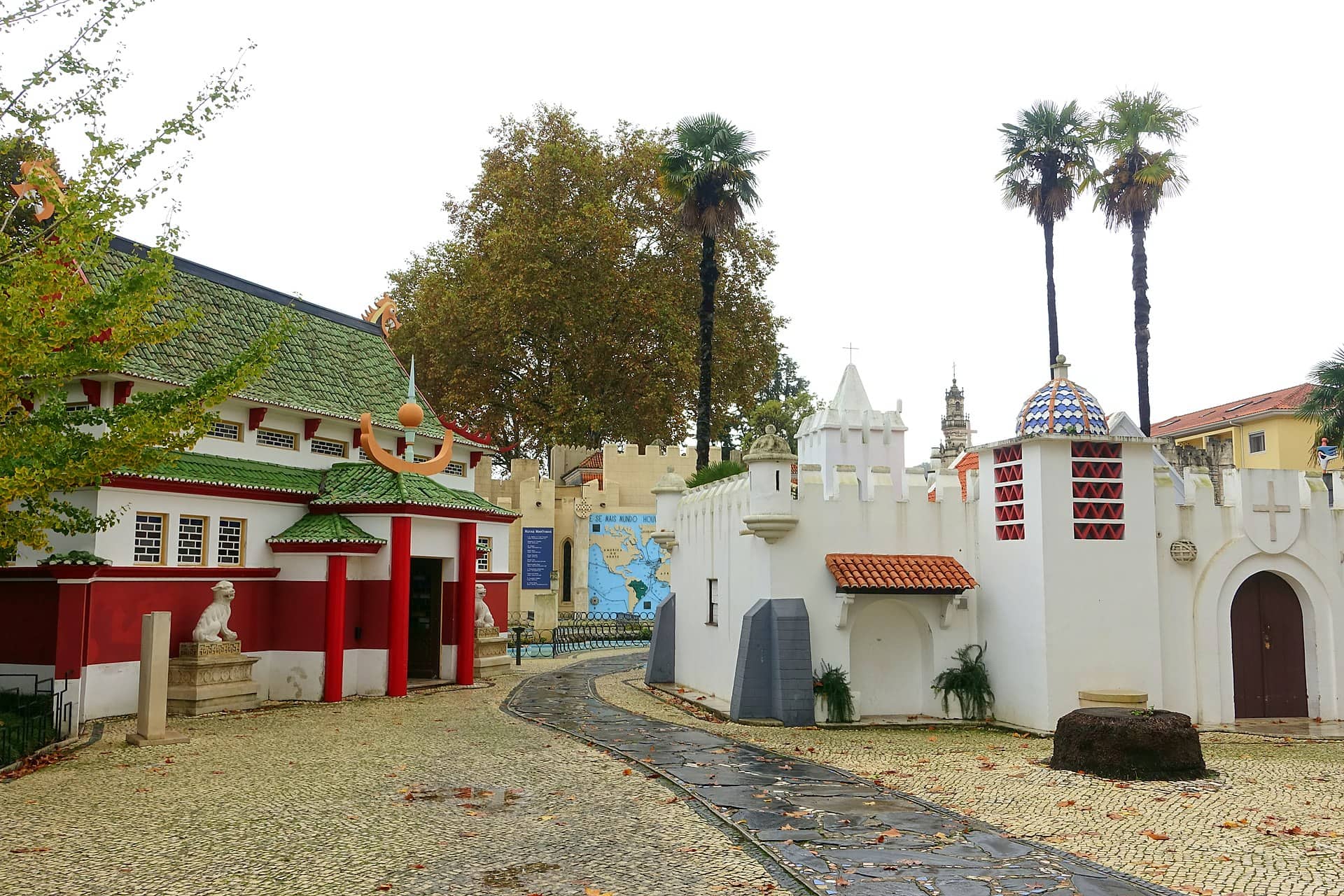
Gibraltar: What to See on Britain’s Rock Between Two Seas

TL;DRGibraltar, that tiny British territory on Spain’s southern tip covering under seven square kilometres, is built around the Rock of Gibraltar, with a cable car climbing to 412 metres, St Michael’s Cave, the Great Siege Tunnels, 55 kilometres of Second World War tunnels, and the glass Skywalk platform at 340 metres. You’ll also run into wild Barbary macaques, the only free-living primates in Europe, plus a walk straight across the airport runway just past the border, duty-free shopping on Main Street, and views of the African coast 21 kilometres away from Europa Point. One full day covers the main sights, the caves and the cable car, but it’s worth staying at least one night if you want the tunnels, a dolphin-watching boat trip and an evening in Ocean Village. The most pleasant weather, around 25 degrees, comes in May, June, September and October, while July and August bring heat above 35 degrees and the longest queues at the border. You’ll need a valid passport, and it’s best to leave the car in La Línea de la Concepción on the Spanish side and walk across.

The first time we drove along the sun-soaked coast of southern Spain, a massive limestone fortress suddenly appeared on the horizon out of nowhere. If you’re wondering what to see in Gibraltar, you’re in for an unforgettable treat. This tiny British Overseas Territory instantly transports you to another world. One moment you’re in scorching Andalusia, and the next you’ve crossed a border into a place brimming with red phone boxes, double-decker buses, and pubs serving pints of ale. Lukáš and I were absolutely fascinated by this political and geographical anomaly covering less than seven square kilometres. European and African influences blend seamlessly here, you pay in pounds, and a cheeky monkey will happily steal your lunch right off the top of the Rock. If you’re spending your holiday in southern Spain, this little piece of Britain is an absolute must-see.

TL;DR

  • Don’t forget your passport — Gibraltar isn’t part of the Schengen Area, and since Brexit, border controls have become significantly stricter.
  • Leave your car in Spain in the border town of La Línea de la Concepción and walk across — this can save you hours of queuing in traffic.
  • Right after the border, you’ll walk across a runway at the local airport — a truly bizarre experience you won’t find anywhere else.
  • The official currency is the Gibraltar pound, but card payments and euros are accepted everywhere — just expect a slightly worse exchange rate when paying cash.
  • A cable car takes you to the top of the Rock, but make sure to buy tickets online in advance to skip the long queues.
  • The local macaques are the only wild primates in Europe — never feed or touch them, as you’ll face hefty fines.
  • Bring a light jacket or jumper — it’s noticeably cooler and windier at the top of the Rock and inside the caves than down in town.

When to Visit Gibraltar

Choosing the right time to visit the southern tip of the Iberian Peninsula makes all the difference. We prefer coming here in spring or autumn. The ideal months are May, June, September, and October, when temperatures hover around a very pleasant 25°C. During this period, you can enjoy strolling through town and hiking up the Rock without drowning in sweat. The surrounding sea is also warm enough to combine your trip with a swim on the nearby Spanish beaches.

If you’re planning a summer visit, a word of warning. July and August bring scorching heat that regularly exceeds 35°C. The year 2025 brought extreme heatwaves across Andalusia, and exploring the baking town can turn into quite the endurance test. While the ocean breeze occasionally offers some relief on the Rock, the perceived temperature in direct sunlight is still brutal. Summer also means the longest queues at the border crossing.

Winter, on the other hand, is remarkably mild and very popular among digital nomads from northern Europe. In January and February, temperatures sit around 15 to 18°C, which is perfect for sightseeing and hiking. Just be prepared for the occasional rain shower, and swimming is definitely off the cards. The Rock of Gibraltar also has its own microclimate — it’s quite common for the sun to be shining below while the summit is wrapped in a thick cloud the locals call the Levanter.

Where to Stay in Gibraltar

💡 Accommodation & activities tip: We love searching for stays on Booking.com, which usually has the best cancellation policies. For tickets, tours, and activities, it’s worth comparing options on GetYourGuide.

Most visitors come here on a day trip from the Spanish Costa del Sol, but if you want to experience the evening atmosphere without the crowds, we’d definitely recommend staying overnight. Accommodation on British territory is relatively pricey, but it offers the full experience. A great choice is the Ocean Village area — a modern marina packed with luxury yachts, excellent restaurants, and bars. Here you’ll find the legendary five-star Sunborn Gibraltar, a hotel built on a huge permanently moored superyacht with absolutely stunning sea views.

If you’re after something with a bit of history, check out The Rock Hotel. This iconic institution has been standing since 1932 and has hosted guests like Winston Churchill and Sean Connery. The hotel sits slightly higher up the hillside, so its terrace and rooms offer the best views of the bay and the African coast. We always use Booking.com to search for accommodation, where even these upscale hotels can sometimes be snagged at a decent discount.

A considerably cheaper alternative is to stay just across the border in the Spanish town of La Línea de la Concepción. Hotel prices are half what you’d pay on the Rock, and you can walk to Gibraltar in fifteen minutes. A popular option here is the Ohtels Campo De Gibraltar, which has a lovely outdoor pool and upper-floor rooms with views directly onto the famous Rock. It’s the perfect compromise if you want to save on accommodation while still being among the first at the border crossing in the morning.

16 Things to See and Do in Gibraltar

Let’s dive into the best of what this fascinating little British territory has to offer — from wild monkeys and unique caves to views of another continent. Here’s how to dodge the crowds and what you absolutely shouldn’t miss.

1. Walking Across the Airport Runway on Winston Churchill Avenue

Your very first experience awaits right after passport control, and it’s something you genuinely won’t see anywhere else in the world. The main road into town crosses the runway of the international airport. Whenever a plane is landing or taking off, sirens sound, barriers come down, and all traffic — including pedestrians — simply stops. It’s exactly like a level crossing, except instead of a train, an enormous Airbus rolls past right in front of you.

This quirk exists for purely practical reasons — the territory is so tiny that there simply wasn’t anywhere else to put the airport. Walking right across the tarmac is an incredible experience, and every tourist stops here for photos. We were lucky enough to see a plane landing right in front of us — the noise and the blast of wind from the engines was unbelievable. In recent years, authorities have built an underground tunnel for cars, but pedestrians still proudly walk across the runway.

💡 Local tip: Check the airport website for arrival times beforehand. The barriers close for roughly ten to fifteen minutes, and it’s well worth waiting by the fence for the best view of a plane coming in to land.

2. Cable Car to the Top of the Rock (Gibraltar Cable Car)

The most comfortable and quickest way to reach the summit of Upper Rock is the cable car. The ride up takes just six minutes, whisking you up to 412 metres above sea level. As you ascend, a breathtaking panorama gradually unfolds — the town below, enormous ships waiting in the bay, and of course the African coast opposite. It’s an absolute must for every visitor.

During peak season, the queues at the bottom station can be truly horrendous. Buy your tickets online on the official website — this lets you skip the ticket office queue and head straight to the turnstiles. The cable car runs roughly every ten minutes, but service may be suspended in strong winds for safety reasons. At the top, you’ll find a café with fantastic views and your first encounters with the ever-present monkeys.

The return ticket is fairly expensive, which is why many people choose to take the cable car up and walk back down through the nature reserve. We recommend buying the combined Nature Reserve Ticket, which includes the cable car ride and entry to all the main attractions on the Rock. It’ll save you a good deal of money and the hassle of buying individual tickets.

3. Barbary Macaques (The Famous Gibraltar Apes)

This is without a doubt the biggest tourist draw of the entire territory. Gibraltar is the only place in Europe where primates live wild and free. These monkeys originally came from North Africa, and a famous legend surrounds them — it says that as long as apes live on the Rock, Gibraltar will remain under British rule. During World War II, their population dropped to just seven, prompting Winston Churchill himself to order more brought over from Morocco to boost morale.

Today, around three hundred live here, divided into several troops. They’re incredibly bold, completely used to humans, and have absolutely zero respect for your personal space. Never take food out in front of them and keep your bag zipped up and worn on your front — they can unzip a backpack in a flash and steal your snacks. We watched a man have an entire ice cream swiped from his hand before he even had time to blink.

It’s vitally important to remember that these are wild animals. Feeding the apes carries a draconian fine of up to £4,000. Don’t feed them, don’t touch them, and keep a safe distance. You’ll encounter the most around the upper cable car station and near St. Michael’s Cave. Watching the babies play on the railings with the sea stretching out behind them is a truly magical sight, though.

4. St. Michael’s Cave

Hidden within the bowels of the limestone Rock lies an enormous cave system that will leave you awestruck. St. Michael’s Cave is the largest and most spectacular of over 150 caves discovered here. People once believed it was bottomless and that a secret submarine tunnel connected Gibraltar to Africa — supposedly the route by which the monkeys arrived. During World War II, the space was prepared as a huge secret military hospital, though fortunately it never had to be used.

Today, the main chamber has been transformed into a unique concert hall. Thanks to the incredible acoustics and awe-inspiring stalactites, concerts and theatre performances are held here, with seating for up to four hundred people. The entire space is illuminated with colourful light installations that shift in time with the music. It’s perhaps a bit kitsch, but combined with the majestic rock formations, the effect is truly magical.

Inside, a constant temperature of around 14 to 16°C is maintained. If you visit during the scorching summer, this will be the most refreshing part of your day. The tour takes roughly thirty to forty minutes, and entry is included in the Nature Reserve Ticket. Well-built concrete walkways make the tour very easy-going.

5. Great Siege Tunnels

Gibraltar’s history is steeped in battles, and this labyrinth of tunnels is the finest proof. At the end of the 18th century, the Spanish and French attempted to recapture Gibraltar, resulting in a four-year siege known as the Great Siege. British soldiers had a major problem defending the northern face of the Rock because they couldn’t get cannons up there. So they decided to carve a tunnel straight through the limestone using nothing but hammers, chisels, and gunpowder.

The result is absolutely fascinating. They created a tunnel system over 1,200 metres long, with embrasures aimed directly at the Spanish positions. Today, you can walk through these cold, damp corridors. Along the route, mannequins of soldiers in period uniforms and old cannons bring the atmosphere vividly to life. We couldn’t help but admire the sheer grit it took to bore through solid rock with such basic tools.

💡 Local tip: The tunnels slope quite steeply downward, meaning you’ll have to walk the entire way back uphill at the end. Wear comfortable shoes and bring a bottle of water — the humidity inside is quite high.

6. Europa Point and Views of Africa

The southernmost tip of Gibraltar is where the Mediterranean Sea meets the Atlantic Ocean. On a clear day, Europa Point offers absolutely phenomenal views of the African continent — specifically the Rif Mountains in Morocco, just 21 kilometres away. It’s often seriously windy here, waves crash against the rocks, and the whole scene feels wonderfully wild and untamed.

The landmark here is the beautiful red-and-white Trinity Lighthouse from the 19th century, which still guides ships through the busy strait today. Just a short walk away stands the grand and ornately decorated Ibrahim-al-Ibrahim Mosque, a gift to the local Muslim community from the King of Saudi Arabia. The contrast of traditional British architecture, an Islamic temple, and African mountains in the background is simply perfect.

You can easily get here on city bus number 2 from the town centre. The fare is just a couple of pounds and the journey takes about fifteen minutes. Near the lighthouse, you’ll also find a small café and the huge Harding’s Battery cannon, a remnant from the days of military fortification. We recommend timing your visit for late afternoon, when the light for photographing Africa is at its best.

7. Main Street and Duty-Free Shopping

The heart of the town beats along Main Street, a long pedestrianised thoroughfare lined with shops, pubs, and historic buildings. The whole street looks as though someone plucked a typical English high street and plonked it in the sunny south. You’ll find classic British shops like Marks & Spencer, perfumeries, jewellers, and electronics stores. The buildings sport ornate balconies that blend British stiffness with Andalusian elegance.

Gibraltar is a duty-free zone, making it a shopper’s paradise. The best deals are on perfumes, cosmetics, alcohol, and tobacco, all of which are significantly cheaper than in Spain or back home in the UK. Electronics prices aren’t as competitive these days, but you can still stumble upon the odd bargain. Just be mindful of customs allowances when returning to Spain — Spanish customs officers do spot-check bags and car boots.

Although the official currency is the Gibraltar pound (pegged at the same value as sterling), euros are accepted everywhere on Main Street. However, shopkeepers often give an unfavourable exchange rate and hand back change in pounds. We recommend paying by card everywhere (a multi-currency card like Revolut works brilliantly) — it avoids unnecessary conversion losses and means you won’t end up with coins that are useless anywhere else in the world.

8. Casemates Square and Local Food

At the northern end of Main Street, you’ll hit the largest square in town — Casemates Square. Historically, this was where public executions and military parades took place, but today it’s the liveliest hub, packed with outdoor terraces, cafés, and restaurants. Live music often plays at weekends, making it the ideal spot to sit back and soak up the incredible bustle of tourists and locals alike.

When it comes to food, the British influence runs deep. Most visitors head here for classic fish and chips or a hearty Full English breakfast. As vegetarians, Lukáš and I opted for the superb Indian food instead — the British connection means there are fantastic Asian restaurants here. We had an excellent vegetarian curry at a restaurant on the corner of the square, and we’d also highly recommend trying the local tapas bars, which clearly show the Spanish influence from just across the border.

Come evening, the square transforms into a massive open-air pub. Beer prices are very reasonable, and you can sample traditional British ales alongside local craft brews. Whether you need to fuel up before climbing the Rock or unwind after a shopping spree, Casemates Square is always a safe bet.

lukas a lucka
Lukáš and Lucie recommend
Where to stay in Gibraltar
4 accommodations — wellness hotels, hotels and other accommodation options

9. Moorish Castle

Looking up at the northern face of the Rock, your eye will inevitably be drawn to an ancient fortress with a Union Jack fluttering above it. The Moorish Castle dates back to the 11th century, when the territory was ruled by the Moors, and is one of the oldest surviving monuments in the area. Of the original sprawling complex that once reached all the way down to the sea, the imposing Tower of Homage is the main structure still standing today.

Get closer and you’ll notice deep scars on the tower walls. These are marks from cannonballs fired during the many battles and sieges this strategic fortress has endured over the centuries. Inside the tower, you can explore well-preserved Moorish baths, and from the top there are lovely views of the airport runway and the Spanish borderlands. Fun fact: part of the castle complex actually served as the local prison until as recently as 2010.

Entry to the castle is included in the combined Rock ticket. The path up leads through fairly steep lanes from the town centre, so you’ll break a sweat, but it’s well worth it. It makes a great first stop if you decide to conquer the Rock on foot and want to save on the cable car.

10. The Skywalk Glass Viewing Platform

If you don’t suffer from vertigo, you’ll absolutely love this one. The Skywalk is a modern viewing platform with a glass floor that juts out from the Rock at a height of 340 metres, directly above a sheer cliff face. It was built on the foundations of an old anti-aircraft battery from World War II and was officially opened in 2018 by actor Mark Hamill — yes, Luke Skywalker himself.

Standing on the thick glass with hundreds of metres of empty space beneath your feet is quite the adrenaline rush. The platform is engineered to withstand wind gusts of up to 150 kilometres per hour, so there’s genuinely no need to worry about safety. The views of the eastern face of the Rock and the ship-filled bay are simply spectacular from here. On clear days, you can see dozens of kilometres along the Spanish coastline.

💡 Local tip: The viewing platform sits roughly halfway between the upper cable car station and St. Michael’s Cave. Troops of macaques often lounge around here, using the smooth glass to sunbathe, giving you a brilliant opportunity for some unusual photos.

11. Windsor Suspension Bridge

Another brilliant attraction for thrill-seekers awaits in the western part of the nature reserve. The Windsor Suspension Bridge is a 71-metre-long footbridge spanning a deep gorge at a height of roughly fifty metres. Only opened in 2016, it quickly became one of the most popular photo spots on the entire Rock.

Step onto the bridge and it begins to gently sway underfoot, adding just the right touch of adventure. From the middle, you get a stunning view of the entire town and the dockyards in the bay — it’s only from this perspective that you truly appreciate how steeply the town climbs the hillside. If swaying bridges aren’t your cup of tea, don’t panic — a solid rocky path runs alongside the gorge, letting you bypass the bridge entirely.

We recommend heading here early in the morning or late in the afternoon. Around midday, bottlenecks of tourists often form as people stop in the middle for selfies, which can make the crossing painfully slow. The bridge lies on the Royal Anglian Way, one of the gentler and more pleasant walking trails in the reserve.

12. Hiking the Mediterranean Steps

For those of you who love a proper physical challenge and stunning nature, there’s one very special trail. The Mediterranean Steps is a steep, demanding path that winds along the sheer eastern face of the Rock from Jew’s Gate all the way to the summit at O’Hara’s Battery. It was originally built by British soldiers as a communication route between defensive positions.

This trail offers the wildest and most unspoilt views anywhere on Gibraltar. You’ll literally walk along the edge of a cliff, seagulls circling overhead and the deep blue sea far below. The route is full of steep stone steps that will have your thighs burning. Lukáš and I toyed with the idea, but given the summer heat, we ultimately chickened out and took the rather more civilised cable car instead 😅.

This trek definitely isn’t for everyone. In summer, only attempt it early in the morning before the sun hits the eastern face, as there’s absolutely no shade on the trail. Wear sturdy footwear, bring plenty of water, and allow roughly an hour and a half of intense uphill climbing.

13. World War II Tunnels

Don’t confuse these with the Great Siege Tunnels! While those were hand-carved in the 18th century, these tunnels form a vast underground city built during World War II. When there was a real threat that fascist Spain and Germany might attack, the British carved an incredible 55 kilometres of tunnels into the Rock. That’s actually more than the total length of all the above-ground roads on the territory.

The underground complex housed hospitals, bakeries, power stations, and accommodation for an astonishing 16,000 soldiers who could survive here for months in complete isolation. The guided tour takes just under an hour and is a profoundly powerful experience. Guides often share stories of soldiers spending entire weeks in the cold, dark underground without a glimpse of daylight.

Entry to these tunnels is usually not included in the standard Rock ticket and is paid for separately. It’s genuinely cold and damp inside, with temperatures hovering around 12°C, so even in the sweltering summer, definitely bring a long-sleeved layer. It’s a fascinating showcase of British military engineering.

14. Alameda Botanical Gardens

If you need a break from the tourist crowds on Main Street or atop the Rock, we’ve got a hidden gem for you. The Alameda Botanical Gardens are a gorgeous green oasis of calm, located just a short walk from the lower cable car station. They were established back in 1816 and originally served as a recreational space for British soldiers.

You’ll find an incredible collection of subtropical plants, towering palms, cacti, and beautifully flowering hibiscus. Small streams trickle through the park, there are lily ponds and benches tucked away in deep shade. It’s the perfect spot to sit down with a coffee and simply relax for a while. Best of all, entry to the gardens is completely free.

The grounds also include a small wildlife park (Alameda Wildlife Conservation Park) that cares for confiscated smuggled animals and injured wildlife. The gardens are a popular wedding venue, so don’t be surprised if you bump into a wedding party at the weekend. If you love nature and tranquillity, you’ll adore this place.

15. Dolphin Watching in the Bay

The waters around Gibraltar and in the adjacent bay teem with marine life. The Bay of Gibraltar is one of the best spots in Europe for watching wild dolphins, with three different species living here year-round. Boat trips depart several times daily from Ocean Village marina and last roughly an hour and a half.

Local operators take sustainable tourism and ecology very seriously. Boats approach the dolphins slowly and respectfully so as not to disturb them, and it’s common for curious dolphins to swim right up to the bow and play in the waves. Seeing an entire family of dolphins leaping from the water with the massive Rock as a backdrop is simply priceless.

💡 Local tip: Book your tickets at least a day in advance — in summer, boats sell out very quickly. Many operators also offer a guarantee: if you don’t spot any dolphins, you’ll get a free ticket for another trip (though the success rate is reportedly over 95%).

16. Ocean Village Marina

While Main Street breathes history, Ocean Village showcases Gibraltar’s sleek modern face. This luxury yacht marina is lined with contemporary apartments, glass-fronted casinos, and dozens of excellent restaurants. Some of the world’s most expensive superyachts dock here, often sailing in purely to fill up on cheaper tax-free fuel.

In the evening, the whole area lights up beautifully and becomes the hub of the nightlife. The centrepiece of the marina is the aforementioned Sunborn Yacht Hotel — a gigantic cruise ship permanently moored here that operates as a five-star hotel and casino. Even if you’re not staying, you can pop in for a drink at their rooftop bar, which has cracking views of the illuminated Rock.

Despite all the glitz, there are places here for every budget. We grew fond of several Asian restaurants offering superb meat-free sushi and vegetarian noodles, while just a few doors down, Brits sat nursing traditional pints. It’s a brilliant spot to wind down after a long day of exploring and simply soak up that one-of-a-kind Mediterranean-British atmosphere.

Day Trips from Gibraltar

If you’ve hired a car in southern Spain, a whole world of day-trip options opens up. The entire region is tailor-made for exploration.

  • Costa del Sol: Just beyond the border, the famous Sun Coast begins. For tips on beaches and culture, check out our article on Málaga, packed with advice for the region.
  • Romance in the mountains: About an hour and a half’s drive inland lies a town split in two by a dramatic gorge. Read all about it in our guide to Ronda.
  • Adrenaline on a trail: If you love heights (and enjoyed the suspension bridge on the Rock), you can’t miss the famous King’s Pathway. Find everything about tickets and the route in our article on Caminito Del Rey.
  • The ultimate road trip: Planning to explore all of southern Spain? We’ve prepared a complete Andalusia itinerary with the 20 most beautiful places and a map.
  • Foodie corner: Once you’re back in Spain and feeling peckish, read up on what to order in our guide to traditional Spanish food.

Frequently Asked Questions

Do I need a passport for Gibraltar?

Yes, since Brexit you need a valid passport to enter the territory. An ID card may not be sufficient at border control, as the rules have become significantly stricter. Without a passport, neither Spanish nor British customs will let you cross the border, so definitely don’t leave it at your hotel.

Can I pay in euros there?

The official currency is the Gibraltar pound, which is pegged to the British pound at 1:1. Euros are commonly accepted in shops and restaurants, but merchants set their own exchange rates, which are often unfavorable. Your best bet is to pay everywhere by card or withdraw pounds from an ATM.

Should I drive to Gibraltar?

Definitely not! Border queues can last several hours during peak season, and parking in town is very expensive and limited. Your best option is to park in the underground garages in the Spanish town of La Línea de la Concepción and simply walk across the border.

How much time do I need for a visit?

One full day is enough to see the main sights, take the cable car up the Rock, visit the caves, and stroll down Main Street. However, if you want to explore all the military tunnels, take a boat trip to see dolphins, and enjoy the evening atmosphere at the harbor, we recommend staying at least one night.

Is Gibraltar safe?

It’s one of the safest destinations in Europe. Crime is virtually non-existent. The only ‘danger’ comes from the local monkeys, which can bite if you try to feed or pet them. Also watch your backpacks—the monkeys are masters at stealing snacks.

Can I walk up the Rock for free?

Access to the nature reserve at the top of the Rock is always charged, even if you walk. You need to purchase a Nature Reserve Ticket, which grants you entry to the area and includes admission to the caves and tunnels. The cable car itself is then an additional charge.

Does European mobile data work there?

Watch out for this! After Brexit, Gibraltar is no longer covered by automatic free European roaming. Some Czech operators charge astronomical rates for data here. It’s better to turn off data roaming before crossing the border, or get an e-SIM card with a local data package.

Tips and Tricks for Your Vacation

Don’t Overpay for Flights

Search for flights on Kayak. It’s our favorite search engine because it scans the websites of all airlines and always finds the cheapest connection.

Book Your Accommodation Smartly

The best experiences we’ve had when looking for accommodation (from Alaska to Morocco) are with Booking.com, where hotels, apartments, and entire houses are usually the cheapest and most widely available.

Don’t Forget Travel Insurance

Good travel insurance will protect you against illness, accidents, theft, or flight cancellations. We’ve had a few hospital visits abroad, so we know how important it is to have proper insurance arranged.

Where we insure ourselves: SafetyWing (best for everyone) and TrueTraveller (for extra-long trips).

Why don’t we recommend any Czech insurance company? Because they have too many restrictions. They set limits on the number of days abroad, travel insurance via a credit card often requires you to pay medical expenses only with that card, and they frequently limit the number of returns to the Czech Republic.

Find the Best Experiences

Get Your Guide is a huge online marketplace where you can book guided walks, trips, skip-the-line tickets, tours, and much more. We always find some extra fun there!
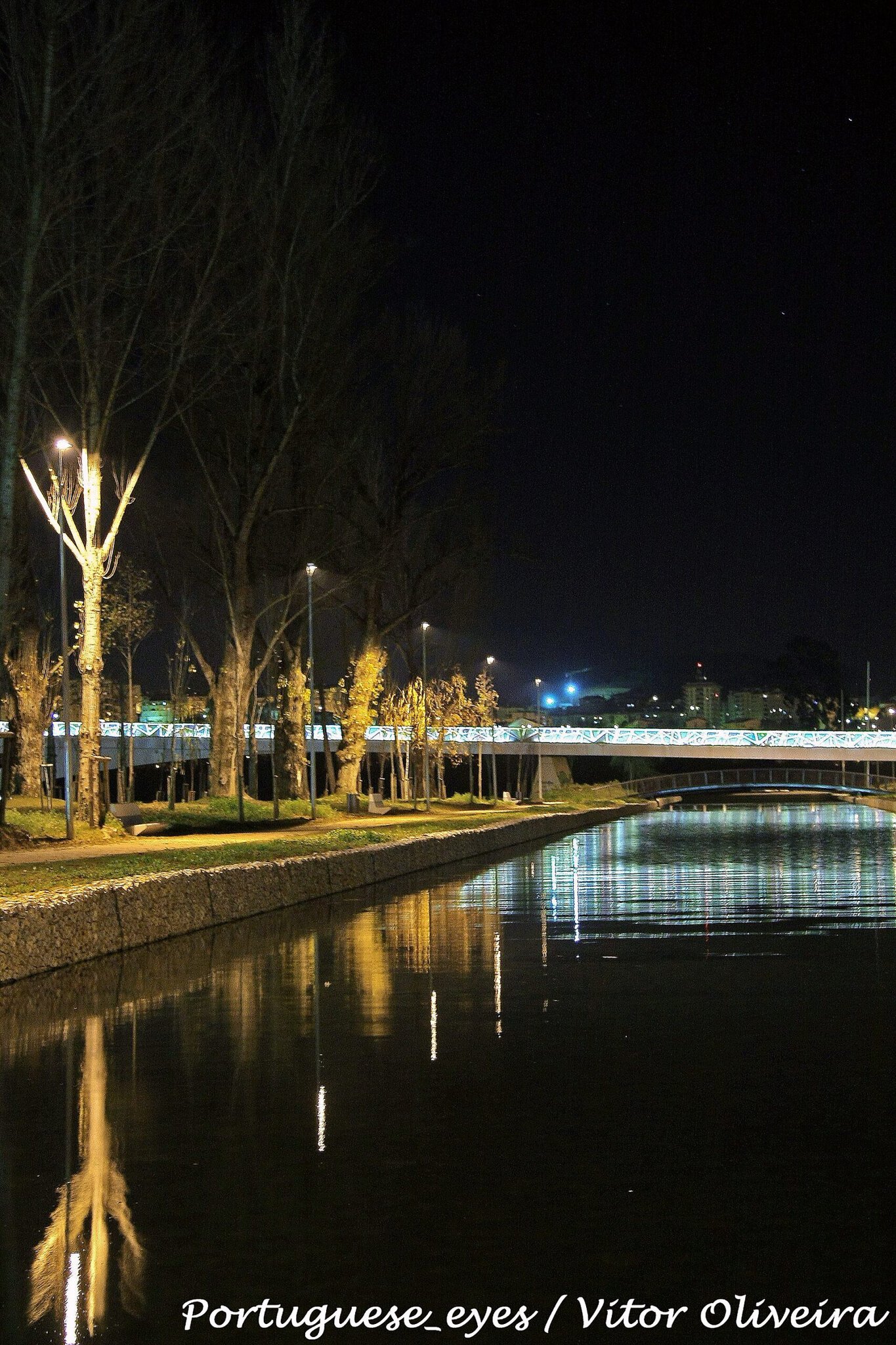
Alhambra in Granada, Spain: Tickets, How to Buy Them & What to See 2026

TL;DRBook Alhambra tickets online through the official site, tickets.alhambra-patronato.es, ideally the same day you book your flights — daily capacity is capped at 6,500 to 8,500 visitors, and slots can sell out up to three months ahead in high season. Set aside at least half a day, realistically three to four hours, to cover the Nasrid Palaces, the Generalife gardens and the Alcazaba fortress. You’ll need your original passport or ID card at the entrance and again before the palaces, and turning up late for your Nasrid Palaces slot means you won’t get in, full stop. The best time to go is May to mid-June or September and October, when temperatures sit at a pleasant 20 to 25 degrees, whereas July and August bring 35 to 40 degrees. If everything’s sold out, cancelled tickets tend to go back on sale around two hours before the slot in question.

When Lukáš and I first drove through Andalusia, I still remember the sheer awe we felt as Granada appeared before us at the end of those parched roads. It’s a city that leans against the snow-capped peaks of the Sierra Nevada on one side, while hiding the greatest Moorish treasure in all of Europe on the other. The Alhambra palace in Granada, Spain isn’t just an ordinary palace — it’s literally a city within a city, breathing out a melancholic, oriental atmosphere. Whenever I think of that ever-present sound of running water and the scent of blossoming orange trees, I instantly want to pack my bags. That’s exactly why I’ve put together this in-depth guide on the Alhambra in Granada, Spain: tickets, how to buy them and what to see 2026 — because without careful planning, you simply won’t get in. I’ll explain how the tricky reservation system works, give you advice on parking, and share my tips on what you absolutely shouldn’t miss in the city.

TL;DR

  • Buy your tickets the moment you book your flights. Capacity is strictly limited to roughly 6,500–8,500 visitors per day, and in peak season it can sell out up to three months in advance.
  • Watch your time slot for the Nasrid Palaces. When buying your ticket you choose an exact time slot, and if you’re even a few minutes late, the guards will turn you away without mercy.
  • The official website is essential. Always buy your tickets through the official portal (tickets.alhambra-patronato.es) — resellers tend to be needlessly expensive.
  • Don’t forget your original passport or ID card. At the entrance, the names on the tickets are carefully checked against your identity document.
  • Set aside at least half a day. The complex is enormous — you’ll walk through the fortress, the summer gardens and several palaces, so forget about a quick one-hour visit.
  • Granada offers free tapas. It’s one of the last cities where you automatically get a small plate of food with your drink, at no extra charge.

When to Visit Granada in Spain

If you have even a little flexibility, steer well clear of inland Andalusia in July and August. Temperatures in Granada and the surrounding valleys regularly hit 35–40 °C, and any activity beyond the reach of air conditioning will physically wear you down. The streets fall empty during the day, and 2025, for example, brought some of the hottest months on record, with heatwaves crushing the entire region. Wandering across the Alhambra’s sun-baked ramparts in that kind of furnace is honestly no fun at all. Try to plan your trip outside the biggest summer extremes.

The ideal window for a visit is spring, meaning May to mid-June, and autumn during September and October. In spring the whole city is intoxicatingly fragrant with blossoming orange trees and the surrounding hills glow with fresh green. Autumn, meanwhile, promises very stable sunny weather with absolutely ideal temperatures of around 20–25 °C, when you can comfortably walk between the sights all day long. Just watch out for the Easter period, known as Semana Santa, when crowds of pilgrims and tourists pour into the city, accommodation prices shoot up, and tickets to the sights vanish at lightning speed.

Where to Stay in Granada

💡 Tip for accommodation and experiences: We love searching for places to stay on Booking.com, where the cancellation terms tend to be the best. For tickets, tours and activities, it’s worth comparing options on GetYourGuide.

Choosing where to stay in Granada depends mostly on whether you’re arriving by car. The gorgeous historic Albaicín quarter is incredibly romantic, but it’s a maze of narrow, very steep lanes where a car simply won’t fit. We prefer hotels in the more modern centre or on its edge, from where you can walk everywhere on foot and spare yourself the stress of navigating medieval one-way streets. Booking offers plenty of great options for every budget.

If you’re after something truly special, the hugely popular Hotel Casa 1800 Granada sits in a historic building and offers an absolutely luxurious breakfast and a magical patio. For lovers of maximum comfort and history, there’s the famous Parador de Granada, which lies right inside the grounds of the Alhambra itself — staying there is an unforgettable experience. The golden middle ground, with an excellent value-for-money ratio, is the Áurea Washington Irving, a beautiful hotel with a pool located just a few steps from the main entrance to the palace complex.

12 Things to See and Do in the Alhambra and Granada

Exploring Granada and its famous palace complex calls for a bit of strategic planning. To make it easier for you, Lukáš and I have put together a detailed list of twelve things you should focus on.

1. The Nasrid Palaces (Palacios Nazaríes)

This is the absolute heart of the entire Alhambra and the main reason travellers come here from all over the world. The Nasrid Palaces represent the very pinnacle of Moorish architecture in Europe, where Islamic art reached an incredible level of perfection. You’ll walk through rooms where the walls are covered in stucco as delicate as the finest lace, and ceilings that resemble an endless starry sky. Every detail here had its meaning, and the lavishness of the palaces was meant to astonish every ambassador who entered.

The most famous part is undoubtedly the Court of the Lions, with its iconic fountain supported by twelve marble lions. The ever-present sound of running water symbolised paradise on earth in the hot Andalusian climate, and to this day it has an incredibly calming effect. Just remember that this is exactly where your ticket has that strict time slot marked, and you mustn’t be late.

💡 Tip: Join the queue for the Nasrid Palaces a good twenty minutes before your scheduled time, so you can be sure they let you through the turnstiles in time.

2. The Generalife Gardens and Summer Palace

When the sultans had had enough of the bustle of the main palaces, they retreated to rest at the Generalife. This beautiful summer palace with its breathtaking gardens sits on a neighbouring hill just a short distance from the main fortress, and offers a slightly different, far greener experience. While the main palaces impress with their architecture, here it’s nature and the gardeners’ flawless work that take centre stage.

The whole space is threaded with a sophisticated system of water channels, fountains and pools. The running water naturally cooled the air and created a pleasant microclimate even in the fiercest summer heat. Be sure not to miss the Patio de la Acequia, a long courtyard lined with water jets that form a perfect arch over the water’s surface. It’s probably the most photogenic spot in the entire gardens.

3. The Alcazaba Fortress

If you’re interested in military history, the Alcazaba certainly won’t disappoint. It’s the oldest surviving part of the entire complex, serving purely as a military fortress to defend the city. Today, only the massive walls, the foundations of the barracks and the watchtowers remain, but even so, this place radiates respect and the immense strength of its ancient builders.

I definitely recommend climbing right to the very top of the Torre de la Vela tower. Your reward will be the most beautiful panoramic view over all of Granada, and in good weather you can see all the way to the snow-capped peaks of the Sierra Nevada. Incidentally, it was on this very tower that the Christian flag was raised in 1492 after the city was conquered, symbolically ending Islamic rule in Spain.

4. The Palace of Charles V

After walking through the delicate, ornate Moorish palaces, this building will probably give you a bit of an architectural shock. The Palace of Charles V is a massive Renaissance building commissioned by the Christian emperor, right in the middle of the fragile Moorish architecture. He wanted to clearly demonstrate the dominance of the new religion and the power of his empire.

From the outside the building looks like a massive square block, but the moment you step inside, you’ll be surprised by a perfect circular courtyard lined with two storeys of Doric and Ionic columns. Interestingly, there’s no entrance fee for this palace, and inside you’ll find two museums dedicated to the art and history of the Alhambra itself. It beautifully illustrates the blending of cultures that is so typical of all of Andalusia.

5. Your Ticket-Buying Strategy

This is probably the single most important point in the whole article. No other monument in Spain requires such strict planning as the Alhambra. Daily capacity is strictly limited to 6,500–8,500 visitors, and tickets go on sale roughly three months in advance. International forums are full of desperate travellers who left it to the last minute and never got in. The rule is simple: buy your tickets on the very same day you book your flights.

Buy your tickets exclusively online through the official portal tickets.alhambra-patronato.es, where you’ll find the best prices without reseller mark-ups. The biggest bottleneck is the aforementioned Nasrid Palaces, where the morning and late-morning slots vanish from the listings at lightning speed. If you’re travelling in summer or during Spanish holidays, don’t hesitate for a second, otherwise you’ll be left with nothing but garden tickets and no access to the main palaces.

6. Last-Minute Chances for Tickets

So what do you do if you’ve underestimated the situation and the tickets are hopelessly sold out online? Luckily, there’s a lifeline, although it takes a fair dose of luck and nerves of steel. The monument’s administration releases cancelled and forfeited tickets back into the system, usually exactly two hours before the relevant time slot.

You simply have to sit down at your phone, keep refreshing the official website and hope that a ticket pops up. It’s quite the adrenaline rush, but plenty of people do manage to get into the palaces this way in the end. Another option is to book a more expensive guided tour through agencies on platforms like GetYourGuide, which often have their own pre-arranged allocations even when the official website is sold out.

💡 Tip: If you can’t get a ticket to the Nasrid Palaces, at least buy the basic ticket for the Generalife gardens and the Alcazaba fortress — it’s still well worth it.

lukas a lucka
Lukáš and Lucie recommend
Where to Stay in Granada
4 accommodations — wellness hotels, hotels and other accommodation options

7. The Mirador San Nicolás Viewpoint

Paradoxically, the very best view of the Alhambra isn’t found within its walls, but on the hill opposite. The Mirador San Nicolás viewpoint is an iconic spot where crowds gather in the evening to watch the sunset. The moment the setting sun turns the walls of the palace complex red and the sharp silhouettes of the mountains rise in the background, you’ll instantly understand why everyone trudges up such a steep hill to get here.

Expect it to be absolutely packed. The atmosphere is wonderfully enhanced by street musicians playing passionate flamenco, and small vendors selling all sorts of souvenirs. Lukáš and I love to sit on the little wall here, listen to the Spanish guitars, and simply watch the incredible architectural marvel in front of us.

8. The Labyrinth of the Albaicín Quarter

While you’re up at the San Nicolás viewpoint, set aside some time to explore the whole Albaicín quarter. This old part of the city still retains its original medieval Moorish layout and is quite literally a maze of narrow, very steep cobbled lanes. Getting lost here is essentially a must — and at the same time the best way to soak up the local historic atmosphere.

As you wander, you’ll come across snow-white houses interspersed here and there with the so-called cármenes, which are hidden private gardens with views of the Alhambra. It’s right here that you feel how Granada fell as the very last bastion of Islamic Spain in 1492, and how centuries of separation gave the city a character you won’t find anywhere else in the country. Be sure to wear very comfortable shoes for this walk, because the change in elevation here is really noticeable.

9. The Sacromonte Quarter and Flamenco

A little higher still above the Albaicín lies the fascinating Sacromonte quarter. It’s a traditional Roma settlement where, for centuries, residents took to living in houses carved directly into the rocky hillside. From a distance you’ll only see white façades, but all the rooms are hidden deep inside the hill, which once guaranteed pleasant coolness in summer and warmth in winter.

It was in these very caves that authentic flamenco was born. Today, cave performances known as zambra take place here, and although they now mainly target tourists and the entrance fee isn’t exactly the cheapest, the specific acoustics of the cramped space do their thing. They lend the dance and song such a raw, almost hypnotic power that it’ll give you goosebumps.

10. The Tradition of Free Tapas

Granada remains one of the last great Spanish cities that strictly upholds the old and beloved tradition of free tapas. It’s not some cheap tourist gimmick, but a completely ordinary way of eating for the locals. Here’s how it works: you order a small beer, a glass of wine or a tinto de verano, and the waiter automatically, at no extra charge, slides a small plate of food onto your table.

For us vegetarians it’s absolutely brilliant, because with the first drink we usually get delicious olives with local cheese or classic patatas bravas. With every additional drink the quality and size of the portion grows, so by the third one a small portion of vegetarian paella or vegetable croquettes might easily land in front of us. Other visitors commonly enjoy meatballs, fried little fish, or the renowned cured jamón ibérico ham. In the lanes around Plaza Nueva, just sweep through three such bars and you’ve got a full dinner for the price of a few drinks.

💡 Tip: If you don’t eat meat, always politely tell the waiter “soy vegetariana/o” when ordering your drink — they’ll usually prepare a meat-free version of the tapas with a smile.

11. What to Bring and What Not to Forget

You need to prepare well for a tour of the whole complex. The single most important thing is your original passport or ID card. The names on your purchased tickets are very carefully checked against your identity document at every turnstile, and a copy on your phone unfortunately won’t do. Without the original document, they simply won’t let you in.

Also, be sure to pack a large water bottle, which you can refill at the numerous drinking fountains scattered around the grounds. Set aside at least half a day for your visit — we routinely spend three to four hours of actual time inside the grounds. The complex is huge, you’ll walk kilometres over cobblestones and up steps, so genuinely forget about heels and bring the most comfortable trainers you can find in your suitcase.

12. How to Get to the Alhambra and Where to Park

The last but very important tip concerns transport. If you’re travelling in a rental car, I’ll warn you in advance: do not try to navigate through the historic centre and the lanes of the Albaicín. Blindly following your sat-nav into a tangle of medieval one-way streets usually ends in scratched bodywork and humiliating reversing. It’s better to leave your car in the modern part of town, or use the official paid car park right above the Alhambra — it’s pricier, but it’ll save you a world of stress.

From the city centre, you can reach the main entrance very easily even without a car. You can hike up the beautiful but steep Cuesta de Gomérez on foot straight from Plaza Nueva, which takes around twenty minutes of pleasant walking beneath the trees. If you don’t fancy the climb, a small red minibus marked C30 or C32 shuttles constantly from the centre and, for a small fare, takes you right up to the main gate of the palace complex.

Where to Go Next from Granada

Andalusia is made for long road trips, and once you’ve explored Granada, more wonderful possibilities open up. About two and a half hours’ drive to the west lies Ronda, a town dramatically perched on the edge of a deep limestone gorge. From there you can set off on a picturesque loop through the snow-white villages scattered across the mountains.

If you like a bit of adrenaline, on your way down to the sea you mustn’t miss the Caminito Del Rey, the famous walkway suspended high on the sheer walls of a gorge. You can beautifully tie the whole area together and plan a holiday in Málaga, where you can relax by the sea. For more inspiration on how to piece together your trip, I recommend our article Spain Holiday: 20 Most Beautiful Places in Andalusia, Itinerary and Map. And if you’re keen on history, read our Seville Guide to Andalusia or Córdoba: 15 Tips on What to See as well.

Frequently Asked Questions

How much time do I need to visit the Alhambra?

For a complete tour of the entire complex, including the Nasrid Palaces, Generalife gardens, and Alcazaba fortress, allow at least three to four hours. It’s a very extensive complex and you’ll walk several kilometers, so it’s best to plan for a half-day trip.

Do I need to bring my passport?

Yes, this is absolutely essential. At the entrance to the complex and before the palaces themselves, staff carefully check tickets against your original identity document (passport or ID card within the EU). Photos on your phone or copies are not accepted.

Where’s the best place to buy tickets?

Buy tickets as far in advance as possible exclusively on the official website tickets.alhambra-patronato.es. This way you’ll avoid unnecessary markups from various resellers and agencies that often resell tickets with huge margins.

What happens if I miss my time slot for the Nasrid Palaces?

The rules are completely uncompromising in this regard. If you miss your designated time slot for entry to the Nasrid Palaces by even a few minutes, the guards won’t let you in and you’ll permanently miss out on seeing this most beautiful part.

Is the Alhambra suitable for wheelchairs or strollers?

Partially yes, but it’s not ideal. The Generalife gardens and courtyards of the Palace of Charles V are reasonably accessible, but the Nasrid Palaces themselves have lots of steps, and the Alcazaba fortress is practically inaccessible for wheelchairs or strollers due to uneven terrain and staircases.

Can I bring my own food and drinks into the complex?

Definitely bring a bottle of water—plus there are plenty of drinking fountains throughout the complex where you can refill it. You can bring snacks, but consuming food is strictly forbidden in the palaces and historic buildings; eating is only allowed in designated areas with benches.

How far is it from the center of Granada?

From the main square Plaza Nueva, it’s about a twenty-minute walk to the main gate of the Alhambra along Cuesta de Gomérez street. Keep in mind, though, that the route is quite steeply uphill the entire way. Alternatively, you can use the small red minibuses running from the center.

Can I take photos and videos inside?

Yes, photography and filming for personal use is allowed in most of the complex. However, it’s strictly forbidden to use flash, large tripods, and selfie sticks to avoid damaging the delicate stucco work and to not obstruct other visitors.

Tips and Tricks for Your Vacation

Don’t Overpay for Flights

Search for flights on Kayak. It’s our favorite search engine because it scans the websites of all airlines and always finds the cheapest connection.

Book Your Accommodation Smartly

The best experiences we’ve had when looking for accommodation (from Alaska to Morocco) are with Booking.com, where hotels, apartments, and entire houses are usually the cheapest and most widely available.

Don’t Forget Travel Insurance

Good travel insurance will protect you against illness, accidents, theft, or flight cancellations. We’ve had a few hospital visits abroad, so we know how important it is to have proper insurance arranged.

Where we insure ourselves: SafetyWing (best for everyone) and TrueTraveller (for extra-long trips).

Why don’t we recommend any Czech insurance company? Because they have too many restrictions. They set limits on the number of days abroad, travel insurance via a credit card often requires you to pay medical expenses only with that card, and they frequently limit the number of returns to the Czech Republic.

Find the Best Experiences

Get Your Guide is a huge online marketplace where you can book guided walks, trips, skip-the-line tickets, tours, and much more. We always find some extra fun there!