Menorca, Spain: 18 Best Things to See and Do

TL;DRMenorca is the quieter, undeveloped Balearic island, protected as a UNESCO biosphere reserve and perfect for families and nature lovers. This guide rounds up 18 concrete ideas of what to see and do — from the historic towns of Ciutadella and Mahón to the island’s finest beaches, including Cala Macarella, Cala Turqueta and Cala Mitjana, plus the prehistoric stone monument of Naveta des Tudons. The 185-kilometre Camí de Cavalls trail loops right round the island and works well for both walking and cycling. May, June, September and October are the best months to visit, with sea temperatures hitting 28°C in August. Allow five to seven days for the island, and budget for a tourist tax of 1 to 4 euros per person, per night.

If you’re thinking about heading to the Balearic Islands this summer and you’re after somewhere genuinely peaceful, let me tell you one thing straight away. Menorca, Spain is exactly the kind of untouched paradise you won’t want to leave when your holiday is over. While the neighbouring islands lure visitors with endless parties and sprawling hotel complexes, this quieter sister jealously guards its stunning natural landscape. The entire island functions as a UNESCO-protected Biosphere Reserve, which in practice means you won’t find any motorways or ugly concrete resorts blighting the coastline.

Instead, you can look forward to a tangle of romantic country lanes lined with traditional dry-stone walls. Waiting for you are coves with dazzlingly white sand that rival the Caribbean for beauty, with water in extraordinary shades of turquoise. If you enjoy a slower pace of travel, the scent of pine forests and the rustic charm of historic small towns, you’re going to absolutely love this island.

In this detailed guide you’ll find 18 things to see and do in Menorca so you can get the absolute most out of your trip. Alongside famous beaches like Cala Macarella and Cala Turqueta, we’ll also explore the mysterious prehistoric megaliths that recently earned UNESCO World Heritage status. I’ll also share practical tips on choosing the right base, the best time to visit, and how the local tourist tax works.
TL;DR

  • Nature first: Menorca is a UNESCO Biosphere Reserve — there’s no mass development here, making it ideal for families and anyone who values peace and quiet.
  • Historic towns: The former capital Ciutadella will charm you with its Gothic architecture, while the current capital Mahón boasts one of the world’s largest natural harbours.
  • Most beautiful coves: On the south coast, don’t miss the beaches of Cala Macarella, Cala Turqueta and Cala Mitjana — often only reachable by a lovely walk through pine forest.
  • Active holiday: The historic 185-kilometre Camí de Cavalls trail encircles the entire island and is perfect for hiking and mountain biking.
  • Fair funding: Factor in the mandatory tourist tax (ecotasa), which ranges from €1 to €4 per person per night — money that goes directly towards protecting the island’s fragile ecosystem.
  • Local gastronomy: Make sure you try the local vegetable dish tumbet, the excellent Mahón cheese, and remember that this island is the birthplace of mayonnaise.

Menorca: weather and sea temperature by month

🌡️ Warmest: July (daytime 29 °C) · 🌊 Warmest sea: August (28 °C) · ☔ Least rainfall: July

MonthDayNightSeaRainy days
January14 °C10 °C16 °C8
February15 °C10 °C15 °C4
March16 °C12 °C15 °C8
April18 °C13 °C16 °C9
May21 °C16 °C19 °C7
June26 °C20 °C23 °C4
July29 °C23 °C26 °C1
August29 °C24 °C28 °C3
September26 °C22 °C26 °C6
October23 °C19 °C24 °C6
November19 °C15 °C20 °C10
December16 °C12 °C18 °C7

Source: climate normal 2019–2024 (Open-Meteo, measured data)

When to Visit Menorca

Choosing the right time to visit the Balearic Islands is absolutely crucial, especially in recent years when southern Europe has been suffering from extreme summer heat. The ideal window for a trip to Menorca is the shoulder season in May and June, or alternatively September and October. During these months you’ll avoid the biggest tourist crowds and temperatures are very pleasant for sightseeing and hiking all day long.

If swimming is your main goal, the sea is beautifully warm by late June. In August, sea temperatures average a lovely 27°C and often stay that pleasant well into October. Early autumn is widely considered by many travellers to be the very best time to visit — the sea acts like a giant heated pool, but the air is no longer as scorching as it is in the peak summer months.

Travelling in July and August requires a little more tactical planning, as Menorca becomes a retreat for Spanish families from the mainland as well as holidaymakers from across Europe. During this period, expect higher accommodation prices and the need to arrive at the most popular beach car parks early in the morning — otherwise you simply won’t find a space. The winter months from November to March, on the other hand, offer absolute peace and quiet, which cyclists in particular will appreciate, though most of the coastal tourist infrastructure will be closed.

Where to Stay in Menorca

💡 Accommodation tip: We always search for accommodation on Booking.com, which tends to offer the best cancellation policies. For tickets, tours and activities, it’s worth comparing options through GetYourGuide.

Menorca is a relatively small island, but choosing the right base will significantly shape the character of your holiday. Most independent travellers opt to stay either around the historic town of Ciutadella in the west, or in Mahón in the east. Both towns offer a great food scene, wonderful evening strolls and excellent connections to the local bus network — handy if you don’t plan to hire a car for your entire stay.

If you’re drawn to the romance of old palaces and winding cobbled lanes, look for accommodation right in the centre of Ciutadella. A wonderful choice here is the boutique hotel Faustino Gran, set within historic buildings and offering an incredibly peaceful atmosphere. For those who prefer harbour views and a hint of British colonial architecture, Mahón is the ideal base — try the popular Hotel Artiem Capri for a great central location.

Families with children or those who just want to laze on the beach often prefer resorts on the south coast, where the sea entry is reliably gentle and shallow. A strategically excellent location in this respect is the resort of Cala Galdana, which sits right next to some of the island’s most photogenic, unspoilt beaches. The Meliá Cala Galdana hotel, for example, lies directly beside the beautiful sandy beach. Whatever area you choose, I’d strongly recommend booking your accommodation well in advance through Booking.com, as capacity on the island is relatively limited due to strict ecological regulations.

If you’d rather not organise flights and accommodation separately, a Menorca holiday package can often work out cheaper. We find the best deals through Invia, which compares packages from over 150 travel agencies and makes it easy to find the best combined flight and hotel deal in one place. It’s worth keeping an eye on Early Bird offers, as popular summer dates on the islands tend to sell out fast.

18 Best Things to See and Do in Menorca

Let’s take a look at the very best this beautiful Balearic island has to offer. I’ve put together a complete list of 18 places and experiences you really shouldn’t miss during your holiday. From exploring hidden coves and tasting local specialities to visiting mysterious prehistoric monuments found nowhere else in Europe.

1. Ciutadella and Its Aristocratic Palaces
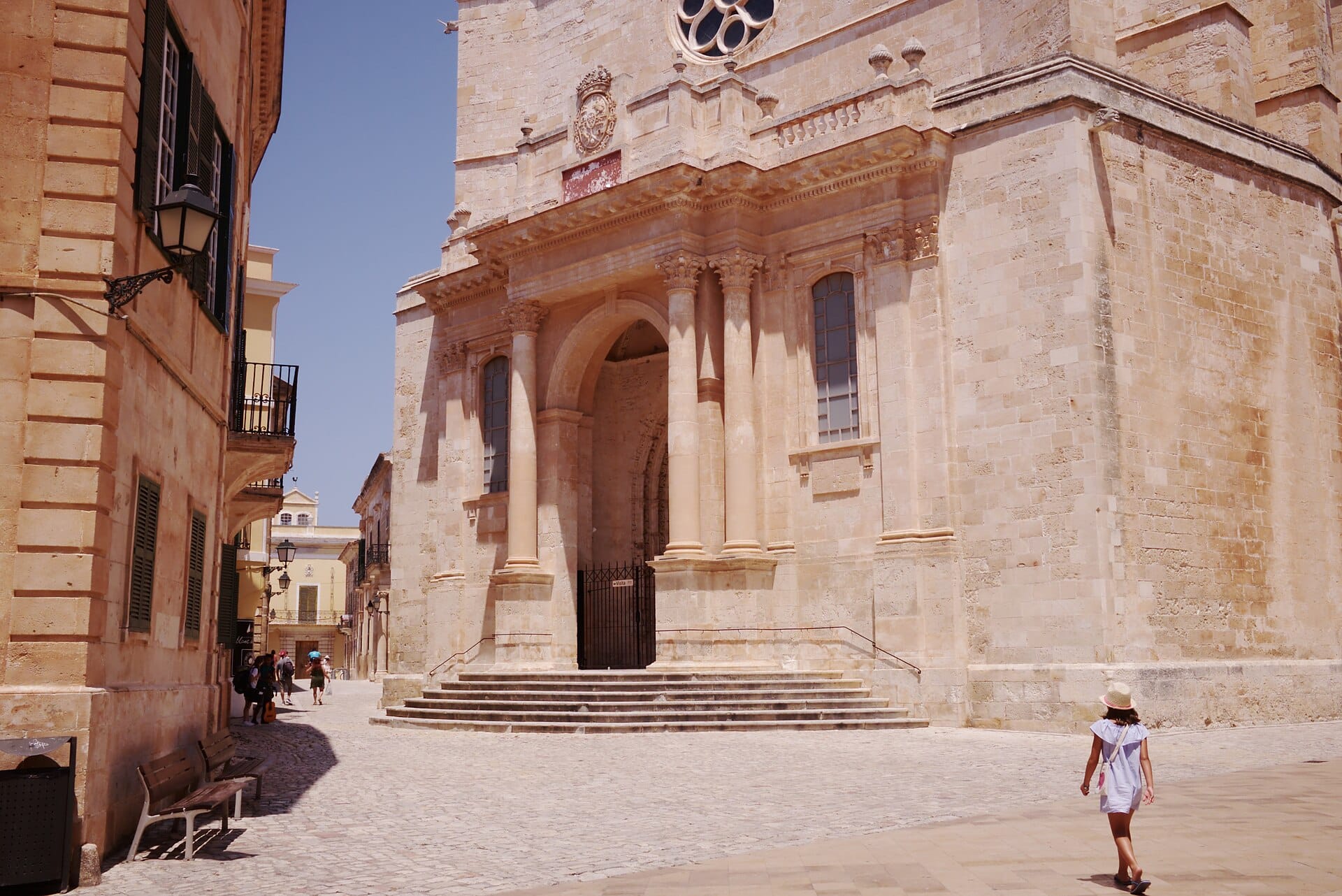
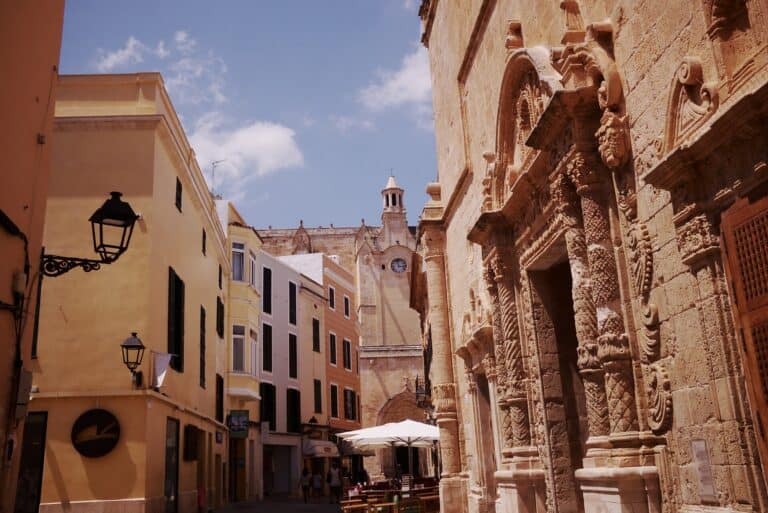
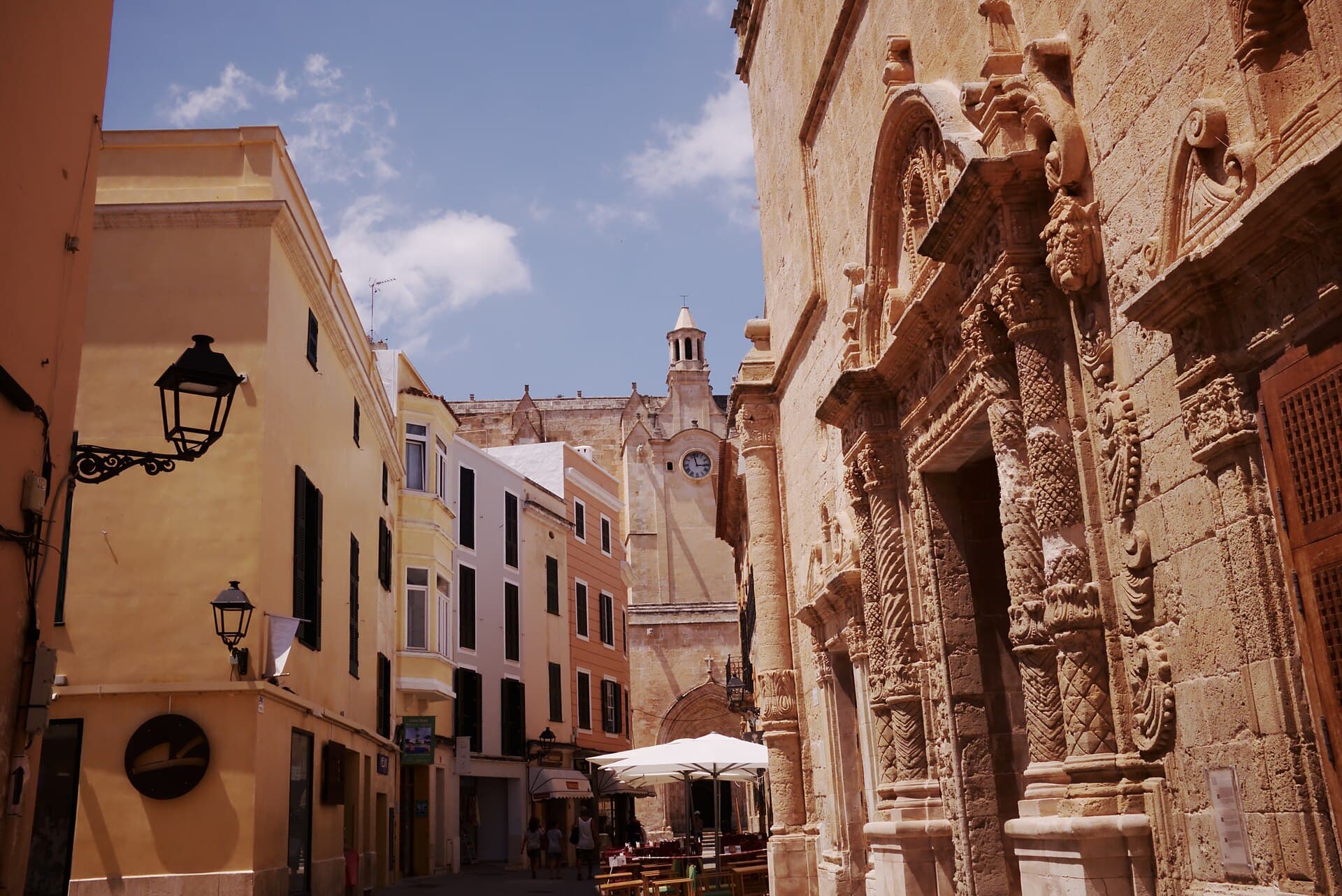
The island’s former capital, Ciutadella, is without exaggeration one of the most beautiful historic towns in all of Spain. Its narrow cobbled streets are lined with grand sandstone aristocratic palaces whose ornate façades tell stories of the old wealth of the local nobility. The hub of all activity is the picturesque Plaça des Born, dominated by a slender obelisk commemorating the town’s heroic defence against a devastating Turkish raid in the sixteenth century.

While wandering through the town, don’t miss the imposing Cathedral of Santa Maria de Ciutadella — a masterpiece of Catalan Gothic architecture built on the foundations of an old mosque. The interior is surprisingly spacious and the play of light through the stained-glass windows creates a magical atmosphere inside. Entry to the cathedral costs around €3 and the visit takes roughly half an hour.

The greatest charm of Ciutadella, though, lies in its harbour, which cuts deep into the land and resembles a miniature fjord. In the evening, as the sun goes down, the waterfront transforms into a buzzing strip of excellent tapas bars and small cafés. You can sit for hours with a glass of chilled wine, watching the fishing boats bob gently on the water and soaking up the genuine, unhurried Mediterranean atmosphere.

💡 Tip: If you want to experience the harbour without the tourist crowds, head down early in the morning when the fishermen are just unloading their overnight catch and the whole town is slowly waking up over a strong espresso.

2. Mahón and the World’s Largest Natural Harbour
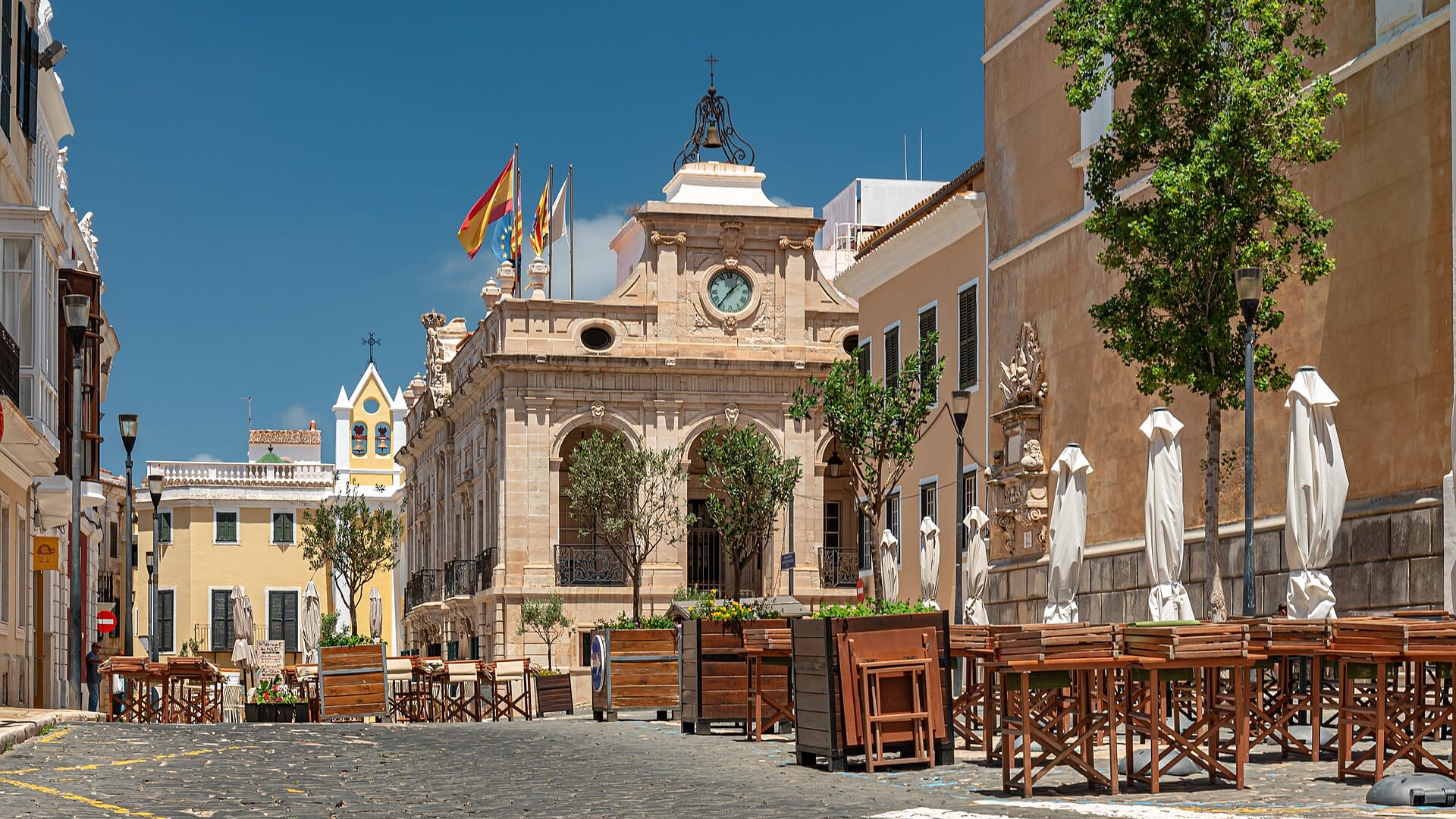
The current capital, Mahón (or Maó in Catalan), sits at the opposite end of the island and shows a completely different, more cosmopolitan face of Menorca. The city spent more than a hundred years under British rule, which is still clearly reflected in its unique architecture — full of characteristic sash windows and Georgian façades. Mahón has a wonderfully elegant feel and its historic centre sits atop a clifftop, offering stunning views over the surrounding water.

The absolute centrepiece of the city is its harbour, an incredible five kilometres long and recognised as the second largest deep-water natural harbour in the world, after Sydney in Australia. This safe haven for ships was so strategically important throughout history that it was constantly contested by rival naval powers. Today it’s an ideal spot for long afternoon strolls along a waterfront lined with boutiques and restaurants.

The best way to truly appreciate the scale and significance of this place is to take an organised boat trip. During the hour-long excursion you’ll see old fortresses, quarantine islands and luxury yachts moored in secluded inlets. You can pick up tickets for the harbour cruise directly on the waterfront for around €15 per adult.

💡 Tip: Pop into the historic Farmacia Llabrés pharmacy dating from the late 19th century. Its beautiful Art Nouveau interior, complete with original wooden display cabinets and stained glass, is a real feast for the eyes — and it still operates as a working pharmacy today.

3. Camí de Cavalls: Hiking Around the Entire Island

If you love active holidays, the historic Camí de Cavalls trail will probably be the highlight of your entire trip. This ancient defensive route — known in English as the Horse Path — stretches an impressive 185 kilometres and literally circles the entire coastline of Menorca. Originally used by mounted soldiers patrolling the island against pirates, it’s now a paradise for hikers, runners and keen mountain bikers.

The route is incredibly varied and officially divided into 20 marked sections. You can choose whether to head out on an easy walk through shady pine forests in the south, or opt for the wilder, windier stages along the north coast where the path crosses red cliffs and deserted pastures. All sections are perfectly waymarked with distinctive wooden posts, so getting lost is virtually impossible.

Completing the entire trail in one go takes an average walker around 10 to 14 days, but the vast majority of visitors simply pick out short sections for day trips. A great advantage of this trail is that it leads you to the most remote, unspoilt beaches that no road reaches and that you simply can’t get to by car.

💡 Tip: For beginners, the section between Cala Galdana and Cala Macarella is absolutely perfect. It takes just under an hour at a relaxed pace and you’ll have the ocean in view the entire way.

4. Cala Macarella and Macarelleta

Say “Menorca” to most people and they’ll immediately picture the iconic cove of Cala Macarella and its smaller, more intimate sister, Cala Macarelleta. These beaches are the absolute visual pinnacle of the Balearic coastline. You’ll find powdery white sand and water so crystal clear that boats moored nearby appear to be floating in mid-air above the seabed.

Getting to these natural gems does require a little effort. During the peak summer season, access is strictly regulated and the best option is to use the shuttle bus from Ciutadella, which drops you at the nearby car park. From there you’ll need to walk — it’s about a twenty-minute stroll through fragrant pine forest. This small logistical hurdle helps protect the cove from being completely overwhelmed.

On the main beach at Macarella you’ll find a small rustic beach bar (a chiringuito), where you can grab a cold drink or a light lunch in the shade of the trees. If you continue along the clifftop for another ten minutes, you’ll reach the smaller Cala Macarelleta. It’s enclosed by high limestone cliffs and is traditionally very popular with naturists — which is a fairly normal standard on the island.

💡 Tip: If you’re driving outside the main season, the car park fills up before 9am. To guarantee a spot and have the beach to yourself, you really do need to be an early riser.

5. Cala Turqueta: The Caribbean of the Mediterranean

A little further along the south coast you’ll discover another beach gem: the stunning Cala Turqueta. As the name suggests, the star attraction here is the mesmerising turquoise colour of the water, which contrasted against the deep-green pines creates scenery worthy of the finest travel magazines. The cove is fairly narrow and cuts deep into the land, making it perfectly sheltered from waves and wind.

Getting to the beach means parking in a central car park and then walking for around fifteen minutes over gentle terrain. Unlike commercial resorts, you won’t find any sunlounger hire or noisy beach clubs here — all of which underlines the island’s Biosphere Reserve status. It’s pure, unspoilt nature, where the only soundtrack is the sound of the sea and the chirping of cicadas.

At the entrance to the beach there’s just a small low-key bar and eco-friendly toilets, so it’s absolutely essential to bring enough water and some snacks. Due to the orientation of the beach, shade from the surrounding cliffs starts to creep in fairly early in the afternoon, so I’d recommend planning your visit in the morning hours when the sun best illuminates that turquoise water.

💡 Tip: Information signs along the main roads near Ciutadella show in real time whether the car park at Cala Turqueta is already full. This saves you a wasted journey if you set off too late.

6. Cala Mitjana and Mitjaneta

Completing the trio of the finest southern coves is the enchanting Cala Mitjana. This beach features a somewhat wider strip of soft sand and is flanked by dramatic limestone cliffs from which local youngsters love to jump into the deep water below. It’s extremely popular with families, as the seabed shelves very gently and the water is crystal clear and safe for swimming.

The easiest way to get here is from the nearby resort of Cala Galdana, from where a very pleasant and undemanding forest path leads directly to the beach. The walk takes under twenty-five minutes and is easily manageable even in light summer footwear. Along the way you’ll also come across old lime kilns and the remains of original farmsteads, which adds an interesting historical dimension to the stroll.

Right next to the main beach is the tiny cove of Cala Mitjaneta. It’s so small that only a handful of towels fit in it, and at high tide the sandy beach can disappear completely beneath the surface. It’s still worth a brief stop, though, as it offers an incredibly photogenic angle on the main cove and excellent conditions for snorkelling along the rocks.

💡 Tip: Since Cala Mitjana has no facilities whatsoever — not even a drinks stall — don’t forget to pack your own umbrella. Any shade under the trees is claimed very early on summer mornings.

7. Talayotic Megaliths and Naveta des Tudons

Menorca isn’t just about swimming — the island is a vast open-air museum that recently earned prestigious UNESCO World Heritage status. The landscape is literally scattered with mysterious megalithic structures dating from the Bronze Age, the so-called Talayotic culture. These stone monuments more than three thousand years old are entirely unique to the Balearic prehistory and cannot be found anywhere else in the world.

The most famous and best-preserved monument is the fascinating Naveta des Tudons, located just outside Ciutadella. This imposing burial chamber, built from enormous stones without any mortar, resembles an upturned boat in its shape. Archaeological excavations here uncovered hundreds of skeletons alongside bronze jewellery and bone buttons, demonstrating the sophisticated level of this ancient civilisation.

Beyond the navetas, as you travel around the island you’ll also come across talayots (circular defensive towers) and taules — giant T-shaped stone structures that probably served as religious sanctuaries. Entry to Naveta des Tudons costs a token €2 and the site is beautifully maintained with information panels in several languages.

💡 Tip: If history fascinates you, make a point of visiting the village of Torralba d’en Salort near Alaior, where you’ll find the tallest and most perfect megalithic taula on the entire island.

8. Cap de Cavalleria Lighthouse and the Wild North Coast
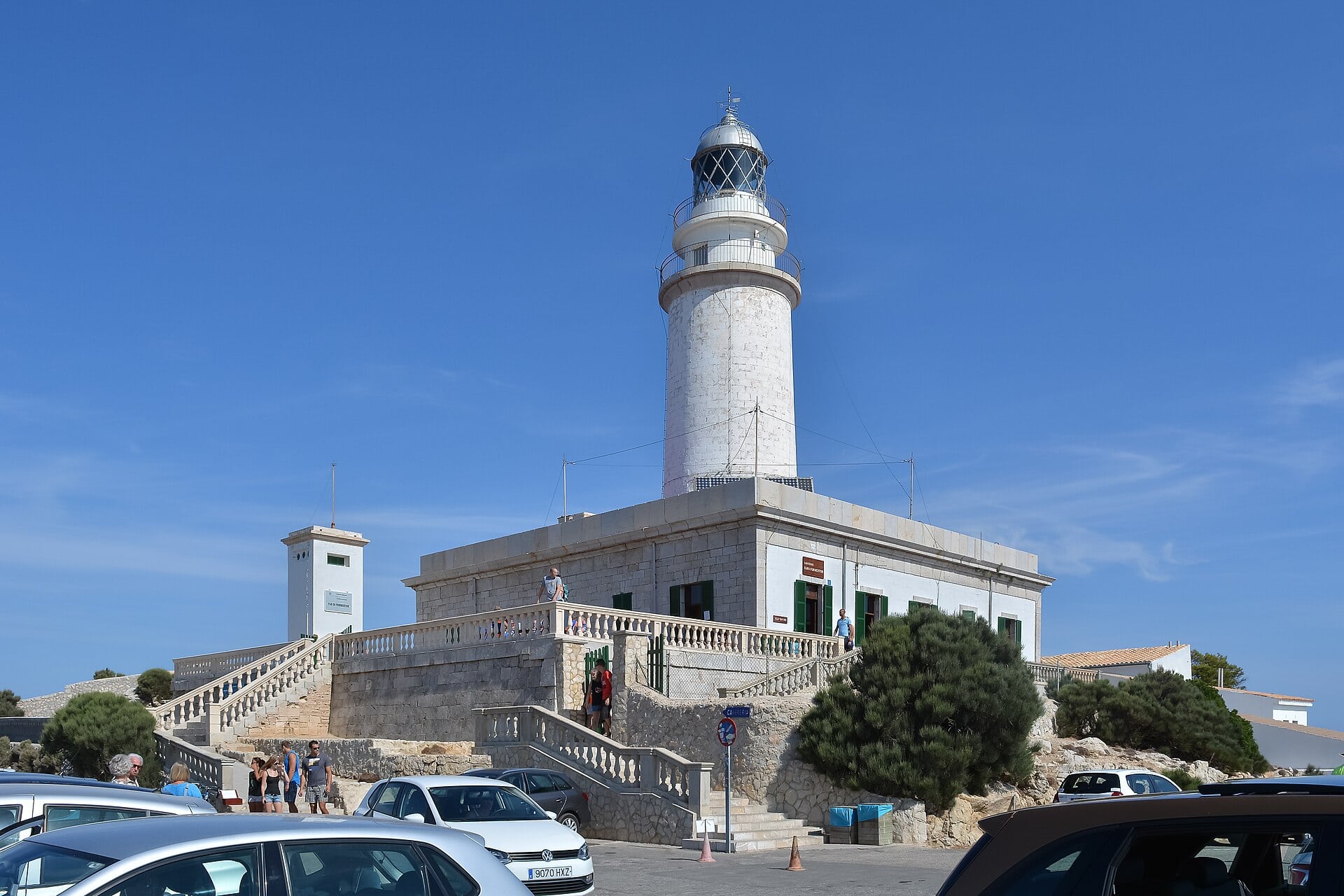
While the south of the island looks like a polished Caribbean paradise, the northern coastline offers a dramatically different experience. The landscape here is raw and rugged, shaped by the constant battering of the northerly wind known as the tramontana, and the coast is formed by jagged cliffs of dark-red shale. The most distinctive point of this area is Cap de Cavalleria, a sharp finger of land jutting deep into the restless waters of the Mediterranean.

At the very tip of this headland stands a snow-white 19th-century lighthouse, still keeping watch over treacherous rocks and guiding ships through the night. The drive out to the lighthouse is itself an experience — the narrow road winds through completely barren landscape covered in heather and low scrub, where your only company might be a herd of wild goats crossing the track.

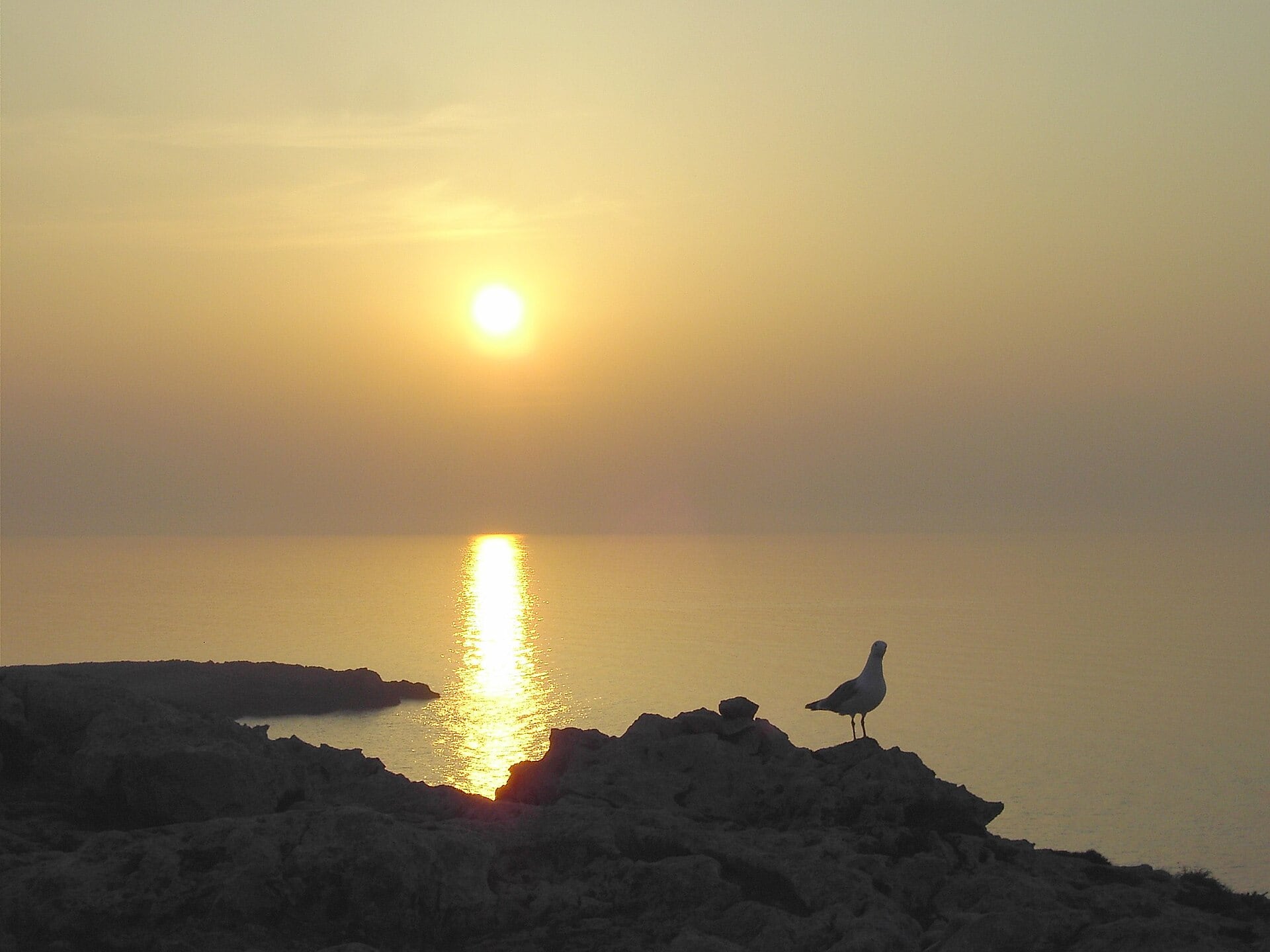
This spot is absolutely unbeatable for stargazing and watching the evening sky. Thanks to virtually zero light pollution from the surrounding area, people come here to watch dramatic sunsets when the red cliffs glow in extraordinary shades of fire. The cliffs drop nearly a hundred metres straight into the sea, giving a truly breathtaking view of the endless ocean — one that feels more like the Irish coast than sun-drenched Spain.

💡 Tip: On the way to the lighthouse, make a short stop at the nearby beach of Cala Pregonda or at the small ecological museum located within the lighthouse complex itself, which explains the local natural environment in fascinating detail.

9. S’Albufera des Grau Biosphere Reserve

If you want to truly understand why the whole of Menorca earned UNESCO protected status, you need to visit the natural park of s’Albufera des Grau. This vast protected area in the northeast of the island comprises a huge freshwater lagoon surrounded by wetlands, dunes and woodland. It forms the absolute heart of the entire Biosphere Reserve and is the most important ecological site on the island — a vital sanctuary for hundreds of species of wildlife.

The park is a genuine paradise for birdwatchers and nature lovers. The lagoon serves as a crucial stopover for migratory birds travelling between Europe and Africa. You can spot herons, cormorants and, if you’re lucky, rare birds of prey hunting over the water’s surface. Perfectly maintained wooden boardwalk paths guide you through the most interesting areas without disturbing the fragile ecosystem.

Entry to the park is completely free and the best place to start is the modern Rodríguez Femenias visitor centre. There you can pick up free detailed trail maps and borrow binoculars for birdwatching. The trails are very easy, with no elevation gain whatsoever, making them an ideal half-day outing for families with young children or on days when it’s too cool for the beach.

💡 Tip: Try to plan your visit to the park for early morning. Not only will you avoid the midday heat, but the morning hours are by far the best time to observe active birdlife.

lukas a lucka
Lukáš and Lucie recommend
Where to Stay in Menorca
4 accommodations — resorts, hotels and other lodging options

10. Binibeca Vell: A Labyrinth of White Alleyways

On the far south of the island you’ll find a place that looks like it’s been lifted straight from a fairy tale about fishermen. The village of Binibeca Vell is a charming settlement made up entirely of gleaming white houses with rounded rooftops and blue doors. The alleyways are so narrow that two people can often barely pass each other, and the whole complex forms a twisting labyrinth that’s enormous fun to get happily lost in for a while.

Although the village looks like an ancient Moorish settlement, it’s actually a brilliant architectural project from the 1970s. Spanish architect Antoni Sintes Mercadal designed it as an idealised model of traditional Mediterranean architecture, and the result is so convincing that almost every visitor is fooled. The atmosphere is wonderfully romantic, particularly in the late afternoon when the white walls catch a warm golden glow.

As you wander through the village you’ll notice signs everywhere saying “Silencio”, asking tourists to keep the noise down. Real residents and holiday-home owners live in these houses, and respecting their privacy is an absolute priority here. The whole visit takes about an hour and can easily be combined with lunch at one of the small tavernas on the edge of this white labyrinth.

💡 Tip: Avoid visiting around midday in peak season, when full coach loads of day-trippers arrive as part of organised tours. A late afternoon visit will offer a far more authentic and peaceful experience.

11. Taste the Original Mayonnaise in Its Birthplace

Did you know that one of the world’s most famous and widely used sauces actually comes from Menorca? That’s right — we’re talking about mayonnaise, which was first prepared in the city of Mahón, from which it takes its original name “mahonesa” (salsa mahonesa). Locals are enormously proud of this fact and the island’s culinary history is forever linked to this simple yet brilliant emulsion of olive oil and egg yolks.

Legend has it that the sauce was discovered by French soldiers under the command of the Duke of Richelieu when they captured the port of Mahón in the 18th century. The duke’s chef had no cream for a traditional French sauce, so he took inspiration from the local villagers’ simple recipe of oil, eggs and garlic. He brought the recipe back to Paris, where the sauce — known as “mahonnaise” — became a sensation in high society and from there spread around the world.

In Menorca, traditional mahonesa is made by hand and tastes noticeably different from the industrial version you’d find in a supermarket. It’s richer, with a deeper colour from free-range eggs and often a subtle hint of garlic (in which case it’s called alioli). Do make sure to order it in a local restaurant — it comes with practically everything here, from fresh bread to traditional island potatoes.

💡 Tip: If you’re looking for a gourmet souvenir, head to the specialist delicatessens in the centre of Mahón, where you can find artisan-made mayonnaise in stylish glass jars complete with a certificate of origin.

12. Magical Sunset at Punta Nati Lighthouse

Sunsets in Menorca have their own special magic, and one of the most spectacular spots to watch this daily spectacle is at the Punta Nati lighthouse on the northwest tip of the island. The landscape here is extraordinarily rugged, literally strewn with millions of loose stones and crossed by endless kilometres of dry-stone walls so typical of the island. There are no trees — just bare rock battered by the wind.

This lighthouse was built at the turn of the 20th century as a direct response to a series of tragic French shipwrecks on these dangerous rocks. Today the whole area is a popular gathering spot for travellers, who bring blankets, bottles of local wine and wait in total silence as the sun touches the horizon of the Mediterranean. The atmosphere here tends to be wonderfully communal and relaxed.

The road to the lighthouse from Ciutadella runs along a very narrow lane flanked by stone walls, so driving requires care — especially when passing oncoming traffic. At the end of the road you’ll find a small free car park, from where it’s another ten-minute walk on foot to the lighthouse itself. Given its exposed location, it can be extremely windy here, so bring a warmer layer or a windproof jacket even on hot days.

💡 Tip: Near the lighthouse, look out for the peculiar stone huts with conical roofs known as “barracas”. They were traditionally used as shelter for livestock during fierce gusts of the tramontana wind.

13. Cova d’en Xoroi Cave Bar

Imagine a bar and club literally carved into a sheer cliff face high above the crashing sea. That’s exactly what the legendary Cova d’en Xoroi is — located on the south coast near the resort of Cala en Porter. It’s a series of natural caves connected by outdoor terraces that perch on the edge of the cliff dozens of metres above the water. It’s undoubtedly the most visually spectacular commercial venue on the entire island.

The venue operates in three distinct modes. During the day it serves as a unique clifftop café with chillout music. In the late afternoon it transforms into a sought-after spot for watching the sunset, where people arrive dressed smartly for cocktails. At night the caves turn into a pulsating club where international DJs play and you can dance until the early hours.

Entry prices vary depending on the time of day and always include one drink. For the evening “sunset session” you’ll pay around €25, while the late-night entry tends to be slightly more expensive. Given the enormous popularity of this place, it’s absolutely essential to book tickets in advance online, otherwise you risk queuing at the door while your dream sunset slips away.

💡 Tip: If loud music and crowds aren’t your thing, head there right when it opens in the morning (around 11:30am). You can explore the full cave system in peace, take stunning photos and enjoy a coffee with an unbeatable view.

14. Cala Pregonda with Its Red Sand
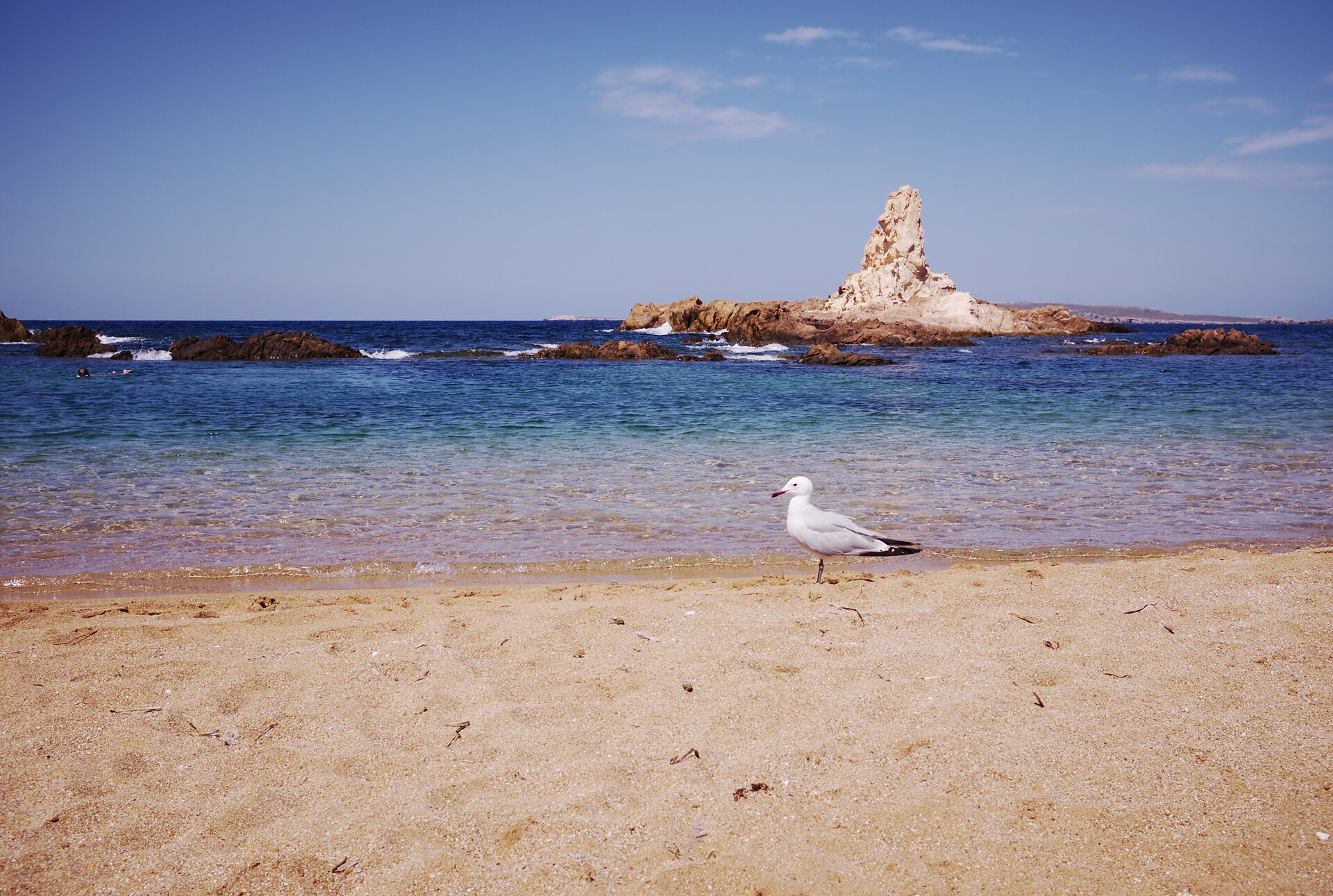
While the south of the island gleams with white sand, the northern beaches boast an entirely different and wilder colour palette. The undisputed king of the north is Cala Pregonda, which immediately captivates with its rich red-gold sand and dramatic rock formations rising from the sea. These unusual islets and sea stacks shelter the beach from the swell, creating an ideal calm lagoon for swimming and exploring underwater life.

Getting to Pregonda is a minor adventure in itself. You’ll need to leave your car at the car park by the beach of Binimel·là and continue on foot for about thirty minutes along the clifftops. The path winds through a parched, almost lunar landscape with not a scrap of shade, so sturdy footwear, sunscreen and plenty of drinking water are absolute necessities. It’s precisely this remoteness that keeps the beach wild and ensures it never feels hopelessly overcrowded.

The water here is fantastically calm thanks to the protection of the rocks, and the area falls within a marine reserve. This makes it one of the best snorkelling spots in Menorca. You can watch shoals of small fish, crabs tucked into rock crevices and admire the diverse underwater flora that flourishes here undisturbed.

💡 Tip: Cala Pregonda was famously used for the cover artwork of guitarist Mike Oldfield’s album. If you’re a fan of music history, see if you can find the exact same angle.

15. Monte Toro: The Whole Island at Your Feet

Menorca is a fairly flat island, but it does have its own “great mountain”. Known as Monte Toro (or El Toro in Catalan), at just 358 metres above sea level it forms the highest point on the entire Balearic island. The hill sits right in the centre of Menorca, near the small town of Es Mercadal, and a comfortable winding road leads directly to the summit — perfectly driveable in a normal car.

The main draw of this spot is the fantastic panoramic views. On a clear day you can see the entire outline of the island — from the rugged north coast all the way to the southern coves. In exceptionally good visibility, the mountains of neighbouring Mallorca appear on the horizon. At the summit, alongside the radio masts, you’ll find a 17th-century Augustinian monastery and a small church housing a statue of Our Lady, the island’s patron saint.

The atmosphere at the top is wonderfully peaceful and spiritual. The monastery is still home to a small community of nuns and the courtyard with its fountain offers welcome shade from the sun. There’s also a small family-run café with an outdoor terrace where you can enjoy a great coffee or a local beer while taking in the breathtaking 360-degree views over the island’s landscape.

💡 Tip: If you’re feeling sporty, make the ascent on foot from Es Mercadal. The walk takes about an hour and a half and makes for a pleasant, if fairly steep, workout.

16. Favàritx Lighthouse in a Lunar Landscape
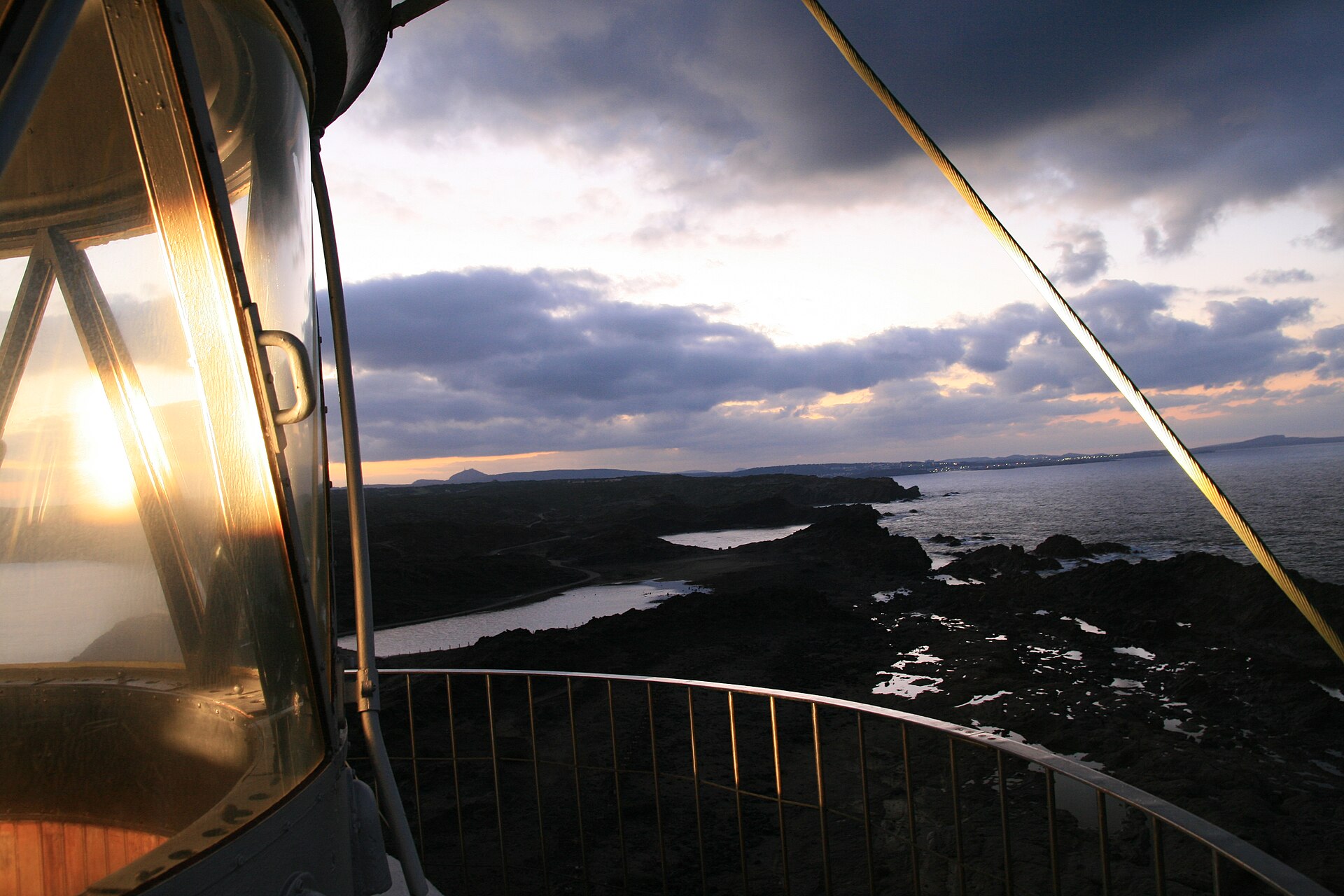
On the east coast, within the s’Albufera des Grau national park, stands another iconic lighthouse that you really shouldn’t skip. Favàritx lighthouse is a true one-off, because it rises from a dark slate landscape that looks at first glance more like the surface of another planet than a typical Mediterranean island. Black and grey slate slabs fracture at strange angles and plunge directly into the foaming sea.

The lighthouse tower itself, decorated with bold black-and-white stripes, makes for a striking photograph against this otherworldly backdrop. The area around the lighthouse is also known for a fascinating geological phenomenon — small pools filled with seawater that during the summer months often evaporate completely, leaving behind nothing but glittering crystals of sea salt. The whole area has a peculiar, slightly melancholic atmosphere that photographers absolutely love.

During the summer season, access by car directly to the lighthouse is restricted for conservation reasons. From the designated car park you have a pleasant two-kilometre walk along a tarmac path, or you can use the special bus service from Mahón that runs all the way to the lighthouse tower. Several interesting sections of the Camí de Cavalls trail also begin near the lighthouse, leading to secluded coves.

💡 Tip: On the black rocks near the lighthouse, people used to build small stone towers as a wish to return one day. These days there are signs everywhere forbidding the practice, as it disturbs the natural habitat of small insects and lizards.

17. Taste Mahón Cheese and Local Gastronomy

Menorcan gastronomy is incredibly rich, drawing mainly on the gifts of the surrounding sea and the fertile island soil. Locals adore their traditional lobster stew (caldereta de langosta) and spicy sobrasada sausage, but vegetarians are very well catered for too. An absolute legend among meat-free dishes is the traditional Balearic tumbet — a wonderful layered bake of aubergine, peppers and potatoes generously smothered in a thick, fragrant tomato sauce.

The island’s culinary crown jewel is undoubtedly the PDO-protected Queso Mahón cheese. This outstanding cow’s milk cheese has been made using traditional methods for centuries and is distinguished by its characteristic square shape and orange rind, which is rubbed with olive oil and paprika as it matures. It comes in various stages of ageing, from mild and creamy through to old, crumbly and intensely sharp — the latter pairing beautifully with a robust red wine.

For something sweet to finish, you absolutely must try an ensaïmada. This light, airy pastry shaped into a spiral and dusted with icing sugar originates from neighbouring Mallorca, but it’s baked on Menorca with equal love and passion. You can enjoy it simply on its own with a morning coffee, or filled with sweet angel hair (a caramelised pumpkin jam) or vanilla cream.

💡 Tip: For an authentic cheese-making experience, visit one of the traditional farms (called llocs) around Alaior. Many of them offer guided tours with tasting sessions of their products straight from the cellar.

18. Traditional Markets in Ciutadella and Mahón

To really soak up the local atmosphere, a visit to the island’s traditional markets is a must. Local markets here aren’t just about shopping — they function as vital social hubs where residents meet, debate local politics and drink their morning coffee. The finest experience is offered by the old fish market, Mercat des Peix, in Mahón, housed in a beautiful 19th-century building with a glass-vaulted roof.

While one half of the market is dedicated to selling fresh fish and seafood, the other half operates as a vibrant and excellent food hall. Around lunchtime, the small tapas bars inside fill up and serve fantastic local cheeses, olives, pickled vegetables and fresh bread. You can wash it all down with a glass of inexpensive but excellent island wine or a local Xoriguer gin mixed with lemonade — a classic island drink known as pomada.

Equally charming is the market in Ciutadella (Mercat Municipal), which is lined with green-and-white tiles and sits right in the historic heart of the city. Here you’ll find the finest fresh vegetables from local farmers, sweet figs, honey from island flowers and plenty of other local products to take home as a delicious reminder of your holiday.

💡 Tip: Markets are usually only open in the morning and tend to be very busy at weekends. If you want to enjoy the tapas and a glass of wine in peace, come on a weekday around eleven o’clock.

Where to Go Next from Menorca

If you’re planning a longer trip around Spain and Menorca is just one stop on your itinerary, the obvious move is a hop to one of the neighbouring islands. Regular ferries depart from Ciutadella harbour to Mallorca, with the crossing taking just about an hour and a half. If you’re after something livelier, Ibiza is an excellent choice — easily reached by direct flight — where you can experience its unique mix of a tranquil north and pulsating south.

From Mahón airport you can also pick up very affordable flights to the mainland. A short one-hour flight can land you in Barcelona, where Gaudí’s masterpieces and buzzing boulevards await. A great alternative is sunny Valencia, famous for its cutting-edge architecture and perfect paella. If your time on the island has sparked a deeper interest in Spanish food, have a read of our detailed guide to typical Spanish food so you know exactly what to order on the mainland.

Frequently Asked Questions

Is there a tourist tax on Menorca?

Yes, just like on all the Balearic Islands, Menorca charges a so-called ecotasa. This fee is paid directly at your accommodation and applies to everyone over the age of 16. In high season (May–October) the tax ranges from 1 to 4 euros per person per night, depending on the category of hotel or apartment. From the ninth night of your stay, the rate is automatically reduced by 50%. The money raised goes towards nature conservation and sustainable tourism.

Is Menorca suitable for a holiday with kids?

Absolutely! There’s a clear consensus across all the travel forums that Menorca is the best and safest choice for families out of all the Balearics. You’ll find shallow beaches with a gentle slope into the sea, a calm atmosphere with no noisy nightclubs, and very short driving distances between the various attractions, which you’ll especially appreciate when travelling with younger children.

Do I need to rent a car on the island?

I highly recommend renting a car on Menorca, even though it isn’t strictly necessary. The island does have a functioning bus network linking the main towns with the resorts, but you simply can’t reach the most beautiful and remote coves by bus. A car gives you enormous flexibility, just be sure to book it well in advance during the summer season, as the rental companies often sell out.

Can you drink the tap water on Menorca?

Although the tap water on the island is hygienically safe and you can happily use it to brush your teeth or cook pasta, the locals don’t really recommend drinking it directly. The water often has a very strong chlorine taste and is extremely hard. That’s why most tourists and residents prefer to buy bottled spring water at the supermarket.

How many days do I need to see the island?

To really soak up the island’s true, laid-back atmosphere, I’d recommend setting aside ideally five to seven days for Menorca. In that time you can comfortably visit both main historical towns, explore the most beautiful beaches in the south and the rugged north, and even have time left over for a hike along the popular Camí de Cavalls (Bridle Path).

Is it true that there’s a lot of seaweed on the beaches?

In this biosphere reserve you’ll often come across piles of dried sea grass (Posidonia oceanica) on the beaches. Even though some people might find it unsightly, it isn’t pollution but a protected underwater plant that is absolutely crucial for the local ecosystem. This grass cleans the water, prevents erosion of the sandy beaches, and by government decree it may not be removed from the natural coves.

Are there mosquitoes on the island?

Unfortunately, yes. Given how much untouched nature, old stone walls and wetlands there are in the s’Albufera des Grau national park, you have to expect mosquitoes here, especially after sunset and in the autumn months. Be sure to pack a good repellent and ideally choose accommodation with insect screens on the windows.

Tips and Tricks for Your Vacation

Don’t Overpay for Flights

Search for flights on Kayak. It’s our favorite search engine because it scans the websites of all airlines and always finds the cheapest connection.

Book Your Accommodation Smartly

The best experiences we’ve had when looking for accommodation (from Alaska to Morocco) are with Booking.com, where hotels, apartments, and entire houses are usually the cheapest and most widely available.

Don’t Forget Travel Insurance

Good travel insurance will protect you against illness, accidents, theft, or flight cancellations. We’ve had a few hospital visits abroad, so we know how important it is to have proper insurance arranged.

Where we insure ourselves: SafetyWing (best for everyone) and TrueTraveller (for extra-long trips).

Why don’t we recommend any Czech insurance company? Because they have too many restrictions. They set limits on the number of days abroad, travel insurance via a credit card often requires you to pay medical expenses only with that card, and they frequently limit the number of returns to the Czech Republic.

Find the Best Experiences

Get Your Guide is a huge online marketplace where you can book guided walks, trips, skip-the-line tickets, tours, and much more. We always find some extra fun there!
Gran Canaria, Spain: 20 Best Things to See and Do

TL;DRGran Canaria packs twenty essential spots into a small space, from the Maspalomas dunes to the old town of Las Palmas de Gran Canaria and its Las Canteras beach, right up to the mountain village of Tejeda and the sacred rocks of Roque Nublo and Roque Bentayga in the central highlands. Seven to ten days with a hire car is enough to see the whole island. Air temperatures sit between 20 and 28°C all year round, and the sea stays at 18 to 24°C even in January, so it’s a year-round destination. January and February are the best months for Europeans escaping the winter, though flights and accommodation get pricier then. Other highlights include the harbour at Puerto de Mogán, the Caldera de Bandama crater, the village of Fataga, and dolphin- and whale-watching trips from Puerto Rico or Puerto de Mogán.

The Canary Islands are a geographical paradox that never fails to fascinate from the moment you land. Although they are politically and culturally part of Spain, they rise geologically from the African continental shelf and enjoy a climate that feels almost too good to be true. If you’re looking for absolute variety in the smallest possible space, Gran Canaria is the clear choice for your holiday. This stunning island has rightly earned the nickname “miniature continent” — within a single hour’s drive you can swap golden sand dunes for cool pine forests and plunging ravines.

While much of Europe is buried under grey skies in winter, this archipelago ticks along at its own unhurried pace of eternal spring. Air temperatures here stay comfortably between 20 and 28 °C all year round, making the island a perfect escape for sun-seekers whatever the season. I’ve put together a detailed guide to the island’s greatest treasures — from the most beautiful beaches and jaw-dropping viewpoints to the best ways to soak up its unique atmosphere.

TL;DR

  • Miniature continent: Gran Canaria offers incredible landscape diversity — from sandy dunes in the south to lush forests and deep valleys in the north.
  • Perfect year-round destination: Temperatures hover around a pleasant 25 °C and the ocean stays warm enough for swimming even in January.
  • Digital nomad paradise: The capital Las Palmas has become one of Europe’s favourite remote-work hubs, with excellent infrastructure and fast Wi-Fi everywhere.
  • Maspalomas Dunes: In the far south you’ll find a protected nature reserve whose rolling sand hills will instantly remind you of the Sahara.
  • Mountain village of Tejeda: Tucked into the central highlands, one of Spain’s most beautiful villages offers views of sacred rock formations that will take your breath away.
  • Local gastronomy: Don’t leave without trying traditional wrinkly potatoes (papas arrugadas) with spicy mojo sauce and excellent cheeses from mountain farms.
  • Easy to reach from the UK: Direct flights from London, Manchester and other UK airports take around four hours, and the best way to explore the island is by hire car.

When to Visit Gran Canaria

Fortunately, the Canary Islands have no real off-season, so you can fly out any month of the year without worrying about the weather. The winter months of January and February are the absolute peak for visitors from northern Europe, who descend en masse to escape the cold at home. During these months Gran Canaria is arguably the only reliably warm swimming destination within easy reach of the UK. The ocean stays at a very swimmable 18–24 °C even in the coldest weeks, which is ideal for those who don’t mind a brisk dip. Just be prepared for higher accommodation and flight prices during the winter rush.

The summer months are, perhaps surprisingly, very pleasant here too. Thanks to cool Atlantic currents and the constant trade winds, you’ll rarely experience the scorching 40 °C heat that regularly brings mainland Spain to a standstill in August. Spring and autumn offer the best of both worlds — lovely temperatures and noticeably smaller crowds. If you plan to explore the island thoroughly and include mountain hikes, I’d recommend setting aside at least seven to ten days. The golden rule for the Canary Islands is simple: give each island the time it deserves, and don’t try to squeeze multiple islands into one week.

Where to Stay in Gran Canaria

💡 Accommodation & experiences tip: We always search for accommodation on Booking.com, which offers the most flexible cancellation policies. For tickets, tours and activities, it’s worth comparing options on GetYourGuide.

Choosing the right base depends largely on what kind of holiday you’re after. The south of the island — represented by resorts like Maspalomas and Playa del Inglés — is dry, sunny, and built around mass tourism. You’ll find sprawling all-inclusive resorts with enormous pools and a cast-iron guarantee of sunshine even in mid-January. The north, anchored by the capital Las Palmas, paints a very different picture — it’s greener, more authentic, and buzzing with real city life. In recent years Las Palmas has established itself as Europe’s go-to winter base for remote workers, which shows in its excellent café scene and abundance of co-working spaces.

For lovers of luxury and history in the capital, I’d recommend the iconic Santa Catalina, a Royal Hideaway Hotel, which boasts stunning architecture and tropical gardens right in the heart of the city. If you prefer the southern beaches and want a top-class resort with an enormous pool complex, the Lopesan Costa Meloneras Resort is a superb choice, located just a short stroll from the famous dunes. If you dream of total mountain tranquillity and waking up to views of majestic rock formations, take a look at the Parador de Cruz de Tejeda in the central highlands. You can easily book your ideal accommodation through Booking.com, which has the widest range from luxury hotels to cosy apartments.

If you’d rather sort flights and accommodation in one go, a package holiday to Gran Canaria often works out cheaper overall. We search for the best deals on Invia, which compares packages from over 150 travel agencies so you can find the best flight-and-hotel combination in one place. It’s well worth keeping an eye on early-booking offers, as popular dates on the islands sell out fast.

20 Best Things to See and Do in Gran Canaria

Let’s dive into the top highlights and hidden gems this island has to offer. You’ll find the perfect mix of natural wonders, historical landmarks, and tips for truly unforgettable experiences.

1. Maspalomas Dunes — a Slice of the Sahara in the South

The undisputed icon of Gran Canaria is the breathtaking Maspalomas Dunes at the island’s southern tip, which will transport you to Africa at first glance. This protected nature reserve stretches for kilometres of rippling fine sand that tumbles directly into the wild Atlantic. Walking barefoot over the warm sandy hills at sunset is one of the most photogenic experiences you can take home from the island.

Bear in mind, though, that this is a fragile ecosystem — straying from the marked paths is strictly forbidden. The authorities work hard to protect this unique natural phenomenon from gradual erosion and the pressure of mass tourism. The best access to the dunes is from the Faro de Maspalomas lighthouse or from the viewpoint at the end of Avenida de Tirajana, which offers the finest panoramic view of the whole area.

💡 Tip: Head to the dunes early in the morning just after sunrise, when the sand is still cool and the sky glows with beautiful colours. You’ll dodge both the midday heat and the crowds that pour in throughout the day.

2. The Buzz of Playa del Inglés

Right next to the peaceful dunes lies the buzzing resort of Playa del Inglés, which never sleeps and draws lovers of lively holidays in their droves. The area is packed with busy promenades, shopping centres, and an endless choice of restaurants with ocean views. The beach itself is remarkably long and wide, making it ideal for an early morning run or a long stroll through the soft sand.

Despite being the most touristy part of the island, it has its own undeniable charm. You’ll find a slick infrastructure, well-equipped sun-lounger hire, and plenty of options for beach sports. Come evening, the whole area transforms into one big entertainment district, drawing people from all around for music and dancing.

💡 Tip: If you’re after a quieter swim, walk along the beach from Playa del Inglés towards San Agustín. The beaches there are far less crowded and the sea is usually calmer and much more pleasant for a relaxed swim.

3. Las Palmas de Gran Canaria

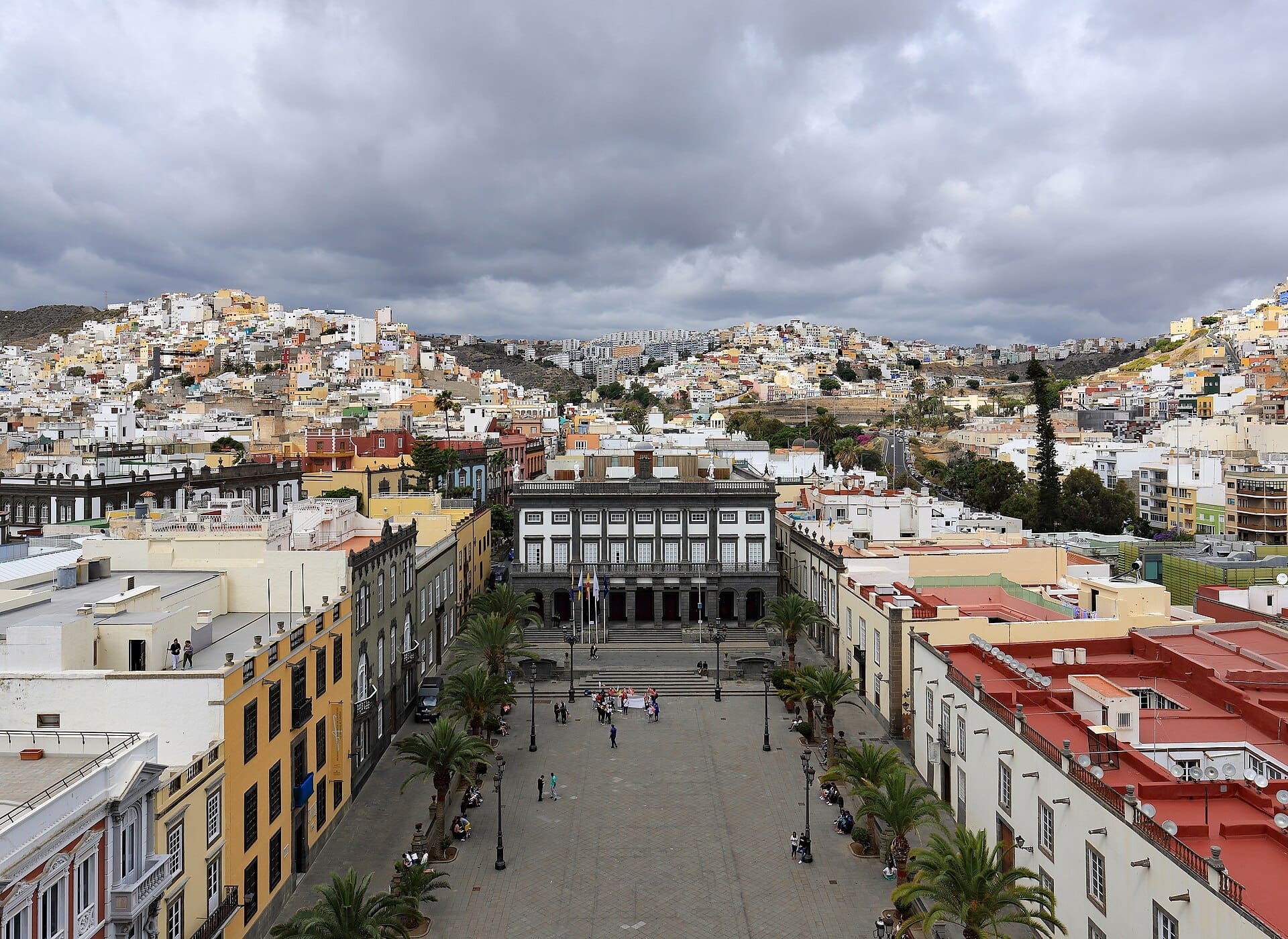
The vibrant Spanish city of Las Palmas dominates the northern end of the island and offers a completely different atmosphere from the southern resorts. The city has a strongly cosmopolitan character, beautiful colonial architecture, and a rich cultural life that carries on year-round. People from all over the world are drawn here to enjoy the benefits of a modern European city set against an ocean backdrop.

In recent years Las Palmas has firmly established itself as Europe’s favourite winter base for remote workers. This is reflected in its excellent infrastructure with fast internet, a wealth of cosy cafés, and well-equipped co-working spaces. Many visitors arrive on Spain’s digital nomad visa and end up staying for several months.

💡 Tip: Explore the Triana neighbourhood, which is full of independent boutiques, handsome historic buildings, and street performers. It’s the perfect place for a late-afternoon wander and a superb coffee in one of the local spots.

4. Las Canteras City Beach

Right in the heart of Las Palmas lies Las Canteras beach, frequently rated one of the best city beaches in the world. The three-kilometre stretch of golden sand is sheltered by a natural reef called La Barra, which breaks the ocean swell and creates a calm lagoon ideal for safe swimming. It’s a truly unique place where the energy of a big city meets laid-back beach life.

The southern end of the beach, known as La Cícer, is unprotected by the reef, making it a paradise for surfers. Running the full length of the beach is a wonderful long promenade lined with hundreds of excellent restaurants serving fresh local produce. In the evenings, locals and tourists alike gather here to watch the sun sink into the ocean.

💡 Tip: At low tide, grab a snorkel and mask and head out to the natural reef at La Barra. The water is crystal-clear and you can spot an amazing variety of colourful fish and underwater life just metres from the shore.

5. The Historic Quarter of Vegueta

The oldest part of the capital is the Vegueta neighbourhood, where more than five hundred years of history hang in the air. The winding cobbled streets are lined with beautiful colonial houses with carved wooden balconies that date back to the age of the great ocean voyages. The whole quarter feels magnificently grand and provides a welcome escape from the midday sun on the beach.

The centrepiece of Vegueta is the magnificent Cathedral of Santa Ana (Catedral de Santa Ana), whose construction spanned several centuries and blends multiple architectural styles. Don’t miss the famous Columbus House (Casa de Colón) either, where the great explorer is said to have stayed before his voyage to the Americas. Today it houses a fascinating museum dedicated to the history of the New World discoveries.

💡 Tip: Head to Vegueta on a Thursday evening, when the popular Ruta de los Pinchos event takes place. Local tapas bars offer a glass of wine and delicious small bites for just a few euros — a brilliant way to experience a proper Spanish evening out.

6. Hiking to the Majestic Roque Nublo

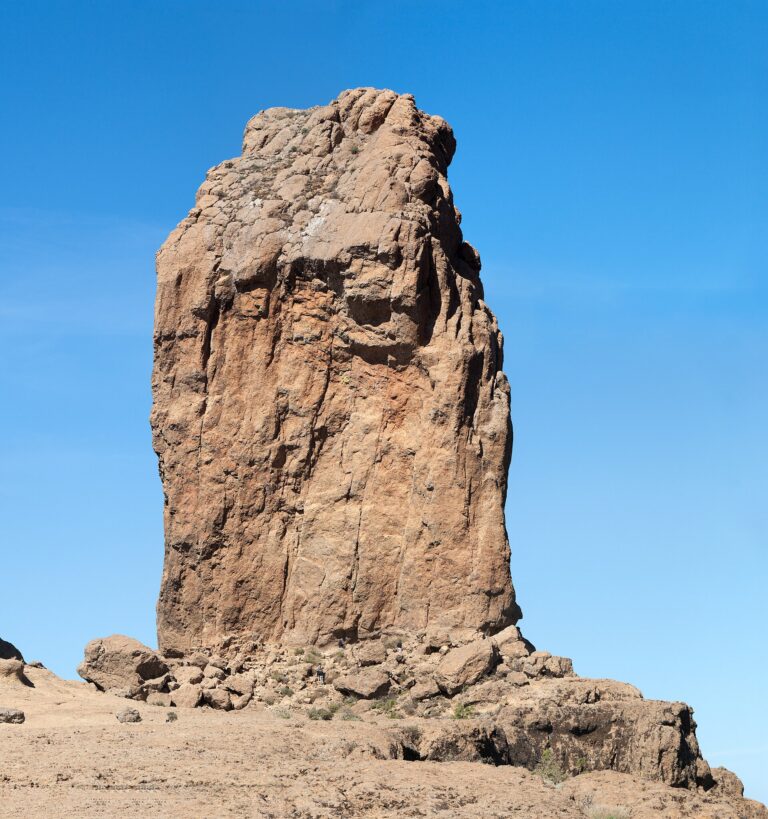
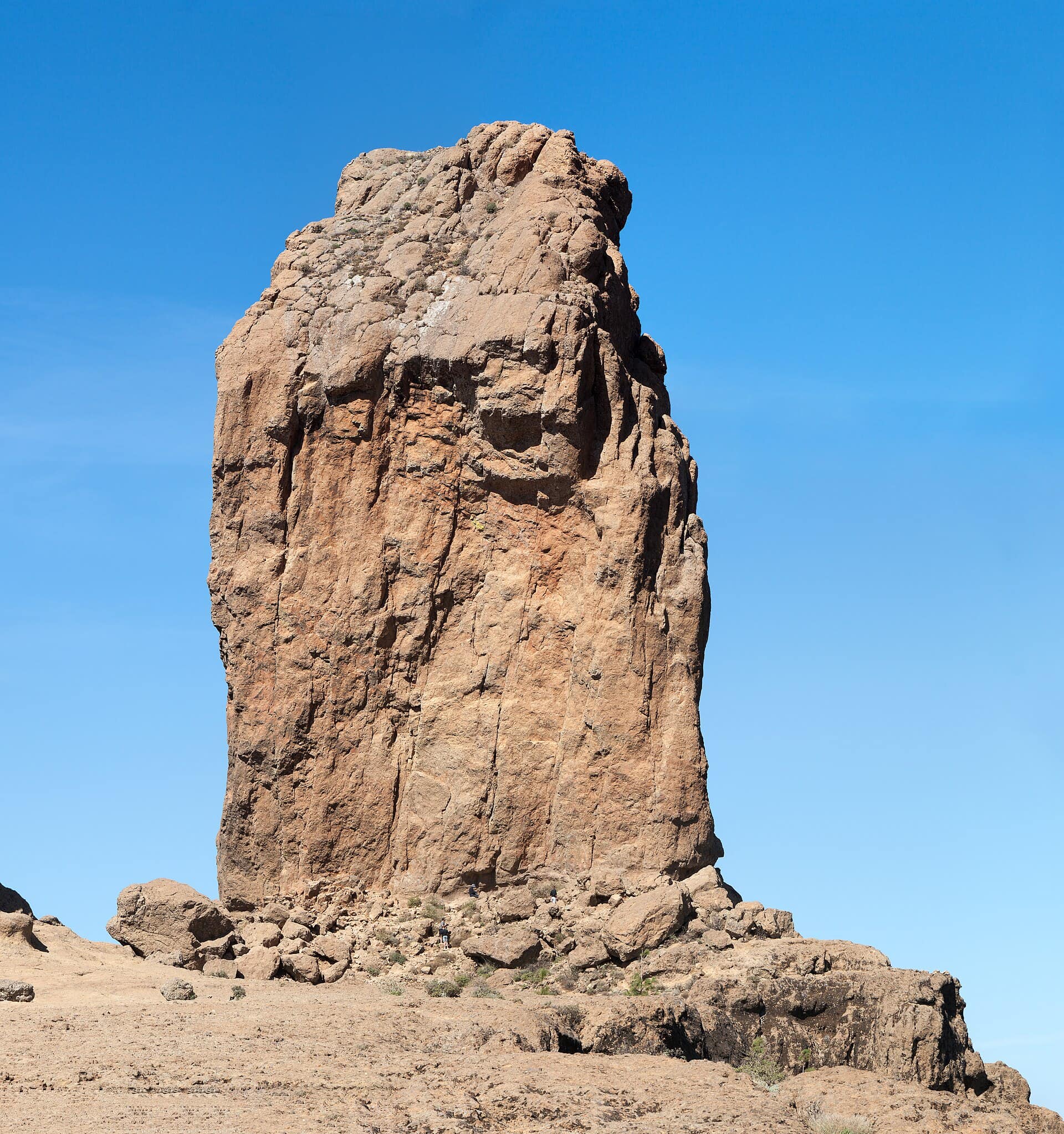
When exploring the island’s mountainous interior, you absolutely cannot miss the iconic Roque Nublo monolith, which soars nearly eighty metres into the sky. This imposing volcanic rock formation is the island’s spiritual symbol and held deep sacred significance for the indigenous Guanche people. Standing at over 1,800 metres above sea level, the path leading to it offers breathtaking views into deep ravines.

A well-marked and relatively easy trail leads to the rock, starting from the nearby La Goleta car park. The hike takes around forty-five minutes at a leisurely pace and is well within reach of any moderately fit visitor. Your reward is a panoramic view over the great caldera, and on a clear day you can spot the snow-capped peak of Mount Teide on neighbouring Tenerife in the distance.

💡 Tip: The La Goleta car park is small and fills up quickly during the day. Arrive either early in the morning or in the late afternoon when you’ll also get the best light for photography — and far fewer fellow hikers.

7. The Sacred Rock of Roque Bentayga

Not far from Roque Nublo rises another fascinating geological formation: the dramatic Roque Bentayga. This site served the indigenous Guanche people as an important sanctuary and fortress where they performed their religious rituals. The atmosphere here is deeply mystical even today, and the surrounding landscape of sheer drops and deep valleys is genuinely awe-inspiring.

Directly below the rock sits a modern visitor centre where you can learn a great deal about the island’s prehistoric culture. From the centre, a short but fairly steep trail leads up to the base of the rock, where you can explore ancient caves and ceremonial sites. The views from here across the Tejeda mountain basin are utterly unforgettable and rank among the finest on the entire island.

💡 Tip: Combine both sacred rocks into one full-day trip. Start with the morning hike to Roque Nublo and save the afternoon for exploring the history around Roque Bentayga, where you’ll find considerably fewer tourists.

8. The Mountain Village of Tejeda

Tejeda regularly appears on lists of Spain’s most beautiful villages, and the moment you arrive you’ll understand why. Its white houses with green and brown details cascade down a steep hillside and sit in perfect harmony with the dramatic surrounding landscape. The pervasive calm and crisp mountain air make it the ideal antidote to the noise of the coastal resorts.

The whole area around the village is famous for its almond groves, which burst into gorgeous pink and white blossom usually around late January and February. Local pastry shops offer an extraordinary range of almond specialities, with traditional marzipan and the divine local sweet called bienmesabe among the highlights. Stop for a coffee and savour the view from one of the terraces suspended above the valley below.

💡 Tip: If you’re visiting in winter, look out for the dates of the almond blossom festival (Fiesta del Almendro en Flor). The whole village comes alive with traditional music, dancing, and markets selling wonderful local produce.

9. Puerto de Mogán — the Little Venice of Gran Canaria

On the south-western coast you’ll find the picturesque harbour town of Puerto de Mogán, affectionately nicknamed the Little Venice of the Canaries. The architecture here is simply enchanting — all dazzling white houses with colourful trim and façades bursting with cascades of purple and red bougainvillea. The whole centre is threaded with small sea channels and pretty bridges that lend the place an utterly romantic feel.

Unlike other southern resorts, Puerto de Mogán has maintained strict building regulations, so you won’t find any ugly high-rise hotels here. The small sandy beach is perfectly sheltered from the waves, making it ideal for a calm swim and a lazy afternoon with a good book. The harbour is home to luxury yachts and traditional fishing boats alike, with the morning catch heading straight to the town’s outstanding restaurants.

💡 Tip: Every Friday morning a large market takes over the streets and draws visitors from miles around. If you want to enjoy the town’s peaceful atmosphere and take photos of its empty lanes, avoid Fridays and head there early on another day instead.

10. The Valley and Village of Fataga

Driving north from the southern coast towards the central mountains, you’ll pass through a stunning canyon often called the Valley of a Thousand Palms. Out of the arid landscape, a lush green oasis of date palms, fruit orchards, and small terraced fields suddenly appears, framed by sheer rock walls on either side. The serpentine road offers fantastic scenery and several viewpoints where you simply have to stop and drink it all in.

At the heart of this valley lies the village of Fataga, which has retained its traditional Canarian character with narrow cobbled streets and historic houses built from stone and wood. It’s an ideal place for a relaxed lunch, where you can try the classic wrinkly potatoes (papas arrugadas) served with two types of spicy mojo sauce. Local restaurants often offer excellent vegetarian takes on traditional dishes using fresh, seasonal ingredients.

💡 Tip: Just above the village of Fataga is the wonderful Mirador de Fataga viewpoint. Stop here in the late afternoon, when the setting sun turns the surrounding cliffs a deep shade of orange and red.

11. Pico de las Nieves — the Island’s Highest Point

For the very best views the island has to offer, head to Pico de las Nieves, Gran Canaria’s highest point at 1,956 metres above sea level. From this impressive height you have the whole island spread out below you, and on a clear day you can see the central mountain range in its entirety, including both sacred rocks, Roque Nublo and Roque Bentayga. It’s a spot where you truly appreciate the colossal geological forces that shaped the Canary Islands millions of years ago.

You can drive all the way to the viewpoint, with the car park just a few metres from the summit platform. Do be prepared for temperatures that can be a good fifteen degrees cooler than on the sunny southern coast, so pack a warm layer even in summer. It’s also quite common to find yourself literally above the clouds up here, which creates a magical, otherworldly atmosphere.

💡 Tip: This is hands-down the best spot on the island to watch the sunset. Arrive about an hour before sundown, find a comfortable perch on the rocks, and enjoy the spectacle as the sun disappears behind the horizon right beside the majestic silhouette of Mount Teide.

lukas a lucka
Lukáš and Lucie recommend
Where to Stay in Gran Canaria
4 accommodations — wellness hotels, resorts and other lodging options

12. Viera y Clavijo Botanical Garden

If you love nature and plants, a visit to Spain’s largest botanical garden — the Jardín Botánico Viera y Clavijo — will be an absolute highlight. This sprawling green oasis sits in a deep valley just outside the capital and is home to an extraordinary wealth of endemic plants from across the Canary Islands and the wider Macaronesian region. It’s a remarkable showcase of the incredible biodiversity that the island’s microclimate supports.

The garden is cleverly divided into themed zones, where you can admire everything from rare cacti and succulents to endangered trees from the island’s native laurel forests. Entry is completely free, and you should set aside at least two to three hours to explore all the paths, waterfalls, and terraces. The whole place feels wonderfully wild and natural, a world away from the manicured formality of a typical city park.

💡 Tip: The garden has two entrances, one at the top and one down in the valley. I’d recommend parking at the upper entrance, which gives you a lovely overview of the whole site, and then working your way down through the flowering terraces.

13. Caldera de Bandama Volcanic Crater

Not far from Las Palmas lies one of the most striking geological features in the north of the island: the enormous volcanic crater of Caldera de Bandama. This natural wonder is over a kilometre across and its walls plunge roughly two hundred metres to the floor. At the very bottom you can make out an abandoned farmhouse and the remains of terraced fields, a testament to just how fertile volcanic soil can be.

You can choose between a gentle walk along the crater rim viewpoints or an adventurous descent to the bottom. The trail down is quite steep and covered in loose volcanic scree, but the reward is an extraordinary silence and the feeling of having stepped into another world entirely. The surrounding area is also a well-known wine-growing region, where vines are cultivated in the rich black volcanic soil.

💡 Tip: After exploring the crater, stop at one of the nearby wine estates (bodegas) for a tasting of local wines. The volcanic bedrock gives them an unmistakable mineral character that you simply won’t find anywhere else.

14. Arucas and the Magnificent Church of San Juan Bautista

You can spot the town of Arucas from miles away thanks to its unmissable landmark: the enormous Church of San Juan Bautista. Often incorrectly called a cathedral, it is in fact a parish church built from dark volcanic stone, and its elaborate neo-Gothic architecture is genuinely breathtaking. The intricate details on the façade and the vast stained-glass window make it one of the most photographed buildings on the island.

Beyond its stunning architecture, Arucas is also celebrated for producing some of the finest Canarian rum. Here you’ll find the historic Arehucas distillery, which offers fascinating tours of its vast cellars lined with oak barrels. The town has a very pleasant historic centre with colourful houses and shady parks — a lovely spot to sit with a coffee and soak up the relaxed local atmosphere.

💡 Tip: The distillery tour ends with a generous tasting of various rums and liqueurs. Make sure you try the legendary honey rum (ron miel), a local sweet speciality that’s particularly delicious served cold.

15. Teror and the Basilica of the Island’s Patron Saint

Nestled in the green hills of the northern interior lies the pilgrimage town of Teror, widely regarded as the spiritual heart of Gran Canaria. Its architecture represents the finest example of traditional Canarian style — the streets are lined with magnificent old houses whose façades are adorned with massively carved, intricately detailed wooden balconies. A walk through the town centre will reliably transport you several centuries back in time.

The town’s star attraction is the Basilica of Our Lady of the Pine (Basílica de Nuestra Señora del Pino), which houses a small statue of the island’s patron saint. The interior of the basilica is stunning, and the site holds enormous religious significance for local people. The square in front of the basilica is framed by the finest historic buildings in town and overshadowed by huge old trees that cast welcome shade on warm days.

💡 Tip: Plan your visit to Teror for a Sunday morning. A traditional market takes over the town, where you can buy excellent local cheeses and handmade crafts — and enjoy the wonderfully lively atmosphere as residents from all the surrounding villages pour in.

16. Cave Dwellings in Barranco de Guayadeque

One of the island’s deepest and most beautiful ravines, the Barranco de Guayadeque, hides a remarkable secret: prehistoric cave dwellings carved directly into the rock. This gorge was once the most densely populated area of the indigenous Guanche people, and you can still find homes hewn into the sheer cliff faces. Fascinatingly, many of these caves are still inhabited and modernly fitted out — the rock provides excellent natural insulation against both heat and cold.

As you drive through the valley you’ll come across several utterly unique cave restaurants where you can sample traditional island cuisine in unforgettable surroundings. There’s also a small cave church and an interesting interpretation centre that brings to life the tough existence of the Canary Islands’ first inhabitants. The whole valley is surrounded by lush vegetation and in spring it bursts with wildflowers.

💡 Tip: At the very end of the road through the valley is the Tagoror restaurant, carved entirely into a massive rock face. It’s the perfect spot for lunch — try the papas arrugadas and grilled vegetables in the cool, cave-like setting.

17. Cliffs and Natural Pools at Agaete

At the north-western tip of the island you’ll find the fishing village of Puerto de las Nieves, part of the municipality of Agaete. The place has a wonderfully relaxed, bohemian atmosphere and pretty white-and-blue houses that contrast beautifully with the black pebble beaches. The surrounding cliffs plunge dramatically into the ocean and create a striking landscape that feels completely different from the flat, sunny south.

The star attraction of this area is the natural seawater pools of Las Salinas de Agaete. These volcanic rock pools are connected by concrete walkways and offer safe bathing in crystal-clear ocean water even on days when the open sea is rough with big swells. The restaurants along the promenade are renowned for their locally sourced specialities and superb vegetable dishes with fresh herbs.

💡 Tip: The valley behind the town of Agaete is the only place in continental Europe where coffee is grown commercially. Visit one of the small family farms (fincas) in the valley and taste their exclusive arabica grown right here on the island.

18. Cueva Pintada Archaeological Site in Gáldar

If you’re fascinated by prehistory and the mysterious original inhabitants of the Canary Islands, the Cueva Pintada museum and archaeological park in the northern town of Gáldar is not to be missed. The main draw is an extensive cave whose walls are covered in original geometric paintings dating from before the arrival of the Spanish conquistadors. It’s a one-of-a-kind site and one of the most significant archaeological finds in the entire archipelago.

Around the painted cave a modern museum has been built to protect the precious remains of an entire pre-Hispanic village. You walk along raised walkways directly above the ruins of ancient stone houses, and thanks to excellent 3D projections you can easily imagine how the Guanche people lived here centuries ago. The whole complex is brilliantly presented and offers a compelling window into a lost island civilisation.

💡 Tip: The town of Gáldar was once the seat of the island’s indigenous rulers. After visiting the museum, stroll to the nearby church and main square, where you’ll find an authentically local, unhurried atmosphere completely free of tourist crowds.

19. Water Sports on the Wild Northern Ocean

The northern and eastern coastline of Gran Canaria is absolute paradise for adrenaline-fuelled water sports. Strong winds and excellent waves create some of the finest windsurfing and kitesurfing conditions in the world. The village of Pozo Izquierdo on the eastern coast is a legend among boardsports enthusiasts and regularly hosts World Cup competition events — a brilliant opportunity to watch the pros perform incredible manoeuvres.

If you prefer traditional surfing, head to the northern cliffs near Las Palmas or the beaches around the town of Moya. The waves here can be powerful and unruly, providing a genuine challenge even for experienced surfers. For beginners, the already-mentioned southern end of Las Canteras beach (La Cícer) is ideal, with dozens of surf schools offering board and wetsuit hire.

💡 Tip: The northern coast is also dotted with little-known natural rock pools (charcos) that fill with seawater at high tide. Ask local surfers for directions to the most secluded and beautiful ones — they’re usually happy to point you in the right direction.

20. Dolphin and Whale Watching on the Open Atlantic

The waters around the Canary Islands are world-renowned for their cetacean population, and a whale-watching boat trip is one of the very best experiences the island offers. Catamarans and smaller vessels depart daily from the southern ports — primarily Puerto Rico and Puerto de Mogán — heading out into the open Atlantic. You stand an excellent chance of spotting wild dolphins leaping alongside the bow, and with a bit of luck you might also encounter majestic whales.

When choosing a tour operator, look for one that follows responsible wildlife-watching guidelines and approaches animals with proper respect. The experience of seeing these magnificent creatures in their natural environment is genuinely unforgettable. Many tours also include a stop for swimming in remote coves with crystal-clear water, making for a perfect half-day out.

💡 Tip: If you’re prone to seasickness, opt for the largest catamaran available — it’s far more stable on the swell than a small motor boat. And bring a light windproof jacket, as it can be surprisingly cool out on the open ocean even in summer.

Where Next After Gran Canaria

If you’re planning to continue exploring Spain after your island visit, you have a fantastic range of options. Flights to the mainland are quick and affordable, making it easy to move on to your next adventure. Architecture and art lovers should definitely not skip the vibrant Barcelona or the regal Madrid.

If the spirit of the south and Moorish heritage appeals to you, I’d recommend our Andalusia itinerary. Explore magnificent history-filled cities with our guides to Seville, the beautiful Córdoba, and the captivating Granada. For lovers of dramatic natural scenery and gorge walks, the famous Caminito del Rey pathway is an absolute must.

Frequently Asked Questions

Do I absolutely need a rental car on the island?

If you really want to explore the island and see this miniature continent in all its glory, I highly recommend renting a car. While public buses reliably connect the capital with the southern resorts, they rarely venture into mountain villages and natural reserves. A car gives you complete freedom to stop at any viewpoint you fancy.

Is the ocean warm enough for swimming in winter?

Yes, the Canary Islands are the only reliable winter beach destination in Europe. Thanks to ocean currents, the water maintains temperatures between 18 and 24°C year-round. For hardier swimmers, this is perfectly fine, and you can easily warm up on the heated southern beaches. Many hotels also offer heated pools during winter.

What about permits for climbing Teide volcano on the neighboring island?

If you’re planning a ferry trip to neighboring Tenerife, be aware that strict regulations for climbing to Teide’s summit have been in place since January. You now need a special permit and must pay an ecosystem protection fee. Slots disappear incredibly fast well in advance, so you’ll need to book your permit months ahead, or they simply won’t let you up to the crater.

Can I drink tap water on the island?

Tap water on the island is technically drinkable and safe, as it mostly comes from desalination plants. However, the taste is quite distinctive and often contains more chlorine and minerals, so most tourists and locals prefer buying bottled water in large containers for drinking and making coffee.

How do ferries between islands work?

There’s a very reliable and fast ferry network connecting the islands. The market is dominated by Fred Olsen with their fleet of fast catamarans and Naviera Armas. For example, the longer route between Gran Canaria and Tenerife takes about an hour and a half, with tickets starting from €49. It’s a brilliant way to add variety to your stay.

Which side of the island has better weather?

The south around the resorts of Maspalomas and Playa del Inglés offers virtually guaranteed sunny weather without rain. The northern part with the capital Las Palmas tends to be cloudier and much greener, influenced by trade winds. In the mountains, expect cooler air and rapid weather changes.

What are the conditions like for digital nomads?

Las Palmas is an absolute paradise for remote work and hosts a huge community of digital nomads from across Europe. You’ll find excellent high-speed internet coverage and plenty of modern cafés. For longer stays, you can take advantage of Spain’s new digital nomad visa (Spain DNV 2026), which requires proof of minimum income from abroad.

Is the island suitable for vegetarians?

Absolutely. All resorts and larger towns offer excellent modern restaurants with plenty of meat-free options. From traditional island cuisine, definitely try the wrinkled potatoes papas arrugadas with spicy mojo sauce, outstanding local sheep and goat cheeses from mountain farms, or fried green peppers pimientos de Padrón.

Tips and Tricks for Your Vacation

Don’t Overpay for Flights

Search for flights on Kayak. It’s our favorite search engine because it scans the websites of all airlines and always finds the cheapest connection.

Book Your Accommodation Smartly

The best experiences we’ve had when looking for accommodation (from Alaska to Morocco) are with Booking.com, where hotels, apartments, and entire houses are usually the cheapest and most widely available.

Don’t Forget Travel Insurance

Good travel insurance will protect you against illness, accidents, theft, or flight cancellations. We’ve had a few hospital visits abroad, so we know how important it is to have proper insurance arranged.

Where we insure ourselves: SafetyWing (best for everyone) and TrueTraveller (for extra-long trips).

Why don’t we recommend any Czech insurance company? Because they have too many restrictions. They set limits on the number of days abroad, travel insurance via a credit card often requires you to pay medical expenses only with that card, and they frequently limit the number of returns to the Czech Republic.

Find the Best Experiences

Get Your Guide is a huge online marketplace where you can book guided walks, trips, skip-the-line tickets, tours, and much more. We always find some extra fun there!
Fuerteventura, Spain: 18 Best Things to See and Do

TL;DRFuerteventura in the Canary Islands comes with 18 ideas for things to see and do, from the sand dunes of Corralejo Natural Park and the wild beach at Cofete to the legendary Sotavento, a paradise for windsurfing and kiteboarding, a boat trip to the uninhabited island of Lobos, and the historic village of Betancuria. It’s the Canary closest to the African coast — Morocco is just 95 km away as the crow flies — and temperatures stay between 20 and 28°C all year round. Give it 7 to 10 days if you can. Winter (December–March) is best for the climate, while September and October make a quieter compromise. A hire car is essential, since public transport doesn’t reach remote beaches and villages like Ajuy or El Cotillo.

If you’re dreaming of escaping the grey British winter for a place where eternal spring reigns and the ocean laps against endless beaches, let me introduce you to an absolute gem. The Canary Islands are a geographical paradox — while they politically belong to Spain, their geology and climate are far closer to the African continent. Fuerteventura, Spain is the closest of all the islands to the African coast, and warm air streams here constantly from the Sahara. The island may not look as dramatic and mountainous as neighbouring Tenerife, but it more than makes up for it with the most stunning sandy beaches in the entire archipelago.

While mainland Europe freezes, temperatures here hover between 20 and 28 °C year-round. It’s simply the perfect destination for those of you seeking relaxation, a love of water sports, or simply the chance to wander across endless dunes of fine sand. Fuerteventura is a kingdom of wind, freedom, and an unhurried pace where nobody rushes anywhere. I’ve put together a comprehensive guide to help you make the most of this island and discover even its most hidden corners.

TL;DR

  • Most stunning nature: Don’t miss the sand dunes in Corralejo Natural Park and the wild Cofete beach on the remote south of the island.
  • Water sports paradise: Playa de Sotavento is world-famous for its ideal windsurfing and kiteboarding conditions.
  • History and culture: Stop by Betancuria, the historic former capital nestled in a green valley surrounded by barren mountains.
  • Boat trips: Book a half-day trip to the uninhabited island of Lobos with crystal-clear water perfect for snorkelling.
  • Local gastronomy: The island is renowned for majorero cheese, made from local goat’s milk and delicious paired with traditional Canarian potatoes.
  • Getting around: You’ll absolutely need a rental car to explore all the hidden beaches, as public transport doesn’t cover everywhere.

When to Visit Fuerteventura

Fuerteventura is a destination that simply doesn’t have an off-season. You can fly here twelve months a year and always find welcoming weather. The winter months from December to March mark the absolute peak of the tourist season, as travellers flock here to escape the European cold. During this period, expect pleasant temperatures around 22 °C — absolutely ideal for exploring the island, hiking, and sunbathing in sheltered spots. Flight and accommodation prices naturally climb to their highest during winter, though.

Summer holidays on the island are surprisingly bearable. Thanks to cooling ocean currents and constant trade winds, you’ll rarely experience the extreme heat that regularly paralyses mainland Spain in August. Summer temperatures hover around a lovely 28 °C, and the ocean warms to a refreshing 22–24 °C. The summer months are also when the island gets its strongest winds, which absolutely delights the surfing and kiting community.

If you want to avoid the biggest crowds and enjoy the ideal compromise between warm ocean water and a quieter atmosphere, I’d recommend visiting in autumn. September and October are the months when the ocean remains beautifully warm from the summer, the wind calms slightly, and the families with children have long since headed back to school. Ideally, allow yourself at least seven to ten days on the island so you can soak up that proper Canarian vibe without any rush.

Where to Stay in Fuerteventura

💡 Accommodation and experience tip: We love searching for accommodation on Booking.com, which usually offers the best cancellation policies. For tickets, tours, and activities, it’s worth comparing options on GetYourGuide.

Choosing the right area to stay in Fuerteventura is absolutely key, as the island is fairly long and each part offers a completely different atmosphere. The northern area around the town of Corralejo is ideal for those of you looking for a livelier vibe with plenty of restaurants, cafés, and close proximity to the sand dunes. The quieter south around the Jandía peninsula and the town of Morro Jable attracts lovers of endless beaches and large all-inclusive hotel resorts.

The middle of the island around the resort of Caleta de Fuste is a strategic base for day trips in all directions, and its sheltered bay makes it a popular choice for families with young children. When planning your trip, make sure to use Booking.com, where you’ll find the widest selection from luxury resorts to small authentic apartments. Prices vary hugely depending on the season, so book your accommodation well in advance.

Here are three specific hotel recommendations in different parts of the island:

  • Barceló Corralejo Sands: A modern hotel right in the heart of Corralejo, just a short stroll from the town centre full of cafés and the gorgeous beaches.
  • Hotel Riu Palace Jandia: Luxurious accommodation in the south of the island with breathtaking views of the endless beach, offering perfect tranquillity and first-class service.
  • Eurostars Las Salinas: A highly rated hotel near Caleta de Fuste in the centre of the island, featuring beautiful pools and an ideal location for exploring all of Fuerteventura.

18 Best Things to See and Do in Fuerteventura

Fuerteventura might look dry and inhospitable at first glance, but the moment you start exploring, it reveals its fascinating secrets. Here’s a complete guide to the most interesting spots you absolutely shouldn’t miss during your visit. You can easily book many of these activities in advance through platforms like GetYourGuide, where you’ll find loads of local tours and activities.

1. Corralejo Dunes (Parque Natural de Corralejo)

Right in the north of the island, a natural wonder awaits that’ll make you feel as though you’ve been transported to the middle of the African Sahara. Corralejo Natural Park protects enormous sand dunes stretching for several kilometres alongside the brilliantly turquoise ocean. Wind carried this sand from the African continent over thousands of years, creating a landscape that truly takes your breath away.

A scenic road runs right through the dunes, with fine sand constantly drifting across the tarmac. I’d definitely recommend stopping at one of the designated car parks, kicking off your shoes, and heading barefoot straight to the top of the dunes. From up there, you’ll be treated to an incredible contrast of golden sand and deep blue water, with the silhouette of neighbouring Lanzarote visible in the distance.

💡 Local tip: The most stunning photos here are taken either early in the morning or just before sunset, when the sun paints the sand in rich orange tones and the shadows accentuate the rolling terrain.

2. Wild Cofete Beach

On the extreme southwest of the island hides a place that ranks among the most remote and magical in all of Europe. Cofete beach stretches for twelve kilometres of completely untouched sand, backed by the dark, towering mountains of the Jandía range. The atmosphere here is incredibly raw, wild, and melancholic, with Atlantic waves crashing against the shore with tremendous force.

The journey to the beach is an adventure in itself, as the only access is via a dusty and extremely bumpy track from the town of Morro Jable. Most standard car hire companies prohibit driving on this road, so you’ll either need to rent a special 4×4 or take the off-road bus service that runs several times daily from Morro Jable. Swimming here is extremely dangerous due to treacherous undertows — people come primarily for the overwhelming visual spectacle.

💡 Local tip: Just above the beach, have a look at the mysterious Villa Winter, surrounded by wild legends about secret submarine bases during the Second World War.

3. Playa de Sotavento and Water Sports

If you’re into windsurfing or kiteboarding, you’ve almost certainly heard the name Sotavento before. This enormous beach on the southeast of the island is quite literally a world mecca for water sports. The windsurfing and kiteboarding world championships are held here every year, as the local wind conditions rival even Hawaii.

What makes this spot truly unique is the huge natural lagoon that forms depending on the tides. The lagoon’s shallow, calm water is perfect for complete beginners who can safely try their first steps on a board under the guidance of instructors. Even if you’re not planning any sport, watching hundreds of colourful kites and sails dancing above the water is an absolutely mesmerising spectacle.

💡 Local tip: Check the tide tables in advance, as the lagoon only fills with water during certain phases of the day — at low tide, it transforms into a vast sandy plain.

4. Boat Trip to Isla de Lobos

Just a short hop from Fuerteventura’s northern coast lies the small volcanic islet of Isla de Lobos, a nature reserve and an oasis of absolute tranquillity. Small ferries and water taxis run from Corralejo harbour, and the crossing takes just about fifteen minutes. The island is completely uninhabited and offers the perfect escape from civilisation.

I’d recommend putting on comfortable trainers and walking the entire islet along the marked trail, which takes roughly two to three hours. Don’t forget to pack your snorkelling gear, because the local bay of Puertito, with its crystal-clear turquoise water teeming with fish, is one of the most beautiful swimming spots in the whole area.

💡 Local tip: The island’s capacity is strictly limited to just 400 visitors per day, so you must obtain a free official entry permit in advance from the local government website.

5. Historic Betancuria

Fuerteventura isn’t all about beaches — the interior hides genuine historical treasures. Betancuria is the former capital of the island, founded at the beginning of the fifteenth century deep in a valley. It was deliberately built far from the coast to protect it from the relentless raids of bloodthirsty pirates.

Today, it’s easily the most picturesque village on the island, full of beautifully restored white houses with wooden balconies and palm trees. Make sure to visit the main church, Iglesia de Santa María, which will surprise you with its gorgeous interior and carved altarpiece. The green valley surrounding Betancuria sharply contrasts with the otherwise arid landscape of the rest of the island — it feels like a mirage.

💡 Local tip: Stop at one of the small tavernas on the square and try the local tapas — the atmosphere here is incredibly relaxed and authentic.

6. Majorero Cheese and Local Goats

While travelling around the island, you’ll quickly notice that Fuerteventura has more goats than actual residents. The local majorera breed goats roam freely across the arid hillsides, perfectly adapted to the harsh conditions. Their rich, fatty milk is used to produce the legendary Queso Majorero, which boasts an internationally recognised designation of origin.

This cheese is an absolute cornerstone of local cuisine, and you can try it at various stages of maturity. If you prefer a meat-free diet, you’ll be delighted — the cheese is often served grilled with a drizzle of palm honey, or as an accompaniment to traditional Canarian wrinkly potatoes (papas arrugadas) with spicy mojo rojo sauce. While locals certainly enjoy their fish and meat specialities, you can easily put together a satisfying meal from these wonderful local products.

💡 Local tip: Buy a wheel of cheese with the red rind — it’s rubbed with sweet paprika, giving the cheese an unmistakable spicy kick. It also makes a brilliant souvenir to take home.

7. Beaches on the Jandía Peninsula

At the very southern tip of Fuerteventura stretches the Jandía Peninsula, renowned for its endless beaches of dazzlingly white sand. Around the resort of Morro Jable, kilometres of perfect coastline unfold, where everyone can find their own little patch of privacy. The water here is incredibly clear, with the most vivid shades of blue you can possibly imagine.

Right on the beach stands the iconic Faro de Morro Jable lighthouse, the highest point in the area and an excellent landmark for orientation. Surrounding the lighthouse are protected salt marshes that serve as a refuge for many species of migratory birds. A walk along the wooden boardwalks above these wetlands is a wonderfully calming experience.

💡 Local tip: If you walk far enough along the beach away from the hotel complexes, you’ll discover stretches where you’ll have the ocean practically all to yourself.

8. El Cotillo and Its Lagoons

On the northwest coast sits the small fishing village of El Cotillo, which — unlike bustling Corralejo — has retained a much slower, bohemian character. The village is a hub for independent surfers and digital nomads, and you’ll find plenty of hipster cafés, vegan bistros, and small galleries. Life here flows at a typically Canarian unhurried pace.

To the south of the village, wild beaches with big waves attract experienced surfers, but head north from El Cotillo and you’ll find something entirely different. Here lies a system of natural shallow lagoons (Los Lagos) sheltered from the wild ocean by cliffs of black lava rock. The water in the lagoons is calm, very shallow, and beautifully warmed by the sun, making them a perfect spot for relaxation.

💡 Local tip: Head to the nearby Faro del Tostón lighthouse and wait for the sunset — they’re absolutely epic and unforgettable on this stretch of coast.

9. Ajuy Caves and Black Beaches

The tiny village of Ajuy on the west coast reveals Fuerteventura from a completely different, far darker and more dramatic perspective. The beach here is covered in fine black volcanic sand that sharply contrasts with the white foam of the churning ocean. I wouldn’t recommend swimming here due to the strong currents, but the place has an enormous charm.

The main attraction, however, is the enormous natural caves (Cuevas de Ajuy), reached via a safe, well-maintained path directly from the beach. These caves were carved into the coastal cliffs by the ocean itself over millions of years, and according to legend, pirates once used them to hide their plunder. The cliffs surrounding the caves are among the oldest geological formations in the entire Canary Islands.

💡 Local tip: The path to the caves can be slippery in places due to seawater, so definitely don’t go in flip-flops — wear sturdy footwear instead.

lukas a lucka
Lukáš and Lucie recommend
Where to stay in Fuerteventura
4 accommodations — wellness hotels, hotels and other accommodation options

10. Hiking Calderón Hondo Volcano

Although Fuerteventura is the oldest island in the archipelago and its volcanoes long ago lost their youthful sharpness, you can still find fascinating craters here. The best-preserved volcano is Calderón Hondo, located in the north near the village of Lajares. The climb to the crater rim is fairly easy and manageable even for casual hikers.

A marked trail leads you right to the edge of an enormous pit some seventy metres deep. From the viewing platform, you’ll enjoy amazing panoramic views — not just into the crater itself, but also across the entire northern tip of the island and over to neighbouring Lanzarote.

💡 Local tip: Dozens of cheeky ground squirrels scurry around the crater, trying to beg food from tourists. Please don’t feed them under any circumstances — they’re an invasive species.

11. Iconic Windmills

The locals learned to harness the strong winds that blow across the island centuries ago. Scattered across the landscape, you’ll find beautiful old windmills that were used to grind roasted grain (known as gofio). Gofio remains a staple of Canarian cuisine to this day and is added to soups, milk, and desserts.

Interestingly, there are two different types of windmill on the island, nicknamed “male” and “female.” The male mill (el molino) is a traditional stone tower, while the female mill (la molina) has only a wooden structure on a single-storey stone base, which allowed the miller to work at ground level without constantly running up and down stairs. The finest preserved windmills can be found near the villages of Antigua and Tefía.

💡 Local tip: If you want to see a windmill with its original milling equipment still intact, visit the Centro de Interpretación de los Molinos near Tiscamanita.

12. Natural Pools of Aguas Verdes

Fuerteventura’s west coast is untamed, wild, and battered by powerful waves, yet nature has created some amazing swimming spots here. Aguas Verdes is a system of natural rock pools that fill with fresh ocean water. They’re located in the Playa del Valle area not far from Betancuria.

These pools offer safe, calm swimming in crystal-clear water, even though the dangerous ocean rages just metres away. The pools are set into jagged black cliffs and you’ll often spot small crabs and starfish in them. It’s a fantastic spot for those of you who want to escape the crowded sandy beaches and seek out raw, unspoilt nature.

💡 Local tip: Only visit the pools at low tide — during high tide the entire area is engulfed by the ocean and the huge waves can be deadly.

13. Faro de la Entallada

On the east coast of the island stands a lighthouse that’s architecturally unique, unlike anything else you’ll see in the Canaries. Faro de la Entallada is built in a striking Moorish style, with its façade adorned by red bricks forming geometric patterns. It perches on a steep cliff roughly two hundred metres above the ocean.

From the viewing platform by the lighthouse, a breathtaking vista opens up over the churning Atlantic. This spot is geographically the closest point to the African continent — the Moroccan coast lies just ninety-five kilometres away as the crow flies. The drive to the lighthouse along a narrow mountain road is quite an adrenaline rush, but the views are absolutely worth it.

💡 Local tip: Wild donkeys and goats roam the surrounding hills, so be extremely cautious when driving the narrow road to the lighthouse — they often stand right in the middle of it.

14. Mirador Morro Velosa Viewpoint

If you want to see Fuerteventura from a bird’s-eye perspective, head to the central mountains. Mirador Morro Velosa is an architectural gem designed by the celebrated César Manrique, the artist who shaped the look of neighbouring Lanzarote. The viewpoint blends harmoniously into the surrounding arid landscape.

The glass-fronted building offers panoramic views over the sun-scorched hills and the green valley of Betancuria. From this height, you’ll fully appreciate the harsh, almost otherworldly beauty of the entire island, dominated by shades of ochre, red, and brown. Inside the building there’s also a small café where you can enjoy a coffee with the finest view for miles around.

💡 Local tip: Just below the building you’ll find another viewpoint with enormous bronze statues of the ancient Canarian kings, known as Guise and Ayose.

15. Oasis Wildlife Botanical Garden and Rescue Centre

In the southern town of La Lajita, you’ll find a vast complex combining an expansive botanical garden with a unique wildlife park. Oasis Wildlife Fuerteventura primarily serves as a rescue centre for animals seized from smugglers or saved from unsuitable conditions. This isn’t your typical zoo — the focus is on education and protecting endangered species.

The park is incredibly spacious, a huge green oasis filled with thousands of species of cacti, palms, and tropical plants from around the world. You can admire elephants, giraffes, hippos, and hundreds of free-flying birds, plus the park boasts the largest camel reserve in Europe. You could easily spend an entire day here, and it’s a fantastic escape from the hot midday sun.

💡 Local tip: Skip the main restaurants inside the park and head instead to the small market stalls near the entrance, where local farmers sell fresh cheese and vegetables.

16. Salinas del Carmen Salt Flats

Sea salt harvesting has been an integral part of Fuerteventura’s history, and the ancient tradition continues to this day. Salinas del Carmen is a working museum and salt works in one, where you can witness the process of extracting “white gold” from seawater with your own eyes. It’s located on the coast just below the resort of Caleta de Fuste.

Walking among dozens of shallow evaporation ponds — shifting in colour from white through pink to rusty brown — is fascinating. Seawater is pumped in from the ocean and gradually evaporates thanks to the strong sun and wind, until only huge crystals of pure salt remain. The salt is still harvested exclusively by hand using traditional wooden tools.

💡 Local tip: A short walk from the salt works along the coast, you’ll find a huge twenty-metre whale skeleton washed ashore by the ocean — a truly striking reminder of nature’s power.

17. Surfing on the North Coast

While the south belongs to kites and sails, Fuerteventura’s north coast is dedicated to classic wave surfing. This area is often nicknamed the European Hawaii, and for good reason — the ocean here creates absolutely perfect waves breaking over volcanic reef. The villages of Lajares and Corralejo buzz with a laid-back surf culture.

Even if you’ve never stood on a board, the local conditions are brilliant for learning. Dozens of surf schools operate here, taking you to safer sandy beaches (beach breaks) where you can learn the basics without the risk of injury on sharp reef. If you’re an experienced rider, you’ll find world-class reef breaks that’ll keep you entertained for weeks.

💡 Local tip: The ocean is immensely powerful and the undertows can be unpredictable, so as a beginner always book a lesson with a certified school — don’t try going it alone.

18. Stargazing

Fuerteventura has remarkably low levels of light pollution, earning it the prestigious Starlight Reserve status. The island is one of the best places in Europe for stargazing. Once darkness falls and you drive just a short distance from the resorts, an incredible theatre of thousands of bright stars and nebulae unfolds above you.

The best spot for astronomical experiences is the purpose-built Sicasumbre viewpoint. Mirador Astronómico de Sicasumbre features information panels and mounts for professional telescopes, but even with the naked eye you can easily pick out the Milky Way and plenty of constellations. It’s a deeply calming and magical experience — the perfect way to round off your trip.

💡 Local tip: Bring a properly warm jacket for your nighttime stargazing session — the wind in the mountains gets very cold after dark, even during otherwise warm summer months.

Where to Go Next from Fuerteventura

Fuerteventura makes an ideal springboard for further Spanish adventures. If you have more time and fancy combining island beach relaxation with the buzzing energy of major cities, take advantage of cheap domestic flights to mainland Spain. In under three hours you could find yourself in the Catalan capital, where the famous Barcelona awaits with its architectural wonders, or you could head to the very heart of the country and explore the royal city of Madrid.

For those of you who love passion, history, and superb tapas, the south of Spain is the obvious choice. Fly to Andalusia, hire a car, and plan yourself a road trip through its most beautiful spots. Don’t miss our guide to Seville, explore the Moorish palaces hidden in Granada, and lose yourself in the flower-filled streets of Córdoba. If you prefer staying by the sea, the sun-drenched Málaga or the modern Valencia both offer a brilliant summer vibe with outstanding gastronomy.

Frequently Asked Questions

Do I really need to rent a car on the island?

Although public buses (called guaguas) run between the main towns and resorts, I very strongly recommend renting a car. Without one, you simply won’t be able to reach the wild beaches, the mountain villages, or most of the natural attractions that make up the real soul of the island. What’s more, rental prices in the Canary Islands are quite reasonable and the roads are in very good condition.

Is it really as windy on Fuerteventura as they say?

Yes, the wind (the trade winds) is an inseparable part of the island and it blows here practically constantly, most of all during the summer months. Most of the time it’s a very pleasant, refreshing breeze that keeps you from getting roasted in the sun. But if you want to read a book in peace on the beach, I recommend finding a spot in the lee behind the small stone walls that the locals commonly build on the beaches for exactly this purpose.

What’s the ocean temperature, can you swim in it year-round?

The Atlantic around the Canary Islands is refreshing and the water temperature ranges from 18 °C in February to 24 °C in September and October. For the average central European, that means you can easily take a dip in the ocean even in the middle of winter, although it’s not quite right for long hour-long swims without a wetsuit. The shallow lagoons (for example in El Cotillo) warm up much more in the sun than the open ocean.

How many days should I set aside to explore Fuerteventura?

For a relaxed exploration of the whole island, I recommend setting aside seven to ten days. Over the course of a week you’ll manage to visit the sand dunes in the north, the wild south, the historic inland, and even take a trip to the island of Lobos, all without stress and constant rushing. If you come just for a long weekend, you’ll have to make huge compromises.

Can I take a ferry from Fuerteventura to another island too?

Absolutely! The easiest and most common option is a day trip to the neighbouring island of Lanzarote. Ferries run by Fred Olsen and Naviera Armas depart from the northern port of Corralejo to the town of Playa Blanca on Lanzarote several times a day, and the fast crossing takes just under half an hour. Tickets can easily be bought on the spot, or in advance online.

Is the tap water on the island safe to drink?

On Fuerteventura there’s practically no natural fresh water, and all the tap water comes from huge desalination plants. Although it’s hygienically safe and you can brush your teeth or cook with it without worry, it’s not at all suitable for drinking directly, because it has an odd taste. All the locals and tourists buy bottled spring water in five-litre jugs at the shops for drinking.

What’s the situation with nudism on the beaches?

Fuerteventura is an utterly open and tolerant destination, where nudism is a completely common occurrence. On most of the large beaches outside the main hotel centres (such as the dunes in Corralejo or the beaches in the south in Jandía), naturists mingle entirely naturally with people in swimwear and no one makes any fuss about it. It’s part of the local free-spirited and laid-back culture.

Is the island suitable for digital nomads?

In recent years the island (especially the north around Corralejo and El Cotillo) has become a very popular haven for people working remotely. The cafés here offer decent connectivity, modern coworking centres are popping up, and the expat community is huge. What’s more, Spain has introduced an attractive nomad visa, thanks to which people from outside the EU can legally relocate here.

Tips and Tricks for Your Vacation

Don’t Overpay for Flights

Search for flights on Kayak. It’s our favorite search engine because it scans the websites of all airlines and always finds the cheapest connection.

Book Your Accommodation Smartly

The best experiences we’ve had when looking for accommodation (from Alaska to Morocco) are with Booking.com, where hotels, apartments, and entire houses are usually the cheapest and most widely available.

Don’t Forget Travel Insurance

Good travel insurance will protect you against illness, accidents, theft, or flight cancellations. We’ve had a few hospital visits abroad, so we know how important it is to have proper insurance arranged.

Where we insure ourselves: SafetyWing (best for everyone) and TrueTraveller (for extra-long trips).

Why don’t we recommend any Czech insurance company? Because they have too many restrictions. They set limits on the number of days abroad, travel insurance via a credit card often requires you to pay medical expenses only with that card, and they frequently limit the number of returns to the Czech Republic.

Find the Best Experiences

Get Your Guide is a huge online marketplace where you can book guided walks, trips, skip-the-line tickets, tours, and much more. We always find some extra fun there!
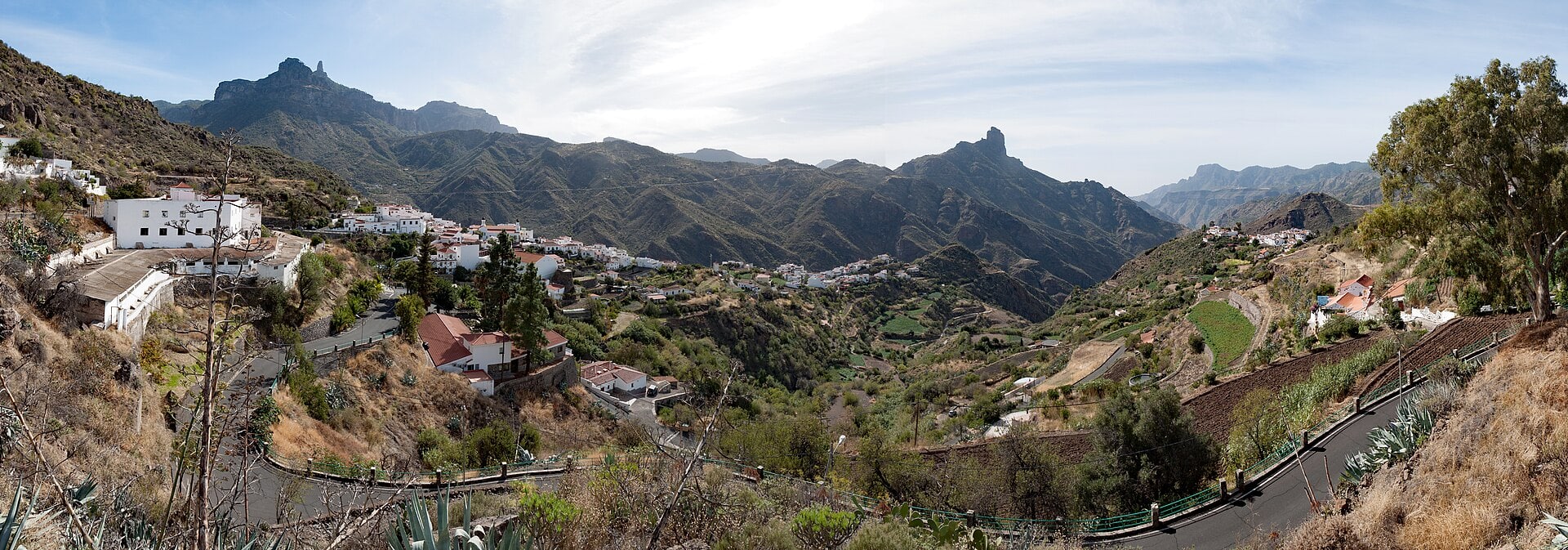
Tenerife, Spain: 22 Best Things to See and Do + Best Beaches

TL;DRThere are 22 tips here for Tenerife, from climbing the Teide volcano (3,718 m, Spain’s highest peak) to the laurel forests of the Anaga mountains, the clifftop village of Masca, the Los Gigantes cliffs and black-sand beaches like Playa de Benijo or Playa Jardín. It’s a year-round destination with temperatures of 20–28°C, and December to March is the best window if you’re escaping winter, while April or November are better for smaller crowds. The article recommends 10–14 days on the island, with a week as an absolute minimum, and from 2026 you’ll need to book a paid permit in advance to hike up to Teide’s summit. The south around Costa Adeje is your spot for beaches and resorts, while the north, with towns like Puerto de la Cruz and San Cristóbal de La Laguna, is better for nature and history — either way, you’ll want a car to explore properly.

Looking for the perfect escape from grey and freezing British winters? The Canary Islands are a geographical paradox you’ll fall in love with. While politically and culturally they’re very much part of Spain, geologically they rise from the African continental shelf and enjoy a climate that feels almost too good to be true. While the rest of Europe shivers, Tenerife Spain lives by its own relaxed rhythm of eternal spring, with year-round temperatures hovering comfortably between twenty and twenty-eight degrees.

The largest and most visited island in the archipelago commands respect from the moment you land. In a single day, you can push through dense misty laurel forest, stand above the crater of a steaming volcano, and by afternoon be soaking up the sun on warm volcanic beaches. Tenerife is an island of extraordinary contrasts, where the sun-drenched, arid south clashes dramatically with the lush, green north dotted with historic colonial towns. In this guide, we’ll walk you through the most beautiful places that absolutely deserve a spot on your itinerary.

TL;DR

  • Teide permit: Since 2026, strict regulations and fees apply for climbing to the actual summit (trail PNT 10). Book your permit months in advance.
  • Two different worlds: The south is ideal for sun-seekers, beach lovers, and big resort fans, while the north will delight nature enthusiasts, history buffs, and hikers.
  • Hiring a car is a must: If you truly want to explore the island and venture into the mountains or hidden villages, you simply can’t do it without one.
  • The green north: The Anaga Mountains and their ancient laurel forests are among the most beautiful things you can see in the entire Canary Islands.
  • When to go: Tenerife is a year-round destination. Winter is perfect for escaping the cold, and thanks to ocean currents, summers never get unbearably hot.
  • Two airports: Pay attention when booking flights — the island has a southern airport (TFS) for most international flights and a northern one (TFN) mainly for inter-island and mainland connections.

When to Visit Tenerife Spain

The Canary Islands don’t have an off-season — you can fly here with complete peace of mind any month of the year. Winter from December to March is peak season for visitors fleeing the cold. During this time, accommodation and flight prices soar, but your reward is the only reliable winter swimming destination on the European continent. Even in the coldest months, the ocean stays at a pleasant eighteen to twenty-four degrees.

Summer holidays on the islands are surprisingly comfortable and pleasant. Thanks to cool ocean currents and constant trade winds, you’ll rarely experience the extreme forty-degree heatwaves that regularly paralyse mainland Andalusia in August. If you want empty hiking trails and the best prices, aim for spring in April or autumn in November.

When packing, remember that the island functions as several distinct microclimates at once. While in the south around Costa Adeje you’ll mostly need swimwear and summer clothes, in the north and the mountains you’ll want a waterproof jacket and warm layers. The weather can change literally around every corner, so layering is the absolute key to a successful holiday.

Where to Stay in Tenerife

💡 Accommodation & experience tip: We love searching for stays on Booking.com, which tends to have the best cancellation policies. For tickets, tours, and activities, it’s worth comparing on GetYourGuide.

Choosing the right base is absolutely crucial for your holiday and depends entirely on what you’re after. The golden rule is that the sunny south is made for beach lovers and relaxation, while the green north welcomes active travellers and those seeking authentic atmosphere. If you’re staying longer than a week, I’d highly recommend splitting your accommodation between two bases so you don’t spend hours driving back and forth on the motorway.

The southern coast offers a huge range of resorts and hotel complexes with every amenity imaginable. You’ll find the sunniest beaches and endless promenades lined with restaurants. An excellent choice is the Costa Adeje area, which feels somewhat calmer and more upscale than the neighbouring bustling resort of Playa de las Américas. Many travellers have great experiences booking apartments through Booking, where you’ll find everything from modest studios to luxury villas with private pools.

If you’re drawn more to nature and Canarian history, look for accommodation in the north. The town of Puerto de la Cruz offers a brilliant compromise between tourist infrastructure and authentic Spanish atmosphere. Another wonderful historic base is the university city of San Cristóbal de La Laguna. Do bear in mind, though, that the northern coast is often shrouded in cloud and temperatures tend to be several degrees lower than in the parched south.

22 Best Things to See and Do in Tenerife

Let’s dive into the most fascinating places you shouldn’t miss when visiting the island. We’ve included everything from dramatic volcanic peaks and historic towns to the most stunning beaches.

1. Teide National Park and the Summit Climb

Teide National Park is the absolute heart of the island, with its towering peak reaching an incredible 3,718 metres above sea level. It’s the highest mountain in all of Spain, and visiting it is an absolute must for every traveller. On the way up, you’ll witness a mesmerising transformation of the landscape — banana plantations give way to pine forests, and eventually you find yourself in a surreal lunar landscape. Solidified lava and sharp obsidian create scenery that will genuinely take your breath away.

If you want to make it right to the edge of the volcanic crater, you’ll need to navigate a bureaucratic hurdle. Since January 2026, strict regulations govern the climb to the actual summit, specifically the final trail PNT 10. You now need a special permit and must pay a fee, as park authorities work to protect the fragile ecosystem. Slots disappear at lightning speed months in advance, so last-minute planning simply won’t work here.

Without a pre-booked permit, park rangers won’t let you near the crater and you’ll have to settle for the views from the upper cable car station. I’d recommend sorting your permit the moment you’ve booked your flights, as the Teide permit question is currently the hottest topic on travel forums. 💡 Insider tip: If you can’t secure a permit for a daytime climb, look into organised guided ascents, or consider a legal night-time climb with a stunning sunrise viewing.

2. Teide Cable Car (Teleférico)

For those who don’t want to or can’t tackle the massive elevation gain on foot, there’s a highly efficient cable car operating in the national park. In just eight minutes, it whisks you from the base station at 2,356 metres up to a lofty 3,555 metres above sea level. From there, you’ll enjoy phenomenal views across the entire national park, and on a clear day you can spot the neighbouring islands of La Gomera, La Palma, and El Hierro.

Cable car tickets are in extremely high demand and during peak season you’ll struggle to get them on the spot. Always book them several days in advance online, ideally through the official website or conveniently via platforms like GetYourGuide. Bear in mind that it’s significantly colder at the top with strong winds, so a warm jacket and sturdy footwear are absolute essentials even in the middle of a hot summer.

Cable car operations are extremely weather-dependent and strong winds can halt it at any time. Always check the official website each morning before setting off to avoid an unnecessary drive into the mountains. 💡 Insider tip: Early morning is best not only for smaller crowds but also for clearer air — by afternoon, thick clouds often gather around the summit.

3. Stargazing in the National Park

Tenerife boasts some of the finest stargazing conditions on our entire planet. Teide National Park is an officially certified Starlight Reserve, meaning there’s minimal light pollution and exceptionally clear air. Once the sun sets and most tourists have driven back to their coastal hotels, the park transforms into a perfect natural observatory filled with silence.

For the best experience, I’d recommend joining one of the local agencies offering specialised night excursions. Professional guides with powerful telescopes will show you craters on the Moon, Saturn’s rings, and teach you to navigate the constellations. It’s an utterly magical experience that appeals not just to keen astronomers but to anyone craving a romantic evening beneath the Milky Way.

If you prefer to go it alone, just grab a blanket, a flask of hot tea, and drive up to one of the many viewpoints along the main road. Make sure you dress very warmly though — temperatures here routinely drop to freezing point at night, even during summer months. 💡 Insider tip: The Mirador de los Roques de García viewpoint offers iconic rock tower foregrounds against the starry sky — an absolute paradise for any photographer with a tripod.

4. Anaga Mountains and Laurel Forest

At the far northeastern tip of the island lies the Anaga mountain range, which feels like it belongs to an entirely different world. This ancient massif is cloaked in primeval laurel forest known as laurisilva — a relic from the Tertiary period that has survived nowhere else in Europe. Trees draped in thick moss and ferns are perpetually immersed in mystical mist, creating an atmosphere straight out of a fantasy film.

The entire area is laced with hundreds of kilometres of superbly marked hiking trails of varying difficulty. One of the most beautiful routes is the Sendero de los Sentidos (Trail of the Senses), which starts at the Cruz del Carmen visitor centre. It’s easy, manageable even with small children, and completely draws you into the damp, enchanting ecosystem of this natural wonder.

When heading to Anaga, expect a completely different microclimate from what you’ll find in the south. It rains frequently, it’s windy, and significantly cooler, so a rain jacket and good boots should definitely be in your backpack. 💡 Insider tip: The roads through the Anaga Mountains are incredibly narrow and full of sharp switchbacks, so allow plenty of time and arm yourself with patience when squeezing past oncoming buses.

5. Mountain Village of Masca and the Gorge Trek

Deep in the Teno Mountains on the western side of the island hides the picturesque village of Masca, often dubbed the Canarian Machu Picchu. Until the 1970s, there was no road leading here at all, and the place was only accessible on foot or by donkey. Today you can drive there, but the road with its extreme switchbacks and dramatic drops will thoroughly test your driving skills and nerves of steel.

The village itself consists of just a few dozen traditional houses that literally cling to steep rocky cliffs. The main draw, however, is the spectacular trek through the Barranco de Masca gorge, which leads from the village all the way down to the wild ocean coast. For safety reasons, access to the gorge is currently strictly regulated and you must book a permit in advance through the official website.

Bear in mind that parking in the village is extremely limited and during peak season it fills up early in the morning. Your best bet is to leave the car in nearby Santiago del Teide and take the local bus or shared taxi to Masca. 💡 Insider tip: For the trek itself, make sure you bring sturdy ankle-supporting boots and plenty of drinking water — the descent and return climb are physically very demanding and the sun can be merciless.

6. Los Gigantes Cliffs (Acantilados de Los Gigantes)

On the western coast you’ll find one of the most awe-inspiring natural spectacles in all of Spain. The colossal rock walls of Los Gigantes plunge almost vertically into the depths of the Atlantic Ocean from a height of over six hundred metres. The original inhabitants of the Canary Islands, the Guanches, aptly called this area the “Wall of Hell” — for them, it marked the end of the known world.

The finest view of the cliffs comes from the deck of one of the many excursion boats departing from the local harbour. Only from the ocean’s surface do you truly appreciate their crushing monumentality and immense scale. If you prefer solid ground beneath your feet, excellent viewpoints can be found right in the town near the harbour, or from the gorgeous black sand beach Playa de los Guíos.

The town of Los Gigantes is relatively quiet and offers a lovely alternative to the busier southern resorts. It’s a wonderful spot for an afternoon coffee paired with watching the sunset paint the rocks in incredible shades of orange and red. 💡 Insider tip: While strolling through town, you’ll come across natural rock pools carved right into the lava, where you can safely swim even on days when the ocean waves are too rough.

7. Whale and Dolphin Watching

The Canary Islands — and specifically Tenerife’s southwest coast — rank among the absolute best places in the world for watching cetaceans in the wild. A huge colony of pilot whales and several dolphin species permanently reside in these waters. The seabed here drops away steeply to enormous depths, creating perfect conditions for their hunting and year-round life.

Whale watching trips most commonly depart from the harbours of Los Cristianos, Puerto Colón, or Los Gigantes. Always choose operators with “Barco Azul” (Blue Boat) certification, which guarantees an ethical approach to the animals. These vessels follow strict rules — they don’t get too close to the cetaceans and don’t suddenly cut their engines, so as not to disturb the animals in their natural habitat.

During a two to three-hour cruise, you have an almost guaranteed chance of spotting some wildlife. The experience of a massive whale surfacing just metres from your boat is one of the most unforgettable memories you’ll bring home from your holiday. 💡 Insider tip: If you’re prone to seasickness, book a spot on one of the larger catamarans, which are far more stable on the open ocean than small motorboats — and take a seasickness tablet about an hour before departure.

8. San Cristóbal de La Laguna (UNESCO)

If you want to experience the real history and culture of the island, head north to the city of San Cristóbal de La Laguna. This former capital is deservedly listed as a UNESCO World Heritage Site thanks to its perfectly preserved fifteenth-century historic centre. Its unique grid street layout later served as the blueprint for building many colonial cities across Latin America.

Strolling through, you’ll encounter gorgeous colourful houses with characteristic wooden balconies and peaceful inner courtyards filled with towering palms. The city has a deep university tradition, giving it an incredibly vibrant, youthful energy. In the narrow lanes you’ll discover countless independent cafés, quirky bookshops, and outstanding tapas bars frequented mainly by locals.

Remember that La Laguna sits at over five hundred metres above sea level, and the local climate is completely different from the sunny south. Fog, drizzle, and occasional showers are common, so a jumper and umbrella are essential kit. 💡 Insider tip: Visit in the evening when the historic buildings are beautifully illuminated and the city buzzes with student nightlife, with locals gathered on the squares until the early hours.

9. Santa Cruz de Tenerife

The island’s current capital, Santa Cruz de Tenerife, is a modern buzzing metropolis offering a brilliant mix of culture, shopping, and relaxation. Its most famous landmark is the futuristic Auditorio de Tenerife, designed by acclaimed architect Santiago Calatrava, whose sweeping form bears a striking resemblance to the Sydney Opera House. A beautiful promenade runs alongside it, perfect for an afternoon stroll.

The city boasts abundant green spaces and gorgeous parks, the most notable being Parque García Sanabria, filled with exotic plants and art installations. Shopaholics shouldn’t miss Calle Castillo, where you’ll find boutiques from every major brand, and for an authentic experience head to the Mercado de Nuestra Señora de África market, where you can buy the freshest local produce.

If you fancy a swim, just outside the city lies the stunning Playa de las Teresitas. It’s covered in fine golden sand shipped all the way from the Sahara, and thanks to artificial breakwaters it offers calm water free from dangerous currents. 💡 Insider tip: Every February or March, Santa Cruz hosts one of the biggest carnivals in the world — rivalling Rio de Janeiro itself in sheer spectacle. If you’re planning a spring trip, this extraordinary celebration is not to be missed.

10. Garachico and the Natural Lava Pools

On the northern coast lies one of the most charming — and most tragic — towns on the island. Garachico was once the wealthiest port on all of Tenerife, until a massive eruption of the nearby Trevejo volcano in 1706 all but wiped it out. The molten lava destroyed the entire harbour and forever changed the fate of this prosperous trading hub.

Nature had a fascinating way of compensating, though. The solidified lava that flowed into the ocean created an extraordinary system of natural rock pools known as El Caletón. Today you can safely bathe in these volcanic lagoons and enjoy crystal-clear water sheltered from the wild Atlantic waves. Comfortable walkways and steps have been built around the pools for easy access.

The town itself has preserved a wonderful Canarian atmosphere, with cobbled lanes, old churches, and peaceful squares. It’s the ideal spot for a leisurely lunch on a terrace overlooking the ocean, far from the buzz of the southern resorts. 💡 Insider tip: Access to the lava pools is often closed during winter months due to dangerously large waves — always respect the red flags and don’t risk your safety needlessly.

lukas a lucka
Lukáš and Lucie recommend
Where to stay in Tenerife
1 accommodation — hotels and other lodging options

11. Icod de los Vinos and the Millennial Dragon Tree

A stone’s throw from Garachico, nestled in the hills, lies the town of Icod de los Vinos, famous for two things: excellent local wine and an enormous tree. The star attraction is the Drago Milenario, a colossal dragon tree believed to be the oldest of its kind in the world. Although its age is estimated at a more modest eight hundred years, the massive crown formed by hundreds of intertwined branches is deeply impressive.

The tree sits within a paid botanical park offering a pleasant stroll among exotic flora. If you’d rather not pay the entrance fee, the best view of the dragon tree is completely free from the nearby Plaza de San Marcos. From there, you can even photograph the tree framed by the beautiful historic church and Mount Teide in the background.

As the town’s name suggests, Icod is the centre of the northern wine region. In the narrow streets you’ll stumble upon dozens of small bodegas where you can taste superb local wines, including sweet Malvasia. 💡 Insider tip: Make sure to pop into the little Butterfly Museum (Mariposario del Drago) right next to the park, where you’ll walk among hundreds of free-flying exotic butterflies in a spectacular tropical greenhouse.

12. Loro Parque in Puerto de la Cruz

In the north of the island, you’ll find an institution that regularly collects awards as the world’s best zoo. Loro Parque originally started as a rescue centre for parrots — they now house the largest collection on the planet. Over the years, it has grown into an enormous complex with a strong emphasis on conservation and the protection of endangered species.

The park is impeccably clean, bursting with lush tropical greenery, and the animals live in spacious enclosures designed to mimic their natural habitats. The biggest draw is the giant Planet Penguin pavilion, which simulates Antarctic conditions with tonnes of fresh snow falling daily. You’ll also see gorillas, sloths, tigers, and a massive aquarium with a walk-through tunnel surrounded by sharks.

A visit to the park will easily fill an entire day — and it’s a fantastic experience, not just for families with children. I’d recommend arriving right at opening time to beat the biggest crowds that arrive by coach from the southern resorts. 💡 Insider tip: Buy your tickets online in advance and consider the so-called Twin Ticket, which gives you discounted combined entry to the Siam Park water park on the south of the island.

13. Siam Park on the Costa Adeje

While Loro Parque rules the north, the south boasts the world’s best water park. Siam Park is a massive complex built in a stunning Thai style that will thrill every adrenaline junkie and relaxation-seeker alike. With dozens of world-class slides set amidst beautifully maintained tropical jungle, you never feel like you’re in a typical concrete water park.

The most iconic attraction is the Tower of Power — a twenty-nine-metre-high slide with a near-vertical drop that ends with a ride through a glass tunnel right through a tank filled with sharks and rays. If you prefer something calmer, grab a ring and float along the lazy Mai Thai River, or stretch out on the artificial beach by the enormous wave pool that regularly generates three-metre waves for surfers.

During peak season, the park gets extremely crowded and queues for the most popular attractions can exceed an hour. Investing in a Fast Track pass is well worth it — it lets you skip the queues on popular slides and saves you a lot of frustration. 💡 Insider tip: Loose items including glasses and flip-flops are banned on all rides, so pick up a pair of neoprene water shoes to save your feet from scorching walkways.

14. Puerto de la Cruz and Lago Martiánez

Puerto de la Cruz is the main tourist hub of the north, yet unlike the southern resorts, it has retained a strong Spanish character. Its crowning jewel is the Lago Martiánez complex, designed by the legendary artist César Manrique from nearby Lanzarote. It’s an impressive network of pools filled with seawater, masterfully integrated into the black volcanic rock.

The complex is a perfect example of how to blend modern architecture with raw Canarian nature. You’ll find a huge artificial lake, cascading fountains, and plenty of lounging areas surrounded by palms and exotic flowers. It’s the ideal spot for relaxation on days when the northern ocean is too wild and dangerous for safe swimming.

The town itself offers a beautiful historic centre with traditional fishermen’s cottages and outstanding restaurants. Stroll along the seafront promenade to Plaza del Charco, the main social heart of the town that buzzes with life from morning until late at night. 💡 Insider tip: Not far from the centre you’ll find the wonderful Jardín Botánico, a botanical garden established back in the eighteenth century to acclimatise exotic plants brought from the Americas to Europe.

15. Playa de las Américas Beach

Playa de las Américas is synonymous with lively holidays, nightlife, and non-stop entertainment. This southern resort never sleeps and offers the best infrastructure for those who love the buzz of major tourist centres. You’ll find miles of seafront promenades lined with hundreds of restaurants, bars, nightclubs, and souvenir shops.

The beach itself is protected by breakwaters, offering very calm and safe swimming ideal even for families with small children. The sand has a pleasant golden colour, and comfortable sun loungers with parasols are available to hire everywhere. The area is also popular with the surfing community — right next to the main beaches, rocky reefs create excellent waves for beginners and advanced surfers alike.

It’s worth noting that you’ll find virtually no authentic Spanish culture here — everything is geared primarily towards British and German tourists. But if you want guaranteed sunshine, great cocktails, and a buzzing nightlife, you’re in the right place. 💡 Insider tip: To escape the biggest crowds, walk along the coast northwards towards the more upscale Costa Adeje area, where you’ll find quieter coves and premium beach clubs with outstanding service.

16. Los Cristianos and Harbour Vibes

Right next to Playa de las Américas lies the town of Los Cristianos, which has gradually merged into one sprawling conurbation but retains a slightly calmer feel. Originally a small fishing village, its historic centre — a tangle of narrow streets and small squares around the harbour — can still be admired, letting you soak up a bit of that old Canarian atmosphere.

Playa de los Cristianos is wide, covered in fine yellow sand, and thanks to a gentle slope into the water it’s absolutely ideal for families with children and non-swimmers. The local harbour serves as the main ferry hub, with boats departing several times daily to the neighbouring islands of La Gomera, La Palma, and El Hierro. It’s a fascinating hive of boats that’s wonderful to just sit and watch from a bench with a coffee in hand.

A lively promenade runs along the beach, lined with cafés and restaurants that have thankfully avoided the noisiest nightclubs. It’s a great spot for an evening stroll rounded off with an excellent dinner overlooking moored sailing boats. 💡 Insider tip: Head just past the harbour to nearby Montaña Chayofita — a short and easy trail leads to the top, rewarding you with a fantastic panoramic view of the entire southern coastline.

17. El Médano — A Surfer’s Paradise

If you want to avoid mass-market resorts and are looking for a more bohemian vibe, make your way to El Médano. This spot is famous as the island’s main windsurfing and kitesurfing base, thanks to the near-constant wind that blows here virtually year-round. The sky above the local beaches is perpetually filled with colourful kites and sails, creating an absolutely stunning dynamic backdrop.

The town has a wonderfully laid-back and friendly atmosphere that attracts young people, digital nomads, and sports enthusiasts from across Europe. Instead of luxury boutiques, you’ll find surf rental shops, vegan cafés, and independent little stores selling handmade jewellery. The central square often hosts small markets and street concerts that give the place enormous charm.

The bay is dominated by the volcanic cone of Montaña Roja (Red Mountain), which rises directly from the ocean and divides the coastline into two main beaches. Hiking to its summit takes under an hour and makes for a brilliant activity on a windy afternoon. 💡 Insider tip: Playa de la Tejita beyond Red Mountain is one of the largest natural beaches on the island — completely untouched by development, with a section designated for nudists.

18. Black Volcanic Beaches (Playa Jardín and Benijo)

Tenerife is a volcanic island, and its most striking beaches aren’t white or golden — they’re deep, dark black. Sand made from ground-up volcanic rock has a unique allure and can heat up incredibly quickly in the sun. One of the most accessible black beaches is the gorgeous Playa Jardín in Puerto de la Cruz, designed by the aforementioned César Manrique and surrounded by beautiful subtropical gardens and artificial waterfalls.

If you’re after true wilderness, however, you need to head north into the Anaga Mountains. Playa de Benijo is one of the most photographed spots on the island, thanks to its dramatic cliffs and jagged sea stacks rising straight from the crashing surf. Getting there involves plenty of steps, and there are absolutely no facilities like sun loungers or parasols — just the raw, untamed power of the Atlantic.

Swimming at the wild northern beaches demands enormous respect for nature. Huge waves and treacherous undercurrents are common, so only venture into the water when conditions are completely calm. 💡 Insider tip: Treat the black sand with respect — in the midday sun it heats up to temperatures that can badly burn your feet within seconds if you’re not wearing sturdy shoes or flip-flops.

19. La Orotava and Its Historic Centre

Perched on the slopes just above Puerto de la Cruz, La Orotava is considered by many to be the most beautiful town on the entire island. Its historic centre is a stunning showcase of rich Canarian architecture from the seventeenth and eighteenth centuries, when the town grew wealthy from wine and sugar cane exports. Every street is incredibly steep, so exploring will give your legs a proper workout.

The most famous landmark is the Casa de los Balcones (House of the Balconies), which displays the exquisite craftsmanship of local woodcarvers. Its inner courtyard with elaborate carved galleries and lush vegetation is a typical example of how the upper class lived in those days. Nearby, the terraced gardens of Jardines del Marquesado de la Quinta Roja offer breathtaking views stretching all the way to the ocean.

La Orotava is world-renowned for its Corpus Christi celebrations, usually held at the turn of May and June. Local residents cover the streets and squares with enormous carpets woven from flowers and coloured volcanic sand brought from Teide National Park. 💡 Insider tip: If you want to visit the unique old water mill Gofio La Máquina, where traditional Canarian gofio flour is still ground using water power, head up the steep lanes above the town centre.

20. Pyramids of Güímar

On the eastern coast you’ll find one of the greatest archaeological mysteries of the entire Canary Islands. In the town of Güímar stand six step pyramids that bear a striking resemblance to structures in Mexico or Peru. For a long time, they were dismissed as random piles of stones left by farmers clearing their fields.

The famous Norwegian explorer and navigator Thor Heyerdahl, however, proposed a fascinating theory that these structures have a clear astronomical orientation and prove an ancient connection between Egypt and the civilisations of Central America. While modern archaeologists largely dispute his bold claims and date the structures to the nineteenth century, the site itself remains captivating.

An excellent ethnographic park has been built around the pyramids, featuring a superb museum dedicated to Heyerdahl’s expeditions and ancient seafaring. You’ll also find replicas of his famous reed boats Ra II and Kon-Tiki. 💡 Insider tip: The park also includes a unique poisonous plant garden, where under the guidance of staff you can safely learn about the world’s most dangerous plants — a great stop for older children too.

21. Punta de Teno and the Western Lighthouse

At the very northwestern tip of the island lies a place that has preserved an incredibly wild and isolated atmosphere. Punta de Teno is a rocky peninsula with an iconic red-and-white lighthouse, offering some of the best views of the massive Los Gigantes cliffs. It’s an absolutely ideal spot for watching the sunset, when the sky and rocks blaze in dramatic hues.

The road to the lighthouse is carved into steep cliffs above the ocean. For conservation and safety reasons, private car access is strictly prohibited during the day (typically from 10 am to 7 pm). If you want to get here during daytime, you’ll need to take a special scheduled bus from the nearby town of Buenavista del Norte, or book a boat trip.

Beyond the lighthouse and the views, you’ll find just a few small coves with crystal-clear water that are great for cautious snorkelling among the volcanic rocks. Don’t expect any restaurants or snack bars here — bring all your food and drink with you. 💡 Insider tip: Winds on the headland can be extreme, so don’t forget a windbreaker even in the height of summer — the wind chill drops the temperature surprisingly fast.

22. A Taste of Canarian Cuisine

Canarian cuisine is wonderfully diverse, and thanks to influences from Spain, Africa, and Latin America, it offers brilliant experiences even for committed vegetarians. The absolute staple is papas arrugadas — traditional wrinkled potatoes boiled in heavily salted water with their skins on until a fine salt crust forms. They’re served as a side dish with practically everything, or simply on their own as superb tapas.

These potatoes wouldn’t be complete without two iconic sauces — red mojo rojo and green mojo verde. The red version is made from hot peppers, garlic, and olive oil, while the green is milder, built on fresh coriander or parsley. Another huge culinary phenomenon is gofio, a toasted flour made from corn and wheat that gets added to soups, sweet desserts, and even morning milk.

If you’re a cheese lover, you absolutely must try queso asado — a thick slab of local goat or sheep cheese grilled until golden and drizzled with honey and green mojo. It’s an incredibly hearty and flavour-perfect combination. 💡 Insider tip: Skip the overpriced restaurants on the beach promenades and instead seek out so-called guachinches — traditional family taverns in the northern hills where they’ll serve you simple food alongside the finest homemade wine straight from their own barrels.

Where to Go Next from Tenerife (and Spain)

If you’re planning a longer trip and want to combine Tenerife with another island, the most logical choice is a short ferry crossing to the lush La Gomera. Many travellers also use the Canary Islands as a brilliant springboard for exploring mainland Spain, with cheap direct flights running several times daily.

If the mainland and stunning architecture appeal, be sure to check out our guide to Barcelona or discover the magic of the capital in our Madrid article. For fans of southern charm, we’ve put together a fantastic Andalusia guide, complemented by a detailed look at Seville, Moorish Granada, and historic Córdoba. Fascinating experiences also await in Ronda and on the legendary Caminito del Rey trail. For Basque culture, head to San Sebastián or Bilbao. Combine a beach holiday with a visit to Valencia, enjoy a relaxed getaway in Málaga, and for the legendary party scene head to Ibiza. Don’t forget to swot up on what to expect at the dinner table with our guide to typical Spanish food.

Frequently Asked Questions

Do I need a car on the island?

Yes, if you really want to explore the island and aren’t planning to just lounge by the hotel pool, I highly recommend renting a car. While public transport does run between the major coastal towns, getting to mountain villages, national parks, and secluded beaches without a car is extremely difficult and you’ll waste a lot of valuable time.

Which airport should I choose for arrival?

Tenerife has two airports. For most international flights from Europe, you’ll use the southern airport Tenerife Sur (TFS), which is located close to the main beach resorts. The northern airport Tenerife Norte (TFN) is mainly used if you’re connecting through mainland Spain (such as Madrid) or planning to fly to the smaller surrounding islands.

Is the ocean warm enough for swimming in winter?

The Atlantic never reaches the temperatures of the Mediterranean in August, but you can swim here year-round. During the coldest months from January to March, the ocean temperature hovers around nineteen degrees Celsius, which is perfectly refreshing on the sun-baked southern coast.

Where is it warmer, in the north or the south?

The difference is huge. The arid south around Costa Adeje is sheltered by the high mountains in the center of the island, with constant sunshine, minimal rainfall, and consistently high temperatures. The north around Puerto de la Cruz is much greener, more humid, often cloudy, and can easily feel five degrees cooler.

How many days do I need to explore the island?

The absolute minimum for a visit is one full week, though even then you’ll have to skip plenty of interesting places. If you want to comfortably combine mountain trips (Teide, Anaga, Masca) with beach relaxation and visits to historic towns, the ideal length is ten to fourteen days.

Should I sort out the Teide permit before I leave home?

Absolutely. Especially from 2026 onwards, the rules for climbing are very strict, trail capacity is limited, and slots for the actual summit disappear months in advance. If you don’t have a permit reserved beforehand from home, you’ll only get one on-site by sheer luck from other tourists’ cancelled reservations.

Are the Canary Islands expensive?

Prices here are very reasonable, on average somewhat lower than mainland Spain or Western Europe, thanks to a special reduced tax regime. Petrol, supermarket groceries, and food at local restaurants away from the main tourist strips will pleasantly surprise you with very sensible prices.

Tips and Tricks for Your Vacation

Don’t Overpay for Flights

Search for flights on Kayak. It’s our favorite search engine because it scans the websites of all airlines and always finds the cheapest connection.

Book Your Accommodation Smartly

The best experiences we’ve had when looking for accommodation (from Alaska to Morocco) are with Booking.com, where hotels, apartments, and entire houses are usually the cheapest and most widely available.

Don’t Forget Travel Insurance

Good travel insurance will protect you against illness, accidents, theft, or flight cancellations. We’ve had a few hospital visits abroad, so we know how important it is to have proper insurance arranged.

Where we insure ourselves: SafetyWing (best for everyone) and TrueTraveller (for extra-long trips).

Why don’t we recommend any Czech insurance company? Because they have too many restrictions. They set limits on the number of days abroad, travel insurance via a credit card often requires you to pay medical expenses only with that card, and they frequently limit the number of returns to the Czech Republic.

Find the Best Experiences

Get Your Guide is a huge online marketplace where you can book guided walks, trips, skip-the-line tickets, tours, and much more. We always find some extra fun there!
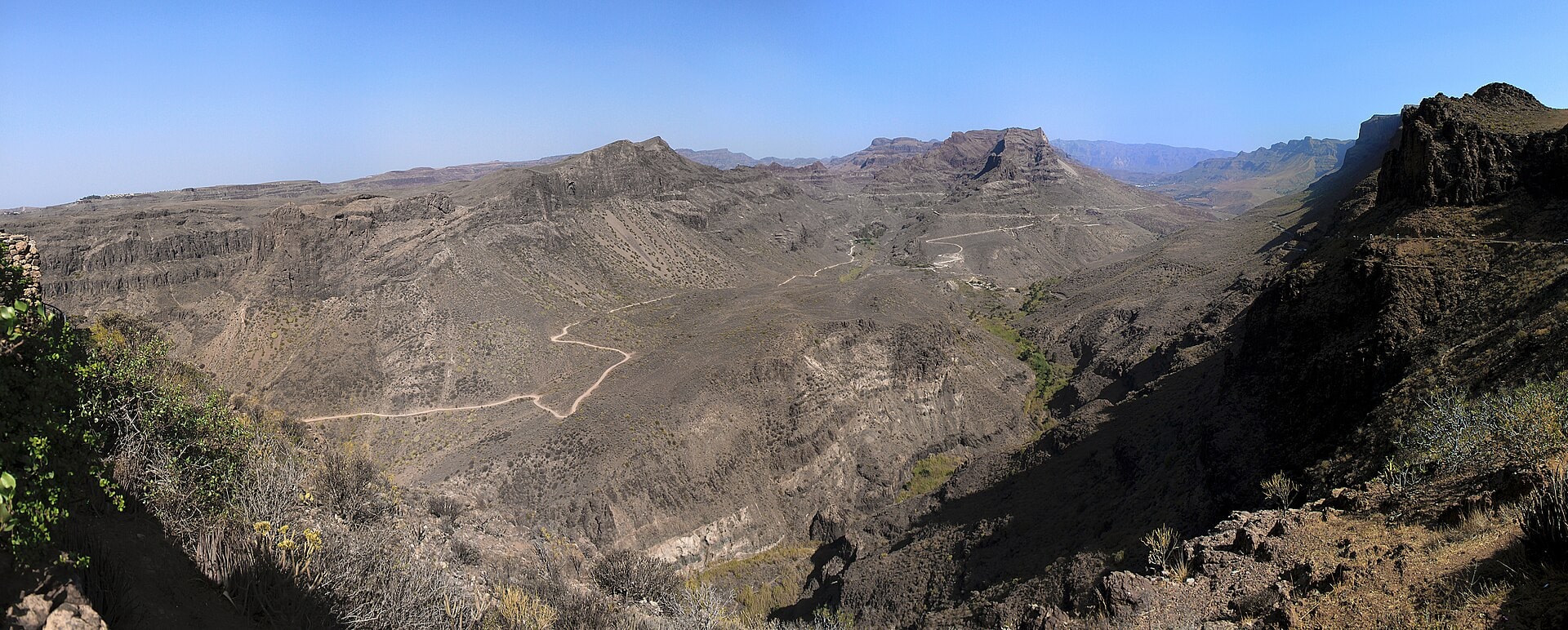
Mallorca, Spain: 25 Best Things to See and Do

TL;DRThere are 25 solid ideas here for what to see and do on Mallorca: the Gothic La Seu cathedral and Bellver Castle in Palma, the mountain villages of Valldemossa, Deià and Sóller in the Serra de Tramuntana (a UNESCO World Heritage site), and beaches like Es Trenc, Cala Mondragó and Caló des Moro. The best time to visit is the shoulder months of May, June, September and October, when the sea sits around 26°C and things are neither too hot nor too crowded. Visitors pay a tourist tax of 2 to 4 euros a night, depending on the type of accommodation. Highlights include the vintage train to Sóller, which costs 25 euros, the Coves del Drach caves with entry at around 17 euros, and the dramatic Cap de Formentor viewpoint, reachable only by shuttle bus in summer.

You know that feeling when you’ve heard so much about a place that you feel like you already know it inside out? Mallorca is exactly that kind of destination — one that both suffers and thrives on its reputation. I visited as a child with my mum and brother years ago, but honestly all I remember is building sandcastles and eating an enormous ice cream. 😅 When you look at this largest of the Balearic Islands through grown-up, practical eyes, though, you realise it’s essentially a fascinating micro-continent. It offers absolutely everything you could want from a perfect holiday, satisfying hardcore cyclists and art and history lovers alike. If you’re looking for the best things to do in Mallorca, Spain, you’ve come to the right place.

In this article, you’ll find 25 of the best things to see and do in Mallorca so you can make the most of the island and dodge the worst tourist traps. We’ll explore the majestic landmarks of Palma, head into the dramatic Serra de Tramuntana mountains, and won’t skip the most beautiful coves with turquoise water either. I’ll also share tips on where to strategically base yourself, how local transport works, and what to watch out for so you don’t end up paying hefty fines for parking in protected areas.

TL;DR

  • Capital city Palma: The showstopper is the stunning Gothic cathedral La Seu — book your tickets online in advance — plus a historic centre packed with tapas bars.
  • Mountains and villages: The Serra de Tramuntana range (UNESCO) hides gems like Valldemossa, the artistic haven of Deià, and the town of Sóller, served by a famous vintage railway.
  • Dramatic north: Cap de Formentor offers the most jaw-dropping views, but in summer there’s a strict car ban and you must use the shuttle bus.
  • Best beaches: In the south and east you’ll find the Caribbean-like Es Trenc beach and the photogenic coves of Cala Mondragó and Cala Llombards.
  • Tourist tax: All the Balearic Islands charge a so-called ecotasa (sustainable tourism tax), which varies by accommodation type and is paid on the spot.
  • Getting there: Direct flights operate from London with airlines like easyJet, Ryanair and British Airways. Once on the island, a hire car is the best way to get around, though excellent buses often suffice for mountain trips.

When to Visit Mallorca

If you’re wondering when to book your flights, the ideal window is the shoulder season — May, June, and then September and October. During these months the sea is already (or still) beautifully warm (in September the water holds a pleasant 26 °C), and you’ll safely avoid the worst summer heatwaves and extreme tourist crowds. Mallorca is technically a year-round destination, but bear in mind that most coastal hotels and restaurants close during the winter months. Winter is, however, absolutely perfect for cycling and hiking, with temperatures hovering around 15 °C.

When planning your budget, don’t forget that the Balearic government imposes a sustainable tourism tax, known as the ecotasa. Every visitor over 16 pays it directly at their accommodation. In the high season from May to October, a night in a four-star hotel will cost you an extra 3 to 4 euros per person, while standard apartments are around 2 euros. From the ninth night onwards, this rate drops by half — a nice bonus for longer stays. In the off-season, these charges are only a fraction of that.

Where to Stay in Mallorca

💡 Accommodation & experiences tip: We love searching for accommodation on Booking.com, which usually has the best cancellation policies. For tickets, tours and activities, it’s worth comparing options on GetYourGuide.

Choosing the right location for your stay is absolutely key, and it depends mainly on what you want to do on the island. If you’re planning to explore history, enjoy the food scene, and take day trips on public transport, the capital Palma de Mallorca makes a brilliant base. For mountain lovers, cyclists and those after quieter evenings, the north-west coast around the town of Sóller is ideal. Families with children often opt for the northern bay near historic Alcúdia, where wide sandy beaches have a very gentle slope into the sea. Always book your accommodation well in advance, as the best options disappear early in spring. Booking.com is perfect for this, with everything from luxury villas to cosy apartments.

In the capital Palma, you could stay at the gorgeous Hotel Saratoga, which has a rooftop pool with breathtaking views straight onto the cathedral and sits a stone’s throw from the historic centre. If you fancy something more intimate in the Tramuntana area, the charming Ecocirer Healthy Stay in Sóller offers beautifully designed rooms and fantastic vegetarian breakfasts made from local produce. In Alcúdia on the north of the island, try the boutique Hotel Can Mostatxins, housed in a lovingly restored historic building with a truly unique atmosphere.

25 Best Things to See and Do in Mallorca

Mallorca is incredibly diverse, and there are so many amazing spots that one holiday simply won’t be enough. Let’s dive into the best the island has to offer — from majestic historic landmarks and mountain villages to hidden coves you absolutely shouldn’t miss.

1. La Seu Cathedral in Palma

Palma’s crowning glory is the awe-inspiring La Seu Cathedral, which stands proudly right above the waterfront, welcoming every ship that sails into the harbour. This masterpiece of Levantine Gothic architecture took several centuries to build, and its sandstone walls glow with incredible colours at sunset. It’s definitely worth paying for entry, because the interior is arguably even more breathtaking than the exterior.

Inside, you’ll be blown away by one of the largest rose stained-glass windows in the world, nicknamed the “Eye of Gothic”. In the morning, sunlight streams through it and casts a magical play of colours on the opposite wall. On top of that, the famous Catalan architect Antoni Gaudí worked on the interior at the start of the 20th century — his signature touch is visible in the enormous chandelier above the altar.

💡 Top tip: Buy your tickets on the official website in advance to skip the never-ending queues. If you can, pay extra for access to the rooftop terraces (usually open from spring to autumn), which offer phenomenal views over the entire city.

2. Get Lost in the Lanes of Old Palma

Just behind the cathedral lies the intricate maze of the old town, which has preserved its medieval and Moorish character. The best way to explore it is to simply ditch the map and let the narrow lanes guide you. You’ll stumble upon shaded courtyards of old palaces, little artisan shops, and cosy cafés that beckon you to sit down and linger.

The main artery of this quarter is the broad promenade of Passeig del Born, lined with plane trees and upscale boutiques. Around it, you’ll find dozens of excellent tapas bars that are every bit as good as those on mainland Spain. In the evening, the area buzzes with life and the atmosphere is simply infectious.

💡 Top tip: Pop into the historic Mercat de l’Olivar market, where you’ll find the freshest local produce, a huge selection of cheeses, olives and fresh fruit. It’s a brilliant spot for an authentic and affordable lunch.

3. The Circular Castle of Castell de Bellver

About three kilometres from Palma’s centre, perched on a wooded hill, stands Castell de Bellver — a unique 14th-century Gothic castle. What makes it so exceptional is its completely unique circular floor plan, with a beautiful inner courtyard framed by two-storey arcades. You’ll find very few buildings like it anywhere in Europe.

It originally served as a royal residence, later as a military prison, and today it houses an interesting museum of the city’s history. Entry costs around 4 euros, and your reward is the finest panoramic view over all of Palma, the bay, and the Tramuntana mountains in the background.

💡 Top tip: On Sundays, entry to the castle is free for everyone. You can drive up, but it’s far nicer to take a walk through the pine forest directly from the city.

4. Serra de Tramuntana Mountains (UNESCO)

The western backbone of the island is formed by the monumental limestone Serra de Tramuntana range, inscribed as a UNESCO World Heritage Site for its unique cultural landscape. This is a completely different Mallorca from the one you see in holiday brochures. Steep peaks plunge straight into the sea, terraced fields are dotted with ancient olive trees, and the air is fragrant with rosemary and pine.

The fantastic — if fairly demanding — Ma-10 road winds through the entire range, making it an absolute paradise for drivers and cyclists alike. Navigating these twisting hairpin bends takes a bit of concentration, but the views that unfold around every corner are simply priceless.

💡 Top tip: If you’re hiring a car, go for a smaller model. The mountain roads are narrow, squeezing past oncoming buses can be hair-raising, and a small car is far easier to park.

5. Romantic Valldemossa

Valldemossa is arguably the most famous mountain village on the entire island, and for very good reason. Stone houses with dark green shutters huddle in a valley surrounded by mountains, and every street is adorned with hundreds of flower pots. The village was made famous by Polish composer Fryderyk Chopin and French writer George Sand, who spent a celebrated — if somewhat unhappy — winter here in 1838–1839.

You can visit the old Carthusian monastery where Chopin composed his preludes, but the greatest magic lies in simply wandering the lanes. The village is incredibly photogenic, full of small galleries and cafés where you can savour an afternoon coffee.

💡 Top tip: Valldemossa gets packed during the day with cruise-ship visitors. Come either early in the morning or in the late afternoon, when the crowds vanish and the village regains its magical atmosphere.

6. The Artistic Enclave of Deià

Just a few kilometres further along the coastal road, you’ll reach Deià — a village that has earned a reputation as the unofficial capital of artists and bohemians in Mallorca. English writer Robert Graves spent most of his life here, and after him, painters, musicians, and Hollywood celebrities began flocking to the village in search of peace and inspiration.

Deià sits high on a hillside, with ochre-coloured houses cascading down the slope. From the village, a steep but gorgeous hiking trail leads down to the sea at Cala Deià, where you’ll find a small pebble beach and two rustic restaurants serving excellent food right by the water.

💡 Top tip: Parking in Deià is an absolute nightmare — spaces are virtually non-existent. The best option is to leave your car at the car park on the edge of the village or take the local bus from Palma, which runs very reliably.

7. The Historic Wooden Train to Sóller

The journey from Palma to the town of Sóller is considered one of the most magical experiences on the whole of Mallorca. Since 1912, a historic wooden train has been trundling through the mountain landscape here. During the ride of just under an hour, you’ll pass through 13 tunnels, cross several viaducts, and feast your eyes on views of almond and olive groves.

The train’s interior, with wooden benches and brass fittings, instantly transports you a hundred years back in time. A return ticket costs around 25 euros and it’s worth every penny. It’s an experience that’s not just for kids — grown-up romantics will love it just as much.

💡 Top tip: Tickets sell out fast during the season, so arrive at Palma station at least half an hour before departure. The best views are said to be from the left side of the carriage in the direction of travel.

8. The Town of Sóller and Its Citrus Groves

The town of Sóller itself, nestled in a fertile valley surrounded by the highest peaks of the Tramuntana, is utterly charming. It’s nicknamed the “Valley of Oranges” because its unique microclimate creates exceptional conditions for growing citrus fruit. In the 19th century, citrus was the town’s main source of wealth, which is reflected in the gorgeous Modernist architecture of the local mansions.

The heart of the town is the lively Plaza de la Constitución, overlooked by the majestic church of Sant Bartomeu. Sitting at one of the square’s cafés, sipping freshly squeezed orange juice and watching the world go by — that’s the very definition of Mallorcan bliss.

💡 Top tip: Don’t miss a visit to the local botanical garden (Jardí Botànic), which specialises in preserving rare Balearic plants and is a gorgeous oasis of calm just a short walk from the centre.

9. The Historic Tram to Port de Sóller

From Sóller, you don’t need to walk all the way to the sea — just hop on the historic tram that’s been running since 1913. The five-kilometre route takes you through gardens bursting with lemon and orange trees, at times passing so close to houses you could practically touch the walls, before dropping you right on the seafront at Port de Sóller.

Port de Sóller is a lovely horseshoe-shaped harbour guarded by two lighthouses. A wide promenade lined with restaurants wraps around the bay, and there’s a pleasant sandy beach where you can cool off after a long day in the mountains.

💡 Top tip: The tram fare is paid directly to the conductor on board (around 8 euros one way). A combined ticket for the train from Palma plus the tram works out much cheaper than buying separate legs.

10. Fornalutx: One of Spain’s Most Beautiful Villages

Just above Sóller lies the village of Fornalutx, which regularly tops the rankings of the most beautiful villages in all of Spain. And it’s easy to see why. Golden stone houses with red-tiled roofs blend perfectly with the surrounding mountains and terraces full of orange trees.

It’s a place where you should simply meander through the narrow lanes, admire the traditional painted tiles on rooftops, and soak up the incredible tranquillity. Several excellent hiking trails lead from the village into the surrounding hills, offering superb views across the entire Sóller valley.

💡 Top tip: Try the walking loop from Sóller via the hamlet of Biniaraix to Fornalutx. It takes about two hours of relaxed walking through stunning countryside and beats the stress of hunting for a parking spot.

11. The Wild Road to Sa Calobra

If you love driving and don’t suffer from vertigo, the road down to Sa Calobra bay will be the drive of a lifetime. This twelve-kilometre road was designed in the 1930s by Italian engineer Antonio Parietti to disturb the natural landscape as little as possible. The result is an astonishing feat of engineering, packed with hairpin bends that descend 800 metres to sea level.

The most famous spot on the route is the Nus de Sa Corbata (the Tie Knot), where the road loops under itself in a 270-degree turn. It’s one of the most photographed spots on Mallorca, and while the driving requires nerves of steel, the views are absolutely spectacular.

💡 Top tip: Head here either very early in the morning or in the late afternoon. During the day, dozens of large tour coaches use the road, and squeezing past them on the tight bends is extremely tricky, often causing long tailbacks.

12. The Dramatic Torrent de Pareis Gorge

At the end of the mad road to Sa Calobra, your reward is one of the most impressive natural spectacles on the island. A short walk through illuminated tunnels carved into the rock leads you to a small pebble beach at the mouth of the gigantic limestone gorge of Torrent de Pareis.

The cliffs tower over 200 metres high, forming an astounding natural amphitheatre. If you’re in good shape and wearing sturdy shoes, you can trek deeper into the gorge. It’s quite challenging terrain full of massive boulders, though, so definitely don’t overestimate your abilities.

💡 Top tip: Thanks to the high walls, the gorge has brilliant acoustics, and in summer occasional a capella concerts are held here. The water on the beach tends to be quite cold even in August due to the depth, making it a perfect spot for a refreshing dip.

lukas a lucka
Lukáš and Lucie recommend
Where to Stay in Mallorca
4 accommodations — hotels and other lodging options

13. The Lighthouse on the Cliffs of Cap de Formentor

The northern tip of the island, the Formentor peninsula, offers the most dramatic views in the entire Balearic Islands. A narrow road twists along the cliffs high above the sea, passes several stunning viewpoints (definitely stop at Mirador es Colomer), and ends at a lonely 19th-century lighthouse where it feels like you’ve reached the edge of the world.

⚠️ Watch out for strict traffic restrictions! Due to extreme traffic congestion and to protect the fragile environment, the road to the lighthouse is completely closed to private cars from 1 June to 30 September between 10:00 and 22:00. During this window, the only way to reach the cape is by a dedicated shuttle bus (line 334), departing from Alcúdia or Port de Pollença. Ignoring this ban means an automatic hefty fine from the camera system.

💡 Top tip: If you want to experience Formentor by car and without crowds, set your alarm early and head here for sunrise. It’s a truly magical experience — you’ll dodge the restrictions and the scenery bathed in morning light is unforgettable.

14. Historic Alcúdia and Its Ancient Walls

In the north-east of the island lies Alcúdia, a beautifully preserved medieval town that has been comprehensively restored. The historic centre is encircled by mighty 14th-century stone walls, and you can walk along much of them to admire the town from above.

Within the walls, you’ll find a network of picturesque pedestrian lanes with Renaissance palaces, small boutiques, and excellent restaurants. Just outside the town lie the ruins of the ancient Roman city of Pollentia, proof that this area has been inhabited for over two thousand years.

💡 Top tip: Every Tuesday and Sunday morning, huge traditional markets are held in Alcúdia. The town fills with stalls selling local produce, clothing and handicrafts. It’s a great chance to pick up souvenirs, but expect it to be seriously busy.

15. Pollença and the 365 Steps to Calvary

Just a short distance from Alcúdia, heading inland, sits the town of Pollença, which has retained a very authentic and peaceful atmosphere. Its greatest challenge — and most beautiful landmark — is Calvary Hill (El Calvari), reached by climbing exactly 365 stone steps, one for each day of the year.

The ascent, lined with old cypress trees, is a bit of a workout in the summer heat, but the view from the little chapel at the top over the entire town and northern coast is absolutely worth the effort. Back down in the Plaça Major, you can treat yourself to an excellent coffee and watch local life unfold.

💡 Top tip: Just outside Pollença, you’ll find the old Roman bridge (Pont Romà), which is still in use and makes a lovely, quiet spot for a quick stop and a photo.

16. The Underground World of Coves del Drach

Mallorca is riddled with cave systems, but the Dragon Caves (Coves del Drach) near the town of Porto Cristo on the east coast are in a league of their own. This enormous underground complex conceals mesmerising stalactite formations that are beautifully and sensitively illuminated.

The star attraction, though, is one of the largest underground lakes in the world — Lake Martel. The cave tour culminates in a vast chamber where you sit in darkness as illuminated boats carrying musicians float towards you across the lake, performing a live classical music concert. It’s a bit touristy, but visually very impressive.

💡 Top tip: Entry costs around 17 euros and booking a specific time slot online is an absolute must, as capacity is limited and on-the-day tickets are often completely sold out.

17. The Medieval Castle of Capdepera

On the far eastern tip of the island, looming above the town of Capdepera, stands an imposing 14th-century medieval fortress. It was built to protect the local population from relentless pirate raids, and its mighty walls and defensive towers are still remarkably intact today.

The castle grounds are surprisingly extensive and offer fantastic views across the eastern coast. On a clear day, you can even make out the neighbouring island of Menorca across the sea. In spring especially, when wildflowers bloom around the castle, it’s an incredibly romantic spot.

💡 Top tip: The walk up to the castle goes through fairly steep streets from the town centre. Don’t try driving all the way up — the streets are unbelievably narrow and parking near the castle is virtually impossible. Leave your car at the main car park below.

18. The Caribbean-Like Beach of Es Trenc

If you’re after a long stretch of dazzling white sand and turquoise water, head to the south of the island to Es Trenc beach. It’s arguably the most famous natural beach in Mallorca and is often referred to as the Caribbean of Europe. It stretches an impressive three kilometres, and there are no large hotel complexes in its immediate surroundings.

The beach is backed by a protected area of sand dunes and pine groves, behind which lie traditional salt pans (salinas) where the renowned Mallorcan sea salt is still harvested today. The water is incredibly shallow and crystal clear, making it ideal for families with children.

💡 Top tip: Parking at Es Trenc is paid (around 7 euros per day) and fills up quickly in season. The access road is a narrow lane between the salt pans, so in the afternoon hours as people leave, annoying traffic jams build up.

19. The Dramatic Cove of Caló des Moro

Caló des Moro is visually one of the most stunning coves you’ll ever see in your life. This deeply incised inlet between towering cliffs offers water so blue it looks digitally enhanced. Unfortunately, its photogenic appeal has become its curse, and in recent years it’s been extremely overcrowded.

⚠️ Important warning: There are no lifeguards, toilets, or refreshment stalls here, and the actual sandy beach is tiny. If you want to visit, you absolutely must arrive very early in the morning (ideally before 8 am) and avoid weekends at all costs. During the day, people are literally crammed onto the rocks and you often have to queue just to get down to the water.

💡 Top tip: You must leave your car at the free car park in the village of Cala Llombards and walk about 20 minutes. Double-check your sat-nav route, because the surrounding streets are strictly closed to non-residents and the police hand out fines left, right and centre.

20. Cala Mondragó Nature Reserve and Beach

If the crowds at Caló des Moro put you off, Cala Mondragó on the south-east coast is a brilliant and much calmer alternative. It sits within a protected nature reserve, so there’s no massive development — just a gorgeous bay fringed by dense pine forests that provide much-welcome natural shade.

The cove boasts wonderfully fine sand and a very gentle entry into the water. What’s more, a beautiful coastal path carved into the rock leads you in just five minutes to the neighbouring, slightly larger and equally stunning beach of S’Amarador.

💡 Top tip: Mondragó Nature Reserve has several short walking trails (from 1 to 3 kilometres). Walk them in the evening when the sun isn’t so fierce, and enjoy the scent of pines and the clifftop views.

21. Photogenic Cala Llombards

Just a stone’s throw from Caló des Moro lies another gem of the south-east coast — Cala Llombards. It’s a classic narrow “cala” (cove) cutting deep into limestone cliffs. The water is perfectly calm, sheltered from the wind, and brilliantly clear, making it an ideal spot for snorkelling along the rocky walls.

On one side of the cliff you’ll find picturesque old boathouse garages for fishing boats, which lend the place an authentic character and make a fantastic backdrop for photos. In season, there’s also a small beach bar (chiringuito) serving cracking drinks.

💡 Top tip: There’s a free car park right by the beach, but spaces are limited. Explore the right side of the cliff, where carved steps lead down to small concrete platforms — perfect for jumping into the water and far more peaceful.

22. The Romantic Cove of Cala Pi

On the southern coast, surrounded by steep pine-clad cliffs, hides Cala Pi. This beach is famous above all for the iconic view from the clifftop, where a small viewing platform offers the perfect vantage point for photographing the entire turquoise fjord.

To reach the beach itself, you need to descend a fairly steep stone staircase (roughly 150 steps), so bear that in mind if you have small children or a lot of gear. The cove is quite narrow and deeply incised into the land, making it perfectly sheltered from waves.

💡 Top tip: Near the cove, you’ll find the historic watchtower Torre de Cala Pi, reached by a short walk. It offers beautiful views over the open sea and the nearby island of Cabrera.

23. Windmills and Almond Blossoms of the Interior

While most visitors make a beeline for the coast, Mallorca’s flat interior (the Es Pla region) has its own quiet charm. A classic image of this area is the historic windmills with canvas sails, once used to pump water for irrigating the fields. You’ll spot plenty of them on the drive from the airport.

If you visit in late January or early February, you’ll witness something truly spectacular — the entire island bursts into bloom with millions of almond trees. The flowering trees cloak Mallorca in a white and soft pink veil, and the whole countryside smells divine.

💡 Top tip: Make a stop in the agricultural town of Sineu, right in the centre of the island. Every Wednesday, it hosts the oldest and most traditional market on Mallorca, running since medieval times and brimming with an almost village-like atmosphere.

24. The Mass Tourism Strip of Playa de Palma

When someone mentions mass tourism in Mallorca, most people think of the endless resorts east of Palma, specifically the Playa de Palma and S’Arenal area. This strip is renowned above all as the stronghold of German package tourism, where visitors flock for full-on fun. It’s not the place to go looking for peace and authentic culture, but it’s worth knowing how this phenomenon works.

A lively promenade runs along the long sandy beach, divided into fifteen sectors called “Balnearios”. The most notorious is Balneario 6 (known as Ballermann 6), where you’ll find the biggest beer gardens and clubs blasting German pop hits. It’s a world of neon lights and buckets of sangria — very much its own thing.

💡 Top tip: If the party scene isn’t for you but you fancy a stroll along a long beach, hire a bike in Palma and ride along the excellent cycle path that runs along the coast all the way here. Away from the entertainment epicentre, the beach itself is actually very nice and well-maintained.

25. Try Vegetarian Tumbet and Sweet Ensaïmada

Balearic cuisine is earthy and rooted in what the dry soil and local sunshine provide. For vegetarians (and anyone who loves their veg), trying the traditional Tumbet is an absolute must. It’s Mallorca’s answer to French ratatouille — delicious layers of fried aubergine, potatoes, and red peppers baked with a rich, dense tomato sauce. It’s hearty, packed with flavour, and absolutely fantastic.

With your coffee, make sure you order an Ensaïmada. This iconic spiral-shaped sweet pastry, dusted with icing sugar, is found in every bakery on the island. Traditionally, the dough contains pork lard (saïm), which gives it its characteristic flaky texture — so strict vegans should take note — but the taste is perfection. The island is also famous for its sobrasada sausage, which is spread on rustic bread and makes a classic local souvenir.

💡 Top tip: Ensaïmada comes in two basic versions — plain (lisa) or filled (rellena), most commonly with custard or angel hair (caramelised pumpkin). The filled one, straight from the oven, is the one to go for.

Where to Go Next from Mallorca

If the Spanish vibe has won you over and you’re already planning your next trip to the Iberian Peninsula, be sure to check out our other guides. A great complement to island serenity is the buzzing city of Barcelona, which you can reach from Mallorca by a comfortable ferry in just a few hours. For art and history lovers, I’d recommend exploring Madrid. If you’re drawn to southern Spain’s Moorish architecture and flamenco, read our comprehensive guide to Andalusia or dive straight into our tips on what to see in Seville and Granada. And if you want to stay on the islands but fancy more of a party atmosphere, read about the wild nightlife of Ibiza.

Frequently Asked Questions

How do I get from the airport in Palma to the city center?

From the international airport (PMI), the A1 bus line runs regularly to central Palma. The stop is right outside the arrivals hall, buses run approximately every 15 minutes, and tickets cost 5 euros (pay the driver). The journey to the main square, Plaça d’Espanya, takes about 20 minutes.

Is it worth renting a car in Mallorca?

If you want to explore the Tramuntana mountains and the hidden coves on the eastern side of the island, a car is absolutely essential. It’s up to you whether you rent one for your entire stay or just for a few day trips. While the public bus network (TIB) is excellent and modern, it won’t get you to the most beautiful remote beaches.

Is tap water in Mallorca safe to drink?

Tap water in Mallorca is technically safe and hygienically monitored, but due to its high calcium and chlorine content, it doesn’t taste very good. Locals don’t usually drink it and buy bottled water for direct consumption. However, it’s perfectly fine for cooking, brushing your teeth, and making coffee.

Are there mosquitoes in Mallorca?

Unfortunately yes, especially during the summer months and in areas near stagnant water (for example, near the s’Albufera national park close to Alcúdia). Definitely pack a reliable insect repellent, and it’s worth having an electric mosquito plug-in device in your accommodation so you can sleep peacefully at night.

What about payment on the island—do I need cash?

Mallorca is a very modern destination and you can pay by card almost everywhere—in restaurants, supermarkets, and gas stations. Even bus tickets on TIB buses can be tapped with a card. However, keep some small cash (in euros) for rural markets, tips at cafés, and buying souvenirs from small vendors.

How expensive is Mallorca compared to the rest of Spain?

Mallorca is one of the pricier Spanish destinations. Prices in restaurants and cafés in Palma or Sóller are comparable to Prague or a little higher. You’ll save significantly if you avoid the main tourist drags and eat where the locals eat (look for the so-called menu del día, the discounted lunch menu).

Is Mallorca a safe destination?

Generally, Mallorca is very safe and crime rates are low. The only real issue is pickpockets, who operate mainly during the summer season in crowded places like the cathedral in Palma, local markets, or packed buses. Just take basic precautions with your valuables.

Tips and Tricks for Your Vacation

Don’t Overpay for Flights

Search for flights on Kayak. It’s our favorite search engine because it scans the websites of all airlines and always finds the cheapest connection.

Book Your Accommodation Smartly

The best experiences we’ve had when looking for accommodation (from Alaska to Morocco) are with Booking.com, where hotels, apartments, and entire houses are usually the cheapest and most widely available.

Don’t Forget Travel Insurance

Good travel insurance will protect you against illness, accidents, theft, or flight cancellations. We’ve had a few hospital visits abroad, so we know how important it is to have proper insurance arranged.

Where we insure ourselves: SafetyWing (best for everyone) and TrueTraveller (for extra-long trips).

Why don’t we recommend any Czech insurance company? Because they have too many restrictions. They set limits on the number of days abroad, travel insurance via a credit card often requires you to pay medical expenses only with that card, and they frequently limit the number of returns to the Czech Republic.

Find the Best Experiences

Get Your Guide is a huge online marketplace where you can book guided walks, trips, skip-the-line tickets, tours, and much more. We always find some extra fun there!
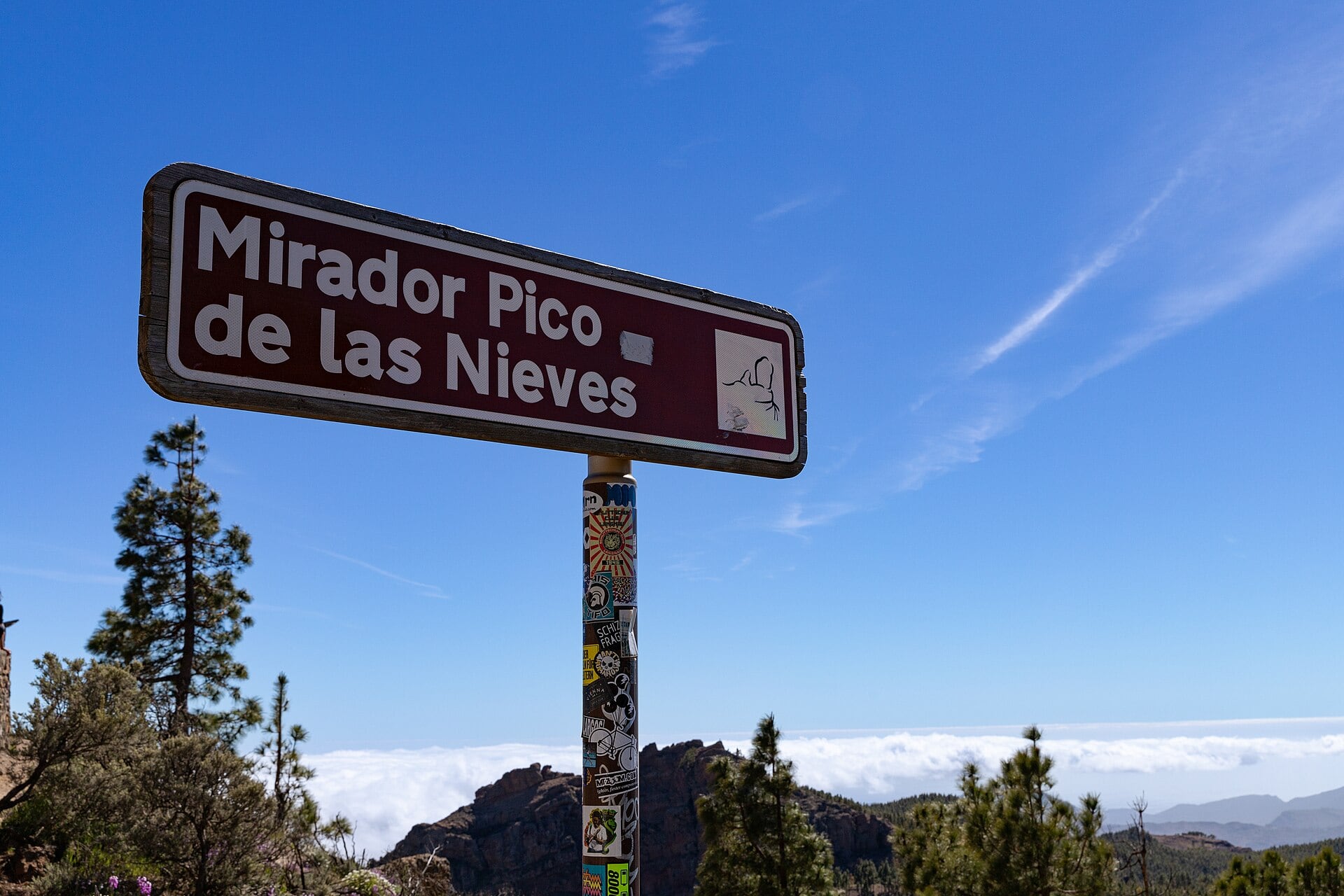
Lanzarote, Spain: 20 Best Things to See and Do

TL;DRLanzarote packs in 20 essential tips, from the volcanic landscape of Timanfaya National Park and the lava tunnels at Jameos del Agua to the wine region of La Geria and the Mirador del Río viewpoint. The best months for an active holiday are March, April, October and November, with temperatures sitting between 20 and 28°C year-round. The southern beaches of Papagayo, near the resort of Playa Blanca, are great for calm swimming, while Famara beach in the northwest belongs to the surfers. A week, so 7 days, is enough to explore the island, plus two or three extra days for a trip to La Graciosa or Fuerteventura. Thanks to the artist César Manrique, the island has kept its authentic character, with no high-rise hotels in sight.

Imagine a landscape that looks as though you’ve just landed on Mars, yet you’re only a short flight from the UK. Lanzarote, Spain is a mesmerising island of dramatic contrasts, where jet-black volcanic lava clashes against the endless blue ocean and the brilliantly white houses of the local villages. Although the Canary Islands politically belong to Spain, they geologically rise from the African continental shelf, giving them an incredibly stable and pleasant climate all year round. On this island, you won’t find any ugly high-rise hotels or visual clutter, because thanks to local visionary and artist César Manrique, Lanzarote has preserved its authentic and aesthetically pure character. If you’re craving a destination that offers so much more than just lounging on a beach, get ready to explore volcanic craters, unique vineyards nestled in ash, and underground lava tunnels. Let’s dive into the very best this fiery island has to offer so you can plan your holiday down to the last detail.

TL;DR

  • Volcanic landscape: Timanfaya National Park is an absolute must-see, where you’ll witness geothermal anomalies and a landscape shaped by massive 18th-century eruptions with your own eyes.
  • César Manrique’s legacy: The entire island is essentially a gallery of this artist’s work – don’t miss Jameos del Agua, Mirador del Río, and the incredible Cactus Garden.
  • Unique wine: The La Geria wine region will astonish you with its method of growing vines in deep pits carved into volcanic ash. You simply must taste the local Malvasia volcanic wine.
  • Swimming and surfing: For calm swimming, head to the southern Papagayo beaches, while the wild Famara beach on the northwest coast is a mecca for surfers and wave lovers.
  • Weather and season: Lanzarote is a year-round destination with temperatures between 20 and 28 °C, making it a perfect escape from British winters and the scorching summer heat of mainland Spain.
  • Getting around: To discover all the hidden corners, definitely hire a car – the roads are in excellent condition and traffic outside the main resorts is minimal.

When to Visit Lanzarote

The Canary Islands are often rightly called the islands of eternal spring, because there’s practically no real off-season here. While the UK wraps itself in grey clouds and frost in January and February, on Lanzarote you can enjoy wonderfully comfortable air temperatures that stay between 20 and 28 °C all year round. The winter months are therefore the absolute peak season for visitors from northern Europe fleeing the cold, which naturally means slightly higher accommodation prices.

If you decide to visit during the summer holidays, you might be surprised that it’s far more pleasant here than in mainland Andalusia. Thanks to cool ocean currents and constant trade winds, you’ll rarely experience extreme 40°C heat – the air circulates constantly and it always feels fresh by the sea. Even in the coldest winter months, the ocean maintains a bearable temperature of 18 to 22 °C, so the hardier among you can swim even on New Year’s Day.

For fans of active holidays, cycling, and hiking, the ideal months are March, April, October, and November. During this period, you’ll avoid the biggest crowds of both winter and summer tourists, the sun is warm without being fierce, and flight prices tend to be at their best. Don’t forget to pack a light windbreaker, though, because the strong wind can make it feel noticeably cooler, especially in the evening.

Where to Stay in Lanzarote

💡 Tip for accommodation and experiences: We love searching for places to stay on Booking.com, which usually has the best cancellation policies. For tickets, tours, and activities, it’s worth comparing options on GetYourGuide.

Choosing the right area to stay on Lanzarote will significantly shape the character of your holiday. Most visitors opt for one of the three main resorts on the east and south coasts, where you’ll find full tourist infrastructure and sheltered beaches. The southernmost Playa Blanca is ideal for families and those seeking tranquillity, offering a lovely long promenade and easy access to the famous Papagayo beaches. The resort of Puerto del Carmen is livelier, packed with restaurants and shops, while Costa Teguise tends to attract sporty travellers and families with older children.

If you’re after a quieter, more authentic experience far from mass tourism, I’d recommend looking for accommodation inland. Villages like Haría, Yaiza, or Teguise offer beautiful traditional white houses and so-called “fincas,” which often hide private pools and gorgeous gardens. For surfers and bohemian souls, the obvious choice is the village of Caleta de Famara on the rugged northwest coast, where a laid-back atmosphere reigns and the streets are often dusted with sand.

The easiest way to book your accommodation is through Booking.com, where you’ll find everything from budget apartments to luxury five-star resorts. If you want to treat yourself to true luxury right on the beach, check out the stunning Princesa Yaiza Suite Hotel Resort in Playa Blanca, which excels in top-notch service. A great middle-ground option with beautiful design and an excellent location is the popular Hotel Lava Beach in Puerto del Carmen, which puts you close to all the island’s main attractions.

20 Best Things to See and Do in Lanzarote

The island offers a fascinating mix of raw volcanic nature, unique architecture, and gorgeous coastline. Let’s take a detailed look at 20 places and activities that absolutely deserve your attention if you want to truly get under the skin of Lanzarote.

1. Timanfaya National Park and the Fire Mountains

The absolute centrepiece of the entire island is Timanfaya National Park, a vast area shaped by catastrophic volcanic eruptions between 1730 and 1736. The landscape here looks so otherworldly that it was reportedly used to test vehicles destined for Moon and Mars missions. Upon arriving at the Islote de Hilario visitor centre, you’ll be treated to fascinating geothermal demonstrations, where guides pour water into boreholes in the ground and it instantly shoots back out as a powerful geyser of steam.

You can’t drive through the park in your own car – you have to board a special bus that takes you along the so-called Ruta de los Volcanes. This roughly forty-minute ride along narrow roads between lava fields and craters, accompanied by dramatic music and commentary, is absolutely breathtaking. Right by the visitor centre, you’ll also find the unique El Diablo restaurant, designed by César Manrique, where food is cooked on an enormous grill heated entirely by geothermal energy from deep beneath the volcano.

💡 Local tip: Queues of cars waiting to enter the national park can be extremely long during peak season – you could easily wait an hour. Arrive right at opening time around 9 a.m., or alternatively later in the afternoon when the organised tour groups have headed back to their hotels.

2. Jameos del Agua

One of the crowning achievements of the brilliant artist César Manrique, this site shows how to perfectly blend raw nature with modern architecture. Jameos del Agua is part of an enormous underground lava tunnel formed by the eruption of Monte Corona volcano thousands of years ago. Manrique transformed a section of the collapsed tunnel into a unique cultural and social space that exudes the kind of aesthetic you’d expect from a 1970s Bond film.

Inside the dark cave, you’ll find an underground lagoon with crystal-clear water, home to rare blind white crabs of the species Munidopsis polymorpha, found nowhere else on Earth. From there, you’ll climb a winding staircase into a dazzlingly white outdoor atrium dominated by a turquoise pool framed by lush tropical vegetation – where swimming is strictly off-limits.

The complex also includes a phenomenal underground auditorium with superb acoustics, where concerts and cultural events are regularly held. Ideally, save your visit for the afternoon hours, when the sun’s rays pour through openings in the cave ceiling and create a stunning light show on the surface of the underground lake.

3. Cueva de los Verdes Cave

Just a short distance from Jameos del Agua, you can enter another section of the same colossal lava tunnel, which ranks among the longest on our entire planet. Cueva de los Verdes takes you on a roughly one-kilometre fascinating walk through the underground, where the walls shimmer with incredible shades of ochre, red, and black. These colours aren’t caused by artificial lighting but by the natural oxidation of iron and other minerals found in the solidified lava.

The tour is guided only and conducted in small groups, lasting just under an hour, during which you’ll learn plenty of details about volcanology and the island’s history. The cave once served local inhabitants as a safe hiding place from raids by North African pirates who regularly plundered the island.

At the very end of the tour, you’re treated to one enormous visual surprise that guides strictly forbid you from revealing in advance. All I can say is that this optical illusion will completely fool your senses and become one of the most powerful memories of your entire underground adventure.

4. La Geria Wine Region

If you’ve always assumed that wine needs green hillsides and fertile soil to grow, the La Geria region will forever change the way you think about winemaking. This protected landscape looks more like an art installation on the moon than agricultural land. Thousands of small funnel-shaped hollows are dug into deep black volcanic ash, and in each one sits a single green grapevine.

Each plant is further protected by a semicircular wall of lava stones, known as a zoco, which shields it from the destructive Saharan winds. The magic of this growing method lies in the volcanic ash, which absorbs moisture from the ocean air at night and slowly releases it to the roots during the day, meaning the plants survive without any irrigation whatsoever.

As you drive through this area, be sure to stop at one of the local bodegas (wineries) and treat yourself to a tasting. The local volcanic wine, especially the white Malvasia Volcánica variety, has an utterly unmistakable mineral and slightly salty profile that pairs beautifully with Canarian cuisine.

5. The Breathtaking Mirador del Río

At the very northern tip of the island, high on the cliffs of the Risco de Famara massif, lies yet another masterpiece by César Manrique. Mirador del Río is a viewing platform that’s so perfectly integrated into the surrounding rock that you’d struggle to spot it from a distance. Once again, Manrique demonstrated his genius by creating a space that doesn’t intrude upon the natural setting but lets it take centre stage.

From nearly 400 metres above sea level, you’ll be treated to the most beautiful view on the entire island. Directly below stretches the narrow strait known as El Río (The River), and just beyond it lies the small, pristine island of La Graciosa surrounded by turquoise ocean. On a clear day, you can even spot the other smaller uninhabited islets of the Chinijo archipelago.

💡 Local tip: Inside the viewpoint, there’s a lovely panoramic café with enormous curved windows. Order a coffee, take a seat, and simply watch the incredible play of colours in silence, as the blue sky merges with the ocean and the ochre tones of the surrounding islands.

6. Jardín de Cactus (Cactus Garden)

The last major work by César Manrique on the island is a perfect celebration of nature’s resilience. Jardín de Cactus was created on the site of a former unsightly quarry used for extracting volcanic ash in the village of Guatiza. Today, this deep amphitheatre shelters more than 4,500 cacti from around the world, creating an absolutely fascinating botanical showcase.

The garden is arranged in terraces connected by winding paths of black lava stone, which creates a perfect contrast with the green hues of the cacti. You’ll find species from the Americas, Madagascar, and the native Canary Islands, ranging from tiny flowering spheres to giant columnar cacti towering several metres high.

The entire composition is crowned by a beautifully restored traditional windmill, from which you get a wonderful view of the whole garden. If you visit during the morning, you’ll avoid the worst of the heat and enjoy a stroll among these prickly giants in a much more pleasant atmosphere.

7. César Manrique’s House in Tahíche

To truly understand the soul of Lanzarote, you need to understand the man who helped shape it. The Fundación César Manrique is housed in a home the artist built directly on a lava field from the 18th-century eruptions. The moment you arrive and see trees bursting up through the rock, you’ll know this is no ordinary museum.

The upper floor is inspired by traditional Canarian architecture, but the real magic lies underground. Manrique discovered five natural volcanic bubbles, which he connected with narrow passages carved through the lava and transformed into stunning living spaces. Each bubble has its own distinct colour and mood, with daylight streaming in through open ceilings above.

At the heart of the complex, you’ll find a turquoise pool, a dance floor, and even a giant fig tree growing right out of the centre of one of the lava chambers. A visit to this foundation will fill you with immense respect for the vision of one man who managed to save his island from the fate of mass concrete development.

8. Papagayo Beaches on the Southern Coast

If you’re searching for the perfect spot for swimming and sunbathing, the bays at the very southern tip of the island near the resort of Playa Blanca are guaranteed not to disappoint. The area known as Playas de Papagayo comprises a series of several gorgeous golden sand beaches that are sheltered from the strong winds and wild Atlantic waves.

The water here is incredibly clear with a stunning emerald hue, making it an ideal spot for snorkelling and swimming. The most famous is the perfectly horseshoe-shaped cove with a small restaurant perched above it, but if you walk a little further over the cliffs, you’ll find quieter bays like Playa Mujeres or Playa del Pozo.

💡 Local tip: You can reach the beaches either via a longer walk from the resort of Playa Blanca, or by car along a dusty, unpaved track through the Los Ajaches nature reserve. The car entrance fee is a token amount of around 3 €, but it’ll save you a lot of energy in the blazing sun.

9. Wild and Windswept Famara Beach

While the south of the island offers calm bays, the northwest coast shows the Atlantic in its full, unbridled power. Playa de Famara is a nearly six-kilometre-long strip of dark sand dramatically backed by the several-hundred-metre-high Risco de Famara cliffs. This place has an incredibly raw and magnetic atmosphere.

Thanks to the consistent wind and strong currents, this beach isn’t suitable for regular swimming, but it’s an absolute paradise for surfers and kitesurfers from all over the world. In the adjacent village of Caleta de Famara, you’ll find dozens of surf schools, equipment hire shops, and chilled-out cafés where the local and international community gathers.

Even if you’re not planning to tame the waves on a board, a walk along Famara Beach at sunset is an unforgettable experience. At low tide, the wide expanse of wet sand creates a perfect mirror reflecting the majestic cliffs – an absolute dream for photographers.

lukas a lucka
Lukáš and Lucie recommend
Where to stay in Lanzarote
3 accommodations — wellness hotels, hotels and other accommodation options

10. Historic Town of Teguise and the Sunday Market

Villa de Teguise served as the capital of the entire island until the mid-19th century and still retains its stunning colonial character with cobbled streets and historic palaces. It’s arguably the most picturesque and best-preserved inland town, where you’ll feel transported back several centuries in time.

The biggest buzz here is on Sunday mornings, when the entire town transforms into one enormous market. The Mercadillo de Teguise attracts thousands of visitors and you can pick up absolutely everything, from local cheeses and leather goods to aloe vera, traditional ceramics, and handcrafted souvenirs.

If crowds aren’t your thing, visit Teguise on a weekday afternoon instead. The streets will be half-empty, you can explore the church of Nuestra Señora de Guadalupe in peace, and settle into one of the cosy cafés on the square, where time passes at that typically unhurried Canarian pace.

11. The Green Lagoon – Charco de los Clicos

The village of El Golfo on the west coast hides one of the most bizarre natural phenomena in all of Spain. Right on a beach of black volcanic sand, bordered by a steep cliff of eroded volcanic rock, lies a lagoon of incredibly vivid, almost toxic-looking green.

This colour, known as Charco de los Clicos (or Lago Verde), is caused by a high concentration of microscopic algae and sulphur in the water. The lagoon is connected to the ocean through underground fissures, so the water constantly circulates and never dries up. The contrast of the black beach, green water, red rocks, and blue ocean is almost unbelievably photogenic.

A short, easy walking trail leads to the lagoon from the car park at the edge of the village. Access to the water itself is prohibited for conservation reasons, but the viewing platform gives you a perfectly framed view of this extraordinary colour palette.

12. The Boiling Coast of Los Hervideros

Just a few kilometres south of the green lagoon, you’ll come across a spot where the ocean wages a relentless, thunderous battle with the land. Los Hervideros (meaning “The Boiling Waters”) is a complex of cliffs and underwater caves formed from black lava, into which the waves of the Atlantic crash with tremendous force.

When the waves are powerful enough, water is forced under immense pressure through narrow lava fissures and shoots high into the air as thick white spray. In those moments, it genuinely looks as though the entire ocean is boiling and bubbling. Safe stone pathways and viewing balconies have been built so you can watch this wild natural spectacle without putting yourself at risk.

💡 Local tip: The experience at Los Hervideros is most intense at high tide and in windy weather. When the sea is calm, the spot loses much of its drama, so it’s worth checking the wave forecast before you head out.

13. Salinas de Janubio Salt Flats

Continue along the west coast a little further south and an enormous chessboard of pink, white, and brown hues will appear before you. Salinas de Janubio are the largest working salt pans in the Canary Islands, established at the end of the 19th century and still producing high-quality sea salt using traditional methods to this day.

Seawater is pumped in by old windmills and gradually evaporates in shallow pools under the hot Canarian sun. The varied colours of the individual basins are caused by halophilic microorganisms and algae that change colour as the salt concentration in the water increases.

You can pay for a guided tour to learn all about the harvesting of this “white gold,” or head to the little on-site shop to pick up some excellent flaky salt known as Flor de Sal – an absolutely fantastic and practical souvenir for your kitchen.

14. The Car-Free Island of La Graciosa

If you feel that even Lanzarote has too many people, there’s an escape to a place where time stopped decades ago. La Graciosa is a small inhabited island lying to the north of Lanzarote, where there are absolutely no paved roads and regular motor vehicles are strictly prohibited.

You can get here on the regular ferry from the port of Órzola at the northern tip of Lanzarote – the crossing takes roughly 25 minutes. As soon as you disembark in the charming little village of Caleta de Sebo, I’d recommend hiring a mountain bike, which is by far the best way to explore the island.

You can pedal along sandy tracks to stunning deserted beaches like Playa de las Conchas on the northwest shore. Just bear in mind that swimming here can be dangerous due to strong currents, but the sense of absolute isolation and connection with raw nature makes the trip entirely worth it.

15. The Valley of a Thousand Palms in Haría

The northern part of Lanzarote will surprise you with its greenery, which contrasts sharply with the parched volcanic south. This is especially true of the small town of Haría, nestled in a valley known as the Valle de las Mil Palmeras. This poetic name comes from an old tradition where a palm tree was planted for every girl born in the valley, and two for every boy.

Haría itself is a beautiful, peaceful, and well-kept town full of traditional architecture, which César Manrique chose as his home for the final years of his life. You can visit his second house (Casa Museo César Manrique), which, unlike the foundation in Tahíche, has been preserved exactly as the artist left it before his tragic accident.

Every Saturday morning, a lovely artisan market is held on the small shaded square in Haría – much more intimate and authentic than the massive one in Teguise. It’s a wonderful spot for picking up handmade jewellery or local palm syrup.

16. Camel Ride at Echadero de los Camellos

While it might sound like a classic tourist trap, a camel ride on the edge of Timanfaya National Park is one of the most iconic experiences on the island, especially if you’re travelling with children. Camels (technically dromedaries) have been used on the Canary Islands for centuries as essential working animals, and today they provide a unique way to survey the volcanic landscape.

The Echadero de los Camellos station is located right on the road leading to Timanfaya. The animals are fitted with special two-person saddles, and the ride lasts around twenty minutes, during which they carry you at a gentle, swaying pace up a small volcanic ridge with lovely views over the black lava fields.

Animal welfare advocates can rest easy – the camels here are very well and strictly looked after, with set working-hour limits and weight restrictions. It’s not the longest experience, but the sight of a caravan plodding through a lunar landscape creates the perfect illusion of a Saharan desert crossing.

17. Casa Museo del Campesino

In the centre of the island, near the geographical heart of Lanzarote, stands another significant monument dedicated to the local people. Casa Museo del Campesino (Peasant Farmer Museum) is a tribute to the indomitable hard work and perseverance of Canarian farmers who managed to cultivate crops on utterly inhospitable volcanic soil for centuries.

The complex, designed by César Manrique, consists of beautifully styled traditional white buildings and is dominated by a fifteen-metre-tall white sculpture called Fecundidad (Fertility), assembled from old ship water tanks. Inside the individual buildings, you’ll find small craft workshops where local artisans demonstrate weaving, pottery, and basket-making.

💡 Local tip: The museum includes a renowned underground restaurant built inside a lava cave. They serve excellent local tapas and dishes made from island produce, making it an ideal stop for an authentic lunch while exploring the interior.

18. Capital City Arrecife and Castillo de San José

While Arrecife isn’t as picturesque as ancient Teguise, as the current capital of the island it’s definitely worth a brief stop. You’ll find a lovely seafront promenade, bustling shopping streets, and a small inland harbour called Charco de San Ginés, sometimes nicknamed the “Venice of the Atlantic” for its blue fishing boats bobbing in the water.

Well worth a visit is the historic Castillo de San José, an 18th-century fortress originally built to defend against pirates. In the 1970s, César Manrique converted it into the International Museum of Contemporary Art (MIAC).

A stroll along the ramparts rewards you with views of the commercial port, while inside the fortress you can browse modern sculptures and paintings. There’s also, unsurprisingly, a fantastic restaurant with an enormous floor-to-ceiling glass window overlooking the ocean, serving very modern cuisine in a stylish setting.

19. Seaside Stroll Along Playa Blanca

At the southernmost point of the island lies the popular resort of Playa Blanca, which is ideal for peaceful evening walks. The main draw is a paved coastal promenade stretching over seven kilometres, running along the ocean from the Pechiguera lighthouse in the west to the Marina Rubicón harbour in the east.

During this walk, you’ll have a constant view across the ocean to the neighbouring island of Fuerteventura and the small Isla de Lobos. Especially at sunset, when the sky turns orange and the lights on the distant shore begin to twinkle, the atmosphere is nothing short of magical.

Be sure to stop at the modern yacht harbour of Marina Rubicón, which feels like a little luxury village full of boutiques and cafés. Markets are held here twice a week, and gorgeous sailboats and catamarans preparing for Atlantic crossings bob in the marina. It’s the perfect spot for a coffee while soaking up the atmosphere.

20. Traditional Canarian Cuisine (Even Without Meat)

Canarian cuisine is known for its seafood and slow-roasted meats, but even without meat, you can enjoy absolutely fantastic food here. The cornerstone of every meal, found in literally every restaurant on the island, is papas arrugadas – small Canarian potatoes boiled in their skins in heavily salted water until a crust of salt forms on them.

These potatoes are inseparably served with two types of sauce called mojo. The red sauce (mojo rojo) is spicy, made with chilli peppers and garlic, while the green sauce (mojo verde) is prepared from fresh coriander, parsley, and olive oil. Together, they create an incredibly moreish combination you simply won’t be able to get enough of.

Other vegetarian delights you absolutely must try include grilled cheese with palm honey (queso asado con miel de palma), the fantastic fried green peppers known as pimientos de Padrón sprinkled with coarse salt, and the traditional chickpea stew potaje de garbanzos. And if you spot volcano-grilled vegetables on the menu, don’t hesitate for a second.

Where to Go Next from Lanzarote

If the Spanish culture has captivated you and you’re thinking about your next trip, the Iberian Peninsula offers endless possibilities. The Canary Islands may be geographically in Africa, but if you want to experience true continental Spanish passion, I’d recommend focusing on southern Spain. Check out our guide to Seville, a city bursting with flamenco and stunning Moorish architecture, or see what the beautiful Granada with its iconic Alhambra palace has in store.

If you’re drawn to history intertwined with Islamic influence, don’t miss our 15 tips for Córdoba, home of the famous Mezquita mosque. For a more comprehensive taste of the sunny south, you can plan an entire road trip with the help of our itinerary for the 20 most beautiful places in Andalusia.

More interested in big cosmopolitan cities and modern architecture? Read our tips on Barcelona with Gaudí’s masterpieces, explore the majestic capital of Madrid, or head north for brilliant food and modern art in the Basque city of Bilbao. And if reading about Lanzarote has made you hungry, brush up on the typical Spanish food you absolutely must try on your travels.

Frequently Asked Questions

Do I need a rental car on Lanzarote?

Although reliable buses (called guaguas) run between the larger towns and resorts, I strongly recommend renting a car. Only with a car can you comfortably reach the more remote beaches, make early morning visits to the national parks without the crowds, and explore the little inland villages. The roads here are in excellent condition and, away from the main routes, the traffic is very light.

Is it really that windy on the island?

Yes, the Canary Islands are exposed to constant trade winds. On Lanzarote you’ll feel it especially on the northern and western coasts (such as Famara beach). But the wind is often very refreshing, particularly in the summer months. If you’re looking for a sheltered spot for calm swimming, choose resorts in the south of the island, such as Playa Blanca.

Can you drink tap water on the island?

Tap water across the whole island is safe to drink, but most locals and tourists don’t drink it. This is because the island has no natural sources of fresh water, and water is obtained by desalinating seawater. As a result it has a very distinctive, sometimes slightly chemical aftertaste. I recommend buying large bottles of bottled water at the supermarkets.

How many days should I set aside for Lanzarote?

For a relaxed exploration of the island’s main highlights with enough time to unwind, one week (7 days) is ideal. If you’d also like to fit in a ferry trip to the neighbouring island of Fuerteventura or to the island of La Graciosa, it’s worth adding another two or three days.

Is Lanzarote suitable for digital nomads?

Although the main nomad hub in the Canaries is Las Palmas on Gran Canaria, Lanzarote is becoming an increasingly popular haven for remote work. You’ll find excellent internet connections and a more peaceful environment here. On top of that, Spain recently introduced a special digital nomad visa. The best base for working alongside a community of like-minded people is the town of Famara or the area around Teguise.

What about the island’s beaches — are they all black?

Definitely not! Although Lanzarote is of volcanic origin, you’ll find beautiful beaches with light, golden sand here. The nicest ones are in the south, in the Papagayo area or around the Playa Blanca resort. The black volcanic beaches are found more on the western coast (e.g. near El Golfo) and have their own undeniable dramatic charm.

Is it worth paying for the attractions — aren’t they expensive?

Because most of the artistic and natural attractions (Jameos del Agua, Mirador del Río, Cueva de los Verdes, Timanfaya) are managed by a single organization, CACT Lanzarote, you can buy discounted combination tickets (called bonos). These let you enter 3, 4 or 6 sites for a considerably lower price than if you paid for each one separately. The money spent on these unique sites is absolutely worth it.

Tips and Tricks for Your Vacation

Don’t Overpay for Flights

Search for flights on Kayak. It’s our favorite search engine because it scans the websites of all airlines and always finds the cheapest connection.

Book Your Accommodation Smartly

The best experiences we’ve had when looking for accommodation (from Alaska to Morocco) are with Booking.com, where hotels, apartments, and entire houses are usually the cheapest and most widely available.

Don’t Forget Travel Insurance

Good travel insurance will protect you against illness, accidents, theft, or flight cancellations. We’ve had a few hospital visits abroad, so we know how important it is to have proper insurance arranged.

Where we insure ourselves: SafetyWing (best for everyone) and TrueTraveller (for extra-long trips).

Why don’t we recommend any Czech insurance company? Because they have too many restrictions. They set limits on the number of days abroad, travel insurance via a credit card often requires you to pay medical expenses only with that card, and they frequently limit the number of returns to the Czech Republic.

Find the Best Experiences

Get Your Guide is a huge online marketplace where you can book guided walks, trips, skip-the-line tickets, tours, and much more. We always find some extra fun there!
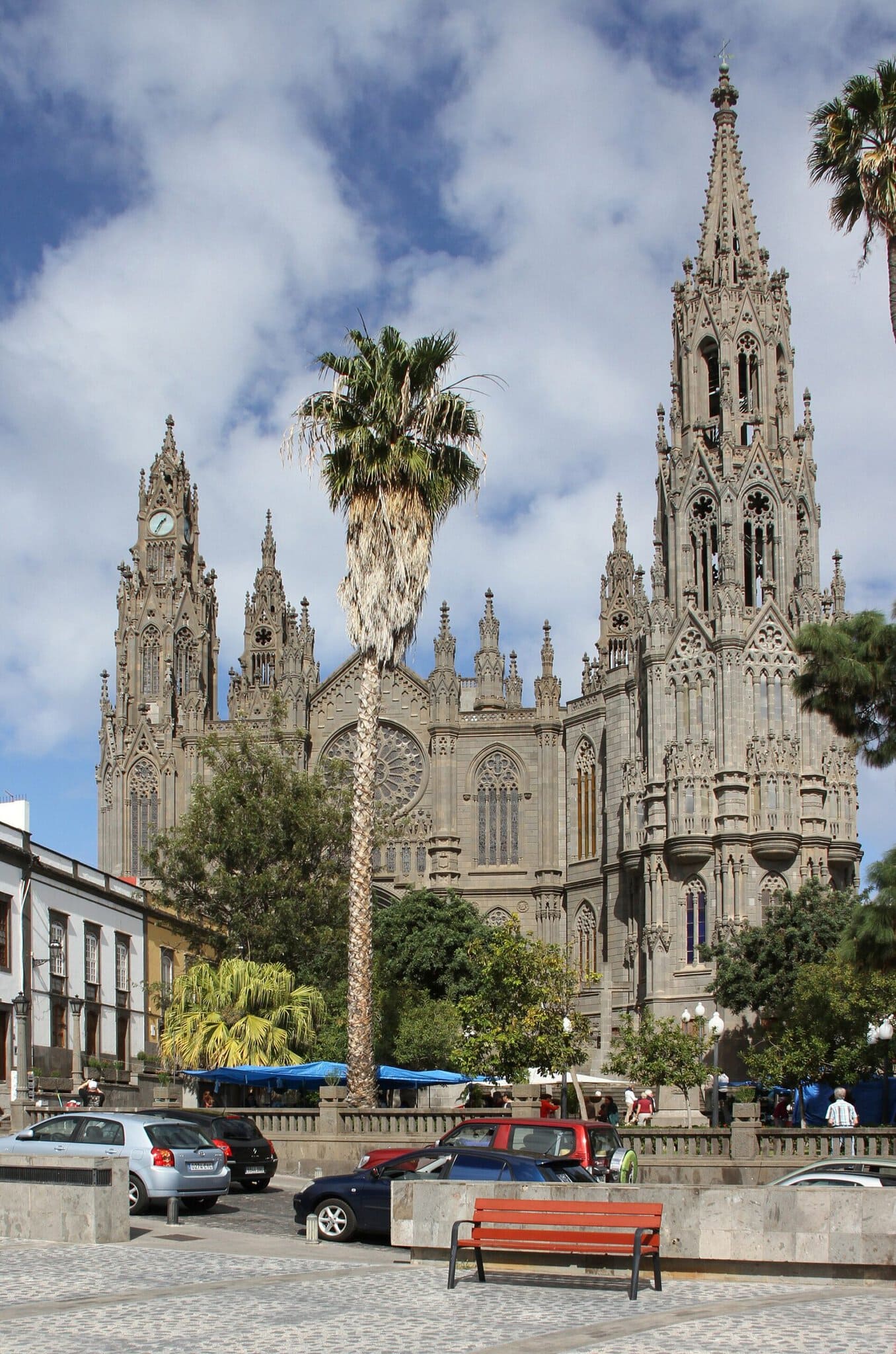
Madrid, Spain: 22 Best Things to See and Do

TL;DRMadrid comes with 22 solid tips, covering the “Golden Triangle” of museums (the Prado, Reina Sofía and Thyssen-Bornemisza), royal landmarks like the Palacio Real with its 3,418 rooms and Almudena Cathedral, the buzzing Puerta del Sol and Plaza Mayor, Retiro Park with its Crystal Palace, and the food-lover’s district of La Latina with the Mercado de San Miguel. For day trips, hop on the AVE high-speed train to Toledo (under half an hour away), Segovia with its Roman aqueduct, or the El Escorial complex. Give the city itself two to three full days, or five if you’re adding those side trips, and aim for spring or autumn — summer temperatures regularly climb past 40°C.

Madrid might not sweep you off your feet at first sight quite like other Spanish cities. While other destinations dazzle you with dreamy façades and alleyways perfumed by orange blossoms, Spain’s capital wins you over with its pulsating energy. This metropolis truly lives on the street — in cosy tapas bars, along sweeping boulevards, and through the winding lanes of its historic centre. If you’re looking for the best things to do in Madrid, you’re in for a treat.

The geographical and political heart of Spain sits on a high plateau surrounded by mountains, which gives it a rather harsh climate. I’ve put together a detailed guide with exactly 22 tips on what to see and do in Madrid so you can take home the absolute best experiences. You’ll find out where to stay strategically, which sights you absolutely can’t miss, and what to watch out for when planning day trips to nearby medieval towns.

TL;DR

  • The Golden Triangle of Art: Set aside time for Museo del Prado, Reina Sofía, and Thyssen-Bornemisza — home to some of the greatest masterpieces of European painting, all within walking distance of each other.
  • Royal grandeur: Palacio Real and the adjacent Almudena Cathedral form the magnificent heart of the city and will leave you speechless with their sheer monumentality.
  • Life on the squares: Puerta del Sol and Plaza Mayor are buzzing hubs where centuries of history meet the energy of a modern metropolis at every turn.
  • Green lungs of the city: Retiro Park with its magical Crystal Palace offers the perfect escape from the urban noise and summer heat.
  • Foodie heaven: The La Latina neighbourhood is the undisputed epicentre of tapas, while Mercado de San Miguel serves as a gourmet paradise for discerning foodies.
  • High-speed day trips: Madrid’s AVE trains whisk you to historic Toledo, fairy-tale Segovia, or the monumental El Escorial complex in under an hour.

When to Visit Madrid

Locals sum up Madrid’s climate rather bluntly: nine months of winter and three months of hell. Because the city sits inland on a high plateau, it completely lacks the moderating influence of the sea, which means more extreme temperature swings. Winters can be surprisingly chilly and are often accompanied by a biting wind from the nearby mountain ranges, so a warm jacket is definitely worth packing.

The summer months, on the other hand, are a genuine challenge for visitors and locals alike. Temperatures in July and August regularly exceed a punishing 40 °C, the sun-baked streets become nearly unbearable, and most residents flee to the coast. The ideal time to visit is undoubtedly spring or autumn, when pleasant temperatures and sunny skies make it perfect for a full day of sightseeing.

Where to Stay in Madrid

💡 Accommodation & experiences tip: We love searching for hotels on Booking.com for the best cancellation policies. For tickets, tours, and activities, it’s worth comparing options on GetYourGuide.

If it’s your first time in the city, the best strategic choice is the Sol neighbourhood or the buzzing area around Gran Vía. From here, most major attractions are easily within walking distance, and you’ll have the best restaurants and metro connections right on your doorstep. Accommodation in the very centre is pricier, but you’ll save a huge amount of time you’d otherwise spend commuting from the outskirts.

For lovers of nightlife, speciality coffee, and independent boutiques, the bohemian and hipster quarter of Malasaña is a brilliant choice. You’ll find plenty of stylish apartments and smaller boutique hotels with an atmosphere that draws you in immediately. Whatever area you choose, I’d recommend booking as early as possible — rooms in good hotels vanish fast and prices climb steeply as your dates approach.

When hunting for the perfect place, it’s worth browsing Booking.com and filtering for hotels rated above eight. A popular pick is the iconic Hotel Riu Plaza España, which boasts breathtaking city views from its rooftop terrace and excellent luxury standards. If you prefer something smaller and design-forward right on the main drag, Room Mate Macarena is a great option, blending modern comfort with a truly unbeatable location.

22 Best Things to See and Do in Madrid

Let’s dive into the specific places and experiences that make this metropolis such a captivating destination. Here you’ll find the perfect blend of world-class art, royal splendour, and a laid-back southern European lifestyle.

1. Museo del Prado and the Golden Triangle of Art

The axis of the so-called Golden Triangle of Art is formed by Paseo del Prado, a wide tree-lined boulevard. Within less than a square kilometre, three extraordinary institutions house one of the greatest concentrations of masterpieces anywhere on Earth. The Museo del Prado is a true national treasure, and visiting it should be right at the top of your list.

This museum wasn’t assembled as a standard encyclopaedic collection — it’s a direct reflection of the refined taste of Spanish monarchs from the Habsburg and Bourbon dynasties. Instead of a dry survey of art history, you’ll find the world’s finest collection of works by Diego Velázquez, Francisco Goya, and the mesmerising Hieronymus Bosch. Crowds inevitably gather before Velázquez’s famous Las Meninas, but make sure you also head down to the ground floor to see the dark and unsettling late-period paintings by Goya.

How long you spend depends on your passion for the old masters — you could easily devote an entire day or just do a highlights tour. For most visitors, three to four hours is the absolute maximum before museum fatigue inevitably sets in. Admission costs around €15, and it’s well worth buying your ticket online in advance to avoid wasting precious time in queues.

💡 Insider tip: If you want to save a bit of money, the museum offers free entry every day during the last two hours before closing. Just be prepared to queue for a while at the entrance.

2. Centro de Arte Reina Sofía

While the Prado takes you through the old masters, Centro de Arte Reina Sofía plunges you headfirst into the twentieth century. This imposing building, which once served as a sprawling state hospital, now functions as the home of modern art. Its industrial corridors and glass-walled lifts create a striking contrast to the classical collections you’ve just seen at the other end of the boulevard.

The undisputed centrepiece of the entire gallery is Picasso’s monumental painting Guernica, before which visitors often stand in complete silence. This black-and-white canvas depicting the horrors of the bombing of a Basque town during the Spanish Civil War still carries devastating emotional impact and ranks among the most important artworks in human history. Beyond Picasso, you’ll also find extensive collections of Salvador Dalí and Joan Miró, who shaped global surrealism.

Navigating the museum can be a bit tricky due to its size and layout, so I’d recommend picking up a printed floor plan at the entrance or downloading the mobile app. Allow at least three hours for a thorough visit, giving yourself time to absorb the complex ideas and avant-garde forms that modern art has to offer.

💡 Insider tip: A lovely hidden gem within this institution is the inner courtyard with a beautifully maintained garden, where you can sit down with a coffee and enjoy a moment of calm in the middle of the bustling city.

3. Museo Thyssen-Bornemisza

Rounding out Madrid’s famous trio of galleries is the Museo Thyssen-Bornemisza, which serves as the perfect bridge between the classical Prado and the modern Reina Sofía. Originally a private collection belonging to a powerful steel-magnate family, it was purchased by the Spanish state in the 1990s for public enjoyment.

The exhibition is arranged in strict chronological order, which makes it incredibly easy for visitors to follow the evolution of artistic styles. You’ll find everything from early Italian Renaissance through French Impressionists to American Pop Art, so there’s genuinely something for everyone in your group. Particular highlights include works by Van Gogh, Monet, Degas, and Roy Lichtenstein — names that are absent from other Spanish collections.

Compared to its two siblings, this museum tends to be noticeably quieter and less crowded with tourists, which makes for a much more intimate art experience. Admission is around €13, and you can comfortably walk through the entire collection in about two hours.

💡 Insider tip: Stop by the museum café, which has a lovely outdoor terrace overlooking the tree-lined boulevard — the perfect spot for an afternoon cappuccino.

4. Palacio Real (Royal Palace)

Although the Spanish royal family currently resides in a smaller palace on the outskirts of the city, Palacio Real remains the official seat of the monarchy and is used for state ceremonies. With an incredible 3,418 rooms, it’s the largest functioning royal palace in all of Western Europe, surpassing even France’s Versailles in sheer floor area.

During the guided route, you’ll visit only a fraction of the total rooms, but even so, their opulent grandeur will leave you awestruck. You’ll see the monumental Throne Room draped in crimson velvet, an ornately decorated Royal Armoury, and a beautiful pharmacy filled with antique ceramic jars. Every room is adorned with frescoes, crystal chandeliers, and furniture inlaid with precious metals — a vivid testament to the wealth of the Spanish Empire.

As one of the most visited landmarks in the city, buying tickets online in advance is an absolute must if you don’t want to spend an hour queuing in the sun. Standard admission is €12, and the tour takes roughly an hour and a half.

💡 Insider tip: If you visit on a Wednesday or Saturday morning, you can watch the Changing of the Royal Guard ceremony for free, which takes place in the courtyard in front of the main entrance.

5. Almudena Cathedral

Right opposite the Royal Palace stands Almudena Cathedral, a building with an unusually turbulent and drawn-out history. Although plans for a main church had been discussed since the sixteenth century, the foundation stone wasn’t laid until the late nineteenth century, and the entire structure was only completed in 1993.

Thanks to this lengthy construction pause, the cathedral boasts a strikingly unique and surprisingly modern appearance. While the exterior tries to blend seamlessly with the neighbouring palace through its neoclassical lines, the interior surprises you with vivid colours and almost pop-art stained-glass windows that defy all traditional expectations of a Catholic church. The nave ceiling is painted with bold geometric patterns that fill the space with a remarkably bright and uplifting atmosphere.

Entry to the main nave is free, though a voluntary donation of about one euro is expected at the door. If you want a bird’s-eye view of the city, it’s worth paying for access to the rooftop dome, which offers fantastic panoramas across the entire historic centre and the surrounding green hills.

💡 Insider tip: Don’t forget to head down to the neo-Romanesque crypt, which is supported by hundreds of columns with beautifully carved capitals and offers a quieter atmosphere than the main nave above.

6. Puerta del Sol and Kilometre Zero

The geographical centre of not just Madrid but the entire country is Puerta del Sol. This busy, crescent-shaped square is where the main shopping streets converge, and it’s home to the famous Kilometre Zero plaque, the point from which all Spanish national roads are measured. The small stone slab set into the pavement in front of the old post office building is a popular spot for a quick photo of your shoes.

On the opposite side of the square stands a bronze statue of a bear leaning against a strawberry tree — Madrid’s timeless symbol and the centrepiece of its official coat of arms. This monument is the city’s favourite meeting point, so you’ll always see clusters of people waiting for friends before heading out on the evening bar crawl.

New Year’s Eve celebrations in Spain revolve around this very square and its grand clock tower. Tradition dictates that you must eat one grape with each of the twelve chimes at midnight, guaranteeing yourself twelve months of good luck. Tens of thousands of people cram in on the night and the atmosphere is absolutely electric.

💡 Insider tip: The square is notorious for pickpockets who expertly exploit the constant chaos and dense crowds, so keep a very close eye on your valuables and bags at all times.

7. Plaza Mayor

It’s just a few minutes’ walk from Puerta del Sol to Plaza Mayor, a grand rectangular square enclosed by stunning red façades with meticulously wrought-iron balconies. In the past, this was the main stage for public life — it hosted bullfights, Inquisition executions, and lavish royal weddings. Today, the atmosphere is far more peaceful, inviting you to linger over a drink and soak it all in.

You can sit down for a coffee and spend hours watching the vibrant buzz and colourful mix of street performers. Just be aware that café prices on the square firmly reflect the premium location — a simple espresso will cost you several times more than in the back streets a few blocks away.

In the streets around the square, you’ll stumble upon plenty of traditional bars serving a very specific local classic: the bocadillo de calamares. This is a crusty baguette stuffed with golden-fried squid rings, an essential part of Madrid’s fast-food culture and best enjoyed with an ice-cold beer.

💡 Insider tip: On the square you’ll find the main tourist information centre, where you can pick up detailed maps and get up-to-date tips on current cultural events and festivals, many of which are completely free.

8. Mercado de San Miguel

A more elegant — and admittedly more touristy — alternative to traditional tapas bars is Mercado de San Miguel. It’s a stunning cast-iron market hall from the early twentieth century, just a stone’s throw from Plaza Mayor. The building itself is a beautiful example of historic industrial architecture, its glass walls flooding the interior with natural light.

Today this space doesn’t function as a regular vegetable market, but rather as a high-end food court for discerning gourmets. Under one grand roof, you can sample the finest cheeses from across Spain, fresh olives from Andalusia, celebrated wines, and an endless variety of innovative bite-sized skewered snacks called pintxos.

While the place is visually and gastronomically stunning, be prepared for prices that are set firmly with foreign tourists in mind. It’s an ideal stop for a glass of vermouth and a small tasting, but for a proper filling lunch, you’re much better off heading a few streets away to the regular neighbourhoods.

💡 Insider tip: The best time to visit the market is early afternoon on weekdays, because on weekend evenings it gets so packed you can barely reach the counters through the crowds.

9. Retiro Park

When the city starts to feel too loud and the concrete streets lose their charm, seek immediate refuge in El Retiro Park. These former royal gardens serve as Madrid’s vast green lungs and the favourite relaxation spot for locals and tourists alike. On weekends, the wide avenues fill up with families on walks, street musicians, jugglers, and readers seeking peace.

At the heart of the park lies a large artificial lake, overlooked by the majestic columned monument to King Alfonso XII. The most popular activity is hiring a little blue rowing boat and paddling across the water yourself, soaking up the romantic views of the surrounding greenery. A boat rental costs just a few euros and makes for wonderful fun for couples and families alike.

The park also boasts several beautifully tended smaller gardens, such as the Rosaleda rose garden, which is at its most magnificent bloom in late May and early June. Throughout the grounds you’ll find plenty of benches tucked away in the shade of centuries-old stone pines — perfect for a picnic with goodies from the nearest bakery.

💡 Insider tip: Several gates lead into the park, but the most stunning is the Puerta de Alcalá, a monumental triumphal arch standing on the roundabout right next to the main entrance.

10. Palacio de Cristal (Crystal Palace)

While exploring Retiro Park, you absolutely cannot miss the Palacio de Cristal — one of the most photogenic buildings in the entire city. This gorgeous glass-and-iron pavilion was built in 1887, inspired by London’s Crystal Palace, and originally served as a vast greenhouse for exotic plants brought over from the Philippines.

The structure rises on the banks of a small lake lined with cypresses, and when the autumn sun hits the glass panes, the whole thing glows and looks like something out of a fairy tale. Inside, you won’t find tropical plants anymore — the space is managed by the nearby Reina Sofía museum, which uses it for contemporary art installations.

The biggest bonus is that entry to the Crystal Palace is free all year round, so you can pop back at different times of day. Exhibitions change roughly every three months, and artists often work directly with the natural light and reflections on the glass walls.

💡 Insider tip: In summer the palace gets incredibly hot inside, as the greenhouse effect turns it into a perfect heat trap — plan your visit for early morning when the air is still fresh.

lukas a lucka
Lukáš and Lucie recommend
Where to stay in Madrid
3 accommodations — wellness hotels, hotels and other accommodation options

11. Gran Vía Boulevard

The main and busiest artery of the city is Gran Vía, Madrid’s answer to New York’s Broadway or Paris’s Champs-Élysées. This wide boulevard, lined with grand early-twentieth-century buildings, giant neon signs, and huge cinemas, buzzes with incredible energy day and night.

As you walk, make sure to lift your gaze above the shop windows, because the building façades are adorned with beautiful statues and ornate domes that recall the golden age of Spanish architecture. The standout structure is the Metropolis building at the very start of the boulevard, its dark slate roof crowned by a winged victory statue.

Gran Vía is also an absolute paradise for shopaholics, home to flagship stores of virtually every global fashion chain. After dark, the street transforms into an entertainment hub — musical theatre marquees light up and crowds spill into bars and clubs that don’t close until dawn.

💡 Insider tip: For the best view of the bustling boulevard, head to the top floor of the El Corte Inglés department store on Plaza del Callao, where there’s a café with panoramic windows — and entry is free.

12. Templo de Debod and Sunset

It sounds like an impossible paradox, but right in the heart of the Spanish capital you’ll find a genuine ancient Egyptian temple. Templo de Debod is an authentic stone structure dating to the second century BC, gifted to Spain by the Egyptian government as a thank-you for helping save historic monuments from flooding during the construction of the Aswan Dam.

The temple was carefully dismantled block by block, shipped across the Mediterranean, and reassembled in Madrid’s Parque del Oeste. A shallow moat surrounds the monument, beautifully reflecting its stone gateways and creating an utterly magical and highly photogenic atmosphere.

This spot is hands-down the most popular place in the entire city to watch the sunset. As the sky above the horizon blazes with orange and purple hues, dozens of locals and visitors gather on the grass to enjoy the peaceful close of the day with stunning views of the Royal Palace and the Guadarrama mountains.

💡 Insider tip: Entry to the temple’s inner chambers is completely free, but due to capacity limits, only a very small number of people are admitted at a time, so arrive early if you want to avoid a queue.

13. Santiago Bernabéu Stadium

For millions of passionate fans around the world, Spain’s capital means one thing: the legendary Real Madrid football club. Santiago Bernabéu Stadium recently underwent a massive and extremely costly renovation, transforming it into one of the most advanced sports venues on the planet. A new retractable roof, a striking steel façade, and a unique underground system for storing the pitch allow the arena to host concerts and other events year-round.

A tour of this colossal stadium is a thrilling experience for absolutely everyone, even those who don’t follow football or only vaguely know the rules. The interactive tour takes you right into the players’ dressing rooms, through the long tunnel leading onto the pitch, and past the jaw-dropping trophy collection the club has amassed over its storied history.

If you want to experience genuine football fever, try to snag tickets for the legendary El Clásico. The clash between Real Madrid and FC Barcelona is a global phenomenon, which naturally drives prices into the stratosphere. Basic tickets start at well over €300 and sell out within minutes, while luxury VIP packages easily exceed the €1,000 mark.

💡 Insider tip: It’s best to schedule your stadium tour on a non-match day, because on match days some of the most interesting parts of the route are closed to the public for security reasons.

14. La Latina and the World of Tapas

The La Latina neighbourhood is the undisputed epicentre of Madrid’s tapas scene and carefree weekend revelry. If you want to soak up the true local atmosphere, head here on a Sunday afternoon. The social ritual here is crystal clear: never stay at one table in a single bar all evening. Locals constantly hop between establishments, ordering just one small dish at each.

Order a glass of draught vermouth — called vermut de grifo in Spanish — alongside a small portion of traditional cheeses or spicy patatas bravas, and then simply move on to the next place. You’ll find that this dynamic and noisy way of eating draws you in completely, and you’ll end up sampling a huge range of local specialities.

Tap water, by the way, is excellent in Madrid, and since 2022, Spanish restaurants are legally required to offer it to guests free of charge. So don’t hesitate to ask for a simple jug of water with ice when ordering — your travel budget will thank you.

💡 Insider tip: The main foodie arteries of this neighbourhood are the famous streets Cava Baja and Cava Alta, where you’ll find the highest concentration of acclaimed bars practically door to door.

15. El Rastro Flea Market

Every Sunday morning, the streets on the edge of La Latina erupt into one enormous whirlwind of activity as the famous El Rastro flea market takes over. This is the largest and oldest outdoor market in all of Spain, with roots stretching back to the Middle Ages. Hundreds of vendors set up their stalls, selling absolutely everything from antique furniture and vinyl records to cheap clothing and leather goods.

The atmosphere is incredibly lively — sellers shout to promote their wares and buskers with guitars weave through the crowd. If you love hunting for hidden treasures, focus on the side streets off the main drag of Ribera de Curtidores, where the most interesting antique dealers and curiosity collectors hide out.

The crowds here can be truly massive, so the same warning applies as with the main squares: you need to be very vigilant about your belongings and pickpockets. The market officially wraps up around 3 pm, after which the entire throng seamlessly migrates to the surrounding bars for a well-deserved Sunday tapas session.

💡 Insider tip: You’ll get the best picks and the most breathing room if you arrive right after 9 am, before the streets fill up with sleepy locals and waves of tourists.

16. Hipster Malasaña Neighbourhood

North of Gran Vía lies Malasaña, widely regarded as the most bohemian, hipster, and creative neighbourhood in the entire city. It was right here in the 1980s, after the fall of the dictatorship, that the famous cultural movement La Movida Madrileña was born — an explosion of freedom, punk, independent art, and wild nightlife that transformed Spain.

Today the neighbourhood is packed with brilliant speciality coffee shops, second-hand vintage clothing stores, and small independent bookshops. Building façades often serve as canvases for high-quality, legal street art, making even a simple stroll through the streets feel like visiting an open-air gallery of contemporary art.

By evening, Malasaña transforms into the epicentre of alternative entertainment. You’ll find plenty of live music clubs where the free-spirited and slightly rebellious vibe of the eighties lives on. It’s the perfect spot for those looking for a relaxed night out away from the glitzy and overpriced clubs in the centre.

💡 Insider tip: Stop for a coffee or a drink at Plaza del Dos de Mayo, a historic square that serves as the symbolic heart of the neighbourhood — a place where students, artists, and long-time residents mingle under the open sky in a wonderfully laid-back atmosphere.

17. Chueca and Mercado de San Antón

Right next to bohemian Malasaña lies Chueca, renowned as Madrid’s main LGBTQ+ hub and one of the liveliest areas in the entire metropolis. The streets are filled with designer boutiques, modern cafés, and fantastic restaurants that invite long, leisurely sit-downs and people-watching.

While Mercado de San Miguel in the centre bursts at the seams with tourists, locals much prefer to head to the modern Mercado de San Antón, located right in the heart of this neighbourhood. On the ground floors you can buy fresh delicacies, and on the first floor they’ll grill your chosen ingredients right before your eyes, exactly to your liking.

The building also hides one more major draw: an open rooftop terrace with a fantastic bar where you can enjoy an evening drink with lovely views over the red rooftops of the surrounding houses. The vibe is always friendly and welcoming, and the parties here often stretch well into the early hours.

💡 Insider tip: Visit this neighbourhood during the late June to early July period, when the spectacular Madrid Pride celebrations turn the entire city into one enormous, colourful, and incredibly positive street party.

18. Barrio de las Letras (Literary Quarter)

If you love literature and romantic strolls through historic lanes, make sure to visit Barrio de las Letras — the Literary Quarter. It was in these very streets that Spain’s most celebrated Golden Age writers lived and worked, including the great Miguel de Cervantes and the prolific playwright Lope de Vega.

As you wander through this peaceful neighbourhood, keep your eyes on the ground, because famous quotes from classic Spanish literary works are inscribed in golden lettering into the pavement of the pedestrian zones. The whole area has retained an wonderfully intimate character, with narrow lanes, historic lanterns, and tiny squares where time seems to stand still.

In the evening, Barrio de las Letras becomes a popular spot for quieter dinners and good wine, as you won’t find any massive thumping nightclubs here — just traditional taverns with live guitar music. It’s the perfect counterpoint to wild Malasaña, ideal for those who prefer a more refined and romantic evening out.

💡 Insider tip: Make a stop at Plaza de Santa Ana, dominated by the beautiful Spanish Theatre building and surrounded by excellent cafés with outdoor seating beneath mature trees.

19. Churros con Chocolate at Chocolatería San Ginés

When exhaustion hits after a long day of sightseeing — or a big night out — make a beeline for Chocolatería San Ginés. This legendary spot, tucked away in an unassuming lane near Puerta del Sol, has been serving the absolute best churros con chocolate in the city non-stop since 1894.

Their recipe has been honed to absolute perfection: you’ll get a thick, incredibly rich cup of hot chocolate into which you dip freshly fried, crispy sticks of dough. It’s a calorie bomb, sure, but it makes such a perfect ending to a Madrid day that it would be a genuine sin not to treat yourself at least once.

The place stays open late into the night, and you’ll often see people coming back from parties rubbing shoulders with early-morning commuters. The interior has preserved its historic charm with marble-topped tables and mirror-lined walls, adding a wonderful touch of old-world elegance to the whole experience.

💡 Insider tip: Queues can get quite long on weekends, but the staff work incredibly fast and efficiently, so don’t be put off — those ten minutes of waiting are absolutely worth it.

20. Toledo: City of Three Cultures

Madrid boasts one enormous logistical advantage: a dense network of AVE high-speed trains connecting the capital to surrounding historic gems. From the modern metropolis, you can travel back to deep Spanish medieval times in under half an hour, making Toledo the perfect destination for a day trip.

Toledo, perched on a dramatic rocky bluff above the River Tagus, served as Spain’s capital long before Madrid took over the role. It’s often called the City of Three Cultures because Christians, Muslims, and Jews coexisted here in relative peace for centuries, a legacy that remains fascinatingly inscribed into the architecture of the entire historic centre.

During a single walk you’ll pass a tenth-century mosque, a synagogue with stunning Moorish arches, and an awe-inspiring Gothic cathedral that ranks among the richest in the country. Make sure to set aside time for a visit to the Church of Santo Tomé, home to a masterpiece by the painter El Greco, who is inseparably linked to this city.

💡 Insider tip: For the trip to Toledo, never hire a car from Madrid — the city has introduced strict low-emission zones (ZBE) and you risk a fine of around €200 for unauthorised entry, whereas the train is fast and completely hassle-free.

21. Segovia: Roman Aqueduct and Fairy-Tale Alcázar

If Toledo blows you away with its layered history, Segovia banks on an absolutely stunning first impression that’ll stop you in your tracks. The train ride takes just over half an hour, and right at the entrance to the old town you’re greeted by a majestic and incredibly well-preserved Roman aqueduct.

This breathtaking feat of engineering from the first century AD spans the main square for nearly 800 metres and is built from over twenty thousand granite blocks without a single drop of mortar. At the opposite end of town, perched on a cliff above the confluence of two rivers, rises the Alcázar with its slate turrets — reportedly one of the main inspirations behind Walt Disney’s iconic castle.

Segovia is also a traditional pilgrimage site for meat lovers, because the city’s legendary speciality is cochinillo asado — roast suckling pig. The meat is so tender that traditional restaurateurs ceremonially carve it in front of diners using the edge of an ordinary ceramic plate, which they then smash on the floor with great fanfare.

💡 Insider tip: Travel forums often debate whether to combine Toledo and Segovia in a single day, but I strongly recommend picking just one to avoid an exhausting sprint between landmarks.

22. El Escorial Monumental Complex

About an hour’s commuter-train ride northwest of Madrid lies San Lorenzo de El Escorial, the ultimate showcase of royal power. This vast complex encompassing a monastery, royal palace, and basilica was built in the sixteenth century by King Philip II to demonstrate the might of the Spanish Empire at its zenith.

The architecture is strikingly austere, monumental, and almost eerily symmetrical, which perfectly reflects the character of the monarch who ruled an empire on which, as the saying went, the sun never set. You’ll wander through endless corridors adorned with priceless tapestries and vast libraries lined with ancient volumes that breathe heavy history.

The absolute highlight of the tour is the descent into the underground pantheon, where the remains of nearly every Spanish king and queen since Charles V rest in exquisite marble tombs. The space feels deeply majestic and sombre, leaving a profound impression that brilliantly rounds out your understanding of Spanish history.

💡 Insider tip: The complex sits at a higher elevation than Madrid itself, so it’s often a few degrees cooler with strong winds — pack a light jumper even in spring.

Where to Go from Madrid

If you have more time and want to explore further corners of this beautiful country, Madrid serves as an absolutely perfect transport hub for onward journeys. High-speed trains can whisk you comfortably to every corner of Spain.

Hop on a fast train towards the coast and discover Gaudí’s dreamlike architecture, which we cover in detail in our article about Barcelona. If you prefer modern architecture paired with superb gastronomy and the famous paella, sunny Valencia is sure to charm you.

If it’s Moorish history and passionate flamenco that call to you, head south and explore the most beautiful places in Andalusia. You could visit the fiery, orange-blossom-scented Seville, discover the breathtaking Alhambra palace complex hidden within Granada, or lose yourself in the lanes around the famous mosque that graces historic Córdoba.

Frequently Asked Questions

How many days should I set aside to visit Madrid?

To explore the capital itself, set aside ideally two to three full days so you can get through the key museums and soak up the atmosphere. But if you plan to use the city as a strategic base for day trips to Toledo, Segovia or El Escorial, definitely extend your stay to at least five days.

What’s the best way to get from Barajas Airport to the center?

Transport from the airport is incredibly easy and cheap, because you can use the convenient metro or the Cercanías commuter train. The journey to the center takes about half an hour and a ticket costs a few euros, so it’s really not worth spending big money on overpriced taxis.

Is it safe to drink tap water in Madrid?

Yes, the local water is very high quality, tastes excellent and drinking it is absolutely safe throughout the city. Moreover, since 2022 Spanish restaurants have had a legal obligation to offer tap water to guests for free, so don’t hesitate to confidently ask for it.

Is it worth renting a car to get around the city?

Definitely not, because the city has introduced strict low-emission zones (ZBE) and cameras automatically scan license plates. Foreign vehicles have to register in advance through a complicated process, and unauthorized entry risks a fine of around 200 euros, so it’s much more convenient to rely on the excellently functioning metro and high-speed train network.

When is the best time to visit the Spanish capital?

The local climate is very harsh, so the best time to visit is clearly spring or autumn, when the temperatures are pleasant. In summer the streets turn into a scorching hell with temperatures commonly exceeding 40 °C, while the winters here tend to be unexpectedly frosty and windy.

What exactly does the Golden Triangle of Art mean?

It’s the area around the Paseo del Prado boulevard, where three stunning institutions with the greatest concentration of masterpieces in the world reside. These include the classic Museo del Prado, the modern Centro de Arte Reina Sofía with Picasso’s Guernica, and the bridging Museo Thyssen-Bornemisza.

What typical dish should we try?

A typical Madrid classic is the hearty cocido madrileño, a rich winter broth with chickpeas and vegetables, and also bocadillo de calamares, a crispy baguette with fried squid. As vegetarians, definitely don’t miss the legendary sweet churros con chocolate or the spicy patatas bravas potatoes, accompanied by a glass of vermouth on tap.

Tips and Tricks for Your Vacation

Don’t Overpay for Flights

Search for flights on Kayak. It’s our favorite search engine because it scans the websites of all airlines and always finds the cheapest connection.

Book Your Accommodation Smartly

The best experiences we’ve had when looking for accommodation (from Alaska to Morocco) are with Booking.com, where hotels, apartments, and entire houses are usually the cheapest and most widely available.

Don’t Forget Travel Insurance

Good travel insurance will protect you against illness, accidents, theft, or flight cancellations. We’ve had a few hospital visits abroad, so we know how important it is to have proper insurance arranged.

Where we insure ourselves: SafetyWing (best for everyone) and TrueTraveller (for extra-long trips).

Why don’t we recommend any Czech insurance company? Because they have too many restrictions. They set limits on the number of days abroad, travel insurance via a credit card often requires you to pay medical expenses only with that card, and they frequently limit the number of returns to the Czech Republic.

Find the Best Experiences

Get Your Guide is a huge online marketplace where you can book guided walks, trips, skip-the-line tickets, tours, and much more. We always find some extra fun there!
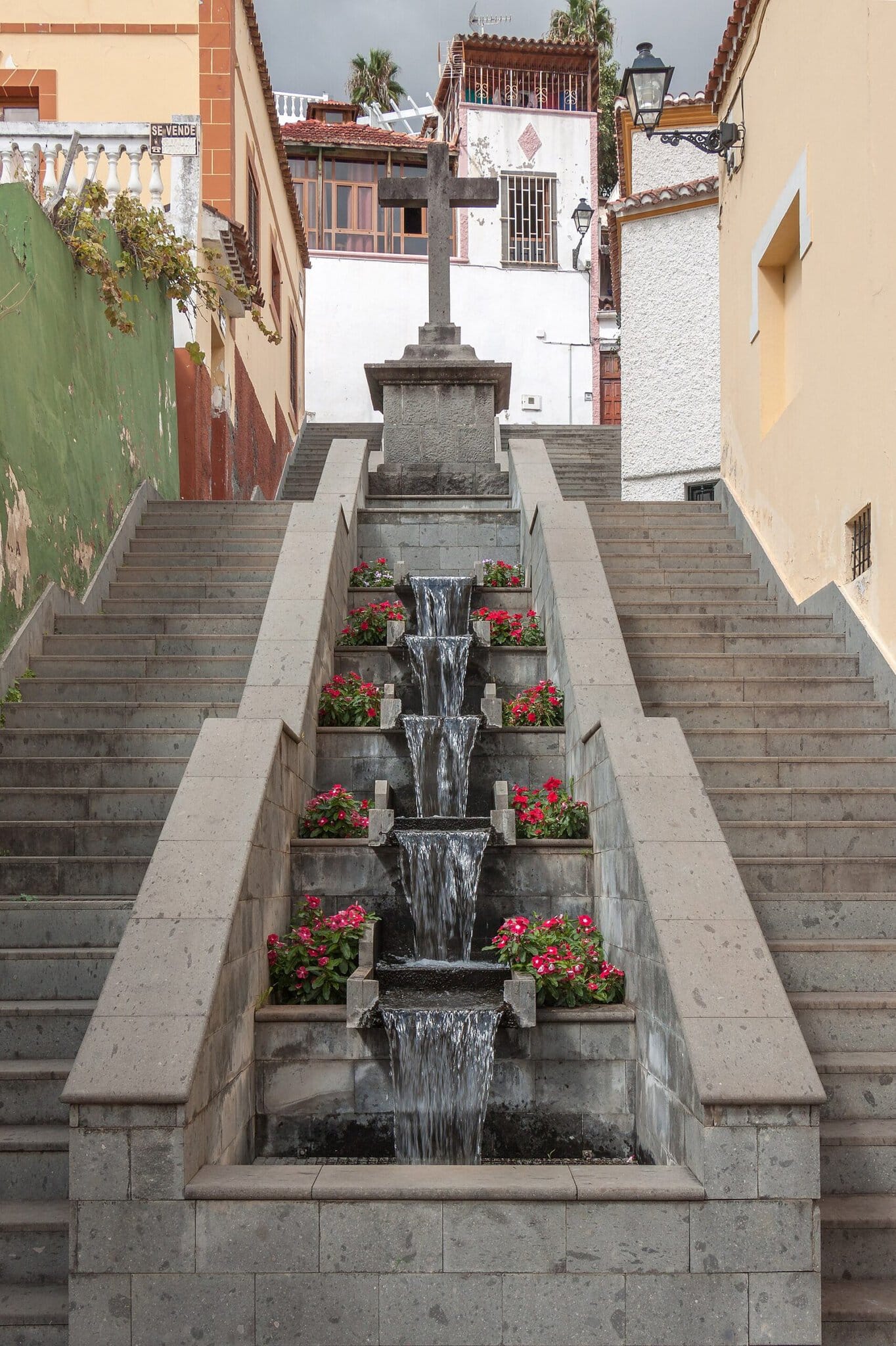
Pompeii, Italy: Essential Information, Highlights, and Admission Fee

TL;DRPompeii is the ancient city near Naples that got buried under ash from Vesuvius in 79 AD and preserved almost perfectly as a result. You can wander the original paved streets, peek into houses with frescoes still on the walls, and see the casts of the bodies of those who lived there. The site is huge, so set aside half a day to a full day. Book tickets online in advance to skip the queues — you can get there easily on the Circumvesuviana train from Naples or Sorrento. Turn up in the morning, before the heat kicks in. This guide covers entry prices, getting there, and what to see first.

If you are heading to Naples or the Amalfi Coast, you definitely shouldn’t miss the famous Pompeii, which, as you surely know, was struck by the eruption of Mount Vesuvius. Approximately 10,000 local inhabitants died in this tragedy, and the volcanic ash perfectly preserved the city’s appearance.

And now you can explore it and soak in all its history and mystery. In this guide, Pompeii, Italy: Essential Information, Highlights, and Admission Fee, you will learn all the interesting facts about Pompeii, as well as about admission.

Pompeii: History, Volcano, and Admission

Pompeii is one of the best-preserved ancient cities in the world and is one of the most significant archaeological sites and tourist attractions.

They are located in southern Italy near Naples and are primarily known for the aforementioned tragic event when, in 79 AD, they were buried by volcanic ash and stones after the eruption of Mount Vesuvius. The eruption lasted three days, and the layer of debris and ash reached a height of up to 6 meters.

The most interesting thing about it all is that this natural disaster paradoxically preserved the city in an almost original state. 🤯

Pompeii was founded approximately in the 7th century BC. by settlers from Etruria and Greece. Initially, it was a small agricultural town, but it gradually gained importance due to its strategic coastal location and successful trade.

After the volcanic eruption, Pompeii was forgotten for many centuries until it was accidentally rediscovered in the 16th century. Systematic archaeological excavations then began in the 18th century and continue to this day (so there might always be something newly excavated to see). During your visit, you will be able to see the ongoing work of archaeologists (these are the only things that cannot be photographed).

TIP: Where to go on holiday in Italy

How to get to Pompeii

If you travel from Naples, as I did, you can get to Pompeii by train (EAV suburban railway) from the main train station. A ticket costs 2.80 euros and the journey takes about 40 minutes. Tickets can be bought at the EAV counter at the station (you’ll find it by going down the stairs to the ground floor at the train station).

You can also easily get there by car, if you have one available.

Pompeii: where to Buy Tickets

You can buy tickets to Pompeii either on the official website online or on site. We prefer to use the GetYourGuide portal in Italy, because tickets can be returned through it at any time, and we often have trouble buying tickets through official websites, plus there’s usually a queue on site.

You can visit Pompeii every day from 8:30 AM to 7:00 PM. The basic adult ticket costs 18 euros, for young people (aged 18-24) it’s 2 euros, and children under 18 have free entry (however, reduced-price tickets cannot be bought online; you must purchase them on site and prove your age with a document).

If you want to see Pompeii including the suburban villas (Villa of the Mysteries, Villa Regina, and Villa of Diomedes), then the adult admission costs 22 euros.

The ticket is not time-limited; you can arrive anytime during opening hours (however, the last entry is at 5:30 PM) and spend as much time as you wish in the city.

How Long Does a Tour of Pompeii Take?

I would recommend dedicating a whole day to visiting Pompeii so you don’t have to rush. The tour of Pompeii itself usually takes between 3 to 5 hours, depending on how thoroughly you want to explore individual parts of the city and what all you want to see.

You might also like: 32 tips on what to see in Naples

Main Attractions of Pompeii

Today, Pompeii is one of the most visited tourist sites in Italy, and since 1997, the ruins of the ancient city have been on the UNESCO list. In Pompeii, the following sights are worth seeing:

Porta Marina

Porta Marina (Sea Gate) is the best-preserved gate of all the original city gates in all of Pompeii.

After the earthquake in 62 AD (yes, there was an earthquake in Pompeii too, as if the volcanic eruption wasn’t enough.🤭), most of the city gates were not repaired, because due to the political situation at the time and the crumbling borders of the Roman Empire, there was no longer a need to maintain strong city walls.

Forum

The Forum is the main square and the heart of Pompeii’s former commercial, social, and religious life. At its northern end stands the Temple of Jupiter, which was originally built in the 2nd century BC during the Samnite era.

Here you can see the Temple of Jupiter, two monumental arches, and the remains of important public buildings such as treasuries, granaries, and the Temple of Apollo.

Basilica

The Basilica, located on the southwestern edge of the forum, was the center of commercial activities and a place for legal proceedings. However, after the earthquake in 62, the building was abandoned and never fully restored.

Pompeian Bodies

Perhaps the most interesting and at the same time most eerie thing to see in Pompeii are the preserved remains of the original inhabitants’ bodies. But don’t think that from these remains you won’t be able to tell what’s a leg and what’s an arm.

The death of fleeing people under the volcanic ash ensured that the victims of Mount Vesuvius remained essentially statues captured in their final and painful moments of life.

Pompeian Graffiti

If you pay close attention during your tour of the city, you will certainly notice all sorts of inscriptions, drawings, and declarations all over the walls. Today, we would probably call it graffiti.

According to historians, some of these inscriptions are political slogans, advertisements, menus, loving messages, rules of conduct in taverns, or even vulgar remarks and drawings.

An interesting, albeit vulgar, fact is that countless paintings, statues, or shapes of penises can be found in the streets of Pompeii. It is believed that these symbols on the streets always pointed towards the nearest brothel, to guide sailors who might have been drunk and didn’t speak the local language. Now that’s what I call marketing.😄

Triangular Forum

Significant structures are located in the Triangular Forum, such as two theaters and a gymnasium. In the center of the square, the remains of a Doric temple from the 6th century BC can be seen. The temple was restored in the 4th–3rd centuries BC, but during the Roman period, it ceased to be used and was converted into a chapel.

Large and Small Theater

The Large Theater, which could accommodate up to 5,000 spectators, had a special tribune for important visitors. The Small Theater, with a smaller capacity, was used for minor performances and could offer seats to approximately a thousand spectators.

Amphitheater

Gladiator fights are an inseparable part of Roman history, and the amphitheater served precisely this purpose. The Pompeian amphitheater, which could accommodate up to 20,000 spectators, is the oldest known Roman amphitheater.

It was built thanks to the generosity of C. Q. Valgus and M. Porcius. Next to it was a large training ground (palaestra) where gladiators trained.

House of the Vettii

The House of the Vettii was owned by the Vettii brothers, two former slaves who became free and very wealthy. The house is truly massive and is particularly famous for its magnificent wall frescoes and decorations, including some erotic motifs.

House of the Faun

The House of the Faun, named after a statue of a Faun, dates back to the Samnite period (2nd century BC) and its layout resembles Greek architectural style. The most famous part of the house is the renowned mosaic of the Battle of Alexander the Great with the Persian King Darius, which can now be seen in the Archaeological Museum in Naples.

Lupanar

The Lupanar, or Pompeian brothel, is a small house that probably attracts the most visitors. And why do you think that is?🤭

It has 10 windowless rooms with stone beds (which looked quite uncomfortable, but apparently, it was intentional so that men wouldn’t fall asleep and delay the prostitutes from their next work) and on the walls in the so-called “waiting room,” frescoes with erotic scenes can be seen, which allegedly served as a service menu or even instructions on what to do in such a brothel.

House of the Tragic Poet

The House of the Tragic Poet apparently belonged to a wealthy merchant and is known for the dog mosaic located in the vestibule with the inscription “Cave Canem” (Beware of the dog).

House of Venus in the Shell

The House of Venus in the Shell has a beautiful garden, where a painting of the goddess Venus bathing on a seashell is located in the courtyard. This house is among the most recent excavations, having been discovered only between 1930 and 1950, and it will probably be the most beautiful house you see in Pompeii.

Thermal Baths

Romans apparently loved three things: gladiatorial fights, brothels, and especially relaxing in baths.

Several of them are located in Pompeii. The baths in the city were divided into male and female sections. Each of them contained changing rooms, cold baths, and a warm pool. A caldarium, a room with circulating warm air, has also been preserved.

Villa of the Mysteries

The Villa of the Mysteries is probably the most famous villa in all of Pompeii and is located just outside the city. You will find magnificent paintings and frescoes depicting religious scenes, including figures of Dionysus, Ariadne, and Satyr.

House of the Surgeon

The House of the Surgeon is one of the most significant and oldest houses in Pompeii. It is located near the northern city gate and got its name from the discovery of surgical instruments found here during excavations.

These instruments indicate that the house belonged to a physician, probably a surgeon, who practiced here. Instruments such as scalpels, forceps, probes, and other medical tools were found there.

How about: Holiday on Capri Island

Pompeii: Top Highlights

Pompeii is an absolutely fascinating place for me, and surely for many of you too. I have compiled some interesting facts for you:

  • Body Casts – During the excavations of Pompeii, Italian architect Giuseppe Fiorelli discovered voids in the ash layer, which, upon careful examination, revealed to be the remains of the inhabitants’ bodies. Fiorelli then filled these voids with plaster, thus creating casts of the Pompeians’ bodies at the moment of their death. These casts can still be seen in Pompeii today.
  • Houses in Pompeii – Most houses in Pompeii were surprisingly spacious and well-equipped. Many of them had, for example, baths, running water, and beautifully decorated stairs made of quality stone. The city prospered, and many families could afford luxurious furnishings and decorations.
  • Vesuvius Today – Mount Vesuvius is still an active volcano. The last eruption occurred in 1944, killing 26 people. Today, however, Vesuvius is carefully monitored to prevent further disasters.
  • Ignorance of Inhabitants – Interestingly, according to some historians, the inhabitants of Pompeii probably did not know that Vesuvius was an active volcano. At that time, they lacked the necessary knowledge about volcanic activity and might have considered Vesuvius just another mountain in the landscape.
  • Pompeii as a Holiday Destination – At certain periods, Pompeii became a popular spot for the Roman elite, who spent their holidays there. The city had beautiful gardens, public baths, and amphitheaters, making it an attractive destination. It is even speculated that Emperor Nero had his house here, where he spent time relaxing.
  • Discovery of Treasure – During excavations, a treasure containing 298 silver and several gold coins was discovered in one of the houses. This discovery is proof of how prosperous households in Pompeii were and how well many inhabitants fared.
  • Streets and Sidewalks – The streets in Pompeii were designed very practically. They were covered with large stones, and grooves for chariot wheels ran between them. Sidewalks for pedestrians were raised to help people avoid dirt and rainwater flowing down the streets. In several places in the city, there were also “pedestrian crossings” in the form of large stones, between which chariot wheels could pass.
  • Water Supply System – The city had a well-developed water supply system that delivered fresh water to homes, baths, and fountains. Many public fountains could be found in the streets of Pompeii, where inhabitants could fill their containers with drinking water.
  • Fast Food – Pompeii had its own version of today’s fast food restaurants, called thermopolia. These were small stalls where passersby could buy hot food and drinks. These stalls were usually equipped with large food containers embedded in stone counters.
  • Herculaneum – If you don’t like crowds, then about 12 km from Pompeii lies the city of Herculaneum, which suffered a similar fate to Pompeii, but unlike Pompeii, Herculaneum was buried by volcanic debris and lava, leading to a different preservation of the city. The city is also accessible for tourists to visit.
lukas a lucka
Lukáš and Lucie recommend
Where to stay in Pompeii
3 accommodations — hotels and other lodging options

FAQ

When is the best time to visit Pompeii?

The best time to visit is in spring or autumn, when temperatures are more pleasant and there are fewer tourists. However, if you visit Pompeii in the summer, avoid the hours from 11:00 AM to 3:00 PM, when the sun is strongest, as you won’t find much shade in Pompeii.

How much time is needed for a tour of Pompeii?

We recommend dedicating at least 4–5 hours to Pompeii so you can thoroughly explore all the main sites.

Is it possible to take photos in Pompeii?

Yes, photography is allowed in Pompeii.

Is it possible to see Vesuvius from Pompeii?

Yes, Vesuvius is visible from Pompeii, and all visitors can also take a trip to its summit.

What artifacts were found in Pompeii?

Various artifacts were found in Pompeii, such as statues, jewelry, vases, mirrors, paintings, and even the bodily remains of inhabitants.

Tips and Tricks for Your Vacation

Don’t Overpay for Flights

Search for flights on Kayak. It’s our favorite search engine because it scans the websites of all airlines and always finds the cheapest connection.

Book Your Accommodation Smartly

The best experiences we’ve had when looking for accommodation (from Alaska to Morocco) are with Booking.com, where hotels, apartments, and entire houses are usually the cheapest and most widely available.

Don’t Forget Travel Insurance

Good travel insurance will protect you against illness, accidents, theft, or flight cancellations. We’ve had a few hospital visits abroad, so we know how important it is to have proper insurance arranged.

Where we insure ourselves: SafetyWing (best for everyone) and TrueTraveller (for extra-long trips).

Why don’t we recommend any Czech insurance company? Because they have too many restrictions. They set limits on the number of days abroad, travel insurance via a credit card often requires you to pay medical expenses only with that card, and they frequently limit the number of returns to the Czech Republic.

Find the Best Experiences

Get Your Guide is a huge online marketplace where you can book guided walks, trips, skip-the-line tickets, tours, and much more. We always find some extra fun there!
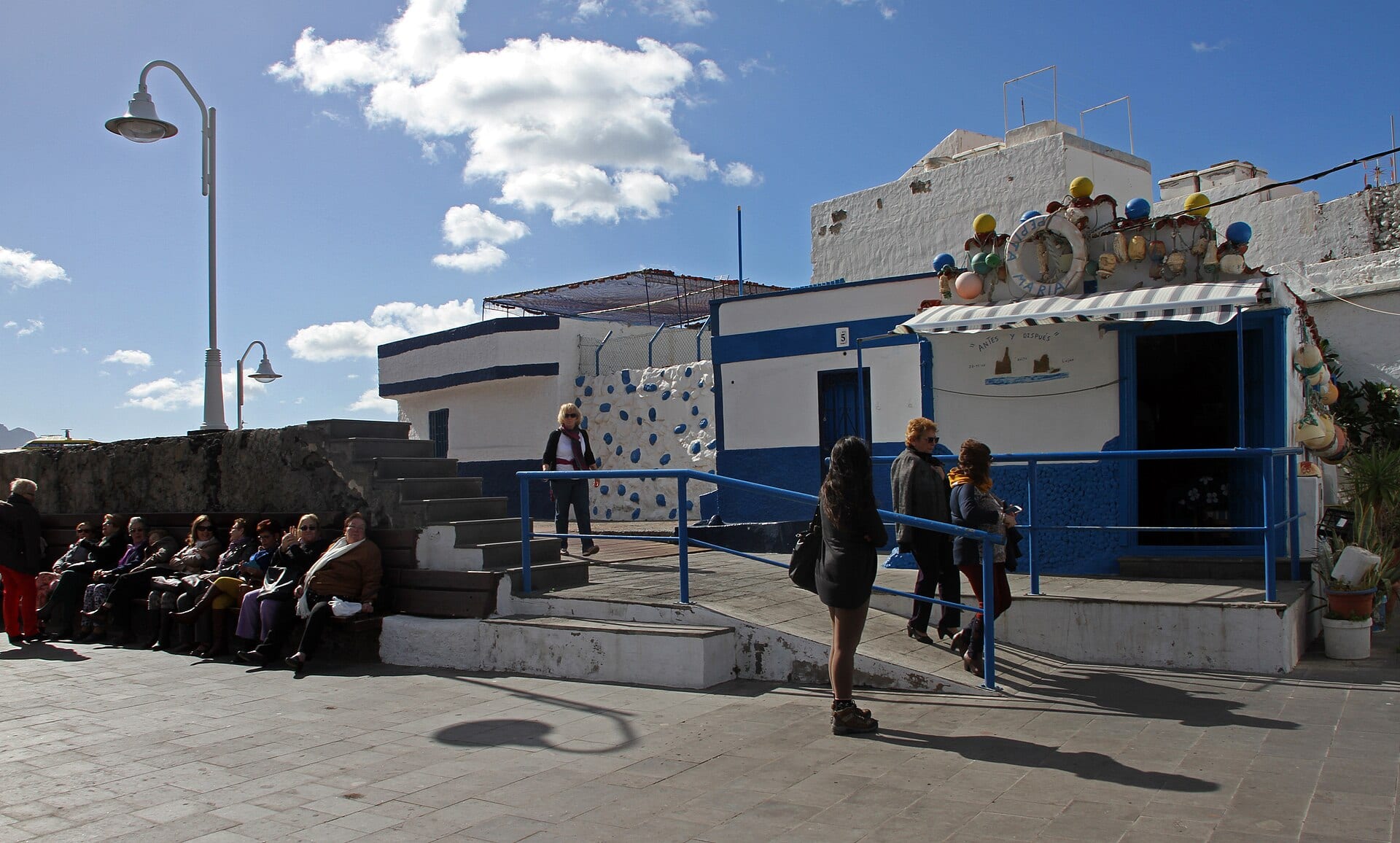
Vatican City: Everything You Need to Know About Vatican Museums + Admission and What to See

TL;DRBook tickets for the Vatican Museums and Sistine Chapel online, as slots open exactly 60 days ahead and the standard 2026 ticket costs €20 plus a compulsory €5 booking fee, so €25 in total. The first slot at 8am or a late-afternoon one around 3.30pm are your best bets, when the crowds thin out. The route covers 14 main stops, including the Pio-Clementino Museum, the Gallery of Maps, the Raphael Rooms and the Sistine Chapel itself with the Creation of Adam and the Last Judgement — it’s nearly seven kilometres of walking, so set aside 3 to 4 hours. There’s a strict dress code (shoulders and knees covered), and photography is banned outright inside the Sistine Chapel.

The Vatican Museums are one of the largest and most famous museums in the world, attracting millions of visitors annually. So, if you’re planning to visit Rome, then the Vatican and its museums are an absolute must for your itinerary. In this article, “Vatican City: Everything You Need to Know About Vatican Museums + Admission and What to See”, you’ll find a complete guide on how to plan your visit to the Vatican Museums, what to see, and how much admission costs.

When to Visit the Vatican Museums + Tips for Avoiding Queues

The best time to visit the Vatican Museums is first thing in the morning or later in the afternoon, when the Vatican is less crowded. If possible, avoid visiting during the peak tourist season, which lasts from June to September, when there are long queues and the museums are overcrowded in the Vatican.

If you can, try to visit the museum outside of the weekend – Wednesdays or Thursdays tend to be less busy. It’s also important to purchase tickets online in advance to avoid queues.

Also, keep in mind that these are huge complexes that take several hours to explore (at least 3 to 4 hours). Therefore, I recommend planning your museum visit for when you still have enough energy, and not after a full day of wandering around Rome.

Tip: Like us, buy your tickets online via GetYourGuide and you won’t have to queue.

You might also be interested in: Basic Information about the Vatican

Where to Stay

If you’re also heading to Rome, we recommend staying in the city center, ideally near the main train station or one of the airport bus stops. Rome is an ideal city for exploring on foot, and if you’re not limited by small children or sore knees, it’s worth using public transport here and there.

We opted for accommodation at Residenza Cavallini, which is just a few minutes from the airport bus stop. Great location – close to the Vatican and the Trevi Fountain.

The room was smaller, but clean, and the price included breakfast at a nearby cafe, where we could enjoy a fresh croissant, toast, and excellent cappuccino. What more could you wish for to start the day?

Read also: 27 places to see in Rome

How to get to the Vatican

You can get to the Vatican in several ways. If you’re in the center of Rome, the easiest way is on foot.

However, if you need to use public transport, the nearest metro station is Ottaviano-San Pietro (Line A). Another option is the bus – lines 40 and 64 go directly to the Vatican. For those who prefer a taxi, the Vatican is easily accessible from most parts of the city.

Vatican Museums: Basic Information

The Vatican Museums boast one of the richest art collections in the world. The museums were founded in 1506 by Pope Julius II. Since then, the collections have continuously expanded and today include over 70,000 works of art, with about 20,000 of them on display here.

The Vatican Museums comprise a complex of several museums and galleries, primarily founded in the 18th century. The tour route also includes several chapels, a library, and ancient papal apartments. Exploring these extensive collections can take you more than three hours.

Here you will see not only ancient Roman and Greek sculptures but also Renaissance paintings, including masterpieces by Michelangelo, Raphael, Leonardo da Vinci, and Caravaggio.

TIP: The Colosseum in Rome

Vatican Museums: Admission and Opening Hours

Tickets for the Vatican Museums can be purchased online on the official website or on-site (which is cheaper, but you might not get in), but I recommend purchasing them online in advance to avoid the long queues the Vatican is famous for.

If you want to skip the queue, buy a ticket on the GetYourGuide portal, where you’ll also find the option for guided entry.

Keep in mind that tickets need to be purchased well in advance, as they often sell out.

The Vatican Museums are open from Monday to Saturday from 9:00 AM to 6:00 PM, with the last entry at 4:00 PM. Entry is free every last Sunday of the month, but expect huge crowds.

The admission price for the Vatican Museums, including entry to the Sistine Chapel, is 25 euros for an adult without a guide (on-site prices are without the service fee, which is 5 euros), reduced admission for children or students is then 13 euros. Children under 6 and disabled persons with over 74% disability have free entry.

Also, keep an eye on the days when the Vatican Museums are closed. These include Sundays that are not the last of the month, and Catholic holidays:

  • January 1st for New Year’s Day,
  • January 6th for Epiphany,
  • March 31st and April 1st for Easter,
  • May 1st for Labor Day,
  • June 29th for the Feast of Saints Peter and Paul,
  • 14. and August 15th for the Feast of the Assumption of Mary,
  • November 1st for All Saints’ Day,
  • 25. and December 26th for the celebration of the birth of Jesus Christ.

Vatican Museums: 37 Tips on What to See

The Vatican Museums include several galleries, chapels, and palaces. In total, this complex covers more than 7 kilometers of exhibition routes. Allocate at least 3 to 4 hours for it, but you can easily spend an entire day here.

So, let’s take a look at what you definitely shouldn’t miss in the Vatican Museums.

Egyptian Museum

If ancient civilizations fascinate you, the Egyptian Museum will thrill you. Here you’ll find collections of mummies, sarcophagi, statues of gods, and vessels from ancient Egypt. TIP: The room with mummified animals is absolutely unique.

Etruscan Museum

The Etruscan Museum will transport you to the world of the mysterious Etruscan civilization, which preceded the Roman Empire. The collection includes vessels, jewelry, and sculptures. You can notice the details on Etruscan pottery, which speak to their advanced craftsmanship.

Cortile Del Belvedere and Cortile Della Pigna

This courtyard originally connected the Vatican Palace with the Belvedere Villa, which Pope Innocent VIII had built. Although Bramante did not complete the courtyard, his original plan was later slightly modified. During the time of Pope Sixtus V, the courtyard was divided into two parts – Cortile del Belvedere and Cortile della Pigna.

The Cortile della Pigna is dominated by a huge bronze pinecone, symbolizing eternal life. Take a moment to relax here and enjoy the view of the Vatican Gardens.

Chiaramonti Museum

In this museum, you’ll find endless rows of ancient sculptures. It is literally a paradise for lovers of classical sculpture. I recommend examining the sculptures carefully, as their details are truly fascinating.

Among the most significant are, for example, the Statue of Hercules with the infant Telephus, dating from the 2nd century AD, or Gradiva, a relief of a woman from a composition of three figures called the Horae.

The last part of the museum is the Galleria Lapidaria, which houses funerary monuments and stone tablets with inscriptions, accessible only upon request.

Pio-Clementine Museum

The largest museum in the entire Vatican complex is the Pio-Clementine Museum. This museum focuses on ancient sculpture and contains famous Roman copies of Greek originals. Here you’ll find, for example, the famous Laocoön statue.

Cabinet of Apoxyomenos

In the Cabinet of Apoxyomenos, you can admire one of the most famous ancient sculptures, the Apoxyomenos, depicted cleaning himself after an athletic contest.

Cortile Ottagono

This courtyard is a central point of the Vatican Museums and is home to famous ancient sculptures, including the Apollo Belvedere. TIP: Take a break here; you can sit for a while.

Hall of Animals

Animal lovers will be thrilled by the Hall of Animals, where you’ll find collections of marble animal sculptures from the ancient period. It’s essentially a “stone zoo” that both children and adults will appreciate.

Gallery of Statues and Hall of Busts

The Gallery of Statues and the Hall of Busts contain dozens of portraits of Roman emperors and important figures. Examine the details on the busts – every fold of clothing or facial expression tells a story.

Cabinet of Masks

The Cabinet of Masks houses fascinating mosaics and ancient decorations. Among the exhibited works are several statues of women, such as the marble statue of the Cnidian Aphrodite. However, the Cabinet of Masks is not generally accessible to visitors.

Hall of the Muses

The Hall of the Muses will transport you to the world of ancient mythology. Here you’ll find statues from the Hadrianic period discovered in Cassius’s Villa in Tivoli. The most famous artwork from this hall is the Belvedere Torso, an original by the Greek sculptor Apollonius from the 1st century BC. TIP: Interestingly, the walls in this hall are painted in Pompeian red, intended to serve as a backdrop for the sculptures.

Round Hall (Rotunda)

The Round Hall is a vast space inspired by the 18th-century Pantheon, featuring magnificent floor mosaics and monumental sculptures along its perimeter. In the center of the room is a large basin, 13 meters in diameter, made of red porphyry, which comes from Nero’s Golden House.

Greek Cross Hall

This hall is home to magnificent mosaics and sarcophagi made of red porphyry. Don’t forget to examine the mosaics on the floor. The first mosaic depicts the head of Athena and dates from the 1st century AD, while the second mosaic depicts Bacchus and dates from the 3rd century AD.

Hall of the Chariot

In this hall, you can view sculptures and sarcophagi with athletic themes, such as chariot races, discus throwing, or wrestling. You’ll also find an ancient Roman chariot here, which was part of the funerary rituals of Roman emperors.

Gallery of the Candelabra

The Gallery of the Candelabra got its name from the marble candelabra from the 2nd century AD displayed here. This part of the museum is less known but definitely worth a visit.

Gallery of Tapestries

In this gallery, you can admire magnificent tapestries with biblical and mythological scenes. Tip: Stop by the tapestries depicting the life of Jesus Christ; their details are breathtaking.

Gallery of Maps

The Gallery of Maps is one of the most popular places in the Vatican. The walls are covered with maps of Italy and its regions from the 16th century. The gallery ceiling is adorned with magnificent frescoes.

Sobieski Room and Room of the Immaculate Conception

These halls are filled with monumental paintings, including the famous Battle of Vienna depicting the victory of John III Sobieski. In the Room of the Immaculate Conception, you can view gifts from kings and bishops to Pope Pius IX on the occasion of the proclamation of the dogma of the Immaculate Conception in 1854.

Raphael Rooms

The Raphael Rooms are four rooms that are one of the highlights of the Vatican Museums. These rooms were part of Pope Julius II’s apartment. You’ll find beautiful frescoes, such as The School of Athens, which are among the most famous works of Western art. Tip: Arrive early to avoid the crowds and enjoy the frescoes in peace.

The School of Athens

Hall of Chiaroscuri

The Hall of Chiaroscuri (Sala Dei Chiaroscuri) is Located near the Raphael Rooms Complex. This Room Was Originally Inhabited by the So-Called Cubicularii, who Were Guardians of the Bedroom. The Hall also Served as a Space for Consistory Meetings. It is Sometimes Called the Sala Del Pappagallo Due to a Parrot once Kept Here. This Fact is Commemorated By a Painting of Two Parrots, Attributed to Giovanni Da Udine.

Niccoline Chapel

In the Oldest Part of the Vatican Palace, You’ll Find the Niccoline Chapel. In this Chapel, You’ll Discover Beautiful Frescoes by Fra Angelico. However, the Niccoline Chapel is not Included in the Vatican Museums’ Visitor Route and Can Only be Visited with a Guide.

Raphael’s Loggia

Raphael’s Loggia

Chapel of Urban VIII

The Chapel of Urban VIII is Located in the Southwest Corner of the Borgo Tower. Although Smaller, it Contains Magnificent Baroque Decorations and Frescoes.

Borgia Apartment

This Apartment is Full of Frescoes Depicting both Religious and Secular Motifs. It Was Built for Pope Alexander VI, one of the most Controversial Popes. The Apartment Has Six Rooms that Were Decorated and Renovated for the Pope’s Needs.

Collection of Modern and Contemporary Art

The Collection of Modern and Contemporary Art is Housed in 36 Halls, Currently Comprising 8,000 Works (from the Late 19th Century to the 21st Century) and Distributed throughout Various Parts of the Vatican Museums.

Sistine Chapel

Sistine Chapel

Chapel of Saint Peter Martyr The Chapel of Saint Peter Martyr is a lesser-known but more intimate part of the Vatican Museums. This chapel is dedicated to Saint Peter of Verona, who was a Dominican martyr in the 13th

Statue of St. Peter Martyr

Aldobrandini Wedding Hall

The Aldobrandini Wedding Hall is a Room with Frescoes Depicting an Ancient Wedding Ceremony. The Frescoes are Incredibly Detailed and Speak to Roman Customs and Traditions.

Christian Museum

The Christian Museum Focuses on Early Christian Art and Includes Collections from the 3rd Century AD. Here You’ll Find Magnificent Mosaics, Sarcophagi, and Liturgical Objects that Illustrate the Rise of Christianity in the Roman Empire.

Museums of the Vatican Library

The Vatican Library Museums are Home to some of the World’s most Valuable Manuscripts and Books. They Include Medieval Manuscripts, Maps, and other Literary Treasures. The Vatican Library is one of the Oldest and Largest in the World.

Secular Museum

The Secular Museum Offers a Glimpse into Art from the pre-Christian Era, Including Greek, Roman, and Etruscan Artifacts. Here You’ll Find Sculptures, Pottery, and Mosaics that Illustrate the Pagan World of Ancient Europe.

Gregorian Profane Museum

The Gregorian Profane Museum Focuses on Ancient Roman and Greek Sculptures and Artifacts. It Was Founded by Pope Gregory XVI and Represents one of the most Significant Collections of Ancient Artworks.

Vatican Pinacoteca

Vatican Pinacoteca

Philatelic and Numismatic Museum

This Museum is a Paradise for Stamp and Coin Lovers. Here You’ll Find Unique Collections of Vatican Coins, Medals, and Postage Stamps. TIP: Don’t Forget to Check out some of the First Postage Stamps Issued by the Vatican, which are Rare and Highly Valued.

Anima Mundi Ethnological Museum

The Anima Mundi Ethnological Museum is a Fascinating Collection of Art and Artifacts from Various Cultures around the World. Here You’ll Find Objects from Africa, Asia, America, and Oceania.

The Carriage Pavilion showcases vehicles used by popes throughout various historical periods. Here you will find magnificent carriages, coaches, and modern popemobiles.

Bramante Staircase

The Bramante Staircase is one of the architectural gems of the Vatican Museums. This spiral staircase, designed by Donato Bramante in the 16th century, is truly magnificent. TIP: Take a nice photo here at the end of your visit.

What to Wear for your Vatican Visit

When planning your visit to the Vatican, keep in mind that it is a religious site with a strict dress code. The main rule is that shoulders and knees must be covered, meaning short skirts, shorts, or tank tops are not allowed.

Do not wear see-through clothing, deep necklines, or exposed backs. Hats and caps must also be removed.

If you are unsure what to wear, bring a light scarf or cardigan so you can easily cover yourself.

FAQ

How long does a tour of the Vatican Museums take?

The tour can take approximately 3 to 4 hours, but if you want to truly immerse yourself in the museum, you can spend an entire day here.

Is photography allowed inside the museums?

Most parts of the Vatican Museums allow photography without flash, but photography is strictly prohibited in the Sistine Chapel.

How to avoid crowds?

The best way to avoid crowds is to visit the museum early in the morning or late in the afternoon and purchase your tickets online in advance.

Are the Vatican Museums suitable for children?

Yes, the Vatican Museums are suitable for families with children. The museums offer audio guides adapted for children so that younger visitors can also enjoy the visit.

Tips and Tricks for Your Vacation

Don’t Overpay for Flights

Search for flights on Kayak. It’s our favorite search engine because it scans the websites of all airlines and always finds the cheapest connection.

Book Your Accommodation Smartly

The best experiences we’ve had when looking for accommodation (from Alaska to Morocco) are with Booking.com, where hotels, apartments, and entire houses are usually the cheapest and most widely available.

Don’t Forget Travel Insurance

Good travel insurance will protect you against illness, accidents, theft, or flight cancellations. We’ve had a few hospital visits abroad, so we know how important it is to have proper insurance arranged.

Where we insure ourselves: SafetyWing (best for everyone) and TrueTraveller (for extra-long trips).

Why don’t we recommend any Czech insurance company? Because they have too many restrictions. They set limits on the number of days abroad, travel insurance via a credit card often requires you to pay medical expenses only with that card, and they frequently limit the number of returns to the Czech Republic.

Find the Best Experiences

Get Your Guide is a huge online marketplace where you can book guided walks, trips, skip-the-line tickets, tours, and much more. We always find some extra fun there!
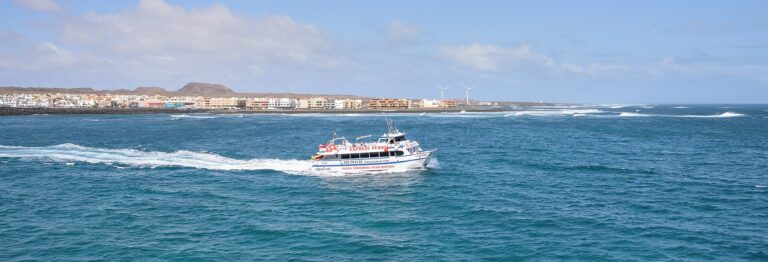
Vatican City: Basic Information, Attractions, and Entry

TL;DRThe Vatican, the smallest state in the world tucked inside Rome, is a treasure trove of art — and also a place with seriously long queues. The trick to a good visit is arriving early in the morning and booking tickets online in advance. St Peter’s Basilica is free (though you’ll still queue for the security check), while the Vatican Museums and Sistine Chapel charge admission. Stick to the dress code — shoulders and knees covered. Climbing the dome of the basilica rewards you with a stunning view. The guide covers tickets, opening hours, how to get there and what to see first.

Have you already visited the world’s smallest state, which is also a state within a state? We are talking about Vatican City, which you will discover within the capital city of Italy with all its attractions and majestic monuments. In this guide I will share with you Vatican City: Basic Information, Attractions, and Entry. So, if you’re traveling to Rome, definitely don’t miss a tour of Vatican City.

Vatican City: Basic Information

Vatican City is located in the center of Rome and, with an area of 44 hectares, it is the smallest state in the world. Yes, Vatican City is a fully-fledged and independent state with its own flag, anthem, currency, postal service, radio and television station, and even its own army. The head of Vatican City is none other than the Pope himself.

Even though Vatican City is a tiny state, it has so much to offer. From monuments, religious sites, to paintings, sculptures, and majestic buildings and gardens.

TIP: Read our article with tips on where to go for a holiday in Italy.

How to get to Vatican City

Vatican City is easily accessible by both public transport and on foot. It depends on your preferences:

  • By Metro: One of the easiest ways to get to Vatican City is to use the Rome Metro. Line A (orange line) will take you directly to Vatican City. You can get off at the “Ottaviano – Musei Vaticani” station. From the station, it’s just a short walk to the entrances of the Vatican Museums, and within a few minutes, you’ll also be at St. Peter’s Basilica.
  • By Bus: Many Rome bus lines have stops near Vatican City. Buses number 32, 40, 62, 64, 81, and 982 run from various parts of the city and stop near Vatican City.
  • By Tram: Tram line number 19 will take you to Vatican City, specifically to the Piazza del Risorgimento stop, which is close to the main entrances.
  • On Foot: If you are in the historic center of Rome, it is also possible to reach Vatican City by walking. The journey can take 20 to 30 minutes from more central areas like the Pantheon or Piazza Navona.
  • By Taxi: If you prefer comfort, you can take a taxi or book a private transfer. This option is faster and more comfortable, but also much more expensive than public transport.

Admission

Entry to Vatican City itself is free. However, what you will pay for are individual admissions to the Vatican Museums and monuments. Tickets need to be purchased well in advance, as they often sell out. If you want to avoid queues, get your tickets on the GetYourGuide portal.

The admission price varies depending on whether you buy it online in advance or on-site (which is usually cheaper). However, I would recommend buying tickets online in advance, as they are often completely sold out. The entry price is around 25 euros (630 CZK), depending on the ticket combination you choose or whether you opt for a guided tour.

You can purchase tickets in various forms, namely:

  • Vatican Museums + Sistine Chapel (25 euros),
  • Vatican Museums + Sistine Chapel + St. Peter’s Basilica (25 euros),
  • Papal Audience (free, every Wednesday),
  • Vatican Gardens + Sistine Chapel (25 euros).

All entry options, including prices and ticket availability, can be found on the official website.

TIP: You can visit Vatican City for free every last Sunday of the month from 9:00 AM to 2:00 PM (last entry is at 12:30 PM). No reservation is needed, but be prepared to queue.

Security Checks

At some locations in Vatican City, you will undergo security checks. They are similar to those at airports and are mandatory for all visitors. Checks are required at these locations or events:

  • St. Peter’s Basilica,
  • Vatican Museums,
  • Sistine Chapel,
  • Vatican Gardens,
  • Papal Audience or other solemn events.

What to Wear in Vatican City

When visiting Vatican City, it is important to adhere to the principles of modest and respectful dress, as Vatican City is a religious state and site. The most basic rule when visiting St. Peter’s Basilica and the Vatican Museums, including the Sistine Chapel, is to cover your shoulders and knees.

Men should wear long trousers and a short-sleeved or long-sleeved shirt. Women should wear long trousers, knee-length skirts, or long dresses, and a top or scarf that covers their shoulders.

Clothing that is see-through, has a deep neckline, or exposed back is inappropriate. Before entering religious spaces, hats or caps must also be removed.

TIP: In Italy, you must not miss Cinque Terre National Park.

What to Visit in Vatican City

If you are planning a visit to Vatican City, I recommend allocating plenty of time and arriving as early as possible in the morning to avoid the rush of tourists.

St. Peter’s Square

St. Peter’s Square is one of the most famous and significant squares in the world. It is located in front of St. Peter’s Basilica and is an important center for Catholic pilgrims and tourists from all over the world.

St. Peter’s Basilica and Dome

The biggest attraction in Vatican City is St. Peter’s Basilica, and you can enter it for free. However, expect crowds and queues, as you will need to go through a security check before entry.

Once inside, you can admire St. Peter’s Dome, the Vatican Pietà, the bronze statue of St. Peter, or Bernini’s works. However, entry to the dome is subject to a fee. If you take the elevator, you’ll pay 10 euros, and if you go by stairs, it’s 8 euros. From here, there’s a magnificent view of Rome.

Vatican Gardens

The Vatican Gardens are one of the most tranquil and impressive places in Vatican City. These extensive gardens cover almost half of the total area of the Vatican City State. However, entry to them is paid and only part of official guided tours.

Sistine Chapel

The Sistine Chapel is one of the most significant cultural and spiritual landmarks in Vatican City. This chapel, located in the heart of the Vatican Museums, is world-renowned for its magnificent frescoes, especially the ceiling depicting the Creation of Adam and the Last Judgment by Michelangelo.

Vatican Museums

The Vatican Museums consist of a total of 15 buildings with 30 art collections. The collections include a vast number of artworks originating from various epochs and cultures.

Vatican Postal Service

The Vatican Postal Service is known for its efficiency and quality of service and is popular among stamp collectors worldwide. The Vatican postal service, officially known as Poste Vaticane, was founded in 1929 when Vatican City was officially recognized as an independent state by the Lateran Treaties.

The Vatican Postal Service is so popular that many Romans prefer to send important mail from Vatican City to take advantage of its speed and reliability.

Vatican City: Interesting Facts

  • Vatican City has its own national football team.
  • Only about 30 women live in Vatican City, and they do not have the right to vote.
  • In Vatican City, Latin is one of the official languages, and you might even encounter it when using an ATM, for example.
  • Divorce is not possible in Vatican City.

FAQ

How to get to Vatican City?

Vatican City is open to the public and can be visited, usually via Rome. To enter certain areas, such as the Vatican Museums or the Sistine Chapel, a ticket must be purchased.

What are the main tourist attractions in Vatican City?

The main attractions include St. Peter’s Basilica, the Sistine Chapel with its frescoes, the Vatican Museums with extensive art collections, and the Vatican Gardens.

What are the opening hours of the Vatican Museums?

The Vatican Museums are usually open from Monday to Saturday, with the exception of some holidays and special events. We recommend checking the current opening hours in advance and booking tickets online due to high demand and limited capacity.

Can I take photos in Vatican City?

Photography for personal use is permitted in most public areas of Vatican City; however, photography is prohibited in the Sistine Chapel and some other art exhibitions.

How much does entry to the Sistine Chapel cost?

You can visit the Sistine Chapel as part of the Vatican Museums admission, starting from 25 euros.

How long does a tour of Vatican City take?

The length of a Vatican City tour can vary significantly depending on what you want to see. If you want to see everything Vatican City has to offer, plan for a full-day visit. Also, don’t forget to factor in the time needed for security checks upon entry to Vatican City, which can take 20-30 minutes on some days.

Tips and Tricks for Your Vacation

Don’t Overpay for Flights

Search for flights on Kayak. It’s our favorite search engine because it scans the websites of all airlines and always finds the cheapest connection.

Book Your Accommodation Smartly

The best experiences we’ve had when looking for accommodation (from Alaska to Morocco) are with Booking.com, where hotels, apartments, and entire houses are usually the cheapest and most widely available.

Don’t Forget Travel Insurance

Good travel insurance will protect you against illness, accidents, theft, or flight cancellations. We’ve had a few hospital visits abroad, so we know how important it is to have proper insurance arranged.

Where we insure ourselves: SafetyWing (best for everyone) and TrueTraveller (for extra-long trips).

Why don’t we recommend any Czech insurance company? Because they have too many restrictions. They set limits on the number of days abroad, travel insurance via a credit card often requires you to pay medical expenses only with that card, and they frequently limit the number of returns to the Czech Republic.

Find the Best Experiences

Get Your Guide is a huge online marketplace where you can book guided walks, trips, skip-the-line tickets, tours, and much more. We always find some extra fun there!