If you’re thinking about heading to the Balearic Islands this summer and you’re after somewhere genuinely peaceful, let me tell you one thing straight away. Menorca, Spain is exactly the kind of untouched paradise you won’t want to leave when your holiday is over. While the neighbouring islands lure visitors with endless parties and sprawling hotel complexes, this quieter sister jealously guards its stunning natural landscape. The entire island functions as a UNESCO-protected Biosphere Reserve, which in practice means you won’t find any motorways or ugly concrete resorts blighting the coastline.
Instead, you can look forward to a tangle of romantic country lanes lined with traditional dry-stone walls. Waiting for you are coves with dazzlingly white sand that rival the Caribbean for beauty, with water in extraordinary shades of turquoise. If you enjoy a slower pace of travel, the scent of pine forests and the rustic charm of historic small towns, you’re going to absolutely love this island.
In this detailed guide you’ll find 18 things to see and do in Menorca so you can get the absolute most out of your trip. Alongside famous beaches like Cala Macarella and Cala Turqueta, we’ll also explore the mysterious prehistoric megaliths that recently earned UNESCO World Heritage status. I’ll also share practical tips on choosing the right base, the best time to visit, and how the local tourist tax works.
TL;DR
- Nature first: Menorca is a UNESCO Biosphere Reserve — there’s no mass development here, making it ideal for families and anyone who values peace and quiet.
- Historic towns: The former capital Ciutadella will charm you with its Gothic architecture, while the current capital Mahón boasts one of the world’s largest natural harbours.
- Most beautiful coves: On the south coast, don’t miss the beaches of Cala Macarella, Cala Turqueta and Cala Mitjana — often only reachable by a lovely walk through pine forest.
- Active holiday: The historic 185-kilometre Camí de Cavalls trail encircles the entire island and is perfect for hiking and mountain biking.
- Fair funding: Factor in the mandatory tourist tax (ecotasa), which ranges from €1 to €4 per person per night — money that goes directly towards protecting the island’s fragile ecosystem.
- Local gastronomy: Make sure you try the local vegetable dish tumbet, the excellent Mahón cheese, and remember that this island is the birthplace of mayonnaise.
Menorca: weather and sea temperature by month
🌡️ Warmest: July (daytime 29 °C) · 🌊 Warmest sea: August (28 °C) · ☔ Least rainfall: July
| Month | Day | Night | Sea | Rainy days |
|---|---|---|---|---|
| January | 14 °C | 10 °C | 16 °C | 8 |
| February | 15 °C | 10 °C | 15 °C | 4 |
| March | 16 °C | 12 °C | 15 °C | 8 |
| April | 18 °C | 13 °C | 16 °C | 9 |
| May | 21 °C | 16 °C | 19 °C | 7 |
| June | 26 °C | 20 °C | 23 °C | 4 |
| July | 29 °C | 23 °C | 26 °C | 1 |
| August | 29 °C | 24 °C | 28 °C | 3 |
| September | 26 °C | 22 °C | 26 °C | 6 |
| October | 23 °C | 19 °C | 24 °C | 6 |
| November | 19 °C | 15 °C | 20 °C | 10 |
| December | 16 °C | 12 °C | 18 °C | 7 |
Source: climate normal 2019–2024 (Open-Meteo, measured data)
The full destination guide: Spain — guide and what to see
When to Visit Menorca
Choosing the right time to visit the Balearic Islands is absolutely crucial, especially in recent years when southern Europe has been suffering from extreme summer heat. The ideal window for a trip to Menorca is the shoulder season in May and June, or alternatively September and October. During these months you’ll avoid the biggest tourist crowds and temperatures are very pleasant for sightseeing and hiking all day long.
If swimming is your main goal, the sea is beautifully warm by late June. In August, sea temperatures average a lovely 27°C and often stay that pleasant well into October. Early autumn is widely considered by many travellers to be the very best time to visit — the sea acts like a giant heated pool, but the air is no longer as scorching as it is in the peak summer months.
Travelling in July and August requires a little more tactical planning, as Menorca becomes a retreat for Spanish families from the mainland as well as holidaymakers from across Europe. During this period, expect higher accommodation prices and the need to arrive at the most popular beach car parks early in the morning — otherwise you simply won’t find a space. The winter months from November to March, on the other hand, offer absolute peace and quiet, which cyclists in particular will appreciate, though most of the coastal tourist infrastructure will be closed.
Where to Stay in Menorca
💡 Accommodation tip: We always search for accommodation on Booking.com, which tends to offer the best cancellation policies. For tickets, tours and activities, it’s worth comparing options through GetYourGuide.
Menorca is a relatively small island, but choosing the right base will significantly shape the character of your holiday. Most independent travellers opt to stay either around the historic town of Ciutadella in the west, or in Mahón in the east. Both towns offer a great food scene, wonderful evening strolls and excellent connections to the local bus network — handy if you don’t plan to hire a car for your entire stay.
If you’re drawn to the romance of old palaces and winding cobbled lanes, look for accommodation right in the centre of Ciutadella. A wonderful choice here is the boutique hotel Faustino Gran, set within historic buildings and offering an incredibly peaceful atmosphere. For those who prefer harbour views and a hint of British colonial architecture, Mahón is the ideal base — try the popular Hotel Artiem Capri for a great central location.
Families with children or those who just want to laze on the beach often prefer resorts on the south coast, where the sea entry is reliably gentle and shallow. A strategically excellent location in this respect is the resort of Cala Galdana, which sits right next to some of the island’s most photogenic, unspoilt beaches. The Meliá Cala Galdana hotel, for example, lies directly beside the beautiful sandy beach. Whatever area you choose, I’d strongly recommend booking your accommodation well in advance through Booking.com, as capacity on the island is relatively limited due to strict ecological regulations.
If you’d rather not organise flights and accommodation separately, a Menorca holiday package can often work out cheaper. We find the best deals through Invia, which compares packages from over 150 travel agencies and makes it easy to find the best combined flight and hotel deal in one place. It’s worth keeping an eye on Early Bird offers, as popular summer dates on the islands tend to sell out fast.
18 Best Things to See and Do in Menorca
Let’s take a look at the very best this beautiful Balearic island has to offer. I’ve put together a complete list of 18 places and experiences you really shouldn’t miss during your holiday. From exploring hidden coves and tasting local specialities to visiting mysterious prehistoric monuments found nowhere else in Europe.
1. Ciutadella and Its Aristocratic Palaces
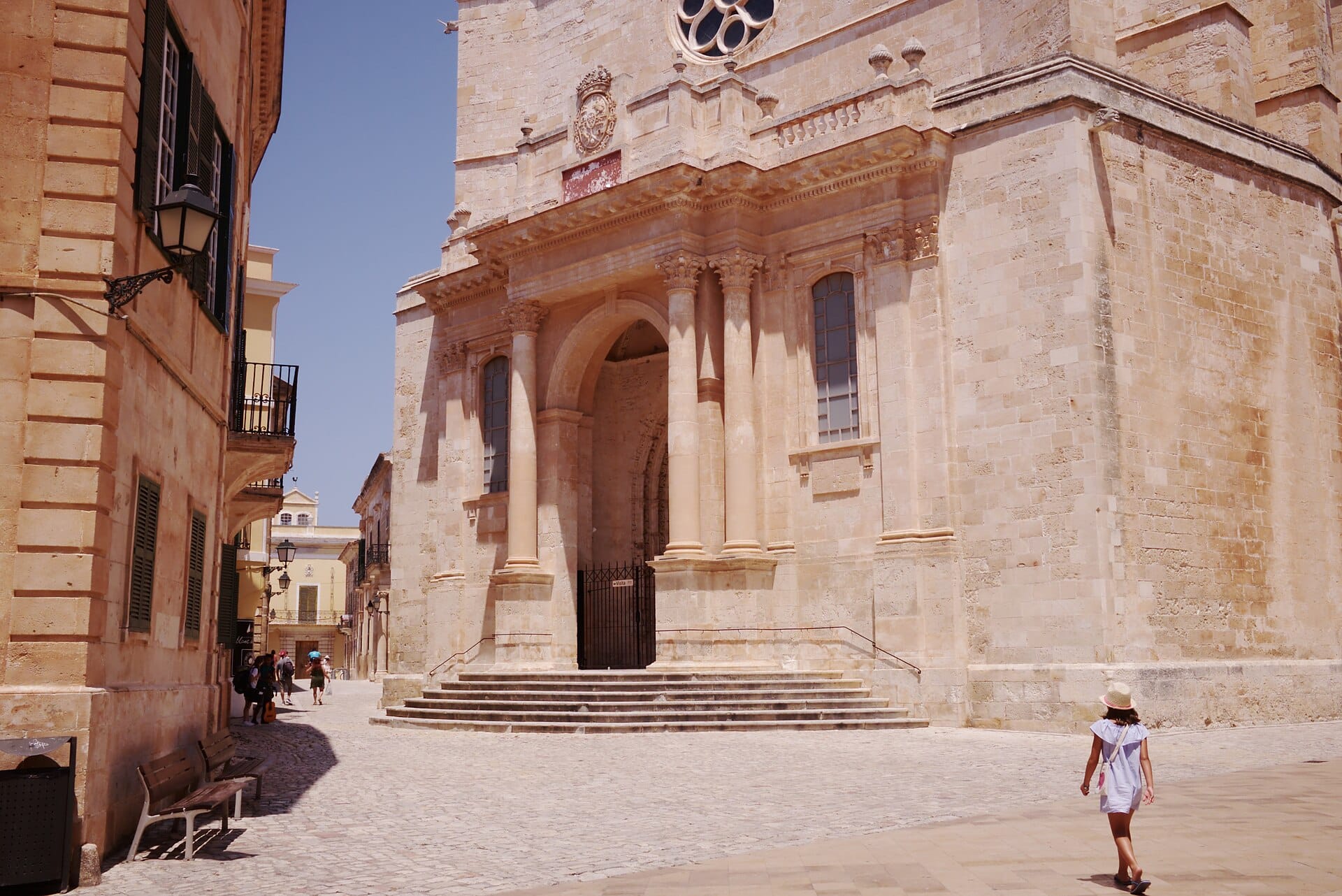
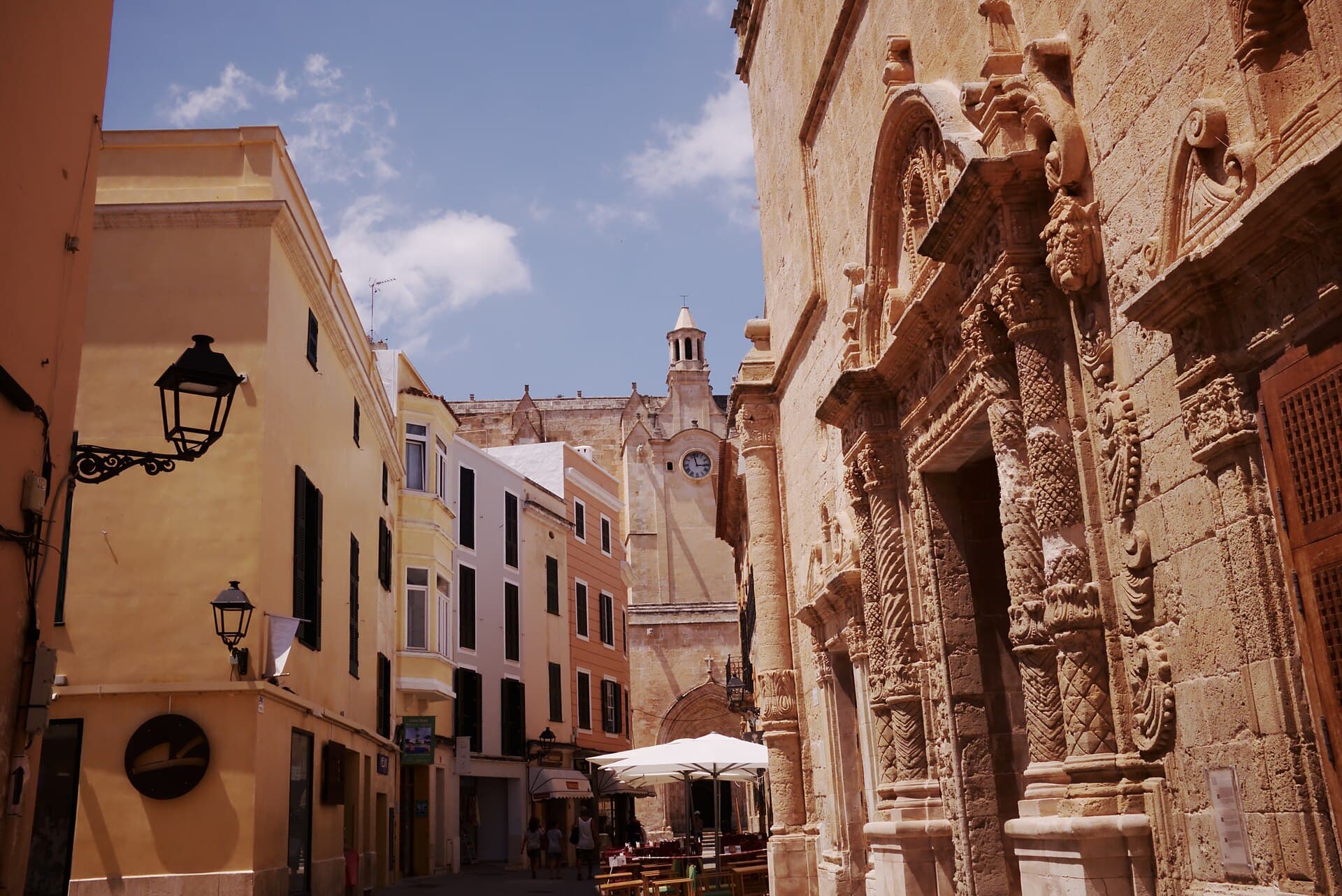
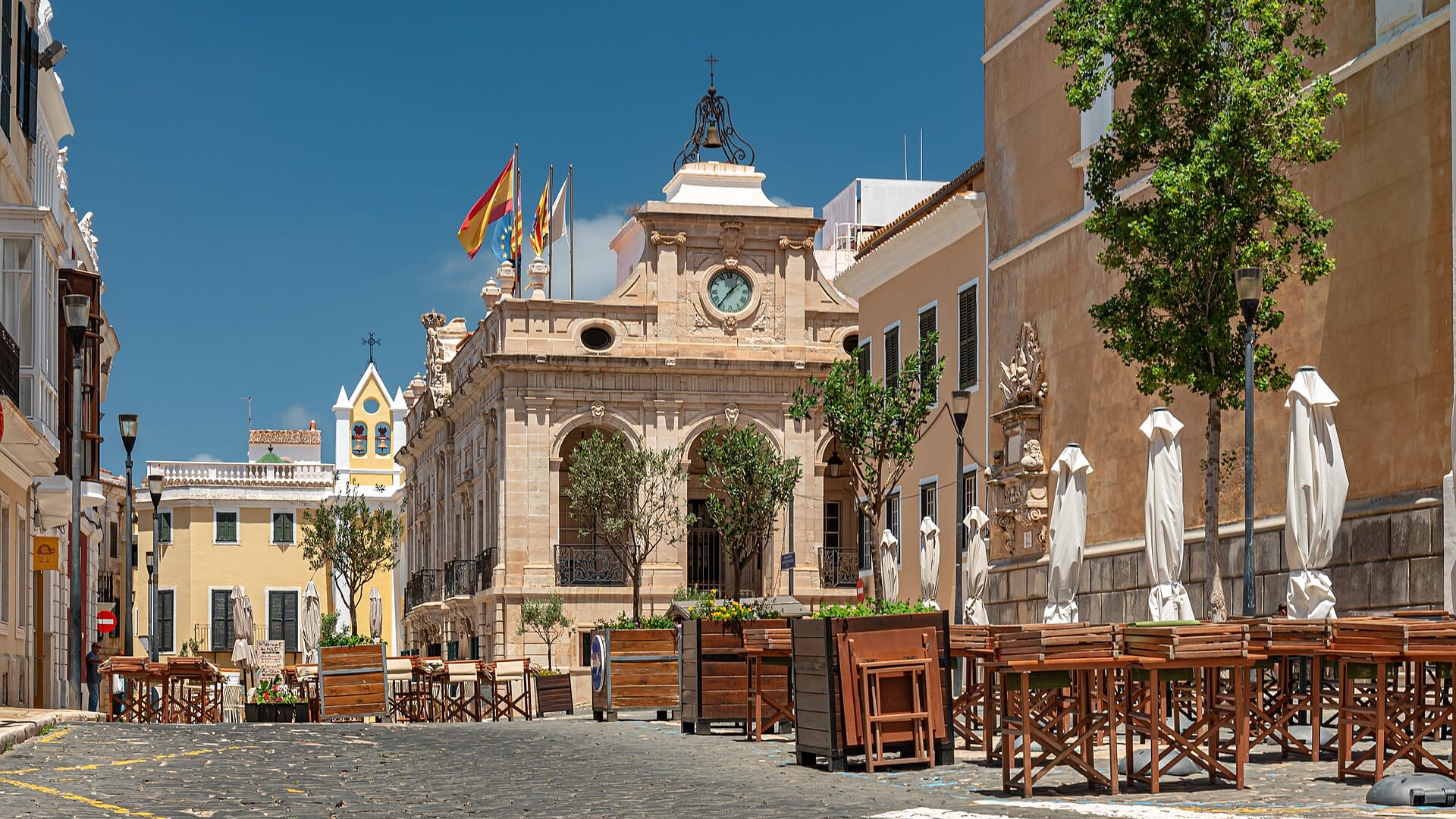
The island’s former capital, Ciutadella, is without exaggeration one of the most beautiful historic towns in all of Spain. Its narrow cobbled streets are lined with grand sandstone aristocratic palaces whose ornate façades tell stories of the old wealth of the local nobility. The hub of all activity is the picturesque Plaça des Born, dominated by a slender obelisk commemorating the town’s heroic defence against a devastating Turkish raid in the sixteenth century.
While wandering through the town, don’t miss the imposing Cathedral of Santa Maria de Ciutadella — a masterpiece of Catalan Gothic architecture built on the foundations of an old mosque. The interior is surprisingly spacious and the play of light through the stained-glass windows creates a magical atmosphere inside. Entry to the cathedral costs around €3 and the visit takes roughly half an hour.
The greatest charm of Ciutadella, though, lies in its harbour, which cuts deep into the land and resembles a miniature fjord. In the evening, as the sun goes down, the waterfront transforms into a buzzing strip of excellent tapas bars and small cafés. You can sit for hours with a glass of chilled wine, watching the fishing boats bob gently on the water and soaking up the genuine, unhurried Mediterranean atmosphere.
💡 Tip: If you want to experience the harbour without the tourist crowds, head down early in the morning when the fishermen are just unloading their overnight catch and the whole town is slowly waking up over a strong espresso.
2. Mahón and the World’s Largest Natural Harbour
The current capital, Mahón (or Maó in Catalan), sits at the opposite end of the island and shows a completely different, more cosmopolitan face of Menorca. The city spent more than a hundred years under British rule, which is still clearly reflected in its unique architecture — full of characteristic sash windows and Georgian façades. Mahón has a wonderfully elegant feel and its historic centre sits atop a clifftop, offering stunning views over the surrounding water.
The absolute centrepiece of the city is its harbour, an incredible five kilometres long and recognised as the second largest deep-water natural harbour in the world, after Sydney in Australia. This safe haven for ships was so strategically important throughout history that it was constantly contested by rival naval powers. Today it’s an ideal spot for long afternoon strolls along a waterfront lined with boutiques and restaurants.
The best way to truly appreciate the scale and significance of this place is to take an organised boat trip. During the hour-long excursion you’ll see old fortresses, quarantine islands and luxury yachts moored in secluded inlets. You can pick up tickets for the harbour cruise directly on the waterfront for around €15 per adult.
💡 Tip: Pop into the historic Farmacia Llabrés pharmacy dating from the late 19th century. Its beautiful Art Nouveau interior, complete with original wooden display cabinets and stained glass, is a real feast for the eyes — and it still operates as a working pharmacy today.
3. Camí de Cavalls: Hiking Around the Entire Island
If you love active holidays, the historic Camí de Cavalls trail will probably be the highlight of your entire trip. This ancient defensive route — known in English as the Horse Path — stretches an impressive 185 kilometres and literally circles the entire coastline of Menorca. Originally used by mounted soldiers patrolling the island against pirates, it’s now a paradise for hikers, runners and keen mountain bikers.
The route is incredibly varied and officially divided into 20 marked sections. You can choose whether to head out on an easy walk through shady pine forests in the south, or opt for the wilder, windier stages along the north coast where the path crosses red cliffs and deserted pastures. All sections are perfectly waymarked with distinctive wooden posts, so getting lost is virtually impossible.
Completing the entire trail in one go takes an average walker around 10 to 14 days, but the vast majority of visitors simply pick out short sections for day trips. A great advantage of this trail is that it leads you to the most remote, unspoilt beaches that no road reaches and that you simply can’t get to by car.
💡 Tip: For beginners, the section between Cala Galdana and Cala Macarella is absolutely perfect. It takes just under an hour at a relaxed pace and you’ll have the ocean in view the entire way.
4. Cala Macarella and Macarelleta
Say “Menorca” to most people and they’ll immediately picture the iconic cove of Cala Macarella and its smaller, more intimate sister, Cala Macarelleta. These beaches are the absolute visual pinnacle of the Balearic coastline. You’ll find powdery white sand and water so crystal clear that boats moored nearby appear to be floating in mid-air above the seabed.
Getting to these natural gems does require a little effort. During the peak summer season, access is strictly regulated and the best option is to use the shuttle bus from Ciutadella, which drops you at the nearby car park. From there you’ll need to walk — it’s about a twenty-minute stroll through fragrant pine forest. This small logistical hurdle helps protect the cove from being completely overwhelmed.
On the main beach at Macarella you’ll find a small rustic beach bar (a chiringuito), where you can grab a cold drink or a light lunch in the shade of the trees. If you continue along the clifftop for another ten minutes, you’ll reach the smaller Cala Macarelleta. It’s enclosed by high limestone cliffs and is traditionally very popular with naturists — which is a fairly normal standard on the island.
💡 Tip: If you’re driving outside the main season, the car park fills up before 9am. To guarantee a spot and have the beach to yourself, you really do need to be an early riser.
5. Cala Turqueta: The Caribbean of the Mediterranean
A little further along the south coast you’ll discover another beach gem: the stunning Cala Turqueta. As the name suggests, the star attraction here is the mesmerising turquoise colour of the water, which contrasted against the deep-green pines creates scenery worthy of the finest travel magazines. The cove is fairly narrow and cuts deep into the land, making it perfectly sheltered from waves and wind.
Getting to the beach means parking in a central car park and then walking for around fifteen minutes over gentle terrain. Unlike commercial resorts, you won’t find any sunlounger hire or noisy beach clubs here — all of which underlines the island’s Biosphere Reserve status. It’s pure, unspoilt nature, where the only soundtrack is the sound of the sea and the chirping of cicadas.
At the entrance to the beach there’s just a small low-key bar and eco-friendly toilets, so it’s absolutely essential to bring enough water and some snacks. Due to the orientation of the beach, shade from the surrounding cliffs starts to creep in fairly early in the afternoon, so I’d recommend planning your visit in the morning hours when the sun best illuminates that turquoise water.
💡 Tip: Information signs along the main roads near Ciutadella show in real time whether the car park at Cala Turqueta is already full. This saves you a wasted journey if you set off too late.
6. Cala Mitjana and Mitjaneta
Completing the trio of the finest southern coves is the enchanting Cala Mitjana. This beach features a somewhat wider strip of soft sand and is flanked by dramatic limestone cliffs from which local youngsters love to jump into the deep water below. It’s extremely popular with families, as the seabed shelves very gently and the water is crystal clear and safe for swimming.
The easiest way to get here is from the nearby resort of Cala Galdana, from where a very pleasant and undemanding forest path leads directly to the beach. The walk takes under twenty-five minutes and is easily manageable even in light summer footwear. Along the way you’ll also come across old lime kilns and the remains of original farmsteads, which adds an interesting historical dimension to the stroll.
Right next to the main beach is the tiny cove of Cala Mitjaneta. It’s so small that only a handful of towels fit in it, and at high tide the sandy beach can disappear completely beneath the surface. It’s still worth a brief stop, though, as it offers an incredibly photogenic angle on the main cove and excellent conditions for snorkelling along the rocks.
💡 Tip: Since Cala Mitjana has no facilities whatsoever — not even a drinks stall — don’t forget to pack your own umbrella. Any shade under the trees is claimed very early on summer mornings.
7. Talayotic Megaliths and Naveta des Tudons
Menorca isn’t just about swimming — the island is a vast open-air museum that recently earned prestigious UNESCO World Heritage status. The landscape is literally scattered with mysterious megalithic structures dating from the Bronze Age, the so-called Talayotic culture. These stone monuments more than three thousand years old are entirely unique to the Balearic prehistory and cannot be found anywhere else in the world.
The most famous and best-preserved monument is the fascinating Naveta des Tudons, located just outside Ciutadella. This imposing burial chamber, built from enormous stones without any mortar, resembles an upturned boat in its shape. Archaeological excavations here uncovered hundreds of skeletons alongside bronze jewellery and bone buttons, demonstrating the sophisticated level of this ancient civilisation.
Beyond the navetas, as you travel around the island you’ll also come across talayots (circular defensive towers) and taules — giant T-shaped stone structures that probably served as religious sanctuaries. Entry to Naveta des Tudons costs a token €2 and the site is beautifully maintained with information panels in several languages.
💡 Tip: If history fascinates you, make a point of visiting the village of Torralba d’en Salort near Alaior, where you’ll find the tallest and most perfect megalithic taula on the entire island.
8. Cap de Cavalleria Lighthouse and the Wild North Coast
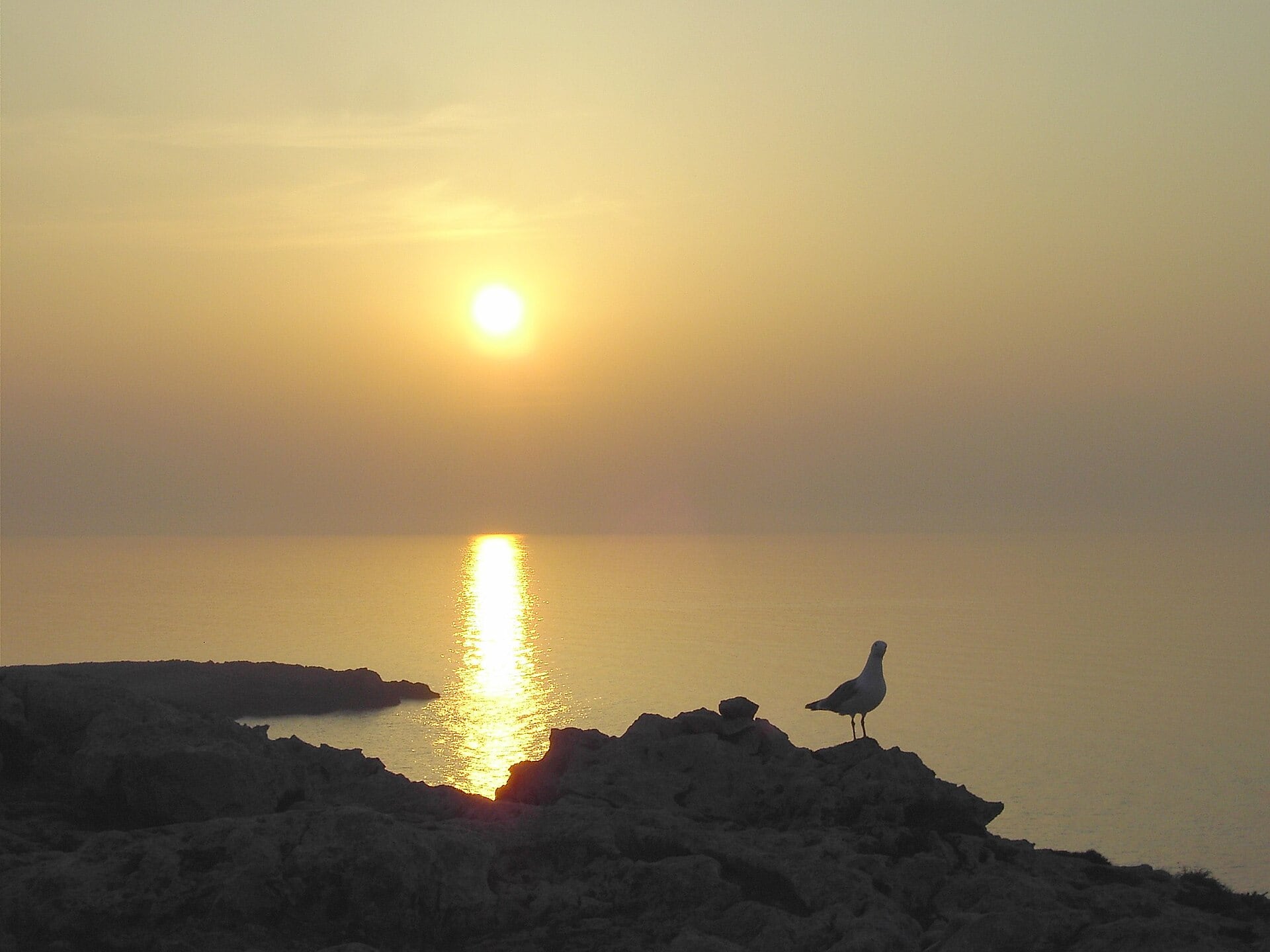
While the south of the island looks like a polished Caribbean paradise, the northern coastline offers a dramatically different experience. The landscape here is raw and rugged, shaped by the constant battering of the northerly wind known as the tramontana, and the coast is formed by jagged cliffs of dark-red shale. The most distinctive point of this area is Cap de Cavalleria, a sharp finger of land jutting deep into the restless waters of the Mediterranean.
At the very tip of this headland stands a snow-white 19th-century lighthouse, still keeping watch over treacherous rocks and guiding ships through the night. The drive out to the lighthouse is itself an experience — the narrow road winds through completely barren landscape covered in heather and low scrub, where your only company might be a herd of wild goats crossing the track.
This spot is absolutely unbeatable for stargazing and watching the evening sky. Thanks to virtually zero light pollution from the surrounding area, people come here to watch dramatic sunsets when the red cliffs glow in extraordinary shades of fire. The cliffs drop nearly a hundred metres straight into the sea, giving a truly breathtaking view of the endless ocean — one that feels more like the Irish coast than sun-drenched Spain.
💡 Tip: On the way to the lighthouse, make a short stop at the nearby beach of Cala Pregonda or at the small ecological museum located within the lighthouse complex itself, which explains the local natural environment in fascinating detail.
9. S’Albufera des Grau Biosphere Reserve
If you want to truly understand why the whole of Menorca earned UNESCO protected status, you need to visit the natural park of s’Albufera des Grau. This vast protected area in the northeast of the island comprises a huge freshwater lagoon surrounded by wetlands, dunes and woodland. It forms the absolute heart of the entire Biosphere Reserve and is the most important ecological site on the island — a vital sanctuary for hundreds of species of wildlife.
The park is a genuine paradise for birdwatchers and nature lovers. The lagoon serves as a crucial stopover for migratory birds travelling between Europe and Africa. You can spot herons, cormorants and, if you’re lucky, rare birds of prey hunting over the water’s surface. Perfectly maintained wooden boardwalk paths guide you through the most interesting areas without disturbing the fragile ecosystem.
Entry to the park is completely free and the best place to start is the modern Rodríguez Femenias visitor centre. There you can pick up free detailed trail maps and borrow binoculars for birdwatching. The trails are very easy, with no elevation gain whatsoever, making them an ideal half-day outing for families with young children or on days when it’s too cool for the beach.
💡 Tip: Try to plan your visit to the park for early morning. Not only will you avoid the midday heat, but the morning hours are by far the best time to observe active birdlife.

10. Binibeca Vell: A Labyrinth of White Alleyways
On the far south of the island you’ll find a place that looks like it’s been lifted straight from a fairy tale about fishermen. The village of Binibeca Vell is a charming settlement made up entirely of gleaming white houses with rounded rooftops and blue doors. The alleyways are so narrow that two people can often barely pass each other, and the whole complex forms a twisting labyrinth that’s enormous fun to get happily lost in for a while.
Although the village looks like an ancient Moorish settlement, it’s actually a brilliant architectural project from the 1970s. Spanish architect Antoni Sintes Mercadal designed it as an idealised model of traditional Mediterranean architecture, and the result is so convincing that almost every visitor is fooled. The atmosphere is wonderfully romantic, particularly in the late afternoon when the white walls catch a warm golden glow.
As you wander through the village you’ll notice signs everywhere saying “Silencio”, asking tourists to keep the noise down. Real residents and holiday-home owners live in these houses, and respecting their privacy is an absolute priority here. The whole visit takes about an hour and can easily be combined with lunch at one of the small tavernas on the edge of this white labyrinth.
💡 Tip: Avoid visiting around midday in peak season, when full coach loads of day-trippers arrive as part of organised tours. A late afternoon visit will offer a far more authentic and peaceful experience.
11. Taste the Original Mayonnaise in Its Birthplace
Did you know that one of the world’s most famous and widely used sauces actually comes from Menorca? That’s right — we’re talking about mayonnaise, which was first prepared in the city of Mahón, from which it takes its original name “mahonesa” (salsa mahonesa). Locals are enormously proud of this fact and the island’s culinary history is forever linked to this simple yet brilliant emulsion of olive oil and egg yolks.
Legend has it that the sauce was discovered by French soldiers under the command of the Duke of Richelieu when they captured the port of Mahón in the 18th century. The duke’s chef had no cream for a traditional French sauce, so he took inspiration from the local villagers’ simple recipe of oil, eggs and garlic. He brought the recipe back to Paris, where the sauce — known as “mahonnaise” — became a sensation in high society and from there spread around the world.
In Menorca, traditional mahonesa is made by hand and tastes noticeably different from the industrial version you’d find in a supermarket. It’s richer, with a deeper colour from free-range eggs and often a subtle hint of garlic (in which case it’s called alioli). Do make sure to order it in a local restaurant — it comes with practically everything here, from fresh bread to traditional island potatoes.
💡 Tip: If you’re looking for a gourmet souvenir, head to the specialist delicatessens in the centre of Mahón, where you can find artisan-made mayonnaise in stylish glass jars complete with a certificate of origin.
12. Magical Sunset at Punta Nati Lighthouse
Sunsets in Menorca have their own special magic, and one of the most spectacular spots to watch this daily spectacle is at the Punta Nati lighthouse on the northwest tip of the island. The landscape here is extraordinarily rugged, literally strewn with millions of loose stones and crossed by endless kilometres of dry-stone walls so typical of the island. There are no trees — just bare rock battered by the wind.
This lighthouse was built at the turn of the 20th century as a direct response to a series of tragic French shipwrecks on these dangerous rocks. Today the whole area is a popular gathering spot for travellers, who bring blankets, bottles of local wine and wait in total silence as the sun touches the horizon of the Mediterranean. The atmosphere here tends to be wonderfully communal and relaxed.
The road to the lighthouse from Ciutadella runs along a very narrow lane flanked by stone walls, so driving requires care — especially when passing oncoming traffic. At the end of the road you’ll find a small free car park, from where it’s another ten-minute walk on foot to the lighthouse itself. Given its exposed location, it can be extremely windy here, so bring a warmer layer or a windproof jacket even on hot days.
💡 Tip: Near the lighthouse, look out for the peculiar stone huts with conical roofs known as “barracas”. They were traditionally used as shelter for livestock during fierce gusts of the tramontana wind.
13. Cova d’en Xoroi Cave Bar
Imagine a bar and club literally carved into a sheer cliff face high above the crashing sea. That’s exactly what the legendary Cova d’en Xoroi is — located on the south coast near the resort of Cala en Porter. It’s a series of natural caves connected by outdoor terraces that perch on the edge of the cliff dozens of metres above the water. It’s undoubtedly the most visually spectacular commercial venue on the entire island.
The venue operates in three distinct modes. During the day it serves as a unique clifftop café with chillout music. In the late afternoon it transforms into a sought-after spot for watching the sunset, where people arrive dressed smartly for cocktails. At night the caves turn into a pulsating club where international DJs play and you can dance until the early hours.
Entry prices vary depending on the time of day and always include one drink. For the evening “sunset session” you’ll pay around €25, while the late-night entry tends to be slightly more expensive. Given the enormous popularity of this place, it’s absolutely essential to book tickets in advance online, otherwise you risk queuing at the door while your dream sunset slips away.
💡 Tip: If loud music and crowds aren’t your thing, head there right when it opens in the morning (around 11:30am). You can explore the full cave system in peace, take stunning photos and enjoy a coffee with an unbeatable view.
14. Cala Pregonda with Its Red Sand
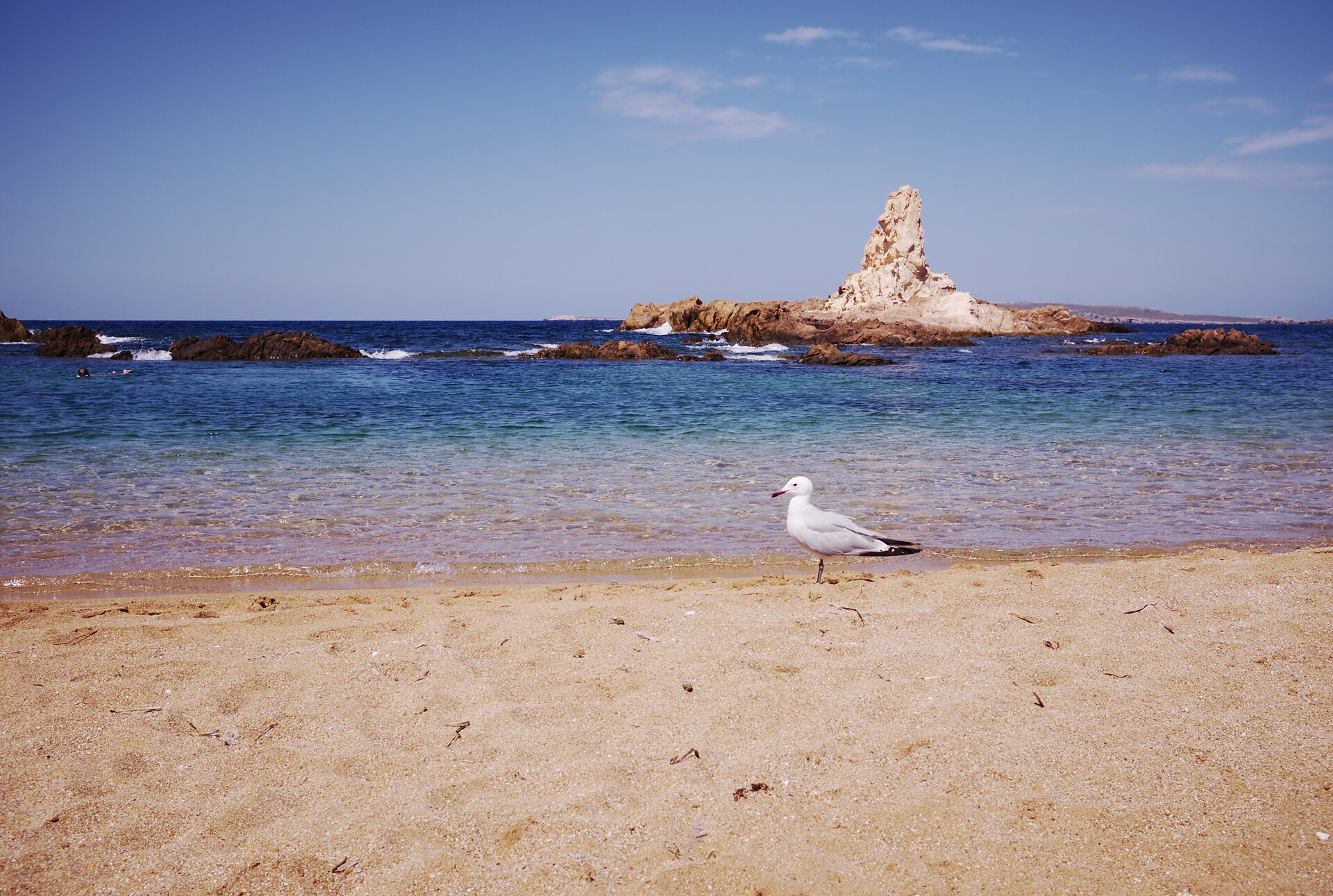
While the south of the island gleams with white sand, the northern beaches boast an entirely different and wilder colour palette. The undisputed king of the north is Cala Pregonda, which immediately captivates with its rich red-gold sand and dramatic rock formations rising from the sea. These unusual islets and sea stacks shelter the beach from the swell, creating an ideal calm lagoon for swimming and exploring underwater life.
Getting to Pregonda is a minor adventure in itself. You’ll need to leave your car at the car park by the beach of Binimel·là and continue on foot for about thirty minutes along the clifftops. The path winds through a parched, almost lunar landscape with not a scrap of shade, so sturdy footwear, sunscreen and plenty of drinking water are absolute necessities. It’s precisely this remoteness that keeps the beach wild and ensures it never feels hopelessly overcrowded.
The water here is fantastically calm thanks to the protection of the rocks, and the area falls within a marine reserve. This makes it one of the best snorkelling spots in Menorca. You can watch shoals of small fish, crabs tucked into rock crevices and admire the diverse underwater flora that flourishes here undisturbed.
💡 Tip: Cala Pregonda was famously used for the cover artwork of guitarist Mike Oldfield’s album. If you’re a fan of music history, see if you can find the exact same angle.
15. Monte Toro: The Whole Island at Your Feet
Menorca is a fairly flat island, but it does have its own “great mountain”. Known as Monte Toro (or El Toro in Catalan), at just 358 metres above sea level it forms the highest point on the entire Balearic island. The hill sits right in the centre of Menorca, near the small town of Es Mercadal, and a comfortable winding road leads directly to the summit — perfectly driveable in a normal car.
The main draw of this spot is the fantastic panoramic views. On a clear day you can see the entire outline of the island — from the rugged north coast all the way to the southern coves. In exceptionally good visibility, the mountains of neighbouring Mallorca appear on the horizon. At the summit, alongside the radio masts, you’ll find a 17th-century Augustinian monastery and a small church housing a statue of Our Lady, the island’s patron saint.
The atmosphere at the top is wonderfully peaceful and spiritual. The monastery is still home to a small community of nuns and the courtyard with its fountain offers welcome shade from the sun. There’s also a small family-run café with an outdoor terrace where you can enjoy a great coffee or a local beer while taking in the breathtaking 360-degree views over the island’s landscape.
💡 Tip: If you’re feeling sporty, make the ascent on foot from Es Mercadal. The walk takes about an hour and a half and makes for a pleasant, if fairly steep, workout.
16. Favàritx Lighthouse in a Lunar Landscape
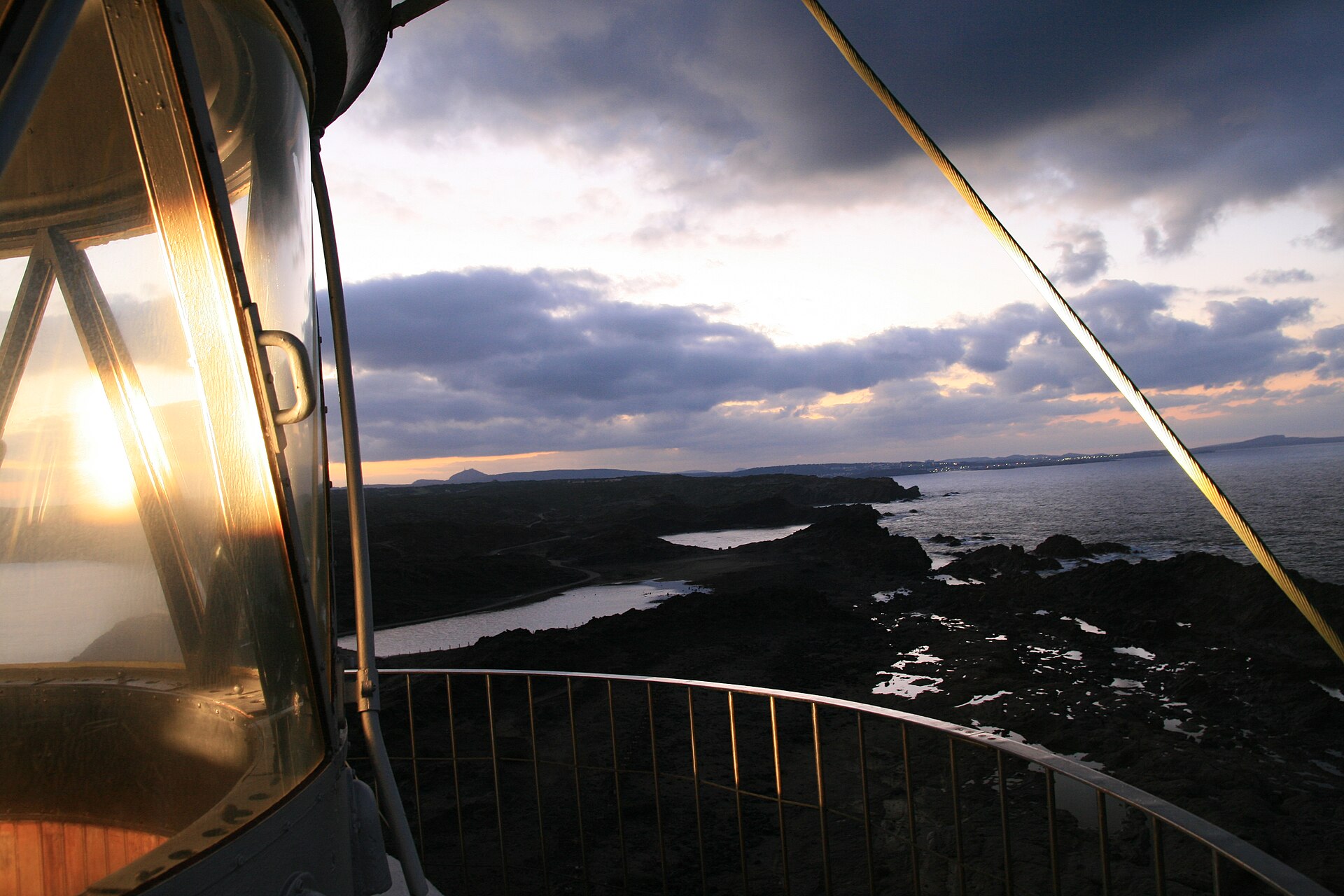
On the east coast, within the s’Albufera des Grau national park, stands another iconic lighthouse that you really shouldn’t skip. Favàritx lighthouse is a true one-off, because it rises from a dark slate landscape that looks at first glance more like the surface of another planet than a typical Mediterranean island. Black and grey slate slabs fracture at strange angles and plunge directly into the foaming sea.
The lighthouse tower itself, decorated with bold black-and-white stripes, makes for a striking photograph against this otherworldly backdrop. The area around the lighthouse is also known for a fascinating geological phenomenon — small pools filled with seawater that during the summer months often evaporate completely, leaving behind nothing but glittering crystals of sea salt. The whole area has a peculiar, slightly melancholic atmosphere that photographers absolutely love.
During the summer season, access by car directly to the lighthouse is restricted for conservation reasons. From the designated car park you have a pleasant two-kilometre walk along a tarmac path, or you can use the special bus service from Mahón that runs all the way to the lighthouse tower. Several interesting sections of the Camí de Cavalls trail also begin near the lighthouse, leading to secluded coves.
💡 Tip: On the black rocks near the lighthouse, people used to build small stone towers as a wish to return one day. These days there are signs everywhere forbidding the practice, as it disturbs the natural habitat of small insects and lizards.
17. Taste Mahón Cheese and Local Gastronomy
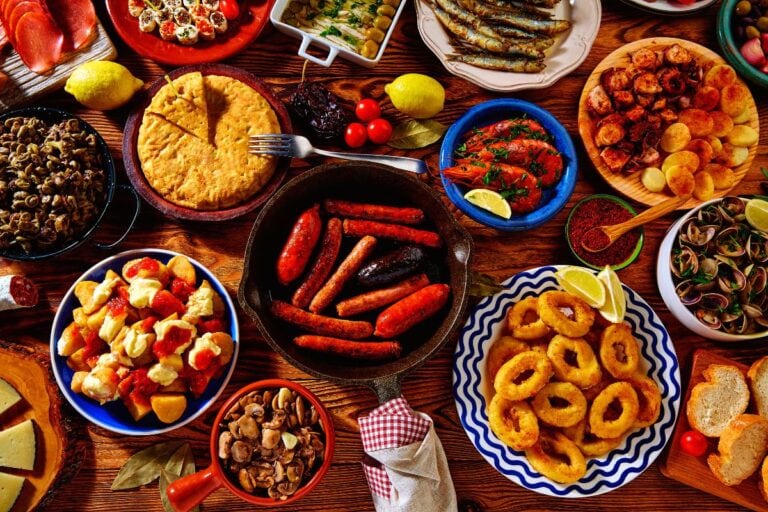
Menorcan gastronomy is incredibly rich, drawing mainly on the gifts of the surrounding sea and the fertile island soil. Locals adore their traditional lobster stew (caldereta de langosta) and spicy sobrasada sausage, but vegetarians are very well catered for too. An absolute legend among meat-free dishes is the traditional Balearic tumbet — a wonderful layered bake of aubergine, peppers and potatoes generously smothered in a thick, fragrant tomato sauce.
The island’s culinary crown jewel is undoubtedly the PDO-protected Queso Mahón cheese. This outstanding cow’s milk cheese has been made using traditional methods for centuries and is distinguished by its characteristic square shape and orange rind, which is rubbed with olive oil and paprika as it matures. It comes in various stages of ageing, from mild and creamy through to old, crumbly and intensely sharp — the latter pairing beautifully with a robust red wine.
For something sweet to finish, you absolutely must try an ensaïmada. This light, airy pastry shaped into a spiral and dusted with icing sugar originates from neighbouring Mallorca, but it’s baked on Menorca with equal love and passion. You can enjoy it simply on its own with a morning coffee, or filled with sweet angel hair (a caramelised pumpkin jam) or vanilla cream.
💡 Tip: For an authentic cheese-making experience, visit one of the traditional farms (called llocs) around Alaior. Many of them offer guided tours with tasting sessions of their products straight from the cellar.
18. Traditional Markets in Ciutadella and Mahón
To really soak up the local atmosphere, a visit to the island’s traditional markets is a must. Local markets here aren’t just about shopping — they function as vital social hubs where residents meet, debate local politics and drink their morning coffee. The finest experience is offered by the old fish market, Mercat des Peix, in Mahón, housed in a beautiful 19th-century building with a glass-vaulted roof.
While one half of the market is dedicated to selling fresh fish and seafood, the other half operates as a vibrant and excellent food hall. Around lunchtime, the small tapas bars inside fill up and serve fantastic local cheeses, olives, pickled vegetables and fresh bread. You can wash it all down with a glass of inexpensive but excellent island wine or a local Xoriguer gin mixed with lemonade — a classic island drink known as pomada.
Equally charming is the market in Ciutadella (Mercat Municipal), which is lined with green-and-white tiles and sits right in the historic heart of the city. Here you’ll find the finest fresh vegetables from local farmers, sweet figs, honey from island flowers and plenty of other local products to take home as a delicious reminder of your holiday.
💡 Tip: Markets are usually only open in the morning and tend to be very busy at weekends. If you want to enjoy the tapas and a glass of wine in peace, come on a weekday around eleven o’clock.
Map of points of interest for your phone
Where to Go Next from Menorca
If you’re planning a longer trip around Spain and Menorca is just one stop on your itinerary, the obvious move is a hop to one of the neighbouring islands. Regular ferries depart from Ciutadella harbour to Mallorca, with the crossing taking just about an hour and a half. If you’re after something livelier, Ibiza is an excellent choice — easily reached by direct flight — where you can experience its unique mix of a tranquil north and pulsating south.
From Mahón airport you can also pick up very affordable flights to the mainland. A short one-hour flight can land you in Barcelona, where Gaudí’s masterpieces and buzzing boulevards await. A great alternative is sunny Valencia, famous for its cutting-edge architecture and perfect paella. If your time on the island has sparked a deeper interest in Spanish food, have a read of our detailed guide to typical Spanish food so you know exactly what to order on the mainland.
Frequently Asked Questions
Is there a tourist tax on Menorca?
Yes, just like on all the Balearic Islands, Menorca charges a so-called ecotasa. This fee is paid directly at your accommodation and applies to everyone over the age of 16. In high season (May–October) the tax ranges from 1 to 4 euros per person per night, depending on the category of hotel or apartment. From the ninth night of your stay, the rate is automatically reduced by 50%. The money raised goes towards nature conservation and sustainable tourism.
Is Menorca suitable for a holiday with kids?
Absolutely! There’s a clear consensus across all the travel forums that Menorca is the best and safest choice for families out of all the Balearics. You’ll find shallow beaches with a gentle slope into the sea, a calm atmosphere with no noisy nightclubs, and very short driving distances between the various attractions, which you’ll especially appreciate when travelling with younger children.
Do I need to rent a car on the island?
I highly recommend renting a car on Menorca, even though it isn’t strictly necessary. The island does have a functioning bus network linking the main towns with the resorts, but you simply can’t reach the most beautiful and remote coves by bus. A car gives you enormous flexibility, just be sure to book it well in advance during the summer season, as the rental companies often sell out.
Can you drink the tap water on Menorca?
Although the tap water on the island is hygienically safe and you can happily use it to brush your teeth or cook pasta, the locals don’t really recommend drinking it directly. The water often has a very strong chlorine taste and is extremely hard. That’s why most tourists and residents prefer to buy bottled spring water at the supermarket.
How many days do I need to see the island?
To really soak up the island’s true, laid-back atmosphere, I’d recommend setting aside ideally five to seven days for Menorca. In that time you can comfortably visit both main historical towns, explore the most beautiful beaches in the south and the rugged north, and even have time left over for a hike along the popular Camí de Cavalls (Bridle Path).
Is it true that there’s a lot of seaweed on the beaches?
In this biosphere reserve you’ll often come across piles of dried sea grass (Posidonia oceanica) on the beaches. Even though some people might find it unsightly, it isn’t pollution but a protected underwater plant that is absolutely crucial for the local ecosystem. This grass cleans the water, prevents erosion of the sandy beaches, and by government decree it may not be removed from the natural coves.
Are there mosquitoes on the island?
Unfortunately, yes. Given how much untouched nature, old stone walls and wetlands there are in the s’Albufera des Grau national park, you have to expect mosquitoes here, especially after sunset and in the autumn months. Be sure to pack a good repellent and ideally choose accommodation with insect screens on the windows.
Tips and Tricks for Your Vacation
Don’t Overpay for Flights
Search for flights on Kayak. It’s our favorite search engine because it scans the websites of all airlines and always finds the cheapest connection.
Book Your Accommodation Smartly
The best experiences we’ve had when looking for accommodation (from Alaska to Morocco) are with Booking.com, where hotels, apartments, and entire houses are usually the cheapest and most widely available.
 🚗 Car rental on the roadVerified rental cars in Spain
Search with the DiscoverCars comparison engine — it compares prices from dozens of local and international rental companies, and most bookings come with free cancellation.
Compare car prices in Spain →Don’t Forget Travel Insurance
Good travel insurance will protect you against illness, accidents, theft, or flight cancellations. We’ve had a few hospital visits abroad, so we know how important it is to have proper insurance arranged.
Where we insure ourselves: SafetyWing (simple monthly subscription) and TrueTraveller (for extra-long trips).
Find the Best Experiences
Get Your Guide is a huge online marketplace where you can book guided walks, trips, skip-the-line tickets, tours, and much more. We always find some extra fun there!