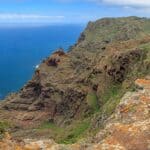
Imagine a landscape that looks as though you’ve just landed on Mars, yet you’re only a short flight from the UK. Lanzarote, Spain is a mesmerising island of dramatic contrasts, where jet-black volcanic lava clashes against the endless blue ocean and the brilliantly white houses of the local villages. Although the Canary Islands politically belong to Spain, they geologically rise from the African continental shelf, giving them an incredibly stable and pleasant climate all year round. On this island, you won’t find any ugly high-rise hotels or visual clutter, because thanks to local visionary and artist César Manrique, Lanzarote has preserved its authentic and aesthetically pure character. If you’re craving a destination that offers so much more than just lounging on a beach, get ready to explore volcanic craters, unique vineyards nestled in ash, and underground lava tunnels. Let’s dive into the very best this fiery island has to offer so you can plan your holiday down to the last detail.
TL;DR
- Volcanic landscape: Timanfaya National Park is an absolute must-see, where you’ll witness geothermal anomalies and a landscape shaped by massive 18th-century eruptions with your own eyes.
- César Manrique’s legacy: The entire island is essentially a gallery of this artist’s work – don’t miss Jameos del Agua, Mirador del Río, and the incredible Cactus Garden.
- Unique wine: The La Geria wine region will astonish you with its method of growing vines in deep pits carved into volcanic ash. You simply must taste the local Malvasia volcanic wine.
- Swimming and surfing: For calm swimming, head to the southern Papagayo beaches, while the wild Famara beach on the northwest coast is a mecca for surfers and wave lovers.
- Weather and season: Lanzarote is a year-round destination with temperatures between 20 and 28 °C, making it a perfect escape from British winters and the scorching summer heat of mainland Spain.
- Getting around: To discover all the hidden corners, definitely hire a car – the roads are in excellent condition and traffic outside the main resorts is minimal.
The full destination guide: Canary Islands — guide and what to see
When to Visit Lanzarote
The Canary Islands are often rightly called the islands of eternal spring, because there’s practically no real off-season here. While the UK wraps itself in grey clouds and frost in January and February, on Lanzarote you can enjoy wonderfully comfortable air temperatures that stay between 20 and 28 °C all year round. The winter months are therefore the absolute peak season for visitors from northern Europe fleeing the cold, which naturally means slightly higher accommodation prices.
If you decide to visit during the summer holidays, you might be surprised that it’s far more pleasant here than in mainland Andalusia. Thanks to cool ocean currents and constant trade winds, you’ll rarely experience extreme 40°C heat – the air circulates constantly and it always feels fresh by the sea. Even in the coldest winter months, the ocean maintains a bearable temperature of 18 to 22 °C, so the hardier among you can swim even on New Year’s Day.
For fans of active holidays, cycling, and hiking, the ideal months are March, April, October, and November. During this period, you’ll avoid the biggest crowds of both winter and summer tourists, the sun is warm without being fierce, and flight prices tend to be at their best. Don’t forget to pack a light windbreaker, though, because the strong wind can make it feel noticeably cooler, especially in the evening.
Where to Stay in Lanzarote
💡 Tip for accommodation and experiences: We love searching for places to stay on Booking.com, which usually has the best cancellation policies. For tickets, tours, and activities, it’s worth comparing options on GetYourGuide.
Choosing the right area to stay on Lanzarote will significantly shape the character of your holiday. Most visitors opt for one of the three main resorts on the east and south coasts, where you’ll find full tourist infrastructure and sheltered beaches. The southernmost Playa Blanca is ideal for families and those seeking tranquillity, offering a lovely long promenade and easy access to the famous Papagayo beaches. The resort of Puerto del Carmen is livelier, packed with restaurants and shops, while Costa Teguise tends to attract sporty travellers and families with older children.
If you’re after a quieter, more authentic experience far from mass tourism, I’d recommend looking for accommodation inland. Villages like Haría, Yaiza, or Teguise offer beautiful traditional white houses and so-called “fincas,” which often hide private pools and gorgeous gardens. For surfers and bohemian souls, the obvious choice is the village of Caleta de Famara on the rugged northwest coast, where a laid-back atmosphere reigns and the streets are often dusted with sand.
The easiest way to book your accommodation is through Booking.com, where you’ll find everything from budget apartments to luxury five-star resorts. If you want to treat yourself to true luxury right on the beach, check out the stunning Princesa Yaiza Suite Hotel Resort in Playa Blanca, which excels in top-notch service. A great middle-ground option with beautiful design and an excellent location is the popular Hotel Lava Beach in Puerto del Carmen, which puts you close to all the island’s main attractions.
20 Best Things to See and Do in Lanzarote
The island offers a fascinating mix of raw volcanic nature, unique architecture, and gorgeous coastline. Let’s take a detailed look at 20 places and activities that absolutely deserve your attention if you want to truly get under the skin of Lanzarote.
1. Timanfaya National Park and the Fire Mountains
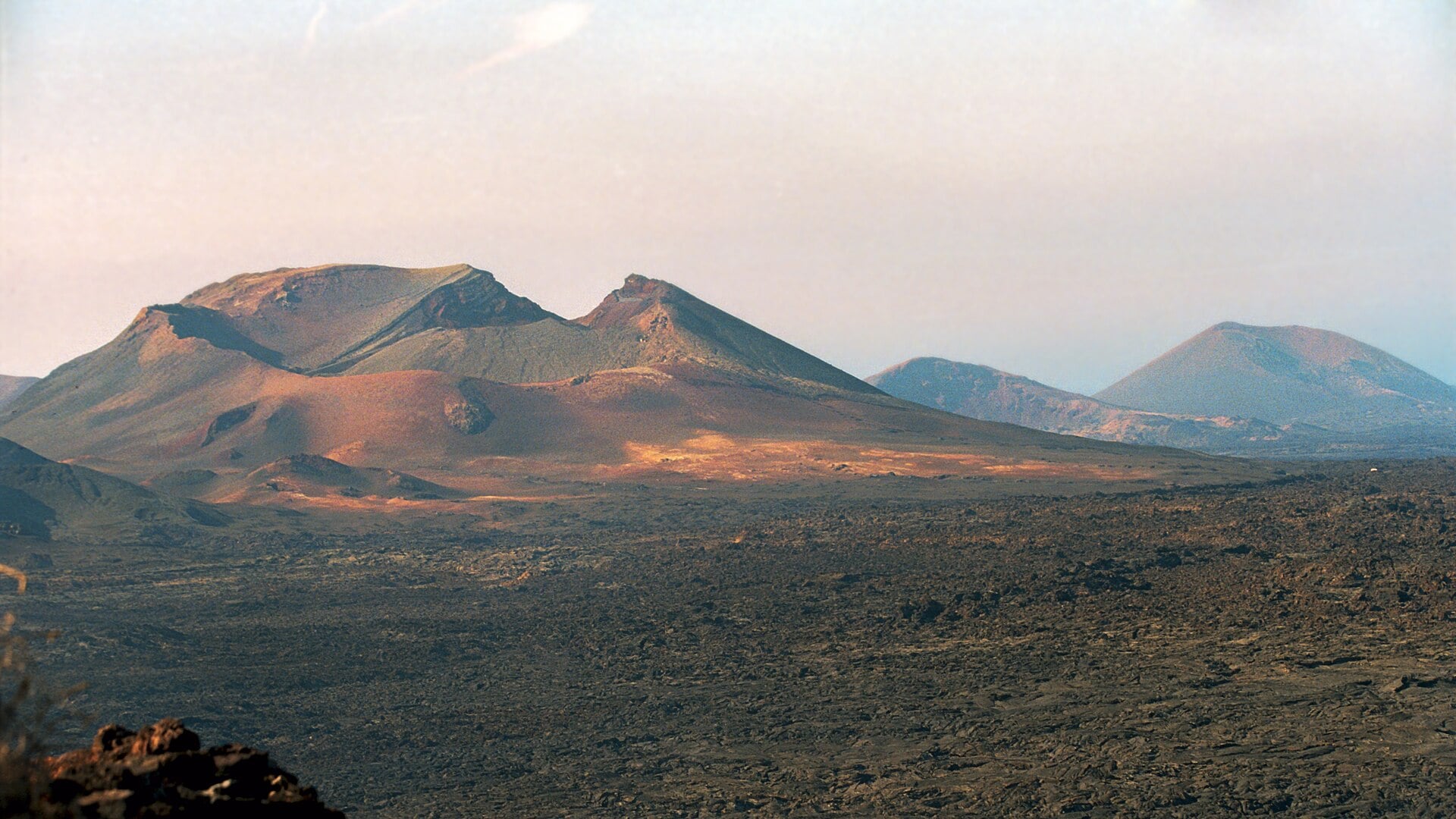
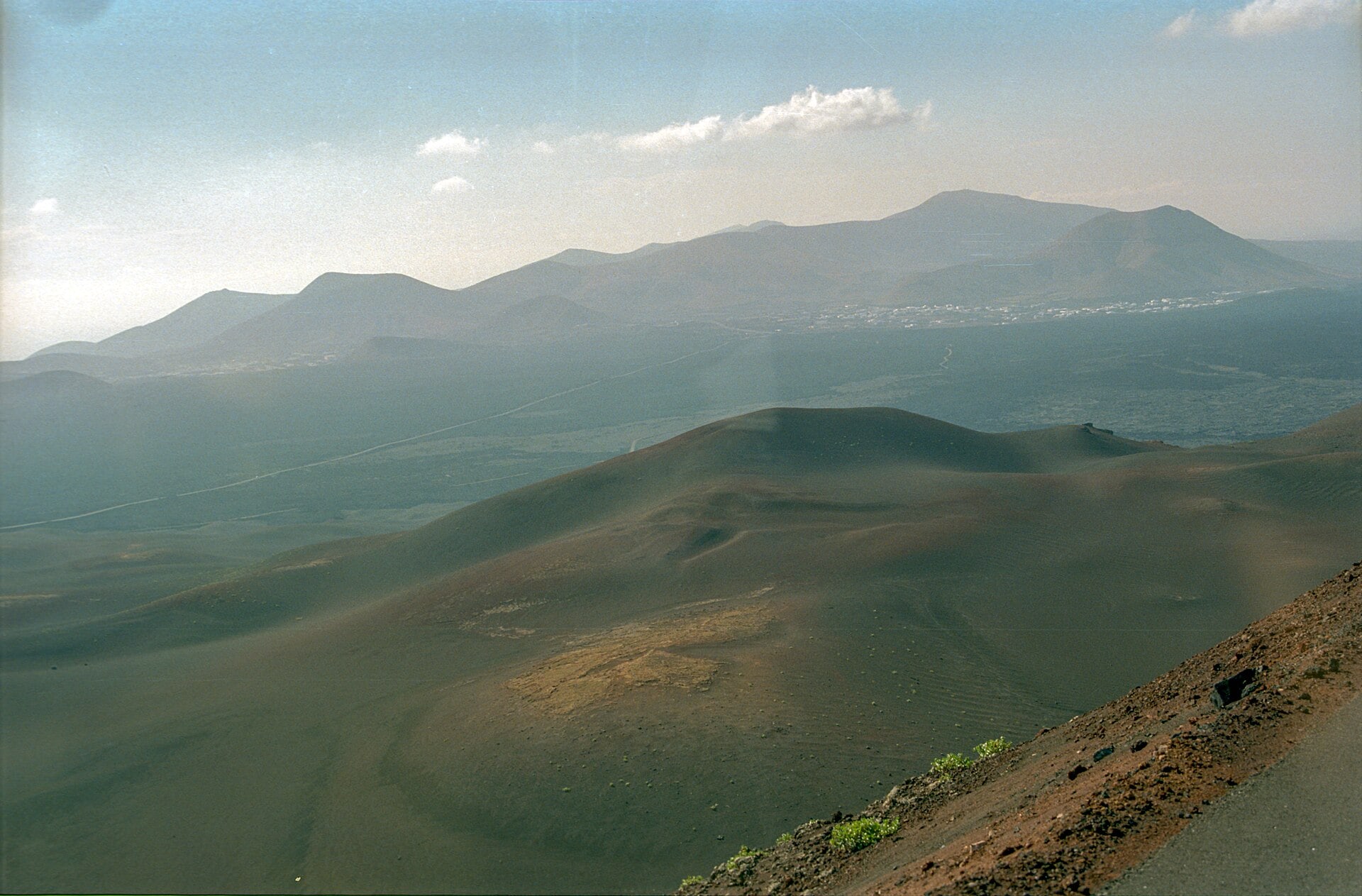
The absolute centrepiece of the entire island is Timanfaya National Park, a vast area shaped by catastrophic volcanic eruptions between 1730 and 1736. The landscape here looks so otherworldly that it was reportedly used to test vehicles destined for Moon and Mars missions. Upon arriving at the Islote de Hilario visitor centre, you’ll be treated to fascinating geothermal demonstrations, where guides pour water into boreholes in the ground and it instantly shoots back out as a powerful geyser of steam.
You can’t drive through the park in your own car – you have to board a special bus that takes you along the so-called Ruta de los Volcanes. This roughly forty-minute ride along narrow roads between lava fields and craters, accompanied by dramatic music and commentary, is absolutely breathtaking. Right by the visitor centre, you’ll also find the unique El Diablo restaurant, designed by César Manrique, where food is cooked on an enormous grill heated entirely by geothermal energy from deep beneath the volcano.
💡 Local tip: Queues of cars waiting to enter the national park can be extremely long during peak season – you could easily wait an hour. Arrive right at opening time around 9 a.m., or alternatively later in the afternoon when the organised tour groups have headed back to their hotels.
2. Jameos del Agua
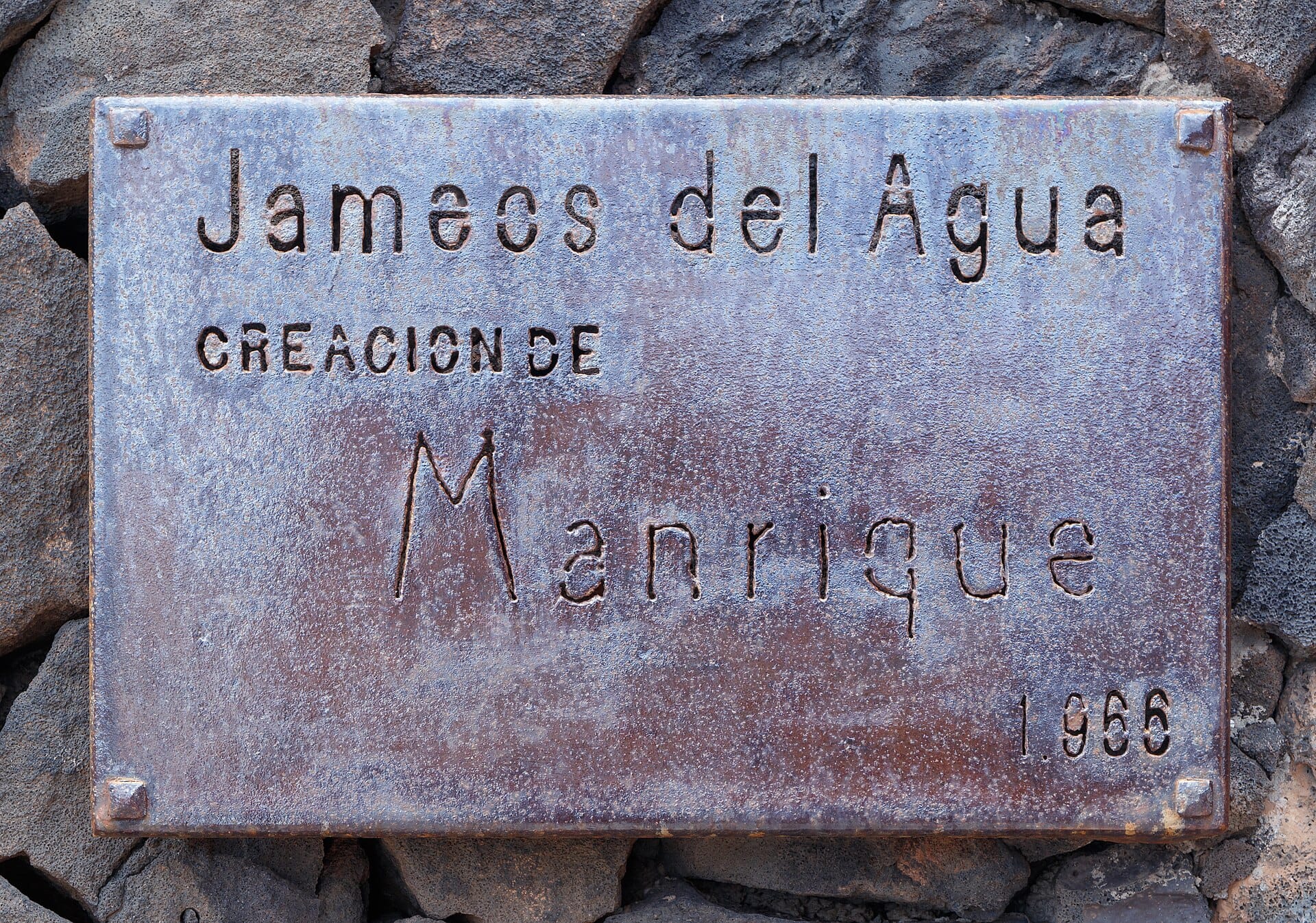
One of the crowning achievements of the brilliant artist César Manrique, this site shows how to perfectly blend raw nature with modern architecture. Jameos del Agua is part of an enormous underground lava tunnel formed by the eruption of Monte Corona volcano thousands of years ago. Manrique transformed a section of the collapsed tunnel into a unique cultural and social space that exudes the kind of aesthetic you’d expect from a 1970s Bond film.
Inside the dark cave, you’ll find an underground lagoon with crystal-clear water, home to rare blind white crabs of the species Munidopsis polymorpha, found nowhere else on Earth. From there, you’ll climb a winding staircase into a dazzlingly white outdoor atrium dominated by a turquoise pool framed by lush tropical vegetation – where swimming is strictly off-limits.
The complex also includes a phenomenal underground auditorium with superb acoustics, where concerts and cultural events are regularly held. Ideally, save your visit for the afternoon hours, when the sun’s rays pour through openings in the cave ceiling and create a stunning light show on the surface of the underground lake.
3. Cueva de los Verdes Cave
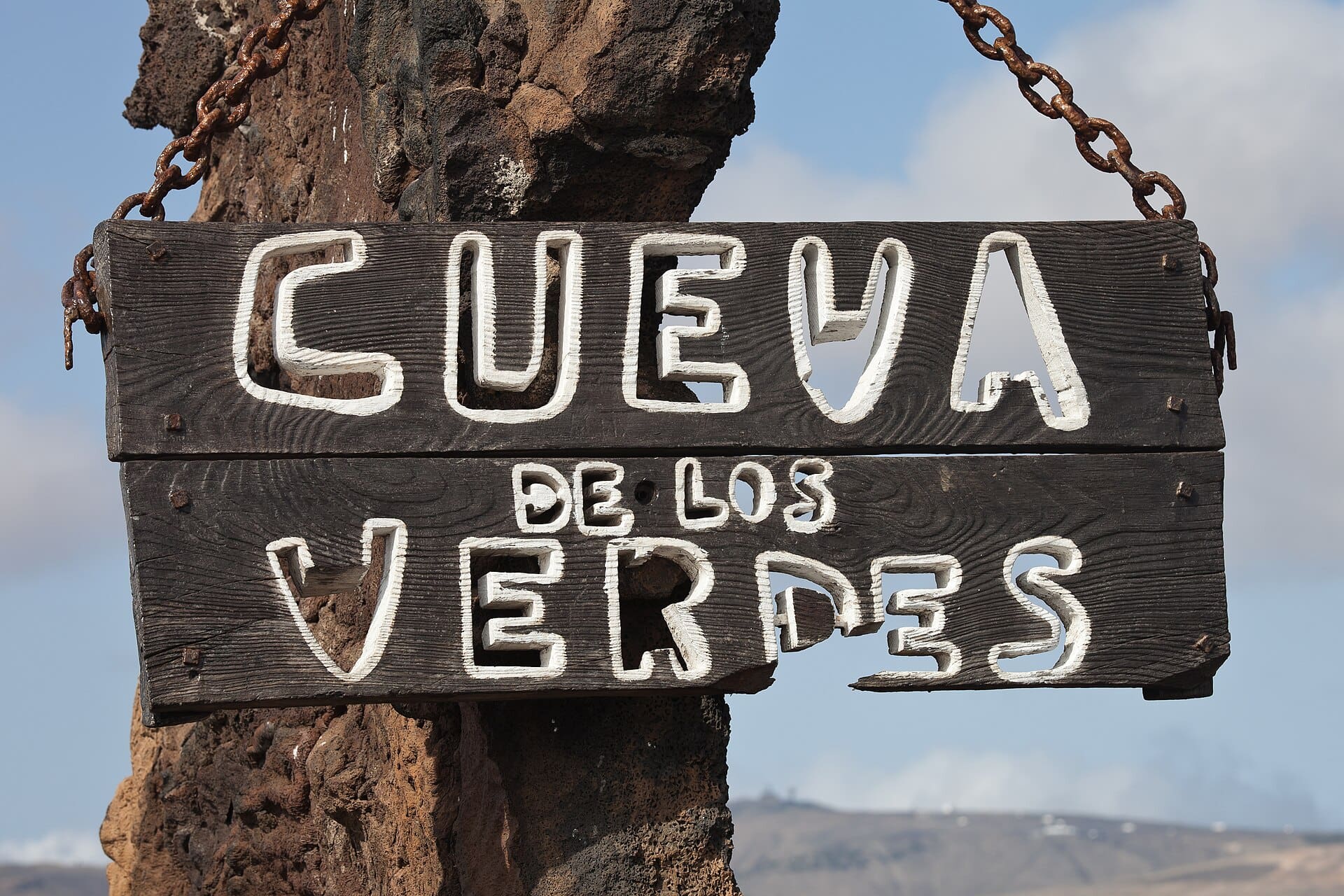
Just a short distance from Jameos del Agua, you can enter another section of the same colossal lava tunnel, which ranks among the longest on our entire planet. Cueva de los Verdes takes you on a roughly one-kilometre fascinating walk through the underground, where the walls shimmer with incredible shades of ochre, red, and black. These colours aren’t caused by artificial lighting but by the natural oxidation of iron and other minerals found in the solidified lava.
The tour is guided only and conducted in small groups, lasting just under an hour, during which you’ll learn plenty of details about volcanology and the island’s history. The cave once served local inhabitants as a safe hiding place from raids by North African pirates who regularly plundered the island.
At the very end of the tour, you’re treated to one enormous visual surprise that guides strictly forbid you from revealing in advance. All I can say is that this optical illusion will completely fool your senses and become one of the most powerful memories of your entire underground adventure.
4. La Geria Wine Region
If you’ve always assumed that wine needs green hillsides and fertile soil to grow, the La Geria region will forever change the way you think about winemaking. This protected landscape looks more like an art installation on the moon than agricultural land. Thousands of small funnel-shaped hollows are dug into deep black volcanic ash, and in each one sits a single green grapevine.
Each plant is further protected by a semicircular wall of lava stones, known as a zoco, which shields it from the destructive Saharan winds. The magic of this growing method lies in the volcanic ash, which absorbs moisture from the ocean air at night and slowly releases it to the roots during the day, meaning the plants survive without any irrigation whatsoever.
As you drive through this area, be sure to stop at one of the local bodegas (wineries) and treat yourself to a tasting. The local volcanic wine, especially the white Malvasia Volcánica variety, has an utterly unmistakable mineral and slightly salty profile that pairs beautifully with Canarian cuisine.
5. The Breathtaking Mirador del Río
At the very northern tip of the island, high on the cliffs of the Risco de Famara massif, lies yet another masterpiece by César Manrique. Mirador del Río is a viewing platform that’s so perfectly integrated into the surrounding rock that you’d struggle to spot it from a distance. Once again, Manrique demonstrated his genius by creating a space that doesn’t intrude upon the natural setting but lets it take centre stage.
From nearly 400 metres above sea level, you’ll be treated to the most beautiful view on the entire island. Directly below stretches the narrow strait known as El Río (The River), and just beyond it lies the small, pristine island of La Graciosa surrounded by turquoise ocean. On a clear day, you can even spot the other smaller uninhabited islets of the Chinijo archipelago.
💡 Local tip: Inside the viewpoint, there’s a lovely panoramic café with enormous curved windows. Order a coffee, take a seat, and simply watch the incredible play of colours in silence, as the blue sky merges with the ocean and the ochre tones of the surrounding islands.
6. Jardín de Cactus (Cactus Garden)
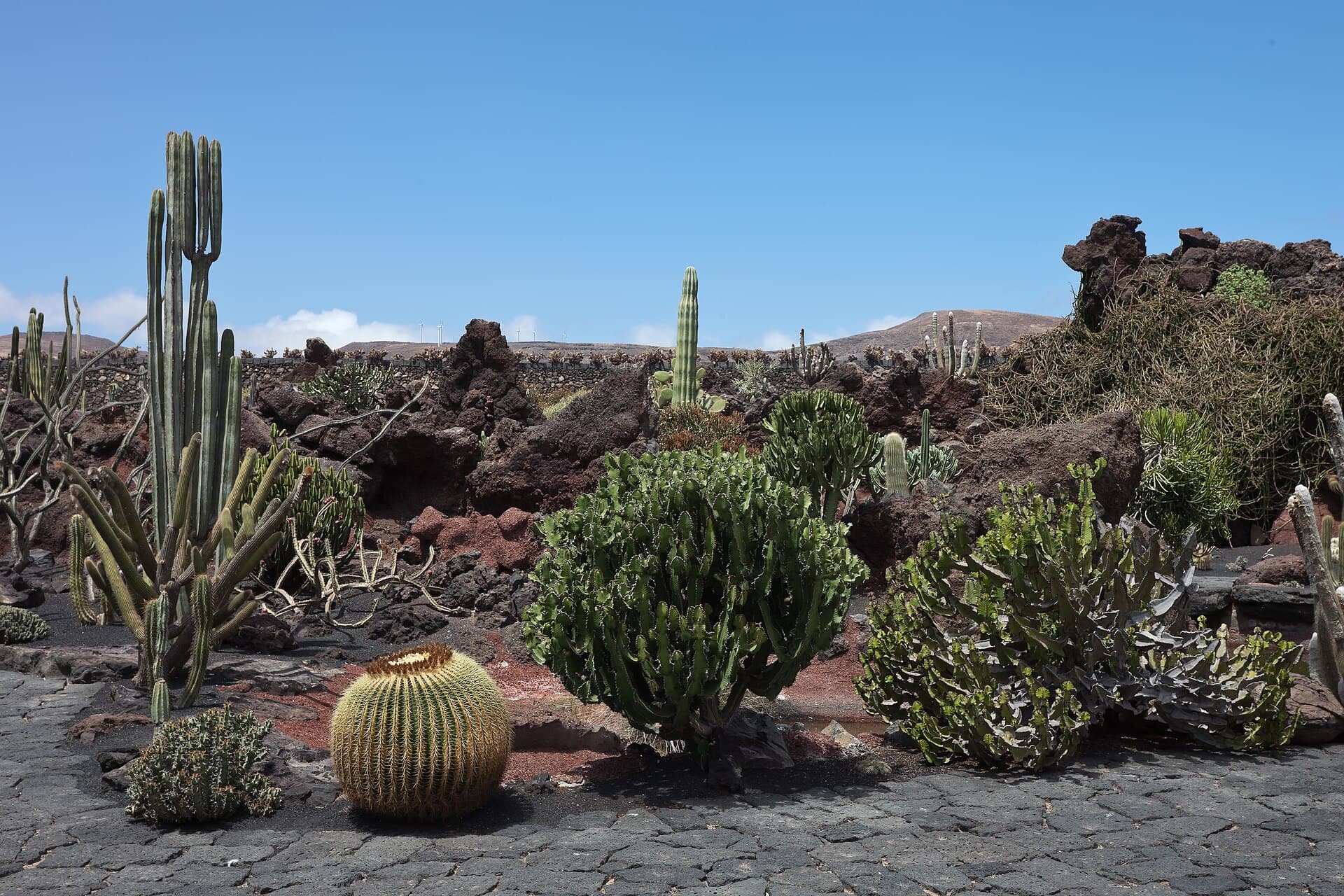
The last major work by César Manrique on the island is a perfect celebration of nature’s resilience. Jardín de Cactus was created on the site of a former unsightly quarry used for extracting volcanic ash in the village of Guatiza. Today, this deep amphitheatre shelters more than 4,500 cacti from around the world, creating an absolutely fascinating botanical showcase.
The garden is arranged in terraces connected by winding paths of black lava stone, which creates a perfect contrast with the green hues of the cacti. You’ll find species from the Americas, Madagascar, and the native Canary Islands, ranging from tiny flowering spheres to giant columnar cacti towering several metres high.
The entire composition is crowned by a beautifully restored traditional windmill, from which you get a wonderful view of the whole garden. If you visit during the morning, you’ll avoid the worst of the heat and enjoy a stroll among these prickly giants in a much more pleasant atmosphere.
7. César Manrique’s House in Tahíche
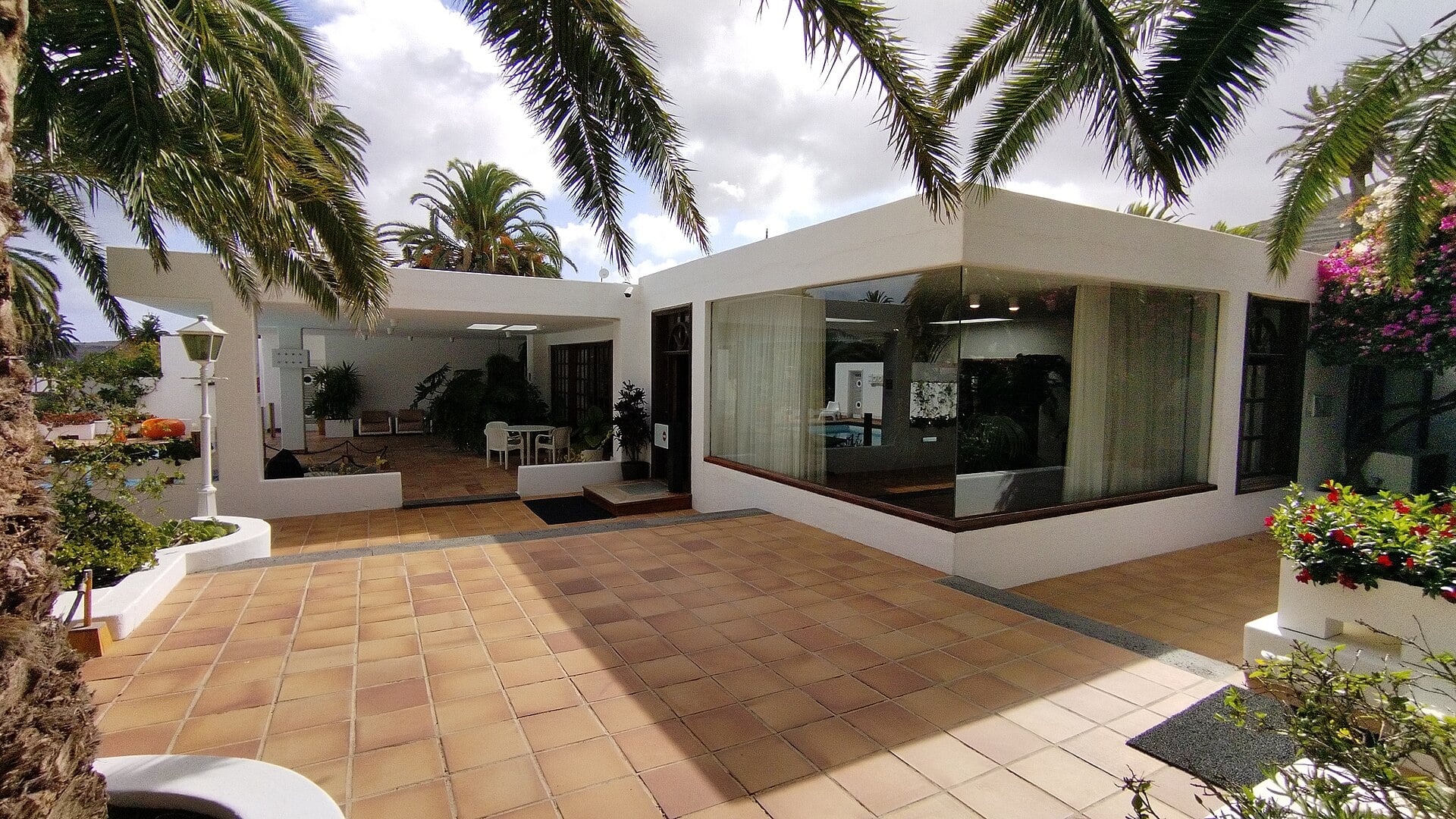
To truly understand the soul of Lanzarote, you need to understand the man who helped shape it. The Fundación César Manrique is housed in a home the artist built directly on a lava field from the 18th-century eruptions. The moment you arrive and see trees bursting up through the rock, you’ll know this is no ordinary museum.
The upper floor is inspired by traditional Canarian architecture, but the real magic lies underground. Manrique discovered five natural volcanic bubbles, which he connected with narrow passages carved through the lava and transformed into stunning living spaces. Each bubble has its own distinct colour and mood, with daylight streaming in through open ceilings above.
At the heart of the complex, you’ll find a turquoise pool, a dance floor, and even a giant fig tree growing right out of the centre of one of the lava chambers. A visit to this foundation will fill you with immense respect for the vision of one man who managed to save his island from the fate of mass concrete development.
8. Papagayo Beaches on the Southern Coast
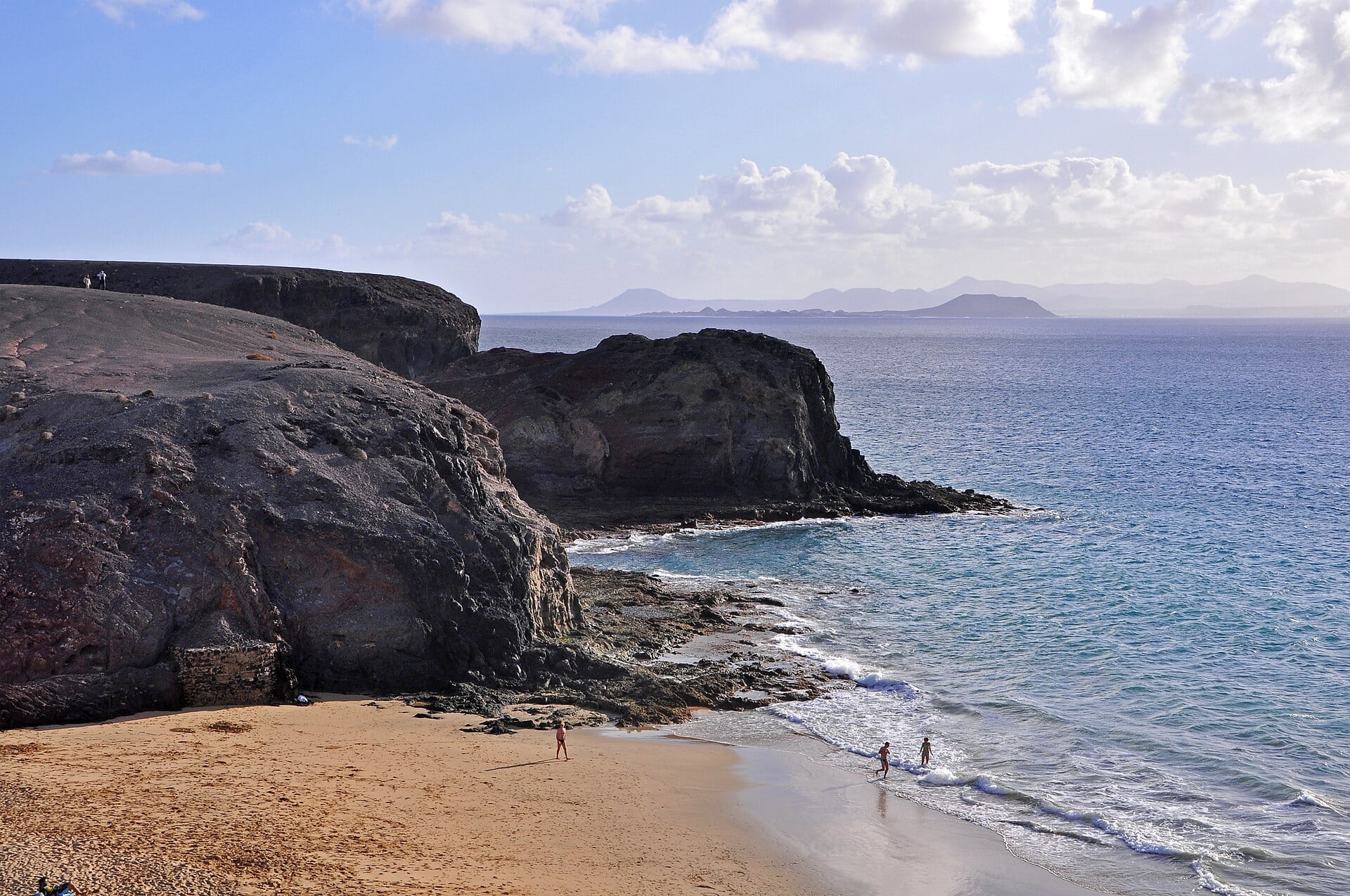
If you’re searching for the perfect spot for swimming and sunbathing, the bays at the very southern tip of the island near the resort of Playa Blanca are guaranteed not to disappoint. The area known as Playas de Papagayo comprises a series of several gorgeous golden sand beaches that are sheltered from the strong winds and wild Atlantic waves.
The water here is incredibly clear with a stunning emerald hue, making it an ideal spot for snorkelling and swimming. The most famous is the perfectly horseshoe-shaped cove with a small restaurant perched above it, but if you walk a little further over the cliffs, you’ll find quieter bays like Playa Mujeres or Playa del Pozo.
💡 Local tip: You can reach the beaches either via a longer walk from the resort of Playa Blanca, or by car along a dusty, unpaved track through the Los Ajaches nature reserve. The car entrance fee is a token amount of around 3 €, but it’ll save you a lot of energy in the blazing sun.
9. Wild and Windswept Famara Beach
While the south of the island offers calm bays, the northwest coast shows the Atlantic in its full, unbridled power. Playa de Famara is a nearly six-kilometre-long strip of dark sand dramatically backed by the several-hundred-metre-high Risco de Famara cliffs. This place has an incredibly raw and magnetic atmosphere.
Thanks to the consistent wind and strong currents, this beach isn’t suitable for regular swimming, but it’s an absolute paradise for surfers and kitesurfers from all over the world. In the adjacent village of Caleta de Famara, you’ll find dozens of surf schools, equipment hire shops, and chilled-out cafés where the local and international community gathers.
Even if you’re not planning to tame the waves on a board, a walk along Famara Beach at sunset is an unforgettable experience. At low tide, the wide expanse of wet sand creates a perfect mirror reflecting the majestic cliffs – an absolute dream for photographers.
10. Historic Town of Teguise and the Sunday Market
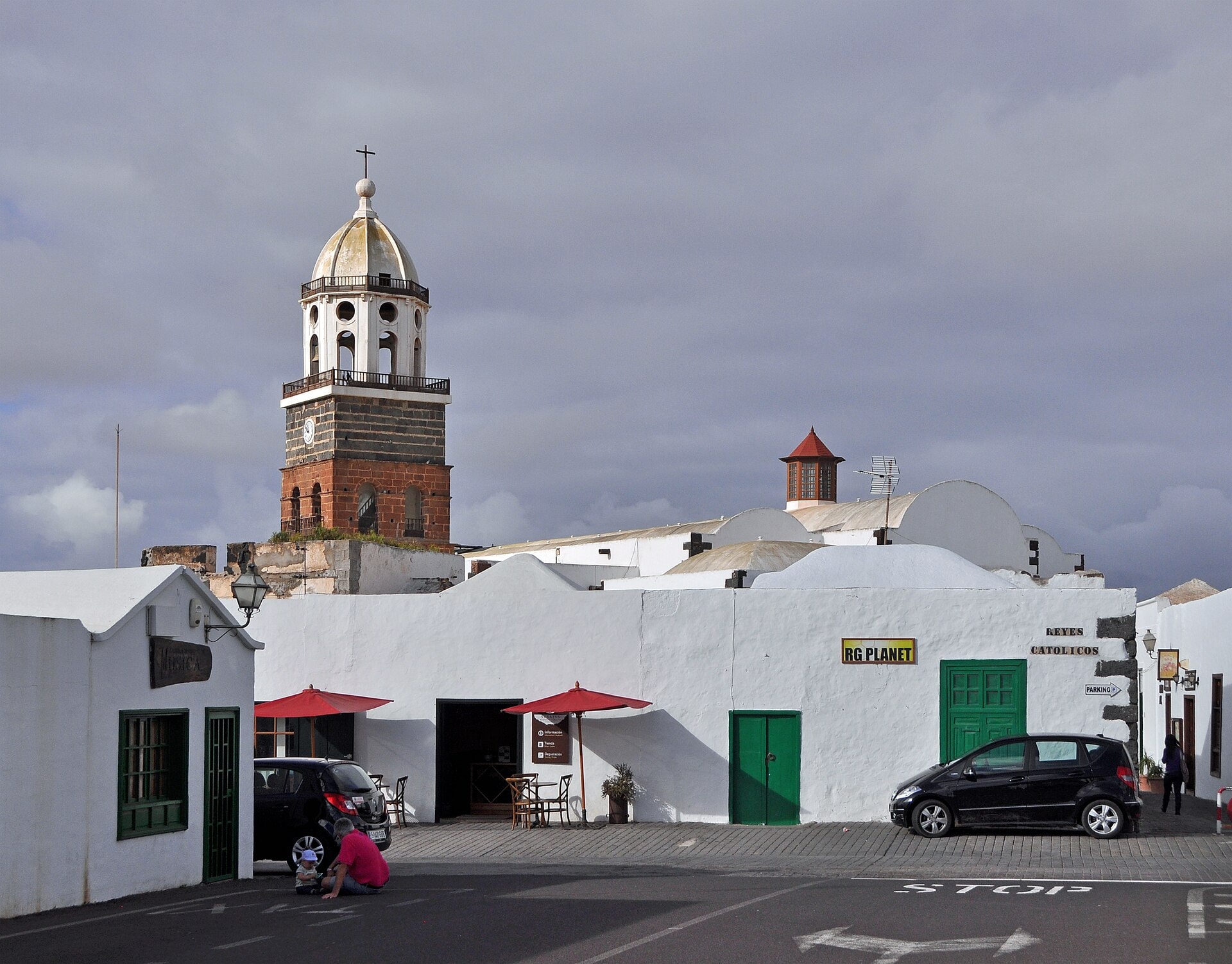
Villa de Teguise served as the capital of the entire island until the mid-19th century and still retains its stunning colonial character with cobbled streets and historic palaces. It’s arguably the most picturesque and best-preserved inland town, where you’ll feel transported back several centuries in time.
The biggest buzz here is on Sunday mornings, when the entire town transforms into one enormous market. The Mercadillo de Teguise attracts thousands of visitors and you can pick up absolutely everything, from local cheeses and leather goods to aloe vera, traditional ceramics, and handcrafted souvenirs.
If crowds aren’t your thing, visit Teguise on a weekday afternoon instead. The streets will be half-empty, you can explore the church of Nuestra Señora de Guadalupe in peace, and settle into one of the cosy cafés on the square, where time passes at that typically unhurried Canarian pace.
11. The Green Lagoon – Charco de los Clicos
The village of El Golfo on the west coast hides one of the most bizarre natural phenomena in all of Spain. Right on a beach of black volcanic sand, bordered by a steep cliff of eroded volcanic rock, lies a lagoon of incredibly vivid, almost toxic-looking green.
This colour, known as Charco de los Clicos (or Lago Verde), is caused by a high concentration of microscopic algae and sulphur in the water. The lagoon is connected to the ocean through underground fissures, so the water constantly circulates and never dries up. The contrast of the black beach, green water, red rocks, and blue ocean is almost unbelievably photogenic.
A short, easy walking trail leads to the lagoon from the car park at the edge of the village. Access to the water itself is prohibited for conservation reasons, but the viewing platform gives you a perfectly framed view of this extraordinary colour palette.
12. The Boiling Coast of Los Hervideros
Just a few kilometres south of the green lagoon, you’ll come across a spot where the ocean wages a relentless, thunderous battle with the land. Los Hervideros (meaning “The Boiling Waters”) is a complex of cliffs and underwater caves formed from black lava, into which the waves of the Atlantic crash with tremendous force.
When the waves are powerful enough, water is forced under immense pressure through narrow lava fissures and shoots high into the air as thick white spray. In those moments, it genuinely looks as though the entire ocean is boiling and bubbling. Safe stone pathways and viewing balconies have been built so you can watch this wild natural spectacle without putting yourself at risk.
💡 Local tip: The experience at Los Hervideros is most intense at high tide and in windy weather. When the sea is calm, the spot loses much of its drama, so it’s worth checking the wave forecast before you head out.
13. Salinas de Janubio Salt Flats
Continue along the west coast a little further south and an enormous chessboard of pink, white, and brown hues will appear before you. Salinas de Janubio are the largest working salt pans in the Canary Islands, established at the end of the 19th century and still producing high-quality sea salt using traditional methods to this day.
Seawater is pumped in by old windmills and gradually evaporates in shallow pools under the hot Canarian sun. The varied colours of the individual basins are caused by halophilic microorganisms and algae that change colour as the salt concentration in the water increases.
You can pay for a guided tour to learn all about the harvesting of this “white gold,” or head to the little on-site shop to pick up some excellent flaky salt known as Flor de Sal – an absolutely fantastic and practical souvenir for your kitchen.
14. The Car-Free Island of La Graciosa

If you feel that even Lanzarote has too many people, there’s an escape to a place where time stopped decades ago. La Graciosa is a small inhabited island lying to the north of Lanzarote, where there are absolutely no paved roads and regular motor vehicles are strictly prohibited.
You can get here on the regular ferry from the port of Órzola at the northern tip of Lanzarote – the crossing takes roughly 25 minutes. As soon as you disembark in the charming little village of Caleta de Sebo, I’d recommend hiring a mountain bike, which is by far the best way to explore the island.
You can pedal along sandy tracks to stunning deserted beaches like Playa de las Conchas on the northwest shore. Just bear in mind that swimming here can be dangerous due to strong currents, but the sense of absolute isolation and connection with raw nature makes the trip entirely worth it.
15. The Valley of a Thousand Palms in Haría
The northern part of Lanzarote will surprise you with its greenery, which contrasts sharply with the parched volcanic south. This is especially true of the small town of Haría, nestled in a valley known as the Valle de las Mil Palmeras. This poetic name comes from an old tradition where a palm tree was planted for every girl born in the valley, and two for every boy.
Haría itself is a beautiful, peaceful, and well-kept town full of traditional architecture, which César Manrique chose as his home for the final years of his life. You can visit his second house (Casa Museo César Manrique), which, unlike the foundation in Tahíche, has been preserved exactly as the artist left it before his tragic accident.
Every Saturday morning, a lovely artisan market is held on the small shaded square in Haría – much more intimate and authentic than the massive one in Teguise. It’s a wonderful spot for picking up handmade jewellery or local palm syrup.
16. Camel Ride at Echadero de los Camellos
While it might sound like a classic tourist trap, a camel ride on the edge of Timanfaya National Park is one of the most iconic experiences on the island, especially if you’re travelling with children. Camels (technically dromedaries) have been used on the Canary Islands for centuries as essential working animals, and today they provide a unique way to survey the volcanic landscape.
The Echadero de los Camellos station is located right on the road leading to Timanfaya. The animals are fitted with special two-person saddles, and the ride lasts around twenty minutes, during which they carry you at a gentle, swaying pace up a small volcanic ridge with lovely views over the black lava fields.
Animal welfare advocates can rest easy – the camels here are very well and strictly looked after, with set working-hour limits and weight restrictions. It’s not the longest experience, but the sight of a caravan plodding through a lunar landscape creates the perfect illusion of a Saharan desert crossing.
17. Casa Museo del Campesino
In the centre of the island, near the geographical heart of Lanzarote, stands another significant monument dedicated to the local people. Casa Museo del Campesino (Peasant Farmer Museum) is a tribute to the indomitable hard work and perseverance of Canarian farmers who managed to cultivate crops on utterly inhospitable volcanic soil for centuries.
The complex, designed by César Manrique, consists of beautifully styled traditional white buildings and is dominated by a fifteen-metre-tall white sculpture called Fecundidad (Fertility), assembled from old ship water tanks. Inside the individual buildings, you’ll find small craft workshops where local artisans demonstrate weaving, pottery, and basket-making.
💡 Local tip: The museum includes a renowned underground restaurant built inside a lava cave. They serve excellent local tapas and dishes made from island produce, making it an ideal stop for an authentic lunch while exploring the interior.
18. Capital City Arrecife and Castillo de San José
While Arrecife isn’t as picturesque as ancient Teguise, as the current capital of the island it’s definitely worth a brief stop. You’ll find a lovely seafront promenade, bustling shopping streets, and a small inland harbour called Charco de San Ginés, sometimes nicknamed the “Venice of the Atlantic” for its blue fishing boats bobbing in the water.
Well worth a visit is the historic Castillo de San José, an 18th-century fortress originally built to defend against pirates. In the 1970s, César Manrique converted it into the International Museum of Contemporary Art (MIAC).
A stroll along the ramparts rewards you with views of the commercial port, while inside the fortress you can browse modern sculptures and paintings. There’s also, unsurprisingly, a fantastic restaurant with an enormous floor-to-ceiling glass window overlooking the ocean, serving very modern cuisine in a stylish setting.
19. Seaside Stroll Along Playa Blanca
At the southernmost point of the island lies the popular resort of Playa Blanca, which is ideal for peaceful evening walks. The main draw is a paved coastal promenade stretching over seven kilometres, running along the ocean from the Pechiguera lighthouse in the west to the Marina Rubicón harbour in the east.
During this walk, you’ll have a constant view across the ocean to the neighbouring island of Fuerteventura and the small Isla de Lobos. Especially at sunset, when the sky turns orange and the lights on the distant shore begin to twinkle, the atmosphere is nothing short of magical.
Be sure to stop at the modern yacht harbour of Marina Rubicón, which feels like a little luxury village full of boutiques and cafés. Markets are held here twice a week, and gorgeous sailboats and catamarans preparing for Atlantic crossings bob in the marina. It’s the perfect spot for a coffee while soaking up the atmosphere.
20. Traditional Canarian Cuisine (Even Without Meat)
Canarian cuisine is known for its seafood and slow-roasted meats, but even without meat, you can enjoy absolutely fantastic food here. The cornerstone of every meal, found in literally every restaurant on the island, is papas arrugadas – small Canarian potatoes boiled in their skins in heavily salted water until a crust of salt forms on them.
These potatoes are inseparably served with two types of sauce called mojo. The red sauce (mojo rojo) is spicy, made with chilli peppers and garlic, while the green sauce (mojo verde) is prepared from fresh coriander, parsley, and olive oil. Together, they create an incredibly moreish combination you simply won’t be able to get enough of.
Other vegetarian delights you absolutely must try include grilled cheese with palm honey (queso asado con miel de palma), the fantastic fried green peppers known as pimientos de Padrón sprinkled with coarse salt, and the traditional chickpea stew potaje de garbanzos. And if you spot volcano-grilled vegetables on the menu, don’t hesitate for a second.
Where to Go Next from Lanzarote
If the Spanish culture has captivated you and you’re thinking about your next trip, the Iberian Peninsula offers endless possibilities. The Canary Islands may be geographically in Africa, but if you want to experience true continental Spanish passion, I’d recommend focusing on southern Spain. Check out our guide to Seville, a city bursting with flamenco and stunning Moorish architecture, or see what the beautiful Granada with its iconic Alhambra palace has in store.
If you’re drawn to history intertwined with Islamic influence, don’t miss our 15 tips for Córdoba, home of the famous Mezquita mosque. For a more comprehensive taste of the sunny south, you can plan an entire road trip with the help of our itinerary for the 20 most beautiful places in Andalusia.
More interested in big cosmopolitan cities and modern architecture? Read our tips on Barcelona with Gaudí’s masterpieces, explore the majestic capital of Madrid, or head north for brilliant food and modern art in the Basque city of Bilbao. And if reading about Lanzarote has made you hungry, brush up on the typical Spanish food you absolutely must try on your travels.
Frequently Asked Questions
Do I need a rental car on Lanzarote?
Although reliable buses (called guaguas) run between the larger towns and resorts, I strongly recommend renting a car. Only with a car can you comfortably reach the more remote beaches, make early morning visits to the national parks without the crowds, and explore the little inland villages. The roads here are in excellent condition and, away from the main routes, the traffic is very light.
Is it really that windy on the island?
Yes, the Canary Islands are exposed to constant trade winds. On Lanzarote you’ll feel it especially on the northern and western coasts (such as Famara beach). But the wind is often very refreshing, particularly in the summer months. If you’re looking for a sheltered spot for calm swimming, choose resorts in the south of the island, such as Playa Blanca.
Can you drink tap water on the island?
Tap water across the whole island is safe to drink, but most locals and tourists don’t drink it. This is because the island has no natural sources of fresh water, and water is obtained by desalinating seawater. As a result it has a very distinctive, sometimes slightly chemical aftertaste. I recommend buying large bottles of bottled water at the supermarkets.
How many days should I set aside for Lanzarote?
For a relaxed exploration of the island’s main highlights with enough time to unwind, one week (7 days) is ideal. If you’d also like to fit in a ferry trip to the neighbouring island of Fuerteventura or to the island of La Graciosa, it’s worth adding another two or three days.
Is Lanzarote suitable for digital nomads?
Although the main nomad hub in the Canaries is Las Palmas on Gran Canaria, Lanzarote is becoming an increasingly popular haven for remote work. You’ll find excellent internet connections and a more peaceful environment here. On top of that, Spain recently introduced a special digital nomad visa. The best base for working alongside a community of like-minded people is the town of Famara or the area around Teguise.
What about the island’s beaches — are they all black?
Definitely not! Although Lanzarote is of volcanic origin, you’ll find beautiful beaches with light, golden sand here. The nicest ones are in the south, in the Papagayo area or around the Playa Blanca resort. The black volcanic beaches are found more on the western coast (e.g. near El Golfo) and have their own undeniable dramatic charm.
Is it worth paying for the attractions — aren’t they expensive?
Because most of the artistic and natural attractions (Jameos del Agua, Mirador del Río, Cueva de los Verdes, Timanfaya) are managed by a single organization, CACT Lanzarote, you can buy discounted combination tickets (called bonos). These let you enter 3, 4 or 6 sites for a considerably lower price than if you paid for each one separately. The money spent on these unique sites is absolutely worth it.
Tips and Tricks for Your Vacation
Don’t Overpay for Flights
Search for flights on Kayak. It’s our favorite search engine because it scans the websites of all airlines and always finds the cheapest connection.
Book Your Accommodation Smartly
The best experiences we’ve had when looking for accommodation (from Alaska to Morocco) are with Booking.com, where hotels, apartments, and entire houses are usually the cheapest and most widely available.
 🚗 Car rental on the roadVerified rental cars in the Canary Islands
Search with the DiscoverCars comparison engine — it compares prices from dozens of local and international rental companies, and most bookings come with free cancellation.
Compare car prices in the Canary Islands →Don’t Forget Travel Insurance
Good travel insurance will protect you against illness, accidents, theft, or flight cancellations. We’ve had a few hospital visits abroad, so we know how important it is to have proper insurance arranged.
Where we insure ourselves: SafetyWing (simple monthly subscription) and TrueTraveller (for extra-long trips).
Find the Best Experiences
Get Your Guide is a huge online marketplace where you can book guided walks, trips, skip-the-line tickets, tours, and much more. We always find some extra fun there!