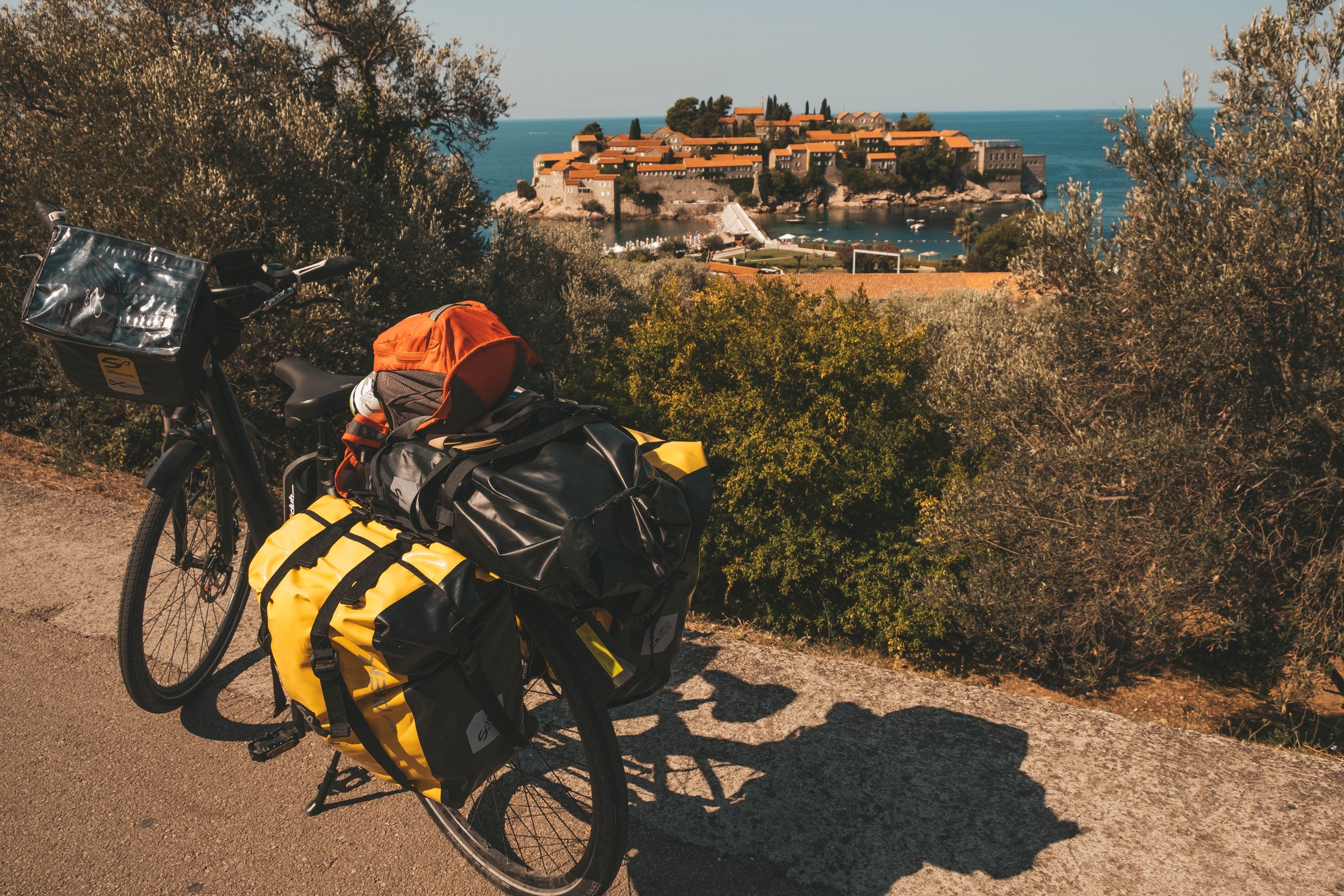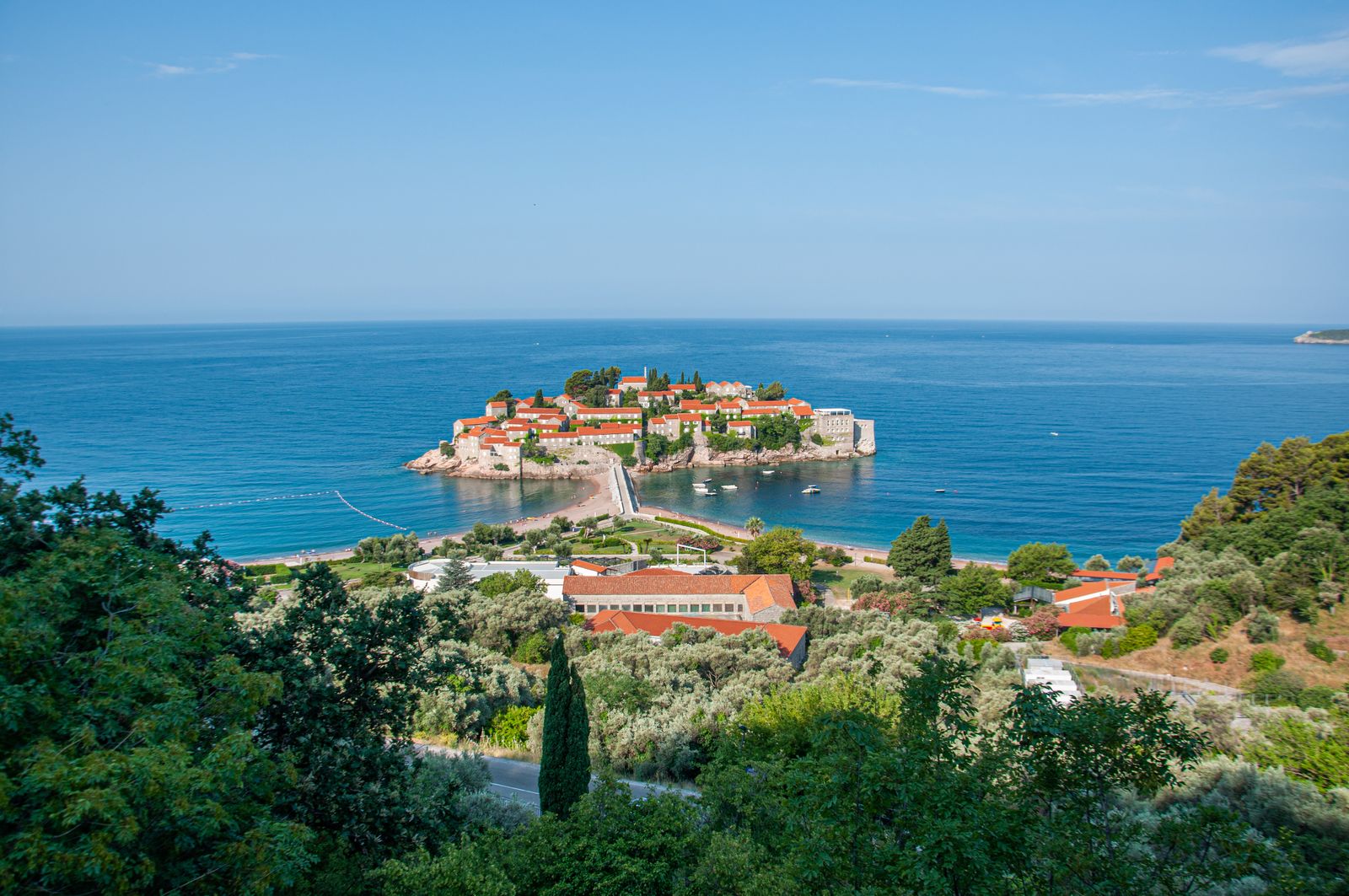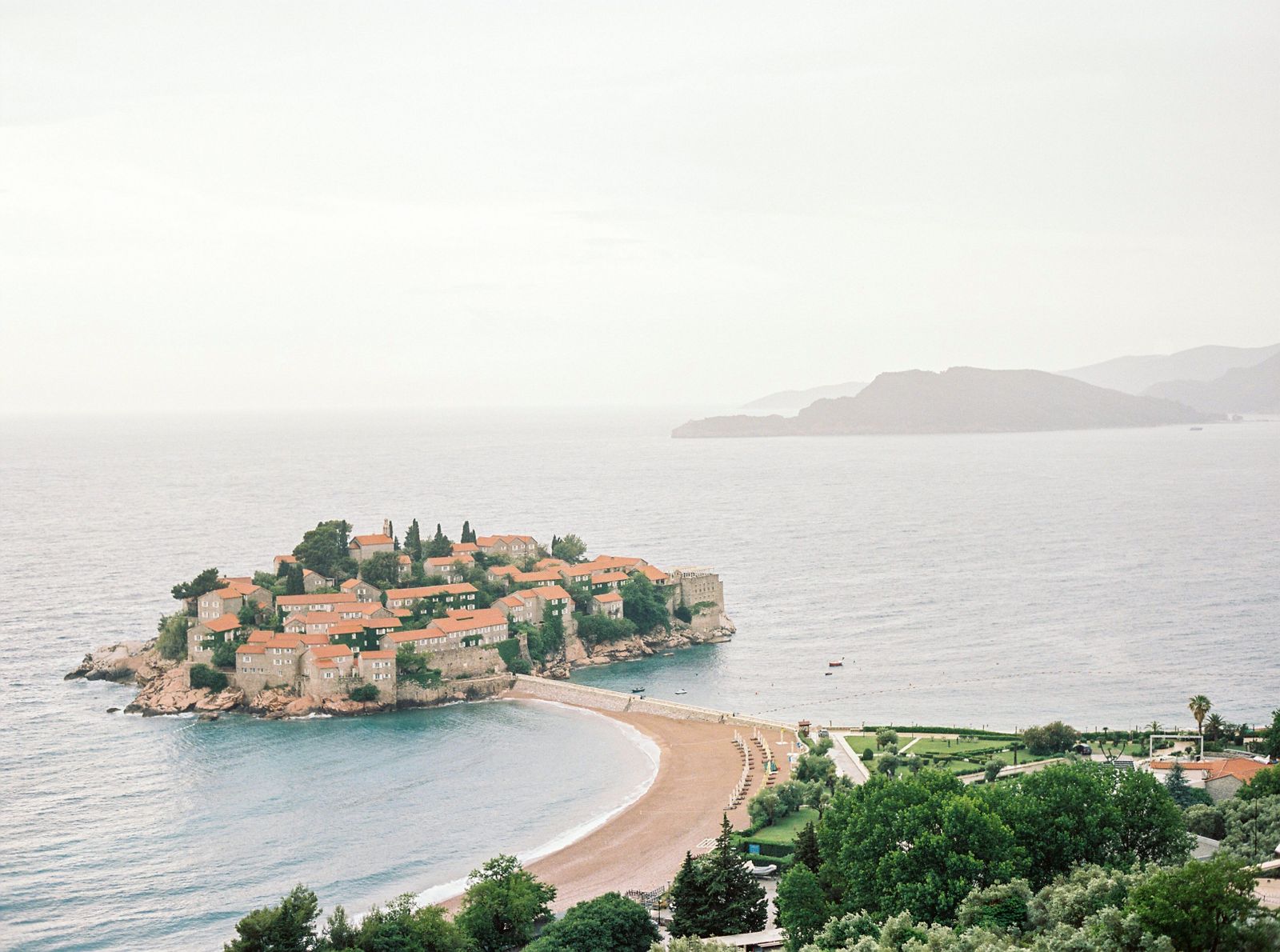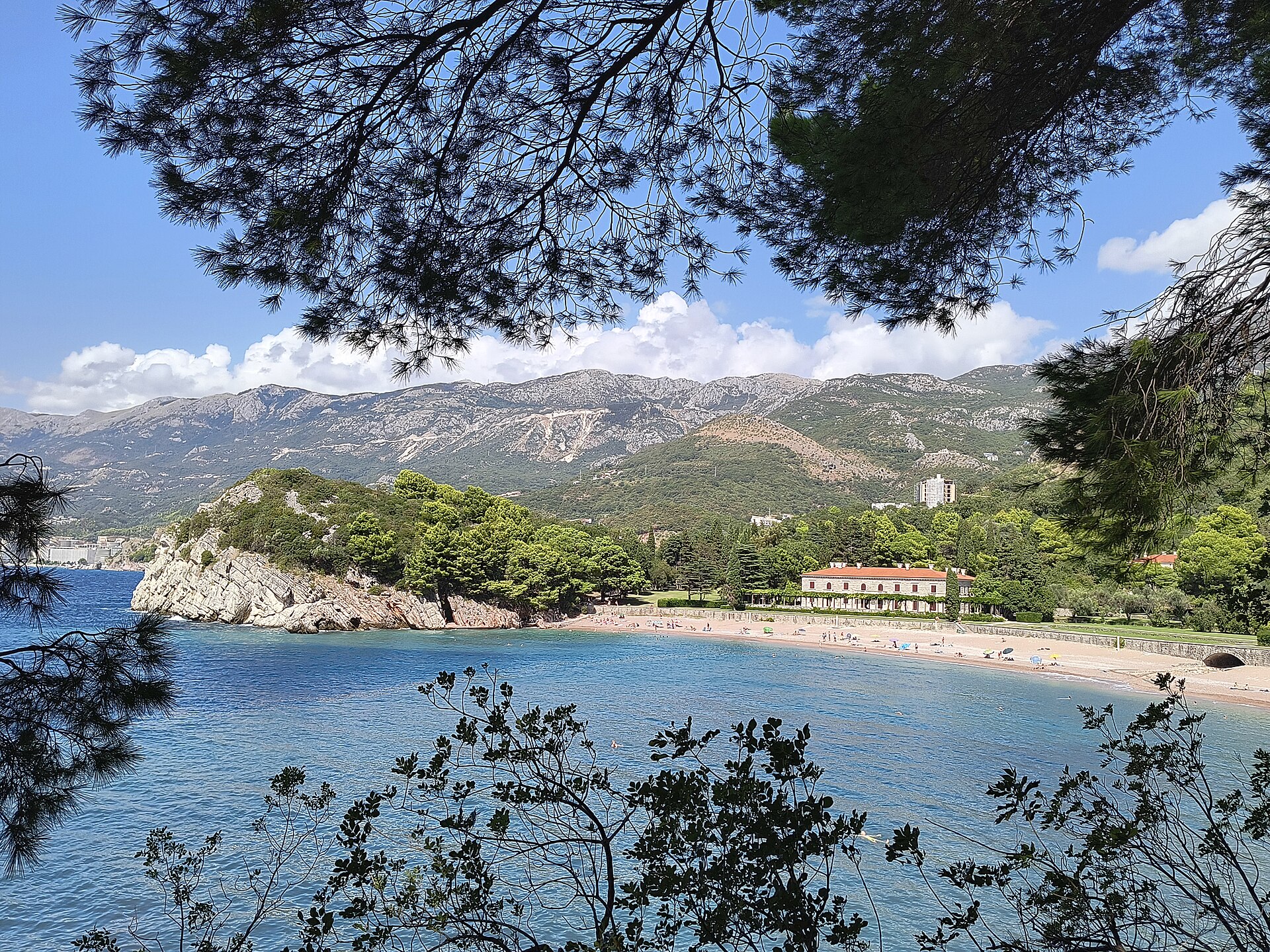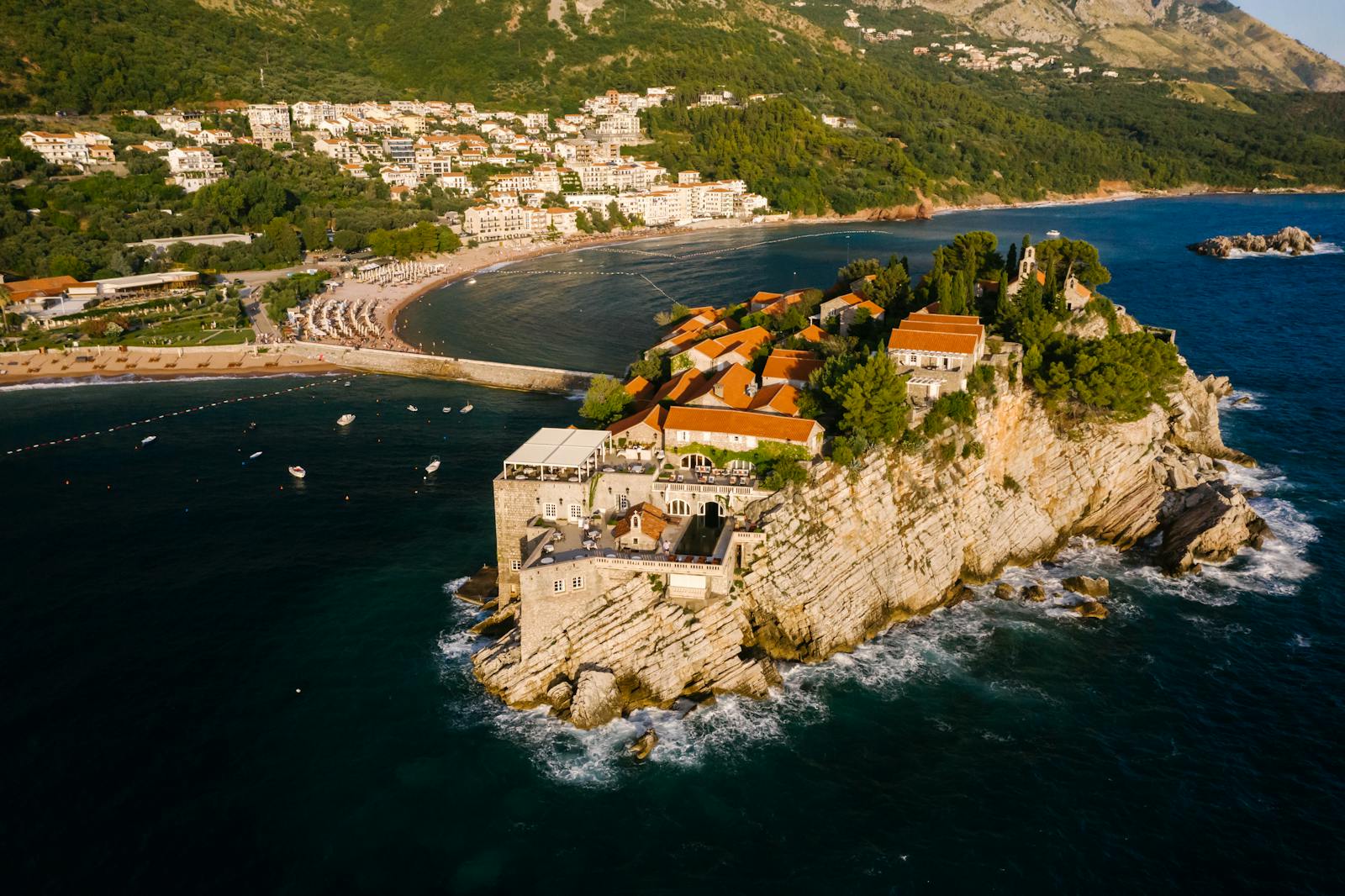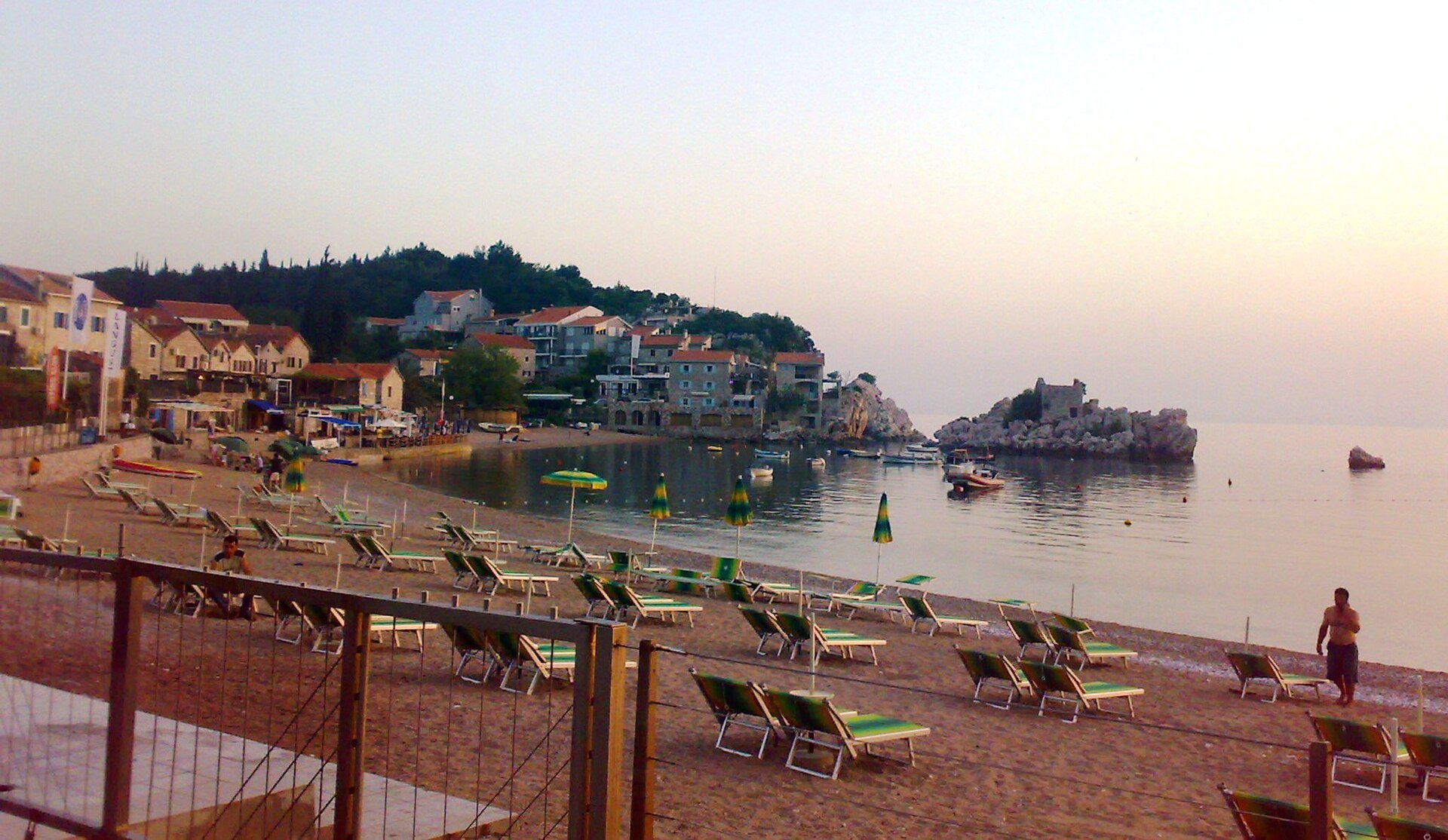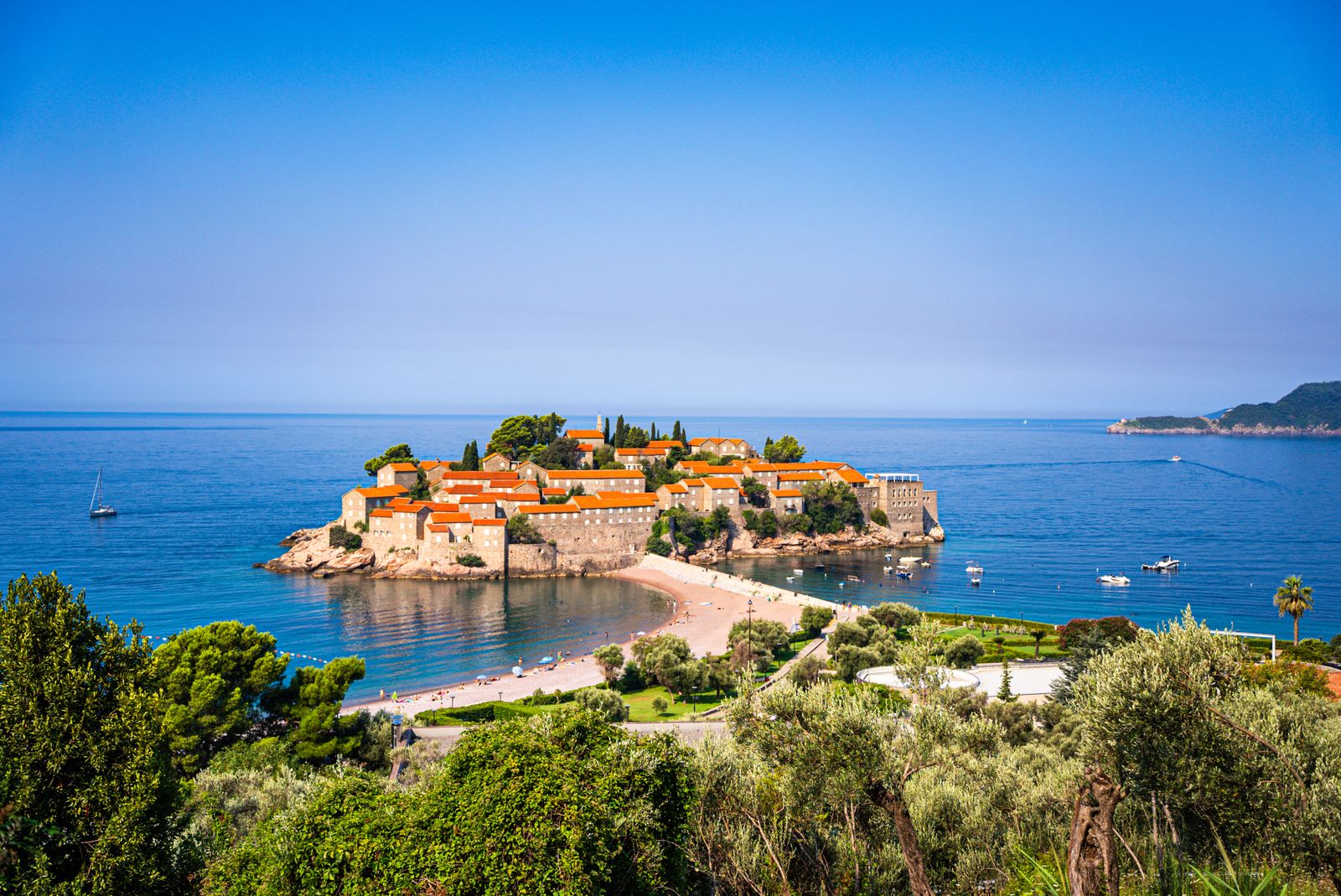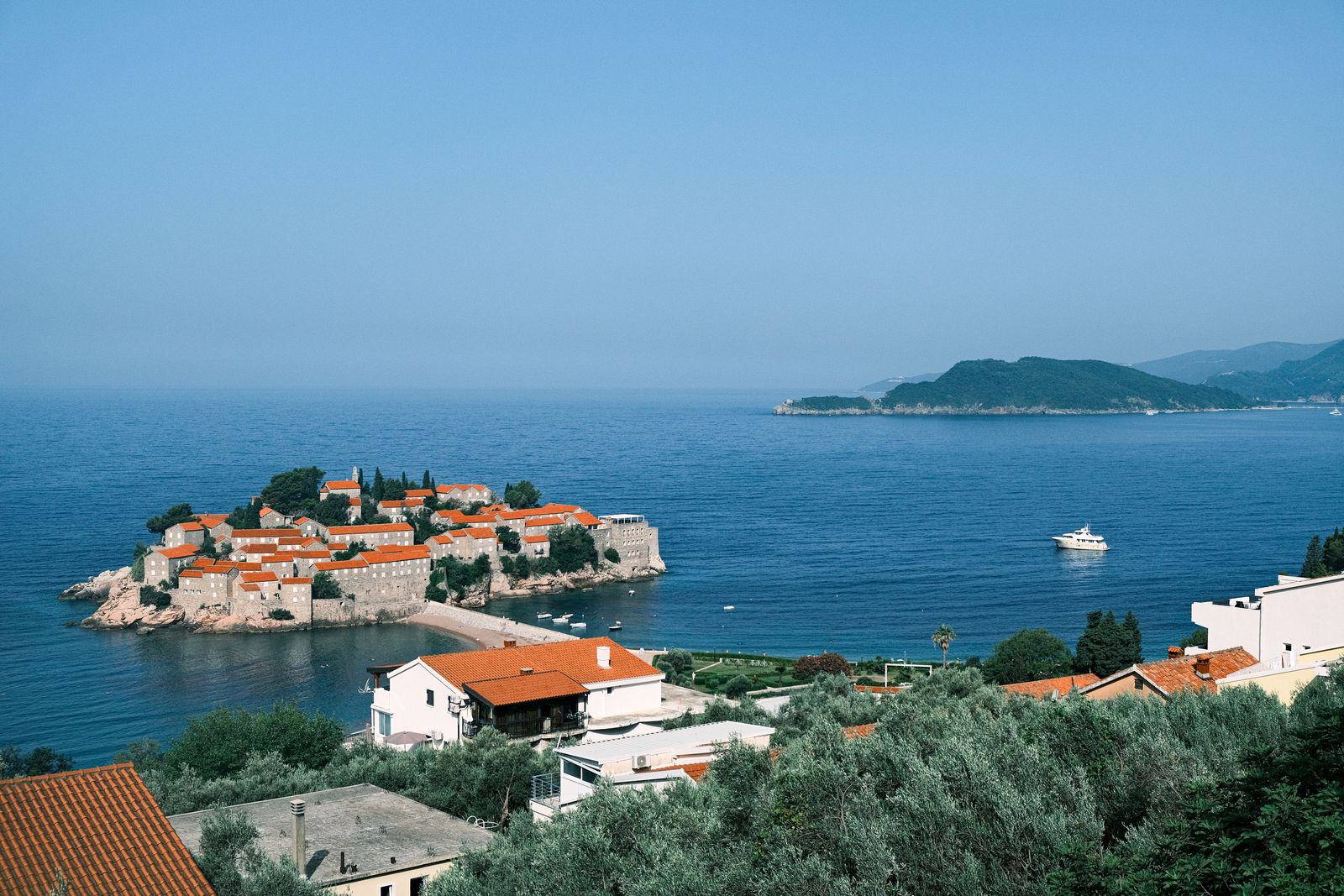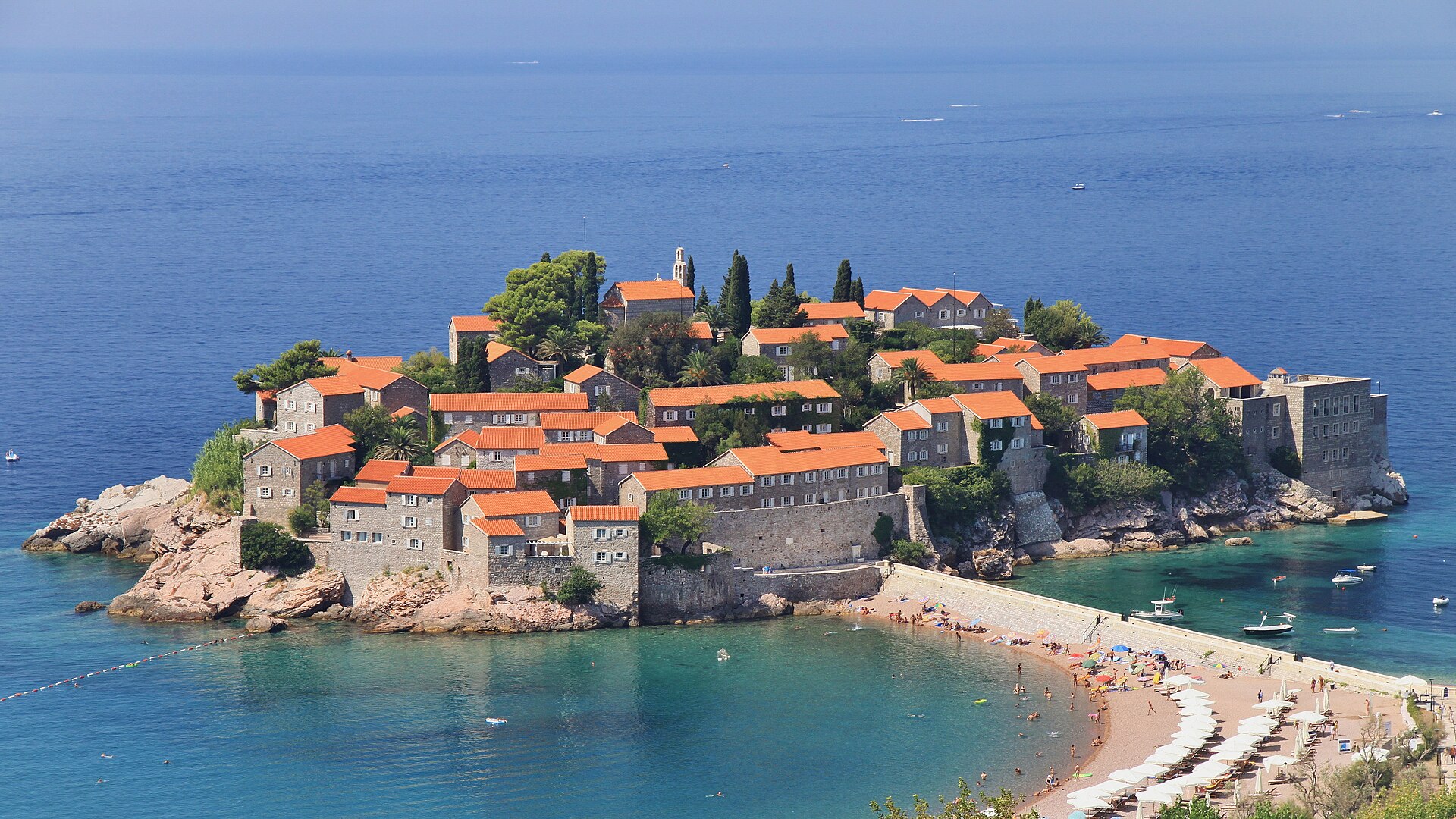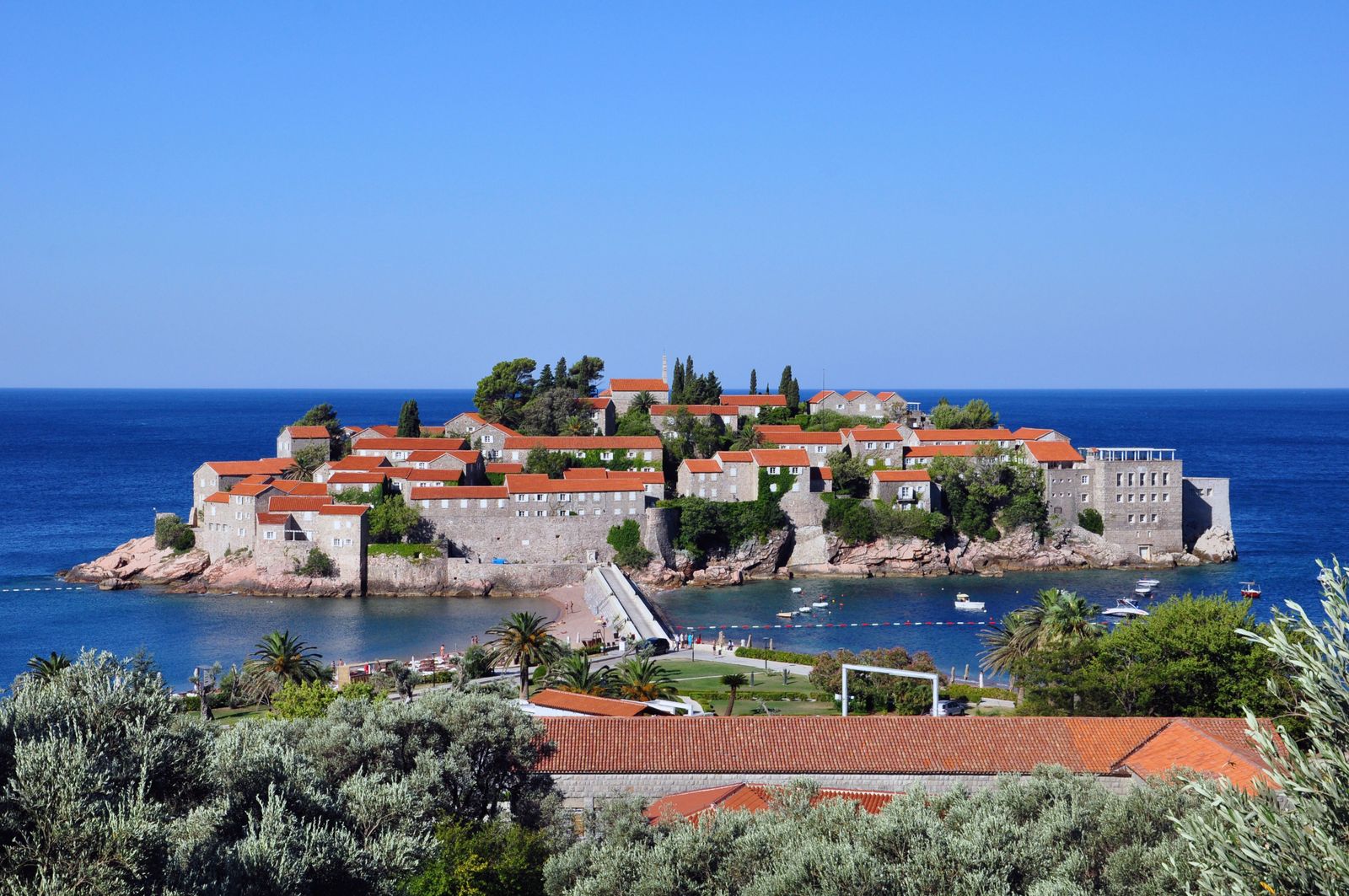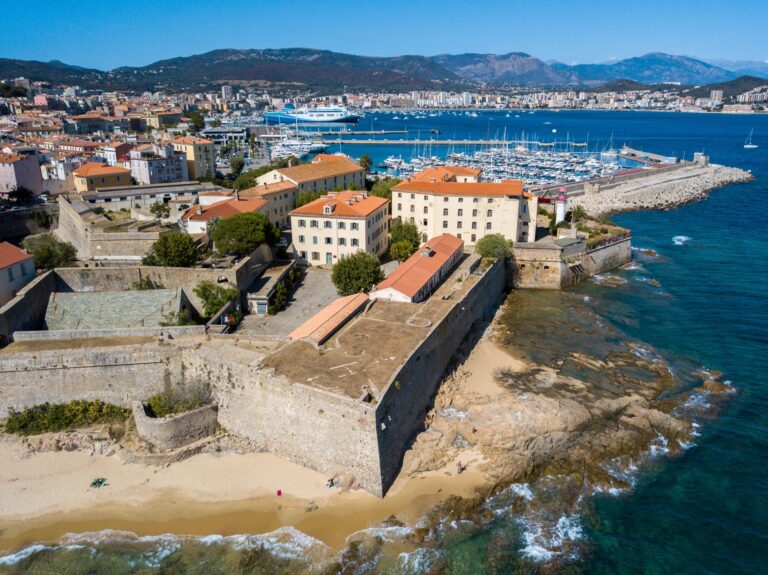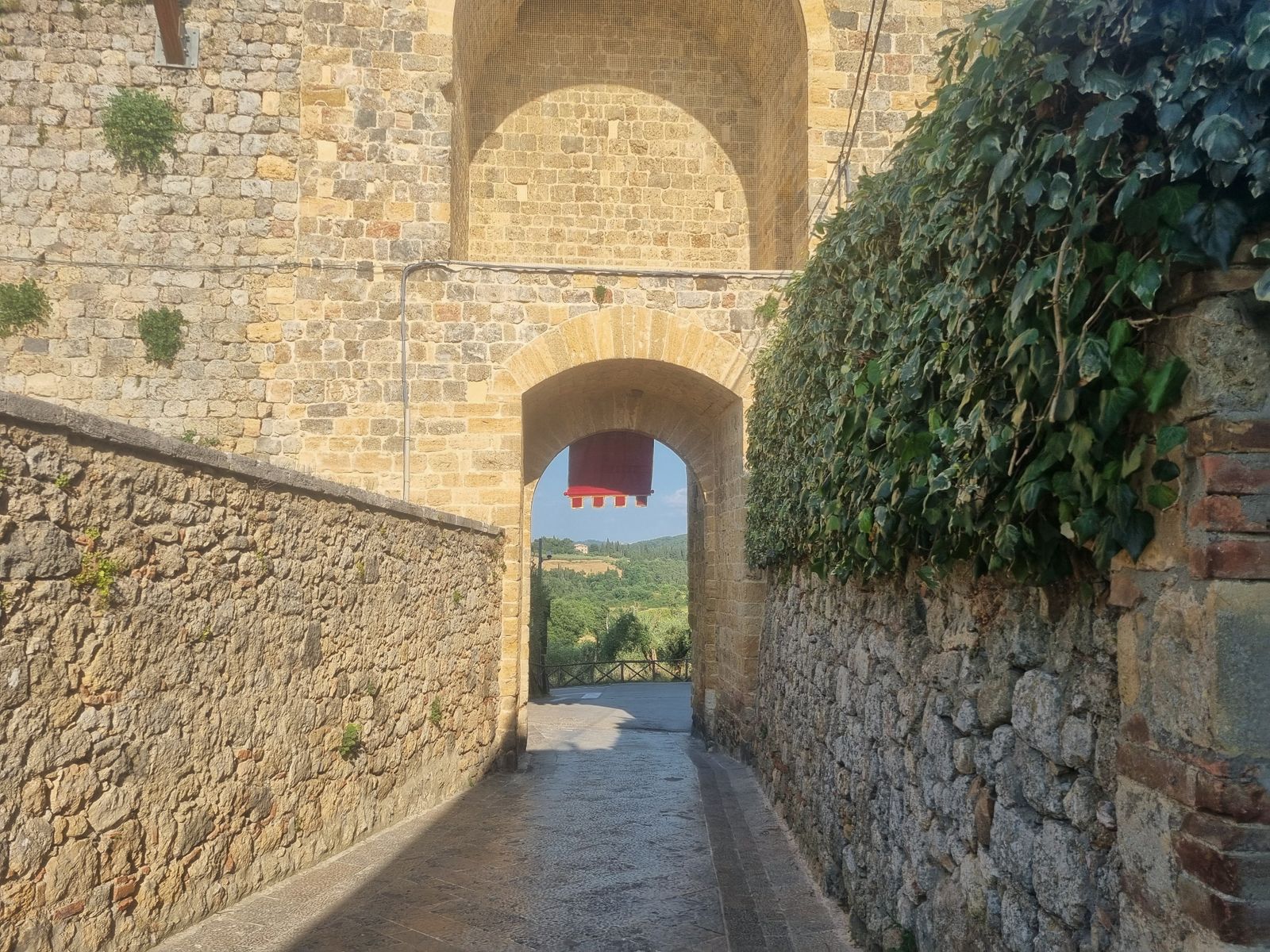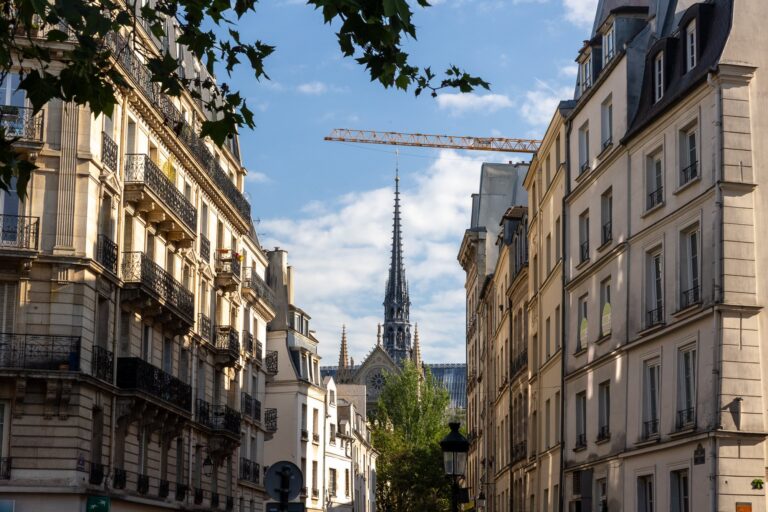
TL;DRKsamil, nicknamed the “Maldives of Europe”, is famous for three tiny wooded islets just off the coast, powdery white shingle and clear turquoise water — though in high season the beaches get rammed and sunbeds run €20–40 a day. The best time to go is June and September, when the sea sits at 24–26°C; steer clear of August, when crowds and 35°C-plus heat make it a slog. The guide runs through 12 tips, including a trip to ancient Butrint, the Blue Eye spring, and Lëkurësi Castle above Sarandë — where it’s actually worth basing yourself instead of staying in Ksamil itself. Give the southern tip of Albania at least 2–3 days, and try to get to the beach before 9am, while the islets and water are still calm.
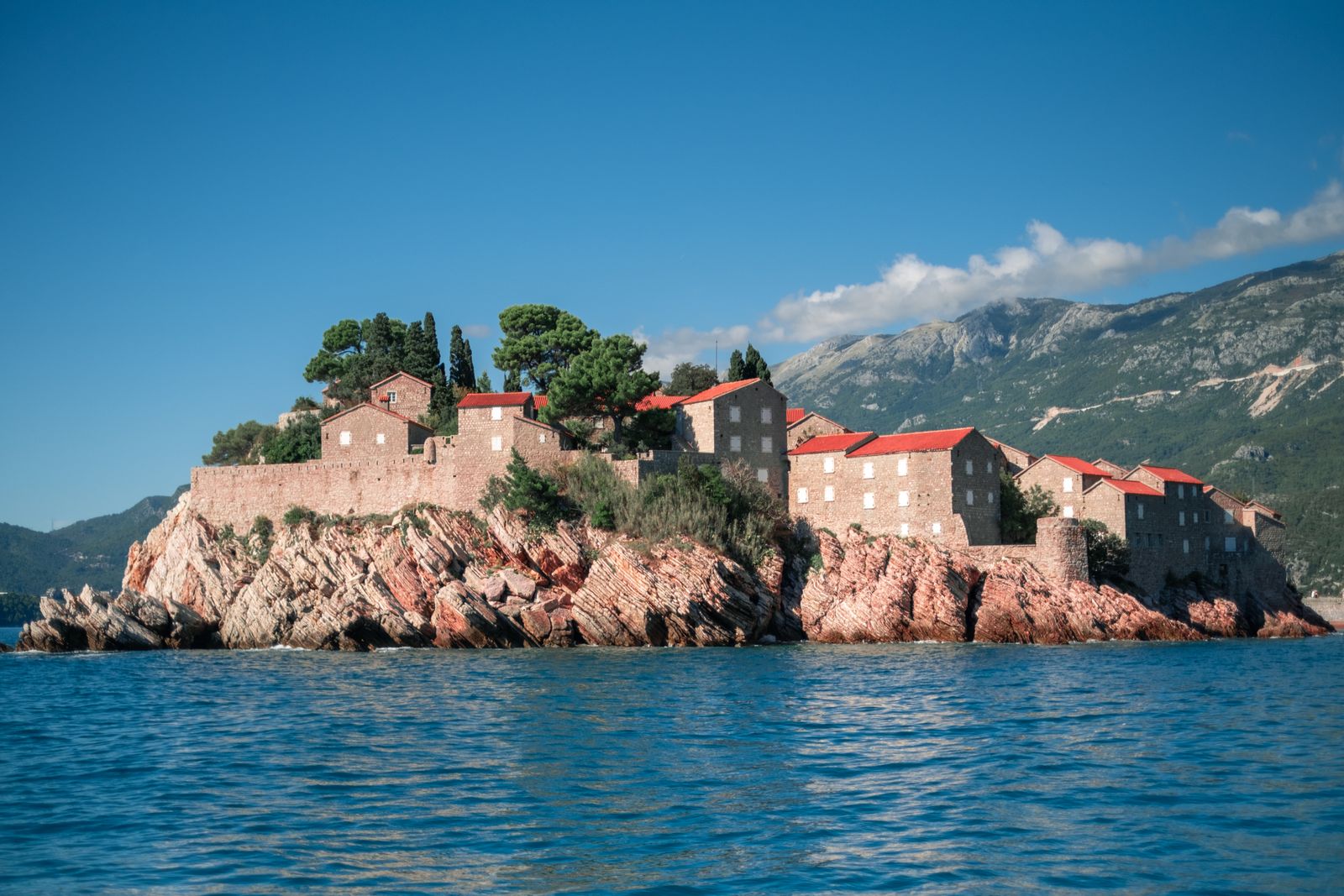
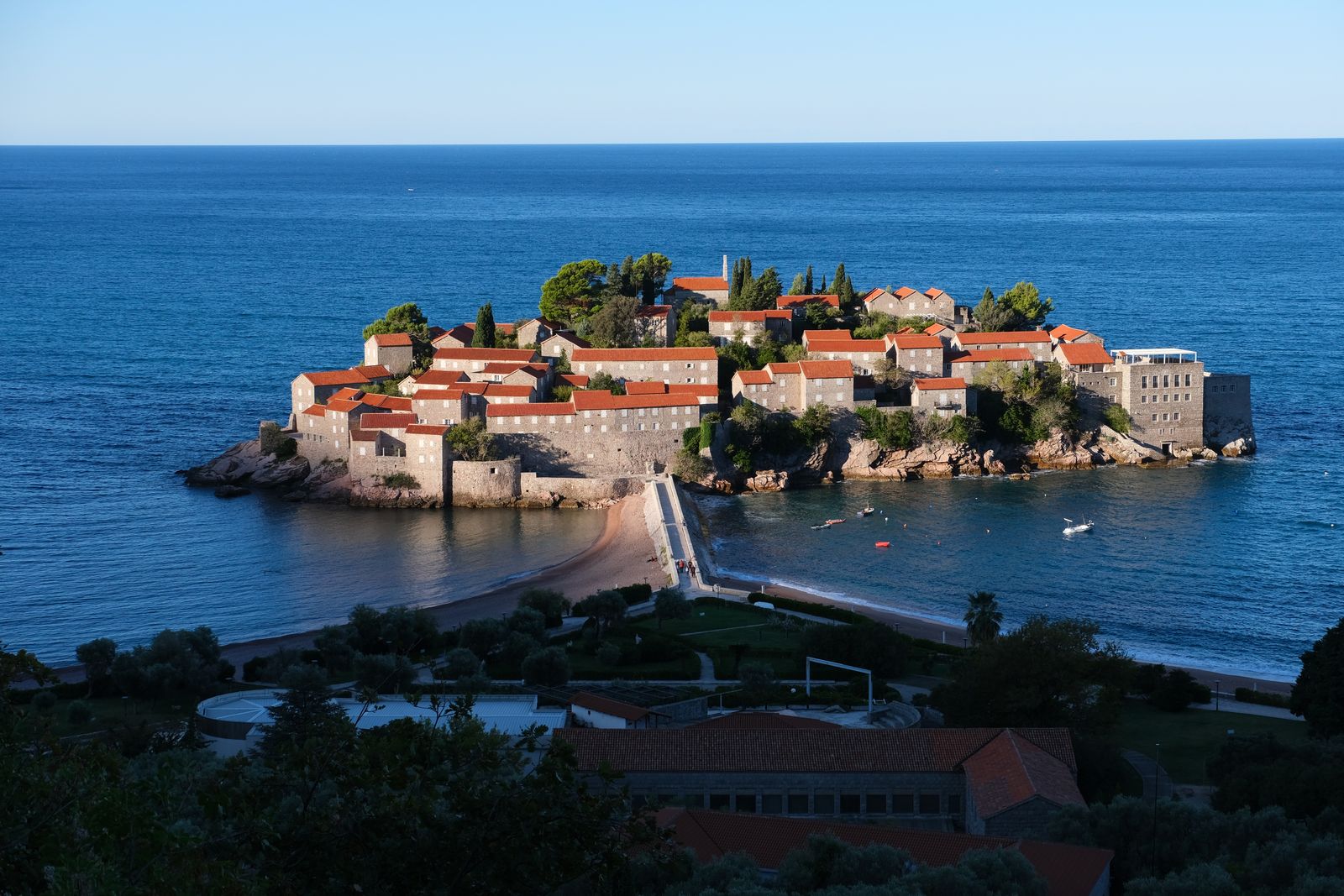
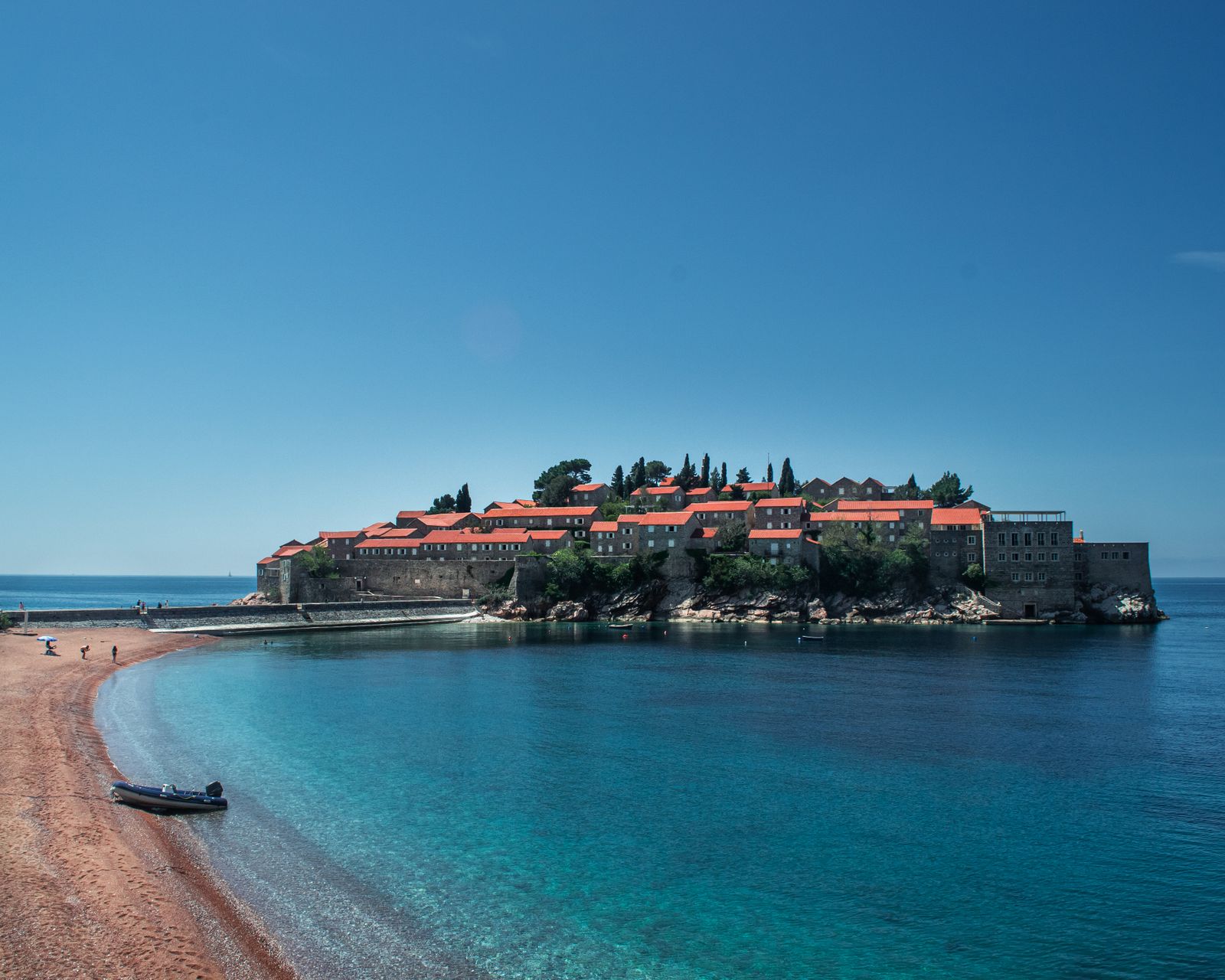
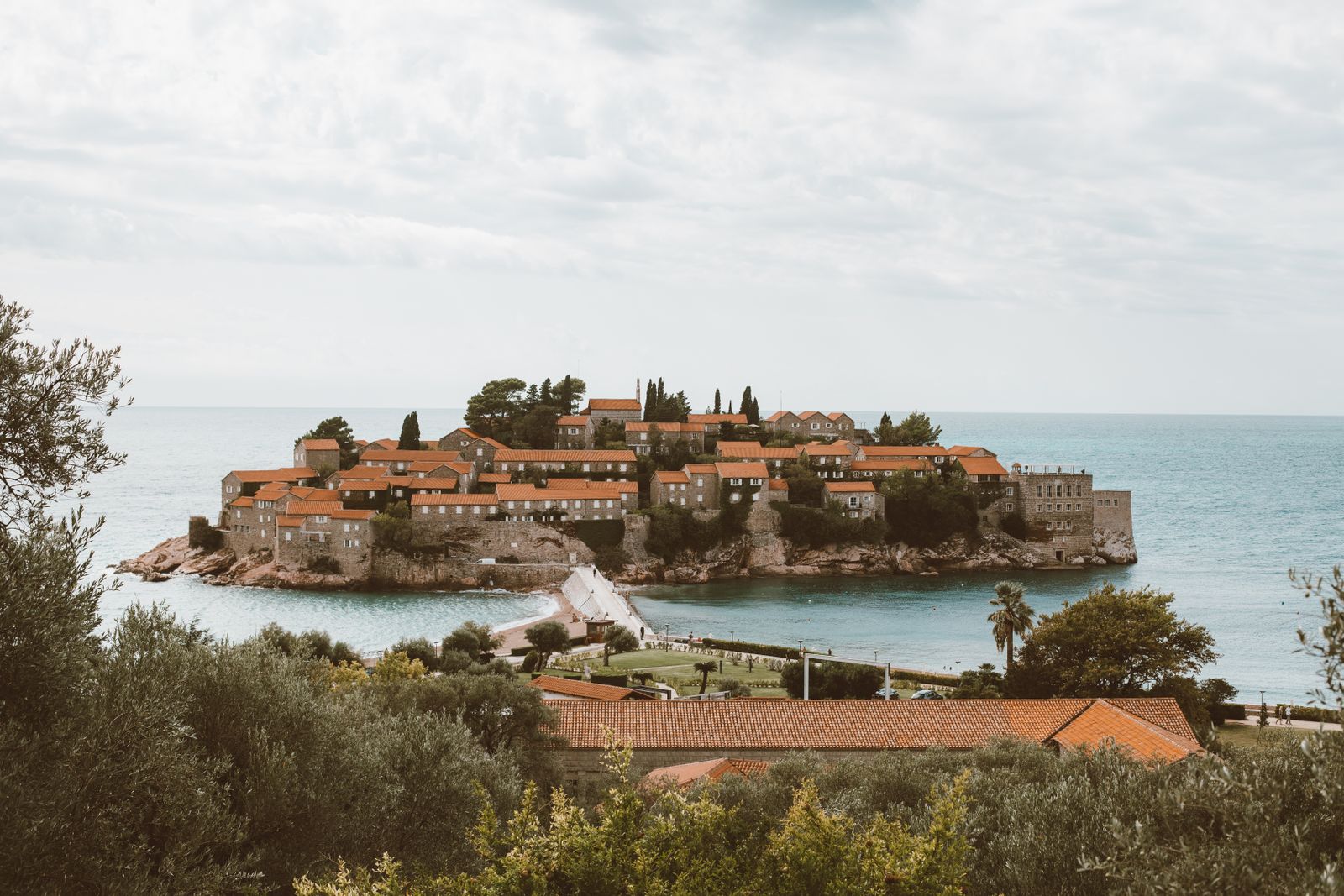
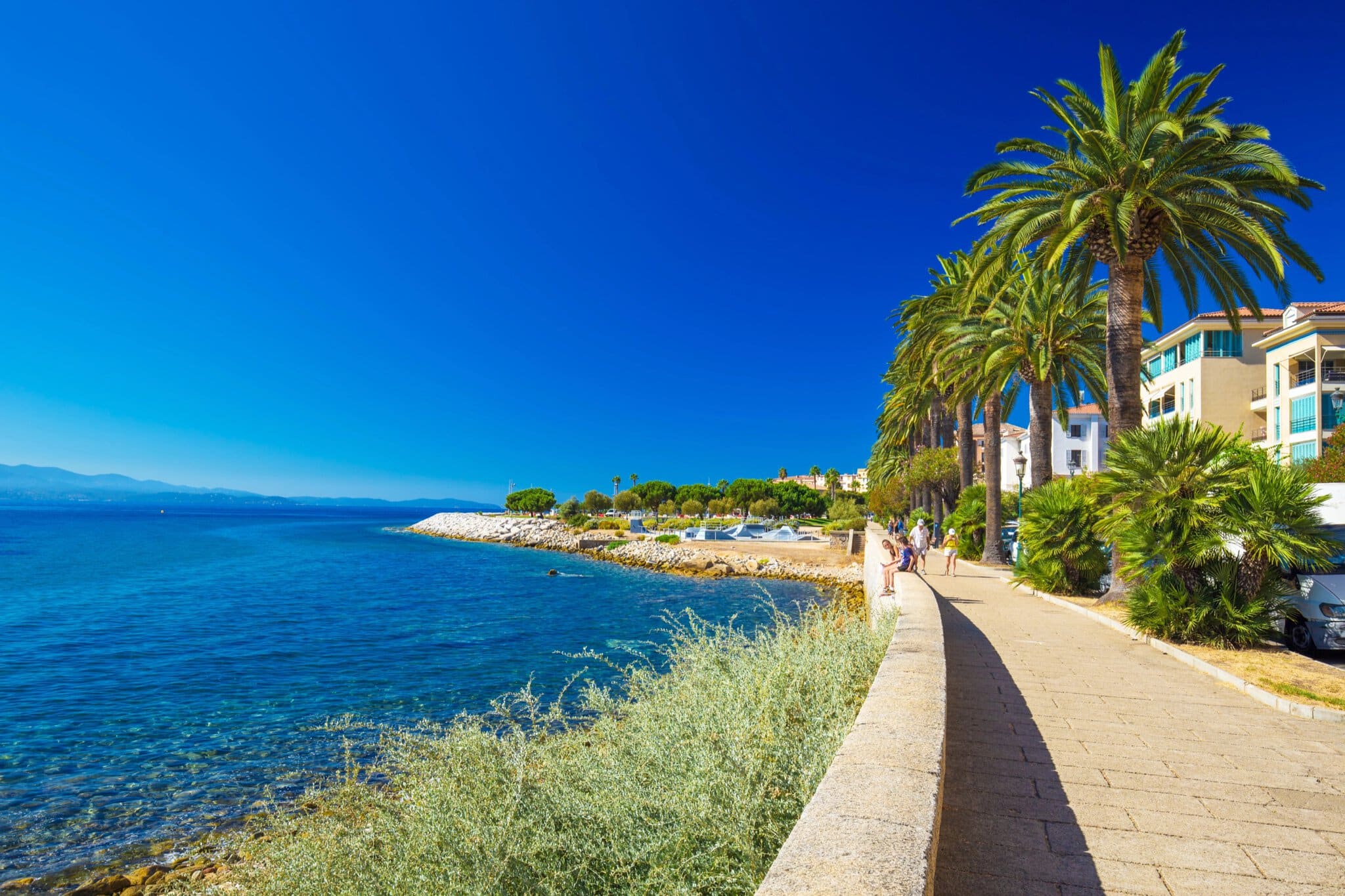
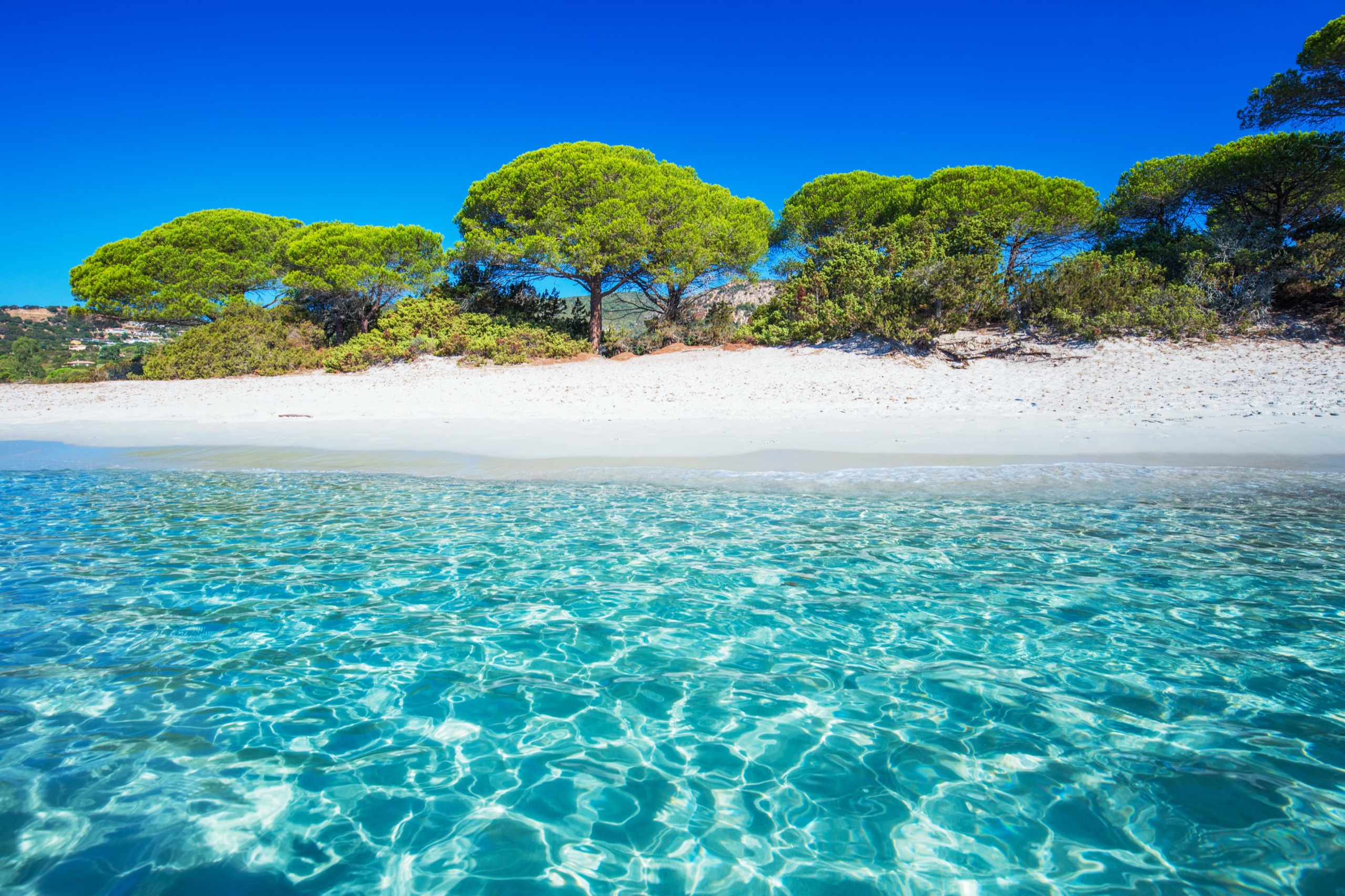
Fine white gravel that looks just like sand, shallow and incredibly crystal-clear water, and three small wooded islets just off the shore that you can easily swim to. You’ve probably already seen photos of Ksamil, Albania – it’s nicknamed the “Maldives of Europe”, and its natural setting really is unique by European standards.
But this is often where the idyll ends. Ksamil has become a textbook example of overtourism: in season the beaches are hopelessly packed, almost every inch of sand is covered with paid sunbeds, and part of the village looks like one big building site. That doesn’t mean it isn’t worth visiting – it just means you need to know when to come, where to lie down and where to escape the crowds.
In this guide you’ll find 12 tips for Ksamil and the surrounding area – from the islets and the prettiest beaches to day trips to ancient Butrint and the Blue Eye, plus some honest advice on when to skip Ksamil and where to go instead. We’ll also help you with sunbed prices and how to avoid getting stung by a bad exchange rate.
TL;DR
When to come:May, the first half of June, or late September and October. ⚠️ Avoid August (heat, crowds, traffic chaos).
Where to stay: Best in Saranda (cheaper, lively base) and visit Ksamil only on a half-day trip, ideally early in the morning.
Sunbeds ⚠️: A set of two sunbeds with a parasol costs €20–40/day, luxury beds even €70–100. Pay in lek, not in euros.
The islets: You can swim or pedal a pedalo to the three islets; in the morning you’ll have them almost to yourself.
Best day trips:Butrint (UNESCO antiquity) and the Blue Eye – both just a short hop from Ksamil.
Beat the crowds: Be on the beach before 9 a.m., when the water is calm and the islets are empty.
Instead of Ksamil: Quieter and cheaper Borsh, Himara or Dhërmi further north along the riviera.
The golden rule of the Albanian riviera is simple: avoid August. August here means extreme crowds, peak prices, traffic jams and exhausted staff; temperatures push 35 °C and Ksamil turns into more of a test of patience than a paradise. The ideal months are June and September, when the Ionian Sea is a pleasant 24–26 °C, the beaches are half-empty and accommodation prices drop by tens of percent. May and October are borderline for swimming, but they offer Ksamil almost without crowds and in all its glory.
If you’re heading here in high season, there’s one foolproof trick: get up early. Be on the beach before nine in the morning, when the water is mirror-calm, you have the islets to yourself for a while and the beach touts are still setting out their sunbeds. By midday Ksamil turns into an anthill.
💡 Tip: Ksamil pairs nicely into one loop with ancient Butrint and the Blue Eye. Set aside at least two to three days for the southern tip of Albania so you’re not rushing.
How to get to Ksamil
Ksamil sits on the southern tip of Albania and there are several ways to reach it. The fastest shortcut is via the Greek island of Corfu: a fast ferry runs from the island to Saranda in roughly half an hour, and from there it’s just 12 kilometres to Ksamil (taxi, local bus or hire car). If you’re flying in, the nearest major airport is in Tirana, from where you can reach Saranda by car or long-distance bus in about 4–5 hours along the new coastal route.
For travellers from the UK, the easiest option is a direct or connecting flight to Tirana (or to Corfu in summer, then the ferry across). A road trip through the Balkans (typically Croatia – Montenegro – Albania) is another popular way to arrive. Having your own car is by far the most comfortable way to explore the riviera and nearby sights, because public transport in the south is slow and irregular. Around Saranda and Ksamil you can also hop on cheap furgons (shared minibuses), but for trips to Butrint and the Blue Eye a car or an organised tour works best.
Where to stay: base yourself in Saranda, treat Ksamil as a day trip
💡 Tip for accommodation and experiences: We love searching for places to stay on Booking.com, where the cancellation terms tend to be best. Tickets, tours and activities are then worth comparing and booking through GetYourGuide.
This might be the single most important piece of advice in the whole article. Stay in Saranda rather than directly in Ksamil. Saranda (about 12 kilometres north) is the south’s main town, works as a cheap and well-equipped base, and comes alive in the evening along its seafront promenade. Ksamil, by contrast, is expensive, noisy and dug-up in season, so it’s best treated as a half-day trip rather than a home.
If you still want to sleep right by the Ksamil beaches, choose accommodation with its own beach or pool and check the reviews carefully for construction noise. Either way, book well in advance – capacity is limited in season and prices climb fast.
Specific accommodation picks (mostly in Saranda as a base), chosen on the basis of real reviews (on Booking go for ratings of 8.5+ and plenty of reviews):
Cheap and central in Saranda:Hotel Brilant (Saranda) – an affordable hotel in the centre of Saranda, a few steps from the promenade and the sea.
Pool and comfort:SG Premium Resort (Saranda) – a modern resort with a pool and sea views, loved for its great value for money.
Resort right on the beach:Santa Quaranta Premium Resort (Saranda) – an established resort with its own beach just outside the centre of Saranda.
Views and calm for couples:Bougainville Bay Hotel & Spa (Saranda) – an elegant hotel with a spa and panoramic views over the bay.
Right in Ksamil by the sea:Hotel Joni (Ksamil) – a hotel by the beach right in Ksamil, for when you want to sleep next to the turquoise water.
💡 Tip: When booking on Booking, go for a rating of 8.5+ with lots of reviews, and for Ksamil places read the comments about noise and nearby building sites. Breakfast is usually included, and the Albanian version (cheese, olives, eggs, honey) is well worth it.
12 best things to do in Ksamil and around
Ksamil is small, but the southern tip of Albania offers beaches, antiquity and natural wonders. Here are twelve places that make the trip worth it.
Photo: Ingo Joseph / Pexels
1. The Ksamil islets
The main stars are the three (or four, depending on how you count) small wooded islets just a few dozen metres from shore. The water is so shallow and calm that you can swim to the nearest one, or take a pedalo or kayak. The largest even has a little bar. In the morning, before the crowds arrive, this is as close to the real “Maldives” as Ksamil will ever get.
2. Ksamil’s beaches and the sunbed reality
The main Ksamil beaches have fine white gravel and dazzling turquoise water, but almost the whole of them is covered with paid sunbeds. Albanian law says beaches are public, yet reality is different: a set of two sunbeds with a parasol will cost you €20–40 a day, and at luxury beach bars even €70–100. If you turn up with just a towel, staff will probably move you on. Insist on paying in lek and look for a patch of free sand at the edges of the coves.
3. Pulebardha (Seagull Beach)
Just south of the centre lies Pulebardha (Pigeon / Seagull Beach), a slightly smaller and calmer cove tucked beneath the cliffs. The water is just as clear as in the centre, but the atmosphere is a notch more relaxed. You still pay for sunbeds here, so arrive early and grab your spot before the day-trip groups roll in from Saranda.
4. Manastir and the mirror-still coves
For peace-seekers, there are tiny coves a little further along, such as Manastir Beach, reached via a dusty track or by boat. They’re smaller and harder to get to, which is exactly why they tend to have far more space and less music blaring from speakers. Bring your own water and snacks – facilities here are minimal.
Photo: Adam Jones from Kelowna, BC, Canada / Wikimedia Commons, CC BY-SA 2.0
5. Butrint: 2,500 years of history in a single forest
Just a few kilometres south of Ksamil, on a peninsula surrounded by a lagoon, lies Butrint – Albania’s first UNESCO-listed site and perhaps the most beautiful archaeological park in the Balkans. Layers of Greek, Roman, Byzantine and Venetian history overlap here, all swallowed up by a lush national park: an ancient theatre, a Christian baptistery with mosaics, the monumental Lion Gate and a Venetian tower. The shade of mature trees makes the visit a pleasure even in the heat.
Admission:1,000 ALL (roughly €8–10), tickets can be bought online (valid for a month, non-refundable).
Opening hours: In season (April–October) 8:30–20:00, last entry at 18:00. Allow 2–3 hours for a relaxed visit.
Photo: my_cottage / Wikimedia Commons, CC BY-SA 2.0
About 40 minutes’ drive inland, a natural phenomenon called the Blue Eye bubbles up from the ground – a powerful karst spring in dense forest. The water gushes from an unexplored depth (divers have gone past 50 metres without reaching the bottom) and creates a hypnotic effect: a deep blue “pupil” ringed by brilliant turquoise edges.
Admission: a symbolic 50 ALL (cash only), parking 100–200 ALL.
From the car park it’s just under 2 km to the spring (on foot, by tourist train or by scooter).
⚠️ The water is an icy 10 °C all year round and swimming in the spring is officially banned to protect the ecosystem.
7. Lëkurësi Castle above Saranda
Before sunset, head up to Lëkurësi Castle, a 16th-century Ottoman fortress on a hill above Saranda. Entry to the grounds is free, and the view of Saranda, Ksamil and Corfu glowing orange is one of the finest on the whole coast. On foot it’s about 45 minutes of fairly steep climbing; by car just a few minutes.
8. Saranda and the evening xhiro
Saranda itself is no architectural gem – a wall of concrete apartments sprang up here in the 1990s – but as a base it works brilliantly and comes pleasantly alive in the evening. The kilometre-long seafront promenade fills with people doing the traditional xhiro, an evening social stroll from roughly 6 p.m. to 10 p.m. Sit by the sea, grab an ice cream or a coffee, and soak up the rhythm of southern Albania.
9. Boat trips and pedalos around the coves
The best view of the Ksamil coastline is from the water. Boat trips set off from the beaches and from Saranda along the coves and out to the islets, and you can also hire a pedalo, kayak or paddleboard. It’s only from the water that you truly appreciate how incredibly clear and turquoise the sea around Ksamil is, and you can easily find a quieter, crowd-free cove.
Photo: Leotrim Canaj / Pexels
10. Himara and Porto Palermo
Drive north along the coast road and you’ll reach Himara – a pleasant compromise between buzz and calm, with an authentic old town on the hill and lovely beaches (Livadhi, Llamani). A little further on lies Porto Palermo bay with its photogenic fortress of Ali Pasha on an islet connected to the mainland by a narrow isthmus (entry 300 ALL, lek only). It makes a great full-day trip from Ksamil or Saranda.
Photo: Dajana Reçi / Pexels
11. Borsh: the longest and cheapest beach
If you can’t stand fighting for a spot to lay your towel, head to Borsh. At around seven kilometres it’s the longest beach on the Albanian riviera, fringed by old olive groves, less commercial and considerably cheaper than the rest of the coast. There’s always space here, and you’ll still feel that old, peaceful Albania.
Photo: doğa babasi / Pexels
12. Dhërmi and the Gjipe canyon
The most stylish beaches of the central riviera are around the village of Dhërmi and neighbouring Drymades – clear water, a scene of modern beach clubs and a younger crowd (in August, a wild party vibe too). For adventure, head above the Gjipe canyon: the beach lies at the end of a rocky gorge, you can’t get there by car, and you face a roughly 40-minute descent on foot. The reward is a wild, isolated cove with no rows of sunbeds.
What to eat in Ksamil and Saranda
Southern Albania is strongly influenced by Greek cuisine, so you’ll find plenty of fresh vegetables, olive oil, cheeses and herbs. Good news for vegetarians – there’s plenty to choose from even without meat and fish.
Byrek – crispy layered pastry filled with cheese or spinach, the king of Albanian street food, cheap and filling.
Fërgesë – a baked creamy mix of peppers, tomatoes and curd cheese (gjizë), perfect for dipping bread. An absolute vegetarian classic.
Greek-style salads – with feta, olives and tomatoes; everywhere and refreshing in the heat.
Grilled vegetables and gjiro alternatives – many tavernas also offer meat-free versions of baked vegetables and tzatziki.
Seafood – Saranda is famous for fresh fish and seafood; for non-vegetarians it’s a local speciality worth raving about, while vegetarians can leave it to others.
To finish, have an ice cream on the promenade or a strong Albanian coffee – it’s as much a part of the evening xhiro as the view of the sea.
Practical tips to survive and enjoy Ksamil
Pay in lek (ALL). Euros are accepted everywhere, but at a poor exchange rate. ⚠️ When paying by card, always choose the local currency (ALL), not “home currency” – otherwise your bank skims 5–10 % off via a hidden fee (the DCC scam).
Carry cash. Admission to Butrint, the Blue Eye and the Porto Palermo fortress is often cash-only, and small businesses don’t take cards.
Don’t drive at night. The coastal road SH8 is good quality but full of sharp bends and unlit; after dark you’ll often meet stray dogs and livestock on it.
Don’t drink the tap water. Use bottled water all along the riviera (60–150 ALL for 1.5 l), ideally even for brushing your teeth.
⚠️ Solo female travellers: While the rest of Albania is very safe, there are growing reports of harassment from local men in Saranda and Ksamil. Use common sense, ignore catcalling and don’t tell people where you’re staying.
Where to go next in southern Albania
Ksamil is just the tip of what southern Albania has to offer. For a complete overview of the coast, see our guide on where to go to the seaside in Albania, and for inspiration for the whole country read what to see in Albania. And before you head north, take a look at Tirana, the buzzing capital and gateway to the whole country.
Frequently asked questions
💡 Tip for tours: Full-day boat trips to the islets and along the riviera, Butrint tickets and transfers from Corfu can all be compared and booked in advance online via GetYourGuide – in season the best slots fill up early.
When is the best time to go to Ksamil?
Best in June or September, when the sea has a pleasant 24–26 °C, beaches are half-empty and accommodation prices significantly lower. May and October offer Ksamil almost without people, but the water is cooler. Avoid August – it means extreme crowds, heat over 35 °C, traffic chaos and the highest prices.
How much do beach loungers cost in Ksamil?
A set of two sunbeds with an umbrella costs roughly 20–40 € per day, while luxury beach beds at premium beach bars can run 70–100 €. Albanian law does guarantee free access to the water, but in practice sunbeds cover almost the entire beach. Insist on paying in Albanian lek, not euros, so you don’t lose out on a poor exchange rate.
Is Ksamil really the “Maldives of Europe”?
The natural setting – fine white gravel, shallow turquoise water and small islands just a few metres from the shore – lives up to that nickname. During high season, however, Ksamil suffers from overtourism: overcrowded beaches, paid sunbeds, loud music and a village under construction. If you come outside of August and early in the morning, you’ll get closer to the “Maldives”; otherwise, expect more of an anthill.
Is it worth staying in Ksamil or in Saranda?
For most travelers, it’s better to stay in Saranda and visit Ksamil only for a half-day trip. Saranda is cheaper, livelier and better equipped, and in the evening offers a promenade and restaurants. Ksamil is expensive in season, noisy and often dug up, so it’s less suitable as a base for an entire vacation.
What can you do around Ksamil?
Right next door lies the ancient Butrint (UNESCO) and a bit inland the natural spring Blue Eye. Head to Lëkurësi Castle above Saranda for sunset, or north to Himara, Borsh or Dhërmi for quieter beaches. Boat trips to the small islands and along the coast are also popular.
Tips and Tricks for Your Vacation
Don’t Overpay for Flights
Search for flights on Kayak. It’s our favorite search engine because it scans the websites of all airlines and always finds the cheapest connection.
Book Your Accommodation Smartly
The best experiences we’ve had when looking for accommodation (from Alaska to Morocco) are with Booking.com, where hotels, apartments, and entire houses are usually the cheapest and most widely available.
Don’t Forget Travel Insurance
Good travel insurance will protect you against illness, accidents, theft, or flight cancellations. We’ve had a few hospital visits abroad, so we know how important it is to have proper insurance arranged.
Where we insure ourselves: SafetyWing (best for everyone) and TrueTraveller (for extra-long trips).
Why don’t we recommend any Czech insurance company? Because they have too many restrictions. They set limits on the number of days abroad, travel insurance via a credit card often requires you to pay medical expenses only with that card, and they frequently limit the number of returns to the Czech Republic.
Find the Best Experiences
Get Your Guide is a huge online marketplace where you can book guided walks, trips, skip-the-line tickets, tours, and much more. We always find some extra fun there!
TL;DRGetting to the Lofoten Islands means changing planes in Oslo. Fly into Evenes and you’re straight on the E10 (2.5 hours to Svolvær), while landing in Bodø means a follow-on ferry to Moskenes, roughly a 3.5-hour crossing. A return flight in summer 2026 costs 8,000–15,000 CZK, the Bodø–Moskenes ferry for a car with passengers runs 764–1,710 NOK, and a week’s hire of a small car works out at 7,000–11,000 NOK. Book your ferry ticket (run by Torghatten) online as soon as you’ve got your flights sorted — only half the boat’s capacity can be booked in advance. Once there, expect slow going on the E10 (40–50 km/h) and paid parking at spots like Haukland beach or the Ryten viewpoint (100–200 NOK a day).
Getting to the Lofoten islands in Norway isn’t your typical weekend getaway, where you just toss a backpack on a plane and two hours later you’re sipping coffee on a beach somewhere. You’re heading far above the Arctic Circle to one of the most beautiful — but also logistically demanding — destinations in all of Europe. If you’re planning your dream Norwegian holiday, you’ve probably already realised that there’s no direct flight from the UK. You’re looking at a full day of travel with at least one connection in Oslo, picking up a car afterwards, and quite possibly a multi-hour ferry crossing over open sea.
Norwegian infrastructure runs like the proverbial Swiss watch, but you need to know the rules of the game in advance and have a clear plan up your sleeve. Your main goal should be to minimise downtime and eliminate the stress of uncertainty, because a missed connection up north often means losing an entire day. In this guide we’ll take a detailed look at every transport option, from buying flights to paying for parking at the most famous viewpoints. I’ll tell you which airports make sense to combine, what to watch out for when renting a car, and which apps will save your sanity once you’re there.
Photo: Ximonic (Simo Räsänen) / Wikimedia Commons, CC BY-SA 4.0
TL;DR
Choosing the airport is key: Evenes Airport (Harstad/Narvik) saves you the ferry crossing, while flying into Bodø means a sea voyage is unavoidable.
Ferries are bursting at the seams: Book your ticket on the Bodø–Moskenes ferry online the moment you’ve bought your flights, or you’ll spend hours in the port.
Summer 2026 prices: A return flight will set you back roughly €330 to €620, and the ferry costs one car between 764 and 1,710 NOK.
Don’t delay the car rental: Cars for July are often sold out by spring, and a week’s rental of a small car will cost 7,000 to 11,000 NOK.
Measure distances in hours: The main E10 road is narrow and packed with motorhomes, so average speeds in season hover around just 40 to 50 km/h.
Parking adds up: Exposed spots like Haukland Beach or the trailhead for Ryten charge hefty daily fees of around 100 to 200 NOK.
You won’t manage without apps: Norway is a cashless society, so download Yr.no, EasyPark and the Torghatten app for buying ferry tickets before you leave home.
Photo: Ximonic (Simo Räsänen) / Wikimedia Commons, CC BY-SA 3.0
Photo: Fanny Schertzer / Wikimedia Commons, CC BY-SA 3.0
1. By Air: Evenes Airport vs. Bodø
All air routes to the archipelago logically run via Oslo, where you’ll catch a connecting domestic flight heading north. From the UK, you can fly to Oslo directly with the likes of Norwegian, SAS or British Airways from London, and from there hop on the domestic leg. The choice of final airport completely shapes the rest of your travel day and your overall budget. Flights for the summer 2026 season cost roughly €330 to €620 per person, depending on how far ahead you book. You have two main, realistic options, and each offers a totally different travel experience.
The first option is Evenes Airport, which you’ll find under the code EVE and the official name Harstad/Narvik. This airport sits right on the mainland, making it the absolutely ideal choice for any traveller who hates sea crossings or wants to save time. After landing, you simply pick up your pre-booked rental car and drive straight onto the famous E10 road. No complicated waiting in the port, no stress over whether you’ll fit on the ferry — none of that applies here. You’ll reach Svolvær, the symbolic gateway to Lofoten, after 2.5 hours of smooth driving through truly stunning Nordic scenery.
The second very popular option is Bodø Airport, code BOO — the classic and busiest route. The flight from Oslo is a touch shorter in this case, but in Bodø your journey by air definitively ends and you have to make your way to the local port. From there a huge ferry sails to the town of Moskenes, which lies at the very southern tip of the Lofoten archipelago. This transfer means another unavoidable change, a fairly long wait in the terminal, and about 3.5 hours sailing across open sea. And if a strong wind happens to be blowing, the big waves can be a real challenge for more sensitive stomachs.
💡 Tip: If you opt for Evenes Airport, you’ll spare yourself a lot of worry over potential bad weather. A car and a mainland road won’t be cancelled by strong wind, whereas the ferries from Bodø simply don’t sail at all in bigger storms.
Photo: Marie Čcheidze / Wikimedia Commons, CC BY-SA 4.0
2. The Bodø–Moskenes Ferry: Step by Step
If your choice fell on Bodø Airport, the ferry becomes an unavoidable part of your Norwegian adventure. This particular sea route is operated by Torghatten, and in the summer months up to 9 sailings run daily. The fare for a standard passenger car with occupants for 2026 ranges widely between 764 and 1,710 NOK, which works out to roughly €65 to €145 one way. The exact amount depends on the specific sailing time and the type of your vehicle.
But this is where all the fun ends and the harsh reality of an overcrowded Lofoten summer begins — something many tourists simply aren’t prepared for. Exactly 50 percent of the ship’s total capacity can be reserved online in advance, while the rest of the spots run on an uncompromising “first come, first served” system. You should make this reservation on the official website the moment you’ve bought your flights, because spots disappear at an incredible pace. Even with a prepaid ticket, you must be at the dock at least 45 minutes before departure so the port staff can slot you into the correct designated lane in time.
If you miss the reservation window or turn up without a ticket, expect a very long wait. In July the standby queues start filling up the night before, and it’s completely normal to simply not fit onto the first or even the second boat. The wait can easily stretch to another two or three hours, which is a genuinely exhausting experience after a full day of flying from the UK. This rule also applies to other popular routes, such as the ferry from the island of Senja on the Gryllefjord–Andenes route.
So what should you do if you don’t make it onto the boat and have to kill time in the port? Fortunately, the terminal in Bodø has a fairly large, heated waiting room with toilets and a hot coffee machine. Right next to the terminal there’s a long waterside promenade, perfect for stretching your legs after the flight in good weather. Within a five-minute walk you’ll find a large Coop Extra supermarket and the lovely Kafe Kafka café, where you can comfortably ride out the worst of the wait. There’s even a free bus from the terminal car park straight to the town centre — the trip takes just three minutes.
💡 Tip: If your ferry is definitively cancelled due to a gale or a technical fault, Torghatten will usually happily refund the forfeited ticket or automatically move you to the next available sailing. So always keep your booking confirmation SMS safe.
Photo: Ximonic (Simo Räsänen) / Wikimedia Commons, CC BY-SA 3.0
3. Renting a Car in Lofoten
Without your own or a rented car, getting around the archipelago is very tough and you’ll miss out on a huge amount of freedom. Public bus transport officially exists here, but the timetables are practically useless and very restrictive for actively exploring the islands. So reserve your car ideally two to three months in advance to be sure of the choice. In July, prices literally shoot into orbit and most local rental agencies report being completely sold out.
For a small car — which in Lofoten will quite possibly be fully electric or diesel — you’ll pay around 7,000 to 11,000 NOK in 2026 for one week. If you’d fancy a bigger, roomier SUV, set aside between 11,000 and 17,000 NOK. But do you really need an expensive four-wheel-drive SUV? The answer is crystal clear: in summer you absolutely don’t. All the main routes and turnoffs to tourist sights have excellent, well-maintained tarmac.
A classic estate or an ordinary mid-size hatchback is perfectly sufficient — you’ll fit all your suitcases, backpacks and any camping gear in without the slightest trouble. The important thing is to focus instead on comprehensive insurance with zero excess, because scratches from stones or scraped mirrors on the narrow roads are nothing out of the ordinary. If you’re travelling with family, don’t forget that a child car seat is strictly mandatory in Norway for small children, and checks tend to be strict.
Either you rent the car seat with the car for a hefty surcharge — which I don’t recommend, as they’re often dirty and of dubious quality — or you’d be better off bringing your own from home. Most regular airlines will happily check in a child car seat free of charge, on top of your standard baggage allowance. Just be sure to get a really sturdy, padded travel bag for it so it survives the rough handling of airport staff during connections undamaged.
💡 Tip: Rental cars come fitted with a special toll chip from the factory, and the number plate is firmly tied to your rental agreement. The agency will simply charge tolls for the new tunnels to your credit card without asking, four to six weeks after the rental ends.
Photo: Ximonic (Simo Räsänen) / Wikimedia Commons, CC BY-SA 3.0
4. The Reality of the E10 Road: Bridges, Tunnels and Traffic Jams
The backbone of all Lofoten is the iconic E10 road, which winds through stunning scenery and connects the individual islands via a web of bridges and deep undersea tunnels. It runs from the north all the way down to the far south and ranks among the absolute most beautiful roads in the world — which brings its own pitfalls, too. In July it’s also among the most congested and slowest roads in all of Scandinavia. The archipelago welcomes over a million enthusiastic tourists a year, while just twenty-five thousand permanent residents live here.
The E10 simply wasn’t built to handle such an extreme onslaught of vehicles, and in many places it can’t cope. It’s fairly narrow, full of blind bends, and in season convoys of very slow motorhomes crawl along it. Your average travel speed commonly hovers around just 40 to 50 km/h, which you must firmly factor into your trip planning. So never measure distances on the map in kilometres driven here, but solely in the real hours you’ll spend behind the wheel.
In the summer season, motorhomes uncompromisingly occupy every conceivable cove, lay-by and wider verge, which significantly complicates smoothly passing oncoming vehicles. So arm yourself with a huge dose of patience and plan your drives between towns with a generous time buffer. Traffic jams are an entirely normal phenomenon, especially on the narrow roads around the most popular spots and viewpoints. An ordinary fifty-kilometre stretch can easily eat up an hour and a half of pure driving time in summer traffic.
💡 Tip: Take extra care in the long undersea tunnels, where light switches very sharply to darkness and the road plunges steeply downhill. Don’t forget to take off your sunglasses and keep a safe distance from the cars in front, as motorhomes often brake unexpectedly here.
Photo: Ximonic (Simo Räsänen) / Wikimedia Commons, CC BY-SA 4.0
Lukáš and Lucie recommend
Where to Stay in Lofoten
1 accommodation — hotels and other lodging options
Norway is currently an almost entirely cashless society, which shows fully when paying for parking out in nature. The fact that you happen to be parked in the middle of wild, untamed scenery no longer means you can just leave the car there for free. In recent years, tourist hotspots have had to introduce fairly steep fees to somehow regulate the unmanageable crowds of visitors. That money then goes towards maintaining toilets, paths and rubbish collection from remote areas.
Fees vary by location, but always expect them to take a significant bite out of your daily budget. For example, at the popular Reine Outer Harbour you’ll pay 35 NOK for every hour started. At the beloved Haukland Beach, the daily rate ranges between 100 and 200 NOK depending on your car type and the exact parking duration. If you’re heading to the famous Ryten viewpoint from the Fredvang car park, set aside a flat 100 NOK for an all-day ticket.
Some villages do still have a few free spaces, but they’re as rare as hen’s teeth and vanish at lightning speed. In Reine you’ll find the small Steffenakken car park with twenty free spaces, but in July it’s bursting at the seams by seven in the morning. Never, ever try to save money by parking the car outside designated, official spots. Don’t park on private driveways to houses, or in a way that even partly blocks the main carriageway with a wheel.
💡 Tip: Fines for bad parking are utterly draconian across Norway, and the locals are quite understandably allergic to tourists who block the entrances to their homes. What’s more, police or car park wardens regularly patrol the area and mercilessly slap hefty fines under windscreen wipers.
Photo: Virtual-Pano / Wikimedia Commons, CC BY-SA 4.0
6. Phone Apps You Can’t Do Without
While you’re still on the comfortable sofa at home, download and carefully set up all the essential digital kit on your phone. Once you’re there, these smart apps will save you dozens of minutes of precious time and a lot of frustration when hunting for parking machines. The foundation of everything is the Yr.no app from the Norwegian Meteorological Institute — an absolute must. The weather here changes literally minute by minute, and this is the one reliable source that will warn you of an approaching Arctic storm.
In the Yr.no app, watch not just the precipitation but above all the current strength and direction of the wind, which can be very treacherous. An excellent companion to this app is the globally known Windy, which offers a very detailed and clear radar of wind gusts. You’ll appreciate this information above all the moment you open your car door, so a strong gust doesn’t suddenly rip it off its hinges. For managing and quickly buying ferry tickets, definitely install Torghatten’s official app.
You’ll handle parking payments elegantly and quickly using the two most common Norwegian apps, EasyPark and Parka. These systems work both in remote gravel car parks beneath the mountains and in larger towns like Svolvær or Leknes. Don’t forget to link your payment card to them before you fly out, so you’re not stuck deciphering terms in the rain in a car park. On many spots, physical parking machines have long since disappeared altogether.
💡 Tip: If you’re heading north in your own car from the UK rather than using a rental, you’ll need to sort out Norwegian tolls yourself. So register an online account in advance at autopass.no and link it to your number plate, which will save you needless invoices with surcharges. And don’t forget a reliable data connection for all these apps — an Holafly eSIM is the easiest way to stay online from the moment you land.
Photo: rheins / Wikimedia Commons, CC BY 3.0
7. Plan B: What to Do When Transport Fails
Lofoten will very quickly and bluntly teach you true travel humility, because nature here always has the last word. It can happen that the plane to Bodø picks up an awkward delay and as a result you miss your dutifully reserved ferry. At a moment like that, the most important thing is simply not to panic and to keep a cool head, because hundreds of tourists deal with similar situations here every day. You simply drive to the port and dutifully join the queue for cars without a reservation, the so-called Non-booked lane.
You’ll probably wait an hour or so for the next free boat, but in the end you’ll always make it to the islands. For these cases, always keep enough food, warm clothing and water in your carry-on for another twelve hours of unplanned waiting. The larger terminals do tend to have maintained toilets and basic heated waiting rooms, but you have to provide all your own distraction and comfort. A book, a charged power bank or downloaded films on a tablet are worth their weight in gold here.
If ferries are cancelled entirely for the whole day due to extreme weather, contact your accommodation — your reserved rorbu — immediately. The local owners are very well used to these unpredictable crisis situations and will often shift your booking to later days without any penalty. They know full well that you simply have no safe way to physically reach them across a stormy sea. Communication is absolutely the key to success and to keeping good relations here.
💡 Tip: It’s precisely because of these frequent ferry disruptions that flying into the mainland Evenes Airport (EVE) is so much safer and more reliable. A strong wind simply can’t cancel your rental car or a mainland road, and you’ll reach your destination slowly, perhaps, but with complete certainty.
Practical Summary and Indicative Prices
To tidy up all that information and all those figures neatly, I’ve put together a quick overview of indicative prices for the summer 2026 season. Exchange rates can of course shift a little, but for getting a sense of your budget, this data will serve you well.
Return flight from the UK (via Oslo): €330 to €620 depending on how far ahead you book.
Bodø–Moskenes ferry (car with occupants): 764 to 1,710 NOK (approx. €65 to €145) one way.
Small car rental for a week: 7,000 to 11,000 NOK.
4×4 SUV rental for a week: 11,000 to 17,000 NOK.
Parking at famous spots (Haukland, Ryten): 100 to 200 NOK for the whole day.
Hourly parking in towns and at ports: Around 35 NOK for every hour started.
💡 Accommodation and experiences tip: We love to look for accommodation on Booking.com, which tends to have the best cancellation terms. Tickets, tours and activities are then worth comparing and booking through GetYourGuide.
Where to Next
If you’ve already sorted out your transport, definitely have a read of our big guide to Lofoten, where you’ll find the most beautiful trips and beaches.
Wondering which month is best to go? Read the article on when to visit Lofoten to avoid the worst of the crowds.
For those who want to experience total freedom, we’ve put together a detailed Lofoten by car — road trip with a specific route.
If you’re facing a long wait for the ferry, take a look at what the town of Bodø itself has to offer.
And finally, you’ll find tips on the most magical red cabins in our overview of where to stay in Lofoten.
Frequently Asked Questions
How long does the whole journey from Prague to the Lofoten Islands take?
If you choose Evenes airport, count on a whole day. You’ll depart Prague in the morning, change in Oslo at noon, and land in the north in the afternoon. Add to that roughly 2.5 hours of driving to Svolvær. In case of a flight to Bodø and subsequent ferry, the journey can easily stretch into the late evening hours or the next day.
Do I really need to book my ferry ticket in advance?
In the summer months, it’s an absolute must. The reservation system only releases 50 percent of the boat’s capacity, and these spots disappear at an incredible speed months in advance. If you show up at the harbor without a ticket, there’s a huge chance you won’t get on the first connection at all and you’ll spend long hours waiting for the next boat.
Can you get by on the islands without a rental car?
Theoretically it’s possible, but in practice I definitely don’t recommend it. Bus transport does work here, but connections don’t run very frequently and on weekends their operation is even more limited. Without a car you also won’t be able to reach the more remote beaches and trailheads that are located off the main roads.
Do I need to have cash on me in Norway?
Not at all, Norway is nowadays an almost one hundred percent cashless country. Absolutely everywhere, from small coffee stands through public toilets to parking meters, you can pay without any problem using a regular payment card or smartphone. Cash will more likely cause you trouble when looking for currency exchange offices, of which there are very few.
Where and how exactly do you pay the road toll?
If you have a car from a local rental company, you don’t need to worry about anything. The vehicles are equipped with an electronic chip and each time you pass through a toll gate, the amount is automatically recorded. The rental company will then deduct the total toll amount from your credit card approximately one month after you return home.
What happens when the ferry gets cancelled due to strong winds?
The company Torghatten will in such cases transfer you to the nearest available connection once the weather calms down, or will gladly refund your money for the unused ticket. Also immediately contact your booked accommodation in Lofoten – the owners completely understand this situation and will often move your reservation without any cancellation fees.
Does it make sense to pay extra for an expensive 4×4 SUV in summer?
“`html
For the summer months from June to August, it’s completely unnecessary luxury. All main roads and side routes to tourist destinations are paved and very well maintained. A classic hatchback or spacious estate car will be more than enough for you, and you can invest the thousands of Norwegian kroner you save into quality accommodation instead.
“`
Tips and Tricks for Your Vacation
Don’t Overpay for Flights
Search for flights on Kayak. It’s our favorite search engine because it scans the websites of all airlines and always finds the cheapest connection.
Book Your Accommodation Smartly
The best experiences we’ve had when looking for accommodation (from Alaska to Morocco) are with Booking.com, where hotels, apartments, and entire houses are usually the cheapest and most widely available.
Don’t Forget Travel Insurance
Good travel insurance will protect you against illness, accidents, theft, or flight cancellations. We’ve had a few hospital visits abroad, so we know how important it is to have proper insurance arranged.
Where we insure ourselves: SafetyWing (best for everyone) and TrueTraveller (for extra-long trips).
Why don’t we recommend any Czech insurance company? Because they have too many restrictions. They set limits on the number of days abroad, travel insurance via a credit card often requires you to pay medical expenses only with that card, and they frequently limit the number of returns to the Czech Republic.
Find the Best Experiences
Get Your Guide is a huge online marketplace where you can book guided walks, trips, skip-the-line tickets, tours, and much more. We always find some extra fun there!
TL;DRIstanbul, the only city straddling two continents, deserves at least 3–4 days, and the best time to come is April–May or September–October. Of the 15 tips on offer, the core is a big five: Hagia Sofia (€25, upper gallery only), Topkapı Palace (€55), the Basilica Cistern (€38), Dolmabahçe Palace (€40) and Galata Tower (€30) — tickets alone add up to nearly €190 per person. Sultanahmet is the pick for staying within walking distance of the sights, Beyoğlu or Galata for nightlife, and Asian-side Kadıköy if you fancy a cheaper, more local vibe. Other essential stops include the Grand Bazaar and Egyptian Bazaar, a Bosphorus ferry ride on public transport with an İstanbulkart, the Princes’ Islands, İstiklal Caddesi, and the colourful neighbourhoods of Balat and Fener.
Istanbul, Turkey is a city squeezed between two continents, where Byzantine monumentality meets Ottoman elegance, where seagulls screech overhead while the air smells of roasted chestnuts. It’s the only metropolis in the world that stands in Europe and Asia at the same time.
With nearly twenty million inhabitants, it swallows you, deafens you and enchants you all at once. Winding alleys full of cats, the monumental domes of mosques, endless bazaars and ferries crisscrossing the dark waters of the Bosphorus, all of it together makes a cocktail that keeps drawing people from all over the world back again and again.
In this article you’ll find 15 things to do in Istanbul, from Hagia Sophia through the Grand Bazaar all the way to the Asian side, plus advice on where to stay, when to go, how much admission costs and how to dodge the most annoying scams. Be warned, Istanbul will probably wreck your feet, but it’ll also win your heart.
Photo: Vitaly Gariev / Pexels
TL;DR
How many days: Set aside at least 3–4 days for Istanbul, otherwise you’ll just rush through it.
Where to stay first time: The historic district of Sultanahmet (walking distance to the sights). For food and nightlife head to Beyoğlu/Galata, for local atmosphere the Asian Kadıköy.
The big five sights: Hagia Sophia, the Blue Mosque, Topkapı Palace, the Basilica Cistern and Dolmabahçe Palace. Individual tickets are pricey, the Museum Pass Istanbul (€125) only pays off for some (and it covers neither Hagia Sophia nor the Cistern!).
Admission 2026 ⚠️: Turkey has hiked prices sharply and they’re now in euros. Hagia Sophia €25 (gallery only), Topkapı €55, the Cistern €38.
Experience #1 for free: A Bosphorus cruise on a public ferry with the İstanbulkart, not an overpriced tourist cruise.
Watch out for scams: Taxi drivers (banknote switching), the shoe-shiner, the “let’s go for a drink” trick. Pay by card, use the BiTaksi app.
Transport: Buy an İstanbulkart right after you land and travel by metro, the T1 tram and ferries.
When to go, how to fly in and how to not lose your mind over transport
Before you dive headfirst into the sights, sort out your arrival and basic orientation. Istanbul is best explored in spring (April to May) and autumn (September to October), when there’s neither sticky heat nor the crush of summer crowds. Summer brings temperatures over 30 °C and the historic centre bursts at the seams, winter is damp and rainy but cheaper and free of queues. If your trip falls during Ramadan, expect some restaurants to scale back daytime service, though the evening atmosphere after dark is magical.
Istanbul has two airports and your first impression varies a lot depending on where you land. The huge new İstanbul Airport (IST) sits on the European side and is the hub for Turkish Airlines, which flies direct from London Heathrow and other UK airports. Good news for 2026: the fully automatic M11 metro takes you from here to Gayrettepe station in just 24 minutes, where you switch to the green M2 line towards Taksim. The second airport, Sabiha Gökçen (SAW), is on the Asian side and is served mainly by low-cost carriers (Pegasus, AJet); you’ll also find budget UK links such as easyJet into the city. It’s further from the centre, but Havaist and Havabus airport buses run reliably from both airports.
Do one thing the moment you arrive: buy an İstanbulkart. This rechargeable card is your pass to all public transport, you tap it on the metro, on ferries, buses, funiculars and on the Marmaray undersea train, which whisks you under the Bosphorus from Europe to Asia in a few minutes. In the historic centre your best friend is the T1 tram, which links the Grand Bazaar, Sultanahmet and the Eminönü waterfront, plus the short underground funicular F1 that carries you from Karaköy up to the Tünel and İstiklal.
💡 Tip: Grab your İstanbulkart from a machine right at the airport and top it up a few days in advance. One card easily works for two, you just tap twice at the turnstile.
Where to stay in Istanbul (and how much it costs)
💡 Accommodation and experiences tip: We like to look for places to stay on Booking.com, where you tend to find the best cancellation terms. Tickets, tours and activities are then worth comparing and booking through GetYourGuide.
Istanbul is enormous and the district you pick will shape your whole evening programme. When you pay for your hotel, expect a 2% accommodation tax (konaklama vergisi) added to the bill. And one more safety tip: because of seismic risk, choose hotels in modern buildings put up after 2000, when Turkey dramatically tightened its building codes.
If it’s your first time and you’ve only got a few days, stay in Sultanahmet. The key sights are within walking distance and you can be standing outside the Blue Mosque in the morning before the cruise-ship crowds arrive. The downside? It goes quiet quickly in the evening and it’s more of a tourist bubble.
If, on the other hand, you want nightlife, views and the best restaurants, head across the Golden Horn to Beyoğlu and Galata, where the streets buzz late into the night and there’s a rooftop bar around every corner. Quieter but still brilliantly located are neighbouring bohemian Cihangir or waterside Karaköy, with its cafés and galleries. And if you’re after local atmosphere without the crowds and lower prices, consider the Asian Kadıköy, a trendy district full of cafés and street food, from where you can ride the ferry back to the centre with a tea in hand.
Here are some specific picks by budget and district, chosen from real reviews (on Booking, look for a rating of 8.5+ and plenty of reviews):
Sultanahmet, budget with character:Cheers Hostel has a highly rated rooftop terrace with a view of the Blue Mosque and sits a few minutes from the main sights.
Sultanahmet, mid-range:Sirkeci Mansion racks up rave reviews for its breakfast, its location near Hagia Sophia and its helpful staff.
Galata/Beyoğlu, boutique and nightlife:Georges Hotel Galata tempts you with a rooftop terrace overlooking the Golden Horn and easy walking access to İstiklal.
Cihangir, stylish apartments:Witt Istanbul Suites are designer suites in a quieter bohemian district with excellent views.
Bosphorus, palace experience:Çırağan Palace Kempinski Istanbul is a former Ottoman palace right on the water, for when you want to experience full-blown luxury.
💡 Tip: Hotels in Sultanahmet will promise you a “view of the Blue Mosque”, but it’s often just a tiny window from the rooftop terrace. Read the reviews (on Booking go for 8.5+ and lots of ratings) and check whether breakfast is included, the Turkish one is well worth it.
Sultanahmet: the historic heart and the big five
Sultanahmet is the absolute core of Istanbul, the spot where the Byzantine hippodrome and the palaces of the Ottoman sultans once stood. Just stand on the square between Hagia Sophia and the Blue Mosque and you’ll see, for free, the remains of the Hippodrome with its Egyptian obelisk and the Serpent Column. But this is exactly where your wallet faces its toughest test, because Turkey has sharply raised admission for foreigners in recent years and priced it in euros to catch up with lira inflation. Let’s get to the places you can’t miss here.
Photo: Şilan Erkan / Pexels
1. Hagia Sophia (Ayasofya): an icon with a question mark
The Church of Holy Wisdom was built by the Byzantines, rebuilt by the Ottomans, and today it’s at the centre of cultural and political disputes. Since July 2020 it has functioned again as an active mosque, and since January 2024 foreign tourists pay €25 (around £21).
But it’s worth being straight with you here. The ticket only lets you onto the upper gallery; the main prayer floor under the giant dome is reserved for worshippers. On top of that, the building is wrapped in scaffolding for anti-earthquake works. Reviews are sharply divided, for some it’s the most powerful experience of the trip, others leave disappointed. One English-language review warns: “Not worth spending 25 euros to enter since the coverings greatly limited the mosaics.” Bear that in mind and temper your expectations a little. The Museum Pass isn’t valid here, and children under 8 enter free (carry their passport). As in any mosque, a strict dress code applies: covered shoulders, knees and a headscarf for women. Scarves are lent at the entrance, but bringing your own saves you the queue, and during the five daily prayers it closes to tourists (longest around midday on Fridays).
Photo: Moonik / Wikimedia Commons, CC BY-SA 3.0
2. The Blue Mosque (Sultanahmet Camii)
Directly opposite stands the famous mosque with six minarets and an interior lined with blue İznik tiles, which earned it its nickname. The long restoration is finally finished, the scaffolding is gone and the mosque is showing off in full glory. Entry is free, but the same dress code and prayer breaks apply as at Hagia Sophia. At the tourist entrance (on the side, not the main door) you’ll get a scarf and an apron lent for free, and you keep your shoes in a plastic bag.
Photo: Muhammed Zahid Bulut / Pexels
3. Topkapı Palace
The seat of the Ottoman sultans, from where they ruled the empire for four centuries. Get €55 (around £47) ready, but it luckily includes the fascinating Harem and the Byzantine church of Hagia Irene. The complex is vast, full of gorgeous courtyards, a treasury with the famous diamond and terraces overlooking the confluence of the Bosphorus and the Golden Horn, so set aside at least half a day for it. It’s closed on Tuesdays. Here, on the other hand, the Museum Pass Istanbul saves you.
Photo: Sami TÜRK / Pexels
4. The Basilica Cistern (Yerebatan Sarnıcı)
The largest of the underground water reservoirs built by the Byzantine emperors. A forest of 336 marble columns is mirrored in the shallow water, the lighting and music feel magical, and at the far end you’ll find two famous stone heads of Medusa, one upside down, the other on its side. Daytime admission is 1,500 lira (around €38), the evening “Night Shift” costs €58. ⚠️ Beware, the Museum Pass is NOT valid here, it’s a common tourist trap. The queue tends to be long, so ideally arrive right at opening.
Big five admission prices 2026 at a glance
Bottom line: whoever wants to see Istanbul’s big five had better bring out the heavy artillery. Individual tickets will run you nearly €190 per person.
Sight
Admission 2026
Museum Pass?
Note
Hagia Sophia
€25
❌ NO
Upper gallery only
Topkapı Palace
€55
✅ YES
Incl. Harem, closed Tuesdays
Basilica Cistern
€38
❌ NO
More expensive in the evening (€58)
Dolmabahçe Palace
€40
❌ NO
Closed Mondays
Galata Tower
€30
✅ YES
Museum Pass Istanbul
€125
—
Valid 5 days, doesn’t cover Hagia Sophia, the Cistern or Dolmabahçe
Prices in lira (₺) swing heavily due to inflation (in spring 2026 roughly €1 ≈ 53 ₺). Pay by card where you can, some ticket desks don’t take euro cash.
💡 Tip: Do the maths in advance. The Museum Pass only pays off if you fit in several paid state-run sights (Topkapı, Galata Tower, the archaeological museums). If you mainly want Hagia Sophia and the Cistern, don’t buy the pass, it isn’t valid for them anyway.
Photo: Yasir Gürbüz / Pexels
5. The Süleymaniye Mosque
If the queues at the Blue Mosque put you off, hike up to Süleymaniye. It’s even bigger, a masterpiece by the architect Sinan, with gorgeous views of the Golden Horn, and you’ll meet just a fraction of the tourists. Entry is free and the courtyard offers a calm you wouldn’t expect in the centre. It’s one of the loveliest stops in the whole city.
Bazaars and the art of haggling
To plunge into the Grand Bazaar (Kapalı Çarşı) is to step into a labyrinth from the 15th century. Beneath vaulted ceilings, more than four thousand shops are crammed in and you can buy everything from gold jewellery through ceramics to lamps and leather jackets. A little further along by the water lies the Spice Bazaar (Mısır Çarşısı), perfumed by mountains of spices, tea and sweet lokum. Both bazaars are closed on Sundays.
Photo: TubaNur örs / Pexels
6. The Grand Bazaar (Kapalı Çarşı)
There are no fixed prices here, and haggling (pazarlık) is both a necessity and a ritual. Above all, don’t show your enthusiasm. Start at 40 to 50% of the original price and slowly work your way up, the real deal usually lands between 50 and 70% of the asking figure. Drop by in the morning, when sellers need to hit their daily quota and are more willing to come down. If they offer you tea, feel free to accept it, it’s a gesture of hospitality, and don’t be afraid to walk away with a smile, they’ll often call you back with a better offer.
⚠️ Be especially careful with carpets. Touts will often invite you “just for tea”, which turns into an hour-long sales offensive, and many carpets sold as “hand-knotted silk” are nothing but synthetic factory fakes. You can tell real silk because the pattern looks the same on both sides and it feels cool to the touch. If you don’t know your stuff, don’t buy the expensive pieces.
Smaller, but perhaps prettier than the Grand one. The Spice Bazaar is a paradise for the senses: pyramids of colourful spices, heaps of dried fruit, nuts, Turkish honey and lokum. It’s a great spot for gifts to take home, just haggle here too and feel free to taste before you buy, the sellers expect it. In the alleys around the bazaar you’ll also find shops selling goods for locals, where the prices are fairer.
The Bosphorus: Istanbul’s bloodstream
A Bosphorus cruise is repeatedly rated by travellers as the number one experience. Seeing the city’s minaret-studded silhouette from the deck of a boat while you cross between Europe and Asia simply can’t be put into words.
Photo: Turan Özler / Pexels
8. A Bosphorus cruise on a public ferry
You don’t have to pay for pricey tourist “sunset cruises”. The best and cheapest option is the public ferries run by Şehir Hatları, where you just tap your İstanbulkart and hop on. A lovely route is the line from Eyüp to Kadıköy, which weaves along the Golden Horn, or the long scenic trip upstream to the Rumeli Hisarı fortress and the villages below the second Bosphorus bridge. Along the way you’ll also pass the photogenic mosque at Ortaköy, right under the bridge. For a few pence you get the same view as the boats that cost a small fortune.
Photo: Sezenkerem / Wikimedia Commons, CC BY-SA 3.0
9. The Princes’ Islands (Adalar)
If you’ve got a spare day, set off on a full-day trip to the Princes’ Islands. The ferry from the city takes roughly an hour and a half, and the islands work as an oasis of calm because there’s an absolute ban on cars. Locals and tourists alike get around on bikes and electric carts between pastel-coloured villas and pine trees. The largest island, Büyükada, can easily be walked on foot and is perfect for a picnic far from the city noise.
Photo: Buğra / Pexels
10. Dolmabahçe Palace
On the European shore of the Bosphorus rises Dolmabahçe Palace, where the Ottoman sultans moved from Topkapı in the 19th century to live in European-style luxury. Expect tonnes of gold, Baccarat crystal chandeliers and the largest crystal chandelier in the world, plus a ticket for €40. It’s closed on Mondays and photography is not allowed inside.
💡 Tip: For the loveliest view of the Golden Horn and the silhouette of the old town, take the cable car up to Pierre Loti hill in Eyüp. Sit in a café with a tea in a tulip-shaped glass and you’ve got all of Istanbul laid out in front of you, completely free.
Across the Golden Horn: Galata, Beyoğlu and Karaköy
Walk across the Galata Bridge (watch out for the anglers and the touts dragging you down to the restaurants below) and you’ll find yourself in the Karaköy district, from where steep alleys climb up to Galata Tower. This part of the city is more modern, full of energy in the evening, and home to the best restaurants, cafés, galleries and baths.
Photo: User:Ggia / Wikimedia Commons, CC BY-SA 3.0
11. Galata Tower
Built by the Genoese, for €30 you take the lift up to the gallery, from where there’s an unbeatable 360-degree view over the whole city, the Golden Horn and the Bosphorus. It’s at its prettiest at dusk, but expect a queue and a narrow gallery. The surrounding Galata alleys are full of little workshops, cafés and boutiques, so leave yourself time for a wander.
Photo: Kader Azra Namuslu / Pexels
12. İstiklal Caddesi and Taksim Square
From the tower the İstiklal Caddesi (Independence Avenue) continues, a bustling pedestrian zone occasionally crossed only by the iconic red heritage tram. It’s lined with boutiques, galleries, churches, consulates and hidden arcades like Çiçek Pasajı (the Flower Passage), full of little taverns. Just off to the side stands the Pera Museum and plenty of rooftop bars. The avenue ends at Taksim Square and it’s the ideal route for an evening stroll and a spot of people-watching.
Photo: Engin Akyurt / Pexels
13. Hammam (Turkish baths)
Treat yourself to an authentic hammam here. A great choice is the historic Kılıç Ali Paşa Hamamı from the 16th century, right in Karaköy. Don’t expect gentle stroking, in a hot marble room the attendant scrubs your dead skin off with a coarse mitt (kese) and then drowns you in clouds of soapy foam. It’s a perfect cleansing of body and soul and a lovely way to revive your feet after days of walking. Don’t forget to leave a tip (bakşiş), it’s standard practice.
The Asian side and hidden colours: Kadıköy and Balat
Most tourists skip the Asian side entirely, which is a huge mistake. Just hop on a ferry at Eminönü (or take the undersea Marmaray) and in twenty minutes you’re in another world.
Photo: Muhammed Fatih Beki / Pexels
14. Kadıköy (the Asian side)
In Kadıköy you breathe the real, local Istanbul. You’ll find buzzing fruit and fish markets, alleys full of bars around Kadife Street (known as “Barlar Sokak”) and the best spots for street food. It’s cheaper, more relaxed and nobody is hassling you. A short walk away lies the pleasant district of Moda, with a seaside park and a heritage tram. Among the local specialities, people traditionally eat lahmacun (thin flatbreads) and midye dolma (stuffed mussels), but for vegetarians it’s paradise especially in the meze and the sweets: have a çay (Turkish tea in a tulip glass), a proper Turkish coffee, a fresh simit (sesame ring) or some baklava.
Photo: Nazar Aslan / Pexels
15. Balat and Fener
If you’re hunting for the prettiest photos, head along the European bank of the Golden Horn to the districts of Balat and Fener. These historically Jewish and Greek neighbourhoods have undergone a renaissance, and today they welcome you with steep alleys lined with pastel-coloured houses, junk shops, old cafés and an incredible number of cats that the locals lovingly look after. It’s the most Instagrammable corner of the city, but visit with respect, these are still inhabited neighbourhoods, not a film set.
What to eat in Istanbul (tips for vegetarians)
Istanbul’s cuisine is above all about meze (cold and warm starters), which are largely vegetarian. Tuck into hummus, babaganuş (grilled aubergine paste), dolma (stuffed vine leaves), börek (savoury pastry with cheese), mercimek köftesi (lentil balls), roasted peppers and fresh cheese. For breakfast, have the traditional kahvaltı, a hearty spread full of cheeses, olives, tomatoes, eggs, honey and crispy bread, feel free to set aside a whole morning for it.
As for street food, on every corner you’ll come across simit (sesame rings), roasted chestnuts and corn. From the sweets, don’t resist baklava, lokum (Turkish delight) and sütlaç (rice pudding), with top-class patisseries to be found in Karaköy, for instance. All of it goes with strong çay in a tulip glass and thick Turkish coffee, which is on the UNESCO list. Meaty specialities like kebab, köfte and midye dolma are everywhere, but as a vegetarian you certainly won’t go hungry in Istanbul.
Safety and the most common scams ⚠️
Istanbul is generally a safe city, often safer than many a Western European capital. But, as in every tourist epicentre, professionals operate here who’ll try to fleece you. Here are the most common ones.
Taxi drivers. The city’s biggest headache. They commonly drive without the meter for a nonsensical “fixed price” or switch on the night rate during the day. But the most widespread is the banknote switch: you pay with a hundred, the driver whips it out of sight, shows you a ten-lira note and claims you gave him less. “He screamed and said you gave me 5 lira instead of 50,” tourists complain on forums. Defence: use the BiTaksi or iTaksi app, where you can see a fare estimate, and if you do take a taxi off the street, hand over notes one at a time and say their value out loud.
The shoe-shiner. A brush “accidentally” drops in front of you, you pick it up, out of gratitude he cleans your shoes “for free” and then aggressively demands 200 to 500 lira. Just don’t pick up the brush.
“Let’s go for a drink.” This mainly targets solo male travellers around Taksim. A friendly, well-spoken Turk invites you for a beer, women join you at the bar, champagne is ordered and the bill then comes to hundreds or thousands of euros, with bouncers standing at the door. The golden rule: never go for a drink with strangers off the street.
Money and cash machines. Pay by card where you can (almost everywhere in Istanbul). At the cash machine, always decline DCC (click “Pay in TRY”), otherwise they’ll rob you of 5 to 8% in fees, and avoid the yellow Euronet ATMs. Don’t drink tap water, buy bottled.
💡 Tip: Istanbul lies close to the North Anatolian Fault and seismologists factor in the risk of a stronger earthquake. For a short-term tourist the risk is statistically tiny, but it’s one more good reason to choose hotels in newer buildings.
How to do Istanbul in 3–4 days
Istanbul needs time, three to four days are the minimum to understand it a little rather than just rush through it.
Day 1, Sultanahmet: Get up early, be at the Cistern or Topkapı by 8:30 to beat the queues. In the afternoon Hagia Sophia and the Blue Mosque, in the evening a walk along the Hippodrome and dinner nearby.
Day 2, the bazaars: In the morning the Grand and Spice Bazaars, then a hike up to the Süleymaniye Mosque with its view of the Golden Horn. In the afternoon wander the surrounding alleys and have a proper Turkish coffee.
Day 3, views and Asia: Galata Tower, İstiklal up to Taksim, in the afternoon a ferry to the Asian side to Kadıköy and Moda, and an evening food tour.
Day 4, optional finale: Colourful Balat and Fener, a hammam, the view from Pierre Loti, or a full-day escape to the Princes’ Islands.
Where to go next
Istanbul is often the first stop before a Turkish circuit or a seaside holiday. Check out more tips:
“`html
The minimum is 3 days, ideally 4. In three days you can cover the big five monuments, the bazaars and a Bosphorus cruise. The fourth day you can use for the Asian side, Balat or the Princes’ Islands.
“`
How much does admission to the main attractions cost in 2026?
“`html
Entrance fees are expensive and in euros: Hagia Sophia €25, Topkapı €55, Basilica Cistern €38, Dolmabahçe €40, Galata Tower €30. The Museum Pass Istanbul costs €125 and is valid for 5 days, but doesn’t cover Hagia Sophia or the Cistern.
“`
Is the Istanbul Museum Pass Worth It?
Only if you manage to visit more paid state monuments (Topkapı, Galata Tower, archaeological museums). If you mainly want to see Hagia Sophia and the Cistern, don’t buy the pass, as it doesn’t cover them.
Where’s the best place to stay in Istanbul?
“`html
First time in Sultanahmet (walking to monuments), for nightlife and restaurants in Beyoğlu or Galata, for local atmosphere in Asian-side Kadıköy. Choose hotels in newer buildings due to seismic risk.
“`
Is Istanbul safe?
“`html
Yes, it’s generally a safe city. The main risks are scams (taxi drivers, shoe shiners, “let’s go for a drink”) and pickpockets in crowds around the Grand Bazaar and on the T1 tram. Pay by card, use the BiTaksi app, and don’t go for drinks with strangers from the street.
“`
How to get from the airport to the center?
“`html
From IST airport, the M11 metro runs to Gayrettepe in 24 minutes, with a transfer to M2 from there. From SAW on the Asian side, the easiest option is the Havabus. Get an İstanbulkart card right after arrival.
“`
When is the best time to go to Istanbul?
“`html
In spring (April to May) and autumn (September to October), when the weather is pleasant without summer heat and the biggest crowds. Summer is hot and busy, winter is dreary, but cheaper.
“`
Tips and Tricks for Your Vacation
Don’t Overpay for Flights
Search for flights on Kayak. It’s our favorite search engine because it scans the websites of all airlines and always finds the cheapest connection.
Book Your Accommodation Smartly
The best experiences we’ve had when looking for accommodation (from Alaska to Morocco) are with Booking.com, where hotels, apartments, and entire houses are usually the cheapest and most widely available.
Don’t Forget Travel Insurance
Good travel insurance will protect you against illness, accidents, theft, or flight cancellations. We’ve had a few hospital visits abroad, so we know how important it is to have proper insurance arranged.
Where we insure ourselves: SafetyWing (best for everyone) and TrueTraveller (for extra-long trips).
Why don’t we recommend any Czech insurance company? Because they have too many restrictions. They set limits on the number of days abroad, travel insurance via a credit card often requires you to pay medical expenses only with that card, and they frequently limit the number of returns to the Czech Republic.
Find the Best Experiences
Get Your Guide is a huge online marketplace where you can book guided walks, trips, skip-the-line tickets, tours, and much more. We always find some extra fun there!
TL;DRThe best beaches in Croatia round up 15 picks, topped by the pebbly Zlatni Rat spit on Brač, the dramatic cove of Stiniva on Vis (voted Europe’s best beach in 2016), the sandy Sakarun on Dugi otok, and the party beach Zrće on Pag. Families do best on shallow sandy stretches like Rajska Plaža on Rab (1.5 km long) or Queen’s Beach in Nin (over 3 km), while naturists head for the secluded Nugal beach on the Makarska Riviera. June and September are the best months for swimming without the crowds, with the sea sitting at 24–25°C, while peak season runs through July and the first half of August.
For many of us, Croatia is the ultimate summer classic — a place we love to return to for sunshine, the scent of pine trees, and endless relaxation. If you’re thinking about heading south to the Adriatic this year, you’ll definitely want to know where to find the most beautiful beaches in Croatia. Although the coastline might seem uniform at first glance, it actually offers incredible variety, from hidden romantic coves to long sandy shallows that are perfect for the youngest travellers.
While many other destinations are all about soft sand, the Croatian coast is defined by its pebble and rocky beaches — and that comes with one huge advantage. Thanks to the pebbles and the absence of stirred-up sand, the sea here is crystal clear and shines in gorgeous turquoise shades that practically beg you to grab a snorkel and explore the underwater world. On top of that, the country boasts an enormous number of beaches awarded the prestigious Blue Flag, which guarantees clean water and excellent facilities ☺️.
When you’re packing for your holiday, you definitely shouldn’t forget your water shoes, because sea urchins often hide on the rocky seabed and walking over slippery stones barefoot can be rather unpleasant. I’ve put together a detailed guide to the most magical swimming spots, so you can pick exactly the kind of place that perfectly matches your idea of a dream holiday.
Photo: Carolina Bucarey / Pexels
TL;DR
Best sandy beaches: If you’re after sand for building castles, head to Sakarun beach on the island of Dugi Otok, Paradise Beach on Rab, or Queen’s Beach in Nin.
Iconic pebble beauties: For perfect photos and crystal-clear water, make for Zlatni Rat on Brač, Punta Rata beach in Brela, or the romantic Dubovica cove on Hvar.
Hidden and dramatic coves: Adventure lovers will appreciate the hard-to-reach but breathtaking Stiniva on the island of Vis, or Pasjača beach near Dubrovnik.
Ideal for families with kids: The youngest travellers will enjoy the shallow, warm waters at the beaches in Nin, on Rab, or at Split’s popular Bačvice beach.
For party lovers: If you’re looking for non-stop fun and dance clubs right on the coast, the obvious choice is Zrće beach on the island of Pag.
Naturist options: Croatia has a huge tradition of FKK campsites and beaches — for stunning swimming without swimwear, try the remote Nugal beach on the Makarska Riviera.
Choosing the right dates is absolutely key to a perfect seaside holiday, because the Croatian coast experiences huge swings in visitor numbers and temperatures throughout the year. If you want to enjoy swimming without endless crowds of tourists, the best time to visit is June or September, when the sea is already pleasantly warm but there’s still plenty of personal space on the beaches. September is especially great because the water stays beautifully warm after the whole summer, often reaching a comfortable 24 to 25 degrees.
Peak summer season falls in July and the first half of August, when you should expect the most famous beaches to be absolutely packed and prices for accommodation and services to shoot sky-high. This is when the coast gets the hottest, which is ideal for splashing about in the water all day, but if you’re also planning some walking trips around towns or national parks, it can be pretty exhausting 😅. On the flip side, it’s precisely during the summer holidays that all the beach bars, water attractions, and regular ferry connections to the islands are running at full capacity.
Photo: JiriMatejicek / Wikimedia Commons, CC BY-SA 4.0
Where to Stay in Croatia Near the Best Beaches
💡 Tip for accommodation and experiences: We like to look for places to stay on Booking.com, where you’ll usually find the best cancellation conditions. For tickets, tours, and activities, it’s worth comparing and booking through GetYourGuide.
Finding the ideal place to stay depends mainly on what type of beach you prefer and whether you want to spend your holiday on the mainland or set off to discover the magic of Croatia’s islands. If you’re longing for long sandy beaches, a great choice is the area around Zadar and historic Nin, or the island of Rab, which is famous for its sandy coves. For lovers of dramatic cliffs, pine groves, and the cleanest pebble beaches, the Makarska Riviera and the popular islands of Brač and Hvar are absolutely unbeatable.
Accommodation prices vary widely depending on location and season, so it pays to book hotels and apartments well in advance through popular portals like Booking. To make your planning easier, I’ve picked out a few specific recommendations for great hotels near famous beaches, offering excellent service and a strategic location.
Boutique Hotel Bol on the island of Brač offers a stunning, stylish base with a pool, from which you can easily reach the iconic Zlatni Rat beach on foot or by tourist train.
Valamar Padova Hotel on the island of Rab is an absolutely ideal choice for families with children, offering beautiful sea views with the sandy beaches just a short stroll away.
Hotel Bellevue Dubrovnik will please more demanding travellers, as it sits right on a cliff above a gorgeous bay and offers perfect luxury close to the historic centre.
Photo: Vladimir Srajber / Pexels
15 Most Beautiful Beaches in Croatia: What to See and Do
Let’s take a look together at the fifteen most amazing swimming spots that the Croatian coast and islands have to offer. In this list you’ll find everything from iconic photogenic spots to hidden gems you can only reach on foot or by boat.
Photo: Vladimir Srajber / Pexels
1. Zlatni Rat on the Island of Brač
Picture a stunning pebble spit plunging into a crystal-clear sea, its tip constantly shifting shape depending on the wind and the sea currents. That’s exactly what you get at the iconic Zlatni Rat near the town of Bol, which ranks among the most photographed spots on the entire Adriatic and turns up on practically every postcard. The beach is covered in tiny pale pebbles that gleam in the sun, and a pleasant pine grove stretches across the middle, offering that all-important shade on hot summer days.
Getting here is fairly easy, since a beautiful paved tree-lined promenade leads from the nearby town of Bol, and a relaxed walk will bring you to the water in about twenty to thirty minutes. If you’d rather not walk, you can take the regular tourist train or park at the nearby paid car park, where prices in peak season run to around twenty euros for the whole day.
Zlatni Rat is an absolute paradise for water sports enthusiasts, because thanks to a regular wind called the maestral it offers ideal conditions for windsurfing and the ever-popular kiteboarding. At the same time, it’s a great spot for families with children or couples looking for full beach facilities, including showers, comfortable loungers, and several pleasant beach bars serving chilled drinks.
💡 Tip: Head to the beach early in the morning to grab the best spot near the tip, because in the afternoon this place gets really busy with tourists.
Photo: Vladimir Srajber / Pexels
2. Sakarun on the Island of Dugi Otok
If you secretly dream of the Caribbean but can’t face spending long hours on a plane, Sakarun beach on the island of Dugi Otok will completely win you over with its incredible atmosphere. This roughly 800-metre-long bay is covered with a mix of dazzling white sand and fine pebbles, which gives the shallow water here a breathtaking turquoise and azure colour. It’s probably one of the few places in Croatia where you’ll feel like you’re on some exotic island.
Getting here takes a bit of planning, because first you need to catch the ferry from Zadar to the port of Brbinj, then continue by car or bus for about another fifteen kilometres to the north of the island. There’s a paid car park by the beach where daily parking costs around fifteen euros, and from there it’s just a few dozen metres on foot through a pleasant little pine forest to the water.
Thanks to the very gradual entry into the sea and the huge shallow stretch reaching hundreds of metres from the shore, Sakarun is absolutely perfect for families with small children, who can safely splash around here. The beach keeps a fairly wild, natural character, so don’t expect any big hotel resorts — just calm island bliss with only two simple beach bars.
💡 Tip: Since the facilities on the beach are really minimal, I recommend bringing your own snacks and plenty of drinking water so you can spend a whole laid-back day here.
Photo: Ken Jacobsen / Pexels
3. Stiniva on the Island of Vis
Stiniva cove on the island of Vis is without doubt one of the most dramatic and fascinating natural wonders you can see on the Croatian coast. This tiny pebble beach is almost entirely enclosed by towering cliffs that close in so tightly towards the sea that they form only a narrow four-metre passage for smaller boats. It was precisely thanks to this unique and sheltered location that Stiniva was rightly named the most beautiful beach in all of Europe back in 2016.
Reaching this hidden beauty isn’t for everyone and definitely requires a bit of fitness if you decide to come overland from the nearby hamlet of Žužec. You’ll face a very steep and demanding descent down a narrow goat track that takes about half an hour, and you’ll need to save plenty of energy for the climb back up. A far more comfortable, if less adventurous, option is to rent a boat or take one of the organised boat trips, which you can easily book through GetYourGuide.
The beach itself has an enchanting sense of calm and a feeling of being cut off from the outside world, although in peak season the boats bring in quite a few curious day-trippers. The water here is perfectly clean thanks to the pebble seabed and ideal for snorkelling along the steep rock walls — just watch out for the occasional sea urchin.
💡 Tip: Come here either very early in the morning, or after four in the afternoon, when most of the tour boats have left and you can enjoy the cove’s magical atmosphere in peace.
Photo: Dora Celan / Pexels
4. Zrće on the Island of Pag
If what you really want from your holiday is dancing, having fun with friends, and enjoying a never-ending summer party, the pebble beach of Zrće near the town of Novalja is just the place for you. This bay, more than a kilometre long, has earned the nickname “the Croatian Ibiza” around the world, thanks to huge beach clubs like Papaya, Kalypso, and Aquarius, which regularly host the best DJs on the planet.
Getting to the island of Pag from the mainland is very easy thanks to the bridge connecting the island to the mainland in the south, or you can take the ferry from the more northerly part of the coast if you’re coming from Zadar. From the popular resort of Novalja, where most visitors stay, a shuttle service runs day and night, so you can get to the beach and back very conveniently without worrying about parking.
By day, Zrće offers classic beach pleasures with a huge range of water sports, adrenaline-pumping bungee jumping, and endless rows of loungers and parasols. But as soon as the sun starts to set, the whole area transforms into an enormous festival ground, where the music thumps until the early hours and thousands of young people from all over the world soak up the summer atmosphere to the full.
💡 Tip: This beach is definitely not suitable for families with children or anyone seeking peace and quiet, so if you’re after a tranquil spot to relax, I’d recommend choosing a different part of the island of Pag.
Photo: Natalia Tsentylo / Pexels
5. Punta Rata in the Resort of Brela
The Makarska Riviera is full of gorgeous spots, but Punta Rata beach in the picturesque resort of Brela stands out from the crowd with its charm and rightly counts among the most popular. This roughly 400-metre-long beach covered in pale pebbles was even ranked by the prestigious Forbes magazine among the ten most beautiful beaches in the world, which alone promises a truly exceptional experience. The whole bay is lined with dense old pine trees that cast pleasant shade right onto the pebbles and fill the air with that distinctive Mediterranean scent.
The symbol of the entire beach — and indeed the resort of Brela — is a huge boulder known as Brela Rock, from which green pines grow right out of the middle of the sea, creating an utterly iconic scene. You can reach the beach by a pleasant walk along the well-kept coastal promenade that connects the surrounding towns, and the whole area has been protected since 1964, which helps preserve its beautiful natural character.
Thanks to the pebbles, the water here is incredibly clear, and the beach proudly holds a Blue Flag award, making it a fantastic spot for snorkelling and safe swimming for the whole family. You’ll find excellent facilities, from clean showers and toilets to cosy little cafés where you can enjoy an afternoon coffee with a view over the sea.
💡 Tip: Stay here until late afternoon, because it’s at sunset that Brela Rock and the surrounding sea take on the most beautiful golden hues, ideal for romantic photographs.
Photo: Vladimir Srajber / Pexels
6. Paradise Beach (Lopar) on the Island of Rab
For all families with younger children, Paradise Beach — often called Rajska Plaža in Croatian — stretching out near the town of Lopar on the island of Rab, is an absolute dream come true. It’s the longest sandy beach in all of Croatia, measuring an impressive kilometre and a half, with incredibly fine sand perfect for building the very best castles. It’s also been included in CNN’s Top 100 beaches, which only confirms its exceptional quality and popularity among tourists from across Europe.
Getting to the island of Rab is easy thanks to regular ferries from the mainland, and the beach in Lopar itself offers huge parking areas, so even in season there’s rarely any problem arriving by car. What makes Paradise Beach so special is its extremely gradual entry into the sea — even hundreds of metres from the shore the water reaches no higher than an adult’s knees, so children can romp about safely.
Given its popularity, the beach offers completely comprehensive tourist facilities full of restaurants, souvenir shops, and ice cream stands. During the day you can try a huge range of activities, from renting pedalos with a slide and playing beach volleyball to messing about on the big inflatable aqua parks right out on the sea.
💡 Tip: If you tire of the shallows and crave some proper swimming, hop on a rented pedalo and head out from the shore towards the nearby little islet, where the water is deep enough and beautifully clean.
Photo: Vladimir Srajber / Pexels
7. Kamenjak in Istria
At the very southern tip of the Istrian peninsula lies the Cape Kamenjak nature reserve, a completely different world from the typical manicured town beaches with their rows of loungers. This wild and untamed piece of land offers dozens of kilometres of rugged coastline, full of hidden pebble coves and dramatic cliffs that drop straight into the deep blue sea. It’s an ideal spot for any traveller looking for a bit of adventure, gorgeous nature, and an escape from civilisation.
Driving into the reserve by car comes with a fee, costing around five to fifteen euros in season depending on the month, but for walkers and cyclists entry is completely free. Inside the park you’ll travel along dusty, stony roads that lead you to the most amazing spots, such as the popular coves of Mala and Velika Kolombarica, where you can enjoy perfect peace and quiet.
Kamenjak is famous among lovers of adrenaline jumps into the water, since the cliffs here practically invite it, and thanks to the clean water teeming with fish, it’s an absolutely fantastic spot for snorkelling. After your swim, don’t miss the legendary Safari Bar, hidden away in the reeds, offering a one-of-a-kind relaxed vibe with excellent refreshments and giant swings hanging from the trees.
💡 Tip: The most comfortable and enjoyable way to explore the whole cape is to rent a mountain bike and ride through the reserve under your own steam, avoiding both the car fee and the summer traffic jams.
Pasjača beach, lying in the Konavle region roughly thirty kilometres south of historic Dubrovnik, is a complete one-off, because it wasn’t formed naturally but by human activity. Back in the 1950s, when a tunnel was being dug here, the excavated rock was dumped from the steep cliffs into the sea, and the waves gradually ground this material down into a beautiful mix of sand and fine gravel. This fascinating story, combined with the breathtaking backdrop of towering red cliffs, even earned it the title of European Best Beach in 2019.
Getting to the beach is an experience in itself, because after parking up on the cliff you face a fairly steep and demanding descent down narrow stone steps and through a tunnel carved straight into the rock. Because of this tricky access, the beach really isn’t suitable for small children or people with limited mobility, since you have to tackle around two hundred metres of elevation difference.
On the beach itself you’ll find no tourist facilities whatsoever — no bars, no lounger rentals — but this only adds to its wild, romantic atmosphere. The water here is incredibly clean and constantly washes against the steep cliffs, which creates perfect conditions for undisturbed relaxation and gazing out at the open sea far from the crowded resorts.
💡 Tip: Given the complete lack of services and shade, don’t forget to bring your own parasol, plenty of drinking water, and comfortable shoes for a safe descent down the steps.
Photo: Vladimir Srajber / Pexels
9. Nugal on the Makarska Riviera
The Makarska Riviera hides one true gem that has kept its remote, undisturbed atmosphere for decades — the magical pebble beach of Nugal. This place is historically tied to a very strong naturist tradition and to this day operates mainly as an FKK beach, although in recent years it’s increasingly attracted nature lovers in swimwear too. The beach is bordered on one side by towering vertical cliffs and on the other by dense pine forest, creating an absolutely fairy-tale, photogenic corner.
Getting to Nugal takes a bit of effort, because no road leads here and the only path is on foot through the beautiful Osejava forest park, which takes about thirty minutes of pleasant walking from the centre of Makarska. An alternative is to hire a small boat or use a water taxi, which will drop you right onto the pale pebbles, where you can immediately start enjoying that wonderful solitude and calm.
It’s precisely because of its tricky access that the beach keeps its wild character, and even in the highest season you won’t run into excessive crowds of tourists here. The sea is incredibly clear and deep just a short way from the shore, making it an absolutely superb spot for lovers of swimming and snorkelling along the jagged rocks.
💡 Tip: Since this is a purely natural beach tucked away in the forest, you won’t find any refreshment kiosks or toilets here, so you’ll need to carry all your supplies for the day in your own backpack.
Photo: dronepicr / Wikimedia Commons, CC BY 2.0
10. Banje in Dubrovnik
If you’re visiting the enchanting city of Dubrovnik, you definitely shouldn’t miss Banje city beach, located just a short walk beyond the historic Ploče city gate and offering an absolutely exclusive swimming experience. From this pebble-and-sand beach you’ll get an unforgettable, iconic view straight onto the ancient city walls, the old harbour, and the green islet of Lokrum, making it one of the most photographed spots in the country.
The beach is split into two parts, one half operating as a luxury beach club where you’ll pay fairly high prices to rent comfortable loungers and parasols, often forty to fifty euros a day. The other half, however, is freely accessible to the general public and completely free, so you only need to bring your own towel and you can enjoy those same breathtaking views of the historic city without paying a penny.
The atmosphere on Banje beach is always very lively, cosmopolitan, and full of energy, because travellers from all over the world come here to rest after exhausting exploration of Dubrovnik’s narrow streets. During the day you can try jet skiing or parasailing behind a motorboat, and in the evening the beach club becomes a popular spot for elegant nightlife right by the sea.
💡 Tip: If you want to avoid the biggest crowds and enjoy the free part of the beach without being squashed in, come here early in the morning, before the tourists from the big cruise ships descend on the city.
Photo: isol / Wikimedia Commons, CC BY-SA 3.0
11. Lubenice (Sveti Ivan) on the Island of Cres
Sveti Ivan beach, lying deep below the historic little village of Lubenice on the island of Cres, is the very definition of perfect remoteness and untouched Mediterranean nature that will literally capture your heart. This roughly 150-metre-long bay full of dazzling white pebbles, which the German newspaper Bild ranked among the forty most beautiful beaches in the world, is surrounded only by steep slopes and fragrant shrubs. The crystal-clear water plays in every shade of emerald and turquoise, creating a perfect contrast with the rugged surrounding landscape.
The reason this beach stays wonderfully calm and half-empty even in the middle of summer is its extremely demanding access overland. From the stone village of Lubenice, perched on a cliff hundreds of metres above the sea, you face a steep walk down lasting roughly forty-five to sixty minutes, and the climb back uphill in the scorching sun really is only for those in good shape.
For those who’d rather not sweat it out on steep tracks, by far the most pleasant option is to arrange a water taxi at the nearby harbour or rent a small motorboat. Your reward for a bit of discomfort will be swimming in complete solitude and silence, broken only by the murmur of the waves and the cries of seagulls — a real luxury in today’s hectic world.
💡 Tip: For the walk down to this beach, absolutely wear sturdy trainers, because walking down the steep, stony track in ordinary flip-flops is not only very uncomfortable but also dangerous.
Photo: Gutjahr Aleksandr / Pexels
12. Pupnatska Luka on the Island of Korčula
The island of Korčula is full of picturesque coves, but Pupnatska Luka, lying about fifteen kilometres from the island’s main town, is probably the most charming and greenest of them all. This sheltered pebble beach, which the prestigious British newspaper The Guardian ranked among the top twenty European beaches, cuts deep into the island’s interior and is protected on all sides by dense Mediterranean forest. The water here is wonderfully calm, quiet, and has an incredibly clear, almost emerald colour.
Driving to this cove is a small adventure, because you have to turn off the main island road and continue along a fairly narrow, winding, steep tarmac road all the way down to the sea. Right above the beach you’ll find a paid car park where all-day parking costs roughly seven to ten euros, and from there it’s just a short way down to the pebbles themselves, via steps or a gentle slope.
Unlike the completely deserted coves, Pupnatska Luka offers a great compromise between wild nature and basic comfort for a relaxed holiday. You’ll find two very pleasant traditional konobas (taverns) here, where you can have lunch with a view over the shimmering water, plus the option of renting comfortable loungers with sunshades.
💡 Tip: When driving down to the beach by car, be very careful and go slowly, because the narrow little road often doesn’t allow two oncoming vehicles to pass safely, and occasionally you’ll need to reverse a little.
Photo: Rui Ornelas / Wikimedia Commons, CC BY 2.0
13. Bačvice in Split
Right in the heart of vibrant historic Split, just about fifteen minutes’ easy walk from the famous Diocletian’s Palace, you’ll find a phenomenon called Bačvice beach. This popular city beach is fairly rare for Croatia, because it’s made up of clean sand and has an extremely shallow seabed that slopes only very gradually, making it an ideal spot for non-swimmers and families with children. You’ll always find huge numbers of people here, music playing, and the endless buzz of a big seaside resort.
Bačvice beach has become world-famous as the birthplace of a traditional and very distinctive ball game called picigin, which was even added to UNESCO’s list of intangible cultural heritage. Local people here, all year round and regardless of the weather or season, leap about in the shallow water with huge enthusiasm, trying to keep a small rubber ball in the air — an utterly fascinating spectacle.
Entry to the beach itself is of course completely free, but you can rent loungers and parasols here for a fee for added comfort. The area around the beach is literally packed with modern cafés, restaurants, and bars with terraces, from which you can comfortably watch the bustle on the sand and the daring acrobatic feats of the picigin players, drink in hand.
💡 Tip: If you want to experience the real local atmosphere and avoid the worst of the afternoon heat, come around five in the afternoon, when the beach fills up with local families and sportspeople.
Photo: Vladimir Srajber / Pexels
14. Queen’s Beach (Nin) near Zadar
The historic little town of Nin near Zadar hides a huge natural treasure in the form of the so-called Queen’s Beach, which stretches for more than three kilometres and is thus one of the longest in the country. This vast sandy beach lies in a huge shallow lagoon, where thanks to the low depth the water warms up incredibly quickly and often reaches temperatures more reminiscent of a pleasantly warm bath than a refreshing sea.
What makes this area absolutely unique is the extensive deposit of natural healing mud called peloid, found right next to the beach itself. Many visitors therefore enthusiastically cover themselves in dark mud from head to toe, let it dry in the sun, and then wash it off in the warm sea — which is said to work wonders for rheumatic complaints and various skin conditions.
Thanks to the fine sand, zero waves, and warm water, Queen’s Beach is an absolute paradise for families with the very smallest children, toddlers, and non-swimmers, who can play safely here all day long. What’s more, thanks to the regular gentle winds from the Velebit mountains, you’ll find great conditions for learning kitesurfing, so a relaxed family atmosphere mingles with an active sporting spirit.
💡 Tip: Don’t be afraid to get dirty — try the mud treatment for yourself. Not only is it good for you, but you’ll also have plenty of fun and take some genuinely hilarious holiday photos.
Photo: Jo Kassis / Pexels
15. Dubovica on the Island of Hvar
The island of Hvar is synonymous with lavender, luxury, and gorgeous beaches, and of these it’s the picturesque Dubovica cove, just eight kilometres from the island’s main town, that often tops the popularity charts. This beautiful pebble beach is set in a deep, calm bay, its atmosphere completed by ancient stone noblemen’s houses and a little chapel standing right by the crystal-clear water.
To reach this paradise, you have to park your car along the main island road and then face a descent down a narrow, fairly steep stony track to the sea, which takes about ten to fifteen minutes. Although the path isn’t exactly the most comfortable, once you arrive at the beach you’ll realise that the little hike was definitely worth it, because the bay is well sheltered from strong winds and offers perfect conditions for swimming.
The underwater world in Dubovica bay is extraordinarily rich thanks to the pebble seabed, so don’t forget to pack your snorkel and diving mask. Right on the beach you’ll also find a very cosy, rustic konoba, where you can rest in the shade during the day and enjoy refreshing drinks or simple but excellent local snacks.
💡 Tip: When parking along the road above the beach, take extra care and park as close to the edge as possible, because the road here is quite narrow and in summer a huge number of cars and buses pass through.
Photo: JiriMatejicek / Wikimedia Commons, CC BY-SA 4.0
Where to Go Next in Croatia
If these beaches have whetted your appetite to explore more of this country’s beauty, be sure not to miss our other articles full of tips. If you’re not yet sure which region to head to this year, read our big guide on where to holiday in Croatia. For lovers of the photogenic Golden Horn, we have detailed tips on the island of Brač, and those longing for the hidden Stiniva beach will enjoy our article on the romantic island of Vis.
Families with children who fell for the sandy Paradise Beach will find plenty more useful information in our guide to the island of Rab. And if you’re currently figuring out where to rest your head and how to choose the best hotel with a sea view, we’ve put together lots of practical, tried-and-tested advice in our article on accommodation in Croatia.
Photo: Marian Florinel Condruz / Pexels
Frequently Asked Questions
Are there sandy beaches in Croatia too?
Yes, although pebbles and rocks predominate, you’ll also find beautiful sandy beaches here. The most famous are Sakarun beach on the island of Dugi otok, Paradise beach on the island of Rab, Queen’s beach in Nin, or the city beach Bačvice right in Split.
Do I need water shoes on Croatian beaches?
“`html
Definitely yes. Most Croatian beaches are pebbly or rocky and sea urchins are very often hiding on the rocky seabed. Water shoes will protect you from painfully stepping on a sea urchin as well as from slipping on wet rocks.
“`
Do you have to pay to enter beaches in Croatia?
The entry to the beaches by the sea is in the vast majority of cases completely free, as they are by law public spaces. You only pay for additional services, such as renting sunbeds, umbrellas, parking, or entry to special beach clubs with pools.
Where can I find the best beaches for families with young children?
For the smallest children and non-swimmers, sandy beaches with a very gentle entry into the sea and warm shallow water are ideal. The best conditions are offered by Queen’s Beach in Nin near Zadar or the popular Paradise Beach with fine sand on the island of Rab.
How is it with nudist beaches in Croatia?
Croatia has one of the longest naturist (FKK) traditions in Europe and is absolutely top-tier in this regard. You’ll find dozens of official nudist campsites here, such as the famous Koversada, and plenty of more secluded beaches, like the popular Nugal on the Makarska Riviera.
When is the best time for swimming in the sea?
The most pleasant swimming with minimal tourists you’ll experience in June and especially in September, when the sea is already beautifully warmed up from summer. In July and August the water is warmest, but you have to expect really high air temperatures and overcrowded beaches.
Do jellyfish appear on the Croatian coast?
Yes, jellyfish do occasionally appear in the Adriatic Sea, usually brought to the coast by sea currents after big storms. Most of them are harmless to humans, but some species can cause unpleasant stings upon contact, so it’s good to be careful while swimming.
Tips and Tricks for Your Vacation
Don’t Overpay for Flights
Search for flights on Kayak. It’s our favorite search engine because it scans the websites of all airlines and always finds the cheapest connection.
Book Your Accommodation Smartly
The best experiences we’ve had when looking for accommodation (from Alaska to Morocco) are with Booking.com, where hotels, apartments, and entire houses are usually the cheapest and most widely available.
Don’t Forget Travel Insurance
Good travel insurance will protect you against illness, accidents, theft, or flight cancellations. We’ve had a few hospital visits abroad, so we know how important it is to have proper insurance arranged.
Where we insure ourselves: SafetyWing (best for everyone) and TrueTraveller (for extra-long trips).
Why don’t we recommend any Czech insurance company? Because they have too many restrictions. They set limits on the number of days abroad, travel insurance via a credit card often requires you to pay medical expenses only with that card, and they frequently limit the number of returns to the Czech Republic.
Find the Best Experiences
Get Your Guide is a huge online marketplace where you can book guided walks, trips, skip-the-line tickets, tours, and much more. We always find some extra fun there!
TL;DRChamonix and the Mont Blanc massif come with 13 essential ideas, including the cable car up to Aiguille du Midi (3842 m) with its views over Mont Blanc, the Mer de Glace glacier with its new gondola replacing the old staircase, the Le Brévent viewpoint (2525 m), the Glacier des Bossons, Lac Blanc, and the legendary 170-kilometre Tour du Mont Blanc trek with 10,600 metres of ascent. September is best for hiking, March for skiing — but steer clear of July 2026, when the Tour de France rolls through the area (stages on 19, 24 and 25 July). A room in quieter villages like Les Houches or Argentière runs to roughly 150–200 euros a night, while a mountain refuge on the Tour du Mont Blanc with half-board comes in at 80–90 euros. The drive from London takes around 10 to 12 hours, and you’ll need a Crit’Air sticker to pass through French cities en route.
Forget for a moment the crash of the sea, the lavender fields and slow sips of pastis in the shade of plane trees, because up here in the mountains granite, ice, thin air and pure adrenaline rule the day. Chamonix, France sits in the heart of the Alps, and this corner of the country is no mere scenic backdrop for a winter holiday — it’s a world of its own that will swallow you whole with its raw, uncompromising beauty. You’re standing on the doorstep of the highest mountains in Western Europe, where you can sip a strong espresso down in the valley in the morning and balance on a rocky spire at nearly four thousand metres by noon.
This region is defined by extremes, and the locals approach the mountains with a kind of engineering audacity all their own. Where others might build a small wooden hut, the French don’t hesitate to construct a gigantic network of cable cars linking entire vast valleys. The result is an utterly fascinating ski playground, legendary long-distance treks and roads where the history of world cycling is written every summer. Whether you’re heading here with an ice axe in hand, on a pair of wide skis, or simply with the desire to see the most iconic Alpine peak with your own eyes, this part of France gives you nothing for free — but you’ll remember your visit forever.
Photo: Philippe F. / Pexels
TL;DR
Aiguille du Midi: The highest accessible point (3,842 m) offers views of Mont Blanc, but expect a spring closure of the main terrace in 2026.
Mer de Glace: This famous glacier is melting dramatically, but a modern gondola now whisks you down, replacing hundreds of old steps.
When to go: September is ideal for hiking and March for skiing, while July 2026 sees the area paralysed by the famous Tour de France.
Where to stay: You don’t have to stay in expensive central Chamonix — villages like Les Houches or Argentière are quieter and cheaper.
Book ahead: Whether it’s cable car tickets or mountain refuge beds on the Tour du Mont Blanc, you must sort everything months in advance.
Getting there from the UK: Fly into Geneva, then it’s about a one-hour transfer to Chamonix; the nearest airport makes the valley very accessible.
The weather in Chamonix, France simply doesn’t forgive mistakes in planning — winter here can be brutally hard and summer is full of unexpected extremes. The winter ski season traditionally kicks off in December, but the best snow conditions and longest days arrive in March. Avoid February if you can, because all of France gradually takes its spring holidays and the resorts are bursting at the seams under the onslaught of families. If you’re heading to higher resorts like Val Thorens in the huge Three Valleys area, sitting at 2,300 metres, you can count on guaranteed excellent snow from early December well into April — the 2025/2026 season here runs from 6 December to 17 April.
For high-mountain hiking and the legendary Tour du Mont Blanc trek, the window is fairly narrow and demands careful timing. Most mountain refuges only open in mid-June and close their doors at the end of September, while in early summer there can still be plenty of dangerous snow on the high cols. August, on the other hand, is extremely overcrowded and full of afternoon heat storms, which leaves quiet September — with its stable weather and beautiful crisp autumn light — as the absolutely ideal month for a visit. In summer you can even experience a real rarity, as morning summer skiing takes place on the Grande Motte glacier in Tignes, though sadly this window shrinks a little more every year due to melting.
⚠️ Key warning for 2026: If you’re a cycling fan, mark the third week of July in your calendar, when the absolutely decisive stages of the Tour de France pass through here. On 19 July the peloton faces a brutal mountain test finishing on the Plateau de Solaison, on 24 July there’s a finish right on the mythical Alpe d’Huez, and on 25 July they tackle the same climb again with the Galibier pass tacked on. If you don’t follow cycling and want to drive into the Alps at that time, change your plans immediately, because the roads will be completely impassable, hotels hopelessly sold out, and you’ll meet crowds of fans in caravans camping along the routes for days in advance.
Photo: Daniel Nouri / Pexels
Where to Stay in Chamonix and Nearby
💡 Tip for accommodation and experiences: We like to look for places to stay on Booking.com, which usually has the best cancellation terms. For tickets, tours and activities, it pays to compare and book through GetYourGuide.
When choosing your base camp, keep in mind that you really don’t have to stay right in overpriced central Chamonix, where prices climb to astronomical heights. The whole valley is fairly long and cleverly connected by free trains and buses, which you get unlimited access to if you have a tourist card from your accommodation provider. Villages like Les Houches at the start of the valley, or the higher-up Argentière, offer a much quieter setting and far friendlier prices. If you’re planning to ski in the huge Les Trois Vallées area instead, a great compromise between price and accessibility is the resort of Les Menuires, from which you can quickly reach both the luxurious wooden Courchevel and the high-altitude concrete Val Thorens.
In the main summer and winter seasons of 2026, accommodation prices commonly run around €150 to €200 per night for two people at a decent standard, though more luxurious hotels charge triple that. I really recommend searching the popular Booking portal and booking your room ideally six months in advance, because the best value-for-money options disappear incredibly fast. French apartments from the era of the so-called “plan neige” construction tend to be very cramped and built purely for the ski-in ski-out model, so always check the room’s square footage carefully to make sure you and your big suitcases or bulky ski gear will actually fit.
A chapter in its own right is accommodation on the route of the famous Tour du Mont Blanc trek, where, thanks to strict camping bans, you’re entirely reliant on mountain huts, or refuges. Here a truly brutal rule applies: bookings open centrally on 15 October each year for the following year, and the most popular huts, such as the French Refuge des Mottets or the Italian Rifugio Bonatti, sell out for the main summer months within just a few days. A night in a shared dormitory with compulsory half-board will cost you roughly €80 to €90, and at many places you’ll pay extra for a hot shower using special tokens, while dinner is served strictly at seven in the evening at long communal tables.
Photo: Romain / Pexels
13 Things to See and Do in Chamonix and Nearby
Chamonix-Mont-Blanc is no ordinary mountain town — it’s the pulsing base camp of European alpinism. Prepare yourself for a valley that resonates with the sound of helicopters and is surrounded on all sides by glaciers that creep down the steep slopes like frozen rivers.
Photo: P.G Who / Pexels
1. The Aiguille du Midi Cable Car (3,842 m)
If you only have time for one thing in Chamonix, it has to be this iconic cable car, which carries you up to a jagged rocky spire and delivers an experience bordering on a flight into the stratosphere. The journey up is a powerful physical experience, because in its upper section the cable car spans an enormous vertical drop without a single supporting pylon, and when the cabin suddenly sways over the abyss, the people inside usually fall silent for a second. At the top you’re hit by thin air with roughly 40% less oxygen than at sea level, so every step up the stairs hurts, your head can spin a little, and the sun on the snowfields burns with unexpected intensity.
The view, though, is absolutely unbeatable — majestic Mont Blanc lies right in front of you, and on a clear day you can see across the Bossons glacier all the way to the Swiss Matterhorn or the Italian Monte Rosa. The main draw for the brave is “Step into the Void,” a glass box suspended over a kilometre-deep abyss, where you have to put on special felt slippers so you don’t scratch the floor. For extreme skiers, this station is the starting point for the famous off-piste Vallée Blanche descent, which drops from here deep down into the valley.
From a practical point of view, this trip is a logistical challenge, because tickets use a seasonal pricing model — in summer and autumn 2026 a return ticket will cost you €83, while in the spring months up to the end of May you’ll save two euros. The crucial piece of information for 2026 is that from 25 May the main viewing terrace at the summit closes completely for 4 to 5 weeks due to planned renovation. The complex will be partly accessible, but the most iconic view will be heavily restricted, so always check the current status and, above all, book a specific departure time in advance, without which you won’t be allowed onto the cable car in season.
Photo: urtimud.89 / Pexels
2. The Mer de Glace Glacier and the Montenvers Train
The second great pillar of local tourism is the Mer de Glace, or Sea of Ice, which you reach not by a classic cable car but by the beautiful historic Tramway de Montenvers rack railway. Since 1908 it has steadily climbed through fragrant pine forests straight from central Chamonix up to 1,913 metres, offering gorgeous views of the surrounding steep peaks. This majestic glacier once reached right up to the train station itself, but today you’ll unfortunately get a rather harsh lesson in modern climatology and global warming, which is changing the face of the entire Alps.
The glacier is retreating at a terrifying rate, and you used to have to descend hundreds of steel steps lined with depressing signs showing where the ice level was in 1990 or 2010. Fortunately, the French responded to this sad situation, and since 2024 a brand-new modern gondola has been running here, replacing the old worn-out cable car and significantly shortening the long trek to the ever-retreating ice in the valley.
Down at the glacier you can visit an artificially carved ice cave, which has to be re-dug every year due to the constant movement of the whole massif. A combined ticket for the historic rack railway and the new gondola is definitely worth it, and even though the Mer de Glace today is more a monument to vanishing nature than the sparkling kingdom of last century’s postcards, it remains a breathtaking sight full of deep crevasses. You can easily cover this trip if you buy the comprehensive Mont Blanc Natural Resort pass.
Photo: Dark Astraal / Pexels
3. Chamonix Town Centre and Mountaineering History
The town itself, hemmed in by a deep valley, has an unmistakable, slightly rough and very sporty atmosphere that you simply won’t find in polished Austrian resorts. On the streets you’ll meet a fascinating, peculiar mix of Japanese tourists with giant cameras, tanned climbers festooned with jangling carabiners, and freeriders impatiently waiting for the first powder. Here, nobody shows off the latest models of expensive ski jackets in slopeside bars — here, over a strong espresso in the cafés, people seriously discuss what the snow was like in the couloirs today and whether the crevasse on the glacier is safely bridged.
Set aside at least one afternoon for slow wandering through the narrow streets, and don’t forget to stop at the famous bronze monument to Jacques Balmat and Michel-Gabriel Paccard. These two local heroes were the first to conquer the summit of Mont Blanc in 1786, forever changing the history of the whole valley from a poor farming area into a world centre of alpinism. The statue points directly towards the mountain and is probably the single most photographed spot in the entire town, where crowds of admirers constantly gather.
💡 Tip: If you’re interested in the history of conquering mountains in more depth, head to the Musée Alpin, the Alpine Museum, housed in a beautiful historic building that was once a sumptuous palace. You’ll find a fascinating collection of old wooden ice axes, period black-and-white photographs and incredible stories about how modern tourism was born in the heart of Europe and how the rules for safe movement in high-mountain terrain slowly took shape.
Photo: capricorn sound / Pexels
4. The Le Brévent Cable Car and Views of the Massif
While the Aiguille du Midi takes you straight into the inhospitable heart of the Mont Blanc massif, the Le Brévent cable car lies on the exactly opposite side of the valley in the Aiguilles Rouges natural range. Thanks precisely to this strategic location, it offers the absolute best panoramic view of the whole impenetrable wall of white peaks and majestic glaciers. From 2,525 metres you’ll see Mont Blanc in all its breadth and overwhelming majesty, entirely without having to suffer extreme altitude and the unpleasant lack of oxygen.
The way up is practically split into two logical sections: first you ride a comfortable gondola to the Planpraz mid-station, and from there you continue in a large cabin to the summit of Le Brévent itself. At the top there’s a very pleasant panoramic restaurant where you can have a coffee and spend hours watching the daring paragliding pilots who very often launch from here into the depths of the valley below you, circling in the strong thermals like colourful birds.
This opposite side of the valley is also famous for being bathed in warm sunshine for most of the day, which makes it absolutely ideal for early spring skiing or, conversely, late autumn hikes in sun-warmed terrain. You can easily combine a trip to Le Brévent with a hike back down to the Planpraz mid-station — a moderately easy walk with a constant breathtaking view of the glaciers, which stay right in front of your eyes the whole time like an enormous cinema screen.
Photo: Mone Kostner / Pexels
5. The Tour du Mont Blanc (TMB) in a Nutshell
Turn your back on the modern cable cars and discover the holy grail of all long-distance hikers — the famous Tour du Mont Blanc trek. It’s a respectable 170-kilometre circuit that gradually leads you through France, Italy and Switzerland and serves up roughly 10,600 metres of cumulative ascent, as if you’d climbed from sea level to the top of Mount Everest and then added a little more. Most determined people walk the trek anticlockwise, which takes them 7 to 10 days of intensive marching across flowering Alpine meadows, deep valleys and brutal mountain passes.
Technically this isn’t mountaineering, so you don’t need ropes or ice axes — provided you’re not going early in June — but physically the whole route will wring you out. The stumbling block, surprisingly, isn’t the ascent itself but the incredibly complicated logistics of accommodation, as wild camping along the route is heavily regulated and strictly forbidden in Switzerland and Italy. You’re therefore entirely reliant on official mountain huts, or refuges, of which there are only a limited number on the route, and in high season they’re literally bursting at the seams under the onslaught of international parties.
⚠️ Booking hell: Remember this well and leave absolutely nothing to chance. Bookings for the mountain huts open via the official Mon Tour du Mont Blanc portal on 15 October each year for the following year, and the most popular stops vanish within a few days. A night in a refuge will cost you roughly €80 to €90 in 2026, including the essential half-board; you sleep in shared dormitories, and dinner is served at exactly seven in the evening at huge long tables, which creates an unforgettable communal experience.
You don’t have to be an elite athlete with steel lungs to enjoy the beauty of these mountains to the full and bring home breathtaking photos. The Chamonix valley is laced with a dense network of perfectly marked and maintained paths that can easily be managed by families with children or by anyone who simply doesn’t want to climb a thousand metres of ascent. Very popular is the easy walk to Lac des Gaillands, which lies just a short distance from the centre and offers an absolutely perfect reflection of the surrounding snow-capped peaks on its calm waters, ringed by pines.
If you want to see the famous Alpine lakes but don’t want to trudge up a steep hill all day with a heavy backpack, take the handy Flégère cable car. From its top station, a roughly two-hour and relatively easy path leads to the iconic Lac Blanc, considered one of the most beautiful destinations in the area. This high-altitude lake is famous for its brilliant turquoise colour, and the views you get from here of the icy massif opposite fill the pages of all the prestigious guidebooks and Instagram feeds.
For complete beginners there’s the beautiful, picturesque forest trail Petit Balcon Sud, which winds along the valley on a gentle slope and elegantly links the individual mountain villages. You can make a very pleasant half-day trip from Chamonix to the quieter Argentière, taking in views of glaciers glinting between the trees along the way, then return comfortably and quickly on the local red Mont Blanc Express train.
Photo: Robert Pügner / Pexels
7. The Majestic Glacier des Bossons
When you arrive in Chamonix along the fast motorway from Geneva, the first thing to hit you in the eye and force your foot off the accelerator is an enormous mass of white ice falling steeply from the mountains almost to the first houses. This is the spectacular Glacier des Bossons, the largest icefall in all of Europe, which spans incredible vertical drops and forms a fascinating sight full of deep, dangerous crevasses and towering ice columns called séracs.
You can reach the glacier very easily by a small and charmingly old-fashioned chairlift, which starts its run right in the little village of Bossons near the motorway. The ride through the thick, fragrant forest takes about a quarter of an hour and brings you up to a picturesque wooden chalet, from which it’s just a few minutes’ easy walk to a viewing platform set right at the snout of the glacier. The incredible power and dynamics of this enormous frozen river can be felt at every step, and you can hear the constant cracking and quiet rumbling of the moving ice.
This wonderful place sadly has its very dark and tragic history too, because the glacier has in the past given up the twisted wreckage of two Air India aircraft that struck the Mont Blanc massif in 1950 and 1966. Along the forest path you’ll find small information boards commemorating these sad tragedies and vividly illustrating the astonishing fact of how, over long decades, the glacier slowly transported pieces of the planes and lost luggage deep into the valley, hundreds of metres from the point of impact.
8. Adrenaline Experiences and Paragliding
When you tilt your head up to the clear sky in central Chamonix in summer, you’ll see it literally dotted with dozens of colourful specks circling high above. Paragliding is an absolutely normal and integral part of the daily routine here, and thanks to the specific strong thermals and enormous vertical drops, the valley is considered one of the best places for flying in the entire world. Launches are most often from the popular sunny viewpoints of Planpraz or Brévent, and landings take place on a dedicated green meadow near the bustling town centre, to the admiring applause of onlookers.
You don’t need any previous experience or a special long course to try this incredible feeling of absolute freedom for yourself. Dozens of trusted agencies operate in the valley, offering safe tandem flights with experienced, certified instructors, and you can easily book these trips online in advance through portals like GetYourGuide. Just take a few quick steps off the steep slope and suddenly you’re silently soaring hundreds of metres above solid ground with the whole massif spread out before you.
The flight itself usually lasts 15 to 30 minutes depending on the current weather conditions and the strength of the thermals, and the instructor will happily point out the whole valley from a stunning bird’s-eye perspective. It’s a surprisingly calm and deeply meditative experience in which you hear practically nothing but the whistle of the wind and the occasional rhythmic beep of the variometer, which precisely measures the rising air currents for the pilot and helps him hold his altitude.
9. The Aiguilles Rouges Nature Reserve
While the Mont Blanc massif opposite is a kingdom of utterly inhospitable ice and eternal snow, the Aiguilles Rouges range, or Red Needles, teems with diverse life and offers fantastic conditions for observing mountain wildlife. This whole sprawling area is a strictly protected nature reserve where you have a huge chance of meeting wild animals in their natural environment, especially if you set out on the rocky trails early in the morning before they’re flooded by noisy crowds of tourists with cameras.
With a little luck and quiet patience you’ll come across sturdy Alpine ibex, balancing with complete agility and not the slightest hesitation on steep rocky ledges, or shy, swift chamois leaping between the boulders. The big sun-warmed stones are favoured by cute but wary marmots, whose characteristic piercing whistle you’ll hear for kilometres around the moment you try to approach them carelessly and breach their safe zone.
For botany lovers this sunny reserve is a real paradise on earth, because in spring and early summer hundreds of species of rare Alpine flora bloom here, including protected blue gentians or tiny mountain orchids. At the lower station of the Flégère cable car you’ll also find a very interesting modern reserve information centre, where helpful staff will gladly advise you on the very best current routes for safely observing the animals and show you interactive models of the whole unique ecosystem.
10. The Tramway du Mont-Blanc Rack Railway
If you love historic technology and stunning romantic views without having to slog up steep hills, you absolutely must not miss a ride on the famous Tramway du Mont-Blanc. This charming mountain rack railway starts in the spa town of Le Fayet, slowly passes through Saint-Gervais and tirelessly climbs the mountainside up to the Nid d’Aigle station, or Eagle’s Nest, at a respectable height of 2,372 metres. It’s therefore the highest functioning railway line in all of France, a technical marvel in its own right.
The journey in the beautiful historic carriages, which proudly bear the names Anne, Marie and Jeanne after the daughters of the line’s original owner, takes a little over an hour and offers a completely different, very soothing perspective on the Alpine giants than the fast modern cable cars. The train puffs slowly and majestically through dense dark forests before emerging onto open green Alpine pastures full of contentedly grazing cows with big bells, as if straight out of a chocolate advert.
In the summer months the Nid d’Aigle terminus is the main starting point for climbers who set out to attempt the demanding ascent of Mont Blanc by the classic royal route via the famous Goûter hut and on along the sharp ridge. Even if you’re not heading all the way to the summit with an ice axe in hand, you can set off from the train on shorter hikes towards the Bionnassay glacier, which is beautifully and clearly visible from here and offers absolutely brilliant conditions for photography without the enormous crowds of tourists.
11. The Ski Super League and Extreme Freeride
The French approach to skiing is utterly megalomaniacal and purely functional, and the valleys around here are no exception. While in neighbouring Austria you drive between smaller hills, here you’ll find huge interconnected resorts that satisfy even the most demanding athletes — the nearby Les Trois Vallées area offers an incredible 600 kilometres of linked pistes for around €368 for six days. The Les Grands Montets area above the village of Argentière is an absolute legend among freeriders, offering long, steep and often ungroomed north-facing descents that guarantee powder snow well into spring.
If you’re after smaller but steeper terrain, the Espace Killy area linking Tignes and Val d’Isère will reward you with 300 kilometres of top-class sporting runs and the Grande Motte glacier. The absolute skiing grail right in Chamonix, however, is the descent of the famous and feared Vallée Blanche. It’s a twenty-kilometre ungroomed route running straight across the Mer de Glace glacier, which begins with a heart-stopping ridge at the top station of the Aiguille du Midi and ends down in the valley with a total drop of 2,700 metres.
⚠️ Crucial warning: Unless you have rich experience with glacier skiing and crevasse rescue, always hire a certified mountain guide for the Vallée Blanche descent. Going it alone without perfect knowledge of the current snow bridges is literally Russian roulette with gravity — a game you really don’t want to play, because mistakes here in the middle of the icy labyrinth are punished cruelly and uncompromisingly.
12. Gourmet Experiences and Cheese Feasts
The French Alps have their own specific, immensely rich and highly calorific cuisine, historically devised to give poor mountain folk enough energy to survive the cruel, long winters in isolation. Forget light Mediterranean food full of fresh vegetables — here the main and irreplaceable role is played by melted cheese, potatoes and rich cream. Traditional Savoyard gastronomy is often associated with cured meats, but even in a purely vegetarian form it offers absolutely fantastic and unforgettable feasts full of intense flavours.
The king of all freezing winter evenings is undoubtedly the traditional cheese fondue, where you dip pieces of crispy fresh baguette into a hot, bubbling mixture of quality local cheeses such as Beaufort and Comté with white wine and garlic. Another huge classic is the popular raclette, in which half a giant wheel of cheese is slowly melted under a special tabletop grill and you scrape the hot, fragrant, golden layer straight onto boiled potatoes, accompanied by gherkins and little pearl onions.
For sweet lovers, Chamonix is a feast for both the eyes and the taste buds, because in almost every street you’ll find excellent artisan bakeries, or boulangeries, with fresh pastries. Treat yourself to a freshly baked buttery almond croissant with your morning coffee, delicate colourful macarons, or the traditional blueberry tart known as tarte aux myrtilles, which tastes absolutely heavenly after a demanding day-long hike in the mountains and instantly gives you the energy you need for more exploring.
13. The Mont Blanc Multipass and How to Save
Getting around the high French Alps is fairly expensive, but if you plan to use the modern cable cars intensively and want to see as much as possible, you should definitely work out the purchase of tourist passes in advance. The most popular and best-value of all is the Mont Blanc Multipass, which opens the door to the vast majority of attractions in the valley on a single, cleverly prepaid card. It includes not only the famous Aiguille du Midi and the Montenvers rack railway, but also the Brévent, Flégère and Grands Montets cable cars and the historic Tramway du Mont-Blanc, without having to buy individual tickets.
In 2026 pass prices change dynamically according to the current season, but a very simple mathematical rule generally applies. If you plan to ride up the expensive Aiguille du Midi and add at least one other trip, for example the train to the retreating Mer de Glace, a two-day or three-day Multipass already pays for itself comfortably. On top of that, it saves you a great deal of precious time, because you load it onto a smart card and then don’t have to queue at all in the long morning lines at the ticket offices of the individual cable cars, which form from the early hours in season.
You can buy this handy pass straight from the comfort of home online and load it onto a so-called hands-free badge, which you then simply hold up to the turnstiles throughout the area. But take great care that even with this prepaid pass, at summer peak you must book a precise departure time in advance for the busiest attractions — especially the Aiguille du Midi — on the operator’s website (Mont Blanc Natural Resort), or you simply won’t be let into the cabin even with a valid card in hand.
Photo: Desaga Thierry / Pexels
Where to Go Next from Chamonix
If you have a car at your disposal and want to explore more of eastern France’s beauty, the region offers great options for extending your road trip.
Annecy: Just an hour and a half away along the motorway you’ll find the “Venice of the Alps.” The town of Annecy, with its crystal-clear lake, colourful historic streets and a completely different, much more relaxed atmosphere, is the ideal contrast to the rugged mountains.
Lyon: If you’re flying home, you’ll probably travel via Lyon. Set aside at least two days for this gastronomic capital of France, walk through the secret passageways (traboules) and soak up the wonderful atmosphere at the confluence of two great rivers.
Frequently Asked Questions
How to best get to Chamonix from the Czech Republic?
The fastest way is to fly direct from Prague to Geneva, Switzerland (easyJet and Eurowings both fly here) and from there take one of the many shuttle buses that will get you to Chamonix in just over an hour. If you’re driving, the classic route goes via Nuremberg and Geneva and takes about 10 to 12 hours of pure driving time, but expect expensive tolls on French motorways called péages, which are charged per distance travelled.
Do I need an environmental sticker for my car in France?
Yes, France has strictly enforced low-emission zones (ZFE) and the constitutional court has blocked their cancellation even for 2026. To drive through major cities like Lyon or Grenoble, you need a Crit’Air eco-sticker, which costs €5.11 and must be purchased in advance online. You don’t need it for the Chamonix mountain valley itself, but if you exit the highway in Grenoble without one and drive into the city center, you risk an unpleasant fine of €68.
Is it hard to breathe on Aiguille du Midi?
At an altitude of 3,842 meters, there’s roughly 40% less oxygen than at sea level, so your body will definitely feel it. It’s common to experience shortness of breath when climbing stairs, mild dizziness or headaches, and the sun beats down with much greater intensity here. Take breaks, drink plenty of water, and if you really start feeling unwell, the best and only reliable remedy is an immediate return by cable car back down to the valley.
When do I need to book accommodation for the Tour du Mont Blanc?
Reservations at mountain huts (refuges) open centrally on the Mon Tour du Mont Blanc portal always on October 15th a year in advance, and the most popular huts disappear within a few days. If you’re planning to do the trek in summer 2026, you need to have your reservations done by fall 2025, as wild camping is strictly prohibited. Expect an average price of 80 to 90 euros per night in a shared dormitory with half board.
Can you ski in the area during summer too?
Right in Chamonix no, but the resort of Tignes, about a two-hour drive away in the Espace Killy area, offers skiing on the Grande Motte glacier, which usually opens for a few months of summer skiing as well. The season here normally ends on May 3rd and then partially reopens from June to August. However, due to global warming and rapid melting, conditions are becoming more limited year by year, so skiing only takes place in the early morning hours.
Can I get by with English in Chamonix?
Unlike in other parts of France, where English can sometimes be a problem, Chamonix is an extremely international town with a cosmopolitan atmosphere. In restaurants, on cable cars and in hotels, you’ll have absolutely no problem communicating in English, as there’s a huge community of Brits, Swedes and other foreigners living and working here who came for the mountains.
How much do cable cars cost for 2026?
Prices change dynamically according to season. A return ticket to Aiguille du Midi will cost you €83 in summer (from June 1st), while in spring season until May 31st it’s €81. If you’re planning multiple trips, it’s definitely worth calculating the purchase of a multi-day Mont Blanc Multipass, which includes most attractions in the valley and will save you not only money but also lots of time in ticket office queues, though you still need to reserve departure times.
Tips and Tricks for Your Vacation
Don’t Overpay for Flights
Search for flights on Kayak. It’s our favorite search engine because it scans the websites of all airlines and always finds the cheapest connection.
Book Your Accommodation Smartly
The best experiences we’ve had when looking for accommodation (from Alaska to Morocco) are with Booking.com, where hotels, apartments, and entire houses are usually the cheapest and most widely available.
Don’t Forget Travel Insurance
Good travel insurance will protect you against illness, accidents, theft, or flight cancellations. We’ve had a few hospital visits abroad, so we know how important it is to have proper insurance arranged.
Where we insure ourselves: SafetyWing (best for everyone) and TrueTraveller (for extra-long trips).
Why don’t we recommend any Czech insurance company? Because they have too many restrictions. They set limits on the number of days abroad, travel insurance via a credit card often requires you to pay medical expenses only with that card, and they frequently limit the number of returns to the Czech Republic.
Find the Best Experiences
Get Your Guide is a huge online marketplace where you can book guided walks, trips, skip-the-line tickets, tours, and much more. We always find some extra fun there!

TL;DRDeauville and Trouville are twin towns on Normandy’s Channel coast, linked by a bridge over the Touques river. Glamorous Deauville has the famous boardwalk Les Planches, lined with beach huts named after Hollywood stars, plus the Casino Barrière. Trouville-sur-Mer, its more down-to-earth fishing neighbour, has a historic fish market and the Savignac promenade. There are 11 specific tips here on where to go. July and August bring the warmest weather (22–25°C), while May, June and September are quieter, with fewer crowds. Trains from Paris’s Gare Saint-Lazare take about two hours and cost around 35 euros. A room in Deauville starts at 250 euros a night; Trouville is cheaper, at 120 to 180 euros. Don’t skip the Camembert, Neufchâtel cheese and apple cider while you’re there.
On the coast of the English Channel you’ll discover a pair of towns that belong together inseparably, even though they couldn’t be more different. On one bank lies elegant Deauville France, while on the other you’ll be charmed by the authentic fishing town of Trouville. Endless sandy beaches, grand architecture and the scent of the salty ocean are all waiting for you here.
The Normandy coast isn’t about tropical lounging — it offers raw beauty and that ever-changing light which once captivated the Impressionists. The air smells of apple cider, the morning wakes you with the cry of gulls, and evening strolls have a magic all their own. Both towns will win you over fast with their particular brand of nostalgia.
In this guide you’ll find the top highlights these two sister towns have to offer. You’ll get tips on where to base yourself strategically, how to enjoy the famous film-star promenade, plus plenty of practical advice for planning. That way you’ll get absolutely the most out of your Normandy trip.
TL;DR
Seaside twins: Deauville is a luxury resort with boutiques and a casino, while Trouville offers more historic fishing-town charm and quieter streets.
The famous promenade: The wooden Les Planches boardwalk in Deauville is lined with beach huts bearing the names of Hollywood stars — an absolute must for every visitor.
Crossing between the towns: The River Touques divides the two; you can cross by bridge, or better still by the little historic ferry for a few coins.
The weather is unpredictable: The Normandy coast is famous for sudden shifts, so you may well need both a waterproof jacket and sunglasses in the same day.
A paradise for cheese lovers: The cuisine revolves around superb Camembert, Neufchâtel cheese and apple specialities led by sparkling cider.
When to go: July and August are warmest, but to dodge the biggest crowds, plan your trip for late spring or early autumn.
Getting there: From the UK, fly to Paris and take the train from Gare Saint-Lazare — it’s a comfortable two-hour ride, making the area an ideal weekend escape.
Normandy certainly won’t leave you indifferent, and the local climate is a fair way off the steady Mediterranean idyll. Your best bet for warm weather is, of course, July and August, when temperatures usually hover around a pleasant 22 to 25 degrees Celsius. Bear in mind, though, that this is when half of Paris heads here and the beaches get fairly packed. What’s more, even in high summer the Channel rarely warms above 18 degrees, so swimming is really for the hardy — most visitors prefer the pools.
If you’d rather enjoy romantic walks without the ever-present crowds, the ideal time to visit is May, June and September. In spring everything bursts into bloom and the towns are only just stirring towards the main season. September, on the other hand, still has an ocean that hasn’t fully cooled, plus Deauville hosts its famous American film festival, which gives the whole region an incredible sparkle. Always pack a light windbreaker and an umbrella, though, because quick showers blown in on a stiff wind are a perfectly normal part of daily life here, and the weather can turn from one minute to the next.
Winter on the Normandy coast has its own melancholic charm, but it comes with a few catches. Many smaller family-run businesses, cafés and hotels shut completely out of season, reopening only around Easter. On the upside, you get absolute peace, the streets to yourself, and accommodation prices drop to a fraction of summer rates. If you’re craving an escape from the world and don’t mind the damp, a walk along a deserted, wind-lashed beach followed by hot tea in a cosy café is guaranteed to recharge you. Just check the opening hours of the sights you want to see in advance, so you don’t end up at a locked door.
Photo: Gzen92 / Wikimedia Commons, CC BY-SA 4.0
Hotels in Deauville France: Where to Stay
💡 Tip for accommodation and experiences: We like to look for places to stay on Booking.com, which usually has the best cancellation policies. For tickets, tours and activities it pays to compare and book through GetYourGuide.
Choosing your base depends mainly on your budget and the kind of atmosphere you expect from your holiday. Deauville is generally far more expensive and more luxurious — here you’ll find lavish five-star hotels overlooking the ocean and streets lined with premium boutiques. In high season, a night in a double room commonly starts at around €250 and can climb to astronomical heights. If you want to indulge in genuine luxury and experience the Belle Époque atmosphere first-hand, staying right by the famous promenade is your best choice.
For a more authentic and more affordable experience, I’d recommend choosing neighbouring Trouville-sur-Mer, which has kept the character of a picturesque fishing port. You’ll get a much more personal welcome, cosy family guesthouses, and the chic resort across the bridge is only a few minutes’ walk away. A night in a pleasant hotel in Trouville will cost you roughly between €120 and €180. Both towns are so compact that wherever you stay near the centre, you can easily walk everywhere and happily leave the car parked up.
When hunting for the perfect room, take a look at the wide range online, where you’ll find everything from private apartments to large hotel complexes. An iconic experience in Deauville is the famous Hôtel Barrière Le Normandy, whose signature half-timbered façade and green shutters define the look of the whole town. If you prefer Trouville, a very stylish option is the boutique Cures Marines Hotel & Spa, set in a beautiful historic building right by the beach. For a mid-range budget with a friendly atmosphere, the romantic Hôtel Le Flaubert, tucked into the narrow lanes of the fishing town, fits the bill perfectly.
Photo: René Cortin / Wikimedia Commons, CC BY-SA 4.0
11 Things to See and Do in Deauville France and Trouville
Let’s take a look together at the very best both coastal towns have to offer, so you can plan your trip down to the last detail. I deliberately alternate elegant landmarks with natural highlights, so you get to enjoy every face of this enchanting area.
Photo: Remi Mathis / Wikimedia Commons, CC BY-SA 4.0
1. The Les Planches Promenade in Deauville
If there’s one place that instantly springs to mind at the mention of Deauville, it’s the renowned wooden Les Planches boardwalk. It was built in the 1920s from hard African azobé wood, so that ladies of high society could stroll along the sea without getting sand on their expensive dresses. Today it’s a stretch of roughly 650 metres that lives a life of its own and offers the most beautiful views over the endless ocean.
This historic walkway was created in 1923 together with the adjoining Pompeian baths, which were meant to lend the resort an ancient feel. As you stroll, you’ll surely notice the gorgeous mosaics and small architectural details that still adorn the individual courtyards and the entrances to the cabins. The promenade is wide enough for everyone, so even at the height of summer you can find your own quiet spot to watch the waves and unwind.
What makes the boardwalk so special are the legendary changing cabins running its entire length, each bearing the name of a famous actor or director. Everyone who has ever attended the local film festival has their own little stall here. You can wander past names like Clint Eastwood, Harrison Ford or Morgan Freeman, turning the whole promenade into a fascinating open-air gallery.
💡 Tip: The best time for a walk along Les Planches is early morning, when a light mist hangs over the sea and the wooden planks aren’t yet baked by the sun. Stop at one of the beach kiosks for a fresh coffee and a warm croissant, settle onto a bench and watch the locals before the town fills with day-trippers.
Photo: Cramos / Wikimedia Commons, CC BY-SA 4.0
2. The Beach and Iconic Colourful Parasols
Deauville’s beach is huge, broad and covered in fine sand that practically begs you to take long afternoon walks along the shore. Unlike the crowded resorts of southern France, even at the peak of the season you’ll find plenty of personal space here, because at low tide the sea retreats hundreds of metres, revealing a vast expanse of land. It’s an absolutely ideal spot for flying kites, collecting shells, or just gazing endlessly at the soothing horizon.
But the most iconic feature of the whole beach is undoubtedly the beautiful multicoloured parasols with their distinctive way of being tied, which have become the town’s official symbol. They’re made by hand right in local workshops, and their intricate knot — known as the Deauville knot — is something of an unwritten signature of the local lifeguards. Every morning they’re installed in the sand with absolute precision, in perfect geometric rows.
You can’t simply buy these parasols in a shop, because they’re the exclusive property of the town and a strictly protected design feature. They create an incredibly photogenic backdrop that draws photographers from all over the world and appears on most postcards from Normandy.
💡 Tip: Rather than lugging your own gear, I’d recommend renting one of these famous parasols for the day right at the beach kiosks. A full-day rental costs around €20 and gives you not only much-needed shade on hot days, but above all the perfect photo and the feeling of becoming part of local history, if only for a moment.
Photo: Peter Haas / Wikimedia Commons, CC BY-SA 3.0 at
3. The Casino and Luxury Hotels of the Belle Époque
The heart of all the luxury and social life in Deauville is undoubtedly the majestic Casino Barrière, whose dazzling white façade dominates the seafront promenade. This architectural gem opened in 1912 and has retained its original charm from the days when the Parisian elite came here to gamble away their fortunes. Even if you’re no gambler, the interior alone — with its enormous crystal chandeliers, velvet carpets and gilded ceilings — is worth a quick look.
Right next to the casino you’ll come across the grandest hotels in the region, which have been pampering guests with their opulent service for more than a century. The façades of these buildings represent the pinnacle of the so-called Anglo-Norman style, defined by fake wooden beams, turrets and extraordinarily elaborate roofs. This is precisely where European aristocracy gathered in search of seaside entertainment.
Looking at these palaces, it’s easy to picture Coco Chanel strolling here in the town’s heyday. It was in Deauville, after all, that the legendary designer opened her very first fashion boutique in 1913, forever changing the history of world fashion.
💡 Tip: If you decide to visit the casino’s interior in the evening, remember that a fairly strict dress code applies. You don’t necessarily need a suit and tie, but in beach shorts and flip-flops you definitely won’t get in, so for an evening out in town it’s best to pack something a little smarter and closed-toe shoes.
Photo: Clicsouris / Wikimedia Commons, CC BY-SA 3.0
4. The American Film Festival
Every year in early September, the sleepy coastal town transforms into a buzzing European hub of Hollywood glamour. The Festival du Cinéma Américain de Deauville is one of the most prestigious film events, focusing exclusively on both independent and big-budget American productions. Over ten days the streets fill with film fans, international journalists and the biggest stars of the silver screen.
Compared with the more formal festival in Cannes, the whole event has a much more intimate and relaxed feel. There’s a fairly good chance of spotting your favourite actors up close, sipping coffee in local bistros. The red carpet rolls out right in front of the main CID convention centre on the promenade, and for the occasion the town even sets up giant outdoor screens for free evening screenings.
The festival experience is open to everyone, and during these days the whole of Deauville breathes incredible energy. The restaurant terraces are packed late into the night, and there’s a palpable buzz of anticipation in the air ahead of new film premieres.
💡 Tip: If you’re planning a visit in the first half of September, book your accommodation well in advance — even six months ahead — because hotels are bursting at the seams and prices shoot up. Regular tickets for public screenings can be bought fairly easily online directly on the festival’s website and usually cost a very reasonable €15 to €20 per film.
Photo: Clicsouris / Wikimedia Commons, CC BY-SA 3.0
Deauville isn’t just a town of film and fashion — it’s also the uncrowned capital of French equestrianism. You’ll find not one but two enormous racecourses here, the more famous being the Hippodrome Deauville-La Touques, set practically in the very heart of town. Horse culture runs incredibly deep, and locals love to boast that the area stables more horses than it has permanent residents.
Races take place all year round, but the absolute highlight of the season is the August meeting. It attracts the best jockeys and the wealthiest stable owners from around the world, who come to show off their finest thoroughbreds. A day at the races is surprisingly affordable even for ordinary visitors — grandstand admission tends to be very symbolic, often just around €5 to €10 for a day ticket.
The atmosphere of betting tension, thundering hooves and elegant ladies in extravagant hats makes for an absolutely gripping spectacle, even if you know nothing about equestrian sport and have never placed a bet in your life.
💡 Tip: For the most beautiful equestrian experience, you’ll need to get up early and head straight to the main beach. Morning training sessions are held here regularly, right after sunrise, and the sight of dozens of magnificent horses galloping across the sand in the morning mist, against a backdrop of breaking waves, is utterly breathtaking and incredibly photogenic.
Photo: Kamel15 / Wikimedia Commons, CC BY-SA 3.0
6. Villa Strassburger
If you want to see how the wealthiest high society lived at the turn of the twentieth century, you have to visit the enchanting Villa Strassburger. This imposing residence was built in 1907 for Baron Henri de Rothschild on land that once belonged to the family of the famous writer Gustave Flaubert. It’s probably the most beautiful example of traditional Norman architecture in the entire wider area.
The villa is surrounded on all sides by a sprawling apple orchard, and its façade of brick patterns and carved wood looks like something straight out of a fairy tale. The interiors have kept their original furniture and rich decorations, so during the tour you feel as if the owners have simply popped out for afternoon tea at the casino and might return at any moment.
Today the building is used, among other things, for luxury weddings and major social events, but in the summer months it opens its gates to curious tourists wanting to glimpse the history of the French elite.
💡 Tip: The villa belongs to the town and is open to the public only during the summer months, usually from June to September. I’d definitely recommend booking a guided tour through the local tourist office in advance, as group capacity is strictly limited and it’s often sold out on the day. Admission costs roughly €7 to €8.
7. Belle Époque Architecture and Half-Timbered Villas
Wandering the streets of Deauville, you’ll constantly feel as though you’re in some carefully maintained film set. In the nineteenth century the town was essentially built from scratch on a green field, precisely to the taste of the wealthy Parisian bourgeoisie who longed for an elegant seaside refuge. The result is an incredibly cohesive townscape, with no jarring modern eyesores or tasteless tower blocks.
Pay particular attention to the grand villas, which blend elements of the English countryside with French ornamentation. Fake wooden half-timbering painted in pastel colours, intricate roof dormers and turrets adorn almost every other house. The architects here practically competed to design the most ornate and elaborate façade.
Every villa has its own name, carefully painted on a ceramic plaque by the front gate. This small detail gives the whole town a very personal, homely character that you’ll come to love.
💡 Tip: You’ll find the most beautiful concentration of these historic villas in the streets around the casino, on Rue Eugène Colas and towards the main racecourse. Set aside a free afternoon, switch off your sat-nav and just wander aimlessly through the residential quarters, admiring the neatly trimmed gardens and soaking up the all-pervading calm.
8. Trouville-sur-Mer: The Charming Fishing Neighbour
While Deauville was artificially created for high society, neighbouring Trouville-sur-Mer has a far longer and more natural history as a working fishing port. Just cross the bridge over the River Touques and you suddenly find yourself in a completely different world — noisier, noticeably more colourful and far more laid-back. No wonder it was this authentic atmosphere that drew the first painters and writers here in the nineteenth century.
Trouville’s winding lanes, led by the famous Rue des Bains, are full of little bistros, antique shops and independent boutiques that invite endless exploring. The town’s focal point is the lively quayside, where fishing boats constantly come and go and the locals spend their days chatting over coffee. It’s a place where you needn’t worry about whether you’re wearing the right designer labels.
In short, the vibe here is all easy-going seaside charm that wins you over instantly with its genuine honesty and the warm welcome of the long-time locals.
💡 Tip: Instead of walking between the two towns over the road bridge, use the little historic ferry known as “Le Bac”, which has been running since 1889. For a small fee of around €2, the little boat ferries you across to the other bank in a matter of minutes, which is a lovely, romantic experience in itself, complete with beautiful views of both harbour piers.
9. The Iconic Fish Market (Marché aux Poissons)
The heart and soul of all Trouville is undoubtedly the local fish market, so important that it was even added to the list of historic monuments in 1991. This beautiful neoclassical building from 1936 resembles an ancient temple more than a classic market hall. It has become the stage for a daily ritual that is utterly inseparable from the Normandy coast. You’ll find it right on the main quay, and its pulsing energy is impossible to miss.
Inside, a remarkable spectacle awaits, full of colours and the distinctive scents of the ocean. Vendors display the morning’s catch in carefully arranged icy cabinets, and the whole place hums with brisk, noisy trade. Even if, as a vegetarian, you don’t go for seafood and won’t be tasting any, it’s fascinating to watch the bustle from a distance. It’s a great chance to glimpse the everyday workings of a fishing town.
The region is simply deeply tied to the sea, and the market acts as the main social hub where locals meet for long chats.
💡 Tip: The market comes most alive in the mornings at weekends, when people flock here from far and wide. Sit down on a bench nearby for a while and just soak up the incredibly vibrant atmosphere that you simply won’t experience back home. Afterwards you can head off for lunch at one of the nearby crêperies for a delicious cheese galette.
10. Trouville Beach and the Savignac Promenade
Trouville’s beach is noticeably more down-to-earth and lively than its posh neighbour across the river. The local sand is renowned for its softness and the beach is hugely popular with families, because the water deepens gently and is safe for children. You won’t find the legendary colourful parasols here, but you will enjoy plenty of open space and a lovely view of the distant cliffs lining the horizon.
A wide promenade runs along the entire length of the beach, named after the famous French illustrator Raymond Savignac. He spent a large part of his life in Trouville and gave the town a number of his witty, iconic posters, which today decorate the walls along the whole walking route. A stroll along the promenade thus turns into a kind of fun outdoor gallery full of colourful mid-twentieth-century advertisements.
The atmosphere here is simply more relaxed — children run around with giant ice creams while the grown-ups play pétanque on the nearby pitches until dusk.
💡 Tip: At the very end of the beach you’ll come across a small lighthouse and a long stone pier protecting the harbour entrance. If you take a walk out here at sunset, you’ll be rewarded with a fantastic view of the whole coastline bathed in golden light — the perfect moment to capture the best photos of your trip.
Photo: Sebleouf / Wikimedia Commons, CC BY-SA 4.0
11. A Taste of Normandy: Cheeses, Cider and Sweets
Normandy is a gastronomic paradise that smells of butter, apples and cream. You’ll find an endless array of local specialities that will delight even those of you who aren’t keen on seafood. The foundation of it all is the phenomenal cheese with protected designation of origin, the best known being genuine Camembert de Normandie, made exclusively from raw milk. The supermarket version back home simply can’t compare.
Besides Camembert, be sure to try the bold square Pont-l’Évêque and the rounder Livarot. A real rarity is Neufchâtel cheese, traditionally shaped into a heart, which makes it a lovely edible souvenir from your travels. Normandy’s cows graze on lush green grass full of sea salt carried on the wind, and that gives the local milk an utterly distinctive, unmistakable flavour you’ll come to love.
Since no vines grow here, the locals swear by their apple orchards instead. Every meal here must be washed down with superb sparkling cider, served in traditional ceramic cups. You can choose between a sweeter version (doux) and a dry one (brut). For those with a sweet tooth, the wafer-thin crêpes filled with salted caramel are an absolute must, while for a savoury lunch the buckwheat galettes with melted cheese and mushrooms hit the spot perfectly.
💡 Tip: If you fancy something stronger, ask for a glass of Calvados after dinner. This famous apple brandy ages for years in oak barrels and works as the perfect digestif. A great compromise for lighter drinking is also Pommeau, a delicious sweeter aperitif made by blending fresh apple must with one-year-old Calvados.
Where to Go Next from Deauville and Trouville
Normandy: Discover what else this stunning north-western region has to offer, from the famous D-Day landing beaches and American cemeteries to the magical island monastery of Mont-Saint-Michel and the chalk cliffs of Étretat.
Honfleur: Take a short trip east along the coast and discover this incredibly photogenic little town with its historic harbour, wooden church and narrow lanes that once inspired Claude Monet himself.
Frequently Asked Questions
How to best get to Deauville from Paris?
The journey is incredibly easy and comfortable. Direct SNCF trains run from Paris’s Saint-Lazare station all the way to Trouville-Deauville station, which sits right on the border between both towns. The journey takes roughly 2 hours and 10 minutes, and a one-way ticket can be purchased in advance for around 35 euros, so you don’t need your own car at all for this trip.
Are both cities suitable for families with children?
Absolutely yes. While Deauville may seem a bit uptight at first glance, the wide beaches in both towns are absolutely ideal for children. Trouville in particular offers very pleasant facilities, plenty of playgrounds and a gentle entrance to the sea where children can safely play around.
Is the region expensive?
Yes, you should expect that Deauville is one of the most expensive resorts in all of France, and the prices for coffee or a drink on the promenade reflect that. Trouville is slightly cheaper and offers more affordable family bistros, but overall the northern coast is financially somewhat more expensive than inland Normandy.
Can you swim normally in the sea?
It depends purely on your hardiness. The water in the English Channel rarely exceeds 18 to 19 degrees even in the middle of hot summer. It’s more than enough for a quick refreshment, but usually not for long soaking in the water. Locals come here more for the fresh air and long walks on the beach.
Do I need a car to get between cities?
Not at all. Deauville and Trouville are just a few minutes’ walk from each other across the Touques River, and both town centers are very compact and perfectly walkable. You’ll only need a car if you’re planning to explore the more remote corners of Normandy or take a trip to the D-Day landing beaches.
How does it work with high and low tide?
The differences between high and low tide are enormous along the Normandy coast, and the sea retreats hundreds of metres from the shore. It’s a fascinating sight, but if you set off on a longer walk across the exposed seabed, always keep a close eye on the time and the warning signs so you can make it safely back to land.
When is the film festival held and can I attend?
The American Film Festival takes place annually in the first half of September. The general public can normally purchase tickets for individual film screenings through the official website. However, you must expect that the city will be hopelessly sold out and full of film fans during this time.
Tips and Tricks for Your Vacation
Don’t Overpay for Flights
Search for flights on Kayak. It’s our favorite search engine because it scans the websites of all airlines and always finds the cheapest connection.
Book Your Accommodation Smartly
The best experiences we’ve had when looking for accommodation (from Alaska to Morocco) are with Booking.com, where hotels, apartments, and entire houses are usually the cheapest and most widely available.
Don’t Forget Travel Insurance
Good travel insurance will protect you against illness, accidents, theft, or flight cancellations. We’ve had a few hospital visits abroad, so we know how important it is to have proper insurance arranged.
Where we insure ourselves: SafetyWing (best for everyone) and TrueTraveller (for extra-long trips).
Why don’t we recommend any Czech insurance company? Because they have too many restrictions. They set limits on the number of days abroad, travel insurance via a credit card often requires you to pay medical expenses only with that card, and they frequently limit the number of returns to the Czech Republic.
Find the Best Experiences
Get Your Guide is a huge online marketplace where you can book guided walks, trips, skip-the-line tickets, tours, and much more. We always find some extra fun there!
TL;DRMontpellier in the south of France packs 13 ideas into one trip, from the medieval Écusson quarter to the futuristic L’Arbre Blanc in the modern Antigone district, plus the nearby beaches of Palavas-les-Flots and Carnon, about ten kilometres from the centre. Two days is enough for the city itself; add trips out to Sète and Nîmes and you’re looking at three to five days. The best time to visit is April to June or September and October, when temperatures sit at 20–28°C, while July and August push into 35–40°C territory. A double room in 2026 averages €120–€150 a night, and a tram ticket costs €1.60. Highlights include Saint-Pierre Cathedral, the world’s oldest medical faculty dating back to the 12th century, and the Musée Fabre.
If you’re looking for a spot in the south of France with incredible energy, forget the overcrowded and overpriced Riviera for a moment. Just across the Rhône River a completely different world begins, called Occitania, and its beating heart is right here in Montpellier, France. This is a city with a huge student population, which gives it an unbelievable buzz that will pull you in instantly. You won’t find the polished boutiques of Cannes here, but instead medieval lanes built from sun-soaked limestone, rugged castles in the surrounding hills, and beaches where, instead of Hollywood stars, you’ll meet local families with picnic baskets. Travellers often call this region “the other Riviera,” because it’s far more authentic and a lot easier on the wallet.
In this article you’ll find 13 things to see and do in Montpellier to make the most of your visit. Together we’ll wander through the historic Écusson quarter, check out the fantastic modern district of Antigone, and I’ll show you the easiest way to reach the nearby beaches. You’ll also learn where to base yourself strategically, the best time to go so you can dodge the summer inferno, and which day trips are absolutely worth adding to your itinerary.
TL;DR
Car-free historic centre: The Écusson quarter is a vast pedestrian zone full of narrow lanes where you’ll happily get lost among boutiques and cafés.
Architectural contrasts: From the historic Place de la Comédie you flow seamlessly into the modern Antigone district and on to the futuristic L’Arbre Blanc building.
The oldest medical school: The city boasts a university dating back to the 12th century, where the famous Nostradamus once studied.
Beaches within reach: You can get to the seaside resorts of Palavas-les-Flots or Carnon from the centre by bike or tram in under half an hour.
Transport as an experience: The local tram network is a work of art, with carriages designed in part by the famous fashion house Christian Lacroix.
Brutal summer heat: In July and August temperatures routinely hit 40 °C, so it’s best to plan your visit for spring or autumn.
Day trip to Sète: This nearby port town, nicknamed the Venice of Languedoc, offers waterways and summer jousting tournaments on boats.
Timing your trip to Occitania is absolutely key, because the south of France can be tricky and doesn’t forgive mistakes. The best time to visit is clearly from April to the end of June, or later on throughout September and October. During these spring and autumn months you’ll enjoy very pleasant temperatures between 20 and 28 °C, everything is in bloom, and the days are long enough for endless evening strolls. The sights are also far quieter, so you can enjoy the city in total comfort without crowds or the stress of constantly hunting for a parking spot.
On the other hand, steer clear of July and August unless you’re a genuine lover of extreme heat. Summer temperatures in the Languedoc region are often downright brutal, with daytime highs regularly hitting 35 to 40 °C. Being outdoors at midday is physically exhausting, and walking through the baking lanes of the old town borders on pure masochism. During this period the local authorities frequently issue official warnings about dangerous heatwaves and the threat of wildfires. On top of that, August brings the nationwide French holidays, so you’ll need to brace yourself for jam-packed park-and-ride car parks and the absolute necessity of booking a table at any decent restaurant well in advance.
If you want to experience that genuine student atmosphere at its best, head over in October. After the long summer lull the city is once again full of young people, the cafés are bursting at the seams, and there are plenty of great cultural events on. The winter months in Montpellier are very mild and temperatures rarely drop below 10 °C, but a sharp, unpleasant wind often blows in off the sea. September and October are also a fantastic choice for wine lovers, as the entire region is in full harvest and the colours of the autumn vineyards under a blue sky are absolutely breathtaking.
Montpellier is one of the few major French cities founded only in the Middle Ages, first mentioned in the year 968
Where to Stay in Montpellier
💡 Tip for accommodation and experiences: We like to look for places to stay on Booking.com, which usually has the best cancellation terms. For tickets, tours and activities it pays to compare and book through GetYourGuide.
Choosing the right neighbourhood will save you plenty of precious time and sore feet, because while the city is fairly compact, it’s quite spread out for getting around on foot. The best choice for a first visit is undoubtedly the historic centre of Écusson, which is entirely reserved for pedestrians. Here you’ll have all the main sights, tucked-away cafés and excellent restaurants literally a few steps from your bed. Just bear in mind that hotel prices here tend to be the highest of any quarter, and if you arrive by car you’ll have to leave it in one of the large underground park-and-ride facilities on the edge of the centre.
A great, quieter alternative is the modern Antigone or Port Marianne district, both just a short hop from the historic core towards the sea. These newer areas offer wider streets, an airier feel and far easier parking right by the hotels. The most important tram lines also run through here, so you can reach the historic centre in just five minutes. In 2026, prices for a night for two people average around 120 to 150 euros for quality mid-range accommodation, climbing a little higher, of course, in peak summer season.
Montpellier also makes an absolutely ideal base for exploring all of Occitania. From here you can easily set off on day trips to the sea, to the Roman amphitheatre in Nîmes, or to discover the rugged history of the Cathar castles in the mountains. For something specific I’d recommend Hôtel des Arceaux, set in a quiet quarter right next to the famous stone aqueduct. It has a lovely shady garden and a wonderfully authentic French feel. If you’re after something more luxurious, take a look at Hôtel Oceania Le Métropole just off the main square, which even has its own pool cleverly hidden in a quiet inner courtyard. When searching for a place to stay, simply rely on the classic Booking, where you’ll find the widest range for every budget.
Photo: Chloé LAURENS / Pexels
13 Things to See and Do in Montpellier
Montpellier isn’t a city you can simply rush through with a checklist in hand. You really need to soak it up, slow down and live it. So let’s take a look at the specific spots that make this southern French city so special.
Photo: Abdelmoughit LAHBABI / Pexels
1. Place de la Comédie and the Opera House
Sooner or later your steps will inevitably lead you to the enormous Place de la Comédie, which locals call nothing other than L’Œuf, meaning “the Egg.” The square earned this playful name thanks to its distinctive oval shape, once hemmed in by busy roads. Today it’s a giant pedestrian zone paved with smooth white limestone that shimmers incredibly in the fierce southern sun, forming the absolute centrepiece of the whole city. The square is so vast that during the day you’ll easily find your own favourite corner for sitting and watching the world go by.
At one end of the square the 19th-century Opéra Comédie rises majestically, its ornate architecture strikingly reminiscent of the famous Palais Garnier opera house in Paris. Most people traditionally gather right in front of it by the beautiful Three Graces fountain, which is the best-known landmark for any meet-up in the city. It’s an ideal place to sit on the stone rim of the fountain and simply watch the incredible bustle of students and street performers.
A continuous row of traditional cafés and restaurants with sprawling outdoor terraces lines the entire square. Even though coffee prices on the square are noticeably higher, that luxurious view of the colourful trams gliding past is absolutely worth it. The atmosphere really thickens towards the evening, when the façades of the historic buildings are beautifully lit and the square comes alive with live music. It’s a huge, fascinating contrast to the sleepy medieval villages scattered throughout the surrounding Languedoc region.
💡 Tip: Don’t buy your meals at the restaurants right on the square — they’re mostly overpriced tourist traps. Pop in just for a coffee or a glass of local wine, and head into one of the narrow lanes towards the historic centre for a proper, authentic dinner.
Photo: Christopher Politano / Pexels
2. The Historic Écusson Quarter and Its Lanes
Just behind Place de la Comédie the Écusson quarter begins, a tangle of gorgeous medieval lanes that form the historic heart of the entire city. The name comes from the original shape of the old fortifications, which from a bird’s-eye view resembled a knight’s shield. Today it’s one of the largest connected pedestrian zones in all of Europe, so you can safely wander for hours without worrying about cars darting about. This whole region is often nicknamed “the other Riviera,” and in these picturesque lanes you’ll immediately understand why.
The main artery is the bustling Rue de la Loge, packed with shops, luxury boutiques and well-known brands. But the truly interesting stuff hides away in the narrow side lanes, where the hot sun reaches only for a few hours a day. That’s where you’ll find small independent bookshops, antique dealers and tucked-away cafés serving the best specialty coffee in the city. On your wanderings, be sure to head towards the romantic little squares of Place Saint-Roch or Place de la Canourgue.
As you stroll, keep a close eye on the large, heavy wooden gates. Behind them hide beautiful inner courtyards of the luxurious 17th- and 18th-century mansions of the local nobility, known as hôtels particuliers. Most are privately owned, but occasionally the massive gates are left ajar and you can peek into stunning hidden gardens with ornate staircases. It’s like secretly glimpsing into a long-vanished world of the old French aristocracy.
💡 Tip: Try deliberately getting lost in the lanes around the Saint-Roch church. There are plenty of great little bistros here, and on the walls of the surrounding houses you’ll find enormous, incredibly realistic murals (trompe-l’œil) that visually enlarge the whole little square.
Photo: Samy Chaïr / Pexels
3. The Triumphal Arch and Promenade du Peyrou
If you want to treat yourself to the very best panoramic view of the city and the wider surroundings, you’ll need to climb up to the Promenade du Peyrou. This is a huge two-tiered terrace sitting on the highest strategic point of the old town. The grand gateway to this royal promenade is the magnificent Triumphal Arch (Porte du Peyrou), built at the end of the 17th century in honour of King Louis XIV. Walking beneath its massive vaults instantly transports you to the heyday of the French monarchy.
The promenade itself is a sprawling, carefully tended park with broad sandy paths, mature shady plane trees and an equestrian statue of the king at its centre. At the very end of the terrace you’ll find the beautiful Château d’eau water tower, directly connected to the imposing stone Saint-Clément aqueduct. In the past this aqueduct brought fresh drinking water to the city from fourteen kilometres away. Its tiered arches will instantly remind you of the famous nearby Roman Pont du Gard near Nîmes, though this one is many centuries younger.
The promenade is hands down the best place in the whole city to watch the sunset. On a clear day you can see in one direction all the way to the rugged peaks of the Cévennes National Park, and in the other towards the glittering Mediterranean Sea. Locals very often come here with a blanket, a bottle of good wine and a wedge of cheese to round off a busy day in peace.
💡 Tip: Every Sunday morning a very popular traditional flea market (brocante) is held right under the trees on the promenade. You’ll find absolutely everything here, from old French books to retro crockery, and the laid-back atmosphere is fantastic.
Photo: Adrien Olichon / Pexels
4. Saint-Pierre Cathedral and Its Fortress-Like Look
As you weave through the northern part of the historic centre, you’ll come across a building that will probably catch you off guard at first. From the outside, Saint-Pierre Cathedral looks more like an impregnable military fortress than a welcoming, inviting place of worship. Its façade is flanked by two massive cylindrical towers supporting an enormous stone canopy, and the whole structure feels immensely heavy and impenetrable. This rugged, defensive architecture is actually very typical of the historic Occitania region.
This brutal appearance has a clear, bloody historical reason. The cathedral was originally a monastery church, and during the very harsh religious wars of the 16th century it served as a genuine defensive bastion for Catholics against attacks by Protestants. It was also the only church building in the city to survive these wild conflicts at all. The history of southern France is full of similar clashes and fortresses — just think of the nearby Cathar castles hidden high in the mountains by the Spanish border.
But once you pass through the heavy wooden doors and step inside, a huge and beautiful contrast awaits you. The interior is surprisingly bright, incredibly peaceful, and adorned with gorgeous stained-glass windows and an impressive historic organ. Entry to the cathedral is completely free and offers a very welcome cool refuge during the scorching summer days, when outdoor temperatures climb dangerously towards an uncomfortable 40 °C.
💡 Tip: Don’t forget to walk around the back of the cathedral through the narrow lanes. There you’ll find a small, quiet little square with a view of the old university buildings, where time stopped some three hundred years ago and you’ll barely meet a single noisy tourist.
Photo: Daniel Villafruela / Wikimedia Commons
5. The Oldest Working Medical School in the World
Right next door to the massive cathedral sits an institution that has made Montpellier famous throughout the academic world. The local medical school (Faculté de Médecine) is officially the oldest continuously operating medical school on the planet. It was founded back in the 12th century, and to this day future generations of doctors are trained in its historic halls. There’s an incredible feeling in walking the very same corridors as medieval scholars.
The faculty is housed in a magnificent former monastery building, and its history is packed with illustrious names. In the Middle Ages, Nostradamus famously studied here, though he was apparently eventually expelled in disgrace. He earned his living as an apothecary, which the strict academic rules of the time absolutely forbade. The celebrated Renaissance writer François Rabelais also worked here, pushing the boundaries of contemporary thought with his provocative texts.
You can’t normally just walk into the faculty’s interior, as it’s fully used for teaching, but the city organises guided tours. On these you can peek into the old libraries and, above all, into the fascinating anatomy museum (Conservatoire d’Anatomie). This unique museum is full of historic wax figures and old anatomical specimens. It’s admittedly a slightly bizarre and dark experience, but for lovers of medical history it’s an absolute must, showing the evolution of science in practice.
💡 Tip: You really need to book the faculty tours well in advance through the official tourist office, as they’re constantly sold out. For 2026, full admission costs around 15 euros.
Photo: G.Mannaerts / Wikimedia Commons
6. The Jardin des Plantes Botanical Garden
If you need a break from the constant hustle of the city and a place to hide from the blazing sun, head for the Jardin des Plantes. This tranquil botanical garden lies just a short distance from the medical school, and it’s no ordinary park. It was founded back in 1593 on the direct orders of King Henry IV, and by a wide margin it’s the oldest botanical garden in all of France.
Originally it served exclusively to help medical students carefully cultivate and study rare medicinal herbs. Today it’s a vast green oasis covering nearly five hectares, home to thousands of plant species from around the world. You can stroll along wide shady avenues, explore historic greenhouses filled with exotic flora, or admire centuries-old trees that recall the days of the French kings. In the scorching summer, when Occitania practically bakes under a 40 °C sun, it’s a perfect, safe refuge with a wonderfully cool microclimate.
The garden has a wonderfully wild and romantic feel — don’t expect any strictly clipped, geometric French lawns here. There are small ponds, discreet hidden benches and plenty of quiet corners where you can read a book in peace. Entry to the garden is free year-round, but keep in mind that the whole site is firmly closed to the public on Mondays for regular maintenance.
💡 Tip: Look for the so-called wishing tree. It’s a very old, gnarled olive tree near the main entrance, into whose bark visitors tuck small paper notes bearing their secret wishes.
7. The Modern Antigone District and Ricardo Bofill
Montpellier isn’t all about wandering through the Middle Ages — the city also has a very self-assured, futuristic side. The best proof of this is the Antigone district, lying east of the historic centre towards the river. It sprang up in the 1980s on the site of disused military barracks and was designed by the famous Catalan architect Ricardo Bofill. It’s an utterly fascinating architectural counterpoint to the narrow, winding lanes of the old town.
When you first set foot in Antigone, you’ll get the intense feeling you’ve stepped into a sci-fi film set in ancient Greece. The whole sprawling district is built in a monumental neoclassical style. Everything is dominated by enormous columns, gigantic symmetrical squares, cascading fountains and buildings made of concrete the colour of pale sandstone. It’s exactly the kind of utopian architecture that stirs strong emotions, much like the famous concrete pyramids in the nearby beach resort of La Grande-Motte.
The best way to take in the whole district is to start at the large Polygone shopping centre and walk the entire main axis all the way down to the banks of the River Lez. The route leads you smoothly across several huge squares lined with cafés and luxury apartments. At the very end by the river, a fantastic view opens up onto the modern glass building of the regional council.
💡 Tip: Walk through the Antigone district in the evening hours. All the main buildings are dramatically lit, which heightens their ancient look even further and creates a fantastic backdrop for night photography.
Photo: Studio Saiz / Pexels
8. The Architectural Marvel of L’Arbre Blanc
Once you’re at the end of the Antigone district by the River Lez, just look east and your eyes will be drawn to an incredible structure that somehow defies the usual logic of gravity. The building called L’Arbre Blanc, meaning “the White Tree,” is a masterpiece of modern architecture from the 21st century. It was completed fairly recently and instantly became a proud new symbol of modern, dynamic Montpellier.
This seventeen-storey residential building really does look at first glance like an enormous, leafy tree. From its brilliant white façade, long cantilevered balconies jut out in every direction, looking like giant leaves reaching for the sun. The balconies are genuinely huge — some are even seven metres long — and residents have full-blown outdoor gardens and large dining tables on them. It’s a fantastic example of how to innovatively and boldly connect indoor and outdoor living space.
Although the building is primarily residential and you obviously can’t get into the private luxury apartments, the lower section offers an accessible gallery and an excellent restaurant. But the absolute best is to take the express lift up to the rooftop bar, Rooftop de l’Arbre Blanc. Here you can enjoy a superb cocktail and soak up a stunning panoramic view of the whole city, the distant sea and the nearby peaks of the national park.
💡 Tip: Drinks at the rooftop bar are admittedly a touch pricey (reckon on around 15 euros for a cocktail in 2026), but that exclusive view is absolutely worth it. Try to book in good time for exactly sunset — it’s an unforgettable experience.
Photo: Fred Romero from Paris, France / Wikimedia Commons
9. Musée Fabre and European Art
For lovers of fine art, a visit to Montpellier is utterly incomplete without a longer stop at the Musée Fabre. Without any exaggeration, this is one of the most important fine art museums in all of France, right after the Louvre in Paris and the famous Musée d’Orsay. The museum was founded in the 19th century by the acclaimed local painter François-Xavier Fabre, and today it’s housed in a magnificent restored palace near the main Comédie square.
The collections here are vast and guide you very clearly and chronologically through the history of European art — from the Renaissance through dramatic Baroque to Impressionism and modern works. You’ll find famous canvases by masters such as Rubens, Delacroix and Courbet. After an extensive renovation the museum’s interiors are also beautifully bright and airy, so the exhibited works look absolutely perfect. The south of France has always magically drawn artists thanks to its distinctive light, as clearly demonstrated by the nearby coastal town of Collioure, where the whole Fauvist movement was born years ago.
A separate and very fascinating chapter is the new modern wing, dedicated to the contemporary artist Pierre Soulages. This French painter is known worldwide for his lifelong fascination with the colour black, and the museum holds a huge collection of his large, dark canvases. The contrast between classic historic art and these modern abstractions works brilliantly.
💡 Tip: If you happen to be in the city on the first Sunday of the month, you’re in luck — entry to the museum’s extensive permanent collections is completely free for everyone that day. Standard admission otherwise runs at around 9 euros.
Photo: Abdelmoughit LAHBABI / Pexels
10. A Ride on the Designer Trams
In most European cities, public transport is just a purely functional, dull way of getting from point A to point B. In Montpellier, though, it’s a fully-fledged tourist and visual experience. The city’s extensive tram network is a world first in terms of design. The city once made the visionary decision to turn its trams into rolling works of art, calling in top designers from across the country to draw them up.
Currently four main lines run reliably through the city, and each has its own distinctive look. Lines 3 and 4 were even designed by the famous fashion house Christian Lacroix. Line 3 is a mysterious black, adorned with wonderful colourful sea-creature motifs that clearly symbolise its route towards the southern beaches. Line 4, by contrast, is luxuriously gold and richly studded with elegant ornaments that shimmer beautifully in the harsh summer sun.
Taking the tram is also the best way to calmly take in the wider city centre when your feet are aching after a full day of walking. The trams run incredibly quietly, often along tracks beautifully set into green grass. For locals, public transport has recently become completely free. As a tourist you’ll need to buy a single ticket, but it costs a very reasonable 1.60 euros. Given the enormous parking problems across the whole region, the local transport is a real lifesaver.
💡 Tip: Tickets have long stopped being sold by the driver. At every stop you’ll find modern machines where you can pay by card, or you can simply tap your payment card directly on the orange terminal inside the carriage.
Photo: La Ville Nouvelle / Pexels
11. A Trip to the Beaches of Palavas-les-Flots and Carnon
Although Montpellier doesn’t sit directly on the coast, the sea is literally within arm’s reach. The nearest beaches are roughly ten kilometres from the centre and you can get to them very easily and quickly. The Languedoc coast, however, differs significantly from the famous Côte d’Azur. Don’t expect any dramatic cliffs plunging into the water here, but rather kilometres of long, very wide sandy beaches that are occasionally whipped by a stronger wind. The most popular resorts in the immediate vicinity of the city are Palavas-les-Flots and Carnon.
You can of course reach the resorts in a rental car, but in the summer months the only access roads are hopelessly clogged from the morning onwards. The much smarter option is to rent a bike and set off along the safe, flat cycle path that runs alongside the River Lez all the way from the centre to the sea. The ride takes just over half an hour, and along the way you’ll pass a beautiful nature reserve with wetlands.
If you don’t fancy pedalling in the typical southern heat, take tram line 3 with its black sea design, which will drop you off on the edge of the resort at the Pérols Étang de l’Or stop. From there it’s about a fifteen-minute walk to the sea, or you can hop on the connecting summer shuttle bus. On the way to the sea you’ll also ride past vast salt lakes, where you can very often spot enormous flocks of pink flamingos in their natural habitat.
💡 Tip: The beaches in Palavas can get really crowded and noisy in summer. If you head a little further on towards Grand Travers beach, you’ll find much wider and noticeably calmer stretches without quite so many parasols.
Photo: SlimMars 13 / Pexels
12. Sète: The Venice of Languedoc and Water Tournaments
If you have time for just one single full-day trip from Montpellier during your stay, definitely head to nearby Sète. This fascinating port town lies about half an hour west by train and is an absolute regional gem. It doesn’t resemble a typical neat French resort for wealthy tourists, but rather a rough, salty, hard-working fishing port criss-crossed by a dense network of deep canals. That’s exactly why it’s so often nicknamed the Venice of Languedoc, and there’s a wonderfully raw atmosphere here.
Dozens of colourful fishing boats and small authentic restaurants crowd around the main canal. The main local speciality served everywhere here is tielle. It’s a traditional spiced pie made from bread dough, filled with finely chopped octopus and a spicy tomato sauce. If you want to see the whole town from a bird’s-eye view, drive or hike up the steep Mont Saint-Clair hill. From there you’ll get a fantastic view of the sea and the huge Étang de Thau lagoon, where the famous oysters have been farmed for generations.
The absolute highlight of summer in Sète is the famous joutes nautiques. These are traditional water jousting tournaments that have been held here since the incredible 17th century. Two heavy wooden boats powered by rowers race towards each other, and the men standing on a raised platform at the stern try to knock one another into the water with a long wooden lance. It’s an incredibly loud, adrenaline-fuelled and thrilling spectacle that the whole town experiences with gusto.
💡 Tip: If you’re planning a trip to one of these tournaments, arrive in town early in the morning. The spots with a good view along the canals are hopelessly taken many hours before the contest even begins.
Photo: Combrian / Wikimedia Commons, CC0
13. Student Nightlife and Café Culture
Montpellier really never sleeps at night, largely thanks to its huge, energetic student community. Nearly a third of the city’s residents are young people under thirty, which is naturally reflected in the incredibly vibrant nightlife and unflagging café culture. In the evening the entire historic Écusson centre transforms into one big, bustling terrace, as people finally head out into the cooler lanes for some fun after a sweltering summer day.
The hub of the evening fun is the ancient little squares like Place Jean Jaurès or Place de la Canourgue. The bars and small bistros here offer a very relaxed atmosphere, and there’s often great live music too. The south of France is also world-famous for its local wine, so a visit to one of the many wine bars (bar à vin) is an absolute must. You can spend hours here with friends over a glass of excellent, full-bodied Corbières wine from the Languedoc region, which often costs less than an ordinary coffee in central Paris.
To go with the good wine, I recommend trying the local delicacies. Most bars offer great vegetarian tapas, large boards of superb local cheeses, Provençal herb-marinated olives, proper black olive tapenade and freshly baked, crusty baguette. It’s clearly the best way to fully soak up the laid-back southern vibe with all your senses, no unnecessary rushing.
💡 Tip: If you’re after a slightly more alternative atmosphere, head to the Beaux-Arts quarter, just north of the historic centre. It’s a much-loved local bohemian district full of small independent pubs, street musicians and local artists.
Where to Go Next from Montpellier
Montpellier is an absolutely ideal starting point for exploring the wider Occitania. Whether you head east or west, within an hour’s drive or train ride you’ll hit places of enormous historical significance.
If you love ancient Rome and classical history, definitely set off to the northeast. Waiting there for you is Nîmes and the Pont du Gard. In Nîmes you’ll find the best-preserved Roman amphitheatre in the world, with a capacity of 24,000 seats, where grand open-air summer concerts and historical reenactments are still held today. Right next door stands the perfect ancient temple Maison Carrée, recently added to the UNESCO list. Just outside the town arches the monumental three-tier Roman aqueduct, the Pont du Gard. In summer people routinely swim beneath its two-thousand-year-old arches, and in the evening there’s a fantastic light-and-sound show you definitely shouldn’t miss.
Head west, on the other hand, and you’ll discover a place that looks as if it leapt straight out of a fairy-tale book. The medieval fortified town of Carcassonne is the largest preserved fortress in Europe. Its fifty-two towers and mighty ramparts will absolutely astound you. In the summer months it gets unbearably hot during the day and the crowds are extreme, so it pays to arrive early in the morning or, conversely, late in the evening, when entry to the outer lanes is also free and the fortress is beautifully lit. If you’re there on the 14th of July, you’ll witness one of the biggest firework displays in all of France.
Also worth a mention is a trip north into the Cévennes National Park. Here you’ll find the tallest motorway bridge in the world, the famous Millau Viaduct, designed by architect Norman Foster. Just beyond it open up the dramatic limestone canyons of the River Tarn (Gorges du Tarn). It’s a breathtaking area where you can admire circling vultures from the floor of the gorge, paddle the river by canoe and enjoy the rugged nature far from the typical crowds on the coast.
Frequently Asked Questions
How long does a tour of Montpellier take?
Two full days are plenty for the city itself. During that time you’ll be able to leisurely stroll through the historic center, visit the museum of fine arts, take a look inside the cathedral, and soak up the evening atmosphere on the terraces. But if you’re also planning to head to the beaches or take trips to nearby towns like Sète or ancient Nîmes, it’s ideal to set aside three to five days for your whole stay.
Is Montpellier a safe city?
Yes, the historic center and main tourist zones are completely safe during the day and there’s a very relaxed atmosphere. However, as in any larger European city, you need to watch out for pickpockets, especially in crowded trams, on large squares, and at Sunday flea markets. At night, it’s better to avoid solitary walks through outlying neighborhoods or dimly lit parks.
Do they speak English in Montpellier?
Given that this is a huge university town with a large number of students and international researchers, the level of English here is considerably better than in the rest of the deep French countryside. In hotels, museums, and restaurants in the center, you’ll get by in English without major problems. However, it always helps a lot if you start the conversation with basic French phrases like “bonjour” and “merci”.
How to get from the airport to the center?
Montpellier-Méditerranée Airport is located very close to the city itself. The easiest and cheapest way is to use the airport bus line (Navette Aéroport line 620), which will take you to Place de l’Europe square in about fifteen minutes. From there, you can simply transfer to the city tram network, which will comfortably take you anywhere in the centre or to your chosen accommodation district.
Are the beaches in the area sandy or pebbly?
The entire coastline of the Languedoc region, which the city of Montpellier borders, is characterized by its endlessly long and very wide sandy beaches. Don’t expect any dramatic cliffs or pebbles here like on the French Riviera. The sand is very fine and light, which is absolutely ideal for long walks along the sea, lounging around, and for families with children.
How does public transportation work for tourists?
Although local residents have been traveling by public transport for free since the end of 2023, tourists still need to buy tickets. However, the system is incredibly simple and modern. You don’t need to look for tobacco shops or struggle with printing paper tickets. Just tap your regular payment card on the orange terminal when boarding the tram and the fare of €1.60 will be automatically deducted.
How much does food cost in restaurants (2026 prices)?
The prices in Occitanie are somewhat more friendly than in Paris or on the expensive Riviera, but you’re still in France and you need to keep that in mind. For a main course in a standard restaurant, you’ll pay on average 18 to 25 euros. If you want to save money, look for the so-called “Menu du Jour” (daily menu) around lunchtime, where you’ll get a starter, main course and dessert usually for a very pleasant 20 to 25 euros total.
Tips and Tricks for Your Vacation
Don’t Overpay for Flights
Search for flights on Kayak. It’s our favorite search engine because it scans the websites of all airlines and always finds the cheapest connection.
Book Your Accommodation Smartly
The best experiences we’ve had when looking for accommodation (from Alaska to Morocco) are with Booking.com, where hotels, apartments, and entire houses are usually the cheapest and most widely available.
Don’t Forget Travel Insurance
Good travel insurance will protect you against illness, accidents, theft, or flight cancellations. We’ve had a few hospital visits abroad, so we know how important it is to have proper insurance arranged.
Where we insure ourselves: SafetyWing (best for everyone) and TrueTraveller (for extra-long trips).
Why don’t we recommend any Czech insurance company? Because they have too many restrictions. They set limits on the number of days abroad, travel insurance via a credit card often requires you to pay medical expenses only with that card, and they frequently limit the number of returns to the Czech Republic.
Find the Best Experiences
Get Your Guide is a huge online marketplace where you can book guided walks, trips, skip-the-line tickets, tours, and much more. We always find some extra fun there!
TL;DRThe glacier lagoon Jökulsárlón and the black-sand Diamond Beach across the road, scattered with giant icebergs, are the star attraction of south-east Iceland, alongside the quieter Fjallsárlón lagoon and the Hoffell hot tubs. There are 13 tips here for the area, including walking on the Vatnajökull glacier with a certified guide and winter trips into the blue ice caves. From Reykjavík it’s just under 380 kilometres to the lagoon, roughly five hours’ drive, so it’s worth splitting the journey with an overnight stop in Vík or the hamlet of Hof. An amphibian boat trip to the glacier costs 7,100 ISK, a Zodiac rubber boat 16,600 ISK, and entry to the lagoon itself is free — you only pay 1,000 ISK for parking. Summer, from June to August, is best for the long days, or come in winter between November and March for the ice caves and the northern lights.
We woke up early, packed our things at our little guesthouse, and set off towards the southeast, where a landscape from an entirely different planet was waiting for us. The moment the giant white spectre of the Vatnajökull glacier first appeared on the horizon, Lukas and I were left utterly speechless.
This is exactly where the famous Jökulsárlón glacier lagoon lies — the place where vast masses of ancient ice meet the wild Atlantic. Of all the iceland glaciers we hoped to see, this was the one we were looking forward to the most. On one hand, watching the bluish chunks of ice drift lazily across the surface was breathtakingly romantic. On the other, a strange sadness crept over us, because here you can see with your own eyes just how quickly this majestic glacier is retreating and melting away.
In this article you’ll find 13 tips on what to see and do around the Jökulsárlón glacier lagoon, how to plan your trip, and what to watch out for. I’ll tell you where to base yourself strategically, how things look for vegetarians, and how much these icy adventures will ultimately set you back.
Tourist at the Jökulsárlón glacier lagoon with glaciers in the background
TL;DR
The main star: The Jökulsárlón glacier lagoon and Diamond Beach across the road, scattered with giant chunks of ice, are absolute must-sees.
Active experiences: Walk on the glacier with crampons (guided only) or, in winter, explore the stunning blue ice caves.
Fewer crowds: Stop by the smaller, calmer Fjallsárlón lagoon, or soak in the Hoffell hot tubs with mountain views.
Safety first: Never stand with your back to the ocean at Diamond Beach because of sudden waves, and never set foot on a glacier without a certified guide.
Logistics: It’s five hours of solid driving from Reykjavík, so a day trip really isn’t worth it — far better to stay nearby and enjoy the area at a relaxed pace.
From Reykjavík it’s just under 380 kilometres to the glacier lagoon, which works out to roughly five hours of solid driving. We split the journey up cleverly, because doing it there and back in a single day would be sheer madness — you’d never actually enjoy any of the beauty along the way.
In reality you’ll stop at practically every other waterfall, so the ideal approach is to spend a night roughly halfway, near the town of Vík, and arrive at the glaciers the next day feeling fresh. The Ring Road (Route 1) is fully paved and well maintained here, but be prepared for more than 150 narrow single-lane bridges (the so-called Einbreið brú), where the rule is always that the car nearer the bridge has priority, and eye contact with oncoming drivers is absolutely essential.
If you’re wondering about the ideal time to visit, the whole Jökulsárlón area is enchanting year-round — the season just changes which activities are on offer. Summer (June to August) brings endless days and the midnight sun, with around 21 hours of daylight near 21 June. But count on huge crowds of tourists and steep accommodation prices.
A special word of warning about August 2026: on 12 August a total solar eclipse is set to pass over Iceland, and even though the southeast won’t sit directly in the path of totality, the entire island is expected to be hopelessly booked out. Winter (November to March), by contrast, is magical because you can explore the ice caves and, with a bit of luck, catch the Northern Lights — you’ll just need to keep a close eye on the official road conditions portal every morning, as snowstorms occasionally close the main route entirely.
When hiring a car, don’t cut corners on insurance and always pay extra for sand and ash protection (SAAP). On the vast plains below Vatnajökull the wind often blows so fiercely that it whips up fine volcanic dust, which can wreck your car’s paintwork in a matter of minutes — the damage can run into thousands of pounds, and a standard collision policy won’t cover it.
Another Icelandic quirk involves opening doors: the local gales can literally rip them off their hinges, so Lukas and I quickly learned to hold the doors firmly with both hands. Also bear in mind that since 2026 Iceland has applied a new per-kilometre tax on passenger cars, amounting to just under 7 ISK per kilometre (about £0.04), which rental companies often handle as a fixed daily fee of around 1,500 ISK — so factor that into your budget, according to the official government portal.
💡 A note for readers travelling from the UK: there are no direct routes to Iceland’s east, so most people fly into Keflavík (near Reykjavík) — easyJet, Jet2 and Icelandair all run direct flights from London, Manchester, Edinburgh and beyond. From there it’s the five-hour drive described above, so hiring a car is essentially a must.
Where to stay and how much it costs
Finding affordable lodging in the southeast can be a real challenge, as there aren’t many large hotel complexes around here and the best guesthouses are often sold out months in advance. The whole stretch is dominated by smaller guesthouses and farms, where a standard double room runs roughly from €115 to €205 per night.
Lukas and I ruled out camping in a tent straight away, because even at the turn of September and October it was properly cold here, so we opted for cosy apartments with a shared kitchenette instead. Don’t forget that every booking also adds an accommodation tax of around 800 ISK (about €5.50) per room per night — for campsites it’s 400 ISK — as the Icelandic tax authority explains in detail.
💡 Specific accommodation tips (check prices and availability on Booking.com and book early — in season and around the 2026 eclipse they disappear months ahead):
If you want to be as close as possible to all the main attractions and minimise the morning drives, look for accommodation in the hamlets of Hof or Freysnes, just a short hop from Skaftafell National Park. You’ll find the very pleasant three-star Adventure Hotel Hof here, but if you’re after genuinely luxurious lodging right by the lagoon, try the gorgeous Fosshotel Glacier Lagoon, which even has a spa.
Nightly rates there can climb to as much as €330 in high season, but for comfort lovers it’s an incredible treat after a long, freezing day.
A considerably cheaper option, and a logical base for exploring the eastern part, is to carry on to the town of Höfn, where you’ll find the widest choice of options including hostels and shops. It’s still about an hour’s drive east from the lagoon, but if you plan to continue further into the Eastern Fjords, it’s an absolutely ideal strategic point.
For travellers on a really tight budget (around €2,700 to €3,700 per couple for the whole week), the most sensible choice is to hire a heated campervan and sleep at campsites — there’s one huge, superbly equipped site right in Skaftafell and another in Höfn. Wild camping, by the way, is strictly forbidden in Iceland.
Jökulsárlón and around: 4 tips for icy splendour
Let’s dive straight into the biggest draws that bring travellers here from all over the world. This area is so photogenic you won’t know where to point your camera first, and I guarantee you’ll fill up your memory card within the first few hours.
1. The Jökulsárlón glacier lagoon
This is the place to stop even if you only get to see one single thing in Iceland. The enormous Breiðamerkurjökull glacier tongue empties out here, constantly calving massive chunks of centuries-old ice into the deepest lake on the entire island. We spent around two hours here just standing on the shore, utterly mesmerised, watching the incredible play of colours — from brilliant white through deep turquoise to streaks of black volcanic ash.
Hoffellsjökull glacier lagoon with floating ice in Icelandtourist at Jökulsárlón with floating glaciers in the background
A big bonus is that seals are fairly common in the lagoon, happily hunting fish or just lazing about on the ice floes. While we were walking along the shore, a curious little head popped up just a few metres away several times — the seal sized us up for a moment, then vanished beneath the surface with total elegance.
Access to the lagoon itself is free; you only pay 1,000 ISK for parking (about €7), and right by the car park there’s a café open year-round where you can warm up. If you want to scope out conditions from home and check the cloud cover, you can use the official weather site, which offers accurate forecasts for the whole region.
💡 Tip: Tickets and organised tours (in Iceland and beyond) are well worth booking ahead online on GetYourGuide — they fill up fast in season.
2. A boat tour of the lagoon: Amphibian vs. Zodiac
Once you’re at the lagoon, it would be a real shame not to get up close to those icy giants right from the water itself. During the main season, which runs roughly from 1 May to the end of October, you have two main types of boat to choose from, and it’s a bit of a dilemma that comes down mainly to your budget and who you’re travelling with. In summer it gets seriously packed, so be sure to book your tour well in advance, or you’ll be left gazing wistfully from the shore.
Boat tour of the lagoon
The first and most accessible option is the large amphibian boat, which rolls straight into the water from dry land on huge wheels. It’s a slower, calmer ride of about 40 minutes, and an adult ticket costs 7,100 ISK (about €49).
Children aged 6 to 12 pay 3,500 ISK and the youngest under five go completely free, so for families it’s hands-down the best choice — the guide will even let you taste a piece of thousand-year-old ice during the ride.
But if you’re after a bigger adventure and want to feel the wind in your hair, pay a little extra for the smaller rigid-hull Zodiac boat. The trip costs 16,600 ISK (around €115) and children aged 10 to 12 pay 8,300 ISK, but the experience is in a different league entirely. The boat is much faster and in about 75 minutes takes you up to eight kilometres out, right to the glacier wall itself — somewhere the slow amphibians can’t reach — and you can weave through narrow channels in the immediate vicinity of enormous ice floes.
3. Diamond Beach and the jewels of ice
Just cross the main road from the lagoon towards the ocean and you’ll find yourself in an entirely different world on Breiðamerkursandur beach. A short river carries all the melting chunks of ice out to sea, where the waves grind them smooth and cast them back onto the jet-black volcanic sand.
crystal-clear chunks of ice on the black Diamond Beach in Icelandice floes on the black Diamond Beach in Iceland
We were running around here completely thrilled, because the contrast of crystal-clear ice against the coal-black backdrop is an absolute paradise for photographers, especially at sunrise, when the warm morning light shines through the ice blocks and gives them an almost magical glow.
I have to warn you extremely emphatically about the wild local Atlantic, though, because this is one of the most dangerous spots in all of Iceland. The beach is notorious for its treacherous sneaker waves, which can strike out of nowhere far further and far more powerfully than the calm surface would ever suggest.
So never stand on the beach with your back to the ocean while taking a selfie by the ice, and don’t step right in front of an ice floe the moment a wave is coming in, even a small one — the heavy ice can easily crush you. You’ll always find the current warnings on the Safetravel safety portal.
4. Fjallsárlón as a quieter alternative
If the huge crowds, packed car parks and ever-present noise at the main lagoon start to grate on you, drive about ten minutes back west to Jökulsárlón’s little sibling. The Fjallsárlón lagoon isn’t as enormous and its water doesn’t have quite that deep blue colour, but it has one huge advantage: the glacier tongue itself towers much closer to the shore, making it feel all the more majestic and dramatic.
Fjallsárlón as a quieter alternative
We enjoyed absolutely wonderful peace and quiet here, as noticeably fewer tourists come this way and there’s a very intimate atmosphere. You can simply sit on the shore in total silence and listen to the booming crack of ancient ice as another floe breaks off somewhere in the distance.
Small rubber Zodiac boats operate here too, in case you fancy a water adventure in smaller groups, well away from the biggest tourist bustle of the main lagoon.
Vatnajökull National Park and Skaftafell: 4 tips for active travellers
The western part of the southeastern tip belongs to the vast Vatnajökull National Park, which covers an incredible eight percent of Iceland’s entire area and offers some of the best hiking trails on the island. Here you can work up a sweat hiking to beautiful waterfalls, or strap on some proper crampons and head out to explore the deep crevasses right on the glacier’s surface.
5. A glacier hike — walking on the ice
This is an experience I wholeheartedly recommend to anyone with even half-decent fitness. Walking across the surface of the huge Vatnajökull glacier on the Falljökull or Skaftafellsjökull tongues, peering carefully into deep blue holes and hopping over little streams of crystal-clear ice water, is simply something quite extraordinary. The Skaftafell visitor centre is the main base from which all these tours regularly set off.
Glacier hike — walking on the glacier
The single most important rule in all of Iceland, though, is that you must never set out onto a glacier on your own. It’s riddled with treacherous crevasses cunningly hidden beneath a thin layer of snow or volcanic dust, and a fall into one would be fatal. Always book your hike with certified companies like Arctic Adventures or Glacier Guides.
A standard three-hour beginner’s hike costs around €120, and the professional guide will lend you all the safety gear — from a helmet and harness to an ice axe and crampons. Just don’t forget to bring your own sturdy, waterproof boots above the ankle, because you simply can’t attach crampons to soft trainers.
💡 Tip: Tickets and organised tours (in Iceland and beyond) are well worth booking ahead online on GetYourGuide — they fill up fast in season.
6. The blue ice caves in winter
If you’re lucky enough to be planning your trip during the cold winter months from November to March, you get a truly unique chance to explore the so-called Crystal Caves or Blue Caves right inside the glacier. These caves form every summer as huge volumes of water melt beneath the glacier, then freeze solid again in winter into incredible organic shapes. Sunlight then filters through the old mass of compressed, bubble-free ice, creating the most intense sapphire colour.
Blue ice caves in winter
Just as with the glacier walk, you may enter only in the company of a guide, because the glacier is constantly moving and the cave ceilings can collapse in warmer weather. The tours usually start with a departure from a special car park near Jökulsárlón in lifted super-jeeps with giant tyres, since the route to the caves is completely impassable for ordinary cars.
Prices for the three-hour trip range roughly from 19,900 to 28,900 ISK (about €138 to €200), and considerably higher for special photography tours, but it’s an experience you’ll never forget as long as you live.
Once you’re in Skaftafell, be sure to make time for the walk from the visitor centre, gently uphill, to this beautiful and unique waterfall. The whole loop is roughly two and a half kilometres and takes a little over an hour. Even though the waterfall isn’t especially tall and doesn’t have a dizzying flow of water, what makes it remarkable is its dramatic geological backdrop.
The black Svartifoss waterfall
The water thunders down over perfect, geometrically regular hexagonal columns of dark black basalt, which look visually like the immense pipes of a giant organ. This natural phenomenon once inspired the famous Icelandic architect Guðjón Samúelsson when he designed the iconic Hallgrímskirkja church in Reykjavík, and if you stand here for a while, mesmerised, you’ll immediately spot the obvious architectural resemblance.
8. An easy walk to the Skaftafellsjökull glacier
If you don’t feel like strapping on crampons and paying for a hike across the glacier surface itself, the national park offers a very pleasant free alternative. From the information centre, an easy and beautifully maintained trail leads straight to the foot of the mighty Skaftafellsjökull glacier tongue.
Easy walk to the Skaftafellsjökull glacier
It’s almost perfectly flat, so you can manage it even with kids, and at the end a fantastic view opens up of a giant mass of ice that looks as though it wants to bite straight into the gravel bed. Here too you’ll see a small lagoon full of murky glacial water and smaller broken-off floes, and it’s a great spot for a moment of quiet contemplation and some stunning photos without having to pay for a guide.
Heading east: 5 tips for lesser-known spots and relaxation
Once you’ve thoroughly explored the famous lagoons, most tourists turn straight back towards Reykjavík, but I warmly recommend not rushing and carrying on along Ring Road 1 further towards the town of Höfn. The landscape starts to change here, the passing traffic thins out rapidly, and you’ll find peaceful corners where you can rest beautifully.
9. The mysterious Hoffellsjökull glacier
As we slowly approached Höfn by car, we couldn’t resist turning off the main tarmac onto a slightly bumpy, dusty track towards the Hoffellsjökull glacier. It’s a considerably less visited area and offers a glimpse of a rawer, muddier, wilder face of Icelandic nature — one that hasn’t been smoothed over for crowds of tourists with cameras.
woman in a bikini in the Hoffell hot spring in IcelandPanoramic view of the Hoffellsjökull glacier with information boards
When we reached it, a slightly oppressive melancholy settled over Lukas and me. This glacier tongue is retreating extremely fast and dramatically melting, so all that’s forming beneath it today is a murky lagoon full of silt from the bedrock, and it’s entirely possible that in a few decades there’ll be almost nothing left of it.
Even so, it was an immensely powerful and rather peaceful stop, where you fully grasp the enormous force of the climate change unfolding around us.
10. A soak with a view at the Hoffell hot tubs
After a long day spent in the icy wind amid the frozen plains, there’s nothing better than sinking into hot thermal water. About fifteen minutes’ drive from Höfn, right by the turn-off to the glacier mentioned above, you’ll find the charming Hoffell hot tubs — a cluster of five smaller round pools built right into the rock, with an unbelievable view of the surrounding mountain peaks.
Panoramic view of the Hoffellsjökull glacier with floating ice
We spent a good two hours here just warming up our aching muscles after all that endless walking. Entry costs a very reasonable 2,000 ISK (about €14) and the site is usually open daily from ten in the morning to nine in the evening, though it often closes for the winter in November.
On site there are only the most basic outdoor showers and a small wooden changing hut, so don’t expect a luxury hotel spa — but what you do get is genuine, unfiltered Icelandic romance in pristine nature.
11. The photogenic Vestrahorn mountain and the Stokksnes dunes
A short way beyond Höfn, the dramatic Stokksnes peninsula juts out into the sea, dominated by the iconic, jagged Vestrahorn mountain of black gabbro, often also called Batman Mountain because of its distinctive shape. The beaches here are lined with beautiful grassy dunes of black volcanic sand, where seals occasionally lounge lazily, and photographers from all over the world come here to hunt for the best compositions.
The photogenic Vestrahorn mountain and the Stokksnes dunes
The peninsula sits on private land, so there’s an entry fee of 1,100 ISK (about €8) payable at the local Viking Café, while children under sixteen thankfully get in free. The café is open from nine to six in the evening, but outside those hours an automatic gate operates, so you can easily get in for sunrise too.
The admission fee includes, incidentally, a walk around an old Viking village — admittedly just an abandoned film set built for some long-ago shoot, but it looks surprisingly authentic and gives the place a faintly mysterious atmosphere.
12. Admiring the Eystrahorn massif
If you happen not to have time to detour to Stokksnes and pay the entry fee, another beautiful sight is guaranteed by the stunning Eystrahorn mountain, which you drive right past on the Ring Road as you head even further into the remote Eastern Fjords. It’s a similarly steep, dark rock massif plunging straight into the ocean waves, and we watched it in awe straight from our car window.
sheep grazing in a meadow beneath the Eystrahorn mountain in Icelandman in an orange t-shirt in front of the Eystrahorn mountain in Iceland
When you’re lucky with ideal weather conditions and the ocean is unusually calm, the enormous mountain reflects on the shallow waters of the wide bay, offering a postcard-perfect view. It’s more than enough to pull over at one of the small, safe lay-bys along the main road, climb out of your warm car, and just soak in the incredible wildness of Iceland’s unspoilt east for a while.
13. The little turf church of Hofskirkja
As one final little tip for travelling through this area, I have to mention the hamlet of Hof, just a short hop from Skaftafell National Park. In the middle of this tiny village — where, incidentally, you’ll also find very pleasant farm accommodation — stands the beautiful historic Hofskirkja church from the nineteenth century, complete with a traditional turf roof carpeted in lush green grass that once served as ingenious natural insulation against the cold.
The little turf church of Hofskirkja
It looks exactly like somewhere out of the Shire in Lord of the Rings, because the church is surrounded by a beautiful old cemetery where the individual graves are just grassy mounds blending into their surroundings.
Hofskirkja is one of just six surviving turf churches in all of Iceland and is cared for by the national museum, so while it’s certainly no half-day-trip attraction, it’s an absolutely perfect detour for a ten-minute photo stop as you pass through the hamlet.
Where to eat in the land of langoustines when you’re vegetarian
The town of Höfn, which works as a perfectly logical base for the eastern tip of the area and for stocking up at the cheap Bónus supermarket (that’s the one with the funny pink pig in its logo), is famous across all of Iceland as the lobster capital. In reality, local fishermen here haul up huge quantities of langoustines (humar in Icelandic) — smaller and, by all accounts, incredibly sweet little sea creatures.
If you eat seafood, every single carnivorous guide here recommends the legendary Pakkhús restaurant, housed in an old red warehouse right by the harbour, whose roasted langoustines in garlic butter are renowned, with a main course costing around 6,000 to 8,000 ISK (about €41 to €55).
Since Lukas and I are vegetarians, though, all this lobster fame was more of a logistical headache for us, and we were worried we’d end up cooking pasta in our room again. So we headed into the centre hoping to find something, and I’m delighted to report that it was the very Pakkhús we’d been dreading that pleasantly surprised us!
Even though it’s primarily a fishermen’s paradise, we ordered a fantastic vegetarian dish here made of golden-roasted potatoes, sweet potatoes, a hearty portion of chickpeas and juicy sun-dried tomatoes. It was a really big, filling plate that hit the spot incredibly well after a freezing day spent out on the glacier, and proved that you certainly won’t go hungry without meat in Iceland.
As a second great option in town, I warmly recommend the very cosy Otto Matur & Drykkur, which conjures up wonderful hot soups, coffee and excellent fresh pastries — just always check the current daily menu in advance to see whether they have something fully vegetarian on offer.
And by the way, never buy bottled water in Icelandic restaurants, because the ordinary tap water (which they’ll pour you everywhere for free) is literally crystal-clear glacial water of the very highest quality.
Where to go next
If you’ve ticked off the southeast and are wondering where to head next on this island of fire and ice, definitely don’t miss our other guides and tips — because while you can have your accommodation near Jökulsárlón booked, Iceland is enormous. I’ve put together more articles packed with our inspiration and practical experience.
If you’re travelling the route from the airport, be sure to explore what to see on Iceland’s south coast, where the most beautiful waterfalls and cliffs await you. For general advice on flights and budgets, our big Iceland guide will come in handy, with everything you need for a hassle-free trip.
If you’re going in the colder months, we’ve also put together an overview of what Iceland is like in October and how much it all costs, and so you don’t freeze along the way, you’ll definitely appreciate our article on where to find the 16 best hot springs in Iceland. As for getting there, easyJet, Jet2 and Icelandair all fly direct to Keflavík from major UK airports, and we always hire our car through a reliable comparison site for the best long-term experience.
Search with the DiscoverCars comparison engine — it compares prices from dozens of local and international rental companies, and most bookings come with free cancellation.
✓ DiscoverCars comparison✓ free cancellation on most bookings✓ no hidden fees
Frequently asked questions
How far is it from Reykjavik and can you do it in a day?
From Reykjavik to Jökulsárlón lagoon it’s about 375 kilometers, which takes at least five hours of pure driving in one direction without any stops. As a day trip it’s incredibly exhausting, even grueling, so I absolutely don’t recommend it – it’s much more sensible to split up the journey and spend the night in Vík or in the Skaftafell settlement, for example.
Is it worth taking the amphibious boat tour, or better to go with the Zodiac inflatable?
It depends on your budget and group. The amphibious vehicle is cheaper (7100 ISK per adult), slower and much more suitable if you have small children with you. The Zodiac costs considerably more (around 16600 ISK), but the small rubber boat takes you a full eight kilometres further into the depths of the lagoon and weaves you right up close to the glacier wall, making it a more thrilling experience.
What time of year do these lagoon boat tours actually operate?
The main boat season on the lagoon runs roughly from May 1st to October 31st. In winter, boats don’t operate due to too much ice on the surface and worse weather conditions, but instead of boat trips, the exciting ice cave exploration season begins.
When exactly can you visit the blue ice caves under the glacier?
The caves (so-called Crystal or Blue Caves) are stable and safe only during the winter months when it freezes, which is roughly from mid-November to March. Visits are possible only with a certified guide, departing in special super jeeps, and prices range from €135 to €195.
Can I go for a walk on the glacier by myself without a paid guide?
Definitely not, it is strictly forbidden and above all it would be an enormous gamble with your own life. Very deep crevasses are often hidden beneath a thin layer of snow or sand, into which you can fall, so glacier hikes and cave visits should always be done only with certified professionals.
Should I visit Jökulsárlón, or rather the nearby Fjallsárlón?
Ideally both! Jökulsárlón is the main and deepest lagoon with intense blue color and the bonus of Diamond Beach across the street, but it can get really crowded during season. Fjallsárlón is a smaller, quieter lagoon with darker water, where the glacier wall itself is visually much closer and you’ll avoid the biggest crowds.
Is it possible to eat vegetarian in Höfn, which is full of lobsters and fish?
Yes, it’s definitely possible and you don’t need to worry about it at all. Although the town of Höfn is famous for lobster fishing, you can eat wonderfully here even without meat. Even the most famous fish restaurant Pakkhús offers, in addition to fish, excellent and very filling vegetarian dishes made from roasted potatoes, chickpeas and sweet potatoes, just make sure to always check the current menu in advance.
Tips and Tricks for Your Vacation
Don’t Overpay for Flights
Search for flights on Kayak. It’s our favorite search engine because it scans the websites of all airlines and always finds the cheapest connection.
Book Your Accommodation Smartly
The best experiences we’ve had when looking for accommodation (from Alaska to Morocco) are with Booking.com, where hotels, apartments, and entire houses are usually the cheapest and most widely available.
Don’t Forget Travel Insurance
Good travel insurance will protect you against illness, accidents, theft, or flight cancellations. We’ve had a few hospital visits abroad, so we know how important it is to have proper insurance arranged.
Where we insure ourselves: SafetyWing (best for everyone) and TrueTraveller (for extra-long trips).
Why don’t we recommend any Czech insurance company? Because they have too many restrictions. They set limits on the number of days abroad, travel insurance via a credit card often requires you to pay medical expenses only with that card, and they frequently limit the number of returns to the Czech Republic.
Find the Best Experiences
Get Your Guide is a huge online marketplace where you can book guided walks, trips, skip-the-line tickets, tours, and much more. We always find some extra fun there!
TL;DRSardinia is packed with brilliant spots — this roundup has 25 of them, from the beaches of La Pelosa and Cala Goloritzé to historic towns like Alghero and Cagliari with its old Castello quarter. June and September are the best months to go, when the sea sits at a warm 22–24°C and the crowds thin out compared to July and August. You can fly direct to Olbia, Cagliari or Alghero, or take the ferry from Livorno to Olbia, which takes 7 to 10 hours. Budget €100 to €250 a day per person, and a car is pretty much essential — though watch out for fines of €80 to €200 if you stray into a ZTL restricted zone. The island is scattered with over 7,000 mysterious nuraghe structures, including the UNESCO-listed Su Nuraxi near Barumini.
You know that feeling when you’re craving Caribbean-style exotica but can’t face twelve hours on a plane? If there’s one place in the Mediterranean that can genuinely rival the Caribbean’s beaches, it’s Sardinia, Italy. This vast Italian island serves up an absolutely incredible mosaic of experiences, from beaches with soft white sand and turquoise water to a wild interior carved through with deep canyons.
A holiday in Sardinia can take on almost endless forms. Some come for the glamour of the famous Emerald Coast, others hunt out remote coves reachable only via a tough trek, and plenty of people just want to wander the romantic lanes of historic towns. The island is also renowned for its longevity and authentic cuisine, which is rather different from what you’ll find on mainland Italy.
In this guide I’ll give you a complete rundown of the very best that Italy’s second-largest island has to offer. Together we’ll work through 25 tips on fascinating places, I’ll help you with the logistics, ferries and car hire, and I’ll flag up the strict rules that apply on the most beautiful beaches.
Cala Goloritzé beach with the Punta Caroddi rock spire seen from above
TL;DR
The most beautiful beaches have limits: You won’t get into the most famous coves like La Pelosa or Cala Goloritzé without booking in advance. The authorities manage them through an app, charge fees and enforce strict rules (such as compulsory mats under your towel to stop the sand being damaged).
A car is a must: Public transport on the island is fairly limited. If you want to discover hidden spots, you’ll struggle without a hire car, but be extremely careful of fines for driving into historic centres (ZTL zones).
Diverse regions: The northeast tempts you with the luxurious Costa Smeralda and the La Maddalena islands, the northwest offers historic Alghero, the east will stun you with the cliffs of the Golfo di Orosei, and the south delights with a calmer vibe around Cagliari.
Rich history: Over 7,000 so-called nuraghi are scattered across the island. These are mysterious Bronze Age stone structures you genuinely won’t find anywhere else in the world.
When to go: The best weather in Sardinia is said to come in June and September. The sea is pleasantly warm by then, but you’ll dodge the August crowd chaos and the extreme prices.
Getting the timing right is absolutely key to a successful trip, because the island changes quite dramatically over the course of the year. Let’s look at when to go to Sardinia so you get the most out of your stay and avoid any nasty surprises.
Spring months like April and May bring very pleasant air temperatures of around 18 to 23 degrees, which makes for absolutely ideal conditions for hiking and exploring the sights. The sea, however, is still quite cool at this time, usually sitting between 15 and 19 degrees, so swimming is really only for the hardiest souls. On the upside, the landscape is beautifully green and full of wildflowers in this period.
The real beach season kicks off in June, when temperatures climb towards 28 degrees and the sea warms up to a lovely 22 degrees. Travellers generally rate June as one of the best months to visit, since the island isn’t yet bursting at the seams but the summer mood is already in full swing. July and August, by contrast, are the absolute peak of the season, with temperatures routinely topping 30 degrees and water as warm as a bath. Just be prepared for an enormous influx of tourists, packed beaches and accommodation that can easily cost a hundred percent more.
An absolutely critical date is 15 August, the Italian holiday of Ferragosto. Pretty much all of Italy is on holiday then, and it becomes practically impossible to park or find a free table in a restaurant. September, on the other hand, is many travellers’ secret tip. After the hot summer, the sea stays a fantastic 24 degrees, the crowds gradually thin out and air temperatures settle at a far more bearable 27 degrees.
How to Get to Sardinia
Getting to the island takes a little planning, but thanks to growing competition between carriers it’s now fairly easy and affordable. It just comes down to whether you’d rather fly in quickly or make a road trip of it and bring your own car.
By air
The fastest way to travel is, of course, by plane. The island is served by three main international airports: Cagliari in the south, Olbia in the northeast and pretty Alghero in the northwest. If you’re hunting for flights to Sardinia from the UK, there are plenty of options in summer. Carriers such as easyJet, Ryanair and British Airways run seasonal routes from London airports to Cagliari and Olbia, while Alghero is a brilliant gateway for exploring the northwest coast. Booking a few months ahead usually nets you the best fares.
By ferry
For anyone who wants to crisscross the island in their own car or campervan, the ferry to Sardinia is the ideal choice. Boats sail from several Italian ports, with the busiest routes running from Livorno, Genoa or Civitavecchia. The crossing from Livorno to Olbia is usually the cheapest and takes roughly 7 to 10 hours, so plenty of people cleverly opt for overnight crossings with the option of booking a cabin. If you fancy combining a visit to more than one island, there’s also a fantastic and fast connection from neighbouring Corsica. The hop from the French town of Bonifacio to Santa Teresa Gallura in Sardinia takes just 50 minutes.
Car hire and the tricky ZTL zones
A holiday in Sardinia is practically impossible without a car, because while buses reliably connect the larger towns, sadly they won’t get you to the most beautiful hidden beaches. You can easily hire a car right at the airports, but it pays to watch out for a few pitfalls. Forums have long warned about certain budget rental companies that put fairly aggressive pressure on you to buy expensive insurance add-ons if you don’t happen to own a classic credit card. Local companies tend to be noticeably more relaxed about debit cards, and always photograph the car in detail when you pick it up.
Pay close attention to traffic restrictions in towns. The abbreviation ZTL (Zona a Traffico Limitato) marks zones with restricted access into historic centres. These areas are ruthlessly monitored by cameras, and unauthorised entry — even for just a few seconds while innocently turning around — means an automatic fine of between 80 and 200 euros. If you see an illuminated sign reading “Varco Attivo”, it means the zone is active and entry is forbidden. Trust me, the best strategy is always to park nicely on the outskirts and walk into the centre instead.
Where to Stay in Sardinia
Choosing the right base is absolutely fundamental to a happy trip, because the island is far bigger than it looks on a map. Driving from one end to the other can easily eat up hours, so for a shorter stay it’s always best to pick one region and really enjoy it properly.
The northeast, around the Costa Smeralda and Gallura, is considered the most luxurious — and, honestly, the most expensive — part of the island. You’ll find the most exclusive resorts here, along with a superb launch point for boat trips to the La Maddalena archipelago, but you’ll have to dig deeper into your pocket. The northwest, with Alghero’s airport, offers absolutely excellent value for money alongside gorgeous historic towns. The east coast around the resort of Cala Gonone, meanwhile, is a paradise for lovers of untouched nature, dramatic cliffs and more demanding treks.
The south of the island, around the capital Cagliari, is often unfairly overlooked by tourists, even though it’s said to hide the very best beaches in the Chia and Villasimius areas. Anyone seeking absolute peace and an authentic taste of Sardinian culture should head for the mountainous interior. There you’ll come across traditional stone villages and so-called agriturismi — romantic farms offering accommodation and fantastic home cooking at very reasonable prices.
💡 Specific accommodation tips across the regions (check prices and availability on Booking.com, and book early in high season):
Southern Sardinia: 5 Things to See in and Around Cagliari
The southern part of the island offers a fascinating mix of ancient history, lively city life and sprawling beaches that, judging by the photos, more than hold their own against the most celebrated bays in the north. Let’s take a look at the highlights.
Turquoise bay with beaches in southern Sardinia
1. Cagliari and the historic Castello quarter
The island’s capital is romantically set across several hills, and its historic heart is the majestic Castello quarter. This old fortified district is surrounded by massive walls and made up of a tangle of narrow lanes, above which rise the 14th-century Pisan towers of Torre dell’Elefante and Torre di San Pancrazio. A stroll along these steep streets offers constant views over the blue Golfo degli Angeli.
The Bastione di Saint Remy viewing terrace in Cagliari
An utterly unmissable landmark is the Bastione di Saint Remy, an enormous neoclassical viewing terrace of white limestone. It’s said to offer the best view in the whole city, especially the moment the sun dips below the horizon. You’ll also be wowed by the Roman amphitheatre carved straight into the rock and the National Archaeological Museum, home to a rare collection of mysterious nuraghic figurines.
2. Poetto beach and the pink flamingos
The city flows straight onto the eight-kilometre-long Poetto beach, the main summer relaxation hub for locals. It’s covered in beautifully fine sand, lined with hundreds of cafés and bars, and at its far end the iconic rock formation of Sella del Diavolo (the Devil’s Saddle) rises majestically.
View of Cagliari, the harbour and Poetto beach with the salt pans
Just behind the beach stretches a vast system of shallow lagoons and salt pans in Molentargius Park, home to huge colonies of wild flamingos. Picture this: these gorgeous pink birds live here all year round and can be watched beautifully right from the cycle paths that run through the park.
💡 Tip: Tickets, boat trips and organised tours fill up fast in season, so it pays to buy them online in advance on GetYourGuide.
3. The ancient city of Nora
A short distance from the resort of Pula, one of the island’s most important archaeological sites spreads across a narrow peninsula. Nora was originally founded by the Phoenicians, later taken over by the Carthaginians and finally by the Romans, each of these cultures leaving its indelible mark.
Ruins of the ancient city of Nora by the sea
Today you can stroll along ancient paved streets, admire well-preserved mosaics in the ruins of old houses and explore the remains of Roman baths. In the partly preserved theatre, the murmuring sea itself forms the backdrop to the stage. Part of the ancient city has also sunk below the surface over the centuries, so divers are in for a treat and can explore the ruins underwater too.
4. The beaches around Chia and Tuerredda
About an hour’s drive west of Cagliari lies a coastline that, by all accounts, is graced with the best beaches in Sardinia. The Chia area is utterly characterised by its enormous sand dunes, covered in ancient junipers and thankfully protected from development. The water here shimmers in unbelievably vivid shades of blue and green.
Sandy beach in the Chia area with a small island in the turquoise sea
The crown jewel of the area is Tuerredda beach, with a view of the small islet of the same name, which you can reportedly swim to easily. Because its beauty drew unsustainable numbers of people, a strict daily limit of a maximum 1,100 visitors was introduced here. Be sure to check the official information for the current season, as an electronic booking system via a mobile app should be running from summer 2025.
5. The Villasimius nature reserve
On the opposite side from Cagliari lies the little town of Villasimius and the gorgeous protected Capo Carbonara peninsula. If you’re after perfectly sheltered lagoons and beaches reminiscent of exotic destinations, you’ll be thrilled here.
Porto Giunco beach near Villasimius with its lagoon
An absolute phenomenon is Porto Giunco beach, lapped by the sea on one side and bordered on the other by the Notteri lagoon, where flocks of flamingos wade once again. No less famous is the Punta Molentis cove with its fine white sand and granite boulders. I just have to warn you that driving in to Punta Molentis comes with a fairly hefty charge, and in summer the car park fills up terribly early in the morning, so do set your alarm.
The East Coast: 4 Tips for Breathtaking Cliffs and Mountains
The east of the island, around the Ogliastra region and the Golfo di Orosei, shows perhaps Sardinia’s most dramatic face. Here limestone mountains plunge in steep cliffs straight into the sea, creating perfectly hidden coves that only the fittest can reach by land.
6. The unreachable beauty of Cala Goloritzé
This beach regularly wins polls for the most beautiful beach in the world. Its landmark is the over-100-metre-high limestone spire of Punta Caroddi, which rises majestically above the tiny white pebbles. Swimming beneath the natural stone arch in the crystal-clear water is said to leave you with a memory for life.
Cala Goloritzé beach with its limestone spire
Getting to the beach, though, is a bit of a purgatory. For ecological reasons, boats aren’t allowed near the shore and anchor far out at sea. By land you can only reach it via a hike from the Golgo plateau, which takes roughly an hour and a half on the way down and considerably longer on the climb back up. Entry to the trail also comes with a fee of around 7 euros, and a strict limit of 250 people at any one time applies. You have to book in advance through the “Heart of Sardinia” app, and the gate to the trail closes uncompromisingly in the afternoon. Always check the rules on the official website of the Baunei area.
7. A boat trip from Cala Gonone and the Cala Mariolu cove
Given how inaccessible most of the east coast is, it’s an absolute must to hire a dinghy — locally known as a gommone — or pay for an organised boat trip. Most boats set off from the picturesque harbour of Cala Gonone or, a little further south, from Arbatax.
Aerial view of the Cala Mariolu cove with its turquoise sea
The greatest gem of these cruises is the Cala Mariolu cove, famous for its pinkish-white pebbles and water so clear that boats look as though they’re floating in mid-air. Here too the authorities have cracked down on overcrowding and introduced a limit of 700 visitors per day. Every visitor simply has to have a generated QR code and pay a small ecological fee, even if you arrive in your own hired boat.
💡 Tip: Tickets, boat trips and organised tours fill up fast in season, so it pays to buy them online in advance on GetYourGuide.
8. Europe’s toughest trek and the Gorropu canyon
The Supramonte mountains, rising right above the gulf, hide a trail called Selvaggio Blu. Travellers commonly rate this multi-day trek as one of the very hardest routes in all of Europe. It demands a perfect sense of direction, abseiling and often the company of a professional mountain guide.
The deep Gola Su Gorropu canyon in the Supramonte mountains
For us ordinary mortals, though, a far more accessible outing is the trip into the Gola Su Gorropu canyon, which, with sheer walls up to 500 metres high, ranks among the deepest gorges in Europe. The walk to the canyon floor and scrambling between the giant limestone boulders makes for a lovely half-day adventure.
9. The Cala Luna cove and the Bue Marino cave
Cala Luna is a hugely iconic crescent-shaped beach, lined at the back by deep caves and a freshwater lagoon full of pink oleanders. Unlike other coves, you can reportedly reach it via a fairly manageable two-hour walking trail straight from the resort of Cala Gonone.
A sea cave on Cala Luna beach with a view of sailing boats
Near the beach, too, is the sea cave Grotta del Bue Marino, which can only be entered by boat. It got its name from the rare monk seal that once basked here. A tour of the enormous underground chambers full of illuminated stalactites makes a great escape from the midday summer sun.
The Northeast: 5 Spots Full of Luxury and Natural Beauty
This area combines untouched national-park nature with an enormous wealth of the international jet set, who took a shine to the northeast coast as far back as the 1960s.
White sandy beach with a turquoise lagoon on the Costa Smeralda
10. La Maddalena National Park and archipelago
The archipelago, made up of seven main islands and dozens of smaller ones, is one of the absolute highlights of what to see in Sardinia. The whole area is a protected national park, boasting a beautifully jagged coastline and dozens of hidden coves with crystal-clear water.
A sailing boat in a turquoise cove of the La Maddalena archipelago
Experience says that the best way to explore the archipelago is on a full-day boat trip, which usually sets off from the port of Palau. Anyone who prefers their own pace can use the regular ferry, which carries cars from Palau to the main island in under twenty minutes. From there you can drive on across to the neighbouring island of Caprera, linked to the main one by just a narrow bridge.
💡 Tip: Tickets, boat trips and organised tours fill up fast in season, so it pays to buy them online in advance on GetYourGuide.
11. The Emerald Coast and Porto Cervo
The famous Costa Smeralda, or Emerald Coast, was created in the 1960s as the vision of Prince Aga Khan. From an inhospitable, scrubby coastline he created an absolute playground for the world’s billionaires and celebrities. The whole area is architecturally unified into a beautiful Mediterranean style that blends perfectly with the surrounding landscape.
A cove on the Costa Smeralda with a boat and granite boulders
The centre of all this luxury is the town of Porto Cervo, with its huge marina where some of the world’s largest megayachts usually moor. Even the average traveller can wander the promenades lined with boutiques of the priciest fashion brands, though. The local beaches, such as Spiaggia del Principe or Liscia Ruja, are publicly accessible, but I won’t lie to you — parking nearby will give your wallet a serious airing.
12. The island of Caprera and the memorial to a hero
The island of Caprera is loved not only for its untouched beaches and fragrant pine forests, but also thanks to an Italian national hero. Giuseppe Garibaldi chose this very island to spend the final years of his life, and his house has now been turned into a fascinating museum.
The Cala Coticcio cove on the island of Caprera
From a nature point of view, Caprera’s biggest draw is the so-called Sardinian Tahiti, Cala Coticcio beach. Given its huge popularity and small size, the authorities have imposed a strict limit of just 60 people per day. On top of that, entry is only possible accompanied by a certified guide and after booking and paying a fee in advance, so you’ll need to plan your visit well.
At the very northern tip of the island, a short distance from the town of Santa Teresa Gallura, the headland of Capo Testa juts into the sea. This place is a true geological wonder, because the constant action of the strong wind and sea waves has carved utterly fantastical shapes into enormous granite boulders.
The granite Capo Testa peninsula above a turquoise bay
A walk among these smoothly polished rocks is said to feel like travelling across the surface of another planet. Small coves with crystalline water hide between the boulders, and the whole area is absolutely magical at sunset, when the granite takes on a rich golden colour and the white cliffs of neighbouring Corsica outline the horizon.
14. The forbidden Pink Beach on Budelli island
Spiaggia Rosa, or the Pink Beach, is a phenomenon that sadly fell victim to its own popularity. The sand here took on a unique pink hue thanks to the microscopic shells of marine organisms. In the past, tourists carried this pink sand away by the kilo in bottles, which led to irreversible damage to the entire ecosystem.
The Pink Beach (Spiaggia Rosa) on Budelli island
That’s why, since 1998, access to the beach has been strictly forbidden, with an absolute ban on swimming or anchoring boats within 70 metres of the shore. If you were to break the ban or try to take a little sand away, you’d risk a draconian fine of between 500 and an incredible 3,500 euros. These days you can only admire the beach from the deck of a boat and from a safe distance.
The Northwest: 5 Tips for Historic Towns and Caribbean Beaches
The northwest coast has yet another completely different atmosphere. It owes this to centuries of Spanish rule and slightly harsher weather conditions, which have shaped the majestic local cliffs over the ages.
15. The Catalan town of Alghero
Alghero is often called little Barcelona, because to this day it retains an incredibly strong Catalan character — right down to the local dialect and bilingual street names. The historic centre is neatly encircled by mighty defensive walls, along which runs a gorgeous promenade lined with old cannons and restaurants with sea views.
The walls and old town of Alghero above the sea
Inside the walls awaits a tangle of narrow paved lanes full of shops selling the typical Sardinian red coral. The entire old town is a strict ZTL zone, so it’s essential to leave your car in the large overflow car parks along the harbour and head into the centre on foot.
16. The stalactite realm of Grotta di Nettuno
Not far from Alghero, the steep limestone cliffs of Capo Caccia rise from the sea, and within them you’ll find the stunning Neptune’s Grotto. This enormous underground system, full of mighty stalactites and stalagmites, stretches almost two and a half kilometres and even hides a large underground salt lake.
Stalactites in Neptune’s Grotto near Capo Caccia
There are two ways to reach the cave. The most comfortable is an excursion boat straight from the harbour in Alghero. The second, far more adventurous route goes by land and involves descending the so-called Goat Steps, of which exactly 654 are carved into the sheer rock face. You do need to keep an eye on the forecast, though, as the cave naturally closes in strong winds and rough seas. You’ll find the opening hours on the official Alghero information portal.
17. The Caribbean beach of La Pelosa in Stintino
At the very northwestern tip of the island lies a beach often said to be perhaps the most beautiful in all of Europe. The shallow water here shimmers in every imaginable shade of turquoise, and the fine white sand contrasts beautifully with an old watchtower on a tiny islet.
La Pelosa beach in Stintino with the Aragonese tower on the islet
But as you already know, a holiday in Sardinia wouldn’t be complete without a mention of strict rules. To protect the vanishing sand, the authorities have made it compulsory to place a special firm mat under your towel, which you can readily buy nearby. Anyone laying a towel directly on the sand is asking for a fine of up to 100 euros. You’ll also pay an entry fee of around 3.50 euros and are required to rinse your feet before leaving the beach. A strict daily limit of 1,500 visitors applies here, so you’d best book your slot well in advance through the official Spiaggia La Pelosa booking system.
18. Asinara National Park and the white donkeys
Directly opposite La Pelosa beach, the elongated island of Asinara appears in the sea. Until the late 1990s, this island served as a kind of Italian Alcatraz. It was home to a maximum-security prison for feared mafia bosses.
White donkeys in Asinara National Park
Thanks to this total isolation, however, the local nature remained incredibly untouched and the island was declared a national park. Today organised excursions come here, during which visitors admire the wild nature and, above all, the symbol of the whole island: a unique breed of small albino donkeys with enchanting blue eyes.
19. The pastel town of Bosa
The drive south from Alghero along the coastal SP105 road is said to be one of the very most beautiful scenic routes on the island. The destination of this trip is usually the charming town of Bosa, which spreads along the Temo, the only navigable river in Sardinia.
The pastel houses of Bosa above the Temo river
Bosa will charm you with its brightly coloured houses, which rise in terraces up the slope and are crowned by the medieval Castello Malaspina. The town became famous for its traditional leatherwork, lace-making and the production of an excellent Malvasia dessert wine, which it would be a shame not to taste.
The Interior and West: 6 Experiences of Authentic Sardinia
Anyone who sticks to the coast only really gets to know half the island. The interior and the western edge offer amazing archaeological mysteries, rugged mountains and traditions that have survived here for thousands of years.
20. The megalithic Nuraghe structures and the Su Nuraxi complex
As you travel around the island, you’re bound to notice strange stone towers shaped like a truncated cone, which the locals call nuraghi. These gigantic structures of huge boulders stacked on top of each other without a drop of mortar date back to the Bronze Age, and an incredible 7,000 of them survive on the island. Historians still argue to this day over whether they served as fortresses, temples or the dwellings of ancient chieftains.
The Su Nuraxi nuraghic complex near Barumini
The best-preserved and most spectacular complex is Su Nuraxi, near the village of Barumini. Its central tower reaches an impressive height of over eighteen metres and is surrounded by a whole village of smaller stone dwellings. The exceptional nature of this place is confirmed by its inscription on the UNESCO World Heritage list. You can only visit with a guide here, who will explain the structure’s complex defensive system in detail.
21. Street art in the village of Orgosolo
Deep in the rugged mountains of the Barbagia region lies the village of Orgosolo, which in the past was known above all as a refuge for bandits and outlaws. Today, though, it’s famous around the world for something entirely different: its wall paintings, or murals.
Wall paintings (murals) in the village of Orgosolo
The walls of the local houses are decorated with over 150 large-scale paintings, the first of which began to appear in the late 1960s. These paintings often carry powerful political and social messages, criticising wars or simply illustrating the hard life of the local shepherds. A walk through the lanes of Orgosolo is like visiting a lovely open-air gallery.
22. The rice beach of Is Arutas on the Sinis peninsula
The west coast in the province of Oristano hides one truly unique geological wonder. Is Arutas beach is not made of ordinary sand but of tiny, perfectly polished grains of coloured quartz, which in size and shape really do resemble grains of rice.
The quartz rice beach of Is Arutas on the Sinis peninsula
These grains shimmer in white, pink and greenish tones, creating an incredible spectacle. Unfortunately, here too the sand was once massively stolen, which is why any collecting of the quartz pebbles is absolutely forbidden and is heavily fined under the watch of wardens and cameras. The water at this beach gets deep very quickly and it’s popular among surfers, as the strong mistral wind quite often blows here.
23. The ancient city of Tharros
At the very end of the Sinis peninsula, with a view over the endless sea, sprawl the extensive ruins of the ancient city of Tharros. Like Nora in the south, this remarkable city too experienced Phoenician, Punic and then, of course, Roman rule.
Ancient columns and ruins of the city of Tharros by the sea
Here you can admire the remains of old Roman streets, temple foundations and majestic columns that rise right above the sea’s surface. Touring the ancient city is fascinating, but in the summer months you’ll have to reckon with an absolute lack of shade. That’s why it’s warmly recommended to plan your visit for early morning or late afternoon.
24. The stone giants of Mont’e Prama
Just a short distance from Tharros and the town of Cabras, one of the most important archaeological discoveries in the Mediterranean took place in the 1970s. During ordinary field ploughing, farmers found thousands of fragments here, from which archaeologists gradually assembled gigantic stone statues up to two and a half metres tall.
The stone giants of Mont’e Prama in the Cabras museum
These stone giants, depicting various warriors or archers with typical round eyes, are among the oldest monumental statues in Europe and date from the nuraghic period. You can comfortably view most of these unique giants today in a lovely modern museum right in the town of Cabras.
25. The mountain region of Barbagia and agriturismo
The Barbagia region is the very soul of the island. Its name was reportedly given by the ancient Romans, who never managed to fully subdue this area of dense forests and steep mountains and therefore branded the locals barbarians. The landscape is dominated by the Gennargentu massif, with Sardinia’s highest peak, Punta La Marmora.
The Gennargentu mountains in the inland Barbagia region
Travellers rave that the best way to get to know this area is to stay at a traditional agriturismo. These family farms offer not only peaceful accommodation in nature but, above all, unforgettable evening feasts full of local ingredients. Just be prepared for the fact that dinners here are served as a fixed multi-course menu and usually don’t start until around half past eight in the evening.
What to Taste in Sardinia
Sardinian cuisine differs quite a lot from classic Italian fare, because it stems from the pastoral traditions of the rugged interior, rather than just from fishing as you might expect from an island. The food here is very hearty, built on quality local ingredients and herbs.
Vegetarian specialities
If, like us, you tend to seek out meat-free dishes, you’ll be delighted on the island. The absolute highlight is the local pasta called culurgiones. These are beautifully braided parcels filled with a mixture of potato, fresh mint and pecorino cheese, most often served with a simple tomato sauce. An utterly typical accompaniment to every meal is the thin, crispy bread pane carasau, affectionately nicknamed “music paper”. Shepherds used to take it into the mountains because it kept for long months, and it can be soaked in sauce to make the excellent dish pane frattau.
For dessert, it would be a sin to skip seadas. These are large fried pastry parcels filled with young stretchy cheese, generously drizzled while still warm with bittersweet Sardinian honey, often from the flowers of the wild strawberry tree. A great side to many dishes is a refreshing salad of thinly sliced raw artichokes, called insalata di carciofi.
Traditional meat and fish dishes
To round out the overall picture of Sardinian gastronomy, it’s only fair to mention that a great symbol of the island’s cuisine is porceddu, a suckling pig spit-roasted for several hours over a fire of fragrant myrtle and juniper wood. Among seafood, bottarga is renowned — dried and grated mullet roe, known as Sardinian caviar. Locals love to add it to a couscous-like pasta called fregola.
Sardinian wines and liqueurs
The local wines tend to be quite robust and strong. The king of the reds is the Cannonau grape, which reportedly contains an unusually high amount of antioxidants and is often credited with a share in that famous Sardinian longevity. Among the white wines, the wonderfully fresh Vermentino dominates, especially the one from the Gallura area. To finish off every dinner, a chilled shot of mirto automatically lands on the table — a very strong herbal liqueur made from the berries of the ever-present myrtle.
Practical Tips to Finish
So that nothing catches you off guard during your dream stay, it pays to know a few basic practical pointers, whether they concern your wallet, your safety or the mistakes we tourists so often repeat.
Budget and prices — is Sardinia expensive?
I won’t lie to you, Sardinia isn’t exactly among the cheapest destinations, but with a bit of planning it can be done for reasonable money. A daily budget usually sits somewhere between 100 and 250 euros per person, depending on your travel style. By far the priciest is a stay in the northeast around the Costa Smeralda, in July and August, when accommodation prices can easily shoot up by 100 percent. You’ll save significantly by travelling in June or September, staying inland and eating at local family-run pizzerias. Don’t forget to add parking fees at the beaches to your budget — these can easily be 2 euros an hour.
Safety and health
The island is reportedly considered a genuinely very safe destination with minimal crime, and the standard European emergency number 112 works here. You need to be more careful of the natural elements. The summer sun is extremely strong here, so quality sunscreen and shelter from the midday heat are an absolute must. Unpleasant jellyfish can sometimes appear in the sea, and if you get stung, it’s recommended not to rinse the spot with fresh water but to wash it thoroughly with salty seawater and scrape off any tentacle remains with a stiff card. Have great respect, too, for the strong mistral wind, which can whip up dangerously large waves, so always keep an eye on the warning flags on the beaches.
The most common visitor mistakes
One of the very biggest blunders is underestimating distances. The island doesn’t exactly have model motorways — plenty of roads are full of bends, and covering sixty kilometres can easily take an hour and a half in the mountains. Another mistake is trying to circle this enormous island in a single week, since it’s far better to pick one base and properly explore its surroundings. In summer it’s also foolish to arrive at popular beaches around midday, because the car parks are bursting at the seams before twelve. And of course, always check whether your dream beach requires that online booking, so you don’t make the journey for nothing.
Where to Next
If island life in the Mediterranean appeals to you and you’re wondering where to head for your next adventure, we’ve got several more pieces of inspiration for you:
The island just across the strait offers a completely different atmosphere — read our detailed guide to Corsica.
For lovers of extreme mountain hiking, we’ve written up our experiences and advice for the famous Corsican GR20 trek.
The best combination of warm sea, bearable air temperatures and especially smaller crowds is offered by the months of June and September. In July and August, the sea is as warm as bathwater, but the island faces a huge influx of visitors and pretty outrageous prices.
How to get to Sardinia from Czechia?
“`html
By far the fastest way is by direct flights, for example with Smartwings from Prague to Olbia or Cagliari, or with Ryanair to the beautiful Alghero. Those who want to go by their own car must drive to Italian ports (such as Livorno or Genoa) and take night or day ferries.
“`
Is Sardinia expensive?
Honestly, it’s actually one of the pricier European destinations, especially in August and in the northeastern regions like Costa Smeralda. But you can definitely visit on a smaller budget if you choose accommodation a bit more inland, travel outside the peak season, and shop at supermarkets.
Do I need a car in Sardinia?
Definitely yes, a car is almost essential for fully experiencing the island. Public transport works well only between major cities, but unfortunately you simply won’t reach the most beautiful beaches and national parks by bus.
Which are the most beautiful beaches in Sardinia?
Among the absolute top spots are the famous La Pelosa in the northwest, Cala Goloritzé and Cala Mariolu on the eastern cliff coast, or the stunning sand dunes at Chia beach in the south. It just depends on whether you prefer sand or cliffs.
Do I need to book beach access in advance?
For the most famous beaches, it’s really a necessity these days. For example, at La Pelosa, Cala Goloritzé or Cala Brandinchi bays, there’s a very strict visitor limit in place and reservations must be made through official apps several days in advance to be sure.
What is a nuraghe and where to see it?
Nuraghe is an incredibly mysterious megalithic tower from the Bronze Age that seriously doesn’t exist anywhere else in the world. On the island you’ll find over 7,000 of them, and the absolute largest complex is Su Nuraxi near the village of Barumini, which is also listed on the UNESCO World Heritage List.
Tips and Tricks for Your Vacation
Don’t Overpay for Flights
Search for flights on Kayak. It’s our favorite search engine because it scans the websites of all airlines and always finds the cheapest connection.
Book Your Accommodation Smartly
The best experiences we’ve had when looking for accommodation (from Alaska to Morocco) are with Booking.com, where hotels, apartments, and entire houses are usually the cheapest and most widely available.
Don’t Forget Travel Insurance
Good travel insurance will protect you against illness, accidents, theft, or flight cancellations. We’ve had a few hospital visits abroad, so we know how important it is to have proper insurance arranged.
Where we insure ourselves: SafetyWing (best for everyone) and TrueTraveller (for extra-long trips).
Why don’t we recommend any Czech insurance company? Because they have too many restrictions. They set limits on the number of days abroad, travel insurance via a credit card often requires you to pay medical expenses only with that card, and they frequently limit the number of returns to the Czech Republic.
Find the Best Experiences
Get Your Guide is a huge online marketplace where you can book guided walks, trips, skip-the-line tickets, tours, and much more. We always find some extra fun there!
TL;DRChalkidiki is the Greek peninsula made up of three “fingers” – Kassandra (resorts and nightlife), Sithonia (the wildest and most beautiful, with Kavourotrypes beach and the Vourvourou lagoon) and Athos (a monastic republic, off-limits to women, where men need a special permit). The region has more Blue Flag beaches than anywhere else in Greece, and there are 15 ideas here for day trips, including Thessaloniki, hiking up Mount Olympus and the royal tombs at Vergina. The best time to visit is May or September to October, when the sea’s warm and the crowds have thinned out. Fly into Thessaloniki, which is about an hour’s drive from the peninsula.
While half of Europe is booking flights to Santorini and Mykonos, seasoned travellers quietly load up their cars and head north on their own steam. And Chalkidiki in Greece is exactly why they do it. Here you’ll find the best beaches on the Greek mainland, dense pine forests tumbling straight into the sea, Byzantine mystique, and water so clear it rivals the Caribbean.
Look at the map and the peninsula resembles Poseidon’s trident plunged into the Aegean Sea. Each of the three “fingers” offers a completely different experience, and choosing the right one will define the whole character of your holiday. Chalkidiki also has a huge advantage: it doesn’t suffer the cruise-ship crush of the southern islands, and prices here are far friendlier.
In this guide I’ll show you 15 things to see and do in Chalkidiki. We’ll walk through all three fingers, the most beautiful beaches, day trips nearby, plus when to go and where to stay. Let’s dive in. ☺️
Photo: Srđan Mijatov, CC BY 3.0, Wikimedia Commons
The three fingers of Chalkidiki: Kassandra (resorts and nightlife), Sithonia (the prettiest and wildest) and Athos (the monastic republic).
Sithonia is the jewel of mainland Greece, with turquoise coves, the Vourvourou area and the famous Kavourotrypes beach.
Athos can only be visited in person by men with a special permit. For everyone else, there’s a boat trip around the monasteries from Ouranoupoli.
Best beaches: Kavourotrypes (Orange Beach), the Vourvourou lagoon and the long sandy beaches of Kassandra for families.
Day trips nearby: foodie Thessaloniki, climbing mythical Mount Olympus and the royal tomb at Vergina.
When to go: ideally May or September and October, when the sea is warm and the crowds have vanished.
Most people arrive by car, and the nearest airport is in Thessaloniki, also well served by carriers such as Ryanair, easyJet and Lufthansa.
The three fingers of Chalkidiki: which one to choose
Chalkidiki is made up of three peninsulas, affectionately known as the fingers, and each has a completely different character. Before you book your accommodation, it pays to know what you’re getting into, because driving between the fingers takes quite a while and in a single holiday you’ll usually only get to know one of them properly.
Kassandra is the westernmost and most developed, packed with resorts and entertainment. Sithonia is the middle one, green and wild, a paradise for nature lovers and beautiful beaches. And Athos is the easternmost, mysterious and largely off-limits, home to the monastic republic. Let’s take a closer look at each.
Kassandra: beaches, resorts and nightlife
Photo: Hombre, CC BY-SA 3.0, Wikimedia Commons
The westernmost tip of the peninsula is the most developed and the best choice if you’re after comfort and fun. You’ll find beach bars, sunbeds with service, water sports and lively evenings here, with the town of Kallithea as the epicentre of the action, coming alive mainly after dark.
The beaches here are long and sandy and the sea is shallow, which makes Kassandra an ideal choice for families with small children. The price for that perfect infrastructure, though, is the loss of any wildness. In high season it can be shoulder to shoulder, and finding a deserted cove is nearly impossible. But if you want a holiday where everything is at your fingertips and there’s somewhere to go in the evening, Kassandra won’t let you down.
The village of Afytos
Even busy Kassandra hides its gems. The biggest is the traditional stone village of Afytos (sometimes spelled Athytos), perched on a cliff with views over the sea and the silhouette of Mount Olympus on the horizon. The lanes are lined with houses built from local stone, small galleries and little cafés, and the whole village is a protected heritage zone. Come in the late afternoon, stroll up to the main square with its church and stay for the sunset, it’s one of the loveliest experiences on the entire first finger.
Nea Fokea and Possidi
As you travel around Kassandra, stop in the village of Nea Fokea, dominated by a Byzantine watchtower by the sea and an underground cave linked to the legend of Saint Paul. At the very southern tip of the peninsula you’ll find Cape Possidi, a long sandy spit running out into the sea with a lighthouse at the end. The water is shallow on both sides and it feels as though you’re walking on the surface of the sea. It’s one of the most photogenic spots in all of Chalkidiki.
Sithonia: the prettiest and wildest finger
Photo: Andrija12345678, CC BY-SA 4.0, Wikimedia Commons
The middle finger is exactly why people come back again and again. Sithonia is hillier, greener and incomparably wilder than Kassandra. The road winds through pine groves and every other bend reveals a view of a turquoise cove straight out of an advert.
Vourvourou and the islet of Diaporos
Don’t miss the Vourvourou area on the east coast, where the sea resembles a huge lagoon sheltered by small islands. If you’ve got a bit of an explorer in you, rent a small motorboat (you won’t need a skipper’s licence) and head out to the islet of Diaporos. You’ll discover hidden coves you can’t reach by land, and you’ll feel like castaways in paradise.
Kavourotrypes (Orange Beach)
Another Sithonia icon is Kavourotrypes beach, also known as Orange Beach. It’s a chain of little sandy coves framed by smooth white rocks, where the water is an unbelievably vivid colour. Just be prepared: in August, quiet battles are fought over towel space. Your best bet is to arrive early in the morning, or save your visit for June or September.
Porto Koufo and Sarti
Photo: kallerna, CC BY-SA 4.0, Wikimedia Commons
At the southern tip of Sithonia lies Porto Koufo, one of the largest natural harbours in the entire Mediterranean. The bay is so perfectly enclosed by cliffs that it’s completely invisible from the open sea, and during World War II the Germans hid their submarines here. Today it’s a peaceful spot with tavernas by the water and a great base for boat trips. On the east coast, don’t miss the town of Sarti, from which, in clear weather, you get a fairytale view across the sea straight to Mount Athos, especially at sunrise.
The mountain village of Parthenonas
Above the resort of Neos Marmaras, tucked into the hills, hides Parthenonas, a long-abandoned stone village that enthusiasts are slowly bringing back to life. It’s worth hiking up or driving here for the atmosphere of old Greece, and above all for the view from the local café over the whole Sithonia coast. It’s the perfect contrast to lazing on the beach.
Camping in Sithonia
Sithonia unofficially serves as the camping capital of Greece. Campsites like Armenistis and Thalatta are among the best rated in the whole country, and waking up in the morning to a sea view beneath the pines is an experience in itself. For those of us who love sleeping under the stars, it’s the ideal base.
Athos: the monastic republic and boat trips
Photo: Michalis Famelis, CC BY-SA 3.0, Wikimedia Commons
The easternmost peninsula is home to the Monastic Republic of Athos, also known as the Holy Mountain, one of the most mysterious places in Europe. The so-called avaton applies here, a rule banning women from entering that has been upheld for more than a thousand years. The ban even extends to female domestic animals (with the exception of cats, which hunt the mice). 😅
If you’re a man and want to visit the monasteries in person, a bureaucratic ordeal awaits. You have to arrange a special permit called a diamonitirion well in advance, and the number of visitors is strictly limited to around 100 Orthodox and 10 non-Orthodox men per day.
For most mortals (and all women), the only option is a boat trip. The boats set off from the town of Ouranoupoli and sail along the coast, but under strict rules they may not come closer than 500 metres to the shore. Even from that distance, though, it’s an utterly fascinating sight: monumental monasteries clinging to sheer cliffs.
Beaches are the main reason to come to Chalkidiki, and the region boasts the most Blue Flags in all of Greece. Besides the already mentioned Kavourotrypes and the Vourvourou lagoon, these are also worth a mention.
On Kassandra, go for the long organised beaches around Kallithea and Pefkochori, ideal for families thanks to the gradual entry and full facilities. On Sithonia, besides Orange Beach, try the surrounding hidden coves, of which there are countless; just pull over by the road and walk down. And if you love the wilderness, seek out the lesser-known beaches on the southern tip of Sithonia, where you’ll find peace and quiet even in August.
💡 Tip: Water shoes come in handy here too, because many of the prettiest coves have stony or pebbly bottoms. Shade, however, is not something you need to worry about, as most beaches are lined with pines that provide a pleasant natural nook for free.
Day trips nearby: Thessaloniki, Olympus and Macedonian treasures
Photo: E.asphyx, CC BY 3.0, Wikimedia Commons
A big advantage of Chalkidiki is that it lies a short drive from several absolute treasures of northern Greece. If you have a car, it would be a mistake to stay only on the beach.
An hour’s drive from the peninsula lies Thessaloniki, the second-largest and, according to many, the best food city in Greece, full of UNESCO-listed Byzantine churches and superb street food. We’ve got more tips in our guide to Thessaloniki. From Chalkidiki you can also set off to the mythical Mount Olympus, the highest mountain in Greece and the seat of the ancient gods, whose ascent from the town of Litochoro is one of the finest treks in the country.
And history lovers must not miss Vergina, which hides the unlooted tomb of Philip II of Macedon, father of Alexander the Great. The museum is built right inside the underground burial mound, and the atmosphere of darkness and illuminated golden artefacts will give you goosebumps. A little further on lies Pella, the birthplace of Alexander the Great, famed for its detailed pebble mosaics.
Right in Chalkidiki, a short distance from the coast, you’ll also find the prehistoric Petralona cave with stalactites and travertine pools, where in the 1960s one of the oldest skulls of prehistoric man in Europe was discovered. It’s a great tip for a cooler activity on a day when it’s too hot on the beach.
When to go to Chalkidiki
As in the rest of Greece, high summer (July and August) brings extreme temperatures and the biggest crowds, with heatwaves nudging 40 °C no rarity. The advantage of the north, though, is that it’s far less troubled by the meltemi wind, which lashes the southern islands from mid-May to September and disrupts the ferries.
The best time is May (ideal for sightseeing and day trips, though the sea is still refreshing) and then September to October. The autumn months are the absolute sweet spot, when the crowds vanish, prices drop and the sea is as warm as a bath after the summer. If you want to combine beaches with trips to Thessaloniki and Olympus, autumn is the clear choice.
Where to stay in Chalkidiki
💡 Tip for accommodation and experiences: We prefer to look for accommodation on Booking.com, where the cancellation terms tend to be the best. The specific hotels I recommend below were chosen based on real reviews across price ranges. For day trips, boat tours and tickets, compare on GetYourGuide.
Kassandra has the widest choice of hotels and the easiest transport. A premium experience with its own marina is offered by the sprawling Sani Beach, while a highly rated mid-range option around Pefkochori is Anna Island, where guests praise the best breakfast they’ve ever had. An affordable choice a few steps from the beach is Agnes Deluxe Hotel.
Quieter and the most naturally beautiful is the middle finger, Sithonia. For a stylish design resort with an almost private beach in a pine forest, look to EKIES All Senses Resort, while families will be well served by the extensive Acrotel Athena Pallas Village. Sithonia is also a camping paradise, so with a tent or campervan you’ll sleep in the loveliest spots right by the sea.
Anyone wanting to explore Athos should stay in Ouranoupoli, from where the boat trips along the Holy Mountain depart. A luxury stay here is provided by the five-star Eagles Palace with its own sandy beach, while a more affordable option is the beachfront Hotel Akti Ouranoupoli Beach Resort, a few steps from the harbour. Prices in the north are noticeably friendlier than on the islands, so you can enjoy your holiday even on a reasonable budget.
Where to next
Before you set off, take a look at our other articles about Greece:
The main attractions are the beaches, especially Kavourotrypes (Orange Beach) and the Vourvourou lagoon with the islet of Diaporos on Sithonia. Also worth seeing is a boat trip around the monasteries of the monastic republic of Athos from Ouranoupoli. From Chalkidiki, it’s easy to take day trips to gastronomic Thessaloniki, climb Mount Olympus, or visit the ancient tomb of Philip II in Vergina.
What are the names of the three peninsulas of Chalkidiki?
The three peninsulas, or “fingers,” are called Kassandra, Sithonia, and Athos. Kassandra is the most developed, with resorts and nightlife; Sithonia is the most beautiful and wildest, with turquoise bays; and Athos is home to the monastic republic, where entry is restricted to a limited number of men with special permission.
Which finger of Chalkidiki is the most beautiful?
Sithonia, the middle finger, is generally considered the most beautiful. It’s mountainous, green, and wild, with countless turquoise bays, the Vourvourou area, and the famous Kavourotrypes beach. Kassandra is more developed and better suited for those looking for resorts and entertainment, while Sithonia is a paradise for nature lovers and camping enthusiasts.
When to go to Chalkidiki?
The best times are May and the period from September to October. May is lovely for trips and sightseeing, although the sea is still refreshing, while September and October are the sweet spot with warm sea water, pleasant temperatures, and no crowds. July and August bring the greatest heat, crowds, and the highest prices.
Can women visit Athos?
No, women have been banned from entering the Athos peninsula for over a thousand years due to a rule called avaton. The ban also applies to female animals (except cats). Only men with special permission called a diamonitirion can visit the monasteries in person, and only around 110 are admitted daily. Everyone else can enjoy Athos from a boat trip departing from Ouranoupoli.
How to get to Chalkidiki from abroad?
The most common way to reach Chalkidiki is by car; the journey from central Europe is roughly 1,500 km and runs through Hungary, Serbia, and North Macedonia. Expect tolls in the range of several dozen euros for the trip. The nearest airport is in Thessaloniki (about an hour’s drive), which is served by flights from surrounding countries, and you can rent a car on arrival.
What is the sea like in Chalkidiki?
The sea in Chalkidiki is exceptionally clean and clear; the region has the most Blue Flags in all of Greece. On Sithonia, the water in the bays has a brilliant turquoise to emerald color, while on Kassandra the beaches are rather long, sandy, and shallow, ideal for families. The seabed can be rocky in places, so water shoes are recommended.
Tips and Tricks for Your Vacation
Don’t Overpay for Flights
Search for flights on Kayak. It’s our favorite search engine because it scans the websites of all airlines and always finds the cheapest connection.
Book Your Accommodation Smartly
The best experiences we’ve had when looking for accommodation (from Alaska to Morocco) are with Booking.com, where hotels, apartments, and entire houses are usually the cheapest and most widely available.
Don’t Forget Travel Insurance
Good travel insurance will protect you against illness, accidents, theft, or flight cancellations. We’ve had a few hospital visits abroad, so we know how important it is to have proper insurance arranged.
Where we insure ourselves: SafetyWing (best for everyone) and TrueTraveller (for extra-long trips).
Why don’t we recommend any Czech insurance company? Because they have too many restrictions. They set limits on the number of days abroad, travel insurance via a credit card often requires you to pay medical expenses only with that card, and they frequently limit the number of returns to the Czech Republic.
Find the Best Experiences
Get Your Guide is a huge online marketplace where you can book guided walks, trips, skip-the-line tickets, tours, and much more. We always find some extra fun there!