

Have you tried everything and still feel like you’re barely getting started? Or maybe you’re ready to pick up a new language but have no idea which approach is actually worth your time? Effective language learning is something I’ve spent serious money chasing over the past year — on courses, private tutors and textbooks — and a good chunk of that money was completely wasted. So what actually worked, and what didn’t?
How to Start Speaking a New Language
Before I dive into the actual methods, let me give you a quick backstory. If you’ve been following us for a while, you probably know that both of us speak fluent English. But that wasn’t always the case. I had a decent foundation from school, but I was terrified of actually speaking. A lot of you will recognise that feeling — and that’s exactly why I’ll come back to it at the end of this article.
Which Languages I Wanted to Learn
Last year, once we’d got English down, I decided it was time to add another language to the mix. In the past I’d had a go at German, French and Polish — but I always managed to find an excuse to quit.
Everything We Tried
When we were in Canada, I completely fell for Spanish (yes, I know — Canada and Spanish is a funny combination) and made up my mind to learn it properly. Lukáš and I tried everything. We attended classes at language institutes, bought online courses, downloaded apps, picked up self-study books and even hired a private tutor. Here’s what we found.
1) Group Language Classes at Language Institutes
The first thing we tried was a course at a language institute. We assumed that classes with a native speaker would be the gold standard — everyone seemed to rave about them, and our friends had nothing but good things to say.
The groups were fairly small — usually no more than 10 people — but even so, we ended up disappointed.
The Course Wasn’t Effective
We quickly realised that this kind of group learning is ineffective if you don’t have solid foundations and aren’t exposed to the language every single day.
Classes were in the evening, so everyone — including the teachers — arrived exhausted. Sessions sometimes dragged on unbearably (we were there from 6 pm to 9 pm).
There was no personal attention, and we’d often either fall behind during exercises or sit there bored stiff.
Native-Speaker-Only Teaching Didn’t Work for Us
Our native-speaker teacher explained everything in Spanish, which is brilliant if you’re already at an intermediate level — but for us, it just created confusion.
Even after completing a several-week course, we still didn’t understand the basic structure of the language. We could just about hold a simple conversation, but our grammar was a complete mess.
And as the research shows, effective language learning should happen daily — ideally 10 to 30 minutes — which group courses simply don’t deliver. It obviously doesn’t make sense to pop into a class for just a few minutes every day either.
How to Get the Most Out of a Course
For classes to actually stick, you need to be studying at home as well. We tried pairing them with Duolingo (more on that below) and Quizlet flashcards — but even with the best intentions, we were only reaching Spanish outside of class about three times a week.
We ended up more stressed than enthusiastic about the whole thing. The more material we covered, the more lost we felt.
Cost: 30 hours of Spanish classes cost us around 190 € per person. If you’re looking to learn English in the UK, in-person courses at reputable schools typically run from £150–£300 for a similar number of hours.
Pros of Language Institute Courses
- Native speaker teachers
- Professional approach
- Strong focus on conversation
- Good for more advanced students
Cons of Language Institute Courses
- No individual attention
- Intensive but not particularly effective
- Fairly expensive
- Requires a lot of preparation
- Evening hours
- Can be stressful
- Only 1–2 times per week
Who Are Group Courses Best For?
If you already have a solid base and just need to sharpen your conversation skills and get more fluent, a language institute course could be a great fit. But if you’re shy or easily intimidated in group settings (like me), don’t waste your money. We’d also strongly advise beginners against jumping straight into a native-speaker-only course.
2) Private Language Lessons for Beginners
After the institute experience, we decided to try one-to-one tutoring. We found a tutor who was bilingual, had studied in both the UK and Spain, and could explain the structure of Spanish in a way that finally made sense. What took us several weeks at the institute, we picked up with her in a fraction of the time.
The lessons were expensive though, and the longer we had them, the less effective they became. The problem was the same as before — we weren’t practising daily, and we were even less motivated to do so independently, because our tutor was always happy to go over things again.
On top of that, as we got more comfortable with her, she started slipping into English more and more instead of actually teaching us Spanish. She’d spend whole sessions chatting about her life in English rather than pushing us to use the language. After a few months, we called it quits.
Pros of Private Tutoring
- Personalised approach
- Suitable for complete beginners
- Covers both conversation and grammar
- Tailored to your needs
Cons of Private Tutoring
- Fairly expensive
- Requires preparation
- Intensive but not always efficient
3) Best Apps for Learning a Language
Plenty of language learning apps promise to make you fluent all on their own — but let’s be honest. No free app like Duolingo alone will get you to fluency. That said, I’m not here to write them off entirely. They’re brilliant for practice and reinforcement.
You can of course also explore podcasts, films, TV shows and books in your target language. There are so many modern and fun ways to immerse yourself in a language these days.
So if you’re doing a course, working with a tutor or studying from a textbook, definitely download a language learning app to complement it. Staying in daily contact with your target language matters — even if, like us, you only keep up the streak for a few months. So which language learning apps are worth it?
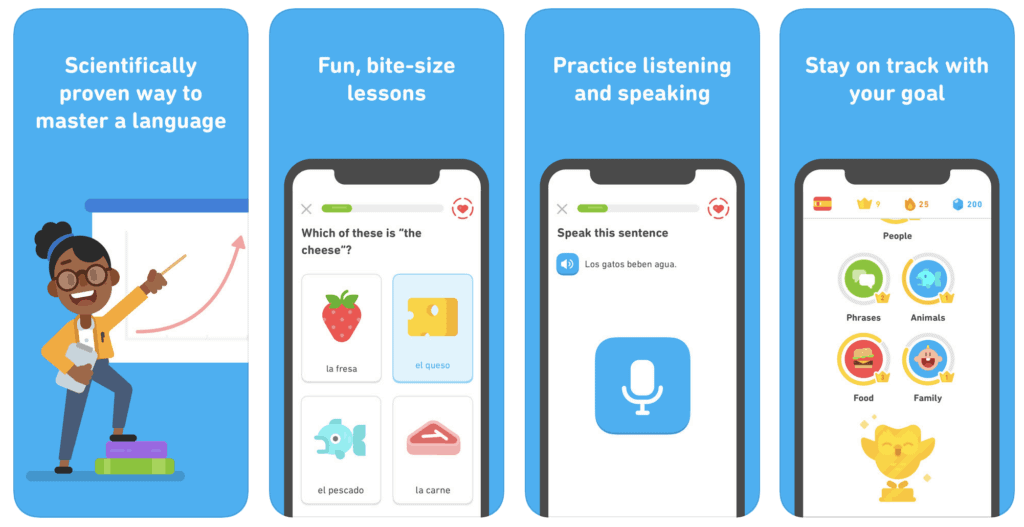
Duolingo
Probably the most well-known and one of the best language learning apps out there. It offers courses in 30 languages and is free up to a point.
The paid version ($9.99/month) removes ads and lets you download lessons for offline use, plus unlocks a range of extra materials. It’s very beginner-friendly and doesn’t require any prior knowledge of another language to get started.
Mondly
The Mondly app is free up to a certain level and focuses on practising real-life communication situations — restaurants, shopping, and so on. What put us off was that it still has some rough edges, and when we were learning Spanish we spotted a fair few translation errors. That said, they do occasionally offer significant discounts on bundles covering all 33 languages at once.
Memrise
This app goes beyond language courses and covers other subjects too. We’d recommend it primarily for building vocabulary. It’s genuinely addictive, and you’ll even find specialist content like IELTS vocabulary courses.
What we love about Memrise is that it applies scientific principles of memory retention to the learning process. The downside is that it can take ages to find a solid, well-structured course.
The app also has a review function to help you revisit vocabulary you’ve already learned. Each day you pick up 5 new words in around 5 minutes — that’s 150 new words in a month. There’s a free tier, but the PRO version is well worth the $2.50/month.
Pros of Language Learning Apps
- Mobile app (usually with a desktop version too)
- Free up to a point
- Fun and easy to use
- Great for expanding vocabulary
- Effective for daily practice
- Suitable for everyone
Cons
- Fragmented learning — not a complete language course on their own
- Not enough on their own — need to be combined with a course or other study
- Usually require an internet connection
Who Are Language Apps Best For?
Anyone who’s already following a structured course and wants to reinforce their vocabulary and grammar on the go.
4) What Worked Best for Us: Online Language Courses
I’ll be honest — I was sceptical about online language courses at first. But two months in, I’m a complete convert and recommend them to everyone I meet. I just wish we’d tried them sooner. Why? The best online courses combine everything that’s good about self-study books, traditional classes and apps — all in one place. We’ve also written a detailed review of Onlinejazyky.cz if you want the full breakdown.
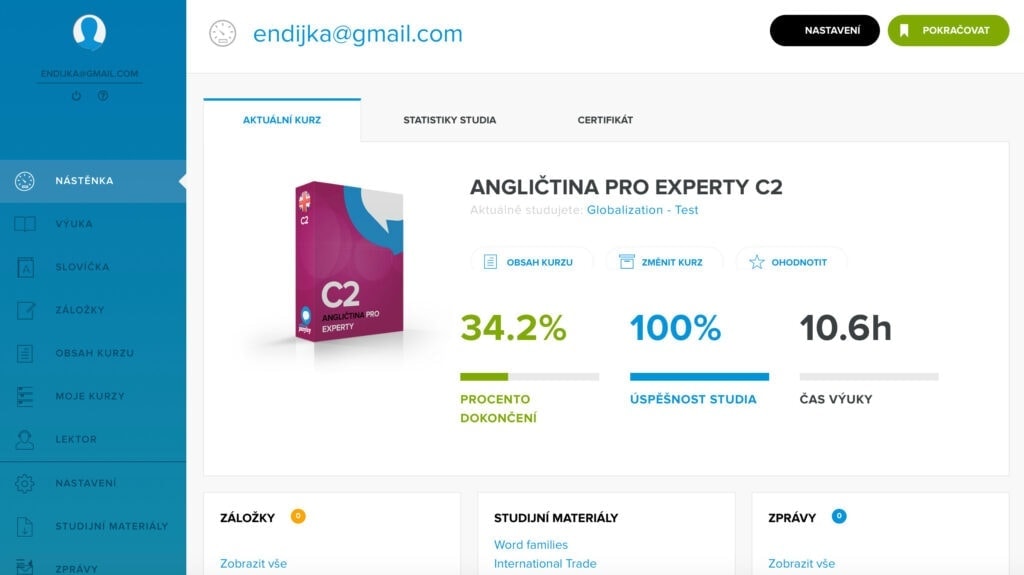
You can try Onlinejazyky.cz for free before committing. The learning is systematic, enjoyable and built on real memory science.
There’s no extra prep required — no writing out vocabulary lists or travelling anywhere. Just sit down for 20 minutes a day at your computer (or on the mobile app) and work through the course. There’s a dedicated vocabulary review section, and you can track your progress easily. With the iOS and Android app, you can genuinely learn anywhere.
I also love the money-back guarantee — if you’re not happy with the course, you get a refund. Quality isn’t a concern though: the methodology and course content are built in line with the Common European Framework of Reference for Languages and the international corpora of the Universities of Cambridge and Oxford. There’s also a placement test at the start, which most apps don’t offer.
What Courses Does Onlinejazyky.cz Offer?
Everything from complete beginner to advanced. You can learn English, German, French, Spanish, Italian and Russian. There are specialist English courses for travellers, designers and healthcare professionals, as well as courses for children and students preparing for exams.
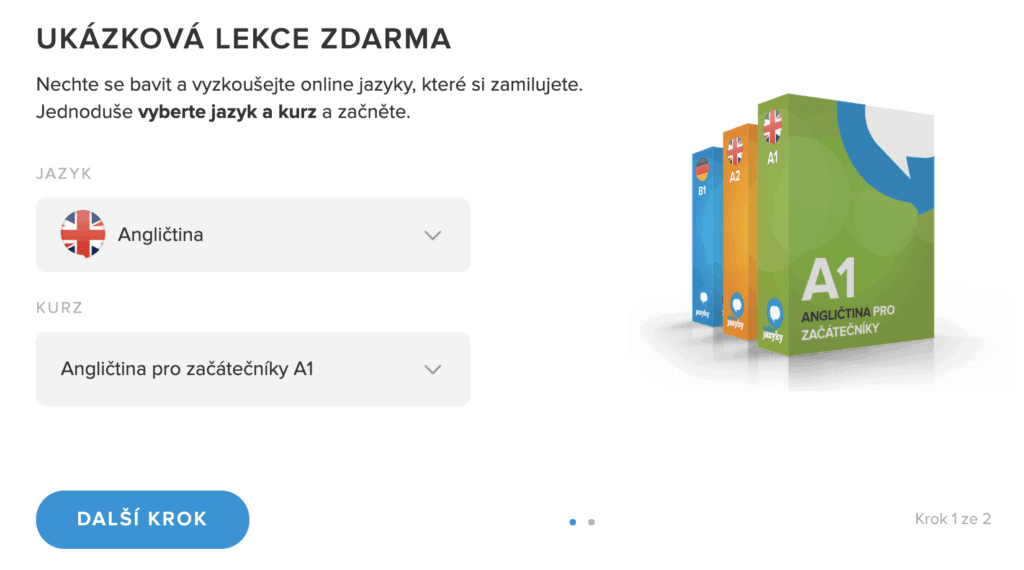
Cost: Courses start from around 36 €, with the average course coming in at around 100 €. Spread over a month of daily learning, that’s less than the cost of a single private lesson or one session at a language school.
Pros of Online Language Courses
- Self-paced, individual study
- Great value for money
- Fun and engaging
- Effective — just 20 minutes a day
- Progress tracking
- Placement test included
- Automatic spaced repetition built in
- Option to add a conversation club
Cons
- Requires an internet connection
- Conversation club only available for English learners
Who Are Online Courses Best For?
Anyone with an internet connection, really. What we love most is being able to study while travelling without lugging textbooks around.
5) Self-Study Language Textbooks — Which Is Best?
Reading back through everything I’ve tried, I honestly think I should be fluent in at least five languages by now. 😄
For self-study textbooks, I personally got on best with those published by LEDA — I tried their French, German and Polish editions. They’re brilliantly structured, come with audio lessons on CD and include a separate exercise workbook.
Honestly, I found self-study textbooks more enjoyable than group classes. I like learning at my own pace and hate feeling put on the spot. That said, they’re nowhere near as effective as a good online course — they require far more self-discipline and motivation to keep going.
Most LEDA titles are readily available on Amazon or other online book retailers at reasonable prices.
Cost: From around 8 €
Pros of Self-Study Textbooks
- Excellent value for money
- Comprehensive language coverage
- Low-pressure learning
- Good for beginners
Cons
- Requires a lot of self-motivation
- Not exactly thrilling
- Lots of manual effort (writing out vocab, checking exercises yourself)
- Not personalised to you
- Not ideal for travel
- Audio is on CD — not exactly convenient in 2024
Conversation Practice — How to Start Speaking via Video Call
The best way to get speaking is to go abroad and leave yourself no choice but to use the language. That’s exactly how I finally started speaking — during our time in Canada. You quickly realise that not everyone speaks your language perfectly either, and making mistakes is completely normal. Mistakes are how we learn, after all. If travelling isn’t an option right now, there are still good alternatives. You could join a conversation class, hire a native-speaker tutor, or try the app italki.
On italki, you can book sessions with professional language teachers, or use the community section to find a language exchange partner — someone you practise with over video call. Alternatively, sign up for an online conversation club. If the idea of looking silly in front of a professional makes you nervous, I’d suggest starting by practising conversation for free with other learners first.
Final Thoughts
If you’ve made it this far, you’ll have gathered that online courses come out on top for us. So before you spend money on anything else, give a free trial a go. Maybe they won’t be right for you — everyone’s different — but you’ve got nothing to lose by trying. Go on, give it a shot!
Break Through Your Mental Block
My second piece of advice: speak. Yes, that’s coming from someone who a few years ago was terrified to open her mouth, couldn’t bear to make phone calls and felt physically sick at the thought of speaking in a foreign language. These days I can deliver an 8-hour presentation without a second thought. The only thing that changed was pushing through that block once, twice, three times — each time it got a little easier, until one day I realised it didn’t bother me at all. In fact, I now actually prefer presenting in English to doing it in Czech.
Third Tip: Language Learning Should Never Feel Like Torture
My mum spent years trying to learn English. Even after attending evening classes for several years, she was afraid to speak. I never heard her string more than a single sentence together. Then one Christmas, when our friends from Canada came to visit, she completely blew me away. The classes had been stressing her out, and she’d carried that anxiety into the language itself. Everything changed when she started learning with a friend she felt comfortable around.
Within a few months she’d progressed so much that the moment we opened the door, she launched straight into conversation — joking around and chatting with our friends the entire time they were there. My brother and I just stood there with our mouths open. Learn in whatever way suits you. Language learning should never stress you out. And don’t be afraid to try — most people genuinely appreciate the effort, even if you’re not perfect.
Good luck — and I’m off to practise my Spanish. If you’ve got any extra tips or tricks, drop them in the comments below!
Can You Learn a Language in 4 Weeks?
It’s absolutely possible to make solid progress in a foreign language in four weeks — but you need to study every single day. In that time, you should be able to hold your own in a restaurant, at an airport, in a shop or at a hotel. Don’t expect to sound like a native speaker overnight.
So how do you do it? My personal recommendation is to try Onlinejazyky.cz. Lukáš learned enough Spanish with them that we barely needed English during our time in Mexico. The key is at least 20 minutes every day — and if you’re really serious about it, two sessions of 20 minutes with a proper break in between.
Alongside the course, start listening to music in your target language and try to focus on the words. I’d actually recommend this over watching films with subtitles — most people end up just reading the subtitles and tuning out the audio entirely. That said, if there’s a TV series you know practically word for word in English, it’s worth rewatching it in your target language.
Tips and Tricks for Your Vacation
Don’t Overpay for Flights
Search for flights on Kayak. It’s our favorite search engine because it scans the websites of all airlines and always finds the cheapest connection.
Book Your Accommodation Smartly
The best experiences we’ve had when looking for accommodation (from Alaska to Morocco) are with Booking.com, where hotels, apartments, and entire houses are usually the cheapest and most widely available.
Don’t Forget Travel Insurance
Good travel insurance will protect you against illness, accidents, theft, or flight cancellations. We’ve had a few hospital visits abroad, so we know how important it is to have proper insurance arranged.
Where we insure ourselves: SafetyWing (simple monthly subscription) and TrueTraveller (for extra-long trips).
Find the Best Experiences
Get Your Guide is a huge online marketplace where you can book guided walks, trips, skip-the-line tickets, tours, and much more. We always find some extra fun there!


