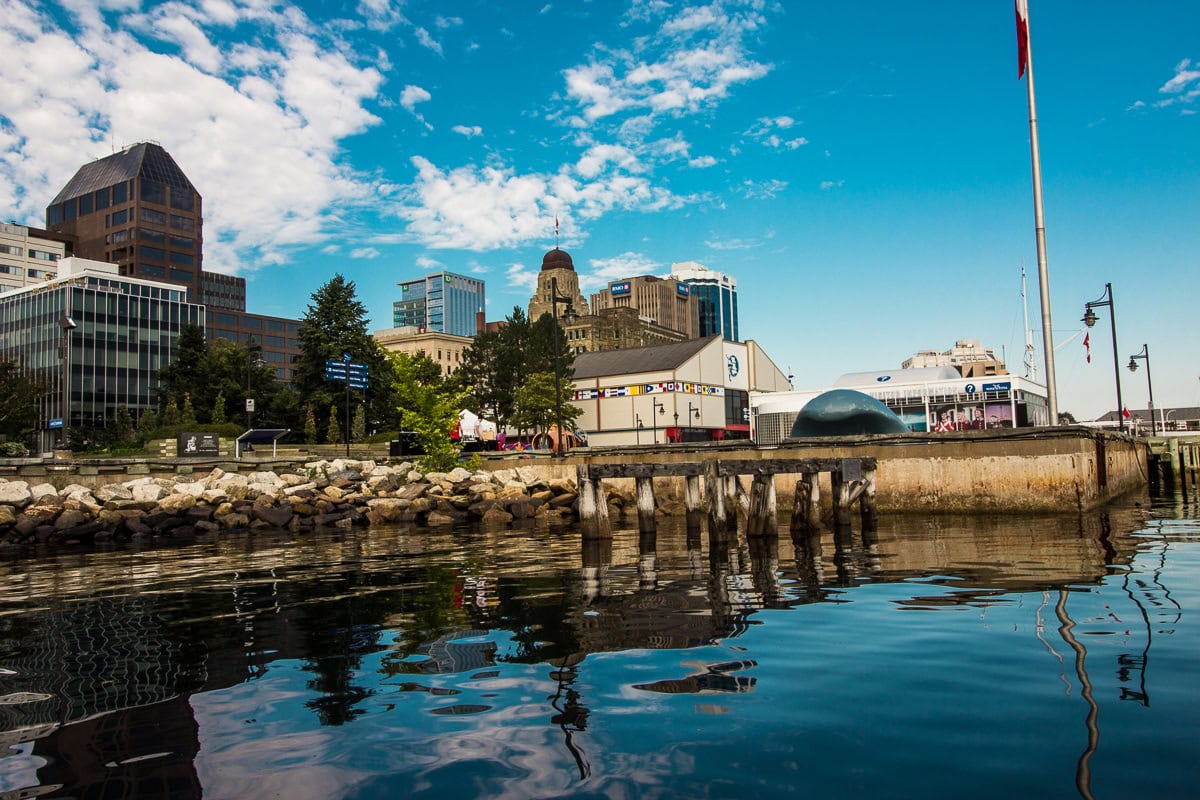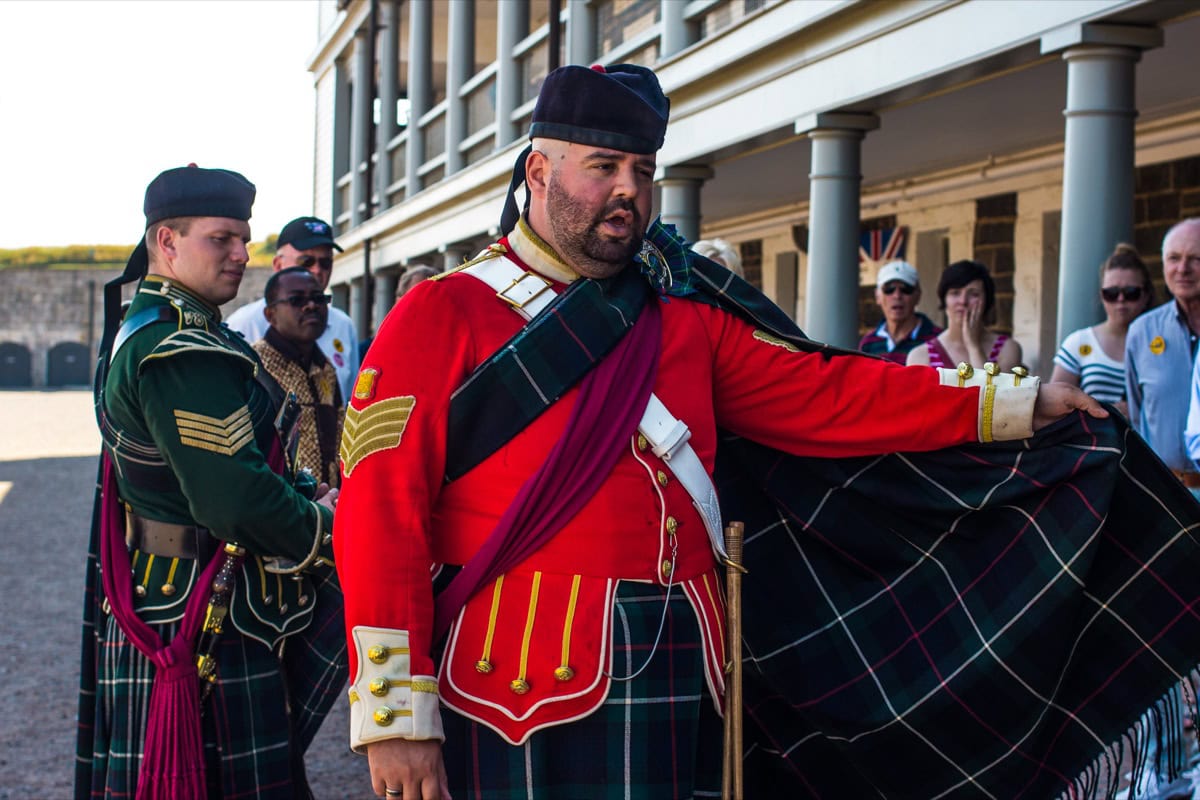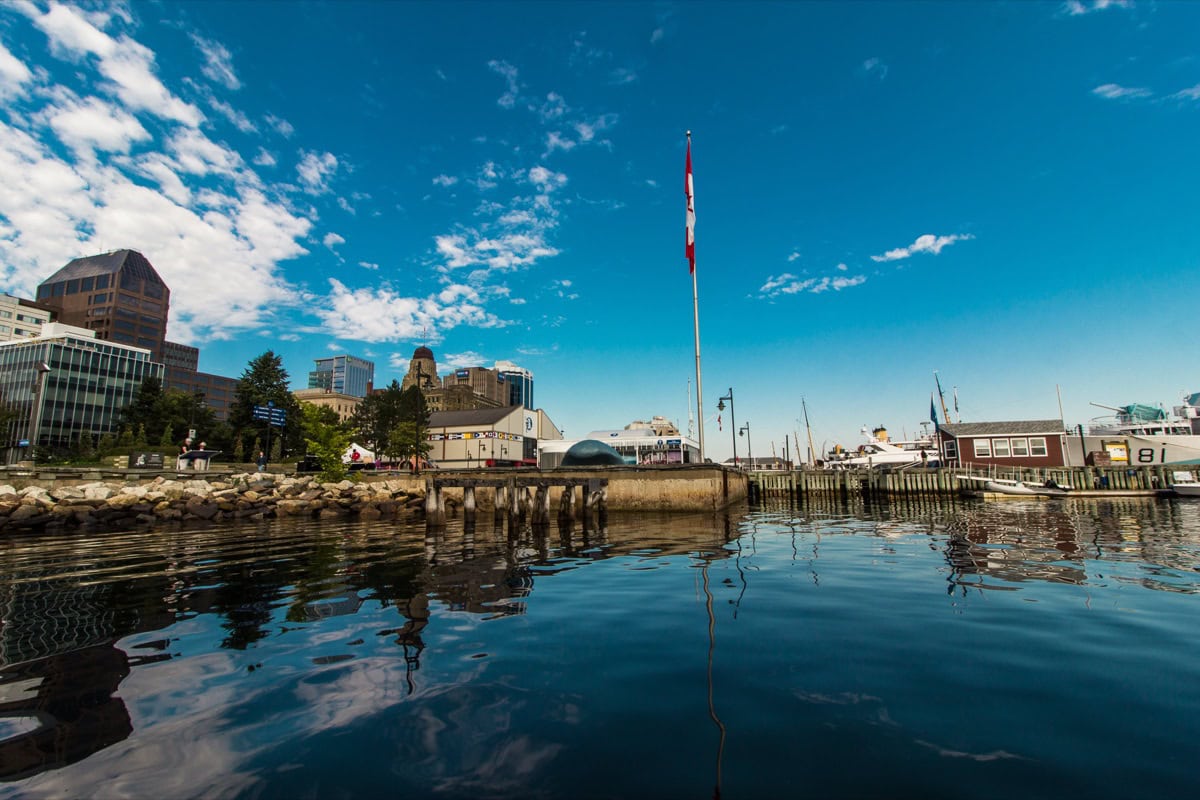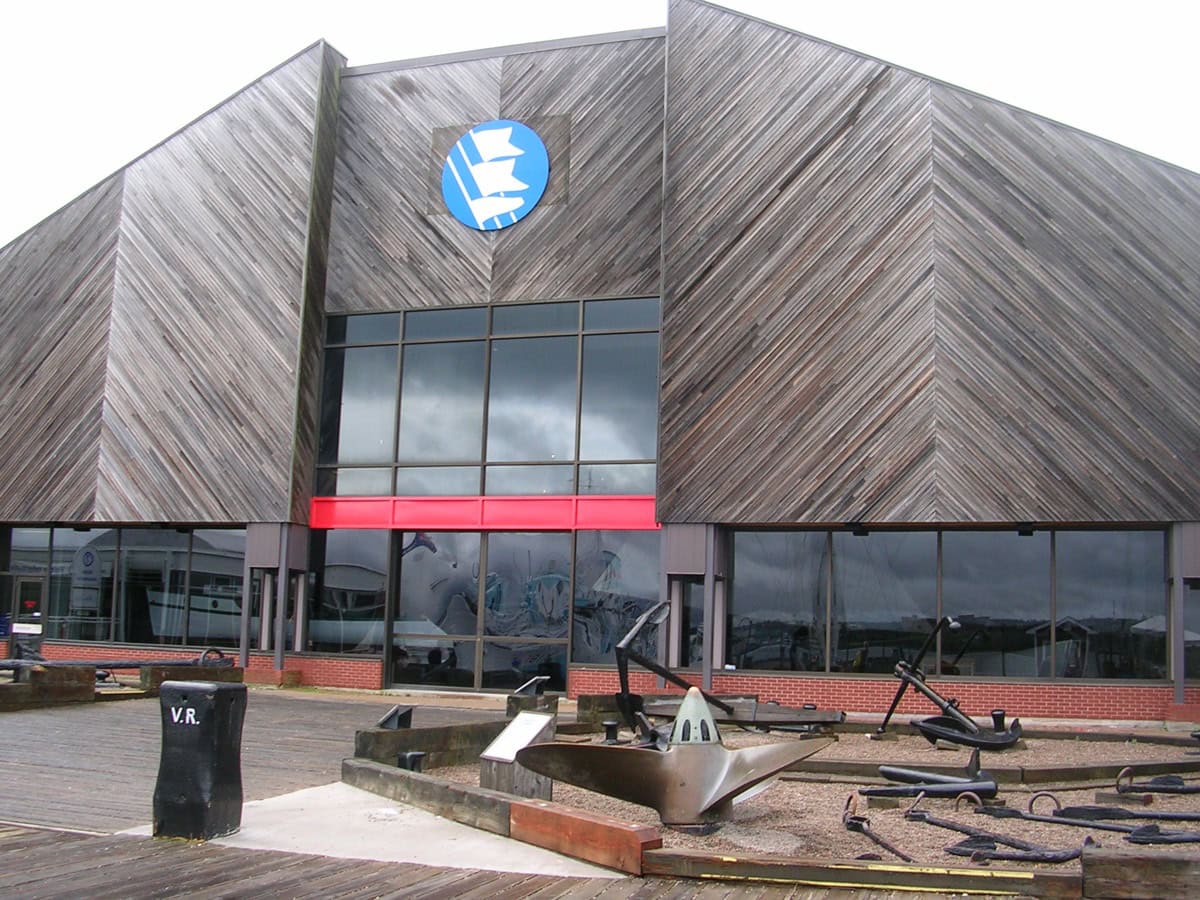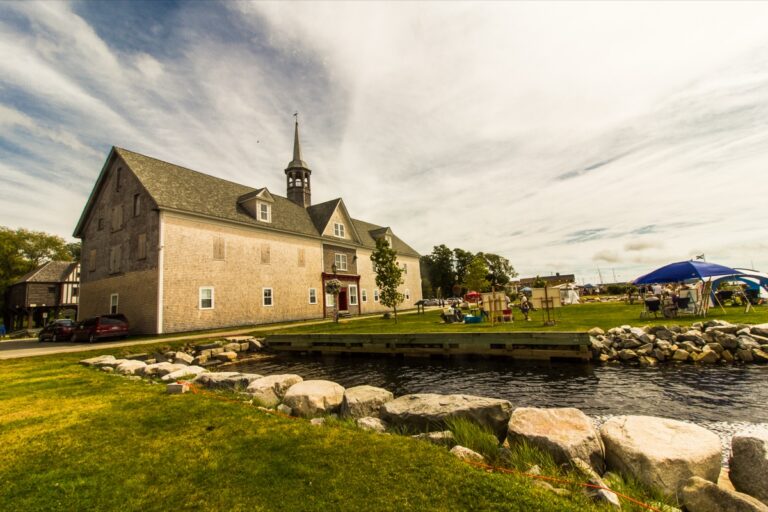
Mahone Bay, Nova Scotia: 15 Things to See and Do in Canada’s Most Charming Town

TL;DRMahone Bay is a picture-postcard town on Nova Scotia’s south shore, home to fewer than a thousand people and famous for its three churches (Lutheran, Presbyterian, Baptist) reflected in the bay — one of the most photographed scenes in Canada. Half a day to a full day is enough to see it, though you could easily spend two, especially combined with nearby Lunenburg (a UNESCO site) just 10 minutes away by car. June to October is the best time to come, and October brings the popular Scarecrow Festival. It’s a 1 to 2 hour drive from Halifax (100 km), B&Bs run 100–260 CAD a night, and top things to do include kayaking on the bay, wandering Main Street’s craft galleries, and stopping by the Amos Pewter workshop.

Some places look so impossibly perfect that you’d swear someone created them in Photoshop. Mahone Bay Canada is exactly that kind of place. Three white churches reflected in the still waters of the bay, a row of colourful houses with porches where locals sit sipping their morning coffee, and the scent of salty air mingling with lavender from the gardens all around. When Lukáš and I first rolled into town during our Nova Scotia road trip, we planned to stop “for an hour.” We didn’t leave for three days. 😅

Mahone Bay is a tiny town on the south coast of Nova Scotia — fewer than a thousand people live here — and yet it has this extraordinary ability to pull you in completely. It’s a place where time slows down and you suddenly find yourself spending two hours browsing handmade ceramics, then another hour choosing lavender soap, and finally sitting in a café overlooking the harbour thinking: “What if we just moved here?”

In this article, you’ll find 15 things to see and do in Mahone Bay — from the iconic Three Churches view and artisan galleries to kayaking in the bay and hidden gems most visitors never discover. I’ll tell you the best time to visit, where to stay, how much it all costs, and how to combine Mahone Bay with nearby Lunenburg for the ultimate South Shore experience.
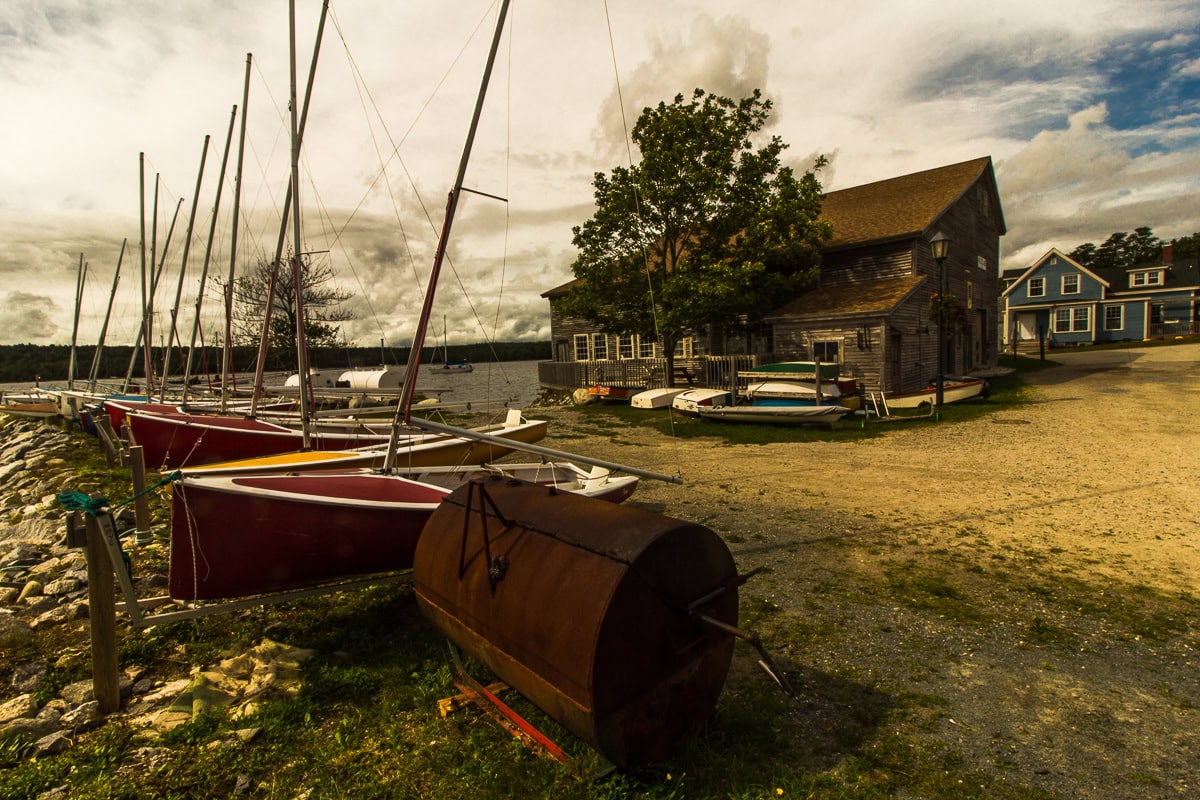
Historic wooden buildings and sailboat in Mahone Bay harbour

TL;DR

  • Mahone Bay is a small town on Nova Scotia’s South Shore, famous for three churches on the waterfront — one of the most photographed scenes in all of Canada.
  • The best time to visit is June through October. Summer offers great weather for kayaking and beaches, while autumn brings spectacular foliage and festivals (including the famous Scarecrow Festival in October).
  • Half a day to a full day is enough for Mahone Bay, but you could easily spend two — especially if you like to slow down, browse galleries, and get out on the water.
  • Combine it with Lunenburg, just 10 minutes by car. Together they make a perfect weekend getaway.
  • Accommodation runs from about €70 to €185 per night (100–260 CAD) — mostly B&Bs and historic inns.
  • Main Street is a paradise for craft lovers — ceramics, jewellery, quilts, lavender, chocolate, all locally made by hand.
  • Getting here is easiest by car — it’s about an hour’s drive from Halifax via the scenic Route 103 or the more picturesque Route 3.
  • Kayaking in the bay is a must-do — the best way to see the Three Churches from the water and explore the surrounding islands.
  • Parking is free and you can walk the entire town in about an hour.

When to visit Mahone Bay and how to get there

Mahone Bay is technically accessible year-round, but let me be straight with you — outside the season, most shops and restaurants will be closed and the town feels a bit like an abandoned film set. Beautiful, but quiet. The best time to visit is from June to October, and each season has its own charm.

Best months to visit

June and early July are ideal if you want to experience Mahone Bay without the crowds. The weather is pleasant (around 18–22 °C), everything is open, and Main Street is blissfully peaceful. We were here in late June and practically had the town to ourselves — no queues at restaurants, no crowds in galleries, just pure relaxation.

July and August are peak season. Temperatures climb to around 25 °C (which is a luxury for Nova Scotia, trust me), and you can swim, kayak, and enjoy various summer events. But expect more people — especially on weekends, when Haligonians flock here for day trips. That said, even at its busiest, Mahone Bay remains far quieter than Lunenburg, so there’s no need to panic.

September and October are, in my opinion, the absolute sweet spot. Indian summer in Nova Scotia is something everyone should experience at least once — crimson maples, golden birches, amber oaks, all reflected in the bay. In October, the famous Scarecrow Festival fills the entire town with hundreds of handmade scarecrows. It’s so adorable it almost hurts. 😁

November to May — if you visit off-season, expect many businesses to be shut. On the flip side, you’ll have the place entirely to yourself, and if you’re after solitude, a good book, and a view, it can be surprisingly beautiful. Just pack warm layers — winters on the coast are windy and damp.
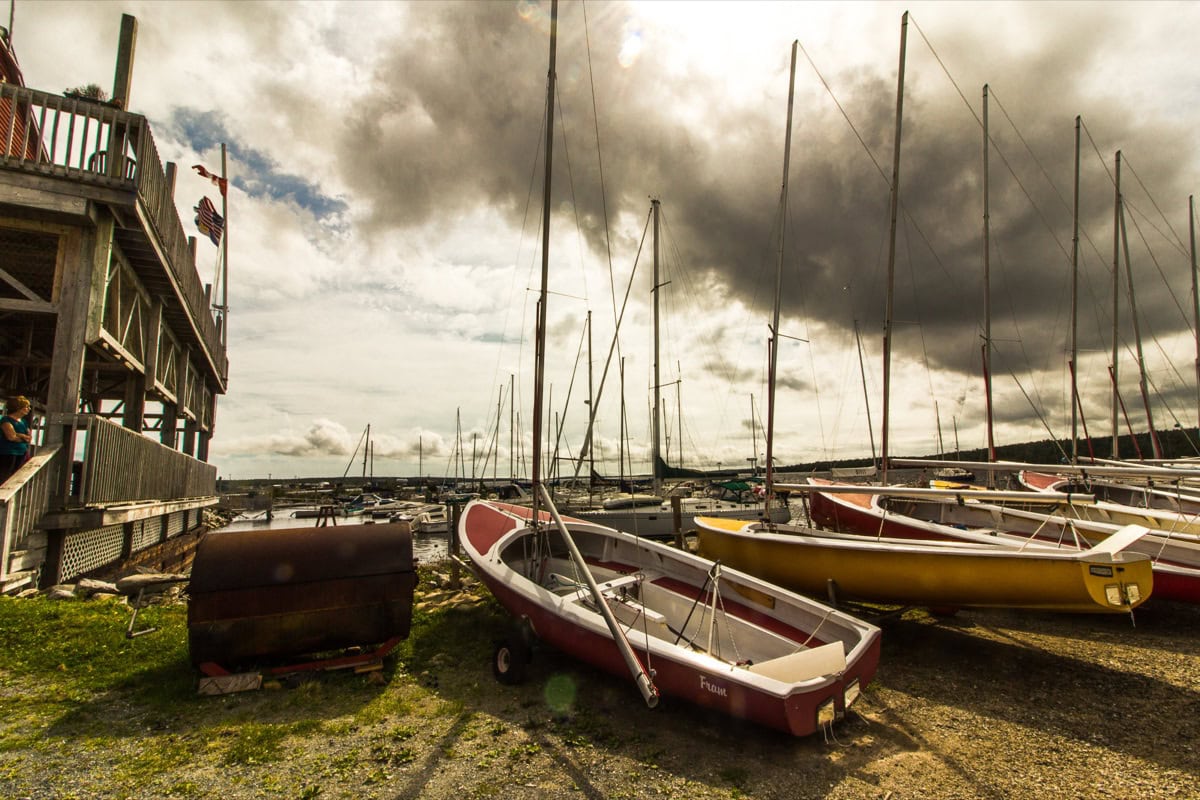
Historic Mahone Bay harbour with sailboats

How to get to Mahone Bay

By car from Halifax is the simplest and most scenic option. You have two choices:

  • Route 103 (motorway) — faster, about 1 hour. Straightforward and comfortable.
  • Route 3 (Lighthouse Route) — slower but absolutely stunning coastal road, about 1.5–2 hours. It passes through Peggys Cove (another iconic Nova Scotia landmark), Chester, and other seaside villages. If you have time, take this route at least one way.

You can hire a car right at Halifax airport. Lukáš and I have had consistently great experience with DiscoverCars, which we use everywhere around the world — it compares offers from all rental companies and we almost always find the best price there. For Nova Scotia, expect to pay around 50–80 CAD per day (roughly €35–55).

Without a car, things get tricky. There’s no regular bus service from Halifax to Mahone Bay — Maritime Bus runs to Bridgewater, but you’d need to find onward transport from there. Occasional shuttles head from Halifax towards the South Shore, but they’re not reliable. Honestly? You need a car for this part of Nova Scotia. The whole South Shore is best experienced as a road trip.

If you’re planning a bigger loop around Canada, check out our guide to road-tripping western Canada — it’s a different part of the country, but you’ll find loads of useful tips for planning Canadian road trips in general.

Parking in Mahone Bay is easy and free. You’ll find the main car park by the wharf and along Main Street. Even in peak season, we never had trouble finding a spot — the town simply isn’t big enough for parking wars.

Where to stay in Mahone Bay and how much a South Shore holiday costs

Mahone Bay is tiny, so you won’t find big hotel chains or all-inclusive resorts here. And that’s actually its greatest charm. The accommodation has real character — historic B&Bs, cosy inns, renovated fishermen’s cottages, and a handful of gorgeous Airbnbs with bay views. Prices range from about €70 to €185 per night (100–260 CAD), with the upper end during peak season (July–August) when you’ll want to book well in advance.

Where to sleep in Mahone Bay

Right in town, there are a few lovely options, most of them historic homes converted into B&Bs. You’ll typically get a room with wooden floors, handmade quilts (they take quilting seriously here), a home-cooked breakfast, and a host who’ll point you to spots no guidebook covers.

Popular choices include Mahone Bay Bed & Breakfast right on Main Street, just steps from everything, or Fisherman’s Daughter B&B with gorgeous harbour views. For something more private, Airbnb has beautiful cottages and apartments — search for “waterfront” or “harbour view” and you won’t be disappointed.

Where to stay nearby (Lunenburg, Chester)

If Mahone Bay is fully booked (which does happen in season), don’t worry. Lunenburg is just 10 minutes away by car and has far more accommodation options — from historic inns in the Old Town (UNESCO!) to modern boutique hotels. Chester is another 20 minutes in the opposite direction and offers elegant B&Bs with an old seafaring atmosphere.

What worked best for us was basing ourselves in Lunenburg (more restaurant options in the evening) and making day trips to Mahone Bay and other spots along the South Shore.

How much does a South Shore Nova Scotia holiday cost

Canada isn’t the cheapest destination, and Nova Scotia is no exception — but compared to Toronto or Vancouver, prices here are noticeably friendlier. Here’s a rough budget for two people over 3 days / 2 nights:

  • Accommodation: 200–520 CAD total (€140–365)
  • Food (eating out twice a day): 150–250 CAD (€105–175)
  • Kayaking: 80–140 CAD (€55–100)
  • Gallery shopping: depends on your self-control 😅 (budget at least 50 CAD)
  • Petrol: 40–60 CAD (€28–42) for the return trip from Halifax
  • Parking: free

Total for two over 3 days: roughly 520–1,000 CAD (€365–700). You can absolutely do it for less — if you self-cater, camp, or visit off-season, you’ll save a significant amount.

💡 TIP: If you’re planning a longer stay in Canada, don’t forget travel insurance. For shorter trips we recommend a standard policy, and for extended travel we’ve had great results with SafetyWing, where you only pay for the days you’re actually travelling. For mobile data, grab an eSIM from Holafly — it saves you the hassle of hunting for local SIM cards.

15 things to see and do in Mahone Bay

Let’s dive into the best that Mahone Bay has to offer. Despite being tiny, there are a surprising number of things to do here — from iconic photo spots and artisan galleries to activities on the water. I’ve numbered the tips in an order that makes sense for a walk through town, but feel free to shuffle them around to suit your mood.

1. Three Churches — the most photographed scene in Nova Scotia
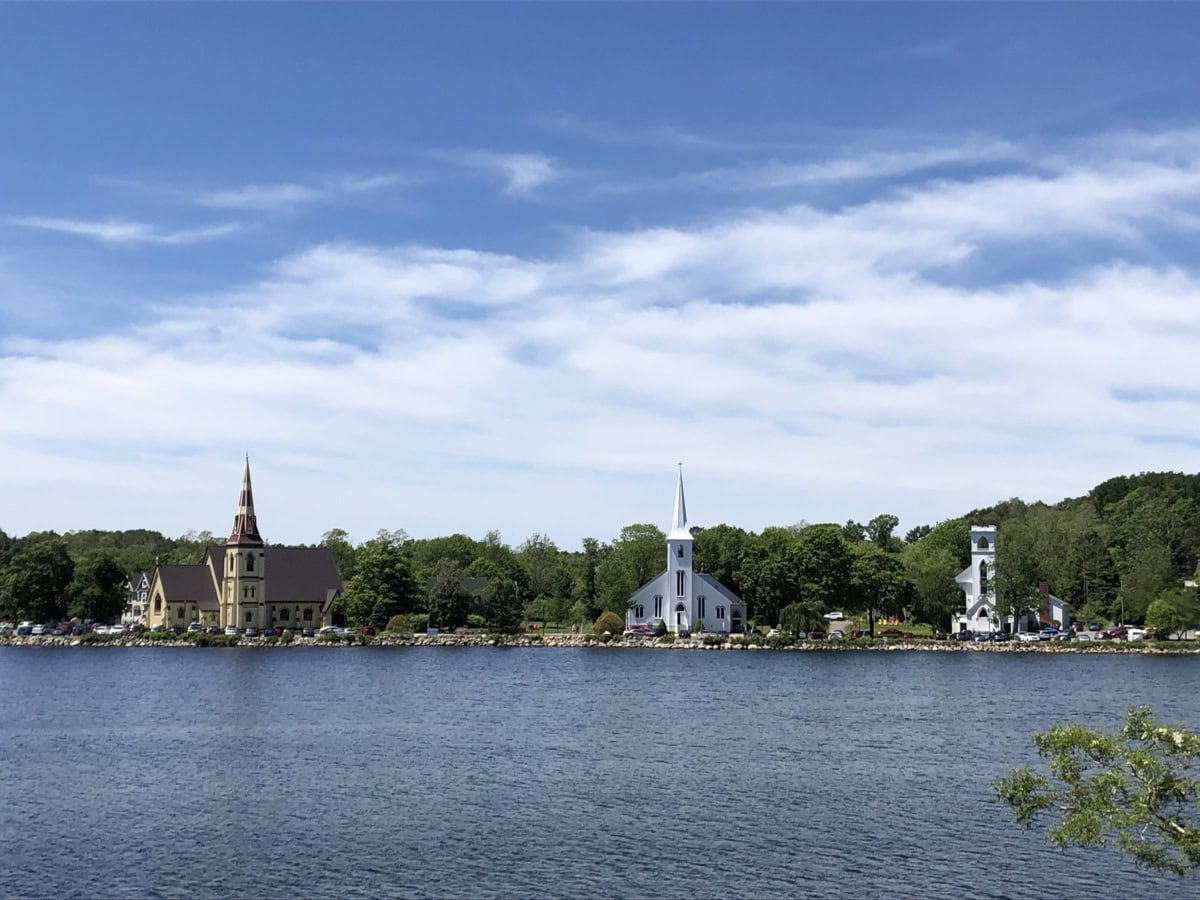
Iconic Three Churches on the waterfront in Mahone Bay
Photo: Paul from Hacketts Cove, Canada / CC BY 2.0 / Wikimedia Commons

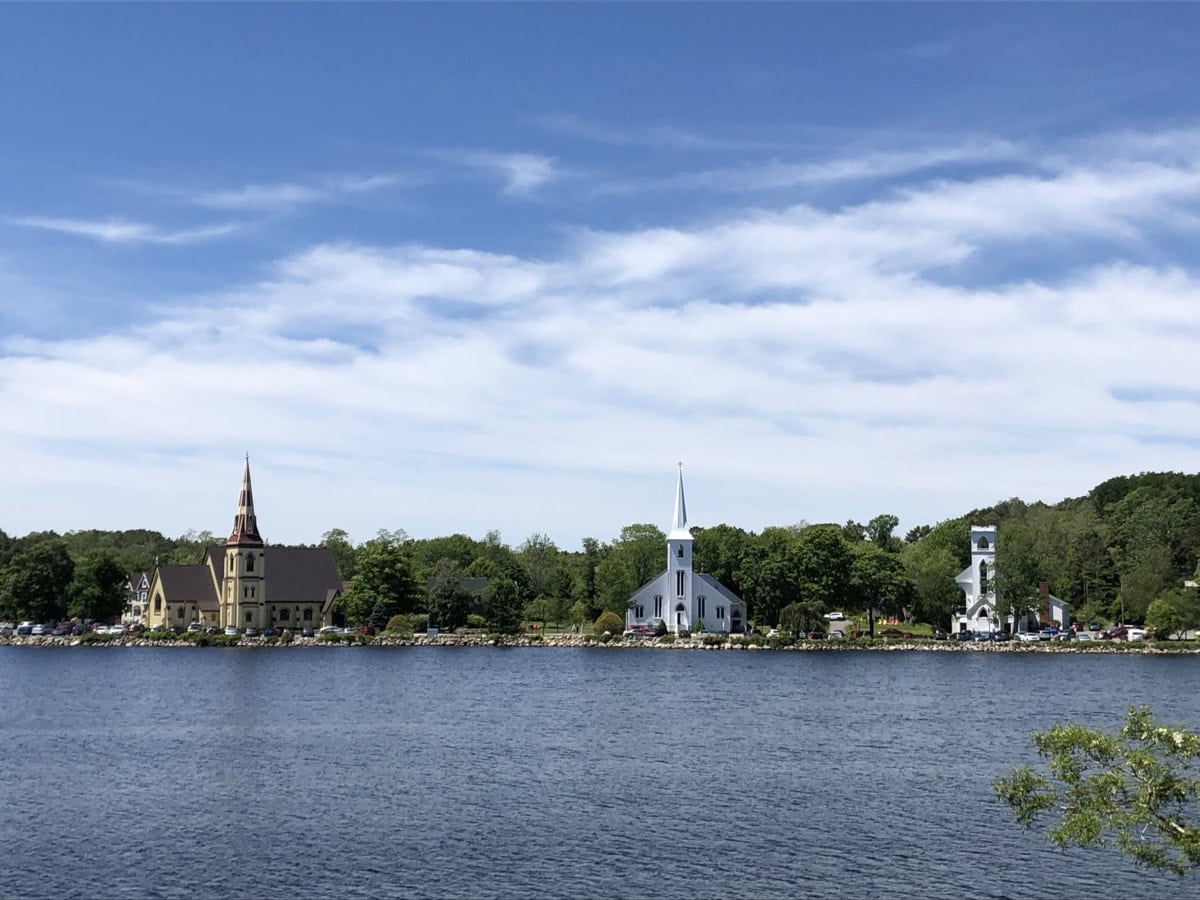
Let’s start with the reason most people come here in the first place. Three churches standing side by side on the shore of the bay — Lutheran, Presbyterian, and Baptist — form a silhouette that graces every other postcard from Nova Scotia. And rightly so. When you gaze at them from the opposite shore or from Route 3 as you approach the town, they look like something straight out of a fairy tale.

The best time for photos is early morning or late afternoon, when the side-lighting makes the churches glow and their reflections shimmer on the water. The classic shot is taken from the viewpoint on Route 3 just before entering town from the east — there’s a small car park where absolutely everyone stops. Another gorgeous angle is from the wharf or right from the water in a kayak.

Fun fact: these three churches have appeared in dozens of films and adverts. The most famous is probably the Hallmark Channel Christmas film “Three Wise Men and a Baby” (2022), which was shot right here in Mahone Bay. So if the town looks vaguely familiar from your telly, you’re not imagining things. 😁

The churches themselves are occasionally open to visitors — mainly in summer and during concerts. St. James Anglican Church (the middle one) regularly hosts chamber music concerts that are well worth attending. But even from the outside, the view is absolutely stunning.

2. Strolling Main Street — a paradise for craft lovers
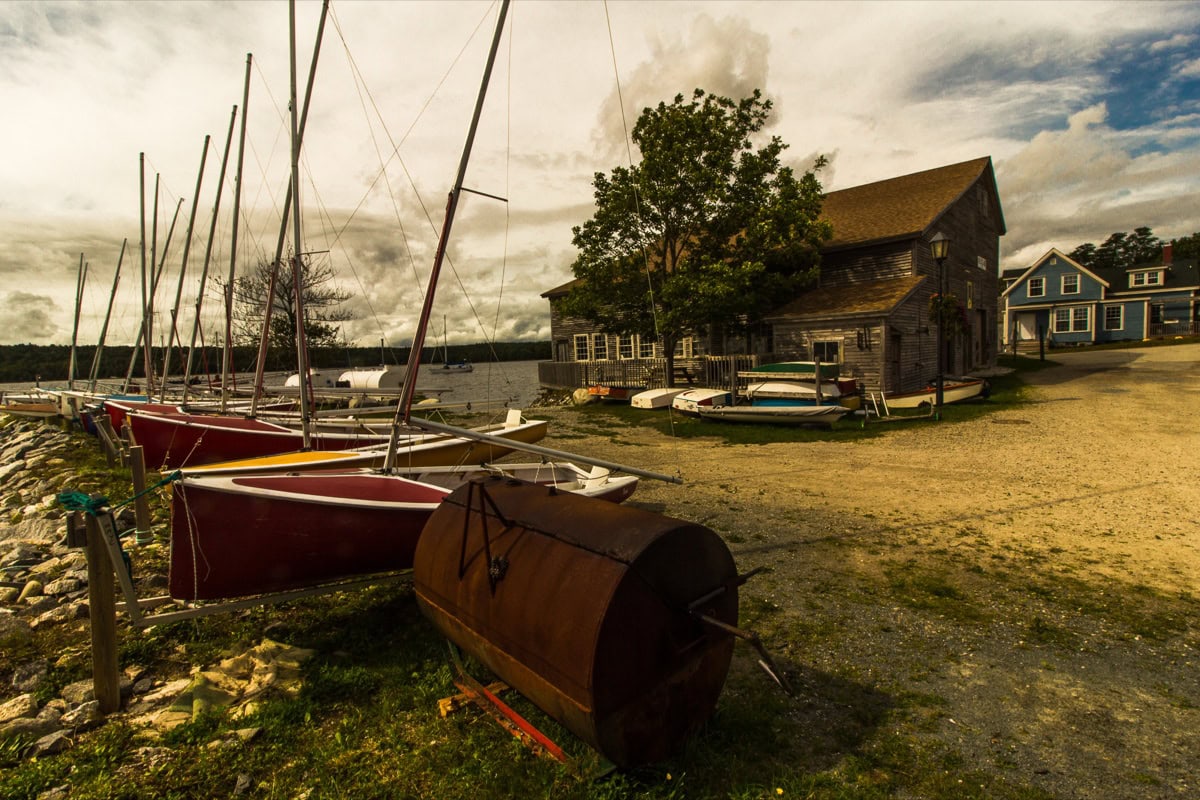
Red shop on Main Street in Mahone Bay

Main Street in Mahone Bay stretches just about 500 metres, but you can easily spend hours here. Dozens of small shops, galleries, and workshops line the street, and most of what’s on offer has been made by local artisans right here on the South Shore. No “Made in China” souvenirs — everything is the real deal.

What surprised me most was the quality and variety. You’ll find handmade ceramics, jewellery crafted from local minerals and sea glass, hand-stitched quilts (quilting is practically an art form in Nova Scotia), lavender candles and soaps, woodcarvings, paintings on canvas and vintage nautical maps, and all manner of things that will have you suddenly realising you NEED an extra suitcase. 😅

There are no chain stores or fast-food joints. The entire street has preserved the character of a 19th-century seaside village — wooden facades in pastel colours, glass-fronted shop windows, little bells on the doors. It’s a bit like stepping into another century, just with better coffee.

3. Amos Pewter — peek inside an artisan workshop
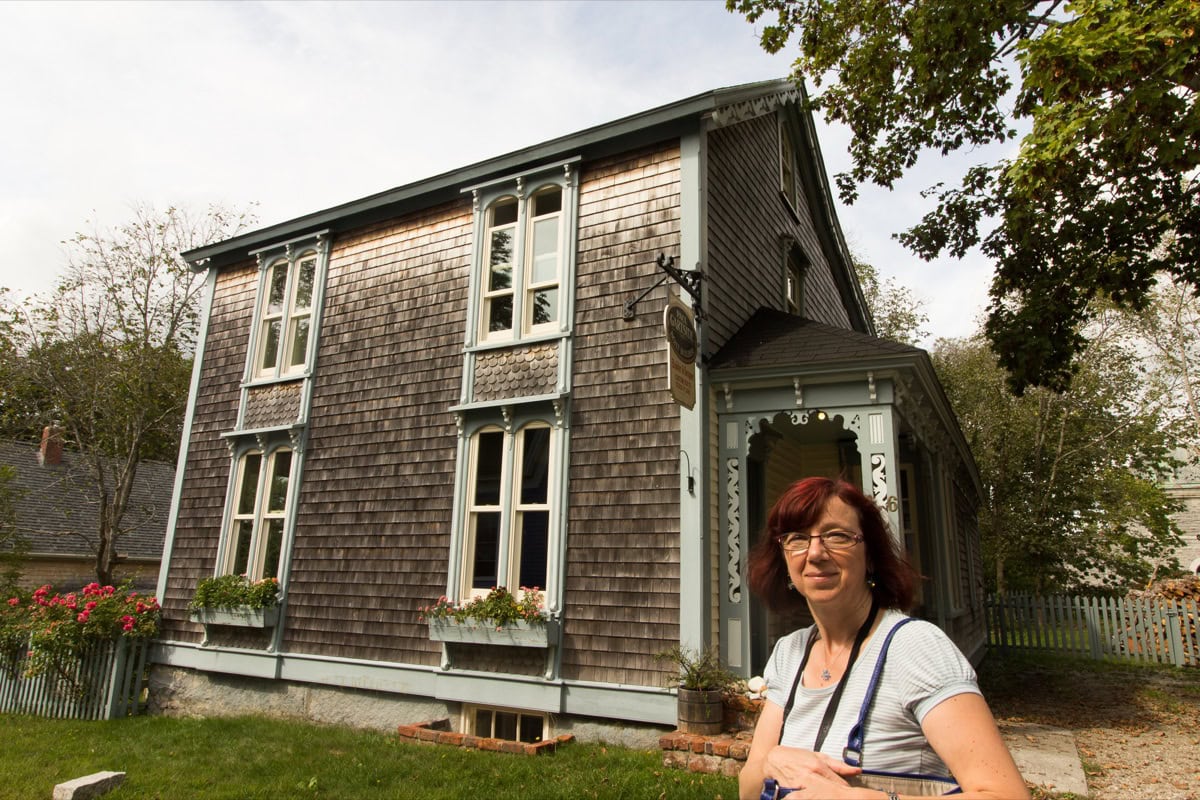
Wooden shingled house in Mahone Bay

Amos Pewter is probably the most famous workshop in Mahone Bay, and it’s well worth a visit even if you’d never normally buy pewter. The Amos family has been handcrafting jewellery, ornaments, bowls, Christmas decorations, and other pieces from pewter here since 1974 — and you can watch the entire process for free in the workshop behind the shop.

Watching a craftsman pour molten pewter into a mould and, within minutes, produce a beautiful pendant shaped like the Three Churches (naturally 😁) is genuinely fascinating. Kids and adults alike end up spending way more time here than planned. The pieces also make lovely gifts — small pendants start at around 15 CAD (about €10), while larger items like bowls or frames run 40–100 CAD.

4. Kayaking the bay — Mahone Bay from the water
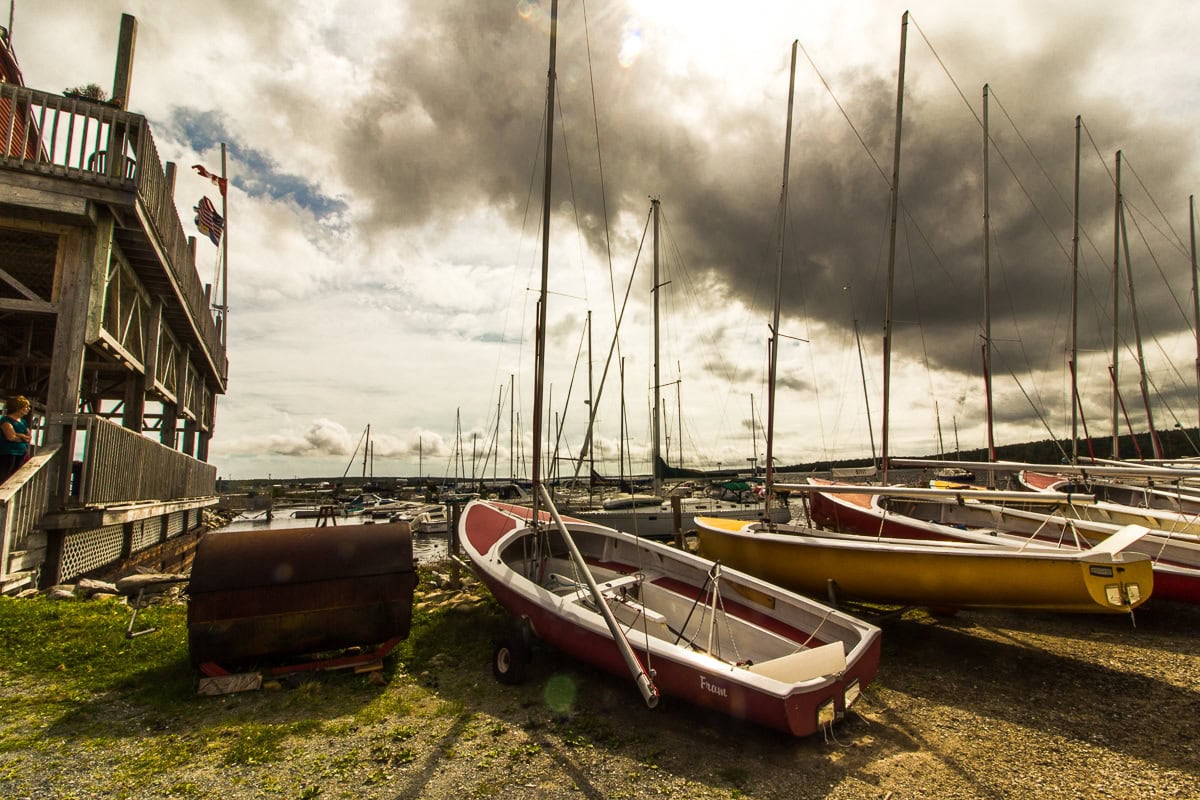
Yachts in Mahone Bay harbour

This is my absolute number one. Seeing the Three Churches from the water is a completely different experience to the view from shore — and the whole bay is ideal for kayaking because it’s sheltered from the open ocean and the water is usually calm. What’s more, there are over 300 islands (yes, three hundred) scattered around Mahone Bay, many of which you can paddle around or stop at.

You can hire kayaks right in town or from a nearby cove. Expect to pay around 40–70 CAD per person (€28–50) for a two-hour rental or guided tour. If you’ve never kayaked before, don’t worry — the bay is calm and guided tours cater to complete beginners.

The most beautiful route leads from the harbour along the coast towards the Three Churches and then out into the bay towards some of the smaller islands. On a clear day, you can see right to the bottom — the water is surprisingly clean. And that moment when you turn around and see the silhouette of the town with the churches behind you… well, that’s the shot that makes the whole trip worthwhile.

5. Mahone Bay Museum — the town’s story in a nutshell
Historic Mahone Bay Museum building on Main Street
Photo: Jim.henderson / CC BY 4.0 / Wikimedia Commons

Small but surprisingly engaging, the Mahone Bay Museum occupies a historic building right on Main Street. Admission is by donation, so you can visit even on the tightest budget.

The exhibition traces the town’s history from the Mi’kmaq First Nations through the arrival of German and French settlers in the 18th century to the shipbuilding era that made Mahone Bay one of the most important boatbuilding centres on the coast. There are ship models, old photographs, maps, and interactive features for children.

The most fascinating part, though, is the story of Oak Island — the mysterious island sitting right in the bay where a pirate treasure is said to be buried. But more on that in tip number 13. 😉

6. Lavender farm — Mahone Bay smells heavenly
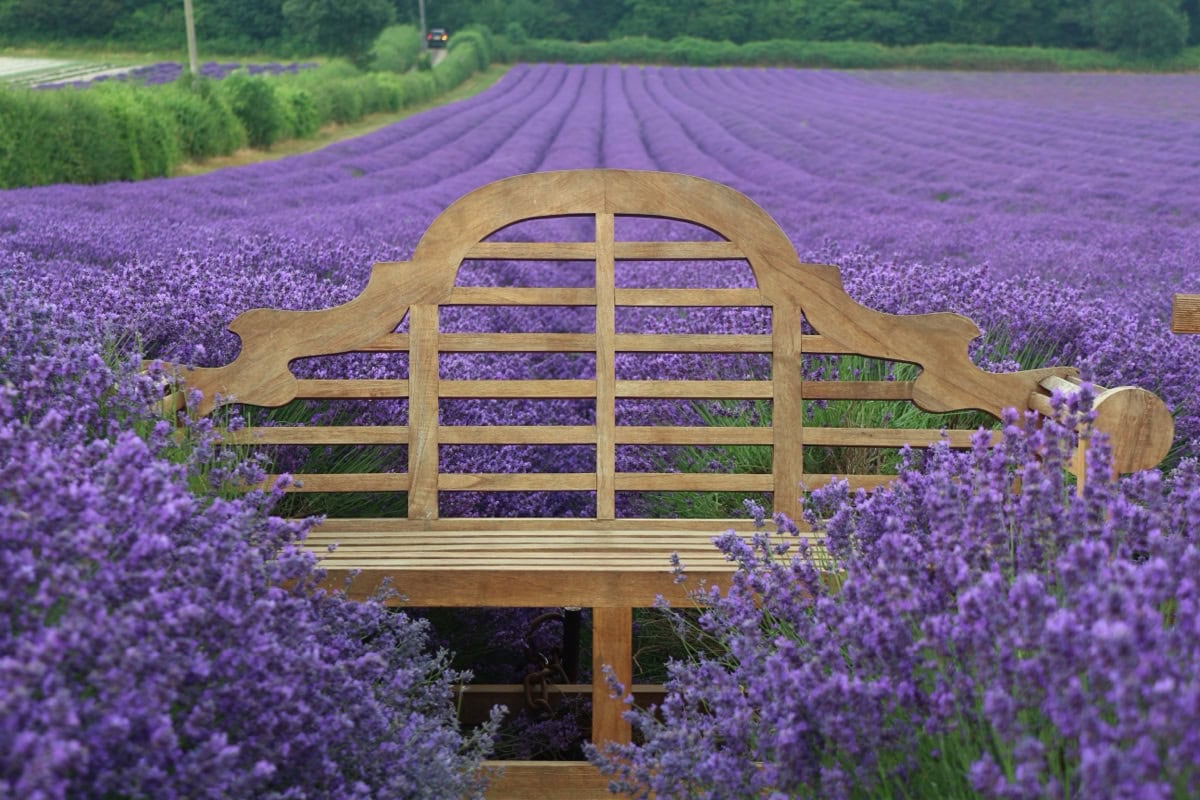
Blooming lavender farm with a wooden bench
Photo: Oast House Archive / CC BY-SA 2.0 / Wikimedia Commons

Just outside town (about a 5-minute drive) you’ll find South Shore Lavender Farm, where fields of blooming lavender stretch out towards views of the bay. The best time to visit is July, when the lavender is in full bloom and the fragrance hits you before you even leave the car park.

The farm is open to visitors, and you can wander the fields, shop for lavender products (oils, soaps, sachets, honey), and simply sit on a bench gazing at the purple carpet with the blue bay beyond. It’s one of those places where you realise that Provence doesn’t have a monopoly on lavender fields. Nova Scotia does it pretty well too. ☺️

7. Jo Beale Gallery — art that captures the soul of the coast

Main Street has plenty of galleries, but Jo Beale Studio & Gallery stands out. Jo paints atmospheric scenes of the Nova Scotia coast — stormy seas, fishing boats, misty harbours — and her work instantly immerses you in that distinctive feeling you get on this coastline. That blend of calm, melancholy, and the raw wildness of the ocean.

Even if you don’t buy a painting (the larger ones run into hundreds of CAD), it’s lovely to browse the gallery and chat with the artists — Jo and the other gallery owners are incredibly friendly and happy to tell you about their inspiration, life on the coast, and how a shipbuilding village became an artists’ enclave. Smaller prints and postcards start from 10–20 CAD, so you can take a piece of Nova Scotia home without breaking the bank.

8. Scarecrow Festival — Canada’s most adorable festival (October)
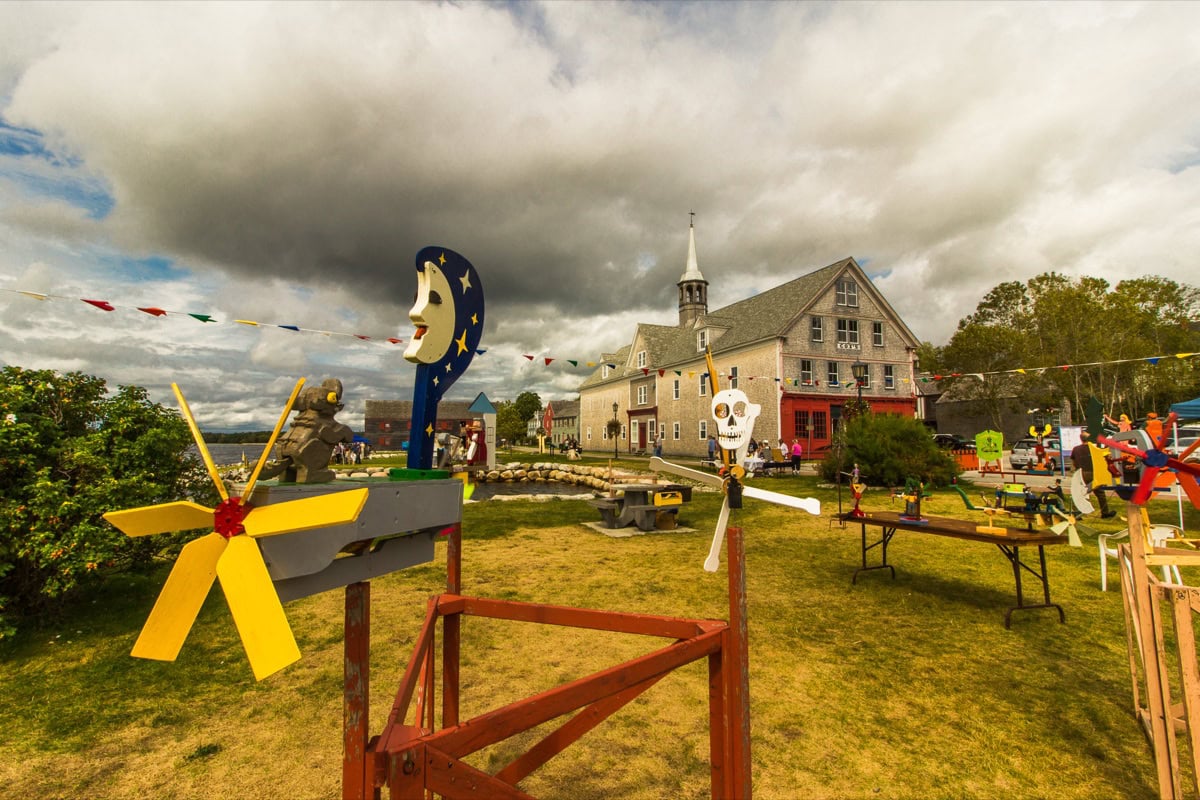
Art installations on the square in Mahone Bay

If you’re in Nova Scotia in October, you absolutely cannot skip Mahone Bay. Every year the town hosts the Scarecrow Festival & Antique Fair — a festival of scarecrows that transforms the entire town into an open-air gallery.

Locals, shops, schools, and organisations create scarecrows in every imaginable guise — from classic farm figures to film characters, politicians, animals, and downright surreal creations. Scarecrows stand in front of every shop, perched on benches, hanging in trees, sitting on rooftops… It’s so photogenic that your phone battery will die before you’ve made it halfway down Main Street.

The festival typically runs during the first two weeks of October and also features an antique fair where you’ll find everything from vintage nautical maps and Victorian porcelain to retro clothing. Entry is free, and the atmosphere is absolutely unforgettable — especially combined with the autumn foliage and the scent of fresh apple cider.

By the way, if you’re planning a Nova Scotia trip in autumn, Mahone Bay is a perfect base for leaf peeping — the surrounding forests are packed with maples and the roads along the bay in October look like something out of a storybook.

9. Lunenburg — a UNESCO gem 10 minutes away
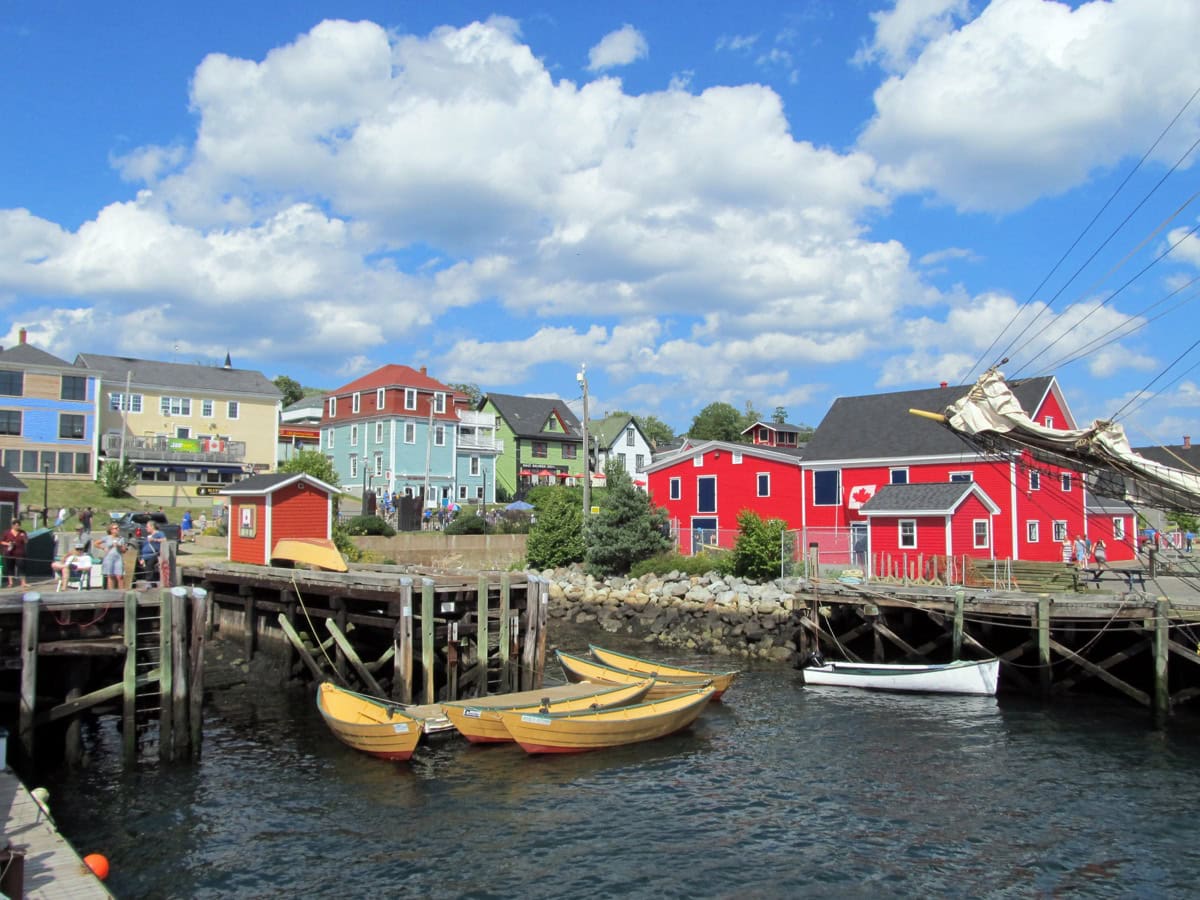
Colourful waterfront of historic Lunenburg
Photo: daryl_mitchell / CC BY-SA 2.0 / Wikimedia Commons

Mahone Bay and Lunenburg are like two sisters — each different, both beautiful, and visiting only one would be a shame. Lunenburg sits just 10 minutes away by car (10 km) to the south, and its historic centre is a UNESCO World Heritage Site.

Where Mahone Bay is charming and artsy, Lunenburg is more dramatic and architecturally striking — colourful colonial houses climbing a hill above the harbour, grand churches, and the famous Bluenose II (a replica of the legendary racing schooner featured on the Canadian ten-cent coin). Lunenburg also has more restaurants and bars, making it ideal for dinner after a day spent in Mahone Bay.

Make sure to explore the Old Town, visit the Fisheries Museum of the Atlantic (brilliant with kids), and let yourself get lost in the lanes of galleries and shops. For lunch or dinner, we’d recommend Salt Shaker Deli or The South Shore Fish Shack — fresh seafood the way it should be on the coast.

💡 TIP: If you have more time, the entire route from Halifax through Peggys Cove, Chester, Mahone Bay, and Lunenburg is known as the Lighthouse Route, and it’s one of the most beautiful road trips in all of Canada. Allow 2–3 days for it.

10. South Shore drive — a coastal road that takes your breath away
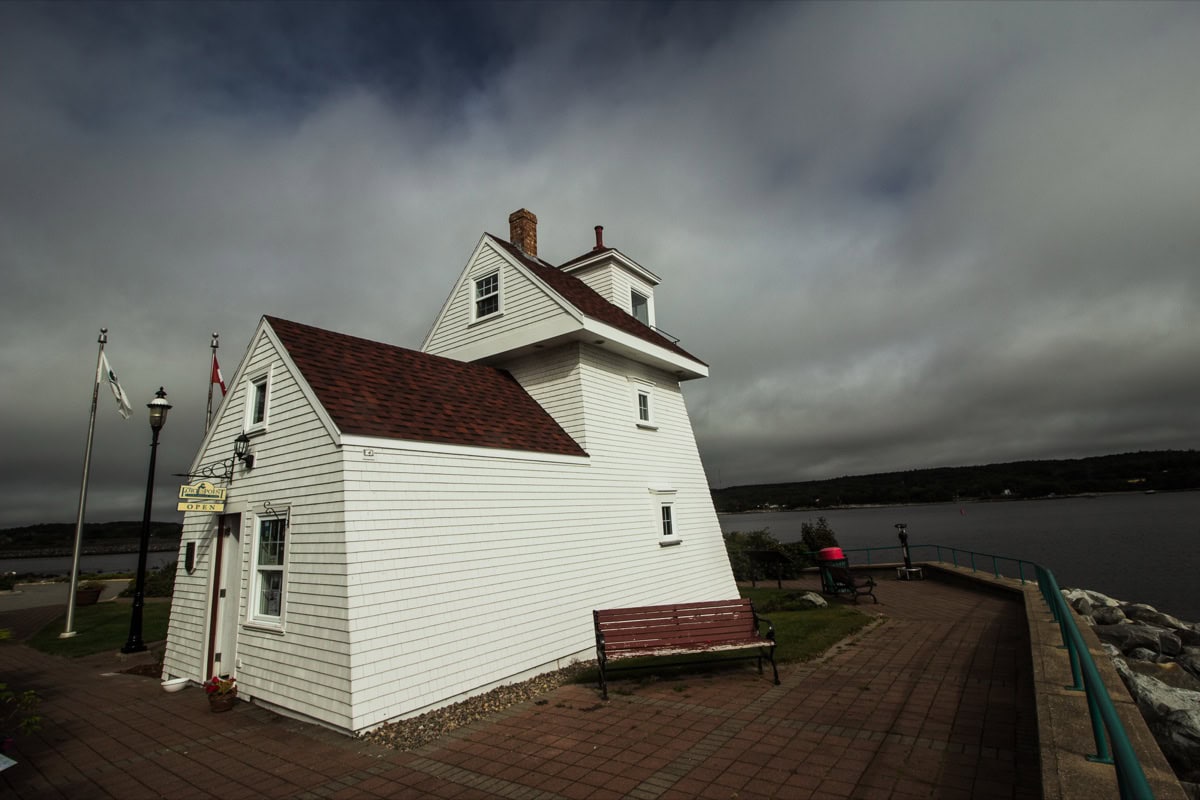
White lighthouse on the South Shore coast

Speaking of cars and roads — the area around Mahone Bay is perfect for slow exploring by car or bicycle. Route 3 (Lighthouse Route) follows the entire southern coast and delivers one stunning view after another: rocky coves, white lighthouses, fishing villages where time has stood still, and the endless Atlantic.

A recommended loop from Mahone Bay:

  • North via Chester — an elegant seaside town with a yachting heritage. Stop for coffee and stroll around the harbour.
  • South via Lunenburg to Blue Rocks — a tiny fishing settlement that looks like an oil painting. Colourful houses, boats on the wharf, zero tourists. One of the best hidden gems on the entire South Shore.
  • Further west to Bridgewater and Liverpool — if you have more time, continue along the Lighthouse Route all the way to Shelburne and Yarmouth.

The whole route is perfect at a leisurely pace — stop wherever takes your fancy and don’t try to cram everything into a single day. This coastline deserves to be savoured.

11. Tasting local wine and cider
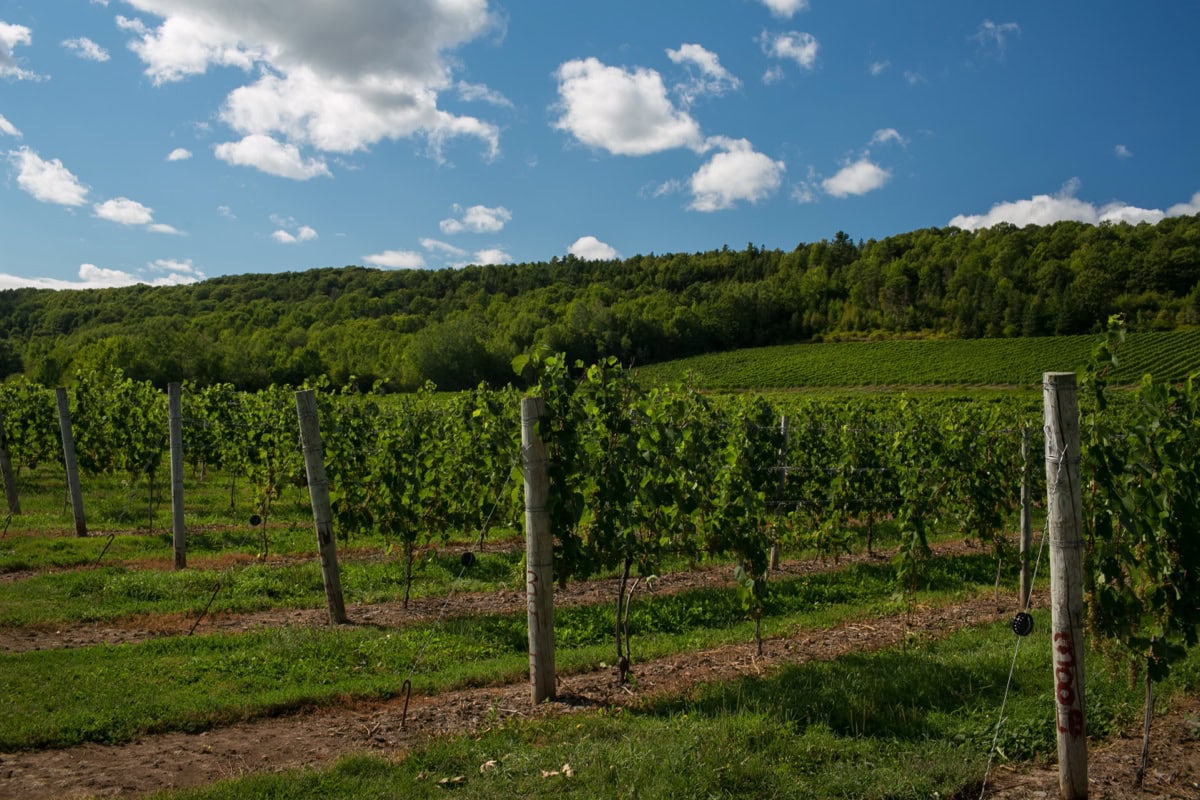
Vineyard and winery in Nova Scotia
Photo: gLangille / CC BY 2.0 / Wikimedia Commons

Nova Scotia has a surprisingly vibrant wine and cider scene, and the Mahone Bay area is no exception. Just a short drive from town you’ll find Petite Riviere Vineyards — a small winery with beautiful vineyards and tastings where you’ll learn how wine thrives in such a northerly climate (spoiler: surprisingly well, especially whites and rosés).

If you prefer cider, there are several small cider houses along the South Shore that press apples from local orchards. The ciders here have an entirely different character to the mass-produced ones you might be used to — dry, complex, often with flavour profiles that will catch you off guard. Tastings usually cost just a few dollars, or are free with a bottle purchase.
lukas a lucka
Lukáš and Lucie recommend
Where to stay in Mahone Bay
3 accommodations recommended for your vacation

12. Paddleboarding and swimming — water is everywhere

Besides kayaking, the bay is also brilliant for stand-up paddleboarding (SUP), which has become incredibly popular in Nova Scotia in recent years. You can hire boards from the same places as kayaks — expect to pay around 30–50 CAD per hour.

As for swimming — and I have to be honest here — the water in the bay is cold, even in summer. We’re talking 16–19 °C at best. If you’re a cold-water enthusiast, it’s a glorious experience. If not, I’d suggest admiring it from the kayak and limiting yourself to a paddle. 😅

The best swimming spot nearby is Queensland Beach (about 20 minutes’ drive towards Halifax) — a beautiful sandy beach with a gentle slope into the water, ideal for families with children. The water there tends to be a degree or two warmer than in the bay itself.

13. Oak Island — the mystery of the pirate treasure
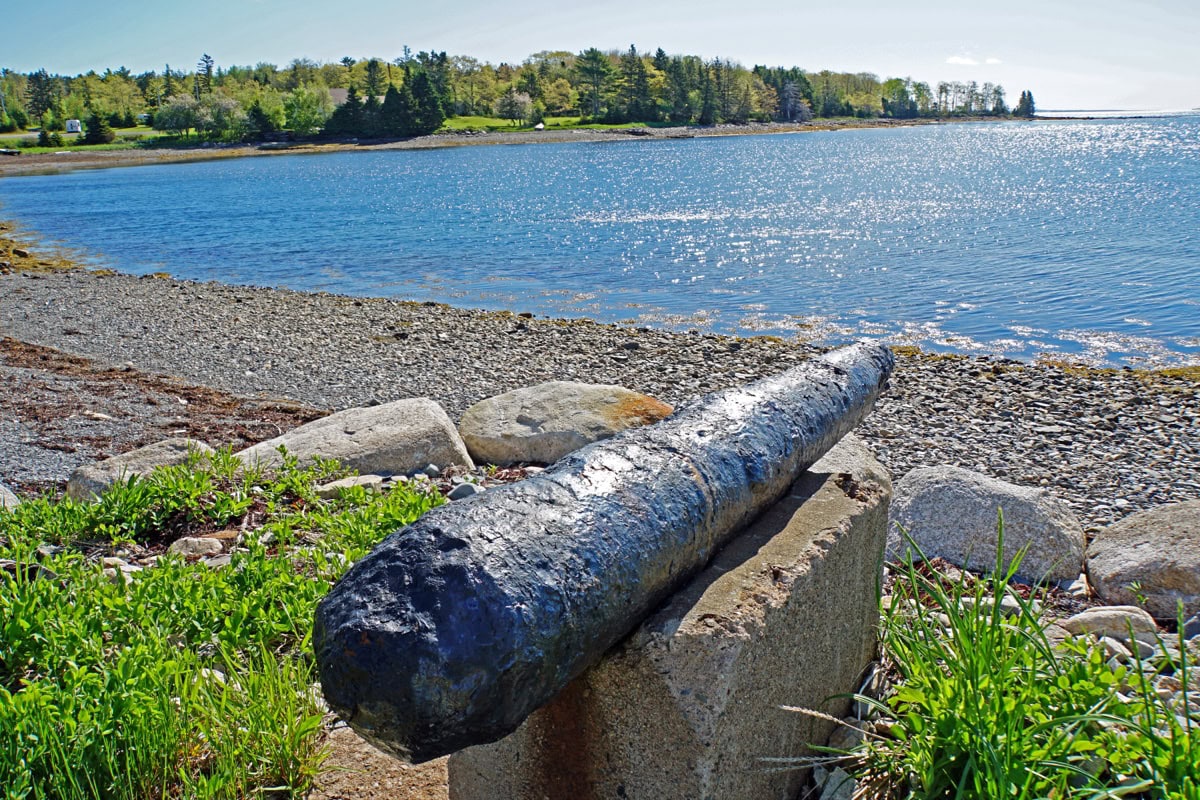
Shoreline of mysterious Oak Island in Mahone Bay
Photo: Dennis G. Jarvis / CC BY-SA 2.0 / Wikimedia Commons

This one’s for mystery and conspiracy fans. Oak Island sits right in Mahone Bay, and for over 200 years people have been trying to find an alleged treasure supposedly buried here by either Captain Kidd, the Knights Templar, or Marie Antoinette (yes, that theory really exists 😅).

Continuous excavations have been underway on the island, and since 2014 it’s been the subject of the popular TV series “The Curse of Oak Island” on the History Channel. The island itself is private and closed to the public, but you can view it from the water while kayaking or sailing around it by boat. From shore, you can spot it from several points along Route 3.

At the Mahone Bay Museum (tip no. 5), you’ll find an exhibition dedicated to the history of the Oak Island treasure hunt — it’s a fascinating tale of mad engineering projects, sunk millions, and never-ending optimism.

14. Farmers market and local produce
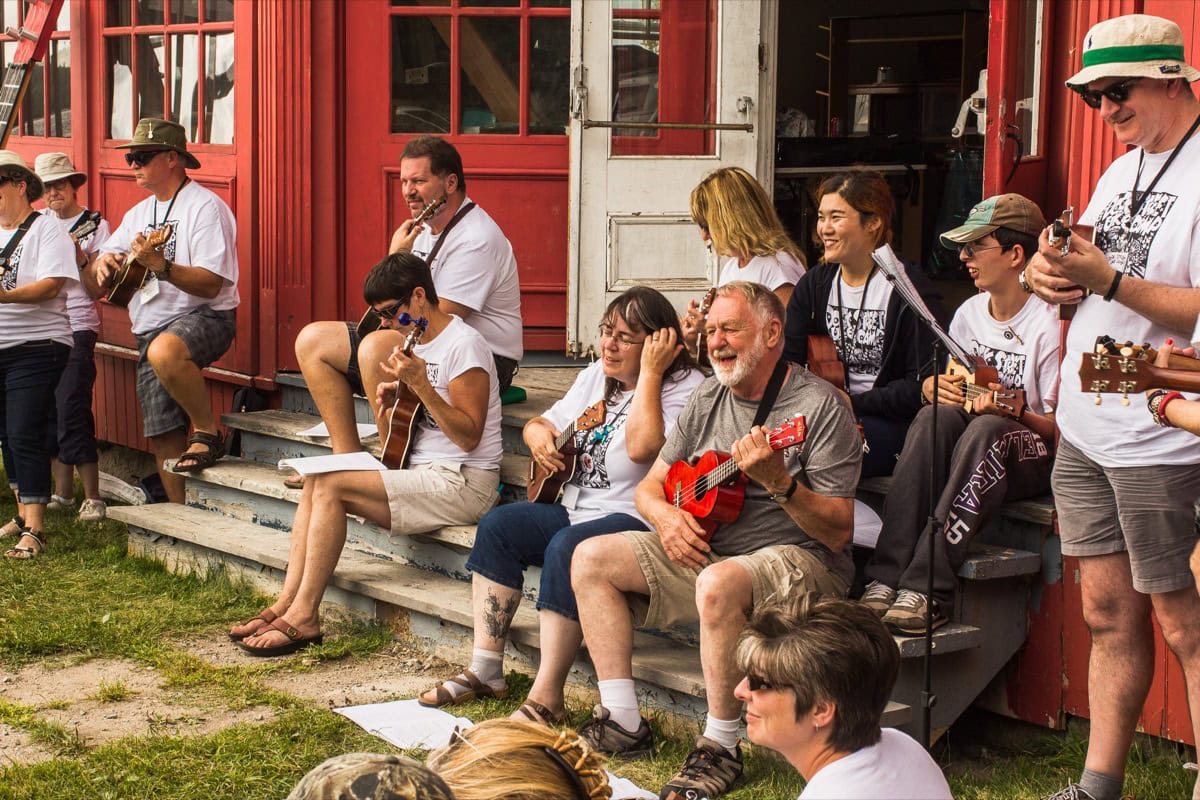
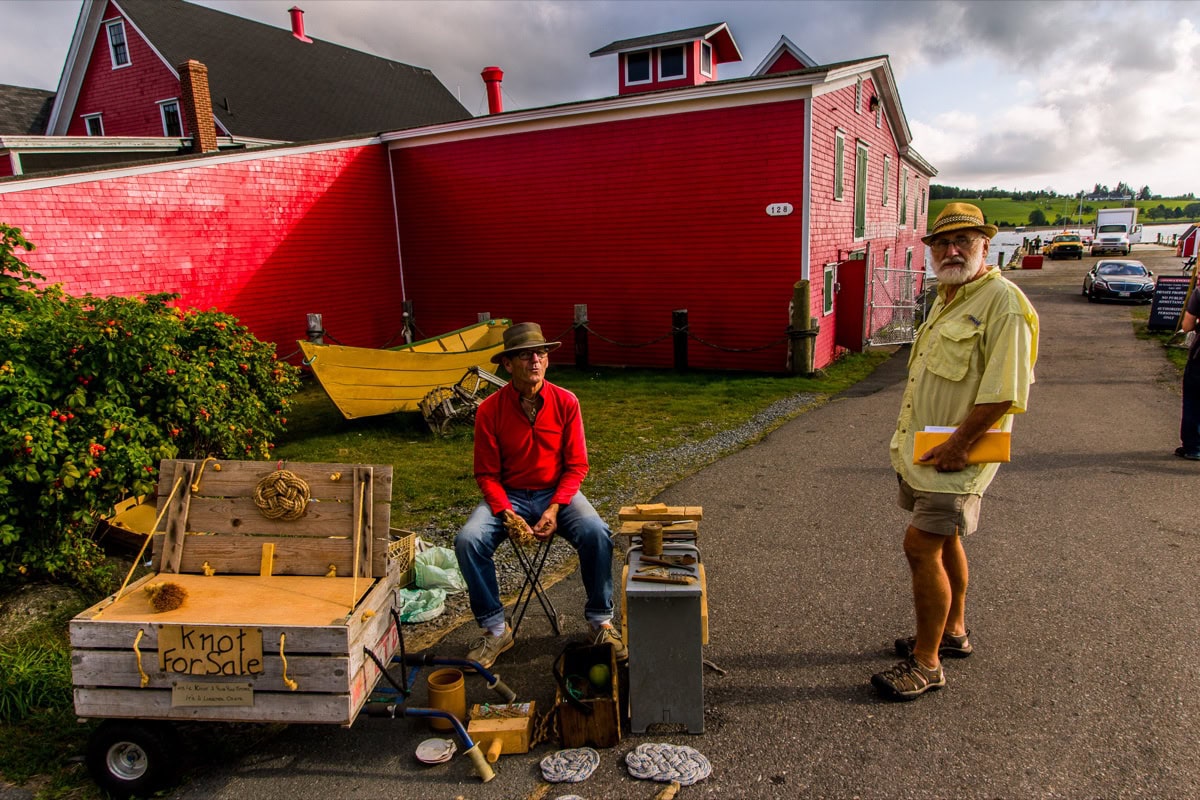
Musicians by a red building in Mahone Bay

Every Thursday in summer (roughly June–September), the wharf hosts the Mahone Bay Farmers’ Market, where local farmers and artisans sell fresh fruit and vegetables, home-baked bread, cheeses, cured meats, seafood, jams, honey, and handmade goods.

It’s a small market — nothing compared to big-city farmers’ markets — but that’s exactly its charm. You can chat directly with the people who grew the tomatoes you’re buying and learn where the honey comes from or how traditional Nova Scotian oatcakes are made (a local treasure of a biscuit you simply must try).

If you pick up some ingredients, you can put together the perfect picnic back at your accommodation — fresh bread, local cheese, smoked salmon, and orchard apples. Add a bottle of local cider and a blanket on the waterfront, and you’ve got the best lunch on the entire South Shore.

15. Sunset at the wharf — the perfect end to the day
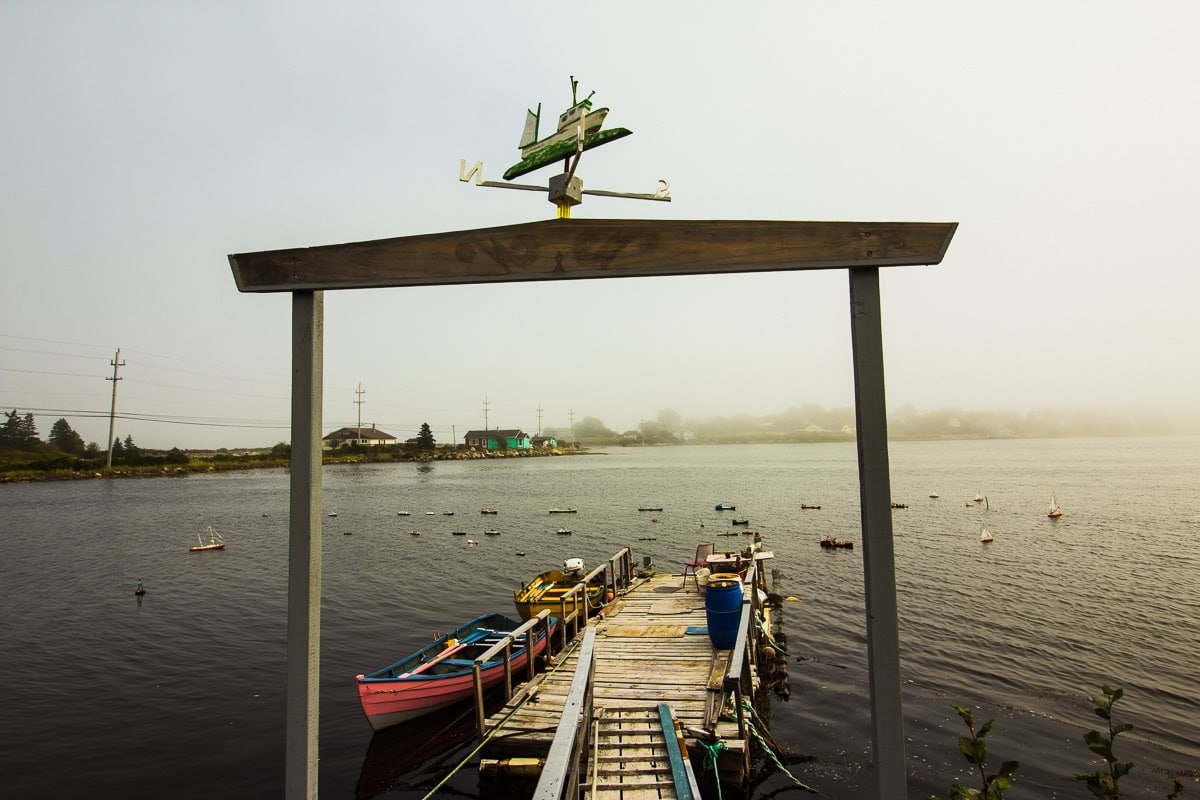
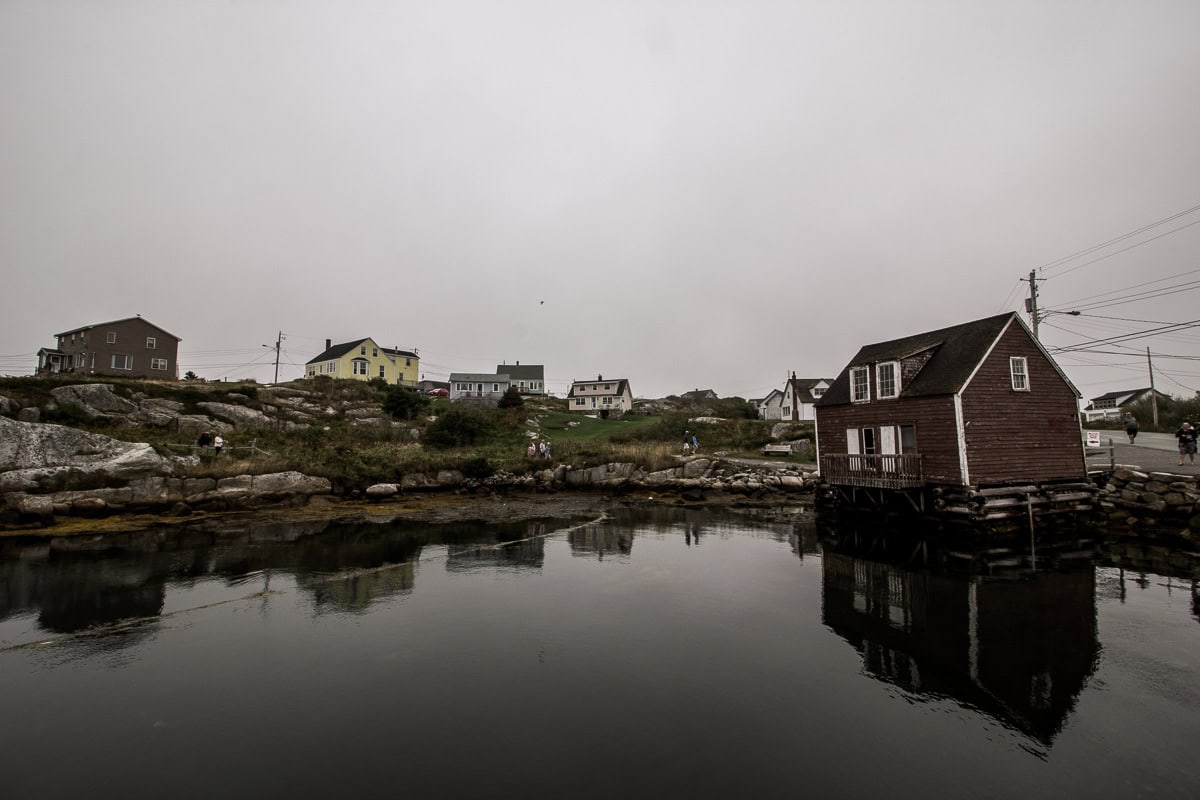
Mahone Bay harbour with boats in the mist

The final tip is simple, free, and unforgettable. The wharf in the centre of Mahone Bay is the best spot to watch the sunset. The sun sinks behind the Three Churches, the sky slowly shifts from orange to pink to violet, and you sit there on the wooden pier, listening to the gentle lap of the water, thinking life is pretty good.

Bring a jumper (evenings on the coast are chilly even in summer), a bottle of wine, and maybe some of that fresh bread from the farmers market. You don’t need anything else.

If you’re a photographer, this is your moment — sunset over the Three Churches with the calm bay in the foreground is the shot that’ll be your phone wallpaper for years. And honestly? In real life it looks even better than in the photos.

Where to eat and drink in Mahone Bay

Mahone Bay is small, so don’t expect hundreds of restaurants — but what’s here is quality, often using local ingredients. The whole South Shore is renowned for its fresh seafood, and Mahone Bay is no exception.

Where to get coffee and breakfast

Mahone Bay Trading Company — this is probably our favourite spot in town for a morning coffee. Excellent cappuccino, home-baked pastries, and a lovely atmosphere. Grab a seat on the veranda and watch Main Street slowly come to life.

Rebecca’s Café — if you want a proper breakfast with eggs, toast, and homemade jam, this is your place. Portions are generous and prices reasonable (breakfast around 12–18 CAD, roughly €8–13).

Where to have lunch and dinner

The Biscuit Eater Café & Books — one of the most characterful café-restaurants on the entire South Shore. A combination of bookshop and restaurant in a historic house. The menu changes with the seasons and available fresh produce. I’d recommend the soup of the day (always fantastic) and the homemade desserts. Mains run about 15–25 CAD.

Saltbox Brewing Company — if you’re a craft beer fan, you’ll be in your element. A local microbrewery with a taproom where you can sample beers inspired by coastal life. They serve food too — pub grub, but solid.

For seafood, head to Lunenburg (10 minutes by car) where the choice is wider. Salt Shaker Deli on Montague Street serves a fantastic lobster roll and fresh oysters. The South Shore Fish Shack is perfect for classic fish & chips by the harbour.

💡 TIP: If you’re in Mahone Bay in summer, order lobster. Nova Scotia is one of the best places on earth for fresh lobster, and prices here are a fraction of what you’d pay in the UK. A lobster roll (a bun stuffed with lobster meat) costs around 18–25 CAD (€13–18) and it’s an absolute culinary highlight.

Sweet treats

Don’t miss Sweet Spot Chocolate Shop on Main Street — handmade chocolate pralines, truffles, and bonbons. Choosing takes an age because everything looks irresistible. A small box starts at around 10 CAD, and it makes the perfect gift (provided you can resist eating it on the way back 😅).

Practical tips to wrap up

Mobile data and internet

Most cafés and accommodation in Mahone Bay have WiFi, but if you want to stay connected on the go (for navigation, Google Maps, or Instagram stories from the kayak), we’d recommend grabbing an eSIM before you fly. We use Holafly, where you simply buy a data package for Canada and activate it straight on your phone — no fiddling with physical SIM cards.

What to pack

Nova Scotia has its own microclimate — even in summer, temperatures drop noticeably in the evening and the ocean breeze picks up. Bring a waterproof jacket, a fleece or jumper, and comfortable walking shoes (Main Street is flat, but the surrounding trails and beaches aren’t exactly stiletto-friendly 😉). For packing tips, check out our guide to packing carry-on only.

If you’re planning coastal hikes in the area, invest in a good pair of hiking boots — there are plenty of gorgeous coastal trails along the South Shore.

Flights to Halifax

There are no direct flights from the UK to Halifax, so you’ll need to connect — typically through London Heathrow, Dublin, or one of the major Canadian hubs like Toronto or Montreal. Airlines like Air Canada, WestJet, and British Airways operate connecting routes. For the best deals, search well ahead and stay flexible with your dates — return flights from London can sometimes be found for under £400 if you book early.

FAQ — Frequently asked questions about Mahone Bay

What is Mahone Bay known for?

Mahone Bay is best known for the iconic view of the Three Churches standing side by side on the waterfront — one of the most photographed scenes in all of Canada. The town is also renowned for its artisan galleries and shops, where you’ll find handmade ceramics, pewter crafts (the famous Amos Pewter workshop), quilts, jewellery, and other artwork. The mysterious Oak Island, where people have been hunting for pirate treasure for over 200 years, also lies in Mahone Bay.

Is Mahone Bay worth visiting?

Absolutely, though it depends on what you’re looking for. If you love picturesque seaside villages, artisan shops, kayaking, and a slow pace of life, Mahone Bay will charm you to pieces. That said, it’s a tiny place — you can see everything in half a day. That’s why we recommend combining your visit with Lunenburg (10 minutes by car, UNESCO World Heritage Site) and other stops along the South Shore. Together they make a perfect 2–3 day trip.

What Christmas film was shot in Mahone Bay?

The Hallmark Channel Christmas film “Three Wise Men and a Baby” (2022), starring Paul Campbell, Andrew Walker, and Tyler Hynes, was filmed in Mahone Bay. The film makes full use of the town’s iconic scenery, including the Three Churches and Main Street. Thanks to this and other productions, Mahone Bay has become a popular filming location — the wooden houses and harbour simply look gorgeous on camera.

What to do in Mahone Bay in one day?

The perfect one-day itinerary: Start by photographing the Three Churches from the viewpoint on Route 3, then stroll Main Street and visit Amos Pewter (free workshop tour). Mid-morning, head out for a kayak on the bay (2 hours). Grab lunch at The Biscuit Eater. Spend the afternoon browsing galleries and shops, pop into the museum, and finish the day watching the sunset from the wharf. If you have time, nip over to Lunenburg for dinner.

How far is Mahone Bay from Halifax?

Mahone Bay lies about 100 km southwest of Halifax. Via the Route 103 motorway it takes roughly 1 hour, while the scenic coastal Route 3 (Lighthouse Route) takes 1.5–2 hours but is far more beautiful, passing through Peggys Cove and Chester. From Halifax airport, expect a similar drive time. You can easily hire a car at the airport — public transport to Mahone Bay is virtually non-existent.

How many days should you spend on the South Shore of Nova Scotia?

Mahone Bay itself needs half a day to one full day, but the entire South Shore deserves at least 3–4 days. An ideal itinerary: Day 1 — Peggys Cove and Chester, Day 2 — Mahone Bay and Lunenburg, Day 3 — Blue Rocks, Bridgewater, and Kejimkujik National Park, Day 4 — return to Halifax or continue west to Shelburne and Yarmouth. If you enjoy slow travel, set aside a whole week — you won’t regret it.

Is Mahone Bay suitable for families with children?

Definitely. Mahone Bay is a safe, calm, and manageable little town where children can’t get lost. Kayaking in the sheltered bay is safe for families (guided tours offer tandem kayaks), Amos Pewter has a workshop where kids can watch pewter being made, and the Mahone Bay Museum features an interactive exhibition on local history and the pirate treasure of Oak Island — guaranteed to captivate any child. For swimming with younger ones, we’d suggest Queensland Beach (20 minutes by car), with its gentle slope and sandy bottom.

Tips and Tricks for Your Vacation

Don’t Overpay for Flights

Search for flights on Kayak. It’s our favorite search engine because it scans the websites of all airlines and always finds the cheapest connection.

Book Your Accommodation Smartly

The best experiences we’ve had when looking for accommodation (from Alaska to Morocco) are with Booking.com, where hotels, apartments, and entire houses are usually the cheapest and most widely available.

Don’t Forget Travel Insurance

Good travel insurance will protect you against illness, accidents, theft, or flight cancellations. We’ve had a few hospital visits abroad, so we know how important it is to have proper insurance arranged.

Where we insure ourselves: SafetyWing (best for everyone) and TrueTraveller (for extra-long trips).

Why don’t we recommend any Czech insurance company? Because they have too many restrictions. They set limits on the number of days abroad, travel insurance via a credit card often requires you to pay medical expenses only with that card, and they frequently limit the number of returns to the Czech Republic.

Find the Best Experiences

Get Your Guide is a huge online marketplace where you can book guided walks, trips, skip-the-line tickets, tours, and much more. We always find some extra fun there!
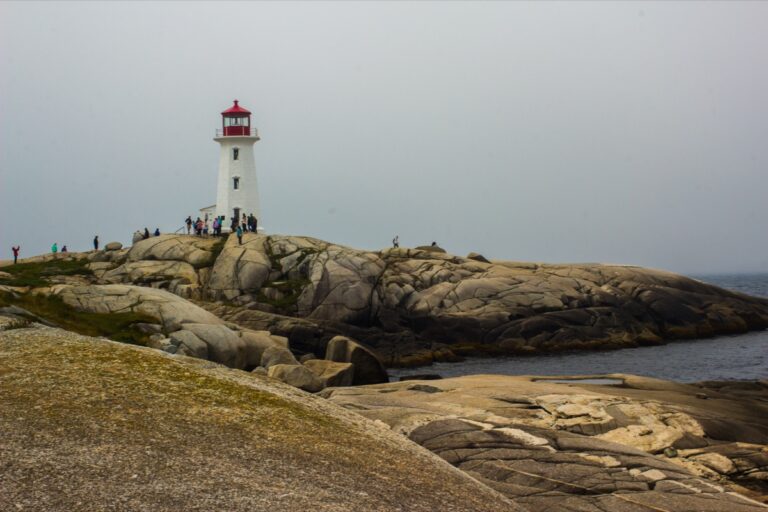
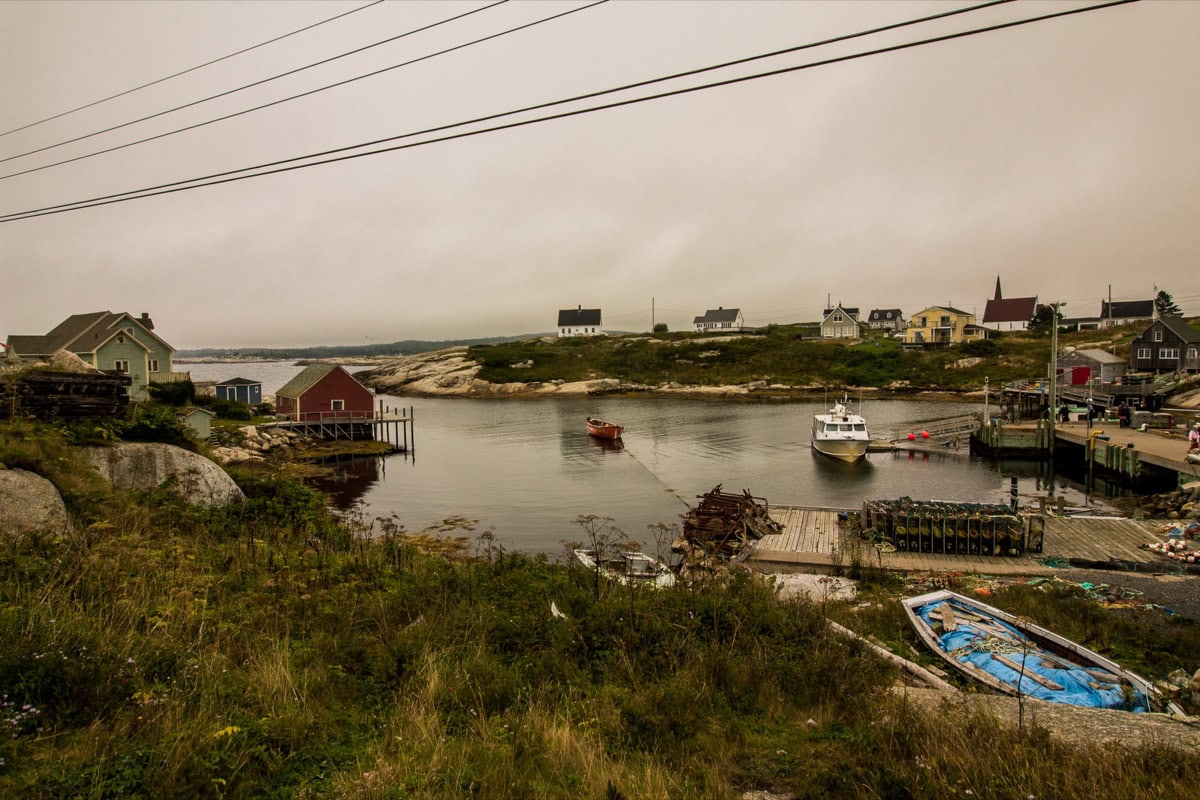
Peggy’s Cove, Nova Scotia: Guide to Canada’s Most Iconic Fishing Village

TL;DRPeggy’s Cove is a picture-perfect fishing village on the Nova Scotia coast, about 43km (a 45-minute drive) southwest of Halifax along Route 333. It’s famous for the iconic Peggy’s Point Lighthouse perched on granite rocks, drawing over 700,000 visitors a year. Access to the lighthouse and rocks is free — you just pay for parking (around 20 CAD/day). The best time to go is early morning before 9am, or from September into early October when the crowds thin out. There are 12 tips here on what to see and do, from the fishing harbour and deGarthe Gallery to the Swissair Flight 111 memorial, plus the underrated Polly’s Cove Hike (2.5km) and the beaches at Bayswater and Crystal Crescent. The must-do is freshly cooked lobster straight from the harbour (15–25 CAD) or at the Sou’Wester restaurant — budget 80–120 CAD for a day trip for two. Stick to the marked safety zones on the wet granite rocks: unpredictable rogue waves have killed at least a dozen people here since 2000.

Some places look exactly like they do in photos — and then there are places that completely disarm you because no photograph can truly capture the atmosphere. Peggy’s Cove firmly belongs in the second category. When Lukáš and I first pulled up to that vast granite shoreline and the famous red-and-white lighthouse appeared before us, we both just fell silent. And that doesn’t happen often, especially with Lukáš. 😅

Peggy’s Cove is a tiny fishing village in Nova Scotia — one of the Maritime Provinces on Canada’s east coast — and one of the most photographed scenes in all of North America. Despite being home to just a few dozen permanent residents, over 700,000 visitors flock here every year. And honestly? I understand every single one of them.

In this article, you’ll find a complete guide to Peggy’s Cove — from the iconic lighthouse and granite rocks to the fishing harbour, a coastal hiking trail with open ocean views, the Swissair Flight 111 memorial, and most importantly: where to get the best lobster. I’ll tell you when to visit to avoid the crowds, how to get here from Halifax, how much it all costs, and what to watch out for (especially the waves — I’m dead serious about that one).

Panoramic view of the fishing village and harbour at Peggy's Cove

TL;DR

  • Peggy’s Cove is a picturesque fishing village about 45 minutes’ drive from Halifax, Nova Scotia. The main attraction is the iconic lighthouse perched on massive granite rocks.
  • Entry is completely free — there’s no admission fee, just parking (around 20 CAD / €14 for the whole day at the main car park).
  • Best time to visit is early morning (before 9:00) or late afternoon — during the day, especially in summer, it gets very crowded.
  • Season: June to October, ideally September — fewer tourists, beautiful colours, and pleasant weather.
  • People die from the waves. This is not an exaggeration. The granite rocks are slippery and the waves are unpredictable — NEVER go into the black-marked zones near the water.
  • Lobster here is fantastic — head to the Sou’Wester restaurant or buy freshly cooked lobster right at the harbour.
  • Polly’s Cove hike is a gorgeous, underrated trail just a few minutes from the village — most tourists completely miss it.
  • The trip here is easy to combine with a Nova Scotia road trip or as a day trip from Halifax.
  • Accommodation in Peggy’s Cove itself is extremely limited — most people stay in Halifax or nearby villages.

When to visit Peggy’s Cove and how to get there

Peggy’s Cove is beautiful year-round — each season has its own distinct atmosphere. But if you want the most enjoyable experience, timing is everything. Let me tell you when we absolutely nailed it and when I’d definitely advise against visiting.

Best time to visit

September and early October are the absolute sweet spot. The tour buses from cruise ships have thinned out, the weather is still pleasant (15–20 °C), and if you’re lucky, you’ll catch the beginning of autumn colours in the surrounding forests. We were here in late September and had the lighthouse practically to ourselves at times — granted, it was 7 in the morning, but it still counts. 😁

Summer (July–August) is peak season. Expect crowds, especially between 10:00 and 16:00, when buses arrive from Halifax and cruise ships. If you’re visiting in summer, arrive either before 9:00 or after 17:00 — sunrise and sunset at the lighthouse are magical, and there are significantly fewer people.

Spring (May–June) tends to be unpredictable — fog, rain, wind. On the flip side, Peggy’s Cove shrouded in mist has an absolutely cinematic atmosphere. If you don’t mind unpredictable weather and want moody photographs, spring can be an excellent choice.

Winter — the lighthouse and rocks under snow look like a fairy tale, but restaurants and shops are mostly closed. Roads are generally passable, but coastal weather can be harsh. Only go if you know what you’re getting into.

How to get to Peggy’s Cove

By car from Halifax — the easiest and most comfortable option. Peggy’s Cove lies about 43 km southwest of Halifax city centre, and the drive takes approximately 45 minutes along Route 333. The road itself is beautiful — it winds along the coastline through small fishing villages. I’d recommend going one way and returning the other (via Indian Harbour and Hackett’s Cove) to see as much as possible.

We’ve had great long-term experience with DiscoverCars, which we use all around the world. You can hire a car in Halifax during peak season from around 40–70 CAD/day (€27–47).

By organised tour from Halifax — if you’d rather not drive, there are plenty of half-day and full-day tours available. Most include a stop at Peggy’s Cove plus other spots along the coast. Prices range from about 60–100 CAD (€40–67) per person.

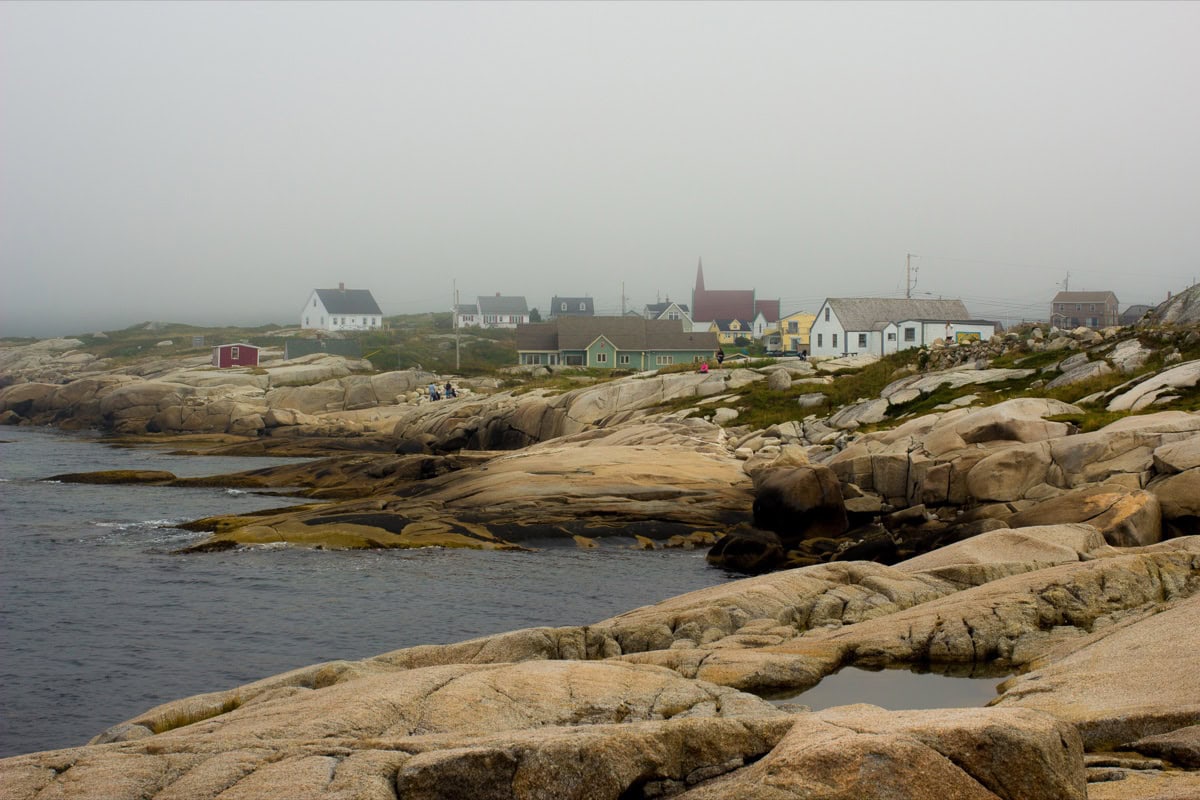
Rocky coastline with fishing shacks at Peggy's Cove

By public transport — unfortunately, you can’t get here by public transport. There’s no regular bus service from Halifax to Peggy’s Cove. The only alternatives to a car are organised tours, a taxi (around 80–100 CAD one way — ouch), or rideshares.

Parking at Peggy’s Cove has undergone a major transformation in recent years. The new main car park (Peggy’s Cove Visitor Parking) is a short walk from the village — you’ll pay around 20 CAD (€14) for the whole day. From there, it’s about a 5-minute walk to the lighthouse. During peak season, the car park can fill up by late morning, so again — arrive early.

Where to stay and how much Peggy’s Cove costs

Let’s be upfront: Peggy’s Cove itself is a village of about 30 permanent residents. There’s virtually no accommodation, and what does exist sells out months in advance during peak season. Most visitors therefore come as a day trip from Halifax — and that makes perfect sense.

Accommodation in Peggy’s Cove and nearby

If you’re dreaming of seeing the lighthouse at dawn completely on your own (and trust me, it’s worth it), there are a few options:

Peggy’s Cove Bed & Breakfast — one of the few accommodations right in the village. Cosy, simple, with harbour views. Prices in season around 150–250 CAD (€100–167) per night. Book well in advance.

Oceanstone Seaside Resort (Indian Harbour) — a gorgeous resort about 10 minutes’ drive from Peggy’s Cove. Beautiful cottages and rooms with ocean views, plus an on-site restaurant. Prices from 200 CAD (€134) per night. This place is truly lovely if you want to turn your Peggy’s Cove visit into a romantic weekend.

Accommodation in Halifax

For most travellers, the most practical approach is to stay in Halifax and head to Peggy’s Cove as a day trip. Halifax offers plenty of options for every budget:

  • Budget: Hostel (HI Halifax) from 40 CAD (€27) per bed in a dormitory
  • Mid-range: City centre hotels from 120–180 CAD (€80–120) for a double room
  • Upscale: Boutique hotels on the waterfront from 200–350 CAD (€134–234)

How much a trip to Peggy’s Cove costs

Here’s the good news — Peggy’s Cove is a surprisingly affordable day out:

  • Lighthouse and rocks: free
  • Parking: 20 CAD (€14)
  • Petrol from Halifax and back: approx. 10–15 CAD (€7–10)
  • Lunch (lobster roll + drink): 25–40 CAD (€17–27)
  • Total for two people: approx. 80–120 CAD (€54–80)

If you take an organised tour, expect to pay 60–100 CAD per person (€40–67), but lunch usually isn’t included.

Peggy’s Cove: 12 things to see and do

Peggy’s Cove may be a tiny village, but there’s a surprising amount to see and do here. Here’s our complete list — from the postcard-perfect sights to hidden gems that most visitors completely miss.

1. The iconic lighthouse — Canada’s most photographed spot

The iconic Peggy's Point Lighthouse on the Nova Scotia coast

This is the reason people come. Peggy’s Point Lighthouse is arguably the most photographed lighthouse in all of North America — and once you see it in person, you’ll understand why. It stands on a massive granite outcrop, Atlantic waves crashing all around it, and the whole scene looks as though someone painted it.

The lighthouse was built in 1915 and still serves as a functioning navigational aid (though it’s now automated). Inside, there’s a branch of Canada Post — yes, you read that right, it’s the only lighthouse in North America that houses a working post office. You can send a postcard from here with a special Peggy’s Cove cancellation stamp. We sent one to Lukáš’s parents and it’s still on their fridge to this day. ☺️

You can’t actually go up to the lighthouse itself — it’s fenced off and interior access is limited to the post office. But that really doesn’t matter, because the spectacle is all around it. The granite rocks spread out in every direction and you’re free to walk across them (in the safe zone!).

When to visit: Sunrise at the lighthouse is absolutely magical — the light falls directly onto the lighthouse and rocks. Sunset is beautiful too, but the lighthouse is backlit at that time. For photos, early morning is the clear winner.

2. Granite rocks — breathtaking but deadly

Granite rocks near the lighthouse at Peggy's Cove

The enormous smooth granite rocks (the Barrens) surrounding the lighthouse are what make Peggy’s Cove so unique. Sculpted by glaciers thousands of years ago, they create a surreal, lunar-like landscape that seamlessly blends into the ocean. You can walk across them, sit on them, take photos — but you must respect the markings.

Now for the serious part, and please take this absolutely to heart: people regularly die on these rocks. The waves along Peggy’s Cove’s shoreline are extremely unpredictable — it can be calm for minutes and then a massive wave sweeps you off the rock. The granite is also wet and incredibly slippery, even when it doesn’t look it. The black-marked zones near the water exist for one single reason — to save your life.

Since 2000, at least a dozen people have died here, most recently in 2024. Most of them were standing at what they thought was a “safe” distance from the water and underestimated the power of the waves. Do not go beyond the black lines on the rocks. Ever. Under any circumstances. Not for a photo, not for a selfie, not because “the waves look small.” They don’t.

I witnessed this first-hand — we were standing on the rocks at a safe distance and watched a group of tourists posing right by the water’s edge. Before we could even say anything, a wave came and completely drenched them all. They were lucky it only soaked them rather than sweeping them away. Lukáš nearly had a heart attack. 😅

The sound of the ocean crashing against granite is hypnotic, and you could sit here for hours (safely!) just watching the raw power of nature. I’d recommend bringing a snack and a thermos of coffee.

3. The fishing harbour — a living postcard

Fishing harbour at Peggy's Cove with colourful boats

While most tourists make a beeline for the lighthouse, Peggy’s Cove’s charm also lies in its little fishing harbour, which looks as though time has stood still. Colourful fishing sheds, wooden wharves, stacks of lobster traps, and a handful of boats bobbing on the waves — it’s exactly the scene that springs to mind when you hear “fishing village on the east coast.”

And it’s all real — Peggy’s Cove is still a working fishing community. Those lobster traps aren’t decorations for tourists; local fishermen genuinely head out to sea from here every day. It’s actually one of the reasons the village has been protected from large-scale commercial development for so many years.

A wander around the harbour takes about 15–20 minutes, but I’d recommend lingering longer. Watch the fishermen at work, photograph the colourful sheds (each one a different colour, as if there’s an unspoken competition for the most vibrant), and if you’re lucky enough to bump into a local with time for a chat, you’ll hear some brilliant stories.

Tip: The best harbour photos are taken from the elevated viewpoint on the road above the harbour — from there you can capture the entire scene with its colourful sheds and the ocean in the background.

4. deGarthe Gallery & Monument — art carved into rock

Fishermen's Monument carved into rock at deGarthe Gallery in Peggy's Cove
Photo: Dennis G. Jarvis / CC BY-SA 2.0 / Wikimedia Commons

This is a spot most tourists completely overlook, which is a real shame. William deGarthe was a Finnish-Canadian artist who fell so deeply in love with Peggy’s Cove that he settled here and spent the last 30 years of his life painting the local fishermen and landscape.

His gallery (deGarthe Gallery) is housed in his former home and studio — inside you’ll find dozens of paintings capturing life among Peggy’s Cove’s fishing community. But the main attraction is the Fishermen’s Monument — an enormous relief carved directly into a 30-metre granite cliff behind the gallery. DeGarthe worked on it for the last 7 years of his life, and it depicts 32 fishermen, their wives, children, and the angel of Saint Elias, patron saint of fishermen.

It’s a powerful piece of work — you stand before this enormous rock face and can literally feel the amount of labour and love the artist poured into it. Entry to the gallery and monument is free (donations are welcomed). The gallery is open from May to October, roughly 9:00–17:00.

You’ll find it right on the main road through the village, about a 2-minute walk from the harbour heading away from the lighthouse. Don’t skip it — it’ll take you 20–30 minutes at most and is well worth your time.

5. Swissair Flight 111 Memorial — a quiet and moving tribute

Granite memorial for Swissair Flight 111 near Peggy's Cove
Photo: Hayden Soloviev / CC BY 4.0 / Wikimedia Commons

On 2 September 1998, about 8 km off the coast of Peggy’s Cove, Swissair Flight 111 on the New York to Geneva route crashed into the ocean. All 229 people on board perished. It was at the time one of the worst aviation disasters in Canadian history.

The memorial stands at Whalesback, a headland about 1 km northwest of the village (you can drive or walk there along the road). There are actually two memorials — one at Whalesback and another at Bayswater Beach, from where the rescue boats launched. Both are simple, dignified, and deeply moving.

The community of Peggy’s Cove and surrounding villages played a crucial role in the rescue and recovery operations — local fishermen were first on the scene and helped for weeks. It’s a story that’s still very much alive here and one the local residents carry with great humility.

If you’d like to learn more, the documentary “Blessed Stranger: After Flight 111” (2000) captures the impact of the tragedy on the local community. And yes, to answer the question “what film was shot at Peggy’s Cove?” — this documentary and several other productions about the disaster are the most well-known films associated with this location.

6. Polly’s Cove Hike — a hidden gem for walkers

Granite rocks and heathland along the coast near Peggy's Cove

If you love hiking and want to escape the crowds (and if you’re reading this blog, you probably do 😁), the Polly’s Cove trail is for you. It’s roughly a 2.5 km trail (return) running along the coast north of Peggy’s Cove. The trailhead is right off Route 333, about 2 km before Peggy’s Cove (when coming from Halifax).

The trail takes you through heathland, granite outcrops, and along a dramatic coastline to Polly’s Cove — a small rocky inlet where you’ll very likely have the place entirely to yourself. The views over the open Atlantic are breathtaking, and the landscape feels more like Scotland or Iceland than Canada.

The terrain is moderately challenging — nothing extreme, but wear proper footwear (ideally hiking boots with good grip) because the granite can be slippery and the ground is uneven in places. The trail isn’t particularly well marked, but it follows the coastline, so getting lost is pretty difficult.

Tip: Bring a packed lunch and sit on the rocks at Polly’s Cove. Apart from the cry of seagulls and the roar of the waves, you won’t hear a thing. After the chaos at the main lighthouse, it’s like stepping into another world.

The entire hike including time spent relaxing at the cove takes about 1–1.5 hours.

7. Lighthouse Route — a scenic drive from Halifax

View of the fishing village of Peggy's Cove

The drive to Peggy’s Cove doesn’t have to be mere transport — make it part of the experience. The Lighthouse Route (Routes 333 and 329) is one of the most beautiful coastal roads in Nova Scotia. From Halifax, you can take either the direct route (Route 333, 45 minutes) or a longer loop via St. Margaret’s Bay.

Along the way, you’ll pass through a string of picturesque fishing villages — Hackett’s Cove, Indian Harbour, Glen Margaret — each with its own harbour, colourful houses, and an atmosphere that feels frozen in time. Most tourists drive straight through without stopping, but I’d recommend pulling over at least once for a wander.

If you have time, do the loop: drive Route 333 from Halifax to Peggy’s Cove, then return via Tantallon on Route 3 — or the other way round. The full loop adds about an hour but you’ll see much more.

If you’re planning a bigger road trip across Canada, Peggy’s Cove makes the perfect first or last stop before or after Halifax.

8. Peggy’s Cove Preservation Area — a village under protection

The protected fishing village of Peggy's Cove by the water

Few people realise that the entire village of Peggy’s Cove has been a protected area since 1962 (Peggy’s Cove Preservation Area). This means you can’t build modern structures, alter the village’s character, or put up neon signage. Thanks to this protection, Peggy’s Cove has retained its authentic fishing village feel — no massive hotel complexes, no fast food chains, no mega souvenir stores.

It’s a rare example of tourism and conservation coexisting (though the new car park and visitor centre have sparked some debate). A stroll through the village takes about 20–30 minutes and it’s well worth taking the time to admire the traditional houses, gardens, and the lobster traps — whether functional or decorative — stacked beside every home.

9. Sunrise & Sunset at the lighthouse — two different experiences

At the Peggy's Cove lighthouse in soft light

If you have the opportunity (perhaps you’re staying nearby), try to see the lighthouse twice — at dawn and at dusk. They’re two completely different experiences.

Sunrise — the light comes from behind the ocean and falls directly onto the lighthouse and rocks. The colours are warm and golden, and if you’re lucky enough to catch fog slowly lifting, it’s one of the most beautiful scenes I’ve ever witnessed. Plus, at 5:30 in the morning you’ll have the place completely to yourself. At most, you might spot a lone photographer with tripods worth five thousand dollars. 😁

Sunset — the sun sets behind the village, so the lighthouse is backlit. It’s not ideal for photography, but the atmosphere is enchanting — the sky turns pink and orange, the light on the waves is magical, and the whole thing has a romantic mood. There are significantly fewer people than during the day, but more than at dawn.

Tip for photographers: If you’re shooting the lighthouse, the best light is at dawn, roughly 30 minutes after sunrise. In summer, that means being on-site around 5:00. Yes, it’s early. But trust me, it’s worth it.

10. Visitor Interpretation Centre — context for everything you see

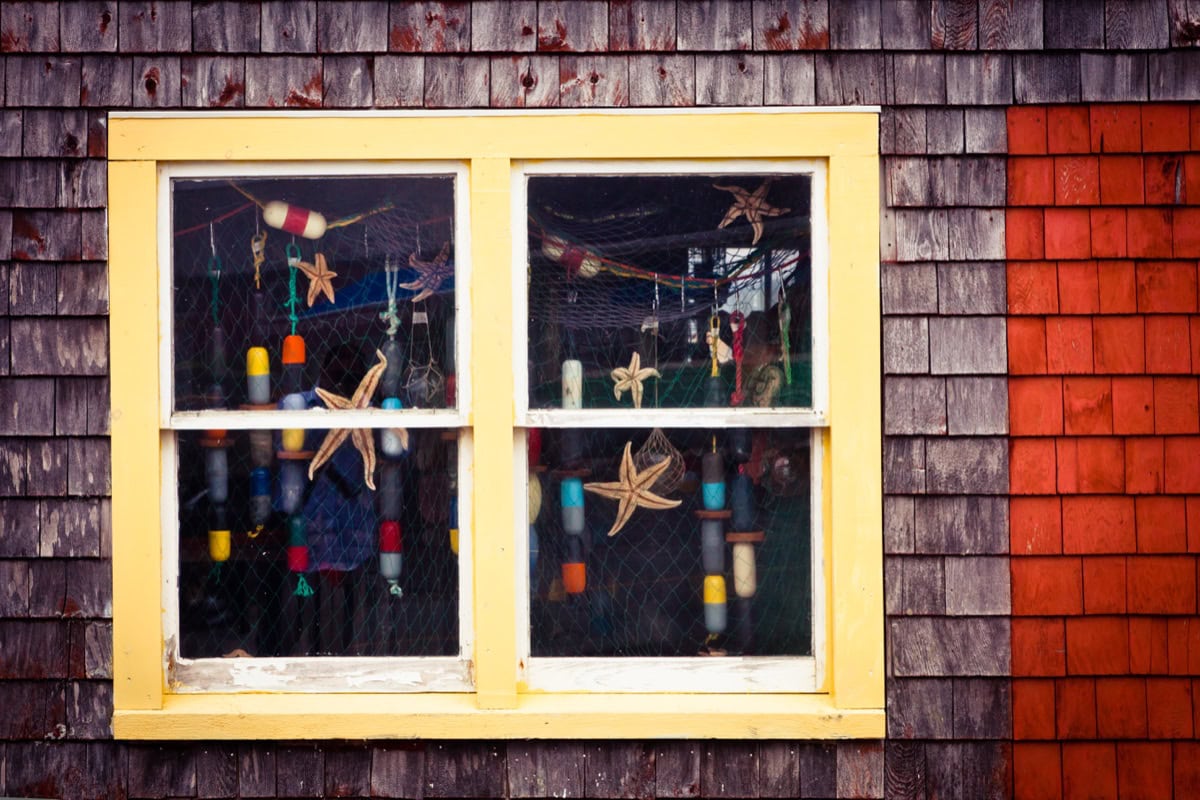
Window of a fishing shack decorated with starfish at Peggy's Cove
Photo: Benson Kua from Toronto, Canada / CC BY-SA 2.0 / Wikimedia Commons

The new Peggy’s Cove Visitor Centre (opened in 2023) is a modern visitor facility at the main car park. It features an interactive exhibition on the village’s history, the geology of the granite rocks, fishing traditions, and of course the Swissair Flight 111 disaster.

It’s a good place to start your visit — you’ll get context for everything you’ll see afterwards. The exhibition is well done, interactive, and takes about 30–45 minutes. Entry is included in the parking fee.

You’ll also find a café, toilets, and a small gift shop here (surprisingly tasteful — no plastic tat, but rather local art and crafts). If you arrive early in the morning for sunrise, the centre won’t be open yet — it usually opens around 9:00.

lukas a lucka
Lukáš and Lucie recommend
Where to stay in Peggy’s Cove
4 accommodations — hotels, resorts and other lodging options

11. Kayak or Boat Tour — Peggy’s Cove from the water

Peggy’s Cove from dry land is stunning, but from the water it’s an entirely different experience. Several local operators offer kayaking tours along the coast or boat trips where you can see the lighthouse, rocks, and possibly even seals or eagles from a completely new perspective.

Kayaking tours usually depart from Indian Harbour or St. Margaret’s Bay and last 2–3 hours. Prices are around 75–120 CAD (€50–80) per person including gear and an instructor. Suitable for beginners too — the waters in the bay are generally calm.

Tip: If you’re prone to seasickness, stick with the kayak or a small boat. On larger vessels in the Atlantic swell things can get uncomfortable, especially when it’s windy.

12. Nearby beaches — Bayswater and Crystal Crescent

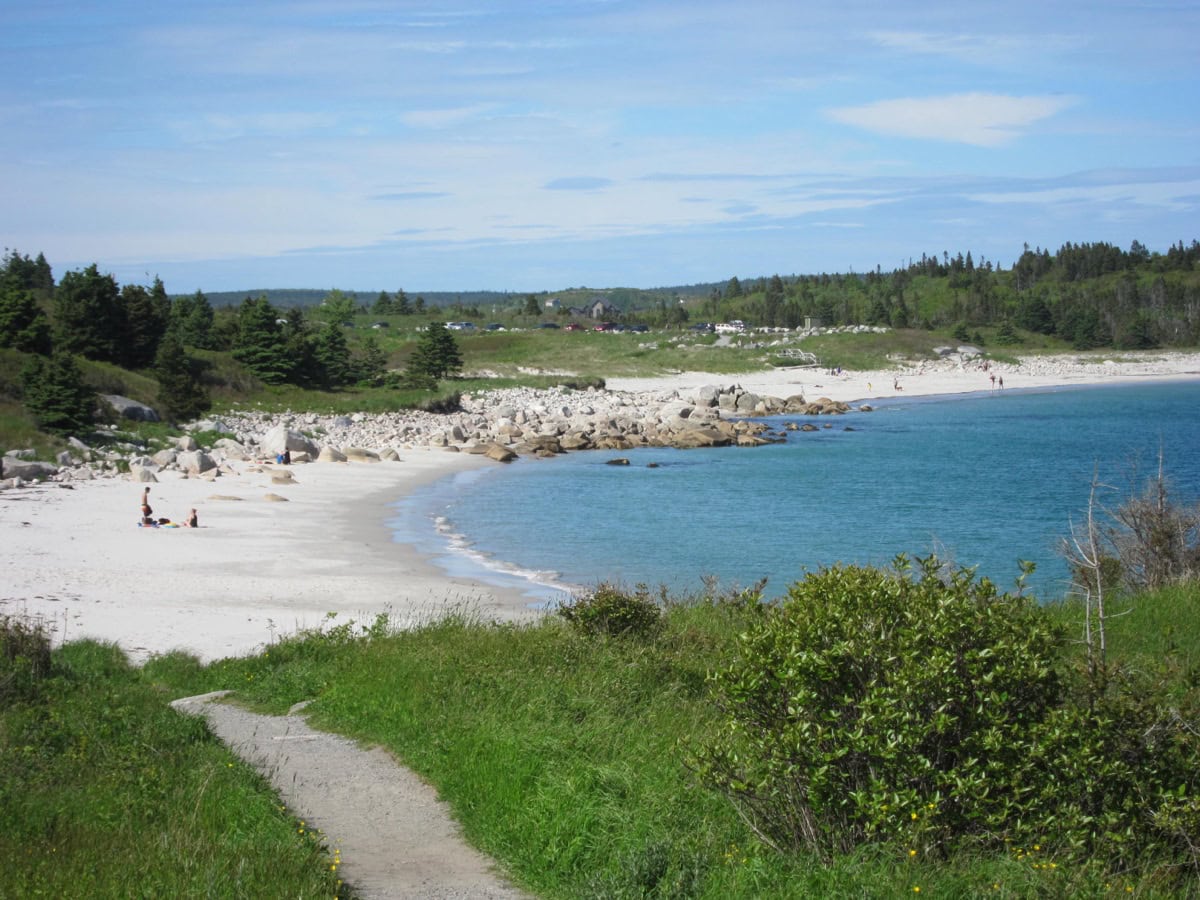
Sandy beach at Crystal Crescent near Peggy's Cove
Photo: Ben MacLeod / CC BY-SA 4.0 / Wikimedia Commons

Peggy’s Cove itself doesn’t have a beach (just rocks), but there are several lovely spots for a swim in the area — provided you don’t mind the Atlantic reaching a bracing 15–18 °C at best, even in summer. 😅

Bayswater Beach — a wide sandy beach about 5 km from Peggy’s Cove. Quiet, few tourists, beautiful white sand. It’s also where one of the Swissair Flight 111 memorials stands.

Crystal Crescent Beach — three connected coves about 25 minutes’ drive towards Halifax. The most beautiful beach in the Halifax area — white sand, turquoise (albeit freezing) water, and hiking trails nearby. The third cove is unofficially clothing-optional, just so you know. 😁

If you’re a cold-water swimmer or have a wetsuit, a dip in the Atlantic is quite the experience. We dipped our toes in and legged it — but don’t let that put you off, we’re absolute cowards when it comes to cold ocean water.

Where to eat and drink in Peggy’s Cove

Freshly caught lobsters at the harbour in Peggy's Cove

Nova Scotia is a lobster paradise and Peggy’s Cove is one of the best places to tuck into the famous Atlantic lobster. The dining options here aren’t exactly vast (it’s a village of 30 people, not a food court), but the quality is excellent.

Sou’Wester Restaurant & Gift Shop

The main restaurant in Peggy’s Cove, going strong since 1967. Legendary lobster roll, New England clam chowder, and fresh fish. Prices reflect the tourist location — a lobster roll runs about 25–35 CAD (€17–23), fish and chips around 20 CAD (€14). But the portions are generous and the lobster is fresh.

There’s usually a queue during peak season, but it moves quickly. Seating is available both inside and outside with a view of the harbour.

Dee Dee’s Ice Cream & Treats

A small stand serving homemade ice cream right by the harbour. On hot summer days the queue stretches along the entire wharf — but the ice cream is worth the wait. Try the blueberry flavour — Nova Scotia blueberries are legendary.

Fresh lobster right at the harbour

In season (May–July and October–December — yes, there are two lobster seasons!) you can buy a whole freshly cooked lobster right at the harbour from fishermen or small stands. A whole lobster typically costs 15–25 CAD (€10–17) depending on size. Sit on the wharf, crack it open with your hands, and gaze out at the ocean — you won’t find a better restaurant anywhere.

Rhubarb Restaurant (Oceanstone Resort)

If you fancy something more refined, drive 10 minutes to Indian Harbour and the Rhubarb restaurant at the Oceanstone Seaside Resort. Farm-to-table cuisine with an emphasis on local ingredients — seafood, wild blueberries, local cheeses. Mains from 25–45 CAD (€17–30). Reservations recommended, especially for dinner.

A few food tips

  • Lobster is the undisputed top choice here — don’t be afraid to try it, even if you don’t normally eat it. The lobster here is fresh, sweet, and worlds apart from the frozen stuff you’d find back home.
  • Budget tip: Buy lobster at the harbour and eat it outdoors — you’ll save compared to the restaurant and the experience is even better.
  • Pack snacks for the Polly’s Cove hike — there are no shops or stands along the way.
  • Water — there’s no grocery shop anywhere near Peggy’s Cove. Stock up in Halifax or in Tantallon on the way.

Practical tips for visiting Peggy’s Cove

How much time to spend in Peggy’s Cove

  • Minimum (just the lighthouse and harbour): 1–1.5 hours
  • Ideal (lighthouse, harbour, gallery, lunch): 3–4 hours
  • For the full experience (+ Polly’s Cove hike, Swissair Memorial, beaches): a full day

What to pack

  • A windbreaker — even in summer, the ocean wind can make it chilly
  • Proper shoes — the granite rocks are uneven and slippery; flip-flops are a terrible idea
  • A camera — this is truly a place where you’ll want more than your phone (though admittedly, modern phones do take cracking photos)
  • Snacks and water — there are no shops here and the restaurant may have a queue
  • If you’re travelling to Canada for an extended trip, pick up an eSIM from Holafly — you’ll need data for navigation and Google Maps
  • Don’t forget to pack your carry-on properly 😉

Travel insurance

I’d absolutely recommend travel insurance for any trip to Canada — healthcare for tourists there is extraordinarily expensive. For shorter trips we use AXA, and for longer journeys we rely on SafetyWing.

Flights to Halifax

There are no direct flights from the UK to Halifax — you’ll need to connect, most commonly through Toronto, Montreal, or another European hub such as Reykjavik or Amsterdam. Return flights typically cost £400–700 depending on the season. For the best deals, we recommend searching with Skyscanner or Google Flights to compare your options.

Frequently asked questions about Peggy’s Cove (FAQ)

Why is Peggy’s Cove so famous?

Peggy’s Cove is famous primarily for its iconic lighthouse (Peggy’s Point Lighthouse), which stands on dramatic granite rocks above the Atlantic. It’s one of the most photographed lighthouses in the world and a symbol of all Nova Scotia. Beyond that, the village is one of the last authentic fishing communities on Canada’s east coast — it’s been a protected area since 1962, which has helped preserve its historic character. The tragedy of Swissair Flight 111, which crashed off the coast in 1998, also contributed to its worldwide recognition.

Is Peggy’s Cove worth visiting?

Absolutely. Despite the crowds during peak season, Peggy’s Cove has a truly unique atmosphere that’s impossible to replicate anywhere else. The granite rocks, lighthouse, colourful harbour, and the wildness of the Atlantic — it all comes together to create an experience that stays with you. The key is timing — arrive early in the morning or visit outside peak season and you’ll practically have the village to yourself. With Polly’s Cove hike, the Swissair memorial, and fantastic lobster, you can easily fill a wonderful full day here.

What film was shot at Peggy’s Cove?

The most well-known film production associated with Peggy’s Cove is the documentary “Blessed Stranger: After Flight 111” from 2000, which explores the impact of the Swissair Flight 111 disaster on the local community. Peggy’s Cove also features in several other documentaries about the tragedy. Beyond that, the village regularly serves as a backdrop for Canadian television productions and advertising campaigns. The granite coastline and lighthouse are so photogenic that commercials and fashion editorials are frequently shot here.

When did someone last die on the rocks at Peggy’s Cove?

Sadly, tragedies on the rocks at Peggy’s Cove occur with alarming regularity — most recently in 2024 and 2021. The dangerous waves combined with slippery granite are a lethal combination. Since 2000, at least a dozen people have died here, mostly because they entered the black-marked danger zone too close to the water. Waves along this coast are extremely unpredictable — they can arrive suddenly and with tremendous force. Please respect the safety markings and never go beyond the black lines.

Can you get to Peggy’s Cove by public transport?

Unfortunately not — there’s no regular public transport service to Peggy’s Cove. The easiest way to get there is by car (45 minutes from Halifax). Alternatives include organised tours from Halifax (from 60 CAD/€40), a taxi (80–100 CAD one way), or rideshares. A hire car is also recommended because you can stop at picturesque villages along the way and combine your visit with other coastal spots.

How much time do I need at Peggy’s Cove?

It depends on what you want to see. For the lighthouse, harbour, and a quick lunch, 1.5–2 hours is sufficient. For the full experience including deGarthe Gallery, the Swissair Memorial, and the Polly’s Cove hike, allow a full day (5–6 hours). Most organised tours from Halifax give you 1–2 hours at Peggy’s Cove, which is enough for the lighthouse and harbour but won’t leave time for the hike or memorial.

Is there an entrance fee for Peggy’s Cove?

No, entry to the village, the lighthouse, and the granite rocks is completely free. The only charge is for parking at the main car park — around 20 CAD (€14) for the whole day. The deGarthe Gallery is also free (donations are accepted). The Swissair Memorial is freely accessible. The only things you’ll pay for are food, any souvenirs, and organised activities (kayaking, boat tours).

Tips and Tricks for Your Vacation

Don’t Overpay for Flights

Search for flights on Kayak. It’s our favorite search engine because it scans the websites of all airlines and always finds the cheapest connection.

Book Your Accommodation Smartly

The best experiences we’ve had when looking for accommodation (from Alaska to Morocco) are with Booking.com, where hotels, apartments, and entire houses are usually the cheapest and most widely available.

Don’t Forget Travel Insurance

Good travel insurance will protect you against illness, accidents, theft, or flight cancellations. We’ve had a few hospital visits abroad, so we know how important it is to have proper insurance arranged.

Where we insure ourselves: SafetyWing (best for everyone) and TrueTraveller (for extra-long trips).

Why don’t we recommend any Czech insurance company? Because they have too many restrictions. They set limits on the number of days abroad, travel insurance via a credit card often requires you to pay medical expenses only with that card, and they frequently limit the number of returns to the Czech Republic.

Find the Best Experiences

Get Your Guide is a huge online marketplace where you can book guided walks, trips, skip-the-line tickets, tours, and much more. We always find some extra fun there!
Lunenburg, Nova Scotia: 15 Things to See and Do in Canada’s Most Colourful Town

TL;DRLunenburg is a picture-postcard UNESCO town on Nova Scotia’s South Shore, about 100 km (an hour’s drive) from Halifax. One day covers the town itself, but 2–3 days is ideal if you want side trips to Mahone Bay, Blue Rocks and Ovens Natural Park — June to October is the best window. The main draws are the colourful waterfront, the historic old town, the Bluenose II schooner, the Fisheries Museum of the Atlantic and the Ironworks Distillery, known for its blueberry rum. You’ll need a car, as public transport is basically non-existent, and a 2–3 day budget for two comes to roughly $850–$1,050 CAD, including accommodation, food and activities. Don’t skip the lobster supper, a South Shore classic, for around $35–$60 CAD.

Some places look exactly like a postcard — and then there’s Lunenburg, which looks even better. When my mum and I first turned onto the hill above the harbour and rows of colourful houses spread out below us like a box of crayons, we both just stared in disbelief. 😅

Lunenburg Canada is a tiny town on the south coast of Nova Scotia that UNESCO inscribed as a World Heritage Site — and rightly so. Picture cobbled lanes lined with houses in shades from lemon yellow through salmon pink to turquoise, a harbour full of sailing ships, the scent of freshly boiled lobster drifting through the air, and above it all a sky that behaves as though it were painted by a romantic artist after a couple of pints. Perfection, basically.

In this article you’ll find 15 things to see and do in Lunenburg and the surrounding area — from a stroll through the historic centre to a rum tasting at a local distillery and a day trip to nearby Mahone Bay. I’ll tell you the best time to visit, where to stay, how much it all costs, and where to get the best lobster supper on the entire South Shore.

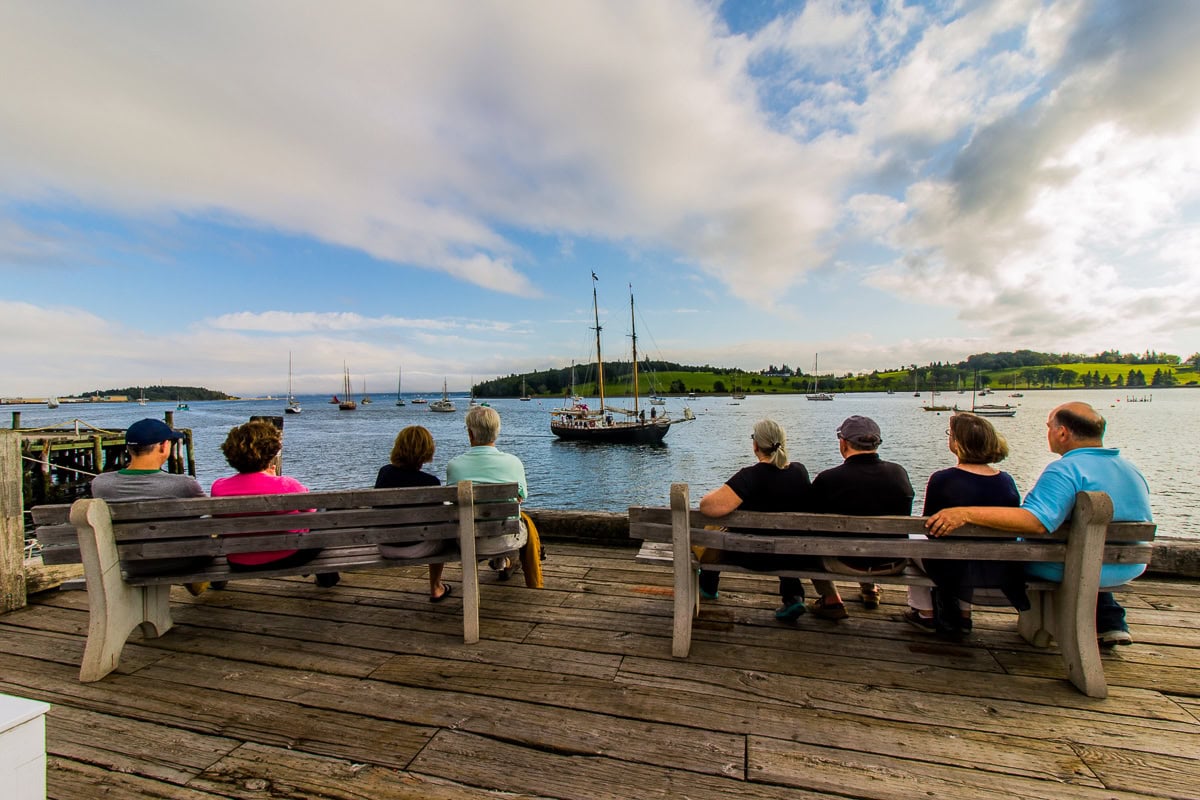
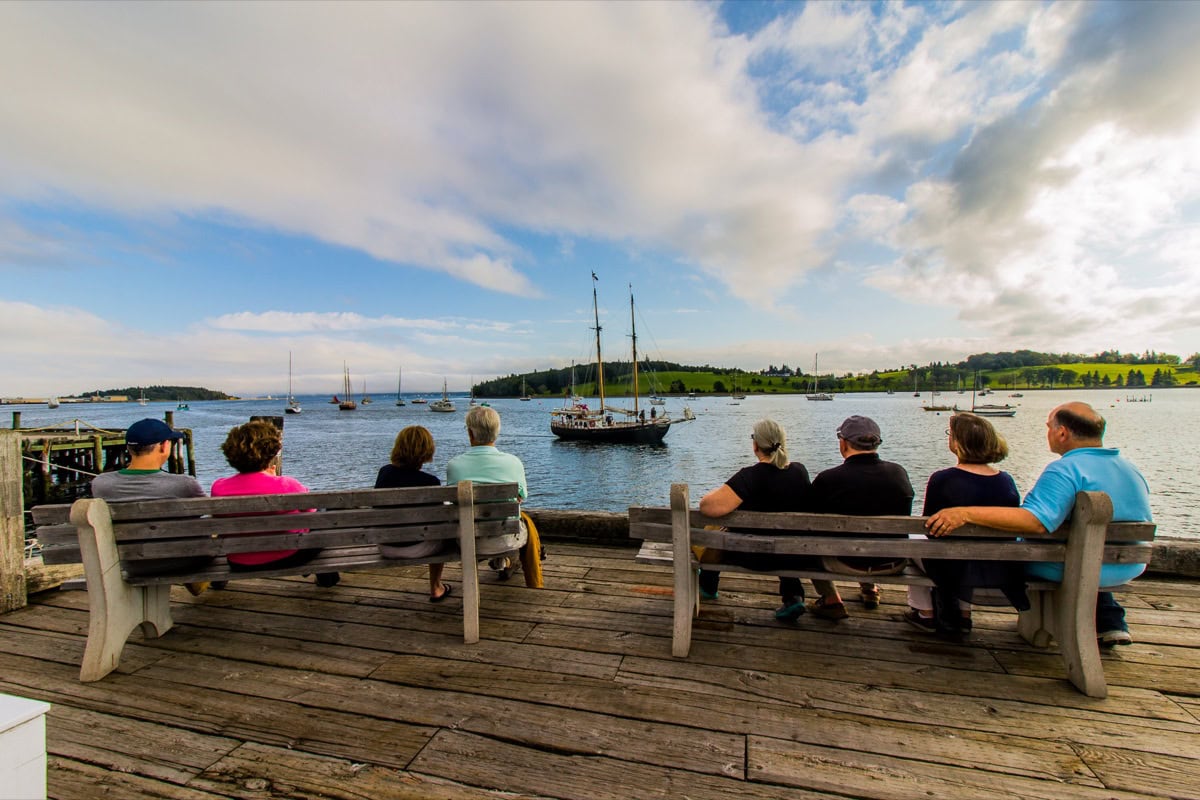
People on benches watching sailboats in Lunenburg harbour

TL;DR

  • Lunenburg is a UNESCO-listed town on Nova Scotia’s south coast — about an hour’s drive from Halifax.
  • It’s at its best from June to October, when the weather is pleasant and all the restaurants and museums are open. September and early October are ideal — fewer tourists, beautiful autumn colours.
  • One day is enough to explore Lunenburg itself, but with day trips (Mahone Bay, Blue Rocks, beaches) I’d recommend 2–3 days.
  • Top attractions: the colourful waterfront, the famous schooner Bluenose II, the Fisheries Museum of the Atlantic, and a walk through the historic old town.
  • Don’t miss a lobster supper — lobster on the South Shore doesn’t get any fresher than this.
  • At Ironworks Distillery you can taste blueberry rum and apple brandy that’ll blow you away (in the best possible way).
  • A car is essential — public transport is virtually non-existent. From Halifax it’s a lovely hour-long drive along the Lighthouse Route with gorgeous views.
  • Budget for 2–3 days for two comes to roughly €580–€720 including accommodation, food, and activities.

When to visit Lunenburg and how to get there

Lunenburg sits about 100 km southwest of Halifax and there’s really only one sensible way to get here — by car. Public transport to Nova Scotia’s south coast is, shall we say, more theoretical than practical. But don’t see that as a downside — the drive from Halifax along the legendary Lighthouse Route (Highway 3) is an experience in itself. It winds along the coast past picturesque coves, tiny fishing villages, and the odd lighthouse. An hour-long drive that feels like five minutes.

How to get to Lunenburg

By air, you’ll fly into Halifax (YHZ) — from the UK, there are direct flights with airlines like WestJet and Air Canada (seasonally from London), or connections via Toronto or Montreal. We’ve had great luck finding affordable fares through Kiwi — it’s our go-to flight search engine and occasionally throws up surprisingly good deals on transatlantic routes.

Pick up a hire car at Halifax airport — you really can’t do Nova Scotia without one. We’ve been happy long-term users of DiscoverCars, which we use all over the world. Hire prices sit around 250–400 CAD/week (roughly €170–€270). Summer is pricier, so I’d recommend booking well in advance.

If you’re planning a bigger road trip across Canada, Nova Scotia makes a perfect complement to the west coast — a completely different world, but equally stunning.

Best time to visit

June to October — that’s the season on the South Shore. Most restaurants, museums, and attractions are open during this window and the weather is pleasant (18–25 °C in summer, 10–18 °C in autumn).

  • July and August are the warmest and busiest months. Expect higher accommodation prices and more crowds, but festivals are in full swing (the Lunenburg Folk Harbour Festival in August is brilliant).
  • September and early October — our favourite time to visit. The tourist hordes have gone, prices drop, restaurants are still open, and the autumn colours begin. Nova Scotia in autumn is arguably one of the most beautiful corners of Canada we’ve seen.
  • November through May I’d avoid. Many businesses shut up shop, the weather turns harsh, and the town loses its buzz. That said, if you want Lunenburg all to yourself and don’t mind the cold, why not.

💡 TIP: Fog is completely normal on Nova Scotia’s coast, especially in the mornings and in July. Don’t panic — it usually lifts by midday, giving way to a gorgeous sunny afternoon. Or just head a few kilometres inland, where it’s often clear.

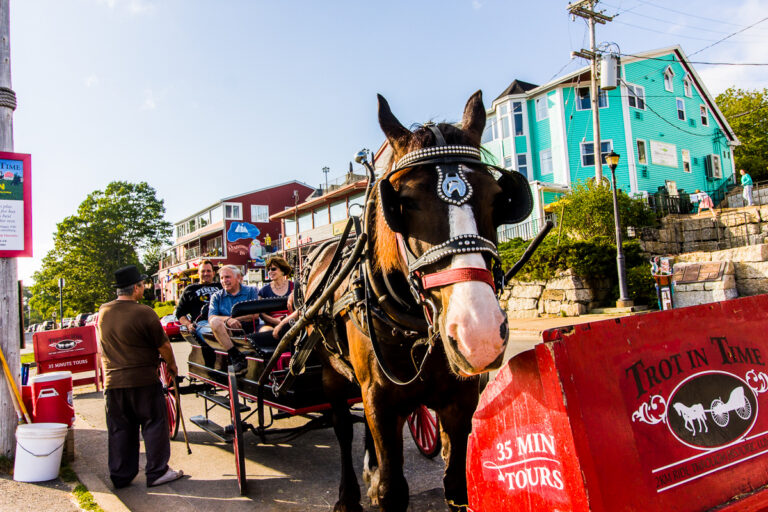
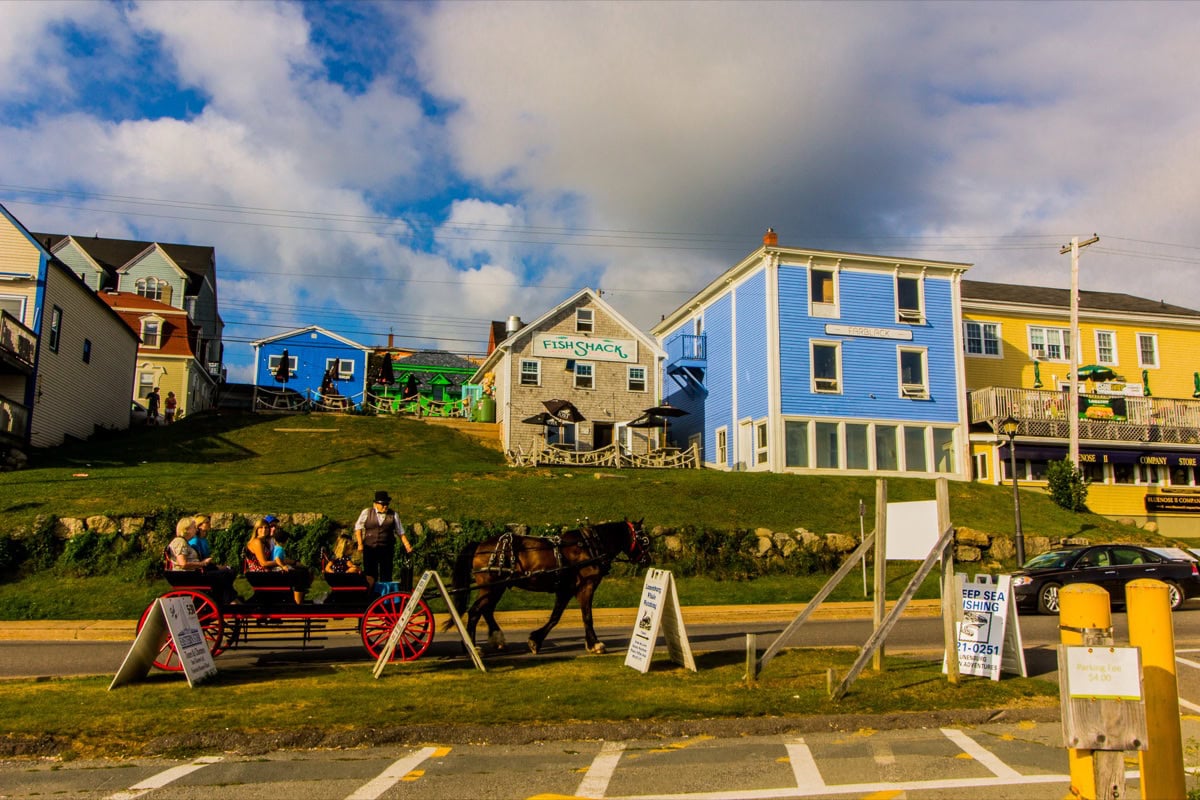
Horse-drawn carriage ride among the colourful houses of Lunenburg

Where to stay in Lunenburg and how much it costs

Lunenburg is a small town and accommodation options are limited, so I’d strongly recommend booking ahead — especially in summer. On the upside, the town is so compact that it doesn’t really matter where you stay; everything is within a few minutes’ walk.

Types of accommodation and price ranges

  • B&Bs and guesthouses — the most characteristic way to stay in Lunenburg. Many occupy historic 18th- and 19th-century homes with beautifully appointed interiors. Prices range from about 150–280 CAD/night (€100–€190).
  • Hotels — there are a handful in Lunenburg, and none of them are concrete boxes. Think boutique style. Expect to pay 180–350 CAD/night (€120–€240).
  • Airbnb and holiday lets — if you’re staying several nights, these tend to be better value. Entire flats from 120 CAD/night (€80).

One of the most popular places to stay is Mariner King Inn — a gorgeous historic house right in the centre with beautiful rooms and superb breakfasts. If you’d prefer something right on the water, try the Lunenburg Arms Hotel with harbour views.

For those who prefer a quieter setting just outside the centre, Kaulbach House Historic Inn is a wonderful choice — a Victorian house with lovely gardens and rooms that make you feel like you’ve stepped into another century (the good kind — there’s definitely a proper shower 😁).

How much does a holiday in Lunenburg cost

Budget for 2–3 days for two (mid-range, comfortable but not extravagant):

  • Accommodation: 2 nights × 200 CAD = 400 CAD (€270)
  • Food and drink: lobster supper, lunches, cafés — approx. 300–400 CAD (€200–€270)
  • Activities and admission: Fisheries Museum, Ironworks Distillery, possibly whale watching — approx. 100–200 CAD (€70–€135)
  • Petrol: Halifax return + day trips around the area — approx. 60 CAD (€40)

Total: roughly 860–1,060 CAD (€580–€720) for two over 2–3 days.

Canada isn’t a cheap destination in general, but the South Shore is more reasonably priced than places like Vancouver or Banff. Accommodation is the biggest expense — if you find a good Airbnb, you can bring the overall budget down quite a bit.

15 things to see and do in Lunenburg Canada

Let’s get to the main event — what to actually see and do in Lunenburg. The town may be small, but it packs a surprising punch. You could easily spend an entire day here and wish you had two. From the colourful harbour to museums, a distillery, and a hilltop viewpoint that’ll make your jaw drop — here’s the best of the lot.

1. The colourful Lunenburg waterfront

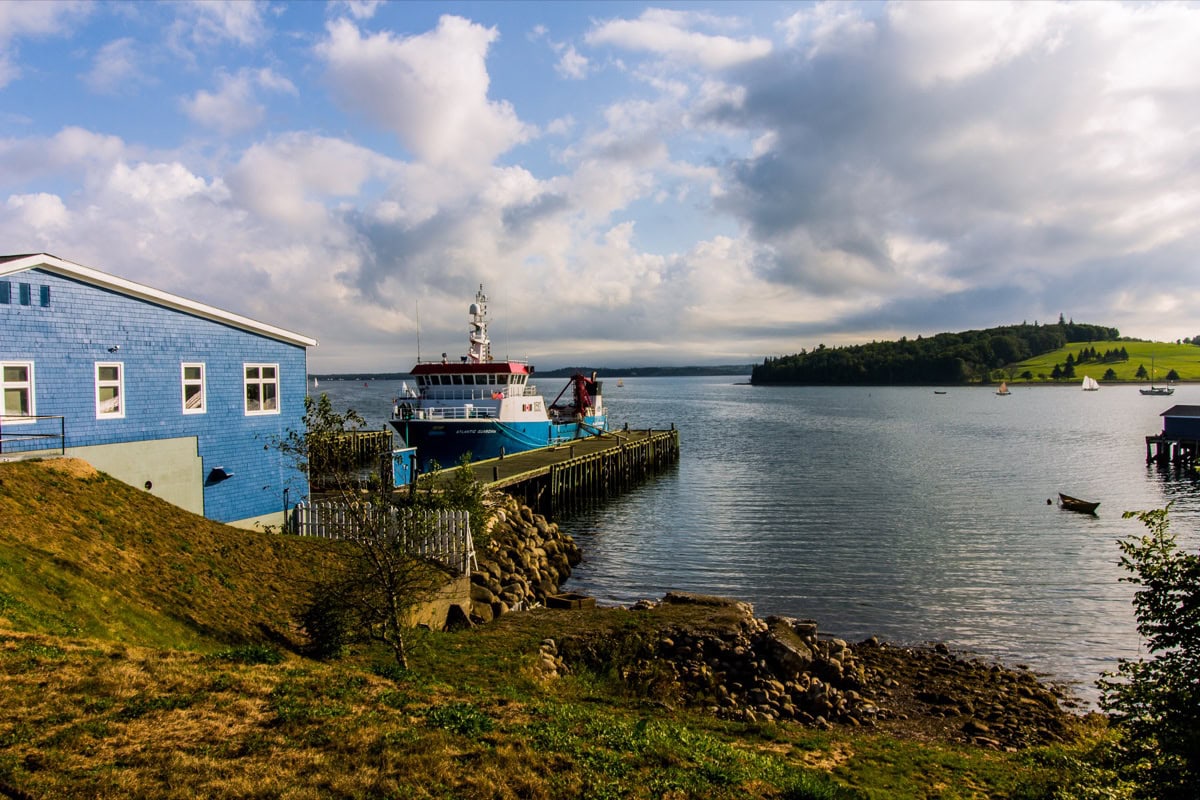
Lunenburg harbour with a blue building and sailboats

This is the view you’ve seen in every photograph of Nova Scotia. A row of colourful buildings lining the harbour, fishing boats bobbing on the waves, houses reflected in the water. It’s even more beautiful in person than in pictures — and I say that as someone who’d looked at Lunenburg photos hundreds of times before we arrived.

The waterfront is relatively short — you can walk its length in ten minutes. But that’s part of the charm. There’s no over-the-top tourist zone, no stalls hawking fridge magnets and keychains (well, almost none). Just handsome old buildings, mostly from the 18th and 19th centuries, now home to restaurants, galleries, and little shops.

The best photos are taken from the wharf opposite the colourful houses — ideally in the morning, when the light is soft and the crowds haven’t arrived yet. Or at sunset, when the entire harbour glows golden. We spent about an hour just sitting on a bench and taking it all in. Sometimes that’s the best thing you can do in a new town.

💡 TIP: If you arrive in fog (and be prepared for it, especially in the morning), the waterfront takes on a completely different, mysterious atmosphere. The colourful buildings emerge from the mist like ghosts and the harbour falls silent. It’s beautiful in a different way, but beautiful all the same.

2. A walk through the UNESCO historic old town

Gothic wooden church in the historic centre of Lunenburg

Lunenburg has been a UNESCO World Heritage Site since 1995, and the reason is simple — the entire old town has preserved its original character from the British colonial era. The street grid is the very same one the British laid out in 1753, and most of the houses date from the 18th and 19th centuries.

What fascinates me about Lunenburg is that UNESCO status here doesn’t mean a museum under glass. People actually live here. Families occupy those colourful houses, run cafés, and grow tomatoes in their gardens. It’s a living, breathing town, not an exhibit.

Wander along Montague Street and Pelham Street — this is where you’ll find the finest examples of colonial architecture. Pay attention to the details — ornamental gables, brightly painted doors, gardens bursting with hydrangeas. Every house is a different shade, and together they form a joyful mosaic that makes you feel like you’ve wandered into a children’s storybook.

Be sure to climb up to St. John’s Anglican Church on the hill — from here you get a stunning view of the harbour and the entire old town. The church itself is beautiful (though sadly it burned down in 2001 and had to be rebuilt), but it’s really the view that makes the short uphill trudge worthwhile. 😁

3. Bluenose II — the legendary schooner

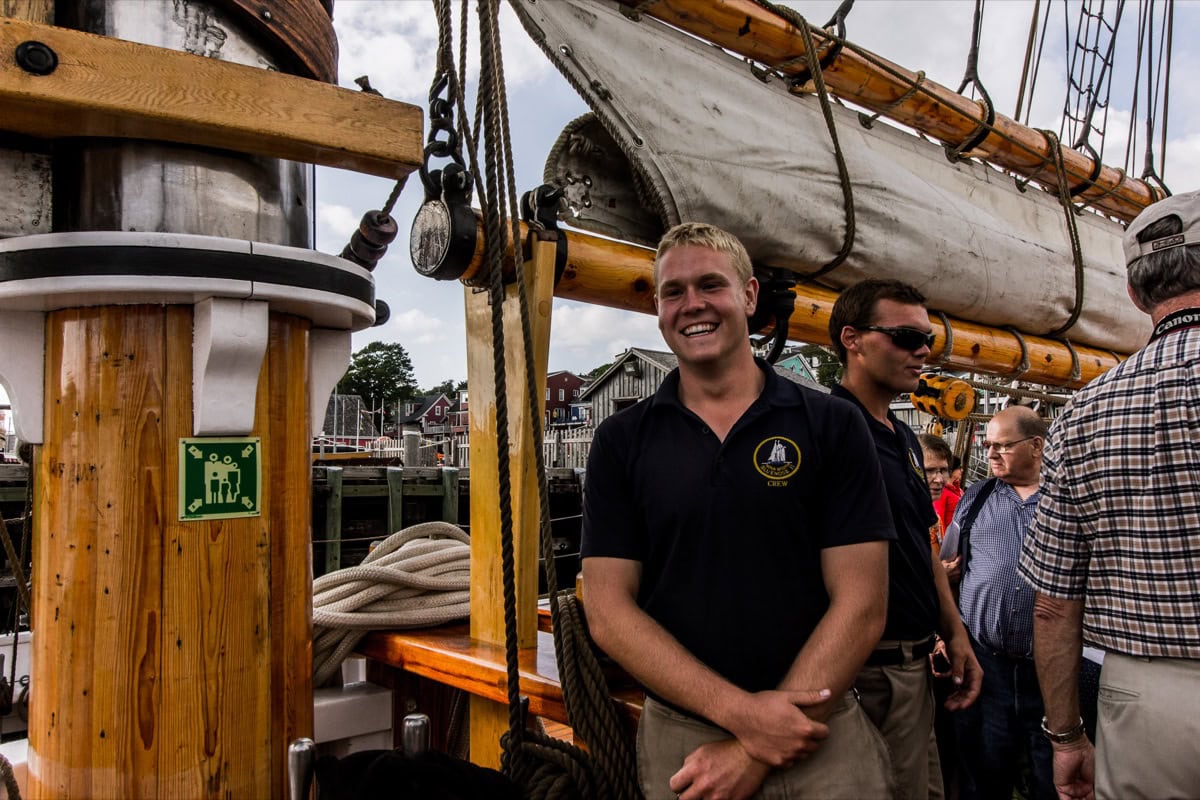
Crew aboard a historic sailing ship in Lunenburg harbour

If you know only one thing about Lunenburg, it’s probably the Bluenose. This legendary racing and fishing schooner is so famous that it’s depicted on the Canadian ten-cent coin — and her replica, Bluenose II, calls Lunenburg her home port.

Bluenose II is a magnificent wooden sailing ship that you can admire from the wharf for free (whenever she’s in port), or you can head out on a two-hour sail across the bay. I’d wholeheartedly recommend the latter — sailing on a historic schooner along the Nova Scotia coast is an experience you won’t forget.

Sailings usually run from June to September, with tickets around 50–60 CAD/person (€35–€40). They sell out quickly, so book in advance — ideally as soon as you know your dates.

⚠️ HEADS UP: Bluenose II occasionally sails off to festivals or goes into maintenance and simply won’t be in port. Before you plan your entire trip around her, check the website to confirm she’ll be in Lunenburg on your chosen dates.

4. Fisheries Museum of the Atlantic — stories of the sea

Red building of the Fisheries Museum of the Atlantic on the Lunenburg waterfront

This museum sits right on the waterfront and is arguably the best museum on the entire South Shore — possibly in all of Nova Scotia. It’s not some dull affair of glass cases and laminated labels. It’s interactive, engaging, and tells the stories of the fishermen who made their living on the Atlantic for centuries.

Inside you’ll find exhibits on the history of lobster fishing (including how a lobster actually works — fascinating!), the famous Bluenose, shipwrecks and rescues, and if you’re lucky, a live aquarium with local marine creatures.

Admission is about 15 CAD/person (€10) and the museum is open from May to October. Allow 1.5–2 hours for your visit.

Outside the museum, historic vessels are moored alongside — including an old fishing schooner. The deck is open to visitors and makes for great photos.

5. Ironworks Distillery — blueberry rum and other delights

Historic building of Ironworks Distillery in Lunenburg
Photo: Nicole Bratt from Seattle, WA, USA / CC BY-SA 2.0 / Wikimedia Commons

This is where Lunenburg won me over completely. Ironworks Distillery occupies a former blacksmith’s forge (hence the name) right on the waterfront and produces some of the most interesting spirits I’ve ever tasted.

Their speciality is blueberry rum — it sounds odd, but it tastes fantastic. They also offer apple brandy, vodka, and a range of liqueurs. A tasting costs around 15 CAD (€10) and you’ll sample 4–5 products with a guided explanation of the distilling process. The guides are enthusiastic and funny — you can tell they genuinely love what they do.

If something takes your fancy (and it will, I guarantee it), you can buy a bottle in the shop on-site. Their blueberry rum makes the perfect Nova Scotia souvenir — original, local, and ridiculously good.

💡 TIP: Tastings usually run from May to October, typically daily. In winter they have limited opening hours, so check the website beforehand.

6. Hike to Gallows Hill — the best view of Lunenburg

View of Lunenburg harbour from the wharf

This spot rarely appears in guidebooks, but ask any local and they’ll recommend it straight away. Gallows Hill (yes, it’s called Gallows Hill, but don’t worry — today it’s a peaceful little park) offers arguably the best panoramic view of the entire town.

From the hilltop you can see the colourful old town, the harbour, Bluenose II (if she’s in port), the bay, and on a clear day, islands on the horizon. It’s an ideal spot for both sunrise and sunset.

The walk takes about 15 minutes from the town centre — it’s uphill, but nothing strenuous. At the top there are benches and grass where you can sit and soak up the view. We brought a bottle of wine and some cheese up here and had a romantic dinner with a view that would cost hundreds at a restaurant. ☺️

7. Blue Rocks — a fishing village from another era

Fishing shack by the harbour near Lunenburg

About 10 minutes’ drive from Lunenburg lies Blue Rocks — a tiny fishing settlement that looks as though time stopped here around 1920. Grey wooden shacks, wrecks of old boats, lichen-covered rocks, and water everywhere you look.

Blue Rocks isn’t a tourist attraction in the traditional sense — there’s no museum, no café, and barely a car park (well, one small one). It’s simply an authentic fishing community where a handful of families still live and fish. And that’s precisely what makes it so beautiful.

For photographers, it’s paradise. The light does incredible things here, especially in the morning and in fog. And if you’re into kayaking, Blue Rocks is the starting point for a gorgeous paddling route through the surrounding islands.

⚠️ Note: Please remember that people live here. Stay off private property, don’t photograph into people’s windows, and park only in designated spots. It’s a tiny community and tourists who treat it like a safari park understandably aren’t appreciated.

8. Kayaking the bay — Lunenburg from the water

One of the loveliest ways to experience Lunenburg is from the water. Several local companies offer kayak tours along the coast — from gentle paddles around the bay to full-day excursions to nearby islands.

From a kayak you see the colourful waterfront from an entirely different perspective. Plus you’ll likely encounter seals — they’re everywhere around here. Fearless, curious, and adorable. One popped up right beneath our kayak and I nearly toppled into the water from the fright. 😅

Tours typically cost around 60–90 CAD/person (€40–€60) for 2–3 hours and include all equipment and instruction. Even complete beginners can manage the basic bay route.

9. Lunenburg Academy — a school with a view

Victorian building of Lunenburg Academy with turrets
Photo: Wladyslaw, Edit: Waugsberg (Lichter abgemildert) / CC BY-SA 3.0 / Wikimedia Commons

The enormous white building on the hill above town that you can see from practically everywhere — that’s Lunenburg Academy, a former school dating from 1895. It’s one of the most photographed buildings in town, and no wonder. The architecture is striking — turrets, arched windows, and that commanding hilltop position.

Today it serves as a community centre, and part of it is open to the public. But even if you don’t get inside, the walk up is worth it for the view alone. From the lawn in front of the Academy you get a gorgeous panoramic vista of the town and harbour.

10. Sunset on the wharf — the cheapest experience in Lunenburg

People on the wooden wharf in Lunenburg at sunset

This is our favourite “tip” and it won’t cost you a penny. In the evening, grab a bottle of local wine or beer from one of the shops on the waterfront, sit yourself on the wharf, and watch the sun go down over the harbour.

Sunset in Lunenburg is something special — light bounces off the colourful houses, the water turns pink and orange, and the whole town goes quiet. It’s one of those moments when you think: “This is why I travel.”

lukas a lucka
Lukáš and Lucie recommend
Where to stay in Lunenburg
4 accommodations — hotels and other lodging options

Around Lunenburg: 5 day trips you shouldn’t miss

Lunenburg itself is gorgeous, but the surrounding South Shore has so many other treasures that it would be a shame to limit yourself to one town. All the following trips are within 30–60 minutes by car and can easily be combined into one packed day.

11. Mahone Bay — three churches and heaps of charm

Three churches on the waterfront in Mahone Bay
Photo: Paul from Hacketts Cove, Canada / CC BY 2.0 / Wikimedia Commons

About 25 minutes’ drive from Lunenburg lies Mahone Bay — a town that might be even more photogenic than Lunenburg itself (and that’s saying something). The iconic view of three churches side by side reflected in the water of the bay is one of the most photographed scenes in all of Canada.

Mahone Bay is smaller and quieter than Lunenburg, with a lovely main street full of galleries, artisan shops, and cafés. It’s ideal for a morning trip — stroll through town, grab a coffee with a bay view, pick up some hand-made candles or pottery, and head back.

If you’re visiting in July, you might catch the Mahone Bay Scarecrow Festival — the whole town is decorated with hundreds of creative scarecrows. It’s absurd, funny, and utterly charming. In August there’s the Mahone Bay Classic Boat Festival with a parade of historic sailing vessels.

💡 TIP: On the road from Lunenburg to Mahone Bay, stop at the viewpoint by the road — there’s a car park with a sign, and the view over the bay dotted with dozens of tiny islands is beautiful.

12. Ovens Natural Park — sea caves and gold

Rocky coastline with sea caves at Ovens Natural Park
Photo: Dennis G. Jarvis / CC BY-SA 2.0 / Wikimedia Commons

About 20 minutes’ drive south of Lunenburg you’ll find Ovens Natural Park — a privately owned park on a clifftop above the ocean where you can walk a trail along sea caves carved into the rock by the waves. The scenery is dramatic — waves crash into the caves and the echo carries for hundreds of metres.

Fun bonus: there was a gold rush here in the 19th century, and you can still pan for gold on the beach today. Yes, really. The park lends out panning equipment and instructions, and people do occasionally find something (don’t get too excited — we’re talking specks, not nuggets 😁).

Admission is around 15 CAD/person (€10) and the park is open from May to October. You can even camp here if you fancy falling asleep to the sound of the waves.

13. Lighthouse Route — a coastal drive

Lighthouse on Nova Scotia's coastal Lighthouse Route
Photo: Dennis G. Jarvis / CC BY-SA 2.0 / Wikimedia Commons

The Lighthouse Route is a scenic road that runs along Nova Scotia’s entire south coast from Halifax through Lunenburg all the way to Yarmouth. You don’t need to drive the whole thing — even individual sections are stunning.

I’d especially recommend the Lunenburg → Liverpool stretch, where you’ll pass several beautiful lighthouses, wild beaches, and picturesque fishing villages. Stop at Hirtle’s Beach — one of the most beautiful (and least visited) beaches on the South Shore. Miles of white sand, dunes, and barely a soul in sight.

For lighthouse lovers, a stop at Peggy’s Cove (in the Halifax direction) is a must — arguably the most famous lighthouse in all of Canada. It’s busier with tourists, but the view of the granite rocks and the ocean is worth it. Just please stay behind the barriers — waves regularly sweep people off the rocks here, and it’s no joke.

14. LaHave Bakery — Nova Scotia’s most famous bakery

Interior of LaHave Bakery in Nova Scotia
Photo: in pastel from Canada / CC BY 2.0 / Wikimedia Commons

On the road west from Lunenburg, in the tiny village of LaHave, stands a bakery that’s legendary across the entire province. LaHave Bakery bakes bread, pastries, and croissants from local ingredients, and people drive here from all over Nova Scotia.

Their sourdough bread is phenomenal — crispy crust, soft centre, absolutely perfect. And the pastries… well, let’s just say we bought a whole bag and it lasted about two hours of driving. 😅

The bakery opens early and I’d recommend arriving sooner rather than later — popular items sell out fast. It’s a perfect stop on the way to or from Lunenburg.

15. Whale watching from Lunenburg or nearby

The waters off Nova Scotia’s coast are home to humpback whales, fin whales, and even North Atlantic right whales (one of the rarest species on Earth). Whale-watching season runs from June to October, and several boats depart from the Lunenburg area.

Trips usually last 3–4 hours and cost around 70–100 CAD/person (€47–€67). No one can guarantee a sighting, but the odds during peak season are very high — most operators report a success rate of around 95%.

💡 TIP: Bring warm layers even if it’s hot on land. It’s always chilly on the water, and the wind will cut right through you after a couple of hours. If you’re prone to seasickness, a preventative tablet is a wise move.

What to eat and drink: a foodie’s guide

Outdoor restaurant by Lunenburg harbour

Food on the South Shore is a topic I could devote an entire article to. Nova Scotia is a seafood lover’s paradise — lobster, mussels, scallops, salmon… everything fresh, local, and prepared with care. And Lunenburg, as a historic fishing town, does this exceptionally well.

Lobster supper — a mandatory stop

If you’re in Nova Scotia and don’t have a lobster supper, it’s like going to London and skipping the British Museum. A whole lobster — boiled or grilled — with melted butter, corn on the cob, and potato salad. It’s simple food, but the taste… just wow.

Almost every restaurant in Lunenburg and the surrounding area serves lobster, but for the most authentic experience I’d recommend restaurants right on the waterfront or in the nearby fishing villages. Expect to pay around 35–60 CAD (€24–€40) for a whole lobster, depending on the size and time of year.

Our favourite restaurants in Lunenburg

  • The Grand Banker Bar & Grill — right on the waterfront with harbour views. Excellent fish & chips and lobster, naturally. Prices reflect the location (i.e. on the higher side), but the quality is top-notch.
  • Salt Shaker Deli — a smaller, informal bistro with fantastic sandwiches and soups. Their seafood chowder is probably the best thing I ate on the entire South Shore.
  • The Knot Pub — a classic nautical pub with a great atmosphere, local beer, and solid food at reasonable prices. Perfect for an evening out.
  • Rum Runner Restaurant — slightly more upscale with beautiful views and creative cuisine built around local ingredients. Their tasting menu is well worth it.
  • South Shore Fish Shack — if you want something quick and authentic, this fish “shack” serves fresh fish & chips and lobster rolls right by the harbour. No fuss, just good food.

What to drink

  • Local craft beer — Nova Scotia has a surprisingly strong craft beer scene. Look out for brews from Boxing Rock Brewing (from nearby Shelburne) or Garrison Brewing (from Halifax).
  • Rum and spirits from Ironworks — as I mentioned above, the blueberry rum is an experience in itself.
  • Wines from Gaspereau Valley — Nova Scotia even has its own wine region! The white wines in particular (Tidal Bay is the local speciality) are well worth a try.

Practical tips and tricks

How much time to spend in Lunenburg

One full day is enough for the town itself. If you want to explore the surroundings too (Mahone Bay, Blue Rocks, Ovens, beaches), plan for 2–3 days. We spent three days here and could have stayed longer — the South Shore pace is addictive.

What to pack

The weather on Nova Scotia’s coast is unpredictable. Even in summer, mornings can be foggy and chilly before clearing into 25 °C sunshine by the afternoon. I’d recommend layering — a lightweight waterproof jacket and a windbreaker are essentials. For day trips you’ll want comfortable hiking shoes, and if you’re planning to walk on rocks (Blue Rocks, Ovens), grippy soles are a must.

For a complete packing checklist, have a look at our guide on how to pack a carry-on bag.

Internet and eSIM

Wi-Fi in Lunenburg’s hotels and cafés works perfectly fine. Coverage in the more remote parts of the South Shore, however, can be patchy — mobile signal drops in and out. If you need to stay online while on the move, I’d recommend getting an eSIM before you go — you can read about our experience with Holafly in our Holafly review.

Travel insurance

Never travel to Canada without insurance — healthcare there is astronomically expensive. Even a simple trip to A&E can set you back thousands of dollars. For shorter trips we’d recommend a standard UK travel insurance policy, and for longer stays SafetyWing is great — read our detailed comparison in the SafetyWing review.

FAQ — Frequently asked questions about Lunenburg and Nova Scotia

How far is Lunenburg from Halifax?

Lunenburg is about 100 km southwest of Halifax. The drive takes roughly an hour along Highway 3 (the Lighthouse Route), which is a scenic and beautiful road in its own right. There’s essentially no direct public transport between Halifax and Lunenburg, so a car is a must.

How many days do I need in Lunenburg?

One full day is enough for the town itself. If you want to explore the surrounding area — Mahone Bay, Blue Rocks, Ovens Natural Park, beaches, and the Lighthouse Route — I’d recommend at least 2–3 days. The South Shore really does have a lot to offer.

Is Lunenburg safe?

Yes, Lunenburg is a very safe town. Crime is minimal and the atmosphere is friendly. The only things to watch out for are slippery rocks along the coast (especially after rain) and strong waves on exposed beaches. As a general rule on Nova Scotia’s coast — respect the ocean and don’t venture too close to cliff edges.

Who founded Lunenburg and what’s the colonial history?

Lunenburg was founded in 1753 by the British, who brought settlers primarily from Germany, Switzerland, and southern France — hence the somewhat un-British name. Canada as a whole has a rich colonial history — the French arrived first (from the 16th century), followed by the British (from the 18th century), and both cultures are still reflected in the country’s architecture, cuisine, and language today. In Lunenburg, the German and British influence is visible in the old town’s architecture, which earned it UNESCO World Heritage status.

Can you combine Lunenburg with Peggy’s Cove?

Absolutely — and it’s actually the ideal combination. Peggy’s Cove sits roughly halfway between Halifax and Lunenburg. I’d recommend driving from Halifax via Peggy’s Cove to Lunenburg (or vice versa) and making a full day of it. Just bear in mind that Peggy’s Cove gets very crowded, especially when cruise ships dock in Halifax.

What else is Nova Scotia known for besides Lunenburg?

Nova Scotia is famous for its dramatic coastline, seafood (especially lobster!), lighthouses, friendly locals, and Celtic culture (on Cape Breton Island, Gaelic is still spoken and bagpipes are played). You’ll also find some of the highest tides in the world at the Bay of Fundy, and the stunning Cabot Trail — one of the most scenic drives in North America.

What currency is used in Canada and how much does Lunenburg cost?

Canada uses the Canadian dollar (CAD). At the time of writing, the exchange rate is roughly 1 CAD = €0.67 (or about £0.57). Card payments are accepted virtually everywhere — even in small shops and at markets. We didn’t need any cash at all in Lunenburg. A total holiday budget for the South Shore over 2–3 days for two comes to roughly 860–1,060 CAD, which is approximately €580–€720 including accommodation, food, activities, and petrol.

Tips and Tricks for Your Vacation

Don’t Overpay for Flights

Search for flights on Kayak. It’s our favorite search engine because it scans the websites of all airlines and always finds the cheapest connection.

Book Your Accommodation Smartly

The best experiences we’ve had when looking for accommodation (from Alaska to Morocco) are with Booking.com, where hotels, apartments, and entire houses are usually the cheapest and most widely available.

Don’t Forget Travel Insurance

Good travel insurance will protect you against illness, accidents, theft, or flight cancellations. We’ve had a few hospital visits abroad, so we know how important it is to have proper insurance arranged.

Where we insure ourselves: SafetyWing (best for everyone) and TrueTraveller (for extra-long trips).

Why don’t we recommend any Czech insurance company? Because they have too many restrictions. They set limits on the number of days abroad, travel insurance via a credit card often requires you to pay medical expenses only with that card, and they frequently limit the number of returns to the Czech Republic.

Find the Best Experiences

Get Your Guide is a huge online marketplace where you can book guided walks, trips, skip-the-line tickets, tours, and much more. We always find some extra fun there!
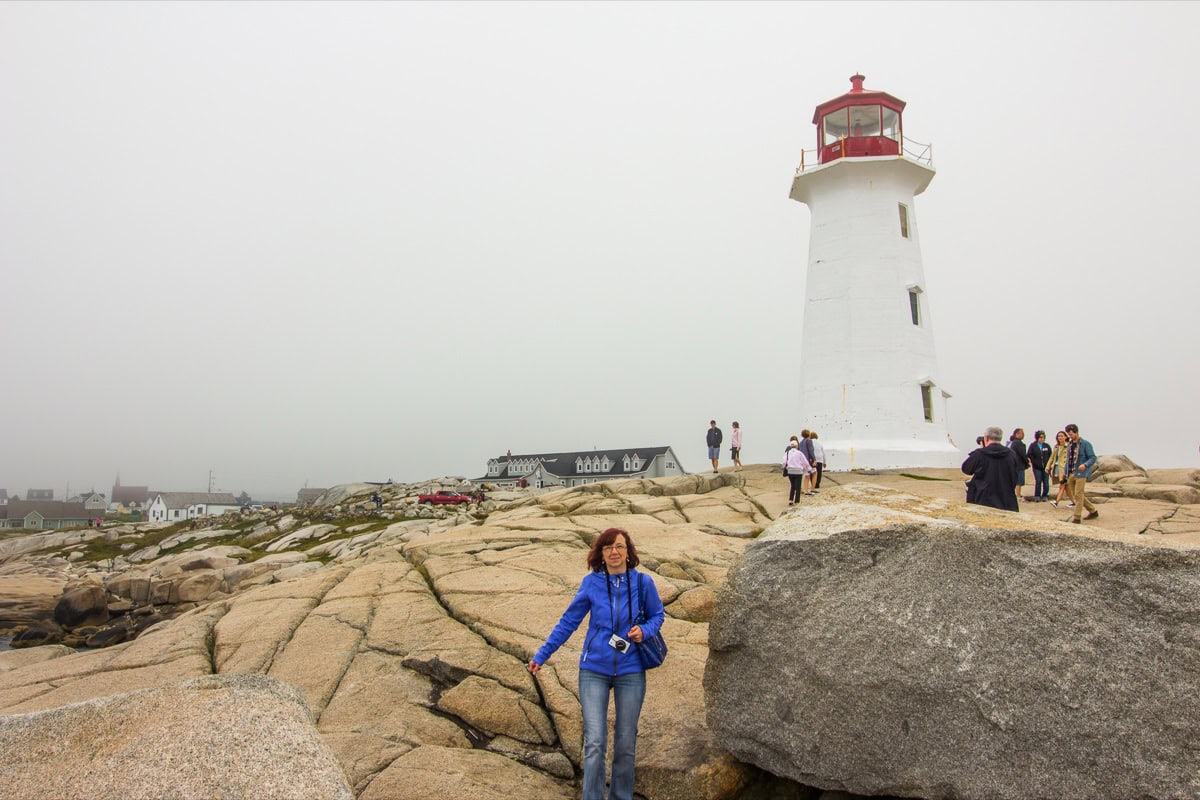
7-Day France Roadtrip: Starting from Paris

TL;DRThis 7-day road trip takes in Paris, Versailles, the Loire châteaux (Chambord, Chenonceau, Amboise), Mont Saint-Michel, the D-Day beaches and Étretat in Normandy, before finishing at Monet’s gardens in Giverny and looping back to Paris — around 1,100–1,400km all told. You’ll need a car for this one, and May, June and September are your best bets for good weather and thinner crowds. Budget for two for the week (flights not included) works out at roughly €1,150–€2,600 depending on where you stay, plus €50–€80 in tolls and car hire from €200–€350 a week. Sunrise at Mont Saint-Michel, the cliffs at Étretat and sunset over Chambord are the moments that make the trip.

France is one of those countries you simply want to keep coming back to. This France roadtrip itinerary was born out of that exact feeling — you know the one, when you’re sitting on the plane home already planning your next visit? That’s how France makes us feel every single time. The scent of fresh croissants, endless stretches of vineyards, fairytale châteaux, and those cliffs… Oh, those cliffs in Normandy. 😍

Because I love France, I’ve put together this 7-day itinerary — so you can avoid the classic mistakes and enjoy France to the fullest. You’ll drive from Paris through the fairytale Loire Valley châteaux, breathtaking Mont Saint-Michel, the history-laden beaches of Normandy, all the way to Monet’s gardens in Giverny. And all of that in just one week.

In this article you’ll find a complete day-by-day itinerary for a 7-day France roadtrip, with specific tips on restaurants, accommodation, and places you absolutely shouldn’t miss. I’ll tell you when to go, how much the whole thing costs, and what to watch out for.

Father holding his young son in front of Notre-Dame with the Seine

TL;DR

  • Route: Paris → Versailles → Loire Valley châteaux (Chambord, Chenonceau, Amboise) → Mont Saint-Michel → Normandy (D-Day beaches, Étretat) → Giverny → Paris
  • Total distance: approx. 1,200–1,400 km (depending on detours and side trips)
  • Best time to go: May, June or September — pleasant weather, fewer tourists, lower prices
  • A car is essential — you can’t comfortably cover this route by public transport in 7 days
  • Budget for two for a week: approx. €1,150–2,000 (excluding flights) — depends on accommodation type and dining habits
  • Biggest WOW moments: Mont Saint-Michel at sunrise, the cliffs of Étretat, sunset over Chambord
  • Watch out for: motorway tolls will surprise you (budget €50–80 for the whole trip), petrol is expensive, you don’t need a car in Paris
  • Download the map of all recommended places straight to your phone (link in the article)

When to go on a France roadtrip and how to prepare

France is beautiful practically all year round, but for a roadtrip where you’re switching between city, countryside, and coast, some months are significantly better than others. Let’s go through everything you need to know before you set off.

Best time: May, June and September

May and June are, in our opinion, absolutely ideal. The weather is pleasant (18–25 °C), gardens are in full bloom (Monet’s Garden in Giverny is a literal explosion of colour in June), the tourist season is only just getting started, and accommodation prices are reasonable. September is a great alternative — temperatures are similar, but the vineyards in the Loire Valley begin to turn golden with autumn tones, creating a completely different atmosphere.

I wouldn’t recommend July and August if you want to avoid crowds. Mont Saint-Michel in August is like the Tower of London in peak season — you simply can’t move. On top of that, the French take their nationwide holiday in August and popular spots are packed. And prices? Easily 40–60% higher in summer. 😅

The winter months (November–February) have their charm, but many gardens and some smaller châteaux are closed, and in Normandy the wind will blow you right off your feet.

How to get to France

Flying into Paris is the most practical option. From London, there are frequent direct flights to Charles de Gaulle (CDG) with airlines like British Airways, easyJet, and Air France — book ahead and you can find return tickets from around £50–80. Alternatively, Eurostar from London St Pancras gets you to Gare du Nord in about 2.5 hours, which is a wonderful option if you prefer rail.

For the best deals on flights, we always compare on Skyscanner or Google Flights — they often surface connections you won’t find elsewhere.

Tip: If you fly into Charles de Gaulle, pick up your rental car directly at the airport. Nearly every rental company has a branch there, and you can head straight onto the motorway towards Versailles without having to drive through central Paris (and trust me, you don’t want to do that).

Car hire and transport

A car is absolutely key for this roadtrip. While you can theoretically reach most places on the route by train (France has an excellent TGV network), the flexibility of having your own car is irreplaceable — especially in Normandy and the Loire Valley, where interesting spots are scattered across the countryside.

We’ve had consistently great experiences with DiscoverCars, which we use all over the world. For France, I recommend:

  • Book well in advance — ideally 2–3 months ahead; last-minute prices can be astronomical
  • A small car will do — the roads in Norman villages are narrow, and you’d be cursing an SUV
  • Automatic transmission is more expensive in France, but if you’re used to an automatic, it’s worth the surcharge
  • Full insurance with zero excess — always, always, always. French roads are full of roundabouts and occasionally confusing junctions

What to watch out for with your car:

  • Tolls (péage) on French motorways are fairly steep. Budget €50–80 for the entire trip. Toll booths accept cards.
  • Petrol costs around €1.70–1.90 per litre; diesel is slightly cheaper
  • Speed cameras are everywhere, and the French fine you even for a few km/h over the limit. Motorway limit is 130 km/h, on regular roads it’s 80 km/h.
  • Parking in small towns — look for Park & Ride or car parks on the outskirts; town centres are often pedestrianised

How much does car hire cost: Expect €200–350 per week for a small car, more in peak season.

Where to stay on a France roadtrip + total costs

On a seven-day roadtrip, I recommend staying at 3–4 different places — you don’t want to pack up and move every single day, or your holiday turns into a logistical nightmare. Here’s my recommended strategy:

  • Night 1: near Versailles or the southern suburbs of Paris (close to the motorway towards the Loire)
  • Nights 2–3: Loire Valley (ideally Amboise or Tours)
  • Nights 4–5: Mont Saint-Michel or nearby (Pontorson, Beauvoir)
  • Nights 6–7: Normandy — Bayeux or Honfleur (both are strategically superb)

How much does a week in France cost for two

France isn’t among the cheapest countries, but it doesn’t have to break the bank. Here’s our realistic budget for 7 days for two (excluding flights):

  • Accommodation: €400–800 — depends on whether you choose Airbnb / B&B / hotels
  • Car hire + petrol + tolls: €350–500
  • Food and drink: €300–500 — lunch in bistros €15–25 per person, dinner €25–40
  • Tickets and activities: €100–200 — châteaux, museums, gardens
  • Total: approx. €1,150–2,000 for two

Money-saving tip: Pick up cheese, baguettes, fruit, and wine from supermarkets (Carrefour, Leclerc) and have a picnic for lunch — you’ll spend just a few euros, and the atmosphere of a picnic beside a Loire Valley château is unbeatable. We “saved” on lunch this way and spent the difference on a nicer dinner. Win-win. 😁

Here’s a day-by-day overview of the entire route. Want more time and to see the south of France too? Check out our 14-day France roadtrip itinerary.

DayRoute & transfersWhere to sleep
1.Arrive in Paris, VersaillesVersailles
2.Versailles → Loire Valley châteaux — Chambord, ChenonceauLoire (Amboise)
3.Amboise → Mont-Saint-Michel (~3.5 hrs)near Mont-Saint-Michel
4.Mont-Saint-Michel → Normandy (Saint-Malo, Cancale)Bayeux
5.D-Day beaches & historic NormandyBayeux
6.Étretat, Honfleur → GivernyGiverny
7.Monet’s gardens in Giverny → return to Paris
The total route is roughly 1,100 km. Transfer times are approximate, without stops along the way.

Day 1. Versailles and your first taste of France

Man in a T-shirt with glasses standing with a pushchair in front of the Palace of Versailles

You arrive in Paris, pick up your car and — don’t drive into the city centre. I know it’ll be tempting, but save Paris for the end (or for a separate trip, because Paris deserves at least 3 days on its own). Instead, head straight to Versailles, which is about an hour and a half from CDG airport.

Palace of Versailles

The Palace of Versailles is simply on another level. You can study all the photos and videos beforehand, but when you’re physically standing there, it still takes your breath away. The sheer scale, the opulence, those gardens stretching into infinity… Louis XIV clearly didn’t have a problem with modesty. 😅

Practical tips:

  • Buy tickets online in advance — queues without a reservation can be up to 2 hours (and I’m not exaggerating)
  • A full ticket costs €21.50 per person, covering the palace and gardens
  • Arrive at opening time (9:00) — the first two hours are the quietest
  • Allow at least 3–4 hours for the palace + gardens, ideally the whole morning
  • The gardens are enormous — if you’re not keen on walking, you can hire a golf cart or a rowing boat on the Grand Canal

For lunch, head into the town of Versailles — Rue de Satory is packed with small restaurants. I recommend La Table du 11 (if your budget stretches to a slightly fancier meal) or Bistrot du Potager du Roi with its lovely terrace and local cuisine. Main courses around €18–25.

After lunch, take a stroll through the historic centre of Versailles — the Saint-Louis quarter with its cathedral and market hall is surprisingly charming and almost untouched by tourists.

If you’ve still got energy, pop into the Versailles Market (Marché Notre-Dame) — it’s open every day except Monday and you’ll find fantastic cheeses and local produce for a picnic the next day.

Where to stay on the first night

Stay near Versailles or in Chartres (it’s halfway to the Loire and saves you time in the morning). In Versailles itself, I recommend Hôtel Le Louis Versailles Château (modern, walking distance from the palace) or the more budget-friendly Hôtel Le Cheval Rouge, which has a family feel and excellent breakfasts. If you’re looking for an Airbnb, focus on the Saint-Louis quarter.

Day 2. Loire Valley châteaux — Chambord and Chenonceau

Château on the Loire River

Today is the most fairytale-like day of the entire roadtrip. In the morning you’ll head to the Loire, which is about a 2-hour drive from Versailles along the A10 motorway. The road passes through endless fields and is fairly monotonous, but what awaits you at the other end is absolutely worth it.

Château de Chambord

Chambord is the undisputed crown jewel of the Loire Valley châteaux. As you drive towards it and it slowly emerges from behind the trees… just wow. It’s enormous, with over 400 rooms, and its famous double helix staircase (reportedly designed by da Vinci) is an architectural wonder — two people can ascend simultaneously without ever meeting.

Practical tips:

  • Admission: €16, free for under-26s from the EU (!)
  • Arrive early morning (opens at 9:00) — the morning is the quietest
  • Allow 2–2.5 hours for the château + grounds
  • Don’t miss the rooftop terrace — the views over the surrounding forests are incredible
  • In the grounds (5,440 hectares!) you can hire bikes or electric buggies

This is the perfect spot for a picnic — spread out a blanket by the pond in front of the château, crack open the cheese and baguette from the Versailles market, and soak in the view. You won’t find a better restaurant. ☺️

Château de Chenonceau

In the afternoon, make your way to Chenonceau (about 1 hour from Chambord). This is the famous “Ladies’ Château”, built spanning the River Cher — you’ll recognise it from every other French postcard. And I have to say, photos don’t do it justice.

Chenonceau is more intimate than Chambord but has an incredible atmosphere. You walk through the château with the river flowing beneath you and gardens blooming all around… It’s like stepping into a painting.

  • Admission: €17
  • Allow 1.5–2 hours for the visit
  • The gardens of Diane de Poitiers and Catherine de’ Medici are both stunning, but each in a completely different way
  • In summer they offer evening visits with illuminations — if you get the chance, go!

For dinner, head to Amboise (30 minutes from Chenonceau), a charming little town on the banks of the Loire. I recommend L’Écluse right by the river — they do excellent steaks and local Loire wine at reasonable prices (main courses €18–28). For something lighter, try Bigot, a patisserie and chocolate shop with phenomenal desserts.

Where to stay in the Loire Valley

Stay in Amboise — it’s a strategically excellent base for the châteaux, and the town itself is lovely. Le Clos d’Amboise is a gorgeous boutique hotel with a garden and pool. A more budget-friendly option is Hôtel Le Chaptal or an Airbnb right in the historic centre. In the surrounding area, you can even find troglodyte accommodation (carved into the rock face) — an experience you won’t get anywhere else!

Day 3. Amboise, one last château, and the drive to Mont Saint-Michel

Château d'Amboise above the Loire River
Photo: Martin Falbisoner, CC BY-SA 3.0, Wikimedia Commons

Treat yourself to a relaxed morning in Amboise — stroll along the Loire embankment, have breakfast in one of the cafés on the main street, and visit a place you really shouldn’t skip.

Château d’Amboise and Clos Lucé

The Royal Château of Amboise presides over the town and offers beautiful views of the river and surrounding countryside. The visit is shorter than at the larger châteaux (an hour is enough), but the atmosphere is intimate and pleasant.

Right next door is Clos Lucé — Leonardo da Vinci’s final home, where he spent his last years at the invitation of Francis I. The interactive exhibition of his inventions is fantastic even for adults (and if you have kids, they’ll love it). Admission: €19. Allow 2–3 hours for both.

Morning tip: If you haven’t had enough of châteaux yet, on your way out of Amboise you could stop at Château de Villandry — its interiors aren’t as imposing, but its Renaissance gardens are arguably the most beautiful in all of France. Truly breathtaking geometric patterns. Admission: €13.

Driving to Mont Saint-Michel

After lunch in Amboise (try L’Amboiserie — excellent galettes, the savoury buckwheat crêpes that are a Breton staple, mains from €12), hop in the car and head for Mont Saint-Michel.

The drive takes about 3.5 hours via Le Mans and Avranches. It’s the longest transfer of the whole roadtrip, but the scenery is lovely — especially the final hour, when you pass through the Norman countryside with its cow-filled pastures and apple orchards.

Important: You can’t drive right up to Mont Saint-Michel. You’ll park in a large car park (about 2.5 km from the island, parking €14.90 for 24 hours) and continue by free shuttle or on foot along the causeway. I recommend arriving in the early evening — Mont Saint-Michel at sunset is one of the most powerful experiences of the entire trip.

Where to stay near Mont Saint-Michel

You have two options: stay right ON the island (expensive but unforgettable) or in the surrounding area (more practical and cheaper).

On the island: La Mère Poulard is a legendary hotel and restaurant — pricey, but an experience. If you want to tick off a bucket-list dream, this is worth it.

Nearby: The villages of Beauvoir or Pontorson (10–15 minutes away) have decent B&Bs at reasonable prices. Le Beauvoir is a lovely family hotel with views of Mont Saint-Michel, while La Jacotière is a beautiful farmstead converted into a chambre d’hôte (B&B).

Day 4. Mont Saint-Michel and the road to Normandy

Mont-Saint-Michel abbey at low tide
Photo: Lynx1211, CC BY-SA 4.0, Wikimedia Commons

Today you’ll visit the place that draws many people to this route in the first place. And rightly so.

Mont Saint-Michel

Get up early. I know, it’s a holiday, but Mont Saint-Michel in the morning, before the tourist crowds arrive, is a magical experience. If you’re lucky with the tidal coefficient (check ahead of time on the island’s website), you can watch the sea encircle the entire island — it’s one of the highest tides in Europe.

The abbey at the top is monumental. Gothic columns, the cloister, views from the terraces across the bay… It’s a place with incredible energy, whether you’re religious or not.

Practical tips:

  • Abbey admission: €13, free for under-26s from the EU
  • Arrive at opening time (9:30) — from 11:00 onwards, coaches full of tour groups start pouring in
  • Allow 2–3 hours for the abbey + a wander through the alleyways
  • The main street (Grande Rue) is full of tourist traps — souvenir shops and overpriced restaurants. But the atmosphere is wonderful regardless.
  • La Mère Poulard is famous for its fluffy omelette — it costs €30–40 and honestly, taste-wise, it’s a fairly ordinary omelette. But the experience? That’s arguably worth it. Sort of. 😅

Secret tip from Reddit: If you have time and are comfortable walkers, book a guide for a barefoot crossing of the bay (traversée de la baie). You walk across sand and mud directly to the island — it takes roughly 2–3 hours and is a once-in-a-lifetime experience. DO NOT attempt this without a guide — quicksand and the incoming tide are genuinely dangerous. Cost: around €10–15 per person.

Afternoon: Road to Normandy — Saint-Malo or Cancale

After lunch (I recommend leaving Mont Saint-Michel and stopping in Cancale, just 50 minutes’ drive away), head along the coast. Cancale is the “oyster capital” — at the Marché aux Huîtres you can buy freshly shucked oysters for just a few euros straight from the fishermen and eat them with a sea view. You don’t even have to be an oyster lover — it’s an experience even for sceptics (tested on Lukáš, who subsequently became an oyster convert 😁).

In the afternoon, continue to Bayeux (about 1.5 hours from Cancale), which will be your base for the next two days in Normandy. On the way, stop in Saint-Malo — this fortified coastal town looks like something from a pirate film. An hour walking the ramparts and the streets of the intra muros (walled city) is enough to get a feel for it.

Where to stay in Normandy

Bayeux is the ideal base — it’s picturesque, well-positioned between the D-Day beaches and Étretat, and has an excellent range of accommodation.

Hôtel Reine Mathilde is in the heart of town, with friendly staff and a superb location. Villa Lara is the more luxurious option with views of the cathedral. For Airbnbs, look in the town centre — everything is walkable and the atmosphere of the medieval streets is enchanting.

Alternatively, stay in Honfleur — it’s a bit further from the D-Day beaches, but it’s one of the most photogenic towns in all of France.

Day 5. D-Day beaches and historic Normandy

American military cemetery in Normandy
Photo: U.S. Navy, public domain, Wikimedia Commons

Today will be a day that stays with you. Even if you’re not a history buff, the D-Day beaches and surrounding memorials are a deeply emotional experience.

lukas a lucka
Lukáš and Lucie recommend
Where to stay in France
6 accommodations — wellness hotels, hotels and other lodging options

American Cemetery at Colleville-sur-Mer

Start here. 9,387 white crosses in perfect rows overlooking Omaha Beach. It’s a quiet, dignified place that hits you harder than you expect. Entry is free.

Directly below the cemetery is Omaha Beach — a wide, windswept stretch of sand where it’s almost impossible to imagine what unfolded here on 6th June 1944. Walk along the beach, look at the remnants of fortifications, and just let it sink in.

Pointe du Hoc

A short distance from Omaha Beach is Pointe du Hoc — the cliffs that American Rangers scaled under fire. The bomb craters are still visible today and look as though the war ended yesterday. Entry is free; allow 30–45 minutes for the visit.

Arromanches and the artificial harbour

The town of Arromanches-les-Bains is fascinating — the remains of the Mulberry artificial harbour built by the Allies during the invasion are still visible on the beach. The D-Day Museum (Musée du Débarquement) right on the beach explains the entire operation. Admission: €10.50.

For lunch, stop in Arromanches — Restaurant L’Idéal on the promenade does excellent mussels (moules-frites for around €16) with a view straight out to the harbour remnants. Or treat yourself to a picnic on the beach — pick up baguettes from a bakery and cheese from a fromagerie in Bayeux that morning.

Afternoon: Bayeux and its tapestry

Back in Bayeux, enjoy a stroll around town and visit the Bayeux Tapestry — a 70-metre-long embroidered strip from the 11th century that tells the story of the Norman conquest of England. It’s like a medieval comic strip and utterly fascinating. Admission: €12. There’s an excellent English audio guide available.

Dinner in Bayeux: L’Angle Saint-Laurent is our number-one recommendation — modern French cuisine in a beautiful historic building, mains €22–35. For something more casual, try La Reine Mathilde (connected to the hotel), which serves excellent Norman specialities including camembert en croûte.

Day 6. Étretat and the road through Honfleur to Giverny

Chalk cliffs of Étretat in Normandy
Photo: H. Grobe, CC BY 3.0, Wikimedia Commons

Today you’ll be driving through scenery that’ll make you want to stop every five minutes. The Norman coast is simply stunning.

Étretat — cliffs from another world

From Bayeux it’s about 2 hours to Étretat. Set off early, because you want to be up on those cliffs before the tour buses arrive.

The cliffs at Étretat are… how to describe them? Imagine enormous white rock arches jutting out of a turquoise sea, green grass on top, and a dramatic sky above it all. Monet and Manet both came here to paint, and I completely understand why.

What to definitely do:

  • Climb the Falaise d’Aval (the left cliffs when facing the sea) — steps lead to the top and the views are absolutely breathtaking. The walk up takes 15–20 minutes.
  • Climb the Falaise d’Amont (the right cliffs) — fewer people, a chapel, and a small Nungesser et Coli museum. Also beautiful views.
  • Walk along the beach — it’s pebbly, but at low tide you can walk right under the rock arch.
  • Jardins d’Étretat (gardens) on the clifftop — a modern garden with art installations and 360° views. Admission: €12.50. Honestly? The view is worth it; the gardens themselves are… rather niche. 😅

For lunch in Étretat I recommend Le Belvédère — a terrace with cliff views and seafood as fresh as it gets. Main courses around €20–30. If you’re looking for something cheaper, there are galette and crêpe stands along the beachfront promenade.

Stop in Honfleur

From Étretat, continue to Honfleur (about 45 minutes). This seaside town with its small Vieux Bassin harbour is one of the most photogenic spots in all of France — a row of colourful houses reflected in the water, tiny galleries, cafés…

Allow 1–2 hours to explore Honfleur:

  • Vieux Bassin (old harbour) — walk, photos, coffee
  • Church of Sainte-Catherine — an entirely wooden church, unique in France
  • Les Maisons Satie — an interactive museum dedicated to composer Erik Satie, surprisingly entertaining

Afternoon drink: La Cidrerie right by the harbour — order a cidre (cider, a Norman classic) and a galette with salted caramel. Normandy is cider country, so drink it wherever you can.

Driving to Giverny

From Honfleur to Giverny is about 2 hours. The road crosses the Pont de Normandie (impressive!) and continues along the Seine. Stay either in Giverny itself or in nearby Vernon (5 minutes by car) so you can be at Monet’s gardens first thing in the morning.

Where to stay in Giverny / Vernon

La Musardière in Giverny is a charming hotel right in the centre of the village — walking distance from the gardens, with a lovely garden of its own and prices around €100–140 per night. In Vernon there’s a wider and cheaper selection — Hôtel Normandy is a solid choice, while Le Vieux Moulin (an old mill on a tiny island in the Seine) is available as an Airbnb and is probably the most romantic accommodation of the entire trip.

Day 7. Monet’s gardens in Giverny and return to Paris

Monet's house and garden in Giverny
Photo: La salonniere, CC BY-SA 4.0, Wikimedia Commons

The final day of the roadtrip, but by no means the weakest. Giverny is a fitting grand finale for the entire journey.

Monet’s Gardens (Fondation Claude Monet)

Claude Monet lived and worked here for over 40 years, and his gardens are his greatest masterpiece. The famous Japanese bridge, water lilies on the pond, vibrant flower beds… Everything you know from his paintings is right here, alive and breathing.

Practical tips:

  • Open: April–October (closed in winter!)
  • Admission: €12
  • ARRIVE AT OPENING TIME (9:30). This is probably the single most important piece of advice in this entire article. From 10:30 onwards, coaches from Paris start arriving and the gardens fill up so much that you’ll be standing in a crowd by the lily pond. In the morning you’ll have the place almost to yourself — it’s a completely different experience.
  • Allow 1.5–2 hours for the gardens + house
  • The gardens are at their most beautiful in May and June (peonies, roses, water lilies beginning to bloom) and in September (fewer visitors, autumn colours)
  • The house is preserved in its original state — Monet’s yellow dining room and blue kitchen are surprisingly modern and stylish

Museum of Impressionism (Musée des Impressionnismes)

If you have time, this small museum in Giverny hosts temporary exhibitions focused on Impressionism. Admission: €9. Pleasant for a 30–45 minute visit.

For lunch in Giverny I recommend Restaurant Baudy — a historic restaurant where Impressionist painters used to dine. The garden terrace is beautiful and the food is decent, though prices are a touch touristy (mains €20–28). Alternatively, in Vernon try Les Fleurs — more local and cheaper.

Return to Paris

From Giverny to central Paris is only about an hour and a half; to CDG airport it’s roughly 2 hours (factor in suburban traffic, which can be slow during the afternoon rush).

If your flight doesn’t leave until the evening or the next day:

You’ve got several options for spending the afternoon:

  • Return the car at the airport and take the metro into the centre — wander around Montmartre, grab a coffee on Place du Tertre, and bid farewell to France with a view of the city from Sacré-Cœur
  • Stop at La Roche-Guyon on the way to Paris — a picturesque village with a castle carved into the rock, 30 minutes from Giverny
  • Detour to Auvers-sur-Oise — the village where van Gogh spent his final days. A small museum and the cemetery where he’s buried. An unforgettable stop for art lovers.

Practical tips and tricks for a France roadtrip

What to pack

France isn’t exactly the back of beyond, but a few things come in handy:

  • Comfortable walking shoes — you’ll be on your feet a lot, from château gardens to cliff paths. If you haven’t got a tried-and-tested pair, check out our guide to the best hiking shoes.
  • A lightweight waterproof jacket — in Normandy, showers can appear out of nowhere, even in summer
  • A plug adapter — you WILL need a UK-to-EU adapter, as France uses Type C/E sockets (different from UK three-pin plugs)
  • Sunglasses and sunscreen — the sun hits harder than you’d expect on the cliffs and beaches

For more packing tips, take a look at our article on how to pack into carry-on luggage.

Where to find flights

For cheap flights from the UK to Paris, compare on Skyscanner or Google Flights. From London, you can find return flights from around £50–80 if you book ahead. Also consider the Eurostar — it’s often competitively priced and drops you right in central Paris, which is convenient if you want to spend a day exploring before picking up your car.

Insurance and eSIM

For shorter trips around Europe, your UK Global Health Insurance Card (GHIC) gives you access to state-provided healthcare, but we always recommend travel insurance on top. For our tips, check out our SafetyWing review.

If you don’t want to worry about roaming charges (post-Brexit, free roaming in the EU is no longer guaranteed by UK networks, so check your plan), take a look at our Holafly eSIM review — we use it on all our trips.

Tolls and refuelling

  • Toll booths accept card payments — no cash needed
  • The ViaMichelin app calculates your route including toll costs in advance — brilliant for planning
  • Fill up at supermarket petrol stations (Carrefour, Leclerc, Auchan) — they’re significantly cheaper than branded service stations on the motorway

Food and drink — what to definitely try

  • Galettes (savoury buckwheat crêpes) — the staple in Brittany and Normandy
  • Cidre (cider) — a Norman speciality, order it with your galette
  • Camembert, Livarot, Pont-l’Évêque — Norman cheeses, buy them at local markets
  • Crème brûlée — simple, but the French simply do it best
  • Croissant au beurre — every morning, from every bakery. You’ll never get tired of them. 😁

Frequently asked questions about a France roadtrip

Before you set off, here are answers to the questions we get asked most often by readers about a 7-day France roadtrip.

Is 7 days enough for this route?

Honestly? It’s just about right, but your schedule will be full. If you can extend to 9–10 days, do it — you’ll be able to spend more time in Normandy and add places like Saint-Malo or Rouen. But in 7 days you’ll cover all the main highlights without feeling like you’ve missed anything major.

Can you do this roadtrip without a car?

In theory, yes — Versailles, Mont Saint-Michel, and Giverny are all accessible by train or bus from Paris. But you’ll lose a lot of flexibility and spend a lot of time waiting for connections. The Loire châteaux and D-Day beaches are very tricky without a car. If you don’t want to drive, consider organised day trips to individual destinations from Paris, though you’ll see significantly less in 7 days.

How much do tolls cost on the whole route?

For the full loop Paris–Loire–Mont Saint-Michel–Normandy–Paris, budget €50–80 in tolls. You can avoid toll roads by taking “N” and “D” roads instead of the “A” (autoroute), but the journey will be considerably longer. We combined both — motorways for longer stretches, secondary roads for shorter ones.

Is it better to go clockwise or anticlockwise?

Our itinerary runs anticlockwise (south to the Loire, then west and north). It’s more practical because Giverny is close to Paris, making it a perfect final stop before your flight. But the opposite direction works too — it really depends on your flight times.

Do I need a motorway vignette in France?

No. France doesn’t have a vignette system like some other European countries. You pay tolls as you go at toll booths (by card or cash). No sticker or electronic device needed.

Are Monet’s gardens in Giverny really that beautiful, or are they overrated?

They really are that beautiful. BUT — timing is everything. In the morning, without crowds, in May or June when everything’s in bloom? Magical. On an August afternoon when hundreds of people are jostling for space? Frustrating. The key is to arrive at opening time. And if you visit outside peak season (April or October), the gardens are still lovely, just in a different way.

What if it rains? Is Normandy worth visiting in the rain?

Absolutely. Normandy in the rain has a rugged beauty all its own — the cliffs at Étretat in the mist look utterly mystical, and the D-Day beaches under grey skies are even more moving. Plus, museums, châteaux, and restaurants all work regardless of the weather. Just bring that waterproof jacket. ☺️

Tips and Tricks for Your Vacation

Don’t Overpay for Flights

Search for flights on Kayak. It’s our favorite search engine because it scans the websites of all airlines and always finds the cheapest connection.

Book Your Accommodation Smartly

The best experiences we’ve had when looking for accommodation (from Alaska to Morocco) are with Booking.com, where hotels, apartments, and entire houses are usually the cheapest and most widely available.

Don’t Forget Travel Insurance

Good travel insurance will protect you against illness, accidents, theft, or flight cancellations. We’ve had a few hospital visits abroad, so we know how important it is to have proper insurance arranged.

Where we insure ourselves: SafetyWing (best for everyone) and TrueTraveller (for extra-long trips).

Why don’t we recommend any Czech insurance company? Because they have too many restrictions. They set limits on the number of days abroad, travel insurance via a credit card often requires you to pay medical expenses only with that card, and they frequently limit the number of returns to the Czech Republic.

Find the Best Experiences

Get Your Guide is a huge online marketplace where you can book guided walks, trips, skip-the-line tickets, tours, and much more. We always find some extra fun there!
France Roadtrip: The Ultimate 14-Day Itinerary

TL;DRThis 14-day French road trip runs Paris → Versailles → the Loire → Bordeaux → Dune du Pilat → Carcassonne → Provence → Marseille → Nice → Monaco → Annecy → Lyon, covering roughly 2,500km. Highlights include the châteaux of Chambord and Chenonceau, vineyards around Saint-Émilion, the towering Dune du Pilat, the medieval fortress at Carcassonne, lavender fields at Sénanque Abbey and the Calanques near Marseille. May–June and September–October are the best months to go. Budget £1,150–£1,900 a head (flights not included), with tolls running €80–120 and car hire €25–45 a day. It’s best to fly into Paris and out of Lyon, so the route forms a neat loop.

France is a country you simply can’t help falling in love with — even if you try not to. Just stop at any petrol station, order an espresso and a croissant, and suddenly you’ll understand why this nation is so fiercely committed to the art of living well.

And this France roadtrip route is an absolute belter. France has a brilliant motorway network (though you’ll pay for it — more on that later 😅), the distances between cities are manageable, and accommodation in smaller towns is surprisingly affordable. No gruelling eight-hour drives, no sleeping in the car at a service station — just a civilised road trip with wine and cheese at every turn.

In this article, you’ll find a complete itinerary for a 14-day roadtrip to France — from Paris through the Loire Valley châteaux, wine-soaked Bordeaux, sun-drenched Provence, all the way to the French Riviera and alpine Annecy. I’ll tell you where to stay, where to stop for lunch, how much it’ll all cost, and what you can happily skip. Let’s get into it!

TL;DR

  • Route: Paris → Versailles → Loire Valley → Bordeaux → Dune du Pilat → Carcassonne → Provence → Marseille → Nice → Monaco → Annecy → Lyon
  • Duration: 14 days, roughly 2,200 km in total
  • Best time to go: May–June or September–October (fewer tourists, pleasant temperatures, lavender blooms in June)
  • Car: Hire through DiscoverCars — a smaller car will do, as parking in France can be a real challenge
  • Budget: Roughly €2,200–3,200 per person for 14 days (excluding flights), depending on accommodation style
  • Tolls: Expect €80–120 for the entire route (paid at toll gates along the way)
  • Must-see: Dune du Pilat, Marseille and its calanques, Provençal villages, Monaco for a few hours
  • Food: France is a paradise for foodies — increase your food budget, it’s worth every penny
  • Tip: Download offline maps and keep some cash in the car for toll gates

When to go on a France roadtrip and how to prepare

France is a year-round destination, but there are two ideal windows for a roadtrip. May and June are absolutely perfect — the days are long, nature is in full bloom, tourist crowds are still thin, and in Provence the lavender fields start flowering (full bloom is usually late June). September and early October are the second sweet spot — the heat has died down, the sea is still warm enough for swimming, and the grape harvest is in full swing.

Avoid July and August if you can. The whole of France goes on holiday (the French famously enjoy very generous annual leave), the Riviera is bursting at the seams, prices soar, and finding parking in Nice or Marseille becomes a nightmare. 😅 Also worth noting — in August, the motorways around Lyon regularly descend into absolute gridlock as all of Paris returns from the south.

Getting there and transport

Flights to Paris from London are plentiful and affordable — budget airlines like easyJet and Ryanair offer return flights from as little as £30–50, and in regular season you’ll typically pay £50–100. You’ll land at Charles de Gaulle (CDG), where you can pick up your hire car straight away.

For the return flight, I’d recommend flying out of Lyon — that way you avoid driving the car all the way back to Paris and the whole roadtrip forms a neat loop. Flights from Lyon to London are similarly priced to the Paris ones.

Hire a car for the entire trip. Lukáš and I have had consistently great experiences with DiscoverCars, which we use all over the world — they compare deals from all providers so you can pick the best price. For France, a smaller car is ideal (parking spaces in historic town centres are ridiculously tight) — and definitely go for an automatic, as manuals on steep hills and roundabouts will just add unnecessary stress. Expect to pay around €25–45 per day depending on the season.

Important: France has a toll system — you pay at gates as you go along the motorways. For our entire route, that comes to roughly €80–120. Most gates accept cards, but occasionally you’ll hit an older one that only takes coins. Keep a few euros in cash just in case. Petrol costs around €1.70–1.90 per litre.

eSIM: For mobile data while travelling, I’d recommend an eSIM from Holafly — it works reliably across all of France and saves you the hassle of buying a local SIM. Although EU roaming covers UK travellers post-Brexit to some extent, check your provider’s terms — an eSIM gives you peace of mind with fast data throughout.

Where to stay and how much 14 days in France costs

Accommodation is probably the biggest line item in your budget, but here’s the good news — outside Paris and the French Riviera, prices are surprisingly reasonable. Small hotels and B&Bs in Provence, the Loire Valley, or around Bordeaux offer gorgeous rooms with that quintessentially French charm for €60–100 a night. Paris, on the other hand, rarely drops below €120 for a decent central room, and Nice in season is much the same.

My recommendation: mix up your accommodation types. In Paris, stay centrally (you’ll spend more on the room but save on transport and time). In smaller towns, look for chambre d’hôtes (French B&Bs) or small boutique hotels. In the countryside, they’re often wonderful — and the owner will frequently recommend a restaurant where the locals eat.

lukas a lucka
Lukáš and Lucie recommend
Where to stay in France
6 accommodations — hotels and other lodging options

Rough budget for 14 days (for two)

  • Accommodation: €1,200–2,000 (13 nights, mix of cheaper and pricier spots)
  • Car + petrol + tolls: €600–900
  • Food and drink: €700–1,200 (if you eat out for both lunch and dinner)
  • Tickets and activities: €150–250
  • Total: Roughly €2,650–4,350 for two, or approximately £1,100–1,850 per person

Money-saving tip: France has a brilliant picnic culture — every town has markets, bakeries, and cheese shops. Grab a baguette, some camembert, cured ham, and a bottle of rosé, sit on a bench with a château view, and you’ve got a lunch for €10 for two that’s better than half the restaurants out there. 😁

Here’s an overview of the entire route — where you’ll drive and where you’ll sleep each night. If you have less time, check out our 7-day France roadtrip version.

DayRoute and transferWhere to sleep
1–2Arrive in Paris, explore the city classicsParis
3–4Paris → Versailles → Loire Valley châteaux (~2.5 hrs)Loire (Amboise)
5–6Loire → Bordeaux (~4 hrs), Saint-ÉmilionBordeaux
7–8Bordeaux → Dune du Pilat → Carcassonne (~4 hrs)Carcassonne
9Carcassonne → Provence, Avignon (~3 hrs)Avignon
10–11Provence — Aix-en-Provence → Marseille and CalanquesMarseille
12Marseille → French Riviera, Nice and Monaco (~2.5 hrs)Nice
13Nice → Annecy (~4.5 hrs)Annecy
14Annecy → Lyon (~1.5 hrs), flight homeLyon
The total route is roughly 2,500 km. Drive times are approximate and don’t include stops along the way.

Days 1 and 2. Paris — a classic that never gets old

A narrow Parisian street with the tower of Notre-Dame in the background

Dedicate your first two days to Paris. I know “Paris in two days” sounds bonkers — and it is — but on a roadtrip it’s the perfect taster. Don’t try to see everything; just soak up the atmosphere instead.

Day 1 — focus on the Left Bank of the Seine. Walk from Notre-Dame (restoration is still underway, but the surroundings are well worth it) through the Latin Quarter, stopping for a coffee at any café with a view of the cathedral. Continue through the Luxembourg Gardens — a gorgeous spot for a picnic or simply watching Parisians go about their day. In the afternoon, climb the Eiffel Tower (book tickets online in advance or you’ll queue for hours) or just admire it from Trocadéro — honestly, the view OF the tower is better than the view FROM it.

For dinner, head to Le Marais — arguably the liveliest and most charming neighbourhood in Paris. I’d recommend Breizh Café for incredible Breton galettes (savoury buckwheat crêpes) or Chez Janou — a legendary bistro with a phenomenal chocolate mousse (the portion is so enormous you genuinely won’t finish it 😅).

Day 2 — start in Montmartre with Sacré-Cœur, narrow streets full of artists, and a sweeping view over the whole of Paris. Then head to the Louvre (even if you only go for the Mona Lisa and Venus de Milo, that’s a few hours) or the Musée d’Orsay (Impressionists — Monet, Renoir, Van Gogh — much smaller and more pleasant than the Louvre). In the afternoon, stroll down the Champs-Élysées and past the Arc de Triomphe.

Dining tip: For great food at reasonable prices, steer clear of the tourist traps around the big landmarks. The moment you turn into a side street, prices drop by a third and quality shoots up tenfold.

Where to stay in Paris

Stay in Le Marais or near Bastille — it’s central, lively, and walkable to everything. Airbnb can sometimes be better value than hotels here, but places like Hôtel Jeanne d’Arc Le Marais (around €130–180/night) or Hôtel du Petit Moulin have a charm you won’t find elsewhere.

Day 3. Versailles and heading to the Loire

The gardens of the Palace of Versailles

Start the morning with a trip to Versailles — it’s just 40 minutes by car from Paris (or take the RER train if you’d rather pick up the car later in the afternoon). The Palace of Versailles is… well, it’s absolutely jaw-dropping. There’s no other way to put it. The gardens, the Hall of Mirrors, the sheer megalomania of it all — you simply have to see it.

Practical tip: Buy tickets online in advance and ideally arrive as early as possible. By the afternoon, it’s absolutely rammed. The gardens are free (except on days when the fountains are running — that’s an extra charge, but well worth it). Allow 3–4 hours for the palace and gardens.

After lunch, hop in the car and head for the Loire Valley — it’s about 2.5 hours’ drive. Put on a good podcast, the road is easy-going and the landscape gradually shifts from urban sprawl to green meadows and vineyards.

You’ll arrive in the area around Amboise or Tours — both are excellent bases for exploring the Loire châteaux. If you get there with time to spare, an evening stroll through Amboise is lovely — a small town right on the Loire with a castle perched above the river.

Where to stay in the Loire

Stay in or around Amboise. A wonderful option is one of the small château hotels or chambre d’hôtes — Le Manoir Les Minimes right in Amboise has a terrace overlooking the river and is an absolute dream. For something easier on the wallet, Le Clos d’Amboise has a beautiful garden.

Day 4. Loire Valley châteaux — a real-life fairytale

A château on the River Loire

Today is the most fairytale day of the entire roadtrip. The Loire Valley has over 300 châteaux (!!), but don’t worry — I’ve picked three that are guaranteed to blow you away.

Start the morning at Château de Chambord — arguably the most photogenic castle in the world. Enormous, white, with 440 rooms and the legendary double-helix staircase supposedly designed by Leonardo da Vinci. Explore the interiors, climb up to the roof (the views over the surrounding forests are breathtaking), and just take it all in — this château takes the breath away even from people who normally couldn’t care less about castles.

Your second stop is Château de Chenonceau — the “ladies’ château” that spans the River Cher. It’s smaller and more intimate than Chambord, the gardens are exquisite, and the whole castle arching over the water looks like something straight out of a storybook. Admission is around €15.

If you’ve still got time (and energy), stop by Château de Cheverny — a smaller but beautifully furnished château that served as the inspiration for Moulinsart in the Tintin comics.

For lunch, I’d recommend Le Shaker in Amboise — a modern bistro with an excellent menu du jour (set lunch for around €15–20), or pack a picnic right by Chambord — in the village near the château you can pick up fresh baguettes, cheese, and pâté.

Evening: If you’re staying in Amboise, head to L’Écluse for dinner — superb French classics made with local ingredients. The Loire is famous for its white wines — try a Vouvray, it’s fantastic.

Where to stay

Stay a second night in the Loire Valley in the same accommodation — two days is just right for this area.

Day 5. Driving to Bordeaux

Bordeaux city centre

Today is a transfer day — it’s about 3.5–4 hours on the motorway from the Loire to Bordeaux. But don’t think of it as dead time — French motorways are surprisingly pleasant and the scenery is lovely.

Arrive in Bordeaux around noon, check into your accommodation, and head out to explore the city. Bordeaux is absolutely stunning — the entire historic centre is a UNESCO World Heritage Site and has undergone a massive transformation in recent years. Along the River Garonne there’s a new promenade where locals and tourists stroll, and the famous Miroir d’eau (Water Mirror) is the world’s largest reflecting pool — essentially a giant puddle that mirrors the surrounding buildings while children (and adults 😁) splash about gleefully.

Spend the afternoon walking through the old town — Place de la Bourse, Cathédrale Saint-André, the little streets around Place du Parlement. For a coffee or a glass of wine, head to Rue Sainte-Catherine — the longest pedestrian street in Europe.

For dinner, I’d suggest Le Petit Commerce (brilliant seafood, but there’s always a queue — arrive before seven) or Café du Port on the waterfront.

Where to stay in Bordeaux

Stay in the centre, ideally around Chartrons (the hip neighbourhood full of antique shops and wine bars) or near Place des Quinconces. I’d recommend La Course Hotel (a modern boutique hotel, around €100–140/night) or Hôtel de Tourny with its lovely courtyard.

Day 6. Bordeaux — wine and Saint-Émilion

The wine town of Saint-Émilion
Photo: JLPC, CC BY-SA 3.0, Wikimedia Commons

Today is wine day! 🍷 Head out in the morning to Saint-Émilion — a medieval town surrounded by vineyards, about 45 minutes from Bordeaux. This place is so photogenic you’ll struggle to put your phone down. Narrow cobblestone streets, an ancient church carved out of rock (Église Monolithe — an underground church, completely unique!), and vineyards stretching in every direction as far as the eye can see.

Stop for a tasting at one of the wineries — most offer tours without a reservation, but it’s better to book something in advance. Entry with a tasting runs around €10–25 per person. If you’re not sure where to go, Château Franc Mayne or Clos Fourtet are excellent choices with stunning cellar spaces.

For lunch in Saint-Émilion, try L’Envers du Décor — a wine bar with a great light menu — or Amelia Canta for something more creative.

In the afternoon, head back to Bordeaux and use the remaining time to visit Cité du Vin (a wine museum in a modern building that looks like a giant decanter). Admission is around €22, and at the end you get a glass of wine on the rooftop terrace with views across the entire city. Absolutely worth it.

Where to stay

Stay a second night in Bordeaux.

Day 7. Dune du Pilat — Europe’s largest sand dune

Dune du Pilat — Europe's largest sand dune

Pack your bags in the morning and head for Dune du Pilat — it’s just an hour’s drive from Bordeaux and one of the most extraordinary places in all of France.

Picture a sand dune 100 metres high and 2.7 km long, with views of the Atlantic on one side and an endless pine forest on the other. It’s surreal. Climb to the top (via the steps or straight through the sand — both are an experience), and the panorama that opens up will quite literally take your breath away. Honestly — Dune du Pilat is one of those places where photos simply don’t do it justice.

Practical info: Parking costs around €6–10 depending on the season. The climb takes 15–20 minutes. It’s windy at the top, so bring a jacket. And sunscreen — the sun is brutal up there because it reflects off the sand.

After coming back down, treat yourself to a lunch of oysters in Gujan-Mestras or La Teste-de-Buch — this is France’s oyster country and fresh oysters here cost a fraction of what you’d pay in Paris. Even if you’re not normally an oyster person, give them a go here — with a squeeze of lemon and a glass of white wine, they’re incredible.

In the afternoon, continue towards Carcassonne — it’s a longer drive, about 3.5–4 hours, but the scenery is beautiful as you pass through Gascony, home of Armagnac and duck farms.

Where to stay in Carcassonne

I’d recommend staying in Carcassonne itself or nearby. Hotel Pont Levis has amazing views of the illuminated medieval citadel (at night it looks like something from a film) for a reasonable €80–120/night. For better value, Best Western Le Donjon is right inside the walls.

Day 8. Carcassonne — a fairytale medieval fortress

The medieval fortress of Cité de Carcassonne
Photo: M.Strīķis, CC BY-SA 3.0, Wikimedia Commons

Open your eyes in the morning and you’ll have one of Europe’s best-preserved medieval fortresses right in front of you. Cité de Carcassonne is a fully walled city with two rings of ramparts, 52 towers, and a labyrinth of narrow streets inside. UNESCO-listed, naturally.

Walking along the ramparts takes 1–2 hours and the views are stunning — the Pyrenees on one side, vineyards and the River Aude on the other. Entry to the fortress grounds is free, but a tour of Château Comtal (the castle within the castle) costs around €9.50. I’d recommend it — the guide will show you parts that aren’t normally accessible.

A word of warning: The main streets inside the citadel are quite touristy — full of lavender shops and fridge magnets. But just turn into a side alley and you’ll have the place to yourself. My tip — walk around the entire citadel from the outside, it takes about 30 minutes and you’ll get gorgeous photos without the crowds.

For lunch, head down to the lower town (Ville Basse) — it’s much more authentic and far better value. Le Jardin de l’Évêque has a lovely garden and an excellent set menu for around €15–18. For cassoulet (the traditional bean stew with duck — the local speciality you absolutely cannot leave Carcassonne without trying), head to Comte Roger.

In the afternoon, set off towards Provence — the drive to Avignon is about 3 hours and the landscape gradually transforms — olive trees, cypresses, stone villages perched on hillsides. Welcome to the south!

Where to stay

Continue into Provence and stay in Avignon or the surrounding area (see Day 9).

Day 9. Provence — Avignon and surrounding villages

The Papal Palace in Avignon

Provence is like one of those Instagram postcards you think can’t possibly exist in real life — and then you arrive and it’s even more beautiful. Lavender fields, walnut groves, ancient villages built from honey-coloured stone, and the light… well, the light is something you simply have to experience for yourself.

Start the day in Avignon — the city of popes and the famous bridge that goes nowhere (Pont d’Avignon, officially Pont Saint-Bénézet — they never finished it, so it just juts out into the river and stops 😁). The Palais des Papes is enormous and imposing — the largest Gothic palace in the world. Admission is about €12; allow 1.5–2 hours for the visit.

After lunch, head out to the surrounding villages. My favourite loop:

  • Gordes — a white village stacked up on a cliff face, one of the most photographed views in Provence. Walk down to the viewpoint below the village for the full panoramic spectacle.
  • Sénanque Abbey — a lavender field right in front of a medieval abbey. The iconic Provence shot you’ve seen in every guidebook. Lavender blooms from mid-June to late July.
  • Roussillon — a village made of red ochre that looks like you’ve landed on Mars. The walk through the ochre quarries (Sentier des Ocres) is short but wonderfully colourful.

For dinner, head back to Avignon — L’Essentiel offers excellent modern Provençal cuisine (menu from €35), or for something more casual try La Fourchette.

Where to stay in Provence

In Avignon or one of the villages in the Luberon Valley — La Bastide de Gordes is the luxury pick with breathtaking views (though prices reflect that, at €200+/night). In Avignon, Hôtel d’Europe sits in a historic building right by the square (€100–160/night).

Day 10. Provence — Aix-en-Provence and on to Marseille

Cours Mirabeau boulevard in Aix-en-Provence
Photo: Pimlico27, CC BY-SA 4.0, Wikimedia Commons

Head out in the morning to Aix-en-Provence — it’s about 1.5 hours from Avignon and one of the most elegant cities in France. Wide plane-tree-lined boulevards, fountains on every corner (it’s known as the “city of a thousand fountains”), cafés with wicker chairs spilling onto the pavements — the very essence of Provençal savoir-vivre.

Take a wander down Cours Mirabeau — the main avenue lined with cafés (the legendary Les Deux Garçons, once frequented by Cézanne and Hemingway, sadly burned down, but the surroundings are still gorgeous). Pop into the local markets — Place Richelme has a daily market with fresh cheeses, olives, lavender, and local honey.

For art lovers: Atelier Cézanne — the preserved studio of Impressionist painter Paul Cézanne, where he worked until the end of his life. It’s small, quiet, and genuinely moving.

For lunch, try Le Formal (exceptional gastronomy at reasonable prices for a near-Michelin-level establishment) or Café de la Fontaine on the square.

In the afternoon, continue to Marseille — it’s just 30 minutes down the motorway.

Where to stay in Marseille

Stay near the Old Port (Vieux-Port) — it’s the heart of the action and everything is walkable. Hôtel La Résidence du Vieux Port has a terrace with views over the harbour and Notre-Dame de la Garde (around €120–180/night). For better value, Hôtel Hermès is right by the port.

Day 11. Marseille and the Calanques

The harbour and centre of Marseille

Marseille is a city you either fall in love with or don’t quite get — and I love it. It’s gritty, authentic, multicultural, and bursting with energy. No contrived tourist trap — real people live here and you feel it with every step.

Start the morning at the Old Port — fishermen sell the day’s catch, Norman Foster’s famous silver “mirror” canopy hovers above, and the air smells of bouillabaisse (fish stew — the local speciality). Climb up to Notre-Dame de la Garde — the basilica on the hill with panoramic views over the entire city, the harbour, and the sea. It’s an absolute must.

In the afternoon, head for the Calanques — rocky inlets with turquoise water that look like Norwegian fjords, except they’re in the Mediterranean. They’re absolutely jaw-dropping. The most accessible from Marseille is Calanque de Sugiton (about 45 minutes’ walk from the car park at Luminy university) or Calanque de Sormiou (reachable by car, though access is restricted in summer).

Important: In summer (June–September), access to the Calanques is restricted due to fire risk. Check the current status on the Parc National des Calanques website each morning. Bring plenty of water, good hiking shoes, and sunscreen. And your swimming gear — you’ll want to take a dip!

For dinner in Marseille: Chez Etienne for pizza (a local legend, cash only), Le Café des Épices for creative Provençal fare, or traditional bouillabaisse at Chez Fonfon in the Vallon des Auffes cove (pricier but authentic — around €65/person for the bouillabaisse).

Where to stay

Stay a second night in Marseille.

Day 12. French Riviera — Nice and Monaco

The Promenade des Anglais in Nice
Photo: Uhooep, CC BY-SA 4.0, Wikimedia Commons

Head out from Marseille towards Nice in the morning — it’s about 2–2.5 hours on the motorway, but if you have extra time, take a stretch of the legendary coastal road. The scenery is stunning — turquoise sea, rocky cliffs, and pine forests.

Nice is the queen of the French Riviera, and I think it deserves the crown. It’s not as overcrowded as Cannes, not as expensive as Monaco, and has absolutely fantastic energy. Start with a stroll along the Promenade des Anglais — the famous seafront promenade where absolutely everyone comes to walk. Then head into the old town (Vieux Nice) — baroque alleyways, markets on Cours Saleya (fresh flowers, olives, socca), and if you happen to spot Chez René Socca — stop in for socca (a chickpea flatbread baked in a wood-fired oven, a local speciality that costs a few euros and is absolutely divine).

Climb up Castle Hill (Colline du Château) — there’s no castle left, but the view over all of Nice, the harbour, and the sea is the best in town. There’s a lift too, in case your legs are staging a revolt after 12 days of roadtripping 😅.

In the afternoon, take a trip to Monaco — it’s just 30 minutes by car (or by train for a few euros, which is actually more convenient since parking in Monaco is hellish and costs a fortune). Monaco is… well, it’s Monaco. Enormous yachts, the Monte Carlo Casino, luxury cars on every corner, and the feeling you’ve stepped into a Bond film. Wander past the casino, gawk at the harbour full of superyachts, visit the Prince’s Palace (changing of the guard at 11:55) and the Oceanographic Museum. It’s a brilliant experience for a few hours — but honestly, there isn’t much more to do for longer than half a day, unless you can afford a €200 lunch.

Where to stay in Nice

Stay near the old town or the promenade. Hôtel La Pérouse (a cosy hotel tucked into the cliff with sea views, around €150–250/night) or the more budget-friendly Hôtel Ozz (a stylish hostel/hotel in a great location, from €60/night).

Day 13. Annecy — the Venice of the Alps

The old town and lake in Annecy
Photo: Guilhem Vellut, CC BY 2.0, Wikimedia Commons

Today involves a longer drive, but the destination is absolutely worth it. From Nice to Annecy is about 5–5.5 hours (via Grenoble), but the scenery is utterly spectacular — you’re driving through the Alps, past snow-capped peaks and deep valleys. I’d recommend setting off early.

Annecy is a town that will quite literally take your breath away. Known as the “Venice of the Alps,” the old town is threaded with canals, the houses have colourful facades, and towering Alpine peaks loom above it all. And the lake… Lac d’Annecy is one of the cleanest lakes in Europe. The colour of the water — a swirl of turquoise and emerald — is almost unreal.

Spend the afternoon exploring the old town — Palais de l’Île (a small castle on an island in the middle of a canal, the iconic Annecy photo), streets lined with cheese shops and chocolate boutiques, and then straight to the lake. If the weather’s nice, rent a paddleboard or kayak (around €15–20/hour) and get out on the water. Or simply sit on the shore, sip a glass of Savoyard white wine, and gaze at the Alps.

For dinner: Le Freti (Savoyard cuisine — fondue, raclette, tartiflette, basically everything with cheese 🧀), or Cozna for a more creative, modern menu. Tip: The Savoyard fondue here is the best in all of France — order it without hesitation.

Where to stay in Annecy

Right in the old town or by the lake. Hôtel du Palais de l’Isle (a historic building right on the canal, around €100–150/night) or the slightly cheaper Hôtel des Alpes with mountain views.

Day 14. Lyon — the gastronomic grand finale

The historic quarter of Vieux Lyon
Photo: 4net, CC BY 3.0, Wikimedia Commons

The final day of the roadtrip! From Annecy to Lyon is a mere 1.5–2 hours, and what awaits you is the gastronomic capital of France. Lyon is considered the cradle of French gastronomy — and after tasting Lyonnaise cuisine, you’ll understand why.

Spend the morning exploring Vieux Lyon (the old town) — a Renaissance quarter with secret passageways called traboules (narrow corridors running through buildings, originally used by silk weavers to transport their goods). They’re free to enter, but you need to know where to look — the tourist office will give you a map.

Take the funicular (or walk) up to Fourvière — Roman ruins, the Basilica of Notre-Dame de Fourvière with its utterly extravagant interior (gold mosaics, marble, it’s like stepping into a jewellery box), and views over all of Lyon — and on a clear day, all the way to Mont Blanc.

Lunch at a bouchon is non-negotiable. A bouchon is a traditional Lyonnaise eatery and the food is superb — quenelle (a light, fluffy fish dumpling in sauce), salade lyonnaise (salad with lardons and a poached egg), saucisson lyonnais. My picks: Daniel & Denise (Michelin Bib Gourmand, menu around €35) or Le Bouchon des Filles (smaller, cosier, excellent food).

In the afternoon, take a walk along the banks of the Rhône and Saône — Lyon sits at the confluence of two rivers and the promenades alongside them are fantastic for a leisurely stroll. Stop at Place Bellecour (one of the largest squares in Europe) and the Croix-Rousse neighbourhood (the former silk-weavers’ quarter, now full of studios and cafés).

If you’re flying home from Lyon, Saint-Exupéry airport is 30 minutes from the centre. Drop off the car at the airport and that’s a wrap — your France roadtrip is complete! 🎉

Where to stay in Lyon

If you’re staying overnight: Hôtel Le Royal (classic Lyonnaise luxury, around €150–200/night) or Mama Shelter Lyon (a design hotel with a cool rooftop bar, around €80–120/night).

Practical tips to finish

What to pack

Check out our article on how to pack into carry-on luggage — even a 14-day roadtrip can be done with light packing, especially in summer. I’d recommend one pair of comfortable hiking shoes (for the Calanques, Castle Hill, Provençal hills) and a pair of lightweight trainers for the cities.

Finding flights

For cheap flights, check comparison sites like Skyscanner or Google Flights. Look for a multi-city combination: London → Paris + Lyon → London. Budget carriers like easyJet, Ryanair, and Vueling all fly these routes regularly.

Hiring a car

Lukáš and I have had consistently great experiences with DiscoverCars, which we use all over the world. For France, go for a smaller automatic car.

Don’t forget travel insurance

Things can go wrong even in Europe — I’d recommend checking out our SafetyWing review, which covers roadtrips across Europe. As a UK traveller, remember that your EHIC/GHIC card provides basic health cover in France, but travel insurance gives you much broader protection including repatriation and lost luggage.

Mobile data

An eSIM from Holafly works flawlessly across all of France. While some UK mobile plans still include EU roaming, many now charge extra — if you want guaranteed fast data for a longer trip, an eSIM is a great shout.

Frequently asked questions about a France roadtrip

Before you hit the road, here are answers to the questions our readers most often ask about a 14-day France roadtrip.

Tips and Tricks for Your Vacation

Don’t Overpay for Flights

Search for flights on Kayak. It’s our favorite search engine because it scans the websites of all airlines and always finds the cheapest connection.

Book Your Accommodation Smartly

The best experiences we’ve had when looking for accommodation (from Alaska to Morocco) are with Booking.com, where hotels, apartments, and entire houses are usually the cheapest and most widely available.

Don’t Forget Travel Insurance

Good travel insurance will protect you against illness, accidents, theft, or flight cancellations. We’ve had a few hospital visits abroad, so we know how important it is to have proper insurance arranged.

Where we insure ourselves: SafetyWing (best for everyone) and TrueTraveller (for extra-long trips).

Why don’t we recommend any Czech insurance company? Because they have too many restrictions. They set limits on the number of days abroad, travel insurance via a credit card often requires you to pay medical expenses only with that card, and they frequently limit the number of returns to the Czech Republic.

Find the Best Experiences

Get Your Guide is a huge online marketplace where you can book guided walks, trips, skip-the-line tickets, tours, and much more. We always find some extra fun there!
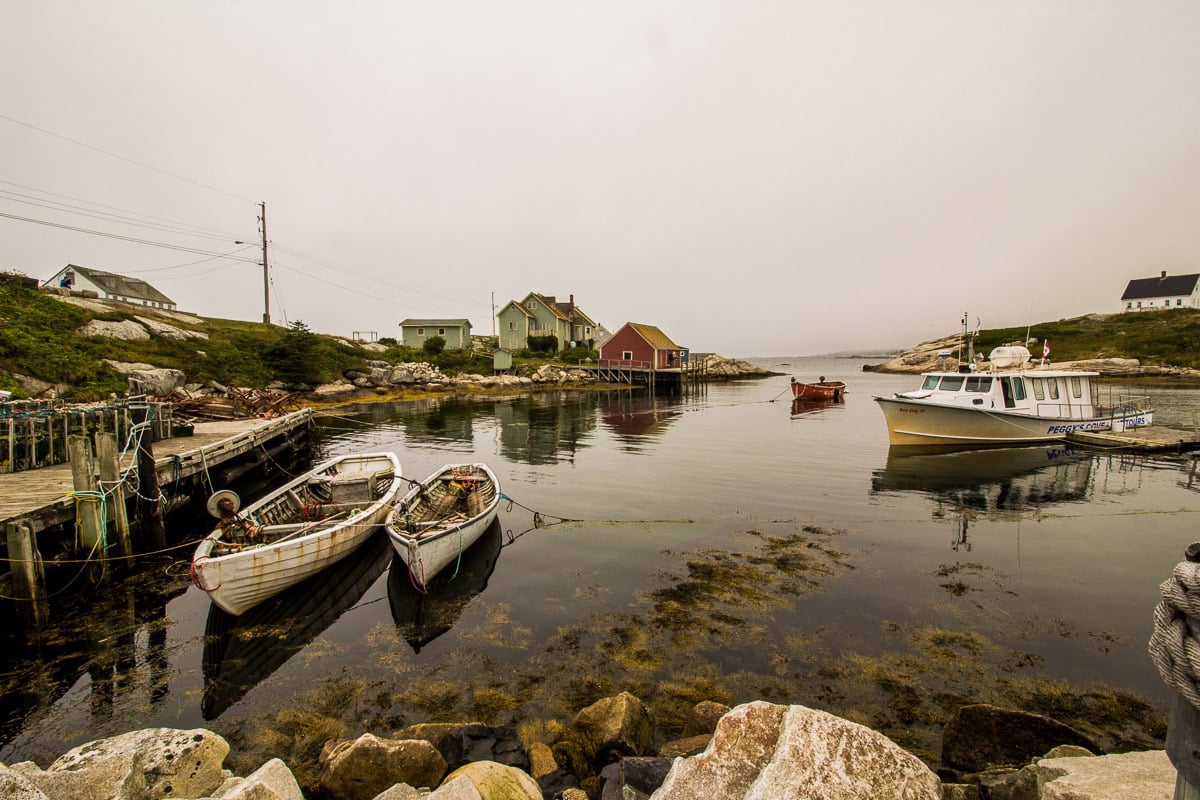
Austria Road Trip: 7-Day Itinerary for a Self-Guided Holiday

TL;DRThis seven-day Austrian road trip runs Vienna → the Wachau valley → Salzburg → Hallstatt → the Salzkammergut → Innsbruck → the Grossglockner High Alpine Road, covering roughly 800–850 km in total. May to October is the best window, with September the sweet spot for settled weather and thinner crowds. Budget €37,000–66,000 Kč for two over 7 days excluding flights, with car hire from 1,500 Kč a day, plus a €41.50 (around 1,040 Kč) toll for driving the Grossglockner. Highlights include Hallstatt on the Hallstätter See, the Five Fingers viewing platform, Melk Abbey in the Wachau, and Hohensalzburg Fortress in Salzburg. You’ll also need an Austrian motorway vignette at €8.60 a day (about 215 Kč).

Austria is a country we keep coming back to so often that I’ve honestly lost count of our visits. And yet — every single time we pull over at some mountain pass where the view opens up to snow-capped peaks and turquoise lakes, I stand there with my jaw on the floor like it’s the first time. 😅

Lukáš and I have criss-crossed Austria in every direction — from Viennese coffee houses to the rocky walls of the Grossglockner and the alleyways of Salzburg, where you feel like you’re on a film set (literally — they filmed The Sound of Music here). That’s exactly why we put together this Austria road trip itinerary that takes you through the very best the country has to offer. From big-city culture and romantic vineyards in the Wachau Valley to Alpine panoramas that will leave you breathless.

In this article, you’ll find a complete 7-day Austria road trip itinerary — day by day, with specific tips on where to grab coffee, where to stay, which roads not to miss, and what to skip. I’ve also included practical info on driving, motorway vignettes, budget, and the best time to go. Let’s get into it. ☺️

What to see in Hallstatt
What to see in Hallstatt? Read on to find out

TL;DR

  • Route: Vienna → Wachau → Salzburg → Hallstatt → Salzkammergut → Innsbruck → Grossglockner (approx. 850 km total)
  • Best time to go: May to October; September is the sweet spot — fewer tourists, stable weather, autumn colours
  • Budget for 7 days for two: Approx. €1,400–€2,000 (excluding flights), depending on accommodation type
  • Car hire: From around €60/day; don’t forget the motorway vignette (1-day €8.60, 10-day €11.50)
  • Grossglockner: The most stunning Alpine road in Europe — toll €41.50 per car, but worth every cent
  • Hallstatt: Gorgeous but extremely overcrowded — go early morning or outside peak season
  • Accommodation: Most expensive in Hallstatt and Innsbruck; best value for money in Wachau and Salzkammergut
  • Driving: Watch out for strict speeding fines, low-emission zones, and no-overtaking rules on Alpine roads

When to go on an Austria road trip and how to prepare

Austria is beautiful year-round, but for a road trip by car, the clear winner is May to October. And if you can choose, go for September — the weather is usually stable, temperatures sit at a pleasant 15–22 °C, the tourist crowds thin out, and the landscape starts putting on its autumn colours. We drove this route for the first time in September, and it was absolutely perfect.

July and August work too, but expect hordes of tourists (especially in Hallstatt and Salzburg) and higher accommodation prices. May and June are great for nature — everything’s in bloom, waterfalls are gushing from the spring melt, but some mountain roads (including the Grossglockner) don’t open until late May or early June depending on the snow.

What to avoid: November to March for this particular route. The Grossglockner is closed, many mountain restaurants and huts are shut, and the Salzkammergut without sunshine can feel rather bleak.

How to get to Austria and getting around

Flying from the UK: The easiest option is to fly into Vienna. British Airways, easyJet, Wizz Air and Ryanair all operate regular flights from London, Manchester, Edinburgh and other UK cities. Flight time is around 2–2.5 hours. From Vienna Airport, the city centre is just 20 minutes away, and car hire desks are right in the terminal.

Alternatively, you could fly into Salzburg or Innsbruck if you’d prefer to start your road trip from the west. These airports are smaller but well-connected with flights from the UK.

Motorway vignette (Vignette): You’ll need an Austrian motorway vignette to drive on the motorways. A 1-day vignette costs €8.60, a 10-day one €11.50. Buy it electronically on asfinag.at before your trip — the old paper windscreen stickers are no longer sold.

Car hire: Lukáš and I have had consistently great experiences with DiscoverCars, which we use everywhere around the world. For Austria, I’d recommend a smaller car — parking in Alpine towns is tricky and you’ll appreciate a compact vehicle on those narrow mountain roads. Expect to pay from around €60/day for a small car.

What to watch out for when driving in Austria

This is important, because the Austrians take their traffic rules seriously and the fines are steep:

  • Speed limits: 130 km/h on motorways, 100 km/h outside built-up areas, 50 km/h in towns. Some motorway sections have a night-time limit of 110 km/h (22:00–05:00) due to noise — it’s signposted and enforced.
  • Speeding fines: Start at €20 for minor offences, but 30 km/h over the limit can easily cost €150+. For extreme speeding, they can actually confiscate your car — yes, really.
  • Daytime headlights: Unlike in some European countries, you’re NOT required to use headlights during the day in Austria, but it’s recommended.
  • No overtaking in tunnels: Strictly enforced, and there are a lot of tunnels in the Alps.
  • Alcohol: The limit is 0.5‰ (lower than the UK’s 0.8‰ limit), and for drivers with less than 2 years’ experience it’s just 0.1‰.
  • Winter equipment: If you’re driving in spring or autumn, keep snow chains in the boot — they can be mandatory on mountain passes even in October.
  • Grossglockner toll: €41.50 per car. Some other Alpine roads and tunnels have their own tolls on top of the motorway vignette.

Where to stay + how much an Austria road trip costs

Accommodation is by far the biggest expense. Austria isn’t a cheap country, but you can manage it sensibly if you’re not expecting luxury hotels in the centre of Hallstatt. 😅

Rough prices per night for two (double room):

  • Vienna: €80–€160 (depends on location, cheaper outside the centre)
  • Wachau: €60–€120 (guesthouses and wineries — excellent value)
  • Salzburg: €100–€200 (expensive in the centre, look on the outskirts)
  • Hallstatt: €120–€280 (one of the priciest spots — book well in advance)
  • Salzkammergut: €60–€120 (smaller lakeside towns are much more reasonable)
  • Innsbruck: €80–€180 (centre is pricey; alternatively stay in Hall in Tirol)
  • Grossglockner/Heiligenblut: €70–€140 (mountain guesthouses)

Budget for a 7-day road trip for two

ItemBudget
Accommodation (7 nights)€560–€1,120
Car hire (7 days)€420–€560
Fuel (approx. 850 km)€100–€140
Motorway vignette (10-day)€11.50
Grossglockner toll€41.50
Food and cafés€280–€560
Tickets and activities€80–€200
Totalapprox. €1,500–€2,630

We didn’t scrimp on the road — we ate out in restaurants, had a proper breakfast every morning, and never said no to a coffee and cake in every town (which in Austria is practically a civic duty). If you want to save money, stock up at Billa or Spar supermarkets and stay at guesthouses outside town centres.

lukas a lucka
Lukáš and Lucie recommend
Where to Stay in Austria
6 accommodations — wellness hotels, hotels and other lodging options

Day by day: 7-day Austria road trip

Here’s an overview of the full route day by day. Want more time and to see the Grossglockner, Graz and Wörthersee too? Check out our 14-day Austria road trip version.

DayRoute and transferWhere to sleep
1Arrive in Vienna, city centre and coffee housesVienna
2Vienna → Wachau Valley (~1.5 h)Wachau
3Wachau → Salzburg (~2.5 h)Salzburg
4Salzburg → Hallstatt (~1.5 h)Hallstatt
5Hallstatt → Salzkammergut — Alpine lakesSalzkammergut
6Salzkammergut → Innsbruck (~2.5 h)Innsbruck
7Innsbruck → Grossglockner High Alpine Road → returnGrossglockner
The total route is roughly 800 km. Transfer times are approximate and don’t include stops along the way.

Day 1. Vienna — imperial elegance and coffee houses where time stands still

Votive Church in Vienna

The first day belongs to Vienna, and it’s a day full of walking, coffee, and that peculiar Viennese feeling where you could swear it’s still the 19th century. The city is wonderfully compact for a capital — you can walk past most of the major sights along the Ringstraße.

Start your morning at Café Central — yes, it’s a tourist classic, but for good reason. Vaulted ceilings, marble tables, Viennese strudel and Melange (Vienna’s answer to a cappuccino). Expect a queue at weekends; on a weekday morning it’s perfectly manageable. If you’d prefer a more local atmosphere without the tourist crowds, head to Café Sperl instead — it’s probably our favourite Viennese coffee house. Dark wood, newspapers on sticks, nobody in a rush.

After your coffee, head to St. Stephen’s Cathedral (Stephansdom) — entry to the nave is free, but climb the south tower (343 steps, about €6) for a stunning view over Vienna’s rooftops. It’s worth the burning calves, trust me. 😁 From there it’s a few minutes’ walk to the Hofburg — the enormous imperial palace complex where you could easily spend hours. If you’re short on time, at least visit the Imperial Treasury (Kaiserliche Schatzkammer) — coronation jewels and Habsburg treasures.

For lunch, I’d recommend Figlmüller for their schnitzel (supposedly the best in Austria, and honestly it really is excellent — it hangs over the edge of the plate and is perfectly crispy) or Zum Schwarzen Kameel for Viennese tapas and great wine. If you want something cheaper and more authentic, pop to the Bitzinger Würstelstand by the Albertina — a sausage in a roll and a beer, standing next to smartly dressed people who’ve just come out of the opera. That’s Vienna in a nutshell.

Spend the afternoon at Schönbrunn Palace — the Habsburgs’ summer residence with magnificent gardens (gardens are free, palace from €22). The grounds are vast; walk up to the Gloriette on the hill for a panoramic view over the whole estate and the city beyond. For sunset, head back to the Danube Canal where you’ll find street art, bars, and a relaxed vibe.

Where to stay in Vienna

For one night, I’d recommend the Neubau (7th district) or Josefstadt (8th district) — they’re close to the centre but more reasonably priced and full of cafés and restaurants. We’ve had excellent experiences with the Ruby Marie Hotel (stylish design, great location) or the Hotel & Palais Strudlhof (beautiful Art Nouveau building with a garden and pool).

Day 2. Wachau Valley — vineyards, monasteries and the most beautiful stretch of the Danube

Wachau Valley with the Danube near Melk
Photo: Jakub Hałun, CC BY-SA 4.0, Wikimedia Commons

Head west out of Vienna in the morning — you’ve got about an hour and a quarter’s drive to the Wachau Valley, a UNESCO World Heritage Site and one of the most romantic corners of Austria. Picture this: vineyards tumbling down to the Danube, medieval towns with pastel-coloured houses, hilltop monasteries, and apricot trees as far as the eye can see. If you love wine, you’ll love this day. ☺️

First stop: Melk and its enormous Melk Abbey (Stift Melk) — a Baroque gem perched on a cliff above the Danube. The frescoed library is jaw-dropping (entry €15.50). The tour takes about 1.5 hours. The abbey gardens with views over the valley are postcard-perfect.

From Melk, continue along the B33 road along the Danube — this is one of the most beautiful drives in Austria. You’ll pass through vineyards, past castle ruins and picturesque villages. Stop in Spitz an der Donau — a small town overlooking the Danube where I’d recommend a wine tasting at Domäne Wachau or Weingut Prager. The local speciality is Grüner Veltliner — a crisp white wine that tastes exactly like the landscape around it looks.

For lunch, continue to Dürnstein — probably the most photographed town in the entire valley. The blue monastery tower, narrow streets lined with vineyards, and above the town the ruins of a castle where Richard the Lionheart was supposedly imprisoned. Walk up to the ruins (20 minutes, easy climb) — the view over the Danube and vineyards is fantastic. For lunch, I’d recommend Restaurant Loibnerhof (superb local cuisine, the apricot dumpling for dessert is a must) or Alter Klosterkeller right in the centre.

If you have time, stop in Krems as well — a university town with a gorgeous old centre where you’ll find excellent ice cream and the Kunsthalle Krems gallery for modern art lovers.

💡 TIP: Instead of driving, you can do the Melk–Krems stretch by boat along the Danube (DDSG Blue Danube, about 1.5 hours, from €29 one way). It’s slower, but the views from the deck are absolutely worth it. Leave the car in Melk and take the train back.

Where to stay in Wachau

Stay right in the valley — accommodation in guesthouses and wineries is surprisingly affordable and the atmosphere is unforgettable. I’d recommend Hotel & Restaurant Bacher in Spitz an der Donau (excellent restaurant with a Michelin recommendation) or Gartenhotel & Weingut Pfeffel in Dürnstein (right among the vineyards, with a pool and terrace overlooking the Danube).

Day 3. Salzburg — Mozart, The Sound of Music and the best dumplings in the Alps

Old town in Salzburg

It’s about 2.5 hours on the motorway from Wachau to Salzburg. I’d recommend leaving early so you have the whole day for Salzburg — and you’ll need it.

Salzburg is one of those cities where you can just feel that big things happened here. Baroque churches, a fortress on the hill, the Alps as a backdrop, and Mozart around every corner (sometimes literally — street musicians play his compositions non-stop). It’s a compact, walkable city with a unique atmosphere that’s half Italian, half Alpine.

Start on Getreidegasse — the main shopping street of the old town with its famous wrought-iron guild signs. Yes, Mozart’s birthplace is here too (entry €14), but honestly — unless you’re a huge Mozart fan, the interior isn’t really worth it. More interesting is exploring the side alleys — the passageways and courtyards leading off Getreidegasse are full of small shops and galleries.

Walk up (or take the funicular, €14 return) to Hohensalzburg Fortress — one of the largest medieval fortresses in Europe. The view over the city and the Alps from up here is absolutely breathtaking, especially on a clear day. There’s a museum inside, but the main draw is that view.

For lunch, head back down and visit Stiftsbäckerei St. Peter — the oldest bakery in Salzburg (running since 1160!), famous for its fantastic bread and pastries. For a proper meal, I’d recommend Triangel (excellent schnitzel and dumplings, local atmosphere, fair prices) or Zwettler’s on Kajetanerplatz (more upscale, superb Tafelspitz — boiled beef).

In the afternoon, cross to the right bank of the Salzach to Mirabell — the Mirabell Palace gardens are free and Sound of Music fans will recognise them from the “Do-Re-Mi” scene. Continue into the Linzergasse quarter — the less touristy side of Salzburg, full of little cafés and art shops. Climb Kapuzinerberg (the hill with the monastery) — the view of the old town and fortress from here is probably the best in all of Salzburg, and hardly any tourists make the effort.

For coffee and the famous Salzburger Nockerl (a sweet soufflé shaped like three Alpine peaks), head to Café Tomaselli on Alter Markt — the oldest coffee house in Austria. The portion is enormous — easily shareable between two.

If you’re into modern art, the Museum der Moderne on the Mönchsberg is worth a visit — the building itself is an architectural gem and the terrace view is a bonus.

For more Salzburg tips, check out our article Salzburg, Austria: What to See and Do.

Where to stay in Salzburg

Salzburg’s centre is pricey, but it’s worth being within walking distance of the old town. A good area is Neustadt (right bank) — more reasonably priced and just a few minutes’ walk from the main sights. I’d recommend Hotel am Mirabellplatz (excellent location by the Mirabell Gardens) or Arthotel Blaue Gans in the old town (design hotel in a historic building, a bit pricier but stunning). To save money, look for accommodation in Kasern or Aigen — quieter neighbourhoods with public transport links to the centre.

Day 4. Hallstatt and Lake Hallstätter See — a photogenic gem (and how to survive the crowds)

We cycled to Hallstatt with Lukáš

It’s about 1.5 hours from Salzburg to Hallstatt, and the drive is gorgeous — you pass lakes and Alpine meadows. Then you round a bend, the lake appears below, and there on its shore is that famous little town, and… well, you’ll understand why it’s one of the most photographed places on the planet.

BUT. I have to be honest: Hallstatt is a victim of its own beauty. In peak season, thousands of visitors pour in every day (especially in summer when entire coach loads arrive), the town is tiny, and the streets are so narrow that in places you can barely squeeze past each other. Since 2020 they’ve been limiting tourist coaches, but it’s still intense.

How to actually enjoy Hallstatt:

  • Get there early — aim to arrive by 8:00 when the town is nearly empty and the morning mist over the lake creates a magical atmosphere
  • Or go late afternoon — the coaches leave around 16:00–17:00 and the town empties out dramatically
  • Outside peak season (September–October) is incomparably better

Stroll along the main lane by the lake, stop at the famous “postcard view” by the evangelical church (the one with the red roof you know from Instagram), and continue to the Beinhaus (charnel house) in the parish church — a collection of painted skulls, a bit morbid but fascinating (entry €2).

The main attraction (besides the town itself) is Salzwelten Hallstatt — the world’s oldest salt mine, where salt has been mined for over 7,000 years. The funicular ride up to the mine plus the tour takes about 2 hours (entry €40 including funicular). Inside there’s a wooden slide and an underground lake — sounds touristy, but it’s genuinely brilliant, even for adults.

For lunch, I’d recommend Restaurant zum Salzbaron (local cuisine, the lake trout is excellent) or grab a simple Leberkäse (a type of meatloaf) from one of the street stalls. For a more upscale experience, Seehotel Grüner Baum has a restaurant right on the water.

In the afternoon, drive around the lake (or part of it) and stop at the 5 Fingers viewing platform at the Krippenstein cable car (cable car approx. €38 return) — five steel fingers jutting out over the void with views of Hallstätter See and the Dachstein. The sight is genuinely breathtaking. 😅

💡 TIP: Parking in Hallstatt is limited and expensive. Park at car park P1 at the entrance to town (about €10/day) and walk to the centre (5 minutes).

Where to stay in Hallstatt and surroundings

Accommodation in Hallstatt itself is expensive and scarce — book at least 2–3 months in advance. If you want that magical early-morning Hallstatt atmosphere without the crowds, it’s worth staying overnight — I’d recommend Heritage Hotel Hallstatt (historic building right on the lake) or Brauhaus Hallstatt (stylish, with its own restaurant). A more affordable option is staying in Obertraun (5 minutes by car), where you’ll find lovely guesthouses at half the price.

Day 5. Salzkammergut — a lake paradise that doesn’t get enough attention

Alpine lake in Austria

The Salzkammergut is probably our favourite region in all of Austria, and honestly — it deserves more than just one day. But even in a single day, you can get a taste of the magic. It’s a land of dozens of lakes, green mountains, family-run guesthouses with geraniums on the balconies, and absolute peace. This is where Austrians spend their own holidays, and that tells you something.

In the morning, head from Hallstatt to Lake Wolfgangsee (40 minutes). The town of St. Wolfgang is straight out of a postcard — a church by the lake, waterfront cafés, and the Schafbergbahn — a cog railway that takes you to the summit of Schafberg (1,783 m). The ride takes 40 minutes and the view from the top over seven Salzkammergut lakes is absolutely phenomenal (return ticket €48, runs May–October). I’d recommend catching the first morning service to avoid the queues.

From St. Wolfgang, continue to Lake Mondsee (30 minutes) — this is where the wedding scene from The Sound of Music was filmed in the local basilica. The lake is slightly warmer than the surrounding ones and has lovely swimming bays. For lunch, I’d suggest Restaurant Seecafé Mondsee (right on the lake, excellent fish) or Gasthof Drachenwand (traditional Austrian cuisine, homemade dumplings).

In the afternoon, stop at Lake Attersee — the largest lake in the Salzkammergut with crystal-clear turquoise water. Gustav Klimt painted here, and when you see the colour of the water, you’ll understand why. Stop in the towns of Unterach am Attersee or Nussdorf — swimming, a stroll along the shore, coffee with a view.

If you enjoy hiking, I’d recommend the trail around Lake Fuschlsee (9 km, about 2.5 hours) — a smaller, lesser-known lake with crystal-clear water and beautiful forests. Or a shorter hike up Zwölferhorn above St. Gilgen (cable car up, walk down, about 2 hours).

For more on Austrian lakes, check out our article Austrian Lakes: A Guide to the Most Beautiful Ones.

Where to stay in Salzkammergut

The Salzkammergut offers brilliant accommodation at fair prices, especially in the smaller towns. I’d recommend Landhotel Lackner in St. Wolfgang (family hotel with a pool and lake views) or Seehotel Billroth on the shores of Wolfgangsee (right on the water, with its own beach). For a budget option, look for guesthouses (Gasthöfe) around Mondsee or Attersee — double rooms from around €70 per night.

Day 6. Innsbruck — the capital of the Alps (and the best strudel in Tyrol)

Innsbruck and the surrounding Alps

It’s about 2.5 hours on the motorway from the Salzkammergut to Innsbruck, but the drive takes you through mountain passes and Alpine valleys — so boredom is definitely not on the cards.

Innsbruck surprised us more than we expected on our first visit. It’s a modern, lively university city, yet it feels like you’re standing right beneath the Alps — because you literally are. The mountains are so close they seem to tumble straight into the streets.

Start in the historic centre on Herzog-Friedrich-Straße — a narrow medieval street with arcades and the famous Golden Roof (Goldenes Dachl). It’s a small balcony covered with 2,657 gilded copper tiles and it’s the symbol of Innsbruck. Honestly — it’s smaller than you’d expect, but still lovely. 😅 The museum underneath (€5.50) isn’t really worth the visit.

The absolute must-do in Innsbruck is the Nordkette — the mountain ridge directly above the city, accessible by cable car from the centre. Three sections whisk you from 600 m to 2,300 m above sea level in 20 minutes (return €41, or €53 with the Innsbruck Card). At the top, the Hafelekar station offers views on one side over the city and on the other into the wild Karwendel range — mountains as far as the eye can see. We stood up there and couldn’t move. That’s a “wow moment” if ever there was one.

For lunch, head back down to town. I’d recommend Gasthaus Goldenes Dachl (traditional Tyrolean Tiroler Gröstl — a pan-fried dish with potatoes, meat and egg) or Stiftskeller (a monastery restaurant with a beautiful garden and excellent wine). For coffee and the best strudel in town, head to Strudel Café Kröll — they make it right in front of you, and it’s crispy, warm, with ice cream… 🤤

In the afternoon, walk along the banks of the River Inn — the colourful houses along the river (Mariahilf) are the most photographed scene in Innsbruck. If you have time, Ambras Castle is worth a visit (4 km from the centre, entry €16) — a Renaissance castle with a curiosity collection and beautiful gardens.

Where to stay in Innsbruck

Central Innsbruck is compact and accommodation is pricey. A great alternative is the town of Hall in Tirol (10 minutes by car) — a beautiful medieval centre, considerably cheaper accommodation, and arguably a nicer atmosphere than central Innsbruck. In the centre, I’d recommend Nala Individuell Hotel (design hotel, great location) or Hotel Weisses Kreuz (historic hotel right in the centre where Mozart allegedly slept — but then, who in Austria hasn’t? 😁). In Hall, the Parkhotel Hall is excellent.

Day 7. Grossglockner — the most beautiful road in the Alps (and a grand finale)

Grossglockner High Alpine Road
Photo: Karsten Würth, CC0, Wikimedia Commons

We saved the absolute best for last. The Grossglockner High Alpine Road (Hochalpenstraße) is probably the most beautiful road we’ve ever driven. And we’ve driven a fair few. It’s a 48 km Alpine road that climbs to 2,504 metres, weaving between glaciers and snow-capped peaks, offering views so stunning they almost hurt your eyes. I’m genuinely not exaggerating.

From Innsbruck to Heiligenblut (the southern entrance to the Grossglockner) is about 2.5 hours. Leave as early as possible — in season, queues build up on the road and the viewpoints at Edelweißspitze and Kaiser-Franz-Josefs-Höhe get packed.

Toll: €41.50 per car. Paid at the entrance, card payment accepted.

The road is open usually from early/mid-May to the end of October, depending on snow conditions. Check the current status at grossglockner.at.

Key stops along the route (from south):

Heiligenblut — a charming mountain village with an iconic church whose spire rises against the snowy peaks. Have breakfast here — Café-Restaurant National Park Lodge has a view that’ll make your coffee go cold because you can’t stop staring.

Kaiser-Franz-Josefs-Höhe (2,369 m) — the main viewing point with views of Pasterze, Austria’s largest glacier, and Grossglockner (3,798 m) itself — Austria’s highest peak. There’s a museum, a restaurant, and several short trails. Sadly, the glacier is retreating year after year — just a few years ago it extended hundreds of metres further. It’s sobering, but all the more reason to see it.

Edelweißspitze (2,571 m) — a short detour from the main road to the highest point you can drive to. A 360° view — on a clear day you can see over 30 peaks above 3,000 metres. This is the spot where Lukáš and I stood and couldn’t believe our own eyes. The wind in your face, snow and rock all around, and you feel like you’re on the roof of the world.

Hochtor (2,504 m) — the tunnel at the highest point of the main road. Stop at the car park before the tunnel — there’s a short trail with information boards about the road’s history and geology.

Fuscher Törl — a viewpoint with a chapel and gorgeous views into the valley. A good spot for a quick stop and photos.

You can comfortably drive the entire road from south to north (or vice versa) in 3–4 hours (including stops for views and photos), but I’d recommend setting aside the entire morning and afternoon — you’ll want to stop at every bend. If you enjoy hiking, from Kaiser-Franz-Josefs-Höhe there’s the Gamsgrubenweg — an easy trail through tunnels in the rock with views of the glacier (1 hour round trip).

In the afternoon, descend the northern side to Zell am See (about 45 minutes from Ferleiten), where you can end your road trip with a swim in the lake or a coffee on the promenade. Alternatively, continue to Salzburg (1.5 hours from Zell am See) to catch your flight home.

💡 TIP: If the weather is overcast or rainy, the Grossglockner isn’t worth it — the whole point is those views. Better to swap your days around or wait it out. Check high-altitude forecasts at zamg.ac.at.

Where to stay (if you need one more night)

If you’d like to split Day 7 into two parts (or have a flight the next day), stay in HeiligenblutChalet Hotel Senger is a gorgeous Alpine hotel with views of the Grossglockner, an excellent restaurant, and wellness facilities. Or in Zell am SeeHotel Neue Post right in the town centre by the lake.

Practical tips to finish

What to pack

For a summer Austria road trip, pack in layers — it can be 28 °C in the valleys and 5 °C with wind on the Grossglockner at 2,500 metres. Definitely bring a fleece, a windproof jacket, comfortable hiking shoes (check out our tried-and-tested recommendations in our article Hiking Boots) and a rain jacket. For the mountain lakes, pack swimwear — even in summer the water is bracing, but refreshing. 😅 And if you want to fit everything into hand luggage, have a look at our guide How to Pack in Carry-On Only.

Finding flights

For cheap flights from the UK to Austria, check Skyscanner or Google Flights. British Airways, easyJet, Wizz Air and Ryanair all fly to Vienna from various UK airports, often with fares from as little as £20 one way. Salzburg and Innsbruck are also well-connected options if you’d prefer to skip the Vienna leg.

Travel insurance

For a week-long road trip in Austria, standard travel insurance will do the job. For shorter European trips, we tend to use a basic policy, and for longer adventures we go with True Traveller — you can read our full review in the article SafetyWing Review. Make sure your policy covers activities like hiking at altitude if you’re planning mountain walks.

eSIM and internet

If you have a UK mobile plan, be aware that since Brexit, roaming charges may apply in Austria depending on your provider. Check your plan details before you go. If you need extra data or want a hassle-free option, have a look at our Holafly review — an eSIM that gives you unlimited data across Europe without worrying about roaming.

Download offline maps

💡 TIP: Download offline maps in Google Maps for the entire route — signal drops frequently in the mountains and tunnels. Before you leave, download the Vienna, Upper Austria, Salzburg and Tyrol regions.

Frequently asked questions about an Austria road trip

Before you set off, here are answers to the questions our readers ask most often about a 7-day Austria road trip.

When is the best time for an Austria road trip?

The best time is May to October. For the complete route including the Grossglockner, we’d recommend September — stable weather, fewer tourists, lower accommodation prices, and beautiful autumn colours. The Grossglockner High Alpine Road is usually open from mid-May to the end of October.

Where to go in Austria for nature?

Austria is a paradise for nature lovers. On this route, the best natural experiences are in the Salzkammergut (lakes, mountains, trails), on the Grossglockner (Alpine panoramas, glaciers), and around Innsbruck (Nordkette, Karwendel). For day hikes, I’d recommend climbing the Schafberg in St. Wolfgang, the 5 Fingers viewpoint above Hallstatt, or the Gamsgrubenweg at the Pasterze glacier.

What to watch out for when driving in Austria?

Mainly the strict enforcement of speed limits — fines are hefty and speed cameras are common. Don’t forget the electronic motorway vignette (Vignette), which you should buy online in advance. Drive slowly and carefully on Alpine roads, and overtaking in tunnels is strictly forbidden. Some mountain roads (including the Grossglockner) have separate tolls on top of the motorway vignette.

What should I know before travelling to Austria?

Beyond the driving rules, keep in mind: restaurant prices are higher than you might expect (main courses €15–€25), tipping 5–10% is customary, most shops are closed on Sundays (stock up on Saturday!), and popular spots like Hallstatt have very limited parking — arrive early in the morning.

How much does a 7-day Austria road trip cost for two?

A realistic budget for two is €1,500–€2,630 excluding flights. The biggest expense is accommodation (€560–€1,120 for 7 nights) and car hire (€420–€560 for 7 days). You can save on food and activities by shopping at supermarkets and choosing free viewpoints and hiking trails.

Is 7 days enough for an Austria road trip?

Seven days is a good minimum for this route, but honestly — 10 days would be ideal. With 7 days, the pace is fairly brisk and you’ll wish you had more time at some stops (especially the Salzkammergut). If you only have 7 days, consider cutting one stop (for example Wachau) and giving yourself more time for the rest.

Do I need a car in Austria, or are trains enough?

For the cities (Vienna, Salzburg, Innsbruck), trains work brilliantly — Austria’s ÖBB network is reliable and comfortable. But for Hallstatt, the Salzkammergut, Wachau, and especially the Grossglockner, a car is practically essential. Without one, you’d miss the most beautiful parts of the route — mountain roads, viewpoints, and spontaneous stops by the lakes. For this particular itinerary, we’d definitely recommend hiring a car.

Tips and Tricks for Your Vacation

Don’t Overpay for Flights

Search for flights on Kayak. It’s our favorite search engine because it scans the websites of all airlines and always finds the cheapest connection.

Book Your Accommodation Smartly

The best experiences we’ve had when looking for accommodation (from Alaska to Morocco) are with Booking.com, where hotels, apartments, and entire houses are usually the cheapest and most widely available.

Don’t Forget Travel Insurance

Good travel insurance will protect you against illness, accidents, theft, or flight cancellations. We’ve had a few hospital visits abroad, so we know how important it is to have proper insurance arranged.

Where we insure ourselves: SafetyWing (best for everyone) and TrueTraveller (for extra-long trips).

Why don’t we recommend any Czech insurance company? Because they have too many restrictions. They set limits on the number of days abroad, travel insurance via a credit card often requires you to pay medical expenses only with that card, and they frequently limit the number of returns to the Czech Republic.

Find the Best Experiences

Get Your Guide is a huge online marketplace where you can book guided walks, trips, skip-the-line tickets, tours, and much more. We always find some extra fun there!
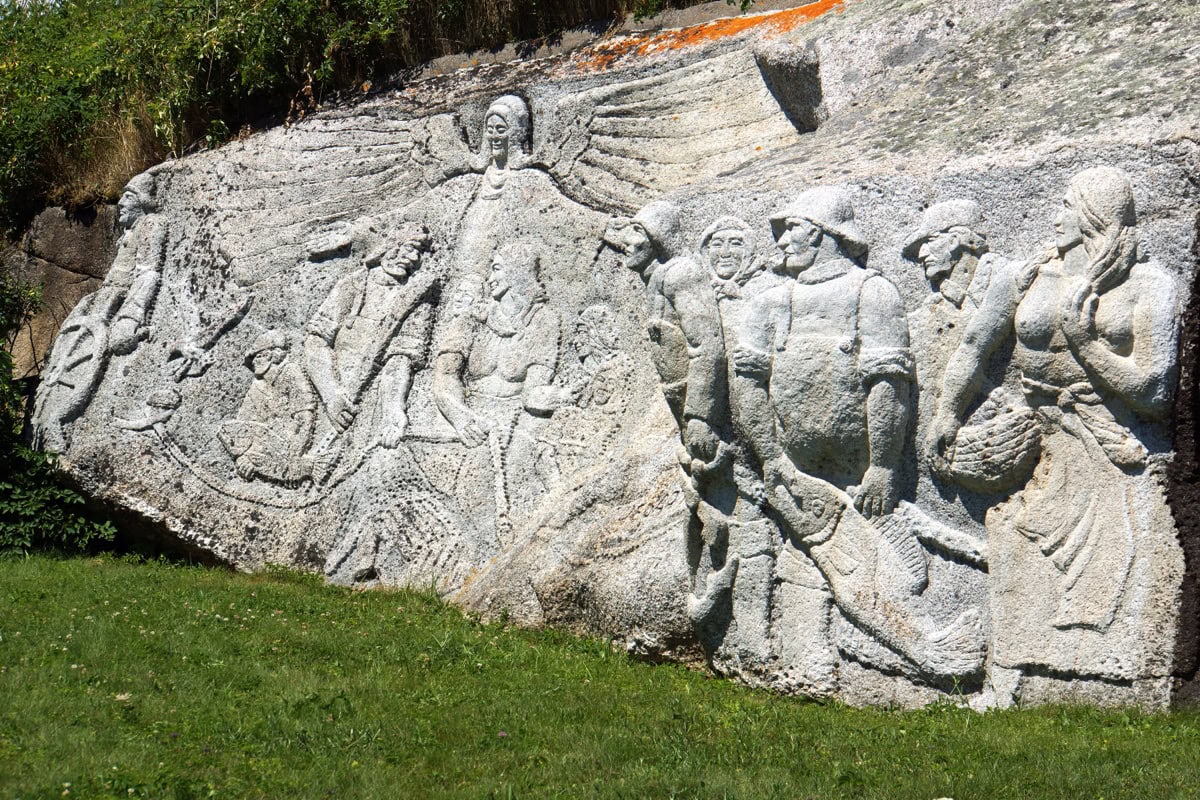
Austria Road Trip: A Complete 14-Day Itinerary

TL;DRThis fourteen-day Austria road trip runs from Vienna and the Wachau valley through Salzburg, Hallstatt and the Salzkammergut lakes, on to Innsbruck and the Stubai Valley, over the Grossglockner Hochalpenstrasse to Zell am See, and south to Graz and Lake Wörthersee — a total distance of roughly 1,500 km. The best months are June and September, when the mountain passes are open, the lakes are warm and the crowds have thinned out. Budget for two comes to around 60,000–100,000 CZK excluding flights, and you’ll need a car for this one — factor in the motorway vignette (€11.50 for 10 days) and the toll for the Grossglockner Hochalpenstrasse (€41.50). Highlights include the Skywalk viewpoint above Hallstatt, driving the Grossglockner pass, and swimming in Lake Wörthersee, where the water hits 27°C in summer.

Austria is a country where your jaw drops every twenty minutes of driving. You’re cruising along the motorway, glance to the right — and out of nowhere there’s a snow-capped Alpine peak, an emerald lake below it, and some old chap calmly fishing for trout on the shore. And you think: “How on earth have I not come here sooner?” 😅

Lukáš and I have driven through Austria several times — long weekends in Salzburg, a few days near the Tyrolean mountains, and a romantic getaway to the Austrian lakes. But it wasn’t until we did a proper two-week Austria road trip that we truly understood just how incredibly diverse this small country is. In 14 days, you’ll sip coffee in Viennese cafés, cruise along the Danube by boat, gaze at Hallstatt from a viewpoint, cross the Grossglockner, swim in Alpine lakes, and finish it all off with Styrian wine in the south.

In this article, you’ll find a complete 14-day Austria road trip itinerary — day by day, with specific places, restaurants, accommodation tips, and a budget breakdown. Whether you’re planning a summer holiday with your partner, a family trip, or a solo adventure, this guide will save you hours of planning. Promise. ☺️

TL;DR

  • Ideal road trip length: 14 days is the perfect pace — you’ll cover Vienna, the Alps, and the south without spending all your time in the car.
  • Best time to go: June and September — lovely weather, mountain roads open, fewer tourists than in peak summer.
  • Budget: Expect roughly €2,400–€4,000 for two people over 14 days (excluding flights), depending on accommodation style.
  • A car is essential — trains work fine for Vienna and Salzburg, but you can’t reach the lakes, Grossglockner, or the smaller villages without one.
  • Motorway vignette costs €11.50 for 10 days — without one, you risk a fine of up to €240.
  • Top 3 experiences: Grossglockner Hochalpenstrasse (Europe’s most beautiful mountain road), Hallstatt from the Skywalk viewpoint, swimming in Wörthersee.
  • Watch out for: Toll charges on mountain passes (separate from the vignette), parking in central Vienna is a nightmare, Hallstatt gets mobbed — go early morning.
  • Book accommodation at least 2 months ahead, especially for Hallstatt and Salzkammergut in summer.
What to see and do in Hallstatt, Hallstatt holiday in Austria
The iconic view of Hallstatt

When to go and how to prepare for an Austria road trip

Austria is gorgeous in every season, but for a road trip there’s a clear winner: June and September. In June, it’s warm enough for lake swimming (Alpine lakes reach a pleasant 20–24 °C), mountain roads are open (Grossglockner usually opens in May), and the tourist crowds haven’t yet reached full force. September is stunning thanks to an Indian summer, fewer visitors, and lower accommodation prices.

July and August are lovely too, of course, but expect Hallstatt to be overflowing with tourists, accommodation prices to skyrocket, and lakeside spots to be packed. If you’re travelling in peak season, book your stays as early as possible.

Spring (April–May) is great for cities, but mountain passes may still be closed and the lakes will be too cold for swimming.

How to get to Austria and transport

Flying from the UK is the most practical option — Vienna has direct flights from London (with British Airways, easyJet, Wizz Air and others), as well as from Manchester and Edinburgh. Flight time is around 2.5 hours. From Vienna airport, you can pick up your hire car and hit the road. Salzburg and Innsbruck also have airports with some direct UK connections, but Vienna gives you the best starting point for this itinerary.

Car hire: Lukáš and I have had consistently good experiences with DiscoverCars, which we use all over the world. It compares prices from all rental companies and lays out the insurance options clearly. For Austria, I’d recommend:

  • A car with decent power — you’ll be driving uphill a lot, and nobody enjoys a wheezy engine on the Grossglockner.
  • Automatic transmission — in the mountains, a manual will leave you sweating (literally and mentally 😅).
  • Full insurance cover — mountain roads can throw up loose stones, and you don’t want to be dealing with an excess claim.

What to watch out for when driving in Austria

  • Motorway vignette: Mandatory on motorways and expressways. A digital 10-day vignette costs €11.50, a 2-month one €28.90. Buy it online at asfinag.at — it’s valid immediately. Without one, you face a fine of up to €240!
  • Mountain pass tolls: Grossglockner Hochalpenstrasse costs €41.50 per car (2025), Gerlos Alpenstrasse €13.50. These are on TOP of the vignette.
  • Speed limits: Motorway 130 km/h (80 mph), outside built-up areas 100 km/h (62 mph), in towns 50 km/h (31 mph) — sometimes 30 km/h (19 mph). Fines are considerably steeper than in the UK — €150 for exceeding the limit by 30 km/h in a town is standard.
  • Winter equipment: If you’re going in spring or autumn, keep snow chains in the car — they’re required on some mountain roads even outside winter.
  • Parking in Vienna: The entire inner city is a paid parking zone. Stay in a hotel with parking or leave the car at a park-and-ride and use public transport.

How much does a 14-day Austria road trip cost + where to stay

Austria isn’t a cheap country, but it’s not Switzerland either. With sensible planning, you can manage a road trip on a reasonable budget. Here’s a rough cost overview for two people over 14 days:

ItemBudget (for two)
Accommodation (13 nights)€1,000–€1,800
Car hire (14 days)€320–€600
Petrol€160–€240
Vignette + tolls€100–€140
Food and drink€600–€880
Tickets and activities€200–€320
Totalapprox. €2,400–€4,000

Money-saving tip: Accommodation is the biggest expense. Alternate between hotels and apartments (in an apartment you can make your own breakfast and save €15–20 a day). In Alpine areas, look for Gasthäuser and guesthouses — they’re cheaper than hotels and often serve amazing breakfasts with local produce.

Where to stay — general tips

Accommodation in Austria has a distinctive quality — even the smallest guesthouses are spotlessly clean, cosy, and have that special Alpine atmosphere with wooden furniture and mountain views. Price-wise, expect roughly:

  • Vienna: €70–130/night for a double room in the centre
  • Salzburg: €80–140/night (pricier in the centre)
  • Hallstatt and Salzkammergut: €90–160/night (prices soar in season)
  • Innsbruck and Tyrol: €70–120/night
  • Smaller towns (Graz, Wachau, Semmering): €60–100/night

I include specific accommodation tips for each day below.

lukas a lucka
Lukáš and Lucie recommend
Where to Stay in Austria
6 accommodations — hotels and other lodging options

Day by day: 14-day Austria road trip itinerary

Now let’s get to the main event — the complete route, day by day. The itinerary is designed to give you a mix of big cities, mountain scenery, lakes, and cultural experiences. Most drives are under 2 hours, so you won’t spend half your holiday behind the wheel. ☺️

Here’s an overview of the entire route — where you’ll be driving and where you’ll sleep each night. If you have less time, check out our 7-day version of the road trip.

DayRoute and transferWhere to sleep
1–2Vienna — Schönbrunn, Belvedere, and the city centreVienna
3Vienna → Wachau Valley (~1.5 h)Wachau
4–5Wachau → Salzburg (~2.5 h), Berchtesgaden and KönigsseeSalzburg
6Salzburg → Hallstatt (~1.5 h)Hallstatt
7Hallstatt → Salzkammergut — Alpine lakesSalzkammergut
8Salzkammergut → Innsbruck via Kitzbühel (~2.5 h)Innsbruck
9Innsbruck → Stubai ValleyStubaital
10–11Stubaital → Grossglockner Hochalpenstrasse → Zell am See, Krimml WaterfallsZell am See
12Zell am See → Graz (~3 h)Graz
13Graz → Wörthersee (~1.5 h)Wörthersee
14Wörthersee → Semmering → departure
The total route covers roughly 1,500 km. Transfer times are approximate, without stops along the way.

Day 1. Vienna — arrival and first taste

Votive Church in Vienna

Day one is all about arriving, so don’t plan anything too ambitious. Get to Vienna, check in, and head out for an explore. If you arrive in the morning, you’ll have time for quite a bit — if it’s the afternoon, a stroll through the centre to soak up the atmosphere will do nicely.

What to fit in: Walk from Stephansdom (St. Stephen’s Cathedral — free entry, tower for €6) through Graben and Kohlmarkt to Hofburg Palace. This loop takes about an hour on foot and takes you through the most beautiful parts of the city centre.

For coffee, head to Café Central (Herrengasse 14) — yes, it’s touristy, but the atmosphere under those soaring vaulted ceilings is worth it. A Wiener Melange (similar to a cappuccino) costs around €7. If you’d prefer something more authentic and crowd-free, try Café Sperl (Gumpendorfer Str. 11) — it’s our favourite Viennese coffee house. Old-school waiters, newspapers on wooden holders, Apfelstrudel just like grandma used to make.

For dinner, head to Figlmüller for their famous Wiener Schnitzel — it’s enormous, hangs over the edge of the plate, and costs around €17–19. Book ahead, the queues are mad. An alternative is Plachutta for Tafelspitz (boiled beef) — pricier, but a proper gastronomic experience.

Where to stay in Vienna

In Vienna, I’d recommend staying around Mariahilfer Strasse (6th or 7th district) — it’s close to the centre, surrounded by restaurants, and public transport is right on your doorstep. Motel One Wien-Staatsoper offers great value, or try the boutique Hotel Motto in the 5th district.

If you’re driving, pick a hotel with parking — street parking in Vienna is a nightmare and costs €2.40/hour (max. 2 hours).

Day 2. Vienna — Schönbrunn, Belvedere, and wine

Schönbrunn Palace in Vienna
Photo: Thomas Wolf, CC BY-SA 3.0, Wikimedia Commons

Today you’ve got a full day in Vienna, so make the most of it. Start the morning at Schönbrunn — the palace opens at 8:30 and it’s still peaceful early on (by around 10, the tourist coaches start rolling in). Tickets cost €22–29 depending on the tour. The gardens are free and gorgeous — walk all the way up to the Gloriette on the hill for a fantastic view over Vienna.

In the afternoon, head to the Belvedere — the Upper Palace houses one of Europe’s finest art collections, including Klimt’s The Kiss. Admission €16.50. The gardens are once again free and lovely for a wander.

If you still have time (and energy), pop over to the Naschmarkt — Vienna’s market paradise packed with food from around the world. You can grab a reasonably priced lunch here — try Neni am Naschmarkt for Middle Eastern cuisine.

In the evening, do something most tourists skip: head out for wine in Grinzing or Nussdorf on the outskirts of Vienna. Heurigers (wine taverns) are a quintessentially Viennese tradition — you sit in a garden under the vines, drink young wine, and eat a cold platter of local cheeses and cured meats. The atmosphere is unforgettable. Try Heuriger Mayer am Pfarrplatz — Beethoven supposedly drank wine here (well, maybe not this exact vintage 😅).

Day 3. Wachau — the Danube, apricots, and vineyards

The Wachau Valley and the Danube near Melk
Photo: Jakub Hałun, CC BY-SA 4.0, Wikimedia Commons

Pack the car in the morning and head west — your destination is the Wachau Valley, one of the most beautiful river valleys in Europe (UNESCO World Heritage). It’s about an hour and a quarter from Vienna.

Stop in Melk — the Benedictine Stift Melk (Melk Abbey) perches on a cliff above the Danube and is an absolutely stunning building. Admission €14.50, and the tour takes about 1.5 hours. The Baroque library and marble hall will take your breath away.

From Melk, drive along the Danube through the picturesque villages of Spitz an der Donau and Weissenkirchen to Dürnstein — that’s the blue-and-white little town with a castle where Richard the Lionheart was supposedly held prisoner. Stroll through the lanes, sample apricot products (apricot liqueur, apricot dumplings, apricot jam — basically apricots everywhere 😁), and stop in at one of the wine cellars for a glass of Grüner Veltliner — it’s Austria’s signature white wine, and here in the Wachau it’s at its finest.

For lunch, I recommend Loibnerhof in Unterloiben — excellent regional cuisine with vineyard views. Or Landhaus Bacher in Mautern if you fancy fine dining.

If you’re keen, take a Danube river cruise from Melk to Krems (or vice versa) — it takes about 1.5 hours and passes through the most scenic stretch of the valley. DDSG Blue Danube runs regular services, around €29 one way.

Where to stay in Wachau

Spend the night right in the valley — the Gartenhotel & Weingut Pfeffel in Dürnstein has gorgeous Danube views and its own winery. Or try Hotel Richard Löwenherz — a romantic hotel right beneath the castle.

Day 4. Salzburg — Mozart’s city

The old town in Salzburg

From Wachau, continue west to Salzburg — the drive takes about 2.5 hours on the motorway. Spend the afternoon exploring the old town.

Salzburg is compact and brilliant for walking. Start on Getreidegasse — the famous shopping lane with wrought-iron guild signs, which is also home to Mozart’s Birthplace (admission €12). Wander through to Residenzplatz and Domplatz, where you can grab a coffee with a view of the fountain.

If you’ve got the energy, take the funicular up to Hohensalzburg Fortress (admission incl. funicular €16.30) — it’s one of the largest medieval fortresses in Europe, and the views over the city and surrounding mountains are absolutely breathtaking. We spent almost two hours up there and had no desire to come down.

For dinner, head to Stiftskeller St. Peter — reputedly the oldest restaurant in Europe (operating continuously since 803!). The food is excellent, with main courses around €18–28. Or try Triangel on Wiener-Philharmoniker-Gasse — smaller, cheaper, more local.

If you’d like more tips on Salzburg, I’ve got an entire dedicated article with a detailed guide.

Where to stay in Salzburg

Stay in the centre or on the right bank of the Salzach — Hotel am Dom is right in the heart of the old town, IMLAUER HOTEL PITTER offers great value just a short walk from the main station. For a budget option, try MEININGER Hotel Salzburg City Center.

Day 5. Salzburg area — Berchtesgaden and Königssee

Lake Königssee near Berchtesgaden
Photo: Diego Delso, CC BY-SA 4.0, Wikimedia Commons

Use your second day in the Salzburg area for a trip across the border — German Berchtesgaden is just 30 minutes from Salzburg and well worth the detour.

Königssee is one of the cleanest lakes in Europe — the water is so crystal-clear you can see the bottom even several metres down. Take the electric boat to the little chapel of St. Bartholomä (return trip €19.50, takes about 1.5 hours including a stop). The red-and-white church against the backdrop of sheer cliffs looks like something out of a fairy tale.

If you fancy a hike, continue by boat to the end of the lake at Salet and walk to Obersee (about 15 minutes on foot) — a smaller lake in a wilder setting, perfect for a picnic.

Lunch by the lake — the food stand at St. Bartholomä sells excellent smoked trout (Räucherfisch). Or stop in Berchtesgaden on the way back at Bräustübl for hearty Bavarian fare.

In the afternoon, you could visit the Kehlsteinhaus (Eagle’s Nest) — Hitler’s mountaintop tea house. It’s interesting more for the history than the architecture, but the views are phenomenal. Note — you get there by a special bus (around €22 including bus), as you can’t drive up.

Don’t forget your hiking boots — you’ll need them practically every day of this road trip.

Where to stay

Stay another night in Salzburg (same accommodation as Day 4).

Day 6. Hallstatt — Austria’s most photographed spot

What to see and do in Hallstatt, Austria
The iconic view of Hallstatt

It’s about an hour and a half from Salzburg to Hallstatt. Set off as early as you can — that’s the key piece of advice. Hallstatt is beautiful, but in season thousands of tourists pour through daily and from 10 am onwards it’s absolutely heaving. At 8 in the morning, you’ll practically have the village to yourself.

Hallstatt really is as photogenic as it looks on Instagram — tiny colourful houses squeezed between a lake and a sheer rockface. Walk along the main lane, stop at the viewpoint by the Evangelical church (that’s THE iconic shot), and if you’re feeling brave, visit the Beinhaus (charnel house) in St. Michael’s Chapel — skulls painted with flowers and names of the deceased are both fascinating and a touch eerie.

The Skywalk viewpoint at the salt mine is fantastic — take the funicular up (admission incl. salt mine €40, just funicular and Skywalk €22) and from the platform suspended over the abyss you’ll see Hallstatt, the lake, and the entire valley. Worth every penny.

Lunch: The restaurants in Hallstatt itself are overpriced and mediocre — a classic tourist trap. You’re better off eating in Obertraun or on the way to Gosau. If you do insist on eating in Hallstatt, Gasthof Zauner is probably the most reliable bet.

Important practical info: Parking in Hallstatt is a pain. Car park P1 by the tunnel costs €12/day (2025) and in season it’s often full by 9 am. Alternatively, park in Obertraun or by the funicular and take the boat or walk to Hallstatt.

Where to stay near Hallstatt

I wouldn’t recommend staying in Hallstatt itself — it’s pricey and there’s nothing to do in the evening anyway. Better options are Obertraun (10 min by car) or Bad Goisern (15 min). Heritage Hotel Hallstatt is gorgeous if you want a splurge. For a reasonable budget, try Gasthof Pension Hirlatz in Hallstatt or Haus Salzkammergut in Obertraun.

Day 7. Salzkammergut — fairytale lakes

Alpine lake in Austria

Today you’re in for the most beautiful part of Austria — the Salzkammergut region with dozens of lakes, each one lovelier than the last. If you haven’t read my article about Austrian lakes, now’s the perfect time.

Start at Wolfgangsee — stop in the town of St. Wolfgang, stroll along the waterfront, and if you fancy a retro experience, ride the historic steam railway Schafbergbahn to the summit of Mount Schafberg (around €47 return). The view of seven lakes from the top is probably the best panoramic vista I’ve experienced anywhere in Austria.

Continue to Mondsee — the lake famous from The Sound of Music (the wedding scene was filmed in the basilica in the town of Mondsee). The water here is warmer than in the other lakes, making it lovely for a swim in summer.

Traunsee is the largest and deepest lake in the region — the town of Gmunden on its shore is charming, with the Eagle Castle on a little island. Have lunch here at Seerestaurant am Traunsee right by the water.

In the afternoon, you could stop at Attersee — the largest lake in Salzkammergut and a popular swimming spot in summer. Gustav Klimt painted here, and there’s a themed trail named after him.

Where to stay in Salzkammergut

I’d recommend staying near St. Wolfgang or Mondsee — both are lovely overnight spots and you’re close to all the lakes. Im Weissen Rössl in St. Wolfgang is a legendary lakeside hotel (but pricier). Seehotel Lackner in Mondsee offers lake-view rooms at reasonable prices.

Day 8. Transfer to Innsbruck via Kitzbühel

Innsbruck and the surrounding Alps

Today involves a longer transfer west into Tyrol — about 2.5–3 hours, but with some brilliant stops along the way.

Kitzbühel is a glamorous ski town that’s equally gorgeous in summer. The medieval centre with its colourful houses looks like something from a chocolate box. Wander along the main street, stop for coffee at one of the square’s cafés, and if you have time, ride the cable car up to Hahnenkamm (€10 return) — home of the legendary downhill race in winter and beautiful hiking trails in summer.

You’ll arrive in Innsbruck in the afternoon. If you haven’t been before, Innsbruck will surprise you with its compact beauty. Explore the old town — Maria-Theresien-Strasse with its view of snow-capped peaks is iconic, the Golden Roof (Goldenes Dachl) is smaller than you’d expect (but still lovely), and the colourful houses along the River Inn are photogenic from every angle.

For dinner, I recommend Stiftskeller Innsbruck for traditional Tyrolean cuisine (Tiroler Gröstl — a pan of potatoes and meat, around €16) or Die Wilderin for modern Alpine gastronomy.

Where to stay in Innsbruck

Nala Individuell Hotel — a brilliant boutique hotel in the centre with modern design. Hotel Weisses Kreuz — a historic hotel right on the old town square where Mozart reportedly once slept. For something more affordable, Stage 12 is just a short walk from the centre.

Day 9. Stubai Valley — an Alpine valley straight from a calendar

The Stubai Valley in Tyrol
Photo: Jörg Braukmann, CC BY-SA 4.0, Wikimedia Commons

Today, take a day trip to the Stubai Valley — it’s just 20 minutes’ drive from Innsbruck and you’ll feel like you’ve been transported to another world. Steep green slopes, waterfalls, mountain huts, and air so clean it makes your head spin.

The main attraction is the Stubaier Gletscher (Stubai Glacier) — the cable car takes you up to 3,210 m and at the top you’ll find the Top of Tyrol viewing platform, offering a 360° panorama of dozens of Alpine peaks. The cable car costs around €52 return (2025). Even in summer there’s snow up here and temperatures hover around 0–5 °C, so bring a warm jacket!

On the way back, stop at the Grawa Waterfall (Grawa Wasserfall) — it’s the largest waterfall in Tyrol and freely accessible from the car park (5-minute walk). You stand so close that the spray refreshes you like a natural mist shower.

Lunch at a mountain hut — Dresdner Hütte near the glacier or Gasthof Grawa down by the waterfall. The Tyrolean bacon dumplings (Speckknödel) here are fantastic.

In the afternoon, you could walk one of the many signposted trails through the valley or simply sit on a terrace with a beer and stare at the mountains. Sometimes that’s the best plan of all. ☺️

Where to stay

Stay another night in Innsbruck (same accommodation as Day 8) or move into the Stubai Valley — Hotel Stubaierhof in Schönberg is a lovely family-run hotel.

Day 10. Grossglockner Hochalpenstrasse — Europe’s most beautiful road

The Grossglockner High Alpine Road
Photo: Karsten Würth, CC0, Wikimedia Commons

This is the day you’ll remember for years to come. The Grossglockner Hochalpenstrasse is a 48 km mountain road that takes you up to 2,504 m and delivers views that literally leave you breathless. And I mean literally — Lukáš was driving while I alternated between gripping the seat and snapping photos like a woman possessed. 😅

Toll: €41.50 per car (2025). You pay at the road entrance. The road is open roughly from May to October (depending on snow conditions — check grossglockner.at).

The route: The most scenic approach is from the north, starting at Bruck an der Grossglocknerstrasse and heading south. Stop at the viewpoints — there are dozens and each offers a different perspective. Don’t miss:

  • Edelweißspitze (2,571 m) — the highest point accessible by car, with a 360° panorama
  • Kaiser-Franz-Josefs-Höhe — a viewpoint overlooking the Pasterze, Austria’s largest glacier, and the Grossglockner itself (3,798 m). There’s an information centre and restaurant here too.
  • Fuscher Törl — a saddle point with a memorial and gorgeous valley views

The entire drive takes 2–4 hours depending on how often you stop (and you will stop a lot, trust me). Allow at least an hour at Kaiser-Franz-Josefs-Höhe.

For lunch, eat at the restaurant at Kaiser-Franz-Josefs-Höhe or bring a picnic — the viewpoints have benches with vistas that valley restaurants can only dream of.

Where to stay — Zell am See

After descending from the Grossglockner, continue to Zell am See (about 30 min) — a gorgeous lakeside town where you can properly unwind after a thrilling day on the Alpine road.

Hotel Mavida Wellnesshotel & Spa has a pool and spa — exactly what you need after a day on the Grossglockner. Boutique Hotel steinerwirt1493 is right in central Zell am See with Alpine charm.

Day 11. Zell am See and Krimml Waterfalls

Zell am See and Kaprun in the Austrian Alps

Spend the morning enjoying Zell am See — stroll along the lakeside promenade, take the cable car up to Schmittenhöhe (€37 return) for 360° views of the lake and surrounding 3,000-metre peaks, or simply swim in the lake (in summer the water reaches a pleasant 20–23 °C).

In the afternoon, head to the Krimml Waterfalls — Austria’s highest waterfalls (and among the highest in Europe) with a total drop of 380 metres across three tiers. Admission €6 (2025), it’s a 10-minute walk from the car park to the lower tier, and the path to the top takes about an hour — fairly steep but beautifully signposted.

Is it worth it? Absolutely. That moment when you’re standing at the middle tier and an enormous mass of water comes thundering down just metres away is indescribable. Bring a raincoat or at least a hood — the spray will soak you to the skin.

On the way back, stop in the town of Mittersill for dinner — Gasthof Bräurup has excellent food and local beer.

Where to stay

Stay a second night in Zell am See (same accommodation as Day 10).

Day 12. Heading south — Graz and Styrian vineyards

The old town of Graz
Photo: Scotch Mist, CC BY-SA 4.0, Wikimedia Commons

Today involves a longer drive southeast to Graz — about 3 hours. But don’t worry, Graz is well worth it. It’s Austria’s second-largest city, yet compared to Vienna and Salzburg it’s completely overlooked by tourists — which is a shame, because it’s beautiful, has fantastic food, and a completely different vibe.

Graz has a UNESCO-listed centre with Renaissance and Baroque buildings, a thriving contemporary art scene, and arguably the best culinary tradition in Austria. Walk across Hauptplatz, climb up Schlossberg (the hill in the middle of the city with the Uhrturm clock tower — Graz’s iconic symbol, free to visit), and stroll along the River Mur past the futuristic Kunsthaus Graz (it looks like an alien blob, but somehow it works 😁).

For food, Graz is absolutely outstanding. Head to Kaiser-Josef-Platz Markt (farmers’ market, mornings) for local cheeses, cured meats, and Styrian pumpkin specialities. For dinner, I recommend Der Steirer — authentic Styrian cuisine with an emphasis on local produce. Their Backhendl (fried chicken) is legendary, around €16.

Styrian pumpkin seed oil — you simply MUST try this. Dark green, nutty, completely different from olive oil. Buy a bottle to take home (you’ll find it at the market or in delicatessens across the city).

Where to stay in Graz

Hotel Daniel Graz — modern, design-led, right by the main station. Hotel Wiesler — a boutique hotel on the banks of the Mur with lovely views. For a lower budget, A&O Hostel Graz or Meininger Hotel Graz.

Day 13. Wörthersee — the Alpine Riviera

Lake Wörthersee in Carinthia
Photo: Johann Jaritz, CC BY-SA 4.0, Wikimedia Commons

From Graz, continue southwest to Wörthersee — Austria’s most famous and warmest lake (about 2 hours’ drive). In summer, the water reaches up to 27 °C, meaning you can genuinely swim here rather than just dip a toe in and run.

The main hub on the lake is Velden am Wörthersee — an elegant resort town where Porsches line up next to Porsches in summer and the atmosphere feels more like the Italian Riviera than Austria. Stroll along the promenade, have lunch at one of the lakeside restaurants, and spend the afternoon swimming.

If you want peace and quiet, head to the south shore — the beaches are less crowded. A lovely swimming spot is Strandbad Maiernigg (entrance around €7).

Klagenfurt (capital of Carinthia, 20 min from Wörthersee) is worth a quick stop — the old town is pleasant for a walk, the Lindwurm (dragon) on the main square is the city’s symbol, and in summer the place buzzes with life.

For dinner: Landhaus Bacher (yes, the same name as in Wachau, but a different restaurant 😅) in Velden, or Restaurant Maria Loretto in Klagenfurt — a terrace right over the lake, a romantic dinner watching the sunset.

Where to stay at Wörthersee

Falkensteiner Schlosshotel Velden is a luxury choice right in central Velden. Seepark Hotel has its own beach on the lake. For a reasonable budget, try Hotel Barry Memle Lakeside Resort or apartments on the south shore.

Day 14. Semmering and departure — one last Alpine experience

The mountain resort of Semmering
Photo: D-Kuru, CC BY-SA 4.0, Wikimedia Commons

The last day of your road trip — from Wörthersee you’ll head back northeast. The drive to Vienna airport takes about 3.5 hours, but make a stop at Semmering along the way.

Semmering is a historic mountain resort that was a favourite escape for Viennese high society at the turn of the 19th and 20th centuries. The Semmering Railway (UNESCO World Heritage) is the world’s first mountain railway — even if you don’t ride it, drive through the area and admire the viaducts and tunnels nestled among the green hills.

Stop at the Semmering Pass — there are a few hotels, cafés, and beautiful views in both directions. Hotel Panhans is a grand belle époque hotel where you can treat yourself to a stylish coffee and cake on the terrace (the Apfelstrudel here is excellent).

If you have time for a short hike (1–2 hours), head up Sonnwendstein (1,523 m) — it’s about an hour’s walk from the car park at the pass, and the view over the Alps and the Vienna Basin is the perfect full stop to your road trip.

In the afternoon, continue to Vienna airport (1 hour) for your flight home, or if you’re driving back to the UK via the Channel, head north towards Germany.

Where to stay

If you fancy one more night in Austria, Grand Hotel Panhans at Semmering is an experience in itself — a historic hotel with enormous rooms and a wonderfully nostalgic atmosphere. Otherwise, continue to the airport or spend a final night in Vienna.

Practical tips to finish

A few things I’ve learned from personal experience that’ll save you some hassle:

  • Download offline maps — mobile signal often drops out in the mountains. Google Maps and Maps.me both support offline navigation.
  • Dress in layers — 25 °C in the valley in the morning, 0 °C on the glacier. A decent windbreaker and fleece are useful even in summer.
  • Tap water in Austria is excellent — no need to buy bottled.
  • Supermarkets: Hofer (Austria’s Aldi) and Lidl are the cheapest for groceries. Spar and Billa are pricier but stock better local products.
  • German is spoken everywhere, but English is no problem in tourist areas.

What to pack

I’ve written a detailed guide on packing into carry-on luggage — yes, even for a 14-day trip. The essentials for Austria: comfortable hiking boots, a waterproof jacket, swimwear (lakes!), and a light fleece or jumper for mountain evenings.

Travel insurance and eSIM

For travelling around Europe, I recommend getting travel insurance — although you have your GHIC card (or EHIC), it won’t cover everything (a helicopter rescue from a mountain could cost you thousands of euros). Have a look at my SafetyWing review.

If you want mobile data without worrying about roaming limits, check out my Holafly eSIM review.

Frequently asked questions about an Austria road trip

Before you set off, here are the answers to the questions we get asked most often by readers about a 14-day Austria road trip.

Tips and Tricks for Your Vacation

Don’t Overpay for Flights

Search for flights on Kayak. It’s our favorite search engine because it scans the websites of all airlines and always finds the cheapest connection.

Book Your Accommodation Smartly

The best experiences we’ve had when looking for accommodation (from Alaska to Morocco) are with Booking.com, where hotels, apartments, and entire houses are usually the cheapest and most widely available.

Don’t Forget Travel Insurance

Good travel insurance will protect you against illness, accidents, theft, or flight cancellations. We’ve had a few hospital visits abroad, so we know how important it is to have proper insurance arranged.

Where we insure ourselves: SafetyWing (best for everyone) and TrueTraveller (for extra-long trips).

Why don’t we recommend any Czech insurance company? Because they have too many restrictions. They set limits on the number of days abroad, travel insurance via a credit card often requires you to pay medical expenses only with that card, and they frequently limit the number of returns to the Czech Republic.

Find the Best Experiences

Get Your Guide is a huge online marketplace where you can book guided walks, trips, skip-the-line tickets, tours, and much more. We always find some extra fun there!
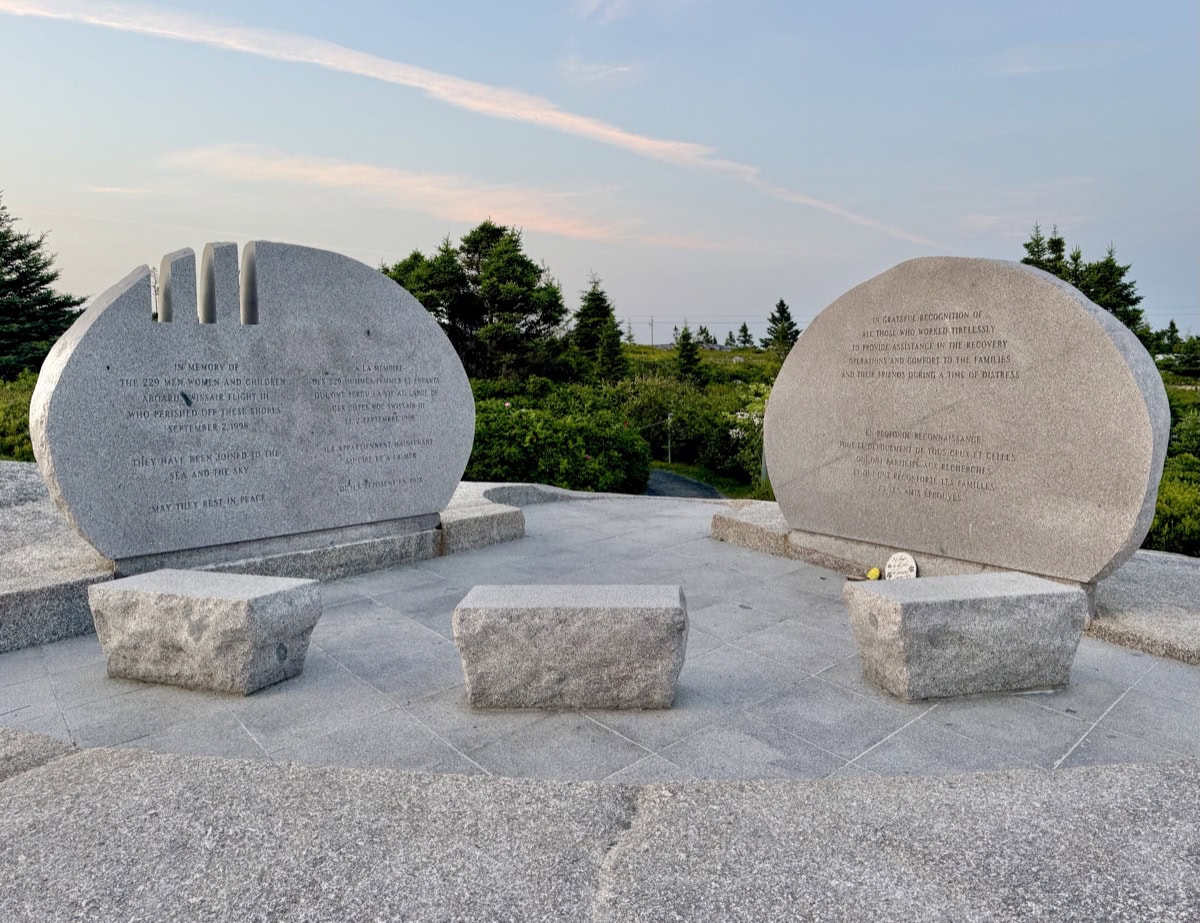
Halifax, Canada: 8 Things to See & Do + Best Day Trips Around Nova Scotia

TL;DRHalifax in Canada comes with 8 essential tips on what to see and do: the star-shaped Halifax Citadel, the four-kilometre Waterfront Boardwalk, the Maritime Museum of the Atlantic with its Titanic exhibition, the Victorian Public Gardens, the museum at Pier 21, Point Pleasant Park, the Alexander Keith’s brewery, and the Alderney Ferry across to Dartmouth. Two to three days is enough for the city itself, but allow 4–5 days or even a week if you’re heading further afield. The best time to visit is June to October, with September the sweet spot thanks to fewer tourists and Indian summer colours. Among Nova Scotia’s finest day trips, don’t skip Peggy’s Cove (a 50-minute drive), the UNESCO town of Lunenburg, and Mahone Bay with its three waterside churches. Budget for CAD 3,500–5,500 per person per day, covering accommodation, food and admission fees.

When my mum and I were planning a trip along eastern Canada (after falling in love with western Canada on a road trip), Halifax Canada was honestly just a “stopover” for me. A city where we’d land, sleep, and move on. But as with everywhere in Canada, I could have happily stayed a whole week just for the atmosphere. 😅

Halifax is one of those cities that doesn’t hit you over the head with monumental landmarks or Instagram-perfect scenery on every corner. Instead, it slowly draws you into its rhythm — through the smell of freshly cooked lobster on the waterfront, the strum of a street musician’s guitar on the boardwalk, that first sip of a local IPA in a brewery that’s over two hundred years old. And before you know it, you’re sitting in a harbourside pub, watching the sunset over the port, with absolutely no desire to leave.

In this article, you’ll find 8 things to see and do in Halifax Canada — from the star-shaped Citadel fortress and a museum full of Titanic artefacts to the oldest saltwater ferry in North America. I’ll also share tips on the best day trips from Halifax (Peggy’s Cove and Lunenburg are absolute musts!), where to stay, what to eat, and how much it all costs. Let’s dive in. ☺️

Historic buildings on the Halifax waterfront

TL;DR

  • Halifax is ideal for 3–4 days, but if you want to squeeze in day trips (Peggy’s Cove, Lunenburg, Cabot Trail), plan for a full week.
  • The best time to visit is June to October — summer is perfect, while September and October bring gorgeous fall colours and fewer tourists.
  • Rent a car. You won’t need one for the city itself, but it’s essential for exploring Nova Scotia. Peggy’s Cove is a 50-minute drive and without a car your only option is an expensive taxi ($150 CAD / about €100 one way).
  • Donair is Halifax’s official food — it sounds ridiculous, but it’s true, and you absolutely have to try one.
  • Maritime Museum of the Atlantic has a fascinating Titanic exhibition — Halifax was the city that sent out rescue ships, and most victims are buried here.
  • Peggy’s Cove is Canada’s most photographed lighthouse and well worth a visit, but BEWARE of the slippery rocks by the ocean — those “Danger of Death” signs are there for a very good reason.
  • Lunenburg is a picture-perfect UNESCO town with colourful 18th-century houses — ideal for a half-day trip.
  • Budget around €130–200 per person per day (accommodation, food, admissions) — restaurants in Halifax are surprisingly reasonable by Canadian standards.

When to visit Halifax and how to get there

Halifax sits on Canada’s east coast in the province of Nova Scotia — literally “New Scotland”, which tells you a fair bit about the weather. It’s no tropical resort, but summers here are surprisingly pleasant and the seaside-town atmosphere is simply irresistible. Here’s what to expect and how to get there.

The best time to visit is hands-down June to October. Summer (July–August) brings temperatures around 20–25 °C, long days, and packed patios on the waterfront. If you’re not a fan of crowds, September and October are absolutely perfect — fewer tourists, lower prices, and Nova Scotia draped in stunning fall colours that’ll make you wish you’d brought a better camera. 😁

We were there in mid-September and the timing was spot-on — pleasant 18–22 °C during the day, a jumper and light jacket in the evenings, and just enough visitors at Peggy’s Cove that we didn’t have to fight for a photo spot.

Winter (November–March) is cold, windy, and Nova Scotia gets quite a lot of snow. Halifax still functions in winter, but many attractions are closed or running reduced hours, and day trips become tricky. I’d give it a miss.

How to get to Halifax

There are no direct flights from the UK to Halifax, so you’ll need to connect. The most common routes go via Toronto, Montreal, or London Heathrow with airlines like Air Canada, WestJet, or British Airways. If you’re connecting through Toronto (and have some time to spare, check out our tips on the Niagara Falls), the total travel time is around 10–14 hours including the layover.

Search for cheap flights on Kiwi — it’s our favourite flight search engine and we snagged return tickets to Halifax for about €700 per person (in September, with one connection). During peak summer, expect to pay around €850–1,100.

From Halifax Stanfield Airport (YHZ), it takes 30–40 minutes to reach the city centre. A taxi costs a flat $63 CAD (about €43), which is reasonable for two people. There’s also a bus (Route 320), but it runs infrequently and takes over an hour.

Pick up a rental car right at the airport. If you’re planning day trips outside Halifax (and you absolutely should), you’ll need one. We’ve had consistently great experiences with DiscoverCars, where you can compare prices from dozens of providers in one place. Car hire in Halifax cost us about $55–70 CAD/day (€38–48), which is a good deal for Canada. Book as early as possible — airport rental agencies sell out fast in summer.

💡 TIP on mobile data: To avoid surprise roaming charges in Canada, grab an eSIM from Holafly — it works flawlessly, you activate it before you fly, and you’ve got instant data the moment you land. No faffing around looking for local SIM cards at the airport.

Where to stay in Halifax and how much it costs

The good news is that Halifax is fairly affordable by Canadian standards. You can find central accommodation at reasonable prices, and if you visit outside peak summer, you’ll save even more. Most attractions are concentrated in the centre and along the waterfront, so ideally stay within walking distance of the harbour — you’ll save on transport and can stroll down to the boardwalk for an evening drink.

Booking.com is our favourite hotel search engine and it’s what we used in Halifax too. Here’s what to expect price-wise in summer:

  • Budget (hostel/Airbnb): $80–120 CAD/night (€55–82)
  • Mid-range (3★ hotel): $150–220 CAD/night (€103–150)
  • Luxury (4–5★ hotel): $250–400+ CAD/night (€170–275+)

Our accommodation recommendations in Halifax

The Hollis Halifax — a DoubleTree Suites by Hilton — this was our pick and we had zero regrets. Brilliant location right in the centre, a few minutes’ walk to the waterfront, clean and spacious rooms with a basic kitchenette. We paid around $180 CAD (about €123) per night, and for the location and quality, it was an excellent choice.

Muir, Autograph Collection — if you fancy something more upscale, Muir is a gorgeous boutique hotel right on Queen’s Marque by the waterfront. Stunning design, harbour views, and a fantastic restaurant. Prices start around $350 CAD/night (€240), but it’s worth every penny for the experience.

Halifax Backpackers Hostel — for those on a tighter budget. A dorm bed from $45 CAD (€31), private room around $110 CAD (€75). Great location near the Citadel, clean, and friendly staff.

💡 TIP: Don’t stress about being “too far” from anything in Halifax — the centre is compact and you can walk to everything important in 20–30 minutes. Stay anywhere between the Citadel and the waterfront and you’ll be perfectly sorted.

Halifax: 8 things to see and do

If you’d like to book activities in Halifax ahead of time (guided tours, Peggy’s Cove trips, harbour cruises), have a look at the selection on GetYourGuide — it’s easy to book and most activities offer free cancellation.

Let’s take a look at 8 things to see and do in Halifax. The city may be compact, but it’s surprisingly rich in attractions and atmosphere — from historic fortresses and Titanic museum exhibits to gorgeous Victorian gardens and tastings at a 200-year-old brewery. You can cover most of these on foot, which is one of the best things about Halifax — just let the city carry you along and explore.

1. Halifax Citadel National Historic Site — the fortress that still guards the city

Scottish bagpiper in ceremonial dress at the Halifax Citadel

When someone says Halifax, most people picture the Citadel — an enormous star-shaped fortress perched on a hill above the city, visible from practically anywhere. And I have to say, it blew us away far more than we expected.

The fortress you see today is actually the fourth one built on this spot (the first stood here as early as 1749), completed in 1856. Inside, you’ll meet soldiers in period uniforms who, with perfectly deadpan British humour, explain what life was like here during wartime. And every day at precisely noon, they fire the cannon — a tradition dating back to 1857. We had no idea, happened to be standing on the bastions at the time, and nearly jumped out of our skin. Lukáš pretended he knew all about it, but he definitely didn’t. 😅

Admission is $11.70 CAD (about €8) for adults, and children under 17 get in free. Check the official Parks Canada website for current information. Allow roughly 1.5–2 hours for your visit. The views from the bastions over the city, harbour, and Dartmouth across the bay are stunning — it’s probably the best spot in Halifax to get your bearings, since you can see practically everything from up here.

💡 TIP: Head here in the morning, ideally around 11:30, so you catch the noon cannon firing. And wear comfortable shoes — there are plenty of stairs and hills.

2. Halifax Waterfront Boardwalk — the heart of the city on the ocean

Halifax waterfront with a Canadian flag

The Waterfront Boardwalk is probably the first thing anyone in Halifax will recommend — and rightly so. It’s a nearly 4-kilometre-long promenade along the harbour that serves as the city’s living room. Locals jog here in the morning, eat lunch on the benches at noon, and sip beers on the patios overlooking the harbour in the evening.

Along the boardwalk you’ll find shops, galleries, restaurants, museums, and in summer there are various markets and festivals. We easily spent a couple of hours just wandering, sampling street food, and watching the boats. The atmosphere is incredibly laid-back — no stress, no crowds (unless you happen to be in Halifax during cruise ship season, when massive liners dock and the city turns into an ant colony for a few hours).

Worth mentioning is the new Queen’s Marque quarter at the southern end of the boardwalk — a modern complex with hotels, restaurants, and public space right on the water. It’s a bit of a contrast to the historic fishing harbour, but it works surprisingly well.

The boardwalk is free and accessible 24 hours a day. It’s at its best at sunset — grab a beer, sit on the dock, and just watch. What more do you need? ☺️

3. Maritime Museum of the Atlantic — Titanic, explosions, and maritime history

Maritime Museum of the Atlantic building on the Halifax waterfront
Photo: No machine-readable author provided. Phobophile~commonswiki assumed (based on co / CC BY-SA 3.0 / Wikimedia Commons

This museum genuinely surprised me. I was expecting your typical regional museum — a few model ships, dusty exhibits, and a bored guide. Instead, we spent nearly three hours absorbed in fascinating exhibitions that quite literally told us stories.

The Titanic exhibition drew us in the most. What most people don’t realise is that when the Titanic sank in April 1912, it was ships from Halifax that sailed out to recover bodies from the ocean. Most of the victims are buried in three cemeteries in Halifax — and in the museum you’ll see genuine artefacts pulled from the sea, including a wooden deckchair that allegedly inspired that famous film scene (yes, the one where Rose and Jack can’t both fit on the door — and no, the museum neither confirms nor denies this theory 😁).

The second gripping exhibition covers the Halifax Explosion of 1917 — the largest man-made explosion before Hiroshima. A French ship loaded with munitions collided with a Belgian vessel in the harbour, and the blast levelled an entire neighbourhood. Nearly 2,000 people died and 9,000 were injured. It’s a story I knew nothing about, and the museum tells it with incredible sensitivity and power.

Admission is $11 CAD (about €7.50) for adults. Check the Maritime Museum of the Atlantic website for current opening hours. In summer (June–October) it’s open daily; in winter, Tuesday to Saturday only. It’s right on the waterfront boardwalk, so you can easily combine it with a stroll.

4. Halifax Public Gardens — a Victorian oasis of calm

Victorian bandstand in Halifax Public Gardens
Photo: Hayden Soloviev / CC BY 4.0 / Wikimedia Commons

Right in the middle of the bustling city lies 16 acres (about 6.5 hectares) of gorgeous Victorian gardens that have been open to the public since 1867. And it’s every bit as enchanting as it sounds.

Halifax Public Gardens are considered one of the finest Victorian gardens in North America — and I completely believe it. Wrought-iron gates, stone fountains, gazebos, ancient trees, and in summer a riot of flowers that you don’t know where to look first. On Sundays there’s live music in the bandstand and locals come for picnics, to read a book, or simply to sit and be.

We popped in for a quick visit and ended up staying an hour. Lukáš lay down on the grass and refused to get up because, as he put it, “finally somewhere with no admission fee and nowhere we have to rush off to.” He had a point — the gardens are completely free and open from spring to autumn (they close for winter, roughly November–April).

💡 TIP: The gardens are beautiful at any time of day, but mornings are quietest and the light is loveliest for photos.

5. Canadian Museum of Immigration at Pier 21 — stories that stay with you

Brick building of Pier 21 in Halifax
Photo: Janayna Velozo / CC BY 2.0 / Wikimedia Commons

Pier 21 is the place where, between 1928 and 1971, nearly one million immigrants entered Canada. It’s Canada’s answer to Ellis Island — and the museum that stands here today is one of the most emotionally powerful places we’ve ever visited.

The exhibitions walk you through the stories of people who arrived with a suitcase and a hope — war refugees, British children evacuated during the Blitz, families searching for a fresh start. Interactive displays let you search specific names in databases and view original documents. Many Canadians come here to trace the stories of their grandparents.

Admission is $12.50 CAD (about €8.50) for adults. More information on the official Pier 21 website. The museum is at the southern end of the waterfront, near the cruise ship terminal. Allow 1–2 hours for your visit.

6. Point Pleasant Park — where the city ends and the ocean begins

Gazebo and path to the ocean in Point Pleasant Park, Halifax
Photo: KMW2700 from Edmonton, Canada / CC BY-SA 2.0 / Wikimedia Commons

At the southern tip of the Halifax peninsula lies Point Pleasant Park — over 75 hectares of forest trails, beaches, old military fortifications, and views of the open ocean. It’s where Haligonians go to walk their dogs, run, and simply breathe.

We spent an entire afternoon here and it was exactly what we needed after two days of museums and restaurants. The trails wind through dense forest, then suddenly you emerge onto the shoreline with the Atlantic stretching out as far as the eye can see. There are a few interesting historical ruins too — remnants of fortifications from the Napoleonic wars and the Second World War.

Admission is free. The park is open year-round and is popular with locals, so you’ll meet more Haligonians than tourists. From the city centre it’s a 20–25-minute walk or a quick bus ride.

💡 TIP: Bring a rain jacket or windproof layer — the southern end of the park by the ocean can be seriously breezy, even when it’s calm in the city.

7. Alexander Keith’s Nova Scotia Brewery — a brewery over 200 years old

Mascot with beer at a Halifax brewery

If you’re a fan of beer (and who isn’t? 😉), Alexander Keith’s is a compulsory stop. The brewery has been operating since 1820 and is one of the oldest in North America. And the tour is… well, let’s just say they don’t take themselves too seriously.

The tour takes you through the brewery’s history via actors in period costumes playing characters from the 19th century. It’s a bit theatrical, a bit cheesy, but surprisingly good fun — and at the end you get a tasting of three beers including seasonal specials you can’t find anywhere else. Lukáš was over the moon; I fell for their India Pale Ale, which is lighter and more refreshing than most IPAs I’ve tried.

The tour costs $24 CAD (about €16) per person and lasts around an hour. Book ahead, especially in summer — it fills up quickly. The brewery is in the lower part of town, a short walk from the waterfront.

8. Alderney Ferry and Dartmouth — North America’s oldest saltwater ferry

Ferries between Halifax and Dartmouth in Halifax Harbour
Photo: Nicole Bratt from San Francisco, CA, USA / CC BY-SA 2.0 / Wikimedia Commons

This is a tip you won’t find in many guidebooks, but we absolutely loved it. The Alderney Ferry is a public ferry connecting Halifax to the city of Dartmouth across the harbour — and it’s the oldest continuously operating saltwater ferry in North America (since 1752!).

The crossing takes about 12 minutes and costs just $2.75 CAD (about €1.90) — for that price you get a mini harbour cruise with gorgeous views of the Halifax waterfront, the Citadel, and the port. Honestly, we didn’t find a better value-for-money experience anywhere in Halifax.

On the Dartmouth side, you’ll find a pleasant town with cafés, parks, and the lovely Dartmouth Waterfront Trail. Pop into Two If By Sea Cafe for their legendary croissants (locals speak about them with religious fervour) and take a stroll along the promenade with views back across to Halifax. The whole Dartmouth excursion takes 2–3 hours and is absolutely worth it.

lukas a lucka
Lukáš and Lucie recommend
Where to stay in Halifax
4 accommodations — wellness hotels, hotels and other accommodation options

Day trips from Halifax: Peggy’s Cove, Lunenburg, and more Nova Scotia gems

Halifax is brilliant on its own, but the real magic of Nova Scotia starts beyond the city limits. Rocky coastlines, picturesque fishing villages, colourful houses, and lighthouses straight off a postcard — all within an hour or two’s drive from Halifax. Here are the day trips you absolutely shouldn’t miss. And I’ll say it again — rent a car, because without one you simply can’t reach these places (unless you book an organised tour at $150–200 CAD, about €100–137 per person).

Peggy’s Cove — Canada’s most photographed lighthouse

Peggy’s Cove is exactly what you picture when someone says “Atlantic coastline” — a red-and-white lighthouse standing on enormous granite boulders, surrounded by wild ocean and wind that blows straight into your soul. It’s Canada’s most photographed spot and I completely understand why.

The village of Peggy’s Cove is about a 50-minute drive from central Halifax and it’s tiny — a few dozen houses, fishing sheds, one souvenir shop, and that famous lighthouse. You can walk the whole thing in 20 minutes, but you’ll want to stay much longer because the atmosphere is simply magical. The granite rocks around the lighthouse look as if they were sculpted by a giant — smooth, undulating, grey. And the ocean pounds them relentlessly with waves.

BUT — and I cannot stress this enough — be careful on the rocks. They look harmless, but when a wave hits, they become lethally slippery. There are tragic accidents here every year when tourists are swept off by waves. The “Danger of Death” signs are not decoration. Stay above the line marked on the rocks, please.

Arrive either early in the morning (before 9:00) or late afternoon — during the day, especially in summer, crowds from cruise ships can be overwhelming. We got there around 8 AM and had the place nearly to ourselves. Entry is free, and so is parking.

Lunenburg — a fairytale UNESCO town

If you only have time for one trip outside Halifax in Nova Scotia, make it Lunenburg. This charming little town, about an hour and a quarter’s drive from Halifax, is a UNESCO World Heritage Site and one of the best-preserved examples of British colonial town planning in North America.

What does that mean in practice? Colourful wooden houses from the 18th and 19th centuries lined along hilly streets, a beautiful harbour full of sailboats and fishing vessels, and an atmosphere that feels like stepping back in time. Lunenburg was founded in 1753 and you can still feel that distinctive blend of British colonial elegance and rugged maritime life.

Wander down the main street with its galleries, cafés, and shops. Visit the Fisheries Museum of the Atlantic ($15 CAD / about €10), where you’ll learn about the fishing industry’s history and see a replica of the famous schooner Bluenose (the one on the Canadian ten-cent coin, even if you probably didn’t know that). And most importantly — have the lobster. Lunenburg is a fishing town and the seafood here is incredibly fresh.

We spent half a day here and it was one of the highlights of our entire Nova Scotia trip. The town is photogenic from every angle, and in September there were pleasantly few tourists.

Mahone Bay — three churches by the water

On your way to or from Lunenburg, stop at Mahone Bay — a small town famous for its iconic view of three churches standing side by side at the water’s edge. This image graces millions of postcards, and I have to say it looks even lovelier in person.

Mahone Bay itself is small and an hour is enough to see it — stroll down the main street, browse the local shops selling handmade candles and pottery, and grab a coffee with harbour views. Think of it as a pleasant stop rather than a standalone destination.

Cabot Trail — for the adventurous (and those with time)

If you have more time in Nova Scotia (ideally 2–3 extra days), the Cabot Trail on Cape Breton Island is one of the most beautiful scenic drives in all of North America. 298 kilometres of roads winding along dramatic coastline, through the mountains of Cape Breton Highlands National Park, and past charming fishing villages.

From Halifax, it’s about a 4-hour drive to Cape Breton, so this isn’t a day trip — plan for 2–3 nights along the route. But if you have the time, it’s an utterly unforgettable experience. We didn’t manage it and still regret it to this day — it’ll be the reason we return to Nova Scotia. ☺️

What to eat and drink in Halifax: a foodie guide

Dave's Lobster restaurant on the Halifax waterfront

Halifax is a city where the food is surprisingly good — and reasonably priced (at least by Canadian standards). The seafood is incredibly fresh, the local craft beer scene is thriving, and one dish here has even earned the status of official city food. Here’s a rundown of what you must try and where to find the best of it.

What to try in Halifax

Lobster — No surprise here, but lobster is king in Nova Scotia. Fresh, boiled, served in a bun as a lobster roll, or simply whole on a plate with melted butter. You can pick up a lobster roll from $20 CAD (about €14) at stalls on the waterfront; in a restaurant expect $25–35 CAD (€17–24). A whole lobster in a restaurant runs $35–55 CAD (€24–38) depending on the season and size.

Donair — And now for the main event: the donair is Halifax’s official city food. Yes, really. Since 2015. It’s similar to a doner kebab, but with a unique sweet sauce made from condensed milk, sugar, and garlic. Sounds odd? It’s completely addictive. 😅 The best donair in Halifax is reportedly at King of Donair (yes, that’s really what it’s called) or Tony’s Pizza. A donair costs around $10–15 CAD (€7–10).

Seafood chowder — A creamy fish soup loaded with chunks of lobster, shrimp, and mussels. Every restaurant has its own recipe and locals argue endlessly about who makes the best one. We had an excellent version at Salty’s on the waterfront — thick, packed with seafood, with crumbled bacon on top. Around $15–18 CAD (€10–12) a bowl.

Fish & chips — A classic that’s non-negotiable in a seaside city. Fresh cod or haddock in beer batter, chips, and coleslaw. Simple. Perfect.

Local craft beers — Halifax has a fantastic craft beer scene. Besides Alexander Keith’s, try Garrison Brewing (right on the waterfront, with a taproom overlooking the harbour) or Good Robot Brewing (a bit hipster, a bit quirky, but the beers are excellent).

Where to eat — our favourite restaurants

The Bicycle Thief — An Italian restaurant on the waterfront that’s probably the best-known eatery in Halifax. Superb pastas, seafood, and atmosphere. Mains $25–45 CAD (€17–31). Book ahead — it gets packed.

Bar Kismet — A family-run place near the centre that completely won us over. Seafood and pastas prepared with love and creativity. The menu changes with the season and ingredient availability. Expect $30–50 CAD (€21–34) per person for food without drinks. Again — book ahead; it’s a small spot and always full.

Salty’s on the Waterfront — A classic Halifax restaurant right on the boardwalk with harbour views. This is where we had that amazing chowder, and Lukáš ordered a whole lobster and looked like a kid at Christmas. Mid-range pricing, mains $22–40 CAD (€15–27).

The Old Triangle Irish Alehouse — If you want a more relaxed atmosphere, live music, and solid fish & chips at reasonable prices ($16–20 CAD / €11–14), this is your place. An Irish pub with a Canadian heart.

💡 TIP: If you’re in Halifax on a Saturday morning, head to the Halifax Seaport Farmers’ Market — it’s the oldest farmers’ market in North America (running since 1750!) and you’ll find local cheeses, baked goods, preserves, and street food.

Practical tips and final advice

Before you head to Halifax, here are a few more practical details that’ll come in handy. From experience, I know it’s these “boring” bits that can save you the most money and hassle.

What to pack

For a detailed guide, check out our article on how to pack carry-on only. Halifax is a coastal city and the weather changes fast — sunshine in the morning, wind in the afternoon, drizzle by evening. Layers are key. Don’t forget:

  • A lightweight waterproof jacket or rain mac (absolutely essential for Peggy’s Cove!)
  • Comfortable walking shoes — you’ll be doing a lot of walking in Halifax, and the terrain at Point Pleasant Park and on the rocks at Peggy’s Cove is uneven
  • A jumper or fleece for evenings — even in summer it gets chilly after dark
  • Sunglasses and sunscreen — the glare off the water and wind is deceptive

Flights

Search for cheap flights on Kiwi — it’s our go-to flight search engine and we regularly find flights to Canada at significantly lower prices than elsewhere. From the UK to Halifax, expect one connection (most commonly via Toronto, Montreal, or a transatlantic hub). Return flights in peak season come to around €700–1,100 per person.

Car hire

I’ll say it a third time because it matters: you need a car for trips outside Halifax. We’ve had consistently good experiences with DiscoverCars, where you can compare prices from dozens of providers in one place. We hired a car at Halifax airport for $55–70 CAD/day (€38–48). Petrol in Canada is cheaper than in Europe, around $1.50–1.70 CAD per litre (roughly €1.00–1.15).

Accommodation

Booking.com is our favourite hotel search engine — clear, reliable, and we’ve always found great accommodation in Halifax at fair prices. I’d recommend booking at least 2–3 months in advance if you’re visiting in summer.

Travel insurance

Whatever you do, don’t travel to Canada without travel insurance — healthcare for tourists is eye-wateringly expensive. A single A&E visit could set you back thousands of dollars. For longer trips we recommend SafetyWing — it’s travel insurance designed for nomads and travellers, with reasonable prices and excellent coverage. You can even sign up after you’ve already left home.

Mobile data

As I mentioned above, grab an eSIM from Holafly — in Canada you’ll need data for navigation (especially on drives outside the city), Google Maps, and translation. Activation is simple, you do it before you leave home, and you’re connected the moment you land.

How much does a week in Halifax cost (for two)

Here’s a rough budget for 7 nights for two people (mid-range):

  • Accommodation: 7 × $180 CAD = $1,260 CAD (about €860)
  • Food (restaurants + occasional self-catering): $70–100 CAD/day = $490–700 CAD (€335–480)
  • Car hire (4 days for day trips): 4 × $60 CAD = $240 CAD (€164)
  • Petrol: $80 CAD (€55)
  • Admissions and activities: $150 CAD (€103)
  • Total: approximately $2,220–2,430 CAD, or roughly €1,520–1,660 for two (€760–830 per person)

That’s without flights. This is for a mid-range trip — you can save on accommodation (Airbnb, hostels) and food (self-catering), or spend more on upscale hotels and restaurants.

Frequently asked questions about Halifax

Here are answers to the most common questions we get from readers about travelling to Halifax and Nova Scotia.

Halifax surprised us, charmed us, and left us longing to come back — next time for longer, with the Cabot Trail on the itinerary. If you’re looking for a corner of Canada that isn’t overrun with tourists, where the food is fantastic, where history is around every corner, and where the ocean smells like freedom, Nova Scotia is your place. Enjoy it! ☺️

Tips and Tricks for Your Vacation

Don’t Overpay for Flights

Search for flights on Kayak. It’s our favorite search engine because it scans the websites of all airlines and always finds the cheapest connection.

Book Your Accommodation Smartly

The best experiences we’ve had when looking for accommodation (from Alaska to Morocco) are with Booking.com, where hotels, apartments, and entire houses are usually the cheapest and most widely available.

Don’t Forget Travel Insurance

Good travel insurance will protect you against illness, accidents, theft, or flight cancellations. We’ve had a few hospital visits abroad, so we know how important it is to have proper insurance arranged.

Where we insure ourselves: SafetyWing (best for everyone) and TrueTraveller (for extra-long trips).

Why don’t we recommend any Czech insurance company? Because they have too many restrictions. They set limits on the number of days abroad, travel insurance via a credit card often requires you to pay medical expenses only with that card, and they frequently limit the number of returns to the Czech Republic.

Find the Best Experiences

Get Your Guide is a huge online marketplace where you can book guided walks, trips, skip-the-line tickets, tours, and much more. We always find some extra fun there!
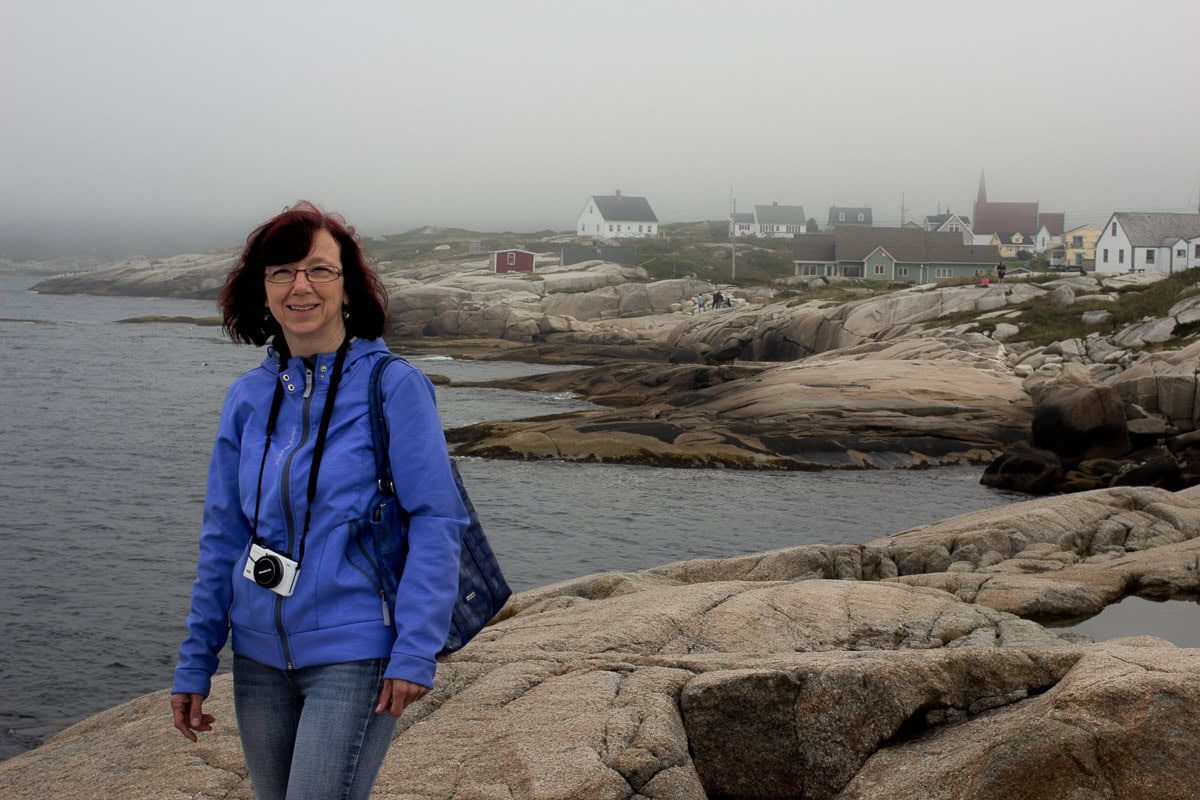
St. John’s, Newfoundland, Canada: 12 Best Things to See and Do

TL;DRSt. John’s, the capital of Canada’s Newfoundland, packs in 12 things to see and do: the view from Signal Hill with its Cabot Tower, the colourful houses of Jellybean Row and The Battery, North America’s most easterly point at Cape Spear, The Rooms museum, the bars along George Street, the fishing village of Quidi Vidi, iceberg-and-whale watching (Iceberg Alley) with puffins near Witless Bay, hiking the East Coast Trail, Bowring Park, and a trip out to Gros Morne National Park. June to August is the best window, with temperatures of 15–22°C. The icebergs, 10,000–12,000 years old, show up in May and June, while whales and puffins arrive in July and August. Three to four days is enough for the city itself; add at least 6–7 days if you’re heading to Gros Morne too. A week’s budget for two, not counting flights, comes to CAD 2,900–4,000.

Do you know what it feels like to stand on a cliff edge, with the icy Atlantic crashing below you, and have the distinct sensation that beyond that horizon there’s truly nothing left? That you’re at the very edge of the world — and yet it’s breathtakingly beautiful? That’s exactly how Lukáš and I felt when we first arrived in St. John’s Canada, on the island of Newfoundland. It was late afternoon, the sun was pushing through that trademark Newfoundland fog, and we were driving downhill towards the harbour. And then we saw them — the colourful houses. Rows of yellow, pink, turquoise, and orange facades, as if someone had tipped a giant box of jelly beans along the narrow streets. In that moment, I knew I was going to fall in love with this little city. ☺️

St. John’s is the capital of the province of Newfoundland and Labrador and one of the oldest cities in North America. It’s rugged, windswept, often shrouded in fog — and absolutely enchanting. It’s a place where wild nature meets a surprisingly vibrant cultural scene, where in June you can spot 12,000-year-old icebergs from Greenland drifting past the coast and in July watch humpback whales at arm’s reach. And in the evening? You head to George Street, which reportedly has the most bars per square foot in all of North America. As I say — the edge of the world, but definitely not boring. 😁

Newfoundlanders (locals are called “Newfies” and they wear it with pride) are some of the friendliest people we’ve ever met on our travels. Every other person will stop you, ask where you’re from, and launch into a story about their grandfather who fished for cod. And you just stand there, understanding about half of it because the Newfoundland accent is a chapter in itself, but somehow feeling completely at home. 😅

In this article, you’ll find 12 best things to see and do in St. John’s Canada — from Signal Hill with its legendary Cabot Tower to the most colourful neighbourhood of Jellybean Row, and on to iceberg spotting and whale watching. I’ll share when the best time to visit is, where to stay, what to eat, and how much it all costs. If you’ve been considering St. John’s NL Canada and wondering what to see and where to go, you’re in the right place.

Traveller enjoying the dramatic coastal views near St. John's
St. John's harbour lined with colourful houses

TL;DR

  • St. John’s is the capital of Newfoundland, one of the oldest and most colourful cities in North America, perched on the very eastern edge of the continent.
  • Best time to visit is June–August — in May and June you’ll see icebergs, in July and August whales and puffins.
  • The weather is unpredictable — even in summer expect temperatures around 15–22 °C, wind, and fog. A waterproof jacket is essential kit.
  • Signal Hill and Cabot Tower offer the best views of the city and ocean, while Cape Spear is the easternmost point of all North America.
  • Jellybean Row and the The Battery neighbourhood are a photographer’s paradise — fairytale-colourful houses.
  • Iceberg Alley: in May and June, enormous icebergs aged 10,000–12,000 years drift past the coast, often visible right from the city.
  • Whales and puffins: boat trips to Witless Bay, home to the largest puffin colony in North America and dozens of humpback whales.
  • George Street reportedly has the highest concentration of bars per square foot in North America — and the Screech-In ceremony involving kissing a cod is an experience you won’t forget. 😁
  • Must-try food includes toutons (fried dough with molasses), cod tongues, and fish and chips from Ches’s or Duke of Duckworth.
  • The city is walkable, but for day trips (Cape Spear, Witless Bay, Gros Morne NP) you’ll need a car.
  • From the UK, you can get here via Toronto or Montreal — expect a full day of travelling, but it’s well worth it. In summer, WestJet also flies seasonally from London.
  • Budget for a week for two: approximately €1,800–2,500 (excluding flights), depending on your accommodation style and number of excursions.

When to visit St. John’s and how to get there

St. John’s is one of those places where timing really does make or break what you’ll experience. Icebergs, whales, puffins — each of these encounters has its own season, and if you want to hit the jackpot, it pays to plan ahead. As for getting there — I won’t sugarcoat it, Newfoundland isn’t exactly around the corner. But trust me, the journey is worth every layover hour.

Best time to visit St. John’s

June to August is hands down the best time to visit. Days are long (in June it stays light until around 9:30 pm), temperatures hover around 15–22 °C, and the city buzzes with cultural events and festivals.

If icebergs are what draw you, aim for May and June. That’s when enormous chunks of ice from Greenland, aged 10,000–12,000 years, drift past the Newfoundland coast. It’s called Iceberg Alley, and it’s one of the most awe-inspiring natural phenomena you can witness in North America. Some years dozens of icebergs drift by, other years just a handful — nature doesn’t take requests.

Whales and puffins peak in July and August. Twenty-two species of whale swim around Newfoundland, including one of the largest humpback populations on Earth. If you can time your visit for early July, you might catch both icebergs and whales at once — that’s the real jackpot.

⚠️ Weather warning: St. John’s is notorious for its wildly unpredictable weather. Locals say: “If you don’t like the weather, wait five minutes.” Fog, wind, and showers are common even in summer. Layer up and treat a waterproof jacket as non-negotiable — more on that in the practical tips section.

How to get to St. John’s from the UK

There are no direct year-round flights from the UK to Newfoundland, but getting here is easier than it sounds. St. John’s Airport (YYT) is just 6 km from the city centre and is served by regular domestic connections.

The most common route from the UK:

  1. Fly London → Toronto or Montreal (direct flights, approximately 7–8 hours)
  2. Connect to St. John’s (approximately 3–3.5 hours)

All in all, expect a full day of travelling, but with a sensible layover in Toronto it’s perfectly manageable. If you have a longer stopover in Toronto, consider a side trip to Niagara Falls — well worth it! We search for affordable flights on Kiwi.com — Lukáš and I use it regularly and always find good connections.

In the summer season, WestJet operates seasonal routes from Dublin, London, and Paris, so if you’re combining Newfoundland with a transatlantic trip, this can be a great direct option from the UK.

💡 TIP: Definitely hire a car once you arrive. St. John’s itself is walkable, but for day trips (Cape Spear, Witless Bay, Gros Morne) you’ll need wheels. We’ve had consistently good experiences with DiscoverCars, where you can compare prices from all the local agencies in one place. Summer rental prices in Newfoundland run around 45–65 CAD / €30–45 per day for a compact car.

Where to stay in St. John’s + how much it costs

Accommodation in St. John’s is a touch more affordable than in Toronto or Vancouver, though prices naturally climb in the summer season (June–August). As a rule of thumb, expect to pay 150–250 CAD (€100–170) per night for a double room in a mid-range to upscale hotel. Lukáš and I usually search for accommodation on Booking.com — we’ve built up loyalty points there and love comparing reviews with real guest photos.

Your best bet is to stay right in the city centre (Downtown), from where the harbour, George Street, Jellybean Row, and most restaurants are all within walking distance. If you prefer something quieter, the area around Quidi Vidi is charming and still close to the action.

Here are three places we recommend:

  • Alt Hotel St. John’s — modern, clean design with harbour views. Brilliant location just off Water Street. Prices from around 180 CAD / €120 per night. If you’re into minimalist Scandinavian style, this one’s for you.
  • Hilton Garden Inn St. John’s — a reliable choice right in the centre, with a pool and fitness centre. Rooms are spacious and breakfast is solid. Prices from around 200 CAD / €135 per night.
  • Murray Premises Hotel — for those who want somewhere with soul. A boutique hotel housed in a historic 19th-century warehouse, right on the waterfront. Beautiful details, excellent location. Prices from around 220 CAD / €150 per night.

Rough budget for a week for two (excluding flights):

  • Accommodation (7 nights): 1,260–1,540 CAD / €850–1,050
  • Food (eating out twice a day): 700–1,050 CAD / €475–710
  • Car hire + petrol: 500–750 CAD / €340–510
  • Excursions and activities (whales, museums): 200–400 CAD / €135–270
  • Total: approximately 2,700–3,700 CAD / €1,800–2,500 for two for a week

Prices are obviously approximate and depend a lot on whether you treat yourselves to fine dining at Mallard Cottage or grab fish and chips from Ches’s (honestly, both are brilliant 😁).

12 best things to see and do in St. John’s, Newfoundland

Let’s finally get to why you should actually go. St. John’s is a city that surprises you at every turn — from dramatic cliffs and historic lighthouses to colourful streets full of art, craft breweries, and a bar-packed lane where fishermen rub shoulders with hipsters on a Saturday night. Here are 12 places and experiences you absolutely can’t miss in St. John’s.

1. Signal Hill and Cabot Tower — the best views of city and ocean

Stone Cabot Tower on Signal Hill above St. John's

If you only do one thing in St. John’s, make it the climb up Signal Hill. This hill towering over the harbour entrance (known as The Narrows) is the city’s iconic landmark, and the views from the top are simply breathtaking — colourful rooftops on one side, the endless Atlantic on the other.

At the summit stands Cabot Tower, a stone tower built in 1897 to mark the 400th anniversary of John Cabot’s arrival in Newfoundland. But that’s not the only reason this spot is famous — it was right here in 1901 that Guglielmo Marconi received the first transatlantic wireless signal. Standing there gazing out at the vast ocean, you get a real sense of just how revolutionary that must have been.

From Cabot Tower, head out on the North Head Trail — a short but stunning path (about 1.7 km) that follows the cliff edge with open sea views. On a clear day you might spot whales from here, and if you visit in May or June, possibly icebergs too. Lukáš and I spent a good two hours here and left with a phone full of photos and the feeling that we hadn’t seen a better viewpoint anywhere in Canada.

💡 TIP: Head up Signal Hill either early morning (fewer tourists) or at sunset — the colours are incredible. Entry is free, and so is parking at Cabot Tower. It’s atmospheric in the fog too, but you won’t get the views — check the forecast first.

2. Jellybean Row — fairytale colourful houses

Colourful row houses of Jellybean Row in St. John's

Jellybean Row. The name alone sounds like something out of a children’s book, and the place looks exactly like that. These are rows of Victorian terraced houses in the centre of St. John’s, painted in the most joyful colours imaginable — fuchsia, lemon, turquoise, lavender, fiery orange.

Why are the houses painted this way? There are several theories. One says that fishermen painted their homes in bright colours so they could spot them from the sea when returning through the fog. Another suggests that after the Great Fire of 1892, which destroyed most of the city, people chose vibrant colours during the rebuild as a symbol of hope and a fresh start. Whatever the truth, the result is utterly photogenic.

The prettiest stretches of Jellybean Row are on Gower Street, Prescott Street, and the surrounding lanes. There’s no admission fee, no roped-off attraction — you simply stroll through the city and soak up the palette. We went in the morning, when the streets were still empty and the light fell beautifully on the facades. Honestly, the photos from Jellybean Row are probably the most shared thing I’ve ever posted on Instagram. ☺️

3. Cape Spear — standing on the eastern edge of the continent

Lighthouse on the rocky coastline near St. John's

Cape Spear is where North America simply ends. You stand on a cliff and before you there’s nothing but ocean — the next land to the east is Ireland, roughly 3,500 km away. It’s the easternmost point of all North America, and the feeling of literally standing on the edge of a continent is indescribable.

On the headland stands Newfoundland’s oldest surviving lighthouse, built in 1836. It’s been beautifully restored and you can explore the interior, learning about the lives of lighthouse keepers in the 19th century. Next to it stands a newer lighthouse from 1955, still in operation. Beyond the lighthouses, you’ll also find remnants of Second World War fortifications — concrete bunkers and gun emplacements that once guarded the entrance to St. John’s harbour.

Cape Spear is only about 15 minutes’ drive from the centre of St. John’s, so there’s really no excuse. In May and June you can watch icebergs drifting past the coast, and in summer whales are frequently sighted here. We visited on a gorgeous evening and the sunset over the cliffs (or rather over the city behind us, since to the east there’s only sea 😅) was magical.

⚠️ Warning: It’s genuinely ferocious up at Cape Spear, even when the city centre is calm. Bring a warm layer and windproof jacket, even in summer.

4. The Rooms — culture, history, and the best indoor views in the city

The Rooms museum building in St. John's

From the outside, The Rooms looks like a futuristic structure perched on a hill above the city, but inside it houses a wonderful museum, gallery, and archive that tell the story of Newfoundland in a way no guidebook ever could.

The collections cover everything — from the culture of the indigenous peoples (Beothuk and Inuit) through fishing history to contemporary Newfoundland art. Lukáš and I were most captivated by the section on shipwrecks (Newfoundland has had hundreds) and the cod fishery that defined life on the island for centuries. If you’re into museums, you could easily spend 2–3 hours here.

And then there are the views. From the upper floors of The Rooms you get a panoramic vista of the entire city, harbour, and Signal Hill — and unlike Signal Hill, you’re warm and dry, which on Newfoundland is nothing to sniff at. 😉

Admission is around 10 CAD / €7, with free entry on Wednesday evenings. Closed on Mondays (outside the summer season).

5. George Street — more bars than houses

Colourful houses along the streets of St. John's

George Street is a short lane in the centre of St. John’s that allegedly boasts the highest concentration of bars and pubs per square foot in all of North America. Along a street barely 200 metres long, you’ll find over 30 venues — from Irish pubs and cocktail bars to rock clubs. On a Saturday night, the whole city seems to converge here.

But the real reason George Street is legendary is the Screech-In ceremony. It’s a ritual through which “non-Newfoundlanders” (i.e. all visitors) are officially made honorary Newfoundlanders. How does it work? You knock back a shot of Screech rum (a local dark rum with a seriously punchy flavour), recite an oath in the Newfoundland dialect (you’ll understand about half of it), and finally… kiss a cod. Yes, a real fish. 😅 You receive a certificate and the entire bar erupts in applause.

We did our Screech-In at Christian’s Pub and it was one of the funniest evenings of the whole trip. Lukáš acted as if kissing a cod was something he did every day, while I tried desperately not to burst out laughing. We recommend it 100% — it’s absurd, hilarious, and completely authentic.

If you prefer a more relaxed atmosphere, try Celtic Hearth or The Ship Pub, where there’s live music and a cosier vibe.

6. Quidi Vidi Village and brewery — a fishing village in the heart of the city

Welcome sign at Quidi Vidi fishing village

Quidi Vidi (pronounced “kiddy viddy” — and yes, it took us a while to figure that out 😅) is a picturesque fishing village nestled in a cove, just minutes from the centre of St. John’s. It’s one of those places where you feel like you’ve stepped back a hundred years — colourful fishing shacks, a calm inlet, boats bobbing gently at the dock.

The main draw is Quidi Vidi Brewery, a local craft brewery that makes beer with Newfoundland water and actual iceberg ice (yes, really from an iceberg!). Their Iceberg Beer is legendary and well worth a taste. The brewery offers tours and tastings, and even if you’re not a beer fanatic, the taproom with its harbour views is a lovely spot.

Around the cove there’s a pleasant walk, and you’ll also find Mallard Cottage — one of the best restaurants in all of St. John’s (more on that in the food section). Quidi Vidi is perfect for a leisurely morning or afternoon when you want to escape the bustle of the centre — though honestly, St. John’s never gets as crowded as Barcelona. ☺️

7. Iceberg watching (Iceberg Alley) — ancient floating giants

This is the experience that draws many people to Newfoundland in the first place. In May and June, enormous icebergs that have calved from Greenland’s glaciers drift south along the eastern coast, carried by the Labrador Current. It’s known as Iceberg Alley, and some of these colossal chunks of ice are 10,000–12,000 years old. Let that sink in — ice that formed when our ancestors were still hunting mammoths.

The icebergs come in all shapes and sizes — from smaller pieces (“bergy bits”) to massive tabular icebergs the size of a football pitch. Their colour shifts from brilliant white to an unreal turquoise and sapphire blue, depending on how the sunlight passes through the compressed ice.

Where to watch them?

  • Cape Spear and Signal Hill — right from the shore, free of charge, brilliant with binoculars
  • Fort Amherst — on the opposite side of The Narrows from Signal Hill
  • Boat tours — if you want to get up close (and trust me, you do), there are boat tours that take you within a few dozen metres of the ice. It’s overwhelming. Expect to pay around 60–80 CAD / €40–55 per person.

💡 TIP: Keep an eye on IcebergFinder.com — it’s an interactive map showing where icebergs currently are. Some years there are loads, others just a few — it depends on currents and temperature. If icebergs are your primary reason for visiting, build flexibility into your itinerary.

lukas a lucka
Lukáš and Lucie recommend
Where to stay in St. John’s, Newfoundland
4 accommodations — wellness hotels, hotels and other lodging options

8. Whale and puffin watching — Witless Bay is an absolute must

If you think whale watching from a boat is “just one of those touristy things,” Witless Bay will change your mind. This was one of the best wildlife encounters Lukáš and I have ever had.

Witless Bay Ecological Reserve is about 30 minutes’ drive south of St. John’s and is home to the largest Atlantic puffin colony in North America — more than 260,000 pairs nest on its rocky islands. And alongside them? Humpback whales. Dozens of humpbacks that come here in summer to feed. Around Newfoundland, 22 species of whale inhabit the waters, and this area hosts one of the largest humpback populations on Earth.

We went with O’Brien’s Whale and Bird Tours, the best-known operator in the area. A two-hour trip costs around 75 CAD / €50 per person, and it’s an investment that pays off a hundredfold. During our trip we saw three humpbacks, one of which breached completely clear of the water — I still get goosebumps thinking about it. And the puffins? Thousands. Everywhere. Flying, sitting on the water, diving for fish. They’re so absurdly adorable it feels like watching a cartoon.

Another excellent operator is Gatherall’s Puffin & Whale Watch. Peak season is July–August, but the first whales appear as early as June.

⚠️ Warning: It’s cold on the boat, even when it’s warm on land. Bring a warm layer, and if you’re prone to seasickness, consider taking tablets — the waves can be quite wild.

9. North Head Trail and East Coast Trail — a hiker’s paradise

Dramatic coastal cliffs along the East Coast Trail near St. John's

St. John’s and its surroundings are threaded with hundreds of kilometres of stunning coastal trails that rank among the best hiking in all of Canada. This part of Newfoundland is raw, rugged, and staggeringly beautiful — cliffs plunging straight into the ocean, heathlands carpeted with wildflowers, and views that genuinely take your breath away.

The North Head Trail (about 1.7 km) on Signal Hill is a perfect warm-up — a short but dramatic path along the cliff edge with open Atlantic views. Anyone can manage it, and the payoff is fantastic.

If you want something longer and wilder, the East Coast Trail is calling your name. It’s a network of coastal paths stretching across 336 km in 26 sections along Newfoundland’s eastern coast. You don’t have to do the whole thing — just pick a section and go. Popular ones include:

  • Sugarloaf Path (10 km) — the most dramatic cliffs, close to St. John’s
  • Cobbler Path (17 km) — through peat bogs and coastal meadows
  • Cape Spear Path (16 km) — from Cape Spear to Maddox Cove, absolutely stunning

Lukáš and I did the Sugarloaf Path and it was one of the finest hikes we’ve done in North America. The terrain is challenging in places (wet rocks, steep climbs), but the ocean and cliff views are simply out of this world. At times we were completely alone on the trail — no crowds, no queues, just us and the Atlantic.

💡 TIP: Check trail conditions on eastcoasttrail.com — some sections undergo repairs after winter. And don’t forget proper hiking boots with good grip — wet Newfoundland rocks are treacherous. If you haven’t got a solid pair yet, check out our article on how to choose hiking boots.

10. The Battery — colourful houses clinging to the rock

Historic houses of The Battery neighbourhood built into the rock in St. John's

The Battery is one of the most photogenic parts of St. John’s and also one of those spots you’ll easily miss if you don’t know about it. This tiny neighbourhood huddles on the rocks right at the harbour entrance, beneath Signal Hill, and its colourful houses look as though they’ve been glued to the cliff face. Some of them essentially have been.

Historically, fishermen and their families lived here — houses were built wherever there happened to be space, with little regard for logic, terrain, or access. The result is a fascinating tangle of narrow paths, steep staircases, and houses in every colour, stacked on top of each other in irregular layers. It’s like Jellybean Row, but wilder and more raw.

The best views of The Battery are from Signal Hill or from the opposite side of the harbour — from there you see the whole neighbourhood in context, with cliffs and ocean as the backdrop. Walking through the quarter itself is also lovely, but be prepared for steep hills and narrow lanes. And please, remember that people actually live here — don’t photograph into their windows. 😉

11. Bowring Park — 200 acres of calm in the middle of the city

Greenery and mature trees in Bowring Park, St. John's
Photo: Sivaprasad.ucc / CC BY-SA 3.0 / Wikimedia Commons

If you need a break from the cliffs, wind, and salt spray (and sometimes you really do), Bowring Park is your sanctuary. This park spans 80 hectares (200 acres) and is over a century old — and honestly, we were surprised by how beautiful it is and how few tourists we saw here.

You’ll find gorgeous gardens, waterfalls, duck ponds, footbridges, and kilometres of walking paths. There’s even a replica of the famous Peter Pan statue from London’s Kensington Gardens — copies exist in only a handful of places worldwide, and St. John’s is one of them.

Bowring Park is perfect for a picnic, a stroll with a coffee in hand, or simply hitting pause and taking a breath. We spent a pleasant afternoon here and Lukáš claimed the highlight was the bench by the stream where he fell asleep. 😅 Free entry, open year-round.

12. Day trip to Gros Morne NP — a UNESCO treasure on the west coast

Fjord in Gros Morne National Park, Newfoundland
Photo: Michel Rathwell from Cornwall, Canada / CC BY 2.0 / Wikimedia Commons

If you have more than 3–4 days on Newfoundland, a trip to Gros Morne National Park is an absolute must. This national park, inscribed as a UNESCO World Heritage Site, sits on the island’s western coast, roughly 5 hours’ drive from St. John’s — and believe me, it’s worth every minute behind the wheel.

Gros Morne is a place where tectonic plates are literally exposed on the surface — you’ll find the Tablelands, a flat mountaintop plateau of rusty-red peridotite, a rock that normally lies deep beneath the Earth’s crust. It looks like the surface of Mars plonked in the middle of green Canada. It’s a geological marvel and the very reason the park earned its UNESCO status.

Beyond the Tablelands, there are fjords (Western Brook Pond — technically a freshwater fjord with 700-metre-high walls), waterfalls, mountains, and some of the most spectacular hiking trails in Canada. The boat tour on Western Brook Pond was one of the finest experiences we’ve had anywhere in Canada — and we’ve seen the Rockies too.

💡 TIP: Ideally, plan 2–3 days for Gros Morne. A day trip from St. John’s isn’t realistic (10 hours of driving there and back). If you’re driving across the island, work Gros Morne into your itinerary as a standalone stop. If you’re planning a bigger Canadian road trip, check out our article about a road trip through western Canada — it’s a different part of the country, but the planning tips apply everywhere.

What to eat in St. John’s: a food lover’s guide

Newfoundland cuisine is honest, fisherman-hearty, and unexpectedly delicious. No fussy plating or over-the-top presentation — here you get proper food with a story and the taste of the ocean. That said, St. John’s also has a surprisingly sophisticated restaurant scene that would hold its own in any major Canadian city. Here’s a rundown of what you must try and where to find it.

Toutons — fried dough with molasses

Toutons are a classic Newfoundland breakfast and utterly addictive. Picture chunks of yeasted dough, fried golden in a pan, served with molasses (dark sugar syrup) or butter. It’s simple, rich, sweet, and absolutely glorious — especially on mornings when you’re still cold from an early hike up Signal Hill. The best toutons we had were at Mallard Cottage.

Fish and chips + Cod tongues

Fish and chips here aren’t fast food — they’re an institution. Fresh cod in crispy batter, homemade chips, and coleslaw. Full stop. The best fish and chips in town are at Duke of Duckworth (a friendly pub in the centre) or at Ches’s — a legendary local chain where the locals go. Portions at Ches’s are enormous and ridiculously affordable.

And then there are cod tongues — fried cod tongues. Sounds mad, looks suspicious, but the flavour is outstanding. They’re soft, delicate, a bit like a mushroom in batter. If you’re not afraid to experiment, this is the one.

Jiggs dinner — a Newfoundland Sunday feast

Jiggs dinner is a traditional Sunday lunch that’s been cooked here for generations. Everything goes into one pot: salt beef, cabbage, turnip, carrots, potatoes, and peas. It sounds simple, but after hours of slow cooking the combination of flavours is surprisingly complex and wonderfully warming. If you’re in St. John’s on a Sunday, ask at a restaurant whether they’re serving Jiggs dinner — it’s an authentic Newfoundland experience.

Where to eat — specific restaurants

  • Mallard Cottage (Quidi Vidi) — arguably the best restaurant in the city. It’s housed in one of the oldest wooden buildings in North America and serves fantastic dishes from local ingredients. Book ahead, especially in summer!
  • Merchant Tavern — elegant yet casual bistro with an open kitchen. Excellent steaks and fish.
  • Duke of Duckworth — a classic pub with the best fish and chips in town and a great atmosphere.
  • Ches’s Fish and Chips — a legendary local chain, massive portions for a few dollars. This is where the locals eat, and that’s always a good sign.
  • Celtic Hearth — an Irish pub with live music and solid food. A brilliant spot for an evening of good beer and atmosphere.

Expect to pay around 15–25 CAD / €10–17 for a main course at a regular restaurant and 35–55 CAD / €24–37 at Mallard Cottage or Merchant Tavern. St. John’s is definitely not an expensive city for eating out, especially compared with Toronto or Vancouver.

Practical tips and travel advice

To round things off, here are some practical bits and pieces that’ll come in handy when planning your trip. St. John’s is tourist-friendly, safe, and relatively compact — but there are a few things worth knowing in advance to avoid any unpleasant surprises (mainly weather-related 😅).

What to pack

This is probably the most important piece of advice in the entire article: dress in layers and bring a waterproof jacket. The weather in St. John’s is legendarily unpredictable — it can be sunny in the morning, foggy by noon, rainy in the afternoon, and gorgeous again by evening. And the wind blows pretty much non-stop.

  • Waterproof jacket with a hood — absolute necessity, even in summer
  • Fleece or warm mid-layer — even in July it can be around 12 °C on the cliffs
  • Hiking boots — if you’re planning the East Coast Trail or any hiking at all, wet rocks are treacherous. Check out our guide to the best hiking boots.
  • Beanie and a light scarf — you’ll appreciate them at Cape Spear and Signal Hill
  • Sunglasses and sun cream — when the sun comes out, it really goes for it

If you’re not sure what to pack, have a look at our detailed guide on how to pack everything into carry-on luggage. Yes, even for Newfoundland!

Currency and prices

The currency is Canadian dollars (CAD). The current exchange rate is roughly 1 CAD ≈ €0.68. You can pay by card everywhere — we needed cash only once during our entire stay, at a farmers’ market.

Watch out for tipping — in Canada it’s customary to leave 15–20% in restaurants. It’s not technically compulsory, but it’s expected and staff rely on it. When you pay by card, the terminal will automatically offer you a percentage tip option.

Overall, St. John’s is more affordable than Toronto, Vancouver, or Banff. Food, accommodation, and activities are roughly 10–20% cheaper than in those cities.

Safety

St. John’s is a very safe city. Crime rates are low, the people are friendly, and even late at night on George Street we felt completely at ease. Use common sense as you would anywhere, but there’s no need for any particular concerns.

The biggest “danger” is the weather — if you go hiking, check the forecast, wear proper gear, and stay well back from cliff edges. Wet Newfoundland rocks are slippery and the wind can catch you off guard.

Getting around the city

The centre of St. John’s is perfectly walkable — from the harbour to Signal Hill, from Jellybean Row to George Street, it’s all doable on foot. The city is hilly (brace yourself for steep lanes), but compact.

For trips outside the city (Cape Spear, Witless Bay, Gros Morne), you’ll need a car. Public transport (Metrobus) exists but services are infrequent and don’t cover the tourist spots in the surrounding area. Hiring a car at the airport is straightforward. As I mentioned above, we’ve had consistently good experiences with the comparison site DiscoverCars.com, where you can compare all the local agencies’ offers in one go.

Connectivity and eSIM

Mobile signal in the centre of St. John’s is fine, but in more remote spots (the East Coast Trail, the drive to Gros Morne) it can be weak or non-existent. If you don’t want the hassle of a local SIM card, we recommend an eSIM — travel eSIM cards activate in minutes and work brilliantly. We’ve written up our experiences with eSIM cards in a separate Holafly eSIM review.

Useful links and resources

  • ✈️ Flights: Search for affordable flights on Kiwi.com — our go-to portal that also finds creative connecting routes.
  • 🚗 Car hire: We regularly use the comparison site DiscoverCars.com to compare prices from all local agencies.
  • 🏨 Accommodation: We search for hotels and apartments on Booking.com — love collecting Genius points and reading reviews from real guests.
  • 🛡️ Travel insurance: Don’t forget insurance before heading to Canada — healthcare for visitors there is expensive. Check out our travel insurance tips in a separate article.
  • 📱 eSIM: A travel eSIM card for Canada — read our Holafly review.
  • 🎒 Packing: How to pack into carry-on luggage — yes, even for Newfoundland!
  • 🥾 Boots: How to choose hiking boots — on wet Newfoundland rocks you’ll be grateful for every penny spent.

Frequently asked questions about St. John’s, Newfoundland (FAQ)

How many days do I need in St. John’s?

For the city of St. John’s itself and its immediate surroundings (Signal Hill, Cape Spear, Quidi Vidi, Witless Bay), 3–4 days is enough. If you want to add a trip to Gros Morne National Park (5 hours’ drive), plan for at least 6–7 days for the whole of Newfoundland. We spent 4 days in St. John’s and didn’t quite manage everything — we could easily have added another day for hiking the East Coast Trail.

When is the best time to visit St. John’s?

The best time is June to August. In May and June you’ll see icebergs (Iceberg Alley), and in July and August whales and puffins. The weather is unpredictable even in summer — temperatures around 15–22 °C, frequent fog, and wind. Winter (November–March) is harsh and most tourist activities are closed, so we wouldn’t recommend it.

How do I get to St. John’s from the UK?

There are no year-round direct flights from the UK. The most common route is via Toronto or Montreal — fly from London to Toronto (around 8 hours), connect, and then fly on to St. John’s (around 3 hours). Expect a full day of travel. In summer, WestJet operates seasonal flights from Dublin, London, and Paris. We recommend searching for flights on Kiwi.com.

Is St. John’s a safe city?

Yes, St. John’s is a very safe city with low crime rates. The locals are friendly and always happy to help. The biggest risk is the unpredictable weather, especially when hiking on cliffs — stick to marked trails, wear appropriate clothing, and check the weather forecast.

Where can I see icebergs near St. John’s?

Icebergs drift past the Newfoundland coast mainly in May and June (a period known as Iceberg Alley). From St. John’s, you can spot them from Cape Spear, Signal Hill, or Fort Amherst. For a closer encounter, we recommend boat tours that take you within a few dozen metres of an iceberg. Track their current positions on IcebergFinder.com.

How much does a holiday in St. John’s cost?

A rough budget for a week for two (excluding flights): accommodation approximately €850–1,050, food €475–710, car hire and petrol €340–510, activities €135–270. Total approximately €1,800–2,500 for two. St. John’s is more affordable than Toronto or Vancouver. Return flights from London typically range from £400–700 per person (with a stopover).

Is it worth visiting Gros Morne from St. John’s?

Absolutely, if you have the time. Gros Morne National Park (UNESCO) is one of the most beautiful places in Canada — fjords, geological wonders, and incredible hiking. However, it’s a 5-hour drive from St. John’s, so a day trip isn’t practical. Ideally plan 2–3 days in Gros Morne itself. If you only have 3–4 days on Newfoundland, stick to St. John’s and the surrounding area — there’s more than enough to keep you busy.

Tips and Tricks for Your Vacation

Don’t Overpay for Flights

Search for flights on Kayak. It’s our favorite search engine because it scans the websites of all airlines and always finds the cheapest connection.

Book Your Accommodation Smartly

The best experiences we’ve had when looking for accommodation (from Alaska to Morocco) are with Booking.com, where hotels, apartments, and entire houses are usually the cheapest and most widely available.

Don’t Forget Travel Insurance

Good travel insurance will protect you against illness, accidents, theft, or flight cancellations. We’ve had a few hospital visits abroad, so we know how important it is to have proper insurance arranged.

Where we insure ourselves: SafetyWing (best for everyone) and TrueTraveller (for extra-long trips).

Why don’t we recommend any Czech insurance company? Because they have too many restrictions. They set limits on the number of days abroad, travel insurance via a credit card often requires you to pay medical expenses only with that card, and they frequently limit the number of returns to the Czech Republic.

Find the Best Experiences

Get Your Guide is a huge online marketplace where you can book guided walks, trips, skip-the-line tickets, tours, and much more. We always find some extra fun there!
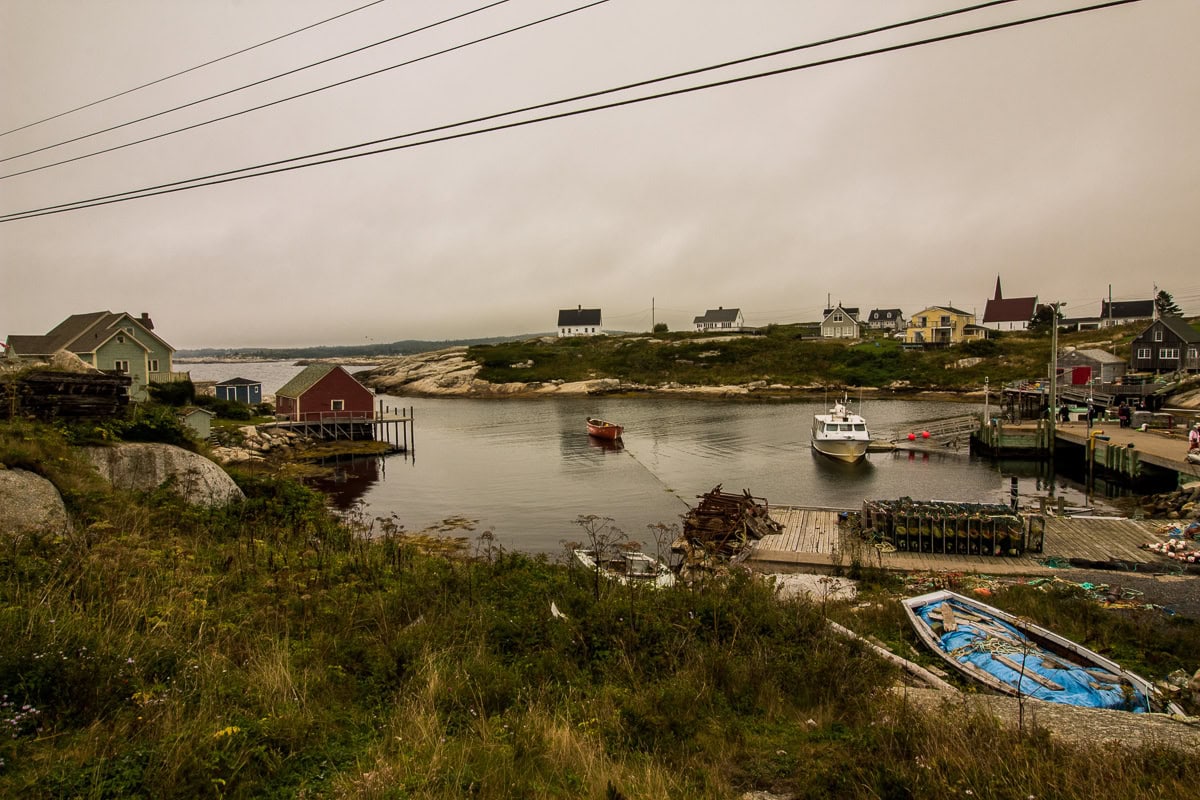
West Coast USA Road Trip: 14–21 Day Itinerary (LA → San Francisco)

TL;DRThis Western USA road trip runs from Los Angeles through Joshua Tree, Las Vegas, Zion, Bryce Canyon, Page (Antelope Canyon, Horseshoe Bend), the Grand Canyon, Monument Valley, Arches, Canyonlands, Death Valley, Sequoia and Yosemite, finishing in San Francisco. It covers roughly 4,500 km, and you’ll want 14–21 days — 18 or more is ideal. April–May and September–October are the best months, with pleasant temperatures and fewer crowds. Budget for two comes to $100,000–255,000 CZK in total ($50,000–127,500 CZK per person), covering flights, an SUV rental, accommodation and food. It’s worth picking up an America the Beautiful Pass for $80, which covers entry to every national park on the route. The standout moments are Angels Landing in Zion, sunrise over the Grand Canyon, sunset at Arches, and Yosemite Valley.

I’ve done this west coast USA road trip three times now and I’d do it again in a heartbeat — the American West is that one place where reality actually looks better than those over-filtered Instagram photos. If you can, give yourself at least 3 weeks, especially if you’re flying from the UK. It’ll be the trip of a lifetime. Driving through Utah’s red canyons, nights under the stars in Death Valley, giant sequoias that make you feel like ants, and to cap it all off, fog rolling over the Golden Gate Bridge. Basically a road movie, except you’re the main character.

In this article, you’ll find a complete day-by-day itinerary for a 14–21 day west coast USA road trip — with specific stops, restaurants, accommodation tips and prices. I’ll tell you when to go, what car to rent, how much the whole thing costs, and what to watch out for. Whether you have two weeks or three, you can tailor the route to suit you.

Couple at the summit above the clouds

TL;DR

  • Route: Los Angeles → Joshua Tree → Las Vegas → ZionBryce Canyon → Page (Antelope Canyon, Horseshoe Bend) → Grand Canyon → Monument Valley → ArchesCanyonlandsDeath ValleySequoiaYosemite → San Francisco
  • Total distance: approx. 2,800 miles (4,500 km) — allow 14–21 days, ideally 18+
  • Best time to go: April–May and September–October (pleasant temperatures, fewer crowds)
  • Budget for two: approx. €5,000–8,000 per person including flights, depending on travel style
  • Car: SUV or crossover with high ground clearance (Monument Valley, Death Valley) — we use DiscoverCars
  • Accommodation: mix of camping, motels and Airbnb — book national park accommodation 3–6 months ahead
  • National parks: get the America the Beautiful Pass for $80 (valid for one year, entry to all parks)
  • Must-see: Zion (Angels Landing or Observation Point), Grand Canyon at sunrise, Arches at sunset, Yosemite Valley
  • Trip surprise: Monument Valley and Bryce Canyon blew us away more than we expected

When to go and how to get to the west coast USA

The American West is enormous and the weather varies dramatically depending on elevation and location. In summer, Death Valley can hit 50 °C (122 °F), while Yosemite sits at a pleasant 25 °C (77 °F). On the other hand, Sierra Nevada passes can be closed by snow in winter. So timing is everything.

Best time for a road trip

April–May and September–October are hands down the best months. Desert temperatures are bearable (around 25–35 °C / 77–95 °F), the mountains are beautiful, and there are far fewer tourists than in summer. We went at the end of September into October and it was perfect — golden light, empty trails, and temperatures around 28 °C (82 °F) in Utah.

Summer (June–August) is the most popular season, but the desert is genuinely unbearable. In Death Valley, Joshua Tree and the Grand Canyon, you’ll feel like you’re standing inside an oven. On top of that, the national parks are so packed that some trails require advance reservations (Zion, Yosemite). If you have no other option, at least get up early — around 6 am is the best time for everything.

Winter (November–March) is tricky because of snow in the mountains. Tioga Pass into Yosemite is usually closed from November to May, Bryce Canyon can be blanketed in snow (though it looks stunning!). On the flip side, Las Vegas and southern Arizona are perfectly pleasant in winter.

How to get to Los Angeles

From the UK, there are plenty of direct flights to LA. British Airways flies direct from London Heathrow, and you can also find good deals with Virgin Atlantic and Norwegian. Budget-friendly connecting flights are available too — look for deals on comparison sites. One-way tickets from London to LA can start from around £300–500, depending on the season and how far in advance you book.

💡 TIP: If you fly one-way into LA and back from San Francisco (or vice versa), it’s often cheaper than a return ticket to the same city. Compare both options.

For mobile data in the USA, we recommend an eSIM from Holaflyread our review. Signal in national parks is often weak or non-existent, but it works great in cities and on main highways.

Vernal Fall with a rainbow on the famous Mist Trail
DCIM\100GOPRO\GOPR2214.JPG

Car and rental

You simply can’t do the west coast USA without a car. And not just any car — we recommend an SUV or crossover with high ground clearance. Monument Valley has unpaved roads, there are places in Death Valley you can’t reach with a saloon car, and overall you’ll feel much more comfortable on those long distances.

Lukáš and I have had consistently good experiences with DiscoverCars, which we use all over the world. For this route, expect to pay $40–80/day (roughly €37–75) for an SUV, depending on the season. A 21-day rental works out to around $1,000–1,500 (€930–1,400).

Important:

  • If you book insurance through DiscoverCars, you won’t need to buy the expensive cover at the counter
  • Fill up whenever you see a petrol station — in the desert there can be dozens of miles between them
  • Petrol currently costs around $4–5.50/gallon (approx. €0.90–1.20/litre), with California being the most expensive
  • If you’re dropping the car off at a different location (one-way rental), expect a surcharge of $100–300

How much does a west coast USA road trip cost + where to stay

Your budget mainly depends on whether you camp or sleep in hotels, and how often you eat out. The west coast USA isn’t cheap, but you can absolutely travel smart.

Estimated budget for 21 days for two

ItemBudget optionMid-range optionComfort option
Flights (return/pp)€550€700€1,000
Car (21 days)€930€1,170€1,560
Petrol€470€470€580
Accommodation (21 nights, for both)€970€2,150€3,900
Food (for both)€780€1,370€2,150
Parks + activities€195€390€780
TOTAL for both€3,900€6,250€10,000
Per person€1,950€3,125€5,000

We fell somewhere between mid-range and comfort — alternating between campsites, motels and Airbnb, treating ourselves to meals out but occasionally cooking at camp. It came to roughly €3,700 per person including flights.

America the Beautiful Pass

This is an absolute must-have. For $80 (around €75) you get a full year’s entry to all US national parks. On our route that covers: Joshua Tree, Zion, Bryce Canyon, Grand Canyon, Arches, Canyonlands, Death Valley, Sequoia, Yosemite — entry to each park is $30–35, so the pass pays for itself by the third park. Buy it online in advance or at the first national park you visit.

Where to stay — overview

In the national parks you have three options: 1. Park campgrounds — the cheapest ($15–35/night), but you need to book months ahead on recreation.gov 2. Park lodges — beautiful but expensive ($150–400/night) and booked up a year in advance 3. Motels/hotels in nearby towns — the most flexible option, $60–150/night

💡 TIP: Some campgrounds operate on a first-come-first-served basis. If you arrive early in the morning (before 10 am), you’ve got a good chance of grabbing a spot without a reservation.

Before we dive into the day-by-day breakdown, here’s an overview of the entire route — where you’re driving and where to sleep each night:

DayRoute and transferWhere to sleep
1–2Arrive in Los Angeles, Santa Monica, Griffith ObservatoryLos Angeles
3Los Angeles → Joshua Tree NP (~2.5 hrs)Joshua Tree
4Joshua Tree → Las Vegas (~3 hrs)Las Vegas
5–6Las Vegas → Zion NP (~2.5 hrs)Springdale near Zion
7Zion → Bryce Canyon NP (~1.5 hrs)Bryce Canyon
8Bryce Canyon → Page — Antelope Canyon, Horseshoe Bend (~2.5 hrs)Page
9–10Page → Grand Canyon NP (~2.5 hrs)Grand Canyon (Tusayan)
11Grand Canyon → Monument Valley (~3 hrs)Monument Valley
12–13Monument Valley → Arches & Canyonlands NP (~2.5 hrs)Moab
14–15Moab → Death Valley NP (~9 hrs, with overnight stop en route)Death Valley
16–17Death Valley → Sequoia & Kings Canyon NP (~5 hrs)Sequoia NP
18–19Sequoia → Yosemite NP (~3.5 hrs)Yosemite
20–21Yosemite → San Francisco (~3.5 hrs), fly homeSan Francisco
The total route is roughly 2,800 miles (4,500 km). Transfer times are approximate, without stops along the way.

Day 1–2. Los Angeles

Downtown Los Angeles panorama
Photo: dconvertini, CC BY-SA 2.0, Wikimedia Commons

We landed in LA late afternoon, completely jetlagged, and the first thing that hit us was the sunshine. Sharp, Californian, relentless. LA is a city you either love or hate — we hated it for roughly the first six hours, until we found parking. 😅 But then it won us over.

Day 1 — dedicate it to acclimatising and resting. Drive down to Santa Monica, stroll along the pier (yes, it’s touristy, but that sunset!), then head to Venice Beach for an evening walk along the boardwalk. It’s weird, colourful, noisy — and absolutely brilliant.

Day 2 — head to Griffith Observatory — the best view over all of LA and the Hollywood sign. It’s free and barely anyone’s there in the morning. From there you can walk down through Griffith Park. In the afternoon, check out Hollywood Boulevard (half an hour is plenty, it’s mostly a laugh), and if you have time, swing by the Getty Center — a fantastic gallery with stunning architecture, free entry.

Where to eat: Grand Central Market in DTLA is a foodie paradise — Mexican tacos at Tacos Tumbras a Tumbar, Thai noodles at Sticky Rice, and if you love breakfast, Eggslut does legendary egg sandwiches (the queue is worth it). For dinner, try In-N-Out Burger — a classic Californian fast food chain that genuinely surprised us with its quality. Order the “Animal Style”.

Where to stay in Los Angeles

In LA, stay in the Santa Monica or Venice Beach area — you’re close to the sea and well positioned for the onward journey. Freehand Los Angeles in downtown is a great pick if you want to be in the heart of the city at a reasonable price ($80–130/night).

Day 3. Joshua Tree National Park

Joshua trees along the road in the national park

It’s about 2.5 hours from LA to Joshua Tree and you step into a completely different world. Bizarre little trees (they’re actually yuccas, not trees, but nobody cares 😁), massive granite boulders, and a silence you wouldn’t expect in California.

Arrive ideally in the morning and hit the Arch Rock Trail (short, easy, photogenic), then Skull Rock (exactly what you think — a rock shaped like a skull) and Keys View with panoramas over Coachella Valley and the San Andreas Fault. If you’ve got the energy, Ryan Mountain Trail (3 miles return) offers the best 360° views in the entire park.

Sunset in Joshua Tree is unforgettable — those strange tree silhouettes against the orange sky look like something from another planet.

Where to eat: The little town of Joshua Tree Village (right by the park) has a surprisingly good food scene. Crossroads Café does excellent breakfasts and coffee, and Joshua Tree Saloon is a classic American saloon with great burgers.

💡 TIP: Bring plenty of water — there’s no source of drinking water in Joshua Tree. Count on at least 3 litres per person per day.

Where to stay near Joshua Tree

In Joshua Tree Village you’ll find a range of unique Airbnbs — from retro Airstream caravans to dome houses. If you want to camp, Jumbo Rocks Campground is the most atmospheric site right inside the park ($15/night, first-come-first-served, arrive early).

Day 4. Las Vegas

The Strip boulevard in Las Vegas
Photo: Dietmar Rabich, CC BY-SA 4.0, Wikimedia Commons

It’s about 3 hours from Joshua Tree to Vegas. And then — out of absolutely nowhere — a blinking city appears on the horizon. It’s surreal.

Vegas is either your dream or your nightmare. We treated it as a fun one-night stop — and that’s exactly what we’d recommend. Walk along the Strip in the evening (the Bellagio Fountains are free and genuinely stunning), peek inside the casinos (even if you don’t gamble, the interiors are wild), and if you want a view, the High Roller (the giant observation wheel, $25–37) is a better bet than the overpriced Stratosphere.

Where to eat: Vegas has some of the best restaurants in the USA, but also some of the priciest. For a reasonable budget: Tacos El Gordo on the Strip (authentic Mexican tacos for $3–5), In-N-Out Burger (if you haven’t tried it yet), or Bacchanal Buffet at Caesars Palace if you fancy treating yourself to all-you-can-eat for $75 per person — honestly, it’s worth every penny.

💡 TIP: Resort fees in Las Vegas are notorious — $30–50/night on top of the room price. Always factor in this hidden surcharge.

Where to stay in Las Vegas

Paradoxically, accommodation on the Strip can be surprisingly cheap — big hotels offer rooms from $40–80/night (but watch out for resort fees!). The LINQ Hotel & Experience is a good balance of price and location, while The Venetian is a more luxurious choice with gorgeous suites.

Day 5–6. Zion National Park

View from Angels Landing in Zion National Park

It’s just 2.5 hours from Vegas to Zion and it’s one of the most beautiful transitions you’ll experience on the whole road trip — from desert, you suddenly drive into red canyons and green valleys. Zion absolutely blew us away. It’s probably our favourite park in the entire USA. ☺️

Day 5: Arrive early in the morning and tackle Angels Landing — one of the most iconic trails in America. It’s 5.4 miles return with 450 m (1,500 ft) of elevation gain, and the final section follows a narrow ridge with chains above the canyon. It’s not for anyone with a fear of heights, but if you manage it, the view from the top is out of this world. Since 2022 you need a permit for Angels Landing — it’s a lottery on recreation.gov, so apply months in advance!
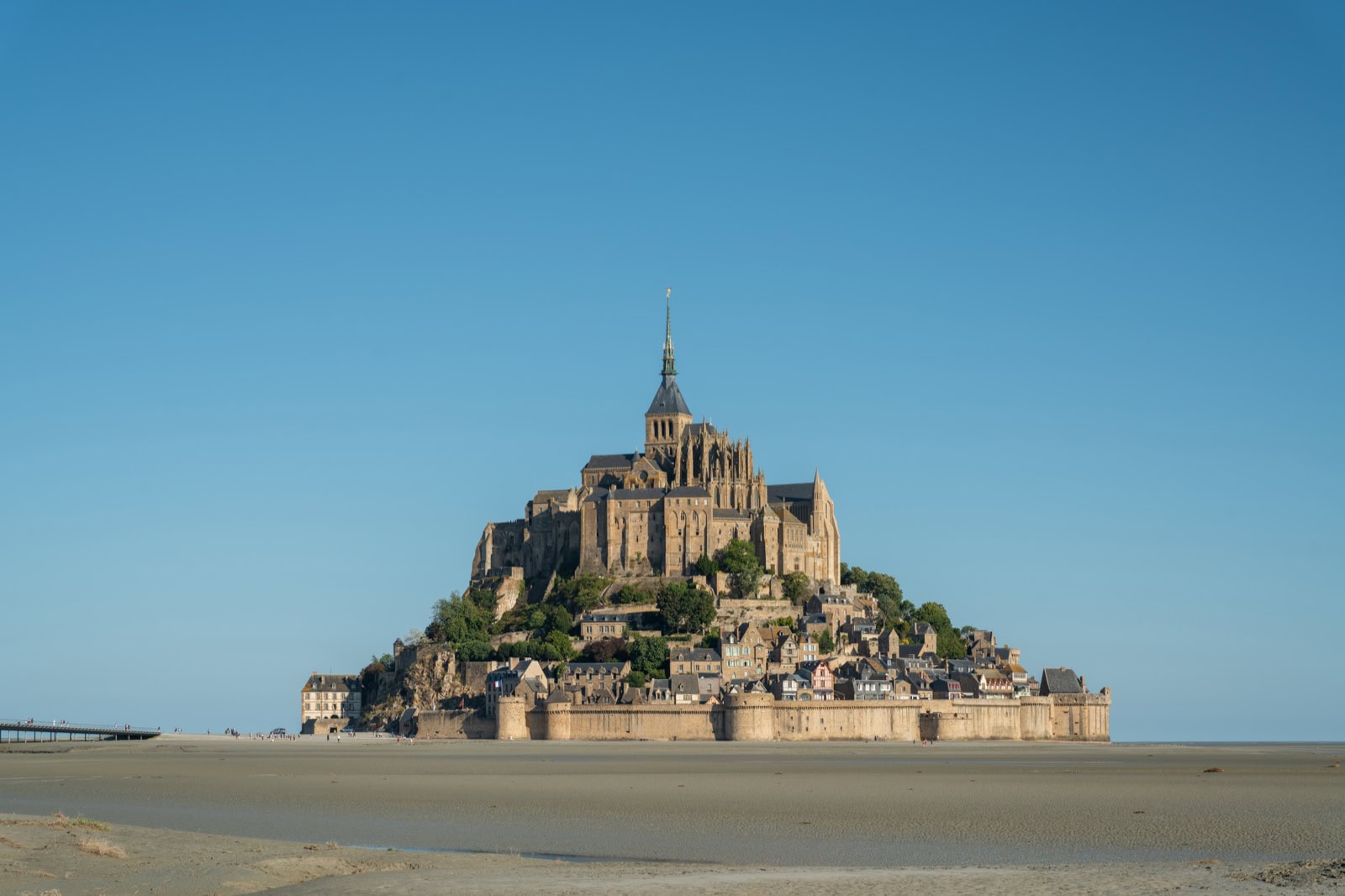
If you don’t have a permit (or don’t fancy the heights), Observation Point via the East Mesa Trail is equally beautiful and far less nerve-wracking — it’s 6.5 miles, but without any exposed sections.

Day 6: The Narrows — a hike through the riverbed of the Virgin River. You wade through the water between towering rock walls hundreds of metres high. It’s magical. Hire neoprene socks and walking poles from one of the shops in Springdale ($25–30) — you’ll need them. In the afternoon, walk the Canyon Overlook Trail (1 mile, easy, fantastic views) and drive through the tunnel along the Zion-Mt. Carmel Highway.

Where to eat: Springdale (the little town at the park entrance) has surprisingly good restaurants. Oscar’s Café — huge portions, Mexican food, brilliant breakfasts. Bit & Spur — creative southwestern cuisine, great for an evening meal with a beer.

Where to stay near Zion National Park

Stay in Springdale — it’s right at the park entrance and you take the shuttle bus from here (you can’t drive into the canyon). Cable Mountain Lodge has lovely views and a pool, or try La Quinta Inn. For camping in the park: Watchman Campground ($20/night, reservation required).

Day 7. Bryce Canyon National Park

Amphitheatre of rock towers in Bryce Canyon

It’s about 1.5 hours from Zion to Bryce Canyon and honestly — Bryce surprised us more than anything else on the trip. Those thousands of orange hoodoos (rock pillars) look like a frozen army of sentinels. At sunrise, when the entire amphitheatre lights up in shades of orange and pink, we both stood there absolutely gobsmacked.

Arrive at Sunrise Point while it’s still dark (yes, that means a 5 am wake-up, but it’s SO worth it). Then walk down the Navajo Loop + Queen’s Garden Trail (2.9 miles, moderately challenging, but doable for anyone). You walk right among the hoodoos and it’s a completely different experience than looking from above.

In the afternoon, drive the Scenic Drive with stops at the viewpoints — Inspiration Point, Bryce Point and Natural Bridge are must-sees.

Where to eat: Options in Bryce Canyon are limited. Bryce Canyon Pines (on the road from Tropic) has surprisingly good homemade pies, otherwise you’re better off packing a picnic — the park has beautiful spots to sit and eat.

💡 TIP: Bryce Canyon sits at 2,400 m (8,000 ft) elevation — even in summer, mornings can be around 5 °C (41 °F). Bring a warm layer! For help choosing the right hiking boots, check out our guide.
Where to stay near Bryce Canyon

The little town of Tropic (15 min from the park) is more affordable than staying right at the park entrance. Bryce Canyon Grand Hotel is a solid choice. If you want to camp, North Campground right inside the park is fantastic ($20/night).

Day 8. Page — Antelope Canyon and Horseshoe Bend

Horseshoe Bend meander near the town of Page
Photo: Charles Wang, CC BY-SA 4.0, Wikimedia Commons

It’s about 2.5 hours from Bryce to Page through gorgeous scenery. Page is a small town, but the concentration of jaw-dropping views per square mile here is unbeatable.

In the morning, head to Upper Antelope Canyon — that famous slot canyon where shafts of light stream down from above and paint the sandstone walls in surreal colours. Entry is by guided tour only and you MUST book in advance (tours cost $50–90/person). Alternatively, Lower Antelope Canyon is less crowded and in our opinion just as beautiful.

In the afternoon (ideally an hour before sunset), make your way to Horseshoe Bend — the iconic horseshoe-shaped meander of the Colorado River, 300 metres (1,000 ft) below you. It’s a 0.75-mile walk from the car park. Entry $10.

If you have time, drive out to Lake Powell — a huge turquoise lake in the middle of the desert. You can hire a kayak or simply go for a swim.

Where to eat: El Tapatio — surprisingly authentic Mexican restaurant. Big John’s Texas BBQ — if you love American BBQ, this is the place.

Where to stay in Page

Page has a range of motels and hotels in the $70–150/night bracket. Hyatt Place Page/Lake Powell is newer and comfortable. For a budget option, try Rodeway Inn.

Day 9–10. Grand Canyon National Park

Grand Canyon panorama

It’s about 2.5 hours from Page to the Grand Canyon (South Rim) and this is the stop that drives so many people to do a west coast USA road trip in the first place. And I get it. The Grand Canyon is simply… grand. 😅 No photo, no video can prepare you for how it feels to stand on the edge and stare into a chasm 1.6 km (a mile) deep, carved by the Colorado River over millions of years.

Day 9: Arrive at the South Rim ideally for sunrise — Mather Point or Yavapai Point are the best viewpoints. In the morning, walk the Rim Trail (flat, along the edge, walk as much or as little as you like). In the afternoon, head down the Bright Angel Trail — you don’t have to go all the way to the river (that’s a full day effort), but even 2–3 miles down and back gives you a sense of the canyon’s scale. Be warned — going down is easy, coming back up is another story!
Day 10: Desert View Drive — a 25-mile drive along the canyon rim with plenty of viewpoints. Stop at Grandview Point, Moran Point and Desert View Watchtower (a historic stone tower with 360° views). In the afternoon, you have time to set off towards Monument Valley.

Where to eat: Options in the park are limited. El Tovar Dining Room in the historic El Tovar Hotel is the best restaurant in the park — book ahead! For a budget option, try Bright Angel Lodge or pack a picnic.

💡 TIP: For more on the Grand Canyon, check out our article about American national parks — you’ll find tips that apply to all parks.

Where to stay near the Grand Canyon

Accommodation inside the park (El Tovar, Bright Angel Lodge, Maswik Lodge) is the most convenient, but expensive ($150–400/night) and sells out months in advance. The little town of Tusayan (10 min from the entrance) has motels for $80–150/night. Best Western Premier Grand Canyon Squire Inn is a decent choice.

Day 11. Monument Valley

Rock buttes in Monument Valley
Photo: King of Hearts, CC BY-SA 4.0, Wikimedia Commons

It’s about 3 hours from the Grand Canyon to Monument Valley and when you see those red buttes rising from the flat desert, you’ll feel like you’ve driven straight into a Western. Because this is exactly where those Westerns were filmed.

Monument Valley is on Navajo Nation land and entry is $8/person (no, the America the Beautiful Pass doesn’t work here). You can drive the Valley Drive — a 17-mile unpaved loop between the monuments. The road is bumpy, but manageable in an SUV (I wouldn’t recommend it in a saloon car).

For a deeper experience, we highly recommend a tour with a Navajo guide — you’ll get access to places you can’t visit on your own, and hear stories about this sacred land. Tours cost $50–80/person.

Sunset from the The View Hotel terrace is probably the most photogenic moment of the entire road trip. Those red buttes against the orange sky — it’s a classic, but it just works.

Where to eat: The View Restaurant at the hotel serves Navajo cuisine with a view. Try the Navajo Taco (frybread with beans, meat and cheese) — it’s a local speciality and we absolutely loved it.

Where to stay in Monument Valley

The View Hotel is the only accommodation with a direct view of the buttes and it’s worth every penny ($150–250/night). Budget alternative: Goulding’s Lodge across the road ($100–160/night) or camping right in Monument Valley ($20/night).

lukas a lucka
Lukáš and Lucie recommend
Where to stay in the western USA
6 accommodations — campgrounds, hotels and other lodging options

Day 12–13. Arches and Canyonlands National Park

Rock arch in Arches National Park

It’s about 2.5 hours from Monument Valley to Moab (the gateway to both parks). Moab is an outdoor enthusiast’s paradise — two national parks, red rock everywhere, and a vibrant little town packed with cafés and outfitters.

Day 12 — Arches National Park: Since 2022 you need a timed entry reservation (recreation.gov, $2). Arrive in the morning and tick off: Delicate Arch Trail (3 miles return, moderately challenging) — the iconic arch you know from Utah licence plates. At sunset it’s pure magic. Then Windows Section (easy, photogenic), Double Arch and Landscape Arch (the longest natural arch in the world).

Day 13 — Canyonlands National Park: The lesser-visited sibling of Arches, but in our opinion even more impressive. Head to the Island in the Sky district — Grand View Point offers a vista that rivals the Grand Canyon (but without the crowds!). Mesa Arch at sunrise is a photographer’s dream — the sun shines through the arch and bathes the canyon below in orange light.

In the afternoon, you could tackle White Rim Road (4WD and permit required) or simply enjoy the viewpoints at Upheaval Dome and Shafer Canyon.

Where to eat: Moab has a brilliant food scene. Milt’s Stop & Eat — legendary burgers and milkshakes (cash only!). Antica Forma — the best pizza in Utah, no exaggeration. Love Muffin Cafe — fantastic breakfasts.

Where to stay in Moab

Moab has everything from campsites to boutique hotels. Under Canvas Moab is a luxury glamping site outside town ($200+/night), while Hoodoo Moab is a stylish hotel ($120–180/night). For budget travellers: Lazy Lizard Hostel or BLM campsites outside town (free or $5–10).

Day 14–15. Transfer and Death Valley National Park

Sand dunes in Death Valley at sunset

It’s a long haul from Moab to Death Valley — roughly 8–9 hours. We’d recommend splitting it over two days with an overnight stop in Las Vegas (again, just for the night this time) or in the little town of Beatty on the edge of Death Valley.

Day 14: Transfer day from Moab. If you go via Vegas, just sleep there and head off early next morning. If you go via Beatty, you’ll arrive in the afternoon and can head straight into Death Valley for sunset.

Day 15 — Death Valley: This is the most extreme stop on our route. The lowest point in North America (Badwater Basin, 86 m / 282 ft below sea level), the hottest place on Earth, and — surprisingly — one of the most beautiful. Start the morning at Zabriskie Point (sunrise here is incredible), then Badwater Basin (walk across the salt flats), Artist’s Drive (colourful rock formations), Mesquite Flat Sand Dunes and Dante’s View (overlooking the entire valley).

IMPORTANT: In summer it can exceed 50 °C (122 °F) here — don’t take that lightly. Keep a full tank, carry 8+ litres of water per person and check your car’s condition. In cooler months (October–April) it’s absolutely perfect.

Where to eat: Options in Death Valley are extremely limited. The Inn at Death Valley has the only decent restaurant in the park. We recommend stocking up on supplies in Vegas.

Where to stay in Death Valley

The Ranch at Death Valley ($150–250/night) is the more affordable option inside the park. Stovepipe Wells Village is simpler but does the job ($120–180/night). Camping: Furnace Creek Campground ($22/night, October–April), and in summer opt for the higher-altitude Mesquite Spring ($14/night).

Day 16–17. Sequoia and Kings Canyon National Park

Giant sequoias in Giant Forest in Sequoia National Park

It’s about 4–5 hours from Death Valley to Sequoia and it feels like driving from Mars into Middle-earth. From the parched desert, you suddenly find yourself in dense forests filled with ancient trees that have been growing for thousands of years.

Day 16: Arrive in the afternoon and explore Giant Forest — the area with the greatest concentration of giant sequoias on the planet. General Sherman Tree is the largest tree on Earth (by volume) and standing next to it makes you feel incredibly small. The Congress Trail (2 miles, easy) takes you past more of these gigantic trees.

Day 17: In the morning, tackle Moro Rock — a short but steep climb up steps carved into the rock with views over the Great Western Divide. Then drive into Kings Canyon (the neighbouring park, same ticket) — Kings Canyon Scenic Byway is one of the most beautiful mountain roads in California. Stop at Grizzly Falls and walk the Zumwalt Meadow Trail (1.6 miles, flat, stunning).

Where to eat: The parks only have basic refreshment stands. In the little town of Three Rivers (at the entrance to Sequoia), try Ol’ Buckaroo or Antoinette’s Coffee & Goodies for breakfast.

💡 TIP: Generals Highway (the road through the park) is narrow and winding — vehicles over 22 feet can’t make it through. A regular SUV is fine, though.

Where to stay near Sequoia

Wuksachi Lodge is the only hotel inside the park ($150–250/night). In Three Rivers you’ll find motels for $80–130/night — Buckeye Tree Lodge is a popular choice. Camping: Lodgepole Campground ($22/night, reservation on recreation.gov).

Day 18–19. Yosemite National Park

Nevada Fall and Half Dome in Yosemite

It’s about 3–4 hours from Sequoia to Yosemite (via Fresno) and this is a fitting grand finale for the entire road trip. Yosemite Valley is simply iconic — enormous granite walls, waterfalls plunging hundreds of metres, and meadows where deer graze. Like a computer desktop wallpaper, except it’s real life.

Day 18: Arrive in Yosemite Valley and tick off the essentials — Yosemite Falls (one of the tallest waterfalls in North America), El Capitan (that monstrous granite wall — if you’ve got binoculars, you’ll spot climbers!), and Bridalveil Fall. In the afternoon, hike the Mirror Lake Trail (5 miles, flat) or the easier Valley View Loop. Sunset from Tunnel View is a must — it overlooks the entire valley with El Capitan and Half Dome framing the scene.

Day 19: If you’re feeling fit, the Mist Trail to Vernal Fall and Nevada Fall (5.5 miles, strenuous, lots of steps) is probably the best hike in Yosemite. You walk right through the waterfall mist — you’ll get soaked, but you’ll be grinning. In the afternoon, drive along Tioga Road (open roughly June–October) — stops at Olmsted Point and Tenaya Lake are gorgeous.

For the ambitious: Half Dome is a legendary full-day ascent (14 miles, 1,500 m / 4,800 ft elevation gain, cable section) — you need a permit and excellent fitness.

Where to eat: The Ahwahnee Dining Room (now Majestic Yosemite Hotel) — a historic dining hall with high ceilings and views of the falls. Expensive, but unforgettable. Degnan’s Kitchen in Yosemite Village does solid sandwiches and salads at reasonable prices. In Mariposa (the town near the park): 1850 Brewing Company — craft beer and great burgers.

Where to stay in Yosemite

Accommodation in Yosemite Valley needs to be booked 6–12 months in advance. Yosemite Valley Lodge ($200–350/night) and Curry Village (canvas tent cabins, $100–150/night) are the most popular. Outside the park: Mariposa or El Portal have motels for $100–180/night. Camping: Upper Pines ($26/night, recreation.gov, lottery system).

Day 20–21. San Francisco

Golden Gate Bridge in San Francisco
Photo: Frank Schulenburg, CC BY-SA 4.0, Wikimedia Commons

It’s about 3.5–4 hours from Yosemite to San Francisco and it’s a beautiful way to end the road trip. You arrive from the wilderness into one of the most beautiful cities in America — and you’ll be surprised how much you’ve missed civilisation (and how much you’ve been looking forward to it at the same time). 😄

Day 20: Walk across the Golden Gate Bridge — ideally in the morning, before the fog lifts (or right as it rolls over the bridge, which is even more magical). From there, head to Sausalito — a charming little town on the other side of the bay with views back towards SF. In the afternoon, visit Fisherman’s Wharf (touristy, but you have to see it once) and Pier 39 (sea lions!). For Chinese food, head to Chinatown — the oldest in North America.

Day 21: In the morning, drive down the famously winding Lombard Street (that iconic zigzag road), check out the Painted Ladies at Alamo Square (the colourful Victorian houses from Full House), and in the afternoon, explore the Mission District — the best street art, Mexican food and hipster coffee shops in the whole city.

If you have extra time, Alcatraz Island is a fantastic day out — the audio tour of the former prison is absolutely gripping. But you MUST buy tickets in advance, it sells out weeks ahead ($41/person, approx. €38).

Where to eat: SF is the number one foodie city. Tartine Bakery in the Mission (best bakery, queues to match), Swan Oyster Depot — legendary oyster bar (arrive before opening, there’s always a queue!), La Taqueria — the best burrito in San Francisco (many say in all of America). For dinner: Foreign Cinema in the Mission — great food with films projected on the courtyard wall.

Where to stay in San Francisco

San Francisco is an expensive city — expect $120–250/night for a standard hotel. HI San Francisco Fisherman’s Wharf is a great hostel at a reasonable price. Hotel Bohème in North Beach is a boutique classic. For better value, try staying in Oakland across the bay — it’s 15 minutes on BART and significantly cheaper.

San Francisco
San Francisco

Practical tips to wrap up

What to pack

The American West means extreme temperature swings — 40 °C (104 °F) in the desert during the day, 5 °C (41 °F) in the mountains at night. Layering is key. Check out our detailed guide on packing into carry-on luggage — yes, even for 3 weeks it can be done.

Flights

Search for cheap flights on comparison sites like Skyscanner or Google Flights. One-way tickets (LA → SF or vice versa) are often cheaper than a return to the same city. From London, direct flights to LA are available with British Airways and Virgin Atlantic, while budget options with a stop can often be found on Norwegian or through Icelandair via Reykjavik.

Car rental

Lukáš and I have had consistently good experiences with DiscoverCars, which we use all over the world. For the west coast USA, we recommend an SUV with full coverage insurance.

Insurance

For a three-week trip to the USA, don’t skimp on travel insurance — healthcare in America is astronomically expensive. For longer trips, we go with SafetyWingread our review.

Mobile data

An eSIM from Holafly works brilliantly in the USA — our review. Signal in national parks is limited, but for navigation, download offline Google Maps before you go!

Read next: more articles about the west coast USA

Want a deeper dive into some of the parks on this route? Here are our detailed guides to individual national parks:

Frequently asked questions about a west coast USA road trip

Before you set off, here are answers to the questions our readers ask most often about a west coast USA road trip.

How much does a west coast USA road trip cost?

It depends on your travel style. For two people over 21 days, expect to spend €3,900–10,000 total (€1,950–5,000 per person) including flights, car, accommodation, food and activities. A mid-range option mixing camping and motels works out at around €3,125 per person.

How many days do you need for a west coast USA road trip?

The absolute minimum is 14 days, but you’ll be rushing. Ideally allow 18–21 days — you’ll have time for hikes, rest and spontaneous detours. With 14 days, we’d suggest skipping 1–2 parks (e.g. Sequoia or Canyonlands).

What car should you rent?

An SUV or crossover with high ground clearance. Some roads (Monument Valley, Death Valley) are unpaved or sandy. You can manage with a compact car, but you’ll be nervous and won’t be able to access everywhere.

Do I need an ESTA or a visa for the USA?

British citizens need an ESTA (Electronic System for Travel Authorization) — fill in the online form at least 72 hours before departure. It costs $21 (approx. £17) and is valid for two years. Only apply through the official website esta.cbp.dhs.gov — there are plenty of scam sites that charge much more.

Is the west coast USA safe?

Yes, the west coast USA is very safe for tourists. The biggest “dangers” come from nature — dehydration in the desert, storms in the canyons, wildlife. Always carry plenty of water, check the weather forecast and follow park rules. In the cities (LA, SF, Vegas), use normal urban common sense — don’t leave valuables in the car.

When should I book accommodation and activities?

As early as possible. Accommodation in national parks (especially Yosemite and Grand Canyon) sells out 6–12 months in advance. Book your Angels Landing permit and Antelope Canyon tour 3–4 months ahead. Motels outside the parks can be booked last-minute, but during peak season (June–August) it’s better to book ahead too.

Can I do a west coast USA road trip in winter?

Partly, yes, but with limitations. Tioga Road in Yosemite is usually closed from November to May, Bryce Canyon can be under snow (though it looks stunning!), and some campgrounds are shut. On the other hand, desert parks (Joshua Tree, Death Valley, Grand Canyon) are pleasant temperature-wise in winter and blissfully crowd-free. If you go in winter, skip Sequoia and Yosemite (or just visit Yosemite Valley, which is accessible year-round).

Tips and Tricks for Your Vacation

Don’t Overpay for Flights

Search for flights on Kayak. It’s our favorite search engine because it scans the websites of all airlines and always finds the cheapest connection.

Book Your Accommodation Smartly

The best experiences we’ve had when looking for accommodation (from Alaska to Morocco) are with Booking.com, where hotels, apartments, and entire houses are usually the cheapest and most widely available.

Don’t Forget Travel Insurance

Good travel insurance will protect you against illness, accidents, theft, or flight cancellations. We’ve had a few hospital visits abroad, so we know how important it is to have proper insurance arranged.

Where we insure ourselves: SafetyWing (best for everyone) and TrueTraveller (for extra-long trips).

Why don’t we recommend any Czech insurance company? Because they have too many restrictions. They set limits on the number of days abroad, travel insurance via a credit card often requires you to pay medical expenses only with that card, and they frequently limit the number of returns to the Czech Republic.

Find the Best Experiences

Get Your Guide is a huge online marketplace where you can book guided walks, trips, skip-the-line tickets, tours, and much more. We always find some extra fun there!