You’re standing on the edge of a cliff and below you opens up something your brain simply refuses to process. Thousands of orange, pink and white spires — hoodoos — jut out of the ground like an army of petrified sentinels, and you feel like you’ve accidentally stepped onto another planet. That’s exactly what our first moment in Bryce Canyon Utah felt like, and it’s exactly how everyone feels when they arrive. Nobody is prepared for this, even if you’ve seen hundreds of photos. 😅
Bryce Canyon National Park in Utah is one of those places that makes you put down your phone and simply stare. We visited twice with Lukáš — the first time as a stop on a Utah road trip, the second time deliberately, because we knew one day wasn’t enough. And we were right. Bryce Canyon isn’t just a viewpoint from a car park — it’s a place where you want to descend among the hoodoos, where you want to watch both sunrise and sunset, and where you want to lie on your back at night gazing at the Milky Way, because you’ve never seen a sky this clear in your life.
In this article, you’ll find a complete guide to Bryce Canyon National Park Utah — from 15 best things to see and do, through practical advice on accommodation and getting there, to food tips and answers to the questions you’ll want to know. I’ll tell you the best time to visit, how much it all costs, whether you can combine Bryce Canyon with Zion, and why this place is so famous.
TL;DR
- Bryce Canyon National Park sits in southern Utah and is famous for its hoodoos — thousands of slender rock spires unlike anything else on Earth.
- Best time to visit is May–June and September–October. Summer (July–August) is packed with tourists and afternoon storms; winter is magical but demands preparation.
- One to two days is enough for Bryce Canyon, but if you want to hike more trails and catch both sunrise and sunset, two days are ideal.
- The best trail is the Navajo Loop + Queen’s Garden combo — it takes about 2–3 hours and is an absolute must-do.
- Bryce is only 1.5 hours from Zion National Park — both parks combine perfectly on one road trip.
- From Las Vegas, it’s roughly a 4-hour drive — making it an ideal stop on a Utah national parks road trip.
- Entrance fee is $35 (about £28) per vehicle for 7 days, or you can use the America the Beautiful Pass for $80 (about £64), valid for all US national parks for a full year.
- Accommodation inside the park is limited and pricey — most visitors stay in the small town of Bryce Canyon City, where hotels start from around €90 per night.
- The night sky at Bryce Canyon is among the clearest in North America — the park runs regular stargazing programmes with rangers.
- In winter, Bryce is blanketed in snow and the hoodoos look like something out of a fairy tale — with barely any tourists around.
The full destination guide: Utah — guide and what to see
When to visit Bryce Canyon and how weather changes throughout the year
The weather at Bryce Canyon can catch even seasoned travellers off guard. The park sits at an elevation of over 2,400 metres, which is significantly higher than neighbouring Zion, meaning it’s considerably cooler than you’d expect in Utah. Let’s walk through each season so you know what to pack and what to expect.
Spring (April–May): Our favourite time
May is probably our favourite month to visit Bryce Canyon. Daytime temperatures hover around 15–20 °C, there are far fewer tourists than in summer, and nature is waking up. Watch out for April though — snow can still fall and some trails may be partially closed or slippery. If you’re visiting in April, bring proper hiking boots and plenty of layers.
Summer (June–August): Crowds and afternoon storms
Summer is peak season and the park is heaving. July and August bring afternoon monsoon storms — sunshine in the morning, clouds rolling in around 2 pm, then a downpour. That can be a problem if you’re planning a longer hike. On the other hand, storms above the hoodoos look absolutely dramatic. Daytime temperatures sit around 25–28 °C, but at night they can easily drop to 5 °C. Yes, you’ll need a fleece at night in Utah in summer. 😅
Autumn (September–October): Fewer people, beautiful colours
September and early October are fantastic. Temperatures around 15–22 °C, minimal rain, gorgeous autumn colours in the surrounding forests, and significantly fewer visitors than in summer. If you have flexibility, this is the sweet spot.
Winter (November–March): Magical but demanding
Now for the best-kept secret — Bryce Canyon in winter. Orange hoodoos dusted with snow are one of the most photogenic sights you’ll see anywhere in the USA. Temperatures plunge well below zero (commonly -10 to -15 °C at night), but if you dress properly, it’s absolutely worth it. The main road and viewpoints stay open, though some trails may require snowshoes or micro spikes. And best of all — you’ll practically have the place to yourself.
How to get to Bryce Canyon
Bryce Canyon National Park sits in southern Utah, relatively far from major cities, but perfectly connected to the classic road trip routes across the American Southwest.
By car (the only sensible option)
You simply can’t reach Bryce Canyon without a car — there’s no public transport. If you’re flying from the UK, the nearest airports with good connections are:
- Las Vegas (LAS) — about 430 km, roughly a 4-hour drive. The most popular starting point for road trips. “Is Bryce Canyon close to Vegas?” — well, by American standards, 4 hours behind the wheel is a breeze. 😁
- Salt Lake City (SLC) — about 435 km, roughly 4.5 hours. A great option if you want to drive through Utah from north to south.
- St. George (SGU) — about 210 km, roughly 2.5 hours. A smaller airport, but the closest one.
We’ve had consistently great experiences with DiscoverCars, which we use all around the world — it compares prices from different rental companies and the insurance options are clear and straightforward.
Good to know: If you’re driving from Las Vegas, you’ll pass right through Zion National Park, so both parks combine perfectly (more on that in tip #15).
Shuttle in the park
From May to October, a free shuttle bus operates within the park, stopping at all the major viewpoints. In summer, we highly recommend using it — the car parks around Bryce Amphitheater fill up completely by 9 am. The shuttle runs every 10–15 minutes and departs from the Bryce Canyon Visitor Center.
Where to stay and how much Bryce Canyon costs
Accommodation around Bryce Canyon is fairly straightforward — you essentially have three options that differ in price and comfort. Generally, the closer to the park, the pricier, and during peak season (June–September) you’ll need to book well in advance. Park entrance is $35 (about £28) per vehicle for 7 days. If you’re road-tripping through multiple parks, the America the Beautiful Pass at $80 (about £64) is brilliant value — it covers all US national parks for a full year.
Inside the park: The Lodge at Bryce Canyon
The only accommodation inside the park is the historic The Lodge at Bryce Canyon, built in the 1920s. Rooms range from $250 to $350 per night (roughly €230–€320), and during the season they sell out months in advance. It’s a beautiful place with real character, but at those prices it’s not for everyone.
Bryce Canyon City: The most practical choice
The small town of Bryce Canyon City (sometimes listed simply as Bryce) sits right at the park entrance and offers the widest selection of accommodation. Prices range from about $100 (€90) for a basic motel to $200–$300 (€180–€275) for a nicer hotel. We recommend Best Western Plus Ruby’s Inn — it’s the main hub in Bryce Canyon City, with not just a hotel but also a restaurant, souvenir shop and bike rental.
Tropic and Panguitch: Budget-friendly alternatives
If you’re looking to save money, head to the small town of Tropic (15 minutes from the park) or Panguitch (40 minutes). Accommodation prices drop to $70–$120 (€65–€110) per night and the atmosphere is far more authentic — small Utah towns with all the charm that comes with them.
Camping
There are two campgrounds right inside the park: North Campground (open year-round, most sites reservable) and Sunset Campground (seasonal, May–October). The cost is $30 (about €27) per night. In summer, pitches vanish within minutes of reservations opening on recreation.gov, so book as soon as they become available (usually 6 months ahead).
How much does a weekend in Bryce Canyon cost for two?
Here’s a rough budget for 2 days / 2 nights for two people:
- Accommodation (2 nights in Bryce Canyon City): $200–$400 (€180–€365)
- Park entrance: $35 (€32) per vehicle
- Petrol (from Las Vegas and back): approx. $80–$100 (€73–€90)
- Food (restaurants + snacks): $80–$150 (€73–€137)
- Total for two for a weekend: approx. $400–$700 (€365–€640)
If you camp and cook for yourselves, you can do it for significantly less.
Bryce Canyon: 15 best things to see and do
Now for the main event — let’s dive into 15 things to see and do in Bryce Canyon National Park. From iconic viewpoints and the best trails to night-time stargazing. I’ve ordered the tips the way I’d recommend exploring the park — start with the viewpoints, then head down among the hoodoos, and save the most magical experiences for last.
1. Bryce Amphitheater — the heart of the park
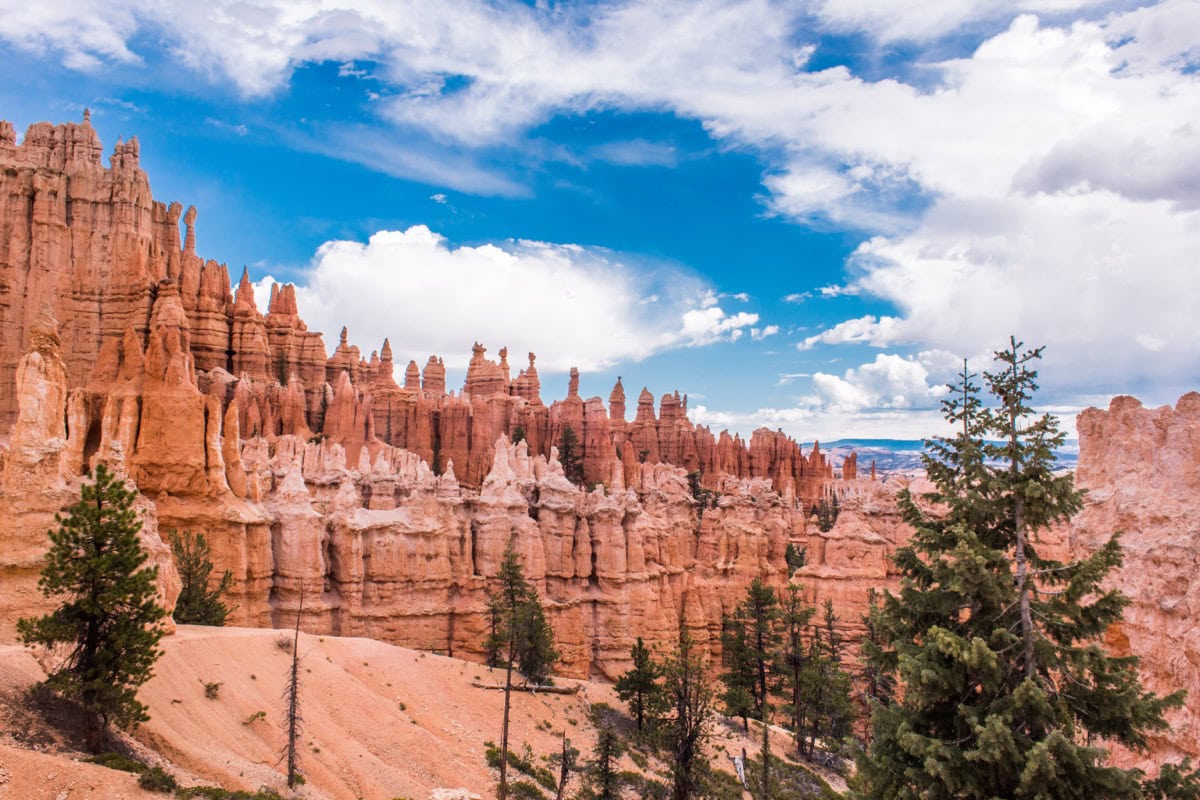
Let’s start with the most important bit. Bryce Amphitheater is a massive natural amphitheatre (technically an erosional basin) that holds the largest concentration of hoodoos on the planet. This is the spot you see in 90% of Bryce Canyon photos, and it’s the reason people come here.
The amphitheatre has four main viewpoints — Sunrise Point, Sunset Point, Inspiration Point and Bryce Point — all accessible from the main road, usually just a few steps from the car park. If you only have an hour in the park (which I wouldn’t recommend, but I understand it happens), walk at least these four viewpoints.
A lovely, easy-going path called the Rim Trail connects the viewpoints. It’s largely paved and even pushchair-accessible. The full trail is about 9 km, but the prettiest section runs between Sunrise and Sunset Point (roughly 800 metres), where the amphitheatre stretches out right before your eyes.
2. Sunrise Point — the best sunrise of your life
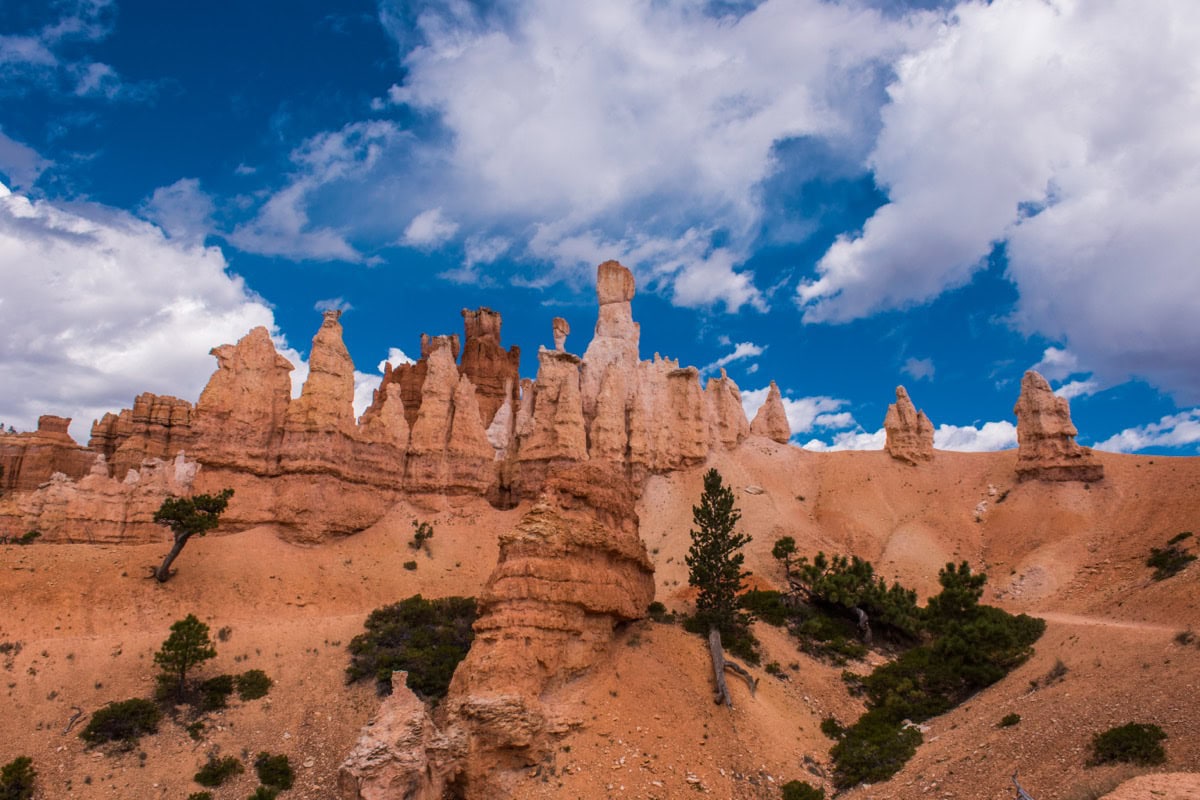
The name doesn’t lie. Sunrise Point is where you want to be when the first rays of sunlight hit the hoodoos and the entire amphitheatre lights up in shades of orange and pink. We set our alarm for 5 am for this — and didn’t regret a single second.
Practical tip: Arrive at least 30 minutes before sunrise to grab a good spot. In summer that means being here around 5:30 am, in autumn around 6:30 am. Bring warm clothing — even in summer it’s around 5 °C in the early morning and it’s windy.
Sunrise Point is also the starting point for Queen’s Garden Trail, so after the sunrise you can head straight down (more on that in tip #5).
3. Sunset Point — the iconic view of Thor’s Hammer
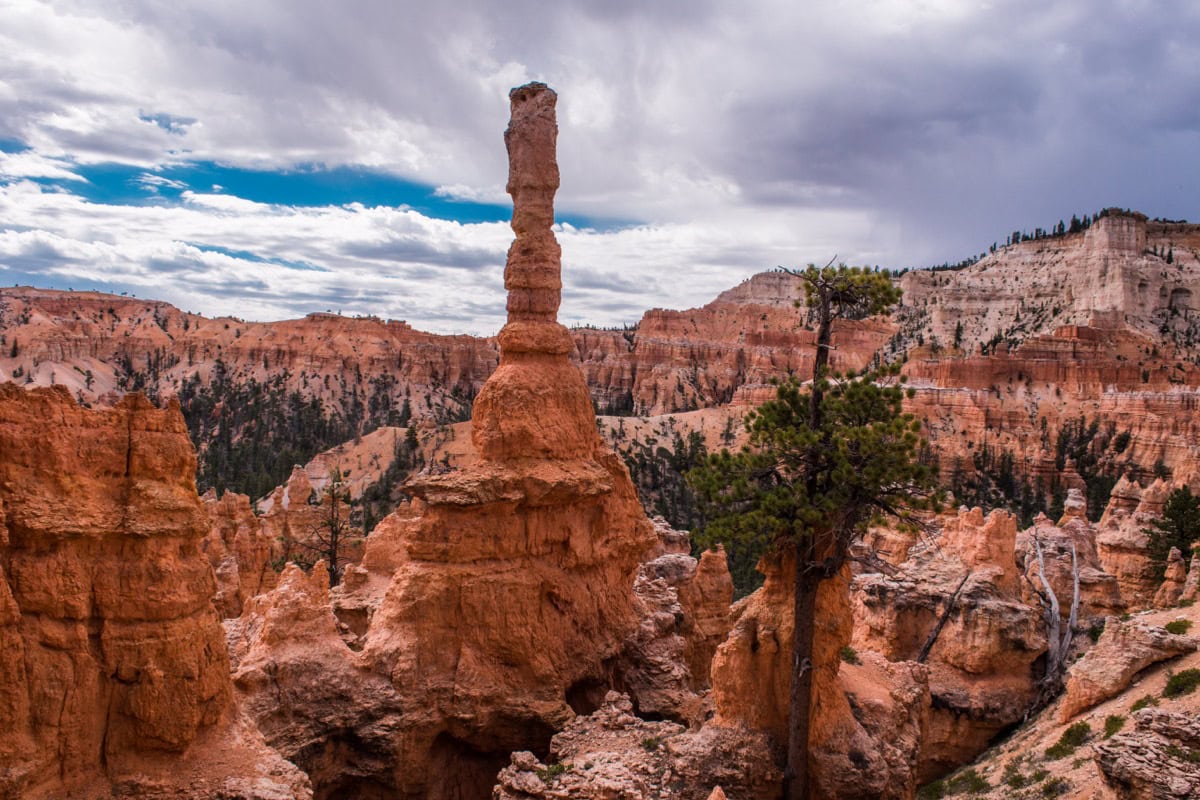
Sunset Point is probably the most photographed spot in the entire park. From here you look straight at Thor’s Hammer — a hoodoo shaped like a giant hammer that has become the unofficial symbol of Bryce Canyon. Sunset from here is gorgeous, but honestly? Sunset Point is beautiful at any time of day.
This viewpoint is also where the Navajo Loop Trail begins — the most popular trail in the park (more in tip #4). The car park at Sunset Point is a nightmare in summer — seriously, take the shuttle.
Fun fact: Thor’s Hammer looks like it could topple at any moment, but geologists say it’s been standing for tens of thousands of years. The harder upper layer protects the softer rock beneath from erosion. Nature really is an incredible architect.
4. Navajo Loop Trail — descend into the hoodoos
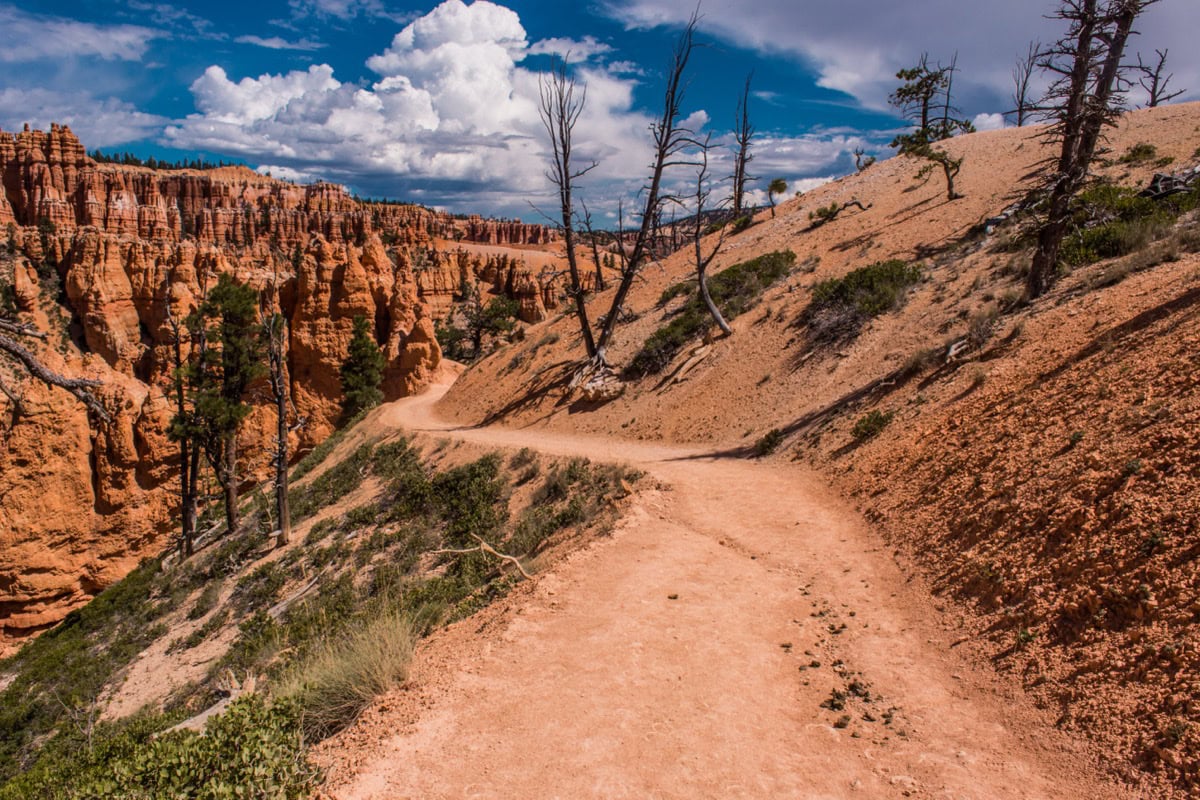
This is an absolute must-do. Navajo Loop Trail is short (about 2.2 km) but intense — it takes you from the rim of the amphitheatre right down among the hoodoos. Suddenly you’re not looking down at them — you’re surrounded by them, with spires towering tens of metres above your head, and you feel like you’ve shrunk.
The trail descends via steep switchbacks (about 170 metres of elevation change) and passes through the narrow Wall Street section — a slot canyon so tight that sunlight barely reaches you. In the middle stand two enormous Douglas firs that look completely out of place. It’s a magical spot.
Important note: The trail goes steeply down and then steeply back up. Remember you’re at over 2,400 metres elevation, so the ascent will take longer than you expect and will leave you breathless (literally). Bring water and allow 1–1.5 hours for the full loop.
Heads up: The Wall Street section is often closed in winter and spring due to ice. Always check the current trail conditions at the Bryce Canyon Visitor Center.
5. Queen’s Garden Trail — the most beautiful trail in the park
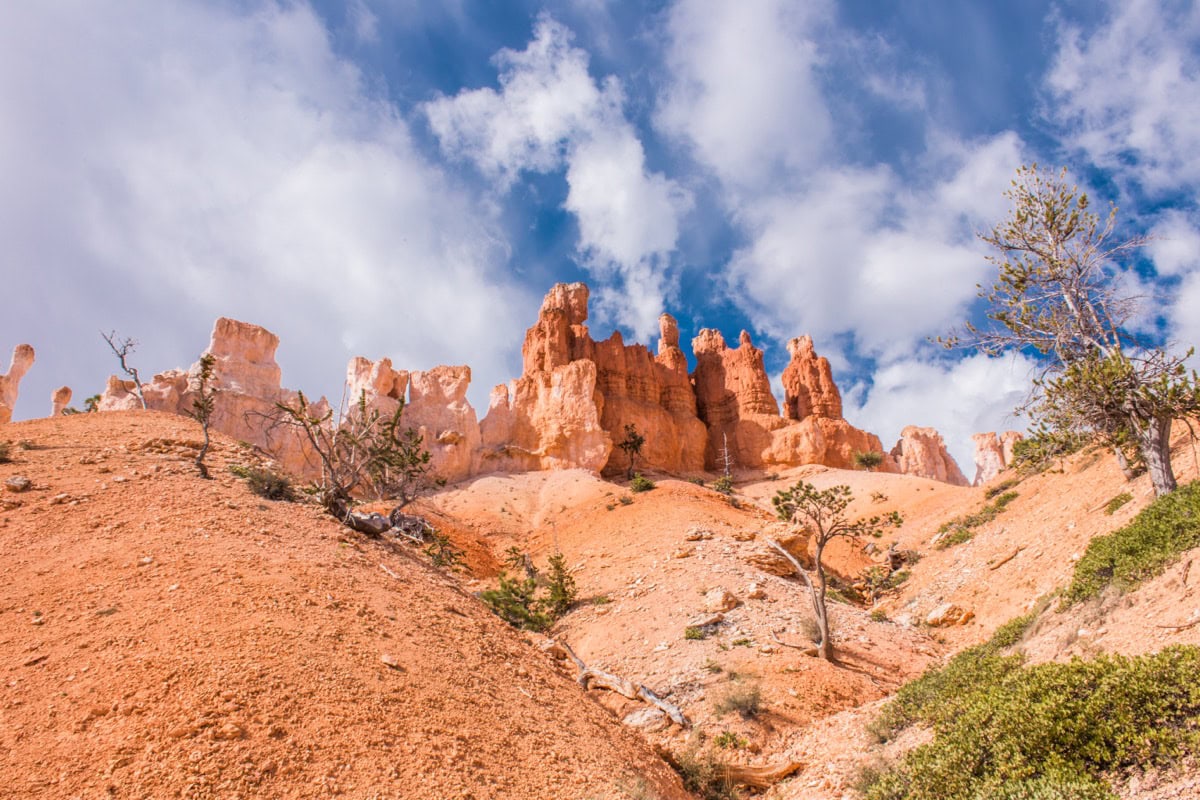
If Navajo Loop is the most popular, Queen’s Garden Trail is, in my opinion, the most beautiful. The descent from Sunrise Point is gentler than Navajo Loop, and the trail leads you through a landscape that feels like gardens full of rock sculptures. It gets its name from a rock formation that supposedly resembles Queen Victoria (if you squint and use a healthy dose of imagination 😁).
Our #1 tip: Combine both trails — Navajo Loop + Queen’s Garden. Descend via Navajo Loop (from Sunset Point), walk the connecting trail at the bottom, and climb back up via Queen’s Garden to Sunrise Point. About 4.5 km total, 170 m elevation gain, 2–3 hours. It’s the best hike in the entire park, and anyone with a reasonable level of fitness can handle it.
6. Inspiration Point — a viewpoint that earned its name
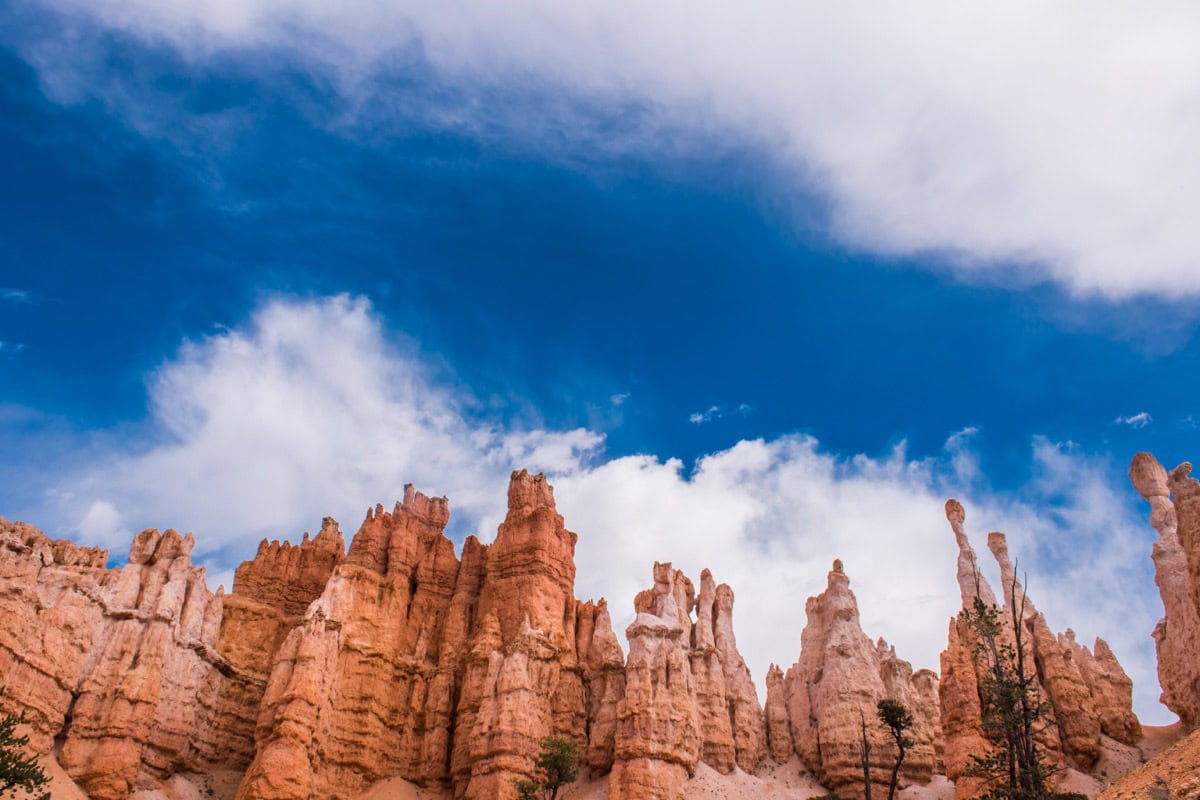
Of the four viewpoints overlooking Bryce Amphitheater, Inspiration Point is arguably the most dramatic. You’re standing higher than at Sunrise and Sunset Point, giving you a wider panorama of the entire amphitheatre — and when you peer into the depths, you begin to grasp the sheer scale of what nature has sculpted over millions of years.
Inspiration Point has three levels — lower, middle and upper. Most tourists stay at the lower level (right next to the car park), but if you walk just a few dozen metres up to the upper level, you’ll get a much better view with far fewer people around.
7. Bryce Point — the best panorama of the amphitheatre
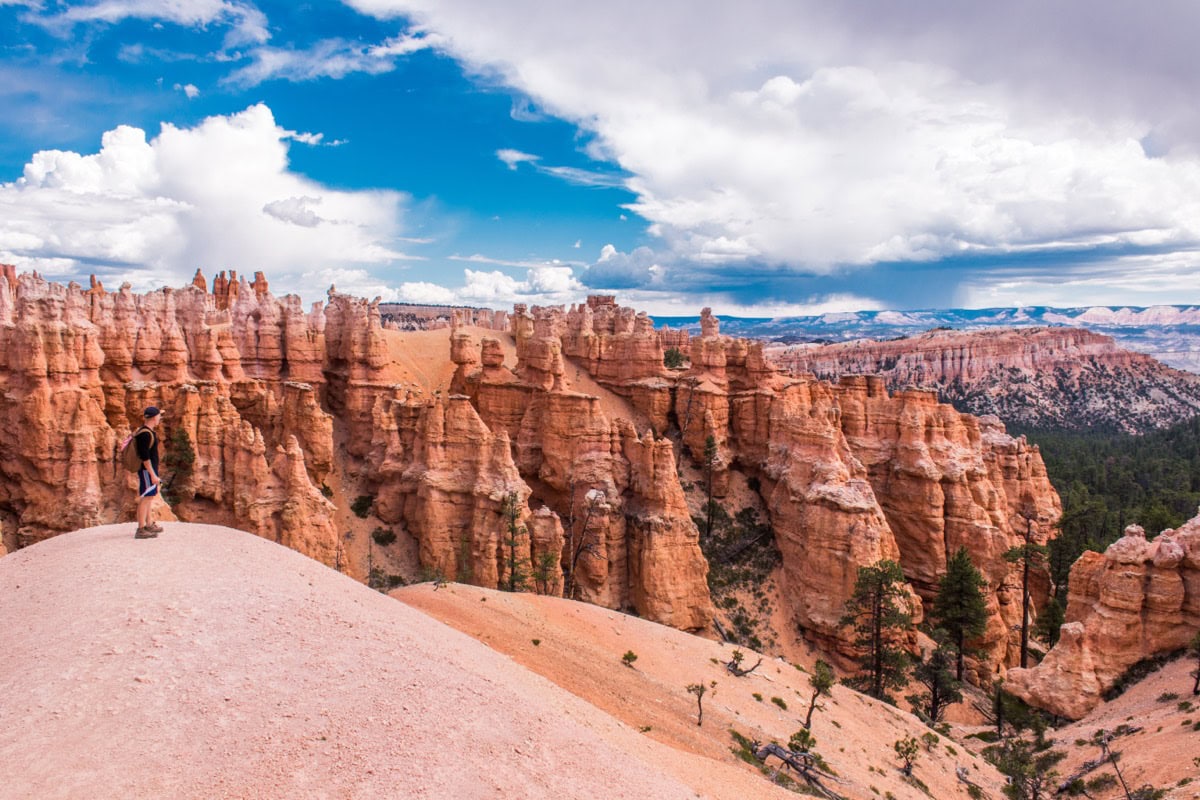
Bryce Point sits at the southern end of the amphitheatre and offers what is probably the most complete panoramic view of the entire Bryce Amphitheater. It’s also the trailhead for the Peekaboo Loop Trail (tip #8) and one of the best spots for sunset — fewer people than at Sunset Point and more dramatic light.
From Bryce Point you can also see beyond the amphitheatre — to the southwest towards the so-called Sinking Ship (a rock formation that looks like a sinking vessel) and on a clear day you can see over 150 km into the distance. Come here in the late afternoon, when shadows lengthen and the hoodoos shift from yellow through orange to deep crimson.
8. Peekaboo Loop Trail — for those who want more
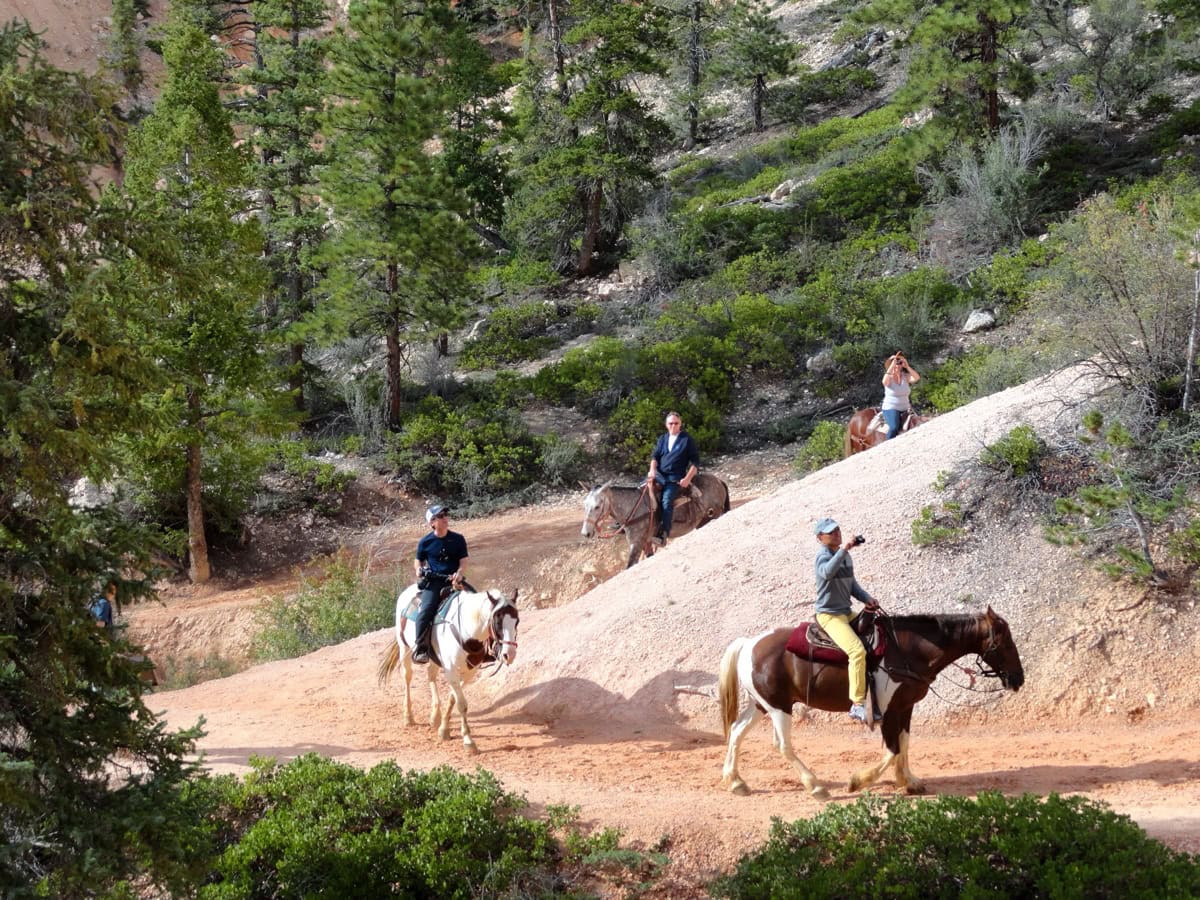
If Navajo Loop + Queen’s Garden isn’t enough and you’re craving a proper hike, Peekaboo Loop is for you. It’s an 8.8 km loop with 460 metres of elevation gain that takes you through the most remote part of the amphitheatre. You’ll pass through narrow tunnels carved into the rock, duck under natural arches, and see formations that are completely invisible from the viewpoints above.
The trail is tougher and longer (3–4 hours), but the reward is encountering a fraction of the people compared to Navajo Loop. On some sections we were completely alone, and that was in June. Note — you share this trail with horses and mules (yes, you can go on horseback rides in Bryce Canyon!), so you’ll occasionally need to step aside and let them pass.
9. Scenic Drive — 29 km of wonder
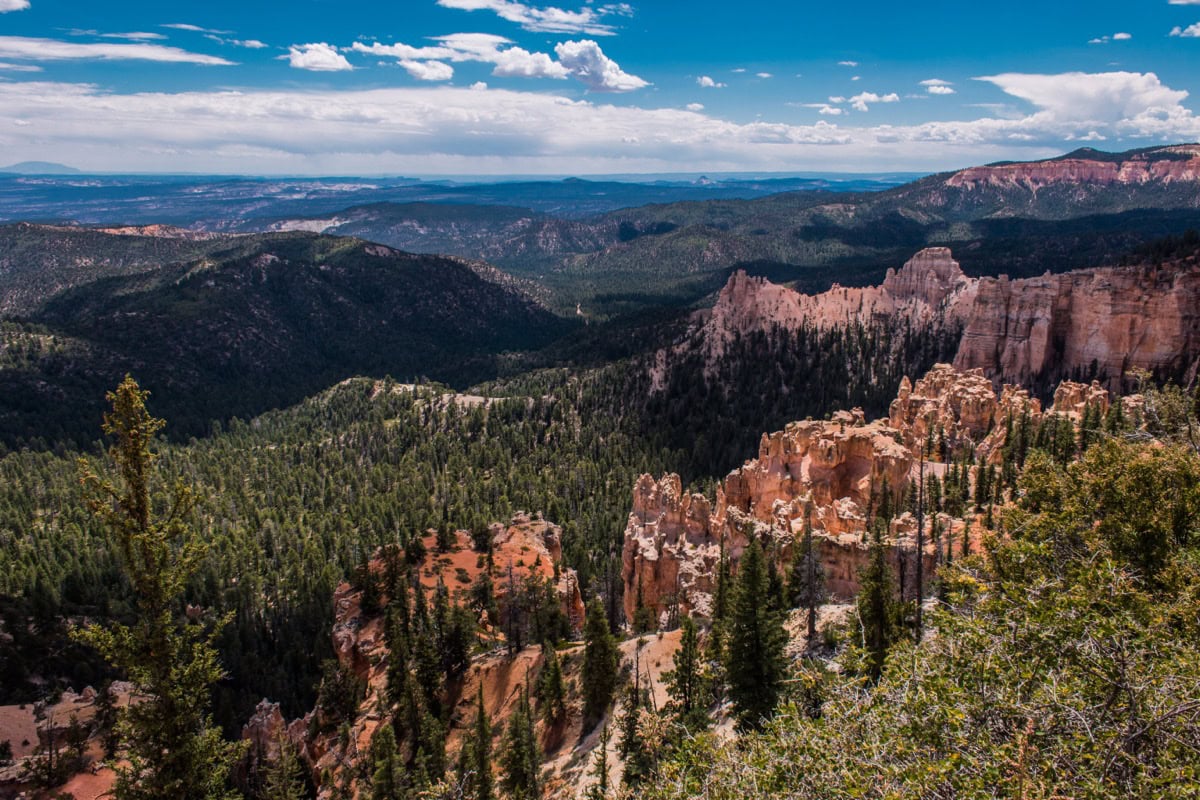
The park’s main road, Bryce Canyon Scenic Drive, runs 29 km from the park entrance all the way to Rainbow Point at the southern end. Along the way you’ll pass 13 viewpoints, each offering a different perspective on the park — from the amphitheatre in the north to densely forested plateaus in the south.
Our recommendation: Drive to the end first (Rainbow Point) and stop at viewpoints on the way back. Why? The car parks at viewpoints are on the right-hand side when heading back north, so you won’t have to make U-turns. Plus, most tourists drive from the north and turn around at the first few viewpoints, so the southern part is much quieter.
Don’t miss Natural Bridge (a large rock arch visible right from the car park — technically it’s an arch, not a bridge, but nobody seems too bothered 😅) and Paria View, which offers a gorgeous view of a meandering stream far below you.
10. Stargazing — a night sky you’ll never forget
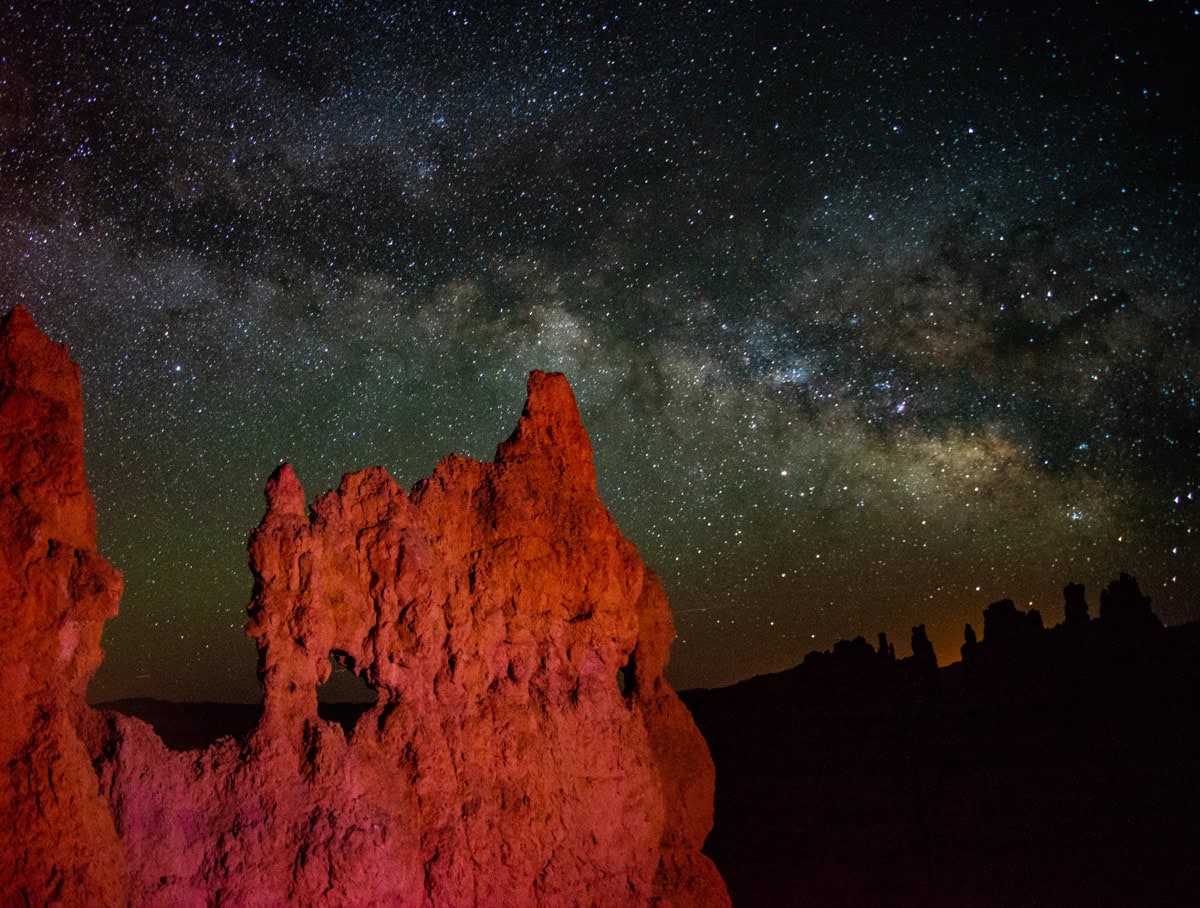
This is what makes Bryce Canyon truly exceptional. Since 2019, the park has been a certified International Dark Sky Park, boasting one of the clearest night skies in North America. On a moonless night you can see over 7,500 stars with the naked eye — for comparison, from London you might spot about 200.
From May to September, the park runs regular Astronomy Ranger Programs (usually on Fridays and Saturdays), where a ranger uses professional telescopes to show you planets, nebulae, galaxies and star clusters. It’s free and absolutely fantastic — arrive early, as places are limited (typically 50–100 people).
Even without the programme, all you need to do is step outside your hotel, find a dark spot (the Bryce Point car park works perfectly) and lie down. The Milky Way is so bright it casts shadows. We lay there with Lukáš for about an hour, just staring. One of those moments you remember for the rest of your life. ☺️
11. Mossy Cave Trail — a hidden gem most tourists miss
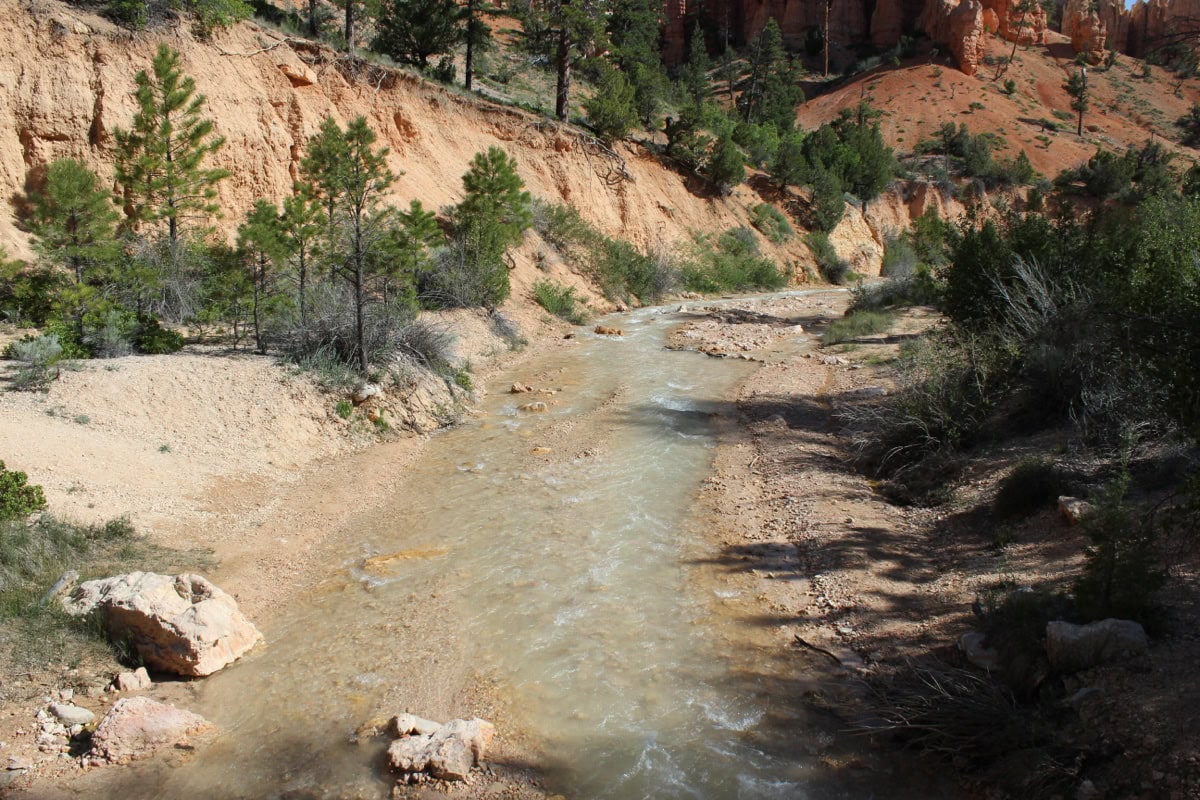
This short trail (1.3 km return) is the only one in the park you can’t reach from the main Scenic Drive — the access is from Highway 12 on the eastern side. And that’s precisely why it’s so much quieter here.
The trail follows a stream to a small moss-covered cave (hence the name) and a surprisingly large waterfall. It’s an easy hike, suitable for families with children, taking about 30–45 minutes. It’s particularly beautiful in spring when the waterfall flows at full force, or in winter when it freezes into spectacular icicles.
12. Fairyland Loop — a full-day adventure away from the crowds
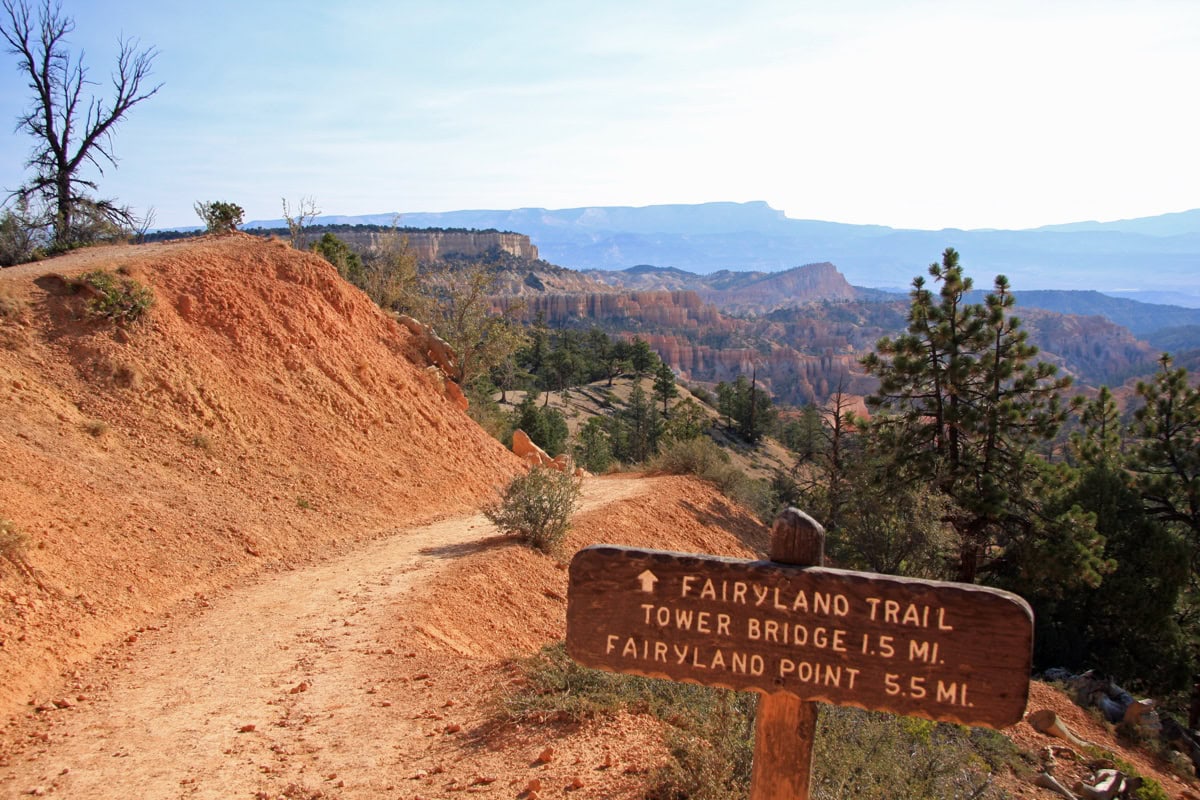
If you’re an experienced hiker and want to see Bryce Canyon from a completely different perspective, Fairyland Loop is the trail for you. At 12.9 km with over 500 metres of elevation gain, it takes you through the northern part of the park where most tourists never venture.
The trail starts at Fairyland Point (a viewpoint off the main shuttle route, so you’ll need to drive there) and passes through a landscape full of bizarre formations — including Tower Bridge, a rock formation resembling the famous London landmark. It’s quiet, peaceful, and gives you the feeling of having the park entirely to yourself.
Allow 4–5 hours and bring plenty of water (at least 2 litres per person) and snacks. There are no drinking water sources on any trails in the park.
13. Bryce Canyon in winter — a snowy fairy tale
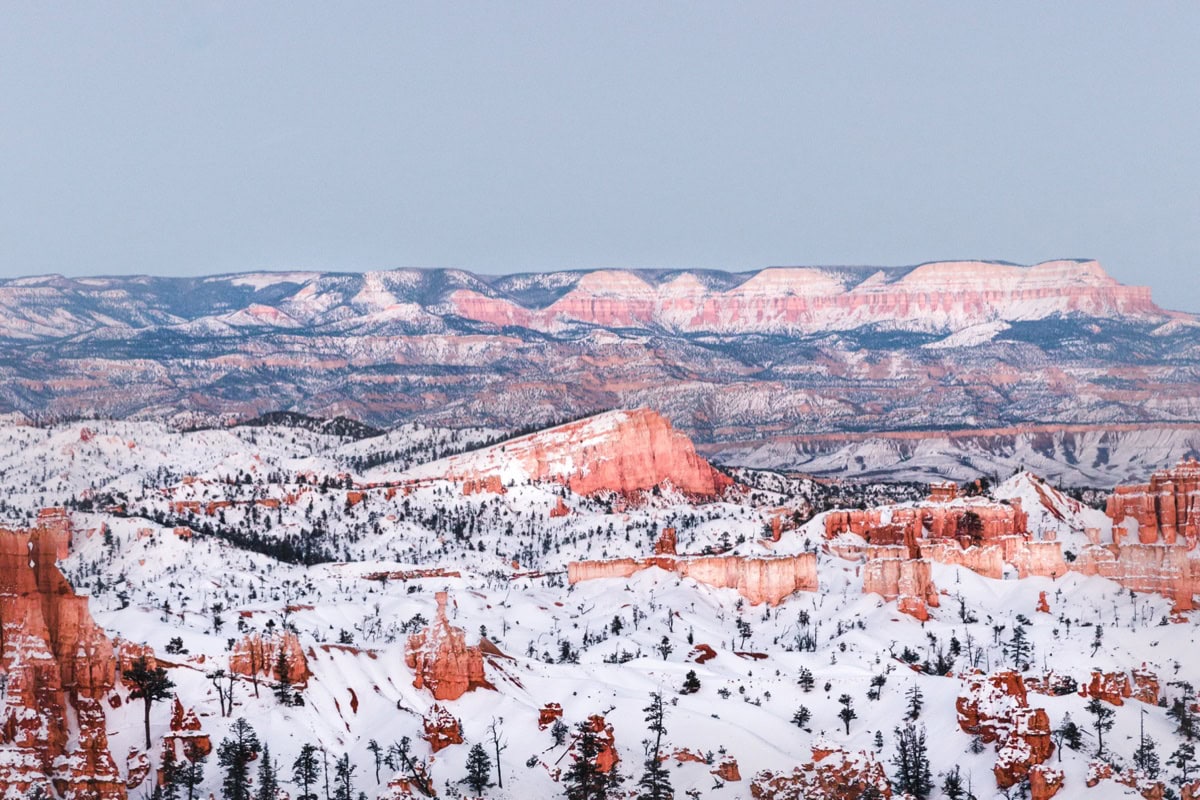
This is something most people don’t even have on their radar — yet it might just be the most beautiful way to experience Bryce Canyon. When snow falls, the orange and red hoodoos draped in white create a contrast that looks straight out of a fantasy film.
In winter the park stays open and the main road (as far as Paria View) is maintained. The southern section of the Scenic Drive is typically closed, but the amphitheatre — the main attraction — remains accessible. You can go snowshoeing (the park offers free ranger-led snowshoe hikes when there’s enough snow) or cross-country skiing.
A winter visit requires preparation — warm layers, snowshoes or micro spikes for your boots, and snow chains for your car (just in case). But the reward is a park virtually free of tourists and scenery that will take your breath away. Winter temperatures at Bryce Canyon typically range from -5 to -15 °C, so pack properly.

14. Horseback riding among the hoodoos
For something completely different, try a horseback (or mule) ride operated by Canyon Trail Rides right inside the park. They offer two-hour rides that take you down into the amphitheatre along the Peekaboo Loop — the same trail you’d hike on foot, but from an entirely different perspective (and height).
Prices are around $75–$100 (roughly €70–€90) per person, and capacity is limited, so book ahead — especially in peak season. No riding experience is necessary — the horses (and mules) know this route by heart.
15. Combining Bryce Canyon + Zion National Park
One of the most frequently asked questions is: “Which is better, Bryce or Zion?” And the answer is simple — both. They’re completely different parks just an hour and a half apart, so visiting only one would be a missed opportunity.
Bryce Canyon is about viewpoints from above, slender hoodoos and an otherworldly landscape. Zion is about a deep canyon, a river valley and dramatic rock walls towering hundreds of metres above you. Bryce looks down, Zion looks up. The perfect combination for 3–5 days.
Suggested itinerary: 2 days in Zion (The Narrows, Angels Landing, Observation Point) → drive along Highway 12 (one of the most beautiful roads in the USA!) → 1–2 days in Bryce Canyon. If you have more time, add Capitol Reef and Grand Staircase-Escalante — and you’ve got yourself an epic Utah national parks road trip.
Map of points of interest for your phone
Where to eat and drink near Bryce Canyon: A guide for hungry hikers
Let’s be honest — nobody visits Bryce Canyon for the culinary scene. We’re in a small town in southern Utah, so expect solid American fare rather than Michelin stars. That said, a few places are worth knowing about so you’re not surviving on cereal bars from your backpack.
Inside the park: Lodge at Bryce Canyon Dining Room
The only restaurant inside the park, open seasonally. Breakfasts are solid (American-style — eggs, pancakes, bacon), while lunch and dinner feature burgers, steaks and salads. Prices match the location — main courses around $20–$35 (€18–€32). Nothing extraordinary, but sitting on the veranda overlooking the surrounding forest has its charm.
Bryce Canyon City: Ruby’s Inn
Ruby’s Inn Cowboy’s Buffet and Steak Room is the biggest restaurant in the area, offering both buffet and à la carte. It’s a classic American tourist restaurant — massive portions, decent flavour, western vibes. Expect $15–$30 (€14–€27) for a main course. In summer they also have an outdoor grill and country music evenings.
Tropic: Hidden little gems
The small town of Tropic (15 minutes from the park) has a few pleasant surprises. Clarke’s Restaurant serves up homestyle American cooking with excellent beer and a laid-back atmosphere. IDK Barbecue (yes, that really is the name 😅) does brilliant smoked meats. And if you’re craving pizza after a full day of hiking, Stone Hearth Grille serves solid Italian-inspired food with local ingredients.
Our recommendation
If you’re spending the whole day in the park, pack a hearty picnic — sandwiches, fruit, nuts, and plenty of water. There are no food stands in the park and the nearest restaurant is at the Visitor Center or in Bryce Canyon City. For dinner, head to Tropic — it’s more pleasant and cheaper than Bryce Canyon City.
Practical tips to wrap up
Bryce Canyon Visitor Center
Your first stop should be the Bryce Canyon Visitor Center, right at the park entrance. Rangers can advise on current trail conditions (especially important in winter and spring), weather and scheduled programmes. Have a look at the small geology exhibition — understanding how hoodoos form makes it all the more fascinating when you see them in person.
Opening hours vary by season: in summer typically 8:00–20:00, in winter 8:00–16:30. Tickets can be purchased here or in advance online at recreation.gov.
What to pack
- Layers of clothing — even in summer, mornings and evenings are chilly (remember the elevation!).
- Good hiking boots — trails are rocky and steep in places.
- Plenty of water — at least 2 litres per person per day, more in summer. The dry climate dehydrates you faster than you’d think.
- Sunscreen and a hat — at 2,400 m elevation, UV radiation is fierce.
- A headtorch — essential if you’re planning a sunrise visit or stargazing.
- Sunglasses — the glare off the pale rock is intense.
Internet and eSIM
Mobile signal in the park and surrounding towns ranges from weak to non-existent. If you need data (for navigation, offline maps), download everything in advance. For travelling in the USA, we recommend an eSIM from Holafly — it works reliably even in more remote areas (where there’s at least some signal). Alternatively, you can pick up a local SIM at Las Vegas or Salt Lake City airport upon arrival.
Flights and travel insurance
Look for cheap flights to Las Vegas or Salt Lake City on Skyscanner or Google Flights — both offer excellent route comparisons from UK airports. For a road trip across the USA, travel insurance is absolutely essential — American healthcare costs are astronomical. For longer trips we use SafetyWing, and for shorter ones a standard UK travel insurance policy does the job.
FAQ — frequently asked questions about Bryce Canyon
Why is Bryce Canyon so famous?
Bryce Canyon is famous for its hoodoos — slender rock spires formed by millions of years of erosion. Bryce Canyon boasts the largest concentration of hoodoos anywhere on Earth. The combination of unique geological formations, dramatic colours (from white through yellow and orange to deep crimson) and one of the clearest night skies in North America makes it one of the most photogenic places on the planet.
Which is better — Bryce Canyon or Zion?
They’re completely different parks and ideally you should visit both (they’re only 1.5 hours apart). Bryce Canyon offers views from above, looking down at thousands of hoodoos — it’s all about panoramas and an otherworldly landscape. Zion is about a deep canyon where you walk along the bottom with rock walls towering hundreds of metres above you. If you can only choose one and love unique geological formations, head to Bryce. If you’re after adventurous canyon hikes (The Narrows, Angels Landing), choose Zion. But seriously — do both. ☺️
Is Bryce Canyon close to Las Vegas?
Relatively, yes — it’s about 430 km, roughly a 4-hour drive on the motorway. From Las Vegas it’s one of the most popular road trip routes in the USA, because you can visit Zion National Park along the way (2.5 hours from Vegas). Many people combine Las Vegas → Zion → Bryce Canyon into a 3–5 day trip.
How much time do I need for Bryce Canyon?
Half a day is the bare minimum — enough for the main viewpoints around Bryce Amphitheater and one short trail. Ideally, plan for 1–2 full days. In two days you can cover all the viewpoints, the combined Navajo Loop + Queen’s Garden hike, the scenic drive, sunrise and sunset, and an evening of stargazing. If you’re a keen hiker, add a third day for the Fairyland Loop or Peekaboo Loop.
Can you visit Bryce Canyon in winter?
Absolutely — and it’s magical! The park is open year-round, with the main road and viewpoints kept clear. Snow-covered hoodoos look absolutely enchanting and there are barely any tourists. Just be prepared for temperatures well below freezing, the possible need for snowshoes on trails, and snow chains for your car. The park offers free ranger-led snowshoe hikes in winter, which is a fantastic experience.
Have any films been shot at Bryce Canyon?
Bryce Canyon has appeared in several films and TV shows, though not as frequently as Monument Valley or Dead Horse Point. The most well-known is probably the western Butch Cassidy and the Sundance Kid (1969) starring Robert Redford and Paul Newman, which was partly filmed in the park’s surroundings. The Bryce Canyon landscape has also featured in National Geographic documentaries and various adverts.
Do I need to be fit for the hikes in Bryce Canyon?
For the main viewpoints (Sunrise, Sunset, Inspiration, Bryce Point) you don’t need to hike at all — they’re right next to the car parks. For shorter trails like Navajo Loop or Queen’s Garden, a basic level of fitness is enough, but keep the elevation (over 2,400 metres) in mind — even fit people may find themselves getting winded more quickly than usual. Longer trails (Fairyland Loop, Peekaboo Loop) require better fitness and preparation. Always bring plenty of water, snacks, and remember that whatever you walk down, you’ll need to hike back up.
Tips and Tricks for Your Vacation
Don’t Overpay for Flights
Search for flights on Kayak. It’s our favorite search engine because it scans the websites of all airlines and always finds the cheapest connection.
Book Your Accommodation Smartly
The best experiences we’ve had when looking for accommodation (from Alaska to Morocco) are with Booking.com, where hotels, apartments, and entire houses are usually the cheapest and most widely available.
 🚗 Car rental on the roadVerified rental cars in Utah
Search with the DiscoverCars comparison engine — it compares prices from dozens of local and international rental companies, and most bookings come with free cancellation.
Compare car prices in Utah →Don’t Forget Travel Insurance
Good travel insurance will protect you against illness, accidents, theft, or flight cancellations. We’ve had a few hospital visits abroad, so we know how important it is to have proper insurance arranged.
Where we insure ourselves: SafetyWing (simple monthly subscription) and TrueTraveller (for extra-long trips).
Find the Best Experiences
Get Your Guide is a huge online marketplace where you can book guided walks, trips, skip-the-line tickets, tours, and much more. We always find some extra fun there!