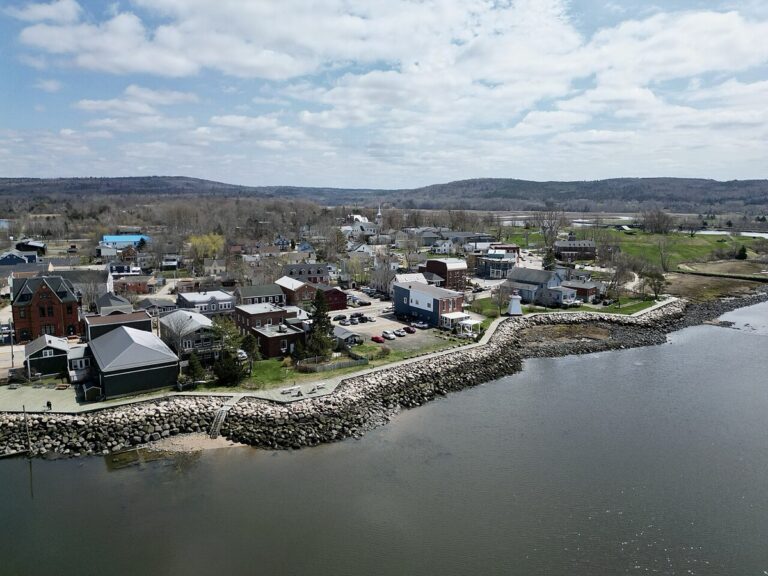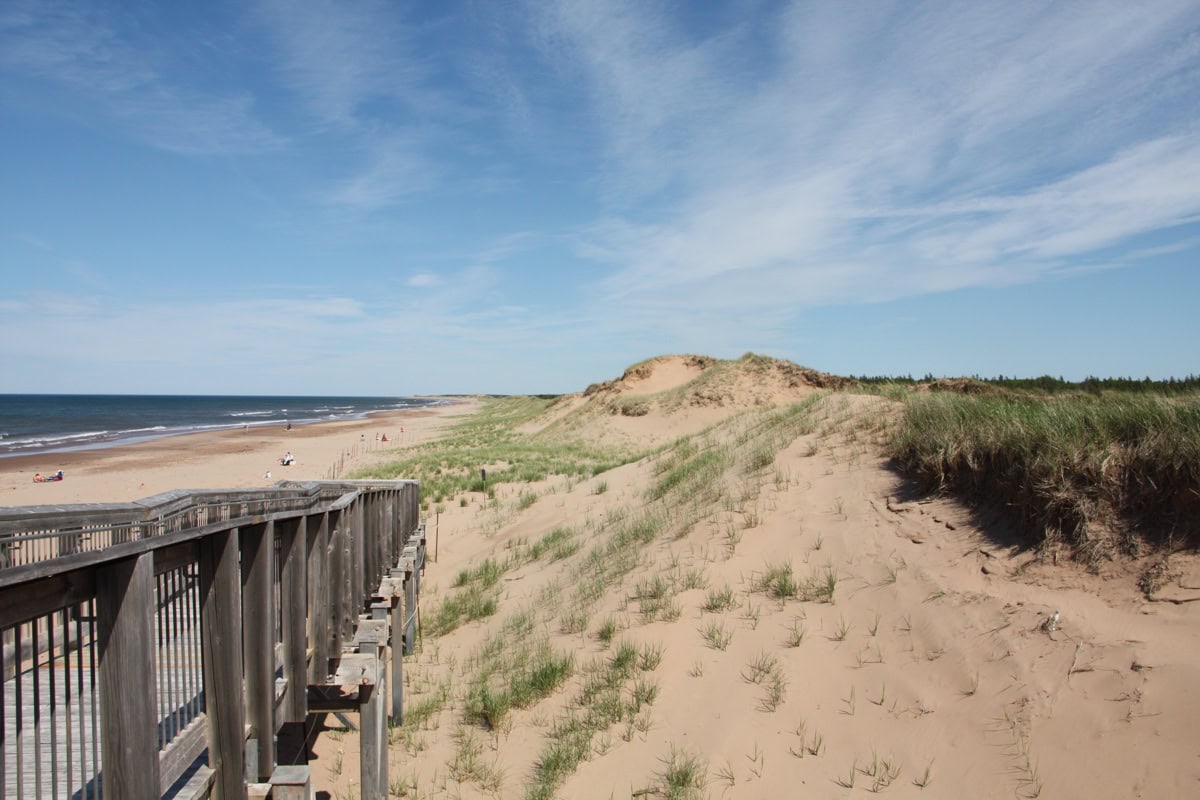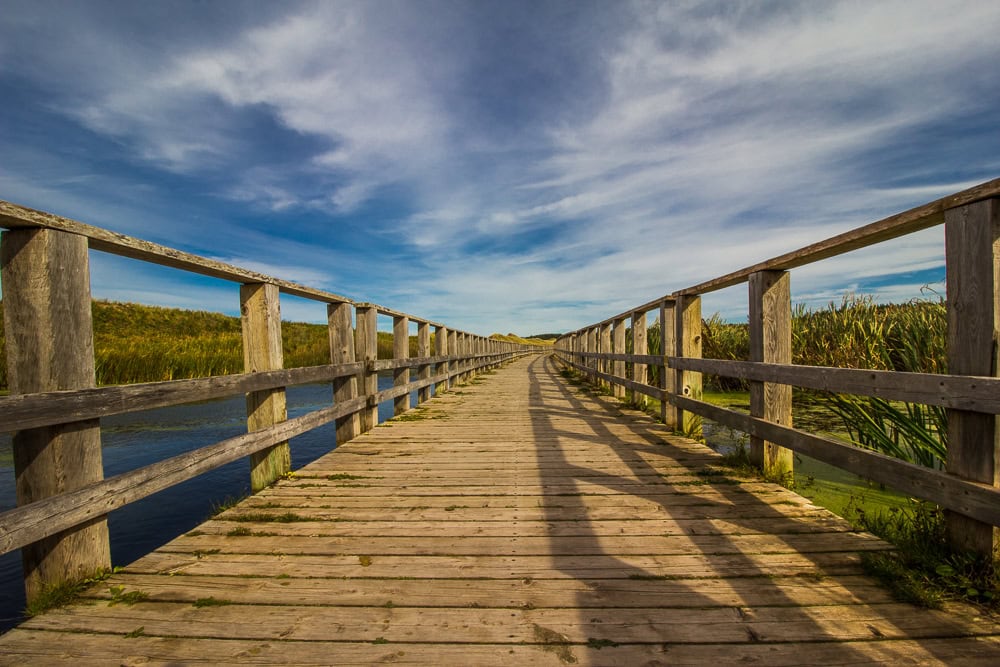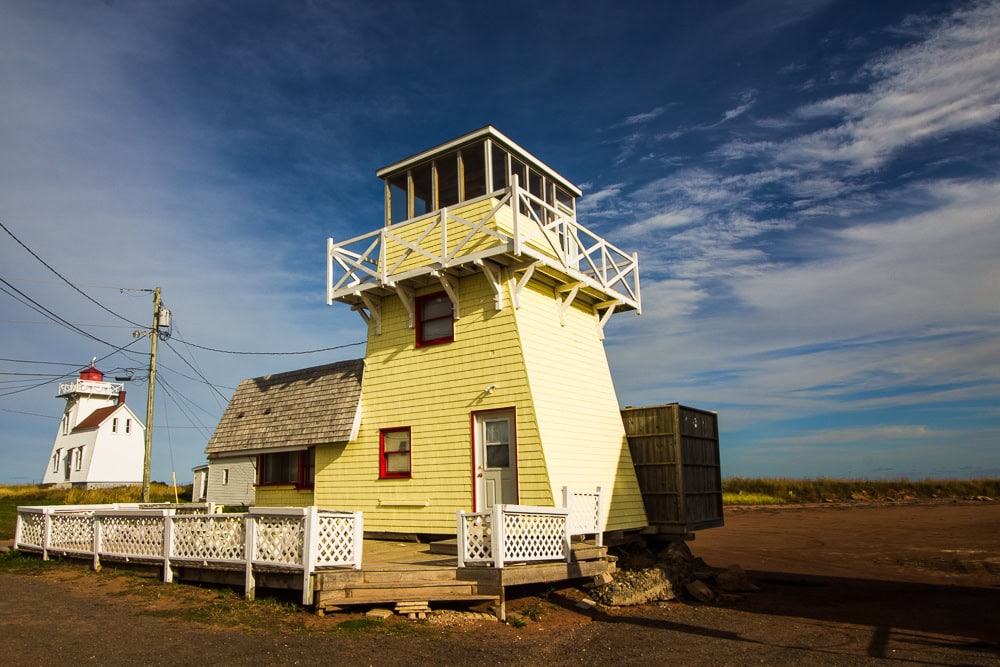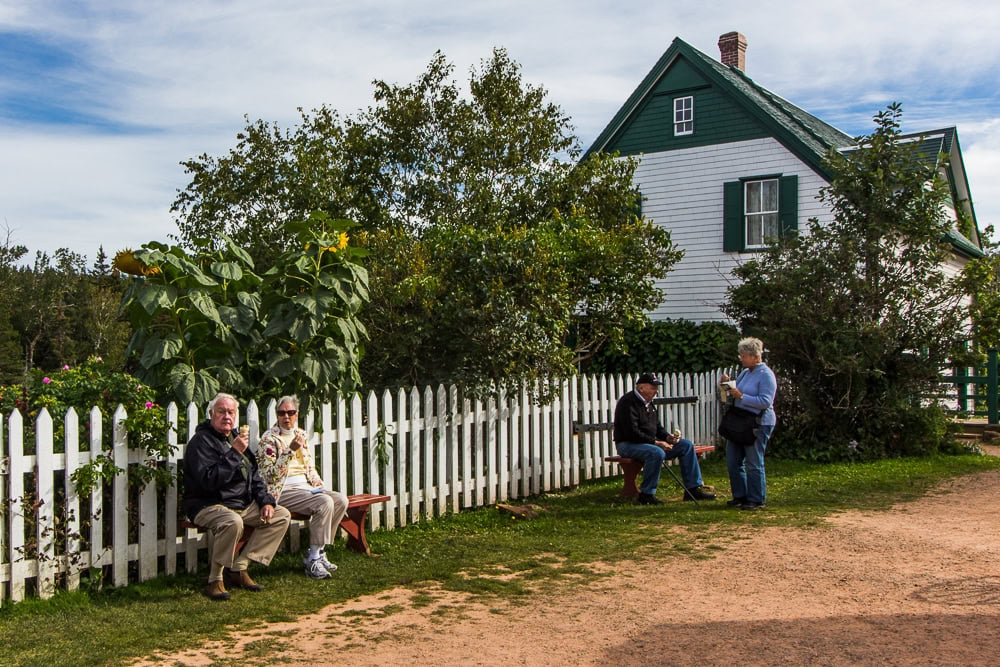
Wolfville, Nova Scotia: 15 Best Things to See and Do in the Heart of Annapolis Valley

TL;DRWolfville, in Nova Scotia’s Annapolis Valley, comes with 15 ideas for day trips, from wineries to the UNESCO-listed Grand-Pré site and the 13 km hiking trail out to Cape Split, with its views over the Bay of Fundy. Highlights include Blomidon Provincial Park, the Saturday Wolfville Farmers’ Market, cideries and the fishing village of Hall’s Harbour, where you can get lobster fresh off the boats. September and October are the best months to visit, with wine harvest, autumn colours and temperatures of 15–22°C — plan on staying 2–4 days. Budget around 280–490 CAD a day for two, roughly 15,000–35,000 CZK for 3–4 days, not counting flights or a car, which you’ll pretty much need to get around the region.

Some places catch you completely off guard — you arrive with zero expectations and leave utterly smitten. That’s exactly what happened to us in Wolfville, Canada. This tiny university town nestled in the Annapolis Valley of Nova Scotia is the kind of place where you sip wine overlooking tidal rivers, wander through Saturday morning farmers’ markets, and watch the autumn foliage turn such intense shades of orange and crimson that your jaw literally drops. 🍁

My mum and I originally drove here “just for an afternoon” — on our way from Halifax to Cape Breton. But that afternoon turned into two days, because we got hooked at one of the wineries, then decided we absolutely had to try the famous Cape Split hike, and finally couldn’t tear ourselves away from the farmers’ market selling homemade apple cider and the best blueberries we’d ever tasted. Wolfville is exactly the kind of place where you catch yourself thinking: “I could live here.”

In this article, you’ll find 15 best things to see and do in Wolfville and the surrounding area — from wineries and cideries to the UNESCO heritage site of Grand-Pré and one of the most stunning hiking trails on Canada’s entire east coast. I’ll share when to visit, where to stay, how much it all costs, and where to find the best food in the valley.

TL;DR

  • Wolfville is a picturesque university town (about 4,500 residents) in the Annapolis Valley, roughly 100 km west of Halifax.
  • The best time to visit is September and October — wine harvest, harvest festivals, and that legendary fall foliage. June and July are lovely too.
  • Top attractions: wineries and cideries, the UNESCO site of Grand-Pré, the Cape Split hike, and Blomidon Provincial Park.
  • On Saturday mornings, don’t miss the Wolfville Farmers’ Market — one of the oldest farmers’ markets in Canada.
  • Accommodation ranges from around €65/night for a B&B to €130+/night for boutique wine-hotels. Book ahead, especially in September!
  • Wolfville is ideal as a base for 2–4 days to explore the entire Annapolis Valley.
  • The food here is fantastic — fresh, local, farm-to-table. And the wine is surprisingly good. 🍷
  • You’ll definitely need to rent a car — there’s no way to get around the valley without one.

When to visit Wolfville and how to get there

Wolfville is beautiful almost all year round, but if you want to make the absolute most of your visit, timing is everything. And transport? You’ll need a car — I’ll tell you that straight away.

Best time to visit

September and early October — this is the absolute peak season, and honestly, for good reason. The Annapolis Valley is breathtakingly beautiful at this time of year. The leaves turn every shade of red, orange, and gold, wineries are in harvest mode, cideries serve freshly pressed cider, and harvest festivals pop up all across the valley. Temperatures hover around 15–22 °C, which is perfect for hiking and lingering on winery terraces.

June through August is also a wonderful time — temperatures around 20–28 °C, farmers’ markets in full swing, Bay of Fundy beaches accessible, and winery terraces wide open. The downside? July and August bring more tourists (though it’s still nothing compared to Banff or Niagara 😅).

Spring (May) is cooler and wetter, but the apple orchards are in bloom and everything feels peaceful and uncrowded. Winter — well, Nova Scotia winters are harsh. Most wineries are closed or on limited hours, temperatures drop below freezing, and snow is common. But if you love solitude and cosy pubs, winter has its own charm.

How to get to Wolfville

By air: The nearest airport is Halifax Stanfield International Airport (YHZ), which is about 100 km from Wolfville (roughly an hour and a quarter’s drive). Direct flights from Europe to Halifax operate seasonally — mainly from London, Frankfurt, and Reykjavik. From the UK, you can often fly direct from London Gatwick or Heathrow with airlines like WestJet, Air Canada, or British Airways (seasonal). Alternatively, you may connect through Toronto or Montreal.

To find cheap flights to Halifax, we recommend searching on Kiwi — it’s our go-to flight search engine for finding creative routing with stopovers that you won’t find elsewhere.

By car: From Halifax, it’s a scenic one-hour drive west along Highway 101 hugging the coast. A car is essentially a must in Wolfville — the wineries, hiking trails, and provincial parks are scattered across the valley, and public transport is… let’s just say minimalist. 😅

We’ve had consistently great experiences with DiscoverCars, which we use all over the world. It compares prices from every rental company in one place — and in Canada, you’ll appreciate that, since price differences between companies can easily be tens of pounds per day.

By bus: If you really don’t want a car, there is a Maritime Bus service from Halifax to Wolfville, but it only runs a few times a day and you’ll still be stuck without a car once you’re in the valley.

Where to stay in Wolfville and how much it costs

Wolfville is a small town, but there’s a surprising range of accommodation — from cosy B&Bs in heritage homes to boutique hotels at wineries and Airbnbs tucked among apple orchards. One crucial tip: in September and October, book well in advance! Fall foliage season here is like peak summer on the Mediterranean — and Wolfville only has a few thousand residents, so capacity isn’t exactly infinite.

Approximate prices (per night for two, in high season):

  • Budget B&B / hostel: 100–130 CAD (approx. €65–85)
  • Mid-range — B&B, inn: 140–200 CAD (approx. €90–130)
  • Boutique hotel / winery resort: 250–350 CAD (approx. €165–230)
  • Airbnb (entire flat/house): 120–250 CAD (approx. €80–165)

Where I’d recommend staying:

Right in Wolfville itself is the ideal base if you want to be within walking distance of restaurants, cafés, and the farmers’ market. The historic B&Bs on Main Street have that quintessential Nova Scotia charm — wooden verandas, homemade breakfasts with local eggs and jam.

If you don’t mind being a short drive out of town (10–15 minutes), look into accommodation directly at wineries — some offer rooms or cottages with vineyard views. Waking up to rows of grapevines disappearing into the morning mist over the valley is an unforgettable experience.

For larger groups or families, search Airbnb in surrounding villages like Grand-Pré, Gaspereau, or Canning — you’ll often find entire houses with multiple bedrooms at reasonable prices.

How much does a holiday in Wolfville cost?

Nova Scotia is generally cheaper than western Canada (British Columbia) or Ontario. Here’s a rough daily budget for two:

  • Accommodation: 150–200 CAD (€100–130)
  • Food (lunch + dinner at a restaurant): 80–120 CAD (€52–78)
  • Wine tastings (2–3 wineries): 30–60 CAD (€20–40)
  • Petrol: 20–30 CAD (€13–20)
  • Activities (entrance fees, kayaking, etc.): 0–80 CAD (€0–52)

So in total, budget around 280–490 CAD per day for two (approx. €185–320). For a 3–4 day trip, Wolfville and surrounds will run you roughly €550–1,300 for two (excluding flights and car hire), depending on your accommodation style and how many wineries you visit. 😉

Wolfville and surrounds: 15 best things to see and do

Now for the good stuff — specific tips on what to see and do in Wolfville and the surrounding area. The places are roughly ordered by how essential I consider them, but honestly — everything here is brilliant. The Annapolis Valley is one of those hidden gems that most Europeans have never even heard of, and that’s perhaps exactly what makes it so special. No crowds, no queues — just beautiful nature, great wine, and friendly people.

1. Cape Split Hike — one of the best trails in eastern Canada
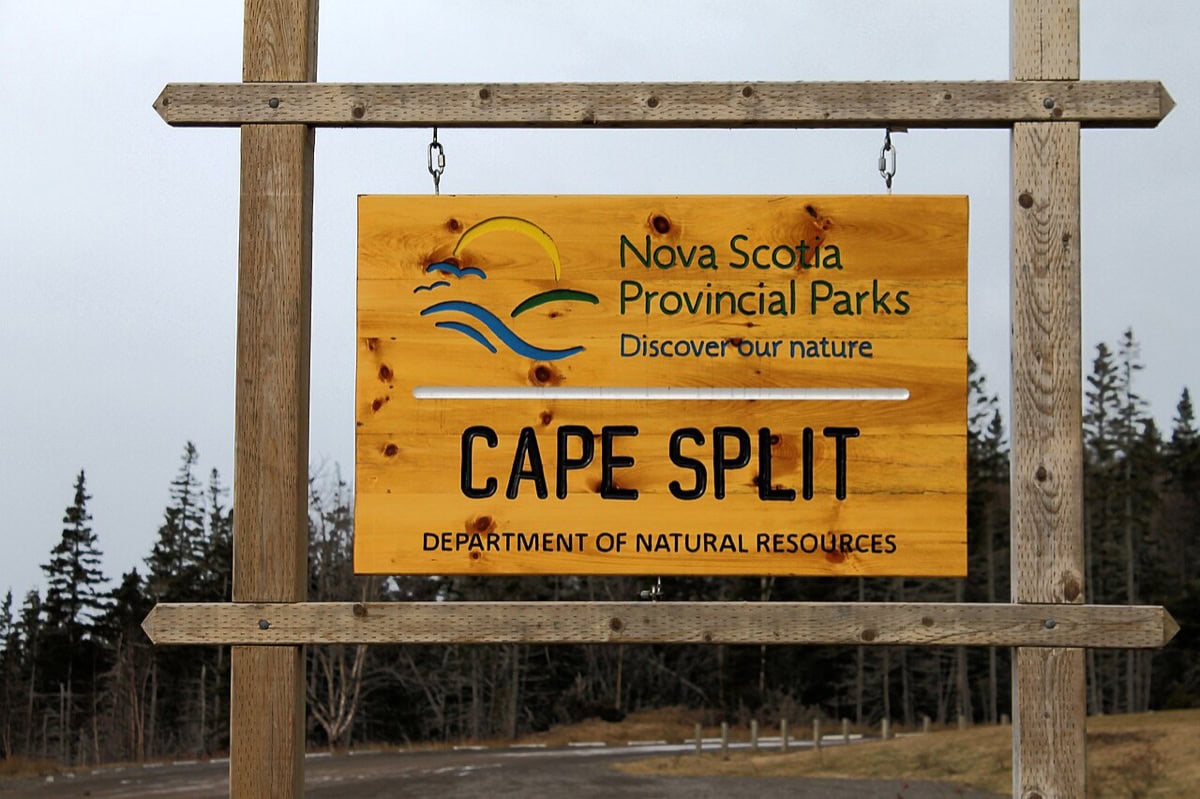
Cliffs and ocean views from the Cape Split trail in Nova Scotia
Photo: Brad Penney / Wikimedia Commons (Public domain)

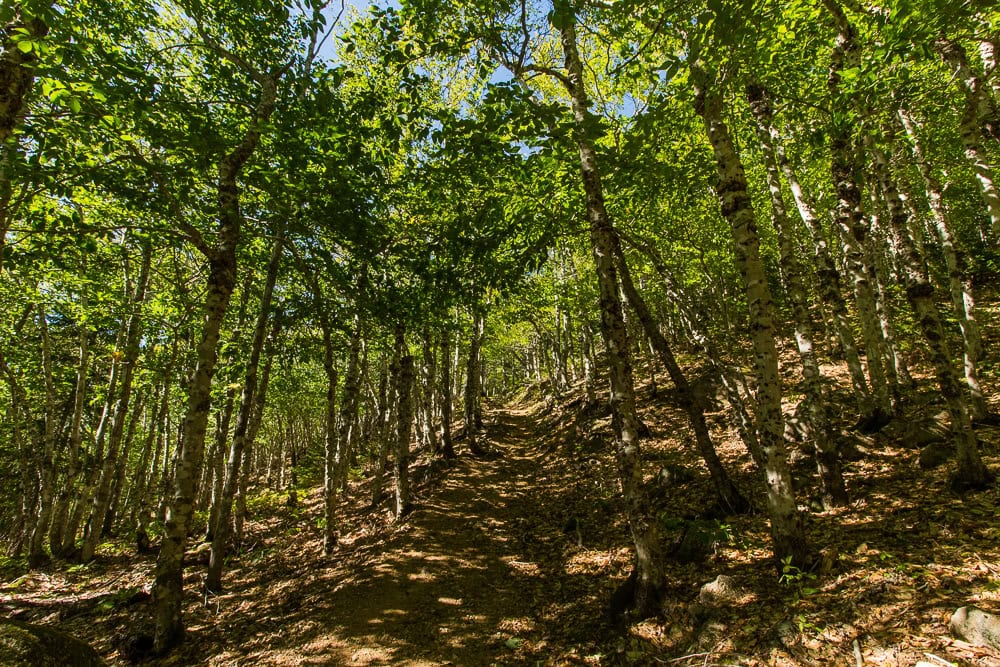
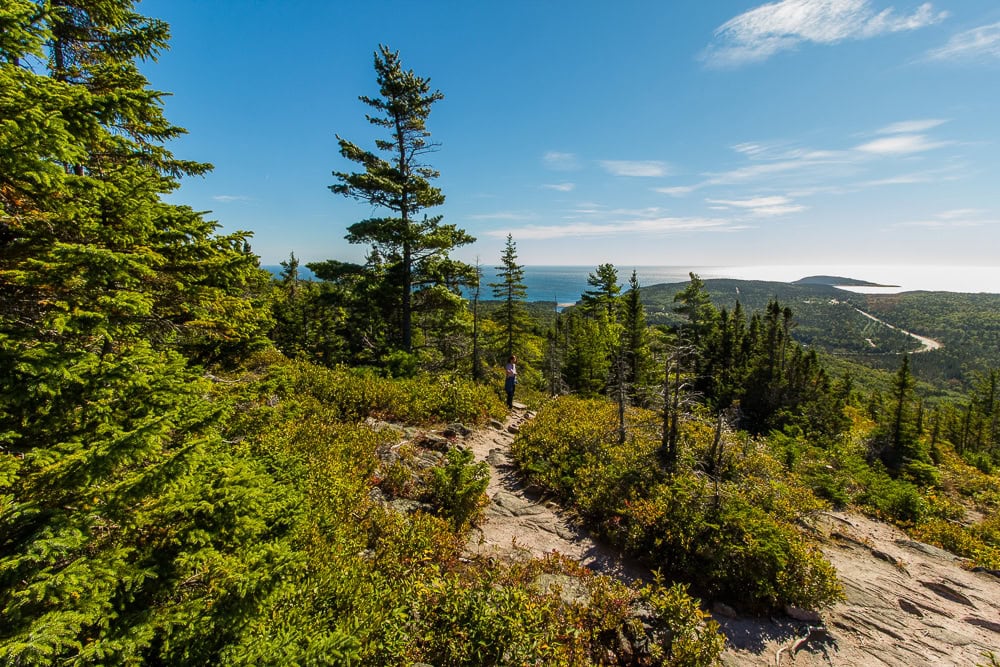
This is the trail that alone makes a trip to the Annapolis Valley worthwhile — even if you don’t like wine (though honestly, who doesn’t like wine? 😅). Cape Split Trail is a 13 km out-and-back hike that takes you through dense forest before rewarding you with one of the most dramatic viewpoints you’ll find anywhere in Canada.

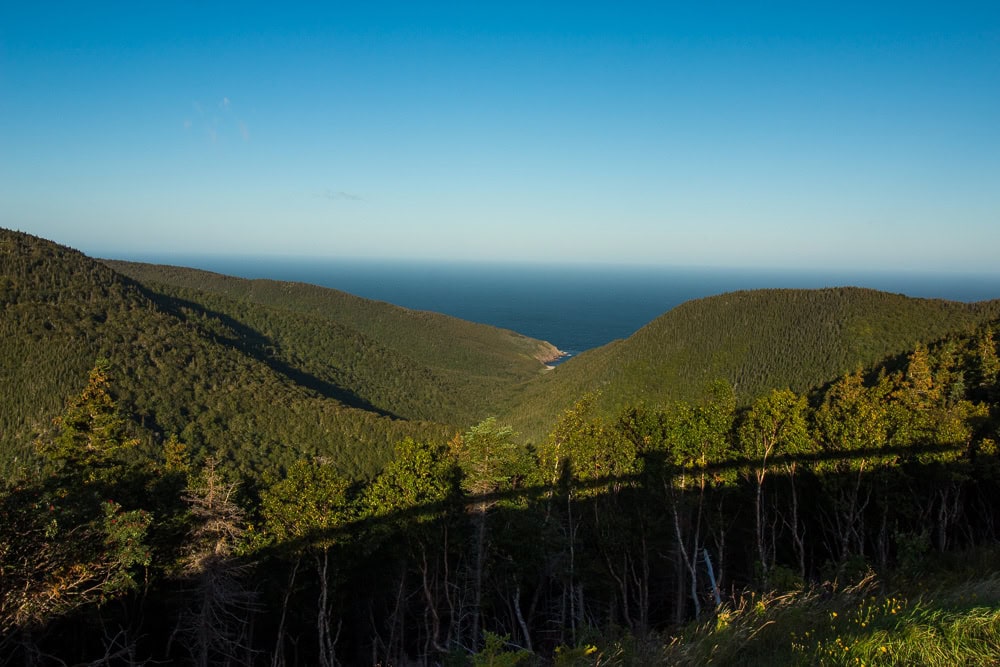
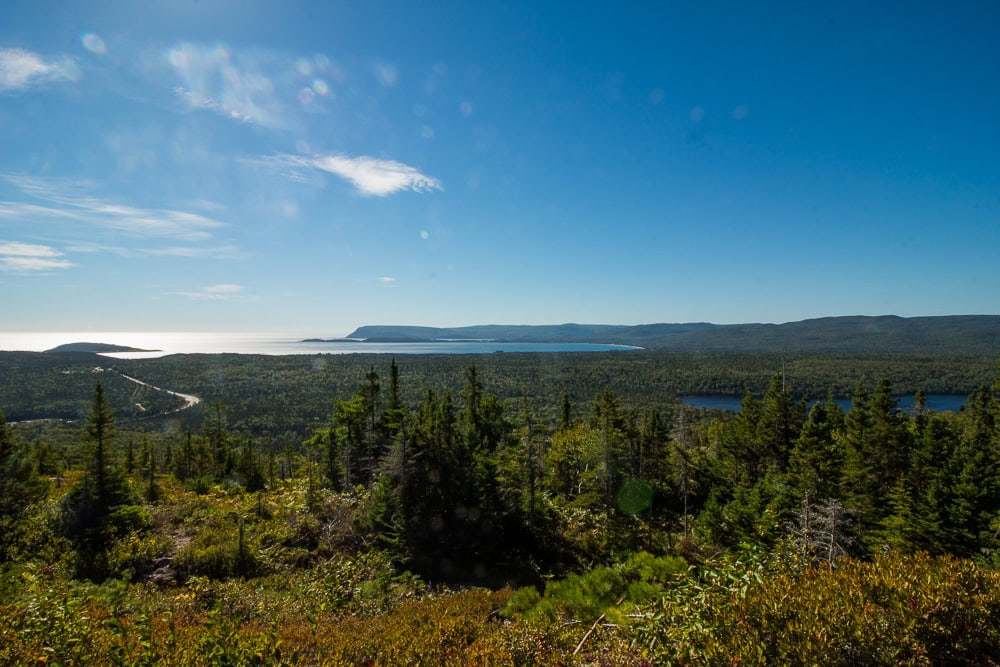
At the end of the trail, the forest suddenly opens up and you’re standing on a towering cliff above the Bay of Fundy — the bay that boasts the highest tides in the world. The difference between high and low tide here can reach up to 16 metres. From the cliff edge, you watch waves crashing far below, and at low tide, enormous rock formations are exposed. It’s absolutely breathtaking.

The trail is rated moderate — mostly flat through forest, but it’s fairly long and the final stretch is a bit exposed. Allow 4–6 hours for the return trip, depending on your pace. Bring plenty of water, snacks, and proper hiking boots — after rain, the path gets muddy.

Practical info: The trailhead is about 25 minutes’ drive from Wolfville, near the village of Scots Bay. Parking is free, but on September weekends it fills up early — aim to arrive before 9:00. There’s no entrance fee.

2. Grand-Pré National Historic Site — a UNESCO site with an emotional story
Church and gardens at the UNESCO site Grand-Pré National Historic Site
Photo: Eric Van Lochem / Wikimedia Commons (CC BY-SA 4.0)

Grand-Pré is one of Canada’s most important historic sites and has been a UNESCO World Heritage Site since 2012. Located just 5 minutes’ drive from Wolfville, it tells a story that might just break your heart — the story of the Acadian French settlers who were forcibly deported by the British from this region in 1755.

The site includes a beautiful park, a reconstructed church, a museum, and memorial gardens. The exhibits are surprisingly well done and deeply moving — even if you’re not a history buff, the atmosphere of this place will draw you in. The statue of Evangeline (from Henry Wadsworth Longfellow’s famous poem) in the centre of the park is one of the most photographed spots in all of Nova Scotia.

Practical info: Admission is about 8 CAD (€5) per adult; children get in free. Open from mid-May to mid-October. A visit takes about 1–2 hours. The surrounding park is accessible year-round and free — and it’s gorgeous in autumn.

By the way, on the drive from Wolfville, you’ll notice the famous dykes — embankments that Acadian settlers built to drain the coastal marshes and turn them into fertile farmland. They’re still functioning today. 350-year-old engineering. Impressive stuff.

3. Annapolis Valley wineries — surprisingly great wine from an unexpected place
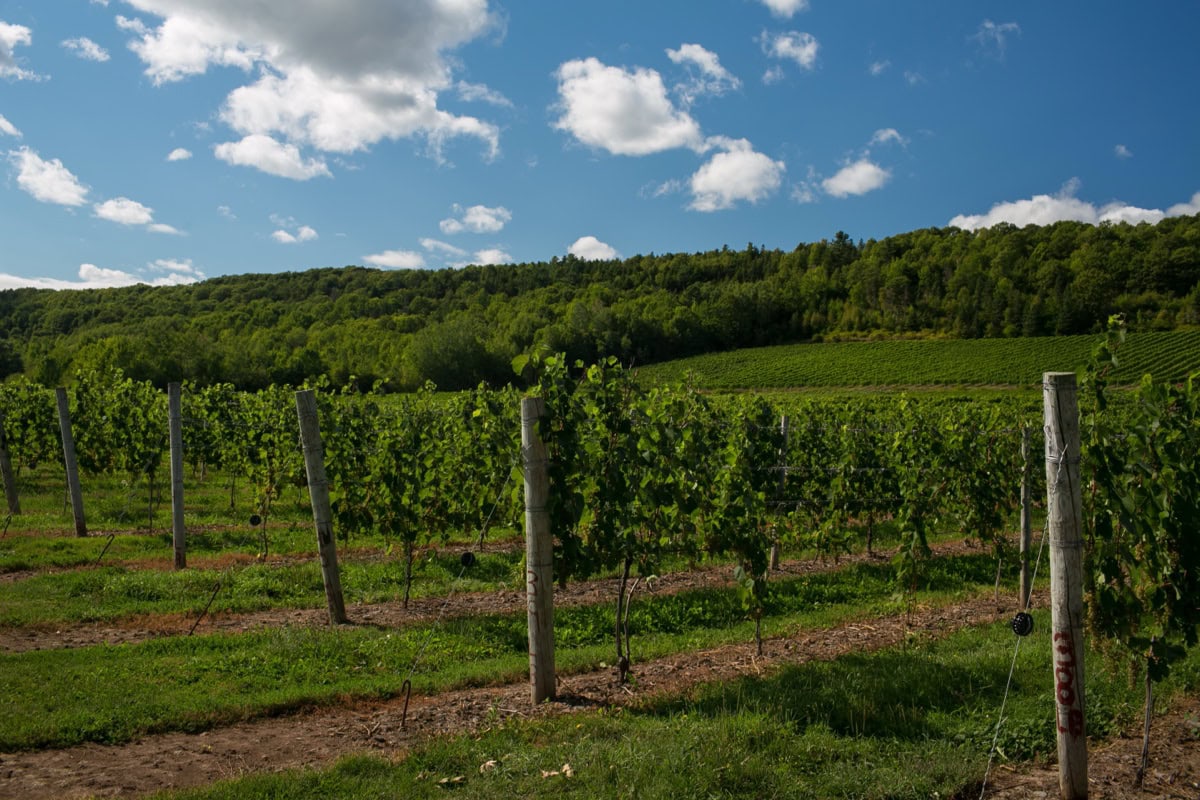
Vineyards in Nova Scotia
Photo: gLangille / CC BY 2.0 / Wikimedia Commons

This was probably the biggest surprise of our trip. A wine region in Canada? On the east coast? And actually good wine? Yes, yes, and yes. Annapolis Valley is a wine region that deserves serious attention — and the local winemakers know it. Most wineries offer tastings and have stunning terraces overlooking the vines and the valley.

Wineries I recommend:

  • Luckett Vineyards — probably the most famous winery in the region. It has a gorgeous terrace with a view, excellent Tidal Bay (a local appellation I’ll explain in a moment), and a legendary red phone box in the middle of the vineyard from which you can supposedly call anywhere in the world. In reality, it’s mainly there for the photos. 📸
  • Lightfoot & Wolfville — an organic winery with a beautiful tasting room. Their pét-nat (naturally sparkling wine) absolutely blew us away.
  • Domaine de Grand Pré — one of the oldest wineries in the province, right next to the UNESCO site. They also have an excellent restaurant.
  • Benjamin Bridge — if you love bubbles, they produce sparkling wine using the traditional method (méthode champenoise) that can genuinely hold its own against many a champagne. Not cheap, but absolutely worth it.
  • Gaspereau Vineyards — a cosy family winery in the beautiful Gaspereau Valley. Fewer tourists, more authentic atmosphere.

What is Tidal Bay? It’s an appellation unique to Nova Scotia — a light, crisp white wine with mineral notes, perfect with seafood. Every winery makes its own version and it’s a brilliant way to compare different styles. Most tastings cost 10–15 CAD (€7–10) for 4–5 samples, and the fee is often waived if you buy a bottle.

💡 TIP: If you want to visit multiple wineries in a day, arrange a designated driver (one of you stays sober) or book a wine tour — local companies offer full-day excursions with transport between wineries.

4. Blomidon Provincial Park — red cliffs above Bay of Fundy
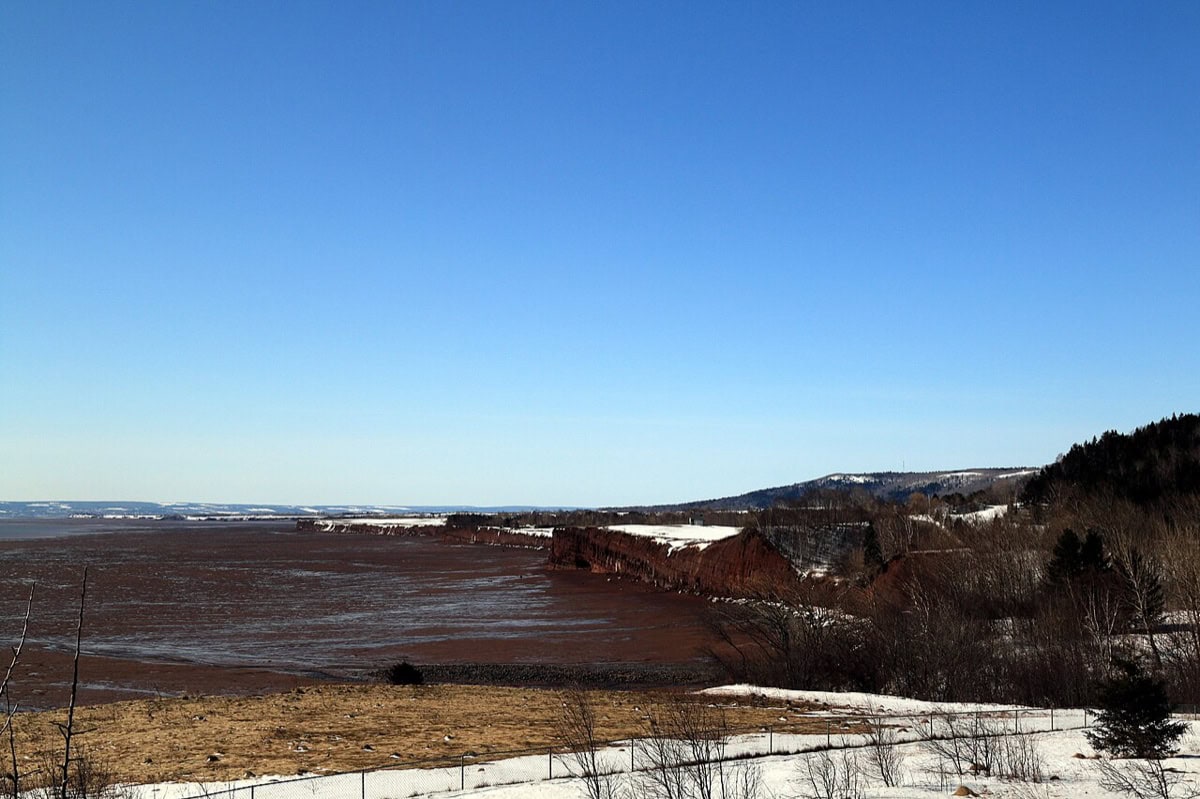
Red cliffs of Blomidon Provincial Park above Minas Basin at low tide
Photo: Tdc / Wikimedia Commons (CC BY-SA 4.0)

Just a 20-minute drive from Wolfville, you’ll find Blomidon Provincial Park — and it’s a stunner. Picture towering red sandstone cliffs, beneath which the receding tide exposes vast stretches of ocean floor scattered with rocks, seaweed, and tiny sea creatures. And above it all, dense forest with lookout points where you can sit on a bench and simply stare.

The park offers several hiking trails — the most popular is the Jodrey Trail (about 5 km return), which follows the cliff edge through forest before opening up to a panoramic viewpoint over the Bay of Fundy, Cape Split, and on clear days, even New Brunswick across the water. The trail is easy and suitable for families with children.

If you want to descend to the beach below (and you really should!), you can take the Look-off Trail — but keep a close eye on the tide times! This is no joke. The Bay of Fundy tides rise incredibly fast, and if you’re caught off-guard on the beach beneath those cliffs, you could be in serious trouble. Check tide schedules online or ask at the park information centre before heading down.

Practical info: Park entry costs about 6 CAD (€4) per car/day. The park also has campsites (book ahead in summer). Open from May to October.

5. Wolfville Farmers’ Market — a Saturday ritual you’ll love
Wolfville Farmers' Market
Photo: chester902 / Public domain / Wikimedia Commons

Every Saturday from 8:30 to 13:00, the Wolfville Farmers’ Market takes over — and it’s one of those things that gives this little town its soul. Running continuously since 1992, it’s one of the oldest community markets in Canada.

You’ll find everything here: fresh fruit and veg from local farms, artisan cheeses, pastries (those croissants! 🥐), honey, jams, freshly roasted coffee, ciders, handmade soaps, pottery… and above all, the atmosphere. People greet each other by name, farmers happily tell you the story behind every tomato, and someone’s strumming a guitar in the background. It’s about as charmingly Canadian as it gets.

There’s usually a fresh lobster roll and local oysters on offer too — if that’s your thing, don’t miss it. Prices at the market are fair and the quality is leagues beyond any supermarket.

💡 TIP: Get there early. By 10:00, it’s already quite packed and the best pastries will be long gone. Ideal plan: arrive at 8:30, grab a coffee, browse the stalls, shop, and then head into town for brunch.

6. Cideries and breweries — because wine isn’t everything

The Annapolis Valley isn’t just about wine — it’s also apple country. And where there are apples, there’s cider. The local cideries are fantastic and well worth a stop, even if cider isn’t usually your drink of choice.

Cideries I recommend:

  • Annapolis Cider Company — right in Wolfville, so you can walk there. They have a beautiful taproom overlooking the vines and a wide selection of ciders from dry to sweet. Their barrel-aged cider is something special.
  • Bulwark Cider — another Wolfville cidery, smaller and more intimate. Outstanding dry ciders.
  • The Tangled Garden — this place is a bit different. Besides cider, they make herbal liqueurs, jellies, and vinegars. The garden is magical — like something out of a fairytale. Located in Grand-Pré.

For beer lovers: Church Brewing in Wolfville brews craft beer in a converted church. Yes, you read that right. A brewery in a church. And the beer is excellent. 🍺

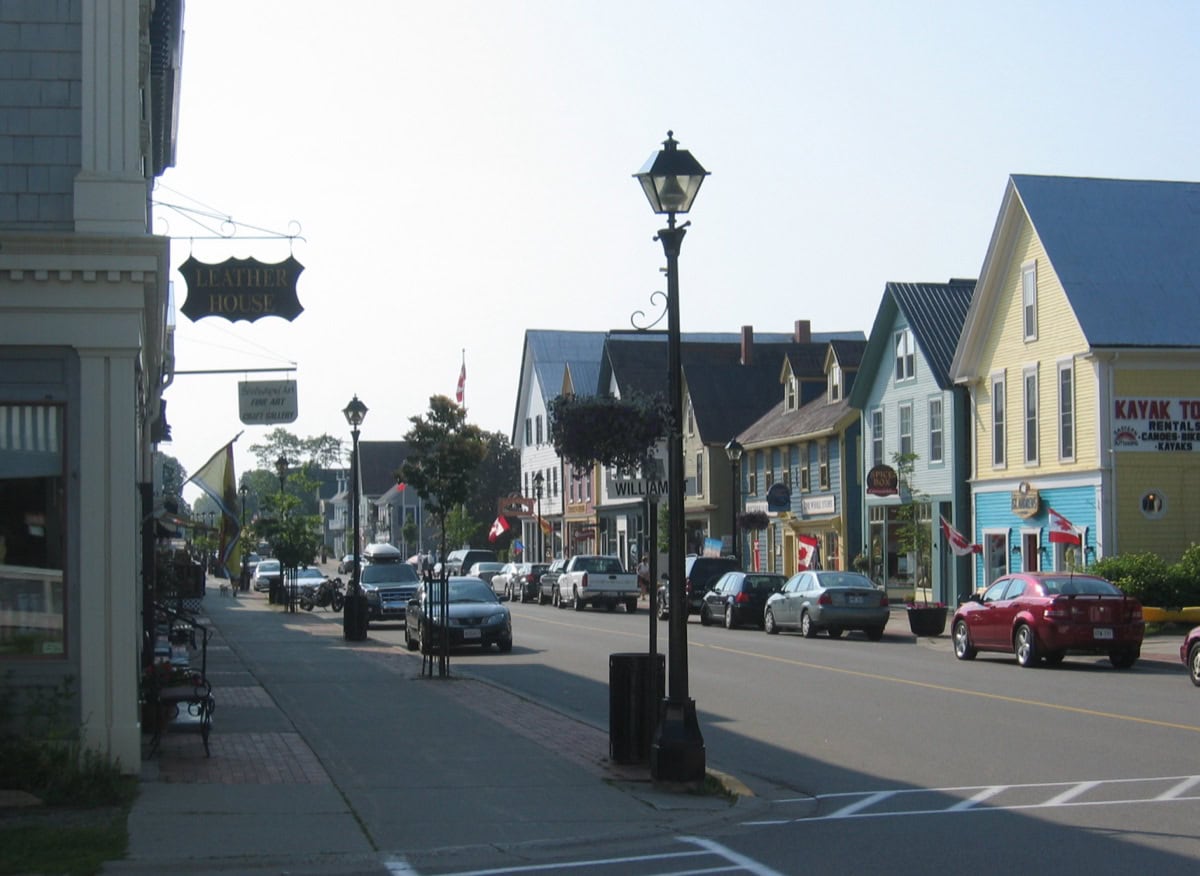
7. A stroll through Wolfville — university charm with a maritime soul

Main Street in Wolfville
Photo: Pierre André Leclercq / CC BY 4.0 / Wikimedia Commons

Wolfville itself is delightful and deserves at least a half-day wander. The town has roughly 4,500 residents and is dominated by Acadia University — one of the oldest and most beautiful universities in Canada. The campus is gorgeous, with historic red-brick buildings and grand old trees, and you’re welcome to stroll through it.

Main Street is the heart of town — lined with independent shops, cafés, galleries, and restaurants. There are no chain stores (well, apart from one Tim Hortons, because this is still Canada 😅), and that’s precisely what makes Wolfville feel so authentic.

Walk along the Waterfront Trail — a footpath along the shoreline with lovely views of the tidal river and the dykes. At low tide, mudflats teeming with birdlife are exposed — if you bring binoculars, you’ll spot eagles, herons, and dozens of other species.

If you love books, don’t miss The Box of Delights Bookshop — an independent bookshop that’s a local institution. They’ve got a wonderful section on Canada and Nova Scotia.

8. The Look-off — a panorama that takes your breath away
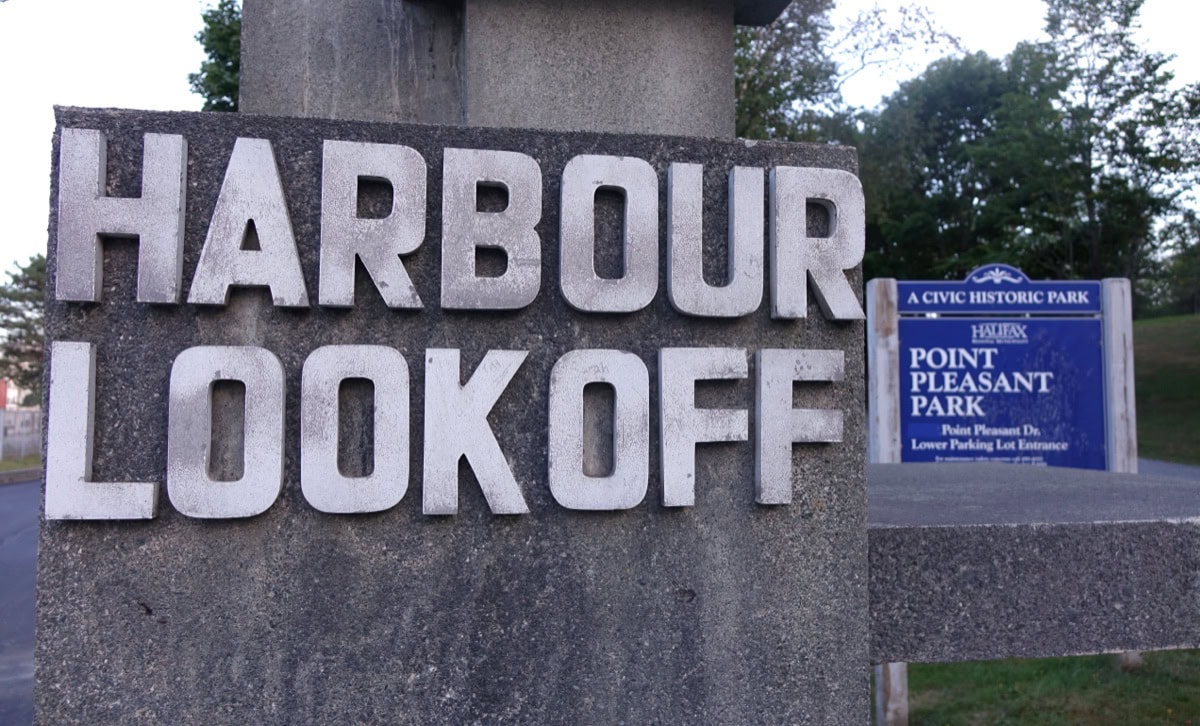
View from The Look-off over Annapolis Valley
Photo: Coastal Elite from Halifax, Canada / CC BY-SA 2.0 / Wikimedia Commons

Just 15 minutes’ drive from Wolfville, on the edge of North Mountain, sits The Look-off — a viewpoint from which you can see the entire Annapolis Valley laid out before you like a living map. And I’m not exaggerating. Below stretches a patchwork of fields, farms, vineyards, and orchards, with the waters of Minas Basin glittering in the distance. In September, when the foliage turns, it’s one of the most beautiful views in the entire province.

The best part? You don’t have to walk anywhere. Park your car and you’re at the viewpoint. Literally 30 seconds from the car park. So even if you haven’t got time for hiking, you can still see this. There’s a small refreshment stand (in season) and several picnic tables.

💡 TIP: Come at sunset. The sun sets right over the valley and the colours are extraordinary. Bring a bottle of local wine and some glasses — you won’t find a more romantic sunset anywhere.

9. Tidal bore rafting — an adrenaline rush on a tidal wave

If you fancy a bit of adventure, this is an activity you simply can’t do anywhere else on earth. Tidal bore rafting means hopping into a raft and riding head-on into a tidal bore on the Shubenacadie River — a massive wall of water that surges upstream when the Bay of Fundy’s tide forces the ocean into the river channel.

The waves reach up to 3–4 metres high, and the raft ploughs through them (sometimes launching right over the top) like a roller coaster. It’s wet, loud, and utterly exhilarating. After riding the bore, the raft turns around and you head back — the whole experience takes about 2–3 hours.

Practical info: Tidal bore rafting is operated by companies based near Truro/Maitland, about an hour and a quarter’s drive from Wolfville. Prices are around 65–85 CAD (€42–55) per person. Book in advance — trips run according to the tides, so slots are limited. Season runs June–October.

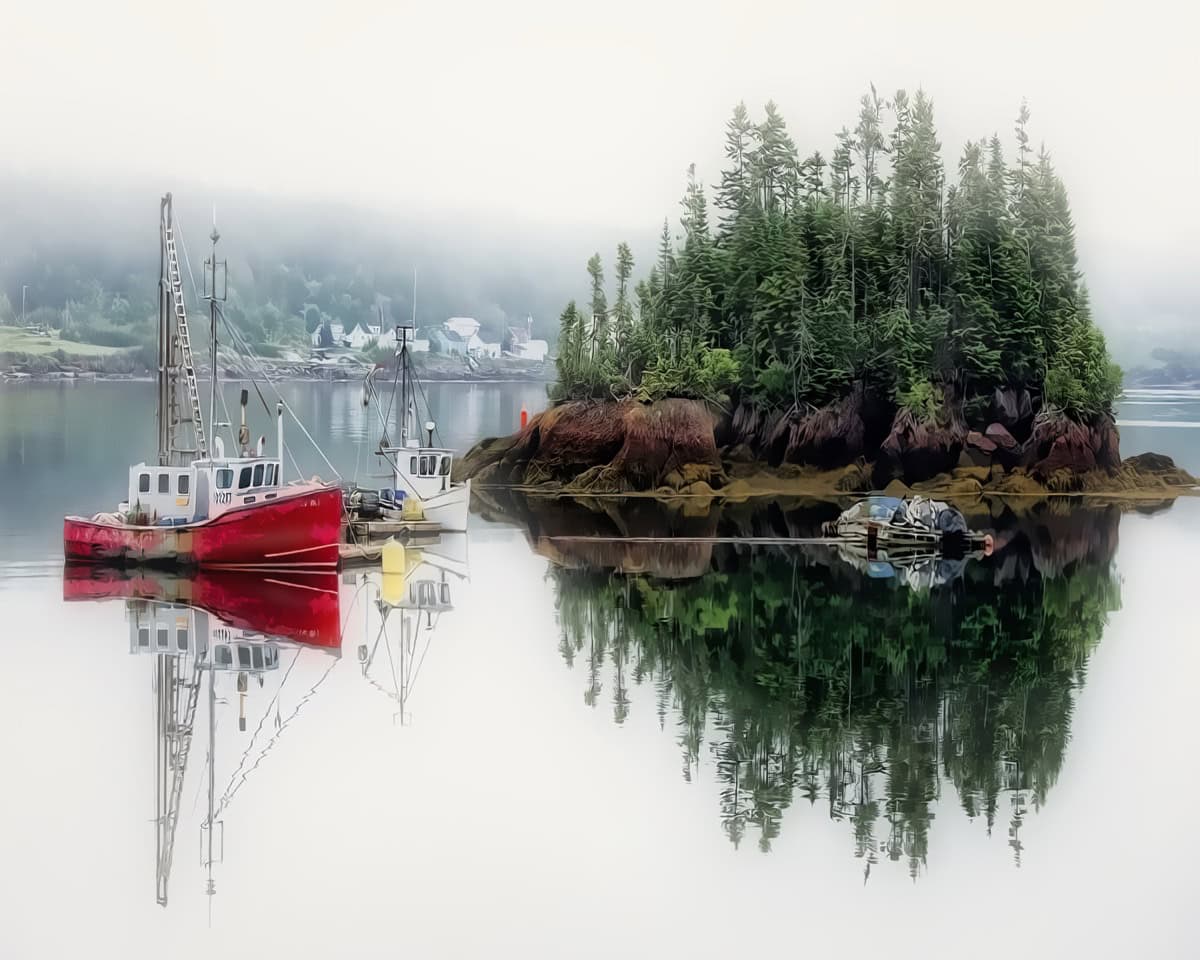
10. Hall’s Harbour — lobster straight from the sea
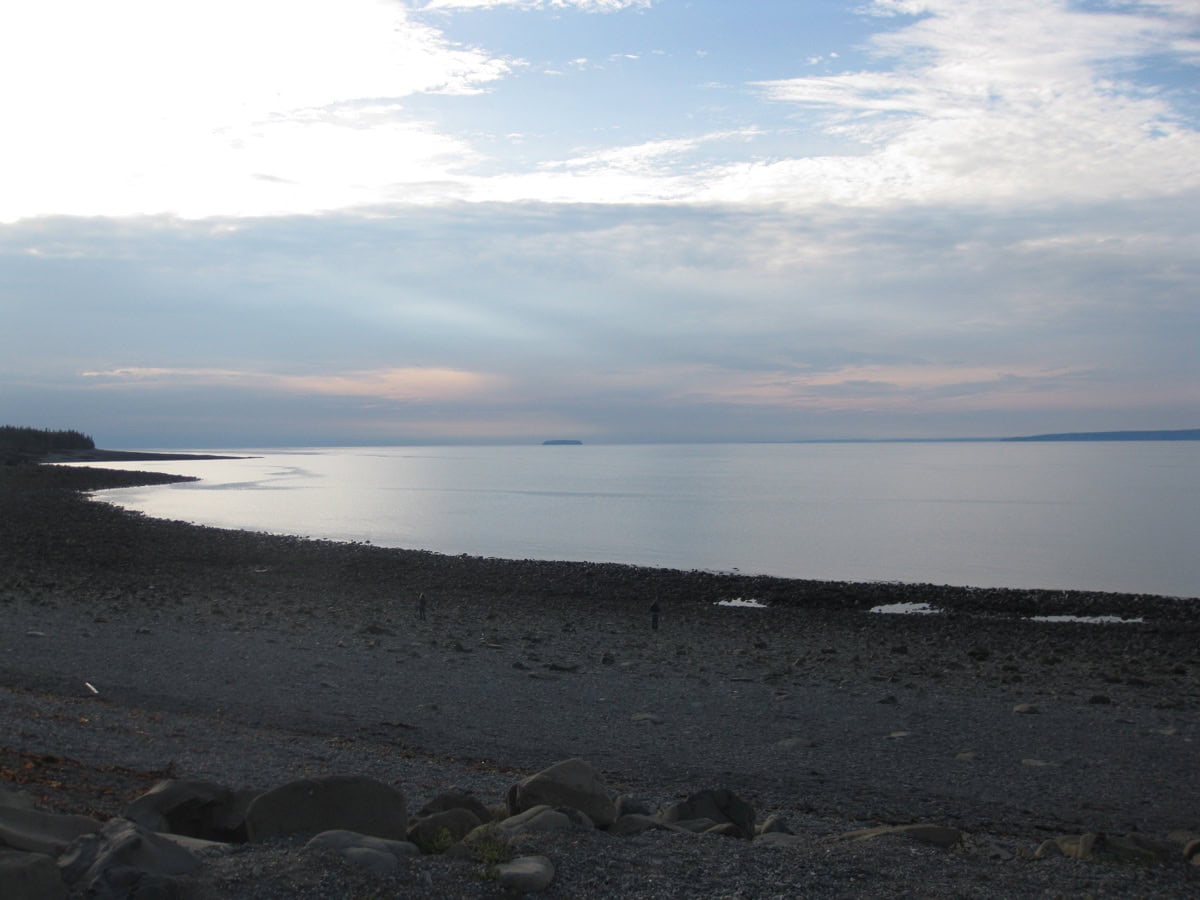
Hall's Harbour with fishing boats
Photo: RobNS / Public domain / Wikimedia Commons

Hall’s Harbour is a tiny fishing village on the north coast, about 30 minutes from Wolfville, and it’s one of those places where you truly understand why people fall in love with the Maritimes. At low tide, the boats sit on the harbour floor (Bay of Fundy, remember — those wild tides), and at high tide, the harbour fills with water and the boats head out to sea.

The main reason to come here? Lobster. Hall’s Harbour Lobster Pound is a restaurant right on the wharf where you choose a live lobster from the tank, have it cooked, and eat it on the terrace overlooking the harbour. It doesn’t get fresher than this. A whole lobster dinner costs around 35–50 CAD (€23–33) depending on size — and it’s worth every penny.

Beyond lobster, you’ll also find a small gallery, a few shops selling local art, and a short coastal trail. The contrast between high and low tide is mesmerising — if you have time, visit twice (once at low tide, once at high tide) and you’ll see what feels like a completely different place.

11. Gaspereau Valley — a hidden wine gem just over the hill

Just beyond Wolfville, past the first ridge of hills, lies Gaspereau Valley — a smaller, more intimate valley that’s essentially a miniature version of the Annapolis Valley. Fewer tourists, quieter wineries, and gorgeous scenery.

Drive along Gaspereau Valley Road — it’s a beautiful loop route where you’ll stumble upon a winery or apple orchard on practically every other hill. Gaspereau Vineyards and L’Acadie Vineyards (the first certified organic winery in the province) are the main stops here.

The valley is also brilliant for cycling — the road sees little traffic, the terrain is hilly but manageable, and you can stop for tastings along the way. Some accommodation in Wolfville lends bikes to guests.

12. Prescott House Museum — Georgian elegance among the gardens

If you have a soft spot for historic houses and gardens, Prescott House Museum in nearby Starr’s Point makes for a pleasant hour or two. It’s a handsome Georgian house from the early 19th century surrounded by sprawling gardens with views over Minas Basin.

Charles Prescott was the man who introduced apple trees to the valley — so you can basically thank him for all that fantastic cider you’ll be drinking. 🍎 The gardens are free to enter and absolutely stunning in autumn. Museum admission is just a few dollars.

13. Evangeline Beach — birdwatching and tidal flats
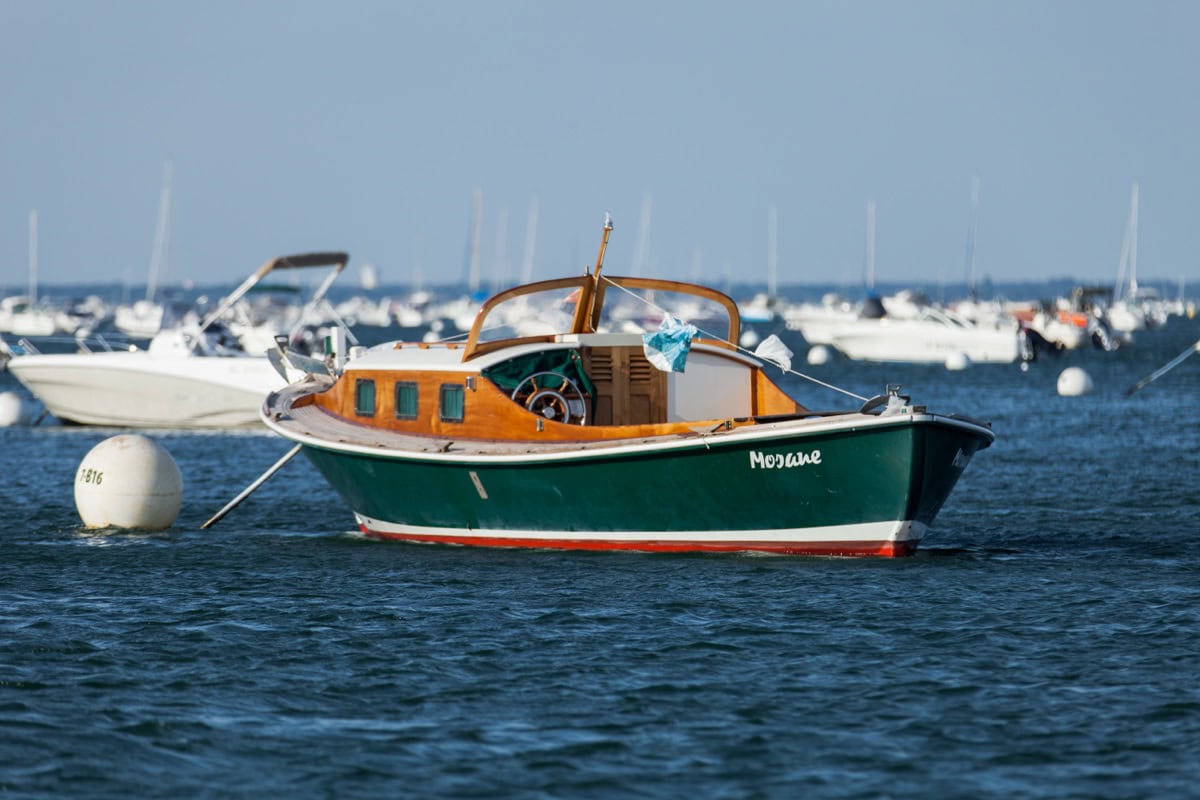
Tidal flats near Grand-Pré
Photo: Grand Parc – Bordeaux, France from France / CC BY 2.0 / Wikimedia Commons

Evangeline Beach near Grand-Pré is one of the most important birdwatching sites in North America — and that’s no exaggeration. Every year in late summer (July–September), hundreds of thousands of migratory birds stop here, particularly semipalmated sandpipers, to refuel before their transatlantic flight to South America.

Even if you’re not a birder, the spectacle is mesmerising — thousands of birds rising in unison and forming swirling clouds above the mudflats. At low tide, enormous flats are exposed and you can walk across them (watch out for the mud — wellies or old shoes are a must). At high tide, sit on the beach and watch the water roll in.

14. Acadia University Art Gallery — culture for a rainy afternoon

When rain arrives (and in Nova Scotia, it will — I can guarantee that), it’s good to have a plan B. Acadia University Art Gallery is a small but surprisingly high-quality gallery right on the university campus. Admission is free and exhibitions rotate regularly, focusing on Canadian and Maritime art.

Combine it with a wander around campus and a coffee at one of the cafés on Main Street — and you’ve got a perfectly pleasant rainy afternoon sorted.

15. Day trip to Hall’s Harbour and Scots Bay — coastal villages with soul

The northern coast of North Mountain between Wolfville and the Bay of Fundy is dotted with tiny fishing villages that feel frozen in time. Besides the already-mentioned Hall’s Harbour (tip #10), Scots Bay is also well worth a stop — it’s the village at the end of the road where the Cape Split trail begins.

Scots Bay has a beautiful pebble beach where you can hunt for agates and semi-precious stones (the Bay of Fundy is famous for them!). Locals say the best finds come after a storm. We found a few lovely pieces of jasper — nothing museum-worthy, but the thrill of the hunt is what it’s all about. 😊

The drive from Wolfville to the north coast takes you over North Mountain and offers gorgeous views in both directions — across the valley and out over the bay. In season, you’ll pass farmstand after farmstand selling apples, peaches, and corn. Cash only, on an honour system — just drop your money in the box.

Where to eat and drink in Wolfville and surrounds

Food in the Annapolis Valley is one of the main reasons to visit. This isn’t fast-food-and-chain territory — people cook with local ingredients here, and farm-to-table isn’t a marketing buzzword but simply the way things are done. There aren’t a huge number of restaurants, but the quality is consistently high.

Right in Wolfville:

  • Troy — arguably the best restaurant in town. Modern Canadian cuisine with a strong focus on local produce. Book ahead, especially at weekends.
  • The Library Pub — a casual gastropub in the centre. Good pizza, burgers, and local craft beer. Perfect for an informal dinner after a day of hiking.
  • Wolfville Farmers’ Market (Saturday) — see tip #5. A breakfast fit for royalty.
  • Just Us! Cafe — a fair-trade café with excellent coffee and homemade pastries. The ideal way to start the day.
  • Church Brewing — the brewery-in-a-church (see tip #6). Craft beer and simple but tasty pub grub.

In the surrounding area:

  • Le Caveau at Domaine de Grand Pré — an elegant restaurant right at the winery. Tasting menus with wine pairings. On the pricier side, but a real experience.
  • Hall’s Harbour Lobster Pound — lobster straight from the sea (see tip #10). An absolute must.
  • Luckett Vineyards Restaurant — pizza and tapas with vineyard views. Summer and autumn here are pure magic.

💡 TIP: During peak season (July–October), book restaurants in advance, especially for Friday and Saturday dinner. Wolfville is small and the popular places fill up fast.

Practical tips to wrap up

What to pack

Nova Scotia has changeable weather — even in summer, mornings can be chilly and afternoons hot. Layering is key. For hiking, don’t forget proper hiking boots, and if you’re planning to explore beaches at low tide, you’ll be glad of wellies or old shoes. For more packing tips, check out our guide on how to pack carry-on only.

Internet and eSIM

If you don’t want the hassle of buying a local SIM card, I’d recommend an eSIM from Holaflyhere’s our detailed review. It works across all of Canada and you can set it up before you even leave home.

Travel insurance

Canada has some of the most expensive hospitals in the world — travel insurance is an absolute must. For shorter trips, we recommend a comprehensive policy from a reputable UK provider, and for longer journeys, SafetyWing is a solid option.

Car hire

As I mentioned above — a car is essential in Wolfville and the Annapolis Valley. We regularly use the comparison site DiscoverCars.com, which compares prices from every rental company in one place.

Flights

Search for cheap flights to Halifax on Kiwi — they combine flights from different airlines, so you’ll often find cheaper connections than booking directly with a single carrier. From the UK, look for direct seasonal routes from London, or connections via Toronto or Montreal.

FAQ — Frequently asked questions about Wolfville and Nova Scotia

Is Wolfville worth visiting?

Absolutely! Wolfville is perfect for anyone looking for an authentic Canadian experience away from the big cities — great wine, stunning nature, excellent food, and friendly people. It’s one of the prettiest small towns in all of Canada. If you’re into wine regions, hiking, or simply a laid-back holiday with character, Wolfville will win you over.

Is Wolfville a small town?

Yes, Wolfville has about 4,500 permanent residents, though the population swells during the academic year thanks to Acadia University students. It’s a quiet, safe little town where everything is walkable. That intimacy is very much part of its charm.

Is Wolfville the prettiest town in Nova Scotia?

That’s obviously subjective, but Wolfville certainly makes the top 3. Its main competition comes from Lunenburg (UNESCO site, colourful waterfront houses) and Mahone Bay (the famous three churches by the water). But Wolfville wins with its combination of nature, wine, and university charm — it’s a different kind of beauty, less “postcard-perfect” but all the more authentic for it.

How many days should you spend in Wolfville?

Ideally 2–4 days. In two days you can cover the main highlights — the Cape Split hike, a couple of wineries, Grand-Pré, and the farmers’ market. With four days, you’ll have time for Blomidon Park, cideries, Hall’s Harbour, tidal bore rafting, and truly soaking up the atmosphere. Wolfville also works brilliantly as a 1–2 night stop on a Nova Scotia road trip.

What is the best time to visit Wolfville?

September and early October — harvest season, fall foliage, wine festivals, and ideal hiking weather (15–22 °C). Summer (June–August) is also lovely and warmer. Spring is quieter, with blossoming apple trees. I’d avoid winter unless you enjoy the cold and don’t mind limited options.

Do you need a car in Wolfville?

Yes, practically speaking. The centre of Wolfville itself is walkable, but the wineries, hiking trails, Blomidon Park, Hall’s Harbour, and other spots around the valley are spread out and public transport is very limited. You can rent a car at Halifax airport.

How much does a holiday in Wolfville cost?

As a rough guide, budget around 280–490 CAD (€185–320) per day for two, covering accommodation, food, tastings, and petrol. A 3–4 day trip will cost approximately €550–1,300 for two (excluding flights and car hire). Nova Scotia is generally more affordable than western Canada, though accommodation prices are higher during peak season in September.

Experiences & tickets
traveler-rated · GetYourGuide
Cabot Trail Scenic Tour by Highland Tours
★★★★★ 5.0 · 1 reviews
from €115
I want this experience →
🔗 These are affiliate links — they don't change your price and help us create content. · All experiences →

Tips and Tricks for Your Vacation

Don’t Overpay for Flights

Search for flights on Kayak. It’s our favorite search engine because it scans the websites of all airlines and always finds the cheapest connection.

Book Your Accommodation Smartly

The best experiences we’ve had when looking for accommodation (from Alaska to Morocco) are with Booking.com, where hotels, apartments, and entire houses are usually the cheapest and most widely available.

Don’t Forget Travel Insurance

Good travel insurance will protect you against illness, accidents, theft, or flight cancellations. We’ve had a few hospital visits abroad, so we know how important it is to have proper insurance arranged.

Where we insure ourselves: SafetyWing (best for everyone) and TrueTraveller (for extra-long trips).

Why don’t we recommend any Czech insurance company? Because they have too many restrictions. They set limits on the number of days abroad, travel insurance via a credit card often requires you to pay medical expenses only with that card, and they frequently limit the number of returns to the Czech Republic.

Find the Best Experiences

Get Your Guide is a huge online marketplace where you can book guided walks, trips, skip-the-line tickets, tours, and much more. We always find some extra fun there!
Campobello Island, New Brunswick: A Guide to the Quiet Island Where Roosevelt Had His Summer Home

TL;DRCampobello Island is a small Canadian island in the Bay of Fundy, New Brunswick, home to around 900 people. The easiest way in is by car over the bridge from Lubec, Maine, though there’s also a seasonal ferry from Deer Island. The main draw is the free Roosevelt Campobello International Park, built around Franklin D. Roosevelt’s summer home, plus the Head Harbour Lightstation, a lighthouse you can only reach at low tide. Come from mid-June to early September, when the ferries run and you can spot humpbacks and fin whales on a whale-watching trip. Give it at least a full day, though two nights is better — budget CAD 600–830 for two, not counting flights or a hire car. Herring Cove Provincial Park, with its beaches and trails, is also worth the trip.

Some places can only be reached by a single bridge — and the moment you cross it, you feel like you’ve stepped back a hundred years in time. That’s exactly how Campobello Island Canada struck us. A small island in the Bay of Fundy, where Canada meets America, where the tides transform the landscape beyond recognition every six hours, and where you might genuinely not see more than five people the entire day. I mean that literally.

This island has something that’s hard to put into words — a peculiar stillness, salty air mingled with the scent of spruce trees, and a feeling that the world simply isn’t in a rush here.

In this article, you’ll find a complete guide to Campobello Island — from tips on what to see and do, to practical advice on how to get there (because it’s not exactly straightforward), to where to eat and where to stay. I’ve put together an overview of the island’s most beautiful spots, including the famous Roosevelt summer home, the iconic Head Harbour Lightstation, and other corners that will take your breath away.

TL;DR

  • Campobello Island is a small Canadian island in the Bay of Fundy (New Brunswick province), most easily accessible by car from the USA via a bridge from Lubec, Maine.
  • The main attraction is Roosevelt Campobello International Park with President Franklin D. Roosevelt’s summer home — admission is free.
  • The stunning Head Harbour Lightstation (East Quoddy Lighthouse) is only accessible at low tide — check the tide tables!
  • Herring Cove Provincial Park offers beautiful beaches, a golf course, and hiking trails with Bay of Fundy views.
  • Only about 900 people live on the island, so don’t expect big-city amenities — it’s a quiet, authentic slice of Canada.
  • The best time to visit is June to September, when most attractions are open and whale watching season is in full swing.
  • You can go whale watching from the island — the Bay of Fundy is home to humpbacks, minke whales, and rare North Atlantic right whales.
  • Plan to spend at least a full day on the island, ideally two nights.
  • If you’re coming from the Canadian side (not via Maine), you’ll need to take a seasonal ferry from Deer Island — it only runs in summer.

When to visit Campobello Island and how to get there

Campobello Island isn’t the kind of place you stumble upon by accident. It sits on the far eastern tip of Canada, in the Bay of Fundy between New Brunswick and Maine, and getting there takes a bit of planning. But don’t worry — once you’ve sorted the logistics, the reward is enormous. Let’s walk through the best time to go and your transport options.

Best time to visit

The season on Campobello Island is fairly short. The best time to visit is from mid-June to early September. During this period, Roosevelt Campobello International Park is open, ferries are running, restaurants are operating, and whale watching season is underway.

We visited in late July and the weather was absolutely perfect — around 22 °C (72 °F), sunny with the occasional sea mist that lent the landscape an almost mystical atmosphere. Be prepared, though: even in summer it can be chilly and windy along the coast, especially near the lighthouse. A fleece and a windproof jacket are essentials.

June is great for fewer tourists and blooming lupins along the roadsides. July and August are the warmest and liveliest months. September brings gorgeous autumn colours, but some attractions start closing. Off-season (October–May) the island is very quiet, most services shut down, and the ferry from Deer Island doesn’t run.

How to get to Campobello Island

Here’s where it gets interesting. Campobello Island is Canadian territory, yet paradoxically the easiest way to reach it is from the USA. 😅

Option 1: Via the bridge from Lubec, Maine (year-round)

The simplest and most common route. From the small town of Lubec in Maine, the Franklin Delano Roosevelt Memorial Bridge crosses the strait directly to Campobello Island. The bridge is open year-round, 24 hours a day. There are border checkpoints on both sides — you’ll need a valid passport (or for US and Canadian citizens, a NEXUS card will do). The crossing is quick, and there are rarely any queues.

This is important: if you’re travelling through Canada and don’t want to go through the US, you’ll need to take a different route.

Option 2: Ferry via Deer Island (seasonal)

If you’re touring New Brunswick and don’t want to cross into the USA, you can reach Campobello by ferry from Deer Island. First, take the free ferry from Letete (near St. George) to Deer Island, then continue on the paid East Coast Ferries service to Campobello. The ferry runs from approximately late June to early September, and the fare is around 20 CAD (roughly €14) for a car with driver. The timetable depends on the tides — yes, even the ferries here run according to nature.

We always have good results with DiscoverCars, which we use all over the world — and you’ll definitely need a car on Campobello Island. There’s no public transport on the island whatsoever.

Option 3: From Eastport, Maine (seasonal ferry)

In summer, a small ferry also runs from Eastport in Maine to Deer Island, from where you continue on to Campobello. This option is more for adventurous travellers wanting to explore the entire Bay of Fundy by water.

Whichever route you choose, keep in mind that you’re crossing an international border. Even though it’s just a small bridge, you’re travelling between Canada and the USA. A passport is a must.

For UK-based travellers, the most practical approach is to fly into Boston, Portland (Maine), or Halifax, then pick up a hire car and drive. British passport holders need an eTA for Canada and an ESTA for the USA (since you’ll likely be crossing between both countries). Make sure both are sorted before you go.

Where to stay on Campobello Island and how much it costs

Lodging on Campobello Island is… let’s say limited. But that’s part of its charm — you’re not in a tourist resort, you’re on a real island where most homes belong to locals. There aren’t many accommodation options, so during peak season (July–August) I’d recommend booking well in advance.

On the island, you’ll mainly find B&Bs, small guesthouses, and whole-house rentals via Airbnb or VRBO. Don’t look for a standard hotel here — and that’s actually a good thing, because you’ll get to enjoy an authentic atmosphere.

Approximate prices per night (peak season):

  • B&B / Guesthouse: 120–180 CAD (€80–120) for a double room with breakfast
  • House/cottage rental (Airbnb/VRBO): 150–300 CAD (€100–200) per night, depending on size
  • Campobello doesn’t have a proper hotel or large campsite — if you want to camp, head to Herring Cove Provincial Park, which has basic pitches (around 30–40 CAD / €20–27 per night)

If you can’t find accommodation on the island or want to save money, you can stay in Lubec, Maine (just across the bridge) — there’s a slightly wider selection and similar prices.

Approximate total budget for two nights for two people:

  • Accommodation (2 nights): 300–400 CAD (€200–270)
  • Food (restaurants + groceries): 120–180 CAD (€80–120)
  • Petrol: 30–50 CAD (€20–34)
  • Whale watching (optional): 140–200 CAD (€95–135) for two
  • Total for two: approx. 600–830 CAD (€400–560) excluding flights and car hire

Campobello Island: 12 things to see and do

Now let’s get to the best part — what to actually do on Campobello Island. The island may be small (about 14 km long), but it’s surprisingly packed with things to see. From a presidential summer home to lighthouses, beaches, trails, and whale watching. Here are 12 top tips for making the most of what Campobello has to offer.

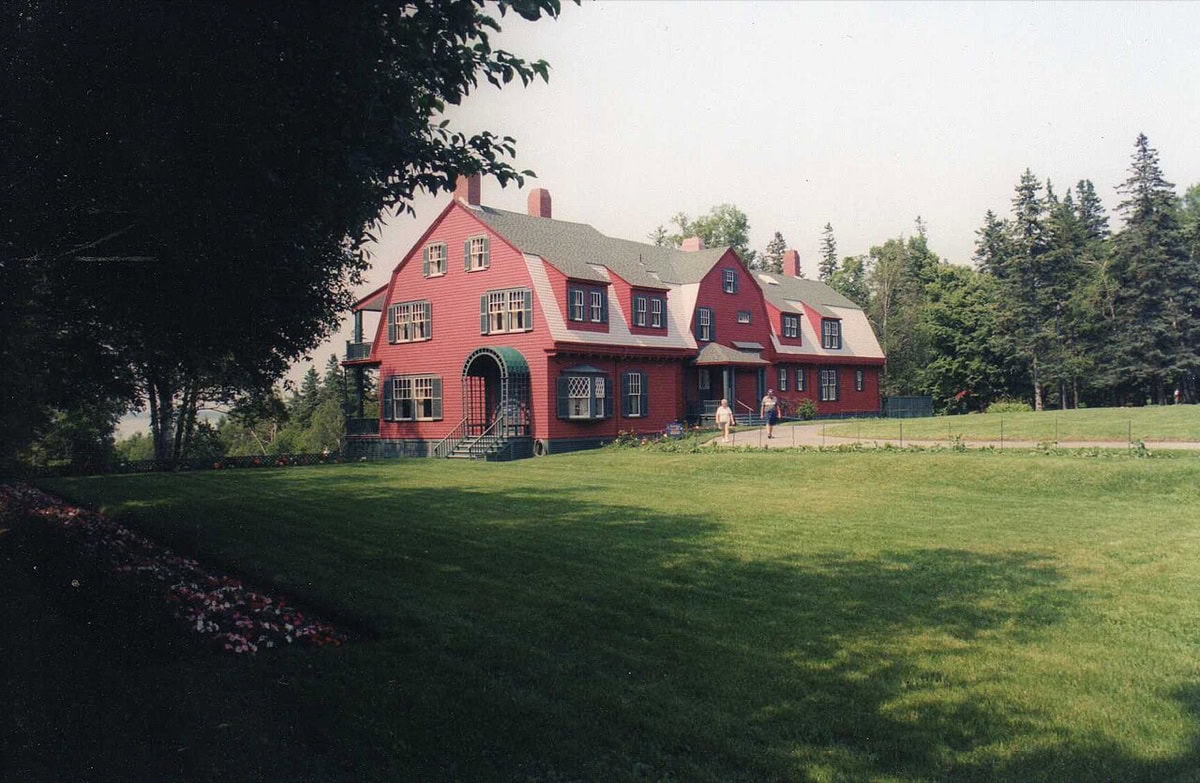
1. Roosevelt Campobello International Park — the summer home where history was made

Roosevelt's summer home on Campobello Island
Photo: Leonora Enking / Wikimedia Commons (CC BY-SA 2.0)

This is hands-down the main reason most people head to Campobello Island, and rightly so. Roosevelt Campobello International Park is a unique international park jointly managed by Canada and the USA — the only one of its kind in the world.

At the heart of the park is Roosevelt Cottage, the Roosevelt family’s summer home where Franklin D. Roosevelt spent holidays from childhood. It was here, in 1921, that polio struck him — an illness that changed his life forever and, paradoxically, may have helped prepare him for the presidency. The house is preserved in its original state and tours are completely free. The guides (mostly students) enthusiastically explain how the family lived, where FDR went fishing, and where his wife Eleanor hosted picnic lunches.

Besides the main house, you can also visit other historic cottages — Hubbard Cottage and Wells-Shober Cottage. The entire grounds are beautifully set in the coastal landscape with views over Passamaquoddy Bay.

The park is open from late May to mid-October, daily from 9:00 to 17:00 (during peak season). Let me say it again — admission is free. In North America, where you seem to pay for everything, that’s a wonderful exception. 😊

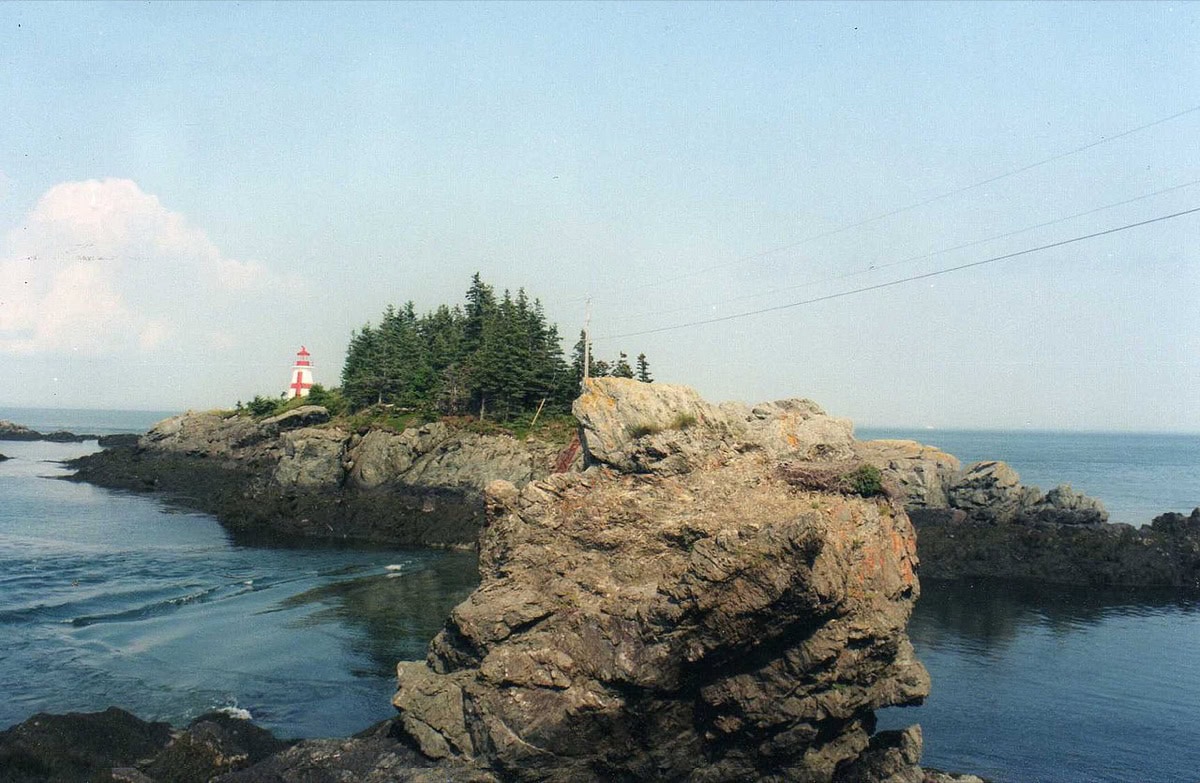
2. Head Harbour Lightstation (East Quoddy Lighthouse) — the lighthouse at the end of the world

Head Harbour Lightstation (East Quoddy Lighthouse) on Campobello Island
Photo: Leonora (Ellie) Enking / Wikimedia Commons (CC BY-SA 2.0)

This place will blow you away. Head Harbour Lightstation, also known as East Quoddy Lighthouse, stands on a rocky islet at the very northern tip of Campobello Island. It’s one of the most iconic and most photographed lighthouses in all of Canada — and once you see it, you’ll understand why.

Here’s the crucial detail: you can only reach the lighthouse at low tide. The Bay of Fundy sees tidal differences of up to 8 metres (among the highest tides on Earth!), so at high tide the islet with the lighthouse is completely cut off from land. At low tide, a short path over rocks and iron ladders leads you there.

Before heading out, check the tide table — you can find it on the Fisheries and Oceans Canada website or at the island’s visitor centre. Ideally, arrive about an hour before the lowest tide to give yourself plenty of time for the round trip. The water rises faster than you’d expect, and getting stranded at the lighthouse during high tide wouldn’t exactly be ideal. 😅

The journey to the lighthouse is an adventure in itself — you scramble over wet rocks, cross patches of kelp and seaweed, and finally climb metal stairs. Your reward is a gorgeous red-and-white lighthouse with a cross on top and panoramic views of the Bay of Fundy, where with a bit of luck you might even spot whales.

3. Herring Cove Provincial Park — beaches, trails, and the best views on the island

Herring Cove Provincial Park on Campobello Island
Photo: Ken Gallager / CC BY-SA 3.0 / Wikimedia Commons

If you love nature (and I’ll assume you do, since you’re heading to Campobello), Herring Cove Provincial Park will delight you. This provincial park covers a large portion of the island’s southeastern side and offers a bit of everything — beaches, hiking trails, a golf course, and stunning coastal scenery.

Herring Cove Beach is a long stretch of pebbles and sand where at low tide the sea reveals fascinating rock formations and pools teeming with starfish, crabs, and other marine creatures. For kids (and honestly for adults too), exploring these tidal pools is an absolutely captivating experience.

Several hiking trails of varying lengths and difficulty levels start from the park. I’d particularly recommend the Herring Cove Trail (about 3 km), which follows the coastline with lovely views of the bay. The trails are well-marked and manageable even for casual walkers.

Entry to the park is free. The only things you pay for are the campsites and the golf course. Speaking of which, golf at Herring Cove is apparently a wonderful experience — a nine-hole course with ocean views for just a few dollars. We don’t play golf ourselves, but even non-golfers will appreciate the views.

4. Whale watching in the Bay of Fundy — humpbacks within arm’s reach

Humpback whale in the Bay of Fundy
Photo: Irene Steeves from Canada / CC BY 2.0 / Wikimedia Commons

The Bay of Fundy is one of the best places for whale watching in all of North America. The cold, nutrient-rich waters attract humpback whales, minke whales, finback whales, and even critically endangered North Atlantic right whales.

Whale watching trips from Campobello and the surrounding area typically last 2–3 hours and cost around 60–100 CAD (€40–67) per person. Most operators run from St. Andrews or from Eastport in Maine, but some smaller companies offer excursions from the island itself.

Peak whale watching season runs from July to September, with August being the absolute best month. Besides whales, you’ll often spot seal colonies, ospreys, and maybe even sharks if you’re lucky (or unlucky, depending on your perspective 😅).

If you’ve never seen a whale in the wild, don’t miss this chance. The moment a humpback’s three-metre fluke surfaces just a few dozen metres from the boat is something you simply can’t describe — you have to experience it.

5. Friar’s Head — dramatic cliffs with panoramic views

On the northwestern side of the island you’ll find Friar’s Head, a volcanic-looking rock formation that offers stunning panoramic views of the American coastline, Eastport island, and the full breadth of Passamaquoddy Bay.

The climb is short — from the car park it takes about 10–15 minutes on a well-worn path to reach the top. Up there you’ll find a bench and plenty of space for a picnic. On a clear day, you can see for miles. We sat there for about half an hour just gazing — there’s truly no need to rush here.

The rocks have an interesting reddish-brown colour and an unusual shape that resembles a friar’s cowl — which is probably where the name Friar’s Head comes from. It’s one of those places where you really appreciate the geological power of the Bay of Fundy.

6. Mulholland Point Lighthouse — the most photogenic lighthouse on the island

White Mulholland Point Lighthouse on Campobello Island
Photo: Gordon Leggett / Wikimedia Commons (CC BY-SA 4.0)

While Head Harbour Lightstation is the dramatic, adventurous one, Mulholland Point Lighthouse is the romantic, easy-to-reach one. It stands right by the main road near the bridge from Lubec, so you can’t miss it — and you really shouldn’t, because it’s gorgeous.

The white-and-red lighthouse sits on a grassy area with views over the strait and the American shoreline. It’s one of the most photographed spots on the island — understandably so. The lighthouse itself isn’t open to the public, but the grounds are freely accessible and it’s a perfect spot for a picnic or simply a quiet moment with a view.

At low tide, the rocky seabed around the lighthouse is exposed, and you can observe marine life. At sunset, this place is absolutely magical — the sun dips behind the American coast and the lighthouse stands silhouetted against an orange sky.

7. Con Robinson’s Point and Liberty Point — wild coastline without the crowds

If you want to experience absolute solitude and wild, untouched nature on Campobello, head to the southern tip of the island — Liberty Point and Con Robinson’s Point. This area is part of Roosevelt Campobello International Park, but most visitors never make it here because they focus on the Roosevelt house.

Liberty Point is a dramatic cliff where the full force of the Bay of Fundy crashes against dark rocks. You stand on the edge as enormous waves roll in below — it’s mesmerising. An easy trail leads from the car park to the cliffs (about 1 km), so it’s genuinely accessible to anyone.

Con Robinson’s Point is similar but even more remote. We didn’t see a single soul here — just us, the rocks, the wind, and the sea. If you’re looking for a place to meditate or simply be alone with your thoughts for a while, this is it.

8. Tidal pools — nature as an aquarium

One of the most amazing things about Campobello Island (and the Bay of Fundy as a whole) are the tidal pools that appear at low tide. Picture this: the water retreats by several metres, and all along the shoreline, small rock pools brimming with life are left behind — starfish, sea urchins, crabs, anemones, snails, and sometimes even small fish.

The best spots for exploring tidal pools are along Herring Cove and around Head Harbour Lightstation. I’d recommend wearing wellies or old shoes you don’t mind getting wet — the rocks are slippery from seaweed. And most importantly: put everything back where you found it, and don’t take anything with you.

This is an activity that thrills absolutely everyone — from small children to grown-up marine biology enthusiasts.

9. Herring Cove Golf Course — nine holes with an ocean view

Even if you’re not normally a golfer (like us), Herring Cove Golf Course is worth a mention. It’s a nine-hole course right inside the provincial park, with views over the Bay of Fundy, and it’s said to be one of the oldest golf courses in New Brunswick.

Prices are ridiculously low compared to what you’d pay elsewhere — around 25–35 CAD (€17–24) for 9 holes. The course is open from June to September. Even if you don’t play, you can wander the area and soak up the scenery — those views alone are worth it.

10. Campobello Island Heritage Trail — a walk through the island’s history

Roosevelt Cottage on Campobello Island
Photo: btwashburn from Belmont / CC BY 2.0 / Wikimedia Commons

Around the island you’ll find several interpretive panels and heritage trails that walk you through Campobello’s history — from its Indigenous roots (the Passamaquoddy nation) through the era of wealthy American families’ summer estates, right up to the present day.

The Heritage Trail runs through the centre of the island past historic buildings, an old cemetery, and original fishing harbours. The full walk takes about an hour and a half and is a lovely way to appreciate Campobello not just as a natural destination but as a cultural one too.

You can pick up a brochure with a trail map at the visitor centre by Roosevelt Park. I’d recommend starting there — the guides are happy to advise on what’s happening on the island and what the current weather’s doing (it changes quickly here in the Bay of Fundy, as you might expect).

11. Birdwatching — a paradise for ornithologists

Campobello Island is an exceptional birdwatching destination. Thanks to its position on a migratory route and its diverse habitats (coastline, wetlands, forest), you can spot dozens of bird species here.

Among the most prized sightings are ospreys, which nest on tall poles along the roads — their massive nests are hard to miss. You’ll also find bald eagles, various shorebird species, puffins (on nearby Machias Seal Island, accessible by boat), and in the forest, woodpeckers and warblers.

The best birdwatching spots are Herring Cove Provincial Park, the area around Head Harbour, and the wetlands in the centre of the island. If you’re serious about birding, try to arrange a trip to Machias Seal Island — one of the few Atlantic puffin colonies on the east coast — with boats departing from Seal Cove on Grand Manan Island.

12. Sunset over the strait — a ritual you mustn’t miss

This isn’t an “attraction” in the traditional sense, but it might be the most powerful experience you’ll take away from Campobello Island. Watching the sunset over the strait between Campobello and the American town of Lubec is something truly special.

The best spot to watch the sunset is at Mulholland Point Lighthouse or from anywhere along the island’s western shore. The sun sinks behind the American town, the water in the strait turns shades of orange and pink, and if you’re lucky you’ll see the silhouettes of fishing boats heading back to harbour.

We watched the sunset with a bottle of Canadian wine and a baguette from the local shop — and it was one of those moments that remind you why you travel. No crowds, no noise, just us and nature. ☺️

What to eat and drink on Campobello Island

Let’s be honest — you don’t come to Campobello Island for the dining scene. 😅 The island has fewer than 900 residents, and the number of restaurants can be counted on one hand. But what’s here is worthwhile, and besides, you’ll find the freshest seafood imaginable.

Local restaurants

Family Fisheries — this is probably the best-known establishment on the island. It’s housed in a simple building by the road and serves fresh fish and seafood at reasonable prices. Fish and chips cost around 15–18 CAD (€10–12) and it’s exactly as good as you’d expect from a place where fishermen bring in their catch every morning. Lobster is obviously a must — if it’s in season (usually spring and summer), order a lobster roll and you’ll be in heaven.

Herring Cove Restaurant — if it’s open (it operates seasonally), you’ll find a simple but tasty menu focused on local ingredients.

Tip: There’s one small grocery shop on the island where you can pick up basic supplies. But the selection is limited, so if you’re planning to cook, stock up in Lubec or St. Stephen beforehand. We made the mistake of counting on the island shop, and ended up having tinned soup and crackers for dinner. Romantic. 😅

What to try

  • Lobster — in any form, but ideally a whole boiled one or a lobster roll
  • Scallops — the Bay of Fundy is famous for them
  • Dulse — dried seaweed that’s a Bay of Fundy speciality. It looks suspicious but tastes surprisingly good — salty and a bit like crisps
  • Fish and chips — a classic, made with freshly caught fish here
  • Fiddleheads — young fern shoots, a seasonal delicacy (spring). If you come across them, give them a try!

Food in Lubec, Maine

If you need more choice, pop across the bridge to Lubec. You’ll find several more restaurants and cafés there — Water Street Tavern serves solid burgers and seafood, and Lubec Brewing Company offers local craft beers with harbour views.

Practical tips for visiting Campobello Island

Getting around the island

You need a car on the island. There’s no public transport, no taxis, no Uber. The roads are in good condition but narrow, and some wind through the forest. You can drive across the entire island in 20 minutes, so don’t worry — navigation is easy.

Look for affordable flights to Boston, Portland (Maine), or Halifax and then pick up a hire car. From the UK, you can find good deals with airlines like British Airways, Virgin Atlantic, or budget carriers via Icelandair or WestJet.

Mobile signal and internet

Mobile signal on the island works but can be patchy in more remote spots. Wi-Fi is available at most accommodation and in the visitor centre. If you need reliable data, consider an eSIM from Holafly — it works brilliantly in both Canada and the USA, which comes in handy when you’re crossing the border.

What to pack

For Campobello you’ll definitely need to dress in layers — the weather changes quickly. A waterproof jacket and good hiking boots are essential, especially if you’re planning to clamber over rocks to the lighthouse. For detailed packing advice, check out our guide on how to pack into carry-on luggage.

Travel insurance

For a trip to Canada (and especially if you’re combining it with the USA), absolutely don’t skip travel insurance. Healthcare in North America is eye-wateringly expensive. We recommend SafetyWing, which we use for our longer trips. For UK travellers, make sure your policy covers both Canada and the USA, since you’ll likely be crossing between the two.

Border crossings

Remember, crossing the bridge from Lubec to Campobello means crossing an international border. You need your passport. On the Canadian side, they’ll ask about the purpose of your visit and how long you’re staying — say “tourism” and “one/two days” and you’re sorted. Same thing on the way back into the US. It’s usually quick and hassle-free, though in peak season there can be short queues. UK passport holders need a valid ESTA for the US side and a Canadian eTA — both can be applied for online in advance.

Money

The island uses Canadian dollars. Most businesses also accept US dollars, but the exchange rate won’t be in your favour. You can pay by card almost everywhere, but it’s worth having some cash on you — it comes in handy at smaller establishments.

What to see near Campobello Island

If you have more time, Campobello makes an excellent base for exploring the wider Bay of Fundy region. Here are a few day-trip ideas:

  • Lubec, Maine — the easternmost point of the contiguous USA. A charming little town with galleries, cafés, and excellent seafood. You can walk there across the bridge.
  • St. Andrews-by-the-Sea, New Brunswick — a gorgeous historic town with colonial architecture, whale watching trips, and superb restaurants. About 1.5 hours by car (via Lubec and the US, or by ferry via Deer Island).
  • Grand Manan Island — a larger island in the Bay of Fundy, accessible by ferry from Blacks Harbour. Perfect for puffins, whale watching, and hiking.
  • Fundy Trail Parkway — a scenic road along the Bay of Fundy with breathtaking viewpoints and waterfalls.
  • Hopewell Rocks — the famous “flowerpot rocks” sculpted by the tides. An iconic New Brunswick landmark.

If you’re planning a longer road trip across Canada, have a look at our guide to a road trip through western Canada — the east coast is a completely different world, but the planning principles are similar. And if your travels take you to Niagara Falls, we’ve got an article for that too. 😊

FAQ — Frequently asked questions about Campobello Island

How do I get to Campobello Island?

The easiest way is by car via the Franklin Delano Roosevelt Memorial Bridge from the town of Lubec in Maine, USA. The bridge is open year-round. Alternatively, in summer (approximately late June to early September) you can take a seasonal ferry from Deer Island in New Brunswick if you’d rather not cross into the US. In both cases, you’re crossing an international border, so you’ll need a valid passport.

Do I need a passport to visit Campobello Island?

Yes, almost always. If you’re arriving via the bridge from Lubec (Maine), you’re crossing the US–Canada border and a passport is required. The only exception is the ferry from Deer Island if you’re travelling entirely within Canada — but even then we’d recommend having your passport, since the island is so close to the US that it may come in handy.

How much time do I need to explore Campobello Island?

For a basic tour of the main attractions (Roosevelt Cottage, Head Harbour Lighthouse, Herring Cove), one full day is enough, but I’d recommend spending two nights on the island. That gives you time for whale watching, exploring the more remote trails, and — crucially — timing your visit to the lighthouse around the tides.

Is Campobello Island suitable for families with children?

Absolutely! Children love exploring the tidal pools to find starfish and crabs. Roosevelt Cottage has interactive interpretation suitable for younger visitors, and the nature trails at Herring Cove are comfortable even for smaller kids. Whale watching is an unforgettable experience for children. Just keep in mind there are no theme parks or big attractions — it’s all about nature and tranquillity.

When is the best time to visit Campobello Island?

The best time is from mid-June to early September, when Roosevelt Park is open, ferries are running, and all services are available. July and August are the warmest months (around 20–25 °C / 68–77 °F) but also the busiest. June offers fewer tourists and blooming lupins. September brings autumn colours, but some attractions start to close. Off-season (October–May), most services are shut.

How do the tides work on Campobello Island?

The Bay of Fundy has some of the highest tides in the world — the difference between high and low tide can reach up to 8 metres (26 feet). This affects access to Head Harbour Lightstation (only reachable at low tide), the appearance of the beaches, and even the ferry timetable. Always check the current tide table on the Fisheries and Oceans Canada website before heading out.

Are there restaurants and shops on Campobello Island?

Yes, but very limited. You’ll find a handful of seasonal restaurants on the island (Family Fisheries is the best known) and one small grocery shop. I’d recommend stocking up on basics in Lubec (Maine) or St. Stephen (New Brunswick) beforehand. In Lubec, just across the bridge, there’s a slightly wider selection of restaurants and services.

Tips and Tricks for Your Vacation

Don’t Overpay for Flights

Search for flights on Kayak. It’s our favorite search engine because it scans the websites of all airlines and always finds the cheapest connection.

Book Your Accommodation Smartly

The best experiences we’ve had when looking for accommodation (from Alaska to Morocco) are with Booking.com, where hotels, apartments, and entire houses are usually the cheapest and most widely available.

Don’t Forget Travel Insurance

Good travel insurance will protect you against illness, accidents, theft, or flight cancellations. We’ve had a few hospital visits abroad, so we know how important it is to have proper insurance arranged.

Where we insure ourselves: SafetyWing (best for everyone) and TrueTraveller (for extra-long trips).

Why don’t we recommend any Czech insurance company? Because they have too many restrictions. They set limits on the number of days abroad, travel insurance via a credit card often requires you to pay medical expenses only with that card, and they frequently limit the number of returns to the Czech Republic.

Find the Best Experiences

Get Your Guide is a huge online marketplace where you can book guided walks, trips, skip-the-line tickets, tours, and much more. We always find some extra fun there!
Fredericton, New Brunswick: 15 Best Things to See and Do in Canada’s Hidden Capital

TL;DRFredericton, capital of New Brunswick and home to around 65,000 people, comes with 15 tips on what to see, from the Beaverbrook Art Gallery and its Salvador Dalí works (entry around 10 CAD) to the Fredericton Heritage Walking Bridge — the world’s longest covered footbridge (nearly 400 metres across the Saint John River) — plus the Garrison District, Riverfront Trail and Boyce Farmers Market. One or two days is enough for the city itself, June to September is the best time to go, and rooms in the centre start at 120 CAD a night. You’ll fly via Halifax, Toronto or Montreal, then it’s a 3–5 hour drive from there. Fredericton also makes a great base for trips to the Bay of Fundy, about 2 hours away by car.

Fredericton is the capital of the Canadian province of New Brunswick and a vibrant university town — home to the University of New Brunswick, one of the oldest English-language universities in North America. This gives the city a youthful energy, brilliant cafés, and a surprisingly lively cultural scene. If you’re looking for the best things to do in Fredericton Canada, you’ll find them along the Saint John River, which winds through the heart of the city — its banks are lined with walking and cycling trails, handsome red-brick buildings, and in summer, live music on practically every corner.

In this article, you’ll find 15 tips on what to see and do in Fredericton — from the world’s longest covered pedestrian bridge and a gallery housing works by Dalí, to tips on where to get the best lobster roll in town. I’ll also share the best time to visit, where to stay, and how much it all costs.

TL;DR

  • Fredericton is the capital of New Brunswick and a surprisingly charming university town with a population of around 65,000. It’s predominantly English-speaking (even though New Brunswick is officially a bilingual province).
  • Beaverbrook Art Gallery is one of the finest small galleries in Canada — featuring works by Dalí and Canadian masters. Admission is around 10 CAD (roughly €7).
  • Fredericton Heritage Walking Bridge (formerly known as “The Green”) is the world’s longest covered pedestrian bridge — nearly 400 metres spanning the Saint John River.
  • Garrison District is the historic heart of the city with Officers’ Square, where summer brings concerts and period-costume guard ceremonies.
  • Riverfront Trail is a gorgeous path along the river, perfect for walking or cycling (bikes can be borrowed for free through the Bike Share programme).
  • The best time to visit is June to September, when the weather is pleasant and the city buzzes with cultural events.
  • Accommodation starts from around 120 CAD (about €80) per night for a decent hotel in the centre.
  • One to two days is enough for Fredericton, but if you combine it with a road trip through New Brunswick (Fundy, Moncton, Saint John), it makes an ideal base.
  • There are no direct flights from the UK — the best route is via Toronto, Montreal, or Halifax, from where it’s a 3–5 hour drive. Fredericton sits roughly in the middle of New Brunswick — the Saint John River is your natural guide through the entire city.

When to Visit Fredericton and How to Get There

Fredericton sits in the Atlantic Time Zone (UTC-4, five hours behind London), which is worth knowing when you’re planning — the Fredericton Canada time difference is noticeable and jet lag is real. But let’s get to the more important stuff.

Best Time to Visit

The ideal time to visit Fredericton is from June to September. Summer is short but intense — temperatures hover around 22–28 °C, the city comes alive, parks are in bloom, and Officers’ Square hosts concerts and cultural events nearly every day. July and August are the warmest months.

September and October are fantastic for the autumn colours — the deciduous trees along the Saint John River transform into a palette of orange, red, and gold. It’s one of the best experiences along the entire East Coast. It gets a bit cooler (around 10–18 °C), but there are far fewer tourists.

I’d give winter a miss unless you’re a keen cross-country skier or love temperatures of -20 °C. Fredericton in winter looks like a fairy tale, but most outdoor attractions are closed and the city goes rather quiet. 😅

How to Get to Fredericton

By air: Fredericton has its own airport (YFC — Fredericton Canada airport code), but there are no direct flights from Europe. The most common route is via Toronto or Montreal, with connecting domestic flights on Air Canada or WestJet. Domestic flight prices typically range from 200–400 CAD (€135–270) one way. Alternatively, you can fly into Halifax and drive from there (about 3.5 hours). From the UK, look for flights to Toronto or Halifax with Air Canada, British Airways, or WestJet — connecting services to Fredericton are straightforward from either hub.

We always hunt for cheap flights to Canada on Kiwi — it’s our go-to search engine and you can often find great deals routed via Iceland or with stopovers.

By car: If you’re planning a road trip through Canada, Fredericton is an ideal stop on the route between Montreal and Halifax. From Montreal, it’s roughly a 7-hour drive along the scenic Trans-Canada Highway. From the city of Saint John (not to be confused with St. John’s in Newfoundland!), it’s about an hour.

We’ve had consistently great experiences with DiscoverCars, which we use all over the world. A car gives you complete freedom in New Brunswick — public transport outside the larger towns is virtually non-existent.

Where to Stay in Fredericton + How Much It Costs

Fredericton is a pleasantly compact city and most attractions are within walking distance of the centre. The best area to stay is near Garrison District or along the river — from there you can reach everything on foot.

Price-wise, Fredericton is considerably more affordable than Toronto or Vancouver. A decent hotel in the centre starts from 120–180 CAD (€80–120) per night, and a comfortable B&B from 100 CAD (€67). Prices rise slightly in summer, but nothing dramatic.

If you’re travelling by car and want to save, there are campsites and motels around Fredericton from 60–80 CAD (€40–55).

Weekend budget for two in Fredericton (approximate):

  • Accommodation (2 nights): 250–360 CAD (€170–245)
  • Food (eating out twice a day): 120–180 CAD (€80–120)
  • Activities and admission fees: 30–60 CAD (€20–40)
  • Total for two: roughly 400–600 CAD (€270–405) excluding transport

Don’t forget that in Canada, tax is added on top of menu prices (HST in New Brunswick is 15%) and tipping of 15–20% is expected. So when you see a burger for 18 CAD on the menu, you’ll actually pay closer to 24 CAD. It’s not cheap, but still significantly less expensive than western Canada.

For travel insurance, we recommend SafetyWing, especially if you’re planning a longer stay in Canada. And if you don’t want to deal with roaming charges, check out our Holafly eSIM review — it works brilliantly in Canada.

Fredericton: 15 Best Things to See and Do

Let’s dive into 15 things to do in Fredericton Canada. The city may be small, but it’s surprisingly rich in interesting places — from historic buildings and galleries to stunning nature trails and a thriving craft beer scene. We’ll start with the iconic spots and work our way to the lesser-known gems you won’t find in most guidebooks.

1. Beaverbrook Art Gallery — A World-Class Gallery in a Small City

The Beaverbrook Art Gallery building in Fredericton
Photo: JJonahJackalope / Wikimedia Commons (CC BY-SA 4.0)

This was our biggest surprise in Fredericton. Beaverbrook Art Gallery looks unassuming from the outside, but inside you’ll find works by Salvador Dalí (Santiago El Grande is enormous — it fills an entire wall), Constable, Gainsborough, and the cream of Canadian art including Emily Carr and Cornelius Krieghoff.

The gallery was founded in 1959 by Lord Beaverbrook (the Canadian-British media mogul) who donated his private collection. It’s one of the best small galleries in all of Canada and absolutely worth a visit, even if art isn’t usually your thing.

Admission is around 10 CAD (€7), which is a bargain for a collection of this calibre. The gallery is open daily, with reduced hours on Mondays. Allow an hour or two, depending on how much the art draws you in. It drew us in far more than we expected. 😁

2. Heritage Walking Bridge (The Green) — World’s Longest Covered Pedestrian Bridge

Bill Thorpe Walking Bridge in Fredericton
Photo: Larry from Charlottetown, PEI, Canada / CC BY 2.0 / Wikimedia Commons

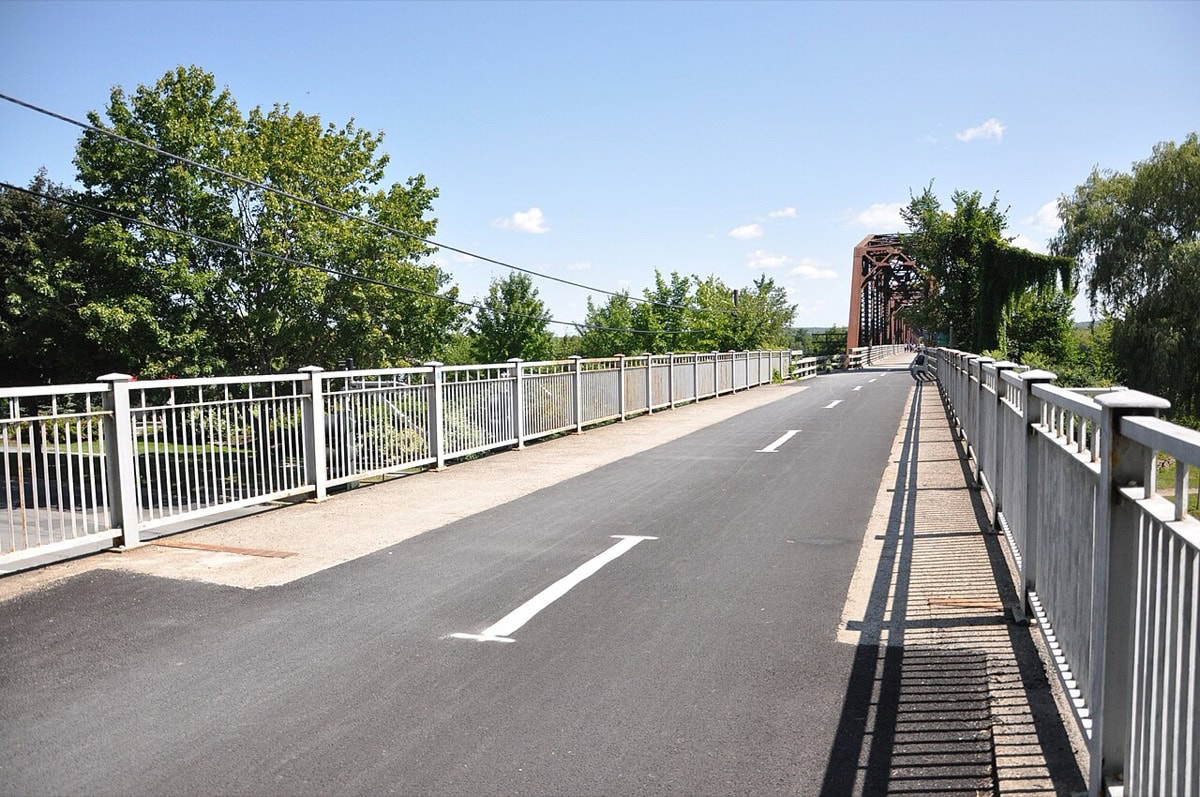
The Fredericton Heritage Walking Bridge, originally a railway bridge built in 1938, is now the world’s longest covered pedestrian bridge — stretching nearly 400 metres across the Saint John River. It’s something of a Fredericton icon, and you’ll understand why the moment you step onto it.

The bridge is accessible year-round and crossing it is completely free. In summer, it’s beautifully shaded (the roof means you can walk across comfortably even in the rain) and offers gorgeous views of the river and downtown. On both sides, it connects to the Riverfront Trail, so you can easily work it into a riverside stroll.

The most magical time is sunset, when the river glows orange and the bridge casts long shadows across the water. We got completely stuck here for about half an hour, just gazing and snapping photos. If you’re looking for the most photogenic spot in Fredericton, this is it.

3. Garrison District — The Historic Heart of the City

Historic centre of Fredericton
Photo: WabbitWanderer from London, Canada / CC BY-SA 2.0 / Wikimedia Commons

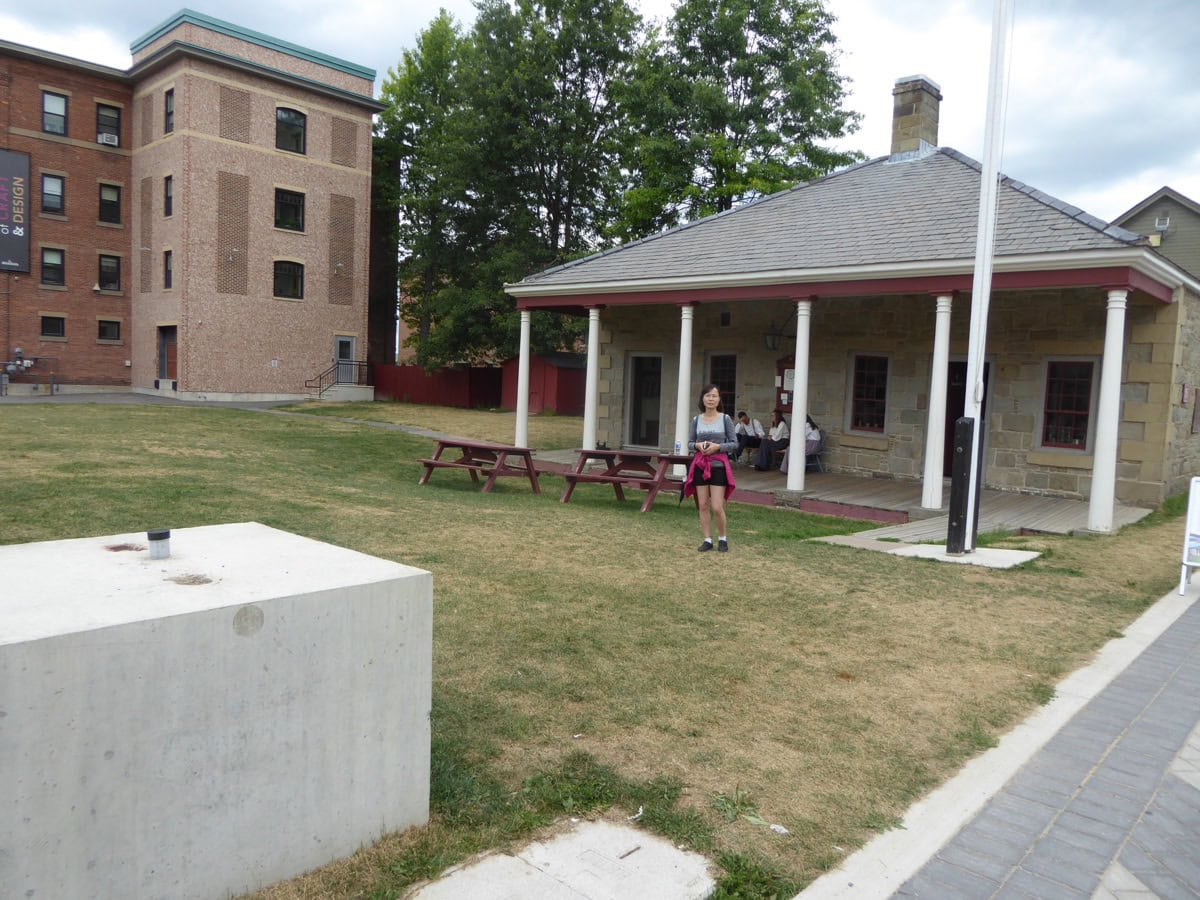
Garrison District is the area around a former 19th-century military base and today serves as Fredericton’s cultural and social hub. You’ll find handsome red-brick buildings, former barracks converted into galleries and boutiques, and most importantly Officers’ Square — the main square where all the summer action happens.

From July to August, you can catch historical guard ceremonies in period uniforms from the days of the British garrison. It’s a little kitsch, but endearing — and kids absolutely love it. The ceremonies are free and usually take place at noon.

In the Garrison District you’ll also find the Guard House, where you can learn about the city’s military history, and the York Sunbury Museum (Fredericton Region Museum) with exhibits on New Brunswick’s past. Admission is just a few dollars and it’s the perfect refuge on a rainy day.

4. Officers’ Square — Fredericton’s Living Room

Officers' Square in Fredericton
Photo: New Brunswick / Nouveau-Brunswick / Public domain / Wikimedia Commons

Officers’ Square deserves its own entry because it’s where you’ll truly rub shoulders with the locals. This large grassy space surrounded by historic buildings functions as the city’s communal living room — people sit on blankets reading, have picnics, and in summer there are concerts, theatre performances, and festivals here nearly every day.

In July and August, the Outdoor Summer Concert Series features local bands and entry is free. Just bring a blanket, sit on the grass, and soak up the atmosphere. We ended up spending an entire evening here once — we simply didn’t want to leave. 😊

On the corner of the square you’ll also find a visitor information centre where staff can advise on day trips in the area and hand you a map of walking trails.

5. Riverfront Trail — A Walk (or Cycle) Along the Saint John River

Pedestrian and cycling bridges over the Saint John River in Fredericton
Photo: Reaperexpress / Wikimedia Commons (CC BY-SA 3.0)

The Riverfront Trail is a network of paths along the Saint John River that stretches through much of the city. The total route covers around 20 km and works equally well on foot or by bike. The trail is well-maintained, flat, and mostly runs right along the water.

The prettiest section leads from the centre across the Heritage Walking Bridge and onwards to the far bank — from there you get stunning views of the city skyline with the parliament dome. There are also plenty of benches and picnic spots.

Top tip: Fredericton runs a Bike Share programme where you can borrow bikes for free in summer (or for a nominal fee). Docking stations can be found at several locations in the centre. Cycling the entire trail takes about 2 hours with photo stops. On foot, allow half a day if you want to cover the whole route.

6. Lighthouse on the Green — A Lighthouse in the Middle of Town

Lighthouse on the Green in Fredericton
Photo: New Brunswick / Nouveau-Brunswick / Public domain / Wikimedia Commons

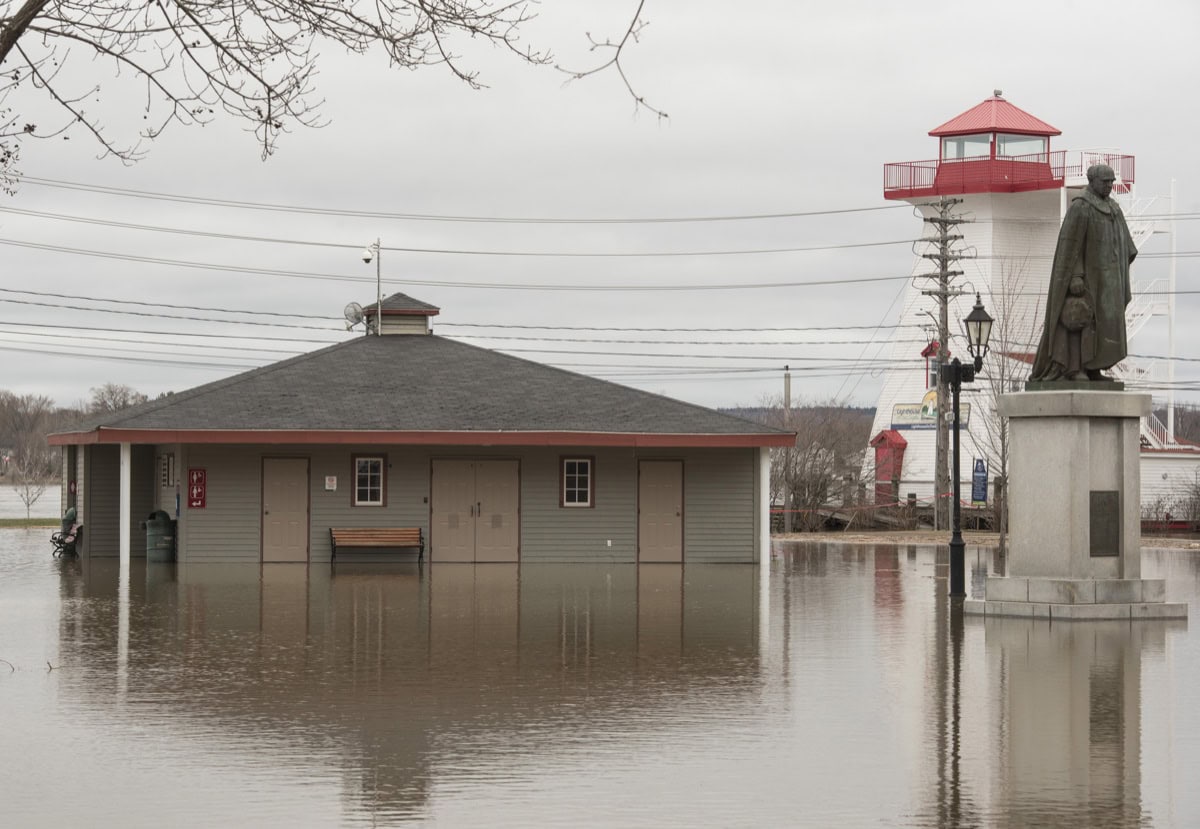
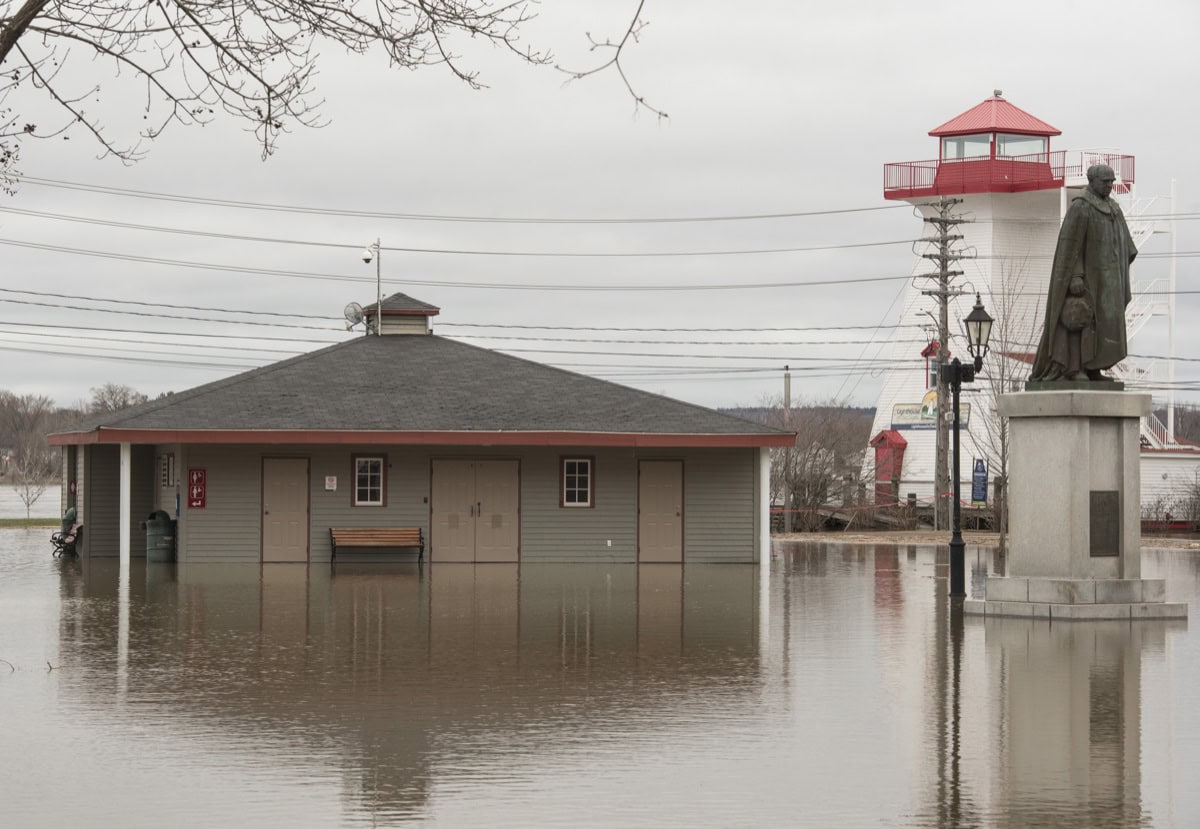
Lighthouse on the Green is a charming little lighthouse standing on the bank of the Saint John River, right in the city centre. It’s not some towering cliff-top beacon — it’s more of a decorative structure, but it’s one of Fredericton’s most iconic spots and a perfect Instagram shot.

Around the lighthouse there’s a lovely little park with benches offering beautiful views of the river and the Heritage Walking Bridge. In summer you’ll often find locals walking their dogs or jogging along the waterfront here.

The lighthouse itself also serves as a small visitor information point and occasionally hosts cultural events in summer. It’s the perfect place to start or finish a walk along the Riverfront Trail — grab a bench, pick up a coffee from a nearby stand, and watch the river flow by.

7. Legislative Assembly of New Brunswick — A Beautiful Parliament with Free Tours

New Brunswick Legislative Assembly building in Fredericton
Photo: Quintin Soloviev / Wikimedia Commons (CC BY 4.0)

As a provincial capital, Fredericton is home to New Brunswick’s parliament building — the Legislative Assembly. It’s a stunning Second Empire-style building dating from 1882, and tours are completely free.

The tour lasts about 30–45 minutes and the guides are excellent — you’ll learn about the province’s political system, the building’s history, and get to see the Assembly Chamber. We found it surprisingly fascinating, even though politics isn’t usually our cup of tea. The building is equally impressive from outside — it sits on a hill overlooking the river, and combined with the surrounding parks, it makes for a lovely walk.

Opening hours: Tours run daily in summer, mainly on weekdays outside the season. Entry is free, but it’s worth checking the website in advance.

8. University of New Brunswick — A Campus Steeped in History

University of New Brunswick campus in Fredericton
Photo: Mca1993 / CC BY-SA 3.0 / Wikimedia Commons

The University of New Brunswick (UNB) is one of the oldest English-language universities in North America — founded in 1785. The campus is beautiful, full of green spaces and historic buildings, and you’re free to wander around.

Highlights include the Old Arts Building, the oldest university building in Canada still in use, and the Brydone Jack Observatory — the oldest astronomical observatory in Canada (built in 1851). In summer, it’s occasionally open to the public.

The campus sits on a hill above the city and offers lovely views of the river. It’s a pleasant stroll, especially in autumn when the trees on campus blaze with colour. Fredericton is a university town and UNB gives it that youthful, energetic vibe — the wealth of cafés and restaurants near campus exist precisely because of the student population.

9. Odell Park — A Forest in the Middle of the City

Park in the centre of Fredericton
Photo: Breau / CC0 / Wikimedia Commons

Odell Park is a massive nature reserve (around 175 hectares) right within Fredericton — and when I say massive, I mean you can lose yourself in the forest for half a day and completely forget you’re in a city. The park is threaded with a network of walking trails of varying difficulty, from flat family-friendly paths to wilder woodland tracks.

The main attraction is a 3.5 km loop trail through mixed forest with information boards about local flora and fauna. You’ll also find an arboretum with labelled tree species. It’s a wonderful spot for a picnic or an escape from the summer heat — it’s always a few degrees cooler under the canopy.

10. Science East — An Interactive Museum (Not Just for Kids)

Science East is housed in a former prison dating from 1840 (!) and today it’s an interactive science centre with dozens of exhibits. If you’re travelling with children, it’s an absolute must — but honestly, the two of us as adults enjoyed it more than we expected.

Admission is around 10 CAD (€7) for adults. The exhibits cover physics, biology, astronomy, and technology, and most of them are hands-on — you can create a tornado, play with optical illusions, or build bridges. The building itself is fascinating too — the heavy stone walls of the former prison contrast brilliantly with the colourful interactive stations inside.

11. Boyce Farmers Market — Saturday Markets You Can’t Miss

If you’re in Fredericton over the weekend, Boyce Farmers Market on Saturday morning is unmissable. The market has been running since 1951 and is one of the best on Canada’s entire Atlantic coast. It’s open from 6:00 to 13:00, but the best atmosphere is around 9–11 in the morning.

You’ll find fresh fruit and vegetables from local farmers, artisan cheeses, baked goods, honey, maple syrup, handmade crafts, and loads of street food stalls. We picked up some fantastic maple syrup as a souvenir and tucked into fresh blueberry crêpes that were absolutely divine.

The market is in a hall by the river at 665 George Street. Parking is free. Arrive early, because by midday the best stuff tends to sell out.

12. Killarney Lake Trail — Swimming and Hiking Just Outside the City

If you have a spare half-day and want to escape the city, Killarney Lake is the perfect choice. The lake is about 15 minutes’ drive from central Fredericton and offers a 4 km loop trail around the lake with several access points to the water where you can swim in summer.

The trail is easy and accessible even for families with young children. The water in the lake is pleasantly warm in summer (by Canadian standards — Lukáš would say “just right,” I’d say “a touch cooler than I’d like” 😅). On the shore there are wooden docks and a tidy picnic area.

Entry is free, and so is parking. It’s a popular spot with locals, so it can get a bit busier on weekends, but we never had trouble finding a quiet spot.

13. Old Government House — Residence of the Lieutenant-Governor

Old Government House is a beautiful neoclassical building from 1828 that once served as the residence of British governors and is now home to the Lieutenant-Governor of New Brunswick. The building is open to the public and tours are free.

Inside, you’ll see beautifully restored 19th-century interiors, a portrait gallery of governors, and an interesting exhibition on the province’s history. The gardens around the building are also lovely and bloom beautifully in summer.

The building stands on Queen Street, a few minutes’ walk from Officers’ Square. A tour takes about 30–40 minutes and makes a nice complement to the historic part of the city.

14. Fredericton Region Museum (York Sunbury Museum) — Stories from History

If you’re interested in New Brunswick’s history, the Fredericton Region Museum on Officers’ Square is a small but engaging museum with exhibits covering everything from the indigenous Mi’kmaq and Wolastoqiyik peoples through British colonisation to modern history.

The most famous exhibit is the Coleman Frog — allegedly the largest frog in the world, taxidermied in the 19th century. It’s a bit bizarre, but charmingly so, and kids love it. 😁

Admission is just a few dollars and the museum is good for about an hour, especially if it’s raining.

15. Sunset Paddle on the Saint John River — The Most Beautiful Experience

I’ve saved this for last because it was our most magical experience in Fredericton. Hiring a kayak or paddleboard and heading out on the Saint John River at sunset is pure bliss. The river through the city centre is calm and wide, making it safe and enjoyable even for beginners.

In summer, several rental outfits operate right by the river — hiring a kayak costs around 25–40 CAD (€17–27) for an hour or two. Some also offer guided sunset tours for roughly 50–60 CAD.

Sitting on the water, surrounded by reflections of trees and historic buildings, with eagles soaring overhead and the only sound being your paddle — yet you’re just a few hundred metres from the city centre. This is Fredericton at its very best. ☺️

Where to Eat and Drink in Fredericton: A Foodie’s Guide

Fredericton will pleasantly surprise you on the food front. For a city its size, there’s a surprisingly diverse and high-quality dining scene — from fresh seafood and craft beer to hipster cafés serving specialty coffee. Thanks to the student population from UNB, there are plenty of affordable places, but you’ll also find upscale restaurants for a special evening out.

Where to Eat

The Palate Restaurant — One of the top-rated spots in town. They focus on local ingredients and seasonal menus. Prices are higher (mains around 30–45 CAD / €20–30), but the quality matches. Reservations recommended, especially at weekends.

540 Kitchen & Bar — A brilliant choice for dinner or brunch. Modern Canadian cuisine, beautiful interior, lovely service. We had a fantastic burger here and equally superb fish tacos.

Milda’s Pizza & More — If you’re after quick, tasty food at a reasonable price, this is your spot. The pizza is excellent and the portions are generous. Mains around 15–20 CAD (€10–14).

Isaac’s Way — A restaurant in a beautifully restored building just off the centre. They do outstanding brunches and have great vegetarian/vegan options. It’s a favourite with both students and locals.

The Diplomat — At Boyce Farmers Market, head here for breakfast or brunch if you fancy something more than street food. Superb eggs Benedict and homemade pastries.

For a lobster roll (and come on, this is the Atlantic coast — you absolutely have to try one!), I’d recommend Catch Urban Grill — they serve it in several variations and you won’t find a fresher one in downtown Fredericton.

Where to Drink: Beer and Coffee

Fredericton has a surprisingly lively craft beer scene:

Picaroons General Store — Easily the most well-known brewery in Fredericton and one of the first craft breweries in all of New Brunswick. They have a taproom right in the centre where you can try their seasonal specials. Their Timber Hog Stout is fantastic.

Graystone Brewing — Smaller but excellent, with a cosy taproom. They often have live music.

Maybee Brewing Co. — Another local brewery that’s well worth a stop. Their Workhorse IPA is a classic.

For coffee, head to Read’s Coffee (a local roastery with several locations in the city) or Café Loka near the UNB campus — they serve specialty coffee in a relaxed, welcoming atmosphere.

Practical Tips to Wrap Up

How Much Time Do You Need in Fredericton

One to two days is enough for the city itself. In a single full day you can cover the main attractions (Beaverbrook Gallery, Garrison District, Heritage Walking Bridge, Riverfront Trail, food). Two days give you the luxury of adding Odell Park, Killarney Lake, and a slower-paced wander around town.

Fredericton also works brilliantly as a base for day trips — the Bay of Fundy with the world’s highest tides is about 2 hours by car, the charming town of Saint Andrews-by-the-Sea is an hour and a half, and Kouchibouguac National Park around two hours.

Getting Around the City

Downtown Fredericton is compact and you can do most of it on foot. For more distant spots (Odell Park, Killarney Lake), having a car is handy. Public transport exists (Fredericton Transit), but services are infrequent.

In summer, I’d recommend the Bike Share programme — bikes are available at several locations in the centre and it’s the most enjoyable way to explore the Riverfront Trail.

What to Pack

New Brunswick weather is changeable — even in summer, a lightweight rain jacket and layers are a good idea. For walks in Odell Park or around Killarney Lake, I’d recommend comfortable hiking shoes. And don’t forget insect repellent — in June and July, mosquitoes along the river and in the woods can be quite persistent.

If you want to pack into carry-on luggage only, Fredericton is perfectly doable — you don’t need anything out of the ordinary.

FAQ — Frequently Asked Questions About Fredericton

Tips and Tricks for Your Vacation

Don’t Overpay for Flights

Search for flights on Kayak. It’s our favorite search engine because it scans the websites of all airlines and always finds the cheapest connection.

Book Your Accommodation Smartly

The best experiences we’ve had when looking for accommodation (from Alaska to Morocco) are with Booking.com, where hotels, apartments, and entire houses are usually the cheapest and most widely available.

Don’t Forget Travel Insurance

Good travel insurance will protect you against illness, accidents, theft, or flight cancellations. We’ve had a few hospital visits abroad, so we know how important it is to have proper insurance arranged.

Where we insure ourselves: SafetyWing (best for everyone) and TrueTraveller (for extra-long trips).

Why don’t we recommend any Czech insurance company? Because they have too many restrictions. They set limits on the number of days abroad, travel insurance via a credit card often requires you to pay medical expenses only with that card, and they frequently limit the number of returns to the Czech Republic.

Find the Best Experiences

Get Your Guide is a huge online marketplace where you can book guided walks, trips, skip-the-line tickets, tours, and much more. We always find some extra fun there!
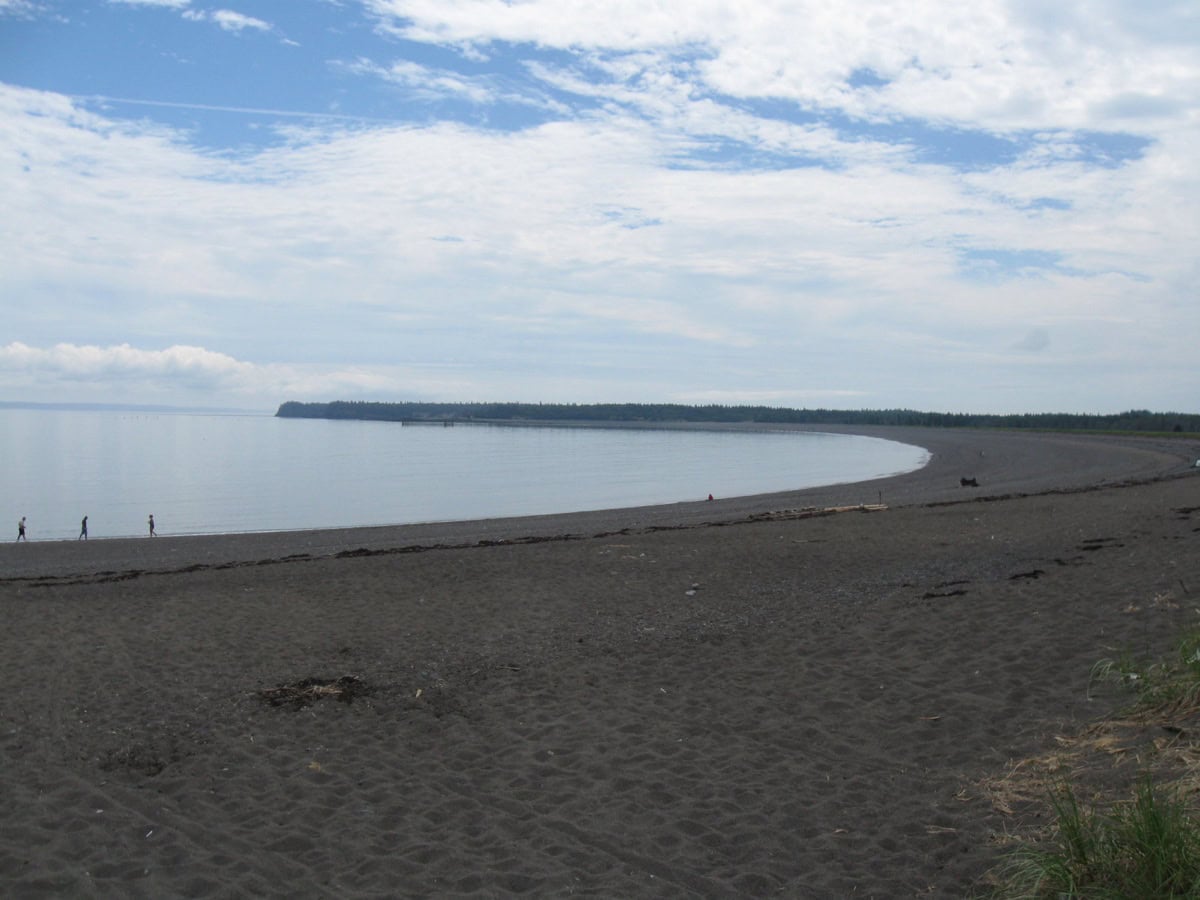
Kejimkujik National Park, Nova Scotia: 13 Things to See and Do

TL;DRKejimkujik National Park in Nova Scotia comes with 13 highlights, and a few really stand out: canoeing on Kejimkujik Lake, stargazing (the park’s a certified Dark Sky Preserve), checking out centuries-old Mi’kmaw petroglyphs near Fairy Bay, and a trip out to the separate coastal section, Kejimkujik Seaside, with its white beaches and seals, about an hour’s drive from the main park. Entry costs around 8.50 CAD per person per day (roughly £5), and camping starts at 26 CAD a night (about £15), whether you’re in an oTENTik or a classic pitch. The best time to visit is June to September, ideally the second half of June or the first two weeks of September, when the crowds thin out and you get the best of the autumn colours. The park sits about 170 km from Halifax — roughly a 2-hour drive — and there’s no public transport out here, so you’ll need your own wheels.

There are places that take your breath away at night. And I don’t mean because a bear startled you outside your tent (though that can happen too 😅). I mean that moment when you look up at the night sky and see the Milky Way so clearly for the first time in your life that it almost moves you to tears. That’s exactly what will happen to you at Kejimkujik National Park Canada — or simply “Keji,” as the locals call it, because pronouncing the full name correctly on the first try is basically a superhuman feat.

In this article, you’ll find a complete guide to Kejimkujik National Park Canada — from the best time to visit and where to stay, through 13 things to see and do in the park, to practical advice on food, budget, and getting your bearings. Whether you’re planning to camp under the stars, spend a full day canoeing across the lakes, or just pop in for a day hike, this article will get you Keji-ready.

TL;DR

  • Kejimkujik National Park lies in the heart of Nova Scotia and is one of the most beautiful — yet least visited — national parks in Canada.
  • The park is a Dark Sky Preserve — one of only a handful of certified ones in all of Canada. The night sky here is absolutely magical.
  • The main activity is canoeing and kayaking across interconnected lakes and rivers — you can even do a multi-day paddling expedition with backcountry overnight camping.
  • Don’t miss the Mi’kmaw petroglyphs — centuries-old carvings in stone found at several locations throughout the park.
  • Kejimkujik Seaside is a separate coastal section of the park (about an hour’s drive from the main park) with white sand beaches and seals.
  • Admission is around 8.50 CAD per person/day (roughly €6), family admission 17 CAD (about €11). If you have a Parks Canada Discovery Pass, entry is included.
  • You can camp in the park on traditional sites or in oTENTiks (fun-named wooden cabins with canvas roofs). Prices start at around 26 CAD/night (€17) for a tent site.
  • The ideal time to visit is June to September, offering the best combination of weather and services. September is the most beautiful thanks to the autumn colours.
  • Come prepared for food: there’s no restaurant in the park — you’ll need your own supplies or the small town of Caledonia, 20 minutes away by car.
  • From Halifax, it’s about a 2-hour drive. There’s no public transport — a car is essential.

When to visit Kejimkujik and how to get there

Kejimkujik is a park that literally transforms with each season, so the answer to “when should I go?” depends heavily on what you’re hoping for. Let’s break down the individual seasons and also how to actually reach this picturesque corner of Nova Scotia.

Best time to visit

June to September is the main season and honestly — the only time when everything in Keji is up and running (camping, kayak rentals, park programmes, interpretive centres). Temperatures range between 20–28 °C, though Nova Scotia has a way of surprising you — even in July, fog can roll in so thick you can’t see two metres ahead. Bring layers!

September is, in our opinion, absolutely the most beautiful month. Indian summer sets the deciduous forests ablaze with incredible colours — the combination of red maples, golden birches, and dark conifers reflected on the lake surface is something photographs simply can’t capture. Bonus: tourist numbers drop significantly, so you’ve got a real chance of having the whole campground nearly to yourself.

October is a gamble. The colours may still be stunning, but the weather is unpredictable and most park services shut down. Camping is still possible on a limited number of sites, but boat rentals and the visitor centre are closed for the season.

Winter — the park is technically open year-round, but unless you’ve got gear for winter camping and enjoy cross-country skiing or snowshoeing, you’ll probably want to give winter a miss.

Our recommendation: Go in the second half of June or the first two weeks of September. In June, the park is green and fresh, and the mosquitoes haven’t yet reached full strength (though they’re always here — don’t kid yourself 😅). In September, you get the colours plus the peace and quiet.

How to get to Kejimkujik

You can’t get to Kejimkujik without a car — public transport simply doesn’t exist here. The park lies approximately 170 km southwest of Halifax, which translates to roughly a 2-hour drive along Highway 103 and then Highway 8.

If you’re flying into Halifax (which is the most likely scenario for UK-based travellers), we recommend renting a car straight from the airport. We’ve had consistently good experiences with DiscoverCars, which we use all over the world — they compare offers from multiple agencies, and prices in Nova Scotia are reasonable (expect around €50–80/day for a standard car; in peak season, book well in advance). Direct flights from London to Halifax are available seasonally with airlines like WestJet and Air Canada, or you can connect through Toronto or Montreal.

Arriving from other directions:

  • From Yarmouth (if you’re coming by ferry from Maine): about 2 hours
  • From Lunenburg/Mahone Bay: about 1.5 hours
  • From Annapolis Valley (Wolfville, Kentville): about 1.5–2 hours

The roads to the park are in good condition, and the final stretch along Highway 8 winds through beautiful scenery along the river — the drive itself is already an experience.

💡 TIP: If you’re planning a road trip around Nova Scotia (which we highly recommend!), Kejimkujik fits perfectly as a stop between Halifax and the southwest coast (Lunenburg, Mahone Bay, Yarmouth). Plan at least 2–3 nights here, ideally more.

Where to stay and how much Kejimkujik costs

This is a park where camping isn’t just an option — it’s the main and best way to experience Keji. But don’t worry: even if you’re not a hardcore camper, there are comfortable options. And if you flat-out refuse to camp, there are solutions too — you’ll just have to commute a bit.

Camping inside the park

Jeremy’s Bay Campground is the main campground in the heart of the park, right on Kejimkujik Lake. It has over 300 sites and offers several types:

  • Unserviced tent sites (no hook-ups): from 26 CAD/night (about €17) — a classic tent spot in the woods, with a fire pit, access to drinking water, and toilets
  • Serviced sites (with electricity): from 36 CAD/night (about €24) — for motorhomes and caravans
  • oTENTik — a hybrid cabin with a canvas roof, wooden floor, beds for 6 people, a veranda, and lighting: around 120 CAD/night (about €80). This is our top pick for anyone who wants the camping experience without actually sleeping on the ground. They’re gorgeous, but book well ahead — they sell out like hot cakes.
  • Rustic cabins: limited availability, basic amenities, but a proper roof over your head. Prices are similar to oTENTiks.

Reservations for campsites in Canadian national parks typically open in January for the entire season, and popular spots (especially oTENTiks and waterfront sites) are gone within days. Book through reservation.pc.gc.ca.

Backcountry camping (wilderness) — for the adventurous. The park offers a network of backcountry sites along canoe routes and hiking trails. The cost is around 10 CAD/night (€7). You’ll need your own gear and must register at the visitor centre.

Accommodation outside the park

If you’d prefer a proper hotel or B&B, the nearest options are in the surrounding towns:

  • Caledonia (20 min from the park): a handful of B&Bs and small guesthouses
  • Annapolis Royal (45 min): a charming historic town with several excellent B&Bs and small hotels — this is the best choice for those who refuse to camp
  • Liverpool (40 min): more accommodation options, larger town
  • Bridgewater (50 min): the biggest town in the area, with chain hotels

Expect prices of 100–200 CAD/night (€65–130) for a double room in a B&B; in peak season, it’s often more. For the best deals, search on Booking.com.

How much a trip to Kejimkujik costs — budget

Let’s crunch the numbers for two people over 3 nights of camping:

  • Park admission: 8.50 CAD/person/day × 2 people × 4 days = 68 CAD (€44). Alternatively, buy a Discovery Pass for the whole season at 145 CAD/adult (€95) — it pays for itself if you visit more than 3 national parks in Canada.
  • Camping (tent site): 26 CAD/night × 3 nights = 78 CAD (€51)
  • Canoe/kayak rental (per day): around 50–70 CAD (€33–46)
  • Food: if you cook yourself, roughly 30–50 CAD/day (€20–33) for two people
  • Petrol (Halifax → Keji and back): around 50–70 CAD (€33–46)

Total for 3 nights for two: roughly 350–500 CAD (€230–330) not including car hire. Add 150–250 CAD/day for the rental car.

Kejimkujik National Park: 13 things to see and do

Now for the best part — what to actually do in Keji. The park offers a surprisingly diverse range of experiences, from water sports and Indigenous history to stargazing. We’ve ordered our tips from “absolute must-do” to “if you have extra time.”

1. Canoeing on Kejimkujik Lake — the heart of the park

View of Kejimkujik Lake from Kedge Beach
Photo: Z3lvs / Wikimedia Commons (CC0)

If you only do one thing in Kejimkujik, make it this. Kejimkujik Lake is a vast, intricately shaped lake full of small islands, coves, and quiet backwaters that seem purpose-built for canoes. And they weren’t created by accident — the Mi’kmaw people travelled these waterways by canoe for centuries. You’re literally paddling the same route they did.

You can rent canoes or kayaks right in the park at Jake’s Landing (the main boat launch). Prices run around 50–70 CAD for a full-day rental (€33–46) for a two-person canoe; kayaks are slightly cheaper. In peak season, the rental shop is open daily, but hours get shorter in September — check ahead.

For a relaxed outing, plan a loop around Merrymakedge Beach and the surrounding islands — you can do it in 3–4 hours, and along the way you’ll paddle past gorgeous moss-covered rock faces. If you’re a more experienced paddler, head out on a full-day trip to the far reaches of the lake towards Jim Charles Point, where there’s a backcountry campsite with its own little beach.

Out on the water, be prepared to encounter loons — their iconic call is the soundtrack of the entire park. On one outing, we counted seven pairs. We also had a surprise visit from a beaver that surfaced about two metres from our canoe, gave us a look of unmistakable disdain, and disappeared beneath the surface. Canadian wildlife at its finest. 😁

💡 TIP: Head out early in the morning, ideally around 7–8 am. The surface is mirror-calm, mist rolls across the water, and the light is absolutely perfect for photos. Plus, you’ll avoid the afternoon wind, which can whip up surprisingly big waves on a large lake.

2. Dark Sky Preserve — stargazing that will blow your mind

Kejimkujik is one of only two Dark Sky Preserves in the entire province of Nova Scotia (and one of just a handful across Canada). This means the park actively protects the dark sky — minimal light pollution, no street lighting, pitch-black darkness. And the result? Some of the clearest stars you’ll ever see in your life.

The best spot for stargazing is Merrymakedge Beach — a wide-open beach with an unobstructed view of the sky and barely any trees on the horizon. During the summer season (July–August), the park hosts regular night programmes with astronomers who’ll show you planets, nebulae, and galaxies through a telescope. These programmes are free (included with park admission) and usually run on Saturday evenings — check the schedule on the Parks Canada website or at the visitor centre.

Practical tips for stargazing:

  • Bring a red-light headtorch (or cover a regular one with red cellophane) — white light ruins your night vision for 20 minutes.
  • Dress warmly — even in summer, nights by the lake are cold (10–12 °C).
  • Let your eyes adjust to the dark for at least 20–30 minutes. Don’t look at your phone!
  • Best conditions: moonless nights, clear skies, no clouds. Check the lunar calendar in advance.

3. Mi’kmaw petroglyphs — centuries-old stories carved in stone

This is perhaps the quietest and most powerful experience in the entire park. At several locations in Kejimkujik, you’ll find petroglyphs of the Mi’kmaw people — centuries-old carvings etched into slate rocks along the lakeshore. They depict people, animals, boats, symbols, and scenes from everyday life of a nation that inhabited — and still inhabits — this land for thousands of years.

The most significant petroglyph site is near Fairy Bay and is accessible via a short interpretive loop trail. Parks Canada has installed information panels (in English and partially in the Mi’kmaw language) explaining the meaning of the individual carvings.

Important: There are over 500 petroglyphs here, but many are very faint and hard to see. You’ll spot them best in angled light — early morning or late afternoon, when the sun’s rays hit at a low angle and highlight the carvings. At midday, you could be standing right over them and see nothing.

Please do not touch the petroglyphs and don’t walk on them. They’re incredibly fragile and can be damaged even by a single touch. These are sacred cultural artefacts, and protecting them is everyone’s responsibility. Some petroglyphs have sadly been damaged by vandals in the past, which is utterly heartbreaking.

4. Hiking: Mill Falls Trail — waterfalls in the heart of the forest

Mersey River flowing through Kejimkujik National Park forests
Photo: Z3lvs / Wikimedia Commons (CC0)

Kejimkujik isn’t a typical “hiking park” like Banff or Jasper — you won’t find high-altitude treks with 1,000 metres of elevation gain. But it has something different: forest trails brimming with moss, ferns, and quiet streams that pull you into an atmosphere you’d expect from a fairy tale.

Mill Falls Trail is our favourite trail in the park. It’s a short loop (about 2 km) that follows the Mersey River to a series of small waterfalls and cascades. The trail is easy, suitable for families with children, and looks different in every season. In spring, when the snow melts and the rain falls, the waterfalls are at their most powerful. In summer, they’re surrounded by a sea of green. In autumn — well, you can probably imagine. A tunnel of red and gold.

Along the way to the cascades, you’ll walk through old-growth hemlocks (Eastern hemlock trees), some of which have been standing here for over 300 years. It’s like a miniature old-growth forest with a completely different atmosphere from the rest of the park.

💡 TIP: The trail starts right from Jeremy’s Bay campground — you can set off with your morning coffee still in hand. Perfect for an easy wake-up stroll.

5. Hiking: Hemlocks and Hardwoods Trail — a walk among giants

If you want to see the oldest and most majestic trees in the park, this is your trail. Hemlocks and Hardwoods Trail (about 5 km, loop) takes you through a mixed forest of old hemlocks, birches, maples, and beeches. Some of the hemlocks have a diameter of over a metre and have been standing here for centuries.

The trail is gently rolling with no significant climbs and is rated as “moderate” — anyone with average fitness can handle it. Allow 1.5–2 hours for a leisurely walk. There are several benches and lake viewpoints along the way.

What surprised us most about this trail was the silence. Real, deep silence, broken only by birdsong and the wind rustling through the canopy. At one point, we both just stopped and stood still. A strange feeling — being in a forest and not wanting to take photos, just wanting to be present.

For more ambitious hikers, the park also offers longer trails — Peter Point Trail (6 km to a scenic cove), Snake Lake Trail (8 km into the backcountry), or Liberty Lake Trail (roughly 8 km loop). Pick up a complete trail map at the visitor centre or download it from the Parks Canada website. If you’re into hiking and looking for good hiking boots, check out our guide.

6. Merrymakedge Beach — swimming, picnics, and lazing about

Merrymakedge Beach in Kejimkujik
Photo: André Carrotflower / CC BY-SA 2.0 / Wikimedia Commons

Not every day has to be about hikes and exploration. Sometimes you just want to lie on a beach, read a book, and cool off in the lake now and then. That’s exactly what Merrymakedge Beach is for.

It’s the main beach in the park, with soft sand, a gradual entry into the water, and plenty of space even in peak season. The water in Kejimkujik Lake is surprisingly warm — the lake is shallow and dark (stained by tannins from the bogs), so it heats up much more than the ocean. In August, we measured around 22–24 °C, which is positively luxurious by Canadian standards.

At the beach, you’ll find changing rooms, toilets, and picnic fire pits. You can also rent a paddleboard (SUP) right on the beach. For families with children, Merrymakedge is absolutely ideal — shallow water, no currents, no waves.

In the evening, the beach transforms into the best spot for stargazing (see tip no. 2). So plan ahead: afternoon swimming, evening barbecue at the fire pit, stars at night. A perfect day that requires no plan at all.

7. Kejimkujik Seaside — wild coastline with seals

Wild coastline at Kejimkujik Seaside along the Harbour Rocks Trail
Photo: Tony Webster / Wikimedia Commons (CC BY-SA 2.0)

Heads up — this is important: Kejimkujik Seaside is a separate section of the park located on the Atlantic coast, about an hour’s drive from the main inland park. But it’s absolutely worth the trip!

Kejimkujik Seaside offers an entirely different experience — instead of lakes and forests, you get wild rocky coastline, white sand beaches, sea grass, and with a bit of luck, seal colonies. Access is from a gravel car park (Harbour Rocks), followed by a 6 km trail (one way) along the coast to St. Catherine’s River Beach and Southwest Port Mouton.

The trail is easy but long — plan for a full day (about 12 km return). The terrain is a mix of boardwalks over bogs, sandy paths, and rocky shoreline. Along the way, there are gorgeous views of the open ocean, and with some luck, you’ll spot grey seals resting on rocks or swimming in the bay.

Key practical info:

  • Kejimkujik Seaside has no facilities — no toilets (except one at the car park), no water, no refreshments. Bring plenty of water and food.
  • The same ticket or Discovery Pass covers admission (same as the main park).
  • Dogs are not allowed (to protect nesting birds).
  • The nearest town with food is Port Joli or Liverpool (about 20 min).

We spent a full day at the Seaside section and didn’t regret a single minute. St. Catherine’s River Beach is stunning — wide, white, empty. In August, there were maybe four other people besides us. And the seals! We spotted a group of about fifteen basking on the rocks. An absolutely gorgeous experience.

Experiences & tickets
traveler-rated · GetYourGuide
Cabot Trail Scenic Tour by Highland Tours
★★★★★ 5.0 · 1 reviews
from €115
I want this experience →
🔗 These are affiliate links — they don't change your price and help us create content. · All experiences →
lukas a lucka
Lukáš and Lucie recommend
Where to stay in Kejimkujik National Park
6 accommodations — hotels, campgrounds and other lodging options
⭐ TOP CHOICE ⛺ Camping
Jeremy’s Bay Campground
Main campground in the heart of the park, right by Kejimkujik Lake. Features over 300 sites including tent sites, serviced sites with electricity, oTENTik cabins (hybrid cabins with canvas roof and beds for 6 people) and rustic cabins.
★★★★ from 26 CAD/night (tent sites), 36 CAD/night (serviced sites), 120 CAD/night (oTENTik)
Check availability
🏨 Hotel
Whitman Inn
Historic inn in the town of Caledonia (20 minutes from the park), offering solid food in a pleasant setting. Suitable for those seeking accommodation with a restaurant near the park.
★★★★ Check prices
Check availability
🏨 Hotel
Lane’s Privateer Inn
Hotel in Liverpool (40 minutes from the park) with a decent restaurant specializing in seafood. Larger town with more accommodation and dining options.
★★★★ Check prices
Check availability
🏨 Hotel
Bistro East
Restaurant in Annapolis Royal (45 minutes from the park) with modern Canadian cuisine, local ingredients and excellent seafood.
★★★★ Check prices
Check availability
🏨 Hotel
The Garrison House
Historic restaurant in Annapolis Royal in a beautiful building with higher price point, suitable for a special dinner.
★★★★ Check prices
Check availability
🔍 Search
View all accommodations in Kejimkujik National Park
Explore all available accommodation options in Kejimkujik National Park and find the best one according to your preferences and budget.
★★★★ Compare prices
Check availability

8. Multi-day canoe trip into the backcountry — for those who want more

If you’re an experienced paddler and want a real adventure in Kejimkujik, the park offers a system of interconnected lakes and rivers perfect for multi-day canoe or kayak expeditions with overnight stays at backcountry campsites.

The most popular route runs from Jake’s Landing through Kejimkujik Lake and Big Dam Lake to Indian Point and back — you can plan it over 2–4 days depending on your pace. Backcountry camps have basic facilities (fire pit, pit toilet, tent pad) and must be reserved in advance at the visitor centre.

What to prepare for:

  • Portages (carrying your canoe overland between lakes): the longest portage on the main route is about 1 km. Not terrible, but you’ll feel it with a fully loaded canoe.
  • Bears are rare in the park but they do exist. Store food in bear canisters or hang it from a tree.
  • Mosquitoes and black flies in the backcountry are absolutely brutal in June and July. DEET repellent is a must, as is a head net. This is not an exaggeration. 😅
  • Weather can change quickly — bring waterproof layers and be aware that wind on the big lake can be a serious issue.

It’s an unforgettable experience — waking up on the shore of a lake, no one around, just you and nature. But it requires preparation, experience, and respect for the wilderness.

9. Wildlife watching — loons, porcupines, and turtles

Common loon on a Canadian lake
Photo: dfaulder / CC BY 2.0 / Wikimedia Commons

Kejimkujik is home to a surprisingly diverse range of wildlife, and animal watching is one of the park’s main attractions — though it does require a bit of patience and luck.

Loons — the symbol of Canadian wilderness (they’re even on the one-dollar coin, nicknamed the “loonie”). Several dozen pairs live in Keji, and you’ll hear their iconic call every evening. The easiest way to spot them is from a canoe in the early morning hours.

Porcupines — these slow, slightly bewildered-looking creatures are surprisingly common, especially around dusk near the campsites. They’re harmless (as long as you don’t touch them), but watch your gear — porcupines love salt and will gnaw on anything soaked in human sweat (backpack straps, paddle handles, bike seats). Seriously.

Blanding’s turtle — one of the most endangered turtles in Canada. Kejimkujik is one of the few places where they still survive. You can recognise them by their yellow throat. During egg-laying season (June), you might see them crossing roads — drive slowly and keep your eyes peeled!

Other wildlife: beavers (you’ll see their dams in many places), otters, bald eagles, herons, hummingbirds, and with a bit of luck, a moose with its calf at the water’s edge at dawn.

💡 TIP: The visitor centre offers guided wildlife programmes in season — for example, nighttime expeditions to find frogs and toads with a park biologist. It might sound odd, but it’s absolutely fascinating — and free.

10. Paddleboarding and swimming on Mersey River

If canoeing isn’t your thing, try stand-up paddleboarding (SUP) on the calm stretches of the Mersey River. The river flows through the park, and on some sections it’s so calm and clear you feel like you’re standing on glass.

You can rent a SUP at Jake’s Landing or on Merrymakedge Beach — prices are around 30–40 CAD for a half day (€20–26). For beginners, we recommend the calm coves of the lake, where you won’t be surprised by currents or wind.

The Mersey River is also brilliant for wild swimming — several accessible spots along the river have sandy bottoms and warm water. Ask at the visitor centre for current recommended spots, as the river changes character depending on water levels.

11. Cycling the park trails

Kejimkujik has a network of paved and unpaved trails that are ideal for cycling. The main cycling route runs from the campground to Grafton Lake and other parts of the park — roughly 20 km of trails at various difficulty levels.

Unfortunately, you can’t rent bikes in the park (at least not when we visited), so if you want to ride, bring your own or hire them in Halifax. The trails are suitable for regular hybrid or touring bikes — no need for a mountain bike.

Cycling is a great way to reach more remote parts of the park that would take hours on foot. And a bonus: you travel quietly on a bike, giving you a better chance of spotting wildlife.

12. Parks Canada interpretive programmes — and they’re worth it!

This is something we don’t really have an equivalent for in the UK, which is a shame — Parks Canada runs daily programmes during peak season (July–August) led by rangers and specialists. And they’re absolutely brilliant.

The lineup includes:

  • Guided hikes with explanations of the park’s ecosystem
  • Cultural programmes about Mi’kmaw history and contemporary life
  • Night programmes (astronomy, nocturnal sounds, bioluminescence)
  • Children’s programmes (Xplorers programme for kids aged 6–11 with their own “explorer journal”)
  • Canoe workshops for beginners

Most programmes are free (included with park admission) and take place both at the visitor centre and at various locations throughout the park. Check the schedule on the notice board at the visitor centre or on the Parks Canada website.

We particularly recommend the programme on Mi’kmaw culture — you’ll learn things you won’t find in any guidebook, and it takes your experience of the park to a completely different level.

13. Grafton Lake and hidden gems off the main trails

Most visitors to Kejimkujik stick around the main lake and campground. But the park covers over 400 km², and many of its most beautiful spots lie off the beaten track.

Grafton Lake is a smaller, quieter lake north of the main campground, accessible by a maintained road (on foot, by bike, or by car). There’s a backcountry campsite, calm water for paddling, and a feeling of being miles from civilisation — even though you’re just 20 minutes from your car.

Flowing Waters — a spot on the Mersey River where the water rushes over a series of rock ledges. Beautiful for a picnic and photos, especially in autumn.

Eel Weir Bridge — a historic bridge over the Mersey River with lovely views of the river and its surroundings. In autumn, you might spot Atlantic salmon swimming upstream.

💡 TIP: Ask the rangers at the visitor centre about their personal favourite spots — they’re incredibly friendly and happy to share “secret” locations that aren’t in any guidebook.

Food and drink: a foodie’s survival guide in the wilderness

I’ll be honest — Kejimkujik is not a place you visit for the gastronomy. In the park itself, there’s no restaurant, no café, no shop. Zero. Nada. So if you’re used to grabbing lunch at a restaurant with a view inside a national park — that’s not how it works here. 😅

Cooking at camp

Most people in Keji cook at camp, and honestly — it’s part of the experience. Every site has a fire pit, and firewood can be bought in the park (about 8 CAD per bundle, roughly €5). A camping stove is more practical though, especially for your morning coffee.

What to bring:

  • Stock up on supplies in Bridgewater (about 50 min away) at one of the larger supermarkets (Superstore, Sobeys) — it’s the last “civilised” town on the road to the park.
  • Decent instant coffee or a French press (priorities! ☕️)
  • Marshmallows for toasting — in Canada, this is mandatory, not optional
  • Steaks or sausages for grilling over the fire
  • Plenty of drinking water (there are sources in the park, but having a supply in the car is sensible)

Where to eat nearby

If you fancy a break from campfire cooking:

Caledonia (20 min from the park) — a small village with a few eateries. Whitman Inn serves solid food in the pleasant surroundings of a historic inn. Nothing fancy, but after three days of tinned beans, it’ll feel like a Michelin star. 😅

Annapolis Royal (45 min) — much better dining options here. The town has several lovely restaurants:

  • Bistro East — modern Canadian cuisine with local ingredients and excellent seafood
  • The Garrison House — a historic restaurant in a beautiful building; higher price point but worth it for a special dinner
  • Several cafés and bakeries for a morning stop on the way to/from the park

Liverpool (40 min) — a larger town with more options, including familiar Canadian chains (Tim Hortons for a cheap coffee, pizza joints, Chinese restaurants). Lane’s Privateer Inn has a decent restaurant with seafood.

💡 TIP: If you’re heading to Kejimkujik Seaside, stop in Summerville or Port Mouton — you’ll sometimes find local stalls selling fresh lobster and seafood straight from the fishermen. Prices are a fraction of what you’d pay in Halifax.

Practical tips to wrap up

Mosquitoes and black flies — a serious warning

This is not a joke and it’s not an exaggeration. The mosquitoes and “no-see-ums” (tiny biting midges) in Kejimkujik are legendary. June and early July are the worst. DEET repellent (at least 25%) is an absolute must, a head net is strongly recommended, and if you’re camping, make sure your tent’s mesh doesn’t have a single hole.

In August and September, the situation improves significantly — the mosquitoes ease off and your stay is much more pleasant.

What to pack

In addition to standard camping gear, we recommend:

  • DEET repellent (you can buy it in Canada at any supermarket)
  • Red-light headtorch (for stargazing)
  • Waterproof jacket (weather changes fast)
  • Warm layers for evenings (even in summer, temperatures drop to 8–12 °C)
  • Binoculars (for wildlife and stars)
  • Dry bags/waterproof sacks (if you’re going on the water)

Check out our complete guide on how to pack into carry-on luggage — many of the tips apply to camping trips too.

Internet and mobile signal

At the main Jeremy’s Bay campground, there is Wi-Fi (near the visitor centre and some communal areas), but it’s slow and unreliable. Mobile signal in the park is weak to non-existent — expect to be offline. Which is actually rather lovely. 😊

If you need to stay connected, consider getting an eSIM from Holafly, but even with one, you’ll have trouble in the park — there’s simply no signal. Coverage improves on the roads outside the park.

Safety

Kejimkujik is a very safe park. Black bears do live here, but encounters are rare. Follow the basic rules:

  • Store food in your car or bear boxes — never in your tent
  • Don’t eat inside your tent
  • If you encounter a bear, speak calmly and back away slowly

A bigger “danger” are ticks — Nova Scotia is an area with Lyme disease. Check yourself after every hike.

Flights and getting to Nova Scotia

For cheap flights to Halifax, we like using Kiwi — it’s our go-to flight search tool. Direct flights from Europe to Halifax exist seasonally (from London with WestJet and Air Canada), but you may also fly via Toronto or Montreal. From London Gatwick or Heathrow, you can often find reasonable fares, especially if you book in advance.

If you’re planning a bigger road trip across Canada, Nova Scotia combines brilliantly with New Brunswick, Prince Edward Island, and Québec.

Travel insurance

Don’t skimp on travel insurance for a trip to Canada — healthcare for visitors is extremely expensive. Have a look at our SafetyWing review, which is what we use for longer trips.

FAQ — Frequently asked questions about Kejimkujik National Park

How do you pronounce Kejimkujik?

Roughly “KEH-jih-muh-KOO-jik” — with the stress on the third syllable. Locals just say “Keji” (KEH-jee) and everyone will understand you. The name comes from the Mi’kmaw language and roughly translates to “place of tired muscles” or “swelled waters,” depending on the interpretation. We prefer the first version, because after a full day of canoeing it feels absolutely spot on. 😅

How many days do I need for Kejimkujik?

At least 2 nights, ideally 3–4. In two days, you can cover the main lake (canoeing), one longer hike, and a night of stargazing. With three nights, add the trip to Kejimkujik Seaside. Four nights give you time for a multi-day canoe trip or simply a relaxed beach day with no rush.

Can I bring my dog to the park?

To the main inland section, yes — dogs are allowed on a leash (max. 3 metres) at campsites, on most trails, and on the beach. Some backcountry trails may have restrictions. At Kejimkujik Seaside, dogs are not permitted — to protect nesting birds (especially piping plovers).

Is there drinking water in the park?

At the main Jeremy’s Bay campground, yes — there are drinking water sources. In the backcountry, you’ll need to filter or boil your water. At Kejimkujik Seaside, there is no drinking water — bring plenty with you.

Are there bears in Kejimkujik?

Yes, black bears live in the park, but encounters are rare. During our visit, we didn’t see a single one. Follow basic precautions (food outside your tent, don’t eat near your sleeping area) and you’ll be fine. The campground has bear boxes available for food storage.

Can I paddle in the park with no experience?

Absolutely! Kejimkujik Lake has plenty of calm coves and sheltered sections where even a complete beginner will feel safe. At Jake’s Landing, they’ll give you basic instructions when you rent a canoe. Just avoid the open sections of the lake in windy conditions — waves on a large lake can be surprisingly uncomfortable.

Is the Parks Canada Discovery Pass worth it?

If you’re planning to visit more than 3 national parks or historic sites managed by Parks Canada during one trip (or year), the Discovery Pass is worth it. It costs 145.25 CAD per adult (about €95) or 100.50 CAD for seniors. The family/group pass is 295 CAD (about €195) and covers up to 7 people in one vehicle. In Nova Scotia alone, you’ve got Kejimkujik + Halifax Citadel + Fortress of Louisbourg on Cape Breton — on a Maritimes road trip, the pass pays for itself quickly.

Tips and Tricks for Your Vacation

Don’t Overpay for Flights

Search for flights on Kayak. It’s our favorite search engine because it scans the websites of all airlines and always finds the cheapest connection.

Book Your Accommodation Smartly

The best experiences we’ve had when looking for accommodation (from Alaska to Morocco) are with Booking.com, where hotels, apartments, and entire houses are usually the cheapest and most widely available.

Don’t Forget Travel Insurance

Good travel insurance will protect you against illness, accidents, theft, or flight cancellations. We’ve had a few hospital visits abroad, so we know how important it is to have proper insurance arranged.

Where we insure ourselves: SafetyWing (best for everyone) and TrueTraveller (for extra-long trips).

Why don’t we recommend any Czech insurance company? Because they have too many restrictions. They set limits on the number of days abroad, travel insurance via a credit card often requires you to pay medical expenses only with that card, and they frequently limit the number of returns to the Czech Republic.

Find the Best Experiences

Get Your Guide is a huge online marketplace where you can book guided walks, trips, skip-the-line tickets, tours, and much more. We always find some extra fun there!
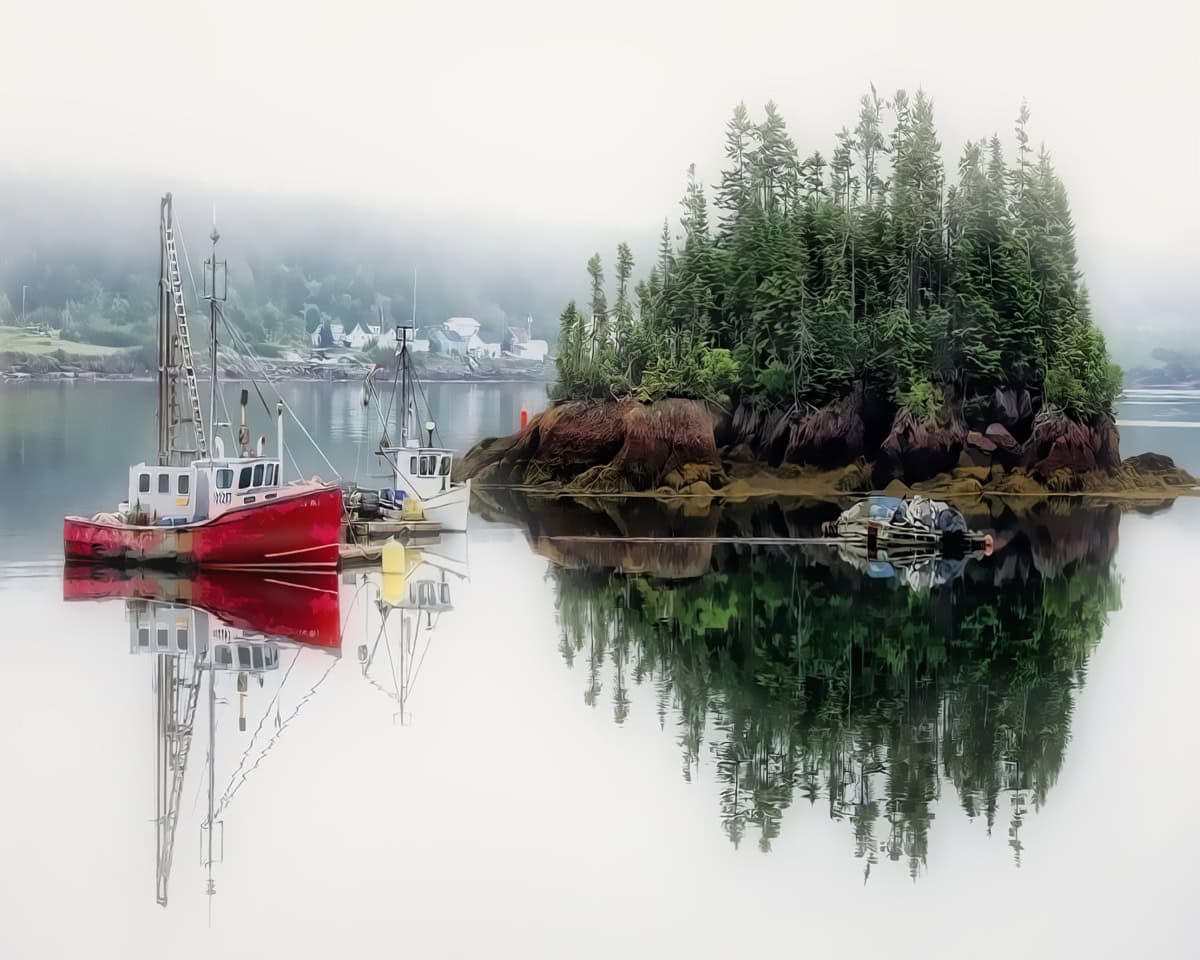
Annapolis Royal, Nova Scotia: 14 Things to See and Do in Canada’s Oldest Town

TL;DRAnnapolis Royal, on Nova Scotia’s western shore, is the oldest European settlement in North America, about 200 km (2.5 hours by car) from Halifax. There are 14 things to see and do here, from the Fort Anne National Historic Site, with over 400 years of history, to the Annapolis Royal Historic Gardens spread across 7 hectares, the reconstructed Port-Royal settlement, and the unique Tidal Generating Station on the Bay of Fundy. One or two days is enough to see it all, though a full weekend is ideal, and June to September is the best time to come, with temperatures of 20–25°C and everything open. Budget CAD 4,000–7,000 for two people over two days, not including transport. You’ll want a car for this trip — without one, you can’t reach Port-Royal or the other attractions outside the town centre.

Some places catch you completely off guard because you had zero expectations going in. Annapolis Royal Canada is exactly that kind of place. I’ll admit, when Lukáš and I were planning our road trip around Nova Scotia, this little town was on our list as “a lunch stop on the way to somewhere else.” Then we spent two days there and drove away feeling like we’d stumbled upon one of the most beautiful and peaceful corners of eastern Canada.

Picture a tiny town with one main street lined with colourful wooden houses, where on a Saturday morning you bump into a farmer selling homemade rhubarb jam, and by the afternoon you’re standing on the shore of the Bay of Fundy watching the sea retreat several metres in just a few hours. It’s a bit like time travel — only with excellent coffee and Wi-Fi. 😊

In this article you’ll find 14 things to see and do in Annapolis Royal — from historic forts and stunning gardens to a tidal power station and the best restaurants on the main street. I’ll tell you the best time to visit, where to stay, and how much the whole thing will cost.

TL;DR

  • Annapolis Royal is one of the oldest European settlements in North America — history literally seeps from every corner.
  • The main attraction is Fort Anne National Historic Site — a fortress with over 400 years of history and gorgeous views of the river.
  • Annapolis Royal Historic Gardens are stunning gardens spread over 17 acres, blooming from May to October.
  • Just outside town you’ll find Port-Royal National Historic Site — a reconstruction of the first French settlement from 1605.
  • The town sits on the shore of Bay of Fundy, the bay with the highest tides in the world.
  • Tidal Generating Station is a unique tidal power plant — the only one of its kind in North America.
  • The main street, St. George Street, is packed with galleries, cafés and little shops — you can walk it in 15 minutes but you’ll spend hours.
  • On Saturday mornings don’t miss the Annapolis Royal Farmers’ Market — one of the oldest farmers’ markets in Canada.
  • The best time to visit is June to September, when it’s warmest and everything is open.
  • 1–2 days is enough for Annapolis Royal, but you could easily spend a whole weekend here and slow right down.
  • A two-day budget for two comes in around €150–260 (excluding transport), depending on your accommodation choice.

When to visit Annapolis Royal and how to get there

Nova Scotia is a destination where the weather calls the shots. Annapolis Royal is no exception — and trust me, the difference between a visit in July and one in November is like the difference between a fairy tale and a horror film about an abandoned town. 😅

Best time to visit

June to September is hands down the best period. Temperatures hover around 20–25 °C, the gardens are in full bloom, all the attractions are open, and the farmers’ market is in full swing. July and August are the warmest but also the busiest — although “busy” in Annapolis Royal means you’ll pass thirty people on the main street instead of ten.

September and early October are probably our favourite time — Indian Summer in Nova Scotia is absolutely stunning. The leaves turn red and orange, the crowds thin out, and accommodation prices drop. The gardens are winding down for the season, but the landscape is breathtaking.

May is a bit of a gamble — it can still be chilly (around 12–15 °C), but the gardens are opening up and the town is coming back to life. Ideal if you’re not a fan of crowds.

October to April I wouldn’t really recommend — most attractions close, the weather is unpredictable (rain, wind, the odd snowfall), and the town feels quite deserted. That said, if you’re after solitude and dramatic atmospheres, winter on the Bay of Fundy has its own charm.

How to get to Annapolis Royal

Annapolis Royal sits on the western coast of Nova Scotia, roughly 200 km west of Halifax — that’s about a 2.5-hour drive along Highway 101. The drive is pleasant and takes you through gorgeous scenery, so you’ll enjoy it.

By car is by far the most convenient option. If you’re planning a road trip around Nova Scotia (and you really should!), Annapolis Royal fits perfectly into a route between Halifax and Digby. Lukáš and I have had great long-term experience with DiscoverCars, which we use all over the world — you can pick up your car right at Halifax airport.

By air, you’ll fly into Halifax Stanfield International Airport (YHZ), then pick up a rental car. There are no direct flights from the UK, but connecting flights via Toronto, Montreal or through other hubs are easy enough to find. From London, airlines like Air Canada and WestJet offer regular connections to Halifax via Toronto or Montreal. We like to search for cheap flights on Kiwi — it’s our go-to portal.

By bus, you can get from Halifax via Maritime Bus, but services aren’t frequent and without a car you’ll be quite limited in Annapolis Royal — most of the interesting spots (like Port-Royal) are outside of town.

💡 TIP: If you’re coming from New Brunswick, consider the ferryBay Ferries runs from Saint John to Digby. It’s a lovely 2.5-hour crossing over the Bay of Fundy, and Digby is only 40 minutes by car from Annapolis Royal. The ferry costs around 50 CAD (about €35) per person plus 120 CAD (roughly €80) per car.

Where to stay in Annapolis Royal + how much it costs

Annapolis Royal is a tiny town, so the accommodation options aren’t vast — but they’re surprisingly high quality. B&Bs and historic guesthouses dominate here, which fits the atmosphere perfectly. If you’re after big chain hotels, you’ll search in vain — and honestly, that would be a shame.

Where to stay

In the centre on or near St. George Street — the best location, from here you can walk to everything that matters. Most B&Bs and guesthouses are right on the main street or just a few steps away.

If you love historic buildings with a story (and who doesn’t?), look for accommodation in one of the renovated Victorian houses — Annapolis Royal is full of them, and many operate as boutique B&Bs with homemade breakfasts.

For those who prefer a bit more privacy, Airbnb has entire cottages and apartments available — prices start around 100–150 CAD (€65–100) per night, though during peak season (July–August) they can climb higher.

If you’re travelling with a campervan or tent, there are several campgrounds nearby — Dunromin Campsite is popular and just a short distance from town.

Experiences & tickets
traveler-rated · GetYourGuide
Cabot Trail Scenic Tour by Highland Tours
★★★★★ 5.0 · 1 reviews
from €115
I want this experience →
🔗 These are affiliate links — they don't change your price and help us create content. · All experiences →
lukas a lucka
Lukáš and Lucie recommend
Where to stay in Annapolis Royal
2 accommodations — campsites and other lodging options

How much does Annapolis Royal cost

Budget-wise, Annapolis Royal is pleasantly affordable — definitely cheaper than Halifax or touristy hotspots in Nova Scotia like Lunenburg or Peggy’s Cove.

Approximate prices (for two, per day):

  • B&B accommodation: 120–200 CAD / night (€80–135)
  • Airbnb apartment: 100–180 CAD / night (€65–120)
  • Campsite: 35–50 CAD / night (€25–35)
  • Lunch for two at a restaurant: 30–50 CAD (€20–35)
  • Dinner for two: 50–90 CAD (€35–60)
  • Coffee and a pastry: 8–12 CAD (€5–8)
  • Admission to Fort Anne: free (Parks Canada)
  • Admission to Historic Gardens: 15 CAD / person (€10)
  • Admission to Port-Royal: free (Parks Canada)

Budget for 2 days for two (excluding transport and accommodation): around 200–350 CAD, roughly €135–235 — food, admissions, coffees and small purchases. With B&B accommodation, expect a total budget of around 500–800 CAD (€335–535) for two days for two.

💡 TIP: If you’re planning to visit multiple national historic sites in Canada (Fort Anne, Port-Royal, Halifax Citadel…), it’s worth getting the Parks Canada Discovery Pass — it costs 145 CAD (roughly €97) for a family/group and is valid for an entire year across all national parks and historic sites. We had one and it paid for itself within a week in Nova Scotia.

14 things to see and do in Annapolis Royal

Let’s dive into the best of what Annapolis Royal has to offer. From forts and gardens to a unique tidal power station and spots the locals love, you’ll be surprised how much this tiny town has tucked away — we certainly didn’t expect to spend two full days here and still feel sad about leaving. 😊

1. Fort Anne National Historic Site — the heart of the town with 400 years of history

Fort Anne National Historic Site in Annapolis Royal
Photo: WayeMason & John Van Gurp / Wikimedia Commons (CC BY-SA 4.0)

Fort Anne is the reason Annapolis Royal exists at all — and it’s probably the first place every visitor should head to. This fortress endured more sieges than any other place in North America — between 1614 and 1710, the French and British fought over it again and again, until the British finally won and named the town after Queen Anne.

Today, the fort’s imposing star-shaped earthwork ramparts (bastions) remain, and walking along them is a real treat — the views over the Annapolis River and the surrounding countryside are gorgeous, especially at sunset. In the centre stands the Officers’ Quarters from 1797, housing a museum about the region’s history, including the remarkable Heritage Tapestry — a hand-embroidered tapestry that took over 100 people more than 4 years to complete. It’s truly impressive.

Admission is free thanks to Parks Canada. The museum in the Officers’ Quarters is open from May to October (usually 9:00–17:30), but you can walk the ramparts year-round. Allow an hour to an hour and a half for a visit — or longer if you grab a coffee and sit on the ramparts just gazing at the river. Which I highly recommend.

What really struck me was the atmosphere — no queues, no crowds. You’re standing in a place where the history of all of North America was shaped, and around you there’s nothing but peace. Just birdsong and the occasional jogger on the ramparts.

2. Annapolis Royal Historic Gardens — 17 acres of blooming gardens

Blooming flower beds in Annapolis Royal Historic Gardens
Photo: André Carrotflower / Wikimedia Commons (CC BY-SA 2.0)

Whether you’re a garden enthusiast or not, the Historic Gardens will win you over. Spread across 17 acres of themed gardens, they trace the history of gardening in the region from the indigenous Mi’kmaq people through Acadian settlers to Victorian ornamental gardens.

My personal favourite was the rose garden with over 270 varieties (in June and July it’s a feast for all the senses) and the Acadian kitchen garden, which looks exactly how you’d imagine a 17th-century French settler’s plot. There’s also a replica of an Acadian house with period furnishings and a weaving display.

Admission is 15 CAD (roughly €10) per adult; children aged 6–17 pay 10 CAD. The gardens are open from May to October (in peak season 9:00–17:00, reduced hours in September and October). Set aside at least 1.5–2 hours — we ended up spending nearly three, because Lukáš discovered they have a replica of Acadian marshlands with a traditional dyke system, and he was predictably fascinated. 😅

💡 TIP: Inside the gardens there’s a lovely Café with a terrace overlooking the grounds — a wonderful spot for a relaxing lunch or coffee mid-visit.

3. Port-Royal National Historic Site — where French Canada began

Reconstruction of the French trading post at Port-Royal
Photo: Dennis G. Jarvis / Wikimedia Commons (CC BY-SA 2.0)

This site lies about 10 km from Annapolis Royal (10 minutes by car) and is one of the most historically significant places in all of Canada. Port-Royal is a reconstruction of the first permanent French settlement in North America from 1605 — built by Samuel de Champlain and Pierre Dugua de Mons.

The reconstruction is surprisingly faithful and atmospheric — wooden buildings arranged around a central courtyard look exactly as you’d picture a settlement from the early 17th century. Inside you’ll find period furnishings, a blacksmith’s forge, a kitchen, sleeping quarters and a trading room. During the summer season, costumed interpreters are on hand to explain how people lived here — and believe me, it was no picnic.

Admission is again free thanks to Parks Canada. Open from mid-May to mid-October (9:00–17:30). Allow 45 minutes to an hour for a visit.

What really got me was the setting — the settlement sits on the riverbank surrounded by forest, and the view across to the far shore is utterly peaceful. It’s easy to imagine what it must have been like here 400 years ago. With the small detail that winters back then lasted six months and half the settlers didn’t survive their first year. Puts our complaints about flight delays into perspective, doesn’t it? 😅

4. St. George Street — the main street where time stood still

Historic St. George Street in Annapolis Royal
Photo: Detroit Publishing Co., restored by Adam Cuerden / Public domain / Wikimedia Commons

St. George Street is the heart of Annapolis Royal — and honestly, it’s one of the prettiest main streets we’ve seen anywhere in Canada. Colourful wooden houses from the 18th and 19th centuries, small galleries, antique shops, cafés and little stores selling local art — all packed into a stretch of about 500 metres.

You don’t need a plan — just stroll back and forth and pop in wherever catches your eye. I’d recommend peeking into the local artists’ galleries (there are a surprising number for such a small town), browsing the antique bookshop (if you have a soft spot for old books, you’re done for), and stopping for a coffee at one of the cafés.

Most of the buildings on the street are Heritage Registered — meaning they’re protected. That means no neon signs, no chain restaurants. The town guards its character fiercely, and it shows. It feels authentic, not like a tourist trap.

In the evening the street lights up beautifully and the atmosphere becomes even more intimate. If you can, come here just before sunset — the light on the colourful facades is a photographer’s dream.

5. Tidal Generating Station — electricity from the tides

Tidal Generating Station in Annapolis Royal
Photo: WayeMason & John Van Gurp / CC BY-SA 4.0 / Wikimedia Commons

This is the thing that first made me look up Annapolis Royal on a map. Annapolis Royal Tidal Generating Station is the only tidal power plant in North America — and one of very few in the world. It harnesses the enormous tides of the Bay of Fundy (the water level difference here reaches up to 8.5 metres!) to generate electricity.

The station sits on a causeway across the Annapolis River, about 5 minutes by car from the centre. There used to be a visitor centre with an exhibit on tidal energy, but in recent years it’s unfortunately been closed — I’d recommend checking the current status before your visit. Even so, it’s worth driving over to see the causeway and watch the tidal current roar through.

What you’ll see here helps you understand why the Bay of Fundy is so unique — the highest tides on the planet are a truly awe-inspiring sight. Water levels rise and fall by 12–16 metres twice a day. Standing on the causeway watching the river flow one way, knowing it’ll reverse direction completely in a few hours, is genuinely fascinating.

💡 TIP: You can find current tide times on the Fisheries and Oceans Canada website — download the tide table in advance so you know when to show up for the most dramatic display. Ideally, arrive an hour before peak high tide, when the water is rising fastest.

lukas a lucka
Lukáš and Lucie recommend
Where to stay in Annapolis Royal
2 accommodations — campsites and other lodging options

6. King’s Theatre — the cultural heart of town

King's Theatre in Annapolis Royal
Photo: Jacqui Szyrpallo / CC BY 2.0 / Wikimedia Commons

King’s Theatre is a beautiful historic theatre dating from 1921 that serves as Annapolis Royal’s cultural hub. Originally a cinema, it now hosts plays, concerts, film screenings and all sorts of community events.

You don’t have to be a theatre buff — even just popping your head in is worth it. The interior is charming, with wooden seats and an old-world atmosphere. If your visit falls on a weekend, there’s a good chance something will be on — check the programme on their website (kingstheatre.ca).

The building itself is photogenic from the outside too, and it’s right on St. George Street, so you can’t miss it.

7. Annapolis Royal Farmers’ and Traders’ Market — a Saturday ritual

If you’re in Annapolis Royal on a Saturday morning, the farmers’ market is an absolute must. It runs every Saturday from May to October (and in a reduced form through winter) and is one of the longest-running farmers’ markets in Canada — it’s been going since 1984.

You’ll find fresh fruit and veg from local farms, homemade jams and preserves, baked goods, cheeses, honey, artisan crafts and local art. The vibe is exactly what you’d expect — friendly, laid-back and utterly authentic. Locals come here to meet up, chat and do their weekly shop.

We couldn’t resist a jar of homemade rhubarb jam (quite possibly the best I’ve ever had) and a packet of maple fudge — that intensely sweet maple confection that’ll make your teeth ache but you absolutely have to try.

The market takes place at the Historic Gardens’ Farmer’s Market Building, usually from 8:00 to 13:00. Get there early — the best stuff goes fast.

8. Bay of Fundy tides — nature’s show twice a day

The Bay of Fundy is one of Canada’s natural wonders, and Annapolis Royal sits right on its shore. The tides here produce some of the greatest water level differences in the world — and watching them is an experience that never gets old.

The best viewing spots are right by the Tidal Generating Station causeway or along the boardwalk by the river in the town centre. At low tide, an expanse of muddy riverbed is revealed and it looks like someone’s pulled the plug on a bathtub — then six hours later the water is right up to the top again.

If you have time, I’d recommend coming twice — once at low tide and once at high tide. The contrast is truly dramatic, and those before-and-after photos are always an Instagram hit.

9. Historic Cemeteries and Garrison Cemetery — a walk among stories

I know what you’re thinking — cemeteries as a travel tip? But in Annapolis Royal, the cemeteries are like an outdoor museum. Garrison Cemetery, right next to Fort Anne, is one of the oldest English burial grounds in Canada, with gravestones dating from the early 18th century.

Walking among the weathered stone headstones and reading the names and stories of people who lived here 300 years ago is a surprisingly powerful experience. Some of the graves feature beautiful stonework and poetic inscriptions. The town has published a cemetery guide (available at the visitor information centre) that explains the history of the most notable burials.

It’s free, accessible year-round, and strangely meditative — especially in the early evening, when the only company you’ll have is a squirrel or two.

10. Boardwalk along the Annapolis River — a walk with a view

Annapolis Royal waterfront
Photo: Dan Conlin / CC BY 4.0 / Wikimedia Commons

The Annapolis Waterfront Boardwalk is a pleasant paved path along the river, linking the town centre with the wharf and continuing further along the shore. It’s not an epic hike — the whole walk is about 2 km there and back — but it’s ideal for a morning or late-afternoon stroll.

Along the way you’ll pass benches with river views, information panels about the local history and nature, and if you’re lucky you might spot bald eagles nesting nearby. Seriously — we saw one perched in a tree about 20 metres from the boardwalk and nearly dropped our phones.

The boardwalk is accessible year-round and free. It’s at its most beautiful at high tide, when the water laps almost to the edge of the path, or at sunset, when the river turns shades of pink.

Around Annapolis Royal: 4 day trips worth taking

Annapolis Royal makes an excellent base for exploring the surrounding area. The Annapolis Valley and the shores of the Bay of Fundy are full of hidden gems, all reachable by car in 30–60 minutes.

11. Kejimkujik National Park — wilderness and canoeing

About 50 km south of Annapolis Royal (45 minutes by car) lies Kejimkujik National Park — and if you love the outdoors, this is a must. The park protects vast areas of Acadian mixed forest, lakes and rivers, and is renowned for its canoe routes, hiking trails, and at night as one of the best stargazing spots in Atlantic Canada (it’s a certified Dark Sky Preserve).

Admission is 8.50 CAD (roughly €6) per adult (or free with a Parks Canada Discovery Pass). If you have time, try at least the Ukme’k Trail — a short loop around the lake — or hire a kayak and get out on the water.

12. Delaps Cove Wilderness Trail — a hike to waterfalls

About 25 minutes by car from Annapolis Royal you’ll find the gorgeous Delaps Cove Wilderness Trail, which leads to small waterfalls and streams. The trail has two loops — a shorter one (around 3 km) and a longer one (about 5 km) — both are moderately challenging and wind through dense forest along a brook.

It’s perfect for a morning hike when you want to escape into the wild for a bit. The signage is good, the trail is well maintained, and if you come on a weekday you’ll likely have it all to yourself. Don’t forget decent hiking boots — the terrain can be slippery in places, especially after rain.

13. Bear River — the “Little Switzerland” of Nova Scotia

The picturesque village of Bear River in Nova Scotia
Photo: Reynoborn64 / Public domain / Wikimedia Commons

About 20 minutes south of Annapolis Royal lies the village of Bear River, nicknamed the “Little Switzerland of Nova Scotia” — and I can see why. Houses perch on steep slopes above the river and the whole thing looks like a postcard. There are a couple of galleries, a pottery studio, and a gorgeous view of the river from the bridge.

There’s not enough here to fill a whole day, but as an hour-long stop on your way from Annapolis Royal it’s lovely — and the local café does a rather decent espresso.

14. Wolfville and Grand-Pré — wine and Acadian history

If you have time for a full-day trip, head to Wolfville (about an hour east) — a university town surrounded by vineyards. The Annapolis Valley is Nova Scotia’s main wine-growing region, and around Wolfville you’ll find dozens of small wineries offering tastings.

On the way, stop at Grand-Pré National Historic Site — a heritage site commemorating the deportation of the Acadians in 1755, one of the most tragic chapters in Canadian history. It’s a place of immense emotional power, with beautiful gardens. Admission is free thanks to Parks Canada.

Where to eat and drink in Annapolis Royal: A foodie’s guide

For such a small town, Annapolis Royal has a surprisingly good food scene. The restaurants here champion local ingredients — fish and seafood from the Bay of Fundy, vegetables from Annapolis Valley farms, and homemade baked goods. No chains, no fast food, just honest cooking made with love.

Restaurants

Bistro East — arguably the best restaurant in town. Modern Canadian cuisine with an emphasis on local ingredients. Their seafood is superb and the portions generous. Dinner for two with wine comes to 80–120 CAD (€55–80). Book ahead, especially on summer weekends.

The Garrison House — a historic building with a beautiful interior, serving both traditional and modern Canadian dishes. A great spot for a slightly more special dinner. Their fish and chips is among the best we had in all of Nova Scotia.

Ye Olde Towne Pub — if you fancy something casual — burgers, fish and chips, local beers. It’s exactly the kind of cosy pub where you sit on a wooden bench and feel like you’ve been coming here your whole life. Lunch for two around 35–50 CAD (€25–35).

Cafés on St. George Street — on the main street you’ll find a handful of small cafés with excellent pastries and coffee. I recommend stopping in for a croissant and cappuccino in the morning and watching the town come to life.

Farmers’ market (Saturday)

The Saturday market is a brilliant spot for breakfast — fresh baked goods, homemade jams, cheeses and fruit. Bring your own bag and stock up for the day — a picnic in the Historic Gardens or on the boardwalk by the river is a perfect plan.

Must-try foods

  • Lobster roll — you’re in Nova Scotia, lobster is practically compulsory. You’ll find them at several restaurants for 20–30 CAD (€14–20).
  • Digby scallops — scallops from nearby Digby are famous across Canada. They don’t get any fresher than this.
  • Blueberry grunt — a traditional Nova Scotian dessert made with blueberries and dumplings. Sounds odd, tastes heavenly.
  • Local apple cider — the Annapolis Valley is full of orchards and the cider here is excellent.

Practical tips and tricks

How much time to spend in Annapolis Royal

For the town itself, 1 day is enough — you’ll cover Fort Anne, the Historic Gardens, a stroll along St. George Street, and dinner at a restaurant. If you want to add Port-Royal, the Tidal Station and perhaps a hike nearby, plan for 2 days. And if you want to squeeze in Kejimkujik and wine tasting around Wolfville, give yourself 3 days.

We spent 2 days and it was just right — though we didn’t have time for Kejimkujik, so next time it’ll definitely be longer.

Getting around

A car is essential. You can walk across the centre in 15 minutes, but Port-Royal, the Tidal Station and any trips into the surrounding area all require a car. Parking in Annapolis Royal is free and there’s always plenty of space.

Internet and eSIM

In Annapolis Royal you’ll find Wi-Fi in most accommodation and cafés. However, if you’re planning a longer road trip across Canada and want data everywhere (including in national parks), I’d recommend getting an eSIM. We’ve had a great experience with Holafly — it works reliably across the whole of Canada.

What to pack

Nova Scotia is notorious for unpredictable weather — even in summer it can rain several times a day and temperatures fluctuate wildly. Make sure you pack:

  • A lightweight waterproof jacket (essential!)
  • Layers (12 °C in the morning, 25 °C in the afternoon)
  • Comfortable walking shoes
  • If you’re planning hikes, proper hiking boots
  • Insect repellent — mosquitoes can be fierce near water and in the woods during summer

More tips in our article How to pack a carry-on bag.

Travel insurance

Don’t forget travel insurance for a trip to Canada — healthcare for foreign visitors in Canada is astronomically expensive. For shorter trips we’d recommend standard travel insurance, and for longer journeys we’ve had an excellent experience with SafetyWing.

FAQ — Frequently asked questions about Annapolis Royal

Tips and Tricks for Your Vacation

Don’t Overpay for Flights

Search for flights on Kayak. It’s our favorite search engine because it scans the websites of all airlines and always finds the cheapest connection.

Book Your Accommodation Smartly

The best experiences we’ve had when looking for accommodation (from Alaska to Morocco) are with Booking.com, where hotels, apartments, and entire houses are usually the cheapest and most widely available.

Don’t Forget Travel Insurance

Good travel insurance will protect you against illness, accidents, theft, or flight cancellations. We’ve had a few hospital visits abroad, so we know how important it is to have proper insurance arranged.

Where we insure ourselves: SafetyWing (best for everyone) and TrueTraveller (for extra-long trips).

Why don’t we recommend any Czech insurance company? Because they have too many restrictions. They set limits on the number of days abroad, travel insurance via a credit card often requires you to pay medical expenses only with that card, and they frequently limit the number of returns to the Czech Republic.

Find the Best Experiences

Get Your Guide is a huge online marketplace where you can book guided walks, trips, skip-the-line tickets, tours, and much more. We always find some extra fun there!
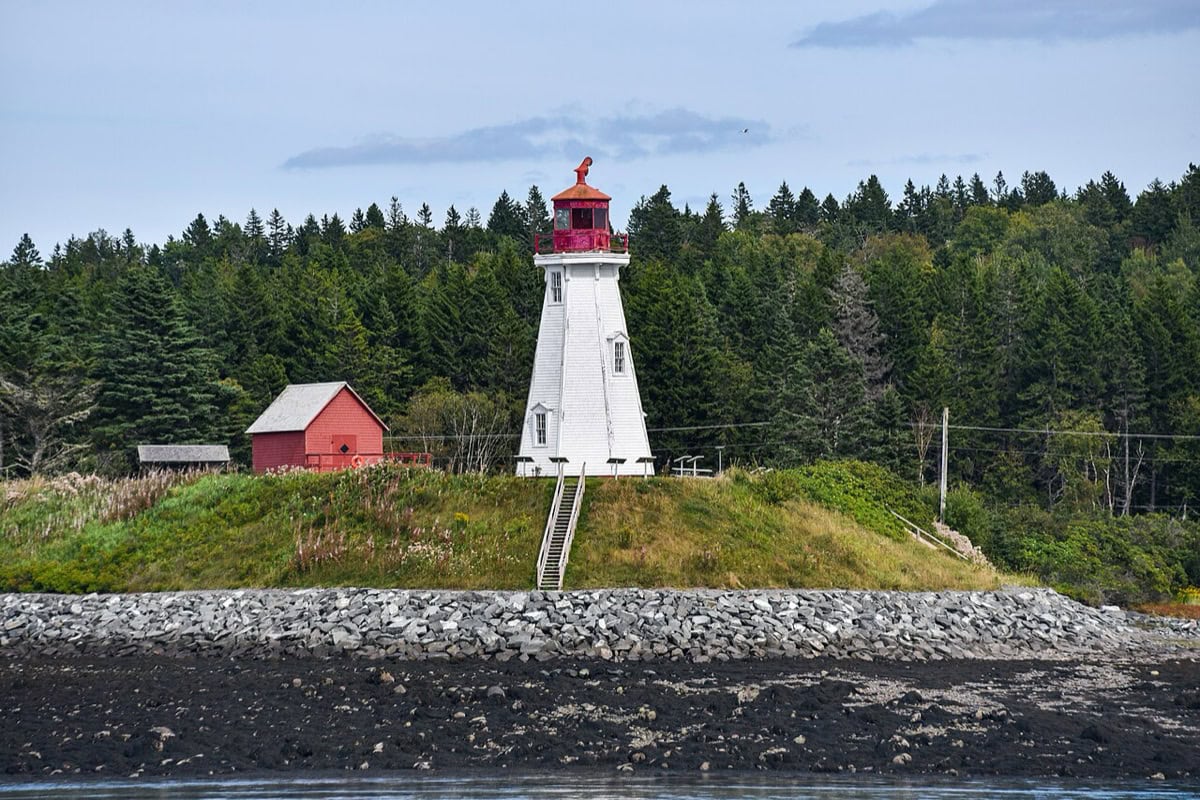
Kouchibouguac National Park, New Brunswick: 15 Things to See and Do

TL;DRKouchibouguac National Park in New Brunswick is all about warm, sandy beaches, lagoons and dunes, and the best way to take it in is the wooden Kellys Beach Boardwalk, about 800 metres long. The lagoon water hits 24–26°C in summer, and the best time to visit is mid-June to mid-September, ideally for 4–5 days. Among the 14 tips on what to see and do are cycling along more than 60km of flat trails, paddling on Saint-Louis Lagoon and Kouchibouguac Lagoon, and a boat trip to see grey seals from the harbour at Loggiecroft. Admission costs 8.50 CAD per adult, camping in the park starts at 26 CAD a night, and the park sits about 100km south of Miramichi and 110km north of Moncton.

This park in New Brunswick is one of those places that catches you off guard with its understated beauty — no dramatic cliff faces or glacial peaks, but kilometres of sandy dunes, warm lagoons, endless cycling trails winding through bird-filled forests, and a feeling that you’ve got the whole of nature to yourself. Kouchibouguac National Park is truly one of eastern Canada’s hidden gems.

In this article, you’ll find a complete guide to Kouchibouguac National Park — from the most beautiful beaches and boardwalks, to paddling on lagoons, watching seals and birds, plus practical advice on when to go, where to stay, and how much it all costs. I’ve put together 15 things to see and do so you can make the most of the park, whether you’re visiting for a weekend or a full week.

TL;DR

  • Kouchibouguac National Park lies on the coast of New Brunswick and is known for its warm sandy beaches, lagoons, and dunes — sea temperatures in the lagoons reach up to 26 °C in summer, which is pretty incredible for Canada.
  • Kellys Beach Boardwalk is the park’s flagship attraction — a wooden walkway through wetlands and dunes leading to a stunning beach where you could happily spend an entire day.
  • The best time to visit is mid-June to mid-September, but heads up — July and August can get very busy at the campgrounds, so book ahead.
  • The park has over 60 km of cycling trails on flat terrain, making it ideal for families with children.
  • You can paddle on the lagoons, watch a tern colony, and take a boat trip out to see grey seals basking on the sandbars.
  • Admission to the park costs 8.50 CAD/adult (about €6), camping from 26 CAD/night (about €18) for an unserviced site.
  • The park is steeped in Acadian culture — check out a festival, try poutine rappée, and hear the stories of the local Acadians.
  • Accommodation in the area is limited — the best option is camping right in the park, or basing yourself in the towns of Miramichi or Bouctouche.

When to visit Kouchibouguac and how to get there

Kouchibouguac National Park is a quintessential summer park. While you can visit year-round (cross-country skiing or snowshoeing in winter), the full experience — warm beaches, paddling, cycling, seals — happens from mid-June to mid-September. The sweet spot is late June to early July, when the weather is settled, there are fewer visitors than during school holidays, and nature is in full bloom.

Weather and temperatures

Summer in New Brunswick is surprisingly pleasant. Air temperatures in July and August hover around 22–28 °C, and the water in the lagoons reaches up to 24–26 °C — yes, you read that right. The lagoons are shallow and enclosed by sand dunes, so they warm up like a swimming pool. The open ocean is cooler (around 18 °C), of course, but the lagoons are an absolute dream for swimming.

Do bear in mind that mornings and evenings can feel noticeably cooler, especially on the beach when the wind picks up. A jumper or light jacket is always a good idea.

How to get to the park

Kouchibouguac sits on the eastern coast of New Brunswick, roughly 100 km south of Miramichi and 110 km north of Moncton. The nearest major airport is Greater Moncton Roméo LeBlanc International Airport (YQM), which is about an hour and a half’s drive away.

If you’re travelling around eastern Canada, the park slots perfectly into a route between Prince Edward Island and Québec — or as a detour from the main Trans-Canada Highway. From Fredericton, allow about 2.5 hours of driving.

Public transport to the park is essentially non-existent — a car is a must. We’ve had consistently good experiences with DiscoverCars, which we use on all our trips. From the UK, you’ll typically fly into Halifax or Moncton (airlines like Air Canada, WestJet, or connecting via Toronto/Montreal), so it’s worth comparing car hire prices from both airports — the difference can be surprisingly large.

Admission and Parks Canada Discovery Pass

Daily admission to Kouchibouguac National Park is 8.50 CAD per adult (about €6) or 17 CAD per family/group (about €11). If you’re planning to visit multiple national parks in Canada (and you absolutely should!), the Parks Canada Discovery Pass at 75 CAD/adult (about €50) or 150 CAD per family is brilliant value — it covers all national parks and historic sites for an entire year.

We had a Discovery Pass and it paid for itself about three times over. 😁

Where to stay and how much Kouchibouguac costs

Let’s be honest — Kouchibouguac isn’t the kind of place you visit for a luxury hotel with a spa. It’s the kind of place where you fall asleep in a tent under the stars, wake up to birdsong, and have breakfast by the campfire. And that’s precisely what makes it so special.

Camping in the park (best option)

The park offers three campgrounds with varying levels of facilities:

South Kouchibouguac Campground — the main and largest campground, closest to the beaches and boardwalk. It has both serviced and unserviced sites, showers, toilets, and fire pits. An unserviced site starts from 26 CAD/night (about €18), serviced (with electricity) from 36 CAD/night (about €24). It fills up in summer — book via reservation.pc.gc.ca as early as possible, ideally as soon as reservations open in January.

Côte-à-Fabien — smaller, quieter, a bit further from the main attractions. Great if you want more peace and don’t mind cycling to the highlights.

Sipu Camping — more primitive, backcountry style. For those who truly want to be off the grid.

Beyond traditional tent pitches, Parks Canada also offers oTENTik units — semi-wooden “glamping” tents with beds and a small deck. They cost around 120 CAD/night (about €80) and are ideal if you don’t fancy lugging a tent but still want to stay inside the park. They’re incredibly popular — book months in advance.

Accommodation outside the park

If camping isn’t your thing, the nearest towns with accommodation are:

  • Bouctouche (about 45 min south) — a charming little town with Acadian culture, a few B&Bs and motels.
  • Miramichi (about 1 hour north) — a larger town with more options, from hotels to Airbnbs.
  • Moncton (about 1.5 hours) — if you need the facilities of a bigger city.

How much does a holiday in Kouchibouguac cost

Rough budget for 5 days for two (camping):

  • Admission (5 days): 85 CAD (about €57) or Discovery Pass
  • Campsite (5 nights, unserviced): 130 CAD (about €87)
  • Food (campfire cooking + occasional restaurant): 250–350 CAD (about €170–235)
  • Kayak/canoe hire (2×): 80–120 CAD (about €54–80)
  • Seal boat trip: 60–80 CAD/person (about €40–54)
  • Petrol: 60–80 CAD (about €40–54)

Total: roughly 700–850 CAD for two (about €470–570). For Canada, that’s genuinely great value — proper nature on a budget. ☺️

Kouchibouguac National Park: 15 things to see and do

Now for the best bit — let’s dive into everything that awaits you at Kouchibouguac National Park. From iconic beaches and boardwalks to paddling, cycling, seal watching, and birdwatching. There are fifteen tips here, but trust me — you could easily spend two weeks in this park and still be discovering something new.

1. Kellys Beach Boardwalk — the park’s flagship

Wooden boardwalk through the dunes to Kellys Beach in Kouchibouguac National Park
Photo: Larry from Charlottetown / Wikimedia Commons (CC BY 2.0)

If you only visit one spot in Kouchibouguac, make it this one. Kellys Beach Boardwalk is an 800-metre wooden walkway that leads you through wetlands, peat bogs, and tall grasses to the sand dunes and a gorgeous beach on the other side.

The walk itself is an experience — dragonflies dart around you, frogs croak from the marshes, and the air smells of salt water. Interpretive panels along the way explain the dune and wetland ecosystems, so you pick up fascinating facts without even trying.

At the end of the boardwalk, you’re rewarded with a wide sandy beach facing the lagoons, where the water is warm and shallow — perfect for swimming. During the season, there are lifeguards, changing rooms, and toilets. The beach is surprisingly spacious, so even on the busiest days you’ll find your own patch of sand.

Tip: Come early in the morning or late afternoon — the light on the dunes is beautiful for photos, and the crowds are nowhere to be seen.

2. Beaches and lagoons — warm water you don’t expect in Canada

Sandy Kellys Beach with a shallow lagoon in Kouchibouguac National Park
Photo: Larry from Charlottetown / Wikimedia Commons (CC BY 2.0)

Kellys Beach is the most famous, but the park has other beaches well worth visiting. Callanders Beach is smaller and more intimate, brilliant for families with little ones thanks to the truly shallow lagoon water. Loggiecroft Beach is popular with locals and slightly off the main tourist trail.

What absolutely blew me away about Kouchibouguac is the water temperature. The lagoons are enclosed by sandy barrier islands, so they soak up the sunshine and reach an incredible 24–26 °C. That’s the kind of temperature where you’d normally be in a swimming pool in Canada, not in the ocean.

The beaches are sandy, clean, and wide. Forget pebbles or seaweed — it’s fine, light sand, almost Caribbean-like. The water isn’t turquoise but rather a warm green. In terms of atmosphere, though, it easily beats the Caribbean because there are no crowds, and the tranquility is almost meditative.

3. Sand dunes and barrier islands — fragile wilderness

Sand dunes in Kouchibouguac National Park
Photo: Larry from Charlottetown, PEI, Canada / CC BY 2.0 / Wikimedia Commons

One of Kouchibouguac’s geological gems is its barrier islands — long, narrow strips of sand separating the lagoons from the open ocean. These are dynamic formations constantly reshaped by tides and storms. Some are just ten metres across, while others stretch for kilometres.

You can reach the dunes on foot from the Kellys Beach Boardwalk or by boat/kayak across the lagoons. The golden rule: stick to the marked paths. The dunes are extremely fragile, vegetation grows slowly, and a single footprint can trigger erosion that takes years to heal. The park takes this seriously, and rightly so.

From the tops of the dunes, the views in both directions are stunning — on one side, the calm lagoon; on the other, the wild Atlantic with crashing waves. It’s a surreal contrast. If you’re into landscape photography, this is a place where you’ll lose track of time entirely.

4. Cycling around the park — 60 km of trails for everyone

Cycling trail in Kouchibouguac National Park
Photo: Larry from Charlottetown, PEI, Canada / CC BY 2.0 / Wikimedia Commons

Kouchibouguac is absolutely perfect for cycling. The park has over 60 km of paved cycling trails running through forests, alongside rivers, past wetlands, and between campgrounds. Best of all — it’s almost entirely flat, so there are no tough climbs or dramatic hills. You just hop on and ride.

The most popular route is the Kellys Beach – Callanders Beach loop (about 15 km return), alternating between forest, open marshland, and beaches. Another beautiful route follows the Kouchibouguac River — in the early morning, you’ll often spot herons, ospreys, and with a bit of luck, a beaver.

You can hire bikes right in the park from Ryan’s Rental Centre (near the main campground). Prices are around 10–15 CAD/hour (€7–10) or 30–40 CAD/day (€20–27). They have mountain bikes, cruisers, and children’s bikes with trailers. The quality is perfectly decent — nothing fancy, but more than adequate for flat trails.

Tip: Grab a bike and set off on a full-day trip with a picnic. Stop at lagoons, explore side trails to viewpoints, and just let yourself get lost in the moment. It was the best day we had in the park. ☺️

5. Paddling on the lagoons — kayak, canoe, SUP

The lagoons in Kouchibouguac were practically made for paddling. Calm, shallow, warm water with no currents — paradise for beginners and experienced paddlers alike. You can paddle on Saint-Louis Lagoon or Kouchibouguac Lagoon, both gorgeous and each with its own character — Saint-Louis is larger and more open, while Kouchibouguac Lagoon feels more enclosed and intimate.

Kayaks and canoes are available from Ryan’s Rental Centre. A single kayak costs around 20 CAD/hour (about €13), a double around 30 CAD (about €20), and canoes are priced similarly. They have SUP boards too. You’ll get a better rate for a full-day hire.

Watch out: Even on a calm day, the wind can pick up on the lagoons, especially in the afternoon. Always wear your life jacket (they’re provided with the rental) and keep an eye on the weather.

6. Boat trip to the grey seals — an unforgettable experience

Grey seals on the Canadian coast
Photo: Andrea Schaffer from Sydney, Australia / CC BY 2.0 / Wikimedia Commons

This is one of the most incredible experiences in the entire park. On the sandy shallows and barrier islands lives a colony of grey seals, lounging in the sun. You can watch them from the boat just a few metres away.

Trips are run by the park itself or by local operators — the boat departs from the harbour at Loggiecroft and the journey takes about 2–3 hours. The price is around 50–70 CAD per adult (about €34–47). It’s worth every penny — you see seals up close, the guide explains their behaviour and ecology, and you often spot dolphins and various bird species along the way.

We were lucky with a gorgeous sunny day and counted over fifty seals. They lay on the sand like enormous grey sausages, occasionally flopping over lazily or lifting their heads to give us a look of absolute indifference.

Book in advance — trips fill up fast in July and August. You’ll find information and booking at the Visitor Centre.

7. Tern colony and birdwatching

Kouchibouguac is an ornithologist’s paradise. The barrier islands host a nesting colony of Common Terns — thousands of pairs raising their chicks here. The colony is protected and you can’t set foot on the islands themselves, but from the boat during the seal trip you can see them beautifully (and above all hear them — these birds know how to make a racket).

In total, over 220 bird species have been recorded in the park. On the lagoons you’ll spot herons, cormorants, ospreys (bald eagles aren’t uncommon either), and plovers. In the forests, look for woodpeckers, chickadees, and hummingbirds. Every morning at our campsite, we watched a family of blue jays trying their best to nick our breakfast.

If you’re serious about birding, pop into the Visitor Centre for a birding trail map and the current sightings list. The rangers are incredibly knowledgeable and happy to point you in the right direction. The best times for birdwatching are early morning and late afternoon.

8. Voyageur Canoe Experience — paddle like explorers

This is one of the most unique activities in the park. During the season, Parks Canada offers the Voyageur Canoe Experience — a group paddle in a large canoe that’s a replica of the historic boats used by French fur traders (voyageurs). A guide in period costume tells stories from the colonial era, teaches you to paddle voyageur-style, and sings traditional French songs.

Sounds cheesy? A little bit. Is it brilliant? Absolutely. 😁 The trip lasts about 90 minutes, costs around 10–15 CAD per person (about €7–10), and it’s a fantastic experience for families and adults alike. You’ll learn a lot about the area’s history, Acadian culture, and life on the rivers. And paddling in a massive canoe with ten other people is surprisingly good fun.

Tip: The Voyageur canoe only runs during peak season (July–August) and places are limited. Reserve your spot at the Visitor Centre as soon as you arrive.

lukas a lucka
Lukáš and Lucie recommend
Where to Stay in Kouchibouguac National Park
4 accommodations — campgrounds and other lodging options

9. Hiking and walks — forest, wetland, coast

Forest trail in Kouchibouguac National Park
Photo: Larry from Charlottetown, PEI, Canada / CC BY 2.0 / Wikimedia Commons

The park has several walking trails of varying lengths and difficulty. These aren’t demanding mountain treks — they’re pleasant nature walks that you could manage in flip-flops (though proper hiking boots are always better).

The best trails:

  • Kellys Beach Trail (0.8 km one way) — the boardwalk to the beach, an absolute must.
  • Beaver Trail (1.6 km loop) — a short forest walk to a beaver pond. Morning and evening offer the best chance of seeing a beaver in action.
  • Salt Marsh Trail (1 km) — a boardwalk across salt marshes with gorgeous lagoon views. Perfect for sunset.
  • Osprey Trail (5.5 km) — a longer route along the river with chances of spotting ospreys. Peaceful, wooded, meditative.
  • Claire Fontaine Trail (3.5 km) — winds through forest to a freshwater spring. Welcome shade on a hot day.
  • Kouchibouguac River Trail (14 km return) — the longest trail in the park, also suitable for cycling.

None of these trails require any special equipment or fitness level. The hardest part is deciding which one to do first. 😅

10. After dark — stars and wolves

Since 2009, Kouchibouguac National Park has been a certified Dark Sky Preserve — an area with minimal light pollution where the night sky is visible in all its glory. And trust me, it’s SPECTACULAR.

Lying on the beach on a blanket, gazing at the Milky Way, and counting shooting stars — it’s an experience no photo can capture. Parks Canada occasionally runs night-time astronomy programmes with telescopes and guides who show you planets, constellations, and galaxies. Check the Visitor Centre or the park’s website for programme details.

And one more thing — at night from the campground, you might hear wolf howling (or more precisely, eastern coyotes, which are actually wolf-coyote hybrids). The first time, it woke us up at three in the morning and I thought I was going to die. The second time, we enjoyed it as ambient soundtrack. The third time, we slept right through it. Nature teaches you to adapt quickly. 😁

11. Acadian culture — stories that give this place its soul

Kouchibouguac lies at the heart of New Brunswick’s Acadian region. The Acadians are descendants of the original French settlers who arrived in the 17th century and have their own unique culture, language (Acadian French), and cuisine.

In and around the park, you’ll encounter Acadian culture at every turn. Parks Canada runs cultural programmes — storytelling, live music evenings, and traditional craft demonstrations. In summer, there are local festivals with live music, dancing, and food. The most famous is the Festival acadien in Bouctouche (in August), but smaller events run all summer long.

The Acadian flag — a French tricolour with a yellow star — flies from every other house here. The local people are incredibly friendly and proud of their history. If you get the chance, strike up a conversation — stories about the deportation of the Acadians in 1755 (the Grand Dérangement) put the entire region in context and help you understand why this culture is so resilient and strong.

12. Kouchibouguac River — canoeing and fishing

The river that gives the park its name is a beautiful waterway flowing through forest and wetlands. It’s ideal for gentle canoeing — no rapids or dangerous currents, just a slow-moving river full of bends where you’re constantly wondering what’s around the next corner.

You can also fish on the river (you’ll need both a federal and park licence — ask at the Visitor Centre). The main catch is trout, and at the river mouth you’ll find saltwater species too. We didn’t fish ourselves, but we met a local chap who said he’d been coming there every day for forty years and insisted there’s no better fishing spot anywhere. I believe him.

Paddling the river is a different experience from the lagoons — more intimate, greener, quieter. Trees lean over the water forming a natural tunnel. Occasionally a turtle pokes its head above the surface. It’s like a scene from a film. We’d recommend taking a canoe and heading 2–3 hours downstream — the park offers a shuttle back (check current availability at the Visitor Centre).

13. Winter activities — yes, the park is alive in winter too

You might not be reading this with plans to visit Kouchibouguac in January, but for completeness — the park is open year-round and in winter offers cross-country skiing trails (25 km groomed), snowshoeing, and even fat bike trails. South Kouchibouguac Campground closes for winter, but one of the more remote campgrounds (Côte-à-Fabien) offers heated oTENTiks and yurts in winter.

Winter Kouchibouguac is a completely different world — frozen lagoons, snow-covered dunes, absolute silence. If you love winter wilderness and don’t mind the cold (temperatures easily drop to -15 °C and below), it’s a truly unique experience.

14. Junior Ranger Program — for families with children

Travelling with kids? Parks Canada runs an excellent Xplorers Program (formerly Junior Ranger) at Kouchibouguac. Children receive an activity booklet — tracking animal footprints, identifying birds, ecology puzzles — and earn a certificate and badge for completing the tasks. It’s a genius way to get kids engaged with nature without having to say “look at that lovely tree” a hundred times a day.

The programme is free, and you can pick up booklets at the Visitor Centre.

15. Visitor Centre and interpretive programmes

Before heading out on any activity, stop by the Visitor Centre at the park’s main entrance. There’s an interactive exhibit on the park’s ecosystems, a 3D terrain model, information on current programmes, and — most valuable of all — rangers who know absolutely everything.

Ask about:

  • Current trail and beach conditions
  • Recent wildlife sightings
  • Which interpretive programmes are running this week
  • Tips on lesser-visited spots

During the season, Parks Canada runs regular interpretive programmes at Kouchibouguac — from evening campfire talks and guided walks to night-time stargazing sessions. Most are free (included in your admission) and the quality is surprisingly high. The guides are passionate, knowledgeable, and wonderful storytellers.

Where to eat and drink near Kouchibouguac

Honest truth: there’s no restaurant inside the park. There’s a small shop by the campground with basic groceries, ice cream, and snacks, but for proper meals you’ll need to either sort yourself out (campfire cooking) or venture outside the park.

Cooking at the campsite

Most visitors cook at the campground, and honestly it’s probably the best option. In the nearby towns (Richibucto, Rexton) there are supermarkets where you can stock up on everything you need. Every campsite has a fire pit, and you can borrow a grill grate. Breakfast by the fire with French press coffee and a view of the forest — that’s the quintessential Kouchibouguac experience.

Restaurants nearby

When you can’t face another night of campfire cooking (I get it, by day four it happens), you’ve got a few options:

Richibucto (15 min from the park) — a small town with a handful of restaurants. Try La Sagouine — Acadian cuisine, fresh seafood, lovely atmosphere.

Bouctouche (45 min) — here you’ll find Le Pays de la Sagouine, a cultural centre with a restaurant serving traditional Acadian dishes. Poutine rappée — the Acadian version of poutine made with potato dough stuffed with pork — is a must-try specialty. It’s not the prettiest dish, but it’s comfort food in its purest form.

Miramichi (1 hour) — a wider selection, from pubs to fine dining. Cunard Restaurant is a local classic for fish and seafood.

What to try

  • Poutine rappée — the Acadian specialty, an absolute must
  • Fresh seafood — lobster, shrimp, mussels — New Brunswick is renowned for it
  • Fiddleheads — young fern fronds, a local spring delicacy (if you’re visiting in June)
  • Ploye — an Acadian buckwheat pancake served as a side dish
  • Blueberry pie — blueberries grow wild here and the local pies are heavenly

Practical tips and advice

What to pack

Kouchibouguac is an outdoor park, so pack practically:

  • Insect repellent (mosquitoes in the forests and wetlands are very active in June and July!)
  • Sunscreen (strong UV on the beach)
  • A light jacket and jumper for the evenings
  • Good hiking boots and flip-flops for the beach
  • Binoculars for birds and seals
  • A head torch for evening adventures

If you’re flying with hand luggage only, check out our guide on how to pack into carry-on luggage.

Car hire

A car is essential for visiting Kouchibouguac. We’ve had consistently great experiences with DiscoverCars, where we compare prices from Moncton and Halifax. A standard saloon is perfectly fine for New Brunswick roads — they’re in good condition.

Flights

Look for affordable flights to Moncton or Halifax from the UK — direct flights to Halifax are available from London with airlines like Air Canada and WestJet, while Moncton usually requires a connection via Toronto, Montreal, or another hub. Expect return fares of around €500–800 in peak season, though deals can pop up outside school holidays.

Travel insurance and eSIM

For trips to Canada, don’t skimp on travel insurance — healthcare there is astronomically expensive. You can read about our experience and recommendations in our SafetyWing review. And if you want hassle-free data, check out our Holafly eSIM review — it works brilliantly in Canada.

Road trip around eastern Canada

Kouchibouguac fits perfectly into a bigger road trip around eastern Canada. If you’re also planning to explore the west, have a look at our western Canada road trip itinerary. And if you’ll be in Ontario, don’t miss Niagara Falls.

FAQ — Frequently asked questions about Kouchibouguac National Park

Is Kouchibouguac National Park suitable for families with children?

Absolutely. The park is tailor-made for families — flat cycling trails, shallow warm lagoons for swimming, an Xplorers programme for kids, and boardwalks accessible even with pushchairs (Kellys Beach Boardwalk is fully paved). You don’t need to worry about dangerous wildlife in the campgrounds — bears are uncommon here (unlike western Canada), and the most dangerous animal you’ll encounter is probably a raccoon raiding your cool box. 😅

How many days do I need to visit Kouchibouguac?

Two to three days is the minimum, but four to five is ideal. In two days, you can cover the beaches, boardwalk, cycling, and the seal boat trip. With four or five days, you can add paddling, all the trails, interpretive programmes, and — most importantly — that blissful feeling of not rushing anywhere. We planned two days and stayed four. That says it all.

Can you swim in the park? Isn’t the water freezing?

This is probably Kouchibouguac’s biggest surprise — the water in the lagoons is warm in summer, typically 22–26 °C. The lagoons are shallow and enclosed by sand dunes, so they soak up the sun’s heat. The open ocean beyond the dunes is cooler (around 16–18 °C), but swimming in the lagoons is perfectly pleasant, even for those who normally shiver at the thought of cold water.

Do I need to book a campsite in advance?

In peak season (July–August), absolutely yes. South Kouchibouguac Campground and oTENTiks sell out weeks in advance. Reservations open on reservation.pc.gc.ca, usually in January. In June and September, there’s a chance of finding a spot without booking, but I wouldn’t leave it to chance — reserve ahead and relax.

Are there bears or other dangerous animals in the park?

Black bears do live in New Brunswick, but they’re rare in Kouchibouguac and encounters are unlikely. Follow basic rules — store food in your car or the bear-proof boxes provided at campsites, don’t bring food into your tent, and don’t leave rubbish in the wild. You’re far more likely to be pestered by raccoons and squirrels, which are as bold as brass around the campgrounds. 😁

Can I combine Kouchibouguac with other parks nearby?

Absolutely! New Brunswick also has Fundy National Park (3 hours south) with its dramatic tides in the Bay of Fundy. On Prince Edward Island (across the Confederation Bridge, 2.5 hours), you’ll find gorgeous beaches and Anne of Green Gables country. And if you’re heading further north into Québec, add Forillon National Park on the Gaspésie peninsula. Eastern Canada has so many national parks you couldn’t do them all in a single summer.

Do they speak English or French in the park?

Both! New Brunswick is Canada’s only officially bilingual province. All information, signage, and programmes in the park are in both English and French. Locals often speak both languages, although French (Acadian) predominates in the Kouchibouguac area. You’ll have no trouble getting by in English everywhere, though.

Tips and Tricks for Your Vacation

Don’t Overpay for Flights

Search for flights on Kayak. It’s our favorite search engine because it scans the websites of all airlines and always finds the cheapest connection.

Book Your Accommodation Smartly

The best experiences we’ve had when looking for accommodation (from Alaska to Morocco) are with Booking.com, where hotels, apartments, and entire houses are usually the cheapest and most widely available.

Don’t Forget Travel Insurance

Good travel insurance will protect you against illness, accidents, theft, or flight cancellations. We’ve had a few hospital visits abroad, so we know how important it is to have proper insurance arranged.

Where we insure ourselves: SafetyWing (best for everyone) and TrueTraveller (for extra-long trips).

Why don’t we recommend any Czech insurance company? Because they have too many restrictions. They set limits on the number of days abroad, travel insurance via a credit card often requires you to pay medical expenses only with that card, and they frequently limit the number of returns to the Czech Republic.

Find the Best Experiences

Get Your Guide is a huge online marketplace where you can book guided walks, trips, skip-the-line tickets, tours, and much more. We always find some extra fun there!
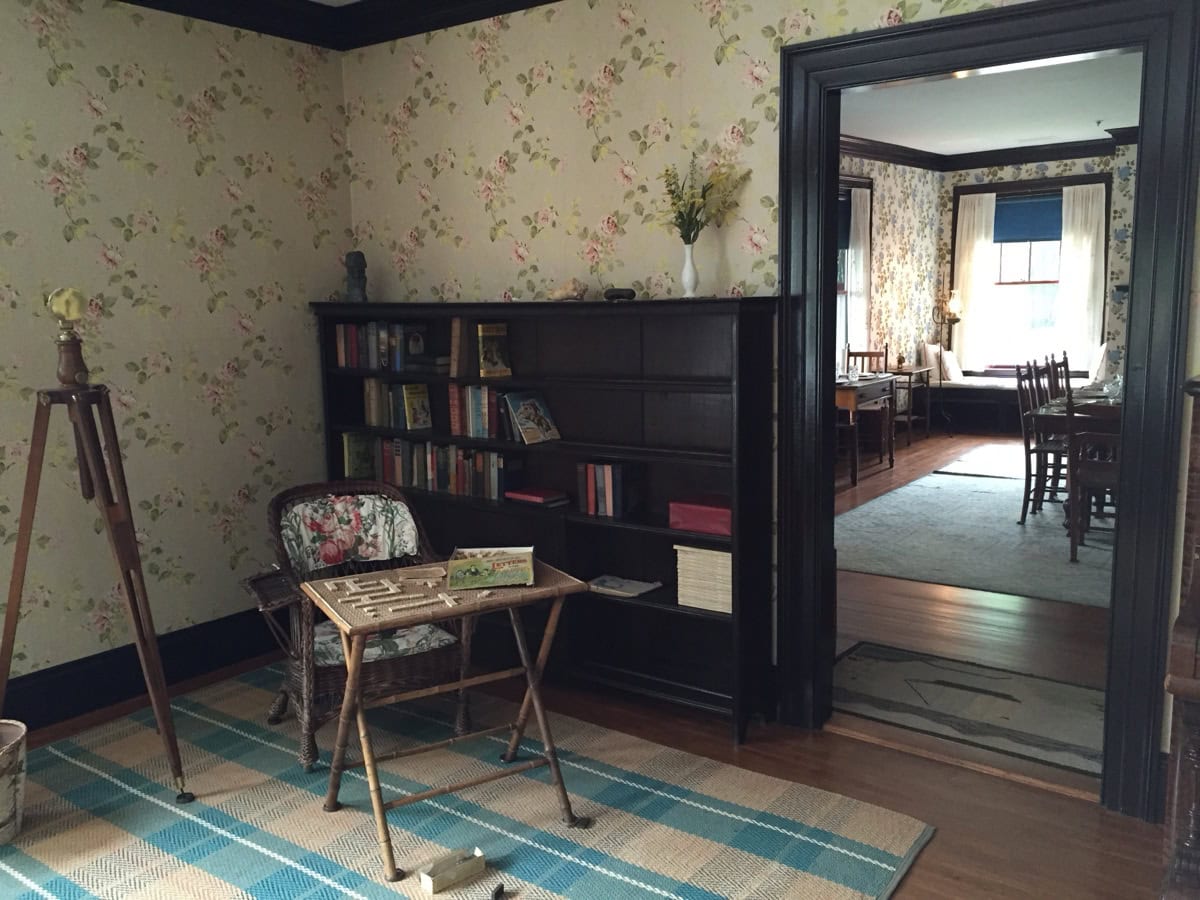
St. Andrews by-the-Sea, New Brunswick: 13 Best Things to See and Do

TL;DRSt. Andrews by-the-Sea is a historic harbour town in New Brunswick on Passamaquoddy Bay, part of the Bay of Fundy, home to the highest tides on Earth (a difference of up to 8–9 metres). The best time to visit is mid-June to mid-September, ideally for 2–3 days. Among the 13 tips here: whale watching for 70–100 CAD, walking across the seabed to Ministers Island, a visit to Kingsbrae Garden, and the historic Algonquin Resort. The nearest airport is Saint John (YSJ), about 110 km away, and a budget for two over 3 days comes to 1,000–1,100 CAD.

A tiny town on the New Brunswick coast where history meets the wild Atlantic, where you can walk to an island across the sea floor at low tide, and where you might spot whales right from the wharf. No crowds, no queues, no overpriced tourist traps — just a gorgeous corner of Atlantic Canada that most Europeans don’t even have on their radar.

In this article, you’ll find a complete guide to St. Andrews Canada — from when to visit and where to stay, through 13 best things to see and do, to the top restaurants and cafés. I’ll tell you how to get there, how much it all costs, and why you absolutely shouldn’t skip this little town if you’re planning a road trip through Eastern Canada.

TL;DR

  • St. Andrews by-the-Sea is a historic harbour town in the province of New Brunswick, right on Passamaquoddy Bay, which opens into the famous Bay of Fundy — home to the highest tides in the world.
  • Best time to visit is mid-June to mid-September, when the weather is at its best and all attractions are running, including whale watching.
  • Top attractions: whale watching (humpbacks, finbacks!), Ministers Island accessible only at low tide on foot, the stunning Kingsbrae Garden, the iconic Algonquin Resort, and a historic centre packed with galleries and boutiques.
  • Accommodation ranges from around 100 to 350 €/night, with campsites in the area being the most budget-friendly option.
  • Getting there: The nearest major airport is Saint John (YSJ), about 1.5 hours by car. A rental car is essential — you’ll struggle without one.
  • How long to spend: Ideally 2–3 days. A single day would be a shame, as whale watching + Ministers Island + exploring the town will easily fill two full days.
  • Food: Fresh lobster straight from the ocean, clams, chowder — Atlantic cuisine at its absolute finest.

When to visit St. Andrews by-the-Sea and how to get there

Best time to visit

St. Andrews is a classic seasonal destination — the town literally comes alive from June to September, and outside the season many businesses are closed. The best months to visit are July and August, when temperatures hover around a pleasant 20–25 °C, the sea is (relatively) warm enough for kayaking, and — most importantly — whale watching tours are in full swing.

If you’d rather avoid the peak tourist rush (though “rush” in St. Andrews is a very relative term compared to, say, Niagara Falls 😅), aim for June or early September. The weather is usually still decent, accommodation prices drop a bit, and the town has an even more laid-back vibe.

What to avoid: May and October can be hit or miss — the weather is unpredictable, some attractions aren’t yet (or are no longer) open, and the whale watching season typically only runs from June to October. Winter? Nobody really comes here then, unless you love deserted streets and ocean winds that’ll take your breath away. And not in the romantic sense. 😁

How to get to St. Andrews

By air: The nearest airport is Saint John Airport (YSJ), about 110 km away (1.5 hours by car). It’s a small regional airport with flights mainly from Toronto and Montreal. If you’re flying from the UK, you’ll typically connect through Toronto, Montreal, or Halifax — from there, you can either catch a domestic flight to Saint John or pick up a rental car and hit the road. Airlines like Air Canada and WestJet operate connections from London Heathrow via Toronto or Montreal. For the best deals on flights with stopovers, we like searching on Kiwi.

Another option is Fredericton Airport (YFC), the capital of New Brunswick, about 2.5 hours away. And if you’re planning a bigger road trip through the Maritime Provinces, consider flying into Halifax (YHZ) in Nova Scotia — it’s a 5-hour drive, but there are loads of beautiful stops along the way.

By car: St. Andrews sits right on Route 1, which connects the main cities of New Brunswick. From Saint John it’s about 1.5 hours, from Fredericton roughly 2.5 hours, and from Halifax around 5 hours. If you’re coming from the American side, the Calais/St. Stephen border crossing is just 30 minutes from St. Andrews.

We’ve had great long-term experience with DiscoverCars, which we use all over the world — it compares offers from different rental companies in one place. You really do need a car here; public transport in this part of New Brunswick is virtually non-existent.

Important: If you’re planning to cross the border to/from the USA (Maine is just around the corner), don’t forget a valid eTA for Canada and, if needed, an ESTA or visa for the US. UK passport holders need an eTA for Canada (easy online application) and an ESTA for the US. Also note — you can’t take certain food items across the border!

Where to stay in St. Andrews by-the-Sea and how much it costs

St. Andrews is a small town, so the selection of accommodation isn’t as vast as in big cities — but what’s here has real character. From a legendary historic resort to cosy B&Bs and campsites nearby. Prices are higher during peak season (July–August); outside the season you can save 30–40 %.

Approximate prices per night in peak season (for two):

  • Algonquin Resort (iconic historic hotel): 200–350 €
  • B&Bs and guesthouses in the centre: 100–175 €
  • Motels and simpler accommodation: 80–125 €
  • Campsites and RV parks nearby: 25–50 €

If you want to be in the heart of the action and walk everywhere, stay right on Water Street or nearby. The town is so small that from any central accommodation you can reach the harbour in just a few minutes on foot.

If you love luxury with a story, the Algonquin Resort is an experience in itself (more on that below in the tips). And if you’re travelling on a tighter budget, check out campsites around St. Andrews or near St. Stephen — some are beautifully situated right by the water.

Total budget for 3 days for two (mid-range):

  • Accommodation (2 nights × 140 €): 280 €
  • Food and drink (3 days): 210 €
  • Whale watching (2 people): 110–140 €
  • Entrance fees and activities: 55–85 €
  • Petrol: 35 €
  • Total: approx. 700–750 € for two for 3 days

Canada generally isn’t the cheapest destination, but St. Andrews is definitely easier on the wallet compared to places like Vancouver or Banff. Especially when it comes to food — fresh seafood straight from the source costs a fraction of what you’d pay in Toronto.

St. Andrews by-the-Sea: 13 best things to see and do

Let’s dive into the best that St. Andrews by-the-Sea has to offer. From whale watching and a tidal island to a garden you’ll never want to leave. I’ve arranged the tips in a logical order — think of it as a loose itinerary for 2–3 days.

1. Historic centre — stroll along Water Street and beyond

Historic Water Street in St. Andrews by-the-Sea
Photo: Skeezix1000 / CC BY-SA 3.0 / Wikimedia Commons

St. Andrews by-the-Sea is one of the oldest towns in New Brunswick — founded in 1783 by Loyalists fleeing the United States after the American Revolution. And you can still feel that history today. The centre is like something straight off a postcard: low wooden and brick buildings, each painted a different colour, filled with small galleries, boutiques selling local art, and cosy cafés.

The main artery is Water Street, which runs along the harbour — and in summer, it buzzes with life. Galleries, gift shops (the tasteful kind, not tacky fridge magnets), bookshops, pastry shops. Pop into Crocker Hill Store — an old-fashioned shop where you’ll find everything from vintage nautical maps to locally made jams.

What surprised me was just how many galleries and studios there are for such a tiny town. St. Andrews has been attracting artists for decades — apparently it’s something about the light by the bay. Whatever the reason, the result is that you can easily spend an entire morning wandering from one gallery to the next.

Tip: Walk to the end of Water Street to reach St. Andrews Blockhouse, a wooden defensive fort from 1812. Entry is free and the view over the bay is gorgeous, especially at sunset.

2. Whale watching in the Bay of Fundy

Whale watching in the Bay of Fundy
Photo: Irene Steeves from Canada / CC BY 2.0 / Wikimedia Commons

This is the absolute TOP experience in St. Andrews and the main reason most people come here. Several companies run whale watching trips from the local harbour into Passamaquoddy Bay and the Bay of Fundy — and the chances of spotting whales are genuinely high.

Which whales can you see? Primarily humpback whales, minke whales, and finback whales. If you’re lucky, you might also spot North Atlantic right whales — one of the most endangered species on the planet. Beyond whales, you’ll regularly encounter seals, dolphins, and bald eagles circling overhead. It’s basically a real-life National Geographic episode. 😁

A trip typically lasts 2.5–3 hours and costs around 50–70 € per person. The main whale watching season runs from June to October, peaking in July and August. Among the best-known operators are Jolly Breeze (they sail on a beautiful wooden tall ship!), Island Quest Marine, and Fundy Tide Runners (smaller, faster boats — closer encounters with the whales, but choppier).

Our recommendation: If you don’t mind rougher seas and want to get as close to the whales as possible, go with Fundy Tide Runners on a zodiac. If you prefer a more comfortable ride with a gorgeous atmosphere, choose Jolly Breeze on the tall ship. And book ahead — especially in July and August, trips sell out a week or more in advance!

Dress in layers, even if it’s 25 °C on shore. It gets windy on the water and the temperature can easily drop by 10 degrees. Trust me, a vest top on a zodiac in the middle of the Bay of Fundy is no fun at all. 😅

3. Ministers Island — the island you can only reach at low tide

Historic barn on Ministers Island near St. Andrews
Photo: XeresNelro / Wikimedia Commons (CC BY-SA 4.0)

This is probably the most unique thing you’ll experience in St. Andrews, and honestly — I’ve never seen anything quite like it anywhere else. Ministers Island is an island in the bay that you reach by walking (or driving) across the sea floor. But only at low tide. As soon as the tide comes in, the road disappears underwater and the island becomes a true island once more.

The tides in the Bay of Fundy are among the highest in the world — the difference between high and low tide here reaches up to 8–9 metres! That means the access road (Bar Road) is exposed twice a day for roughly 3–4 hours. You need to check the tide times (tables are on the Ministers Island website or posted at the entrance) and most importantly — you need to get back in time. Otherwise you’ll be waiting on the island for 6+ hours until the water drops again. 😅

On the island you’ll find Covenhoven, the summer estate of Sir William Van Horne — the man who built Canada’s transcontinental railway (Canadian Pacific Railway). The house itself is fascinating — an enormous wooden villa from the late 19th century overlooking the bay. Beyond the house, there are stables, a farm, and beautiful nature to explore. A guided tour takes about an hour and costs around 10–12 € per person.

Practical tip: You can reach the island by car (along a gravel road across the sea floor — an unforgettable experience!) or on foot. I recommend arriving at the start of the low-tide window so you have plenty of time for the tour and a walk around the island. And seriously, take the tide warnings very seriously — the water rises fast and forcefully here.

4. Kingsbrae Garden — 27 acres of gardens you’ll never want to leave

Blooming flower beds at Kingsbrae Garden in St. Andrews
Photo: Carlos carty / Wikimedia Commons (CC BY-SA 4.0)

If you love gardens, Kingsbrae Garden will blow you away. And if you think gardens aren’t your thing — Kingsbrae might just change your mind. Those 27 acres (11 hectares) include dozens of themed gardens, from rose gardens and a Japanese garden to a butterfly garden.

Kingsbrae is about much more than just plants, though. There’s a fantastic alpaca enclosure (yes, alpacas!), a children’s playground, art installations scattered throughout the grounds, and in summer they host concerts and cultural events. The garden is impeccably maintained, and even we — the type who normally rush through gardens — ended up staying for nearly three hours.

Admission is around 12 € per person and the garden is open from mid-May to mid-October. On site you’ll also find Savour in the Garden — a restaurant that cooks with local and often garden-grown ingredients. Lunch here is an experience, though it’s a touch pricier.

Tip: If you’re travelling with kids, Kingsbrae is an absolutely ideal spot — alpacas, the butterfly garden, and plenty of space to run around. Adults will appreciate the peaceful atmosphere and gorgeous photo opportunities at every turn.

5. Algonquin Resort — an iconic hotel with a story

The historic Algonquin Resort hotel in St. Andrews by-the-Sea
Photo: Quintin Soloviev / Wikimedia Commons (CC BY 4.0)

Even if you don’t sleep at the Algonquin (though I do recommend it if your budget allows), it’s well worth a visit. The Fairmont Algonquin Resort is a monumental Tudor-style hotel that has presided over the town since 1889. It underwent an extensive renovation and today it’s a blend of historic charm and modern comfort.

The hotel boasts its own 18-hole golf course with bay views, a spa, an outdoor pool, and several restaurants. Even if you’re not a guest, you can wander through the grounds, enjoy a drink on the terrace with a view, or play a round of golf.

What fascinates me about the Algonquin is its history — past guests have included prime ministers, Hollywood stars, and even royalty. It still retains that air of “old-world” luxury that doesn’t shout, but simply exists. The fireplace in the lobby, the wood panelling, those sweeping terraces… pure classic.

Price-wise: If you want to experience a night at the Algonquin, budget 200–350 € per night in peak season. Off-season, you can sometimes find rooms for around 140 €. It’s worth it for at least one night.

6. Fundy Discovery Aquarium — small but charming

If you’re travelling with kids (or you’re simply curious like us 😁), stop by the Fundy Discovery Aquarium. It’s a small aquarium run by the Biological Station of Canada — one of the oldest marine biological stations in the world, operating here since 1908.

The aquarium isn’t SeaWorld — it’s more intimate and focused on local marine life from the Bay of Fundy. You’ll see salmon, lobsters, seahorses, starfish, and plenty of other creatures from local waters. The best part is the touch pool — a tank where you can get hands-on with starfish, sea urchins, and other marine life. Kids go wild for it, and honestly — so do the adults.

Admission is a modest 7–8 € per person and a visit takes about an hour. It’s not an attraction you’d travel here specifically for, but as an add-on to a walk around town it’s perfect, especially on a rainy day.

lukas a lucka
Lukáš and Lucie recommend
Where to Stay in St. Andrews by-the-Sea
3 accommodations — wellness hotels and other lodging options

7. Kayaking in Passamaquoddy Bay

If you want to experience the bay from a different perspective than a whale watching boat, head out on a kayaking trip. Several local companies offer guided kayak excursions — and it’s absolutely magical. You paddle along the coastline, past tiny islands, with the Algonquin Resort towering above the town behind you, and if you’re lucky, you’ll spot seals basking on the rocks.

A popular route takes you around Navy Island and St. Andrews Harbour. Tours typically last 2–3 hours and cost around 40–55 € per person including gear and an instructor. Companies like Eastern Outdoors and Fundy Tide Runners (who also run whale watching tours) offer them.

Tip for the adventurous: If you’re an experienced kayaker, ask about a trip to Deer Island or Campobello Island — it’s longer and more challenging, but the scenery is absolutely breathtaking. Campobello Island is also famous as President Roosevelt’s summer retreat.

8. Tides — a natural spectacle that repeats twice a day

High and low tide near St. Andrews
Photo: Judith Bourque / CC BY-SA 2.0 / Wikimedia Commons

This isn’t an “attraction” in the traditional sense, but it’s still one of the most fascinating things you’ll witness in St. Andrews. The Bay of Fundy has the highest tides on the planet — and here at St. Andrews, the effect is nothing short of dramatic.

In the morning, you’re looking at a beach where boats lie on their sides in the mud. Six hours later, that same beach doesn’t exist — it’s under several metres of water and the boats are bobbing high above the spot where they were stranded that morning. The contrast is staggering, and it never stops fascinating me.

The best place to watch the tides is right from the harbour on Water Street or from the wharf. Check the tide tables (you can pick them up at the tourist centre or find them online) and plan your walk so you see both extremes — ideally about 6 hours apart. Your “before and after” photos will be the best souvenir you bring home.

9. Day trip to Campobello Island — Roosevelt’s summer paradise

If you’ve got time for a full-day excursion, definitely head to Campobello Island. The island is about 40 minutes’ drive from St. Andrews (via St. Stephen, across the US border crossing at Lubec, Maine, then back into Canada over the bridge to the island — sounds complicated, but it’s actually straightforward).

The main attraction is Roosevelt Campobello International Park — the summer estate of President Franklin D. Roosevelt. The house is beautifully preserved and the tour is free (yes, genuinely free!). Beyond the house, there are gorgeous trails along the cliffs with ocean views, the East Quoddy Head Lighthouse (accessible only at low tide — those tides again! 😁), and an incredibly peaceful atmosphere overall.

Note: Campobello Island is technically in Canada, but access is via the USA, so you’ll need documents for both the American and Canadian borders (passport + eTA/ESTA). UK citizens will need both an eTA for Canada and an ESTA for the US. There are plans for a bridge directly from the Canadian mainland, but for now you go through Maine. In summer, a seasonal ferry also runs from Deer Island. Check the current situation before you go.

10. Deer Island and the ferry across the bay

Another island adventure, this time without crossing any borders! You can reach Deer Island by ferry from Letete (about 20 minutes from St. Andrews), with the crossing taking around 20 minutes — and it’s free (the ferry is funded by the province of New Brunswick).

Deer Island is smaller and far less touristy than Campobello — and that’s exactly its charm. You arrive and feel like you’ve reached the edge of the world. The main attraction is the Old Sow Whirlpool — the second-largest natural whirlpool in the world, visible from the southern tip of the island during strong tides. It’s not quite as dramatic as a BBC documentary might have you believe, but it’s still a fascinating natural phenomenon.

The island also has lovely walking trails, quaint fishing harbours, and a handful of restaurants serving fresh seafood. From Deer Island you can continue on another ferry to Campobello Island (this one does charge a fare — around 11 € for a car with passengers).

11. Sunbury Shores Arts & Nature Centre — art by the sea

A small community centre worth mentioning if you’re into art, nature, or both. Sunbury Shores offers art workshops (painting, ceramics, photography) and nature programmes throughout the summer. Even if you don’t fancy joining a class, pop into their gallery — they showcase local artists and often have interesting exhibitions.

The centre sits right on the waterfront, and the surrounding garden is filled with sculptures and installations. It’s a quiet, contemplative spot — perfect for a brief stop between whale watching and lunch.

12. St. Andrews Farmers’ Market — Saturday market with local treats

If you’re in St. Andrews over the weekend, don’t miss the Saturday farmers’ market. It runs from May to October (typically in the morning) and you’ll find local cheeses, fresh bread, jams, honey, handmade crafts, and in season, blueberries and raspberries that taste nothing like the ones from the supermarket.

The market is small — you can walk through it in 20 minutes — but the atmosphere is wonderfully authentic. Locals come for their morning coffee, chat with the farmers, and stock up for the weekend. It’s a lovely way to feel like part of the community rather than “just” a tourist.

13. Coastal road trip — Fundy Trail and surroundings

If you’ve got the time and a car (which you should 😉), St. Andrews makes a brilliant base for exploring the Bay of Fundy coastline. Head northeast to St. Martins (about 2.5 hours) — a picturesque fishing village with iconic covered bridges and sea caves you can explore at low tide.

From there, the Fundy Trail Parkway continues — a 30 km scenic road along the coast with viewpoints, hiking trails, and waterfalls. It’s one of the most beautiful coastal drives in Canada and absolutely worth a full day out.

And if you head in the opposite direction towards the US border, stop in St. Stephen — the sister town of Calais, Maine, known as “Chocolate Town” thanks to the Ganong factory, the oldest chocolate maker in Canada.

Where to eat and drink in St. Andrews by-the-Sea

Atlantic Canada is a paradise for seafood lovers — and St. Andrews is no exception. You’re right at the source, so freshness is guaranteed.

Must-try dishes

  • Lobster roll — a sandwich with fresh lobster, the classic of the Atlantic coast. In St. Andrews you’ll find them in practically every other restaurant.
  • Seafood chowder — a creamy soup loaded with seafood. Every restaurant has its own version, and it’s the perfect meal on a cool day by the sea.
  • Digby scallops — scallops from nearby Digby in Nova Scotia, some of the best in the world.
  • Dulse — dried seaweed, a local delicacy. It looks suspicious, but the taste is surprisingly good — salty, crispy, a bit like crisps from the sea.
  • Fiddleheads — young fern fronds, a springtime speciality of New Brunswick. Usually served sautéed in butter.

Where to eat

The Rossmount Inn — arguably the best restaurant in the wider area. They cook with local ingredients, the menu changes with the seasons, and the atmosphere is elegant without being stuffy. Budget 30–50 € per person for a main course. Book ahead, especially in summer.

Niger Reef Tea House — an utterly charming spot for tea and a light lunch overlooking the bay. You sit on the veranda, gaze at the sea, and tuck into homemade cake. Pure bliss.

Honeybeans Coffee, Tea & Treats — a cosy café right on Water Street. Great coffee, homemade desserts, and a friendly atmosphere. Perfect for your morning brew before whale watching.

The Gables — a restaurant right in the harbour, ideal for a lobster roll or fish & chips with a view of the boats. Mid-range prices, generous portions, relaxed vibes.

Savour in the Garden (in Kingsbrae Garden) — as mentioned above, they cook with local and garden-grown ingredients. Lunch here costs a bit more, but the experience is worth every penny.

Budget tip: If you want to save money while still eating brilliantly, buy a fresh lobster directly from fishermen at the harbour (ask at the tourist centre who’s selling) and cook it yourself — if you have kitchen access at your accommodation. A whole lobster will set you back 10–14 € instead of 30+ at a restaurant.

Practical tips to wrap up

What to pack

The weather around the Bay of Fundy is unpredictable — even in summer you might encounter fog, wind, and sudden rain. Pack layers: a t-shirt, fleece, and a waterproof jacket. For whale watching and kayaking, definitely bring a proper jacket. And if you plan to scramble over rocks at low tide, wear shoes with good grip — wet rocks and seaweed are seriously slippery. For more packing tips, check out our guide on how to pack into carry-on luggage.

How to stay connected

You’ll find Wi-Fi in cafés and at your accommodation without any issues. But if you need data on the go (for navigation, looking up tide tables…), consider getting an eSIM. We use Holafly — read our Holafly eSIM review.

Travel insurance

Don’t travel to Canada without insurance — healthcare here costs a fortune. For shorter trips we go with AXA, and for longer journeys we use SafetyWing. Read our detailed SafetyWing insurance review.

Connecting with other destinations

St. Andrews is a perfect stop on a road trip through Canada’s Maritime Provinces. From here you can continue to Saint John, the Fundy Trail, Fredericton, or across the border into Maine. If you’re planning a bigger Canadian road trip, check out our article on a road trip through Western Canada — different end of the country, same love. ☺️

FAQ: Frequently asked questions about St. Andrews by-the-Sea

Is St. Andrews by-the-Sea worth visiting?

Absolutely! St. Andrews by-the-Sea is one of the most charming towns in Atlantic Canada. The combination of a historic centre, whale watching, the incredible tides of the Bay of Fundy, and walking across the sea floor to Ministers Island makes it a truly unique destination. If you love quieter places with character and authentic atmosphere (and great seafood), St. Andrews will win you over. I’d recommend spending at least 2–3 days here.

Is St. Andrews by-the-Sea actually by the sea?

Yes — quite literally! The town sits on a peninsula in Passamaquoddy Bay, which is part of the famous Bay of Fundy. You’ve got the sea (well, the bay) on three sides, and the tides dramatically reshape the landscape twice a day. St. Andrews earns its “by-the-Sea” suffix 100%. The difference between high and low tide here reaches up to 8–9 metres — that’s the height of a three-storey building!

What is the nearest airport to St. Andrews by-the-Sea?

The nearest airport is Saint John Airport (YSJ), about 110 km away — roughly 1.5 hours by car. There are direct flights from Saint John to Toronto and Montreal. Other options include Fredericton Airport (YFC, 2.5 hours) or Halifax Stanfield International Airport (YHZ, 5 hours). From the UK, you’ll typically connect through Toronto, Montreal, or Halifax.

How many days should you spend in St. Andrews by-the-Sea?

Ideally 2–3 days. In a single day you could walk through the centre and fit in one main activity (whale watching or Ministers Island), but you’d be rushed and miss the atmosphere. Two days let you cover the main attractions at a comfortable pace. Three days means you can also fit in a day trip to Campobello or Deer Island. If you’re on a road trip through New Brunswick, two full days in St. Andrews is ideal.

Is St. Andrews by-the-Sea suitable for families with children?

Absolutely! Kingsbrae Garden with its alpacas and butterfly garden is paradise for kids. Fundy Discovery Aquarium has a touch pool where they can handle sea creatures. Whale watching is a thrill for the whole family (for smaller children, choose the larger boats rather than zodiacs). And walking across the sea floor at low tide to Ministers Island is an adventure they’ll remember for years. The beaches around here are more rocky than sandy, but for kids who love hunting for crabs and shells at low tide, it’s perfect.

What is the weather like in St. Andrews by-the-Sea?

In summer (June–August), temperatures hover around 18–25 °C, but on the water and in fog it can feel significantly cooler. September is often beautiful, with temperatures around 15–20 °C and stunning fall foliage. Spring (May) is still chilly and changeable. Winter is cold and most attractions are closed. Bear in mind that fog is common in the Bay of Fundy even in summer — it can roll in within minutes and vanish just as quickly. Always keep a waterproof layer in your bag.

Can you get around St. Andrews by-the-Sea without a car?

The town centre itself is perfectly walkable — everything important is on Water Street and nearby. You can walk to whale watching tours and Kingsbrae Garden. BUT — for Ministers Island, Campobello Island, Deer Island, the Fundy Trail, or any trip to the surrounding area, you need a car. Public transport in this part of New Brunswick is virtually non-existent. So the answer is: for a day in the centre you don’t need a car, but for the full St. Andrews experience you definitely do. I recommend renting one through DiscoverCars — it compares offers from different rental companies in one place.

Tips and Tricks for Your Vacation

Don’t Overpay for Flights

Search for flights on Kayak. It’s our favorite search engine because it scans the websites of all airlines and always finds the cheapest connection.

Book Your Accommodation Smartly

The best experiences we’ve had when looking for accommodation (from Alaska to Morocco) are with Booking.com, where hotels, apartments, and entire houses are usually the cheapest and most widely available.

Don’t Forget Travel Insurance

Good travel insurance will protect you against illness, accidents, theft, or flight cancellations. We’ve had a few hospital visits abroad, so we know how important it is to have proper insurance arranged.

Where we insure ourselves: SafetyWing (best for everyone) and TrueTraveller (for extra-long trips).

Why don’t we recommend any Czech insurance company? Because they have too many restrictions. They set limits on the number of days abroad, travel insurance via a credit card often requires you to pay medical expenses only with that card, and they frequently limit the number of returns to the Czech Republic.

Find the Best Experiences

Get Your Guide is a huge online marketplace where you can book guided walks, trips, skip-the-line tickets, tours, and much more. We always find some extra fun there!
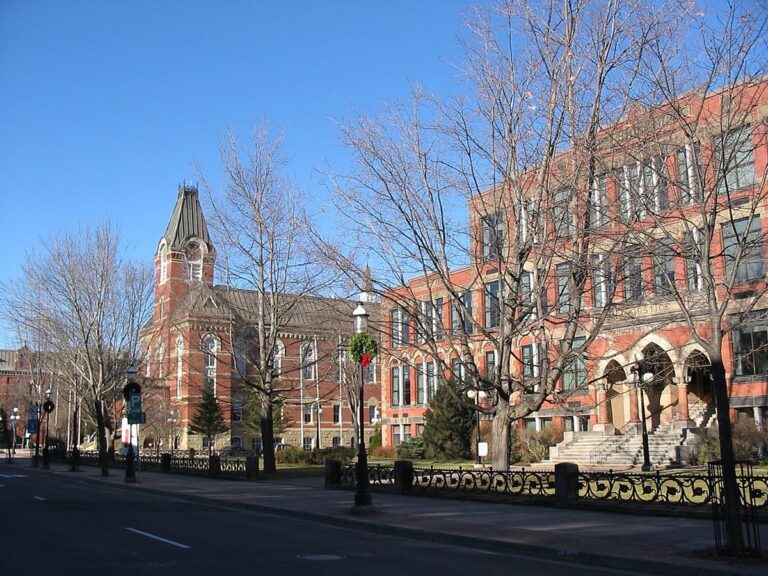
Charlottetown, Prince Edward Island: 15 Things to See and Do in Canada’s Smallest Province

TL;DRCharlottetown is the capital of Prince Edward Island, Canada’s smallest province, where the idea of Canadian confederation was born back in 1864 inside Province House (free entry). June to September is the best time to come, with 2–3 days enough for the city itself and 4–5 days if you want to explore the whole island. Highlights include the Peake’s Wharf waterfront, the shops along Victoria Row, the Confederation Bridge (12.9 km, toll around 850 CZK) and day trips to Cavendish or Victoria-by-the-Sea. Budget for two people over 4 days/3 nights comes to roughly 18,000–34,000 CZK, and a lobster roll with fresh oysters is a non-negotiable stop on the food front.

I’ll admit that when we were planning our road trip through eastern Canada, Prince Edward Island was on the list more as a “well, if we’re nearby, why not” kind of stop. No big expectations. A small island, a few lighthouses, potatoes — that was pretty much my mental image. 😅

And then we crossed the Confederation Bridge, stopped in Charlottetown, and I realised just how wrong I’d been.

Charlottetown Canada is a town that charms you before you even have time to order your first lobster roll. Colourful Victorian houses, a harbour that smells of the sea, lanes filled with small galleries and restaurants where chefs personally go out fishing — all wrapped in an atmosphere so relaxed it feels like time has slowed down a little. It’s one of those places you visit for a day and leave with plans to come back for good.

In this article, you’ll find 15 things to see and do in Charlottetown and on Prince Edward Island — from the historic Province House, where Canadian Confederation was born, to the Peake’s Wharf waterfront and the best lobster restaurants on the island. I’ll also share when to visit, how much it all costs, and where to stay so everything is within walking distance.

Confederation Bridge crossing the strait to Prince Edward Island

TL;DR

  • Charlottetown is the capital of Prince Edward Island — Canada’s smallest province. A town of about 40,000 people where the idea of creating Canada was born in 1864.
  • The best time to visit is June to September — warm weather, everything open, festivals galore. July and August are the liveliest but also the priciest.
  • Two to three days is enough for Charlottetown, but if you want to explore the whole island (and trust me, you do), plan for 4–5 days.
  • Getting there: You can reach the island by car over Confederation Bridge from New Brunswick, by ferry from Nova Scotia, or by flying into Charlottetown Airport.
  • The town is wonderfully walkable — the historic centre, waterfront, and most restaurants are all within easy reach on foot.
  • Lobster, oysters, and potatoes are the three pillars of local cuisine. You can get a lobster roll on practically every corner, and it will be fantastic.
  • Province House is where Canada was born — and admission is free.
  • The musical “Anne of Green Gables” has been running at the Confederation Centre since 1965, making it the longest-running musical in Canada.
  • Budget for two: Expect roughly €70–130/night for accommodation, €25–45/day for food for two, and activities to taste.
  • Top tip: Hire a car and drive around the whole island — red cliffs, lighthouses, beaches, and farm stands selling fresh strawberries are everywhere you look.

When to visit Charlottetown and how to get to Prince Edward Island

Prince Edward Island is a place that lives and breathes with the seasons — and the difference between summer and winter Charlottetown is enormous. It’s not that the town ceases to exist in winter, but many restaurants and attractions close from October to May, and the atmosphere is completely different. So when you time your visit matters a great deal.

Best time to visit

June to September is peak season and hands-down the best time to visit. Temperatures hover around 20–25 °C, the water in the bays warms up to a pleasant 18–22 °C (which is practically tropical for Canada 😁), and the entire island buzzes with food, music, and theatre festivals.

July and August are the busiest months — the Anne of Green Gables musical is in full swing, the PEI Shellfish Festival takes place, and the town is packed with visitors. Accommodation is pricier and needs to be booked well in advance.

June and September are, in our opinion, the ideal compromise — the weather is lovely, everything is open, but the crowds are smaller and prices more reasonable. In September, the fall lobster season begins and the island turns shades of orange and gold.

October can be stunning for autumn colours, but bear in mind that some attractions will already be closed for the season.

How to get to the island

By car over Confederation Bridge: The most common way. The 12.9 km bridge connects New Brunswick to Prince Edward Island, and the crossing takes about 10 minutes. The toll is only charged when you leave the island — 50.25 CAD (roughly €35) for a car. Arriving is free, which is a lovely psychological trick — they let you onto the island for nothing, but you have to pay to leave. 😅

By ferry from Nova Scotia: The Northumberland Ferries service runs from Caribou (near Pictou) to Wood Islands on PEI’s south shore. The crossing takes 75 minutes and is a gorgeous experience. The fare for a car with driver is around 85 CAD (roughly €55), again only charged in one direction — when leaving the island.

By air: Charlottetown Airport (YYG) has connections to Toronto, Montreal, Halifax, and other cities. Flying makes sense if you’re coming from further afield. From the UK, you’ll typically fly to Toronto or Halifax (carriers like Air Canada, WestJet, or British Airways serve these routes from London), then catch a domestic connection to Charlottetown. Alternatively, fly into Halifax and drive to PEI — it’s about 3 hours and the scenery is beautiful.

If you’re planning a road trip through western Canada, the east coast is a completely different world — quieter, more maritime, and with its own unique atmosphere. The two make an ideal combination.

Search for cheap flights on Skyscanner or Google Flights — they’re great for finding connections with stopovers.

Where to stay in Charlottetown + how much a PEI holiday costs

Charlottetown is a small town and you can find accommodation within walking distance of everything that matters. The best bet is to stay right in the centre or near the waterfront — you won’t need a car at all for exploring the town itself.

Types of accommodation and rough prices

Historic B&Bs and boutique inns (€50–115/night) — This is arguably the loveliest way to experience Charlottetown. Victorian houses converted into guesthouses with home-cooked breakfasts, gardens, and owners who’ll point you to the best restaurants. Look around Great George Street and Fitzroy Street.

Hotels (€70–160/night) — There are several larger hotels in the centre, such as the Holman Grand Hotel right on Queen Street or the Delta Hotels by Marriott near the harbour. Comfortable and modern, but with less character.

Airbnb and apartments (€45–100/night) — A great option for longer stays. Plenty of hosts rent out entire cottages or flats in the centre.

Campsites and cabins (€18–60/night) — The island has loads of campsites, often right on the beach. Perfect if you have a car and want to explore the whole island.

How much does a holiday in Charlottetown cost

Prince Edward Island isn’t the cheapest destination in Canada, but it certainly won’t break the bank. Here’s a rough budget for two people for 4 days / 3 nights:

  • Accommodation: €210–390 (€70–130/night)
  • Food: €140–260 (€35–65/day for two — depends on how much lobster you eat 😁)
  • Car hire: €85–145 (if you don’t already have one from your road trip)
  • Activities and tickets: €55–145 (musical, food tour, kayaking…)
  • Bridge toll/ferry: €25–55 (one way)

Total: roughly €515–995 for two for 4 days, depending on your travel style.

We’ve had consistently great experiences with DiscoverCars, which we use all over the world — it compares prices from all agencies and the insurance terms are clear upfront.

Travel insurance tip: For shorter trips to Canada, travel insurance is a must — have a look at our SafetyWing review, which we tested first-hand. And if you want hassle-free internet on the island, check out our Holafly eSIM review — it works a treat in Canada.

Charlottetown: 10 must-see places and things to do

Let’s dive into the best of what Charlottetown has to offer. The town may be small, but it’s surprisingly rich in experiences — from history and culture to culinary adventures. You can cover most sights on foot in a day or two, but you won’t want to rush. And that’s the best thing about Charlottetown.

1. Province House — where Canada was born

Province House in Charlottetown, birthplace of Canadian Confederation
Photo: Hayden Soloviev / CC BY 4.0 / Wikimedia Commons

Province House is the reason Charlottetown is known as the “birthplace of Confederation”. It was right here, in September 1864, that politicians from the British colonies gathered and seriously discussed the idea of uniting into one country for the first time. Three years later, Canada was born.

The building itself is a beautiful neoclassical sandstone structure, built in 1847. Inside, you’ll find the Confederation Chamber — the room where those historic negotiations took place, preserved in its original state with period furniture. It’s a surprisingly intimate space — you expect a grand hall and instead find yourself in a cosy room, thinking about how the future of an entire nation was decided right where you’re standing.

Admission is free and a visit takes about 30–45 minutes. The guides (when guided tours are running) are genuinely enthusiastic and have a knack for making history engaging, even if you’d normally skip historic buildings.

Note: Province House has been undergoing extensive renovation. Check the Parks Canada website before your visit to confirm it’s open — a temporary exhibition is sometimes housed in the building opposite.

2. Victoria Row — the most photogenic street in town

Brick-lined Victoria Row with restaurants in Charlottetown
Photo: Robert Cutts from Bristol, England, UK / CC BY-SA 2.0 / Wikimedia Commons

Victoria Row is a short street (officially Richmond Street between Queen and Great George) that closes to traffic in summer and transforms into a pedestrian zone brimming with restaurant patios, live music, and colourful Victorian facades. It’s arguably the most Instagrammable spot in Charlottetown — and rightfully so.

In the evening, when the fairy lights come on and music and aromas drift from the restaurants, Victoria Row has the feel of a tiny European quarter — a bit like someone took a slice of Lisbon and planted it in Canada. Grab a seat on a patio, order a glass of local wine (yes, they grow wine on PEI!), and watch the world go by. That’s all you need.

During the day, it’s pleasantly calm — you can pop into small galleries and boutiques. But the real magic happens after dark.

3. Peake’s Wharf and the historic waterfront — heart of the harbour

Blue COWS building on Peake's Wharf waterfront in Charlottetown
Photo: Ryan Sharpe / CC BY-SA 4.0 / Wikimedia Commons

Peake’s Wharf is where Charlottetown meets the sea. A wooden pier lined with shops, ice cream stands, cafés, and a small harbour from which tour boats depart. It’s not some overcrowded tourist trap — it’s an authentic harbour where fishing boats moor alongside sailboats and tourist catamarans.

Stroll along the boardwalk, grab some COWS ice cream (a legendary island brand — more on that in the food section), and watch the boats. If you love sunsets, the waterfront is a brilliant spot to enjoy one.

Peake’s Wharf is also the starting point for harbour tours and lobster boat tours — you head out to sea, the captain shows you how lobsters are caught, and you soak up the views of the town from the water. Prices range from 40–65 CAD (€25–40) per person.

4. Confederation Centre of the Arts — a musical running for 60 years

Artist in a gallery studio on Prince Edward Island

The Confederation Centre of the Arts is a cultural centre built in 1964 to mark the centennial of that famous conference. But the main reason I’m including it is the musical “Anne of Green Gables — The Musical™”, which has been staged here every summer since 1965, making it the longest continuously running musical in Canada.

Even if you haven’t read Anne of Green Gables (the red-haired girl who arrives at a PEI farm and wins everyone over with her imagination and honesty), the musical is well worth seeing. It’s a charming, beautifully performed show with gorgeous costumes and live music. Tickets range from 30 to 85 CAD (€18–52) depending on your seat and the day of the week. Performances sell out in summer, so book ahead.

Beyond the musical, the centre houses a contemporary art gallery (free admission) showcasing Canadian artists with an emphasis on the maritime provinces. They often have interesting temporary exhibitions.

5. Great George Street — Victorian charm in every detail

Historic building on Great George Street in Charlottetown
Photo: Robert Cutts from Bristol, England, UK / CC BY-SA 2.0 / Wikimedia Commons

If Victoria Row is the most photogenic lane, Great George Street is the most beautiful street in Charlottetown. It’s wide, lined with immaculately preserved Victorian houses in pastel shades — pink, blue, yellow, green. Every house looks like it belongs on a postcard.

The street runs from the harbour straight up to Province House, and walking along it, you’re tracing the footsteps of the delegates who in 1864 made their way from the ships to the Confederation negotiations. Today, you’ll find boutique accommodation, B&Bs, restaurants, and a handful of small shops.

Don’t miss St. Dunstan’s Basilica — a Gothic church with two imposing spires that’s visible from across the town. The interior is surprisingly stunning, with stained-glass windows and intricate decorations. Entry is free.

6. Founders’ Hall — an interactive journey through Canadian history

Founders' Hall building on the Charlottetown waterfront
Photo: Larry from Charlottetown, PEI, Canada / CC BY 2.0 / Wikimedia Commons

Founders’ Hall is an interactive museum dedicated to the birth of Canada. You walk through the journey from colonial times through the Confederation negotiations to modern-day Canada. It’s far from dry — the exhibits are well done, with multimedia elements, costumes, and replicas.

The section on why the colonies wanted to unite in the first place is particularly fascinating — economic pressures, fear of American expansion, the railways… When you think about it, it’s remarkable that a decision which shaped an entire continent was made in this tiny island town.

Admission is around 12 CAD (€7) per adult. A visit takes about an hour — longer if history is your thing.

Note: Check the current status — Founders’ Hall has been going through changes in recent years. A similar exhibition is also offered at the PEI Visitor Centre.

7. Charlottetown Farmers’ Market — a Saturday ritual for locals

Charlottetown Farmers' Market with art installation
Photo: Larry from Charlottetown, PEI, Canada / CC BY 2.0 / Wikimedia Commons

Every Saturday morning (from May to October, less frequently in winter), Charlottetown hosts a farmers’ market that’s one of the oldest in Canada. And this isn’t some tourist gimmick — it’s mainly locals who come, and you’ll feel right at home among them.

You’ll find fresh oysters (shucked right in front of you), homemade bread, cheeses, farm-fresh fruit and veg, jams, honey, and loads of other local delicacies. Plus coffee, of course. The market is housed in a building on Belvedere Avenue and the atmosphere is absolutely magical — people greet each other, chat away, and children dart between the stalls.

Tip: Arrive early, ideally around 9 am. The best stuff sells out fast, and you’ll enjoy a calmer atmosphere before the crowds turn up.

8. Confederation Bridge — an experience, not just a crossing

Confederation Bridge connecting Prince Edward Island to the mainland

Confederation Bridge isn’t just a means of transport — it’s a feat of engineering and an experience in its own right. At 12.9 km, the bridge across the Northumberland Strait is the longest bridge over ice-covered waters in the world. The crossing takes about 10 minutes, and the views on both sides are spectacular — the endless expanse of sea, the outline of the island emerging in the distance.

Fun fact: The bridge was built between 1993 and 1997 at a cost of 1.3 billion CAD. Before it opened, the only way to reach the island was by ferry or plane. You can imagine how dramatically it transformed life for islanders.

The crossing is most beautiful at sunset — if you can plan for it, it’s well worth it. On the New Brunswick side, Gateway Village sits near the bridge with an information centre, shops, and a café where you can stop and photograph the bridge from the shore.

The toll of 50.25 CAD (roughly €35) is only charged when you leave the island. Arriving is free.

9. Beaconsfield Historic House — how the wealthy lived on the island

Victorian villa Beaconsfield Historic House in Charlottetown
Photo: Neil and Kathy Carey from Edmonton, Canada / CC BY-SA 2.0 / Wikimedia Commons

Beaconsfield Historic House is a stunning Victorian villa dating from 1877 and one of the most impressive residential buildings in Charlottetown. It was built by wealthy shipping magnate James Peake Jr. and today serves as a museum run by the PEI Museum and Heritage Foundation.

The tour shows you how affluent families lived on the island in the 19th century — preserved interiors, original furniture, a beautiful wooden staircase, and harbour views from the garden. In summer, concerts and talks are sometimes held in the grounds.

Admission is a modest 6 CAD (€4). The house is on Kent Street, a short walk from the centre.

10. Walking tour with the Confederation Players — history in costume

This is one of those activities where you think “this is going to be terribly cheesy” — and then it absolutely blows you away. The Confederation Players are actors in period costumes who guide you through Charlottetown’s centre and retell the story of Confederation as if you were part of the events of 1864.

The tours are free (funded by the city and Parks Canada), last about an hour, and run several times daily during the summer months. The actors are brilliant — funny, knowledgeable, and great at involving the audience. You’ll learn things you wouldn’t find in any museum and see the town through completely different eyes.

Tip: Tours usually depart from Founders’ Hall or Province House. Check exact times at the tourist information centre on the waterfront.

lukas a lucka
Lukáš and Lucie recommend
Where to Stay in Charlottetown on Prince Edward Island
3 accommodations — hotels and other lodging options

Beyond the city: 5 day trips around Prince Edward Island

Charlottetown is lovely, but it would be a shame not to venture out and explore the island. Prince Edward Island is small — you can drive across it in a few hours — but within that compact space, you’ll find an incredible diversity of landscapes. Red sandstone cliffs, endless beaches, patchwork farmland, lighthouses, and fishing villages. All within easy reach.

11. Cavendish and Anne of Green Gables Heritage Place — for fans of red-haired Anne

Green Gables house in Cavendish, home of Anne of Green Gables
Photo: Robert Linsdell from St. Andrews, Canada / CC BY 2.0 / Wikimedia Commons

If you’ve ever read Anne of Green Gables (or watched the series — it’s been broadcast around the world), Cavendish is an essential stop. Green Gables Heritage Place is the farm that inspired author Lucy Maud Montgomery to write her beloved novel. The green house with white shutters sits amid meadows, looking exactly as you’d imagine.

You can walk the Haunted Wood Trail and Lover’s Lane — paths that Anne described in the books. Even if you haven’t read them, it’s a gorgeous walk through forest and meadows.

Cavendish is also home to PEI National Park, with its stunning red cliffs and sandy beaches. Cavendish Beach is one of the most beautiful on the island — red sand contrasting with turquoise water and white surf. National park entry is 8.50 CAD (€5) per person per day.

Distance from Charlottetown: 40 km, about 35 minutes by car.

12. Point Prim Lighthouse — the oldest lighthouse on the island

White lighthouse by the water on Prince Edward Island

Point Prim Lighthouse has stood on the island’s southern tip since 1845 and is the oldest lighthouse on PEI. The round white tower looks exactly like a lighthouse should — simply perfect. You can climb to the top, and the views across the Northumberland Strait are breathtaking.

On your way back to Charlottetown, stop at the Point Prim Chowder House — a tiny seafood restaurant right by the water that serves arguably the best clam chowder on the island. You sit on the terrace, gaze at the sea, and spoon up a creamy soup brimming with clams. Bliss.

Distance from Charlottetown: 60 km, about 50 minutes by car.

13. North Shore — red cliffs and endless beaches

Red cliffs and beach on the north shore of Prince Edward Island
Photo: Steve Sutherland from Edmonton, Alberta, Canada / CC BY 2.0 / Wikimedia Commons

The north shore of PEI is what most people picture when they think of the island — dramatic red sandstone cliffs plunging into the sea, wide beaches with crimson sand, and grass-covered dunes. It’s stunning and utterly unlike anything you’ll see back home in the UK.

Beyond Cavendish Beach (see tip 11), it’s worth visiting Brackley Beach (quieter, fewer tourists) and Dalvay Beach (beside the historic Dalvay by the Sea hotel). On the north shore you’ll also find the Greenwich section of the national park — with spectacular dunes and boardwalks that wind through a unique ecosystem.

If you enjoy hiking, check out our tips on the best hiking boots — walking along beaches and dunes is wonderful, but you’ll want comfortable footwear.

14. Victoria-by-the-Sea — the cutest village on the island

White lighthouse in Victoria-by-the-Sea with a wooden path through hydrangeas

Victoria-by-the-Sea is a tiny fishing village on the south coast that looks like a film set. About forty colourful houses, a small harbour, a chocolate shop, a lighthouse, a theatre, and a handful of restaurants — that’s the entirety of Victoria, and it’s absolutely perfect.

Pop into Island Chocolates for handmade chocolate (the aroma greets you from halfway down the street), stroll to the lighthouse, and if there’s a show at Victoria Playhouse, snap up some tickets. It’s a tiny theatre with fantastic intimate performances.

For dinner, I’d recommend Landmark Café — a small restaurant with a changing menu based on whatever’s freshest. Book ahead — they only have a few tables.

Distance from Charlottetown: 35 km, about 30 minutes by car.

15. Central Coastal Drive — a road trip around the island

Harbour with barns and lighthouse on the PEI coast

If you have more than two days on PEI, set off on the Central Coastal Drive — one of three signposted scenic routes on the island. The route follows the south and north shores and takes you through Charlottetown, Victoria-by-the-Sea, Cavendish, and back again. It’s about 253 km in total and can be driven in a day, but it’s better to spread it over two days so you can actually stop and enjoy things.

Along the way, you’ll pass potato fields (PEI produces a quarter of all Canadian potatoes!), red cliffs, lighthouses, fishing harbours, and nature reserves. The island has over 60 marked lighthouses — each one different, each one photogenic.

Practical tip: Phone navigation works perfectly on the island, but if you want hassle-free internet, check out our Holafly eSIM review.

What to eat and drink: a food lover’s guide

Prince Edward Island is a gastronomic paradise. Full stop. No exaggeration. This is a place where chefs can see the ocean their ingredients come from and the farmer who grows their vegetables. The “farm-to-table” concept isn’t a marketing buzzword here — it’s simply the way things work.

Lobster

On PEI, lobster isn’t just a menu item — it’s a way of life. A lobster roll — a warm buttery bun stuffed with fresh lobster meat — is probably the island’s most famous dish. Prices range from 20 to 35 CAD (€12–21) depending on the restaurant and size. Yes, it’s not cheap, but it’s an experience you’ll remember long after you’ve gone home.

Where to get one: Dave’s Lobster on Peake’s Wharf does a fantastic lobster roll. Water Prince Corner Shop in the centre serves lobster every which way — grilled, in soup, in a sandwich. There might be a queue, but it’s worth the wait.

If you want a truly authentic experience, head to a lobster supper — a community dinner where you’re served a whole lobster with potatoes, corn, and pie. New Glasgow Lobster Suppers is probably the most famous spot (they’ve been running since 1958), but you’ll find them all over the island.

Oysters

PEI oysters are considered among the best in the world — the salinity of the Atlantic gives them a distinctive, briny freshness. The island has over 100 oyster farms, and at the Charlottetown Farmers’ Market, they’ll shuck them right before your eyes.

At Claddagh Oyster House on Sydney Street, oysters come in all manner of styles — raw on ice, grilled, with champagne… A half dozen raw will set you back about 18–24 CAD (€11–15).

COWS ice cream

This is an island institution. COWS Ice Cream was born on PEI in 1983 and now has shops across Canada, but the original in Charlottetown (Peake’s Wharf) just hits different. They make their ice cream from local milk, and the flavours are fantastic — Gooey Mooey, Wowie Cowie, PEI Strawberry…

Their gift shop with witty cow-themed T-shirts is a favourite souvenir stop. A scoop costs around 6 CAD (€4).

Food tour

If you want to taste the maximum in a short time, a food tour of Charlottetown is a brilliant idea. A guide takes you to several restaurants and shops where you’ll sample lobster, oysters, cheese, chocolate, and learn loads about the local food culture. It costs around 80–120 CAD (€50–75) per person, but you’ll eat so much you can easily skip lunch.

More restaurant tips

  • The Gahan House — a brewery and restaurant in one. A great spot for sampling local craft beers and pub grub.
  • Sim’s Corner Steakhouse & Oyster Bar — if you’re after a fine-dining evening, this is the top address in town. Steaks and oysters.
  • Receiver Coffee Co. — the best café in Charlottetown for specialty coffee. Several locations around town.
  • Terre Rouge Craft Kitchen — modern Canadian cuisine made with local ingredients. Small, so book ahead.
  • Leonhard’s — a fantastic café with homemade pastries and breakfasts. There can be a queue in the morning, but it’s worth the wait.

Practical tips to wrap up

Getting around the island

Charlottetown itself is brilliantly walkable — the centre is compact and everything important is within walking distance. But for exploring the island, you absolutely need a car. Public transport on PEI is practically non-existent (though some shuttle buses run to Cavendish in summer).

We’ve had consistently great experiences with DiscoverCars, which we use all over the world. On PEI, I’d recommend picking up the car either at the airport or in central Charlottetown.

What to pack

The weather on PEI is pleasant but changeable — the ocean wind is constant, and even in summer it can get chilly in the mornings and evenings. Definitely bring a windbreaker, a light jacket, and a rain mac. Plus comfortable shoes for strolling along beaches and through town. Have a look at our guide on how to pack into carry-on luggage — you can travel light on PEI, too.

Internet and connectivity

Mobile signal on the island works fine, but if you don’t have a Canadian plan, I’d recommend Holafly eSIM — set it up before you fly and you’ll have internet the moment you land.

Currency

The currency is Canadian dollars (CAD). You can pay by card practically everywhere; you’ll rarely need cash — perhaps only at some stalls at the farmers’ market. 1 CAD ≈ €0.65 (roughly — rates fluctuate).

Frequently asked questions about Charlottetown and Prince Edward Island (FAQ)

How many days should you spend in Charlottetown?

One to two days is enough for Charlottetown itself, but if you want to explore the rest of the island too (and I highly recommend it), plan for at least 3–5 days for the whole of Prince Edward Island. The island is small, but there are so many beautiful spots, beaches, and restaurants that you’ll be glad of every extra day.

How do I get to Charlottetown from the UK?

There are no direct flights from the UK to Charlottetown. The most common route is to fly to Toronto or Montreal (direct flights operate from London Heathrow with airlines like Air Canada and British Airways) and then take a domestic connection to Charlottetown. Alternatively, you can fly to Halifax (Nova Scotia) and drive to PEI via Confederation Bridge — it’s about 3 hours by car and the scenery along the way is beautiful.

Can you explore Charlottetown on foot?

Absolutely, and it’s the best way to see the town. The historic centre is compact — it’s only about a 10-minute walk from the waterfront to Province House. All the main attractions, restaurants, and shops are within easy walking distance. You’ll only need a car for trips outside the town.

Is Prince Edward Island expensive?

PEI is one of the more affordable destinations in eastern Canada — definitely cheaper than Toronto or Vancouver. In-season accommodation runs €60–150 per night, a restaurant meal costs €9–27 per person. Lobster is the pricier item, but less so than you might expect — a lobster roll at €12–21 is excellent value for the experience.

When is the best time to visit Prince Edward Island?

Peak season runs from June to September. The ideal compromise between weather, prices, and crowds is June or September. July and August are the warmest and liveliest months but also the most expensive and crowded. Off-season (October–May) is peaceful, but many attractions and restaurants are closed.

How many islands does Canada have, and how big is Prince Edward Island?

Canada has over 52,000 islands, making it the country with the most islands in the world. Prince Edward Island may be Canada’s smallest province (5,660 km² — roughly twice the size of Luxembourg), but it’s by no means its smallest island. PEI has about 170,000 residents and is the only province that is entirely an island. For context, Canada’s largest province by area is Québec, and its biggest city is Toronto.

Is PEI worth visiting with children?

Absolutely! Prince Edward Island is tailor-made for a family holiday. Safe beaches with gentle entry into the water, the Anne of Green Gables experience for young readers, COWS ice cream, farmers’ markets, lighthouses to explore, and an overall laid-back atmosphere where kids can run free. Many accommodations offer family rooms or cottages with kitchenettes.

Tips and Tricks for Your Vacation

Don’t Overpay for Flights

Search for flights on Kayak. It’s our favorite search engine because it scans the websites of all airlines and always finds the cheapest connection.

Book Your Accommodation Smartly

The best experiences we’ve had when looking for accommodation (from Alaska to Morocco) are with Booking.com, where hotels, apartments, and entire houses are usually the cheapest and most widely available.

Don’t Forget Travel Insurance

Good travel insurance will protect you against illness, accidents, theft, or flight cancellations. We’ve had a few hospital visits abroad, so we know how important it is to have proper insurance arranged.

Where we insure ourselves: SafetyWing (best for everyone) and TrueTraveller (for extra-long trips).

Why don’t we recommend any Czech insurance company? Because they have too many restrictions. They set limits on the number of days abroad, travel insurance via a credit card often requires you to pay medical expenses only with that card, and they frequently limit the number of returns to the Czech Republic.

Find the Best Experiences

Get Your Guide is a huge online marketplace where you can book guided walks, trips, skip-the-line tickets, tours, and much more. We always find some extra fun there!

Prince Edward Island National Park: 13 Things to See and Do

TL;DRPrince Edward Island National Park runs about 60 km along the island’s north shore, and there are 13 tips here on where to go, from Cavendish Beach with its iconic red cliffs, to the quieter Brackley Beach, to the wildest stretch at Greenwich Dunes, where dunes rise up to 20 metres. Daily admission is 8.50 CAD (adults), with free entry for kids under 17. July and August are best for swimming, with water temperatures of 18–20°C, while June and September bring quieter crowds and lower prices. Give the park at least 2–3 days, ideally 4–5, so you’ve got time for a bike ride along the Gulf Shore Parkway and a lobster supper at New Glasgow Lobster Suppers.

When I first laid eyes on those red sandstone cliffs rising dramatically above the turquoise water, I honestly wondered whether I’d been teleported to Mars. 😅 But then a wave hit — icy, North Atlantic, utterly awakening — and I knew I was still in Canada. Specifically on Prince Edward Island Canada’s smallest province, which punches well above its weight when it comes to natural beauty.

Prince Edward Island National Park is a place that wins you over with its sheer diversity. On one side, dunes covered in marram grass; on the other, red sandstone cliffs that look like they’ve been painted. In between, you’ll find beaches where seagulls outnumber people (even in July!), cycling paths running along the coast, and picturesque harbours where you can order fresh lobster straight from the fisherman.

In this article, you’ll find a complete guide to Prince Edward Island National Park — from the most beautiful beaches and viewpoints to practical tips on camping, accommodation, and where to find the best lobster roll on the island. I’ll tell you when to visit, how much it all costs, and what to watch out for so you leave the island feeling like you’ve seen the very best. I’ve put together 13 things to see and do that cover the entire park from Cavendish to Greenwich.

Prince Edward Island National Park coastline at low tide
Malpeque, Prince Edward Island

TL;DR

  • Prince Edward Island National Park stretches along the island’s north shore for roughly 60 km and is famous for its red sandstone cliffs, dune systems, and red sand beaches.
  • Best beaches: Cavendish Beach (iconic red cliffs), Brackley Beach (wide and peaceful), Greenwich Dunes (the wildest landscape in the park).
  • Admission: The park is NOT free — a daily pass costs $8.50 CAD per adult (about £5), children under 17 get in free. Family admission is $17 CAD (about £10).
  • Best time to visit: July and August for swimming, June and September for peace and lovely weather without the crowds.
  • Camping: The park has 3 campgrounds (Cavendish, Stanhope, Robinsons Island) — book ahead, especially for July!
  • Cycling: Gulf Shore Parkway is an absolutely gorgeous route along the coast — cycling is hands down the best way to explore the park.
  • Food: Lobster suppers are an absolute must — New Glasgow Lobster Suppers are legendary.
  • Getting around: A car is essential. Rentals are available on the island, but book early in summer.
  • A Prince Edward Island National Park map can be downloaded from the Parks Canada website or picked up at the visitor centre in Cavendish.
  • Anne of Green Gables: For fans of the book, the Cavendish area is a true pilgrimage site — the green house with white shutters is probably the most photographed building on the island.
Malpeque, Prince Edward Island

When to Visit and How to Get to Prince Edward Island National Park

Prince Edward Island is a place that really comes alive in summer — and the park is no exception. But timing your visit can dramatically shape your experience, so let’s break down exactly when to go and how to actually get to the island.

Best Time to Visit

July and August are the clear winners if you want to combine sightseeing with swimming. Air temperatures hover around 22–26 °C and the water in the Gulf warms up to around 20 °C, which is practically tropical for the Atlantic. 😁 Just bear in mind that July and August are peak season — Cavendish Beach in particular gets packed with families.

June and September are our insider recommendations. In June, everything is fresh and green, the beaches are half-empty, and accommodation is significantly cheaper. The weather is pleasant (17–22 °C), although the water is still too cold for a proper swim. September is beautiful thanks to the early autumn colours — the red cliffs combined with the first fall foliage look like something out of a painting.

October to May — the park is technically accessible year-round, but most services (campgrounds, visitor centres, bike rentals) only operate from June to September. In winter, you can go for a walk, but it’ll be just you, your thoughts, and the northwest wind on the beach.

How to Get to Prince Edward Island

There are two ways to reach the island:

Confederation Bridge — a 13 km-long bridge from New Brunswick and one of the longest bridges in the world over ice-covered waters. You only pay the toll when leaving the island ($49 CAD, about £28 per car). The crossing takes about 10 minutes, and the views over the Northumberland Strait are fantastic.

Ferry from Nova Scotia — Northumberland Ferries operates a service from Caribou to Wood Islands. The crossing takes 75 minutes, and again you only pay when leaving the island (about $82 CAD / £47 for car + driver). In summer, ferries run every one to two hours; less frequently in the off-season.

By air — Charlottetown Airport (YYG) has direct flights from Toronto, Montreal, and Ottawa. From the UK, you’ll typically fly into Toronto or Halifax and connect from there. From the airport to the park, it’s about a 40-minute drive.

If you’re planning a road trip across Canada, Prince Edward Island pairs perfectly with Nova Scotia and New Brunswick — the classic Maritime Provinces loop.

Car Rental

A car is absolutely essential on the island. Public transport is virtually non-existent, and the park is spread out — it’s over 50 km from Cavendish to Greenwich. We’ve had consistently great experiences with DiscoverCars, which we use all around the world. For PEI, I’d recommend booking well in advance, especially for July — cars can be in short supply during summer and prices skyrocket.

Getting around the park is straightforward. You can download a Prince Edward Island National Park map from the Parks Canada website ahead of time or pick up a paper copy at the Cavendish visitor centre. Roads are well-signposted and distances are short — you can drive through the entire park in about an hour.

Prince Edward Island scenery
Prince Edward Island

Where to Stay and How Much a Holiday on Prince Edward Island Costs

Accommodation on PEI is pleasantly affordable compared to the rest of Canada — especially outside peak season. In July and August, however, prices jump up and some popular campgrounds and B&Bs sell out months in advance. Let’s look at your options and what it’ll all cost.

Camping in the Park

Prince Edward Island National Park camping is hands down the most authentic way to experience the park. Falling asleep under the stars with the sound of the surf in the background — no hotel can replace that.

The park has 3 campgrounds:

  • Cavendish Campground — the largest with over 300 sites, closest to the main attractions. It has showers, a laundry, and a playground. Prices run about $28–36 CAD/night (£16–21). In July, it sells out fast — book at reservation.pc.gc.ca as soon as reservations open (usually in January).
  • Stanhope Campground — smaller and quieter, right next to the gorgeous Stanhope Beach. Similar pricing. Popular with families and cyclists.
  • Robinsons Island — the smallest and most basic, with no showers. But it’s also the quietest and closest to nature. Ideal if you want real solitude.

Tip: Book as early as possible. Cavendish Campground weekends in July can sell out up to 5 months ahead. Midweek you’ll have a better chance.

Hotels and B&Bs Near the Park

If you prefer a proper bed and a roof over your head, most accommodation is clustered around Cavendish and Brackley Beach.

In Charlottetown (40 minutes from the park) you’ll find the widest selection — from boutique hotels in Victorian houses to modern chain hotels. It makes a good base if you want to combine the park with exploring the provincial capital, which is also the Prince Edward Island capital.

13 Things to See and Do in Prince Edward Island National Park

Now let’s dive into the reason you’re here in the first place. The park stretches along the island’s north shore and offers incredible diversity — from iconic red cliffs and dunes bursting with wildflowers to picturesque fishing harbours. Here are 13 places and experiences you absolutely shouldn’t miss in Prince Edward Island National Park.

1. Cavendish Beach — the Iconic Red Cliffs Everyone Comes to See

Red sandstone cliffs and dunes at Cavendish Beach
Photo: CP Hoffman from Washington, DC, United States / CC BY-SA 2.0 / Wikimedia Commons

If you’ve ever seen a photo of Prince Edward Island, chances are it was Cavendish Beach. And I have to say — no photo does it justice. Those red sandstone cliffs are absolutely breathtaking. The red of the sandstone contrasted against the blue sky and turquoise gulf water creates a colour palette you’ll want to pocket and take home.

The beach itself is long, sandy, and pleasantly wide by Atlantic standards. In summer, the water is surprisingly comfortable — around 18–20 °C — and the gentle slope makes it ideal for families with children. Lifeguards are on duty in July and August.

But fair warning — Cavendish is also the busiest part of the park. It’ll be packed during peak season, especially around midday. Our tip: Arrive early in the morning (before 9:00) or late afternoon when most people are packing up. Watching the sunset at Cavendish Beach with the red cliffs as a backdrop is one of those moments when you’re tempted to chuck everything in and stay forever.

Parking is right at the beach (included in your admission) and there are toilets and changing facilities on site.

2. Greenwich Dunes — the Wildest Corner of the Park

Wooden boardwalk through wetlands to the Greenwich dunes

If you trust just one tip from this entire article, let it be this: go to Greenwich. It’s the eastern extension of the park, about 50 km from Cavendish, and most tourists never make it out here. Which is brilliant, because Greenwich is without a doubt the most beautiful spot in the entire park — and possibly the whole island.

Access to the beaches and dunes is via a stunning boardwalk (Greenwich Dunes Trail, about 4.5 km return), which passes through three distinct ecosystems — forest, wetlands, and finally the monumental shifting dunes. These dunes are truly impressive — reaching heights of up to 20 metres and constantly moving with the wind. The system is one of the few of its kind in eastern Canada.

At the end of the trail, your reward awaits — a beach where you’ll very likely be completely alone. White sand, crystal-clear water, and silence broken only by the cries of terns. We spent an entire afternoon here and couldn’t bring ourselves to leave.

The Greenwich interpretation centre has an exhibition on the formation of the dunes and the archaeology of the area — it’s surprisingly engaging even if you think geology is boring. 😁

3. Brackley Beach — the Best for Swimming

Wooden boardwalk and dunes at Brackley Beach on Prince Edward Island
Photo: Tylerh132 / CC BY-SA 4.0 / Wikimedia Commons

Brackley Beach is probably our favourite beach on the whole island when it comes purely to swimming and relaxation. It’s wide, long, with fine golden sand and a gentle slope into the water. Compared to Cavendish, there are significantly fewer people and the atmosphere is more laid-back.

The beach has excellent facilities — showers, toilets, changing rooms, and a small snack bar. Lifeguards are on duty during the season. Thanks to the shallow water, it’s a touch warmer here than elsewhere in the park, so you can stay in the sea for a good while even without a wetsuit.

Behind the beach, dunes stretch out covered in wild roses and marram grass — take a stroll along the boardwalk for beautiful views of the entire coastline. With a bit of luck, you might spot the endangered piping plover on your way to and from the beach — but please stick to the marked trails to avoid disturbing their nesting sites!

4. Gulf Shore Parkway by Bike — the Best Way to Explore the Park

Wooden promenade along the coast in PEI National Park

If you only do one activity on PEI, make it a bike ride along Gulf Shore Parkway. This road runs along the coast from Cavendish through Brackley to Stanhope and offers some of the most stunning views on the entire island. It’s roughly 25 km one way — perfect for a half-day trip.

The route is mostly flat (PEI is blissfully pancake-flat 😅), so even less experienced cyclists can manage it easily. You can stop at any beach along the way for a swim or a snack before carrying on. On a bike, you’ll appreciate the scale and tranquillity of the park far more than you would from behind a windscreen.

You can rent bikes from several shops around Brackley and Cavendish — expect to pay about $25–40 CAD/day (£14–23). Some B&Bs and campgrounds offer bikes to guests free of charge.

Tip: Head out early in the morning when the road is nearly empty and the morning light on the red cliffs is absolutely magical.

5. Covehead Harbour — a Picturesque Port with the Best Lobster Roll

Yellow lighthouse cottage at Covehead Harbour

Covehead Harbour is one of those little fishing ports that make PEI so photogenic. Colourful fishing boats, stacks of lobster traps on the wharf, and calm gulf waters in the background — a quintessential Maritime scene.

But Covehead Harbour isn’t just about photos. There’s the Covehead Harbour Lighthouse (small but charming) and, more importantly, Richard’s Fresh Seafood, which serves some of the best lobster rolls on the island. Fresh lobster, a buttery bun, eaten on a bench overlooking the harbour. You won’t find a better lunch on PEI.

The harbour sits right on Gulf Shore Parkway, so if you’re cycling, it’s the ideal halfway stop.

6. Green Gables Heritage Place — for Anne of Green Gables Fans

White house with a green roof — Green Gables on PEI

Even if you’ve never read Lucy Maud Montgomery’s “Anne of Green Gables,” this place is worth a visit. The green farmhouse with white shutters has become one of the most famous literary houses in the world — and thousands of visitors flock here each year, particularly from Japan and Korea, where Anne is a massive cultural phenomenon.

The house tour is actually quite enjoyable — the interior is furnished according to descriptions from the book, and the guides share stories about L. M. Montgomery’s life. Behind the house, woodland trails called Haunted Wood and Lovers’ Lane wind through the trees — the very paths the author described in the novel. They’re beautiful and peaceful, filled with the scent of spruce.

Admission is $8 CAD (about £5) for adults. Green Gables Heritage Place isn’t technically part of the national park, but it sits right next door — you can easily combine it with Cavendish Beach in a single day.

Honestly, if you haven’t read the book, half the magic might be lost on you. But even so — it’s a lovely walk through lovely countryside. And if you’ve got kids who know Anne, they’ll be over the moon. ☺️

Green Gables house and garden on Prince Edward Island

7. Stanhope Beach and Cape Stanhope — Cliffs Without the Crowds

Sandy Stanhope Beach in Prince Edward Island National Park
Photo: Larry from Charlottetown, PEI, Canada / CC BY 2.0 / Wikimedia Commons

Stanhope Beach is the quieter sibling of Cavendish Beach. Just as beautiful, but without the crowds and hustle. The beach is long, the sand is fine, and the red cliffs rise up in all their glory. It’s arguably the best spot to see the red cliffs up close without having to wade through a forest of selfie sticks.

From the beach, you can walk to Cape Stanhope for fantastic views along the coastline. A short trail (about 2 km return) takes you to the cliff edge — but be careful, the sandstone cliffs are fragile and constantly eroding, so don’t get too close to the edge!

Nearby you’ll find Stanhope Campground — if you want a quieter camping spot than Cavendish, this is a brilliant choice.

8. Dalvay-by-the-Sea — a Historic Hotel at the Edge of the World

Historic Dalvay-by-the-Sea hotel in Prince Edward Island National Park
Photo: Fralambert / CC BY-SA 3.0 / Wikimedia Commons

At the eastern end of the park stands Dalvay-by-the-Sea, a stunning Victorian mansion from 1895, now converted into a boutique hotel. Even if you’re not staying here (rooms are fairly pricey, starting from $250 CAD/night, about £143), definitely pop in for lunch or afternoon tea.

The restaurant at Dalvay is one of the best on the island — they serve seasonal, locally sourced cuisine with an emphasis on fresh seafood. You sit on the veranda overlooking Dalvay Lake, eating lobster that was pulled from the water that morning. That’s the kind of experience that makes travel worthwhile.

Behind the hotel, there’s a quiet beach and a lake where you can hire a kayak or paddleboard. The atmosphere here is completely different from Cavendish — old-world, tranquil, almost aristocratic.

9. Robinsons Island Trail — a Walk Through Wetlands and Woods

Walking through the forest in Prince Edward Island National Park

This is one of the lesser-known trails in the park, but all the more worth it for that. Robinsons Island Trail (about 4 km) takes you through wetlands, boreal forest, and meadows — it’s like a miniature cross-section of the entire Atlantic coast ecosystem.

In the wetlands, you can spot flocks of birds — herons, geese, ducks, and if you’re lucky, perhaps even a bald eagle. In spring and autumn, the bird migration here is absolutely spectacular.

The trail is easy and well-marked. It starts at Robinsons Island Campground and is ideal for an early morning walk when mist hangs over the wetlands and the whole place looks like something straight out of Middle-earth.

10. Homestead Trail and Bubbling Springs — a Forest Bath

Wooden gateway to Dunelands and a path leading through grassy dunes in the park

Homestead Trail (about 8 km) is the longest trail in the park and leads through deep forest alongside a stream. It’s the perfect escape from the beaches and sun — especially on hot summer days when you need some shade and quiet.

Along the way, you’ll come across Bubbling Springs — natural springs that bubble up through the red sand. It looks almost magical, and kids absolutely love it. The trail has gentle undulations but nothing strenuous — anyone who can walk 8 km will manage it just fine.

If you’re a fan of hiking and nature walks, Homestead Trail is without question the most beautiful forest trail in the park.

lukas a lucka
Lukáš and Lucie recommend
Where to Stay in Prince Edward Island National Park
5 accommodations — wellness hotels, campgrounds and other lodging options

11. Seal Watching and Marine Life

On the park’s beaches and rocky outcrops, with a bit of luck (and patience), you can spot harbour seals basking on the sandstone ledges. Your best chances are early morning on the more remote beaches — particularly around Robinsons Island and the eastern section of the park.

During the summer months, whales occasionally appear in the waters around PEI — mainly humpbacks. You can book whale-watching trips from nearby North Rustico, which take you on a 2–3 hour cruise around the gulf.

And then, of course, there are the lobsters. They’re not really for watching — they’re for eating — but seeing the fishermen hauling traps at Covehead Harbour or North Rustico is quite an experience in itself.

12. North Rustico Harbour — a Fishing Village with Soul

Wooden building with lobster traps at North Rustico Harbour

North Rustico Harbour technically sits just outside the park boundary, but it’s a place that’s inseparable from any park visit. This charming fishing village is the heart of the lobster industry on the north shore, and the atmosphere is wonderfully authentic.

On the wharf, you can watch fishermen unloading their catch. The harbourside restaurants serve mussels, oysters, and lobster so fresh they were swimming an hour ago. Blue Mussel Café right on the wharf is our top pick — mussels in a herb sauce with a harbour view. It doesn’t get better than that.

North Rustico is also the departure point for seal-watching trips and deep-sea fishing excursions. And if you like ice cream (who doesn’t?), Cow’s Ice Cream — the island’s legendary ice cream parlour — has a branch right in the village centre.

13. Sunset at Cavendish Cliffs — the Perfect End to Your Day

Red sandstone cliffs at Cavendish on Prince Edward Island
Photo: Robert Linsdell from St. Andrews, Canada / CC BY 2.0 / Wikimedia Commons

I’ve saved this tip for last because it’s also the perfect way to cap off any day in the park. Watching the sunset over the red cliffs at Cavendish is probably the most beautiful natural spectacle you’ll experience on PEI.

The best vantage point is the lookout above Cavendish Beach (accessible from the car park), where you can see the entire coastline. The sun gradually paints the already-red cliffs in shades of orange, pink, and purple — and you just stand there, jaw on the floor, wondering how so few people seem to know about this place.

Bring a blanket, a bottle of local wine (Rossignol Estate Winery on the island makes surprisingly good whites), and soak it all in. For us, it was one of the most powerful moments of our entire trip through eastern Canada.

What to Eat and Drink: a Foodie Guide

The food on Prince Edward Island is excellent — and above all, fresh. The island is one of Canada’s main producers of lobster, oysters, and mussels, and local restaurants make the most of it. Here’s a rundown of the highlights:

Lobster Suppers — a Traditional Island Feast

Lobster suppers are a PEI institution. These are community dinners where for a fixed price you get a whole lobster, potato salad, homemade bread, soup, and dessert. It’s a social event — you sit at long tables with strangers and wrestle with lobster claws together. 😅

The most famous are New Glasgow Lobster Suppers (running since 1958!) — for about $45–65 CAD (£26–37) you get the complete dinner including lobster. In peak season, you don’t need a reservation, but expect a queue. It pays to arrive around 4:00 pm when it’s least busy.

Other great lobster suppers can be found at Fisherman’s Wharf in North Rustico and St. Ann’s Church Lobster Suppers in Hunter River.

Where to Eat Near the Park

  • Richard’s Fresh Seafood (Covehead Harbour) — the best lobster roll we had on the island. Generous, fresh, and reasonably priced (about $22 CAD / £13).
  • Blue Mussel Café (North Rustico Harbour) — mussels, oysters, fish. Seasonal menu, beautiful waterfront setting.
  • Dalvay by the Sea Restaurant — fine dining with local ingredients. For a special evening.
  • The Pearl Eatery (Charlottetown, 40 min away) — if you head to the capital, this is one of the best restaurants on the island. Farm-to-table concept.
  • Cow’s Ice Cream (several locations) — legendary island ice cream. The “Gooey Mooey” flavour is dangerously addictive.

Drinks

PEI has a surprisingly vibrant craft beer scene. Upstreet Craft Brewing in Charlottetown brews excellent IPAs, and for local wines, I’d recommend trying something from Rossignol Estate Winery — their whites are surprisingly good for such a northerly region.

Practical Tips for Visiting Prince Edward Island National Park

Admission and Parking Fees

Prince Edward Island National Park is not free. Daily admission is $8.50 CAD per adult (about £5), $7.25 CAD for seniors, and children under 17 get in free. Family admission (up to 7 people in one car) is $17 CAD (about £10).

If you’re travelling through Canada for longer and plan to visit multiple national parks, it’s worth getting a Parks Canada Discovery Pass — an annual pass to all national parks for $72.25 CAD per person (about £41) or $145.25 CAD per family (about £83). It pays for itself in about 9 days of visits.

The Three Hour Rule

You may have come across the question “What is the 3 hour rule in Prince Edward Island?” — it’s an informal rule that says you can’t be more than 3 hours’ drive from anywhere on PEI. The island is so small (280 km end to end) that driving from one end to the other takes a maximum of three hours. In practice, this means you can stay anywhere on the island and still comfortably visit the park on day trips.

eSIM and Internet

Mobile internet works solidly in populated areas on the island, but in the more remote sections of the park (especially Greenwich) the signal can drop out. If you’re heading to Canada and don’t want to deal with expensive roaming, check out our Holafly eSIM review — it worked brilliantly for us travelling through North America.

What to Pack

The weather on PEI is changeable — even in summer, it’s worth having a fleece and a windproof jacket, especially for evening walks along the beach. For a complete packing guide, check out our post on how to pack carry-on only.

Flights and Travel Insurance

For cheap flights to Canada, we like using Kiwi or Skyscanner. From the UK, there are no direct flights to PEI — the most common connections are via Toronto, Montreal, or Halifax.

For a longer trip across Canada, we recommend SafetyWing travel insurance, which covers activities like hiking and water sports.

FAQ — Frequently Asked Questions About Prince Edward Island National Park

Is Prince Edward Island National Park Free?

No, park entry requires a fee. A daily pass costs $8.50 CAD per adult (about £5), and children under 17 get in free. Family admission is $17 CAD (about £10). If you plan to visit multiple Canadian national parks, the Parks Canada Discovery Pass at $72.25 CAD per year (about £41) is great value. Admission is paid at the park entrance or visitor centres.

Where is the Most Beautiful Spot on Prince Edward Island?

That’s subjective, of course, but for us it’s hands down Greenwich Dunes — monumental shifting dunes, an empty beach, and wilderness you won’t find elsewhere in the park. For the most iconic views, the red cliffs at Cavendish Beach are the most photogenic spot on the island. And for atmosphere and charm, we love Covehead Harbour and North Rustico.

What is the 3 Hour Rule on Prince Edward Island?

It’s an informal rule that says you can get anywhere on the island within a maximum of 3 hours by car. PEI is a small island (about 280 km long), so even from the westernmost to the easternmost point it’s only about 2.5–3 hours’ drive. In practice, this means you can stay anywhere and still comfortably visit everything.

What are Some Interesting Facts About Prince Edward Island National Park?

Here are a few fun facts: The park was established in 1937 and is one of the smallest national parks in Canada (just 27 km²). The red colour of the sandstone comes from a high iron oxide content — essentially rust. 😊 Greenwich Dunes is one of the few shifting dune systems in eastern North America. The park is home to the endangered piping plover, which is why some beach sections are closed during nesting season. And finally — Anne of Green Gables is set in the very landscape that’s now part of the park, making it a literary pilgrimage site.

When is the Best Time to Visit Prince Edward Island National Park?

The best time is July and August, when the weather is warmest (22–26 °C) and the gulf water reaches a pleasant 18–20 °C. If you’d prefer fewer tourists and lower prices, we recommend June (fresh green landscapes, half-empty beaches) or September (early autumn foliage, still pleasant temperatures). Most park services (campgrounds, visitor centres) operate from early June to late September.

Can You Camp in Prince Edward Island National Park?

Yes! The park has three campgrounds: Cavendish (the largest, closest to attractions), Stanhope (quieter, by a beautiful beach), and Robinsons Island (the most basic and most peaceful). Prices are around $28–36 CAD per night (£16–21). Important: In peak season, campgrounds fill up fast — book at reservation.pc.gc.ca as soon as January when reservations open. July weekends in particular sell out months in advance.

How Much Time Do I Need for Prince Edward Island National Park?

At a minimum, 2–3 full days if you want to see the main beaches (Cavendish, Brackley, Stanhope), cycle the Gulf Shore Parkway, and visit Greenwich Dunes. Ideally, 4–5 days if you want to add cycling trips, kayaking, a visit to Green Gables, lobster suppers, and exploring nearby villages like North Rustico. If you’re combining it with Charlottetown and the rest of the island, plan for a full week.

Tips and Tricks for Your Vacation

Don’t Overpay for Flights

Search for flights on Kayak. It’s our favorite search engine because it scans the websites of all airlines and always finds the cheapest connection.

Book Your Accommodation Smartly

The best experiences we’ve had when looking for accommodation (from Alaska to Morocco) are with Booking.com, where hotels, apartments, and entire houses are usually the cheapest and most widely available.

Don’t Forget Travel Insurance

Good travel insurance will protect you against illness, accidents, theft, or flight cancellations. We’ve had a few hospital visits abroad, so we know how important it is to have proper insurance arranged.

Where we insure ourselves: SafetyWing (best for everyone) and TrueTraveller (for extra-long trips).

Why don’t we recommend any Czech insurance company? Because they have too many restrictions. They set limits on the number of days abroad, travel insurance via a credit card often requires you to pay medical expenses only with that card, and they frequently limit the number of returns to the Czech Republic.

Find the Best Experiences

Get Your Guide is a huge online marketplace where you can book guided walks, trips, skip-the-line tickets, tours, and much more. We always find some extra fun there!
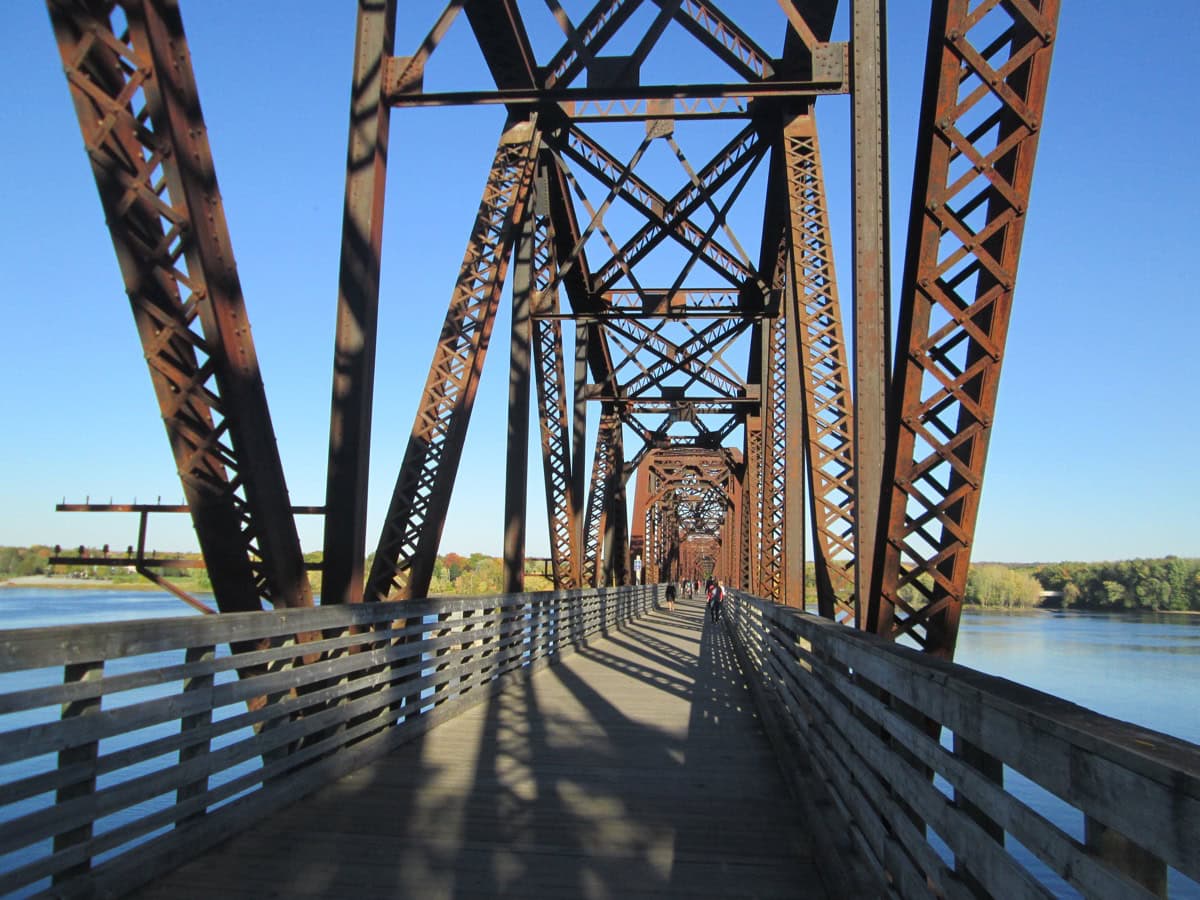
Cabot Trail, Nova Scotia: 15 Things to See and Do

TL;DRThe Cabot Trail is a 298km loop on Cape Breton Island in Nova Scotia, Canada, and it’s genuinely one of the world’s most beautiful drives. This guide gives you 15 concrete tips on what to see and do along the way. Key stops include the Skyline Trail, with its sunset views over the ocean, whale watching at Pleasant Bay, wild and remote Meat Cove at the northern tip, and the town of Chéticamp with its Acadian culture. The best time to go is late September to mid-October for the autumn colours, or June to August if you want warmer weather and a better shot at spotting whales. You’ll need at least 3 days for the full loop, ideally 4–5, and entry to Cape Breton Highlands National Park costs 10.50 CAD per day. All in, the trip for two comes to roughly 15,000–25,000 Kč, not counting flights or a car.

There are places you read about in a brochure and think “yeah, that’s probably overhyped.” Then you actually get there and realise that no brochure, no photo, no video could have prepared you for what you’re about to see. That’s exactly what happened to us on the Cabot Trail in Nova Scotia.

We were driving along a road that twisted between the ocean and forest-covered mountains, and I could barely focus on the wheel because every few seconds I wanted to pull over and snap a photo. When we later watched the sunset over the Atlantic from the Skyline Trail, we sat there for a good hour after — until we started freezing. That’s what the Cabot Trail does to you. 😊

In this article, you’ll find a complete guide to the Cabot Trail in Canada — I’ll share the best time to visit (spoiler: the autumn colours here are from another planet), how to get there, where to stay, how much it all costs, and of course 15 things to see and do on this 298-kilometre loop around Cape Breton in Nova Scotia. From whales to moose trails to the best lobster chowder we’ve ever had. Let’s dive in.

Coastal road on the Cabot Trail winding above the ocean

TL;DR

  • Cabot Trail is a 298 km scenic loop on Cape Breton Island in the province of Nova Scotia, Canada. It’s consistently ranked among the most beautiful drives in the world — and rightfully so.
  • Best time to visit is late September to mid-October for the fall colours, or June–August for warmer weather and whale watching.
  • Allow at least 3 days for the loop, ideally 4–5, so you can fit in hikes and side stops.
  • Admission to Cape Breton Highlands National Park costs 10.50 CAD/adult/day (about €7). Most of the trail’s best spots are within the park.
  • Skyline Trail is the absolute must — an 8.2 km trail with a viewpoint over the ocean at sunset. Go for the sunset slot — you won’t regret it.
  • Whale watching in Pleasant Bay — from June to October you can spot humpback whales, pilot whales and dolphins. Peak season is July and August.
  • Meat Cove at the island’s northern tip is a wild spot with cliffside camping above the Atlantic — well worth the detour from the main route.
  • Accommodation ranges from 30 CAD for camping to 200–400 CAD for hotels and B&Bs. Book well in advance, especially for September and October!
  • Drive counter-clockwise (starting from Chéticamp) — the best ocean views will be on your side of the road.
  • A full trip (3–5 days) for two comes to roughly €600–900 excluding flights and car hire.
Valley with a view of the Cape Breton coastline

When to visit the Cabot Trail and how to get there

Timing is everything on the Cabot Trail — this route looks completely different in July compared to October. Both are stunning, but in very different ways. Let’s break down when it’s best to go and how to actually reach Cape Breton Island.

Best time to visit

Late September to mid-October — if you want to see the famous fall foliage, this is your window. The forests along the Cabot Trail explode into shades of red, orange, yellow and gold, making the entire route look like someone cranked up the saturation in Photoshop. But fair warning — you won’t be the only one who knows this. During peak season (typically the first two weeks of October) it gets seriously busy and accommodation sells out months in advance. Temperatures hover around 8–15 °C, so pack layers.

June to August is the classic summer season. Temperatures around 18–25 °C, long days, and most importantly, the best conditions for whale watching (humpbacks are most active in July and August). You won’t get the autumn colours, but the forest is lush and green, and the trails are far less crowded than in October.

May and late October/November — it’s a gamble. Some services (restaurants, whale watching tours, campsites) may be closed, and the weather can be unpredictable. On the upside, you’ll have the place practically to yourself.

How to get to Cape Breton

The easiest option is to fly into Halifax (the capital of Nova Scotia) and drive from there. From Halifax to the start of the Cabot Trail (the town of Baddeck) it’s roughly 3.5 hours by car along the Trans-Canada Highway. The drive itself is pleasant — Nova Scotia is a beautiful province.

There’s also a small airport right on Cape Breton — Sydney (YQY) — with regional flights from Halifax, Toronto and Montreal. From Sydney it’s only about an hour to Baddeck. If you want to save time, this is a great option.

A car is absolutely essential. The Cabot Trail is a road loop and you simply can’t do it without your own wheels. From the UK, you can find flights to Halifax with airlines like Air Canada, WestJet, or connecting flights via Toronto or Montreal. For car hire, we’ve had great experiences with DiscoverCars, which compares deals across agencies so you can grab the best price. In Halifax, expect to pay around 50–80 CAD/day (€35–55) for a standard car. During peak season (September–October) book your car as early as possible.

For cheap flights to Halifax (or anywhere in Canada), try Kiwi — it’s our go-to flight comparison tool. From the UK, you can often find connections via Toronto or Montreal at reasonable prices.

> 💡 TIP: If you’re planning a bigger road trip across Canada, the Cabot Trail works brilliantly as part of an eastern coast itinerary — Halifax → Cabot Trail → Prince Edward Island → Quebec City → Montreal → Ottawa → Toronto → Niagara Falls. We did exactly this combination and it was incredible.

Which direction to drive the loop

This is the question everyone wrestles with. The answer: counter-clockwise, starting from Chéticamp towards Pleasant Bay and on to the north. The reason is simple — you’ll be driving on the outer side of the road, so the ocean views are right in front of you (rather than across the road behind a guardrail). Plus, you’ll tackle the most stunning section of the route — the climb from Chéticamp into the mountains — first, while you’re fresh and full of energy.

Where to stay on the Cabot Trail + how much it costs

Accommodation on the Cabot Trail isn’t exactly cheap, and in peak season it sells out surprisingly fast. This isn’t Banff or Niagara — the selection is smaller and more local, which is actually part of the charm. No massive hotel chains here, just small B&Bs, cabins with ocean views, and campsites where you fall asleep to the sound of waves.

How much does accommodation cost

  • Camping: 25–40 CAD/night (€17–28) — both national park and private campgrounds
  • B&Bs and guesthouses: 120–200 CAD/night (€83–140) — the most common and charming option
  • Hotels and cabins: 150–350 CAD/night (€105–245) — the more upscale choice, mainly in Ingonish and Chéticamp
  • Airbnb/cabins: 100–250 CAD/night (€70–175) — great for longer stays

Where to stay by location

Baddeck — the ideal base for the start and end of your loop. A charming little town on the shores of Bras d’Or Lake, with a good selection of restaurants and places to stay. From here it’s a short drive to either side of the trail.

Chéticamp — an Acadian village on the west side of the trail. A perfect base for the Skyline Trail (which is just a short drive away). Local B&Bs often serve breakfast with homemade Acadian baked goods, and it’s absolutely delightful.

Pleasant Bay — a small village in the northwest, the base for whale watching. Accommodation options are more limited here, but that also means it’s quieter. If you want to be close to nature and far from everything else, this is your spot.

Ingonish / Ingonish Beach — on the eastern side of the loop. This is where you’ll find the Keltic Lodge, arguably the most famous (and priciest) hotel on the entire Cabot Trail. Beautiful location right by the beach.

Approximate budget for 4 days for two

ItemPrice in CADPrice in EUR
Accommodation (3 nights, B&B)450–600€315–420
Petrol (loop + drive from Halifax)80–120€55–85
Food and restaurants200–350€140–245
National park admission (2 people, 3 days)63€44
Whale watching (2 people)120–160€85–110
Total (excluding flights and car hire)913–1,293€639–905

It’s not the cheapest holiday, I’ll admit. But the views and experiences are worth every penny. If you want to save money, camping and self-catering will easily shave 30–40% off the budget.

Cabot Trail: 15 things to see and do

Now for the main event — let’s go through 15 of the best things to see and do on the Cabot Trail. I’ve listed them roughly in the order you’ll encounter them if you drive the loop counter-clockwise (as recommended). Of course, feel free to adjust the route to your own pace and mood — no itinerary needs to be set in stone. ☺️

1. Chéticamp — an Acadian village with soul

Colourful houses of a fishing village by the harbour

Chéticamp is the first major stop on the western side of the loop and the gateway to Cape Breton Highlands National Park. But before you head into the park, take some time to explore the town itself. Chéticamp is the heart of Acadian culture on Cape Breton — the Acadians are descendants of the original French settlers, and to this day they speak their own French dialect, cook their own dishes, and weave the famous “hooked rugs” (handmade rugs with colourful patterns).

Pop into Les Trois Pignons — a cultural centre showcasing local art and rug-hooking. It might not sound thrilling, but the rugs are genuine works of art and the stories behind them are captivating. Admission is just a few dollars. And if you’re into churches, Église Saint-Pierre with its tall silver spire dominating the whole town is beautiful even from the outside.

Chéticamp is also where you should buy your national park pass (if you haven’t done so online). The Visitor Centre is right on the edge of town and they have maps, trail condition updates, and tips from rangers who’ll happily tell you where you might spot moose or bears.

2. Skyline Trail — the most famous hike (and rightly so)

View into the valley from the Skyline Trail

This is the trail that draws people to the Cabot Trail. And honestly, I get it. The Skyline Trail is an 8.2 km out-and-back hike that leads you out of the forest onto a cliff high above the ocean, where the entire coastline stretches out below you and the Cabot Trail road winds like a ribbon far beneath.

The trail is easy — the first 6 km follow a wide, almost flat path through forest. Then you begin descending towards the viewpoint, and the final stretch is along a wooden boardwalk with stairs. Physically, almost anyone can manage it. The whole hike takes about 2–3 hours, depending on how long you spend standing at the viewpoint with your jaw on the floor.

I strongly recommend going for sunset. Watching the sun set over the Atlantic from this viewpoint is one of the most beautiful things we’ve ever seen. The sun drops straight into the ocean and the sky turns shades that don’t have names. We arrived about an hour before sunset, found our spot on the cliff, and just sat. About fifty other people were scattered around us, and everyone was completely silent. There’s a special kind of energy in that moment.

> 💡 TIP: During peak season (July–October) you need a reservation for the Skyline Trail (introduced in 2023 to manage crowds). Book via the Parks Canada website as early as possible — sunset slots sell out within minutes. The cost is 2 CAD for the reservation plus the standard park entry fee. Without a reservation, you won’t be allowed on the trail.

3. Whale watching in Pleasant Bay — humpbacks within reach

Pleasant Bay on the northwest coast is the best spot on the Cabot Trail for whale watching. From June to October, two main operators run tours here — Captain Mark’s Whale and Seal Cruise and the Whale Interpretive Centre (the latter is actually a museum, but they run boat trips too). A trip lasts 2–3 hours and costs around 50–80 CAD per person (€35–55).

What can you expect to see? Humpback whales are the most common and most spectacular — they breach, slap their fins, and sometimes come so close you can feel their breath (and it stinks, it really does 😅). You may also spot pilot whales, dolphins, and occasionally minke whales. The season peaks in July and August, but we had luck in September too.

Dress warmly even if it’s pleasant onshore — it’s about 10 °C colder on the water and the wind can catch you off guard. And bring seasickness tablets if you’re prone to it — the ocean here isn’t always calm.

4. Meat Cove — the end of the world (in the best way)

Wild green coastline at Meat Cove on the northern tip of Cape Breton
Photo: Martin Cathrae from Charlottetown, PE, Canada / CC BY-SA 2.0 / Wikimedia Commons

Meat Cove is the northernmost settlement on Cape Breton Island, and it looks like the edge of civilisation. Which, in a way, it is. The last 30 km are on an unpaved gravel road that twists along mountain slopes, and when you finally arrive… a cliff. The ocean. An enormous sky. And a campground literally on the cliff’s edge.

The detour to Meat Cove isn’t part of the main Cabot Trail loop — from the main road at Cape North it’s about a 45-minute drive on a side road. But it’s worth every bump. The Meat Cove Campground is a place where you pitch your tent with ocean views and wake up to dawn light over the water. A tent pitch costs around 40–50 CAD (€28–35).

Even if you’re not camping, drive up here for lunch — Meat Cove Chowder Hut (yes, that’s really the name) serves brilliant fish chowder and lobster rolls right on the cliff. Open seasonally only (June–October).

> ⚠️ Heads up: The road to Meat Cove is unpaved and quite steep in places. It can be slippery after rain. You can manage it in a regular saloon car, but take it easy. We drove it without any issues, but don’t rush.

5. Bay St. Lawrence and lobster fishing

View of the bay and harbour at Bay St. Lawrence on Cape Breton
Photo: Ken Heaton / CC BY-SA 4.0 / Wikimedia Commons

Just a stone’s throw from the Meat Cove turnoff sits Bay St. Lawrence, a picturesque fishing village that feels like time stopped somewhere in the 1960s. You pull in and there are fishing nets scattered about, colourful boats bobbing in the harbour, and the air smells of sea and pine.

From here you can take bald eagle watching trips and whale watching on smaller boats — it’s a more intimate and cheaper alternative to Pleasant Bay. And if you’re lucky enough to arrive at the right time, you might see fishermen unloading fresh lobsters straight from their boats.

Bay St. Lawrence is also the starting point for the Money Point Trail — a short but wilder trail leading to Cape Breton’s northernmost tip. It’s no tourist highway — more of a narrow footpath through woods and meadows. That’s exactly what makes it so rewarding.

6. White Point and Neil’s Harbour — fish straight from the sea

Red lighthouse in the fishing village of Neil's Harbour
Photo: Dennis G. Jarvis / CC BY-SA 2.0 / Wikimedia Commons

Driving along the eastern side of the loop, a stunning view of a picturesque cove with colourful wooden houses suddenly opens up before you. That’s Neil’s Harbour — a tiny fishing village where stopping is pretty much mandatory, especially for the food.

The Chowder House in Neil’s Harbour is legendary — literally a shack by the harbour serving fish and chips and seafood chowder that you’ll dream about for months. The portions are huge, the prices reasonable (15–25 CAD, or €10–17 for a main), and the view of the harbour with fishing boats is priceless. This isn’t a place to rush — it’s a place to sit, eat and soak it all in.

Just past Neil’s Harbour is White Point, which offers beautiful views along the coast. At low tide you can clamber over the rocks and search for sea urchins and starfish in the rock pools.

7. Cape Breton Highlands National Park — the heart of the trail

Parks Canada red chairs with an ocean view

A large stretch of the Cabot Trail passes through Cape Breton Highlands National Park, and it deserves a separate mention because this is the reason the road is so breathtakingly beautiful. Covering 949 km², the landscape here resembles a mix of the Scottish Highlands, Norwegian fjords and Canadian wilderness. So what exactly makes this park special?

Picture this: highland plateaus covered in tundra-like vegetation (yes, tundra at 46° north!), deep canyons, salmon-filled rivers, coastal cliffs, and forests that look like they’re ablaze in autumn. The park is home to moose, black bears, bald eagles, lynx, and plenty of other wildlife you won’t encounter back in Britain.

Admission is 10.50 CAD/day per adult (€7). If you plan to spend multiple days in the park, the Discovery Pass at 36.50 CAD (€25) is great value — it covers the entire season across all Canadian national parks. If you’re also thinking of visiting Banff, Jasper, or doing a Western Canada road trip, this is a no-brainer.

The park has over 26 marked trails of varying difficulty. Besides the Skyline Trail (tip no. 2), I wholeheartedly recommend the trails covered in the next sections of this guide.

8. Franey Trail — a panoramic view most tourists miss

Trail through beech forest uphill in Cape Breton Highlands

While the Skyline Trail attracts hundreds of people, Franey Trail is a local hidden gem that most tourists don’t know about. Which is a shame, because the views are at least on par — just different.

The trail is a 7.4 km loop that climbs steeply through dense forest to a rocky viewpoint with a 360° panorama — you can see Clyburn Canyon, Ingonish, the ocean and the mountain ridge. Unlike the Skyline Trail, however, it’s more challenging — the elevation gain is about 350 metres and some sections are quite steep. Allow 2.5–3.5 hours.

The upside is that even in peak season, you’ll encounter a fraction of the Skyline crowds. We hiked it on a weekday in October and met about six people on the entire trail. At the viewpoint up top we had the place completely to ourselves. And those colours… 😊

9. Ingonish Beach — swimming in the Atlantic (for the brave)

View of a forested valley sloping down to the sea

Ingonish Beach is probably the prettiest beach on the entire Cabot Trail — a lovely wide stretch of sand flanked by green hills. It’s part of the national park, so entry is included in your park pass.

But I’ll be honest: the water is freezing. Even in August, ocean temperatures hover around 14–16 °C. If you’re into cold-water swimming or used to the chilly seas around Britain, you’ll manage just fine. Lukáš jumped straight in; I dipped my feet up to the knees and retreated to my towel. 😅 There is, however, a freshwater lake (really a lagoon separated from the ocean by a sand bar) where the water is noticeably warmer — around 20–22 °C in summer. So swimming for everyone!
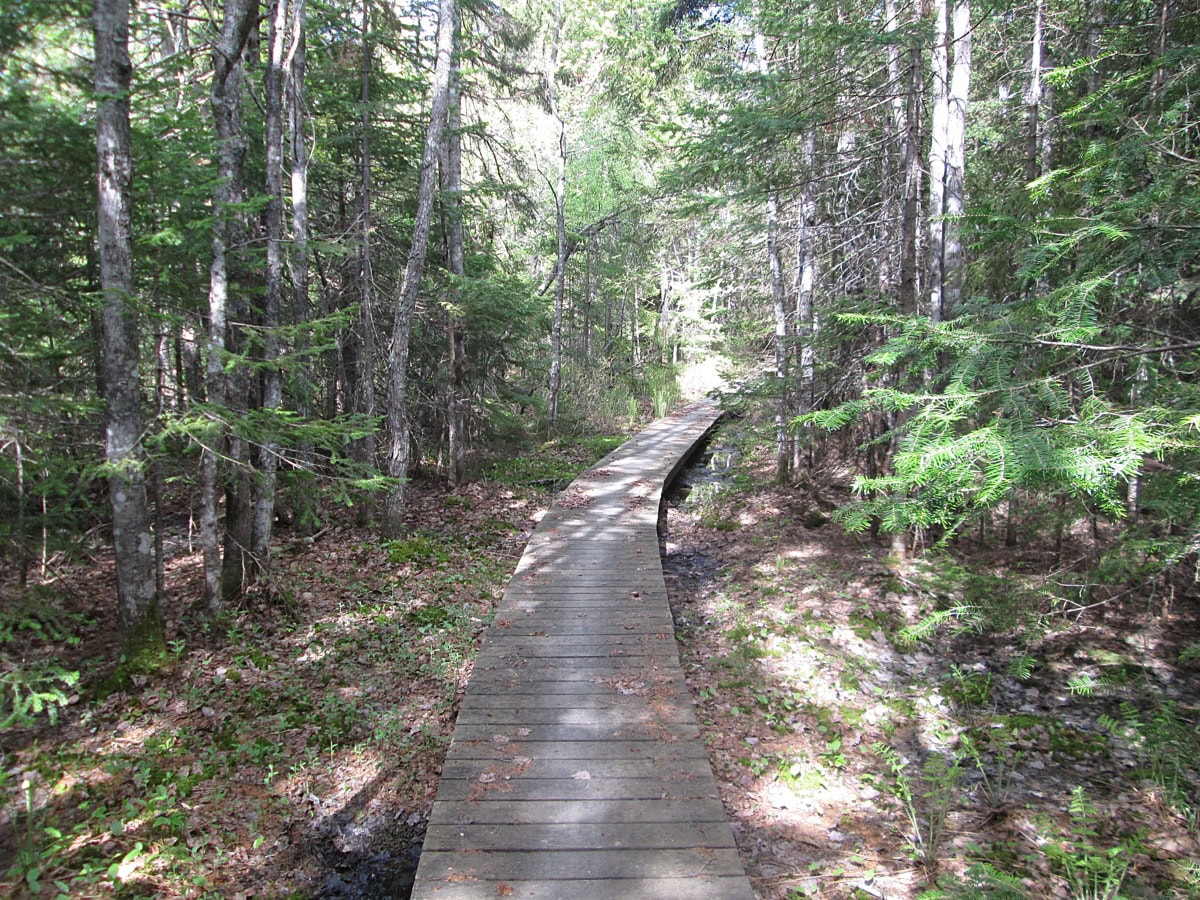
Around the beach you’ll find picnic tables, showers and a snack bar. It’s a great spot for a rest day between hikes.

10. Middle Head Trail — an easy stroll with ocean on three sides

Hiker on a trail with a view of the Cape Breton coastline

If you need a breather after the Franey Trail but don’t want to just lie on the beach, Middle Head Trail is exactly what you’re looking for. A short, easy trail (3.8 km out and back) along a narrow peninsula that juts out into the Atlantic.

The trail starts right at the Keltic Lodge in Ingonish and is almost flat. At the tip of the peninsula, the view opens up to the ocean on practically three sides — left, right and straight ahead. On a clear day you can see for dozens of kilometres along the coastline. It takes about an hour and is perfect for an evening stroll.

In spring and autumn, you might spot moose grazing right beside the trail. We were lucky enough to see a cow moose with her calf about 20 metres from the path. We froze on the spot and snapped photos like mad.

11. Jigging Cove Lake — an autumn explosion of colour

View of the forested landscape of Cape Breton

Here’s another trail that’s short and easy, yet incredibly photogenic — especially in autumn. The Jigging Cove Lake Loop is a 4.2 km circuit around a mountain lake surrounded by deciduous forest.

In October, the lake transforms into a mirror reflecting red, orange and golden trees. It’s the kind of scenery people fly halfway across the world to see in New England — except here there are far fewer crowds and far more wilderness. The trail is flat, follows the lake’s edge, and takes about an hour.

If you’re on the Cabot Trail in September or October, this spot is a must. Come in the morning when the lake is calmest and the reflections are sharpest.

12. Lone Shieling — a piece of Scotland in Canada

Replica of a Scottish shepherd's shelter at Lone Shieling in Cape Breton Highlands
Photo: Loneshieling / CC BY-SA 4.0 / Wikimedia Commons

The Lone Shieling is a short but unique stop. It’s a 15-minute walk (0.5 km) through old-growth deciduous forest to a replica of a Scottish stone shelter (a shieling). Why a Scottish shelter in Canada? Because Cape Breton was heavily settled by Scottish immigrants in the 18th and 19th centuries, and to this day you’ll find Celtic culture, Gaelic, and Scottish surnames on every other letterbox. If you’re from Scotland, this one will feel surprisingly close to home.

The forest around the trail is actually the most remarkable part — there are 300-year-old sugar maples with massive trunks that give you a glimpse of what North America looked like before European settlement. It’s one of the last remnants of old-growth forest on all of Cape Breton.

The stop takes 20–30 minutes and it’s right off the main road. Don’t skip it.

lukas a lucka
Lukáš and Lucie recommend
Where to Stay on Cabot Trail in Nova Scotia
4 accommodations — hotels, campgrounds and other lodging options

13. Celtic culture and live music — the soul of Cape Breton

Cape Breton isn’t just about nature. It has a soul — and that soul plays the fiddle. The island is a world centre for Celtic music, specifically Cape Breton fiddling, which has its roots in Scottish tradition but has evolved over centuries into something entirely its own. And you don’t need to attend a festival to hear it — live music plays every evening in pubs, community halls and even restaurants.

Red Shoe Pub in Mabou (just off the Cabot Trail) is probably the most famous music venue on the island — it’s owned by the Rankin sisters, who are Canadian music legends. Every night features a different act and the atmosphere is electric. Entry is either free or just a few dollars.

Another brilliant spot for live music is the Normaway Inn near Margaree Valley, which hosts regular cèilidhs (Celtic dance evenings — pronounced “KAY-lee”). It’s one of those experiences you simply can’t have anywhere else — locals of all generations dancing, playing and singing, and you’re welcome to join in.

> 💡 TIP: If you’re on Cape Breton in October, try to catch the Celtic Colours International Festival — a nine-day music festival held across the entire island that’s absolutely magical. Tickets for individual concerts cost 25–50 CAD (€17–35).

14. Cabot Trail by bike — for those who want a challenge

This isn’t a tip for everyone, but if you’re a cyclist, I have to mention it: the Cabot Trail is one of the most famous cycling routes in North America. 298 km, over 3,000 metres of elevation gain, and views that Tour de France riders would give anything for.

Most cyclists complete the trail in 3–5 days. You ride on the main road (there’s no separate cycle path — you share the road with cars, but traffic isn’t heavy and drivers are used to cyclists). The toughest sections are the climbs up French Mountain and North Mountain on the western side — both with over 400 metres of elevation gain over a short stretch.

If you don’t fancy the full loop, at least hire a bike in Chéticamp or Ingonish and ride one of the shorter coastal sections. Even 30 km along the coast on two wheels is a memory for a lifetime.

15. Baddeck and Alexander Graham Bell — start and finish

Lighthouse on Bras d'Or Lake near the village of Baddeck under a starry sky
Photo: Olivier Guillard olivier_twwli / CC0 / Wikimedia Commons

Most people drive through Baddeck on the way to the trail and back without stopping, but the town deserves at least half a day. It sits on the shore of the stunning freshwater Bras d’Or Lake and is a lovely, relaxed place with good restaurants and an interesting museum.

The Alexander Graham Bell National Historic Site — yes, that Alexander Graham Bell, inventor of the telephone. Bell fell in love with Cape Breton and spent the last decades of his life here. The museum is surprisingly engaging even if you have zero interest in the history of technology — it features interactive, modern exhibits and the view of the lake from the museum terraces is gorgeous. Admission is 8.50 CAD (€6).

Baddeck is also a great place to start or end the loop — have a proper meal, stock up on supplies, and recharge before (or after) days in the wilderness. We finished our loop by sitting on a restaurant terrace overlooking the lake, drinking wine, and reminiscing about the entire trip. The perfect ending.

What to eat and drink on the Cabot Trail: a foodie’s guide

I’ll admit I wasn’t expecting much of a culinary experience on the Cabot Trail — I figured it would be all nature, nature and more nature. Then I tasted the lobster chowder in Neil’s Harbour and had to completely reassess Nova Scotia as a food destination. 😁

Don’t miss these

Lobster — we’re on the east coast of Canada, so lobster is practically a religion here. You’ll find it everywhere — in restaurants, fish shacks and markets. A lobster roll (lobster meat in a buttered bun) is the classic and typically costs 20–30 CAD (€14–21). You won’t find it fresher anywhere else.

Seafood chowder — creamy fish and seafood soup that’s the local speciality. Every restaurant has its own version. Our favourite was at the Chowder House in Neil’s Harbour — thick, packed with chunks of fish, mussels and potatoes.

Acadian food in Chéticamp — try the meat pies and fricot (traditional Acadian stew with meat and potatoes). Chéticamp has several restaurants serving traditional Acadian dishes — I’d recommend Le Gabriel Restaurant.

Oatcakes — Scottish-style oat biscuits that are everywhere on Cape Breton. Pick some up at any bakery as a snack for the trail.

Our favourite restaurants

  • Chowder House, Neil’s Harbour — legendary fish and chips and chowder by the harbour. Mains €10–17. They take card!
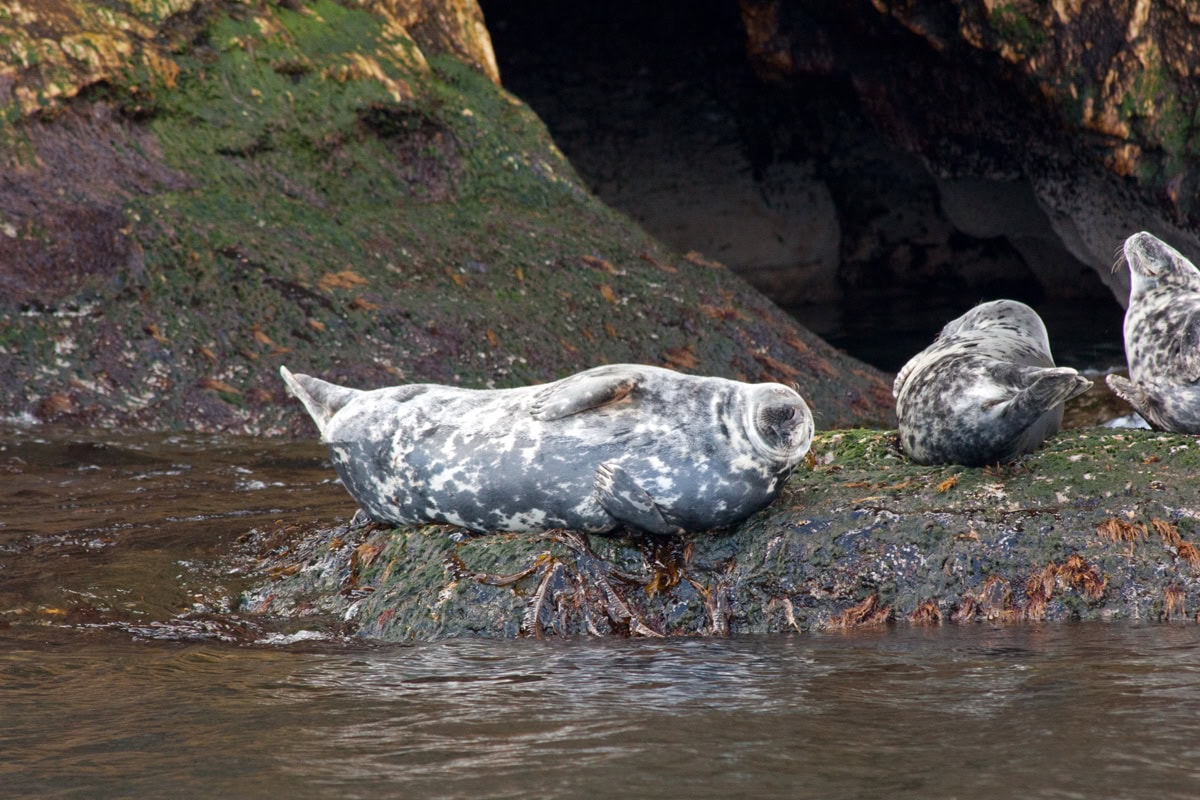
  • Le Gabriel Restaurant, Chéticamp — Acadian cuisine, meat pies, excellent breakfasts. €10–21 for a main.
  • Bean There Café, Chéticamp — a little café with brilliant coffee and homemade cakes. The ideal stop before the Skyline Trail.
  • Meat Cove Chowder Hut — chowder and lobster rolls at the end of the world. There’s no better lunch spot on earth.
  • Red Shoe Pub, Mabou — a pub with live Celtic music, good beer and solid food. A burger and a pint for around €17.
  • Baddeck Lobster Suppers — all-you-can-eat lobster dinner for a set price (about 60 CAD / €42). Touristy, but an experience.

Beer and wine

Nova Scotia has a surprisingly vibrant craft beer scene. Look out for Big Spruce Brewing near Baddeck — a small brewery with a taproom serving excellent IPAs and seasonal beers. Tastings cost a few dollars and the vibe is great.

As for wine, Nova Scotia mainly grows white varieties (Tidal Bay is the local appellation) — they’re not world-class wines, but they pair beautifully with lobster.

Practical tips to finish

Mobile signal and internet

Be prepared for the fact that mobile signal on much of the Cabot Trail simply doesn’t exist. The northern section especially (Pleasant Bay → Meat Cove → Neil’s Harbour) is largely a dead zone. Download offline maps beforehand (Google Maps handles this well) and don’t rely on phone navigation. If you need to be online, WiFi at accommodation works in Chéticamp, Ingonish and Baddeck.

For better coverage across Canada, consider an eSIM from Holafly — we use it when travelling and it saves the hassle of hunting for local SIM cards.

What to pack

  • Layers — the weather changes quickly, especially in the mountains. It can be 8 °C in the morning and 22 °C by afternoon.
  • Waterproof jacket — fog and light drizzle are common on the coast.
  • Good hiking boots — trainers will do for the Skyline Trail, but you’ll appreciate ankle boots on the Franey Trail. If you’re still shopping for a pair, check out our hiking boot guide.
  • Binoculars — useful for whale watching and viewpoints alike.
  • Insect repellent — mosquitoes and blackflies are aggressive in summer, particularly near lakes and in the forest.

If you’re wondering how to pack efficiently, have a look at our article on packing for carry-on only.

Travel insurance

Canada has excellent but extremely expensive healthcare. An emergency room visit without insurance can run into thousands of dollars. Travel insurance is an absolute must. For UK travellers, make sure your policy covers medical expenses in Canada. For longer trips around the world, we use SafetyWing — you can read our detailed review on the blog.

Safety and wildlife

You will encounter moose on the Cabot Trail — not just on trails, but on the road. Watch out for moose especially at dusk and dawn when they cross the road. A collision with a moose is a serious matter (these animals weigh 400–700 kg). Drive carefully, particularly during early morning and evening hours.

Black bears live here too, but they’re shy and attacks on humans are extremely rare. Follow basic precautions — don’t carry food in your rucksack on the trail, store it in bear-proof containers at campsites, and make noise on the trail.

Frequently asked questions (FAQ)

How many days do I need for the Cabot Trail?

Two days is the bare minimum if you just want to drive the loop with a few stops. But I’d recommend 3–5 days so you can fit in at least 2–3 hikes, whale watching, and enjoy the places without rushing. We had 4 days and it felt about right — though one more would have been nice.

Which direction should I drive the loop?

I recommend going counter-clockwise — from Chéticamp through Pleasant Bay to the north and back via Ingonish. The best ocean views will be on your side of the road, and you’ll tackle the most beautiful section (the west coast) first.

Is the Cabot Trail difficult to drive?

The road is well-maintained and two-lane, so it’s nothing terrifying. But there are steep climbs and descents (French Mountain, North Mountain), sharp bends and occasionally steep drop-offs without guardrails. If you’re comfortable with mountain roads, you’ll be fine. Take extra care in fog and rain. You don’t need an SUV or 4×4 — a regular car will do.

Can I drive the Cabot Trail with a caravan or motorhome?

Yes, caravans and motorhomes do use the trail. But bear in mind that some bends and climbs are trickier for larger vehicles and overtaking opportunities are limited. If you’re driving a big RV, be considerate of other drivers and use the pull-off lanes.

Do I need a reservation for the Skyline Trail?

Yes, since 2023 a mandatory reservation is required via the Parks Canada website. It costs 2 CAD for the reservation plus the standard park entry fee. Sunset slots sell out first — book as early as possible, ideally as soon as you know your visit date.

What is the best month for fall foliage?

Autumn colours on the Cabot Trail typically peak in the first two weeks of October, though it varies from year to year depending on the weather. Check the Fall Colour Report on the Parks Canada or Nova Scotia Tourism website — they update it weekly from September. Higher elevations (ridges) change colour earlier than the valleys.

How much does admission to Cape Breton Highlands National Park cost?

Daily admission is 10.50 CAD/adult (€7), children under 17 free. If you’re planning 3+ days in the park or visiting multiple Canadian national parks in a year, the Discovery Pass at 72.25 CAD (€50) covers the whole family/car for the entire year.

Tips and Tricks for Your Vacation

Don’t Overpay for Flights

Search for flights on Kayak. It’s our favorite search engine because it scans the websites of all airlines and always finds the cheapest connection.

Book Your Accommodation Smartly

The best experiences we’ve had when looking for accommodation (from Alaska to Morocco) are with Booking.com, where hotels, apartments, and entire houses are usually the cheapest and most widely available.

Don’t Forget Travel Insurance

Good travel insurance will protect you against illness, accidents, theft, or flight cancellations. We’ve had a few hospital visits abroad, so we know how important it is to have proper insurance arranged.

Where we insure ourselves: SafetyWing (best for everyone) and TrueTraveller (for extra-long trips).

Why don’t we recommend any Czech insurance company? Because they have too many restrictions. They set limits on the number of days abroad, travel insurance via a credit card often requires you to pay medical expenses only with that card, and they frequently limit the number of returns to the Czech Republic.

Find the Best Experiences

Get Your Guide is a huge online marketplace where you can book guided walks, trips, skip-the-line tickets, tours, and much more. We always find some extra fun there!