When to Visit Banff: A Month-by-Month Guide to the Rocky Mountains

TL;DRThe best months for hiking around Banff and the Rockies run from mid-June to the end of September, once the high alpine trails are clear of snow. Late September is the prettiest and quietest stretch, thanks to the golden larches in Larch Valley — a show that lasts roughly two to three weeks from 20 September. Shoulder season (April, May or November) is the cheapest time to travel, with a standard hotel room running 150–200 CAD a night versus 300–450 CAD in summer. May, June and September are your best bet for spotting bears, while July and August bring peak crowds, afternoon storms and the risk of wildfire smoke. For the northern lights, aim for November to March, when temperatures can drop to -25°C. You have to book the Moraine Lake shuttle months ahead — private cars are banned.

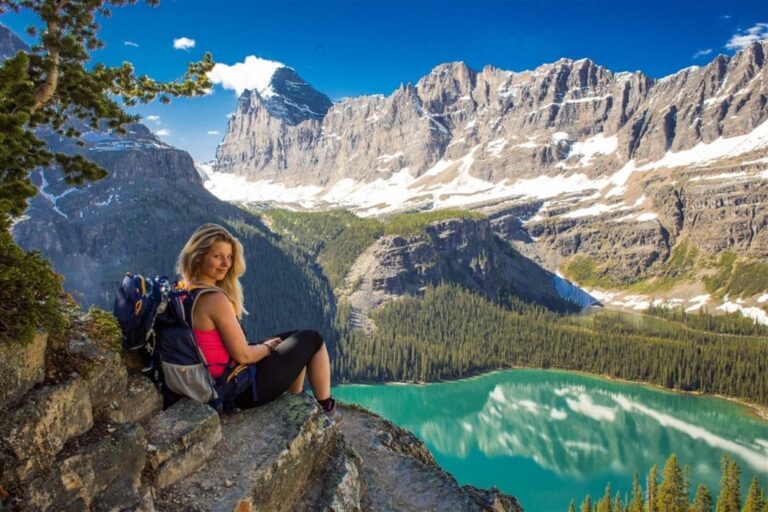
When Lukáš and I lived and worked right in the heart of Banff Canada back in 2016 and 2017 — specifically in the little village of Lake Louise — we experienced Canadian nature in all its moods. And trust me, it has plenty. We constantly get asked when the best time to visit Banff is, expecting us to pinpoint the perfect weather window, and I always laugh and say that the weather in the Rocky Mountains pretty much ignores the calendar and can easily surprise you with a blizzard in the middle of July 😅.

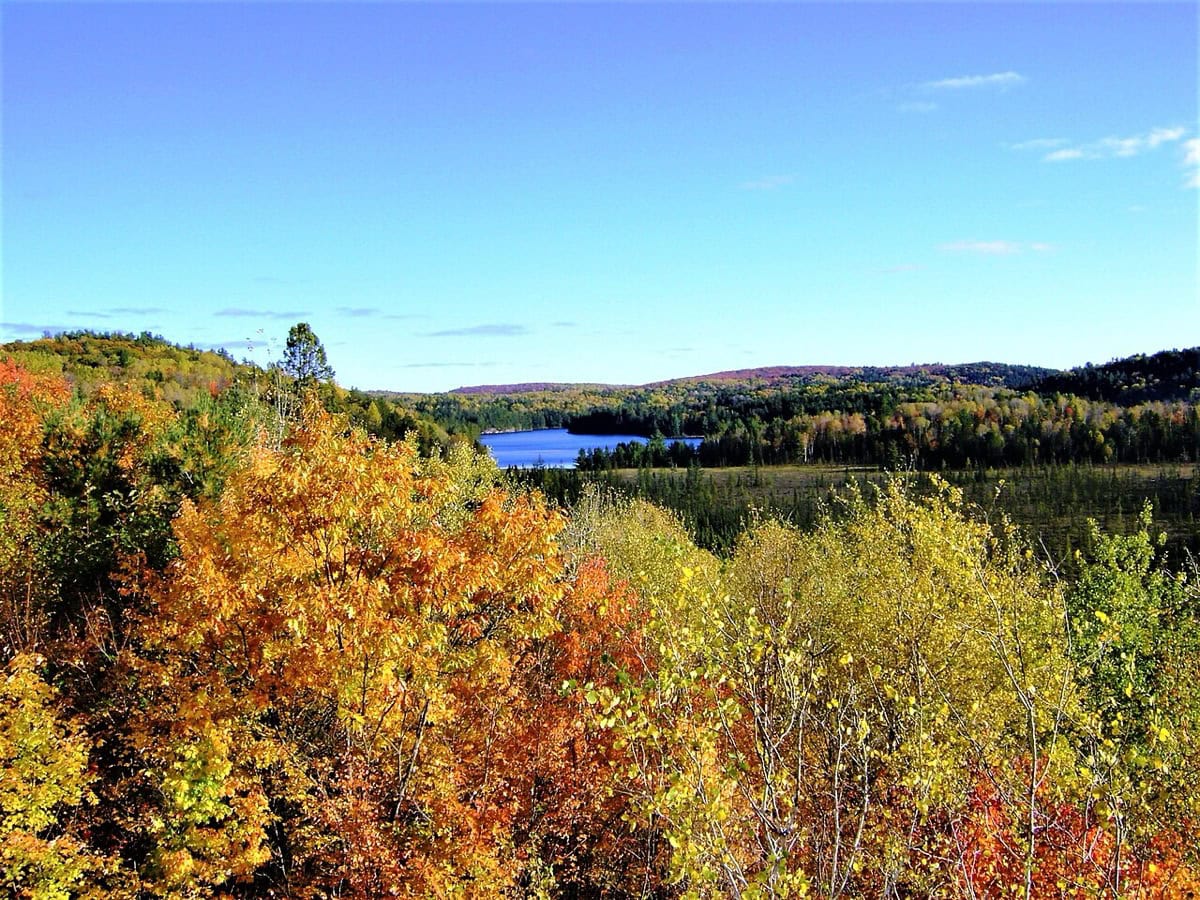
Every month in these Canadian mountains has a completely different character, with its own huge advantages but also hidden pitfalls. While summer bursts at the seams with tourists and tempts you with turquoise lakes, winter is paradise for deep powder lovers, spring smells of awakening nature (and bears), and autumn serves up a visual feast of golden larches.

So I’ve broken it all down month by month, so you know what to expect from the weather, the prices, and most importantly from the nature that does whatever it pleases. Lukáš says I might be a bit obsessive about it, but hey — you’ll benefit from that 😁
TL;DR

Planning a trip to the mountains can be a real headache, especially when every month offers completely different conditions. Here’s a quick summary of the key points so you don’t get lost right from the start.

  • Best time for hiking: Mid-June to the end of September. Only then are most high-altitude trails snow-free.
  • Most beautiful month: September. Crowds thin out, mosquitoes vanish, and for roughly two weeks the forests turn incredibly golden (the famous Larch Valley phenomenon).
  • When is it cheapest: The best deals come during the shoulder season — November and April or May. Keep in mind, though, that many trails and services may be closed.
  • Watch out for summer wildfires: July and August are wildfire season in British Columbia and Alberta, and the air can be thick with smoke.
  • Bears and wildlife: You’ll spot the most bears near roads and in the valleys during spring (May and June), when they wake from hibernation and forage at lower elevations.
  • Book well in advance: If you want to see the iconic Moraine Lake in summer, you need to reserve the official shuttle bus months ahead, as private vehicles are banned.

Banff Canada Month by Month: 12 Faces of the Rockies

Let’s take a look at what Banff National Park in Alberta Canada and its surroundings look like throughout the entire year. I’ve written up every single month so you can get a clear picture of what to realistically expect in terms of weather, activities, and prices. Canadian nature is unpredictable, but with a bit of planning you’ll see exactly what you came for.

1. January: Deep Freeze and Powder Snow
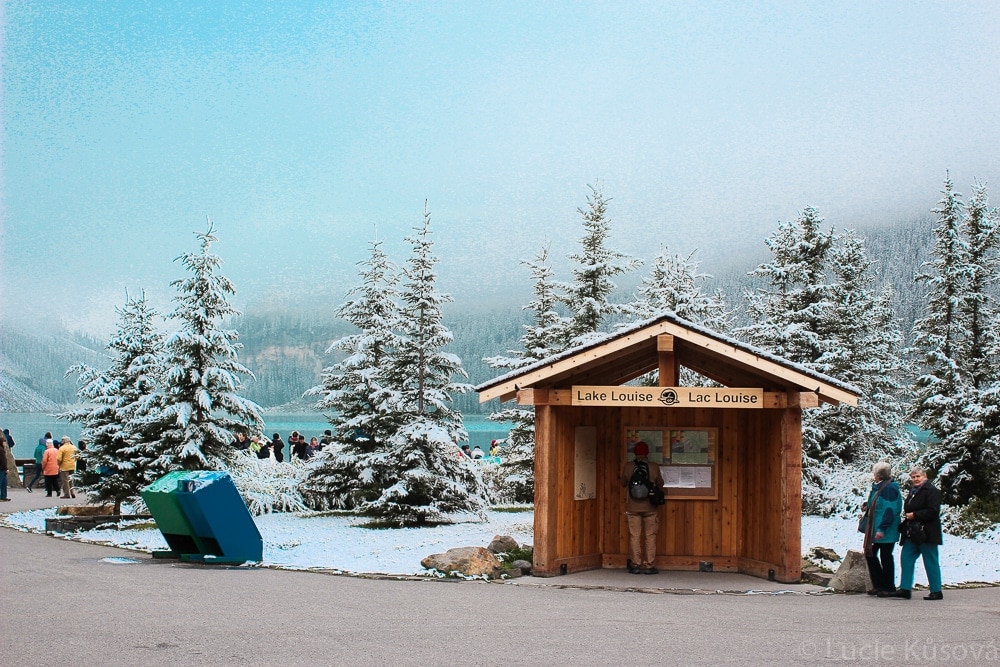
January in Banff is all about bone-chilling cold. Temperatures regularly drop to -20 °C (and occasionally plunge to -35 °C), so if you’re heading out here, quality thermal base layers and a proper down jacket are absolutely non-negotiable. Days are very short, but they offer beautifully sharp winter sun and crisp snow crunching underfoot.

It’s the absolute peak of Banff Canada skiing season for connoisseurs. The snow here is incredibly dry and light, creating conditions for world-class skiing across the three main resorts known as SkiBig3 (Lake Louise, Sunshine Village, and Mt. Norquay). On top of that, Lake Louise hosts the spectacular Ice Magic Festival during this time, where artists from around the world carve incredible sculptures from massive blocks of ice.

2. February: Winter Fun in Full Swing

In February, winter starts showing its gentler side. Days begin to stretch out ever so slightly and temperatures aren’t quite as extreme, though you should still expect frost all day long. The skiing remains absolutely fantastic and there’s a brilliant atmosphere on the slopes, especially during the Sundance Snow Days event, which celebrates winter sports and culture.

We used to mix our February ski days with excursions, and if you’re not one to ski from dawn to dusk, February is perfect for snowshoeing, cross-country skiing, or a winter hike through Johnston Canyon. In winter, it transforms into an ice kingdom with enormous frozen waterfalls that ice climbers often scale. It’s a sight that gives you chills in the very best sense of the word.

3. March: End of Ski Season and Wet Snow
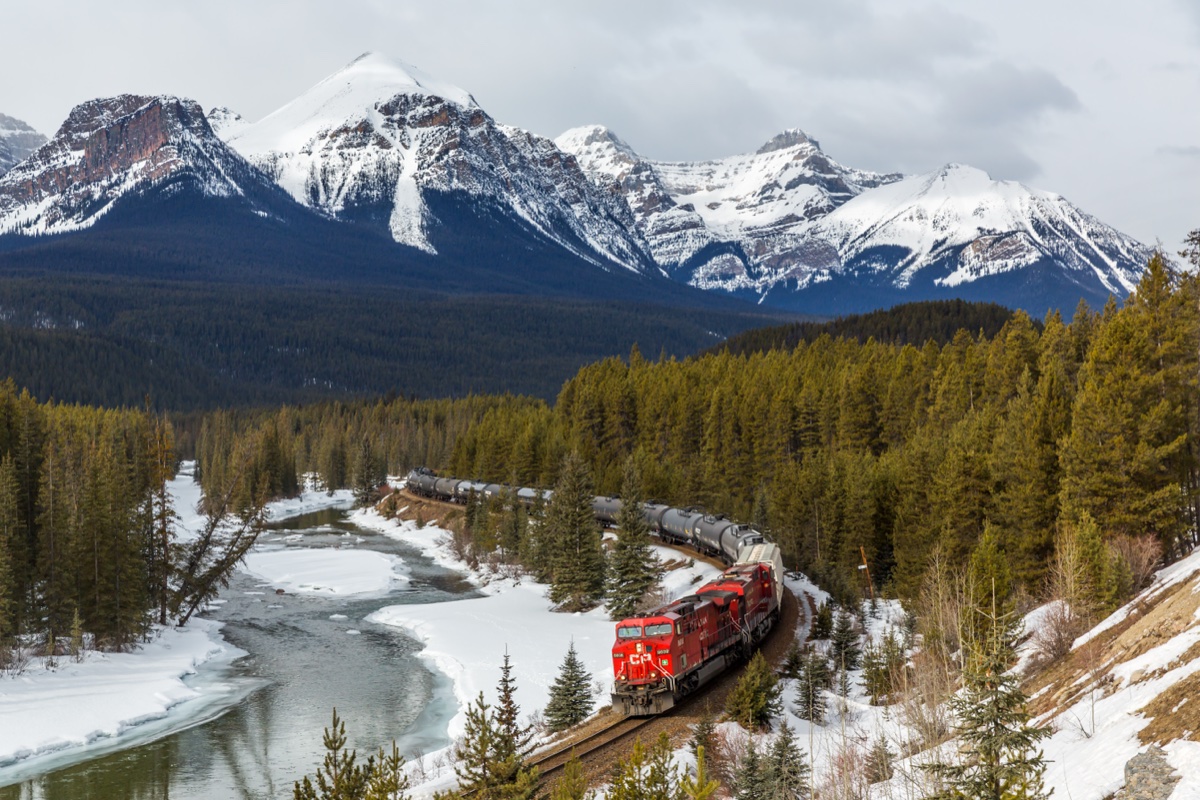
March is a transitional period. The sun is starting to gain some strength, which means so-called spring skiing in lighter jackets, but down in the town the snow grows heavy, turns to slush, and the great melt begins. It’s not quite spring yet, but it’s no longer that picture-perfect romantic winter either.

It’s one of the cheaper months if you’re not specifically chasing premium skiing conditions. Hiking trails at this time of year are treacherous, though — either coated in ice or buried under deep wet snow, with a fairly high avalanche risk in more remote areas. We always spent March either on the ski slopes or tucked away in cosy cafés by the fireplace.

4. April: Quiet Awakening and Cracking Glaciers

If you’re expecting everything in Canada to be blooming and green by April, I’m afraid I’ll have to disappoint you. Spring arrives here very slowly and reluctantly. April is the classic shoulder season — the gap between peak periods — when many hotels are emptier and prices drop to their annual low.

The most magical April experience is listening to the ice cracking on the lakes. When the sun beats down on the thick ice layer of Lake Minnewanka or Lake Louise, it produces almost otherworldly sounds. Most high-altitude hikes are still impassable, though, and many gondolas and services take a post-winter break to prepare for the summer rush.
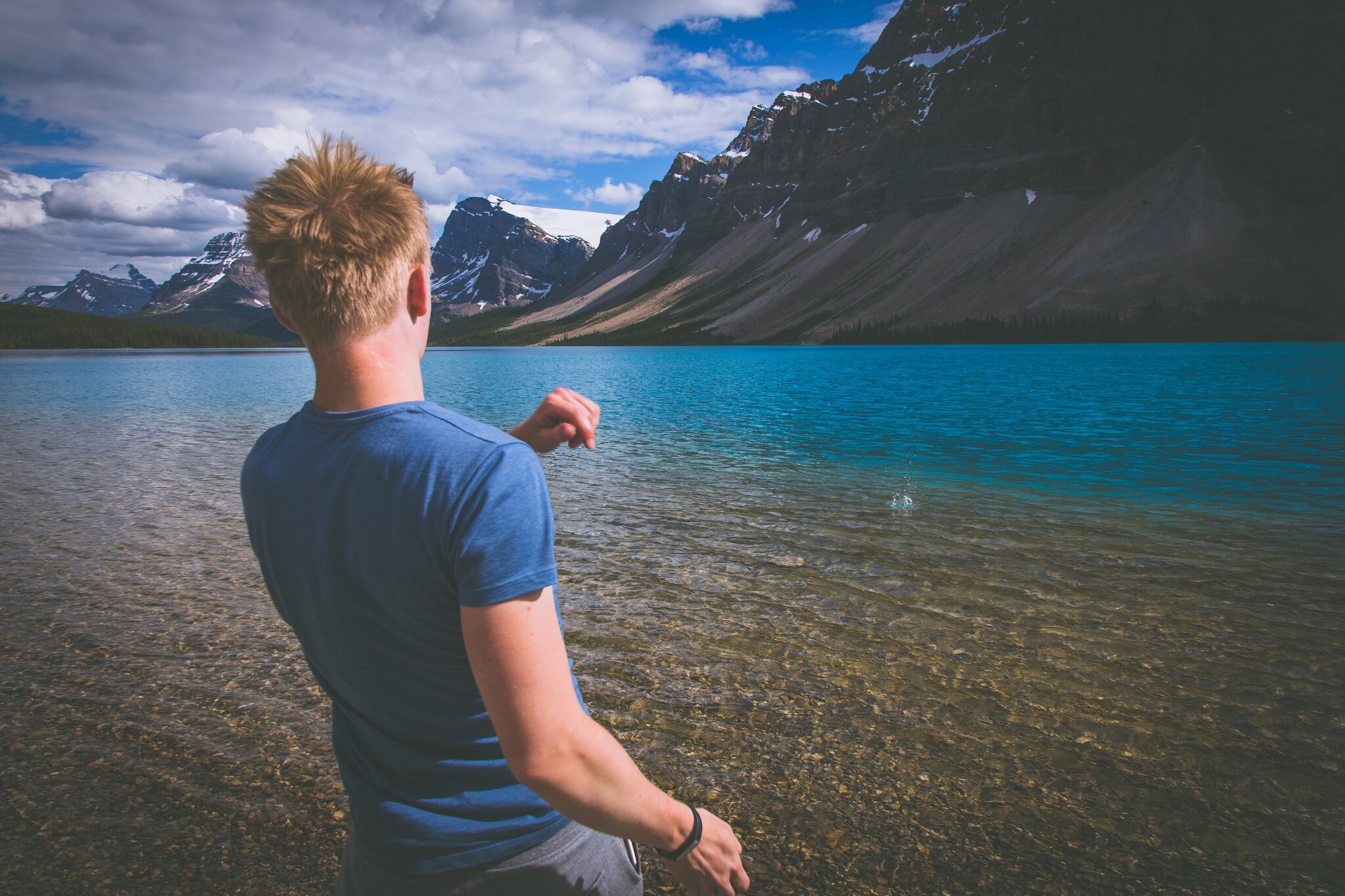
5. May: Bears Wake Up and the Buzz Begins

In May, Banff National Park starts officially waking up into summer mode, even though swimming weather is still a long way off. Snow melts in the valleys and hungry bears emerge onto the green grass along the roadsides. Spotting a grizzly or a black bear is quite common in May, but please follow proper bear safety guidelines so nobody gets hurt.
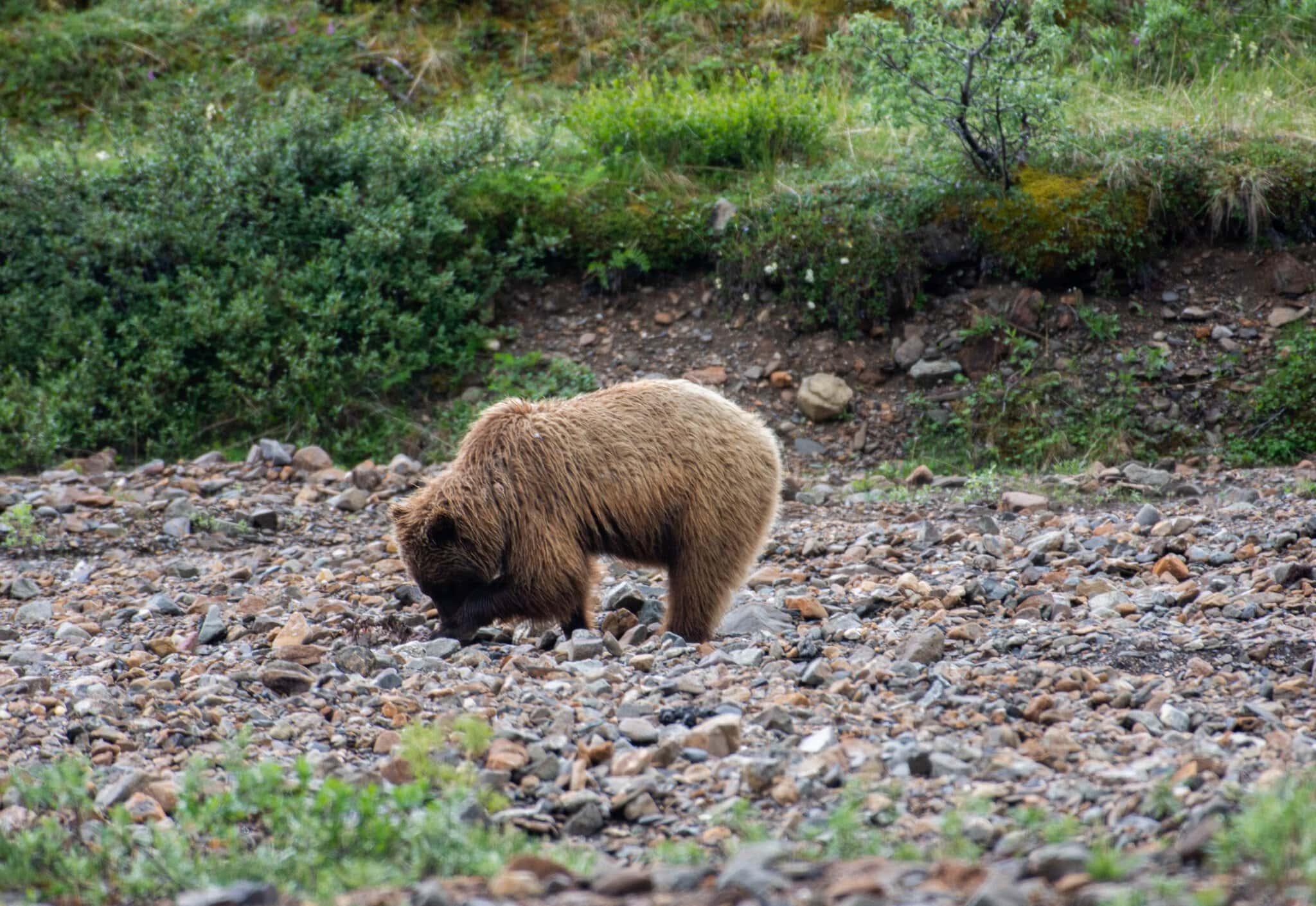
By the end of May, campground reservation systems typically go live and the first summer services at the iconic lakes start up. However, trails at higher elevations — like Plain of Six Glaciers — are often still buried under snow through the end of the month.

6. June: Hiking Season Kicks Off and Lakes Change Colour
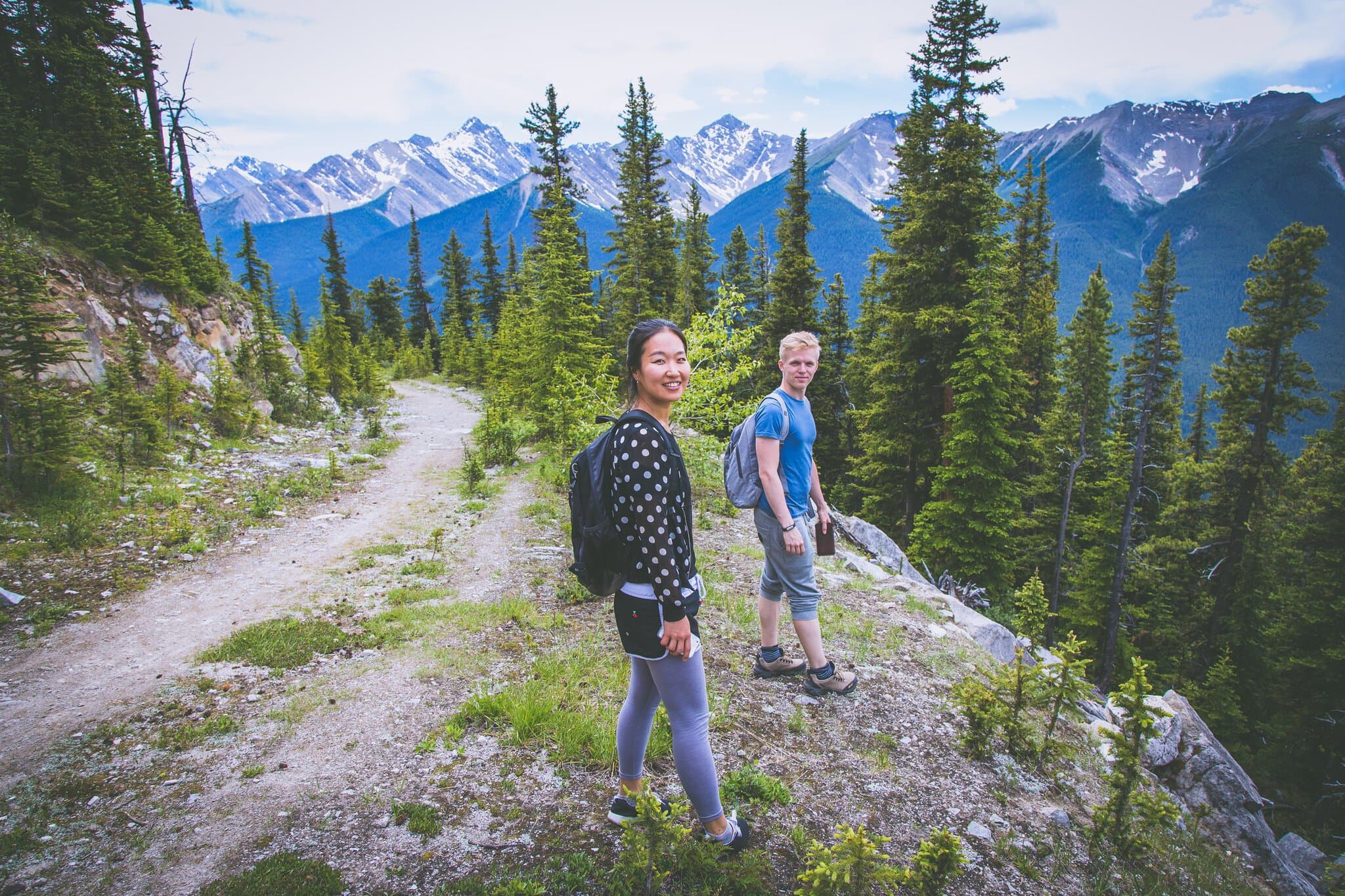
June is a magical month. The green of the forests after the spring rains is incredibly lush, waterfalls rage with tremendous force from the melting mountain snow, and the days feel endless. It’s also the month when the glacial lakes finally thaw and reveal their true colours.

Moraine Lake, for example, takes on its iconic, outrageously turquoise hue usually around mid-June, when so-called glacial flour (tiny rock particles from the melting glacier) starts flowing in. The tourist season kicks into full gear — all high-altitude roads and campgrounds open, and nature is in absolute bloom.

7. July: The Absolute Peak of Summer and First Storms
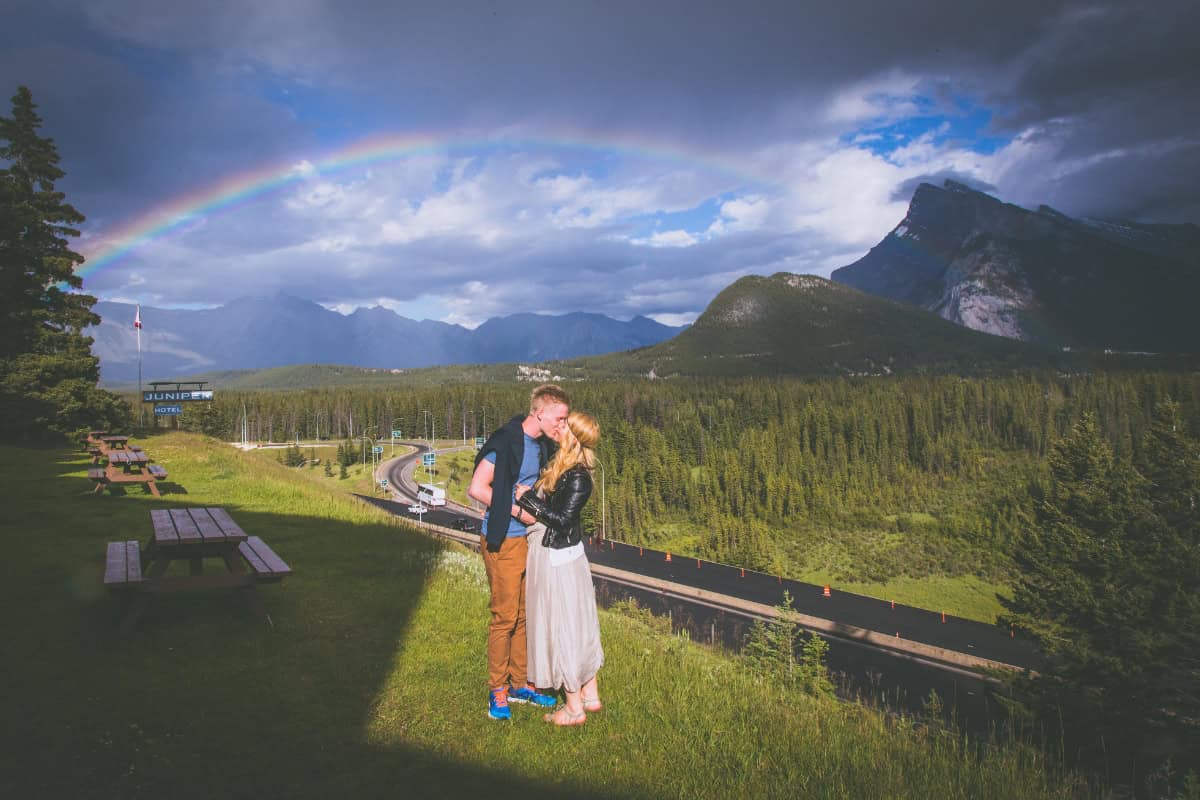
If there’s one month when Banff is absolutely heaving, it’s July without a doubt. The weather in Banff Alberta Canada tends to be at its warmest, with temperatures that can climb above a pleasant 25 °C, and all the high-altitude hikes around Lake Louise and the surrounding area are finally beautifully accessible and snow-free.

There are two major downsides, though. The first is the so-called 1 PM rule. During hot summer days, clouds frequently roll in during the afternoon and between one and three o’clock, fierce (if brief) thunderstorms strike. We always advised everyone to set off on hikes early in the morning. The second downside is the start of wildfire season, which occasionally shrouds the entire park in a smoky haze (more on that below).
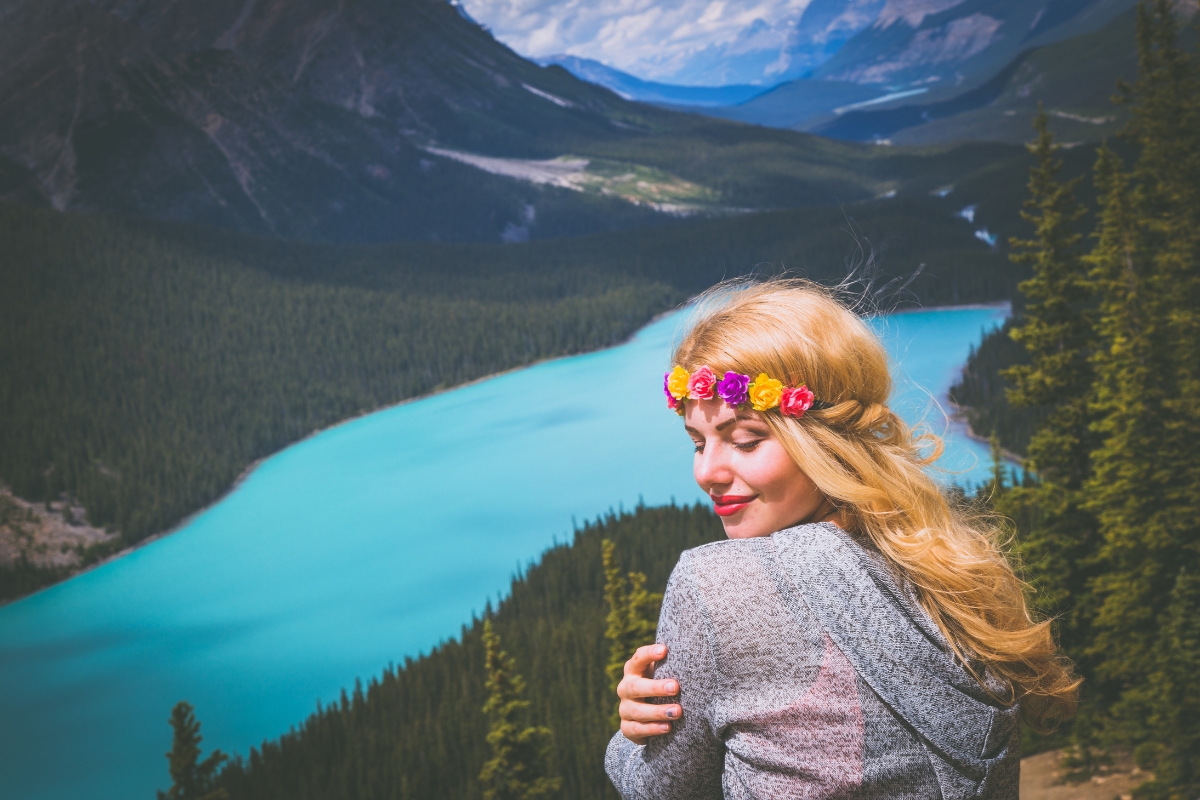
8. August: Priciest Accommodation and Endless Crowds

August picks up right where July left off, and together they form the absolute peak of visitor numbers. Hotels, campgrounds, and restaurants are filled to bursting, with accommodation prices climbing to astronomical heights. If you don’t have a booking several months in advance, searching for a last-minute place to stay can be not only stressful but seriously expensive.

It’s a great time for swimming in smaller lakes (the big glacial ones still have temperatures that’ll turn your lips blue even in August), camping under the stars, and multi-day mountain traverses. Just expect that at the most popular spots, you definitely won’t be alone.

9. September: Our Secret Tip and Golden Larches

If I had to choose just one month to visit Canada, it would be September. After the Labour Day weekend (the first Monday in September), most families with children head home, prices begin to drop, and the air takes on that gorgeous, crisp autumn edge. The mosquitoes that can be such a nuisance in summer are gone.

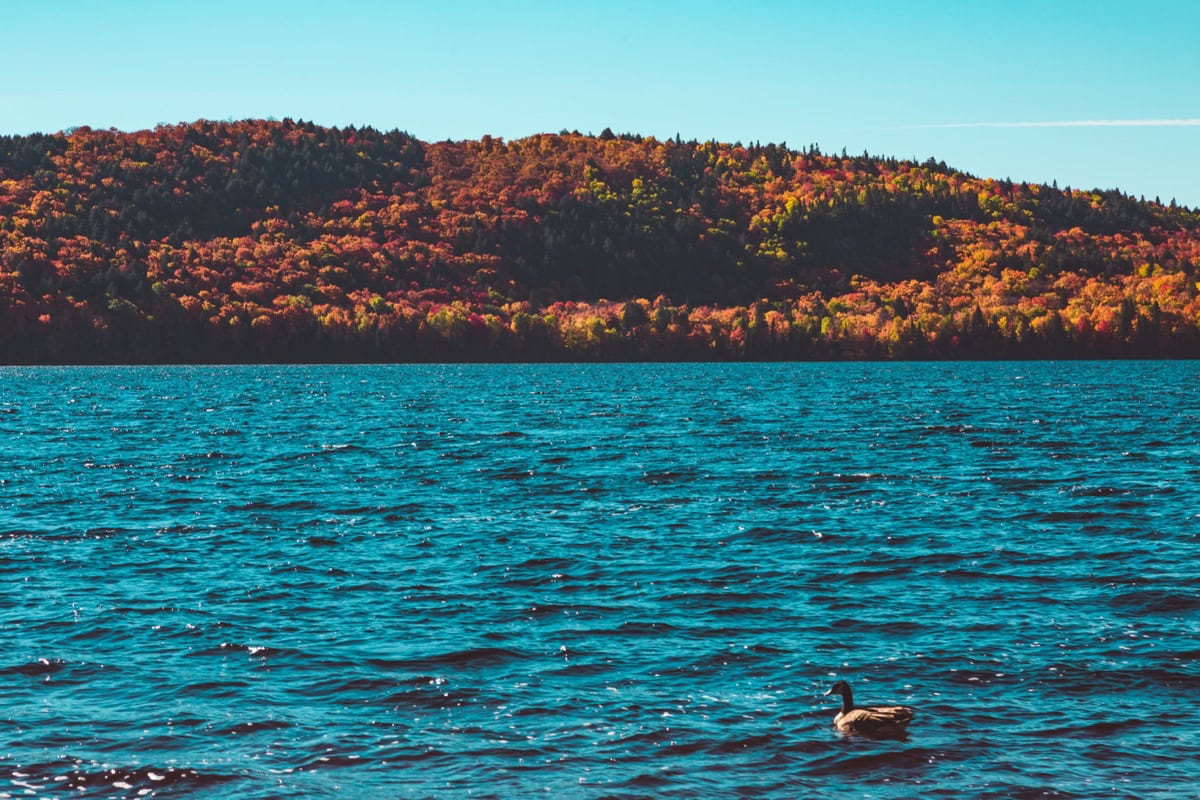
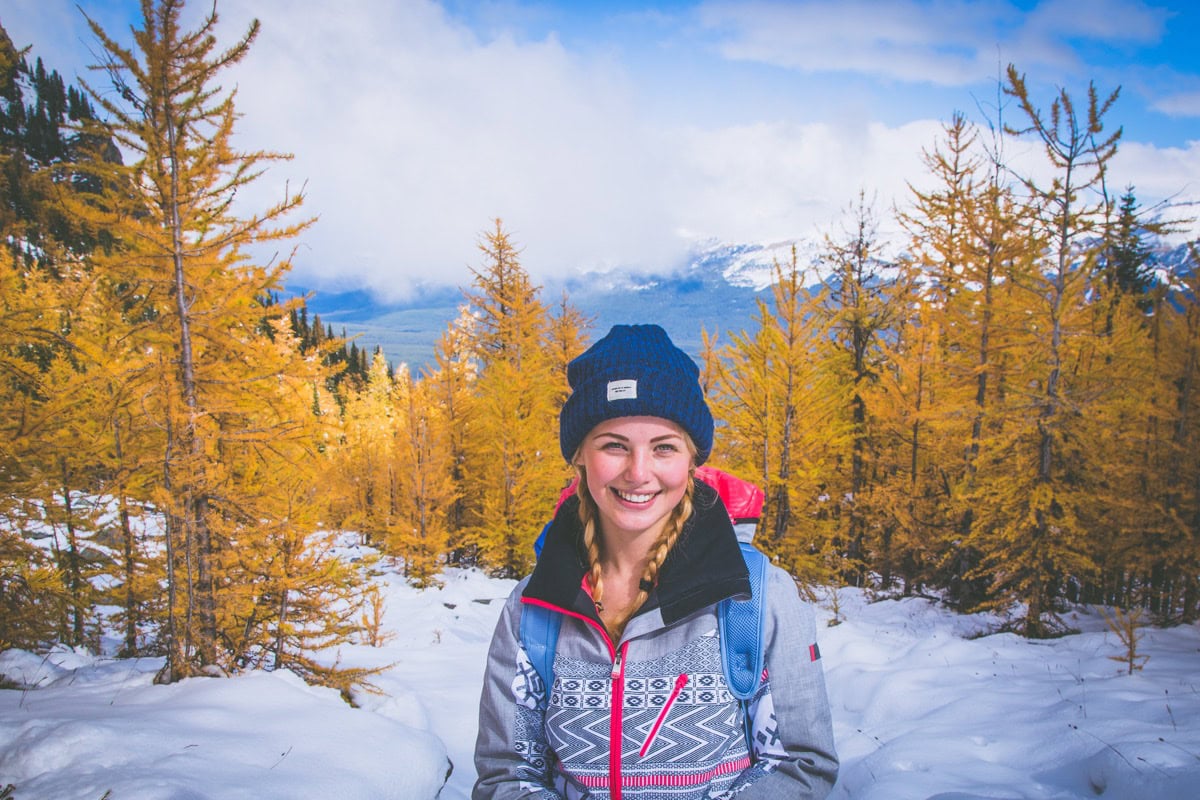
Late September is also the time for the famous Larch Valley phenomenon. Over just two to three weeks, the needles of the local larch trees high in the mountains turn a brilliant gold. It’s an absolutely breathtaking visual spectacle and a photographer’s dream come true. You need to hit the right window, though, which typically opens around September 20th.
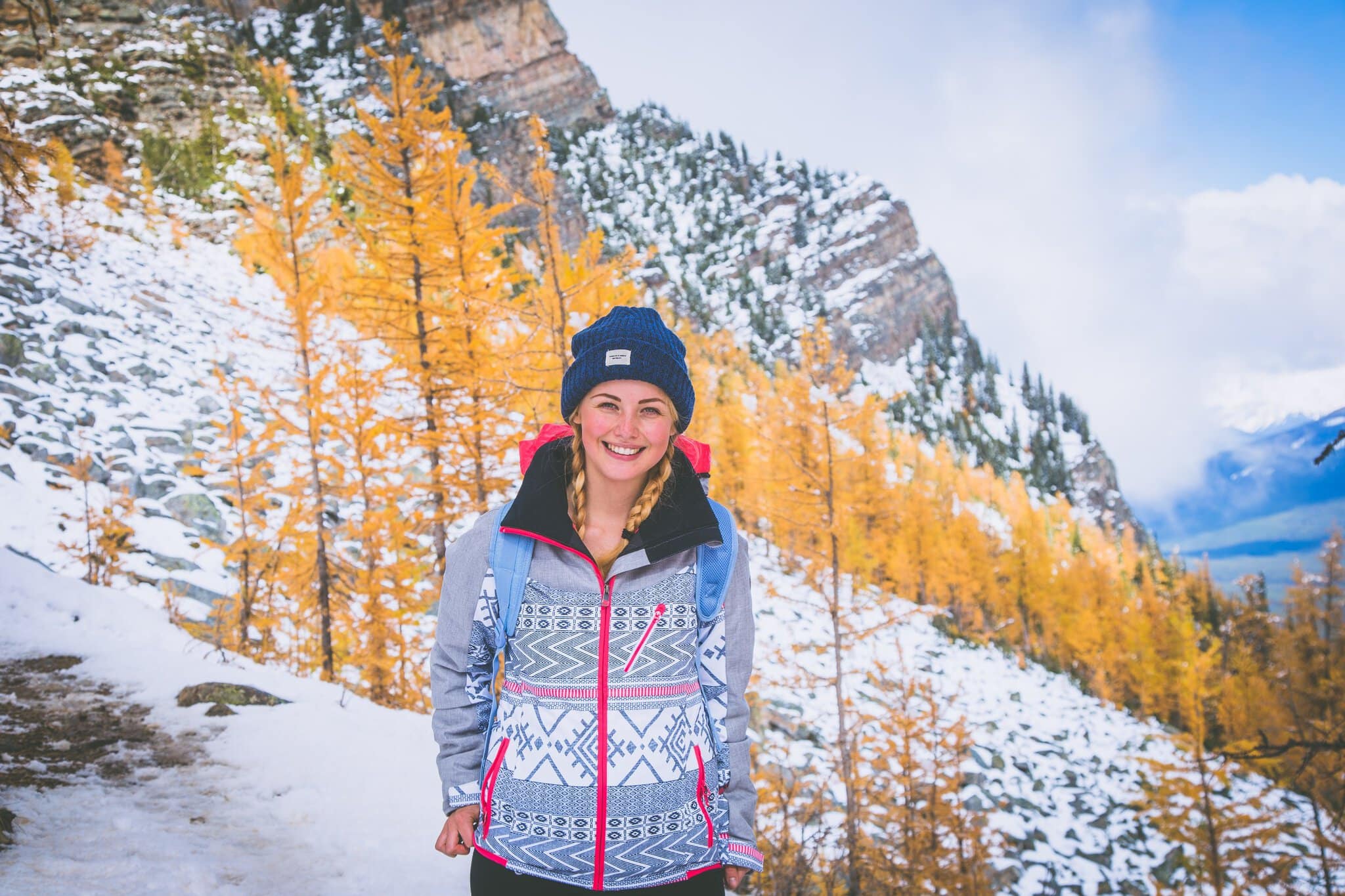
10. October: A Sneaky Trap for Tourists

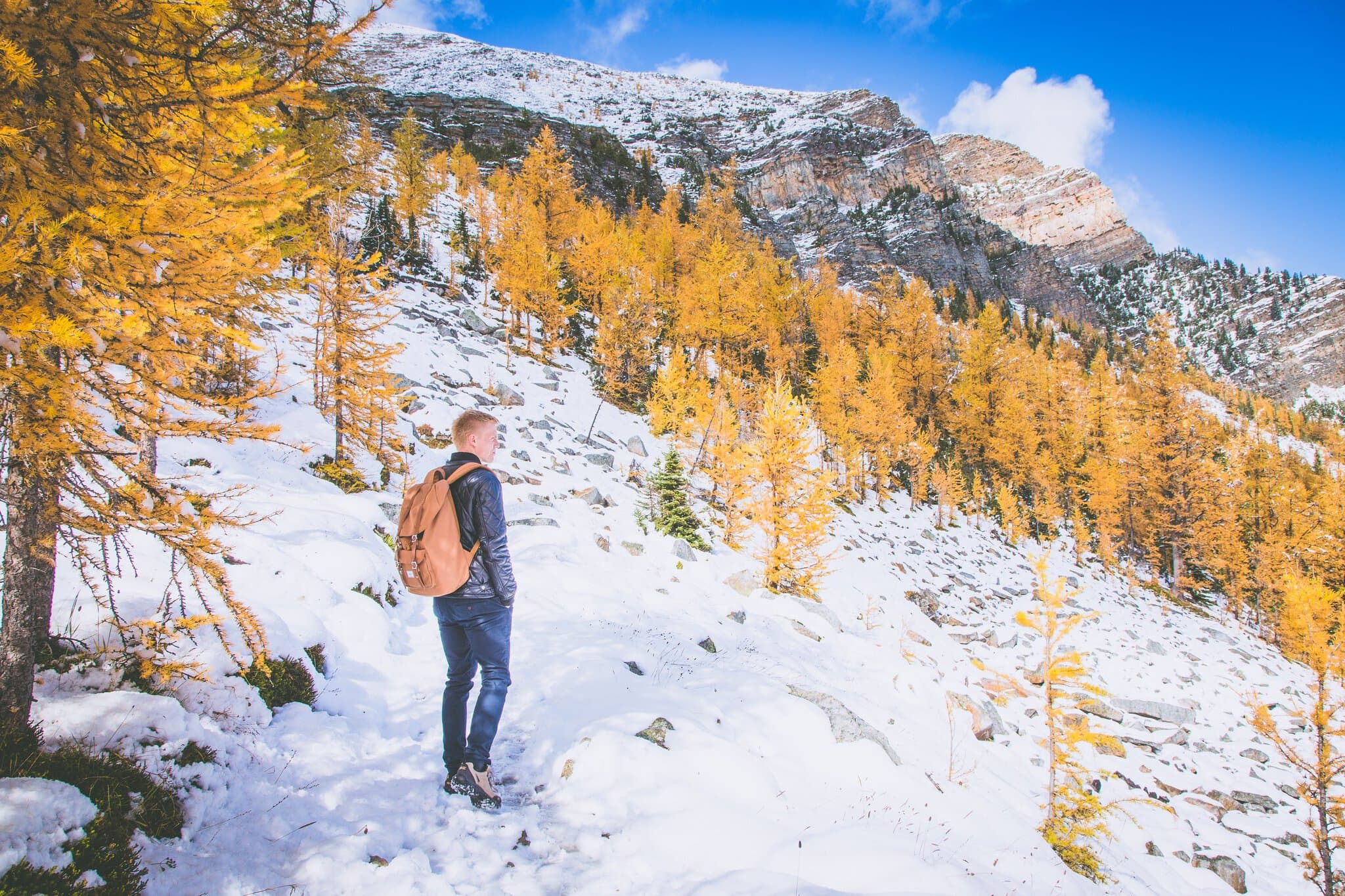
October is a bit of a tricky one, and I personally call it a trap for unprepared visitors. From the photos online, you might think you’ll see autumn colours, but the reality at elevations above 1,400 metres is that October typically brings the first proper snowfall.

Most high-altitude huts close and the most scenic trails become quite dangerous without winter gear. So I’d warmly recommend October only to those who don’t mind grey, chilly weather, overcast skies, and the fact that in an entire day they’ll see just a fraction of what they could in summer.
11. November: Absolute Calm Before the Storm

November is the quietest month of the entire year. You’ll barely see a soul in the streets of Banff, and shops occasionally shorten their opening hours. But if you’re after a luxury hotel at a third of the summer price and absolute tranquillity, it’s a superb choice. Around mid-month, the winter season kicks off and both Banff and Jasper offer ideal conditions for the Northern Lights — something you haven’t a chance of seeing in summer thanks to the endlessly long days.

12. December: A Christmas Fairytale Straight Out of a Film
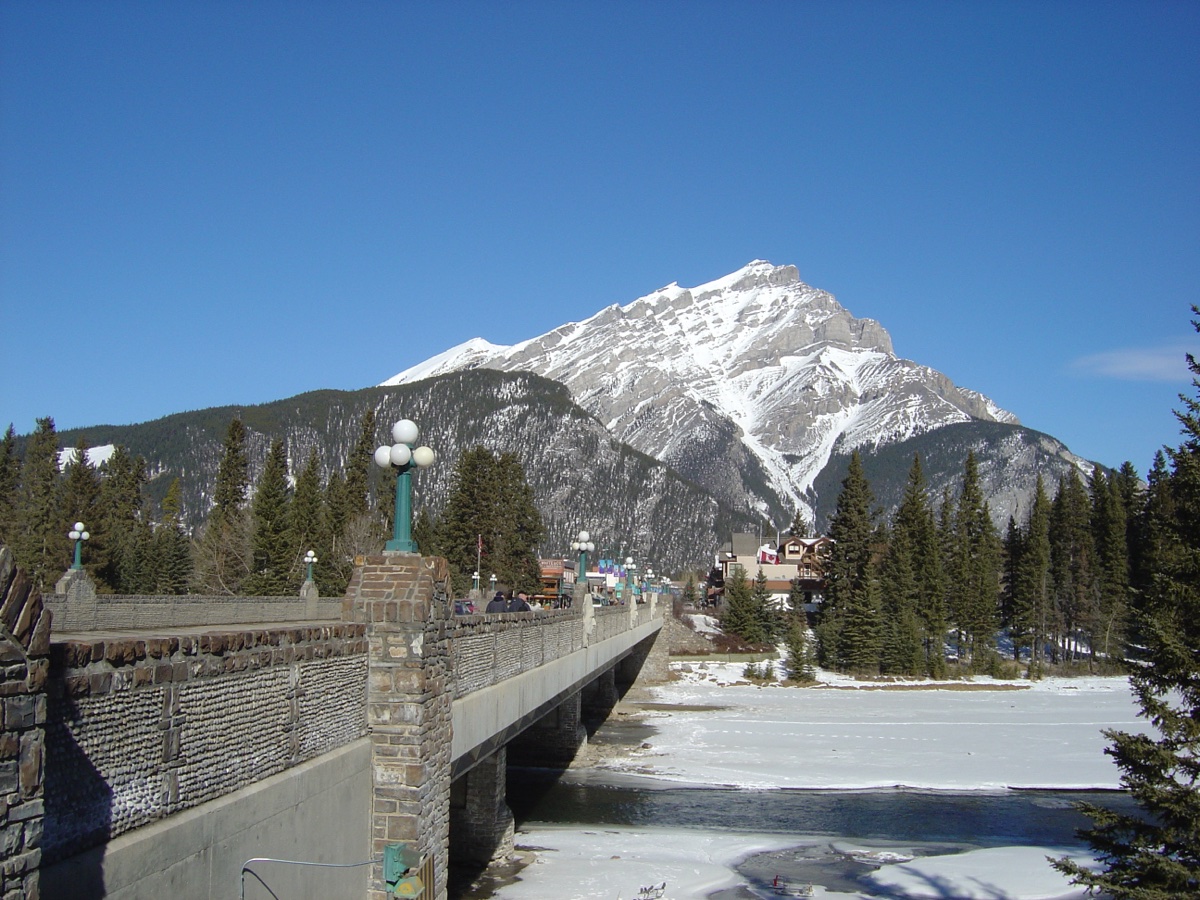
December in Banff looks exactly like something out of a Hollywood Christmas film. The main drag, Banff Avenue, is beautifully decorated, blanketed in snow, and glowing with thousands of twinkling lights. If you love Christmas atmosphere and mulled wine, this is the place to be.

Bear in mind, though, that days are extremely short (it’s dark by half past four in the afternoon) and temperatures plunge to -25 °C. Skiing is in full swing, and over Christmas and New Year, accommodation prices shoot right back up.

When to Go for What? Quick Cheat Sheet by Activity

Still not sure? I’ve put together a simple overview so you can pick the perfect time based on exactly what you want to experience.

If You Want Snow-Free Hiking (June to September)

From mid-June to the end of September, you can be confident that most classic trails will be passable. July and August in particular are a safe bet for ridge walks and hikes to higher elevations, where the snow is slowest to melt.

Always remember, though, that nature here is a force unto itself and can easily dump snow at the end of August. That’s why Lukáš and I always pack warmer layers in our rucksacks, no matter what.
If You’re After Perfect Photos (Late September)

The best light, calm lake surfaces, and — most importantly — the yellowing larches make September a paradise for photographers. Nature plays with every colour imaginable, and the sun no longer beats down at such a harsh angle as in midsummer.

And if I may offer a tip — head to the most photogenic spots at the crack of dawn. That crowd-free calm is absolutely priceless.

lukas a lucka
Lukáš and Lucie recommend
Where to stay in Banff
5 accommodations — campgrounds, wellness hotels and other lodging options

If You Dream of Seeing Bears (May, June, and September)

In spring, wildlife descends into the valleys in search of their first food. Watching bears from the safety of your car along the Bow Valley Parkway in May is absolutely fantastic. In autumn, they gorge on berries as they prepare for hibernation, so you can spot them very close to popular trails.

I’d never recommend heading out on a hike without bear spray, though — not even on the busiest trails.

If You’re Chasing the Northern Lights (November to March)

The Canadian Rockies are far enough north and have minimal light pollution. During the dark, long winter nights when the sky is clear, you have an excellent chance of witnessing this mesmerising natural display.

Keep an eye on dedicated apps and websites that forecast solar activity so you’re not standing outside in the freezing cold for nothing. Our most treasured memory is of one bitterly cold January evening when we stood on the shore of frozen Lake Minnewanka and the entire sky above us burst into shimmering green ribbons.

What to Watch Out For: Wildfires, Storms, and Tricky Seasons

I don’t want to scare you at all, but the Canadian wilderness sometimes does exactly as it pleases, and it pays to be prepared. A few specific things in particular can seriously affect your holiday.

Wildfires and the “Smoke Calendar”

In July and August, western Canada (particularly British Columbia, from where the wind blows into Alberta) has its wildfire season. Sometimes there are so many fires that the smoke engulfs the entire Rocky Mountains. The air starts smelling like a campfire, the sun turns blood-red, and visibility drops so low you can’t even see the mountains directly above you.

If you’re visiting in midsummer, it’s worth monitoring the local Air Quality Health Index (AQHI on the AirNow website). When values climb above 7, strenuous hiking is not recommended for anyone with sensitive airways.

Afternoon Thunderstorms (The 1 PM Rule)

Just like in the European Alps or the Italian Dolomites, mountain thermals do their thing here in summer too. Mornings are typically gorgeous and cloudless, but as the air heats up, the afternoon clouds roll in and between one and three o’clock a powerful mountain thunderstorm regularly strikes. Always set off on hikes first thing in the morning — as early as six or seven. We got into the habit of being done by two in the afternoon and enjoying a leisurely coffee back in town.

If dark clouds do start chasing you and you hear the first rumble of thunder, don’t push on to the summit at all costs. Safety comes first, and lightning on exposed ridges is no joke — as a few unfortunate hikers have found out the hard way.

The Larch Forest Phenomenon (Larch Valley)

I mentioned this under September, but it deserves extra emphasis. In the valley above Moraine Lake, there’s a forest of deciduous larches (Larix lyallii) that grow only at a very specific elevation. Throughout the entire Rocky Mountains, conifers don’t change colour in autumn — with the single exception of these larches. People flock here from across Canada and the US for this roughly two-week miracle, so even though September is generally quieter, the Larch Valley trail tends to be hopelessly packed with enthusiastic hikers.

Because this spot is such a massive draw, I recommend planning it for the crack of dawn. When we hiked up there for the first time, we set off with the first light and had those stunning golden trees almost entirely to ourselves, while on the way back down we already passed an endless stream of people.
Where to Stay in Banff and How Much It Costs

The Rocky Mountains will hit your wallet hard — I’ll tell you that straight up. We learnt this on our very first night, when our Banff Canada hotel cost more than the flight 😅. If you want to save money and don’t mind driving a bit further, a brilliant tip is the neighbouring town of Canmore, just about 20 minutes’ drive from Banff. It sits outside the national park boundaries and prices are noticeably friendlier. You can browse and compare options on Booking.com.

Summer (June to August) is the most expensive period. A night for two in a standard hotel can easily set you back 300 to 450 CAD (roughly €200 to €300). Accommodation vanishes at lightning speed, so book a good six months ahead. Conversely, in winter and spring, prices drop significantly and you can snag a lovely hotel with a hot tub for 150 to 200 CAD per night (about €100 to €130).

Our Tried-and-Tested Hotel and Campground Tips

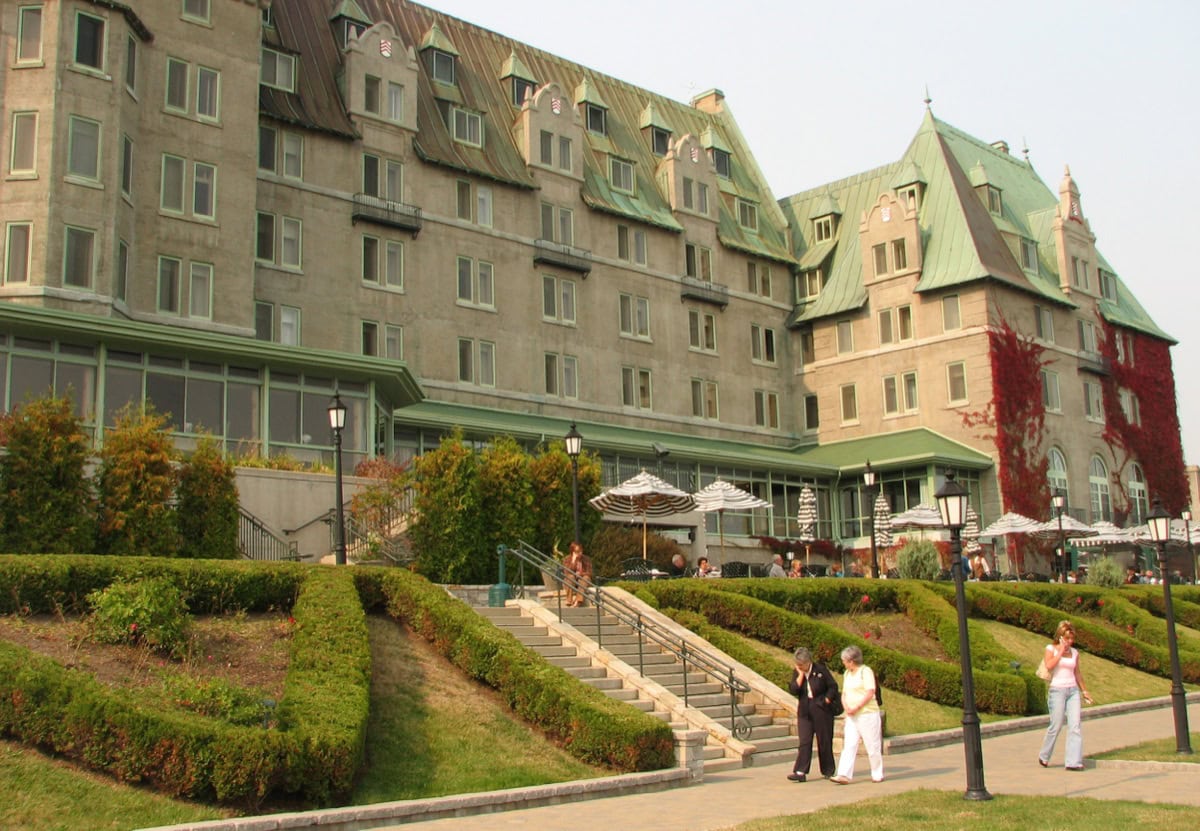
If you’re going to splash out on comfort in Banff, try Fairmont Banff Springs — the famous castle-like hotel nestled in the forest. You’ll leave half your pay cheque there, but for a special anniversary it’s an absolute showstopper. On the more affordable end, we were fans of the Elk + Avenue Hotel right on the main street — it’s stylishly modern and you’re within walking distance of everything.

For Canmore, I’d wholeheartedly recommend the Basecamp Suites apartments. They’re perfectly equipped, have cracking views of the mountains, and you can cook your own dinner in the evening, which saves a fair bit. If you prefer sleeping in your car or pitching a tent, local campgrounds run from 25 to 40 CAD per night (roughly €17 to €27), but even the most popular ones (like Two Jack Lakeside) need to be booked months ahead on the day the system opens.

When to Start Planning and Booking (Don’t Leave It to the Last Minute)

This is something I learnt the hard way: Canadian parks are so popular these days that without a reservation you simply won’t get to the most beautiful spots. They’ve introduced systems that caught us off guard at first, but they’re manageable if you know about them in advance.

Access to Moraine Lake by private car has been completely banned (the road is closed). You need to reserve the official Parks Canada shuttle bus months in advance via Parks Canada, or use one of the private transport companies, which are pricier.

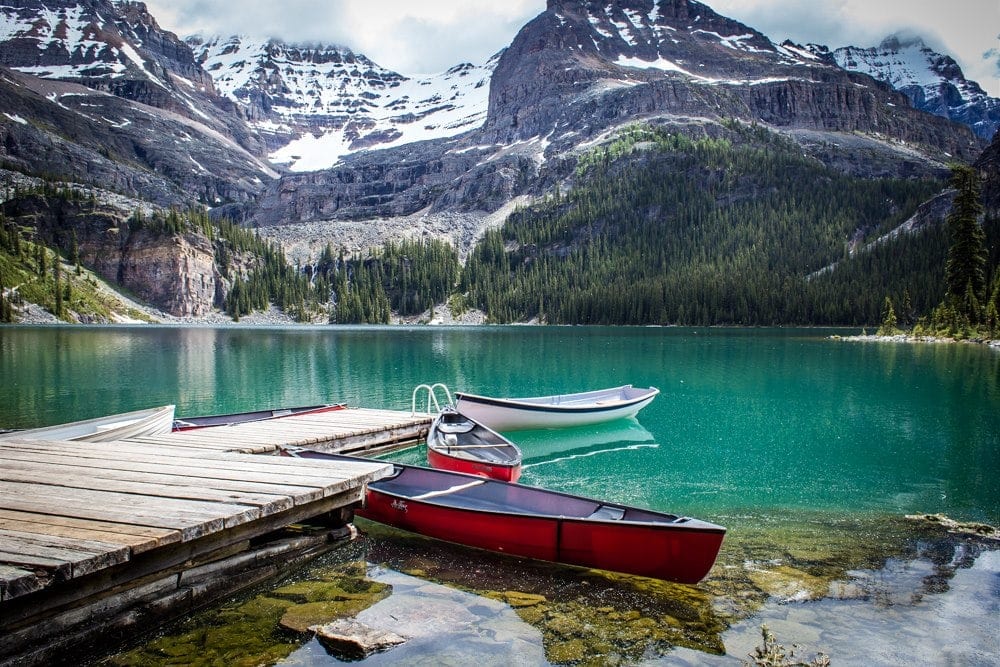
It’s a similar story with the iconic, strictly protected Lake O’Hara area in neighbouring Yoho National Park. The bus there runs for only a tiny number of visitors and the reservation system typically crashes within the first second of opening — that’s how high the demand is. You’ll also need to book well ahead for any multi-day hut-to-hut traverses (e.g. Skoki Lodge is sold out for the entire season almost immediately).

💡 TIP: Don’t forget to get the Canada Discovery Pass. If you plan to spend more than 7 days in Canadian national parks (which most people end up doing), the annual pass at roughly 150 CAD (about €100) per vehicle is far better value than paying daily entry fees.
Where to Find Great Food and Coffee

After a demanding hike or a day on the slopes, you deserve something proper in your belly. Both Banff and Canmore have a cracking food scene. Lukáš and I had a few go-to favourites that we still rave about to this day.

Our absolute favourite pizzeria, Bear Street Tavern in Banff, is a must-visit. Their pizza, which you can drizzle with chilli honey oil, is out of this world. Whenever we fancied a coffee and needed warming up, Whitebark Cafe, tucked away in one of the local hotels, was our lifesaver.

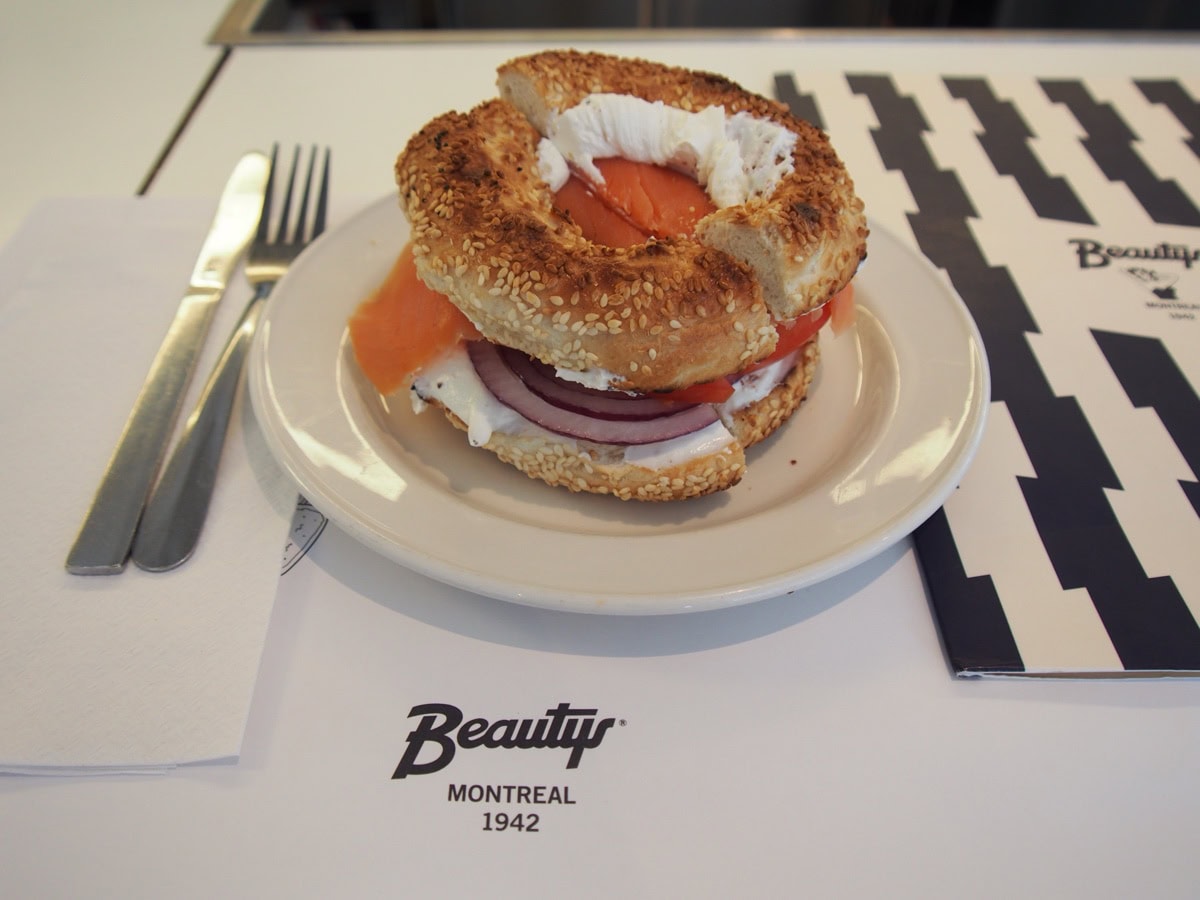
Over in nearby Canmore, try the amazing bagels at Rocky Mountain Bagel Co. — practically every local heads there for breakfast, so it sometimes means a queue, but it’s well worth the wait ☺️.

Read More: Related Articles

If you’re planning a trip to Canada, check out these other articles of ours — we couldn’t have imagined our trip without them:

Frequently Asked Questions (FAQ)

Lukáš and I know perfectly well that a million practical questions crop up when planning a trip to the mountains. Here are the answers to the most common ones you regularly send us.

When is it warmest in Canada?

The warmest months in the Canadian Rockies are without a doubt July and August. Daytime temperatures in the valleys can climb to 25–30 °C, but evenings and mornings remain quite cool due to the mountain environment — light jumper weather at best. This temperature swing caught us off guard at first. We’d set off in the morning in down jackets and beanies, and by the afternoon we were carrying it all in our backpacks because we were roasting in just a t-shirt.

What are summer temperatures like in the Canadian Rockies?

In the Banff and Lake Louise areas, average summer temperatures range between 20 and 25 °C during the day. At night, though, temperatures commonly drop below 10 °C, and even in the middle of summer fresh snow can fall on the highest peaks. I always recommend relying on local weather forecasts directly from park wardens. We found time and again that what the internet reported for the town in the valley bore no resemblance to conditions up in the mountain passes.

When is the best time to visit Canada for hiking and nature?

The ideal hiking window is fairly short — roughly from late June to mid-September. During this period, even high-altitude trails are accessible, the lakes are thawed, and they display their iconic turquoise colour. If you go a bit earlier, say early June, you certainly won’t regret it, but you’ll need to accept that some lakes may be unreachable and many iconic viewpoints will still be under a blanket of snow. On the plus side, you’ll enjoy incredible peace and quiet before the main season.

What to see in Banff besides Lake Louise?

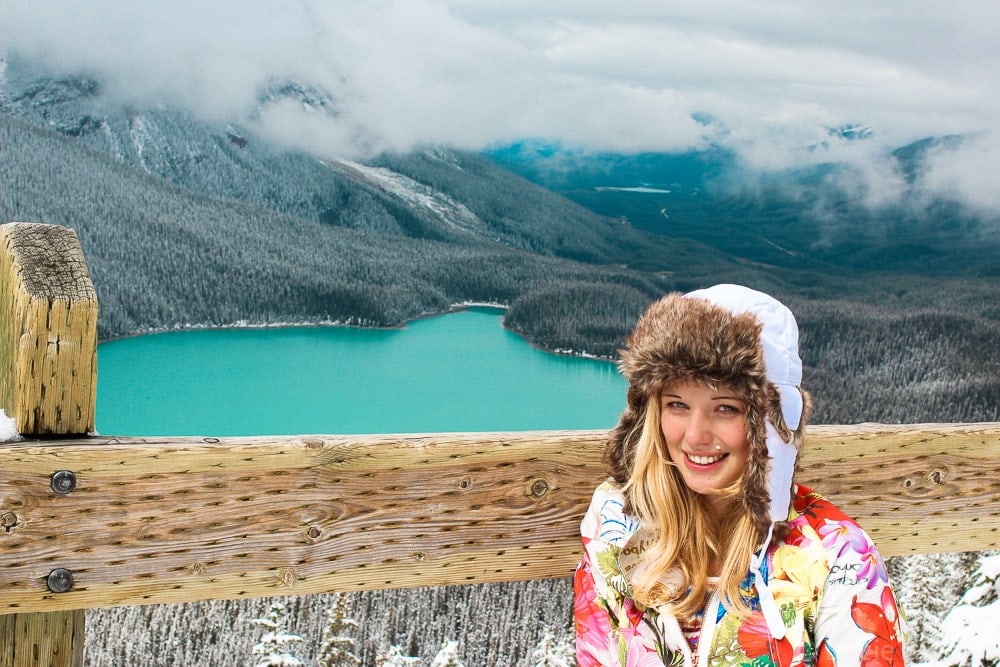
You absolutely must not miss the glacial Moraine Lake, Johnston Canyon with its stunning waterfalls, the Sulphur Mountain gondola (at sunset), or the breathtaking Icefields Parkway scenic road connecting Banff with Jasper National Park. Lukáš and I also fell completely in love with Peyto Lake. Its shape resembles a wolf’s head and its colour is so vivid blue that you won’t believe you’re not looking at a Photoshopped image.

Do I need special clothing for winter?

Absolutely. Temperatures from December to February regularly drop to -20 °C. You’ll need proper layering (merino wool as a base), a decent waterproof and windproof jacket, winter boots with good insulation, and ideally hand warmers for your gloves too. A big mistake we saw many tourists make was underestimating warm socks and hats. Heat escapes fastest from your head and feet, so investing in quality wool socks and a windproof hat will pay dividends out here.

Are there mosquitoes in Banff?

Yes, mosquitoes can be quite unpleasant in summer (especially around the turn of June and July), particularly in forests or near bodies of water sheltered from the wind. Definitely pack a quality repellent with a higher DEET content in your rucksack. Local shops readily stock specialist bug sprays that work far more reliably than anything you might bring from home. Sometimes it seems as though the Canadian mosquitoes are resistant to just about everything.

Can I pay by card everywhere in Banff?

Canada is extremely advanced when it comes to cashless payments. You can pay by card virtually everywhere — from a small coffee to national park entry fees. Lukáš and I usually only carry a token amount of cash for small tips; we handle everything else by card. The only places where you might run into trouble are very remote campgrounds or small snack stands far from civilisation where there’s simply no signal. For those cases, a few banknotes in your wallet always come in handy.

Tips and Tricks for Your Vacation

Don’t Overpay for Flights

Search for flights on Kayak. It’s our favorite search engine because it scans the websites of all airlines and always finds the cheapest connection.

Book Your Accommodation Smartly

The best experiences we’ve had when looking for accommodation (from Alaska to Morocco) are with Booking.com, where hotels, apartments, and entire houses are usually the cheapest and most widely available.

Don’t Forget Travel Insurance

Good travel insurance will protect you against illness, accidents, theft, or flight cancellations. We’ve had a few hospital visits abroad, so we know how important it is to have proper insurance arranged.

Where we insure ourselves: SafetyWing (best for everyone) and TrueTraveller (for extra-long trips).

Why don’t we recommend any Czech insurance company? Because they have too many restrictions. They set limits on the number of days abroad, travel insurance via a credit card often requires you to pay medical expenses only with that card, and they frequently limit the number of returns to the Czech Republic.

Find the Best Experiences

Get Your Guide is a huge online marketplace where you can book guided walks, trips, skip-the-line tickets, tours, and much more. We always find some extra fun there!
Skiing in Alberta & Banff, Canada: SkiBig3, Marmot Basin & Complete 2026 Guide

TL;DRThe best skiing in Alberta is served by the SkiBig3 network in Banff National Park in Canada (Lake Louise, Sunshine Village and Mount Norquay), complemented by the quieter Marmot Basin in Jasper, the rugged Castle Mountain in the south and the family-friendly Nakiska near Calgary. The season runs from mid-November to the end of May, with the best champagne powder in January and February, while March offers ideal conditions with milder frosts. A single-day lift pass costs 130 to 170 CAD, but the SkiBig3 Pass or the international IKON Pass (around 1,199 USD, covering seven days at both SkiBig3 and Marmot Basin) is much better value. You fly into Banff via Calgary airport (YYC), a 90-minute drive away, and into Jasper via Edmonton (YEG) with a four-hour drive. A week’s accommodation for two costs €1,000 to €1,400 in Banff, or under €800 in cheaper Canmore.

Lukáš and I spent the winter of 2016 and 2017 living right inside Banff National Park in Canada, home to the best skiing in Alberta. If you’re thinking about swapping the crowded European Alps for the Canadian wilderness this year, I have to warn you upfront. Once you’ve tasted the legendary Canadian powder that locals here call “cold smoke,” you’ll never want to go back to icy European slopes. ☺️

Skiing in Alberta is incredibly different from what you get in Europe. Forget about narrow, crowded runs and endless lift queues: here you’ll find vast open plains, views of the jagged peaks of the Rockies, frozen turquoise lakes and snow so light you can just blow it off your glove. We’ll walk through all the resorts together, I’ll tell you where to stay and how not to overpay for a lift pass — and I’ll also flag a few things that once caught us off guard on the frozen mountain roads.

A summary for those who don’t have time to read the whole article

  • Main ski hubs: The best facilities are in Banff National Park, home to the so-called SkiBig3 network (Lake Louise, Sunshine Village and Mount Norquay).
  • The best snow: Alberta is famous for its dry, arctic air, which produces extremely light, fluffy powder — the so-called champagne powder.
  • Length of the season: You can usually ski here from mid-November all the way to the end of May, with the best powder conditions in January and February.
  • How to save: Single-day lift passes cost 130 to 170 CAD. If you plan to ski for more than a week, it’s worth buying the international IKON Pass or the local SkiBig3 Pass in the autumn before the season.
  • Transport and a car: To move between the resorts you’ll definitely need a reliable car, ideally an SUV. Lukáš and I have long had a good experience with DiscoverCars, which we use all over the world. Just make sure the car has quality winter tyres.

Why skiing in Alberta is the best in all of Canada

Alberta is, in my opinion, simply on another level. Even though Whistler in neighbouring British Columbia gets more media attention, my mind keeps coming back here. Alberta’s secret lies mainly in its specific geography and climate. Because it sits inland and has fairly harsh winters with low humidity, the falling snow contains almost no water. The result is that famous champagne powder that you sink into and it just floats gently around you.

Thanks to these freezing temperatures, the snow stays in perfect condition for an incredibly long time. The season is extremely long, and it’s not unusual to see popular spring skiing in just a hoodie at Sunshine Village or Lake Louise still in May or even early June. On top of that, there’s none of the typical European stress here: the runs are wide, off-piste (in the so-called bowls) you can roam completely freely, and you’ll only really see queues on weekends or during public holidays.

When to go and how to get to the Canadian Rockies

Planning a ski trip to Alberta takes a bit of strategic thinking, because the weather in Banff, Canada can be genuinely unforgiving. The most snow falls between December and February, but be aware that temperatures in January can easily drop to minus thirty degrees Celsius. Our favourite time to ski was March, when the days start getting longer, the frosts ease off to a pleasant minus five, and there’s still plenty of snow everywhere.

The easiest way in is by air to Calgary (airport code YYC), from where Banff National Park is just a ninety-minute drive along the very well maintained Trans-Canada Highway. Look for cheap flights on Kiwi — our go-to portal for comparing all the available connections, with major carriers like Lufthansa, easyJet and others serving the route. If you’re heading primarily north to Jasper for the Marmot Basin resort, it makes more sense to fly into Edmonton (YEG), from where you have roughly a four-hour drive through beautiful winter scenery.

Where to stay and roughly what it costs

Your choice of accommodation will strongly affect both your budget and the overall feel of your holiday. We figured out fairly quickly that you can forget about a hotel complex right on the slopes like in the French Alps. National parks have strict building rules, so you’ll usually stay in one of the nearby towns and drive up to the mountain by car or take the free ski bus, which runs at regular intervals.

The absolute centre of the action is, of course, the town of Banff. It’s full of restaurants, bars and cafés and has an incredible atmosphere, but you’ll pay a premium for it. In Banff we had a fantastic experience with the Moose Hotel & Suites, which has outdoor heated pools right on the roof with a fantastic view of the mountains. If you’re after peace and quiet and want to be as close as possible to the Lake Louise slopes, stay right in the little village of Lake Louise. A great and, above all, more affordable alternative is the town of Canmore, which sits just outside the national park boundary. It’s about a twenty-minute drive from Canmore to Banff, accommodation is cheaper and you’ll find huge supermarkets here. Personally, we now lean towards Canmore for budget reasons. It’s quieter there, and a morning coffee in the local cafés with a view of the Three Sisters mountains has an unreal charm. If you’re torn, we’ve written a separate article, Canmore vs Banff, with a detailed comparison.

A week’s accommodation in high winter season for two people in an average three-star hotel in Banff will cost you roughly €1,000 to €1,400. In Canmore you can get under €800, and I can wholeheartedly recommend Basecamp Resorts, where you get a fully equipped kitchen and plenty of space even for a bigger group. If you’re travelling in a larger group, definitely look into cabins or apartments with their own kitchenette — you’ll save a huge amount on restaurant meals. For accommodation up north in Jasper, I recommend booking hotels well in advance, as capacity there is significantly lower than in the south.

6 ski resorts in Alberta: where the skiing is best

Let’s take a look at the individual ski resorts together. In Canada, runs aren’t rated blue, red and black like in Europe; instead they use green (beginners), blue (intermediate), black diamonds (difficult) and double black diamonds (experts only, often extremely steep chutes). Here’s a selection of the best spots, which we personally skied every which way.

1. Lake Louise Ski Resort: iconic views and endless plains

If I had to pick just one single place to spend an entire winter, it would be Lake Louise. It’s a huge resort (part of the SkiBig3 network) spanning over 4,250 acres, offering incredible variety. From the front you get gorgeous views of the frozen lake and the Victoria Glacier, while the back side (the so-called Back Bowls) is a paradise for lovers of ungroomed powder.

The runs here are incredibly long and you’ll find great terrain for complete beginners and utter daredevils alike. In recent years they’ve introduced mandatory online parking reservations (especially on weekends), so definitely don’t forget that, or they won’t let you into the car park at all and you’ll have to use the overflow lots in the village.

2. Sunshine Village: paradise on the Continental Divide

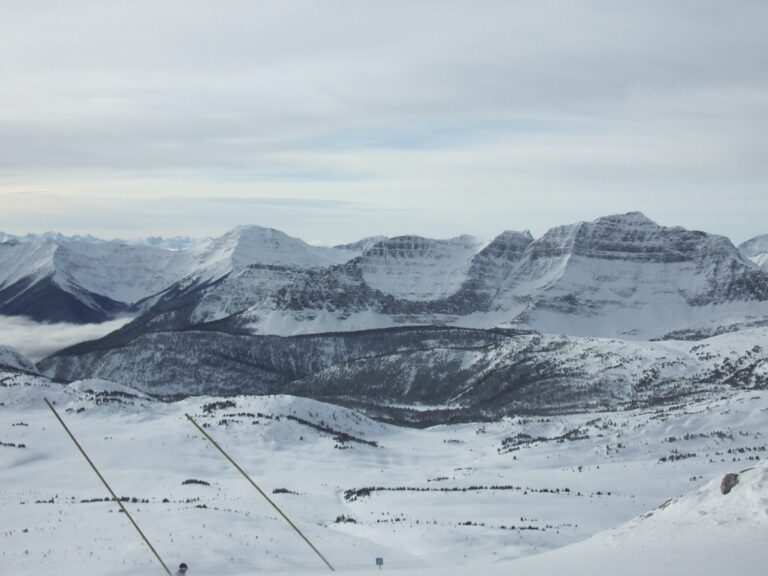
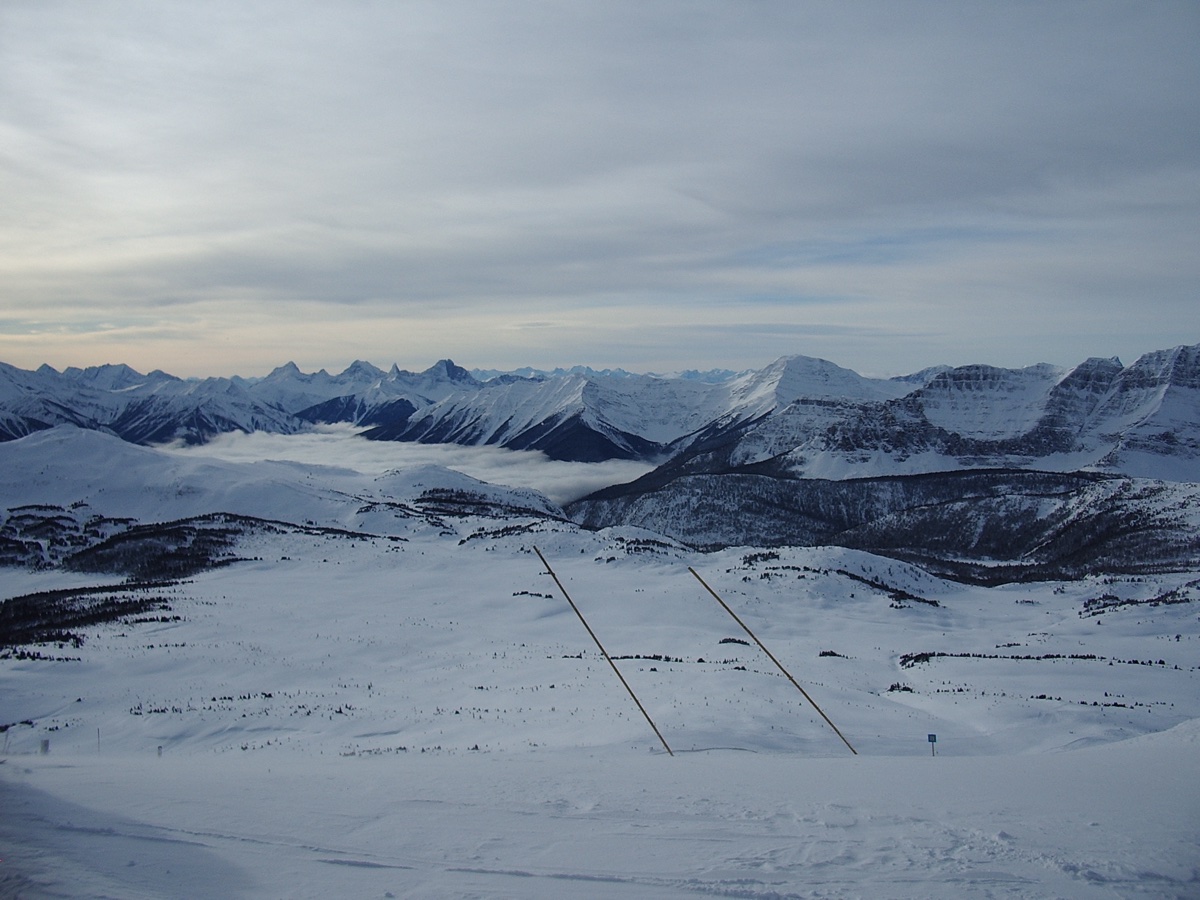
The Banff Sunshine resort sits high in the mountains and has, of all the resorts, absolutely the best and most reliable snow — around an impressive nine metres of it falls here every year. You reach it via a long gondola from the car park, and up top you find yourself in a huge bowl that sits exactly on the border of Alberta and British Columbia. So you can literally ski on the Continental Divide.

Most of the runs lie above the tree line, so you get a feeling of total freedom. For experts there’s the famous Delirium Dive zone, which they’ll only let you into with an avalanche transceiver and a shovel. Sunshine is absolutely fantastic on sunny days, but when the fog rolls in (a so-called whiteout) you lose your bearings very quickly.

3. Mount Norquay: the oldest and closest to the town of Banff

If you’re staying right in Banff and don’t feel like travelling far, Norquay is about a ten-minute drive from the centre along a winding mountain road. It’s also part of the SkiBig3 network, and although it’s by far the smallest of the three resorts, it has an unmistakable charm. It’s really the locals’ home hill, with properly steep runs where professional skiers often train.

The huge advantage of Norquay is night skiing. The runs are beautifully floodlit, evening lift passes are very cheap, and on top of that you get Banff laid out below you — the town lit up at night in the valley is a magical sight worth stopping for.

4. Marmot Basin in Jasper: peace and quiet and empty slopes

While Banff is bursting at the seams, Jasper National Park, lying a few hours north along the famous Icefields Parkway, is noticeably quieter. Marmot Basin offers around 1,675 acres of terrain and I personally love it. Emptiness, friendly staff and snow that’s perhaps even drier than in Banff.

The resort is gradually modernising and is an ideal choice for anyone who wants to escape the crowds of tourists. Interestingly, Marmot Basin recently became part of the global IKON Pass programme, so if you have that pass, I definitely recommend planning a trip to Jasper.

5. Castle Mountain Resort: a hidden gem in the south

This resort doesn’t lie in any national park, but in a remote southern part of Alberta close to the US border. Castle Mountain is the definition of rugged, commercially unspoiled Canadian skiing. It’s not part of any big alliances or combo passes, you won’t run into crowds of international tourists, and the atmosphere is wonderfully homely.

This hill has a reputation as a genuine powder paradise, and deservedly so. The terrain is steep, tonnes of snow fall, and on top of that they run cat-skiing — being driven by snowcat into the backcountry — which Lukáš and I haven’t dared try yet, but it’s on our imaginary bucket list. 😁 Stop by if you’re renting a car in Calgary and want to experience the real deal of local skiing without unnecessary luxury.

lukas a lucka
Lukáš and Lucie recommend
Where to Stay in Alberta and Banff
3 accommodations — resorts, hotels and other lodging options

6. Nakiska in Kananaskis: a family stop near Calgary

Nakiska was built primarily for the 1988 Winter Olympics and sits in the Kananaskis Country area, roughly an hour’s drive from Calgary airport. Most of the runs lead through the forest and are perfectly sheltered from strong winds. The local staff take great care over grooming the slopes, so if you love freshly groomed morning corduroy, you’re in the right place.

It’s not a huge resort for a week-long holiday; we mostly went here for a single warm-up day. It’s also an ideal spot if you’re travelling with small children, because finding your way around the slope is very easy and the runs are pleasantly wide and easy to read.

Lift passes, SkiBig3 and how to save with the Ikon Pass

Skiing in North America is expensive, there’s no point pretending otherwise. Buying a lift pass at the window at the last minute is the worst thing you can do for your wallet. In the 2026 season, day-pass prices at the main resorts range between 130 and 170 CAD per person (roughly €90 to €120). Fortunately there are so-called combo passes that can save you a tidy sum.

The basic option is the SkiBig3 Pass, valid jointly for Lake Louise, Sunshine and Norquay. You can buy it for multiple days and choose each day which of the three resorts you want to hit. The great thing is that it also comes with free ski-bus transport from Banff, so you can leave the car at your hotel.

If you plan to ski for more than seven days or want to combine a visit to Alberta with other resorts, consider buying the IKON Pass. It usually costs around 1,199 USD (always bought in spring or summer before the season) and includes up to seven days at SkiBig3 and another seven days at Marmot Basin, plus access to fifty more resorts around the world. If you’d like to head to Whistler in Canada over in British Columbia, there you’ll instead use the competing Epic Pass.

Skiing with kids in the Canadian Rockies

Jonáš is still too little for skiing, but I already know where I’ll take him one day. Canada is incredibly welcoming to families with children. Kids under five usually ski for free when accompanied by a paying adult, and during certain promotional periods and with some types of pass, even children up to twelve can ski for free. For families I’d most recommend Sunshine Village, where there’s a huge, safe kids’ zone and the main runs are wide and easy to read. Every resort has its own ski school with English-speaking instructors who are very friendly and used to working with small beginners.

What to do when your legs ache: cross-country skiing and snowshoes

Not everyone wants to spend all seven days in a row on the slopes. If you want a rest, rent cross-country skis or snowshoes. Canada’s national parks have hundreds of kilometres of impeccably maintained trails. We most often went cross-country skiing on the Pipestone trails near Lake Louise, where the routes weave between snow-covered trees and valleys.

You’ll also find beautiful routes for cross-country skiing and fat bikes (bikes with thick tyres for the snow) right next to the town of Banff, in the area known as the Banff cross-country area. Another unforgettable experience is skating on the frozen Lake Louise, where in January they build a huge ice castle and you can sip hot chocolate right beside the frozen glaciers.

What to taste après-ski: Canadian après-ski

You won’t find European-style après-ski with dancing on tables here, but Canadian food really hits the spot after a day out in the cold. What absolutely must you try?

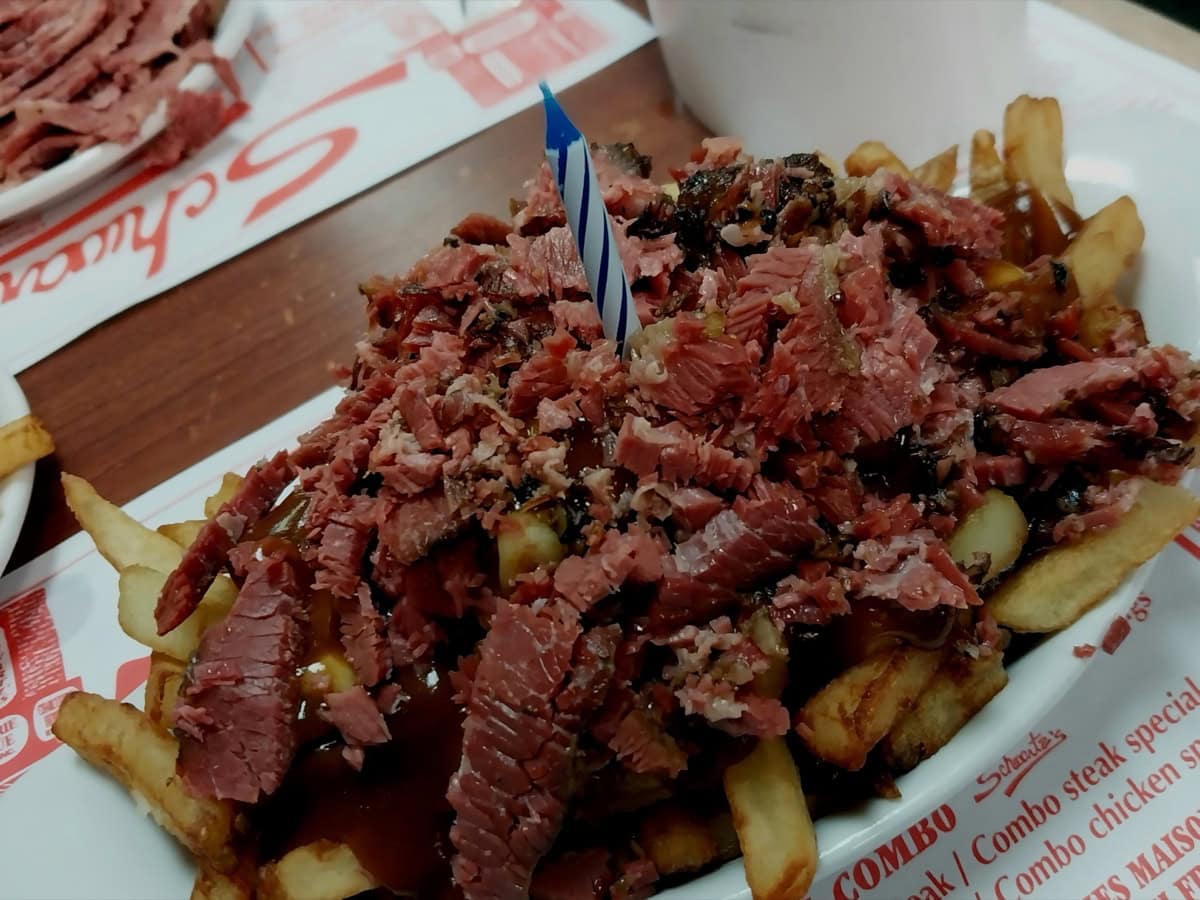
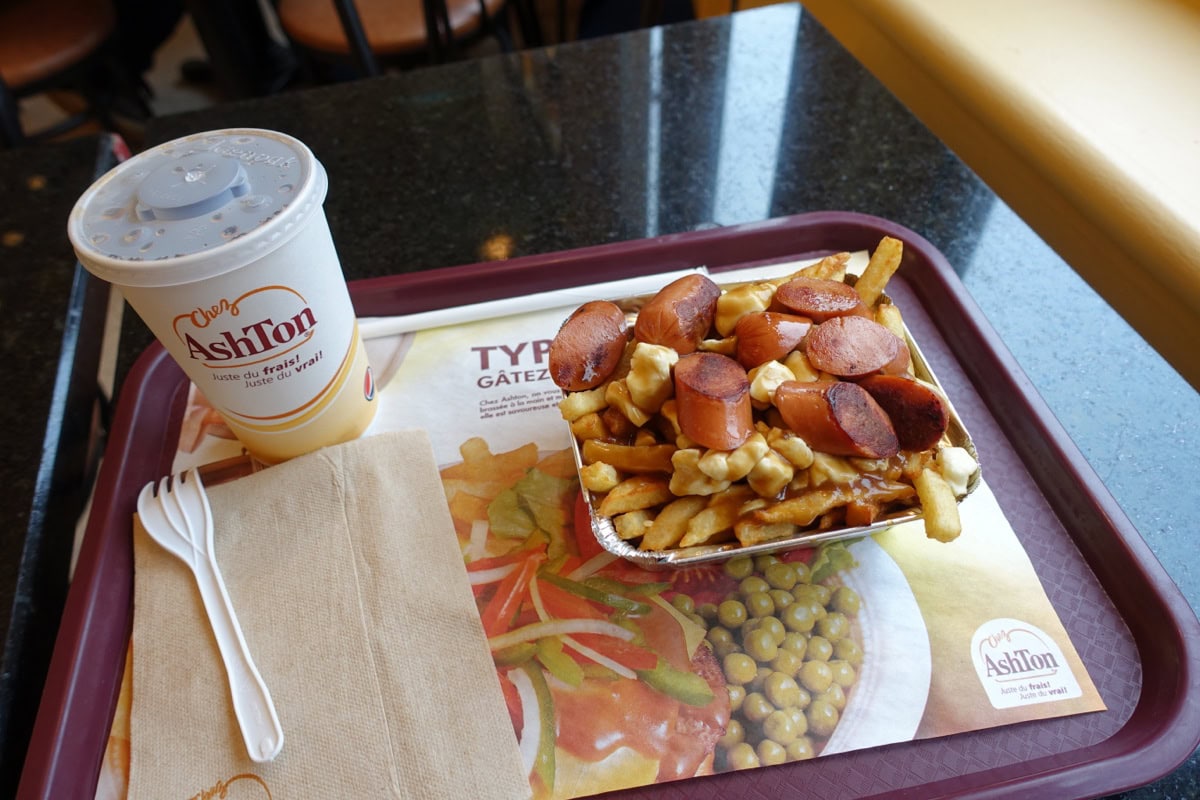
  • Poutine: The crown jewel of Canadian junk food. It’s a pile of fries topped with cheese curds and smothered in hot brown gravy. The best is at Banff Poutine or at The Eddie Burger Bar.
  • AAA Alberta Beef: Alberta is famous for its ranches and the local beef steaks are among the best in the world. Pop into one of the nicer restaurants on Banff Avenue.
  • The Caesar cocktail: The Canadian version of a Bloody Mary. Instead of tomato juice they use Clamato (a mix of tomato juice and clam broth). It sounds terrifying, but the salty, spicy rim of the glass topped with celery and a piece of bacon will win you over fast.
  • Local beer: Right on Banff’s main street is the great Banff Ave Brewing Co brewery, where we’d go in the evenings to sample their beer specials.

Practical info and safety for the 2026 season

Before you travel, definitely download an eSIM to your phone so you have internet the moment you land. You can use our link to Holafly with unlimited data. Also, don’t forget quality travel insurance with an add-on for extreme winter sports. For shorter trips Lukáš and I go with True Traveller, and for the longer ones we rely on SafetyWing.

➜ Before you set off, check out our travel insurance comparison.

People often ask us about wild animals and bears. In the winter months, both grizzly and black bears hibernate deep in the forests, so carrying bear spray up onto the slopes is really pointless. You might, however, run into huge elk or caribou, which occasionally wander around the edges of the towns.

Safety behind the wheel and winter driving

Driving in the Canadian mountains in winter demands a lot of respect. The roads through the national parks are gritted, but they often have a thick layer of packed snow or invisible black ice on them. Unlike neighbouring British Columbia, Alberta doesn’t require winter tyres across the board by law, but in the national parks and on the mountain passes they’re simply a necessity. When we first drove in a proper blizzard on the Icefields Parkway, we were quite sweaty, so really don’t underestimate good tyres.

When picking up your rental car, always insist that you need a car with quality winter tyres marked with the snowflake symbol, or at the very least M+S (Mud and Snow). An SUV with 4×4 drive is clearly the best choice for these conditions. Always keep at least half a tank of fuel in the car, plus a blanket and a little something to eat, in case they close the highway because of avalanche danger or an accident.

Where to go next

And if Canada has stolen your heart just like it did ours, take a look at our other guides too:

Frequently asked questions (FAQ)

Is skiing in Canada harder than in Europe?

The slopes themselves are not harder, quite the opposite. They are wider, less crowded, and the snow is very slow and forgiving thanks to the low temperatures. Skiing in off-piste terrain and dealing with extreme cold can be more challenging.

How much does ski equipment rental cost?

A complete ski or snowboard set for one day will cost you around 45 to 60 CAD (approximately €30–40). You can find rental shops both directly at the resorts and at lower prices in the towns of Banff and Canmore.

Can I drive with just my national driver’s license if I rent a car?

To drive in Canada, you must have an International Driving Permit in addition to your national driver’s license. You can obtain one from your local authorities in your home country. Without it, the rental company will likely not release the car to you.

Is there an avalanche risk in Alberta?

Inside the patrolled ski slopes, the risk is minimal—staff ensure safety through controlled avalanche blasting. However, if you venture into so-called backcountry (off-piste terrain outside the marked resort boundaries), avalanche gear and knowledge are absolutely essential.

What clothing should I pack?

Layering is key. Forget one thick jacket—instead bring quality merino wool base layers, a warm mid-layer for insulation, and a Gore-Tex jacket that won’t let the wind through. Temperatures can drop quickly. Most importantly, don’t forget a warm neck warmer and mittens—they’ll save you when icy winds start blowing on the chairlift.

Do I need to tip in restaurants and bars?

Yes, tips are an integral part of servers’ and bartenders’ wages in Canada, just as in the USA. The standard is to leave 15 to 20 percent of the total bill.

Are the resorts ski-in/ski-out connected like in the Alps?

No, each of the mentioned resorts is located on a separate mountain or in a different valley. Between resorts like Lake Louise and Sunshine Village, you always need to travel by car or special ski bus—as the crow flies, they are dozens of kilometers apart.

Tips and Tricks for Your Vacation

Don’t Overpay for Flights

Search for flights on Kayak. It’s our favorite search engine because it scans the websites of all airlines and always finds the cheapest connection.

Book Your Accommodation Smartly

The best experiences we’ve had when looking for accommodation (from Alaska to Morocco) are with Booking.com, where hotels, apartments, and entire houses are usually the cheapest and most widely available.

Don’t Forget Travel Insurance

Good travel insurance will protect you against illness, accidents, theft, or flight cancellations. We’ve had a few hospital visits abroad, so we know how important it is to have proper insurance arranged.

Where we insure ourselves: SafetyWing (best for everyone) and TrueTraveller (for extra-long trips).

Why don’t we recommend any Czech insurance company? Because they have too many restrictions. They set limits on the number of days abroad, travel insurance via a credit card often requires you to pay medical expenses only with that card, and they frequently limit the number of returns to the Czech Republic.

Find the Best Experiences

Get Your Guide is a huge online marketplace where you can book guided walks, trips, skip-the-line tickets, tours, and much more. We always find some extra fun there!
Poland with Kids: When to Go, Where to Visit & the Perfect Itinerary

TL;DRThe best time for a family trip to Poland is summer (July into mid-August) for the Baltic coast, autumn for cities like Kraków or Wrocław, and winter for the mountains around Karpacz or Zakopane. Try to avoid the run-up to 15 August, when a public holiday clogs up the motorways. Top picks include the Energylandia theme park near Kraków, the indoor waterpark Suntago near Warsaw, Wrocław Zoo with its Afrykarium, and the beaches of the Hel Peninsula or the Tricity (Gdańsk, Sopot, Gdynia). The drive to the Baltic takes 5 to 7 hours, and a week away for the family comes to roughly 20,000–30,000 Polish złoty. The piece rounds up 15 attraction ideas plus three ready-made itineraries for 4, 5 and 7 days. Poland with kids works out cheaper than a Czech holiday, with a genuinely family-friendly welcome.

Poland with kids is a fantastic choice for a family holiday. Most people’s minds jump straight to Italy or Croatia, but my partner Lukáš and I have had a completely different favourite since last year — Poland. If you’re thinking about heading to this wonderful country, I need to warn you right at the start: you’ll probably fall so deeply in love with it that you won’t want to go anywhere else. ☺️

Last year we spent a wonderful time in the north, in Gdynia, with our little boy Jonášek, who was exactly one at the time. Now that he’s two, we’re expanding our Polish horizons even further. We travel as a full crew, so we often bring our two dogs Kája and Baby to the coast as well, because the Baltic beaches are perfect for them (though we leave them at home when visiting big cities and national parks). From our seven-day Polish road trip and all our previous visits, we’ve come away with one key takeaway: Polish people are incredibly kind to children, and the whole country is fantastically set up for families.

We’ve experienced all of this first-hand over the years — pushing a buggy over cobblestones, walking the dogs on Baltic beaches, and wrestling Jonášek out of the water park. So instead of a dry list, you’ll get our honest tips, including the places that aren’t really worth the trip. 😉

TL;DR

  • Best fun: The Energylandia theme park in Zator and the enormous indoor water park Suntago near Warsaw are virtually unrivalled in Europe.
  • Animals & nature: Wrocław ZOO with its African pavilion Afrykarium is truly unique; head to Białowieża Forest for European bison.
  • Seaside with a pushchair: The Hel Peninsula and the Tri-City (Gdańsk, Sopot, Gdynia) offer wide beaches and excellent facilities. On the firm wet sand near the waterline, you can actually manage a pushchair.
  • Prices & food: Poland is still significantly cheaper than Western Europe. Kids love traditional pierogi, and every restaurant happily welcomes you with a children’s menu.
  • Practical warning: Historic town centres in Poland are full of cobblestones. Without a pushchair with big air-filled wheels, the city will rattle your soul out of you.

Why Visit Poland with Kids? 5 Key Reasons

So why Poland? Whenever friends ask me, I reel off five reasons before they can even draw breath.

1. It’s close and you save on flights

From London, you can fly to Kraków or Gdańsk in under three hours with budget airlines like Ryanair, Wizz Air or easyJet. Flights are often remarkably cheap, especially if you book ahead. For families with small children, flying is quick and convenient — and once you land, you can hire a car to explore at your own pace. Polish motorways are modern and well-maintained, so driving around the country is a breeze.

If you prefer driving from the UK, southern Poland is reachable in a long day via the Eurotunnel and through France, Belgium, and Germany. The big advantage of having your own car? You can stop whenever your little one demands it, and you can pack absolutely everything — including their favourite potty.

2. Low prices and excellent value

A family trip to Poland won’t break the bank. Accommodation, restaurant meals, and attraction tickets are noticeably cheaper than in Western Europe, let alone Scandinavia. You genuinely get incredible value for money.

Honestly, it always ends up costing us less than we expect, yet the apartment has a bathroom bigger than our living room back home, and we leave every restaurant so stuffed that we have to carry Jonášek because we can barely walk ourselves. 😁

3. Polish people genuinely love families and children

This is the thing that never stops surprising us. In some countries, you get dirty looks when your child raises their voice in a restaurant. In Poland, they smile at you, bring out colouring books, and the waiter gives your toddler a cheerful wink.

Polish society is genuinely welcoming to families with children, which gives you tremendous peace of mind as a parent. We’ve never had that awkward feeling of bothering someone with our toddler, even when Jonášek was testing the acoustics of the local café.

4. World-class theme parks

If you’re looking for an unforgettable day out with the kids, you don’t need to search far. Poland’s water parks and theme parks are genuinely enormous. Whether it’s the colossal Energylandia or state-of-the-art thermal complexes, the Poles really know how to build jaw-dropping attractions.

While Lukáš always gets his fix on the most insane adrenaline coasters, I’m constantly impressed by the spotless facilities for little ones. There are always baby changing stations and microwaves to warm up food, so you feel right at home.

5. Food that kids actually eat

Every parent knows the struggle of a child refusing local specialities on holiday. But Polish cuisine is a bit like granny’s cooking — hearty broths, pierogi dumplings prepared a hundred different ways, potatoes, roast meat, and beloved sweet pancakes.

Even the fussiest eater won’t go hungry here. We always look forward to the generous portions, and we’ve noticed that Jonášek often eats far better on holiday in Poland than he does at home in our own kitchen.

When to Go and How to Get There

When to visit Poland depends a lot on what you want to experience. We’ve tried almost every season, so let me save you a few mistakes.

When to go?

If you’re planning a seaside holiday with kids, summer is the obvious choice — specifically July and the first half of August. The Baltic Sea is refreshingly cool and nature is in full bloom. However, watch out for mid-August: around 15 August, Poland has a public holiday and a long weekend, much like the August bank holiday rush in the UK. The entire country packs up and heads for the coast or the mountains, so motorways get jammed and accommodation prices shoot up. Best to avoid those dates if you can.

Autumn is absolutely brilliant for visiting major cities like Kraków or Wrocław. It’s no longer sweltering, and pushchair-friendly strolls are ideal. November and December are all about the famous Christmas markets. And if you love winter, head to Karpacz or Zakopane, which have fantastic ski facilities even for the smallest ones.

Getting there: Flying wins, but trains have their charm

From the UK, flying is by far the easiest option. Ryanair, Wizz Air and easyJet all operate frequent direct flights from London, Manchester, Edinburgh and other UK cities to Kraków, Gdańsk, Warsaw, and Wrocław. With fares often as low as £20–30 one way, it’s a real bargain. Once you land, hiring a car gives you the freedom to explore at your own pace. Polish motorways are modern and clean — just check the toll system beforehand, as some sections are paid online via an app. Parking in big city centres can be tricky and pricey, so always look for accommodation with parking included.

If you’re travelling with older kids, you could try the train. There are rail connections via Berlin to Warsaw and Kraków, and it makes for a real adventure. FlixBus also runs routes from Germany into Poland, but with very small children like our Jonášek, I probably wouldn’t risk that just yet. 😅

When we need to hire a car, we always use the comparison site DiscoverCars.com — Lukáš and I have had consistently great experiences with them all over the world.

Where to Stay with Kids and How Much It Costs

The most common question I get is where to stay and whether Poland with kids will actually blow the budget. The good news is that although prices have crept up in recent years, it’s still significantly cheaper than a holiday in Western Europe. The local currency is the Polish zloty (PLN), with the exchange rate hovering around 5 PLN to £1. We pay by card almost everywhere.

Accommodation varies by region. In Kraków or Wrocław, I’d recommend looking for spacious family apartments right in the centre or within walking distance of the main sights. We love booking places like Meyo Apartments on the main square, where we had everything at our fingertips and a stunning view. Always check that the building has a lift — dragging a pushchair and a million bags up four flights of stairs is something you really don’t want.

In the Tri-City (Gdańsk, Sopot, and Gdynia), the ideal is to find an apartment or hotel as close to the beach promenade as possible. We fell in love with the Novotel Gdańsk Marina, which is a stone’s throw from the beach and has great facilities for little ones. Being just a few metres from the sand means you can pop back to your room whenever you need to. If you’re after a wellness break in the mountains, around Zakopane for example, you’ll find gorgeous modern hotels with pools and children’s play areas that you’ll never want to leave. Just be careful when booking wellness hotels near the Czech border — some have started positioning themselves as “Adults Only” (16+), so check before you arrive.

A week-long holiday budget for a family with two children (including a nice apartment, eating out every day, and attraction tickets) comes to roughly €800–1,200, depending on how much you treat yourselves. You can save by cooking at your apartment, but Polish restaurants are so good and affordable that we happily forget about cooking on holiday. 😁

15 Best Attractions and Places to Visit in Poland with Kids

The country offers an incredible range of activities, whether you’re going for a long weekend or a two-week road trip. We deliberated for ages about what to include in this list, because we have hundreds of tips. In the end, we settled on these fifteen places that we think are worth every penny.

1. Energylandia Zator: the biggest theme park in Central Europe

This place is an absolute phenomenon, and if your kids love rides, you simply can’t miss it. Energylandia is just a short drive from Kraków and it’s an entire city of fun. You’ll find over a hundred attractions split across several themed zones. For toddlers and little ones, there’s the fairy-tale Bajkolandia zone with gentle train rides and animal carousels.

For bigger kids and brave parents, there’s a zone boasting some of the most extreme roller coasters in Europe. Lukáš had an absolute blast on the Hyperion coaster last year and reckoned it was one of the best adrenaline experiences of his life. The park also includes a massive outdoor water park, all included in your ticket price.

The whole complex is spotlessly clean, brilliantly organised, and the food doesn’t cost the absurd prices you’d find at some other European parks. We’d recommend setting aside two full days for Energylandia, because you simply can’t do it justice in one day with kids in tow. For more water fun ideas, check out our article on Poland’s best water parks.

2. Suntago Park of Poland (Wręcza): a tropical paradise under one roof

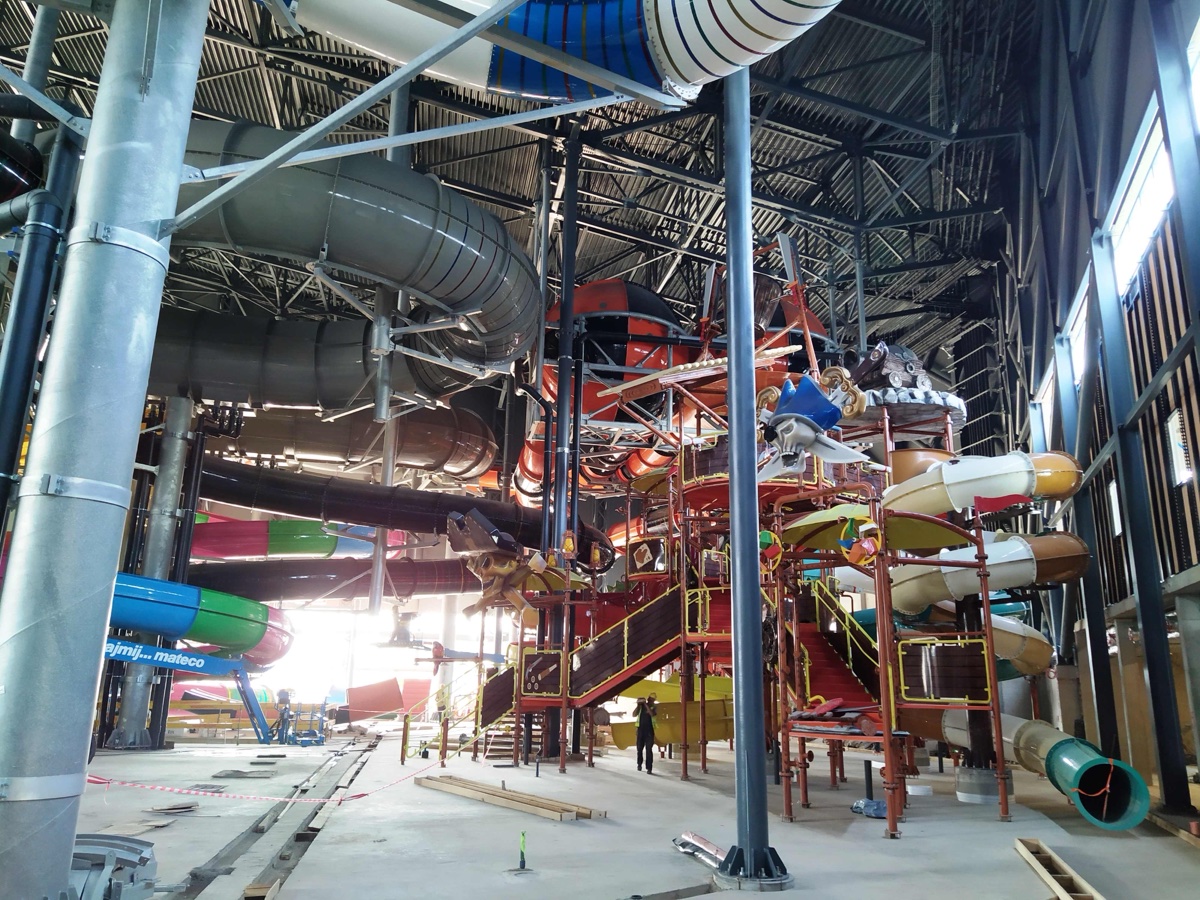
Just outside Warsaw, Europe’s largest indoor water park has sprung up, and it’s a place where you’ll forget you’re in Central Europe. Inside, you’ll find real palm trees imported from tropical countries, air temperatures above 30°C, and blissfully warm water. Families with children get their own enormous Jamango zone.

This zone features an incredible 32 slides, a lazy river, a wave pool, and for the very smallest visitors, gorgeous shallow paddling areas with mini slides and a pirate ship. Lifeguards are on duty everywhere and safety is clearly the top priority. Jonášek spent the entire day in the water and refused to come out, even when we bribed him with ice cream.

Parents will appreciate the great food options, and if you manage to hand the kids over to grandma for a bit or take turns, you can sneak off to the Relax zone — adults only. There you’ll find tranquil thermal pools and a fantastic sauna world where you can properly recharge.

3. Wrocław ZOO and the incredible Afrykarium

Wrocław is a beautiful city in its own right, full of little bronze gnome statues that kids adore hunting down across the city. But the real gem is the local zoo, which is one of the best we’ve ever visited — vast, green, completely barrier-free, and an absolute dream to navigate with a pushchair.

The star attraction is the monumental Afrykarium pavilion. It’s an enormous building dedicated exclusively to African fauna and flora. The highlight of the tour is an underwater glass tunnel where sharks, rays and sea turtles swim right over your head. The experience is absolutely breathtaking — even we adults stood there open-mouthed.

Definitely buy your tickets online in advance. The zoo gets very busy at weekends and queues at the ticket office can be endless. Inside the park, you’ll find plenty of food stalls and clean toilets with baby changing facilities — something we deeply appreciate with Jonášek.

4. Warsaw Rising Museum: history for older kids

If you have older children, roughly ten and above, make time for the Warsaw Rising Museum. This isn’t your typical dusty museum full of glass cases and long texts — it’s a completely immersive, interactive exhibition that draws you in from the very first moment.

You walk through replicas of bombed-out streets, hear the sounds of air-raid sirens and falling bombs, collect stamps, and can even crawl through a scaled-down model of the sewers the insurgents used to move around the city. For kids it’s a powerful experience that brings history to life far more than any textbook ever could. We were all quiet for a while after leaving and headed straight for the nearest café for a slice of cake. Buy your tickets online in advance — otherwise you’ll be queuing, and then you’ll need that cake twice over.

5. POLIN: Museum of the History of Polish Jews

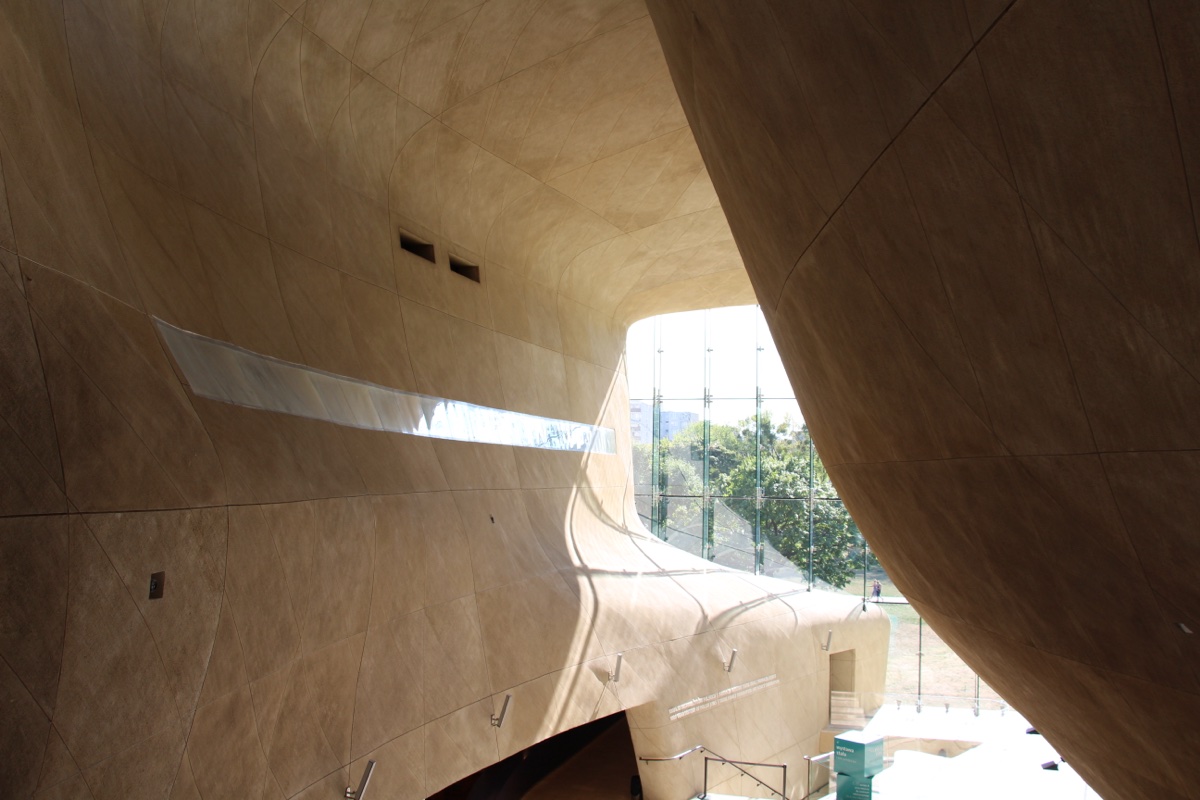
Another Warsaw museum that proves the Poles really know how to put together a world-class exhibition. POLIN is a huge, architecturally stunning building. The entire exhibition is designed as a journey through time, packed with multimedia elements, screens, models, and interactive games that engage even younger school-age children.

The most beautiful section is a hand-painted replica of a wooden synagogue that you can actually step inside. There’s also a special children’s zone called “At King Matt’s Place”, where kids can play, draw, and join fun workshops that genuinely capture their attention.

We got through the whole museum with a pushchair without encountering a single step, thanks to lifts and ramps. And when it started raining as we left, we didn’t even mind — we weren’t ready to stop anyway. It’s the perfect hideout for a rainy day.

6. Wieliczka Salt Mine: an underground fairy tale

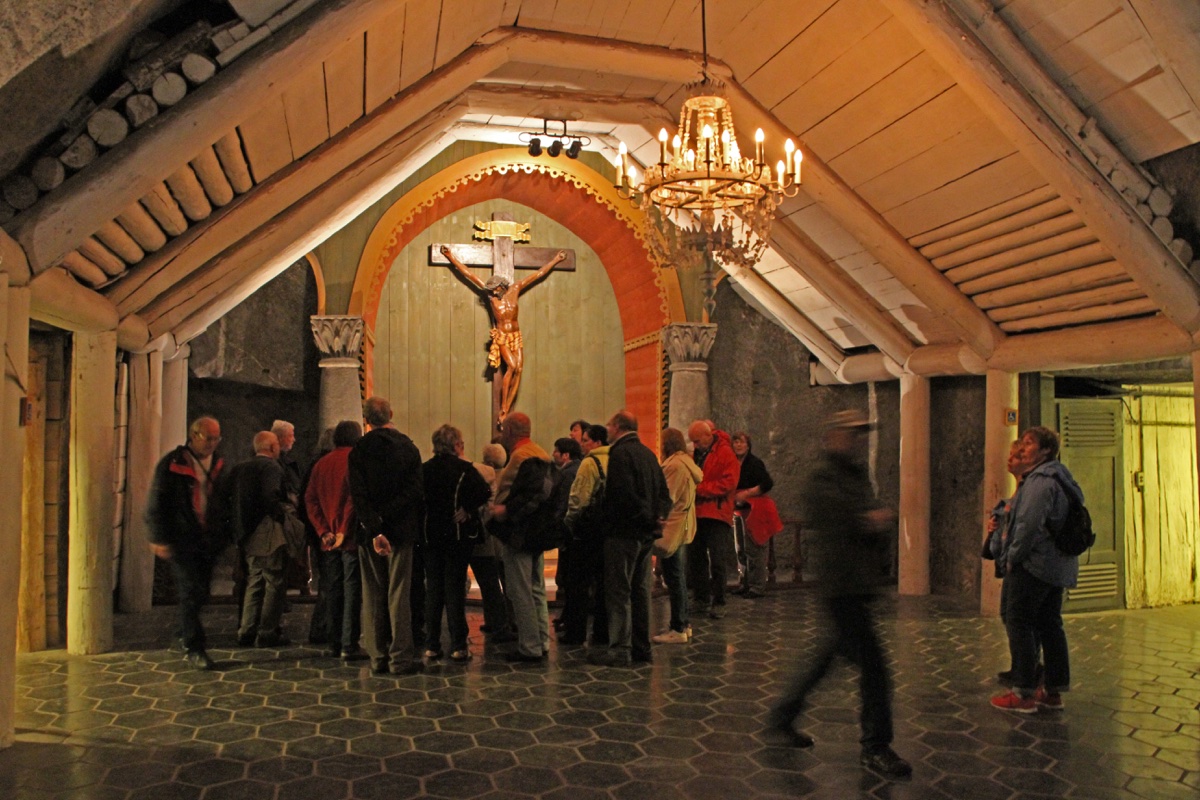
Just a short hop from Kraków, you’ll find the Wieliczka Salt Mine, a UNESCO World Heritage Site. I’d recommend this trip for children aged six and above, as you need to descend several hundred wooden steps underground (a mine lift takes you back up) and the tour lasts over two hours. You can’t bring a pushchair, so for toddlers you’ll need a baby carrier.

But what awaits you down below is pure magic. Enormous chambers carved from salt, underground lakes, and the breathtaking Chapel of St. Kinga, where even the chandeliers are made of salt crystals. The guides are understanding with families and often enrich the tour with tales of mine goblins and other legends.

The temperature inside the mine stays constant at around 14–16°C, so even on a scorching summer’s day, make sure to pack a warm jumper and comfortable closed-toe shoes for the kids.

7. Giant Mountains and Karpacz: mountain fun for families

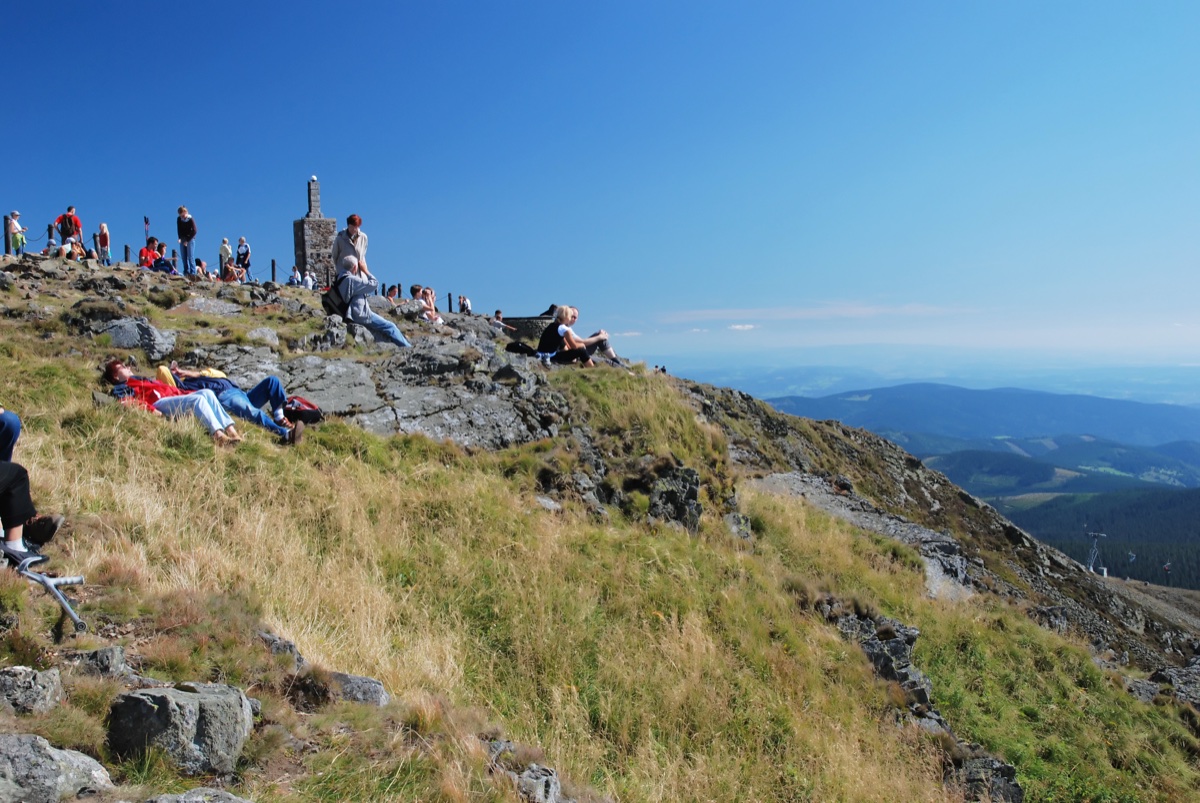
The Giant Mountains (Karkonosze) straddle the Polish-Czech border, and the Polish side has tremendous charm — often with better family-oriented services. The little town of Karpacz is a wonderful base. From here you can take the cable car up to Kopa mountain, which is just a short walk from the summit of Śnieżka.

A huge draw for kids is the local Western City, a faithful replica of a Wild West frontier town. There’s a sheriff, a saloon, horseback riding, gold panning, and archery. They even put on regular western shows that utterly captivate children, making them feel like real cowboys for a while.

Karpacz is also packed with modern hotels featuring massive children’s play rooms and swimming pools, so even if the mountain weather lets you down, you’ll have a full day’s entertainment sorted.

8. Hel Peninsula: a Baltic paradise for families (and dogs!)

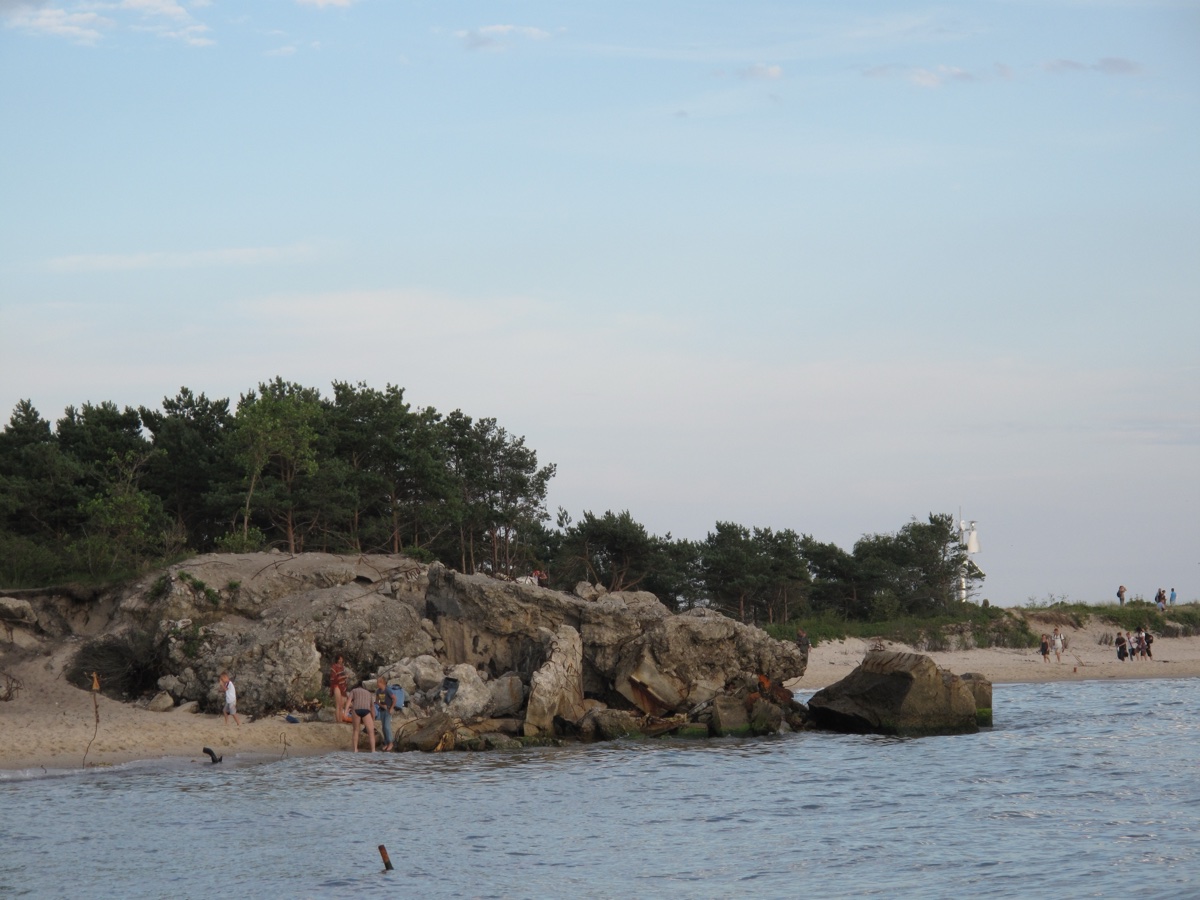
If you’re heading to the coast with kids, the Hel Peninsula holds a very special place in our hearts. It’s a narrow, 30-plus-kilometre sandy spit: on one side, a calm bay perfect for toddlers and gentle paddling in shallow water; on the other, the wild open Baltic.

The peninsula is crisscrossed with wonderful cycle paths through pine forests. You can rent bikes with trailers and ride the whole length. The main family attraction is the seal rescue centre (Fokarium) in the town of Hel itself, right at the tip of the peninsula, where children can watch these adorable animals being fed.

And what’s absolutely crucial for us — the beaches here are very dog-friendly. Our Kája and Baby could run freely on the sand without bothering anyone. Poland is far more relaxed about dogs on beaches than southern European countries, so genuinely the whole family gets to enjoy the holiday.

lukas a lucka
Lukáš and Lucie recommend
Where to stay in Poland
3 accommodations — hotels and other lodging options

9. Gdynia: nautical vibes and an aquarium

We spent a lovely time in Gdynia last year and we absolutely swear by it. It’s not as historic as neighbouring Gdańsk, but for families with kids it’s incredibly practical. There’s a beautiful wide beach right in the centre, flanked by a fantastic promenade dotted with playgrounds and cafés where you can sip your coffee in peace while the children play.

The main attraction is the Gdynia Aquarium, located right on the pier. Inside you’ll see sharks, coral reefs, and fish from the Baltic Sea. It’s smaller than the Wrocław setup, but kids can easily spend a good two hours here — Jonášek was absolutely thrilled by all the fish.

Down by the harbour, you’ll also find the huge warship ORP Błyskawica and the historic tall ship Dar Pomorza, both open to visitors. You can explore below deck, which is an absolute hit with little sailors — and the perfect way to tire them out before bedtime.

10. Międzyzdroje and Baltic Park Molo: easy to reach from Germany

Looking for a seaside option that’s easy to combine with flights to Berlin or Szczecin? Head to the resort of Międzyzdroje or neighbouring Świnoujście. It’s close to the German border and these are classic holiday resorts with very long, wide stretches of coastline. The sand is fine and white, and the sea floor slopes incredibly gently — ideal for small children.

In Świnoujście you’ll find the Baltic Park Molo complex, which includes an excellent water park. There are artificial waves, saunas, and wonderful children’s pools. If the Baltic weather doesn’t quite deliver perfect beach conditions — which does happen — this water park will save the day with ease.

From Międzyzdroje, you can also take a family trip to nearby Wolin National Park to see free-roaming European bison in their enclosure.

11. Masurian Lakes: peace on the water

Masuria offers a completely different kind of holiday. It’s a region of thousands of lakes connected by canals and rivers. The ultimate experience here is hiring a houseboat. You don’t need any special skipper’s licence, and you can learn to steer one in about twenty minutes.

With kids, it’s an incredible adventure they’ll remember forever. You have your own floating home, you swim straight off the boat during the day, eat lunch on deck, and in the evening you moor up in a quiet cove or at a modern marina with restaurants and playgrounds.

The scenery is simply gorgeous — peaceful and pristinely clean. It’s the perfect escape from crowded seaside resorts if you fancy switching off for a while.

12. Białowieża Forest: meeting the king of the forest

In the far east of Poland lies Białowieża, one of the last remnants of Europe’s primeval forest. This trip is brilliant for nature-loving families with children ideally aged four and up, old enough to walk a bit and explore on their own.

The biggest draw is, of course, the European bison. The local demonstration reserve houses several of these magnificent creatures, and seeing them in the flesh commands real respect. The reserve has lovely paved paths, making it completely pushchair-friendly.

Besides bison, you might spot wolves, lynx, or tarpan horses. The atmosphere is wonderfully calm and mysterious — a truly unique experience for city kids.

13. Toruń: the living gingerbread museum

Toruń is one of the most beautiful historic cities in Poland — the birthplace of Copernicus and, more importantly for kids, the famous city of gingerbread. Walking through its red-brick lanes feels like stepping into a medieval fairy tale.

With children, definitely head to the Living Museum of Gingerbread (Żywe Muzeum Piernika). Forget boring tours — this is a fantastic interactive show! In an entertaining way, often with the help of “medieval” master bakers and witches, you’ll learn the entire history of gingerbread making.

The best bit? Everyone — parents included — gets to mix their own dough, roll it out, press it into a historic wooden mould, and bake it. You proudly take home your hand-made gingerbread as the best souvenir imaginable.

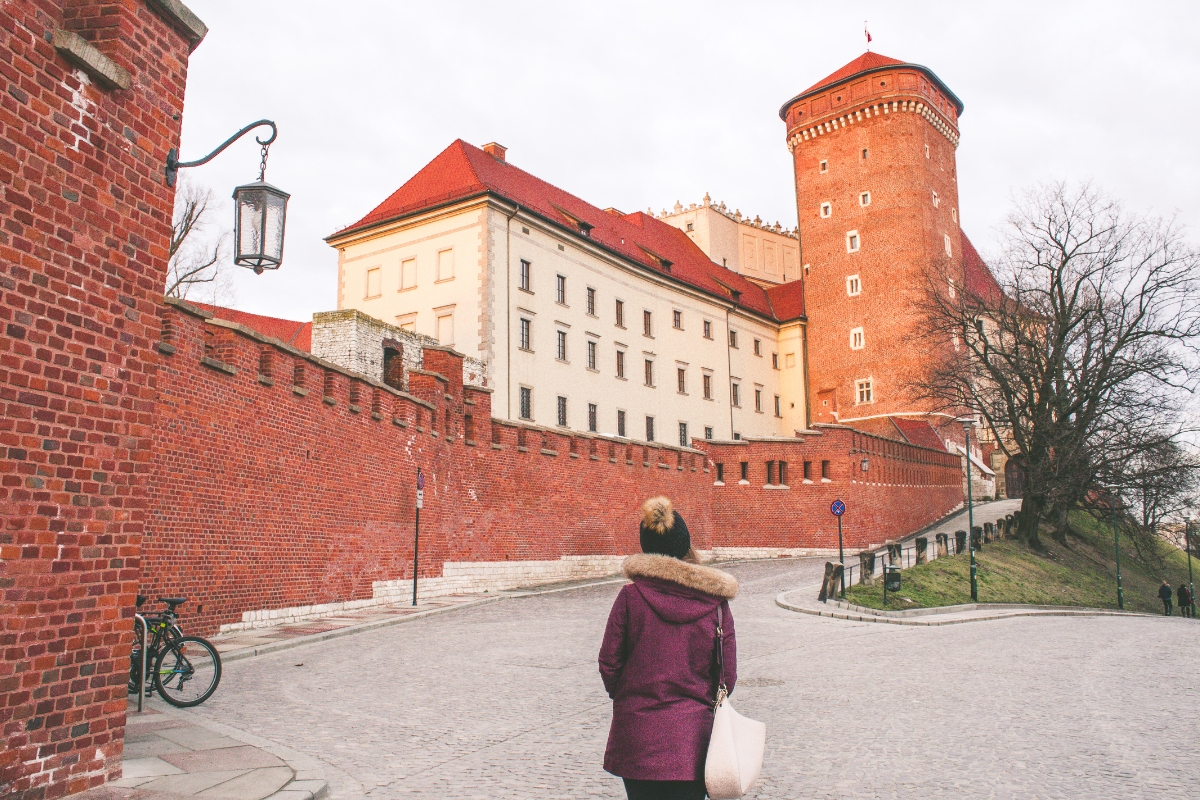
14. Kraków: Wawel Castle and the fire-breathing dragon

If you’re visiting Energylandia, you’ll almost certainly add Kraków to the trip. The city has enormous charm. The Royal Wawel Castle towers above the Vistula river, and what kids care about most is what lurks beneath it.

Down by the river stands a statue of the Wawel Dragon. According to ancient legend, this dragon terrorised the city until a clever cobbler outsmarted it. The statue actually breathes real fire every few minutes. There’s always a cluster of children waiting, and every time the flames shoot from its mouth, a chorus of delighted shrieks erupts.

From the dragon, you can stroll along the gorgeous riverside promenade, feed the swans, and buy the best traditional pretzel (obwarzanek) from one of the blue market stalls on the square — something Lukáš and I always playfully fight over.

15. Babia Góra National Park and surroundings

If you’d rather avoid the crowds in Zakopane, try the nearby Babia Góra National Park or the Bialski National Park. It’s an area of stunning mountains with unspoilt nature, offering a wonderful alternative to the busier resorts.

This area is still on our to-do list (honestly, we need to wait until Jonášek grows a bit more 😅), but friends have told us that the educational trails are manageable even for small children, and the visitor centre at the trailhead has clean toilets — which, as every parent knows, is the absolute number one priority.

Practical Tips for Travelling with a Pushchair

When Lukáš and I used to travel as a couple, we never gave the surface of streets a second thought. With a pushchair and little Jonášek, our priorities have changed dramatically. Poland is a country steeped in history, which takes a rather unforgiving toll on the quality of its pavements.

Watch out for cobblestones

Historic city centres in places like Kraków, Wrocław, Gdańsk, and Toruń are entirely cobbled. We’re not talking nice flat paving stones — often it’s old, uneven setts. If you show up with a lightweight city buggy with small hard plastic wheels, both you and your child are in for a miserable time — the rattling can actually make little ones feel sick.

Definitely bring a pushchair with large, ideally air-filled tyres and decent suspension. It’ll save your nerves, and your little one will be able to nap peacefully while you finally enjoy that coffee on the square.

Pushchair on the beach

If you head north to the coast, you’ll have to navigate sand. Polish Baltic beaches often have wooden ramps and boardwalks, but these tend to stop shortly past the entrance. If you stick close to the waterline where the sand is wet and packed down by the waves, you can just about manage a pushchair (pulling it behind you works best).

But don’t even attempt to push through deep, dry sand — you’ll be stuck within two metres. A baby carrier is always the better option for beach trips, and it worked brilliantly for us with little Jonášek.

Where to Eat and What to Try with Kids

Food is a whole chapter of its own when travelling with children. Our experience is that Polish cuisine is very friendly to young tummies, and you won’t end up in those nightmare situations where your child simply has nothing to eat and you’re tearing your hair out.

Pierogi save everything

Poland’s national dish is pierogi — stuffed dumplings that are either boiled or pan-fried. You can have them savoury (filled with meat, sauerkraut, or potatoes and cheese — the so-called “Russian” variety), but what kids absolutely devour are the sweet ones.

Pierogi stuffed with strawberries, blueberries, or sweet cheese, dusted with sugar and drizzled with cream, vanish from the plate at lightning speed. Jonášek can put away an astonishing number, while Lukáš and I sneakily pinch them from his plate because they’re simply irresistible.

Soups for every day

Poles love their soups. In almost every restaurant you’ll find “rosół” — a rich chicken or beef broth with noodles, usually served in a huge bowl that can easily fill up an adult. For kids, it’s the perfect warm meal after a long day of running around.

If your little ones prefer tomato soup, try “zupa pomidorowa”, which is also hugely popular in Poland. They usually add pasta or rice, so it’s beautifully thick, nutritious, and children love it.

Restaurants and kids’ menus

Most restaurants, including the upscale ones, automatically offer a children’s menu. It typically includes breaded chicken strips with chips (the universal classic), smaller portions of pasta, or the sweet pancakes we mentioned. Almost everywhere has high chairs and very often a small play corner with crayons.

Among our favourite family-friendly spots is Pueblo restaurant in Gdynia, which has not only a great kids’ menu but also wonderfully warm service. In Kraków, we love going to Pod Wawelem, where portions are gigantic and the buzzy atmosphere means any child-related noise just blends right in.

Snacks from the shops

If you have a toddler who happily munches on pouches and jars, you don’t need to haul huge supplies from home. Brands like HiPP and Gerber are widely available in Rossmann stores across Poland, and we always pick them up for Jonášek as we go.

Cheaper (but still high-quality) alternatives can be found in the ubiquitous Biedronka and Żabka supermarkets. They sell great fruity crisps and fruit purées that are perfect for snacking in the car.

What to Watch Out For: Tourist Traps and Scams

Poland is a very safe country for families, and you don’t need to worry about any serious crime. That said, there are a few minor tourist pitfalls to be aware of, so you don’t needlessly lose money that could be better spent on a magnificent ice cream for the kids.

Euronet ATMs and sneaky exchange rates

Euronet cash machines are absolutely everywhere in Poland. If you need to withdraw money, always — and I mean always — decline the offer to convert to pounds (this is called Dynamic Currency Conversion, or DCC). The machine will very insistently ask if you’d like a “guaranteed” exchange rate in GBP.

It’s a rip-off — the rate is dreadful and can easily cost you £10–20 per withdrawal. Always choose to withdraw in the local currency (PLN) without conversion, and let your own UK bank handle the exchange. Better yet, use ATMs belonging to Polish high-street banks, where you can be confident of a fair deal.

Dodgy taxis at stations and near attractions

Although it’s becoming less common, you can still encounter taxi drivers at tourist hubs like Kraków or Gdańsk who wait at train stations or popular attractions and don’t run a meter. Never get in — you could end up with a jaw-dropping bill.

Use ride-hailing apps like Uber or Bolt instead, which work flawlessly across Poland and cost a fraction of the price. The drivers have always been happy to help us with the pushchair, and the rides have been very comfortable.

Family Itineraries: How to Put It All Together

Now you know where to go with kids, but you might be wondering how to combine these places into a sensible route. Here are our three favourite options that work well both in terms of time and logistics.

Option A: The North and the Baltic for families (7 days)

This itinerary is ideal for summer. It combines cities with beach time. Spend Days 1–2 on Wrocław and Toruń. Stop in Wrocław for the amazing zoo and stay overnight. The next day, continue via Toruń — where the kids will love baking gingerbread — then head north to the sea.

Dedicate three days (3–5) to the Tri-City. Explore historic Gdańsk, walk along the enormous wooden pier in Sopot, and visit the aquarium in Gdynia. The kids will be thrilled by the long sandy beaches, and you’ll finally get some rest. Spend the last two days (6–7) on the Hel Peninsula. Watch the seal feeding, cycle through the pinewoods, and soak up that true Baltic holiday vibe before heading home.

Option B: Southern Poland — fun and adrenaline (5 days)

A brilliant choice for a long weekend or a shorter autumn/spring half-term. The first two days belong to Kraków. Explore the centre with the kids, show them the fire-breathing dragon beneath Wawel, and enjoy some fantastic food. If you have older children, you could devote a day to exploring the Wieliczka Salt Mine — a real adventure for them.

Days 3 and 4 are all about Energylandia in Zator. Drive from Kraków, find accommodation nearby, and spend two full days on roller coasters and rides. Use the first day to conquer the attractions and the second to splash around in the adjacent water park. Day 5 is your travel day, but on the way back, stop off at Inwałd Park or nearby Dinolandia — smaller parks with dinosaurs and miniatures that small children really appreciate.

Option C: Nature, animals and peace (4 days)

A shorter trip that works even with a pushchair and the smallest toddlers. Spend the first two days fully exploring Wrocław and the Afrykarium. Visit the zoo, hunt for the little bronze gnomes scattered around the city, and take a boat ride on the Oder river — an experience Jonášek absolutely couldn’t stop raving about.

Days 3 and 4 are dedicated to the mountains and Karpacz. Head into the hills, check into a lovely wellness hotel, and take the kids to Western City in Karpacz for cowboys and Indians. If the sun comes out, ride the cable car up and do a short, easy hike before contentedly heading home.

Read More

If Poland has caught your eye, be sure to check out our other articles where we go into much more detail on individual destinations. We’ve written a guide on what to see in Kraków, put together our best tips for visiting Wrocław, and for the north, don’t miss our comprehensive guide to the seaside city of Gdynia.

Final tips and tricks

For cheap flights, we love using Skyscanner — it’s been our go-to for years. Fares to Gdańsk or Warsaw can be ridiculously low from UK airports, so it’s well worth keeping an eye out. If you fly in and want to explore the area comfortably, Lukáš and I have had consistently great results with DiscoverCars.com, which we use all over the world and it always works without a hitch.

Although we’re in the EU and the European Health Insurance Card (EHIC/GHIC) applies here, for shorter family trips we always prefer to take out proper travel insurance. We often use SafetyWing, because with kids you never know when a midnight temperature or an earache will strike — and a good insurance policy means we all sleep much better.

FAQ

Let’s wrap up by answering the most common questions we get from parents about travelling to Poland.

Tips and Tricks for Your Vacation

Don’t Overpay for Flights

Search for flights on Kayak. It’s our favorite search engine because it scans the websites of all airlines and always finds the cheapest connection.

Book Your Accommodation Smartly

The best experiences we’ve had when looking for accommodation (from Alaska to Morocco) are with Booking.com, where hotels, apartments, and entire houses are usually the cheapest and most widely available.

Don’t Forget Travel Insurance

Good travel insurance will protect you against illness, accidents, theft, or flight cancellations. We’ve had a few hospital visits abroad, so we know how important it is to have proper insurance arranged.

Where we insure ourselves: SafetyWing (best for everyone) and TrueTraveller (for extra-long trips).

Why don’t we recommend any Czech insurance company? Because they have too many restrictions. They set limits on the number of days abroad, travel insurance via a credit card often requires you to pay medical expenses only with that card, and they frequently limit the number of returns to the Czech Republic.

Find the Best Experiences

Get Your Guide is a huge online marketplace where you can book guided walks, trips, skip-the-line tickets, tours, and much more. We always find some extra fun there!
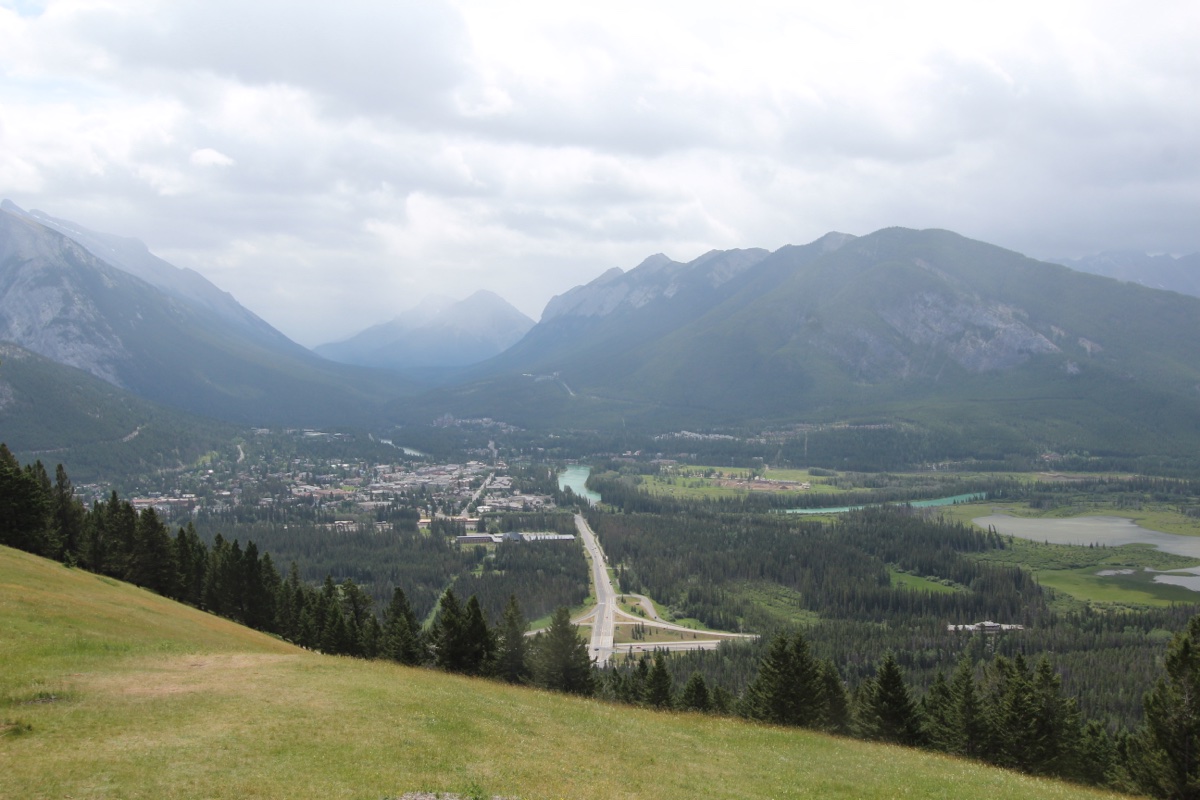
Whistler, Canada: 12 Best Things to See and Do (Summer & Winter)

TL;DRWhistler in British Columbia is a year-round destination, and here are twelve highlights for summer and winter alike. The linked Whistler and Blackcomb mountains share more than 200 runs, plus the striking Peak 2 Peak Gondola (4.4 kilometres long, 436 metres above the valley). Whistler Village’s pedestrian zone is worth a wander, and the full-day trek to Garibaldi Lake covers 18 kilometres with 900 metres of elevation gain. Other must-sees include the turquoise Joffre Lakes (you’ll need a free Day Pass), Lost Lake, Brandywine Falls and Brohm Lake. The scenic Sea-to-Sky Highway 99 links Whistler to Vancouver, and the drive takes just under two hours. Come in summer (late June to September) or during the winter season from December to March, and plan on at least two full days to do the place justice.

When Lukáš and I set off on our big Canadian road trip back in 2017, Whistler was one of those stops we were most excited about. I remember how we pushed our beloved old van — which we affectionately called Chiquita — up the long, winding hills along the legendary Sea-to-Sky Highway. The engine roared, we held our breath with every steep climb, and at the same time we couldn’t tear our eyes away from the incredible views of the glistening ocean and snow-capped peaks slowly unfolding before us. It was the kind of travel magic you remember for the rest of your life — and it’s exactly why finding the best things to do in Whistler, Canada felt so effortless once we arrived.

Do you know why it’s called Whistler? I was half-expecting it to be named after some famous painter, but the truth is far more adorable. The town and mountain are named after the local marmots, whose warning calls sound exactly like a whistle. Naturally, I spent the entire trip searching for them under every rock 😄.

But enough about marmots — let’s dive into what blew us away during our visit and what you absolutely shouldn’t miss on yours. We’ll cover the most stunning hikes with turquoise lakes, tell you where to stay, how the gondolas work, and how much this Canadian adventure will actually cost you.

View of Garibaldi Lake from the Panorama Ridge cliff

TL;DR

  • Best way to get there: From Vancouver, take the stunning Sea-to-Sky Highway 99 — the drive takes just under two hours, and I guarantee you won’t want to put your camera down the entire way.
  • Main attraction: The linked mountains of Whistler and Blackcomb, offering over 200 ski runs in winter and endless hiking and biking opportunities in summer.
  • Must-do experience: A ride on the Peak 2 Peak Gondola, which hangs hundreds of metres above the valley and connects the two main peaks.
  • Best hike: The full-day trek to Garibaldi Lake — 18 kilometres of climbing that’ll leave your legs aching for three days, but the reward of an impossibly turquoise lake makes it absolutely worth it.
  • Important warning: If you want to visit the popular Joffre Lakes in summer, you must get a free Day Pass in advance, or the park rangers will turn you away at the car park without hesitation 😅.
  • Cycling paradise: In summer, the town transforms into the mecca of mountain biking, with highlights like the Crankworx festival and the UCI MTB World Cup.
View of Garibaldi Lake from the Panorama Ridge cliff

When to visit and how to get there

The journey to Whistler is an absolutely breathtaking experience in its own right, and I’d go as far as saying that Highway 99 from Vancouver — nicknamed the Sea-to-Sky — is one of the most beautiful scenic drives in the world. As the name suggests, you start at sea level and gradually climb high into the mountains, with jaw-dropping views of Howe Sound and its rugged islands around every bend.

If you’re flying in from the UK and don’t have your own van like we did, definitely hire a car at Vancouver airport. Lukáš and I have had consistently great experiences with DiscoverCars, which we use all over the world — it works as a reliable comparison tool and we always find the best deals, including full insurance. The drive takes roughly an hour and a half to two hours, but realistically allow three, because you’ll be constantly pulling over at viewpoints and snapping photos.

As for the best time to visit, Whistler in Canada has two completely different but equally spectacular faces. If you’re passionate about skiing, head here between December and March when there are metres of powder on the slopes. We fell in love with Whistler in summer, though — the valley is buzzing with cyclists and hikers, but as soon as you head to higher elevations with a good pair of hiking boots, you’ll find your own slice of wild Canadian nature. From late June to September, the high alpine lakes that spend the rest of the year buried under ice finally become accessible.

Melting snow by an alpine lake in Garibaldi

Where to stay and how much Whistler costs

Let’s be honest — Whistler is definitely not a budget destination, and it’s worth preparing yourself financially. It’s a world-class premium mountain resort and the prices reflect that. The Canadian dollar (CAD) currently sits at around 0.55 GBP, and a simple lunch at a restaurant here will easily set you back 30 to 40 CAD (roughly £17–22) per person. Accommodation is a whole chapter on its own, especially if you want to stay right in the pedestrianised Whistler Village, where you can walk to the gondola in your ski boots.

While we mostly camped with Chiquita in the surrounding forests and provincial parks, for a regular holiday you’ll likely be looking at a hotel or apartment. Accommodation roughly divides into three zones. The most sought-after (and priciest) is Whistler Village itself. A quieter alternative is neighbouring Blackcomb Village or Creekside, both reachable by bus, where prices tend to be a touch more forgiving.

For those who love absolute luxury, there’s the iconic Fairmont Chateau Whistler, sitting right at the base of Blackcomb Mountain with a dreamy spa. If you’re after something quieter with gorgeous waterfront views, Nita Lake Lodge is just a short distance from the centre and has a highly acclaimed restaurant. And if you’re travelling on a tighter budget, the Pangea Pod Hotel right in the heart of the village is a brilliantly modern option — you rent a stylish pod at a reasonable price and have everything you need right on your doorstep.

12 best things to do in Whistler, Canada (summer and winter)

Let’s explore the very best that this Canadian gem has to offer. Whistler is an enormous playground packed with possibilities, so whether you’re chasing adrenaline on a black diamond run, fancy a peaceful stroll around crystal-clear lakes, or love the après-ski bar scene, you absolutely won’t be disappointed.

1. Whistler Blackcomb and winter fun

We experienced Whistler in summer, so I’m describing the winter skiing a bit second-hand — but from everything I’ve read and heard from people we met on the trail, it sounds like an absolute dream for anyone who loves the slopes. The two massive mountains that make up the Whistler Blackcomb resort form one of the largest ski complexes in North America. You’ll find over 200 runs of all difficulty levels, endless off-piste possibilities, and snow that has a unique powder quality thanks to the proximity of the Pacific Ocean.

If you’re planning a multi-day ski trip, definitely look into the Epic Pass on their website well in advance. Single-day tickets bought at the window can climb to absolutely astronomical prices approaching 300 CAD (around £165) per day, so purchasing a multi-day pass ahead of time will save you a serious amount of money. And those savings can go straight towards great food or a mulled wine on the slopes.

Lukáš with his backpack on the Panorama Ridge trail

2. Peak 2 Peak Gondola

Even if you’re not skiing, this engineering marvel is an absolute must — it offers views you’ll never forget. This unique gondola doesn’t connect the valley floor to a summit. Instead, it runs horizontally between the peaks of Whistler and Blackcomb mountains, spanning an incredible 4.4 kilometres.

The highest point sits a staggering 436 metres above the floor of Fitzsimmons Creek valley. Make sure you wait at the station for one of the special glass-bottom cabins, even though it might mean an extra fifteen minutes in the queue. Looking straight down through the glass beneath your feet will reliably get the pulse racing, even for the toughest nerves 😅.

Lukáš at the summit of Panorama Ridge above Garibaldi Lake

3. The atmosphere of Whistler Village

The village itself is cleverly designed — its core is an entirely car-free pedestrian zone where you can wander the narrow lanes for hours, soaking up the mountain atmosphere. It’s a charming blend of traditional Canadian architecture and modern touches, with the aroma of fresh coffee drifting from every corner and high-end outdoor gear shops in every other window, calling your name.

Pedestrian zone in Whistler Village
Pedestrian zone in Whistler Village (Photo: sbmeaper1 / Wikimedia Commons, CC0)

In the evening, the village lights up with thousands of twinkling lights, people sit around outdoor heaters wrapped in blankets sharing stories from the day. It’s probably the loveliest spot for an evening stroll, and you’re very likely to stumble across talented buskers. On weekends, the plazas often host all sorts of events and festivals.

4. Full-day hike to Garibaldi Lake

When it comes to summer hiking in Whistler, this is the undisputed king of the region — though it’ll give you a proper workout. The trail covers 18 kilometres with around 900 metres of elevation gain, so expect to be on your feet for most of the day. The path starts by winding through dense forest via seemingly endless switchbacks, which — honestly — starts to feel a bit tedious after the first hour.

Turquoise Garibaldi Lake from Panorama Ridge

But the moment you finally emerge from the tree line and the glacial Garibaldi Lake stretches out before you, every aching muscle is instantly forgotten. The water is such an intensely turquoise colour it looks like someone poured buckets of dye into it, and snow-capped peaks tower majestically above. We had our packed lunch by the lake and I still remember how a cheeky grey jay (locally called a whiskey jack) nearly snatched a biscuit right out of my hand 😁. You can also walk around the lake closer to the glacier and take photos that’ll make everyone back home seriously jealous.

5. Adrenaline on Black Tusk

If you’re an experienced mountain trekker and Garibaldi Lake feels like just a warm-up, you can continue further up to the iconic volcanic summit of Black Tusk, which from a distance resembles a giant black tooth jutting from the landscape. This is a significantly more demanding expedition that requires good fitness and confidence on rough terrain. We headed partway in this direction and were puffing like steam engines.

Black Tusk and alpine lakes in Garibaldi Provincial Park

The final push to the top is more like scrambling — you’re clambering up steep rock and loose scree, and seriously, bring a helmet. Hikers above you occasionally kick loose stones, and you’ll be grateful for the protection — or much worse without it 😅. We were lucky, but we heard from others that rockfall is not uncommon. The view from the top over the entire system of surrounding lakes and glaciers is absolutely phenomenal, and very few people actually make it right to the very tip.

6. Turquoise fairytale: Joffre Lakes

This chain of three glacial lakes located a short drive north of Whistler is one of the most photographed spots in all of British Columbia, and I completely understand why. Unlike Garibaldi Lake, you can reach the first lake after just a few minutes’ walk from the car park, and the third — and most beautiful — is roughly a five-kilometre, fairly pleasant hike. Every drop of sweat is worth it, because the colour of the water is truly otherworldly.

I do need to give you one crucial heads-up, though, because the rules have tightened considerably in recent years. During the summer season, you absolutely must obtain a free Day Pass in advance through the BC Parks booking system. It’s free of charge, but capacity is limited and passes vanish at lightning speed the moment they’re released. If you turn up at the car park without one, the rangers will simply turn you around and send you back — which would be a terrible waste.

Silhouette of Black Tusk from a ridge hike above Whistler

7. Relax at Lost Lake

When you’ve had your fill of demanding hikes and just want to unwind, a short walk from Whistler Village centre will bring you to Lost Lake. It’s a favourite spot for both locals and visitors, lined with tall trees, and in summer the water is warm enough for a comfortable swim.

A wide, well-maintained gravel path loops around the lake — perfect for a leisurely afternoon bike ride or a jog. On the beach you’ll find barbecues, toilets, and plenty of benches, so I’d recommend picking up some cheese, wine, and snacks from the supermarket in the village and having a gorgeous lakeside picnic as the sun goes down.

Sunset over the mountains along the Sea-to-Sky Highway

8. Quick stop at Brandywine Falls

On the drive from Vancouver or on your way back, you absolutely shouldn’t miss this stunning waterfall, located roughly fifteen minutes’ drive south of Whistler. From the large car park right off the highway, it’s only about a ten-minute, very easy and pleasant walk through the forest.

Brandywine Falls waterfall on the Sea-to-Sky Highway
Brandywine Falls waterfall on the Sea-to-Sky Highway (Photo: Kevin He / Wikimedia Commons, CC BY-SA 2.0)

At the end of the path, a viewing platform reveals a dramatic sight: the river plunging over a volcanic rock edge into a 70-metre-deep chasm. The canyon below has a fascinating geological structure carved by ancient lava flows, and the whole place looks like a set straight out of Jurassic Park.

9. Swimming at Brohm Lake

If you’re heading back towards Vancouver on a scorching summer day and looking to cool off, Brohm Lake is a brilliant choice that’s mostly known only to locals. The car park sits right by the main road, but it’s quite small, so on summer weekends it pays to arrive either very early in the morning or later in the afternoon.

Turquoise Brohm Lake near the Sea-to-Sky Highway
Turquoise Brohm Lake near the Sea-to-Sky Highway (Photo: Bryce Evans artofbryce / Wikimedia Commons, CC0)

The water here is darker and considerably warmer than the glacial lakes up in the mountains. Easy forest trails loop around the lake, and you’ll find a few small cliffs that daring swimmers love to jump from into the deep water. It’s exactly the kind of place where you plan a twenty-minute stop and end up lounging there for two hours — without regretting a single second of it.

10. Endless downhill runs and MTB culture

When the snow melts, the ski runs don’t stay deserted — they transform into what many consider the best bike park on the planet. Whistler Mountain Bike Park draws riders from across the globe who come to train on brutal downhill trails packed with roots, rocks, and massive wooden jumps.

Whistler Mountain Bike Park
Whistler Mountain Bike Park (Photo: Roy and Susan / Wikimedia Commons, CC BY 2.0)

Even if you don’t jump bikes yourself, it’s fascinating to grab a seat at a terrace overlooking the finish area and simply watch the speed and grace with which riders hurl themselves down the mountain. You can of course hire a downhill bike with full body armour, but if you’re new to it, I’d strongly recommend booking a half-day instructor — otherwise your holiday could end rather quickly and painfully at the nearest hospital.

lukas a lucka
Lukáš and Lucie recommend
Where to Stay in Whistler
4 accommodations — wellness hotels, hotels and other lodging options

11. Legendary bike festival: Crankworx (summer 2026)

If you’re planning a trip towards the end of summer and love extreme sports, you’re in luck. From 24 July to 2 August 2026, the legendary Crankworx festival takes over the town, bringing the world’s absolute best riders and an incredible party atmosphere.

Crankworx — slopestyle festival in Whistler
Crankworx — slopestyle festival in Whistler (Photo: I took this photo / Wikimedia Commons, Public domain)

For those ten days the town is absolutely bursting at the seams. Slopestyle competitions, speed runs, pumping music, and massive sales on cycling gear that are genuinely hard to resist. We didn’t make it to the festival ourselves, but from the videos and photos shared by friends who’ve been, the atmosphere looks absolutely insane. Just bear in mind that accommodation during this period needs to be booked many months in advance — Whistler’s capacity simply isn’t infinite.

12. Adrenaline at the UCI MTB World Cup (autumn 2026)

As if that weren’t enough, mountain bike fans get another massive event towards the end of summer: the prestigious UCI World Cup, taking place in Whistler from 25 to 27 September 2026. These are official races featuring the fastest riders on the planet.

UCI MTB World Cup downhill race
UCI MTB World Cup downhill race (Photo: Stephen LaBonte / Wikimedia Commons, CC BY-SA 4.0)

Unlike the more laid-back Crankworx festival, the World Cup is all about hundredths of a second, and the tension along the course is absolutely electric. The entire valley lives and breathes cycling, the bars are packed with sweaty and buzzing fans, and you can watch future Olympic medallists up close on the muddy, steep slopes of the mountain.

Where to eat and what to experience after a big day

When you hear “après-ski,” most people think of the Alps, but Whistler can more than hold its own against Europe — arguably even better. Around four in the afternoon, as the gondolas start emptying out, life shifts to the famous patios at the base of the lifts. It’s exactly the kind of relaxed vibe you need after a full day on the trails or slopes to properly cap off your mountain day.

Garibaldi Lift Co. (GLC) and Longhorn Saloon

An absolute classic is Garibaldi Lift Co. (known locally as just GLC), situated right by the upper gondola station. Right next door you’ll find the iconic Longhorn Saloon, where music thumps down the valley from lunchtime onwards and snagging a free table is often just a dream. People simply have the time of their lives there.

If you visit, arm yourself with patience — finding a spot can be a bit of a challenge, but the atmosphere with views of bikers and skiers coming down the runs is a hundred percent worth the wait. Lukáš and I sometimes just stood there soaking it all in with a beer in hand, and it was absolutely brilliant.

Whistler Brewing Co.

If you’re a beer lover, you can’t skip a visit to Whistler Brewing Co., whose brewery is located a short way from the centre in the Function Junction area. It’s a laid-back, hipster-ish neighbourhood full of bistros, fragrant bakeries, and old warehouses elegantly converted into art galleries.

The beers here are genuinely excellent, and it’s always a treat to order a tasting flight so you can work out which one suits you best. We particularly loved their fruitier, lighter specials — they hit the spot perfectly after a long day of hiking in the hills.

Peaked Pies and Araxi

When hunger strikes unexpectedly? If you’re after a quick, affordable, and absolutely genius snack, join the long queue at Peaked Pies, where they make fantastic Australian-style meat pies that’ll put you right back on your feet even after the most gruelling hike.

For a proper sit-down dinner or a romantic evening for two, there’s the acclaimed Araxi restaurant — it’s certainly not cheap, but they create culinary masterpieces from fresh seafood and locally sourced ingredients. It’s the perfect place to enjoy a special evening with your partner and take a breather from all those mountain sport extremes.

Breakfast at Crepe Montagne

Mornings in the village are traditionally rescued by the beloved French crêperie Crepe Montagne, serving up the heartiest breakfasts in town. They make incredible sweet and savoury crêpes, and the enormous portions will reliably fuel you up for another long day on the trails.

Be warned, though — at weekends you’ll face an annoying wait outside, so it’s genuinely worth getting up early. Lukáš enthusiastically demolished an enormous crêpe at the table that I swear was almost bigger than he was 😄.

Tips and tricks before travelling to Canada

Before you start packing, here’s a rundown of the services and tricks that saved Lukáš and me a lot of money and hassle — not just in Canada, but on our travels around the world.

Finding cheap flights

For flights from the UK to Vancouver, it’s worth checking multiple comparison sites. Direct flights operate from London Heathrow with British Airways and Air Canada, but you can often find better deals by looking at routes with a stopover in Europe or the US. Skyscanner and Google Flights are great starting points — try flexible dates and experiment with different departure days to find the cheapest fares.

We discovered a brilliantly cheap connection this way that not only saved us a bundle but also cut down the tedious layover time at airports. So definitely take your time clicking through all the options.

Hiring a car for your road trip

We typically use the comparison site DiscoverCars.com, which I mentioned at the start. The advantage is that you can instantly compare terms from all the major rental companies in one place, and I’d recommend booking your car as soon as you’ve bought your flights, because prices for the Canadian summer season shoot up fast.

When we travelled with Chiquita, we had our own home on wheels, but for a standard holiday a hire car gives you enormous freedom around Whistler and the surrounding area. Just make sure your booking includes adequate insurance — Canadian roads and nature can throw up the odd surprise.

Booking accommodation

Booking.com is our go-to hotel search engine and we use it for the vast majority of our stays. Especially with a destination like Whistler, it’s worth looking for free cancellation options so you can cancel if something better comes along.

On top of that, frequent travellers unlock discounts through the Genius loyalty programme, which really comes in handy at such a pricey resort. Lukáš always keeps a close eye on this, and we’ve occasionally scored an absolute gem of a room for the price of an ordinary motel.

Mobile data abroad

You definitely don’t want to rely on finding Wi-Fi in the Canadian mountains. Have a look at our detailed Holafly review, because this eSIM card with unlimited data is exactly what you need in North America for hassle-free navigation and looking up information on the go.

It’s incredibly handy to just arrive, turn on your data, and immediately have a connection without hunting for a local SIM. We do this everywhere now, and it’s saved us countless headaches when getting lost in forests and searching for the way to remote lakes.

Don’t forget reliable travel insurance

Medical costs in Canada are just as eye-watering as in the US, so heading there without proper insurance would be sheer madness — especially if you’re planning to hike in the mountains. UK travellers should note that your EHIC/GHIC card doesn’t cover you outside Europe, so a separate policy is essential. Check out our SafetyWing review — it’s the insurance we’ve used for years and it covers hiking, trekking, and plenty of other sports.

You never know when you’ll twist an ankle on a slippery root or get hit with toothache on the trail. The peace of mind is well worth the extra few pounds, and in Canada especially, I really wouldn’t risk it.

Where else to go in Canada?

Whistler captivated us so much that we lingered an extra day beyond our plan, and we still left feeling like we’d barely scratched the surface. British Columbia and Alberta are simply enormous, and Whistler is just one of many stops that’ll leave you breathless.

Before heading to the mountains or on your way back, you should definitely spend a few days exploring the city. Have a look at our article about what to see in Vancouver — this city squeezed between the ocean and the mountains has an utterly unique atmosphere, brilliant food, and the gorgeous Stanley Park.

And if you’re planning a proper big road trip and continuing east through the majestic Canadian Rockies, you absolutely can’t miss Banff National Park and its crown jewel. In our guide to Lake Louise, you’ll find out how to plan your visit to this iconic blue lake so you can dodge the worst crowds and enjoy its beauty to the fullest.

Frequently asked questions about visiting Whistler

These questions land in my inbox time and again, so I’d rather answer them right here and hopefully save you some time 😊.

What about bears in Whistler?

Black bears live in close proximity to the town and occasionally wander right into the streets or onto the golf courses. They’re generally shy and mind their own business, but it’s absolutely essential to follow the rules: never leave food in your car, keep a safe distance, carry a bell or make noise on the trails, and for peace of mind pick up a bear spray canister. When we were camping, we kept our food locked in bear-proof containers, and at night I’d still lie there nervously listening for anything circling the van. But don’t worry — if you behave sensibly and never feed the wildlife, there’s a very good chance your only bear encounter will be a brilliant sighting from a safe distance.

Can you save money on parking in town?

Parking in Whistler Village is fairly expensive, but during the summer months the large car parks known as Day Lots 4 and 5 often offer free daytime parking, or charge only a token fee compared to the lots closer to the gondola. From there, you can hop on the free shuttle bus straight to the centre. It’s always a good idea to look up these cheaper options online in advance so you don’t waste time circling the town. We always parked our old van further from the hustle and at least got a little walk in before and after our hikes — which felt great after hours of sitting in the car.

Do I need a Canadian national park pass for the lake hikes?

The area around Whistler doesn’t fall under the national parks system like Banff or Jasper, so you won’t need the Canada-wide Discovery Pass here. The local lakes and trails are in British Columbia’s provincial parks (BC Parks), where there’s usually no entrance fee. However, at the most popular spots like Joffre Lakes or Garibaldi, you’ll need a free Day Pass reservation during summer. I’d recommend booking it as early as possible, because demand is huge and slots disappear fast. Rangers strictly check at the entrance, and without a pass you simply won’t be let in — which would be a terrible shame for such incredible hikes.

Do I need to book the Peak 2 Peak Gondola in advance?

Both in summer and winter, you’ll save a lot of time by buying your gondola tickets online beforehand. Not only will you usually get a slightly better price than at the physical ticket window, but you’ll also skip the maddening morning queues that can stretch out painfully. If you have a set plan for the day, there’s no reason to wait — just buy them straight away. Lukáš and I did this and breezed past the crowds, making it among the first people up the mountain, which has a genuinely magical feel early in the morning.

How many days should I allow for a visit?

If you’re visiting as part of a longer road trip, two full days is the bare minimum — enough for a gondola ride, one solid half-day hike, and exploring the village and valley lakes. For keen skiers or mountain bikers, though, a week will fly by and they’ll still want more. It really depends on how active you plan to be. If you love mountains and hiking, add another day or two so you don’t have to rush through everything and can actually sit back with a beer and a view.

What weather should I expect in summer?

The Canadian mountains are notoriously unpredictable. While valley temperatures in July and August can climb above 25°C, the moment you take the gondola up or set off on a trek to Garibaldi Lake, temperatures drop sharply and it’s often quite windy. Layering your clothing is an absolute must here. We experienced days that started as beautiful, warm mornings only to turn into lunchtime downpours, with a chilly wind giving us a proper blasting up top. So pack a lightweight waterproof jacket and a beanie — they take up almost no space in your pack and you’ll be very glad you brought them.

Where is the best place to buy groceries?

Right in the centre of Whistler Village you’ll find Fresh St. Market and Whistler Grocery Store, where you can get absolutely everything — but prices are marked up for tourists. If you have a car and plan to cook, it’s much better to do a big shop in Squamish, roughly an hour before Whistler, where you’ll find regular Canadian supermarkets with noticeably friendlier prices. We always made a Chiquita pit stop there and stocked up for a few days. You’ll save a decent chunk of change that you can then happily spend on a proper slice of cake at a mountain café instead 😉.

Tips and Tricks for Your Vacation

Don’t Overpay for Flights

Search for flights on Kayak. It’s our favorite search engine because it scans the websites of all airlines and always finds the cheapest connection.

Book Your Accommodation Smartly

The best experiences we’ve had when looking for accommodation (from Alaska to Morocco) are with Booking.com, where hotels, apartments, and entire houses are usually the cheapest and most widely available.

Don’t Forget Travel Insurance

Good travel insurance will protect you against illness, accidents, theft, or flight cancellations. We’ve had a few hospital visits abroad, so we know how important it is to have proper insurance arranged.

Where we insure ourselves: SafetyWing (best for everyone) and TrueTraveller (for extra-long trips).

Why don’t we recommend any Czech insurance company? Because they have too many restrictions. They set limits on the number of days abroad, travel insurance via a credit card often requires you to pay medical expenses only with that card, and they frequently limit the number of returns to the Czech Republic.

Find the Best Experiences

Get Your Guide is a huge online marketplace where you can book guided walks, trips, skip-the-line tickets, tours, and much more. We always find some extra fun there!
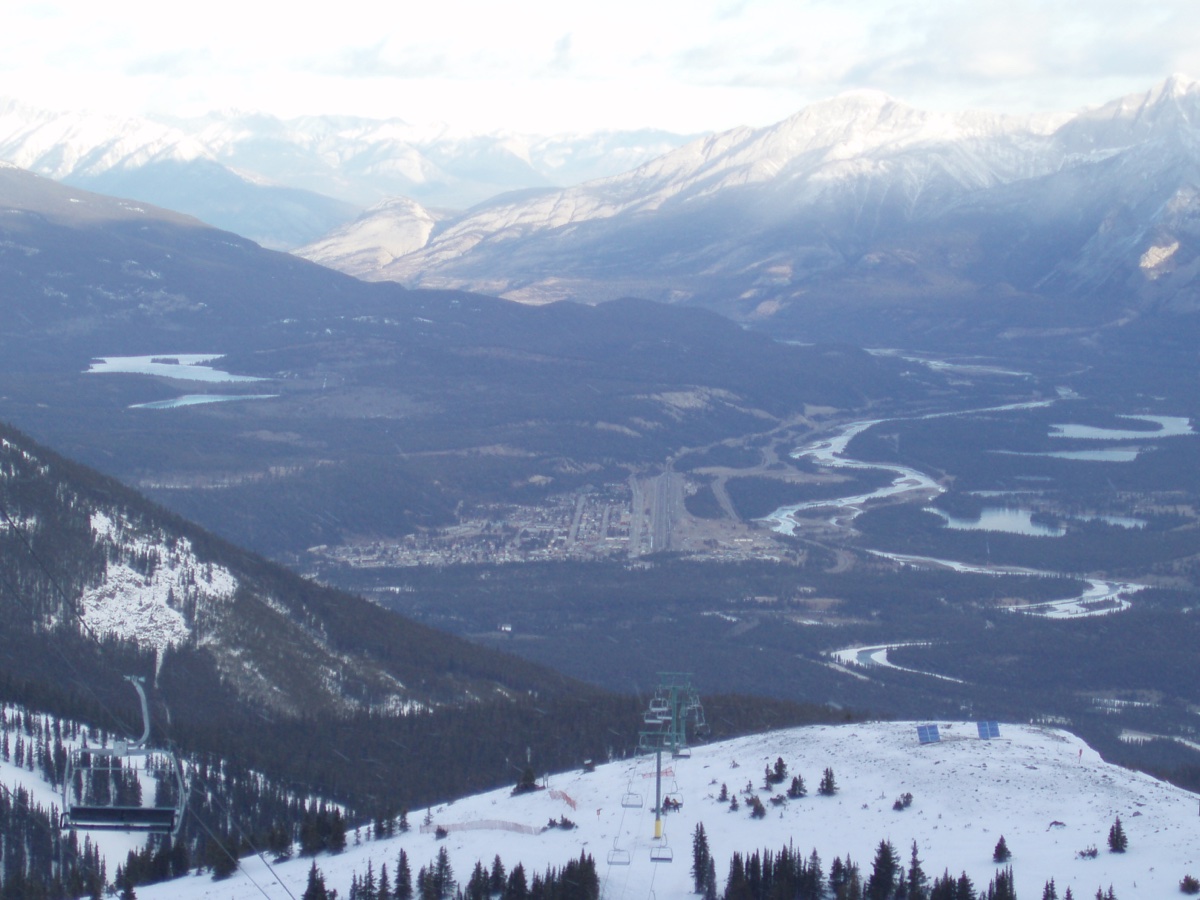
Cortina d’Ampezzo, Dolomites, Italy: 15 Things to See & Do

TL;DRCortina d’Ampezzo is the perfect base for exploring the Dolomites’ finest spots, from turquoise Lago di Sorapis and the iconic Tre Cime di Lavaredo to the rock formations of Cinque Torri and the Passo Giau mountain pass — fifteen concrete tips on what to see and do in all. The best time to go is the summer season, from 20 June to 20 September, but steer clear of August around the Ferragosto holiday, when both crowds and prices peak. Plan on at least four to five days for a proper visit. From autumn 2025, accommodation prices will rise by at least twenty percent ahead of the 2026 Winter Olympics, with mid-range hotels running €150–€250 a night for two in season. It’s under two hours’ drive from Venice.

If you know what it’s like to fall so head-over-heels in love with a place that you simply have to return every single year, then you’ll completely understand our relationship with the Italian Dolomites — and especially with our absolute favourite, Cortina d’Ampezzo Italy. It’s our spiritual home and the base camp from which we set out on our summer and winter adventures, and I genuinely can’t imagine a year going by without us heading back here at least once.

I still remember our very first trips. We were young, full of energy, bikes strapped to the car roof, sleeping in a tent — until one September night the temperature plummeted below minus four and Lukáš and I lay there shivering like leaves, cocooned in our sleeping bags. 😅 Then came the campervan era, when we’d wake up to jaw-dropping mountain views right from bed on four wheels. It was incredibly romantic, and we still look back on it fondly, even though it sometimes meant washing in a freezing mountain stream and cooking spaghetti on a tiny stove that kept blowing out in the wind.

So what’s in store? Fifteen tips on what to see and do, some honest advice on where to sleep without blowing your budget, and a frank warning about something that’s going to change dramatically in 2026. Keep reading. 😉

Dolomites Italian Alps panoramic view

TL;DR

I get it — sometimes you just need the cliff notes because you’re packing your bags while the kids run circles around you. Cortina d’Ampezzo is the ideal base for exploring iconic Dolomite highlights like Tre Cime, Lago di Sorapis, and Cinque Torri, and picking the right accommodation will save you hours of unnecessary driving.

The best time for summer hiking is from 20 June to 20 September, but steer well clear of August — especially around the Ferragosto bank holiday — when it’s absolutely rammed and prices skyrocket. Also be aware that Cortina is hosting the 2026 Winter Olympics, so from autumn 2025 onwards expect significantly higher accommodation prices and construction everywhere you look. If you’re travelling with kids, focus on cable cars like Tofana and Faloria, which whisk you up to breathtaking viewpoints with zero effort.

Olympic Glory and Italian Charm (A Bit of Context)

Cortina d’Ampezzo isn’t just any mountain town. Before we dive into the specific tips, it’s worth understanding where you actually are. While most of the northern Dolomites in South Tyrol have a strong Austrian influence (German is spoken everywhere and apple strudel is on every menu), Cortina sits in the Veneto region. That means one thing: genuine Italian flair, Italian architecture, and — most importantly — proper Italian cuisine. ☺️

The town shot to fame back in 1956 when it hosted the Winter Olympic Games, catapulting it onto the map of the world’s most exclusive destinations and turning it into a playground for celebrities. Even today, you’ll spot glamorous ladies in designer fur coats browsing the Prada boutique on Corso Italia, right next to dusty-booted hikers who’ve just scrambled down a via ferrata. That incredible contrast is exactly what makes Cortina so magical. Now the whole town is buzzing with preparations for 2026, when the Olympic flame will return after seventy years with great fanfare.

Best Time to Visit Cortina and Weather

Timing your Dolomites trip is absolutely crucial and sometimes feels like a bit of an art form. Let me help you figure out when to go so you catch decent Cortina d’Ampezzo Italy weather and dodge the crowds that could seriously dampen your mood. From our own experience, getting the timing wrong can turn a mountain paradise into a surprisingly stressful ordeal.

The summer season, when all the mountain huts (rifugia) and cable cars are open, runs roughly from 20 June to 20 September. This is what we consider the golden window — the sweet spot worth aiming for. In June you might still encounter snow at higher elevations, but nature is beautifully fresh and just waking up. Whatever time you go, always check the weather forecast beforehand, because mountain weather is notoriously fickle and afternoon thunderstorms are a daily occurrence in July and August. Trust me, you do not want to be caught in a lightning storm on an exposed ridge — we once had to leg it off a mountain so fast that Lukáš’s colourful language probably echoed all the way down to the valley.

And now for one big, honest warning from our own experience. If you can possibly avoid it, skip August entirely. Italians have the national holiday Ferragosto in mid-August (typically around the 15th), and it feels like the entire country decamps to the mountains. It’s absolute mayhem — traffic jams on the mountain passes, hour-long queues for the Tre Cime car park, and trails so packed you’re essentially walking in single file. In 2026, the Olympic year, this August madness will likely be even worse as the town draws extra attention.

The winter season runs from 1 December through to early April. If you’re heading here to ski or simply soak up the snowy scenery with a mug of mulled wine in hand, be warned that the Olympic effect will send accommodation and service prices through the roof from autumn 2025 onwards. Booking early will be absolutely essential, or you’ll end up sleeping somewhere an hour’s drive from the centre.

How to Get to Cortina d’Ampezzo

Getting to Cortina from the UK is easier than you might think, which is probably another reason we keep coming back — even now with a little one in a car seat. The most practical route is to fly into Venice Marco Polo Airport, which is served by multiple airlines from London and other UK cities, including British Airways, easyJet, and Ryanair. From Venice, you can drive to Cortina in under two hours, depending on traffic and how many stops you need for feeding or letting the dogs stretch their legs.

If you’re driving through Austria (for example, if you’ve flown into Innsbruck or Munich instead), don’t forget the Austrian motorway vignette, and budget for the Brenner Pass toll. Once you cross into Italy, you’ll hit Italian motorway toll booths. Along the way you’ll inevitably stop at a service station, but I have to warn you about the famous Italian chain Autogrill. While it looks tempting and the coffee is genuinely great, their sandwiches and panini are a classic tourist trap with eye-watering prices. Pack your own snacks instead. 😁

Watch Out for ZTL Zones and Road Closures in 2026

Once you arrive in Cortina, pay very close attention to the so-called ZTL zones (Zona Traffico Limitato). These are restricted-access areas right in the historic centre. We’ve been caught out by these in Italy before — the zones are monitored by cameras, and the fine can land on your doormat up to a year and a half later, just when you’ve completely forgotten about it and think you got away with it.

Simply put, don’t drive into the centre unless your hotel has confirmed parking and registered your number plate with the authorities. Leave your car at one of the park-and-ride car parks on the edge of town and walk the rest. You’ll save yourself a fortune in fines — money much better spent on an Aperol Spritz or a fantastic dinner.

Another important heads-up for those planning a trip in 2026 or beyond. To protect the environment and manage the enormous increase in traffic, significant restrictions are planned on the mountain passes. Specifically, Passo Gardena is set to introduce a reservation system and toll charges from September 2026 to limit the number of vehicles, so do your homework before you set off.

Dolomites mountain road map with key passes near Cortina

Where to Stay + How Much It Costs

Finding good, affordable accommodation in Cortina can feel like a full-time job — you’ll spend entire evenings hunched over maps and booking sites. The town has a reputation as a luxury destination, and you’ll find Cortina d’Ampezzo Italy hotels where a single night easily tops €400, which is frankly ridiculous for most of us. On the flip side, if you search carefully and plan ahead, there are real gems that won’t break the bank. Over the years we’ve tried absolutely everything, from campsites at €35 a night to lovely hotels now that we need a bit more comfort for little Jonášek.

Here are our tried-and-tested recommendations for where to rest your head:

1. Our TOP pick: B&B Hotel Passo Tre Croci Cortina. We absolutely fell in love with this place. It’s located just outside Cortina proper on a mountain pass, but that’s actually a huge advantage. You’re away from the town noise, the breakfasts are absolutely fantastic (which isn’t always a given in Italy), and the best bit: it’s literally a stone’s throw from the start of the famous Lago di Sorapis trek! Dogs are welcome for a small fee, and it’s very reasonably priced mid-range, leaving you plenty of budget for a great dinner out. 2. Dolomiti Sweet Lodge. If you prefer self-catering and want more space, this is one of the highest-rated apartment complexes right in Cortina. Brilliant location, spotlessly clean, and the gorgeous wooden interiors radiate that authentic Alpine cosiness where you feel completely at home after a long day out. 3. Hotel Villa Gaia. A traditional, family-run hotel with consistently solid reviews. It’s not some ultra-modern palace with white-gloved doormen, but it has enormous charm, incredibly friendly staff, and you can walk straight into the centre for dinner — which you’ll especially appreciate when you fancy a bottle of good wine and don’t want to drive. 4. HOTEL de LEN. Looking for romance, celebrating an anniversary, or simply want to treat yourself to absolute luxury after a gruelling hike? This design hotel boasts an incredible spa where you’ll be pampered like royalty. Prices in peak season climb above €300 per night though, so you’ll need fairly deep pockets.

Budget-wise, if you’re visiting in peak summer season, expect mid-range hotels to cost at least €150 to €250 per night for two. Campsites in the area run between €25 and €45 depending on whether you’ve got a small tent or a large motorhome. And remember my advice: from autumn 2025, with the Olympics approaching, we expect all these prices to jump at least twenty percent.

Cortina d’Ampezzo: 15 Things to See and Do

Let’s explore the very best that Cortina and its immediate surroundings have to offer. Most of these tips require at least a short drive or bus ride from the town centre, but I’ve included everything from challenging mountain adventures that’ll leave your legs aching for days to spots you can easily reach by cable car in trainers.

1. Stroll Along Corso Italia and Admire the Basilica

Every visit to Cortina should either start or end with a post-dinner stroll along the main pedestrian boulevard, Corso Italia. It’s the beating heart of the town, where the intoxicating scent of good espresso mingles with luxury designer boutiques and unassuming little shops selling local cheeses. In the evening especially, when the street lamps flicker on and that crisp mountain air drifts down from the surrounding peaks, the atmosphere is incredibly romantic — the kind you’ll fall for instantly.

The centrepiece of the whole town is the parish church Basilica Minore dei Santi Filippo e Giacomo. Its iconic 69-metre-tall white stone bell tower will pop up in practically every photo you take, no matter what angle you shoot from. Be sure to peek inside, too. Lukáš and I spent a solid fifteen minutes in there, and I nearly missed dinner because I couldn’t tear my eyes away from the beautifully carved wooden pews.

2. Discover History at the Olympic Ice Stadium

Olympic Ice Stadium in Cortina d'Ampezzo, host of the 1956 and 2026 Winter Olympics
Photo: Wikimedia Commons / CC BY-SA 3.0

Since Cortina is a Winter Olympics venue, you absolutely can’t miss the Olympic Ice Stadium dating back to 1956. It’s a striking, slightly quirky building that oozes nostalgic retro charm from a bygone era. The moment you step inside, you’re hit by that distinctive chill and the scent of ice, instantly transporting you back to the days of grainy black-and-white sports broadcasts.

Besides the fact that you can go ice skating here even in summer — which, by the way, is a brilliant activity when it’s pouring outside and the kids are bored — you’ll also find loads of historical photographs and sporting memorabilia. For sports fans it’s an absolute must, and we spent a surprisingly long time here, even though Lukáš was mainly trying to work out whether they had a sausage stand open somewhere.

3. Ride the Freccia nel Cielo Cable Car to Tofana

Freccia nel Cielo cable car to Tofana above Cortina d'Ampezzo
Photo: kallerna / CC BY-SA 4.0 / Wikimedia Commons

If you love panoramic views but don’t fancy slogging through thousands of metres of elevation gain with your tongue hanging out, this one’s for you. The cable car system whisks you from central Cortina up to the majestic Tofana di Mezzo massif, over 3,000 metres above sea level. It’s one of the highest peaks in the area and the view from the top is genuinely jaw-dropping. I’d recommend booking tickets in advance on the official Freccia nel Cielo website.

With our little Jonášek, we made cable cars our best friends this year, and Tofana was an absolutely brilliant choice. At the top there’s a viewing terrace you can reach with zero effort, where you can treat yourself to an overpriced but — given the location — completely justified cappuccino while gazing out over the entire Ampezzo valley. Just don’t forget a proper jacket and a hat, as it gets surprisingly cold up top even in the middle of August — something Lukáš of course underestimated, then spent the rest of the time stealing my scarf!

4. Catch the Sunset from the Faloria Cable Car

View from Faloria towards Cortina d'Ampezzo
Photo: Tiia Monto / CC BY-SA 3.0 / Wikimedia Commons

The second iconic cable car in Cortina heads in the opposite direction across the valley, up to Mount Faloria. The bottom station is just a short walk from the bus station in the town centre, so you can easily stroll there after a coffee in the piazza. The ride itself is quite an experience — the cable car climbs steeply alongside a rugged rock face, so close you feel like you could reach out and touch it. You can find tickets and timetables on the Faloria cable car website.

While Tofana is majestic, Faloria offers what I think is the most beautiful view of Cortina itself, from a completely different perspective. Especially in the late afternoon, when the setting sun paints the opposite rock massifs in deep orange and pink, it’s a sight fit for the gods. At the top station there’s a lovely mountain hut that serves excellent bombardino — a warm, boozy egg-nog-like drink that was our reward for successfully getting Jonášek to nap in his pushchair.

5. Explore the Open-Air War Museum at Cinque Torri

Dolomites in October near Cinque Torri
Dolomites in October

This spot is one of our absolute favourites in the entire Italian Dolomites, and we come back every single time we’re nearby. Cinque Torri — the Five Towers — is an incredible rock formation where you can wander freely beneath towering pinnacles and watch climbers balancing on sheer vertical walls. You can hike up on a fairly steep path, or take the comfortable chairlift, which — with little Jonášek in tow this year — we gratefully took.

What makes this place truly unique, though, is the extensive open-air World War I museum scattered among the rocks. Around the towers you’ll find reconstructed trenches, bunkers, and Italian artillery positions from the days when soldiers fought over every square metre. You can walk through them freely, read the information boards, and try to imagine how horrifically tough life must have been for those young soldiers in the brutal winters. It always sends a shiver down your spine.

6. Walk Through the War Tunnels on Lagazuoi

Lagazuoi mountain summit with war tunnel entrance in the Dolomites

If the war history at Cinque Torri piques your interest and you want to go deeper — literally — you need to head to the nearby summit of Lagazuoi. During World War I, Austrians and Italians fought incredible underground battles here, mining beneath the mountains with explosives to attack each other. It’s a dark chapter of history set against some of the most beautiful scenery imaginable.

Today you can grab a helmet (available to hire at the cable car base station), switch on your headtorch, and walk through kilometres of dark, damp tunnels carved straight into the rock. It’s a powerful experience that will absolutely send shivers down your spine — and you might bump your head on the low ceiling once or twice. Forget the pushchair for this one, though. You’ll need sturdy hiking boots, strong legs, and zero claustrophobia.

7. Discover the Turquoise Lago di Sorapis (And a Warning for Dog Owners!)

Turquoise waters of Lago di Sorapis in the Dolomites
Photo: Wikimedia Commons / CC BY-SA 3.0

Lake Sorapis, with its impossibly milky turquoise water, is probably the most popular hike in the entire Cortina area. Photos of it have taken Instagram by storm, and it’s easy to see why — the colour genuinely looks like someone tipped a tin of paint in and went overboard with the filters. The trek starts at Passo Tre Croci and takes roughly two hours of fairly steep hiking one way.

Here’s my big, honest warning though. This trail really isn’t just a casual Sunday afternoon stroll through the woods. In the second half, there are fairly narrow ledge sections secured with steel cables and metal grating bolted into the rock directly above a sheer drop. We once took our dogs along, and I have to say our Kája is a bit of a clumsy oaf — we were genuinely sweating on those metal walkways and had to carry her in our arms above the void, which with a 20-kilo dog is absolutely not something you want to be doing. If your dog is afraid of heights or isn’t particularly agile, it’s best to leave them back at the hotel for this one.

8. Hike to the Iconic Tre Cime di Lavaredo

Tre Cime di Lavaredo iconic three peaks in the Dolomites
Photo: Wikimedia Commons / CC BY-SA 3.0

They’re not technically in Cortina itself, but they’re so close and so utterly majestic that you absolutely cannot miss them. Tre Cime is the unmistakable symbol of the entire Dolomites — practically every mountaineer knows their silhouette. You can drive there via Lake Misurina to Rifugio Auronzo, but the toll road charges a hefty fee and the car park at the top fills up early in the morning during the season, so set your alarm — and I mean that very seriously.

The circular route around these three massive stone pillars is relatively easy by mountain standards and can be done at a comfortable pace in roughly three to four hours. Along the way you’ll pass several excellent mountain huts where you can warm up with a bowl of hot soup and recharge. Check out our article with a complete guide and tips for more places you definitely shouldn’t miss in the immediate Tre Cime area.

9. Relax at Lago di Misurina and Head Up to Cadini di Misurina

If you’re already heading towards Tre Cime, definitely make a longer stop at Lake Misurina. It’s beautifully framed by massive mountains and has this wonderfully peaceful, old-world charm from the days when people came here to treat their asthma at the lakeside sanatorium. It’s the perfect spot for a flat, pushchair-friendly stroll along the shore and a superb ice cream from one of the local cafés — something we never skip.

If you’re after a challenge and a bit of an adrenaline rush, a cable car from the lake area leads to a short but seriously exposed trek to the Cadini di Misurina viewpoint. That famous “Mordor” view you’ve seen all over social media: a narrow path ending at a cliff edge with a jaw-dropping panorama of razor-sharp jagged peaks that look straight out of Lord of the Rings. Definitely not one for kids or dogs, though — one wrong step and it’s a very long way down.

10. Discover Autumn Magic at Croda da Lago and Lago Federa

Lago Federa with autumn larch trees reflected in the water

This is my personal secret tip, and you’ll thank me for it — especially if you visit the Dolomites in late September or early October, when the crowds start to thin. The hike starts not far from Cortina and leads you to Lago Federa. In autumn, the surrounding larch forests blaze with incredibly vivid yellows and oranges, perfectly mirrored in the calm surface of the lake like a painted canvas.

By the lake sits Rifugio Croda da Lago, where they serve such fantastically hearty soups and homemade apple desserts that you won’t want to hike back. The trail is moderately challenging — you’ll break a sweat on the uphills — but the blissful quiet without thousands of tourists is absolutely worth it. Just don’t forget quality hiking boots, as the terrain can be slippery and full of treacherous roots.

11. Escape the Crowds in Valle di Ra Stua

Looking for somewhere to escape Cortina’s bustle and the selfie-stick-wielding hordes? Head north from town into the protected area near the Fanes-Sennes-Prags Nature Park. The Ra Stua valley is an absolute oasis of calm — think cows with enormous bells around their necks grazing on lush green pastures, babbling streams, and the feeling that time has simply stood still.

You can walk in from the Sant’Uberto car park along a pleasantly gentle trail. The mountain hut Malga Ra Stua at the end of the valley is a perfect destination for families with children — the path is wide enough even for an off-road pushchair, and the hut serves brilliant pancakes with homemade jam that will win over any little adventurer’s heart.

lukas a lucka
Lukáš and Lucie recommend
Where to Stay in Cortina d’Ampezzo
5 accommodations — wellness hotels, hotels and other lodging options

12. Drive the Legendary Passo Giau

Passo Giau mountain pass road in the Dolomites at sunset

For me, Passo Giau is hands down the most beautiful mountain pass in the entire Dolomites. The drive up alone is an experience in itself — a bit white-knuckle for the driver with all those tight hairpin bends and cyclists to watch out for, but pure bliss for the passenger who can’t look away from the scenery. At the top, over 2,200 metres above sea level, you’re rewarded with the iconic view of Ra Gusela peak towering above the pass like a sentinel.

I’d definitely recommend coming here very early for sunrise or in the late afternoon for a golden sunset — the colours are simply unbelievable, and we’ve taken some of our best-ever photos here. Fair warning: the car park at the top is often bitterly windy and cold, so a windproof jacket is a must even in mid-July. From here you can set off on loads of stunning hikes, including the trail to Cinque Torri, which Lukáš and I once did entirely on foot.

13. Soak Up the Atmosphere at the Snow Festival and Winter Events

Cortina comes alive not just in summer but especially in winter. If you visit during the colder months, keep a close eye on the local events calendar. There are Snow Festivals, Christmas markets, ski racing events, and the town square fills with people sipping mulled wine by the litre beneath dazzling Christmas decorations. The atmosphere is absolutely magical, and I love watching the elegant Italians in their stylish coats socialising late into the night.

With the 2026 Olympics on the horizon, the town is also planning a huge programme of cultural events designed to showcase authentic Italian culture and their trademark joie de vivre. Last time we were here, we stumbled upon a local band playing in a snow-covered square, Jonášek stared at the colourful lights with his mouth wide open, and Lukáš reckoned their local mulled wine was considerably stronger than anything he’d ever had at the Christmas markets back home.

14. Run or Walk the Old Railway (Cortina Trail)

You know those days when you just want an easy, flat, head-clearing stroll with barely any elevation gain? That’s exactly what the old Dolomite Railway trail is for — a former railway line that once ran right through Cortina itself. The tracks are long gone, but in their place there’s now a beautifully wide, flat gravel path that winds through the entire valley offering gorgeous views without breaking a sweat.

In summer you can walk, run, or cycle along it on a rented bike. For us, it was an absolutely perfect pushchair route with Jonášek — he didn’t whinge once because there were no jolting bumps whatsoever. In winter, the trail is often groomed for cross-country skiing, which is another brilliant way to enjoy those mountain panoramas without having to clamber up steep slopes waist-deep in snow.

15. Take a Day Trip to Iconic Lago di Braies

Wooden boats moored at Lago di Braies in the Dolomites
Boats at Lago di Braies

It’s about forty-five minutes’ drive north from Cortina, but skipping this gem would be an absolute crime and I’d never forgive myself. Lago di Braies — or Pragser Wildsee in German — is quite possibly the most photographed lake in the entire Dolomites and perhaps all of northern Italy. Wooden rowing boats moored at the jetty, deep emerald-green water, and the massive Seekofel peak as a backdrop — it’s a picture you could stare at for hours.

We once headed there at six in the morning to beat the Instagram crowds, hired a wooden rowing boat, and it was incredibly romantic — even though my hands were freezing as I tried to paddle. Since there’s loads of practical information and plenty of catches regarding the paid (and often sold-out) parking, I’ve written a separate article: Lago di Braies: Guide and Tips. Definitely give it a read before you go.

Cortina d’Ampezzo with Kids and a Pushchair

As I mentioned at the start, this year’s Dolomites trip was our big debut as parents. And I have to say, Cortina is surprisingly brilliant for travelling with little ones — as long as you adjust your expectations and accept that all-day scrambles up rocky ridges are off the table for a while. With one-year-old Jonášek, we simply had to forget about steep via ferratas and instead discovered a completely different perspective on the mountains — one we actually ended up really enjoying.

Cable cars are your best friends: Spacious cable cars will whisk you up to loads of beautiful spots, and they’ll almost always take a folded pushchair without any fuss. We rode the Tofana and Faloria cable cars this year and Jonášek was so thrilled by the smooth cabin ride that he spent the entire journey enthusiastically waving his arms and squealing at the other passengers.

Hotspots and pushchairs: Lago di Sorapis with a pushchair is an absolute non-starter — it’s terrain strictly for strong hikers or a good baby carrier. On the other hand, the gentle stroll around Lago di Misurina or the old railway trail are tailor-made even for a perfectly ordinary city pushchair. You can also push a pram to the first hut at Tre Cime, Rifugio Lavaredo, along the wide gravel road without too much shaking.

Italians and children: This is something I absolutely adore about Italy! Italians simply worship children and they’re not shy about showing it. In restaurants, nobody will scowl or roll their eyes when the baby cries or shrieks because they want to try your pasta. Waiters pulled faces for Jonášek, a high chair appeared instantly, and many cafés along the main street have comfortable baby-changing facilities.

Winter vs. Summer: Skiing and Dolomiti Superski

Cortina doesn’t hibernate in summer — far from it. But once the snow falls, it transforms into a place that skiers absolutely love, and I’ll admit I’m a bit jealous, seeing as I’m not much of a skier myself.

Cortina is part of the enormous Dolomiti Superski network, which is the Cortina d’Ampezzo Italy ski resort area at its finest. This means you can buy a single ski pass that covers an impressive number of kilometres of fantastic slopes across the entire Dolomites. Right in Cortina you’ll find three main ski areas: Tofana, Faloria-Cristallo, and Lagazuoi-5 Torri. Together they offer beautifully wide pistes with views you simply won’t find anywhere else in Europe — and even as a non-skier, I happily spent my time sunbathing on mountain hut terraces.

If you’re planning a ski trip, one personal piece of advice: definitely download the ski area map onto your phone beforehand, because these resorts are seriously extensive. If you tackle the famous Sella Ronda circuit, for instance, you can easily get lost and miss the very last cable car back to your valley — which would mean a very expensive taxi ride back to the hotel!

And once again, that Olympic effect. For the 2026 Winter Games, brand-new cable cars are being built and competition slopes are being upgraded. From the 2024/25 winter season you’ll already see plenty of construction activity, but the payoff will be state-of-the-art ski facilities. Do expect ski pass prices to rise, though — someone has to pay for all that shiny new infrastructure.

What to Eat and Where to Dine

Now for my favourite topic: Italian food! Forget classic Neapolitan pizza for a moment (though you’ll find that here too, and it’s excellent). Mountain cuisine in this region is in a league of its own — hearty, earthy, like a home-cooked meal from an Italian grandmother who happens to have Parmesan, loads of butter, and local herbs at her disposal.

What you absolutely must try:

  • Canederli: The Italian take on bread dumplings, often stuffed with speck or cheese and served in a rich beef broth, or simply drizzled with melted butter and sage. It’s the perfect fuel after a full day’s hiking in the cold — guaranteed to warm you up and keep you going until dinnertime.
  • Casunziei all’Ampezzana: This is a true local treasure and I could eat myself silly on them. They’re delicate half-moon pasta parcels filled with cooked beetroot, topped with poppy seeds and Parmesan. Sounds bizarre, I know, but the combination of sweet beetroot and fragrant butter is absolutely divine!
  • Polenta with game: A classic for meat lovers. Golden cornmeal polenta served with an incredibly rich, slow-cooked ragù of venison or roe deer. Lukáš orders this practically every time.
  • Formaggio di Malga: Local cheeses from mountain pastures with that distinctive, intense flavour. Always start by ordering a cheese board as a starter with your wine — you simply can’t go wrong.

Our Favourite Restaurants and Mountain Huts

While we’re on the topic of food, let me share the specific places where we’ve eaten the best meals. Baita Fraina is outstanding — an incredibly cosy family restaurant just outside the centre, where we always go for their famous stuffed pasta. The setting is all warm wood panelling, they have an excellent wine list, and you feel like you’ve been invited to someone’s home for a Sunday lunch.

If you happen to be hiking around Cinque Torri and you’re absolutely ravenous, you cannot miss Rifugio Averau. It has a reputation as the best-cooking mountain hut in the area, and I have to agree — their canederli and the views of the rock walls are in a class of their own. And for a quick, consistently excellent pizza in the evening after a day out, we always pop into Ristorante Pizzeria Croda Cafe right on Cortina’s pedestrian street.

What to Buy in Cortina (Shopping)

A stroll through the beautifully lit town centre will almost certainly get your wallet twitching. While the big-name luxury brands dominate, with a bit of luck you can also find gorgeous, authentically handcrafted souvenirs that’ll bring you joy long after you get home.

This is actually where I bought my first-ever hand-carved chopping board. It was in a little shop off the main street that sells figurines, wooden clocks, and all kinds of beautifully crafted bits and pieces — I simply couldn’t resist. Leather bags and wallets from the boutiques on Corso Italia are another classic purchase — Lukáš just sighs quietly when he sees how much I spend, but Italian leather simply smells different and lasts for years.

And a little insider tip for end-of-season visitors: if you come to Cortina in late March or early April, the local luxury sports shops have massive end-of-season sales on last year’s ski gear and gorgeous winter clothing. You can often snap up seriously high-end technical jackets, helmets, and accessories at a fraction of their original eye-watering prices.

Practical Tips to Wrap Up

To round things off, here are a few of those unglamorous but incredibly important practical bits. When you’re travelling independently, it’s always worth having these sorted before you go so you’re not scrambling with dodgy Wi-Fi or overpriced car hire on arrival.

We’ve got things pretty well dialled in after all these years, so whether you’re figuring out how to fly here or where to quickly sort travel insurance for mountain activities, here’s what works best for us.

Finding Flights

The closest major airport to Cortina is Venice Marco Polo, with plenty of direct flights from UK airports including London Gatwick, Stansted, Luton, Manchester, and Edinburgh via airlines like easyJet, Ryanair, and British Airways. We always hunt for cheap flights using comparison tools — it’s worth checking multiple sites for the best deals and keeping an eye out for off-season bargains.

From Venice airport, there are direct Cortina Express buses straight to Cortina, but we’ve always preferred having our own wheels — more on that below — because relying on Italian timetables can sometimes be a bit of a lottery.

Car Hire

Without a car, you’re honestly a bit stuck in the Dolomites. Summer buses do run, but they’re incredibly limiting and you won’t get back down from a remote mountain hut in the evening. We’ve had consistently good experiences with DiscoverCars, which we use all over the world and have never had any hassle with deposit returns.

Pick up your car right at Venice airport and you’ll be in the heart of Cortina in under two hours via a gorgeous scenic drive, with complete freedom to plan your mountain excursions and early-morning car park raids exactly as you please.

Don’t Forget Travel Insurance

Please don’t skip this one. Mountains are mountains, and a twisted ankle on a slippery rock during a descent from the lake can get eye-wateringly expensive very quickly — not to mention a potential rescue by the Italian mountain service, who tend to send a helicopter. Your EHIC/GHIC card covers basic state healthcare, but not mountain rescue or repatriation.

We’ve been using and happily recommending SafetyWing for a long time now — you can sort it out online in five minutes flat, even from the airport, and it covers a solid foundation for hiking activities. Lukáš also keeps it running for his winter skiing trips.

Mobile Data

Italy is in the EU, so your UK roaming allowance should work — though check with your provider since post-Brexit terms vary. Up in the mountains, signal can drop out at many huts, and if you venture northwest you might accidentally connect to a Swiss network and rack up hefty charges.

For reliable data and that extra peace of mind, we often use an eSIM from Holafly. You set it up beforehand via a QR code, there’s no need to swap your physical SIM, and data works smoothly even in spots where regular networks start to give up the ghost.

Frequently Asked Questions (FAQ)

I know that planning your first trip to this corner of the world can be a bit overwhelming, especially when you see all those Italian and German place names and hear horror stories about overflowing car parks. Every year our Instagram inbox fills up with the same questions.

So here are the most common questions we get about visiting Cortina d’Ampezzo and the wider Dolomites, along with my completely honest answers backed by years of coming here with Lukáš.

1. What to Do in Cortina?

Beyond the stunning mountain hikes and brilliant winter skiing, you can simply wander the pedestrian Corso Italia, ride the cable cars up to Tofana and Faloria for a coffee with a view, or explore the incredible open-air World War I museum at Cinque Torri. In short, you certainly won’t be bored — even if you don’t feel like trekking for miles with a heavy pack on your back. You can discover the turquoise Lago di Sorapis and plenty of other lakes large and small in the surrounding area.

2. What Does Cortina d’Ampezzo Mean?

The town’s name comes from two old words. “Cortina” in the local historical dialect means a small enclosed area, courtyard, or — as was common historically — a little walled cemetery next to a church. “Ampezzo” is the historical name for the broad green valley stretching along the wild Boite River. Together, they form a beautiful name for this picturesque mountain village that has since grown into a world-famous resort.

3. What to Do in Cortina When It Rains?

Don’t despair — head straight to the Olympic Ice Stadium for some retro-atmosphere skating, or treat yourself to a relaxing session at one of the town’s upscale hotel spas. Another great rainy-day option is to declare a shopping day on Corso Italia, wrap up warm, and spend the afternoon tasting excellent local red wine and cheeses in one of the many cosy Italian taverns.

4. How Do ZTL Zones and Parking Work?

Cars simply cannot enter Cortina’s town centre — the ZTL zone — without a special permit. It’s strictly monitored by cameras and backed by hefty fines that the Italians will absolutely track down and send to your home address. You’ll need to park at designated (usually paid) car parks on the outskirts. If you’re staying in the centre, sort it out with your accommodation in advance — they’ll register your number plate to grant you access.

5. Can You Enjoy Cortina Without a Car?

Yes, it’s definitely possible, but it involves a fair bit of compromise and you’ll lose a lot of flexibility. Local buses run reasonably well to the most famous spots like Passo Falzarego and Tre Cime, so you can reach the top attractions. Unfortunately, in peak summer the buses get very crowded, sometimes don’t stop, and you’re at the mercy of timetables that aren’t always adhered to with Italian punctuality. Hiring a car simply gives you that freedom we’ve come to rely on.

6. How Many Days Do You Need in Cortina?

To see the biggest highlights without rushing from place to place, we recommend setting aside a minimum of four to five full days. That’s the ideal amount of time for a good mix of a cable car ride, a proper full-day hike, and relaxing by beautiful turquoise lakes — without feeling like you need another holiday to recover from your holiday.

7. Will the 2026 Winter Olympics Affect Tourism in Cortina?

Absolutely, and quite significantly. From autumn 2025 and throughout the 2026 winter season, brace yourself for a major spike in accommodation prices, much larger crowds of sports fans, and likely various restrictions. Expect occasional road closures around key sporting venues and mountain passes like Passo Gardena. If you want to enjoy Cortina and the surrounding area in relative peace — and at something approaching normal prices — try to visit before the Olympic frenzy fully kicks off.

Tips and Tricks for Your Vacation

Don’t Overpay for Flights

Search for flights on Kayak. It’s our favorite search engine because it scans the websites of all airlines and always finds the cheapest connection.

Book Your Accommodation Smartly

The best experiences we’ve had when looking for accommodation (from Alaska to Morocco) are with Booking.com, where hotels, apartments, and entire houses are usually the cheapest and most widely available.

Don’t Forget Travel Insurance

Good travel insurance will protect you against illness, accidents, theft, or flight cancellations. We’ve had a few hospital visits abroad, so we know how important it is to have proper insurance arranged.

Where we insure ourselves: SafetyWing (best for everyone) and TrueTraveller (for extra-long trips).

Why don’t we recommend any Czech insurance company? Because they have too many restrictions. They set limits on the number of days abroad, travel insurance via a credit card often requires you to pay medical expenses only with that card, and they frequently limit the number of returns to the Czech Republic.

Find the Best Experiences

Get Your Guide is a huge online marketplace where you can book guided walks, trips, skip-the-line tickets, tours, and much more. We always find some extra fun there!
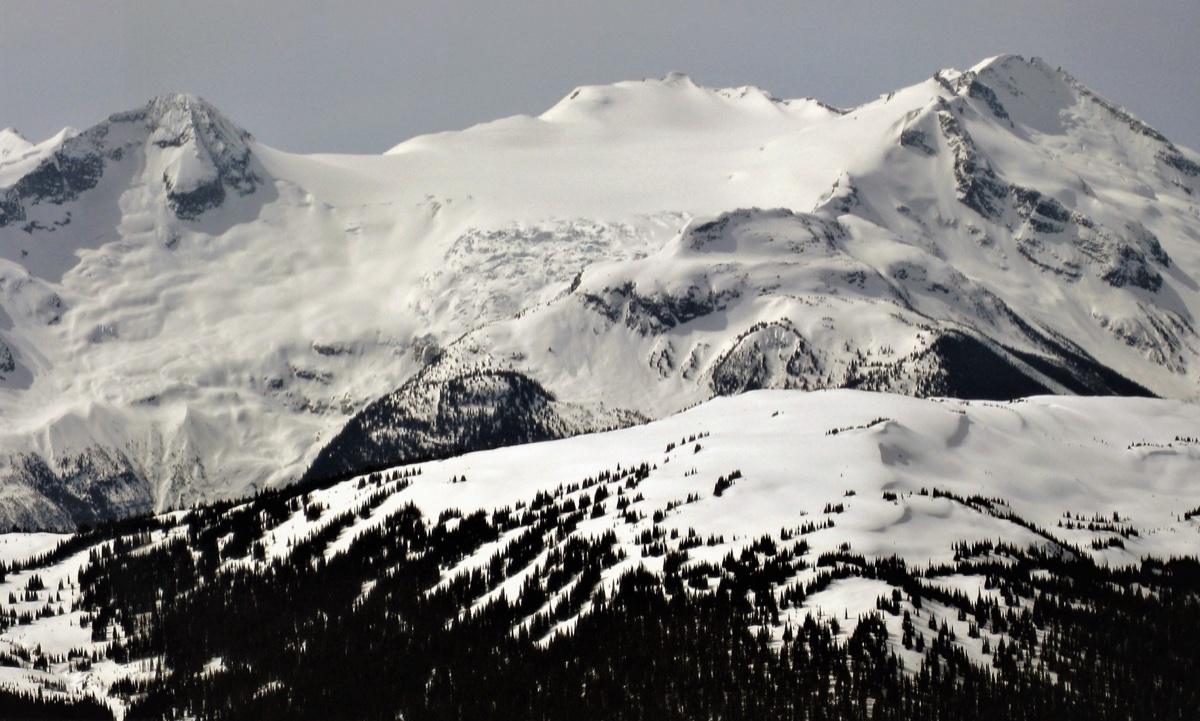
Auschwitz-Birkenau: 21 Things You Should Know Before Visiting

TL;DRA visit to Auschwitz-Birkenau covers two sites — Auschwitz I (the museum with its brick blocks) and Auschwitz II-Birkenau (the extermination camp about 3 kilometres away) — with a full tour taking 3.5 to 4 hours, so it’s worth setting aside the whole day. The site sits roughly 70 kilometres from Kraków, reachable by bus or train in an hour to an hour and a half, or you can book an organised tour for 45 to 90 EUR. Free entry without a guide requires booking exactly a month ahead on visit.auschwitz.org, while a guided tour with an educator costs around 110 PLN. There’s a strict dress code, large bags are banned (A4 size max), and the recommended minimum age is 14. Kraków is the better base for food and accommodation, and you can easily combine your trip with a visit to the Wieliczka salt mine.

Some places you don’t look forward to visiting — you don’t plan smiley photos for social media, and honestly, they scare you a little from the start. Lucka openly admitted she didn’t have the emotional capacity for such a heavy place. Don’t treat this as a travel tip. Think of it as a challenge — go and see it for yourself. In this guide to visiting Auschwitz Poland, you’ll learn the difference between the two camps, how and where to get tickets, what exactly awaits you on site, and how to organise the entire trip from Krakow.

TL;DR

Before I dive into the details, here are the key things you should know before you even start figuring out how to get there.

  • Two camps: The visit consists of two parts. Auschwitz I (the original camp with brick buildings and a museum) and Auschwitz II-Birkenau (the extermination camp about 3 kilometres away).
  • Tickets: Tickets sell out incredibly fast. If you want to go without a guide for free, you need to book on the official website visit.auschwitz.org exactly one month in advance. A much safer and logistically easier option is to book a tour from Krakow (around €45 to €90).
  • Getting there: It’s roughly 70 kilometres from Krakow. The journey by bus, train, or car takes one to one and a half hours.
  • Time needed: Set aside a full day. The tour of both camps alone takes 3.5 to 4 hours, plus you need to factor in travel and transfers.
  • Rules: There’s a strict ban on large bags (maximum A4 size), you must wear appropriate clothing (no bare shoulders or very short shorts), and flash photography is strictly forbidden inside buildings — in some rooms, photography is banned entirely.
  • Age: The museum’s official recommendation is not to bring children under 14. From personal experience, I completely agree.

Auschwitz I vs. Auschwitz II-Birkenau: What’s the Difference

Before you even start looking at tickets, it’s crucial to understand that the Auschwitz-Birkenau State Museum isn’t just one place. People often arrive and are surprised to find they have to travel between two sites. The entire complex is divided into two main and completely different parts, and you should see both to grasp the full context of the horror.

1. Auschwitz I (The Main Camp and Museum)

Brick barracks in the original Auschwitz I concentration camp
Photo: Ron whisky / Public domain / Wikimedia Commons

This is the place you’ve probably seen in most photographs. It’s here that you’ll find the iconic iron gate bearing the inscription “Arbeit Macht Frei.” Originally Polish military barracks with solid brick buildings, the site was seized by the Nazis.

Today, the complex primarily functions as a museum. The individual blocks house massive, harrowing and fact-driven exhibitions. You’ll see piles of personal belongings confiscated from prisoners, the first primitive gas chamber, and a crematorium. The grounds are relatively compact, lined with trees, and paradoxically don’t look like a death factory at first glance — until you step inside the buildings.

2. Auschwitz II-Birkenau (The Extermination Camp)

Railway tracks ending inside the Auschwitz II Birkenau extermination camp
Photo: This picture has been taken by Oleg Yunakov. Contact e-mail: yunakovgmail.com. I / CC BY-SA 4.0 / Wikimedia Commons

While the first camp served as an administrative centre, Birkenau was pure extermination machinery, built from scratch on open land a few kilometres from the original camp. It’s a vast, chillingly empty expanse.

This is where the famous railway tracks lead, slicing through the entrance building with its watchtower. You’ll see the railway ramp where selections took place, long rows of reconstructed and original wooden barracks, and at the very far end, the ruins of enormous gas chambers and crematoria that the Nazis blew up before retreating. You can spend as long as you like here.

Practical Information: 2026 Tickets and Tours

Securing entry is probably the most complicated part of the entire Auschwitz visit. The Memorial and Museum Auschwitz-Birkenau sees overwhelming visitor numbers, and the days of simply turning up, buying a ticket at the gate, and walking in are long gone. Capacity is strictly regulated. If you’re planning a trip, you essentially have two ways to get inside.

3. Free Tickets Without a Guide

You can enter the museum for free without a guide, but there’s a major catch. These free passes (“Entry Pass without an educator”) are released on the official website visit.auschwitz.org in limited numbers, always at specific times.

They’re usually only available for early morning or late afternoon slots. If you’re visiting during peak season, you’ll need to “snag” these free tickets exactly one month in advance — otherwise, they simply won’t be available.

4. Official Tour with an Educator

The most common option, chosen by the majority of visitors, is a guided tour with an official on-site educator. You book and pay directly on the museum’s website — roughly 110 PLN (about €25) per adult.

You’ll receive headphones so the guide doesn’t need to shout and everyone can hear clearly. The tour lasts approximately 3.5 hours. The problem is that even these tickets sell out weeks in advance, and you’ll still need to sort out your own transport from Krakow.

5. Complete Tour from Krakow

In my opinion, this is by far the most convenient option logistically, even though it costs more. You’ll pay between €45 and €90, and the company picks you up by coach in central Krakow, shows a documentary film during the journey to set the context, hands you over to an official guide on site, arranges your entry and transfer between both camps, and finally drives you back. You can easily find and book these Krakow Poland Auschwitz tours through platforms like GetYourGuide.

It saves you an incredible amount of stress with parking or waiting for public transport.

How to Get from Krakow to Auschwitz

I personally chose the bus and didn’t regret it — it was far simpler than I expected. Oświęcim (the Polish name for the town) lies in the Silesian Voivodeship, roughly 70 kilometres west of Krakow, and you have several options for getting there independently. The journey isn’t complicated; you just need to account for minor delays along the way.

6. By Bus (Cheapest and Most Practical)

Regular services depart from Krakow’s main bus station (MDA) directly to Oświęcim. The journey takes about an hour and a half, and a ticket costs around 20 PLN (roughly €5).

I recommend using companies like Lajkonik, which stop right by the museum (the stop is called Oświęcim Muzeum). During summer, early morning buses tend to be absolutely packed, so definitely buy your ticket online in advance.

7. By Train from Krakow

Polish State Railways (PKP) operates train services from Krakow to Oświęcim. The journey takes just over an hour. The advantage of the train is greater comfort and avoiding traffic jams.

The downside is that the Oświęcim train station is about 2 kilometres from the museum. From the station, you’ll either need to grab a taxi or prepare for a roughly 25-minute walk through the town.

8. By Car (If You’re on a Road Trip)

If you’re on a road trip through Poland, driving is a great choice. We’ve had consistently good experience with the comparison site DiscoverCars, which we use all over the world. The drive along the A4 motorway takes just under an hour.

There are paid car parks at both camps. Expect to pay around 20 PLN (about €5) per day. You can then drive between Auschwitz I and Birkenau in your own car, saving yourself the wait for the shuttle bus.

What You’ll See at Auschwitz I

Before you start reading the information panels, there’s a strange moment where it almost feels like you’re standing on a university campus. That impression vanishes very quickly once you step inside the first of the blocks, which now serve as individual museums housing gut-wrenching exhibitions.

9. The Iconic Arbeit Macht Frei Gate

The first thing you’ll see is the iron gate bearing the cynical motto “Work Sets You Free.” Look closely at the inverted letter “B” in the word Arbeit.

According to historians, this was a small, hidden act of defiance by the prisoners who were ordered by the SS to make the gate. It was through this gate that work squads marched out each morning for slave labour and returned each evening carrying dead fellow inmates. This is the spot where most people fall silent and stop talking.

10. Block 4: Extermination and Personal Belongings

Luggage and personal belongings taken from prisoners at Auschwitz I
Photo: Jorge Láscar from Australia / CC BY 2.0 / Wikimedia Commons

This is the block that shook me to the core. Inside, you won’t find weapons or building models — instead, you’ll see the belongings of people who arrived at the camp believing they were simply being relocated for work.

There’s an enormous room, glass-walled from floor to ceiling, filled with human hair that never made it to the textile factories in the Reich. Other rooms are packed with thousands of spectacles, prosthetic limbs, and pots. The most powerful room for me was the one filled with children’s and adults’ clothing, with hundreds of crumbling shoes spilling onto the floor. It’s here that it truly hits you: behind every single pair of shoes was a lost human life.

11. Block 11: The Death Prison and the Death Wall

The Black Death Wall between blocks 10 and 11 at Auschwitz I
Photo: Dawid Galus / CC BY-SA 3.0 pl / Wikimedia Commons

While the rest of the camp was horrific, Block 11 was a place of terror even for the prisoners themselves. It functioned as a prison within a prison. In the basement, you’ll find cells where the Gestapo carried out the first tests with Zyklon B gas, and the so-called “standing cells” — tiny spaces less than one square metre where four people were crammed in as punishment after a full day of forced labour, unable to sit down.

Right next to the block is the courtyard with the Death Wall, where mass executions by firing squad took place. Today, visitors and heads of state alike leave flowers here.

12. Crematorium I and the Gas Chamber

Interior of the first crematorium at Auschwitz I
Photo: Jorge Láscar from Australia / CC BY 2.0 / Wikimedia Commons

At the far edge of the Auschwitz I camp, you’ll enter the original, preserved crematorium building. This was the very first gas chamber at Auschwitz, before the killing was scaled up and moved to Birkenau.

Walking through the underground rooms with their dark, smoke-stained walls — where you can see the holes in the ceiling through which the poisonous gas was poured — is a deeply harrowing experience. Absolute silence fills the space, and photography is strictly forbidden inside. You’ll pause only by the preserved cremation ovens.

What You’ll See at Auschwitz II-Birkenau

A free yellow shuttle bus runs between the two camps, taking you to the main gate of Auschwitz II in about 10 minutes. The moment you step off, you’re struck by the staggering change in scale. If the first camp felt small and organised, Birkenau is simply a gigantic expanse. It covers 170 hectares, and this is where the vast majority of the Holocaust took place.

13. The Gatehouse and Death Tower

Birkenau gatehouse with the Death Tower, the main entrance to the camp
Photo: Bahnfrend / CC BY-SA 4.0 / Wikimedia Commons

The symbol of the entire Auschwitz-Birkenau complex is the long red-brick building with its enormous gate through which trains once passed. I recommend climbing the tower if it’s open to visitors.

From this vantage point, you truly grasp the insane scale of the camp. As far as the eye can see, brick chimneys rise from the ground like gravestones where wooden barracks once stood and burned. Only from up here do you begin to comprehend how many hundreds of thousands of people were held here.

14. The Railway Ramp and the Cattle Wagon

Birkenau railway ramp where selections took place
Photo: Dom8Mi / CC BY-SA 3.0 / Wikimedia Commons

The path inevitably leads you along the tracks towards the extermination zone. Roughly halfway down, a solitary cattle wagon stands on the rails.

This is the exact spot where trains packed with deported people from across Europe came to a stop. This is where the so-called “selection” took place — SS doctors would simply point left or right, deciding with a single gesture who would go to the barracks for hard labour and who would go straight from the train to the gas chambers at the end of the camp. It’s an incredibly difficult place to process.

15. Wooden Barracks and Living Conditions

Wooden barracks for prisoners in Birkenau
Photo: China Crisis / CC BY 3.0 / Wikimedia Commons

On the right side of the tracks, several original wooden prisoner barracks have been preserved, and you can go inside. Originally designed as horse stables for a few dozen animals, the Nazis crammed over 400 people into each barrack on three-tier wooden bunks.

When you step inside, you’ll notice the peculiar, musty smell of old wood and damp. You can only begin to imagine the freezing winters prisoners endured here, surrounded by mud and with barely any food. It completely transforms your understanding of what the human body and spirit can endure.

lukas a lucka
Lukáš and Lucie recommend
Where to Stay in Krakow
4 accommodations — hotels and other lodging options

16. Crematoria Ruins and the Memorial

International memorial and crematoria ruins at Birkenau
Photo: Jorge Láscar from Australia / CC BY 2.0 / Wikimedia Commons

At the very end of the tracks, you’ll reach the ruins of Crematoria II and III. When the Germans knew in early 1945 that the Red Army was approaching, they tried to destroy the evidence and blew up the gas chambers.

Today, all that remains are collapsed concrete slabs overgrown with grass, but you can clearly make out the outlines of the undressing rooms and the chambers themselves. A short distance away stands the Auschwitz-Birkenau Memorial — the international monument to the camp’s victims — with plaques in many languages.

Where to Stay: Your Base in Krakow

Staying in the town of Oświęcim itself doesn’t make much sense either logistically or psychologically. A far better plan is to base yourself in beautiful Krakow, which offers plenty of experiences in its own right — fantastic food, stunning atmosphere, and a wonderful Old Town. Head to the museum in the morning and then treat yourself to a good dinner or a drink in the evening to decompress after such a heavy day.

We prefer to stay right in the centre of Krakow, because it ultimately saves a lot of time (and time is money, right?). Some of the best apartments with breakfast can be found at K4 APARTHOTEL KRAKÓW. Another excellent option is the Avium Old Town Apartments. If you don’t mind hostels, you’ll find affordable accommodation right in the centre at Greg&Tom Beer House Hostel. You can browse and compare accommodation on Booking.com.

How to Plan Your Day (Recommended Itinerary)

An Auschwitz visit isn’t a two-hour affair. You need to expect spending a great deal of time on your feet. Most people are quite exhausted by the end of the tour — not just physically, but above all emotionally. If you’re going independently, here’s the approach I recommend.

17. Start Early in the Morning at Auschwitz I

Arriving as early as possible is essential. Not only will you avoid the biggest crowds — organised tours tend to roll in around ten o’clock — but the morning atmosphere lends the place an even rawer quality.

Exploring the first part with its indoor exhibitions will take at least two hours. Read the information panels carefully, one by one. Don’t rush through them, even when it gets tough.

18. Take a Breather During the Transfer

Between the first and second parts of the camp, you’ll need to wait for the shuttle bus. This is the perfect time to have a snack outside the grounds (eating inside is, of course, not allowed) and let your thoughts settle a bit.

The ride itself takes about ten minutes, and trust me, you’ll genuinely appreciate those few minutes of sitting down.

19. Unlimited Time in Birkenau

At Birkenau, your guide (if you have one) won’t stay with you as long, or you can break away from the group after the main loop. It’s an enormous area, and I recommend walking through the whole thing slowly — all the way to the crematoria ruins and to the “Sauna,” where newly arrived prisoners underwent disinfection and where there’s now a surprisingly emotional exhibition filled with pre-war photographs of smiling families who perished in the camp.

You won’t be surrounded by large crowds here. Many tourists only make it as far as the cattle wagon before turning back, so push on further and let the silence wash over you.

Auschwitz and Children: Should You Bring Them?

This is a question many parents grapple with. The official stance of the Memorial and Museum Auschwitz-Birkenau is clear: visits are not recommended for children under 14. I’ll be honest — I completely agree, and personally, I’d even raise that age limit a little higher.

It’s not that children will be terrified. The issue is that a child’s or young teenager’s brain simply can’t process the context. I saw families on site with small children who were bored, running between the barracks, or laughing out loud because they simply didn’t understand where they were. For older teenagers, on the other hand, it’s an incredibly educational experience — but they need a solid grounding in history from school first, understanding who the SS were, what the Second World War was about, and why millions of people had to die.

If you’re travelling through southern Poland and looking for things to do with younger children, take them to the nearby salt mines or the beautiful zoo in Wrocław instead. Auschwitz can wait a few more years.

Rules, Clothing, and What (Not) to Bring

The Auschwitz-Birkenau Museum isn’t Disneyland — it’s the largest cemetery in the world, and very specific, strict rules apply here with absolutely no exceptions. Polish security staff are uncompromising, and if you don’t follow the rules, you’ll be turned away.

20. The Crucial Bag Rule

This is probably the most common mistake people make at the security checkpoints. You cannot bring any bag larger than A4 paper size (precisely 30 × 20 × 10 cm) into the grounds.

If you have a standard daypack or backpack, you’ll need to leave it in the lockers at the entrance (for a small fee) or in your car. Bring only a small handbag, bum bag, or canvas tote.

21. Clothing and Behaviour

Even in the sweltering heat of summer, a strict dress code applies as a mark of respect to the victims. No sleeveless tops with bare shoulders, no low-cut necklines, and shorts or skirts must reach at least above the knee. If you turn up in beachwear, you won’t be let in. At the same time, prepare for kilometres of walking on muddy, dusty paths. If you have decent hiking boots, definitely wear them. Birkenau is no place for heels or white canvas trainers.

It should go without saying that you keep your voice low, don’t shout to each other, and absolutely do not take grinning selfies by the barbed wire. Whenever I see this, it makes me physically ill. Inside the buildings, flash photography is banned, and in certain specific blocks (such as the room with the hair or the death cells), photography is prohibited entirely.

Combining with Other Attractions: Wieliczka

Most people who fly or drive to Krakow for a long weekend try to fit in the two most significant sites in the area: Auschwitz and the Wieliczka Salt Mine. Can you manage both in a single day?

Technically yes, but in practice, it’s an absolute marathon. Local agencies do offer full-day combined tours. You leave at seven in the morning for Auschwitz, spend four heavy hours there, get on a coach, drive to the other side of Krakow to the mine, do a three-hour underground tour, and get back completely drained by eight in the evening. If you’re not pressed for time, I strongly recommend splitting these two attractions across two separate days. After four hours at Auschwitz, you really won’t have the capacity to go admiring salt sculptures — and it would be a tremendous shame for both sites.

Where to Eat After the Tour

A tour of such an intense place drains a lot of energy, so it’s good to know where to refuel. There are no restaurants inside the museum grounds, and eating within the site is understandably not permitted.

The ideal plan is to reward yourself with a good meal once you’re back in Krakow. Head to the traditional Polish restaurant Chłopskie Jadło right in the centre, where they make fantastic pierogi and hearty żurek soup that will warm you up after a long day. If you prefer something more modern, Morskie Oko is an excellent choice — great food and a beautiful interior decorated in the highland Goral style.

Lukáš’s Final Reflection

When I walked out of the grounds after nearly five hours and climbed back onto the bus, my mind was completely blank. I spent a long time thinking about how to actually end this article, because a cheery sign-off and encouragement to visit would feel deeply inappropriate. It’s not a day trip. It’s a journey into the darkest depths of the human soul and a return with the awareness of everything that happened — and everything we must never allow to happen again.

Everyone should visit at least once, to appreciate life more and to understand what human beings are capable of doing to one another. Go there. And then come home, hug your loved ones, and be grateful for what you have.

Travel Tips and Tricks

These are things we sort out before every trip, and Auschwitz was no exception. To help you avoid unnecessary logistical stress, here are a few of our favourite and tried-and-tested services.

Finding Flights to Poland

Search for cheap flights on Kiwi or Skyscanner — they’re our go-to portals. You can often find bargain fares from London or other major UK airports to Krakow with airlines like Ryanair, Wizz Air, or easyJet.

Try playing around with your dates — sometimes shifting your departure by a single day makes a huge difference to the price.

Hiring a Car for a Road Trip

We regularly use the comparison site DiscoverCars. We’ve had consistently good experience with them and use them all over the world.

For travelling around Poland, it’s an ideal choice, especially if you’re planning multiple stops.

Don’t Forget Travel Insurance

For shorter trips we use standard travel insurance, and for longer ones we swear by SafetyWing (see our SafetyWing review).

Medical care abroad can be eye-wateringly expensive, so spending a few extra pounds for peace of mind is absolutely worth it.

Internet Abroad

If you’re travelling outside Europe or want data the moment you land without fussing over roaming, we recommend an eSIM — check out our Holafly review.

In Poland, EU roaming applies for UK travellers with compatible plans, but having reliable data when navigating to memorial sites always comes in handy.

FAQ (Frequently Asked Questions)

Here are answers to the most common questions we receive before and after the trip. Hopefully, they’ll help you plan your visit even better.

What is Birkenau?

Auschwitz II-Birkenau was the primary extermination camp within the Auschwitz complex. Unlike the original labour and administrative camp Auschwitz I, Birkenau was used predominantly for the mass and systematic murder of people in gas chambers.

How much does a ticket to Auschwitz cost?

Entry to the site on your own without a guide is completely free, but these tickets must be booked well in advance online. A guided tour with an official educator costs roughly 110 PLN (about €25), and a comprehensive tour from Krakow ranges between €45 and €90.

How many people died at Auschwitz?

It is estimated that at least 1.1 million people were murdered at the Auschwitz-Birkenau complex, the vast majority of whom were Jewish. Among the victims were also tens of thousands of Poles, Roma, Soviet prisoners of war, and people of many other nationalities from across Europe.

What does the Auschwitz tour involve?

The visit typically starts at Auschwitz I, where you walk through individual brick blocks housing museum exhibitions while listening to commentary through rented headphones. You then transfer by shuttle bus to Auschwitz II-Birkenau, about 3 km away, where you explore the open-air extermination camp, the railway ramp, and the crematoria ruins.

Can you visit the museum with children?

The museum’s official recommendation is not to visit with children under 14. The subject matter is psychologically too heavy and difficult for young children to comprehend.

Can you take photos inside the camp?

Yes, photography for private purposes is permitted in most areas. However, there is a strict ban on using flash and tripods. In specific areas, such as Block 4 (the room with human hair) and the basement of Block 11 (death cells), photography is completely prohibited for obvious reasons of respect.

Can you bring food and drink inside?

You can bring a small bottle of water, but consuming food inside the grounds (except in designated areas outside the entrance buildings) is forbidden as a mark of respect for a place where people suffered unimaginable hunger. Large bags and luggage must be left in the storage facility.

Tips and Tricks for Your Vacation

Don’t Overpay for Flights

Search for flights on Kayak. It’s our favorite search engine because it scans the websites of all airlines and always finds the cheapest connection.

Book Your Accommodation Smartly

The best experiences we’ve had when looking for accommodation (from Alaska to Morocco) are with Booking.com, where hotels, apartments, and entire houses are usually the cheapest and most widely available.

Don’t Forget Travel Insurance

Good travel insurance will protect you against illness, accidents, theft, or flight cancellations. We’ve had a few hospital visits abroad, so we know how important it is to have proper insurance arranged.

Where we insure ourselves: SafetyWing (best for everyone) and TrueTraveller (for extra-long trips).

Why don’t we recommend any Czech insurance company? Because they have too many restrictions. They set limits on the number of days abroad, travel insurance via a credit card often requires you to pay medical expenses only with that card, and they frequently limit the number of returns to the Czech Republic.

Find the Best Experiences

Get Your Guide is a huge online marketplace where you can book guided walks, trips, skip-the-line tickets, tours, and much more. We always find some extra fun there!
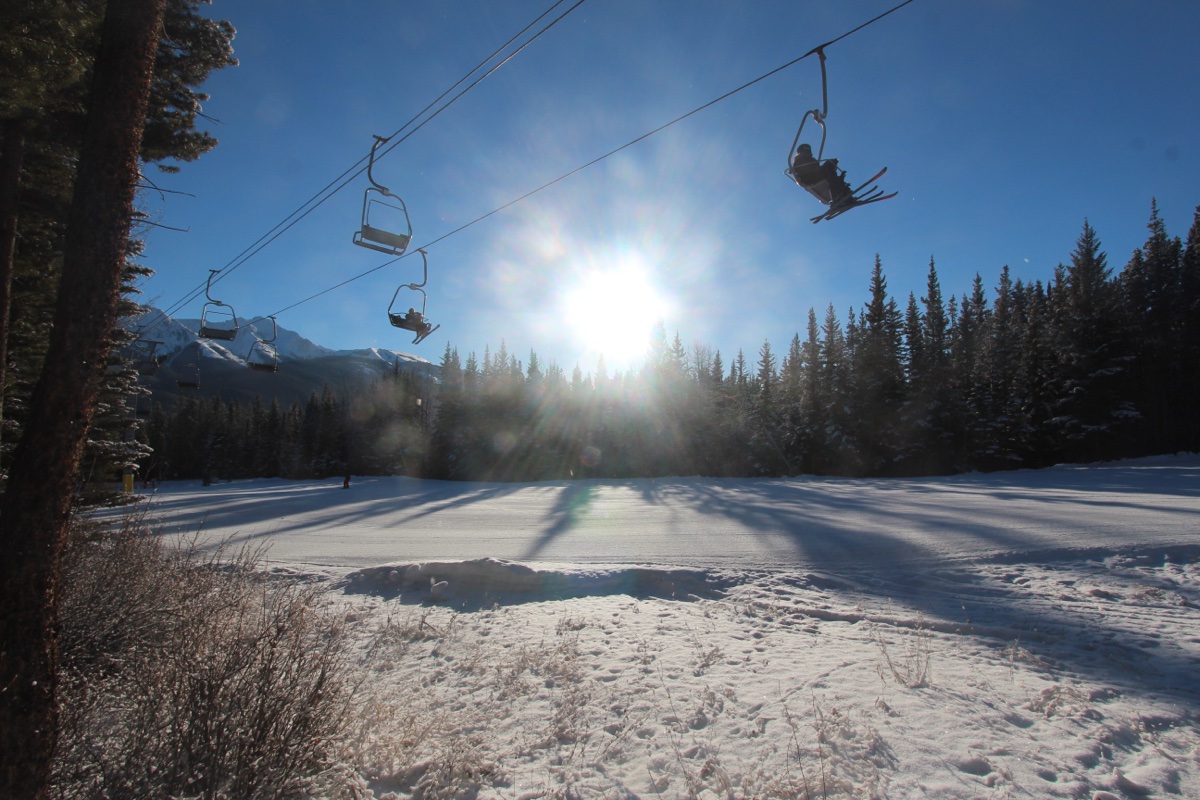
Fundy National Park, New Brunswick: 12 Best Things to See and Do

TL;DRFundy National Park in New Brunswick, Canada, comes with 12 essential tips, and the highlight is walking across the exposed sea floor at Alma or Herring Cove beach during low tide, when the sea rises by up to 16 metres — the highest tides on the planet. Other highlights include Dickson Falls, Third Vault Falls and Laverty Falls, the Point Wolfe covered bridge, and stargazing in the Dark Sky Preserve. The best time to visit is summer (July and August) or September, once the crowds and mosquitoes thin out. Base yourself in the village of Alma, home to restaurants like the Alma Lobster Shop. A day pass into the park costs 9 CAD, camping runs 30 to 40 CAD a night, and it’s about an hour’s drive from Moncton.

I remember it like it was yesterday — the first time we arrived at Fundy National Park and stood on the exposed ocean floor, our feet sinking into the wet red mud as we stared in disbelief at the vast emptiness stretching out before us. Where fishing boats had been bobbing on the surface just hours earlier, there was now nothing but an endless plain of shells, seaweed, and strange rock formations. That’s the moment you truly grasp the staggering power of nature, because the water will soon return and rise by an incredible sixteen metres.

If you’re planning a trip to Canada’s east coast, let me tell you right now — this national park in the province of New Brunswick is absolutely unmissable. It’s a place where magical misty forests meet the highest tides in the world, and I promise you, this raw Atlantic beauty will completely captivate you.

So here’s what I’ve put together: a step-by-step guide with twelve things to see and do in Fundy National Park, where to eat, and what everything costs. Everything you need to know before you go.

TL;DR

  • Best experience: Walking on the ocean floor during low tide at the beach near the village of Alma, then watching the bay fill back up with water.
  • Most beautiful waterfalls: Definitely Dickson Falls for its magical green atmosphere, and Third Vault Falls if you’re up for a longer hike.
  • When to go: Summer (July to August) is ideal for pleasant temperatures, or September when the forests start turning autumn colours and the crowds — and mosquitoes — disappear.
  • Where to eat: The village of Alma, right at the park entrance, is packed with brilliant bistros serving fresh seafood, plus there’s an amazing microbrewery in a converted church.
  • Getting there: Your best bet is to hire a car from Halifax or Moncton, as the park is huge and practically impossible to explore without your own vehicle.

When to visit New Brunswick and how to get there

Before you start planning your itinerary, let’s be honest — the weather on Canada’s Atlantic coast can be incredibly temperamental. Whenever you visit, you need to be prepared for sunshine and thick, pea-soup fog to alternate within the same day. But it’s precisely that fog that gives this place its wonderfully mystical atmosphere, so don’t let it put you off.

Personally, I’d recommend visiting during the summer months from late June to early September, when all the hiking trails are in great condition and temperatures hover around a pleasant 20°C. Autumn has its own huge advantage though — the stunning fall foliage draws photographers from around the world, and as a bonus, you won’t be plagued by those ever-present mosquitoes 😅.

As for getting there, we flew from Europe and search for cheap flights on Kiwi — it’s our favourite portal for comparing prices. From the UK, the most logical route is to fly into Halifax in neighbouring Nova Scotia or directly to nearby Moncton. Several airlines offer transatlantic connections, often with a stopover in a major hub. Once you land, you’ll absolutely need a car. Lukáš and I have had consistently great experiences with DiscoverCars, which we use all over the world — they usually have the best selection of SUVs, which are perfect for Canadian roads. The drive from Moncton to the park takes only about an hour, so there’s no need to worry about endless transfers.

Bay of Fundy coastline in New Brunswick

Where to stay near the park and how much it costs

Canada isn’t exactly a budget destination, and the east coast is no exception — though it is a bit more affordable than the famous national parks out west in Alberta. If you want to save money and don’t mind sleeping outdoors, I recommend the official campsites right inside the national park. They’re well-equipped and Fundy National Park camping costs around 30 to 40 CAD per night (roughly €20–27). We also tried the so-called oTENTik tents, which are a brilliant compromise between camping and a cabin — they come with ready-made beds and heating.

If you prefer a solid roof over your head and a warm shower right next to your bed, the best strategy is to pick a base nearby. The ideal spot is the charming fishing village of Alma, sitting right on the park boundary. You can head out exploring in the morning and come back for a relaxed dinner in the evening without having to drive for an hour through dark forest where you risk hitting a moose.

Prices for a decent motel or guesthouse in Alma during summer season range from about 150 to 220 CAD (roughly €100–150) per night for two. I strongly recommend booking well in advance, as the village has limited capacity and July tends to sell out completely. We’d happily recommend the Parkland Village Inn, which has gorgeous views straight over the bay, or the slightly quieter Fundy Highlands Motel nestled in nature just outside the village.

The Fundy National Park entrance fee applies, as is standard across Canada. A daily pass costs 9 CAD per adult (about €6), but if you’re planning to visit multiple parks in Canada, it’s absolutely worth buying the annual Discovery Pass for approximately 75 CAD (around €50), which covers admission to every national park in the country.

Fundy National Park: 12 best things to see and do

The park hides far more than you might expect. Most people come here just for the tides, but I’m about to reveal what else would be a shame to miss. You’ll quickly discover that the park also conceals breathtaking aquamarine pools, deep forests, and waterfalls you’ll want to sit beside for hours.

Plan your exploration around the tide tables, which you can pick up at the Fundy National Park visitor center, so you don’t miss that magical moment on the ocean floor. Trust me — this corner of nature will win you over instantly ☺️.

1. Walking on the ocean floor (Tidal Flats)

Exposed ocean floor at low tide in the Bay of Fundy
Photo: Dconno02 / CC BY-SA 4.0 / Wikimedia Commons

This is an absolute must and the main reason people visit Bay of Fundy National Park. When the tide goes out, the ocean retreats hundreds of metres, exposing dramatic cliffs and a red muddy seabed teeming with tiny marine creatures. The best places to witness this phenomenon are the beach in Alma or nearby Herring Cove.

Wear shoes you don’t mind getting completely caked in mud, because there’s no avoiding it. We spent a good two hours just hunting for interesting shells and photographing boats that were comically stranded on their sides in the muck, waiting for the evening tide to lift them back onto the water.

Make sure to check the tide tables or ask the rangers at the official Parks Canada website before heading out, so you know when the water starts coming back in. The tide rises astonishingly fast, and you absolutely do not want to get stranded near the cliffs with a camera in hand while the Atlantic charges towards you.

2. The enchanting Dickson Falls

Viewpoint at Dickson Falls in Fundy National Park
Photo: James Mann from Moncton, New Brunswick, Canada / CC BY 2.0 / Wikimedia Commons

If you only have time for one hike in the park, it has to be Dickson Falls. It’s an easy, roughly one-kilometre stroll along wooden boardwalks that’s manageable for small children and anyone who isn’t used to strenuous mountain hiking.

The path leads you through a valley dripping with ferns and moss that looks like it was lifted straight from a Jurassic Park set. Water drips from every surface, the air is beautifully damp and fresh, and at the end you’re rewarded with a cascading waterfall cutting through green-clad rocks. I’d suggest getting here first thing in the morning, when gentle fog still drifts through the forest — the photos you’ll get are absolutely stunning.

Just be careful on the wooden boardwalks, which can be treacherously slippery after morning fog or rain.

3. The iconic Point Wolfe covered bridge

Point Wolfe covered bridge in Fundy National Park
Photo: James Mann from Moncton, New Brunswick, Canada / CC BY 2.0 / Wikimedia Commons

Covered wooden bridges are a hallmark of New Brunswick, and the one at Point Wolfe is probably one of the most photographed in all of Canada. There was once a bustling logging settlement here and the bridge was used to transport timber. Today, thankfully, all you’ll find is deep tranquillity and gorgeous views into the gorge below.

You can drive right through it, but definitely park in the small car park nearby and walk down the trail to the river. From there you’ll get the best angle for photos, and with a bit of luck you won’t have any other tourists in your shot — most people only take pictures from up on the road.

As you read the information boards about the harsh life of 19th-century loggers, you can really feel the rugged spirit of old Canada seeping through. Nature has since reclaimed everything, and it’s one of the most romantic spots for a morning coffee from a thermos flask.

4. A hiker’s challenge: Third Vault Falls

Deep forest in Fundy National Park along the trail to Third Vault Falls
Photo: Abolishedtemple / CC BY-SA 4.0 / Wikimedia Commons

For those of you looking for a bigger adventure and who aren’t afraid of a longer trek, head for the trail to Third Vault Falls. It’s the tallest waterfall in the entire national park, with water plunging an impressive sixteen metres over steep granite walls.

The trail is about seven kilometres return and gets fairly steep and slippery towards the end. I’d strongly recommend wearing proper hiking boots, because trainers could easily lead to a nasty injury here.

Be prepared for the fact that ubiquitous tree roots turn the path into a bit of an obstacle course in places. Especially in autumn, when they’re buried under damp leaves, the return trip can take considerably longer than expected. But the view at the end makes every aching muscle absolutely worth it.

5. Cool off at Laverty Falls

Laverty Falls waterfall in Fundy National Park
Photo: СССР / CC BY-SA 4.0 / Wikimedia Commons

If you arrive at the park in the middle of a scorching summer and fancy cooling down somewhere, the trail to Laverty Falls is probably our favourite option. The path winds through mixed forest, descending gently into a valley, and covers roughly five kilometres — easily doable in a leisurely two hours.

At the base of the waterfall, there’s a natural pool of crystal-clear water. It’s absolutely freezing, mind you (this is Canada, after all), but the feeling of plunging in after a full day of hiking through the forest is simply indescribable. Don’t forget to throw swimwear and a light towel into your backpack.

6. Kayaking with the highest tides

Kayaks in the Bay of Fundy
Photo: James Mann from Moncton, New Brunswick, Canada / CC BY 2.0 / Wikimedia Commons

Paddling along the coastal cliffs is quite possibly one of the most powerful experiences you can take away from here — especially when you know you’re gliding over spots where you were walking on dry land just hours before. Watching the massive tide from shore is brilliant, but experiencing it out on the water is a completely different league.

This is definitely not a trip you can organise on your own, due to the strong currents and unpredictable water levels — you always need to go with a local guide. We put our trust in the pros at FreshAir Adventure, and I’d recommend booking this experience well in advance, as group spots vanish in a flash during summer.

When we first paddled out with our instructor and saw the enormous water column beneath us, I felt a deep respect for the Atlantic. The guides also share fascinating stories about local geology as you paddle, and you might even spot seals lounging on the rocks.

7. A dip in the heated saltwater pool

I know it sounds a bit paradoxical to travel into the wilderness and then go for a swim in a public pool, but believe me — after a day spent in the cold Atlantic fog, you’ll thank me for this tip 😁. Right in the park near the main headquarters, there’s a fantastic saltwater swimming pool.

The water is pumped straight from the Bay of Fundy, but unlike the ocean, the pool is beautifully heated. It’s exactly what you need after a day full of hikes.

There’s also a lovely grassy area beside the pool where you can have a little picnic with a coffee while the kids splash about. The park service keeps this spot in impeccable condition, so it’s a real treat to come here and feel civilised again after a day of muddy adventures.

8. Mountain biking the White Tail Trail

Fundy National Park isn’t all about hiking — in recent years they’ve built an absolutely fantastic network of mountain biking trails that will thrill any adrenaline junkie. The area around Chignecto campground offers trails of all difficulty levels, from family-friendly routes to technically demanding descents.

Our favourite is the White Tail Trail, which flows beautifully through the forest with perfect flow sections. You can easily hire bikes from the rental shop near the visitor centre, so there’s no need to haul them all the way from the airport. They’ve got brilliant full-suspension models too, which you’ll really appreciate on the roots.

Just be prepared for the fact that Canadian forests take a long time to dry after rain. Even in the middle of a hot summer, we were happily wading through mud on some sections and came back to the rental shop with our backs speckled in black dots — but that’s just part of the real mountain biking experience.

lukas a lucka
Lukáš and Lucie recommend
Where to Stay in Fundy National Park
3 accommodations — hotels and other lodging options

9. The charm of the fishing village of Alma

Harbour of the fishing village Alma near Fundy National Park
Photo: Andrea Schaffer from Sydney, Australia / CC BY 2.0 / Wikimedia Commons

A visit to the park wouldn’t be complete without a proper stop in Alma. This tiny village has an absolutely irresistible charm, especially when the tide drops and fishing boats sit on their bellies in the red mud right in the harbour.

Take your time for a stroll along the main street, pop into the little souvenir shops, and soak up the slow coastal rhythm of life. The locals are incredibly friendly and love having a chat, whether you’re buying your morning coffee or queuing for dinner.

We also fell in love with evening walks along the wharf, watching the waves return and the boats begin to gently rock. There’s a beautifully bittersweet melancholy about it — the kind that draws Canadians themselves here for holidays from far-flung cities.

10. Magical stargazing

Fundy National Park holds Dark Sky Preserve certification, which means light pollution is strictly controlled and on clear nights the stargazing is absolutely phenomenal. If you’re from a large city in Europe, prepare to have your jaw hit the floor — the Milky Way is visible to the naked eye in astonishing detail.

All you need is a blanket, a warm jacket, a thermos of tea, and one of the open viewpoints along the coast. The park service occasionally hosts guided stargazing sessions with large telescopes, which are a wonderful experience even for complete beginners.

If you’re lucky enough to visit in August, you might even catch the annual Perseid meteor shower.

11. Scenic drive along Highway 114

Scenic road through Fundy National Park
Photo: Tony Webster from Half Moon Bay, California / CC BY-SA 2.0 / Wikimedia Commons

If you’re not in the mood for tackling elevation gains or a heavy Canadian downpour catches you out, don’t despair. Simply driving through the park along Highway 114 is an experience in itself, with several breathtaking viewpoints where all you need to do is pull over and wind down the window.

The road weaves through dense forests, occasionally opening up to views of deep river valleys, making you feel as though you’re driving through an endless green ocean. Remember to drive carefully — wildlife has right of way here, and a deer darting across the road is anything but rare.

Sometimes fog from the bay rolls across the road so thickly you need to switch on your hazard lights and crawl along. Even this slightly eerie atmosphere is an inseparable part of exploring eastern Canada, adding just the right wild edge to your road trip.

12. Cliff-top views on Matthews Head Trail

Scenic cliffs in Fundy National Park
Photo: No machine-readable author provided. Dlanglois assumed (based on copyright claim / CC BY-SA 3.0 / Wikimedia Commons

For the best views of the cliffs and the churning ocean, I recommend heading out on Matthews Head Trail. It’s a loop of roughly five kilometres that leads you from dense forest right out onto open grassy headlands atop the coastal cliffs.

Sit down in the grass on the cliff’s edge and watch the waves of the Bay of Fundy relentlessly crash into the shoreline far below you — it’s an overwhelming sense of peace. Especially in autumn, when early frosts turn the ferns russet and the whole place takes on an incredibly romantic quality.

Interestingly, this area once belonged to family farms long before the park was even established. Every now and then you’ll stumble upon old stone walls in the grass, reminders of the hard graft of the first settlers trying to survive winters on these windswept cliffs.

What to eat and where to find it: A foodie’s guide

As you already know, all the great food happens in Alma. And trust me, this part of the trip alone deserves its own admission fee 😁. Given that you’re right on the ocean shore, sampling the local seafood is an absolute must.

The unbeatable spot is the Alma Lobster Shop, where fishermen deliver their catch straight from the boats. Their lobster roll is quite possibly the best I’ve ever had in my life — the meat is gloriously succulent, lightly tossed in mayo, and served in a golden-toasted brioche bun. The portions are generous, and it’s also well worth popping in for a simple bowl of clam chowder, which will warm you to the core after a cold day on the coast.

After a good lunch, you absolutely must stop by Kelly’s Bake Shop. Their famous sticky buns (gooey cinnamon rolls) are known across the whole of New Brunswick, and we went back for them practically every morning. There’s often a queue stretching out the door, but believe me, it’s worth the wait.

In the evening, head for a pint at Holy Whale Brewing Co. — a ridiculously photogenic microbrewery housed in a former white wooden church 😅. The atmosphere inside is fantastic, the staff are lovely, and their local brews with witty names are well worth a taste.

Practical tips before travelling to Canada

Canada is enormous and its nature takes no prisoners, so it pays to be well prepared. Here are a few practical things we personally sort out before every trip:

  • Travel insurance is non-negotiable. Healthcare in Canada is eye-wateringly expensive, and travelling here without insurance would be sheer madness. For longer trips we usually go with True Traveller, but a brilliant alternative for digital nomads and frequent travellers is SafetyWing insurance, which has never let us down. British citizens will also need an eTA (Electronic Travel Authorization) to enter Canada — it’s a quick online application that costs just 7 CAD (about £4).
  • Stay connected without expensive roaming. No need to hunt for café Wi-Fi anymore. We swear by virtual eSIM cards — check out our Holafly review. We’ve had fantastic results with it all over the world, and you can set it up in minutes right on your phone.
  • Travel light. Trust me, lugging enormous suitcases through airports and then cramming them into a rental car boot gets old fast. We’ve learned to pack truly minimally — take a look at our guide on how to pack into carry-on luggage and save yourself a mountain of stress.

Where to go next in Canada and North America

If you’re planning a longer holiday and want to see more, have a look at our other articles from our travels. From the east coast, many people fly westward to chase the big mountains, which is why we’ve put together a comprehensive western Canada road trip itinerary with tips on Banff, Jasper, and Vancouver.

If you’re heading closer to Toronto instead, you absolutely can’t miss the most famous waterfall on the continent — we’ve written a detailed guide on how to visit Niagara Falls.

Frequently asked questions (FAQ)

Here are the questions that come up most often in the comments. Hopefully they’ll save you hours of Googling 😉.

1. Is Fundy National Park worth visiting?

Absolutely! It’s one of the few places on Earth where you can witness the extreme power of the tides first-hand, walk on the ocean floor, and explore untouched misty forests with waterfalls — all in a single day. It’s a truly unique natural experience. Even if you only have time for a brief day trip, it’s worth the detour purely for the jaw-dropping sight of boats helplessly stranded in red mud in the middle of the harbour.

2. What town is the national park near?

The park isn’t located in a large city, but the gateway and main base for accommodation and dining is the small village of Alma. The nearest major city with an international airport is Moncton, about an hour’s drive away. The journey from Moncton is actually quite pleasant and flies by, as you pass through picturesque farmland that gradually tunes you into the raw atmosphere of the untouched Atlantic coast.

3. Can you drive through the national park?

Yes — the scenic Highway 114 runs right through the heart of the park, giving you access to most of the main viewpoints and trailheads. Driving through is very comfortable and the scenery along the way is stunning. I’d recommend filling up the tank before you head into the park’s interior, though. Don’t expect any large modern petrol stations in the wildest stretches of forest — it’s always better to think ahead and set off with a full tank.

4. What makes Fundy National Park so special?

The star of the show is the Bay of Fundy and its extraordinary tides, which hold the world record. The tidal range can reach up to 16 metres — something you truly have to experience in person for your brain to believe it. The massive water movement constantly churns nutrients from the ocean floor, turning the area into a giant feeding ground for countless species of seabirds and enormous whales that converge here at the height of summer to feast.

5. Do I need to check the tide tables?

Yes — this is absolutely essential if you want to explore the ocean floor or go kayaking. The water rises and falls roughly every 6 hours and moves incredibly quickly, so for your own safety and the best possible experience, you need to know the exact times. You can easily pick up tide tables at any information centre near the park entrance, where the rangers will happily explain when it’s safe to start walking on the beach and when you need to get back to solid ground as quickly as possible.

6. Can I bring my dog to the park?

Canadian national parks are very dog-friendly, and Fundy is no exception. Dogs are allowed on most hiking trails and in campsites, but they must be kept on a lead at all times to protect the local wildlife. Just bear in mind that the red mud from the beach gets absolutely everywhere, so if you’re travelling with a furry companion, definitely pack some old towels for the journey back to the car. Otherwise your entire rental will end up tinted brick-red.

7. Are there bears in the park and do I need a bear bell?

Yes, black bears do live in the area, and while encounters near the main trails are uncommon, a degree of caution is sensible. Bear bells aren’t usually necessary, but it’s recommended to make noise while walking through dense forest so the animals know you’re there and you don’t startle them. The key thing is never to leave any fragrant food in your tent and to carefully seal all rubbish in the special bear-proof bins at campsites. Canadian rangers take this extremely seriously, and as a result, all visitors stay perfectly safe.

Tips and Tricks for Your Vacation

Don’t Overpay for Flights

Search for flights on Kayak. It’s our favorite search engine because it scans the websites of all airlines and always finds the cheapest connection.

Book Your Accommodation Smartly

The best experiences we’ve had when looking for accommodation (from Alaska to Morocco) are with Booking.com, where hotels, apartments, and entire houses are usually the cheapest and most widely available.

Don’t Forget Travel Insurance

Good travel insurance will protect you against illness, accidents, theft, or flight cancellations. We’ve had a few hospital visits abroad, so we know how important it is to have proper insurance arranged.

Where we insure ourselves: SafetyWing (best for everyone) and TrueTraveller (for extra-long trips).

Why don’t we recommend any Czech insurance company? Because they have too many restrictions. They set limits on the number of days abroad, travel insurance via a credit card often requires you to pay medical expenses only with that card, and they frequently limit the number of returns to the Czech Republic.

Find the Best Experiences

Get Your Guide is a huge online marketplace where you can book guided walks, trips, skip-the-line tickets, tours, and much more. We always find some extra fun there!
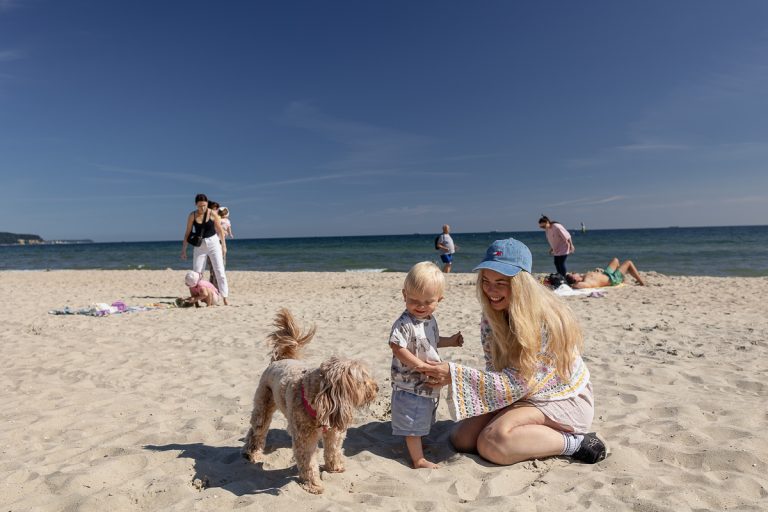
14-Day Road Trip Through the Pacific Northwest: Oregon, Washington & Lake Tahoe

TL;DRThis two-week road trip through the American Northwest starts in Portland and winds through the Columbia River Gorge, past Mount Hood, and along the Oregon coast, where Haystack Rock rises out of the sea at Cannon Beach. From there it heads to the deepest lake in the US, Crater Lake, and finishes up at Lake Tahoe on the California-Nevada border. The best time to go is mid-July to late September, when the mountain passes are clear of snow and temperatures sit around 25°C. Fly into Portland, pick up a hire car, and fly out of San Francisco or Reno. Budget $2,500–$3,300 per person for the 14 days, flights and car hire included. Along the way you’ll also stop in Bend, Smith Rock State Park, and San Francisco, with the Golden Gate Bridge and Alcatraz.

When people hear “Pacific Northwest road trip” or the US West Coast in general, most immediately picture the scorching deserts of Nevada, the red rocks of Arizona, or the famous Grand Canyon. But if you’re thinking about heading to the northwest instead, let me give you a heads-up — it’s an entirely different world. A green paradise filled with deep forests, misty mornings that look straight out of Twin Peaks, and endless beaches pounded by the wild ocean. ☺️

When Lukáš and I first set out to explore this corner of America, it completely consumed us. Our fourteen-day road trip through Oregon, combined with Washington state and the iconic Lake Tahoe, was one of those experiences we still draw energy from to this day. Every morning we woke up to the scent of pine trees, spent our days discovering turquoise lakes in volcanic craters, and whiled away the evenings in cosy craft breweries.

This corner of America simply swallows you whole before you know it. So come along with us — we’ll walk through hipster Portland, stop at the waterfalls in Columbia River Gorge, hike up snowy Mount Hood, cruise the rugged Oregon coast, and finally make it all the way to crystal-clear Lake Tahoe. Plus, I’ll tell you where to sleep, when to go, and how much to budget for the whole thing.

Lake Tahoe
Lake Tahoe

TL;DR

  • Best time to go: July to September, when there’s the least chance of rain and mountain passes are snow-free.
  • Getting there: The best option is to fly into Portland, hire a car, and fly home from San Francisco (or Reno). From London, you can find direct or one-stop flights with airlines like British Airways, Virgin Atlantic, or United.
  • Portland & surroundings: Don’t miss Multnomah Falls and Mount Hood.
  • Oregon Coast: Stop at Haystack Rock on Cannon Beach — it’s a movie classic.
  • Crater Lake: The deepest lake in the USA with the bluest water you’ve ever seen.
  • Lake Tahoe: A paradise for paddleboard lovers and hikers on the border of California and Nevada.
  • Budget: Expect roughly £2,400–£3,200 per person for 14 days (including flights and car hire).

Practical information: When to go and how to prepare

The Pacific Northwest has its own unique climate and vast distances, and we learned a few things the hard way on the road — so we’d rather tell you upfront. Good preparation is absolutely essential here to save yourself a lot of headaches.

When to visit the Pacific Northwest

While you can visit California pretty much year-round, Oregon and Washington have a fairly defined season. The best time for this road trip is from mid-July to the end of September. We were there at the turn of August and September, and the weather was absolutely ideal — daytime temperatures climbed to a pleasant 25°C, though mornings in the mountains were already quite crisp.

I’d avoid travelling from November to May. Mountains like Mount Hood or the area around Crater Lake get buried under massive layers of snow, many roads are impassable in winter, and on the coast you’ll most likely face nothing but relentless rain and fog. During summer, however, do keep an eye out for wildfires, which have unfortunately plagued the West Coast frequently in recent years. It’s worth monitoring the current situation and having a backup plan just in case.

Flights, car hire and mobile data

For this particular itinerary, it makes the most sense to fly into Portland, Oregon, and book your return flight from San Francisco (or Reno, Nevada, if you want to finish right at Lake Tahoe). From London, several airlines offer connecting flights to Portland — check with United, Delta, or British Airways for competitive fares. Use flight comparison sites to find multi-city tickets (flying into one airport and out of another), which can save you a significant amount.

A car is an absolute necessity in the USA — you simply can’t get around without one. Lukáš and I have had consistently good experiences with DiscoverCars, which we use all over the world. I’d definitely recommend booking your car well in advance, especially for the summer season, because last-minute prices skyrocket and availability thins out fast. Also bear in mind that for returning the car in a different state, rental companies often charge a so-called one-way fee — potentially several hundred dollars extra.

To navigate and look up information on the go, you’ll need mobile data. From personal experience, we can recommend an eSIM — check out our Holafly review to see how it works and why we’ve stopped buying physical SIM cards altogether. You can grab one easily through Holafly.

As for health, definitely don’t skimp on travel insurance for the USA — American healthcare costs are astronomically high. For longer trips, we rely on True Traveller, which is a great option for UK travellers, or have a look at our SafetyWing review, which is a brilliant choice for digital nomads and extended stays. Remember that UK citizens need an ESTA visa waiver to enter the United States — make sure to apply online at least 72 hours before departure.

View of Emerald Bay with Fannette Island in Lake Tahoe
Photo: Blake Everett Carroll / CC BY-SA 4.0 / Wikimedia Commons

Where to stay and how much it all costs

The USA simply isn’t a cheap destination, and this region is no exception. Compared to the Midwest, accommodation and food prices here are noticeably higher — but the experiences you’ll take home are absolutely worth it. Be prepared for the fact that most accommodation along the route will be classic American motels or mountain lodges, which have their own charm but often look like they haven’t been updated since the seventies.

An average motel with breakfast (which usually means coffee from a machine and toast with jam 😅) will set you back roughly $120–$180 per night for two. In tourist hotspots like Cannon Beach or right on Lake Tahoe, prices can easily exceed $250 per night during peak season. If you want to save money, you can combine the road trip with camping — American state and national parks have gorgeous campsites, but you’ll need to book them up to six months in advance. For hotel bookings, we always compare prices on Booking.com.

Sample budget for two people over 14 days:

  • Flights (multi-city): approx. £600 / person
  • Car hire incl. insurance and one-way fee: £1,150 (£575 / person)
  • Petrol: £200 (£100 / person — fuel is still cheaper in the US than in the UK)
  • Accommodation (average £115 / night): £1,600 (£800 / person)
  • Food (a mix of supermarkets, fast food, and occasional restaurants): £650 (£325 / person)
  • Entrance fees, park passes, coffee and sundries: £165 / person
  • Total: roughly £2,565 per person.

Where to eat along the way

Food on a road trip is something of a little obsession for us. Expect plenty of classic American fast food, which will save you during long driving days, but every now and then you’ll stumble upon genuine culinary gems. Lukáš and I made a rule early on that at least once a day we’d sit down at a proper restaurant so we weren’t just wolfing down burgers behind the wheel — and it really paid off.

I have to say, the Pacific Northwest seriously impressed us on this front. Once you hit the coast or the big cities, it’s an unexpected foodie paradise where fresh ingredients, local farms, and the honest craft of local chefs take centre stage.

Our favourite stops and typical flavours

On the Oregon coast, seek out the little tucked-away seafood shacks along the road. Crab sandwiches or traditional chowder made from the freshest catch will completely change your view of American food. These places often look pretty rough around the edges from the outside, but don’t let that put you off — inside, culinary heaven usually awaits. We fell hardest for the family-run spots where a smiling server greets you with a pot of drip coffee before you’ve even had a chance to sit down.

In Portland, we became absolutely addicted to the food truck scene. They’re scattered on practically every corner in so-called pods, offering an incredible mix of global flavours for just a few dollars. You grab yourself fantastic Mexican tacos, your partner picks up Thai curry from the truck next door, and then you eat together on wooden benches under string lights. And when you reach the inland area around Bend, count on the local breweries. Alongside excellent craft beer, they serve up absolutely phenomenal ribs or pulled pork that’ll have you licking your lips well into the next day.

Itinerary: 14-day Pacific Northwest road trip

We designed the entire itinerary so it wouldn’t wear you out unnecessarily. No 4am wake-up calls just to leave two hours earlier — each day gives you time to stop, breathe, and soak in whatever’s right in front of you. After all, we are on holiday, aren’t we? ☺️

Day 1. Arrival in Portland and first impressions

Portland panorama with Mount Hood in the background
Photo: Spicypepper999 / CC0 / Wikimedia Commons

Your road trip begins in Portland, a city famous for its unofficial motto “Keep Portland Weird.” It’s a city brimming with brilliant coffee, street food, craft breweries, and a wonderfully laid-back atmosphere. After landing and picking up your car, check into your accommodation and head out to stretch your legs after the long flight.

Make your way to the Pearl District, where old industrial warehouses have been transformed into modern galleries, boutiques, and coffee shops. Pop into Powell’s City of Books, the world’s largest independent bookshop, which takes up an entire city block — and plan on spending at least two hours there. I literally had to drag Lukáš out by his sleeve. For dinner, try one of the many food trucks scattered across the city — the so-called “food cart pods” are on every corner, serving everything from Thai curry to excellent Mexican tacos for just a few dollars.

Once you’ve had your fill of the city, hop in the car and drive up above the centre to Washington Park. Hidden there is one of the most beautiful Japanese gardens outside of Japan. Strolling beneath the maples and listening to the murmur of small waterfalls was exactly the calm we needed after a long flight. You also get a fantastic view of the entire city from up there. As evening drew in, we headed back downtown and explored local coffee houses — like the famous Stumptown Coffee Roasters, where the coffee is so strong you probably won’t sleep for three days.

Where to stay in Portland:

A great choice is The Society Hotel in a historic building close to the centre, which has a lovely rooftop terrace. If you’re after something more of a classic motel vibe but clean and with free parking, check out KEX Portland.

Day 2. Columbia River Gorge and waterfalls

Multnomah Falls waterfall in the Columbia River Gorge
Photo: Forest Service Pacific Northwest Region / Public domain / Wikimedia Commons

On the morning of day two, get ready for a serious dose of nature. Just about 45 minutes’ drive east of Portland lies the stunning Columbia River Gorge, carved out by the Columbia River and forming a natural border between Oregon and Washington states. The entire area is peppered with waterfalls and surrounded by deep, mossy forests.

Your first stop will undoubtedly be Multnomah Falls. At 189 metres, it’s the tallest waterfall in Oregon, and the view of it framed by a picturesque stone bridge is absolutely iconic. There’s a big catch, though — it’s probably the most visited natural attraction in the area, so the crowds can be intense. I’d recommend arriving as early as possible, ideally before nine o’clock; otherwise, you won’t even find a parking spot, and in summer you’ll need to book a timed entry reservation online in advance. From there, continue along the scenic Historic Columbia River Highway and stop at Latourell Falls or Wahkeena Falls, where it’s significantly quieter and you can enjoy a lovely walk through the forest.

While driving the Historic Columbia River Highway, definitely make a stop at Vista House on Crown Point. It’s a beautiful historic domed building perched on a high cliff directly above the river. The views from up there are so vast it makes you feel tiny. And since it gets quite windy, I’d recommend packing a light windbreaker in your bag. We stood there with our hair flying in every direction, just staring in amazement at the massive body of water in the valley below.

Where to stay:

You can spend the second night still in Portland, or move closer to the mountains to the town of Hood River, where I’d recommend the stylish Hood River Hotel.

Day 3. Majestic Mount Hood and magical forests

Mount Hood reflected in Trillium Lake at dawn
Photo: AlexAH / CC BY 3.0 / Wikimedia Commons

Today we’re heading to Oregon’s highest peak — the volcano Mount Hood, whose snow-capped summit will be peeking at you from miles away. A gorgeous route called the Mt. Hood Scenic Byway winds around the mountain. Our destination is the iconic Timberline Lodge, a massive mountain lodge built during the Great Depression from enormous timber beams and stone.

If you’re a fan of Stephen King, you’ll definitely recognise this lodge — the exterior shots of the Overlook Hotel from the famous film The Shining were filmed here. You can pop inside even without staying there and grab a hot chocolate by the enormous fireplace. Several hiking trails lead from the lodge; we did a shorter hike towards Zigzag Canyon, since even in summer you can encounter snowfields there. Given the terrain, definitely have a look at what hiking boots to bring on a trip like this — trainers simply won’t cut it here.

Before you drive all the way up to the lodge, take a detour to Trillium Lake. It’s a magical spot, especially early in the morning when the lake surface is still as glass and majestic Mount Hood is perfectly reflected in it. That’s exactly the kind of shot you’ll want as your computer wallpaper. An easy boardwalk trail runs around the lake, making it ideal for a gentle morning stretch with a hot coffee in hand. In the afternoon, we’ll head towards the Oregon coast, because another dramatic change of scenery awaits.

Where to stay near Mount Hood:

Stay in the picturesque little town of Government Camp — try the Best Western Mt. Hood Inn — or continue west towards the Tillamook area.

Day 4. Oregon Coast and cinematic Cannon Beach

Haystack Rock on Cannon Beach in Oregon
Photo: Euthman / CC BY 4.0 / Wikimedia Commons

From the mountains we’re finally heading to the ocean, and I have to say, the Oregon Coast is one of the most beautiful places in all of America for me. Don’t expect palm trees and sunbathing in bikinis — the water hovers around 10–13°C in summer and the beaches are battered by cold winds. It’s a raw, melancholic, but utterly breathtaking spectacle of dramatic cliffs and morning mists.

In the morning, head to Cannon Beach — a vast sandy stretch from which the gigantic Haystack Rock formation rises from the sea. It might remind you of The Goonies or Twilight, both of which were filmed in this area. The town of Cannon Beach itself is full of charming art shops and cafés. In the afternoon, I’d recommend driving on to Oswald West State Park for a short walk through ancient cedar forest to Short Sand Beach, which is popular with local surfers. Breathe in that fresh air saturated with salt and the scent of evergreens.

In the afternoon, definitely add a stop at the viewpoint in nearby Ecola State Park. Parking can be a bit of a battle sometimes, but once you walk out to the cliff edge and look down at those jagged beaches in the haze, you’ll understand why so many films have been shot here. We spent a good hour just watching the waves relentlessly crash against the rocks and scanning the horizon through binoculars for whales. We didn’t actually spot any that day, but the atmosphere was still incredibly magical.

Where to stay at Cannon Beach:

A great option with ocean views is Tolovana Inn, or the cosy The Waves.

Day 5. Sea lions, cheese, and onward to Newport

Yaquina Head Lighthouse near Newport on the Oregon Coast
Photo: Bonnie Moreland from Oregon, United States / Public domain / Wikimedia Commons

On day five of our Pacific Northwest road trip, we’ll continue south along the coast on the iconic Highway 101. Make a quick stop in the town of Tillamook. It might sound a bit random, but there’s a huge cheese factory here — Tillamook Creamery. They offer a brilliant tour where you watch the process of making enormous blocks of cheddar, with free samples at the end, and they make absolutely fantastic ice cream (I’d recommend the Oregon marionberry flavour).

Just past Tillamook, take a detour to the coast at Cape Meares. A lovely trail from the historic lighthouse leads to a massive tree known as the Octopus Tree. It’s an enormous old spruce that doesn’t have a single main trunk — instead, its giant branches grow straight from the ground in the shape of a huge octopus. Lukáš circled it with his camera for quite a while. It’s genuinely fascinating to see what nature can create and survive in these harsh coastal conditions.

Around lunchtime, you’ll arrive in the town of Newport. Here, don’t miss the Yaquina Head Outstanding Natural Area, home to the tallest lighthouse in Oregon. From the cliffs beneath the lighthouse, you can often spot whales, and hundreds of noisy sea lions lounge on the rocks below. For lunch, head straight to the waterfront in Newport and into the legendary Mo’s Seafood and Chowder for their famous creamy clam chowder. Honestly, the restaurant is a bit of a tourist trap and I recall the tables being a tad sticky, but that chowder is so thick and piping hot that it’ll bring you back to life in the chilly Oregon weather like nothing else 😁.

Where to stay in Newport:

We stayed at a classic motel with gorgeous ocean views — Elizabeth Oceanfront Suites, where the rooms even had gas fireplaces.

Day 6. Back inland and lava fields near Bend

Today we say goodbye to the ocean and wind our way through dense forests back inland, heading to central Oregon and the city of Bend. The landscape begins to shift gradually — lush rainforest gives way to dry pine forests and high desert. Bend is an absolute mecca for outdoor enthusiasts and the city with perhaps the highest concentration of craft breweries per capita in the entire state.

Before the afternoon programme, treat yourself to a beautiful stroll along the Deschutes River in Bend. The Deschutes River Trail winds through the city, and locals jog with their dogs or mountain bike along it at every hour of the day. We grabbed a coffee and warm cinnamon rolls from a nearby bakery and simply soaked in the incredibly relaxed, sporty atmosphere of a city where everyone looks like they spend at least half their life outdoors.

After arriving in the area, definitely stop at the Lava Lands Visitor Center. The entire Bend surroundings were shaped by ancient volcanic activity, and you can walk along black trails directly across a petrified lava flow. Late in the afternoon, head back into town for dinner and a beer at Crux Fermentation Project. They have a huge garden full of fire pits where locals hang out with their dogs, sip excellent craft beers, and watch the sunset behind the Cascades range. It’s that quintessential American chill that you know from the movies.

Where to stay in Bend:

Bend has loads of lovely boutique accommodation. The Campfire Hotel is brilliant, with stylish retro-vibe rooms and an evening fire in the courtyard, or go for the bigger classic Riverhouse on the Deschutes.

Experiences & tickets
traveler-rated · GetYourGuide
Lake Tahoe: Clear Kayak Tour
★★★★★ 4.8 · 49 reviews
from €129
I want this experience →
🔗 These are affiliate links — they don't change your price and help us create content. · All experiences →
lukas a lucka
Lukáš and Lucie recommend
Where to stay in the Northwest USA (Oregon, Washington and Lake Tahoe)
6 accommodations — hotels and other lodging options

Day 7. Wild West at Smith Rock State Park

Rock cliffs at Smith Rock State Park in Oregon
Photo: Dougtone / CC BY-SA 2.0 / Wikimedia Commons

About 40 minutes’ drive north of Bend lies a place you might not initially expect in Oregon — Smith Rock State Park. Suddenly, enormous formations of red rock and canyons rise from the flat landscape, with the Crooked River winding slowly through them. It’s an entirely different and stunning world compared to what we’d seen in the first few days.

This park is the birthplace of American sport climbing, so right from the entrance you’ll see dozens of climbers scaling the rock faces. Pick the Misery Ridge Trail (the name alone is encouraging, right? 😅). It’s a proper ascent that’ll give you a solid workout, but from the top, the views of the rocks and snow-capped volcanoes in the distance are absolutely jaw-dropping. Don’t forget to pack plenty of water in your bag, because the sun beats down relentlessly here and shade is practically non-existent.

On the way back down into the valley, keep your eyes peeled. We were lucky enough to spot golden eagles circling majestically high above the canyon. And down by the river, apparently you can sometimes catch otters playfully darting through the current. The red rocks contrasting against the vivid green trees along the water are so incredibly photogenic that even if you only came here for half a day, it would be absolutely worth it.

Where to stay:

I’d recommend spending this night back in Bend at the same accommodation — saves you the hassle of repacking.

Day 8. Natural wonder of Crater Lake

Wizard Island in the middle of Crater Lake in Oregon
Photo: Pavel Špindler / CC BY 3.0 / Wikimedia Commons

Today is personally one of the absolute highlights of the entire trip for me. We’ll head south from Bend, and after roughly two hours of driving, we’ll arrive at Oregon’s only national park — the immense crater lake known as Crater Lake. This lake formed about 7,700 years ago from a gigantic explosion of Mount Mazama, which essentially blew off its entire peak, and the resulting massive crater gradually filled with nothing but rainwater and melting snow.

The colour of the lake is such an intensely deep blue that standing on the rim, you can barely believe it’s real. No photograph can truly capture it, I’m afraid. Drive the scenic Rim Drive around the lake, which offers over fifty kilometres and dozens of incredible viewpoints. If you’ve got enough energy, hike down the steep Cleetwood Cove Trail right to the water’s edge — it’s the only place where you’re actually allowed to get close. The water temperature hovers just above freezing year-round, so any swimming is strictly for the truly masochistic. I tried dipping just my big toe in and immediately realised the swimsuit packed in my bag would not be needed 😁.

During your drive around the lake, don’t forget to stop at the Phantom Ship Overlook. A small island juts dramatically from the water, its sharp rocks resembling an old ghost pirate ship. Towards evening, try to make your way to the Watchman Peak viewpoint — it offers hands-down the best sunset. The surface slowly takes on incredible shades of pink and purple, and we stood there in complete awe until the very last ray disappeared beyond the horizon.

Where to stay near Crater Lake:

The ideal option is to stay right in the park at the historic Crater Lake Lodge (though you’ll need to book many months in advance) or at the motels in the village of Mazama Village.

Day 9. Long drive south to California and Mt. Shasta

Snow-capped Mount Shasta in Northern California
Photo: Janusz Sobolewski / CC BY 2.0 / Wikimedia Commons

After a hearty breakfast, the longest driving day of the entire road trip awaits — we need to get from the heart of Oregon all the way to the California-Nevada border, closer to Lake Tahoe. Pack a good coffee in a travel mug, fire up your favourite playlist, and brace yourself for hours of driving. Not sure how to pack everything smartly into the car? Check out our article on how to pack into carry-on luggage — some of those tips work just as well for packing a car for a road trip.

Heading south on Interstate 5, you’ll be accompanied for a long while by views of another enormous snow-capped volcano — Mount Shasta in Northern California. It’s a majestic mountain that’s said to have powerful spiritual energy, drawing people from around the world. Definitely stop for lunch near the charming little town of Mt. Shasta just off the motorway, then continue through forests and hills towards the town of Susanville or straight on to the Truckee area, north of Lake Tahoe.

Beyond the views from the window, this is precisely the day when you’ll appreciate a good podcast or some audiobooks, because California’s interior can feel a tad monotonous on the motorway at times. On the plus side, it’s finally a chance to quietly process all those impressions from the previous nine days packed with nature.

Where to stay:

A fantastic spot to overnight after the long drive is the town of Truckee — I’d recommend the stylish The Cedar House Sport Hotel, or the very popular classic Hampton Inn & Suites Tahoe-Truckee.

Day 10. Arrival at fairytale Lake Tahoe and the north shore

Lake Tahoe from the north shore
Photo: Ken Lund from Reno, Nevada, USA / CC BY-SA 2.0 / Wikimedia Commons

We’re finally at Lake Tahoe! This enormous alpine lake sits at an elevation of just under 1,900 metres, straddles the border between California and Nevada, and is one of the most beautiful mountain lakes in the entire world. The water is absolutely crystal clear, and the shores are lined with gorgeous pine forests and white sandy beaches surrounded by huge granite boulders.

Today we’ll focus on the northern part of the lake, which is generally quieter and less affected by mass tourism than the south. Drive to Sand Harbor on the Nevada side. The white sand and pebbles in turquoise water feel more like the Seychelles than high up in the American mountains. Hire a paddleboard or transparent kayak here and get straight out on the water — it’s by far the most popular activity on the lake, and the views from the water towards the surrounding mountains are priceless. Just be very careful, because the sun at high altitude burns treacherously — strong sun cream is an absolute must here.

If you fancy exploring more of the north shore in the afternoon, I’d recommend driving over to Incline Village for a walk along the elevated wooden boardwalks that run along the rocks right at the water’s edge. The water is so clear you can see the bottom even at considerable depth. Come evening, duck into a local pub, order a massive burger, and let the genuine mountain vibe wash over you.

Where to stay at Lake Tahoe:

For the north shore, try the excellent Hyatt Regency Lake Tahoe Resort if you want to treat yourself to a bit of luxury, or the slightly more affordable Basecamp Tahoe City.

Day 11. Iconic Emerald Bay and hiking

View of Emerald Bay with Fannette Island at Lake Tahoe
Photo: Blake Everett Carroll / CC BY-SA 4.0 / Wikimedia Commons

Set your alarm early this morning, because we’re heading to perhaps the most famous and most photographed spot on the entire lake — the gorgeous Emerald Bay on the southwest shore. I’d recommend getting there before eight in the morning, because the car parks are quite small and fill up astonishingly fast.

The view from Inspiration Point is absolutely breathtaking — every time, I’m struck anew by the rich colour of the water contrasting with the steep slopes covered in conifers. In the middle of the bay lies a small island called Fannette Island, topped with the ruins of an old stone tea house. From the viewpoint, definitely walk down the trail to Vikingsholm, a fascinating historic estate built in Scandinavian style right on the sandy shore of the lake. In the afternoon, I’d recommend a short hike up to Eagle Rock — it’s a relatively quick and easy trail that takes you in about twenty minutes to a volcanic bluff with the entire magnificent Lake Tahoe spread out before you.

Before heading south, try to stop at D.L. Bliss State Park. This is where the famous Rubicon Trail begins — an amazing footpath that winds beautifully along the cliffs directly above the lake. The trail is narrow, you sometimes have to clamber over old tree roots, but the distant views are quite literally like something from a fairy tale. We spent the whole morning there, and I have to honestly admit that leaving Lake Tahoe was the absolute hardest farewell of our entire road trip.

Where to stay:

Move to the southern part of the lake (South Lake Tahoe), where things are livelier. Try the very modern and hipster Basecamp Tahoe South, or the pleasant Station House Inn.

Day 12. From the mountains into the big city

Our road trip is slowly but surely coming to an end. We’re leaving the mountains of Lake Tahoe behind, with a roughly four-hour drive down from the peaks towards San Francisco awaiting us. If you’re even the slightest bit into wine, I’d recommend tweaking the route and going through the sun-drenched Napa or Sonoma Valley. Both valleys are famous for wine, which is poured on every corner and served with lunch as matter-of-factly as beer back home.

We opted for a stop in Sonoma, which felt much more relaxed to us than the slightly pretentious Napa. Enjoy a cracking late lunch on Sonoma Plaza, pop in for a quick wine tasting (the driver sadly just takes a sip or saves it for the evening ☺️), and soak up the warm Californian sunshine, which hits considerably harder down here than up in the mountains. In the early evening, we’ll cross the iconic Golden Gate Bridge and arrive in San Francisco. Someone tried to overcharge us for parking at a viewpoint once, but it all worked out fine in the end, and we actually quite enjoyed rolling into the city with the morning fog tumbling over the bridge. 🙂

Where to stay in San Francisco:

Accommodation in San Francisco is generally very pricey, and parking can be a nightmare (often $50+ per night in a hotel garage). We chose The Marker hotel in the Union Square area. Alternatively, you could try the slightly cheaper Lombard Motor Inn, which thankfully includes parking in the price.

Day 13. Foggy San Francisco, hills and cable cars

San Francisco from Baker Beach

Our penultimate day is dedicated to a proper exploration of San Francisco. This city is incredibly photogenic, but brace yourself for some serious nerve-testing and legwork — the streets here are sometimes so steep it feels like you might tip over backwards in your car.

Start the day with a ride on the historic Cable Car. A ticket costs about $8, which is fairly steep for a short ride, but it’s an experience that’s utterly synonymous with the city. Ride to Fisherman’s Wharf, grab some crab or another bread-bowl chowder, and then stroll along the famous Pier 39, where hundreds of sea lions constantly bark and laze about on wooden platforms — because why not. In the afternoon, don’t miss Lombard Street, the famous “crookedest street in the world” flanked by gorgeous flower beds, and towards evening make your way to the Alamo Square viewpoint for that classic shot of the row of colourful Victorian houses known as the Painted Ladies, with the skyscrapers behind them.

If you’ve got time left, walk through the sprawling Chinatown as well. Suddenly you’ll feel as though you’ve flown across the ocean and landed right in Asia. The narrow streets are beautifully hung with red lanterns, the air thick with the smell of Peking duck and tea. We wandered into a tiny fortune cookie factory where they handed us cookies still hot off the belt. It was wonderfully authentic, and for a moment we completely forgot we were still in California.

Where to stay:

Same accommodation as the previous night in San Francisco.

Day 14. Last-minute shopping, Alcatraz, and departure

Alcatraz Island in San Francisco Bay
Photo: Photograph: Radomianin / Public domain / Wikimedia Commons

Our final day. If your flight isn’t until the evening, I’d highly recommend booking a tour of the famous Alcatraz prison in advance (you’ll need to do this a good two months ahead). The audio guide, cleverly narrated by former guards and inmates themselves, is absolutely excellent and gives the island a chilling yet deeply powerful atmosphere.

After that, all that’s left is to pick up some last souvenirs — perhaps some American sweets for the long journey on the plane. And when you drop off the car at the rental agency at the airport and join the check-in queue, you know you’ve come back a little bit richer. Or at least that’s what it looks like in the photos. 😁

Where to go next from the West Coast

We personally keep saying that next time we’ll definitely extend and add more of Washington or Yellowstone. If that tempts you too, here are a few ideas on where to continue from this area:

  • North to Washington state: From Portland, it’s not far at all to another amazing city — check out our article on what to see in Seattle. From there, you can explore stunning national parks like Olympic or Mount Rainier.
  • Into the heart of the wilderness: If you’re drawn more to the east — think bears and geysers — you might be interested in what the legendary Yellowstone National Park looks like.

FAQ: Common questions about an Oregon and Washington road trip

Before you dive headfirst into packing suitcases and planning your route, I’ve put together the most frequently asked questions. I know all too well what it’s like to feel a bit overwhelmed before a trip to America. Hopefully these answers will help you sort out the details and spare you some of those pre-flight jitters. You’ll figure the rest out as you go — and that’s the very best thing about road trips! ☺️

Is driving in the USA difficult?

Honestly, driving in the USA is often more relaxed than back home in the UK. The roads are wide, cars always have automatic transmission, and the signage is very clear. Just get used to the fact that on motorways, people commonly overtake on either side. Remember that Americans drive on the right — it takes a little adjustment, but most British travellers find it surprisingly easy after the first hour or so.

What is the weather like in Oregon in summer?

Quite unpredictable! On the coast it can be 15°C with thick fog, while two hours later in Bend it’ll be 30°C with blazing sunshine. Smart layering is absolutely key to survival here.

Do you have to pay entrance fees for national parks?

Yes — if you’re visiting Crater Lake (and potentially other national monuments and state forests along the route), it’s worth buying the America the Beautiful Pass for $80, which covers all federal national parks for one year and applies to your entire vehicle.

Are there bears in this area?

Yes — black bears live in the forests of Oregon and around Lake Tahoe. Make some noise when hiking, and it’s worth carrying bear spray as a precaution, although encounters are fairly rare.

Can you swim in the ocean on the Oregon Coast?

The short answer is no. The Pacific Ocean here sits at around 10–13°C in summer, and the undercurrents are extremely dangerous. The ocean is best enjoyed from the shore — or from a thick wetsuit if you’re a hardy surfer.

Do I need cash for the trip?

You can get by almost everywhere with a card, but I’d definitely recommend carrying a small amount of cash — a few tens of dollars — for tips (for housekeeping, for example) or for paying entrance or parking fees at some remote state parks, where payment is through an unmanned envelope system.

Is 14 days enough for this route?

Absolutely — this itinerary is designed so you can comfortably complete it in 14 days without needing to wake up at five every morning. Of course, if you had three weeks free, you could linger a bit longer at each spot and explore more side valleys and beaches at a relaxed pace.

Tips and Tricks for Your Vacation

Don’t Overpay for Flights

Search for flights on Kayak. It’s our favorite search engine because it scans the websites of all airlines and always finds the cheapest connection.

Book Your Accommodation Smartly

The best experiences we’ve had when looking for accommodation (from Alaska to Morocco) are with Booking.com, where hotels, apartments, and entire houses are usually the cheapest and most widely available.

Don’t Forget Travel Insurance

Good travel insurance will protect you against illness, accidents, theft, or flight cancellations. We’ve had a few hospital visits abroad, so we know how important it is to have proper insurance arranged.

Where we insure ourselves: SafetyWing (best for everyone) and TrueTraveller (for extra-long trips).

Why don’t we recommend any Czech insurance company? Because they have too many restrictions. They set limits on the number of days abroad, travel insurance via a credit card often requires you to pay medical expenses only with that card, and they frequently limit the number of returns to the Czech Republic.

Find the Best Experiences

Get Your Guide is a huge online marketplace where you can book guided walks, trips, skip-the-line tickets, tours, and much more. We always find some extra fun there!
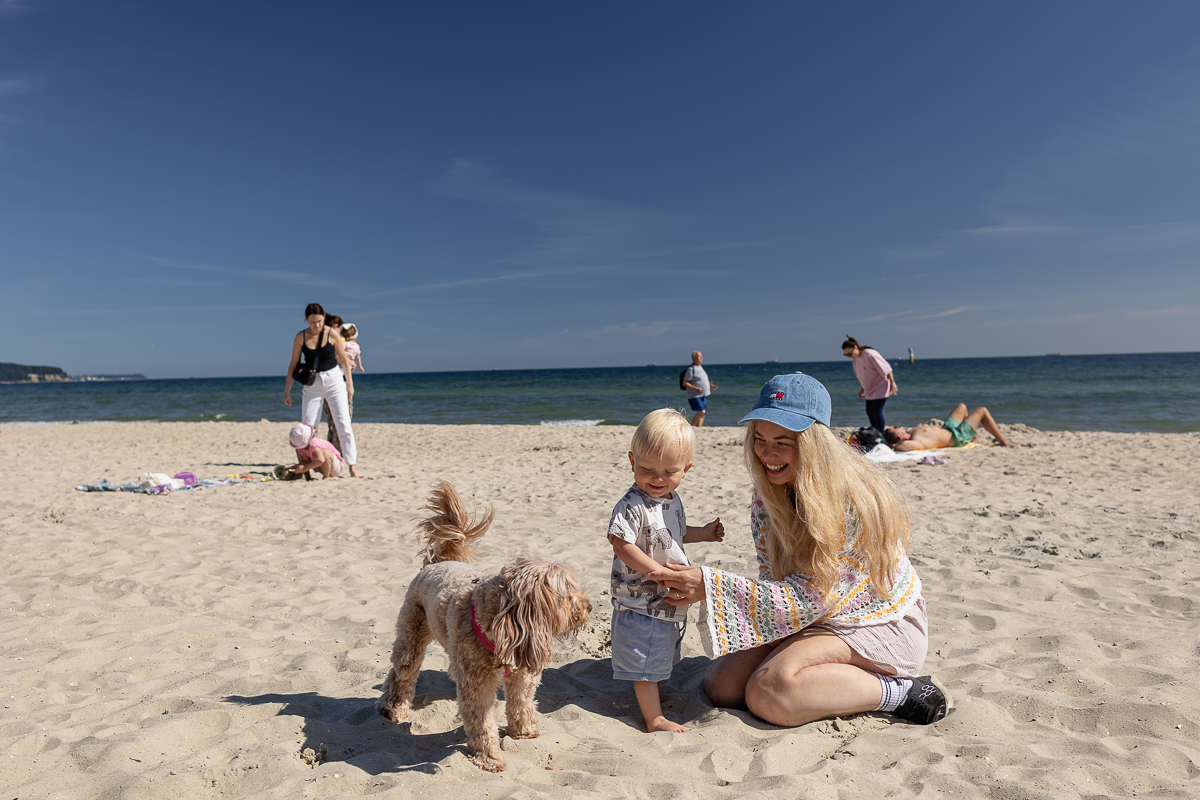
Ontario, Canada: 35 Best Things to See and Do

TL;DROntario delivers 35 solid tips, topped by the unmissable CN Tower and Niagara Falls in and around Toronto, laid-back Ottawa with its skating on the Rideau Canal, wild Algonquin Park (over 7,600 km², where you’ll need to book campsites 5 months ahead) and the turquoise water at the Grotto on the Bruce Peninsula (free entry in summer 2026). September–October is the sweet spot, with autumn colours, lower prices and daytime temperatures of 15–20°C. You’ll want a car to see the province properly, since public transport only really works in Toronto and Ottawa. Budget for 13% HST plus a 4–6% accommodation tax on top, so add up to 19% to any quoted price — a week for two comes in at roughly 2,500–4,000 CAD, not including flights.

When people ask me why I decided to move to Canada, I always think back to that one moment. I was standing with my mum at a viewpoint above Niagara Falls, water droplets hitting my face, and I thought: this is where I want to live one day. It was more than ten years ago, my very first trip to Canada, and the destination was Ontario — a province that completely changed my plans. If you’re wondering about the best things to do in Ontario Canada, this article is your ultimate guide.

A few years later, that dream came true and I actually moved to Canada. And later still, I returned to Ontario briefly with my then-boyfriend (now husband), so I got to see the province through his eyes too — as someone experiencing it for the first time. And you know what? It blew me away all over again.

Ontario is enormous. It’s Canada’s second-largest province, roughly four times the size of the UK. From the buzzing streets of Toronto to the peaceful cottage country with thousands of lakes, to wild provincial parks with a moose around every corner — this province has so many layers that one article barely scratches the surface. But I’ll do my best to share the highlights I’ve gathered, seen, and experienced over the years.

In this article, you’ll find 35 things to see and do in Ontario — from icons like the CN Tower and Niagara Falls to hidden gems like Bruce Peninsula and Muskoka, plus practical advice on where to stay, what to eat, and how much it all costs. Let’s dive in.

TL;DR

  • Toronto — a multicultural metropolis with the CN Tower, an island escape, and markets where locals eat
  • Ottawa — it’ll surprise you; it’s not as boring as everyone thinks (museums, Rideau Canal, BeaverTails)
  • Niagara Falls — an absolute classic; I’ve written a separate article about them
  • Algonquin Park — where you’ll learn to love silence (book 5 months ahead!)
  • Bruce Peninsula — turquoise water you won’t believe (free entry in summer 2026)
  • Muskoka — the “Hamptons of the North” with thousands of lakes and autumn colours
  • Best time to visit? September–October; the fall colours are a literal explosion
  • Budget? Factor in 13% HST + 6% accommodation tax = 19% on top (a shock for Europeans)
  • Car? Essential if you want to see more than Toronto
Moose in a Canadian national park

When to visit and how to get around Ontario

Before we get into specific things to see and do in Ontario, let’s cover two key points — when to visit and how to get around the province. Because good timing can save you hundreds of pounds, and a bad transport strategy can cost you a lot of frustration.

1. When to visit (and when to skip)

Ontario is a province of four faces, and each season looks completely different. Summer (June–August) is peak season — lakes are warm, all parks and attractions are open, but it’s also the busiest and most expensive time. If you’re set on summer, be prepared for popular campgrounds like Algonquin to be booked up months in advance.

Autumn (September–October) is, in my opinion, absolutely the best time to visit Ontario. The colours are beyond description — entire forests transform into a palette of red, orange, and gold. There are fewer tourists, prices drop, and the weather is still pleasantly warm (around 15–20°C during the day). The only downside is that some attractions start closing at the end of October.

Winter (December–March) is for the brave. Temperatures can easily plunge to -20°C, but in return you get skating on the Rideau Canal in Ottawa (the world’s largest natural ice rink!), the Winterlude festival, or skiing at Blue Mountain. Spring (April–May) is a transitional period — tulips bloom in Ottawa (the Tulip Festival is gorgeous), but some park trails may still be muddy and closed. The upside? Virtually no tourists and great accommodation prices.

2. A car is king (and public transport only rules in Toronto)

I’ll tell you straight away — without a car, you won’t get far in Ontario. Unless you’re happy staying just in Toronto, that is. Public transport works well within cities (TTC metro and trams in Toronto, OC Transpo in Ottawa), and there’s a train connection between Toronto and Ottawa via Via Rail, but that’s about it. No bus will take you to The Grotto on Bruce Peninsula or on a moose safari in Algonquin.

I’d recommend picking up a rental car directly at Toronto Pearson Airport — all the major rental companies are there and prices start at around 40–60 CAD per day (roughly £25–35). Tip: Book your car as early as possible, especially in summer when prices skyrocket. And don’t be put off by the distances — the highways (particularly those numbered 400+) are excellent, wide, and fast. Toronto to Ottawa is about 4.5 hours, to Bruce Peninsula around 4 hours, and to Algonquin just under 3 hours.

Where to stay in Ontario

Accommodation in Ontario varies hugely depending on where you are. In Toronto, expect to pay 150–250 CAD per night (£85–145) for a decent hotel — the best value for money and location is around the Queen West or Distillery District neighbourhoods. In Ottawa, it’s a bit cheaper at around 120–200 CAD, and staying near ByWard Market is ideal. Outside the big cities — say in Muskoka or near Bruce Peninsula — you’ll find lovely lakeside Airbnb cabins for 100–150 CAD.

For nature lovers, camping in provincial and national parks is a fantastic option — sites cost 40–55 CAD per night and the atmosphere is unforgettable. But book well in advance, especially for Algonquin and Bruce Peninsula, which fill up months ahead. And don’t forget about taxes: on top of the accommodation price, you’ll always pay 13% HST plus 4–6% municipal accommodation tax. Consider using Booking.com to compare prices and find the best deals across the province.

Toronto: 6 places you must visit and things to do

Let’s look at 6 tips for what to see and do in Toronto — from the iconic CN Tower to the hipster haven of Distillery District and the island escape of Toronto Islands. Toronto is a city that never lets you sleep — literally — because there’s always something going on, no matter when you visit.

3. CN Tower — a view worth paying for

CN Tower in Toronto illuminated at dusk
Photo: Wladyslaw / Wikimedia Commons (CC BY 3.0)

Let’s start with the icon. The CN Tower is that tower you see in every other photo of Toronto, and even though it sounds like a typical tourist trap, this one is genuinely worth it. The view from the main observation deck at 346 metres is breathtaking — you can see the entire city, Lake Ontario, and on a clear day even the outline of Niagara Falls in the distance.

For the daring, there’s EdgeWalk — a walk along the outer rim of the tower at 356 metres, secured by a harness. It costs around 225 CAD (about £130), and it’s one of those experiences you’ll be talking about ten years from now. If you’d rather stay inside, I recommend the 360° restaurant — it revolves and the food is surprisingly good. Best of all: if you dine here, admission to the observation deck is free. So you’re essentially paying for dinner with the best view in the city.

Money-saving tip: Get a CityPASS Toronto, which bundles admission to several attractions at up to 35% off. The CN Tower is included.

4. Distillery District — a brick-lined hipster paradise

Victorian brick buildings in Toronto's Distillery District
Photo: Mathew Ingram / Wikimedia Commons (CC BY 2.0)

This place won me over instantly. Picture a complex of old Victorian brick buildings that once housed a whisky distillery, and today you’ll find galleries, design shops, artisan cafés, and in winter one of the most beautiful Christmas markets in all of North America. The Distillery District is a pedestrian zone, so you can stroll around without cars or stress.

Pop into SOMA Chocolatemaker for a hot chocolate (seriously, it’s probably the best hot chocolate I’ve ever had), and if you’re here in December, the Christmas Market is an absolute must. Food stalls, mulled wine, handcrafted gifts, and that whole festive village atmosphere — it’s magical. Admission to the Christmas market is paid (around 10 CAD / £6), but it’s well worth it.

5. Kensington Market and Chinatown — the multicultural heart of the city

Kensington Market in Toronto
Photo: Scott Webb scottwebb / CC0 / Wikimedia Commons

Kensington Market is probably my favourite neighbourhood in Toronto. It’s a kind of organised chaos — vintage shops, street art, cafés serving coffee from around the world, and restaurants where you can have Ethiopian food next to a Mexican taco and a Cuban sandwich. This is where you truly feel why Toronto ranks among the most multicultural cities on the planet.

Right next door is Chinatown — one of the largest in North America. My advice: come hungry, because you can eat on literally every corner here for next to nothing. Dim sum at one of the local restaurants is an experience in itself. And a tip: Kensington Market is liveliest on Saturdays, when there are farmers’ markets and street musicians.

6. Toronto Islands — a city escape in 15 minutes

Toronto Islands with the city skyline in the background
Photo: apasciuto / CC BY 2.0 / Wikimedia Commons

One of my favourite spots in Toronto. Just hop on a ferry from the harbour (a return ticket is around 9 CAD / £5) and in fifteen minutes you’re on an island with that iconic view of the entire Toronto skyline. The islands are connected by bridges and pathways, and they’re perfect for cycling, picnicking on the beach, or simply sitting on a bench and gazing at the city across the water.

Centre Island has a small amusement park for kids, Ward’s Island is quieter with charming little cottages, and Hanlan’s Point has a beach (including a clothing-optional section, for the more adventurous). It gets quite busy in summer, so I’d recommend going either early in the morning or in the late afternoon, when the light on the skyline is photogenically perfect.

7. St. Lawrence Market — where the locals eat

St. Lawrence Market in Toronto
Photo: Mark / CC BY 2.0 / Wikimedia Commons

National Geographic once named St. Lawrence Market one of the best food markets in the world, and I wholeheartedly agree. This market has been running since 1803, and the Saturday Farmers’ Market is practically a sacred ritual for Torontonians. You’ll find everything here — from fresh oysters to artisan cheeses to pastries that smell so good you simply can’t walk past them.

The must-try? A peameal bacon sandwich from Carousel Bakery. It’s a Toronto classic — Canadian bacon in a bun, simple and brilliant. It costs about 10 CAD (£6) and I’d personally fly across the Atlantic just for it. The market is open Tuesday to Saturday, but the real experience is Saturday morning, when the atmosphere is at its liveliest.

8. Casa Loma — a castle in the middle of the city (and it’s a bit weird)

Casa Loma castle with towers in the middle of Toronto
Photo: Dpalma01 / Wikimedia Commons (CC BY-SA 4.0)

I’ll be honest: Casa Loma is a bit of a love-hate affair. On one hand, it’s a stunning Gothic Revival castle from 1914, built by the eccentric millionaire Sir Henry Pellatt, complete with secret passages, towers, and beautiful gardens. On the other hand, admission at around 30 CAD (£17) for an adult is quite steep for what you see inside, because the interiors are a bit empty.

But here’s why you should go anyway: the view from the tower is spectacular, the gardens are gorgeous in summer, and the whole story of the man who built himself a castle and then lost everything is fascinating. Plus, if you’re here in October, they host Legends of Horror — a Halloween event in the secret passages that’s apparently terrifyingly good. Admission for children (4–13) is 20 CAD, seniors 25 CAD.

Ottawa: 4 experiences that make it worth a stop

Most tourists skip Ottawa — and that’s a mistake. Canada’s capital has a surprisingly lot to offer, from free Parliament tours to skating on the world’s largest rink to museums that would cost a fortune elsewhere. Here are 4 experiences and things to see and do in Ottawa that’ll make you glad you stopped.

9. Parliament Hill — the heart of Canada (and it’s free!)

Centre Block of Parliament on Parliament Hill in Ottawa
Photo: Saffron Blaze / Wikimedia Commons (CC BY-SA 3.0)

Most tourists come to Ottawa for a day, glance at Parliament, and move on. That’s a shame, because Ottawa has so much more. But let’s start with Parliament — the buildings on Parliament Hill are truly impressive, especially the Centre Block with its Peace Tower. Tours are free — just book online, and you’ll learn plenty of fascinating facts about Canadian politics and history.

In summer (late June to late August), the Changing of the Guard ceremony takes place here — reminiscent of the London version, only in a more relaxed atmosphere. I also recommend coming in the evening, when the building is beautifully illuminated. And a little tip: if you’re planning to visit multiple museums and attractions, pick up the new Visit Ottawa Pass — for 100 CAD (about £58) per adult you get admission to five out of fourteen top attractions, and children get in free.

10. Rideau Canal — skates or a boat, depending on the season

Skating on the Rideau Canal in Ottawa
Photo: Ahunt / CC0 / Wikimedia Commons

The Rideau Canal is a UNESCO World Heritage Site, and it’s a place that transforms so dramatically with the seasons it looks like a different world each time. In winter, it becomes the Rideau Canal Skateway — the world’s largest natural ice rink, stretching over 7.8 kilometres. Skating is free, and along the canal there are stalls selling BeaverTails (more on those later) and hot chocolate. It’s absolutely magical.

In summer, you can cruise along the canal by boat or kayak, and there’s a lovely path along the banks for cycling or walking. The Winterlude festival (February) is the cherry on top — ice sculptures, snow slides, and the whole of Ottawa looking like a winter wonderland. If you have the chance to visit in winter, this is one of the best reasons to do so.

11. ByWard Market — Obama came here for cookies

ByWard Market in Ottawa
Photo: Michel Rathwell from Cornwall, Canada / CC BY 2.0 / Wikimedia Commons

ByWard Market is one of the oldest and largest farmers’ markets in Canada and the beating heart of Ottawa’s social life. During the day, you’ll find stalls selling fruit, flowers, and artisan crafts, plus plenty of cafés and restaurants. In the evening, the neighbourhood transforms into a nightlife hub with bars and live music.

The must-visit? BeaverTails — fried dough shaped like a beaver’s tail with various toppings. The classic is sugar and cinnamon, but my personal favourite is Nutella and banana. And that Obama mention? When he flew into Ottawa as US President in 2009, his first stop was the Le Moulin de Provence bakery at ByWard Market, where he bought a maple leaf-shaped cookie. The bakery is still there and they’re rightfully proud of the visit.

12. Seven museums in three days (without losing your mind)

Canadian Museum of History in Gatineau
Photo: Taxiarchos228 / CC BY 3.0 / Wikimedia Commons

For its size, Ottawa has an incredible concentration of museums and galleries. The National Gallery of Canada with its iconic giant spider sculpture out front, the Canadian Museum of Nature with amazing dinosaur skeletons, the Canadian War Museum for history buffs, and the Canadian Museum of History across the river in Gatineau — those are just the biggest names.

If you’re planning to visit multiple museums, I’d again recommend the Visit Ottawa Pass for 100 CAD, because individual museum admissions run around 15–25 CAD each and it adds up quickly. And a pro tip: on Friday evenings, some galleries offer free admission or extended hours with live music and a bar — check ahead, because it’s a completely different experience to visiting during the day.

Niagara Falls and wine country: 3 tips you shouldn’t miss

The Niagara region isn’t just about the falls (though they’re obviously the main draw). You’ll also find one of the prettiest towns in Canada, wineries producing ice wine, and a landscape that looks straight out of a romantic film. Here are 3 tips for what to see and do around Niagara Falls and its surroundings.

13. The Falls — I’ve written a whole article about them

Niagara Falls — Horseshoe Falls
Photo: Aplucas0703 / CC BY 4.0 / Wikimedia Commons

I’ve written a detailed separate article about Niagara Falls, so I’ll keep it brief here. Yes, they’re worth it. No, they’re not overrated — the feeling of standing at the edge and sensing the sheer power of the water is indescribable. An important warning: avoid Clifton Hill, that neon-lit street full of overpriced attractions right near the falls. It’s a tourist trap of the highest order.

And one more thing tourists often don’t know about: on restaurant bills in the Niagara area, you may see a TIF (Tourism Improvement Fee) — an additional charge automatically added to your bill. It’s not a tip; it’s a local levy. Watch out for it — and don’t ask me how I know.

14. Niagara-on-the-Lake — a town where time stood still

Queen Street in Niagara-on-the-Lake
Photo: DimiTalen / CC0 / Wikimedia Commons

About 20 minutes from the falls lies one of the most charming little towns I’ve seen in Canada. Niagara-on-the-Lake looks like an English village transported to North America — blooming gardens, historic houses, quaint boutiques, and vineyards all around. Some of the best Canadian wines are produced here, and it’s also home to the famous Shaw Festival — a theatre festival running from April to November.

My recommendation? Rent bikes and cycle the wine route between the vineyards. It’s flat, beautiful, and you can stop for tastings at one (or five) wineries along the way. Most offer tasting sets for 10–20 CAD (£6–12). Then sit on a terrace overlooking the vines, have a glass of local Chardonnay, and wonder why you don’t do this more often.

15. Ice wine — Ontario’s liquid gold

Vineyard producing ice wine in Ontario
Photo: Ken Lund from Reno, Nevada, USA / CC BY-SA 2.0 / Wikimedia Commons

If you don’t know what ice wine is, here’s the deal: Canada is one of the world’s largest producers, and Ontario is its epicentre. The grapes are harvested frozen, at temperatures below -8°C, and the result is an incredibly sweet, concentrated wine served as a dessert. It’s liquid luxury.

A small bottle (usually 200ml) starts at around 25 CAD (£15) for a basic version, while premium ones can easily exceed 100 CAD. You can buy it directly from wineries in Niagara-on-the-Lake, at LCBO (Ontario’s government-run liquor shops), or at the airport — but the best experience is tasting it right in the cellar. The Inniskillin winery is legendary and offers tastings year-round. And if you visit in spring, some farms will show you the actual process of harvesting frozen grapes.

Where nature steals the show: 5 parks and natural wonders of Ontario

And now for the best part — nature. Ontario is home to some of the most stunning national and provincial parks in all of Canada. From the endless lakes of Algonquin to the turquoise waters of Bruce Peninsula to the thousands of islands along the US border. Here are 5 places where Ontario’s nature puts on its finest show — and where you’ll feel like you’re at the very edge of the world.

16. Algonquin Provincial Park — where you’ll learn to love silence

Autumn colours in Algonquin Provincial Park, Ontario
Photo: Mhsheikholeslami / Wikimedia Commons (CC BY-SA 4.0)

Algonquin Park is, for me, the heart of Ontario. It’s a massive provincial park (over 7,600 km²) full of lakes, rivers, forests, and wildlife — moose, beavers, bears, wolves. And above all, silence. That kind of silence where all you hear is birdsong, wind in the treetops, and the occasional slap of a beaver’s tail on the water.

Canoeing is the number one experience here — you can plan a day trip or a multi-day adventure carrying your canoe between lakes (portaging). For those who want something less challenging, the Highway 60 Corridor offers several accessible trails and a visitor centre.

And now for the single most important thing to remember from this entire article: book your campground at least 5 months in advance! Reservations open at exactly 7am (ET) and popular sites sell out within minutes. This is not an exaggeration — people on Reddit describe sitting at their computers at 6:59 and refreshing the page. Summer 2026 reservations open on a rolling basis (always 5 months ahead), so if you’re planning July, book in February. Website: ontarioparks.ca, phone: 1-888-ONT-PARK.

In autumn, Algonquin is literally ablaze — the foliage colours here are among the most spectacular in all of North America. The best viewpoint? Lookout Trail — a short hike, but the view across an endless carpet of red and gold treetops will take your breath away.

17. Bruce Peninsula and The Grotto — turquoise water in the heart of Canada

Turquoise water and limestone cliffs at The Grotto on Bruce Peninsula
Photo: WikiPedant / Wikimedia Commons (CC BY-SA 4.0)

When I first saw photos of The Grotto on Bruce Peninsula, I thought it was Greece or Croatia. The water is so turquoise and crystal-clear that you simply can’t believe it when you’re standing at the edge of the cliff, looking down into a cave carved by millennia of erosion. And yet you’re just 4 hours from Toronto, in the middle of Canada.

Bruce Peninsula National Park is one of the most popular national parks in Ontario, and The Grotto is its star attraction. But beware — entry is by reservation only, and spots sell out extremely fast. In 2026, however, there’s brilliant news: Parks Canada is offering free entry from 19 June to 7 September 2026 as part of the Canada Strong Pass programme! That doesn’t mean you don’t need to reserve, though — parking is still limited and the reservation fee still applies. Reservations for summer 2026 opened on 2 February at 8am (ET) at reservation.pc.gc.ca.

The hike to The Grotto takes about 45 minutes over rocky terrain — shoes with good grip are essential. And if you want to get into the cave itself, you’ll need to scramble down the rocks, which isn’t for everyone. But the view from above is equally stunning.

18. Tobermory — shipwrecks in crystal-clear water

Flowerpot Island near Tobermory
Photo: Laslovarga / CC BY-SA 4.0 / Wikimedia Commons

Tobermory is a picturesque fishing village at the very tip of Bruce Peninsula and a gateway to several incredible experiences. The water in the harbour is so clear that you can see shipwrecks on the bottom from the dock — no diving required! For those who do want to dive, Fathom Five National Marine Park has dozens of historic wrecks to explore.

From Tobermory, boats head to Flowerpot Island — a small island with iconic rock pillars that look like giant flower pots. The crossing takes about 20 minutes and the glass-bottom boat lets you see wrecks along the way. Tickets are around 50 CAD (£29). And if you have time and a taste for adventure, a ferry runs from Tobermory to Manitoulin Island — but more on that shortly.

19. Thousand Islands — 1,800 islands and a fairytale castle

Boldt Castle on an island in the Thousand Islands region
Photo: Pierre André / Wikimedia Commons (CC BY-SA 4.0)

The Thousand Islands region is an enchanting stretch of the St. Lawrence River, scattered with over 1,800 islets — from tiny rocky outcrops with a single tree to islands with luxury mansions. It’s about 3 hours east of Toronto, and the best way to experience it is, of course, from the water.

Boat cruises depart from several locations — from Brockville (90-minute cruise from 37 CAD / £21), from Rockport (from 69 CAD / £40 per adult), or from Kingston. The highlight is Boldt Castle on Heart Island — a magnificent castle built by millionaire George Boldt for his wife. But heads up: the island is on the American side of the border, so you’ll need a passport! Without one, you can’t get to the castle. Kayaking among the islands is the way to go if you prefer your own pace — it’s absolutely magical, especially at sunrise or sunset.

20. Sandbanks — beaches almost like the Caribbean (well, almost)

Beach at Sandbanks Provincial Park
Photo: A J Butler / CC BY 3.0 / Wikimedia Commons

Sandbanks Provincial Park has the world’s largest freshwater dune system and beaches that wouldn’t look entirely out of place in the Caribbean. Fine white sand, clear water, and in summer, temperatures warm enough for a proper swim. The park is in Prince Edward County — an area that’s transformed into a wine and foodie paradise over recent years.

The main beaches are Outlet Beach (quieter, fewer people) and Sandbanks Beach (bigger, more popular). Camping in the park is great too, but — surprise — book well ahead. Combined with a visit to the wineries in Prince Edward County (more on that below), it makes for a perfect weekend trip from Toronto.

Hidden gems of Ontario: 6 places most tourists miss

This is my favourite part of the article. While most tourists stick to Toronto, Ottawa, and Niagara, Ontario has plenty of places that fly completely under the radar. Here are 6 hidden gems to see and explore off the beaten path — and trust me, they’re worth the detour.

21. Muskoka — the “Hamptons of the North” with thousands of lakes

Lake and cottage in Muskoka
Photo: Geo Swan / Public domain / Wikimedia Commons

Muskoka is to Canadians (especially Torontonians) what the Lake District is to Londoners — the place you go for a weekend away. Except here, some of those “cottages” are luxury estates belonging to celebrities and billionaires, perched on the shores of one of the roughly 1,600 lakes in the area. Don’t worry, though — Muskoka has plenty to offer us mere mortals on a normal budget too.

The area around Huntsville is a great base — a charming little town with restaurants and access to Limberlost Forest, which has over 12 hiking trails. For a jaw-dropping view, tackle the Huckleberry Rock Lookout Trail — the panorama over Lake Muskoka is unforgettable. And for something unique, take a cruise on the RMS Segwun — the oldest operating steamship in North America. The autumn colours here are absolutely phenomenal.

Tip for romantics: Try Torrance Barrens Dark-Sky Preserve — one of the few officially protected stargazing sites in Ontario. On a clear night, you’ll see the Milky Way like nowhere else.

22. Prince Edward County — a wine lover’s paradise

Winery in Prince Edward County
Photo: Robert Taylor from Stirling, ON, Canada / CC BY 2.0 / Wikimedia Commons

Prince Edward County — or “The County” as locals call it — is probably the trendiest weekend trip from Toronto. Picture an area with more than 35 wineries, farm-to-table restaurants, lavender farms, and craft breweries — all on a peaceful peninsula surrounded by water. It feels like a different world, just two and a half hours from the city.

The wineries here produce excellent Chardonnay and Pinot Noir, and most offer tastings in lovely settings. I’d recommend Norman Hardie Winery (superb wood-fired pizzas paired with wine!) and Rosehall Run. Beyond wine, you’ll find artisan cheese makers, local restaurants working with ingredients straight from the farm, and in summer, lavender fields that look like they belong in Provence. If you can, combine your visit with Sandbanks — it’s right next door.

23. Kingston — rock and roll soul and prison stories

Kingston waterfront with City Hall
Photo: DXR / CC BY-SA 4.0 / Wikimedia Commons

Kingston is a city that most tourists skip, and they’re missing out big time. A former capital of Canada (only briefly, but still), it’s now a university town with a beautiful limestone centre, a vibrant food scene, and an unexpectedly rock-and-roll soul — it’s the birthplace of legendary Canadian band The Tragically Hip, who are basically national heroes in Canada, sort of like what The Stone Roses are to Manchester but even bigger.

Kingston is also the gateway to Thousand Islands, and it offers one truly unique experience: a tour of Kingston Penitentiary — a former federal prison that once housed Canada’s most dangerous criminals. Tours are popular, so I’d recommend booking ahead. Then stroll down Princess Street, grab lunch at one of the local restaurants, and soak up the atmosphere of a town that’s surprisingly lively for its size.

24. Manitoulin Island — the world’s largest freshwater island

Bridal Veil Falls on Manitoulin Island
Photo: Xander Ashburn / CC BY 2.0 / Wikimedia Commons

Yes, you read that right — the world’s largest freshwater island is in Ontario. Manitoulin Island sits in Lake Huron, and you can get there either by ferry from Tobermory (about 2 hours — a fantastic experience in itself) or via a bridge from the town of Little Current to the north.

Manitoulin is home to several First Nations communities, and Indigenous culture is very much alive and present here. I recommend visiting the Ojibwe Cultural Foundation, and if your timing is right, Haweater Weekend (August) is a local festival featuring powwow dance showcases. As for nature, the Cup and Saucer Trail offers one of the best views in all of Ontario — 70 metres above the surrounding landscape, with a panorama across the lake. This is an island where time slows down, and so do you.

25. Elora Gorge — a mini Grand Canyon and a charming village

Elora Gorge in Ontario
Photo: Ken Lund from Reno, Nevada, USA / CC BY-SA 2.0 / Wikimedia Commons

About an hour and a half from Toronto lies the village of Elora, which looks like it’s been plucked straight from the Scottish Highlands. Limestone buildings, art galleries, cafés, and most importantly — Elora Gorge, a dramatic gorge with limestone cliffs up to 22 metres high, carved by the Grand River.

In summer, tubing is massively popular here — you hop into an inflatable tube and let the current carry you through the gorge. It’s brilliant fun and costs about 10–15 CAD (£6–9) to rent a tube. Outside summer, it’s gorgeous for hiking along the gorge rim. Then grab lunch in the village — the atmosphere of an old stone village with modern restaurants is simply perfect. By the way, Elora also makes a great base if you don’t want to sleep in the park itself but want to stay close to nature.

26. Hamilton — the city of a hundred waterfalls (seriously, a hundred)

Webster Falls in Hamilton
Photo: Laslovarga / CC BY-SA 4.0 / Wikimedia Commons

Hamilton is a city with over 100 waterfalls. One hundred. Waterfalls. In a single city. It calls itself the “Waterfall Capital of the World” and honestly — I can’t argue with that. Most of them lie along the Niagara Escarpment, a limestone ridge that stretches across Ontario.

The most famous? Webster Falls (22 metres, cascading and gorgeous) and Tew Falls (41 metres, the tallest in Hamilton) — both are in Spencer Gorge Conservation Area, and from May to November you need an online reservation because they’re so popular. Albion Falls is easily accessible from the car park (200 metres’ walk). And if you fancy a proper hike, the Bruce Trail in the Iroquoia section takes you past four major waterfalls with views from the cliff edge.

Tip: The waterfalls are at their most impressive in spring after the snow melts, or after heavy rain. In late summer, some may have reduced flow. And Hamilton has a surprisingly good food scene too — James Street North is packed with independent restaurants and bars.

Culture and experiences: 3 original things to do in Ontario

Ontario isn’t just nature and big cities. You’ll also find a world-renowned theatre festival, an Alpine-style village with skiing, and a hockey museum you’ll fall in love with even if you don’t follow the sport. Here are 3 cultural tips and experiences that show Ontario from a completely different angle.

27. Stratford Festival — world-class Shakespeare

If you love theatre, the Stratford Festival will blow you away. The town of Stratford in Ontario has been hosting one of the largest and most acclaimed theatre festivals in North America since 1953. From April to November, they stage Shakespeare, classics, and modern plays across several theatres — and the quality is genuinely world-class.

The town itself is lovely — the River Avon (yes, named deliberately after its English counterpart), swans gliding on the water, beautiful gardens, and plenty of great restaurants. Tickets range from about 40 to 150 CAD (£23–87) depending on seating and the production. Stratford is about two hours from Toronto and can easily be combined with a visit to Elora — they’re roughly an hour apart.

28. Blue Mountain — skiing, an Alpine village, and summer adventures

Blue Mountain Resort in Ontario
Photo: alljengi from Leith, Edinburgh / CC BY-SA 2.0 / Wikimedia Commons

Blue Mountain is Ontario’s number one ski resort, and in winter it draws skiers from across the Toronto area. But what many people don’t realise is that it’s brilliant in summer too. Blue Mountain Village is a charming little Alpine-style village with shops, restaurants, and loads of activities: the Ridge Runner Mountain Coaster (a toboggan ride down the mountain), ziplines, via ferrata, and paddle boarding on Georgian Bay.

In winter, there are solid ski runs (by Canadian standards — perhaps not Alpine ones), cross-country trails, and snowshoeing. Blue Mountain is about two hours from Toronto and combines nicely with a visit to Tobermory and Bruce Peninsula if you’re heading north for a longer trip.

29. Hockey Hall of Fame — even if you don’t follow hockey

As someone from the Czech Republic living in Canada, I have to say that the Hockey Hall of Fame in Toronto is worth a visit even if hockey isn’t your thing. It’s an interactive museum where you can shoot on a virtual goalie, see the original Stanley Cup (smaller than you’d think!), and learn about the history of a sport that’s to Canadians what football is to the English. Only more important, they’d argue.

There’s also plenty of memorabilia featuring Czech and Slovak hockey players, which is a nice touch. Admission is around 25 CAD (£15) for adults, and tip: with a PRESTO card (Toronto’s transit card) you get 20% off. The Hall of Fame is in central Toronto on Yonge Street, so it’s easy to combine with a walk around the city.

What to eat and drink in Ontario: 3 flavours you must try

Canada might not be the first country that springs to mind when you think of food. But Ontario will surprise you — from poutine to BeaverTails to maple syrup straight from the tree. Here are 3 foodie tips for what to try in Ontario so you can experience authentic Canadian cuisine.

30. Poutine — chips, cheese, and gravy that will change your life

Poutine — chips with cheese curds and gravy
Photo: RandomKatze / CC0 / Wikimedia Commons

Poutine is Canada’s national dish, and if you’ve never had it, prepare to fall in love at first bite. It’s simple: chips, cheese curds, and hot brown gravy. The cheese should “squeak” between your teeth at the right temperature — that’s the test of proper poutine.

You’ll find poutine everywhere — from fast food joints to gourmet restaurants that serve it with duck confit or lobster. A basic portion costs 8–12 CAD (£5–7). In Toronto, I’d recommend Smoke’s Poutinerie (a chain, but good and with loads of variations) or local restaurants in Kensington Market. Fair warning: it’s one of those things that looks like an unphotogenic mess but tastes absolutely phenomenal.

31. BeaverTails and Tim Hortons — Canadian classics

BeaverTails — Canadian sweet fried pastry
Photo: Arge300exx / Public domain / Wikimedia Commons

I already mentioned BeaverTails in the Ottawa section, but they deserve their own entry. It’s fried dough shaped like a beaver’s tail (the beaver is Canada’s national symbol, so why not) and topped with various goodies. My top pick is the Avalanche — Nutella, peanut butter, and Reese’s Pieces. One costs around 8 CAD (£5) and it’s so big it’s usually enough for two.

And then there’s Tim Hortons — Canada’s answer to Costa, only cheaper, unpretentious, and absolutely everywhere. Timmies (as Canadians call it) is an institution. Order a double-double (coffee with two sugars and two creams) and a Timbit (a doughnut hole) and you’ll be an honorary Canadian for a moment. The coffee quality is… let’s say debatable, but the cultural experience is priceless.

32. Maple syrup — the real stuff, please

Maple syrup on pancakes
Photo: CharmaineZoe’s Marvelous Melange from England / CC BY 2.0 / Wikimedia Commons

Maple syrup in Canada is like olive oil in Italy — it’s something an entire culture revolves around, and the difference between the real thing and the supermarket stuff you buy back home is like the difference between champagne and cheap fizz. Real Canadian maple syrup is thick, velvety, and tastes of caramel with notes of vanilla and nuts.

Buy it directly from farms (sugar shacks / cabanes à sucre) — especially in March and April, when maple syrup season is in full swing and farms host open days with tastings, pancakes, and other treats. In Ontario, there are plenty of farms in the Lanark County area near Ottawa. A bottle of pure maple syrup (250ml) costs about 10–15 CAD (£6–9). Tip: Look for Grade A Dark with the “Canada No. 1” label — it has the richest flavour. And definitely don’t pack it in your hand luggage — airport security won’t be thrilled.

Ontario by season: 3 reasons to visit any time of year

One of the things that fascinates me about Ontario is how dramatically the province transforms throughout the year. Each season brings a completely different atmosphere, different activities, and different reasons to visit. Here are 3 seasonal tips for what to see and do in Ontario.

33. Autumn — an explosion of colour like you’ve never seen

Autumn colours in Algonquin Provincial Park
Photo: Tony Webster from Minneapolis, Minnesota, United States / CC BY 2.0 / Wikimedia Commons

Autumn in Ontario is the reason people fly here from around the world. It’s called fall foliage, and it’s a literal explosion of red, orange, gold, and burgundy that blankets the entire province from late September through mid-October. If you’ve never seen it in person, trust me — photos don’t do it even half the justice.

The best spots for autumn colours? Algonquin Park (obviously), Muskoka (the Dorset Lookout Tower is a legendary viewpoint), Thousand Islands Parkway, and the Bruce Trail. Ontario Parks even has an online “Fall Colour Report” that’s updated weekly to show where the colours are most intense. The ideal window is typically the last week of September through the second week of October, though it varies from year to year. If you can, plan a road trip: Toronto → Muskoka → Algonquin → Ottawa — it’s roughly a five-day route and you’ll see the very best.

34. Winter — skating, snow, and a touch of madness

Winter in Ontario isn’t for everyone, I’ll admit that. Temperatures can drop to -25°C and there’s plenty of snow. But if you dress for it (layering is key!) and embrace it, Ontario in winter has its own magic. The Rideau Canal Skateway in Ottawa is a must (free skating!), and the Winterlude festival (February) with ice sculptures and snow slides is brilliant for families.

Blue Mountain offers skiing (around 80–130 CAD / £46–75 for a day pass), but if you want an authentic Canadian experience, try ice fishing — fishing through a hole in the ice on a frozen lake, from a little hut with a wood stove. Yes, it sounds mad, but it’s surprisingly meditative. And you usually drink hot chocolate (or something stronger) while you’re at it. Ontario’s lakes typically freeze from January through March.

35. Summer and spring — lakes, festivals, and Canadian good vibes

Summer is peak season and Ontario comes alive. Lakes warm up to swimming temperature, cottage country (mainly Muskoka and Kawartha Lakes) fills up with Torontonians escaping the city, and festivals take place across the province. The Toronto International Film Festival (TIFF) in September is one of the most prestigious film festivals in the world, and the city buzzes with it for an entire week. In summer 2026, Toronto is also hosting FIFA World Cup matches — the city will be bursting at the seams, so expect higher prices and book your accommodation as early as possible.

Spring is quieter but has its own charm. In Ottawa, over a million tulips bloom during the Canadian Tulip Festival (May) — it’s the world’s largest tulip festival, and the story behind it is beautiful (the Netherlands thanked Canada for its help during World War II). Spring is also maple syrup season, and nature is waking up — waterfalls are at their strongest flow and park trails are beautifully green. For British travellers, direct flights from London Heathrow to Toronto Pearson are available with airlines like Air Canada and British Airways, making Ontario an easy transatlantic trip. Consider picking up an eSIM from Holafly before you go, so you’ll have data from the moment you land.

How much does a week in Ontario cost + practical tips

Ontario isn’t cheap, I’ll be upfront about that. Canada is generally one of the pricier destinations, and with the current exchange rate (1 CAD ≈ £0.58), it can come as a bit of a shock. Here’s a rough budget for a week for two:

Accommodation: A hotel or Airbnb in Toronto/Ottawa runs around 150–250 CAD per night (£87–145). Outside the big cities, it’s cheaper — around 100–150 CAD. Camping in provincial parks is the most affordable option at about 40–55 CAD per night. Watch out for taxes: on top of the listed accommodation price, you’ll always pay 13% HST (Harmonized Sales Tax), and in many cities an additional 4–6% Municipal Accommodation Tax. That means you’re paying 17–19% more than the sticker price! This is probably the biggest shock for Europeans, because back home VAT is already included in the price.

Food: Restaurant meal in Toronto: a main course 15–30 CAD + tip (15–20% is expected!). Market food or fast food: 8–15 CAD. Weekly grocery shop for two: about 150–200 CAD. Transport: A week’s car rental: around 300–500 CAD + petrol (about 1.50–1.80 CAD/litre). Activities: Most natural attractions are cheap or free — the main expenses are parking and reservation fees (5–15 CAD). Museums and attractions: 15–30 CAD per entry.

Overall: A week for two with a car, mid-range accommodation, and normal eating comes to roughly 2,500–4,000 CAD (£1,450–2,320) excluding flights. Money-saving tip: Go in September/October (shoulder season — lower prices, beautiful weather) and mix camping with hotels. Also keep an eye on the Ontario Parks website for day-use permits, which are cheaper than campground reservations.

Frequently asked questions (FAQ)

Tips and Tricks for Your Vacation

Don’t Overpay for Flights

Search for flights on Kayak. It’s our favorite search engine because it scans the websites of all airlines and always finds the cheapest connection.

Book Your Accommodation Smartly

The best experiences we’ve had when looking for accommodation (from Alaska to Morocco) are with Booking.com, where hotels, apartments, and entire houses are usually the cheapest and most widely available.

Don’t Forget Travel Insurance

Good travel insurance will protect you against illness, accidents, theft, or flight cancellations. We’ve had a few hospital visits abroad, so we know how important it is to have proper insurance arranged.

Where we insure ourselves: SafetyWing (best for everyone) and TrueTraveller (for extra-long trips).

Why don’t we recommend any Czech insurance company? Because they have too many restrictions. They set limits on the number of days abroad, travel insurance via a credit card often requires you to pay medical expenses only with that card, and they frequently limit the number of returns to the Czech Republic.

Find the Best Experiences

Get Your Guide is a huge online marketplace where you can book guided walks, trips, skip-the-line tickets, tours, and much more. We always find some extra fun there!
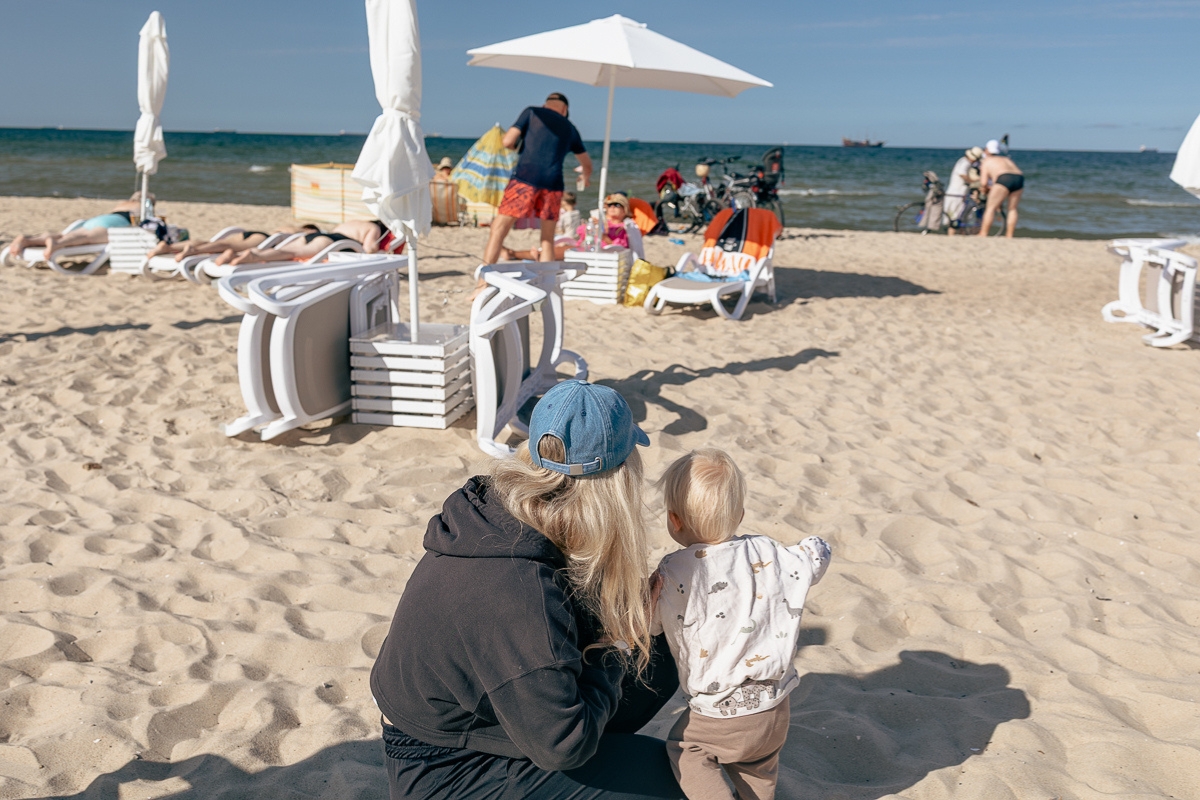
Quebec Canada: The Complete Guide | 30+ Things to See and Do

TL;DRQuebec is Canada’s largest province (about three times the size of France) and its only official language is French. The best route for combining cities, nature and great food is MontrealQuebec CityCharlevoixTadoussacGaspésie. Give yourself 10–14 days for the full road trip, or at least 7 days if you’re just doing Montreal, Quebec City and the surrounding area. Summer (June–September) is the best time to go, or come in autumn (September–October) for the changing leaves. Highlights include whale watching in Tadoussac, the Montmorency Falls (higher than Niagara), the lanes of Petit Champlain, and the Gaspésie peninsula along Route 132. Budget CAD 3,000 to CAD 10,000+ a day per person, direct flights from London to Montreal start from around £390, and Brits travelling to Canada need only an eTA, which costs 7 CAD.

I remember the moment as if it were yesterday. I was standing on the bank of the St. Lawrence River, surrounded by a landscape so majestic that I forgot to breathe. The sun was glinting off the water, forested hills stretched into the distance, and I thought — this can’t be North America. This feels like a piece of Europe, only a thousand times bigger and wilder. ☺️

The province of Quebec Canada completely enchanted me. And we’re not alone — National Geographic named it among the “Best of the World 2026” destinations. And you know what? It absolutely deserves it. This is a place where people speak French, where poutine replaces burgers, where baroque churches stand alongside industrial street art, and where you can drive in a single day from cosmopolitan Montreal through historic Quebec City all the way to fjords where whales breach the surface.

Canada had been calling to me for years, and Quebec was where I fell head over heels. I have to say, this corner of the country surprised me more than anything else. We expected nature — and we got nature, culture, gastronomy, history, and a serious dose of adventure. One moment we were sitting in a tiny café in Petit Champlain feeling like we’d been transported to Lyon. The next day we were watching humpback whales surface from the deck of a boat in Tadoussac, hardly believing our own eyes.

In this article, you’ll find over 30 tips on what to see, taste, and experience in Quebec Canada. From big-city Montreal through fairytale Quebec City to the wild Gaspésie peninsula. Settle in for a long read — because Quebec simply deserves more than a few paragraphs. 😁

Couple gazing at Château Frontenac and the St. Lawrence River from a viewpoint

TL;DR

  • Canada’s largest province — Quebec is roughly 3× the size of France. And it’s stunning.
  • French is the language here — it’s the sole official language. You’ll get by in English in Montreal, but out in the countryside it gets trickier.
  • Direct flights from London to Montreal — Air Canada and British Airways operate year-round, with seasonal options on Air Transat. Return flights from around £400 if you book early. Use Kiwi to compare prices.
  • No visa needed — UK citizens just need an eTA (electronic travel authorisation) costing 7 CAD (about £4), applied for online in minutes.
  • Quebec is roughly 2–3× pricier than the UK — budget around £60–80 per person per day (backpacker) up to £200+ (comfort).
  • Must-see regions: Montreal, Quebec City, Charlevoix, Tadoussac, Gaspésie, Laurentians.
  • Must-eat: poutine, smoked meat, Montreal bagels, maple syrup, tourtière.
  • Ideal trip length: 10–14 days for a road trip, minimum 7 days for Montreal + Quebec City + surrounds.
  • Best time to visit: summer (June–September) and autumn (September–October, Indian summer). Winter is for the brave, but magical.

When to visit Quebec and how to get around

Before we dive into specific tips, let’s clear up a few basics. Quebec is Canada’s largest province — roughly 3× the size of France, so there’s absolutely no shortage of space to explore. 😅 French is the sole official language here, the climate is extreme — summers are surprisingly hot and humid, while winters are arctic-cold. And distances? They’ll catch you off guard every time. It’s a good 10-hour drive from Montreal to Gaspésie, so plan wisely.

Another important thing to know: prices in shops and restaurants are always listed WITHOUT tax. Federal and provincial sales taxes are added at the till, totalling roughly 15%. So when you see a price of 20 CAD, you’ll actually pay 23 CAD. It takes some getting used to — Lukáš and I kept getting surprised at the checkout. 😅

Best time to visit Quebec

Summer (June–September) is hands-down the most popular and comfortable time to visit. Temperatures hover around 20–30 °C, everything is open, festivals are in full swing, and the days are beautifully long. The downside? Mosquitoes. Especially in the nature parks, they’ll eat you alive, so insect repellent is an absolute must. And naturally, accommodation prices go up.

Autumn (September–October) is probably our favourite time. Indian summer in Quebec is pure magic — the entire landscape wraps itself in shades of gold, orange, and crimson. The Laurentians and Charlevoix during this period look like something from a storybook. Fewer tourists, pleasant temperatures around 10–18 °C, and nature literally ablaze with colour.

Winter (December–March) is for the brave. Temperatures regularly plunge to -20 °C and below, but if you kit yourself out properly, an unforgettable experience awaits. The Winter Carnival in Quebec City is the world’s largest winter festival, and the snow-covered lanes of Vieux-Québec look like a Christmas postcard. Skiing, cross-country skiing, snowshoeing — there’s no shortage of winter sports.

Spring (April–May) is sugar shack season — maple syrup is being boiled down and you can visit a traditional cabane à sucre. But honestly, spring in Quebec tends to be a rather muddy and chilly transition from winter to summer. It’s not the best time for a first visit, though it does have its charm.

How to get to Quebec from the UK

The most convenient option is a direct flight from London to Montreal, operated year-round by Air Canada and British Airways from Heathrow. The flight takes around 7–8 hours and return tickets can be found from about £400 if you book early. In summer, Air Transat also offers direct seasonal services. We always compare prices on Kiwi — it’s our go-to tool for finding the best deals.

If you’re looking for cheaper options, you can also fly with a connection via Paris, Amsterdam, or Frankfurt with airlines like Air France, KLM, or Lufthansa. It often works out to a similar price, but you’ll need to factor in a longer travel time.

As for entry requirements — UK citizens don’t need a visa for Canada. You just need an electronic travel authorisation (eTA), which you can apply for online in minutes and costs just 7 CAD (about £4). It’s valid for 5 years or until your passport expires. Sort it out at least a few days before departure, though approval usually comes through within hours.

Woman with a parasol on the Terrasse Dufferin promenade in front of Château Frontenac

Getting around the province – car, train, or bus?

Let me be completely honest here: you really can’t do Quebec without a car. Well, unless you only want to stay in Montreal and Quebec City (where public transport works brilliantly). But the moment you want to see Charlevoix, Tadoussac, Gaspésie, or the Laurentians — you need a car.

Lukáš and I have had consistently great experiences with DiscoverCars, which we use all over the world. You can pick the car up right at Montreal airport and you’re instantly flexible. Prices in peak season run roughly €50–100/day depending on the category. Book well in advance, because cars get snapped up fast in summer.

A few important notes on driving: in winter, winter tyres are mandatory (1 December to 15 March), petrol is cheaper than in the UK, and motorways are only partially tolled. And watch out for moose on the roads — especially in Gaspésie and further north, this is a real danger, particularly at dusk and at night. Those moose warning signs aren’t decoration — take them seriously.

There’s also the VIA Rail train on the Montreal–Quebec City route (about 3 hours, from around €25), which is comfortable and fairly reliable. Buses (Orléans Express) cover the main routes, but frequency outside major cities is limited. For truly exploring Quebec, though, a car is simply irreplaceable.

Where to stay in Quebec and how much a holiday costs

Before we jump into specific tips, let’s be upfront: Quebec isn’t cheap. Canada is generally 2–3× pricier than the UK on many things, and Quebec is no exception. Daily budget per person works out roughly like this: budget traveller from £60–80 (hostels, self-catering, fewer activities), mid-range £100–160 (mid-range hotels, restaurants, activities), comfortable travel £200+.

Accommodation types are varied — from classic hotels and Airbnb through charming auberges (Quebec’s version of guesthouses) to cabins in provincial parks run by SEPAQ. SEPAQ (Société des établissements de plein air du Québec) is a fantastic organisation managing the provincial parks, offering beautiful cabins, campsites, and even glamping right in nature. Book well ahead, though, especially in summer — spots sell out fast.

Accommodation in Montreal

In Montreal, I’d recommend staying either in central Vieux-Montréal (beautiful but pricier, from around €150/night for a double room) or in Plateau Mont-Royal (the hipster quarter, slightly cheaper, livelier nightlife, packed with cafés and restaurants).

If you’re after a more budget-friendly option, try Airbnb or a hostel. HI Montreal is one of the best hostels we’ve come across in Canada.

Our accommodation picks in Montreal:

  • Hotel Bonaparte (Vieux-Montréal) — boutique hotel a stone’s throw from the Notre-Dame Basilica, breakfast included, rated 8.9/10. From about €140/night.
  • Auberge de La Fontaine (Plateau Mont-Royal) — cosy inn right by LaFontaine Park, superb staff, best value for money on the Plateau. From about €105/night.
  • Sonder Le Guerin (Mile End) — loft apartments in a converted printing house with kitchenette and washer, ideal for longer stays. From about €105/night.

Accommodation in Quebec City

In Quebec City, you ideally want to be right in Vieux-Québec (the Old Town), though that obviously comes at a cost — expect €135–200 per night. The atmosphere, however, is priceless. If you fancy a splurge, the legendary Fairmont Le Château Frontenac is one of the most iconic hotels in the world (but prices match, from €300/night and up).

A more affordable alternative is staying in Saint-Roch — a modern neighbourhood just outside the centre, packed with restaurants and cafés. It’s about a 15-minute walk to the Old Town.

Our accommodation picks in Quebec City:

  • Hôtel du Vieux-Québec (inside the walls) — 12 consecutive years as the top-rated hotel in the city on TripAdvisor, boutique hotel on Rue Saint-Jean, rated 9.3/10. From about €140/night.
  • Hôtel Manoir Victoria (inside the walls) — 4-star hotel with pool and restaurant, more space, rated 8.6/10. From about €120/night.
  • Comfort Inn Lévis (across the river — budget tip!) — ferry to the centre in 12 minutes with a stunning view of the city skyline, breakfast and parking included. From about €80/night. Spend the savings in the restaurants instead. 😉

Accommodation outside the cities – SEPAQ, auberges, and motels

Once you leave the big cities, you’ve got several fantastic options. SEPAQ cabins in the provincial parks are our absolute favourite — wooden chalets tucked away in nature, basic facilities, but total peace and tranquillity. Prices range from €100 to €200 per night depending on the season and park.

In Charlevoix and along the St. Lawrence, you’ll find lovely auberges — quintessentially Québécois guesthouses with bags of character, often with an excellent restaurant on site. In Gaspésie, motels along Route 132 come to the rescue — they’re no five-star affairs, but they’re clean, reasonably priced (from about €80/night), and most have a gorgeous sea view.

Our accommodation picks in Charlevoix and beyond:

  • Auberge La Muse (Baie-Saint-Paul) — intimate auberge with 11 rooms and its own bistro, right in the centre of this artistic little town. From about €110/night.
  • Auberge des Falaises (La Malbaie) — rooms with fireplace and views over the St. Lawrence, Nordic spa, rated 8.9/10. From about €105/night.
  • SEPAQ EXP Chalet (Parc des Grands-Jardins) — designer cabins for two with panoramic windows and fireplace, deep in the wilderness. From about €110/night + park admission.

Montreal: 8 places and experiences you can’t miss

Montreal is the gateway to Quebec for most travellers — and what a gateway it is! This city completely swept us off our feet with its energy. It’s the second-largest French-speaking city in the world (after Paris) and beautifully bilingual — French and English weave together in every conversation. It’s creative, gastronomically rich, blessed with incredible street art, and has an atmosphere that’s part European, part North American, and entirely its own.

Montreal skyline panorama above the St. Lawrence River
Photo: Guilhem Vellut from Paris, France / CC BY 2.0 / Wikimedia Commons

Lukáš and I spent four days in Montreal and still didn’t manage to see everything. I’d recommend at least three full days, ideally four. Now let’s get into the specifics.

1. Vieux-Montréal – the historic heart of the city

Old Port of Montreal with the silhouette of a historic grain silo
Vieux-Port Montreal — the historic harbour, now full of parks and cafés.

Old Montreal is where it all began. Cobblestone lanes, stone buildings from the 17th–19th centuries, horse-drawn carriages, and harbour views — you feel more like you’re in Bordeaux than North America. Place Jacques-Cartier is the main square and the perfect starting point for a wander.

Stroll along the Old Port (Vieux-Port), where in summer you’ll find carousels, street performers, and lovely river views. Don’t miss Pointe-à-Callière either, a fascinating archaeology and history museum built on the very spot where Montreal was founded. Admission is around 25 CAD (about €17).

2. Mont Royal – the best view of the city

Mont Royal Park with a view over Montreal
Mont Royal — the hill in the heart of Montreal, designed by Olmsted, creator of New York’s Central Park.
People relaxing on the lawn at Mont Royal Park with the city panorama behind
Photo: Wilfredor / CC0 / Wikimedia Commons

The hill that gave Montreal its name is an essential stop. We hiked up from the Plateau (about 30 minutes on an easy path) and the view from Belvédère Kondiaronk was worth every drop of sweat. The whole of Montreal spread out before you — on a clear day you can see all the way to the Laurentians.

The park was designed by Frederick Law Olmsted — yes, the same man behind New York’s Central Park. In winter, people skate on Beaver Lake; in summer, they picnic. And since you’re in Quebec, there’s a decent snack bar at the top. Entry to the park is free.

3. Plateau Mont-Royal and Mile End – hipster paradise

Street festival on the Plateau Mont-Royal in Montreal
Plateau Mont-Royal in summer — streets close to cars and open up for festivals.

This is probably our favourite neighbourhood in all of Montreal. Colourful terraced houses with their distinctive outdoor staircases, enormous murals on every corner, independent bookshops, vintage boutiques, and cafés where the barista crafts latte art like fine art.

Mile End is the epicentre of Montreal’s creative scene — and home to the legendary bagel shops St-Viateur and Fairmount (more on those in the food section). Wander along Boulevard Saint-Laurent and Rue Saint-Denis, pop into Drawn & Quarterly (a brilliant independent bookshop), and in the evening grab a seat at one of the local bars. The atmosphere here is simply indescribable.

4. Marché Jean-Talon – an open-air food paradise

Marché Jean-Talon in Montreal
Photo: Jeangagnon / CC BY-SA 3.0 / Wikimedia Commons

This market blew us away. It’s one of the largest farmers’ markets in North America, and from spring to autumn you’ll find everything here — fresh fruit from Québécois farms, artisanal cheeses, maple syrup in every form imaginable, local beer, fresh herbs, and endless free samples.

Even if you don’t buy anything (which is nearly impossible), the atmosphere alone is worth the visit. There are also excellent restaurants and cafés surrounding the market. Entry is free, of course. I’d recommend arriving in the morning when it’s liveliest and the produce is freshest.

5. Biodôme and Jardin botanique

Olympic Stadium tower next to the Biodôme in Montreal
The Biodôme occupies a former Olympic velodrome — beside it towers the iconic leaning stadium tower.

If you’re into nature and science, this is your paradise. The Biodôme is truly unique — a 1976 Olympic velodrome converted into five ecosystems under one roof. Walk through a tropical rainforest, look penguins in the eye, and find yourself in a Canadian forest. Admission is around 25 CAD (about €17).

Right next door is the Jardin botanique — one of the world’s largest botanical gardens, with stunning Chinese and Japanese gardens. In September and October, the Jardins de lumière festival illuminates the entire garden with thousands of lanterns. It’s truly magical. A combined ticket for the Biodôme + garden costs about 40 CAD (around €27).

6. Notre-Dame Basilica of Montréal

Notre-Dame Basilica of Montréal
Notre-Dame in Montreal — the neo-Gothic interior from 1829 with a blue vault studded with golden stars.
Traveller in front of Saint Joseph's Oratory on the slopes of Mont Royal
Photo: Richard Mc Neil / CC BY 3.0 / Wikimedia Commons

This basilica left us jaw-on-the-floor gobsmacked. From the outside it looks like a typical Gothic church, but the interior? Utterly breathtaking — a blue ceiling dusted with golden stars, enormous stained glass windows telling the story of Montreal, intricate wood carvings. It’s another world entirely.

Admission is 9 CAD (about €6) and honestly — it’s worth every penny. In the evenings, the AURA light show takes place here, which is an experience in itself (around 30 CAD / €20). The basilica sits on Place d’Armes, so you can easily combine it with a stroll through Vieux-Montréal.

7. Underground City (RÉSO)

Did you know Montreal has an entire city underground? RÉSO is a network of subterranean passageways stretching over 33 km, connecting metro stations, shopping centres, hotels, cinemas, and even universities. It was built for practical reasons — when it’s -25 °C outside, why not walk underground? 😅

It’s not a tourist attraction in the classic sense — more a functional space — but walking through it is a fascinating experience. You really grasp just how massive and sophisticated this underground infrastructure is. Entry is free — just step into any metro station and start walking.

8. Lachine Canal – cycling along the water

Montreal panorama from the river
View of Montreal from the water — the Lachine Canal flows into the St. Lawrence River.
Lachine Canal in Montreal
Photo: Guilhem Vellut from Annecy, France / CC BY 2.0 / Wikimedia Commons

If you’re into cycling (or even just waterside walks), Lachine Canal is a brilliant choice. This former industrial artery has been transformed into a beautiful cycle path and promenade running from Vieux-Port to the west of the city. You can hire a bike through the BIXI bike-share system for just a few dollars.

We cycled the entire route there and back (about 28 km), stopping at cafés, galleries, and small parks along the way. In summer, you can even go paddleboarding here. It’s the perfect afternoon activity when you want to escape the buzz of the centre.

Quebec City: 7 reasons it’s Canada’s most beautiful city

If you asked me to pick one city in Canada that charmed me the most, I’d say Quebec City without a moment’s hesitation. It’s the only walled city in North America north of Mexico, its Old Town is a UNESCO World Heritage Site, and when you wander its streets, you genuinely feel like you’ve been transported somewhere in France. Except with the bonus that around the corner there’s a river as wide as the sea and wild Canadian nature beyond it.

Lukáš and I spent three days here and could have stayed a week. The city is compact, easily walkable, and every corner hides something new. And the atmosphere! Street musicians, the scent of fresh croissants, hills and viewpoints at every turn.
1. Vieux-Québec and Château Frontenac

Quebec City panorama with Château Frontenac
Château Frontenac — the world’s most photographed hotel, towering above Old Quebec.
Château Frontenac hotel in Old Quebec with castle-style turrets
Photo: Bernard Gagnon / Wikimedia Commons (CC BY-SA 4.0)

The Old Town is split into Haute-Ville (Upper Town) and Basse-Ville (Lower Town), and both are utterly enchanting. The undisputed centrepiece is the Fairmont Le Château Frontenac — that iconic castle-like hotel you see in every photograph of Quebec City. Even if you’re not staying there (prices start from €300/night and up), at least walk through its lobby.

The Dufferin Terrace in front of the hotel offers a breathtaking view of the St. Lawrence River and Lower Town. Walk along the ramparts (Fortifications of Québec), peek inside the Citadel, and simply let yourself be swept away by the feeling of being transported to the 17th century. Walking the ramparts is free.

2. Quartier Petit Champlain – Canada’s prettiest street

Escalier Casse-Cou in Petit Champlain, Quebec City
Escalier Casse-Cou — the “breakneck stairs” leading from Upper Town down into Petit Champlain.
Petit Champlain in Quebec City
Photo: Wilfredor / CC0 / Wikimedia Commons

From Upper Town, you can reach Petit Champlain either via the Escalier Casse-Cou (literally “breakneck stairs” 😅) or by funicular. And down below awaits the most charming neighbourhood you can imagine. Narrow cobblestone lanes, stone houses, independent shops selling local art, and cafés with river views.

Petit Champlain is said to be the oldest commercial district in North America. Today it’s full of small galleries, boutiques, and restaurants. It’s a hugely popular tourist spot, yet it still retains an authentic charm. I’d recommend arriving early in the morning or in the evening, when the crowds have thinned and you can soak up the atmosphere in peace.

3. Montmorency Falls – a waterfall taller than Niagara!
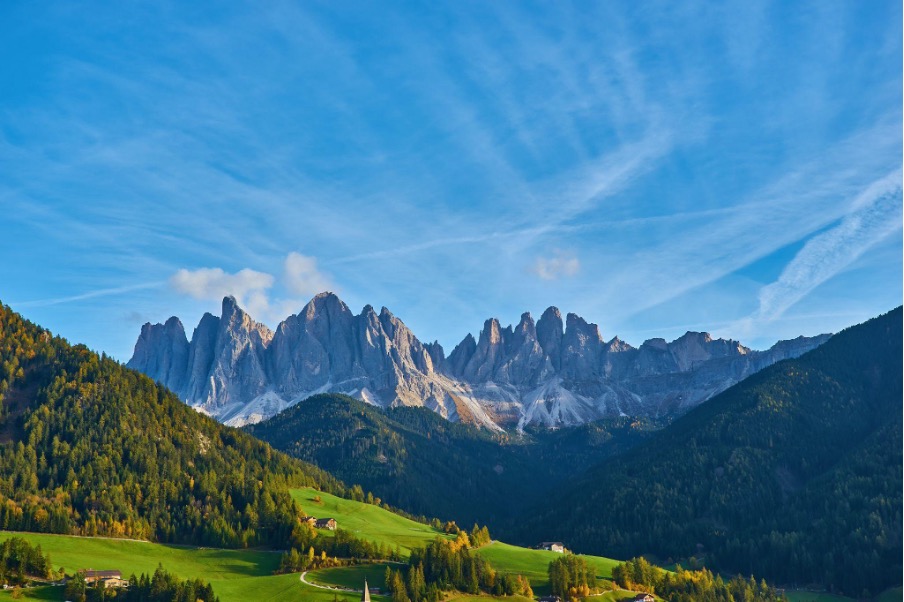
Montmorency Falls near Quebec City, taller than Niagara
Photo: Wilfredor / Wikimedia Commons (CC BY-SA 4.0)

Here’s a fact that’ll impress anyone: Montmorency Falls stands 83 metres tall — a full 30 metres higher than the famous Niagara Falls! Yet so many people don’t even know about it. It’s just a 15-minute drive from downtown Quebec City and it’s absolutely spectacular.
You can admire it from below, or venture out onto the suspension bridge directly above the brink of the falls (if you don’t mind heights). There’s also a cable car. In winter, an enormous ice cone forms at the base that you can actually climb. Parking is around 6.50 CAD (about €4.50); access to the falls themselves is free. The cable car costs about 17 CAD (around €12) return.

4. Île d’Orléans – an agritourism haven just around the corner

Rural landscape of Île d'Orléans with farms by the St. Lawrence River
Photo: Wilfredor / Wikimedia Commons (CC0)

Just 30 minutes from Quebec City lies Île d’Orléans — an island that feels like stepping back in time. Six picturesque villages, strawberry and apple farms, vineyards, fromageries, and cider houses. It’s a paradise for lovers of local food and slow travel.

We spent a gorgeous afternoon here — driving the loop around the island (about 67 km), stopping at farm stands, sampling homemade ice cream, and buying fresh strawberries straight from the farmer. In autumn, people come for pick-your-own apples and pumpkins. If you love maple syrup, the island has plenty of cabanes à sucre. Getting onto the island is free — you only pay for tastings and purchases.

5. Plains of Abraham – a park with history

Promenade des Gouverneurs above the Plains of Abraham
Promenade des Gouverneurs — a wooden boardwalk between the Citadel and the Plains of Abraham with views over the St. Lawrence.
Plains of Abraham in Quebec City
Photo: Guilhem Vellut from Annecy, France / CC BY 2.0 / Wikimedia Commons

The Plains of Abraham (Plaines d’Abraham) is a vast urban park where the pivotal 1759 battle between the British and French took place — the battle that decided Canada’s fate. Today it’s a lovely spot for a picnic, a stroll, or simply lying in the grass gazing at the river.

In summer it hosts festivals and open-air concerts; in winter, cross-country skiing and snowshoeing. The Plains of Abraham Museum is well worth it for history buffs — admission is about 18 CAD (around €12). But even just wandering through the park is an experience in itself.

6. Winter Carnival – the world’s largest winter festival

Bonhomme at the Quebec Winter Carnival
Photo: Wilfredor / CC0 / Wikimedia Commons

If you’re brave enough to visit Quebec City in winter (January–February), you’ll be treated to the Carnaval de Québec — the world’s largest winter festival. Ice and snow sculpting competitions, night parades, an ice palace, canoe races on the frozen river, and the mascot Bonhomme — a giant snowman who is a bona fide celebrity in Quebec.

We actually visited in summer, but everyone told us that winter in Quebec City is absolutely magical. The city blanketed in snow, temperatures hovering around -20 °C, but an atmosphere so warm you barely feel the cold. Admission to most carnival events is included in the price of an effigy (badge), which costs around 20 CAD (about €14).

7. Ferry to Lévis – the cheapest river cruise

This tip falls into the “local secret” category. For just 4 CAD (about £2.50), you can ride the ferry across the St. Lawrence River to the town of Lévis — and along the way you’ll get absolutely the best view of Quebec City and Château Frontenac. You won’t find a better panorama anywhere.

The ferry runs regularly all day and all night, and the crossing takes about 12 minutes. In Lévis you can stroll along the promenade, grab a coffee with a view, and head back. It’s a brilliant tip for late afternoon, when the sun bathes the Old Town in golden light. Lukáš and I reckon it’s probably the best value-for-views in all of Canada. 😁

lukas a lucka
Lukáš and Lucie recommend
Where to stay in Quebec province
6 accommodations — wellness hotels, hotels and other lodging options

Charlevoix: 4 tips for the region where mountains meet the river

Charlevoix is a place that absolutely captivated us. This region, about an hour and a half’s drive northeast of Quebec City, is a UNESCO Biosphere Reserve, and the landscape here is so dramatic I couldn’t tear myself away from the car window. Mountains plunging straight into the St. Lawrence River, picturesque villages, art galleries, outstanding restaurants. And Route 362, which winds through this region, is considered one of the most beautiful scenic drives in all of North America.

1. Baie-Saint-Paul – an artistic town in the valley

Baie-Saint-Paul in Charlevoix
Photo: Paul Paradis / CC BY-SA 3.0 / Wikimedia Commons

Baie-Saint-Paul is probably the most charming little town in all of Charlevoix. Nestled in a valley surrounded by mountains, it has attracted artists since the 19th century who came to paint its landscape. Today you’ll find dozens of galleries, studios, cafés, and small shops selling local creations.

The main street, Rue Saint-Jean-Baptiste, is like something from a storybook — colourful houses, flowers in windows, the scent of fresh bread wafting through the air. Don’t miss the local cheeses and beer from the Charlevoix microbrewery. And if you have time, drive down to the river — the view back at the town nestled between mountains is something you’ll remember forever.

2. Parc national des Grands-Jardins

Parc national des Grands-Jardins
Photo: Hayden Soloviev / CC BY 4.0 / Wikimedia Commons

This provincial park managed by SEPAQ is a hiker’s paradise. The landscape here resembles taiga — boreal forest, peat bogs, rocky peaks, and with a bit of luck, a herd of caribou. Yes, caribou! It’s one of the few places in southern Quebec where you can still spot them.

We recommend the trek to Mont du Lac des Cygnes (about 8.4 km return, moderate difficulty), which offers a fantastic panoramic view over all of Charlevoix. Park admission is about 9 CAD (around €6) per person. If you want to overnight, SEPAQ offers cabins and campsites here — but book ahead.

3. La Malbaie and Fairmont Le Manoir Richelieu

Fairmont Le Manoir Richelieu in La Malbaie
Photo: Wilder Mendez aka. Lezumbalaberenjena at English Wikipedia / Public domain / Wikimedia Commons

La Malbaie is another delightful little town in Charlevoix, best known for the monumental Fairmont Le Manoir Richelieu hotel perched on a cliff above the river. Even if you’re not staying there (prices start from around €200/night), it’s worth walking through the gardens and terrace for the view.

Around La Malbaie you’ll also find a casino, a golf course, and a harbour from which excursion boats head into the Saguenay Fjord. La Malbaie also makes an excellent base for day trips to Tadoussac.

4. Le Massif de Charlevoix – skiing with a river view

Le Massif ski resort with a view over the St. Lawrence River
Photo: Eusebius / CC BY 3.0 / Wikimedia Commons

In winter, Le Massif is one of the most unique ski resorts in North America — you quite literally ski straight down towards the St. Lawrence River. The 770-metre vertical drop is the largest in eastern Canada, and the views on the way down are nothing short of unreal.

In summer, Le Massif transforms into an activity centre with mountain biking, a toboggan run, and hiking trails. A winter lift pass costs around 100 CAD (about €68) per day.

Tadoussac and Côte-Nord: 3 tips for whale watching

Tadoussac. Just saying the name gives me goosebumps. It’s the spot where the Saguenay River flows into the St. Lawrence, and thanks to specific currents and water temperatures, an incredible concentration of plankton gathers here. And where there’s plankton, there are whales. Tadoussac is one of the best places on earth for whale watching — and I say that without a shred of exaggeration. Up to 13 different species of cetaceans can be found here, including humpback whales, fin whales, belugas, and occasionally blue whales — the largest animal ever to have lived on Earth.

The whale-watching season runs roughly from May to October, peaking in August and September. We were here at the end of August and the experience was absolutely unforgettable.

1. Whale-watching in Tadoussac

Whale watching by boat near Tadoussac on the St. Lawrence River
Photo: Hans Bernhard (Schnobby) / Wikimedia Commons (CC BY-SA 3.0)

You’ve got several options for watching whales. The most popular is an excursion boat — large, stable, with a guide who explains what you’re seeing. It costs around 80–100 CAD (about €55–68) per person for a 2–3 hour cruise. The second option is a zodiac — an inflatable boat that gets you closer to the water (and to the whales), but it’s wilder and colder. The price is similar, but the experience is far more intense.

We chose the zodiac and had zero regrets. When a humpback whale surfaces a mere metre away from you and you hear that powerful exhale — that’s a moment you’ll never forget. Highly recommended. Just bring warm clothes — even in summer it’s chilly on the water.

And if a boat trip isn’t your thing? You can spot whales from shore near Tadoussac too — particularly from Pointe de l’Islet, where belugas are spotted fairly regularly. Completely free and equally lovely.

2. Fjord du Saguenay

Fjord du Saguenay
Photo: J-A Béland / CC BY-SA 4.0 / Wikimedia Commons

The Saguenay Fjord is one of the southernmost fjords in the world, and its dramatic walls rising up to 350 metres create absolutely breathtaking scenery. You can explore it by kayak (an incredible experience, from about 70 CAD / €48), by excursion boat, or on foot along the trails in Parc national du Fjord-du-Saguenay.

We recommend the trek to the Statue de Notre-Dame-du-Saguenay, which rewards you with a panoramic fjord view that’ll make your head spin. Park admission is the standard 9 CAD (about €6) via SEPAQ.

3. Bergeronnes and Les Escoumins – fewer tourists, same whales

If you want to escape the crowds in Tadoussac (it can get quite busy in peak season), head about 20–30 km further northeast to the villages of Bergeronnes or Les Escoumins. The whales are just as close, but there are far fewer tourists.

In Bergeronnes, you’ll find the fantastic Centre d’interprétation et d’observation de Cap-de-Bon-Désir — an observation point right on the rocks where whales often appear literally just a few dozen metres from shore. Entry is only about 8 CAD (around €5.50) and we spent an entire afternoon here with binoculars, completely mesmerised. In Les Escoumins, you can take an amazing scuba diving trip into the cold waters of the St. Lawrence.

Gaspésie: 4 tips for a peninsula that will take your breath away

Gaspésie is probably the wildest part of Quebec we visited — and also the one that demands the most time and planning. This peninsula in the east of the province is famous for Route 132, a road hugging the entire coastline, which National Geographic named among its 50 destinations of a lifetime. And it’s easy to see why. Dramatic cliffs plunging into the sea, fishing villages, endless horizons, and the feeling of being at the edge of the world.

For Gaspésie you absolutely need a car and time — a minimum of 3–4 days, ideally a week. Lukáš and I drove the whole loop and it was probably the most beautiful road trip of our lives. We booked the car through DiscoverCars back home and in this case it was absolutely essential — without a car there’s simply no getting here (public transport is minimal). And a word of warning — watch out for moose on the roads, especially at dusk and night. They’re not rare — we personally spotted them twice.

1. Percé Rock and Île Bonaventure

Percé Rock in Gaspésie
Photo: Michel Villeneuve / CC BY 2.0 / Wikimedia Commons

Rocher Percé — a massive limestone rock with a natural arch — is arguably the most iconic natural formation in all of Quebec. It rises from the sea in front of the town of Percé and is utterly mesmerising. At low tide, you can walk out to it (but be careful and keep an eye on the tide times!).

Right beside it lies Île Bonaventure, an island that’s home to one of the world’s largest northern gannet colonies — around 110,000 birds! A boat to the island costs about 40 CAD (around €27) return, and the walk across the island to the bird colony is unforgettable. The sound, the smell, the spectacle — it’s so intense that words can’t do it justice. 😁

2. Parc national de la Gaspésie

Mountains in Parc national de la Gaspésie
Photo: John Halpin / CC BY 4.0 / Wikimedia Commons

In the heart of the peninsula rise the Chic-Choc Mountains, and within them lies the gorgeous Parc national de la Gaspésie. It’s one of the few places in Quebec where caribou, moose, and deer all coexist. The main trek leads to Mont Jacques-Cartier (1,268 m) — the highest accessible peak in southern Quebec.

The ascent is moderately challenging (about 8 km return), but the views from the alpine tundra at the summit are worth every step. SEPAQ operates beautiful cabins and campsites here. Park admission is the standard 9 CAD (about €6).

3. Forillon National Park

Forillon National Park
Photo: Andrea Schaffer from Sydney, Australia / CC BY 2.0 / Wikimedia Commons

At the very tip of Gaspésie, where the land ends and the ocean begins, lies Forillon — a national park managed by Parks Canada. Cliffs, forests, beaches, and profound tranquillity. The trek to Cap-Bon-Ami is one of the most beautiful in all of Quebec — you stand atop a cliff overlooking the sea with seals swimming below.

Park admission is 8.50 CAD (about €6) per person per day. Camping is available inside the park. It’s a place where you truly feel far from civilisation — and that’s precisely what makes it so beautiful.

4. Route 132 roadtrip – the journey is the destination

The full Route 132 loop around Gaspésie covers about 885 km and it’s a road trip you’ll remember for the rest of your life. The road runs along the coast, through fishing villages like Sainte-Anne-des-Monts, Grande-Vallée, and Chandler. Stop wherever takes your fancy — at lighthouses, at smokehouses serving freshly caught fish, at viewpoints where the St. Lawrence becomes the ocean.

We set aside five days for this loop and it was just right — enough to savour the stops, but not so much that we got road-weary. Fill up whenever you can — petrol stations are sparser than you’d expect. And revel in the silence. This is where Canada reveals itself at its most raw and magnificent.

Laurentians: 3 tips for the mountains on Montreal’s doorstep

The Laurentians are essentially Montreal’s playground — a mountain range full of lakes, forests, and charming mountain resorts where Montrealers escape the city at weekends. It’s about an hour’s drive north of Montreal and the landscape changes dramatically — skyscrapers give way to rolling hills, blueberry forests, and crystal-clear lakes.

In summer people flock here for hiking, cycling, canoeing, and paddleboarding; in autumn for the Indian summer (the fall colours here are absolutely spectacular); and in winter for skiing and cross-country skiing. It’s the perfect complement to a Montreal stay — just a day or two and you get a completely different experience.

1. Parc national du Mont-Tremblant

Lake in Parc national du Mont-Tremblant
Photo: Kevstan / CC BY-SA 4.0 / Wikimedia Commons

The largest and oldest provincial park in Quebec (established in 1895) is an absolute jewel of the Laurentians. It’s roughly 6× the size of the Lake District and offers hundreds of kilometres of hiking trails, dozens of lakes, and magnificent wilderness.

We recommend the trek to Sommet de la Roche or the Boucle de la Chute-aux-Rats — both offer gorgeous views and aren’t overly demanding. You can camp in the park or rent a SEPAQ cabin. Admission is 9 CAD (about €6). And if you’re lucky, you’ll hear wolves howling. We were, and it’s a memory that’ll stay with us forever. ☺️

2. Village Mont-Tremblant – an Alpine village in Canada

Colourful mountain village of Mont-Tremblant in the Laurentians
Photo: Jiaqian AirplaneFan / Wikimedia Commons (CC BY 3.0)

At the foot of the namesake ski resort sits the pedestrianised Village Mont-Tremblant — a colourful village built in Alpine style, brimming with restaurants, shops, galleries, and cafés. In winter it’s a skiing paradise (one of the best resorts in eastern Canada); in summer it’s a hub for outdoor activities.

Honestly, it’s a touch “theme-park-ish” (the whole village is essentially a resort), but it’s charming all the same. Children love it, and while restaurant prices are on the higher side, you can easily spend a lovely afternoon here. The gondola to the summit of Mont-Tremblant costs around 30 CAD (about €20) and the view is absolutely worth it.

3. P’tit Train du Nord – 234 km cycling an old railway

P'tit Train du Nord cycling trail
Photo: Grand Parc – Bordeaux, France from France / CC BY 2.0 / Wikimedia Commons

This is every cyclist’s dream. P’tit Train du Nord is a cycle trail following the route of a disused railway line, stretching an incredible 234 km — from Saint-Jérôme all the way to Mont-Laurier. The trail passes through forests, along lakes, over bridges, and through old station buildings converted into cafés and rest stops.

You don’t have to ride the whole thing — you can cycle just a section and turn back. Bike hire is available at multiple points along the trail. The surface is gravel, making it ideal for a trek or gravel bike. In autumn, when the leaves are turning, it’s arguably one of the most beautiful cycle routes in the world. And the best bit? Access to the trail is free.

What to eat and drink in Quebec: 7 specialities you must try

Québécois cuisine is something Lukáš and I were completely unprepared for. We expected North America — burgers and steaks. Instead we got a fascinating blend of French gastronomy and North American comfort food that absolutely won us over. Montreal is rightly considered Canada’s gastronomic capital — the restaurant scene here is world-class.

But Quebec isn’t just fine dining. Some of the best food is eaten on the street, at markets, or in small family-run establishments that look like they belong to another era. Here are our picks for the absolute best.

1. Poutine – Quebec’s national dish

Poutine — Quebec's national dish
Photo: Guilhem Vellut from Annecy, France / CC BY 2.0 / Wikimedia Commons

If you try just one dish in Quebec, make it poutine. Chips, cheese curds, and brown gravy. Sounds simple, looks unassuming, but the taste — let me get poetic here — is like a warm hug for your stomach. 😁 It comes in dozens of variations — with pulled pork, with foie gras, with smoked meat.

A classic poutine goes for about 8 CAD (around €5.50) at a fast-food spot, while gourmet versions in restaurants run 18–25 CAD (€12–17). La Banquise in Montreal is a legendary spot, open 24/7, with dozens of varieties. Expect a queue though. ☺️

2. Montreal smoked meat – a legendary sandwich

Montreal smoked meat sandwich
Photo: Guilhem Vellut from Annecy, France / CC BY 2.0 / Wikimedia Commons

Schwartz’s Deli has been going since 1928 and serves what is arguably the most famous sandwich in all of Canada — smoked meat on rye bread with mustard. The meat is brined, spiced, and smoked for weeks, and the result is absolutely phenomenal. A portion costs about 12–15 CAD (€8–10).

The queue outside Schwartz’s can be long (we waited about 30 minutes), but it moves quickly. Alternative? Main Deli a few doors down is nearly as good and queue-free. But the experience of waiting outside Schwartz’s is simply part of the Montreal ritual.

3. Montreal bagel – better than New York’s?

Montreal bagel
Photo: Heather Cowper from Bristol, UK / CC BY 2.0 / Wikimedia Commons

This is a bold claim, but I’ll say it: the Montreal bagel is better than the New York bagel. There, I said it. It’s smaller, sweeter (boiled in honey water), denser, and baked in a wood-fired oven. And in Montreal, there’s a never-ending rivalry between two legendary bakeries: St-Viateur Bagel and Fairmount Bagel. Both are open 24/7, both are the stuff of legend.

Lukáš and I dutifully tried both — and honestly, they’re both superb. St-Viateur has perhaps a slightly better sesame, Fairmount edges it on poppy seed. A single bagel costs about 1 CAD (around 60p). Buy a dozen — you won’t regret it. They’ll vanish before you know it.

4. Tourtière – Quebec meat pie

Tourtière is a traditional Québécois meat pie — crisp pastry filled with minced meat (pork, veal, or game), spiced with cinnamon and clove. It’s a classic winter comfort food that families prepare at Christmas. In restaurants you’ll find it year-round, at about 15–20 CAD (€10–14) per serving.

The most authentic tourtière we had was at a small family restaurant on Île d’Orléans — the grandmother made it following a recipe passed down through generations, and it was absolutely divine.

5. Maple syrup and cabane à sucre

Maple syrup and cabane à sucre in Quebec
Photo: Coastal Elite from Halifax, Canada / CC BY-SA 2.0 / Wikimedia Commons

Quebec produces roughly 70% of the world’s maple syrup — and here it’s not just a condiment, it’s a way of life. In spring (March–April), the cabanes à sucre (sugar shacks) open up — traditional maple houses where syrup is boiled and enormous breakfasts are served: pancakes drenched in syrup, bacon, beans, eggs, ham. All washed down with maple wine.

One of the most traditional is Érablière au Sous-Bois near Quebec City. A meal costs about 30–40 CAD (€20–27) per person, and you’ll eat so much you won’t be able to stand up. And don’t miss tire sur la neige — hot maple syrup poured onto snow that hardens into a chewy taffy. Kids (and adults) absolutely love it. ☺️

6. Quebec cheeses and microbreweries

Quebec has a surprisingly rich cheesemaking tradition — and some of its cheeses could easily hold their own in France. Try Oka (a semi-hard cheese from a Trappist monastery), Le Migneron from Charlevoix, or Pied-De-Vent from the Magdalen Islands. You’ll find cheeses at markets, specialist fromageries, and farms across the province.

And microbreweries? Quebec is in the midst of a craft beer revolution. Unibroue, Dieu du Ciel! (Montreal), Le Trou du diable (Shawinigan) — those are just some of the best. A pint of craft beer in a pub costs around 8–10 CAD (€5.50–7).

7. BeaverTails and other sweet treats

BeaverTails (Queues de castor) are flat, fried dough pastries shaped like a beaver’s tail, dusted with cinnamon and sugar or slathered with Nutella and fruit. They’re classic Canadian street food, and in Quebec City you’ll find them on every corner. They cost about 7–9 CAD (€5–6) and are absolutely irresistible.

Also worth a mention is pouding chômeur — a Québécois dessert from the Great Depression, where sponge cake batter is baked in maple syrup. Sounds simple, tastes heavenly.

Practical tips for travelling to Quebec

Quebec works differently from the rest of North America in many ways — and certainly differently from the UK. Here are a few practical pointers that’ll save you hassle and money.

Language – will you get by in English?

French is the sole official language of the province of Quebec. In Montreal, the situation is bilingual — most people speak both English and French fluently and will happily switch. In Quebec City, English is common in tourist areas too. But once you venture into the countryside — to Gaspésie, Charlevoix, or smaller towns — be prepared for English not to be a given.

Québécois French also differs quite a bit from European French — the accent, slang, and certain expressions are different. But don’t worry — even a simple “bonjour”, “merci”, and “parlez-vous anglais?” will open doors. Quebecers genuinely appreciate any effort to speak French. And Google Translate will handle the rest. 😉 As an English speaker, you’ll actually find you can read quite a lot of French signs and menus, given how many English words have French roots.

Currency, payments, and tipping

The currency is Canadian dollars (CAD), and card payments are accepted practically everywhere (even at farmers’ market stalls). Important warning: prices in shops and restaurants are always listed WITHOUT tax! Federal tax TPS (5%) and provincial tax TVQ (9.975%) get added at the till, totalling roughly 15%. So when you see 50 CAD on the price tag, you’ll actually pay about 57.50 CAD.

Tipping is essentially mandatory in Canada (an unwritten rule) — 15–20% of the pre-tax amount in restaurants. Waiters earn a low base wage and rely on tips. Not tipping is considered extremely rude.

Safety and health

Quebec is generally a very safe destination. Violent crime is low, though nature does pose several risks. Bears (black bears) inhabit forested areas — follow proper food storage rules at campsites. Mosquitoes and ticks are active in summer, especially in the forests. Repellent and tick checks are essential.

Travel insurance is absolutely essential! Healthcare in Canada is extremely expensive for foreign visitors — an A&E visit can cost thousands of dollars, and hospitalisation can run into tens of thousands. Don’t underestimate this — take out comprehensive travel insurance before you fly.

Internet and SIM card

WiFi is widely available in cafés, hotels, and public spaces. However, mobile data in Canada is notoriously expensive — a local SIM with data costs 40–60 CAD (€27–41) per month.

Top tip: get an eSIM through Airalo before you fly. It’s significantly cheaper than a local SIM, you activate it online, and you have data the moment you land. We used Airalo and it worked brilliantly.

How many days to spend in Quebec

  • 7 days: Montreal (2–3 days) + Quebec City (2–3 days) + one day trip (Montmorency Falls, Île d’Orléans, Laurentians). Enough for a taster.
  • 10–14 days: Ideal for a road trip — Montreal – Quebec City – Charlevoix – Tadoussac + either Gaspésie or the Laurentians. This is our recommended format.
  • 3 weeks: Pure luxury — you can fit everything in including Gaspésie, the Laurentians, and leisurely days in one spot. If you have the time, don’t hesitate.

Frequently asked questions about Quebec – FAQ

Here we answer the most common questions we get about travelling to Quebec.

Tips and Tricks for Your Vacation

Don’t Overpay for Flights

Search for flights on Kayak. It’s our favorite search engine because it scans the websites of all airlines and always finds the cheapest connection.

Book Your Accommodation Smartly

The best experiences we’ve had when looking for accommodation (from Alaska to Morocco) are with Booking.com, where hotels, apartments, and entire houses are usually the cheapest and most widely available.

Don’t Forget Travel Insurance

Good travel insurance will protect you against illness, accidents, theft, or flight cancellations. We’ve had a few hospital visits abroad, so we know how important it is to have proper insurance arranged.

Where we insure ourselves: SafetyWing (best for everyone) and TrueTraveller (for extra-long trips).

Why don’t we recommend any Czech insurance company? Because they have too many restrictions. They set limits on the number of days abroad, travel insurance via a credit card often requires you to pay medical expenses only with that card, and they frequently limit the number of returns to the Czech Republic.

Find the Best Experiences

Get Your Guide is a huge online marketplace where you can book guided walks, trips, skip-the-line tickets, tours, and much more. We always find some extra fun there!