

Lukáš and I spent the winter of 2016 and 2017 living right inside Banff National Park in Canada, home to the best skiing in Alberta. If you’re thinking about swapping the crowded European Alps for the Canadian wilderness this year, I have to warn you upfront. Once you’ve tasted the legendary Canadian powder that locals here call “cold smoke,” you’ll never want to go back to icy European slopes. ☺️
Skiing in Alberta is incredibly different from what you get in Europe. Forget about narrow, crowded runs and endless lift queues: here you’ll find vast open plains, views of the jagged peaks of the Rockies, frozen turquoise lakes and snow so light you can just blow it off your glove. We’ll walk through all the resorts together, I’ll tell you where to stay and how not to overpay for a lift pass — and I’ll also flag a few things that once caught us off guard on the frozen mountain roads.
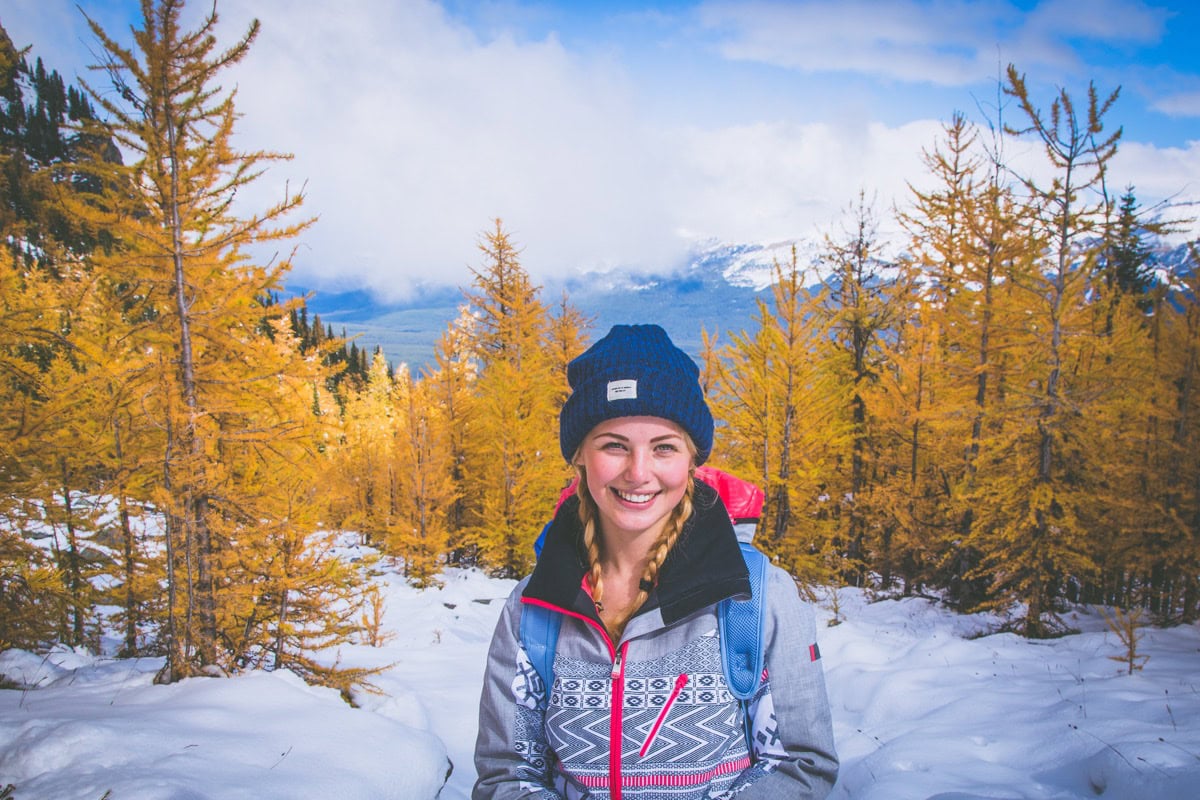
A summary for those who don’t have time to read the whole article
- Main ski hubs: The best facilities are in Banff National Park, home to the so-called SkiBig3 network (Lake Louise, Sunshine Village and Mount Norquay).
- The best snow: Alberta is famous for its dry, arctic air, which produces extremely light, fluffy powder — the so-called champagne powder.
- Length of the season: You can usually ski here from mid-November all the way to the end of May, with the best powder conditions in January and February.
- How to save: Single-day lift passes cost 130 to 170 CAD. If you plan to ski for more than a week, it’s worth buying the international IKON Pass or the local SkiBig3 Pass in the autumn before the season.
- Transport and a car: To move between the resorts you’ll definitely need a reliable car, ideally an SUV. Lukáš and I have long had a good experience with DiscoverCars, which we use all over the world. Just make sure the car has quality winter tyres.
The full destination guide: Rocky Mountains — guide and what to see
Why skiing in Alberta is the best in all of Canada
Alberta is, in my opinion, simply on another level. Even though Whistler in neighbouring British Columbia gets more media attention, my mind keeps coming back here. Alberta’s secret lies mainly in its specific geography and climate. Because it sits inland and has fairly harsh winters with low humidity, the falling snow contains almost no water. The result is that famous champagne powder that you sink into and it just floats gently around you.
Thanks to these freezing temperatures, the snow stays in perfect condition for an incredibly long time. The season is extremely long, and it’s not unusual to see popular spring skiing in just a hoodie at Sunshine Village or Lake Louise still in May or even early June. On top of that, there’s none of the typical European stress here: the runs are wide, off-piste (in the so-called bowls) you can roam completely freely, and you’ll only really see queues on weekends or during public holidays.
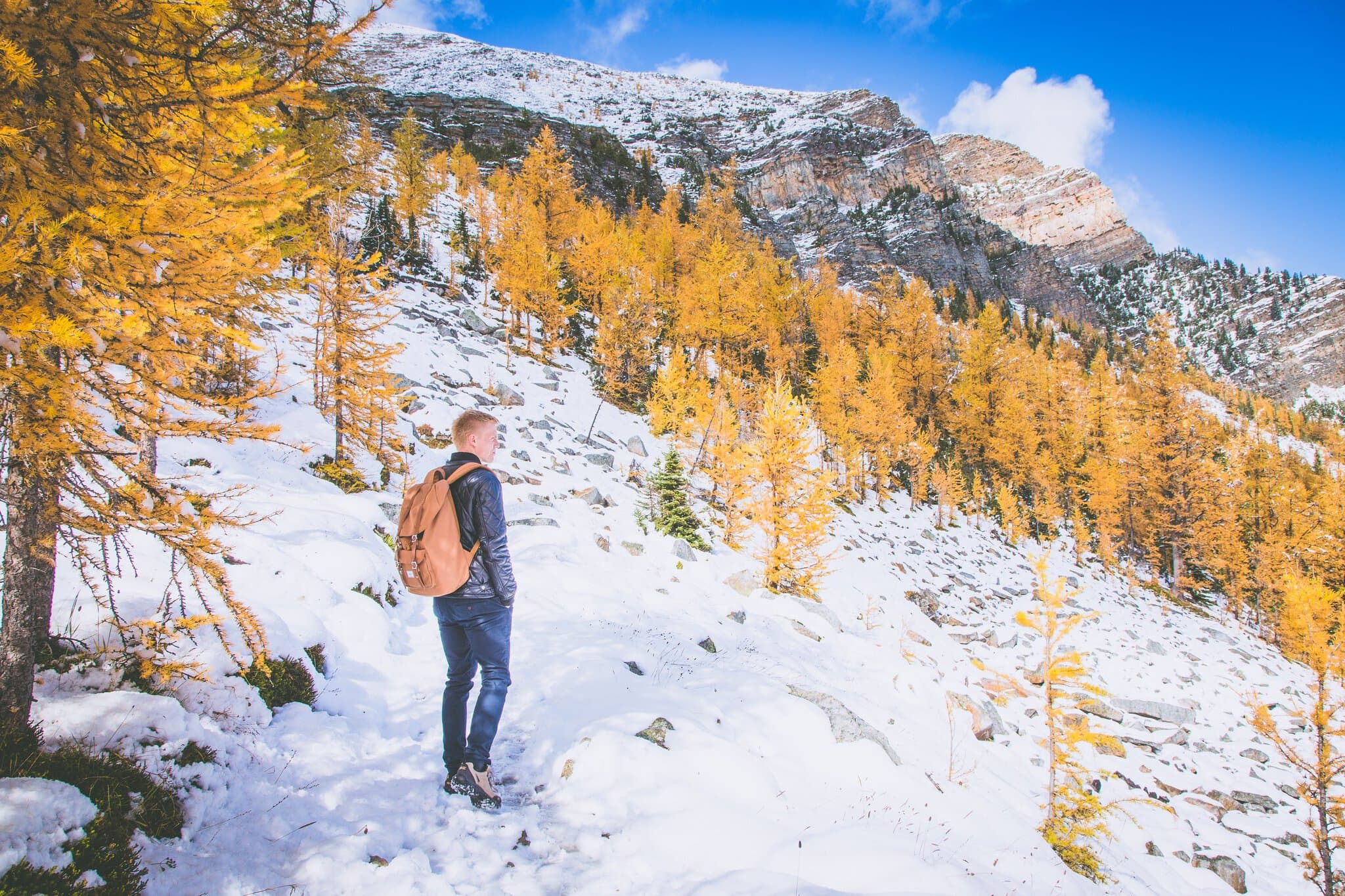
When to go and how to get to the Canadian Rockies
Planning a ski trip to Alberta takes a bit of strategic thinking, because the weather in Banff, Canada can be genuinely unforgiving. The most snow falls between December and February, but be aware that temperatures in January can easily drop to minus thirty degrees Celsius. Our favourite time to ski was March, when the days start getting longer, the frosts ease off to a pleasant minus five, and there’s still plenty of snow everywhere.
The easiest way in is by air to Calgary (airport code YYC), from where Banff National Park is just a ninety-minute drive along the very well maintained Trans-Canada Highway. Look for cheap flights on Kiwi — our go-to portal for comparing all the available connections, with major carriers like Lufthansa, easyJet and others serving the route. If you’re heading primarily north to Jasper for the Marmot Basin resort, it makes more sense to fly into Edmonton (YEG), from where you have roughly a four-hour drive through beautiful winter scenery.
Where to stay and roughly what it costs
Your choice of accommodation will strongly affect both your budget and the overall feel of your holiday. We figured out fairly quickly that you can forget about a hotel complex right on the slopes like in the French Alps. National parks have strict building rules, so you’ll usually stay in one of the nearby towns and drive up to the mountain by car or take the free ski bus, which runs at regular intervals.
The absolute centre of the action is, of course, the town of Banff. It’s full of restaurants, bars and cafés and has an incredible atmosphere, but you’ll pay a premium for it. In Banff we had a fantastic experience with the Moose Hotel & Suites, which has outdoor heated pools right on the roof with a fantastic view of the mountains. If you’re after peace and quiet and want to be as close as possible to the Lake Louise slopes, stay right in the little village of Lake Louise. A great and, above all, more affordable alternative is the town of Canmore, which sits just outside the national park boundary. It’s about a twenty-minute drive from Canmore to Banff, accommodation is cheaper and you’ll find huge supermarkets here. Personally, we now lean towards Canmore for budget reasons. It’s quieter there, and a morning coffee in the local cafés with a view of the Three Sisters mountains has an unreal charm. If you’re torn, we’ve written a separate article, Canmore vs Banff, with a detailed comparison.
A week’s accommodation in high winter season for two people in an average three-star hotel in Banff will cost you roughly €1,000 to €1,400. In Canmore you can get under €800, and I can wholeheartedly recommend Basecamp Resorts, where you get a fully equipped kitchen and plenty of space even for a bigger group. If you’re travelling in a larger group, definitely look into cabins or apartments with their own kitchenette — you’ll save a huge amount on restaurant meals. For accommodation up north in Jasper, I recommend booking hotels well in advance, as capacity there is significantly lower than in the south.
6 ski resorts in Alberta: where the skiing is best
Let’s take a look at the individual ski resorts together. In Canada, runs aren’t rated blue, red and black like in Europe; instead they use green (beginners), blue (intermediate), black diamonds (difficult) and double black diamonds (experts only, often extremely steep chutes). Here’s a selection of the best spots, which we personally skied every which way.
1. Lake Louise Ski Resort: iconic views and endless plains
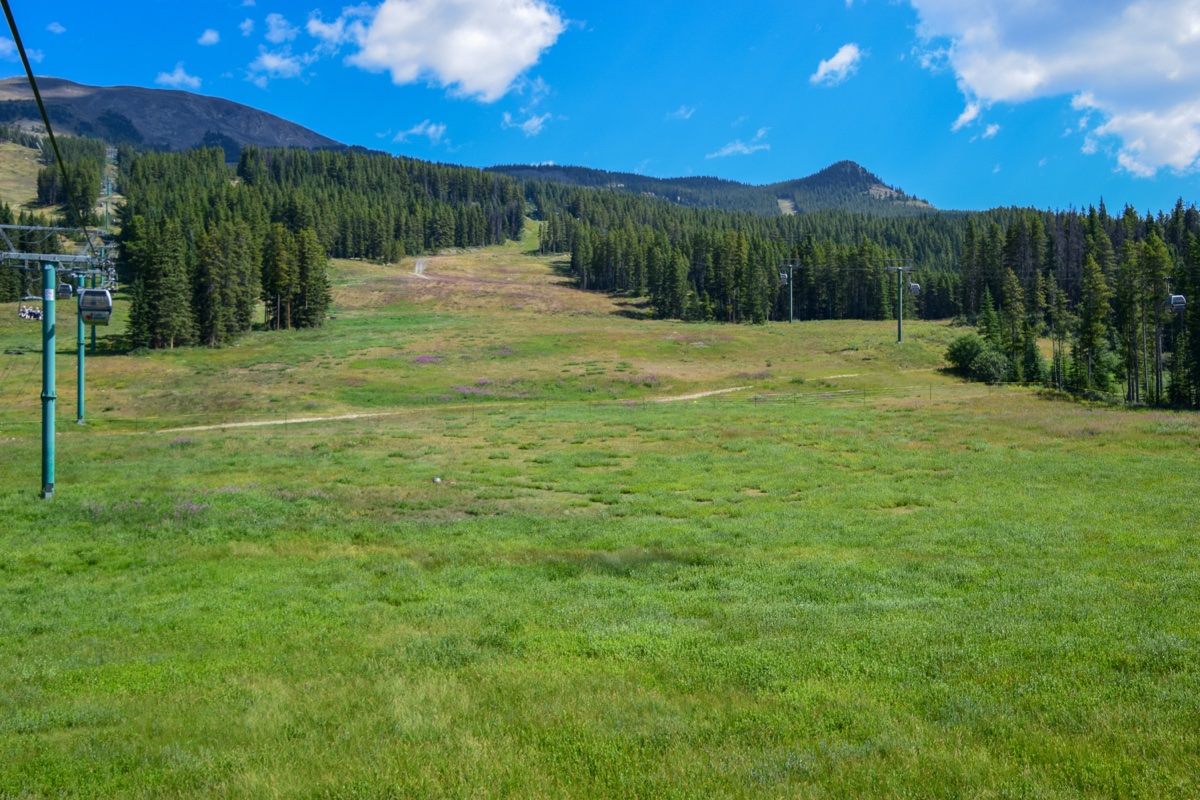
If I had to pick just one single place to spend an entire winter, it would be Lake Louise. It’s a huge resort (part of the SkiBig3 network) spanning over 4,250 acres, offering incredible variety. From the front you get gorgeous views of the frozen lake and the Victoria Glacier, while the back side (the so-called Back Bowls) is a paradise for lovers of ungroomed powder.
The runs here are incredibly long and you’ll find great terrain for complete beginners and utter daredevils alike. In recent years they’ve introduced mandatory online parking reservations (especially on weekends), so definitely don’t forget that, or they won’t let you into the car park at all and you’ll have to use the overflow lots in the village.
2. Sunshine Village: paradise on the Continental Divide
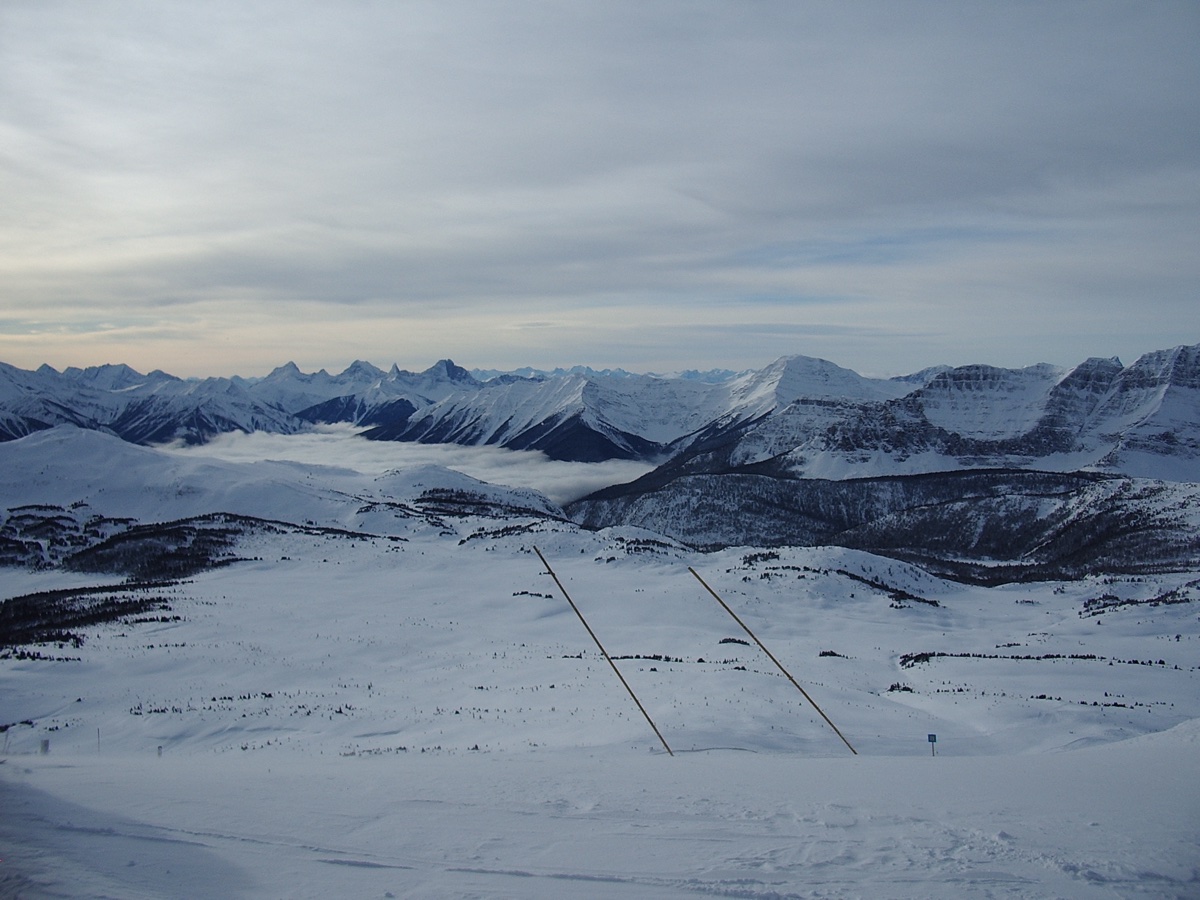
The Banff Sunshine resort sits high in the mountains and has, of all the resorts, absolutely the best and most reliable snow — around an impressive nine metres of it falls here every year. You reach it via a long gondola from the car park, and up top you find yourself in a huge bowl that sits exactly on the border of Alberta and British Columbia. So you can literally ski on the Continental Divide.
Most of the runs lie above the tree line, so you get a feeling of total freedom. For experts there’s the famous Delirium Dive zone, which they’ll only let you into with an avalanche transceiver and a shovel. Sunshine is absolutely fantastic on sunny days, but when the fog rolls in (a so-called whiteout) you lose your bearings very quickly.
3. Mount Norquay: the oldest and closest to the town of Banff
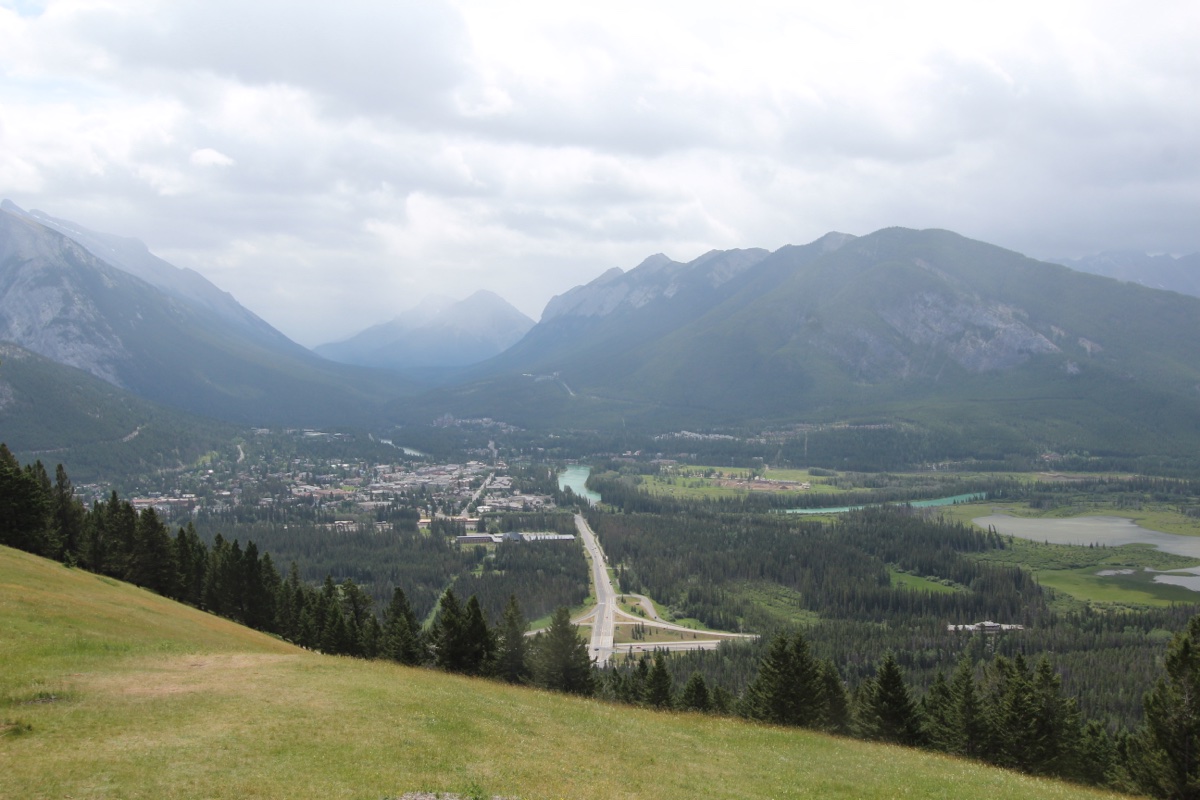
If you’re staying right in Banff and don’t feel like travelling far, Norquay is about a ten-minute drive from the centre along a winding mountain road. It’s also part of the SkiBig3 network, and although it’s by far the smallest of the three resorts, it has an unmistakable charm. It’s really the locals’ home hill, with properly steep runs where professional skiers often train.
The huge advantage of Norquay is night skiing. The runs are beautifully floodlit, evening lift passes are very cheap, and on top of that you get Banff laid out below you — the town lit up at night in the valley is a magical sight worth stopping for.
4. Marmot Basin in Jasper: peace and quiet and empty slopes
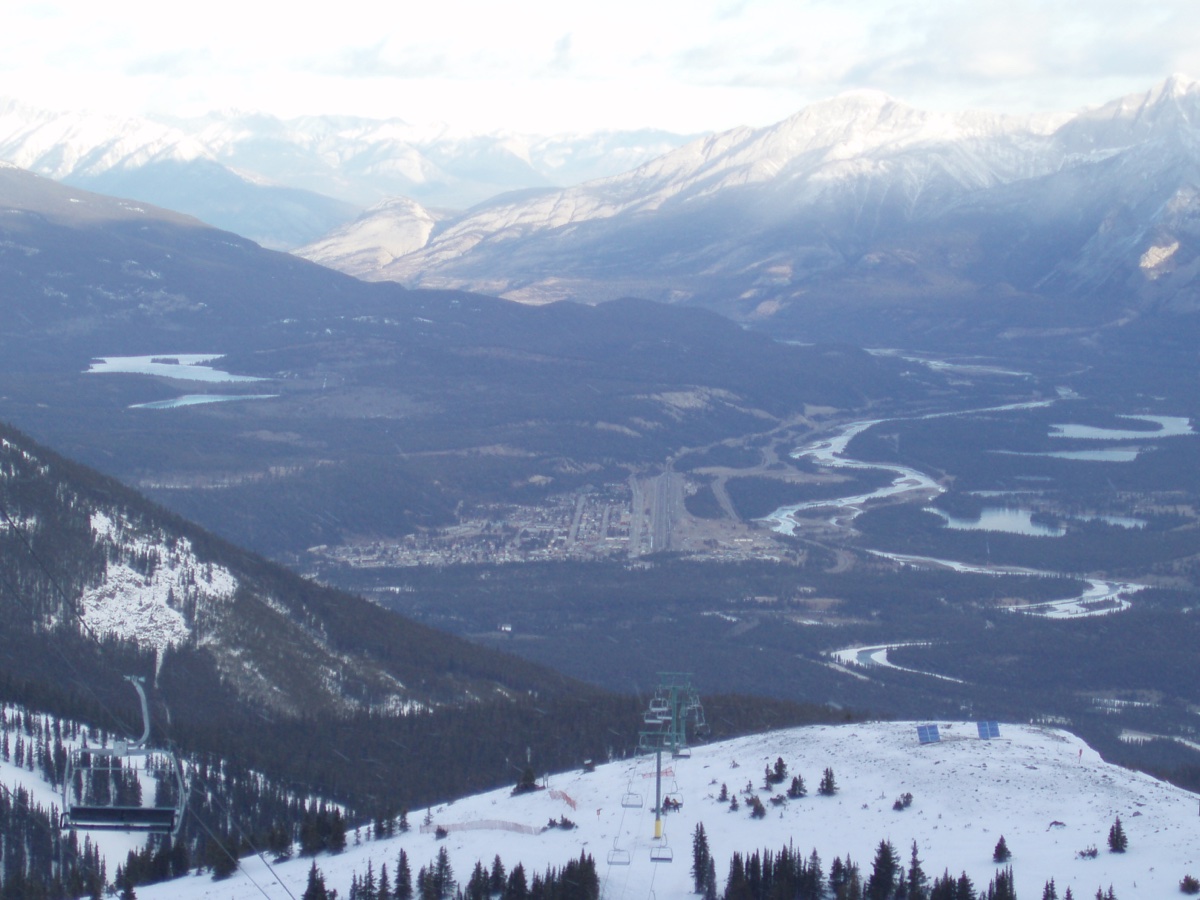
While Banff is bursting at the seams, Jasper National Park, lying a few hours north along the famous Icefields Parkway, is noticeably quieter. Marmot Basin offers around 1,675 acres of terrain and I personally love it. Emptiness, friendly staff and snow that’s perhaps even drier than in Banff.
The resort is gradually modernising and is an ideal choice for anyone who wants to escape the crowds of tourists. Interestingly, Marmot Basin recently became part of the global IKON Pass programme, so if you have that pass, I definitely recommend planning a trip to Jasper.
5. Castle Mountain Resort: a hidden gem in the south
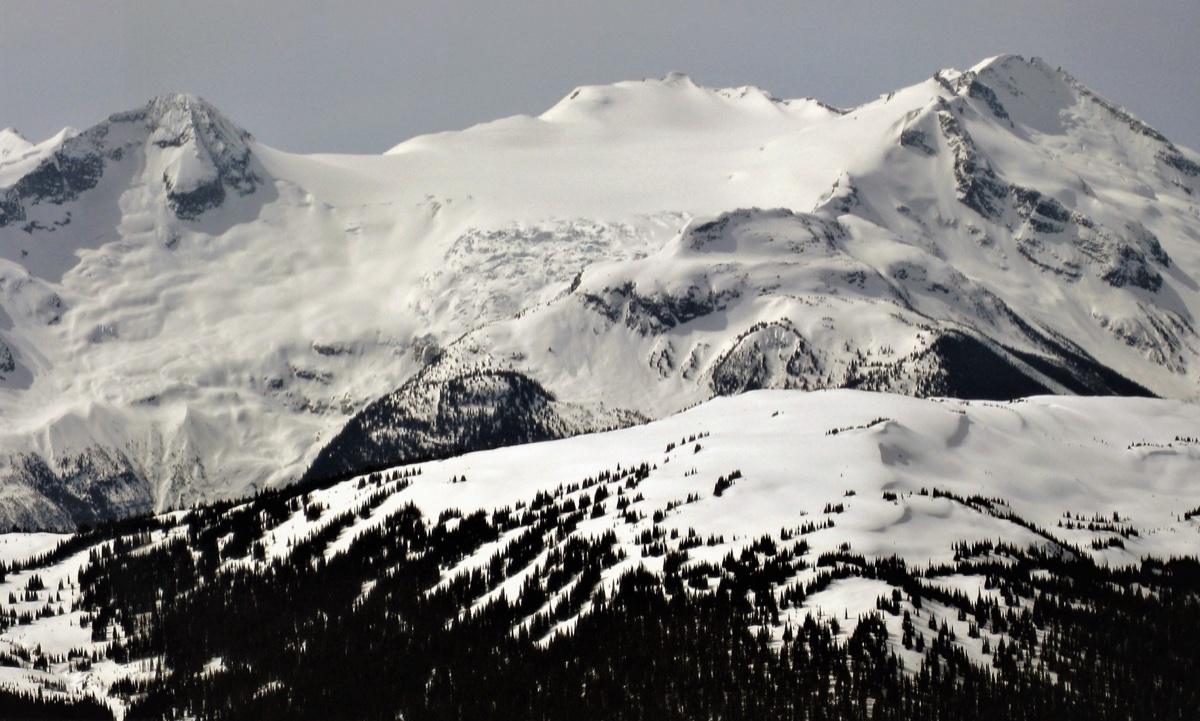
This resort doesn’t lie in any national park, but in a remote southern part of Alberta close to the US border. Castle Mountain is the definition of rugged, commercially unspoiled Canadian skiing. It’s not part of any big alliances or combo passes, you won’t run into crowds of international tourists, and the atmosphere is wonderfully homely.
This hill has a reputation as a genuine powder paradise, and deservedly so. The terrain is steep, tonnes of snow fall, and on top of that they run cat-skiing — being driven by snowcat into the backcountry — which Lukáš and I haven’t dared try yet, but it’s on our imaginary bucket list. 😁 Stop by if you’re renting a car in Calgary and want to experience the real deal of local skiing without unnecessary luxury.

6. Nakiska in Kananaskis: a family stop near Calgary
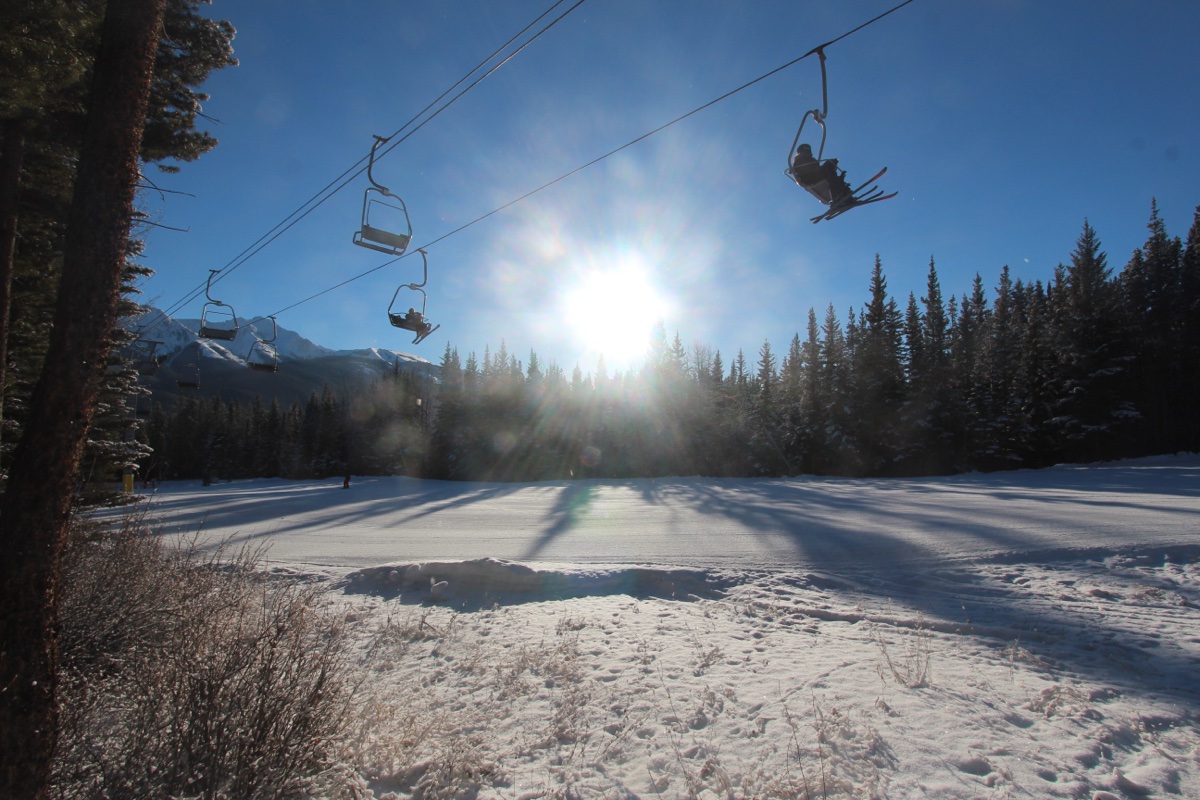
Nakiska was built primarily for the 1988 Winter Olympics and sits in the Kananaskis Country area, roughly an hour’s drive from Calgary airport. Most of the runs lead through the forest and are perfectly sheltered from strong winds. The local staff take great care over grooming the slopes, so if you love freshly groomed morning corduroy, you’re in the right place.
It’s not a huge resort for a week-long holiday; we mostly went here for a single warm-up day. It’s also an ideal spot if you’re travelling with small children, because finding your way around the slope is very easy and the runs are pleasantly wide and easy to read.
Map of points of interest for your phone
Lift passes, SkiBig3 and how to save with the Ikon Pass
Skiing in North America is expensive, there’s no point pretending otherwise. Buying a lift pass at the window at the last minute is the worst thing you can do for your wallet. In the 2026 season, day-pass prices at the main resorts range between 130 and 170 CAD per person (roughly €90 to €120). Fortunately there are so-called combo passes that can save you a tidy sum.
The basic option is the SkiBig3 Pass, valid jointly for Lake Louise, Sunshine and Norquay. You can buy it for multiple days and choose each day which of the three resorts you want to hit. The great thing is that it also comes with free ski-bus transport from Banff, so you can leave the car at your hotel.
If you plan to ski for more than seven days or want to combine a visit to Alberta with other resorts, consider buying the IKON Pass. It usually costs around 1,199 USD (always bought in spring or summer before the season) and includes up to seven days at SkiBig3 and another seven days at Marmot Basin, plus access to fifty more resorts around the world. If you’d like to head to Whistler in Canada over in British Columbia, there you’ll instead use the competing Epic Pass.
Skiing with kids in the Canadian Rockies
Jonáš is still too little for skiing, but I already know where I’ll take him one day. Canada is incredibly welcoming to families with children. Kids under five usually ski for free when accompanied by a paying adult, and during certain promotional periods and with some types of pass, even children up to twelve can ski for free. For families I’d most recommend Sunshine Village, where there’s a huge, safe kids’ zone and the main runs are wide and easy to read. Every resort has its own ski school with English-speaking instructors who are very friendly and used to working with small beginners.
What to do when your legs ache: cross-country skiing and snowshoes
Not everyone wants to spend all seven days in a row on the slopes. If you want a rest, rent cross-country skis or snowshoes. Canada’s national parks have hundreds of kilometres of impeccably maintained trails. We most often went cross-country skiing on the Pipestone trails near Lake Louise, where the routes weave between snow-covered trees and valleys.
You’ll also find beautiful routes for cross-country skiing and fat bikes (bikes with thick tyres for the snow) right next to the town of Banff, in the area known as the Banff cross-country area. Another unforgettable experience is skating on the frozen Lake Louise, where in January they build a huge ice castle and you can sip hot chocolate right beside the frozen glaciers.
What to taste après-ski: Canadian après-ski
You won’t find European-style après-ski with dancing on tables here, but Canadian food really hits the spot after a day out in the cold. What absolutely must you try?
- Poutine: The crown jewel of Canadian junk food. It’s a pile of fries topped with cheese curds and smothered in hot brown gravy. The best is at Banff Poutine or at The Eddie Burger Bar.
- AAA Alberta Beef: Alberta is famous for its ranches and the local beef steaks are among the best in the world. Pop into one of the nicer restaurants on Banff Avenue.
- The Caesar cocktail: The Canadian version of a Bloody Mary. Instead of tomato juice they use Clamato (a mix of tomato juice and clam broth). It sounds terrifying, but the salty, spicy rim of the glass topped with celery and a piece of bacon will win you over fast.
- Local beer: Right on Banff’s main street is the great Banff Ave Brewing Co brewery, where we’d go in the evenings to sample their beer specials.
Practical info and safety for the 2026 season
Before you travel, definitely download an eSIM to your phone so you have internet the moment you land. You can use our link to Holafly with unlimited data. Also, don’t forget quality travel insurance with an add-on for extreme winter sports. For shorter trips Lukáš and I go with True Traveller, and for the longer ones we rely on SafetyWing.
➜ Before you set off, check out our travel insurance comparison.
People often ask us about wild animals and bears. In the winter months, both grizzly and black bears hibernate deep in the forests, so carrying bear spray up onto the slopes is really pointless. You might, however, run into huge elk or caribou, which occasionally wander around the edges of the towns.
Safety behind the wheel and winter driving
Driving in the Canadian mountains in winter demands a lot of respect. The roads through the national parks are gritted, but they often have a thick layer of packed snow or invisible black ice on them. Unlike neighbouring British Columbia, Alberta doesn’t require winter tyres across the board by law, but in the national parks and on the mountain passes they’re simply a necessity. When we first drove in a proper blizzard on the Icefields Parkway, we were quite sweaty, so really don’t underestimate good tyres.
When picking up your rental car, always insist that you need a car with quality winter tyres marked with the snowflake symbol, or at the very least M+S (Mud and Snow). An SUV with 4×4 drive is clearly the best choice for these conditions. Always keep at least half a tank of fuel in the car, plus a blanket and a little something to eat, in case they close the highway because of avalanche danger or an accident.
Where to go next
And if Canada has stolen your heart just like it did ours, take a look at our other guides too:
- The complete guide to Banff National Park
- Where to stay: Canmore vs. Banff
- A guide to Jasper National Park
- How to ski in British Columbia: Whistler
 🚗 Car rental on the roadVerified car rentals in the Rocky Mountains
Search with the DiscoverCars comparison engine — it compares prices from dozens of local and international rental companies, and most bookings come with free cancellation.
Compare car prices in the Rocky Mountains →Frequently asked questions (FAQ)
Is skiing in Canada harder than in Europe?
The slopes themselves are not harder, quite the opposite. They are wider, less crowded, and the snow is very slow and forgiving thanks to the low temperatures. Skiing in off-piste terrain and dealing with extreme cold can be more challenging.
How much does ski equipment rental cost?
A complete ski or snowboard set for one day will cost you around 45 to 60 CAD (approximately €30–40). You can find rental shops both directly at the resorts and at lower prices in the towns of Banff and Canmore.
Can I drive with just my national driver’s license if I rent a car?
To drive in Canada, you must have an International Driving Permit in addition to your national driver’s license. You can obtain one from your local authorities in your home country. Without it, the rental company will likely not release the car to you.
Is there an avalanche risk in Alberta?
Inside the patrolled ski slopes, the risk is minimal—staff ensure safety through controlled avalanche blasting. However, if you venture into so-called backcountry (off-piste terrain outside the marked resort boundaries), avalanche gear and knowledge are absolutely essential.
What clothing should I pack?
Layering is key. Forget one thick jacket—instead bring quality merino wool base layers, a warm mid-layer for insulation, and a Gore-Tex jacket that won’t let the wind through. Temperatures can drop quickly. Most importantly, don’t forget a warm neck warmer and mittens—they’ll save you when icy winds start blowing on the chairlift.
Do I need to tip in restaurants and bars?
Yes, tips are an integral part of servers’ and bartenders’ wages in Canada, just as in the USA. The standard is to leave 15 to 20 percent of the total bill.
Are the resorts ski-in/ski-out connected like in the Alps?
No, each of the mentioned resorts is located on a separate mountain or in a different valley. Between resorts like Lake Louise and Sunshine Village, you always need to travel by car or special ski bus—as the crow flies, they are dozens of kilometers apart.
Tips and Tricks for Your Vacation
Don’t Overpay for Flights
Search for flights on Kayak. It’s our favorite search engine because it scans the websites of all airlines and always finds the cheapest connection.
Book Your Accommodation Smartly
The best experiences we’ve had when looking for accommodation (from Alaska to Morocco) are with Booking.com, where hotels, apartments, and entire houses are usually the cheapest and most widely available.
Don’t Forget Travel Insurance
Good travel insurance will protect you against illness, accidents, theft, or flight cancellations. We’ve had a few hospital visits abroad, so we know how important it is to have proper insurance arranged.
Where we insure ourselves: SafetyWing (simple monthly subscription) and TrueTraveller (for extra-long trips).
Find the Best Experiences
Get Your Guide is a huge online marketplace where you can book guided walks, trips, skip-the-line tickets, tours, and much more. We always find some extra fun there!
More from Rocky Mountains
Full guide → Travel story · most readWhat to Pack for the Canadian Rockies: Summer & Winter Packing List 2026
 ItineraryWestern Canada Road Trip: 14–21 Day Itinerary from the Rockies to the Pacific
 What to seeJasper, Canada: 15 Tips on What to See and Do (After the 2024 Fire)
 Where to stayCalgary, Canada: 23 Best Things to Do and See
 With kidsHow Much Does a Trip to Alberta & BC Cost in 2026: Budget for Couples, Families and Backpackers


