When people hear “Pacific Northwest road trip” or the US West Coast in general, most immediately picture the scorching deserts of Nevada, the red rocks of Arizona, or the famous Grand Canyon. But if you’re thinking about heading to the northwest instead, let me give you a heads-up — it’s an entirely different world. A green paradise filled with deep forests, misty mornings that look straight out of Twin Peaks, and endless beaches pounded by the wild ocean. ☺️
When Lukáš and I first set out to explore this corner of America, it completely consumed us. Our fourteen-day road trip through Oregon, combined with Washington state and the iconic Lake Tahoe, was one of those experiences we still draw energy from to this day. Every morning we woke up to the scent of pine trees, spent our days discovering turquoise lakes in volcanic craters, and whiled away the evenings in cosy craft breweries.
This corner of America simply swallows you whole before you know it. So come along with us — we’ll walk through hipster Portland, stop at the waterfalls in Columbia River Gorge, hike up snowy Mount Hood, cruise the rugged Oregon coast, and finally make it all the way to crystal-clear Lake Tahoe. Plus, I’ll tell you where to sleep, when to go, and how much to budget for the whole thing.
TL;DR
- Best time to go: July to September, when there’s the least chance of rain and mountain passes are snow-free.
- Getting there: The best option is to fly into Portland, hire a car, and fly home from San Francisco (or Reno). From London, you can find direct or one-stop flights with airlines like British Airways, Virgin Atlantic, or United.
- Portland & surroundings: Don’t miss Multnomah Falls and Mount Hood.
- Oregon Coast: Stop at Haystack Rock on Cannon Beach — it’s a movie classic.
- Crater Lake: The deepest lake in the USA with the bluest water you’ve ever seen.
- Lake Tahoe: A paradise for paddleboard lovers and hikers on the border of California and Nevada.
- Budget: Expect roughly £2,400–£3,200 per person for 14 days (including flights and car hire).
The full destination guide: USA Travel Guide — guide and what to see
Practical information: When to go and how to prepare
The Pacific Northwest has its own unique climate and vast distances, and we learned a few things the hard way on the road — so we’d rather tell you upfront. Good preparation is absolutely essential here to save yourself a lot of headaches.
When to visit the Pacific Northwest
While you can visit California pretty much year-round, Oregon and Washington have a fairly defined season. The best time for this road trip is from mid-July to the end of September. We were there at the turn of August and September, and the weather was absolutely ideal — daytime temperatures climbed to a pleasant 25°C, though mornings in the mountains were already quite crisp.
I’d avoid travelling from November to May. Mountains like Mount Hood or the area around Crater Lake get buried under massive layers of snow, many roads are impassable in winter, and on the coast you’ll most likely face nothing but relentless rain and fog. During summer, however, do keep an eye out for wildfires, which have unfortunately plagued the West Coast frequently in recent years. It’s worth monitoring the current situation and having a backup plan just in case.
Flights, car hire and mobile data
For this particular itinerary, it makes the most sense to fly into Portland, Oregon, and book your return flight from San Francisco (or Reno, Nevada, if you want to finish right at Lake Tahoe). From London, several airlines offer connecting flights to Portland — check with United, Delta, or British Airways for competitive fares. Use flight comparison sites to find multi-city tickets (flying into one airport and out of another), which can save you a significant amount.
A car is an absolute necessity in the USA — you simply can’t get around without one. Lukáš and I have had consistently good experiences with DiscoverCars, which we use all over the world. I’d definitely recommend booking your car well in advance, especially for the summer season, because last-minute prices skyrocket and availability thins out fast. Also bear in mind that for returning the car in a different state, rental companies often charge a so-called one-way fee — potentially several hundred dollars extra.
To navigate and look up information on the go, you’ll need mobile data. From personal experience, we can recommend an eSIM — check out our Holafly review to see how it works and why we’ve stopped buying physical SIM cards altogether. You can grab one easily through Holafly.
As for health, definitely don’t skimp on travel insurance for the USA — American healthcare costs are astronomically high. For longer trips, we rely on True Traveller, which is a great option for UK travellers, or have a look at our SafetyWing review, which is a brilliant choice for digital nomads and extended stays. Remember that UK citizens need an ESTA visa waiver to enter the United States — make sure to apply online at least 72 hours before departure.
Where to stay and how much it all costs
The USA simply isn’t a cheap destination, and this region is no exception. Compared to the Midwest, accommodation and food prices here are noticeably higher — but the experiences you’ll take home are absolutely worth it. Be prepared for the fact that most accommodation along the route will be classic American motels or mountain lodges, which have their own charm but often look like they haven’t been updated since the seventies.
An average motel with breakfast (which usually means coffee from a machine and toast with jam 😅) will set you back roughly $120–$180 per night for two. In tourist hotspots like Cannon Beach or right on Lake Tahoe, prices can easily exceed $250 per night during peak season. If you want to save money, you can combine the road trip with camping — American state and national parks have gorgeous campsites, but you’ll need to book them up to six months in advance. For hotel bookings, we always compare prices on Booking.com.
Sample budget for two people over 14 days:
- Flights (multi-city): approx. £600 / person
- Car hire incl. insurance and one-way fee: £1,150 (£575 / person)
- Petrol: £200 (£100 / person — fuel is still cheaper in the US than in the UK)
- Accommodation (average £115 / night): £1,600 (£800 / person)
- Food (a mix of supermarkets, fast food, and occasional restaurants): £650 (£325 / person)
- Entrance fees, park passes, coffee and sundries: £165 / person
- Total: roughly £2,565 per person.
Where to eat along the way
Food on a road trip is something of a little obsession for us. Expect plenty of classic American fast food, which will save you during long driving days, but every now and then you’ll stumble upon genuine culinary gems. Lukáš and I made a rule early on that at least once a day we’d sit down at a proper restaurant so we weren’t just wolfing down burgers behind the wheel — and it really paid off.
I have to say, the Pacific Northwest seriously impressed us on this front. Once you hit the coast or the big cities, it’s an unexpected foodie paradise where fresh ingredients, local farms, and the honest craft of local chefs take centre stage.
Our favourite stops and typical flavours
On the Oregon coast, seek out the little tucked-away seafood shacks along the road. Crab sandwiches or traditional chowder made from the freshest catch will completely change your view of American food. These places often look pretty rough around the edges from the outside, but don’t let that put you off — inside, culinary heaven usually awaits. We fell hardest for the family-run spots where a smiling server greets you with a pot of drip coffee before you’ve even had a chance to sit down.
In Portland, we became absolutely addicted to the food truck scene. They’re scattered on practically every corner in so-called pods, offering an incredible mix of global flavours for just a few dollars. You grab yourself fantastic Mexican tacos, your partner picks up Thai curry from the truck next door, and then you eat together on wooden benches under string lights. And when you reach the inland area around Bend, count on the local breweries. Alongside excellent craft beer, they serve up absolutely phenomenal ribs or pulled pork that’ll have you licking your lips well into the next day.
Itinerary: 14-day Pacific Northwest road trip
We designed the entire itinerary so it wouldn’t wear you out unnecessarily. No 4am wake-up calls just to leave two hours earlier — each day gives you time to stop, breathe, and soak in whatever’s right in front of you. After all, we are on holiday, aren’t we? ☺️
Day 1. Arrival in Portland and first impressions
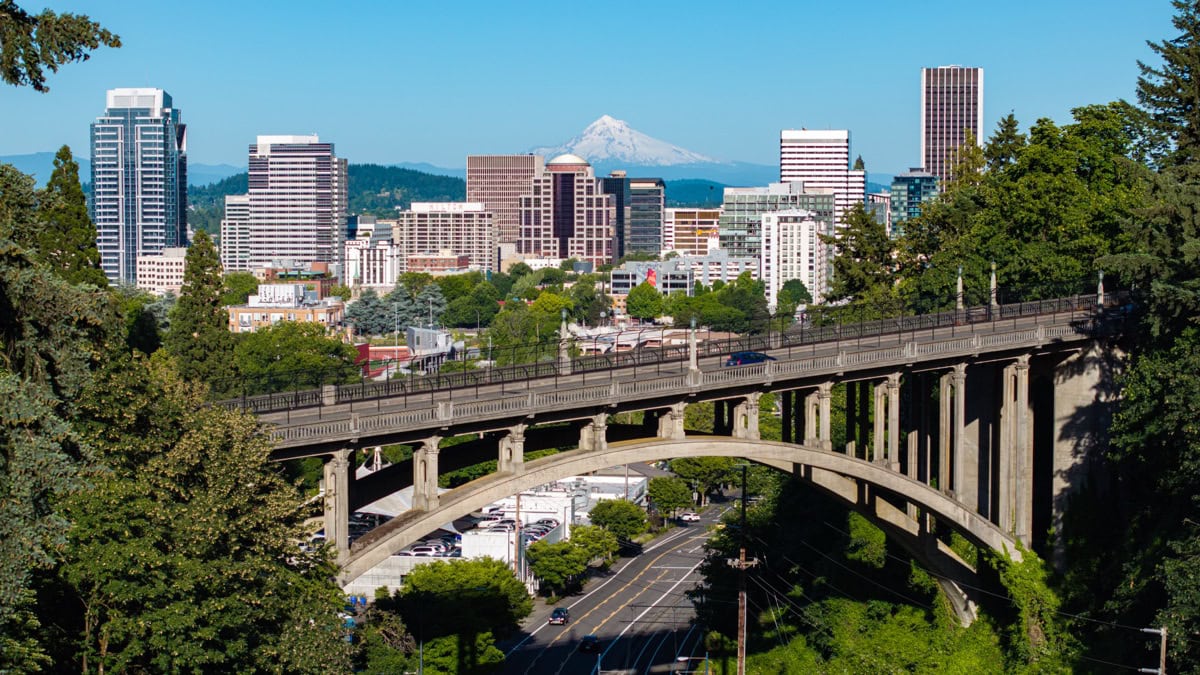
Your road trip begins in Portland, a city famous for its unofficial motto “Keep Portland Weird.” It’s a city brimming with brilliant coffee, street food, craft breweries, and a wonderfully laid-back atmosphere. After landing and picking up your car, check into your accommodation and head out to stretch your legs after the long flight.
Make your way to the Pearl District, where old industrial warehouses have been transformed into modern galleries, boutiques, and coffee shops. Pop into Powell’s City of Books, the world’s largest independent bookshop, which takes up an entire city block — and plan on spending at least two hours there. I literally had to drag Lukáš out by his sleeve. For dinner, try one of the many food trucks scattered across the city — the so-called “food cart pods” are on every corner, serving everything from Thai curry to excellent Mexican tacos for just a few dollars.
Once you’ve had your fill of the city, hop in the car and drive up above the centre to Washington Park. Hidden there is one of the most beautiful Japanese gardens outside of Japan. Strolling beneath the maples and listening to the murmur of small waterfalls was exactly the calm we needed after a long flight. You also get a fantastic view of the entire city from up there. As evening drew in, we headed back downtown and explored local coffee houses — like the famous Stumptown Coffee Roasters, where the coffee is so strong you probably won’t sleep for three days.
Where to stay in Portland:
A great choice is The Society Hotel in a historic building close to the centre, which has a lovely rooftop terrace. If you’re after something more of a classic motel vibe but clean and with free parking, check out KEX Portland.
Day 2. Columbia River Gorge and waterfalls

On the morning of day two, get ready for a serious dose of nature. Just about 45 minutes’ drive east of Portland lies the stunning Columbia River Gorge, carved out by the Columbia River and forming a natural border between Oregon and Washington states. The entire area is peppered with waterfalls and surrounded by deep, mossy forests.
Your first stop will undoubtedly be Multnomah Falls. At 189 metres, it’s the tallest waterfall in Oregon, and the view of it framed by a picturesque stone bridge is absolutely iconic. There’s a big catch, though — it’s probably the most visited natural attraction in the area, so the crowds can be intense. I’d recommend arriving as early as possible, ideally before nine o’clock; otherwise, you won’t even find a parking spot, and in summer you’ll need to book a timed entry reservation online in advance. From there, continue along the scenic Historic Columbia River Highway and stop at Latourell Falls or Wahkeena Falls, where it’s significantly quieter and you can enjoy a lovely walk through the forest.
While driving the Historic Columbia River Highway, definitely make a stop at Vista House on Crown Point. It’s a beautiful historic domed building perched on a high cliff directly above the river. The views from up there are so vast it makes you feel tiny. And since it gets quite windy, I’d recommend packing a light windbreaker in your bag. We stood there with our hair flying in every direction, just staring in amazement at the massive body of water in the valley below.
Where to stay:
You can spend the second night still in Portland, or move closer to the mountains to the town of Hood River, where I’d recommend the stylish Hood River Hotel.
Day 3. Majestic Mount Hood and magical forests
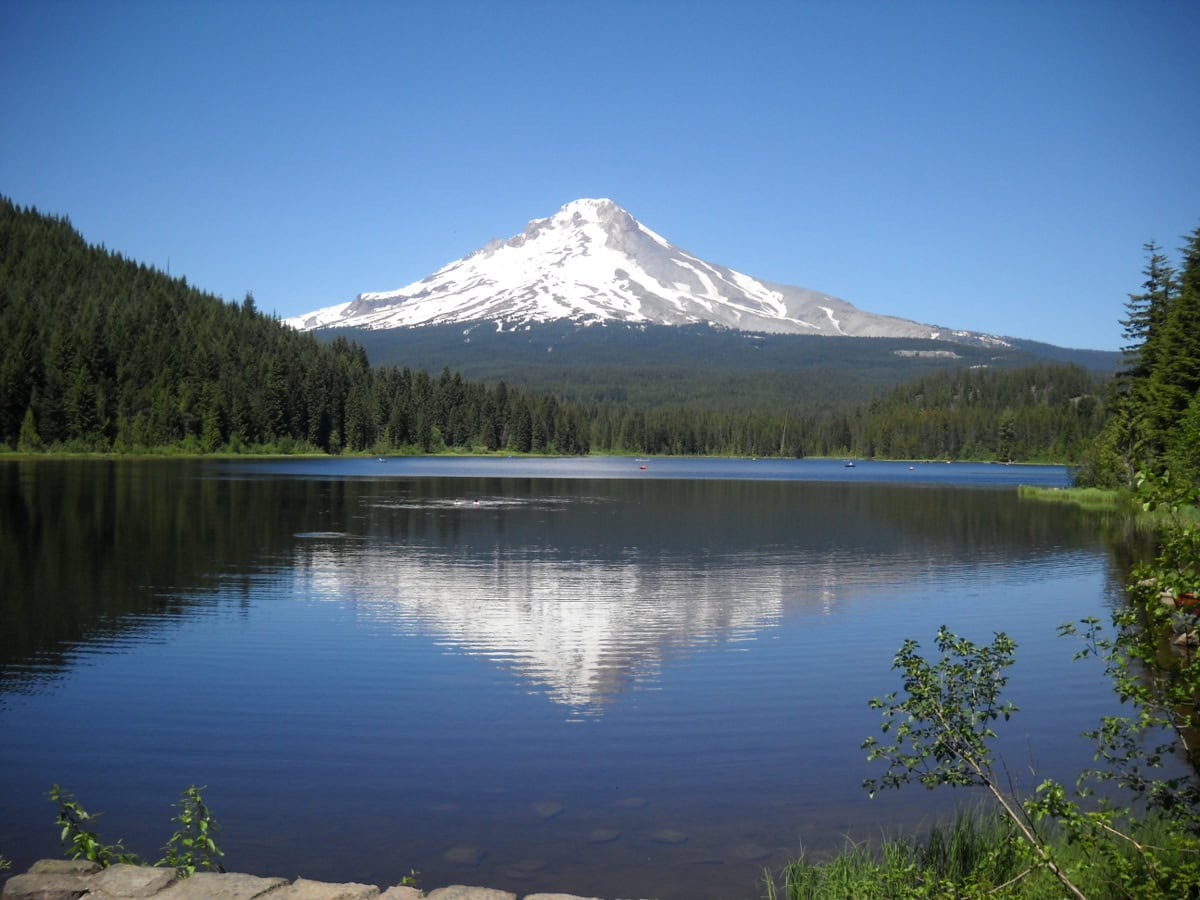
Today we’re heading to Oregon’s highest peak — the volcano Mount Hood, whose snow-capped summit will be peeking at you from miles away. A gorgeous route called the Mt. Hood Scenic Byway winds around the mountain. Our destination is the iconic Timberline Lodge, a massive mountain lodge built during the Great Depression from enormous timber beams and stone.
If you’re a fan of Stephen King, you’ll definitely recognise this lodge — the exterior shots of the Overlook Hotel from the famous film The Shining were filmed here. You can pop inside even without staying there and grab a hot chocolate by the enormous fireplace. Several hiking trails lead from the lodge; we did a shorter hike towards Zigzag Canyon, since even in summer you can encounter snowfields there. Given the terrain, definitely have a look at what hiking boots to bring on a trip like this — trainers simply won’t cut it here.
Before you drive all the way up to the lodge, take a detour to Trillium Lake. It’s a magical spot, especially early in the morning when the lake surface is still as glass and majestic Mount Hood is perfectly reflected in it. That’s exactly the kind of shot you’ll want as your computer wallpaper. An easy boardwalk trail runs around the lake, making it ideal for a gentle morning stretch with a hot coffee in hand. In the afternoon, we’ll head towards the Oregon coast, because another dramatic change of scenery awaits.
Where to stay near Mount Hood:
Stay in the picturesque little town of Government Camp — try the Best Western Mt. Hood Inn — or continue west towards the Tillamook area.
Day 4. Oregon Coast and cinematic Cannon Beach
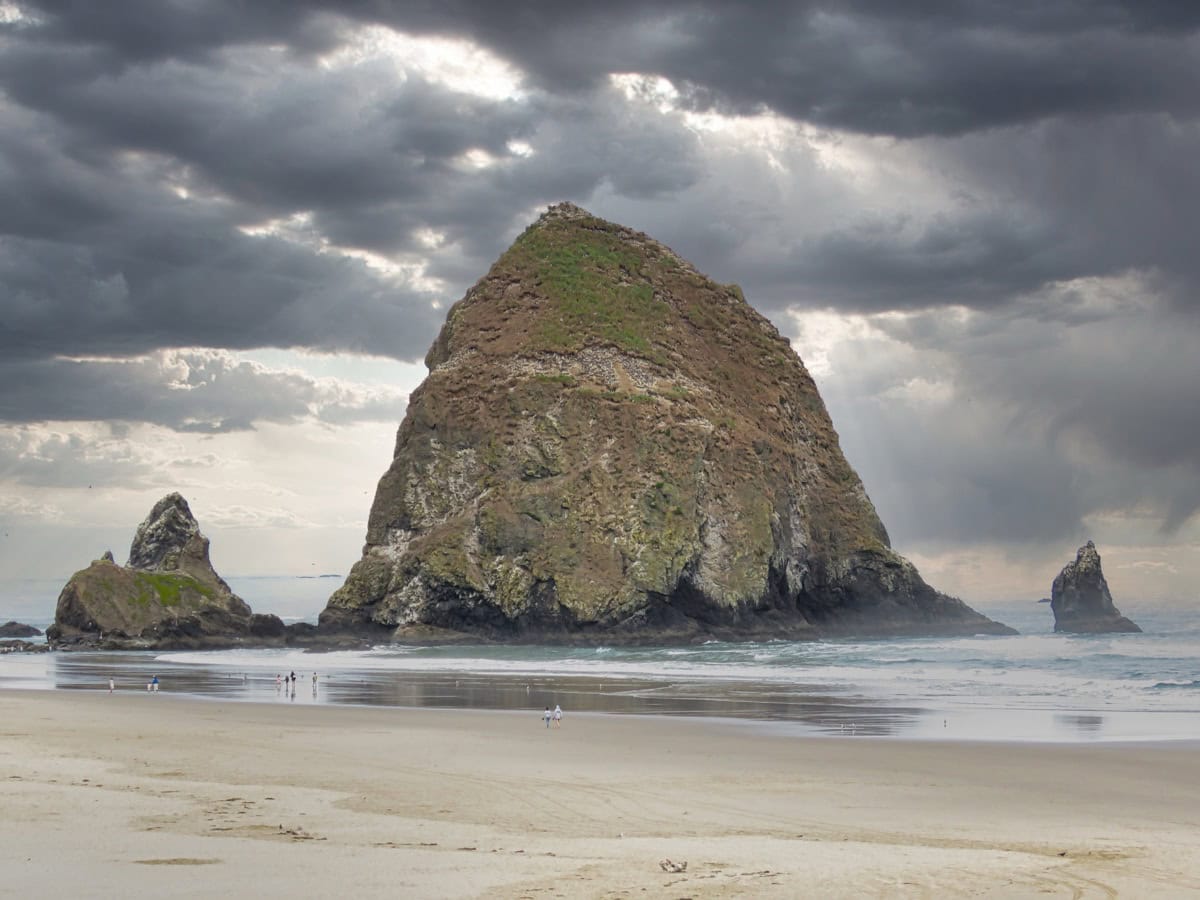
From the mountains we’re finally heading to the ocean, and I have to say, the Oregon Coast is one of the most beautiful places in all of America for me. Don’t expect palm trees and sunbathing in bikinis — the water hovers around 10–13°C in summer and the beaches are battered by cold winds. It’s a raw, melancholic, but utterly breathtaking spectacle of dramatic cliffs and morning mists.
In the morning, head to Cannon Beach — a vast sandy stretch from which the gigantic Haystack Rock formation rises from the sea. It might remind you of The Goonies or Twilight, both of which were filmed in this area. The town of Cannon Beach itself is full of charming art shops and cafés. In the afternoon, I’d recommend driving on to Oswald West State Park for a short walk through ancient cedar forest to Short Sand Beach, which is popular with local surfers. Breathe in that fresh air saturated with salt and the scent of evergreens.
In the afternoon, definitely add a stop at the viewpoint in nearby Ecola State Park. Parking can be a bit of a battle sometimes, but once you walk out to the cliff edge and look down at those jagged beaches in the haze, you’ll understand why so many films have been shot here. We spent a good hour just watching the waves relentlessly crash against the rocks and scanning the horizon through binoculars for whales. We didn’t actually spot any that day, but the atmosphere was still incredibly magical.
Where to stay at Cannon Beach:
A great option with ocean views is Tolovana Inn, or the cosy The Waves.
Day 5. Sea lions, cheese, and onward to Newport
On day five of our Pacific Northwest road trip, we’ll continue south along the coast on the iconic Highway 101. Make a quick stop in the town of Tillamook. It might sound a bit random, but there’s a huge cheese factory here — Tillamook Creamery. They offer a brilliant tour where you watch the process of making enormous blocks of cheddar, with free samples at the end, and they make absolutely fantastic ice cream (I’d recommend the Oregon marionberry flavour).
Just past Tillamook, take a detour to the coast at Cape Meares. A lovely trail from the historic lighthouse leads to a massive tree known as the Octopus Tree. It’s an enormous old spruce that doesn’t have a single main trunk — instead, its giant branches grow straight from the ground in the shape of a huge octopus. Lukáš circled it with his camera for quite a while. It’s genuinely fascinating to see what nature can create and survive in these harsh coastal conditions.
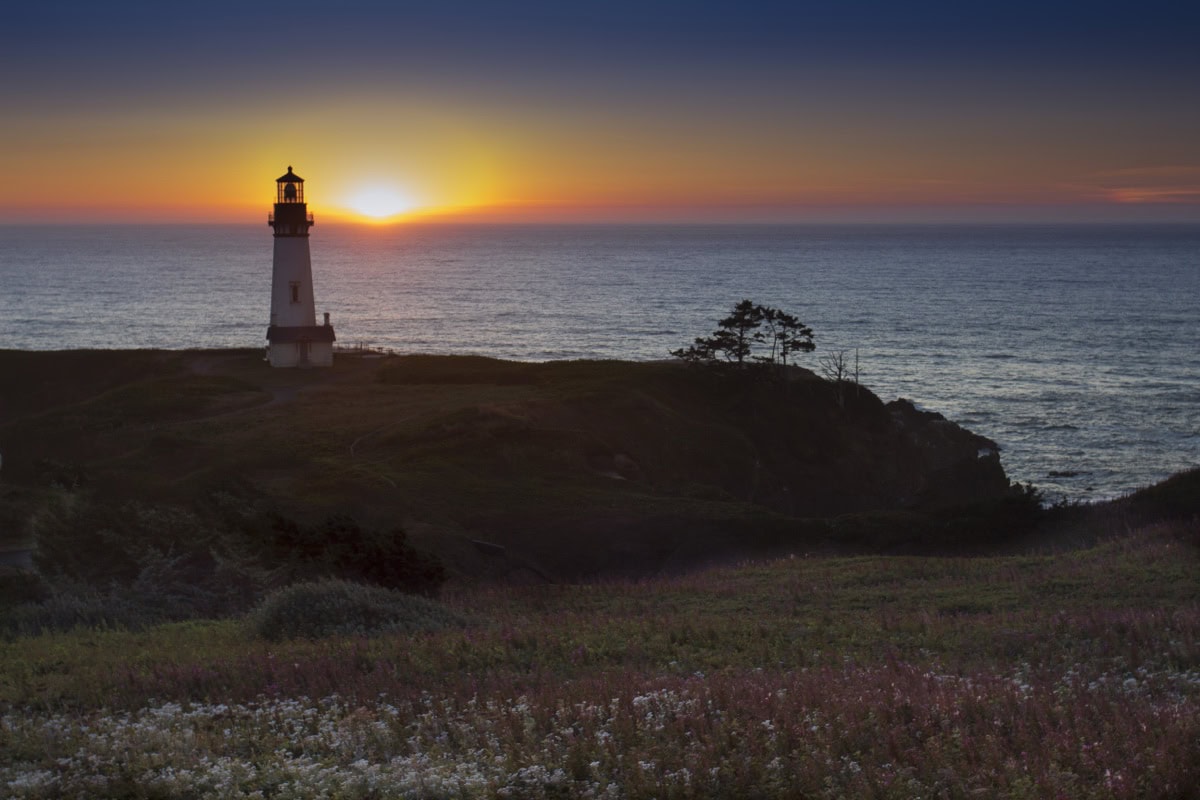
Around lunchtime, you’ll arrive in the town of Newport. Here, don’t miss the Yaquina Head Outstanding Natural Area, home to the tallest lighthouse in Oregon. From the cliffs beneath the lighthouse, you can often spot whales, and hundreds of noisy sea lions lounge on the rocks below. For lunch, head straight to the waterfront in Newport and into the legendary Mo’s Seafood and Chowder for their famous creamy clam chowder. Honestly, the restaurant is a bit of a tourist trap and I recall the tables being a tad sticky, but that chowder is so thick and piping hot that it’ll bring you back to life in the chilly Oregon weather like nothing else 😁.
Where to stay in Newport:
We stayed at a classic motel with gorgeous ocean views — Elizabeth Oceanfront Suites, where the rooms even had gas fireplaces.
Day 6. Back inland and lava fields near Bend
Today we say goodbye to the ocean and wind our way through dense forests back inland, heading to central Oregon and the city of Bend. The landscape begins to shift gradually — lush rainforest gives way to dry pine forests and high desert. Bend is an absolute mecca for outdoor enthusiasts and the city with perhaps the highest concentration of craft breweries per capita in the entire state.
Before the afternoon programme, treat yourself to a beautiful stroll along the Deschutes River in Bend. The Deschutes River Trail winds through the city, and locals jog with their dogs or mountain bike along it at every hour of the day. We grabbed a coffee and warm cinnamon rolls from a nearby bakery and simply soaked in the incredibly relaxed, sporty atmosphere of a city where everyone looks like they spend at least half their life outdoors.
After arriving in the area, definitely stop at the Lava Lands Visitor Center. The entire Bend surroundings were shaped by ancient volcanic activity, and you can walk along black trails directly across a petrified lava flow. Late in the afternoon, head back into town for dinner and a beer at Crux Fermentation Project. They have a huge garden full of fire pits where locals hang out with their dogs, sip excellent craft beers, and watch the sunset behind the Cascades range. It’s that quintessential American chill that you know from the movies.
Where to stay in Bend:
Bend has loads of lovely boutique accommodation. The Campfire Hotel is brilliant, with stylish retro-vibe rooms and an evening fire in the courtyard, or go for the bigger classic Riverhouse on the Deschutes.

Day 7. Wild West at Smith Rock State Park
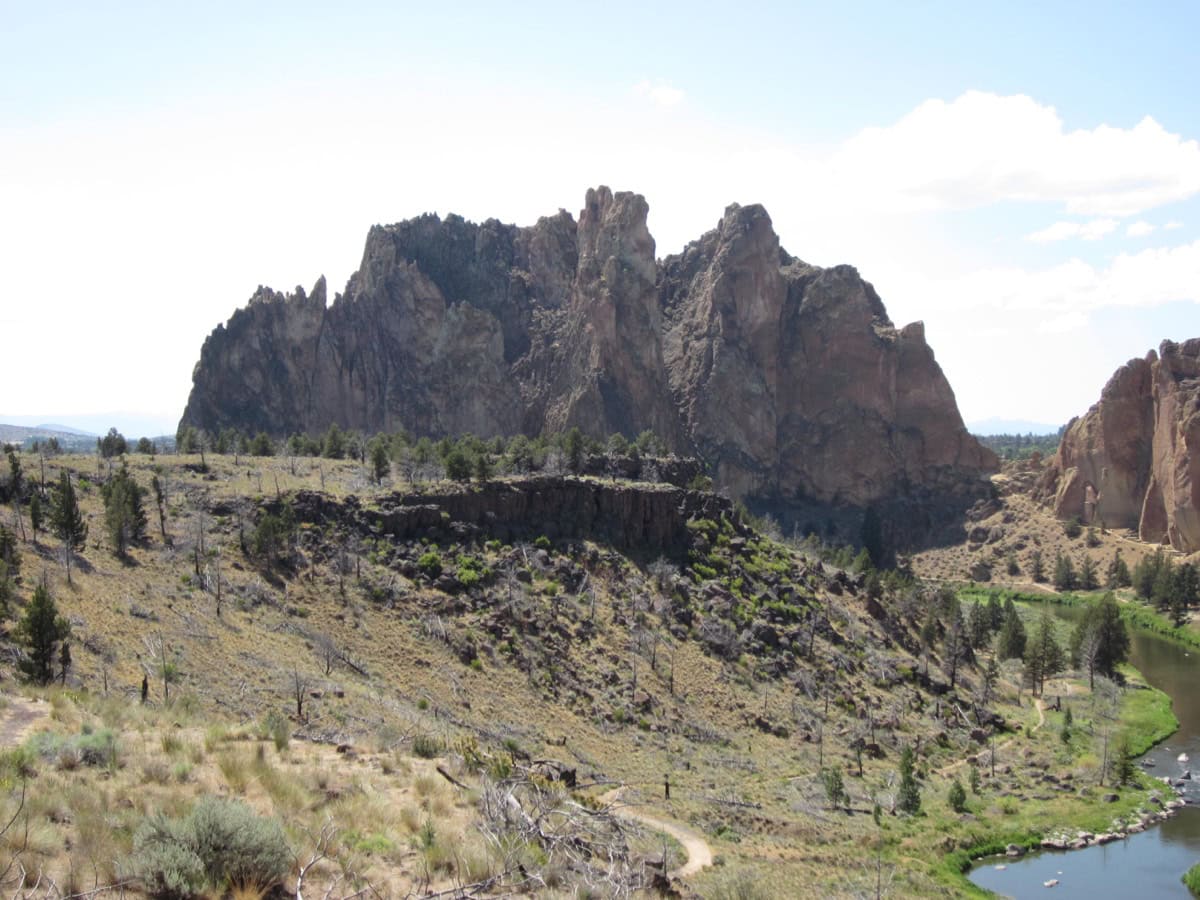
About 40 minutes’ drive north of Bend lies a place you might not initially expect in Oregon — Smith Rock State Park. Suddenly, enormous formations of red rock and canyons rise from the flat landscape, with the Crooked River winding slowly through them. It’s an entirely different and stunning world compared to what we’d seen in the first few days.
This park is the birthplace of American sport climbing, so right from the entrance you’ll see dozens of climbers scaling the rock faces. Pick the Misery Ridge Trail (the name alone is encouraging, right? 😅). It’s a proper ascent that’ll give you a solid workout, but from the top, the views of the rocks and snow-capped volcanoes in the distance are absolutely jaw-dropping. Don’t forget to pack plenty of water in your bag, because the sun beats down relentlessly here and shade is practically non-existent.
On the way back down into the valley, keep your eyes peeled. We were lucky enough to spot golden eagles circling majestically high above the canyon. And down by the river, apparently you can sometimes catch otters playfully darting through the current. The red rocks contrasting against the vivid green trees along the water are so incredibly photogenic that even if you only came here for half a day, it would be absolutely worth it.
Where to stay:
I’d recommend spending this night back in Bend at the same accommodation — saves you the hassle of repacking.
Day 8. Natural wonder of Crater Lake
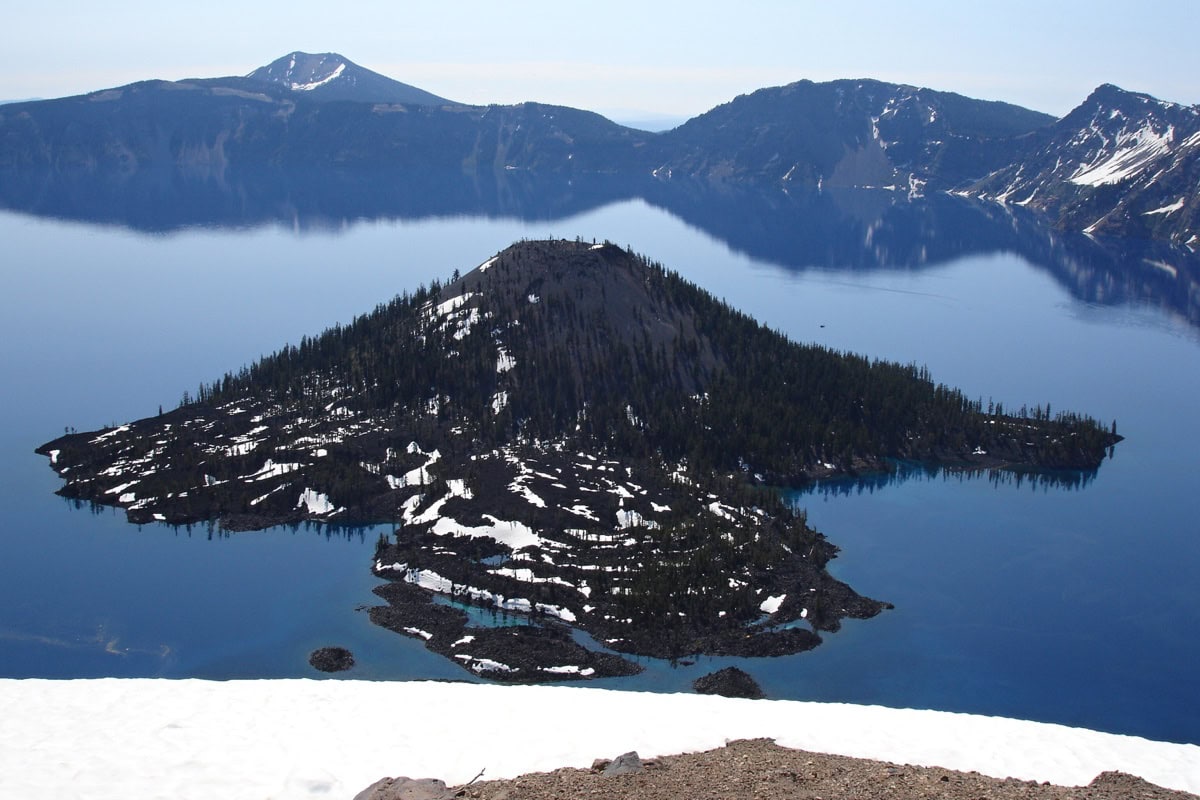
Today is personally one of the absolute highlights of the entire trip for me. We’ll head south from Bend, and after roughly two hours of driving, we’ll arrive at Oregon’s only national park — the immense crater lake known as Crater Lake. This lake formed about 7,700 years ago from a gigantic explosion of Mount Mazama, which essentially blew off its entire peak, and the resulting massive crater gradually filled with nothing but rainwater and melting snow.
The colour of the lake is such an intensely deep blue that standing on the rim, you can barely believe it’s real. No photograph can truly capture it, I’m afraid. Drive the scenic Rim Drive around the lake, which offers over fifty kilometres and dozens of incredible viewpoints. If you’ve got enough energy, hike down the steep Cleetwood Cove Trail right to the water’s edge — it’s the only place where you’re actually allowed to get close. The water temperature hovers just above freezing year-round, so any swimming is strictly for the truly masochistic. I tried dipping just my big toe in and immediately realised the swimsuit packed in my bag would not be needed 😁.
During your drive around the lake, don’t forget to stop at the Phantom Ship Overlook. A small island juts dramatically from the water, its sharp rocks resembling an old ghost pirate ship. Towards evening, try to make your way to the Watchman Peak viewpoint — it offers hands-down the best sunset. The surface slowly takes on incredible shades of pink and purple, and we stood there in complete awe until the very last ray disappeared beyond the horizon.
Where to stay near Crater Lake:
The ideal option is to stay right in the park at the historic Crater Lake Lodge (though you’ll need to book many months in advance) or at the motels in the village of Mazama Village.
Day 9. Long drive south to California and Mt. Shasta
After a hearty breakfast, the longest driving day of the entire road trip awaits — we need to get from the heart of Oregon all the way to the California-Nevada border, closer to Lake Tahoe. Pack a good coffee in a travel mug, fire up your favourite playlist, and brace yourself for hours of driving. Not sure how to pack everything smartly into the car? Check out our article on how to pack into carry-on luggage — some of those tips work just as well for packing a car for a road trip.
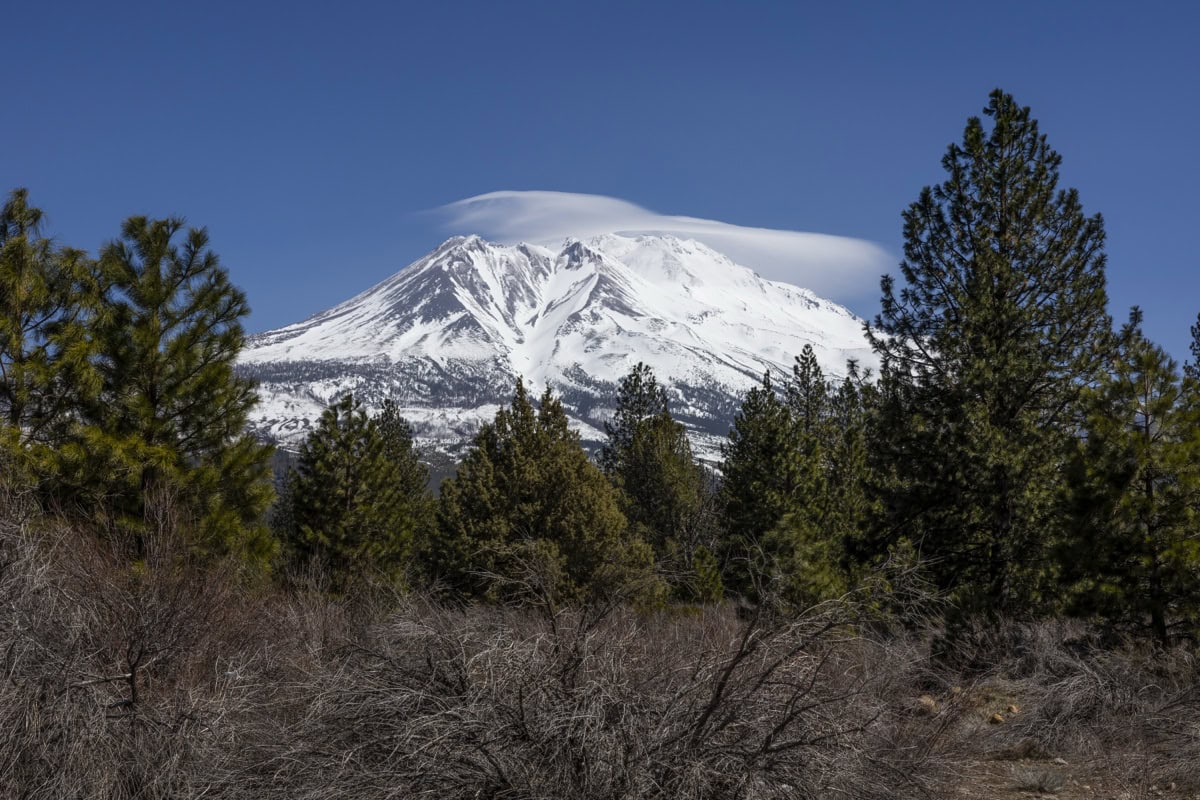
Heading south on Interstate 5, you’ll be accompanied for a long while by views of another enormous snow-capped volcano — Mount Shasta in Northern California. It’s a majestic mountain that’s said to have powerful spiritual energy, drawing people from around the world. Definitely stop for lunch near the charming little town of Mt. Shasta just off the motorway, then continue through forests and hills towards the town of Susanville or straight on to the Truckee area, north of Lake Tahoe.
Beyond the views from the window, this is precisely the day when you’ll appreciate a good podcast or some audiobooks, because California’s interior can feel a tad monotonous on the motorway at times. On the plus side, it’s finally a chance to quietly process all those impressions from the previous nine days packed with nature.
Where to stay:
A fantastic spot to overnight after the long drive is the town of Truckee — I’d recommend the stylish The Cedar House Sport Hotel, or the very popular classic Hampton Inn & Suites Tahoe-Truckee.
Day 10. Arrival at fairytale Lake Tahoe and the north shore

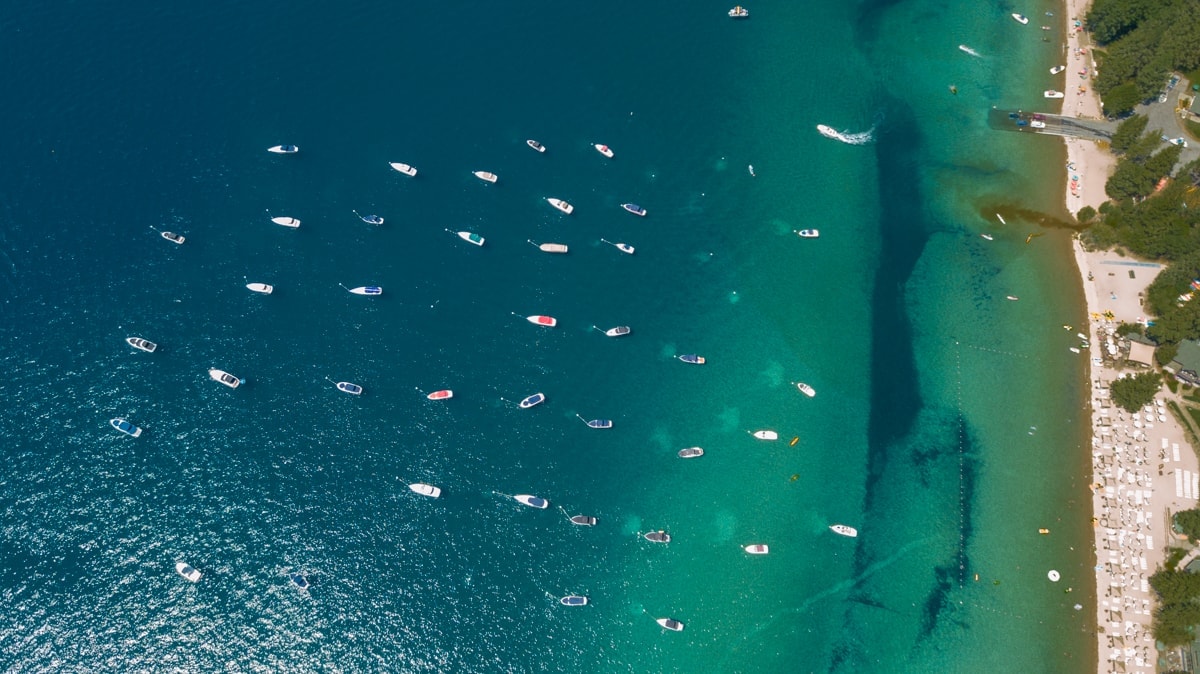
We’re finally at Lake Tahoe! This enormous alpine lake sits at an elevation of just under 1,900 metres, straddles the border between California and Nevada, and is one of the most beautiful mountain lakes in the entire world. The water is absolutely crystal clear, and the shores are lined with gorgeous pine forests and white sandy beaches surrounded by huge granite boulders.
Today we’ll focus on the northern part of the lake, which is generally quieter and less affected by mass tourism than the south. Drive to Sand Harbor on the Nevada side. The white sand and pebbles in turquoise water feel more like the Seychelles than high up in the American mountains. Hire a paddleboard or transparent kayak here and get straight out on the water — it’s by far the most popular activity on the lake, and the views from the water towards the surrounding mountains are priceless. Just be very careful, because the sun at high altitude burns treacherously — strong sun cream is an absolute must here.
If you fancy exploring more of the north shore in the afternoon, I’d recommend driving over to Incline Village for a walk along the elevated wooden boardwalks that run along the rocks right at the water’s edge. The water is so clear you can see the bottom even at considerable depth. Come evening, duck into a local pub, order a massive burger, and let the genuine mountain vibe wash over you.
Where to stay at Lake Tahoe:
For the north shore, try the excellent Hyatt Regency Lake Tahoe Resort if you want to treat yourself to a bit of luxury, or the slightly more affordable Basecamp Tahoe City.
Day 11. Iconic Emerald Bay and hiking
Set your alarm early this morning, because we’re heading to perhaps the most famous and most photographed spot on the entire lake — the gorgeous Emerald Bay on the southwest shore. I’d recommend getting there before eight in the morning, because the car parks are quite small and fill up astonishingly fast.
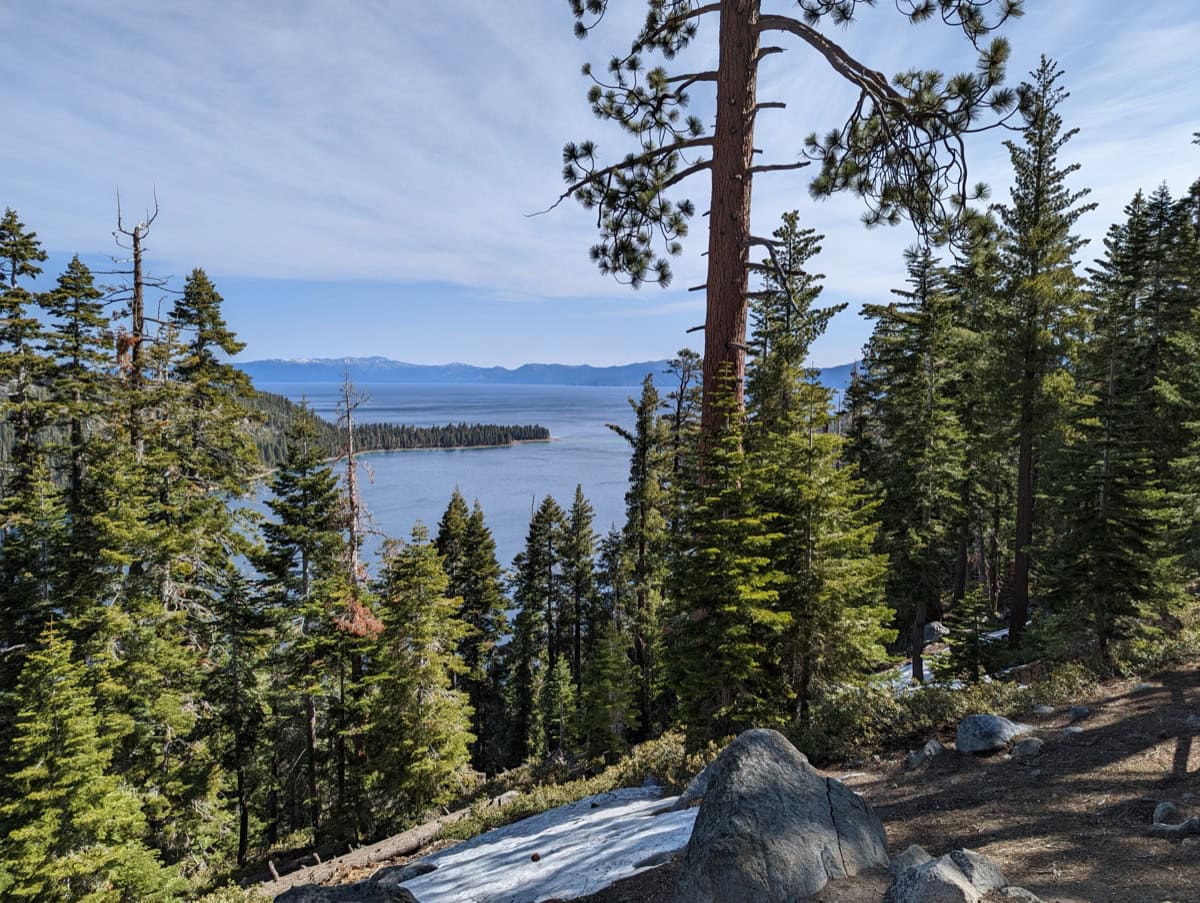
The view from Inspiration Point is absolutely breathtaking — every time, I’m struck anew by the rich colour of the water contrasting with the steep slopes covered in conifers. In the middle of the bay lies a small island called Fannette Island, topped with the ruins of an old stone tea house. From the viewpoint, definitely walk down the trail to Vikingsholm, a fascinating historic estate built in Scandinavian style right on the sandy shore of the lake. In the afternoon, I’d recommend a short hike up to Eagle Rock — it’s a relatively quick and easy trail that takes you in about twenty minutes to a volcanic bluff with the entire magnificent Lake Tahoe spread out before you.
Before heading south, try to stop at D.L. Bliss State Park. This is where the famous Rubicon Trail begins — an amazing footpath that winds beautifully along the cliffs directly above the lake. The trail is narrow, you sometimes have to clamber over old tree roots, but the distant views are quite literally like something from a fairy tale. We spent the whole morning there, and I have to honestly admit that leaving Lake Tahoe was the absolute hardest farewell of our entire road trip.
Where to stay:
Move to the southern part of the lake (South Lake Tahoe), where things are livelier. Try the very modern and hipster Basecamp Tahoe South, or the pleasant Station House Inn.
Day 12. From the mountains into the big city
Our road trip is slowly but surely coming to an end. We’re leaving the mountains of Lake Tahoe behind, with a roughly four-hour drive down from the peaks towards San Francisco awaiting us. If you’re even the slightest bit into wine, I’d recommend tweaking the route and going through the sun-drenched Napa or Sonoma Valley. Both valleys are famous for wine, which is poured on every corner and served with lunch as matter-of-factly as beer back home.
We opted for a stop in Sonoma, which felt much more relaxed to us than the slightly pretentious Napa. Enjoy a cracking late lunch on Sonoma Plaza, pop in for a quick wine tasting (the driver sadly just takes a sip or saves it for the evening ☺️), and soak up the warm Californian sunshine, which hits considerably harder down here than up in the mountains. In the early evening, we’ll cross the iconic Golden Gate Bridge and arrive in San Francisco. Someone tried to overcharge us for parking at a viewpoint once, but it all worked out fine in the end, and we actually quite enjoyed rolling into the city with the morning fog tumbling over the bridge. 🙂
Where to stay in San Francisco:
Accommodation in San Francisco is generally very pricey, and parking can be a nightmare (often $50+ per night in a hotel garage). We chose The Marker hotel in the Union Square area. Alternatively, you could try the slightly cheaper Lombard Motor Inn, which thankfully includes parking in the price.
Day 13. Foggy San Francisco, hills and cable cars

Our penultimate day is dedicated to a proper exploration of San Francisco. This city is incredibly photogenic, but brace yourself for some serious nerve-testing and legwork — the streets here are sometimes so steep it feels like you might tip over backwards in your car.
Start the day with a ride on the historic Cable Car. A ticket costs about $8, which is fairly steep for a short ride, but it’s an experience that’s utterly synonymous with the city. Ride to Fisherman’s Wharf, grab some crab or another bread-bowl chowder, and then stroll along the famous Pier 39, where hundreds of sea lions constantly bark and laze about on wooden platforms — because why not. In the afternoon, don’t miss Lombard Street, the famous “crookedest street in the world” flanked by gorgeous flower beds, and towards evening make your way to the Alamo Square viewpoint for that classic shot of the row of colourful Victorian houses known as the Painted Ladies, with the skyscrapers behind them.
If you’ve got time left, walk through the sprawling Chinatown as well. Suddenly you’ll feel as though you’ve flown across the ocean and landed right in Asia. The narrow streets are beautifully hung with red lanterns, the air thick with the smell of Peking duck and tea. We wandered into a tiny fortune cookie factory where they handed us cookies still hot off the belt. It was wonderfully authentic, and for a moment we completely forgot we were still in California.
Where to stay:
Same accommodation as the previous night in San Francisco.
Day 14. Last-minute shopping, Alcatraz, and departure
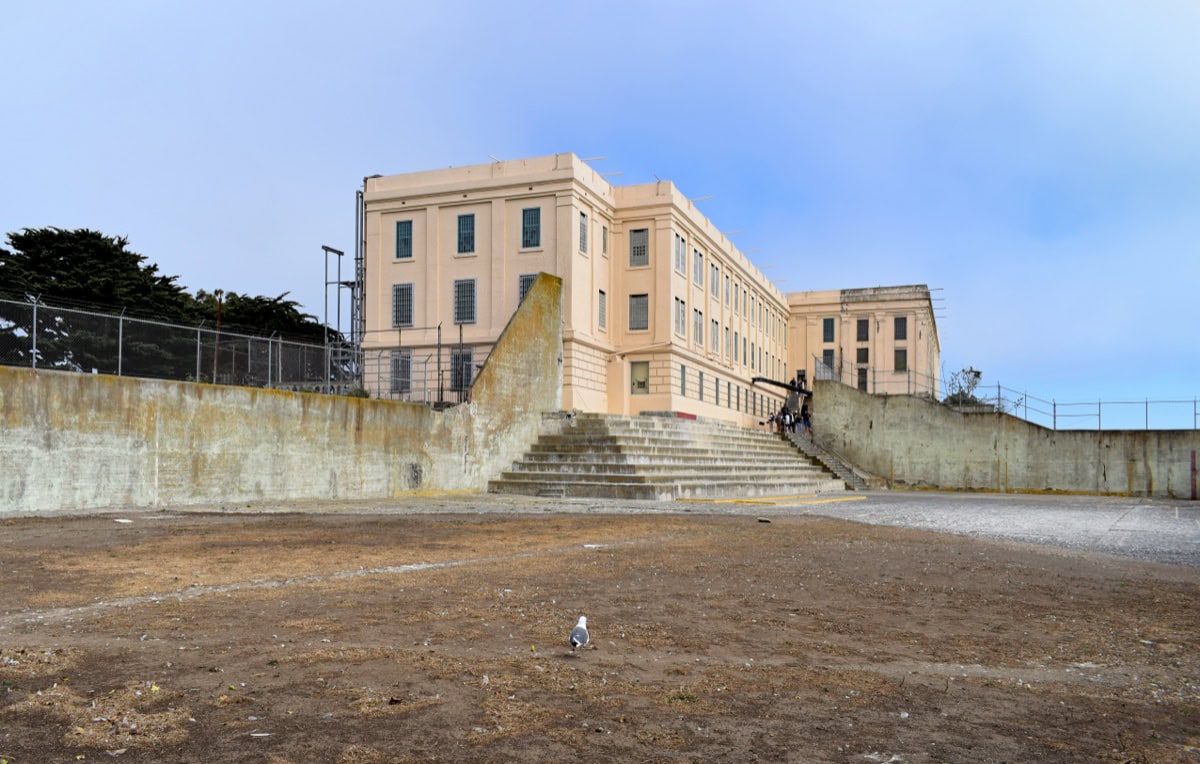
Our final day. If your flight isn’t until the evening, I’d highly recommend booking a tour of the famous Alcatraz prison in advance (you’ll need to do this a good two months ahead). The audio guide, cleverly narrated by former guards and inmates themselves, is absolutely excellent and gives the island a chilling yet deeply powerful atmosphere.
After that, all that’s left is to pick up some last souvenirs — perhaps some American sweets for the long journey on the plane. And when you drop off the car at the rental agency at the airport and join the check-in queue, you know you’ve come back a little bit richer. Or at least that’s what it looks like in the photos. 😁
Map of points of interest for your phone
Where to go next from the West Coast
We personally keep saying that next time we’ll definitely extend and add more of Washington or Yellowstone. If that tempts you too, here are a few ideas on where to continue from this area:
- North to Washington state: From Portland, it’s not far at all to another amazing city — check out our article on what to see in Seattle. From there, you can explore stunning national parks like Olympic or Mount Rainier.
- Into the heart of the wilderness: If you’re drawn more to the east — think bears and geysers — you might be interested in what the legendary Yellowstone National Park looks like.
FAQ: Common questions about an Oregon and Washington road trip
Before you dive headfirst into packing suitcases and planning your route, I’ve put together the most frequently asked questions. I know all too well what it’s like to feel a bit overwhelmed before a trip to America. Hopefully these answers will help you sort out the details and spare you some of those pre-flight jitters. You’ll figure the rest out as you go — and that’s the very best thing about road trips! ☺️
Is driving in the USA difficult?
Honestly, driving in the USA is often more relaxed than back home in Czechia. The roads are wide, cars always have automatic transmission, and the signage is very clear. Just get used to the fact that on motorways, people commonly overtake on either side. Remember that Americans drive on the right — it takes a little adjustment, but most British travellers find it surprisingly easy after the first hour or so.
What is the weather like in Oregon in summer?
Quite unpredictable! On the coast it can be 15°C with thick fog, while two hours later in Bend it’ll be 30°C with blazing sunshine. Smart layering is absolutely key to survival here.
Do you have to pay entrance fees for national parks?
Yes — if you’re visiting Crater Lake (and potentially other national monuments and state forests along the route), it’s worth buying the America the Beautiful Pass for $80, which covers all federal national parks for one year and applies to your entire vehicle.
Are there bears in this area?
Yes — black bears live in the forests of Oregon and around Lake Tahoe. Make some noise when hiking, and it’s worth carrying bear spray as a precaution, although encounters are fairly rare.
Can you swim in the ocean on the Oregon Coast?
The short answer is no. The Pacific Ocean here sits at around 10–13°C in summer, and the undercurrents are extremely dangerous. The ocean is best enjoyed from the shore — or from a thick wetsuit if you’re a hardy surfer.
Do I need cash for the trip?
You can get by almost everywhere with a card, but I’d definitely recommend carrying a small amount of cash — a few tens of dollars — for tips (for housekeeping, for example) or for paying entrance or parking fees at some remote state parks, where payment is through an unmanned envelope system.
Is 14 days enough for this route?
Absolutely — this itinerary is designed so you can comfortably complete it in 14 days without needing to wake up at five every morning. Of course, if you had three weeks free, you could linger a bit longer at each spot and explore more side valleys and beaches at a relaxed pace.
Tips and Tricks for Your Vacation
Don’t Overpay for Flights
Search for flights on Kayak. It’s our favorite search engine because it scans the websites of all airlines and always finds the cheapest connection.
Book Your Accommodation Smartly
The best experiences we’ve had when looking for accommodation (from Alaska to Morocco) are with Booking.com, where hotels, apartments, and entire houses are usually the cheapest and most widely available.
 🚗 Car rental on the roadVerified rental cars in the United States
Search with the DiscoverCars comparison engine — it compares prices from dozens of local and international rental companies, and most bookings come with free cancellation.
Compare car prices in the United States →Don’t Forget Travel Insurance
Good travel insurance will protect you against illness, accidents, theft, or flight cancellations. We’ve had a few hospital visits abroad, so we know how important it is to have proper insurance arranged.
Where we insure ourselves: SafetyWing (simple monthly subscription) and TrueTraveller (for extra-long trips).
Find the Best Experiences
Get Your Guide is a huge online marketplace where you can book guided walks, trips, skip-the-line tickets, tours, and much more. We always find some extra fun there!