

Some places you don’t look forward to visiting — you don’t plan smiley photos for social media, and honestly, they scare you a little from the start. Lucka openly admitted she didn’t have the emotional capacity for such a heavy place. Don’t treat this as a travel tip. Think of it as a challenge — go and see it for yourself. In this guide to visiting Auschwitz Poland, you’ll learn the difference between the two camps, how and where to get tickets, what exactly awaits you on site, and how to organise the entire trip from Krakow.
TL;DR
Before I dive into the details, here are the key things you should know before you even start figuring out how to get there.
- Two camps: The visit consists of two parts. Auschwitz I (the original camp with brick buildings and a museum) and Auschwitz II-Birkenau (the extermination camp about 3 kilometres away).
- Tickets: Tickets sell out incredibly fast. If you want to go without a guide for free, you need to book on the official website visit.auschwitz.org exactly one month in advance. A much safer and logistically easier option is to book a tour from Krakow (around €45 to €90).
- Getting there: It’s roughly 70 kilometres from Krakow. The journey by bus, train, or car takes one to one and a half hours.
- Time needed: Set aside a full day. The tour of both camps alone takes 3.5 to 4 hours, plus you need to factor in travel and transfers.
- Rules: There’s a strict ban on large bags (maximum A4 size), you must wear appropriate clothing (no bare shoulders or very short shorts), and flash photography is strictly forbidden inside buildings — in some rooms, photography is banned entirely.
- Age: The museum’s official recommendation is not to bring children under 14. From personal experience, I completely agree.
The full destination guide: Poland — guide and what to see
Auschwitz I vs. Auschwitz II-Birkenau: What’s the Difference
Before you even start looking at tickets, it’s crucial to understand that the Auschwitz-Birkenau State Museum isn’t just one place. People often arrive and are surprised to find they have to travel between two sites. The entire complex is divided into two main and completely different parts, and you should see both to grasp the full context of the horror.
1. Auschwitz I (The Main Camp and Museum)
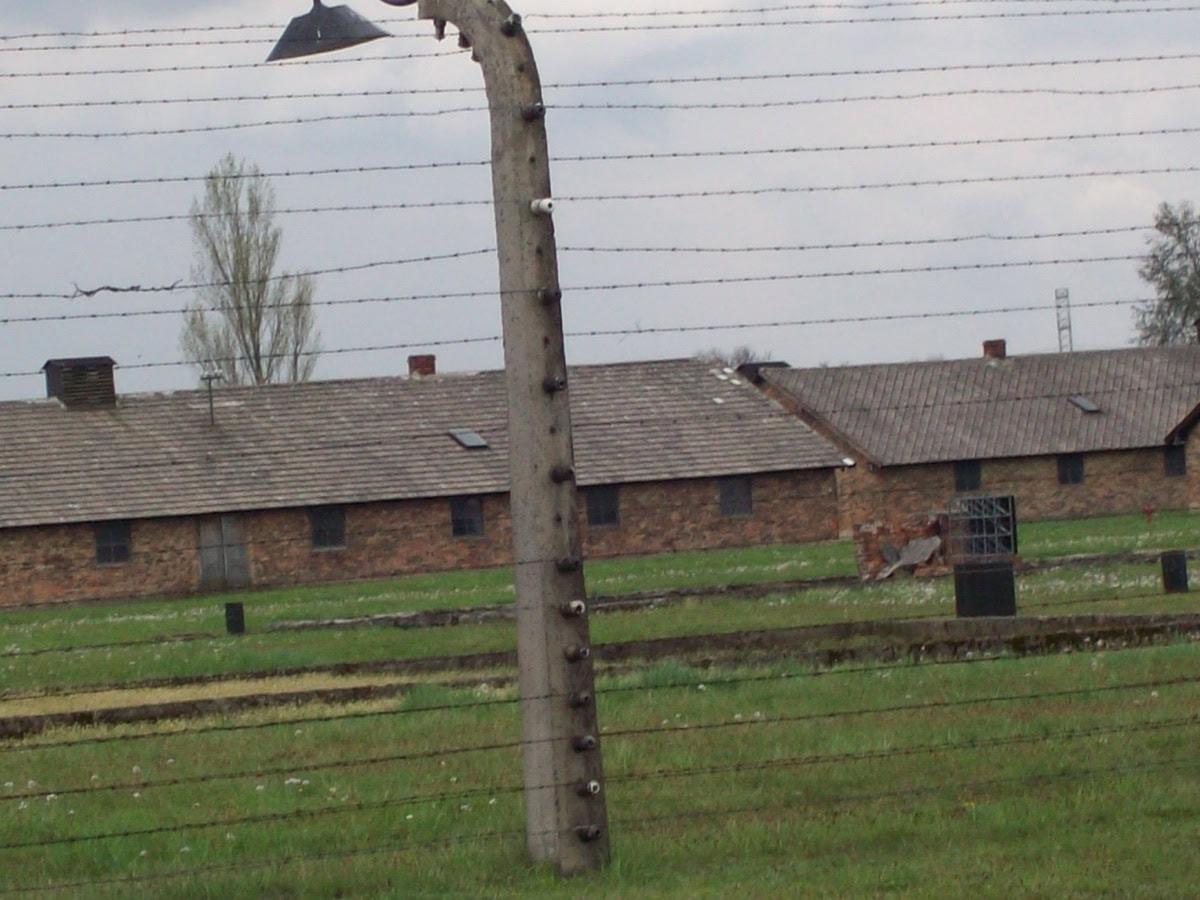
This is the place you’ve probably seen in most photographs. It’s here that you’ll find the iconic iron gate bearing the inscription “Arbeit Macht Frei.” Originally Polish military barracks with solid brick buildings, the site was seized by the Nazis.
Today, the complex primarily functions as a museum. The individual blocks house massive, harrowing and fact-driven exhibitions. You’ll see piles of personal belongings confiscated from prisoners, the first primitive gas chamber, and a crematorium. The grounds are relatively compact, lined with trees, and paradoxically don’t look like a death factory at first glance — until you step inside the buildings.
2. Auschwitz II-Birkenau (The Extermination Camp)
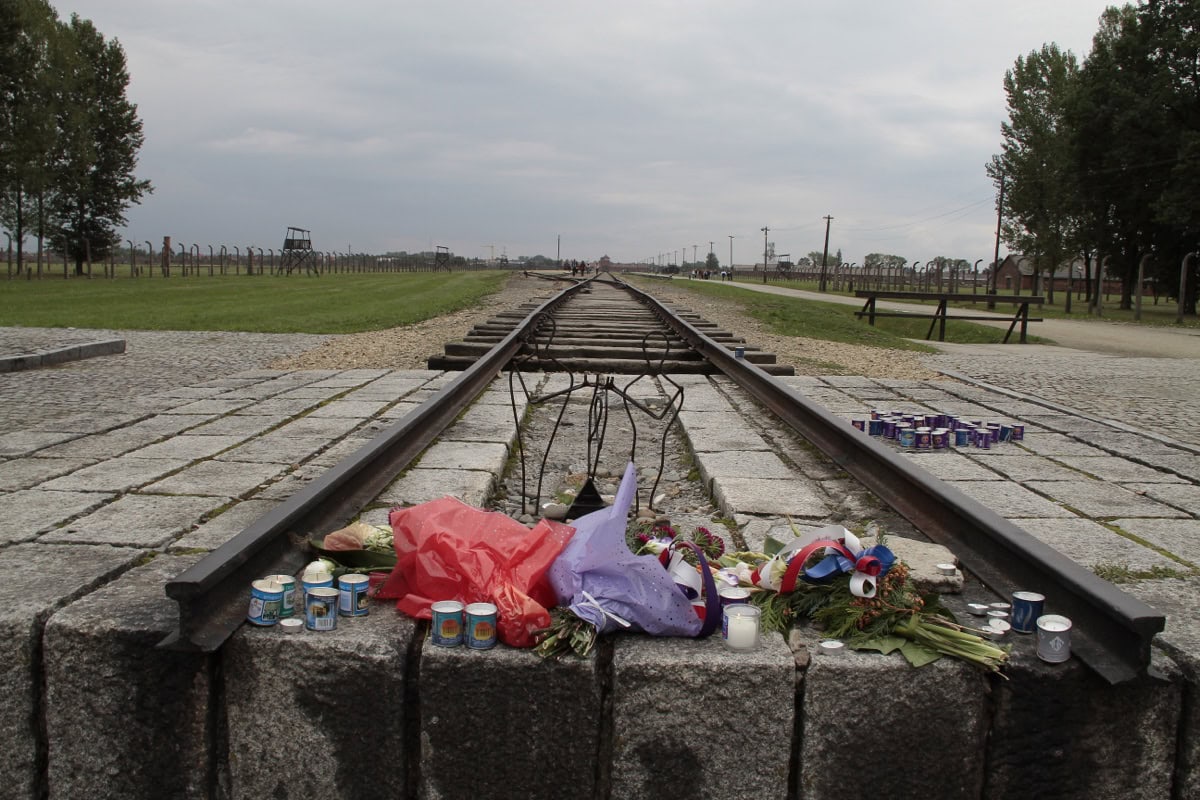
While the first camp served as an administrative centre, Birkenau was pure extermination machinery, built from scratch on open land a few kilometres from the original camp. It’s a vast, chillingly empty expanse.
This is where the famous railway tracks lead, slicing through the entrance building with its watchtower. You’ll see the railway ramp where selections took place, long rows of reconstructed and original wooden barracks, and at the very far end, the ruins of enormous gas chambers and crematoria that the Nazis blew up before retreating. You can spend as long as you like here.
Practical Information: 2026 Tickets and Tours
Securing entry is probably the most complicated part of the entire Auschwitz visit. The Memorial and Museum Auschwitz-Birkenau sees overwhelming visitor numbers, and the days of simply turning up, buying a ticket at the gate, and walking in are long gone. Capacity is strictly regulated. If you’re planning a trip, you essentially have two ways to get inside.
3. Free Tickets Without a Guide
You can enter the museum for free without a guide, but there’s a major catch. These free passes (“Entry Pass without an educator”) are released on the official website visit.auschwitz.org in limited numbers, always at specific times.
They’re usually only available for early morning or late afternoon slots. If you’re visiting during peak season, you’ll need to “snag” these free tickets exactly one month in advance — otherwise, they simply won’t be available.
4. Official Tour with an Educator
The most common option, chosen by the majority of visitors, is a guided tour with an official on-site educator. You book and pay directly on the museum’s website — roughly 110 PLN (about €25) per adult.
You’ll receive headphones so the guide doesn’t need to shout and everyone can hear clearly. The tour lasts approximately 3.5 hours. The problem is that even these tickets sell out weeks in advance, and you’ll still need to sort out your own transport from Krakow.
5. Complete Tour from Krakow
In my opinion, this is by far the most convenient option logistically, even though it costs more. You’ll pay between €45 and €90, and the company picks you up by coach in central Krakow, shows a documentary film during the journey to set the context, hands you over to an official guide on site, arranges your entry and transfer between both camps, and finally drives you back. You can easily find and book these Krakow Poland Auschwitz tours through platforms like GetYourGuide.
It saves you an incredible amount of stress with parking or waiting for public transport.
How to Get from Krakow to Auschwitz
I personally chose the bus and didn’t regret it — it was far simpler than I expected. Oświęcim (the Polish name for the town) lies in the Silesian Voivodeship, roughly 70 kilometres west of Krakow, and you have several options for getting there independently. The journey isn’t complicated; you just need to account for minor delays along the way.
6. By Bus (Cheapest and Most Practical)
Regular services depart from Krakow’s main bus station (MDA) directly to Oświęcim. The journey takes about an hour and a half, and a ticket costs around 20 PLN (roughly €5).
I recommend using companies like Lajkonik, which stop right by the museum (the stop is called Oświęcim Muzeum). During summer, early morning buses tend to be absolutely packed, so definitely buy your ticket online in advance.
7. By Train from Krakow
Polish State Railways (PKP) operates train services from Krakow to Oświęcim. The journey takes just over an hour. The advantage of the train is greater comfort and avoiding traffic jams.
The downside is that the Oświęcim train station is about 2 kilometres from the museum. From the station, you’ll either need to grab a taxi or prepare for a roughly 25-minute walk through the town.
8. By Car (If You’re on a Road Trip)
If you’re on a road trip through Poland, driving is a great choice. We’ve had consistently good experience with the comparison site DiscoverCars, which we use all over the world. The drive along the A4 motorway takes just under an hour.
There are paid car parks at both camps. Expect to pay around 20 PLN (about €5) per day. You can then drive between Auschwitz I and Birkenau in your own car, saving yourself the wait for the shuttle bus.
What You’ll See at Auschwitz I
Before you start reading the information panels, there’s a strange moment where it almost feels like you’re standing on a university campus. That impression vanishes very quickly once you step inside the first of the blocks, which now serve as individual museums housing gut-wrenching exhibitions.
9. The Iconic Arbeit Macht Frei Gate
The first thing you’ll see is the iron gate bearing the cynical motto “Work Sets You Free.” Look closely at the inverted letter “B” in the word Arbeit.
According to historians, this was a small, hidden act of defiance by the prisoners who were ordered by the SS to make the gate. It was through this gate that work squads marched out each morning for slave labour and returned each evening carrying dead fellow inmates. This is the spot where most people fall silent and stop talking.
10. Block 4: Extermination and Personal Belongings
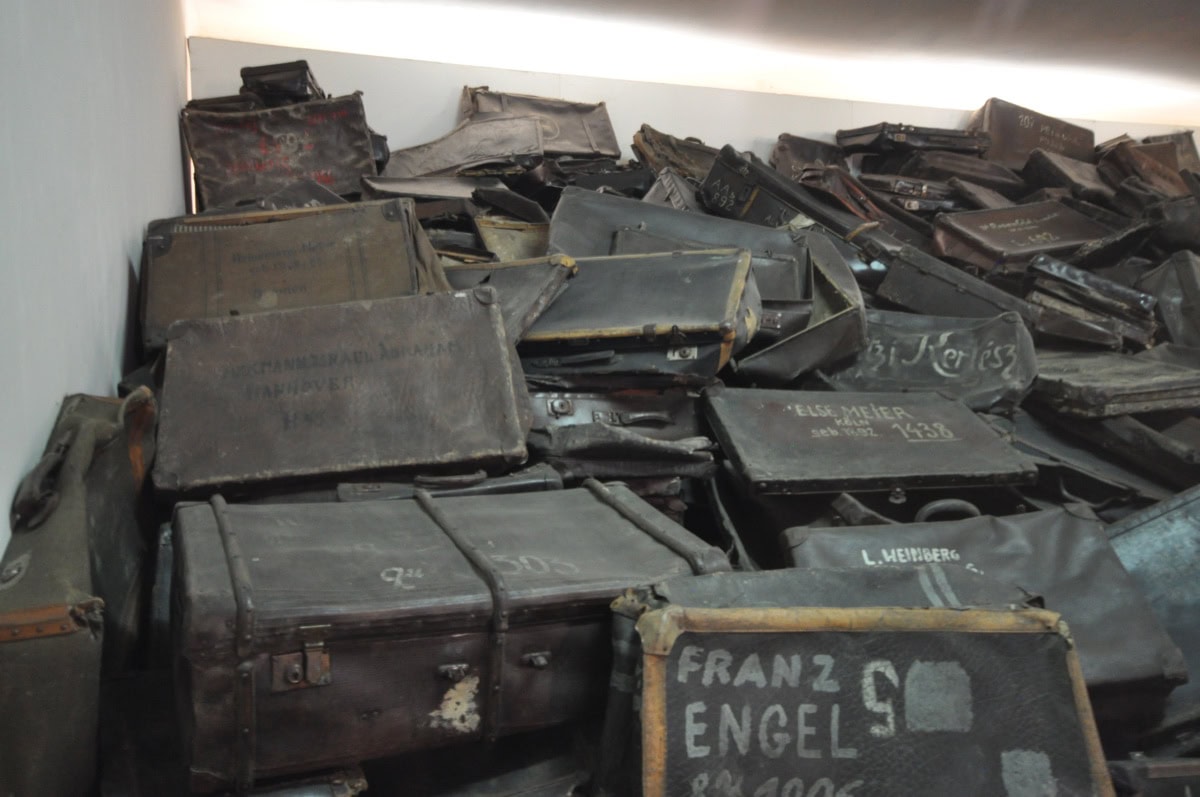
This is the block that shook me to the core. Inside, you won’t find weapons or building models — instead, you’ll see the belongings of people who arrived at the camp believing they were simply being relocated for work.
There’s an enormous room, glass-walled from floor to ceiling, filled with human hair that never made it to the textile factories in the Reich. Other rooms are packed with thousands of spectacles, prosthetic limbs, and pots. The most powerful room for me was the one filled with children’s and adults’ clothing, with hundreds of crumbling shoes spilling onto the floor. It’s here that it truly hits you: behind every single pair of shoes was a lost human life.
11. Block 11: The Death Prison and the Death Wall
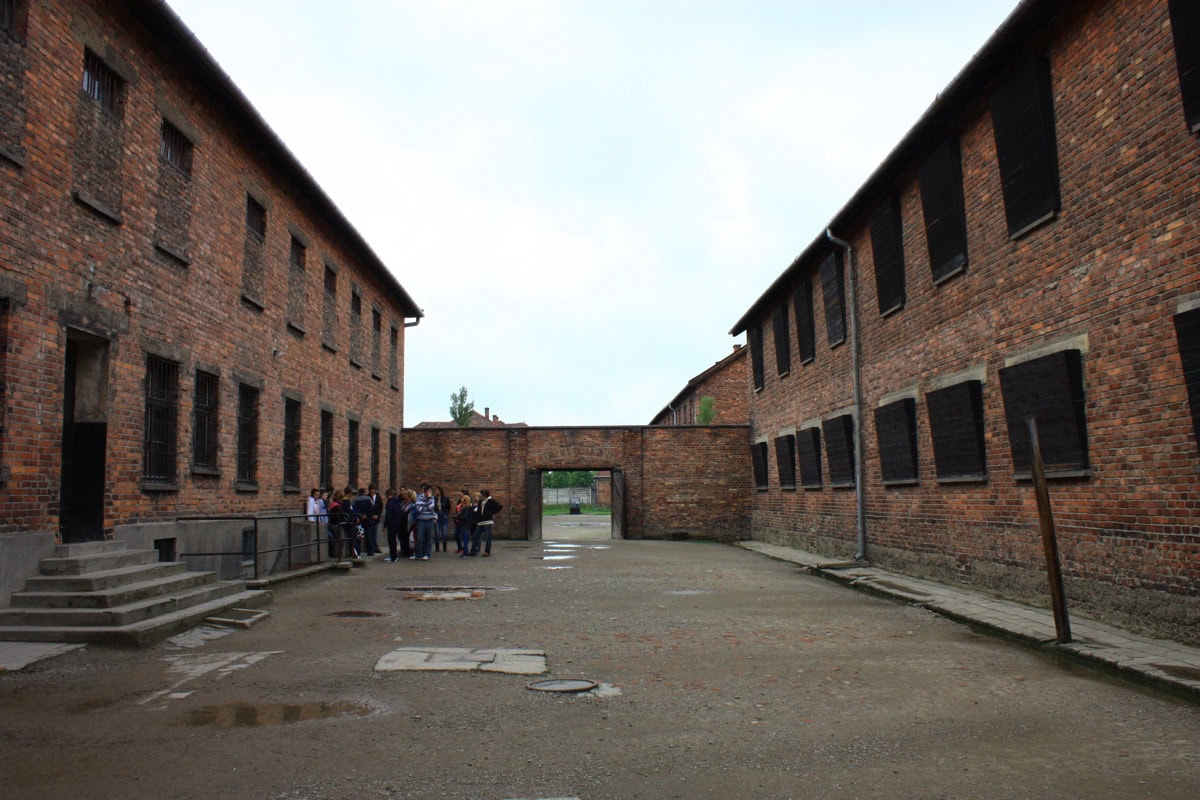
While the rest of the camp was horrific, Block 11 was a place of terror even for the prisoners themselves. It functioned as a prison within a prison. In the basement, you’ll find cells where the Gestapo carried out the first tests with Zyklon B gas, and the so-called “standing cells” — tiny spaces less than one square metre where four people were crammed in as punishment after a full day of forced labour, unable to sit down.
Right next to the block is the courtyard with the Death Wall, where mass executions by firing squad took place. Today, visitors and heads of state alike leave flowers here.
12. Crematorium I and the Gas Chamber
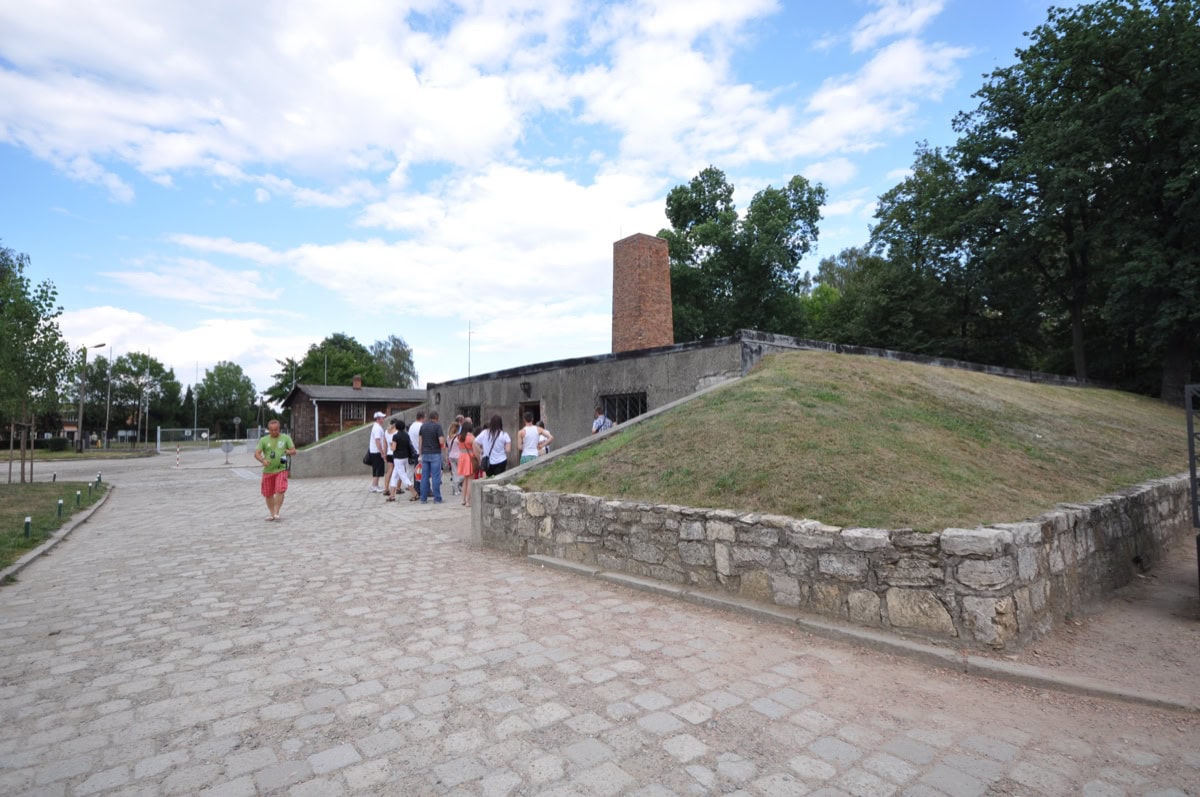
At the far edge of the Auschwitz I camp, you’ll enter the original, preserved crematorium building. This was the very first gas chamber at Auschwitz, before the killing was scaled up and moved to Birkenau.
Walking through the underground rooms with their dark, smoke-stained walls — where you can see the holes in the ceiling through which the poisonous gas was poured — is a deeply harrowing experience. Absolute silence fills the space, and photography is strictly forbidden inside. You’ll pause only by the preserved cremation ovens.
What You’ll See at Auschwitz II-Birkenau
A free yellow shuttle bus runs between the two camps, taking you to the main gate of Auschwitz II in about 10 minutes. The moment you step off, you’re struck by the staggering change in scale. If the first camp felt small and organised, Birkenau is simply a gigantic expanse. It covers 170 hectares, and this is where the vast majority of the Holocaust took place.
13. The Gatehouse and Death Tower
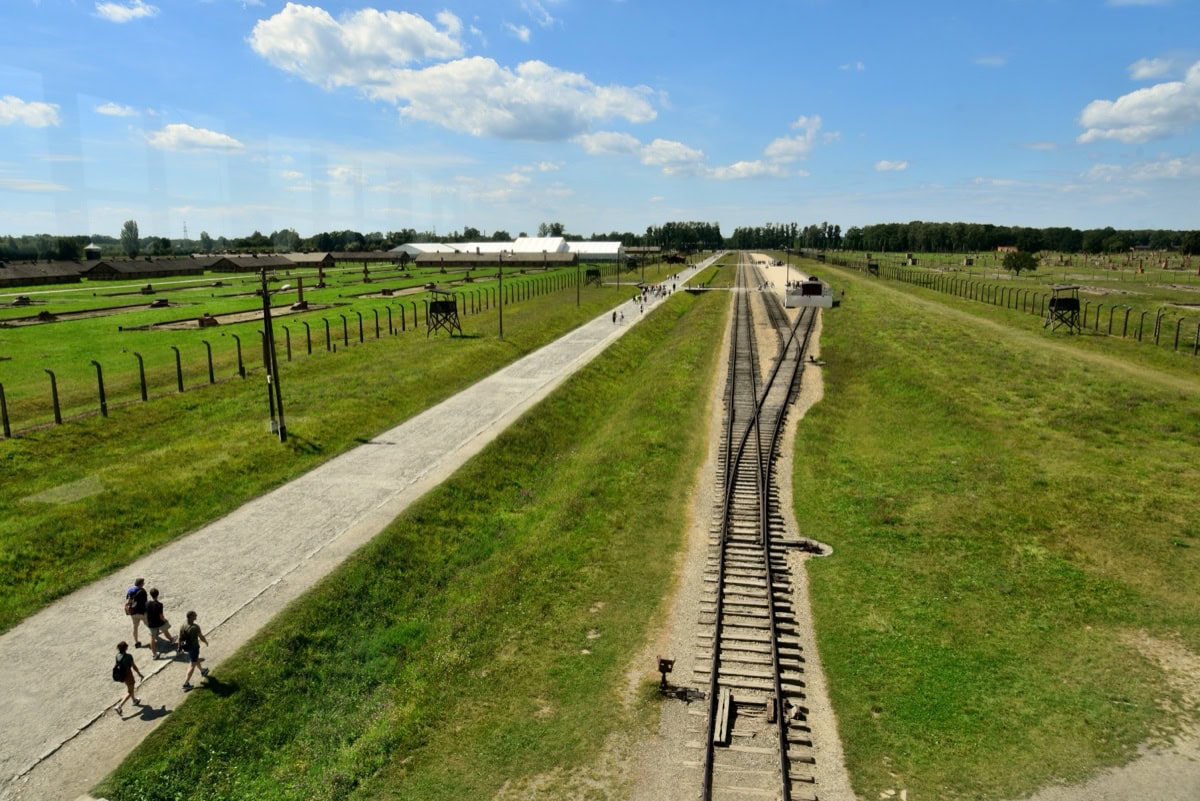
The symbol of the entire Auschwitz-Birkenau complex is the long red-brick building with its enormous gate through which trains once passed. I recommend climbing the tower if it’s open to visitors.
From this vantage point, you truly grasp the insane scale of the camp. As far as the eye can see, brick chimneys rise from the ground like gravestones where wooden barracks once stood and burned. Only from up here do you begin to comprehend how many hundreds of thousands of people were held here.
14. The Railway Ramp and the Cattle Wagon
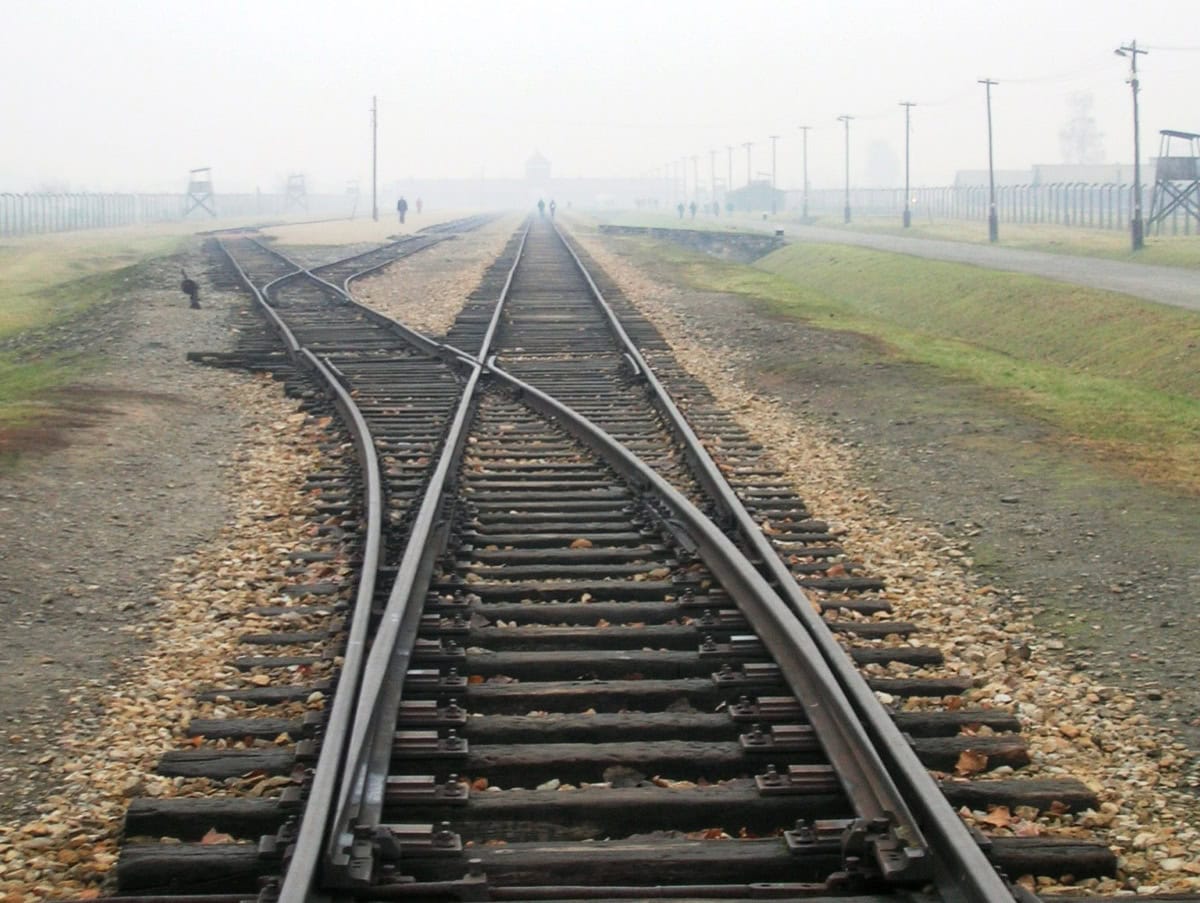
The path inevitably leads you along the tracks towards the extermination zone. Roughly halfway down, a solitary cattle wagon stands on the rails.
This is the exact spot where trains packed with deported people from across Europe came to a stop. This is where the so-called “selection” took place — SS doctors would simply point left or right, deciding with a single gesture who would go to the barracks for hard labour and who would go straight from the train to the gas chambers at the end of the camp. It’s an incredibly difficult place to process.
15. Wooden Barracks and Living Conditions
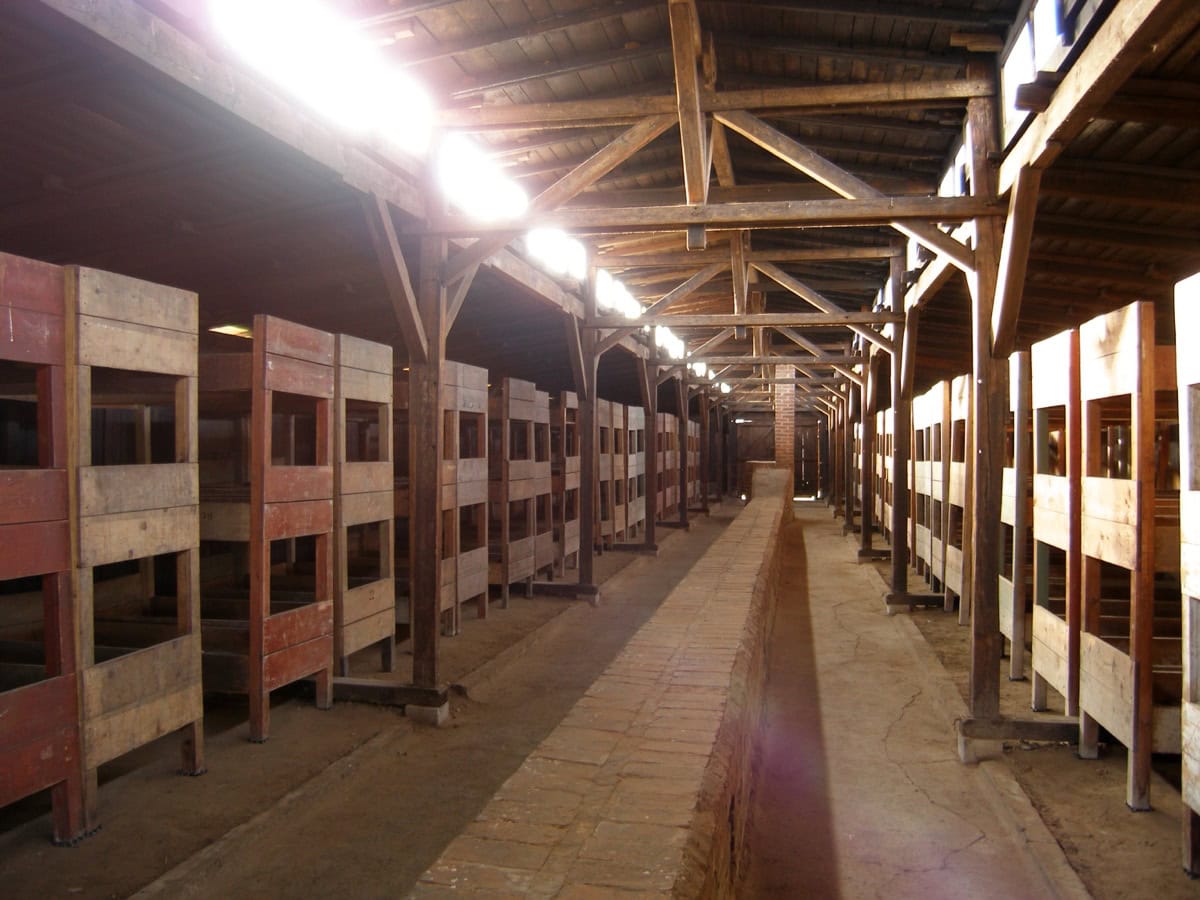
On the right side of the tracks, several original wooden prisoner barracks have been preserved, and you can go inside. Originally designed as horse stables for a few dozen animals, the Nazis crammed over 400 people into each barrack on three-tier wooden bunks.
When you step inside, you’ll notice the peculiar, musty smell of old wood and damp. You can only begin to imagine the freezing winters prisoners endured here, surrounded by mud and with barely any food. It completely transforms your understanding of what the human body and spirit can endure.

16. Crematoria Ruins and the Memorial
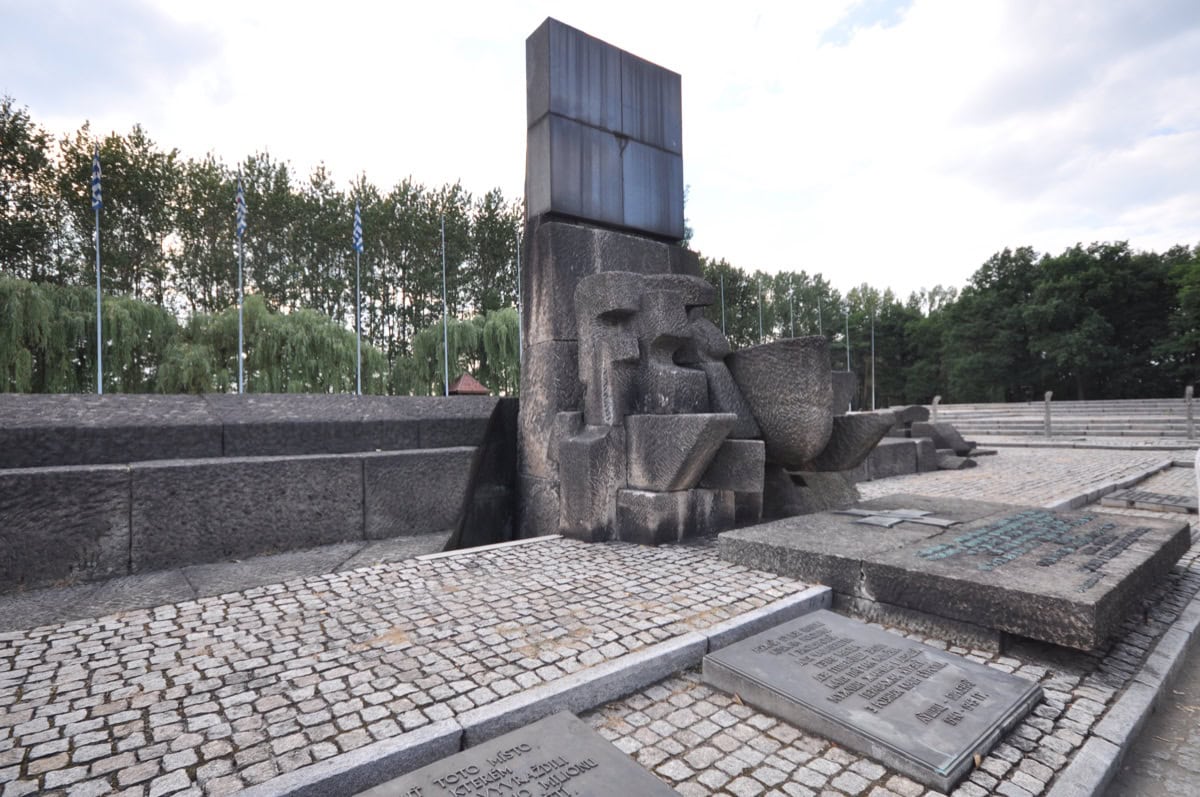
At the very end of the tracks, you’ll reach the ruins of Crematoria II and III. When the Germans knew in early 1945 that the Red Army was approaching, they tried to destroy the evidence and blew up the gas chambers.
Today, all that remains are collapsed concrete slabs overgrown with grass, but you can clearly make out the outlines of the undressing rooms and the chambers themselves. A short distance away stands the Auschwitz-Birkenau Memorial — the international monument to the camp’s victims — with plaques in many languages.
Map of points of interest for your phone
Where to Stay: Your Base in Krakow
Staying in the town of Oświęcim itself doesn’t make much sense either logistically or psychologically. A far better plan is to base yourself in beautiful Krakow, which offers plenty of experiences in its own right — fantastic food, stunning atmosphere, and a wonderful Old Town. Head to the museum in the morning and then treat yourself to a good dinner or a drink in the evening to decompress after such a heavy day.
We prefer to stay right in the centre of Krakow, because it ultimately saves a lot of time (and time is money, right?). Some of the best apartments with breakfast can be found at K4 APARTHOTEL KRAKÓW. Another excellent option is the Avium Old Town Apartments. If you don’t mind hostels, you’ll find affordable accommodation right in the centre at Greg&Tom Beer House Hostel. You can browse and compare accommodation on Booking.com.
How to Plan Your Day (Recommended Itinerary)
An Auschwitz visit isn’t a two-hour affair. You need to expect spending a great deal of time on your feet. Most people are quite exhausted by the end of the tour — not just physically, but above all emotionally. If you’re going independently, here’s the approach I recommend.
17. Start Early in the Morning at Auschwitz I
Arriving as early as possible is essential. Not only will you avoid the biggest crowds — organised tours tend to roll in around ten o’clock — but the morning atmosphere lends the place an even rawer quality.
Exploring the first part with its indoor exhibitions will take at least two hours. Read the information panels carefully, one by one. Don’t rush through them, even when it gets tough.
18. Take a Breather During the Transfer
Between the first and second parts of the camp, you’ll need to wait for the shuttle bus. This is the perfect time to have a snack outside the grounds (eating inside is, of course, not allowed) and let your thoughts settle a bit.
The ride itself takes about ten minutes, and trust me, you’ll genuinely appreciate those few minutes of sitting down.
19. Unlimited Time in Birkenau
At Birkenau, your guide (if you have one) won’t stay with you as long, or you can break away from the group after the main loop. It’s an enormous area, and I recommend walking through the whole thing slowly — all the way to the crematoria ruins and to the “Sauna,” where newly arrived prisoners underwent disinfection and where there’s now a surprisingly emotional exhibition filled with pre-war photographs of smiling families who perished in the camp.
You won’t be surrounded by large crowds here. Many tourists only make it as far as the cattle wagon before turning back, so push on further and let the silence wash over you.
Auschwitz and Children: Should You Bring Them?
This is a question many parents grapple with. The official stance of the Memorial and Museum Auschwitz-Birkenau is clear: visits are not recommended for children under 14. I’ll be honest — I completely agree, and personally, I’d even raise that age limit a little higher.
It’s not that children will be terrified. The issue is that a child’s or young teenager’s brain simply can’t process the context. I saw families on site with small children who were bored, running between the barracks, or laughing out loud because they simply didn’t understand where they were. For older teenagers, on the other hand, it’s an incredibly educational experience — but they need a solid grounding in history from school first, understanding who the SS were, what the Second World War was about, and why millions of people had to die.
If you’re travelling through southern Poland and looking for things to do with younger children, take them to the nearby salt mines or the beautiful zoo in Wrocław instead. Auschwitz can wait a few more years.
Rules, Clothing, and What (Not) to Bring
The Auschwitz-Birkenau Museum isn’t Disneyland — it’s the largest cemetery in the world, and very specific, strict rules apply here with absolutely no exceptions. Polish security staff are uncompromising, and if you don’t follow the rules, you’ll be turned away.
20. The Crucial Bag Rule
This is probably the most common mistake people make at the security checkpoints. You cannot bring any bag larger than A4 paper size (precisely 30 × 20 × 10 cm) into the grounds.
If you have a standard daypack or backpack, you’ll need to leave it in the lockers at the entrance (for a small fee) or in your car. Bring only a small handbag, bum bag, or canvas tote.
21. Clothing and Behaviour
Even in the sweltering heat of summer, a strict dress code applies as a mark of respect to the victims. No sleeveless tops with bare shoulders, no low-cut necklines, and shorts or skirts must reach at least above the knee. If you turn up in beachwear, you won’t be let in. At the same time, prepare for kilometres of walking on muddy, dusty paths. If you have decent hiking boots, definitely wear them. Birkenau is no place for heels or white canvas trainers.
It should go without saying that you keep your voice low, don’t shout to each other, and absolutely do not take grinning selfies by the barbed wire. Whenever I see this, it makes me physically ill. Inside the buildings, flash photography is banned, and in certain specific blocks (such as the room with the hair or the death cells), photography is prohibited entirely.
Combining with Other Attractions: Wieliczka
Most people who fly or drive to Krakow for a long weekend try to fit in the two most significant sites in the area: Auschwitz and the Wieliczka Salt Mine. Can you manage both in a single day?
Technically yes, but in practice, it’s an absolute marathon. Local agencies do offer full-day combined tours. You leave at seven in the morning for Auschwitz, spend four heavy hours there, get on a coach, drive to the other side of Krakow to the mine, do a three-hour underground tour, and get back completely drained by eight in the evening. If you’re not pressed for time, I strongly recommend splitting these two attractions across two separate days. After four hours at Auschwitz, you really won’t have the capacity to go admiring salt sculptures — and it would be a tremendous shame for both sites.
Where to Eat After the Tour
A tour of such an intense place drains a lot of energy, so it’s good to know where to refuel. There are no restaurants inside the museum grounds, and eating within the site is understandably not permitted.
The ideal plan is to reward yourself with a good meal once you’re back in Krakow. Head to the traditional Polish restaurant Chłopskie Jadło right in the centre, where they make fantastic pierogi and hearty żurek soup that will warm you up after a long day. If you prefer something more modern, Morskie Oko is an excellent choice — great food and a beautiful interior decorated in the highland Goral style.
Lukáš’s Final Reflection
When I walked out of the grounds after nearly five hours and climbed back onto the bus, my mind was completely blank. I spent a long time thinking about how to actually end this article, because a cheery sign-off and encouragement to visit would feel deeply inappropriate. It’s not a day trip. It’s a journey into the darkest depths of the human soul and a return with the awareness of everything that happened — and everything we must never allow to happen again.
Everyone should visit at least once, to appreciate life more and to understand what human beings are capable of doing to one another. Go there. And then come home, hug your loved ones, and be grateful for what you have.
Travel Tips and Tricks
These are things we sort out before every trip, and Auschwitz was no exception. To help you avoid unnecessary logistical stress, here are a few of our favourite and tried-and-tested services.
Finding Flights to Poland
Search for cheap flights on Kiwi or Skyscanner — they’re our go-to portals. You can often find bargain fares from London or other major UK airports to Krakow with airlines like Ryanair, Wizz Air, or easyJet.
Try playing around with your dates — sometimes shifting your departure by a single day makes a huge difference to the price.
Hiring a Car for a Road Trip
We regularly use the comparison site DiscoverCars. We’ve had consistently good experience with them and use them all over the world.
For travelling around Poland, it’s an ideal choice, especially if you’re planning multiple stops.
Don’t Forget Travel Insurance
For shorter trips we use standard travel insurance, and for longer ones we swear by SafetyWing (see our SafetyWing review).
Medical care abroad can be eye-wateringly expensive, so spending a few extra pounds for peace of mind is absolutely worth it.
Internet Abroad
If you’re travelling outside Europe or want data the moment you land without fussing over roaming, we recommend an eSIM — check out our Holafly review.
In Poland, EU roaming applies for UK travellers with compatible plans, but having reliable data when navigating to memorial sites always comes in handy.
FAQ (Frequently Asked Questions)
Here are answers to the most common questions we receive before and after the trip. Hopefully, they’ll help you plan your visit even better.
What is Birkenau?
Auschwitz II-Birkenau was the primary extermination camp within the Auschwitz complex. Unlike the original labour and administrative camp Auschwitz I, Birkenau was used predominantly for the mass and systematic murder of people in gas chambers.
How much does a ticket to Auschwitz cost?
Entry to the site on your own without a guide is completely free, but these tickets must be booked well in advance online. A guided tour with an official educator costs roughly 110 PLN (about €25), and a comprehensive tour from Krakow ranges between €45 and €90.
How many people died at Auschwitz?
It is estimated that at least 1.1 million people were murdered at the Auschwitz-Birkenau complex, the vast majority of whom were Jewish. Among the victims were also tens of thousands of Poles, Roma, Soviet prisoners of war, and people of many other nationalities from across Europe.
What does the Auschwitz tour involve?
The visit typically starts at Auschwitz I, where you walk through individual brick blocks housing museum exhibitions while listening to commentary through rented headphones. You then transfer by shuttle bus to Auschwitz II-Birkenau, about 3 km away, where you explore the open-air extermination camp, the railway ramp, and the crematoria ruins.
Can you visit the museum with children?
The museum’s official recommendation is not to visit with children under 14. The subject matter is psychologically too heavy and difficult for young children to comprehend.
Can you take photos inside the camp?
Yes, photography for private purposes is permitted in most areas. However, there is a strict ban on using flash and tripods. In specific areas, such as Block 4 (the room with human hair) and the basement of Block 11 (death cells), photography is completely prohibited for obvious reasons of respect.
Can you bring food and drink inside?
You can bring a small bottle of water, but consuming food inside the grounds (except in designated areas outside the entrance buildings) is forbidden as a mark of respect for a place where people suffered unimaginable hunger. Large bags and luggage must be left in the storage facility.
Tips and Tricks for Your Vacation
Don’t Overpay for Flights
Search for flights on Kayak. It’s our favorite search engine because it scans the websites of all airlines and always finds the cheapest connection.
Book Your Accommodation Smartly
The best experiences we’ve had when looking for accommodation (from Alaska to Morocco) are with Booking.com, where hotels, apartments, and entire houses are usually the cheapest and most widely available.
 🚗 Car rental on the roadVerified rental cars in Poland
Search with the DiscoverCars comparison engine — it compares prices from dozens of local and international rental companies, and most bookings come with free cancellation.
Compare car prices in Poland →Don’t Forget Travel Insurance
Good travel insurance will protect you against illness, accidents, theft, or flight cancellations. We’ve had a few hospital visits abroad, so we know how important it is to have proper insurance arranged.
Where we insure ourselves: SafetyWing (simple monthly subscription) and TrueTraveller (for extra-long trips).
Find the Best Experiences
Get Your Guide is a huge online marketplace where you can book guided walks, trips, skip-the-line tickets, tours, and much more. We always find some extra fun there!
More from Poland
Full guide → With kids · most readPoland: 11 Best Places for Your Holiday
 When to goKrakow Christmas Markets 2026 – Dates, Opening Hours & Programme
 Where to stayPoland: 15 Best Places for Your Holiday
 FoodPolish Food: 15 Tips on Pierogi, Bar Mleczny, Vodka & Everything You Must Try
 PricesPoland: Your Complete Guide to Driving – Tolls, Prices, Routes, Speed Limits, and Insurance


