

Some places catch you completely off guard — you arrive with zero expectations and leave utterly smitten. That’s exactly what happened to us in Wolfville, Canada. This tiny university town nestled in the Annapolis Valley of Nova Scotia is the kind of place where you sip wine overlooking tidal rivers, wander through Saturday morning farmers’ markets, and watch the autumn foliage turn such intense shades of orange and crimson that your jaw literally drops. 🍁
My mum and I originally drove here “just for an afternoon” — on our way from Halifax to Cape Breton. But that afternoon turned into two days, because we got hooked at one of the wineries, then decided we absolutely had to try the famous Cape Split hike, and finally couldn’t tear ourselves away from the farmers’ market selling homemade apple cider and the best blueberries we’d ever tasted. Wolfville is exactly the kind of place where you catch yourself thinking: “I could live here.”
In this article, you’ll find 15 best things to see and do in Wolfville and the surrounding area — from wineries and cideries to the UNESCO heritage site of Grand-Pré and one of the most stunning hiking trails on Canada’s entire east coast. I’ll share when to visit, where to stay, how much it all costs, and where to find the best food in the valley.
TL;DR
- Wolfville is a picturesque university town (about 4,500 residents) in the Annapolis Valley, roughly 100 km west of Halifax.
- The best time to visit is September and October — wine harvest, harvest festivals, and that legendary fall foliage. June and July are lovely too.
- Top attractions: wineries and cideries, the UNESCO site of Grand-Pré, the Cape Split hike, and Blomidon Provincial Park.
- On Saturday mornings, don’t miss the Wolfville Farmers’ Market — one of the oldest farmers’ markets in Canada.
- Accommodation ranges from around €65/night for a B&B to €130+/night for boutique wine-hotels. Book ahead, especially in September!
- Wolfville is ideal as a base for 2–4 days to explore the entire Annapolis Valley.
- The food here is fantastic — fresh, local, farm-to-table. And the wine is surprisingly good. 🍷
- You’ll definitely need to rent a car — there’s no way to get around the valley without one.
The full destination guide: Nova Scotia — guide and what to see
When to visit Wolfville and how to get there
Wolfville is beautiful almost all year round, but if you want to make the absolute most of your visit, timing is everything. And transport? You’ll need a car — I’ll tell you that straight away.
Best time to visit
September and early October — this is the absolute peak season, and honestly, for good reason. The Annapolis Valley is breathtakingly beautiful at this time of year. The leaves turn every shade of red, orange, and gold, wineries are in harvest mode, cideries serve freshly pressed cider, and harvest festivals pop up all across the valley. Temperatures hover around 15–22 °C, which is perfect for hiking and lingering on winery terraces.
June through August is also a wonderful time — temperatures around 20–28 °C, farmers’ markets in full swing, Bay of Fundy beaches accessible, and winery terraces wide open. The downside? July and August bring more tourists (though it’s still nothing compared to Banff or Niagara 😅).
Spring (May) is cooler and wetter, but the apple orchards are in bloom and everything feels peaceful and uncrowded. Winter — well, Nova Scotia winters are harsh. Most wineries are closed or on limited hours, temperatures drop below freezing, and snow is common. But if you love solitude and cosy pubs, winter has its own charm.
How to get to Wolfville
By air: The nearest airport is Halifax Stanfield International Airport (YHZ), which is about 100 km from Wolfville (roughly an hour and a quarter’s drive). Direct flights from Europe to Halifax operate seasonally — mainly from London, Frankfurt, and Reykjavik. From the UK, you can often fly direct from London Gatwick or Heathrow with airlines like WestJet, Air Canada, or British Airways (seasonal). Alternatively, you may connect through Toronto or Montreal.
To find cheap flights to Halifax, we recommend searching on Kiwi — it’s our go-to flight search engine for finding creative routing with stopovers that you won’t find elsewhere.
By car: From Halifax, it’s a scenic one-hour drive west along Highway 101 hugging the coast. A car is essentially a must in Wolfville — the wineries, hiking trails, and provincial parks are scattered across the valley, and public transport is… let’s just say minimalist. 😅
We’ve had consistently great experiences with DiscoverCars, which we use all over the world. It compares prices from every rental company in one place — and in Canada, you’ll appreciate that, since price differences between companies can easily be tens of pounds per day.
By bus: If you really don’t want a car, there is a Maritime Bus service from Halifax to Wolfville, but it only runs a few times a day and you’ll still be stuck without a car once you’re in the valley.
Where to stay in Wolfville and how much it costs
Wolfville is a small town, but there’s a surprising range of accommodation — from cosy B&Bs in heritage homes to boutique hotels at wineries and Airbnbs tucked among apple orchards. One crucial tip: in September and October, book well in advance! Fall foliage season here is like peak summer on the Mediterranean — and Wolfville only has a few thousand residents, so capacity isn’t exactly infinite.
Approximate prices (per night for two, in high season):
- Budget B&B / hostel: 100–130 CAD (approx. €65–85)
- Mid-range — B&B, inn: 140–200 CAD (approx. €90–130)
- Boutique hotel / winery resort: 250–350 CAD (approx. €165–230)
- Airbnb (entire flat/house): 120–250 CAD (approx. €80–165)
Where I’d recommend staying:
Right in Wolfville itself is the ideal base if you want to be within walking distance of restaurants, cafés, and the farmers’ market. The historic B&Bs on Main Street have that quintessential Nova Scotia charm — wooden verandas, homemade breakfasts with local eggs and jam.
If you don’t mind being a short drive out of town (10–15 minutes), look into accommodation directly at wineries — some offer rooms or cottages with vineyard views. Waking up to rows of grapevines disappearing into the morning mist over the valley is an unforgettable experience.
For larger groups or families, search Airbnb in surrounding villages like Grand-Pré, Gaspereau, or Canning — you’ll often find entire houses with multiple bedrooms at reasonable prices.
How much does a holiday in Wolfville cost?
Nova Scotia is generally cheaper than western Canada (British Columbia) or Ontario. Here’s a rough daily budget for two:
- Accommodation: 150–200 CAD (€100–130)
- Food (lunch + dinner at a restaurant): 80–120 CAD (€52–78)
- Wine tastings (2–3 wineries): 30–60 CAD (€20–40)
- Petrol: 20–30 CAD (€13–20)
- Activities (entrance fees, kayaking, etc.): 0–80 CAD (€0–52)
So in total, budget around 280–490 CAD per day for two (approx. €185–320). For a 3–4 day trip, Wolfville and surrounds will run you roughly €550–1,300 for two (excluding flights and car hire), depending on your accommodation style and how many wineries you visit. 😉
Wolfville and surrounds: 15 best things to see and do
Now for the good stuff — specific tips on what to see and do in Wolfville and the surrounding area. The places are roughly ordered by how essential I consider them, but honestly — everything here is brilliant. The Annapolis Valley is one of those hidden gems that most Europeans have never even heard of, and that’s perhaps exactly what makes it so special. No crowds, no queues — just beautiful nature, great wine, and friendly people.
1. Cape Split Hike — one of the best trails in eastern Canada
This is the trail that alone makes a trip to the Annapolis Valley worthwhile — even if you don’t like wine (though honestly, who doesn’t like wine? 😅). Cape Split Trail is a 13 km out-and-back hike that takes you through dense forest before rewarding you with one of the most dramatic viewpoints you’ll find anywhere in Canada.
At the end of the trail, the forest suddenly opens up and you’re standing on a towering cliff above the Bay of Fundy — the bay that boasts the highest tides in the world. The difference between high and low tide here can reach up to 16 metres. From the cliff edge, you watch waves crashing far below, and at low tide, enormous rock formations are exposed. It’s absolutely breathtaking.
The trail is rated moderate — mostly flat through forest, but it’s fairly long and the final stretch is a bit exposed. Allow 4–6 hours for the return trip, depending on your pace. Bring plenty of water, snacks, and proper hiking boots — after rain, the path gets muddy.
Practical info: The trailhead is about 25 minutes’ drive from Wolfville, near the village of Scots Bay. Parking is free, but on September weekends it fills up early — aim to arrive before 9:00. There’s no entrance fee.
2. Grand-Pré National Historic Site — a UNESCO site with an emotional story
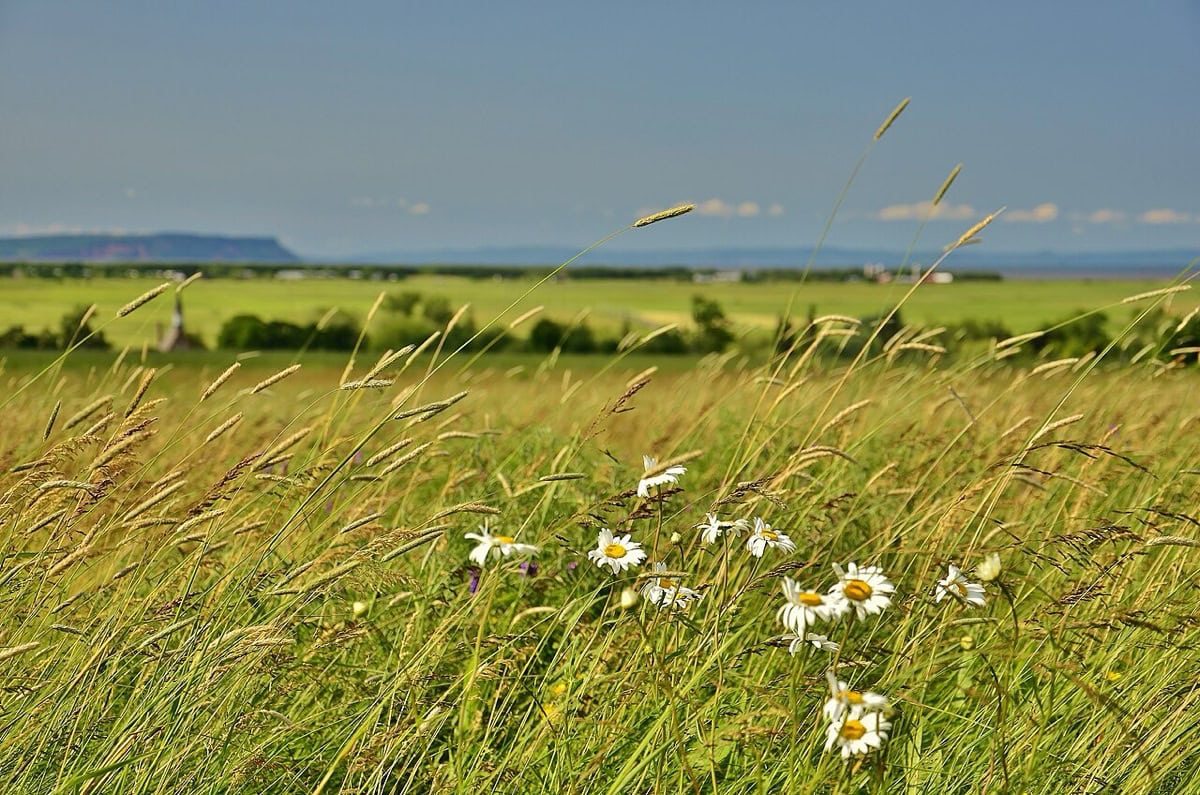
Grand-Pré is one of Canada’s most important historic sites and has been a UNESCO World Heritage Site since 2012. Located just 5 minutes’ drive from Wolfville, it tells a story that might just break your heart — the story of the Acadian French settlers who were forcibly deported by the British from this region in 1755.
The site includes a beautiful park, a reconstructed church, a museum, and memorial gardens. The exhibits are surprisingly well done and deeply moving — even if you’re not a history buff, the atmosphere of this place will draw you in. The statue of Evangeline (from Henry Wadsworth Longfellow’s famous poem) in the centre of the park is one of the most photographed spots in all of Nova Scotia.
Practical info: Admission is about 8 CAD (€5) per adult; children get in free. Open from mid-May to mid-October. A visit takes about 1–2 hours. The surrounding park is accessible year-round and free — and it’s gorgeous in autumn.
By the way, on the drive from Wolfville, you’ll notice the famous dykes — embankments that Acadian settlers built to drain the coastal marshes and turn them into fertile farmland. They’re still functioning today. 350-year-old engineering. Impressive stuff.
3. Annapolis Valley wineries — surprisingly great wine from an unexpected place
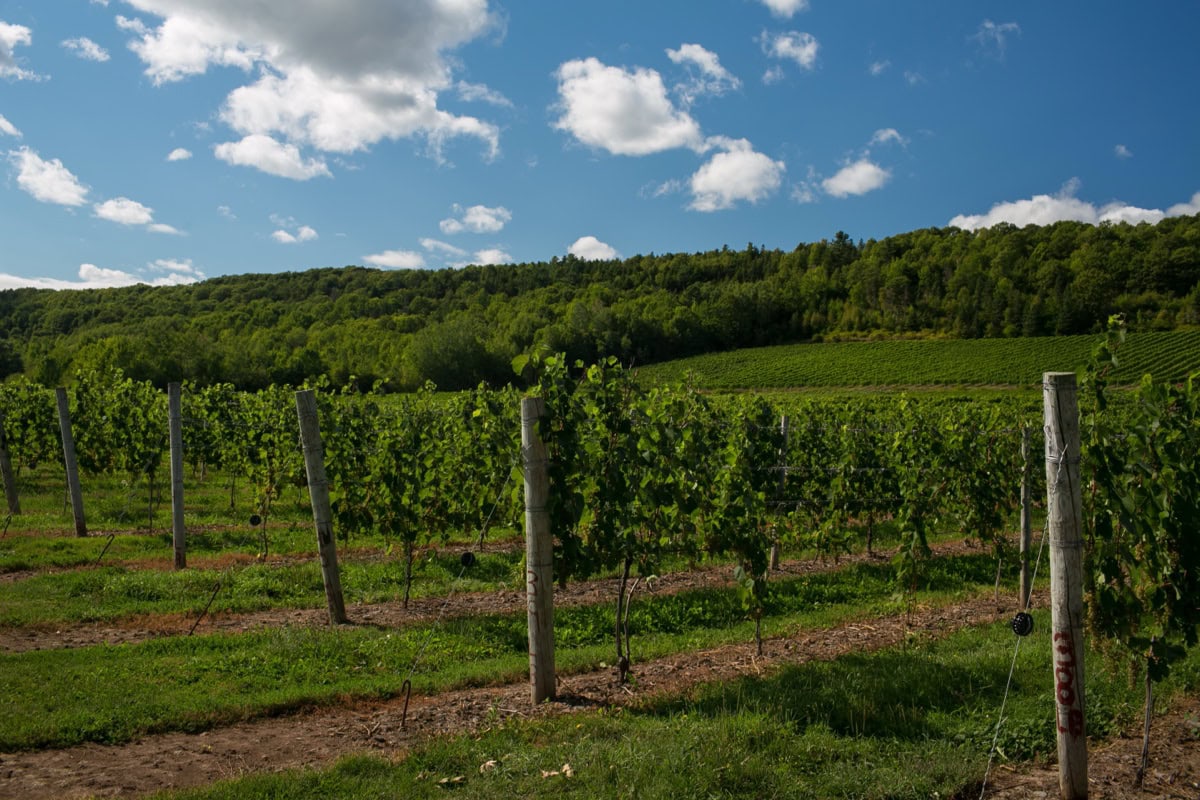
This was probably the biggest surprise of our trip. A wine region in Canada? On the east coast? And actually good wine? Yes, yes, and yes. Annapolis Valley is a wine region that deserves serious attention — and the local winemakers know it. Most wineries offer tastings and have stunning terraces overlooking the vines and the valley.
Wineries I recommend:
- Luckett Vineyards — probably the most famous winery in the region. It has a gorgeous terrace with a view, excellent Tidal Bay (a local appellation I’ll explain in a moment), and a legendary red phone box in the middle of the vineyard from which you can supposedly call anywhere in the world. In reality, it’s mainly there for the photos. 📸
- Lightfoot & Wolfville — an organic winery with a beautiful tasting room. Their pét-nat (naturally sparkling wine) absolutely blew us away.
- Domaine de Grand Pré — one of the oldest wineries in the province, right next to the UNESCO site. They also have an excellent restaurant.
- Benjamin Bridge — if you love bubbles, they produce sparkling wine using the traditional method (méthode champenoise) that can genuinely hold its own against many a champagne. Not cheap, but absolutely worth it.
- Gaspereau Vineyards — a cosy family winery in the beautiful Gaspereau Valley. Fewer tourists, more authentic atmosphere.
What is Tidal Bay? It’s an appellation unique to Nova Scotia — a light, crisp white wine with mineral notes, perfect with seafood. Every winery makes its own version and it’s a brilliant way to compare different styles. Most tastings cost 10–15 CAD (€7–10) for 4–5 samples, and the fee is often waived if you buy a bottle.
💡 TIP: If you want to visit multiple wineries in a day, arrange a designated driver (one of you stays sober) or book a wine tour — local companies offer full-day excursions with transport between wineries.
4. Blomidon Provincial Park — red cliffs above Bay of Fundy
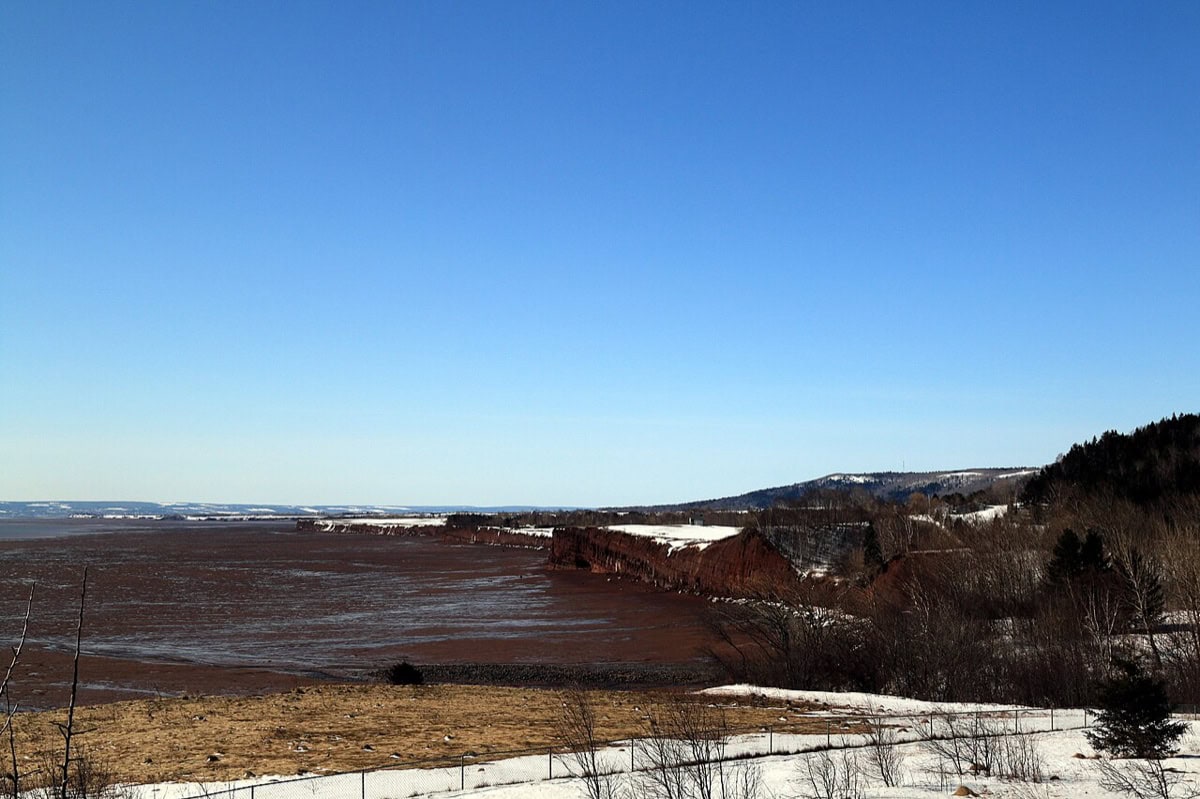
Just a 20-minute drive from Wolfville, you’ll find Blomidon Provincial Park — and it’s a stunner. Picture towering red sandstone cliffs, beneath which the receding tide exposes vast stretches of ocean floor scattered with rocks, seaweed, and tiny sea creatures. And above it all, dense forest with lookout points where you can sit on a bench and simply stare.
The park offers several hiking trails — the most popular is the Jodrey Trail (about 5 km return), which follows the cliff edge through forest before opening up to a panoramic viewpoint over the Bay of Fundy, Cape Split, and on clear days, even New Brunswick across the water. The trail is easy and suitable for families with children.
If you want to descend to the beach below (and you really should!), you can take the Look-off Trail — but keep a close eye on the tide times! This is no joke. The Bay of Fundy tides rise incredibly fast, and if you’re caught off-guard on the beach beneath those cliffs, you could be in serious trouble. Check tide schedules online or ask at the park information centre before heading down.
Practical info: Park entry costs about 6 CAD (€4) per car/day. The park also has campsites (book ahead in summer). Open from May to October.
5. Wolfville Farmers’ Market — a Saturday ritual you’ll love

Every Saturday from 8:30 to 13:00, the Wolfville Farmers’ Market takes over — and it’s one of those things that gives this little town its soul. Running continuously since 1992, it’s one of the oldest community markets in Canada.
You’ll find everything here: fresh fruit and veg from local farms, artisan cheeses, pastries (those croissants! 🥐), honey, jams, freshly roasted coffee, ciders, handmade soaps, pottery… and above all, the atmosphere. People greet each other by name, farmers happily tell you the story behind every tomato, and someone’s strumming a guitar in the background. It’s about as charmingly Canadian as it gets.
There’s usually a fresh lobster roll and local oysters on offer too — if that’s your thing, don’t miss it. Prices at the market are fair and the quality is leagues beyond any supermarket.
💡 TIP: Get there early. By 10:00, it’s already quite packed and the best pastries will be long gone. Ideal plan: arrive at 8:30, grab a coffee, browse the stalls, shop, and then head into town for brunch.
6. Cideries and breweries — because wine isn’t everything
The Annapolis Valley isn’t just about wine — it’s also apple country. And where there are apples, there’s cider. The local cideries are fantastic and well worth a stop, even if cider isn’t usually your drink of choice.
Cideries I recommend:
- Annapolis Cider Company — right in Wolfville, so you can walk there. They have a beautiful taproom overlooking the vines and a wide selection of ciders from dry to sweet. Their barrel-aged cider is something special.
- Bulwark Cider — another Wolfville cidery, smaller and more intimate. Outstanding dry ciders.
- The Tangled Garden — this place is a bit different. Besides cider, they make herbal liqueurs, jellies, and vinegars. The garden is magical — like something out of a fairytale. Located in Grand-Pré.
For beer lovers: Church Brewing in Wolfville brews craft beer in a converted church. Yes, you read that right. A brewery in a church. And the beer is excellent. 🍺
7. A stroll through Wolfville — university charm with a maritime soul

Wolfville itself is delightful and deserves at least a half-day wander. The town has roughly 4,500 residents and is dominated by Acadia University — one of the oldest and most beautiful universities in Canada. The campus is gorgeous, with historic red-brick buildings and grand old trees, and you’re welcome to stroll through it.
Main Street is the heart of town — lined with independent shops, cafés, galleries, and restaurants. There are no chain stores (well, apart from one Tim Hortons, because this is still Canada 😅), and that’s precisely what makes Wolfville feel so authentic.
Walk along the Waterfront Trail — a footpath along the shoreline with lovely views of the tidal river and the dykes. At low tide, mudflats teeming with birdlife are exposed — if you bring binoculars, you’ll spot eagles, herons, and dozens of other species.
If you love books, don’t miss The Box of Delights Bookshop — an independent bookshop that’s a local institution. They’ve got a wonderful section on Canada and Nova Scotia.
8. The Look-off — a panorama that takes your breath away
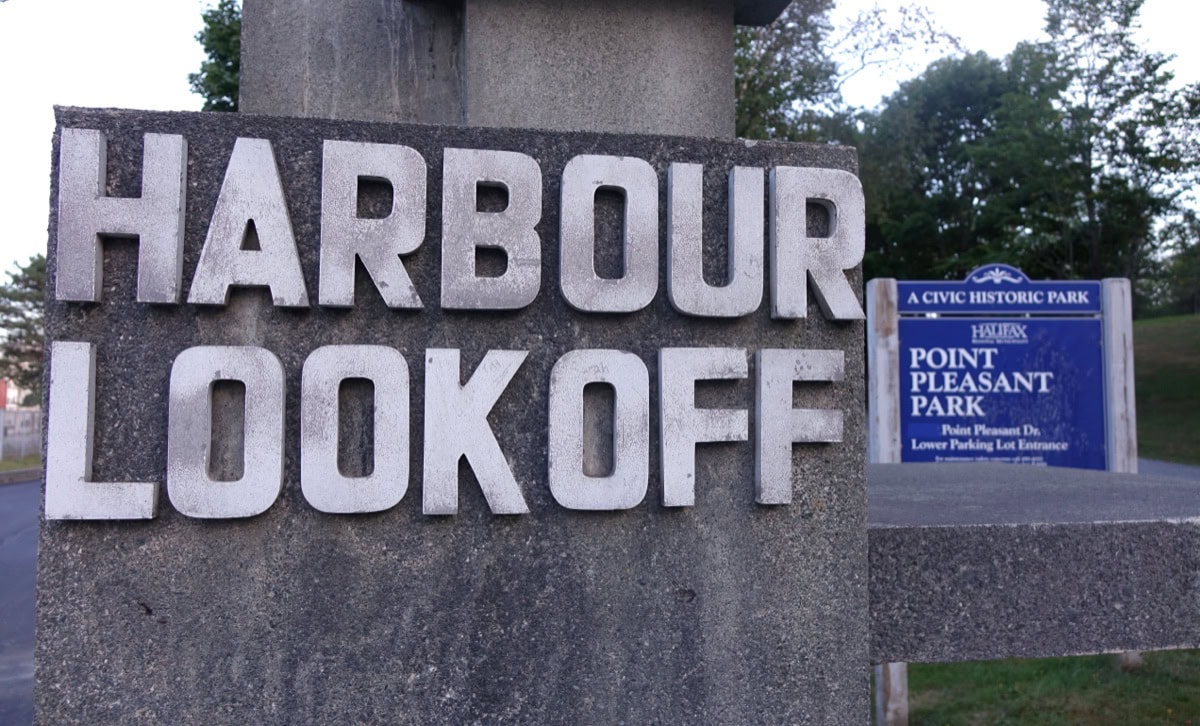
Just 15 minutes’ drive from Wolfville, on the edge of North Mountain, sits The Look-off — a viewpoint from which you can see the entire Annapolis Valley laid out before you like a living map. And I’m not exaggerating. Below stretches a patchwork of fields, farms, vineyards, and orchards, with the waters of Minas Basin glittering in the distance. In September, when the foliage turns, it’s one of the most beautiful views in the entire province.
The best part? You don’t have to walk anywhere. Park your car and you’re at the viewpoint. Literally 30 seconds from the car park. So even if you haven’t got time for hiking, you can still see this. There’s a small refreshment stand (in season) and several picnic tables.
💡 TIP: Come at sunset. The sun sets right over the valley and the colours are extraordinary. Bring a bottle of local wine and some glasses — you won’t find a more romantic sunset anywhere.
9. Tidal bore rafting — an adrenaline rush on a tidal wave
If you fancy a bit of adventure, this is an activity you simply can’t do anywhere else on earth. Tidal bore rafting means hopping into a raft and riding head-on into a tidal bore on the Shubenacadie River — a massive wall of water that surges upstream when the Bay of Fundy’s tide forces the ocean into the river channel.
The waves reach up to 3–4 metres high, and the raft ploughs through them (sometimes launching right over the top) like a roller coaster. It’s wet, loud, and utterly exhilarating. After riding the bore, the raft turns around and you head back — the whole experience takes about 2–3 hours.
Practical info: Tidal bore rafting is operated by companies based near Truro/Maitland, about an hour and a quarter’s drive from Wolfville. Prices are around 65–85 CAD (€42–55) per person. Book in advance — trips run according to the tides, so slots are limited. Season runs June–October.
10. Hall’s Harbour — lobster straight from the sea
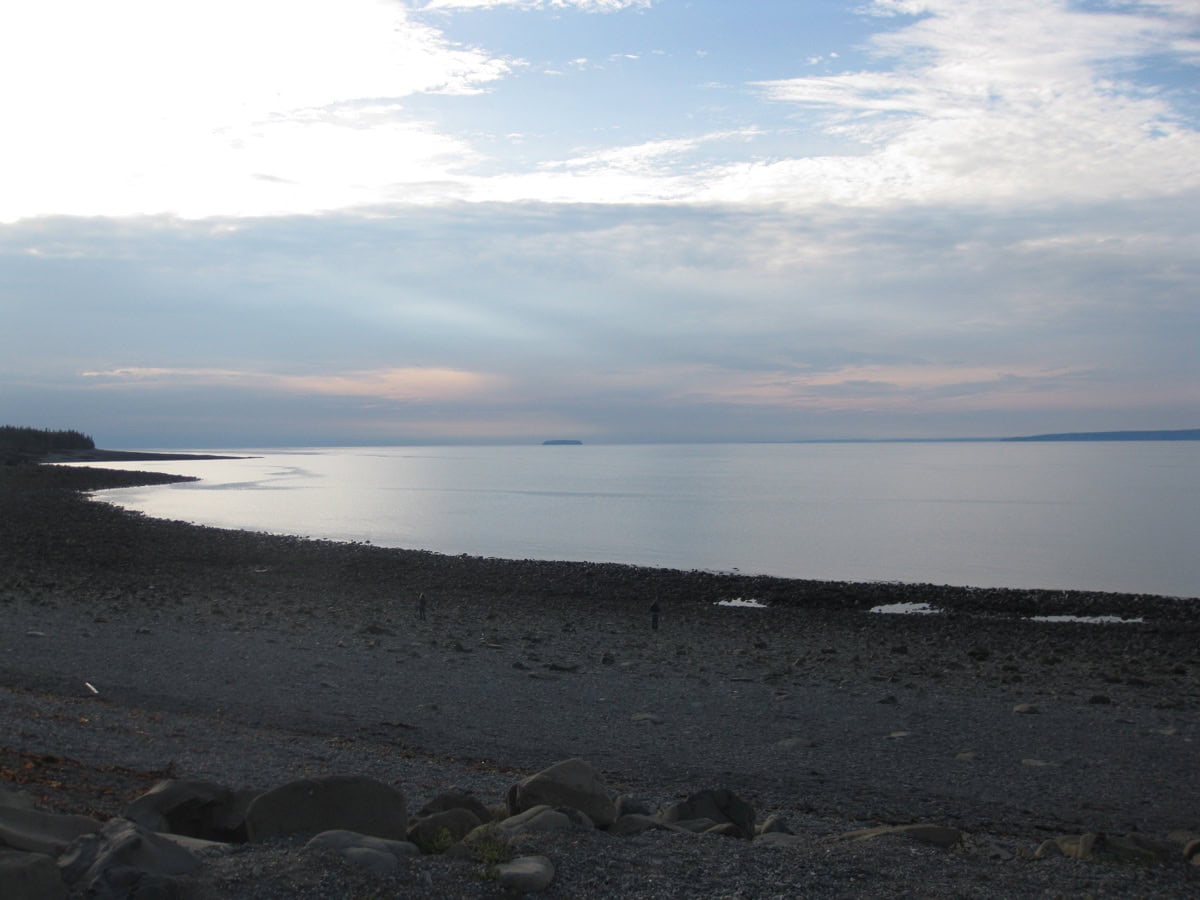
Hall’s Harbour is a tiny fishing village on the north coast, about 30 minutes from Wolfville, and it’s one of those places where you truly understand why people fall in love with the Maritimes. At low tide, the boats sit on the harbour floor (Bay of Fundy, remember — those wild tides), and at high tide, the harbour fills with water and the boats head out to sea.
The main reason to come here? Lobster. Hall’s Harbour Lobster Pound is a restaurant right on the wharf where you choose a live lobster from the tank, have it cooked, and eat it on the terrace overlooking the harbour. It doesn’t get fresher than this. A whole lobster dinner costs around 35–50 CAD (€23–33) depending on size — and it’s worth every penny.
Beyond lobster, you’ll also find a small gallery, a few shops selling local art, and a short coastal trail. The contrast between high and low tide is mesmerising — if you have time, visit twice (once at low tide, once at high tide) and you’ll see what feels like a completely different place.
11. Gaspereau Valley — a hidden wine gem just over the hill
Just beyond Wolfville, past the first ridge of hills, lies Gaspereau Valley — a smaller, more intimate valley that’s essentially a miniature version of the Annapolis Valley. Fewer tourists, quieter wineries, and gorgeous scenery.
Drive along Gaspereau Valley Road — it’s a beautiful loop route where you’ll stumble upon a winery or apple orchard on practically every other hill. Gaspereau Vineyards and L’Acadie Vineyards (the first certified organic winery in the province) are the main stops here.
The valley is also brilliant for cycling — the road sees little traffic, the terrain is hilly but manageable, and you can stop for tastings along the way. Some accommodation in Wolfville lends bikes to guests.
12. Prescott House Museum — Georgian elegance among the gardens
If you have a soft spot for historic houses and gardens, Prescott House Museum in nearby Starr’s Point makes for a pleasant hour or two. It’s a handsome Georgian house from the early 19th century surrounded by sprawling gardens with views over Minas Basin.
Charles Prescott was the man who introduced apple trees to the valley — so you can basically thank him for all that fantastic cider you’ll be drinking. 🍎 The gardens are free to enter and absolutely stunning in autumn. Museum admission is just a few dollars.
13. Evangeline Beach — birdwatching and tidal flats
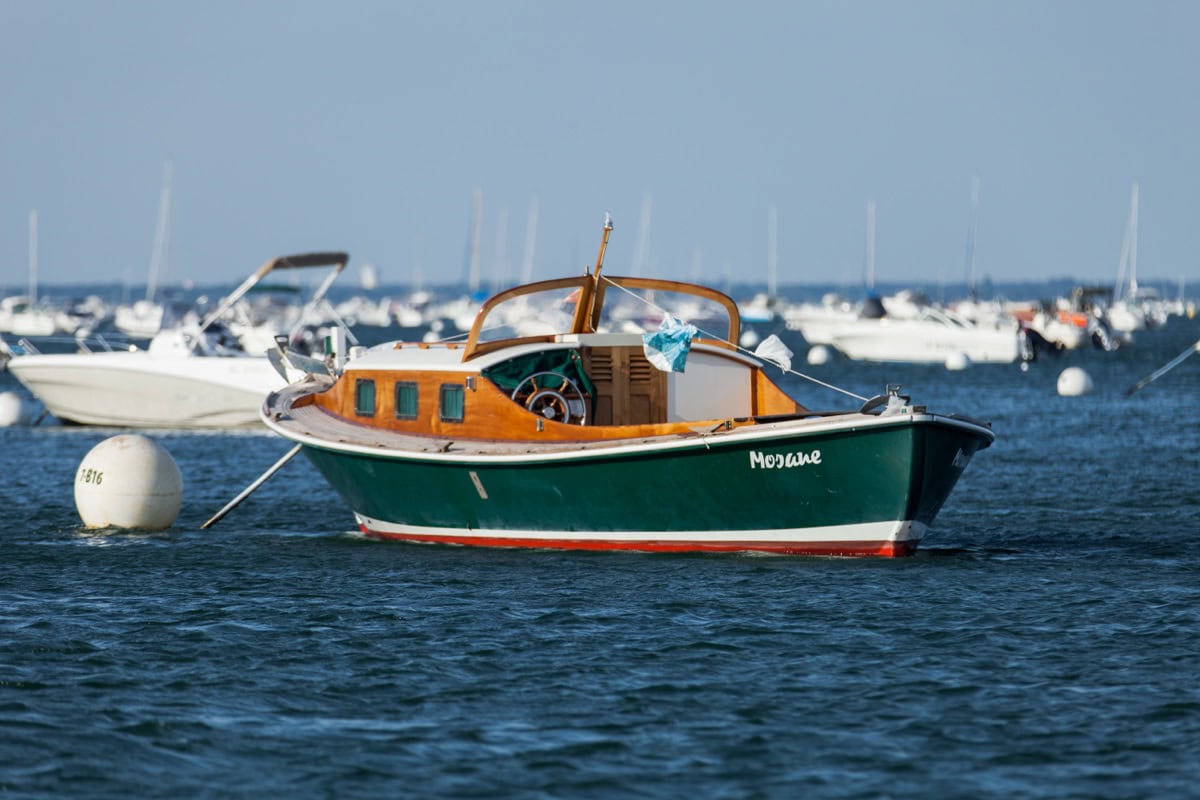
Evangeline Beach near Grand-Pré is one of the most important birdwatching sites in North America — and that’s no exaggeration. Every year in late summer (July–September), hundreds of thousands of migratory birds stop here, particularly semipalmated sandpipers, to refuel before their transatlantic flight to South America.
Even if you’re not a birder, the spectacle is mesmerising — thousands of birds rising in unison and forming swirling clouds above the mudflats. At low tide, enormous flats are exposed and you can walk across them (watch out for the mud — wellies or old shoes are a must). At high tide, sit on the beach and watch the water roll in.
14. Acadia University Art Gallery — culture for a rainy afternoon
When rain arrives (and in Nova Scotia, it will — I can guarantee that), it’s good to have a plan B. Acadia University Art Gallery is a small but surprisingly high-quality gallery right on the university campus. Admission is free and exhibitions rotate regularly, focusing on Canadian and Maritime art.
Combine it with a wander around campus and a coffee at one of the cafés on Main Street — and you’ve got a perfectly pleasant rainy afternoon sorted.
15. Day trip to Hall’s Harbour and Scots Bay — coastal villages with soul
The northern coast of North Mountain between Wolfville and the Bay of Fundy is dotted with tiny fishing villages that feel frozen in time. Besides the already-mentioned Hall’s Harbour (tip #10), Scots Bay is also well worth a stop — it’s the village at the end of the road where the Cape Split trail begins.
Scots Bay has a beautiful pebble beach where you can hunt for agates and semi-precious stones (the Bay of Fundy is famous for them!). Locals say the best finds come after a storm. We found a few lovely pieces of jasper — nothing museum-worthy, but the thrill of the hunt is what it’s all about. 😊
The drive from Wolfville to the north coast takes you over North Mountain and offers gorgeous views in both directions — across the valley and out over the bay. In season, you’ll pass farmstand after farmstand selling apples, peaches, and corn. Cash only, on an honour system — just drop your money in the box.
Map of points of interest for your phone
Where to eat and drink in Wolfville and surrounds
Food in the Annapolis Valley is one of the main reasons to visit. This isn’t fast-food-and-chain territory — people cook with local ingredients here, and farm-to-table isn’t a marketing buzzword but simply the way things are done. There aren’t a huge number of restaurants, but the quality is consistently high.
Right in Wolfville:
- Troy — arguably the best restaurant in town. Modern Canadian cuisine with a strong focus on local produce. Book ahead, especially at weekends.
- The Library Pub — a casual gastropub in the centre. Good pizza, burgers, and local craft beer. Perfect for an informal dinner after a day of hiking.
- Wolfville Farmers’ Market (Saturday) — see tip #5. A breakfast fit for royalty.
- Just Us! Cafe — a fair-trade café with excellent coffee and homemade pastries. The ideal way to start the day.
- Church Brewing — the brewery-in-a-church (see tip #6). Craft beer and simple but tasty pub grub.
In the surrounding area:
- Le Caveau at Domaine de Grand Pré — an elegant restaurant right at the winery. Tasting menus with wine pairings. On the pricier side, but a real experience.
- Hall’s Harbour Lobster Pound — lobster straight from the sea (see tip #10). An absolute must.
- Luckett Vineyards Restaurant — pizza and tapas with vineyard views. Summer and autumn here are pure magic.
💡 TIP: During peak season (July–October), book restaurants in advance, especially for Friday and Saturday dinner. Wolfville is small and the popular places fill up fast.
Practical tips to wrap up
What to pack
Nova Scotia has changeable weather — even in summer, mornings can be chilly and afternoons hot. Layering is key. For hiking, don’t forget proper hiking boots, and if you’re planning to explore beaches at low tide, you’ll be glad of wellies or old shoes. For more packing tips, check out our guide on how to pack carry-on only.
Internet and eSIM
If you don’t want the hassle of buying a local SIM card, I’d recommend an eSIM from Holafly — here’s our detailed review. It works across all of Canada and you can set it up before you even leave home.
Travel insurance
Canada has some of the most expensive hospitals in the world — travel insurance is an absolute must. For shorter trips, we recommend a comprehensive policy from a reputable UK provider, and for longer journeys, SafetyWing is a solid option.
Car hire
As I mentioned above — a car is essential in Wolfville and the Annapolis Valley. We regularly use the comparison site DiscoverCars.com, which compares prices from every rental company in one place.
Flights
Search for cheap flights to Halifax on Kiwi — they combine flights from different airlines, so you’ll often find cheaper connections than booking directly with a single carrier. From the UK, look for direct seasonal routes from London, or connections via Toronto or Montreal.
FAQ — Frequently asked questions about Wolfville and Nova Scotia
Is Wolfville worth visiting?
Absolutely! Wolfville is perfect for anyone looking for an authentic Canadian experience away from the big cities — great wine, stunning nature, excellent food, and friendly people. It’s one of the prettiest small towns in all of Canada. If you’re into wine regions, hiking, or simply a laid-back holiday with character, Wolfville will win you over.
Is Wolfville a small town?
Yes, Wolfville has about 4,500 permanent residents, though the population swells during the academic year thanks to Acadia University students. It’s a quiet, safe little town where everything is walkable. That intimacy is very much part of its charm.
Is Wolfville the prettiest town in Nova Scotia?
That’s obviously subjective, but Wolfville certainly makes the top 3. Its main competition comes from Lunenburg (UNESCO site, colourful waterfront houses) and Mahone Bay (the famous three churches by the water). But Wolfville wins with its combination of nature, wine, and university charm — it’s a different kind of beauty, less “postcard-perfect” but all the more authentic for it.
How many days should you spend in Wolfville?
Ideally 2–4 days. In two days you can cover the main highlights — the Cape Split hike, a couple of wineries, Grand-Pré, and the farmers’ market. With four days, you’ll have time for Blomidon Park, cideries, Hall’s Harbour, tidal bore rafting, and truly soaking up the atmosphere. Wolfville also works brilliantly as a 1–2 night stop on a Nova Scotia road trip.
What is the best time to visit Wolfville?
September and early October — harvest season, fall foliage, wine festivals, and ideal hiking weather (15–22 °C). Summer (June–August) is also lovely and warmer. Spring is quieter, with blossoming apple trees. I’d avoid winter unless you enjoy the cold and don’t mind limited options.
Do you need a car in Wolfville?
Yes, practically speaking. The centre of Wolfville itself is walkable, but the wineries, hiking trails, Blomidon Park, Hall’s Harbour, and other spots around the valley are spread out and public transport is very limited. You can rent a car at Halifax airport.
How much does a holiday in Wolfville cost?
As a rough guide, budget around 280–490 CAD (€185–320) per day for two, covering accommodation, food, tastings, and petrol. A 3–4 day trip will cost approximately €550–1,300 for two (excluding flights and car hire). Nova Scotia is generally more affordable than western Canada, though accommodation prices are higher during peak season in September.
Tips and Tricks for Your Vacation
Don’t Overpay for Flights
Search for flights on Kayak. It’s our favorite search engine because it scans the websites of all airlines and always finds the cheapest connection.
Book Your Accommodation Smartly
The best experiences we’ve had when looking for accommodation (from Alaska to Morocco) are with Booking.com, where hotels, apartments, and entire houses are usually the cheapest and most widely available.
 🚗 Car rental on the roadVerified rental cars in Nova Scotia
Search with the DiscoverCars comparison engine — it compares prices from dozens of local and international rental companies, and most bookings come with free cancellation.
Compare car prices in Nova Scotia →Don’t Forget Travel Insurance
Good travel insurance will protect you against illness, accidents, theft, or flight cancellations. We’ve had a few hospital visits abroad, so we know how important it is to have proper insurance arranged.
Where we insure ourselves: SafetyWing (simple monthly subscription) and TrueTraveller (for extra-long trips).
Find the Best Experiences
Get Your Guide is a huge online marketplace where you can book guided walks, trips, skip-the-line tickets, tours, and much more. We always find some extra fun there!
More from Nova Scotia
Full guide →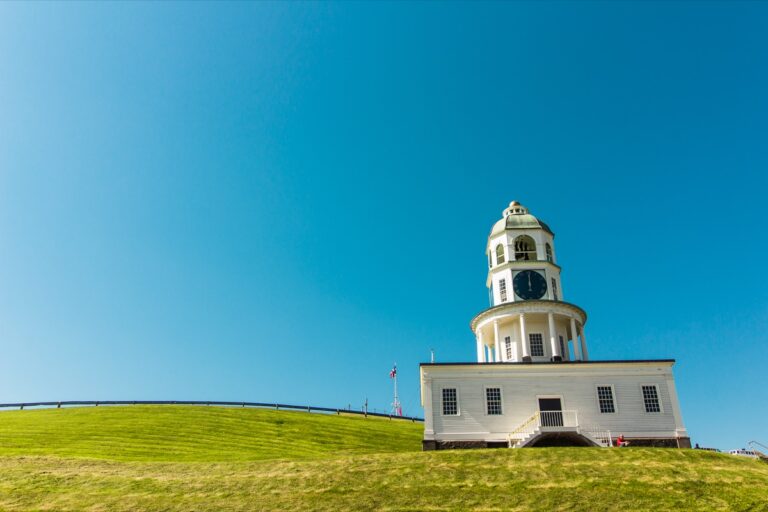 Day tripsHalifax, Canada: 8 Things to See & Do + Best Day Trips Around Nova Scotia
 What to seeDigby, Nova Scotia: 15 Tips on What to See and Do in the Scallop Capital
 What to seeCape Breton Highlands National Park, Nova Scotia, Canada: 16 Things to See and Do
 What to seeCabot Trail, Nova Scotia: 15 Things to See and Do
 What to seeLunenburg, Nova Scotia: 15 Things to See and Do in Canada’s Most Colourful Town


