

A tiny town on the New Brunswick coast where history meets the wild Atlantic, where you can walk to an island across the sea floor at low tide, and where you might spot whales right from the wharf. No crowds, no queues, no overpriced tourist traps — just a gorgeous corner of Atlantic Canada that most Europeans don’t even have on their radar.
In this article, you’ll find a complete guide to St. Andrews Canada — from when to visit and where to stay, through 13 best things to see and do, to the top restaurants and cafés. I’ll tell you how to get there, how much it all costs, and why you absolutely shouldn’t skip this little town if you’re planning a road trip through Eastern Canada.
TL;DR
- St. Andrews by-the-Sea is a historic harbour town in the province of New Brunswick, right on Passamaquoddy Bay, which opens into the famous Bay of Fundy — home to the highest tides in the world.
- Best time to visit is mid-June to mid-September, when the weather is at its best and all attractions are running, including whale watching.
- Top attractions: whale watching (humpbacks, finbacks!), Ministers Island accessible only at low tide on foot, the stunning Kingsbrae Garden, the iconic Algonquin Resort, and a historic centre packed with galleries and boutiques.
- Accommodation ranges from around 100 to 350 €/night, with campsites in the area being the most budget-friendly option.
- Getting there: The nearest major airport is Saint John (YSJ), about 1.5 hours by car. A rental car is essential — you’ll struggle without one.
- How long to spend: Ideally 2–3 days. A single day would be a shame, as whale watching + Ministers Island + exploring the town will easily fill two full days.
- Food: Fresh lobster straight from the ocean, clams, chowder — Atlantic cuisine at its absolute finest.
The full destination guide: New Brunswick — guide and what to see
When to visit St. Andrews by-the-Sea and how to get there
Best time to visit
St. Andrews is a classic seasonal destination — the town literally comes alive from June to September, and outside the season many businesses are closed. The best months to visit are July and August, when temperatures hover around a pleasant 20–25 °C, the sea is (relatively) warm enough for kayaking, and — most importantly — whale watching tours are in full swing.
If you’d rather avoid the peak tourist rush (though “rush” in St. Andrews is a very relative term compared to, say, Niagara Falls 😅), aim for June or early September. The weather is usually still decent, accommodation prices drop a bit, and the town has an even more laid-back vibe.
What to avoid: May and October can be hit or miss — the weather is unpredictable, some attractions aren’t yet (or are no longer) open, and the whale watching season typically only runs from June to October. Winter? Nobody really comes here then, unless you love deserted streets and ocean winds that’ll take your breath away. And not in the romantic sense. 😁
How to get to St. Andrews
By air: The nearest airport is Saint John Airport (YSJ), about 110 km away (1.5 hours by car). It’s a small regional airport with flights mainly from Toronto and Montreal. If you’re flying from the UK, you’ll typically connect through Toronto, Montreal, or Halifax — from there, you can either catch a domestic flight to Saint John or pick up a rental car and hit the road. Airlines like Air Canada and WestJet operate connections from London Heathrow via Toronto or Montreal. For the best deals on flights with stopovers, we like searching on Kiwi.
Another option is Fredericton Airport (YFC), the capital of New Brunswick, about 2.5 hours away. And if you’re planning a bigger road trip through the Maritime Provinces, consider flying into Halifax (YHZ) in Nova Scotia — it’s a 5-hour drive, but there are loads of beautiful stops along the way.
By car: St. Andrews sits right on Route 1, which connects the main cities of New Brunswick. From Saint John it’s about 1.5 hours, from Fredericton roughly 2.5 hours, and from Halifax around 5 hours. If you’re coming from the American side, the Calais/St. Stephen border crossing is just 30 minutes from St. Andrews.
We’ve had great long-term experience with DiscoverCars, which we use all over the world — it compares offers from different rental companies in one place. You really do need a car here; public transport in this part of New Brunswick is virtually non-existent.
Important: If you’re planning to cross the border to/from the USA (Maine is just around the corner), don’t forget a valid eTA for Canada and, if needed, an ESTA or visa for the US. UK passport holders need an eTA for Canada (easy online application) and an ESTA for the US. Also note — you can’t take certain food items across the border!
Where to stay in St. Andrews by-the-Sea and how much it costs
St. Andrews is a small town, so the selection of accommodation isn’t as vast as in big cities — but what’s here has real character. From a legendary historic resort to cosy B&Bs and campsites nearby. Prices are higher during peak season (July–August); outside the season you can save 30–40 %.
Approximate prices per night in peak season (for two):
- Algonquin Resort (iconic historic hotel): 200–350 €
- B&Bs and guesthouses in the centre: 100–175 €
- Motels and simpler accommodation: 80–125 €
- Campsites and RV parks nearby: 25–50 €
If you want to be in the heart of the action and walk everywhere, stay right on Water Street or nearby. The town is so small that from any central accommodation you can reach the harbour in just a few minutes on foot.
If you love luxury with a story, the Algonquin Resort is an experience in itself (more on that below in the tips). And if you’re travelling on a tighter budget, check out campsites around St. Andrews or near St. Stephen — some are beautifully situated right by the water.
Total budget for 3 days for two (mid-range):
- Accommodation (2 nights × 140 €): 280 €
- Food and drink (3 days): 210 €
- Whale watching (2 people): 110–140 €
- Entrance fees and activities: 55–85 €
- Petrol: 35 €
- Total: approx. 700–750 € for two for 3 days
Canada generally isn’t the cheapest destination, but St. Andrews is definitely easier on the wallet compared to places like Vancouver or Banff. Especially when it comes to food — fresh seafood straight from the source costs a fraction of what you’d pay in Toronto.
St. Andrews by-the-Sea: 13 best things to see and do
Let’s dive into the best that St. Andrews by-the-Sea has to offer. From whale watching and a tidal island to a garden you’ll never want to leave. I’ve arranged the tips in a logical order — think of it as a loose itinerary for 2–3 days.
1. Historic centre — stroll along Water Street and beyond
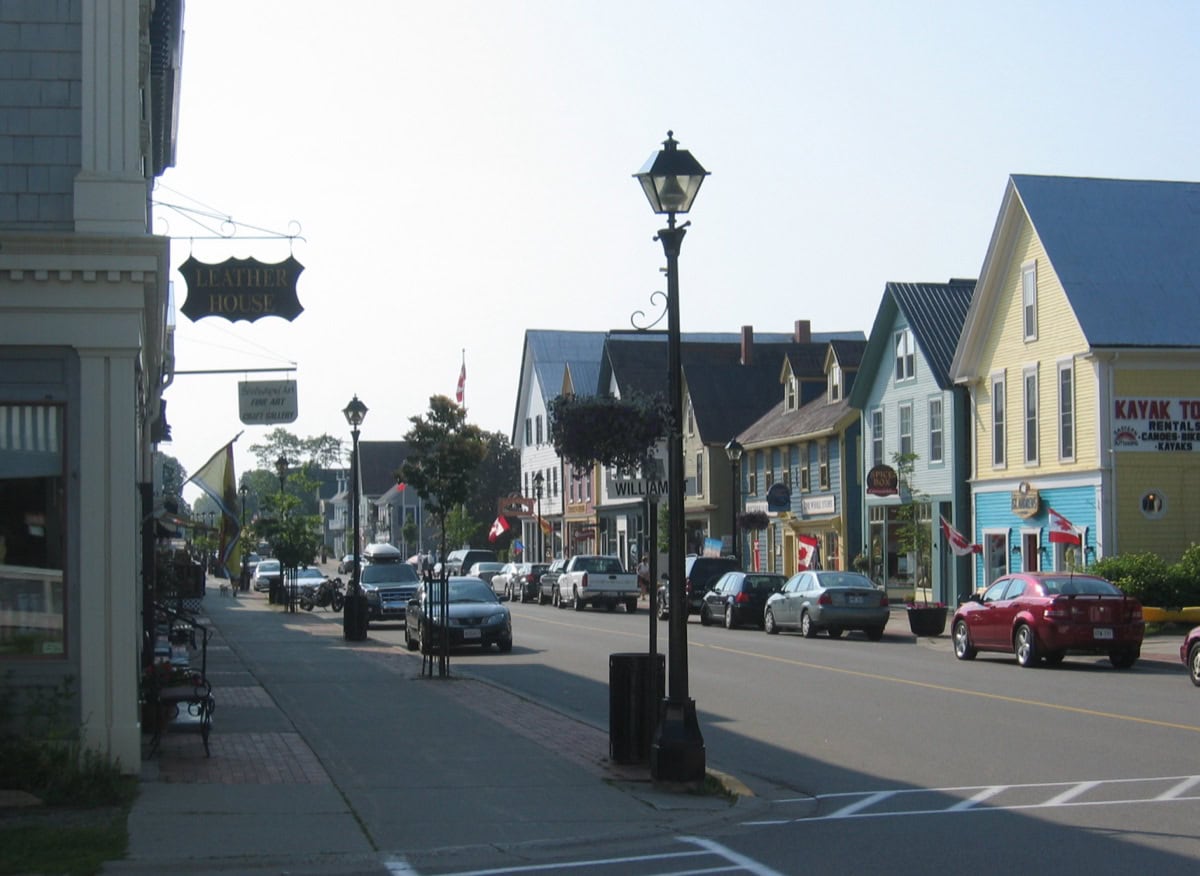
St. Andrews by-the-Sea is one of the oldest towns in New Brunswick — founded in 1783 by Loyalists fleeing the United States after the American Revolution. And you can still feel that history today. The centre is like something straight off a postcard: low wooden and brick buildings, each painted a different colour, filled with small galleries, boutiques selling local art, and cosy cafés.
The main artery is Water Street, which runs along the harbour — and in summer, it buzzes with life. Galleries, gift shops (the tasteful kind, not tacky fridge magnets), bookshops, pastry shops. Pop into Crocker Hill Store — an old-fashioned shop where you’ll find everything from vintage nautical maps to locally made jams.
What surprised me was just how many galleries and studios there are for such a tiny town. St. Andrews has been attracting artists for decades — apparently it’s something about the light by the bay. Whatever the reason, the result is that you can easily spend an entire morning wandering from one gallery to the next.
Tip: Walk to the end of Water Street to reach St. Andrews Blockhouse, a wooden defensive fort from 1812. Entry is free and the view over the bay is gorgeous, especially at sunset.
2. Whale watching in the Bay of Fundy
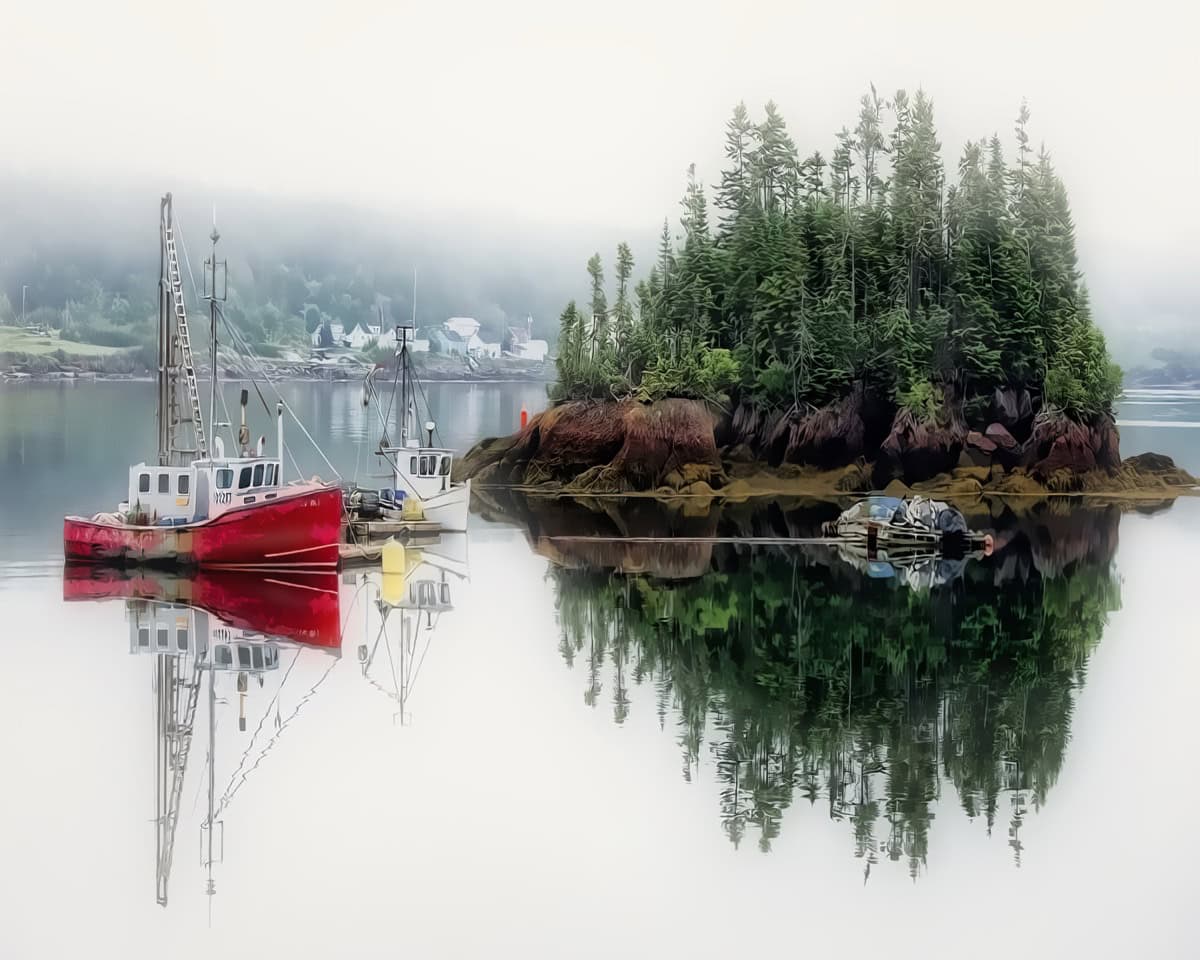
This is the absolute TOP experience in St. Andrews and the main reason most people come here. Several companies run whale watching trips from the local harbour into Passamaquoddy Bay and the Bay of Fundy — and the chances of spotting whales are genuinely high.
Which whales can you see? Primarily humpback whales, minke whales, and finback whales. If you’re lucky, you might also spot North Atlantic right whales — one of the most endangered species on the planet. Beyond whales, you’ll regularly encounter seals, dolphins, and bald eagles circling overhead. It’s basically a real-life National Geographic episode. 😁
A trip typically lasts 2.5–3 hours and costs around 50–70 € per person. The main whale watching season runs from June to October, peaking in July and August. Among the best-known operators are Jolly Breeze (they sail on a beautiful wooden tall ship!), Island Quest Marine, and Fundy Tide Runners (smaller, faster boats — closer encounters with the whales, but choppier).
Our recommendation: If you don’t mind rougher seas and want to get as close to the whales as possible, go with Fundy Tide Runners on a zodiac. If you prefer a more comfortable ride with a gorgeous atmosphere, choose Jolly Breeze on the tall ship. And book ahead — especially in July and August, trips sell out a week or more in advance!
Dress in layers, even if it’s 25 °C on shore. It gets windy on the water and the temperature can easily drop by 10 degrees. Trust me, a vest top on a zodiac in the middle of the Bay of Fundy is no fun at all. 😅
3. Ministers Island — the island you can only reach at low tide
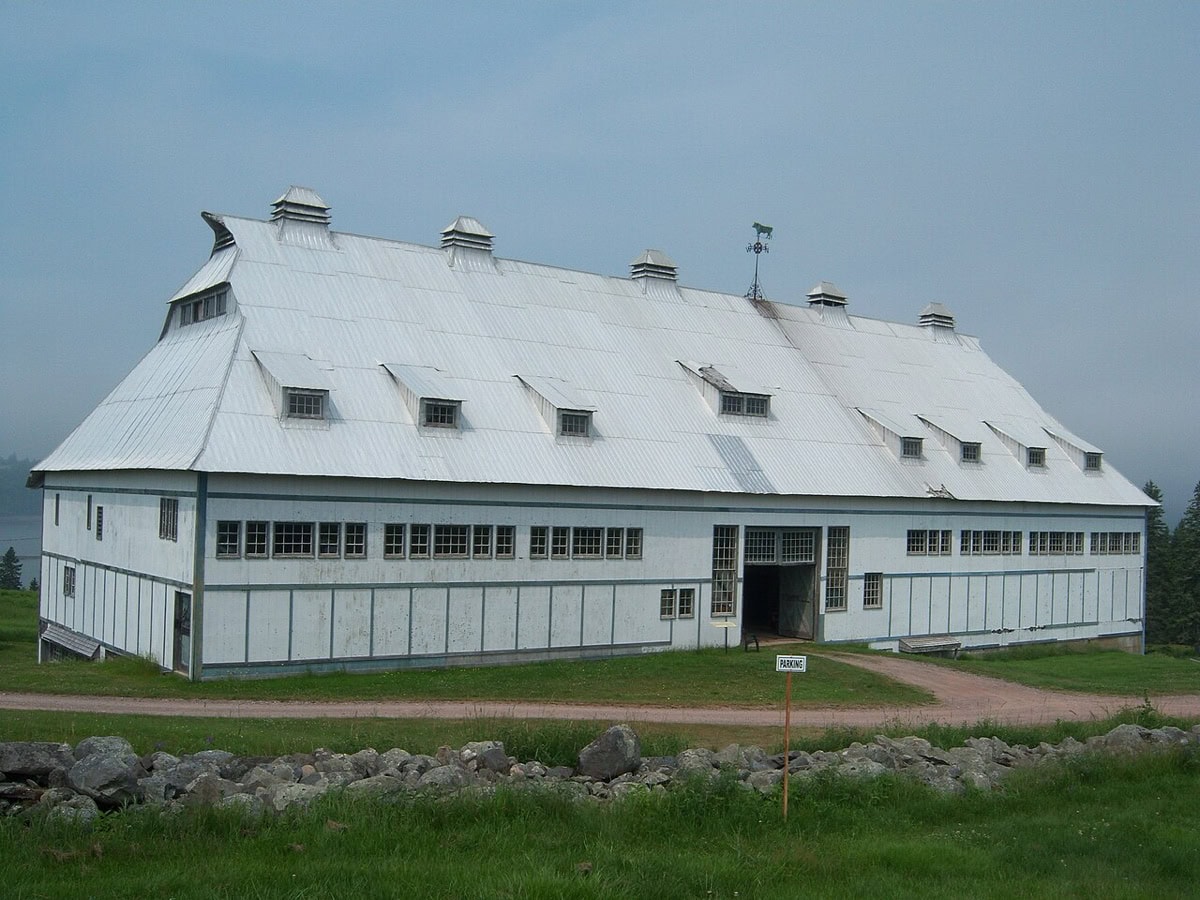
This is probably the most unique thing you’ll experience in St. Andrews, and honestly — I’ve never seen anything quite like it anywhere else. Ministers Island is an island in the bay that you reach by walking (or driving) across the sea floor. But only at low tide. As soon as the tide comes in, the road disappears underwater and the island becomes a true island once more.
The tides in the Bay of Fundy are among the highest in the world — the difference between high and low tide here reaches up to 8–9 metres! That means the access road (Bar Road) is exposed twice a day for roughly 3–4 hours. You need to check the tide times (tables are on the Ministers Island website or posted at the entrance) and most importantly — you need to get back in time. Otherwise you’ll be waiting on the island for 6+ hours until the water drops again. 😅
On the island you’ll find Covenhoven, the summer estate of Sir William Van Horne — the man who built Canada’s transcontinental railway (Canadian Pacific Railway). The house itself is fascinating — an enormous wooden villa from the late 19th century overlooking the bay. Beyond the house, there are stables, a farm, and beautiful nature to explore. A guided tour takes about an hour and costs around 10–12 € per person.
Practical tip: You can reach the island by car (along a gravel road across the sea floor — an unforgettable experience!) or on foot. I recommend arriving at the start of the low-tide window so you have plenty of time for the tour and a walk around the island. And seriously, take the tide warnings very seriously — the water rises fast and forcefully here.
4. Kingsbrae Garden — 27 acres of gardens you’ll never want to leave
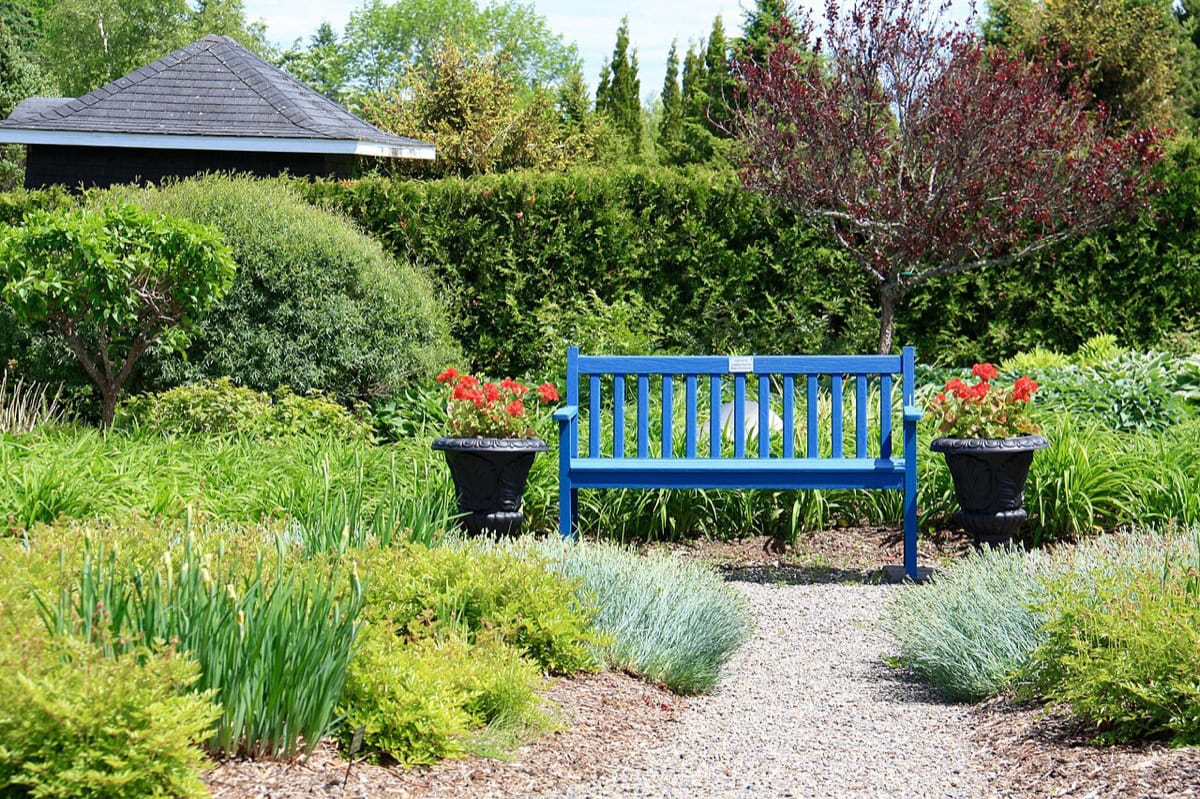
If you love gardens, Kingsbrae Garden will blow you away. And if you think gardens aren’t your thing — Kingsbrae might just change your mind. Those 27 acres (11 hectares) include dozens of themed gardens, from rose gardens and a Japanese garden to a butterfly garden.
Kingsbrae is about much more than just plants, though. There’s a fantastic alpaca enclosure (yes, alpacas!), a children’s playground, art installations scattered throughout the grounds, and in summer they host concerts and cultural events. The garden is impeccably maintained, and even we — the type who normally rush through gardens — ended up staying for nearly three hours.
Admission is around 12 € per person and the garden is open from mid-May to mid-October. On site you’ll also find Savour in the Garden — a restaurant that cooks with local and often garden-grown ingredients. Lunch here is an experience, though it’s a touch pricier.
Tip: If you’re travelling with kids, Kingsbrae is an absolutely ideal spot — alpacas, the butterfly garden, and plenty of space to run around. Adults will appreciate the peaceful atmosphere and gorgeous photo opportunities at every turn.
5. Algonquin Resort — an iconic hotel with a story
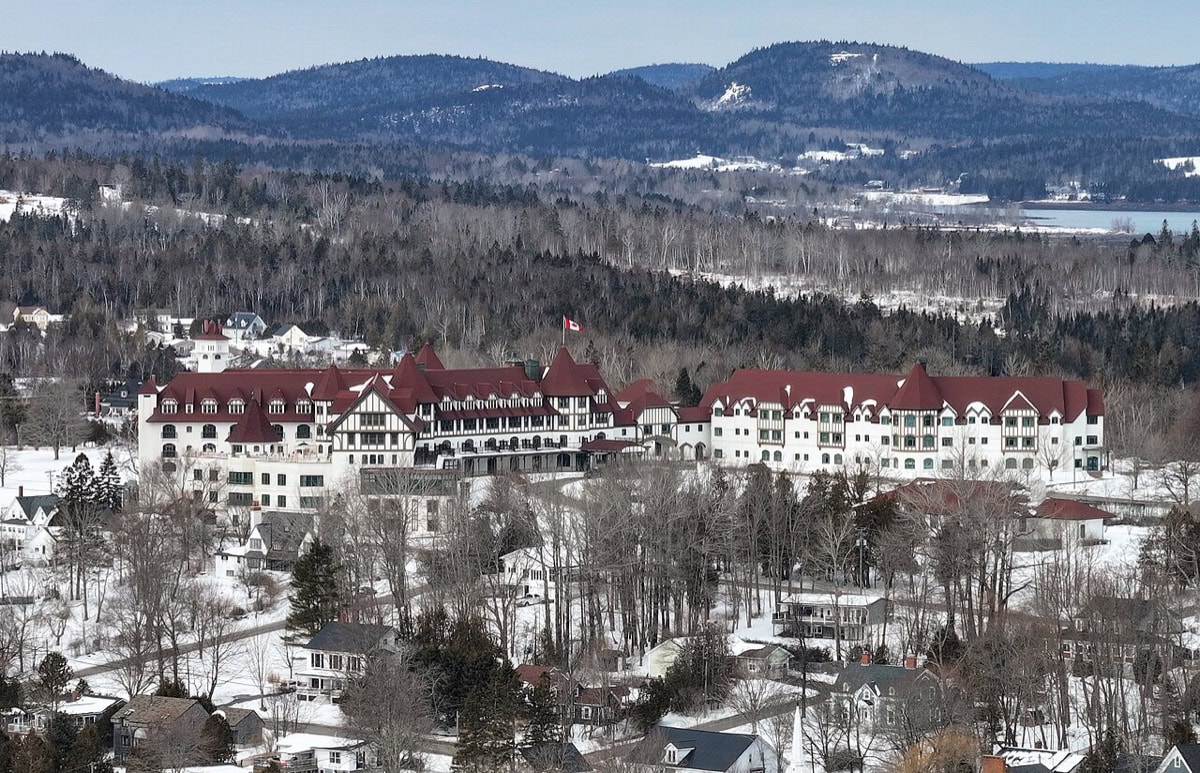
Even if you don’t sleep at the Algonquin (though I do recommend it if your budget allows), it’s well worth a visit. The Fairmont Algonquin Resort is a monumental Tudor-style hotel that has presided over the town since 1889. It underwent an extensive renovation and today it’s a blend of historic charm and modern comfort.
The hotel boasts its own 18-hole golf course with bay views, a spa, an outdoor pool, and several restaurants. Even if you’re not a guest, you can wander through the grounds, enjoy a drink on the terrace with a view, or play a round of golf.
What fascinates me about the Algonquin is its history — past guests have included prime ministers, Hollywood stars, and even royalty. It still retains that air of “old-world” luxury that doesn’t shout, but simply exists. The fireplace in the lobby, the wood panelling, those sweeping terraces… pure classic.
Price-wise: If you want to experience a night at the Algonquin, budget 200–350 € per night in peak season. Off-season, you can sometimes find rooms for around 140 €. It’s worth it for at least one night.
6. Fundy Discovery Aquarium — small but charming
If you’re travelling with kids (or you’re simply curious like us 😁), stop by the Fundy Discovery Aquarium. It’s a small aquarium run by the Biological Station of Canada — one of the oldest marine biological stations in the world, operating here since 1908.
The aquarium isn’t SeaWorld — it’s more intimate and focused on local marine life from the Bay of Fundy. You’ll see salmon, lobsters, seahorses, starfish, and plenty of other creatures from local waters. The best part is the touch pool — a tank where you can get hands-on with starfish, sea urchins, and other marine life. Kids go wild for it, and honestly — so do the adults.
Admission is a modest 7–8 € per person and a visit takes about an hour. It’s not an attraction you’d travel here specifically for, but as an add-on to a walk around town it’s perfect, especially on a rainy day.

7. Kayaking in Passamaquoddy Bay
If you want to experience the bay from a different perspective than a whale watching boat, head out on a kayaking trip. Several local companies offer guided kayak excursions — and it’s absolutely magical. You paddle along the coastline, past tiny islands, with the Algonquin Resort towering above the town behind you, and if you’re lucky, you’ll spot seals basking on the rocks.
A popular route takes you around Navy Island and St. Andrews Harbour. Tours typically last 2–3 hours and cost around 40–55 € per person including gear and an instructor. Companies like Eastern Outdoors and Fundy Tide Runners (who also run whale watching tours) offer them.
Tip for the adventurous: If you’re an experienced kayaker, ask about a trip to Deer Island or Campobello Island — it’s longer and more challenging, but the scenery is absolutely breathtaking. Campobello Island is also famous as President Roosevelt’s summer retreat.
8. Tides — a natural spectacle that repeats twice a day
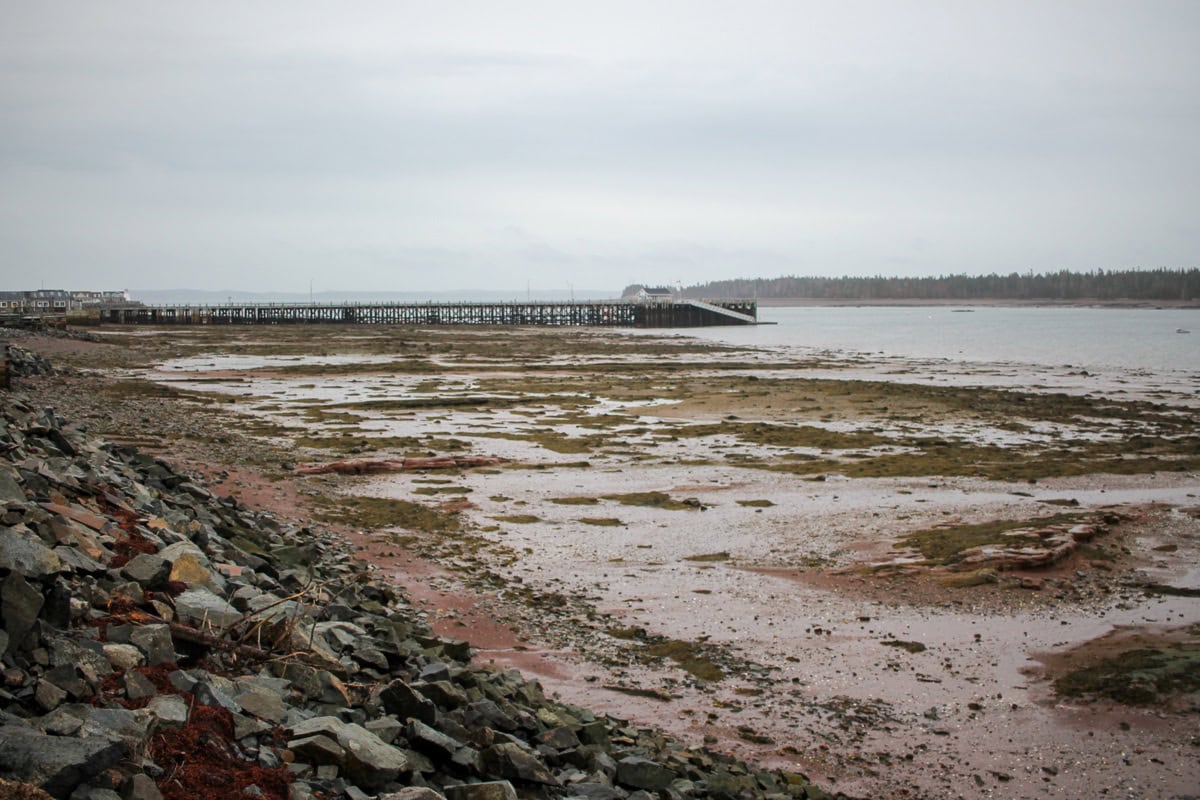
This isn’t an “attraction” in the traditional sense, but it’s still one of the most fascinating things you’ll witness in St. Andrews. The Bay of Fundy has the highest tides on the planet — and here at St. Andrews, the effect is nothing short of dramatic.
In the morning, you’re looking at a beach where boats lie on their sides in the mud. Six hours later, that same beach doesn’t exist — it’s under several metres of water and the boats are bobbing high above the spot where they were stranded that morning. The contrast is staggering, and it never stops fascinating me.
The best place to watch the tides is right from the harbour on Water Street or from the wharf. Check the tide tables (you can pick them up at the tourist centre or find them online) and plan your walk so you see both extremes — ideally about 6 hours apart. Your “before and after” photos will be the best souvenir you bring home.
9. Day trip to Campobello Island — Roosevelt’s summer paradise
If you’ve got time for a full-day excursion, definitely head to Campobello Island. The island is about 40 minutes’ drive from St. Andrews (via St. Stephen, across the US border crossing at Lubec, Maine, then back into Canada over the bridge to the island — sounds complicated, but it’s actually straightforward).
The main attraction is Roosevelt Campobello International Park — the summer estate of President Franklin D. Roosevelt. The house is beautifully preserved and the tour is free (yes, genuinely free!). Beyond the house, there are gorgeous trails along the cliffs with ocean views, the East Quoddy Head Lighthouse (accessible only at low tide — those tides again! 😁), and an incredibly peaceful atmosphere overall.
Note: Campobello Island is technically in Canada, but access is via the USA, so you’ll need documents for both the American and Canadian borders (passport + eTA/ESTA). UK citizens will need both an eTA for Canada and an ESTA for the US. There are plans for a bridge directly from the Canadian mainland, but for now you go through Maine. In summer, a seasonal ferry also runs from Deer Island. Check the current situation before you go.
10. Deer Island and the ferry across the bay
Another island adventure, this time without crossing any borders! You can reach Deer Island by ferry from Letete (about 20 minutes from St. Andrews), with the crossing taking around 20 minutes — and it’s free (the ferry is funded by the province of New Brunswick).
Deer Island is smaller and far less touristy than Campobello — and that’s exactly its charm. You arrive and feel like you’ve reached the edge of the world. The main attraction is the Old Sow Whirlpool — the second-largest natural whirlpool in the world, visible from the southern tip of the island during strong tides. It’s not quite as dramatic as a BBC documentary might have you believe, but it’s still a fascinating natural phenomenon.
The island also has lovely walking trails, quaint fishing harbours, and a handful of restaurants serving fresh seafood. From Deer Island you can continue on another ferry to Campobello Island (this one does charge a fare — around 11 € for a car with passengers).
11. Sunbury Shores Arts & Nature Centre — art by the sea
A small community centre worth mentioning if you’re into art, nature, or both. Sunbury Shores offers art workshops (painting, ceramics, photography) and nature programmes throughout the summer. Even if you don’t fancy joining a class, pop into their gallery — they showcase local artists and often have interesting exhibitions.
The centre sits right on the waterfront, and the surrounding garden is filled with sculptures and installations. It’s a quiet, contemplative spot — perfect for a brief stop between whale watching and lunch.
12. St. Andrews Farmers’ Market — Saturday market with local treats
If you’re in St. Andrews over the weekend, don’t miss the Saturday farmers’ market. It runs from May to October (typically in the morning) and you’ll find local cheeses, fresh bread, jams, honey, handmade crafts, and in season, blueberries and raspberries that taste nothing like the ones from the supermarket.
The market is small — you can walk through it in 20 minutes — but the atmosphere is wonderfully authentic. Locals come for their morning coffee, chat with the farmers, and stock up for the weekend. It’s a lovely way to feel like part of the community rather than “just” a tourist.
13. Coastal road trip — Fundy Trail and surroundings
If you’ve got the time and a car (which you should 😉), St. Andrews makes a brilliant base for exploring the Bay of Fundy coastline. Head northeast to St. Martins (about 2.5 hours) — a picturesque fishing village with iconic covered bridges and sea caves you can explore at low tide.
From there, the Fundy Trail Parkway continues — a 30 km scenic road along the coast with viewpoints, hiking trails, and waterfalls. It’s one of the most beautiful coastal drives in Canada and absolutely worth a full day out.
And if you head in the opposite direction towards the US border, stop in St. Stephen — the sister town of Calais, Maine, known as “Chocolate Town” thanks to the Ganong factory, the oldest chocolate maker in Canada.
Map of points of interest for your phone
Where to eat and drink in St. Andrews by-the-Sea
Atlantic Canada is a paradise for seafood lovers — and St. Andrews is no exception. You’re right at the source, so freshness is guaranteed.
Must-try dishes
- Lobster roll — a sandwich with fresh lobster, the classic of the Atlantic coast. In St. Andrews you’ll find them in practically every other restaurant.
- Seafood chowder — a creamy soup loaded with seafood. Every restaurant has its own version, and it’s the perfect meal on a cool day by the sea.
- Digby scallops — scallops from nearby Digby in Nova Scotia, some of the best in the world.
- Dulse — dried seaweed, a local delicacy. It looks suspicious, but the taste is surprisingly good — salty, crispy, a bit like crisps from the sea.
- Fiddleheads — young fern fronds, a springtime speciality of New Brunswick. Usually served sautéed in butter.
Where to eat
The Rossmount Inn — arguably the best restaurant in the wider area. They cook with local ingredients, the menu changes with the seasons, and the atmosphere is elegant without being stuffy. Budget 30–50 € per person for a main course. Book ahead, especially in summer.
Niger Reef Tea House — an utterly charming spot for tea and a light lunch overlooking the bay. You sit on the veranda, gaze at the sea, and tuck into homemade cake. Pure bliss.
Honeybeans Coffee, Tea & Treats — a cosy café right on Water Street. Great coffee, homemade desserts, and a friendly atmosphere. Perfect for your morning brew before whale watching.
The Gables — a restaurant right in the harbour, ideal for a lobster roll or fish & chips with a view of the boats. Mid-range prices, generous portions, relaxed vibes.
Savour in the Garden (in Kingsbrae Garden) — as mentioned above, they cook with local and garden-grown ingredients. Lunch here costs a bit more, but the experience is worth every penny.
Budget tip: If you want to save money while still eating brilliantly, buy a fresh lobster directly from fishermen at the harbour (ask at the tourist centre who’s selling) and cook it yourself — if you have kitchen access at your accommodation. A whole lobster will set you back 10–14 € instead of 30+ at a restaurant.
Practical tips to wrap up
What to pack
The weather around the Bay of Fundy is unpredictable — even in summer you might encounter fog, wind, and sudden rain. Pack layers: a t-shirt, fleece, and a waterproof jacket. For whale watching and kayaking, definitely bring a proper jacket. And if you plan to scramble over rocks at low tide, wear shoes with good grip — wet rocks and seaweed are seriously slippery. For more packing tips, check out our guide on how to pack into carry-on luggage.
How to stay connected
You’ll find Wi-Fi in cafés and at your accommodation without any issues. But if you need data on the go (for navigation, looking up tide tables…), consider getting an eSIM. We use Holafly — read our Holafly eSIM review.
Travel insurance
Don’t travel to Canada without insurance — healthcare here costs a fortune. For shorter trips we go with AXA, and for longer journeys we use SafetyWing. Read our detailed SafetyWing insurance review.
Connecting with other destinations
St. Andrews is a perfect stop on a road trip through Canada’s Maritime Provinces. From here you can continue to Saint John, the Fundy Trail, Fredericton, or across the border into Maine. If you’re planning a bigger Canadian road trip, check out our article on a road trip through Western Canada — different end of the country, same love. ☺️
FAQ: Frequently asked questions about St. Andrews by-the-Sea
Is St. Andrews by-the-Sea worth visiting?
Absolutely! St. Andrews by-the-Sea is one of the most charming towns in Atlantic Canada. The combination of a historic centre, whale watching, the incredible tides of the Bay of Fundy, and walking across the sea floor to Ministers Island makes it a truly unique destination. If you love quieter places with character and authentic atmosphere (and great seafood), St. Andrews will win you over. I’d recommend spending at least 2–3 days here.
Is St. Andrews by-the-Sea actually by the sea?
Yes — quite literally! The town sits on a peninsula in Passamaquoddy Bay, which is part of the famous Bay of Fundy. You’ve got the sea (well, the bay) on three sides, and the tides dramatically reshape the landscape twice a day. St. Andrews earns its “by-the-Sea” suffix 100%. The difference between high and low tide here reaches up to 8–9 metres — that’s the height of a three-storey building!
What is the nearest airport to St. Andrews by-the-Sea?
The nearest airport is Saint John Airport (YSJ), about 110 km away — roughly 1.5 hours by car. There are direct flights from Saint John to Toronto and Montreal. Other options include Fredericton Airport (YFC, 2.5 hours) or Halifax Stanfield International Airport (YHZ, 5 hours). From the UK, you’ll typically connect through Toronto, Montreal, or Halifax.
How many days should you spend in St. Andrews by-the-Sea?
Ideally 2–3 days. In a single day you could walk through the centre and fit in one main activity (whale watching or Ministers Island), but you’d be rushed and miss the atmosphere. Two days let you cover the main attractions at a comfortable pace. Three days means you can also fit in a day trip to Campobello or Deer Island. If you’re on a road trip through New Brunswick, two full days in St. Andrews is ideal.
Is St. Andrews by-the-Sea suitable for families with children?
Absolutely! Kingsbrae Garden with its alpacas and butterfly garden is paradise for kids. Fundy Discovery Aquarium has a touch pool where they can handle sea creatures. Whale watching is a thrill for the whole family (for smaller children, choose the larger boats rather than zodiacs). And walking across the sea floor at low tide to Ministers Island is an adventure they’ll remember for years. The beaches around here are more rocky than sandy, but for kids who love hunting for crabs and shells at low tide, it’s perfect.
What is the weather like in St. Andrews by-the-Sea?
In summer (June–August), temperatures hover around 18–25 °C, but on the water and in fog it can feel significantly cooler. September is often beautiful, with temperatures around 15–20 °C and stunning fall foliage. Spring (May) is still chilly and changeable. Winter is cold and most attractions are closed. Bear in mind that fog is common in the Bay of Fundy even in summer — it can roll in within minutes and vanish just as quickly. Always keep a waterproof layer in your bag.
Can you get around St. Andrews by-the-Sea without a car?
The town centre itself is perfectly walkable — everything important is on Water Street and nearby. You can walk to whale watching tours and Kingsbrae Garden. BUT — for Ministers Island, Campobello Island, Deer Island, the Fundy Trail, or any trip to the surrounding area, you need a car. Public transport in this part of New Brunswick is virtually non-existent. So the answer is: for a day in the centre you don’t need a car, but for the full St. Andrews experience you definitely do. I recommend renting one through DiscoverCars — it compares offers from different rental companies in one place.
Tips and Tricks for Your Vacation
Don’t Overpay for Flights
Search for flights on Kayak. It’s our favorite search engine because it scans the websites of all airlines and always finds the cheapest connection.
Book Your Accommodation Smartly
The best experiences we’ve had when looking for accommodation (from Alaska to Morocco) are with Booking.com, where hotels, apartments, and entire houses are usually the cheapest and most widely available.
 🚗 Car rental on the roadVerified rental cars in New Brunswick
Search with the DiscoverCars comparison engine — it compares prices from dozens of local and international rental companies, and most bookings come with free cancellation.
Compare car prices in New Brunswick →Don’t Forget Travel Insurance
Good travel insurance will protect you against illness, accidents, theft, or flight cancellations. We’ve had a few hospital visits abroad, so we know how important it is to have proper insurance arranged.
Where we insure ourselves: SafetyWing (simple monthly subscription) and TrueTraveller (for extra-long trips).
Find the Best Experiences
Get Your Guide is a huge online marketplace where you can book guided walks, trips, skip-the-line tickets, tours, and much more. We always find some extra fun there!
More from New Brunswick
Full guide → What to see · most readSaint John, New Brunswick: 15 Tips on What to See and Do in Canada’s Oldest City
 What to seeBay of Fundy & Hopewell Rocks: 13 Tips on What to See and Do
 What to seeFundy National Park, New Brunswick: 12 Best Things to See and Do
 What to seeFredericton, New Brunswick: 15 Best Things to See and Do in Canada’s Hidden Capital
 What to seeCampobello Island, New Brunswick: A Guide to the Quiet Island Where Roosevelt Had His Summer Home


