

This park in New Brunswick is one of those places that catches you off guard with its understated beauty — no dramatic cliff faces or glacial peaks, but kilometres of sandy dunes, warm lagoons, endless cycling trails winding through bird-filled forests, and a feeling that you’ve got the whole of nature to yourself. Kouchibouguac National Park is truly one of eastern Canada’s hidden gems.
In this article, you’ll find a complete guide to Kouchibouguac National Park — from the most beautiful beaches and boardwalks, to paddling on lagoons, watching seals and birds, plus practical advice on when to go, where to stay, and how much it all costs. I’ve put together 15 things to see and do so you can make the most of the park, whether you’re visiting for a weekend or a full week.
The full destination guide: New Brunswick — guide and what to see
TL;DR
- Kouchibouguac National Park lies on the coast of New Brunswick and is known for its warm sandy beaches, lagoons, and dunes — sea temperatures in the lagoons reach up to 26 °C in summer, which is pretty incredible for Canada.
- Kellys Beach Boardwalk is the park’s flagship attraction — a wooden walkway through wetlands and dunes leading to a stunning beach where you could happily spend an entire day.
- The best time to visit is mid-June to mid-September, but heads up — July and August can get very busy at the campgrounds, so book ahead.
- The park has over 60 km of cycling trails on flat terrain, making it ideal for families with children.
- You can paddle on the lagoons, watch a tern colony, and take a boat trip out to see grey seals basking on the sandbars.
- Admission to the park costs 8.50 CAD/adult (about €6), camping from 26 CAD/night (about €18) for an unserviced site.
- The park is steeped in Acadian culture — check out a festival, try poutine rappée, and hear the stories of the local Acadians.
- Accommodation in the area is limited — the best option is camping right in the park, or basing yourself in the towns of Miramichi or Bouctouche.
When to visit Kouchibouguac and how to get there
Kouchibouguac National Park is a quintessential summer park. While you can visit year-round (cross-country skiing or snowshoeing in winter), the full experience — warm beaches, paddling, cycling, seals — happens from mid-June to mid-September. The sweet spot is late June to early July, when the weather is settled, there are fewer visitors than during school holidays, and nature is in full bloom.
Weather and temperatures
Summer in New Brunswick is surprisingly pleasant. Air temperatures in July and August hover around 22–28 °C, and the water in the lagoons reaches up to 24–26 °C — yes, you read that right. The lagoons are shallow and enclosed by sand dunes, so they warm up like a swimming pool. The open ocean is cooler (around 18 °C), of course, but the lagoons are an absolute dream for swimming.
Do bear in mind that mornings and evenings can feel noticeably cooler, especially on the beach when the wind picks up. A jumper or light jacket is always a good idea.
How to get to the park
Kouchibouguac sits on the eastern coast of New Brunswick, roughly 100 km south of Miramichi and 110 km north of Moncton. The nearest major airport is Greater Moncton Roméo LeBlanc International Airport (YQM), which is about an hour and a half’s drive away.
If you’re travelling around eastern Canada, the park slots perfectly into a route between Prince Edward Island and Québec — or as a detour from the main Trans-Canada Highway. From Fredericton, allow about 2.5 hours of driving.
Public transport to the park is essentially non-existent — a car is a must. We’ve had consistently good experiences with DiscoverCars, which we use on all our trips. From the UK, you’ll typically fly into Halifax or Moncton (airlines like Air Canada, WestJet, or connecting via Toronto/Montreal), so it’s worth comparing car hire prices from both airports — the difference can be surprisingly large.
Admission and Parks Canada Discovery Pass
Daily admission to Kouchibouguac National Park is 8.50 CAD per adult (about €6) or 17 CAD per family/group (about €11). If you’re planning to visit multiple national parks in Canada (and you absolutely should!), the Parks Canada Discovery Pass at 75 CAD/adult (about €50) or 150 CAD per family is brilliant value — it covers all national parks and historic sites for an entire year.
We had a Discovery Pass and it paid for itself about three times over. 😁
Where to stay and how much Kouchibouguac costs
Let’s be honest — Kouchibouguac isn’t the kind of place you visit for a luxury hotel with a spa. It’s the kind of place where you fall asleep in a tent under the stars, wake up to birdsong, and have breakfast by the campfire. And that’s precisely what makes it so special.
Camping in the park (best option)
The park offers three campgrounds with varying levels of facilities:
South Kouchibouguac Campground — the main and largest campground, closest to the beaches and boardwalk. It has both serviced and unserviced sites, showers, toilets, and fire pits. An unserviced site starts from 26 CAD/night (about €18), serviced (with electricity) from 36 CAD/night (about €24). It fills up in summer — book via reservation.pc.gc.ca as early as possible, ideally as soon as reservations open in January.
Côte-à-Fabien — smaller, quieter, a bit further from the main attractions. Great if you want more peace and don’t mind cycling to the highlights.
Sipu Camping — more primitive, backcountry style. For those who truly want to be off the grid.
Beyond traditional tent pitches, Parks Canada also offers oTENTik units — semi-wooden “glamping” tents with beds and a small deck. They cost around 120 CAD/night (about €80) and are ideal if you don’t fancy lugging a tent but still want to stay inside the park. They’re incredibly popular — book months in advance.
Accommodation outside the park
If camping isn’t your thing, the nearest towns with accommodation are:
- Bouctouche (about 45 min south) — a charming little town with Acadian culture, a few B&Bs and motels.
- Miramichi (about 1 hour north) — a larger town with more options, from hotels to Airbnbs.
- Moncton (about 1.5 hours) — if you need the facilities of a bigger city.
How much does a holiday in Kouchibouguac cost
Rough budget for 5 days for two (camping):
- Admission (5 days): 85 CAD (about €57) or Discovery Pass
- Campsite (5 nights, unserviced): 130 CAD (about €87)
- Food (campfire cooking + occasional restaurant): 250–350 CAD (about €170–235)
- Kayak/canoe hire (2×): 80–120 CAD (about €54–80)
- Seal boat trip: 60–80 CAD/person (about €40–54)
- Petrol: 60–80 CAD (about €40–54)
Total: roughly 700–850 CAD for two (about €470–570). For Canada, that’s genuinely great value — proper nature on a budget. ☺️
Kouchibouguac National Park: 15 things to see and do
Now for the best bit — let’s dive into everything that awaits you at Kouchibouguac National Park. From iconic beaches and boardwalks to paddling, cycling, seal watching, and birdwatching. There are fifteen tips here, but trust me — you could easily spend two weeks in this park and still be discovering something new.
1. Kellys Beach Boardwalk — the park’s flagship
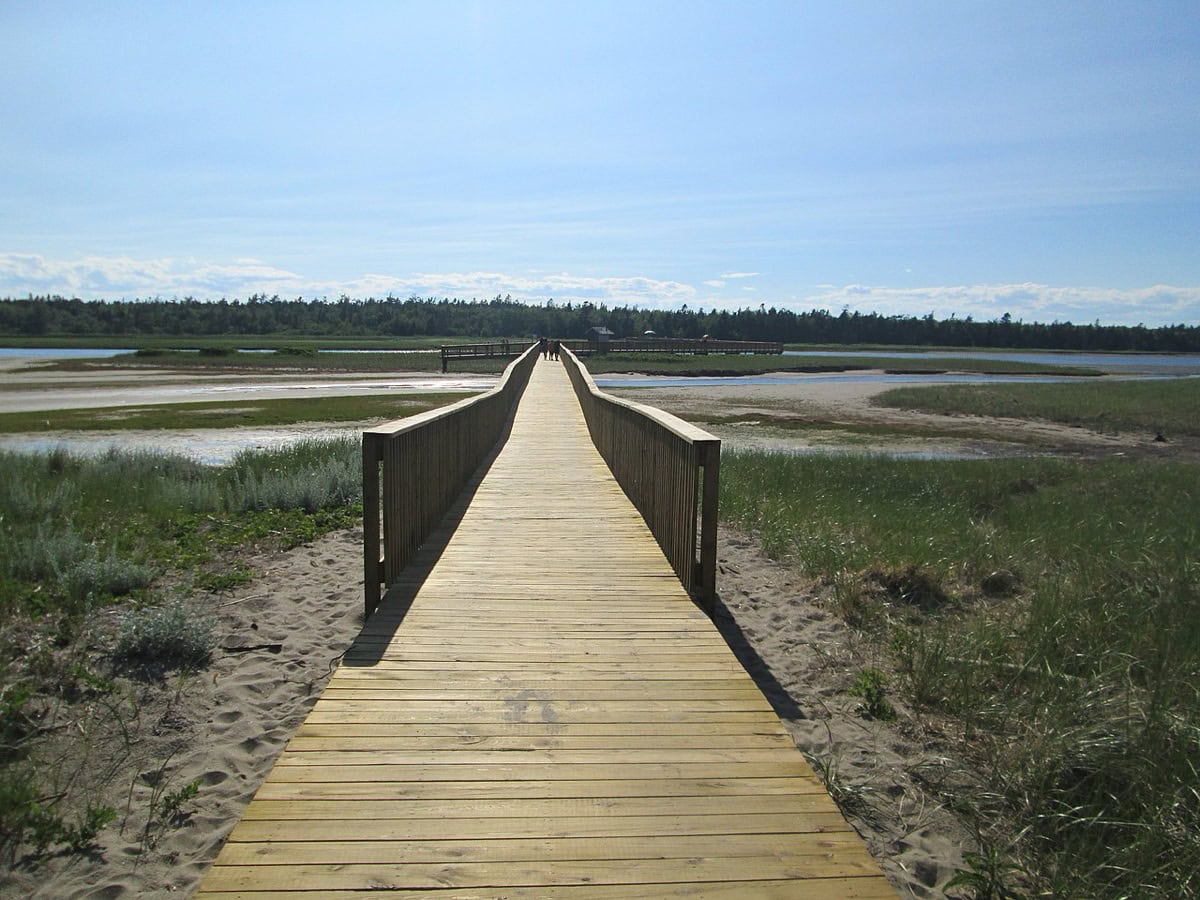
If you only visit one spot in Kouchibouguac, make it this one. Kellys Beach Boardwalk is an 800-metre wooden walkway that leads you through wetlands, peat bogs, and tall grasses to the sand dunes and a gorgeous beach on the other side.
The walk itself is an experience — dragonflies dart around you, frogs croak from the marshes, and the air smells of salt water. Interpretive panels along the way explain the dune and wetland ecosystems, so you pick up fascinating facts without even trying.
At the end of the boardwalk, you’re rewarded with a wide sandy beach facing the lagoons, where the water is warm and shallow — perfect for swimming. During the season, there are lifeguards, changing rooms, and toilets. The beach is surprisingly spacious, so even on the busiest days you’ll find your own patch of sand.
Tip: Come early in the morning or late afternoon — the light on the dunes is beautiful for photos, and the crowds are nowhere to be seen.
2. Beaches and lagoons — warm water you don’t expect in Canada
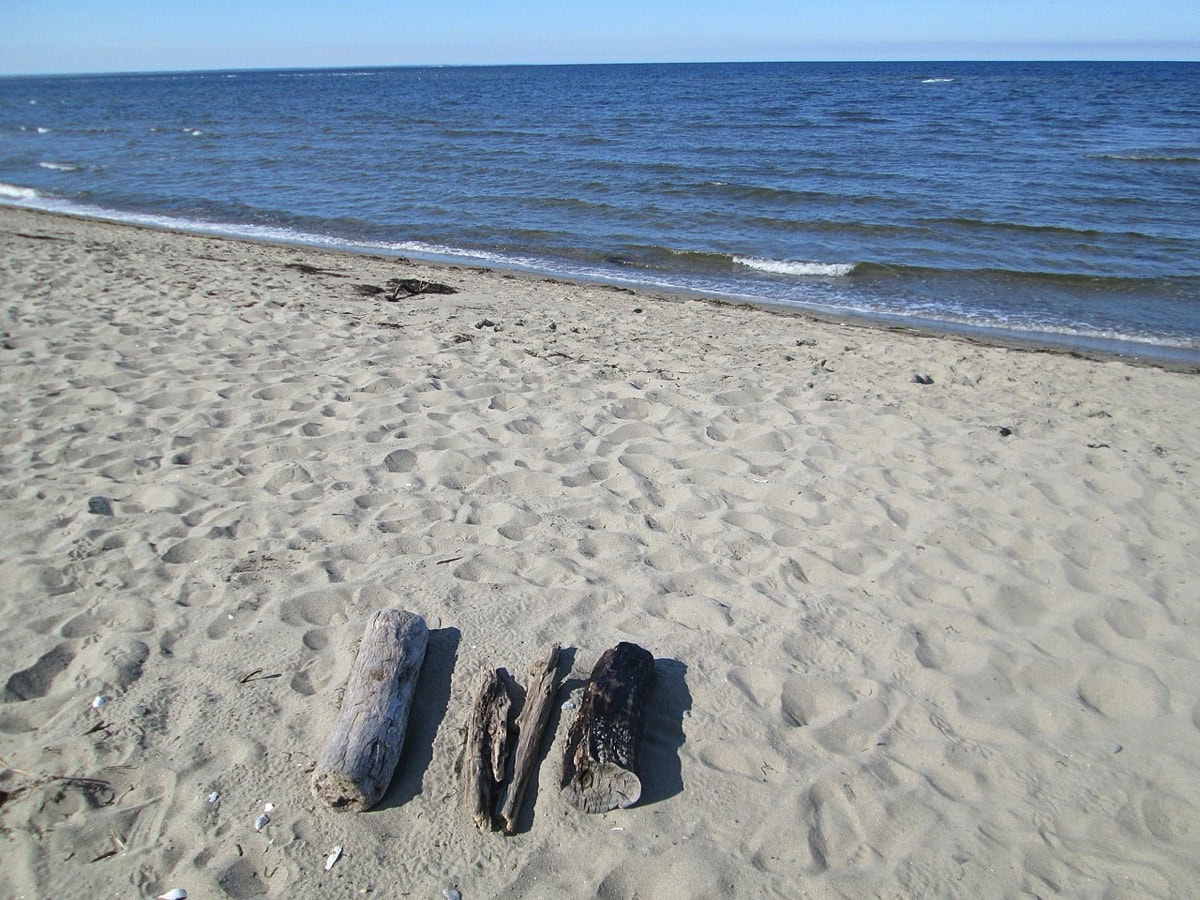
Kellys Beach is the most famous, but the park has other beaches well worth visiting. Callanders Beach is smaller and more intimate, brilliant for families with little ones thanks to the truly shallow lagoon water. Loggiecroft Beach is popular with locals and slightly off the main tourist trail.
What absolutely blew me away about Kouchibouguac is the water temperature. The lagoons are enclosed by sandy barrier islands, so they soak up the sunshine and reach an incredible 24–26 °C. That’s the kind of temperature where you’d normally be in a swimming pool in Canada, not in the ocean.
The beaches are sandy, clean, and wide. Forget pebbles or seaweed — it’s fine, light sand, almost Caribbean-like. The water isn’t turquoise but rather a warm green. In terms of atmosphere, though, it easily beats the Caribbean because there are no crowds, and the tranquility is almost meditative.
3. Sand dunes and barrier islands — fragile wilderness
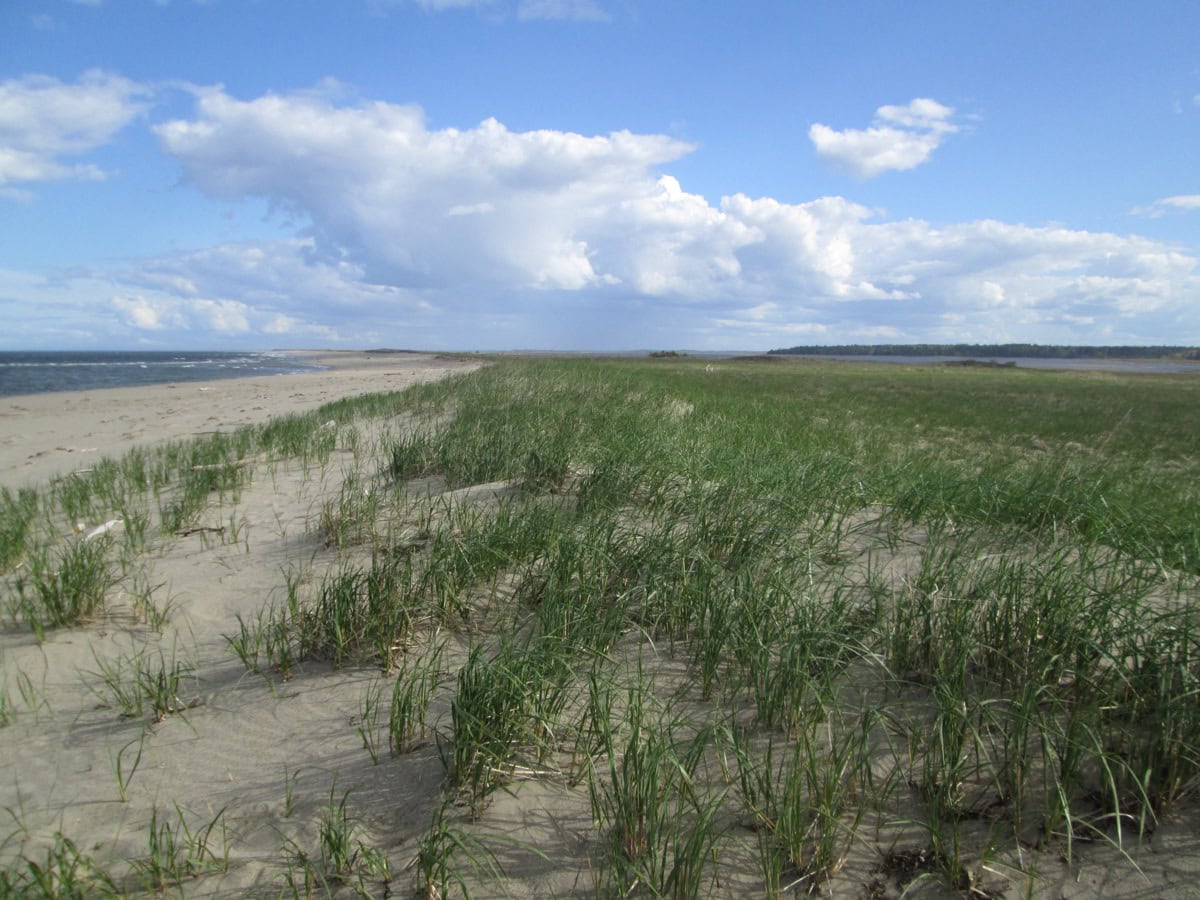
One of Kouchibouguac’s geological gems is its barrier islands — long, narrow strips of sand separating the lagoons from the open ocean. These are dynamic formations constantly reshaped by tides and storms. Some are just ten metres across, while others stretch for kilometres.
You can reach the dunes on foot from the Kellys Beach Boardwalk or by boat/kayak across the lagoons. The golden rule: stick to the marked paths. The dunes are extremely fragile, vegetation grows slowly, and a single footprint can trigger erosion that takes years to heal. The park takes this seriously, and rightly so.
From the tops of the dunes, the views in both directions are stunning — on one side, the calm lagoon; on the other, the wild Atlantic with crashing waves. It’s a surreal contrast. If you’re into landscape photography, this is a place where you’ll lose track of time entirely.
4. Cycling around the park — 60 km of trails for everyone
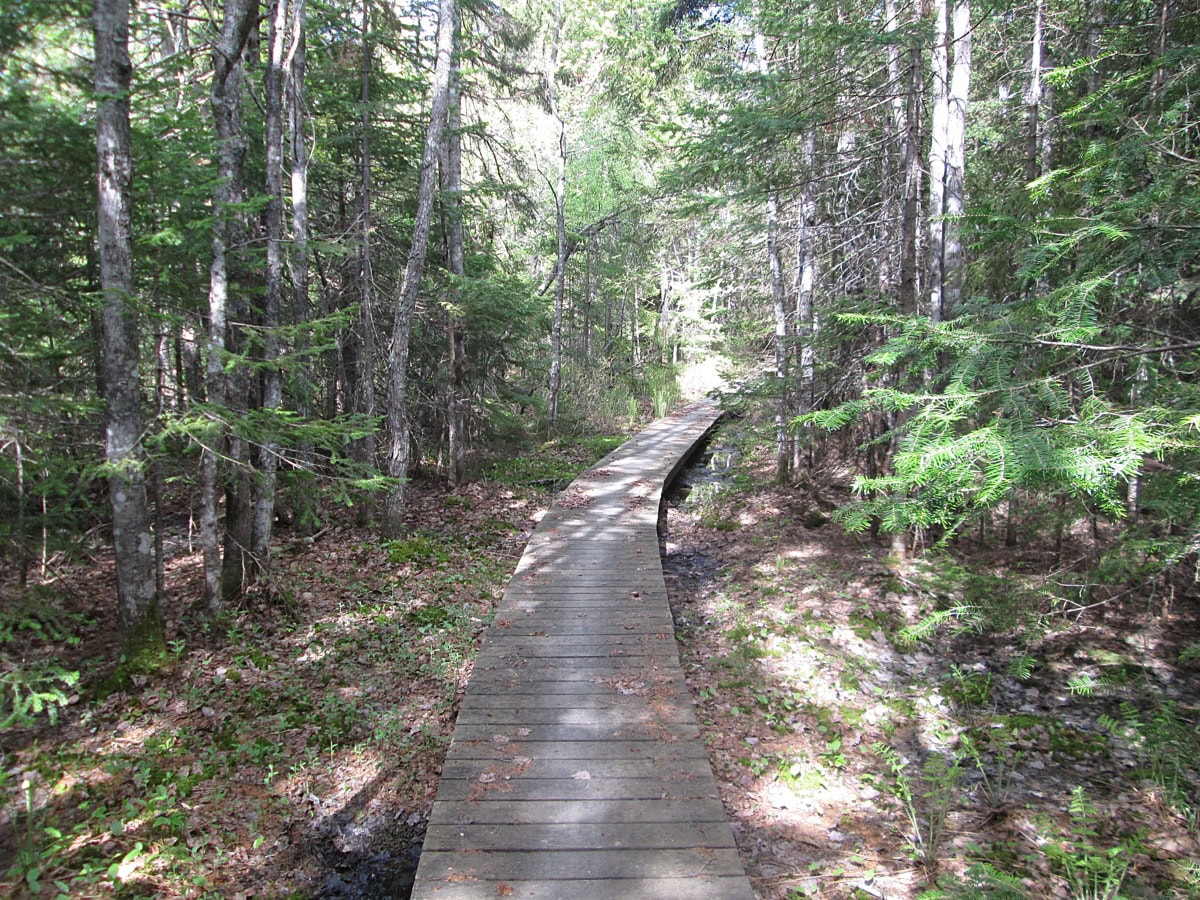
Kouchibouguac is absolutely perfect for cycling. The park has over 60 km of paved cycling trails running through forests, alongside rivers, past wetlands, and between campgrounds. Best of all — it’s almost entirely flat, so there are no tough climbs or dramatic hills. You just hop on and ride.
The most popular route is the Kellys Beach – Callanders Beach loop (about 15 km return), alternating between forest, open marshland, and beaches. Another beautiful route follows the Kouchibouguac River — in the early morning, you’ll often spot herons, ospreys, and with a bit of luck, a beaver.
You can hire bikes right in the park from Ryan’s Rental Centre (near the main campground). Prices are around 10–15 CAD/hour (€7–10) or 30–40 CAD/day (€20–27). They have mountain bikes, cruisers, and children’s bikes with trailers. The quality is perfectly decent — nothing fancy, but more than adequate for flat trails.
Tip: Grab a bike and set off on a full-day trip with a picnic. Stop at lagoons, explore side trails to viewpoints, and just let yourself get lost in the moment. It was the best day we had in the park. ☺️
5. Paddling on the lagoons — kayak, canoe, SUP
The lagoons in Kouchibouguac were practically made for paddling. Calm, shallow, warm water with no currents — paradise for beginners and experienced paddlers alike. You can paddle on Saint-Louis Lagoon or Kouchibouguac Lagoon, both gorgeous and each with its own character — Saint-Louis is larger and more open, while Kouchibouguac Lagoon feels more enclosed and intimate.
Kayaks and canoes are available from Ryan’s Rental Centre. A single kayak costs around 20 CAD/hour (about €13), a double around 30 CAD (about €20), and canoes are priced similarly. They have SUP boards too. You’ll get a better rate for a full-day hire.
Watch out: Even on a calm day, the wind can pick up on the lagoons, especially in the afternoon. Always wear your life jacket (they’re provided with the rental) and keep an eye on the weather.
6. Boat trip to the grey seals — an unforgettable experience
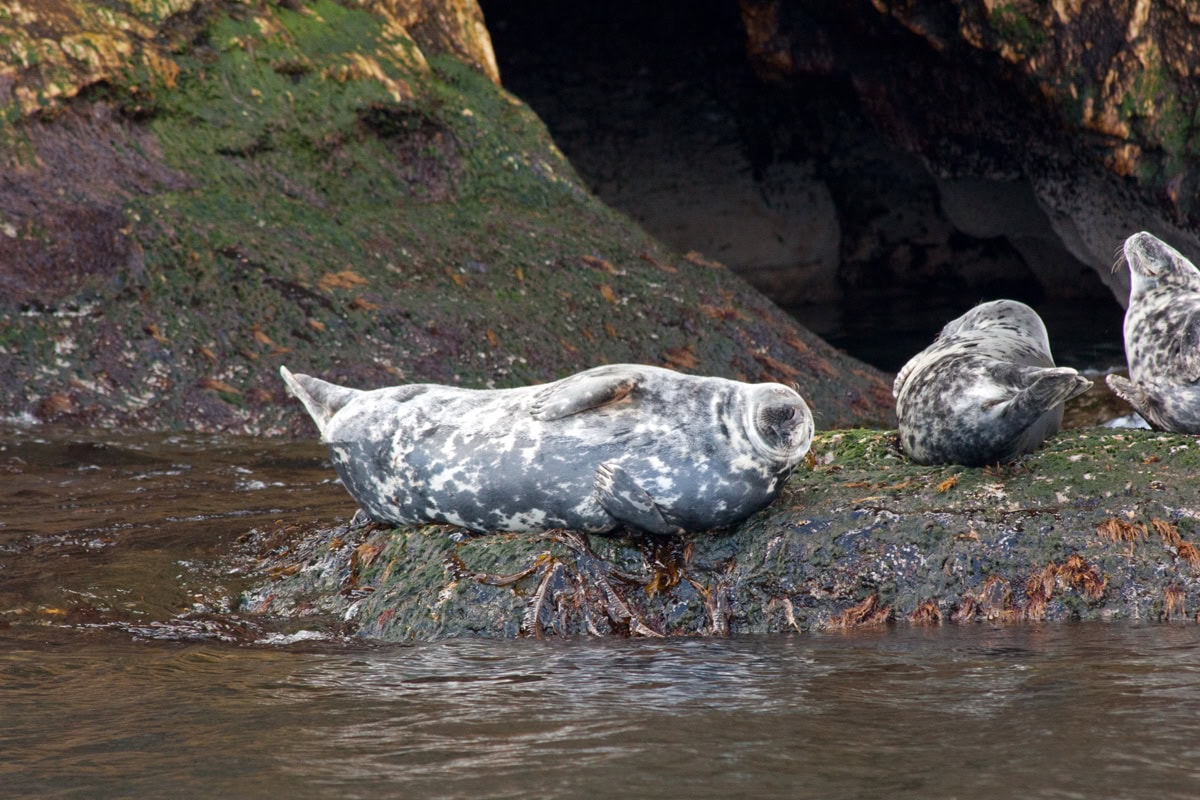
This is one of the most incredible experiences in the entire park. On the sandy shallows and barrier islands lives a colony of grey seals, lounging in the sun. You can watch them from the boat just a few metres away.
Trips are run by the park itself or by local operators — the boat departs from the harbour at Loggiecroft and the journey takes about 2–3 hours. The price is around 50–70 CAD per adult (about €34–47). It’s worth every penny — you see seals up close, the guide explains their behaviour and ecology, and you often spot dolphins and various bird species along the way.
We were lucky with a gorgeous sunny day and counted over fifty seals. They lay on the sand like enormous grey sausages, occasionally flopping over lazily or lifting their heads to give us a look of absolute indifference.
Book in advance — trips fill up fast in July and August. You’ll find information and booking at the Visitor Centre.
7. Tern colony and birdwatching
Kouchibouguac is an ornithologist’s paradise. The barrier islands host a nesting colony of Common Terns — thousands of pairs raising their chicks here. The colony is protected and you can’t set foot on the islands themselves, but from the boat during the seal trip you can see them beautifully (and above all hear them — these birds know how to make a racket).
In total, over 220 bird species have been recorded in the park. On the lagoons you’ll spot herons, cormorants, ospreys (bald eagles aren’t uncommon either), and plovers. In the forests, look for woodpeckers, chickadees, and hummingbirds. Every morning at our campsite, we watched a family of blue jays trying their best to nick our breakfast.
If you’re serious about birding, pop into the Visitor Centre for a birding trail map and the current sightings list. The rangers are incredibly knowledgeable and happy to point you in the right direction. The best times for birdwatching are early morning and late afternoon.
8. Voyageur Canoe Experience — paddle like explorers
This is one of the most unique activities in the park. During the season, Parks Canada offers the Voyageur Canoe Experience — a group paddle in a large canoe that’s a replica of the historic boats used by French fur traders (voyageurs). A guide in period costume tells stories from the colonial era, teaches you to paddle voyageur-style, and sings traditional French songs.
Sounds cheesy? A little bit. Is it brilliant? Absolutely. 😁 The trip lasts about 90 minutes, costs around 10–15 CAD per person (about €7–10), and it’s a fantastic experience for families and adults alike. You’ll learn a lot about the area’s history, Acadian culture, and life on the rivers. And paddling in a massive canoe with ten other people is surprisingly good fun.
Tip: The Voyageur canoe only runs during peak season (July–August) and places are limited. Reserve your spot at the Visitor Centre as soon as you arrive.

9. Hiking and walks — forest, wetland, coast
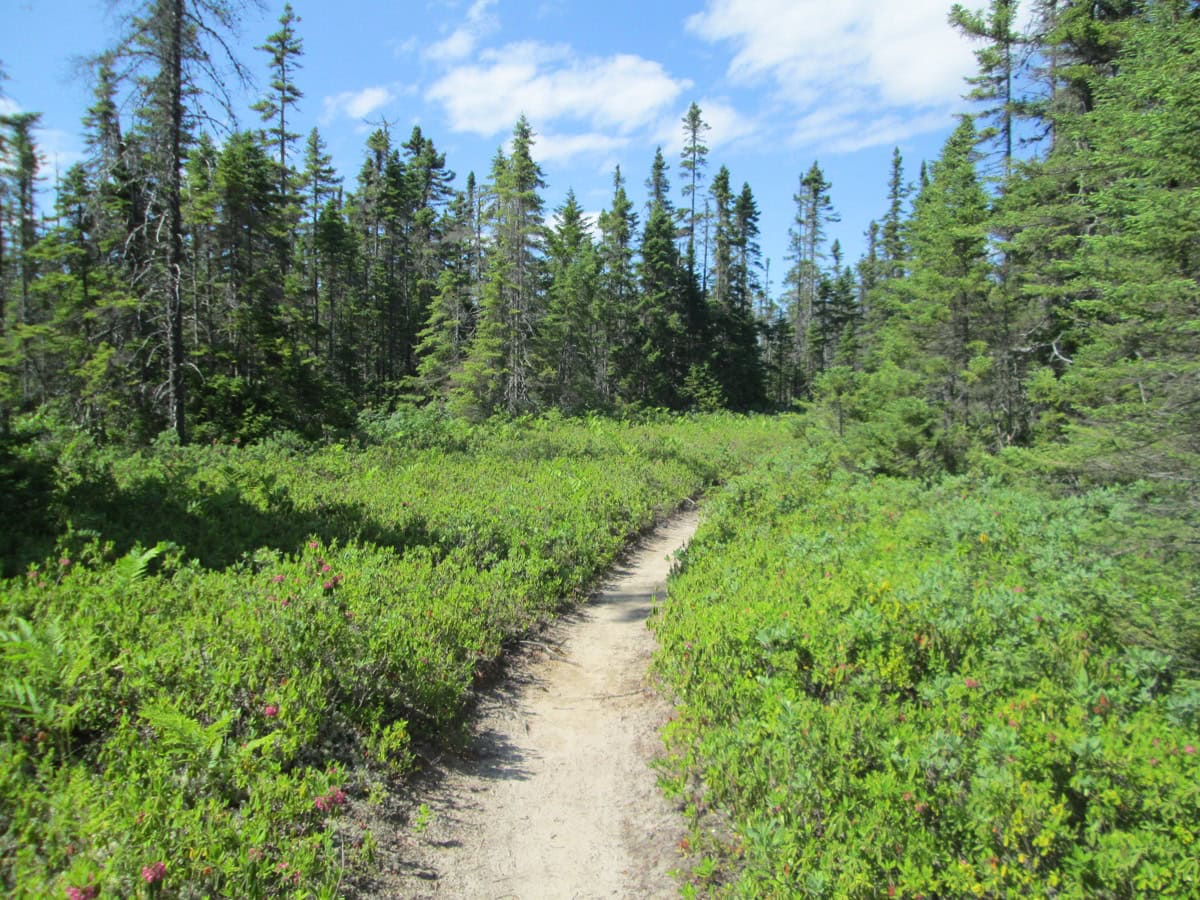
The park has several walking trails of varying lengths and difficulty. These aren’t demanding mountain treks — they’re pleasant nature walks that you could manage in flip-flops (though proper hiking boots are always better).
The best trails:
- Kellys Beach Trail (0.8 km one way) — the boardwalk to the beach, an absolute must.
- Beaver Trail (1.6 km loop) — a short forest walk to a beaver pond. Morning and evening offer the best chance of seeing a beaver in action.
- Salt Marsh Trail (1 km) — a boardwalk across salt marshes with gorgeous lagoon views. Perfect for sunset.
- Osprey Trail (5.5 km) — a longer route along the river with chances of spotting ospreys. Peaceful, wooded, meditative.
- Claire Fontaine Trail (3.5 km) — winds through forest to a freshwater spring. Welcome shade on a hot day.
- Kouchibouguac River Trail (14 km return) — the longest trail in the park, also suitable for cycling.
None of these trails require any special equipment or fitness level. The hardest part is deciding which one to do first. 😅
10. After dark — stars and wolves
Since 2009, Kouchibouguac National Park has been a certified Dark Sky Preserve — an area with minimal light pollution where the night sky is visible in all its glory. And trust me, it’s SPECTACULAR.
Lying on the beach on a blanket, gazing at the Milky Way, and counting shooting stars — it’s an experience no photo can capture. Parks Canada occasionally runs night-time astronomy programmes with telescopes and guides who show you planets, constellations, and galaxies. Check the Visitor Centre or the park’s website for programme details.
And one more thing — at night from the campground, you might hear wolf howling (or more precisely, eastern coyotes, which are actually wolf-coyote hybrids). The first time, it woke us up at three in the morning and I thought I was going to die. The second time, we enjoyed it as ambient soundtrack. The third time, we slept right through it. Nature teaches you to adapt quickly. 😁
11. Acadian culture — stories that give this place its soul
Kouchibouguac lies at the heart of New Brunswick’s Acadian region. The Acadians are descendants of the original French settlers who arrived in the 17th century and have their own unique culture, language (Acadian French), and cuisine.
In and around the park, you’ll encounter Acadian culture at every turn. Parks Canada runs cultural programmes — storytelling, live music evenings, and traditional craft demonstrations. In summer, there are local festivals with live music, dancing, and food. The most famous is the Festival acadien in Bouctouche (in August), but smaller events run all summer long.
The Acadian flag — a French tricolour with a yellow star — flies from every other house here. The local people are incredibly friendly and proud of their history. If you get the chance, strike up a conversation — stories about the deportation of the Acadians in 1755 (the Grand Dérangement) put the entire region in context and help you understand why this culture is so resilient and strong.
12. Kouchibouguac River — canoeing and fishing
The river that gives the park its name is a beautiful waterway flowing through forest and wetlands. It’s ideal for gentle canoeing — no rapids or dangerous currents, just a slow-moving river full of bends where you’re constantly wondering what’s around the next corner.
You can also fish on the river (you’ll need both a federal and park licence — ask at the Visitor Centre). The main catch is trout, and at the river mouth you’ll find saltwater species too. We didn’t fish ourselves, but we met a local chap who said he’d been coming there every day for forty years and insisted there’s no better fishing spot anywhere. I believe him.
Paddling the river is a different experience from the lagoons — more intimate, greener, quieter. Trees lean over the water forming a natural tunnel. Occasionally a turtle pokes its head above the surface. It’s like a scene from a film. We’d recommend taking a canoe and heading 2–3 hours downstream — the park offers a shuttle back (check current availability at the Visitor Centre).
13. Winter activities — yes, the park is alive in winter too
You might not be reading this with plans to visit Kouchibouguac in January, but for completeness — the park is open year-round and in winter offers cross-country skiing trails (25 km groomed), snowshoeing, and even fat bike trails. South Kouchibouguac Campground closes for winter, but one of the more remote campgrounds (Côte-à-Fabien) offers heated oTENTiks and yurts in winter.
Winter Kouchibouguac is a completely different world — frozen lagoons, snow-covered dunes, absolute silence. If you love winter wilderness and don’t mind the cold (temperatures easily drop to -15 °C and below), it’s a truly unique experience.
14. Junior Ranger Program — for families with children
Travelling with kids? Parks Canada runs an excellent Xplorers Program (formerly Junior Ranger) at Kouchibouguac. Children receive an activity booklet — tracking animal footprints, identifying birds, ecology puzzles — and earn a certificate and badge for completing the tasks. It’s a genius way to get kids engaged with nature without having to say “look at that lovely tree” a hundred times a day.
The programme is free, and you can pick up booklets at the Visitor Centre.
15. Visitor Centre and interpretive programmes
Before heading out on any activity, stop by the Visitor Centre at the park’s main entrance. There’s an interactive exhibit on the park’s ecosystems, a 3D terrain model, information on current programmes, and — most valuable of all — rangers who know absolutely everything.
Ask about:
- Current trail and beach conditions
- Recent wildlife sightings
- Which interpretive programmes are running this week
- Tips on lesser-visited spots
During the season, Parks Canada runs regular interpretive programmes at Kouchibouguac — from evening campfire talks and guided walks to night-time stargazing sessions. Most are free (included in your admission) and the quality is surprisingly high. The guides are passionate, knowledgeable, and wonderful storytellers.
Map of points of interest for your phone
Where to eat and drink near Kouchibouguac
Honest truth: there’s no restaurant inside the park. There’s a small shop by the campground with basic groceries, ice cream, and snacks, but for proper meals you’ll need to either sort yourself out (campfire cooking) or venture outside the park.
Cooking at the campsite
Most visitors cook at the campground, and honestly it’s probably the best option. In the nearby towns (Richibucto, Rexton) there are supermarkets where you can stock up on everything you need. Every campsite has a fire pit, and you can borrow a grill grate. Breakfast by the fire with French press coffee and a view of the forest — that’s the quintessential Kouchibouguac experience.
Restaurants nearby
When you can’t face another night of campfire cooking (I get it, by day four it happens), you’ve got a few options:
Richibucto (15 min from the park) — a small town with a handful of restaurants. Try La Sagouine — Acadian cuisine, fresh seafood, lovely atmosphere.
Bouctouche (45 min) — here you’ll find Le Pays de la Sagouine, a cultural centre with a restaurant serving traditional Acadian dishes. Poutine rappée — the Acadian version of poutine made with potato dough stuffed with pork — is a must-try specialty. It’s not the prettiest dish, but it’s comfort food in its purest form.
Miramichi (1 hour) — a wider selection, from pubs to fine dining. Cunard Restaurant is a local classic for fish and seafood.
What to try
- Poutine rappée — the Acadian specialty, an absolute must
- Fresh seafood — lobster, shrimp, mussels — New Brunswick is renowned for it
- Fiddleheads — young fern fronds, a local spring delicacy (if you’re visiting in June)
- Ploye — an Acadian buckwheat pancake served as a side dish
- Blueberry pie — blueberries grow wild here and the local pies are heavenly
Practical tips and advice
What to pack
Kouchibouguac is an outdoor park, so pack practically:
- Insect repellent (mosquitoes in the forests and wetlands are very active in June and July!)
- Sunscreen (strong UV on the beach)
- A light jacket and jumper for the evenings
- Good hiking boots and flip-flops for the beach
- Binoculars for birds and seals
- A head torch for evening adventures
If you’re flying with hand luggage only, check out our guide on how to pack into carry-on luggage.
Car hire
A car is essential for visiting Kouchibouguac. We’ve had consistently great experiences with DiscoverCars, where we compare prices from Moncton and Halifax. A standard saloon is perfectly fine for New Brunswick roads — they’re in good condition.
Flights
Look for affordable flights to Moncton or Halifax from the UK — direct flights to Halifax are available from London with airlines like Air Canada and WestJet, while Moncton usually requires a connection via Toronto, Montreal, or another hub. Expect return fares of around €500–800 in peak season, though deals can pop up outside school holidays.
Travel insurance and eSIM
For trips to Canada, don’t skimp on travel insurance — healthcare there is astronomically expensive. You can read about our experience and recommendations in our SafetyWing review. And if you want hassle-free data, check out our Holafly eSIM review — it works brilliantly in Canada.
Road trip around eastern Canada
Kouchibouguac fits perfectly into a bigger road trip around eastern Canada. If you’re also planning to explore the west, have a look at our western Canada road trip itinerary. And if you’ll be in Ontario, don’t miss Niagara Falls.
FAQ — Frequently asked questions about Kouchibouguac National Park
Is Kouchibouguac National Park suitable for families with children?
Absolutely. The park is tailor-made for families — flat cycling trails, shallow warm lagoons for swimming, an Xplorers programme for kids, and boardwalks accessible even with pushchairs (Kellys Beach Boardwalk is fully paved). You don’t need to worry about dangerous wildlife in the campgrounds — bears are uncommon here (unlike western Canada), and the most dangerous animal you’ll encounter is probably a raccoon raiding your cool box. 😅
How many days do I need to visit Kouchibouguac?
Two to three days is the minimum, but four to five is ideal. In two days, you can cover the beaches, boardwalk, cycling, and the seal boat trip. With four or five days, you can add paddling, all the trails, interpretive programmes, and — most importantly — that blissful feeling of not rushing anywhere. We planned two days and stayed four. That says it all.
Can you swim in the park? Isn’t the water freezing?
This is probably Kouchibouguac’s biggest surprise — the water in the lagoons is warm in summer, typically 22–26 °C. The lagoons are shallow and enclosed by sand dunes, so they soak up the sun’s heat. The open ocean beyond the dunes is cooler (around 16–18 °C), but swimming in the lagoons is perfectly pleasant, even for those who normally shiver at the thought of cold water.
Do I need to book a campsite in advance?
In peak season (July–August), absolutely yes. South Kouchibouguac Campground and oTENTiks sell out weeks in advance. Reservations open on reservation.pc.gc.ca, usually in January. In June and September, there’s a chance of finding a spot without booking, but I wouldn’t leave it to chance — reserve ahead and relax.
Are there bears or other dangerous animals in the park?
Black bears do live in New Brunswick, but they’re rare in Kouchibouguac and encounters are unlikely. Follow basic rules — store food in your car or the bear-proof boxes provided at campsites, don’t bring food into your tent, and don’t leave rubbish in the wild. You’re far more likely to be pestered by raccoons and squirrels, which are as bold as brass around the campgrounds. 😁
Can I combine Kouchibouguac with other parks nearby?
Absolutely! New Brunswick also has Fundy National Park (3 hours south) with its dramatic tides in the Bay of Fundy. On Prince Edward Island (across the Confederation Bridge, 2.5 hours), you’ll find gorgeous beaches and Anne of Green Gables country. And if you’re heading further north into Québec, add Forillon National Park on the Gaspésie peninsula. Eastern Canada has so many national parks you couldn’t do them all in a single summer.
Do they speak English or French in the park?
Both! New Brunswick is Canada’s only officially bilingual province. All information, signage, and programmes in the park are in both English and French. Locals often speak both languages, although French (Acadian) predominates in the Kouchibouguac area. You’ll have no trouble getting by in English everywhere, though.
Tips and Tricks for Your Vacation
Don’t Overpay for Flights
Search for flights on Kayak. It’s our favorite search engine because it scans the websites of all airlines and always finds the cheapest connection.
Book Your Accommodation Smartly
The best experiences we’ve had when looking for accommodation (from Alaska to Morocco) are with Booking.com, where hotels, apartments, and entire houses are usually the cheapest and most widely available.
 🚗 Car rental on the roadVerified rental cars in New Brunswick
Search with the DiscoverCars comparison engine — it compares prices from dozens of local and international rental companies, and most bookings come with free cancellation.
Compare car prices in New Brunswick →Don’t Forget Travel Insurance
Good travel insurance will protect you against illness, accidents, theft, or flight cancellations. We’ve had a few hospital visits abroad, so we know how important it is to have proper insurance arranged.
Where we insure ourselves: SafetyWing (simple monthly subscription) and TrueTraveller (for extra-long trips).
Find the Best Experiences
Get Your Guide is a huge online marketplace where you can book guided walks, trips, skip-the-line tickets, tours, and much more. We always find some extra fun there!
More from New Brunswick
Full guide → What to see · most readSaint John, New Brunswick: 15 Tips on What to See and Do in Canada’s Oldest City
 What to seeBay of Fundy & Hopewell Rocks: 13 Tips on What to See and Do
 What to seeFundy National Park, New Brunswick: 12 Best Things to See and Do
 What to seeFredericton, New Brunswick: 15 Best Things to See and Do in Canada’s Hidden Capital
 What to seeSt. Andrews by-the-Sea, New Brunswick: 13 Best Things to See and Do


