We had wanted to visit Salzburg, Austria for ages, but somehow it never worked out. This year we set off in our camper van heading for Sicily and finally managed to fit Salzburg in. We expected busy streets and crowds of tourists, but instead we discovered a beautiful, calm Austrian city where we could easily spend several days without ever getting bored.
What actually surprised me was how easily you can walk across the whole of Salzburg. We were travelling with two dogs and our one-year-old son Jonáš, and it turned out to be one of the best stops on our road trip.
By the way, Salzburg is a fantastic base for day trips around the region, including the famous Hallstatt. So if you keep skipping Salzburg, you really shouldn’t. It’s definitely a city you’ll want to return to.
The full destination guide: Austria — guide and what to see
TL;DR
- You can walk the centre: Compact Salzburg is easy to explore on foot, even with a stroller. It’s ideal for a long weekend (or a week if you add day trips) in any season.
- Stay in the centre at Gentle Hide Designhotel, Boutiquehotel am Dom or Hotel Wolf.
- With kids, visit the interactive Toy Museum (suitable from 6 months), the natural-history Haus der Natur with dinosaurs, or Hellbrunn Palace with its trick fountains.
- Don’t-miss sights: Hohensalzburg Fortress (reached by funicular), Salzburg Cathedral, Mozart’s birthplace on Getreidegasse, and the baroque Mirabell Gardens (where the famous “Do-Re-Mi” scene was filmed).
- Taste the real Mozart Balls at Café Konditorei Fürst (only the ones in blue wrappers!), stop by Austria’s oldest café, Café Tomaselli, and treat yourself to Salzburger Nockerl – a fluffy soufflé shaped like the Salzburg mountains.
- Save with the Salzburg Card: For €29/24h you get free entry to most attractions plus unlimited public transport – an investment that quickly pays for itself.
When to visit Salzburg
You can basically visit Salzburg at any time of year. Every season has its own charm. Personally I prefer spring or early autumn, because I don’t like wandering around cities in the heat or in bitter cold — but you know how it goes, even winter can bring perfect weather. If you like to plan around the weather in Salzburg, Austria, spring and early autumn are usually the safest bets.
Getting around Salzburg
Salzburg is wonderful to explore on foot. Because of our camper van we parked outside the centre and took a bus in. The historic centre (Altstadt) is compact and most of the main sights are a fairly short walk from one another. For spots further out you can use:
- Public transport – the “Obus” bus system is eco-friendly (trolleybuses) and pretty reliable. A single ticket costs around €2.50, or €5.70 for a 24-hour pass.
- Bikes – Salzburg is incredibly cyclist-friendly, with over 170 km of bike paths. You’ll find rental shops all over the city, with prices from around €15 a day. Bikes with child seats are available for families too.
- Taxi – Uber works here the usual way, so you can easily grab a ride if you need to. Of course it’s a good bit pricier than public transport or renting a bike.
Where to stay in Salzburg: the best hotels
We’re fairly demanding when it comes to accommodation, and I don’t mean it has to be the most expensive or luxurious — it just has to be worth the price. We love quiet places with a great breakfast (unless we feel like café-hopping), ideally right in the centre (because getting around with a baby is hard work).
Luckily there’s plenty to choose from in Salzburg. My top pick is Gentle Hide Designhotel, right in the centre, or alternatively Boutiquehotel am Dom or Hotel Wolf. We prefer to look for accommodation on Booking.com.
And how long should you stay? One day isn’t enough — I’d recommend at least a long weekend, and if you want to explore the surroundings too, then easily a week.
Salzburg, Austria: sights, highlights and things to do with kids
Now let’s get into what you should see in Salzburg. You should be able to cover it all in 2–3 days.
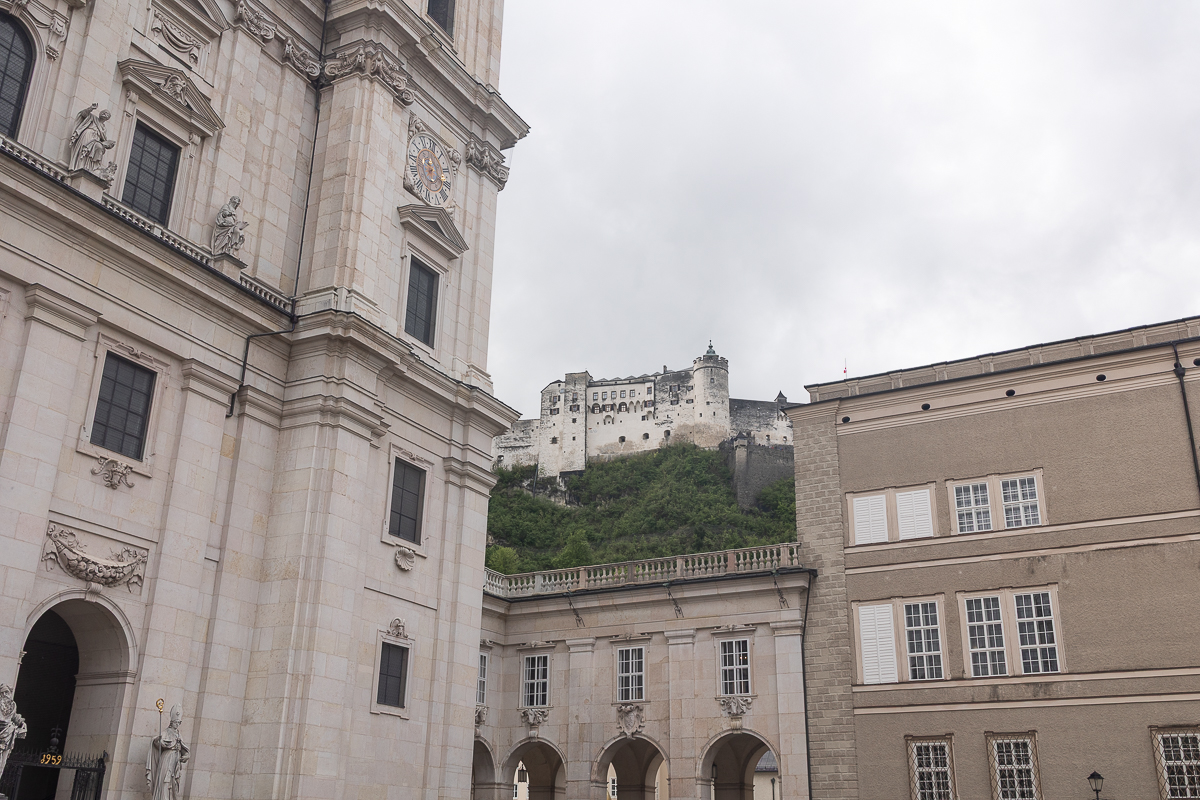
Hohensalzburg Fortress (the Salzburg Austria castle)
The majestic Hohensalzburg Fortress has towered over the city for more than 900 years and is one of the largest, best-preserved medieval fortresses in Europe. You can reach it either on foot (about a 20-minute, fairly steep walk) or by the FestungsBahn funicular, which whisks you up in under a minute.
Practical tips:
- The funicular runs every 10 minutes, from 9:00 to 17:00 in winter and until 21:00 in summer.
- Fortress admission including the funicular ticket costs around €13.30 for adults, €7.60 for children aged 6–14.
- The fortress is partly stroller-accessible, but there are some parts you simply can’t reach without folding the stroller up.
- There’s a café at the top with a terrace and breathtaking views.
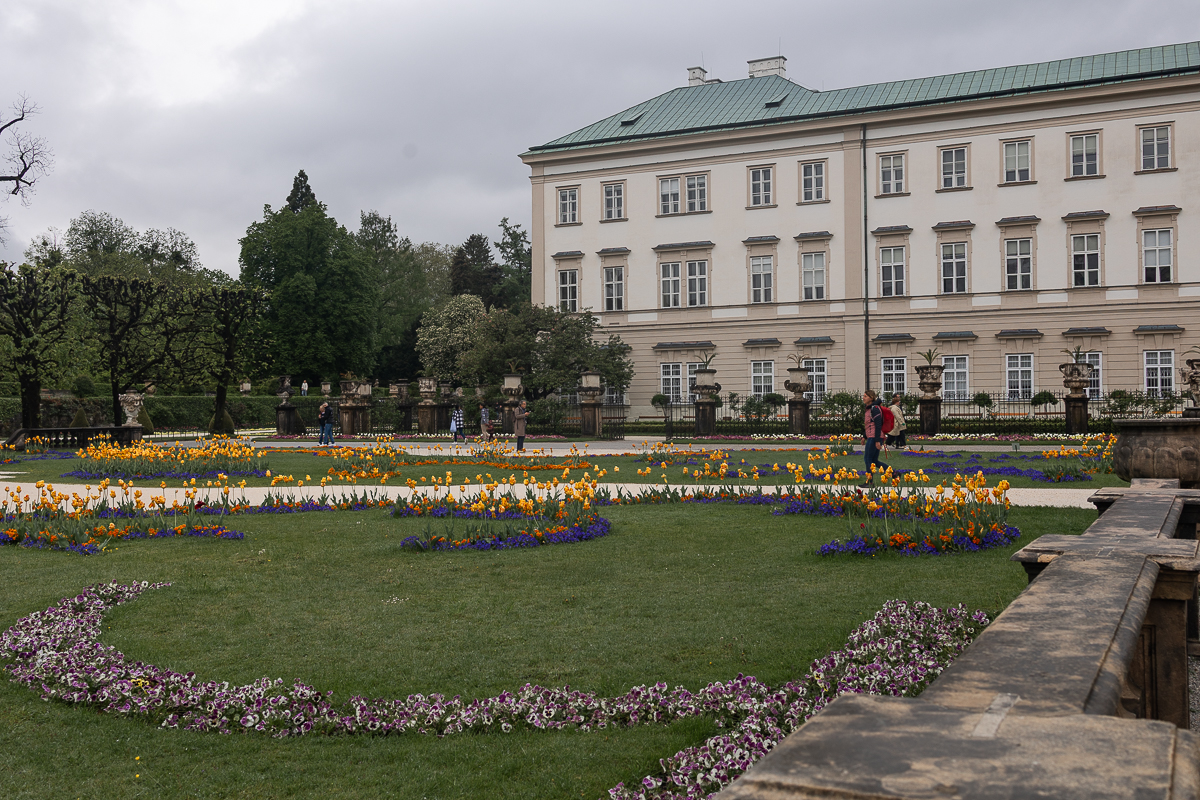
Mirabell Palace and Gardens (Schloss Mirabell)
The baroque Mirabell Palace was built in 1606 by Prince-Archbishop Wolf Dietrich for his mistress Salome Alt. It’s surrounded by stunning gardens that rank among the most beautiful in Europe and are free to enter.
This is exactly where the famous scene from The Sound of Music was filmed — the one where Julie Andrews sings “Do-Re-Mi” with the children. You might not know the musical since it’s from 1965, but it won so many awards that it’s well worth watching before your trip to Salzburg.
What you’ll see here:
- The Marble Hall (Marmorsaal) – considered one of the most beautiful wedding halls in the world
- The Angel Staircase (Engelsstiege)
- The Dwarf Garden (Zwergerlgarten) with its 18th-century baroque dwarf statues
- The great fountain surrounded by statues representing the four elements
- The Pegasus Fountain, which offers the iconic view of Hohensalzburg Fortress
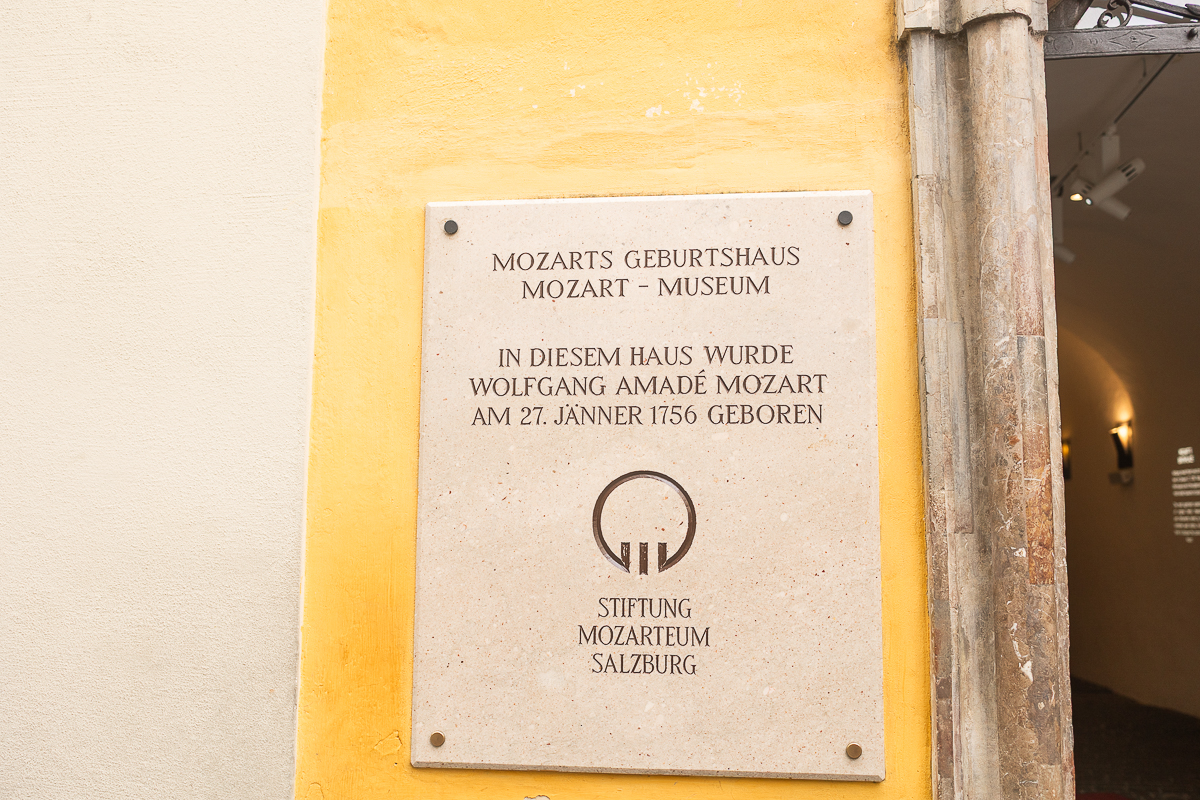
Getreidegasse and Mozart’s birthplace
Getreidegasse is Salzburg’s most famous street. You’ll recognise it by the wrought-iron guild signs hanging above the shops. It was at number 9 that Wolfgang Amadeus Mozart was born on 27 January 1756, and today there’s a museum dedicated to his life.
Since we were travelling with one-year-old Jonáš, we did peek inside but decided in the end that he wouldn’t enjoy it. If you head in, I’d love it if you dropped a comment about how you liked it and whether it’s worth it.
What awaits you in Mozart’s birthplace:
- Mozart’s original childhood violin
- Portraits of the Mozart family
- Letters and original scores
- Interactive exhibits on his life and work
There’s a special tour route for older children.
For the record — Mozart later lived with his family in the so-called Mozart Residence (Mozart-Wohnhaus) on Makartplatz, which is also open to the public. This museum is larger and less crowded than the birthplace.
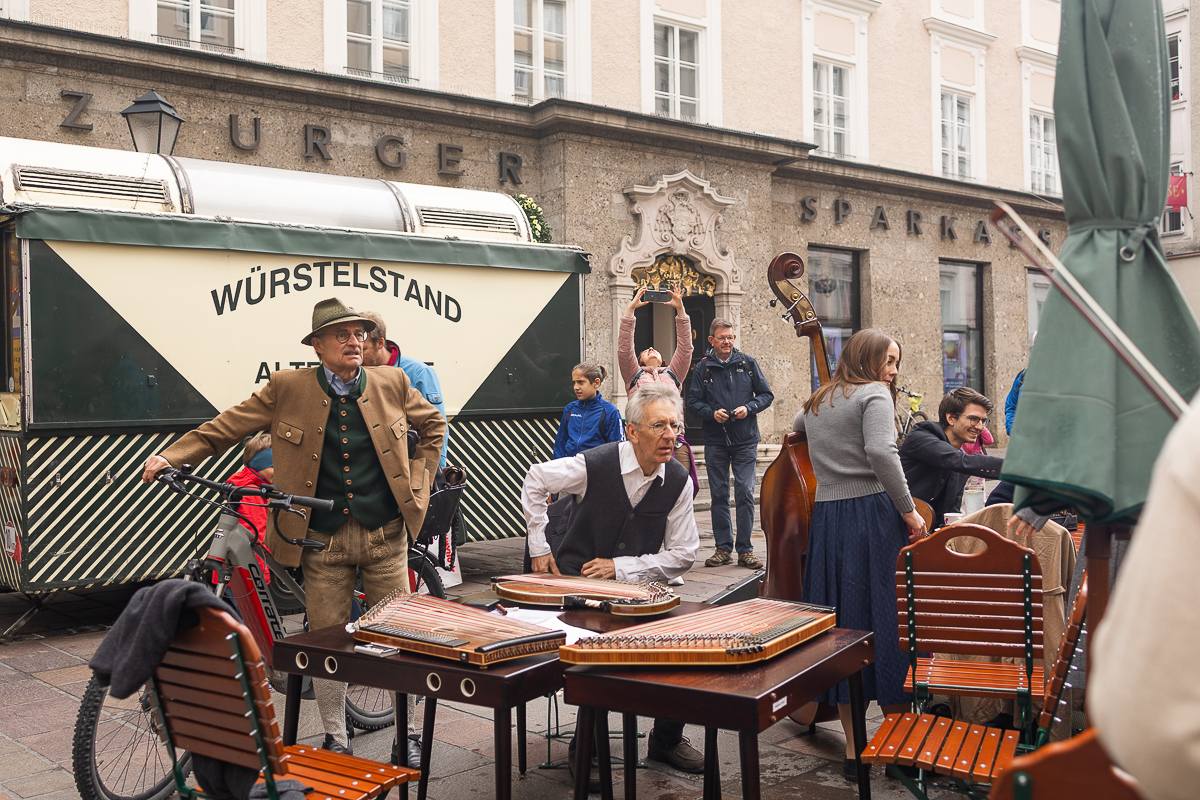
The Old Town (Altstadt)
Salzburg’s old town is one of the best-preserved historic centres in Central Europe and has been a UNESCO World Heritage Site since 1996. It’s a maze of narrow lanes, squares and courtyards.
The most interesting spots in the old town:
- Residenzplatz – the main square with the famous baroque Residenzbrunnen fountain
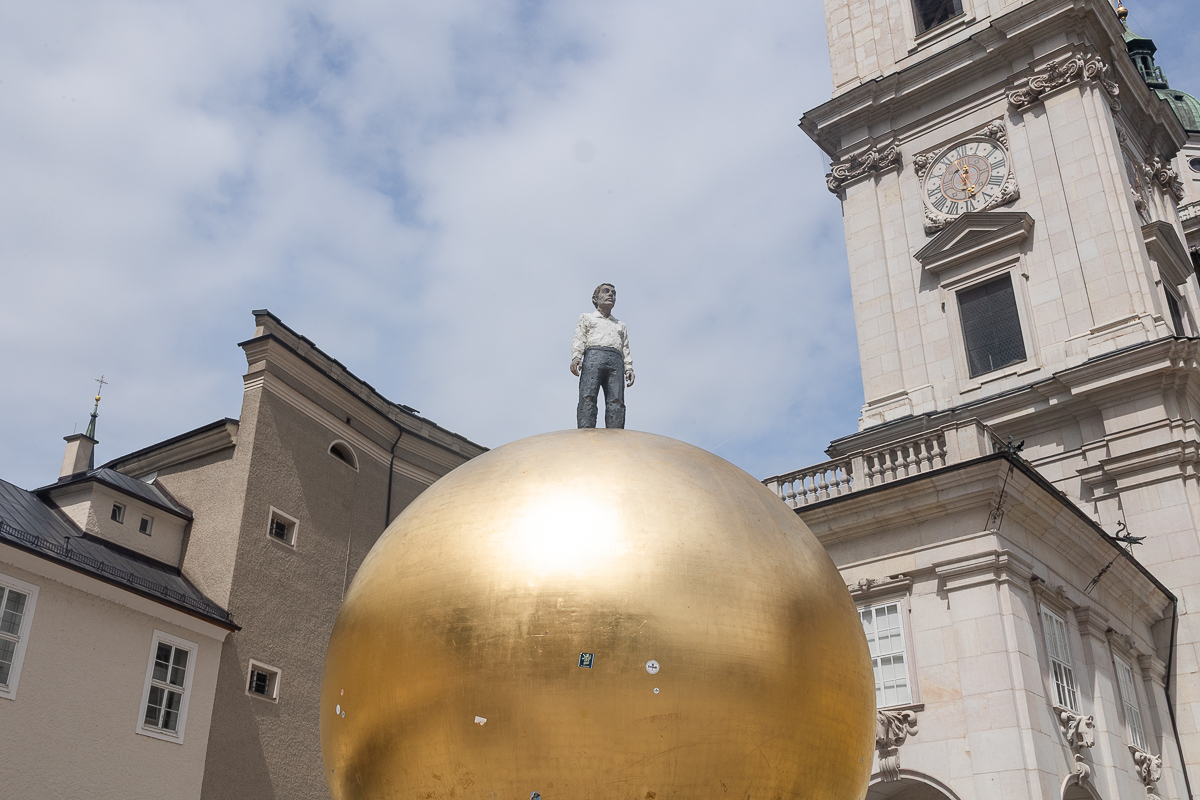
- Kapitelplatz – a square with a giant chess piece and a fountain
- Domplatz – the square in front of the cathedral, home to the Christmas market
- Alter Markt – with the historic Café Tomaselli
- Judengasse – the former Jewish quarter, full of little shops and cafés
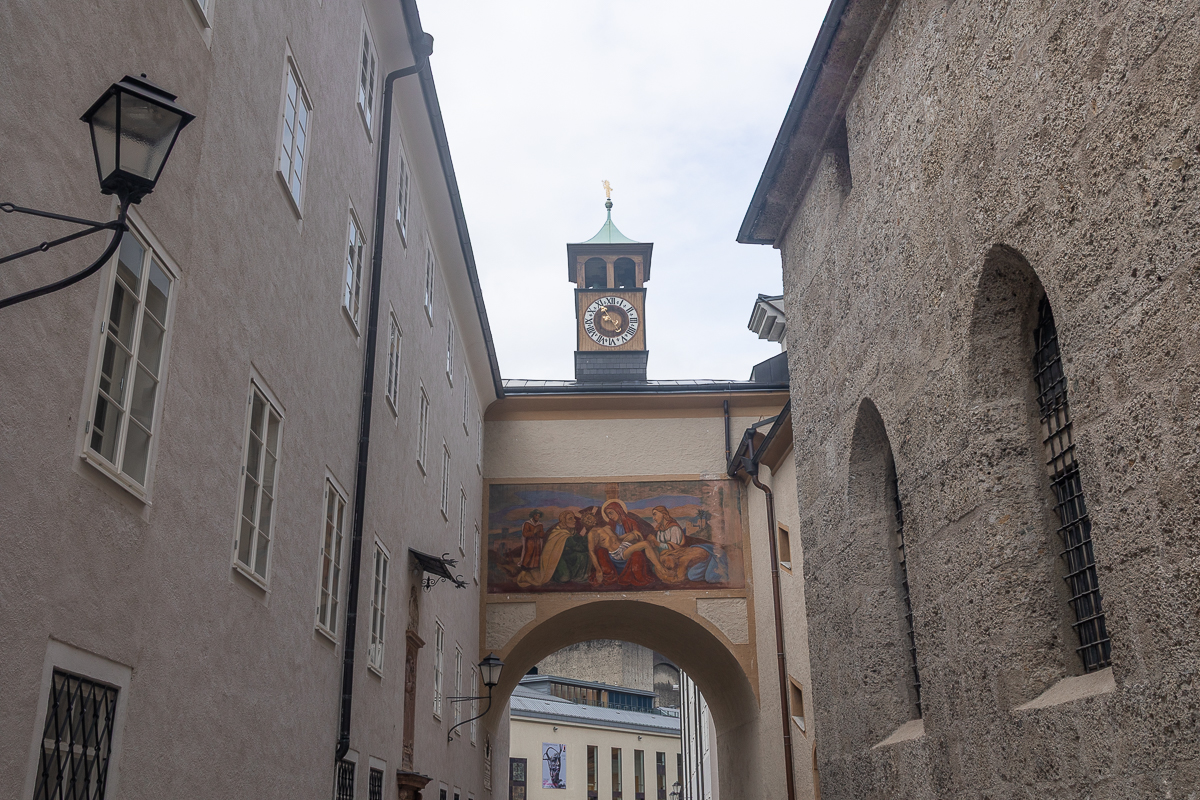
- Steingasse – a medieval lane with charming corners and historic houses
You can roll a stroller through the historic centre with no trouble at all. There are stairs here and there, of course, but we never ran into a problem.
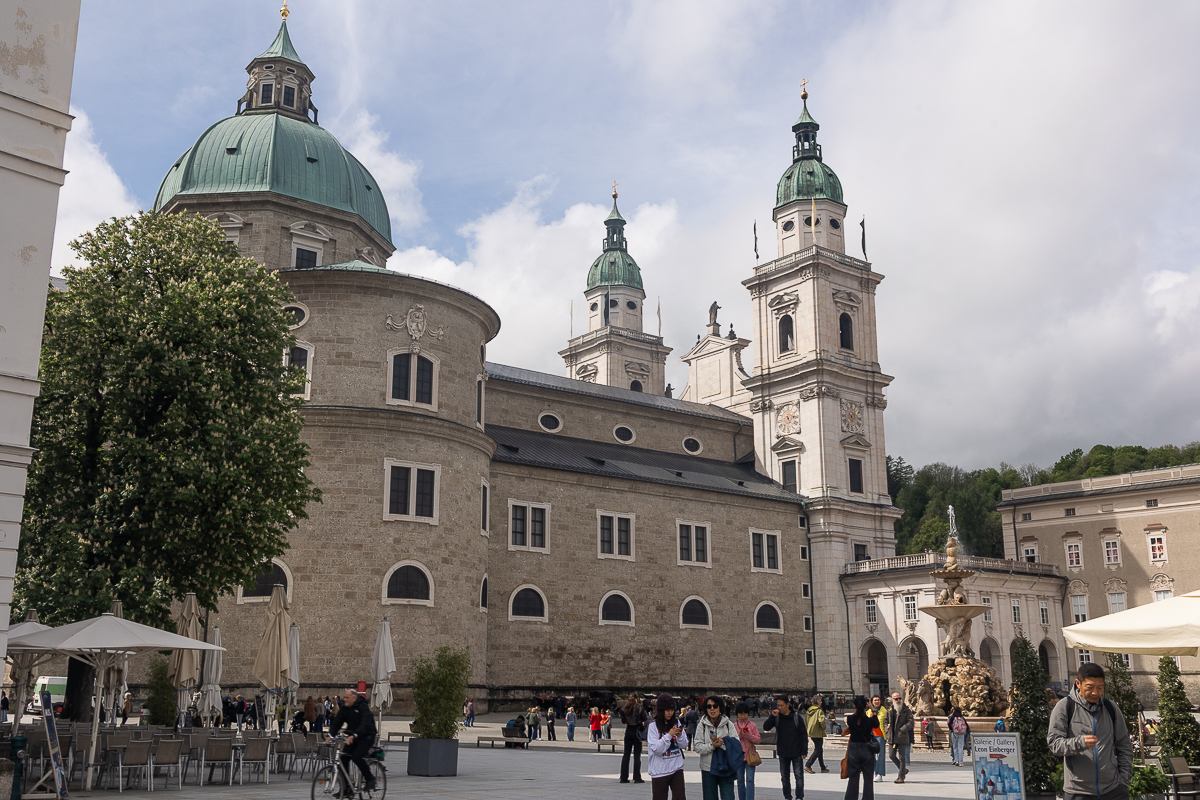
Salzburg Cathedral (Salzburger Dom)
This monumental baroque cathedral is the heart of the old town. Wolfgang Amadeus Mozart was baptised here and later served as court organist. The interior is dazzling – marble columns, frescoes, five organs and 4,000 pipes.
Good to know:
- The cathedral was completely rebuilt after a fire in 1598
- It has a capacity of 10,000 people
- On Sundays at 10:00 there’s a Mass with musical accompaniment
I recommend popping into the adjoining museum (DomQuartier), where the archbishops’ treasures are on display.
St. Peter’s Abbey and cemetery
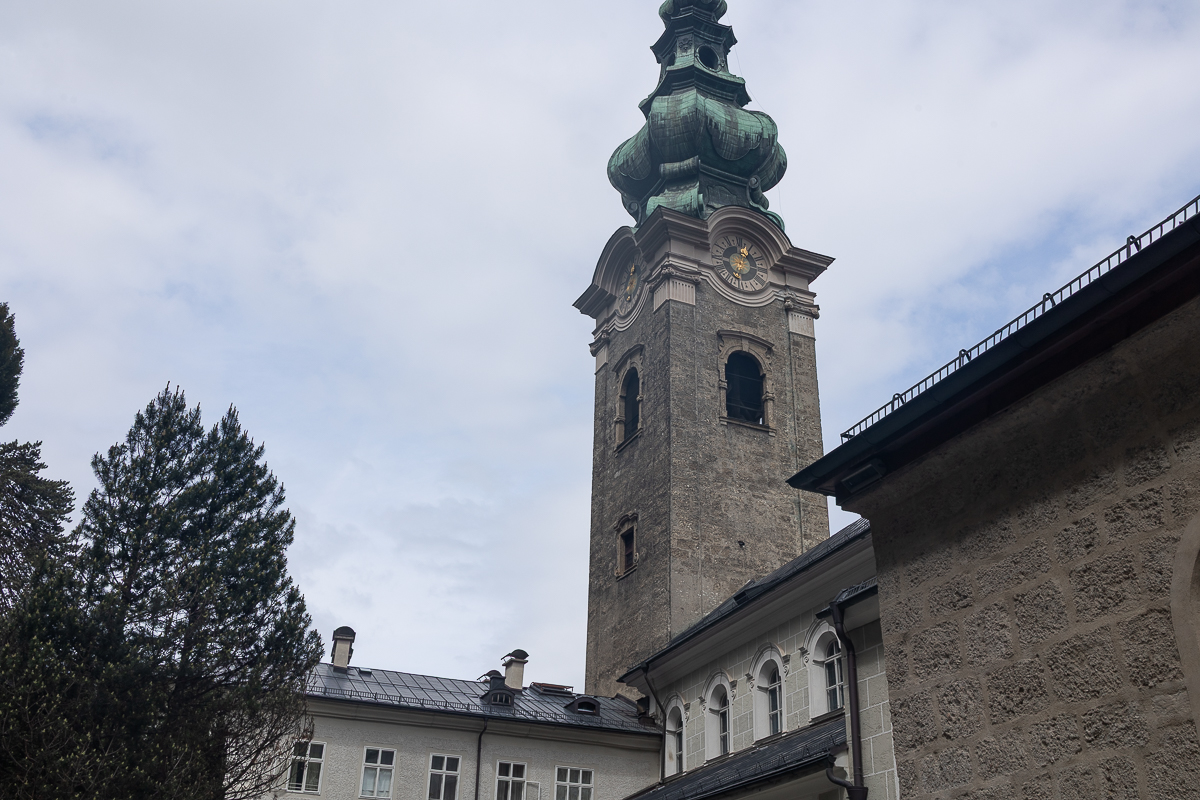
St. Peter’s Abbey is the oldest monastery in the German-speaking world, founded back in 696. The complex includes a Romanesque-Gothic church, a stunning library with 100,000 volumes (some over 1,000 years old) and the Petersfriedhof cemetery with catacombs carved into the rock.
Why visit:
- An ossuary with the skulls and bones of ancient monks and nobles
- Europe’s oldest restaurant – St. Peter Stiftskulinarium (founded in 803)
- Crypts and chapels with the tombs of prominent Salzburg families
- Early-morning Mass in the little church accompanied by Gregorian chant (starts at 6:45)
- It’s also one of the spots featured in The Sound of Music.
Schloss Hellbrunn and the Wasserspiele
The summer residence of Prince-Archbishop Markus Sittikus, built in the early 17th century, is best known for its “trick fountains” – an ingenious system of fountains, water-spouting statues and hidden jets designed to surprise and soak visitors.
What awaits you here:
- A guided tour of the Wasserspiele (takes about 40 minutes)
- A water-powered mechanical theatre depicting life in a baroque town
- A sprawling park perfect for picnics and relaxing
- The pavilion where the “Sixteen Going on Seventeen” scene from The Sound of Music was filmed
- Salzburg Zoo
Kids will love it, though be prepared to get wet! I’d recommend bringing a change of clothes, but in summer it’s actually a pleasant way to cool off.
Practical tips:
- Admission is around €13.50 for adults, €6 for children aged 6–18
- You can’t book a tour time slot – tours run one after another
- It’s easy to get here on bus no. 25 from the main train station
- Allow at least 2–3 hours for your visit
Haus der Natur
This natural-history museum will entertain grown-ups and kids alike. Across 7,000 m² you’ll find interactive exhibits on nature, space, the human body and many other themes. There’s also an aquarium, reptile terrariums and a science show. And yes, there are dinosaurs too.
The most interesting exhibits:
- The space hall with a planetarium
- A dinosaur exhibit with life-sized moving models
- An aquarium with a coral reef
- An ice world with penguins and a polar exhibit
- A “Science Center” with experiments kids can try for themselves
Kapuzinerberg and Steingasse
Kapuzinerberg hill, on the right bank of the Salzach River, offers lovely woodland walks and stunning views over the old town. At the top there’s a Capuchin monastery and several viewpoints. The way up begins at Steingasse – the oldest and most charming street in Salzburg, which served as a main trade route back in the Middle Ages.
What you’ll see here:
- Sebastianskirche (St. Sebastian’s Church) at the foot of the hill
- Military fortifications from the Napoleonic Wars
- The Mozart viewpoint with a panoramic outlook
- A Stations of the Cross trail with statues
- Spots where, according to legend, a hermit once lived
The climb is tougher with a stroller, but there are gentler alternative routes. There are several spots on the hill for a picnic and a rest.
Fun fact: Josef Mohr, who wrote the lyrics to the carol “Silent Night, Holy Night”, lived at Steingasse no. 9.
Mönchstein Castle and the Museum of Modern Art
At the top of Mönchsberg hill you’ll find the luxury Schloss Mönchstein hotel and, nearby, the Museum of Modern Art (Museum der Moderne). The views over the city from the top are beautiful, and you can get up there either on foot or by the Mönchsbergaufzug lift.
Why visit:
- The Museum of Modern Art with rotating contemporary exhibitions
- The terrace of the museum café M32 with panoramic views
- A walk along the ramparts with views over the old town
- Unusual angles on Hohensalzburg Fortress
The Mönchsberg lift runs every 10 minutes and costs €2.50 per ride. The museum is open daily except Monday from 10:00 to 18:00, and until 20:00 on Wednesdays.
Red Bull Hangar-7
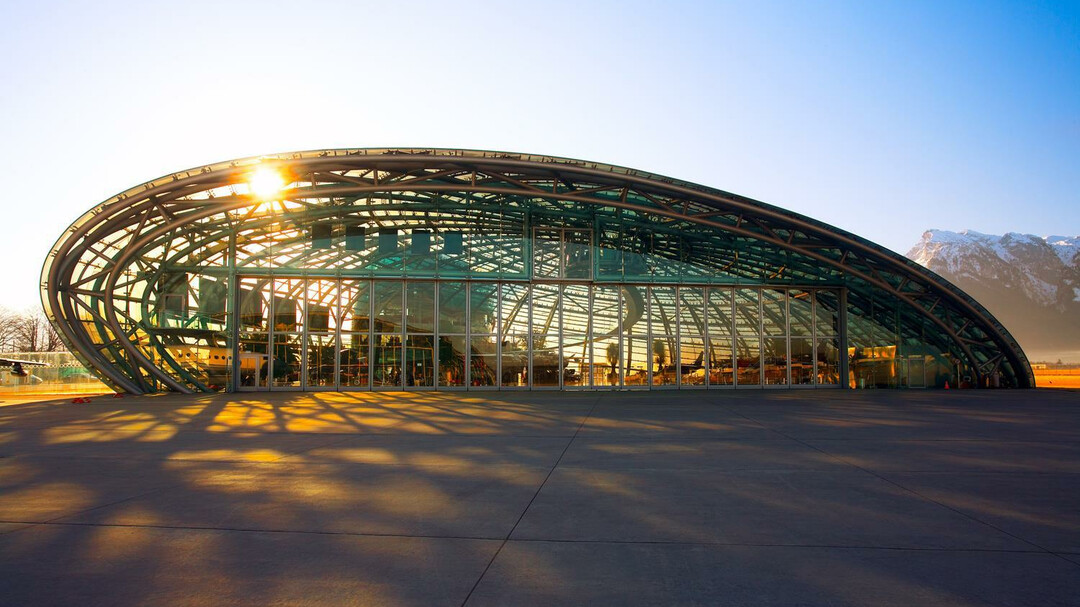
What disappointed us most was that Red Bull’s Hangar happened to be under renovation. If you’re an F1 fan too, you have to head to Hangar-7 by Salzburg airport. This architecturally unique, wing-shaped building is home to historic aircraft, helicopters and Formula One cars from the Red Bull collection. The futuristic glass-and-steel structure is a work of art in its own right.
What you’ll see here:
- A collection of historic aircraft, including World War II fighters
- Red Bull Racing Formula 1 cars
- Art installations and exhibitions
- The gourmet restaurant Ikarus with internationally acclaimed guest chefs
- The outdoor Flying Bulls Lounge overlooking the runway
Entry to Hangar-7 is free and it’s open daily from 9:00 to 22:00. You can get here on bus no. 10 or 27 from the main train station.

Toy Museum (Spielzeugmuseum)
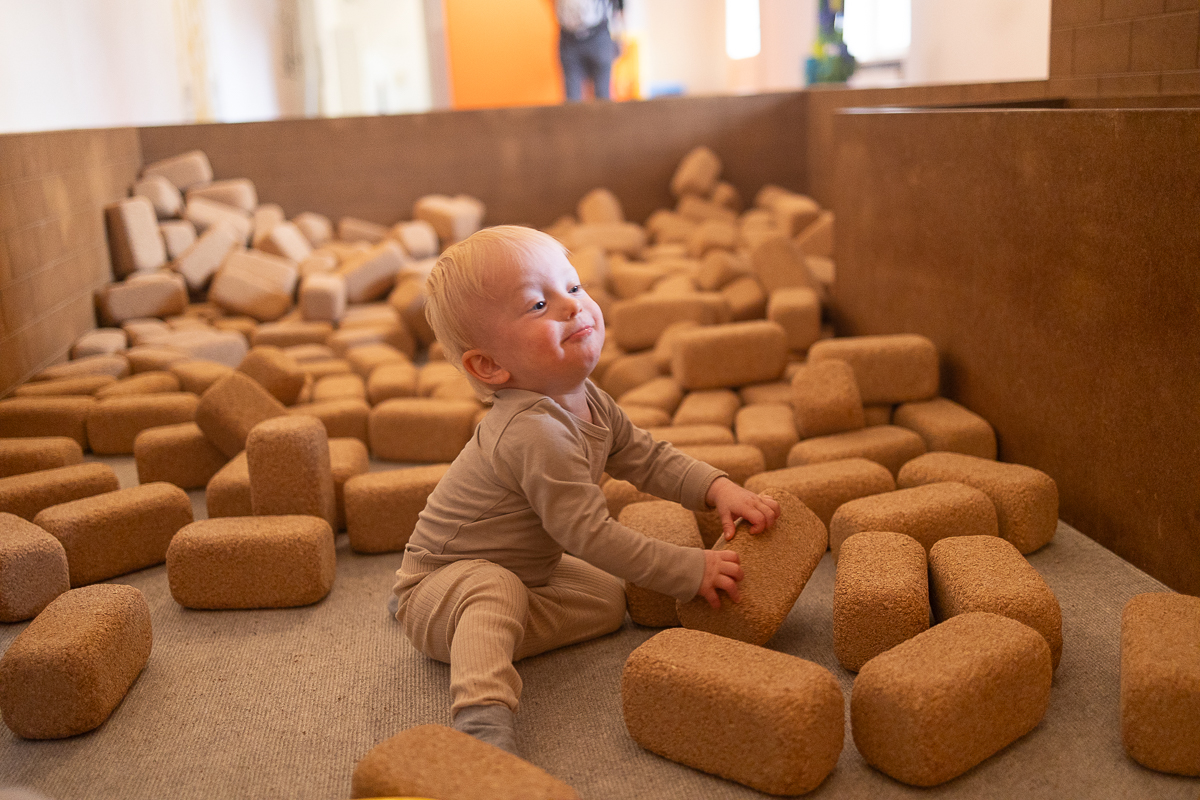
If you have little ones, the interactive toy museum will be an absolute hit. It’s suitable even for the tiniest visitors — there’s a whole floor dedicated to them. So as long as your kids can at least crawl, you can head here.
Practical info
- Suitable for children from 6 months
- Open from 9:00 to 17:00
- Family price (2 adults + 2 children) is €10
- Child ticket €2–2.50 depending on the child’s age
Salzburger Marionettentheater
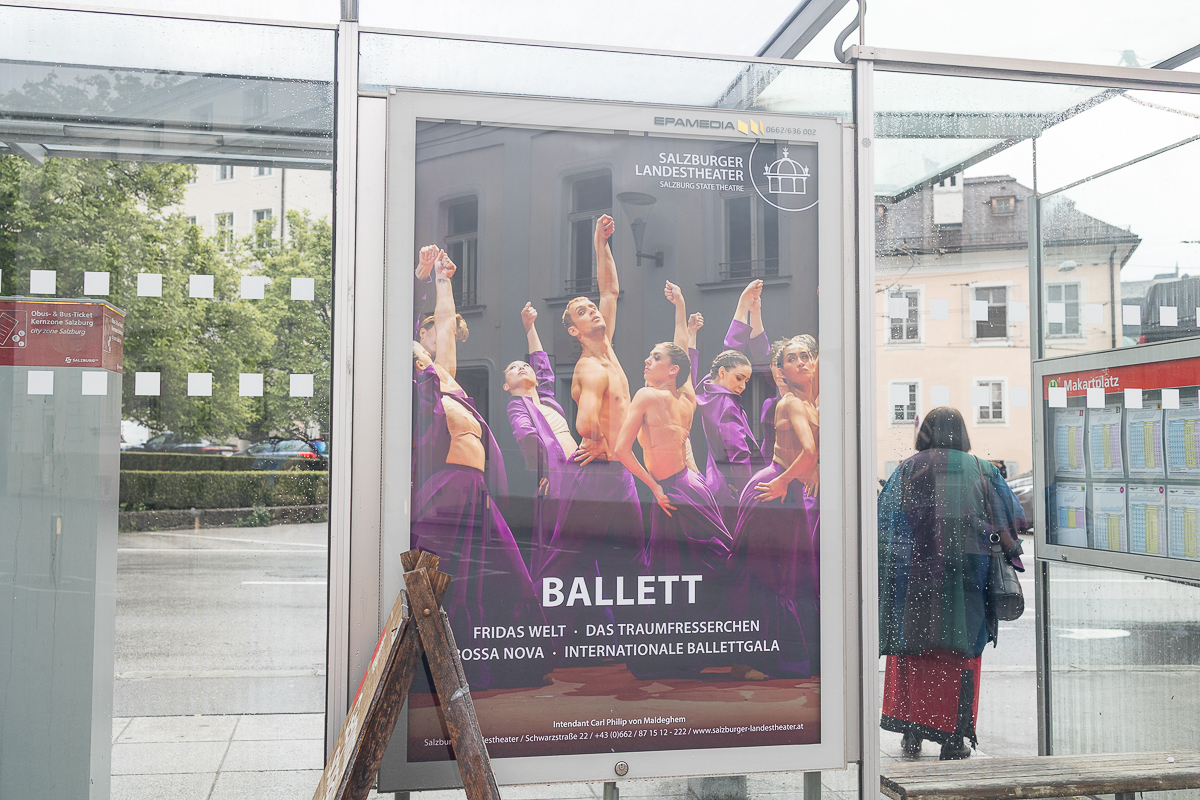
Salzburg’s marionette theatre has a long tradition dating back to 1913 and is known for its intricate puppets and performances. It stages classic operas, fairy tales and, of course, The Sound of Music. UNESCO has recognised this theatre as intangible cultural heritage.
Why visit:
- A one-of-a-kind show – the puppets are handled with such precision that you almost forget you’re watching marionettes
- Enjoyable even if you don’t understand German (performances often have English subtitles or are wordless)
- The chance to take a behind-the-scenes tour of how the puppets are made (on set days)
- Special children’s performances in the afternoons
Tickets range from €26 to €42 depending on the seating category. We recommend booking ahead, especially in high season.
A stroll along the Salzach River
The Salzach River, which flows through Salzburg, offers a lovely promenade on both banks. It’s the perfect spot for a leisurely walk, some people-watching or a picnic. You can cross from one bank to the other over several bridges, the most famous of which is the Makartsteg – the love bridge covered in padlocks.
Things to do by the river:
- Rent a boat and cruise along the river
- Visit one of the cafés with a waterside terrace
- Cycle the bike paths along the banks
- In summer, sunbathe on the grass in Lehener Park
You’ll also find playgrounds here, and in the summer months the occasional street performance.
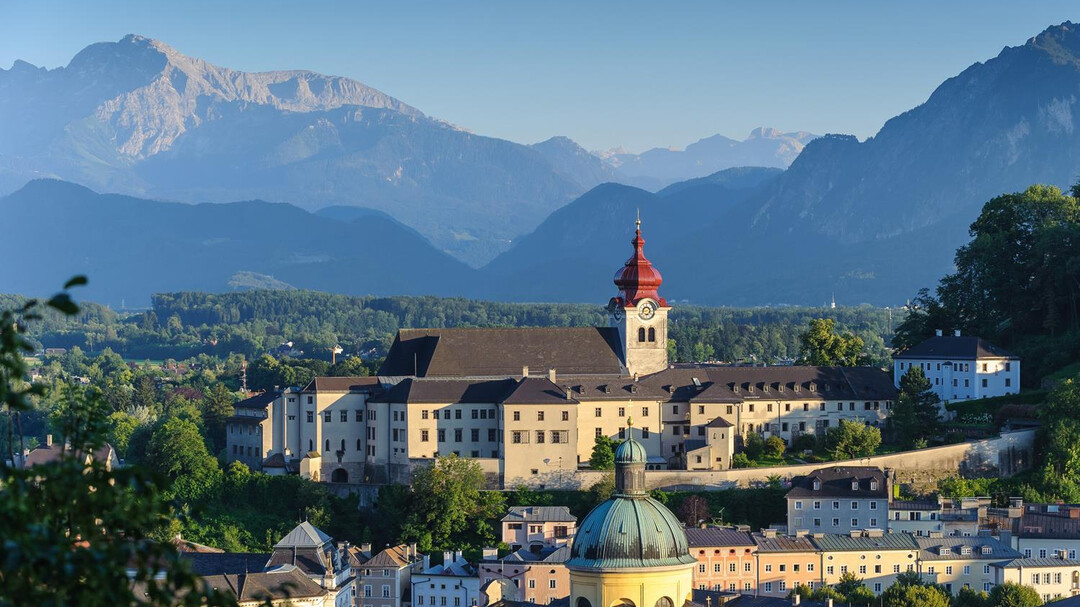
Stift Nonnberg (Nonnberg Abbey)
Now we’re getting to the lesser-known spots. This Benedictine convent is the oldest in the German-speaking world, founded around 714. This is exactly where director Robert Wise set the story of the novice Maria in The Sound of Music.
The abbey church is open to the public, and at 6:45 in the morning or in the early evening you can listen to the nuns singing Gregorian chant.
Fun fact: The Gothic church has beautiful frescoed vaults and a unique altar. The convent itself is not open to the public, but it’s still worth the climb up for the views and the atmosphere. The best route is up the Nonnbergstiege steps from Kaigasse.
St. Peter’s Catacombs (St. Peter Katakomben)
These catacombs carved into the Mönchsberg are often overlooked by tourists — which is a shame. They’re much older than the cemetery itself and probably served as a refuge for early Christians.
Practical info:
- Admission is €2
- Open daily from 10:00 to 17:00 (until 18:00 from May to September)
- The catacombs aren’t stroller-accessible, but they’re relatively short
Map of points of interest for your phone
Café Tomaselli
This is the oldest café in Austria, in operation since 1700. Mozart himself is said to have often sat here. The interior has kept its historic charm and you can really feel the atmosphere of times gone by. The café is famous for its traditional service – waiters in black suits and ladies in black dresses with white aprons offering cakes from rolling trolleys.
What to try:
- The Mozart almond coffee (Mozartkaffee) – it’s the house speciality
- Homemade strudel served with whipped cream
- Traditional Sachertorte
- Coffee served on a silver tray with its own little caramel and a glass of water
You’ll find the café at Alter Markt 9 and it’s open daily from 7:00 to 19:00.
Untersberg
For an escape from the city and impressive views, head up Untersberg (1,973 m) on the German border. A cable car runs up here and the views over Salzburg and the surrounding Alps are breathtaking.
Tips:
- The cable car runs every 30 minutes
- A return ticket costs about €25 for adults
- There’s a restaurant with a terrace at the top
- In winter there are cross-country ski trails and skiing options
- For fitter hikers there are several marked trails up or down
The cable car ride takes about 10 minutes, and the summit is often shrouded in cloud, so check the weather beforehand.
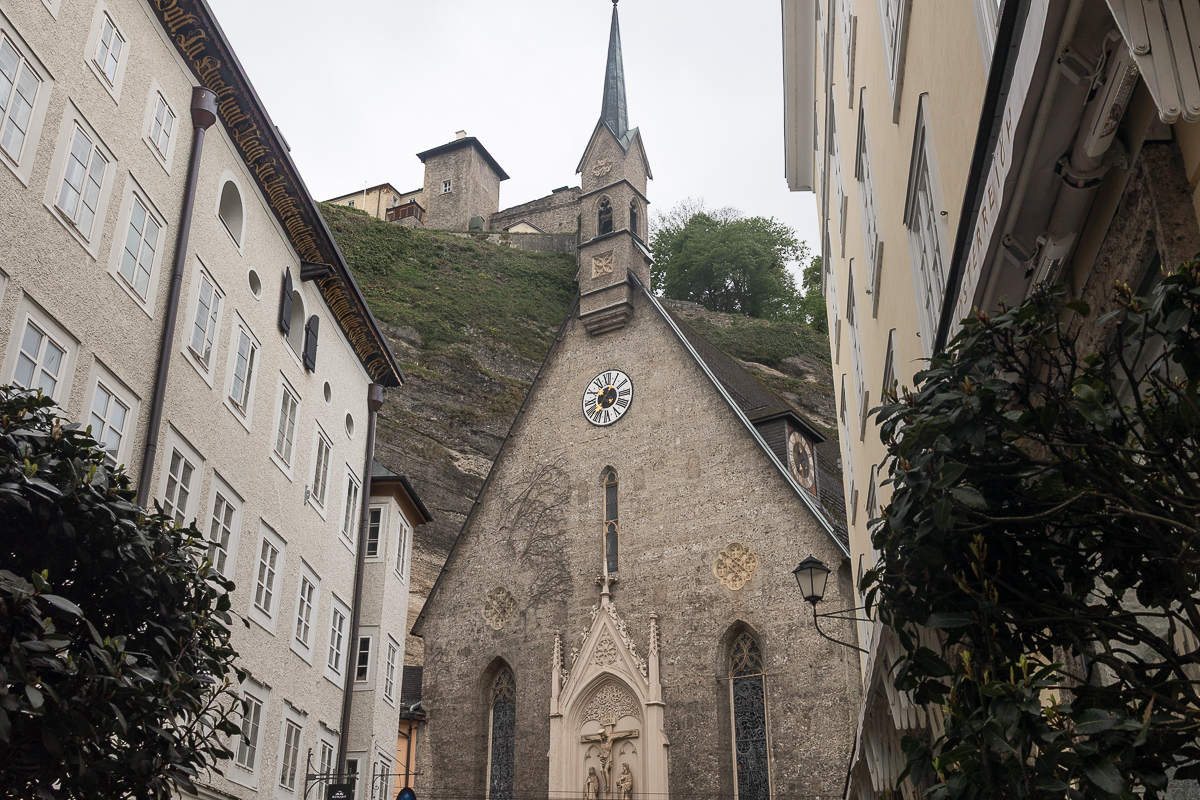
Franziskanerkirche
This Franciscan church is one of the oldest in Salzburg. It has a Romanesque core and a Gothic nave with striking rib vaulting. This sanctuary is less visited than the dominant cathedral, but it offers a peaceful spot for quiet reflection and admiring the historic architecture.
Good to know:
- The main altar designed by the famous Fischer von Erlach
- The baroque Capella Gabrieli
- Impressive organs and acoustics
- Evening concerts during the festival
The church is open daily from 6:30 to 19:00 and entry is free.
Salzburg is also the birthplace of one of the most famous films in history. Where exactly The Sound of Music was filmed, why the von Trapp movie villa doesn’t actually exist and how the family really escaped, I break all of it down in the article The Sound of Music: filming locations in Salzburg.
Day trip ideas around Salzburg
Salzburg is also a great base for exploring the surrounding area.
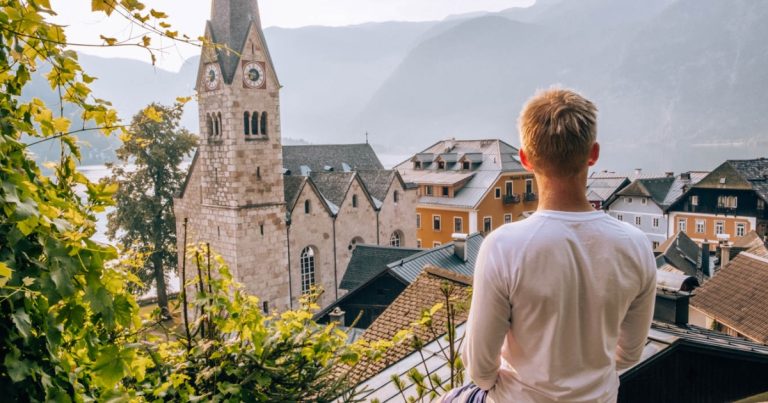
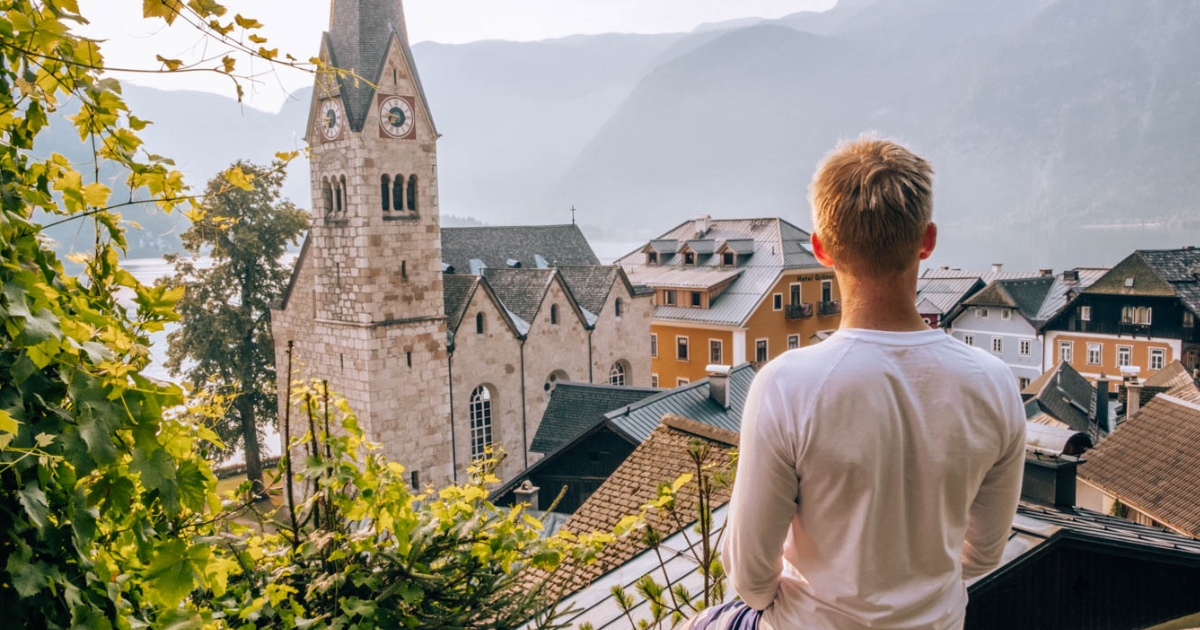
Hallstatt
Just an hour and a half from Salzburg lies the hugely popular little town of Hallstatt, considered one of the most photogenic places in Austria. The town sits on the shore of Lake Hallstätter See and is surrounded by high mountains.
Liechtensteinklamm
This impressive gorge is near St. Johann im Pongau, about an hour’s drive from Salzburg. Wooden walkways lead you along the wild Großarler Ache river, between sheer rock walls up to 300 metres high.
Practical info:
- Admission is around €10 for adults
- The gorge is open from April to October, weather permitting
- The walk takes about 1–1.5 hours
- You’ll need sturdy shoes and, in cooler weather, a jacket (it’s chilly in the gorge)
- Access is difficult with very young children and strollers
At the end of the trail a spectacular 50-metre waterfall awaits, giving the whole experience a dramatic finale.
Berchtesgaden and the Eagle’s Nest
Just across the German border, about 30 minutes’ drive from Salzburg, lies Berchtesgaden with its beautiful Königssee lake and Hitler’s former mountain retreat, the so-called Eagle’s Nest (Kehlsteinhaus). This is a common answer to the question of whether Salzburg is in Germany or Austria — the city is firmly in Austria, but the German border is only minutes away.
Highlights:
- Riding the special buses and the lift carved into the rock up to the Eagle’s Nest (open from May to October)
- A cruise across the emerald-green Königssee, complete with an echo bouncing off the cliffs
- St. Bartholomew’s Church, accessible only by boat
- The Salzbergwerk salt mine with a ride down miners’ slides and a trip across an underground lake
- The Obersalzberg Documentation Centre about the area’s Nazi past
This area combines history, natural beauty and active experiences, making it ideal for a day trip.
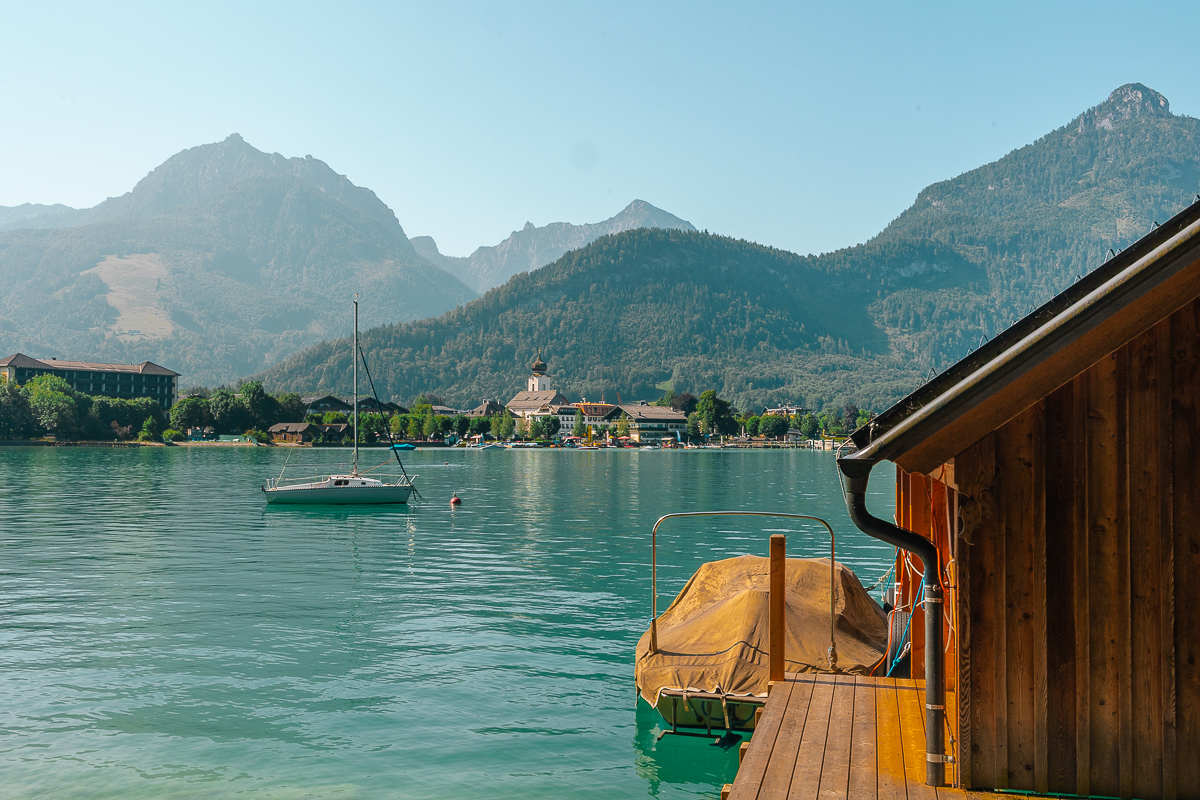
Lake Wolfgangsee and Schafberg
You’ll fall in love with Lake Wolfgangsee, about 30 minutes’ drive from Salzburg. It’s relatively quiet even in July, it doesn’t get unbearably hot, and you’ll find gorgeous picturesque villages and mountain scenery.
What to do here:
- Ride the historic cog railway up Schafberg mountain (1,783 m)
- Visit the pilgrimage church in St. Wolfgang with its Gothic altar
- Swim in the lake (in summer the water reaches up to 25 °C)
- Take a boat trip across the lake
- Explore the towns of St. Gilgen (birthplace of Mozart’s mother) and Strobl
What to eat in Salzburg
As vegetarians we couldn’t try all the traditional specialities, but we still tucked into plenty of treats.
Typical dishes
- Salzburger Nockerl – a fluffy sweet soufflé shaped like three snow-capped mountain peaks symbolising Mönchsberg, Kapuzinerberg and Rainberg. The best is at the Bärenwirt restaurant.
- Knödel – dumplings of various kinds, including vegetarian ones filled with spinach (Spinatknödel) or cheese. Perfect as a main course or a side.
- Kasnockén – a special type of small cheese dumpling, often served with caramelised onions. A vegetarian take on traditional Austrian fare.
- Strudel – apple (Apfelstrudel) or quark strudel with whipped cream.
- Pretzels (Brezeln) – soft, salty pretzels that make the perfect snack on the go. You’ll find the best ones at the Original 1. Salzburger Brez’lstand stand on Kapitelplatz.
For meat lovers, Salzburg is a paradise:
- Schnitzel – a thin breaded cutlet, traditionally made from veal
- Tafelspitz – boiled beef in a rich broth
- Backhendl – fried chicken, a speciality of the Bärenwirt restaurant
- Goulash – a soup/sauce with meat, served with dumplings
All over the city you’ll come across Mozart Balls (Mozartkugeln) – chocolate pralines with marzipan and nougat. The original Fürst Mozart Balls come in blue wrappers and are sold at the Café Konditorei Fürst on Brodgasse 13.
They were created in 1890 by confectioner Paul Fürst, and only this shop may use the name “Original Salzburger Mozartkugel”. The “tourist” versions in red wrappers are cheaper, but they can’t match the original when it comes to taste.
Other sweets worth trying:
- Sachertorte – a chocolate cake with apricot jam
- Kaiserschmarrn – a shredded sweet pancake with raisins and plum compote
- Mozart-Bonbons – Mozart-inspired sweets, often with a pistachio flavour
- Sheep’s-milk ice cream from Eisl Eisl – an unusual but very tasty speciality
What to drink
- Mozart Almond Milk – a speciality of Café Tomaselli, a Mozart-inspired almond coffee
- Bier – local beer, especially from the Stiegl brewery or from Augustiner Bräu (the oldest brewery in Austria)
- Sturm – partially fermented wine, sold seasonally in autumn
- Apfelmost – apple cider, often slightly alcoholic
- Almdudler – a non-alcoholic herbal drink, a local favourite
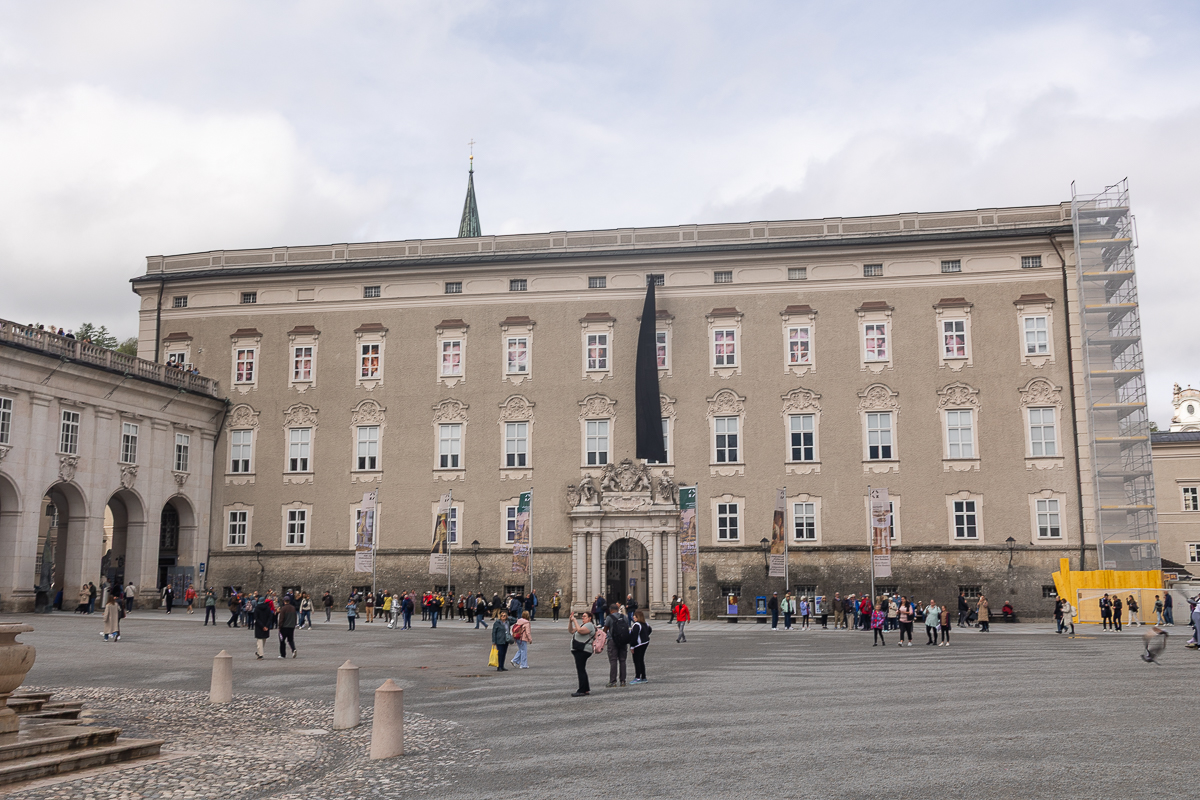
A tip for cheaper admission and skipping the queues
If you’re planning to visit several attractions, it’s worth buying the Salzburg Card, which includes entry to most museums and sights — including Hohensalzburg Fortress, Hellbrunn Palace and the zoo — as well as free public transport.
Salzburg Card benefits:
- The card is available for 24, 48 or 72 hours (€29, €38 or €44 for adults)
- Children aged 6 to 15 pay half price
- It covers over 30 tourist attractions
- You don’t have to queue for tickets
- Free public transport across the whole city
If you’re heading to Salzburg by car, with kids, with a dog, or planning trips into the mountains and surrounding gorges, don’t underestimate even the little details when it comes to preparation. Austria may be safe and easy to reach, but one slip on the wet steps at Hellbrunn, a small injury to your child or a problem with the dog, and the costs can quickly add up. Before every trip we make sure to sort out solid travel insurance that covers not only medical expenses but also liability, accidents and mountain rescue call-outs, which really comes in handy in an alpine region. It’s a small thing you can sort out online in minutes, and it saves you a lot of stress on the road.
Frequently asked questions
How many days should I spend in Salzburg?
3-4 days is ideal, or a week if you want to combine it with trips to the Austrian lakes.
What to do with kids in Salzburg?
With kids, head straight to the interactive Toy Museum, Hellbrunn Palace with its tricky water fountains, and finally let them run wild among the dinosaurs at Haus der Natur or among the planes and Formula 1 cars at the free Hangar-7.
💡 You might also like: Innsbruck · Road trip around Austria · What to see in Munich
Tips and Tricks for Your Vacation
Don’t Overpay for Flights
Search for flights on Kayak. It’s our favorite search engine because it scans the websites of all airlines and always finds the cheapest connection.
Book Your Accommodation Smartly
The best experiences we’ve had when looking for accommodation (from Alaska to Morocco) are with Booking.com, where hotels, apartments, and entire houses are usually the cheapest and most widely available.
 🚗 Car rental on the roadVerified rental cars in Austria
Search with the DiscoverCars comparison engine — it compares prices from dozens of local and international rental companies, and most bookings come with free cancellation.
Compare car prices in Austria →Don’t Forget Travel Insurance
Good travel insurance will protect you against illness, accidents, theft, or flight cancellations. We’ve had a few hospital visits abroad, so we know how important it is to have proper insurance arranged.
Where we insure ourselves: SafetyWing (simple monthly subscription) and TrueTraveller (for extra-long trips).
Find the Best Experiences
Get Your Guide is a huge online marketplace where you can book guided walks, trips, skip-the-line tickets, tours, and much more. We always find some extra fun there!