

You’re standing in the middle of nowhere. Nothing but boulders, sand, and bizarre trees that look like they belong on another planet. The silence is so absolute you can hear your own heartbeat. Then you look up — and above you stretches a starry sky so immense it feels like the universe has reached down to touch the earth. That’s what an evening at Joshua Tree National Park looks like.
I first visited Joshua Tree over 15 years ago with my dad, and with every road trip since, I’ve been itching to go back. In photos, it looks like a desert full of rocks. In reality, it’s one of the most magical places we’ve ever visited in the USA. And trust me, we’ve been to quite a few. 😅
Joshua Tree is the California nobody talks about. No surf beaches, no Hollywood. Just the raw beauty of the desert, bizarre rock formations, and those iconic trees that gave the park its name. And yet it’s only about two hours from Los Angeles or Palm Springs — perfect for a day trip or a weekend escape from civilisation.
In this article, you’ll find 15 things to see and do in Joshua Tree National Park — from the most stunning viewpoints and hiking trails to stargazing, practical tips on where to stay, how much it costs, and the best time to visit. Let’s dive in.
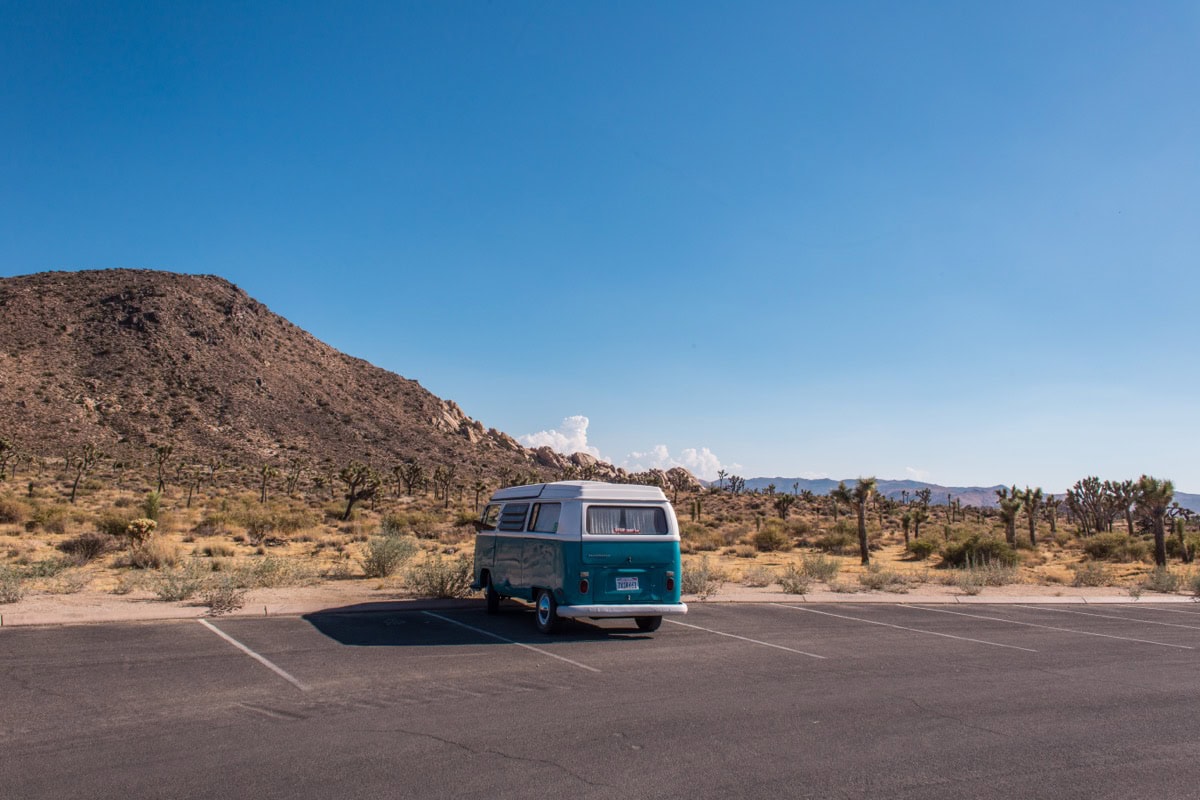
TL;DR
- Joshua Tree National Park sits at the meeting point of two deserts — Mojave and Colorado — and each looks completely different. Mojave is home to the iconic Joshua trees, while Colorado is lower and filled with cacti.
- The best time to visit is from October to May — in summer, temperatures exceed 40 °C and the park becomes genuinely inhospitable.
- From LA, it’s about a 2.5-hour drive, and from Palm Springs just 45 minutes. Perfect for a day trip or a weekend getaway.
- Entry fee is $30 per vehicle (about €28) for 7 days, or free with an annual America the Beautiful Pass ($80/€75).
- Skull Rock, Keys View, Cholla Cactus Garden, and Hidden Valley are among the top attractions you can cover in a single day.
- Joshua Tree is one of the best stargazing spots in all of California — the park is designated an International Dark Sky Park.
- Accommodation is relatively affordable — campsites in the park start from $15/night, Airbnbs in surrounding towns from $80/night.
- If you love US national parks, Joshua Tree should be high on your list.
- Bring water! There are no drinking water sources in the park. Plan on at least 4 litres per person per day.
The full destination guide: California — guide and what to see
When to visit Joshua Tree and how to get there
Joshua Tree National Park is open year-round, but not every season is ideal for a visit. In fact — you really don’t want to come in summer. I know that sounds like a cliché, but 45 °C in the shade (and shade is nearly impossible to find here) is a completely different ball game compared to a pleasant 25 °C in autumn.
Best time to visit
October to May — that’s the sweet spot. The most beautiful time is spring (March–April), when the Joshua trees bloom and the desert comes alive with wildflowers. Daytime temperatures hover around 20–25 °C, dropping to 5–10 °C at night. Autumn (October–November) is similarly pleasant with fewer crowds.
December to February — surprisingly gorgeous, though you’ll want to prepare for colder nights (around 0 °C). During the day, it’s sunny and around 15 °C, which is actually ideal for hiking. And the tourist numbers are at their lowest.
June to September — unless you enjoy saunas, stay away. Temperatures regularly exceed 40 °C and most trails are in full sun. Rangers recommend going outside only in the early morning or late afternoon. We wouldn’t visit in summer. Just no. 😅
How to get to Joshua Tree
From Los Angeles — roughly 2.5 hours by car on the I-10 East. If you’re coming from LA, I’d recommend entering through the West Entrance near the town of Joshua Tree Village, so you drive through the most interesting part of the park.
From Palm Springs — just 45 minutes! Palm Springs makes a great base if you want to combine the desert with some poolside relaxation. You’ll reach the park via the North Entrance near Twentynine Palms.
From San Diego — about 3 hours via the I-15 North and CA-62.
From the UK, you’ll want to fly into Los Angeles (LAX) or Palm Springs (PSP). Airlines like British Airways, Virgin Atlantic, and Norwegian offer direct flights from London to LAX. From there, you’ll need to hire a car — there’s no public transport in the park and the distances between attractions are huge (the park covers over 3,200 km²). We’ve had consistently good experiences with DiscoverCars, which we use all over the world — prices in California start from about $35/day (around €33) for a compact car.
💡 TIP: Fill up your tank BEFORE entering the park. There are no petrol stations inside. The last chance is in the towns of Joshua Tree Village, Twentynine Palms, or Cottonwood Spring.
Where to stay and how much Joshua Tree costs
The area around Joshua Tree National Park has a surprisingly wide range of accommodation — from primitive desert campsites to stylish Airbnbs with hot tubs and views of the stars. It all depends on whether you want the full desert immersion experience, or you’d rather return to a bed with air conditioning after a day of hiking (no judgement here 😁).
Camping in the park
The park has 9 campgrounds with roughly 500 sites in total. Most operate on a first-come, first-served basis, but Black Rock and Indian Cove can be reserved in advance through Recreation.gov.
- Cost: $15–$25/night per site (about €14–€23)
- Jumbo Rocks — our favourite. Massive boulders right around your tent, absolute silence, stunning stars. No water or showers, but the atmosphere is priceless.
- Black Rock — more comfortable, with drinking water and flush toilets. Ideal if you’re new to camping.
- Indian Cove — beautiful setting among the rocks, close to the North Entrance.
⚠️ Important: During peak season (October–May, especially weekends), campsites fill up early in the morning. Arrive on Friday morning, or even Thursday. On bank holiday weekends, you’ve got no chance without a reservation.
Accommodation outside the park
The towns of Joshua Tree Village, Twentynine Palms, and Yucca Valley offer hundreds of unique Airbnbs — this area has become a hotspot for designer desert cabins. Many feature a hot tub under the stars, which is an absolutely divine experience after a full day of scrambling over rocks.
- Airbnb/VRBO: from $80/night (about €75) for a simple studio; stylish homes with pools $150–300/night (€140–€280)
- Hotels: Holiday Inn Express in Twentynine Palms from $100/night (€93), Fairfield Inn from $120/night (€112)
- Palm Springs (45 min from the park): more upscale hotels from $150/night, but factor in the commute
How much does a trip to Joshua Tree cost
To give you an idea — here’s what a weekend trip for two from LA looks like:
- Entry fee: $30 per vehicle for 7 days (€28) or free with an America the Beautiful Pass ($80/€75 per year — well worth it if you’re visiting 3+ parks)
- Fuel (LA return + driving in the park): around $40–60 (€37–€56)
- Accommodation (2 nights): campsite $30–50 (€28–€47) / Airbnb $160–400 (€150–€373)
- Food (2 days): $50–100 per person (€47–€93)
- Total for two: from about €160 (camping, self-catering) to €600 (Airbnb, restaurants)
Joshua Tree is simply one of the most affordable national parks in California. Especially if you camp and cook for yourself.
Joshua Tree National Park: 15 things to see and do
Now we’re getting to the good stuff — specific tips on what to see and do in Joshua Tree. The park is surprisingly diverse and sprawling, so even if you spent an entire week here, you’d still be discovering new corners. I’ve arranged these tips so you can drive them in order from the West Entrance heading south — but of course, adjust the route to your own pace.
1. Hidden Valley — a rock amphitheatre straight out of a western
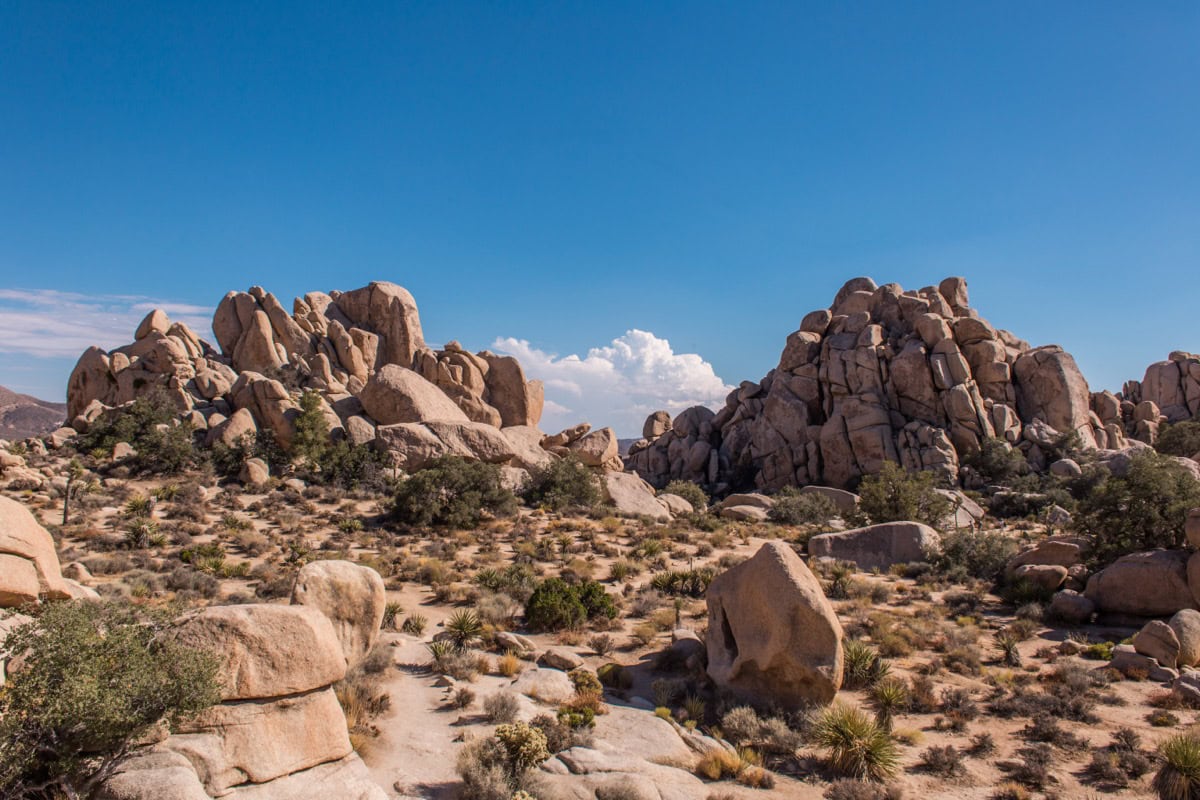
Hidden Valley is where you truly understand why Joshua Tree became a mecca for rock climbers. It’s a 1.6 km loop trail (rated easy) that winds through an enclosed rock valley surrounded by enormous granite boulders. It looks like a natural amphitheatre — and legend has it that cowboys used to hide stolen cattle here, since the valley has only one narrow entrance.
The trail is flat and comfortable — even small children can manage it. But that doesn’t mean it’s boring — far from it. At every turn, you’ll be surprised by a new rock formation, Joshua trees growing out of cracks in the stone, and views that’ll stop you in your tracks. Allow about 45–60 minutes if you plan to stop for photos (and you will, trust me).
💡 TIP: Come either early morning or late afternoon. Partly for the photography light (golden hour here is absolutely magical), but mainly because the car park is small and gets packed during the day. On weekends, it’s already full by 10 a.m.
2. Skull Rock — the most photogenic rock in the park
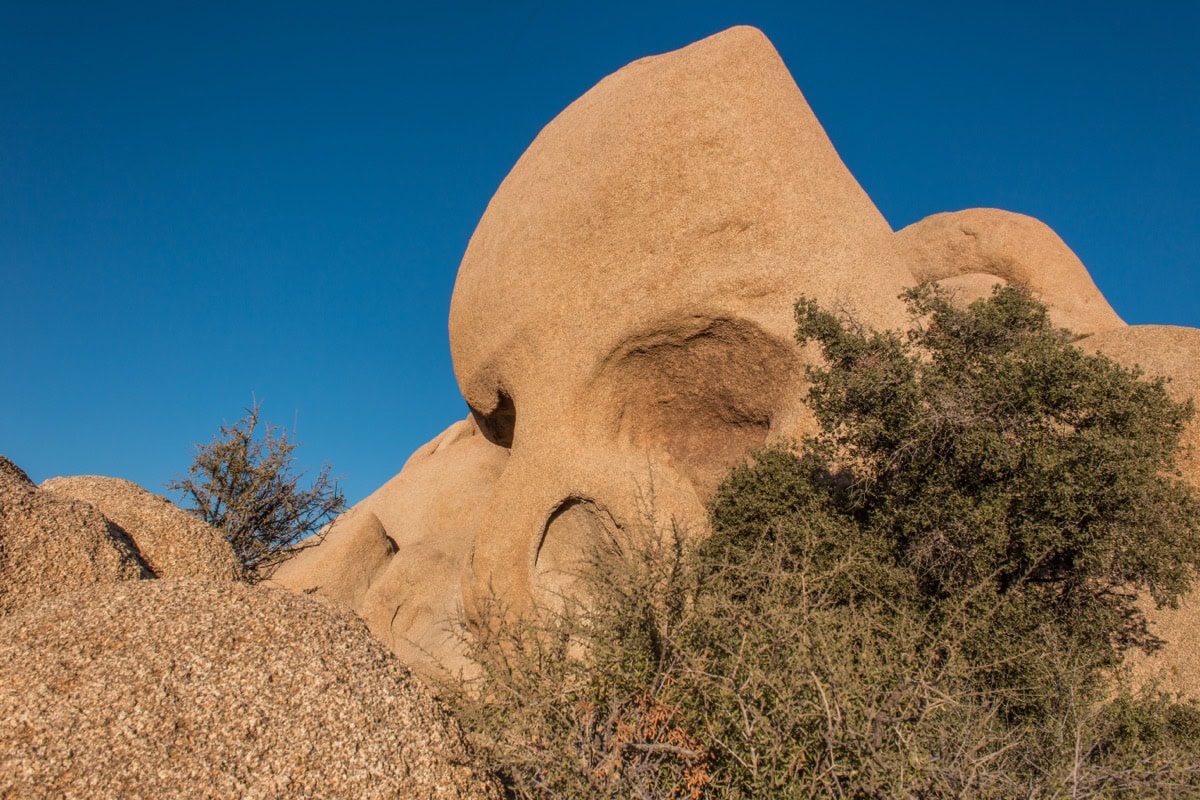
Skull Rock is exactly what the name suggests — a massive boulder that looks like a human skull. It’s one of the most iconic attractions in Joshua Tree and you’ve probably seen it on every other Instagram post from the park. And you know what? It’s even better in person.
The rock sits right along the main road (Park Boulevard), so you don’t even need to walk far — just park up and it’s right there. However, there’s also a 2.4 km Discovery Trail that passes Skull Rock and continues among other fascinating rock formations. I’d definitely recommend it, because the area around the skull itself can get crowded, but walk just 200 metres and you’ll have peace and quiet.
For the best photos, get a slightly elevated angle — walk around the back of the rock, climb up a bit, and you’ll get a perfect shot of the “eye sockets.” If you don’t mind a little scrambling, that is. 😉
3. Keys View — panoramic views over Coachella Valley
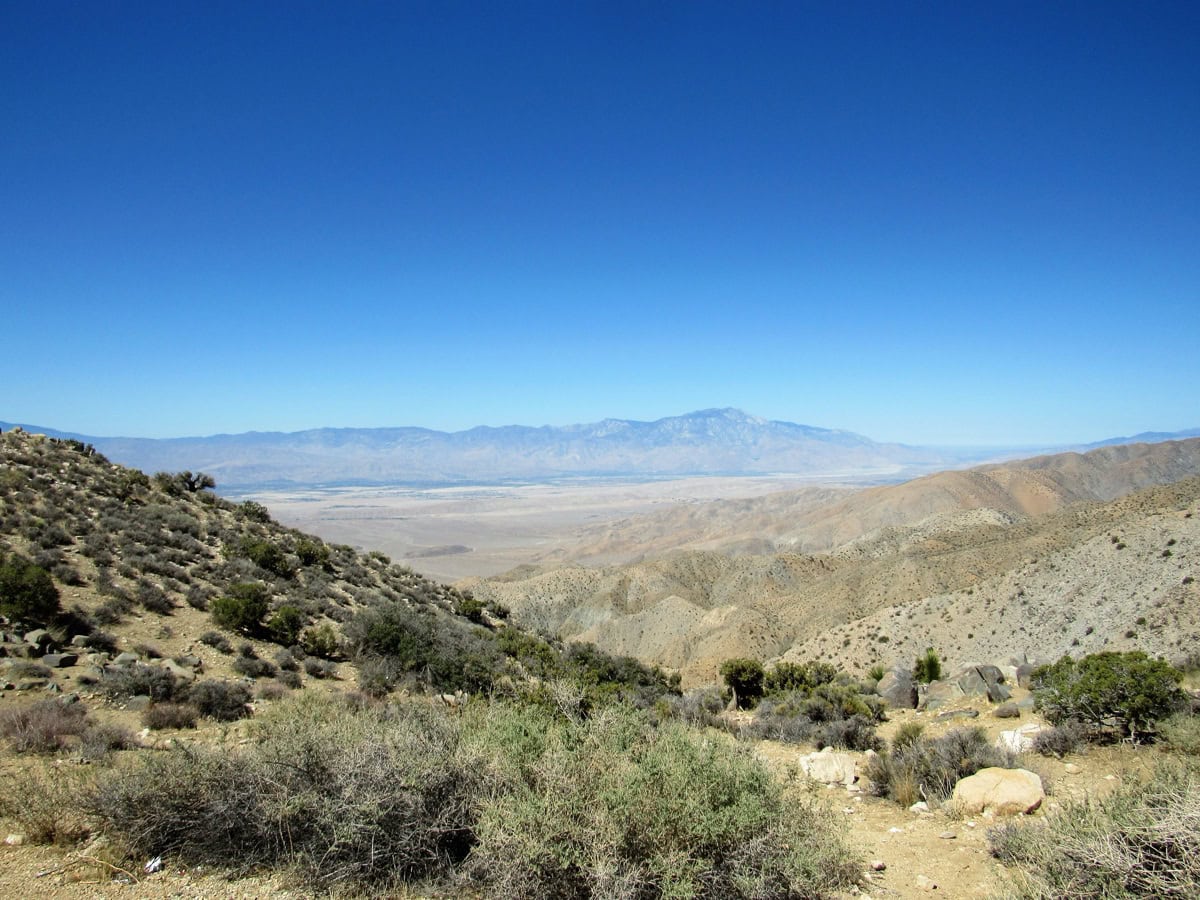
If you only have time for one viewpoint in Joshua Tree, make it Keys View. You’ll stand on the edge of a ridge at 1,581 metres and below you stretches the entire Coachella Valley — from Palm Springs across the Salton Sea all the way to the Mexican mountains in the distance. On a clear day, you can even see Signal Mountain in Mexico, over 150 km away.
You reach the viewpoint by car via Keys View Road — it’s a turnoff from Park Boulevard heading south, about a 30-minute drive. The car park is right at the top and the viewpoint is just a few dozen metres along a paved path (wheelchair accessible). No hiking required.
It’s most beautiful at sunset, when the entire valley turns shades of orange and pink. But be warned — lots of people head here for sunset, so arrive at least 30 minutes early to secure a parking spot. We got there an hour before sunset and just managed to find a space.
From Keys View, you can also clearly see the San Andreas Fault — the famous tectonic fault line that runs through all of California. It looks like an enormous scar in the landscape. Fascinating and a little terrifying at the same time.
4. Cholla Cactus Garden — cacti that look cuddly (but don’t touch!)
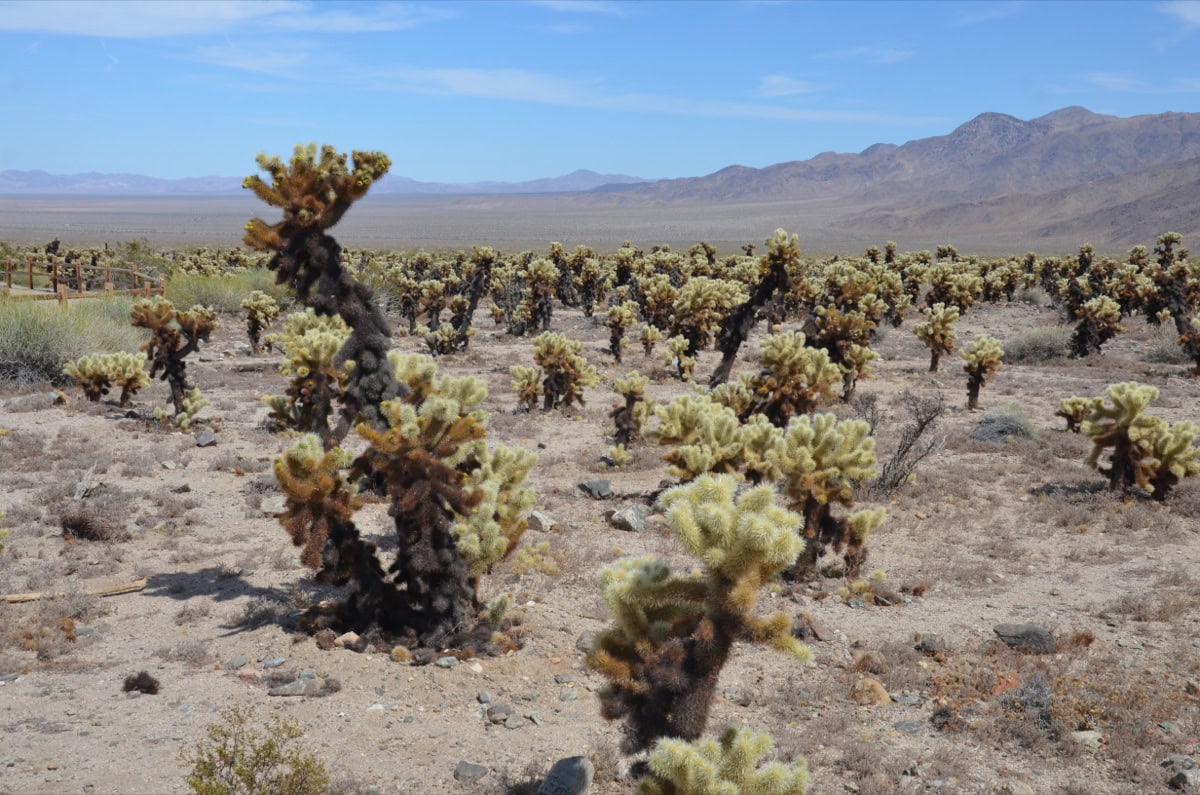
This place is utterly surreal. Imagine a garden filled with thousands of cacti that look like cuddly teddy bears covered in golden fuzz. In the late afternoon light, they literally glow. It’s one of the most photogenic spots in the entire park.
Cholla Cactus Garden lies in the southern part of the park, in the Colorado Desert (the lower, warmer section), and you reach it via Pinto Basin Road. A short loop trail (about 400 metres) leads right among the cacti along a marked path. And here comes the important warning:
⚠️ DO NOT TOUCH THE CACTI. Seriously. Teddy bear cholla (Cylindropuntia bigelovii) look adorable, but their spines literally latch onto anything that brushes past them. All it takes is a light graze with your sleeve and they’re embedded in your skin. They’re so sneaky they’re called “jumping cactus” — people say they jump at you. They don’t actually jump, but the spines do break off and attach incredibly easily. Wear closed shoes and keep children (and dogs, though dogs aren’t actually allowed on trails in the park) close by.
The best time to visit is late afternoon, when the setting sun backlights the cactus spines and the whole garden looks like it’s burning with golden fire. It’s one of those moments where you put your phone away and just take it all in.
5. Barker Dam — a desert oasis with water (if you’re lucky)
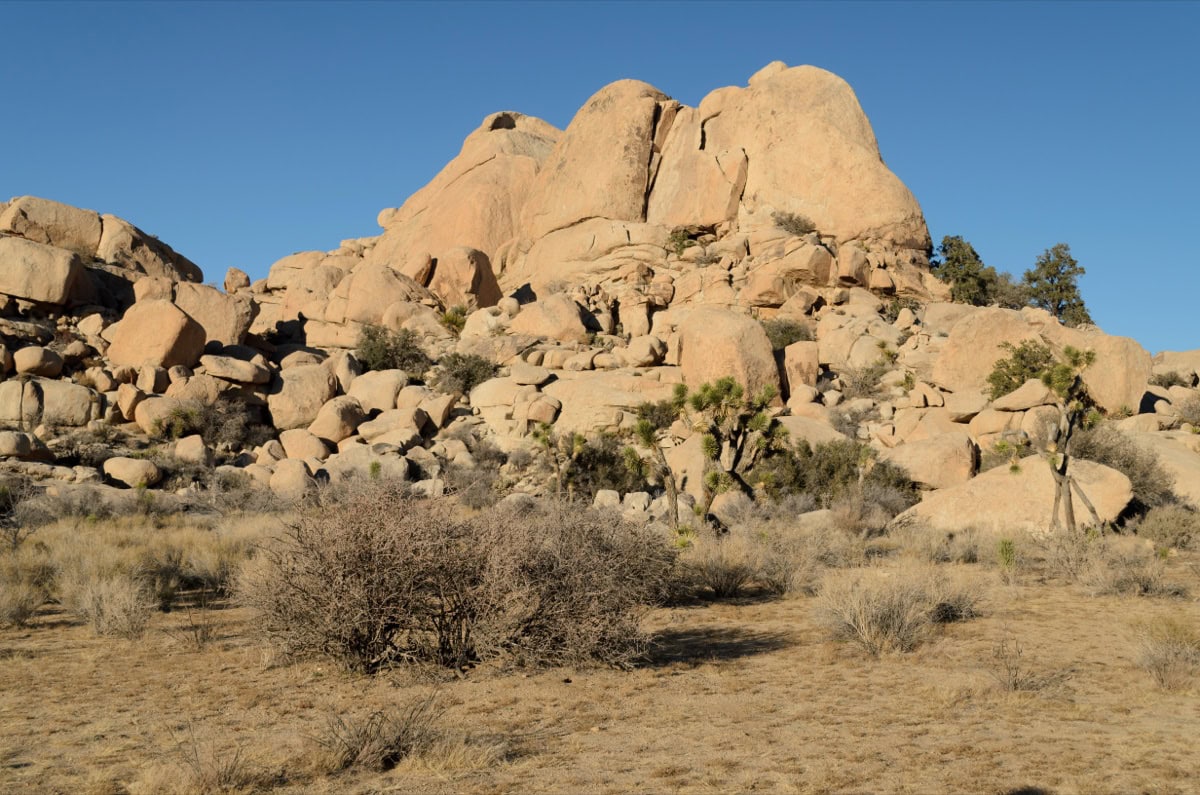
Barker Dam is a 2.2 km loop trail (easy) that takes you to a small dam built by ranchers at the turn of the 19th and 20th centuries. When it rains (which is far from guaranteed in the desert), a small lake forms here that attracts wildlife — bighorn sheep, rabbits, birds, and occasionally coyotes.
Even when the reservoir is dry (which happens during the drier months), the trail itself is well worth it. It winds through beautiful rock formations and Joshua trees, and a short detour from the main trail leads to petroglyphs — ancient rock art by the area’s indigenous peoples (Cahuilla and Serrano). They’re hundreds of years old, and it’s humbling to realise that people walked through this very place long before us.
💡 TIP: The trail starts at the Barker Dam car park, which it shares with Hidden Valley. If you arrive early in the morning, you can easily do both trails back to back — roughly 2–3 hours of relaxed walking in total.
6. Arch Rock — a natural stone arch
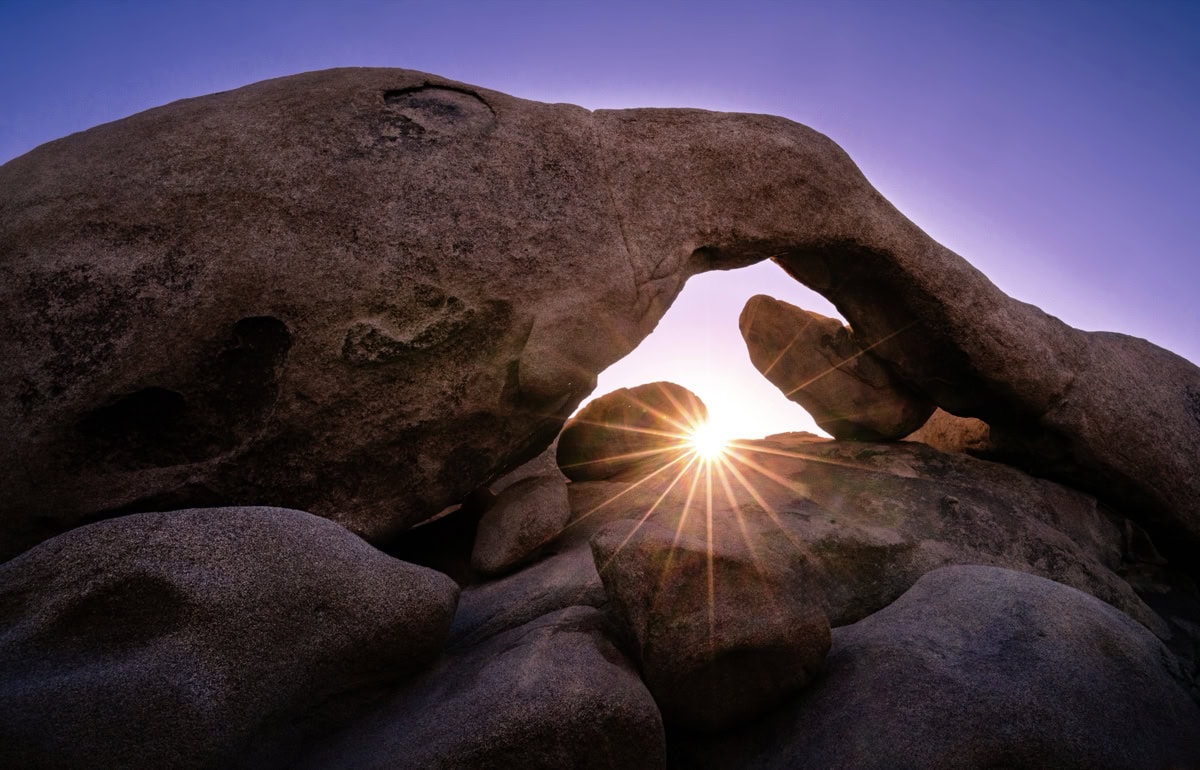
If you love natural stone arches (and who doesn’t?), Arch Rock is a must-see. It’s not as grand as the famous arches in Utah, but it has its own charm — and the trail leading to it from White Tank Campground is lovely (about 1.2 km return).
The rock arch is quite photogenic, especially in the golden afternoon light. Lots of people come here for sunset too. The trail is easy and well-marked, though the final stretch involves some rock hopping, so I’d recommend sturdy hiking boots rather than flip-flops.
Around Arch Rock, there are also plenty of boulders perfect for bouldering — you’ll see climbers everywhere. Even if you don’t climb yourself, it’s great fun to sit down for a bit and watch people scrambling up vertical walls. Better entertainment than the telly. 😁
7. Ryan Mountain — the best view in the park (for those up for a climb)
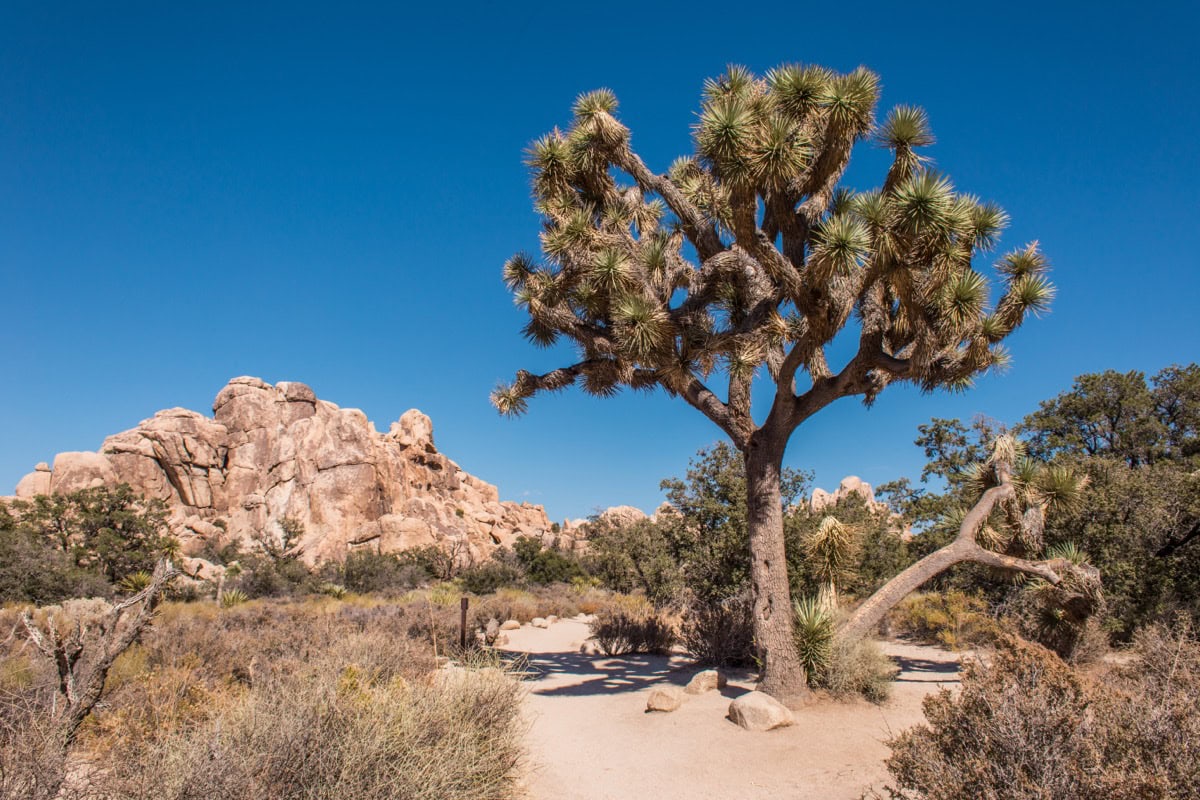
If you want the best 360° panorama of the entire Joshua Tree National Park, you need to tackle Ryan Mountain. It’s a bit more challenging though — the trail is 4.8 km return with 305 metres of elevation gain. Nothing extreme, but the desert sun makes it harder than the numbers suggest.
From the summit (1,768 m), you can see virtually the entire park — Lost Horse Valley, Queen Valley, Pleasant Valley, and on a clear day even San Gorgonio Mountain (the highest peak in Southern California). It’s simply jaw-dropping.
When to go: Definitely early morning (ideally before 8:00) or late afternoon. There’s virtually no shade on the trail and the midday sun can make it genuinely dangerous. Bring plenty of water (at least 2 litres per person), a hat, and sunscreen.
The ascent takes around 1.5–2 hours including photo stops. The trail is exposed to the sun the entire way, but the surface is well-maintained and the markings are clear. There’s plenty of space at the summit to rest and soak in the views.
8. Stargazing — a night sky like a planetarium
Joshua Tree has been certified as an International Dark Sky Park since 2017, which means light pollution is minimal and the night sky is absolutely spectacular. The Milky Way isn’t just a faint smudge here — it’s a wide, brilliant band of stars stretching from horizon to horizon.
If you’re camping in the park, all you need to do is step outside your tent and look up. If you’re staying elsewhere, the park is open 24 hours a day and you can return in the evening specifically for stargazing. The best spots are:
- Cottonwood Spring — the southernmost part of the park, furthest from any light sources
- Keys View — great views plus dark skies
- Jumbo Rocks — if you’re camping here, it’s right outside your tent
When: The best conditions are around the new moon, when there’s no moonlight in the sky. Apps like Star Walk or Sky Guide will help you identify constellations, planets, and satellites. Rangers also run Night Sky Programs — free sessions with telescopes, usually on Saturday evenings (check nps.gov/jotr for details).
For us, this was one of the highlights of the entire trip. Lying on a blanket in the middle of the desert, the Milky Way overhead and absolute silence all around. No hotel can replicate moments like these. ☺️
9. Rock climbing and bouldering — a climber’s mecca
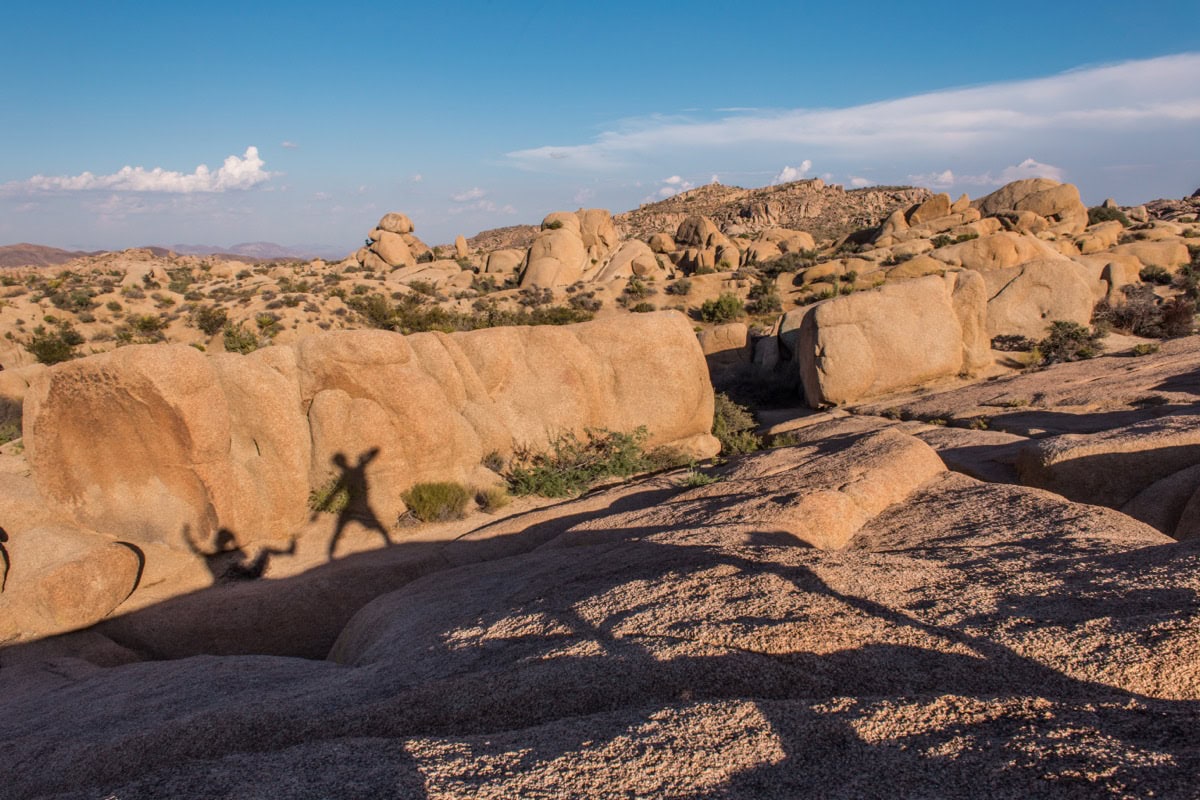
Joshua Tree is one of the most famous climbing destinations in the USA. The park boasts over 8,000 climbing routes across more than 400 rock formations — from simple boulders to challenging multi-pitch climbs. The granite here has an amazing texture with natural holds and cracks.
Even if you’ve never climbed before, you can give it a go. Several local companies offer half-day and full-day climbing courses for complete beginners — they provide all the equipment and teach you the basics. It’s a fantastic experience that gives you an entirely new appreciation for the rocks you’d otherwise just walk past.
Popular bouldering areas for beginners include Quail Springs and the Hidden Valley Campground Area. If you just want to watch climbers in action, stop by Intersection Rock right at the junction near Hidden Valley — there’s almost always someone on the wall.

10. Cap Rock — an easy trail with iconic views
Cap Rock is a short 0.6 km loop trail around an interesting rock formation that looks like someone placed a giant beret on top of a stone pillar. It’s a quick stop that won’t take more than 20 minutes, but it’s photogenic and fully accessible.
The main reason to stop here, though, is the views of the surrounding landscape full of Joshua trees. The Cap Rock car park also serves as a good starting point for longer trails towards Lost Horse Mine (see tip #12). And if you’re a music fan — there’s a memorial to Gram Parsons at Cap Rock, a member of The Byrds and pioneer of country-rock, who died here in 1973.
11. 49 Palms Oasis — a hidden desert oasis
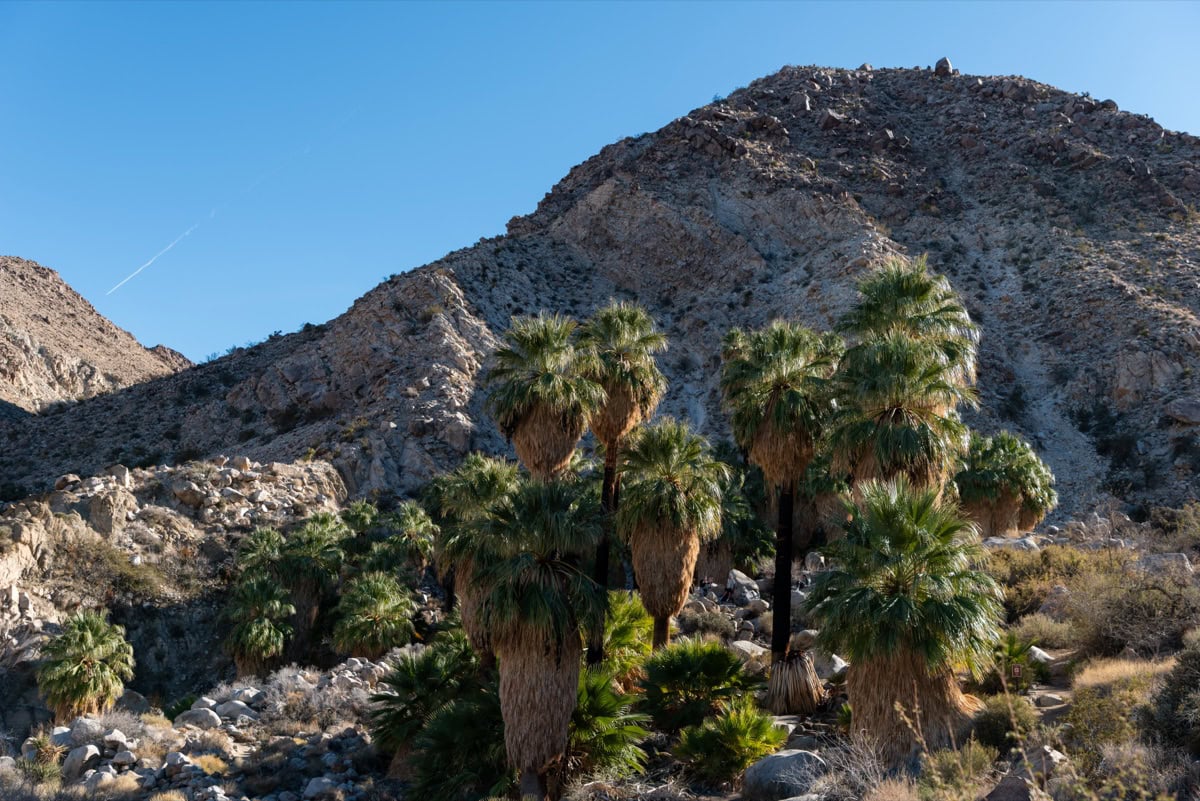
This is one of those trails mainly known to locals. 49 Palms Oasis Trail is 4.8 km return with about 200 metres of elevation gain, leading to a hidden oasis full of California fan palms. After walking through the desert for an hour, you’ll suddenly spot a green dot in the middle of the parched landscape — and when you get closer, you find yourself in the shade of tall palms beside a small spring.
The trail starts outside the main part of the park — the trailhead is off Canyon Road near Twentynine Palms. The path follows a ridge with views over Coachella Valley (stunning!) and then descends into a canyon towards the oasis. The return climb out of the oasis is more demanding since you’re heading uphill — allow 2–3 hours for the round trip.
⚠️ Warning: There is no shade on the trail (except at the oasis itself). In warmer months, start early in the morning. Water, water, water.
12. Lost Horse Mine — a journey into the gold rush
If you’re into history, Lost Horse Mine is a fascinating stop. It’s the remains of a gold mine from 1890, reached via a 6.4 km loop trail (moderate). The mine was one of the most productive in the area — gold and silver worth over $5 million was extracted here (much more in today’s money).
On site, you’ll see the remnants of mining equipment including a 10-stamp mill (an ore crusher), shafts, and other structures. Everything is fenced off for safety (the shafts are deep!), but it’s still impressive. The trail itself passes through beautiful landscape with views over Queen Valley.
💡 TIP: This trail is less visited than Hidden Valley or Ryan Mountain, so if you’re looking for some solitude, it’s a great choice. Best in the late afternoon, when the sun bathes the mine ruins in warm light.
13. Cottonwood Spring — gateway to the Colorado Desert
Most visitors focus on the northern part of the park (Mojave Desert), but the southern section — the Colorado Desert — is an entirely different world and well worth a visit. Cottonwood Spring is an oasis near the park’s south entrance, where massive cottonwood trees and palms grow around a year-round spring.
Several beautiful trails start from here, including the Mastodon Peak Trail (4.8 km, moderate) with views of the Eagle Mountains and Salton Sea, and the Lost Palms Oasis Trail (11.6 km, moderate-difficult), which takes you to the largest natural palm oasis in the park. You’ll also find the remains of another gold mine — Mastodon Mine.
What you’ll notice: The landscape here looks completely different from the north. No Joshua trees (they only grow in the Mojave above about 900 m), but plenty of ocotillo, cholla cacti, and creosote bushes. It’s also warmer and drier here, making it a pleasant spot in winter when the cold wind blows up north.
14. Geology Tour Road — an off-road adventure
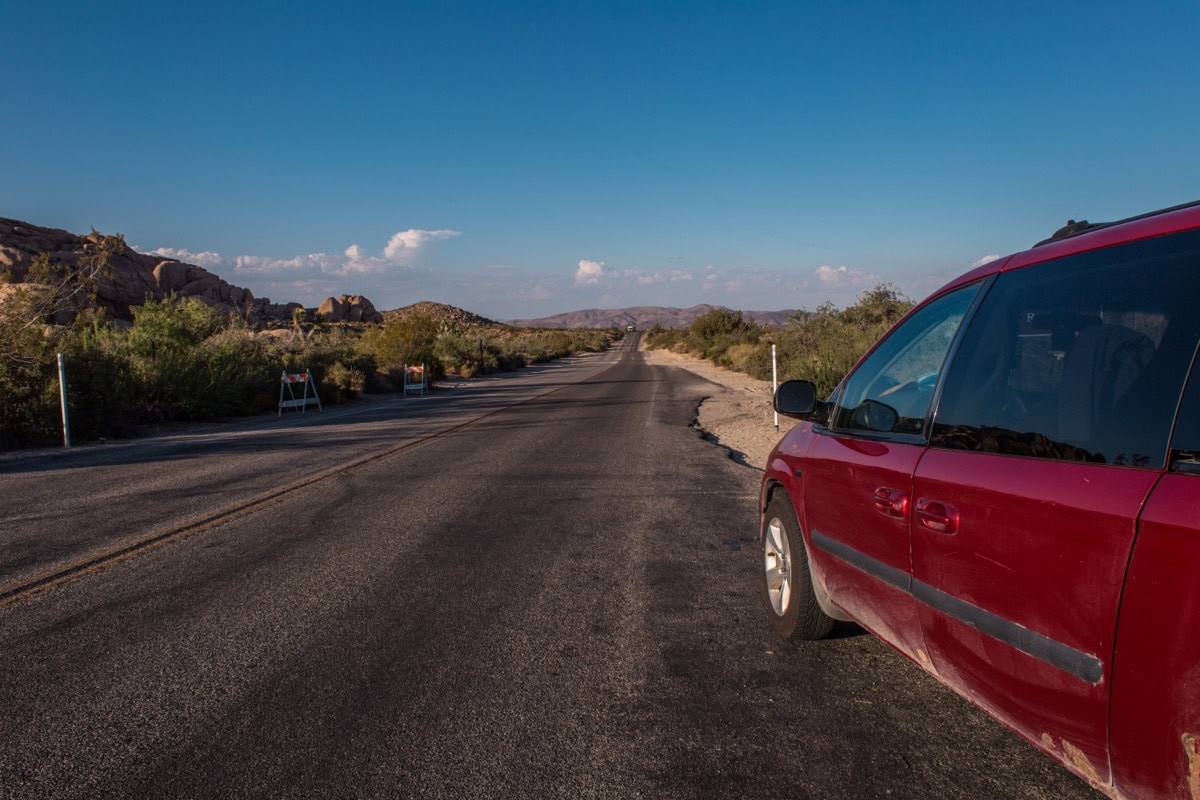
If you’ve got a vehicle with decent ground clearance (ideally 4WD, though a standard SUV can manage in dry conditions), Geology Tour Road is a fantastic way to explore a remote part of the park. It’s a 29 km unpaved road with 16 stops where information boards explain the geological formations around you.
The first 5 km are relatively flat and manageable for a normal car. Beyond that, the road deteriorates — deep sand, rocks, steeper sections. We made it in our hire SUV, but there were some nerve-wracking moments. 😅 The whole route takes about 2–3 hours.
Why bother: You’ll have the place practically to yourself. No crowds, no coach-filled car parks. Just you, the desert, and millions of years of geological history. Along the road, you’ll see alluvial fans, rock dykes, dry lakebeds, and remnants of ancient earthquakes.
15. Joshua trees — get to know the iconic tree that gave the park its name
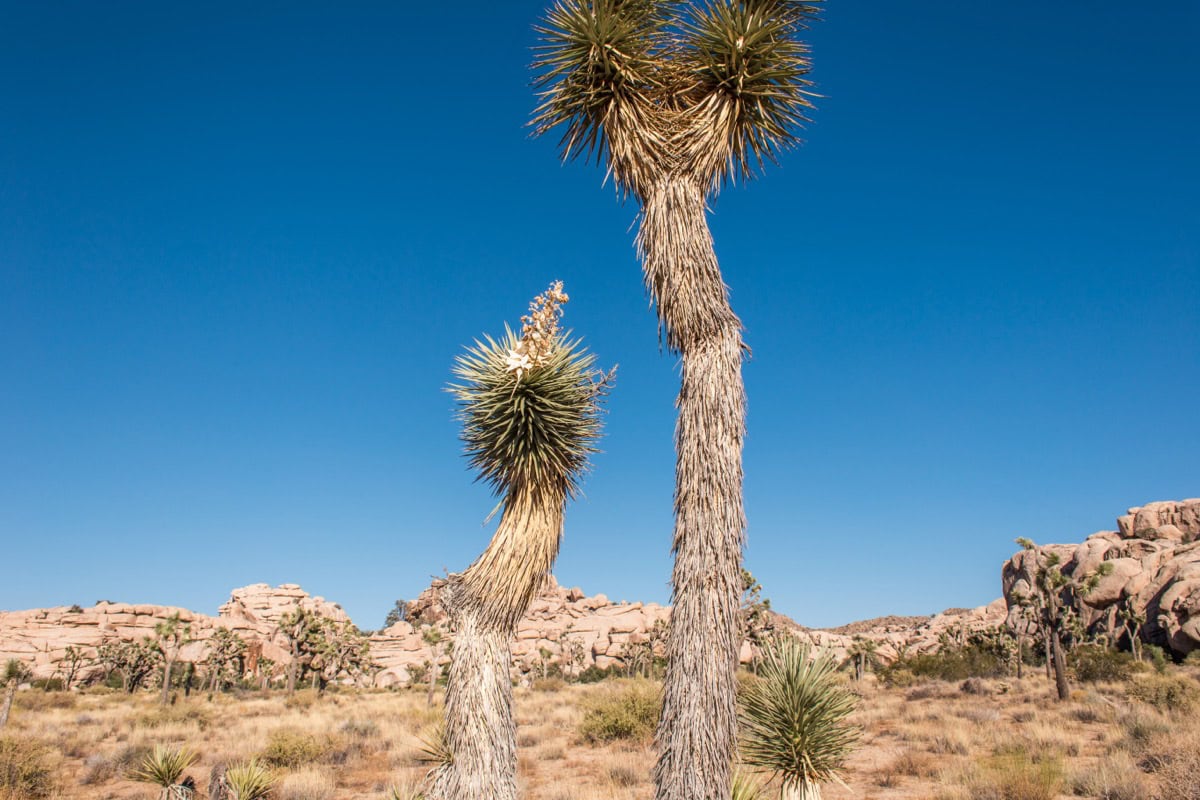
And finally — you can’t visit Joshua Tree National Park without spending some time with the Joshua trees themselves (Yucca brevifolia). These bizarre plants (technically they’re not trees at all, but giant succulents from the asparagus family!) can grow up to 15 metres tall and live for hundreds of years.
Legend has it they were named by Mormon settlers who saw the outstretched branches as the prophet Joshua pointing the way to the promised land. Whether you see a biblical figure or a peculiar alien, they’re endlessly fascinating.
The densest “forests” of Joshua trees can be found in the Queen Valley area and along Park Boulevard between the West Entrance and Skull Rock. Simply pull over anywhere along the road where you spot a lovely cluster of trees and wander among them. In spring (March–May), they may be in bloom — large creamy-white flowers at the tips of their branches. Blooming depends on winter rainfall and temperatures, so it’s not guaranteed, but when it happens, it’s breathtaking.
A sobering note: Joshua trees are threatened by climate change. Rising temperatures and drought mean young seedlings are struggling to survive. Scientists estimate that by the end of the century, most of the park’s natural populations could disappear. All the more reason to visit now.
Map of points of interest for your phone
Where to eat and drink near Joshua Tree
There are no restaurants or shops inside the park — you need to bring all your food and water with you. But the surrounding towns have a surprisingly good food scene, shaped by a mix of LA hipsters, desert artists, and health-conscious Californians.
Joshua Tree Village
- Crossroads Café — a legendary local joint where climbers, artists, and tourists all converge. Brilliant breakfasts (pancakes!) and solid burgers. The portions are massive. Prices around $12–18 per main (about €11–€17).
- La Copine — if you love speciality coffee and brunch, this is your spot. A small café with incredible food — avocado toast with chilli oil, pulled pork sandwich, homemade lemonades. There’s often a queue, but it’s worth the wait.
- Joshua Tree Saloon — a classic western bar with live country music at weekends. The food is average, but the atmosphere is priceless.
Twentynine Palms
- Kitchen in the Desert — a family-run restaurant with surprisingly creative cooking. Pasta, steaks, seasonal menus. Pleasant interior, friendly service.
Yucca Valley
- Frontier Café — another solid breakfast spot with a proper local feel.
Piet’s Camp
- Pappy & Harriet’s Pioneertown Palace — this is probably the most famous venue in the entire area. A honky-tonk bar in the setting of the western movie town Pioneertown (built in 1946 as a film set). The grilled meat is superb, there’s live music nearly every evening, and the atmosphere is completely unique. Expect to pay around $20–30 for a main course (about €19–€28). It’s roughly 20 minutes from the park.
💡 FOOD TIP FOR THE PARK: If you’re camping or heading out for a full day’s hike, stop at Joshua Tree Natural Foods in Joshua Tree Village — they have a great selection of sandwiches, snacks, and local produce for the trail.
Practical tips before you go
Entry fees and passes
- Entry fee: $30 per vehicle for 7 days (about €28), $25 per motorcycle, $15 per pedestrian/cyclist
- America the Beautiful Pass: $80 (about €75) per year — valid for all national parks and federal recreation areas in the USA. If you’re planning to visit more than two parks (perhaps Yellowstone as well), get the pass.
- Passes can be purchased at the entrance gates or online at nps.gov/jotr
What to pack
- Water, water, water — at least 4 litres per person per day. There are no drinking water sources in the park (except at the Black Rock and Cottonwood campgrounds).
- Sunscreen and a hat — the desert sun is relentless
- Layers of clothing — 25 °C during the day, potentially 5 °C at night (even less in winter)
- Torch/headlamp — for stargazing and finding your way around the campsite
- Sturdy boots — proper hiking boots ideally, not flip-flops
- For a full packing guide, check out our article on how to pack a carry-on bag
Phone and signal
Mobile signal in the park is very limited — most areas have none at all. Near the entrance gates and along the roads, you might catch a weak signal. Download offline maps (Google Maps or Maps.me) and information from nps.gov before you go. If you’re travelling with an eSIM, check out our Holafly review — signal works fine in the towns surrounding the park.
Safety
- Heat: In warmer months, dehydration is a real danger. Drink regularly, even if you don’t feel thirsty.
- Snakes and scorpions: Yes, they’re here. Watch where you step, and use your headlamp at night. They’re mostly shy and will flee.
- Flash floods: After rain, dry riverbeds can fill up quickly. Don’t camp in dry washes.
- Getting lost: Stick to marked trails. The desert is disorienting — rock formations look the same everywhere.
Flights and insurance
For cheap flights from the UK to California, check comparison sites like Skyscanner or Google Flights — direct routes from London Heathrow to LAX are available with several airlines. Whatever you do, don’t skimp on travel insurance for a US trip — healthcare in America costs astronomical amounts. For longer trips, we recommend SafetyWing; for shorter holidays, a standard provider like World Nomads or your bank’s travel cover can work too.
FAQ — Frequently asked questions about Joshua Tree National Park
Tips and Tricks for Your Vacation
Don’t Overpay for Flights
Search for flights on Kayak. It’s our favorite search engine because it scans the websites of all airlines and always finds the cheapest connection.
Book Your Accommodation Smartly
The best experiences we’ve had when looking for accommodation (from Alaska to Morocco) are with Booking.com, where hotels, apartments, and entire houses are usually the cheapest and most widely available.
 🚗 Car rental on the roadVerified car rentals in California
Search with the DiscoverCars comparison engine — it compares prices from dozens of local and international rental companies, and most bookings come with free cancellation.
Compare car prices in California →Don’t Forget Travel Insurance
Good travel insurance will protect you against illness, accidents, theft, or flight cancellations. We’ve had a few hospital visits abroad, so we know how important it is to have proper insurance arranged.
Where we insure ourselves: SafetyWing (simple monthly subscription) and TrueTraveller (for extra-long trips).
Find the Best Experiences
Get Your Guide is a huge online marketplace where you can book guided walks, trips, skip-the-line tickets, tours, and much more. We always find some extra fun there!
More from California
Full guide → Itinerary · most readWest Coast USA Road Trip: 14–21 Day Itinerary (LA → San Francisco)
 Where to stayWhere to Stay in Los Angeles: 18 Tips for the Best Hotels and Safe Neighborhoods in 2026
 What to seeYosemite National Park, California: 15 Things to See and Do
 What to seeSequoia National Park, California: 15 Things to See and Do
 What to seeSan Francisco, California: 22 Things to Do in 2026


