You stand at the base of a tree, craning your neck so far back it hurts — and you still can’t see the top. General Sherman Tree, the largest living tree on the planet, soars 84 metres high with a trunk circumference of an incredible 31 metres. And there you are, utterly tiny, thinking: Is this even real?
That’s exactly how we felt when we first stepped into the Giant Forest in Sequoia National Park in California. You think you’re prepared for America’s national parks — you’ve seen the photos, watched the documentaries, read hundreds of articles. But nothing prepares you for the moment you’re standing among sequoias that have been growing for thousands of years and you realise just how absurdly small we are. It’s humbling and absolutely euphoric at the same time. 😊
Sequoia National Park is one of those parks that gets far less attention than neighbouring Yosemite, but honestly? In some ways, it captivated us more. No crowds (well, not nearly as bad), wilder nature, and the feeling of being in a forest that remembers ancient Rome. What more could you want?
In this article, you’ll find a complete guide to Sequoia National Park — from the best time to visit and how to get there, through 15 specific things to see and do, to practical advice on accommodation, food, and budget. I’ll show you how to plan your trip so you see as much as possible while actually enjoying it. Let’s dive in!
TL;DR
- Sequoia National Park is located in California’s Sierra Nevada, about 4 hours’ drive northeast of Los Angeles.
- The park is famous for its giant sequoias (Sequoiadendron giganteum) — the largest trees on Earth by volume.
- The main star is General Sherman Tree — the largest living tree on the planet, approximately 2,200 years old.
- The best time to visit is May to October, ideally June or September when there are fewer tourists than in July and August.
- Park entrance costs $35 per vehicle (7 days) and also covers neighbouring Kings Canyon National Park.
- Accommodation inside the park is limited — the most accessible bases are the town of Three Rivers or Visalia.
- Plan for at least 2–3 days, ideally 3–4 if you want to explore Kings Canyon as well.
- The park sits at an elevation of 2,000–2,400 m — even in summer, expect cool evenings and the occasional thunderstorm.
- Crystal Cave is a stunning stalactite cave, but tickets must be purchased in advance online.
- Compared to Yosemite, you’ll find significantly fewer crowds and a more authentic wilderness experience.
The full destination guide: California — guide and what to see
When to Visit Sequoia National Park and Weather
Sequoia National Park sits in the Sierra Nevada mountains, and elevation plays a massive role in what you’ll experience. Giant Forest, where most of the main attractions are located, lies at around 2,000–2,400 metres, so the weather here can be dramatically different from California’s valleys.
The best months to visit are June and September. In June, the park is fresh after winter, waterfalls are at their peak, and the sequoia groves are beautifully green. In September, the summer crowds have thinned out, temperatures are pleasant (around 20–25 °C during the day), and the air is crystal clear. July and August are the warmest (daytime temperatures around 27–30 °C at lower elevations) but also the busiest — expect queues at General Sherman and parking headaches.
What to avoid: Winter, unless you have experience driving on snowy mountain roads. Generals Highway, the main road through the park, is partially or fully closed from November to April due to snow. Yes, it snows in California — and in the Sierra Nevada, it snows a lot. 😅 If you visit in spring (April–May), check the current road conditions on the NPS website, as some sections may still be closed.
What to wear: Even in summer, it gets chilly above 2,000 metres — evening temperatures drop to 5–10 °C. Pack layers, a fleece jacket, and definitely good hiking boots. Comfortable trainers will do for shorter trails, but you’ll appreciate ankle support on longer hikes.
How to Get to Sequoia National Park
Sequoia National Park is located on the eastern edge of California’s Central Valley, about 270 km (4 hours) northeast of Los Angeles and 420 km (4.5 hours) southeast of San Francisco. The nearest major city is Visalia (about 1 hour from the park entrance), but the charming little town of Three Rivers sits right at the park’s doorstep.
By Car (the Best Option by Far)
There’s virtually no way to reach the park other than by car — public transport doesn’t run here. You enter the park via Ash Mountain Entrance from the south (from Three Rivers). From there, the famous Generals Highway winds up into the mountains — a twisting mountain road that gets you to Giant Forest in about 45 minutes. The drive is stunning, but expect to crawl behind lorries and pass enormous trees that’ll make you want to stop every five minutes. 😁
If you’re coming from the north (from Yosemite, for example), you’ll enter via Big Stump Entrance into Kings Canyon National Park and continue south along Generals Highway into Sequoia.
You can hire a car in LA, San Francisco, or directly in Visalia. If you’re flying from the UK, your best bet is to fly into Los Angeles (LAX) or San Francisco (SFO) — airlines like British Airways, Virgin Atlantic, and United all offer direct flights from London. We’ve had consistently great experiences with DiscoverCars, which we use everywhere — it compares prices from all rental companies in one place and their insurance options are straightforward.
Important: Generals Highway
Generals Highway is the park’s backbone road, stretching about 75 km and connecting Sequoia and Kings Canyon. It’s a two-lane mountain road with sharp bends and sometimes steep drops. RVs and vehicles longer than 6.7 m (22 ft) are prohibited on certain sections. If you’re driving a large motorhome, carefully check the restrictions on the NPS website before setting off.
Where to Stay and How Much Sequoia National Park Costs
Accommodation around Sequoia National Park isn’t exactly cheap (we’re in California, so no surprises there 😅), but there are a few clever ways to save money. Park entry costs $35 per vehicle (about €32) for 7 days and also covers neighbouring Kings Canyon National Park — that’s a brilliant deal since both parks are connected by Generals Highway.
Inside the Park
Inside the park, you have two main options:
Wuksachi Lodge — the only year-round hotel inside Sequoia National Park. It’s located right by Giant Forest at 2,200 m elevation. Rooms are clean and comfortable, but nothing luxurious — expect $200–$350 per night (€185–€325) during peak season. The huge advantage is that you’ll be first on the trails in the morning, well before day visitors arrive. Book well ahead — it fills up months in advance during summer.
Camping — the park has several campgrounds. The most popular are Lodgepole (214 sites, reservations required via recreation.gov) and Dorst Creek (218 sites, open June–September). The cost per night is around $22–$25 (€20–€23). If you enjoy camping, this is by far the best way to experience the park — you fall asleep under sequoias and wake up to birdsong. We camped and it was a completely different experience compared to staying in a hotel.
Three Rivers — the Best Base Outside the Park
The town of Three Rivers sits right at the park’s southern entrance and is the most popular base for visitors. You’ll find a mix of motels, Airbnbs, and small guesthouses. Prices range from $120 for a basic motel to $300+ for a nicer cabin with a view (€110–€280). Three Rivers is picturesque, has a few restaurants and a grocery shop. The downside — it’s about a 45-minute drive uphill from Three Rivers to Giant Forest.
Visalia — a Cheaper Alternative
Visalia is a city of about 140,000 people, located an hour from the park. The selection of accommodation is much wider and prices are considerably lower — $80–$150 per night (€75–€140) for a decent hotel. There’s also the Sequoia Shuttle (a seasonal bus service to the park), so you don’t have to worry about parking.
How Much Sequoia National Park Costs — Budget for 3 Days for Two
| Item | Cost (USD) | Cost (EUR) |
| Entrance fee (vehicle, 7 days) | $35 | €32 |
| Campsite 3 nights | $66–$75 | €61–€70 |
| OR hotel Three Rivers 3 nights | $360–$900 | €335–€835 |
| Petrol (from LA and back + park) | $80–$120 | €75–€110 |
| Food (3 days, 2 people) | $120–$200 | €110–€185 |
| Crystal Cave tickets | $32 (2×$16) | €30 |
| Total (camping) | $330–$460 | €305–€425 |
| Total (hotel) | $630–$1,250 | €585–€1,160 |
Giant Forest and Surroundings: 8 Must-See Spots
Giant Forest is the heart of Sequoia National Park and the reason most people come here. Within a relatively small area, you’ll find the most massive trees on the planet, breathtaking rocky viewpoints, and a network of trails you could wander for days. Let’s look at the best of what Giant Forest has to offer.
1. General Sherman Tree — the Largest Living Tree on Earth
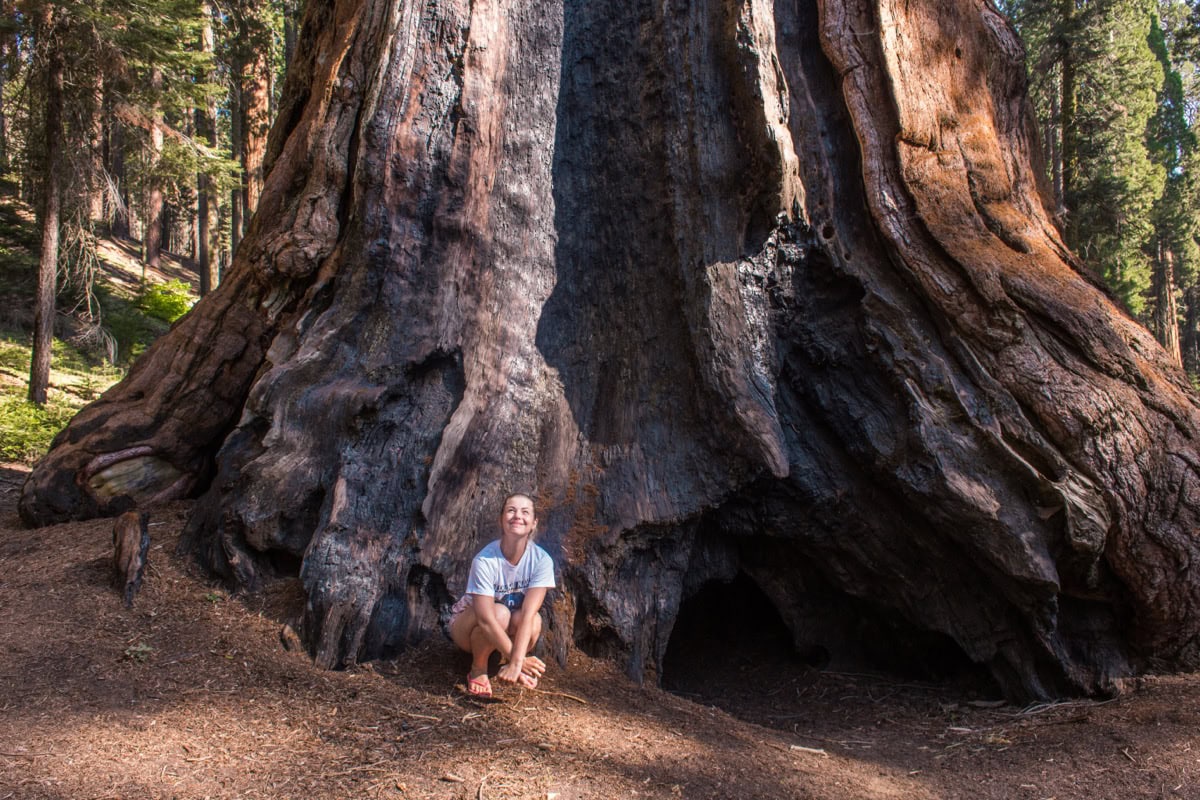
This is the main star. General Sherman Tree is the largest living tree in the world — not the tallest (that honour goes to coastal redwoods) and not the oldest (that’s the bristlecone pines), but the largest by volume. Standing 84 metres tall with a trunk circumference of 31 metres and an estimated age of 2,200 years. When you realise this tree started growing around the time the Roman Colosseum was built, it’s genuinely mind-boggling.
A short trail leads from the car park to General Sherman Tree (about 800 metres, partly down steps — and yes, the walk back is uphill, which you’ll definitely feel at 2,100 m elevation 😅). The trail is accessible for pushchairs and wheelchair users, though the return climb is steep. Get there as early as possible in the morning — ideally before 9:00 — if you want to have the tree to yourself for even a moment. From 10 o’clock in summer, it’s absolutely heaving.
One tip we learnt from experience: no photo of General Sherman ever captures its true size. Take photos with a person in the frame for scale — otherwise it just looks like a big tree. And it’s so, so much more than that.
2. Congress Trail — a Walk Among Giants
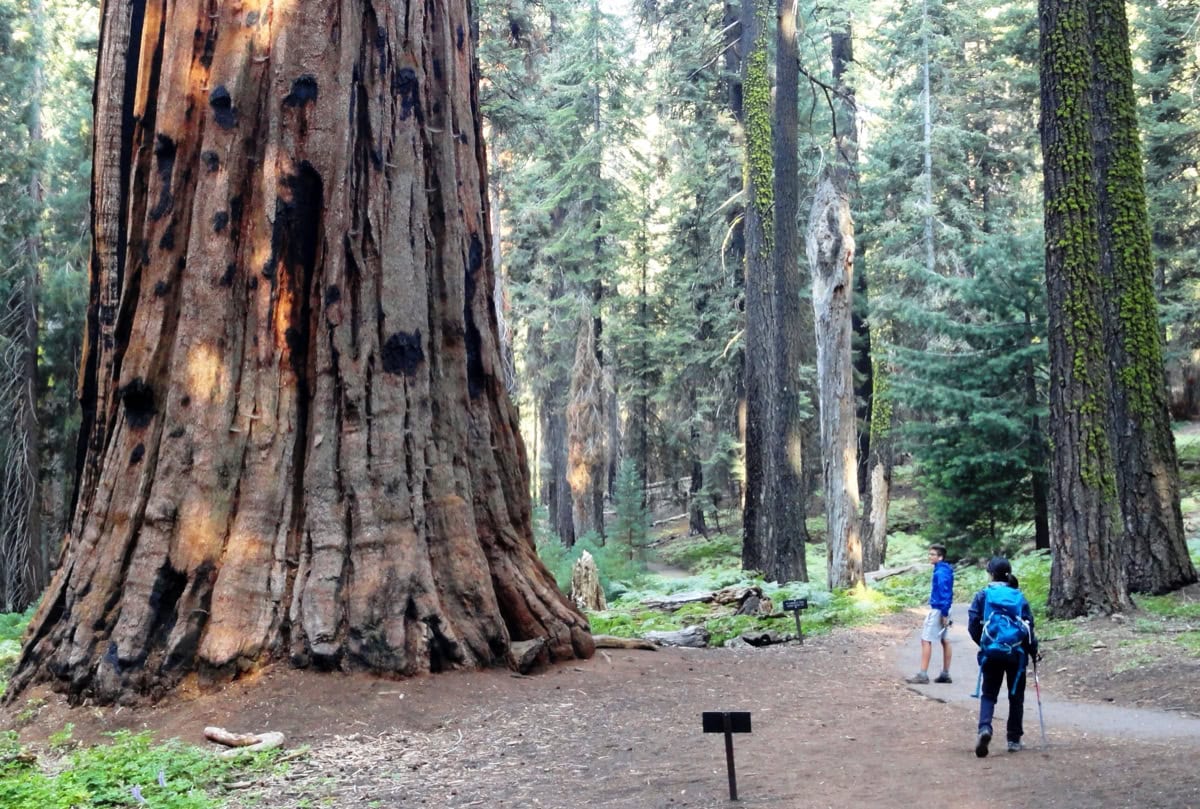
If you only have time for one trail in the park, make it Congress Trail. This 3.2 km loop starts right at General Sherman Tree and takes you through the densest grove of giant sequoias in the world. You’ll pass trees named after presidents and senators (hence the name “Congress”), and at one point you’ll be standing in the middle of a cluster of sequoias called The Senate, where each tree’s trunk is over 5 metres in diameter.
The trail is mostly flat, well-maintained, and manageable for absolutely everyone — including children and older visitors. Allow 1–2 hours, because you’ll be stopping every few metres to stare upwards with your mouth open. We spent nearly three hours on the trail because we kept stopping at every tree going “Look, this one’s even bigger!” 😁
3. Moro Rock — 400 Steps to the Best View
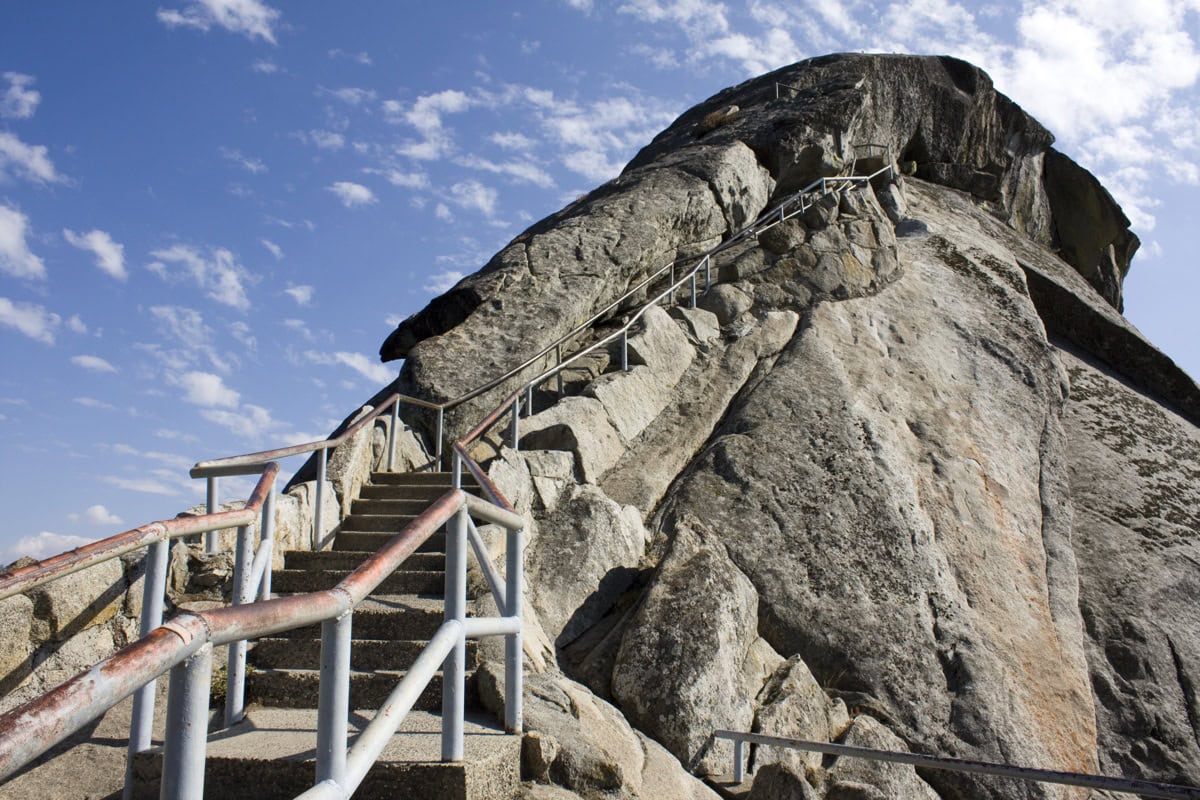
Moro Rock is a granite monolith with 400 carved steps leading to its summit, where you’re rewarded with a 360° panoramic view of the Great Western Divide — a chain of snow-capped Sierra Nevada peaks. On a clear day, you can see for dozens of miles, and the view down into the valley is simply breathtaking.
The climb is short (about 500 metres) but steep — the elevation gain is around 90 metres and the steps are narrow in places. If you’re afraid of heights, this will be a challenge — there are railings, but in some spots you can see a sheer drop just a few feet from the path. We were at the top for sunset and it was one of the most beautiful moments of our entire trip.
💡 TIP: Moro Rock faces west, so sunset from here is absolutely magical. Arrive at least an hour before sundown so you have time for the climb and can enjoy it at the top without rushing.
4. Tunnel Log — Drive Through a Tree
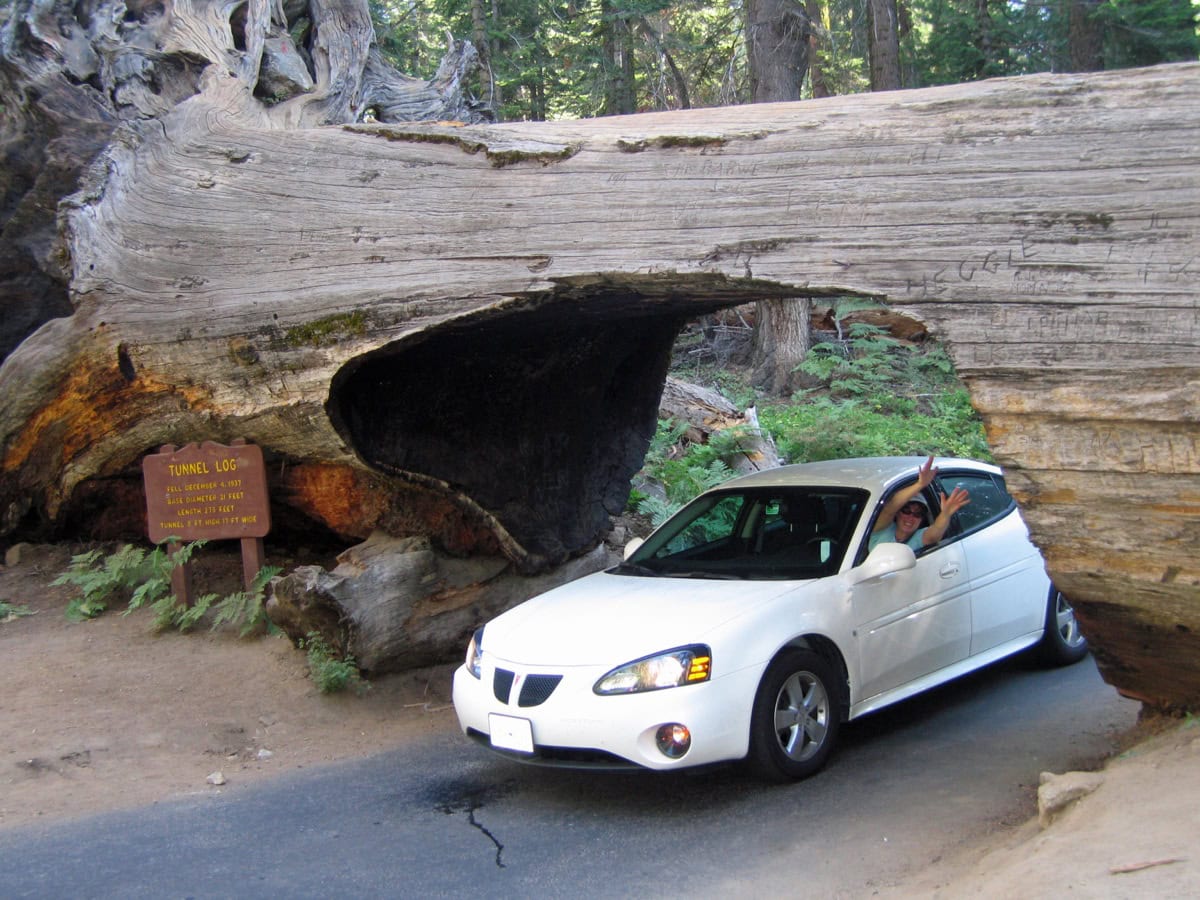
Yes, exactly what it sounds like — in Sequoia National Park there’s a fallen sequoia that you can drive your car through. Tunnel Log is an enormous tree that fell across the road in 1937, and instead of removing it, they carved a tunnel through the trunk. The opening is about 5.2 m wide and 2.4 m tall, so a standard car fits through easily. SUVs and pickups have to use the bypass.
Is it a tourist attraction? Absolutely. Is it a bit cheesy? Maybe. Will you stop and drive through it? One hundred percent yes. 😁 And you’ll take a photo, just like everyone else. Tunnel Log is on Crescent Meadow Road, about 15 minutes’ drive from Giant Forest Museum.
5. Crescent Meadow — the “Gem of the Sierra”
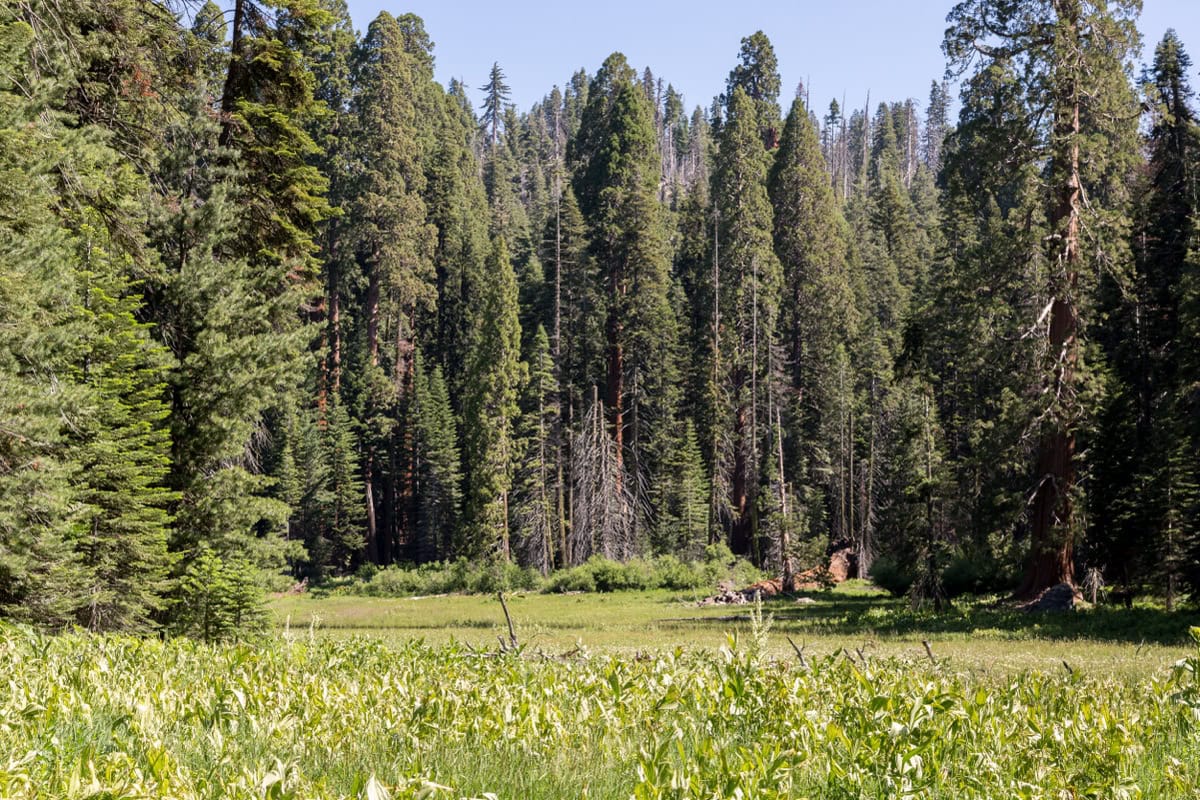
John Muir, the father of America’s national parks, called Crescent Meadow the “Gem of the Sierra” — and he wasn’t wrong. This small mountain meadow surrounded by giant sequoias is one of the most peaceful and photogenic spots in the park. A simple 2.6 km loop trail circles the meadow, and along the way you’ll find Tharp’s Log — a hollow sequoia trunk that served as a home for farmer Hale Tharp in the 1860s. Yes, he lived inside a tree. With a view of this meadow. Jealous? You should be.
Crescent Meadow is also the starting point for longer trails — if you’re up for a full-day hike, the High Sierra Trail sets off from here, one of the most famous long-distance routes in California (116 km all the way to Mount Whitney, but you probably won’t manage that in an afternoon 😅).
6. Crystal Cave — Underground Beauty You Won’t Expect
Crystal Cave is a marble cavern hidden deep beneath the park’s surface, and it’s a completely different experience from everything else in Sequoia. Step inside and you’re suddenly in an underground world of stalactites, stalagmites, and crystal-clear subterranean streams. The cave maintains a constant temperature of about 9 °C year-round, so bring a jacket even if it’s scorching outside.
IMPORTANT: You must buy Crystal Cave tickets in advance online at recreation.gov — they are not sold at the cave. Tours last about 50 minutes and cost $16 per person (about €15). They sell out quickly during peak season, so book ahead. From the car park, it’s another 800-metre walk down a steep slope to the cave entrance (and back up again afterwards).
From the main road, you turn off onto Crystal Cave Road — a narrow, winding road that takes about 30 minutes to drive (only 11 km, but it’s very slow going). Crystal Cave is typically open from mid-May to mid-November.
7. Giant Forest Museum — the Context That Ties It All Together
Pop in here for at least half an hour, ideally as your first stop in Giant Forest. This small but excellently curated museum explains the ecology of sequoia forests — why giant sequoias need fire to reproduce, how old they are, and why they grow here and nowhere else on Earth. After visiting the museum, you’ll see the forest in a completely different light. Entry is free.
There are also some beautiful sequoia specimens outside the museum, and the facilities are good — toilets, drinking water, and a ranger station where staff can help you plan your routes. Pick up a current Sequoia National Park map at the ranger station — mobile signal is virtually non-existent here.
8. Big Trees Trail — an Easy Loop Around the Meadow
If you’re looking for a gentle, accessible trail suitable for pushchairs and wheelchair users, Big Trees Trail is the ideal choice. This 1.9 km loop follows a paved path around Round Meadow, lined with giant sequoias. Interpretive panels along the way explain the forest’s ecology.
It’s the perfect trail for an introduction to the park or for families with small children. And even on such a simple route, you’ll be standing there with your jaw on the floor, because the trees around you are simply unbelievable.
Beyond Giant Forest: 4 Places Worth the Detour
Sequoia National Park has much more to offer than just Giant Forest. If you’re spending more than one day in the park (and I highly recommend you do!), venture out to explore the more remote corners where you’ll encounter a fraction of the visitors.
9. Generals Highway — a Drive That’s an Experience in Itself
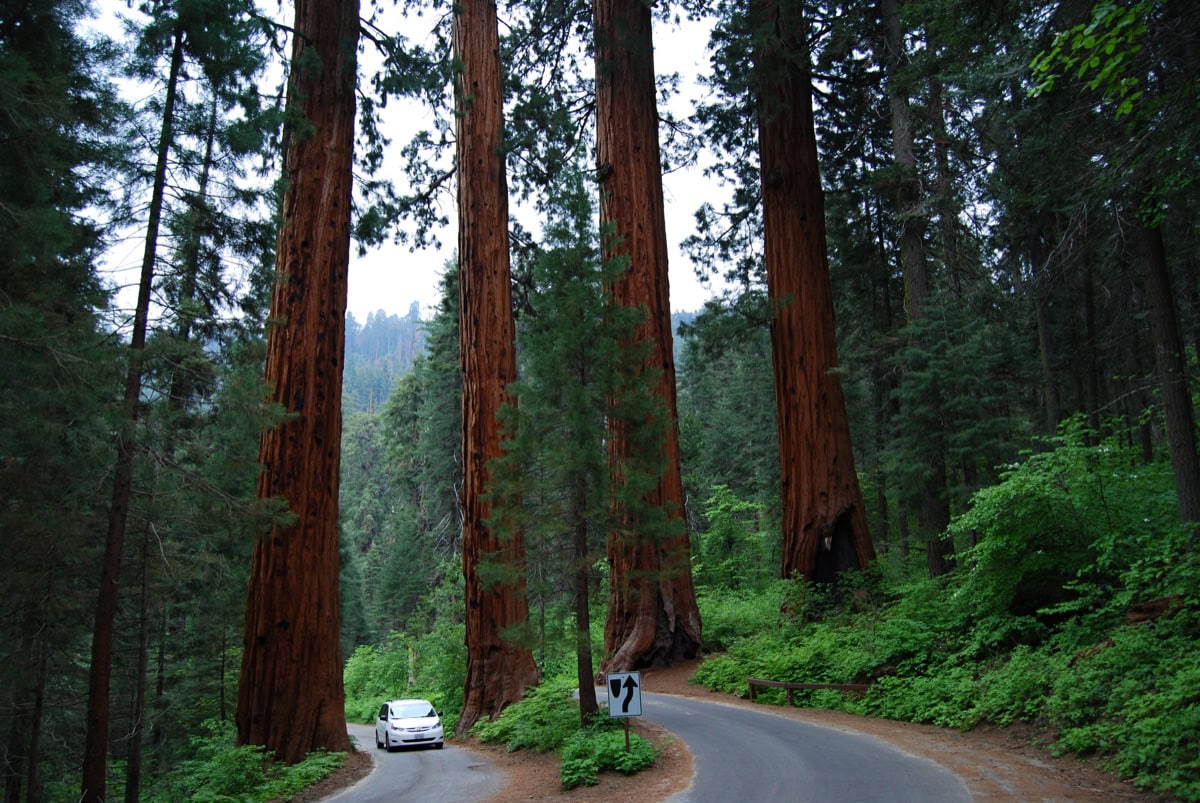
Generals Highway, the main road connecting Sequoia and Kings Canyon National Park, is one of the most beautiful scenic drives in all of California. Over 75 km of winding mountain road, you’ll pass viewpoints overlooking deep valleys, drive through sequoia groves, and skirt moss-covered rock walls. Make sure to stop at the pull-offs — Amphitheater Point and Hospital Rock are particularly photogenic.
You can drive the entire route from Ash Mountain Entrance to Kings Canyon in about 1.5–2 hours without stopping. But why would you rush? Set aside half a day and savour every moment.
10. Mineral King — for Adventurers Who Want to Escape the Crowds
Mineral King is a remote alpine valley in the park’s southern section, reached via a 40 km winding road (allow 1.5 hours of driving from Three Rivers). There are no shops, no hotels — just a few primitive campgrounds and gorgeous mountain trails. It feels like an entirely different park — no sequoias, but instead alpine meadows, lakes, and jagged peaks.
Warning: The road to Mineral King is narrow, steep, and has over 600 bends (no, that’s not an exaggeration). It’s not suitable for motorhomes or for anyone who gets carsick easily. But if you can handle it, the reward is absolutely stunning, crowd-free wilderness.
Bonus: Mineral King is home to marmots who have developed a fondness for chewing hoses and cables in the engines of parked cars. Yes, really. The ranger station recommends wrapping the underside of your car with a tarp. Welcome to the wild! 😅

11. Little Baldy Trail — a View Without the Crowds
If Moro Rock felt too crowded for your liking, Little Baldy is the perfect alternative. This 5.6 km out-and-back trail leads to a granite summit with 360° views of Giant Forest, Kings Canyon, and the Great Western Divide. The elevation gain is about 200 metres and the trail winds through beautiful forest.
We had the summit completely to ourselves — and this was in August. The view is comparable to Moro Rock, perhaps even better, because you also get a bird’s-eye view of Giant Forest. The trailhead is right off Generals Highway, about 10 km north of Giant Forest.
12. Tokopah Falls — a Waterfall in a Granite Canyon
Of all the trails in the park, Tokopah Falls Trail was probably our most pleasant surprise. This 5.6 km out-and-back trail follows the Marble Fork Kaweah River through a deep granite canyon to an impressive waterfall that cascades 365 metres down granite walls.
The trail is mostly flat, so almost anyone can manage it. It’s at its most spectacular in spring and early summer when the waterfall is at peak flow. By late summer and autumn, it may be reduced to a mere trickle. The trail starts at Lodgepole Campground — if you’re camping there, it makes for the perfect morning walk.
Map of points of interest for your phone
Kings Canyon: 3 Reasons Not to Skip the Neighbouring Park
Kings Canyon National Park sits right next to Sequoia, and your entrance fee covers both — the same ticket gets you into both parks. It would be a shame to miss it, as it offers a somewhat different landscape and set of experiences. Kings Canyon is wilder, less accessible, and in many ways reminiscent of Yosemite — but without the crowds.
13. Grant Grove — Home of the General Grant Tree
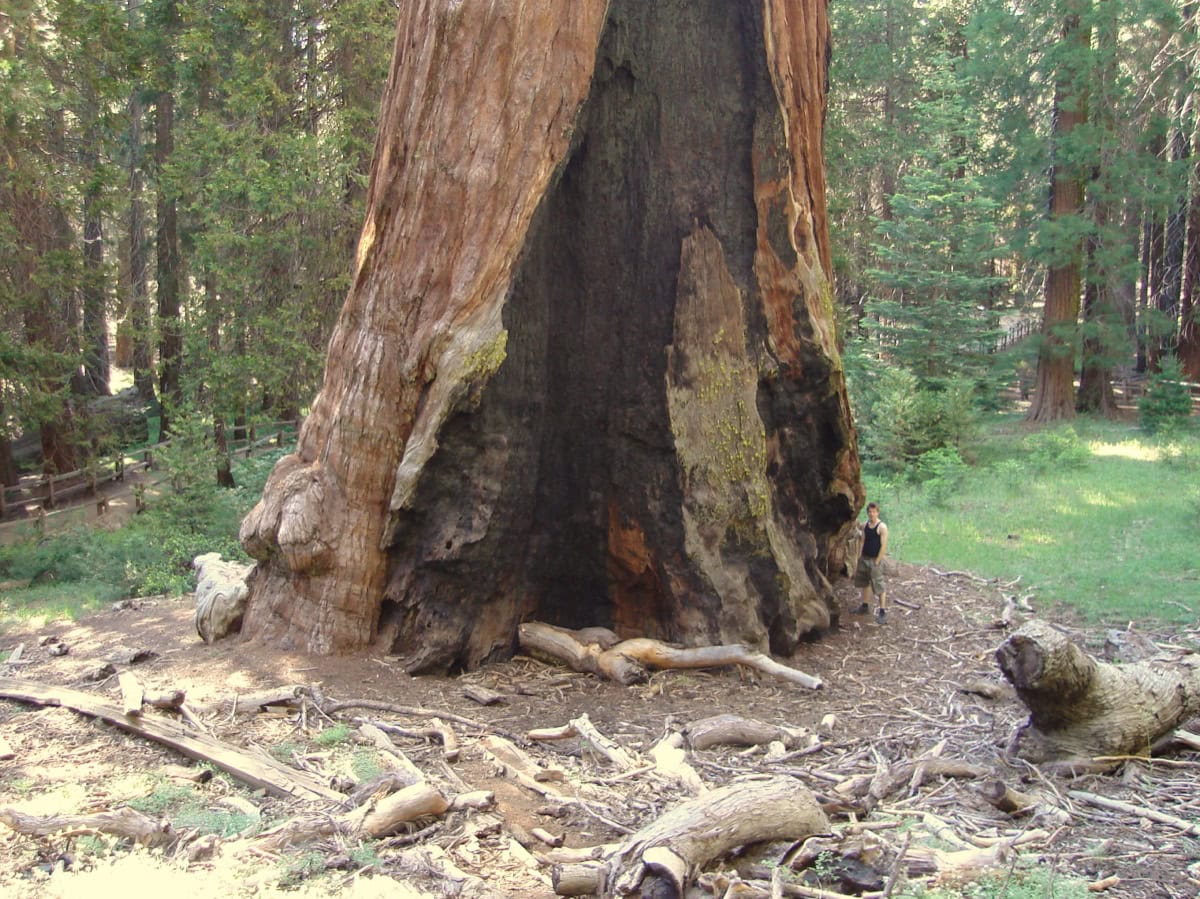
General Grant Tree is the second largest tree in the world (right after General Sherman) and is officially designated as the “Nation’s Christmas Tree”. A short, accessible loop trail (about 800 m) circles around it, passing several other named giant sequoias along the way.
In Grant Grove, you’ll also find Fallen Monarch — a massive fallen trunk that in the old days was used to shelter horses and even served as a makeshift hotel. You can walk inside it and grasp just how absurdly huge this tree must have been when it was standing.
14. Kings Canyon Scenic Byway — a Road Into the Depths of the Canyon
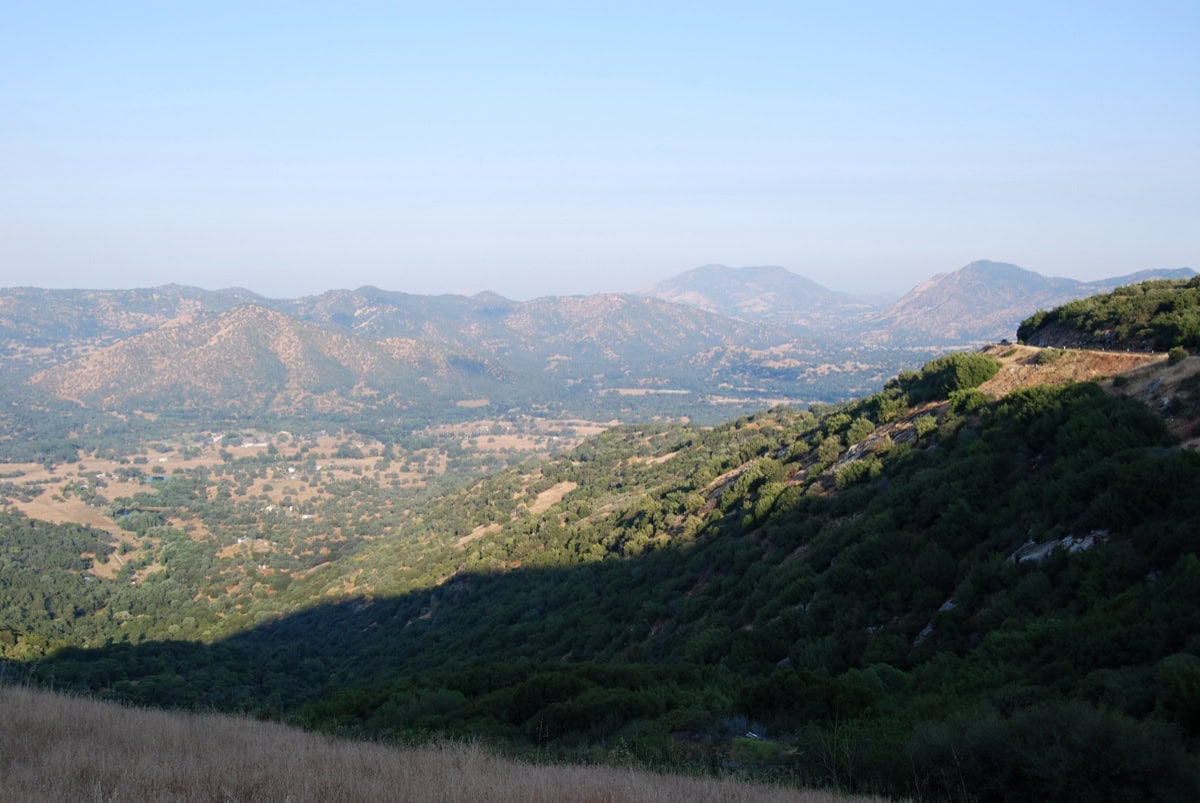
From Grant Grove, Kings Canyon Scenic Byway (Highway 180) plunges down into the canyon of the Kings River. The road descends from 2,000 m to just 1,400 m, and the views along the way are dramatic — deep chasms, granite walls, and the river far below.
At the end of the road in Cedar Grove, you’ll find a few short trails, a campground, and the starting point for longer backcountry trips. You can hire a kayak here or simply sit by the river and soak up the atmosphere of one of the deepest canyons in North America (deeper than the Grand Canyon, though nobody seems to talk about it!).
15. Zumwalt Meadow — a Fairytale Meadow
At the very end of the road in Cedar Grove lies Zumwalt Meadow, one of the most beautiful alpine meadows in the entire Sierra Nevada. A gentle 2.4 km loop offers views of the sheer granite walls of North Dome and Grand Sentinel.
In the morning, you’ll spot deer, the Kings River sparkles in the sunshine, and all around you granite monoliths stand like fortress walls. It’s like a miniature Yosemite Valley, but without a single tour bus in sight. If you love peace and stunning natural beauty, this is the place you won’t want to leave.
Food and Drink: Where to Eat Around Sequoia
Let’s be honest — nobody visits Sequoia National Park for the food. 😅 But you’ve got to eat, so here’s a rundown of what’s available.
Inside the Park
Peaks Restaurant at Wuksachi Lodge is practically the only restaurant inside Sequoia. The food is surprisingly decent — steaks, fish, salads — but prices reflect its monopoly position (mains $20–$40, or €18–€37). Breakfasts are solid and portions are generously American-sized.
Lodgepole Market Center serves quick bites — burgers, wraps, sandwiches, ice cream. Prices are reasonable by national park standards (around $10–$15 per meal). There’s also a small shop with basic camping supplies, though the selection is limited and prices higher than in town.
Three Rivers
In Three Rivers you’ll find a handful of restaurants worth a stop:
- Gateway Restaurant & Lodge — classic American cuisine with river views. Steaks, burgers, fish. Pleasant atmosphere and fair prices.
- Sierra Subs & Salads — if you want a quick, quality sandwich for the road into the park. Huge portions at a fair price.
- Ol’ Buckaroo — a small café with great coffee and homemade baked goods. The perfect stop in the morning on your way into the park.
- Anne Lang’s Emporium — do yourself a favour and stop in for their homemade pie. They don’t have it every day, but when they do, it’s absolutely worth it.
Our Tip: Cook for Yourself
If you’re camping (and we highly recommend it!), the best strategy is to stock up on supplies in Visalia on your way to the park. You’ll find regular supermarkets there (Walmart, Vons) with normal prices. In the park and Three Rivers, you’ll pay significantly more for the same products. We cooked simple meals on our camping stove — pasta, eggs, sandwiches — and spent barely anything on food. One evening we treated ourselves to a restaurant meal in Three Rivers, and that was the perfect balance.
Practical Tips and Tricks for Visiting Sequoia National Park
Sequoia National Forest vs. Sequoia National Park — What’s the Difference?
This catches people out all the time. Sequoia National Park is a national park managed by the National Park Service (NPS) — $35 entry, protected land with regulated trails and campgrounds. Sequoia National Forest is a national forest managed by the Forest Service (USFS), which surrounds the park on all sides — entry is free, rules are more relaxed, but infrastructure is minimal. Most tourist attractions (General Sherman, Moro Rock, Crystal Cave) are in the national park, not the forest.
Mobile Signal
Virtually non-existent. In Giant Forest, at Wuksachi Lodge, and at Lodgepole you might occasionally pick up a weak signal, but otherwise assume you’ll be completely offline. Download offline maps to your phone (Google Maps or maps.me) BEFORE you arrive. If you need reliable connectivity on your travels, check out our Holafly eSIM review — while it won’t help inside the park itself, it’s handy on the road and in towns.
Bears and Food Safety
Black bears live in Sequoia and they’re well accustomed to human food. All food, cool boxes, toiletries, and anything scented must be stored in bear boxes, which you’ll find at every campground and trailhead. NEVER leave food in your car — bears can open car doors (no, we’re not joking). Fines for improper food storage can reach up to $5,000.
What to Pack
You’ll find a full packing list in our article on How to pack carry-on only, but specifically for Sequoia, don’t forget:
- Layered clothing (mornings can be 5 °C, afternoons 25 °C)
- Good hiking boots
- A head torch (if you’re camping)
- High-factor sun cream (you burn faster at altitude)
- Plenty of water (1–2 litres per person per trail)
Flights and Getting to California
From the UK, direct flights to Los Angeles are available with British Airways, Virgin Atlantic, and United from London Heathrow. Return flights typically cost £400–£800 depending on the season and how far in advance you book. San Francisco is another good option if you’re combining Sequoia with Yosemite or a wider California road trip. Use flight comparison sites like Skyscanner to find the best deals.
Travel Insurance
Don’t underestimate travel insurance for a trip to the USA — healthcare in America costs astronomical amounts. We have a detailed article on SafetyWing insurance, which we use for longer trips.
Sequoia vs. Yosemite — Which Park Should You Visit?
This question comes up constantly, and the honest answer is: if you have time, visit both. They’re two completely different experiences. But if you have to choose:
Yosemite is more dramatic — the granite walls of El Capitan and Half Dome, Yosemite Falls, glacial valleys. It’s more famous, more photogenic, and… more crowded. In summer, 15,000–20,000 people visit daily and Yosemite Valley feels more like a theme park than wilderness.
Sequoia is more intimate — giant trees, fewer people, a genuine sense of wilderness. You won’t queue for an hour for a shuttle bus. You won’t spend 45 minutes hunting for a parking spot. You’ll stand in a forest among trees that have been growing for two thousand years, and you’ll have peace and quiet.
We love both, but if we had to be completely honest over a glass of wine? Sequoia moved us more emotionally. Those trees do something to you.
If you’re planning a big road trip across America’s national parks, you can easily combine Sequoia → Kings Canyon → Yosemite over 5–7 days. The distance between Sequoia and Yosemite is about 3–4 hours by car.
How Many Days in Sequoia National Park — Planning Your Visit
| Number of Days | What You’ll Cover |
| 1 day | General Sherman, Congress Trail, Moro Rock, Tunnel Log. It’ll be a sprint, but you’ll see the highlights. |
| 2 days | All of the above + Crystal Cave, Crescent Meadow, Tokopah Falls, Giant Forest Museum. The ideal minimum. |
| 3 days | Add Kings Canyon — Grant Grove, Kings Canyon Scenic Byway, Zumwalt Meadow. A perfect pace. |
| 4+ days | Little Baldy, Mineral King, longer backcountry trails, relaxation. For those who aren’t in a rush. |
We spent three days in the park and it felt just right. We didn’t rush, had time for coffee, for sitting by the river, for a second breakfast (essential! 😁), and still saw everything that mattered.
FAQ — Frequently Asked Questions About Sequoia National Park
Why is Sequoia National Park famous?
Sequoia National Park is famous for its giant sequoia groves — home to the largest trees on Earth by volume. The main attraction is General Sherman Tree, the largest living tree on the planet, approximately 2,200 years old. The park also features dramatic Sierra Nevada mountain scenery, Crystal Cave (a stunning marble cavern), and some of the oldest living organisms on Earth.
What is the nearest major city to Sequoia National Park?
The nearest major city is Visalia (about 100,000 residents), approximately one hour’s drive from the park entrance. The small town of Three Rivers sits right at the park’s doorstep. Of the larger cities, Fresno is closest (2.5 hours) followed by Los Angeles (4 hours).
When is the best time to visit Sequoia National Park?
The ideal months are June and September. In June, the park is fresh after winter, waterfalls are flowing strongly, and temperatures are pleasant (15–25 °C). In September, summer crowds thin out and the weather is stable. July and August are the warmest but busiest. In winter (November–April), Generals Highway may be closed due to snow.
Is Yosemite or Sequoia better?
It depends on what you’re looking for. Yosemite offers dramatic granite walls, waterfalls, and iconic scenery but tends to be very crowded. Sequoia is more intimate, quieter, and centred around giant trees — the sense of wilderness is much stronger. Ideally, visit both parks; the distance between them is just 3–4 hours by car.
How much does it cost to enter Sequoia National Park?
Entry costs $35 per vehicle (about €32) for 7 days. The same ticket also covers neighbouring Kings Canyon National Park. If you’re planning to visit multiple national parks in the US, it’s worth getting the America the Beautiful Pass for $80 (about €75), valid for one year at all national parks and federal recreation areas.
Do I need a reservation to enter Sequoia National Park?
As of 2025, no reservation is needed for park entry — simply pay the entrance fee at the gate. However, you do need reservations for camping (Lodgepole, Dorst Creek — via recreation.gov) and for Crystal Cave (tickets only available online in advance). During summer, we recommend arriving early in the morning as car parks at the main attractions fill up fast.
Can you visit Sequoia National Park as a day trip from Los Angeles?
Technically yes, but we wouldn’t recommend it. The drive from LA takes 4 hours each way, meaning you’d spend 8 hours driving and only have a few hours in the park. It’s much better to stay overnight in Three Rivers or Visalia and dedicate at least 2 full days to the park. If you truly only have one day, focus on General Sherman, Congress Trail, and Moro Rock.
Tips and Tricks for Your Vacation
Don’t Overpay for Flights
Search for flights on Kayak. It’s our favorite search engine because it scans the websites of all airlines and always finds the cheapest connection.
Book Your Accommodation Smartly
The best experiences we’ve had when looking for accommodation (from Alaska to Morocco) are with Booking.com, where hotels, apartments, and entire houses are usually the cheapest and most widely available.
 🚗 Car rental on the roadVerified car rentals in California
Search with the DiscoverCars comparison engine — it compares prices from dozens of local and international rental companies, and most bookings come with free cancellation.
Compare car prices in California →Don’t Forget Travel Insurance
Good travel insurance will protect you against illness, accidents, theft, or flight cancellations. We’ve had a few hospital visits abroad, so we know how important it is to have proper insurance arranged.
Where we insure ourselves: SafetyWing (simple monthly subscription) and TrueTraveller (for extra-long trips).
Find the Best Experiences
Get Your Guide is a huge online marketplace where you can book guided walks, trips, skip-the-line tickets, tours, and much more. We always find some extra fun there!