
That vegetable soup in Korea? It’s often made with anchovies, which catches a lot of travellers off guard. Korean cuisine is packed with vegetables, rice, tofu and fermented foods, so at first glance it looks like paradise for anyone who doesn’t eat meat. In practice, though, “meat-free” doesn’t mean vegetarian here: plenty of dishes are built on fish and seafood that you’ll never actually see in your bowl.
Lukáš and I are lacto-ovo vegetarians (we eat eggs and dairy, but no meat or fish), so for every dish I note what to check and what the verdict is. According to the Stripes Korea guide, which draws on material from the Korea Tourism Organization, many restaurants don’t have a vegetarian menu, so ordering takes a bit of preparation. Restaurant prices come from the official Korea Consumer Agency portal (Seoul, September 2026), so you know what kind of budget to plan for.
In the “For vegetarians” part, each dish gets one of three labels: Usually vegetarian means the dish contains no meat or fish and you only need to watch out for the small things mentioned with it (eggs, dairy, honey). Only on request means the dish usually comes with meat or fish, but the cook can make it without. And Almost never means the base of the dish is animal-derived (broth, sauce, salted seafood).
In this article you’ll find an overview of Korean cuisine dishes by type, each with its name in Korean script (hangul) and a verdict, plus useful Korean phrases and a card to show the staff. I’ve also gathered prices, apps, tried-and-tested vegetarian places in Seoul and Busan, and a tip for staying at a Buddhist temple (templestay). And if you’re putting together your itinerary right now, take a look at our article on what to see in Seoul.
Quick summary if you don’t have time to read the whole article
- Anchovy broth (멸치 육수) or beef broth is used by default in many restaurants, and that’s the main trap.
- Seemingly vegetable-only kimchi almost always contains salted seafood (jeotgal, 젓갈, 새우젓) or fish sauce (액젓).
- The safest option is temple cuisine (vegetarian, mostly vegan too) and vegan restaurants.
- Dishes that usually work without much tweaking are kongguksu (cold soy milk noodles, summer only), hotteok (sweet pancake), bungeoppang (fish-shaped sweet pastry), tteok (rice cakes) and namul (vegetable side dishes) – with namul, though, keep an eye out for fish sauce.
- In restaurants, always show the staff a card listing the specific ingredients, because just saying “I’m vegetarian” isn’t enough.
- Tipping isn’t customary, and since 2013 menu prices have been legally required to be final, including VAT and service.
- Restaurant prices come from the official Korea Consumer Agency portal (Seoul, September 2026); for other items I give the source and date.
The full destination guide: Asia — guide and what to see
How to order in a Korean restaurant
Modern tech makes ordering in Korean restaurants much easier, so the language barrier is less scary than you might think. According to data from PayHere and Economist Korea published on 31 July 2026, the number of places with tablets on the tables (테이블오더) grew by 99.7% year on year in the first half of 2026. The menus on them usually have photos and come in Korean, English, Japanese and Chinese. Kiosks do have an English mode, but the owner has to enter the English dish names themselves, so in practice they tend to be only half translated 😅.
If there’s no tablet on your table, look for a call button on the table (호출벨), or raise your hand and call out 저기요 (pronounced “juh-gi-yo”). Nobody might tell you this, but for BBQ, dakgalbi (stir-fried chicken on a hot plate) and other pan dishes meant for 2 to 4 people, a minimum order of 2 portions (2인분 이상) is common. Restaurants are allowed to require a two-portion minimum without any legal consequences, so even if you’re dining alone, you’ll order two portions and pay for both.
Banchan side dishes are refilled on request, and there’s often a self-service bar (셀프바). 💡 Tip: Cutlery is usually kept in a drawer under the table or in a little box, and water is often self-service from a dispenser. You pay at the counter on your way out – just say 계산할게요 (“I’d like to pay”). Tipping isn’t customary: a mandatory service charge goes against the regulations, although voluntary tips aren’t prohibited. Under the Food Sanitation Act, menu prices have been final since 2013, including VAT and service.
| Dish | What it is | Seoul, September 2026 (KRW) | Approx. in EUR |
|---|---|---|---|
| Kimbap (1 roll) | rice and seaweed roll | 3,923 | €2.60 |
| Jjajangmyeon | noodles in black bean paste sauce | 7,808 | €5.20 |
| Kimchi jjigae (set with rice and banchan) | kimchi and tofu stew | 8,846 | €5.90 |
| Kalguksu | noodle soup | 10,038 | €6.70 |
| Bibimbap | rice bowl with vegetables | 12,000 | €8.00 |
| Naengmyeon | cold buckwheat noodles | 12,692 | €8.50 |
| Samgyetang (with chicken, for comparison only) | chicken soup | 18,269 | €12.30 |
| Samgyeopsal 200 g (pork belly, for comparison only) | grilled pork belly | 21,321 | €14.30 |
Source: official Korea Consumer Agency price portal (참가격), Seoul, September 2026, preliminary data. Exchange rate 1,000 KRW ≈ €0.67 (based on the Czech National Bank rate, 30 Oct 2026).
The prices are based on preliminary Korea Consumer Agency data for Seoul from September 2026 (exchange rate 1,000 KRW ≈ €0.67 as of 30 October 2026). Note: the kimchi jjigae set price includes rice and banchan, the kimbap price is for one roll, and the samgyeopsal price is per 200 g; samgyetang and samgyeopsal are meat dishes, listed only for comparison. Nationwide averages are lower than in Seoul for most dishes – bibimbap, for example, averaged 10,330 KRW (about €6.90) nationwide in September 2026. The kimchi jjigae set is the exception at 9,092 KRW (about €6.10), slightly more than in Seoul.
Why “no meat” isn’t enough: hidden ingredients in Korean cuisine
Asking for a dish without meat in Korea doesn’t mean you’re in the clear. The local term 비덩 (“no chunks of meat”) sums it up nicely: you skip the pieces of meat, but the broth and sauces are still fair game. A Korean journalist writing on Journalist.or.kr (21 May 2024) adds that even this is tricky, because “everything is made with broth”. For reference: 완전 채식 means vegan, 락토 오보 베지테리언 means lacto-ovo vegetarian (eggs and dairy are fine), and 페스코테리언 means pescatarian, someone who eats fish.
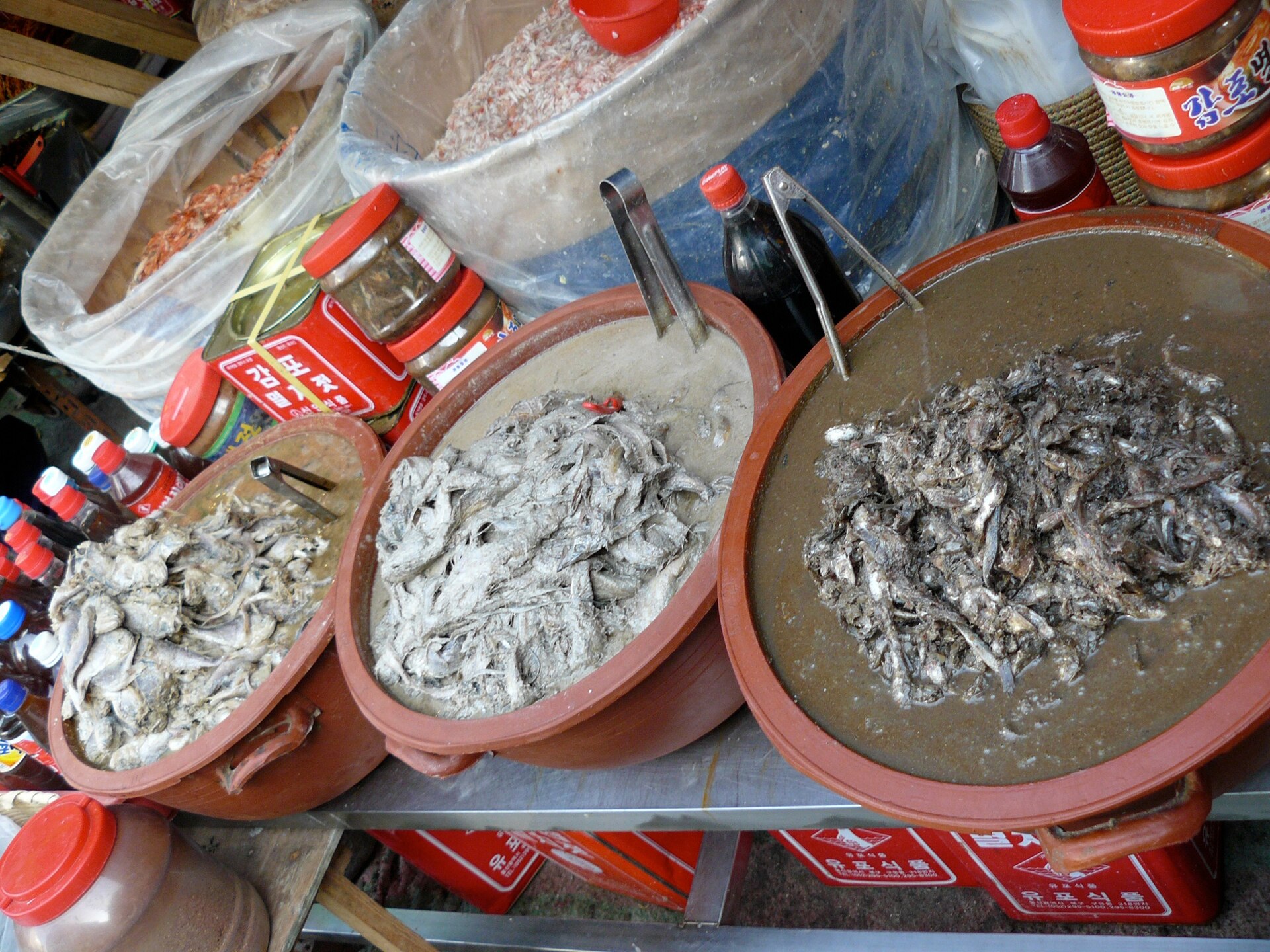
Anchovy broth (멸치 육수) or beef broth is used by default in many restaurants (source: Stripes Korea, citing the Korea Tourism Organization). The famous kimchi contains salted seafood and fish sauces (jeotgal: 젓갈, 새우젓, 액젓), and soft tofu stews (sundubu) often include salted shrimp, saeujeot (새우젓). Unless they’re modified, these dishes are almost never vegetarian, because the animal-based ingredients go in right at the cooking stage.
Cooks often season soups with dashida (다시다) powdered stock, and its beef version (쇠고기 다시다) contains beef extract and tallow. Since October 2022, CJ has also sold a soy-based vegan version (비건 다시다), but restaurants aren’t obliged to use it, so even a “vegetable” soup can have a beef base.
So-called “vegetable” kimbap may contain ham, which you always need to watch out for, as well as egg, which is mainly an issue for vegans. On top of that, according to the travel blog Backpacking Is Life, older generations may not consider spam, ham (햄) or fish to be “meat”, so fish cakes (어묵) or crab sticks (맛살) can easily end up in your roll too – which is why you need to name these ingredients explicitly. What’s more, the word 비건 (vegan) is used broadly in Korea for anyone leaning towards vegetarianism, so “비건” in a restaurant’s name doesn’t necessarily mean strictly vegan.
That’s why I’ve put together a card with phrases in Korean for you – you’ll find it below. Just show it to the staff, and thanks to the list of specific ingredients, they’ll understand what you do and don’t eat.
Rice
Rice dishes are the backbone of eating in Korea. Whether you get them in a bowl or rolled in seaweed, they come loaded with vegetables and look like a vegetarian dream at first glance. The main trap is in the details, though: even in vegetable dishes, cooks automatically add bits of meat or ham, or season the rice with fish sauce or beef stock.
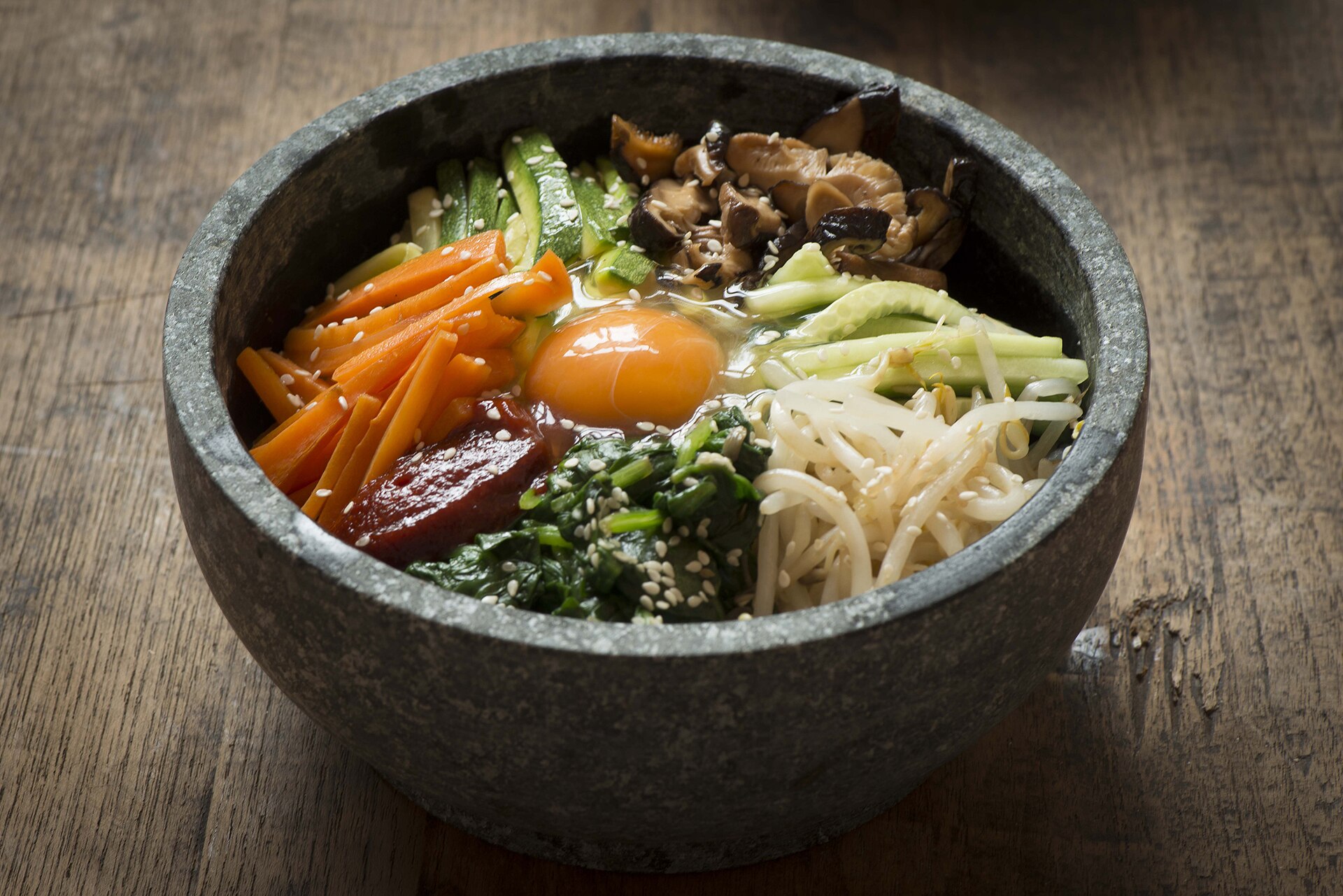
1. Bibimbap (비빔밥)
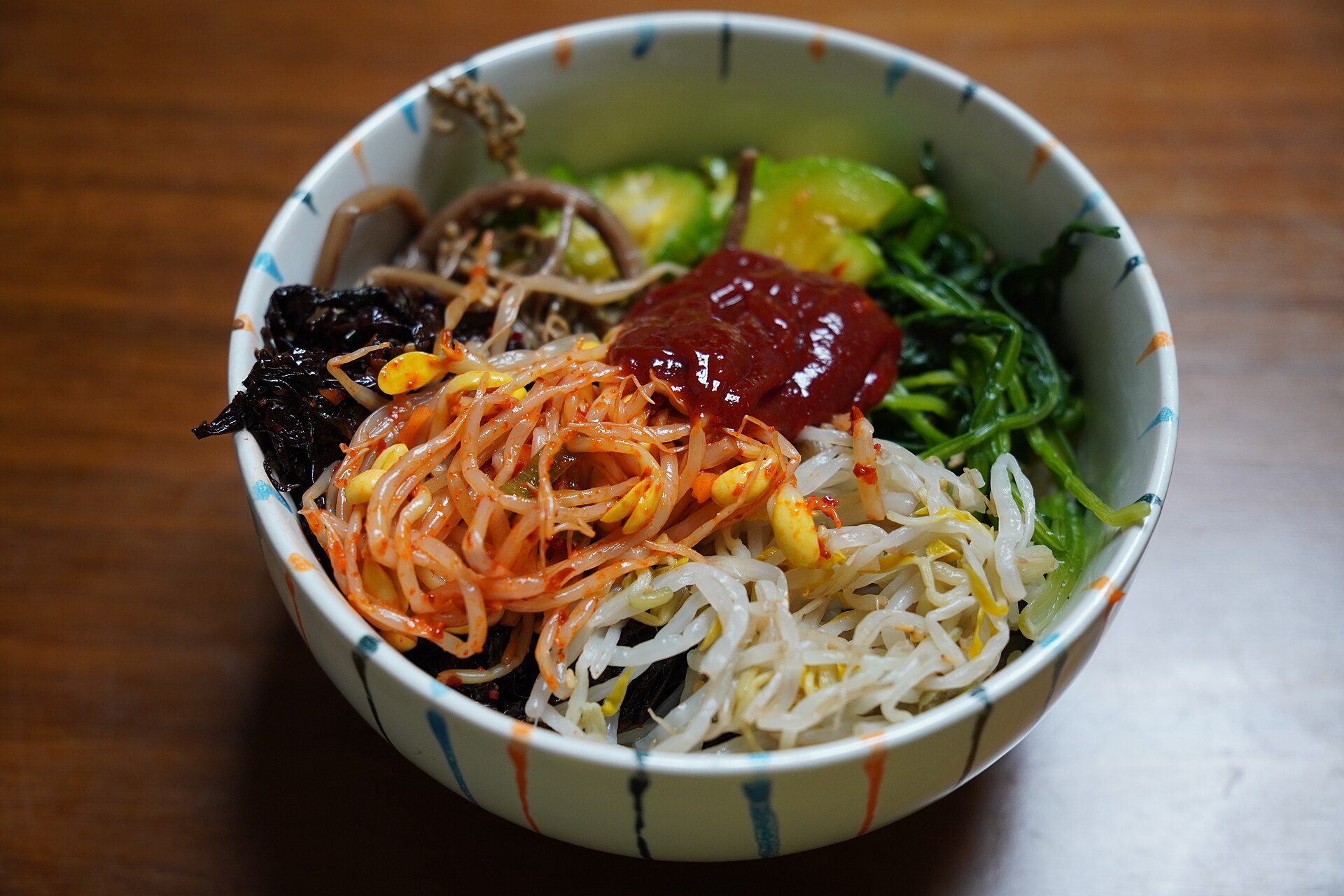
Bibimbap (비빔밥, pronounced bee-bim-bap) is a bowl of rice topped with seasoned vegetables called namul and spicy gochujang paste, usually finished with an egg and beef. It’s mildly to moderately spicy, and in Seoul in September 2026 it cost 12,000 KRW (about €8). The dolsot bibimbap version (돌솥비빔밥, pronounced tol-sot bee-bim-bap) is served in a sizzling hot stone bowl with a raw egg yolk, and the rice at the bottom turns into a crispy crust called nurungji.
What to check: Beef (including raw beef yukhoe), egg, rice cooked in beef stock (the Jeonju version) and fish sauce in the namul or gochujang; yak-gochujang is made with beef.
For vegetarians: Only on request. Ask for it without meat by saying 고기 빼 주세요 (gogi ppae juseyo, pronounced ko-gee peh joo-seh-yo), which means “no meat, please”.
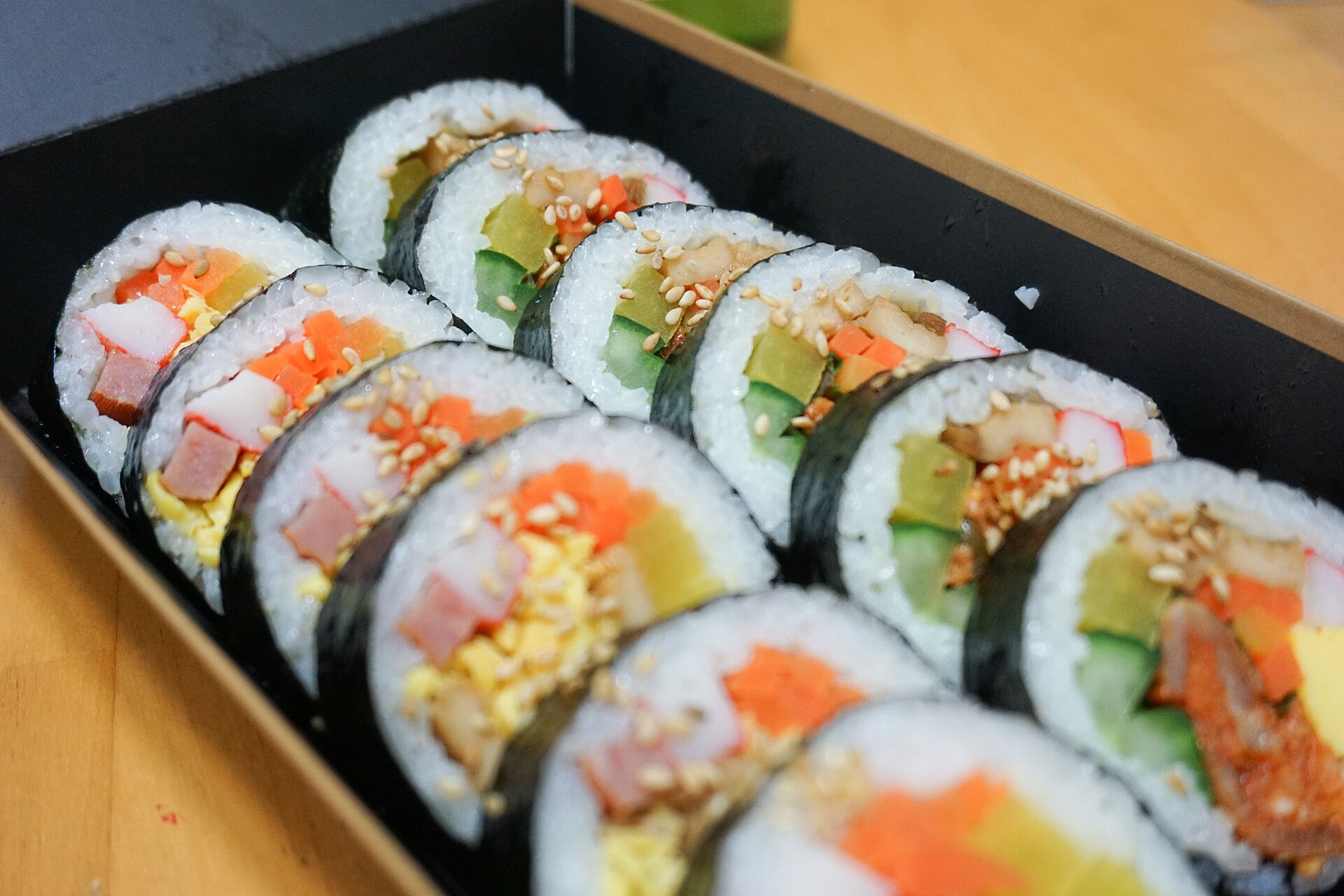
2. Kimbap (김밥)
Kimbap (김밥, pronounced kim-bap) makes a great quick, non-spicy snack. In Seoul in September 2026, one roll cost 3,923 KRW (about €2.60). The rice is rolled in gim seaweed and hides pickled danmuji radish, spinach, carrot, omelette, ham and crab stick. A vegetable version, 야채김밥 (yachae-gimbap, pronounced ya-chae kim-bap), does exist, but even that often comes with ham or fish cake, because Koreans take a rather relaxed view of what counts as “vegetable” 😅.
💡 Tip: In CU, GS25 or 7-Eleven convenience stores, look for triangle kimbap labelled 야채 or “Vegan”, but always read the ingredients: the 야채 label on its own doesn’t guarantee there’s no ham or fish cake inside.
What to check: Even “vegetable” kimbap often contains ham (햄), fish cake (어묵), crab stick (맛살) and egg (계란).
For vegetarians: Only on request: at a snack bar, you’ll need to ask them to leave out the ham, fish cake, crab stick and, if needed, the egg.
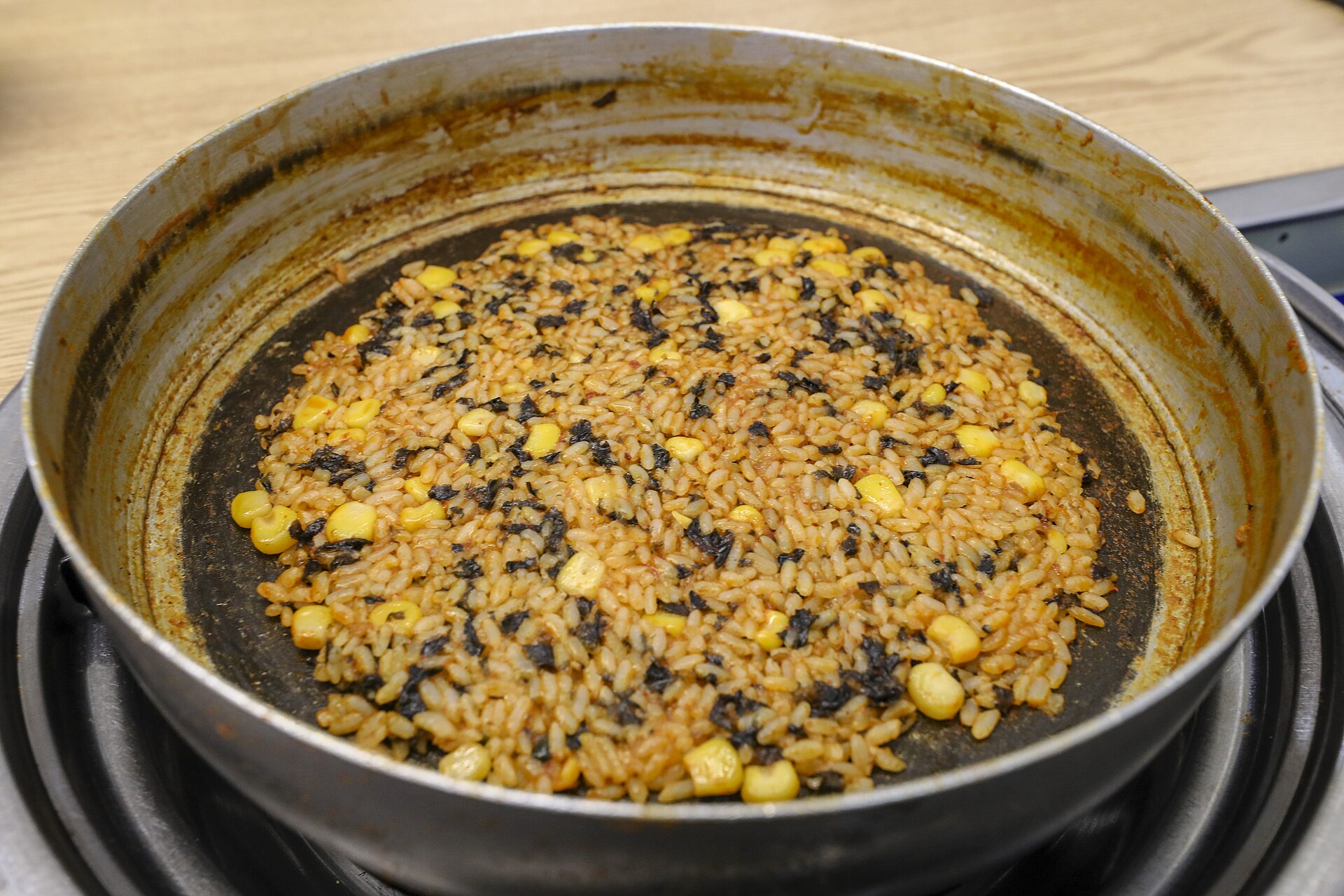
3. Vegetable fried rice (야채볶음밥)
Vegetable fried rice, or yachae-bokkeumbap (야채볶음밥, pronounced ya-chae pok-kum-bap), sounds like a safe harbour for anyone after a non-spicy lunch. It’s rice fried with vegetables and often with egg too, but it comes with a few hidden pitfalls.
What to check: Egg, jjajang sauce (black bean sauce made with pork and lard), the kimchi version with jeotgal (salted seafood) and often pork, Spam or tuna, plus a pan that was used to fry meat beforehand.
For vegetarians: Only on request: ask the cook to make it without meat and without jjajang sauce.
Noodles
Korean noodles range from glass noodles made from starch to icy summer soups and fiery instant bowls. For vegetarians, this category is a minefield, because most dishes are built on anchovy, beef or seafood stock, or on a sauce made with pork lard.
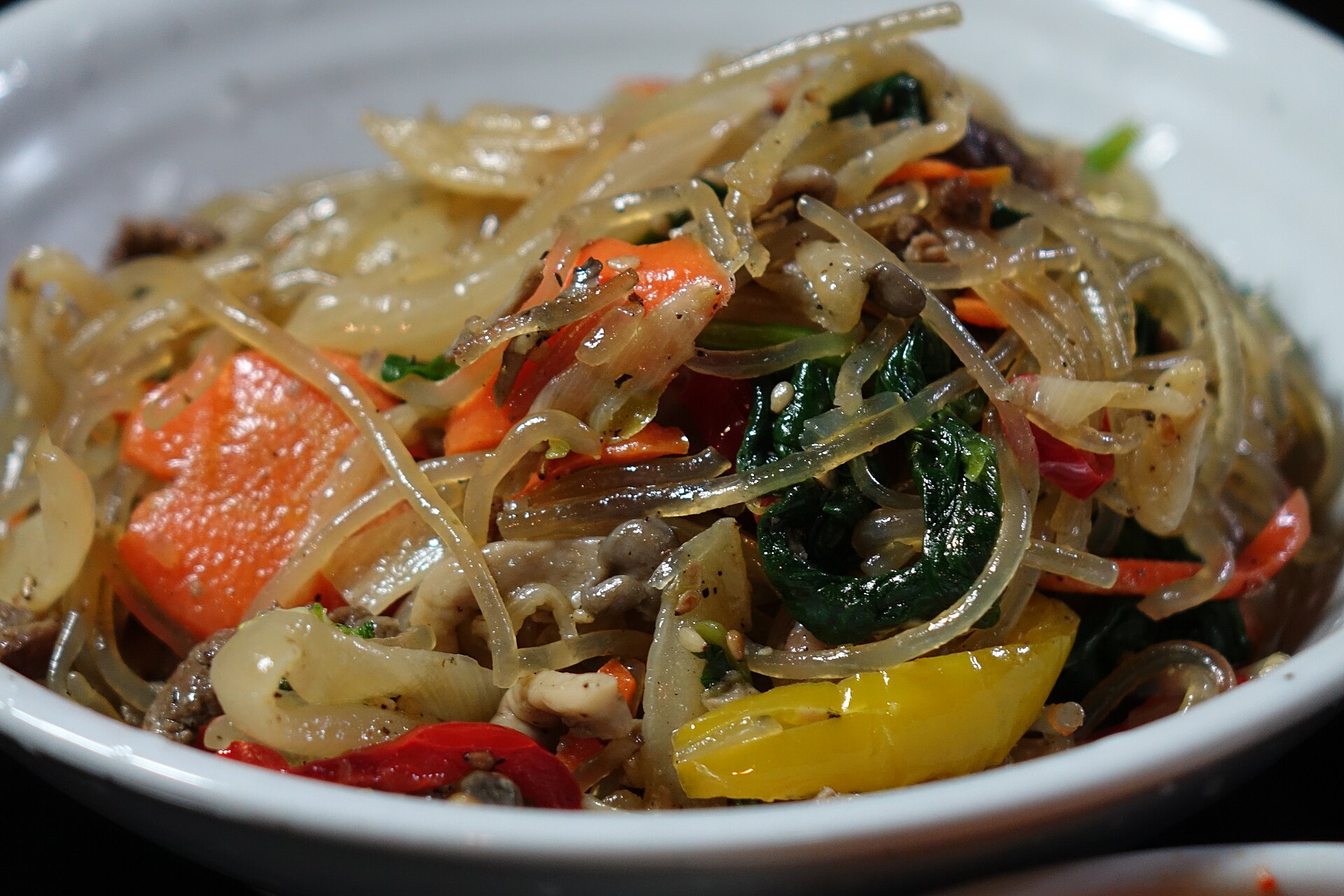
4. Japchae (잡채)
The name japchae (잡채, pronounced chap-cheh) means “mixed vegetables”, yet these days it usually comes with meat. The base is non-spicy glass noodles made from sweet potato starch, tossed with vegetables, mushrooms, meat, soy sauce and sesame.
What to check: Beef or pork, strips of egg and oyster sauce.
For vegetarians: Only on request: arrange for it to be made without meat, egg and oyster sauce.
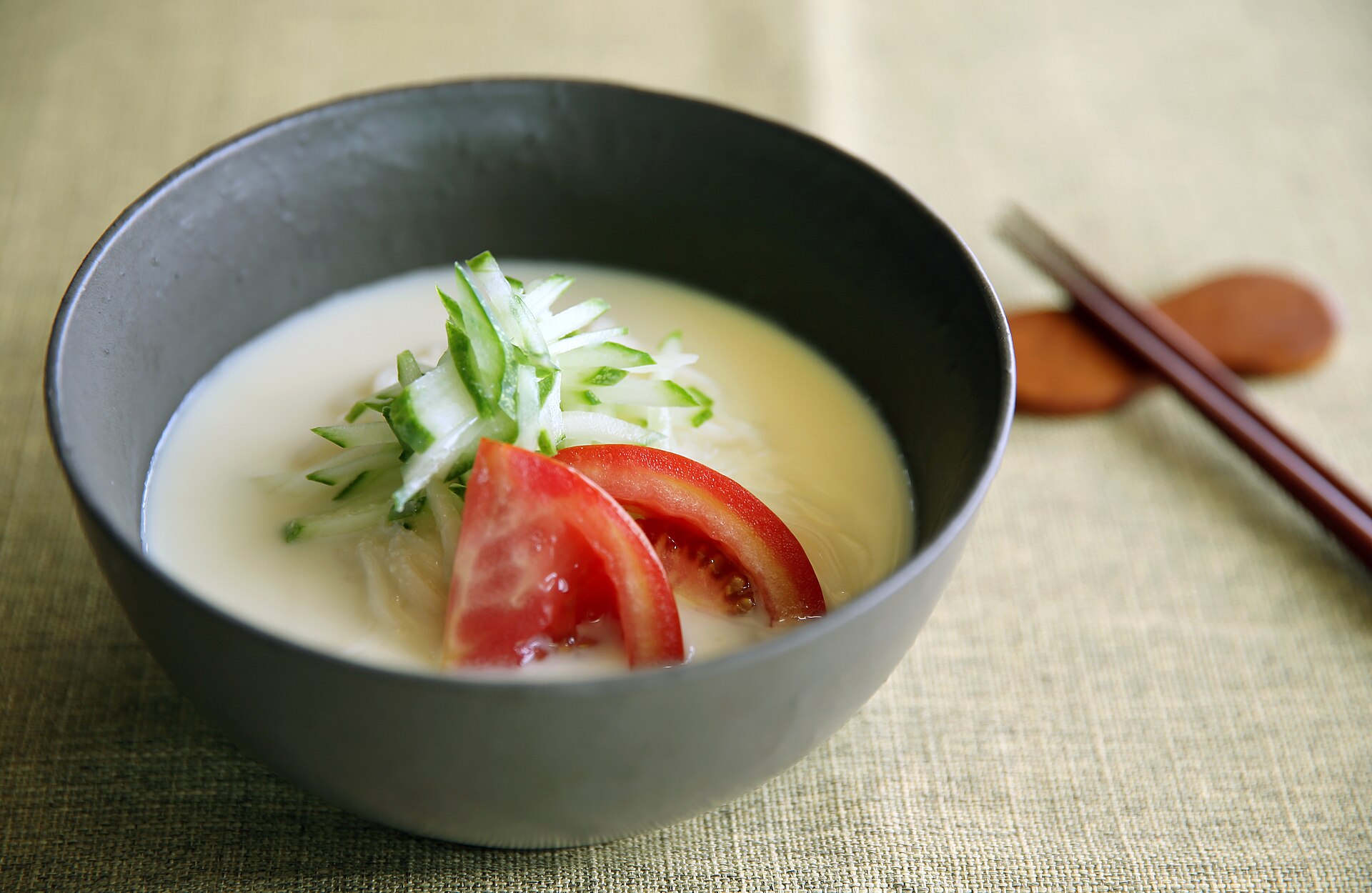
5. Kongguksu (콩국수)
In the warmer months, kongguksu (콩국수, pronounced kong-gook-soo) is the safest restaurant dish in this part of the guide, but you’ll only come across it in summer. It’s a non-spicy summer dish where the noodles are served in a chilled “milk” made from ground soybeans.
What to check: An egg garnish and the noodles themselves, which may contain egg.
For vegetarians: Usually vegetarian, and without the egg it’s vegan too.
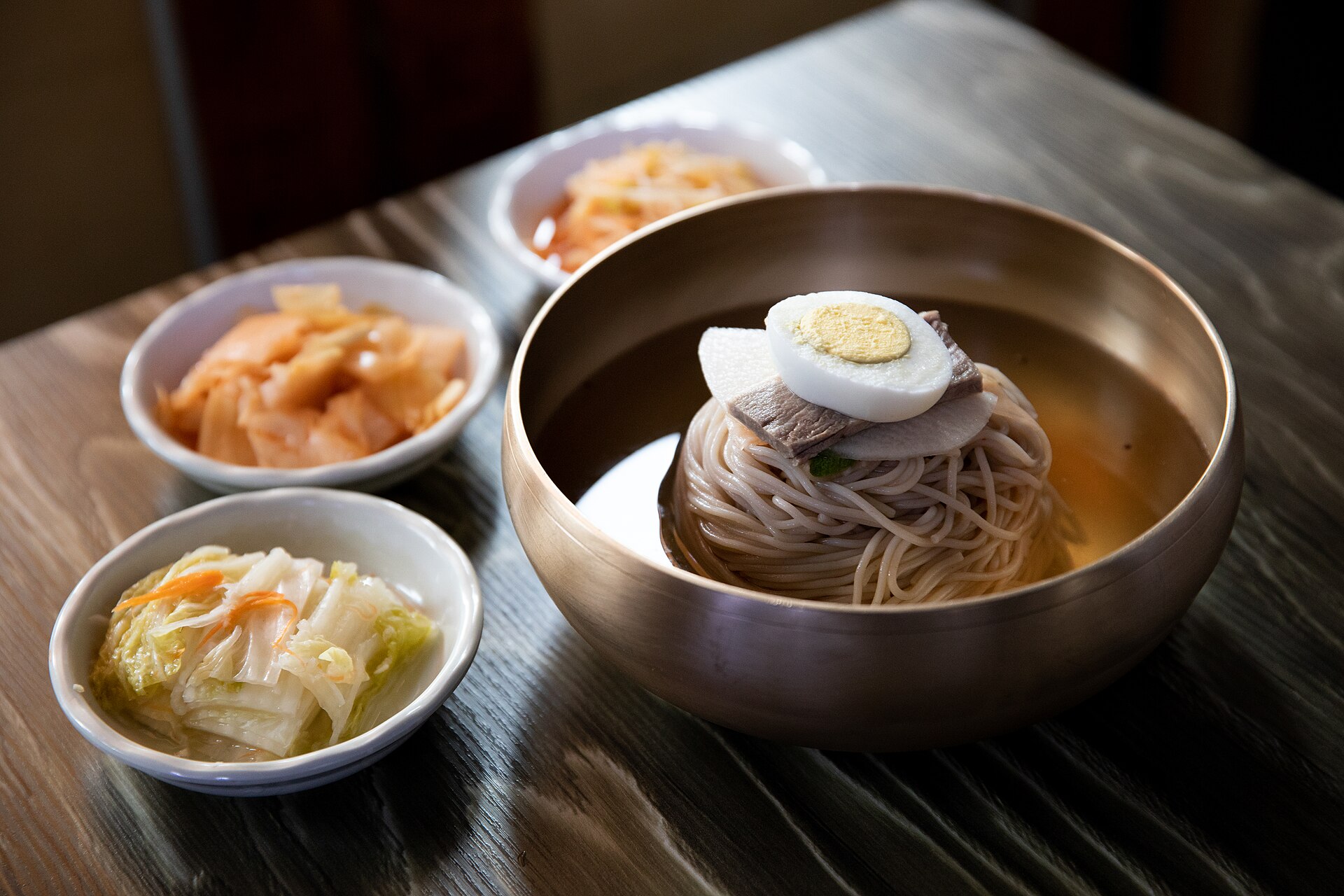
6. Naengmyeon (냉면)
Naengmyeon (냉면, pronounced neng-myun) buckwheat noodles, which cost 12,692 KRW (about €8.50) in Seoul in September 2026, are topped with egg and beef. The mul naengmyeon (물냉면) version is served in an ice-cold broth made from beef, chicken or dongchimi (the brine from pickled radish), and ranges from non-spicy to mildly spicy. Bibim naengmyeon (비빔냉면) comes with a spicy sauce and is spicy to very spicy.
What to check: The broth is mostly beef-based; with bibim naengmyeon, the broth is served separately in a bowl, and the spicy sauce may contain fish sauce.
For vegetarians: Almost never vegetarian. Bibim without beef and egg is possible, but the sauce makes it a gamble.
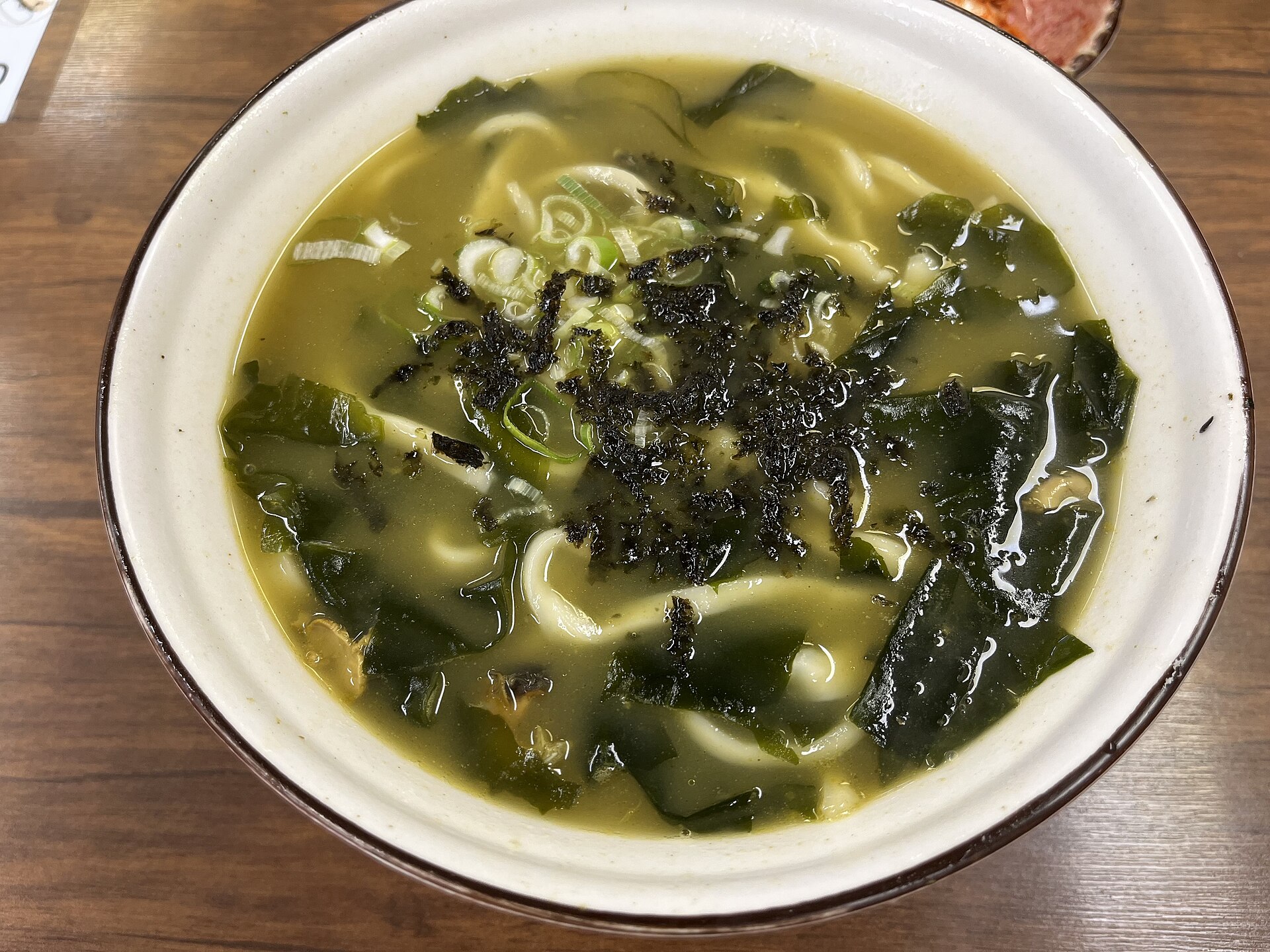
7. Kalguksu (칼국수)
The non-spicy noodle soup kalguksu (칼국수, pronounced kal-gook-soo) cost 10,038 KRW (about €6.70) in Seoul in September 2026. It’s made with hand-cut noodles of flour and egg, served in a broth of anchovies, clams and kombu seaweed.
What to check: 멸치육수 (anchovy stock), haemul (seafood) and dak (chicken).
For vegetarians: Almost never vegetarian, because the base is a stock made from anchovies, clams or meat.
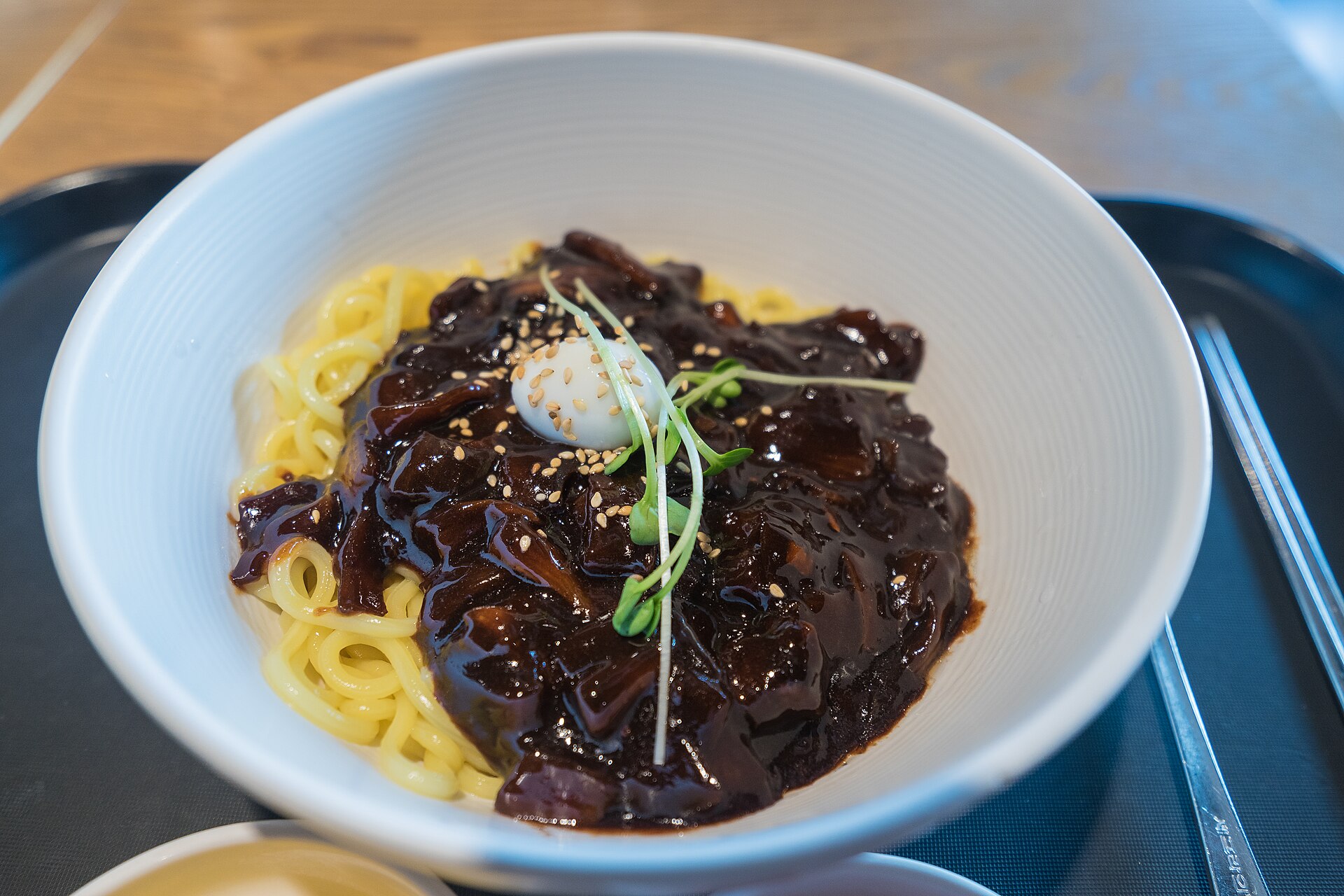
8. Jjajangmyeon (짜장면)
Jjajangmyeon (짜장면, pronounced jja-jang-myun), non-spicy Korean-Chinese noodles, cost a pleasant 7,808 KRW (about €5.20) in Seoul in September 2026. The noodles are smothered in a sauce made from chunjang black bean paste with pork.
What to check: Pork and pork lard (라드).
For vegetarians: Almost never vegetarian because of the pork and lard in the sauce.
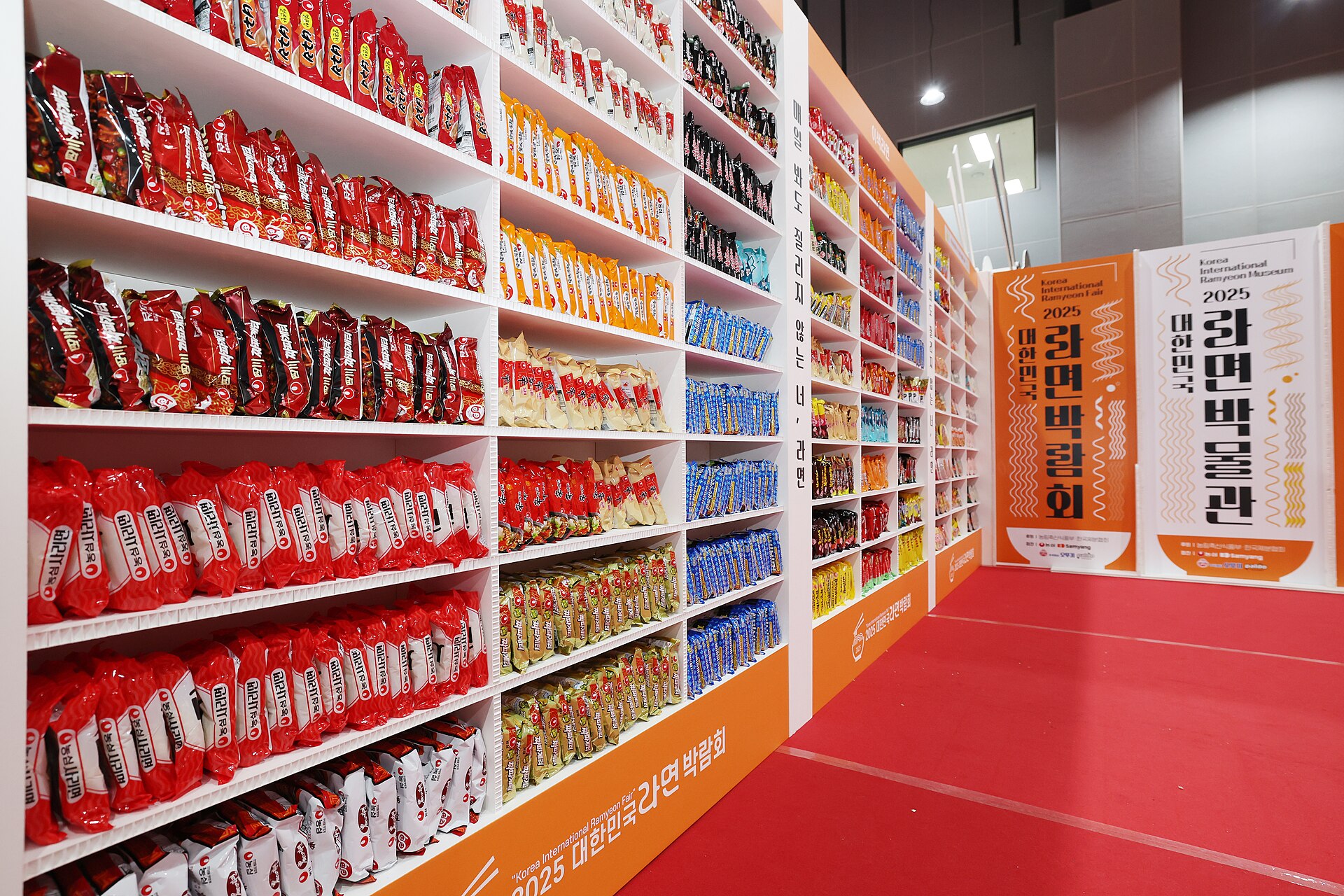
9. Ramyeon (라면)
Ramyeon (라면, pronounced ra-myun) instant noodles are spicy to very spicy, and snack bars make them with egg and cheese. In shops, look for certified plant-based packs, such as Ottogi 채황 (certified by The Vegan Society, 100% plant-based, September 2022, according to the Korean site vegannews.co.kr) or Samyang 맛있는라면 비건 ☺️, and always double-check the certification on the packaging.
What to check: Seasoning powder containing beef or fish.
For vegetarians: Almost never vegetarian at a snack bar; from a shop, only with a certificate.
Soups and jjigae
Together with a bowl of rice, Korean soups and jjigae stews form the heart of a local meal. In ordinary restaurants, though, they’re tricky for vegetarians, because they’re built on anchovy stock or salted shrimp.
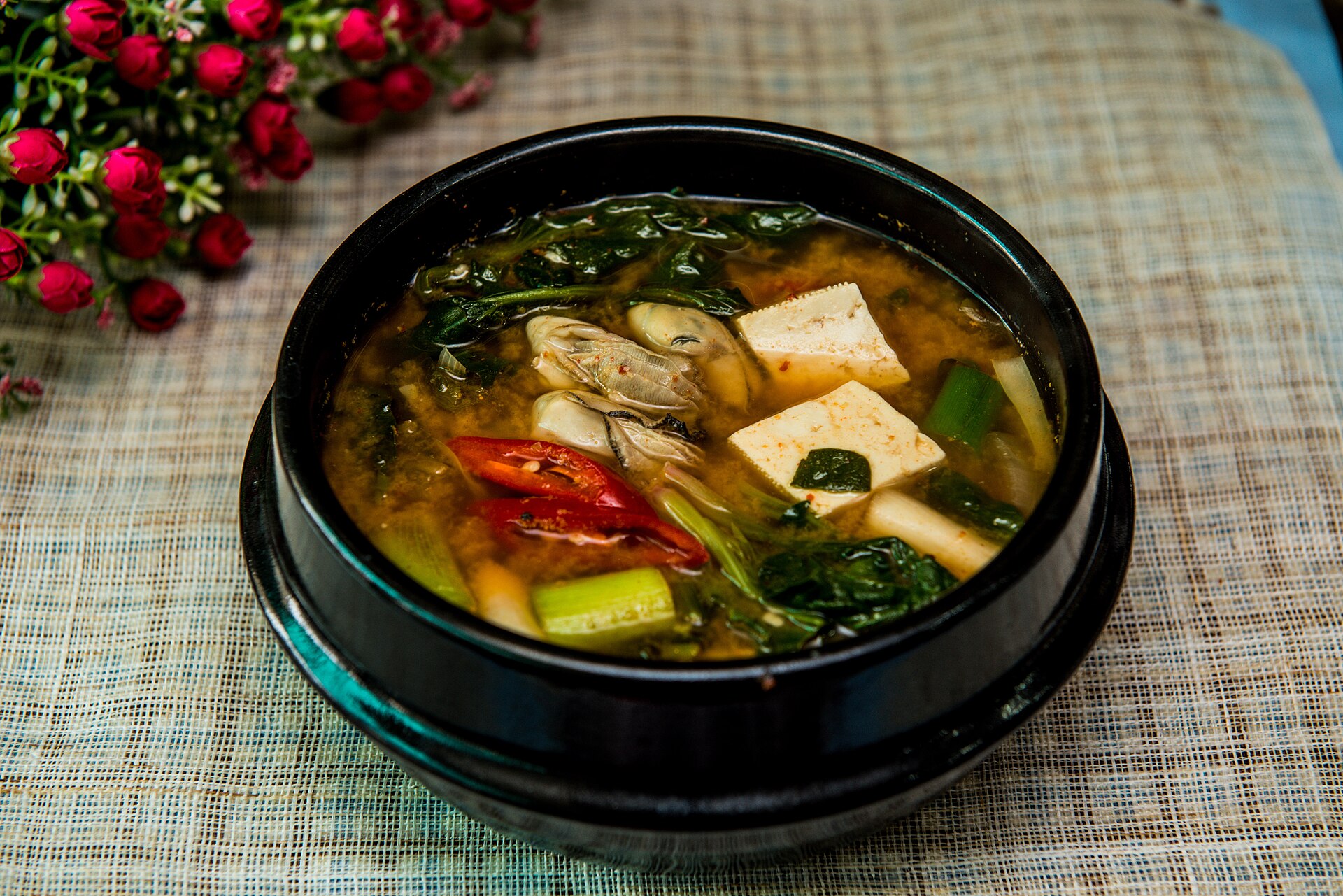
10. Doenjang jjigae (된장찌개)
Doenjang jjigae (된장찌개, pronounced twen-jang jji-geh) is a mildly spicy stew made from doenjang soybean paste, often described as one of Korea’s “national” dishes. It contains radish, courgette, potatoes and tofu, but it’s cooked on an anchovy base and often includes shrimp, clams or pieces of beef brisket.
What to check: 멸치육수 (anchovy stock) is used by default; also look out for 차돌 (beef), 바지락 (clams), 새우 (shrimp) and the seasoning 다시다. In BBQ restaurants, doenjang jjigae is also often cooked with beef.
For vegetarians: Almost never vegetarian, unless you explicitly ask for 채소육수 (vegetable stock) or eat at a temple or vegan restaurant.
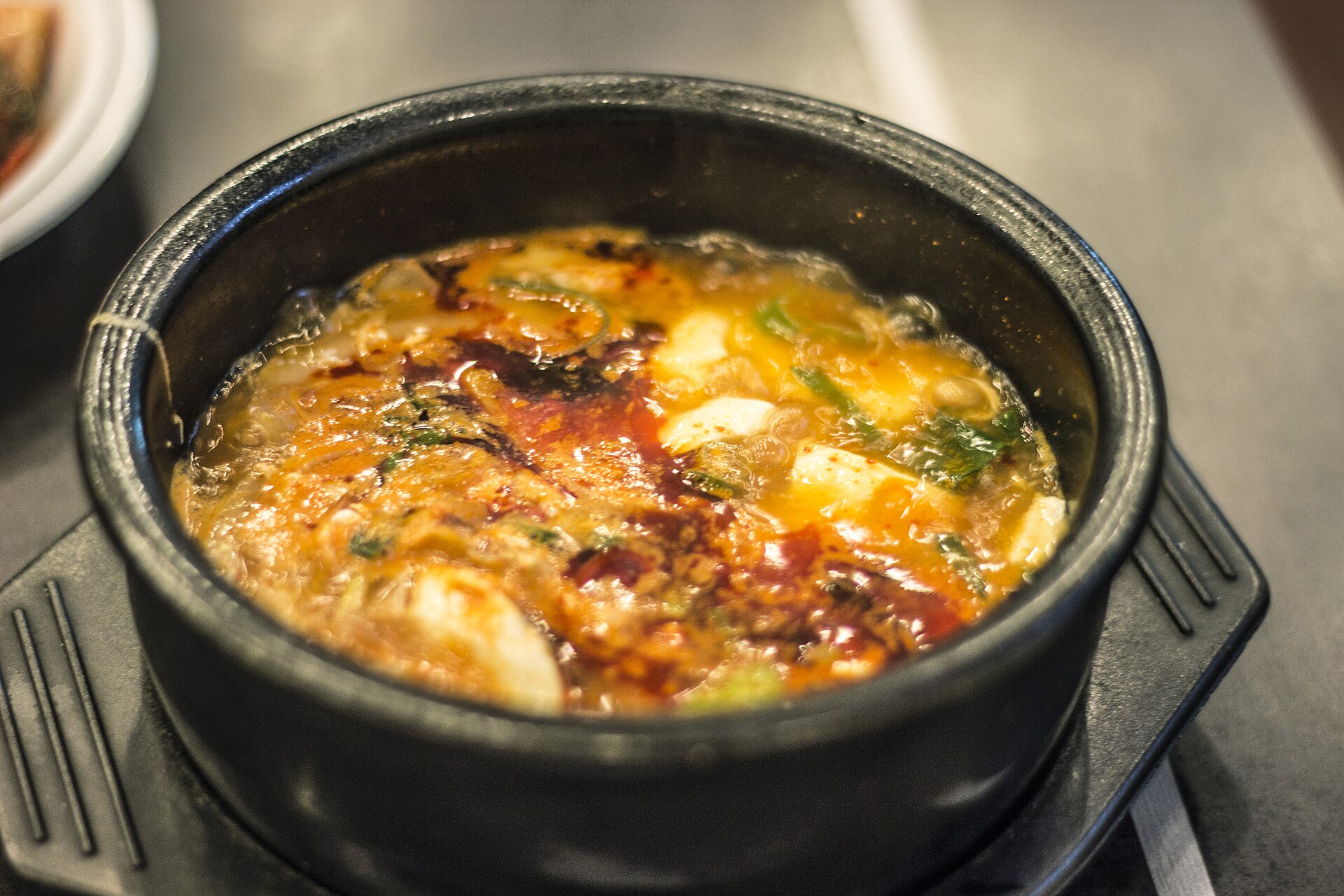
11. Sundubu jjigae (순두부찌개)
Sundubu jjigae (순두부찌개, pronounced soon-doo-boo jji-geh) is spicy to very spicy and tempts you with silky soft tofu, vegetables, chilli and a raw egg. Seafood or meat can also be added as an option.
What to check: The stock (anchovy, beef, seafood), salted shrimp 새우젓 (saeujeot) and egg.
For vegetarians: Almost never vegetarian, because the base is usually a meat or fish stock plus salted shrimp.
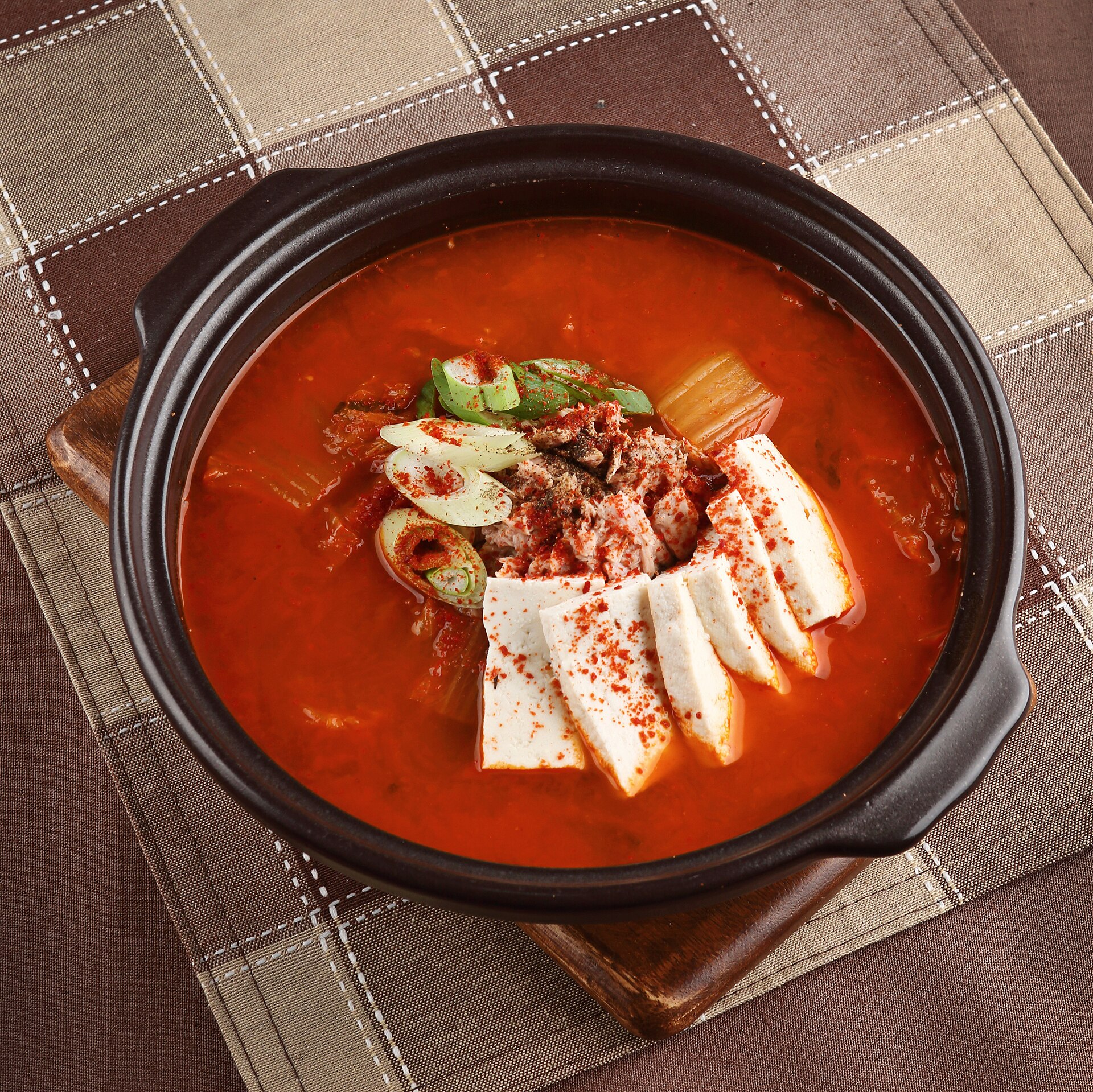
12. Kimchi jjigae (김치찌개)
The spicy to very spicy kimchi jjigae (김치찌개, pronounced kim-chee jji-geh) cost 8,846 KRW (about €5.90) in Seoul in September 2026 for a set with rice and banchan. It’s made from well-fermented kimchi and tofu, and locals eat it with pork or tuna.
What to check: Meat or tuna, jeotgal in the kimchi and anchovy stock.
For vegetarians: Almost never vegetarian, since on top of the meat and stock, there’s a fish ingredient in the kimchi itself.
Street food
Street food is where vegetarians run into the most traps, because you can’t see what’s in the ready-made sauces and broths at the stalls. If you don’t eat meat, you’ll probably love the sweet pancakes, but the savoury dishes are trickier. That’s why for every item I list what to check.
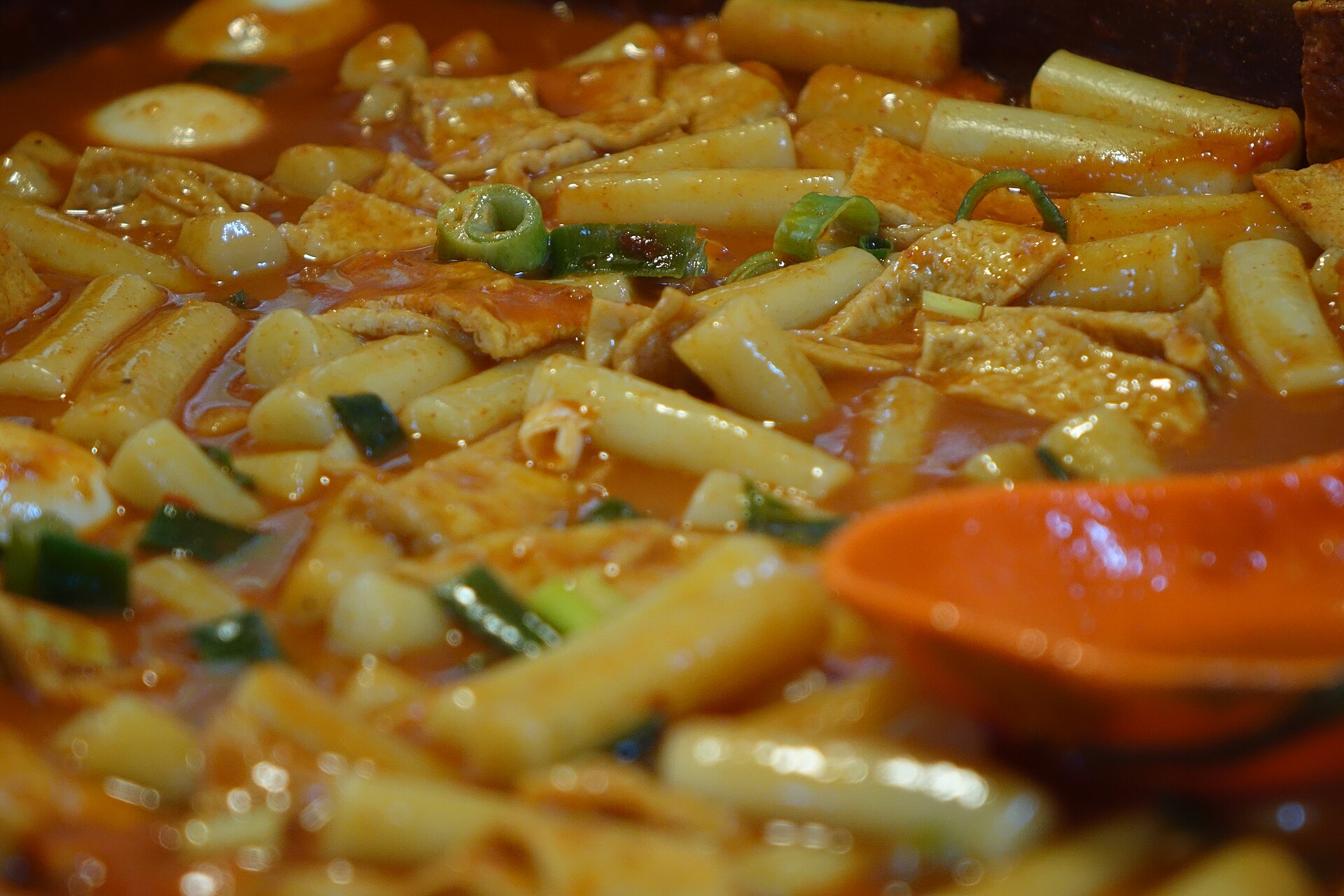
13. Tteokbokki (떡볶이)
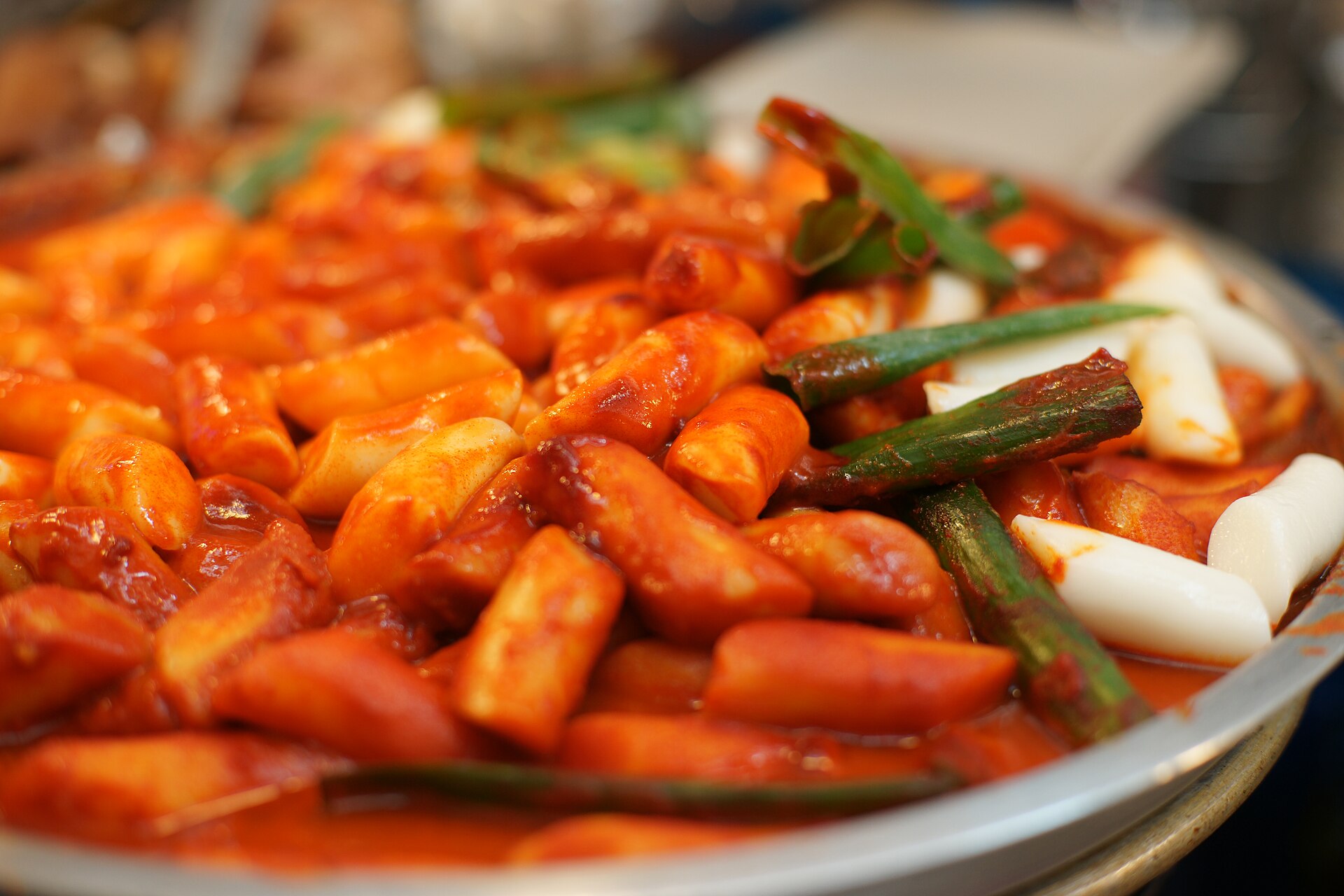
Tteokbokki (떡볶이, pronounced tteok-bok-ki) are cylinders of rice flour dough (tteok) simmered in a spicy sauce made from gochujang paste. They’re one of the best-known street foods, and they range from spicy to very spicy. The sauce often has fish cakes and eggs floating in it, and the base is a broth made from kombu seaweed and anchovies. So even without any pieces of fish, you’re still eating a sauce made with fish stock – which means a stall selling this classic probably isn’t for you.
What to check: Eomuk (fish cake) cooked right in the sauce, 멸치육수 (anchovy stock), eggs, dashida (stock powder).
For vegetarians: Almost never vegetarian, because at street stalls it contains fish stock, and you’ll only find vegan versions in vegan restaurants.
14. Hotteok (호떡)
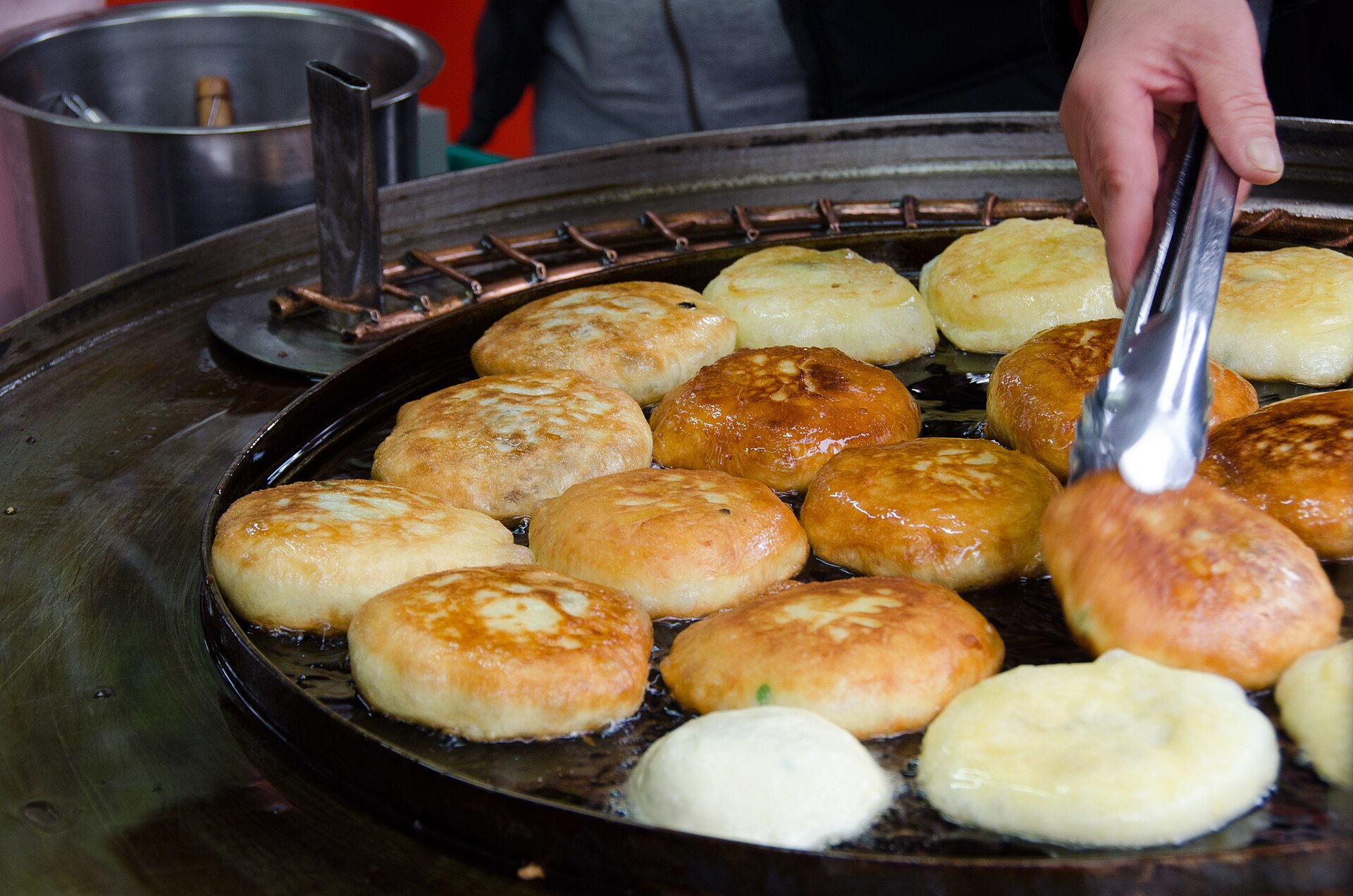
The sweet yeasted pancake 호떡 (pronounced ho-tteok) isn’t spicy at all, and the dough is made from flour, water, milk and yeast. It’s filled with brown sugar, nuts and cinnamon, sometimes honey, and in Busan you’ll find ssiat hotteok packed with seeds.
What to check: Milk in the dough, honey, the fat on the griddle; the savoury japchae-hotteok version may contain meat.
For vegetarians: Usually vegetarian, but not vegan, since the dough tends to contain milk and the filling honey.
15. Bungeoppang (붕어빵)
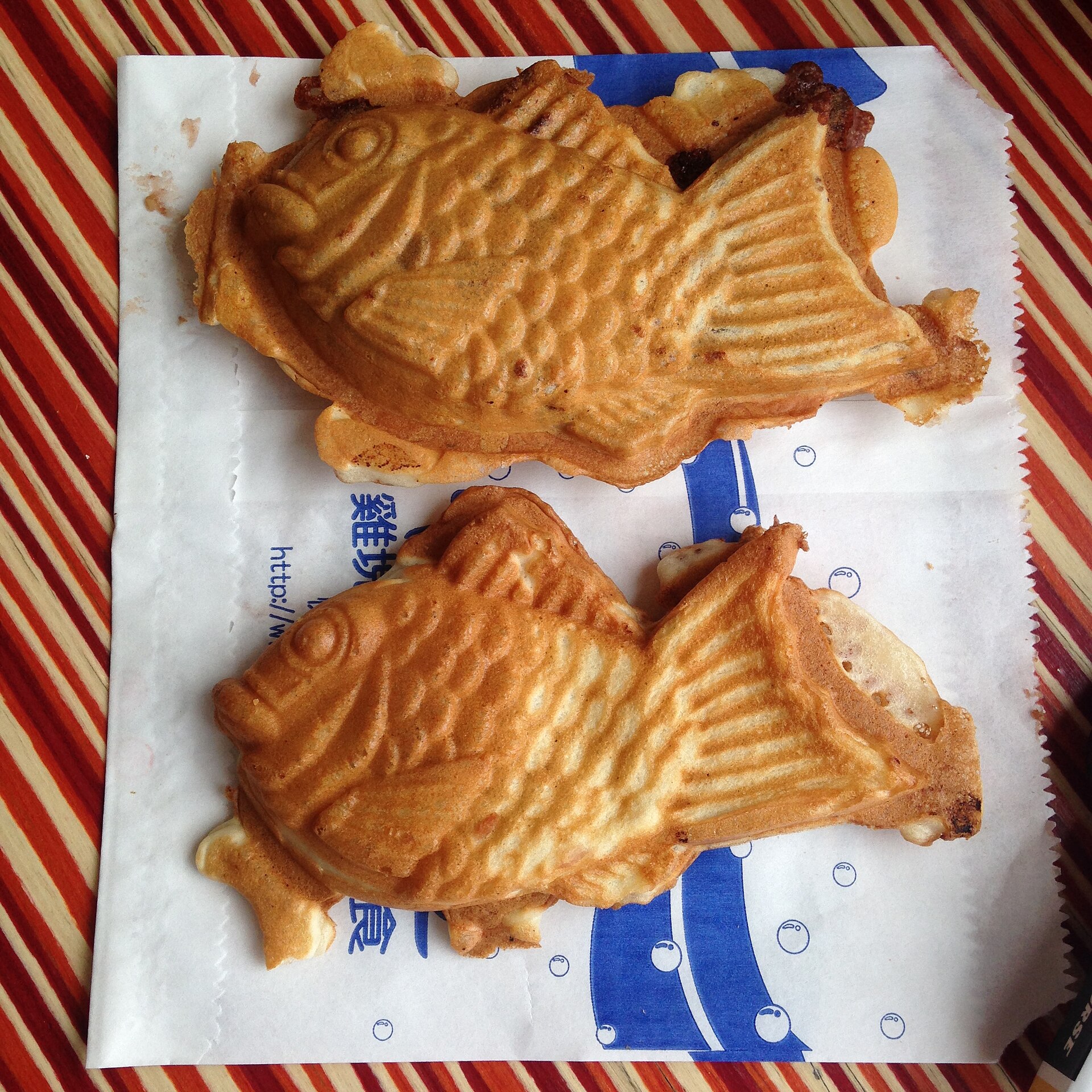
The fish-shaped pastry 붕어빵 (pronounced bung-eo-ppang) is a non-spicy sweet treat, and I want to stress that it contains no fish whatsoever – it’s only the shape, so don’t panic. Inside the batter there’s usually red bean paste or custard. In autumn 2025 it cost around 1,000 KRW (about €0.65) apiece, climbing to as much as 1,500 KRW at Gwangjang Market.
What to check: Batter made with milk and eggs, custard filling with egg, and the “pizza” filling may contain ham.
For vegetarians: Usually vegetarian, but not vegan, as both the batter and the custard filling often contain milk and eggs.
Pancakes
Savoury Korean pancakes look tempting, especially when you can see loads of spring onions or sprouts in them. With the spring onion pancake, a little care when ordering is all it takes, but the mung bean one is best avoided at the markets.
16. Pajeon (파전)
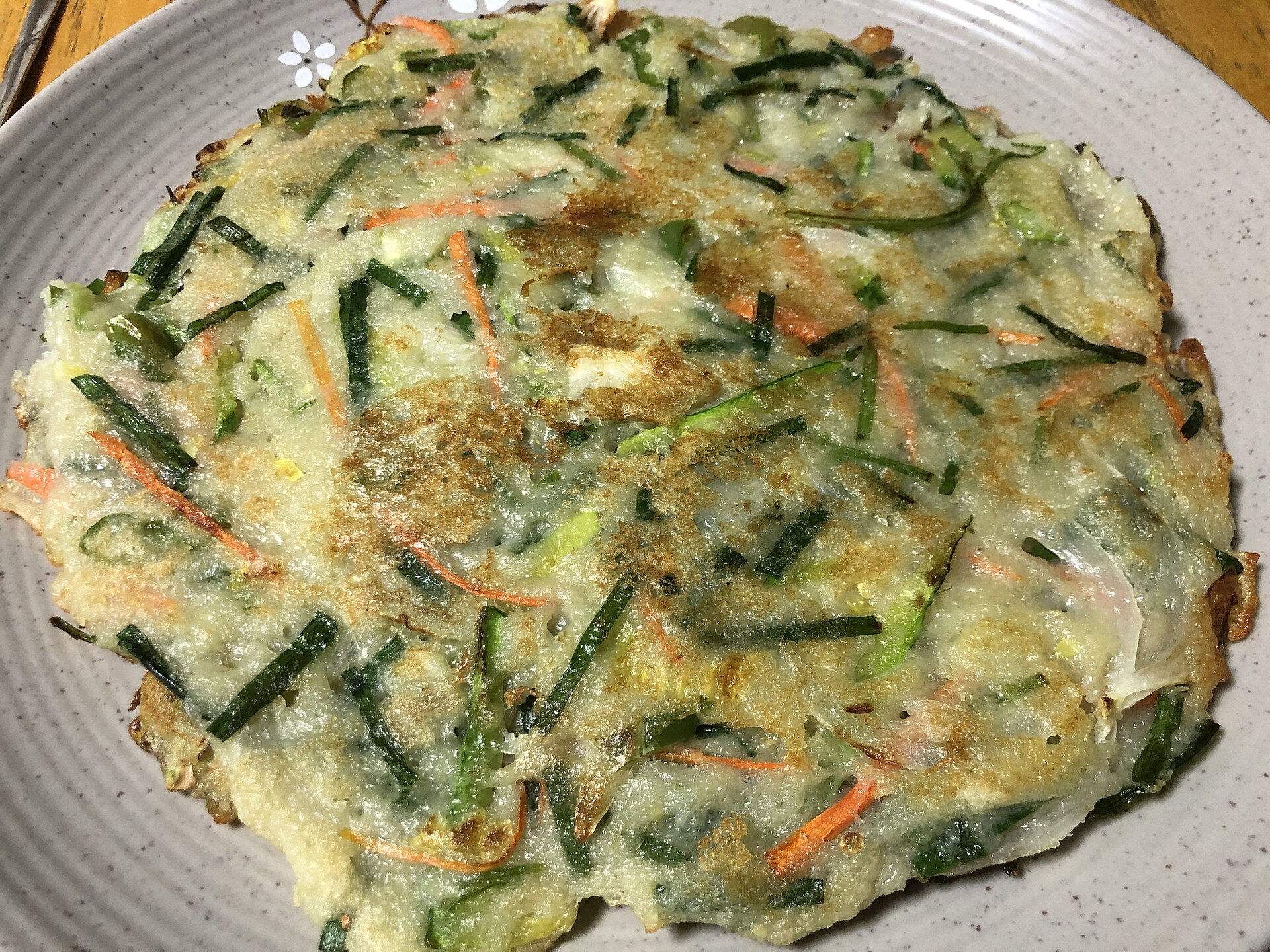
The savoury pancake 파전 (pronounced pa-jeon) is a non-spicy dish of spring onions (pa) held together by an egg batter. Haemul-pajeon is the seafood version. The cho-ganjang dipping sauce is usually fine, and locals like to pair the pancake with makgeolli rice wine, which I write about below.
What to check: Eggs, seafood, meat.
For vegetarians: Only on request: plain pajeon usually contains egg, which is fine for lacto-ovo vegetarians – just ask about meat and seafood. Haemul-pajeon, the seafood version, isn’t vegetarian.
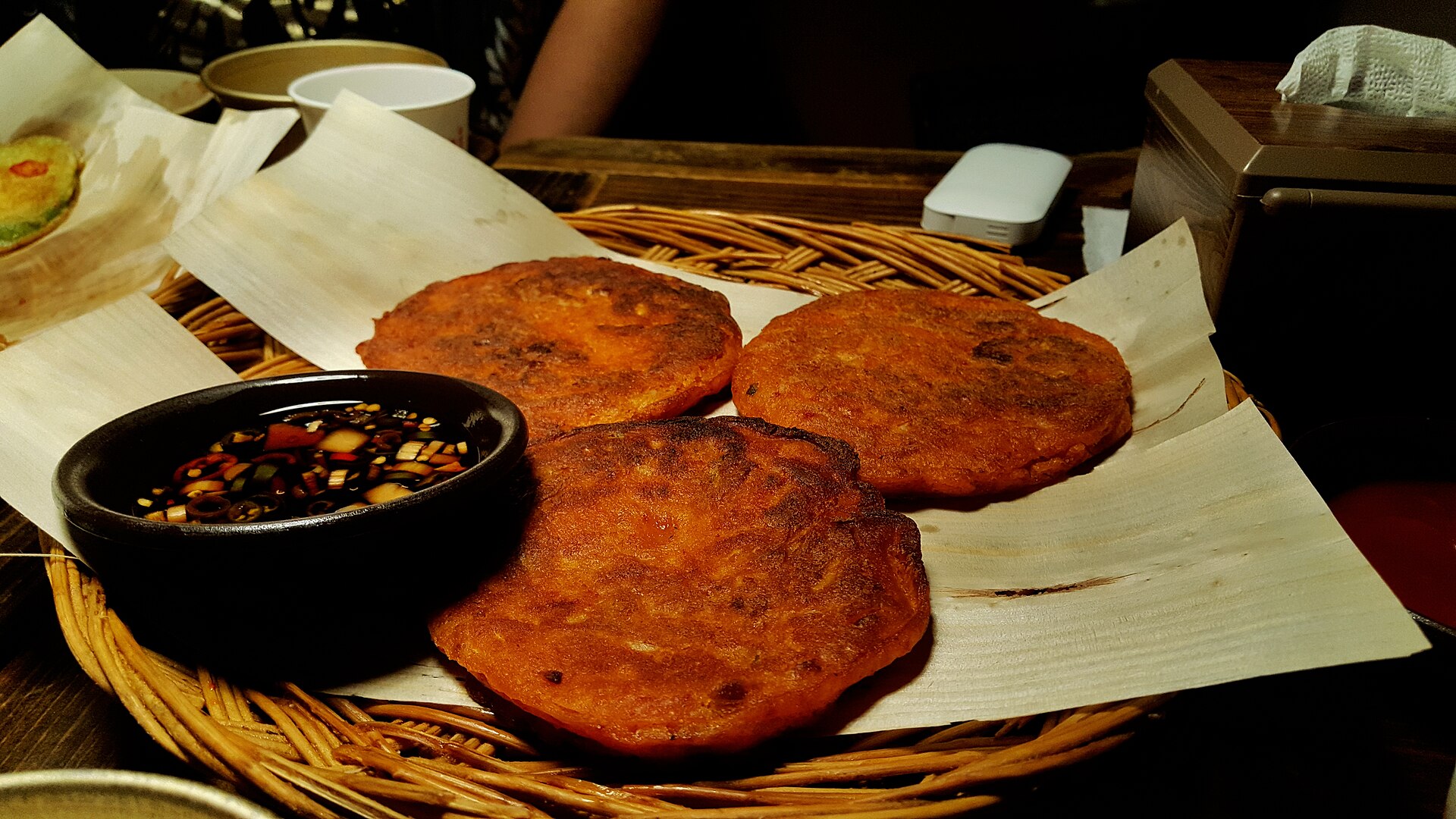
17. Bindaetteok (빈대떡)
The pancake 빈대떡 (pronounced bin-dae-tteok) is a non-spicy to mildly spicy dish made from ground mung beans, sprouts, fernbrake, pork and kimchi. There is a meat-free version (녹두전), but you have to ask for it specifically. At Gwangjang Market, though, the meat pancakes are fried on the same griddle, so nobody can guarantee it’s clean. That’s why I don’t recommend bindaetteok and am only describing it here 😅.
What to check: Pork in the batter, kimchi with fish sauce, the shared griddle at Gwangjang Market.
For vegetarians: Almost never vegetarian, because it normally contains both pork and kimchi made with fish sauce.
Banchan: side dishes that get refilled
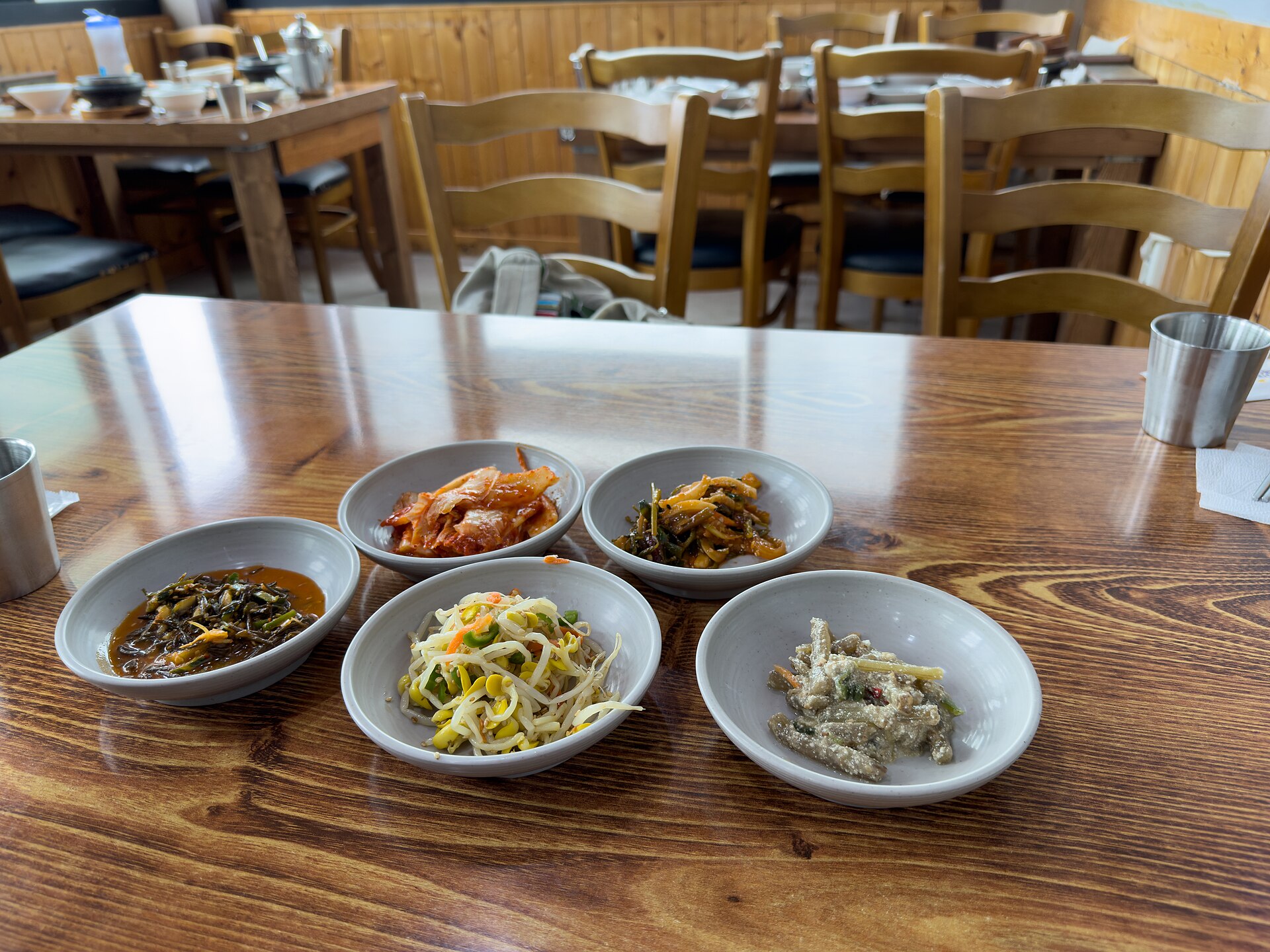
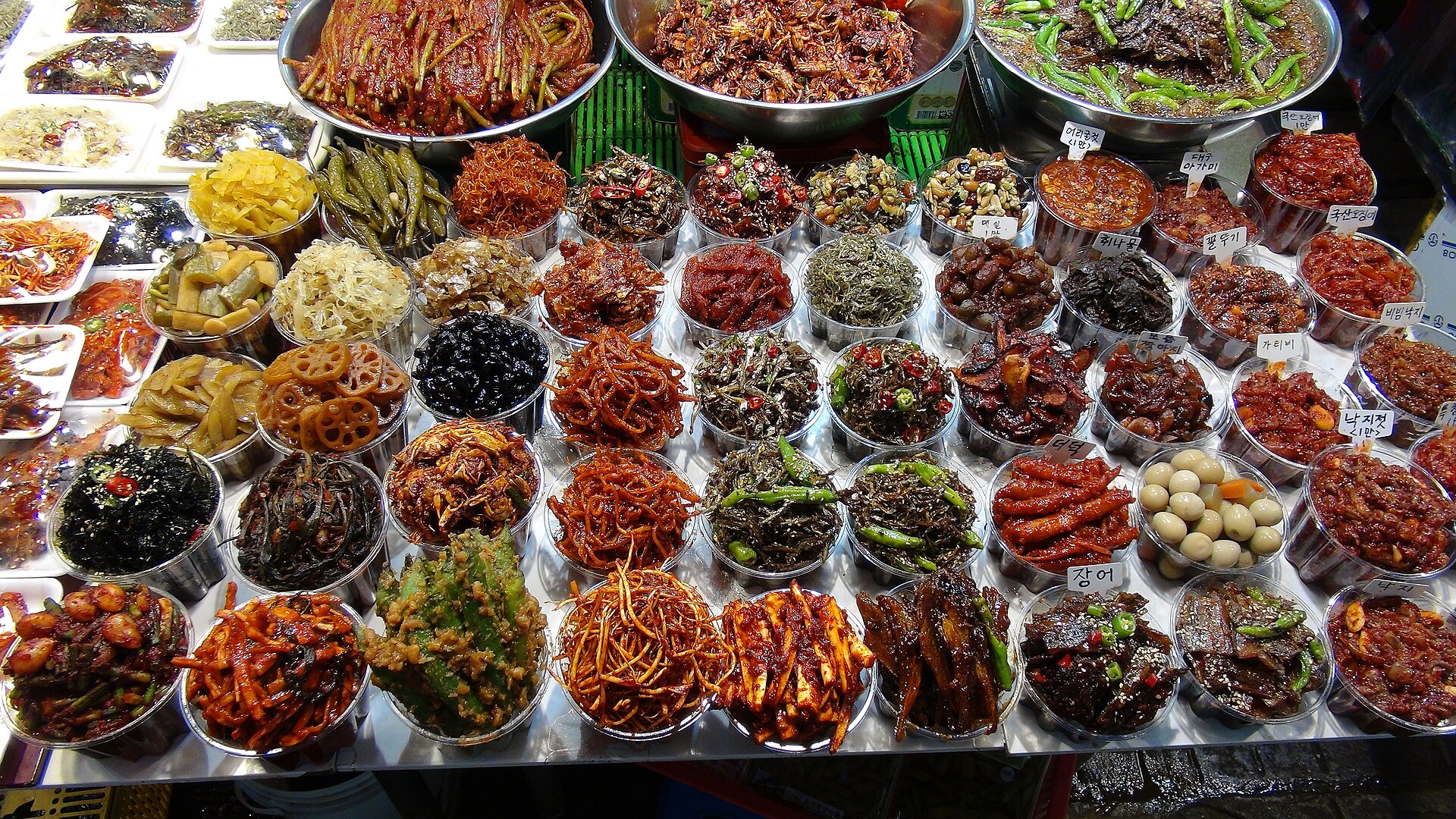
Along with your main course in a restaurant, you’ll get little bowls of side dishes called banchan, which are refilled on request. Vegetarians should stay alert here, because right next to the spinach there’s often fermented cabbage full of hidden seafood.
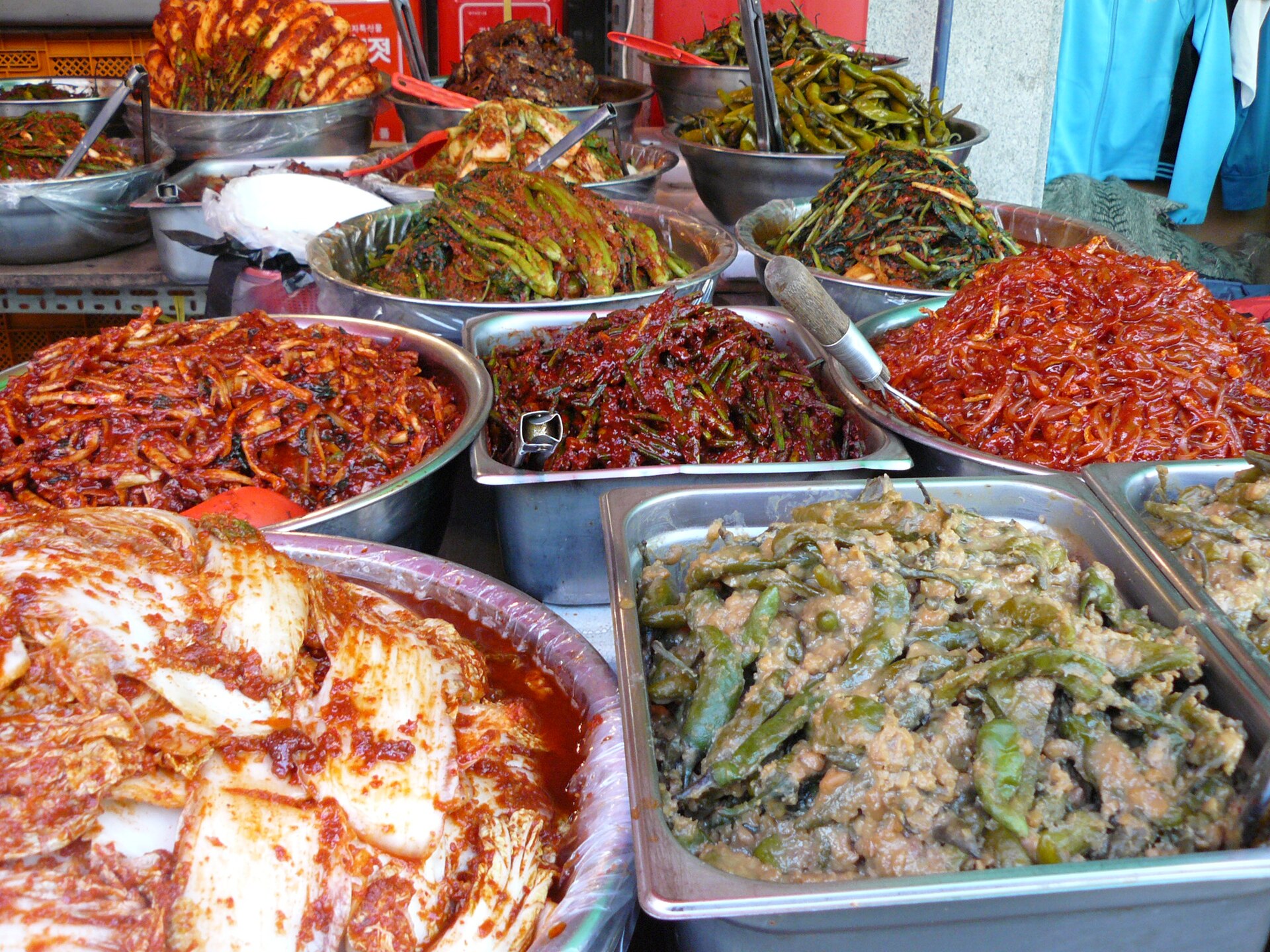
18. Kimchi (김치)
Fermented napa cabbage or radish, 김치 (pronounced gim-chi), is a spicy side dish (the white baek-kimchi isn’t spicy). Besides gochugaru chilli flakes, garlic and ginger, it gets jeotgal, which means salted seafood. In practice, that’s salted anchovies (멸치젓), salted shrimp (새우젓) or anchovy fish sauce (멸치액젓).
If you’re wondering about the common question of whether kimchi without fish sauce exists – yes, it does, just not in a regular restaurant. According to the magazine hansik.or.kr (2022), temple kimchi is made without garlic, spring onions or jeotgal. In shops, look for the label 비건 김치 (vegan kimchi), but always check the ingredients: Pulmuone 비건김치, for example, contains no jeotgal, but it’s produced on a line shared with seafood and no certification is listed. Regular Jongga kimchi contains 멸치액젓 and 새우액젓.
What to check: 젓갈, 액젓 and 새우젓 are almost always in regular kimchi.
For vegetarians: Almost never vegetarian, because in restaurants it contains jeotgal or fish sauce.
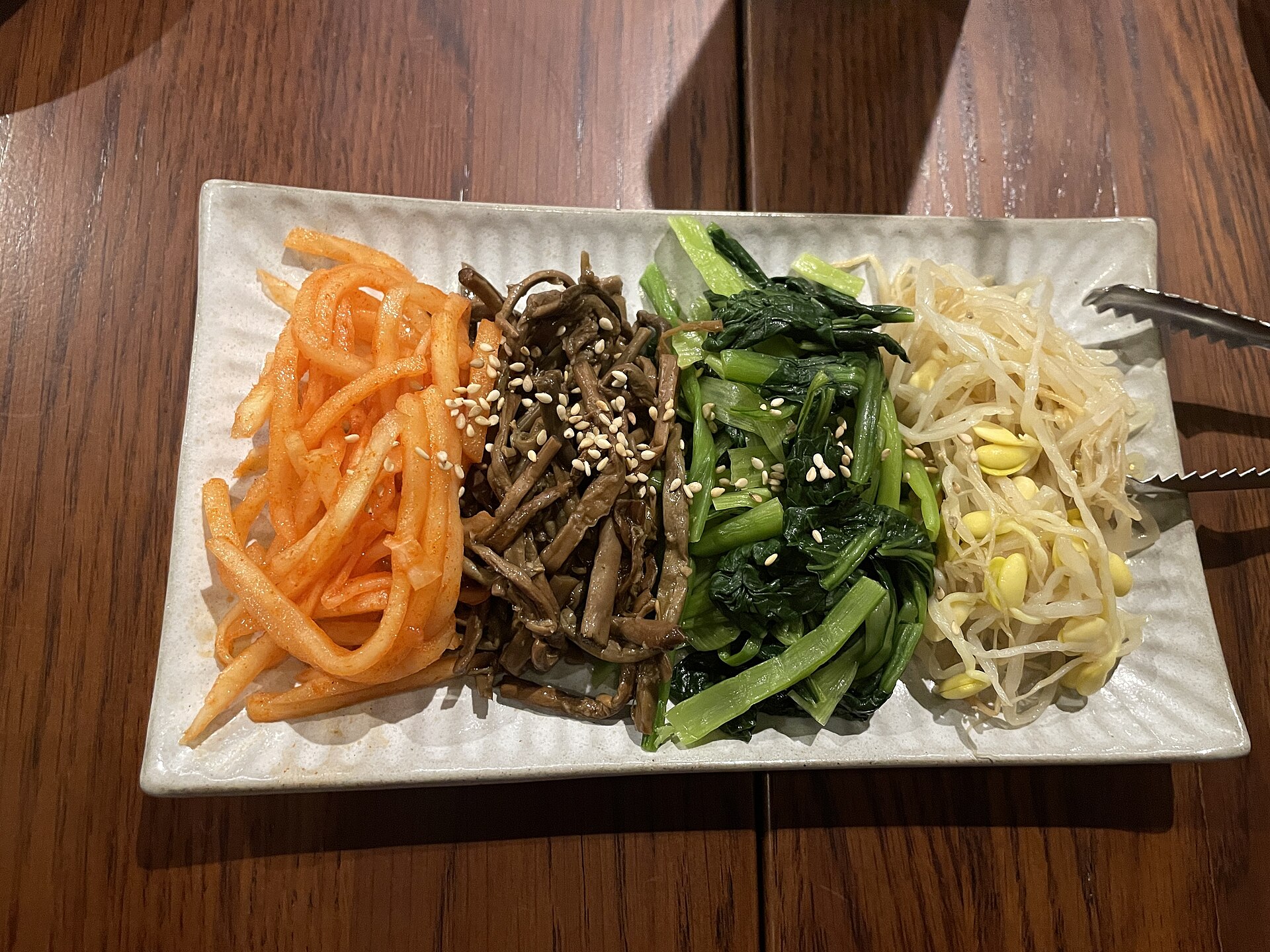
19. Namul (나물)
Under the name 나물 (pronounced na-mul), you’ll find non-spicy to mildly spicy side dishes of blanched vegetables seasoned with sesame oil, salt or soy sauce, and garlic. These include 콩나물무침 (kongnamul-muchim, pronounced kong-na-mul mu-chim, soybean sprouts) and 시금치나물 (sigeumchi-namul, pronounced shi-geum-chi na-mul, spinach). Dubu jorim (두부조림, tofu braised in sweet soy sauce) is often made with saeujeot (salted shrimp). The potatoes in gamja jorim (감자조림) are a safer bet, but even with those you can’t be completely sure.
What to check: Fish sauce 액젓 in the seasoning, depending on the restaurant – it can’t be guaranteed.
For vegetarians: Usually vegetarian, with the caveat of fish sauce depending on the restaurant.
Temple food
Buddhist temple food is the safest harbour for vegetarians, because you don’t have to quiz anyone about anchovies in the broth. It’s cooked from plants, mushrooms and kombu seaweed, which makes it a great stress-free choice ☺️.
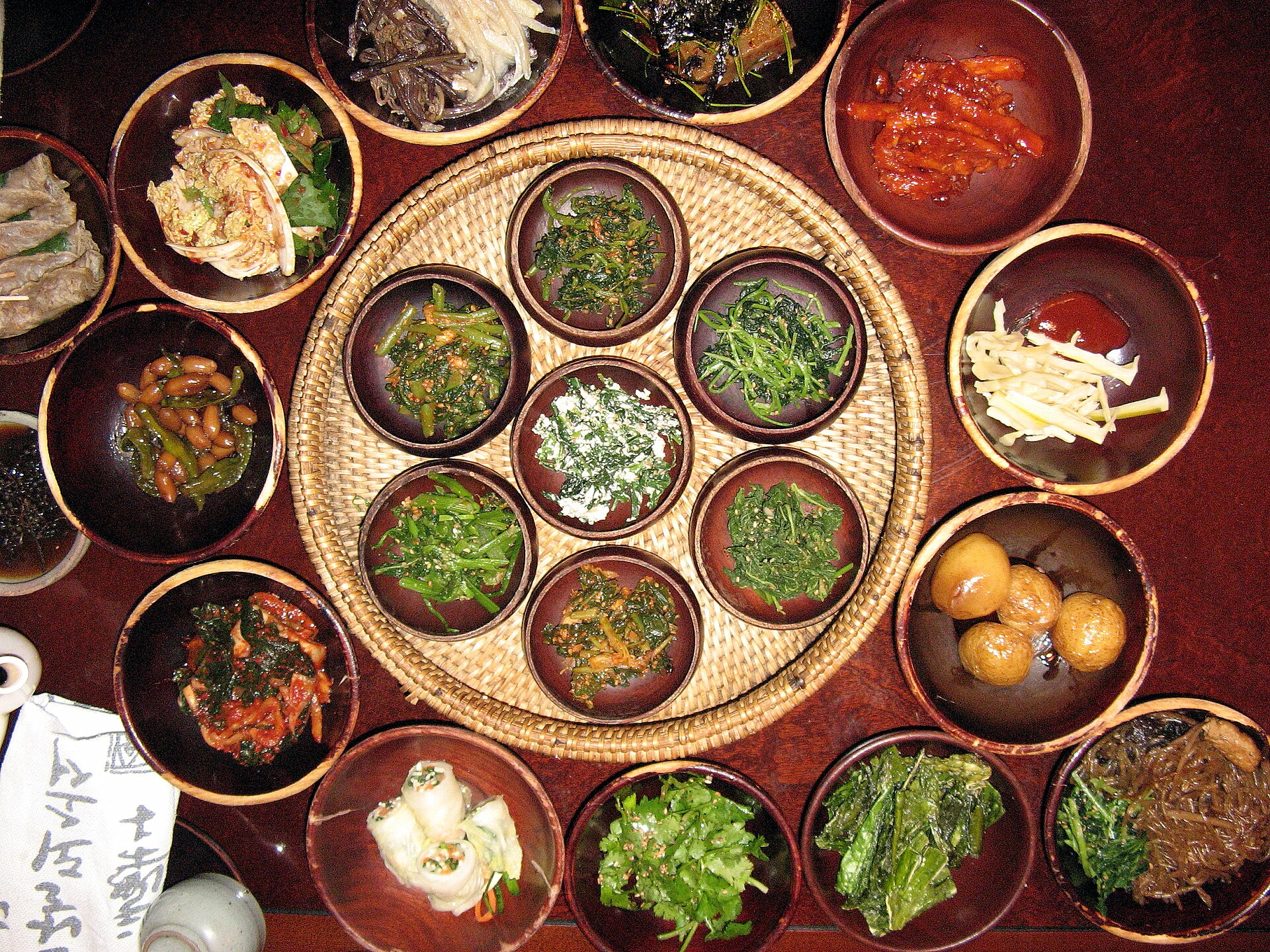
20. Temple food (사찰음식)
According to the official Korea Temple Food website (koreatemplefood.com), temple food 사찰음식 (pronounced sa-chal eum-sik) and the monastic meal ��우공양 (baru gongyang, pronounced ba-ru gong-yang) exclude all animal products except dairy. They also leave out the five pungent vegetables, osinchae: 파 (spring onion), 마늘 (garlic), 부추 (garlic chives), 달래 (wild chives) and 흥거 (asafoetida). Ordinary onion (양파) isn’t on the list. Dishes are flavoured with mushrooms, kombu, perilla (an aromatic herb similar to shiso) and sansho pepper. According to Templestay, baru gongyang is a monastic way of dining in which nothing goes to waste; you’ll find more about it in the Templestay section.
What to check: Vegans should ask about milk; otherwise the food is vegetarian and mostly vegan too.
For vegetarians: Usually vegetarian, and it’s the safest choice, because all animal products except dairy are excluded.
Desserts
Korean sweets revolve around rice flour, sweet red beans, sesame and ice. Every now and then, though, milk or honey is hiding inside.
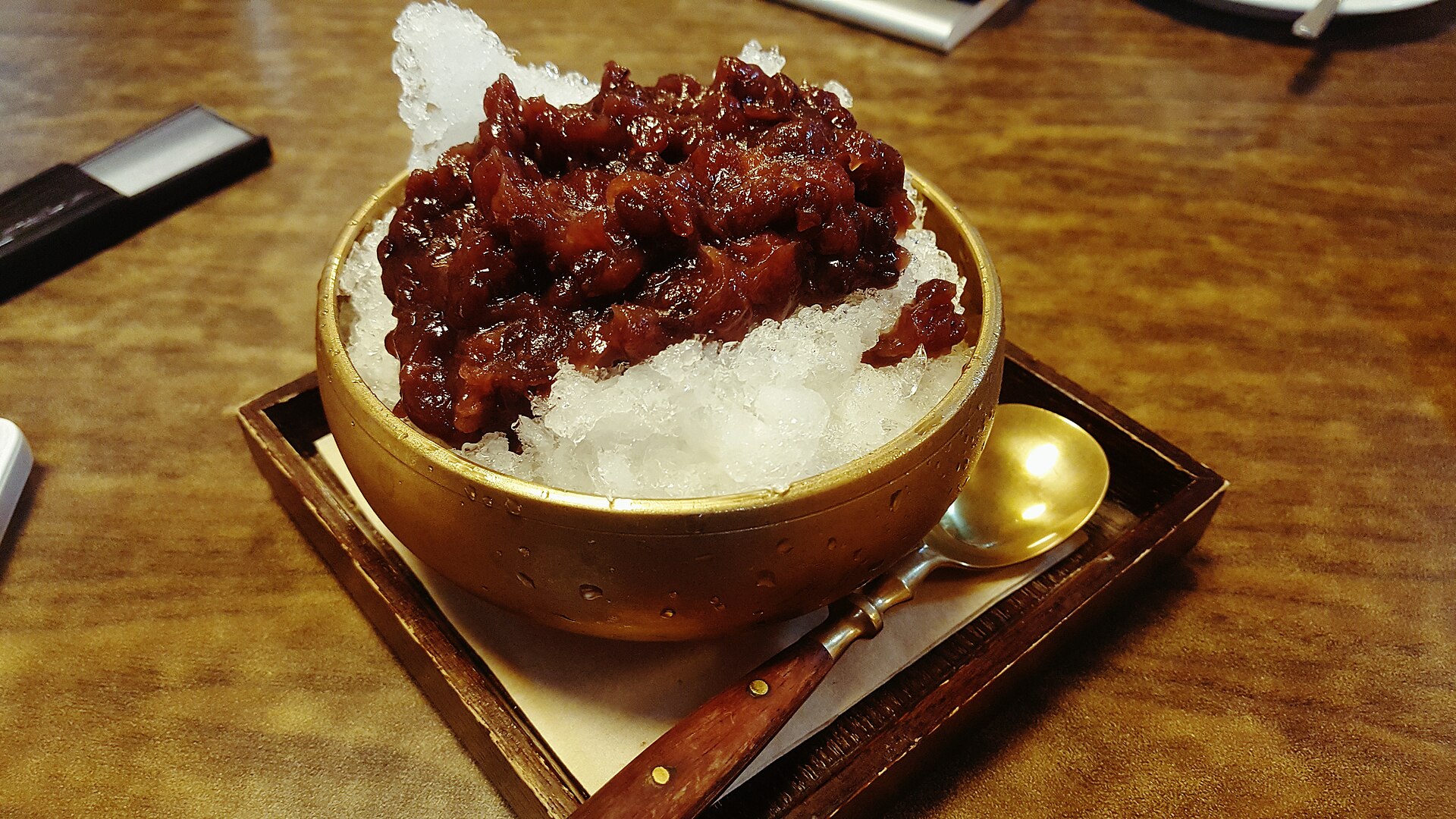
21. Patbingsu (팥빙수)
The dessert 팥빙수 (pronounced pat-bing-su) is shaved ice made from frozen milk with condensed milk, sweet red beans and pieces of tteok (rice cakes). Fun fact: makgeolli (rice wine) looks milky but contains no milk, whereas bingsu does contain milk.
What to check: Milk and condensed milk.
For vegetarians: Usually vegetarian, but not vegan, because it contains milk.
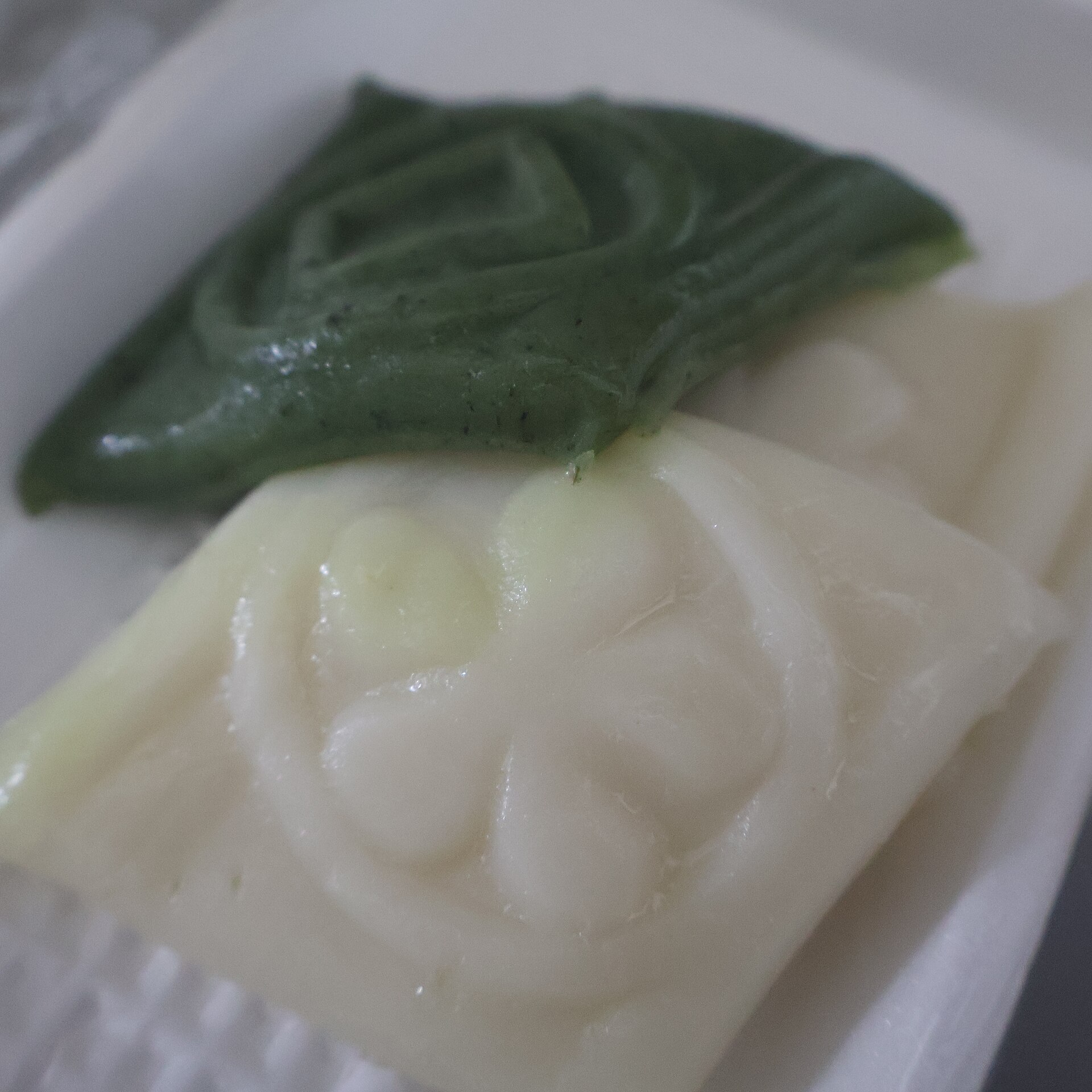
22. Tteok (떡)
Rice cakes, 떡 (pronounced tteok), are non-spicy sweets that come in many forms, such as injeolmi (coated in roasted soybean flour) or songpyeon (filled with sesame or beans). Watch out for the kkultteok variety made with honey and for modern fusion versions.
What to check: Honey (kkultteok), and butter or milk in fusion versions.
For vegetarians: Usually vegetarian (often vegan too, with the caveat of honey, and milk in modern fusion versions).
Drinks
In Korea, traditional drinks, both soft and alcoholic, are part of the meal. Teas and soft drinks are easy, but with alcohol you run into uncertainty around fining (the clarification process, which can use animal products).
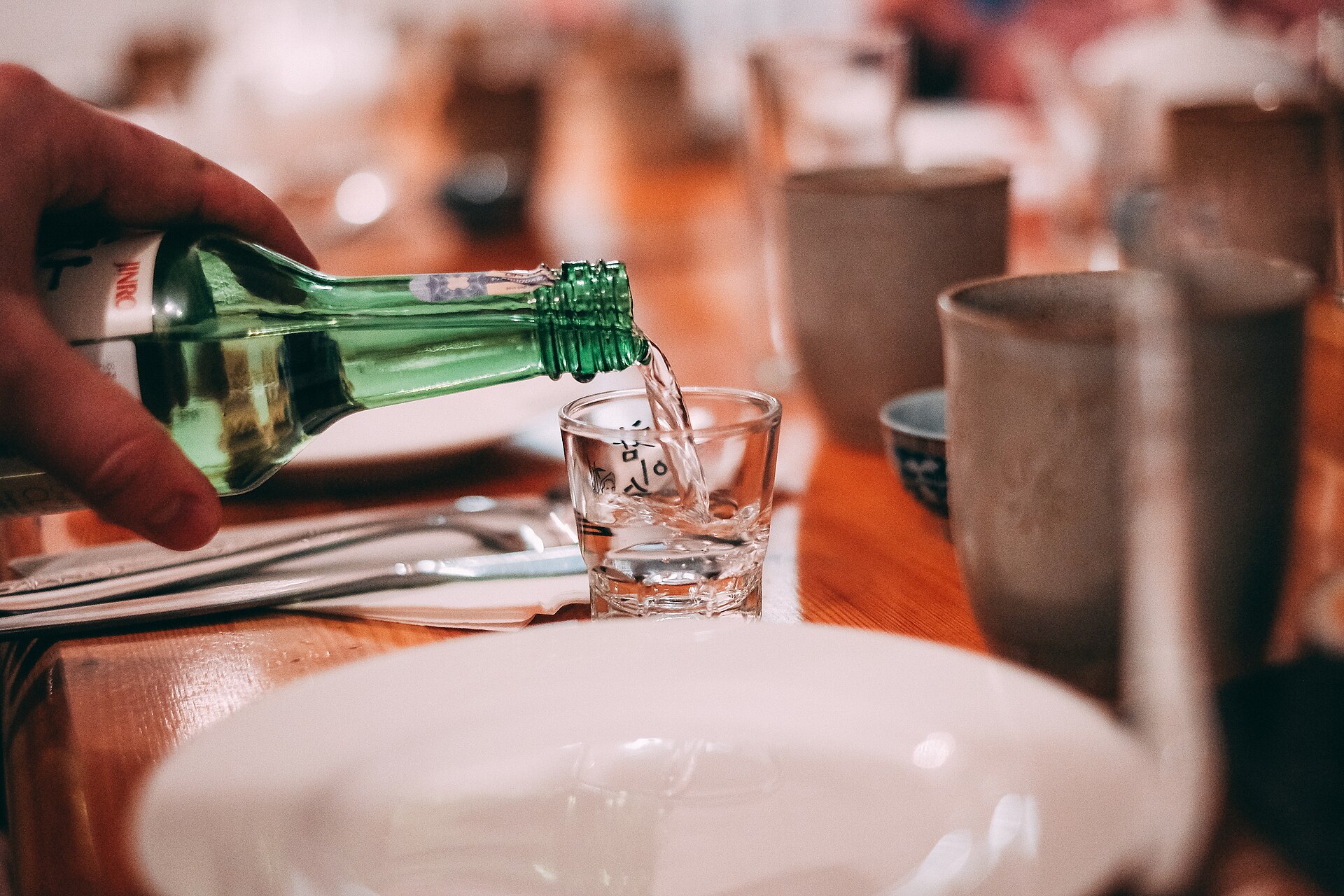
23. Soju (소주)
These days the clear spirit 소주 (pronounced so-ju) is often made from starches other than rice. In a restaurant it costs 4,000 to 6,000 KRW (about €2.70 to €4), and in some places up to 7,000 KRW (Kyeonggi Ilbo, 26 March 2026).
What to check: The fining process hasn’t been verified, so it can’t be guaranteed vegan.
For vegetarians: Usually vegetarian; vegan status can’t be guaranteed because of the unverified fining.
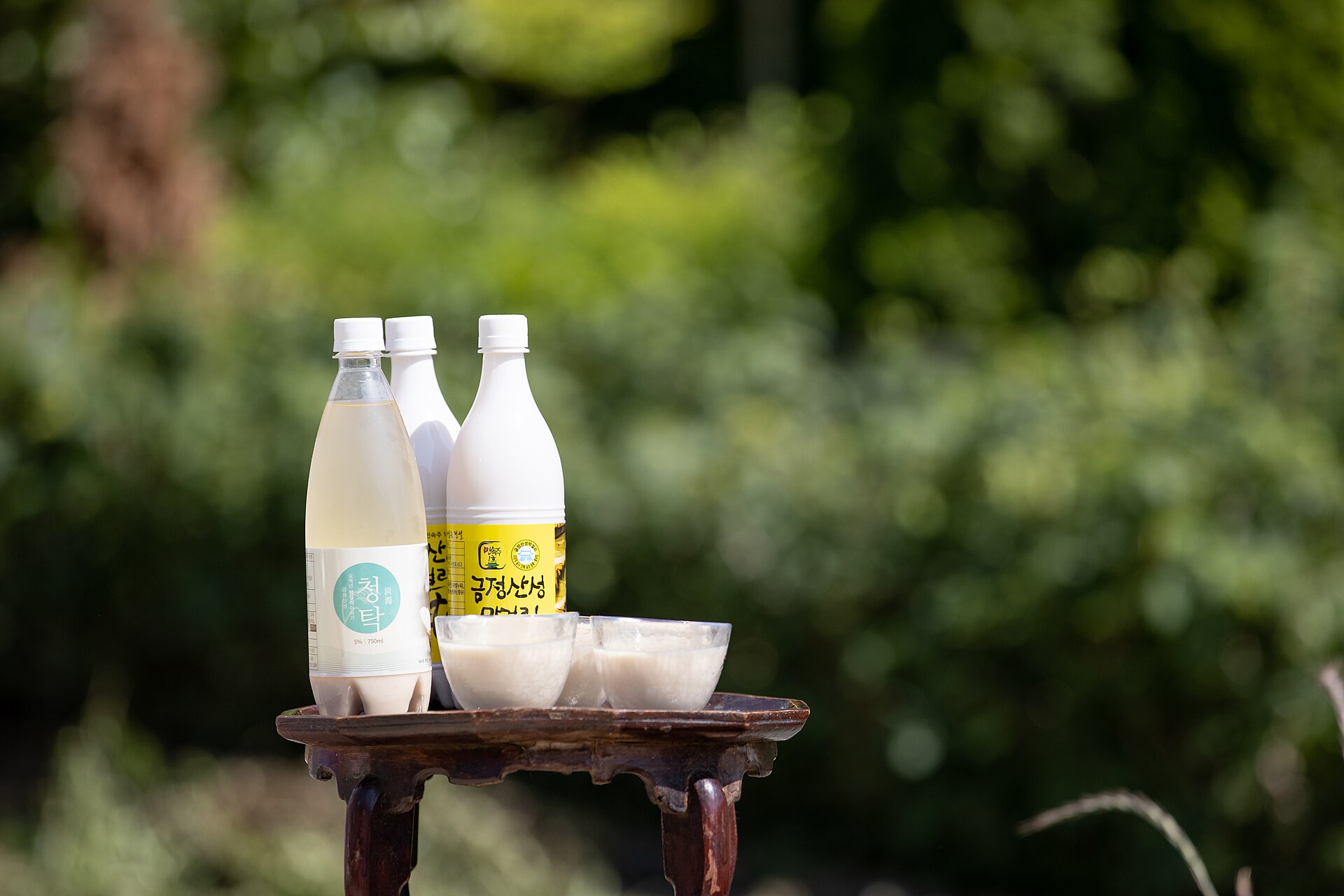
24. Makgeolli (막걸리)
The cloudy, lightly sparkling rice wine 막걸리 (pronounced mak-kol-li) is the classic drink to go with a pajeon pancake. Even though it looks the part, it’s only “milky” in appearance and contains no milk.
What to check: The fining process used for the alcohol.
For vegetarians: Usually vegetarian, though as with all alcohol, vegan status can’t be guaranteed.
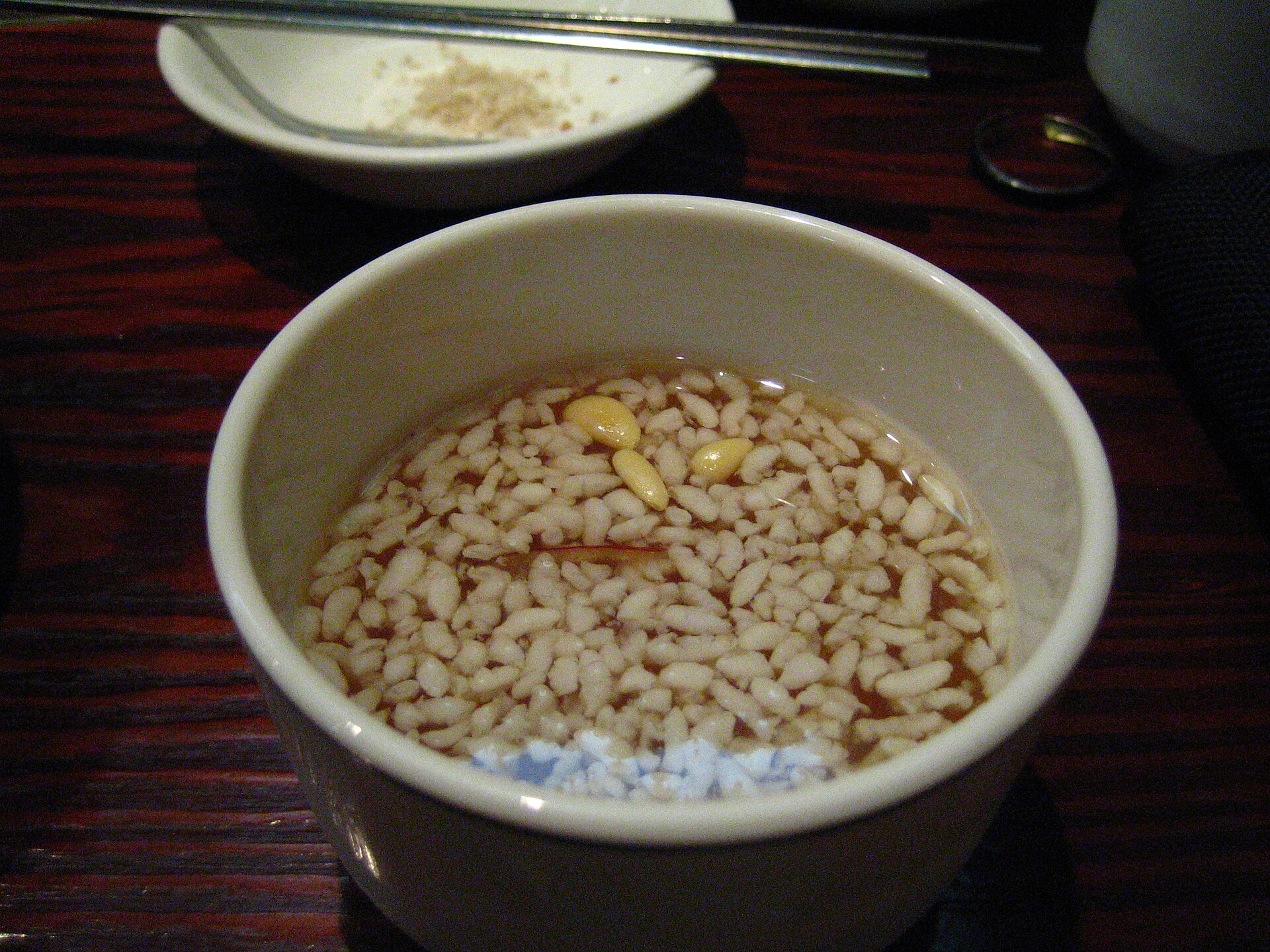
25. Sikhye (식혜)
The sweet malted rice drink 식혜 (pronounced shik-hye) is often served free after a meal in restaurants, and you’ll also find it sold in cans. Don’t confuse it with the spicy Andong sikhye, which is a different drink altogether.
What to check: That it isn’t the spicy Andong sikhye.
For vegetarians: Usually vegetarian and vegan, as it’s made from malt and rice.
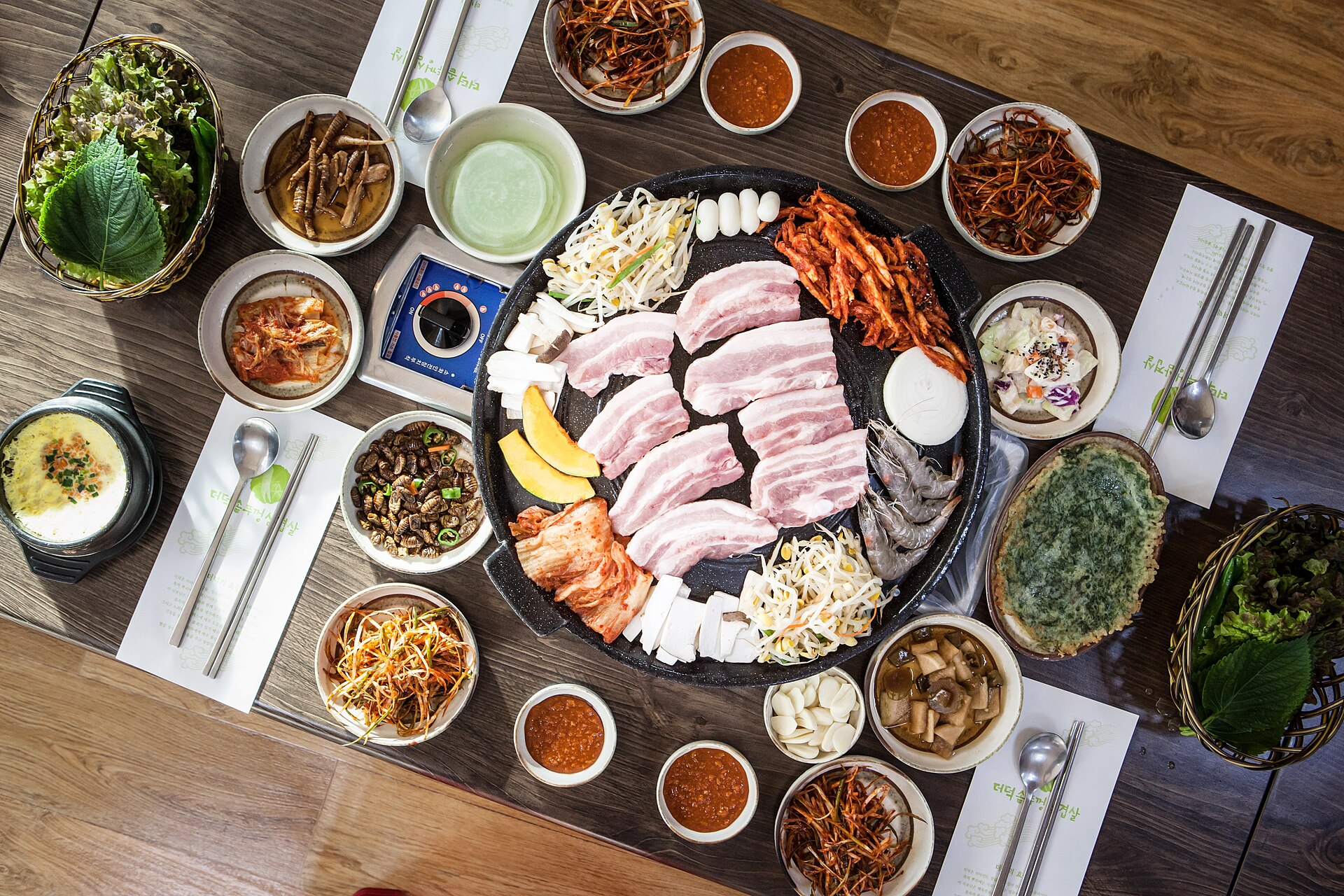
Korean cuisine dishes you’ll see everywhere, but vegetarians skip
You’ll keep bumping into the following dishes, on the streets and on menus alike, because they make up a big part of the local diet. Since we’re vegetarians, we only describe them here so you know what the locals are ordering, and I’ve added a tip on what to have instead.
- Bulgogi (불고기, bulgogi): Marinated slices of beef. Instead, try the mushroom version 버섯불고기 at vegan restaurants (elsewhere it can’t be guaranteed meat-free) or a bibimbap without meat.
- Samgyeopsal and Korean BBQ (삼겹살, 고기구이): Grilled pork belly that you wrap in lettuce leaves with ssamjang paste. In Seoul, 200 g cost an average of 21,321 KRW (about €14) in September 2026, and there’s usually a minimum of 2 portions. Instead, have just the ssam (쌈), a wrap of lettuce and perilla leaves with rice, ssamjang, garlic and chillies. Watch out for doenjang jjigae soup made with beef, for the shared grill, and for ssamjang containing fish sauce.
- Fried chicken (치킨, chikin): Crispy chicken, often with a yangnyeom glaze, that locals eat with beer (chimaek). Instead, look for “vegan chikin” at vegan restaurants (elsewhere it can’t be guaranteed).
- Samgyetang (삼계탕, samgyetang): Chicken stuffed with sticky rice and ginseng, which cost 18,269 KRW (about €12) in Seoul in September 2026. Instead, go for kongguksu in summer or a temple food menu.
- Eomuk / odeng (어묵, 오뎅): Fish cake on a skewer in hot broth, which is often hidden in tteokbokki, kimbap and banchan. Instead, keep an eye on the ingredients in these dishes and ask about the specific items using the card below.
- Sundae (순대): Korean blood sausage in pork intestine, stuffed with noodles and blood. Instead, pick any meat-free option from this guide, such as temple food. 💡 Tip: In English, sundae is spelled just like the ice cream dessert, so don’t mix up sundae (순대, blood sausage) with an ice cream sundae on the menu.
There’s a lot of meat in Korean cuisine. The most reliable vegetarian route is through temple food and vegan restaurants. Namul and plain pajeon are only safe once you’ve checked.
How to communicate: useful Korean phrases
As you already know, saying “I’m vegetarian” isn’t enough in Korea (Koreans know the term 비덩, meaning no chunks of meat, but broth and sauces are still fair game), so at the table you need to list the specific ingredients. Showing the text on your phone screen tends to be more reliable than trying to pronounce it in a noisy bistro 😅. Treat the pronunciation in the tables as a rough guide for English speakers only.
Introducing yourself
| Korean | Pronunciation (rough guide) | English |
|---|---|---|
| 저는 채식주의자예요. | juh-nun chae-shik-ju-ui-ja-ye-yo | I’m vegetarian. |
| 저는 비건이에요. | juh-nun bi-geo-ni-e-yo | I’m vegan. |
What you don’t eat
| Korean | Pronunciation (rough guide) | English |
|---|---|---|
| 고기, 생선, 해산물 안 먹어요. | go-gi, saeng-sun, hae-san-mul an muh-guh-yo | I don’t eat meat, fish or seafood. |
| 고기 빼 주세요. | go-gi ppae ju-se-yo | No meat, please. |
| 멸치 육수 빼고 주세요. | myul-chi yuk-su ppae-go ju-se-yo | No anchovy broth, please. |
| 계란 빼 주세요. | gye-ran ppae ju-se-yo | No eggs, please. |
Asking about ingredients and spiciness
| Korean | Pronunciation (rough guide) | English |
|---|---|---|
| 이거 고기 들어 있어요? | i-guh go-gi deu-ruh i-ssuh-yo? | Is there meat in this? |
| 이거 멸치 육수 들어가요? | i-guh myul-chi yuk-su deu-ruh-ga-yo? | Is there anchovy broth in this? |
| 채소 육수로 만들어 주실 수 있어요? | chae-so yuk-su-ro man-deu-ruh ju-shil su i-ssuh-yo? | Could you make it with vegetable broth? |
| 이거 액젓이나 젓갈 들어 있어요? | i-guh aek-juh-shi-na jut-gal deu-ruh i-ssuh-yo? | Is there fish sauce or jeotgal in this? |
| 어묵 들어가요? | uh-muk deu-ruh-ga-yo? | Is there fish cake in this? |
| 안 맵게 해 주세요. | an maep-ge hae ju-se-yo | Not spicy, please. |
| 덜 맵게 해 주세요. | dul maep-ge hae ju-se-yo | Less spicy, please. |
Ordering and paying
| Korean | Pronunciation (rough guide) | English |
|---|---|---|
| 반찬 더 주세요. | ban-chan duh ju-se-yo | More side dishes, please. |
| 저기요! | juh-gi-yo | Excuse me! (to call the staff) |
| 계산할게요. | gye-san-hal-ge-yo | I’d like to pay. |
When you’re deciphering menus and food packaging, a short glossary in hangul (the Korean alphabet) will come in handy. It helps you spot meat or fish ingredients hidden in a dish’s name, so you don’t get surprised by ham or seafood in your soup.
- Meat and fish: 고기 meat · 소고기 beef · 돼지고기 pork · 닭고기 chicken · 생선 fish · 해산물 seafood · 새우 shrimp · 햄 ham · 어묵 / 오뎅 fish cake · 맛살 crab stick
- Eggs, milk, honey: 계란 / 달걀 egg · 우유 milk · 꿀 honey
- Broths and sauces: 육수 broth · 멸치 anchovy · 채수 / 채소 육수 vegetable broth · 액젓 fish sauce · 젓갈 salted seafood · 새우젓 salted shrimp · 다시다 dashida stock powder
- Diet and food: 채식 vegetarian diet · 비건 vegan · 사찰음식 temple food · 야채 vegetable
A card to show in restaurants
So you don’t have to scroll through your notes at the table, I’ve put together a clear card. Just take a screenshot on your phone and show it to the staff when you order. It isn’t an official translation, though; the card is made up of common phrases, so have someone who speaks Korean check it before your trip.
Card for vegetarians (lacto-ovo, eats eggs and milk)
> 안녕하세요. 저는 채식주의자예요. 고기, 생선, 해산물을 안 먹어요. 햄, 스팸, 어묵, 맛살도 안 먹어요. 멸치 육수나 고기 육수, 액젓, 새우젓 같은 젓갈, 다시다도 안 돼요. 계란과 우유는 괜찮아요. 가능한 메뉴를 추천해 주실 수 있을까요? 감사합니다.
In English: Hello. I’m vegetarian. I don’t eat meat, fish or seafood. I also don’t eat ham, Spam, fish cakes or crab sticks. I can’t have anchovy or meat broth, fish sauce, salted seafood (such as salted shrimp) or dashida stock powder either. Eggs and milk are fine. Could you recommend a dish I can eat? Thank you.
Vegan version: instead of the sentence “계란과 우유는 괜찮아요.” say or show “저는 비건이에요. 계란, 우유, 유제품도 안 먹어요.” (I’m vegan. I don’t eat eggs, milk or dairy products either.) Optionally, add “꿀도 안 먹어요.” (I don’t eat honey either.)
When you show the card, keep in mind the difference between being vegan and lacto-ovo vegetarian, in other words whether or not you eat eggs and milk. And remember that the word 비건 in a restaurant’s name doesn’t necessarily mean it’s strictly vegan, as mentioned earlier in the article.
Apps that will help
I’ve put together a list of handy helpers for you, because having two or three apps on your phone before your trip will most likely make finding meat-free food much easier. Google Maps on its own isn’t enough once you’re there, as it doesn’t offer walking navigation in Korea yet, so it’s worth installing a few local alternatives before you leave home.
- Naver Map is a Korean map app with maps in Korean, English, Japanese and Chinese, English navigation and a Booking tab for restaurant reservations. A vegan filter isn’t mentioned in the app’s description, so type the words “비건” or “채식” into the search.
- Kakao Map is another Korean map app and works in English and Korean.
- Papago from Naver (a translator) can photo-translate an entire menu, and in offline mode it will at least translate typed text. The app supports 14 languages, including English, so you can translate straight into it; alternatively, use Google Translate with the camera.
- Google Maps received conditional government permission to export map data on 27 February 2026. According to media reports from August to October 2026, however, it still only offers navigation for public transport, not for walking or driving. So when you’re on foot, it’s better to rely on Naver or Kakao.
- HappyCow is a worldwide directory of vegetarian restaurants, and a search for Seoul shows roughly 350 listings in the vegan, vegetarian and veg options categories. Remember, though, that the “veg options” category doesn’t mean the place is entirely meat-free.
- CatchTable Global (restaurant reservations) has an English version for foreigners that lets you book and join a remote waitlist with just an email address, and it has dish name translations from the Korea Tourism Organization.
- Baemin (food delivery) has worked in English, Chinese and Japanese since 4 February 2026, including payment with foreign cards. As for Coupang Eats (another food delivery app), sources disagree on English support and foreign cards, so be prepared for it not to work.
Payments: In restaurants you can usually pay by card. The prepaid WOWPASS card also comes in handy (a Mastercard linked to a T-money transport card, each with its own balance). Street stalls, however, sometimes only take cash.
If hunger strikes in a CU, GS25 or 7-Eleven convenience store, look for the label “비건” or “Vegan” on the packaging and for triangle kimbap marked 야채, but with instant soups, always read the labels carefully.
Where to eat meat-free in Seoul
I picked these places using maps and other sources, and every one of them is listed as operating on Naver Map in 2026. Even so, always double-check the opening hours before you go. I’ve deliberately left out ratings and reviews, and don’t blindly trust the word “vegan” in a restaurant’s name either. When you’re planning your routes around the city, take a look at our article on what to see in Seoul. It makes it easy to combine food stops with exploring the different neighbourhoods.
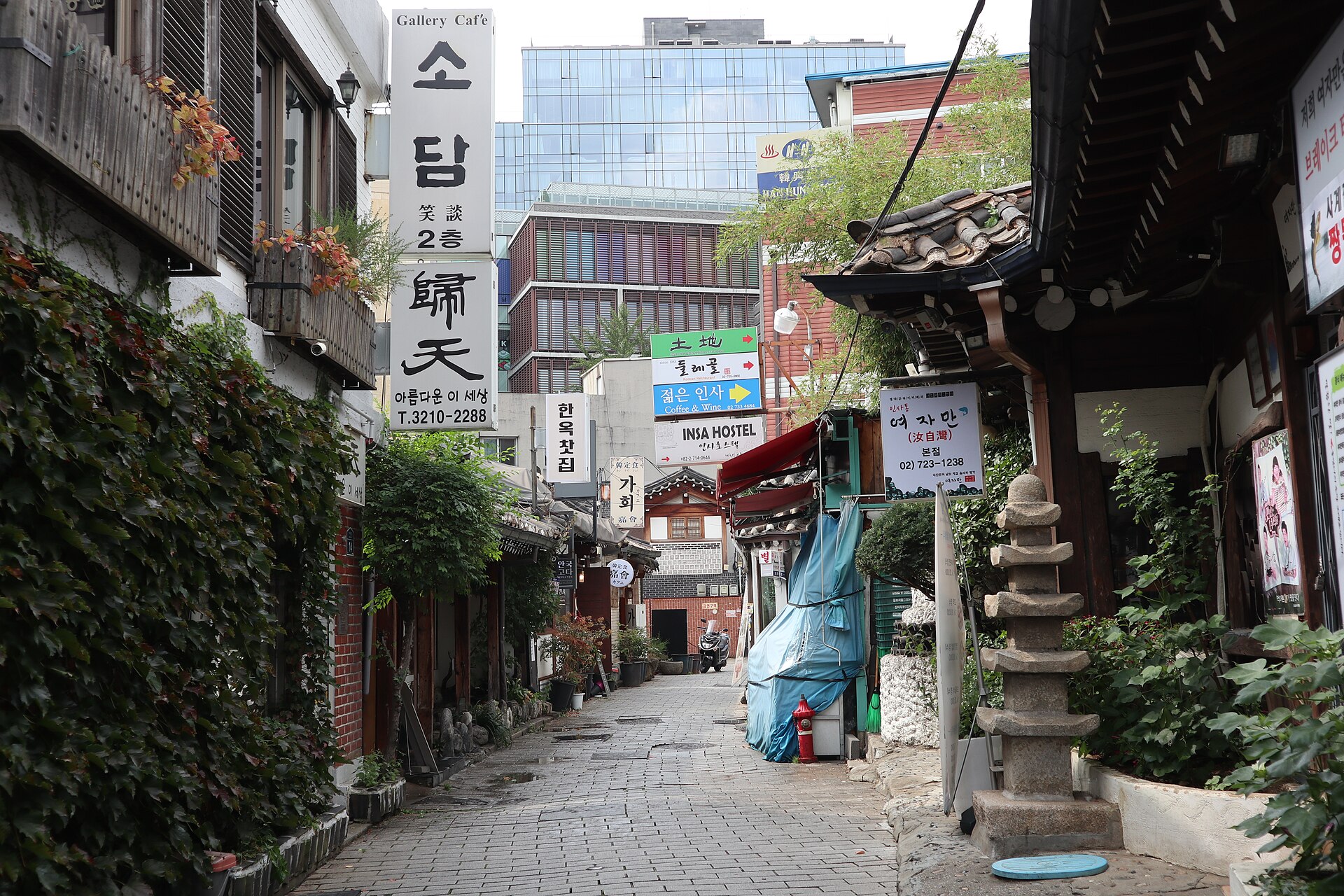
Jongno: Insadong, Ikseon-dong and the area around Jogyesa
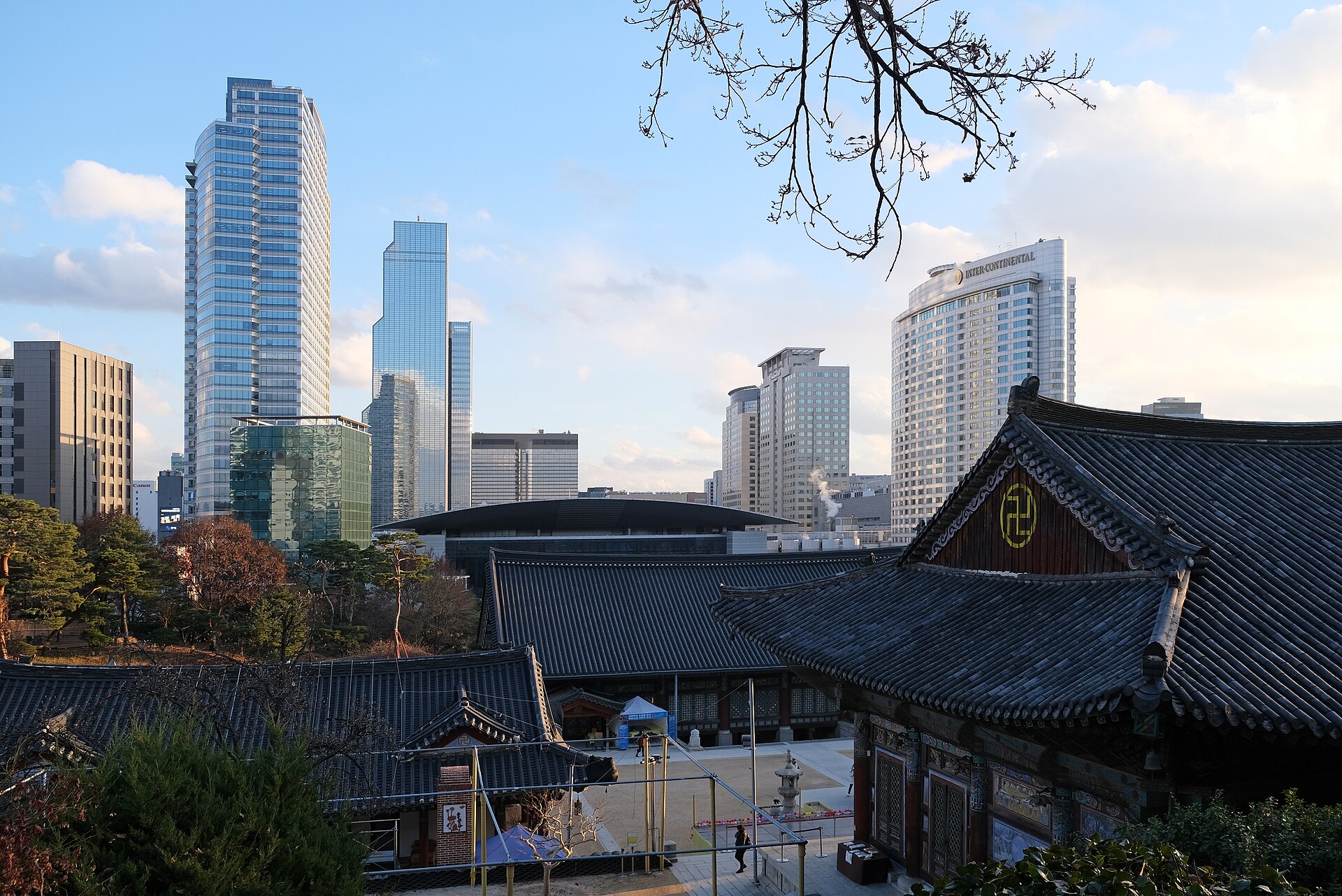
Balwoo Gongyang (발우공양) is opposite Jogyesa Temple, on the 5th floor of a building on Ujeongguk-ro in Jongno-gu. It serves temple tasting menus with no meat, fish, eggs or the five pungent vegetables (osinchae). Temple rules don’t rule out dairy, though, so vegans should check with the staff in advance.
Sanchon (산촌) is on Insadong-gil in Insadong. It serves a temple menu, seasonal banchan side dishes and wild herbs. A short walk away on Insadong 12-gil you’ll find Osegyehyang (오세계향), a vegetarian and vegan restaurant serving Korean and Chinese dishes with soy “meat”, all cooked without garlic or spring onions.
Vegan Insa (비건인사) is in Ikseon-dong on Samil-daero 32ga-gil, inside a traditional Korean hanok house. The whole place is vegan, and the menu is full of plant-based versions of Korean dishes, including some made with soy “chicken”.
Sindang and Itaewon: from the market to vegan Korean-Chinese food
Gosari Express (고사리 익스프레스) is in Sindang near Jungang Market, on Toegye-ro 85-gil in Jung-gu. This vegan spot makes noodles and pancakes with a bracken oil sauce, and it has just picked up a Michelin Bib Gourmand for 2026.
ALT.a (알트에이) is in Itaewon on Bogwang-ro in Yongsan-gu. It specialises in vegan Korean-Chinese cuisine, which is otherwise really hard to find without meat or seafood. The menu has plant-based versions of well-known dishes such as vegan jjamppong and tangsuyuk.
Plant Cafe & Kitchen (플랜트) has one branch in Itaewon, on the 2nd floor of a building on Bogwang-ro, and another in Yeonnam on World Cup buk-ro 4-gil in Mapo-gu. It’s fully vegan, and it’s a great place for burgers, bowls and sweet desserts.
byTOFU (바이두부) isn’t actually in Itaewon. It’s in Haebangchon, on Sowol-ro 20-gil in Yongsan-gu. This vegan spot makes all kinds of sandwiches and wraps, and the local favourite is their “egg” sandwich made without eggs.
Gangnam and Mapo: tasting menus and lunch
Légume (레귬) is in Sinsa, on the 2nd floor of a building on Gangnam-daero in Gangnam-gu. It serves a vegan tasting menu and holds 1 Michelin star. You’ll find all the details on their website, legume.kr.
Base is nice (베이스이즈나이스) is in Mapo on Dohwa 2-gil. Just keep in mind that it only opens for lunch. It’s listed as a vegetarian restaurant rather than an officially vegan one, and the menu is built around rice, vegetables, soup and banchan side dishes.
💡 Tip: To find places in other neighbourhoods, search Naver Map for the keywords “비건” (vegan) or “채식” (vegetarian). Pick the bistro closest to your route, and always check that it’s open before you set off.
Where to eat meat-free in Busan
I’ve also put together a smaller list of places in Busan where you can eat without meat. All of them are confirmed as operating in 2026, but just like in the capital, check the opening hours in your map app before you go.
ARP (아르프) is in Yeongdo on Taejong-ro 99beon-gil, near Huinnyeoul. This vegan restaurant is listed as a Bib Gourmand in the Michelin Guide. On the menu you’ll find pasta with bracken and mushrooms, coconut “cheese” and homemade rice wine.
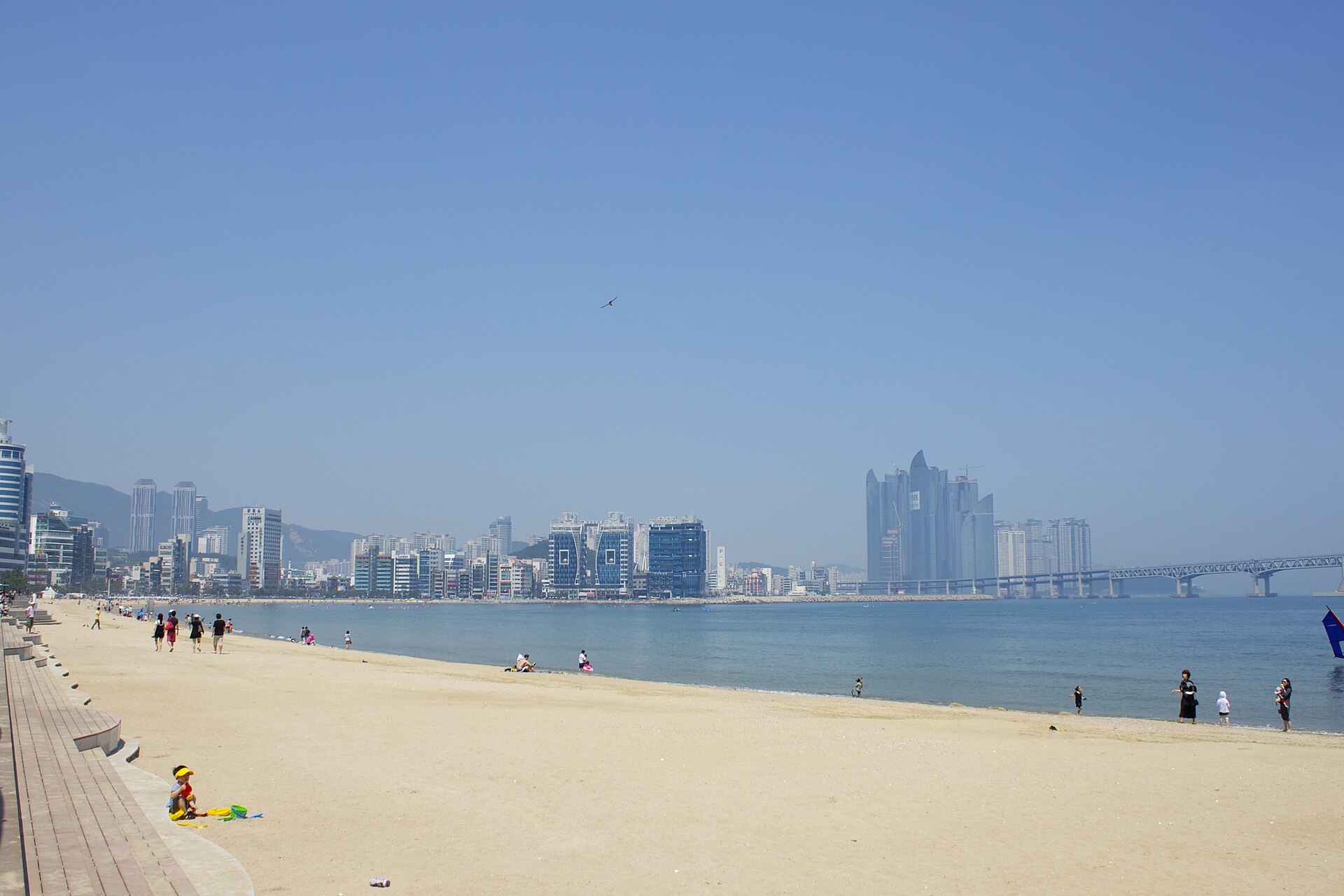
Vegenarang (베지나랑 광안리점) is in the Gwangalli and Millak area, on the 9th floor of the Noble Sky building on Gwanganhaebyeon-ro 370beon-gil in Suyeong-gu. It’s a temple-style vegetarian restaurant serving a tasting menu of about 8 courses for a minimum of 2 people. Not everything is automatically vegan, though.
Soban Vegan (소반비건식당) is in Seo-gu on Daeyeong-ro 85beon-gil, in Dongdaesin on the way to Gamcheon. This vegan restaurant focuses on Korean home-style set meals served with little bowls of banchan side dishes.
Ohh! Good Thing (오굳띵) is in Jeonpo in Busanjin-gu, on Jeonpo-daero 246beon-gil. This vegan bakery bakes plant-based sweets, and you’ll find all kinds of cakes, including gluten-free options.
Bibijae (비비재) is in Suyeong-gu on Namcheonbada-ro 10beon-gil. Keep in mind that it’s not a purely vegetarian restaurant, but it does have a meat-free tofu bibimbap on the menu.
Templestay and temple food
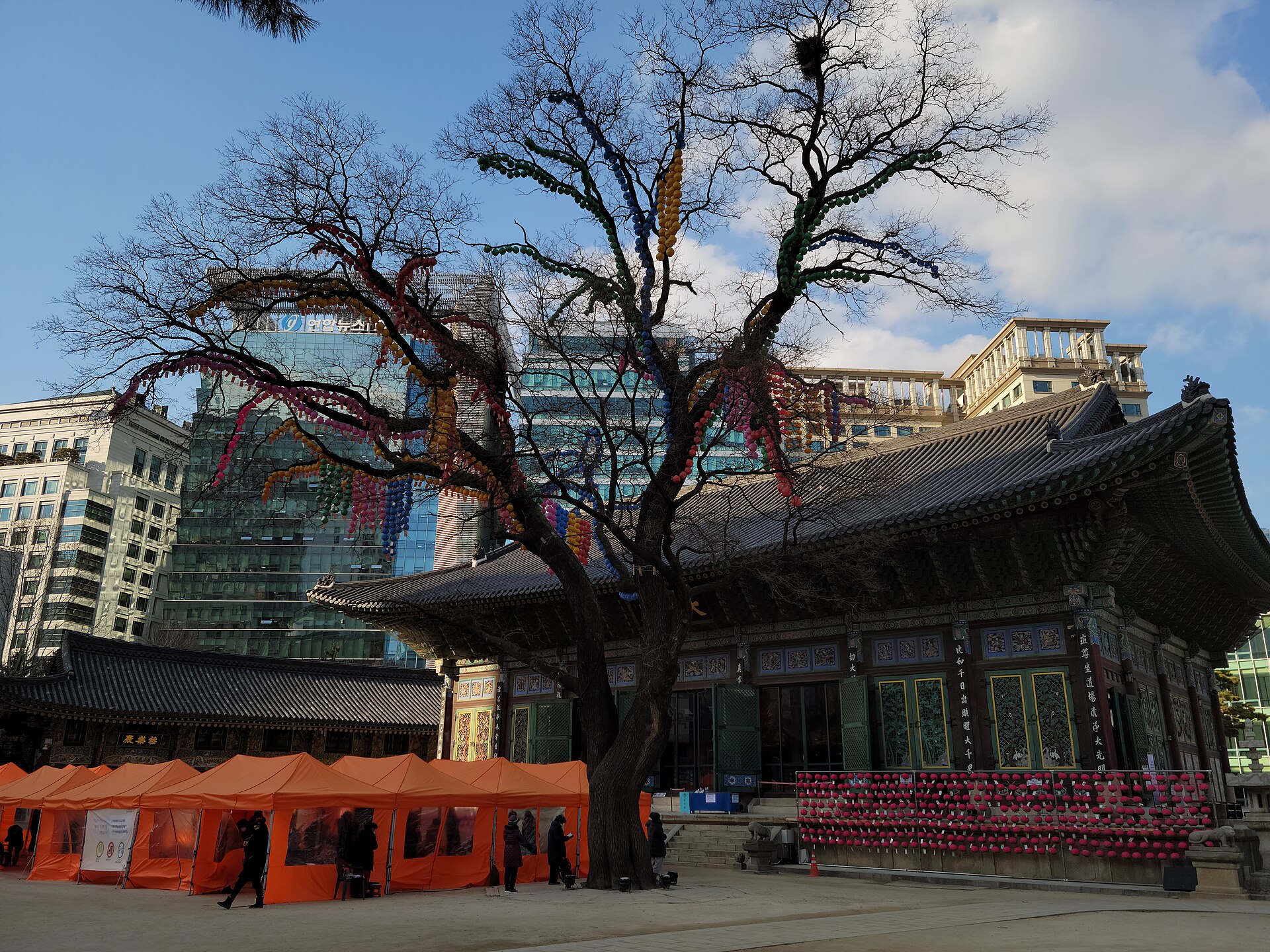
A Templestay, or a stay at a Buddhist temple, is also the safest way to eat in Korea without running into anchovy broth. Temple food is vegetarian and usually vegan too, so you can finally relax and enjoy your meal in peace ☺️.
Temples offer three types of programme. The short One-day programme lasts 2 to 3 hours and includes a tour, meditation and tea. The longer Experience option (usually 1 night) includes morning chanting, 108 prostrations, the ritual baru gongyang meal, meditation and making a lotus lantern, while the Rest option leaves you to do your own thing. The names “Regular” and “Always Templestay” in the table below come from the booking website: Regular is a 1-night stay and Always Templestay is a day programme (a tour plus lantern-making).
You’ll sleep in shared rooms, and only some temples let you pay extra for a private one. A temple uniform is included in the price, but pack your own towel and toiletries.
You can book in English on eng.templestay.com and pay online by card. Bongeunsa and Myogaksa open their dates a month in advance. Jogyesa can be booked up to 3 days before arrival (check the exact terms on the website). At Jogyesa, keep an eye on the cancellation policy: cancel 7 or more days in advance and you get a 100% refund, but cancel 1 to 6 days in advance and you get nothing back.
| Temple | Programme | 2026 price per person | Approx. in EUR |
|---|---|---|---|
| Jogyesa (Insadong) | Regular, 1 night | 80,000 KRW | €55 |
| Jogyesa | Always Templestay (daily at 10:00, tour and lantern) | 10,000 KRW | €7 |
| Bongeunsa (Gangnam, COEX) | Regular, weekend, 1 night | 120,000 KRW | €80 |
| Myogaksa (Jongno) | 1 night | 95,000 KRW | €65 |
| Myogaksa | One-day programme with lunch | 50,000 KRW | €35 |
| Geumsunsa (Bukhansan) | Rest, 1 night | 80,000 KRW | €55 |
| Hwagyesa | Experience and Rest, per night (one price listed, check for your specific programme) | 90,000 KRW | €60 |
| Beomeosa (Busan) | Experience (weekends), per night | 100,000 KRW | €65 |
| Beomeosa | Rest, per night | 70,000 KRW | €45 |
Source: eng.templestay.com, retrieved 31 October 2026. Prices change and discounts vary, so check them before booking. Exchange rate: 1,000 KRW ≈ €0.67.
At the Templestay Information Center opposite Jogyesa, you can chat with a monk over tea for free (until 31 December 2026).
Beomeosa Temple in Busan runs its Experience programme at weekends and its Rest programme on weekdays too (closed Mondays and Tuesdays, valid from 11 January to 31 December 2026). Children aged 5 and over are welcome, check-in is by 2 pm, and the rooms with private bathrooms are 800 m from the temple.
Jogyesa offers 1-night stays until 31 December 2026, even though you’ll sometimes read that it stopped offering overnight stays in 2025.
Seoul is also home to the Korea Temple Food Center (한국사찰음식문화체험관) at 56 Ujeongguk-ro, Jongno-gu (tel. 02-733-4650), in the same building as Balwoo Gongyang. Cooking classes run on Fridays and Saturdays from 10:00 to 11:30 for Koreans and foreigners together. You need to apply through koreatemplefood.com 1 to 2 months in advance. Class themes change every month, and you’ll find the current programme on the website.
Where to next
Now that you know how to avoid getting stuck with plain rice in Korea, here are a few more guides to help you plan your trips.
- What to see in Seoul: Gwangjang and Myeongdong markets, temples and the city’s vegetarian scene.
- Italian cuisine: how to eat your way through Italy region by region, with tips for vegetarians.
- Hungarian cuisine: paprika classics and prices in Hungary.
- Japan: practical tips: the food superpower next door. In Japanese cuisine, dashi broth plays the same role as Korea’s myeolchi anchovy broth.
Frequently asked questions
Is kimchi vegetarian?
Regular kimchi is almost never vegetarian, since it contains jeotgal — salted seafood, anchovy sauce (멸치액젓), and salted shrimp (새우젓). Fish-free options include temple kimchi or store-bought packs labeled 비건 김치 (vegan kimchi), though you should always check the label: brands like Pulmuone, for example, are made on a line shared with seafood.
Is there kimchi without fish sauce?
Yes, your safest bet is temple kimchi, which is made without jeotgal, garlic, or spring onion. You’ll rarely come across it at a regular restaurant, so look for the label 비건 김치 (vegan kimchi) in shops — but even with packs marked 비건 김치, always double-check the ingredients.
What is South Korea’s national dish?
There’s no officially designated national dish. Kimchi and bibimbap are the ones most often given that title, and sometimes the soybean soup doenjang jjigae gets a mention too.
What is typical Korean food?
The foundation is rice, soups, stews (jjigae), and small banchan side dishes led by kimchi. Noodles, bibimbap, and kimbap round things out. I’ve broken down all of these dishes for you in the sections above.
Can I eat well in Korea as a vegetarian or vegan?
It’s doable, but takes some prep, since anchovy or beef broth gets used automatically in restaurants and plenty of places don’t have a vegetarian menu at all. What helps is temple-style cuisine, vegan spots in Seoul and Busan, and a card listing problem ingredients written out in Korean.
Is bibimbap vegetarian?
Bibimbap is vegetarian only if you ask for it that way, using the phrase 고기 빼 주세요 (“no meat, please”), since the standard version includes beef and egg. Watch out for fish sauce in the namul and gochujang, plus the Jeonju-style version made with rice cooked in beef broth; in Seoul it runs about 12,000 KRW (around €8, September 2026).
Do you tip in Korea?
No, tipping is not customary in Korea. A mandatory service charge actually runs against regulations, though voluntary tipping isn’t banned either — and since 2013, menu prices are final, already including VAT and service.
How much does food cost in Seoul in 2026?
According to preliminary data from the Korea Consumer Agency as of September 2026 (exchange rate roughly 1,000 KRW = €0.67), kimbap in Seoul costs 3,923 KRW (about €2.60) and jjajangmyeon 7,808 KRW (about €5.20). A kimchi jjigae set with rice and banchan will set you back 8,846 KRW (about €6), bibimbap costs 12,000 KRW (about €8), and naengmyeon 12,692 KRW (about €8.50).
Is temple food vegan?
Temple food is usually vegetarian and in most cases vegan too, since it excludes all animal products except dairy. It also skips the five pungent vegetables (spring onion, garlic, Chinese chives, wild chives, and asafoetida), though vegans should still ask about dairy use to be sure.
Can I eat alone at a Korean restaurant?
Yes, but for BBQ, dakgalbi, and other pan-cooked dishes, there’s usually a minimum order of two portions (2인분 이상). Restaurants are legally allowed to enforce this minimum, so if you’re dining solo, you’ll need to order for two.
Tips and Tricks for Your Vacation
Don’t Overpay for Flights
Search for flights on Kayak. It’s our favorite search engine because it scans the websites of all airlines and always finds the cheapest connection.
Book Your Accommodation Smartly
The best experiences we’ve had when looking for accommodation (from Alaska to Morocco) are with Booking.com, where hotels, apartments, and entire houses are usually the cheapest and most widely available.
Don’t Forget Travel Insurance
Good travel insurance will protect you against illness, accidents, theft, or flight cancellations. We’ve had a few hospital visits abroad, so we know how important it is to have proper insurance arranged.
Where we insure ourselves: SafetyWing (simple monthly subscription) and TrueTraveller (for extra-long trips).
Find the Best Experiences
Get Your Guide is a huge online marketplace where you can book guided walks, trips, skip-the-line tickets, tours, and much more. We always find some extra fun there!