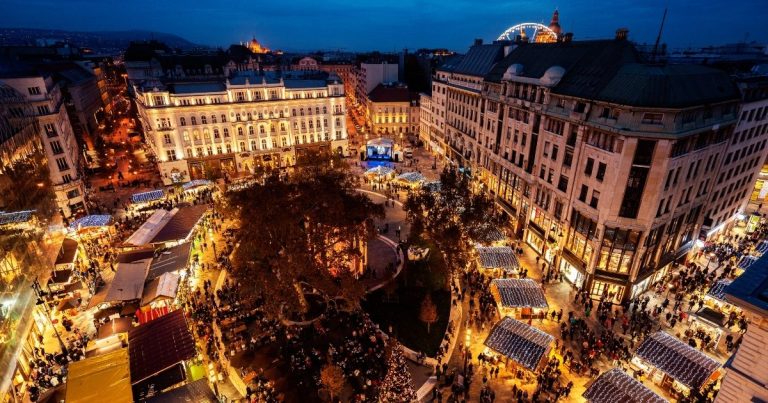
When we first set off for Budapest, we thought all that awaited us was sightseeing historic landmarks and soaking in thermal baths. The very smell of the city quickly proved us wrong. The ever-present aroma of sweet and spicy paprika drifts out of every other restaurant and instantly tunes you in to what really matters. Hungarian food in Budapest is simply elemental, hearty and utterly uncompromising.
Local cooks certainly don’t bother with any modern dietary fads. Traditional Hungarian cuisine stands on solid foundations that were shaped over centuries in the cauldrons of ordinary shepherds and in the grand kitchens of the Austro-Hungarian nobility. If you’re arriving in Budapest with a secret plan to slim down before beach season, you can toss that idea straight out the window. Calories simply aren’t counted here, and food is literally celebrated at every turn 😅.
Hungarian gastronomy is often associated with enormous portions of meat and heavy sauces. But Lukáš and I have been vegetarians for a long time, and maybe you’re now wondering what on earth we actually eat there all day. I can honestly promise you that Budapest is a huge culinary paradise even for those who aren’t big on meat. We found plenty of fantastic meat-free options and local treats.
In this article I’ll guide you through the very best things you can taste in the Hungarian capital. I’ll show you our favourite spots and also warn you about the traps that await unprepared tourists in the city centre. Let’s dive together into the secrets of the perfect lángos, an honest lecsó and some of the most beautiful historic cafés in the world.
TL;DR
- Paprika is the foundation of everything. Hungarians love it in every form, and quality ground paprika in a pretty tin is the very best souvenir you can bring home.
- Goulash is a soup. If you order a traditional gulyás, you’ll get a hearty meat broth. The thick meat stew you might expect is called pörkölt in Hungary.
- Lángos is the king of the streets. The best street food is at the famous Karaván food court, where they even make a phenomenal lángos burger.
- Chimney cake comes from Transylvania. Forget any “old Czech” tradition — the real kürtőskalács has an amazing crunchy caramel crust on the outside and is a genuine historic delicacy.
- Beware of extreme tourist traps. Never let strange women on the street recommend a bar, and avoid restaurants with menus in five languages.
- Prices rose noticeably in 2026. Food got about a quarter more expensive, but the capital of Hungary is still significantly cheaper than most of Western Europe.
- Cafés are more like museums. The famous New York Café is a breathtaking feast for the eyes, but coffee with dessert can easily set you back €25 per person.
- Ruin bars offer more than just drinks. Spots like Szimpla Kert or Mazel Tov are the ideal places to soak up the evening atmosphere and enjoy great food.
The full destination guide: Hungary — guide and what to see
How (and Where) to Eat Like a Local
To understand the local culture, you first have to grasp their obsession with a single ingredient. It’s not just an ordinary spice — it’s literally Hungarian national identity served on every plate. Paprika reached Hungary via the Balkans sometime during the sixteenth and seventeenth centuries. Locals gradually elevated it into the absolute cornerstone of almost everything savoury.
In the shops you’ll commonly find a very detailed classification. The basic sweet and noble variety is called édesnemes, while the really hot and spicy one is labelled erős. The most prized varieties come from the sun-drenched regions of Kalocsa and Szeged in the south of the country. By the way, quality ground paprika is the most honest and practical gift you can bring back from your trip.
When lunchtime comes, locals know exactly where to head. The best tip for a cheap and authentic lunch is the so-called étkezde or kifőzde. These are small, utterly unpretentious canteens, very often run by the older generation. They’re usually only open over lunch from Monday to Friday and offer a fantastic daily set menu called napi menü.
In these places you’ll get the very best hearty homemade food. The price usually sits well below 4,000 HUF (roughly €10), which is often far cheaper than a single course in an evening restaurant. Among specific local addresses, definitely try Kívánós Gyros on Aranykéz street. They make an absolutely brilliant wrap for just 1,200 HUF (about €3), and they have no English menu at all, so you don’t pay any pointless tourist surcharge.
For a traditional atmosphere, pop into Központi Vendéglő on Ferenc Boulevard. A soup with a main course will cost you a friendly 3,200 HUF (around €8). Another great choice is Vendéglő a Kertbe, where they serve honest food and you’ll feel a genuine, family-style warmth without the crush of tourists.
The Great Market Hall and Hunting for Treats
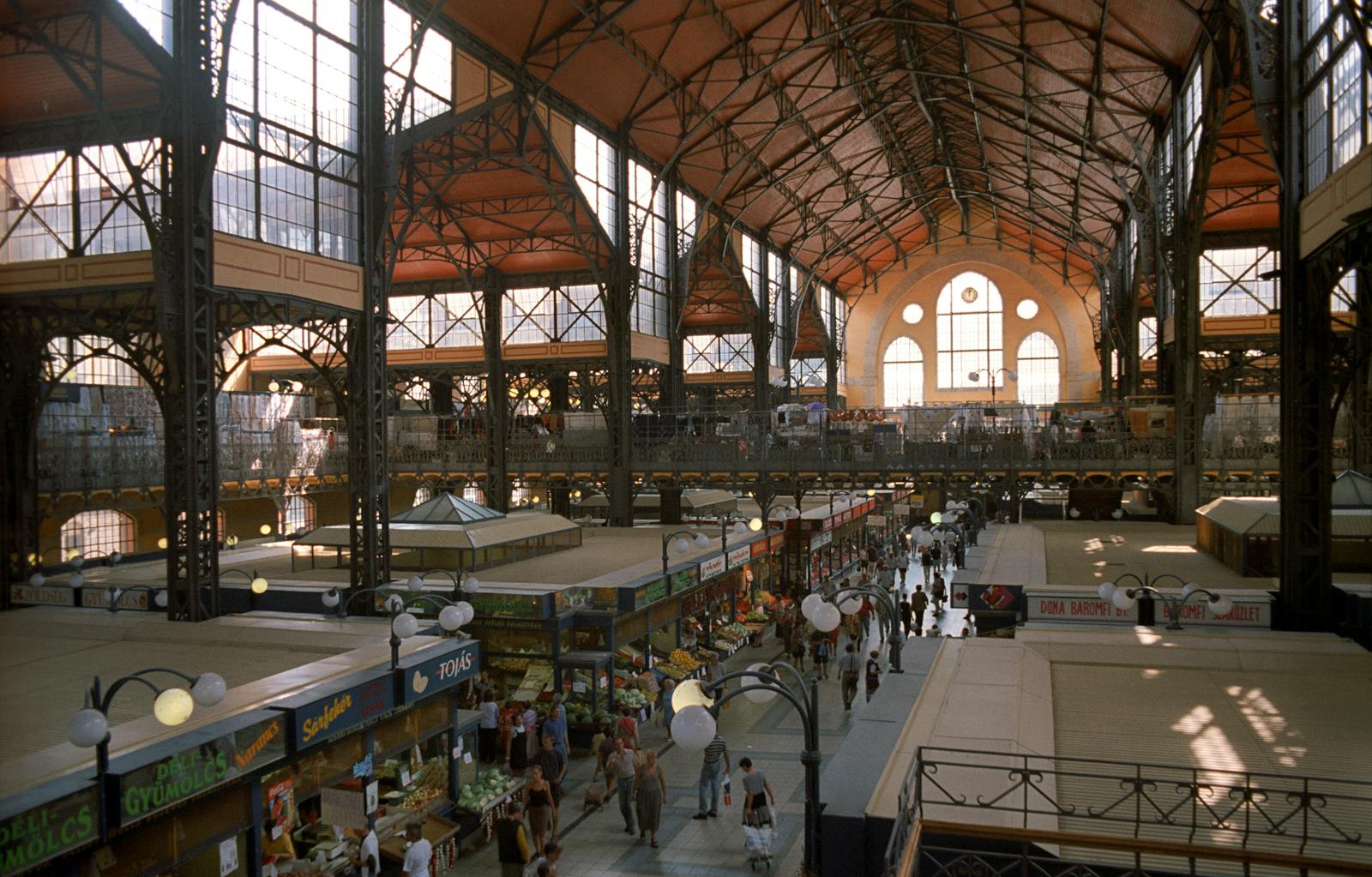
At the very end of the famous Váci utca shopping street stands a huge neo-Gothic building from 1897. The unmistakable colourful roof of Zsolnay ceramic tiles catches your eye from afar. Architect Samu Pecz once designed the largest and oldest covered market in the whole city here. Known as Nagyvásárcsarnok, it still functions today as an absolutely fantastic place full of colours and tempting smells.
In the basement of this giant hall you’ll find mainly fish and all kinds of pickled vegetables. The ground floor, on the other hand, is an absolute paradise for lovers of cheese and especially spices. This is exactly where you can buy the very best paprika pastes and ground paprika in beautiful tin boxes. We always spend ages here choosing the most interesting cheeses and fresh bread for an evening picnic.
The upper balcony on the first floor is reserved for street food stalls and souvenirs. This is where you go for fresh, hot lángos or a hearty goulash soup. The atmosphere is very lively, and you sometimes have to fight a little with other hungry visitors for a free seat.
But be extremely careful when buying souvenirs on this upper balcony. Among the beautiful hand-embroidered textiles, plenty of cheap Chinese knockoffs are unfortunately hiding. So always check the labels and the origin of the goods carefully. The market is also closed on Sundays and on Saturdays it already shuts around three in the afternoon. Ideally come early in the morning or later in the afternoon — that’s the only way to avoid the worst crowds.
Karaván Street Food and Nightlife

Right next to the famous Szimpla Kert ruin bar you’ll find Budapest’s first and longest-running successful street food court. It was founded in 2014 and is a truly brilliant collection of food trucks. It perfectly blends old Hungarian traditions with modern international cuisine. You can grab excellent vegan specialities here as well as good Italian pizza.
For us, the absolute star of this place is the local Langos Burger. Picture the perfect paprika lángos filled with cheese and sour cream, topped with sheep’s cheese and fresh rocket or grilled peppers. It’s a huge calorie bomb, but it tastes absolutely divine and we come back here on every single visit ☺️.
Just bear in mind that prices here are a bit higher thanks to the lucrative location in the party district. Quality at some stalls can fluctuate slightly during busy evenings. They’re usually open from eleven in the morning until eleven at night, and from Thursday to Saturday you can grab a bite even at one in the morning.
When you think of Budapest and the evening, the phenomenon of ruin bars immediately comes to mind. It’s an absolutely unique concept that turned the city into one of the most popular party destinations in all of Europe. It all started in the early 2000s in the seventh district. This area was once a vibrant Jewish quarter, but after the war and during communism it fell into severe disrepair.
Instead of demolishing these abandoned factories and tenement buildings, young entrepreneurs turned their decay into their greatest asset. They brought in old furniture from flea markets, discarded bathtubs and old televisions from the nineties. They painted the walls with colourful street art and opened bars with an inimitable atmosphere.
The most famous and original ruin bar is the iconic Szimpla Kert on Kazinczy street. It opened back in 2002 and is a giant psychedelic labyrinth. You’ll find eight different bars, glowing neon signs, disco balls and even an old Trabant car converted into quirky seating. If you don’t fancy drinking here in the evening, come on Sunday morning, when the whole space transforms into an amazing farmers’ market.
The most elegant version of a ruin bar, on the other hand, is a place called Mazel Tov. It’s more of a gorgeous restaurant with Mediterranean and Israeli fusion, where they make fantastic meat-free dishes. You’ll find exposed brick walls, a glass roof and hundreds of romantic fairy lights. Come here for a relaxed date and a good cocktail, definitely not for a wild party.
This seventh district is also the natural centre of the local LGBTQ+ scene. The ruin bars themselves have a very open and friendly atmosphere for everyone. The most popular gay club, since 2009, is Alterego. Every Friday and Saturday the famous and very popular Transvarieté Show takes place, with the party peaking long after midnight.
The Dark Side: Tourist Traps and Scams
Thanks to cheap beer and beautiful baths, Budapest is a huge magnet for all sorts of stag and hen parties. Unfortunately, this also brings a specific kind of rather nasty scam that you really need to watch out for. Caution is especially warranted in the evening hours.
You may have heard of so-called beer bikes. Due to complaints from locals about the noise, the city banned them in the historic centre. Operators had to move them out to peripheral industrial zones. The ride has therefore completely lost its original point, because you won’t see any landmarks from them. Better to pay for a classic Danube boat cruise with an open bar instead.
The biggest danger of all, though, is the extreme scam involving so-called consumption clubs. For over twenty years now, Budapest has been home to a brutal scam in which victims lose hundreds of euros in a single night. The scenario is always exactly the same and most often plays out around the touristy Váci utca street.
Two very attractive, English-speaking women approach you. They pretend they’re just tourists too and suggest visiting a great bar nearby together. As soon as you enter the half-empty club, they order expensive drinks on your tab. When you then ask for the bill, they bring you astronomical sums. If you refuse to pay, aggressive bouncers appear immediately and force you to go to an ATM.
The basic rule for a safe evening is clear. Never take a bar recommendation from beautiful strangers on the street. Better to stick to proven ruin bars or to places you’ve found yourself in advance online and that have good reviews.
Another very common trick used by dishonest restaurants is the simple menu swap. Outside you look at a menu with perfectly normal prices and sit down. Inside you order, but when paying you get a bill with double the amounts. When you start arguing, the waiter brings you a menu to look at that appears identical but has much higher prices printed on it.
So always keep the menu lying on the table right up until you’ve paid. Give a wide berth to restaurants with menus written in five different languages. That usually means a massive tourist surcharge. A classic trap with overpriced and very average food is the entire immediate area around Castle Hill.
What Are Food Prices Like in 2026
In recent years, the whole of Hungary has experienced a fairly brutal jump in the price of everything. During 2026, food and drink rose by nearly twenty-five per cent year on year. Despite this unpleasant inflation, the Hungarian capital is still noticeably cheaper than comparable cities in Western Europe.
If you pop into an ordinary shop, a half-litre can of beer will cost you 290 to 390 HUF. That works out to a lovely 70p to 95p. In an ordinary local pub you’ll pay roughly 500 to 600 HUF for a draught beer, which is around £1.20. In popular ruin bars and right in the centre, though, prices already climb to three to five euros.
A main course in a local, non-touristy restaurant typically costs around 3,000 to 5,000 HUF. That works out to roughly £6.50 to £11 for a very generous portion. In posh restaurants with impeccable service, count on amounts between 10,000 and 12,000 HUF per course. A classic three-course meal for two in a mid-range restaurant will come to roughly £27 to £43.
If you want to eat really well for sensible money, stick mainly to the seventh district. You can also head to the very pleasant Ráday utca street in the ninth district, which is full of great, affordable spots. The cafés and bistros here have huge charm, and prices are set more for locals than for wealthy tourists.
12 Hungarian Dishes You Have to Try in Budapest
Let’s take a look together at the best the local culinary scene has to offer. I’ll explain the real difference between goulash and pörkölt, and show you that Hungarian cuisine can be incredibly diverse. Get your taste buds ready, because this is going to be a proper ride full of intense flavours.
1. Hungarian Goulash (Gulyásleves)
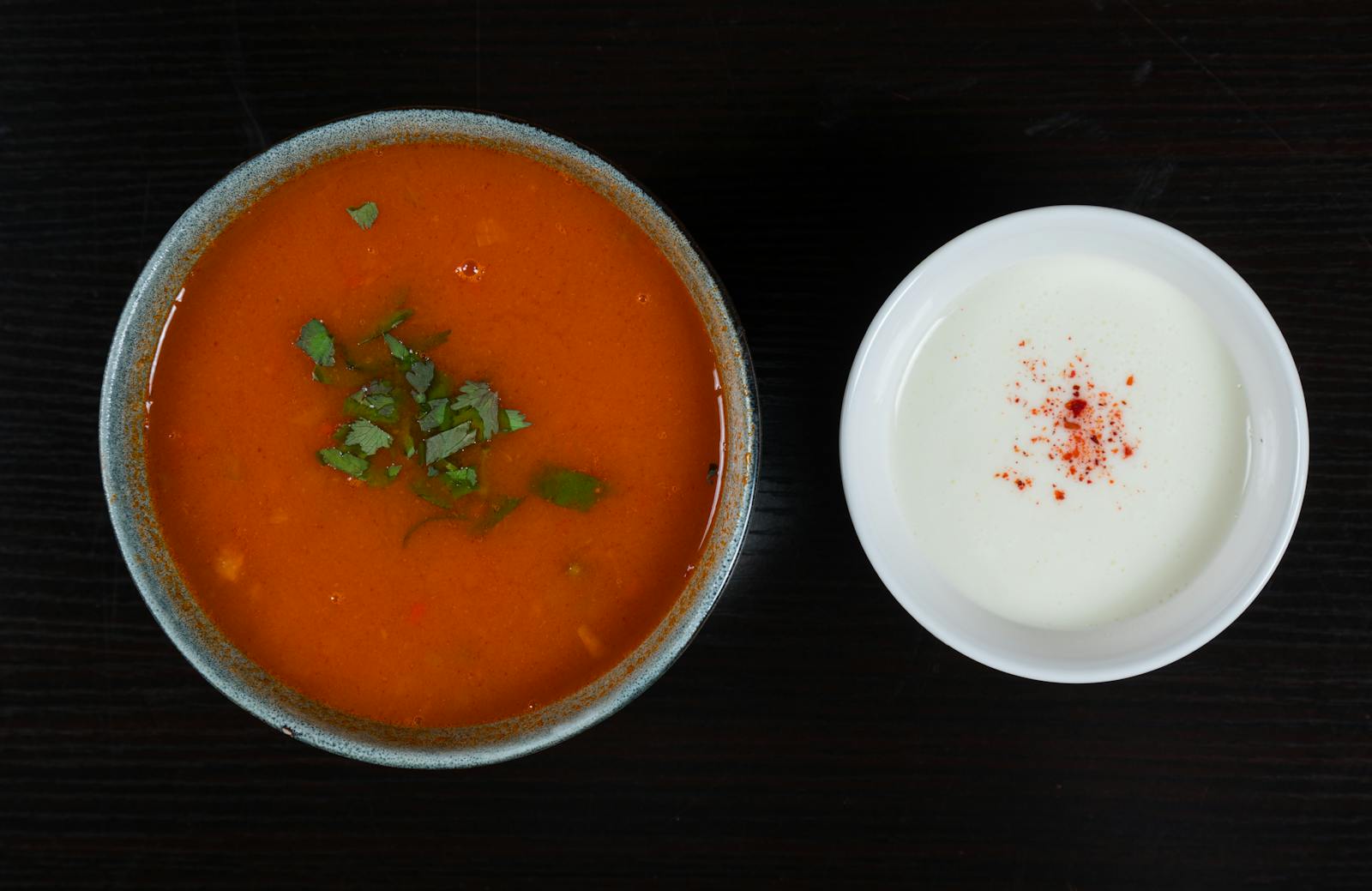
The following piece of information might just save your first Budapest lunch and spare you a big disappointment. Real Hungarian gulyás is, in fact, a soup. It’s not at all the thick, heavy brown stew with dumplings that many people picture when they hear the word “goulash”.
If you order a dish called goulash from the menu in Budapest, you’ll get a deep bowl placed in front of you. It contains a very rich meat broth with pieces of soft beef, potatoes and root vegetables. It also includes the typical tiny homemade pasta called csipetke, which thickens the soup beautifully.
It’s an absolutely brilliant and wonderfully warming dish, especially in the cooler autumn months. Many visitors regularly experience a small shock, though, when instead of an expected heavy main course they actually get “just” a hearty soup. This dish has been a traditional Hungarian classic for centuries and to this day forms the backbone of the local diet.
2. Traditional Pörkölt
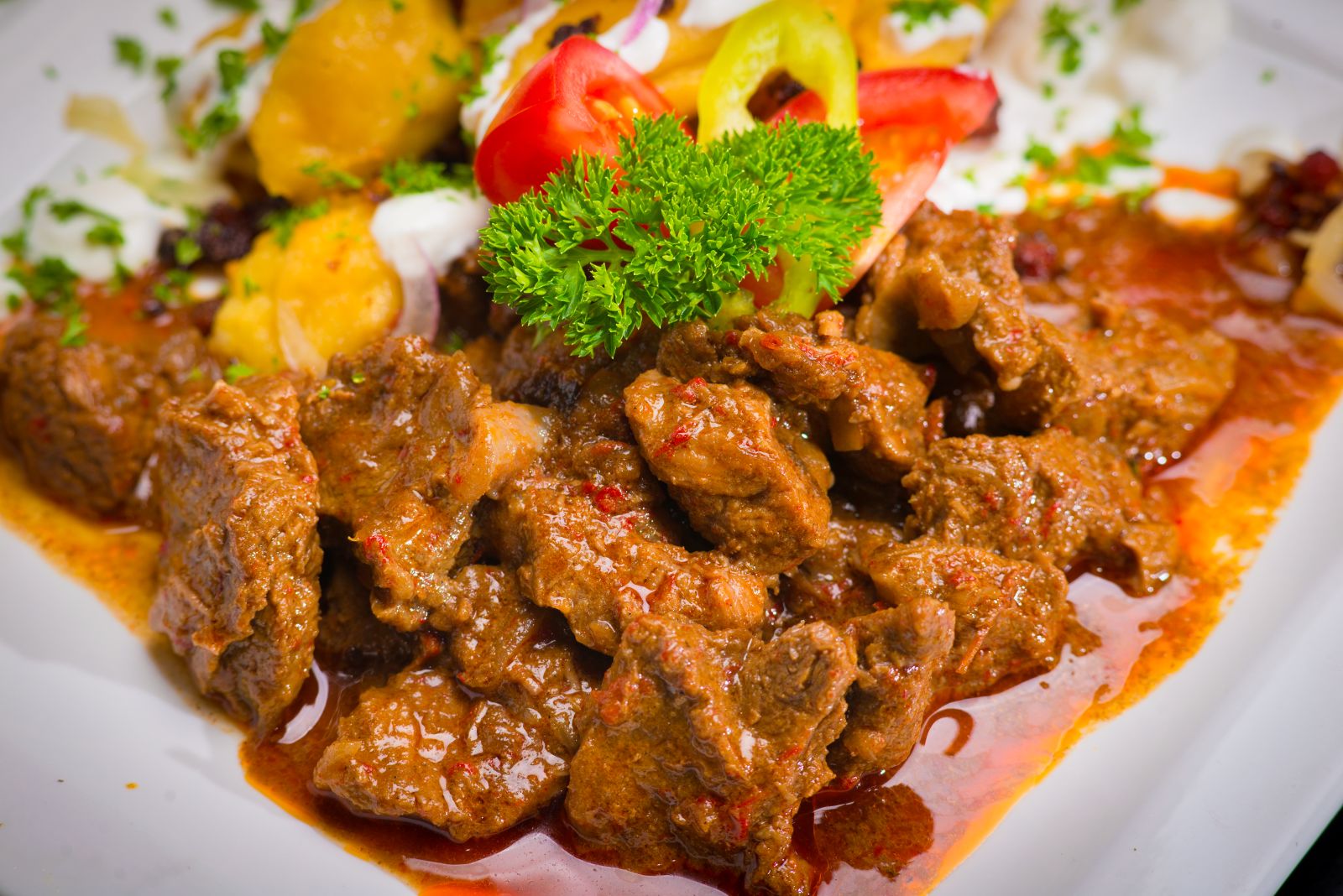
If you’re really craving what most of us picture as a classic goulash stew, you need to look for a completely different word on the menu. This thick dish is called pörkölt in Hungary. It’s meat braised very slowly and at length — most often beef or pork, but in better restaurants you’ll often come across wild boar or other game too.
The secret of this dish lies in the cook’s incredible patience. The meat juices are reduced until they turn into a glossy, concentrated sauce. It has a deep red colour thanks to a huge amount of quality ground paprika and tastes absolutely fantastic.
Traditionally, this meaty marvel is served with small Hungarian dumplings. They’re called nokedli or galuska and can be compared to spätzle. Sometimes you’ll get a fluffy bread dumpling with it too, but the little egg dumplings are definitely the most classic and authentic side, and the locals love them.
3. Chicken Paprikash (Paprikás csirke)
For those who find pörkölt too heavy and intense, there’s a much gentler option. The beloved paprikash is a true classic of every Hungarian Sunday family lunch. Compared to the dark stew, it has a much lighter colour and a milder flavour profile.
The base is traditionally quality chicken, slowly braised on a rich paprika foundation. The whole sauce is finally mellowed with a very generous dose of thick sour cream. This gives the dish an amazing creaminess and a slightly tangy flavour that perfectly balances the sweetness of the ground paprika.
Just like pörkölt, this dish is most often served with homemade nokedli dumplings. It’s a very popular dish even among children, because it’s not spicy at all and the meat, thanks to the long braising, literally falls apart on your tongue. It’s a local speciality you’ll find in pretty much every traditional restaurant.
4. Fisherman’s Soup (Halászlé)
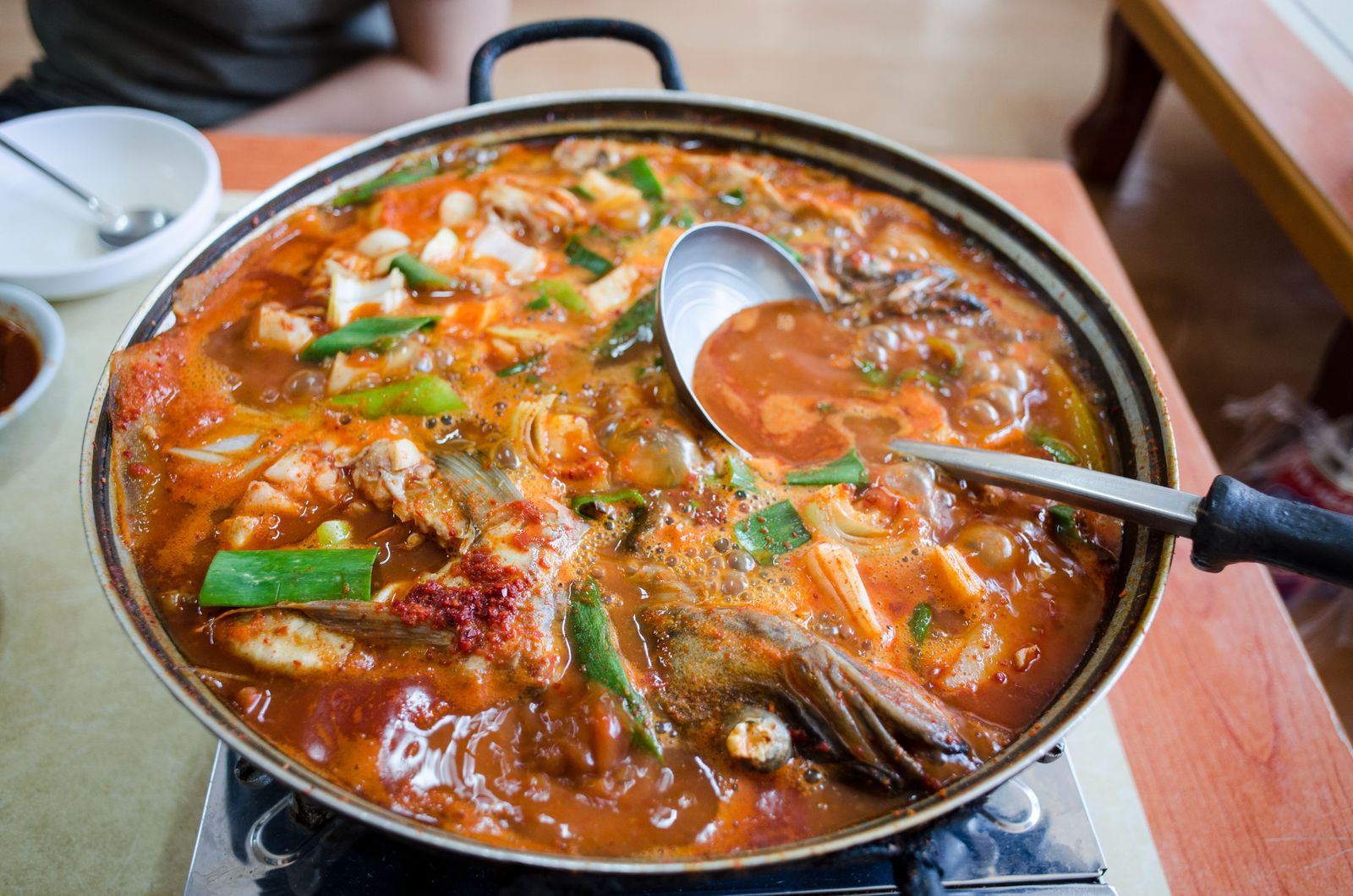
Another absolute soup idol of the entire country is the famous halászlé, or fisherman’s soup. This fiery red dish originally comes from ordinary fishermen in the Szeged region. They cooked it right on the banks of the great Tisza and Maros rivers in huge cauldrons over open fire.
It’s an incredibly hearty, deeply red and usually properly spicy soup. The base is always quality freshwater fish, most often fatty carp, huge catfish or predatory perch. Into the pot goes a huge amount of onion, garlic, fresh tomatoes and, above all, a heap of hot paprika.
In Hungary this is an absolutely traditional and essential Christmas dish. In good restaurants, of course, you can have it all year round. Proper halászlé must have a visible layer of red paprika fat on the surface and is strictly eaten with a huge slice of fresh white bread.
5. Lángos
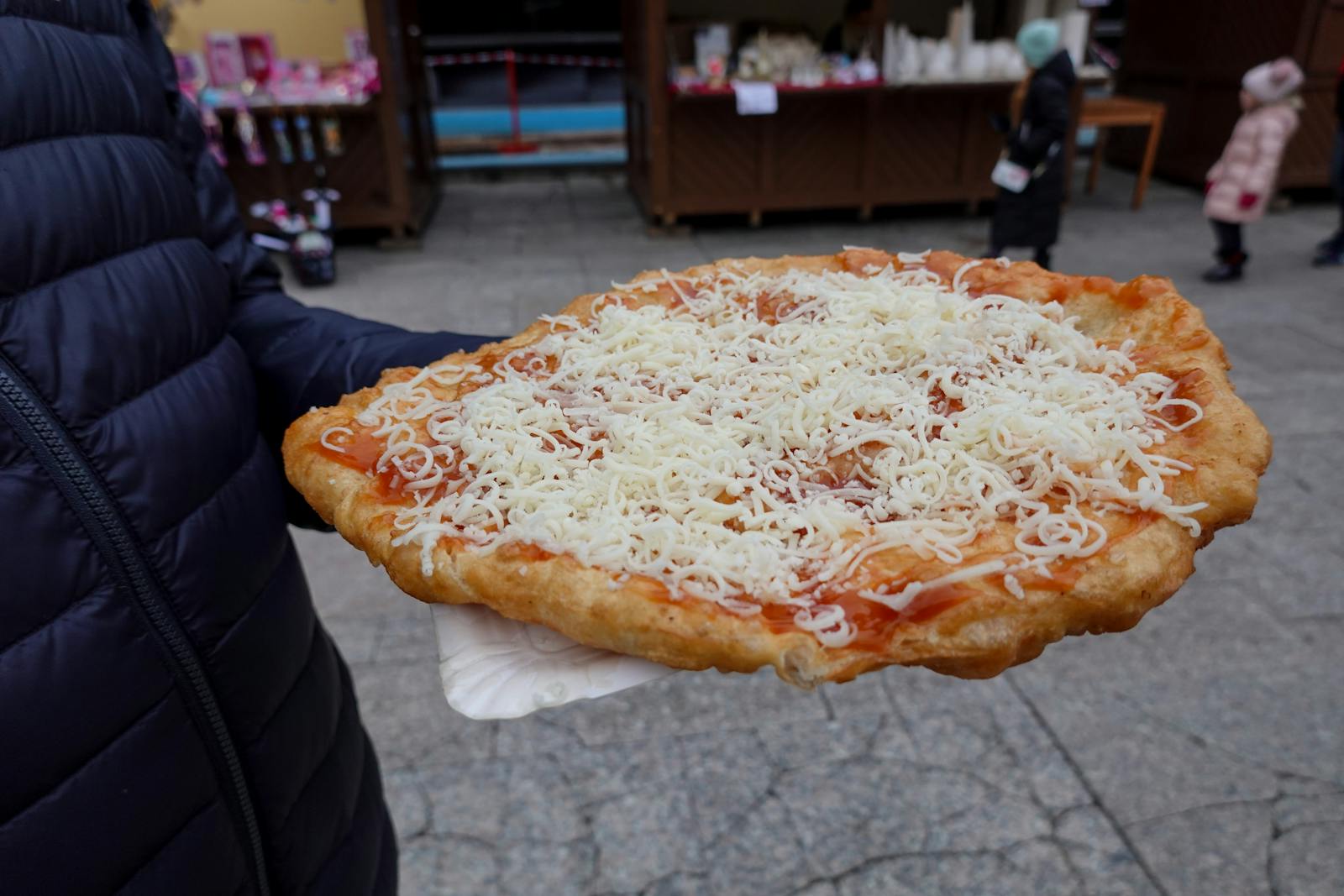
If Budapest has an undisputed king of all street food, it’s most definitely lángos. Picture the most genius, greasy chaos in the world. It’s a beautifully puffed-up flatbread made from yeast dough, fried hard in a deep layer of hot oil. As a result it’s perfectly crisp on the outside and pillowy soft inside.
Our absolute addiction is the most classic Budapest version. The flatbread is first generously brushed with strong garlic water and then buried under a huge mountain of thick sour cream and grated hard cheese. It’s outrageously unhealthy, it drips everywhere and you’ll end up completely messy, but the taste experience is absolutely worth it 😁.
Lukáš and I have it on pretty much every visit. The best experience is to buy it nice and hot right at the famous Karaván food court, sit down on a wooden bench and wash it down with a chilled beer or lemonade. We could happily fight over one giant lángos, that’s how much we love this guilty pleasure.
6. Stuffed Cabbage (Töltött káposzta)
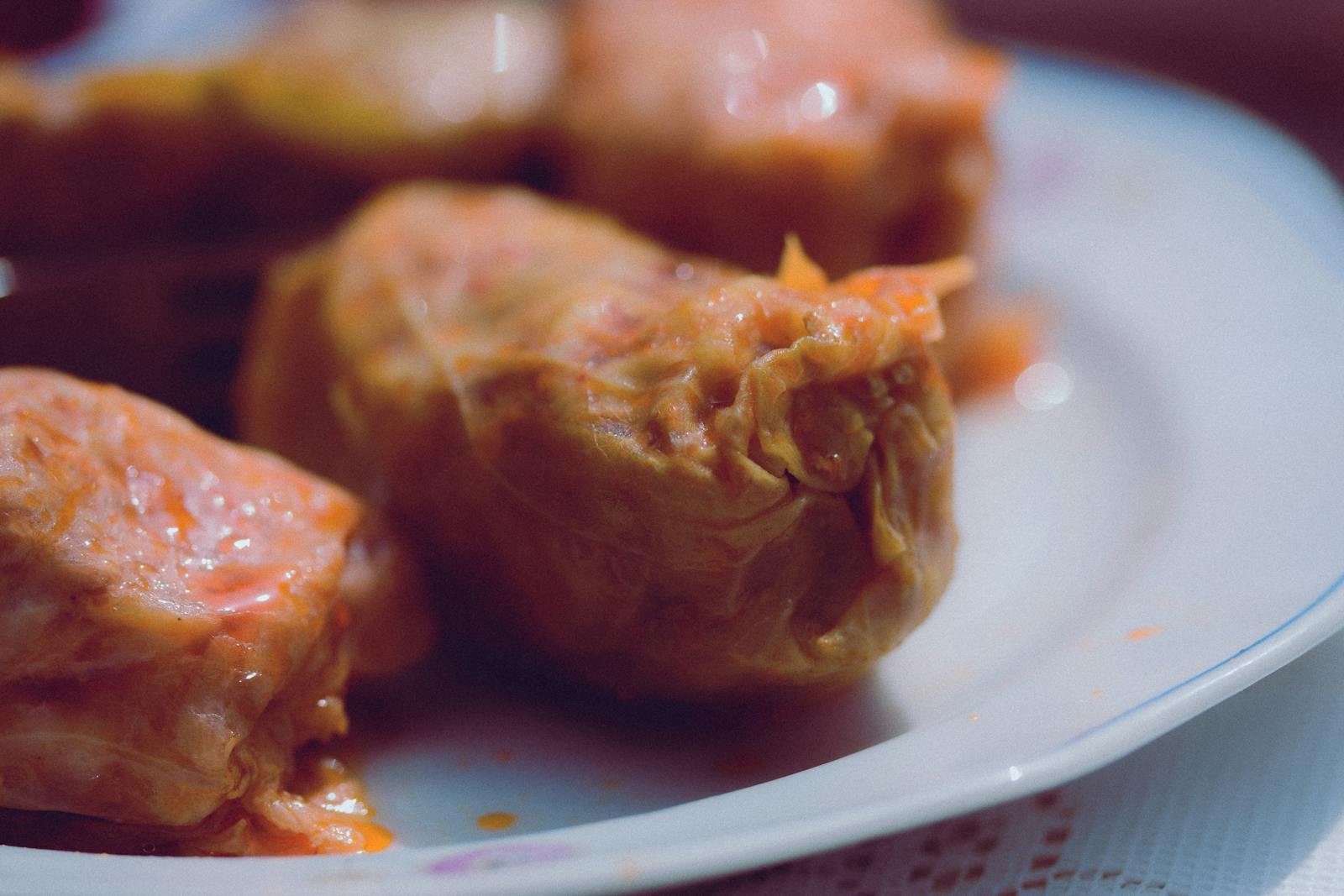
In the colder winter months, a hearty töltött káposzta is guaranteed to put you back on your feet. This dish is the definition of the perfect winter comfort food. It’s traditionally made in large quantities, and they say it tastes best on the second or third day after cooking, once all the flavours have nicely settled.
These are large leaves of fermented cabbage filled with a rich mixture. The filling is minced meat carefully mixed with rice and spices. These neat rolls are then braised very slowly in a punchy tomato sauce, often together with pieces of smoked meat for even better flavour.
This hearty local speciality is always crowned on the plate with a proper dollop of sour cream. The acidity of the cabbage cuts through the richness of the whole dish beautifully, and with fresh bread it’s a meal that’s guaranteed to keep you energised for a full day of running around the sights.
7. Stuffed Peppers (Töltött paprika)
While stuffed cabbage rules the winter, stuffed peppers are, by contrast, a celebration of the hot Hungarian summer. They use the typical pale yellow Hungarian peppers, which have a thin skin and a very specific, gently sweet flavour. These are filled and braised in a light, sweet-and-sour tomato sauce.
The classic version contains a mix of minced meat and rice. But at markets and in smaller bistros we often go for the fantastic vegetarian version, where the meat is replaced with a mix of mushrooms, herbs and rice. The tomato sauce in this dish is usually gentler and a touch sweeter than in other Hungarian meals.
This dish smells of sunshine and homely comfort. Most often it’s served with plain boiled potatoes, which are perfect for mashing right into that delicious tomato sauce. It’s a light and very refreshing choice for warm summer evenings.
8. Hungarian Lecsó
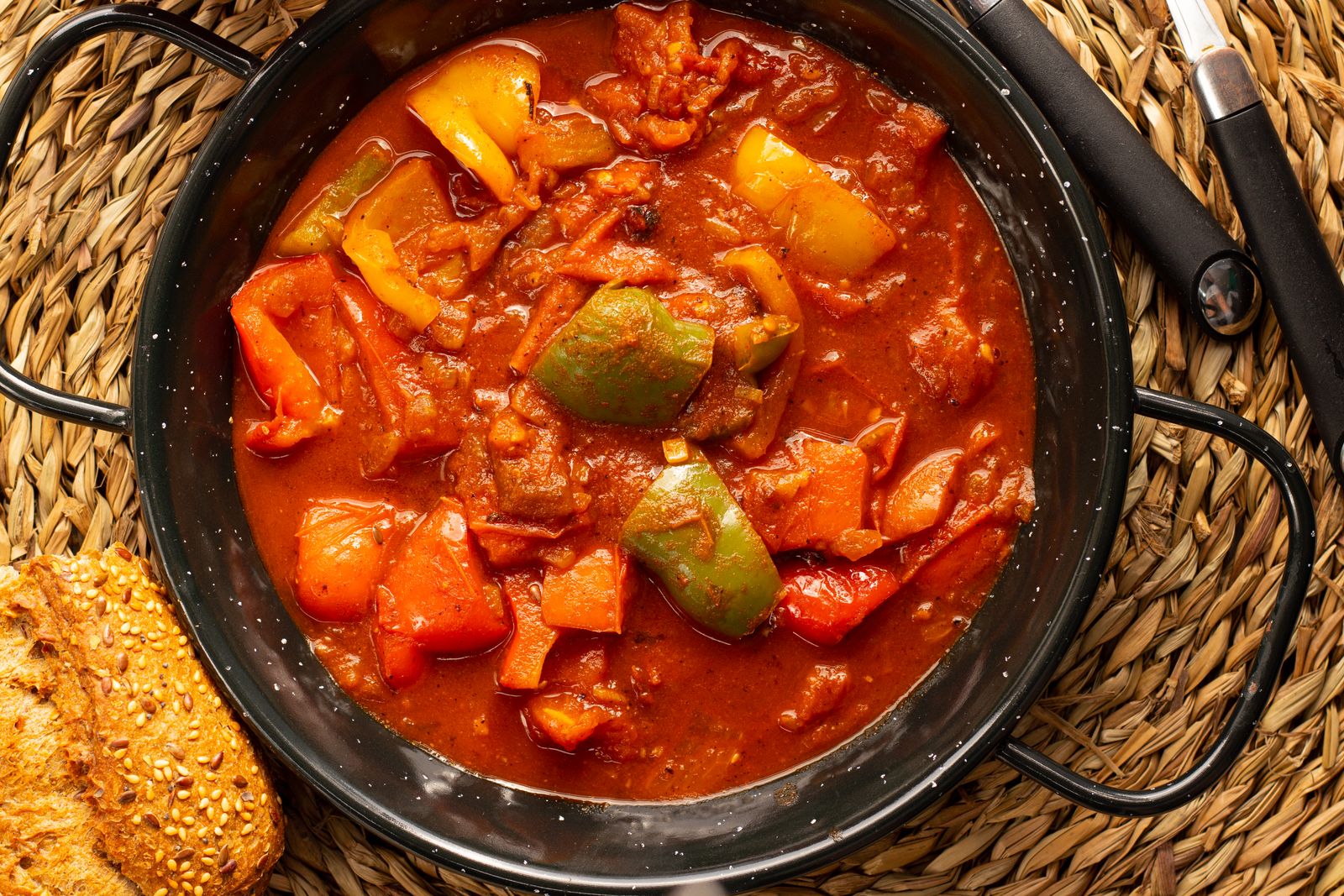
This is exactly the dish that Lukáš and I have most often. Real Hungarian lecsó is a perfect ode to fresh summer vegetables. Forget those sad, overcooked canteen versions with cheap sliced sausage. Here it’s an explosion of amazing, fresh flavours.
The base is a huge amount of sweet onion, fresh meaty tomatoes and, of course, a heap of peppers. It’s all slowly and gently braised in one big pot until the vegetables release their natural juices and form a thick, naturally sweet sauce full of vitamins.
Often, beaten eggs are stirred in at the end, which mellows and thickens the whole mixture beautifully. It’s a wonderfully light, naturally vegetarian dish that we love to enjoy simply with a huge piece of crusty bread. In many places they make it purely vegetable-based — just watch out, as cooks sometimes like to add pieces of local sausage, so it’s always worth asking in advance.
9. Goose Liver (Libamáj)
Hungary has long been one of the world’s biggest producers of goose liver. Pan-fried goose liver, or foie gras, is one of the most expensive and luxurious delicacies. You’ll find it on the menu of pretty much every better, pricier restaurant in central Budapest.
Goose in general is considered a very festive affair in Hungarian culture. It’s associated above all with the autumn celebrations of St Martin, when huge goose feasts are held across the country. The liver itself is most often served quickly seared with some sweet element, for example caramelised apples or onion marmalade.
It’s a very fatty and extremely intense local speciality. Restaurants charge handsomely for this luxurious starter, but for meat lovers it’s apparently an absolutely mandatory stop when discovering higher-end Hungarian gastronomy.
10. Chimney Cake (Kürtőskalács)
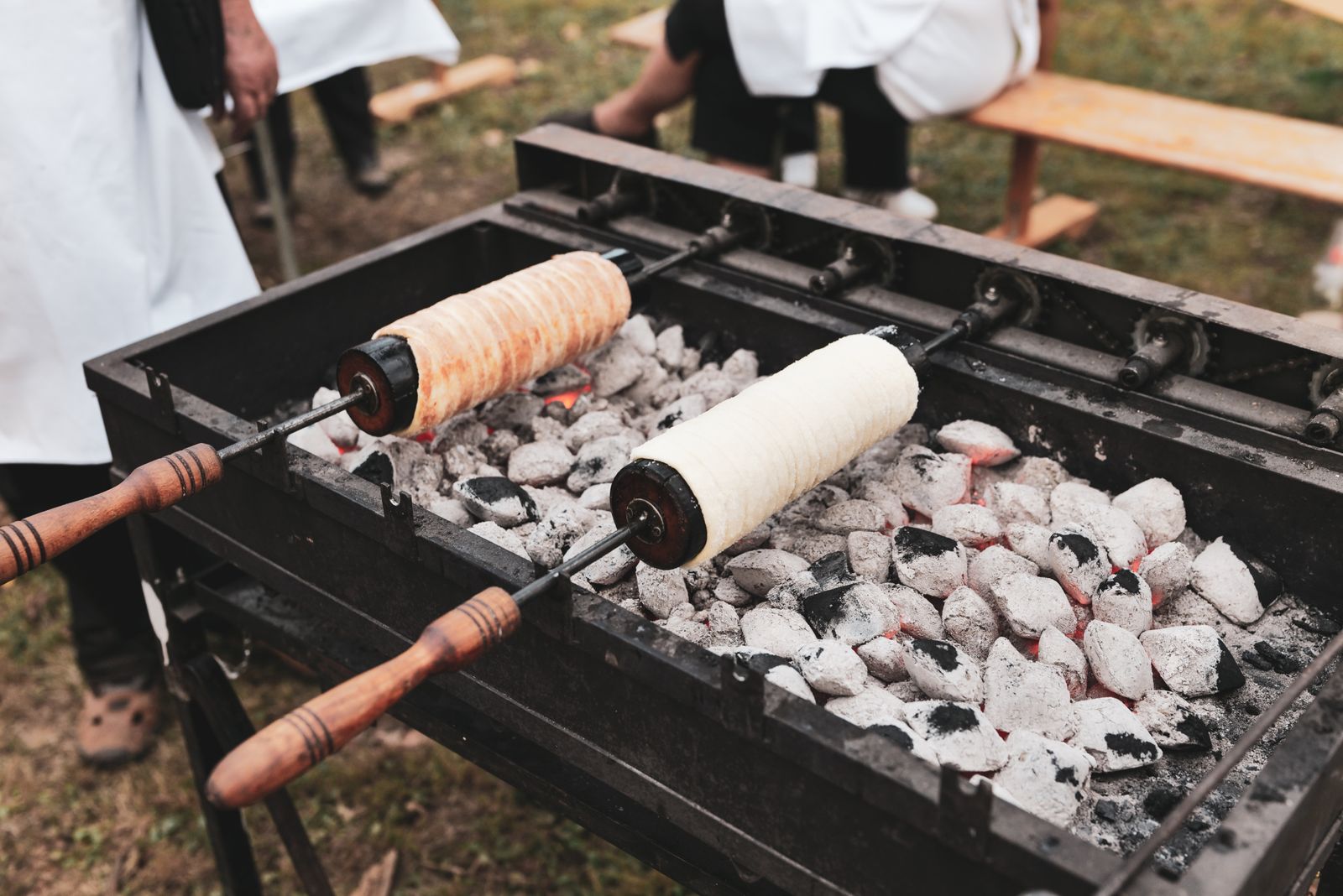
On an evening stroll through the brightly lit centre of Budapest, you’ll one hundred per cent stumble across the smell of cinnamon and caramel. Everywhere you’ll see stalls selling kürtőskalács, or chimney cake. A sweet spiral of yeast dough is wound around a wooden cylinder and baked over glowing coals. Sound familiar? It looks almost exactly like the famous “old Czech” trdelník you’ll see on Prague’s Old Town Square.
Here, however, we run into a huge and rather sensitive dispute over the origin of this sweet. Kürtőskalács is historically documented as a genuine speciality of the Székely people of present-day Transylvania. The first written mention dates back to 1679, and the first surviving recipe comes from the cookbook of Countess Mária Mikes in 1781. While Hungarians have a protected geographical indication for this treat, in the Czech Republic it’s merely a modern tourist attraction. As Czech journalist Janek Rubeš often and gladly points out, the trdelník only spread massively across Prague after the year 2000 and has nothing whatsoever to do with any “old Czech” tradition.
The Hungarian version also has one absolutely crucial and genius difference. Before baking, the dough is generously coated in sugar that caramelises over the fire. This creates an incredibly hard, glossy and crunchy crust. We always buy ours hot straight off the fire and peel it off in pieces. Try it in Budapest and compare that amazing caramel crust with the soft Prague version — it’s like chalk and cheese.
11. Dobos Cake (Dobos torta)
When you finally sink, tired, into one of the classic historic patisseries, you have one sweet duty. Dobos cake is an absolute icon of all Hungarian confectionery. It was invented at the end of the nineteenth century by the brilliant confectioner József Dobos, who created a masterpiece admired even by Empress Sisi herself.
It’s an incredibly precisely layered cake. It consists of several very thin sponge layers sandwiched with a really rich, proper chocolate buttercream. No skimping here on either butter or quality cocoa.
On top of the whole cake proudly sits its most characteristic feature. It’s a very hard, glossy caramel glaze, which, for easier serving, is often pre-cut into elegant, sharp triangles. The combination of soft cream and crunchy caramel on top is simply perfect.
12. Somlói galuska and Rákóczi túrós (Sweet Endings)
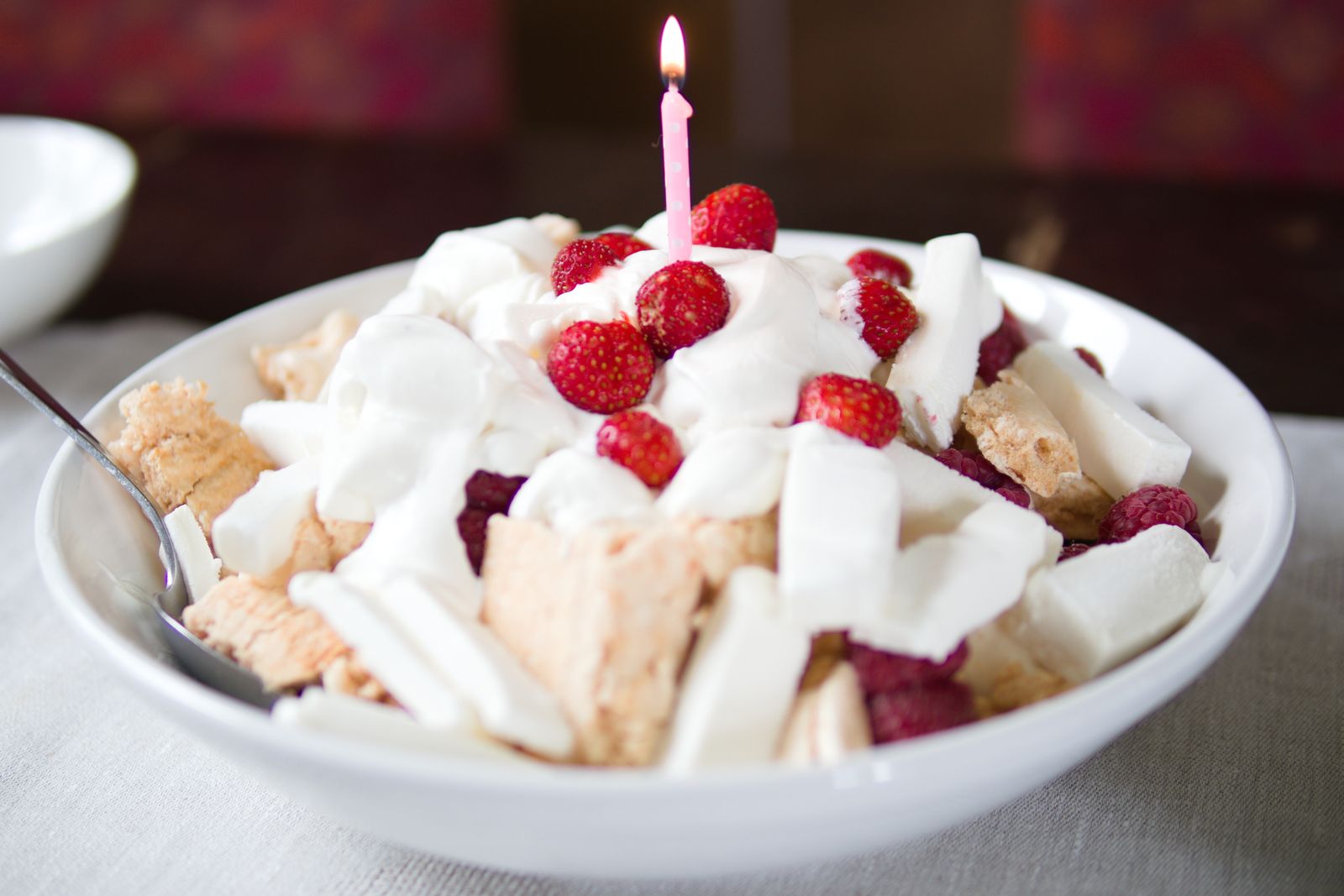
If one cake wasn’t enough, Hungarian patisseries hide more treasures. Somlói galuska is often nicknamed the most popular Hungarian dessert of all. It was created in 1950 at the legendary Gundel restaurant, and we love it because it’s simply one big, wonderfully chaotic bowl full of joy.
It’s an incredibly sinful affair. You get a glass full of fluffy pieces of light and dark sponge, rich chocolate cream and crunchy walnuts. It also doesn’t lack raisins generously soaked in strong rum and a huge mound of proper homemade whipped cream.
Also worth a mention is the traditional Rákóczi túrós. It’s a wonderful curd cheese tart named after its creator, János Rákóczi. On a layer of short pastry sits a rich curd filling, decorated with a lattice of whipped sweet egg-white meringue and dotted with tangy apricot jam. It’s delicate, not too sweet and absolutely ideal with an afternoon coffee.
What to Drink: From the Wine of Kings to Bitter Herbs
Hungary is a huge and very proud wine power. Beer has historically played second fiddle here, although that’s slowly changing in recent years thanks to modern microbreweries. But if you want to drink like a true local, you have to start with wine.
Tokaji is the absolute golden jewel of the country’s north-east. The most famous style is called Tokaji Aszú, and it’s a wonderfully sweet dessert wine. It’s made using a fairly complex method from grapes that are deliberately affected by the noble rot botrytis. Legend has it that the French king Louis XIV himself, after tasting it, called it the wine of kings and the king of wines. It has a beautiful golden colour, a very thick texture and is sipped in small amounts alongside dessert.
Among the red wines, you absolutely have to try Egri Bikavér, or Bull’s Blood from Eger. It’s a robust, heavy and very distinctive red cuvée. The name comes from a wild legend from the sixteenth century. When the Hungarians were defending the town of Eger against an enormous Turkish force, they drank red wine to gain strength. A rumour quickly spread among the Turkish soldiers that the defenders were drinking actual bull’s blood, and in fear of their ferocity they apparently chose to retreat.
When it comes to truly hard spirits, Pálinka reigns supreme. This traditional fruit brandy usually has between 37 and 55 per cent alcohol. It’s most often made from plums, pears or cherries, but the absolute classic is unquestionably the apricot one, called barack. It’s strictly drunk neat, at room temperature, from a small tulip-shaped glass. Never mix it with anything or dilute it — locals would consider that a gross insult to their national treasure.
After a really heavy, hearty lunch, Unicum will always reliably come to your rescue. This pitch-black, very intensely bitter herbal liqueur has been made by the Zwack family since 1790. It ages for a long time in oak barrels, contains over forty secret herbs, and you can spot it in any bar by its characteristic round bottle with a gold cross on a red background. It works as an absolutely brilliant digestif to help everything settle.
In the hot summer, Hungarians switch en masse to the so-called Fröccs, or wine spritzer. Mixing wine with soda water is literally a national summer ritual here. They’ve devised a whole science around it, and there are dozens of different names depending precisely on the ratio of wine to soda in the glass.
You can order, for example, a kisfröccs, a small spritzer with one decilitre of wine and one of soda, or a nagyfröccs, a large spritzer with two decilitres of wine and one of soda. It’s incredibly cheap, fantastically refreshing and it’s happily drunk on absolutely every summer terrace in the city.
And what about that beer? Common mainstream brands like Dreher, Soproni or Borsodi probably won’t offend you, but they probably won’t wow you either. The good news, though, is that a very strong craft scene is growing in the ruin bars. It’s full of amazing local microbreweries making great, modern beer styles from fragrant IPAs to sour beers.
Cafés, Patisseries and the Modern Brunch Scene
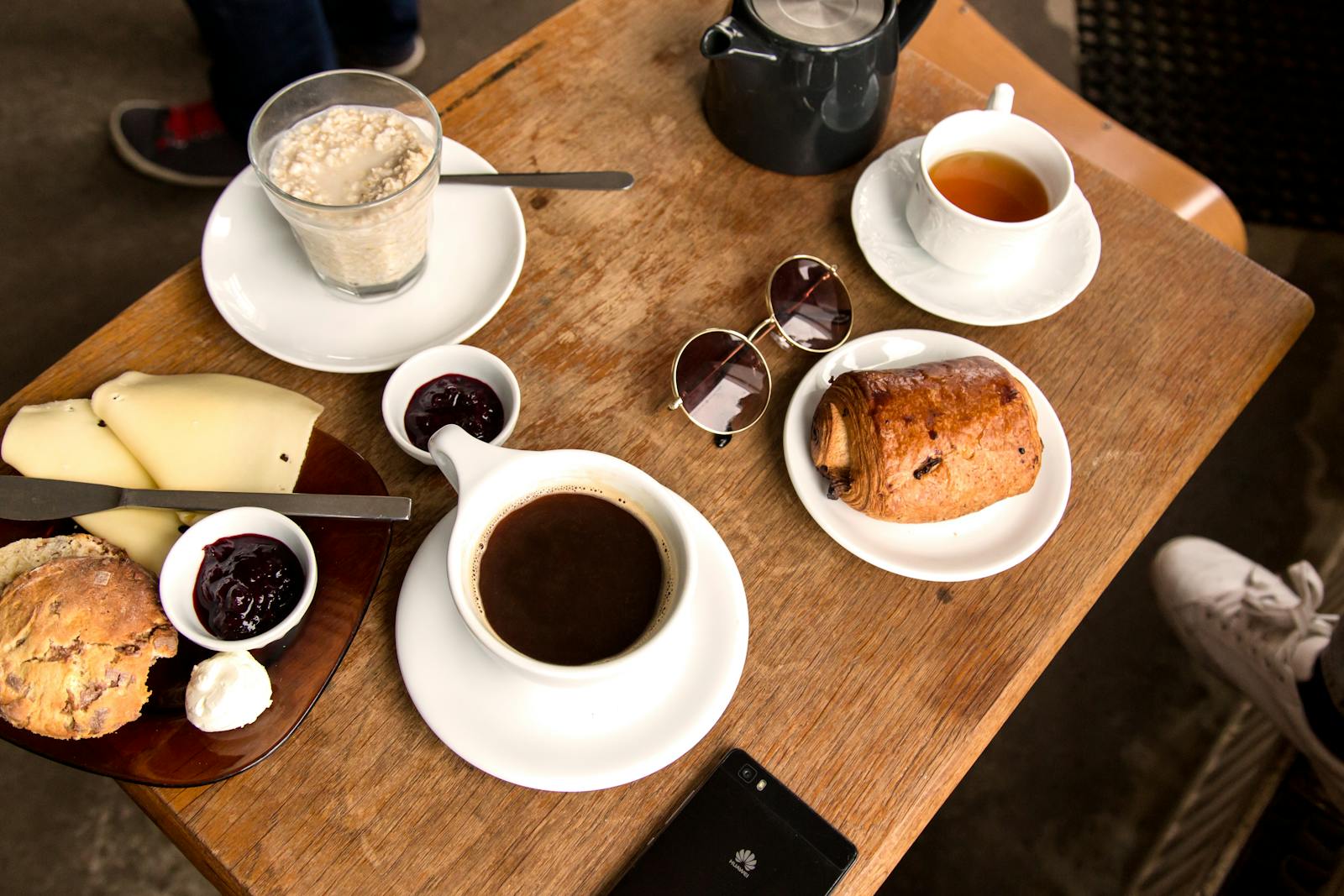
Budapest’s café culture has two completely different but fascinating worlds. On one side stand opulent historic palaces, and on the other modern hipster hideouts with specialty coffee. The biggest tourist draw is undoubtedly the famous New York Café on Erzsébet Boulevard. The café opened in 1894 and regularly wins prestigious titles for the most beautiful café in the whole world.
It’s absolute neo-Renaissance madness. The interior is full of marble columns, ceiling frescoes, giant Venetian chandeliers and gilded balustrades. Historically it was a refuge for poor artists and writers; today, though, an incredible two thousand tourists with cameras pass through it every single day.
Just bear one very important thing in mind. These days you go to the New York Café purely for the spectacle, not for a culinary experience or good value for money. Prices here are truly extreme and don’t match the quality. Coffee with an ordinary dessert can easily set you back €10 to €25 per person. You can even have a bizarre 24-carat gold cappuccino for nearly ten euros. Go there for the chandeliers and beautiful photos, but don’t expect any groundbreaking gastronomy.
If, on the other hand, you’re into great specialty coffee and fresh avocado toast, Budapest will absolutely thrill you. The local specialty coffee and brunch scene here is really huge and very high quality. The market leader is the popular chain Cafe Brunch Budapest, which has seven beautiful branches around the city. They have their own artisan bakery and source their coffee directly from a great local roastery.
You also definitely have to try the premium bakery called Vaj. They make absolutely perfect crispy croissants and excellent shakshuka. Another great choice is the French-inspired La Mousse de Lait, the Scandi-minimalist Läget or the cosy Blue Bird Roastery, where they lovingly roast over fourteen different types of coffee themselves.
Where to Go Next
I hope reading this article made your mouth water as much as writing it did mine. Budapest really is a city you have to taste above all. If you already know where you’ll have your first perfect lángos and where you’ll head for a drink in the evening, it’s time to plan the rest of your trip too.
To make that planning as easy as possible, we’ve put together a huge and very detailed guide to the entire city. Read our article featuring 66 things to see in Budapest. In it you’ll find not only the most famous landmarks like Parliament or the Fisherman’s Bastion, but also plenty of secret corners, beautiful viewpoints and practical advice on city transport and accommodation.
And if you’re as much of a coffee enthusiast as the two of us, and a day without a good cappuccino simply doesn’t exist for you, we have one more special bonus. We’ve prepared a separate, very detailed list focused solely on the best cafés in Budapest.
In this coffee guide we focused mainly on modern specialty coffee spots. You’ll find our favourite hideaways that make the best brunches, have great wifi for working and where you definitely won’t encounter the inflated tourist surcharges of the famous historic palaces. Budapest is, after all, a city that will keep you entertained from your first morning coffee to your last evening glass of wine.
Frequently Asked Questions
What actually is authentic Hungarian goulash?
In Hungary, gulyás is a hearty meat soup with potatoes, vegetables, and csipetke pasta. If you’re looking for the thick meat sauce we know from Czechia, you need to order a dish called pörkölt at the restaurant.
Where can I buy the best lángos in Budapest?
Excellent langoš is made on the first floor of the Great Market Hall (Nagyvásárcsarnok). But our huge favorite is the renowned Langos Burger in the Karaván street food court right next to the ruin bar Szimpla Kert, where they make an incredibly good stuffed version.
Are restaurants expensive in Budapest?
In 2026, food prices have jumped quite a bit, but it’s still cheaper here than in the West. In an ordinary local restaurant, you’ll pay around €7 to €12 for a main course. Just avoid the tourist traps on Váci utca street, where prices are artificially inflated.
What are these famous ruin bars?
This is about unique bars created in old, abandoned and dilapidated buildings in the Jewish quarter. They are furnished with old furniture from flea markets and street art. The most famous of them is Szimpla Kert, which also functions as a market during the day.
Can I eat well in Budapest as a vegetarian?
Absolutely no problem! We’re both vegetarians and we love the food here. The cheese lángos is excellent, summer vegetable lecsó, stuffed peppers with rice, loads of different cheeses from the market and of course an incredible amount of amazing sweets.
Why can’t I have fun with girls in front of bars?
In the center of Budapest, scammers operate who lure you as “tourists” to a friendly club. There they order drinks for you and at the end bring you a bill in the order of tens of thousands of crowns (thousands of euros). If you don’t pay, bouncers will force you to go to an ATM.
What’s the difference between Prague’s trdelník and the one from Budapest?
The authentic kürtőskalács comes from Transylvania and has a long history. The essential difference is that the Hungarian version is coated in sugar before baking. This beautifully caramelizes over the fire and creates an amazing and hard crispy crust on the surface.
Is it worth going for coffee at New York Café?
It’s a breathtaking historical experience and visually it’s one of the most beautiful cafés in the world. However, you have to expect huge queues and very high prices, where a coffee with a small dessert can easily cost you around 40 EUR.
Tips and Tricks for Your Vacation
Don’t Overpay for Flights
Search for flights on Kayak. It’s our favorite search engine because it scans the websites of all airlines and always finds the cheapest connection.
Book Your Accommodation Smartly
The best experiences we’ve had when looking for accommodation (from Alaska to Morocco) are with Booking.com, where hotels, apartments, and entire houses are usually the cheapest and most widely available.
 🚗 Car rental on the roadVerified rental cars in Hungary
Search with the DiscoverCars comparison engine — it compares prices from dozens of local and international rental companies, and most bookings come with free cancellation.
Compare car prices in Hungary →Don’t Forget Travel Insurance
Good travel insurance will protect you against illness, accidents, theft, or flight cancellations. We’ve had a few hospital visits abroad, so we know how important it is to have proper insurance arranged.
Where we insure ourselves: SafetyWing (simple monthly subscription) and TrueTraveller (for extra-long trips).
Find the Best Experiences
Get Your Guide is a huge online marketplace where you can book guided walks, trips, skip-the-line tickets, tours, and much more. We always find some extra fun there!