TL;DRSt. John’s, the capital of the Canadian province of Newfoundland, is described as a place where people are remarkably friendly, cheerful and honest — nobody bothers locking their doors or cars, and locals have been known to welcome guests with a letter containing a spare key. Highlights include the colourful houses on Water Street, The Rooms museum, and the Signal Hill monument with its Cabot Tower from 1897 (where Guglielmo Marconi picked up the first transatlantic wireless signal on 12 December 1901). There’s also the abandoned village of Quidi Vidi, about a 20-minute walk away. July and August are the best months to come, with puffins and icebergs on show and temperatures around 22 degrees, while September tends to bring rain, strong winds and the odd hurricane warning. It’s just 5 hours by air from London to St. John’s, and the piece wraps up with nine practical tips for the trip.
I can’t stop smiling. We caught this disease the moment we landed. The corners of our mouths shot up and settled there as if it were their natural position. Everyone smiles here. I found myself in a land of the friendliest people on the planet — a place where happy living isn’t just a phrase, it’s a way of life. The question of “to be or not to be” doesn’t even exist here. Welcome to St. John’s, Canada, in the province of Newfoundland.
We stumbled out of the airport building in our winter jackets, and I was fiddling with my proper Nordic hat. Mum and I were expecting the cold. Serious cold.
But it was actually hot.
A grey sky floated somewhere above us, hardly promising pleasant weather, and the drizzle gave us an uncomfortable feeling of dampness — but cold? Not a chance.
I thought I knew Canada perfectly. That nothing could surprise me in these quiet, sparsely populated Atlantic provinces. How wrong I was! If I’d thought Canadians were friendly before, I had no idea what friendliness truly meant.Kleptomania simply doesn’t exist here
We took a taxi to the B&B The Narrows (there’s no city bus service). Nobody was around, the doors were unlocked, and an envelope with a key and a welcome letter was waiting for us. In case you didn’t know — nobody here worries about being robbed. Some people even leave their car windows open, along with their front doors.
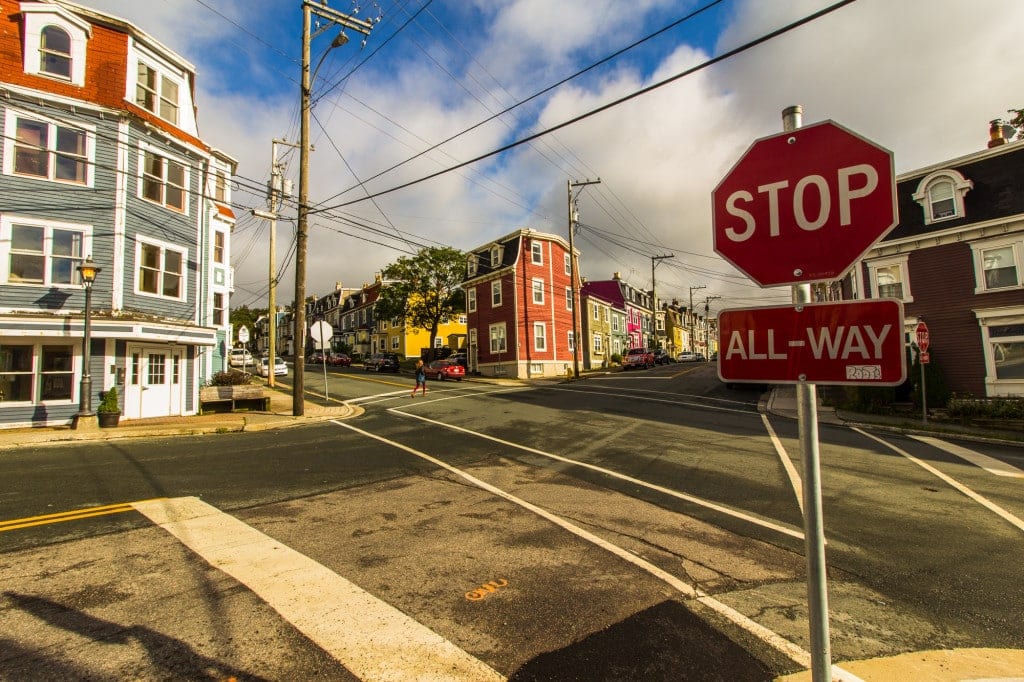
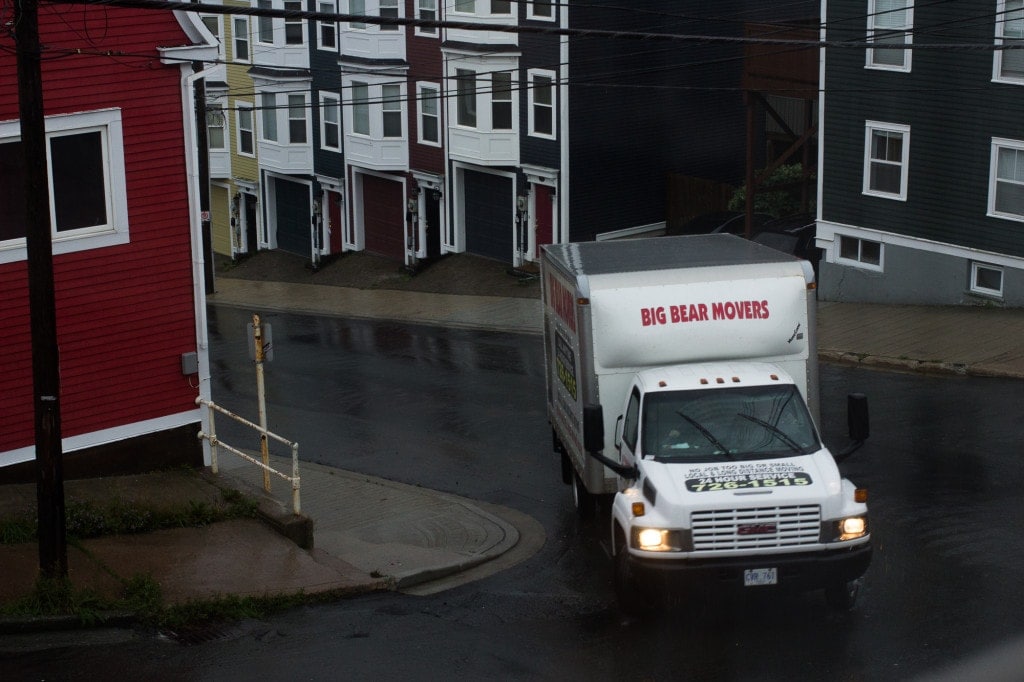
We eagerly peeled off our winter clothes and headed out for a first sleepy exploration of the even sleepier grey city of colourful houses.
I was desperate for sleep. The early morning start, the long journey, and the time difference had loaded my eyelids with a hefty dose of exhaustion.
We made our way to Water Street.
Water Street, by the way, seems to exist in every town across the Atlantic provinces. Water Street and Main Street. They’re not exactly brimming with originality when it comes to naming things.
Water Street lived up to its name rather quickly — a small river began flowing down the road and pavements. If I’d been complaining about sleepiness before, an icy shower from the clouds sorted that right out.
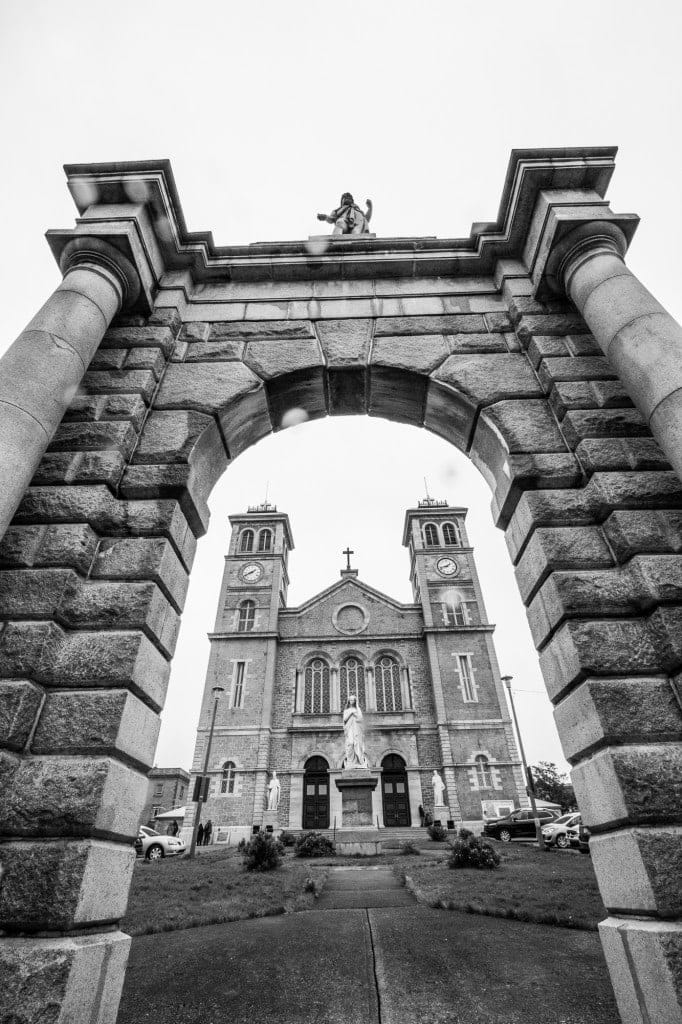
The locals are quite religious. They’re used to going to church, and the churches often host performances and concerts.100 ships, 5,000 Irish immigrants a year — that was the 1770s
The second day was no better. Wind joined the rain, and the temperature dropped by ten degrees. Out came my woolly hat and winter jacket. Our goal in St. John’s had been to see puffins, but they weren’t around at this time of year. We’d also wanted to spot an iceberg, but those only appear in summer.
So we figured we’d at least go on a breathtaking boat trip. But the sky was grey, the clouds were hurling water at us, and the wind was doing its best to blow us into another universe.
“No, no, this isn’t typical weather at all. It’s usually about 22 degrees this time of year, and it was genuinely beautiful and sunny right up until today,” our host said with an apologetic smile as she made us pancakes with blueberries and “Newfoundland berries,” which I’m fairly sure were redcurrants. Then she began listing activities we could do in this kind of weather.
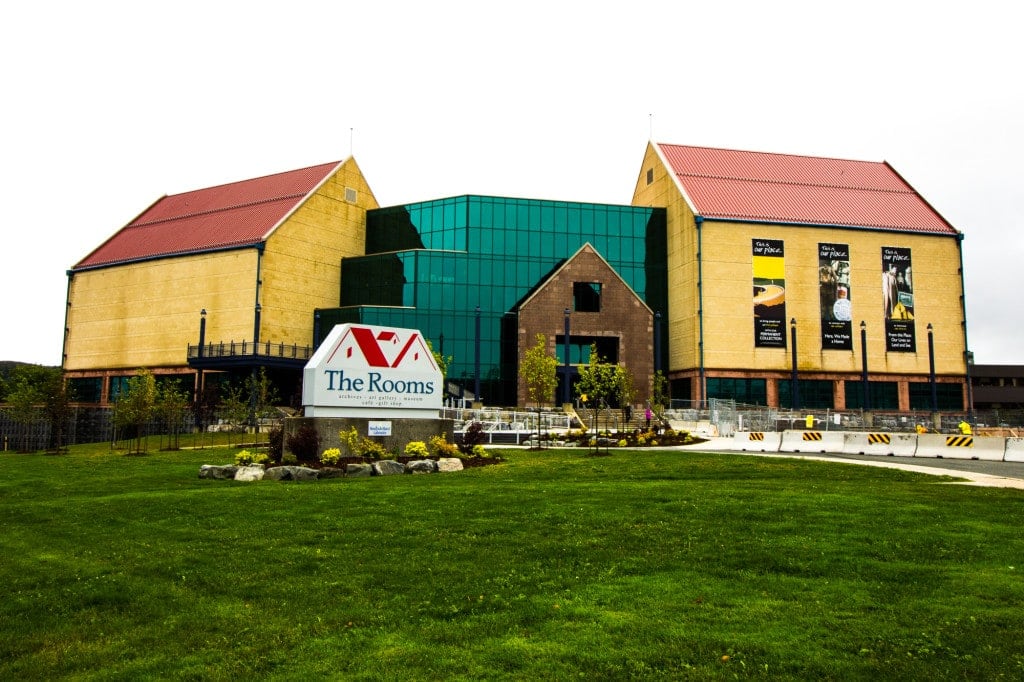
So we ended up at The Rooms, the local museum. A visit to a museum that was only a few years old and had barely anything in it was truly our last resort. The modern building resembled an enormous greenhouse, and the exhibitions we were interested in had either just ended or were still being installed. So we wandered through the permanent exhibition about the ancestors of St. John’s Canadians.
The Rooms — the local museum, built just a few years ago. The views of the city from inside are stunning… provided it’s not raining and you can actually see something.
Most of Newfoundland’s population descends from Ireland, with the biggest wave of immigrants arriving in the 1770s. Every spring, over 5,000 Irish people disembarked at the port of St. John’s. The exhibition also covered the Inuit and Indigenous peoples. The whole thing demonstrated how proud Canadians are of their history, their roots, and the mix of cultures that define them.
“They really do make the most of what little they have,” Mum observed with genuine admiration. And it’s true — you’ll rarely find anything here older than the 18th century. But they’re proud of every bit of it.
https://www.youtube.com/watch?v=yQUemRgR8IcA little box called Hurricane
“You’re a long way from home! How are you finding it here?” A young man grins at us — he’d struck up a conversation on the street. Totally normal around here, as we’d already learned.
People are genuinely curious, but in this wonderfully unobtrusive way. We’d only been here two days, but we could already tell tourists from locals on the street. Canadians greet you, ask how you’re doing and where you’re from. Then they wish you a lovely day. Tourists walk past without a glance. And above all — Canadians are constantly saying thank you. Gratitude comes more naturally to them than breathing. And that perpetual smile. As if the cold didn’t exist, as if the miserable weather didn’t matter. It’s like their ancestors carved that smile into their faces, and nothing could ever threaten it.
“Hang on, something’s beeping.” During our evening Skype call, a piercing noise started up. It was coming from the kitchen.
“It’s in this drawer.” Mum points at a white gadget making an awful racket.
“What do you think it’s for?”
“No idea. But we’re not listening to this all evening!”
We stared at it for a moment, then Mum triumphantly yanked it out of the socket.
“So what was it?” Lukáš asks me over Skype.
“All sorted — Mum unplugged it.”
We later found out it was a hurricane warning device. Fortunately, the beeping only meant a strong wind warning this time. The wind, however, very much arrived.
https://www.youtube.com/watch?v=i45icCkV0x8A symbol of death and life
On the third day, the weather calmed down a bit. The wind actually picked up, but at least it stopped raining. We’d heard it all through the night, crashing into buildings and producing high-pitched, eerie whistling sounds.
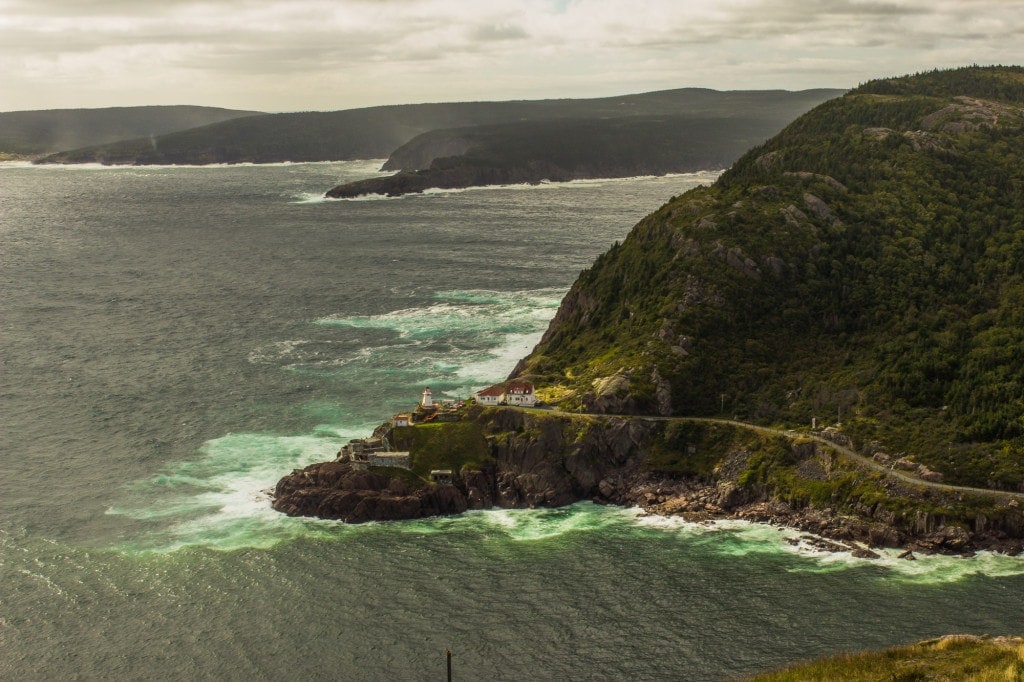
Still, we headed up the hill to the wind-battered Signal Hill National Historic Site. This was where I first felt the raw wildness and power of nature — fierce gusts slamming into Cabot Tower perched on the hilltop, while we watched the mighty ocean rage against the cliffs below.
The view from Signal Hill
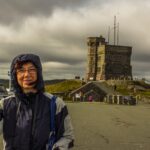
Cabot Tower, built in 1897 to honour Queen Victoria’s Diamond Jubilee, gained real fame thanks to Guglielmo Marconi, who received the first transatlantic wireless signal from England here on 12 December 1901.
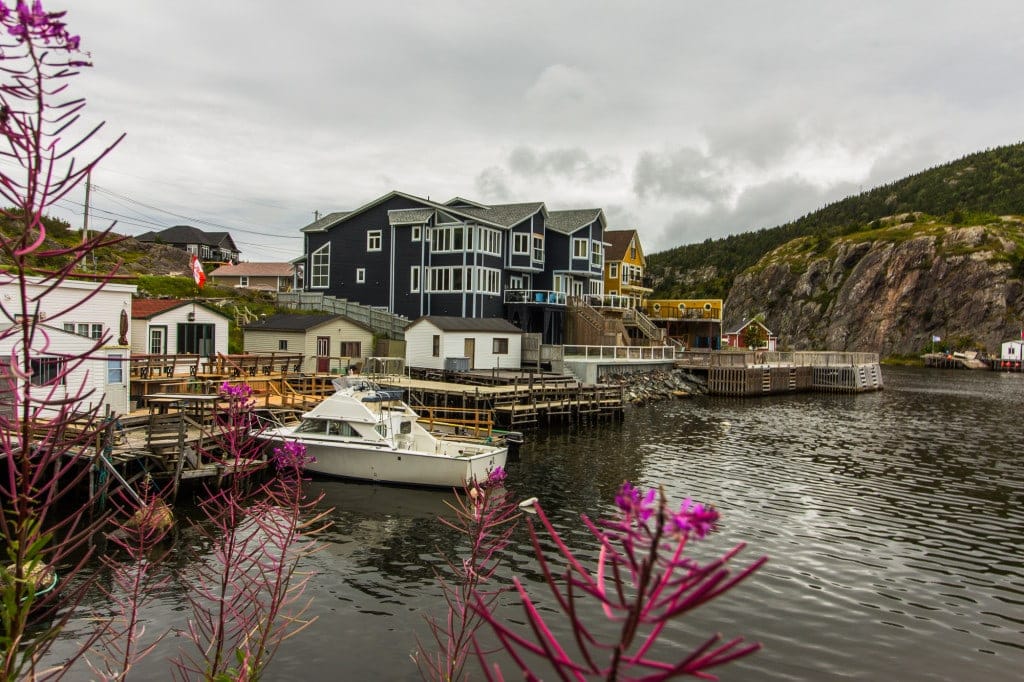
Right after, we hurried down to the village of Quidi Vidi, about a 20-minute walk from St. John’s. Not a soul in sight. Completely deserted. A place that teems with tourists in summer — people come to watch icebergs from the harbour — was utterly empty. We searched in vain for somewhere to eat. We barely saw anyone. Only cars parked in front of houses assured us we weren’t entirely alone.
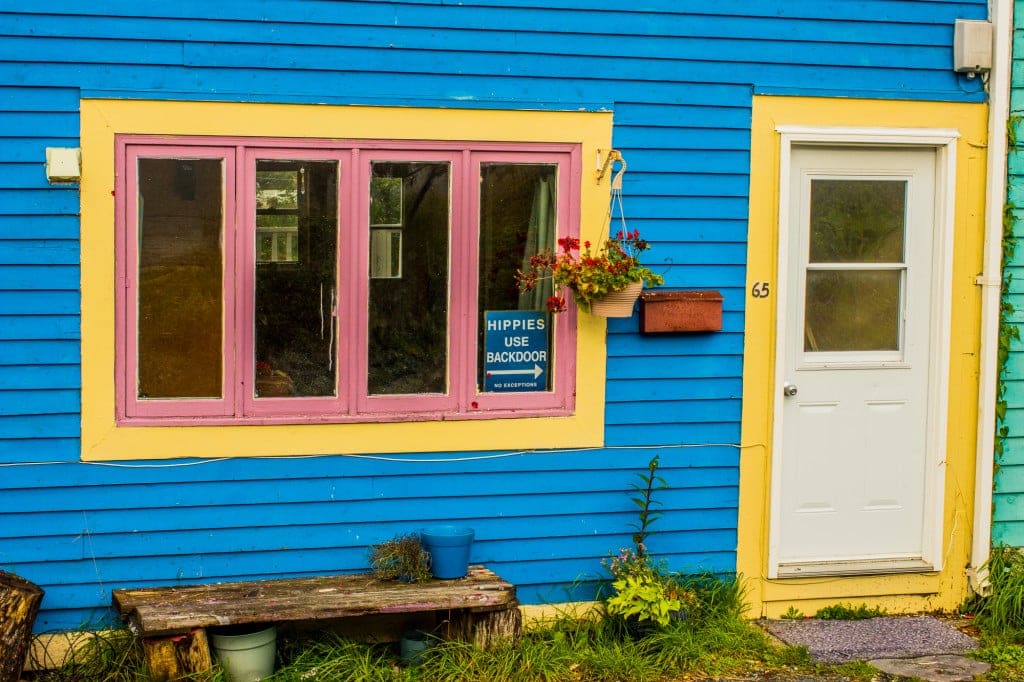
Special entrance for hippies
We walked around the harbour and the cove, watching the ocean. We watched the water shatter against the rocks, the tide rise and fall, the waves come big and small. That raw element. The fierce power of the ocean that had fascinated local fishermen for centuries. An element that had been a symbol of both death and life for as long as anyone could remember. The force it brought and carried away became clear to me as we were leaving — the spot where I’d been standing just moments before was swallowed by a wave.
We woke at half four in the morning to catch the early flight to Halifax. And so, in the same quiet stillness, we drove through the empty streets lined with colourful houses to the airport. That’s when it hit us — we hadn’t come here for the beautiful nature, which we’d never doubted. We’d come for the people who live here. For people who haven’t stopped enjoying life. People for whom happy living is simply second nature.
Tips for you:
Stay in a B&B rather than a hotel — the experience is far more personal, and you might even save on tax if you pay cash (which can add up to over $100 on a longer stay). Plus, you’ll meet other travellers from around the world. We met musicians from Halifax at our place in St. John’s (http://www.maritimebrassquintet.ca). You can find great options on Booking.com.
Caesar salad here comes with salmon — and it’s delicious.
The ideal time to visit is July or August, not September like us — although it’s usually warm then too (and indeed it was right after we left).
Don’t unplug little boxes that start beeping. Check the news instead. It might be a hurricane warning.
From London, it’s only a 5-hour flight!
They have truly hilarious postboxes here (see photo).
You might be among the very few Brits there — everyone kept telling us we were practically the first visitors from our part of the world. Probably not entirely true, but it felt special! 🙂
Search for flights on Kayak. It’s our favorite search engine because it scans the websites of all airlines and always finds the cheapest connection.
Book Your Accommodation Smartly
The best experiences we’ve had when looking for accommodation (from Alaska to Morocco) are with Booking.com, where hotels, apartments, and entire houses are usually the cheapest and most widely available.
Search with the DiscoverCars comparison engine — it compares prices from dozens of local and international rental companies, and most bookings come with free cancellation.
✓ DiscoverCars comparison✓ free cancellation on most bookings✓ no hidden fees
Don’t Forget Travel Insurance
Good travel insurance will protect you against illness, accidents, theft, or flight cancellations. We’ve had a few hospital visits abroad, so we know how important it is to have proper insurance arranged.
Where we insure ourselves: SafetyWing (simple monthly subscription) and TrueTraveller (for extra-long trips).
Find the Best Experiences
Get Your Guide is a huge online marketplace where you can book guided walks, trips, skip-the-line tickets, tours, and much more. We always find some extra fun there!
📶 DATA FOR YOUR TRIP · Canada
Mobile internet on your holiday — with an eSIM
⚡ QR activation in 2 min · 📱 no physical SIM · 🌍 3 countries · from 4.50 €
Flying to the land down under has changed dramatically in 2026—discover the best routes, current prices, and essential tips for surviving the long-haul journey.
Nashville, the capital of country music: 22 tips for what to see and do, from honky-tonks on Broadway to museums and the Parthenon, plus vegetarian options.
Discover Coober Pedy, Australia's underground town where people live beneath the earth to escape the desert heat, and find out what you can visit there.


 We stumbled out of the airport building in our winter jackets, and I was fiddling with my proper Nordic hat. Mum and I were expecting the cold. Serious cold.
But it was actually hot.
A grey sky floated somewhere above us, hardly promising pleasant weather, and the drizzle gave us an uncomfortable feeling of dampness — but cold? Not a chance.
I thought I knew Canada perfectly. That nothing could surprise me in these quiet, sparsely populated Atlantic provinces. How wrong I was! If I’d thought Canadians were friendly before, I had no idea what friendliness truly meant.
We stumbled out of the airport building in our winter jackets, and I was fiddling with my proper Nordic hat. Mum and I were expecting the cold. Serious cold.
But it was actually hot.
A grey sky floated somewhere above us, hardly promising pleasant weather, and the drizzle gave us an uncomfortable feeling of dampness — but cold? Not a chance.
I thought I knew Canada perfectly. That nothing could surprise me in these quiet, sparsely populated Atlantic provinces. How wrong I was! If I’d thought Canadians were friendly before, I had no idea what friendliness truly meant.
 Kleptomania simply doesn’t exist here
We took a taxi to the B&B The Narrows (there’s no city bus service). Nobody was around, the doors were unlocked, and an envelope with a key and a welcome letter was waiting for us. In case you didn’t know — nobody here worries about being robbed. Some people even leave their car windows open, along with their front doors.
We eagerly peeled off our winter clothes and headed out for a first sleepy exploration of the even sleepier grey city of colourful houses.
I was desperate for sleep. The early morning start, the long journey, and the time difference had loaded my eyelids with a hefty dose of exhaustion.
We made our way to Water Street.
Water Street, by the way, seems to exist in every town across the Atlantic provinces. Water Street and Main Street. They’re not exactly brimming with originality when it comes to naming things.
Water Street lived up to its name rather quickly — a small river began flowing down the road and pavements. If I’d been complaining about sleepiness before, an icy shower from the clouds sorted that right out.
Kleptomania simply doesn’t exist here
We took a taxi to the B&B The Narrows (there’s no city bus service). Nobody was around, the doors were unlocked, and an envelope with a key and a welcome letter was waiting for us. In case you didn’t know — nobody here worries about being robbed. Some people even leave their car windows open, along with their front doors.
We eagerly peeled off our winter clothes and headed out for a first sleepy exploration of the even sleepier grey city of colourful houses.
I was desperate for sleep. The early morning start, the long journey, and the time difference had loaded my eyelids with a hefty dose of exhaustion.
We made our way to Water Street.
Water Street, by the way, seems to exist in every town across the Atlantic provinces. Water Street and Main Street. They’re not exactly brimming with originality when it comes to naming things.
Water Street lived up to its name rather quickly — a small river began flowing down the road and pavements. If I’d been complaining about sleepiness before, an icy shower from the clouds sorted that right out.

 We woke at half four in the morning to catch the early flight to Halifax. And so, in the same quiet stillness, we drove through the empty streets lined with colourful houses to the airport. That’s when it hit us — we hadn’t come here for the beautiful nature, which we’d never doubted. We’d come for the people who live here. For people who haven’t stopped enjoying life. People for whom happy living is simply second nature.
Tips for you:
We woke at half four in the morning to catch the early flight to Halifax. And so, in the same quiet stillness, we drove through the empty streets lined with colourful houses to the airport. That’s when it hit us — we hadn’t come here for the beautiful nature, which we’d never doubted. We’d come for the people who live here. For people who haven’t stopped enjoying life. People for whom happy living is simply second nature.
Tips for you:



 🚗 Car rental on the roadVerified rental cars in Canada