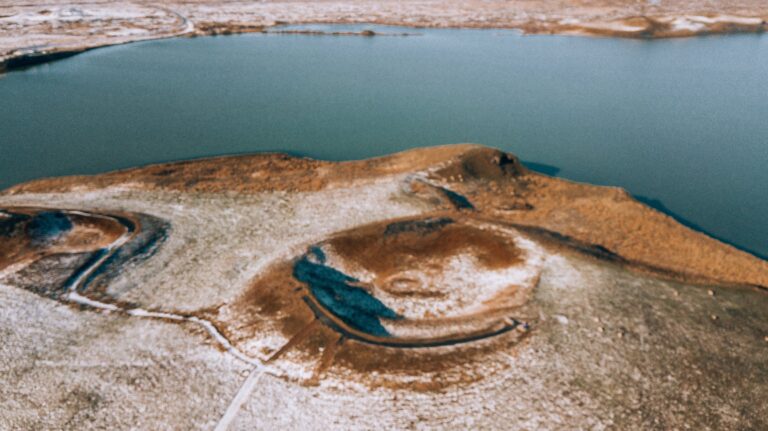
We woke up early, packed our things at our little guesthouse, and set off towards the southeast, where a landscape from an entirely different planet was waiting for us. The moment the giant white spectre of the Vatnajökull glacier first appeared on the horizon, Lukas and I were left utterly speechless.
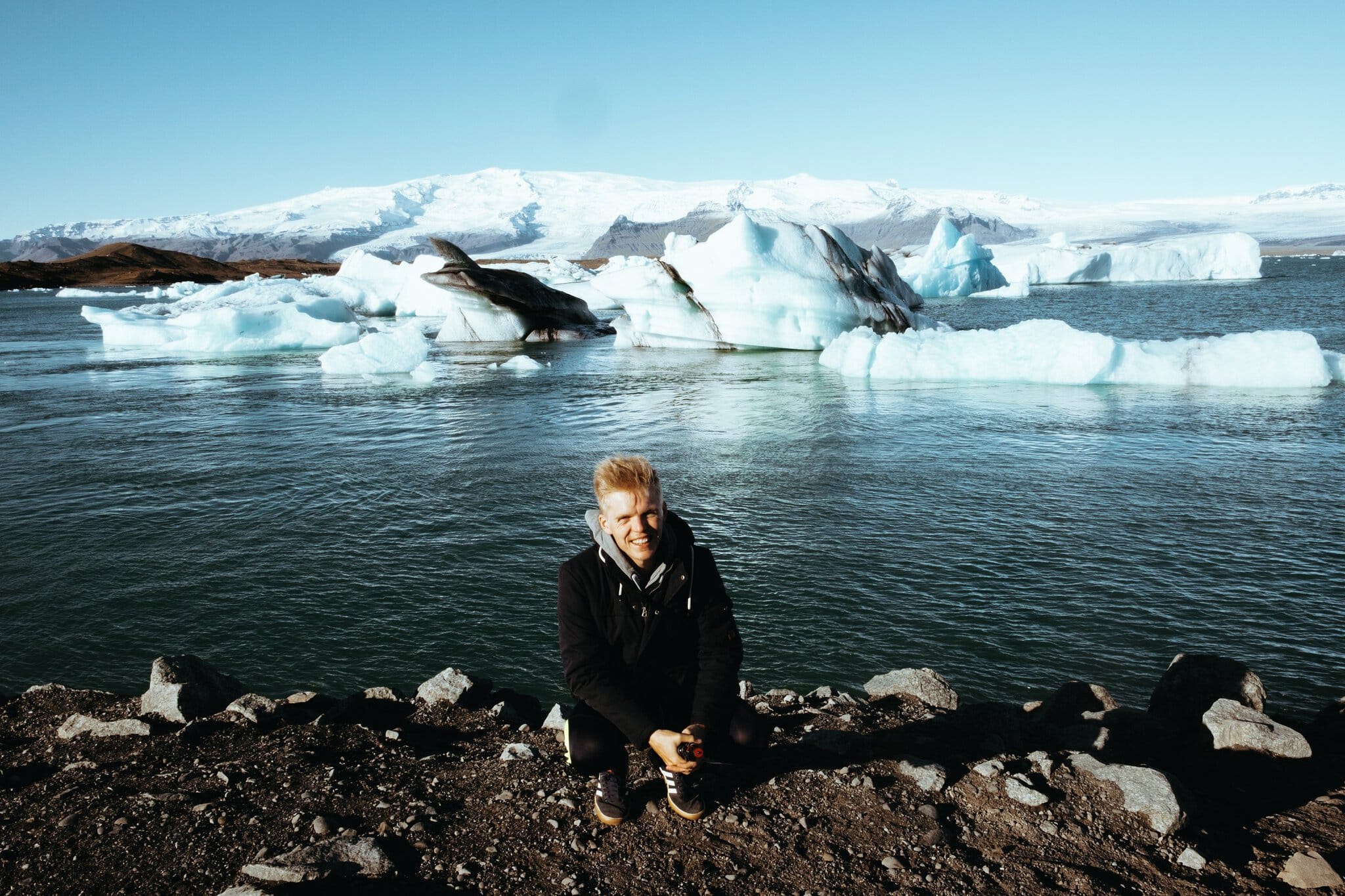
This is exactly where the famous Jökulsárlón glacier lagoon lies — the place where vast masses of ancient ice meet the wild Atlantic. Of all the iceland glaciers we hoped to see, this was the one we were looking forward to the most. On one hand, watching the bluish chunks of ice drift lazily across the surface was breathtakingly romantic. On the other, a strange sadness crept over us, because here you can see with your own eyes just how quickly this majestic glacier is retreating and melting away.
In this article you’ll find 13 tips on what to see and do around the Jökulsárlón glacier lagoon, how to plan your trip, and what to watch out for. I’ll tell you where to base yourself strategically, how things look for vegetarians, and how much these icy adventures will ultimately set you back.
TL;DR
- The main star: The Jökulsárlón glacier lagoon and Diamond Beach across the road, scattered with giant chunks of ice, are absolute must-sees.
- Active experiences: Walk on the glacier with crampons (guided only) or, in winter, explore the stunning blue ice caves.
- Fewer crowds: Stop by the smaller, calmer Fjallsárlón lagoon, or soak in the Hoffell hot tubs with mountain views.
- Safety first: Never stand with your back to the ocean at Diamond Beach because of sudden waves, and never set foot on a glacier without a certified guide.
- Logistics: It’s five hours of solid driving from Reykjavík, so a day trip really isn’t worth it — far better to stay nearby and enjoy the area at a relaxed pace.
The full destination guide: Iceland — guide and what to see
When to go and how to get there
From Reykjavík it’s just under 380 kilometres to the glacier lagoon, which works out to roughly five hours of solid driving. We split the journey up cleverly, because doing it there and back in a single day would be sheer madness — you’d never actually enjoy any of the beauty along the way.
In reality you’ll stop at practically every other waterfall, so the ideal approach is to spend a night roughly halfway, near the town of Vík, and arrive at the glaciers the next day feeling fresh. The Ring Road (Route 1) is fully paved and well maintained here, but be prepared for more than 150 narrow single-lane bridges (the so-called Einbreið brú), where the rule is always that the car nearer the bridge has priority, and eye contact with oncoming drivers is absolutely essential.
If you’re wondering about the ideal time to visit, the whole Jökulsárlón area is enchanting year-round — the season just changes which activities are on offer. Summer (June to August) brings endless days and the midnight sun, with around 21 hours of daylight near 21 June. But count on huge crowds of tourists and steep accommodation prices.
A special word of warning about August 2026: on 12 August a total solar eclipse is set to pass over Iceland, and even though the southeast won’t sit directly in the path of totality, the entire island is expected to be hopelessly booked out. Winter (November to March), by contrast, is magical because you can explore the ice caves and, with a bit of luck, catch the Northern Lights — you’ll just need to keep a close eye on the official road conditions portal every morning, as snowstorms occasionally close the main route entirely.
When hiring a car, don’t cut corners on insurance and always pay extra for sand and ash protection (SAAP). On the vast plains below Vatnajökull the wind often blows so fiercely that it whips up fine volcanic dust, which can wreck your car’s paintwork in a matter of minutes — the damage can run into thousands of pounds, and a standard collision policy won’t cover it.
Another Icelandic quirk involves opening doors: the local gales can literally rip them off their hinges, so Lukas and I quickly learned to hold the doors firmly with both hands. Also bear in mind that since 2026 Iceland has applied a new per-kilometre tax on passenger cars, amounting to just under 7 ISK per kilometre (about £0.04), which rental companies often handle as a fixed daily fee of around 1,500 ISK — so factor that into your budget, according to the official government portal.
💡 A note for readers travelling from the UK: there are no direct routes to Iceland’s east, so most people fly into Keflavík (near Reykjavík) — easyJet, Jet2 and Icelandair all run direct flights from London, Manchester, Edinburgh and beyond. From there it’s the five-hour drive described above, so hiring a car is essentially a must.
Where to stay and how much it costs
Finding affordable lodging in the southeast can be a real challenge, as there aren’t many large hotel complexes around here and the best guesthouses are often sold out months in advance. The whole stretch is dominated by smaller guesthouses and farms, where a standard double room runs roughly from €115 to €205 per night.
Lukas and I ruled out camping in a tent straight away, because even at the turn of September and October it was properly cold here, so we opted for cosy apartments with a shared kitchenette instead. Don’t forget that every booking also adds an accommodation tax of around 800 ISK (about €5.50) per room per night — for campsites it’s 400 ISK — as the Icelandic tax authority explains in detail.
💡 Specific accommodation tips (check prices and availability on Booking.com and book early — in season and around the 2026 eclipse they disappear months ahead):
- Fosshótel Glacier Lagoon (Hof)
- Adventure Hotel Hof (Hof)
- Hótel Höfn (Höfn)
- Hótel Katla by Keahotels (Vík)
If you want to be as close as possible to all the main attractions and minimise the morning drives, look for accommodation in the hamlets of Hof or Freysnes, just a short hop from Skaftafell National Park. You’ll find the very pleasant three-star Adventure Hotel Hof here, but if you’re after genuinely luxurious lodging right by the lagoon, try the gorgeous Fosshotel Glacier Lagoon, which even has a spa.
Nightly rates there can climb to as much as €330 in high season, but for comfort lovers it’s an incredible treat after a long, freezing day.
A considerably cheaper option, and a logical base for exploring the eastern part, is to carry on to the town of Höfn, where you’ll find the widest choice of options including hostels and shops. It’s still about an hour’s drive east from the lagoon, but if you plan to continue further into the Eastern Fjords, it’s an absolutely ideal strategic point.
For travellers on a really tight budget (around €2,700 to €3,700 per couple for the whole week), the most sensible choice is to hire a heated campervan and sleep at campsites — there’s one huge, superbly equipped site right in Skaftafell and another in Höfn. Wild camping, by the way, is strictly forbidden in Iceland.
Jökulsárlón and around: 4 tips for icy splendour
Let’s dive straight into the biggest draws that bring travellers here from all over the world. This area is so photogenic you won’t know where to point your camera first, and I guarantee you’ll fill up your memory card within the first few hours.
1. The Jökulsárlón glacier lagoon
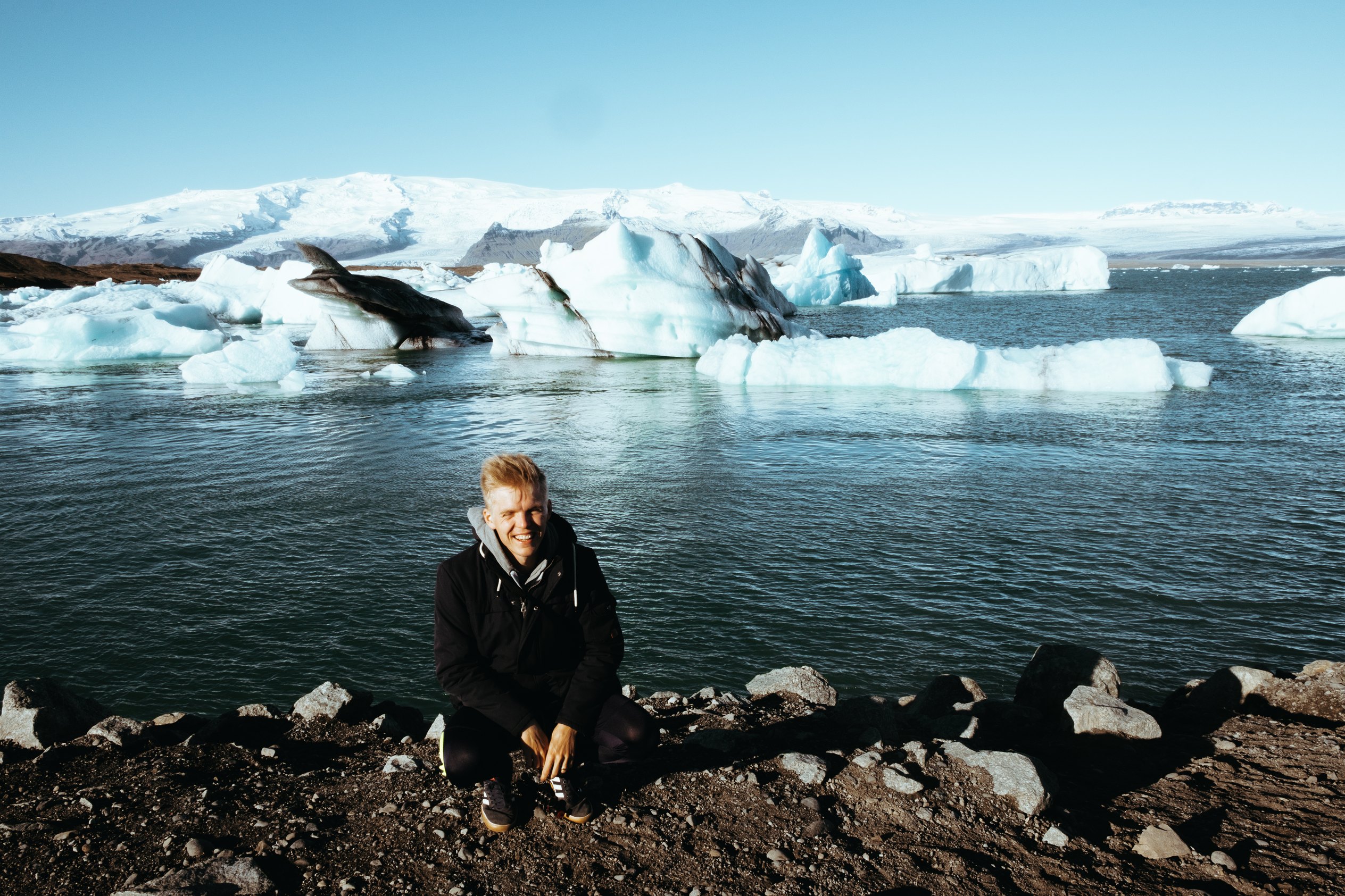
This is the place to stop even if you only get to see one single thing in Iceland. The enormous Breiðamerkurjökull glacier tongue empties out here, constantly calving massive chunks of centuries-old ice into the deepest lake on the entire island. We spent around two hours here just standing on the shore, utterly mesmerised, watching the incredible play of colours — from brilliant white through deep turquoise to streaks of black volcanic ash.
A big bonus is that seals are fairly common in the lagoon, happily hunting fish or just lazing about on the ice floes. While we were walking along the shore, a curious little head popped up just a few metres away several times — the seal sized us up for a moment, then vanished beneath the surface with total elegance.
Access to the lagoon itself is free; you only pay 1,000 ISK for parking (about €7), and right by the car park there’s a café open year-round where you can warm up. If you want to scope out conditions from home and check the cloud cover, you can use the official weather site, which offers accurate forecasts for the whole region.
💡 Tip: Tickets and organised tours (in Iceland and beyond) are well worth booking ahead online on GetYourGuide — they fill up fast in season.
2. A boat tour of the lagoon: Amphibian vs. Zodiac
Once you’re at the lagoon, it would be a real shame not to get up close to those icy giants right from the water itself. During the main season, which runs roughly from 1 May to the end of October, you have two main types of boat to choose from, and it’s a bit of a dilemma that comes down mainly to your budget and who you’re travelling with. In summer it gets seriously packed, so be sure to book your tour well in advance, or you’ll be left gazing wistfully from the shore.
The first and most accessible option is the large amphibian boat, which rolls straight into the water from dry land on huge wheels. It’s a slower, calmer ride of about 40 minutes, and an adult ticket costs 7,100 ISK (about €49).
Children aged 6 to 12 pay 3,500 ISK and the youngest under five go completely free, so for families it’s hands-down the best choice — the guide will even let you taste a piece of thousand-year-old ice during the ride.
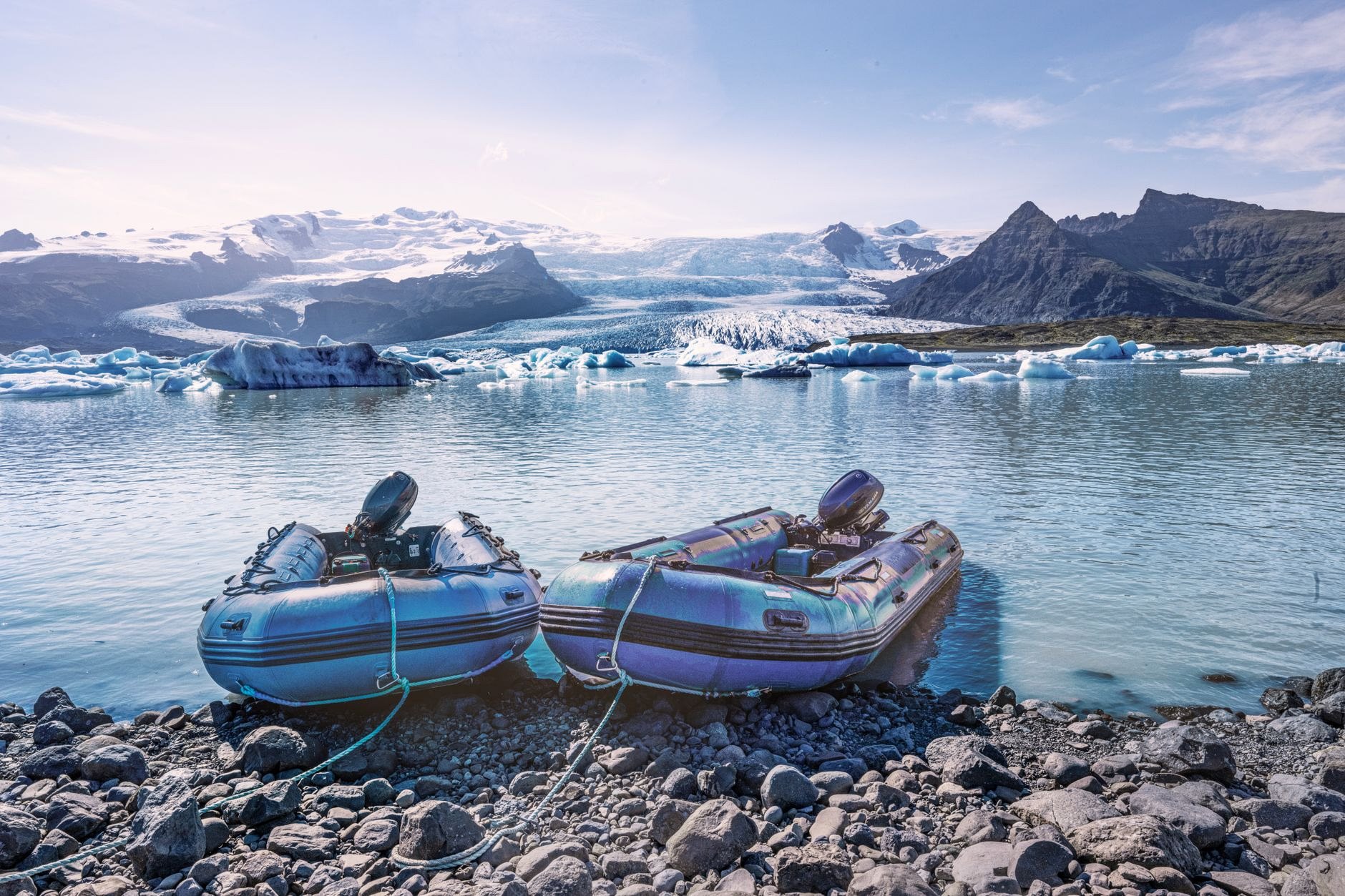
But if you’re after a bigger adventure and want to feel the wind in your hair, pay a little extra for the smaller rigid-hull Zodiac boat. The trip costs 16,600 ISK (around €115) and children aged 10 to 12 pay 8,300 ISK, but the experience is in a different league entirely. The boat is much faster and in about 75 minutes takes you up to eight kilometres out, right to the glacier wall itself — somewhere the slow amphibians can’t reach — and you can weave through narrow channels in the immediate vicinity of enormous ice floes.
3. Diamond Beach and the jewels of ice
Just cross the main road from the lagoon towards the ocean and you’ll find yourself in an entirely different world on Breiðamerkursandur beach. A short river carries all the melting chunks of ice out to sea, where the waves grind them smooth and cast them back onto the jet-black volcanic sand.
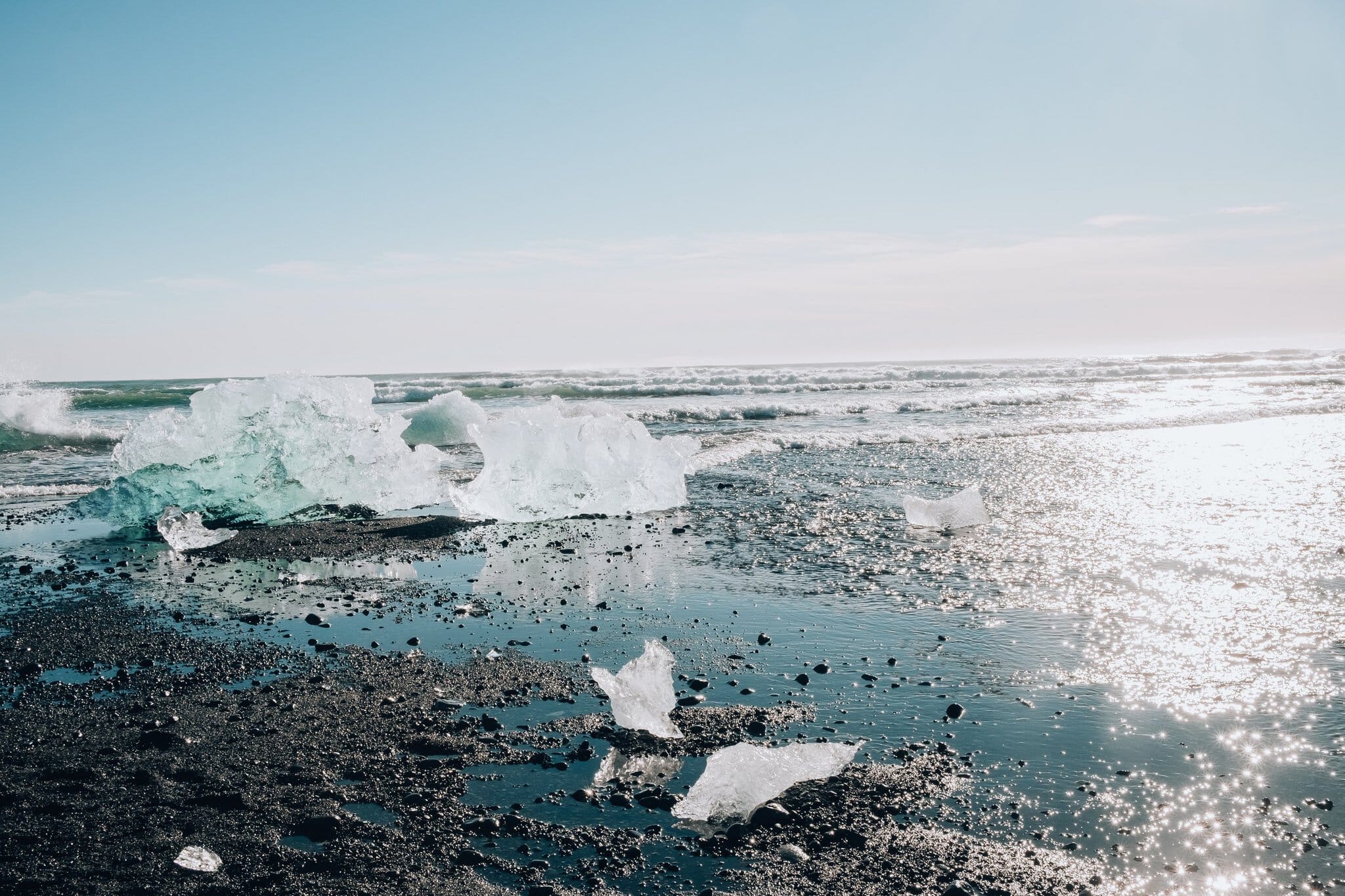
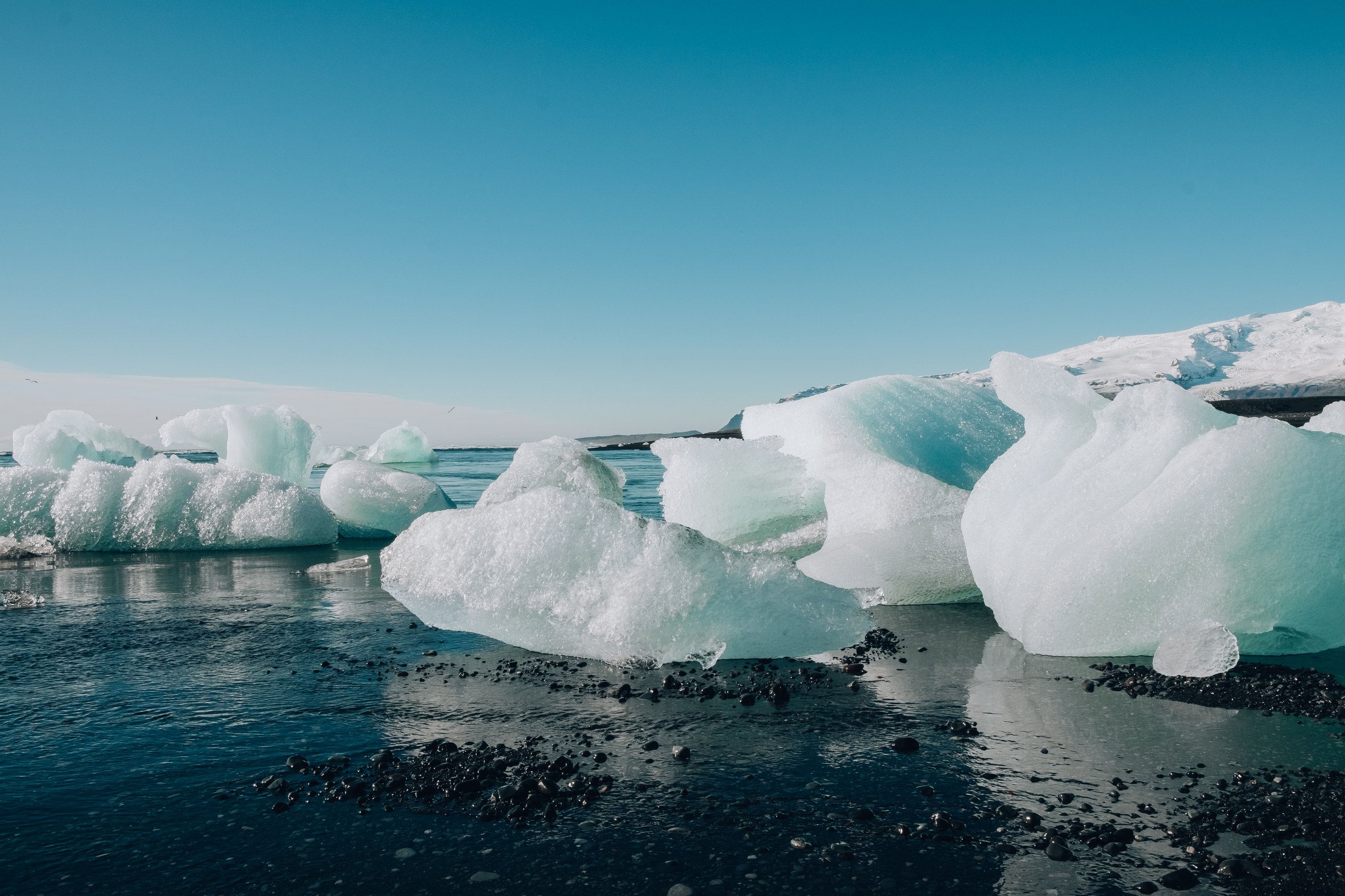
We were running around here completely thrilled, because the contrast of crystal-clear ice against the coal-black backdrop is an absolute paradise for photographers, especially at sunrise, when the warm morning light shines through the ice blocks and gives them an almost magical glow.
I have to warn you extremely emphatically about the wild local Atlantic, though, because this is one of the most dangerous spots in all of Iceland. The beach is notorious for its treacherous sneaker waves, which can strike out of nowhere far further and far more powerfully than the calm surface would ever suggest.
So never stand on the beach with your back to the ocean while taking a selfie by the ice, and don’t step right in front of an ice floe the moment a wave is coming in, even a small one — the heavy ice can easily crush you. You’ll always find the current warnings on the Safetravel safety portal.
4. Fjallsárlón as a quieter alternative
If the huge crowds, packed car parks and ever-present noise at the main lagoon start to grate on you, drive about ten minutes back west to Jökulsárlón’s little sibling. The Fjallsárlón lagoon isn’t as enormous and its water doesn’t have quite that deep blue colour, but it has one huge advantage: the glacier tongue itself towers much closer to the shore, making it feel all the more majestic and dramatic.
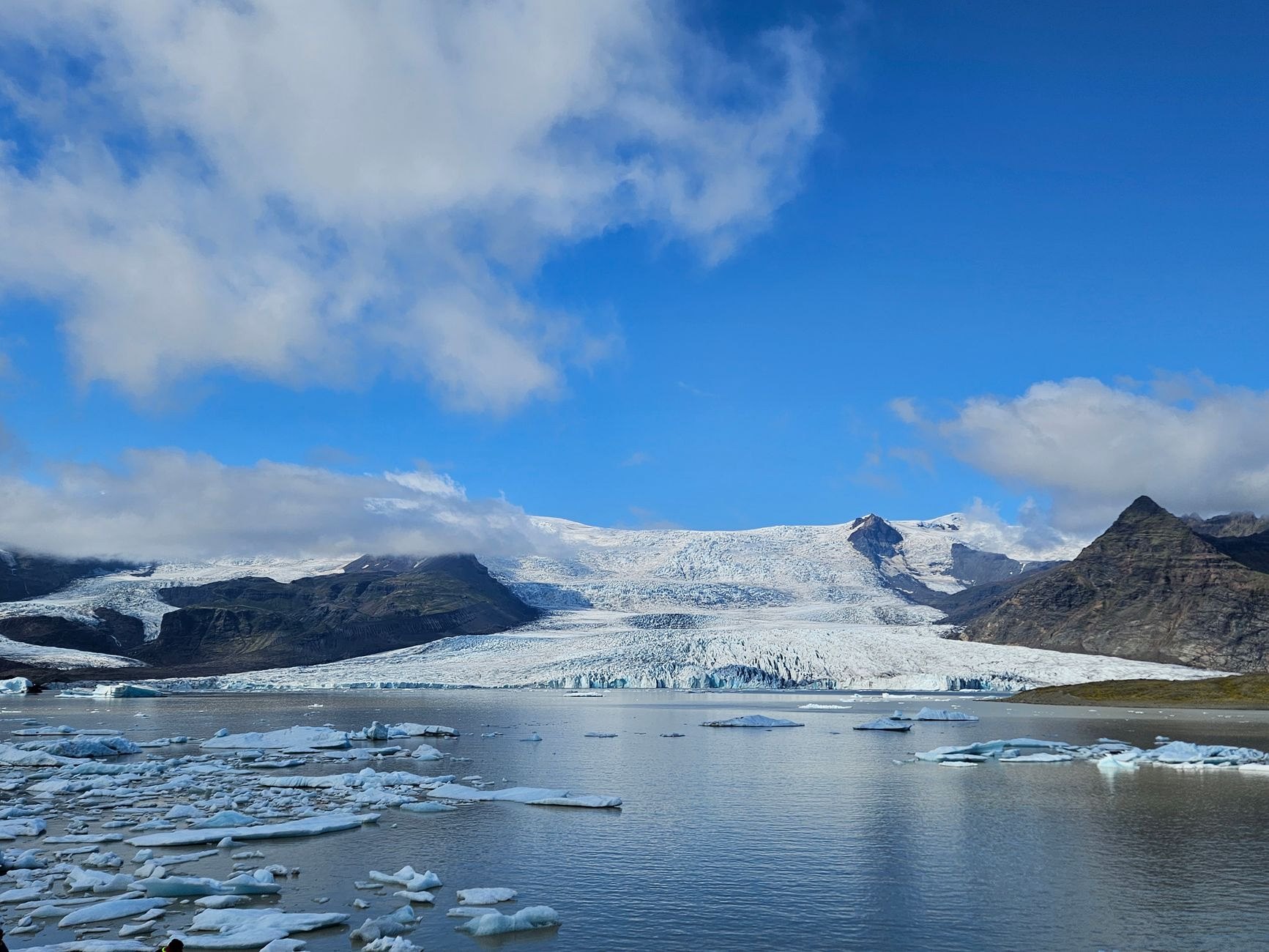
We enjoyed absolutely wonderful peace and quiet here, as noticeably fewer tourists come this way and there’s a very intimate atmosphere. You can simply sit on the shore in total silence and listen to the booming crack of ancient ice as another floe breaks off somewhere in the distance.
Small rubber Zodiac boats operate here too, in case you fancy a water adventure in smaller groups, well away from the biggest tourist bustle of the main lagoon.
Vatnajökull National Park and Skaftafell: 4 tips for active travellers
The western part of the southeastern tip belongs to the vast Vatnajökull National Park, which covers an incredible eight percent of Iceland’s entire area and offers some of the best hiking trails on the island. Here you can work up a sweat hiking to beautiful waterfalls, or strap on some proper crampons and head out to explore the deep crevasses right on the glacier’s surface.
5. A glacier hike — walking on the ice
This is an experience I wholeheartedly recommend to anyone with even half-decent fitness. Walking across the surface of the huge Vatnajökull glacier on the Falljökull or Skaftafellsjökull tongues, peering carefully into deep blue holes and hopping over little streams of crystal-clear ice water, is simply something quite extraordinary. The Skaftafell visitor centre is the main base from which all these tours regularly set off.
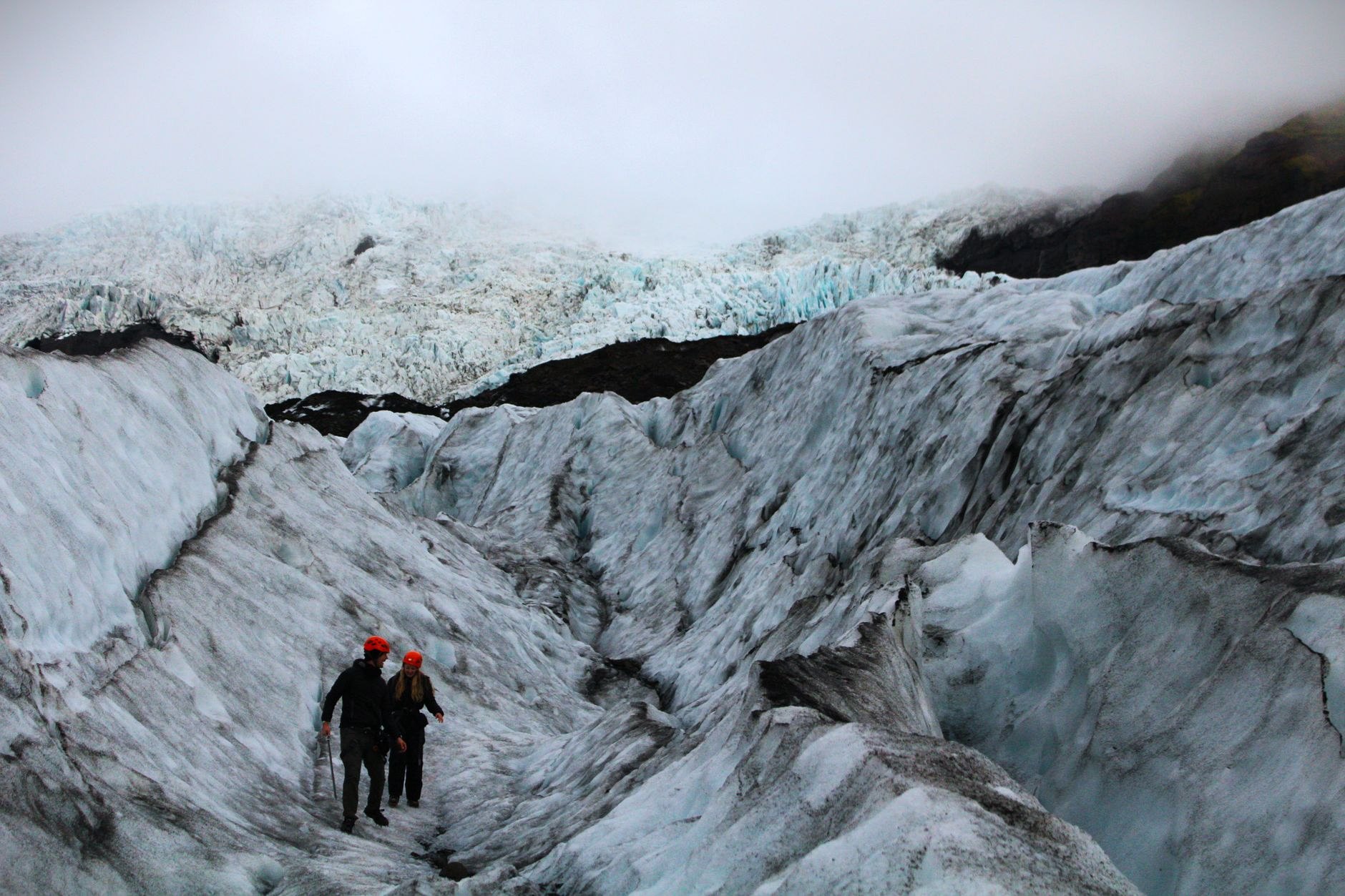
The single most important rule in all of Iceland, though, is that you must never set out onto a glacier on your own. It’s riddled with treacherous crevasses cunningly hidden beneath a thin layer of snow or volcanic dust, and a fall into one would be fatal. Always book your hike with certified companies like Arctic Adventures or Glacier Guides.
A standard three-hour beginner’s hike costs around €120, and the professional guide will lend you all the safety gear — from a helmet and harness to an ice axe and crampons. Just don’t forget to bring your own sturdy, waterproof boots above the ankle, because you simply can’t attach crampons to soft trainers.
💡 Tip: Tickets and organised tours (in Iceland and beyond) are well worth booking ahead online on GetYourGuide — they fill up fast in season.
6. The blue ice caves in winter
If you’re lucky enough to be planning your trip during the cold winter months from November to March, you get a truly unique chance to explore the so-called Crystal Caves or Blue Caves right inside the glacier. These caves form every summer as huge volumes of water melt beneath the glacier, then freeze solid again in winter into incredible organic shapes. Sunlight then filters through the old mass of compressed, bubble-free ice, creating the most intense sapphire colour.
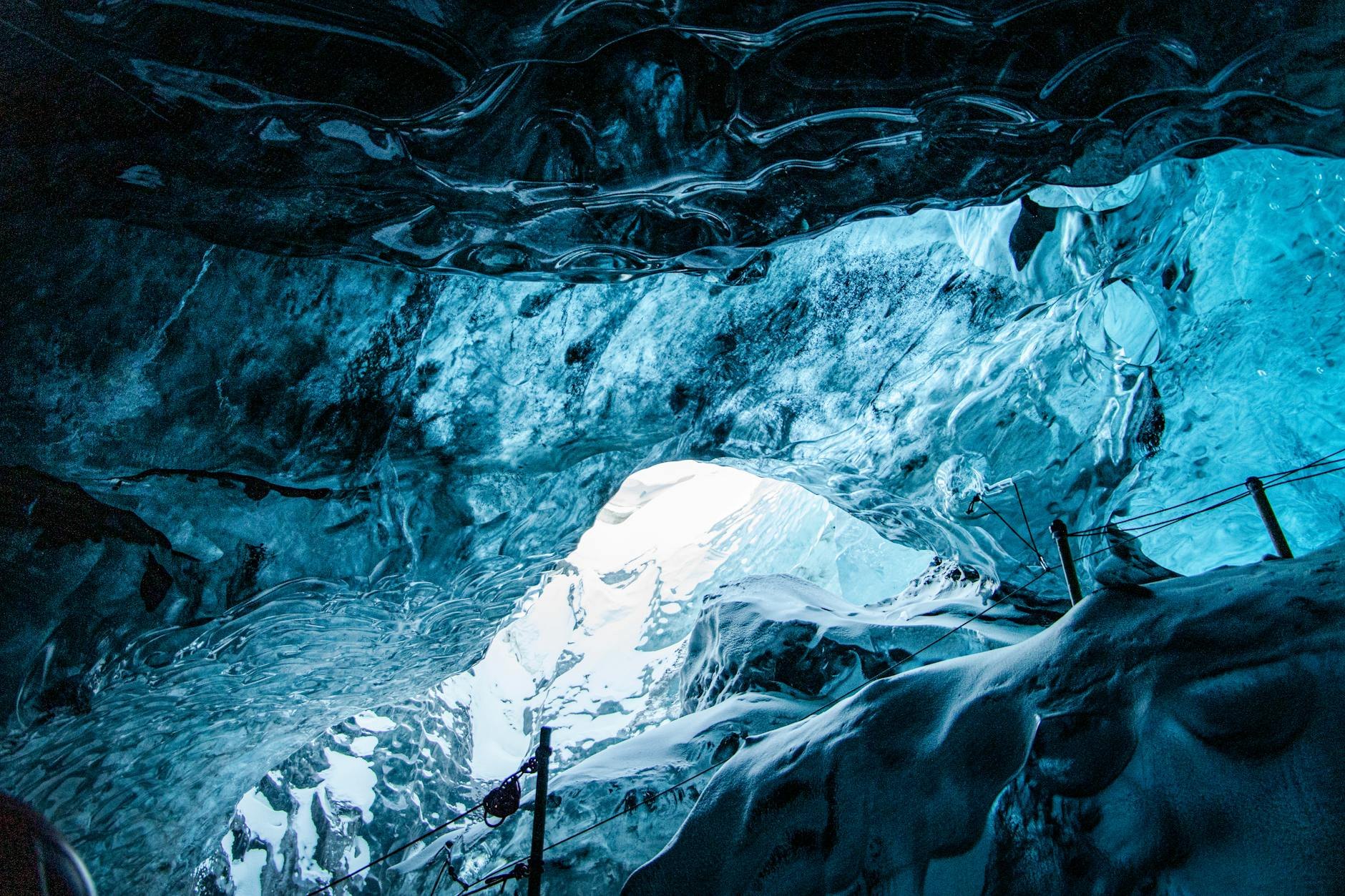
Just as with the glacier walk, you may enter only in the company of a guide, because the glacier is constantly moving and the cave ceilings can collapse in warmer weather. The tours usually start with a departure from a special car park near Jökulsárlón in lifted super-jeeps with giant tyres, since the route to the caves is completely impassable for ordinary cars.
Prices for the three-hour trip range roughly from 19,900 to 28,900 ISK (about €138 to €200), and considerably higher for special photography tours, but it’s an experience you’ll never forget as long as you live.

7. The black Svartifoss waterfall
Once you’re in Skaftafell, be sure to make time for the walk from the visitor centre, gently uphill, to this beautiful and unique waterfall. The whole loop is roughly two and a half kilometres and takes a little over an hour. Even though the waterfall isn’t especially tall and doesn’t have a dizzying flow of water, what makes it remarkable is its dramatic geological backdrop.
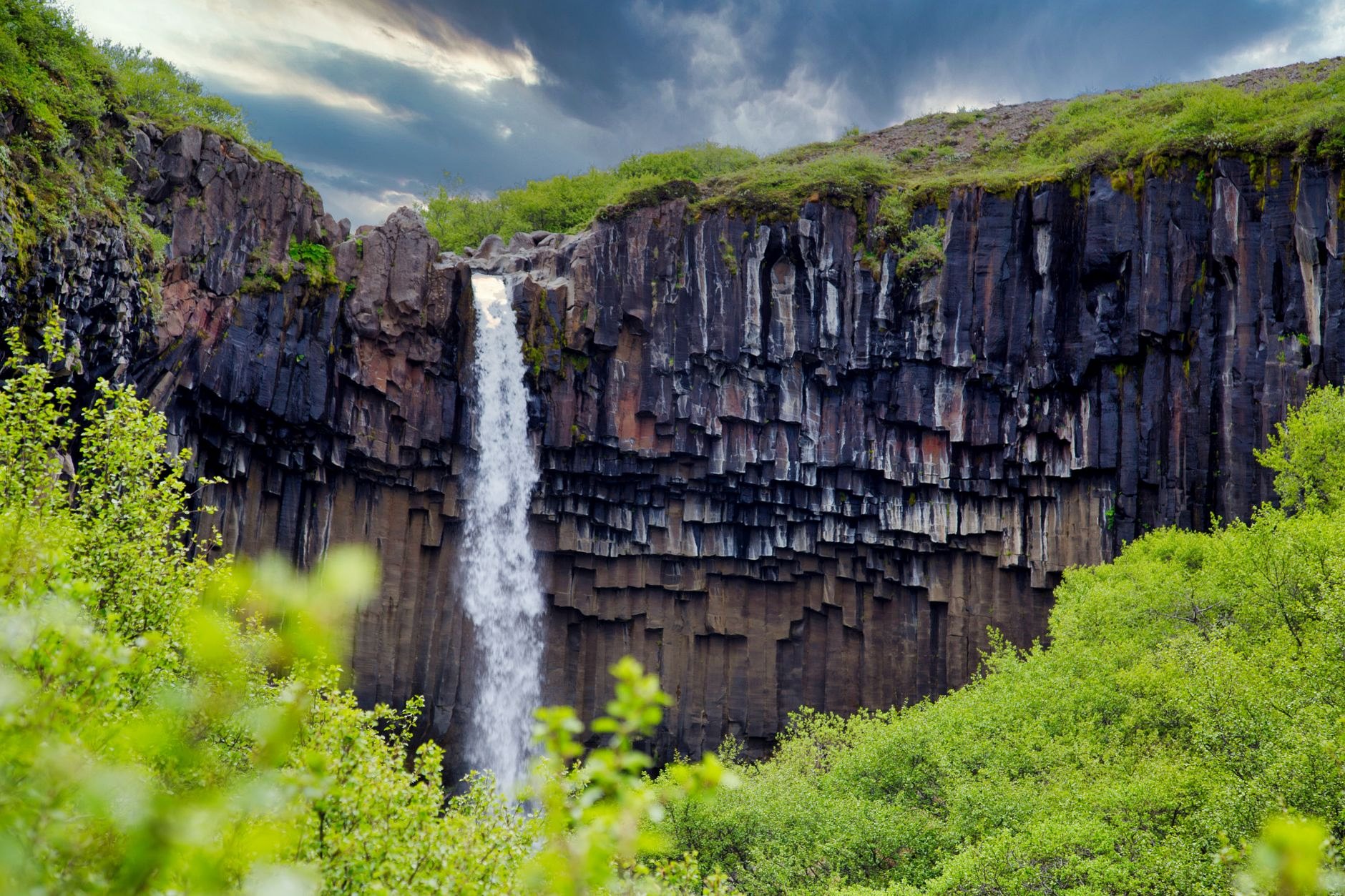
The water thunders down over perfect, geometrically regular hexagonal columns of dark black basalt, which look visually like the immense pipes of a giant organ. This natural phenomenon once inspired the famous Icelandic architect Guðjón Samúelsson when he designed the iconic Hallgrímskirkja church in Reykjavík, and if you stand here for a while, mesmerised, you’ll immediately spot the obvious architectural resemblance.
8. An easy walk to the Skaftafellsjökull glacier
If you don’t feel like strapping on crampons and paying for a hike across the glacier surface itself, the national park offers a very pleasant free alternative. From the information centre, an easy and beautifully maintained trail leads straight to the foot of the mighty Skaftafellsjökull glacier tongue.
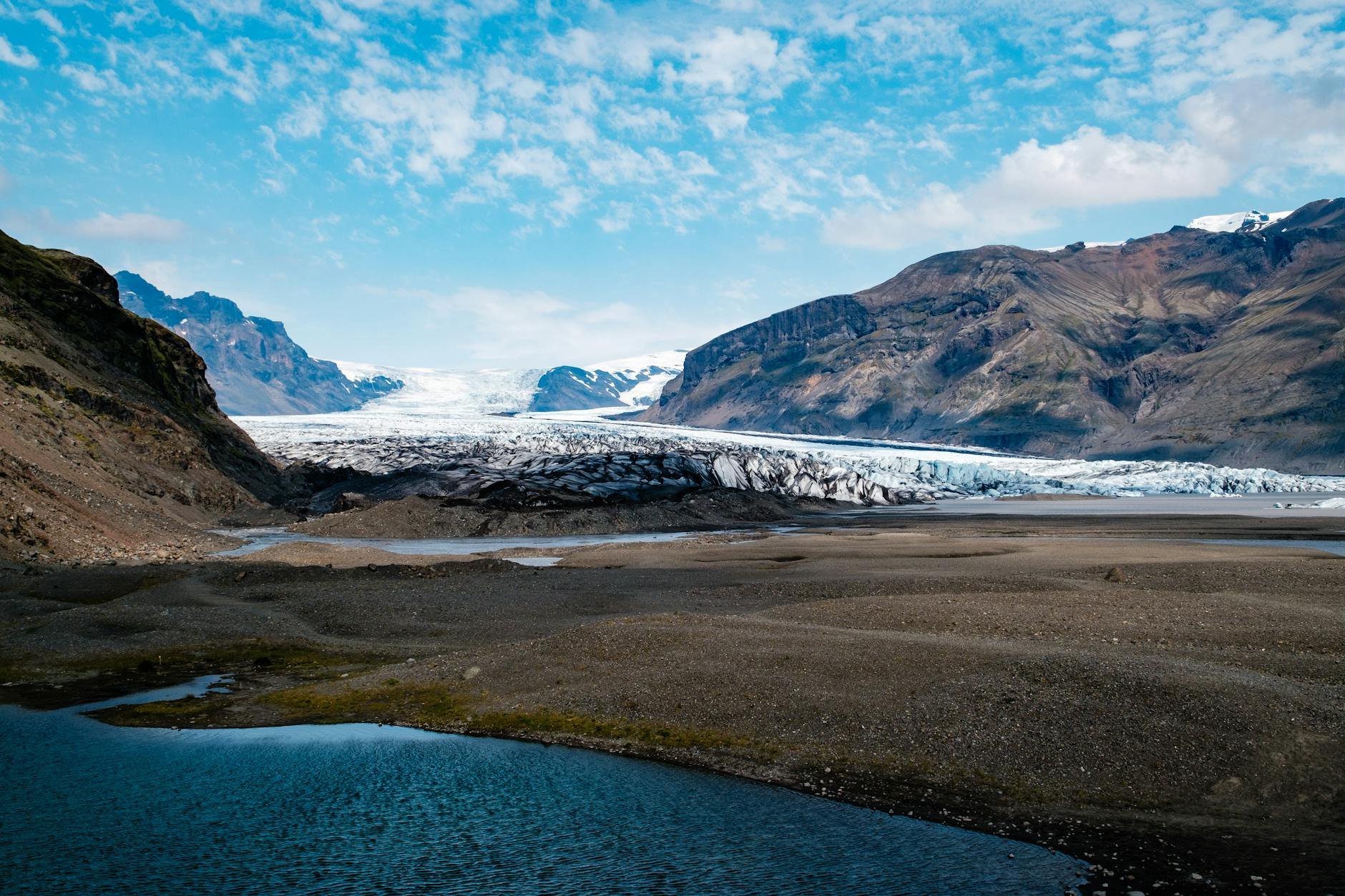
It’s almost perfectly flat, so you can manage it even with kids, and at the end a fantastic view opens up of a giant mass of ice that looks as though it wants to bite straight into the gravel bed. Here too you’ll see a small lagoon full of murky glacial water and smaller broken-off floes, and it’s a great spot for a moment of quiet contemplation and some stunning photos without having to pay for a guide.
Map of points of interest for your phone
Heading east: 5 tips for lesser-known spots and relaxation
Once you’ve thoroughly explored the famous lagoons, most tourists turn straight back towards Reykjavík, but I warmly recommend not rushing and carrying on along Ring Road 1 further towards the town of Höfn. The landscape starts to change here, the passing traffic thins out rapidly, and you’ll find peaceful corners where you can rest beautifully.
9. The mysterious Hoffellsjökull glacier
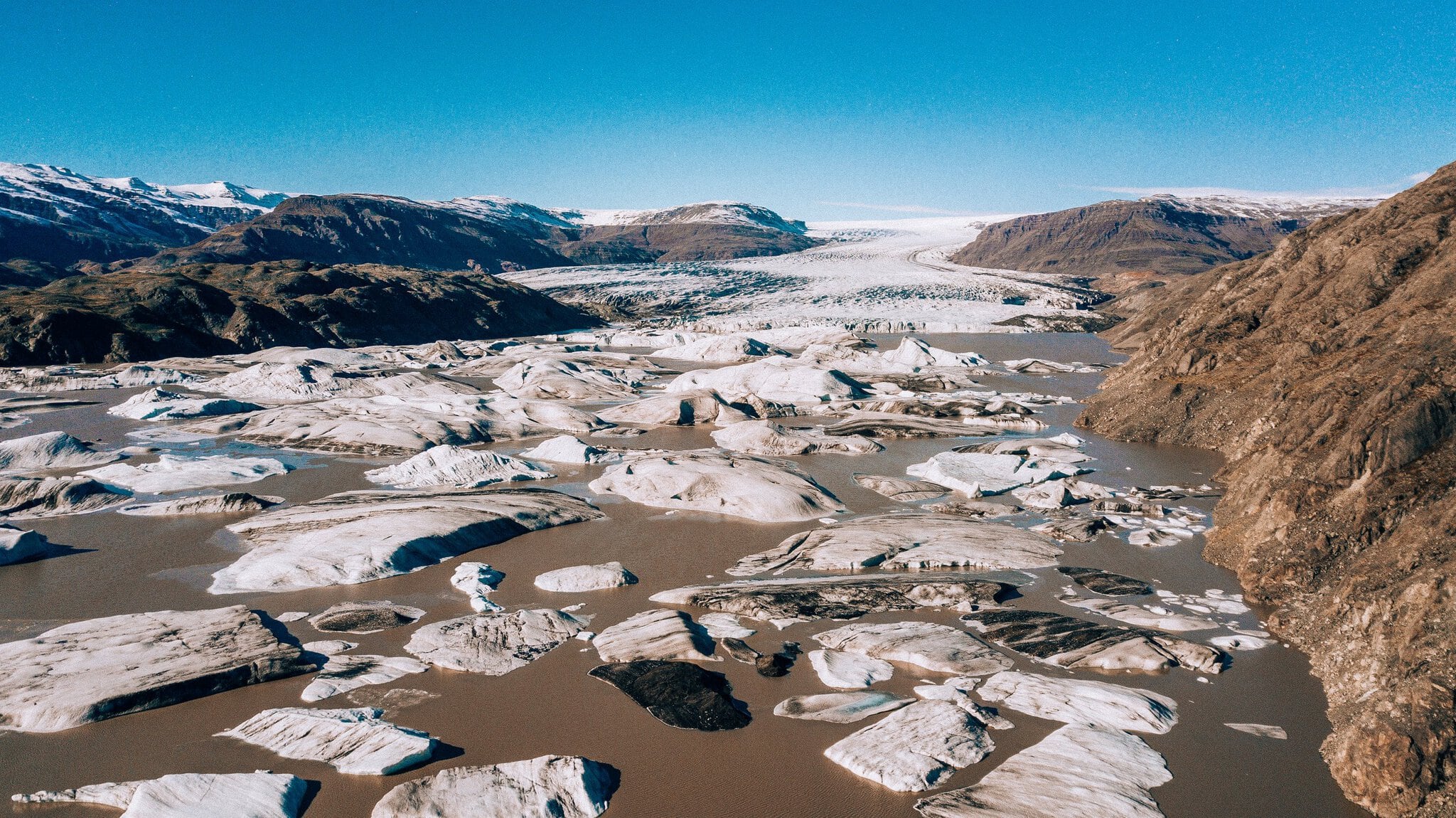
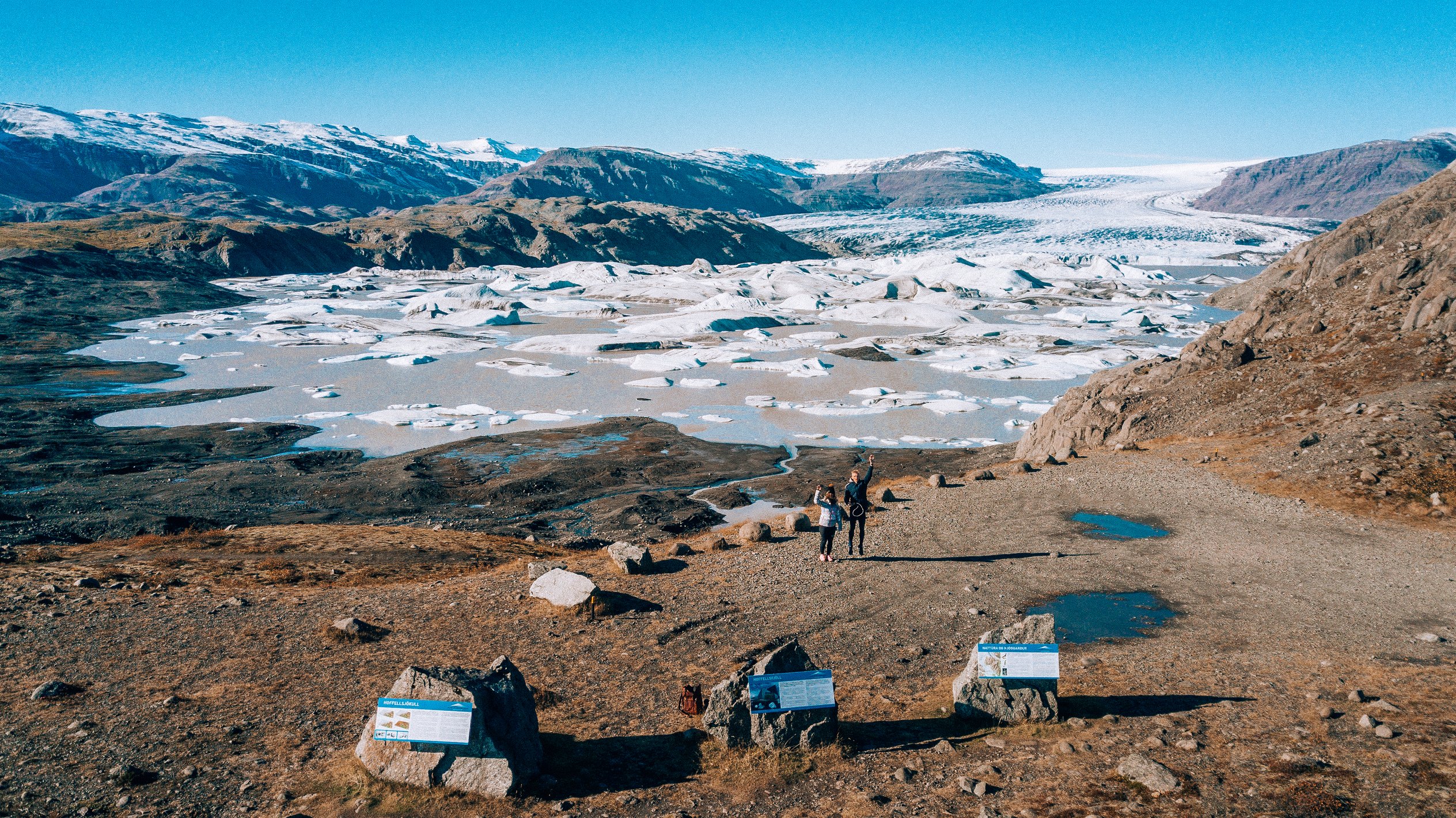
As we slowly approached Höfn by car, we couldn’t resist turning off the main tarmac onto a slightly bumpy, dusty track towards the Hoffellsjökull glacier. It’s a considerably less visited area and offers a glimpse of a rawer, muddier, wilder face of Icelandic nature — one that hasn’t been smoothed over for crowds of tourists with cameras.
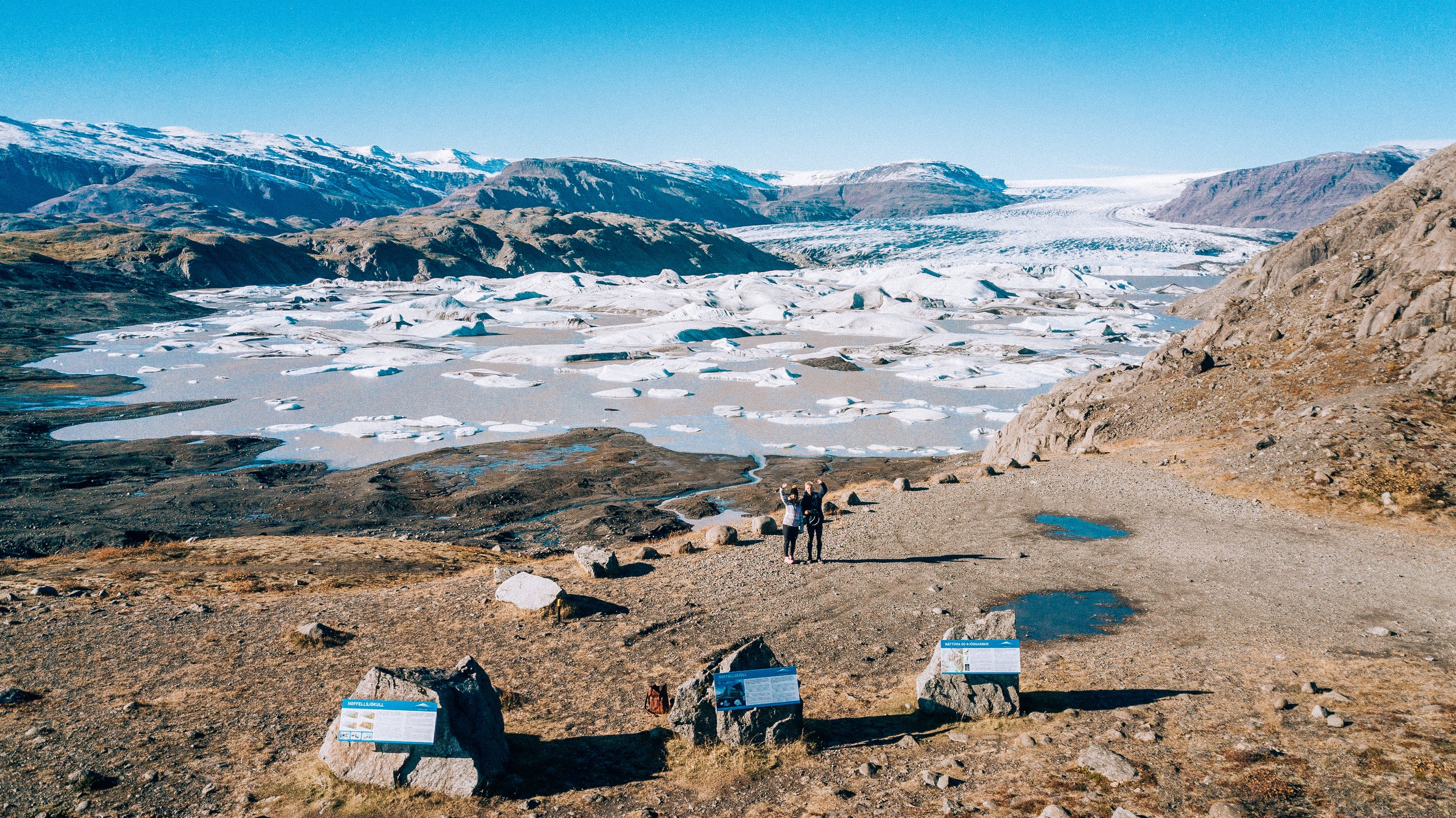
When we reached it, a slightly oppressive melancholy settled over Lukas and me. This glacier tongue is retreating extremely fast and dramatically melting, so all that’s forming beneath it today is a murky lagoon full of silt from the bedrock, and it’s entirely possible that in a few decades there’ll be almost nothing left of it.
Even so, it was an immensely powerful and rather peaceful stop, where you fully grasp the enormous force of the climate change unfolding around us.
10. A soak with a view at the Hoffell hot tubs
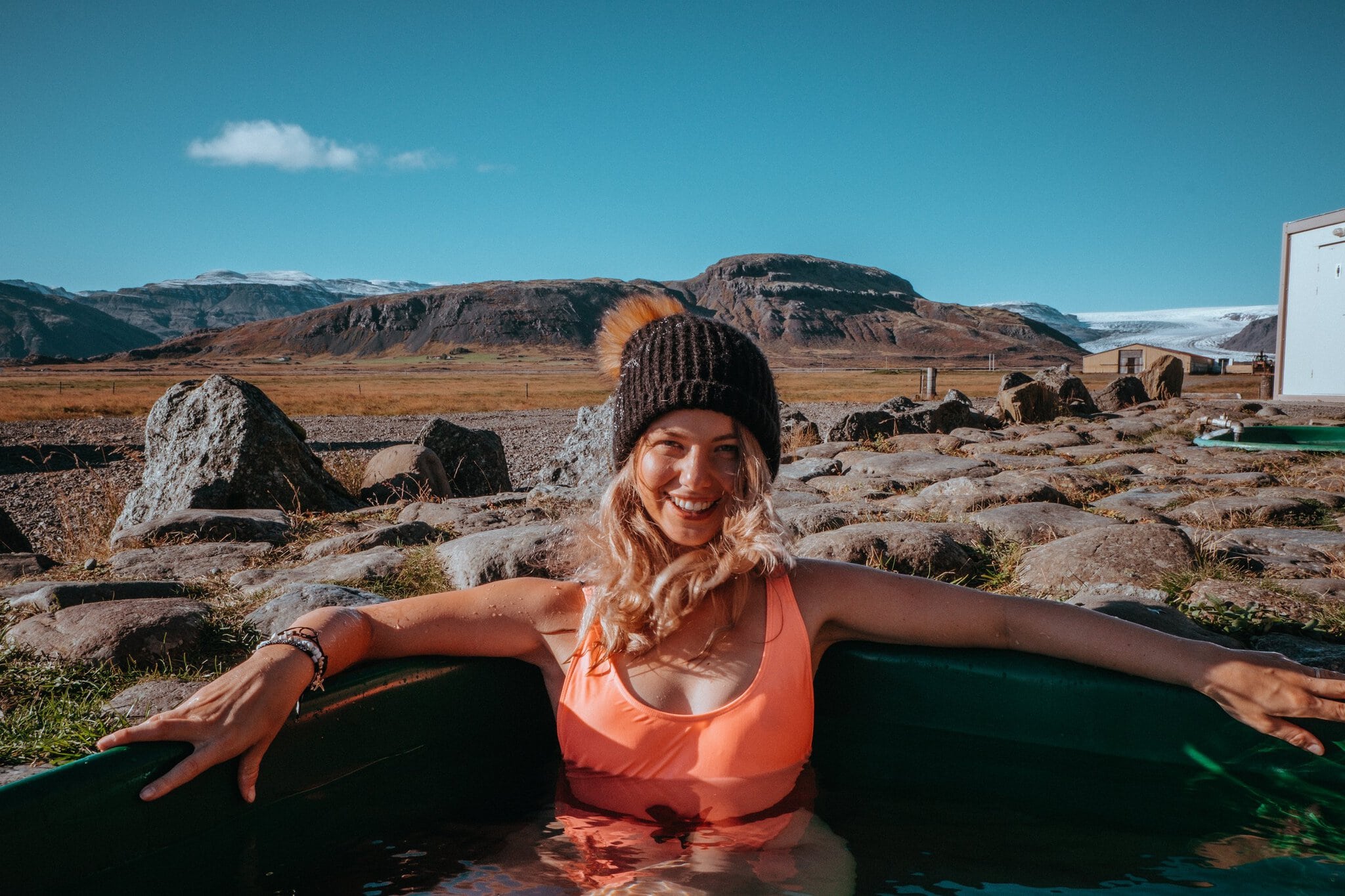
After a long day spent in the icy wind amid the frozen plains, there’s nothing better than sinking into hot thermal water. About fifteen minutes’ drive from Höfn, right by the turn-off to the glacier mentioned above, you’ll find the charming Hoffell hot tubs — a cluster of five smaller round pools built right into the rock, with an unbelievable view of the surrounding mountain peaks.
We spent a good two hours here just warming up our aching muscles after all that endless walking. Entry costs a very reasonable 2,000 ISK (about €14) and the site is usually open daily from ten in the morning to nine in the evening, though it often closes for the winter in November.
On site there are only the most basic outdoor showers and a small wooden changing hut, so don’t expect a luxury hotel spa — but what you do get is genuine, unfiltered Icelandic romance in pristine nature.
11. The photogenic Vestrahorn mountain and the Stokksnes dunes
A short way beyond Höfn, the dramatic Stokksnes peninsula juts out into the sea, dominated by the iconic, jagged Vestrahorn mountain of black gabbro, often also called Batman Mountain because of its distinctive shape. The beaches here are lined with beautiful grassy dunes of black volcanic sand, where seals occasionally lounge lazily, and photographers from all over the world come here to hunt for the best compositions.
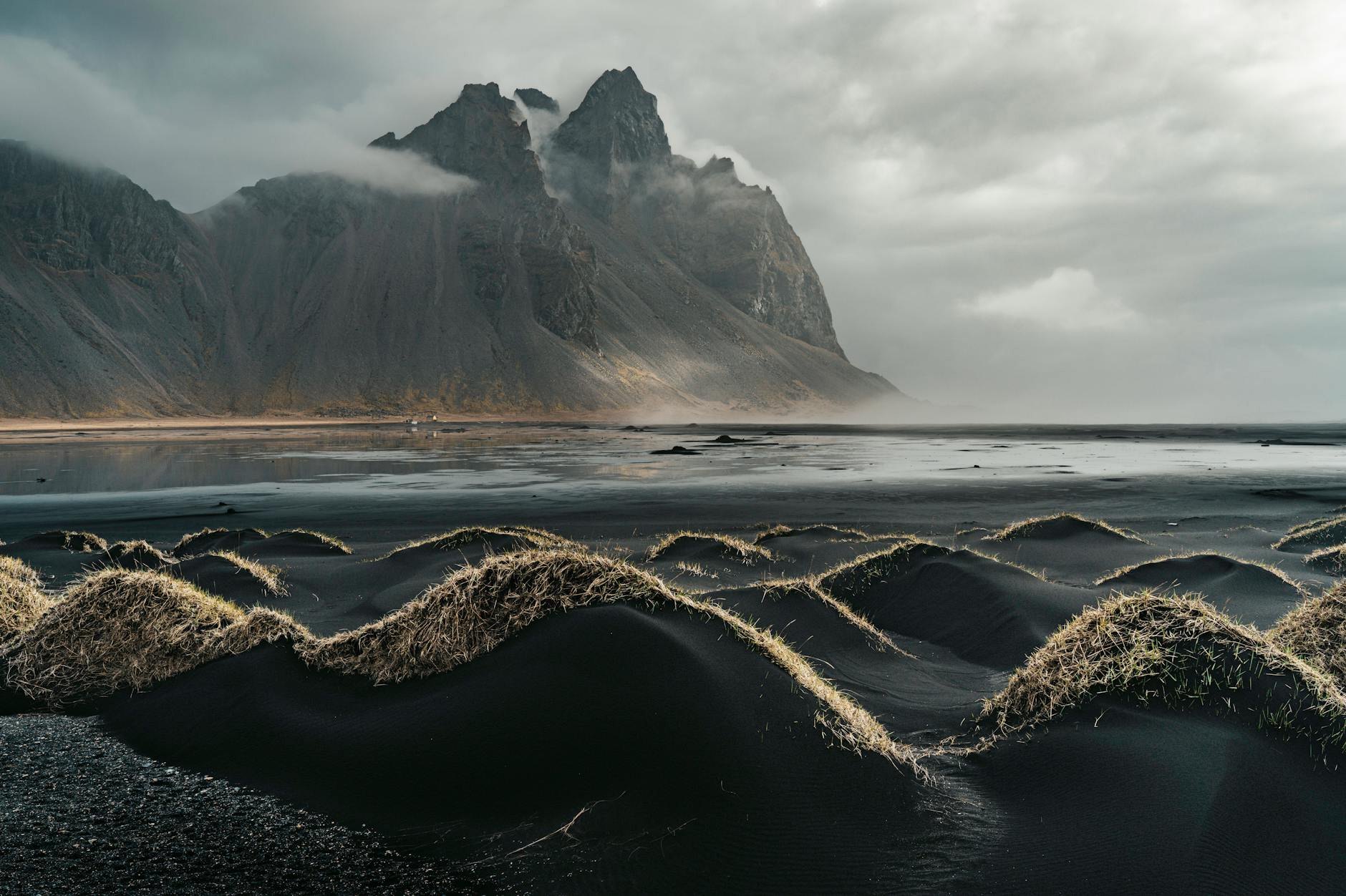
The peninsula sits on private land, so there’s an entry fee of 1,100 ISK (about €8) payable at the local Viking Café, while children under sixteen thankfully get in free. The café is open from nine to six in the evening, but outside those hours an automatic gate operates, so you can easily get in for sunrise too.
The admission fee includes, incidentally, a walk around an old Viking village — admittedly just an abandoned film set built for some long-ago shoot, but it looks surprisingly authentic and gives the place a faintly mysterious atmosphere.
12. Admiring the Eystrahorn massif
If you happen not to have time to detour to Stokksnes and pay the entry fee, another beautiful sight is guaranteed by the stunning Eystrahorn mountain, which you drive right past on the Ring Road as you head even further into the remote Eastern Fjords. It’s a similarly steep, dark rock massif plunging straight into the ocean waves, and we watched it in awe straight from our car window.
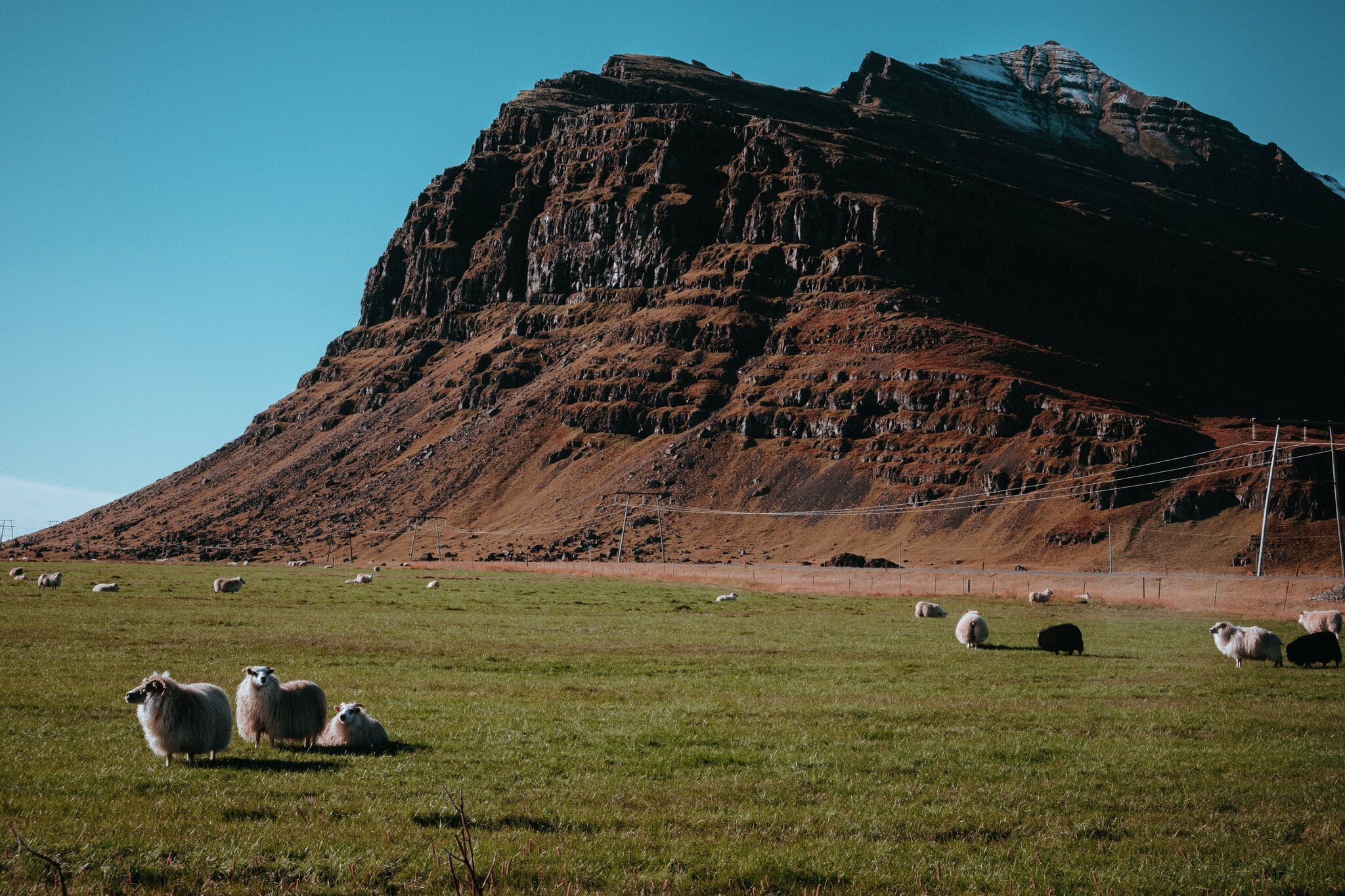
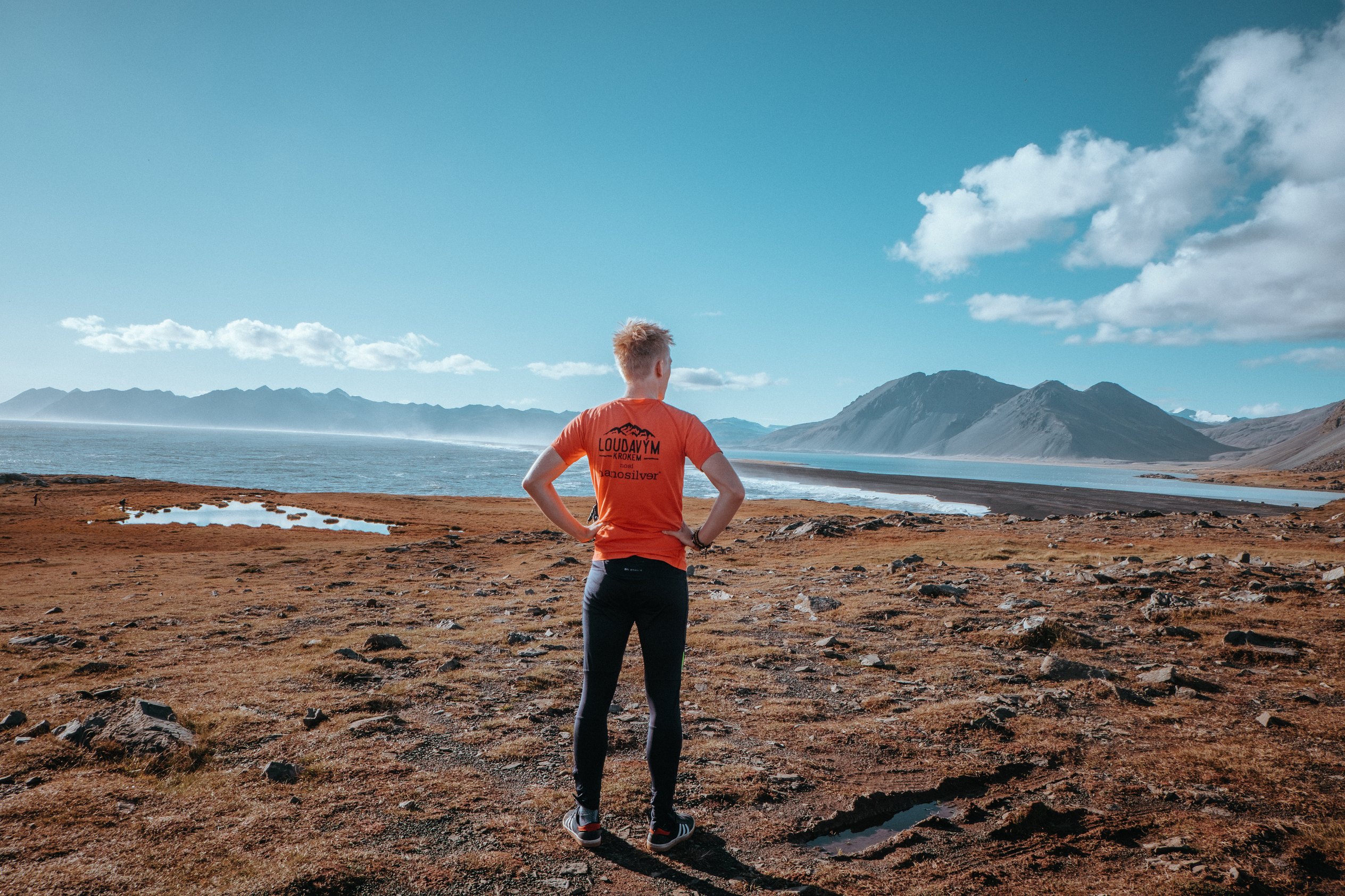
When you’re lucky with ideal weather conditions and the ocean is unusually calm, the enormous mountain reflects on the shallow waters of the wide bay, offering a postcard-perfect view. It’s more than enough to pull over at one of the small, safe lay-bys along the main road, climb out of your warm car, and just soak in the incredible wildness of Iceland’s unspoilt east for a while.
13. The little turf church of Hofskirkja
As one final little tip for travelling through this area, I have to mention the hamlet of Hof, just a short hop from Skaftafell National Park. In the middle of this tiny village — where, incidentally, you’ll also find very pleasant farm accommodation — stands the beautiful historic Hofskirkja church from the nineteenth century, complete with a traditional turf roof carpeted in lush green grass that once served as ingenious natural insulation against the cold.
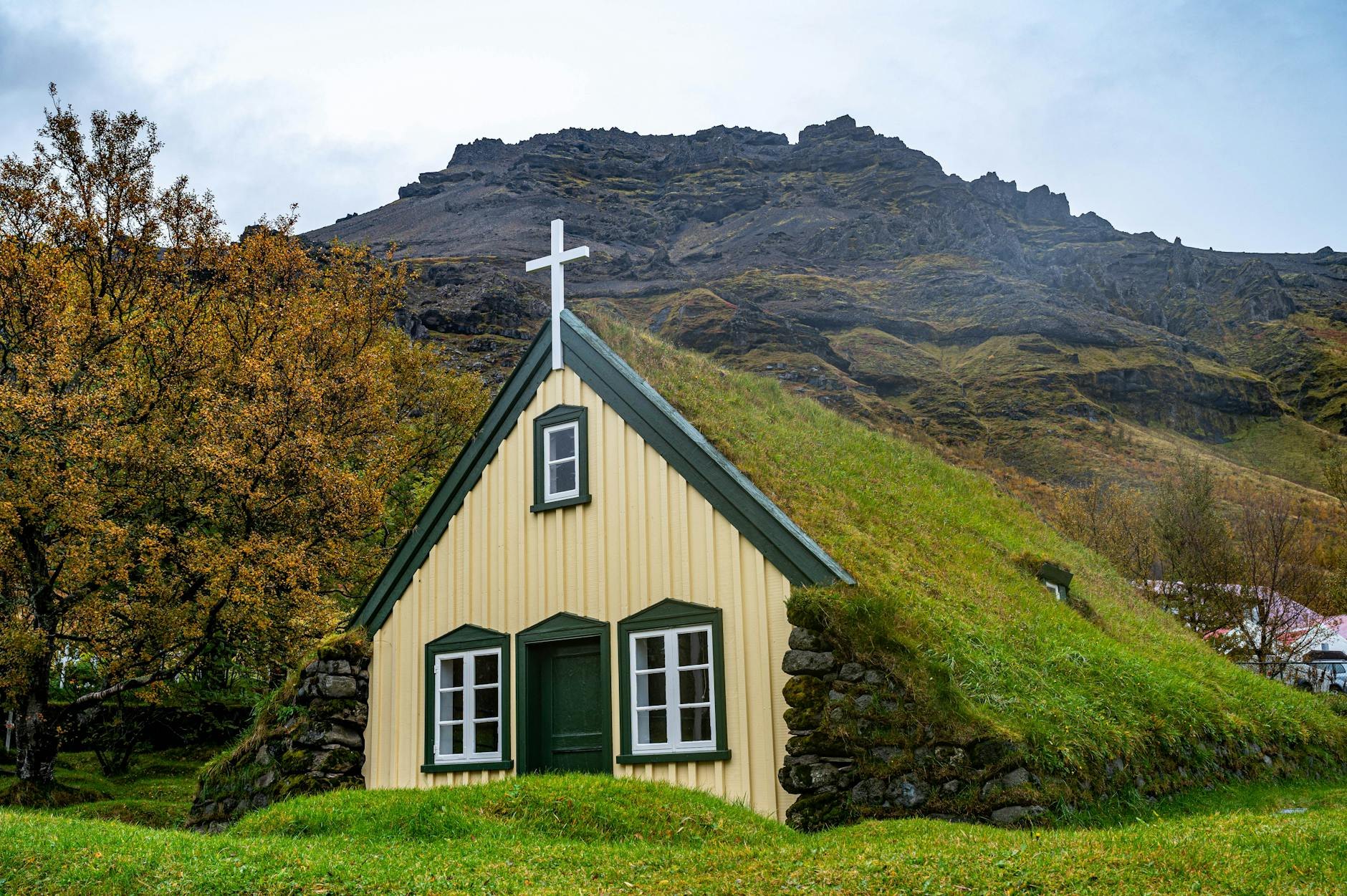
It looks exactly like somewhere out of the Shire in Lord of the Rings, because the church is surrounded by a beautiful old cemetery where the individual graves are just grassy mounds blending into their surroundings.
Hofskirkja is one of just six surviving turf churches in all of Iceland and is cared for by the national museum, so while it’s certainly no half-day-trip attraction, it’s an absolutely perfect detour for a ten-minute photo stop as you pass through the hamlet.
Where to eat in the land of langoustines when you’re vegetarian
The town of Höfn, which works as a perfectly logical base for the eastern tip of the area and for stocking up at the cheap Bónus supermarket (that’s the one with the funny pink pig in its logo), is famous across all of Iceland as the lobster capital. In reality, local fishermen here haul up huge quantities of langoustines (humar in Icelandic) — smaller and, by all accounts, incredibly sweet little sea creatures.
If you eat seafood, every single carnivorous guide here recommends the legendary Pakkhús restaurant, housed in an old red warehouse right by the harbour, whose roasted langoustines in garlic butter are renowned, with a main course costing around 6,000 to 8,000 ISK (about €41 to €55).
Since Lukas and I are vegetarians, though, all this lobster fame was more of a logistical headache for us, and we were worried we’d end up cooking pasta in our room again. So we headed into the centre hoping to find something, and I’m delighted to report that it was the very Pakkhús we’d been dreading that pleasantly surprised us!
Even though it’s primarily a fishermen’s paradise, we ordered a fantastic vegetarian dish here made of golden-roasted potatoes, sweet potatoes, a hearty portion of chickpeas and juicy sun-dried tomatoes. It was a really big, filling plate that hit the spot incredibly well after a freezing day spent out on the glacier, and proved that you certainly won’t go hungry without meat in Iceland.
As a second great option in town, I warmly recommend the very cosy Otto Matur & Drykkur, which conjures up wonderful hot soups, coffee and excellent fresh pastries — just always check the current daily menu in advance to see whether they have something fully vegetarian on offer.
And by the way, never buy bottled water in Icelandic restaurants, because the ordinary tap water (which they’ll pour you everywhere for free) is literally crystal-clear glacial water of the very highest quality.
Where to go next
If you’ve ticked off the southeast and are wondering where to head next on this island of fire and ice, definitely don’t miss our other guides and tips — because while you can have your accommodation near Jökulsárlón booked, Iceland is enormous. I’ve put together more articles packed with our inspiration and practical experience.
If you’re travelling the route from the airport, be sure to explore what to see on Iceland’s south coast, where the most beautiful waterfalls and cliffs await you. For general advice on flights and budgets, our big Iceland guide will come in handy, with everything you need for a hassle-free trip.
If you’re going in the colder months, we’ve also put together an overview of what Iceland is like in October and how much it all costs, and so you don’t freeze along the way, you’ll definitely appreciate our article on where to find the 16 best hot springs in Iceland. As for getting there, easyJet, Jet2 and Icelandair all fly direct to Keflavík from major UK airports, and we always hire our car through a reliable comparison site for the best long-term experience.
 🚗 Car rental on the road
Verified rental cars in Iceland
🚗 Car rental on the road
Verified rental cars in Iceland
Search with the DiscoverCars comparison engine — it compares prices from dozens of local and international rental companies, and most bookings come with free cancellation.
Compare car prices in Iceland →Frequently asked questions
How far is it from Reykjavik and can you do it in a day?
From Reykjavik to Jökulsárlón lagoon it’s about 375 kilometers, which takes at least five hours of pure driving in one direction without any stops. As a day trip it’s incredibly exhausting, even grueling, so I absolutely don’t recommend it – it’s much more sensible to split up the journey and spend the night in Vík or in the Skaftafell settlement, for example.
Is it worth taking the amphibious boat tour, or better to go with the Zodiac inflatable?
It depends on your budget and group. The amphibious vehicle is cheaper (7100 ISK per adult), slower and much more suitable if you have small children with you. The Zodiac costs considerably more (around 16600 ISK), but the small rubber boat takes you a full eight kilometres further into the depths of the lagoon and weaves you right up close to the glacier wall, making it a more thrilling experience.
What time of year do these lagoon boat tours actually operate?
The main boat season on the lagoon runs roughly from May 1st to October 31st. In winter, boats don’t operate due to too much ice on the surface and worse weather conditions, but instead of boat trips, the exciting ice cave exploration season begins.
When exactly can you visit the blue ice caves under the glacier?
The caves (so-called Crystal or Blue Caves) are stable and safe only during the winter months when it freezes, which is roughly from mid-November to March. Visits are possible only with a certified guide, departing in special super jeeps, and prices range from €135 to €195.
Can I go for a walk on the glacier by myself without a paid guide?
Definitely not, it is strictly forbidden and above all it would be an enormous gamble with your own life. Very deep crevasses are often hidden beneath a thin layer of snow or sand, into which you can fall, so glacier hikes and cave visits should always be done only with certified professionals.
Should I visit Jökulsárlón, or rather the nearby Fjallsárlón?
Ideally both! Jökulsárlón is the main and deepest lagoon with intense blue color and the bonus of Diamond Beach across the street, but it can get really crowded during season. Fjallsárlón is a smaller, quieter lagoon with darker water, where the glacier wall itself is visually much closer and you’ll avoid the biggest crowds.
Is it possible to eat vegetarian in Höfn, which is full of lobsters and fish?
Yes, it’s definitely possible and you don’t need to worry about it at all. Although the town of Höfn is famous for lobster fishing, you can eat wonderfully here even without meat. Even the most famous fish restaurant Pakkhús offers, in addition to fish, excellent and very filling vegetarian dishes made from roasted potatoes, chickpeas and sweet potatoes, just make sure to always check the current menu in advance.
Tips and Tricks for Your Vacation
Don’t Overpay for Flights
Search for flights on Kayak. It’s our favorite search engine because it scans the websites of all airlines and always finds the cheapest connection.
Book Your Accommodation Smartly
The best experiences we’ve had when looking for accommodation (from Alaska to Morocco) are with Booking.com, where hotels, apartments, and entire houses are usually the cheapest and most widely available.
Don’t Forget Travel Insurance
Good travel insurance will protect you against illness, accidents, theft, or flight cancellations. We’ve had a few hospital visits abroad, so we know how important it is to have proper insurance arranged.
Where we insure ourselves: SafetyWing (simple monthly subscription) and TrueTraveller (for extra-long trips).
Find the Best Experiences
Get Your Guide is a huge online marketplace where you can book guided walks, trips, skip-the-line tickets, tours, and much more. We always find some extra fun there!