When Lukáš and I set off on our big road trip at the turn of September and October 2018, I had a feeling it was going to be epic, but the reality ended up exceeding all our expectations. We planned to explore the south coast of Iceland on the very fourth day of our journey, and we privately nicknamed it our “day of waterfalls”.
I still remember how we set out in the morning and, with every passing kilometre, the landscape grew more dramatic, steeper and wilder. You simply feel tiny there in the face of that incredible power of nature, which offers you endless glaciers on one side and an untamed ocean on the other.
In this article you’ll find 13 tips on what to see and do in the south of the island. We’ll walk you through the most famous waterfalls that will leave you breathless, as well as hidden spots free of tourist crowds. I’ll tell you where to base yourself strategically, how parking and fees work in 2026, and above all I’ll warn you about what to be extremely careful of so you make it home in one piece.
TL;DR
- The most beautiful waterfalls: Stop at Seljalandsfoss (you can walk behind it) and discover the hidden Gljúfrabúi in its cave right next door. Don’t skip the mighty Skógafoss either.
- Parking costs money: At most natural landmarks (Seljalandsfoss, Skógafoss, Fjaðrárgljúfur), there’s now a parking fee of 1,000 ISK (roughly €7) paid through the Parka app.
- The abandoned plane wreck: To reach the famous DC-3 wreck at Sólheimasandur, you either have to walk 45 minutes across the wasteland, or take the paid shuttle bus.
- Dangerous beauty: The black sand beach of Reynisfjara is stunning, but extremely dangerous due to so-called sneaker waves. Never turn your back to the sea!
- Puffin watching: If you visit in summer, your best chance to spot these adorable birds is on the cliffs of Dyrhólaey, but watch out for evening and night closures during nesting season.
- Ideal timing: Set aside at least two days and one night for the south coast, so you don’t have to rush everything and can truly enjoy those views.
The full destination guide: Iceland — guide and what to see
When to go and how to get there
The south coast is fairly friendly in terms of logistics, and you can reach it from Reykjavík along Ring Road number 1 in roughly two hours. So you can even manage it as a very packed day trip if you’re really short on time. Just bear in mind that in that case you’ll spend 10 to 11 hours straight on the road and on your feet, and you’ll only catch the main highlights.
For a more relaxed pace, I wholeheartedly recommend splitting the south into two days and one night. In summer you can drive the road in an ordinary car, but if you’re heading to the island out of season (October to April), I’d definitely recommend going for a 4×4 vehicle.
We had a larger car rented, and Lukáš and I have had a consistently good experience with DiscoverCars, which we use all over the world because it lets us see a comparison of all the big and local rental companies in one place.
If you’re heading here in summer (June to August), you’ll have a huge advantage in the form of endless daylight. The sun sets just after midnight and rises before three in the morning, so you have roughly 21 hours to explore and can head to the waterfalls at, say, midnight, when there are no crowds.
In August 2026, however, the south is extremely booked out due to a total solar eclipse, so reserve everything well in advance. Winter, on the other hand, offers rugged romance and the chance to see the Northern Lights — just be prepared that around the solstice you’ll have only a little over 4 hours of daylight.
When hunting for the aurora, always check the cloud cover on the official meteorologists’ website and arm yourself with patience, because on average it takes 5 to 7 nights here for a successful sighting.
What’s more, from 1 January 2026 a new per-kilometre tax applies in Iceland for passenger cars, amounting to 6.95 ISK (about €0.05) per kilometre driven. Rental companies will usually add a flat fee of around 1,390 to 1,550 ISK (roughly €10–11) per day, or tally up the kilometres when you return the car.
The good news, though, is that thanks to this, petrol has dropped to roughly 305 ISK per litre (about €2). The biggest enemy in the south, surprisingly, isn’t usually snow or ice, but wind. The Icelandic gale is something that’s hard to describe to anyone who hasn’t experienced it — it can calmly rip the doors off their hinges.
So always park into the wind and hold the doors firmly with both hands, because this kind of damage (so-called door-ripping) isn’t covered by any insurance and repairs cost incredible amounts. Definitely pay extra for GP insurance against gravel and, above all, SAAP (Sand and Ash Protection), because the strong winds in the south can whip up volcanic sand and literally sandblast your car’s paintwork down to the metal.
Where to stay + how much it costs
If you want to explore the south properly and don’t want to spend twelve hours straight in the car, I’d definitely recommend finding accommodation in the south of Iceland for at least one night. The most popular base for trips to the glaciers is the picturesque little village of Vík í Mýrdal, which lies at the very eastern edge of this region.
Capacities here are very limited, though, and prices in season shoot up steeply. A beautiful place to stay right in Vík is, for example, the Hotel Katla by Keahotels, where after a freezing day you can enjoy an outdoor hot tub and sauna, or there’s the cheaper Vík HI Hostel for backpackers.
A cheaper and more accessible option tends to be the town of Selfoss, which is closer to the capital and offers a huge number of choices, including the popular Bakki Hostel (prices here start at around €75 per night).
If you’re after a happy medium, try Hvolsvöllur, located roughly halfway to the biggest natural attractions. Here you’ll also find the utterly luxurious four-star Hotel Rangá, renowned for its hot springs and perfect views of the Northern Lights — provided, of course, you’re lucky enough to get a cloudless sky.
💡 Specific accommodation tips (check prices and availability via Booking.com, and book early — in season and around the 2026 eclipse they vanish months ahead):
- Hótel Katla by Keahotels (Vík)
- Hótel Rangá (Hvolsvöllur)
- Hótel Selfoss (Selfoss)
- Bakki Hostel (Selfoss)
Accommodation prices in Iceland aren’t exactly among the lowest, and a nice guesthouse for two will set you back around €100 to €200 (roughly 15,000 to 30,000 ISK) per night. Booking.com is our favourite hotel search engine, where you can sometimes snag a good discount.
On top of that, since 2024 an accommodation tax of 800 ISK (about €6) per room per night applies, charged directly on site. If you’re camping, the tax is 400 ISK per night. (We’ve probably got a bit too comfortable to camp these days, but plenty of people use the popular Camping Card for around 26,000 ISK, which is valid until mid-September.)
For cheap flights from the UK, Iceland is well connected — easyJet and Jet2 fly direct from London and several regional airports to Reykjavík (Keflavík), so it pays to compare routes and book early to save a good chunk of money and free up more budget for those gorgeous little hotels with outdoor pools.
Remember that while your EHIC/GHIC card is valid in Iceland, it doesn’t cover search and rescue operations (ICE-SAR), so quality travel insurance is an absolute must, and we’d recommend having the 112 Iceland emergency app downloaded on your phone. For staying connected on the go, a local eSIM from Holafly or Yesim is handy.
An incredible spectacle: the most beautiful waterfalls of the south
This part of Iceland could just as well be renamed the land of falling water, because nowhere else on the island will you find so many iconic waterfalls in such a small stretch of land. I recommend setting off from Reykjavík early in the morning (around seven o’clock is fine), so you beat the influx of the big tour buses, which usually arrive at the first stops around ten a.m.
Don’t forget to bring an extremely good waterproof jacket and trousers, because at these spots you simply won’t stay dry for a second.
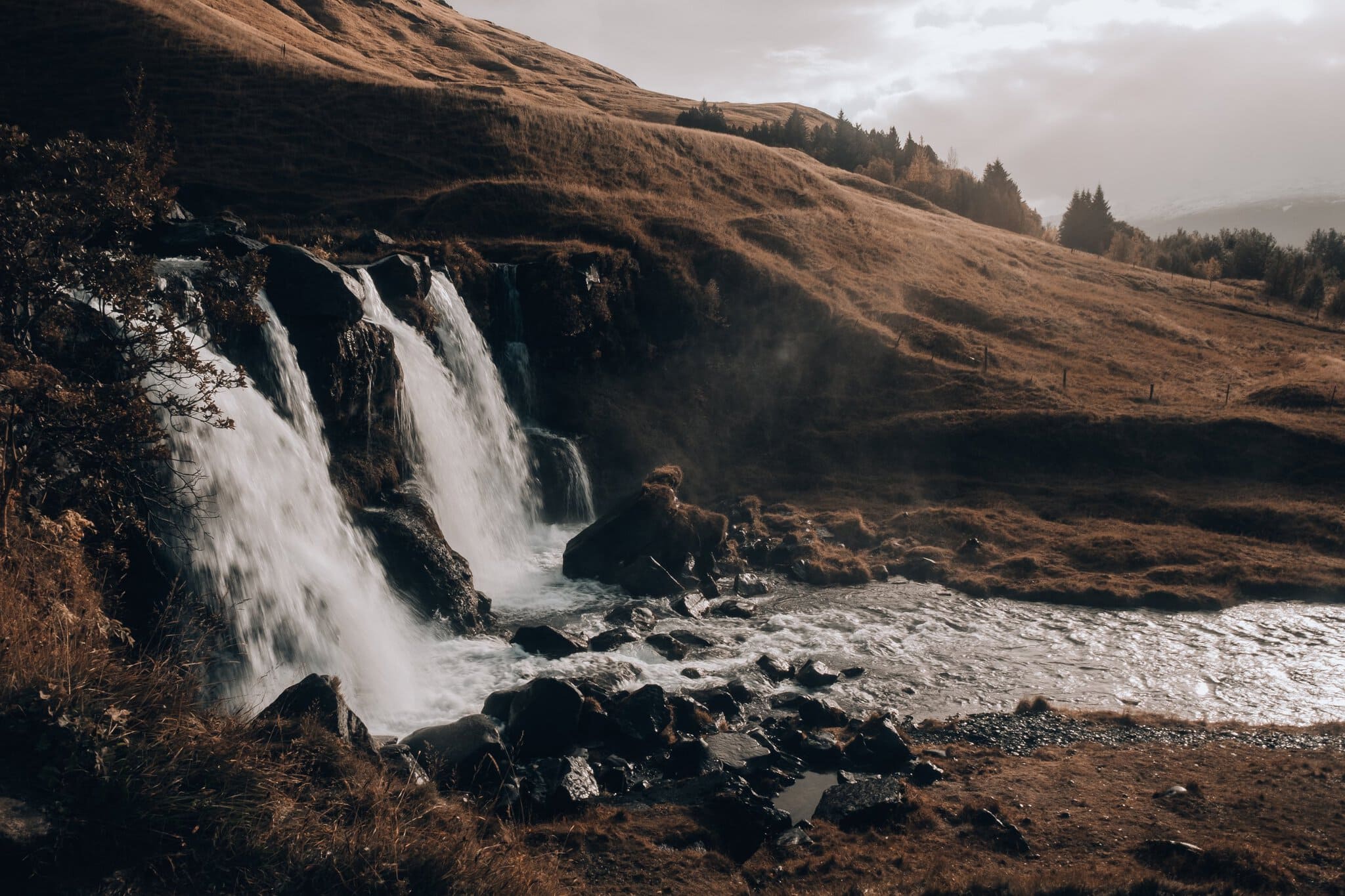
1. An understated start at Gluggafoss
We kicked off the fourth day of our road trip right at Gluggafoss, a beautiful waterfall that tourists often unfairly overlook, located just off the busiest main road.

The water here doesn’t just plunge straight down in the usual way — it forces its way through interesting rock formations and “windows” carved into the soft stone. That gives it a completely different character and a gentler texture than the more famous giants waiting for you further along the route.
We had it entirely to ourselves early in the morning, enjoying the silence broken only by the roar of the water, and we could take plenty of beautiful photos without constantly having to dodge other travellers in yellow ponchos.
It’s a great place for a calm morning wake-up and for getting into the mood for what the day still has in store. ☺️ Nature here doesn’t yet feel quite so harsh and aggressive — on the contrary, there’s lovely green grass all around.
2. Seljalandsfoss: the waterfall you can walk behind
After roughly an hour and a half of driving from the capital, you’ll come across the real star of every postcard. The enormous Seljalandsfoss waterfall tumbles from a respectable height of 60 metres off a former sea cliff, an utterly elegant, narrow ribbon of water.
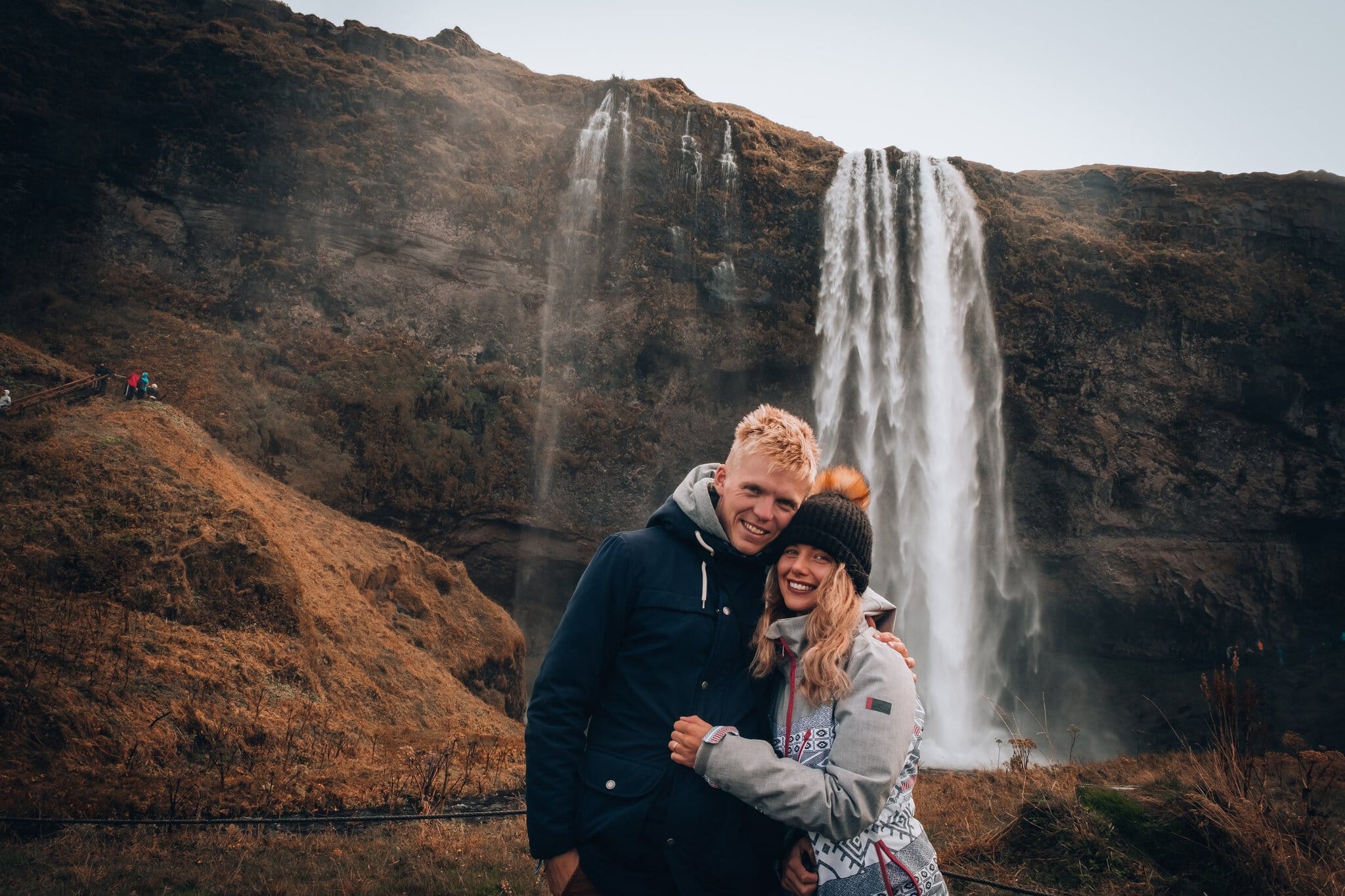
Its biggest and absolutely unique draw is that a slippery stony path runs right behind the wall of water, so you can walk the whole way around into the huge rocky overhang.
The experience of looking out through the thundering curtain of water at the setting sun is simply spectacular, though I have to admit we came out the other side soaked to the bone 😅. The spray flies in absolutely every direction here, so tuck your phones and cameras deep under your jacket and only pull them out for the most essential moment.
You can park here in a large car park, where there’s now a flat fee of 1,000 ISK (about €7) paid via the Parka app. I’d recommend downloading it at home and adding your payment card, which will save you a lot of stress at the machines — which, by the way, often require you to physically enter a PIN in Iceland, as simply tapping Apple Pay usually isn’t enough.
In the winter months the path behind the waterfall is often closed, because it turns into one enormous and deadly dangerous ice rink.
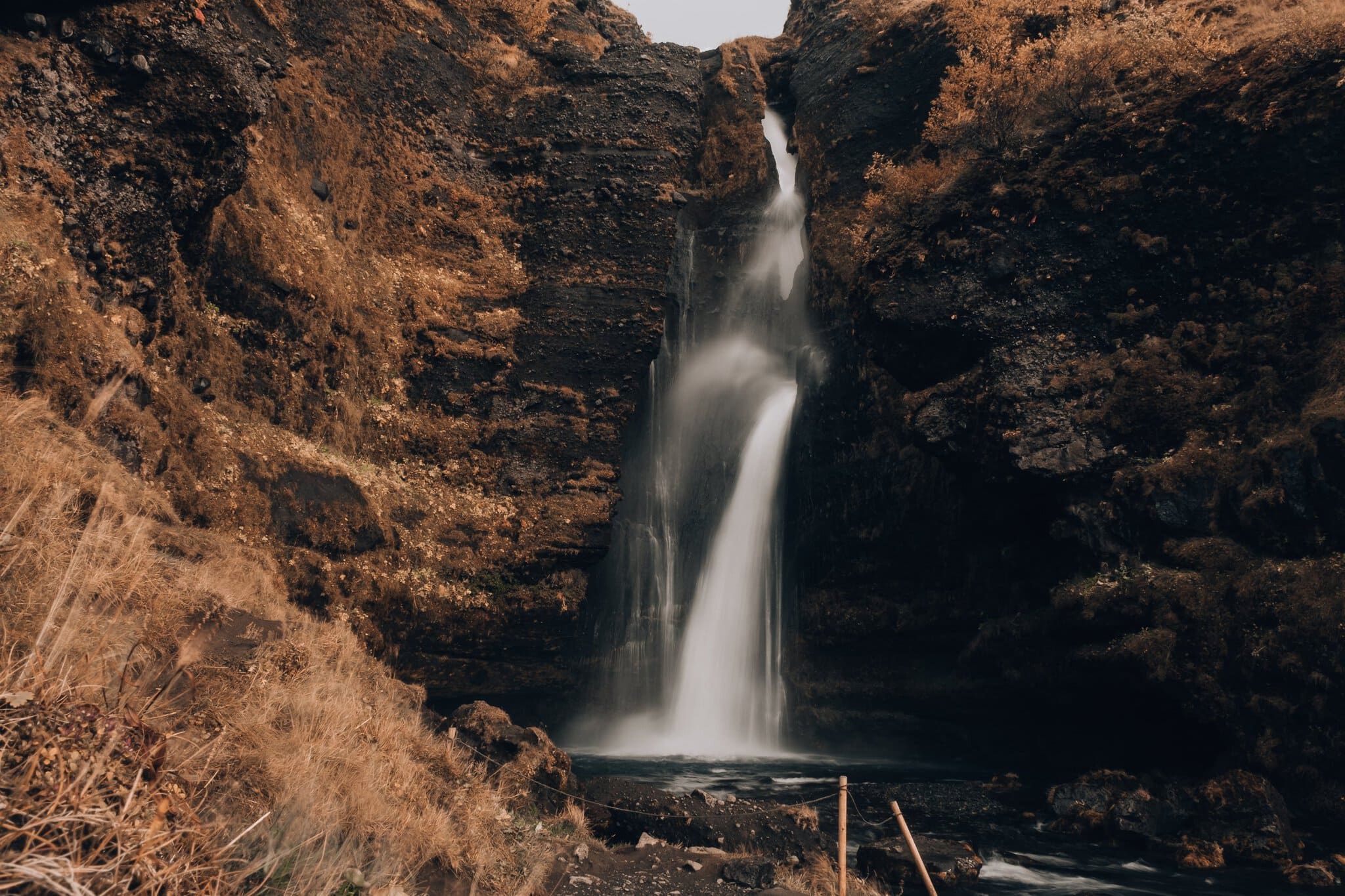
3. The mysterious Gljúfrabúi in its cave
Once you’ve paid for that parking at Seljalandsfoss (the ticket is valid for both spots), it would be a tourist crime to jump straight back in the car and drive off. Most people snap a few photos here and vanish, but you should head on foot just about five hundred metres to the left along the tall cliff.
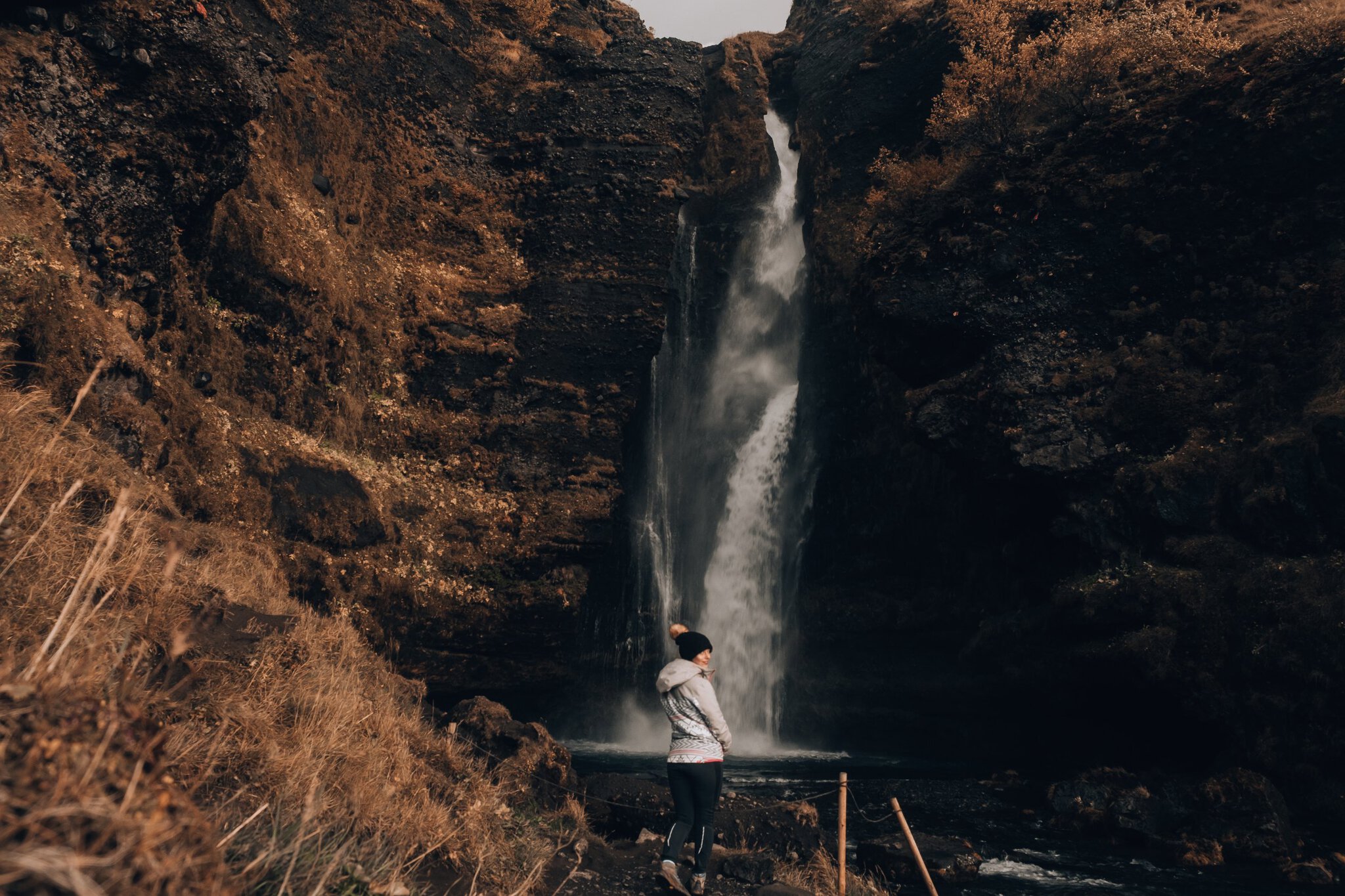
You’ll come across an inconspicuous crack in the rock, with a stream flowing out of it, and inside lies an absolute treasure. Gljúfrabúi (meaning “dweller of the gorge”) is a waterfall hidden right inside the heart of the rock.
To see it in its full glory at all, you have to hop across slippery stones and quite literally wade through the bed of the shallow stream into the interior of the cave. It’s dark in there, hugely loud, and has an incredibly mystical atmosphere that draws you in at once.
Definitely don’t venture in without good waterproof boots with a solid tread and a non-slip sole, because one wrong step and you’ll have water in your boots for the rest of the day. But trust me, you’ll remember this experience for a very long time — it awakens that genuine childlike joy of discovery in you.
4. The thundering and majestic Skógafoss
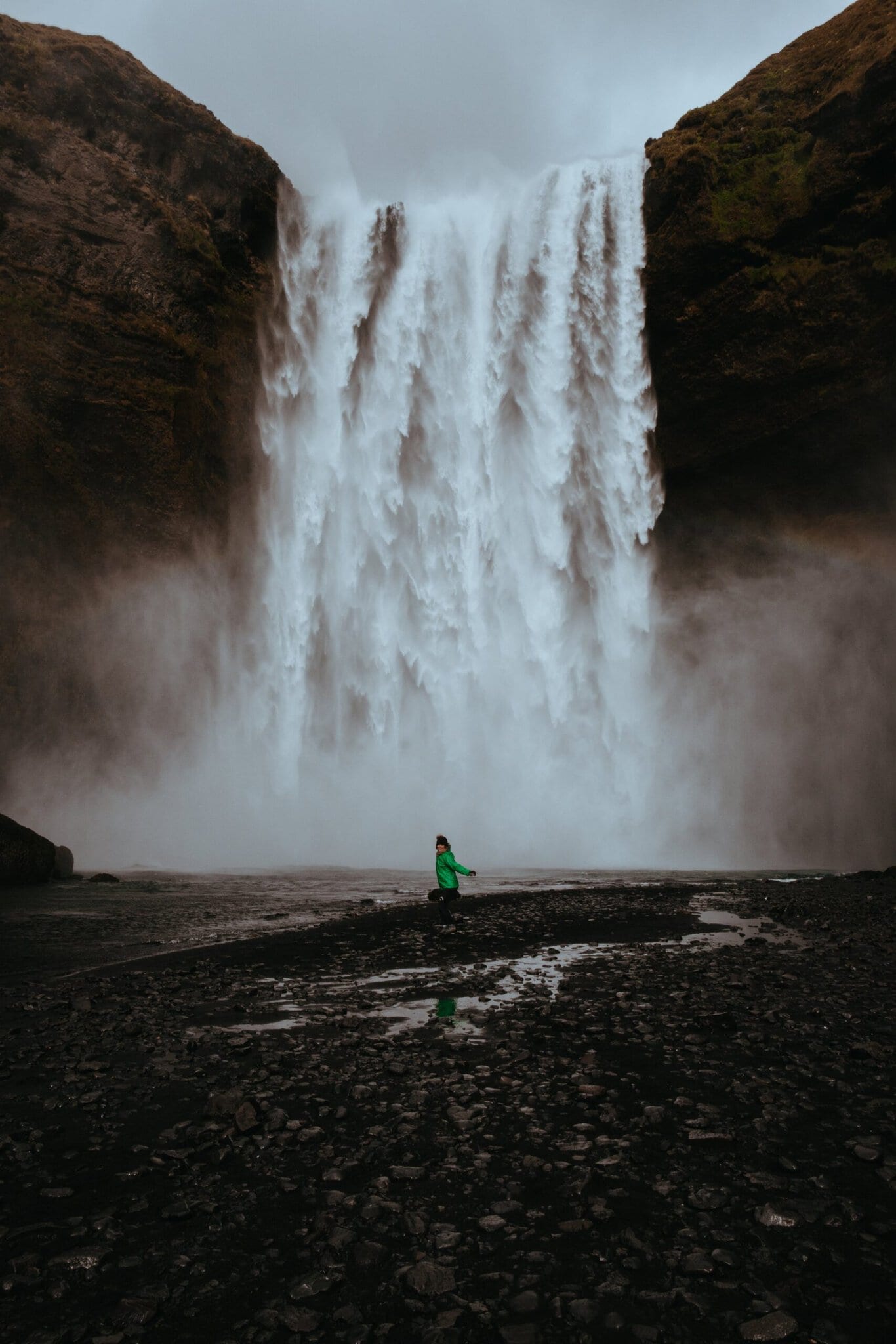
Just under thirty kilometres further down the road, Skógafoss suddenly appears before you — an absolute beast among waterfalls. While Seljalandsfoss is more elegant, here you’ll feel the sheer, brutal force of nature from afar.
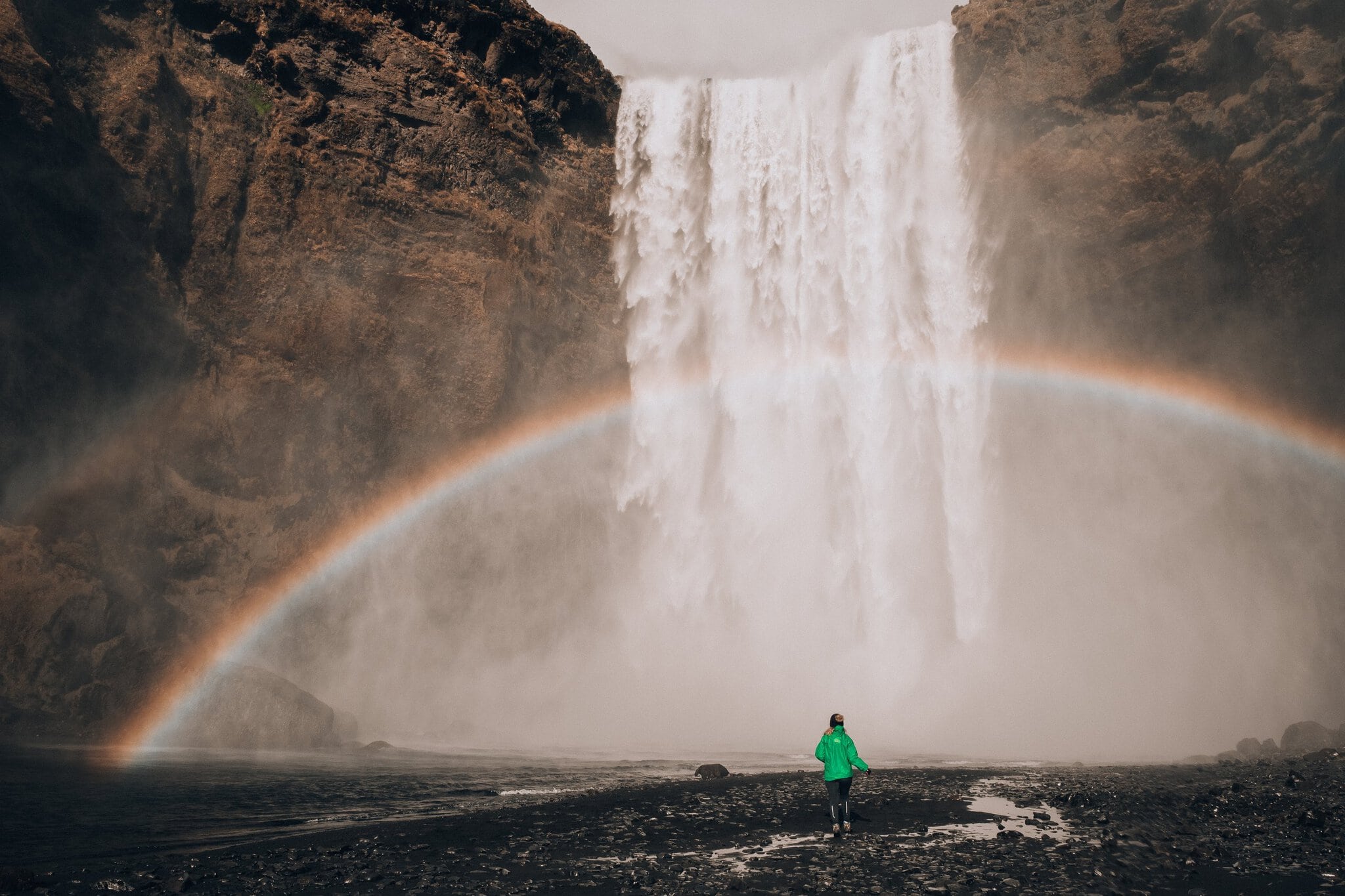
The waterfall plunges from a height of 60 metres, but it’s also 25 metres wide, and thanks to that enormous amount of spray, on sunny days you’ll almost certainly see a massive rainbow here (and quite often even a double one).
You can walk across the flat pebbles right up close beneath it, but bear in mind that the closer you go, the more it feels like standing inside a switched-on car wash. Or, like us, head to the right up the wooden steps to the viewing platform at the top.
There are exactly 527 steps here and your thighs will be burning, but the view from the edge of the cliff down onto the flat coastline is priceless. And a little bonus tip: the famous Fimmvörðuháls trek starts at the top.
Most people just peek out from the platform and head back down, but if you walk on a kilometre or two along the river Skógá, you’ll discover a gorgeous cascade of dozens of smaller waterfalls with no tourists at all.
Just watch your wallet — since May 2025, a parking fee of 1,000 ISK (about €7) is charged here too, via the Parka app (the parking limit is set at eight hours and overnight stays aren’t permitted).
💡 Tip: Tickets and organised tours (along the south coast and surroundings) are worth buying online in advance on GetYourGuide — they fill up quickly in season.
5. The green canyon of Fjaðrárgljúfur
It’s located a bit further east, just past the little town of Vík, but I definitely have to mention it among the most beautiful natural wonders. The Fjaðrárgljúfur canyon is a roughly two-kilometre-long and hundred-metre-deep miracle of nature, carved out by a glacial river.
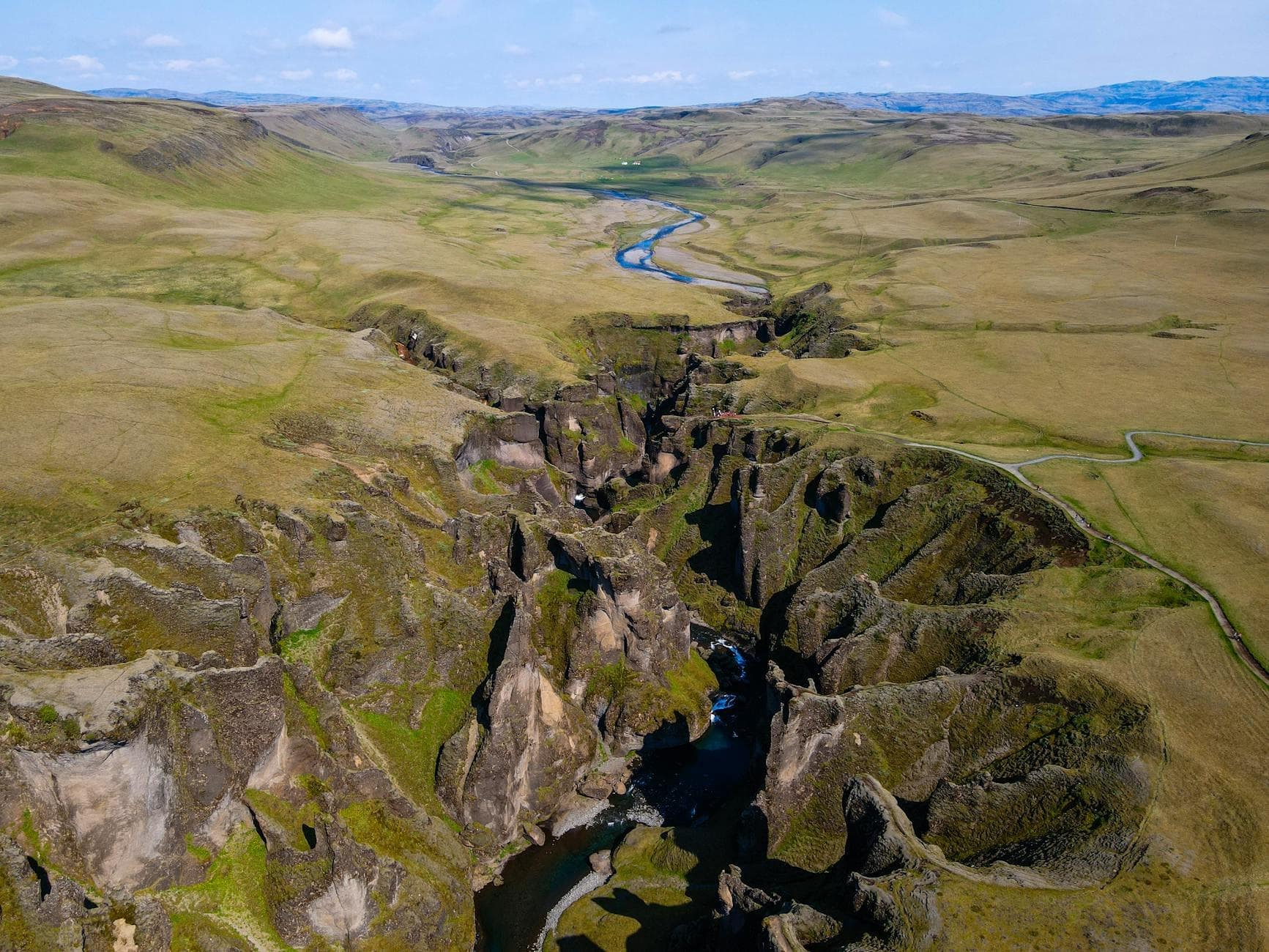
The green moss covering the steep rock walls contrasts sharply with the blue water below, and the whole thing looks like a set from a fantasy film (which, incidentally, Justin Bieber also discovered — he shot a music video here and nearly destroyed the place by accident with the influx of fans).
Today, fortunately, a clearly marked and fenced trail runs along the edge of the canyon with several safe viewing platforms. Parking now also costs 1,000 ISK (about €7), sorted via the obligatory Parka app.
Just be careful if you’re flying to Iceland in the spring months, when the snow is melting. The Environment Agency regularly closes access to the canyon completely during this period, to protect the fragile vegetation from being trampled in the mud, so always check the current status in advance on the official ust.is website.
A dip and a drop of history beneath the glacier
When you tire, after a few hours, of constantly wiping water droplets off your camera lenses, the south coast of Iceland thankfully offers other pastimes too. You can try to warm up a little (though it has its big pitfalls), or shelter from the rain and travel back in time to the days of the first settlers.
6. An adventure in the Seljavallalaug pool
After a morning full of icy waterfalls, Lukáš and I got a mad craving to warm up at least a little, so we headed for the Seljavallalaug pool. It’s one of the very oldest outdoor swimming pools in all of Iceland, set into the rock back in 1923.
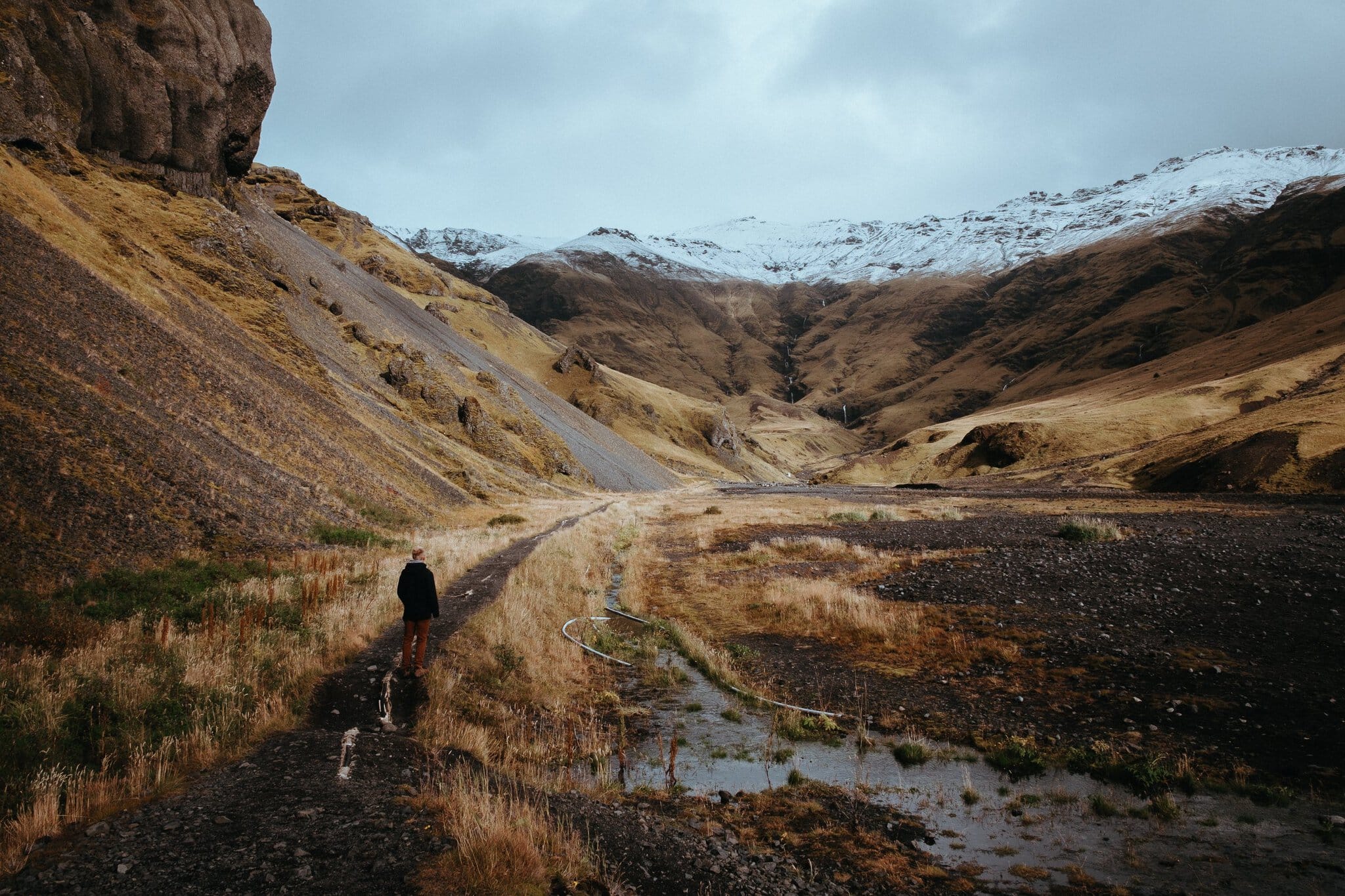
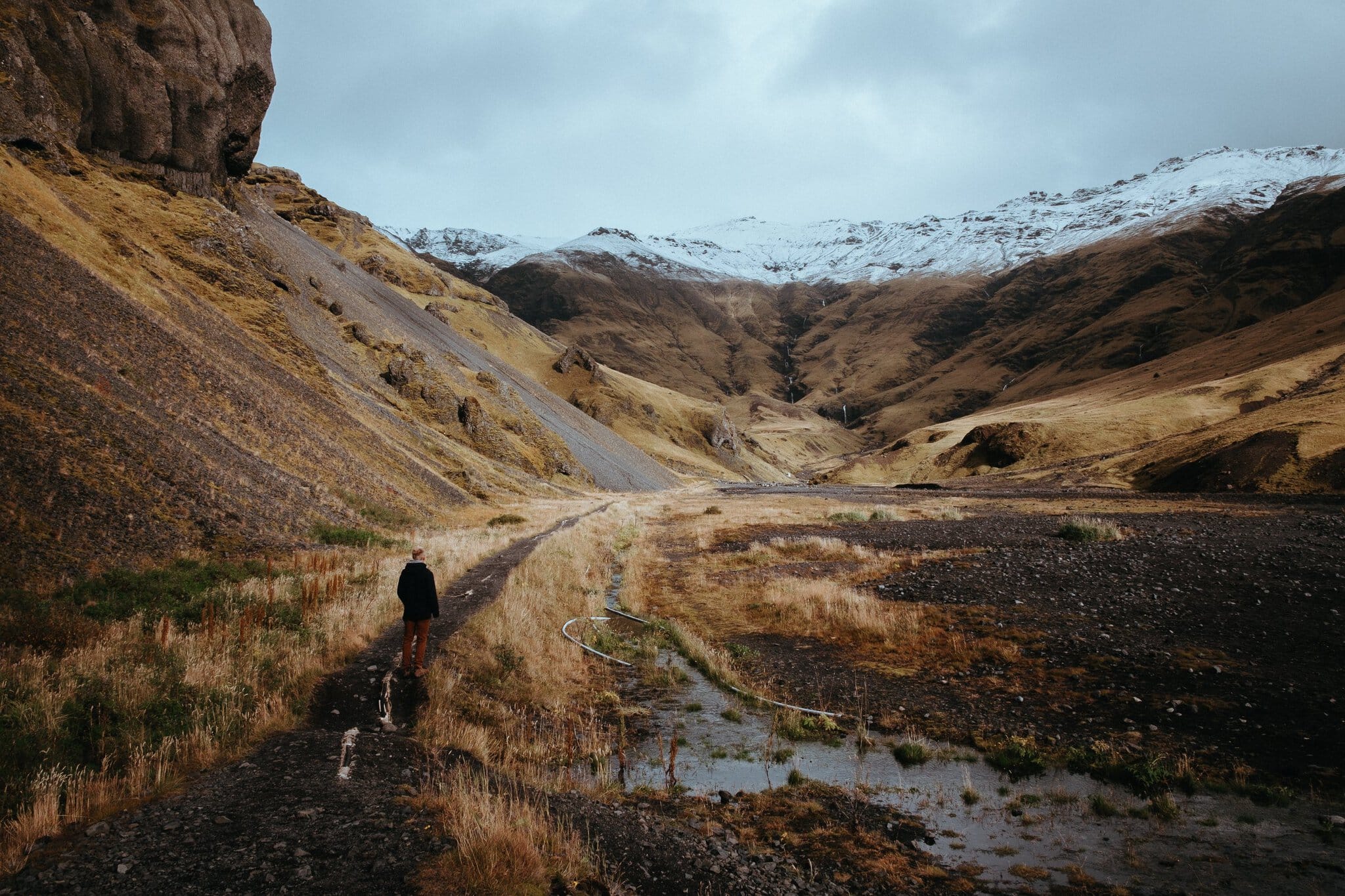
To get there, you have to walk from the car park through a breathtaking, narrow mountain valley (the walk takes about twenty minutes), and the scenery around you will simply move you.
But I’ll be completely honest with you: the reality of the bathing is a bit more punk-rock. Outside of the warmest summer days, the water in the pool isn’t exactly hot — it’s more like lukewarm — and because the bottom is cleaned by volunteers only very rarely, it’s full of slippery natural algae.
The changing rooms are a chapter all of their own — they’re old, damp and slightly grim, because it depends entirely on the tourists what state they leave them in.
Even so, we definitely don’t regret it — bathing in an abandoned concrete pool in the middle of wild green mountains, with mist lying on the peaks, simply has an incredibly special atmosphere.
7. Skógar museum full of turf houses
If you get caught along the way by the typical horizontal Icelandic downpour that no raincoat can withstand, the museum in Skógar (Skógasafn) is the ideal escape and emergency brake. You’ll find it just a minute’s drive by car from the Skógafoss waterfall, and for an admission of 3,000 ISK per adult (roughly €21) you’ll get access to a huge complex where you can easily spend two hours in the warm and dry.
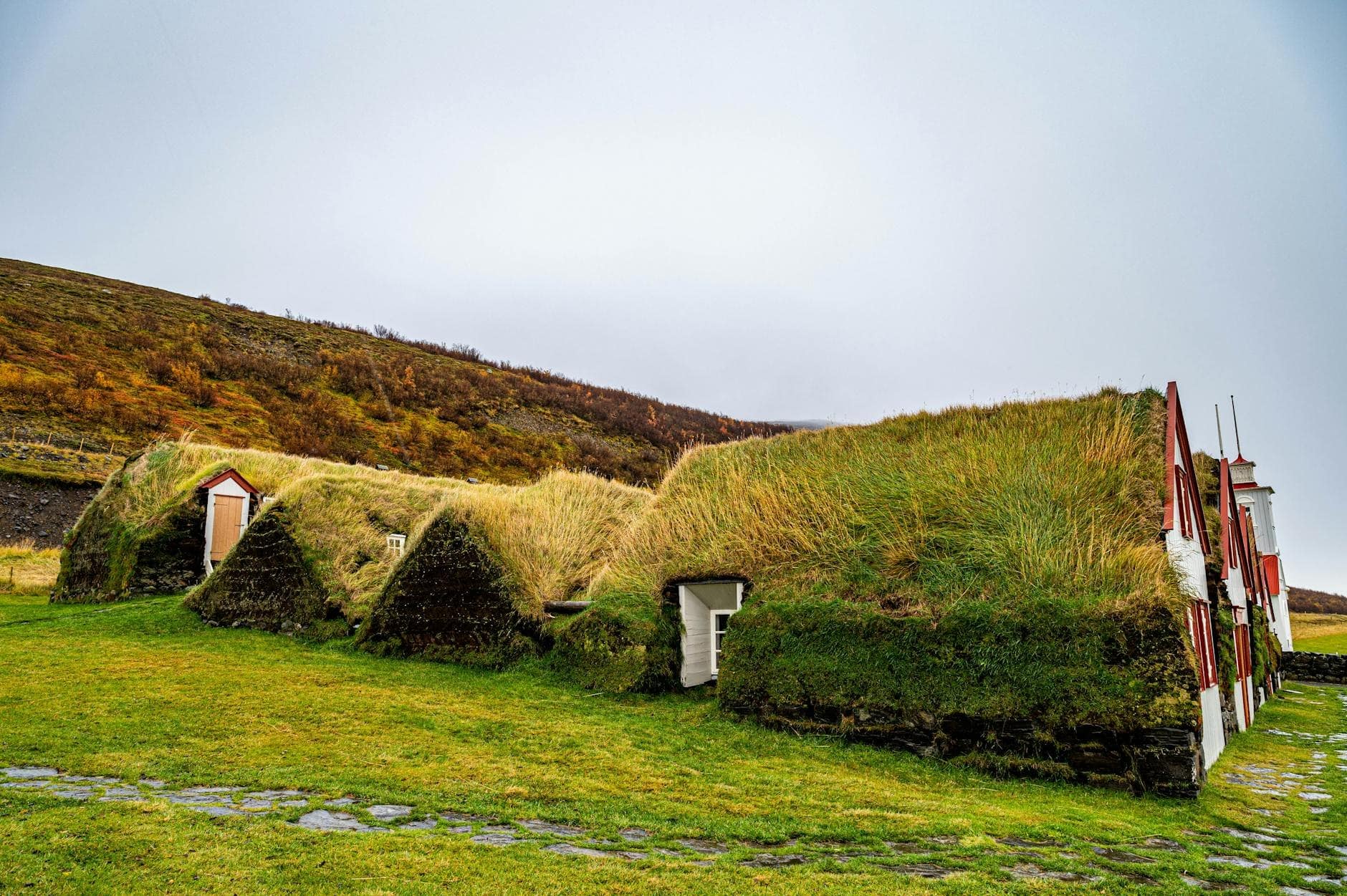
The outdoor section consists of absolutely fairytale-restored old cottages with grassy turf roofs, which from a distance look literally like hobbit dwellings from The Lord of the Rings.
Inside the main building, you’ll find an incredibly rich collection of historical objects, from old fishing boats to traditional Icelandic knitted sweaters (lopapeysa) and tools. It’s a wonderful and at times chilling glimpse into history, which shows you in full just how desperately hard and harsh life the locals had centuries ago in the face of this nature.

Wastelands, ice and post-apocalyptic views
When you pass the greenest stretches near Skógafoss and draw closer to the Mýrdalsjökull glacier, the landscape around the road dramatically changes colour, from vivid green to deep ashen and black. This is where the island’s harsher face begins, where you can touch ancient ice or explore the rusted remains of an American plane lost on the endless plain.
8. Within reach of the Sólheimajökull glacier
Just past the turn-off for the plane wreck, you’ll find a little road leading straight to the glacial tongue of Sólheimajökull. It’s an outlet of the enormous Mýrdalsjökull glacier, which conceals beneath it the notorious and very active Katla volcano.
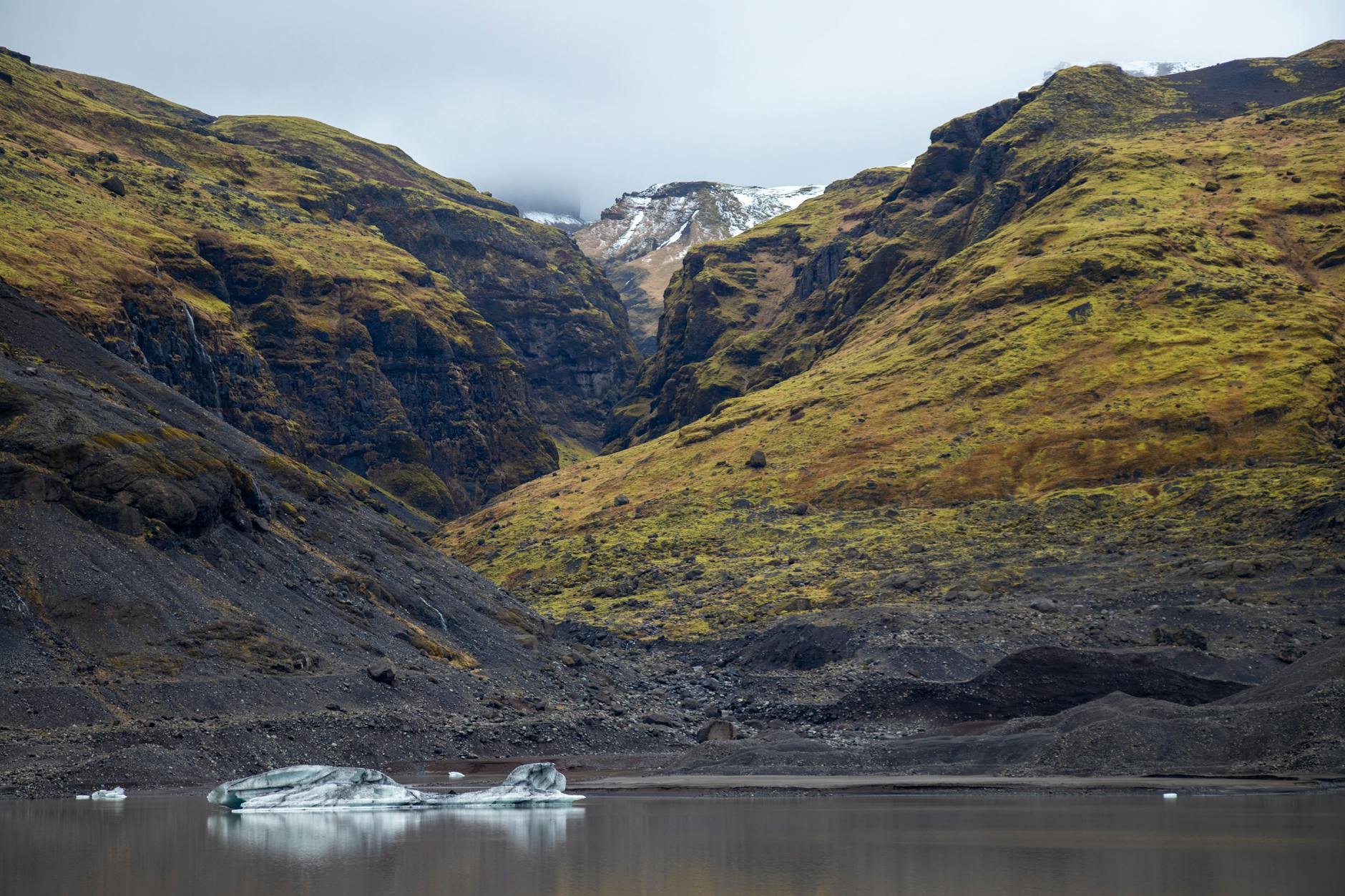
Don’t expect any dazzling white, sterile-clean snow like in the Alpine brochures here. This glacier is laced with thick black veins of volcanic ash from past eruptions, which the frost has literally pressed into it over the centuries.
You’ll reach the glacier’s face from the car park in about twenty minutes on foot, walking past the sadly murky glacial lagoon, where you can see with your own eyes how quickly Iceland is losing its ice and melting away.
Here, though, I have to add a huge and emphatic warning: never, under any circumstances, attempt to set foot on the ice itself without a certified guide and the proper equipment! The glacier is a living organism, constantly moving, cracking and forming deep crevasses called moulins, which can be treacherously covered by a thin layer of fresh snow.
From below, we watched with respect as groups of people in helmets, crampons and ice axes moved safely through the labyrinth of ice.
If you want to try a glacier hike yourself, three-hour walks with companies like Arctic Adventures or Troll Expeditions start at roughly 8,500 to 13,900 ISK (about €60–98), and trips to the local Katla ice cave cost around 29,900 ISK (about €210).
💡 Tip: Tickets and organised tours (along the south coast and surroundings) are worth buying online in advance on GetYourGuide — they fill up quickly in season.
9. The DC-3 plane wreck on the black plain
On the enormous and utterly flat outwash plain of Sólheimasandur, made of black volcanic sand and gravel, lies one of the most photographed locations in all of Iceland.
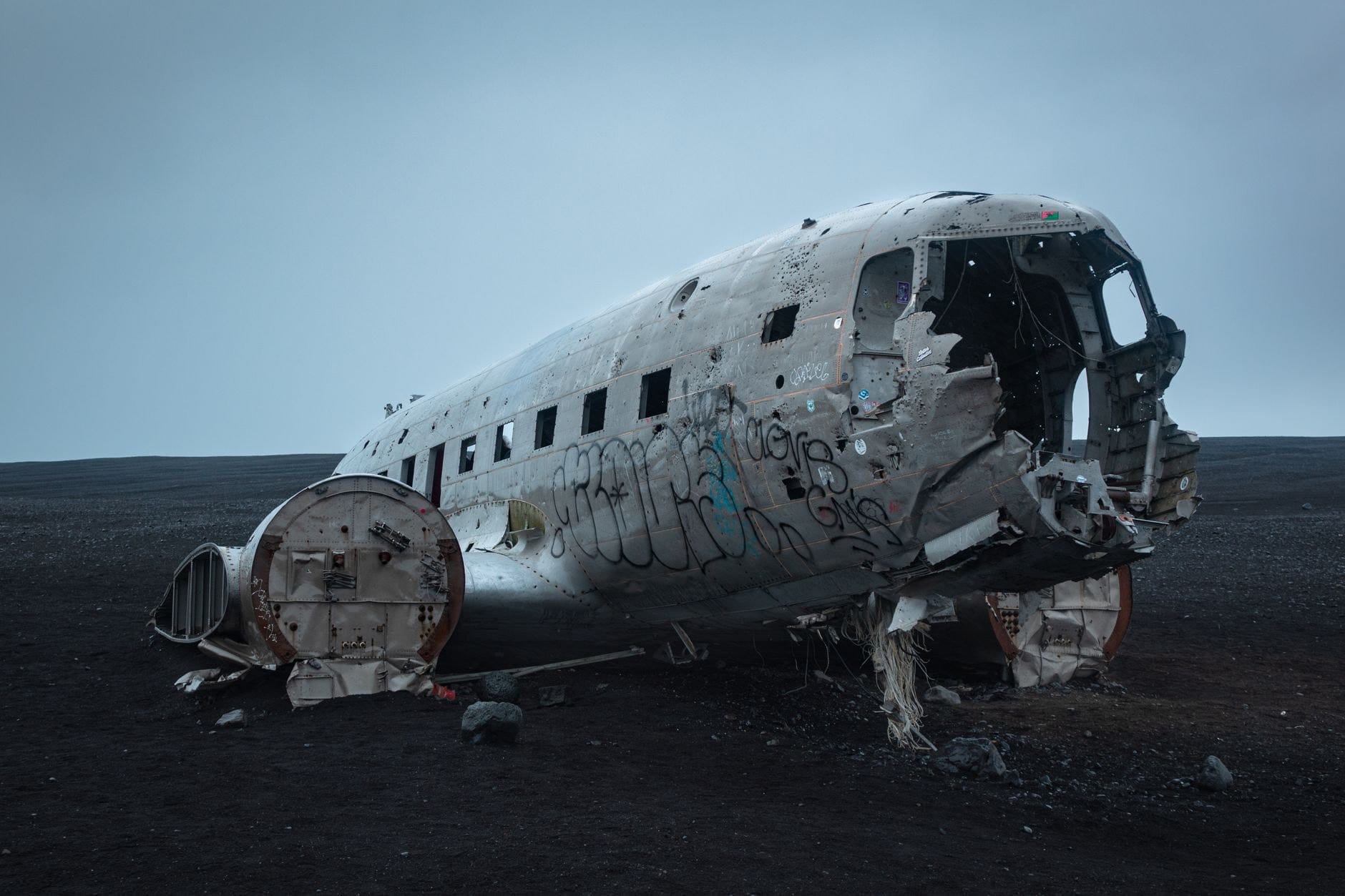
The wreck of an American DC-3 military plane made an emergency landing here in 1973 (luckily the entire crew survived without injury), and the army subsequently stripped out only the most valuable parts. The picked-clean metal skeleton of the plane has sat in the middle of the endless, gloomy plain to this day, and it looks incredibly post-apocalyptic out there.
These days you can’t drive to the wreck under any circumstances, because the landowners closed the road off due to the destruction of nature. You’ll pay 750 ISK (about €5) for parking by the main road, and then you have two options.
You can walk four kilometres one way, which takes roughly 45 minutes on foot across an absolute flat with not a scrap of shade or shelter from the wind (and honestly, if it’s raining, it’s sheer purgatory and a test of endurance).
The second, far more comfortable option is to buy a return ticket for the shuttle bus for roughly 3,000 to 4,000 ISK (about €21–28), which runs from ten a.m. to five p.m. and cuts the journey down to ten minutes.
Map of points of interest for your phone
The most beautiful beaches and cliffs at the end of the world
Our final stops of the day belonged to the ocean itself, and honestly I think this is where you’ll fully understand why people keep coming back to rugged Iceland. The beaches here definitely don’t have white sand and you won’t catch a tan in a bikini, but the incredible raw energy of the waves crashing into the black basalt columns will simply take your breath away.
10. Views and adorable puffins at Dyrhólaey
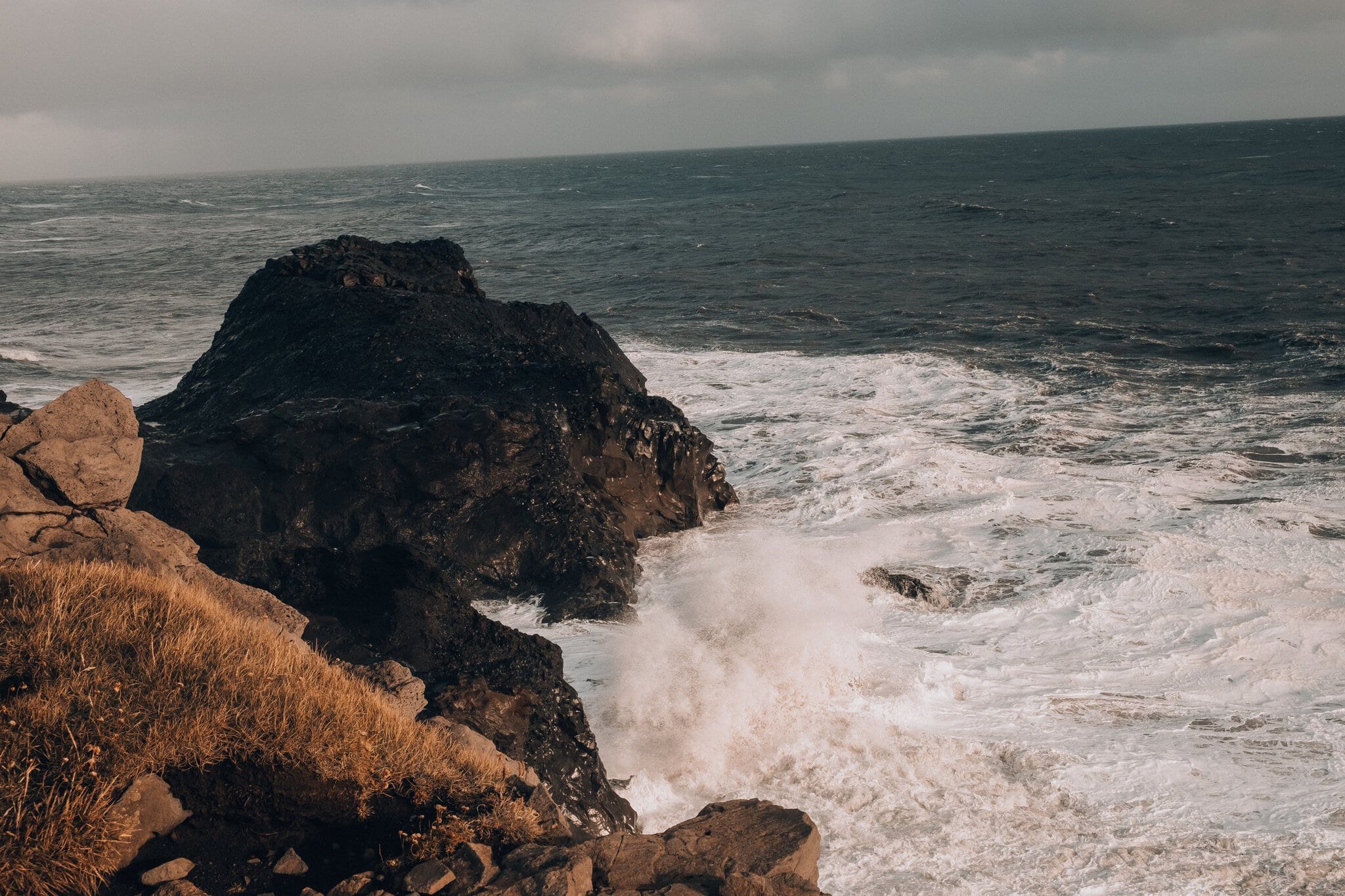
Before reaching Vík, the road turns off towards the coast and climbs the mighty headland of Dyrhólaey. It’s a huge rock arch of volcanic origin jutting deep into the sea (they say even a small plane could fly through it).
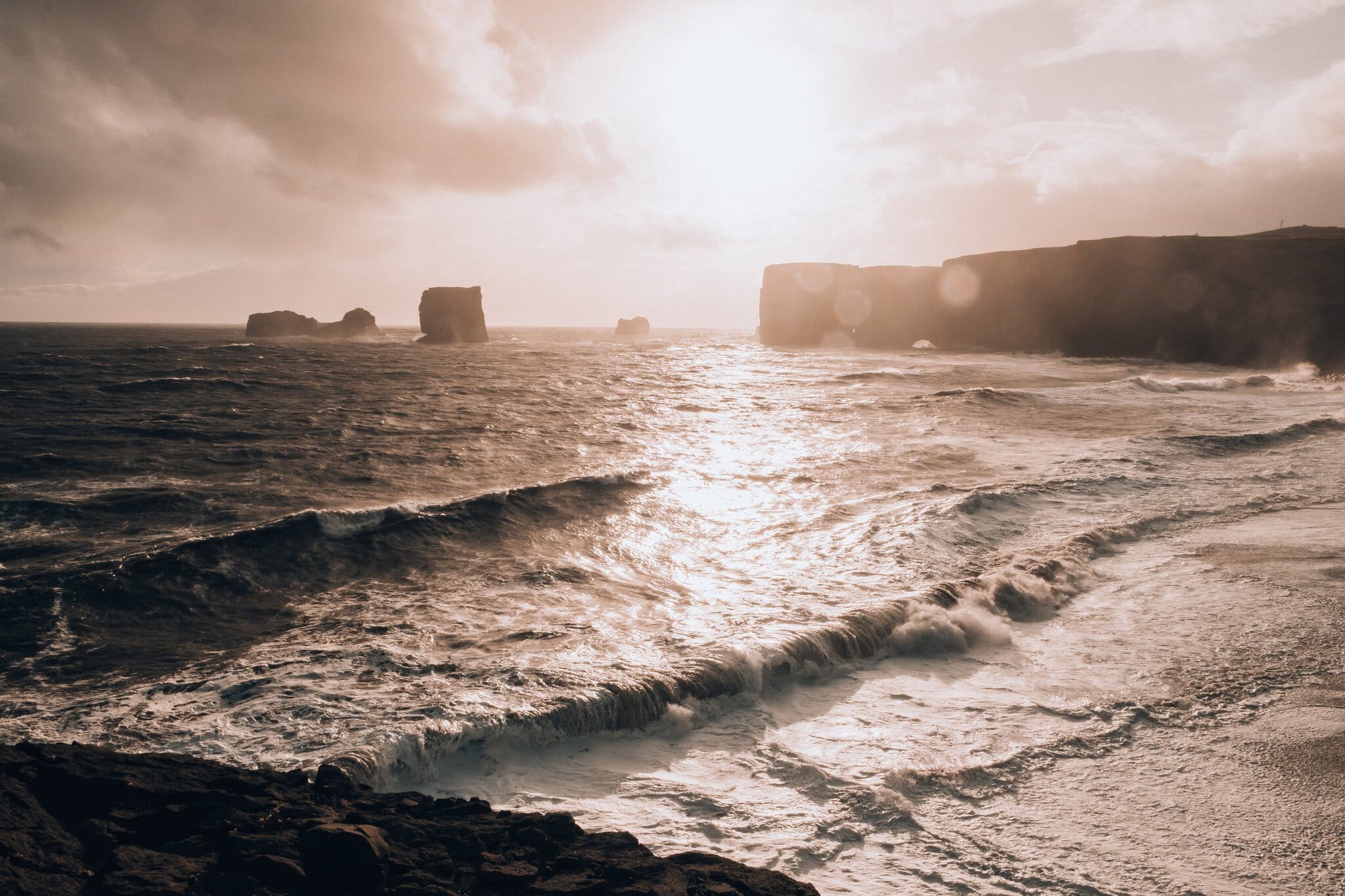
From the lighthouse at the top you’ll get the absolutely most beautiful panoramic view far and wide — you’ll see the endless black beach stretching west and the jagged rocks near Vík to the east, all of it with the roaring sea tens of metres below you.
Dyrhólaey is also probably the best place on the whole island where you can watch puffins in the wild. These adorable birds with their colourful beaks nest here from May to mid-August, and your best chance of seeing them is in the morning between seven and ten, or in the evening after six.
But here, watch out very carefully for nature’s schedule: to protect the nesting birds, the entire cliff is often completely closed from 7 p.m. to 9 a.m. from roughly mid-May to the end of June.
These evening and night closures tend to be strict, so it’s better to plan your visit during the day and always verify the information on nature conservation websites.
11. The deadly beauty of Reynisfjara black beach
Then we moved just a little further along to Reynisfjara beach, which many consider the most beautiful beach in the world (it featured, incidentally, in Game of Thrones too), and I have to absolutely agree with them.
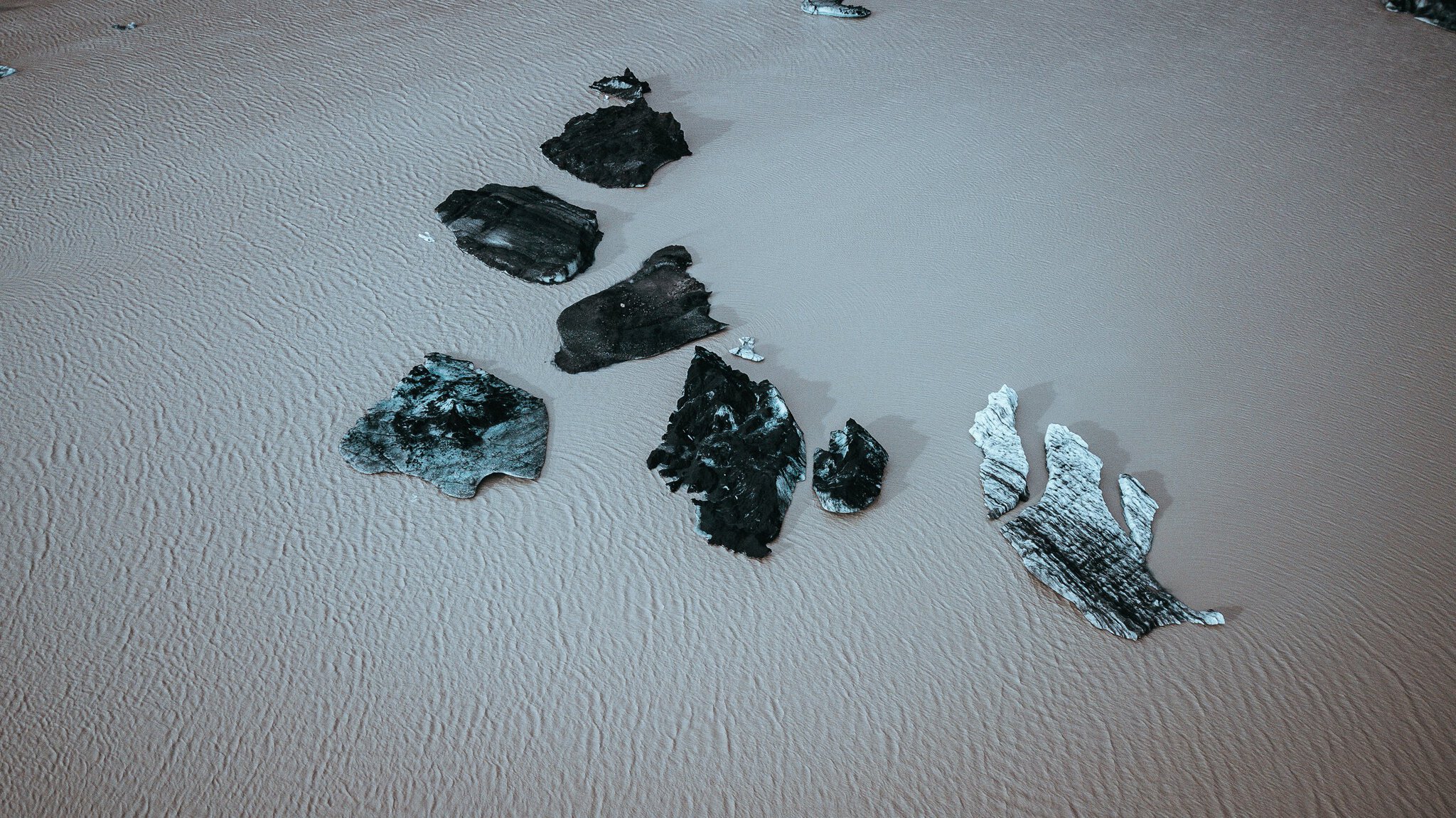
The combination of deep black sand, the beautiful Hálsanefshellir cave lined with regular basalt columns resembling giant organ pipes, and the misty haze from the shattering waves creates a perfect visual masterpiece.
But the beauty of this place comes at the price of extreme risk, and I really must warn you emphatically. The ocean here doesn’t play by the rules, and Reynisfjara regularly kills people because of the phenomenon known as sneaker waves.
They come surging in out of nowhere, without any warning, reaching perhaps thirty metres further and far faster than the previous ones, and they have enormous power to drag a grown adult into the icy depths. Six people have died here in the last twenty years, and most recently, in August 2025, a nine-year-old girl tragically lost her life here.
Today there’s a warning traffic light at the entrance to the beach (yellow means don’t enter the yellow zone, red means don’t go beyond the safety marker), and the safe path is marked off by a chain. Please, keep a distance of at least 30 metres from the water and really never turn your back to the wild ocean for a photo!
12. Reynisdrangar and the legendary trolls of Vík
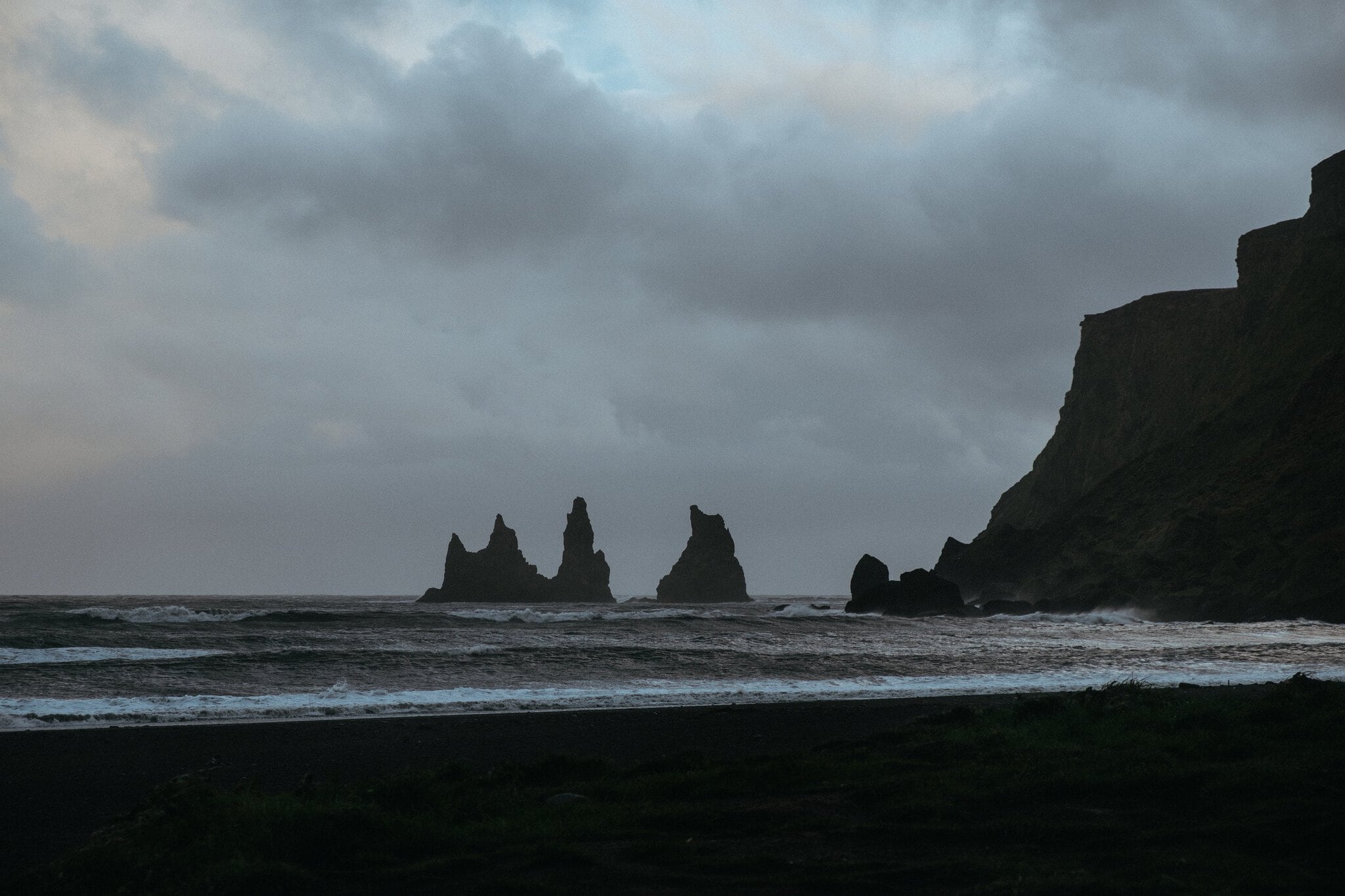
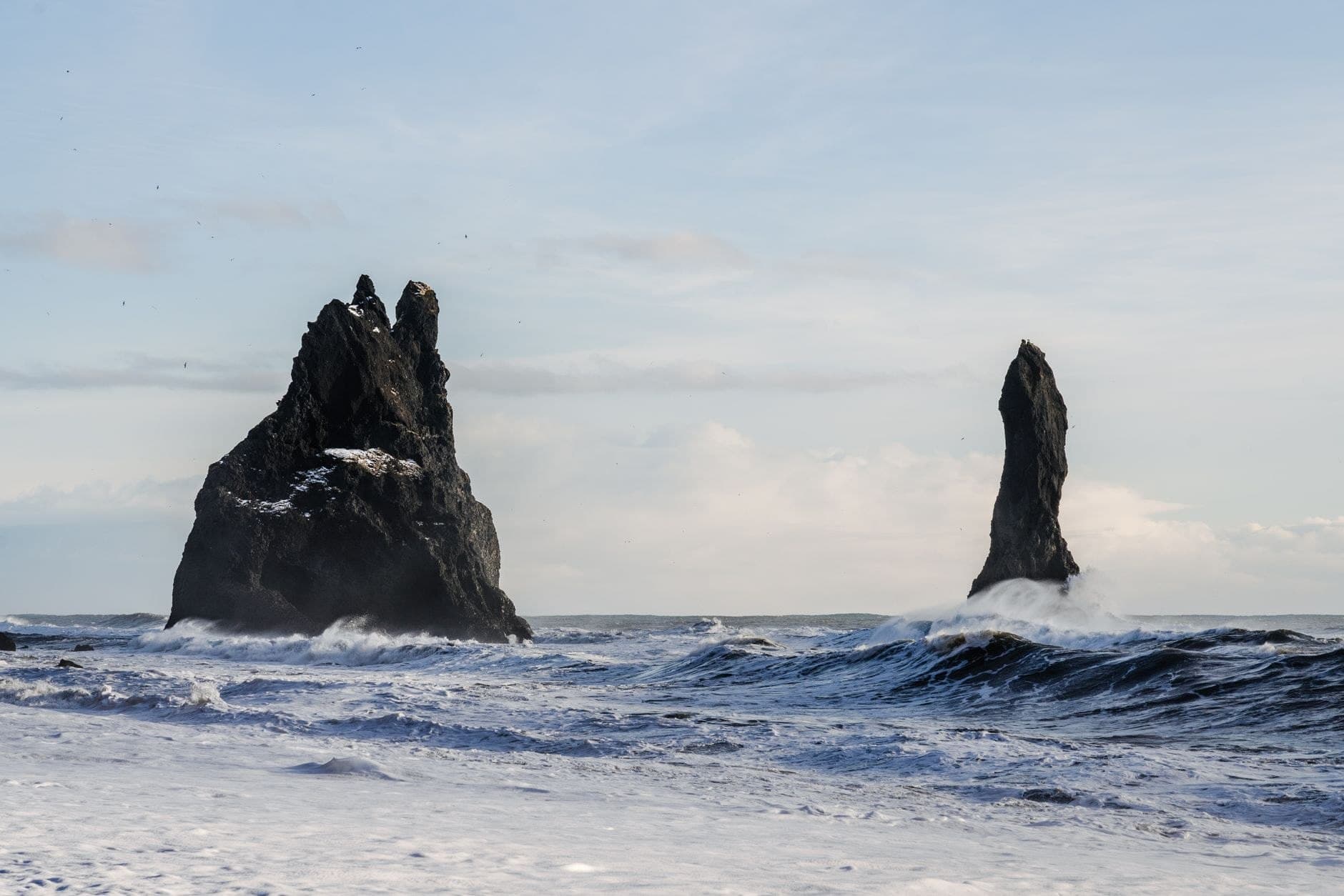
When you stand carefully on Reynisfjara beach, or move a few kilometres on to the beach in the town of Vík itself, you’ll see sharp, jagged rock pinnacles jutting out of the water just off the shore, called Reynisdrangar. They rise to a staggering height of 66 metres, and the ocean crashes into them with incredible force.
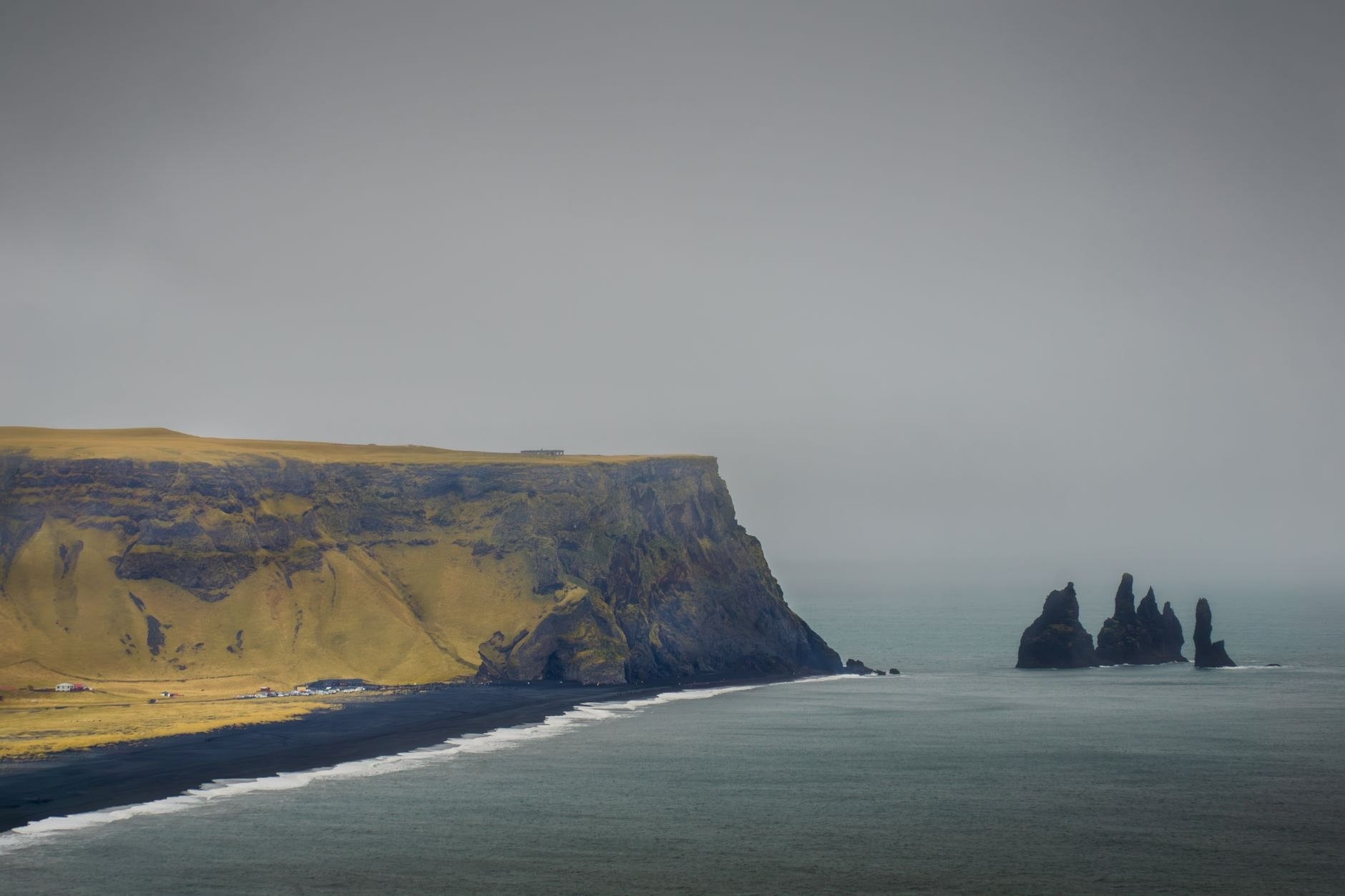
According to an old and very popular Icelandic legend, these aren’t just any old rocks. They’re said to be petrified trolls who, under the cover of darkness, were trying to drag a damaged ship with three huge masts onto the shore.
But they miscalculated a little, didn’t manage it before dawn, and the first morning rays of sunlight turned them forever into stone jutting out of the sea waves. We watched these rocks at evening dusk, when they looked truly menacing and dark, which gave this whole legendary atmosphere an absolutely perfect touch.
13. Cosy Vík í Mýrdal and Mount Reynisfjall
And here we are at the end of our southern journey. The village of Vík í Mýrdal itself, with just a few hundred inhabitants, is tiny, but it functions as an absolutely perfect anchor point and base camp.
You’ll find everything you need here after a whole day of running around outdoors — a large N1 petrol station, the Krónan supermarket for stocking up, and great cafés. Above the village stands the iconic white church with a red roof (Víkurkirkja) from 1934, from which you’ll enjoy the most beautiful, photogenic view across the whole town down to the beach and the basalt trolls in the sea.
If you like treks, have plenty of energy and want to escape the huge crowds that throng down on the beaches by the basalt columns, I have one great tip that many guides overlook.
Head up Mount Reynisfjall (235 metres high), which towers right above Vík. The hike up will take you roughly two and a half hours, and your reward will be unique bird’s-eye views of the south coast.
In the summer months it’s also a fantastic and much calmer spot for watching nesting puffins, without the stress of someone constantly stepping into your shot.
Where to eat
Iceland generally isn’t all that kind to your wallet, and food in restaurants costs quite a bit (reckon on roughly 2,500 to 4,500 ISK, about €18–32, for a classic main course in a restaurant).
After a long day in the cold, rain and wind, though, you simply need to treat yourself to something warm. Lukáš and I are both committed vegetarians, so along the way we carefully seek out places that will prepare us something hearty without meat, and in the town of Vík we found a few absolute gems.
Our favourite base became Black Crust Pizzeria, a smaller but incredibly cosy spot where they make unbelievably good pizza, both on classic sourdough and on black dough infused with activated charcoal.
We tucked into an excellent vegan pizza here (a personal pizza comes to about €28). It was beautifully crispy, filling, and exactly what we wanted after a frozen day at the waterfalls. As a sweet finish, they even offer vegan ice cream, which is simply love.
We also hugely enjoyed the original concept of a place called Skool Beans. It’s an adorable café that the owners converted from an old yellow American school bus. They make absolutely fantastic, quality speciality coffee here and also have plenty of vegan-friendly bites at more pleasant prices.
If you’d rather warm up with something more liquid and traditional, pop into the family bistro The Soup Company. They do prepare the famous Icelandic meat soup for those who eat meat, but what thrilled us was that they always have a luxurious, hearty vegetarian soup on the menu too, served in a huge hollowed-out bread loaf. After that you’ll feel beautifully warm right into the late evening!
And if you really need to save money and you eat meat, the cheapest and classic Icelandic option is to stop at the large N1 petrol station on the edge of Vík and buy their traditional hot dog, called pylsa, for around 820 ISK (about €6). We skip it, but for plenty of backpackers it’s a staple.
Where to next
If you’re planning your whole Iceland itinerary and mapping out your route, don’t miss our other articles either, where we’ve carefully written up all our experiences and practical advice, so nothing catches you off guard out there:
- The Golden Circle: the best of it just outside Reykjavík
- Iceland guide: everything you need to know before your trip
- Our route: the complete road trip around Iceland
- 16 best hot springs in Iceland where you can warm up
Frequently asked questions
Can you do Iceland’s South Coast in a day trip from Reykjavík?
Yes, it’s technically doable if you set off very early in the morning (ideally around 7 AM) and prepare yourself for a really packed and demanding 10 to 11 hours on the road, during which you’ll cover the main waterfalls and the black beach at Vík. For a more relaxed pace and a realistic chance to visit Fjaðrárgljúfur canyon or the plane wreck, I highly recommend splitting the trip into two days and staying overnight somewhere in the south.
How much does parking cost at the waterfalls in the south?
From 2025 onwards, at most of the best-known natural landmarks, such as Seljalandsfoss and Skógafoss waterfalls (where there’s also an 8-hour parking limit) or Fjaðrárgljúfur canyon, there’s a standard daily parking fee of 1000 ISK (roughly €6.50). Payment is usually made through the handy Parka app or at physical machines. At the car park for the DC-3 plane wreck, you’ll pay a fee of 750 ISK.
Why is the black beach Reynisfjara so terribly dangerous?
Its sad reputation and extreme danger are due to the phenomenon of sneaker waves (so-called sneaker waves). These unexpectedly surge from the ocean at tremendous speed, reaching far beyond where normal waves break, and the undertow has incredible strength to drag an adult into the icy sea. There’s a warning light system installed at the beach, and the rule of staying at least 30 meters from the water must always be observed. Remember, never turn your back to the sea!
How long exactly does it take to walk to the DC-3 plane wreck?
If you park your car by the main road and set off on foot across the flat black plain of Sólheimasandur, the walk (about 4 kilometers one way) will take you roughly 45 minutes. If it’s raining heavily or there are strong winds, a much smarter alternative is to pay for a ticket on the shuttle bus, which runs during the day directly from the parking lot to the wreck and costs between 3000 and 4000 ISK.
Can I eat without problems in the south if I’m vegetarian or vegan?
Definitely yes, as vegetarians we had no major problems in Vík and enjoyed some excellent food here. Our absolute favorite became Black Crust Pizzeria, where they make divine vegan pizza, or the cozy café in a school bus Skool Beans. Delicious and filling vegetarian soup in bread is also offered by The Soup Company. Iceland is very progressive in this regard.
Where is the best place to book accommodation along the route?
Logically the most frequent and popular spot to spend the night is the small village Vík í Mýrdal, because it lies furthest east and you’re right by the glaciers, but it has limited accommodation capacity and tends to be quite expensive, especially in season. An excellent and often cheaper alternative is the somewhat larger town of Selfoss (closest to Reykjavík) or the strategically located Hvolsvöllur halfway along the route.
Can I go explore Sólheimajökull glacier completely on my own?
Absolutely not, it’s strictly forbidden and extremely risky. Never venture onto the glacier without a certified and experienced guide and proper rented equipment (which includes crampons, an ice axe, and a helmet). The glacier is constantly melting, moving, and full of deep hidden crevasses. Safe and fascinating three-hour guided tours start at a reasonable price of approximately €55. For current and very important information about road conditions, possible storms, or warnings about dangerous winds, don’t forget to check the official reports at safetravel.is. The rescue teams will thank you! 😉
Tips and Tricks for Your Vacation
Don’t Overpay for Flights
Search for flights on Kayak. It’s our favorite search engine because it scans the websites of all airlines and always finds the cheapest connection.
Book Your Accommodation Smartly
The best experiences we’ve had when looking for accommodation (from Alaska to Morocco) are with Booking.com, where hotels, apartments, and entire houses are usually the cheapest and most widely available.
 🚗 Car rental on the roadVerified rental cars in Iceland
Search with the DiscoverCars comparison engine — it compares prices from dozens of local and international rental companies, and most bookings come with free cancellation.
Compare car prices in Iceland →Don’t Forget Travel Insurance
Good travel insurance will protect you against illness, accidents, theft, or flight cancellations. We’ve had a few hospital visits abroad, so we know how important it is to have proper insurance arranged.
Where we insure ourselves: SafetyWing (simple monthly subscription) and TrueTraveller (for extra-long trips).
Find the Best Experiences
Get Your Guide is a huge online marketplace where you can book guided walks, trips, skip-the-line tickets, tours, and much more. We always find some extra fun there!