

I love exploring ways to be more productive and I enjoy trying new methods of getting into the “flow”. Mindflow is one of the few supplements I’ve stuck with long term — I’ve been using Mindflow for well over a year now. In this article I’ve carefully broken down everything Mindflow contains and how each ingredient affects the human body. You’ll find out what you can expect from Mindflow, when to take the pills, and whether they’re even right for you.
Mindflow is a “healthier and more effective alternative to energy drinks” that’s especially great for focused work and studying. On top of better concentration, Mindflow supports memory, creativity and productivity.
Supplements that boost the body and improve concentration are great servants but bad masters. That’s why it’s important to know exactly how they work, so you take only the good from them and avoid the downsides they can bring in the form of fatigue, restlessness or sleep problems.
Mindflow Focus is the first product of its kind that ticks most of my boxes for a quality stimulant — it’s a natural blend of active ingredients with no sugars, preservatives or colourings.
The guys behind Mindflow also know it can’t work for everyone. That’s why they offer a money-back guarantee. If you buy Mindflow and it doesn’t work for you (for example, you might already have built up a high tolerance to the ingredients), they’ll simply refund your money.
Heads up — there’s something new! Since 2020, in addition to Mindflow Focus, you can also buy Mindflow Hangover, natural anti-hangover pills.
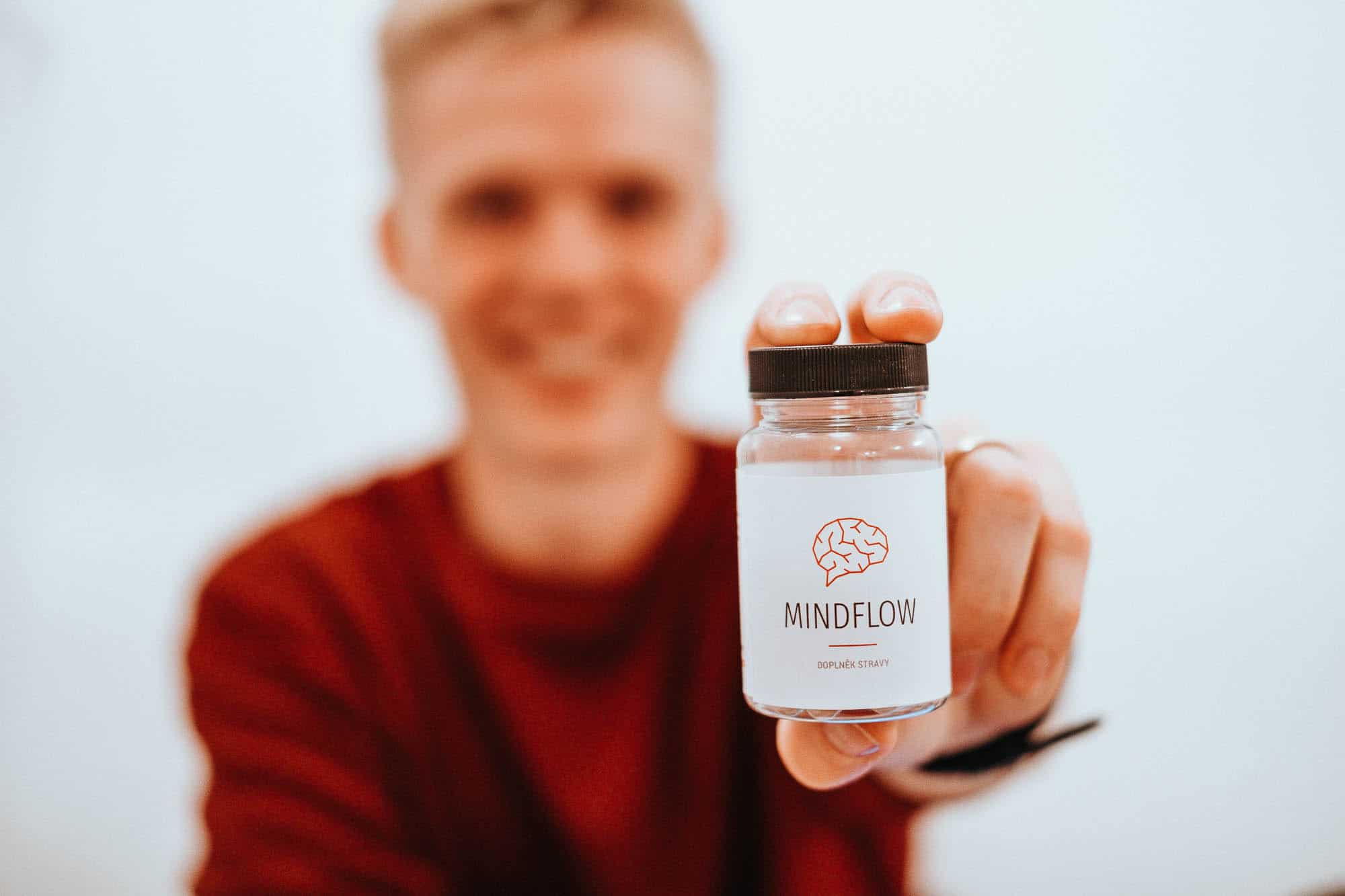
How Mindflow Focus Works for Me
Before I dive into breaking down the individual ingredients, let me tell you how Mindflow works for me.
+ For over two years now my body has responded really well to Mindflow — about 30 minutes after one pill I drop into a state of deep focus that nothing much can pull me out of. And if something does, I can get back into it quickly.
+ One capsule has a noticeable effect on me for 2–3 hours, mostly depending on the time of day and the kind of work I need to do. If the effect fades before I’m done, I take a second pill — but never more than that.
+ The comedown from Mindflow is far gentler for me than coffee alone or any other standalone stimulant. That’s probably thanks to the green tea it contains, which softens the effects of caffeine, so the crash once it wears off isn’t “so harsh”.
– I can’t just take Mindflow on a whim. If I pop a pill and then don’t sit down to do anything mentally demanding, I feel my brain spinning at full speed but kind of running on empty.
– Even though the website says you can take two pills at once, that’s too much for me. I’ve tried it a few times and within 20 minutes I always ended up with a scattered mind, started sweating and kept fidgeting my feet under the desk.
Mindflow Focus Ingredients and the Effects of Each Component
I try to get the most out of stimulants like this. That means I need to know what each substance does and how it works. So in the following paragraphs you’ll read exactly what Mindflow contains and how its ingredients affect you.
Thanks to this list you can also check whether you might be consuming too much of any particular substance — in combination with the other supplements you take every day.
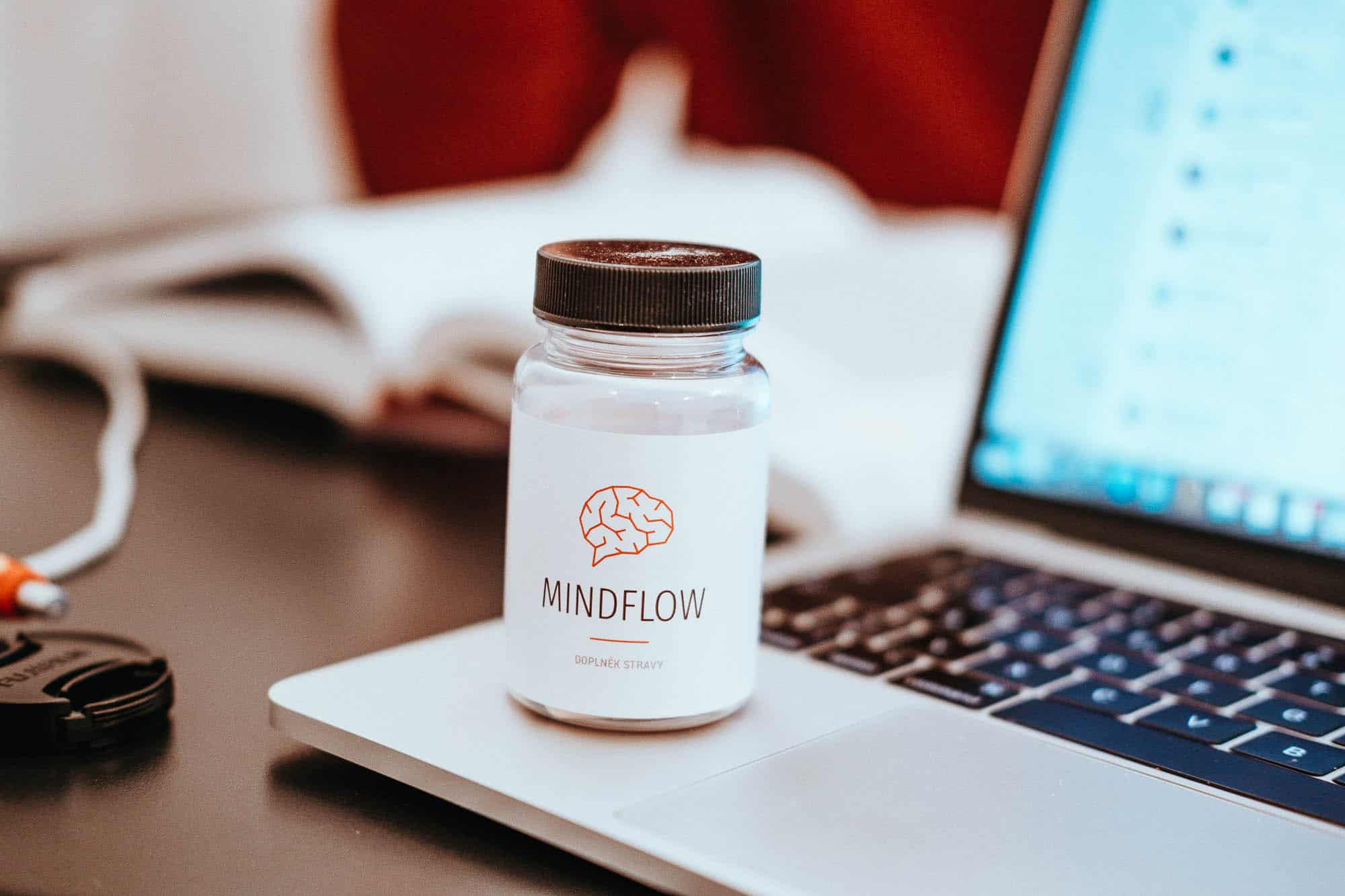
Caffeine – 100 mg per capsule
The dose in a single capsule is roughly equal to one cup of coffee. The recommended limit is no more than 400 mg per day, so the amount in a capsule is perfectly fine.
Caffeine reaches its peak effect within 15–120 minutes, while the body breaks it down over 2.5 to 4.5 hours. Caffeine stimulates the central nervous system, temporarily suppressing fatigue and boosting alertness.
Caffeine is a substance that temporarily blocks several natural processes you need for quality sleep. It blocks adenosine, which signals to your brain how sleepy you should be. Adenosine is released throughout the day and its concentration gradually builds up.
Caffeine “hides” it for a while, which is why you feel less sleepy, but as the caffeine starts leaving your bloodstream, your brain registers the adenosine again and suddenly you’re far sleepier than before. So you shouldn’t take Mindflow (or caffeine in general) right before bed — leave at least three hours so it has time to wear off.
Green tea – dry leaf extract – 220 mg per capsule
Green tea contains L-theanine, polyphenols, catechins and caffeine. Through these substances it strengthens the functions of an alert brain (especially while studying and trying to memorise things) and increases dopamine production. Dopamine gives us a sense of joy, so if you find yourself smiling at your economics textbook after a cup of green tea, now you know why.
The L-theanine it contains is another important component that acts as a counterbalance to highly stimulating caffeine — it brings a feeling of relaxation without any tiredness.
Essentially, caffeine fires you right up and green tea brings that sharp buzz down to a more bearable, focused calm.
On top of that, thanks to its catechins and polyphenols, green tea helps fight heart disease, reduces the risk of cancer, improves eyesight and, last but not least, is a capable antioxidant.
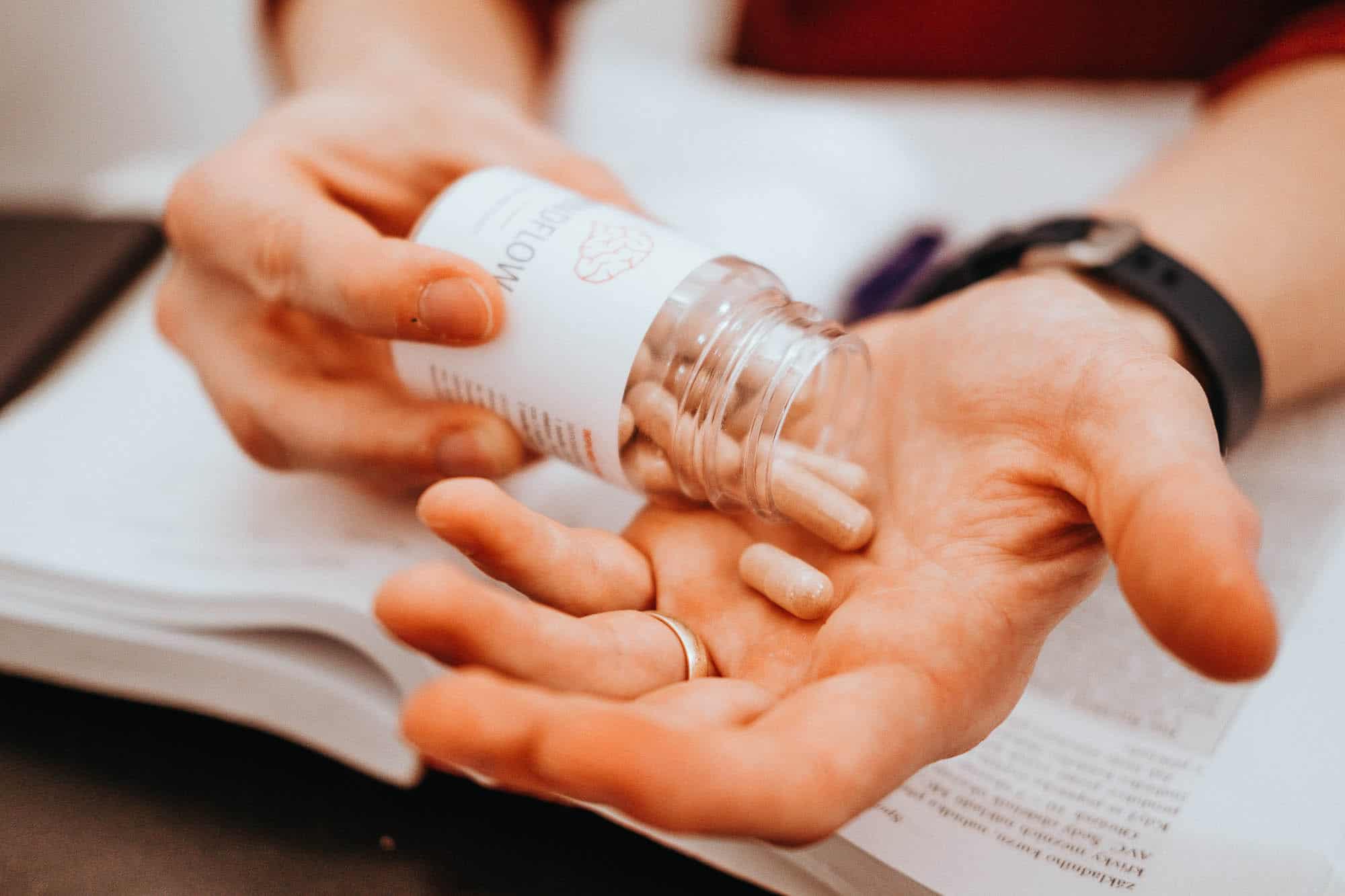
Ginseng – dry root extract – 150 mg per capsule
Ginseng root extract is a substance that brings our body into balance exactly where it’s needed.
Thanks to its ginsenosides (the adaptogens mentioned earlier), ginseng has a positive effect on various brain functions, with effects on memory being the most well-documented. According to some studies it slows the decline in mood and brings about mental calm. And that’s exactly what we need from Mindflow 🙂
It also has a range of other effects that don’t help with the buzz but are still beneficial for the body. Its antibacterial and antimicrobial properties help the body fight off various infections and generally strengthen the immune system.
Guarana – 130 mg per capsule
Guarana is the seed of a plant called Paullinia cupana, which grows in the Amazon rainforest. The seeds contain a number of stimulating substances such as theophylline and theobromine, but the main component is once again caffeine.
The caffeine in guarana is released more gradually, but it has essentially very similar effects, the most significant of which are a short-term boost to memory and concentration.
Guarana itself also helps with weight-loss diets because it reduces appetite (though it doesn’t have that effect on me) and stimulates fat breakdown.
You can overdose on guarana, but it’s really about the possibility of a caffeine overdose. As long as you don’t exceed the recommended daily number of Mindflow pills, you’re not at risk of overdosing.
Vitamin B3 – 30 mg per capsule
Have you ever heard that beer is packed with vitamin B3? Well, that’s not true. You won’t find much in beer, but you will in brewer’s yeast. And in Mindflow. The effects of niacin (the name for vitamin B3) are best explained by telling you what happens when you’re deficient in it.
A B3 deficiency mainly causes insomnia, restlessness, jitteriness and an inability to concentrate. Older people in particular often have a drastic niacin deficiency and we mistakenly assume they’re senile, when all they need is to top up the vitamin. It also fights diabetes, and an increased intake eases anxiety and depression.
The recommended daily dose is 6 mg, while the highest permissible amount is 500 mg. Niacin can’t be stored in the body either, so you essentially can’t overdose on it (unless you swallow the entire packet :)).
Vitamin B6 – 5 mg per capsule
Vitamin B6 is the name for three compounds: pyridoxine, pyridoxal and pyridoxamine. We need this vitamin mainly for producing the three most important neurotransmitters (substances that carry nerve impulses between neurons) — GABA, dopamine and serotonin.
So B6 is another substance that supports the optimal functioning of the brain and nervous system.
You can overdose on vitamin B6 if you exceed an intake of 100 mg per day. That can’t happen to you — not unless you swallow boxes full of supplements every day.
Vitamin B12 – 9 mcg per capsule
Like B3 and B6, vitamin B12 is involved in the development of the nervous system and is essential for producing the substances that make up new DNA and RNA strands. Among other things, it’s used as a supportive treatment for Alzheimer’s disease, because it gives you energy, increases your ability to concentrate and strengthens the immune system.
In general, though, B vitamins are added to products like Mindflow as a preventive measure against deficiency. Because when you’re low on B12, you feel tired and various neurological problems can occur.
There’s only a supplementary amount of this vitamin in Mindflow, since the recommended daily dose is as high as 1000 mcg.
The capsule
The capsule is fine for both vegetarians and vegans, as it’s made from plant cellulose.
All of Mindflow’s ingredients are properly tested — you can find the certificates of analysis on their website.

Recommended Daily Dosage
The basic dose is one capsule, but for a more intense effect you can take two at once. Mindflow is best taken with a glass of water (like almost all pills).
The recommended daily dose is 3 capsules, but according to the Mindflow website there are no serious complications even if you go over that.
You can use Mindflow pretty much every day, but bear in mind it contains substances your body can build up a tolerance to. So it’s better to use Mindflow more sparingly, or at least take a few days off from time to time.
Is Mindflow Focus a Better Alternative to Coffee and Energy Drinks?
If you’re a die-hard energy drink consumer, you won’t like this, but any natural stimulant in a pill is a better alternative — and that goes for Mindflow too.
Pure plant extracts are mostly extremely bitter, and that’s exactly why energy drinks are loaded with sugar and sweeteners. None of that is in Mindflow, including preservatives and colourings.
Some people might think pills are better than coffee because coffee is widely believed to dehydrate you. Even though that isn’t actually true, there is one advantage. You can easily overdose on caffeine from coffee and over-stimulate yourself, which tips you into physical restlessness (you know that feeling when you keep tapping your foot while working?) and distraction.
With dosing from a capsule, you can be sure you’re getting exactly as much caffeine as you need (assuming you’re one of the people Mindflow works for).
Is Mindflow Focus Really Safe and Free of Side Effects?
The Mindflow website states that, when you stick to the recommended dosage, it’s completely safe to use and free of any side effects. From my own experience I can confirm that I haven’t noticed any side effects (provided I didn’t take more than one tablet at a time).
Combining Mindflow Focus with Coffee and Tea
In general, you can combine Mindflow pills with other stimulants however you like, but it’s a very individual matter.
In the time I’ve been using Mindflow, I’ve tried it combined with coffee, green tea, black tea and a Four Sigmatic dried mushroom drink.
Since Mindflow works strongly for me on its own, no additional stimulant helped me focus any better. On the contrary — when I combined two Mindflow pills with anything else, I ended up with intense restlessness and frantic work that, in the end, turned out worse than if I hadn’t used any stimulant at all.
So for me the verdict is clear — don’t combine Mindflow with anything, because my body specifically doesn’t handle the combinations well.
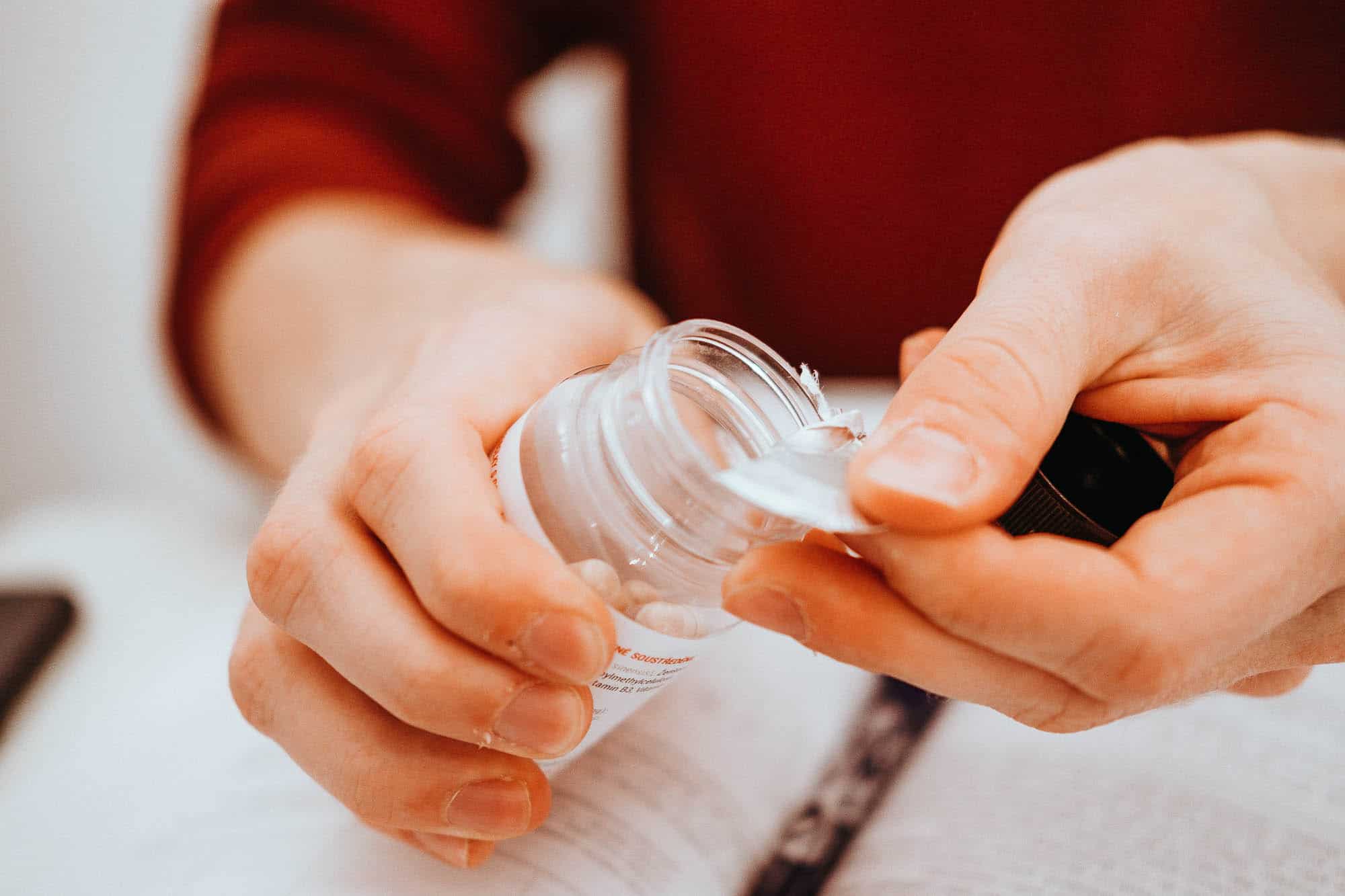
When Mindflow Focus Doesn’t Work for You
Because Mindflow isn’t some “magic powder” but rather a very well-chosen mix of stimulating substances, it’s possible that Mindflow won’t work for you. Or at least not the way you expect.
You may have built up a tolerance to one of the substances — in most cases it’ll be caffeine (you drink a lot of coffee) — or these substances simply don’t affect you. I have friends who only need one coffee a day and then run around like crazy all day, while others can drink three coffees with no visible effect.
So if Mindflow doesn’t work for you, it’s NOT a fault of the product — your body just doesn’t respond the way most of the rest of us do.
What to Do If You Overdose
Although it’s highly unlikely, you can overdose on Mindflow (in combination with other stimulants).
If you really overdo it, take more than three pills a day and wash it all down with coffee and a few energy drinks, you may end up with a short-term caffeine overdose. This can show up as general nausea, ringing in the ears (high blood pressure) or an upset stomach.
If you overdose, you should mainly try to drink more to avoid dehydration. Caffeine causes excessive water excretion (which isn’t the same as dehydration!), so you need to put fluids back into your body. The effects of an overdose should subside within a day.
The Verdict
Personally, Mindflow is a really well-made product for me. Whether all the ingredients have a 100% effect on me, or there’s some placebo effect involved too, I can clearly feel the results. That’s why I recommend Mindflow to almost anyone who does mentally demanding work or struggles to concentrate. In general, students use Mindflow the most.
Tips and Tricks for Your Vacation
Don’t Overpay for Flights
Search for flights on Kayak. It’s our favorite search engine because it scans the websites of all airlines and always finds the cheapest connection.
Book Your Accommodation Smartly
The best experiences we’ve had when looking for accommodation (from Alaska to Morocco) are with Booking.com, where hotels, apartments, and entire houses are usually the cheapest and most widely available.
Don’t Forget Travel Insurance
Good travel insurance will protect you against illness, accidents, theft, or flight cancellations. We’ve had a few hospital visits abroad, so we know how important it is to have proper insurance arranged.
Where we insure ourselves: SafetyWing (simple monthly subscription) and TrueTraveller (for extra-long trips).
Find the Best Experiences
Get Your Guide is a huge online marketplace where you can book guided walks, trips, skip-the-line tickets, tours, and much more. We always find some extra fun there!


