

SEO is part of content marketing and stands for Search Engine Optimization. It’s the process of optimizing websites to achieve the highest possible ranking in search engine results. So what is SEO in digital marketing exactly, how does it work, and why should you care? Let’s break it down in simple terms.
What Is SEO Explained Simply
When you type “What is SEO” into Google, this article should pop up among the top results within 3–6 months of being published. I don’t know when you’re reading this, but chances are you found your way here through a search engine. We don’t pay for any ads. That’s the magic of SEO.
💡 TIP: Also check out our guide on how to start a blog.
What Is SEO Used For in Marketing
- Building organic (unpaid) traffic,
- Brand awareness and authority,
- Generating leads,
- Reducing reliance on paid advertising.
What Does SEO Include
SEO is a fundamental element of effective digital marketing and it covers a wide range of activities:
- Keyword Research: Identifying relevant keywords and phrases that potential customers use when searching for the products you sell or the content you offer.
- SEO Content Creation: Producing high-quality, relevant, and engaging content that is optimized for keywords and covers a topic so thoroughly that readers don’t feel the need to look elsewhere.
- Technical SEO: Ensuring your website is well-optimized from a technical standpoint for search engines — fast loading times, responsive design across devices, and a solid site structure.
- Off-page SEO: Activities outside your website that help boost your search engine rankings — link building, social signals, and strong domain reputation.
- Local SEO: Optimizing your website for searches within a specific geographic area.
- Measurement and Analytics: Tracking the success of your SEO strategy using tools like Google Analytics and making the necessary adjustments to improve performance.
Why You Should Invest in SEO – Thousands of Visitors From a Single Article
When you invest time in search engine optimization on your website or e-commerce store, you can drive high-quality traffic to it on a long-term basis — without paying for each and every click.
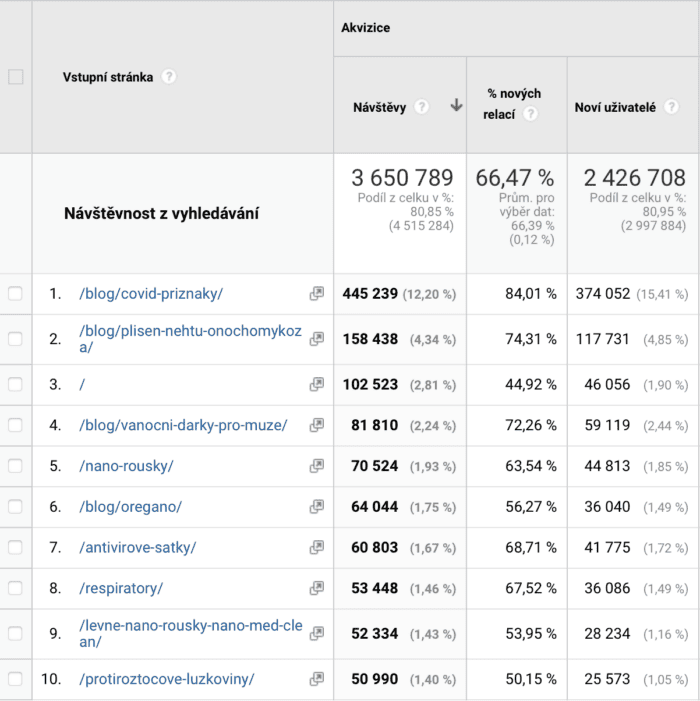
While PPC advertising requires you to pay for every click, with SEO you pay for technical optimization and quality content creation as a one-off investment. With the right SEO specialist, a single article can bring in hundreds or even thousands of visitors every month.
Your analytics could end up looking something like this:
How Search Engines Work and How It Relates to SEO
We all know search engines and we all use them. You probably have a pretty good idea of how they work from a user’s perspective — you type in “What is SEO” and the search engine serves up relevant links or even a direct answer to your question. But to actually “do SEO”, you also need to understand how search engines work on a technical level. Let’s take a closer look.
How Search Engines Work
At the heart of every search engine is something called a web crawler. Behind this intimidating name lies a script or program that systematically browses internet links and indexes them. Think of a web crawler as a super-fast librarian, and websites as books. The librarian goes through each book and files it by topic into the library. This filing process is called indexing, and the library is what search engines draw from when they serve you relevant results.
Search engines consist of two main components:
- The search index, which is a digital library of information about web pages.
- Search algorithms, which are computer programs responsible for delivering results from the search index.
Your goal is to make sure the librarian knows your pages exist, that the search algorithms like them, and that they’re offered among the top results. If you produce poor content, the librarian (search engine) may decide it’s not worth shelving — and won’t index it at all.
How Search Engines Index and Rank Pages
There are many search engines out there and each one works slightly differently. Here are the key things they evaluate:
First, the search engine needs to find your website and all its pages
There’s no guarantee that search engine bots will discover your pages on their own. You need to help them along, and there are several ways to do that:
Providing a sitemap to search engines
A sitemap is a special page on your website in XML format that lists all the URLs (pages) you want indexed by search engines. Its generation is usually handled automatically by the platform you build your site with (e.g. WordPress). Here’s what the sitemap for the blog loudavymkrokem.cz looks like:

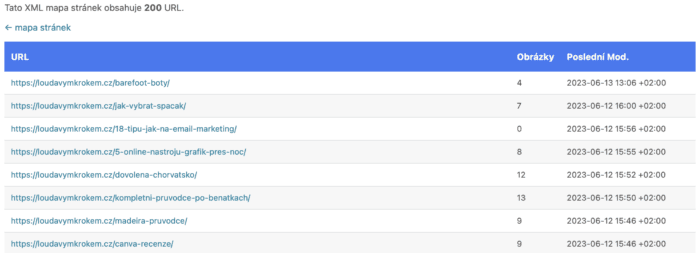
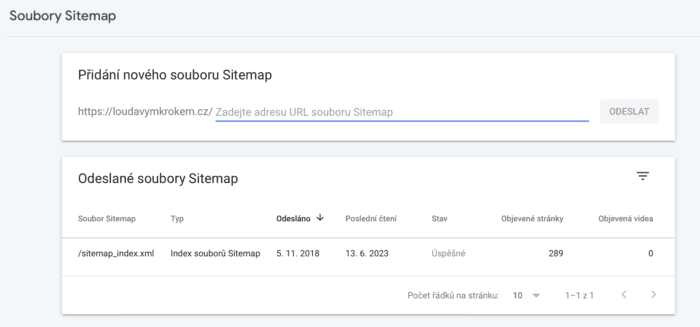
Bots can find the sitemap on their own, or you can submit it directly through an admin interface. For Google, you submit your sitemap via Search Console:
Manually submitting URLs to search engines
Most search engines allow you to manually submit URLs. If you don’t have a plugin on your site that does this automatically, you can submit URLs to search engines every time you publish a new article. In return, they’ll crawl it as a priority. Here’s what manual submission looks like in Google:

Internal and backlinks
Every page on your website or blog should have at least one link pointing to it from somewhere else on the same site — whether it’s from a category page, the footer, or another article. You should avoid having any page with no links pointing to it, as search engine bots may never find it.
Search engines browse pages through “crawling”
It sounds complicated, but it simply means that Google or another search engine visits websites and downloads known URLs. In Google’s case, the bot that handles this is called Googlebot.
After this step comes “processing and rendering.” During this phase, the search engine works to understand the content and structure of the page. This involves running the page’s code (such as JavaScript) to understand how the page looks and how it’s structured. It may also include identifying links on the page and other important information.
How to Learn SEO Quickly and Easily
Start by reading our 13 super simple SEO tips that anyone can follow. If you’re working with Shoptet, we’ve also recorded a mini-course on SEO for Shoptet.
Bonus for Patrons: 17 Most Common SEO Mistakes
For subscribers of our Patreon, we’ve recorded a video covering the seventeen most common and most critical mistakes that e-commerce owners, bloggers, and marketers make when working on content SEO.
Who Can Help Me With SEO?
SEO is handled by SEO specialists. If you’re interested, feel free to get in touch with us. ☺️
Tips and Tricks for Your Vacation
Don’t Overpay for Flights
Search for flights on Kayak. It’s our favorite search engine because it scans the websites of all airlines and always finds the cheapest connection.
Book Your Accommodation Smartly
The best experiences we’ve had when looking for accommodation (from Alaska to Morocco) are with Booking.com, where hotels, apartments, and entire houses are usually the cheapest and most widely available.
Don’t Forget Travel Insurance
Good travel insurance will protect you against illness, accidents, theft, or flight cancellations. We’ve had a few hospital visits abroad, so we know how important it is to have proper insurance arranged.
Where we insure ourselves: SafetyWing (simple monthly subscription) and TrueTraveller (for extra-long trips).
Find the Best Experiences
Get Your Guide is a huge online marketplace where you can book guided walks, trips, skip-the-line tickets, tours, and much more. We always find some extra fun there!


