

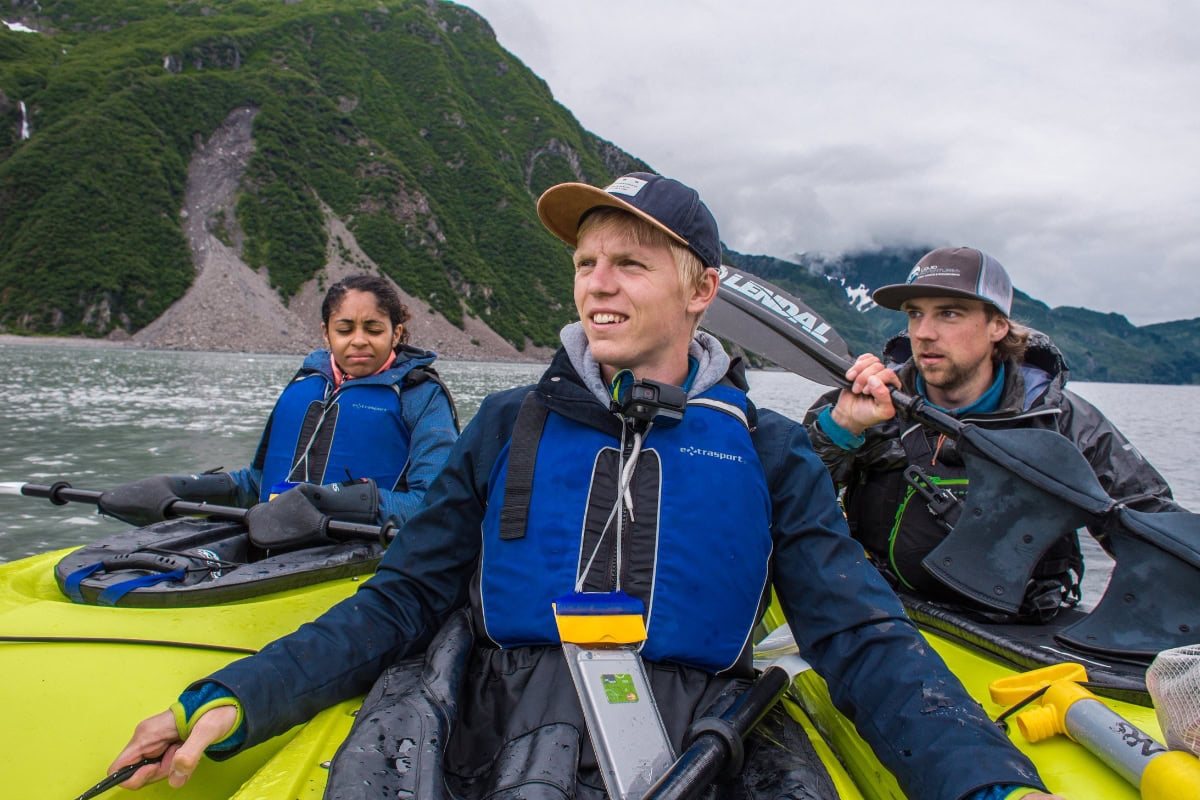
When Lukáš and I were road-tripping across Alaska back in 2017, we knew that Kenai Fjords Alaska was one destination we simply couldn’t skip. I still remember the bone-rattling boat ride that was so wild I couldn’t help but laugh out loud, and then our frantic dash back from the kayaks when our guide spotted a bear swimming straight toward us. It was a once-in-a-lifetime experience and worth every single penny. 😅
The brilliant blue face of Aialik Glacier stood majestically before us, and when a massive chunk of ice broke off with a deafening crack and plunged into the ocean, we completely forgot that we couldn’t feel our toes. This national park is raw, wild, and unbelievably photogenic — and even though it’s one of the smallest in Alaska, the memories you’ll take away will stay with you for the rest of your life.
If you’re reading this and wondering whether braving the cold on a boat is really worth it — trust me, it absolutely is. I’ll walk you through which cruise to pick, where to stay in Seward, what to wear, and how much this whole Alaskan adventure actually costs. 😉
TL;DR
- Main base: The gateway to the park is the harbour town of Seward, easily reached by car from Anchorage along the scenic Seward Highway.
- Best experience: A full-day Kenai Fjords National Park cruise toward the Aialik or Holgate glaciers. You’ll see calving ice, whales, puffins, and sea lions.
- Driving access: Exit Glacier is the only part of the park you can reach by road. A short walk takes you right up to the glacier’s base, but be prepared — it’s retreating rapidly.
- For hikers: If you’re fit and don’t mind serious elevation gain, tackle the Harding Icefield Trail — one of the most beautiful and challenging day hikes in Alaska.
- Practical tip: Bring warm layers and seasickness tablets for the boat, because the waters of the Gulf of Alaska can be seriously unforgiving. 😉
The full destination guide: Alaska — guide and what to see
When to Visit Kenai Fjords National Park and How to Get There
Planning a trip to Alaska requires a bit of strategic thinking, since the tourist season is incredibly short and the weather does whatever it pleases. We visited in mid-July, which turned out to be an ideal choice — though I should warn you that accommodation prices during this period reach astronomical heights.
How to Get to Seward and the National Park
The logistics are thankfully simpler than you’d expect. Most visitors fly into Anchorage — there are direct and connecting flights from London with carriers like British Airways, Condor, or Icelandair (via Reykjavik). From Anchorage, it’s a straight, stunningly scenic drive south along the famous Seward Highway. The journey takes roughly two and a half to three hours of pure driving time, though I’d bet you’ll take much longer because you’ll keep pulling over at viewpoints to photograph the jaw-dropping scenery. The town of Seward sits at the very end of this highway and serves as the main port and gateway to the national park. You can also get here from Anchorage on the scenic Alaska Railroad, which is an experience in its own right — albeit a pricier one than renting a car. Once you’re in Seward, Exit Glacier is just a short drive away, but the rest of the national park is only accessible by boat or floatplane.
Best Time to Visit Kenai Fjords Alaska
Alaska’s main season runs from late May to early September. If you want the best chance of spotting whales and having all boat tours in operation, aim for July or August. Just bear in mind that during these months, huge cruise ships descend on Seward, dumping thousands of tourists into this tiny town all at once. May and September offer a quieter vibe, but you risk worse weather conditions at sea, and some restaurants or smaller tour operators may already be closed for the season.
Where to Stay in Seward and How Much It Costs
Seward is a fairly small town, but since it’s the only access point to the park, accommodation prices during summer skyrocket. I’d recommend booking a good six months in advance — the decent hotels at reasonable prices vanish before you can say “glacier.” Lodging here doesn’t come cheap, with an average mid-range hotel in peak season easily running between $250 and $400 (roughly £200–£320) per night for two.
If you’re after premium accommodation and don’t mind paying a bit extra, a great option is Seward Windsong Lodge, set in peaceful, wooded surroundings right by the turn-off onto Exit Glacier Road. You’ll be close to the glacier while still being a short hop from town. Another excellent choice is Harbor 360 Hotel, located right in the harbour — you can watch the boats from your room window and you’re just steps from the tour terminals.
For mid-range travellers, Lukáš and I can recommend the popular Holiday Inn Express Seward or Best Western Plus — those reliable staples where you won’t get any surprises but no disappointments either, and in Alaska, that counts for a lot. If you’re trying to save money, look into smaller family-run motels like Murphy’s Alaskan Inn. Those of you travelling in an RV have several great campgrounds in Seward — we’d suggest trying Forest Acres or Seward City RV Park right by the bay. For searching and comparing hotels, we always use Booking.com and recommend booking with free cancellation well in advance.
Kenai Fjords National Park: 12 Places to Visit and Things to Do
Kenai Fjords National Park was declared a national monument by President Jimmy Carter in 1978 and granted full national park status two years later, but the icefield and glaciers that define it have been slumbering here since the last Ice Age. Let’s dive into the best this wild landscape has to offer — from glacier cruises to rugged mountain treks.
1. Glacier Cruise: An Absolute Must-Do
The most popular reason people come here is the iconic Kenai Fjords National Park cruise. Several companies operate out of Seward Boat Harbor, with the most well-known being Major Marine Tours and Kenai Fjords Tours. Their catamarans take you deep into the bay on trips lasting six to eight hours. Expect to pay around $200–$300 (roughly £160–£240) per person — not exactly pocket change, but the things you’ll see are beyond belief. I’d strongly recommend buying tickets well in advance, especially if you’re visiting in July.
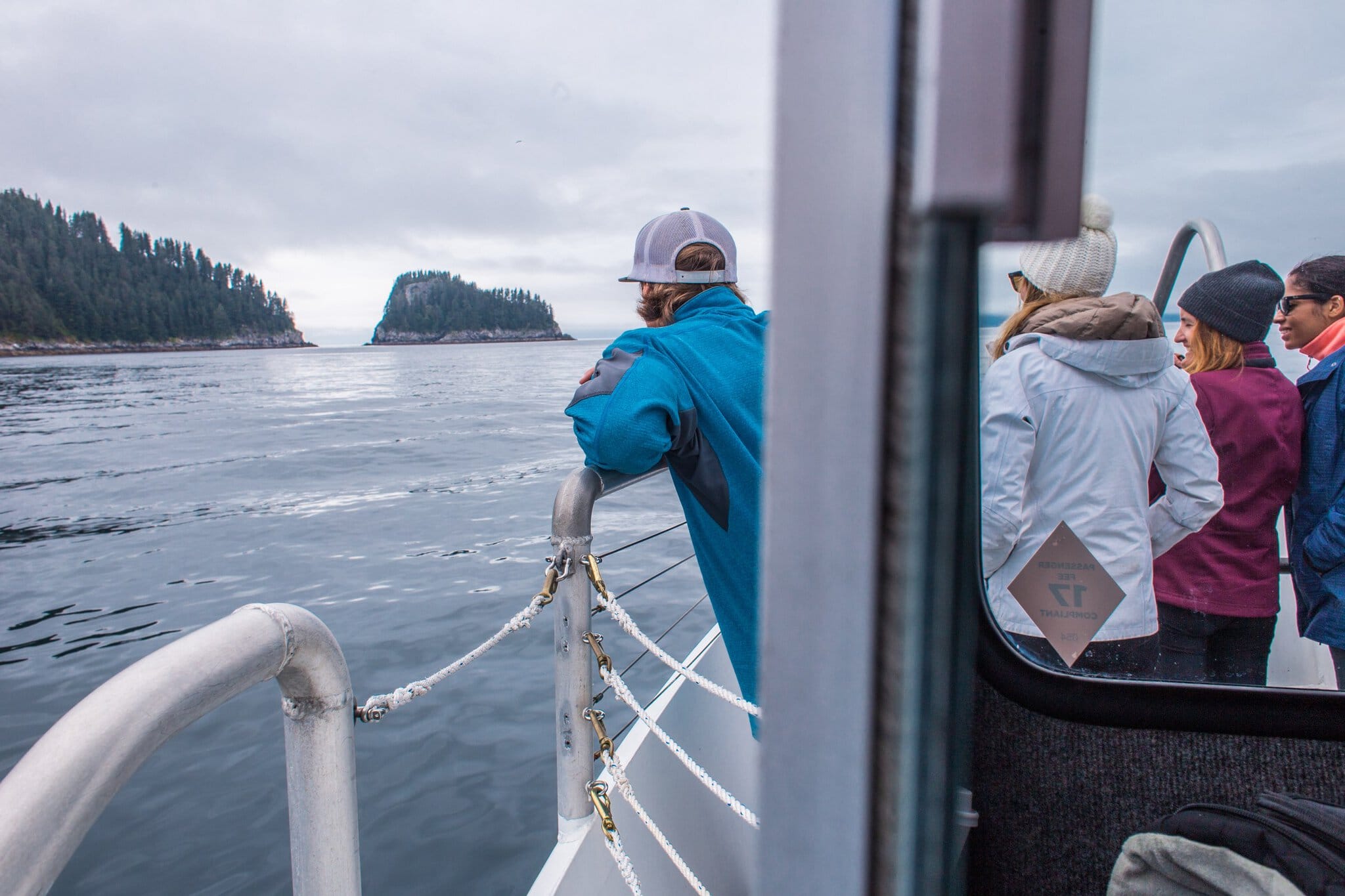
From personal experience, I’d say go for a smaller vessel — even though the big catamarans offer better stability for sensitive stomachs. The advantage of the smaller boats is that they can get much closer to the cliffs and wildlife. We spent most of our time glued to the railing at the bow for the best views, even though icy spray kept hitting us. Plus, there’s usually a ranger from the official national park visitor centre on board, sharing fascinating stories about everything you see around you over the loudspeaker.
2. Aialik Glacier and Calving Blue Ice: A Breathtaking Spectacle
The crown jewel of any longer cruise is Aialik Bay and its namesake glacier — probably the most photographed spot in the entire park. Aialik Glacier is what’s called a tidewater glacier, meaning it terminates directly in the ocean. This is where you have an incredible chance of witnessing “calving” — when enormous blocks of brilliantly blue ice crack off the glacier face with a thunderous boom and crash into the waves. Ever wondered why the ice is such an intense shade of blue? Apparently, millennia of pressure compress the ice so densely that it absorbs every colour of light except blue — at least that’s what our guide told us, and we happily believed him because it looked absolutely magical. The boats usually cut their engines here, and you just stand on deck, listening to the cracking and staring open-mouthed.
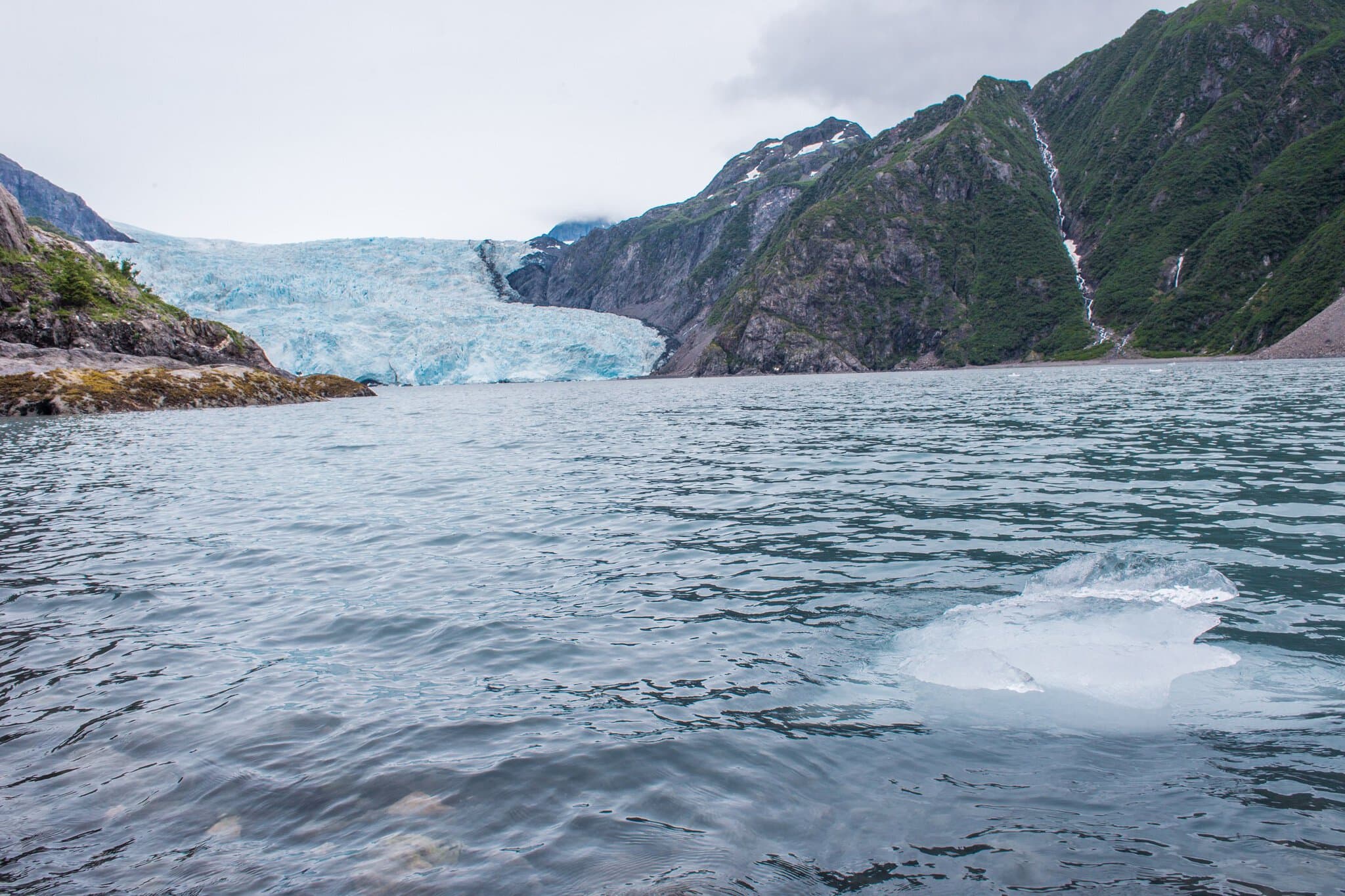
The sound that accompanies this natural process is almost impossible to describe. First you hear a long, drawn-out crack, like someone snapping a giant tree trunk, and then chunks of ice the size of a small car plunge into the water with an enormous splash. All you can do is watch as the wave rolls toward you.
3. Whale Watching and Wildlife: An Alaskan Safari
If you’re into wildlife (and Lukáš and I definitely are), Kenai Fjords will blow you away. The sheer amount of fauna here is staggering — we lost count of species somewhere around the third whale. During our cruise through Resurrection Bay and beyond, we spotted a family of orcas, watched majestic humpbacks breaching out of the water, and chuckled at chubby harbour seals lounging lazily on ice floes. There were also sea otters floating on their backs and rocky cliffs teeming with crowds of adorable puffins with their colourful beaks. Don’t forget to bring a good pair of binoculars or a lens with a decent zoom.
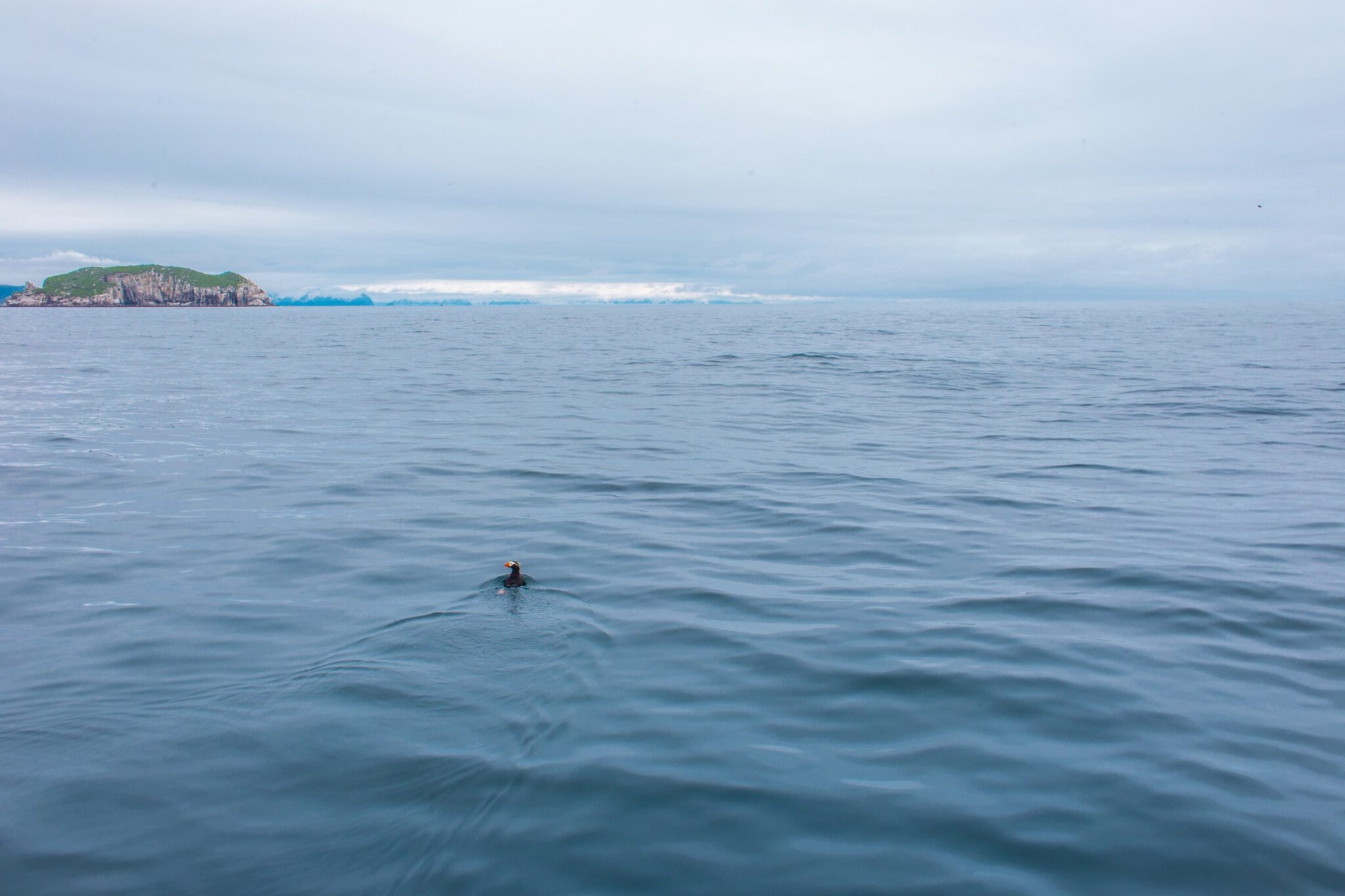
The puffins made me the happiest — I’d been dreaming of seeing them for years — but there were also loads of orcas. The captain explained that they come here to feed because these cold waters are packed with nutrients. When a dorsal fin suddenly surfaced about ten metres from our boat, I forgot to breathe for a moment.
4. Exit Glacier: A Symbol of a Changing Climate
This is the only glacier in the entire park that you can reach by paved road. A roughly 13-kilometre road leads directly from Seward, ending at a nice visitor centre. The best part is the easily accessible Edge of Glacier Trail — a loop of just under three kilometres that takes you almost to the very foot of the glacier itself. What’s both sobering and chilling is seeing the markers along the path showing where the glacier’s edge used to be in past decades. Exit Glacier is retreating at an alarming rate of roughly fifteen metres per year, which is exactly why then-President Barack Obama visited in person in 2015 to draw attention to climate change.
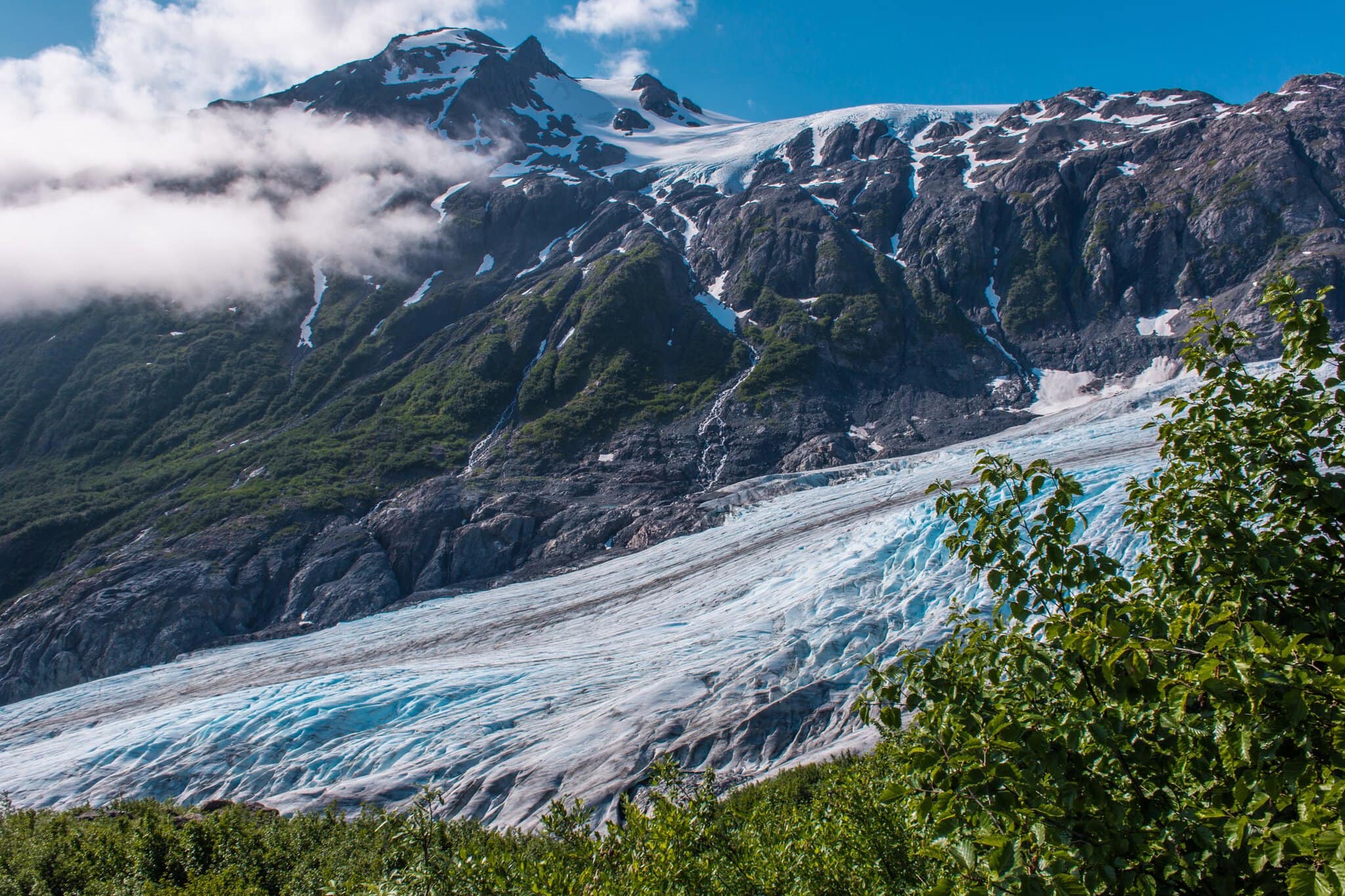
As you walk the trail, definitely take the time to read all the interpretive panels. We ended up chatting with a local ranger who told us that just a few decades ago, the glacier extended all the way to where the car park is today. It’s a powerful experience that really grounds you. The walk itself is easy enough for families with children, and you’ll get some brilliant photos along the way.
5. Harding Icefield Trail: A Trek for the Toughest
If you love a challenge and a short stroll just won’t cut it, get ready for the absolute best the park has to offer for serious hikers. The Harding Icefield Trail starts near Exit Glacier and is a truly spectacular but brutally demanding hike. The route covers about thirteen kilometres round trip, but what really gets you is the punishing elevation gain — close to a thousand metres — and you’ll feel every bit of it. You start in dense forest and gradually push through alpine meadows until you reach the very edge of a seemingly infinite icefield. Allow six to eight hours, and keep in mind there’s no water or toilets on the trail. It’s also prime bear territory, so don’t even think about heading up without bear spray.
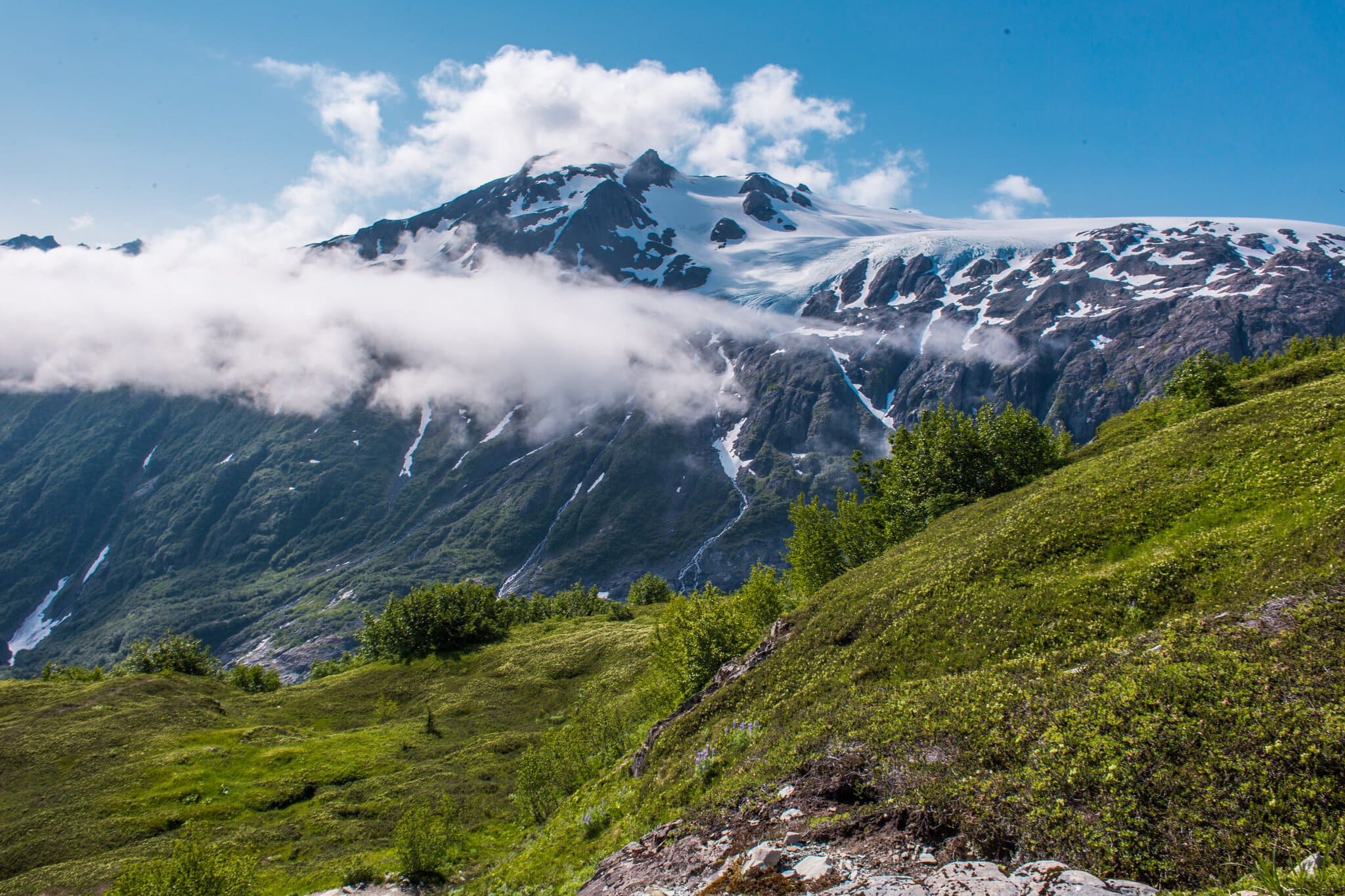
It’s certainly not the easiest trail out there, but every drop of sweat is absolutely worth it. When you finally crest the top after hours of climbing, a literally endless white expanse stretches out before you as far as the eye can see. Lukáš was jumping around with excitement at the top while I had to sit on a rock for five minutes and just catch my breath. Pack plenty of snacks, hot tea in a thermos, and definitely your camera — the views down into the valley are nothing short of epic.
6. Brace Yourself for the Cold and Seasickness: An Honest Warning
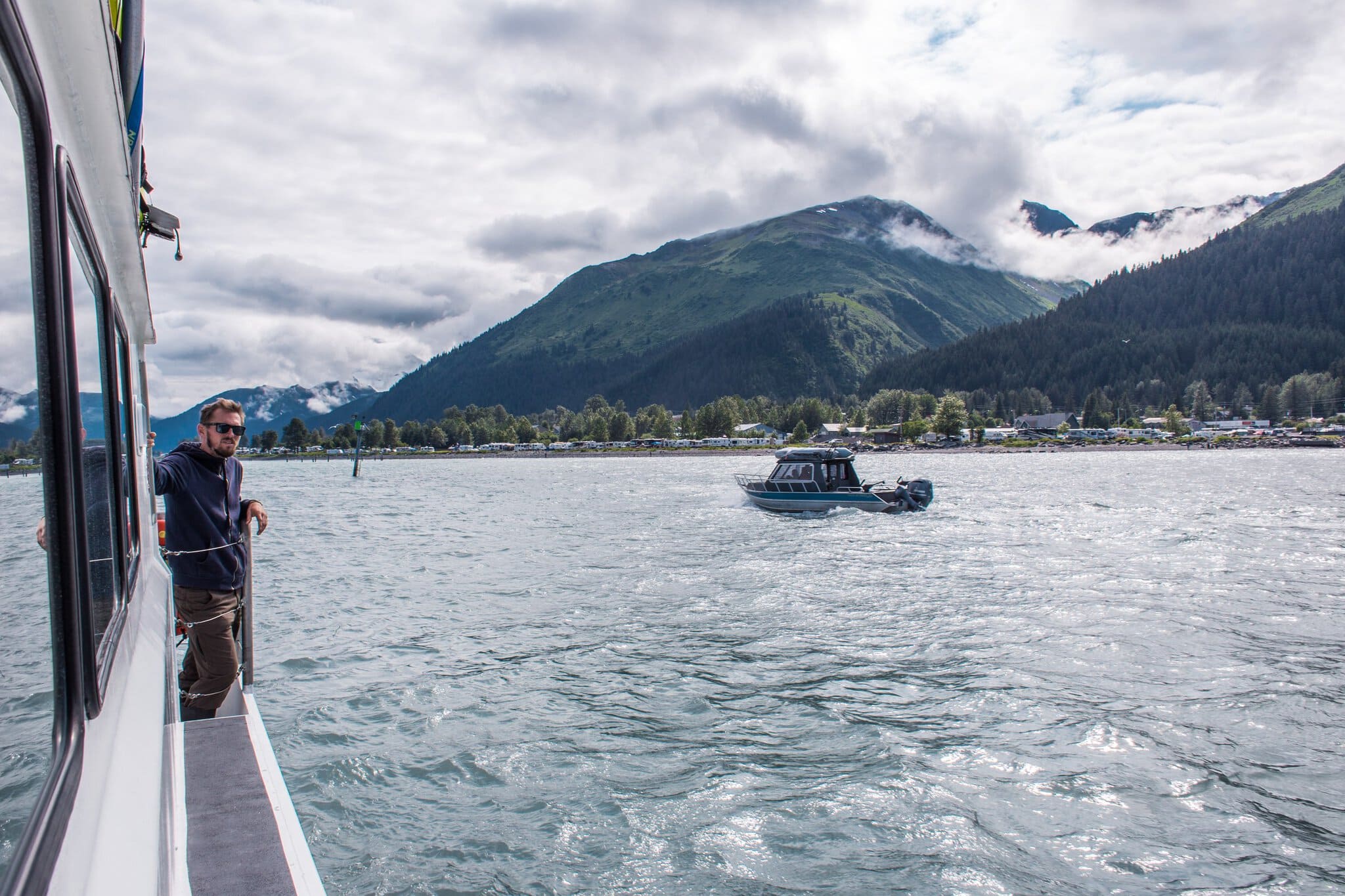
Let me give you one very practical warning from personal experience. As soon as the boat leaves the sheltered waters of the bay and heads out onto the open ocean (the Gulf of Alaska), things get seriously rough. And when I say rough, I mean even the hardiest souls can feel pretty awful. If you’re prone to seasickness, definitely take tablets beforehand, or opt for the shorter cruises that stay within the calmer waters of Resurrection Bay. And don’t underestimate your clothing. The microclimate right by the glacier can drop temperatures close to freezing, and when you add the biting wind, you’ll be incredibly grateful for that warm beanie, waterproof jacket, and gloves.
7. History of the National Park: A Bit of Context
You might also be curious about a bit of Kenai Fjords National Park history. Although this stunning landscape, shaped by millennia of glacial activity, has existed for ages, the area had no federal protection for the longest time. It wasn’t until the late 1970s that President Jimmy Carter stepped in and declared the territory a national monument to prevent reckless land grabs. Today the park protects over 600,000 acres of wilderness that, frankly, only bears are likely to set foot in. And paradoxically, that’s exactly what makes it so appealing.
Getting here wasn’t easy at first — there were fierce political battles over preserving this area in its natural state. Local residents feared losing their hunting and fishing rights, so finding a compromise took years. Thankfully, today it’s a well-functioning balance. As you walk past the small informational signs, you realise just how much effort people before us had to put in so that we can enjoy this rugged beauty today.
8. Alaska SeaLife Center: A Perfect Rainy-Day Plan
If the weather doesn’t cooperate in Alaska (which happens roughly fifty percent of the time), duck into the Alaska SeaLife Center right in Seward. It’s not just an ordinary aquarium — it’s actually the only permanent rehabilitation centre for marine mammals in all of Alaska. You’ll see massive tanks with sea lions and playful otters rescued from the wild. Adult admission is around thirty dollars (about £24), and for families with kids, it’s a fantastic way to spend a rainy afternoon.
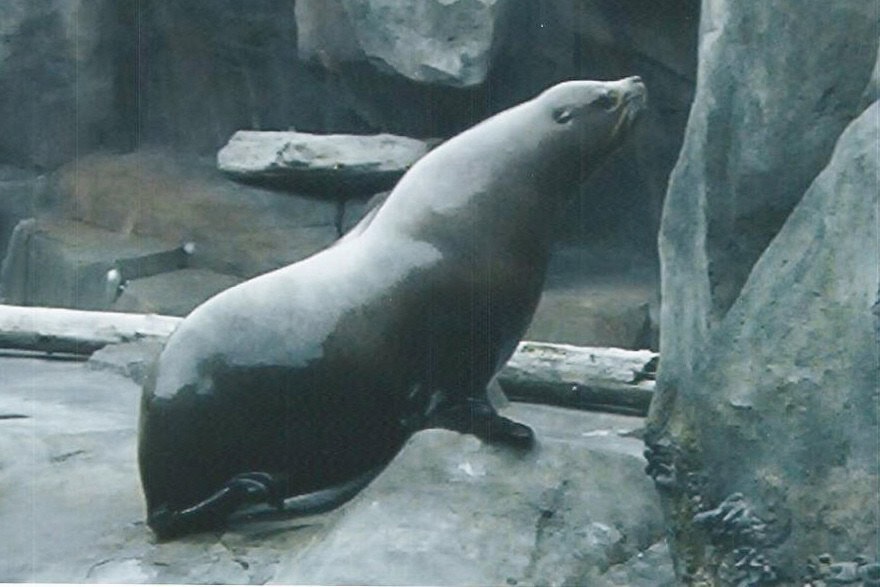
For us, it was a brilliant stop during one particularly soggy morning. The exhibits are incredibly interactive, and you’ll learn fascinating facts about the rescue of injured puffins or baby sea lions that lost their mothers. You can even watch feeding sessions and veterinary care in action. For current opening hours, check the official Alaska SeaLife Center website, as they sometimes close outside the summer season.
9. Mt. Marathon Race: The Madness You Need to See
Towering directly above Seward is the sharp peak of Mt. Marathon, home to one of the most extreme and dangerous mountain races in the world. It takes place every year on the Fourth of July (American Independence Day), and runners cover just under a mile and a half while tackling a mind-boggling 900 metres of elevation gain through mud and shale. It’s absolute madness. You can, of course, hike the mountain at your own pace on any regular summer day, but even then, expect a serious workout.
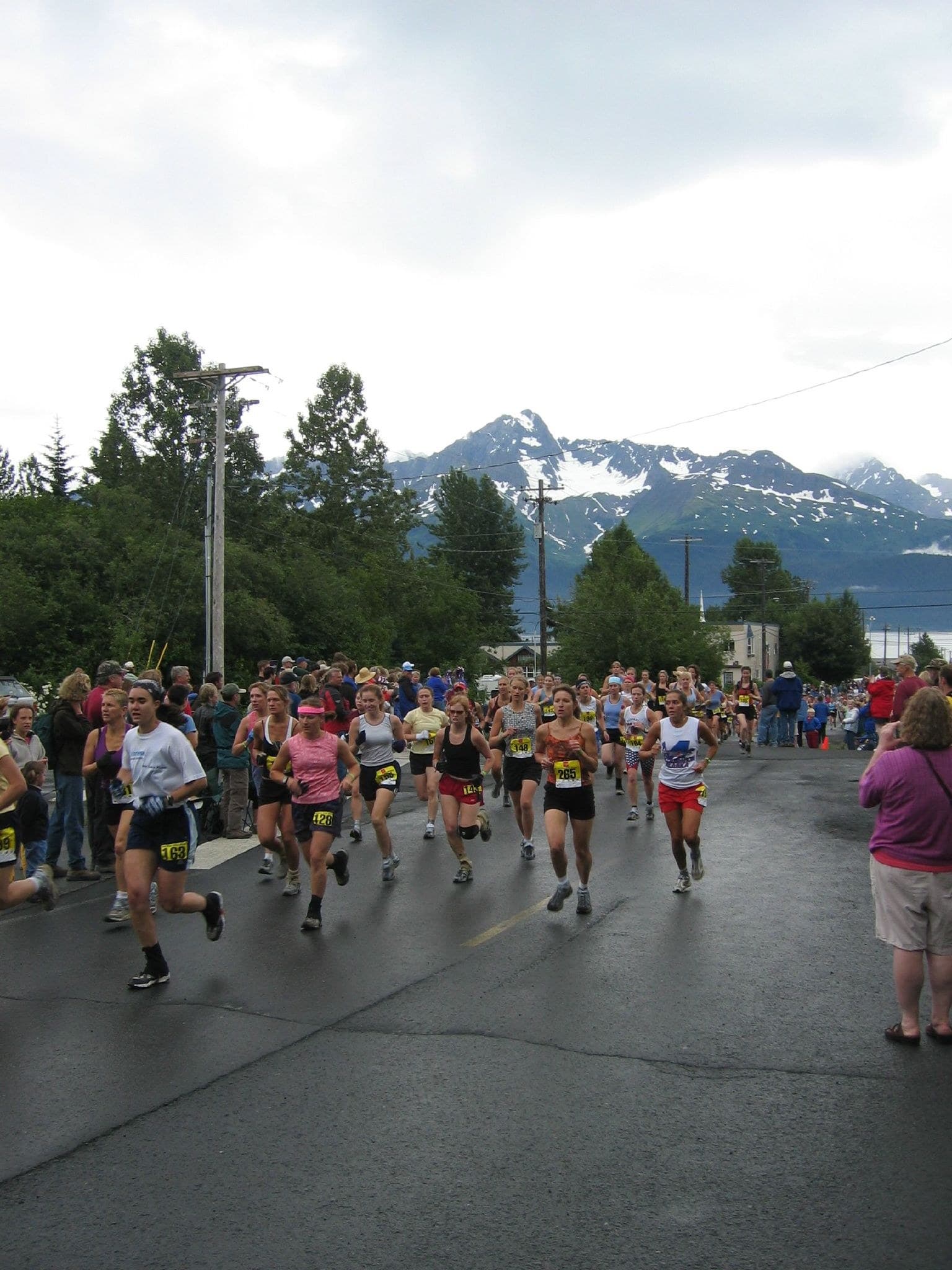
We unfortunately weren’t in Seward on the Fourth of July, but from videos and stories from locals, it sounds like absolute chaos. Runners scramble up the steep rock face often on all fours, and on the way down they essentially slide in a controlled fall through scree and mud. If you go outside of race day, approach it sensibly and wear sturdy hiking boots. Two trails lead to the top — the race route is steeper and more dangerous, while the “hiker’s” route winds through the forest and is much kinder on your knees.
10. Lowell Point and Caines Head: Escape the Crowds
During peak season, Seward is bursting at the seams as cruise ships from Canada bring wave after wave of visitors. If you need a break from the buzz, drive a few minutes past town to Lowell Point. You’ll find beautiful, much quieter black sand beaches and stunning coastal trails in Caines Head State Park, where you can stroll in peace, collect shells, and gaze across the bay without having to dodge hundreds of camera-toting tourists.
11. Seward Boat Harbor: The Heart of the Fishing Town
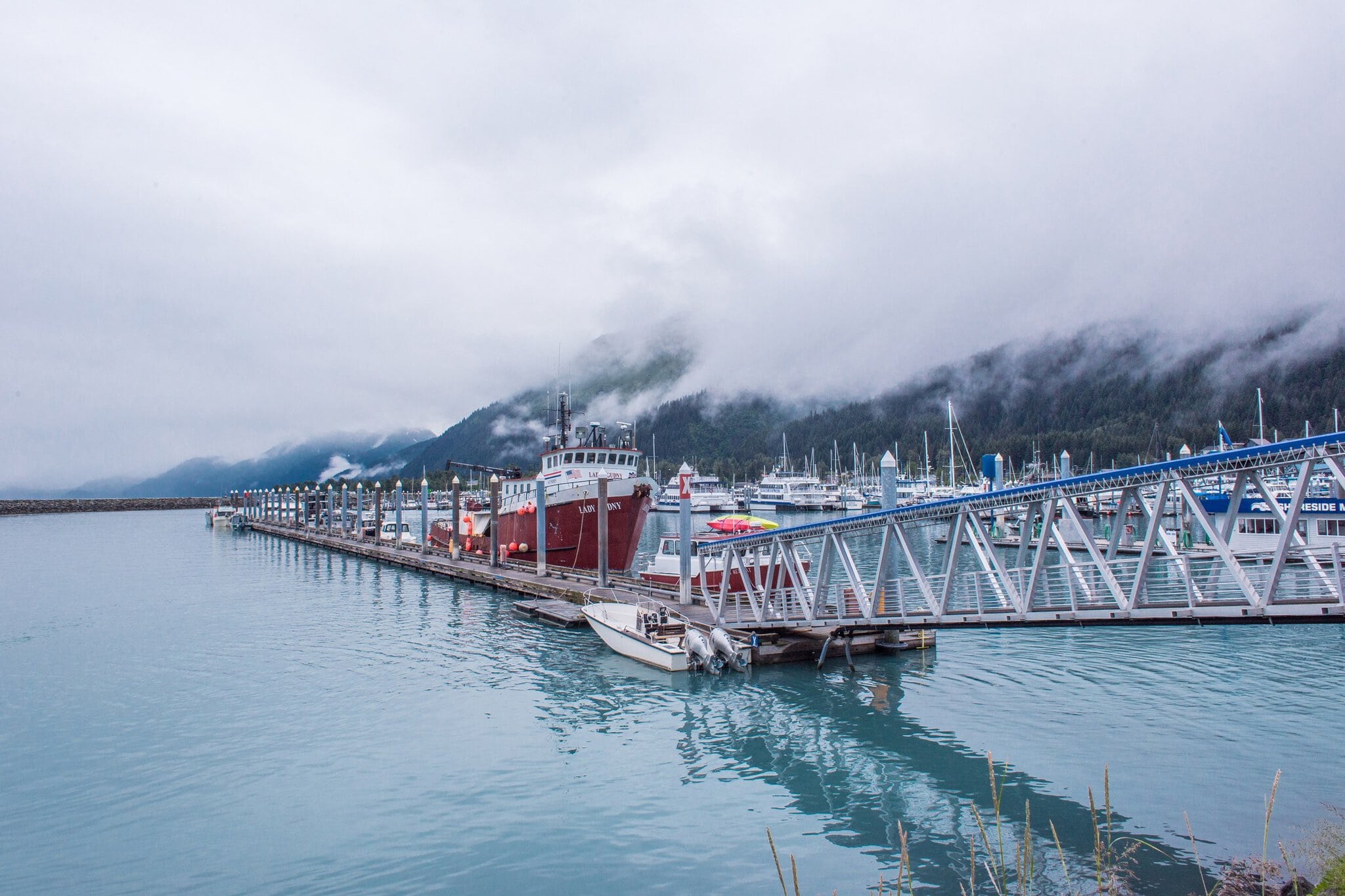
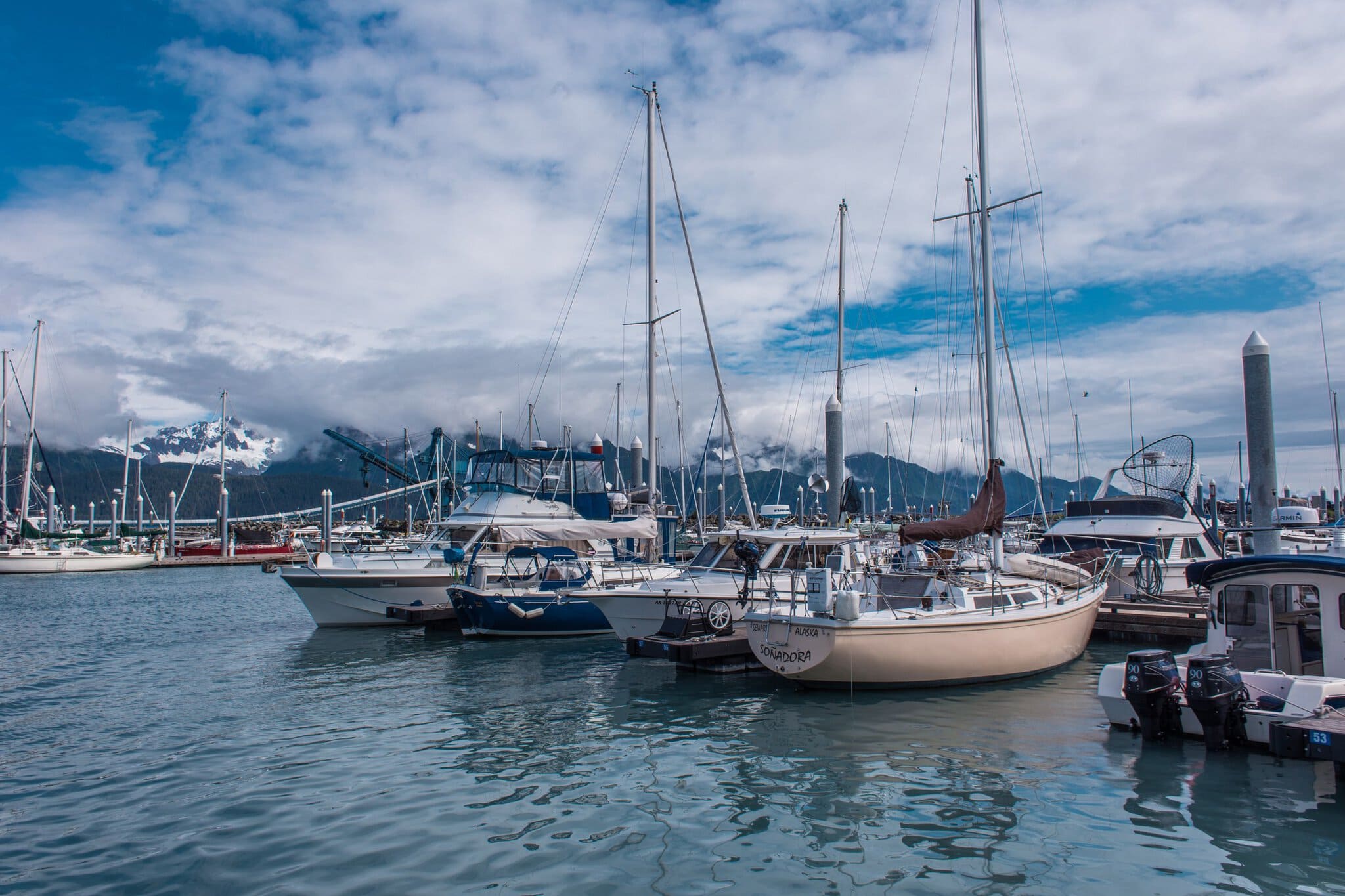
Take a stroll along the wooden docks of Seward Boat Harbor — the pulsing heart of this little town. In the morning, you can watch small fishing boats getting ready to head out, and in the afternoon, see local pros and enthusiastic tourists alike unloading their giant catches. Lukáš and I stood there completely transfixed as one fisherman filleted a halibut the size of me in under two minutes. It smelled of salt and fish and was absolutely wonderful — if perhaps not for sensitive noses. 😅
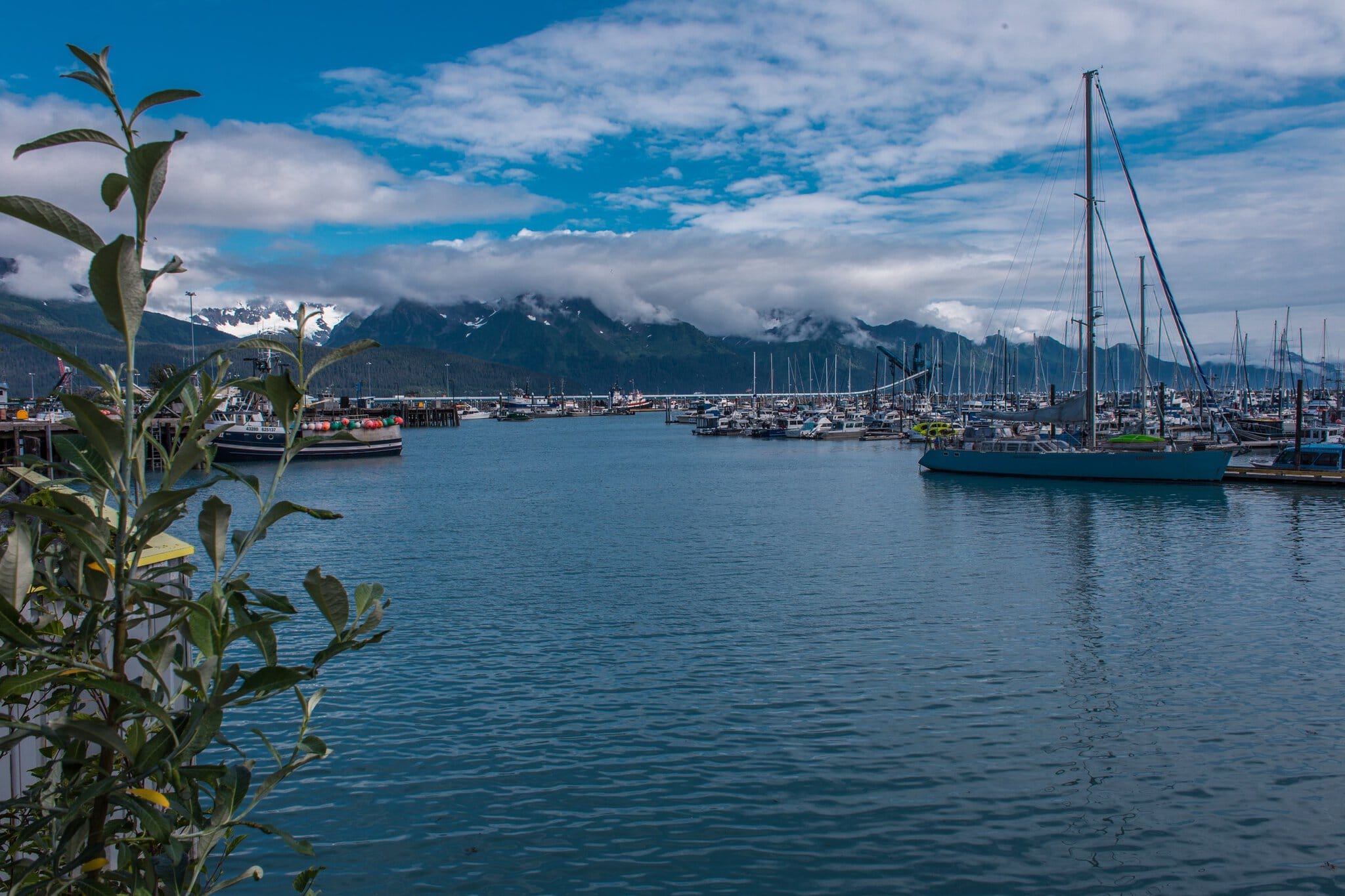
Beyond the fishing boats, you’ll also find plenty of little cafés and souvenir shops. We went there every morning for fresh coffee and watched the early bustle as boats headed out to sea one by one. It’s a brilliant spot to soak up the true atmosphere of this town, and you can pick up a small handmade memento crafted by local artists.
12. Photography in the National Park: How to Get the Best Shots
If you want to bring home photos that truly capture the atmosphere, I’d recommend going with a smaller boat operator. We were lucky to book with a smaller outfit like Seward Ocean Excursions, who only take about six passengers on board — meaning you can get closer and shoot without strangers’ heads in every frame. The ideal light in the deep fjords is usually between 9 a.m. and 3 p.m., when the sun manages to cut through the mist and the mountain shadows aren’t too long.
If you’re not a professional photographer, don’t stress about capturing every single moment. The most stunning image — a glacier crashing into the water — will ultimately be stored in your own memory anyway. Still, don’t forget to bring a spare battery and a large enough memory card, because you’ll be clicking away at one animal after another. If you’re lucky enough to book with a smaller operator like Seward Ocean Excursions, the captain is always happy to point out the best angles for photos.
Map of points of interest for your phone
Where to Eat Well in Seward (and What to Try)
After a full day of freezing on a boat or a gruelling hike to the glacier, you’re guaranteed to be starving. Alaska is a paradise for seafood lovers, and Seward absolutely delivers. Every menu revolves around freshly caught salmon, excellent white halibut meat, or the popular rockfish.
Probably the best harbour views combined with great food can be found at Ray’s Waterfront, though you’ll pay a slight premium for overlooking the anchored fleet. Neighbouring Chinook’s is equally good, serving fantastic fish specialities. A true gem is Apollo, a classic restaurant offering a wonderful “ocean-to-table” service. Here’s how it works: if you catch your own fish on a morning trip, you bring it to them and their chefs will turn your catch into an absolute masterpiece that you’ll still be dreaming about the next day.
For families with children, I’d recommend the spacious Highliner Restaurant or the lovely Resurrection Roadhouse, which sits a little further from the centre toward the glacier and offers gorgeous sunset views over the river valley in the evening.
But if you’re after a raw, authentic, no-frills Alaskan experience, you need to hit the proper local dive bars like Tony’s Bar or Yukon Bar. These are exactly the kind of places where weary fishermen gather over cheap beers after a long day, the music plays a bit too loud, but you’ll get the most honest slice of Alaska there is. And if you’re travelling on a budget and want massive portions at a fair price, try the cosy Sourdough Cafe.
Where Else to Go in Alaska
If you’re planning a bigger road trip, be sure to check out our other articles from this incredible state that we put together from our travels:
- What to See in Anchorage, Alaska: 15 Tips
- Wrangell-St. Elias and Matanuska Glacier: A Guide to Glaciers and Wilderness
- Things to Do in Homer, Alaska: Tips for the Halibut Fishing Capital
- Seward, Alaska: Town Guide
Final Tips and Tricks for Your Trip
When packing for Alaska, you’ll quickly realise that one jacket is never enough and that planning ahead is worth its weight in gold. To make sure you’re not caught off guard, I’ve put together a summary of the most important things you should sort out before you set off.
Lukáš and I made plenty of mistakes during our road trip, but we learned from every one of them. Here are our best tried-and-tested practical tips that will save you time, money, and a whole lot of stress on the ground.
What to Pack
Alaska doesn’t forgive gear mistakes, so the foundation is layering — from thermal base layers all the way up to a proper waterproof jacket and beanie, even in July. For tougher hikes, pack sturdy boots and bear spray — the rangers at Harding Icefield simply won’t let you through without it.
Finding Flights
From the UK, you’ll typically fly into Anchorage with a connection in the US or via Iceland. Airlines like British Airways, Icelandair, and Condor offer various routes. Look for deals well in advance — summer flights to Alaska fill up fast and prices climb steeply the closer you get to departure.
Renting a Car
Without a car, you’re pretty much stuck in Alaska (except for the train, which doesn’t go everywhere). Lukáš and I have had consistently good experiences with DiscoverCars, which we use all over the world, and we’d strongly recommend booking your car months in advance.


