Say the words Dolomites Alta Via 1 and most of us instantly picture jagged rock towers glowing red at sunset and the smell of fresh polenta drifting out of a mountain hut. Lukáš and I absolutely adore these scenes, and we come back to the Italian Alps practically every single year. Multi-day mountain crossings with a backpack on our shoulders used to be our summer classic, but ever since little Jonáš came along, we’ve had to put these long and demanding adventures on hold for a while. That doesn’t stop us from dreaming about them and planning them in obsessive detail, though. ☺️
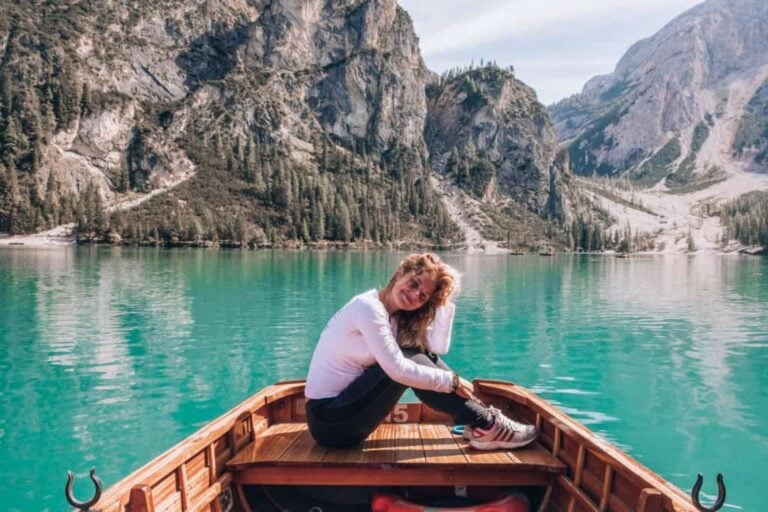
One of our biggest dreams is to walk the whole route in one go. Even though we haven’t yet done it from start to finish all at once, we’ve hiked a huge number of its sections on day trips back when we were based in Cortina d’Ampezzo. The trail runs through some of the most beautiful places imaginable, like Lago di Braies or the iconic cliffs around Rifugio Lagazuoi. Because you keep asking us about the Alta Via over and over, I finally decided to sit down and write this detailed guide. Read it once and you’ll know exactly what you’re getting into.
So: want to know when to go, where to sleep, how much it costs and what to throw in your backpack? I’ve laid out absolutely everything for you, day by day, hut by hut. Read on. 😉
TL;DR
I know, I know — laid out on paper these numbers look terrifying. But trust me, out on the trail it all flows far more naturally. Here’s the most important stuff in a nutshell:
- Distance and elevation gain: The trek measures roughly 120 kilometres and you’ll climb a total of around 6,500 vertical metres.
- Duration: It’s usually walked over 10 to 12 days, but you can also plan shorter versions of 4 or 6 days.
- From where to where: The classic route starts in the north at the iconic Lago di Braies and finishes in the south at the town of Belluno (or at the La Pissa bus stop).
- Difficulty: Technically the trek is rated EE (Escursionisti Esperti), which means you don’t need via ferrata gear, but you do need very good fitness and a sure step. It’s definitely not for small children.
- Accommodation: You sleep exclusively in mountain huts (rifugi), which you need to book 3 to 6 months in advance. Wild camping is strictly forbidden.
- Budget: Set aside roughly €1,100 to €1,300 per person for the whole trek (including half board in the huts, lunches and transport).
The full destination guide: Dolomites — guide and what to see
What is the Dolomites Alta Via 1 and who is it for
If you’re looking into multi-day treks in Italy, you’ve surely come across the classic dilemma of whether to choose the Dolomites Alta Via 1 or 2. The Alta Via 1 (literally “High Route 1”) is the more famous, more classic and technically more accessible option. While the Alta Via 2 already calls for via ferrata gear and far more climbing experience, the “number one” is friendlier and can be tackled by any experienced mountain hiker with good stamina who doesn’t mind walking with a heavy pack for several days in a row.
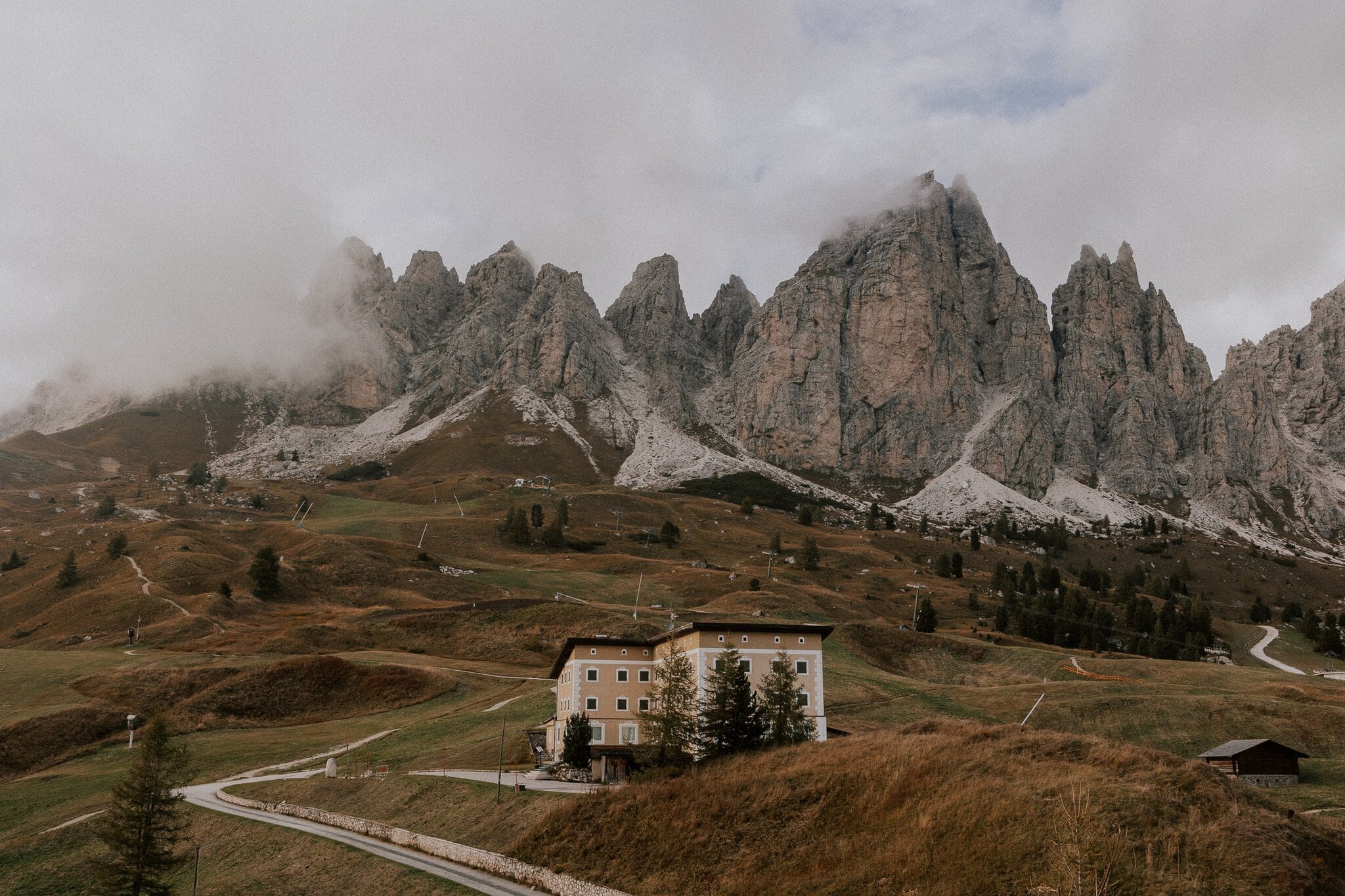
The route cuts beautifully through the Dolomites from north to south and takes you to places the average tourist can’t reach by car or cable car. It’s a real escape from civilisation, where your day shrinks down to nothing but walking, marvelling at unbelievable views, eating and sleeping. Technically there are no climbing sections waiting for you, but some passages can be steep, narrow or secured with a steel cable to hold onto. Good hiking boots and zero fear of heights are simply essential here.
When to set off on the trek and what the weather will be like
Choosing the right dates is absolutely crucial for this trek, because the mountain huts have a very limited season and the weather in the Dolomites can be seriously unpredictable. Let’s look at when it makes the most sense to book your flights and accommodation.
The ideal window for hiking the Alta Via 1
The season is actually really short — essentially only from late June to mid-September — so there’s genuinely no point putting off the planning. If you go in July or August, you’ll have the best chance of more stable weather and of finding every hut along the route open.
But I have to give you a strong warning about the period around 15 August. Italy celebrates the public holiday of Ferragosto on that day, and Italians take their mass holidays. The Dolomites (and frankly the whole of Italy) burst at the seams around then, the huts are hopelessly sold out a year in advance, and on the narrow mountain trails you’ll feel more like you’re on a busy city high street. I’d give this period a very wide berth if you want even a little bit of peace. 😅
Early September, on the other hand, tends to be absolutely magical. The air clears up a bit, the crowds thin out because the kids are back at school, yet the huts are still open. You just have to reckon with colder mornings and evenings. September is probably our favourite time in the mountains. If you fancy going as early as June, be very careful, as there can still be plenty of snow at higher altitudes and some mountain passes may be impassable without crampons and an ice axe.
How much the Alta Via 1 costs and where to sleep before the start
Multi-day hut-to-hut treks aren’t exactly the cheapest thing in Europe, and that goes double for the Dolomites. Wild camping is strictly forbidden throughout the national park and the fines are genuinely steep, so you’re completely reliant on the network of mountain huts.
Before the trek itself you’ll usually sleep near Lago di Braies or in nearby Cortina d’Ampezzo, from where you can easily reach the lake by bus in the morning. Cortina is a strategic base, a great springboard for the trek where you can rest and gather your strength. It’s always better to arrive a day early so you can begin the first stage bright and early.
Budget for 10 days in the mountains
Let’s take a look at what all this fun actually costs in real terms. The biggest expense will, of course, be accommodation combined with food. Most mountain huts work on the principle of what’s called “mezzopensione” (half board), which includes a bed (often in a shared dormitory with bunk beds), a hearty multi-course dinner and breakfast.
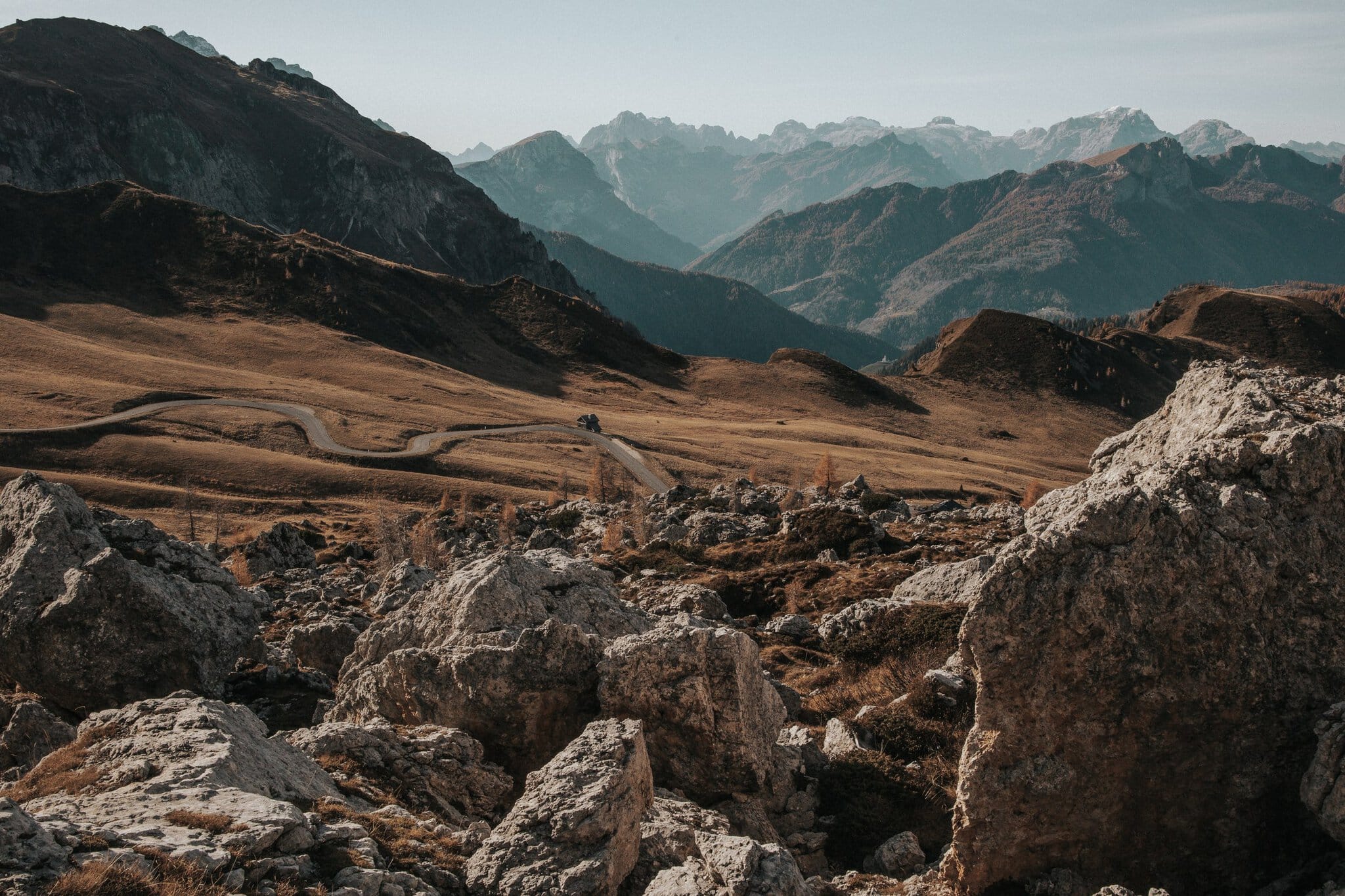
Lukáš and I always work everything out carefully in advance, because mountain mark-ups can give your wallet a serious shaking.
- Accommodation with half board (rifugi): Reckon on roughly €75 to €95 per person per night. So for 10 nights that comes to approximately €800 to €1,000.
- Lunches and snacks during the day: There are plenty of smaller huts along the route where you can grab polenta or soup, usually working out at €15 to €25 a day. If you bring food from home or buy filled rolls (panini) at the huts, you’ll save a little. Reckon on around €200 in total.
- Transport to the start and from the end of the trek: Buses, trains, possibly taxis. Reckon on roughly €100 per person.
- Overall estimate: Per person I’d recommend budgeting €1,100 to €1,300 for the full ten days, not including flights from the UK and additional gear.
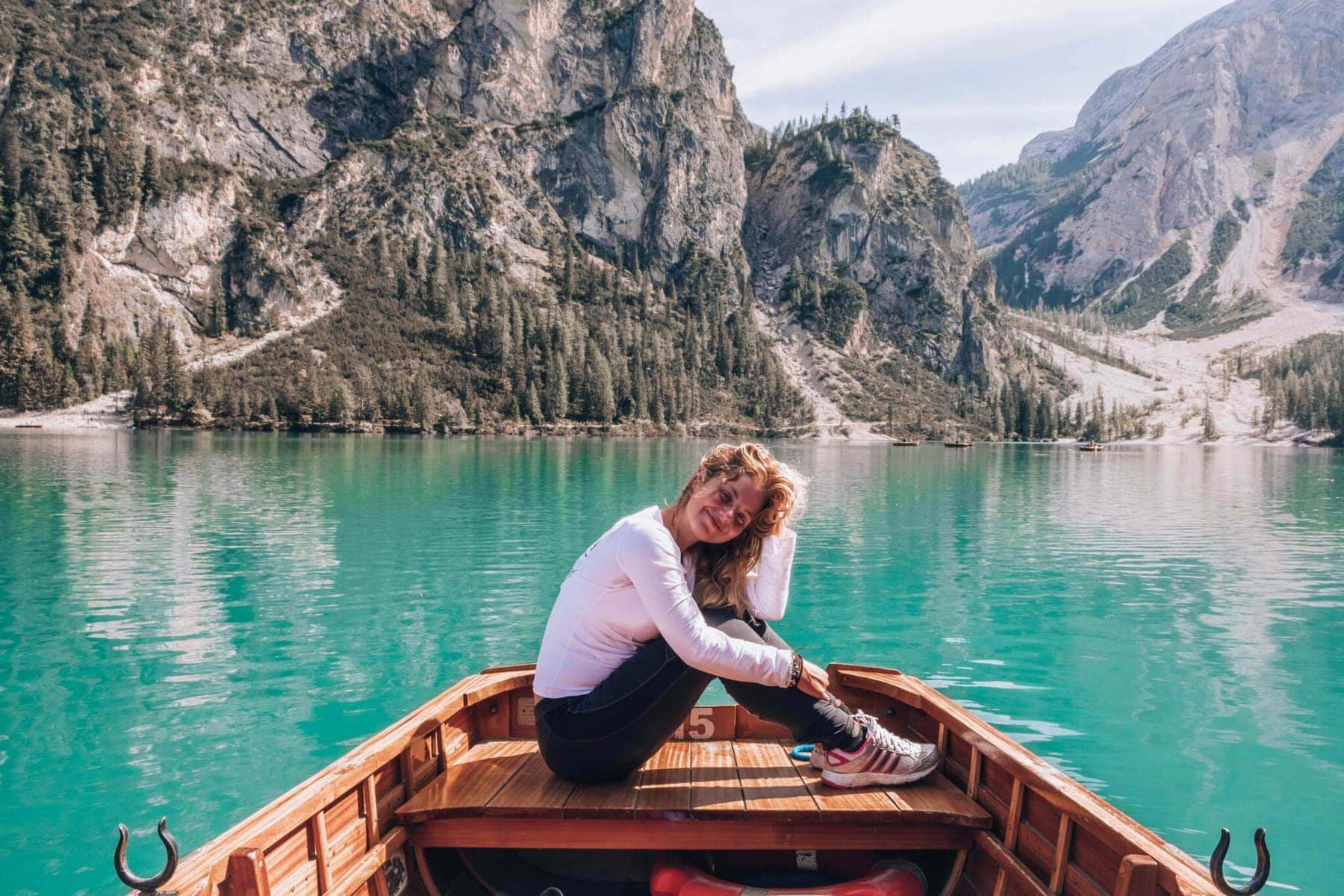
Booking the huts and the essential rules
When it comes to planning, I have to be completely honest: there isn’t much room for spontaneity here. Relying on turning up at a hut in the evening and hoping they’ll simply find you a spot on the floor is a huge risk I really wouldn’t recommend trying.
💡 Tip: Book the huts (rifugi) along the route directly via their websites or by email — they’re not on Booking. But for the night before the start and after you finish, it pays to have a base down in the valley: right at the start by Lago di Braies you’ll find the iconic Hotel Pragser Wildsee on Booking.com.
When and how to book the refugios
Hut capacity is strictly limited and demand from hikers all over the world is enormous. You have to book the huts (in Italian, rifugi) well in advance, ideally 3 to 6 months ahead. That means if you want to go in July, you should have your exact plan sorted and be emailing the individual places to stay by January or February at the latest. Most huts take reservations by email or via forms on their own websites; booking portals like Booking.com generally don’t work up here in the mountains.
Another big rule in the Italian mountains is paying in cash. Although the situation is gradually improving and many huts now have card terminals, the signal high in the mountains often drops out and you can’t rely on your card. Always carry enough euros in cash to pay for your whole stay and food during the day. You can always refill your water at the huts for drinking, so at least you’ll save on bottled water and won’t generate plastic waste.
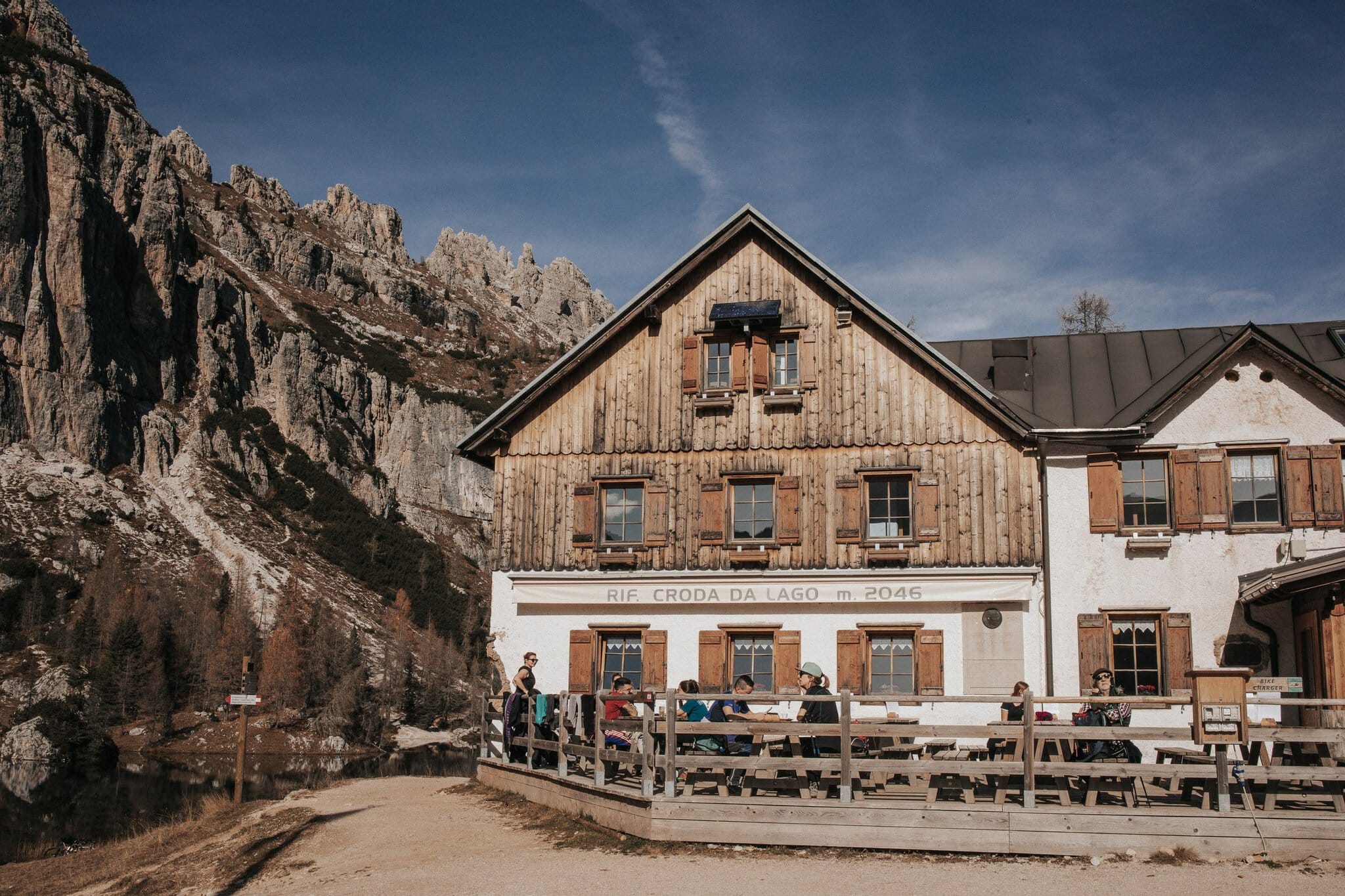
The classic 10-day version (day-by-day itinerary)
This is exactly the route Lukáš and I have lined up in our heads for the time when we set off just the two of us. It’s the classic ten days that lead you through the very best that nature has created in this region. Bear in mind that the times given for each stage are pure walking time, without breaks for soaking up the views, photography and lunches. So reality always tends to be a few hours longer. You’ll see for yourself how you get on! 😉
1. Lago di Braies to Rifugio Biella (the trail from the lake)
The trek begins nowhere other than at the famous Lago di Braies. If you’ve been reading our blog for a while, you’ll know this lake is simply breathtaking. The mornings here can be busy, as it’s a popular target for day-trippers, but as soon as you start climbing up along the Alta Via 1 route, the crowds thin out very quickly.
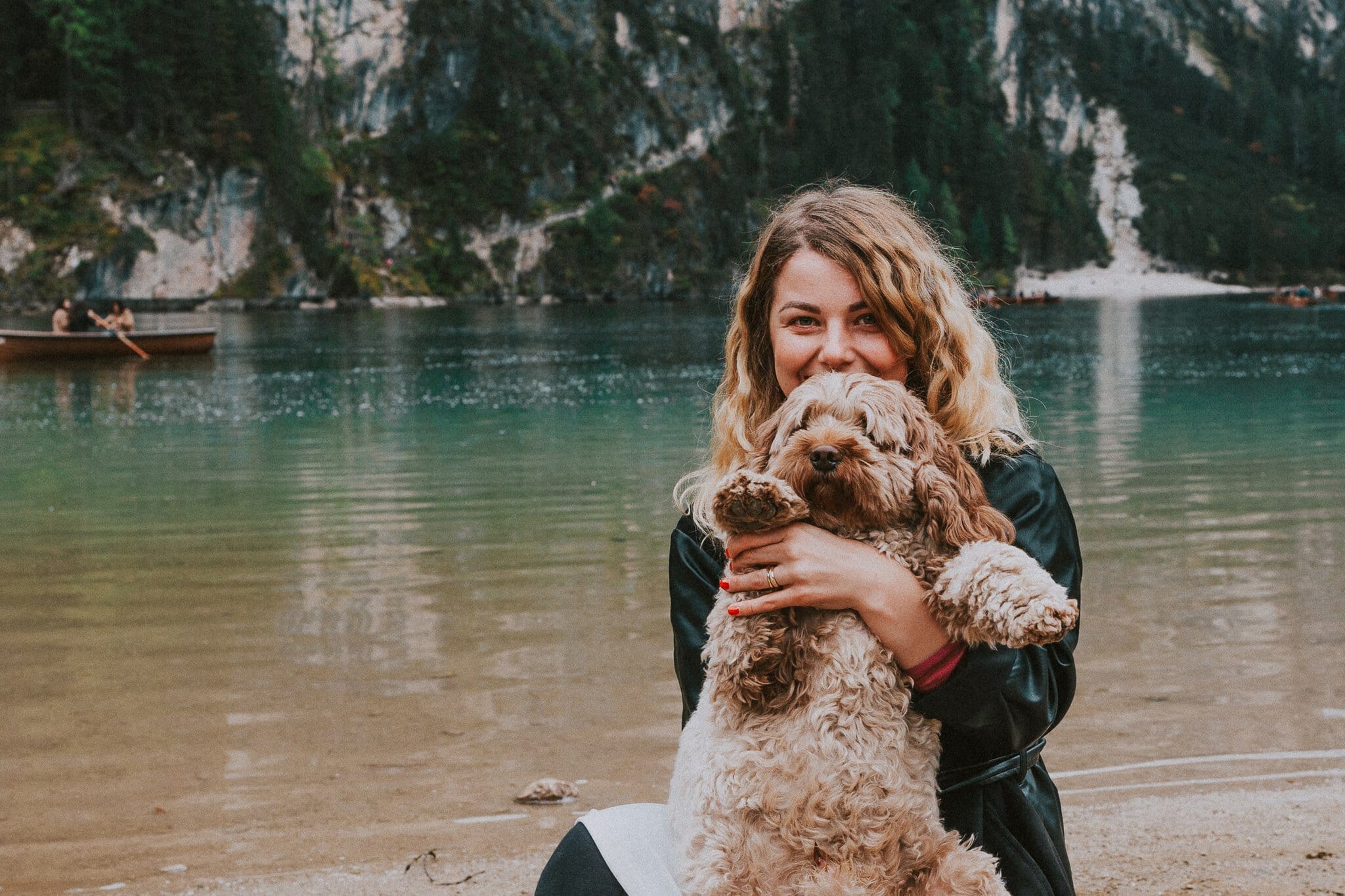
The opening climb is fairly sharp, so you can test your fitness right at the start, but once you reach the Porta del Forno saddle, the true limestone views open up before you. The walk to Rifugio Biella (also known by its German name, Seekofelhütte) takes roughly 5 hours of pure walking time. The hut sits in a rather inhospitable, lunar environment that nonetheless has tremendous atmosphere.
2. Rifugio Biella to Rifugio Sennes (the lunar landscape)
Day two is a pleasant, restful stage. You’ll have roughly 6 hours of walking through the beautiful and unusual landscape of a high plateau that at times genuinely resembles the surface of the moon. Especially in early summer, the alpine meadows here can still be in bloom.
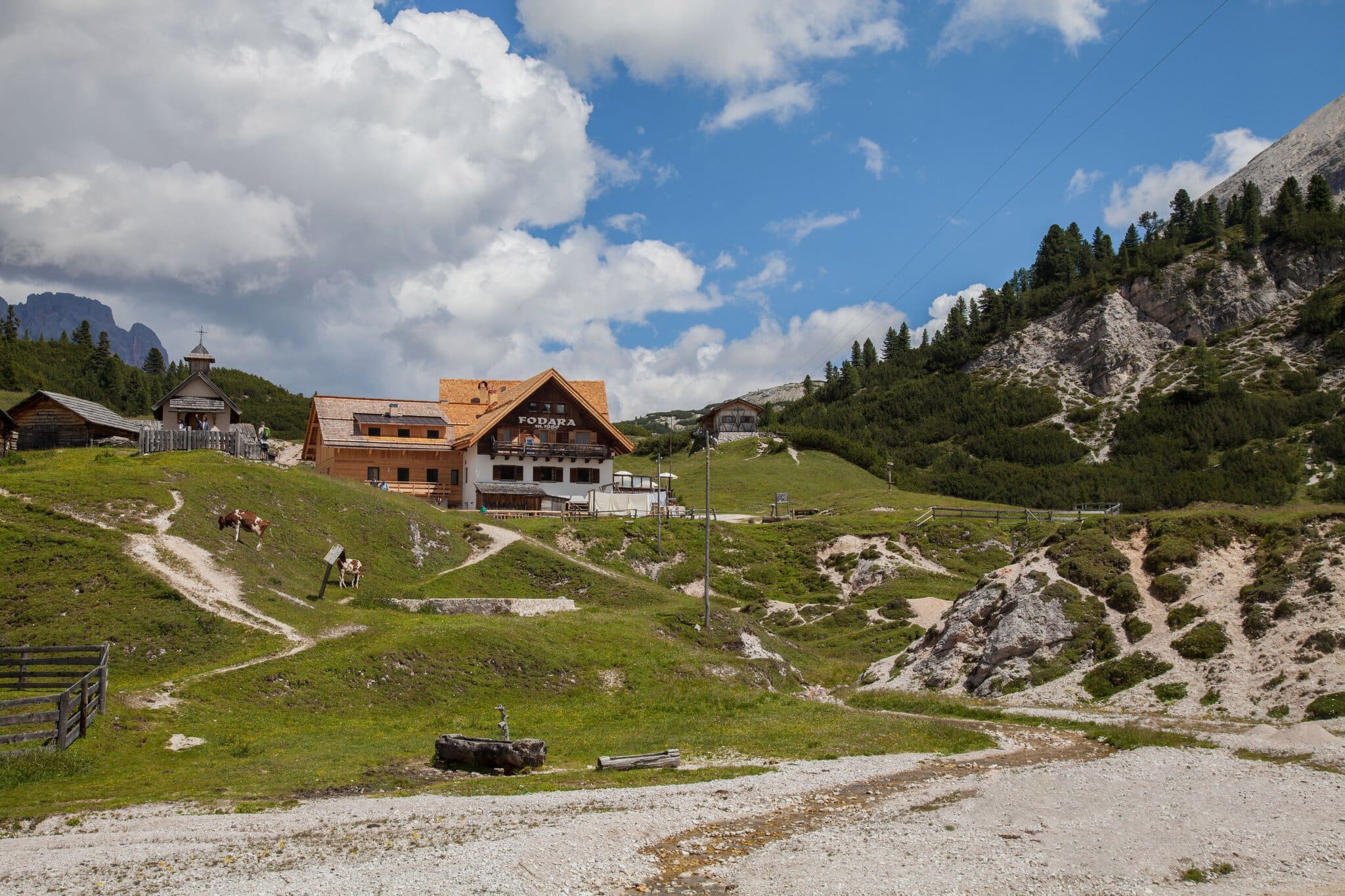
Your destination is the charming Rifugio Sennes. This hut has a great reputation when it comes to food, so do treat yourself to something local — perhaps a classic Kaiserschmarrn (shredded pancake), which made its way here from nearby Austria. South Tyrol is wonderfully blended in this respect, mixing the very best of both Italian and Austrian cuisine. 😋
3. Rifugio Sennes to Rifugio Lagazuoi (the path into the clouds)
This is one of the absolute highlights of the whole trek. You’re in for a fairly long day (around 7 hours of walking), but those views are worth every drop of sweat. You’ll pass more gorgeous spots and finally climb up to Rifugio Lagazuoi, which sits at an altitude of over 2,700 metres. It’s one of the most iconic places in the Dolomites, which we’ve already written about in our article on Cinque Torri and Lagazuoi.
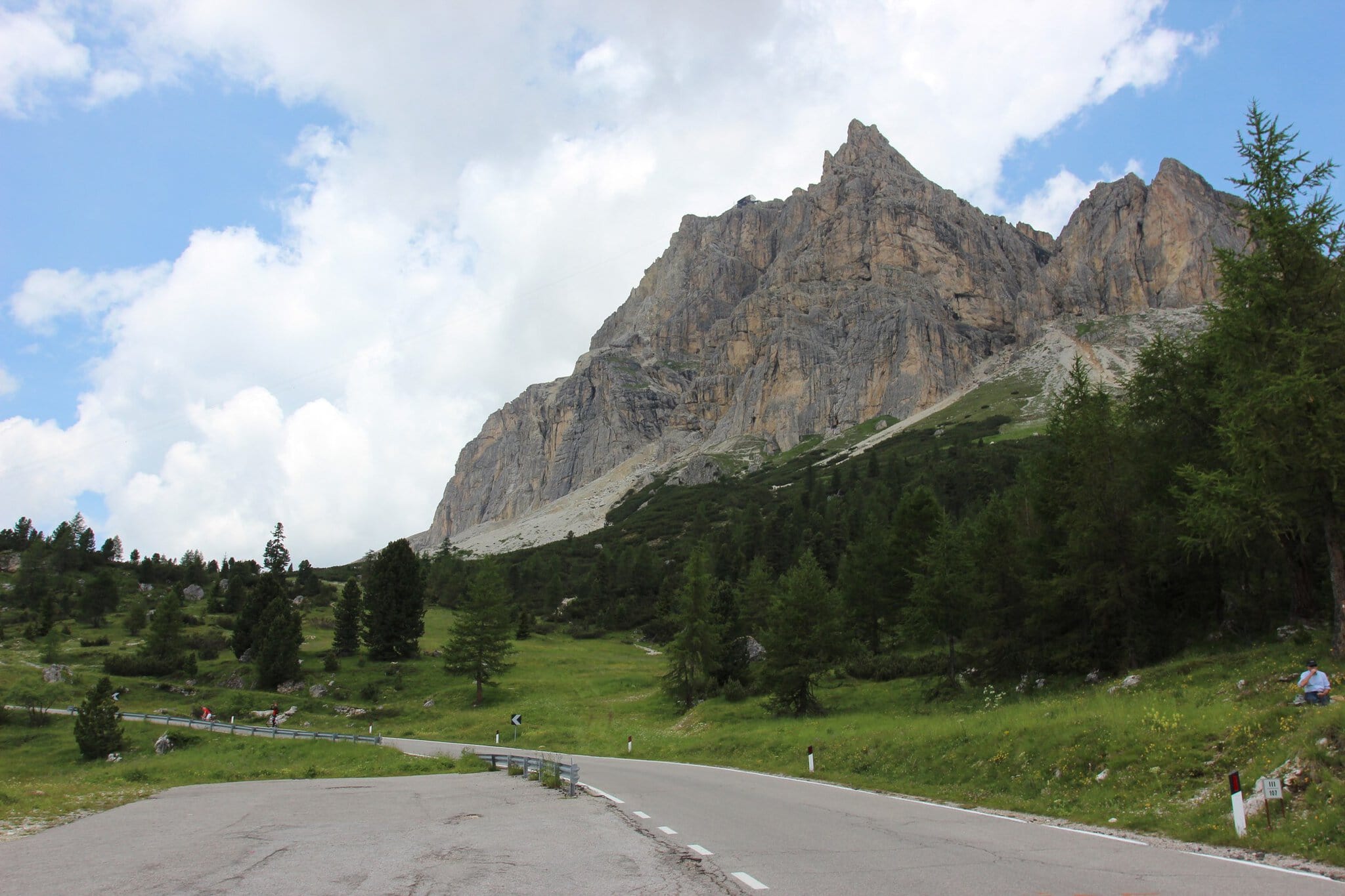
The area around Lagazuoi is riddled with tunnels from the First World War, when heavy fighting raged here between the Italians and the Austrians. If you’ve still got energy after lunch, I really recommend strapping on a headtorch and safely exploring some of them. And the evening? Sunset from the terrace of the Lagazuoi hut is one of those experiences you’re guaranteed never to forget.
4. Rifugio Lagazuoi to Rifugio Nuvolau (views of the five towers)
On the morning of day four you’ll descend from Lagazuoi (or you can take the cable car if your knees need a little rest) and head towards another very well-known area. You’ll walk for roughly 5 hours, with incredible rock formations in your sights the whole time.
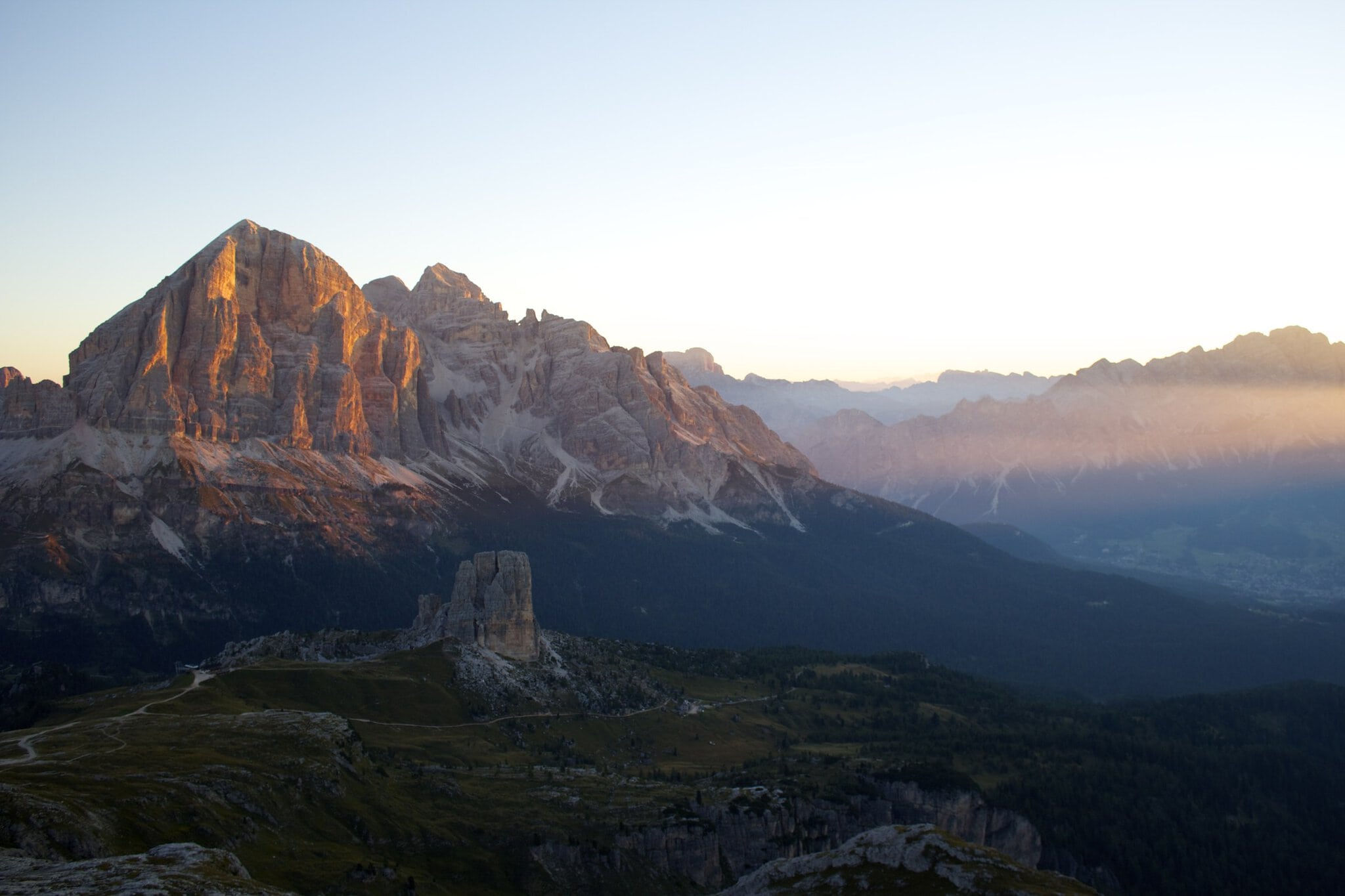
Today’s destination is Rifugio Nuvolau. This hut is perched on the very summit of the mountain of the same name like an eagle’s nest, and it’s the oldest hut in all the Dolomites. The setting is a touch cramped, but the view of the nearby Cinque Torri and the majestic Marmolada (the highest mountain in the Dolomites, home to a glacier) more than makes up for it.
5. Rifugio Nuvolau to Rifugio Città di Fiume (a change of scenery)
During day five, which takes around 6 hours, you’ll start to notice how the landscape is changing. From the northern, sharper peaks you’ll begin moving into a slightly greener area. You’ll cross the Passo Giau saddle, which Lukáš and I often drove to on day trips, because it’s a wonderful spot full of grazing cows and tinkling bells.
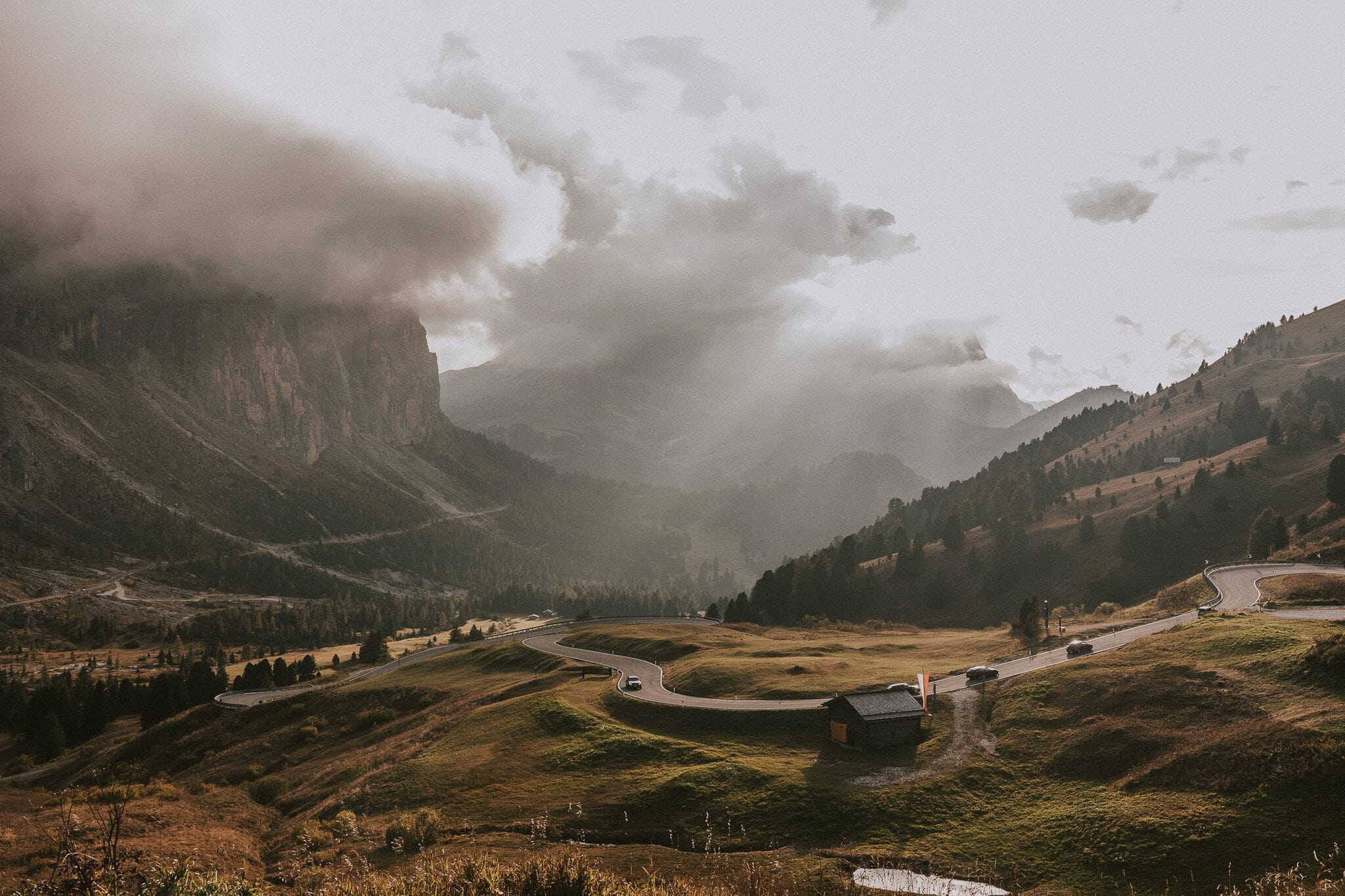
The route then leads you beneath the enormous, massive wall of Monte Pelmo. Your bed for tonight will be at Rifugio Città di Fiume. This hut is renowned for its cosiness and very friendly staff, so after five days in the mountains you’ll feel almost at home.
6. Rifugio Città di Fiume to Rifugio Coldai (beneath the majestic Civetta)
The sixth stage is a touch shorter, taking roughly 5 hours, and the star of the show here is the Civetta massif. This enormous rock massif will accompany you for most of the day, and even though you definitely won’t be climbing it, the sight of those kilometres of sheer walls — home to climbers from all over the world — is simply breathtaking.
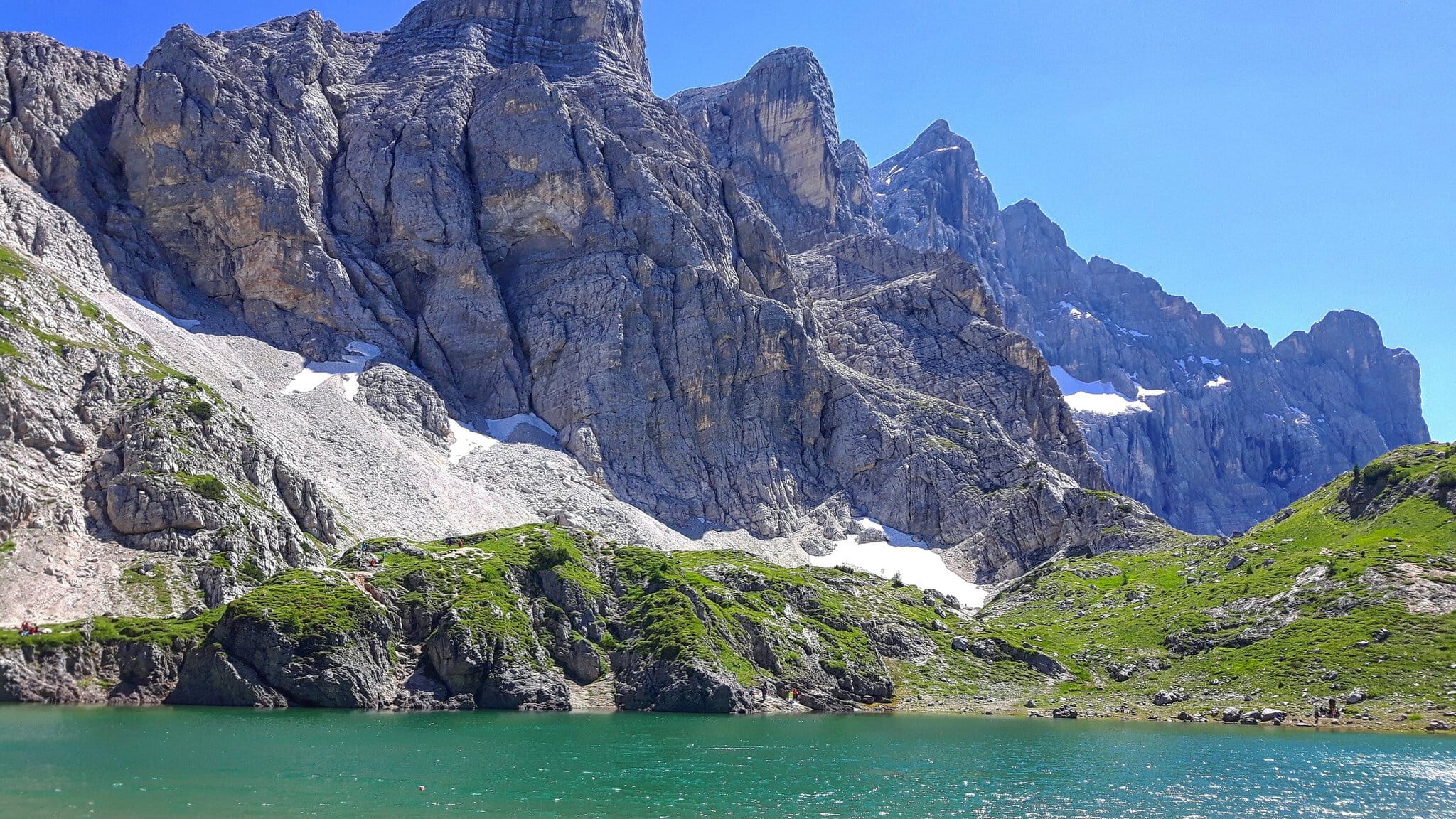
Rifugio Coldai sits just above the lovely lake of the same name, Lago di Coldai. If you arrive in time, don’t forget to take a short walk down to the lake — the water is incredibly clear, although swimming in it is probably only something Wim Hof could manage. 😂
7. Rifugio Coldai to Rifugio Vazzoler (around the rock giants)
On day seven (about 6 hours of walking) you’ll pass directly beneath the giant walls of the Civetta massif. This part of the trail is known for its wildness and for having fewer day-trippers. You’ll pass two more mountain huts (Rifugio Tissi is a great spot for a lunchtime soup or coffee) and gradually descend into slightly warmer altitudes.
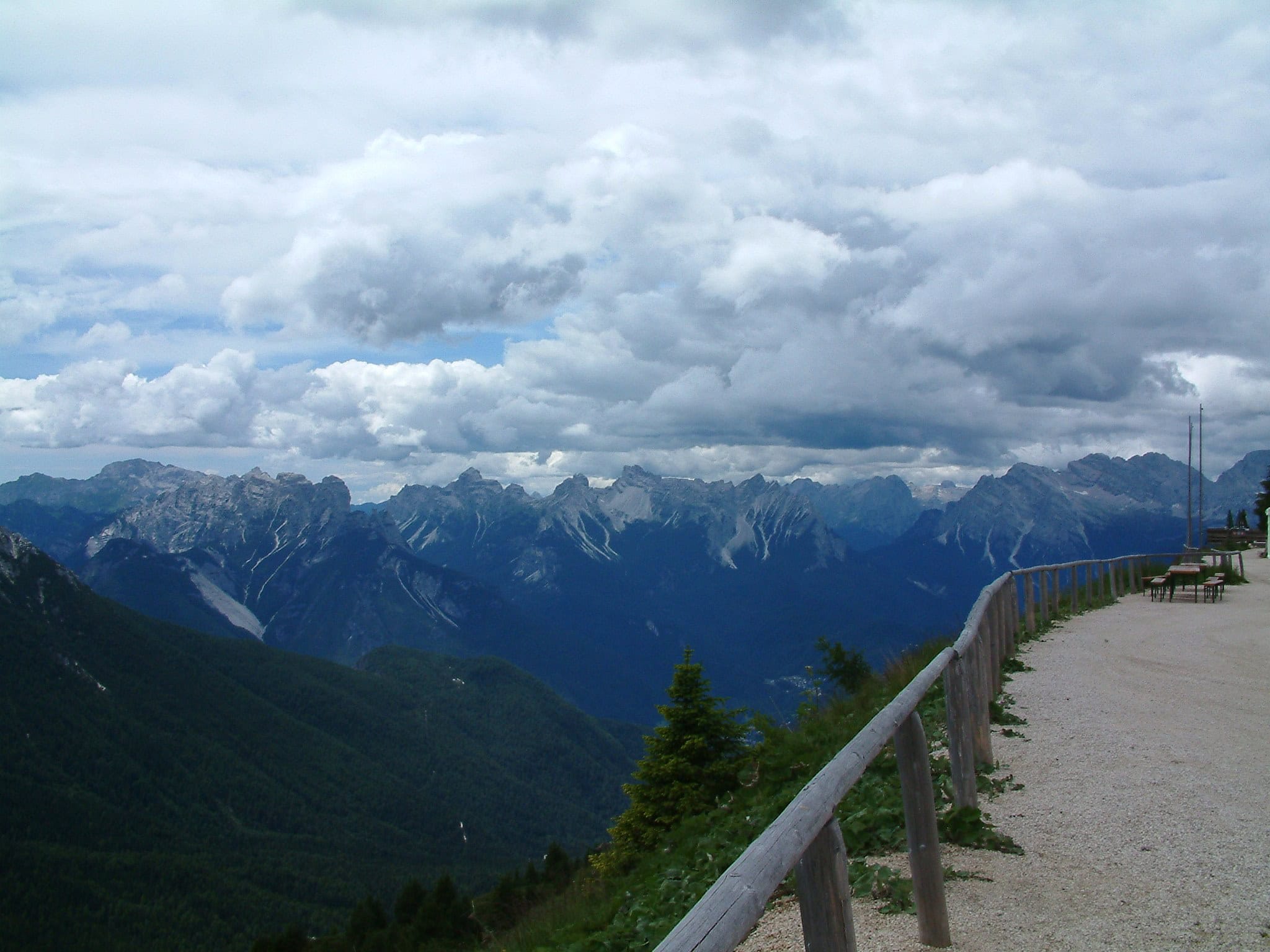
In the evening you’ll reach Rifugio Vazzoler, charmingly tucked away in the forest beside a small botanical garden. There’s a wonderful sense of calm here, and the evening air already smells completely different from up north at the start of the trek.
8. Rifugio Vazzoler to Rifugio Carestiato (into the national park)
This stage clocks in at just under 7 hours and leads you beneath another gorgeous mountain, the Moiazza massif. The path here is often a touch trickier, more rocky and demands care, especially if it happens to be raining.
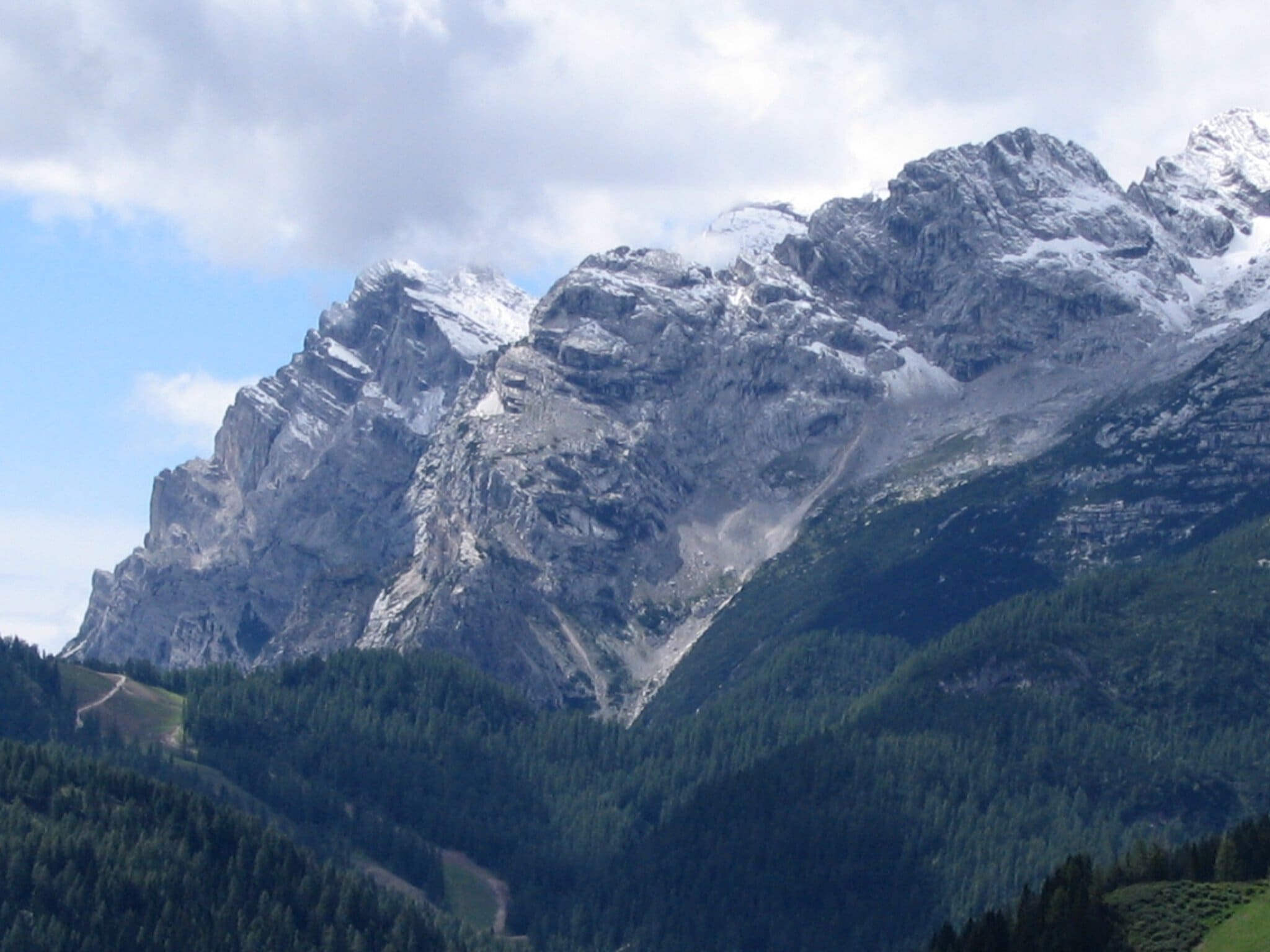
The landscape begins to open up more and more towards the southern plains, a sign that you’re nearing the end of your great journey. Rifugio Carestiato sits below the Passo Duran, and once again you’ll find excellent local food and a well-earned rest.
9. Rifugio Carestiato to Rifugio Pian de Fontana (the toughest day)
The penultimate stage is honestly probably the hardest of the whole trek, so steel yourself with patience and energy. You’re in for around 8 hours of strenuous walking in a fairly isolated area within the Dolomiti Bellunesi National Park. You’ll have to cross several rather deep valleys and tackle sharp climbs up to mountain saddles.
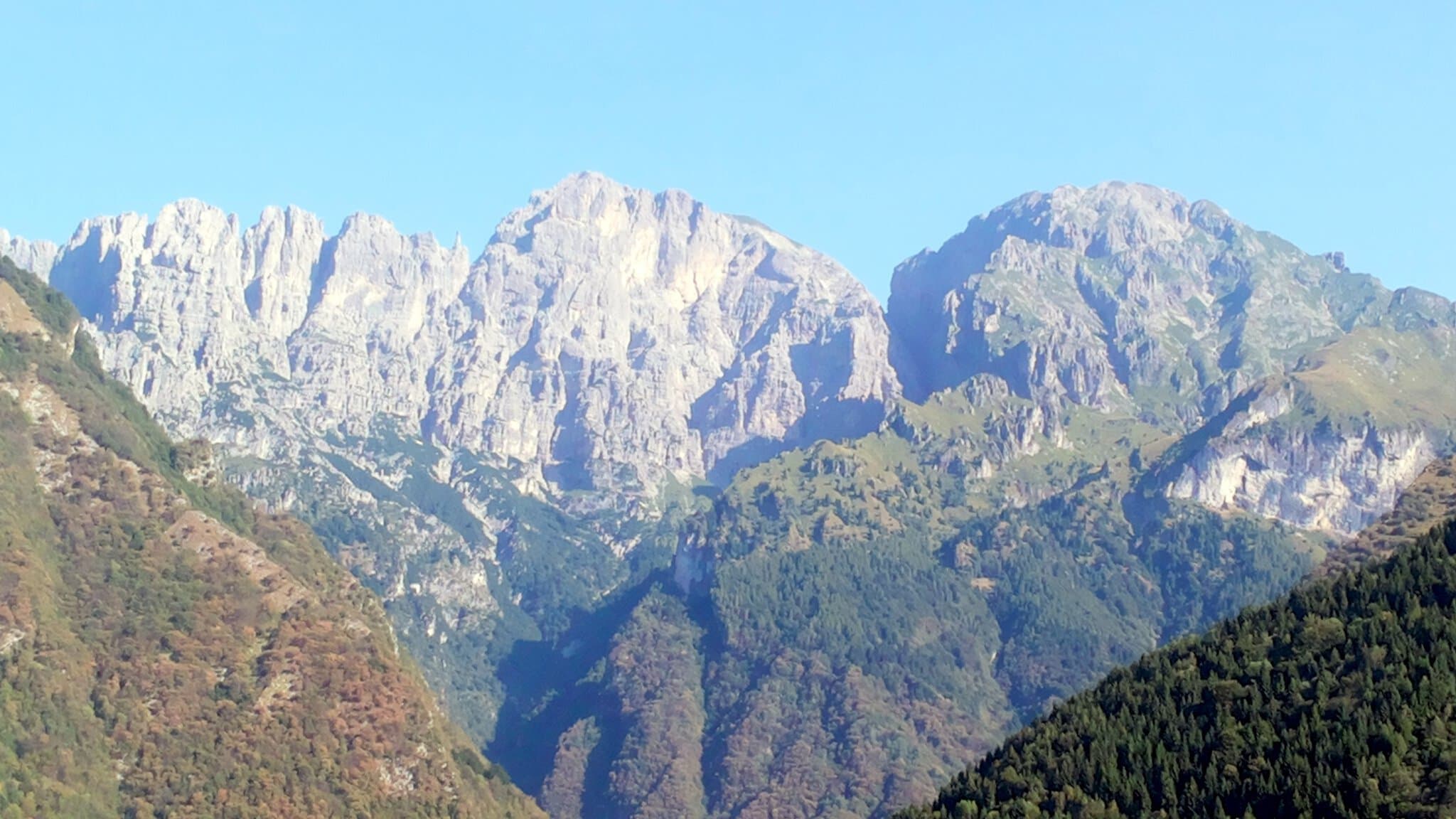
When you finally crest the last ridge, you’ll spot Rifugio Pian de Fontana with relief. It’s a picturesque shepherd’s homestead converted into a mountain hut, where they’ll look after you beautifully and where you’ll probably eat a double portion of dinner. 😅
10. Rifugio Pian de Fontana to Belluno (a sweet return to civilisation)
The final day! You have about 5 hours of walking left, heading down, down and down again. The steep descents really hammer your knees (definitely don’t underestimate trekking poles, which we’ll talk about shortly), so don’t rush.
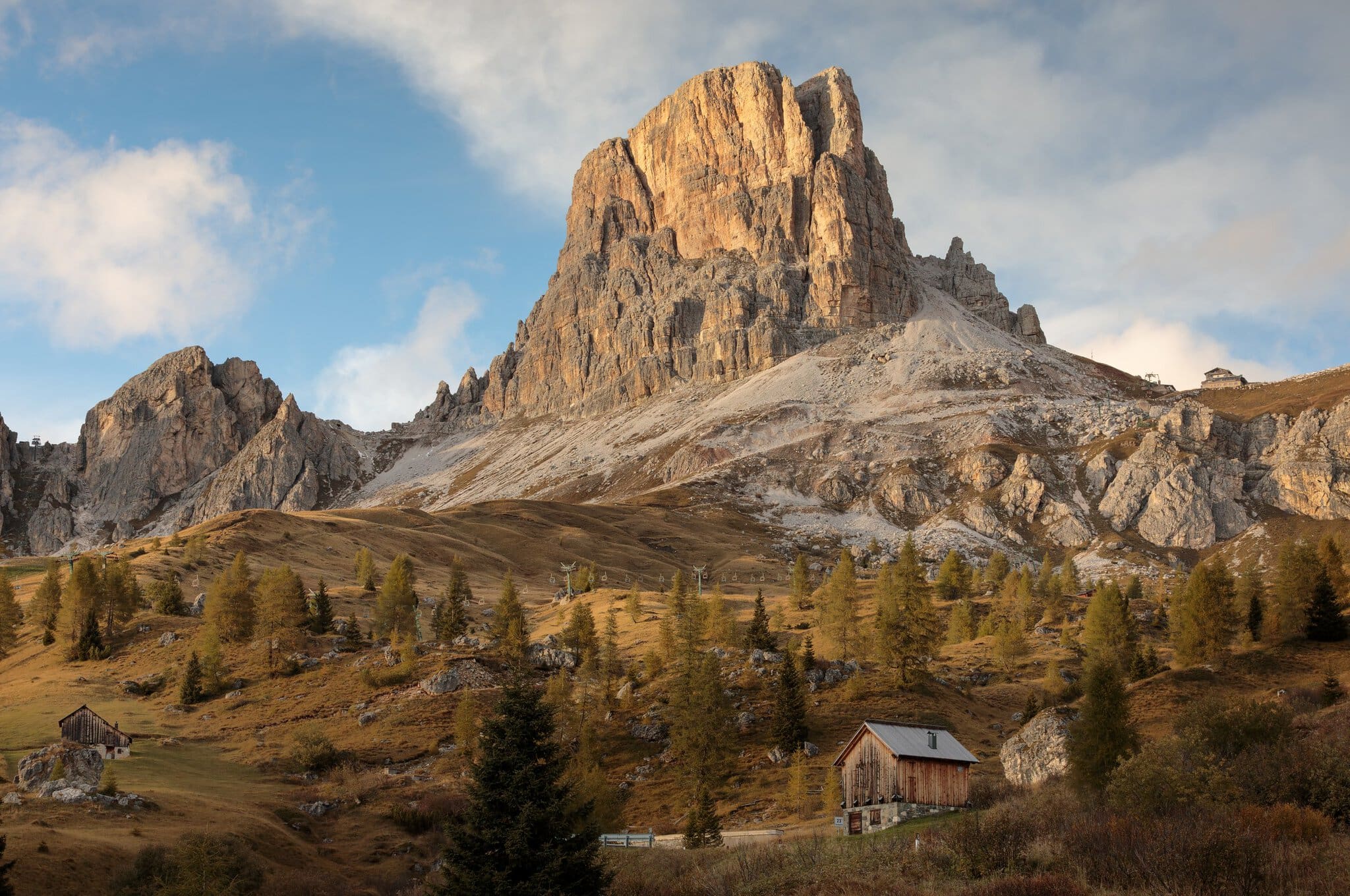
The route ends at a bus stop near a place called La Pissa, from where regular services run to the town of Belluno. Once you reach the main square in Belluno, treat yourself to the biggest scoop of gelato and a proper Aperol Spritz to celebrate — you’ve earned it!
How to shorten the trek if you don’t have ten days
Ten days of holiday is quite a lot, and we understand that not everyone has that much time or nerve. The good news is that the Alta Via 1 offers several great “escape routes” back to civilisation, which let you plan a considerably shorter itinerary.
Northern version in 4 days
If you want to see the absolute most famous bits (Lago di Braies and the area around Lagazuoi), the first 4 days of the trek are all you need. You set off from Braies and on the afternoon of day four simply descend from the Lagazuoi hut down to the Passo Falzarego. From here there are comfortable, frequent buses straight to Cortina d’Ampezzo, where we spent many summers.
This version is ideal for those of you who don’t have much holiday but want a taste of the true high-mountain atmosphere. The views here are the most dazzling, and you definitely won’t miss out on any of the iconic spots — you’ll just save your knees from the long descent.

Mid-length version in 6 days
The six-day version is also very popular. The route is essentially the same up to Rifugio Città di Fiume or the nearby Passo Staulanza. From there you can easily catch buses back to your car or to larger towns for the train. You’ll miss out on that lovely feeling of completing the entire crossing all the way south, but you’ll still be reminiscing about it for years.
We recommend it for families with older children or for those who aren’t entirely sure of their stamina for the full ten days. Six days in the mountains is just about right to clear your head without starting to hate your backpack. 😅
Map of points of interest for your phone
What to pack for a multi-day trek
The key phrase for packing is just one: less is more. Every gram makes itself felt after a few days, and you’ll feel every extra jumper on your back. Lukáš and I stick to the rule that a backpack for treks like this definitely shouldn’t exceed 8 to 10 kilograms (including water and food). Here are the things we’d never set off into the mountains without.
Essential gear and clothing
The foundation of everything is top-quality hiking boots. Never go on a trek in brand-new, unbroken-in boots — that’s a guaranteed recipe for a holiday ruined by blisters. For this route we’d recommend higher trekking boots that give your ankle good support on the rocky terrain. Lukáš and I swear by Lowa (I’ve had one pair for over six years and they’re still going strong). La Sportiva are apparently even better on technical terrain, but I haven’t tried them.
The second most important thing is clothing. Don’t forget to layer up: down in the valley it can be over thirty degrees and you’ll be walking in a T-shirt, while in the evening at a hut at two thousand metres, or in the early morning hours at Lagazuoi, you’ll be grateful for a down jacket, gloves and a hat. Definitely pack a quality waterproof jacket (Gore-Tex) or a decent rain poncho, because mountain weather changes from one minute to the next.
Other essentials for your backpack
We try not to take anything unnecessary, but these things you simply must have with you, no matter what.
- Trekking poles: Even if you think you don’t need them, your knees will thank you on long descents with a backpack. We won’t hear a word against our lightweight folding Leki poles.
- Sleeping bag liner: Mountain huts don’t provide fresh bedding for every guest, so for hygiene reasons it’s compulsory to have your own lightweight textile or silk liner. You don’t need to lug along a full warm sleeping bag — the huts give you thick woollen blankets.
- Headtorch: Essential not just for evening outings, but mainly if you get delayed in the mountains and end up walking in the dark. Even in summer, it gets dark earlier in the mountains than down in the towns.
- First-aid kit: Basic blister plasters (e.g. Compeed), painkillers, a bandage, disinfectant and a foil blanket in case of hypothermia.
- Power bank: At many huts you can’t charge your phone in your room — electricity is often only available in the common room and the sockets fill up immediately. A power bank with a capacity of at least 10,000 mAh is therefore a real lifesaver.
Mountain safety and useful apps
The mountains are beautiful, but they can also be cruel and unpredictable. Even though the Alta Via 1 is a waymarked hiking trail and you won’t be crossing any glaciers, you should never underestimate a few basic rules for moving around the alpine environment.
The 1 pm rule and thunderstorms
Lukáš and I have been trying to stick to this rule for many years now and thankfully it’s never let us down. In summer in the Dolomites, especially in the August heat, strong local heat thunderstorms develop very frequently. These storms arrive in a flash and with incredible force, usually in the afternoon. So the golden rule is: plan your hikes so that by 1 pm, or 2 pm at the latest, you’re at the hut, or at least in a safe, sheltered section of the ridge. The worst thing that can happen is getting caught in the afternoon on the steel cables of via ferratas or on bare summits when a storm breaks.
If you do get stuck out in the open and the thunder starts, immediately get down off the ridges as low as you possibly can. Throw away your trekking poles, which act like lightning rods, and shelter somewhere in a hollow — never under a lone tree.
Signal and navigation
Although Italy has fairly decent coverage, in many valleys you simply can’t get a signal, so offline maps (try Maps.me or AllTrails) are an absolute necessity, not an optional extra. Download them while you’re still at home and have WiFi. If you’re walking the trek for the first time and you’re worried about safety or poor visibility, it’s brilliant for peace of mind to take a so-called satellite communicator (e.g. a Garmin InReach).
If you’re a beginner and don’t fancy setting off on your own, you can of course hire an internationally certified mountain guide (IFMGA). A group hike with a guide usually works out at around €250 per day for the whole group, which can be worth it with more people, and it gives you genuine peace of mind. You can also browse guided Dolomites tours and activities on GetYourGuide.
Practical tips to finish and a few deals
If you’re already planning to buy flights and insurance for your trip to Italy, here’s a summary of the services Lukáš and I genuinely use (not because someone paid us, but because they’ve repeatedly saved our nerves):
Where to find flights to Italy
If you’re not driving over from Austria, the ideal starting point is Venice airport, or possibly Treviso. From the UK, there are plenty of direct flights to Venice with the likes of British Airways, easyJet and Ryanair from London, Manchester and other major airports. We always hunt for cheap flights on Skyscanner — it’s our absolute favourite portal for comparing all the airlines.
And believe me, saving on the flight means more money for a bombardino or an Aperol on some terrace. It usually pays to buy flights around two to three months ahead, when prices are at their best.
Renting a car for the transfers
If you fly into Italy and don’t want to rely solely on buses, we regularly use the DiscoverCars.com comparison site. We’ve had the best long-term experience with it all over the world. The drive from Venice to Lago di Braies takes just under 3 hours.
I’d definitely recommend paying extra for full cover, because Italian roads are narrow and the local drivers do rather their own thing. And don’t forget to pick a car with enough power — on those switchbacks up the hills you’ll really appreciate it! Bear in mind that, coming from the UK, you’ll be driving on the right here, so allow yourself a little time to adjust.
Don’t forget mountain insurance
This is absolutely crucial! Ordinary travel insurance that comes with your bank card definitely won’t cut it for a multi-day mountain trek — it often won’t cover helicopter rescue. For shorter trips in Europe we usually go with AXA insurance, and for longer or more demanding trips we rely on the tried-and-tested worldwide cover from True Traveller (or you can read our SafetyWing review). Insurance that covers “mountain search and rescue” and high altitudes is simply a must. UK travellers should also remember to bring a valid GHIC card, but it won’t replace proper mountain insurance.
We have a rule about this: if you can’t afford proper insurance, you can’t afford the trip. You never know when you’ll take a bad step, and a helicopter in the Dolomites is genuinely no cheap joke, believe me.
What about internet in Italy
Since Italy is in the EU, roaming with a UK SIM may now incur charges following Brexit, so it’s worth checking your provider’s terms before you go. If you want to avoid surprise bills or need reliable local data, definitely take a look at our favourite e-SIM (more in our Holafly review).
But honestly, once you get a bit higher on the trek, the signal often disappears even with the best data in the world. Take it as a bonus and enjoy a real digital detox — sometimes that’s the very best way to relax!
Where to stay before and after the trek
As I’ve already written, on the route itself you sleep exclusively in mountain huts. But what about the night before the start, or once you’ve successfully finished the whole show at Belluno? Finding a decent hotel to pamper you after that kind of effort is essential.
Lukáš and I have a few favourite spots we love coming back to when we want to rest. We usually try to find something with a touch of that alpine charm, but that won’t wreck our budget either.
Our hotel picks in Cortina and by the lake
Right by Lago di Braies, the absolute classic is the Hotel Lago di Braies. It’s a touch pricier, but waking up right beside the lake before the first tourist buses roll in is priceless. We spent one wonderful night there. You can check availability and prices on Booking.com.
If you’re after a base in Cortina d’Ampezzo, we have very fond memories of the Hotel de la Poste. It’s right in the centre, has incredibly friendly staff and, above all, fantastic beds you’ll sink into like a cloud after returning from the mountains. Plus they do a great breakfast!
Where to eat and refuel
In the mountains you simply have to eat. And the Italian Alps are a chapter all of their own. Forget any dry rolls — here, even at over two thousand metres, they cook like a luxury restaurant.
The food in the mountain huts is mostly absolutely excellent and hearty. Most rifugi offer three-course dinners that put you back on your feet, no matter how far you walked that day.
The best culinary stops
During the trek you definitely mustn’t miss the kitchen at Rifugio Sennes. I mentioned it earlier in the itinerary, but their Kaiserschmarrn (shredded pancake) with apple purée is simply legendary. I sometimes even dream about how good it was!
And once you’re back in civilisation in Cortina, pop into Ristorante Pizzeria Croda. They have the best and thinnest pizzas for miles around, and their cheese is just indescribable. Lukáš and I always devour a pizza there and wash it down with a glass of local wine, like proper Italians.
Where to go next from the Dolomites
If you’re staying in the area after the trek (or, like us, you’re still saving up the whole crossing for when little Jonáš grows a bit 😄), take a look at our other articles about the Dolomites: read about what to do in the Dolomites, where we share the most beautiful spots across the mountains, or try our specific guide to 5 hiking trails for everyone in the Italian Dolomites. We managed all of these trails even with little Jonáš in the carrier! ☺️
 🚗 Car rental on the roadVerified rental cars in the Dolomites
Search with the DiscoverCars comparison engine — it compares prices from dozens of local and international rental companies, and most bookings come with free cancellation.
Compare car prices in the Dolomites →FAQ
How do I get to Alta Via 1?
The trek starts at Lago di Braies (Pragser Wildsee). The easiest way to get there is by train to the town of Villabassa/Niederdorf or Dobbiaco/Toblach, from where regular bus lines run to the lake. From Cortina d’Ampezzo, you can also get there by car or regional bus in just under an hour.
When should I hike Alta Via 1?
The best time for the trek is from mid-July to early September, when you’re most likely to have good weather and the snow in the passes has safely melted. However, try to avoid August around the Ferragosto holiday (August 15th), when the mountains and huts are extremely crowded.
Where can I park for Alta Via 1?
Most commonly, cars are left in the town of Dobbiaco (Toblach) at public long-term parking lots near the train station, or at free parking lots near Cortina d’Ampezzo. Long-term parking for several days directly at Lago di Braies is not possible, or rather would be very expensive. From the end of the trek at Belluno, you can return to your car by train or bus.
Where should I go in the Italian Dolomites?
If you’re not planning a ten-day traverse, excellent starting points for day hikes are Cortina d’Ampezzo (for the eastern part of the mountains), Ortisei in Val Gardena valley (for the Alpe di Siusi and Seceda area), or Canazei (for the area around Marmolada and Pordoi Pass).
Can I sleep in a tent along the route?
No, unfortunately it’s not allowed anywhere along the route. Wild camping in the Dolomites national parks is strictly prohibited, and park rangers monitor this very carefully and issue hefty fines. The only legal option is mountain huts (rifugi).
How far in advance do I need to book huts?
Due to the enormous worldwide popularity of this trek, we recommend starting to book huts at least 3 to 6 months in advance, ideally during January and February for the summer season. Last minute (in June or July), you’ll only manage to get a spot with an enormous amount of luck.
Do I need via ferrata equipment for Alta Via 1?
No, the classic Alta Via 1 route is classified as EE (Escursionisti Esperti – for experienced hikers) and doesn’t contain any technically demanding via ferrata sections. Places where steel cables are installed are only for safer handholds, and you can manage them with a bit of caution even without a harness and helmet. If you’re looking for routes with protection, focus on the Alta Via 2 trek.
Tips and Tricks for Your Vacation
Don’t Overpay for Flights
Search for flights on Kayak. It’s our favorite search engine because it scans the websites of all airlines and always finds the cheapest connection.
Book Your Accommodation Smartly
The best experiences we’ve had when looking for accommodation (from Alaska to Morocco) are with Booking.com, where hotels, apartments, and entire houses are usually the cheapest and most widely available.
Don’t Forget Travel Insurance
Good travel insurance will protect you against illness, accidents, theft, or flight cancellations. We’ve had a few hospital visits abroad, so we know how important it is to have proper insurance arranged.
Where we insure ourselves: SafetyWing (simple monthly subscription) and TrueTraveller (for extra-long trips).
Find the Best Experiences
Get Your Guide is a huge online marketplace where you can book guided walks, trips, skip-the-line tickets, tours, and much more. We always find some extra fun there!