

Say the word Australia and most people picture Sydney, the Opera House or the Great Barrier Reef. But those who crave real adventure and untouched nature head somewhere else entirely – to Western Australia. This vast state, covering 2.6 million square kilometres, is home not only to the sunniest city on the continent, Perth, but also to some of the most beautiful natural wonders on the entire planet.
Western Australia is a land of contrasts, where you sip a cappuccino with chocolate in a hipster café beneath the skyscrapers and a few hours later camp under the stars with zero phone signal. It’s a place where you can snorkel with manta rays on a coral reef in the morning, watch kangaroos on the beach in the afternoon, and catch the sunset over endless vineyards in Margaret River in the evening. And that’s exactly why we did a road trip through these places, because it’s the only way to discover and experience spots you simply can’t reach any other way.
TL;DR
- Best time to visit: March to May or September to November, when the weather is pleasant without extreme temperatures.
- Length of the road trip: At least 10–14 days for a comfortable exploration of the most beautiful places from Perth to Esperance.
- Transport: Your own or a rented car is a must – the distances are enormous (over 1,400 km in total).
- Unforgettable experiences: Snorkelling with dolphins in Monkey Mia, quokkas on Rottnest Island, kangaroos on Lucky Bay beach in Esperance, whale watching in Augusta.
- Accommodation: hotels, campgrounds, houseboats or cabins in national parks (for example RAC Esperance Holiday Park)
- Don’t forget solid travel insurance, for example from SafetyWing.
➜ Before you set off, check out our travel insurance comparison (incl. a 50% discount).
Camping in Australia: Where to Stay
If you set off on a road trip through Western Australia, just like we did, my campground tips will come in handy:
- RAC Esperance Holiday Park (Esperance),
- Riverview Tourist Park (Margaret River),
- Tasman Holiday Parks (Albany).
The Most Beautiful Places in Western Australia: What Not to Miss
Western Australia hides treasures that often outshine even the most famous Australian icons. Each spot has its own distinct character and offers a different view of this continent’s diversity. Let’s take a look at 7 tips for the most beautiful places in Western Australia.
Perth and Around
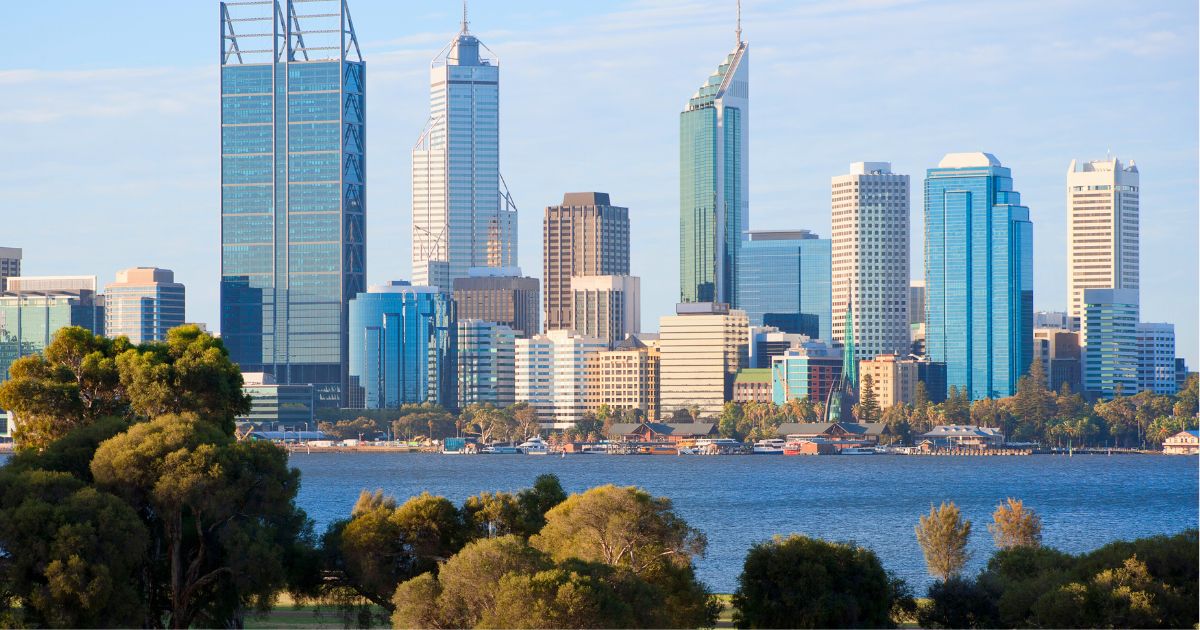
Perth, often described as the most isolated big city in the world, will charm you with its laid-back atmosphere and endless sunny days. Kings Park with its botanical garden offers the most beautiful view of the city and the Swan River that flows through it. From here it’s just a short ferry hop to Rottnest Island, home to the cutest little animals on the planet – quokkas, who will happily pose for a photo with you.
Fremantle, a port town near Perth, lures visitors with historic buildings, lively markets and great restaurants. This is where you’ll feel that true Aussie ease: coffee by the ocean, a stroll through the historic lanes and dinner with fresh seafood.
Read more: 18 tips on what to see in Perth
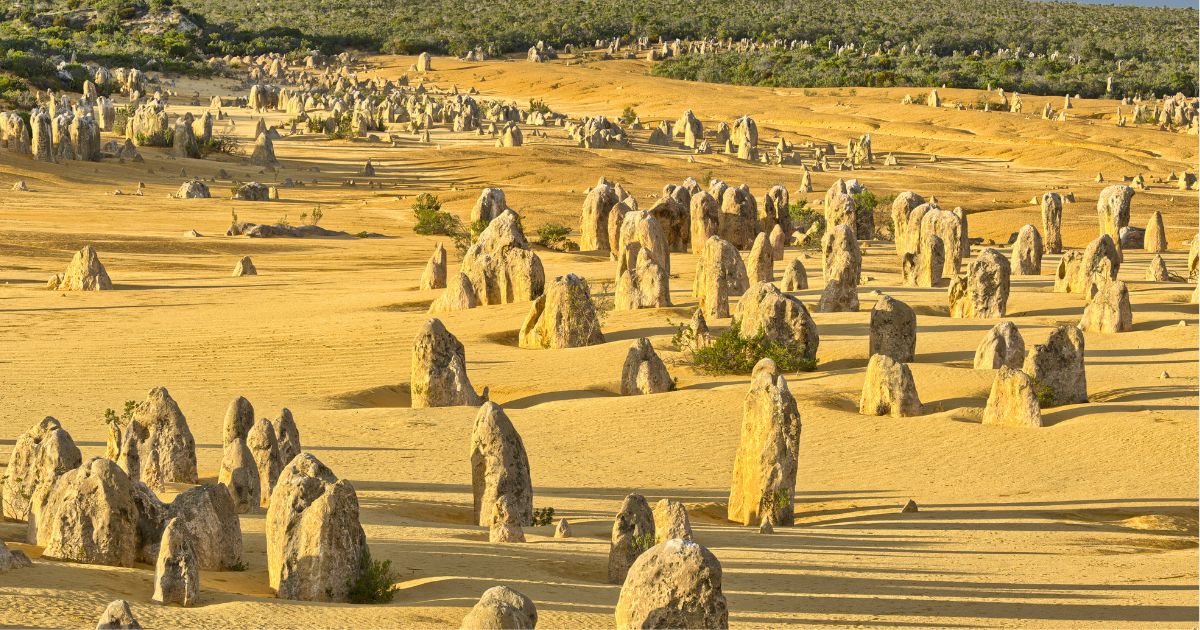
Nambung National Park
About two hours’ drive north of Perth lies one of Australia’s most fascinating natural phenomena. The Pinnacles Desert is a landscape dotted with thousands of limestone pillars rising from the yellow sand like ancient monuments. Some reach five metres tall, others are only a few centimetres high. Science still doesn’t know exactly how they formed, but their beauty is undeniable.
It’s at its most beautiful here at sunset, when the whole landscape turns shades of orange and pink.
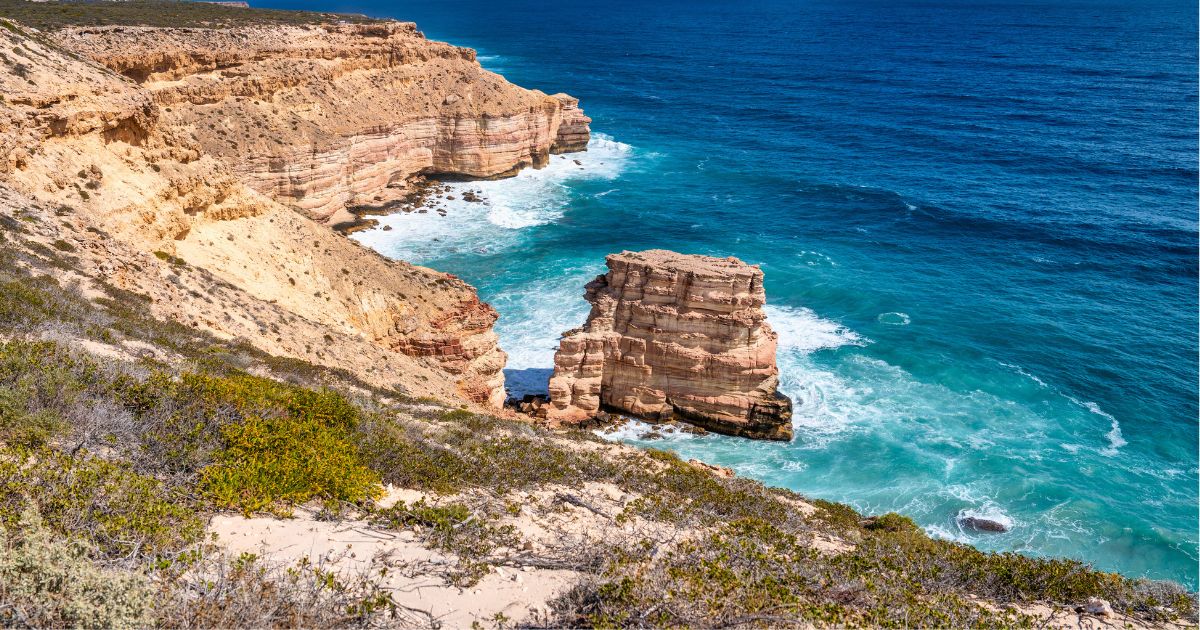
Kalbarri National Park
Kalbarri National Park will stun you with its dramatic scenery of deep red canyons carved by the Murchison River over millions of years. The most famous feature is Nature’s Window – a natural sandstone arch that frames the view down into the valley.
There’s also a new attraction, the Kalbarri Skywalk, which takes you out over the edge of the canyon on a glass platform, where the plunge below will take your breath away. For the more adventurous there are trails leading along the canyon floor, where you can discover hidden pools and waterfalls.
Monkey Mia
Picture yourself standing knee-deep in the warm water of the Indian Ocean while dolphins swim all around you. In Monkey Mia this dream comes true every single morning. Dolphins have been coming to this shore for more than fifty years, and experienced guides let you feed them and even touch them.
Just as breathtaking as the dolphins are the local white-sand beaches, where there’s not a soul in sight. The Monkey Mia resort offers accommodation right by the water, where you fall asleep to the sound of the waves and the occasional splash of a dolphin.
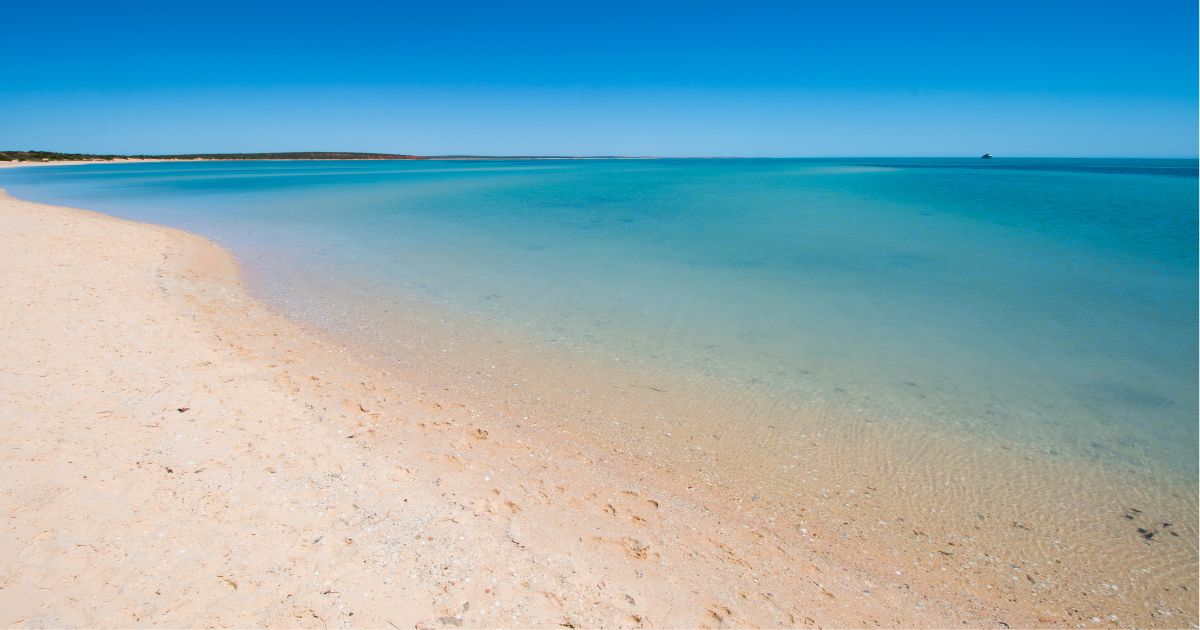
Shark Bay and François Peron National Park
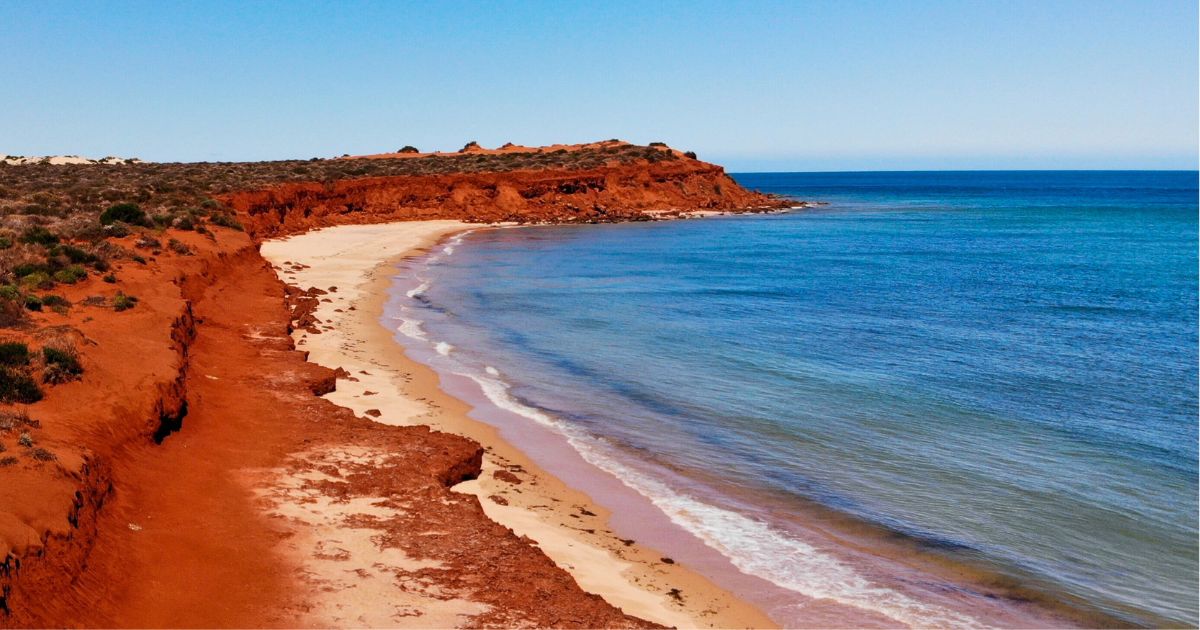
Shark Bay isn’t only about sharks, as the name might suggest. It’s a region of red desert and turquoise lagoons where you can spot all kinds of marine life. Shell Beach is a beach made up entirely of tiny shells that have accumulated here over thousands of years.
François Peron National Park is a true gem. From a bird’s-eye view it looks like an abstract painting full of red and turquoise brushstrokes. Scenic flights over it are among the most beautiful experiences in all of Australia.
Margaret River
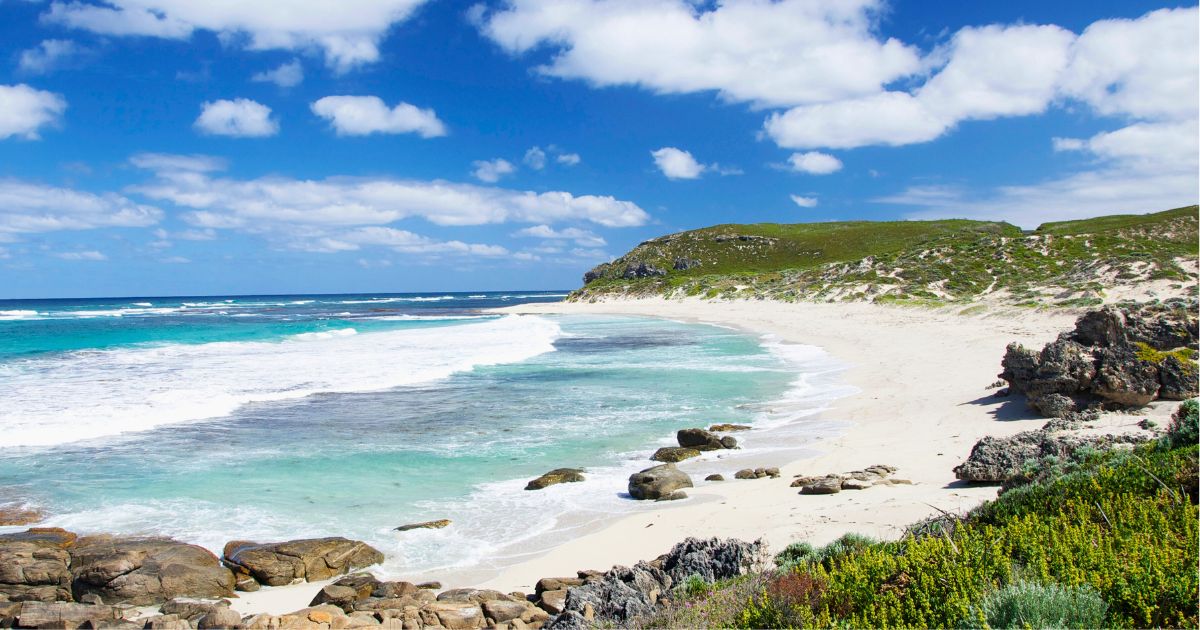
The Margaret River region is synonymous with excellent wine, excellent food and great waves. More than 150 wineries here produce over 20 percent of Australia’s premium wine. Tastings take place in gorgeous vineyard settings with ocean views.
Surfers come here for some of the best waves in the world, while foodies discover restaurants ranked among the country’s finest. Margaret River is also a place where you can try coasteering – a sport that combines climbing, jumping and swimming along the coastline.
Esperance
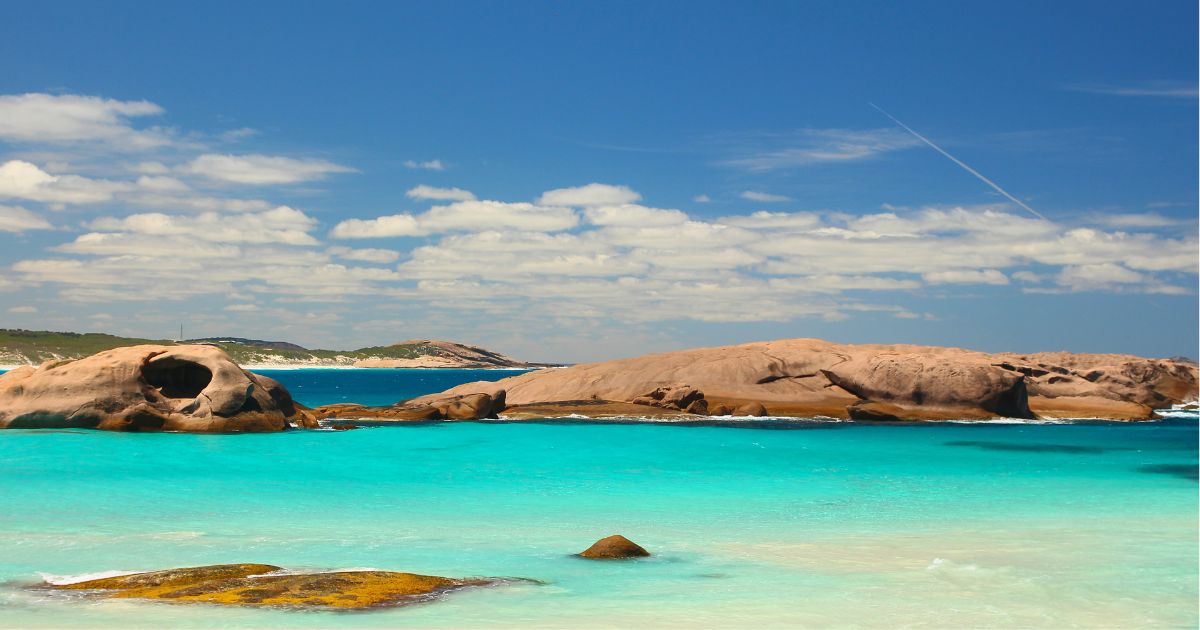
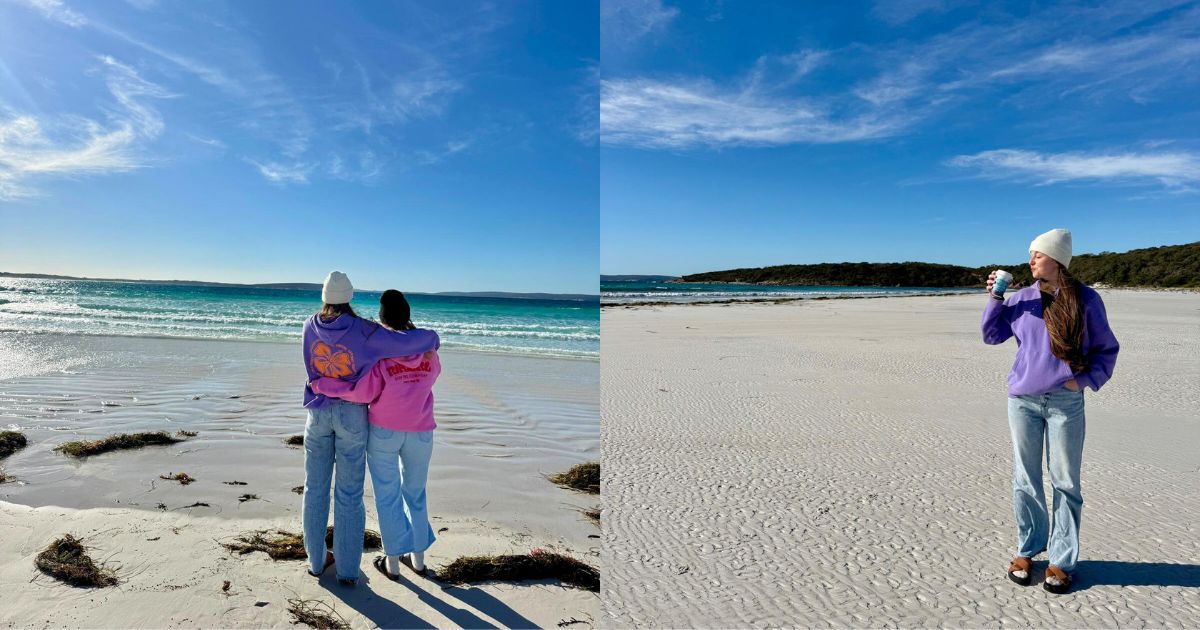
If you had to find the definition of the perfect beach, you’d probably end up in Esperance. Lucky Bay, with its pure white sand as fine as flour and water in shades ranging from turquoise to cobalt blue, hosts some unexpected visitors – kangaroos, who love to soak up the sun here.
A Road-Trip Itinerary for Western Australia (from Perth to Esperance)
How do you experience Western Australia for yourself and turn it into a memory for the rest of your life? Set off on a road trip. There are plenty of popular routes across Western Australia, but in the end we chose the drive from Perth to Esperance and back. This road trip takes you through the most beautiful places over 12 days, covering roughly 1,400 kilometres packed with unforgettable experiences.
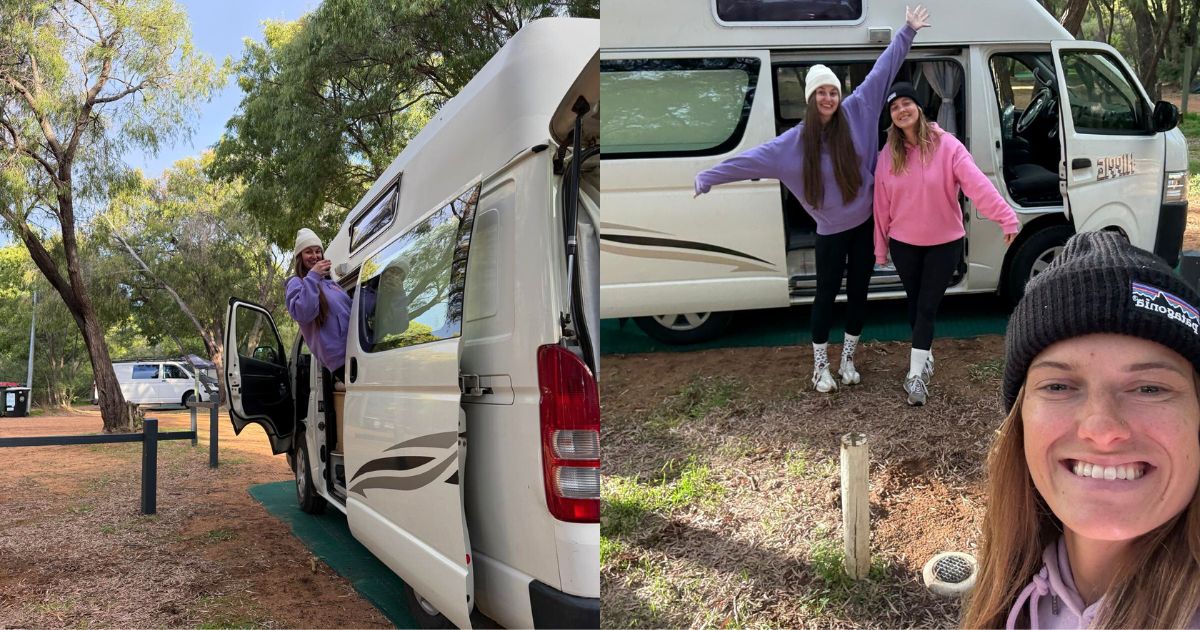
For the trip we rented a campervan, which meant we could cook and sleep in it, and off we went in search of adventure. And now, following our itinerary, you can do the same.

Days 1–2: Perth and Rottnest Island
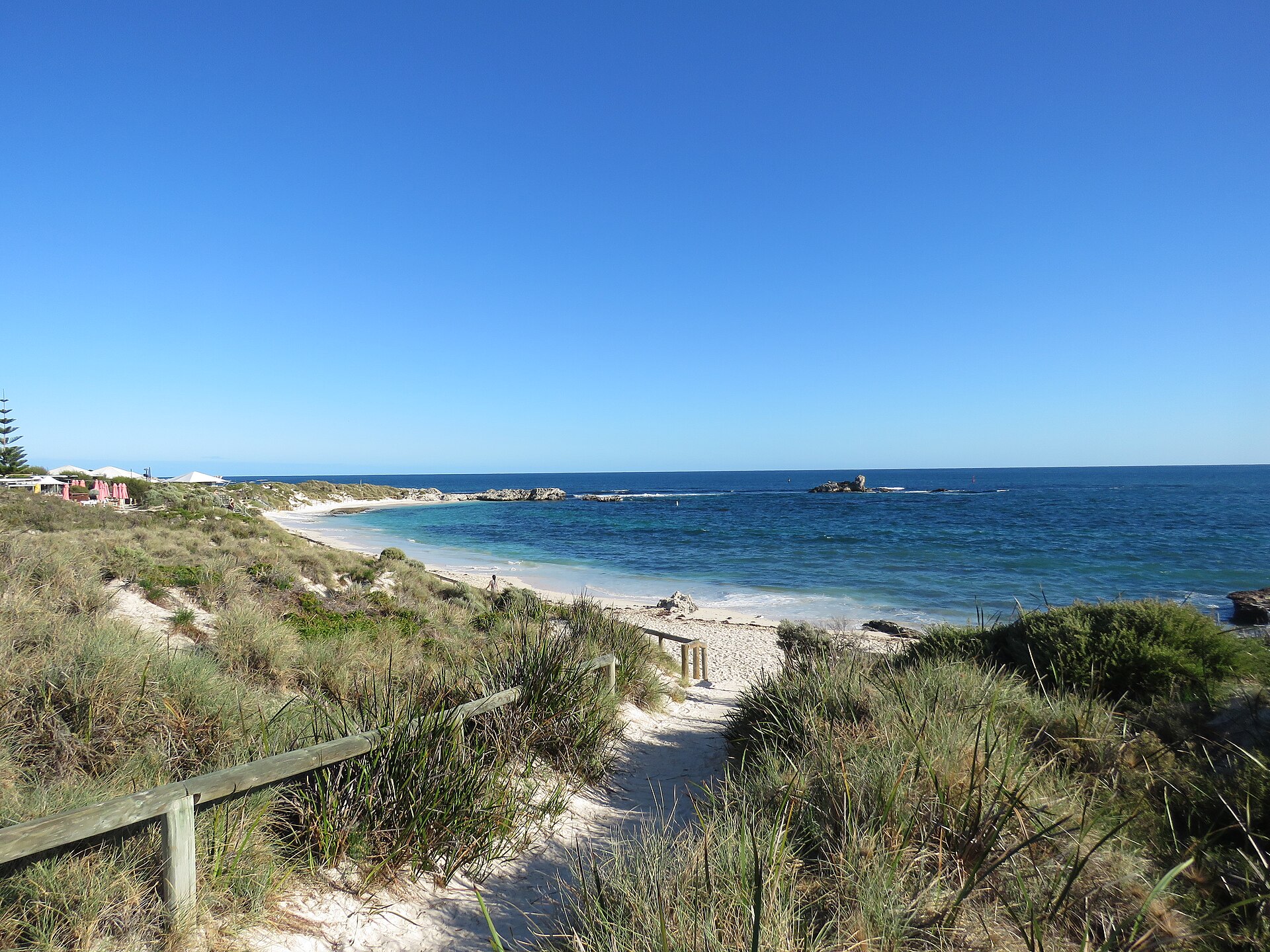
Start in Perth, where you pick up your rental car and adjust to the local time zone. Spend the first day strolling through Kings Park, exploring the city and getting ready for the trip. On the second day, take the ferry to Rottnest Island, where you’ll spend the day cycling, swimming and, above all, taking photos with the quokkas.
We recommend staying in Perth at one of the hotels near the centre (e.g. ibis Styles East Perth) or in beautiful Fremantle, from where ferries to Rottnest Island depart regularly.
Day 3: Perth – Bunbury – Busselton
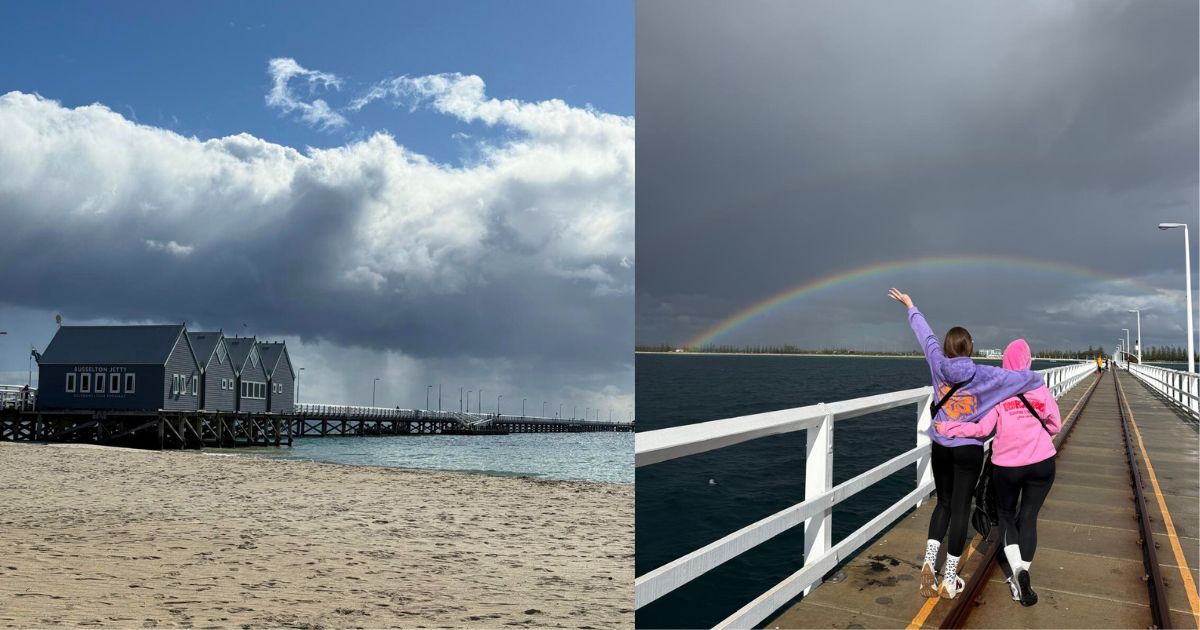
The next day, head south. The first stop is Bunbury, a quiet little town where you can walk along the beach or visit the local dolphin centre. Then continue to Busselton, where the famous wooden Busselton Jetty awaits – the longest of its kind in the southern hemisphere.
Days 4–5: Margaret River
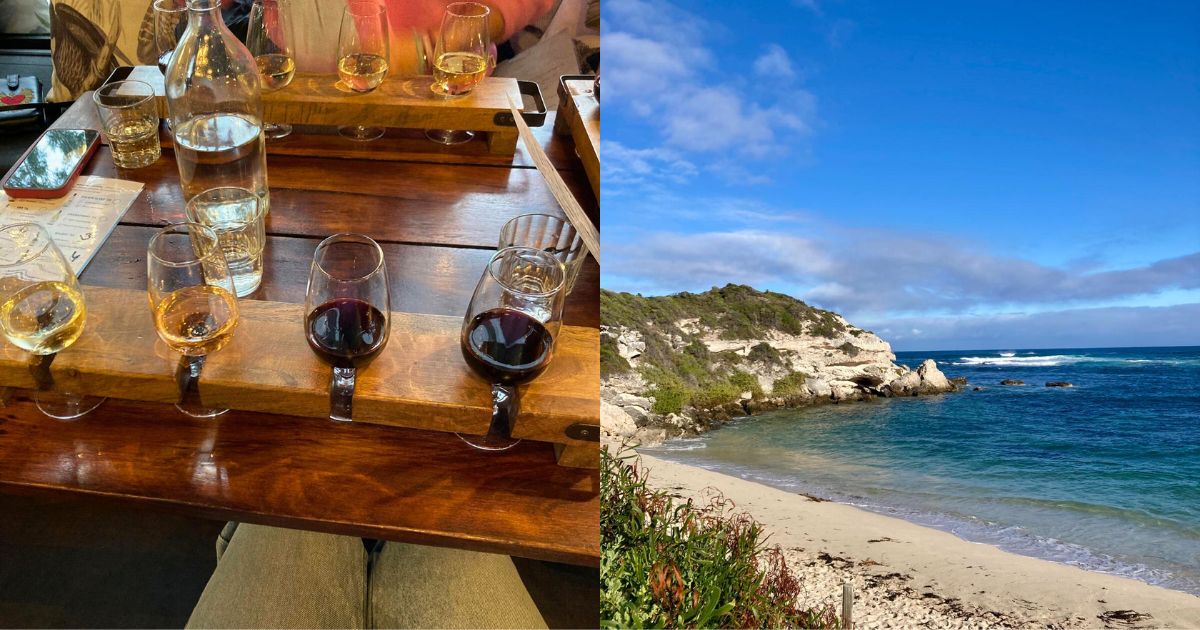
Margaret River is a paradise for foodies, surfers and nature lovers alike. Taste wines at one of the dozens of wineries, walk out to the coastal cliffs or visit fascinating caves like Ngilgi Cave. And if you’re in the mood for adventure, try surfing or head out on a hike in Leeuwin-Naturaliste National Park.
Day 6: Augusta – the lighthouse and the southernmost tip of Western Australia
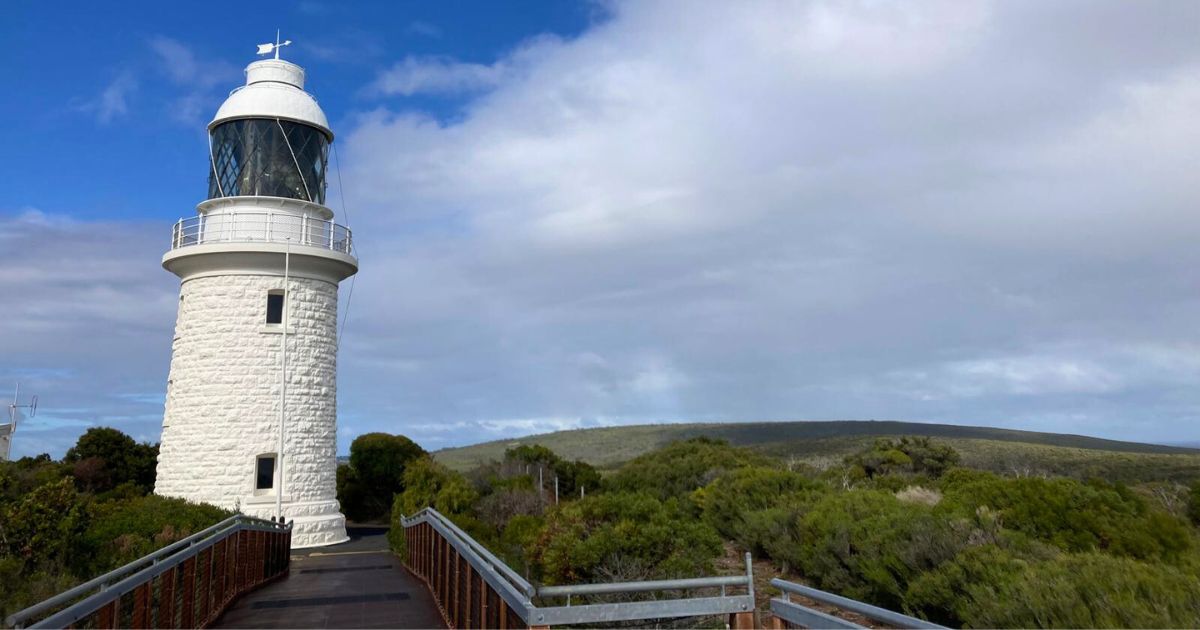
The drive to Augusta is a pleasant journey through forests and vineyards. The town sits at the very south of the state, where the Indian and Southern Oceans meet. Visit the Cape Leeuwin lighthouse, walk along the coast and, with a bit of luck, you’ll see whales migrating along the shore (in season). And if you want to give luck a hand, book a whale-watching cruise – most operators guarantee a 99% chance of a sighting.😄 Just be prepared for seasickness.
Day 8: Albany
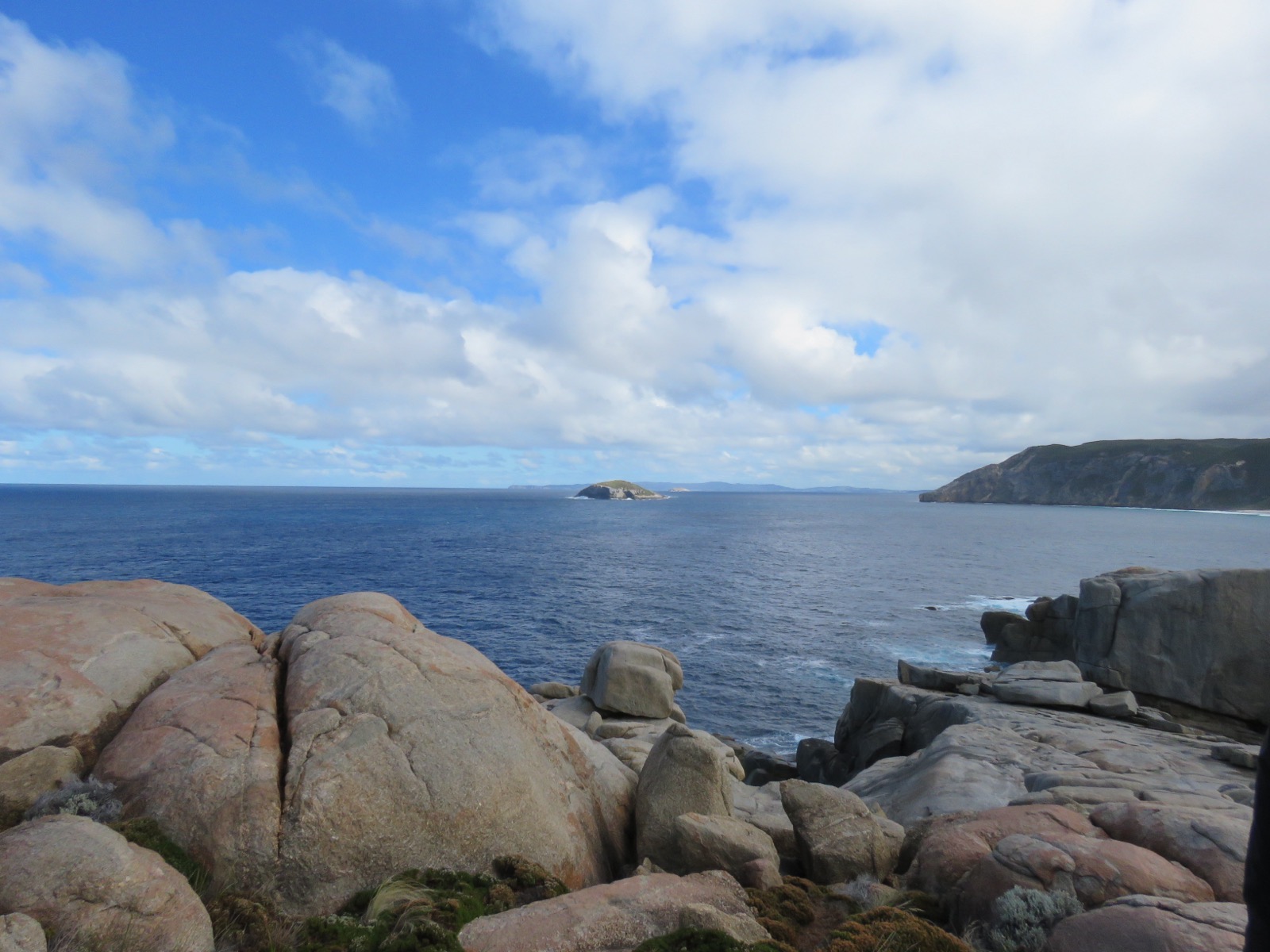
In Albany, visit the historical museum, drive out to the natural arches and cliffs in Torndirrup National Park, or simply take a walk along the peaceful coves.
Day 9: Albany – Bremer Bay
Bremer Bay is a lesser-known but all the more beautiful corner of Western Australia. This small seaside town is known for its gorgeous beaches, calm atmosphere and, in season, orca watching.
Days 10–12: Esperance
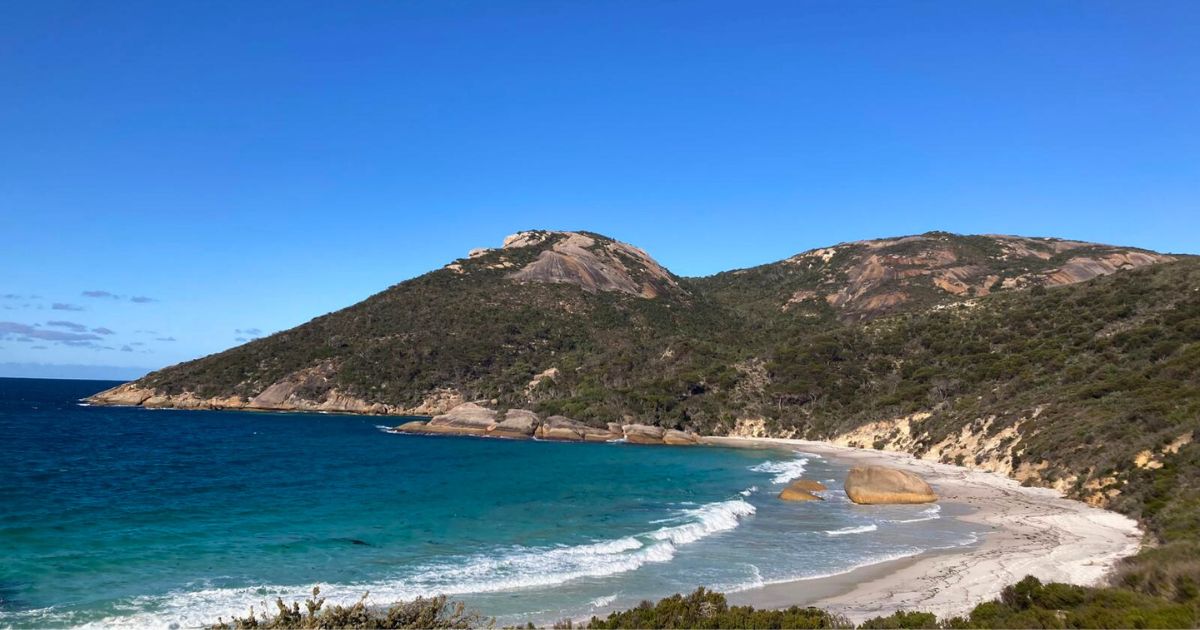
The finale of the road trip belongs to one of the most photogenic places in Australia. Esperance and the surrounding Cape Le Grand National Park offer beaches with unbelievably white sand and turquoise water. In Lucky Bay, kangaroos often sunbathe right on the beach, while Twilight Beach offers perfect swimming conditions. Head up to the Frenchman Peak lookout, drive the coastal Scenic Drive and end each day with dinner overlooking the ocean. It is worth it.
Map of points of interest for your phone
The North of Western Australia: What Lies Above Perth
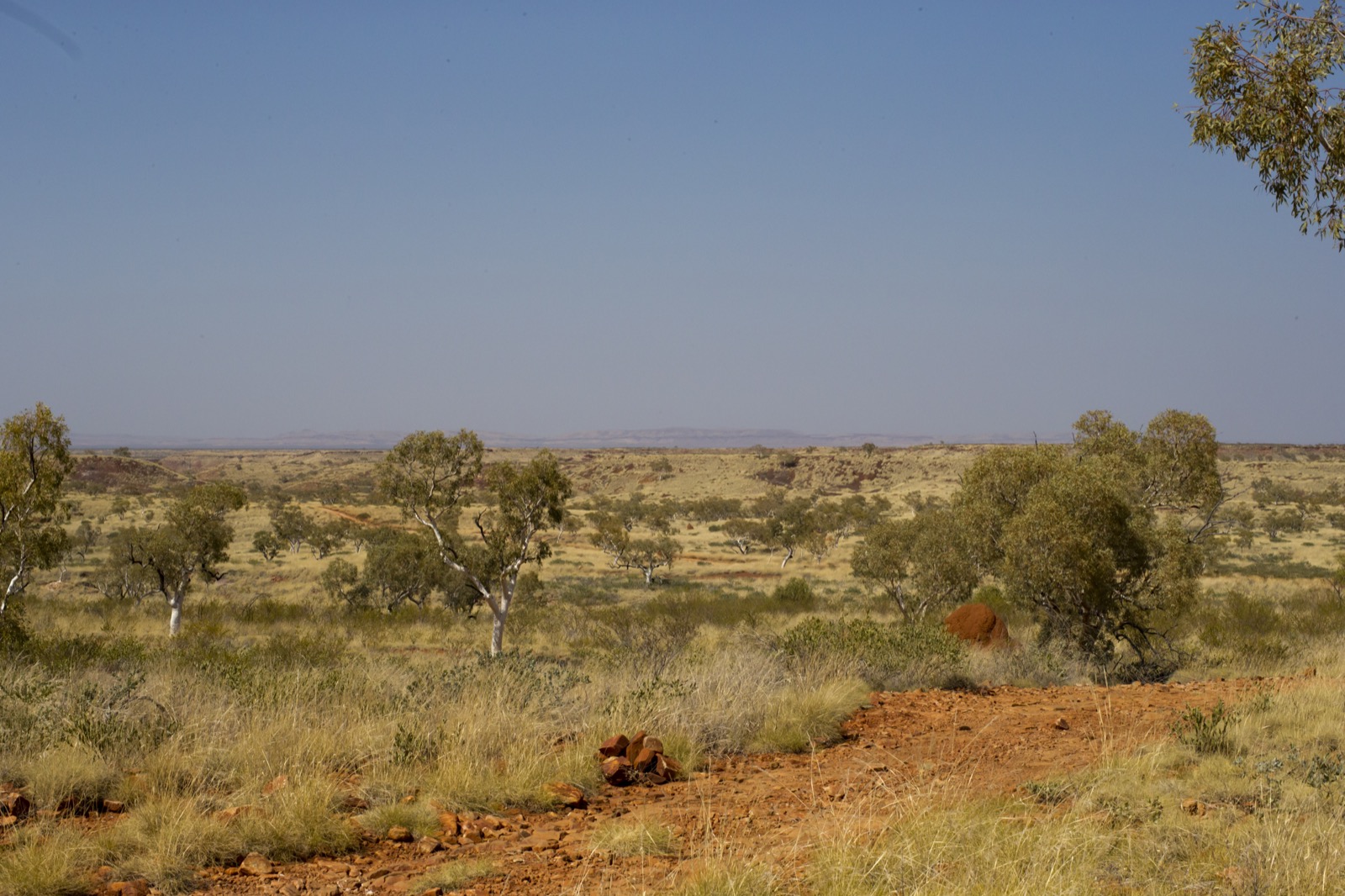
While the southern coast below Perth tempts you with picturesque wineries and can be driven fairly comfortably as a loop on a regular holiday, the north is a whole different ball game. Above Perth begins genuine wilderness that demands more time and planning, because this isn’t just a short detour off the main route but more of a full-blown expedition.
This sprawling part of the country offers total contrasts to the civilised south. Here you’ll find a stunning coral reef right off the beach, dramatic ironstone gorges in the dusty Pilbara region, and the rugged, purely tropical Kimberley.
If you venture up here, expect enormous distances and red dust you’ll probably never fully wash out of your clothes. In return, though, you’ll be rewarded with deserted beaches, turquoise seas and a sense of complete freedom that travellers on the northern route apparently rave about the most. Let’s take a look at the very best the north of Western Australia has to offer.
Ningaloo Reef and Exmouth
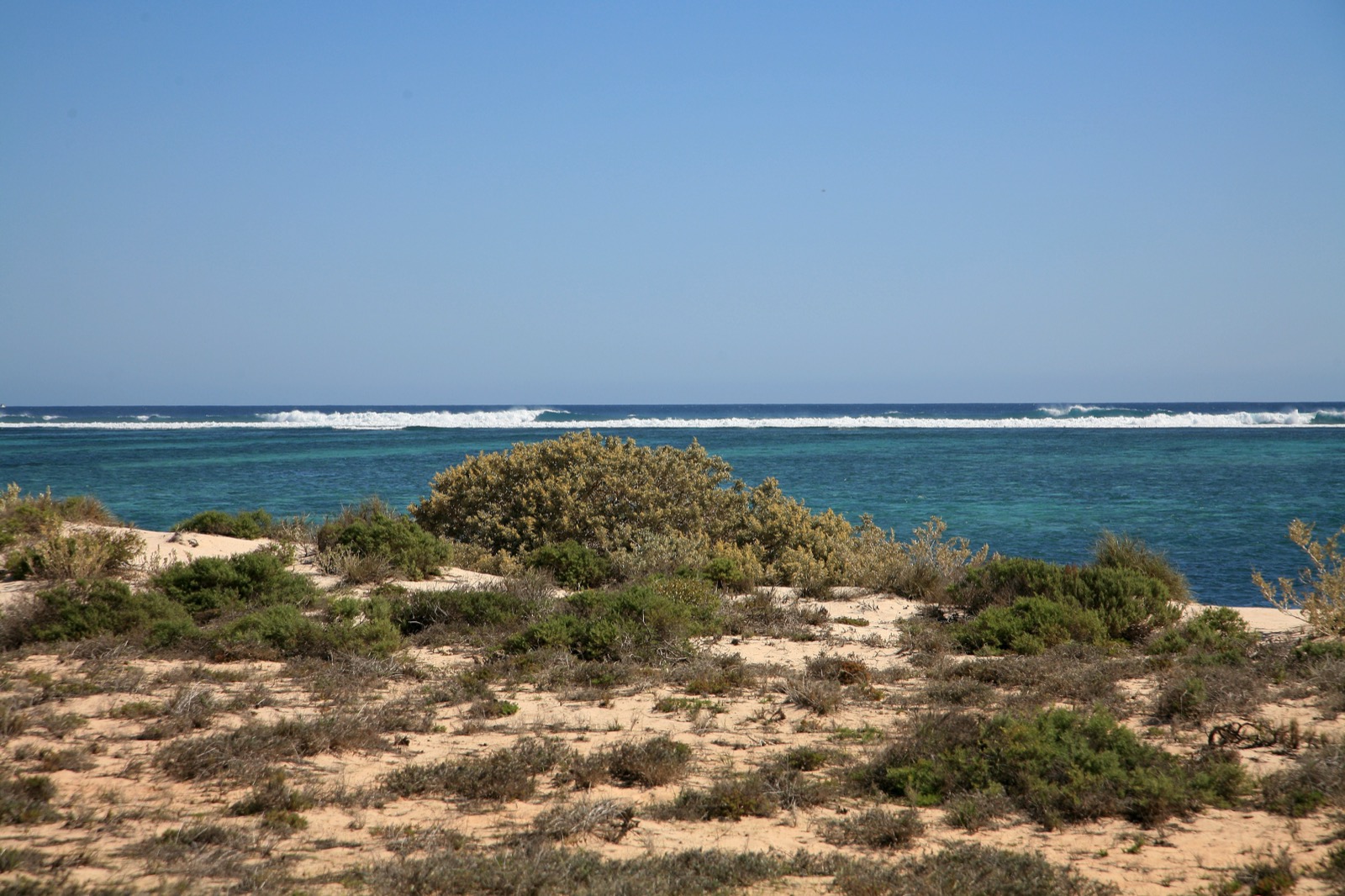
While reaching the famous Great Barrier Reef on the east coast of Australia takes a complicated boat trip, the breathtaking Ningaloo coral reef is literally a few steps from the beach. It’s a UNESCO World Heritage site, and the locals swear by it because there are no crowds of tourists and the underwater life is absolutely jaw-dropping.
The main draw of the area is swimming with whale sharks and whale watching, which is said to be a once-in-a-lifetime experience. Local operators like Ningaloo Discovery Whale Shark Tours (Google 4.9, 633 reviews), Kings Ningaloo Reef Tours (Google 5, 347 reviews) or the more intimate Live Ningaloo (Google 5, 254 reviews) will take you straight to these gentle giants. Just always check the current season with your chosen operator before your trip, as the animals migrate. Tours with Ningaloo Reef Holidays (Google 4.7, 295 reviews) are also highly rated.
On land, don’t miss the gorgeous Cape Range National Park (Google 4.8, 721 reviews), where red rocks drop straight into the ocean. The historic Vlamingh Head Lighthouse (Google 4.6, 1,021 reviews), with its views over the endless sea, is also worth a stop.
You can admire the area’s fascinating geology in the nearby canyons of Charles Knife Canyon (Google 4.8, 382 reviews) and the neighbouring Shothole Canyon (Google 4.6, 152 reviews). If you want to learn more about the whole ecosystem, a visit to the modern Ningaloo Centre (Google 4.3, 935 reviews) right in the town of Exmouth is recommended.
Karijini National Park
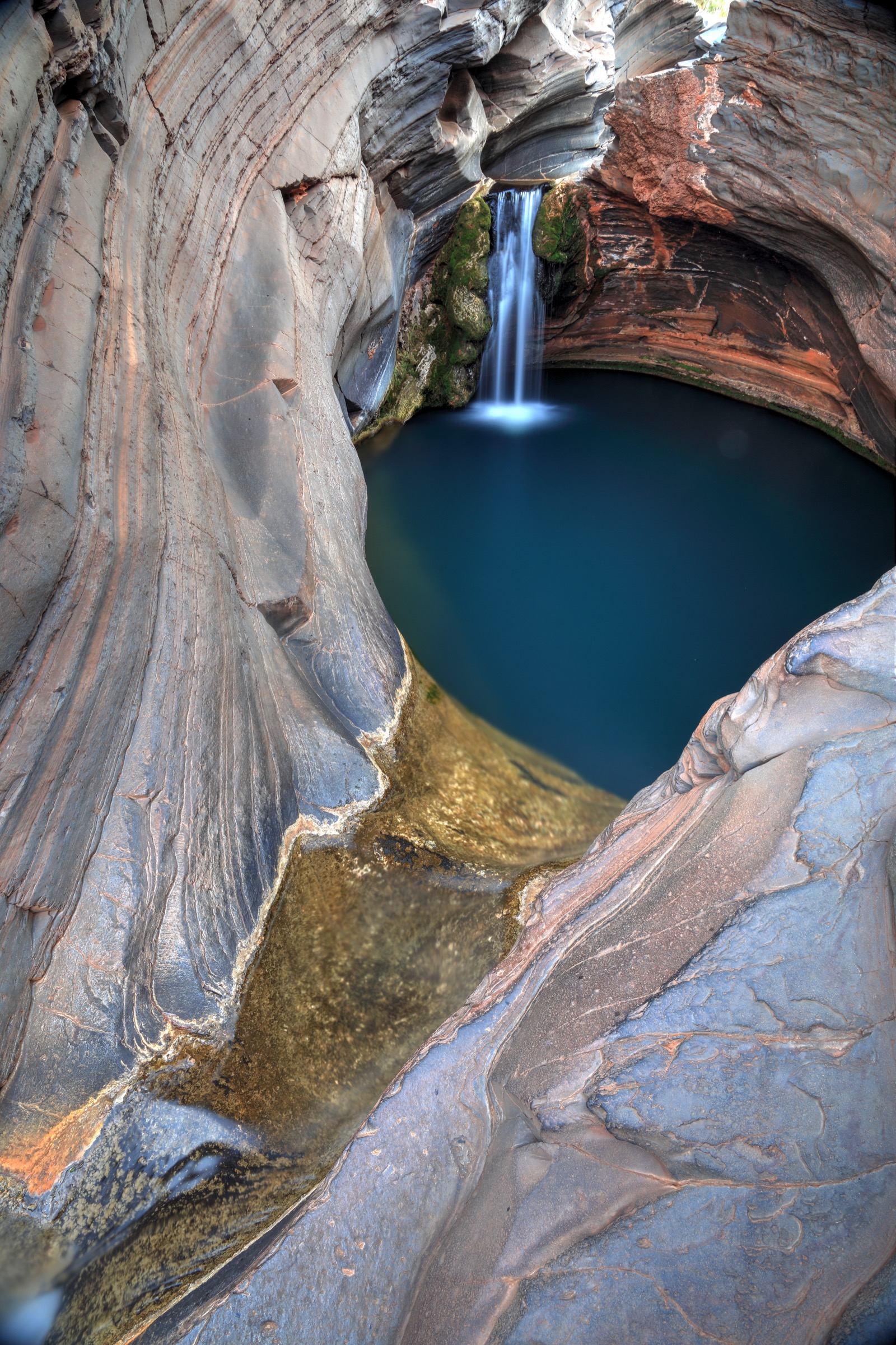
If you love dramatic scenery, the Pilbara region will absolutely blow you away, because it hides the most beautiful ironstone gorges in all of Australia. Karijini National Park itself (Google 4.7, 1,347 reviews) is said to be a place you simply have to see with your own eyes to believe just how vivid that red of the rocks really is.
Here you’ll find deep gorges full of cascading waterfalls and crystal-clear natural pools you can happily dive into after a dusty drive. Among them is the iconic Fern Pool (Google 4.9, 223 reviews), surrounded by lush greenery and feeling like a genuine oasis in the middle of the wilderness.
Another huge hit in the park is Fortescue Falls (Jubula) (Google 4.8, 236 reviews), where water flows down terraced rocks straight into a pool.
💡 TIP: Before you set off to explore the individual gorges, don’t forget to check the current condition of the trails at the visitor centre, because the terrain here can be quite treacherous and safety should always come first.
Broome and Cable Beach
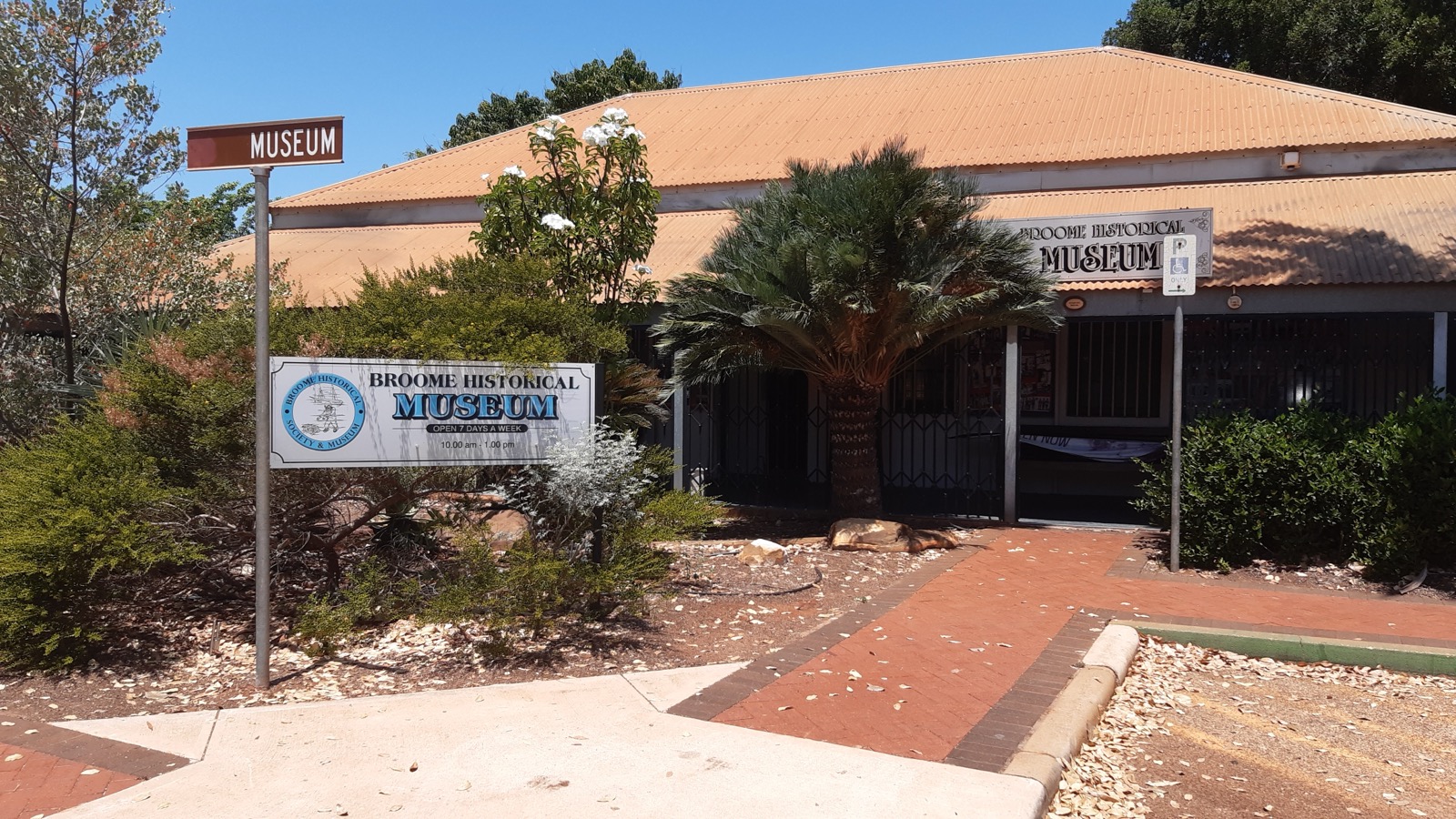
The tropical town of Broome has an incredibly relaxed atmosphere and became famous above all for its long history of pearling, which you can learn more about at the Broome Historical Museum (Google 4.6, 571 reviews). These days travellers come here mainly for relaxation and endless beaches.
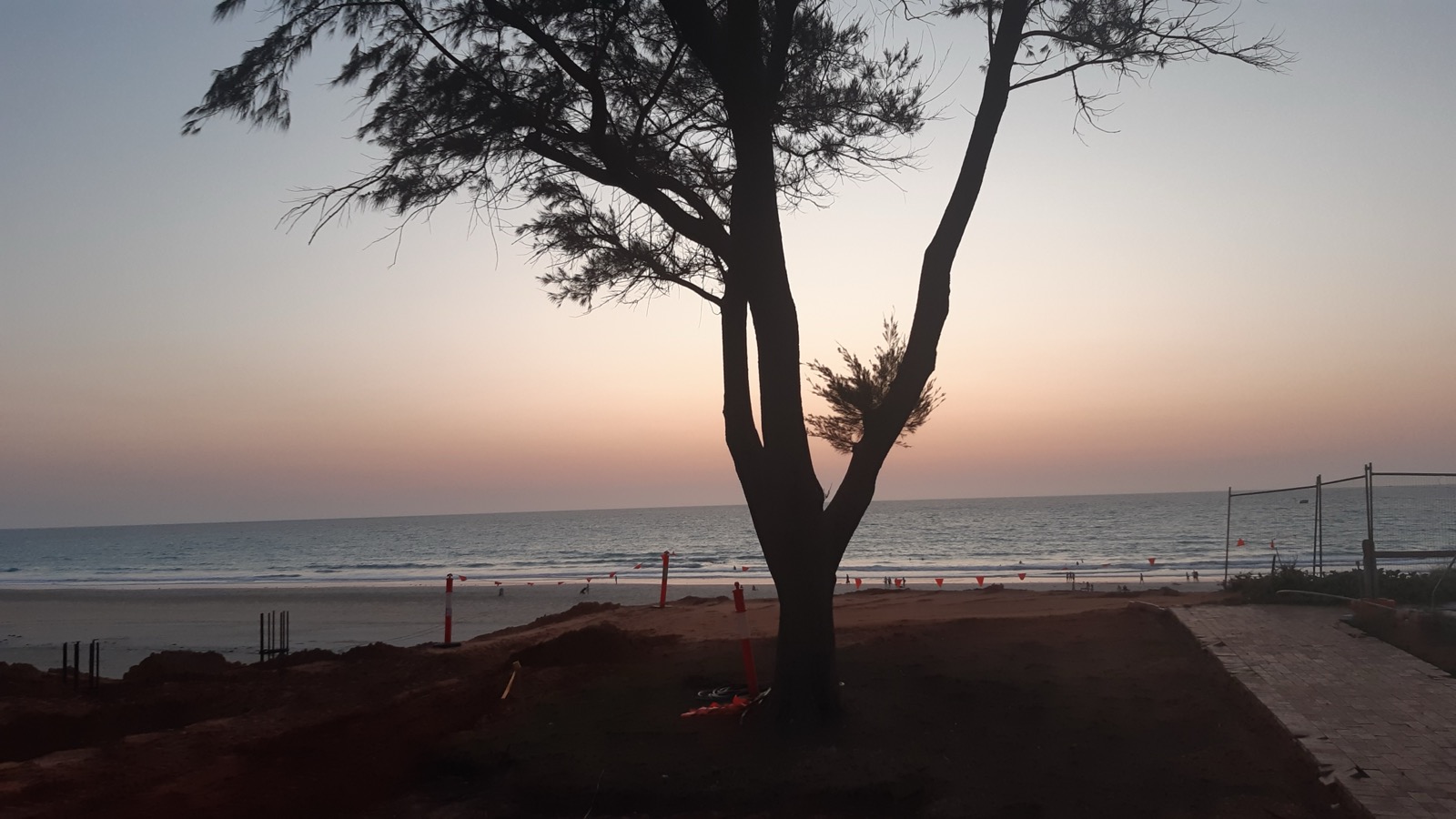
The most famous of all is Cable Beach (Google 4.7, 238 reviews), where sunset paints the sky in unbelievable shades of purple and orange. This is exactly where the hugely popular camel rides along the shore take place, and they look absolutely magical in photos.
Gantheaume Point (Google 4.6, 1,434 reviews) offers beautiful views of the red cliffs contrasting with the turquoise water. For calmer swimming, locals recommend Town Beach (Google 4.6, 698 reviews) or the more secluded Simpson Beach (Google 4.7, 101 reviews).
Broome is also home to a fascinating natural phenomenon known as the Staircase to the Moon, when moonlight reflects off the exposed mudflats of the bay and creates the illusion of golden stairs to the sky. The dates of this phenomenon change, so be sure to ask at the local info centre. On these evenings the local Staircase to the Moon Night Markets (Google 4.4, 70 reviews) come to life too, where you can pick up local handicrafts and soak up the great atmosphere.
Kimberley and the Gibb River Road
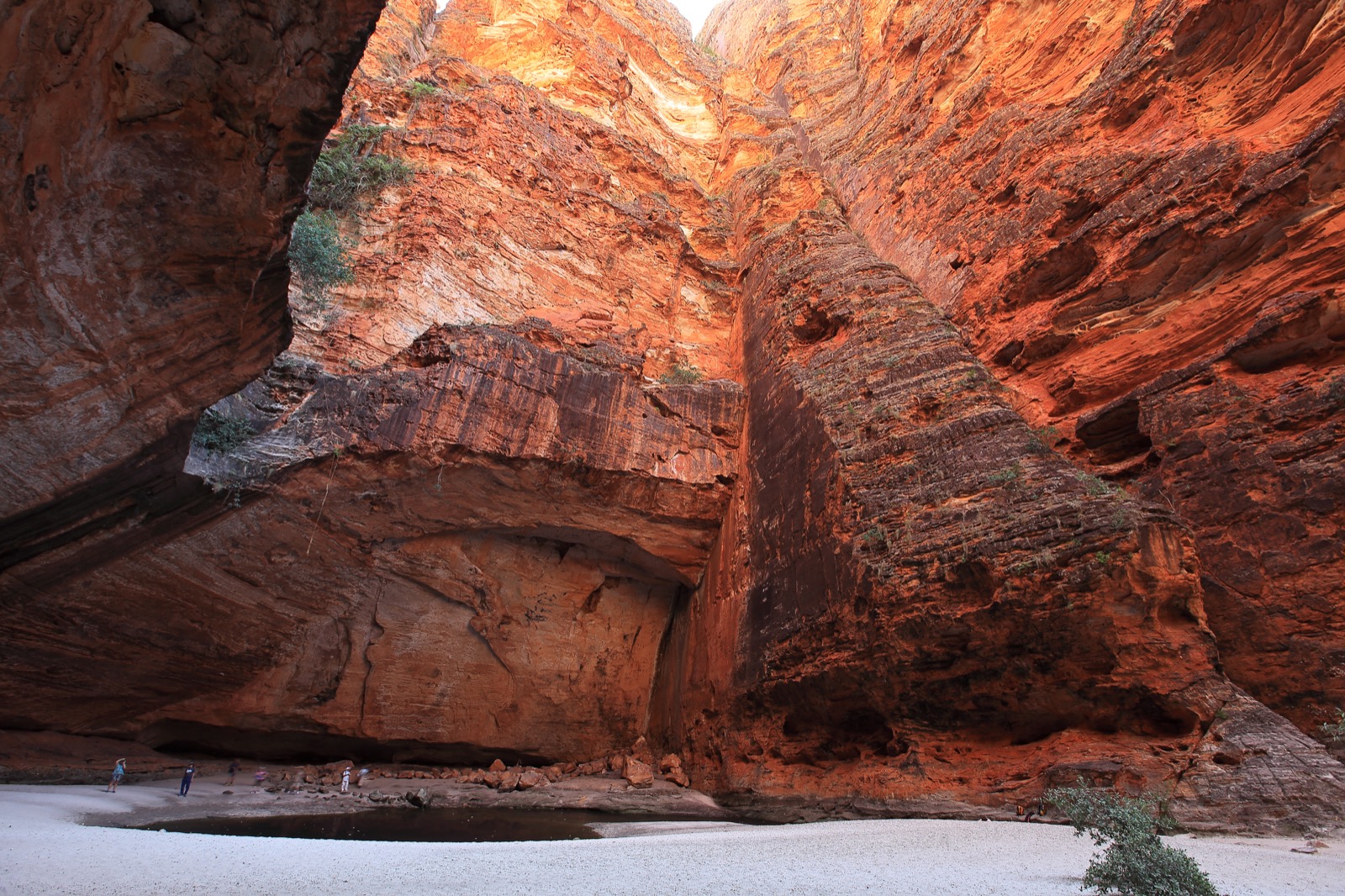
This is the real Australian wilderness, where only the most daring travellers venture in search of total disconnection from civilisation. The Kimberley region is huge, rugged and hides natural wonders that were largely shaped by wild water during the wet season.
The most famous icon of the area is the beehive-like rock formations in the reserve of The Bungle Bungles (Purnululu) (Google 4.5, 143 reviews), which is even on the UNESCO list. Other gems include the beautiful Geikie Gorge National Park (Google 4.4, 258 reviews) and dramatic gorges with natural pools such as Emma Gorge (Google 4.6, 191 reviews) or the calmer Manning Gorge (Google 4.7, 104 reviews).
A truly unique spectacle awaits at the Horizontal Falls nature reserve (Google 4.8, 124 reviews), where huge tidal waves create the effect of horizontal waterfalls. A great view of them from above is provided by Horizontal Falls Seaplane Adventures (Google 4.7, 392 reviews).
The backbone of the whole region is the legendary off-road Gibb River Road. If you’re planning to tackle it, you must always check its current condition in advance with the road and national park authorities, as it is regularly flooded. Also remember that standard rental-company insurance usually doesn’t apply at all on these unsealed roads.
South or North? How to Choose
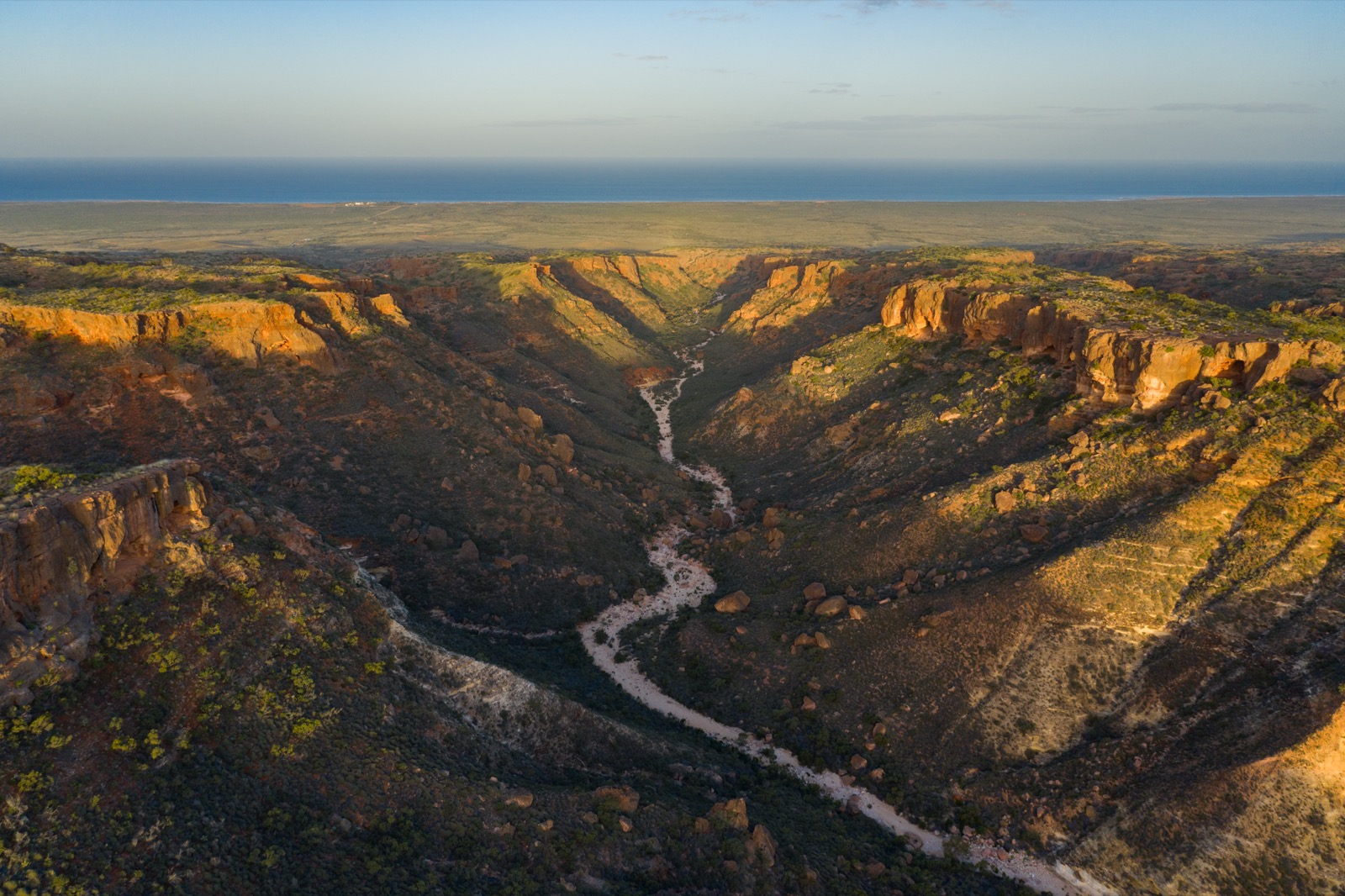
This is probably the most common dilemma for anyone planning a trip to Western Australia, and the answer depends mainly on how much time you have and exactly when you’re flying. The south and north of the state have completely different climates, and the ideal time to visit each actually diverges entirely.
The southern route from Perth is easy to plan as a relaxed loop. The distances between the interesting spots are much shorter here, you’ll enjoy plenty of greenery, the famous Margaret River wineries and gorgeous beaches. It’s a great choice if you only have a week or two for the trip and want to see as much as possible without extreme drives.
The north, on the other hand, is a huge challenge and an expedition in its own right, requiring you to rent a 4WD and carefully plan every refuelling. Weather plays a crucial role here, because Broome and the Kimberley lie in a cyclone zone with an official season from 1 November to 30 April (according to the Australian Bureau of Meteorology, bom.gov.au). During this period around 10 cyclones form on average, and 3 to 4 of them actually make landfall, so the north is essentially only driven during the dry season.
While Perth has daily highs of only around 17.4 °C in July (the Australian winter), the north is pleasantly warm and dry at that time. So if you’re heading to Australia during the northern-hemisphere summer holidays, it makes far more sense to head north. For more detailed information on how it works in each region, check out our article Weather in Australia: when to go by region.
What to Watch Out for Behind the Wheel in the North
Driving in the remote parts of Australia has its own very specific rules that you don’t want to underestimate, and the most fundamental one is, of course, driving on the left. There are practically no motorways here, and on the long straight stretches you’ll come across some rather different surprises.
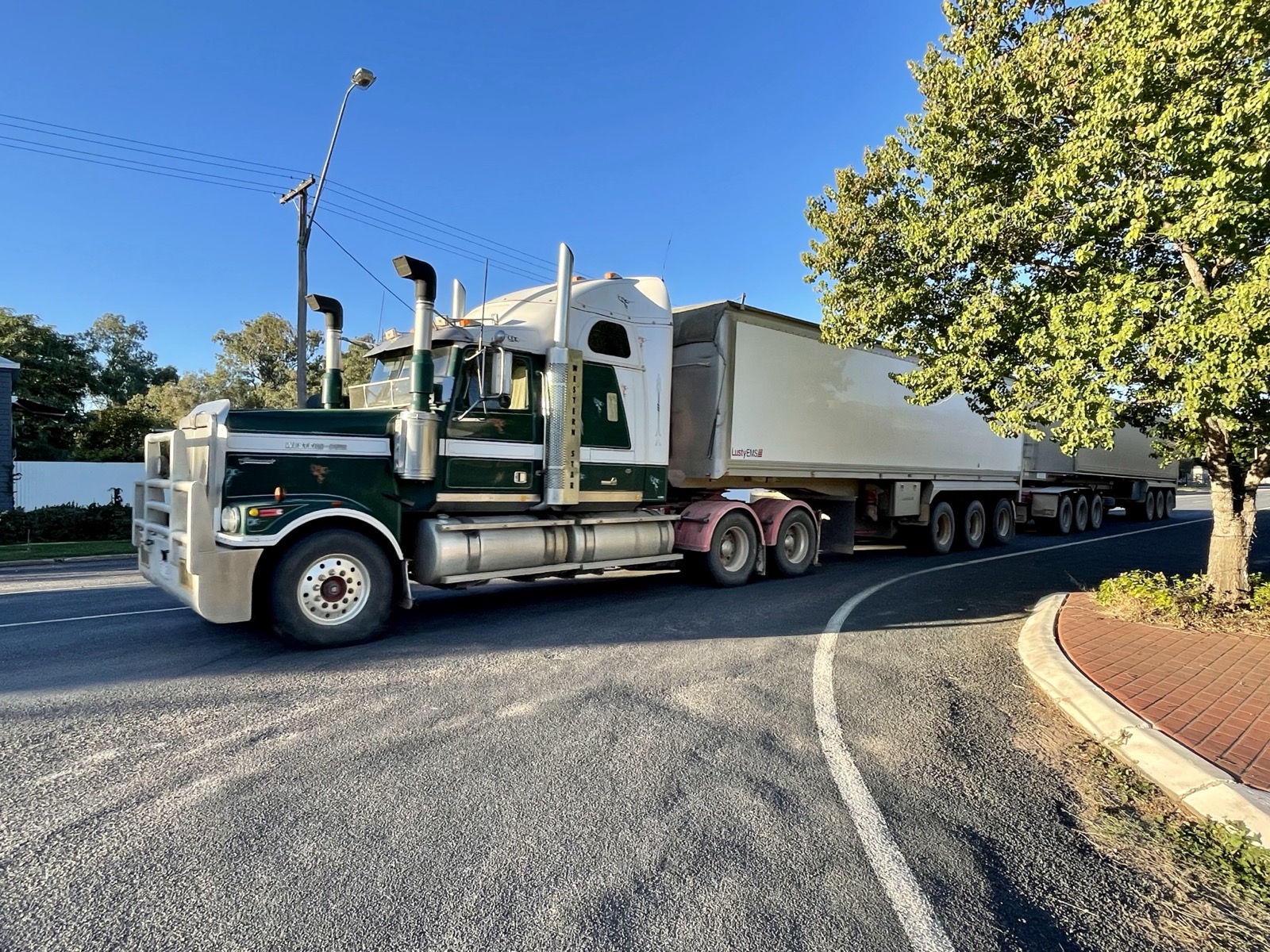
The biggest test of your nerves are the legendary road trains. These giant trucks can have up to three trailers and stretch over 50 metres long. Overtaking one on a country road can easily take 2.5 kilometres, so you really need a long clear view ahead and steady nerves.
Wildlife poses a huge danger, especially at dawn, dusk and at night. If you really must drive in the dark, don’t exceed 65 km/h and remember the golden rule: DON’T SWERVE. If a kangaroo jumps in front of your wheels, just brake hard while keeping straight – a swerving manoeuvre would reliably send you rolling.
💡 TIP: In these remote areas, petrol stations tend to be spaced roughly 300 kilometres apart. So fill up at every opportunity, however small, and always carry full jerry cans as a reserve.
Another important factor is insurance. Once you leave the tarmac, standard rental insurance usually doesn’t cover unsealed roads, something you have to reckon with at many northern national parks. And finally, one typically northern speciality: saltwater crocodiles. Only go into the water in the spots where local authorities and residents explicitly recommend it.
Where to Stay in the North
Finding accommodation in these remote areas can be a bit of a challenge, because capacity is very limited and in high season it disappears really fast. Wild camping is also strictly prohibited here, so you can only spend the night at designated and permitted spots.
If you’re looking for a base in the popular resort of Broome, travellers highly praise a stay at the more upscale Cable Beach Club Resort & Spa (Google 4.5, 997 reviews), which sits just a short walk from the famous beach. The popular Mangrove Hotel (Google 4.2, 1,295 reviews), with beautiful views over the bay, also offers a great location, as do the Moonlight Bay Suites apartments (Google 4.4, 297 reviews).
For more budget-friendly options in Broome, you can try the traditional Oaks Broome Hotel (Google 3.9, 697 reviews) or the practical Broome Time Resort (Google 3.9, 576 reviews), which make a good base for trips around the area.
If you’re planning to explore Ningaloo Reef and looking for an unforgettable experience right inside the national park, the eco-camp Sal Salis Ningaloo Reef (Google 4.6, 99 reviews) is definitely worth a mention, where you sleep in stylish tents with a view straight out over the ocean. ☺️
We’ve Planned Your Australia Holiday for You
Tempted to follow exactly in our footsteps but dreading the hours spent planning? To make travelling as easy as possible for you, we’ve put together an entire trip for you. We’ve gathered our whole route, the best places and all our tips into one clear itinerary. You can click through it in detail below, and if you like it, just a few clicks and you can set off without a single worry!
Camping in Australia: Where and How to Camp
I was never exactly a fan of camping, but some of the campgrounds I experienced in Australia could rival nice hotels. Whether you sleep in your car, a tent or a campervan, Australia has genuinely well-equipped campgrounds, clean showers, kitchens and often views money simply can’t buy.
You can choose between:
- Commercial campgrounds – you’ll find them in cities and tourist areas. They offer everything from a kitchen to a pool and are ideal for your comfort.
- National parks and bush camps – these have basic facilities but are often right in the middle of nature.
- Free camps – spots that are free or cost a symbolic fee, often without facilities, just with basic toilets.
Apps like Wikicamps, CamperMate or Park4Night will come in handy, helping you find the ideal spot by facilities, price and reviews. One more piece of advice: book your spot in good time (at least 1–2 days ahead), as campgrounds are often full (even off-season).
Where to Rent a Campervan
A campervan is an extremely popular way to travel in Australia, and you’ll find plenty of companies offering them online. You can choose according to your budget and travel style, from a small estate car with a bed all the way to a full-blown motorhome with a kitchen and shower.
The best-known rental companies are:
- Jucy – pink-and-green vans, affordable, ideal for young travellers.
- Camplify – the “Airbnb” of campervans, where people rent out their private vehicles.
- Apollo, Britz and Maui – larger companies with a wide range of vehicles.
- Travellers Autobarn – great prices and unlimited kilometres.
I recommend booking your vehicle in advance, especially if you’re planning your trip during the Australian summer (December–February). And be aware: in Australia you need an international driving permit and they drive on the left.
Where to Next
- Holiday in Australia: 30 most beautiful places
- Perth, Australia: 18 tips on what to see and do
- Road trip across Australia: routes, car and budget
- Animals in Australia: where to see kangaroos and koalas
- Great Barrier Reef: tours, prices and how to experience it
Frequently Asked Questions
When is the best time for a road trip in Western Australia?
The best time to visit Western Australia is March to May and September to November. During these months, temperatures are pleasant (20-25°C), there are fewer rainy days, and nature is in full bloom. Avoid December to February due to extreme heat (often over 40°C) and June to August due to rain and cooler weather.
How much money do I need for a road trip in Western Australia?
For a twelve-day road trip, budget 3,000-5,000 AUD per person, including car rental, fuel, accommodation, and meals. A car costs 80-120 AUD per day, fuel totals 600-800 AUD, accommodation ranges from 100-300 AUD per night, and food costs 50-100 AUD per person per day. Prices vary depending on comfort level and season.
Do I need an international driving permit?
Yes, to drive in Australia you need an international driving permit along with your national driver’s license. The international permit must be obtained in your home country before departure from the appropriate local authority.
Are there dangerous animals in Western Australia?
Western Australia is a relatively safe area. You’ll most commonly encounter kangaroos and emus on the roads, especially at dusk and at night. Venomous snakes and spiders are present, but attacks on humans are very rare. When swimming, watch out for sharks and venomous jellyfish. In the Esperance area, there are warning systems on the beaches.
What equipment should I bring on a road trip?
Don’t forget quality sunscreen (SPF 50+), a hat, sunglasses, and plenty of water – the sun in Australia is very intense. Bring comfortable hiking shoes, quick-dry clothing, and a light jacket for evenings. A camera is a must, as well as a power bank and an adapter for Australian outlets. For some activities, you can rent equipment on-site.
Tips and Tricks for Your Vacation
Don’t Overpay for Flights
Search for flights on Kayak. It’s our favorite search engine because it scans the websites of all airlines and always finds the cheapest connection.
Book Your Accommodation Smartly
The best experiences we’ve had when looking for accommodation (from Alaska to Morocco) are with Booking.com, where hotels, apartments, and entire houses are usually the cheapest and most widely available.
Don’t Forget Travel Insurance
Good travel insurance will protect you against illness, accidents, theft, or flight cancellations. We’ve had a few hospital visits abroad, so we know how important it is to have proper insurance arranged.
Where we insure ourselves: SafetyWing (simple monthly subscription) and TrueTraveller (for extra-long trips).
Find the Best Experiences
Get Your Guide is a huge online marketplace where you can book guided walks, trips, skip-the-line tickets, tours, and much more. We always find some extra fun there!


