Polish food and pierogi are simply a lifelong love affair. ☺️ I totally understand why some people travel to Poland purely to eat. Polish cuisine was a hit even with our kids, and a surprising number of restaurants are dog-friendly too.
Polish gastronomy is incredibly rich, blending German, Jewish and Ukrainian culinary influences. And while traditional Polish food is hearty and filling, the modern scene is bursting with hipster coffee shops and vegetarian bistros. So here’s everything we’ve tasted over the years — what we loved and what didn’t quite work out. Everything from pierogi to vodka, and from milk bars to vegetarian bistros that left Lukáš and me completely gobsmacked. 😅
TL;DR for those short on time:
- Pierogi (dumplings) are the absolute staple and come in dozens of varieties. Try the classic “ruskie” with potato and cheese, or the sweet strawberry ones that kids go wild for.
- Bar mleczny (milk bar) is a relic of socialism where you can still eat incredibly well and cheaply. A traditional lunch costs just 2–4 € here.
- The soups will sort you right out. Especially the sour żurek served in a bread bowl or a hearty Sunday rosół (broth).
- Vegetarians won’t go hungry. Kraków and Wrocław have some of the best vegetarian and vegan scenes in all of Europe.
- Vodka-drinking rules are sacred. It’s drunk neat, ice-cold, downed in one, and never diluted.
- Tipping in restaurants is around 10%, and be aware that drinking alcohol in public is strictly forbidden.
The full destination guide: Poland — guide and what to see
What to expect from Polish cuisine and why we love it
Before we dive into specific dishes, let’s set the scene for what awaits you on the plate. Polish cuisine is exactly the kind of food that makes you want to throw your watch away and just sit. It’s hearty, warming, and historically designed to properly fill you up — not just tease you. You’ll find plenty of potatoes, cabbage, mushrooms, root vegetables and quality meat, largely the result of a long history where different cultures converged on Polish soil.
Today, though, Poland is experiencing a massive culinary revolution. Alongside traditional grandma-style taverns, modern fine dining restaurants and artisan bakeries with specialty coffee are popping up everywhere, and Polish cities regularly feature in Michelin guides. Places like Kraków’s Bottiglieria 1881 or Warsaw’s Nolita are the kind of spots where you book months in advance — we haven’t managed to get in yet, unfortunately. But it’s on the list. 😅
Where to stay in Poland and how much it costs
If you’re heading to Poland primarily for the food, I’d recommend choosing accommodation right in the city centre so you can happily roll back to bed after a heavy dinner and a few shots of vodka.
A lovely boutique hotel in central Kraków or Wrocław will set you back around 60–100 € per night, and the breakfasts are absolutely epic — seriously. Pickled cucumbers, cold cuts, fresh bread, loads of everything. Lukáš and I really savour this kind of morning after a big gastronomic evening. 😁 In Kraków, we were thrilled with Hotel Puro in Kazimierz — it’s right next to the best bistros. In Warsaw, we always go for the reliable Motel One directly opposite the Chopin Museum. It’s a stone’s throw from brilliant bakeries where we grab our morning coffee. If you’re driving like we did on our 7-day Poland road trip, always check whether your hotel has its own parking, as parking zones in Polish cities can be quite strict.
Pierogi as a national treasure: 6 types of Polish food dumplings you must try
When someone says Polish food, pierogi are probably the very first thing that springs to mind. They’re essentially stuffed dumplings made from thin dough, either boiled in water or lightly pan-fried in lard with onions after boiling so they get beautifully crispy.
In so-called “pierogarnie” — specialist pierogi restaurants — you’ll easily find over ten different fillings. Our little boy Jonášek once refused to leave until he’d tried at least four of them. 😁 This year, he practically ate himself to bursting point.
1. Pierogi ruskie (potato and cheese)
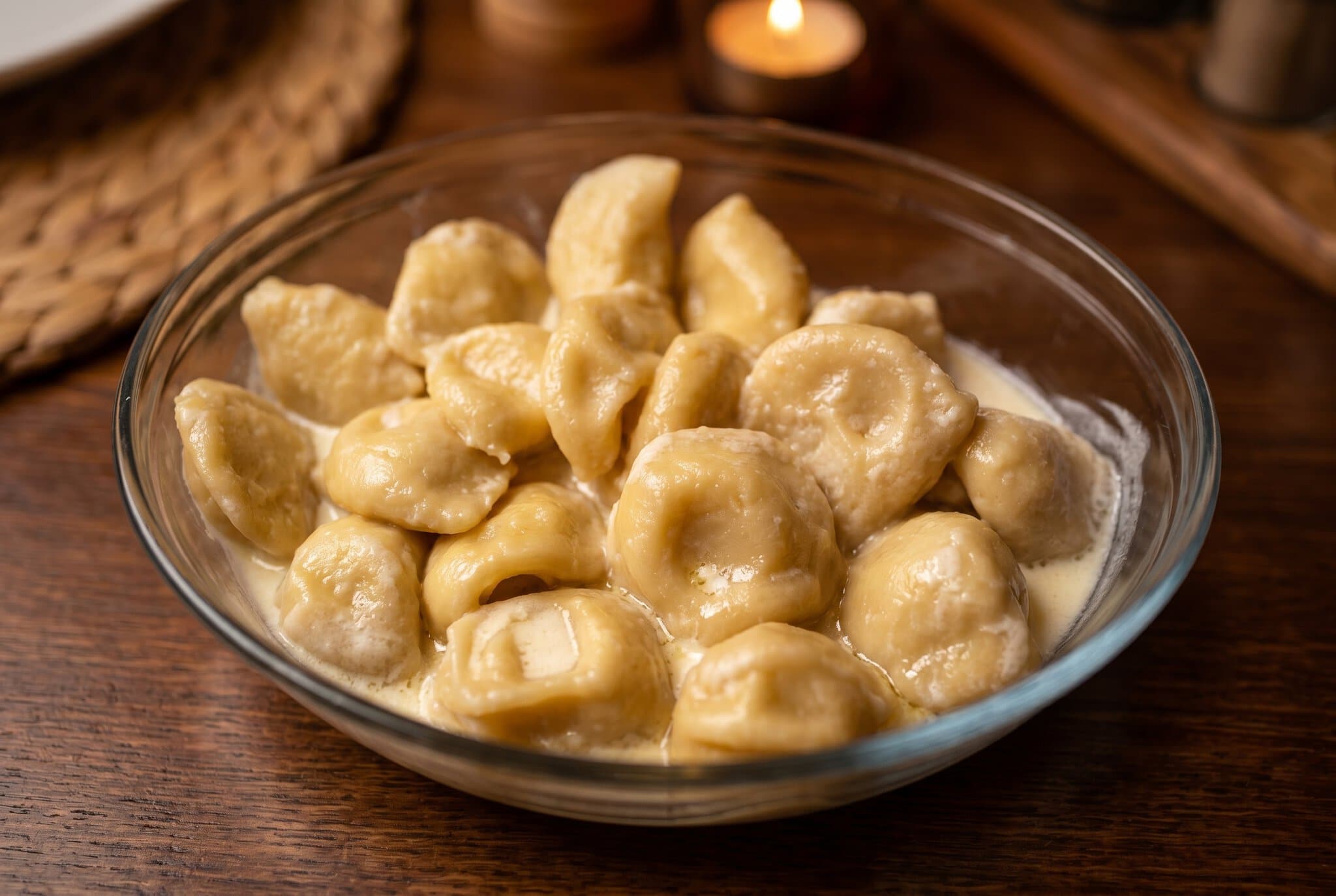
Despite what the name suggests, these dumplings actually originate from the Galicia region and are an absolute classic. The filling is a mix of boiled potatoes, cottage cheese and fried onion, typically served topped with crackling and more onion.
They’re beautifully soft, slightly buttery, and utterly moreish. This is probably our favourite variety when we fancy something filling but meat-free. We usually share one big portion between us so we’ve got room for more courses — but we still end up fighting over that last piece on the plate.
2. Pierogi z mięsem (with meat)
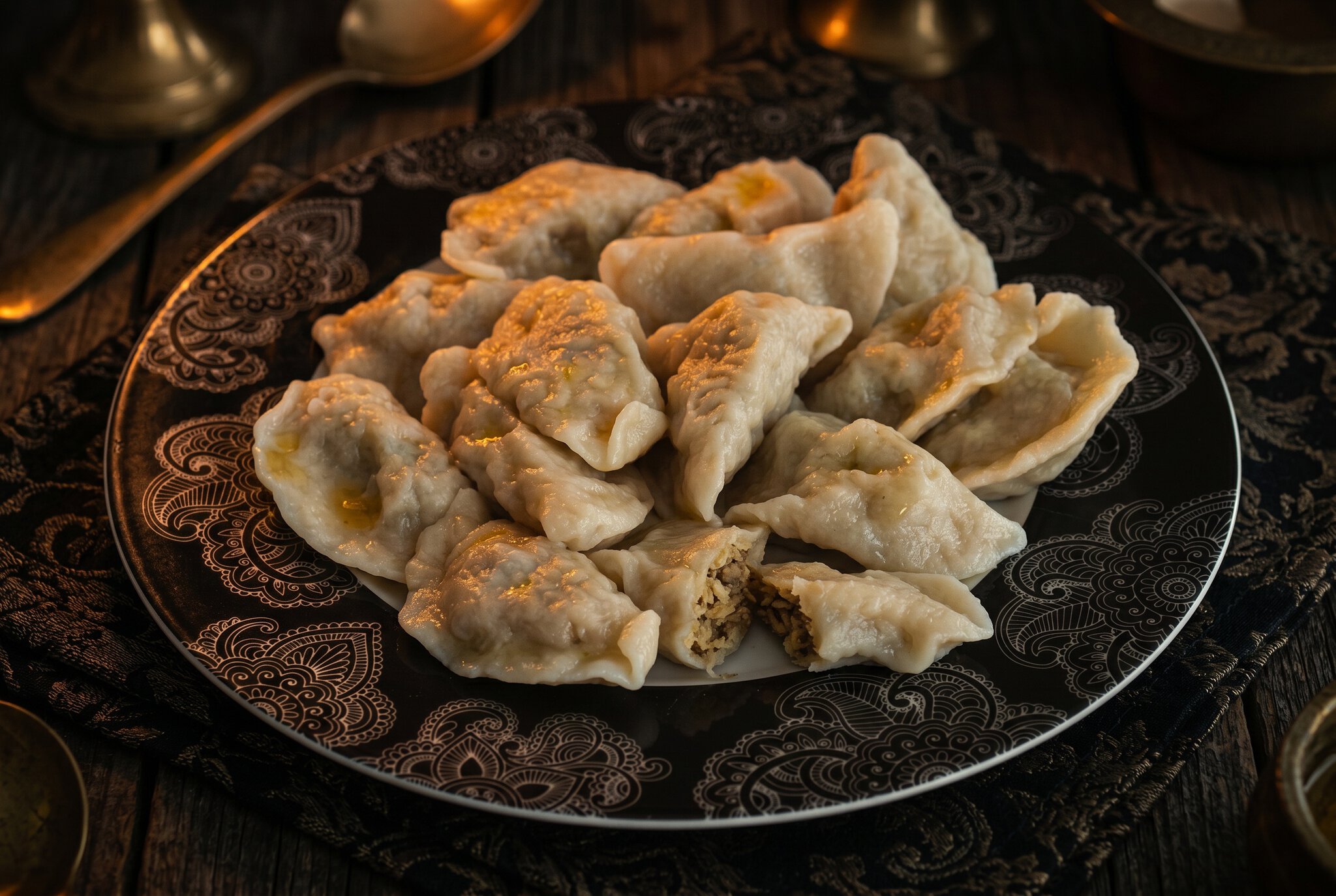
If you eat meat, this variety is probably the most popular among tourists. The dumplings are stuffed with minced meat — usually beef or pork — seasoned with garlic, marjoram and pepper, and served either boiled or pan-fried until golden. The two of us don’t eat meat, so we always generously leave these for everyone else at the pierogi house, but it’s undoubtedly a Polish classic that almost everyone tries.
Meat pierogi are traditionally served with a spoonful of sour cream on the side, which beautifully mellows out the bold seasoning. It’s the kind of dish that has most pierogi house visitors rolling their eyes in bliss — so if you do eat meat, definitely don’t skip it.
3. Pierogi z kapustą i grzybami (sauerkraut and mushrooms)
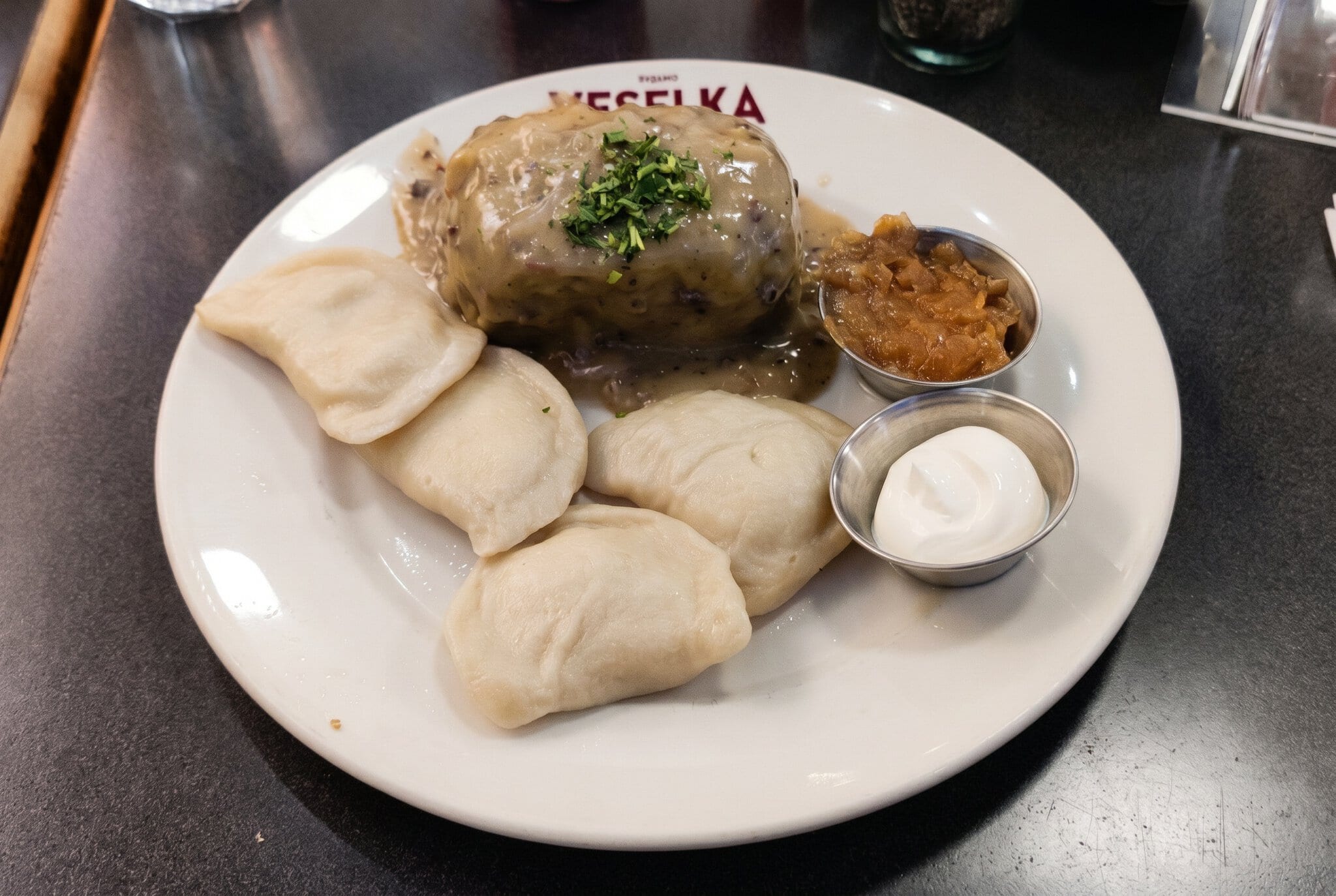
This is a traditional Christmas and holiday dish, but you’ll find it in restaurants year-round. The filling combines sauerkraut and wild mushrooms, creating a beautifully balanced sour-earthy flavour. If you visit Poland in autumn, definitely don’t miss this variety.
We first stumbled upon these pierogi in a completely tucked-away little tavern in the countryside, and I have to say the combination absolutely blew me away. Lukáš isn’t usually a big mushroom fan, but he made an exception here and admitted that the sauerkraut gives them just the right kick.
4. Sweet pierogi (z truskawkami or borówkami)
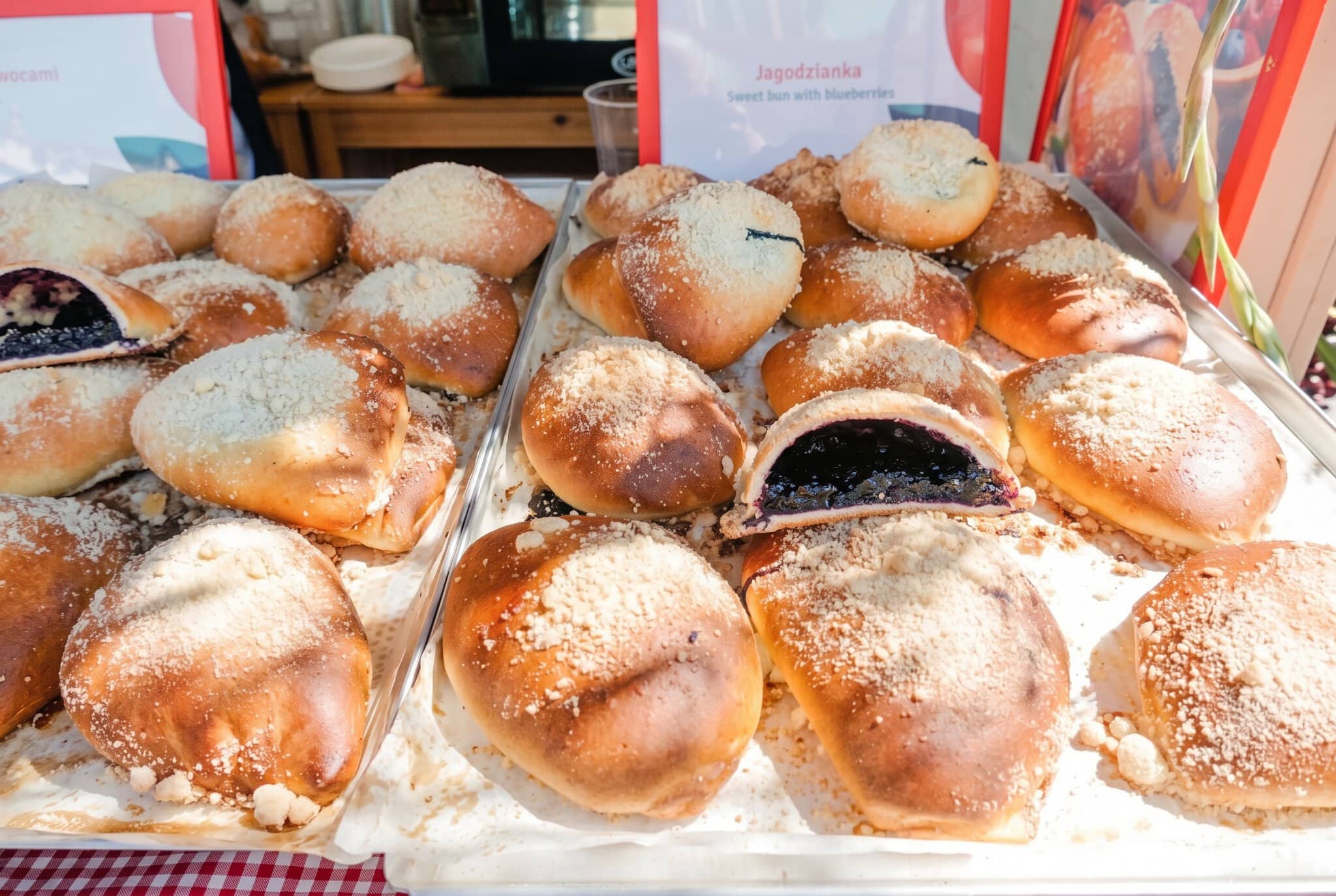
Poles are masters at stuffing fruit into pierogi and turning them into a full-blown summer lunch. In summer, you’ll find pierogi z truskawkami (with strawberries) or z borówkami (with blueberries) everywhere. They’re served with melted butter, sugar and a generous helping of sweet cream.
For us, these work best as a big dessert plonked in the middle of the table. The last time we had them in Gdańsk, Jonášek was scooping them up with his bare hands and the blueberry juice wouldn’t wash out for about a week. Worth it for the look of pure happiness on his face, of course.
Bar mleczny: Eat for a few euros and soak up the retro vibes
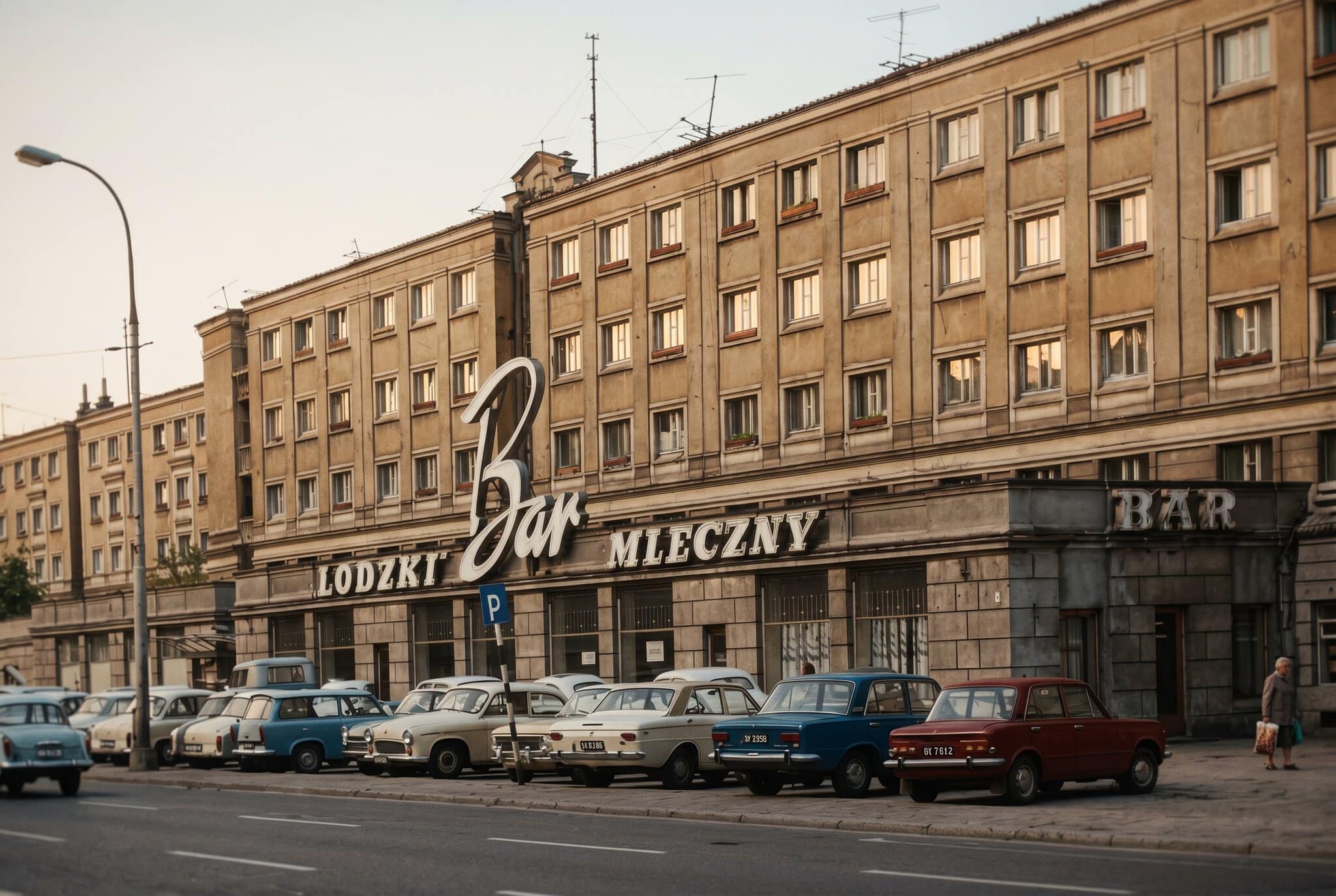
Milk bars, or “bary mleczne”, are a fascinating Polish phenomenon. Originally state-subsidised socialist canteens designed to provide cheap meals based mainly on dairy products and eggs (to save on meat), these establishments still exist today. The state still partially subsidises them, and they’ve become beloved hipster and student haunts where you’ll spot grandmas with wheeled shopping bags sitting right next to suited-up office workers.
You typically order at a counter window from a no-nonsense lady who’ll bellow your name in Polish when your food is ready. The interiors look like they’re stuck somewhere in the 1980s, but that’s precisely the atmosphere you come for. A main course typically costs 2–5 €, making them some of the best-value traditional Polish food restaurants anywhere. If you’re visiting Wrocław, be sure to check out the legendary Bar Miś, and in Kraków, don’t miss Bar mleczny Pod Temidą.
Polish soups that warm you up and cure hangovers
Soup, or “zupa” in Polish, is sacred to the Poles, and they rarely skip lunch without one. They’re thick, bursting with flavour, and often so filling you’ll need to ask for a doggy bag for your main course.
5. Żurek (sour rye soup)
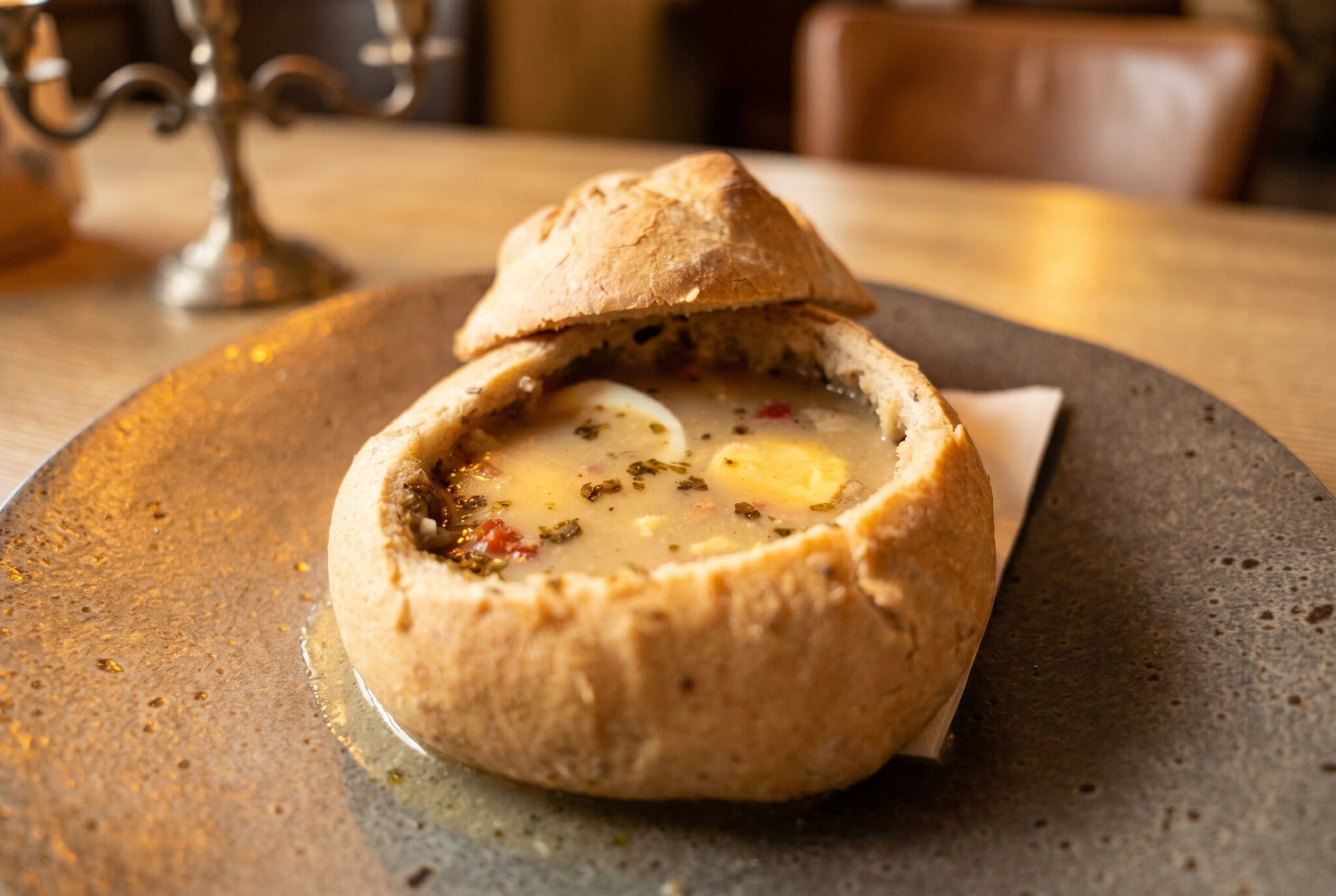
This is an absolute gem of Polish cuisine. Żurek is a soup made from fermented rye flour, with a distinctive sour taste. The traditional version features hard-boiled eggs and a generous portion of white sausage. Fortunately, we can almost always order a vegetarian version (often with mushrooms), so we happily have this soup in place of a main course. Many restaurants also serve it in a hollowed-out bread loaf, from which you tear off chunks to dip into the broth. Pure perfection.
Lukáš reckons you can judge a good żurek by whether the spoon stands up in it. We love it most on damp, chilly days — nothing warms you up after a long city walk quite as quickly and reliably as this smoky, garlicky marvel.
6. Rosół (hearty broth)
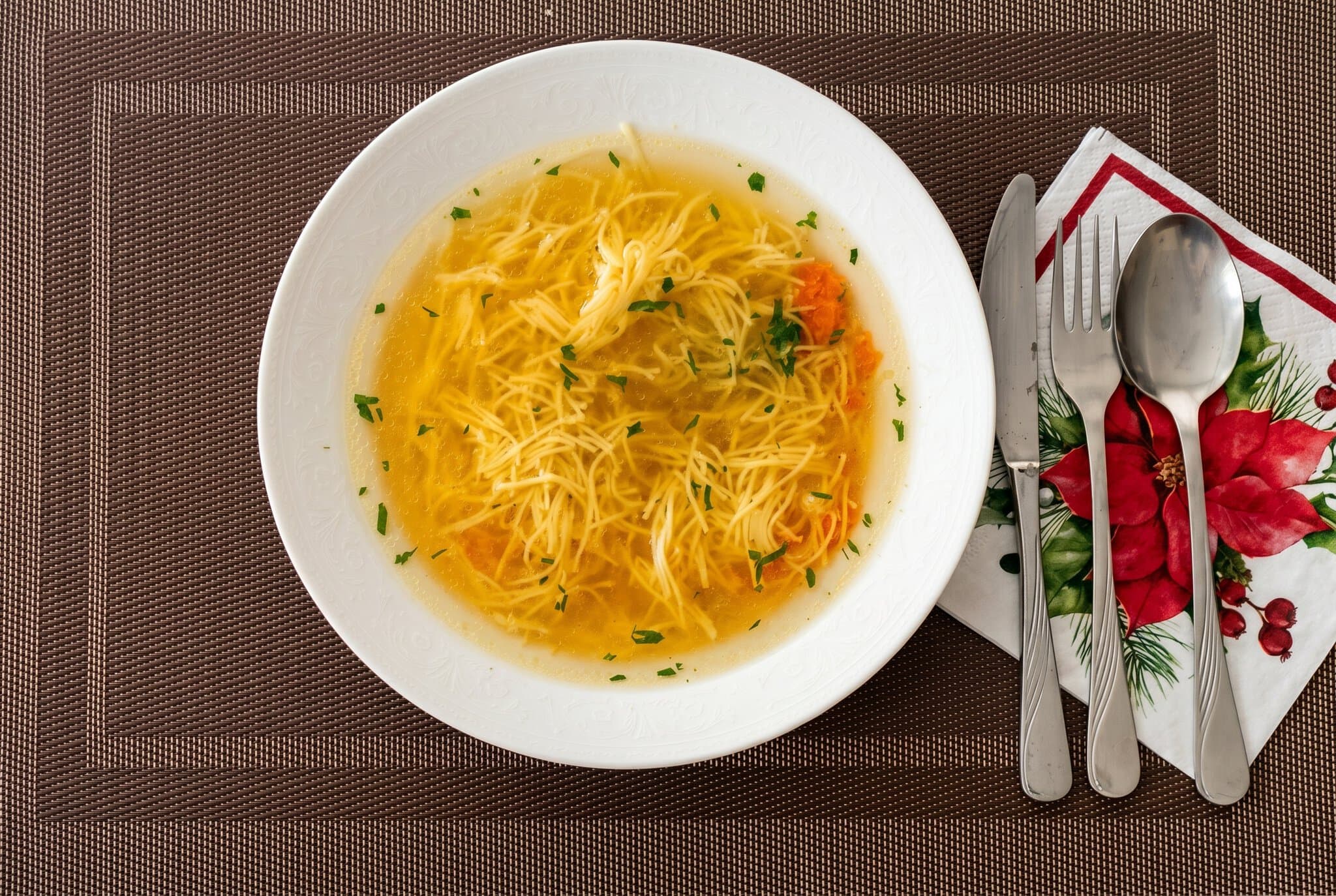
While chicken broth is common enough in the UK, in Poland the Sunday rosół is practically sacred. It’s a strong, golden chicken or beef broth with homemade noodles, carrots and parsley that fills every Polish household with its aroma all Sunday long. For locals, it’s a cure for every ailment and an absolute lifesaver if the previous evening’s vodka tasting got slightly out of hand.
When we stayed in the countryside near the Tatras, our landlady cooked it in a huge pot on Sunday and the smell drifted through the entire house. We don’t eat meat broth ourselves, but those hand-pulled noodles — nearly as long as spaghetti — and the whole Sunday table ritual are quintessentially Polish. Unlike most soups, a vegetarian version of rosół is harder to find, so we usually go for żurek or beetroot barszcz instead.
7. Krupnik and Barszcz
Krupnik is a thick soup made from barley groats, root vegetables and meat that’s guaranteed to warm you through in winter. And then there’s barszcz — traditional Polish borscht, which differs from its Ukrainian cousin. In Poland, you’ll most often encounter the clear, ruby-red beetroot broth called “barszcz czysty”, which is often sipped straight from a cup alongside small stuffed dumplings called “uszka”.
The clear beetroot broth took me by surprise at first — I was expecting a thick, chunky soup — but I fell in love with it from the very first sip. It has a wonderful earthy sweetness gently cut through by acidity, and those little mushroom dumplings are like tiny surprises waiting at the bottom.
Bigos, schnitzels and mains that won’t leave you hungry
When we think of Polish main courses, enormous portions and lots of meat immediately spring to mind. If you’re watching your diet, you might struggle in a traditional Polish tavern — but calories don’t count on holiday, right? 😁
8. Bigos (hunter’s stew)
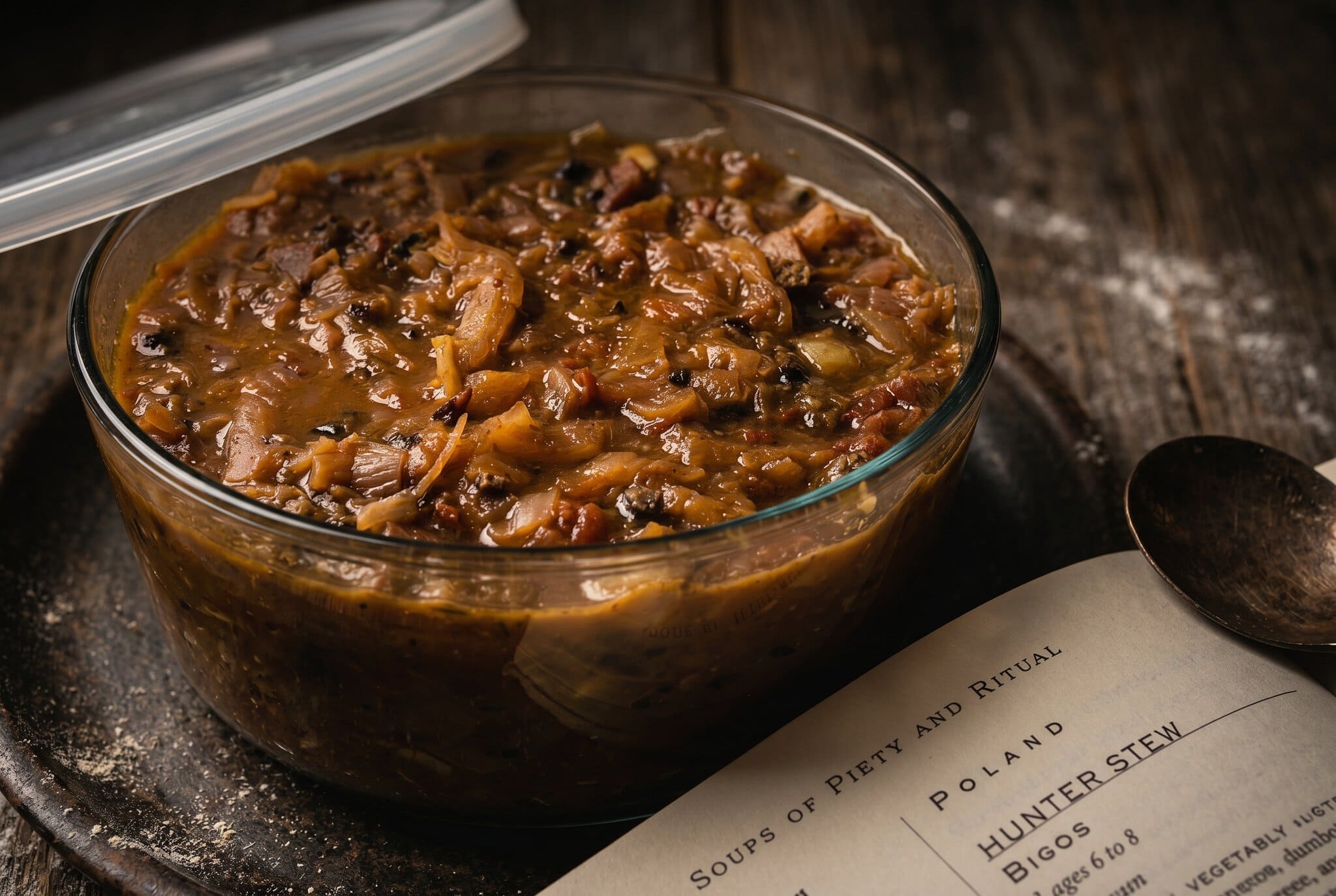
This dish is the stuff of legend. Bigos is essentially a thick hunter’s stew cooked from sauerkraut and fresh cabbage, several types of meat, sausages, dried mushrooms and prunes. The secret to great bigos lies in cooking it slowly — ideally over several days, reheating and resting it repeatedly so the flavours meld beautifully.
Locals swear by bigos and insist the more times you reheat it, the better it gets. We skip the classic meaty version ourselves, but the good news is that plenty of modern bistros now make an excellent vegetarian bigos using just mushrooms and several types of cabbage. And we’ll admit that this meat-free version, served in an authentic wooden mountain hut, blew us away just as much.
9. Kotlet schabowy and Gołąbki
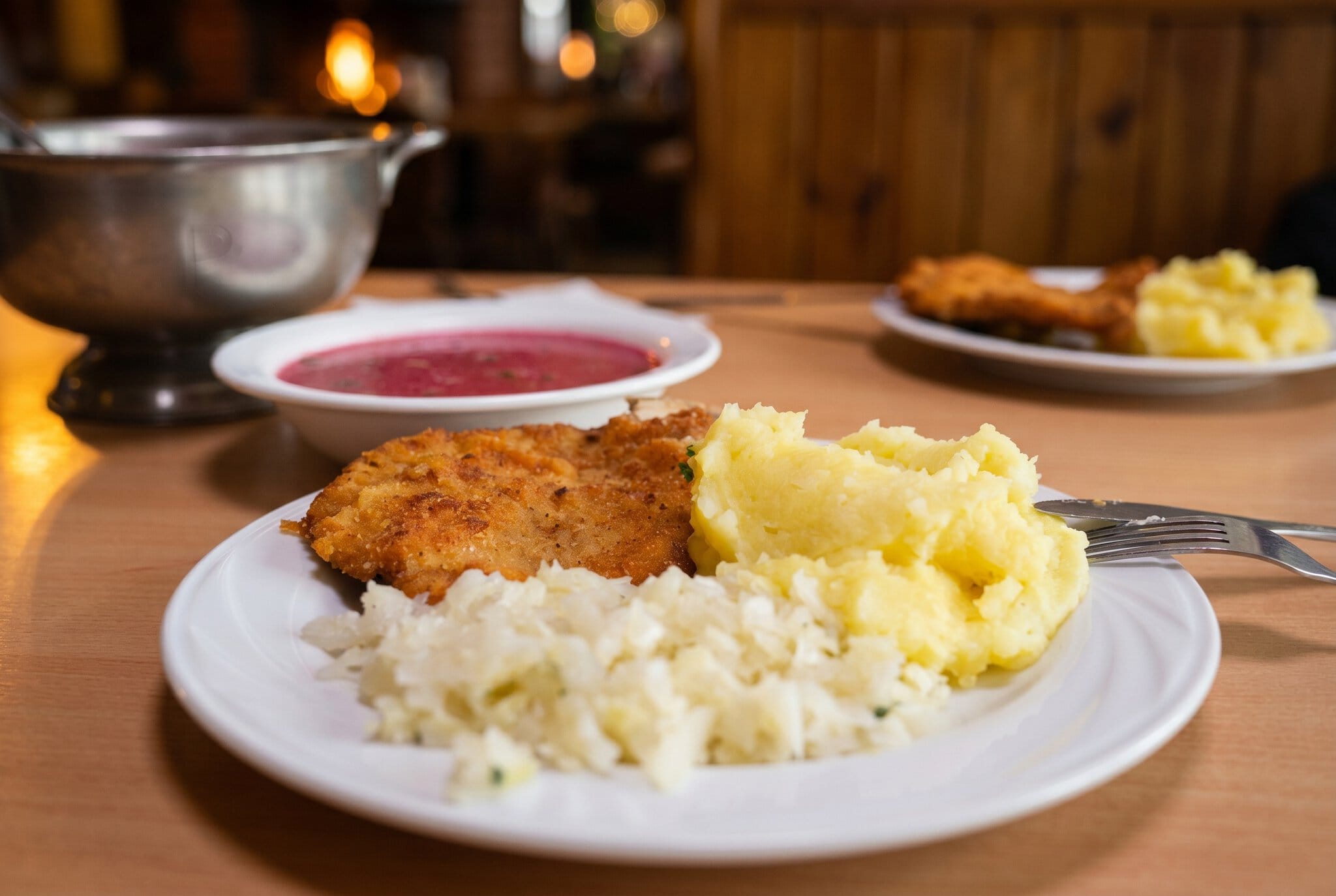
Kotlet schabowy is essentially a breaded pork schnitzel, but in Poland they make them truly enormous — often hanging over the edge of the plate — and serve them with mashed potatoes and braised cabbage. Gołąbki (literally “little pigeons”) are cabbage-leaf rolls stuffed with minced meat and rice, slow-cooked and served with a delicious tomato or mushroom sauce.
Both gołąbki and the schnitzel are quintessential Polish comfort food, and in any traditional tavern you’ll spot them on practically every table around you. We don’t eat meat, so we usually go for the mashed potatoes — which in Poland are generously loaded with butter — and a hearty portion of braised cabbage. The good news is that plant-based versions of the schnitzel, made from celeriac or cauliflower, are popping up on more and more Polish bistro menus.
Vegetarian Poland: A surprise you won’t expect
Although it might not seem like it after reading the sections above, Poland is actually a vegetarian and vegan paradise. We were utterly gobsmacked when we discovered just how huge and sophisticated the scene is. Especially if you head to beautiful Kraków or Wrocław, you’ll find some of the best plant-based restaurants in all of Europe.
The cities are mad for all kinds of vegan burgers, and the famous Veganistanowi Burgers works such wonders that you’d swear you were eating the juiciest meat — even though it’s entirely plant-based. In Wrocław, we recommend the legendary Vega, the first and oldest fully vegan restaurant in the entire country, which has been running since the late 1980s. They offer superb plant-based versions of traditional Polish dishes, so you can enjoy pierogi or kotlet schabowy even if you don’t eat meat.
Polish vodka and the rules of drinking it (and how to survive)
When you visit Poland, tasting the local vodka is practically a social obligation. I mentioned it in our Kraków guide too. The bars there stock over a hundred varieties and it would be almost criminal not to try at least one. Poles take their vodka very seriously, and there are fairly strict rules about how to drink it properly so you don’t offend your host.
10. Rules of the Polish “Na zdrowie”

First of all, vodka is drunk neat and ice-cold — pulled straight from the freezer. You never, ever dilute quality Polish vodka with water or juice in the glass. It’s drunk from small shot glasses and always downed in one — no sipping allowed. Before each shot, everyone proclaims a resounding “Na zdrowie!” (to your health). And a little survival tip: chase it with a pickled gherkin. Trust me, it works wonders.
Our first tasting session with locals was a bit wild. Before we’d even properly settled in, we had three shots inside us and realised that the pace here really doesn’t slow down. So my personal advice is: always drink after a proper, very hearty lunch — otherwise it’ll catch up with you fast.
11. What exactly to try
Among classic clear vodkas, Wyborowa is a perennial favourite. But the flavoured vodkas are far more interesting, with the absolute classic being Żubrówka, also known as bison grass vodka. It’s a slightly yellowish vodka with a blade of grass from the Białowieża Forest inside the bottle, and exceptionally it’s often drunk mixed with apple juice — a cocktail called “szarlotka” (apple pie). Soplica is also excellent, coming in dozens of fruity flavours — we’re particularly fond of the hazelnut and the sour cherry.
The hazelnut Soplica tastes more like a liquid nutty dessert. We bought two bottles to take home and love having it after a heavier dinner with friends — it always turns into a little trip down memory lane. And the szarlotka cocktail is an absolutely brilliant summer drink for cooling off.
Polish beer: From classics to the craft revolution
We Czechs may be a beer-loving nation, but Poland holds its own for hop enthusiasts too. Every pub will offer you the big traditional brands like Tyskie, Żywiec or Lech — perfectly drinkable pale lagers that pair nicely with a heavy meal. But we prefer seeking out smaller breweries, and there are more and more of them in Poland.
Since 2010, Poland has been riding a massive craft beer wave. Whenever we explored cities in the evening on our road trip, we’d hunt for pubs with local brews, and the Polish IPA scene is genuinely world-class. Look out for names like Browar Pinta (their Atak Chmielu is legendary), AleBrowar or Browary Trzech Koron. If you’re in Kraków, definitely head to Plac Nowy 1 for dinner. It’s right in the heart of Kazimierz, where most visitors stay anyway. They serve excellent pizza and some of the best local beer in town.
Sweet finish: Pączki, sernik and the papal kremówka
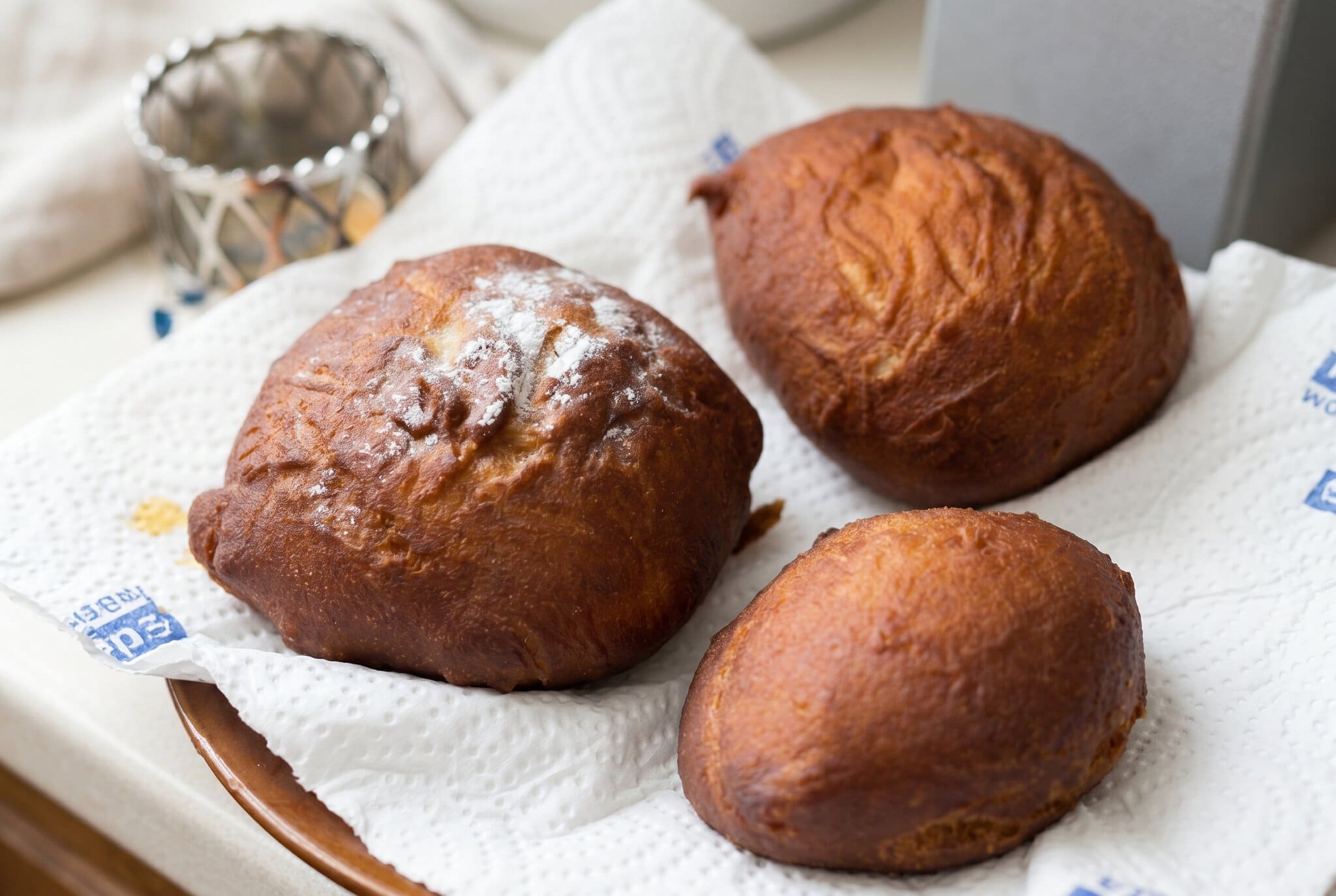
You absolutely can’t forget about desserts in Poland. Polish cake shops (cukiernie) are on every corner and the display cases are positively bursting with creams and curd cheese creations.

12. Pączki (doughnuts like no other)
Polish pączki may resemble British jam doughnuts, but they’re far richer — the dough is denser and the fillings are absolutely incredible. Traditionally, they’re filled with rosehip jam and topped with sugar glaze and candied orange peel. Poles devour the most of them on Tłusty Czwartek (Fat Thursday) before Lent, when queues outside renowned bakeries can last several hours.
We once queued like that in Kraków and I thought Lukáš was going to lose his patience. But the moment we got our hands on that warm, jam-oozing beauty, we both agreed we’d happily queue all over again. It’s a calorie bomb, but an absolutely heavenly one.
13. Sernik and Kremówka
If you love cheesecake, Polish sernik will delight you. It’s a traditional curd cheesecake made from proper Polish “twaróg” — drier than standard cream cheese — which makes the cake wonderfully light and airy, often finished with raisins or a chocolate glaze. Another famous treat is the Kremówka papieska, the favourite pastry of Pope John Paul II: two layers of puff pastry filled with an enormous cloud of vanilla custard.
When we visited Wadowice, the Pope’s birthplace, these kremówki were in practically every shop window. I’m obsessed with puff pastry, and when it’s paired with real vanilla custard that melts on your tongue, there’s simply no resisting it.
Best Polish cities for food: Our top picks
Over the years, we’ve visited quite a few, so here are the places we keep coming back to for the food.
14. Kraków and Warsaw
Kraków is an absolute paradise. The Kazimierz district is packed with brilliant bistros and traditional Jewish restaurants, plus you’ll find the famous zapiekanki (toasted baguettes with mushrooms and cheese) right on the street. Warsaw, on the other hand, blends history with a cutting-edge fine dining scene and has loads of fantastic third-wave coffee shops serving exquisite brews from local roasters.
Of the two cities, Kraków feels closer to our hearts — we have so many memories there from our very first trips. But I have to admit that Warsaw amazes us every time with how rapidly its food scene evolves and pushes forward.
15. Gdańsk and Wrocław
If you head north, the port city of Gdańsk specialises in fresh fish and Baltic herring, prepared in dozens of ways. And Wrocław — we love it and I’ve written a whole article about it — just eat everywhere there. The milk bars and the vegan spots are absolutely brilliant.
In Gdańsk, I’d recommend heading down to the waterfront in the evening and grabbing a seat at one of the harbour bistros. We sat there one evening as the sun was setting over a plate of crispy pan-fried pierogi and a glass of wine, and cliché as it sounds, it was one of those perfect holiday evenings you simply never forget.
Practical tips, tipping and restaurant etiquette
Finally, a few pointers so you know how to behave in Polish restaurants and avoid any faux pas.
- Tipping (napiwek): It’s customary to leave around 10% of the total bill if you’re happy with the service. In nicer restaurants, a service charge is sometimes already included — always check your bill.
- Paying: If you’re dining in a larger group, Poles aren’t big fans of splitting the bill item by item at the table. Usually the whole bill is paid together and people settle up amongst themselves — though in bigger cities, splitting is gradually becoming more accepted.
- Alcohol ban: Keep in mind that drinking alcohol on the street and in public spaces is strictly prohibited in Poland (unless you’re on a restaurant terrace). Fines can be hefty, so stick to the pub with your beer.
Read more
If all this food talk has your mouth watering and you’re planning a trip, be sure to check out our other Poland articles:
- Poland Road Trip: A 7-Day Itinerary
- Kraków: What to See and Do in the Former Royal City
- Warsaw: A Guide to the Modern Metropolis
- Wrocław: The City of Dwarfs and Bridges
Travel tips and tricks
Before you head off to explore all those amazing Polish bistros and milk bars, here are a few quick practical tips. Whether you’re driving or flying, it pays to be a little prepared. 😉
Lukáš and I have been using these tried-and-tested services for years — they save us loads of money and hassle. Here’s an overview of what’s worked best for us on the road.
Finding cheap flights or transport
If you’re not driving to Poland, search for cheap flights or buses to Polish cities on Kiwi — it’s our go-to booking platform. From the UK, budget airlines like Ryanair, Wizz Air and easyJet operate frequent routes from London, Manchester, Edinburgh and other cities to Kraków, Warsaw, Gdańsk and Wrocław.
When we first flew with little Jonášek, the search tool made life so much easier because we could instantly see the shortest, most comfortable connections without unnecessary layovers. And with a small child, every minute saved really counts.
Car hire
We regularly use the comparison site DiscoverCars — Lukáš and I have had consistently great experiences with it and use it all over the world.
A car is especially handy in Poland when you want to get out of the cities and explore the countryside or head up north to the coast. The comparison tool always helps us snag the best prices, and everything’s neatly insured in one place.
Don’t forget travel insurance
We always get insured before every trip. For shorter trips we go with travel insurance providers offering good European cover, and for longer trips or travel outside Europe, we love SafetyWing. While the UK GHIC card gives you access to state healthcare in Poland, a proper travel insurance policy covers so much more — repatriation, lost baggage and trip cancellation.
Especially now that our little one travels with us, we really don’t leave anything to chance. Insurance costs just a few pounds but the peace of mind — knowing you can see a doctor anytime without worrying about the bill — is truly priceless.
Internet on the go
While your UK mobile plan may include European roaming, if you need backup data, we swear by a travel eSIM from Holafly.
It’s a brilliant safety net for when your carrier signal drops out or when you’ve burned through all your data downloading cartoons in the car. You activate it in seconds before you leave and you’re sorted.
FAQ: Frequently asked questions about Polish food
What are Polish pierogi?
Polish pierogi are traditional filled dumplings that are boiled in water and often pan-fried afterwards. They come with a wide variety of fillings, from potatoes with cheese (ruskie), to ground meat, sauerkraut with mushrooms, and even sweet summer fruit versions with strawberries or blueberries.
What is typical Polish food?
Besides pierogi, quintessentially Polish dishes include żurek soup (made from rye sourdough with sausage and egg), the hearty hunter’s stew bigos made with cabbage and several types of meat, and a large breaded pork cutlet called kotlet schabowy. Polish cuisine is very hearty, full of potatoes, cabbage, and meat.
How do you make pierogi dough?
Classic Polish pierogi dough is very simple. It’s made with just all-purpose flour, hot water, a pinch of salt, and often a bit of melted butter or oil is added to make the dough more pliable. Some people add an egg, but traditional recipes work fine without it—the hot water makes the dough beautifully soft and elastic.
What country are pierogi from?
Although several Eastern and Central European countries claim them as their own, and you’ll find variations in Ukraine, Russia, and Slovakia, pierogi in this specific form and name are considered Poland’s national dish, where they have the strongest tradition and widest variety of fillings.
How much does lunch cost in Poland?
It depends on where you go. At classic retro milk bars, you can easily eat for 15 to 25 PLN (around €3.50 to €6). At regular restaurants, expect to pay around 40 to 60 PLN (approximately €9 to €14) for a main course, and at fine dining establishments you’ll obviously pay more.
Is Polish cuisine suitable for vegetarians?
Surprisingly, yes. Although traditional Polish cuisine is meat-heavy, Polish cities like Krakow, Warsaw, and Wroclaw are experiencing a huge boom in vegan and vegetarian dining. You’ll commonly find fully plant-based restaurants offering vegan burgers and even meatless versions of traditional Polish dishes.
How do you drink vodka in Poland?
Polish vodka is drunk neat, ice-cold from small shot glasses, and always downed in one go. It’s never mixed with juice or water, and before each shot, Poles clink glasses together and say “Na zdrowie!” Pickles or pieces of bread with lard are often served alongside to help pace the drinking.
Tips and Tricks for Your Vacation
Don’t Overpay for Flights
Search for flights on Kayak. It’s our favorite search engine because it scans the websites of all airlines and always finds the cheapest connection.
Book Your Accommodation Smartly
The best experiences we’ve had when looking for accommodation (from Alaska to Morocco) are with Booking.com, where hotels, apartments, and entire houses are usually the cheapest and most widely available.
 🚗 Car rental on the roadVerified rental cars in Poland
Search with the DiscoverCars comparison engine — it compares prices from dozens of local and international rental companies, and most bookings come with free cancellation.
Compare car prices in Poland →Don’t Forget Travel Insurance
Good travel insurance will protect you against illness, accidents, theft, or flight cancellations. We’ve had a few hospital visits abroad, so we know how important it is to have proper insurance arranged.
Where we insure ourselves: SafetyWing (simple monthly subscription) and TrueTraveller (for extra-long trips).
Find the Best Experiences
Get Your Guide is a huge online marketplace where you can book guided walks, trips, skip-the-line tickets, tours, and much more. We always find some extra fun there!