

You know that feeling when, after a long journey, you finally reach the very end of the world? That’s exactly what awaits you in the village of Å at the southern tip of Norway’s Lofoten Islands, where the famous E10 road suddenly comes to its definitive end. Here you’ll find rugged, breathtaking scenery, deep-red fishermen’s cabins, and the ever-present, never-ending cry of the seagulls. And just a short drive away lies the historic village of Nusfjord, Norway — one of the most atmospheric places in the whole archipelago.
While the main routes are packed with crowds in summer, you can step back into the quieter history of nearby Nusfjord. It’s one of the very oldest and best-preserved fishing villages in all of Norway, and today it operates as a fascinating living museum protected by UNESCO.
Be warned, though, that all your plans will be dictated by the yr.no app, and the prices in the local supermarkets might give you a bit of a shock. In this guide I’ll show you how to make the most of both iconic spots, where to escape the biggest crowds, and where to find the most magical rorbu for an absolutely unforgettable Nordic night.
TL;DR
- The end of the road: The village of Å (pronounced “Oh”) is the southernmost point of Lofoten reachable by road and offers some of the most iconic views.
- A living museum: There’s an entrance fee to the picturesque Nusfjord (around 100–150 NOK), which paradoxically does a great job of filtering out the tourist crowds.
- Traditional rorbu: Both villages are ideal places to book a night in a typical wooden fisherman’s cabin on stilts.
- The weather rules everything: You won’t get anywhere on the islands without the Norwegian weather app yr.no — you’ll need to adapt your plans flexibly around the rain.
- High costs: Supermarket prices are roughly three times what you’d pay at home, and a restaurant meal will easily run to 200–400 NOK.
- Slow travel: The narrow E10 road gets clogged with caravans, so always measure distances in hours, not kilometres.
The full destination guide: Lofoten — guide and what to see
When to Visit Å and Nusfjord
If you’re dreaming of sun-drenched photos and the midnight sun, June and July are the absolute classics. But you’ll need to arm yourself with enormous patience, because these are exactly the months when Lofoten bursts at the seams and the E10 becomes a daily battle for parking spaces. Based on plenty of research and the experience of countless travellers, it’s clear that the ideal length of time for the region is a full seven days. Four days is simply too few, especially when a classic Nordic front rolls in and lashes the islands with wind and rain for three days straight. A two-week stay, on the other hand, would probably wreck your budget entirely.
For a calmer experience, I’d recommend considering the shoulder months of May or September. The temperatures won’t exactly tempt you to take off your jacket, but you’ll get incomparably more space at the viewpoints and accommodation prices drop a little. In September the landscape also starts to turn glorious autumn shades, and with a little luck and a clear sky you might catch your first glimpse of the magical Northern Lights.
Whenever you go, your best friend will be the yr.no app, without which you won’t get far in Norway. The Norwegian weather is extremely changeable, and it can easily happen that while the rain is battering the coast down south in Å, the sun is shining just a few dozen kilometres further north. It pays to keep a flexible itinerary up your sleeve and head out to enjoy nature exactly wherever the clouds let you. Rather than doing a daily road trip, stay in one place and make short day trips into the surrounding area.
Where to Stay in Å and Nusfjord
💡 Tip for accommodation and experiences: We love to find our stays on Booking.com, which usually has the best cancellation terms. For tickets, tours and activities, it’s worth comparing and booking through GetYourGuide.
The most magical experience is undoubtedly a night in a traditional fisherman’s cabin called a rorbu. Right at the end of the road you’ll find the famous Å Rorbuer, which will charm you with its authentic atmosphere and fantastic ocean views. It’s the perfect choice if you want to head out for a morning walk before the first tour buses arrive. In peak summer season, though, bear in mind that prices in popular areas like Reine or Hamnøy climb to astronomical heights — often as much as 320 € a night — and parking here routinely costs 35 NOK an hour.
If you’re after something more luxurious and quieter, book a stay through Booking at the Nusfjord Arctic Resort. You’ll be staying right in the heart of the protected historic village, away from the main flow of traffic. In the evening, once the day visitors have left, Nusfjord empties out and you’ll have the whole magical place — with its yellow and red cabins — essentially to yourself.
For those who want to explore Lofoten thoroughly without spending hours in the car, a base in the middle of the islands at Ballstad is a strategic choice. It’s an active fishing harbour with no unnecessary glitz, where you can find great accommodation — for example at the Kræmmervika Havn complex for around 170 € a night. For something more upscale, I’d recommend the beautifully renovated Hattvika Lodge, with its own sauna and kayak rental. A very practical alternative is also the area around the town of Leknes — it lacks photogenic charm, but offers huge supermarkets, a nearby hospital in Gravdal, and an ideal starting point for exploring both the south and the north.
6 Things to See and Do in Å and Nusfjord
Let’s take a closer look at what you absolutely shouldn’t miss when visiting this rugged corner of northern Europe. You’ll find out where to park, how to avoid the biggest crowds, and exactly what makes these two villages so special.
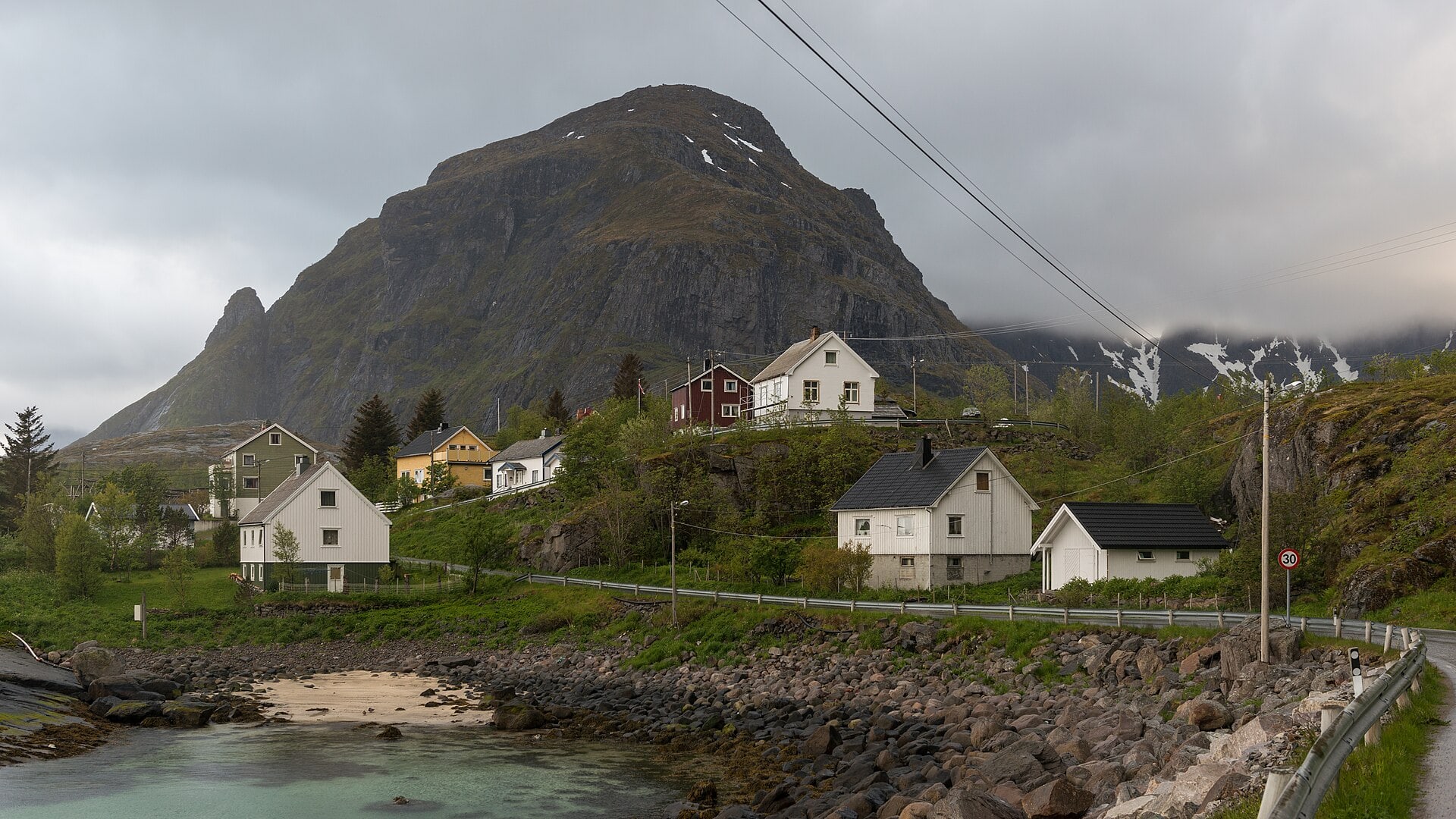
1. The End of the E10 Road in the Village of Å
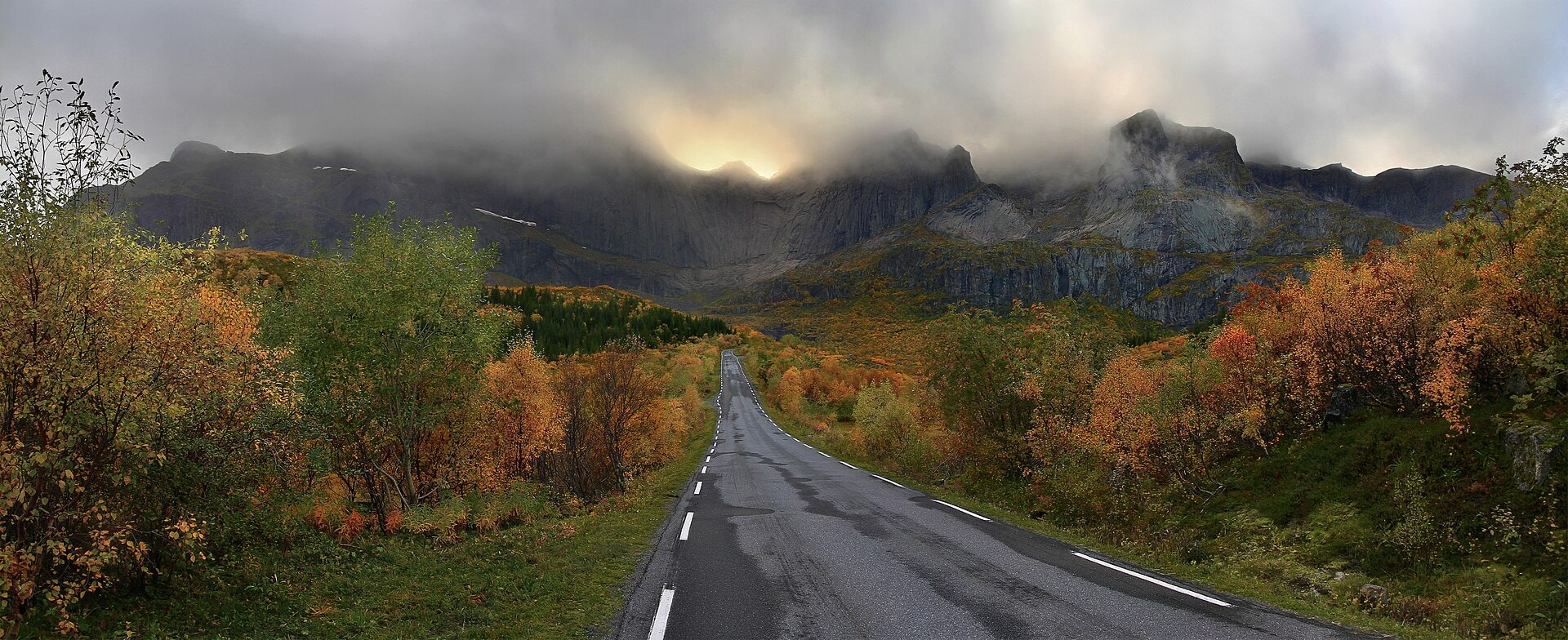
Just the journey to the village with the shortest name in the world is an experience in itself. The main E10 road gradually narrows, the bridges grow ever more dramatic, and the mountains around you rise to incredible heights. But keep in mind that distances here are measured in hours rather than kilometres. The drive from central Leknes to Å takes roughly an hour and ten minutes of pure driving, while from Svolvær it’s already more than two and a quarter hours. On the narrow two-lane road the speed limit is often just 50 km/h, and every sightseeing caravan ahead of you will slow your plans down considerably.
When you finally arrive at the spacious car park at the very end of the tarmac, you’re hit by the feeling of a genuine end of the world. Several well-worn footpaths lead straight from the car park onto the rocky cliffs. I’d recommend walking right out to the very edge of the mainland, where an endless view opens up over the churning ocean and the distant islands of Værøy and Røst, which you can now only reach by a lengthy ferry. It’s here that you truly grasp the immense power of Nordic nature and understand why people travel here from all over the world.
The village of Å itself is laced with narrow lanes and wooden boardwalks linking the individual fishermen’s cabins. You’ll find an old bakery here, a historic forge and a small museum that documents the hard life of the local people. Give the village at least two hours and let yourself be carried away by its unbelievably photogenic charm.
💡 Tip: The car park at the end of the E10 is hopelessly full by midday in peak season. Come here ideally early in the morning or later in the evening, when the crowds melt away and you also get much better, softer light for your photos.
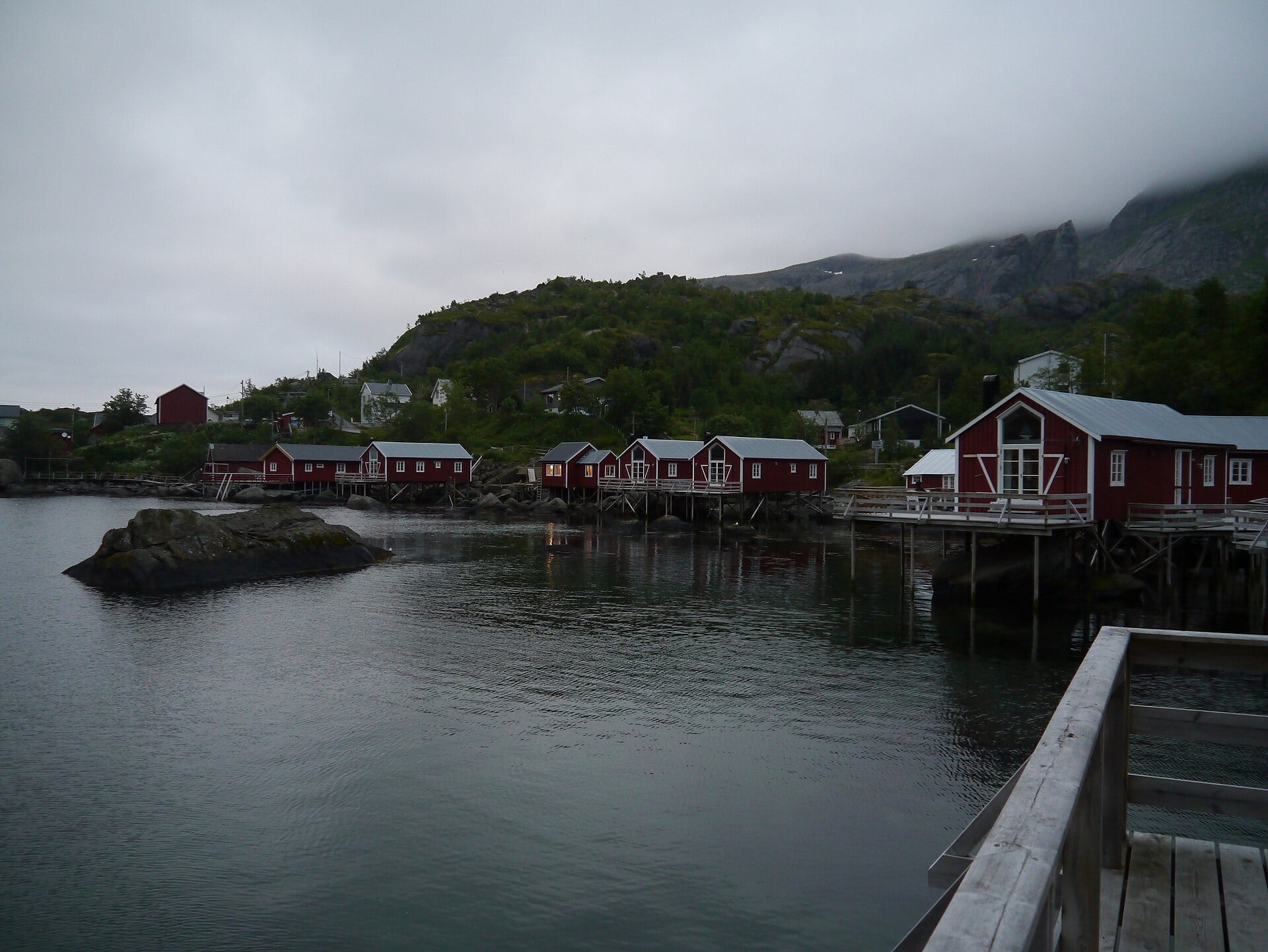
2. Nusfjord as a Living Museum with an Entrance Fee
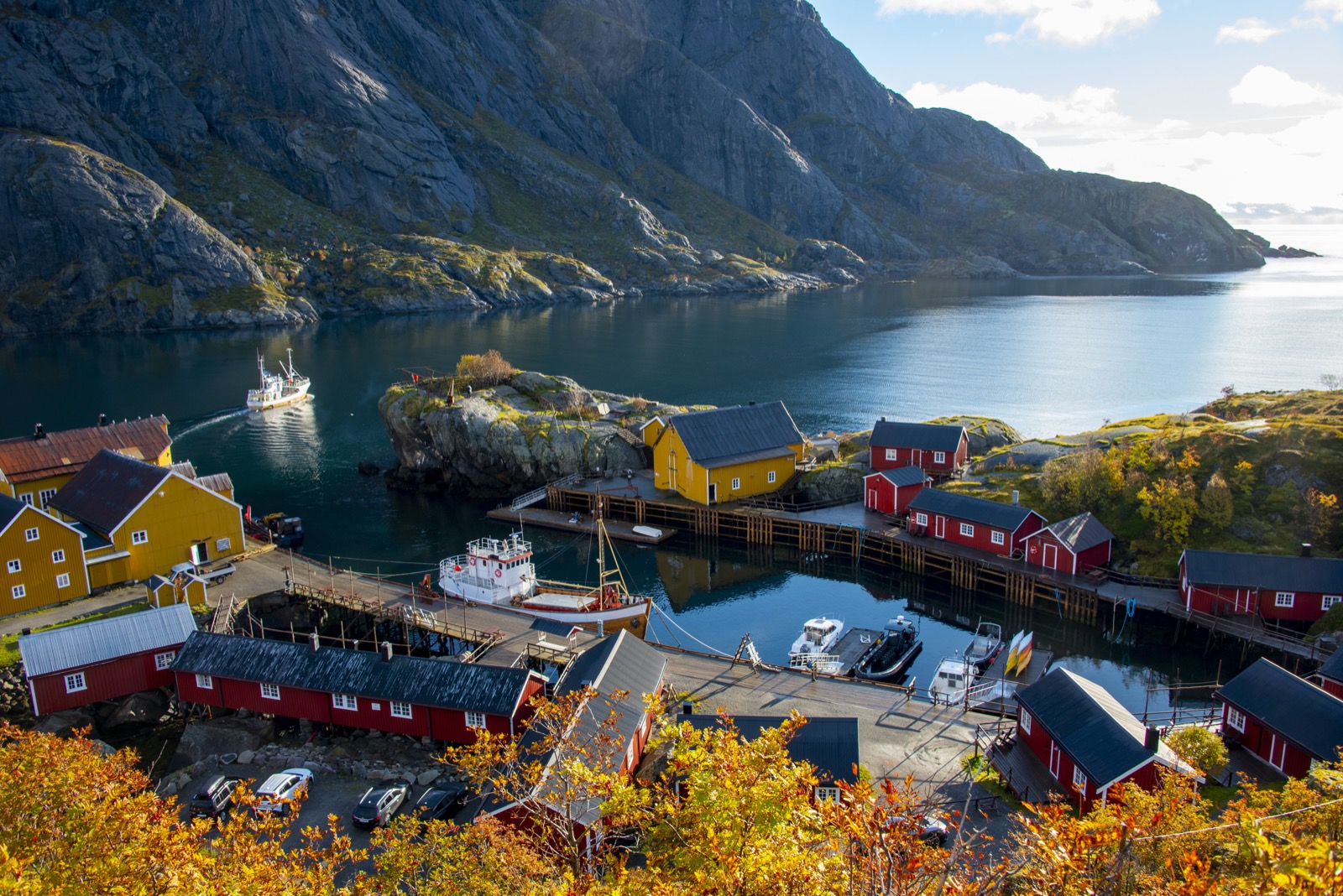
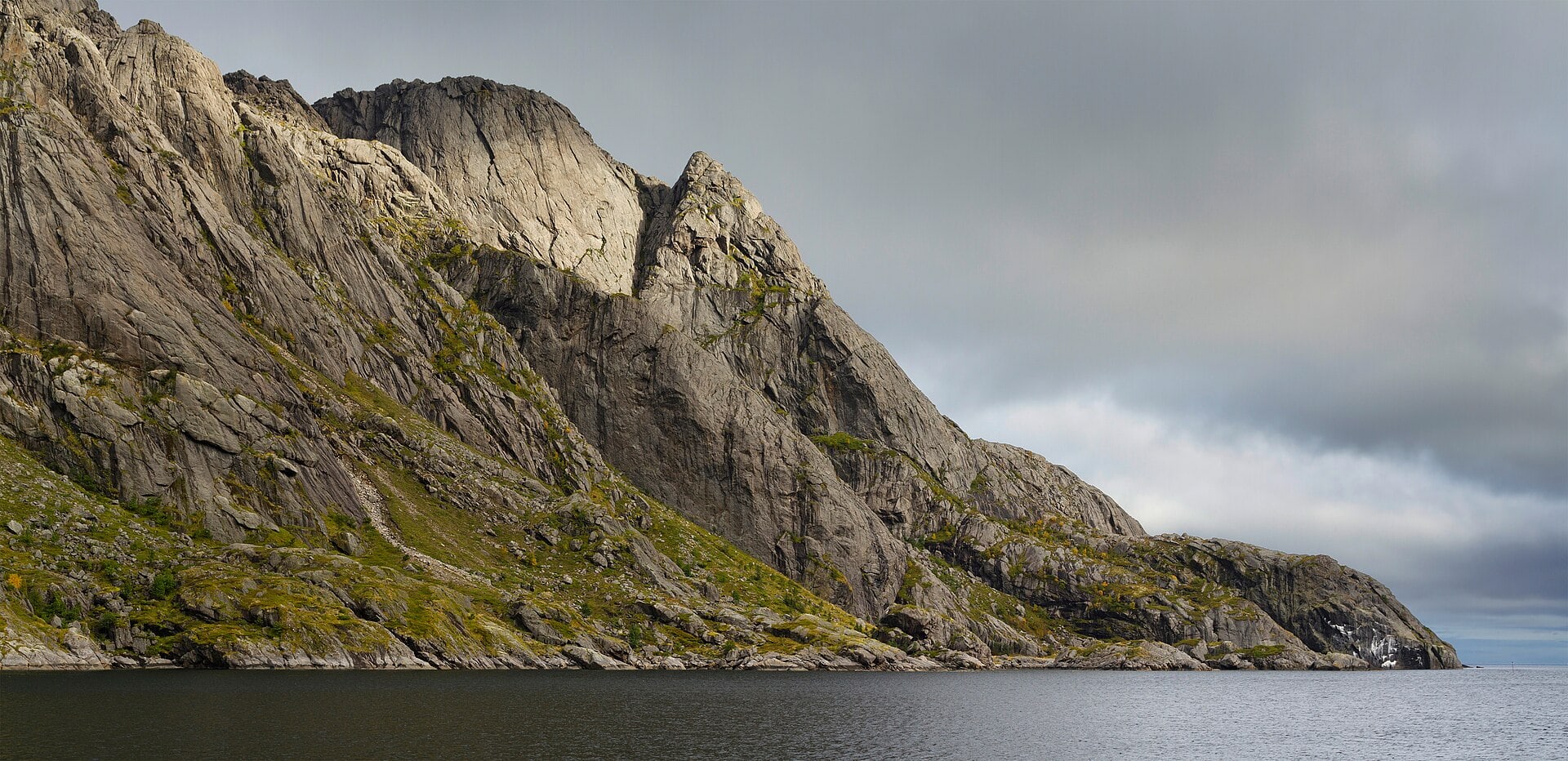
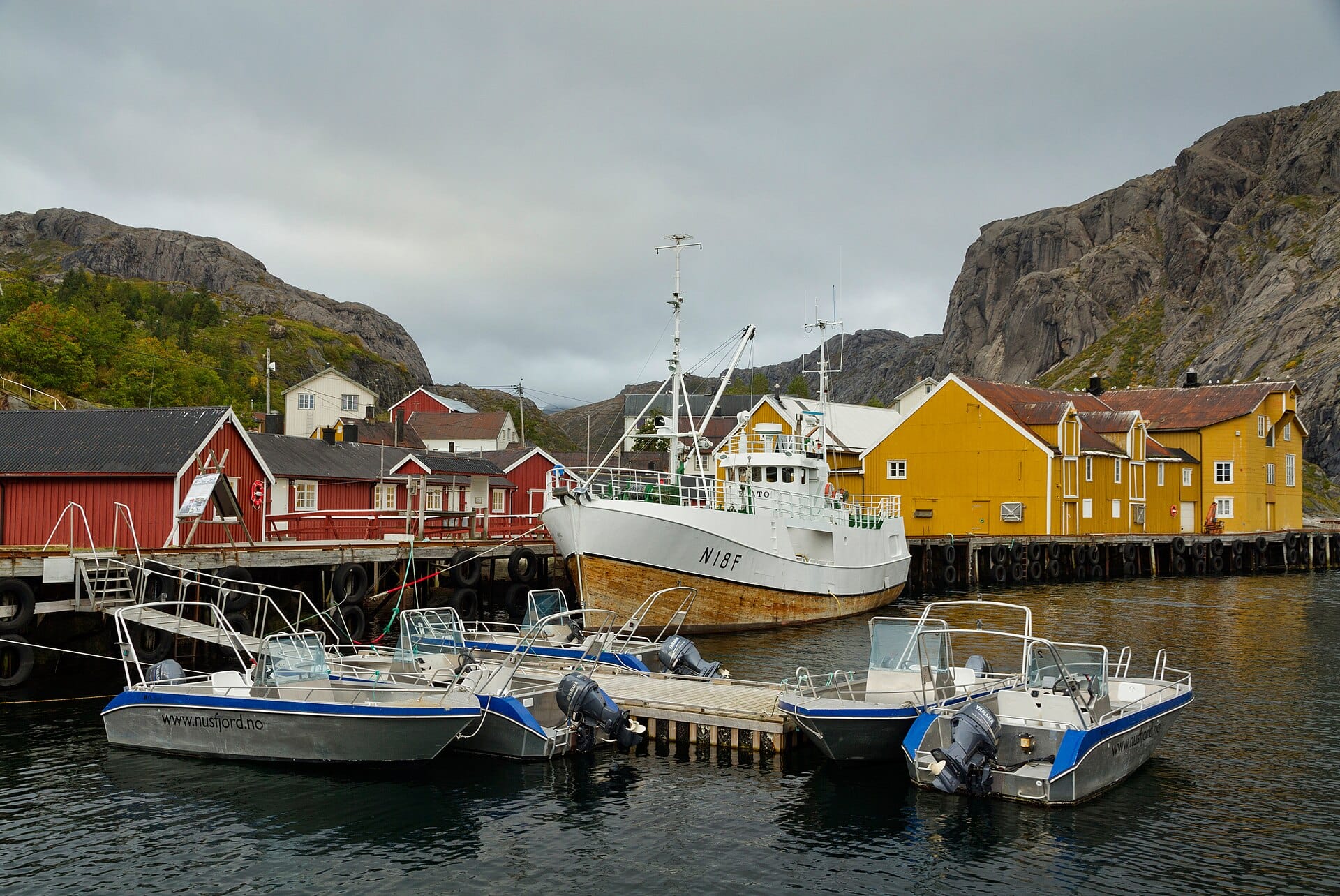
Nusfjord stands out noticeably from the other Lofoten villages at first glance. While most of the region glows in that typical Falun red, the cabins here are largely painted ochre yellow. The village lies hidden in a narrow fjord, sheltered on all sides by steep rock walls, which made it one of the safest harbours in the area in the past. Today the whole magical place is under UNESCO protection and operates as a fascinating living museum.
To preserve its historic character and protect it from the onslaught of tourism, the locals introduced an entrance fee to the village. In season the Nusfjord entrance fee runs to roughly 100–150 NOK per adult. This step might sound absurd at first, but in practice it works as an absolutely perfect filter against the crowds of package tours, who would rather carry on for free and leave you to admire the history in peace.
Thanks to the fee, you can wander undisturbed along the old wooden piers, peek inside the original general store, or take a look at the old sawmill and the cod liver oil workshop. An unexpected hit for weary travellers is the local Italian restaurant, which bakes fantastic wood-fired pizza and offers a great vegetarian alternative to the ubiquitous seafood.
💡 Tip: If you stay in Nusfjord or book a table at the famous local restaurant, you don’t have to pay the entrance fee to the village. Just show a valid reservation at the gate and you can head straight into the heart of the action.
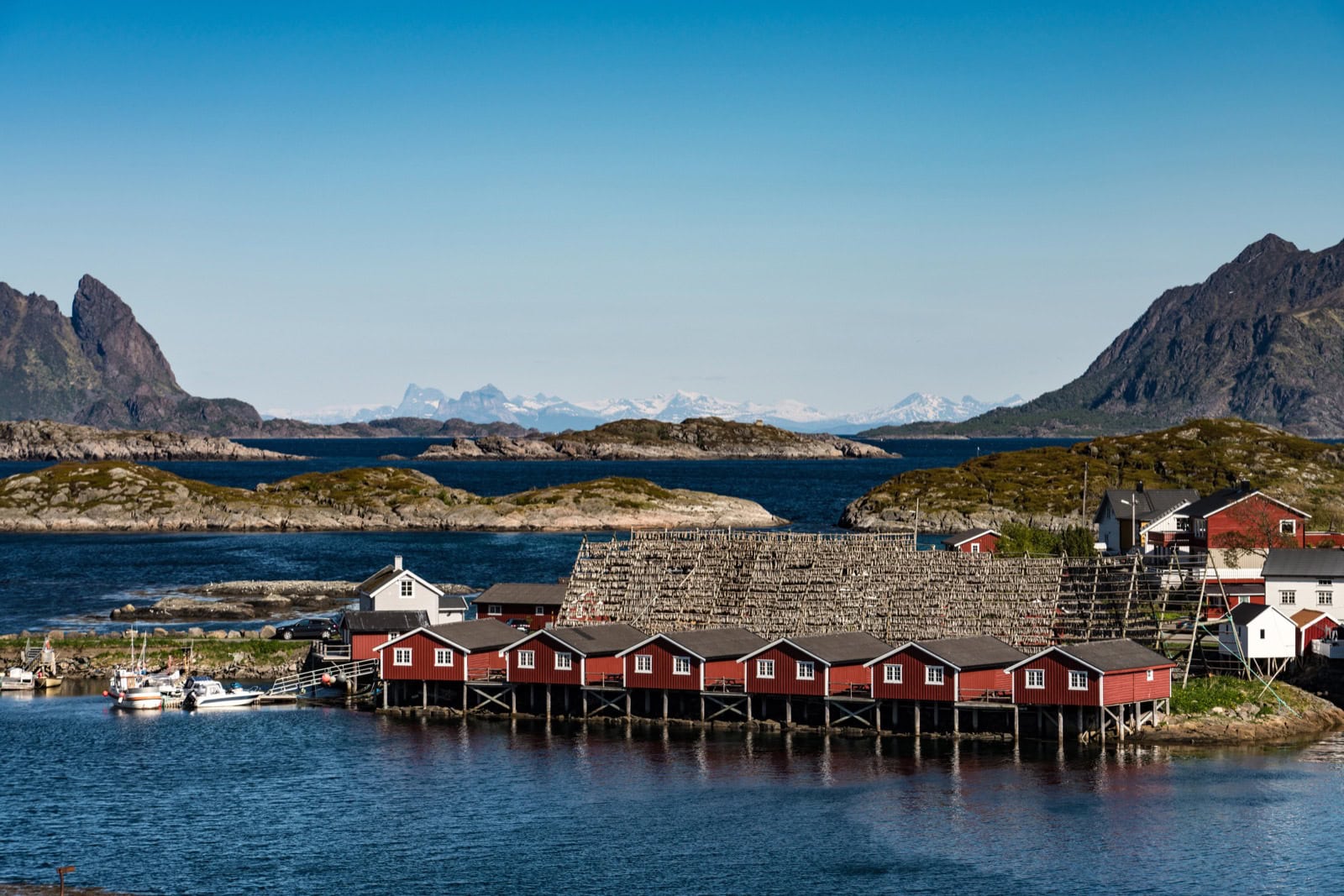

3. The Fascinating Tradition of Drying Cod
When you say “Lofoten”, most people picture wooden racks full of drying fish. The winter hunt for the Arctic cod known as skrei has been the absolute foundation of the local economy and culture for centuries. The fish are processed here in a way that has barely changed since the days of the first Vikings, and the sight of the gigantic drying racks is one of the most quintessentially Nordic experiences there is.
The local speciality is so-called stockfish. These are fish dried purely by the icy spring wind and the sun, without a single pinch of salt. Around the villages of both Å and Nusfjord you’ll see enormous wooden racks called hjell, on which thousands of fish bodies and heads hang from February to May, creating a scene you simply won’t find anywhere else in the world. In Å you can visit a dedicated stockfish museum, where they’ll explain the entire process in detail — from the catch in the stormy sea to the final export to Italy.
If the all-pervading smell of fish doesn’t appeal to you and you prefer other local products, head to the nearby family goat farm Aalan Gård. Their excellent cheeses are bought by Norway’s finest restaurants, and the whole farmstead has an incredibly homely atmosphere where you can watch the free-roaming animals up close.
💡 Tip: For anyone keen on a deeper dive into Norwegian history, I’d recommend looking out for local excursions. On GetYourGuide you can easily find tours with local guides who’ll tell you the most fascinating details about the tradition of catching and drying cod, right beside the old fishermen’s cabins.
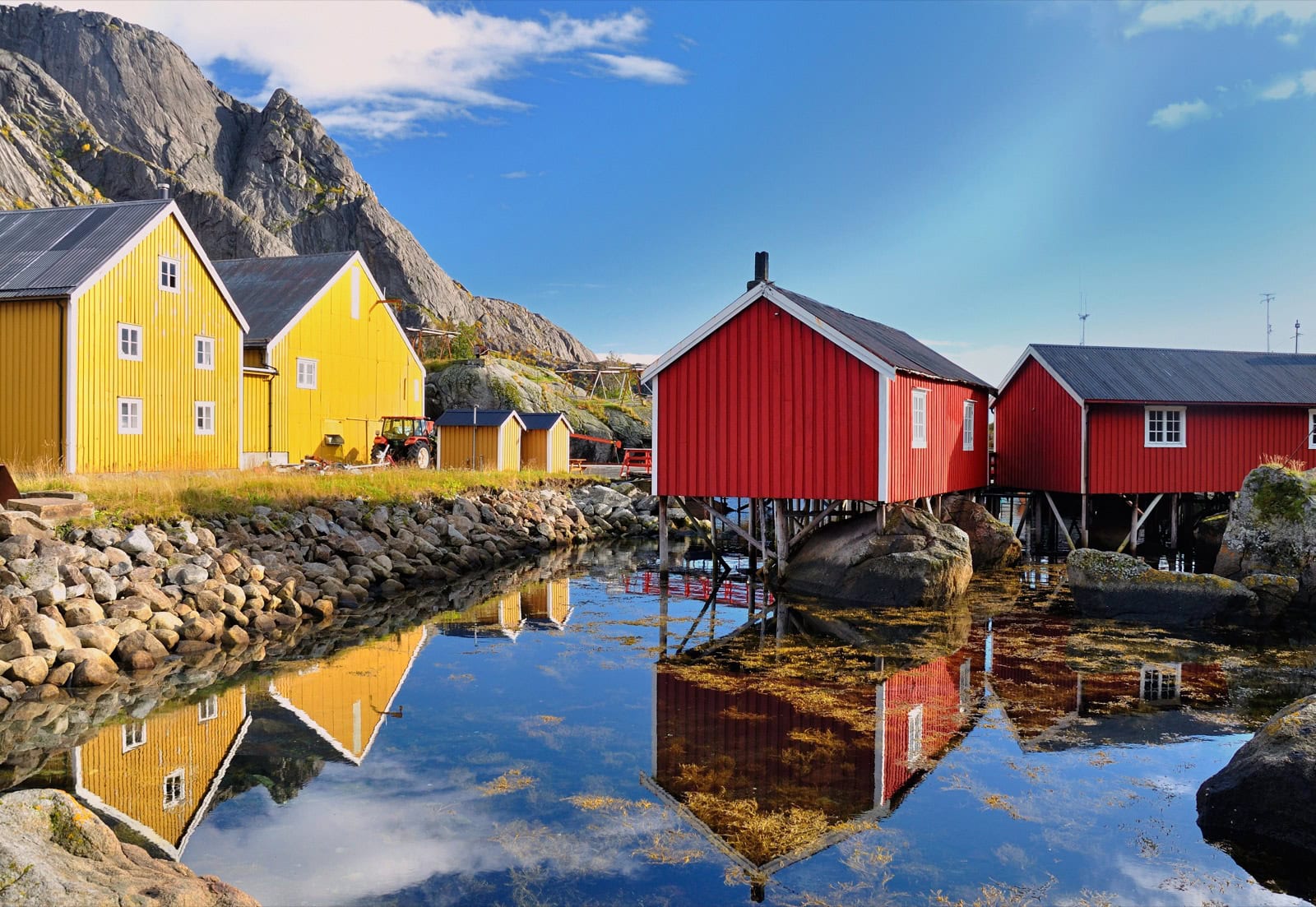
4. Spending the Night in a Traditional Wooden Rorbu
Being in Lofoten and not spending a night in a rorbu would be a downright sin. These iconic wooden cabins on stilts originally served as spartan seasonal accommodation for fishermen, who travelled here in winter from all over Norway in pursuit of a rich catch. Today they represent one of the most sought-after experiences for travellers from around the world, although you’ll pay a fair bit for the privilege.
Whereas in the old days up to ten exhausted men would sleep in a single cabin, with only the smell of fish and wet clothes for company, today’s rorbu have undergone a sensitive renovation. Inside you’ll find modern bathrooms, fully equipped kitchenettes and soft beds, all with a stunning view straight onto the water. The wooden floors still creak gently, and when it’s raw and damp outside, there’s perfect Nordic cosiness within, accompanied by the murmur of the ocean.
Be very careful, though, when choosing the specific location. In the famous Hamnøy the rorbu are crammed one on top of another, and camera shutters will be clicking under your windows from six in the morning as photographers hunt for the perfect shot. A far better choice are cabins in quieter coves or in the active harbour of Ballstad, where you’ll experience the real, unembellished atmosphere of the cold north without the throngs of tourists.
💡 Tip: Accommodation in the fishermen’s cabins is extremely popular and capacity is very limited. If you’re planning a summer trip to Å or Nusfjord, book your dream rorbu at least six months in advance, otherwise you’ll be left with only the most expensive or least attractive spots.
5. Hidden Beaches and Escaping the Crowds
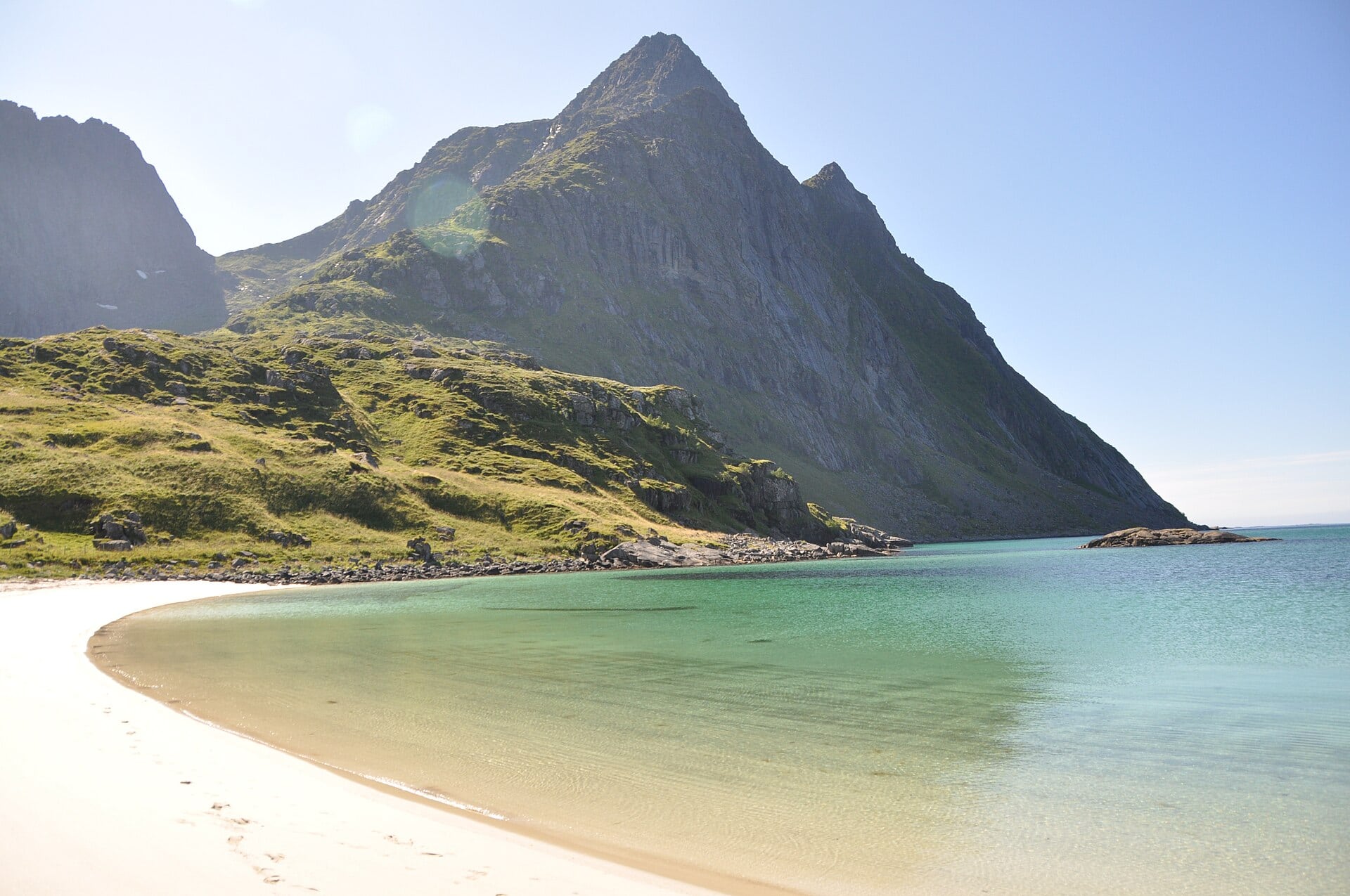
Even though southern Lofoten can seem completely overrun, there are still ways to slip away from the crowds with ease. The basic rule is to turn off the main E10 artery and sacrifice just ten extra minutes of driving. Most tourists stick exclusively to the best-known spots and lack the time or inclination to explore the dead-end turn-offs, of which there are thankfully still countless here.
A lovely example is the area around the village of Fredvang. Just the approach across two enormous curving bridges feels like a scene from a sci-fi film. While a few kilometres further on in Reine people are fighting over expensive parking spaces, here you’ll find a much calmer coastline with scattered settlements and fantastic options for easy walks. Another interesting detour is the architecturally unique glassblowing workshop Glasshytta in the village of Vikten, set right beside a wild, stony beach.
If you’re longing for white sand but dread the full car parks at the famous Haukland beach, where in season you’ll easily pay 200 NOK to park, punch the more remote Storsandnes beach into your sat nav. An inconspicuous little road leads here, parking is completely hassle-free, and the sand is every bit as perfectly fine. You’ll get gorgeous views and, above all, the silence that we all crave so much in the north.
💡 Tip: Don’t forget to pack a genuinely good waterproof jacket and sturdy footwear for every walk. The weather on the coast changes at an unbelievable pace, and a sunny day can turn into horizontal rain driven by a fierce wind within ten minutes.
6. Where to Warm Up and What Good Things to Eat
When the icy Nordic wind cuts through you outside, your only salvation is the local heated cafés and bistros. Norwegian coffee culture maintains an exceptionally high standard, so even in the most remote little village you’ll usually come across top-notch espresso and a freshly baked cinnamon roll. A great option along the route is the cosy spot Bringen Kaffeebar, where you can plan your next steps in the warmth.
If you’re interested in local traditions, a famous landmark near the village of Å is the bright yellow house Anita’s Sjømat on the tiny island of Sakrisøy. Their legendary fish burger with shrimp is an absolute local speciality, drawing crowds from far and wide. And right next to this informal bistro you’ll find the charming Lofoten Toy Museum, which makes a fascinating contrast to the rugged surrounding landscape.
In Nusfjord, on the other hand, a very pleasant culinary surprise awaits in the form of an Italian restaurant. After days of traditional Nordic fare, you’ll certainly appreciate the excellent crispy wood-fired pizza, which offers an ideal meat-free alternative in a country built on fishing. Just be prepared that a visit to the restaurant definitely won’t spare your budget.
💡 Tip: Restaurants across Lofoten are very expensive, and supermarkets like Kiwi or Rema 1000 have prices roughly three times higher than back home. The best way to keep your wallet in check is to cook basic meals right in the kitchenette of your rorbu and only pop into cafés for an afternoon coffee and cake.
Where to Go Next from Å and Nusfjord
Once you’ve explored the south itself and the end of the E10 road, it’s time to set off in search of the region’s other treasures. The options are endless, and if you have a base strategically located in the middle of the islands, you can make comfortable day trips in every direction.
If you’re interested in the most iconic red cabins beneath steep peaks, be sure to read our article about the neighbouring villages of Reine and Hamnøy. There you’ll find precise tips on where to take the most famous photos. For an overview of the whole archipelago and to put together the perfect itinerary, don’t miss our big guide to Lofoten.
For those still wavering over which logistical strategy to choose and where exactly to pitch their figurative base camp, we’ve put together a detailed summary in our article on where to stay in Lofoten. It covers all the key areas and gives you a clear idea of whether you prefer the picture-postcard south or the practical middle of the islands.
 🚗 Car rental on the road
Verified rental cars in Norway
🚗 Car rental on the road
Verified rental cars in Norway
Search with the DiscoverCars comparison engine — it compares prices from dozens of local and international rental companies, and most bookings come with free cancellation.
Compare car prices in Norway →Frequently Asked Questions
How much does entry to Nusfjord cost?
Entry to the protected historic village costs approximately between 100 and 150 NOK per adult during the season. The fee is paid at the entrance gate and helps limit the excessive influx of tourists who would otherwise completely paralyze the place. If you have accommodation or a restaurant table reserved in the village, you naturally don’t pay the fee.
How do you properly pronounce the name of the village Å?
The single-letter village name is pronounced in Norwegian as a long Czech “Ó”. In translation, this word means a small river or stream. Due to its unique and amusing name, the local traffic sign marking the beginning of the village becomes an extraordinarily frequent target for souvenir collectors, so Norwegian authorities have to replace it with a new one with iron regularity.
Is parking free in Nusfjord?
At the very end of the E10 road in the village of Å, there’s a spacious free car park, which fills up to bursting very quickly during the summer months. In Nusfjord, parking is provided before the entrance gate to the paid zone. Generally in Lofoten, you’re starting to pay hefty fees for parking at many popular viewpoints and beaches, often even 200 NOK per day.
How long does it take to visit both villages?
I’ll need to see a place with accommodation, restaurants and perhaps hiking trails nearby. You can explore Nusfjord at a leisurely pace in an hour and a half, but it’s ideal to combine your visit with sitting down for lunch or coffee.
For the village of Å itself, I recommend setting aside about two to three hours, so you have enough time to wander through the old streets and walk all the way to the rocky cliffs high above the ocean beyond the car park. You can explore Nusfjord at a leisurely pace in an hour and a half, but it’s ideal to combine your visit with sitting down for lunch or coffee.
Are the narrow roads in the south safe?
The main E10 highway is in good condition, but in many places it’s extremely narrow and requires your absolute and full concentration. The maximum speed limit is often restricted to just 50 km/h and you constantly have to watch out for huge oncoming caravans. Arm yourself with patience and definitely don’t rush anywhere behind the wheel.
Can you buy groceries on-site?
Directly in Å, you’ll only find a small local shop and a historic bakery for a quick sugar fix. However, if you need to stock up on proper supplies for evening cooking, it’s best to stop at larger supermarkets like Kiwi or Rema 1000 in the town of Leknes, which is strategically located in the middle of the islands and offers a much wider selection.
Can I pay everywhere with a credit card?
Yes, Norway is nowadays essentially a completely cashless society. Payment cards or phones are accepted absolutely everywhere, from the most remote café at the edge of the world to buying ferry tickets. The local currency is the Norwegian krone (NOK) and you don’t need to exchange cash or withdraw from an ATM for your holiday at all.
Tips and Tricks for Your Vacation
Don’t Overpay for Flights
Search for flights on Kayak. It’s our favorite search engine because it scans the websites of all airlines and always finds the cheapest connection.
Book Your Accommodation Smartly
The best experiences we’ve had when looking for accommodation (from Alaska to Morocco) are with Booking.com, where hotels, apartments, and entire houses are usually the cheapest and most widely available.
Don’t Forget Travel Insurance
Good travel insurance will protect you against illness, accidents, theft, or flight cancellations. We’ve had a few hospital visits abroad, so we know how important it is to have proper insurance arranged.
Where we insure ourselves: SafetyWing (simple monthly subscription) and TrueTraveller (for extra-long trips).
Find the Best Experiences
Get Your Guide is a huge online marketplace where you can book guided walks, trips, skip-the-line tickets, tours, and much more. We always find some extra fun there!
More from Lofoten
Full guide → Travel story · most readWhat to Pack for Lofoten, Norway: A Packing List for Every Season
 When to goWhen to Visit Lofoten, Norway: Weather Month by Month and the Midnight Sun 2026
 ActivitiesReinebringen Norway: 6 Things to Know — The Hike, Steps & Current Status
 Getting thereLofoten Islands by Campervan: Parking & Rules for 2026
 With kidsLofoten Norway with Kids: 8 Tips on What to See and Do


