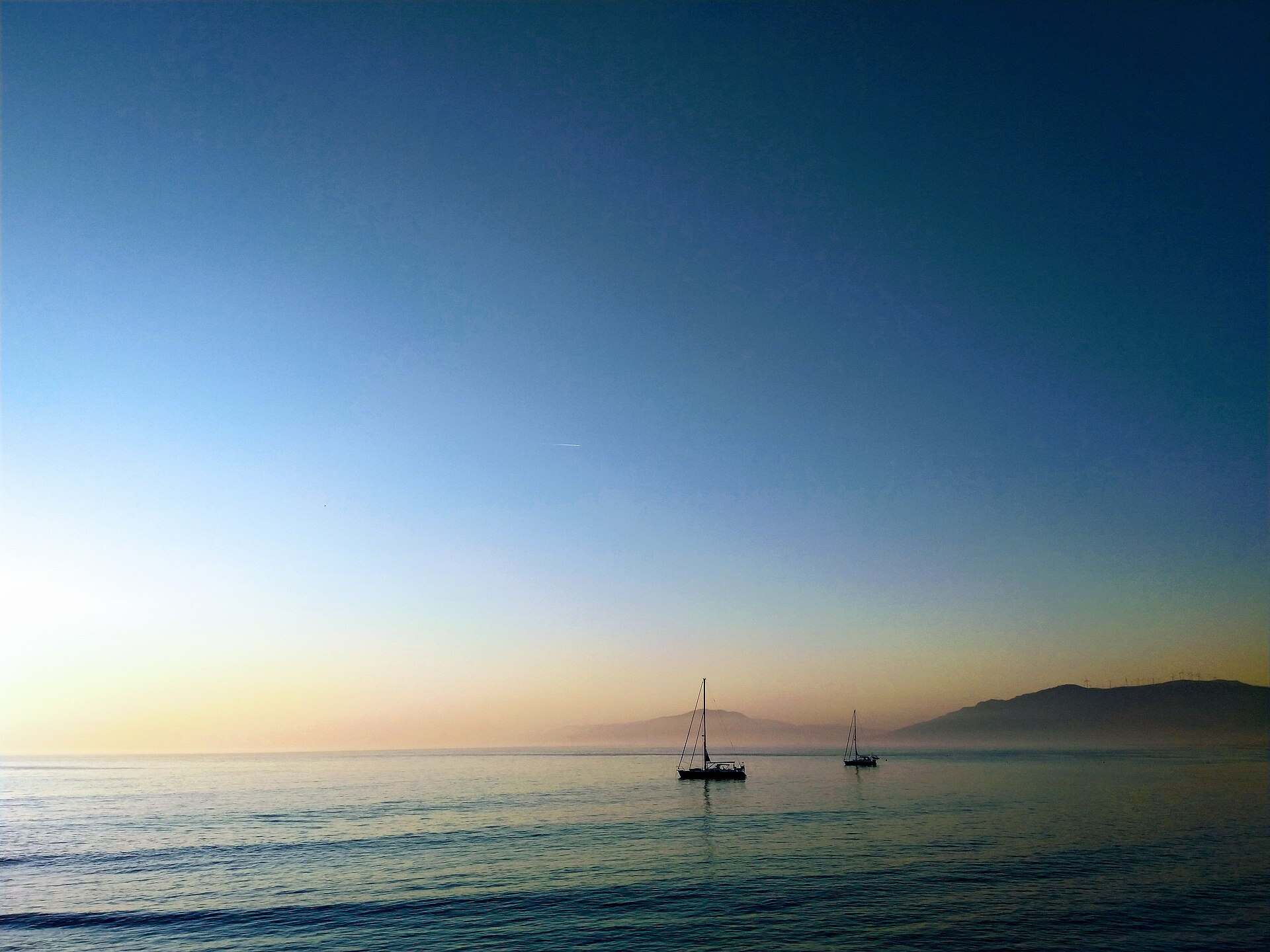
Picture a place where you can stand on a narrow strip of land with the warm, calm Mediterranean Sea on your left and the wild waves of the Atlantic Ocean crashing against your right. That’s exactly what Tarifa Spain offers — the southernmost tip of mainland Europe, where Africa is closer than the nearest major Spanish city. This magical little Andalusian town wins you over instantly with its incredibly laid-back atmosphere, blending traditional Spanish temperament with the boundless freedom of its surf community. Salt and wind hang permanently in the air, drawing adrenaline junkies from every corner of the globe. If you’re looking for a destination that combines pristine white beaches, fascinating Moorish history, and whale watching in the wild, you’ve just found it. I’ve put together a detailed guide to help you make the absolute most of your Tarifa holidays.
TL;DR
- Southernmost point: On the small island of Isla de las Palomas, the Mediterranean Sea physically meets the Atlantic Ocean.
- City of wind: Tarifa is Europe’s kitesurfing mecca — the main beach for the sport is nearby Playa de Valdevaqueros.
- Day trip to Africa: From the local port, a ferry to Tangier in Morocco takes just one hour.
- Historic centre: The old town, enclosed by medieval walls, is a maze of narrow whitewashed streets and superb tapas bars.
- Whale watching: The Strait of Gibraltar is one of the best spots in Europe for seeing whales and dolphins in the wild.
- Playa de Bolonia: Just a few kilometres outside town, you’ll find a massive sand dune and some of the best-preserved Roman ruins in Spain.
- Practical tip: Watch out for the strong easterly wind called Levante — it can turn a beach day into an involuntary sand-blasting session.
The full destination guide: Andalusia — guide and what to see
Tarifa Spain Weather: When to Visit
Planning a trip to Tarifa revolves around one absolutely crucial factor: the local wind. Ask any long-time resident and they’ll immediately launch into a lecture about the two dominant winds that shape life along this coast. Levante is a strong, warm easterly wind that can whip sand off the beach with such force that sunbathing becomes impossible. Poniente, on the other hand, blows from the west off the Atlantic — it’s cooler, refreshing, and brings ideal conditions for a classic beach day. Thanks to the ocean, Tarifa Spain weather is far more pleasant and bearable in summer than the scorching Andalusian interior.
If kitesurfing or windsurfing is your main goal, the summer months from June to August are a safe bet. During this period the town is buzzing, cafés overflow with tanned athletes, and the nightlife is in full swing. Summer also gives you the best chance of spotting orcas in the Strait of Gibraltar. For regular travellers who’d rather explore the sights and enjoy emptier beaches, I’d recommend visiting in May, September, or October. Temperatures hover around a very comfortable 23–26 °C, and you’ll dodge the biggest crowds.
The winter months from November to February are very quiet in Tarifa and popular with digital nomads. Temperatures rarely drop below 15 °C, making it ideal for beach walks in a light jacket. Just bear in mind that many beach bars and smaller restaurants close and the town essentially hibernates. The sea at this time of year is really only for the hardiest souls, as Atlantic currents reliably cool the water down.
Where to Stay in Tarifa
💡 Accommodation & experiences tip: We usually search for accommodation on Booking.com, which tends to have the best cancellation policies. For tickets, tours, and activities, it’s worth comparing options on GetYourGuide.
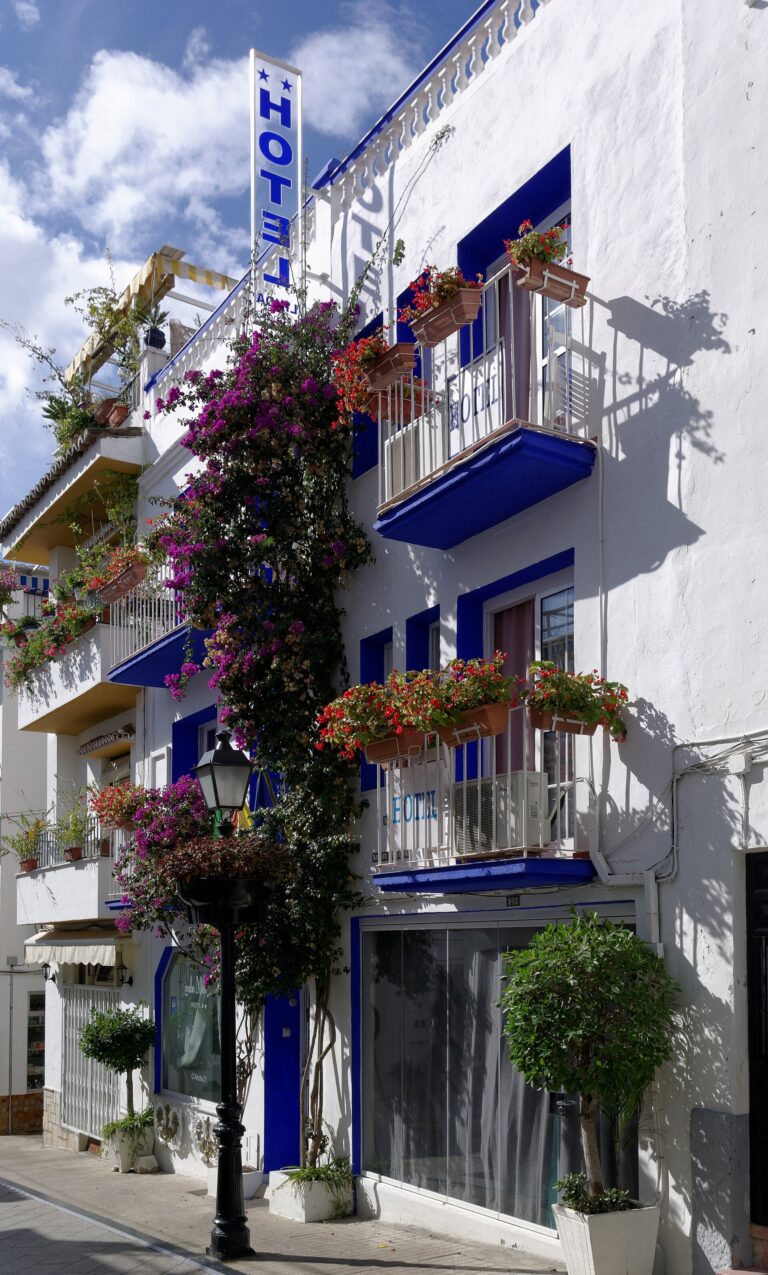
Your choice of accommodation in Tarifa largely determines what kind of holiday you’ll have. Most travellers opt for the historic centre (Casco Antiguo), which is absolutely charming. Everything is within arm’s reach — from morning coffee on a tiny square to evening drinks in tucked-away bars. The downside of the old town is tricky parking and nighttime noise, so if you’re a light sleeper, look for hotels on the edge of the centre instead. If you’re heading to Tarifa primarily for sport and the ocean, I’d recommend staying along the long stretch of Playa de los Lances.
When searching on Booking.com, you’ll find everything from budget surf hostels to gorgeous boutique hotels. A brilliant choice for anyone wanting to experience an authentic Moorish atmosphere is The Riad Tarifa. Hidden right in the historic centre, it features a beautiful inner courtyard with traditional Moroccan tiles and a fantastic rooftop terrace. The rooms are decorated with incredible attention to detail — you’ll feel more like you’re in nearby Tangier than in Spain.
If you prefer something more modern and luxurious with sea views, check out Hotel Tarifa Lances. It’s a short walk from both the beach and the centre, and offers a lovely rooftop pool and designer rooms. For backpackers and solo travellers, La Cocotera Boutique Hostel is an absolute legend, with a wonderful family-like vibe. They also have a great co-working space, making it an ideal base if you need to crack open a laptop and tackle some emails while on the road.
14 Best Things to See and Do in Tarifa Spain
Let’s dive into the best that this Andalusian gem has to offer — from historic alleyways and adrenaline-pumping watersports to day trips to the African continent. I’ll tell you what deserves your time and where to find the most fascinating spots that will make your holiday truly unforgettable.
1. Isla de las Palomas and Where Two Seas Meet
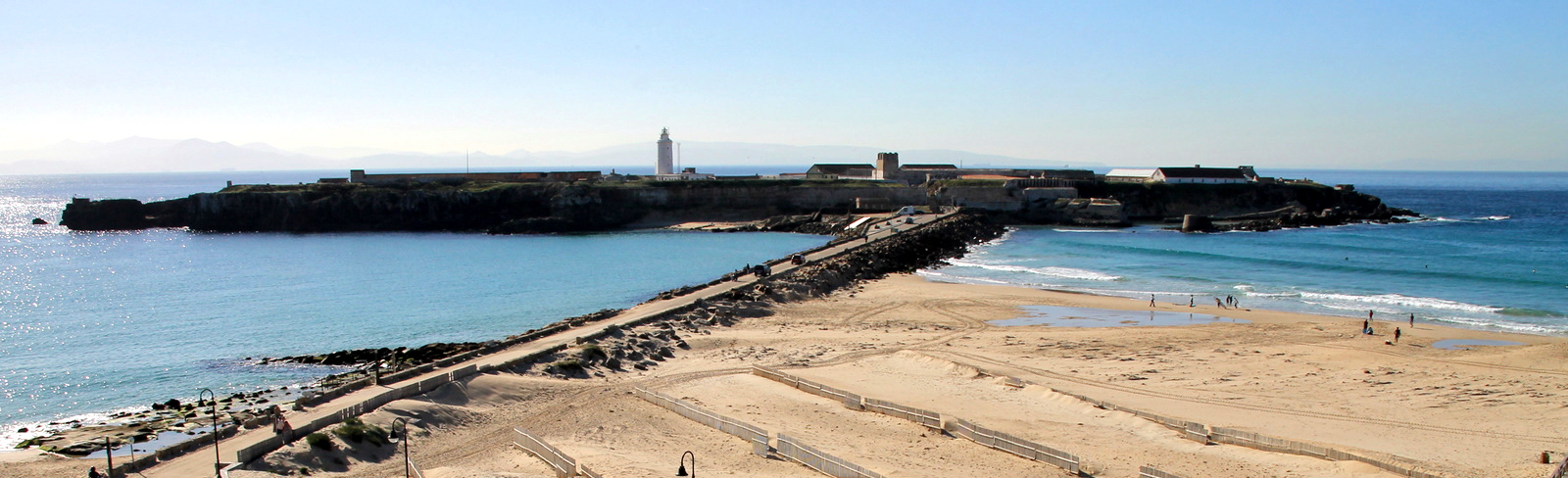
If there’s one place in Tarifa you absolutely cannot miss, it’s the small island of Isla de las Palomas. It’s connected to the mainland by a long, man-made causeway, and as you walk along it, you have the Mediterranean on your left and the wild Atlantic on your right. The difference in colour, temperature, and wave behaviour on each side is utterly fascinating. At the very start of this causeway, you’ll find the famous signpost marking the southernmost point of mainland Europe.
Getting that perfect photo by the marker can be a bit of a battle, as small queues of tourists tend to form in high season. The island itself was a military zone for many years and access was strictly forbidden. Today, restrictions have gradually eased, but you can still only get beyond the gate as part of an organised guided tour. Even just walking along the causeway to the gate is well worth it, though — especially when the wind is howling and waves crash against the stone barriers.
💡 Local tip: Head to the signpost early in the morning or just before sunset. Not only will you avoid the queues for a photo, but the light hitting the surrounding sea will be absolutely magical. If the Levante wind is blowing hard, be prepared — the sand can sting your legs quite unpleasantly.
2. Castillo de Guzmán el Bueno
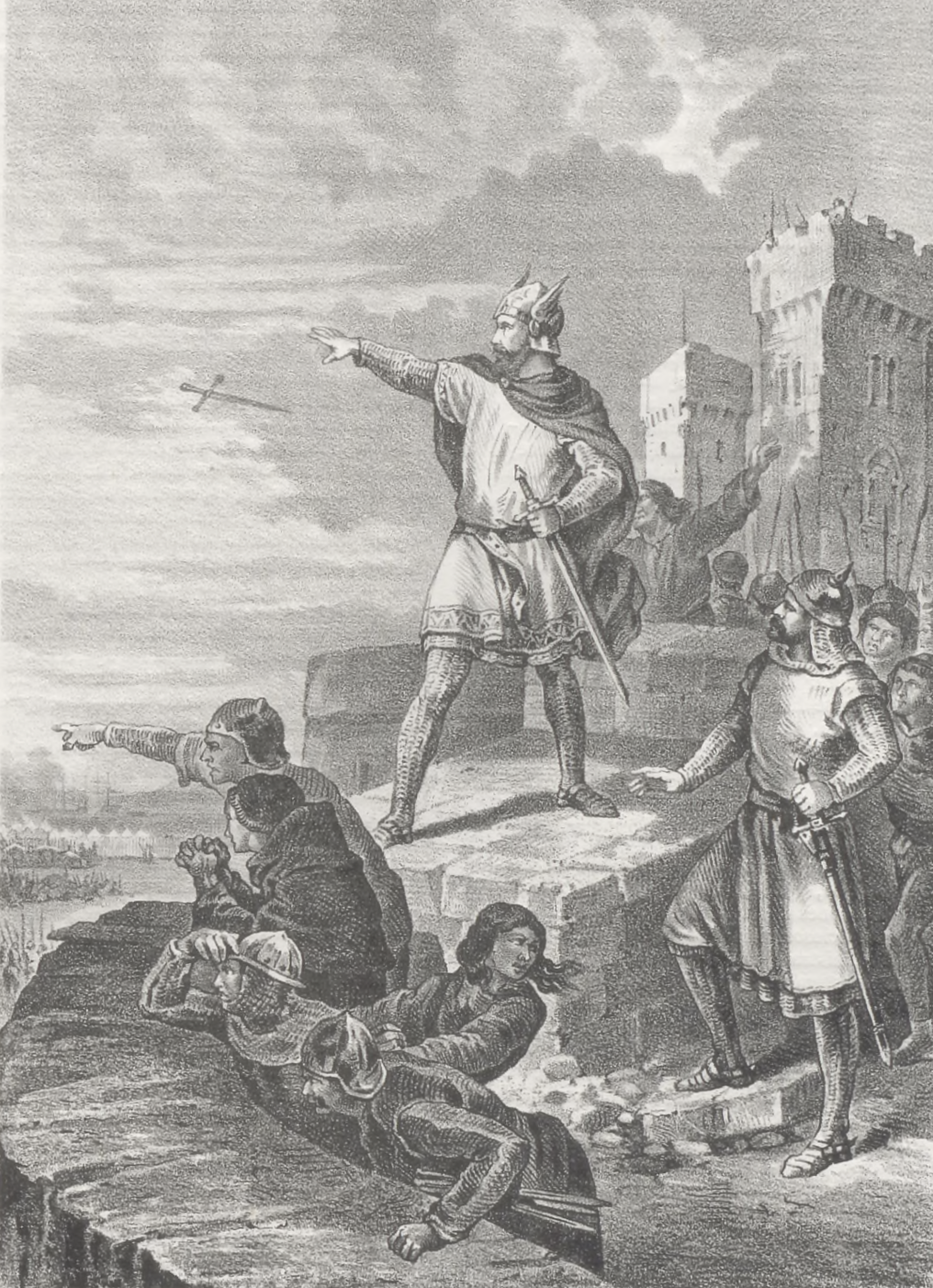
This majestic 10th-century fortress dominates Tarifa’s entire waterfront and is one of the best-preserved Moorish monuments in all of Andalusia. It was built on the orders of Caliph Abd ar-Rahman III to defend the city against pirates and attacks from North Africa. The castle is best known for the dark yet heroic legend of Alonso Pérez de Guzmán, who in 1292 chose to sacrifice his own son’s life rather than surrender the fortress to the besieging Moors. According to legend, he even threw down a dagger from the ramparts — the very weapon used to execute his son.
Today, the castle is open to the public and a visit takes roughly an hour. The main draw isn’t so much the bare interior rooms but rather the breathtaking panoramic views from the battlements. On a clear day, you can see not just the entire port and old town, but also the Moroccan coast and the Rif mountains rising just beyond the Strait of Gibraltar. You’ll feel as though you could almost reach out and touch Africa.
💡 Local tip: Admission to the castle is a modest €4, but every Sunday afternoon, entry is completely free. The rampart walkways are fairly narrow and windy, so even in summer it’s worth bringing a light jumper or scarf — it can get seriously breezy up there.
3. Puerta de Jerez and the Old Town
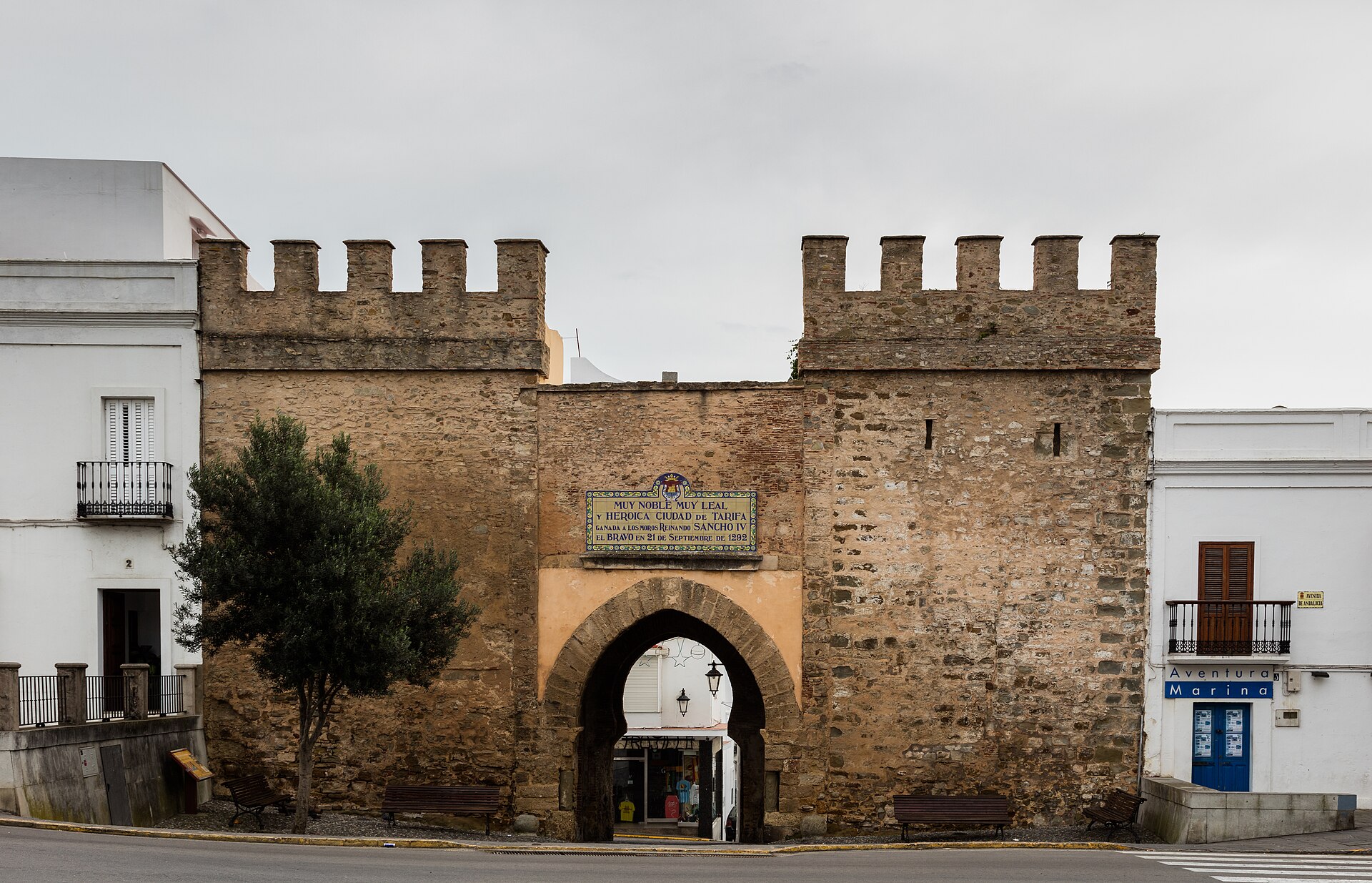
Tarifa’s historic centre is ringed by remnants of old walls, entered through the imposing 13th-century Puerta de Jerez gate. Above the arch, you’ll notice a plaque commemorating the Christian reconquest of the town. The moment you step through it, you’re instantly transported to another world — one of narrow alleyways, whitewashed houses, and wrought-iron balconies that unmistakably betray a strong Arabic influence.
The heart of the old town revolves around the little Plaza de San Hiscio and its surrounding labyrinth of streets. During the day, it’s a perfect spot for browsing small boutiques selling surf wear, handmade jewellery, and leather goods. You’ll also find dozens of tiny cafés and bakeries wafting the scent of fresh pastries into the street. Don’t miss the church of San Mateo, built on the foundations of a former mosque and blending Gothic, Renaissance, and Baroque elements.
💡 Local tip: The old town is at its most atmospheric early in the morning, around nine o’clock. Most tourists and surfers are still asleep, so you’ll have the sun-drenched white alleyways practically to yourself and a handful of locals heading out for their morning coffee.
4. Whale and Dolphin Watching in the Strait
The Strait of Gibraltar acts as a natural funnel between the ocean and the sea, making it a fantastic hub for marine life. Shoals of fish pass through here, attracting cetaceans from far and wide. On a two-hour boat trip, you have an almost guaranteed chance of seeing several species of dolphins and pilot whales, which live in the strait year-round. Most companies even guarantee that if you don’t spot a single animal, they’ll give you a ticket for another trip free of charge.
The biggest draws, however, are the orcas and sperm whales. Sperm whales mainly pass through in spring, while orca season peaks in July and August. The orcas arrive in summer to hunt endangered bluefin tuna migrating into the Mediterranean to spawn. Watching a massive dorsal fin surface just a few dozen metres from your boat is an absolutely spine-tingling experience you’ll remember for the rest of your life.
💡 Local tip: Several companies operate out of Tarifa, but I always recommend choosing organisations certified for ethical whale watching (such as FIRMM or Turmares). Their boats maintain a strict distance from the animals and avoid causing unnecessary stress. Book tickets online at least a week ahead during summer!
5. Kitesurfing at Playa de Valdevaqueros
If there’s one place that defines Tarifa as the kitesurfing capital of Europe, it’s Valdevaqueros beach. Located about 10 kilometres from town, you can spot the sky dotted with hundreds of colourful kites from a distance. The beach is wide, sandy, and thanks to its shape, offers relatively safe conditions even for those just getting started with this demanding sport.
You don’t have to be an adrenaline junkie to fall in love with this spot. Plenty of people come just to sit on the sand, sip a drink at one of the legendary beach bars, and watch in awe as experienced riders pull acrobatic tricks several metres above the waves. Dozens of surf schools line the beach where you can book an afternoon lesson and find out what it’s like to tame the Andalusian wind.
💡 Local tip: If you just want to watch and soak up the atmosphere, head to the famous chiringuito Tumbao. It’s a bar right on the beach with a huge lawn, great music, and they mix the best mojitos on the entire coast. It does get pretty packed in the afternoon, though, so arrive early.
6. Playa de Bolonia and the Monumental Sand Dune
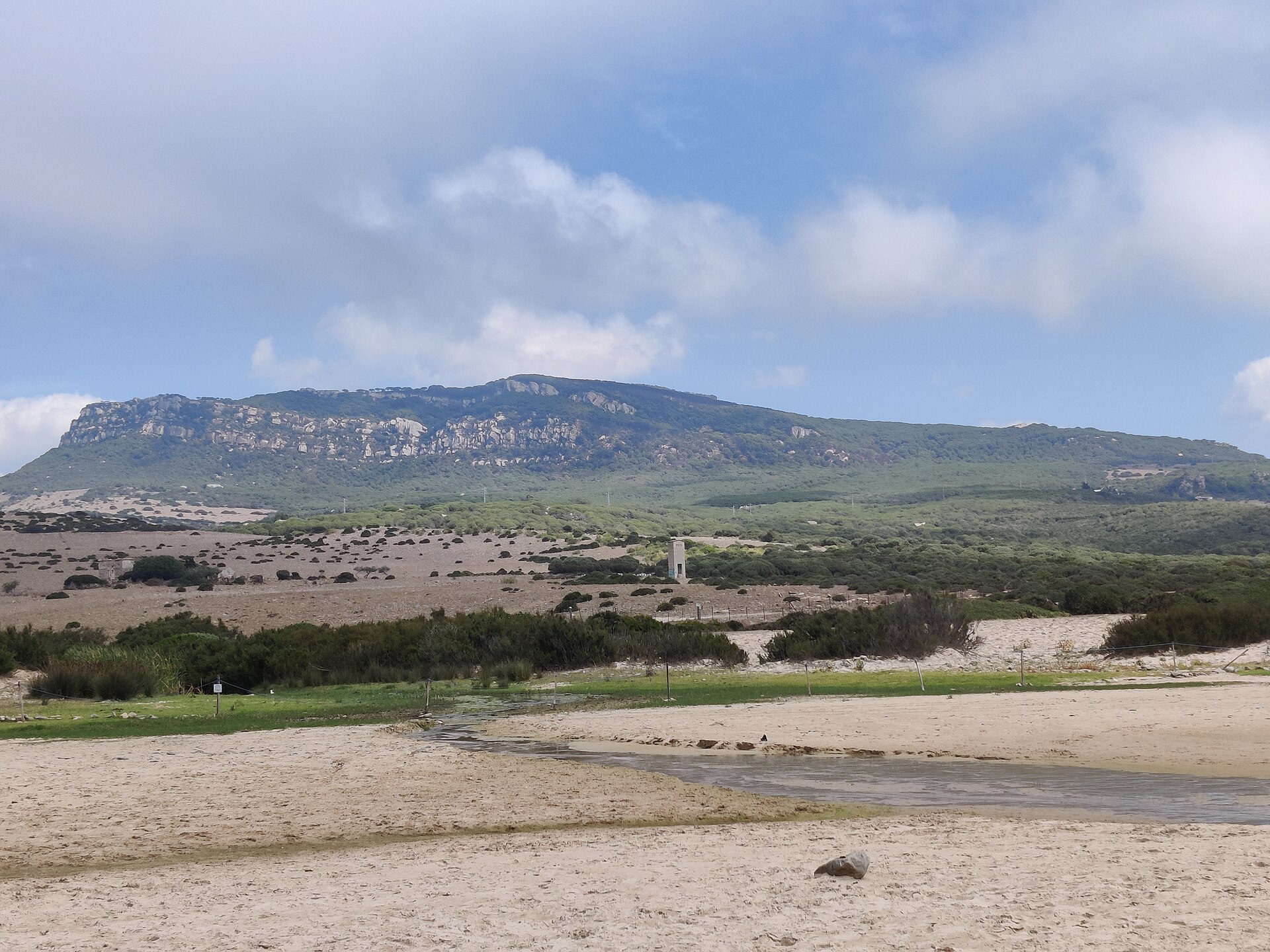
About twenty kilometres west of Tarifa hides one of the most beautiful Tarifa Spain beaches — and indeed one of the finest in the whole country. Bolonia is a bay with incredibly fine white sand and crystal-clear water that has kept its wild character because there are no massive concrete hotels in sight. At the western end of the beach towers the enormous Duna de Bolonia sand dune, over 30 metres high and constantly being pushed inland by the wind, gradually swallowing the neighbouring pine forest.
Climbing to the top of the dune is a real workout in the soft sand, especially under the midday sun, but the reward is well worth the effort. From the summit you get a gorgeous view across the entire bay and the African coast in the distance. Bolonia is also known for its completely relaxed relationship with nature — local cows regularly wander across the beach in the most nonchalant fashion, cooling off by the water’s edge. It’s a wonderfully surreal sight.
💡 Local tip: During summer weekends, the narrow road to Bolonia often gets completely gridlocked and car parks are full by ten in the morning. Visit on a weekday right after breakfast, bring plenty of water, and don’t forget sunscreen — there’s very little shade.

7. The Roman Ruins of Baelo Claudia
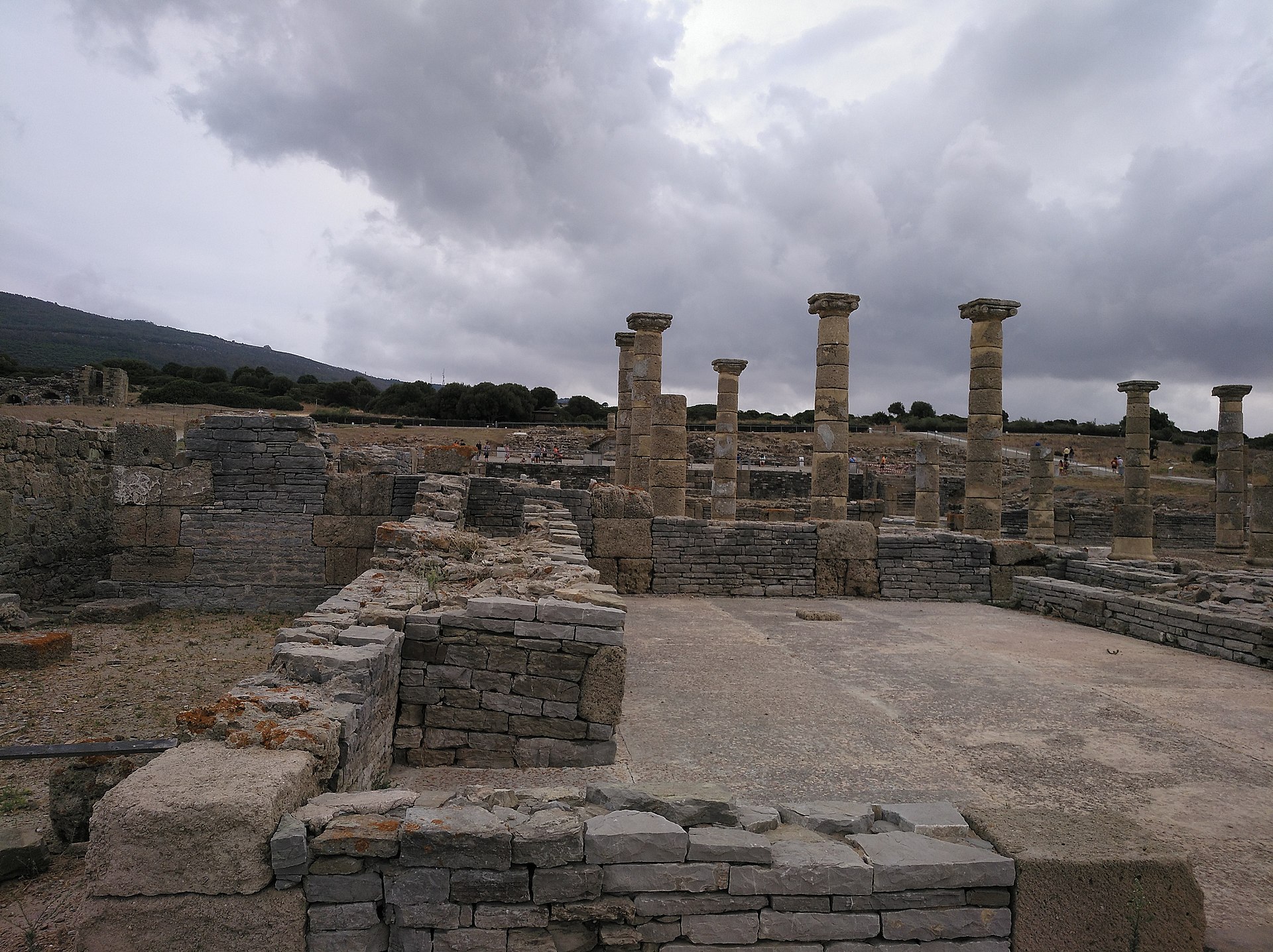
Right next to Bolonia beach lies a treasure that will thrill any history lover. Baelo Claudia is a remarkably well-preserved ancient city dating from the late 2nd century BC. Its seaside location is no coincidence — the Romans built a massive fish-processing centre here for producing garum, a fermented fish sauce that was a prized luxury in the Roman Empire and was exported from this very spot across the ancient world.
As you stroll through the archaeological park, you’ll see not just the fish-processing factories but also a beautifully preserved theatre, the remains of a forum, thermal baths, and temples dedicated to Jupiter, Juno, and Minerva. Walking among ancient columns with the azure sea as your backdrop is an experience that rivals far more famous excavation sites in Italy. The complex also includes a modern museum that helps you imagine what life here looked like two thousand years ago.
💡 Local tip: If you’re an EU citizen, entry to the entire Baelo Claudia archaeological site is completely free. Simply show a valid ID or passport at the entrance. The site is closed on Mondays, so plan your visit for another day.
8. Ferry to Tangier in Africa
Being this close to another continent and not visiting would be a sin. Fast ferries operated by FRS or Inter Shipping depart several times daily from Tarifa’s port and whisk you to a completely different world in under an hour. Tangier, Morocco, is a city bursting with colour, the scent of spices, market haggling, and the narrow alleys of the old medina. Even the crossing itself through the Strait of Gibraltar is a brilliant experience — it’s one of the easiest ways to do the popular Tarifa Spain to Morocco day trip.
You can book an organised day trip where a guide takes care of everything, or go independently. If you’re heading over on your own, brace yourself as soon as you step off the boat — dozens of self-appointed guides and taxi drivers will descend upon you. In the old medina, make sure to walk up to the Kasbah fortress, sip a traditional super-sweet mint tea at the legendary Café Hafa overlooking the sea, and soak up the incredible oriental atmosphere.
💡 Local tip: Passport control for Morocco takes place right on board the ferry during the crossing. As soon as you board, go and queue up at the immigration officer who stamps your passport. You won’t be allowed on the ferry without a passport — a national ID card isn’t enough to cross into Africa! British passport holders don’t need a visa for short visits to Morocco.
9. Playa de los Lances
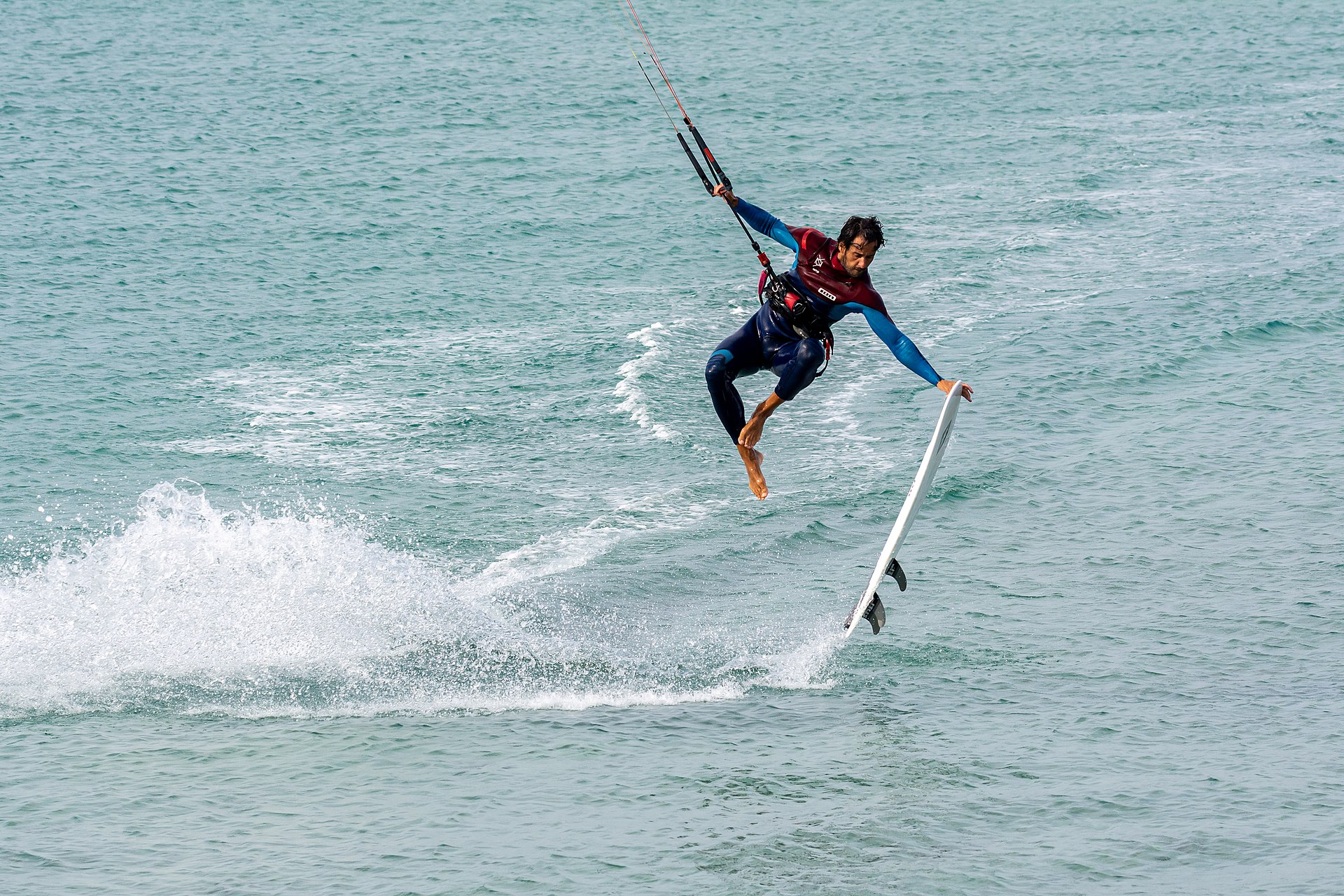
This is Tarifa’s main and longest beach, stretching over ten kilometres northwest from the town. Despite being close to the centre, its sheer size means it never feels overcrowded. It’s divided into several zones — the section closer to town is designated for swimmers and families with children, while further out the kitesurfers take over.
The beach is lined with a lovely wooden boardwalk that leads all the way to the Paraje Natural Playa de los Lances nature reserve. Small lagoons and wetlands form here that are an important stopover for thousands of migratory birds on their journey between Europe and Africa. It’s a fantastic spot for an evening walk, when golden light from the setting sun bounces off the ocean.
💡 Local tip: During a strong Levante wind, spending time on Los Lances can be pretty miserable as sand blows everywhere. On those days, you’re better off retreating to the sheltered coves closer to town — for example, the small Playa Chica, right next to the causeway to Isla de las Palomas, which is shielded from the wind.
10. Views of Africa from Mirador del Estrecho
If you want the most iconic view of the Strait of Gibraltar without scaling a castle, you need to head just outside town. About six kilometres east of Tarifa along the N-340 road, you’ll find the Mirador del Estrecho viewpoint. The strait at this point is only about 15 kilometres wide, and on a clear day you can see the Moroccan coast in such detail that you can make out individual buildings and roads on the other side.
The standout feature on the horizon is the majestic Moroccan mountain Jebel Musa (851 m). Together with the Rock of Gibraltar on the European side, it forms the famous Pillars of Hercules, which in ancient times symbolised the edge of the known world. There’s a small café at the viewpoint where you can grab a coffee, buy postcards, and peer through coin-operated telescopes at the giant cargo ships passing through the strait.
💡 Local tip: Stop here when you’re leaving Tarifa heading towards Gibraltar or Málaga — the viewpoint is right on the main road and parking is free. Keep an eye on your belongings, though. During summer, the occasional pickpocket takes advantage of distracted, awestruck tourists.
11. Andalusian Tapas and Local Specialities
Southern Spanish cuisine is incredibly rich, and Tarifa is no exception. If you lean towards meat-free dishes, Andalusian tapas bars are paradise. I’d definitely recommend trying salmorejo — a thick, cold tomato soup with garlic and olive oil (just remember to tell the waiter “sin jamón” so they don’t top it with ham). Another fantastic local classic is espinacas con garbanzos (spinach with chickpeas and Moorish spices) or pimientos de Padrón — small green peppers fried in coarse salt.
If you’re travelling with someone who loves fish, know that the absolute star of this region is red tuna caught using the traditional almadraba method. Locals swear by this delicacy, and every spring Tarifa and neighbouring Zahara de los Atunes host huge gastronomic festivals dedicated to the tuna catch. Restaurants in the old town compete to see who can offer the most creative tuna tapas.
💡 Local tip: For the most authentic atmosphere, head to El Francés bar on Calle Sancho IV el Bravo. It’s always packed, noisy, the waiters shout orders across the room, and the tapas are phenomenal. Get there right when they open around eight in the evening, though — otherwise you won’t find a seat.
12. Nightlife and Sunset at the Chiringuitos
Tarifa has a reputation for having some of the best nightlife on the Andalusian coast — but it’s a far cry from the polished luxury clubs of Marbella. Here, the vibe is bohemian, relaxed, and just a touch hipster. It all kicks off at dusk in the beach bars known as chiringuitos. People drift in straight from the sand, with gritty feet and salt-crusted hair, to watch the sun sink into the ocean over a glass of tinto de verano.
Among the most iconic sunset spots are Arte Vida and Waikiki on Playa de los Lances. Live DJs often play chilled-out tunes and the atmosphere is wonderfully infectious. Later in the evening, the action shifts into the old town’s alleyways. Cafés morph into buzzing bars and the little squares fill with people hopping from one venue to the next well into the small hours.
💡 Local tip: In Spain, everything happens much later than you might be used to. The real nightlife in the old town doesn’t kick off until midnight. If you show up at a bar at ten, you’ll probably be sitting there on your own. Enjoy a long dinner and don’t rush — the night is young.
13. Hiking in Parque Natural del Estrecho
The area around Tarifa isn’t all about watersports and beaches. The natural park surrounding the Strait of Gibraltar offers fantastic hiking with absolutely jaw-dropping views. One of the most beautiful trails is the Colada de la Costa route, which follows the clifftops directly above the sea towards the town of Algeciras. It’s a wild, wind-battered landscape fragrant with wild thyme and rosemary.
Along the cliffs you’ll stumble upon several old military bunkers from the Spanish Civil War and World War II. General Franco had them built out of fear of an Allied invasion from nearby Gibraltar. Exploring these abandoned concrete fortifications lends the walk a slightly mysterious edge. The terrain isn’t particularly challenging, but be prepared for relentless wind and fierce sun with little escape.
💡 Local tip: If you hit the trail in the early spring months, you’ll find the entire coastline carpeted in wild flowers. Wear sturdy footwear as the paths are often rocky, and bring plenty of water — there’s nowhere to refill along the way.
14. Day Trip to Cádiz and the Costa de la Luz
Tarifa is a superb base for exploring the wider Costa de la Luz (Coast of Light). Unlike the overcrowded Mediterranean shores, here you’ll find mile after mile of unspoilt Atlantic beaches. Hire a car and head northwest. Make sure to stop in the gorgeous whitewashed village of Vejer de la Frontera, perched on a hilltop and regarded as one of the most beautiful towns in all of Spain.
Your final destination should be Cádiz, a city sitting on a narrow peninsula jutting out into the ocean. It’s the oldest continuously inhabited city in Europe, founded by the Phoenicians over three thousand years ago. Compared to Tarifa, Cádiz has a much grander feel, boasting a stunning cathedral with a golden dome and a tangled maze of weathered yet incredibly photogenic streets. It makes for a perfect full-day trip that shows you yet another face of Andalusia.
💡 Local tip: The drive from Tarifa to Cádiz takes about an hour and a half, mostly along toll-free roads. Avoid travelling on Sunday evenings, though — that’s when thousands of Spaniards head back inland from their weekend on the coast, and the N-340 grinds to a standstill.
Map of points of interest for your phone
Where to Go Next from Tarifa
If you have more time in Spain, it would be a shame to stick only to the south. Andalusia is beautiful, but the rest of the country is well worth exploring too. Heading east, you could discover Valencia or the popular resort of Alicante. Another great stop along the sun-soaked coast is Benidorm.
If culture and big cities are more your thing, don’t miss the capital Madrid or Catalonia’s pride and joy, Barcelona. From there, it’s just a short hop to the rugged Costa Brava coastline and the historic city of Girona or the seaside town of Sitges.
If you’re passionate about Spanish gastronomy, check out our article on traditional Spanish food. And for history buffs considering a trip to the northwest, I’d recommend our guide to the pilgrimage city of Santiago de Compostela or the port city of Vigo.
Frequently Asked Questions
How do I get from the airport to Tarifa?
The nearest major airports are in Málaga and Seville. Direct buses run from both cities to Tarifa, taking approximately 2.5 to 3 hours. However, the most convenient option is renting a car right at the airport, which allows you to easily explore the more remote beaches in the area.
Is the wind in Tarifa really that bad?
It depends on which wind is blowing. The Poniente from the west is pleasant and refreshing, but when the easterly Levante picks up, it can blow at speeds over 40 knots. On those days, lying on the beach feels like a sand exfoliation treatment, and it’s better to hide in sheltered coves or head inland for a day trip.
Do I need a passport for a trip to Tangier?
Yes, Morocco is not in the European Union or the Schengen Area. To cross the border you absolutely need a valid passport; a national ID card alone won’t be enough. Passport control takes place right on board the ferry during the crossing.
How many days do I need for Tarifa?
If you only want to see the historic centre, the castle and fit in a whale-watching trip, 2 to 3 days will do. But if you’re planning to try kitesurfing, take a trip to Tangier or Cádiz and enjoy some beach time, I’d recommend setting aside at least 5 to 7 days.
What’s the sea temperature like?
Since the Mediterranean Sea mixes with the Atlantic here, the water is cooler than on the popular Costa del Sol. During the summer months (July and August), water temperatures hover around 20–22°C, which is very refreshing. For longer swims or water sports, a wetsuit is absolutely essential.
Can you pay by card everywhere?
Most hotels, larger restaurants and supermarkets accept payment cards without any problems. But in Tarifa there are plenty of small tapas bars, chiringuitos on the beach and market traders where you’ll need cash in euros. Always keep at least some small change on you for coffee or parking.
Is Tarifa suitable for families with children?
Absolutely! Shallow beaches like Los Lances are great for kids, and a dolphin-watching trip will be an incredible experience for young travelers. Just be careful of strong Atlantic currents in summer, and make sure to protect children thoroughly from both sun and wind.
Tips and Tricks for Your Vacation
Don’t Overpay for Flights
Search for flights on Kayak. It’s our favorite search engine because it scans the websites of all airlines and always finds the cheapest connection.
Book Your Accommodation Smartly
The best experiences we’ve had when looking for accommodation (from Alaska to Morocco) are with Booking.com, where hotels, apartments, and entire houses are usually the cheapest and most widely available.
 🚗 Car rental on the roadVerified rental cars in Andalusia
Search with the DiscoverCars comparison engine — it compares prices from dozens of local and international rental companies, and most bookings come with free cancellation.
Compare car prices in Andalusia →Don’t Forget Travel Insurance
Good travel insurance will protect you against illness, accidents, theft, or flight cancellations. We’ve had a few hospital visits abroad, so we know how important it is to have proper insurance arranged.
Where we insure ourselves: SafetyWing (simple monthly subscription) and TrueTraveller (for extra-long trips).
Find the Best Experiences
Get Your Guide is a huge online marketplace where you can book guided walks, trips, skip-the-line tickets, tours, and much more. We always find some extra fun there!