

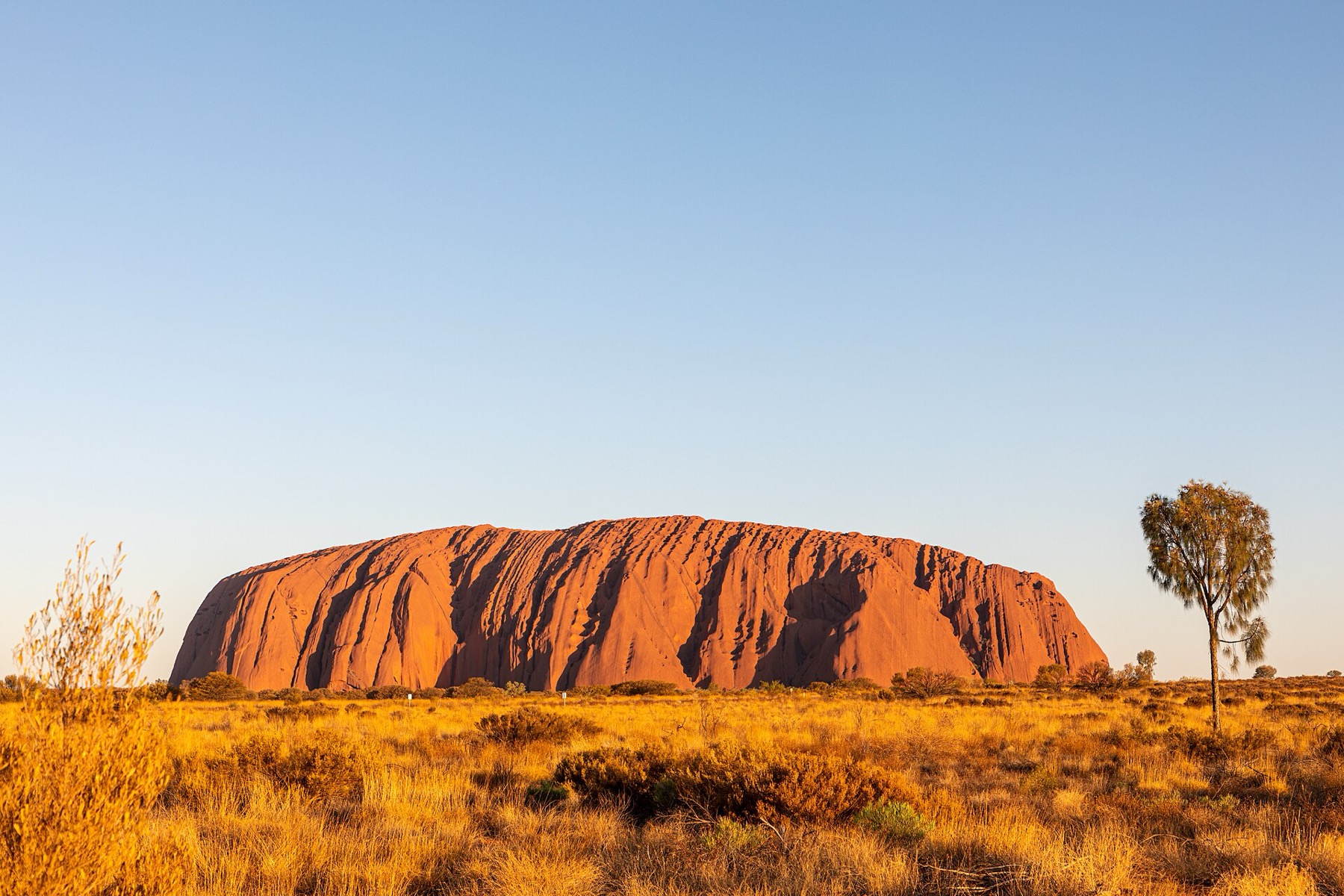
Every single day, parcels arrive at the offices of the Uluru-Kata Tjuta National Park from all over the world, containing rocks, red sand and apologetic letters. Tourists who once secretly carried off a piece of the sacred earth as a souvenir humbly return it, claiming the act brought them nothing but terrible luck. The phenomenon of the so-called “sorry rocks” makes one thing perfectly clear: Uluru in Australia is no ordinary mountain, but a place charged with incredibly powerful energy.
Although the red heart of Australia might look like an inhospitable, empty wasteland at first glance, it hides a fascinating Indigenous culture that stretches back tens of thousands of years. They say you leave Uluru a different person, and believe it or not, that red colour somehow clings to you long after you’ve come home. I’ve put together a detailed guide to the most beautiful spots, so you know exactly what to expect from a journey into the centre of the continent.
I’ve covered everything from tickets and accommodation to tips on activities. The goal is to get you out into the desert well prepared and without unnecessary stress. We’ll go through when to go so you don’t roast, how best to reach the area, and how much it will all cost. On top of that, we’ll take a look at the local culture, because without understanding it you’d miss the most important part of Uluru.
TL;DR
- Park entry: A three-day park pass costs AUD 38 (free for under-18s) and it’s best to buy it online in advance.
- Best time to visit: May to September offers pleasant temperatures around 20 to 30 °C, while summer brings extreme heat and trail closures.
- Essential protection: From October to March the ever-present flies will drive you mad, so a fly net over your head is an absolute must.
- Getting there: A direct flight to Ayers Rock Airport (AYQ) includes a free transfer to the hotels, while flying into Alice Springs means a longer drive.
- Recommended length of stay: At least three nights are recommended for a comfortable visit, giving you enough time for the neighbouring rock formations too.
- Basic rule: Climbing to the summit has been strictly banned since 2019, and out of respect for local traditions you should not photograph sacred sites.
- Top tip: If you’re renting a car, a standard two-wheel-drive vehicle is more than enough for the usual loop, as the main roads are sealed.
Entry fees and when to go
To enter the Uluru-Kata Tjuta National Park itself, you’ll need a so-called park pass, which is a compulsory requirement for moving around the whole protected area. The standard three-day ticket costs AUD 38 (roughly €23), while children and teenagers up to eighteen enter completely free. If you decide to stay longer and want to visit repeatedly, you can pay extra for an annual version, but for the vast majority of travellers a three-day ticket is perfectly sufficient and easy to buy online.
Arriving at the wrong time of year can turn a dream trip into a survival mission, so don’t underestimate your timing. The most ideal period is undoubtedly the months from May to September, when daytime temperatures sit in a very pleasant range of 20 to 30 °C. During these months the sky is usually crystal clear and the light for photography is absolutely perfect. That said, be aware that night temperatures can drop very low, so layered clothing is a must.
If you decide to go during the Australian summer, expect temperatures that regularly climb above 40 °C, which can be genuinely dangerous for an unacclimatised body. The park management routinely closes trails once the temperature exceeds 36 °C (in summer this happens around eleven), so your window for activity shrinks to the early morning, and even then you’ll be grateful for shade.
Another quirk you’ll have to come to terms with in the outback is the incredibly persistent desert flies, whose peak season runs from October to March. We’re not talking about a few annoying insects, but whole clouds of them constantly flying into your eyes, ears and mouth, so a protective fly net over your head is the only thing that will save you from losing your mind. And remember the park’s official rule, which requires you to carry at least one litre of water for every hour of walking.
How to reach the Red Centre
Deciding how you’ll actually get to this remote area is one of the most important steps in your whole plan, because distances in the outback are truly enormous. Many travellers automatically choose a direct flight to the small Ayers Rock Airport (AYQ), which sits close to the national park and the Yulara resort itself. The huge advantage of this option is the completely free bus transfer waiting for every arrival, taking you straight to your accommodation in about ten minutes.
The second popular option is to fly into the town of Alice Springs, roughly 465 kilometres away, and then rent a car. Here it’s worth flagging a common trap travellers fall into: the flight between Alice Springs and the Uluru airport is often more expensive than the car rental itself for several days. The drive between the town and the national park takes around five and a half hours, offers gorgeous views of the desert landscape, and along the way you might even spot the flat-topped Mount Conner, nicknamed “fake Uluru” for its shape.
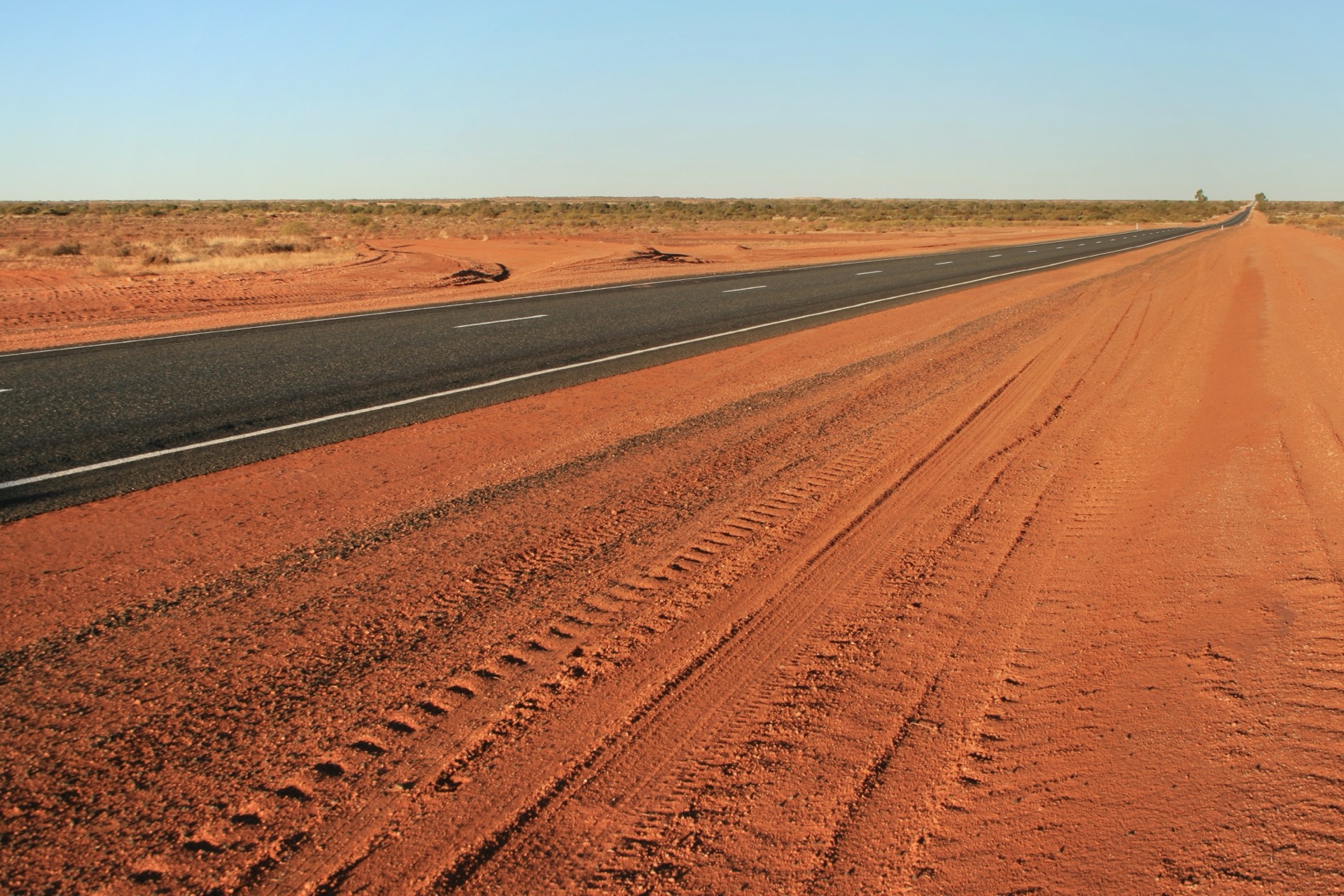
If you decide to rent a vehicle, there’s a widespread myth that you absolutely need a giant off-roader for the outback. In reality, a standard two-wheel-drive (2WD) car is more than enough for the classic loop. All the main roads, including the Lasseter Highway and the Luritja Road turnoff towards Kings Canyon, are well maintained and fully sealed. You’d only need a four-wheel-drive if you wanted to tackle the unsealed Mereenie Loop shortcut, which also requires a special permit.
An alternative for those who don’t fancy driving in the desert are organised multi-day tours straight from Alice Springs. A three-day loop, which usually includes transport, meals, entry fees and sleeping in traditional swags, will set you back around AUD 790 to 995 depending on the operator. It’s a great choice for solo travellers or anyone who wants everything sorted, but bear in mind you’ll have to fit fully into the group’s packed schedule.
Where to stay: Yulara and around
💡 Accommodation and experiences tip: We prefer to look for accommodation on Booking.com, which usually has the best cancellation terms. For tickets, tours and activities, it’s worth comparing and booking through GetYourGuide.
Finding accommodation right next to the national park comes with one huge quirk: the effective monopoly of the whole tourist town of Yulara. All the hotels and services here are run by the Voyages company, which means prices are fixed and fairly high, simply because there’s no competing alternative for hundreds of kilometres. It’s the only base far and wide, so it’s absolutely essential to book your rooms many months in advance, especially if you’re travelling in high season.
For families with children or groups of friends, the Emu Walk Apartments are a great choice — according to reviews on Booking, they’re the highest-rated accommodation in the entire resort. If you’re after true luxury and five-star service, the elegant Sails in the Desert is the obvious pick, or you can take the middle road with the Desert Gardens Hotel, where some rooms offer a direct view of the majestic rock. For travellers on a tighter budget, the Outback Pioneer Hotel & Lodge offers more affordable rooms and shared facilities.
If you’re planning a wider loop and heading out to the more distant canyons too, you’ll also need accommodation in the Watarrka area. Camping isn’t allowed inside the national park itself, but right nearby you’ll find the well-equipped Discovery Resorts – Kings Canyon, offering everything from campsites and luxury glamping tents to classic hotel rooms. A popular alternative here is Kings Creek Station, where you can sleep in traditional desert tents and soak up the real atmosphere of the Australian outback.
Dining options, or where to eat well
In the centre of Yulara you’ll find an IGA supermarket, and trust me, in a monopoly resort in the middle of the desert that’s exactly the kind of news that puts a smile on your face. Although food prices here are naturally higher than in the big coastal cities, it’s still by far the cheapest way to feed yourself in the resort if you have the option to cook. On top of that, the resort offers plenty of free activities, such as guided garden walks or talks about Indigenous culture, which help you save even more of your budget.
If you fancy treating yourself on holiday, though, there are several proper restaurants. You’ll find everything from upscale places with a three-course menu to the relaxed style of the Outback Pioneer, where guests pick their ingredients from the counter (from steaks to vegetable skewers) and grill them themselves outside, all while a live band plays. It’s a great chance to taste something traditional while keeping your wallet at least a little at ease.
14 experiences in the red heart of Australia
The area around Uluru and Kata Tjuta offers so many fascinating spots that one weekend simply won’t cut it. From hikes along the sacred walls and quiet corners full of rock art to a modern night show, you certainly won’t be bored here.
I’ve picked out 14 experiences that, in my view, form the absolute core. You can arrange them at your own pace, but take my advice and start your outings early in the morning. Your reward will be not only gorgeous colours but, above all, far safer temperatures.
1. Sunrise at the Talinguru Nyakunytjaku lookout
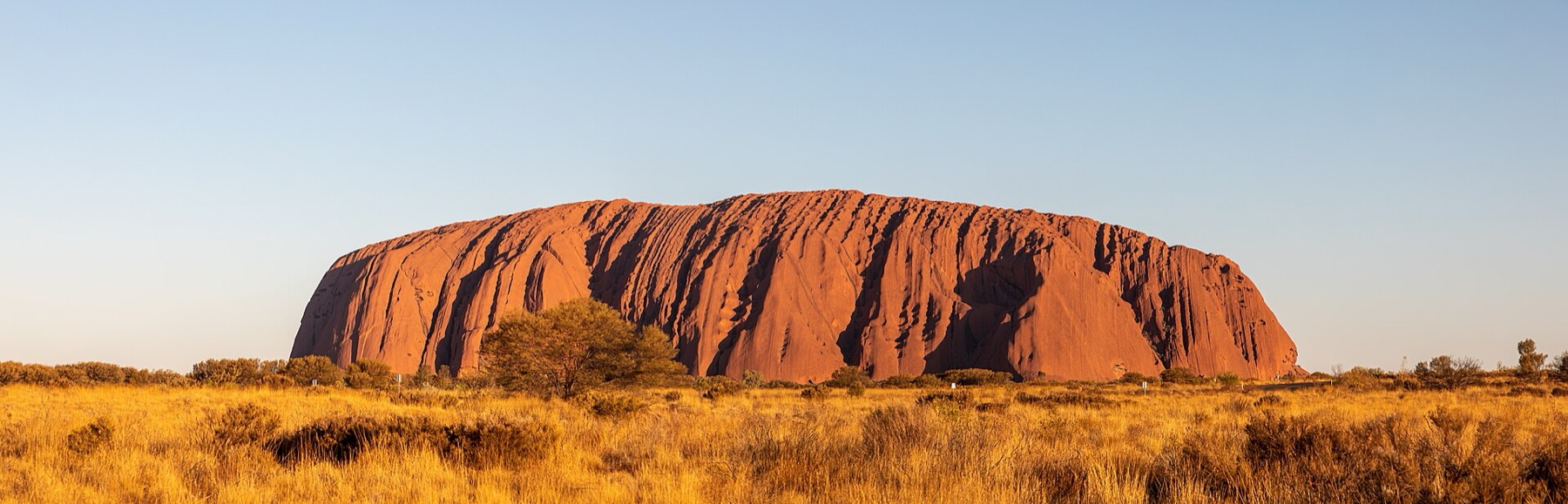
Starting the day by watching the first sunrays hit the giant monolith is an absolutely unforgettable experience you shouldn’t miss. The purpose-built Talinguru Nyakunytjaku viewing platform is designed so that you have the rock right in front of you while also seeing the outlines of the neighbouring peaks in the distance. You’ll need to arrive while it’s still pitch dark to secure a good spot, because crowds of excited travellers stream here from all over the resort for sunrise.
Getting up early can be tough, but the reward of colours shifting from deep purple to brilliant orange is absolutely worth it. The magic moment comes when the sun tips over the horizon and the whole landscape is bathed in golden light. And even if you were standing there alone, the silence and the flood of colour would still get you. Despite the number of people, a sacred hush often falls over the lookout, because the majesty of the waking desert simply takes your breath away.
When planning this early adventure, don’t underestimate warm clothing, because desert nights can be unexpectedly freezing and the temperature can drop close to zero. 💡 Tip: Bring a thermos of hot tea or coffee to warm you up while waiting for the first rays, and get your camera ready before you arrive, because the colours change incredibly fast.
2. Uluru Base Walk: the loop around the monolith
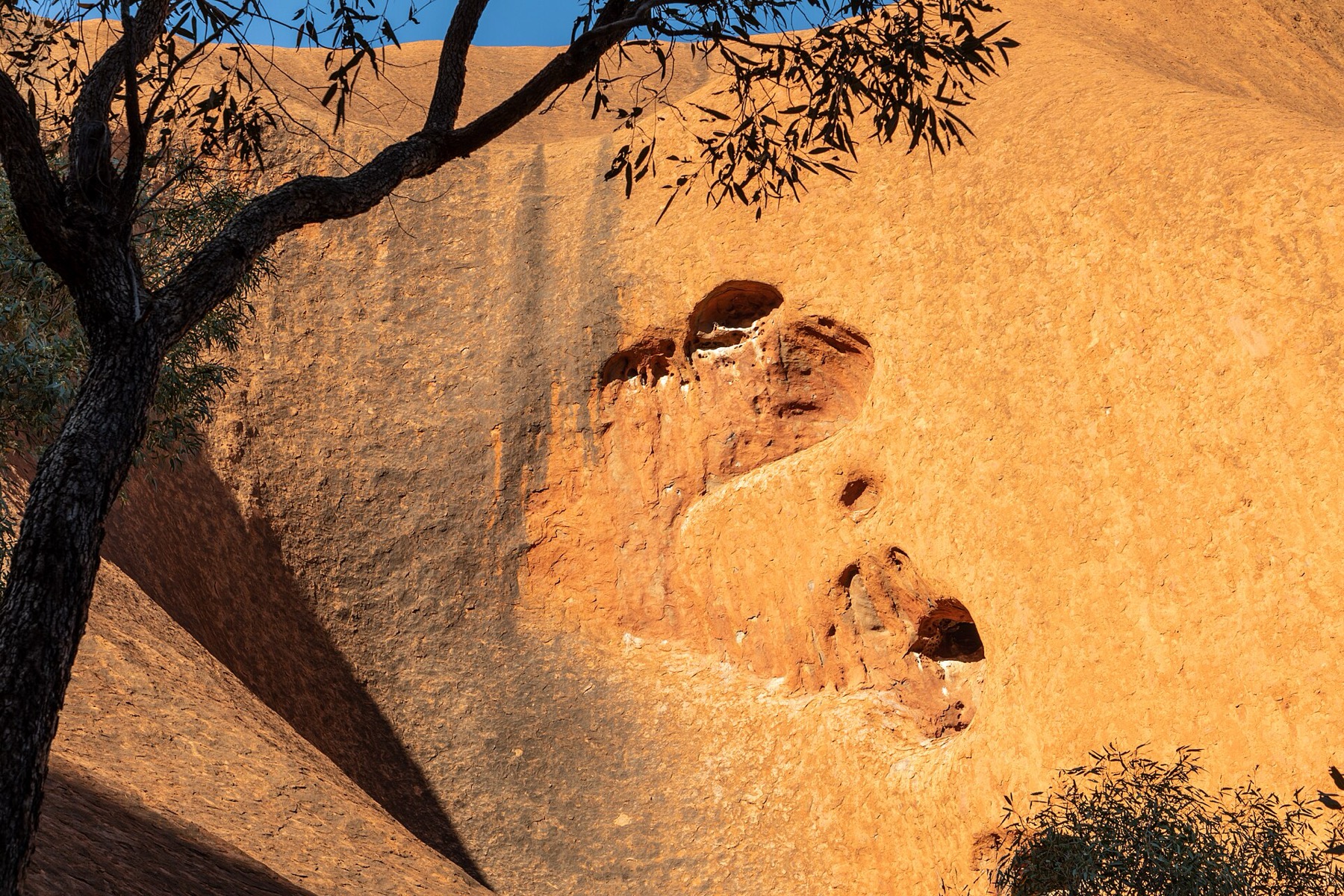
If you want to truly grasp the gigantic scale of this natural wonder, the best way is to tackle the complete walking loop, which stretches an impressive 10.6 kilometres. The route takes you right along the entire rock face and takes about three and a half hours on foot, during which you’ll see surprisingly varied scenery. While the rock looks smooth from afar, up close you’ll discover deep grooves, fascinating caves and mysterious nooks carved by thousands of years of erosion.
As you walk, you’ll fully realise that this sandstone giant changes character at almost every step. In some sections you’ll pass through dense acacia scrub, in others you’ll hit bare plains, with each side of the rock offering a completely different visual experience. It’s also a space to switch off. Just you, the red rock and a silence that might catch you a little off guard.
Practically speaking, it’s absolutely essential to set off at first light to avoid the scorching afternoon heat. 💡 Tip: Make sure your backpack holds enough fluids following the official rule of one litre per hour, and respect the markings at sacred sites where photography is strictly forbidden.
3. Mala Walk with a park ranger guide
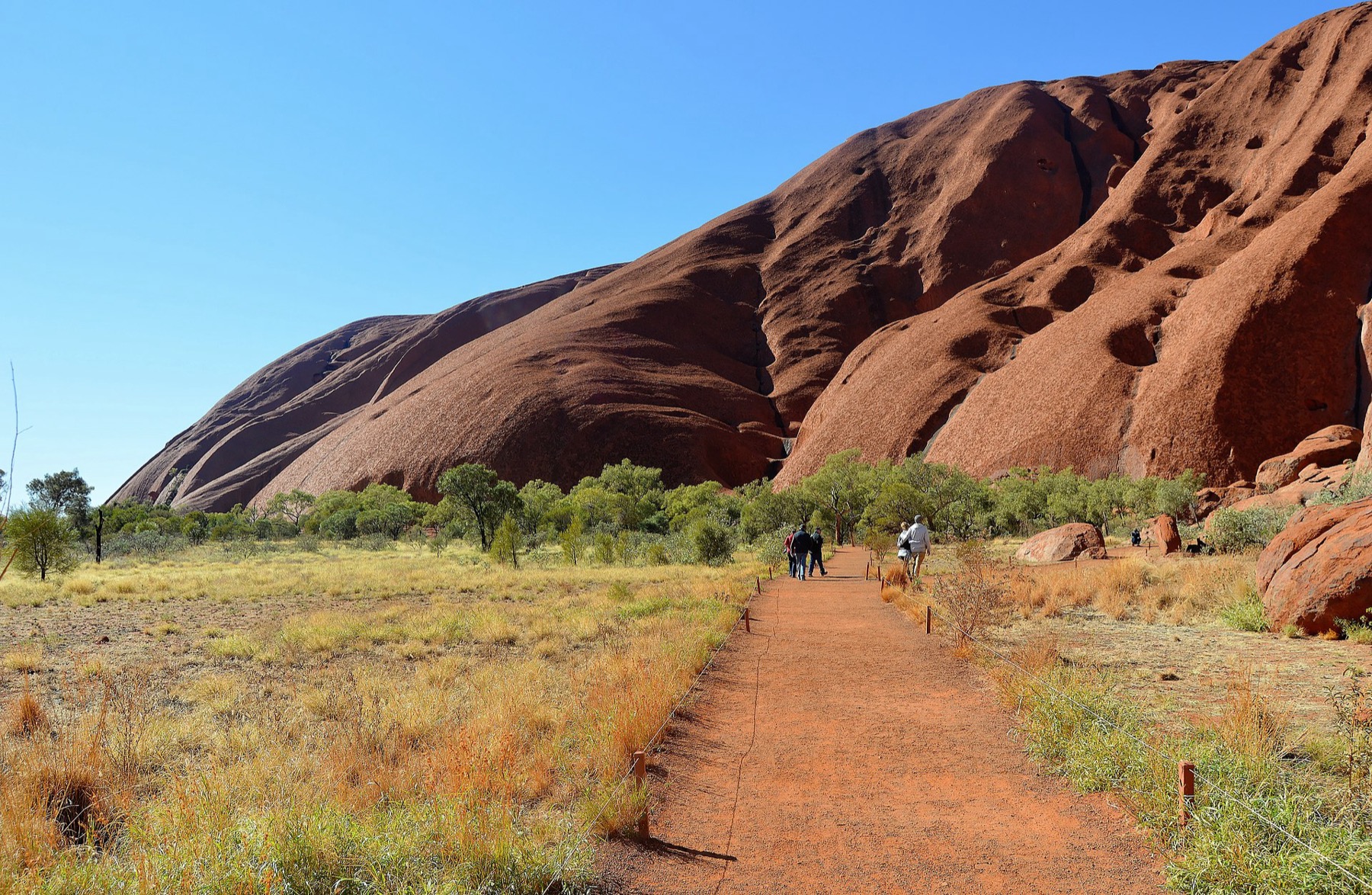
For a deeper understanding of the local culture, this two-kilometre walk is an absolute must, and it’s completely free. Every morning there’s a guided tour led directly by park rangers, who reveal the fascinating secrets of Indigenous legends over an hour and a half. The meeting point is always the Mala car park, with the summer walks setting off at eight in the morning and the cooler-season walks at ten.
Walking slowly along the steep rock face, you’ll see ancient campsites and striking rock paintings that served as textbooks for younger generations. The rangers vividly explain how the Indigenous people survived in this harsh landscape, how they found food and what stories are tied to individual cracks in the rock. The route ends at the beautiful Kantju Gorge, where a stunning waterfall forms after rare rains.
Honestly, of everything the park offers for free, this is the most valuable — worth more than any brochure, because you get the information straight from the source. 💡 Tip: Don’t be afraid to ask the guides anything you’re curious about; they’re very open and happy to explain even the trickier concepts of Indigenous law that you’d struggle to grasp from printed leaflets.
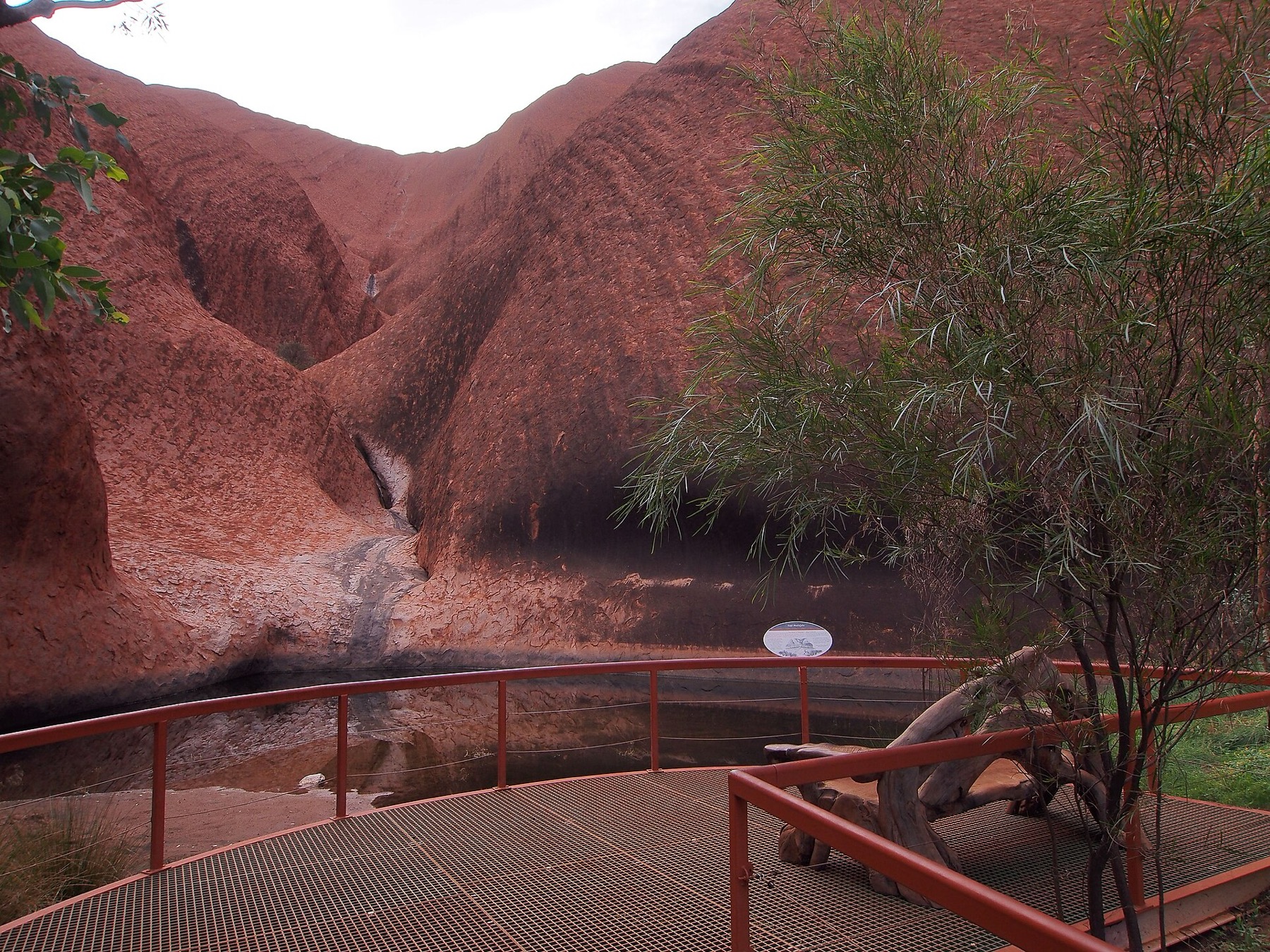
4. Kuniya Walk and the Mutitjulu waterhole
This very short, easy trail, measuring just one kilometre there and back, leads you to one of the most remarkable spots in the whole park. The destination of this roughly half-hour walk is the permanent Mutitjulu Waterhole, a vital source of water for animals and plants in the wider area. It’s an incredibly quiet, peaceful place where time seems to stand completely still.
Along the way you’ll also see the Kulpi Mutitjulu cave, which holds more beautiful examples of traditional rock art. This place is linked to a fascinating Indigenous legend about an epic battle between a female python named Kuniya and the venomous snake Liru. Attentive visitors say the very grooves and shadows on the rock face still recall the traces of this ancient mythological struggle that shaped the landscape.
Thanks to the permanent presence of water, this spot is a great place to watch small birds and local wildlife. 💡 Tip: If you come in the late afternoon, you’ll avoid the biggest crowds from the tour buses and be able to soak up the magical atmosphere of this sacred place in complete silence and privacy.
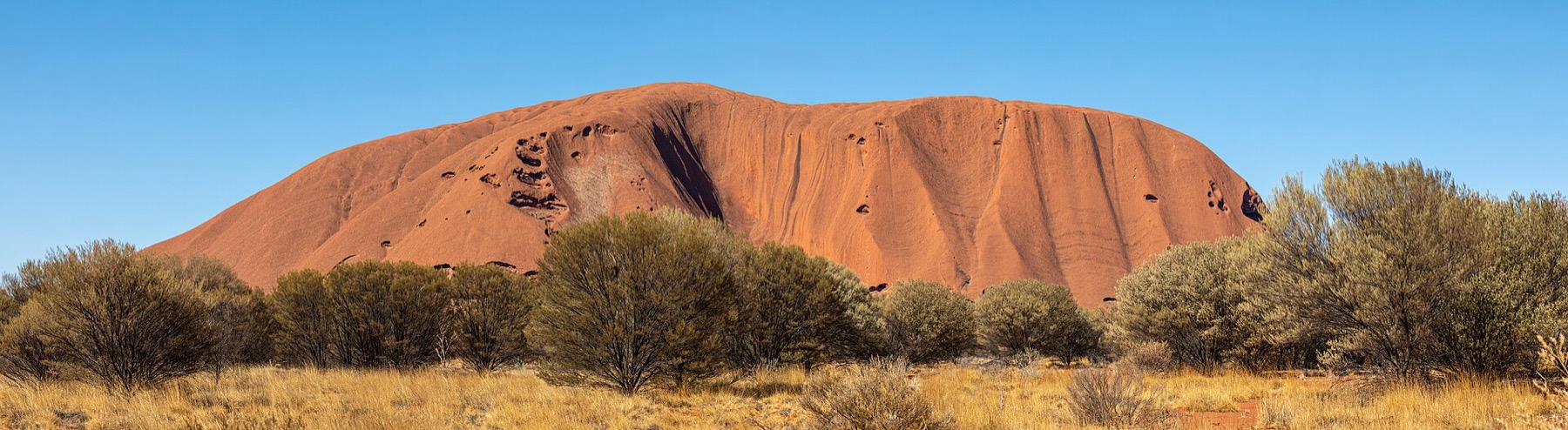
5. The Cultural Centre and Indigenous art
Visiting the official cultural centre, where entry is completely free, should be one of your first steps after arriving in the national park. Inside you’ll find the fascinating Tjukurpa Tunnel, which draws you into the world of Indigenous traditions through sound and visuals. The centre is open daily from 7:00 a.m. to 5:45 p.m. and it’s recommended to set aside at least two full hours for a proper look around.
Alongside the educational exhibits, there are also two excellent art galleries, Maruku Arts and Walkatjara Art, where you can admire traditional dot paintings and wood carvings. These are authentic works by local artists, and buying souvenirs in these galleries directly supports the Indigenous community. You can often see artists at work here, watching the precision with which they create their masterpieces.
When you’re tired from taking it all in, you can rest at the lovely Ininti café, which offers refreshments and a beautiful view of the surrounding landscape. 💡 Tip: Photography and filming are strictly prohibited throughout the cultural centre, which must be respected without exception out of respect for the sacred objects and stories on display.
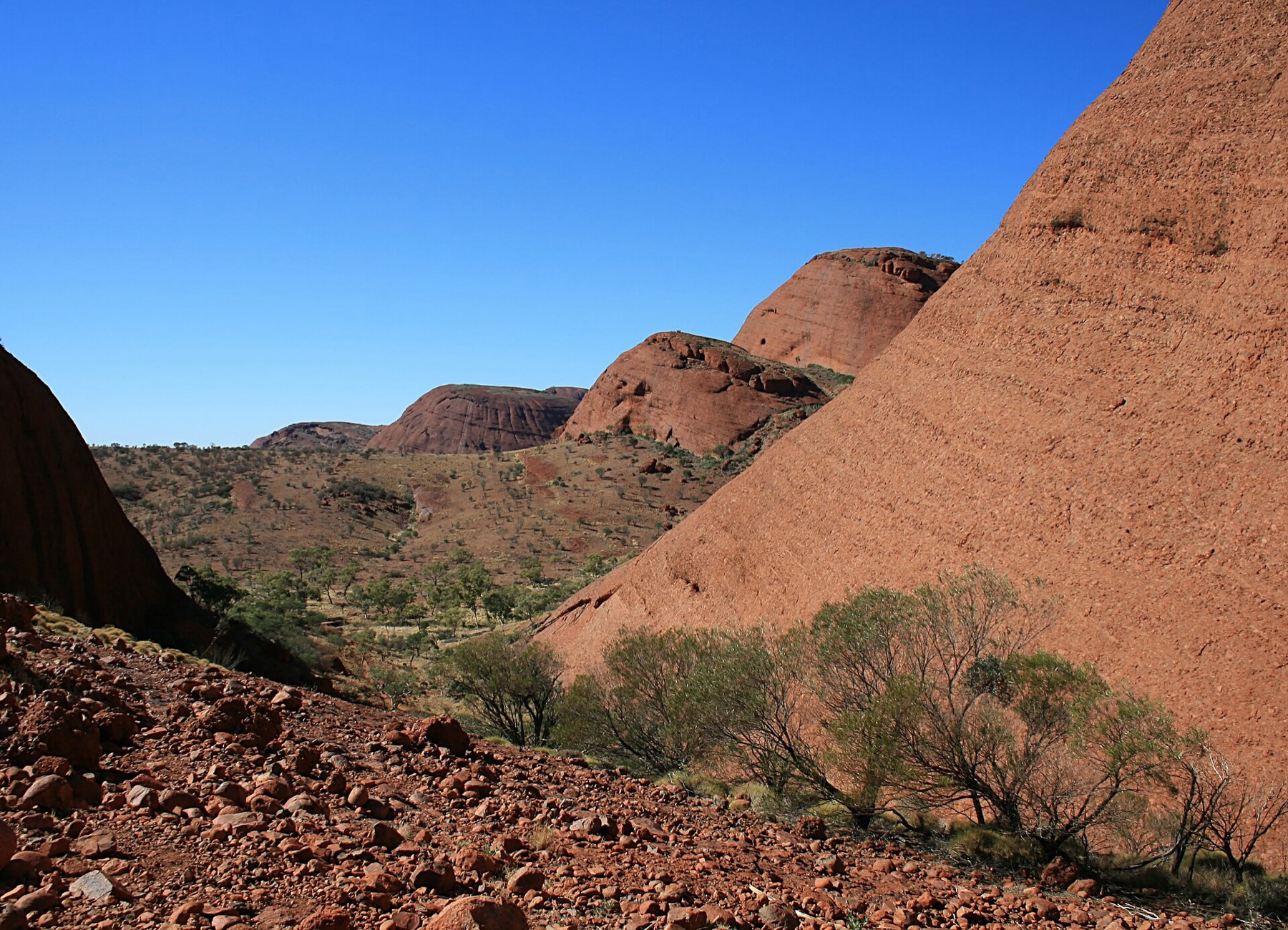
6. Kata Tjuta and the Valley of the Winds hike
While most of the attention goes to the famous monolith, the neighbouring Kata Tjuta rock formations deserve just as much respect as their more famous neighbour, perhaps even more. This complex of thirty-six huge sandstone domes covers over 20 square kilometres, and its highest peak, Mount Olga, rises an impressive 546 metres above the plain, meaning it’s significantly taller than Uluru itself. The earlier name for this place was The Olgas, but today the traditional name meaning “many heads” is used.
The best way to explore this area is to tackle the challenging but breathtaking Valley of the Winds trail. The loop measures 7.4 kilometres and leads you straight through the heart of this mysterious rock labyrinth, where narrow gorges alternate with open views across the wilderness. It’s here that you’ll fully appreciate the enormous power of nature, which has shaped these giant boulders into their current form over millions of years.
This hike is one of the more physically demanding ones, and the park management closes it without compromise for safety reasons once the temperature exceeds 36 °C. 💡 Tip: Head out at first light, because unlike its more famous neighbour, you won’t meet such crowds of tourists here and you’ll have all that beauty almost to yourself.
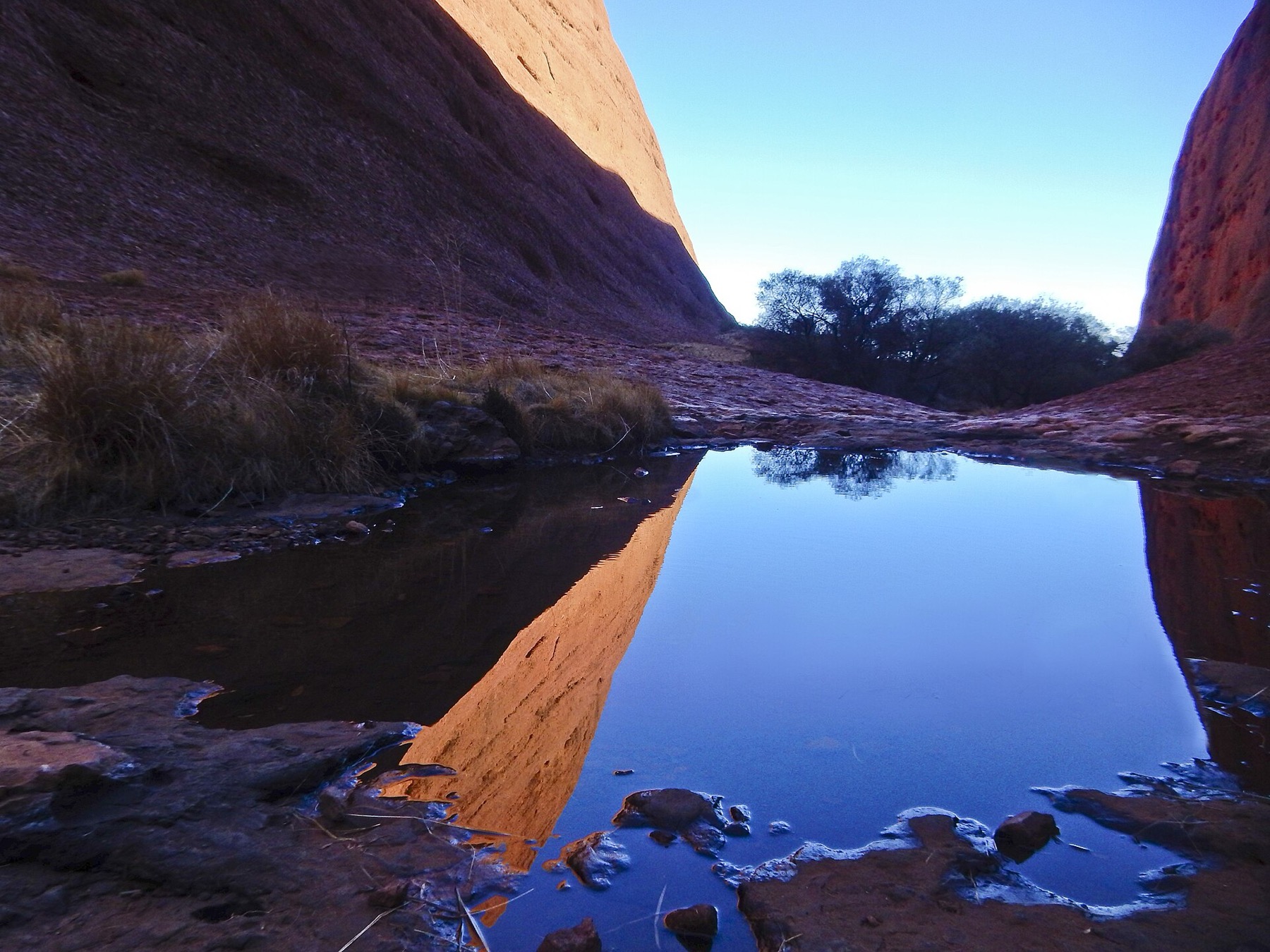
7. Walpa Gorge: the easier route into the heart of the rocks
If you don’t fancy the long, demanding Valley of the Winds loop, there’s a much more accessible alternative in Walpa Gorge. This very popular trail measures just 2.6 kilometres there and back, takes about an hour of gentle walking, and almost every visitor can manage it. The route leads you right between the two most massive sandstone domes of the whole complex, which loom above you like giant watchtowers.
As soon as you step into the shade of the gorge, you’ll instantly feel a noticeable drop in temperature, which is incredibly refreshing in the desert environment. This microclimate is exactly what allows unique plant species to survive, species that would stand no chance on the scorching plains, and after rains you might even come across a flowing stream. The red walls contrasting with the brilliant blue sky also create absolutely perfect conditions for photography.
The trail may be shorter, but the surface is very rocky and uneven, so sturdy, closed shoes are a must here too. 💡 Tip: Since you’re in the shade of high rocks, this is an ideal place to visit even in the later morning hours, when open ground would already be unbearably hot.
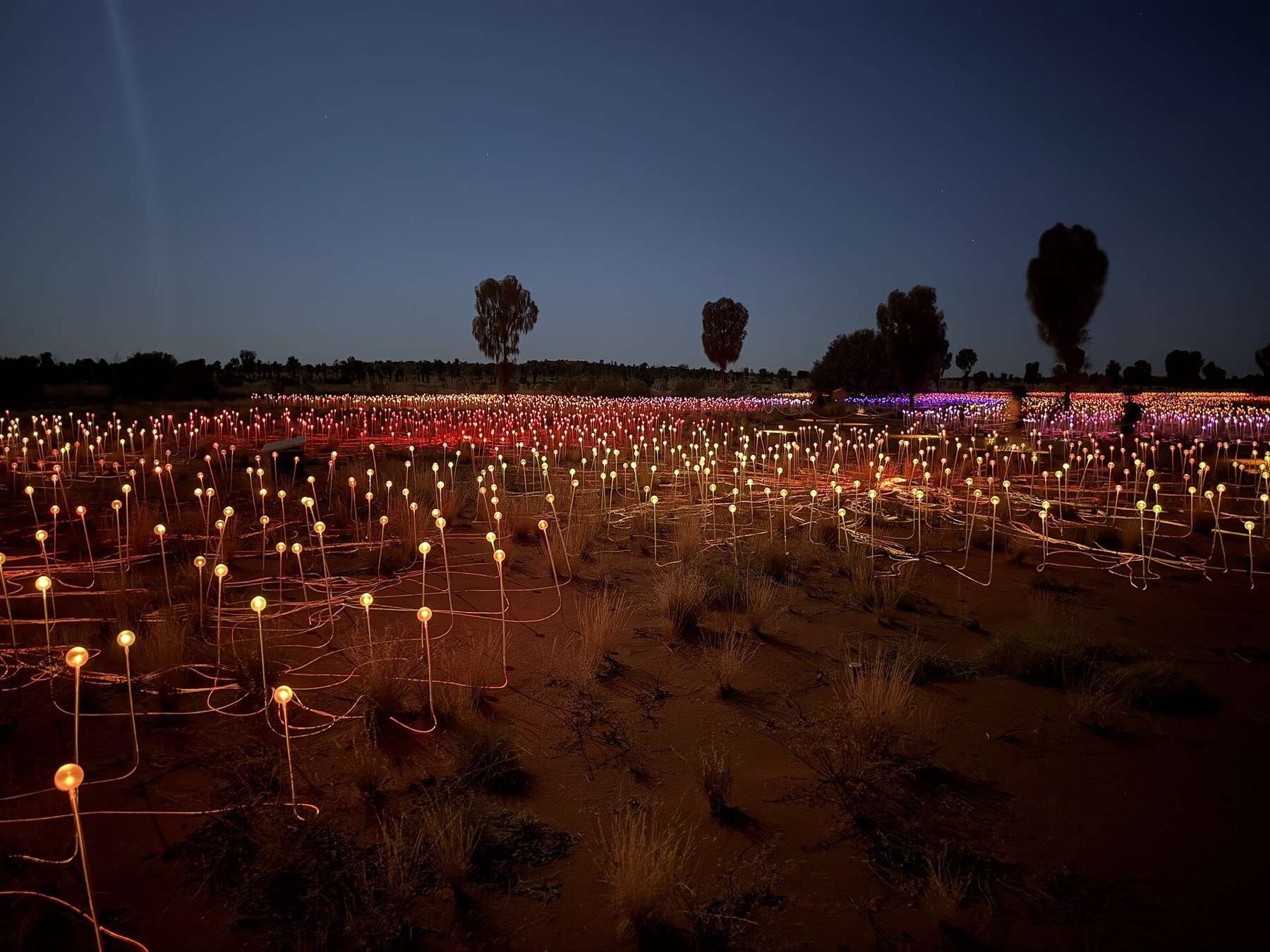

8. Field of Light: a field of fifty thousand lights
The combination of harsh desert landscape and modern art gave rise to a fascinating light installation called Field of Light. British artist Bruce Munro had fifty thousand glass spheres placed on slender stems, which glow with thousands of soft colours after sunset. It was originally meant to be a temporary exhibition, but thanks to its enormous success and more than 730,000 delighted visitors, its stay has been extended at least until the end of 2029.
This experience offers an utterly quiet, contemplative walk through a vast field that looks like an alien glowing garden has bloomed in the desert. The installation spreads across an enormous area, with the outline of the rock rising into the darkness in the background, and this combination (the field of light and the darkness all around) really gets you. Prices for basic tickets start at roughly AUD 50 and include a comfortable transfer straight from your hotel in Yulara. You can buy them on the official website.
If you’re after romance and calm, this light spectacle is an absolutely ideal way to round off a demanding day. 💡 Tip: Tickets tend to sell out weeks in advance, so don’t hesitate to book on the official website and check current availability before you visit.
9. Wintjiri Wiru: a story told by drones
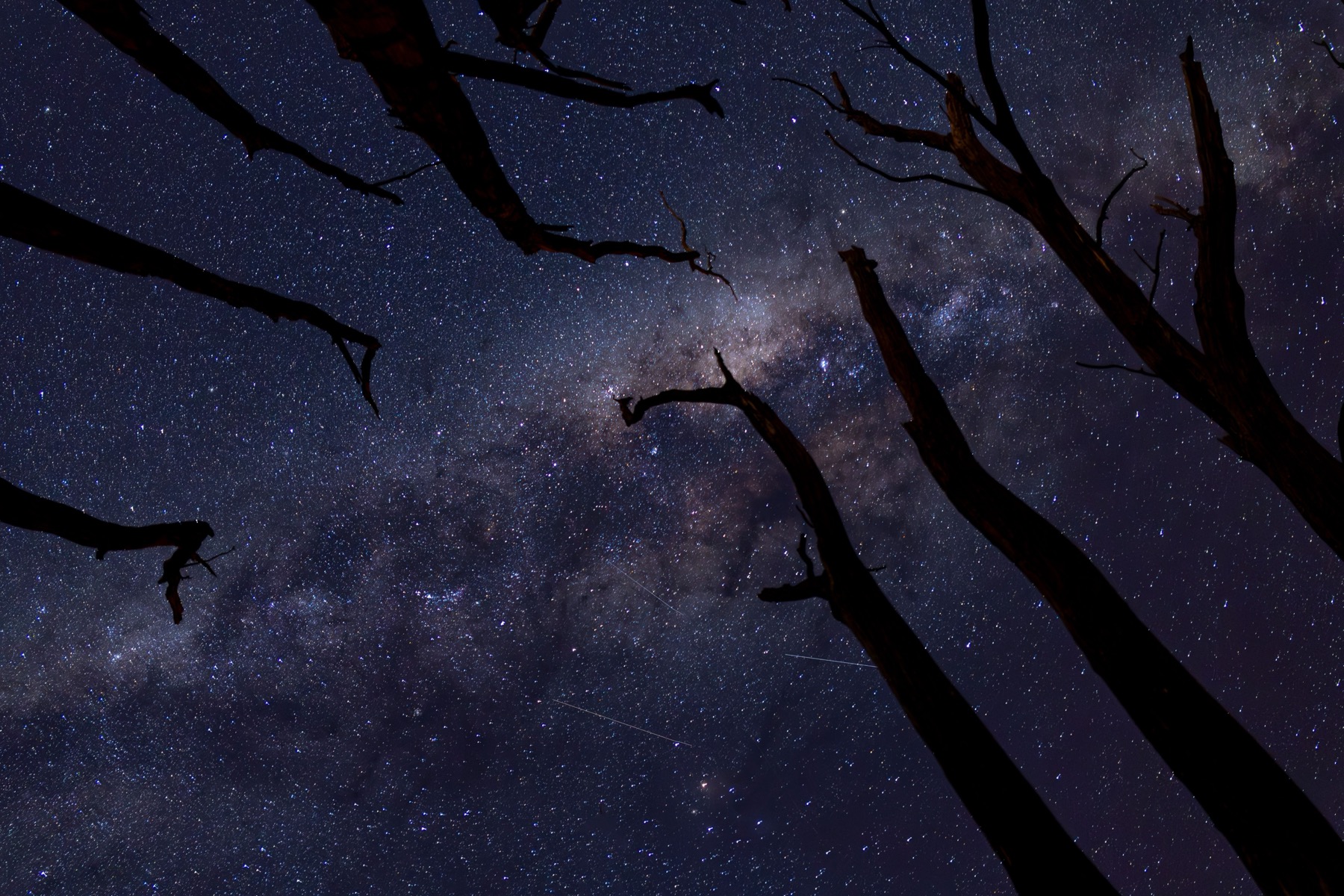
The newest and most technologically advanced experience in the Red Centre is the absolutely stunning Wintjiri Wiru night show, launched in 2023. While the Field of Light is more about quiet meditation, this spectacle is powerful cultural storytelling, in which a swarm of more than a thousand illuminated drones creates huge moving images across the night sky. The basic version of the show, called Twilight or After Dark, costs around AUD 205.
During the show, an ancient Indigenous story about the Mala people unfolds over the desert, accompanied by traditional music and narration in the local Pitjantjatjara language with an English translation. It’s the first time in history that the local Anangu community has officially approved telling their sacred story through such modern technology. For an even more intense experience, you can pay extra for the Sunset Dinner version from AUD 310, which includes a lavish dinner.
This show is the perfect choice for anyone who wants to experience a modern interpretation of ancient legends with a stunning wow factor. 💡 Tip: For the After Dark version, carefully check its availability in advance, because in some months this late-night show may have a seasonal break.
10. Dinner under the Australian stars
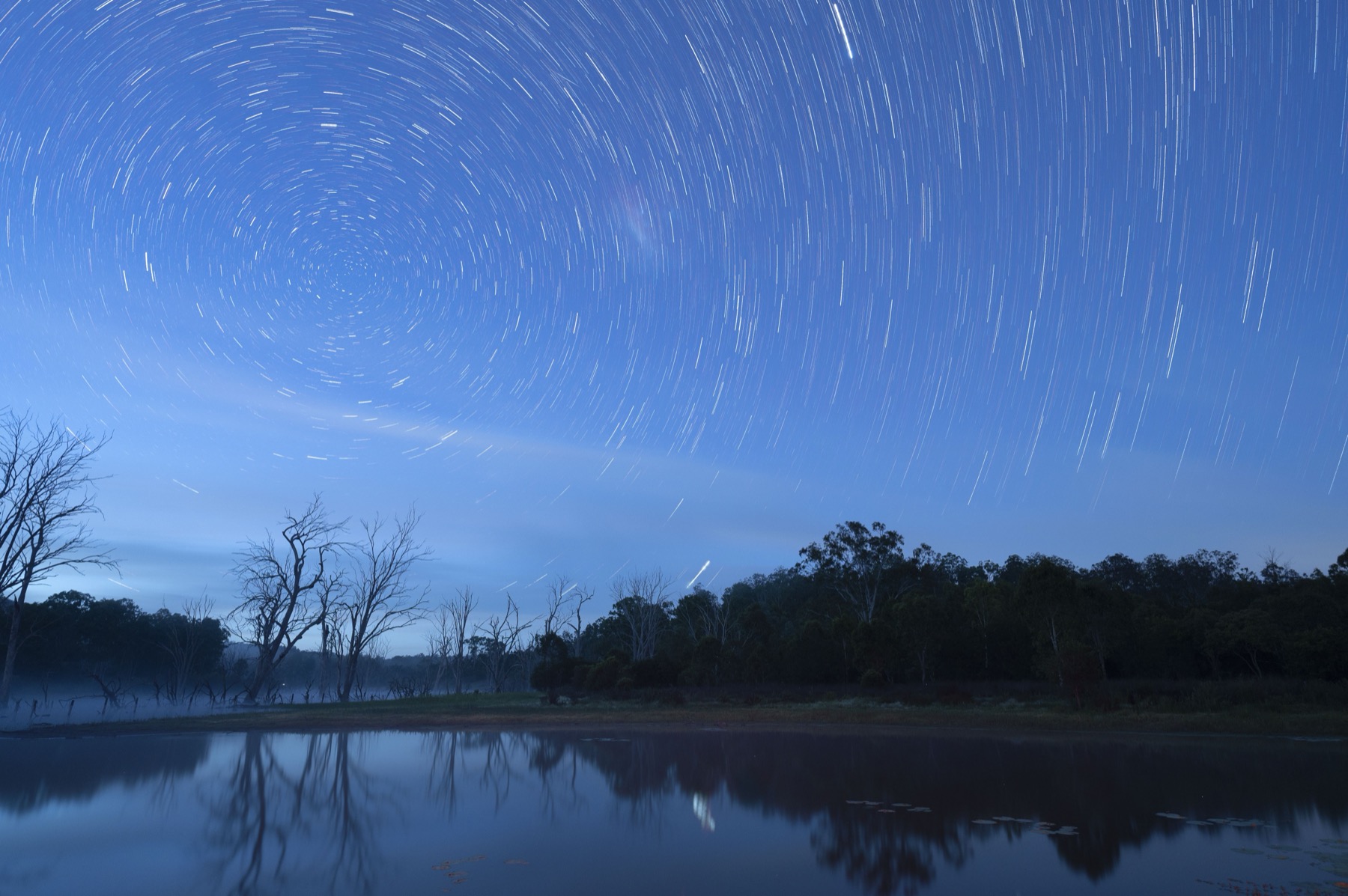
Dinner in the middle of the desert, under a sky with not a trace of light pollution, with kangaroo on the menu — yes, this is exactly the kind of experience people fly thousands of kilometres for. The most famous version is the legendary Sounds of Silence, which costs AUD 295 and offers a roughly four-hour programme starting with a glass of sparkling wine while you watch the sunset. This is followed by a rich buffet inspired by local ingredients and a fascinating talk by an astronomer about the constellations of the southern sky.
During dinner, traditional dishes of so-called bush tucker are served, with the menu often including kangaroo or crocodile meat for those who want to experiment. If you prefer meat-free food, though, the organisers happily offer excellent vegetarian options on request, so absolutely everyone can enjoy this luxurious experience to the full. An even more exclusive and intimate alternative is the Tali Wiru dinner for AUD 455, featuring a four-course plated menu with premium wines.
Dining under a sky unpolluted by any light from big cities is utterly unrepeatable, and the stars seem within reach. 💡 Tip: These dinners take place in the open, so definitely pack a very warm jacket, because once the sun sets, the desert quickly turns into a fridge.
11. Uluru actively: by bike or on camelback
If plain walking has started to bore you, you can spice up exploring around the monolith by renting a bicycle. The Outback Cycling company offers bike rentals right by the cultural centre, with a basic three-hour rental costing AUD 80, or AUD 129 if you also use their bus transfer from the resort. Riding along the flat trail around the rock is very pleasant and lets you circle the whole mountain much faster than on foot.
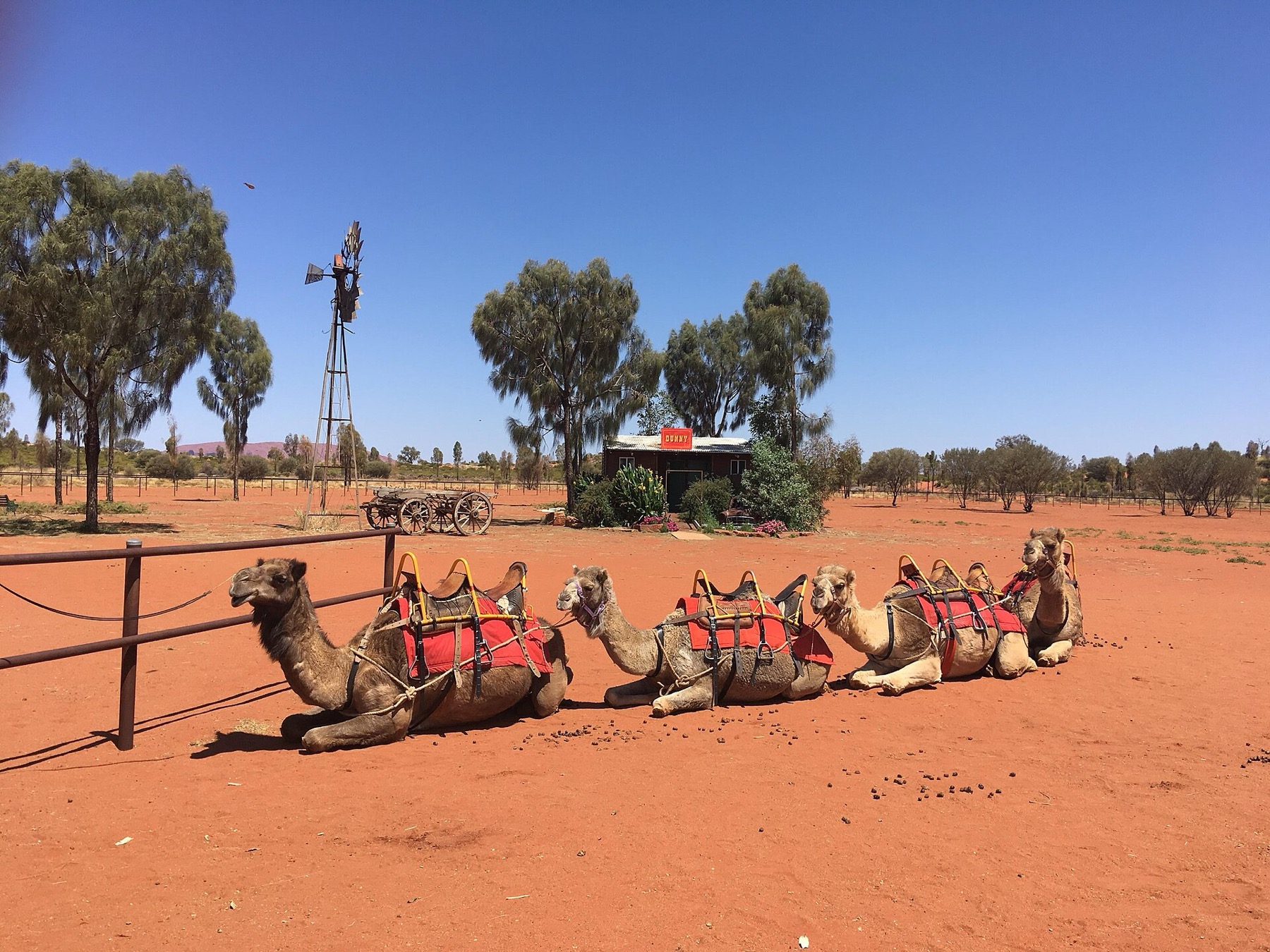
Another very popular and historically stylish option is watching the landscape from the back of the ship of the desert. Camels aren’t native to Australia, but they were brought here in the nineteenth century to transport cargo, and today they’re an inseparable part of the outback. A short ninety-minute ride called the Camel Express starts at AUD 98, but there are also pricier options tied to sunset viewing.
From the saddle of a camel you get a completely new perspective on the surrounding bush, and you’ll save your tired legs too. 💡 Tip: If you choose cycling, set off first thing in the morning, because as the day wears on, riding in the hot desert air turns from a pleasant outing into a fairly gruelling workout.
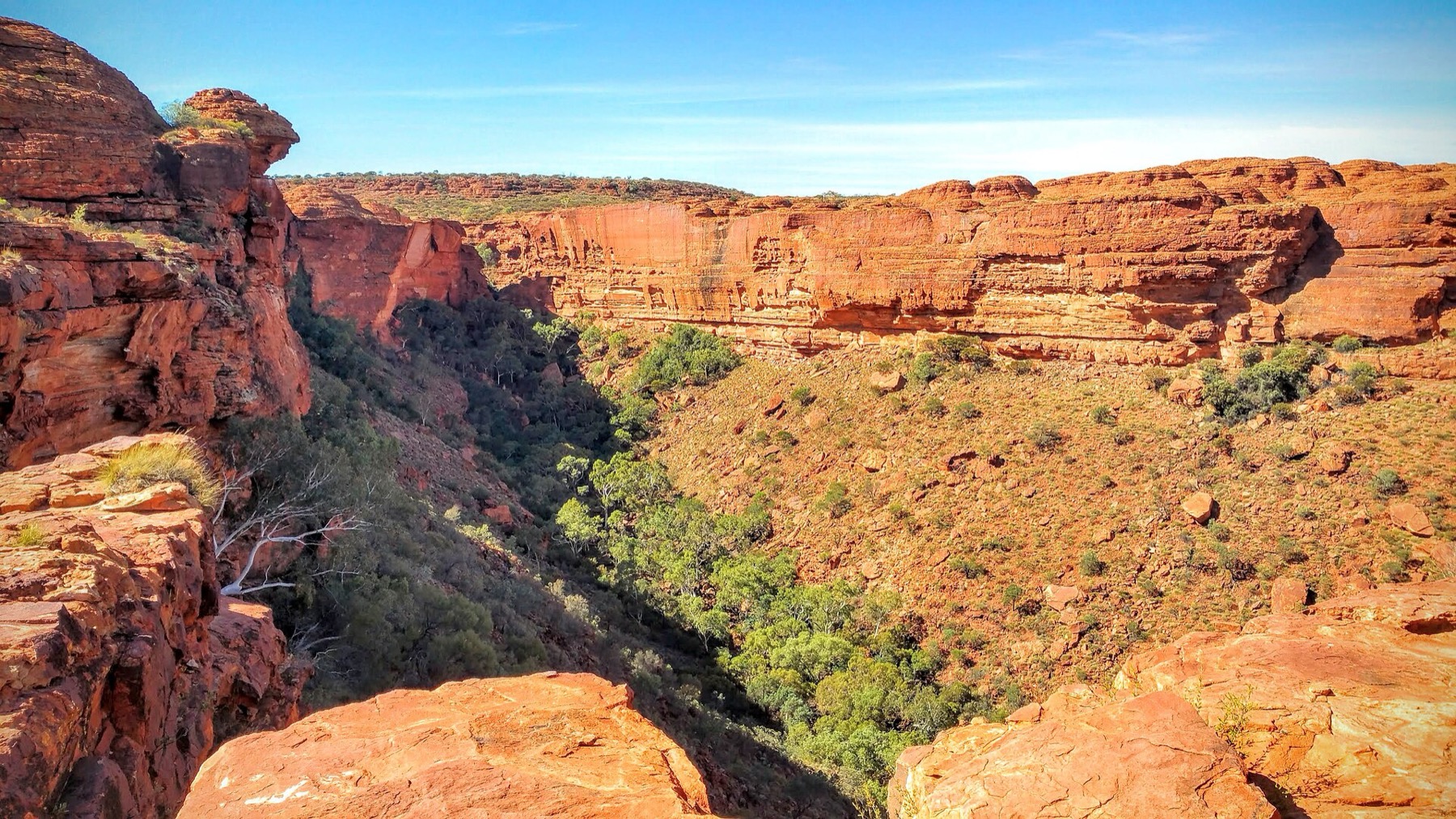
12. Kings Canyon and the legendary Rim Walk
Roughly three hundred kilometres from Uluru lies Watarrka National Park, whose main jewel is the monumental Kings Canyon. This enormous sandstone canyon with sheer walls over a hundred metres high offers one of the best hiking trails in all of Australia, the famous Rim Walk. The route measures six kilometres and takes three to four hours to complete, with the most demanding part being the steep climb right at the start, aptly nicknamed “Heart Attack Hill”.
Once you’ve climbed to the rim of the canyon, you’ll be rewarded with fantastic views into the deep abyss and a walk through a labyrinth of weathered rock domes. Midway along the route, wooden steps descend into an oasis called the Garden of Eden, a shady gorge with a permanent pool surrounded by lush vegetation. It’s crucial to know that this place is sacred to the Indigenous people, so swimming in the pool is strictly forbidden — and please genuinely respect what the signs say. The hike is also physically demanding, and in the heat the same strict rules apply as on the other trails.
💡 Tip: If the temperature is climbing towards 36 °C, you must set off before nine in the morning without exception; for less able walkers there’s the flat, barrier-free Kathleen Springs trail, 2.5 kilometres long.
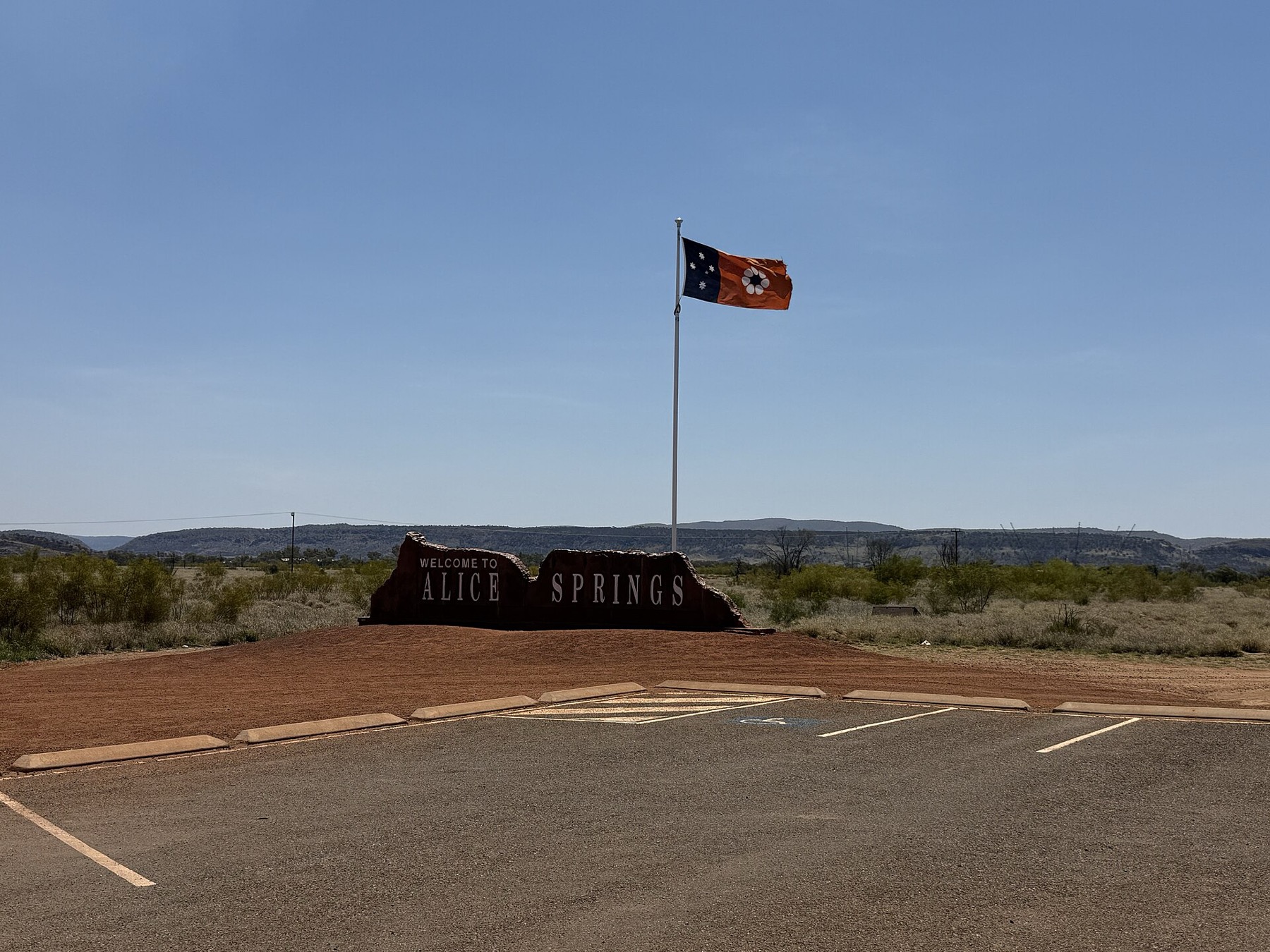
13. Alice Springs: gateway to the rugged outback
Although many tourists use this town merely as a transit stop, Alice Springs has its own unmistakable atmosphere and rich history. It’s definitely worth heading up to the popular Anzac Hill lookout, where entry is completely free and from where you’ll have the whole town, set among the surrounding hills, laid out before you. It’s an especially popular spot at sunset, where locals and travellers gather to admire the shifting colours of the desert.
The town is also home to two utterly unique institutions that make life possible in such extreme conditions. The first is the base of the flying doctors (Royal Flying Doctor Service), who provide medical care to farms hundreds of kilometres away, the second the legendary School of the Air, which uses satellites to deliver education to children on remote cattle stations. Visiting both centres shows you the harsh reality of life in the interior.
If you visit the town in spring, you might catch the amazing ten-day Parrtjima festival of light, which is also free to attend. 💡 Tip: The exact festival dates shift slightly each year, so before planning a spring trip, check the precise dates on the event’s official website so you don’t miss the spectacle.
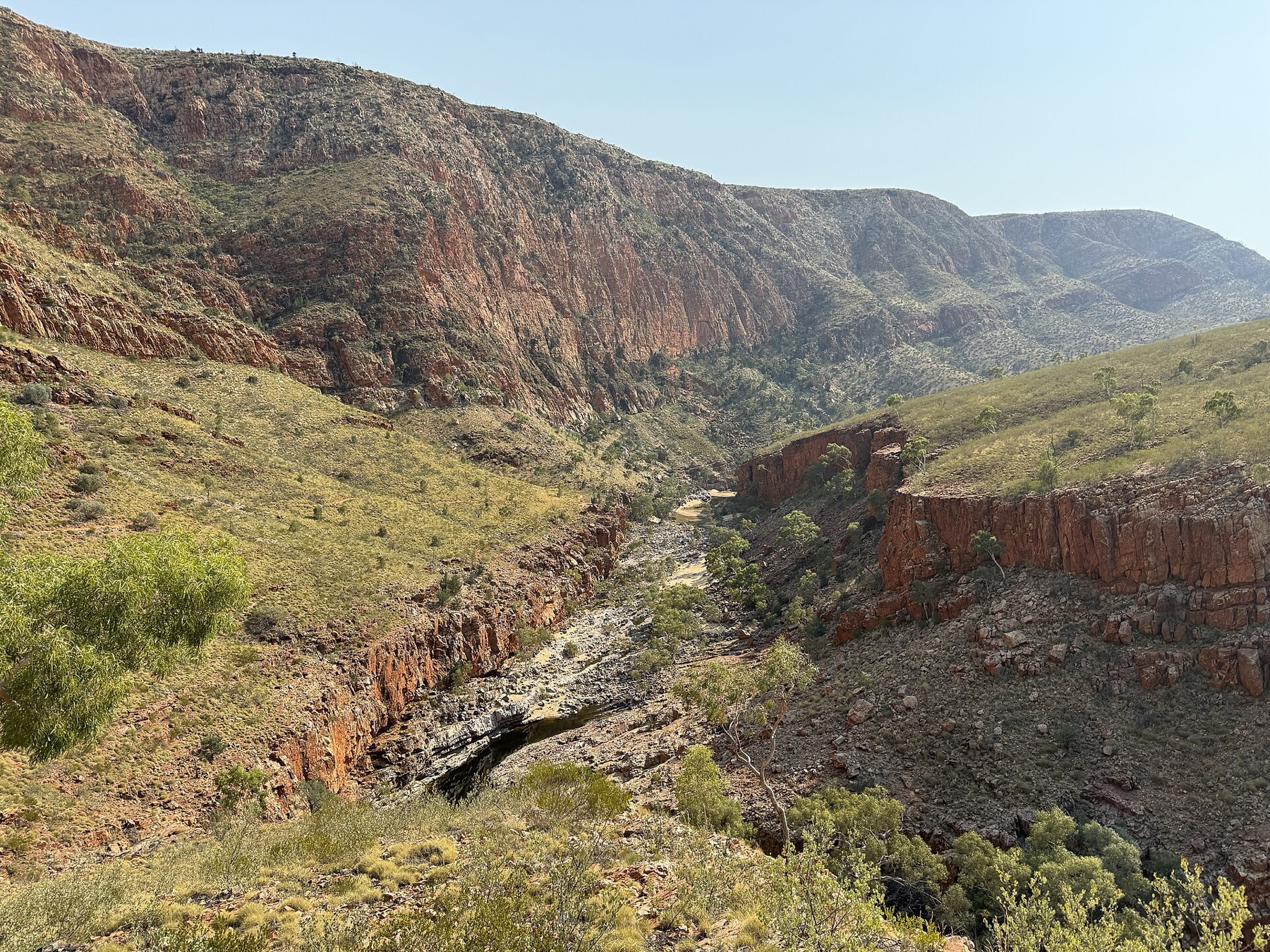
14. The stunning West MacDonnell Ranges
West of Alice Springs stretches a mountain range more than one hundred and sixty kilometres long, hiding the most beautiful gorges and natural swimming holes. The first stop, just eighteen kilometres from town, is Simpsons Gap, where early in the morning or at dusk you’re very likely to come across adorable rock wallabies. Another gem is the narrow, dramatic Standley Chasm, where the red rock walls tower to an enormous height.
Visitors often recommend visiting Standley Chasm ideally around midday, when the sun shines straight into the narrow crevice and turns the rocks incredibly vivid shades. If, after the dusty roads, you’re craving a refreshing dip, head to Ellery Creek Big Hole, one of the most popular natural swimming spots in the region. The water here is very icy even in the height of summer, but the experience of swimming among red rocks is simply priceless.
The whole area is wonderfully accessible, because the main road to Ormiston Gorge is fully sealed. 💡 Tip: Exploring these ranges will take you a whole day, so if you’re staying in Alice Springs, definitely rent a car and set off to discover these natural beauties, which are often unfairly overlooked by tourists.
Who Uluru belongs to: the Anangu, Tjukurpa and the climbing ban
To truly understand the Red Centre, you have to let go of the ordinary tourist’s viewpoint and see this place through the eyes of its original owners. The area has been inhabited for tens of thousands of years by the Anangu people, for whom the monolith is not just a piece of sandstone but the living centre of their universe and spiritual being. The foundation of their view of the world is the so-called Tjukurpa, an incredibly complex system that functions as religion, philosophy, moral code and a practical map for survival in the desert all at once.
Knowledge of Tjukurpa isn’t passed on in written form, but is carefully preserved through intricate ceremonies and songs called inma. Out of respect for these traditions, at many places in the park, the so-called sensitive sites, taking any photographs is strictly forbidden. The reason is simple: under Indigenous law, some stories and places are meant strictly only for initiated men or only for women, and if a photo were seen by someone it wasn’t meant for, it would be a serious breach of taboo. These places are clearly marked, so just leave the camera in your pocket and treat it as basic courtesy towards your hosts.
The clearest expression of respect for Indigenous culture was the historic and utterly unanimous ban on climbing to the summit of the mountain. For decades a sign stood at the start of the trail on which the Anangu humbly asked visitors not to climb their sacred mountain, because it wounds them, yet many tourists ignored this plea for a long time. The park’s board eventually decided to permanently close the climbing route, which came into effect on 26 October 2019, symbolically exactly on the 34th anniversary of the so-called Handback, when the land was officially returned to the original inhabitants.
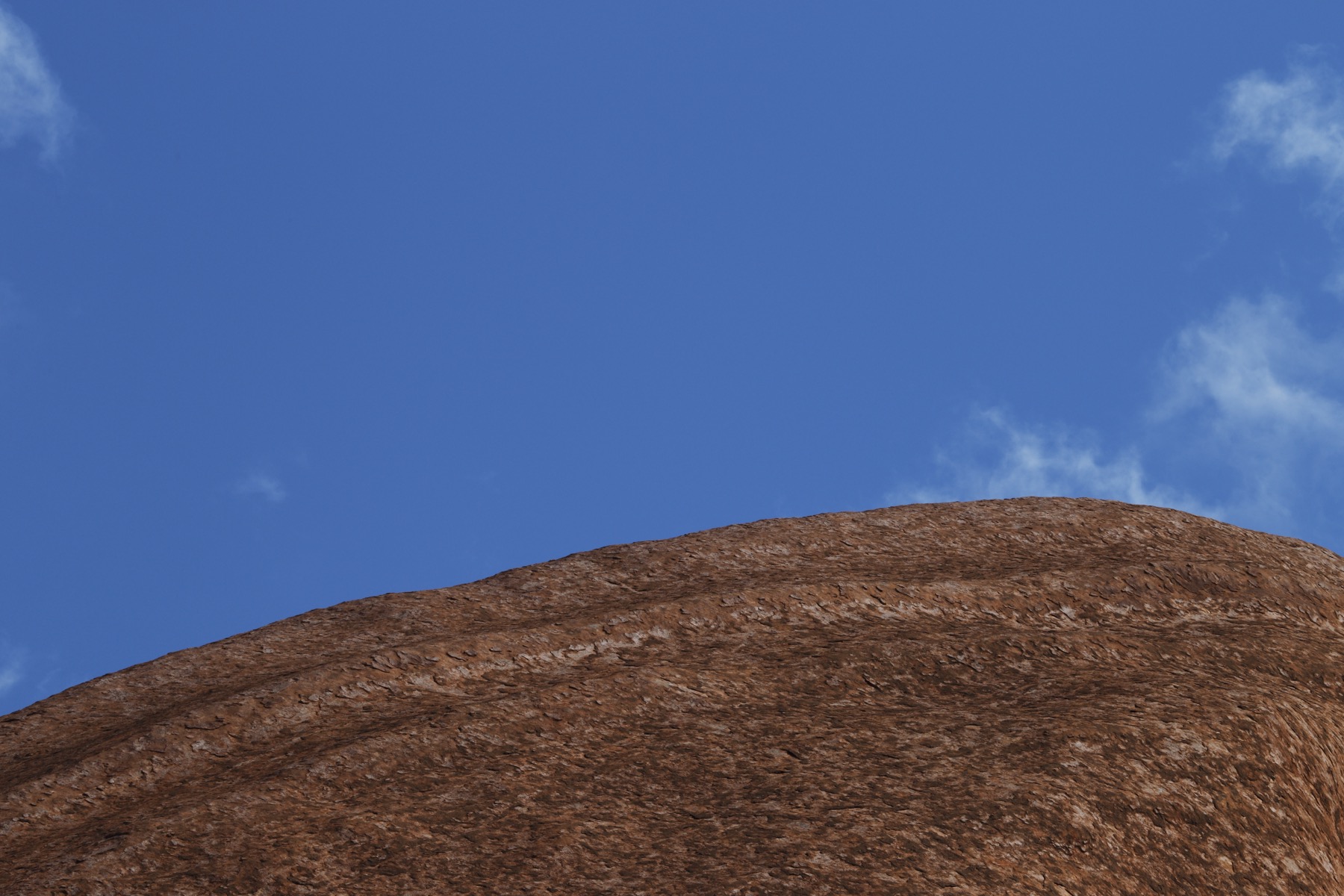
Celebrations of the land’s return are hugely important to the community, and October 2025 saw huge celebrations of the 40th anniversary of the Handback, held right at the Talinguru Nyakunytjaku lookout with concerts and exhibitions. When you find yourself wondering why this mountain is so magnetic to people, remember the staggering physical statistics of this giant: it rises 348 metres above the plain, its circumference measures 9.4 kilometres, and it weighs an unimaginable 1.425 billion tonnes. And although part of the mass lies hidden beneath the surface, it’s precisely the visible beauty, changing colour in the rain, that drives people to send those cursed “sorry rocks” back home.
How much the Red Centre costs: budget
A trip into the Australian interior is definitely not among the cheapest affairs, and it’s good to prepare yourself both mentally and financially for the higher price level. The biggest item in your budget will undoubtedly be transport and accommodation, because the three-day park pass at AUD 38 is the smallest amount in the overall picture. If you opt for the more comfortable flight straight to Ayers Rock Airport and a stay in the Yulara resort, be aware that you’ll pay a premium for comfort in a monopoly environment.
For a basic rough budget for three nights for two people, count on roughly these costs: return domestic flights will cost you approximately AUD 800 to 1,000 depending on your departure point and how far ahead you book. Mid-range accommodation like the Desert Gardens Hotel will swallow another roughly AUD 1,000 to 1,200 for three nights. If you rely on shopping at the local IGA supermarket and cooking for yourself, you can push food costs down to a reasonable AUD 200, whereas eating in restaurants every day will easily triple that amount.
To all of this you have to add the cost of paid activities, which can significantly inflate the budget. If you treat yourself to, say, the Field of Light night show (from AUD 50 per person) and the luxurious Sounds of Silence dinner (AUD 295 per person), the total budget for a couple on a long weekend easily tips over AUD 3,000 (roughly €1,800). A more economical option is flying into Alice Springs, renting a standard car for five days and camping, which can easily cut the total costs in half.
Where to next
If you’re planning a wider journey around Australia and looking for inspiration for more unforgettable stops, take a look at our big guide holiday in Australia: 30 most beautiful places + practical tips, where you’ll find a complete overview of the best of the whole continent. For practical advice on driving and renting cars, be sure to read our article on how to road trip Australia: visas, routes, prices.
If, after the silence of the desert, you’re drawn to the buzz of big cities, you can’t miss the iconic harbour with its opera house, which we cover in detail in our guide Sydney, Australia: 31 tips on what to see and do. For lovers of coffee and street art, we’ve written the extensive article Melbourne, Australia: 23 tips on what to see and do. And if you’re after year-round sunshine and a laid-back atmosphere, definitely check out our tips for Brisbane, Australia: 20 tips on what to see and do.
Frequently asked questions
Planning a trip to such a remote area brings plenty of unknowns. To make your preparations as easy as possible, I’ve put together answers to the most common questions that are bound to cross your mind before you fly out into the desert.
Is a trip to Uluru worthwhile even for a very short time?
Travelers agree that flying here for just one night is absolutely not worthwhile, because the ratio of transportation cost to time spent is very unfavorable. For a real experience and to explore the surrounding rock formations, you need time to slow down and soak up the desert atmosphere.
How many nights is ideal for visiting Red Centre?
A comfortable minimum is generally considered to be three nights, which gives you enough time to explore the monolith, neighboring Kata Tjuta, and also provides necessary buffer in case of bad weather or extreme heat. Two nights is really very tight.
How much exactly does entry to the national park cost?
The standard three-day park pass costs 38 AUD per adult, while children and youth under 18 have completely free entry. It’s best and most convenient to purchase the ticket in advance online on the official national park website.
Can you still climb Uluru?
No, climbing to the summit has been strictly and permanently banned since October 26, 2019. It was a unanimous decision by the board of management at the request of the indigenous Anangu people, for whom the rock is deeply sacred and tourist climbs were hurtful to them.
When is the best time to visit and when are flies a problem?
The best weather is from May to September with pleasant temperatures around 20 to 30 °C. If you go in the season from October to March, you must prepare not only for extreme heat, but also for ubiquitous clouds of flies, so a protective fly net is an absolute necessity.
Is a regular car sufficient for traveling around the area?
Yes, if you stick to the main circuit, a regular two-wheel drive (2WD) vehicle is more than sufficient. All the main roads, including the Lasseter Highway and the Luritja Road turnoff toward Kings Canyon, are in fact high-quality sealed and paved roads.
Should I choose Field of Light or rather Wintjiri Wiru?
They are not direct competitors, each experience offers something different. Field of Light is a quiet, romantic and contemplative walk through a light field, while Wintjiri Wiru offers a breathtaking wow effect and cultural storytelling using a thousand illuminated drones.
What exactly does the indigenous term Tjukurpa mean?
Tjukurpa is a fascinating and complex system of perceiving the world of the indigenous Anangu. It’s not just a religion, but functions simultaneously as a moral code, philosophy, history and practical map for survival in the harsh conditions of the Australian desert.
How far is Kings Canyon and can it be done in a day?
Kings Canyon is approximately 300 kilometers from Uluru on a well-sealed road. Although it can be done as a very long full-day trip with an early morning start, travelers highly recommend staying overnight right in the Watarrka area and enjoying the morning Rim Walk at a leisurely pace.
Is the Red Centre area suitable for traveling with children?
Yes, but you must be very careful about extreme heat and adequate hydration. The resort offers family apartments and children will appreciate the easy walks and free accompanying programs, however long hikes in the heat are not suitable for them.
Tips and Tricks for Your Vacation
Don’t Overpay for Flights
Search for flights on Kayak. It’s our favorite search engine because it scans the websites of all airlines and always finds the cheapest connection.
Book Your Accommodation Smartly
The best experiences we’ve had when looking for accommodation (from Alaska to Morocco) are with Booking.com, where hotels, apartments, and entire houses are usually the cheapest and most widely available.
Don’t Forget Travel Insurance
Good travel insurance will protect you against illness, accidents, theft, or flight cancellations. We’ve had a few hospital visits abroad, so we know how important it is to have proper insurance arranged.
Where we insure ourselves: SafetyWing (simple monthly subscription) and TrueTraveller (for extra-long trips).
Find the Best Experiences
Get Your Guide is a huge online marketplace where you can book guided walks, trips, skip-the-line tickets, tours, and much more. We always find some extra fun there!


