
Direct flights now connect major European cities to Taipei, Taiwan, with current schedules landing you on the other side of the world the next morning at 5:10 AM. At 6 AM, the airport train whisks you to downtown Taipei in just 35 minutes. China Airlines has been flying this route directly since 2023, three times a week according to the Taipei Times. Starlux joined them in August 2026, and together they offer service almost daily, turning this distant island into a destination worth visiting even for a week-long vacation.
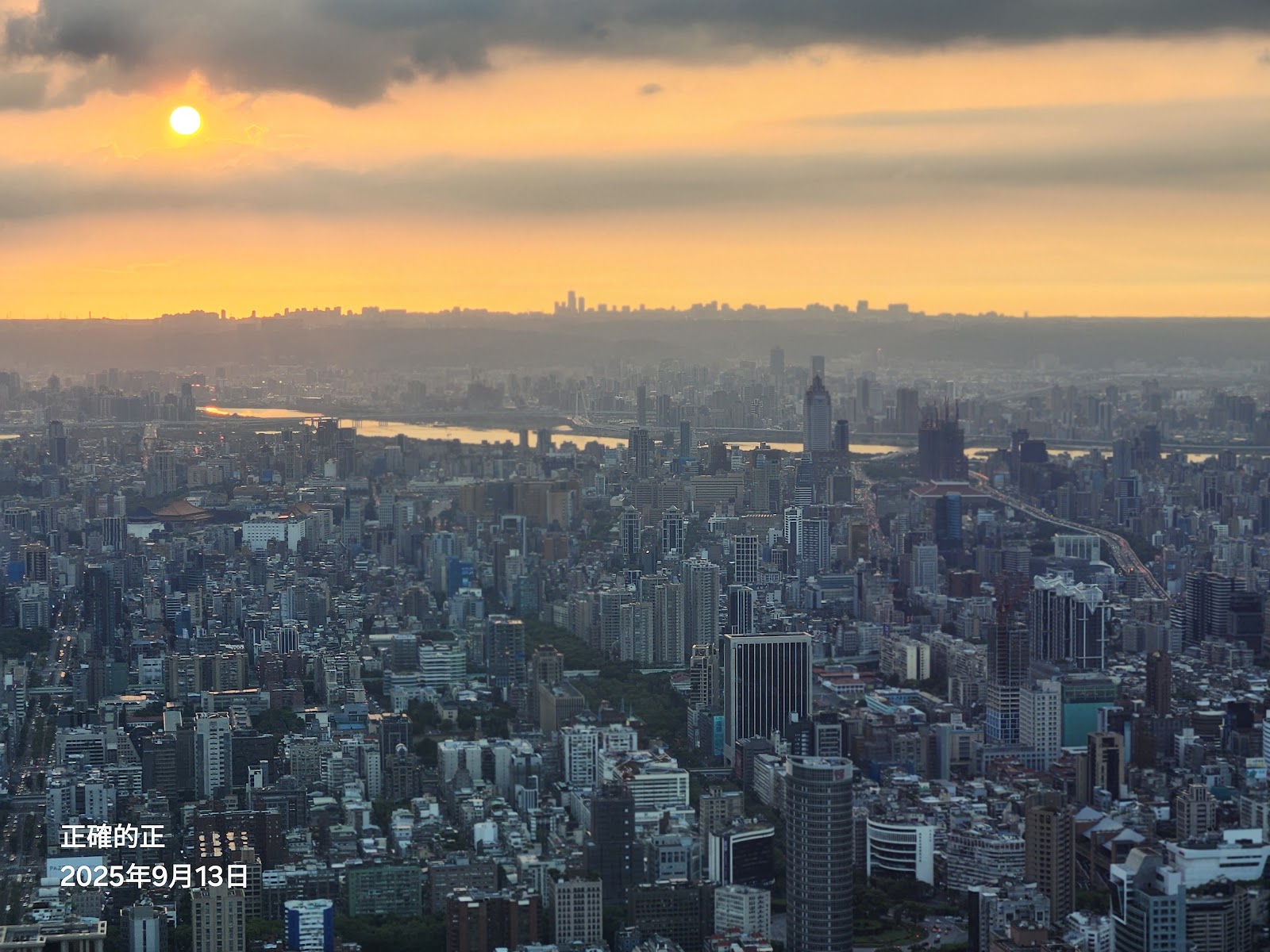
What awaits you here? A city where incense smoke rises from temples dating back to the 18th century beside the Taipei 101 skyscraper, where evenings are spent at night markets instead of restaurants, and where vegetarians will likely never go hungry. This article covers 22 things to see and do in Taipei and the surrounding area, from the observation deck on the 89th floor and the hike up Elephant Mountain to Longshan Temple and the National Palace Museum. You’ll also find hot springs in Beitou, tea houses above the city, and day trips to Jiufen or the Pingxi rail line where sky lanterns are released into the heavens. We’ve included practical updates from recent years, because quite a bit has changed and older guidebooks might send you to doors that are now closed.
TL;DR
- Direct flights: China Airlines flies directly to Taipei (three times a week according to the Taipei Times), and Starlux joined in August 2026 (four times weekly from October). The flight takes around 12.5 to 13 hours and lands early in the morning.
- Entry: Citizens of many countries can visit Taiwan without a visa for up to 90 days. You need a passport valid for at least 6 months, a return or onward ticket, and the free online TWAC arrival card.
- Metro: Taipei’s metro now accepts contactless bank cards and mobile payments at turnstiles, so an EasyCard is no longer essential.
- When to go: October, November, March, and April are most pleasant. Summer is hot and humid, and typhoon season runs from May to November.
- Watch for changes: The famous Jadeite Cabbage is only on display at the National Palace Museum until November 29, 2026. The public outdoor baths in Beitou have been under renovation since January 2025, scheduled to reopen October 31, 2026 (verify before visiting). The honor guard at the Chiang Kai-shek Memorial no longer stands in the main hall by the statue.
- Prices: Taipei 101 observation deck costs NT$600 (€15), the National Palace Museum NT$350 (€10), and an all-day Maokong Gondola pass NT$300 (€10).
- Vegetarians: Taiwan is a small paradise for them. Just look for the sign 素 (pronounced roughly “su,” meaning vegetarian) and ask around at night market stalls.
The full destination guide: Asia — guide and what to see
When to Visit Taipei and Practical Information
Getting around Taipei is straightforward. The metro is clean and signs and announcements are in English too. Still, it’s worth knowing about weather, flights, and paperwork before you go, because several things have changed in recent years and outdated guides still circulate online. Prices in this article are converted using the October 23, 2026 rate, when NT$100 was approximately €2.70.
What has changed in recent years, in a nutshell:
- Metro without EasyCard: Pay at turnstiles with your bank card or mobile phone (more in the Getting Around section).
- Arrival card online only: Since October 1, 2025, the paper card has been replaced by the electronic TWAC.
- Guard at Chiang Kai-shek outside: The classic changing of the guard now happens elsewhere (tips 4 and 18).
- Taipei 101 different entrance: The observation deck is temporarily accessed through the office tower (tip 1).
- Cabbage on the road: The Jadeite Cabbage leaves Taipei for Chiayi after November 29, 2026 (tip 15).
- Beitou baths: The public outdoor baths are under renovation (tip 16).
Weather and best time to visit: It rains year-round in Taipei, with 12 to 16 days of at least light rain every month, so pack an umbrella in any season. The most pleasant times are October and November, then March and April, when daily highs stay between 23 and 28°C. Summer from June to September is hot and muggy, with highs climbing to 31-35°C and over 200mm of rainfall monthly from May through September. Winter is mild, with temperatures around 14-21°C from December to February. But winter sees only about 80 hours of sunshine per month, making it gray and damp and feeling colder than the numbers suggest.
Typhoons, according to the UK Foreign Office (FCDO), are a risk from May to November, most commonly in summer and early autumn. So the pleasant October and November still fall within typhoon season. This isn’t just theoretical—on October 22, 2026, Typhoon Champi prompted Taiwanese authorities to issue a land warning, and Yehliu Geopark was closed the next day. During severe storms, attractions close and the Maokong Gondola stops running, so build an extra day into your itinerary. Check the forecast from Taiwan’s meteorological agency, CWA.
Holidays and events: The Chinese Lunar New Year falls on February 6, 2027. Expect some shops and restaurants to be closed for a few days and trains to be packed. The Lantern Festival is on February 20, 2027, the Dragon Boat Festival on June 9, 2027, and the Mid-Autumn Festival on September 15, 2027. Taiwan’s National Day is celebrated on October 10. For New Year’s Eve fireworks and the pre-holiday market on Dihua Street, see tips 1 and 6.
Flights from Europe: China Airlines has operated a direct route since 2023, currently three times a week according to the Taipei Times. Taiwanese carrier Starlux chose Prague as its first European destination and has been flying regularly since August 1, 2026. From October 1, 2026, it operates four flights weekly (Monday, Tuesday, Thursday, and Saturday). Flights depart in the morning and land in Taipei the next day at 5:10 AM local time. The flight takes around 12.5 to 13 hours and uses Terminal 1. Together, according to the Taipei Times, this provides nearly daily service. Check Starlux’s winter schedule from October 25 and China Airlines’ flight days directly with the carriers. Vienna is an alternative, with EVA Air and China Airlines also flying direct according to travel websites.
From the airport to downtown: Taoyuan International Airport lies about 40km west of the city. The fastest way downtown is the purple Airport MRT line (MRT is the local term for metro). The express takes 35 minutes from Terminal 1 to Taipei Main Station, the regular train about 50 minutes, and a ticket costs NT$160 (€5). Pay with a token from a machine, an EasyCard, or according to travel sites, now also with a contactless bank card. The train offers free Wi-Fi. Express trains run roughly every 15 minutes, but the first ones don’t depart until around 6 AM, so you’ll wait a bit after arriving on Starlux at 5:10. Songshan Airport sits right in Taipei and mainly serves flights to Japan, Korea, and domestic Taiwan routes.
Getting around the city: Taipei’s metro is extensive and easy to navigate, with bilingual signage. At turnstiles you can pay with Visa, Mastercard, JCB, UnionPay, Diners, or Discover bank cards, plus Apple Pay, Google Pay, and Samsung Pay. The EasyCard is a rechargeable transport card. It’s no longer essential, but it’s useful for buses, YouBike bike-share, TRA railway trains, and purchases at 7-Eleven or FamilyMart. Eating, drinking, and chewing gum are prohibited on the metro and violations carry fines, so finish your bubble tea before the turnstile.
Several tourist packages are sold under the Taipei Fun Pass brand. The biggest is the Taipei Unlimited FunPASS with unlimited metro and bus travel plus admission to over 30 attractions. Smaller packages include combinations like two museums or the Maokong Gondola with an experience. The Unlimited FunPASS costs NT$1,300 (€35) for 1 day, NT$1,700 (€45) for 2 days, and NT$2,000 (€55) for 3 days. According to sellers, the Airport MRT is not included. It only pays off with a very packed schedule. Three major attractions (Taipei 101, the Palace Museum, and an all-day Maokong Gondola pass) together cost just NT$1,250 (€35), less than the one-day FunPASS.
Entry requirements: Many citizens can visit Taiwan visa-free for up to 90 days for tourism or business. Your passport must be valid for at least 6 months from your arrival date, and border officials want to see a return or onward ticket with a confirmed date. The stay is counted from the day after arrival and cannot be extended. Fill out the TWAC arrival card free online before your flight at the official site twac.immigration.gov.tw. No need for paid intermediary websites. Check your country’s foreign ministry for current travel advisories. If you run into problems, relevant consular services in Taipei can assist.
Safety: The FCDO reports that crime in Taiwan is extremely low. But drug laws are much stricter than in Europe, and drugs can result in long prison sentences or even the death penalty, so leave cannabis and CBD products at home. Since March 2023, e-cigarettes are banned in Taiwan, and you cannot bring heated tobacco products purchased abroad into the country. High fines await anyone caught importing them, so don’t pack them. The island sits in an earthquake zone, and a strong quake struck near Hualien in April 2024. Emergency numbers are 110 for police and 119 for fire and ambulance. Tourists can also call the 24-hour hotline 0800 011 765, where English is spoken.
Money: The currency is the New Taiwan dollar (TWD, NT$). Department stores, hotels, and chains accept cards, but at night markets and small eateries expect to pay cash, which you can withdraw from ATMs at 7-Eleven. Tipping is not customary; restaurants often charge a 10% service fee. Admission to major attractions (Taipei 101, the Palace Museum, an all-day Maokong Gondola pass, and Yehliu Geopark) plus airport transport will run you around NT$1,690 (€45).
Electricity, water, and language: According to guidebooks, you’ll find American-style Type A and B outlets with 110V power. Bring an adapter. Phone chargers handle 110V, but don’t bring hair dryers or curling irons from home. Locals boil tap water, so drink bottled or filtered water from dispensers. The official language is Mandarin Chinese written in traditional characters, and many people also speak Taiwanese (Taiwanese Hokkien). You’ll be able to communicate in English mainly with younger people and in tourist areas. Street trash cans are scarce, and locals apparently take waste home or to convenience stores, so keep a bag handy.
Where to Stay in Taipei
Taipei is large, but thanks to the metro you can get anywhere quickly from any well-chosen neighborhood. Choose mainly based on whether you want easy airport train access, nightlife, views, or peace and hot springs.
If you arrive early in the morning and want the simplest route from the airport, go for the area around Taipei Main Station, where the airport express arrives. TRA trains to Ruifang also depart from here, where you transfer to Jiufen and the Pingxi line. The Palais de Chine Hotel stands here. If you have a smaller budget, choose the Star Hostel Taipei Main Station. The Zhongshan neighborhood with cafés, boutiques, and the red metro line direct to Beitou and Tamsui offers classic luxury at the Regent Taipei. If you want to just step out into lights, stalls, and cinemas in the evening, stay in Ximending, for example at the WESTGATE Hotel.
Skyscrapers, department stores, and views of Taipei 101 are offered by Xinyi, where the Grand Hyatt Taipei stands and from where you can head out to Elephant Mountain in the morning. In the quieter Da’an neighborhood with Yongkang Street and lots of vegetarian restaurants, you’ll find the Kimpton Da An Hotel. Historic Dadaocheng with shops on Dihua Street and the Ningxia night market suits lovers of old alleyways, and Beitou in the north is perfect for those who want hot springs right at their doorstep.
You’ll find a detailed overview of neighborhoods and specific hotels in the article Where to Stay in Taipei.
💡 On this map you can compare what’s currently available — you’ll immediately see how the price changes a few blocks away.
22 Things to See and Do in Taipei
The tips are arranged roughly by parts of the city. They start with the modern Xinyi district with the Taipei 101 skyscraper, then comes the historic center with temples and night markets, the north with museums, hot springs and volcanoes, the south with tea-covered hills, and finally full-day trips outside the city. You can assemble them into days according to your preferences, and many tips include suggestions for what can be combined. For a first visit, plan on 4 to 5 days, where you’ll manage two days in the city, a day for the museum and Beitou, and one to two excursions. Opening hours and prices change, so verify them before your visit.
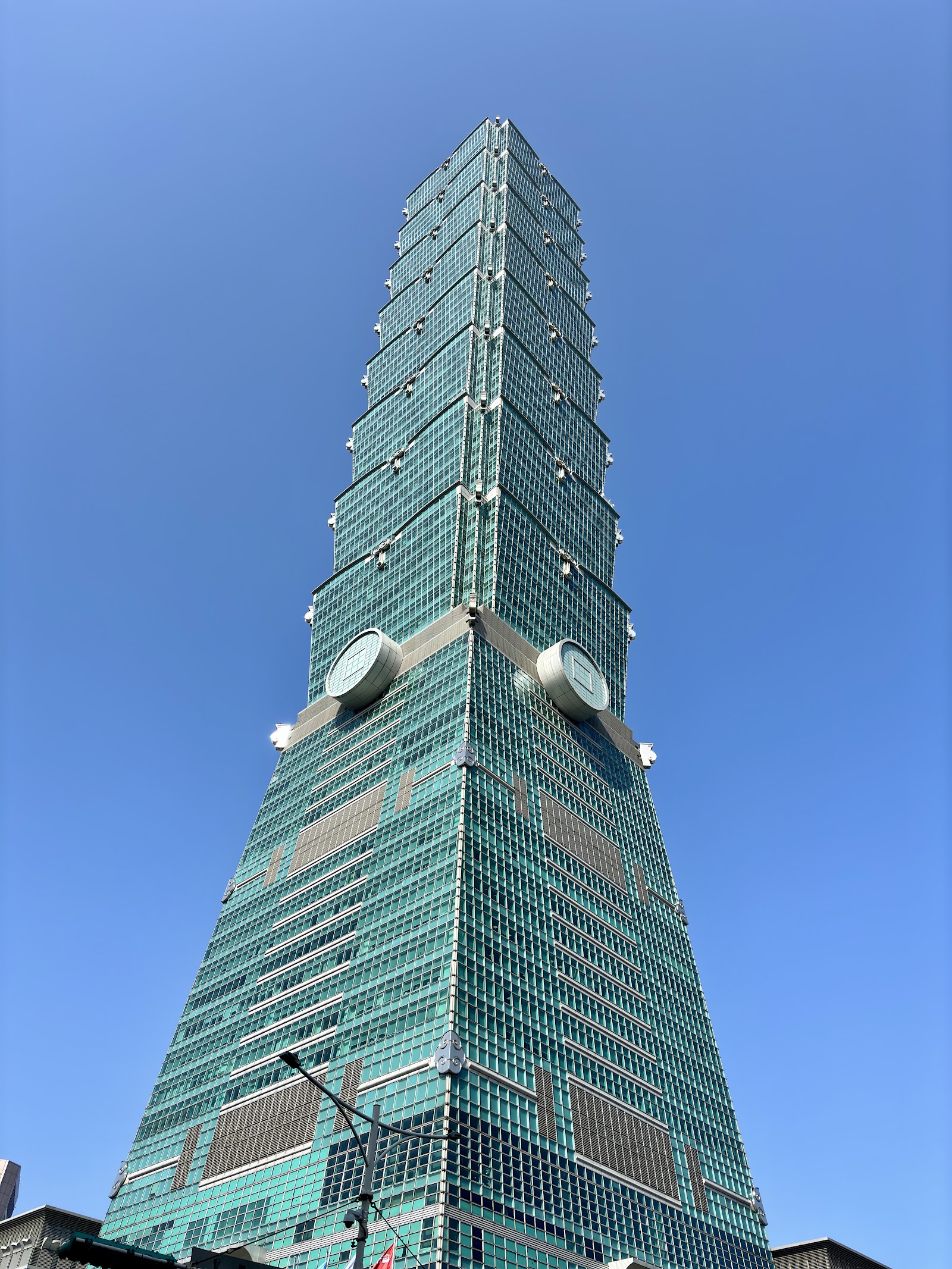
1. Taipei 101: View Over the City
The Taipei 101 skyscraper in the Xinyi district is a symbol of the entire city, and looking up from the bottom will probably make your head spin a bit. It’s listed as measuring 508 meters and was the world’s tallest building from 2004 to 2010, until it was overtaken by the Burj Khalifa in Dubai. The observation deck is open daily from 10:00 to 21:00, and the nearest metro station is Taipei 101/World Trade Center.
The basic ticket costs NT$600 (€16) and is valid for the 88th and 89th floors. In favorable weather, you can also access the outdoor terrace on the 91st floor. Discounted admission only applies to holders of Taiwanese ID. Children up to 115 cm enter free. The Priority Pass ticket without queuing costs NT$1,200 (€30) in total. You can access the 101st floor with a supplement of NT$380 (€10) to the regular ticket. Skyline460 is something different: for NT$3,000 (€80) with a reservation, you can walk the outdoor walkway on the 101st floor with safety harnesses. You must be at least 145 cm tall, leave heels and skirts at the hotel, and the activity is canceled in bad weather.
Note the update: from July 1, 2026, you temporarily enter the observation deck from the 1st floor of the Office Tower, not from the shopping mall as before. The relocation is announced until December 25, 2026. Where you’ll enter after that, check the Taipei 101 website. If you follow older directions, you’ll wander among shops for a while. On New Year’s Eve, fireworks are launched from the skyscraper.
💡 Tip: In fog or rain, the view is practically zero. So check from your window in the morning and save the observation deck for a clear day, ideally late afternoon when you can see the city both in daylight and lit up.
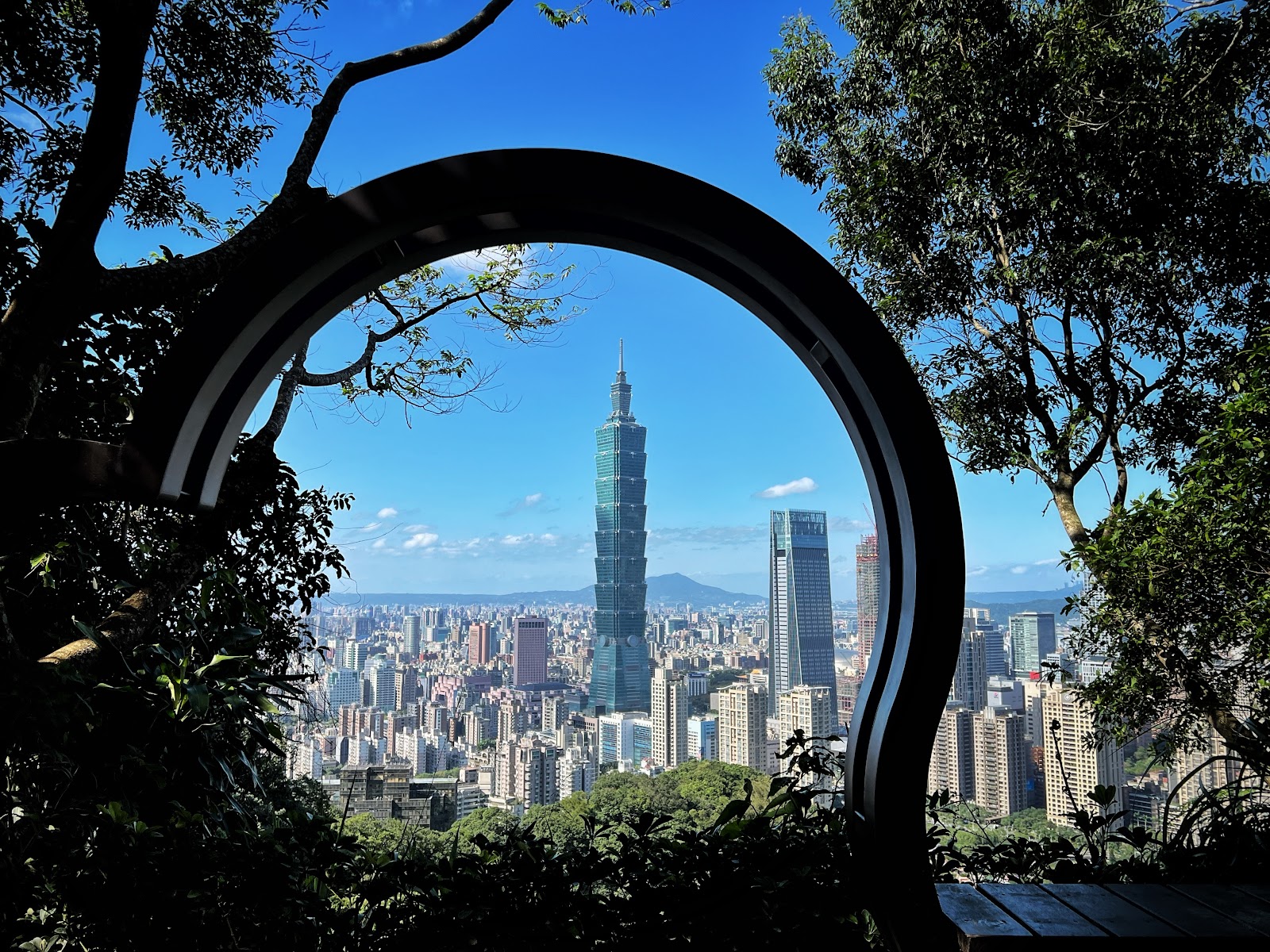
2. Elephant Mountain (Xiangshan)
The most famous photo of Taipei, where the Taipei 101 skyscraper rises above a sea of rooftops, originates right here, on Elephant Mountain (Xiangshan) at the edge of the Xinyi district. Entry is free and the trail is open around the clock. According to the city’s official tourism portal, the trail upward measures about 1.5 km and leads to an elevation of 183 meters. With the return loop it’s roughly 2.3 km, and the entire walk takes about an hour and 40 minutes.
But don’t be fooled by the short distance. One Reddit user wrote in 2026 that the first viewpoint requires 10 to 15 minutes of continuous stairs, and in Taipei’s heat it takes its toll. You reach the trailhead from Xiangshan station on the red metro line. Exit 2 is usually recommended.
It gets crowded at sunset, and in summer you’ll face humidity and mosquitoes. The hike combines nicely with Taipei 101: head up the hill in the morning for the view, and in the afternoon see the city from the opposite perspective, from the observation deck in the skyscraper.
💡 Tip: According to blogs, about 600 steps lead to the first viewpoint. If you don’t want to climb in the midday furnace, head out in the morning.
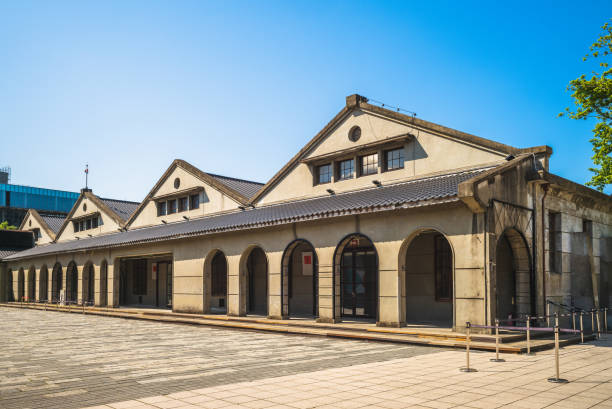
3. Xinyi and Songshan Cultural and Creative Park
Around Taipei 101 stretches Xinyi, a business district full of shopping malls connected by elevated pedestrian walkways. It’s the most modern face of Taipei that you probably imagine when you think of an Asian metropolis.
A completely different atmosphere is found nearby at Songshan Cultural and Creative Park (don’t confuse it with the Songshan neighborhood with Raohe market from tip 10). According to the description, it’s a former tobacco factory from the era of Japanese administration of the island. Today you’ll find exhibitions, design, and shops. The complex is open daily from 8:00 to 22:00.
Czech Centre Taipei is also located in Xinyi on Keelung Road, organizing cultural events. Coming across a piece of the Czech Republic on the other side of the world is a pleasant surprise.
💡 Tip: For lunch after the observation deck, try the vegan restaurant Herbivore on Songgao Road near Taipei 101 (daily from 11:00 to 21:30) or the vegetarian Miacucina with Italian fusion cuisine on Songshou Road.
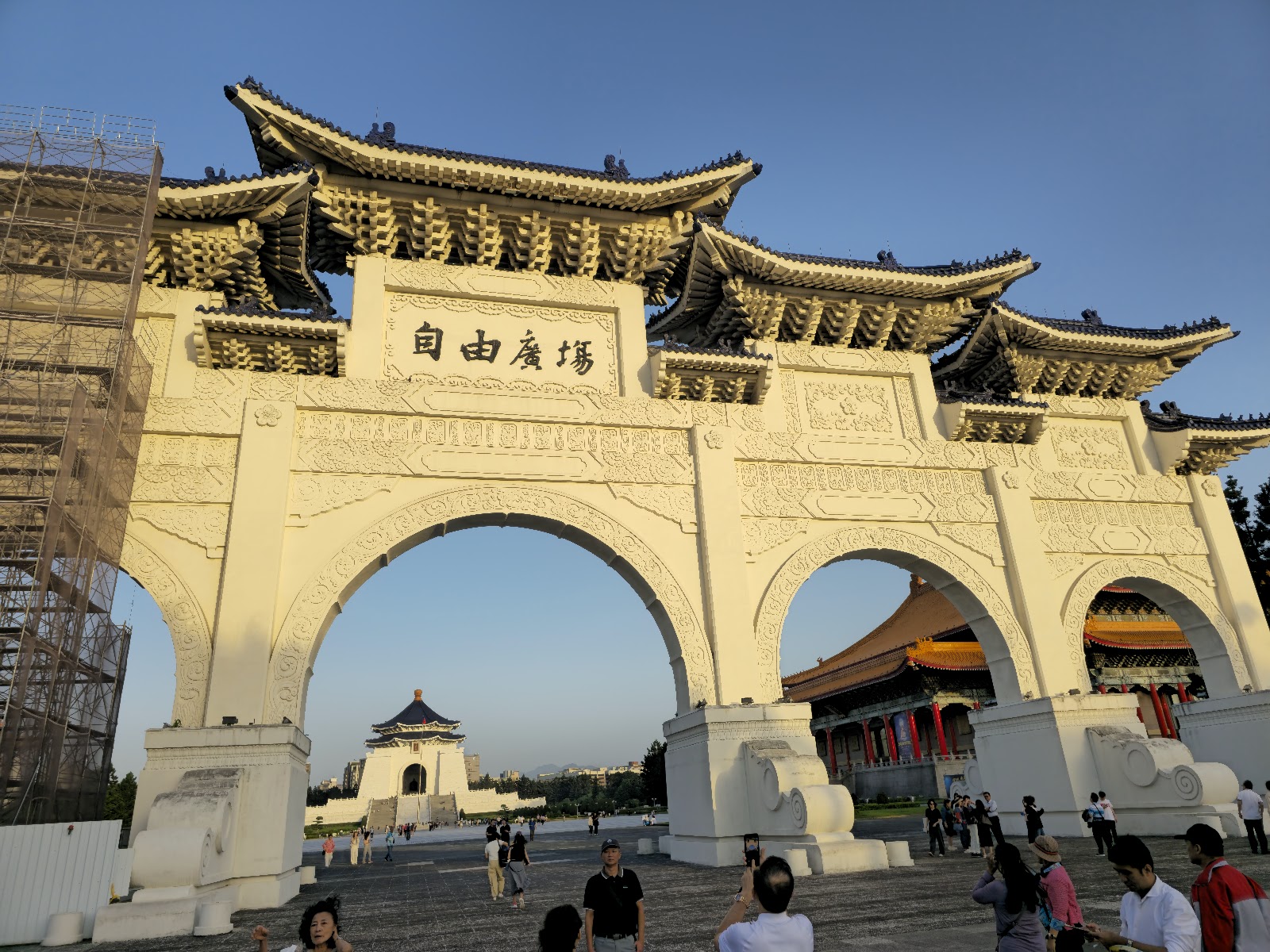
4. Chiang Kai-shek Memorial and Liberty Square
The expansive Chiang Kai-shek Memorial (National Chiang Kai-shek Memorial Hall) in the Zhongzheng district is open daily from 9:00 to 18:00, and entry is free, including the permanent exhibition inside. In front of it opens Liberty Square with its famous gate and the pair of buildings housing the National Theater and Concert Hall.
If you’ve read older guidebooks, you’re probably expecting soldiers standing motionless by the giant statue in the main hall. That’s no longer the case. From July 15, 2024, the honor guard moved outside, and its ceremony takes place every hour on the hour on Democracy Boulevard in the memorial grounds. The classic changing of the guard inside the building can now be seen at the National Revolutionary Martyrs’ Shrine (tip 18).
The memorial is a site with complicated history. Chiang Kai-shek is now a controversial figure in Taiwan. His rule is associated with a period of political repression known as the White Terror and with the massacre known as 228. According to Taiwanese media, the Ministry of Culture is to submit a plan by the end of 2026 on how to transform the complex. Context is added by nearby 228 Peace Park with the National Taiwan Museum. A short distance away stands the Presidential Office Building from 1919, built during the Japanese colonial period. It’s open for tours on weekday mornings, and you need your passport.
5. Longshan Temple
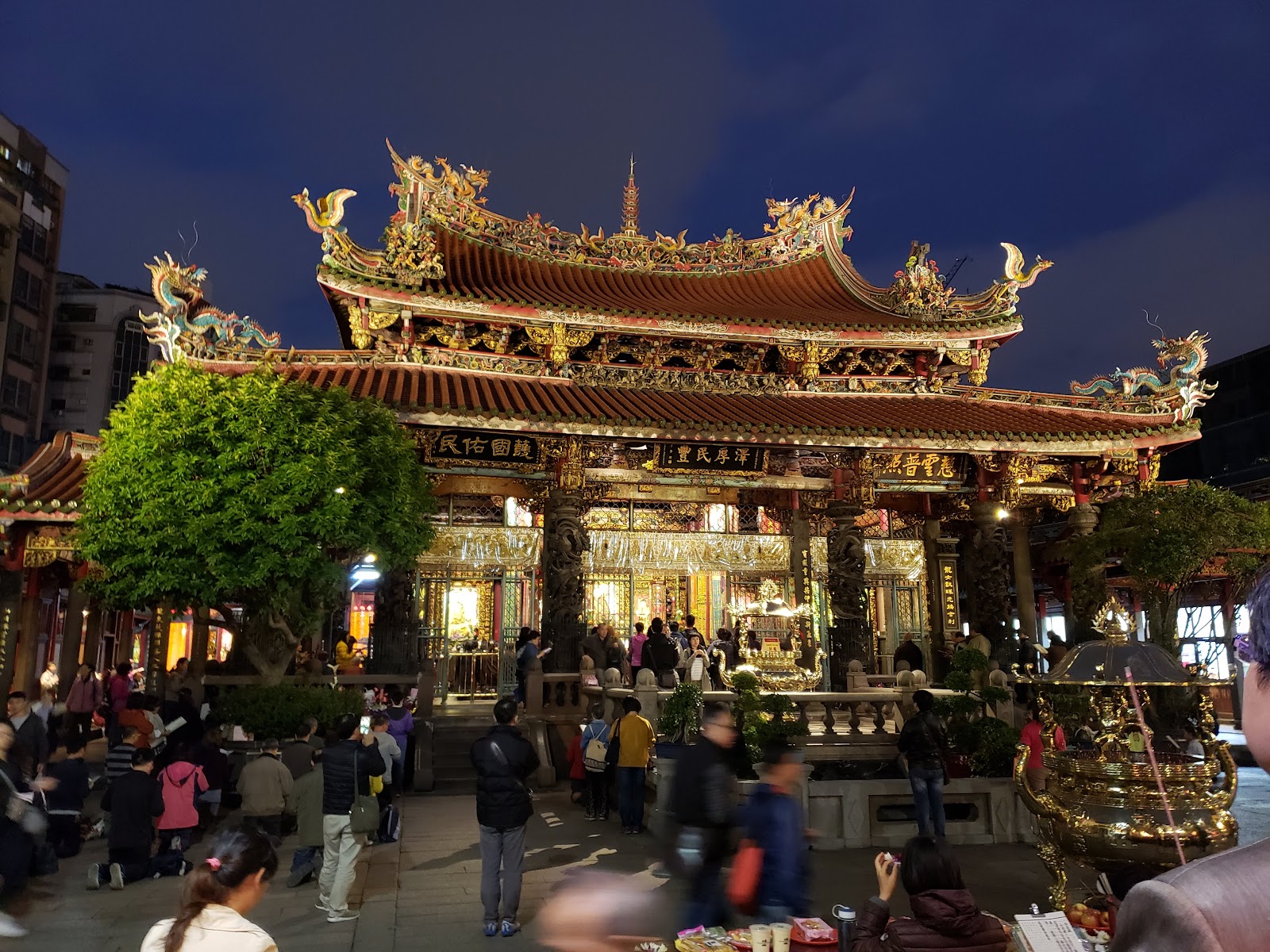
Longshan Temple (Lungshan Temple) in the old Wanhua district dates back to the 18th century, usually cited as 1738, and both Buddhist and Taoist deities are worshipped here. It’s open daily from 6:00 to 22:00, entry is free, and the metro station is aptly named Longshan Temple.
The most atmosphere is usually in the evening when locals come to pray and the scent of incense drifts through the courtyard. Be respectful, don’t photograph people’s prayers up close, and don’t get in their way.
A few steps from the temple lies Bopiliao Historical Block, an alley with houses in 18th-century architecture that you can walk through Tuesday to Sunday from 9:00 to 18:00 for free.
💡 Tip: Longshan can be combined with Ximending (tip 8): temple in the evening, then dinner among stalls and lights.
6. Dadaocheng: Dihua Street and Xia Hai City God Temple
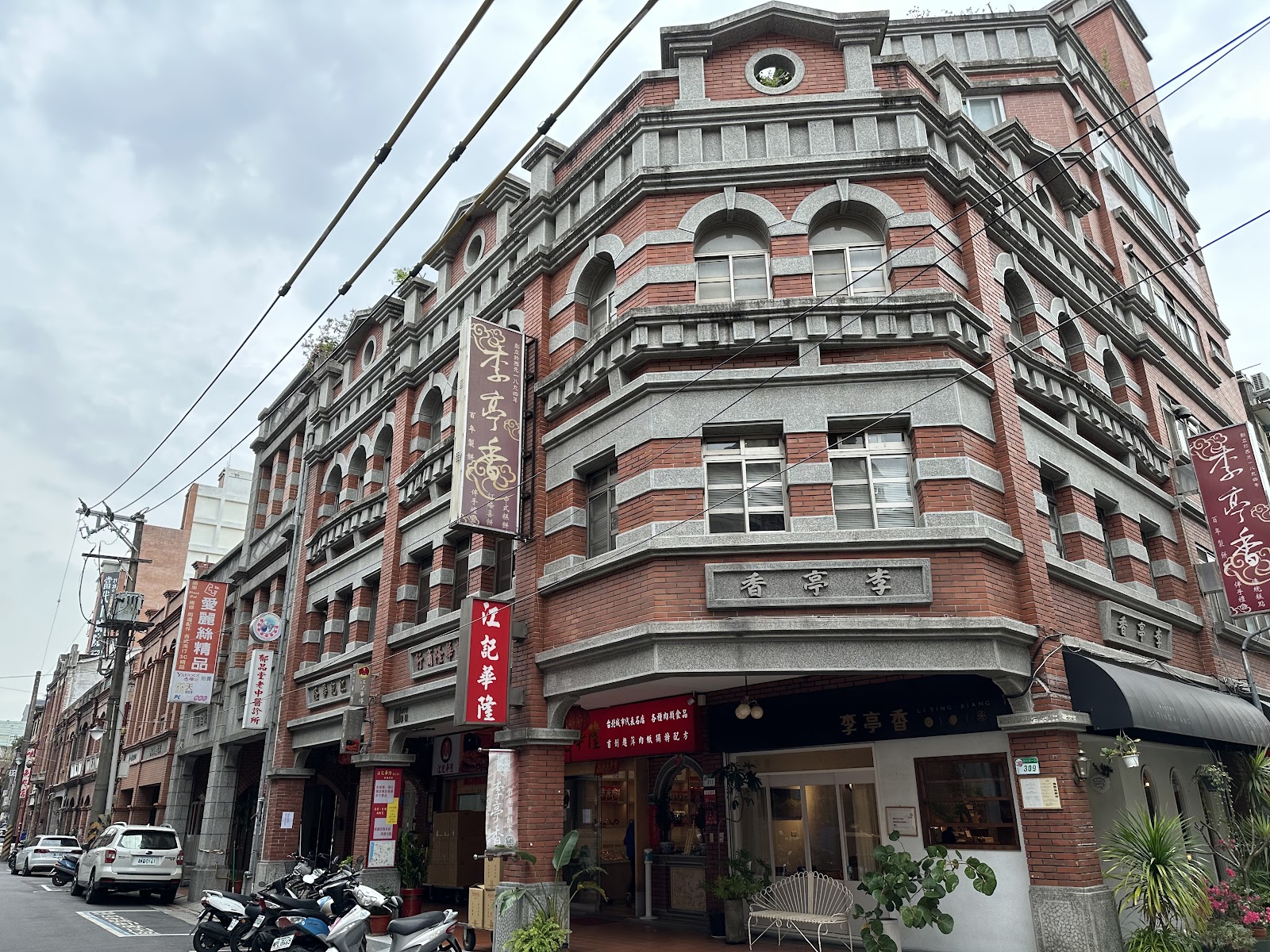
In the Dadaocheng district, time has slowed down a little. Dihua Street dates from the 19th century, and its old houses still hold shops selling tea, dried fruit, herbs, and fabrics. A large market takes place here before the Lunar New Year. The rest of the year it’s a relaxed stroll between little shops.
Tucked among the shops is Taipei Xia Hai City God Temple (open daily 7:00 to 19:00), dedicated to the city god and also to Yue Lao, the “old man under the moon.” People come to the temple to pray for love, often young couples especially. If you happen to be looking for your true love, you know where to go.
When the day draws to a close, walk down to the river to Dadaocheng Wharf Container Market, where you can sit among the food containers and watch the sunset over the Tamsui River. It opens at 16:00 on weekdays, from noon on weekends, and closes at 22:00.
💡 Tip: From here it’s a short walk to Ningxia night market for dinner (tip 12), so you can combine an afternoon in Dadaocheng with an evening at the market without having to travel between locations.
7. Bao’an Temple and Confucius Temple
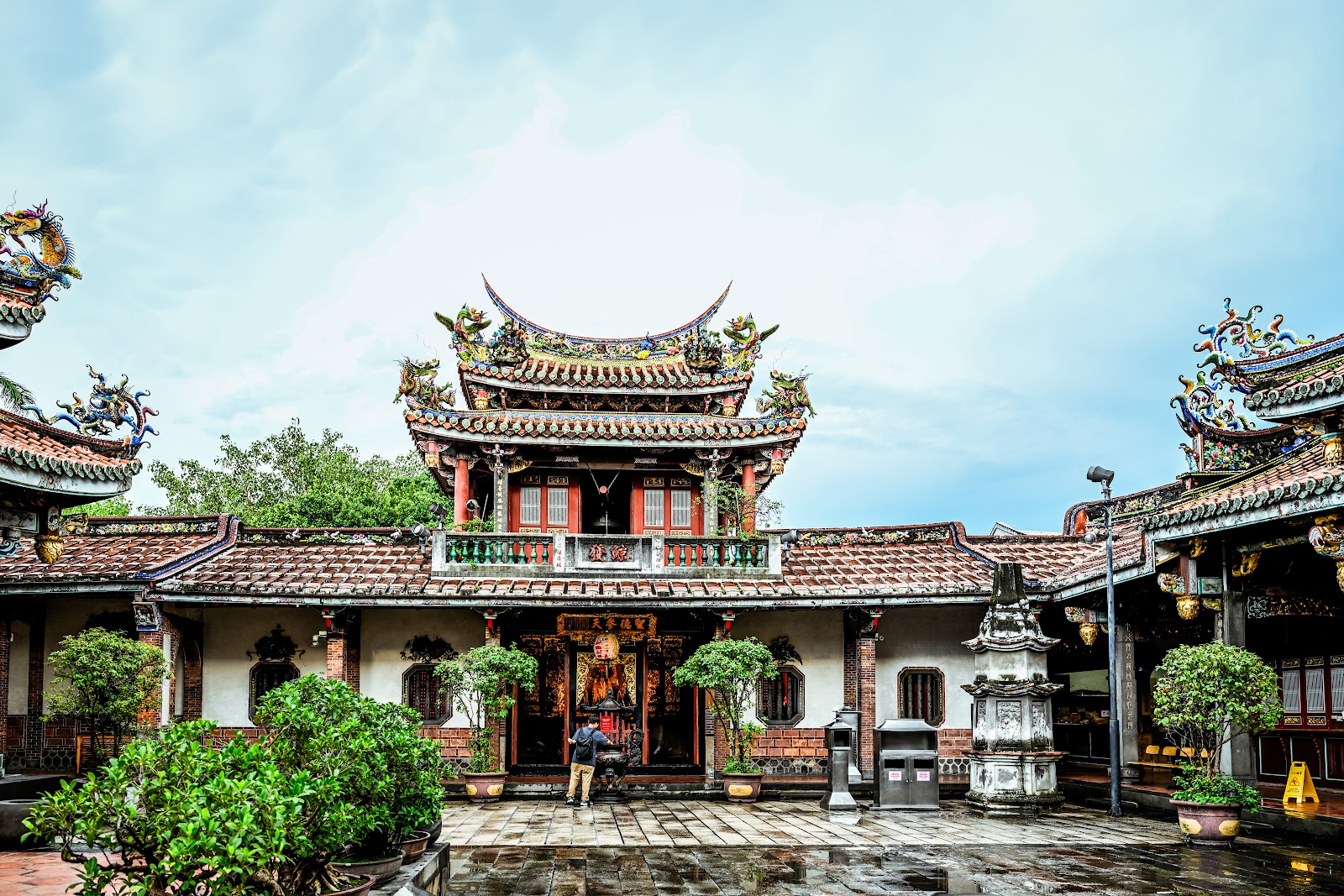
In the northern part of the city near Yuanshan metro station stand two temples that can be combined into one peaceful walk. Dalongdong Baoan Temple on Hami Street is open daily from 6:00 to 21:00. According to its description, it was completed in 1831, and one of its dragon pillars is even older, from 1804.
At the same metro station you’ll also find the Confucius Temple (Taipei Confucius Temple), open Tuesday to Sunday from 8:30 to 21:00. Entry is free and besides the peaceful courtyards you’ll find a 4D cinema where you can learn something about Confucius. It’s perfect if you need a moment of quiet after the bustling markets.
From Yuanshan it’s a short walk to Taipei Expo Park and the Taipei Fine Arts Museum (closed on Mondays). The whole area can make for a pleasant morning with temples, a park, and art.
8. Ximending and Red House
Ximending is a pedestrian zone full of lights, stalls, cinemas, and shops. Guides call it Taipei’s Shibuya, after the famous Tokyo district. If you want to experience the bustling, modern side of Taipei, you’ll find it here. The nearest metro station is Ximen.
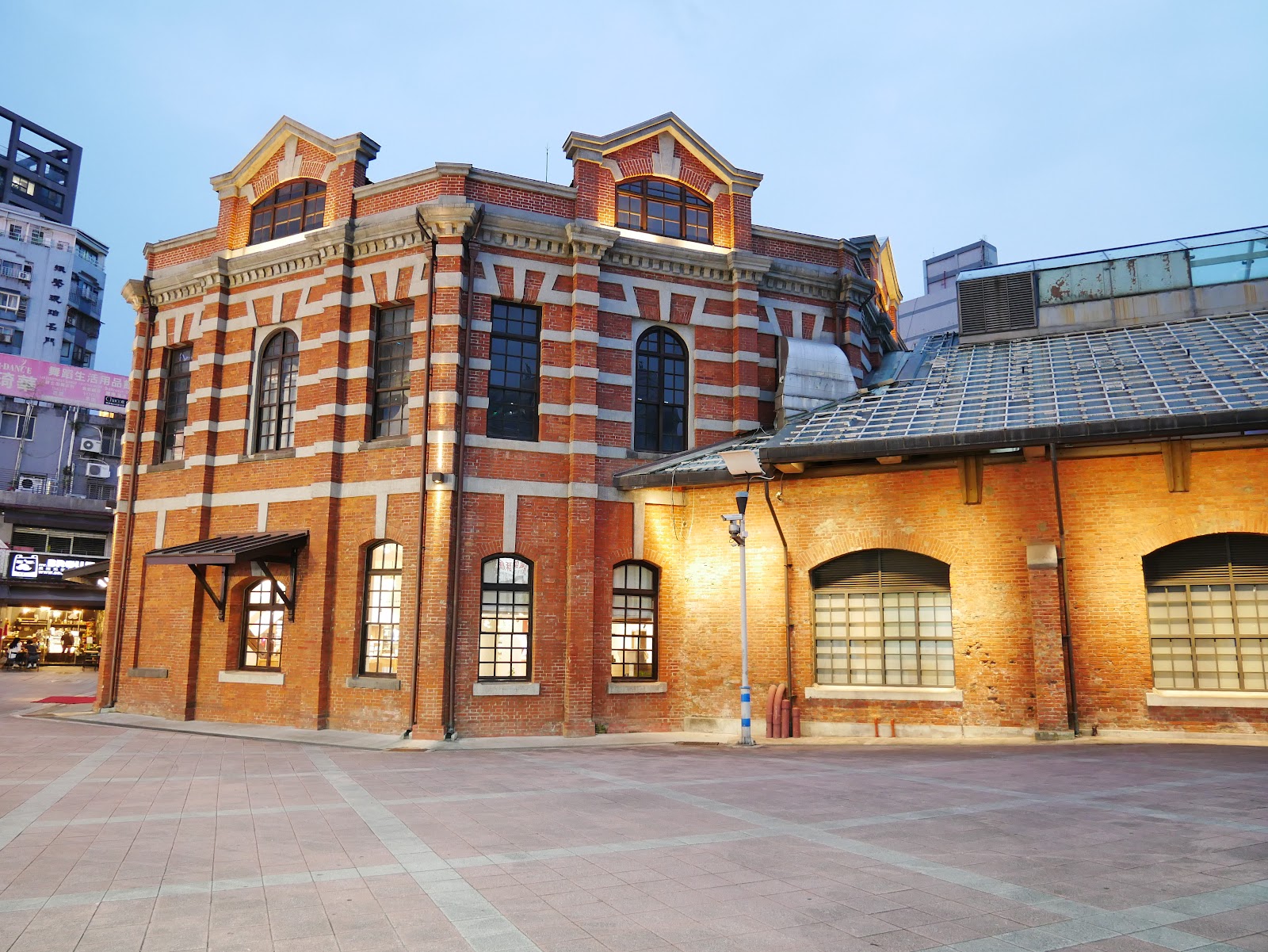
Amid all the neon vibes stands the Red House, an octagonal market building from 1908. Today it houses a design market and small shops. It’s open Tuesday to Sunday from 11:00 to 21:00. According to guides, the surrounding area also has bars for the LGBTQ+ community.
At Ximen station (exit 6) you’ll also find a rainbow pedestrian crossing that commemorates Taiwan becoming the first country in Asia to legalize same-sex marriage in 2019.
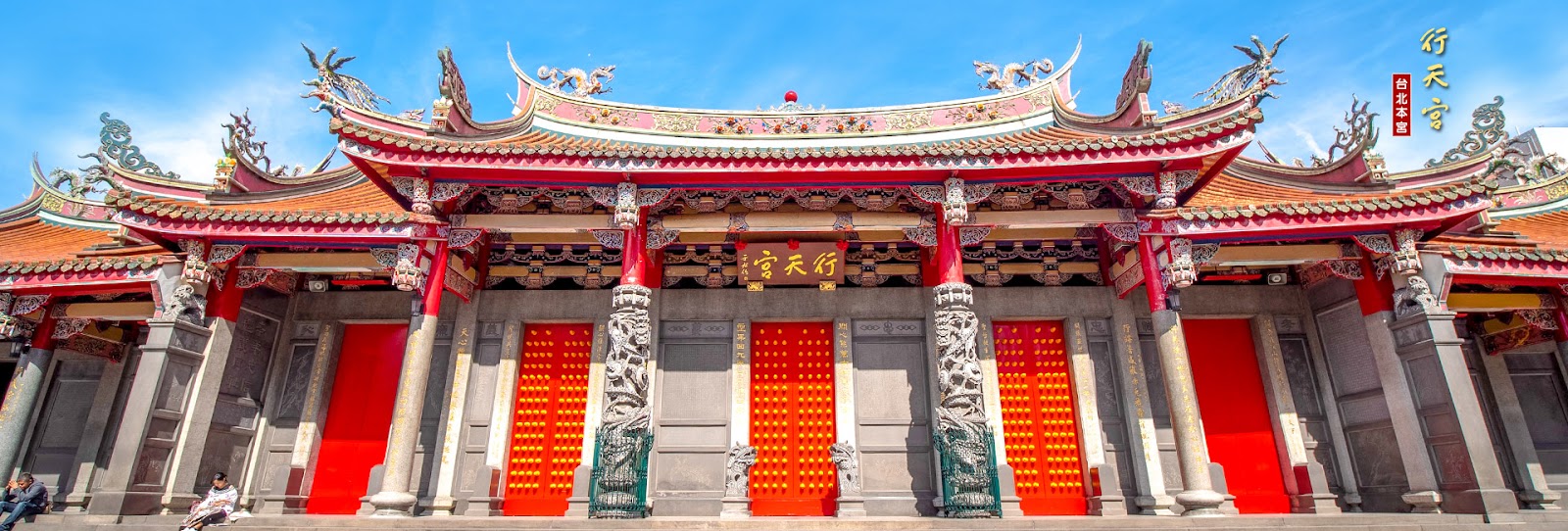

9. Xingtian Temple
Xingtian Temple on Minquan East Road is a Taoist temple dedicated to the god Guan Gong, patron of merchants. It’s open daily from 4:00 to 21:00, so you can catch it even early in the morning before your next activity.
It differs from other temples in one way. Apparently since 2014 no incense sticks are burned here and no offerings are brought, so don’t expect clouds of incense smoke like at Longshan.
The metro underpass next to the temple is nicknamed Fortune-telling Street because, according to guides, fortune tellers sit there. Whether you believe them or not is up to you. But as a curiosity it’s worth a look.
💡 Tip: On the same street (Minquan East Road, section 2) you’ll find the vegetarian restaurant Guanshiyin, which is closed on Mondays.
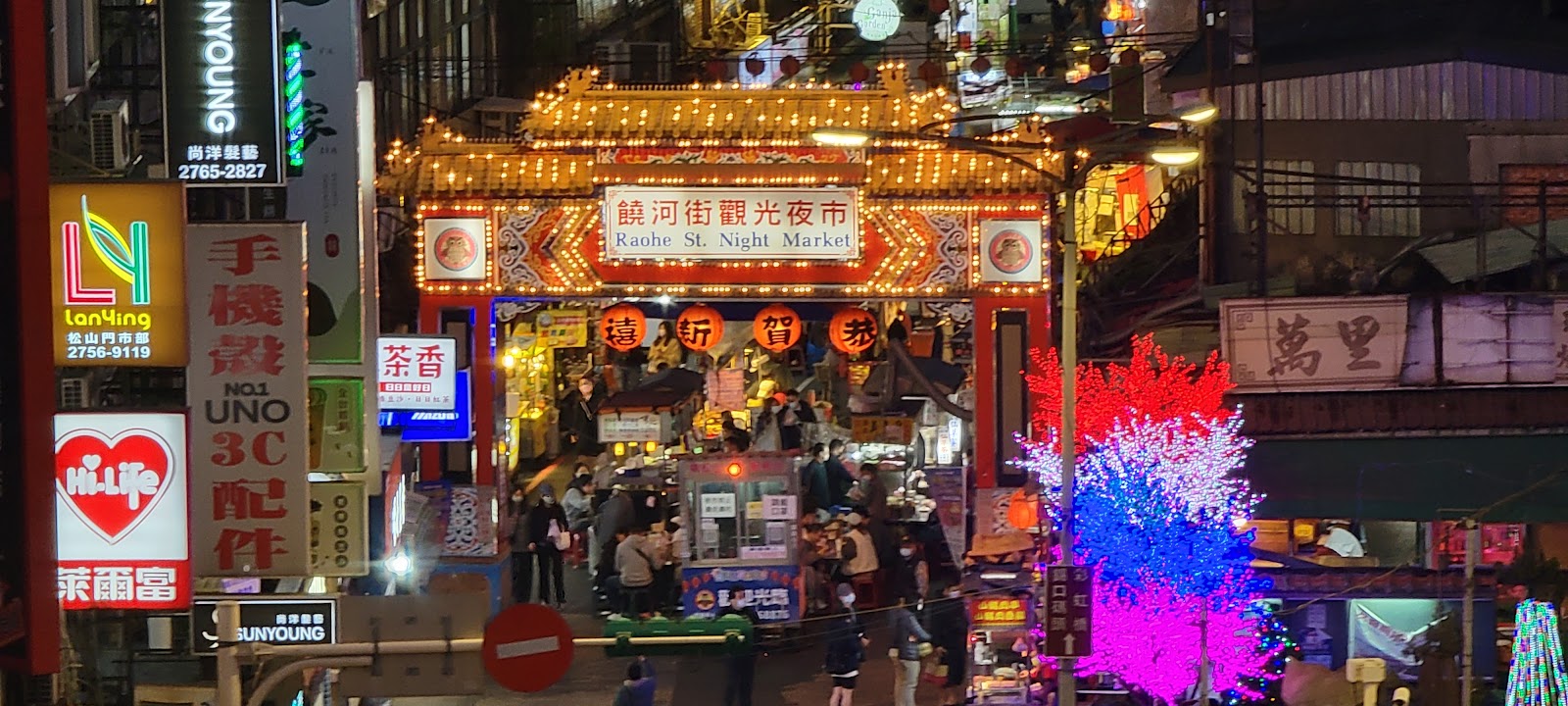
10. Raohe Night Market and Ciyou Temple
Raohe Night Market in the Songshan district is one of the most famous night markets in the city and opens daily from 17:00 to midnight. The nearest metro station is Songshan. At the entrance gate to the market stands Ciyou Temple, dedicated to the goddess Mazu, open from 5:30 to 22:30, so you can visit it right when you arrive.
The market is famous for its pepper buns filled with pork. Vegetarians will find grilled corn at night markets, for example, but always ask at the stall what the sauce is made from. On weekends Raohe gets crowded, so if you can, come on a weekday.
A short walk from the market is the Rainbow Bridge, a footbridge over the Keelung River. In the evening it lights up in colors and it’s a nice spot for a short break from the crowds and for a photo of the city at night.
💡 Tip: In the Songshan district you’ll also find the vegetarian restaurant Veggienius on Nanjing East Road (section 3). It’s open daily for lunch from 11:30 to 15:00 and for dinner from 17:30 to 21:30.
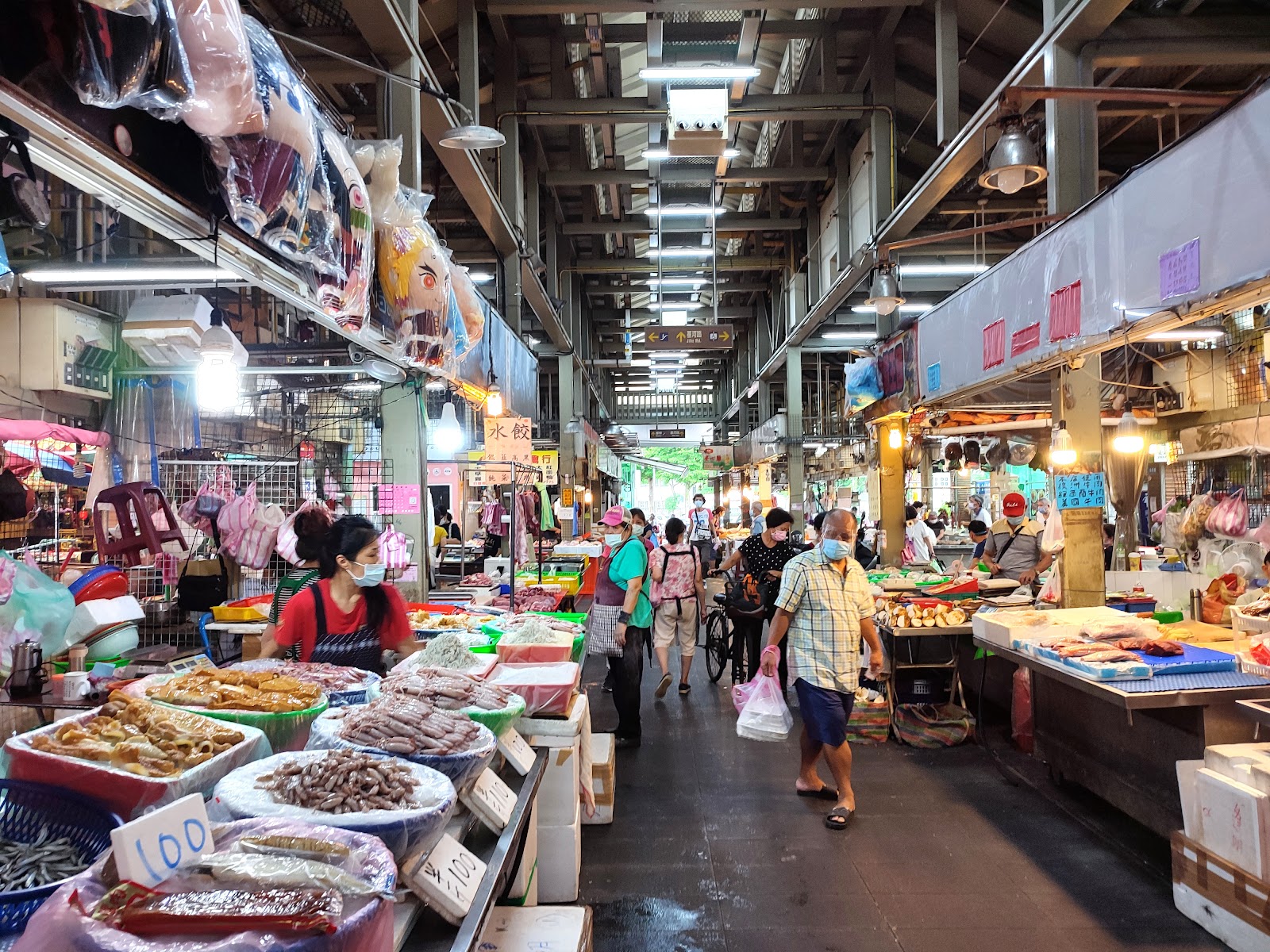
11. Shilin Night Market
Shilin Night Market is probably the most famous night market in Taipei, so you’ll find it in almost every guidebook. It opens daily from 16:00 to midnight and the nearest metro station is Jiantan.
Its reputation isn’t what it used to be, though. On Reddit over the past two years, people describe it as a market whose best days are behind it, too commercial and with prices inflated for tourists. They recommend other markets instead, like Raohe, Nanjichang, or smaller Ningxia. But if you’re staying nearby or going to the National Palace Museum (tip 15), which is in the same district, you can check out the market on your way. Morning for art, evening for the market.
For vegetarians there are stalls with grilled oyster mushrooms and sweet potato balls, according to vegan guides. Otherwise it’s a classic big market where you can shop, taste, and mainly observe Taiwanese evening bustle.
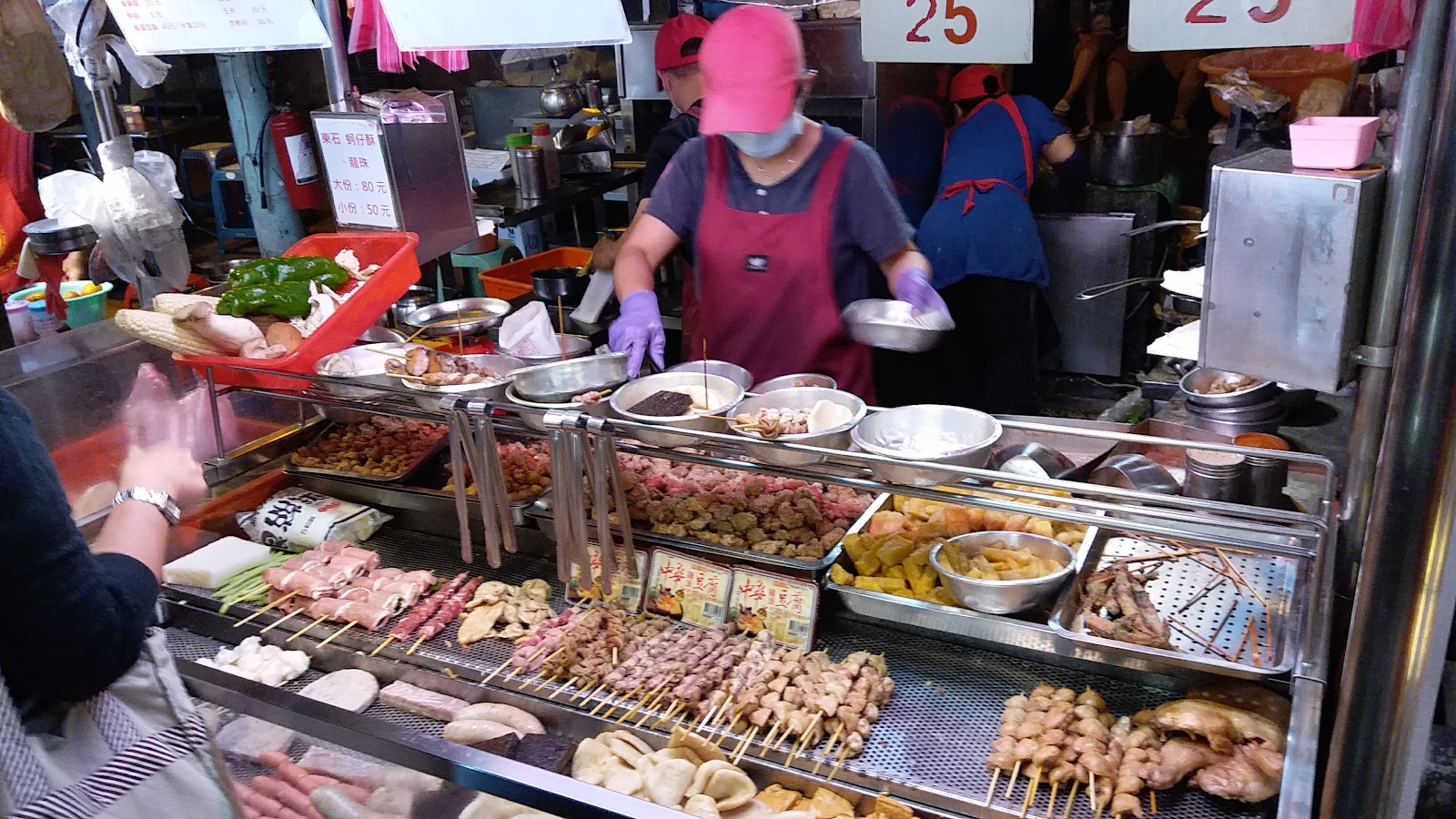
12. Ningxia Night Market
Ningxia Night Market is centrally located near historic Dadaocheng (tip 6) and is open daily from 17:00 to 23:30. It’s one of the smaller, more compact markets, so you won’t get lost in it.
At night markets, including Ningxia, vegetarians can try an ice cream pancake with peanuts and cilantro. It’s a Taiwanese peculiarity where ice cream is wrapped in a pancake along with peanuts and cilantro leaves. It sounds crazy, but that’s exactly why it’s worth tasting. Watch out for stinky tofu. The fermentation brine in which the tofu ages sometimes contains shrimp or meat, so always ask at the stall.
If night markets grab you, try others too. Nanjichang (open from 17:00 to midnight) is one of the markets recommended instead of Shilin (tip 11). It’s less touristy and praised mainly for its food. Linjiang (Tonghua) is open from 18:00 to midnight and is close to Xinyi, so it’s convenient after a day at Taipei 101. You can easily taste a different market each evening.
💡 Tip: Look for stinky tofu without meat brine at vegan stalls. According to vegan guides, Gongguan night market has two such stalls.
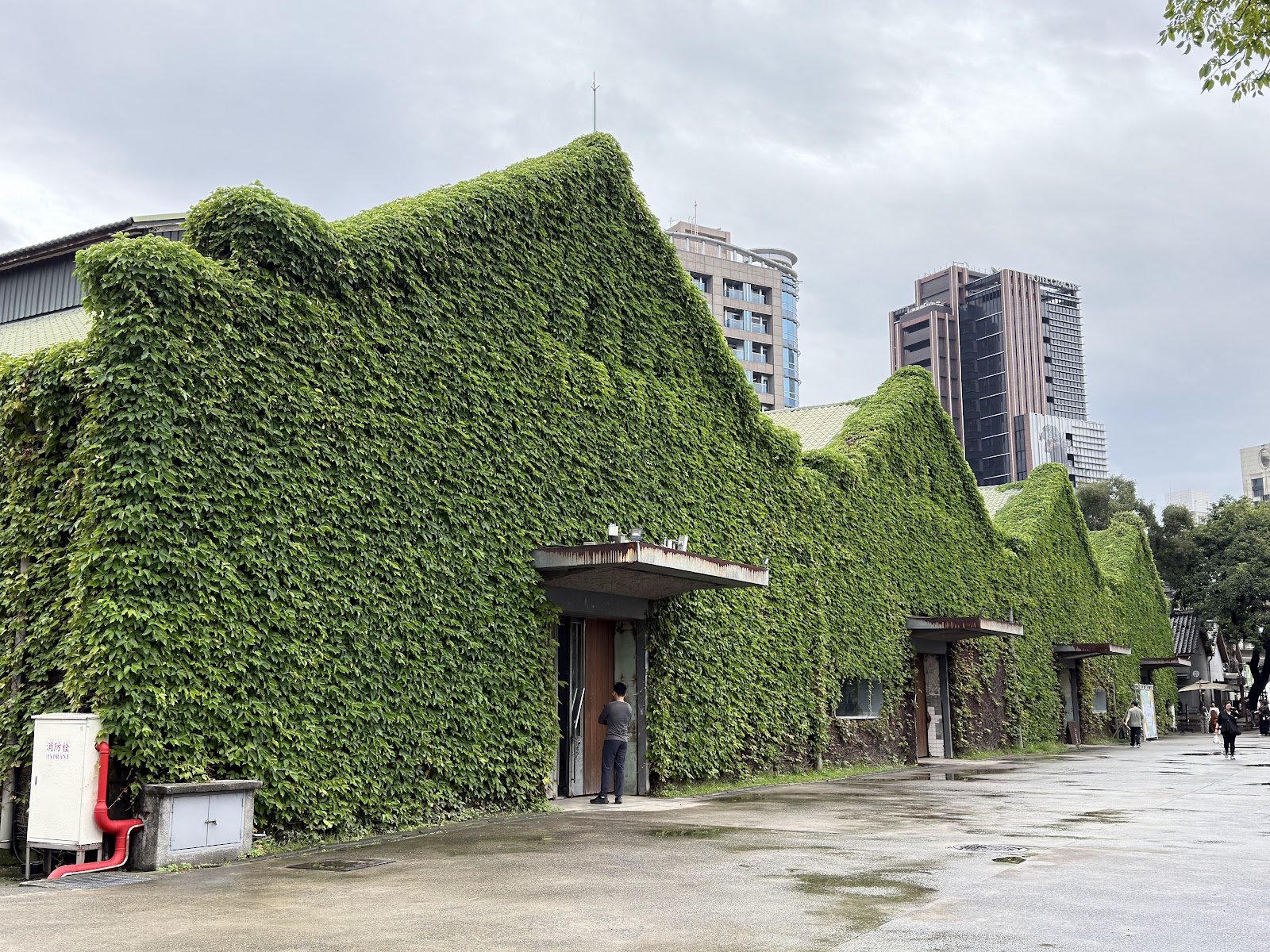
13. Huashan 1914 Creative Park
The Huashan 1914 Creative Park complex was created in a former rice wine (sake) factory, also from the Japanese colonial period, and carries the year 1914 right in its name. Today you’ll find design shops, cafes, exhibitions, and concerts here.
Entry to the complex is free, only exhibitions tend to be paid. It’s open daily from 11:00 to 21:00. The whole place is especially good for a rainy day when you don’t feel like climbing hills or visiting temples, but don’t want to stay stuck in your hotel either.
After morning temples and monuments, it’s a pleasant change, because here instead of history you’ll see what’s happening in Taipei’s design and art scene today.
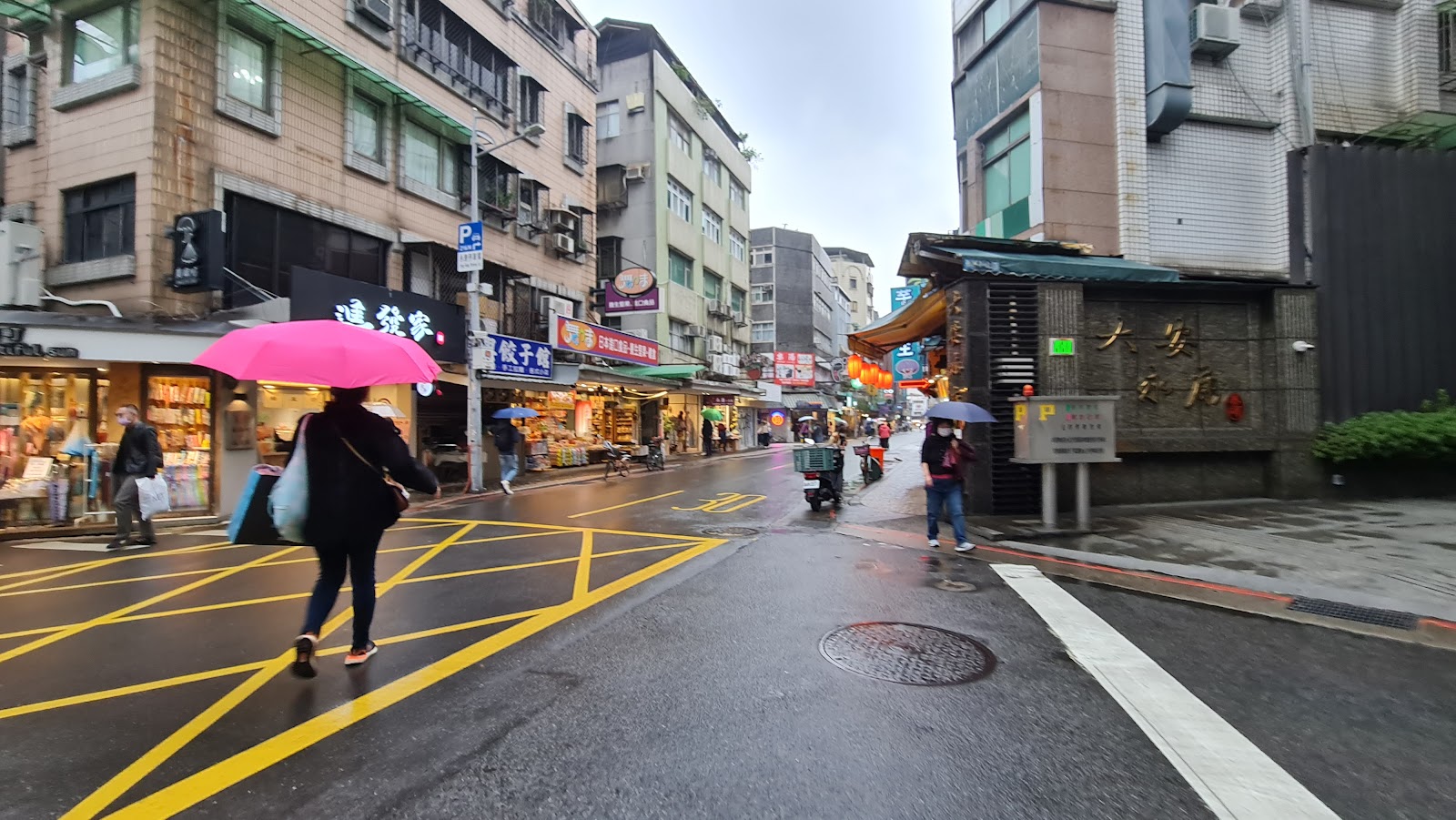
14. Yongkang Street and Vegetarian Da’an
Yongkang Street in the Da’an district is a street full of restaurants, cafes, and desserts, and apparently the original Din Tai Fung started here, now a large chain. Its most famous specialty is xiaolongbao dumplings filled with pork. Vegetarians should find dumplings with vegetables or mushrooms on the menu, but it’s better to ask when ordering.
The whole Da’an area is also a little paradise for vegetarians and vegans. The vegan restaurant Plants on Fuxing South Road serves bowls and raw desserts (open 11:30 to 21:30, closed Mondays). At the vegan VEGE CREEK on Yanji Street you choose your own vegetables for your bowl. The vegan chain Loving Hut has a branch on Heping East Road.
If you want to explore how Taiwan eats, Da’an is a great neighborhood for a slow walk with several stops. Vegetarian restaurants here often open at 11:30 and have a break between lunch and dinner, roughly from two or three until half past five. So head out for lunch before two.
💡 Tip: Learn the phrase “Wǒ chī sù” (pronounced roughly “wo chh su”), meaning “I eat vegetarian.” It comes in handy in every restaurant.
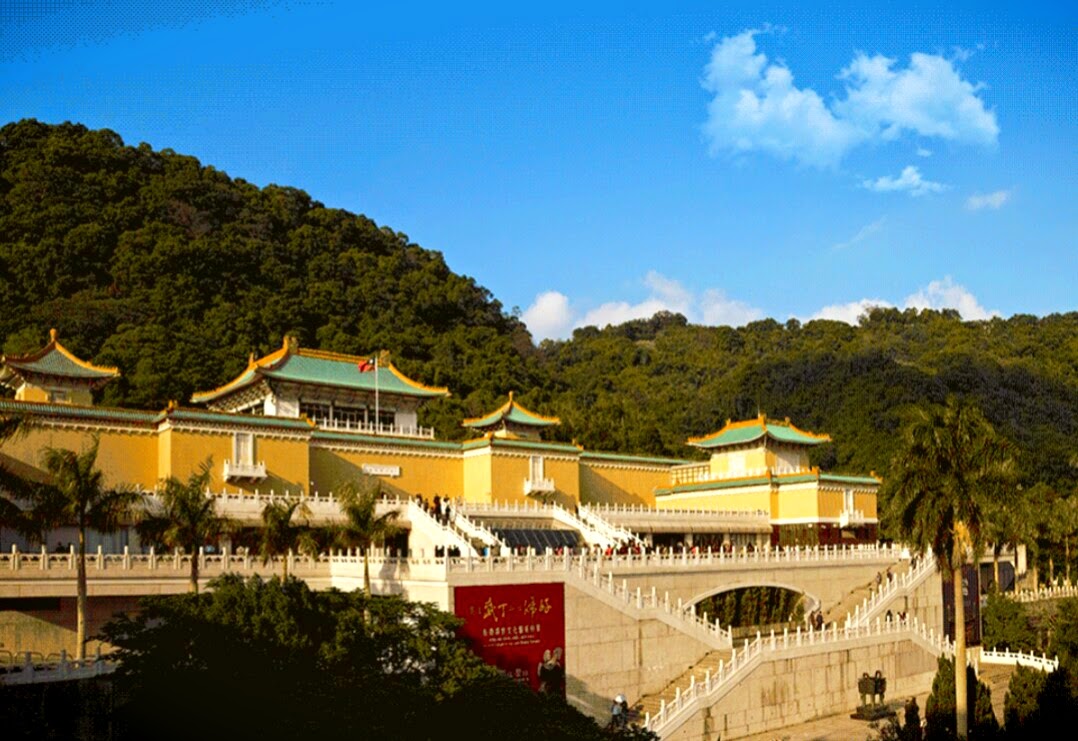
15. National Palace Museum
The National Palace Museum in the northern Shilin district houses one of the world’s largest collections of Chinese art and is probably the most important stop in Taipei for history lovers. It is open Tuesday to Sunday from 9:00 to 17:00. Admission for foreigners costs NT$350 (€9.50), visitors under 17 enter for free, and the ticket includes access to the Zhishan Garden.
The most famous exhibit is the Jadeite Cabbage, a small sculpture carved from jadeite. It is on display in Hall N302 only until 29 November 2026. After that, it will be replaced by another exhibit, and from 8 December 2026 to 7 March 2027, the cabbage will be displayed at the museum’s Southern Branch in Chiayi. If you’re visiting between December 2026 and early March 2027, you won’t see it in Taipei. Whether it returns afterwards, check the museum’s website. The second famous piece, the Meat-shaped Stone, remains in Hall N302.
You can reach the museum by taking the metro to Shilin station (Jiantan station is closer to Shilin Night Market) and then bus R30, or alternatively lines 255, 304 or 815. Opposite the museum is the Shung Ye Museum of Formosan Aborigines, a museum dedicated to Taiwan’s indigenous peoples, open Tuesday to Sunday from 9:00 to 17:00. With the Taipei Fun Pass package for both museums, you’ll pay NT$400 (€11).
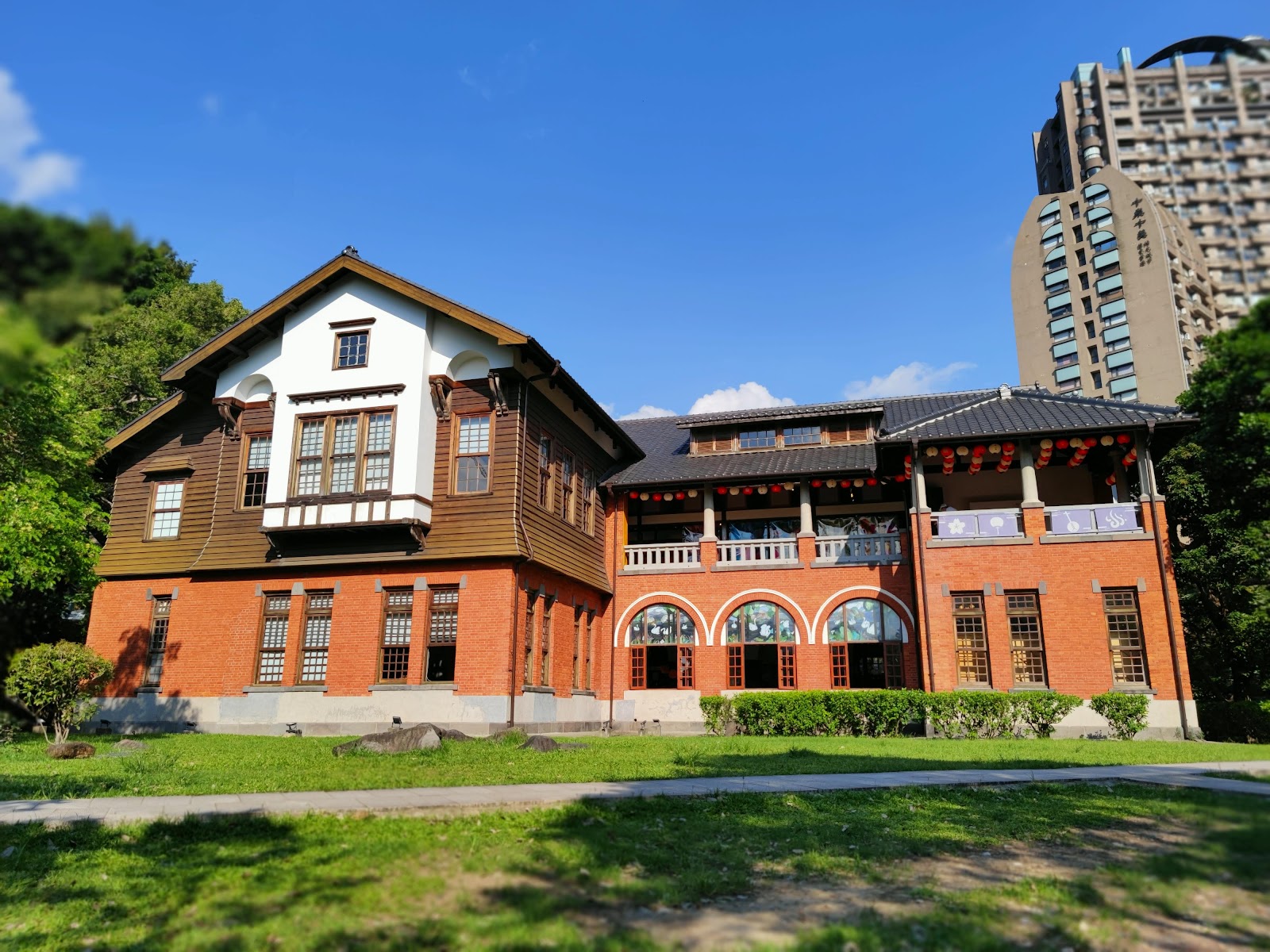
16. Beitou: Hot Springs
The northern district of Beitou is Taipei’s spa town, accessible via a branch of the red metro line to Xinbeitou station. The most famous spot is Thermal Valley (also known as Hell Valley), a greenish sulphuric lake with rising steam. The water is very hot and acidic, so bathing is prohibited. The valley is accessible Tuesday to Sunday from 9:00 to 17:00 and according to guidebooks, free of charge.
On your way, stop at the Beitou Hot Spring Museum, a former bathhouse from the Japanese colonial period that resembles a Tudor house. It is usually open Tuesday to Sunday from 10:00 to 18:00 with free admission, but check before your visit to make sure it’s not closed. Nearby stands the Beitou Branch of the City Library, a wooden building often cited as an example of ecological architecture.
Now the important part. The public outdoor Millennium Hot Spring baths have been closed since 24 January 2025 for reconstruction. According to the city council, this should be completed by 31 October 2026, but the city will only announce the opening date on its website. If they’ve already reopened after reconstruction, you’re in luck. Otherwise, warm up at the paid hotel baths that offer day passes to pools as well as private spa rooms by the hour (price lists available on hotel websites). For free, you can at least soak your feet in the paddling pools at Fuxing and Quanyuan parks.
💡 Tip: When the public baths reopen, you bathe in them wearing swimsuits. In Japanese-style hotel baths (onsen), you often go without them, and tattoos may be a problem, so ask ahead.
17. Yangmingshan National Park
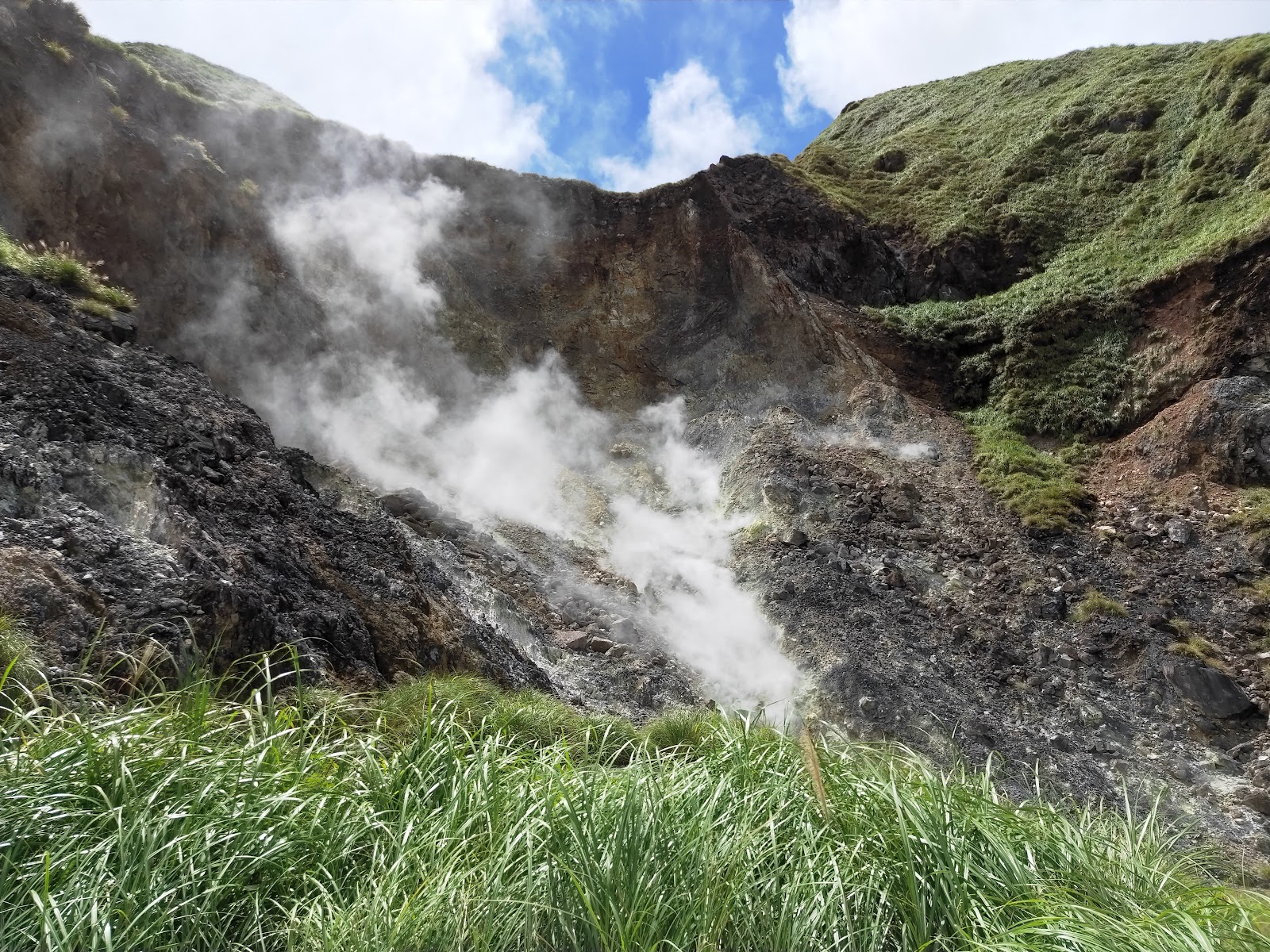
Above Beitou rise the volcanic hills of Yangmingshan National Park, where Taipei suddenly becomes green and wild. The highest peak, Qixing Shan (Seven Star Mountain), measures around 1,120 metres and is the highest point in Taipei.
At Xiaoyoukeng, sulphuric fumaroles hiss from the ground—spots where volcanic gas escapes—and trails lead into the hills from here. The visitor centre is open from 9:00 to 16:30. On the grassy plateau of Qingtiangang, water buffaloes graze freely. They look peaceful, but don’t approach them. Each season brings something special. In February and March, azaleas bloom, and in autumn, especially in October and November, the hills shimmer with flowering miscanthus, known as silver grass.
Circular bus 108 runs through the park from Yangmingshan Bus Terminal. From the metro, you can reach the park by buses 260 or R5. Check current timetables for exact routes and frequency. In winter, expect fog and wind, so bring a jacket even if it’s pleasant in the city.
💡 Tip: Yangmingshan and Beitou can be combined into one day: hills and fumaroles in the morning, hot springs in the afternoon.
18. National Revolutionary Martyrs’ Shrine
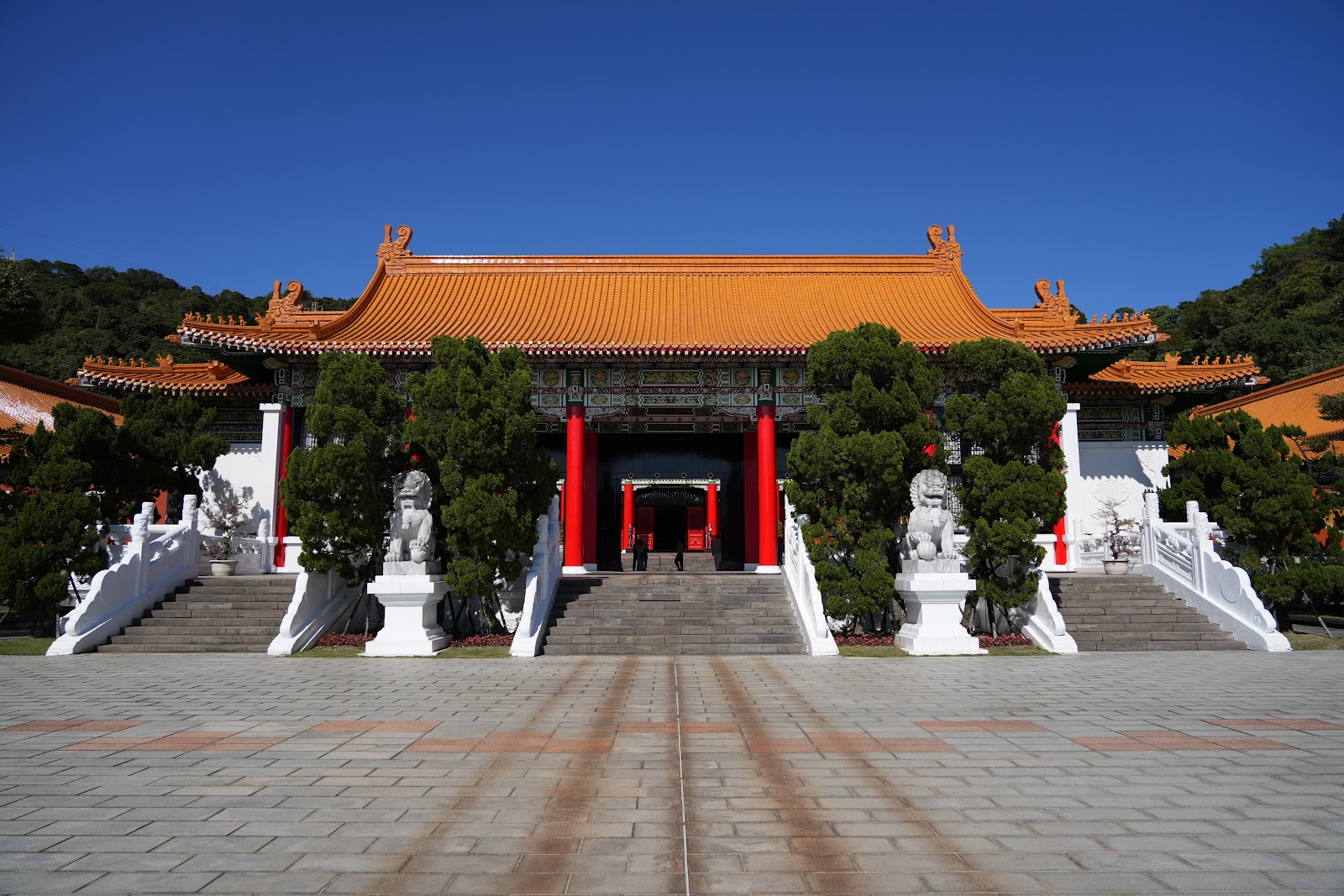
If you want to see the traditional changing of the guard, you now need to go to the National Revolutionary Martyrs’ Shrine on Beian Road in Zhongshan district. It is open daily from 9:00 to 17:00 and according to guidebooks, admission is free.
According to travel websites, the guards change approximately every hour on the hour during opening hours, so plan your visit to arrive a few minutes before the hour. Since the guard ceremony moved out of the Chiang Kai-shek Memorial (tip 4), this is where you’ll see it in its traditional form.
The shrine is located further from the metro and you reach it by bus from Dazhi or Jiantan stations, so look up the connection in advance.
19. Maokong Gondola and Tea Houses
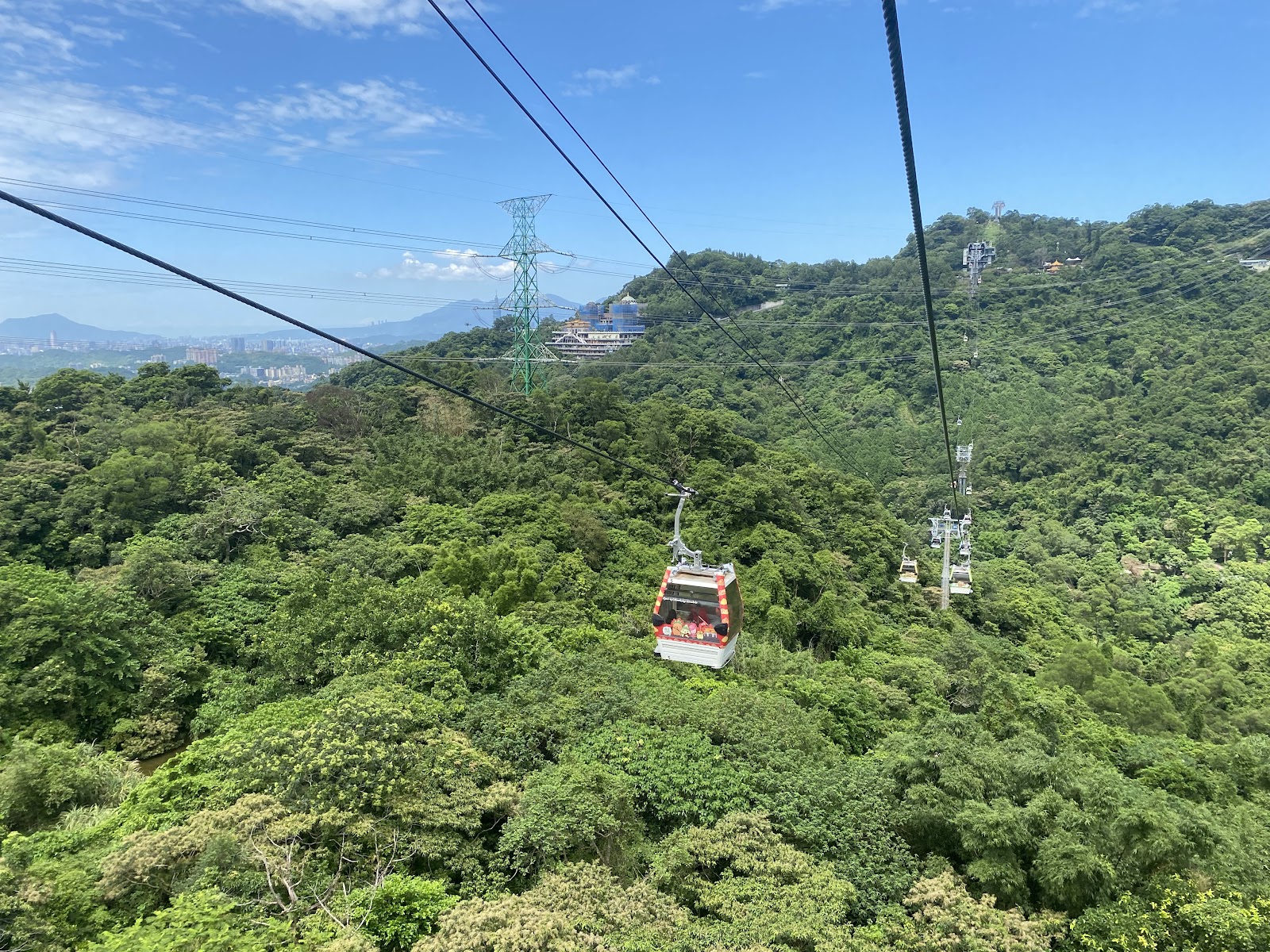
The Maokong Gondola takes you from the city bustle to green hills where tea is grown. Take the brown metro line to the terminus at Taipei Zoo. From there, the gondola departs and climbs through stops at Zoo South and Zhinan Temple up to Maokong station. A single ride costs NT$180 (€5) and an all-day pass NT$300 (€8). A cabin with a glass floor (Crystal Cabin) costs an extra NT$50 (€1.50) per person per ride.
The gondola operates Tuesday to Thursday from 9:00 to 21:00, with longer hours on Fridays, Saturdays and before holidays. It is closed on Mondays, except on public holidays and the first Monday of the month. During thunderstorms and strong winds, the gondola stops. Each year it also closes for maintenance for several days to weeks (in 2026 this was from 20 to 24 April and from 8 to 28 June), so check the date on the operator’s website.
At Maokong, you mainly drink local tea, with the famous varieties being Tieguanyin and Baozhong. Yao Yue Teahouse offers tea with a view and according to Google Maps is open 24/7. However, verify current hours on their website. Down by the gondola is Taipei Zoo, open from 9:00 to 17:00 with admission of only NT$100 (€3). It can be combined with an afternoon up in the hills.
💡 Tip: The Taipei Fun Pass “Maokong Easy Trip” package for NT$480 (€13) includes all-day gondola access plus one experience. Compared to the all-day pass alone at NT$300, you’re paying an extra NT$180 (€5). Check the Taipei Fun Pass website for what’s included in the offer.
20. Jiufen and Jinguashi
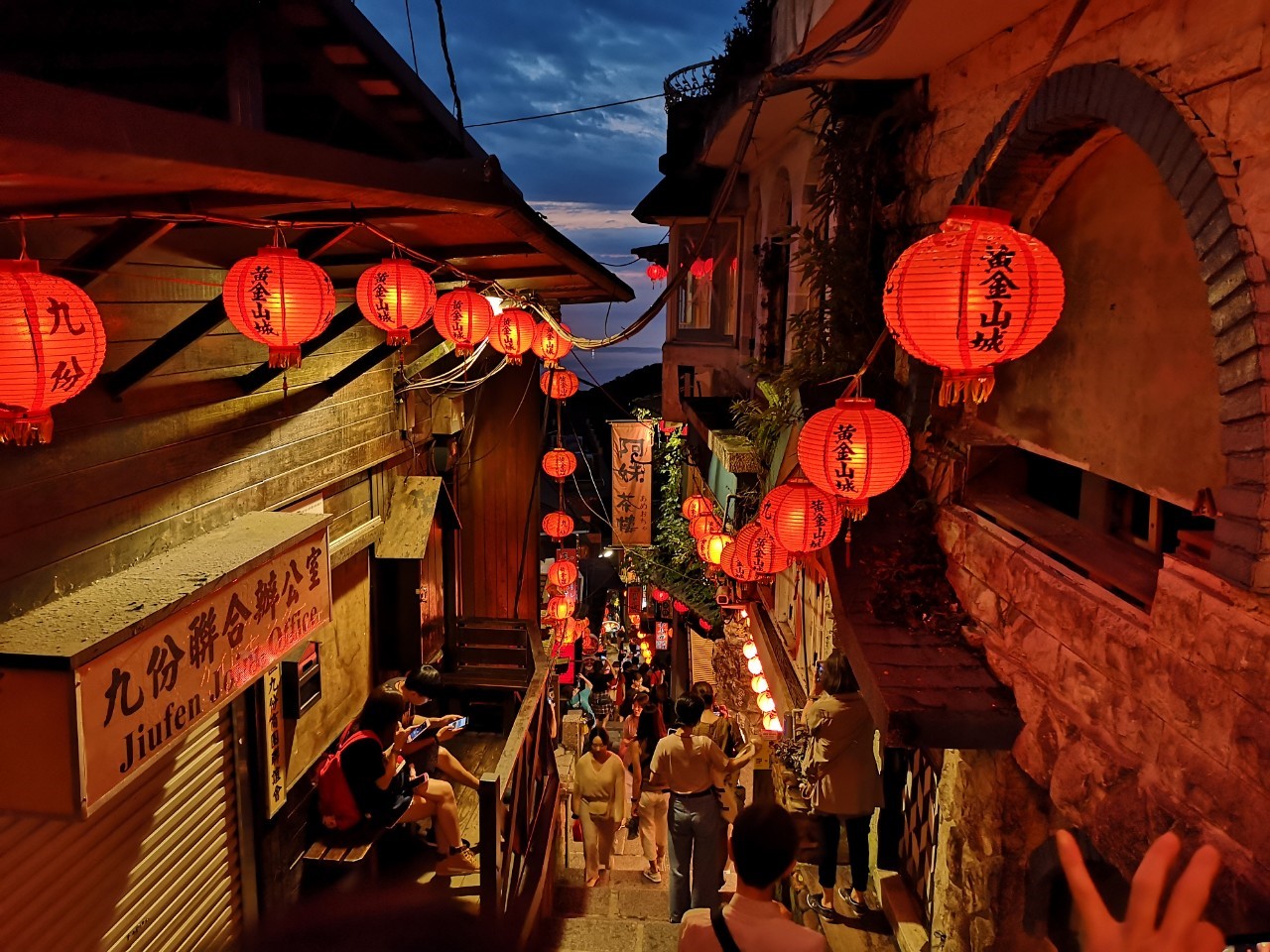
The town of Jiufen used to be a gold-mining settlement and is now one of the most popular day trips from Taipei. Jiufen Old Street is full of little shops open roughly from 10:00 to 20:00, and there’s also the A-Mei Teahouse hung with lanterns (open from 9:00 to 21:30). It’s often said that the A-Mei Teahouse was the model for the anime Spirited Away. However, Studio Ghibli denied this, so the truth is more that it simply resembles it.
Jiufen has a reputation as a magical place, but it can also get seriously crowded. One traveller on Reddit advises going in the rain, or booking a hotel and staying overnight. If you’re just making a day trip, ideally come on a weekday before ten in the morning or after half past seven in the evening. Try the vegetarian taro balls, and fish balls are a local speciality too.
Nearby is Jinguashi with the Gold Museum, a gold-mining museum where you’ll also find a cottage built for Japanese Crown Prince Hirohito. The museum is open weekdays from 9:30 to 17:00 and weekends until 18:00. Bus 1062 runs to Jiufen from Zhongxiao Fuxing metro station, or bus 965. The journey takes about an hour to an hour and a half and the fare is approximately NT$90 to 100 (€2.50 to €3). Another option is a TRA train to Ruifang and from there a bus or taxi.
💡 Tip: If you only have one day for excursions, choose either Jiufen or the Pingxi railway line, so you can enjoy the place without rushing between trains and buses.
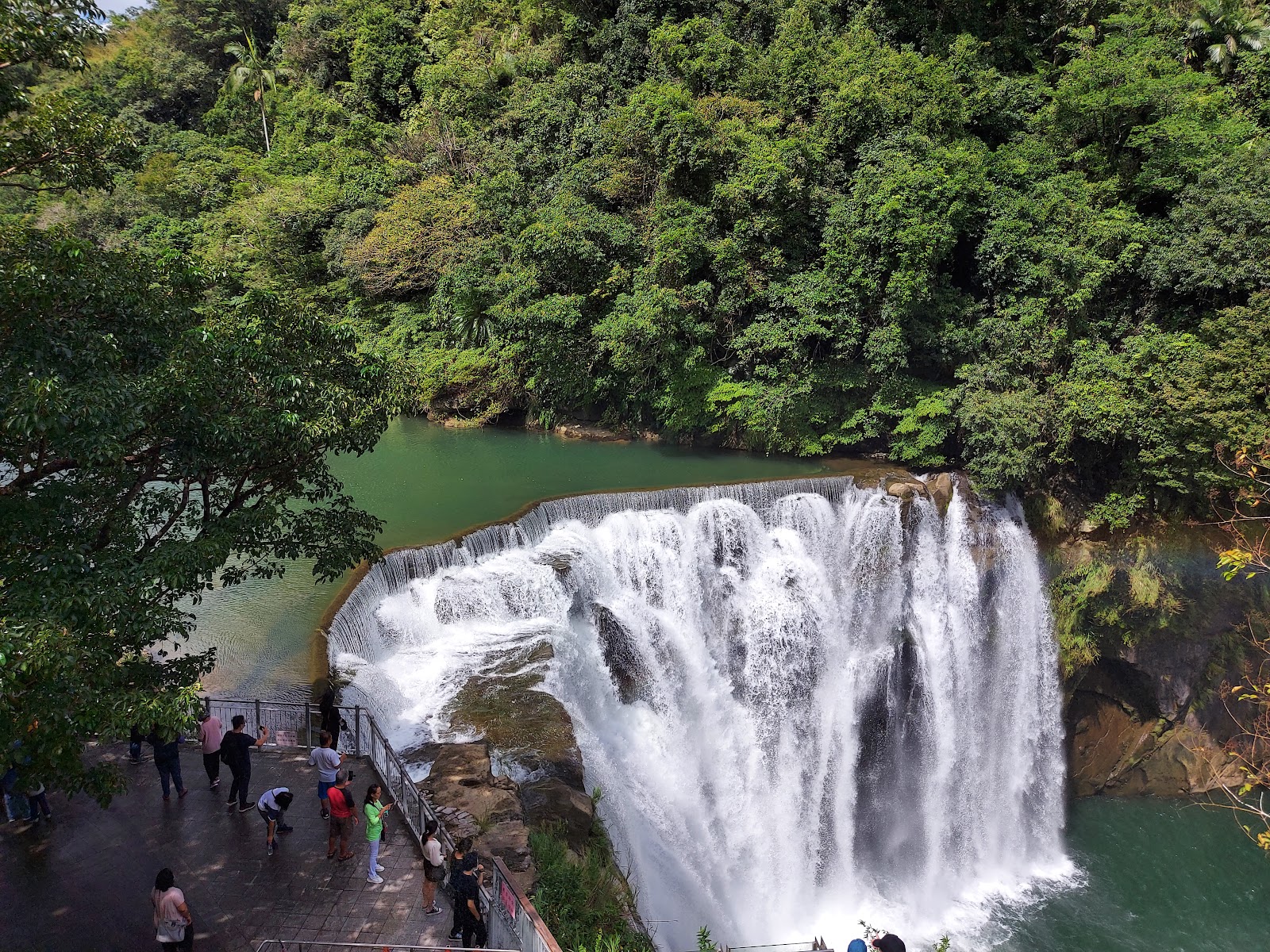
21. Pingxi Line: Shifen, Lanterns and Waterfall
The most famous stop on the small Pingxi Line railway is Shifen. The tracks run right through the middle of the old Shifen Old Street and people release paper lanterns into the sky from them. It’s one of the images that draws people here. You can launch a lantern yourself or just watch.
A lantern costs approximately NT$200 (€5) for a single-color one, NT$250 (€7) for a four-color one, and NT$350 (€10) for an eight-color one. There’s no official price list and individual shops sell them. Just bear in mind that the remains of lanterns with wires end up in the forests and in the river, something environmentalists point out. Near Shifen there’s also Shifen Waterfall, which is described as around 40 meters wide. It’s accessible from 9:00 to 16:30.
You can reach the Pingxi Line by TRA train from Taipei Main Station to Ruifang, where you transfer. An all-day pass for the line costs approximately NT$80 (€3). However, trains run about once an hour, so plan your trip accordingly. Quieter than Shifen are Pingxi and Jingtong stations. Along the way you can also stop at Houtong Cat Village, a former mining village where there are reportedly more cats than people. A major lantern festival is held here around the Lantern Festival (find the date in the Holidays and Events section).
💡 Tip: If you have an EasyCard, you can pay for individual sections of the line. The all-day pass is worth it if you stop at multiple stations.
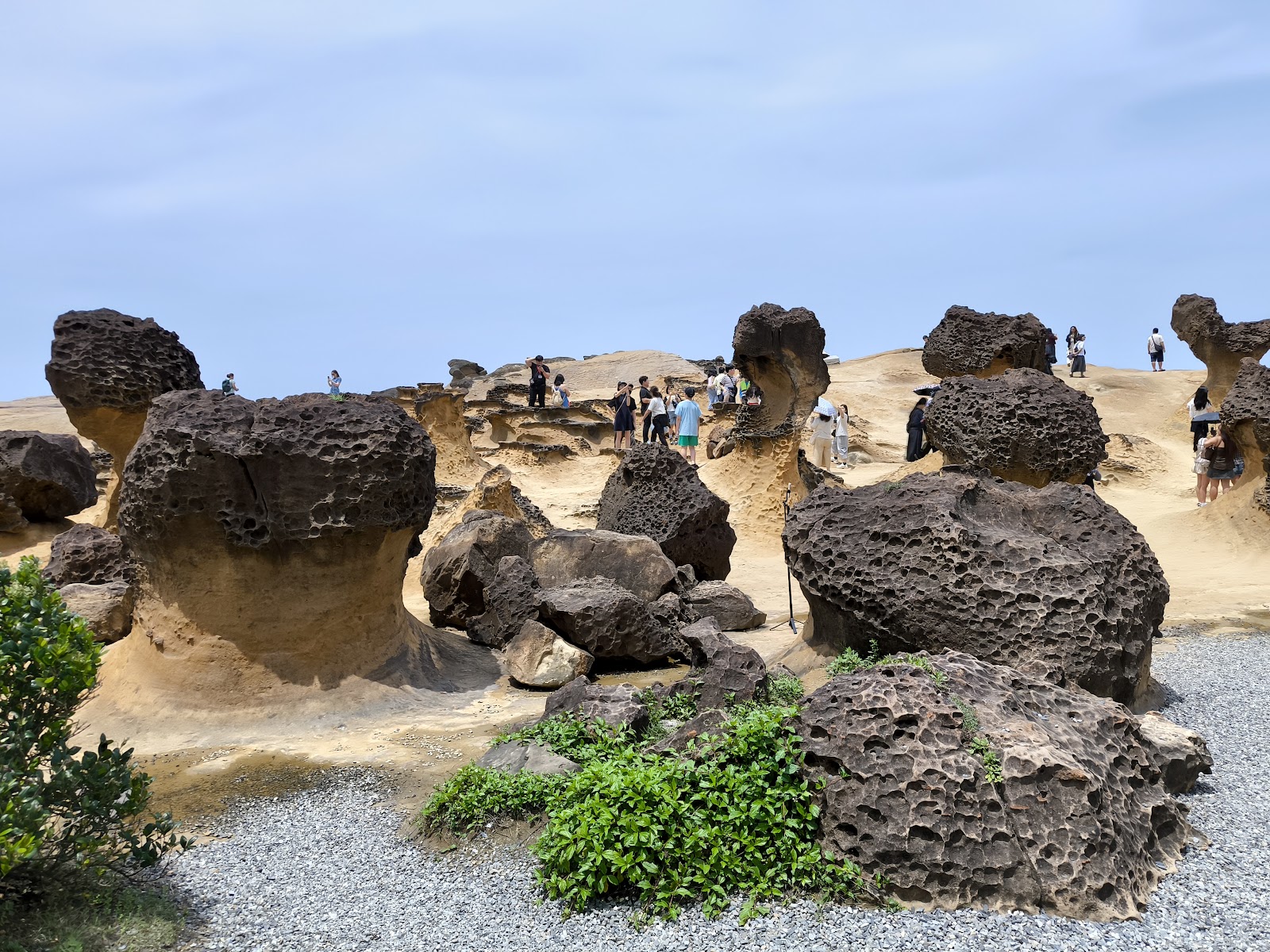
22. Yehliu Geopark
On the coast north of Taipei, sea erosion has gone wild creating a whole gallery of bizarre rock formations. Yehliu Geopark in Wanli is open from 8:00 to 17:00 and adult admission costs NT$120 (€3).
The most famous formation is the Queen’s Head, a rock whose shape resembles a queen’s head. However, the sea is slowly eroding it and its neck is thinning, so anyone who wants to see it in its full glory shouldn’t delay their visit.
On the park’s website you’ll find a live indicator showing how many people are currently inside, as well as notices if the park is closed due to weather. So check there in the morning before your trip to avoid traveling to a closed gate. Agencies often offer a tour that combines Yehliu with Jiufen and Shifen in one day. However, it’s very packed and you’ll only spend a moment at each place. Better to choose at most two places and enjoy them at your leisure.
Where to Go Next from Taipei
If you have half a day to spare, take the red metro line all the way to the terminus at Tamsui. Walk along Tamsui Old Street and visit Fort San Domingo (open from 9:30 to 17:00, on weekends until 18:00), which was reportedly built by the Spanish in 1629. For sunset, people head to the fishing port Fisherman’s Wharf with its Lovers’ Bridge.
From Taipei, Japan is just a short hop away and Tokyo presents itself as a natural continuation of your journey. Taipei 101 even has a combined ticket with Tokyo Skytree for NT$2,200 (€60). You’ll find inspiration in the articles Tokyo and Japan Practical Guide. If another Asian metropolis appeals to you, check out what to see in Hong Kong or what to see in Seoul. For accommodation in Taipei itself, see the guide Where to Stay in Taipei.
Frequently Asked Questions
Do I need a visa for Taiwan?
No. Visitors from most countries can enter Taiwan visa-free for up to 90 days. Your passport must be valid for at least 6 months and you’ll need a return ticket at the border. Fill in the TWAC arrival card for free online before your flight on the official website twac.immigration.gov.tw. Extending your visa-free stay is not possible.
Are there direct flights to Taipei from Europe?
Yes. China Airlines has been flying direct from major European hubs since 2023, according to Taipei Times three times a week, and Starlux joined in August 2026 (four times a week from October). The flight takes roughly 12.5 to 13 hours. Departures are typically in the morning and you arrive in Taipei early in the morning.
How many days is enough for Taipei?
For a first visit, plan for 4 to 5 days. Two days will cover the city (Taipei 101, temples, Dadaocheng and night markets) and another day for the National Palace Museum and hot springs in Beitou. Then leave one to two days for full-day excursions to Jiufen or the Pingxi lantern line.
How much does the Taipei 101 observation deck cost?
A basic ticket to the 88th and 89th floors costs NT$600 (€15). Access to the 101st floor costs an additional NT$380 (€10). The outdoor Skyline460 walk on the 101st floor with safety harness costs NT$3,000 (€75) and must be reserved. From July 2026, the entrance is temporarily on the 1st floor of the office tower.
How do I get from the airport to central Taipei?
Fastest is the purple Airport MRT line. The express runs from Terminal 1 to Taipei Main Station in 35 minutes and costs NT$160 (€4). You can pay with a token from a vending machine, an EasyCard, and according to travel websites also with a contactless bank card. First trains run around six in the morning.
When is the best time to visit Taipei?
The most pleasant times are October and November and March and April. Summer is hot (highs around 34 °C) and humid, and typhoons are a risk from May to November. Winter is mild but gray and rainy.
Can you eat vegetarian in Taipei?
Absolutely. Thanks to Buddhist tradition, Taiwan has many vegetarians, estimated at around 10% of the population or more. On signs, look for the character su, which means vegetarian food. The label 全素 (quán sù) means vegan food without eggs and dairy, but also without garlic and onions. You’ll find vegetarian restaurants throughout the city, and at night markets you can try sweet potato balls, peanut ice cream pancakes, or stinky tofu—though ask about the sauce for that one.
Tips and Tricks for Your Vacation
Don’t Overpay for Flights
Search for flights on Kayak. It’s our favorite search engine because it scans the websites of all airlines and always finds the cheapest connection.
Book Your Accommodation Smartly
The best experiences we’ve had when looking for accommodation (from Alaska to Morocco) are with Booking.com, where hotels, apartments, and entire houses are usually the cheapest and most widely available.
Don’t Forget Travel Insurance
Good travel insurance will protect you against illness, accidents, theft, or flight cancellations. We’ve had a few hospital visits abroad, so we know how important it is to have proper insurance arranged.
Where we insure ourselves: SafetyWing (simple monthly subscription) and TrueTraveller (for extra-long trips).
Find the Best Experiences
Get Your Guide is a huge online marketplace where you can book guided walks, trips, skip-the-line tickets, tours, and much more. We always find some extra fun there!