TL;DRIt was only in Alba Iulia, and specifically its citadel with the Catholic cathedral and the bishop’s and royal palaces, that the authors finally found a clean, distinctly European atmosphere. Modern food stalls filled the courtyard there — one even had a sign reading “Praha Smíchov”. Getting there meant rougher stops along the way: Oravița, Corvin Castle in Hunedoara (Romania’s largest Gothic building), the Roma “pagodas” nearby, and the storm-battered fortress at Colț near the Râușor gorge. They also came across the Roman amphitheatre ruins at Sarmizegetusa, where they ran into tourists for the first time on the whole trip. Food-wise, they mostly survived on Caesar salad and pizza, since the local cuisine never quite clicked with them — the one exception being Bistro Art Grill in Hațeg. Their verdict on Alba Iulia is clear: this was the first place where, thanks to EU funding, they finally recognised the kind of civilisation they know from home.
Hotel Condor seemed to be the only oasis of civilisation for miles around on our Romania road trip. Oravita turned out to be a town where nothing exists. (Lesson learned: pointing at a map and saying “we can sleep here because it’s halfway to point Y” is not an ideal way to plan a trip.)
This is pretty much how I’d imagined wartime. The images in my head were no different from the greyness and dread we drove into that evening after our unplanned adrenaline-fuelled encounter (link) with the local Roma community.
“Phew, they’ve got a restaurant!” The mere thought of leaving the hotel grounds filled me with the feeling that I’d rather starve than venture 10 metres from the building.
This seems like a good time for a note about eating in Romania. That evening we had a Caesar salad. The fact that we ordered a Caesar might seem like a trivial detail, but for our entire stay in Romania we practically lived on Caesars and pizzas. First, you can recognise those on the menu even in Romanian. Second, the local oily dishes were a guaranteed one-way ticket to a hospital bed for both my stomach and Lukáš’s. And third: it seemed like these were the only international dishes they knew. Sure, you’re right — we were travelling through villages and small towns, the kind of places tourists only visit for slightly mad reasons.
…
“Back to civilisation!” We got dressed in a hurry that morning and headed for the city of Alba Iulia. We were slowly leaving the Wild West behind and returning to the romantic imagery of 19th-century painters.
…
We weren’t expecting such a powerful encounter with civilisation! In Rau de Mori at Sarmizegetusa, the ruins of a Roman amphitheatre, we spotted tourists for the very first time.
Sarmizegetusa
…
The plot of Jules Verne’s *The Carpathian Castle* probably unfolded right here. As we drove in, the sky darkened and the gloom began threatening us with bolts of lightning.
Cetatea Colti
“Maybe we should turn back.”
“Let’s push on a bit further — we can always head back.” We stared up at the castle. It gazed down at us from the sharp ridges of the tall, forested mountains, and we wondered how to reach it — and how to reach it without running straight into a storm.
In the end, we found ourselves at Cetatea Colți, a fortress built on a cliff at the entrance to the Râușor gorge. Soon the rain filled the air, the wind howled, and we ran for it — there was a real risk we wouldn’t make it out in one piece. You don’t mess with the elements. We drove away, leaving behind the menacing vampiric visions that lurk in these parts.
Cetatea Colti
…
By midday, the bad weather was a distant memory. Our immediate concern was food. Several days of Caesar salads and pizza meant that any culinary miracle left us overwhelmed with joy and gratitude. It’s the little things, isn’t it? So if you ever find yourself in these parts, make a detour to Hațeg and visit Bistro Art Grill (vegetarians, you may want to sit this one out — in fact, Romania in general might test your patience). You’ll be greeted by a pleasant American-style restaurant with even more pleasant prices.
…
Corvin Castle
Corvin Castle. If Hogwarts existed anywhere in Romania, it would be here. We could see it from a distance — it’s the largest Gothic structure in Romania, built by the father of Matthias Corvinus. It sits in the city of Hunedoara. The guidebook warned us about a sprawl of steel constructions and Soviet-style apartment blocks, but instead, the road began revealing over-the-top buildings that looked like they were made from fake sugar and gold.
“What on earth is that?”
“Pagodas. Roma pagodas.” Everything on them was twisted and curled — multiple storeys, many of them unfinished. Yellow, green, and red houses with ornate, spiralling decorations. Pillars everywhere, concrete walls, and enormous ostentatious gates. And those roofs — something about them reminded me of Chinese architecture. I’d never seen anything like it in my life. I couldn’t compare these structures to anything I knew.
Roma pagodas and a boy playing with stones…
“Stop, I need to photograph this.” I stood there gaping and snapping pictures of the street when a child started approaching us.
“Hey, someone’s running over there shouting something.” The little Roma boy really didn’t look thrilled to see us.
“He’s probably not happy about it. Well, he hasn’t got a gun, so we’re fine.” I repeated the joke that hadn’t been funny the day before either, and kept on photographing.
“No gun, but he’s throwing stones at us!!!”
Stark contrasts. That’s what Romania is all about. Corvin Castle, just metres from the pagodas, stood there as if none of them existed.
…
Pension Select demonstrated the true power of a wide-angle lens. While the photos made it look like a large modern hotel in Alba Iulia, reality told a very different story. A half-empty guesthouse with a single employee who didn’t even speak English quickly sent us out into the city centre.
…
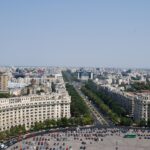
We set off for our regular dilemma between pizza and Caesar, and in the flood of the setting sun we explored the city of Alba Iulia. “Alba” means white, and the name dates back to when this settlement was known as Bălgrad — the White City. Our first impression was rather grey — full of tower blocks, grime, and battered cars from Romanian roads. Terrifying black clouds of birds, occupying equally dark Hitchcockesque buildings, circled above our heads.
…
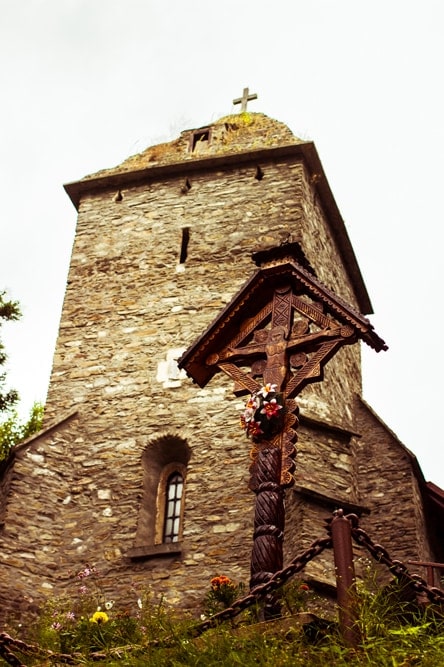
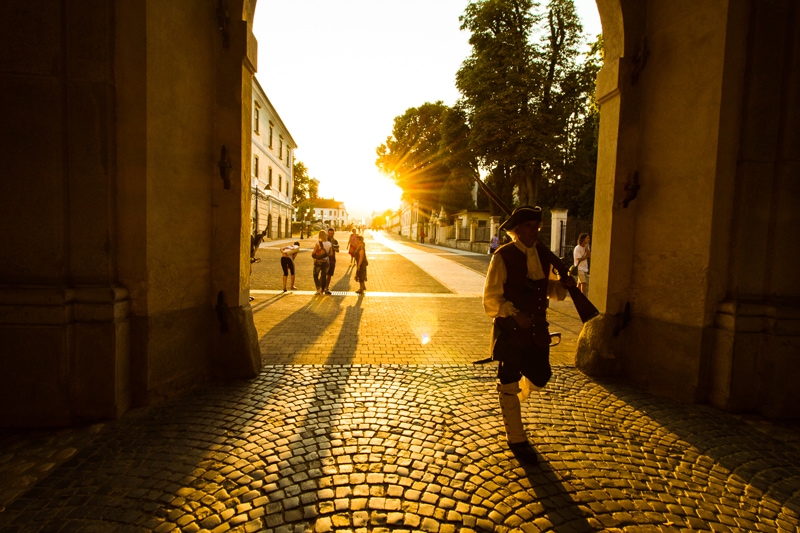
The birds vanished. The sun turned golden, warming its amber tones against the green expanses surrounding the citadel’s fortifications. We entered through a tunnel, passed through imposing gates, and suddenly found ourselves at the doorstep of Europe. For the first time on our entire trip, we were in Europe as we know it.
Citadel, Alba Iulia
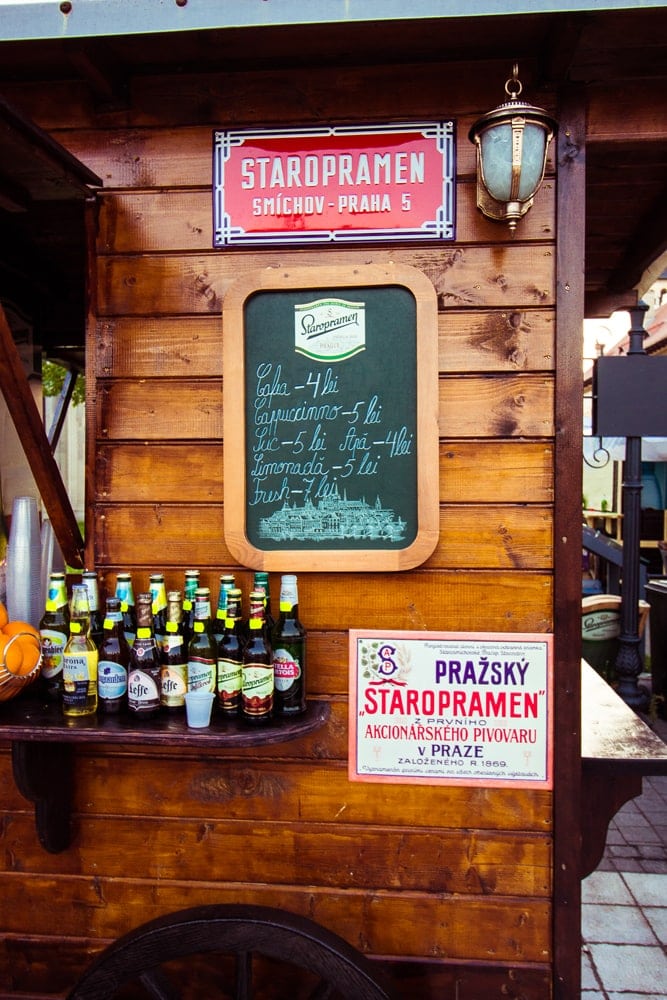
The Catholic cathedral, the bishop’s and royal palaces. A courtyard full of cheerful young people darting between modern refreshment stalls. They were selling fresh juices, trinkets, and even Staropramen — a Czech beer. That stall even had a sign reading “Praha Smíchov.”
We felt a tiny pang of homesickness — a longing for home and the scent of hops that mixes with the smell of the Vltava river almost every day back in Prague.
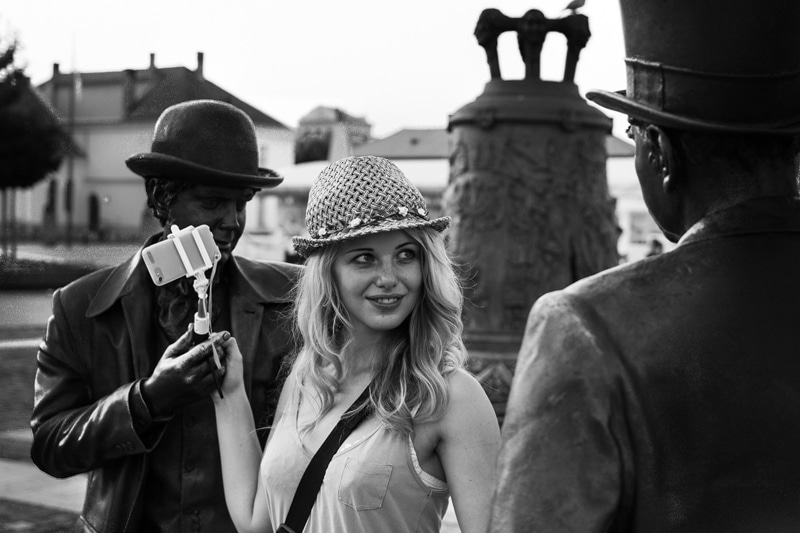
The statues were our favourite part
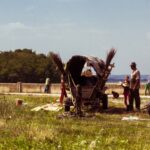
In one of the squares, there was a children’s show. We sat down on the grass and watched for a while as men dressed in medieval knight’s armour played at war, with the children absolutely captivated by it.
I wondered whether the citadel gate was actually a time machine. I wondered whether someone had scattered time machines all across Romania. Except they don’t call them time machines — they call them money.
Children’s show
“The EU money here really does make a difference.”
“Yeah, they just need a lot more of it. A whole lot more.”
✅ By the team behind the Loudavým krokem travel blog · Our own project — lk-sim.com
Tips and Tricks for Your Vacation
Don’t Overpay for Flights
Search for flights on Kayak. It’s our favorite search engine because it scans the websites of all airlines and always finds the cheapest connection.
Book Your Accommodation Smartly
The best experiences we’ve had when looking for accommodation (from Alaska to Morocco) are with Booking.com, where hotels, apartments, and entire houses are usually the cheapest and most widely available.
Search with the DiscoverCars comparison engine — it compares prices from dozens of local and international rental companies, and most bookings come with free cancellation.
✓ DiscoverCars comparison✓ free cancellation on most bookings✓ no hidden fees
Don’t Forget Travel Insurance
Good travel insurance will protect you against illness, accidents, theft, or flight cancellations. We’ve had a few hospital visits abroad, so we know how important it is to have proper insurance arranged.
Where we insure ourselves: SafetyWing (simple monthly subscription) and TrueTraveller (for extra-long trips).
Find the Best Experiences
Get Your Guide is a huge online marketplace where you can book guided walks, trips, skip-the-line tickets, tours, and much more. We always find some extra fun there!
Flying to the land down under has changed dramatically in 2026—discover the best routes, current prices, and essential tips for surviving the long-haul journey.
Nashville, the capital of country music: 22 tips for what to see and do, from honky-tonks on Broadway to museums and the Parthenon, plus vegetarian options.
Discover Coober Pedy, Australia's underground town where people live beneath the earth to escape the desert heat, and find out what you can visit there.






 We felt a tiny pang of homesickness — a longing for home and the scent of hops that mixes with the smell of the Vltava river almost every day back in Prague.


 🚗 Car rental on the roadVerified rental cars in Romania