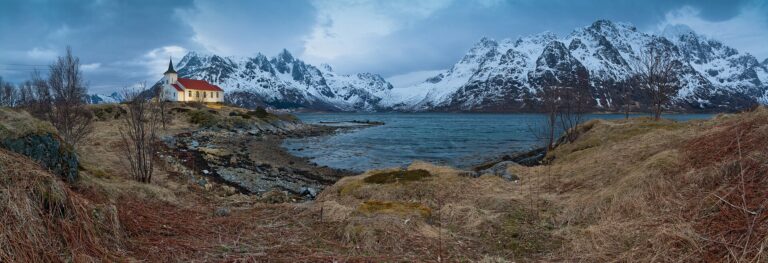
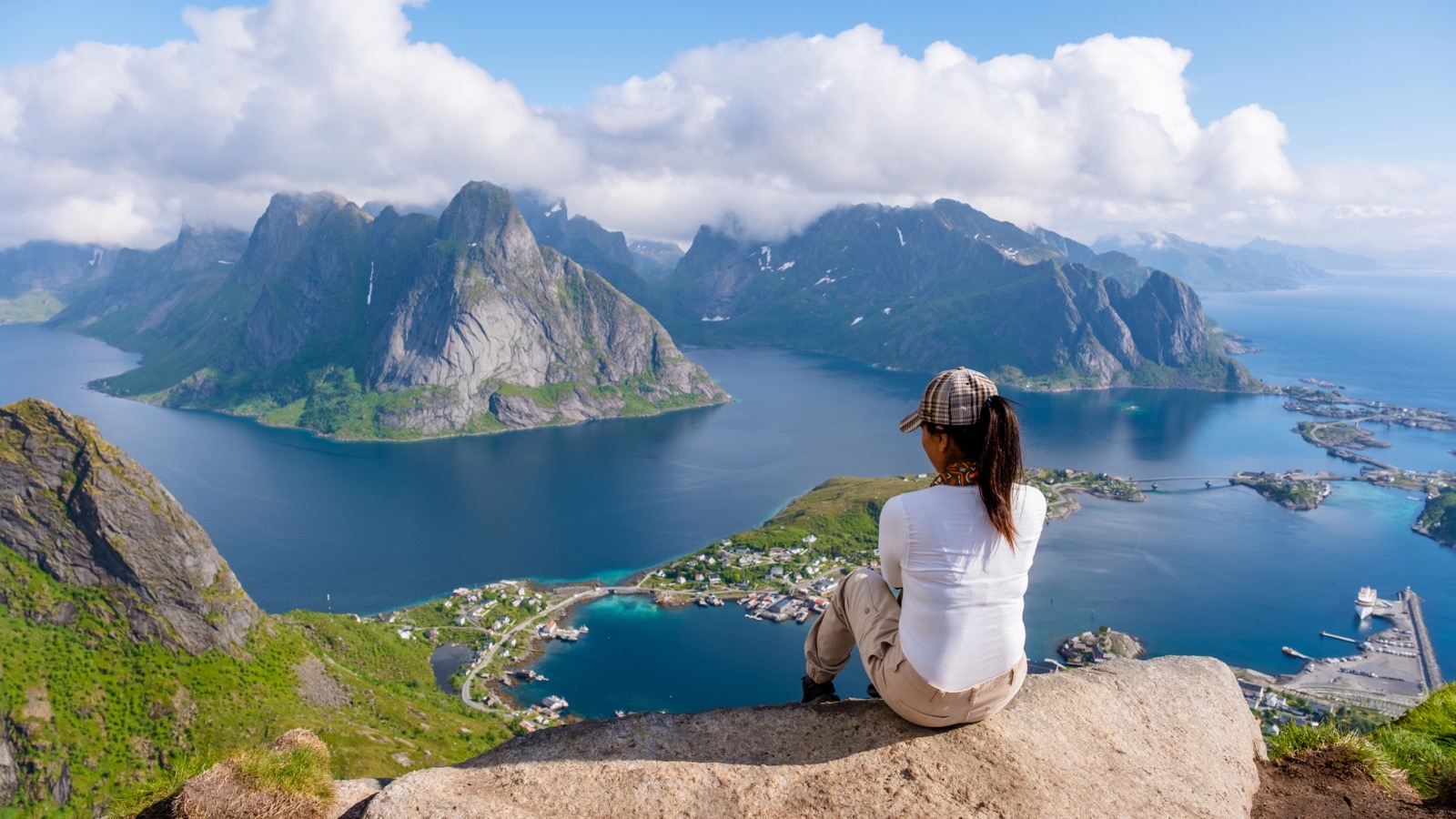
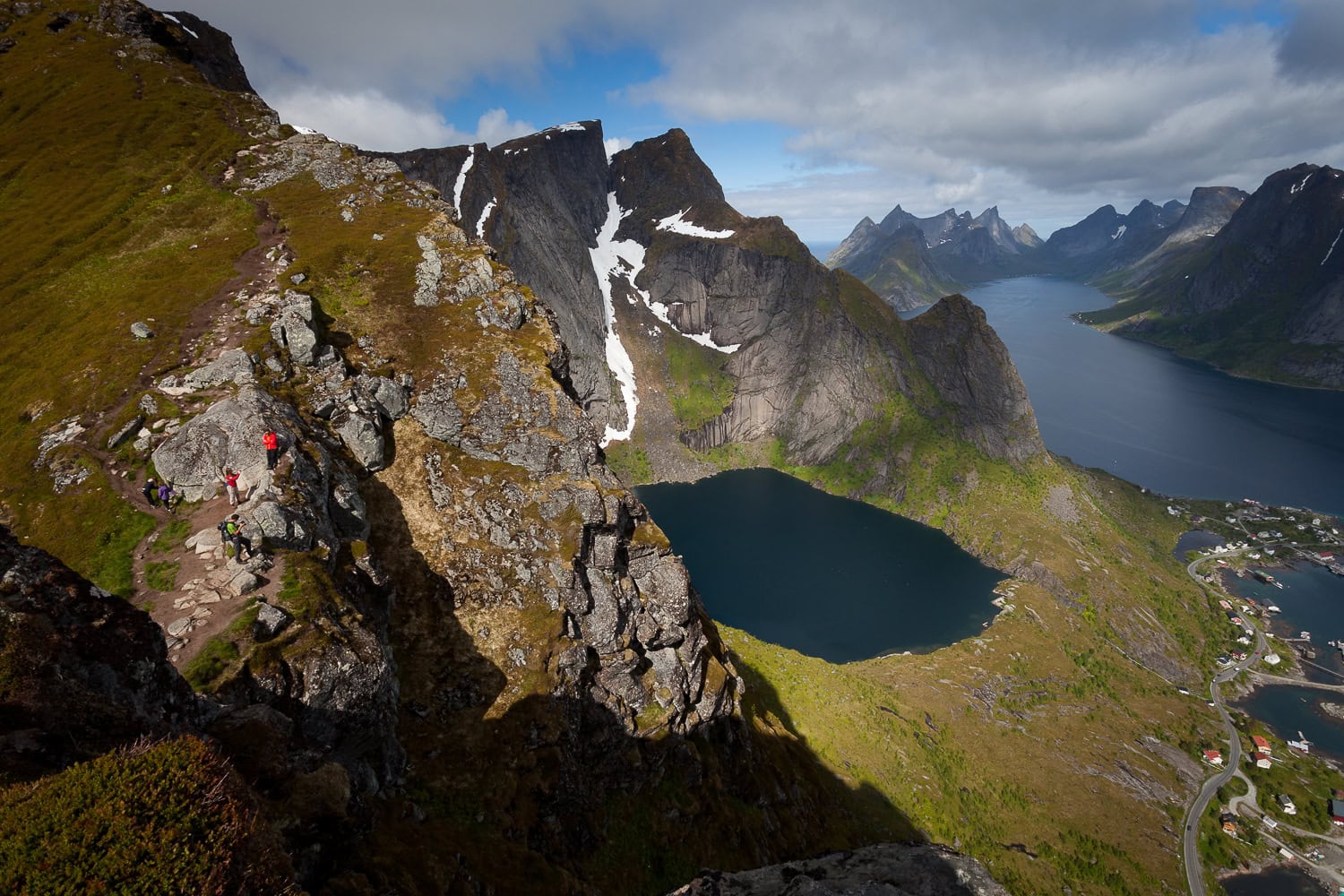
If you’re heading to northern Norway in search of the single most iconic view — the one that graces just about every postcard from the region — your steps will almost certainly lead you here. The Reinebringen hike in Norway takes you up the most popular mountain in the entire Lofoten archipelago, rising directly above the picturesque fishing village of Reine. The view from the summit is absolutely breathtaking, offering a panorama that will stay etched in your memory for life. From up here you’ll gaze out over deep blue fjords, dramatic jagged peaks and tiny red cottages scattered across the little islands below.
At the same time, this is a hike that commands enormous respect and demands careful planning. It’s no easy afternoon stroll, but a very steep and physically exhausting climb. Tens of thousands of hikers make the trip every year, which makes it one of the busiest spots in all of Norway. And it’s exactly this huge influx of visitors, combined with the harsh Nordic conditions, that has taken its toll in recent years in the form of erosion and dangerous landslides.
Before you set off, it’s absolutely crucial to know exactly what you’re getting into and what the current safety measures are. The mountain doesn’t forgive mistakes, and Norwegian weather can turn nasty in a matter of minutes. But if you prepare well, pick the right time and respect nature, you’ll be rewarded with scenery that few places on the planet can match. I’ve put together a complete guide to walk you through everything you need to know before this climb.
TL;DR
- Elevation gain and difficulty: You’ll climb roughly 448 vertical metres over a very short stretch, and the hike is rated as challenging.
- Sherpa steps: Almost the entire route is made up of stone steps — about 1,978 of them — which puts a huge strain on your knees and thighs.
- Time needed: The climb up takes on average 1 to 1.5 hours, the descent takes roughly the same, so set aside at least 3 hours in total.
- Current closures: Due to repeated rockslides between 2024 and 2026, the route is often completely closed to the public.
- Parking: You can’t park right at the trailhead — you have to leave your car in a paid car park in the centre of Reine (prices range from around 50 to 150 NOK per day).
- When to skip the hike: In rain, strong wind or fog the climb is extremely dangerous, and the wet stones are extremely slippery.
- Not suitable for children: The route is in no way suitable for little ones or for hiking with a child in a carrier.
The full destination guide: Lofoten — guide and what to see
Where to stay in Reine and the surrounding area
💡 Tip for accommodation and experiences: We like to look for places to stay on Booking.com, which usually has the best cancellation terms. For tickets, tours and activities, it’s worth comparing and booking through GetYourGuide.
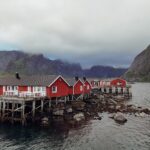
If you want the trailhead practically on your doorstep, the best strategic choice is to stay right in the village of Reine or in neighbouring Hamnøy. This is where you’ll find those most iconic red and yellow fishing cabins called rorbu, perched on wooden stilts directly over the surface of the fjord. Staying in these traditional huts is an unforgettable experience all of its own — you wake up to the cries of gulls and an absolutely breathtaking view of the surrounding granite peaks reflected in the water.
Among the most popular and most photographed places to stay is undoubtedly Eliassen Rorbuer on the islet of Hamnøy. These historic, renovated cabins offer an authentic Nordic atmosphere combined with modern comfort and a fully equipped kitchenette where you can cook yourself a warm dinner after the hike. Just be prepared to pay roughly 2,500 to 4,000 NOK (around €215–345) per night for the whole cabin in peak summer season. If you’re after something a touch more modern and luxurious, the gorgeous Reinefjorden Sjøhus complex is a fantastic choice, with the majestic Reinebringen mountain right outside the living-room window.
For travellers on a tighter budget, the situation in the south of Lofoten is a little trickier. Wild camping is practically impossible around Reine, as there are no flat grassy spots and strict bans on free camping apply throughout the area. The nearest official campsite with genuinely good facilities is in nearby Moskenes, just a short distance from the ferry port. A pitch for your tent costs around 250 NOK (about €21) a night, and you can make full use of a spacious shared kitchen and hot showers after a demanding trek.
6 things you need to know about the Reinebringen hike
1. The iconic view known around the world
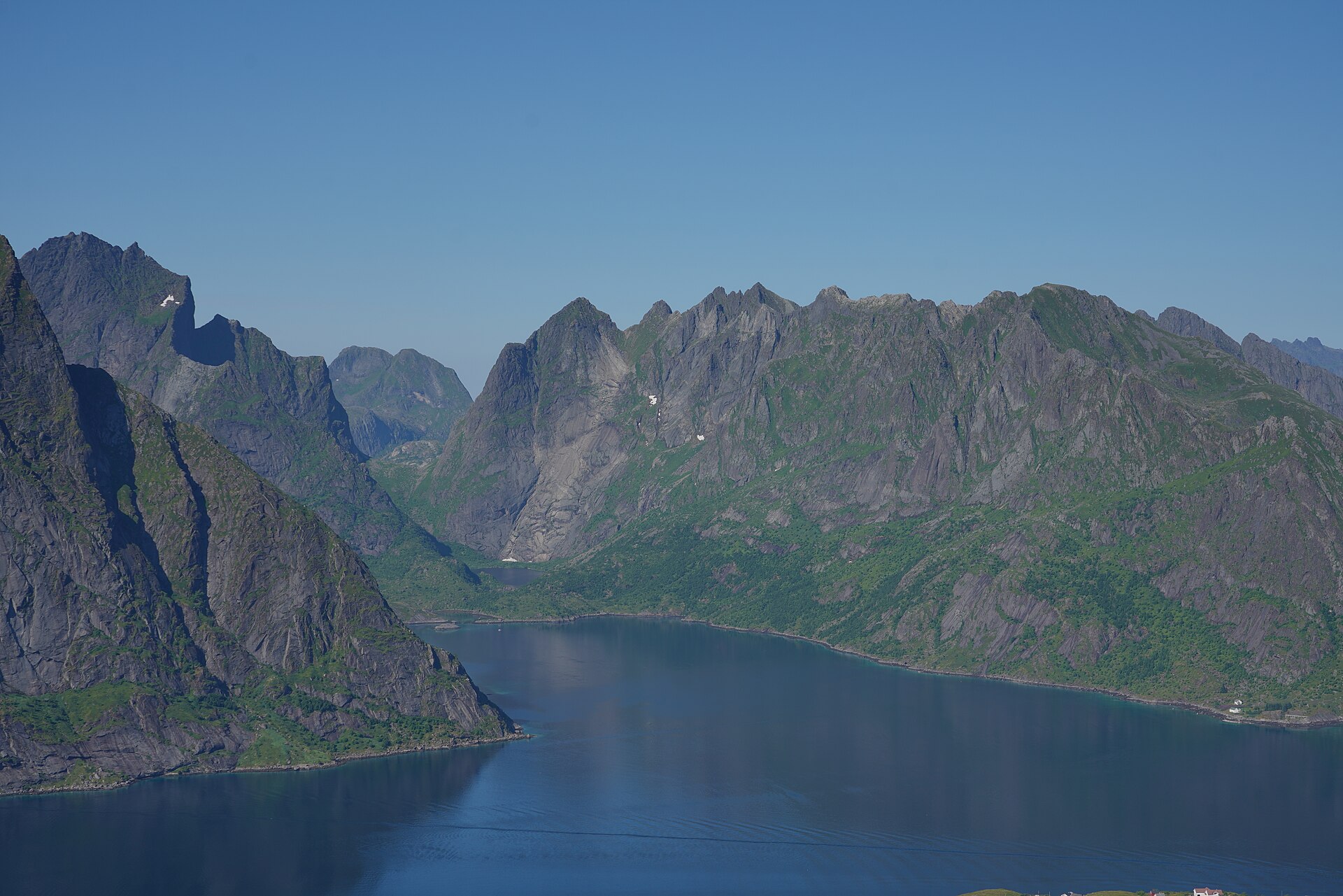
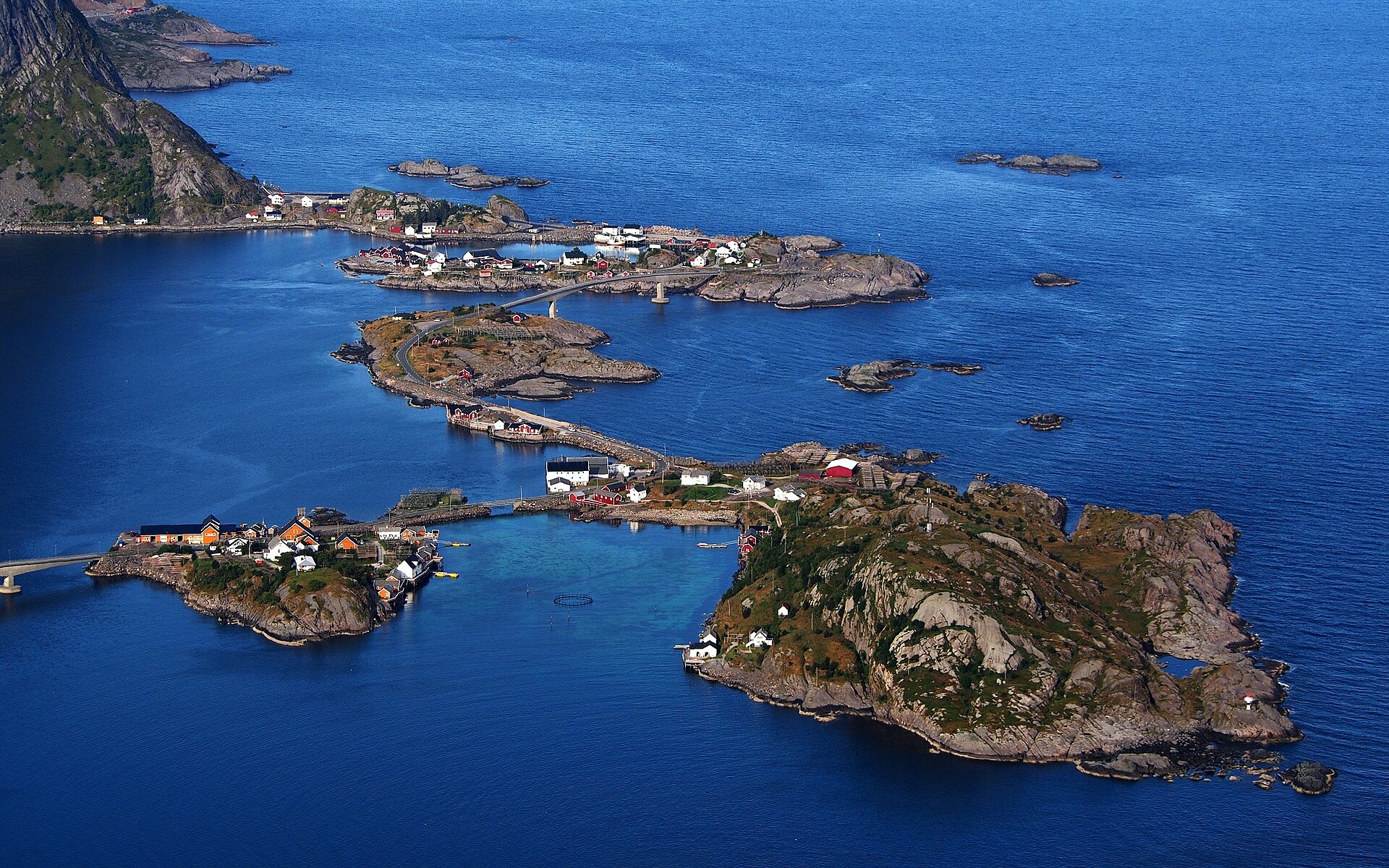
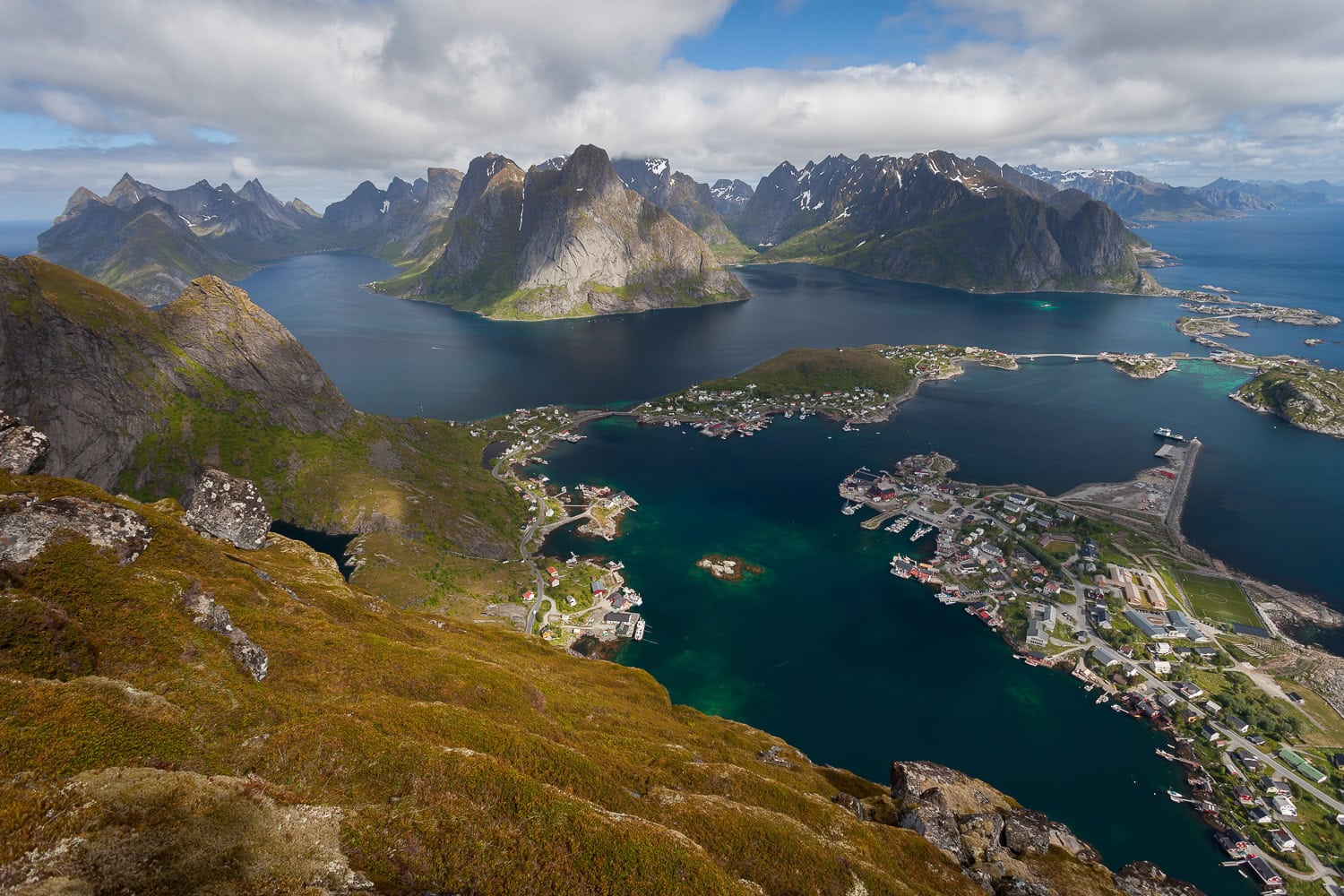
Say the word “Lofoten” and the vast majority of people picture exactly the view that opens up from the summit of Reinebringen. It’s an absolute jewel of Nordic nature that draws photographers and travellers from every corner of the globe. The moment you conquer the final metres of the climb and crest the edge of the ridge, a literal bird’s-eye view unfolds before you. You’ll see the entire village of Reine with its characteristic red rorbu cabins, contrasting sharply with the dark blue water of the Kjerkfjorden.
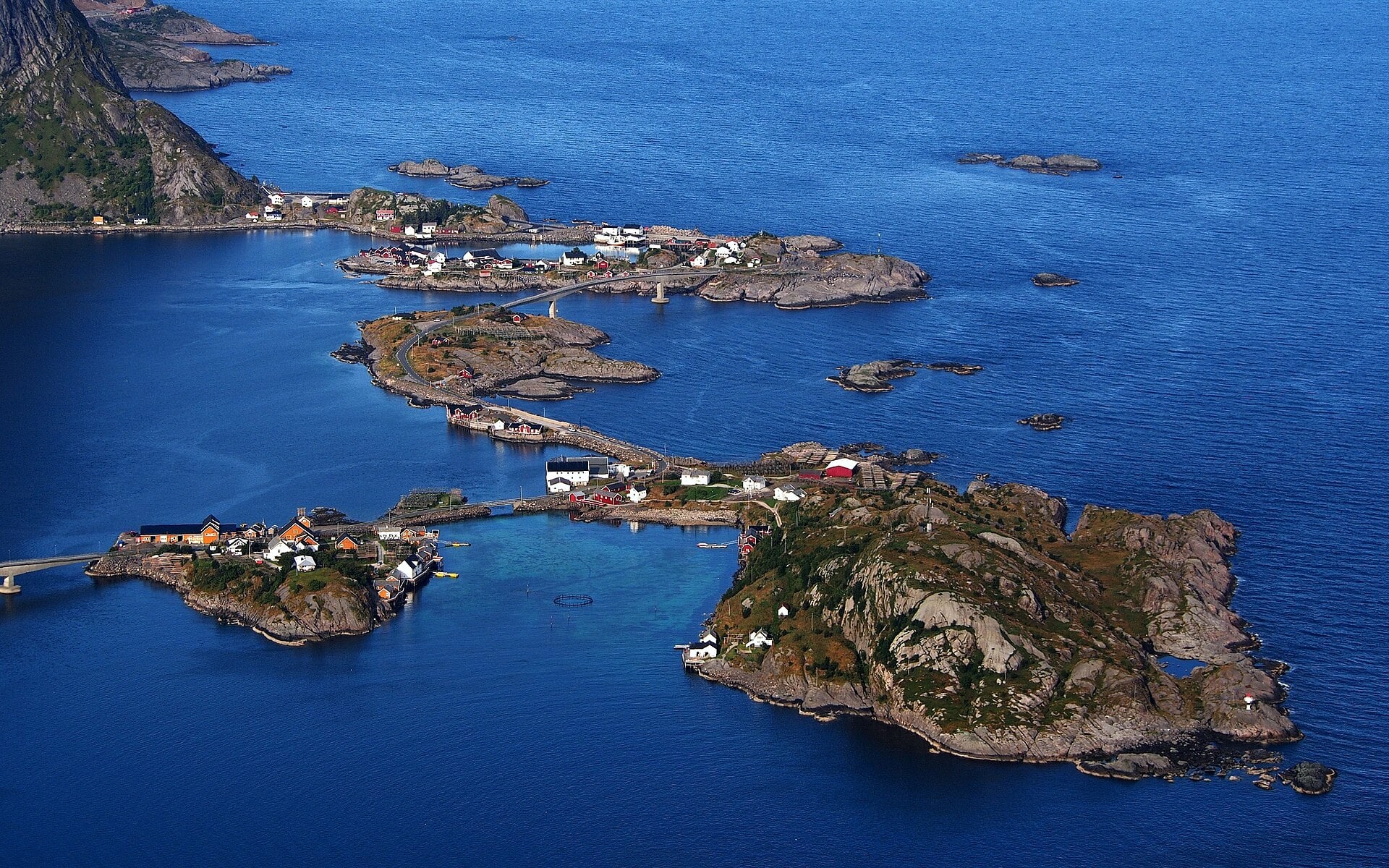
The scenery is all the more striking because the village itself sits on several small islets connected by elegant bridges. In the distance you can admire the neighbouring villages of Sakrisøy and Hamnøy, which from this height look like tiny scale models. The backdrop to this whole picture is formed by sharp granite peaks rising straight out of the wild ocean. This is exactly the spot where you truly grasp the immense power and majesty of the Norwegian landscape.
At the top of the ridge itself you won’t find much room to sit and relax for long. The ridge is fairly narrow, and in good weather it gets really crowded, so you may have to patiently guard your little patch of space for that photo. Many people are happy with the view right at the end of the steps. But if you still have a bit of energy left and don’t suffer from vertigo, walk on a little further along the edge of the ridge, where the crowds thin out and you can enjoy a bit more peace.
💡 Tip: Don’t forget to bring a fully charged phone or a camera with a wide-angle lens, because you’ll want to photograph absolutely everything up here. At the same time, try to find a moment to simply soak up the incredible atmosphere this rugged corner of the world has to offer.
2. The Sherpa steps and the sheer physical effort
The original trail up Reinebringen was just a narrow, steep path carved into soil and slippery rock. Under the enormous pressure of hikers, the slope began to crumble dangerously, leading to massive erosion and many serious injuries. The Norwegian authorities therefore decided to call in true experts in the field: Nepalese Sherpas. These experienced mountain people from the Himalayas hand-carried and laid huge stone blocks, building an incredible, sturdy staircase out of them.
Today the climb takes you up roughly 1,978 massive stone steps. But don’t be lulled into thinking of it as a comfortable staircase like the ones you know from everyday life. Each step is a different height, some of the stones are enormous, and the gradient is relentlessly steep from the very start. Over a relatively short distance you’ll gain a full 450 metres of elevation, which comes as an unfamiliar shock to the body. Your thighs and calves will start to burn unpleasantly after just the first few dozen metres.
On the way up you’ll come across a few small resting spots carved straight into the stone. I’d recommend taking regular, honest breaks, even if you think you’re in excellent shape. Stop, catch your breath, drink some water and turn around to look behind you. The descent, paradoxically, is often more painful than the climb up, because your knees take a real beating from constantly braking on the hard stones.
💡 Tip: Bring a reliable pair of trekking poles, which will significantly ease that unpleasant knee pain on the way down. If you don’t have any, descend very slowly and carefully — tired legs have a habit of buckling on those high steps.
3. Current status of the hike and the real risk of landslides
This is an absolutely crucial point that, in their quest for the perfect photo, far too many visitors sadly underestimate. Reinebringen is a geologically very unstable mountain, and in recent years dangerous rockslides have occurred here. Between 2024 and 2026 the trail was repeatedly and, for long stretches, completely closed to the public. The weathered rock in the upper part of the ridge keeps coming loose, and falling stones pose a deadly threat to everyone below — there have been deaths on Reinebringen, so this is not something to take lightly.
The closures are no bureaucratic whim but an absolute necessity to protect human lives. Before your trip, always and without exception check the current status on the official websites of local tourist boards or at information centres. If you see red tape stretched across the trailhead or a warning sign banning entry, do not under any circumstances try to go around it. You’d be risking not only an exceptionally hefty fine, but above all your own life.
The greatest landslide risk comes after heavy rain or in spring, when the snow and ice on the peaks are melting. Water loosens the rock and undermines the stability of the entire steep slope. Even when it’s officially open, keep your eyes and ears on high alert at all times. If you hear a suspicious rumble or see small stones falling, immediately look for safe cover or start heading back down.
💡 Tip: Have a backup plan ready in case Reinebringen is unexpectedly closed on the day of your visit. Lofoten offers plenty of other gorgeous hikes that are far safer and reward you with equally stunning panoramic views.

4. When to set off to avoid the worst of the crowds
The popularity of this place is genuinely extreme, and it grows every single year. In June 2024 alone, an incredible 41,000 people made their way up these steps. In peak summer season you’ll experience literal traffic jams of hikers. Climbing in an endless line of people, constantly squeezing past those coming down on the narrow steps and fighting for a scrap of free space at the top can pretty reliably ruin the whole experience.
If you’re craving a bit of peace and privacy, you simply have to get up early. Ideally set off around five or six in the morning. At this early hour there’ll be only a handful of enthusiasts on the steps, and you’ll fully enjoy the cooler morning air, which is far more pleasant for such a steep climb. Conversely, avoid the busy window between ten in the morning and two in the afternoon, when crowds pour off the big tour buses and every nearby car park is bursting at the seams.
A huge advantage of the summer months in northern Norway is the magical phenomenon of the midnight sun. Thanks to it, you can happily tackle the hike late in the evening, say around ten o’clock. There’ll still be plenty of light, and with the sun sitting low on the horizon the colours in the sky will be beautifully soft and warm. This evening climb has a magical, very peaceful atmosphere, because most tourists are long since resting in their rorbu cabins.
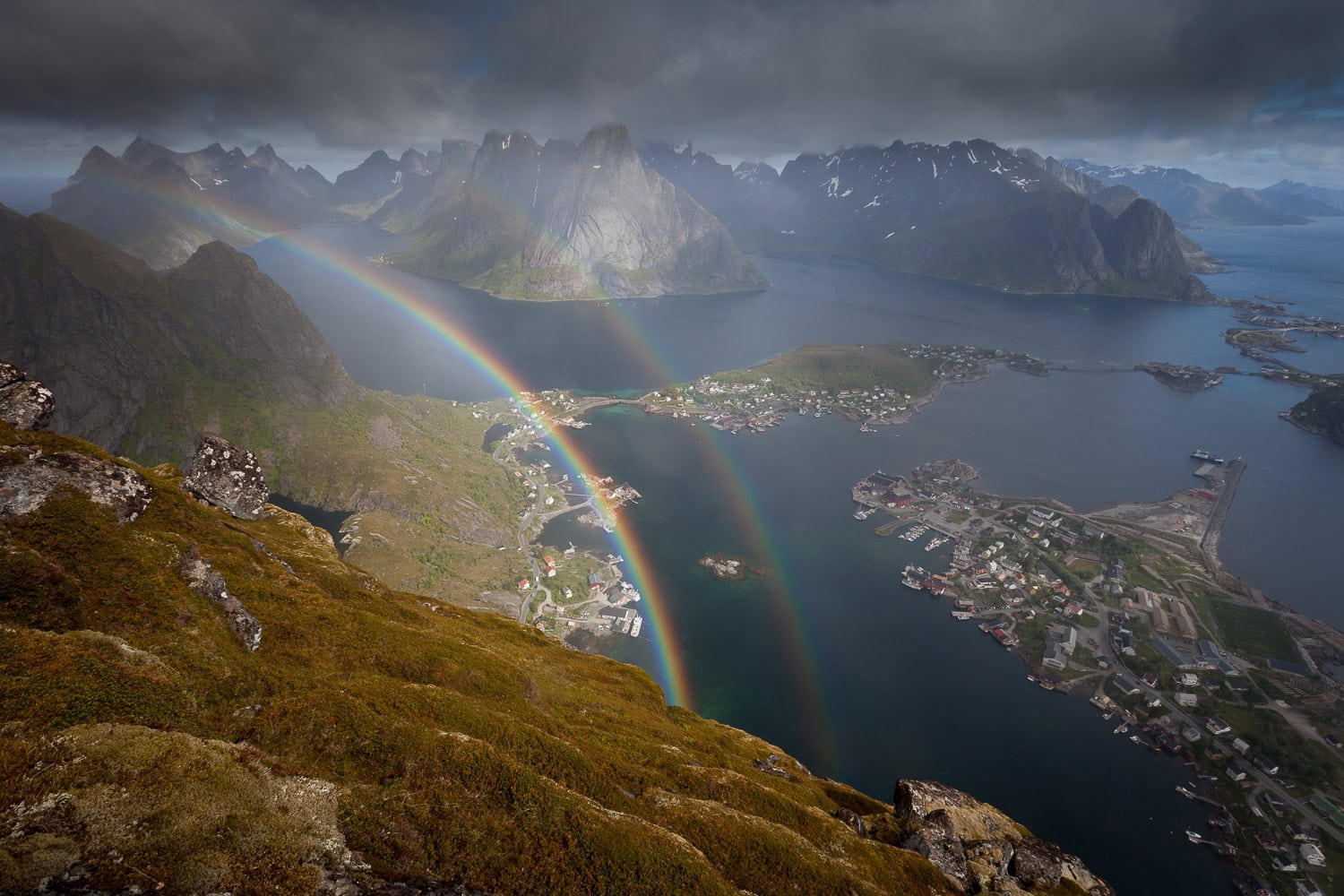
Weather plays an absolutely key role in your planning. Norwegian weather shows no mercy and can change in a matter of minutes, so never set off up the mountain without checking the forecast. Download the reliable Norwegian app yr.no and keep a close eye on the radar. Climbing in rain or strong wind is not only unpleasant but, on the wet stones, downright extremely dangerous.
💡 Tip: Try to plan your climb for a time with clear skies and good visibility. There’s nothing worse than scrambling up for an hour only to reach the summit and find the entire valley below shrouded in an impenetrable blanket of thick grey fog.
5. Where to park and how to find the trailhead
The logistics of this trip take a bit of forward planning, because there is absolutely no space for cars right at the foot of the steps. You’ll have to leave your vehicle in the nearby village of Reine, which is thankfully fairly well prepared for the daily onslaught of tourists. You’ll find several large paid car parks here, the handiest being the one right at the entrance to the village. Parking is paid via the EasyPark mobile app — and don’t try to save money by parking along the road, as the local police hand out hefty fines without mercy.
From the car park you have roughly a kilometre to a kilometre and a half walk to the trailhead itself. You’ll go straight along the main E10 road, which links the entire picturesque archipelago. The route is flat and passes quickly. About halfway along you’ll reach the Ramsvik road tunnel. For safety reasons, pedestrians are strictly forbidden from entering it. Instead, you must safely go around the tunnel along the old surfaced road on the outer side, which hugs the coast.
You really can’t miss the trailhead itself. Right after the tunnel you’ll see a clearly visible path on the left and a large information board, where other hikers usually gather to get ready. From here the first gentle climb through the woods begins, quickly joining the famous stone staircase. There’s really no chance of getting lost — just follow the crowds and keep climbing.
💡 Tip: Don’t forget to nip to the toilet before leaving the car park. There are no public toilets anywhere along the route or at the summit, and the nature around the steps offers absolutely no privacy from the eyes of fellow hikers.
6. Safety, weather and when it’s better to give up
Norwegian weather really shows no mercy. Sunshine, downpours and an icy gale can quite routinely take turns within a single afternoon. If the Norwegian app yr.no is forecasting incoming rain or gusty wind, cancel your plan to conquer Reinebringen without a moment’s hesitation. Climbing in the wet is a completely pointless gamble, because the Sherpa stone steps turn into an extremely slippery, unpredictable slide once soaked, with a serious risk of injury.
This route is also an absolute no-go for families with small children. Forget your ego and don’t bring toddlers up here in a baby carrier or backpack. With a twenty-kilo load on your back, your centre of gravity shifts dramatically, and balancing on steep wet steps in a crowd of people is pure recklessness. The descent with a child is even more dangerous still. There may be a hospital in nearby Gravdal, but its emergency services are definitely not something you want to test on holiday.
Instead, choose far safer alternatives for a family outing. One fantastic option is the vast sandy Bunes Beach, reachable by a small local ferry directly from Reine; after a mere 80 metres of climbing you’ll find yourself in a fairy-tale paradise. Another beautiful and completely flat walk is the old coastal gravel road linking the beaches of Haukland and Uttakleiv. And if the rain catches you out, head to the charming UNESCO village of Nusfjord. The wooden jetties over the water do get slippery after rain, and you’ll need to hold the kids firmly by the hand, but your saviour will be the excellent local Italian pizzeria, which makes superb vegetarian pizza and pasta.
💡 Tip: Always keep one extra insulating layer ready in your backpack. Even when the sun is shining and it’s pleasantly warm down in Reine, up on the ridge you may be greeted by an icy northerly wind that will chill you to the bone in no time.
Practical summary and rough prices
To make planning easier and help you budget, here’s an overview of the most important practical information and price ranges valid for the 2026 season. Norway isn’t a cheap destination, but spending time out in nature thankfully won’t bankrupt you.
- Trail access: Completely free — there’s no fee to do the hike.
- Parking in Reine: Around 50 NOK per hour, or 150 NOK for a full day in the central car parks.
- Parking apps: I recommend downloading the EasyPark app or the official Norwegian parking systems in advance — it’ll make your life easier.
- Getting there by bus: If you’re staying further away, you can use the local buses; a ticket from nearby Leknes to Reine costs around 80 NOK.
- Gear: Quality hiking boots with a non-slip sole are an absolute must — better leave your smooth-soled trainers in the suitcase.
- Staying hydrated: There’s no stream or spring with drinking water along the trail, so you need to carry at least 1.5 litres of fluids per person from your own supplies.
Where to go next
If you’re curious about what else this stunning region has to offer, I’ve put together an extensive article covering the best hikes in Lofoten. You’ll find inspiration for more mountain challenges, as well as gentler family walks through the valleys. For a general overview and to plan your Nordic holiday, I recommend reading our big guide to Lofoten, where you’ll learn everything from getting around to accommodation tips.
Don’t forget to explore the villages beneath the mountain, too — you’ll find detailed information in our article focused specifically on Reine and Hamnøy. And if you’re still unsure which month to head up to northern Europe, our detailed breakdown of when to visit Lofoten will help you catch either the midnight sun or, conversely, the Northern Lights.
Frequently asked questions
How long does the climb to Reinebringen take?
For someone with average physical fitness, the ascent takes roughly one to one and a half hours of pure climbing time. The entire trip from the parking lot in Reine, through the steep climb itself, the necessary photo-taking at the summit, and a very careful descent back to your car will take approximately 3 to 4 hours. Definitely allow yourself more time for this hike so you don’t have to stress unnecessarily and rush uphill.
Can I bring my dog on the trail?
Theoretically it’s not forbidden, but from a practical standpoint I strongly advise against it. The sharp and hard stone steps can uncomfortably scrape your dog’s paws, and on a narrow path full of people, your dog will be unnecessarily stressed. Large and heavy breeds may also have considerable difficulty with the unusually high steps, so it’s better to leave your furry friend to rest at your accommodation.
Can I manage it even if I’m afraid of heights?
The staircase itself is steep, but doesn’t feel particularly exposed or dangerous. The problem, however, comes at the actual summit of the ridge, which is quite narrow and drops very steeply down to the ocean surface. If you suffer from severe vertigo, I recommend staying only on the safe and wider platform right at the end of the stairs and not walking further along the ridge edge itself.
Is it possible to camp and pitch a tent at the summit?
No, there is absolutely no flat and safe space at the top for pitching a tent. The ridge is narrow, rocky, whipped by strong winds, and constantly full of people. For wild camping and sleeping under a tent, you need to choose other, more spacious and permitted beaches in Lofoten, such as the popular Kvalvika or the expansive Bunes Beach.
Can I fly a drone up there?
Rules for flying drones throughout Norway are constantly and quite strictly tightening. You must always verify current restrictions in advance using the official Norwegian app for drone pilots. Moreover, at the top of the ridge extremely strong and gusty winds often blow, which can carry your drone irretrievably away into the deep fjord in a single second.
What should I do if rain catches me on the way up?
If it suddenly starts raining, the most sensible choice is to immediately stop the ascent and begin descending very carefully. The rocks become extremely slippery when wet, and continuing upward means unnecessarily risking serious injury. Your personal safety and health is always far more important than even the most beautiful view from the mountain summit.
Do I need special mountaineering equipment for the climb?
No, you won’t need any ropes, harnesses, helmets, or carabiners. The route is extremely demanding on your fitness and legs, but requires absolutely no technical climbing skills. However, the absolute basics and necessities are quality sturdy footwear with good non-slip soles and functional clothing that reliably protects against cold wind and unexpected chill.
Tips and Tricks for Your Vacation
Don’t Overpay for Flights
Search for flights on Kayak. It’s our favorite search engine because it scans the websites of all airlines and always finds the cheapest connection.
Book Your Accommodation Smartly
The best experiences we’ve had when looking for accommodation (from Alaska to Morocco) are with Booking.com, where hotels, apartments, and entire houses are usually the cheapest and most widely available.
 🚗 Car rental on the roadVerified rental cars in Norway
Search with the DiscoverCars comparison engine — it compares prices from dozens of local and international rental companies, and most bookings come with free cancellation.
Compare car prices in Norway →Don’t Forget Travel Insurance
Good travel insurance will protect you against illness, accidents, theft, or flight cancellations. We’ve had a few hospital visits abroad, so we know how important it is to have proper insurance arranged.
Where we insure ourselves: SafetyWing (simple monthly subscription) and TrueTraveller (for extra-long trips).
Find the Best Experiences
Get Your Guide is a huge online marketplace where you can book guided walks, trips, skip-the-line tickets, tours, and much more. We always find some extra fun there!