What to Eat in Paris: The Complete Foodie Guide 2026 (Bistros, Michelin, Vegetarian Scene)

TL;DREating in Paris in 2026 means mixing classic bistros, Michelin-starred spots and a fast-growing vegetarian scene. The biggest news is that three-star Arpège has gone fully plant-based (lunch menu €260, evening tasting menu €420). For a cheaper but equally good option, go for the lunch set menu (formule midi) at bistros like Septime or Le Potager du Marais, which comes in at €18–€28. For the best falafel in Europe, head to L’As du Fallafel on Rue des Rosiers — it’s shut on Saturdays for the Sabbath — and for pastries, make for the bakery Du Pain et des Idées. May, June, September and October are the best months for a food trip; steer clear of August, when a lot of family-run bistros and bakeries shut for their annual break (fermeture annuelle).

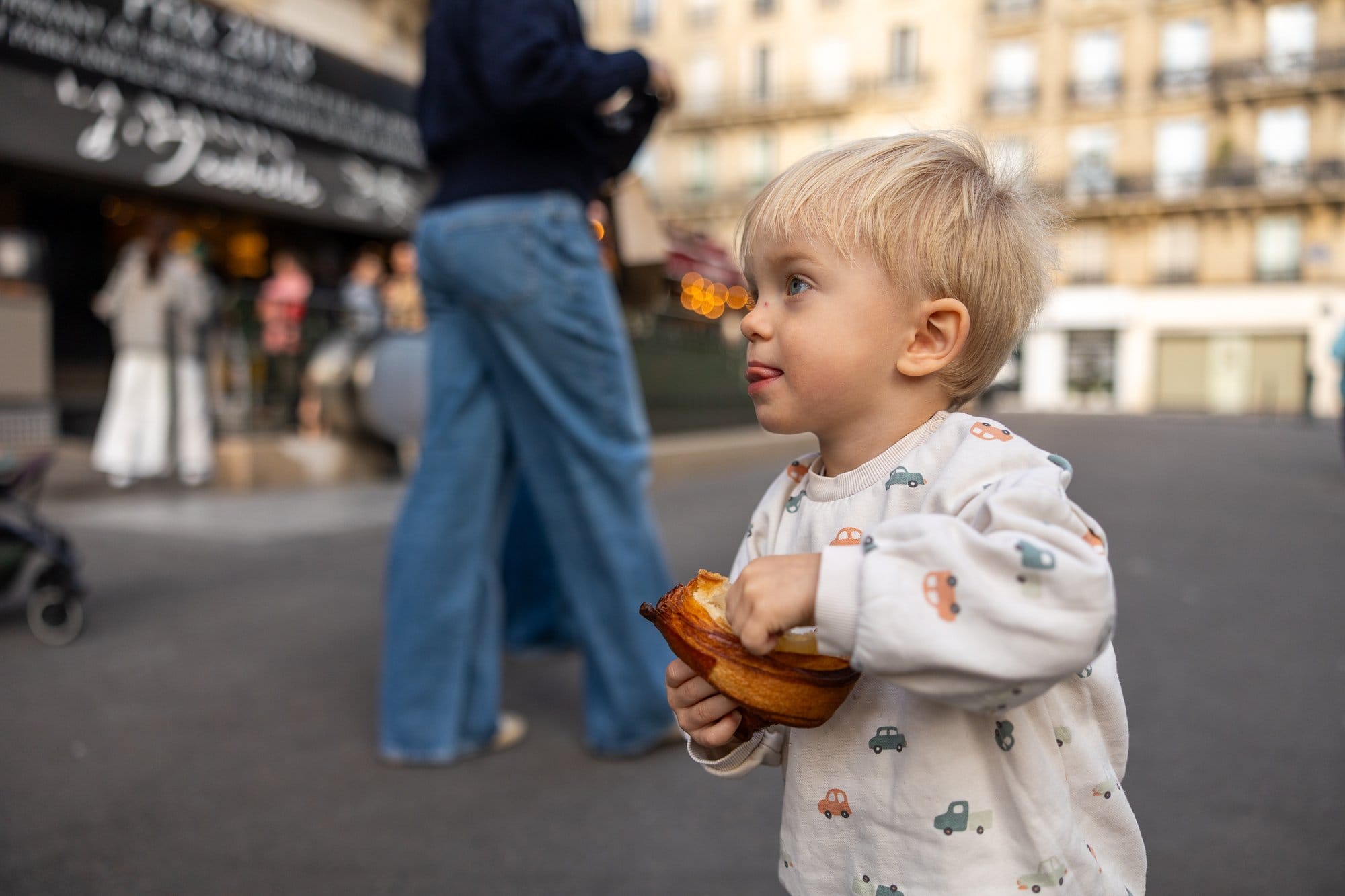
If you’re wondering what to eat in Paris, France, the answer arrives first thing in the morning. As the city slowly wakes and that utterly unmistakable, sweetly caramelised scent of clarified butter drifts out of the corner bakeries into the cool morning air, it’s a feeling that never gets old. You’re sitting at a little round table on the pavement, tearing off the still-warm crust of a crispy baguette with your hands and watching the city slide into its daily rhythm. Waiters in long white aprons line up the wicker chairs to face the street, people hurry to work clutching coffee cups, and you have a whole day of discovery ahead of you. Lukáš and I have played this gastronomic game more times than I can count, and every single time we rediscover that hunting down the best spots in Paris has its own peculiar, faintly adrenaline-fuelled magic.

But Paris has been totally transformed food-wise since our first visit, and for the better. Gone are the days when, as a vegetarian, I’d be handed a sad, dressing-free salad and a mound of cheese while the rest of the table tucked into rich meaty courses. After all the Olympic frenzy, the city took a deep breath and launched into a huge green revolution, and 2026 is an absolutely pivotal year in this respect. When the famous three-Michelin-star restaurant Arpège announced it was switching to a purely plant-based menu, it sent shockwaves through the entire culinary world. Add to that a new generation of young chefs opening laid-back bistros in tucked-away side streets, pouring cloudy natural wines and ignoring the stiff rules of the old school.

Writing a guide to Parisian food means navigating between luxurious palaces and noisy market halls. You’ll need a bit of strategy, because Parisian cafés and wine bars aren’t exactly spacious. Don’t let the legends of arrogant waiters put you off, though. Once you grasp a few basic rules, learn the magic word of greeting and fall into their rhythm, the French will welcome you with open arms. You’ll discover that a fantastic lunch is entirely possible without ever compromising on quality.

So here’s everything we’ve tried with our own teeth over the years in Paris.

TL;DR
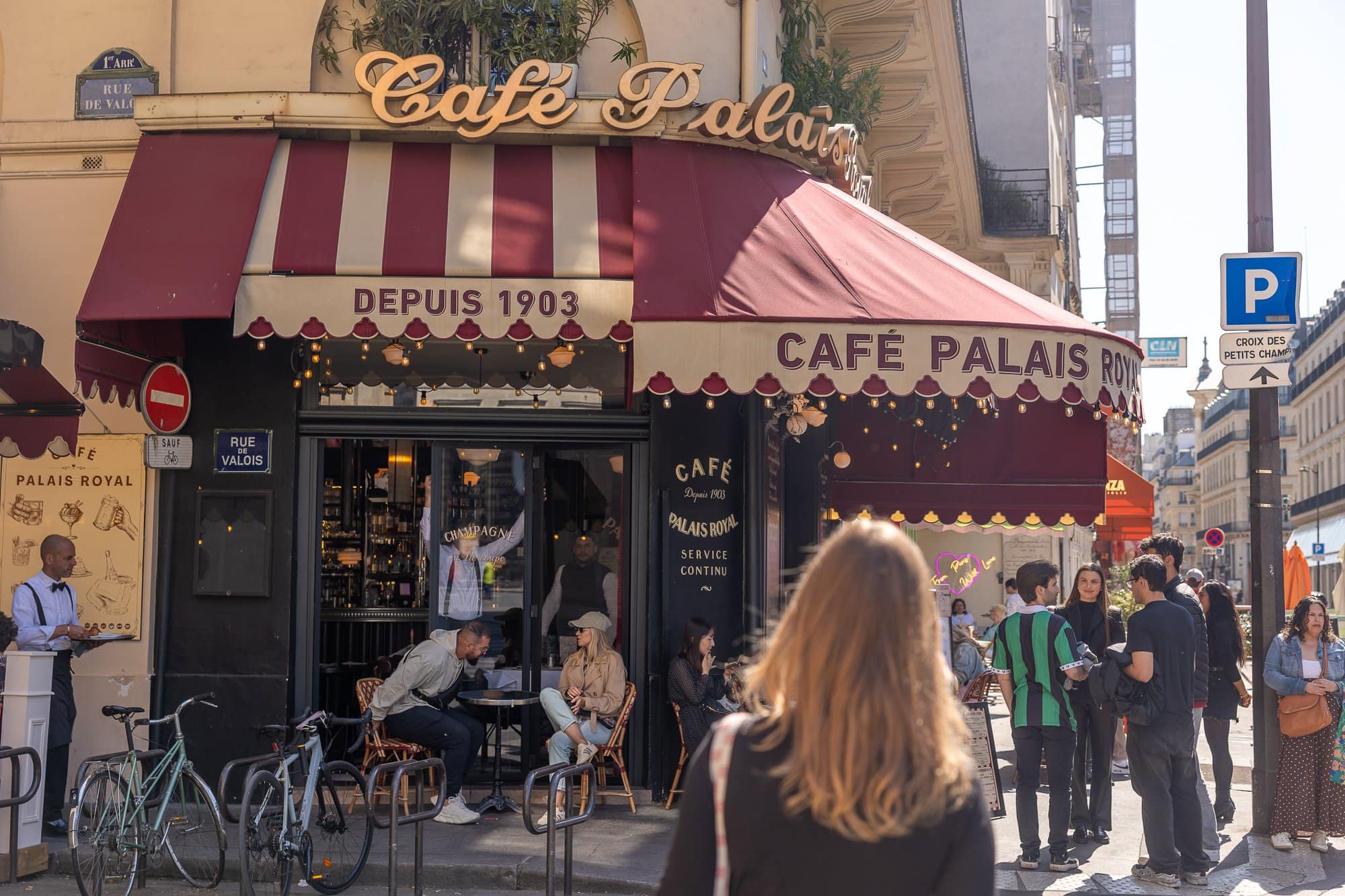
  • Best time to eat: The lunch menu (formule midi) is served strictly between 12:00 and 14:30. It’s the best way to taste top-tier gastronomy at a fraction of the evening price (typically €18 to €28).
  • The golden rule of politeness: Every time you walk into a bakery, restaurant or café, you must begin with a loud Bonjour (Bonsoir after 6pm). Without it, the staff will simply ignore you.
  • The 2026 vegetarian revolution: The three-star restaurant Arpège is now fully vegan (lunch comes to €260). For more affordable plant-based feasting, head to Le Potager du Marais or the raw bistro 42 Degrés.
  • Where to go for the best pastries: Always ask for a baguette tradition (never the plain one) and a straight croissant au beurre (the curved one is made with margarine). For the legendary pistachio snails, go to Du Pain et des Idées.
  • Street food sure bet: L’As du Fallafel on Rue des Rosiers makes the best falafel in Europe. Heads up: it’s strictly closed on Saturdays for the Sabbath.
  • Water is free: Instead of pricey bottled water, always ask for une carafe d’eau (a carafe of tap water) with your meal. It’s your right and it’s completely free.
  • Book a table: The better bistros (like Septime or Pink Mamma) fill up a month in advance. Reservations are made online, often via The Fork app. Without one, you stand little chance.
  • Watch out for the August trap: In August Parisians leave en masse on holiday. Many family bistros and famous bakeries close for several weeks (the so-called fermeture annuelle).
  • Natural wine: Try it like a local. Duck into a small bar (cave à manger) such as Le Verre Volé, order a glass of unfiltered wine and pair it with small sharing plates.
  • Tipping tips: By law the restaurant bill already includes a service charge (service compris). A tip isn’t compulsory, but for great service you leave a few euros in cash on the table.
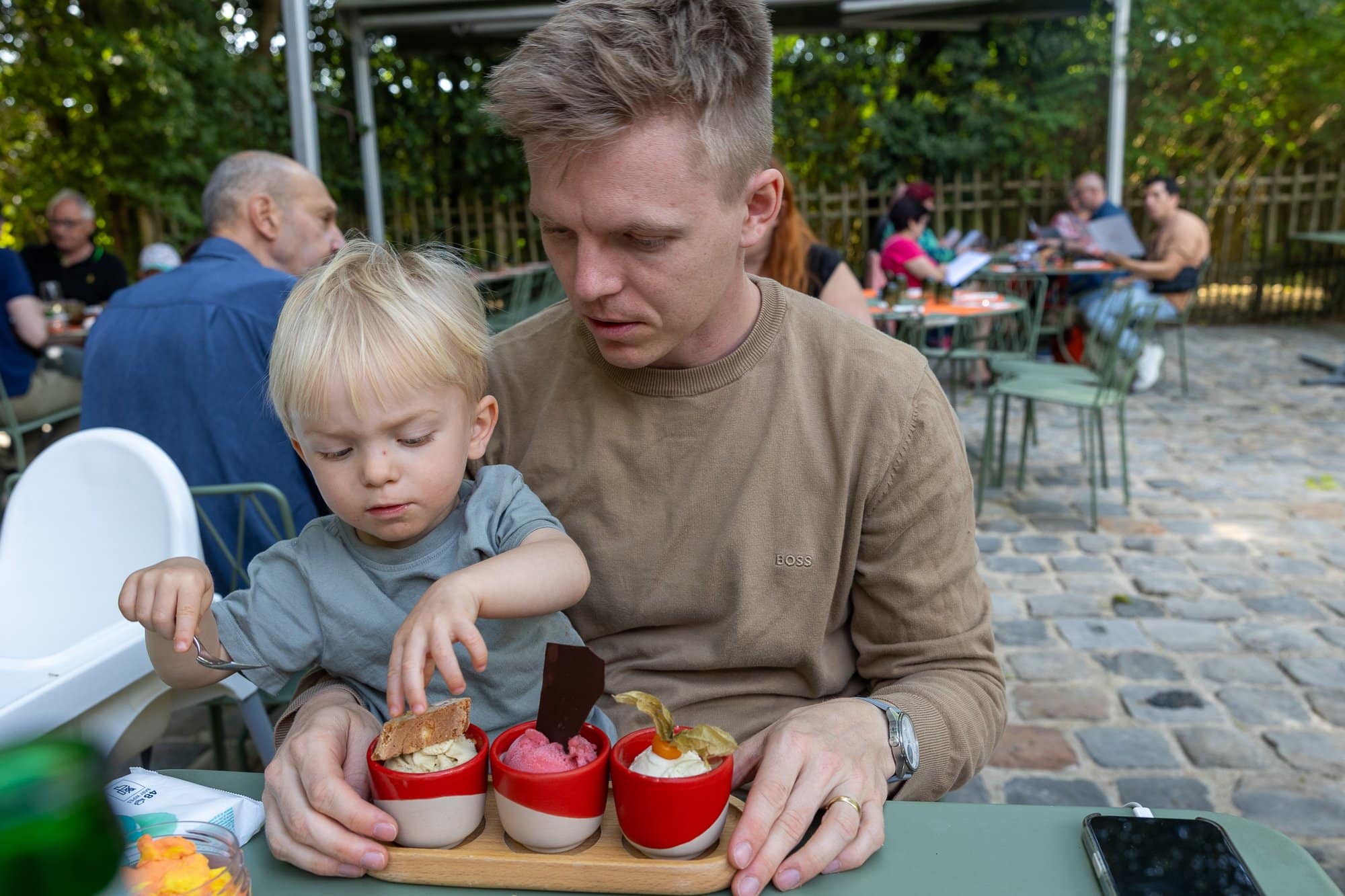
When to go to Paris for food: Seasons and 2026 events calendar

Choosing the right month for your culinary expedition is absolutely crucial. Parisian menus change with the weather, and what’s light vegetable poetry in May turns into rich, warming sauces by November. We love the months when you can sit outside on the terraces, because it’s simply the most pleasant way to soak up the city’s atmosphere.

Spring and autumn: The golden middle ground
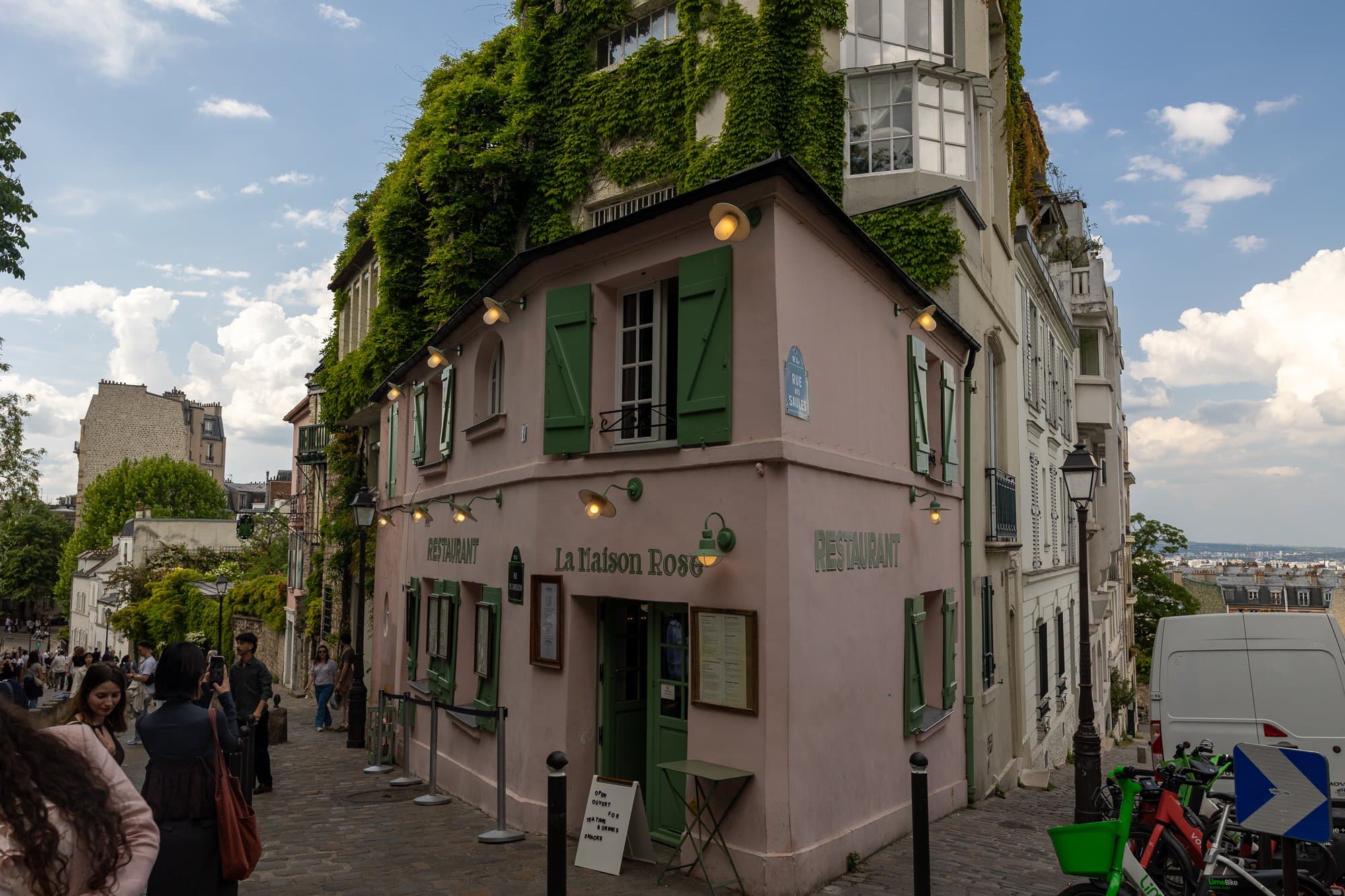
May and June are made for a foodie trip. The markets overflow with asparagus, strawberries and fresh peas. Temperatures are ideal for picnics by the Canal Saint-Martin or in the Luxembourg Gardens. September and October are just as magical. The period known as la rentrée (the return after the summer holidays) brings enormous energy to the streets. Chefs open new spots, unveil autumn menus full of pumpkin, mushrooms and root vegetables, and you get to enjoy a city that’s fully back in gear after summer.

💡 Tip: If you’re planning a spring trip, watch out for Easter. Lots of small family bistros are closed over the holidays, while chocolate boutiques (like Pierre Hermé) are bursting at the seams as Parisians stock up on Easter eggs.

The summer months and the treacherous August
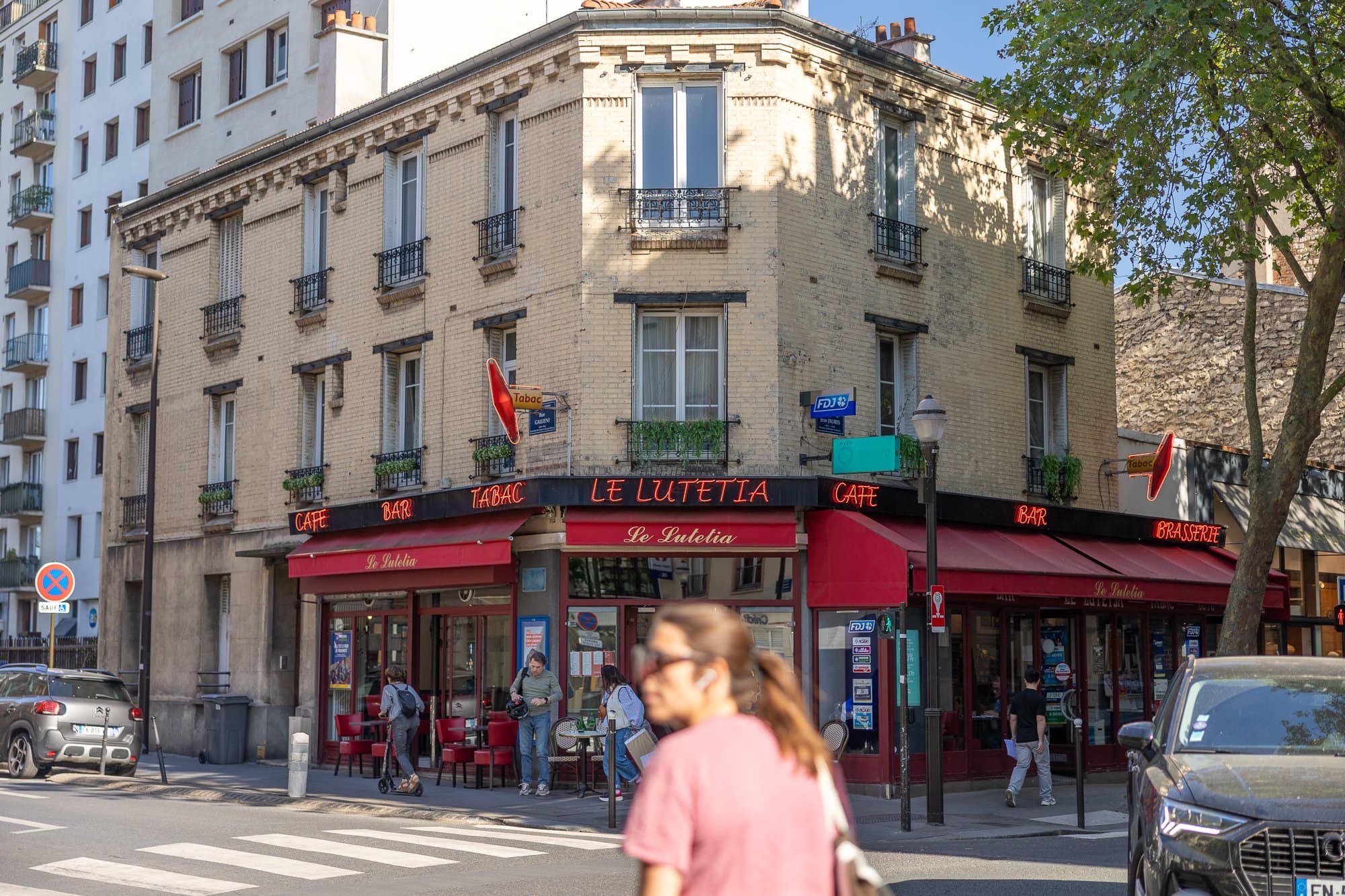
July is still full of life in the city, and on top of that, in summer 2026 parts of the Seine are finally opening for public swimming after a hundred years, which is a huge deal. So you can have a great lunch and then go cool off right in the river. The real problem, though, comes in August. If you can, avoid August. The city empties out, the asphalt melts, and the best independent restaurants, bakeries and cheese shops hang fermeture annuelle signs on their doors. The locals have simply gone to the seaside, and you’ll often be left at the mercy of overpriced tourist traps that stay open all year round.

💡 Tip: If you absolutely must go to Paris in August, rely on hotel restaurants and the big brasseries (such as Bouillon Chartier), which never close. International and Asian spots in the 13th arrondissement also tend to stay open.

Winter cosiness and Christmas markets
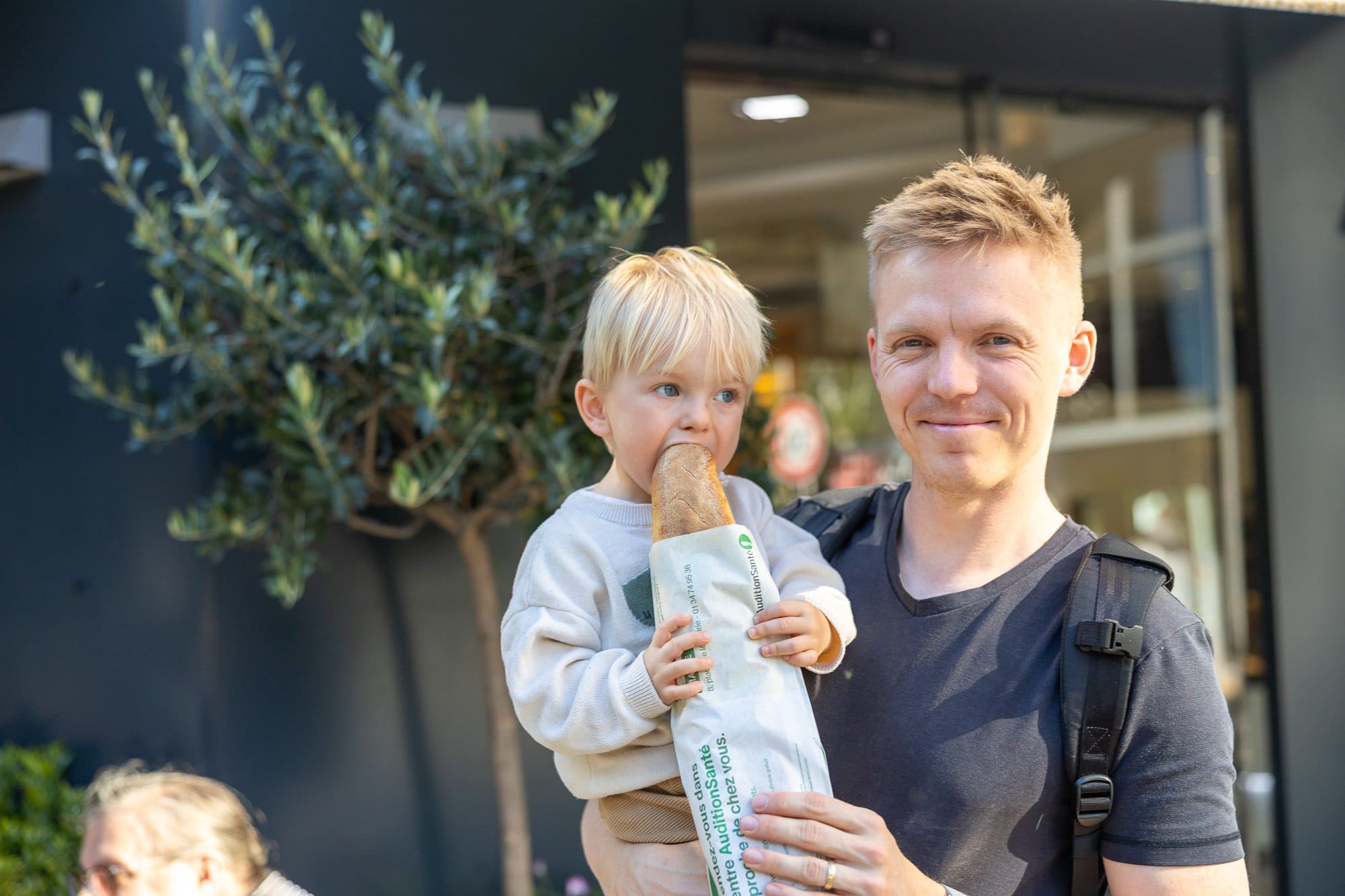
January and February can be raw and chilly in Paris, but gastronomically it’s actually a brilliant time. The best citrus is ripening, hearty onion soups are simmering, and restaurants are full of locals because tourists are at a minimum. The end of the year then belongs to the Christmas markets. They tend to be fairly commercial, but mulled wine (vin chaud) and the smell of roasting chestnuts in the streets have something special about them. Winter is also when you’re most likely to land a reservation at the most sought-after Michelin spots.

💡 Tip: Don’t go to Paris for Valentine’s Day unless you really have to. On that day restaurants offer only fixed, often overpriced menus, the atmosphere feels forced, and the usual à la carte menu is cancelled.
Where to stay in Paris (not only) for food lovers

Your choice of neighbourhood will set the whole tone of your holiday. Paris is made up of twenty districts (arrondissements) that spiral out from the centre like a snail shell. Each one has a completely different mood and, above all, a different food scene. With our love of good coffee and vegetables, Lukáš and I have come to favour specific zones where everything is within reach and we don’t have to spend hours underground on the metro.

6th arrondissement (Saint-Germain-des-Prés)
The absolute top choice for a peaceful stay: the pavements here are pleasantly wide, the Jardin du Luxembourg is just around the corner for long strolls, and you’ll find fantastic organic markets and historic cafés. Sure, it’s a pricier area, but the calm is genuinely worth it.

We’ve tried a few places to stay here that we swear by. The classic Parisian Hotel des Grands Hommes offers a view of the Panthéon, has a lift (not a given in Paris) and a night here runs to about €220. A little closer to the river is Hotel Britannique, with beautifully clean rooms and very welcoming staff, where the price tends to be around €180.

3rd arrondissement (Upper Marais)
The historic heart of the city, which survived the great Parisian redevelopment. The streets are narrow, but the northern part (Haut Marais) is quieter. Here you’ll find the best falafel, the wonderful covered market Marché des Enfants Rouges and plenty of specialty coffee shops.

Our clear pick here is Hotel Les Tournelles. It’s a lovely, clean-design hotel with family rooms and perfect access to all the hip bistros in the area. A night runs to about €200 and it’s well worth the comfort right in the heart of the action.

11th arrondissement (Popincourt / Bastille)
If you’re coming primarily for the food and modern bistronomy, this is your base. It’s a busier, young neighbourhood packed with natural wine bars and independent chefs. In the evening it really comes alive and gastronomically it doesn’t put a foot wrong.

In this neighbourhood our favourite was Le Général Hôtel. A very modern hotel a short walk from Place de la République, with friendly staff and great local pastries for breakfast. A night here starts at €150.

💡 Tip: When booking a hotel, always make sure it has a lift (ascenseur). Lots of old Parisian buildings only have narrow spiral staircases, and you really don’t want to be hauling suitcases up to the fourth floor.

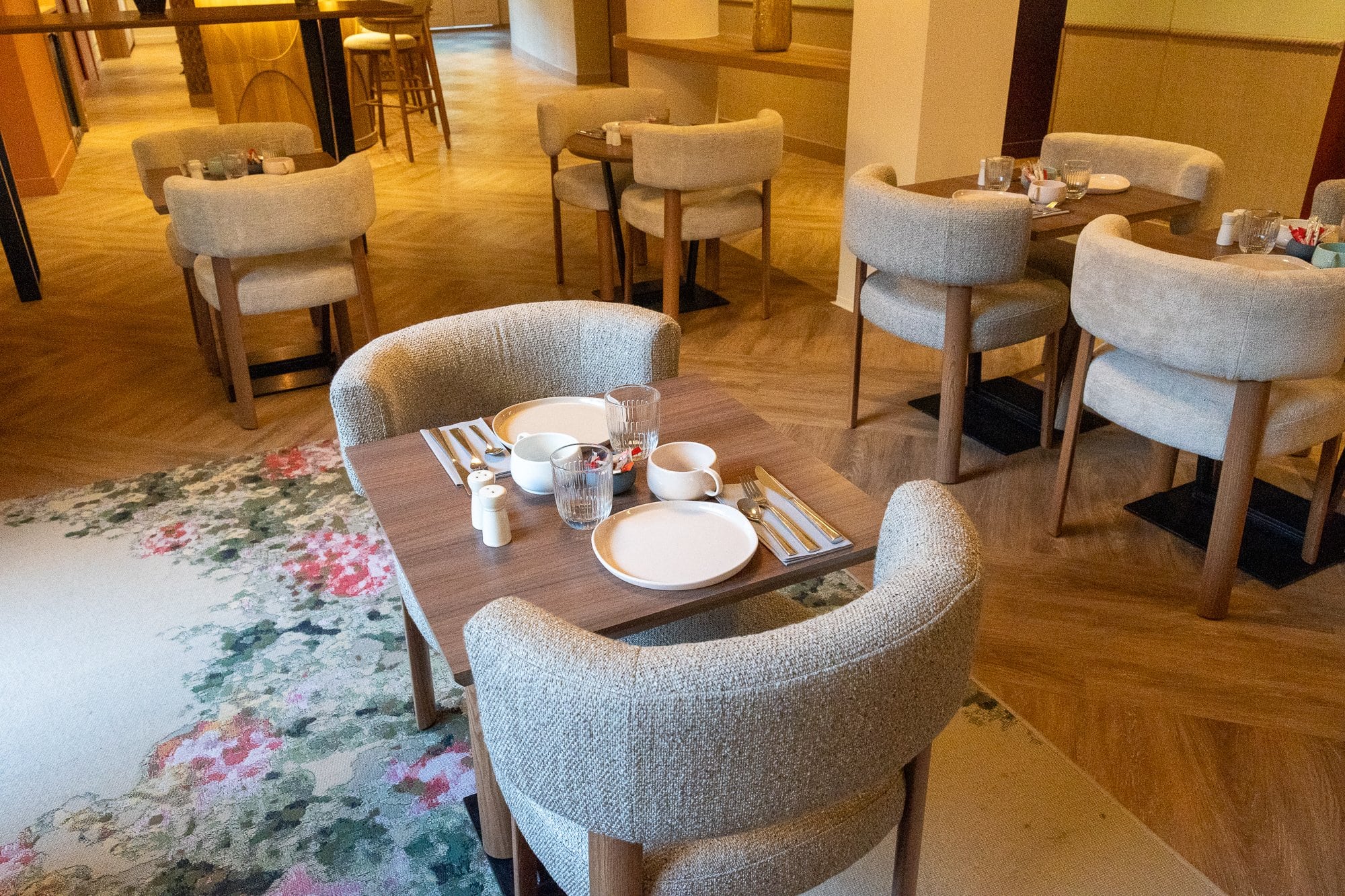
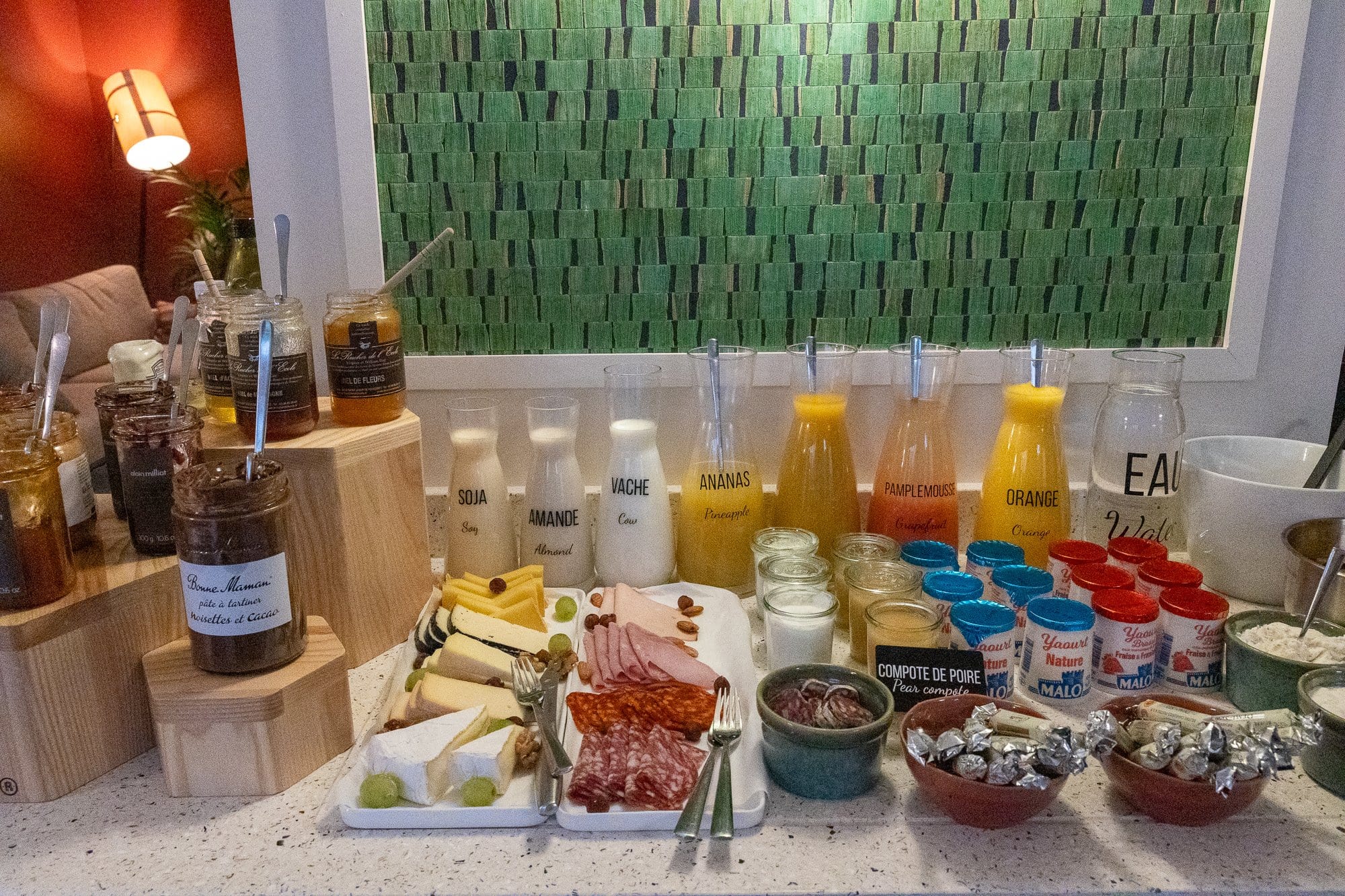
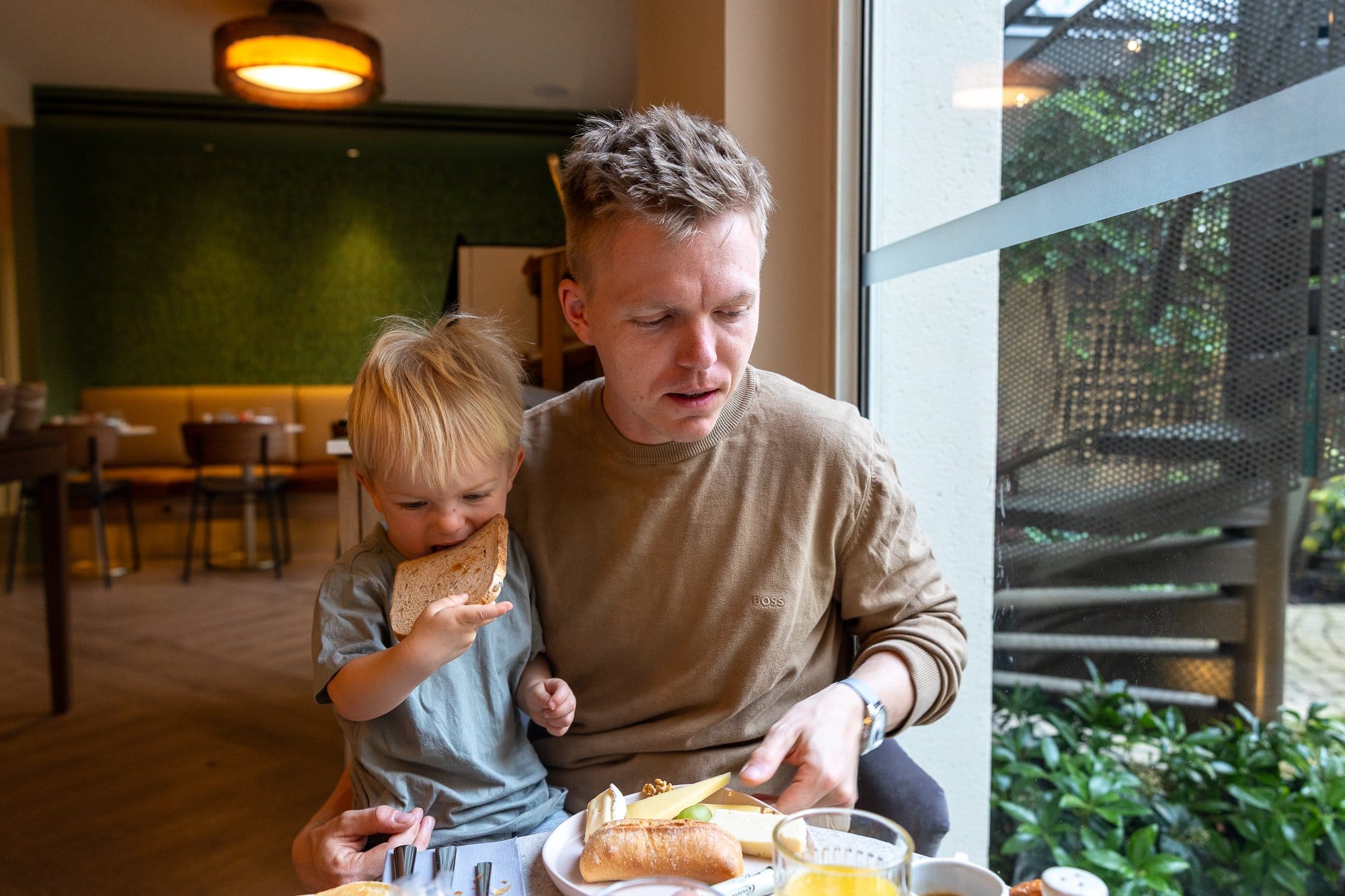
When you travel to France for the food, the morning coffee and pastry become a ritual you start looking forward to the night before. Breakfast at the boutique hotel Hôbou made us hugely happy, as did their afternoon service of homemade desserts baked by local pastry chefs. I write more about this gastro experience in our hotel review, and you can easily book it right here.
Where to eat: Parisian bistros and the revolution called Bistronomie

Forget for a moment about starched white tablecloths and silence broken only by the clink of silver. The most exciting things in Paris right now are happening in battered bistros with exposed brick, where quiet hip-hop plays from the speakers and chefs cook in trainers. The movement known as bistronomie took the techniques of haute Michelin cuisine and dropped them into a relaxed setting. The epicentre is eastern Paris, and for us it’s a huge joy, because the new generation of chefs loves working with vegetables.

The Septime phenomenon and its sisters
This is where it all started. Chef Bertrand Grébaut opened Septime in the 11th arrondissement (Rue de Charonne) and completely rewrote the rules of the game. The restaurant now holds one Michelin star but keeps its informal feel. Getting in is a bit of an adrenaline sport, but if you manage it, an unbelievable experience awaits. They’re completely used to cooking purely plant-based, but you have to flag it when you book. Don’t expect any meat substitutes – you’ll get masterpieces made from root vegetables and herbs. Right next door is their sister venue Clamato, which focuses on seafood.

💡 Tip: If you want to experience Septime in peace, grab a table at lunch (they open at 12:00). The atmosphere is more relaxed, daylight gives the place a more laid-back feel, and the lunch menu is also significantly cheaper than the evening tasting.

  • Where to find it: 80 Rue de Charonne, 11th arrondissement (Metro Charonne, line 9)
  • Price: Lunch menu around €65, evening tasting €110
  • Open: Mon–Fri 12:00–14:00 and 19:30–22:00 (closed weekends)

Frenchie and the Rue du Nil empire
Chef Greg Marchand has essentially privatised one small cobbled side street in the 2nd arrondissement. His flagship, Frenchie, is a global sensation. Around it he’s gradually built a little empire that includes a wine bar across the way and a fast-food bistro, Frenchie To Go. Getting in is a bit of an adrenaline sport, but it’s well worth it, and the food is playful, precise and incredibly photogenic.
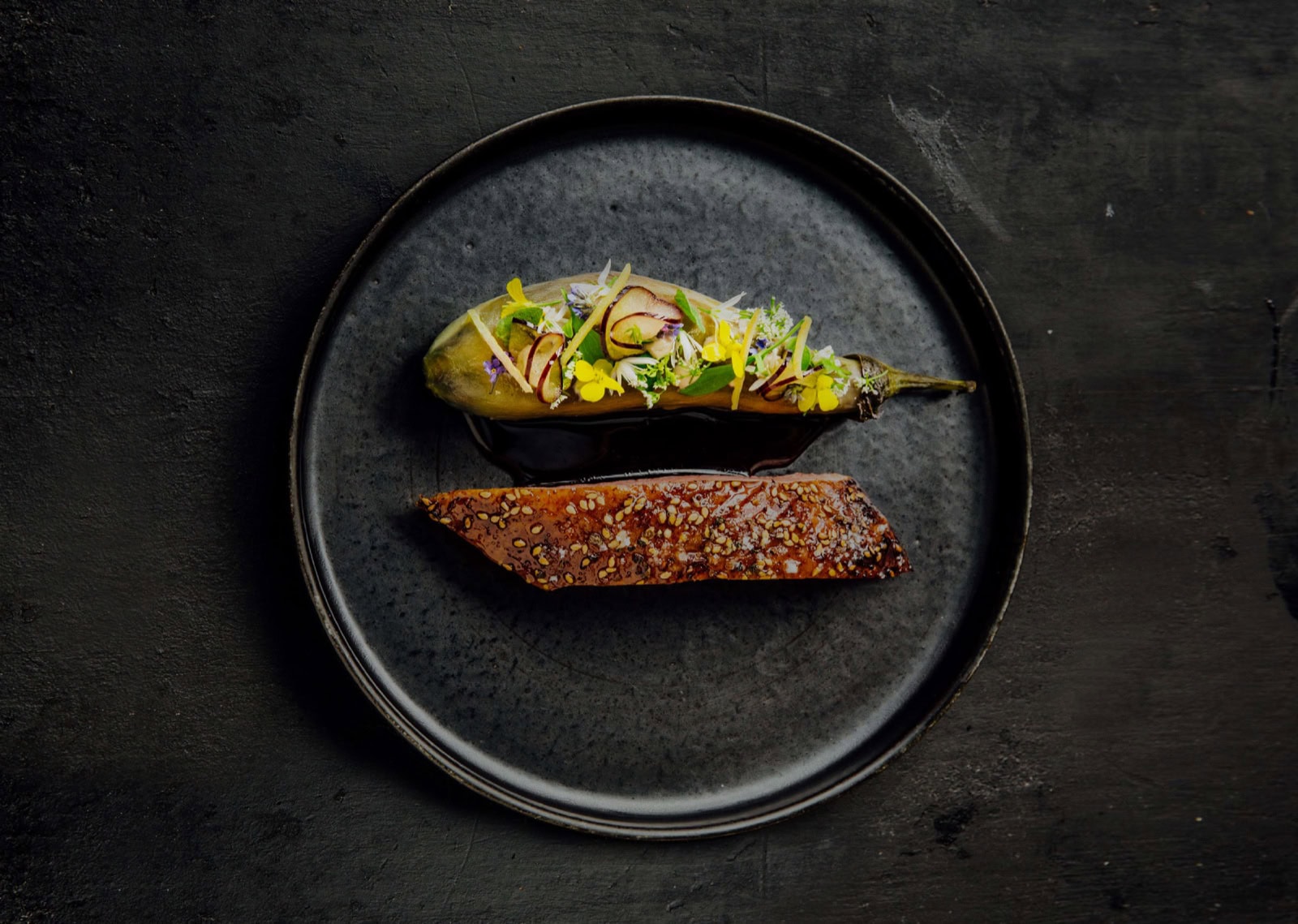
💡 Tip: The Frenchie Bar à Vins wine bar doesn’t take reservations. If you want to eat there, you have to turn up about 15 minutes before opening (they open at 18:30) and simply join the queue. First come, first seated.

  • Where to find it: 5 Rue du Nil, 2nd arrondissement (Metro Sentier, line 3)
  • Price: Evening menu at Frenchie around €140, smaller plates at the wine bar €15–25
  • Open: Mon–Fri evenings (main restaurant), wine bar open daily from 18:30

An Asian twist at the Levha sisters’
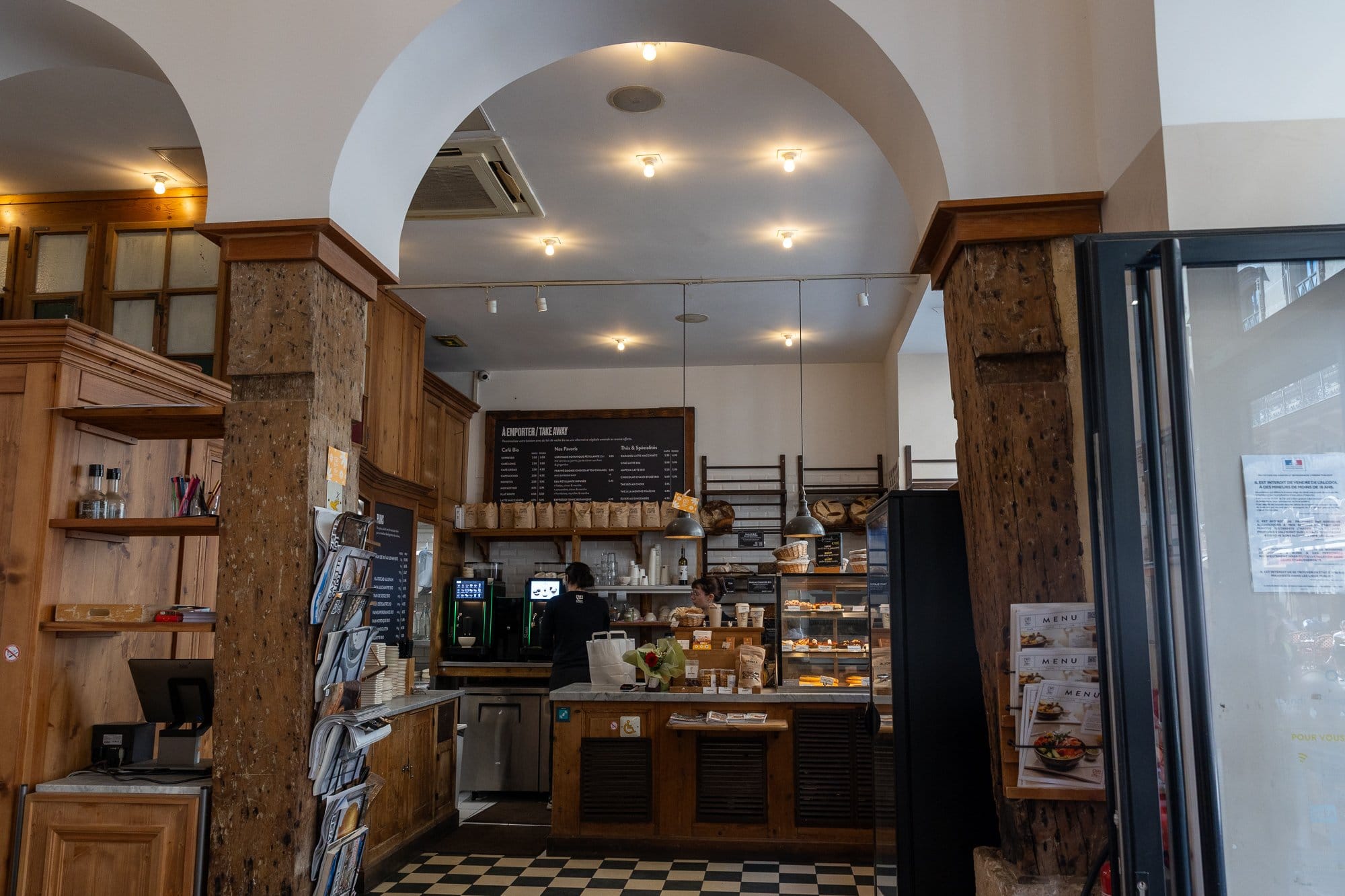
Tatiana and Katia Levha are the rock stars of the Parisian food scene. Their first venue, Le Servan, in the 11th arrondissement, is the very definition of a modern French bistro with subtle Asian touches. A bright interior, a beautiful brass bar and food with serious edge. A short walk away they’ve opened Double Dragon, an even wilder concept full of spicy sauces and funky natural wines. For me as a vegetarian, that Asian influence is absolutely brilliant, because they can conjure incredible depth of flavour from tofu and fermented vegetables.
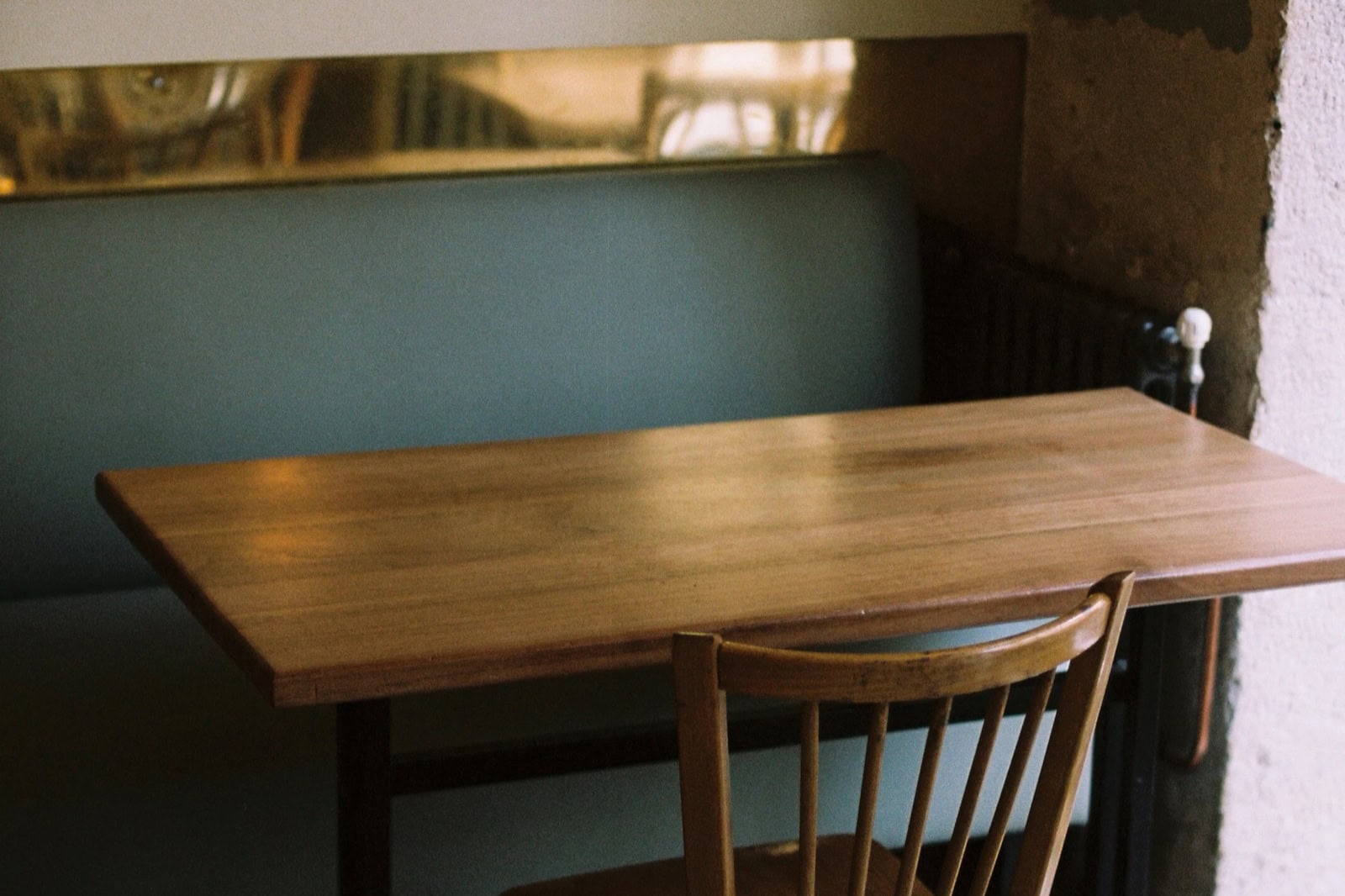
💡 Tip: Le Servan is best experienced over lunch – the staff are young and friendly and the atmosphere is calm. Double Dragon, by contrast, is more of an evening affair and very loud.

  • Where to find it: 32 Rue Saint-Maur, 11th arrondissement (Metro Voltaire, line 9)
  • Price: Starters around €14, mains €25–30
  • Open: Tue–Sat lunch and dinner (closed Sunday and Monday)

Instagram hits and the Big Mamma Group
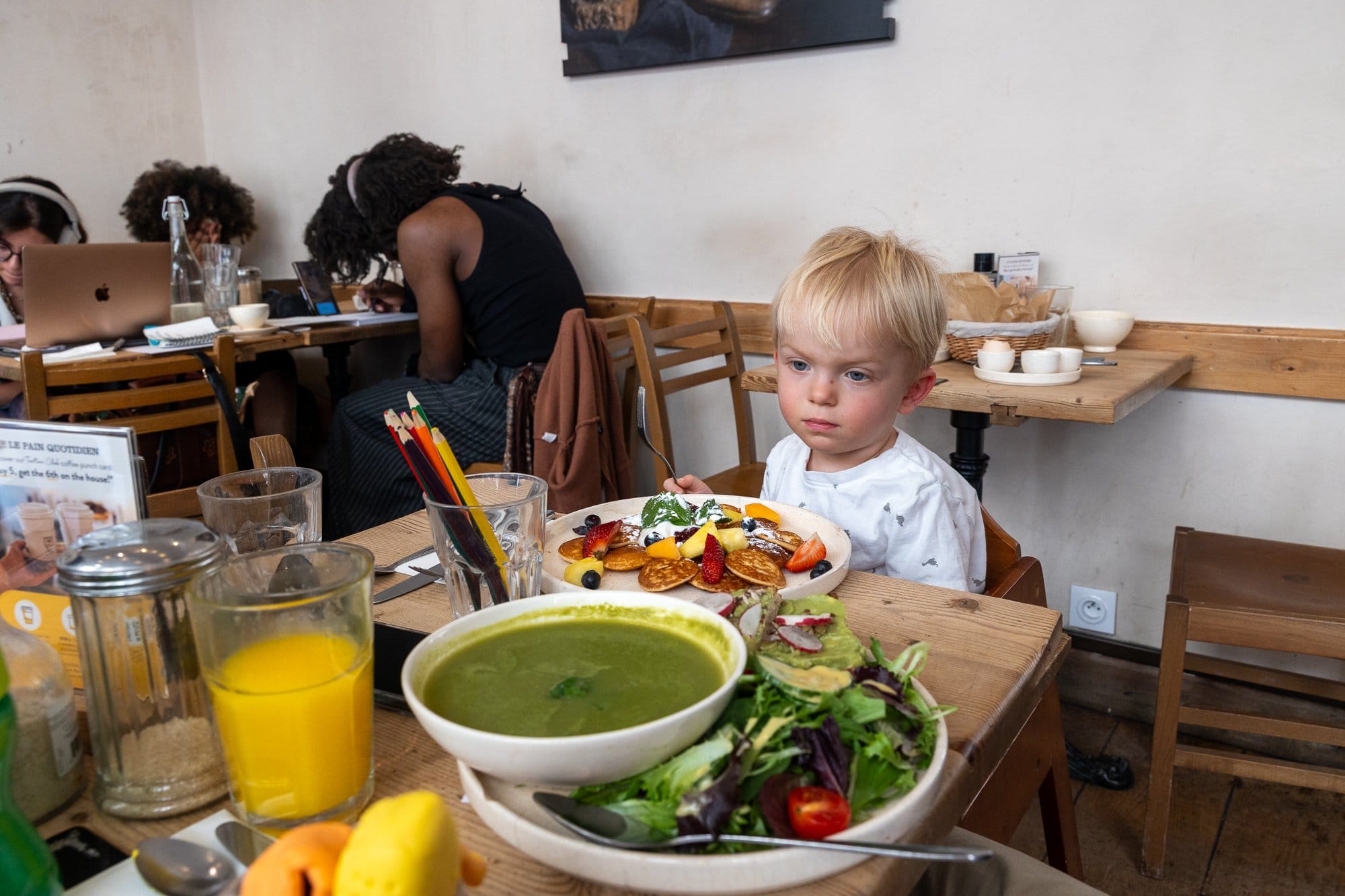
Social media and the show Emily in Paris have turned some venues into genuine pilgrimage sites. People often queue there just for the photo, but the Big Mamma group deserves its enormous hype gastronomically too. Their Italian restaurants are opulent, colourful and look like a film set inside. Their flagship, Pink Mamma in Pigalle, looks like a greenhouse crossed with a palace. Homemade pasta, truffle pizzas and creamy burrata make these spots a safe and immensely tasty zone for any vegetarian.
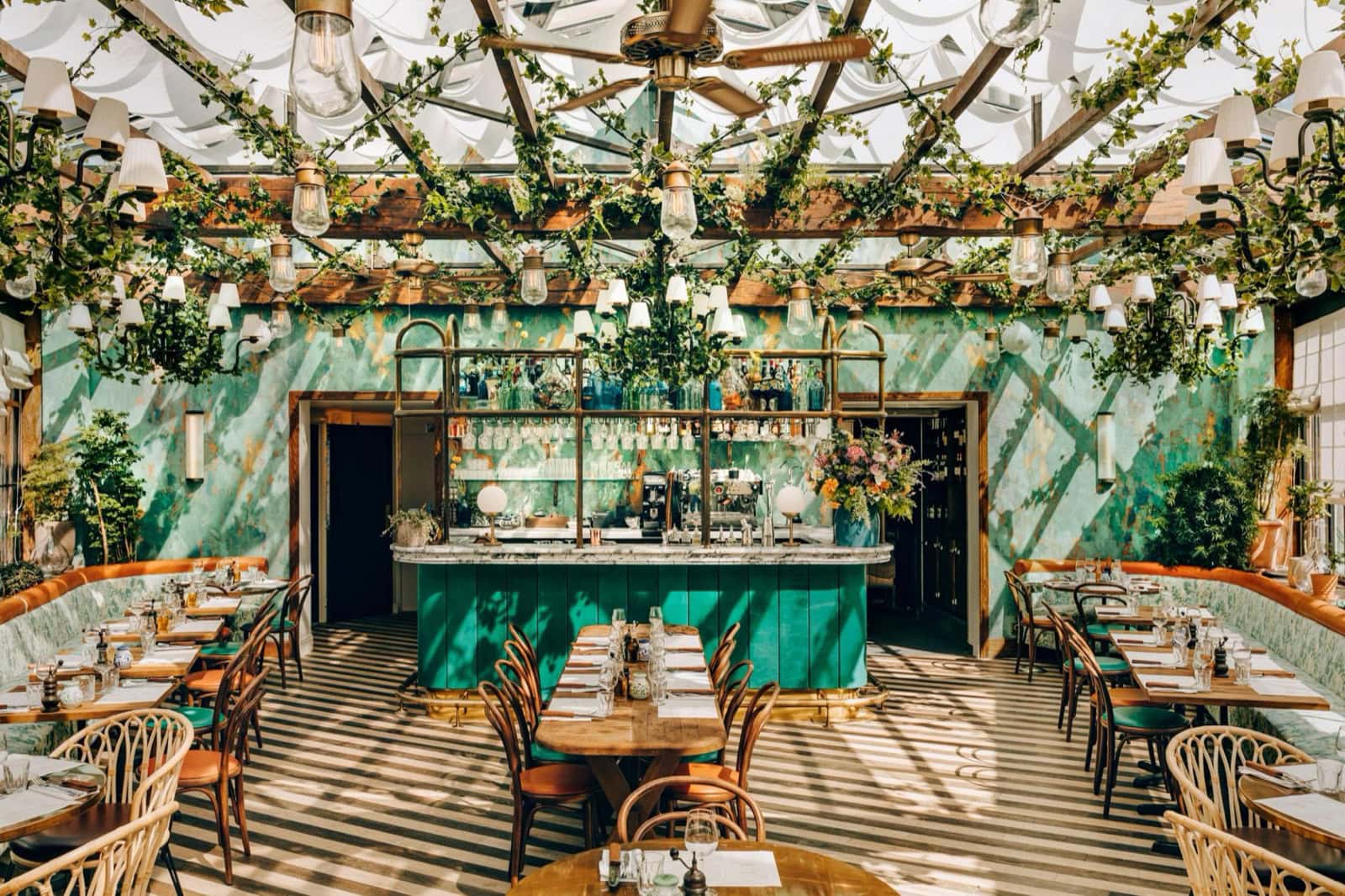
💡 Tip: You’ll practically never get in without a reservation – the wait-list queues are endless. Bet on the lunch opening time, when you have the best chance of landing a table on the lower greenhouse floor, which is the prettiest part of the whole place.

  • Where to find it: Pink Mamma, 20bis Rue de Douai, 9th arrondissement (Metro Blanche, line 2)
  • Price: Pizzas and pasta €15–22
  • Open: Daily lunch and dinner

The 2026 Michelin scene: Vegetables at the top

Paris and Michelin go together like a fresh baguette and salted butter. This is where the rules of haute cuisine were born. You might think the world of starched tablecloths and hushed dining rooms is an inaccessible luxury for the chosen few. That’s not quite true. What’s more, Parisian haute cuisine is undergoing a huge transformation, with vegetables rising to the absolute top. If you want to treat yourself to an exceptional experience, you have plenty to choose from – and without having to sell a kidney.

Arpège: The vegetarian holy grail
Alain Passard is, for me personally, a bit of a culinary god. His Arpège has held three Michelin stars continuously since 1996, but that alone wouldn’t be enough. And now the most important bit: in 2026 Arpège is fully plant-based. The only exception among animal products is the honey from Passard’s own beehives. It’s the only three-star restaurant in France to take such a radical step, and for me it’s a dream come true. Iconic dishes like the flambéed aubergine with melon confit will quite simply bring tears to your eyes. The vegetables are supplied by his own biodynamic farms.
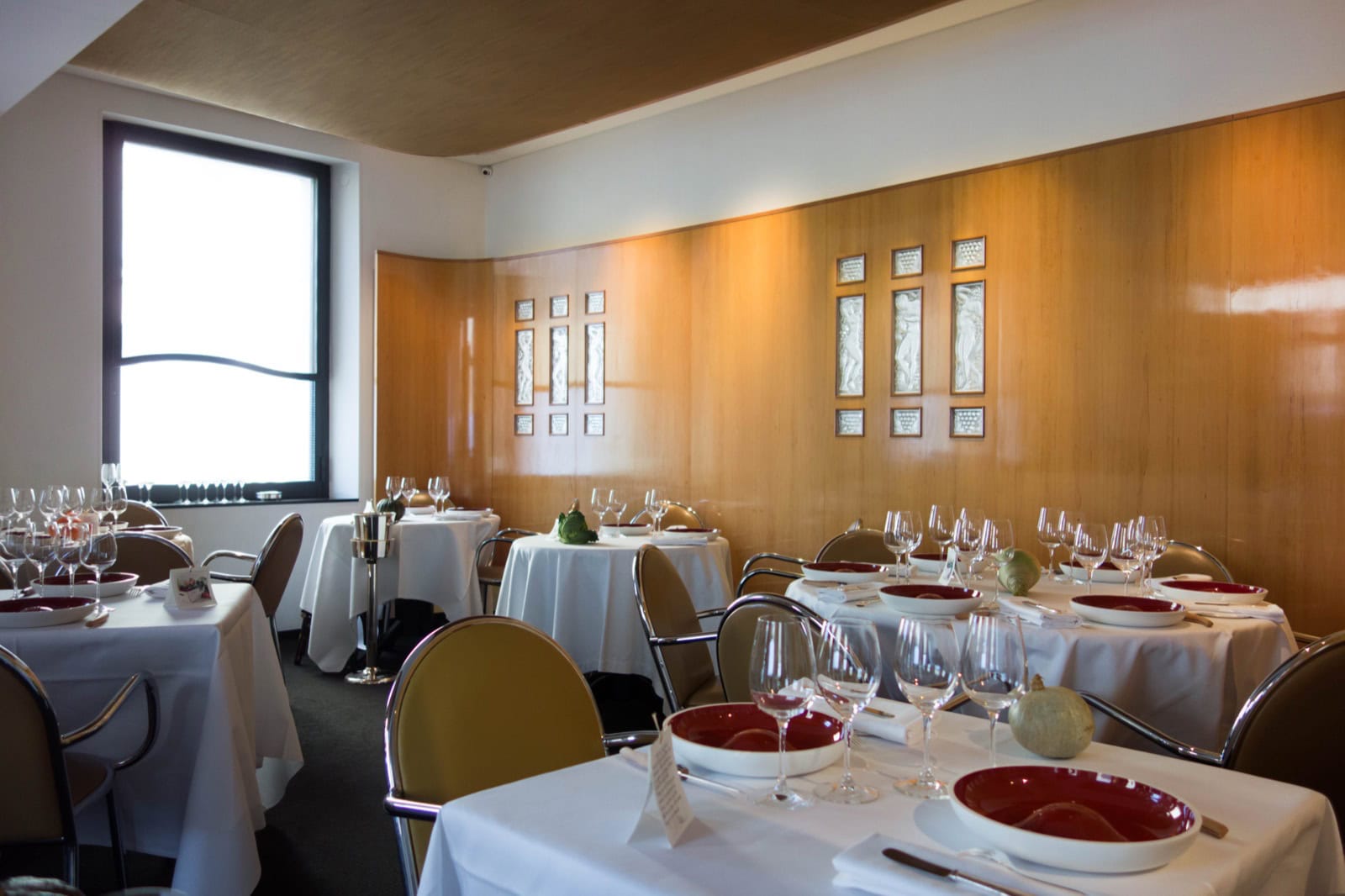
💡 Tip: If the €420 evening tasting is too much for you, go for the lunch menu. You’ll get the same Passard cooking, just in a more intimate midday atmosphere and at a noticeably friendlier price.

  • Where to find it: 84 Rue de Varenne, 7th arrondissement (Metro Varenne, line 13)
  • Price: Lunch menu €260, evening tasting €420
  • Open: Mon–Fri lunch and dinner (closed weekends)

Vivide and Étude: Intimate meat-free experiences
If Arpège is currently out of your budget (and honestly, ours too), don’t worry – Paris has a few brilliant alternatives right at the top. For uncompromising vegan haute cuisine, head to Vivide. They serve a so-called blind tasting menu, where texture and unexpected combinations take centre stage. Another stop for the discerning is Étude in the quiet 16th arrondissement. This one-Michelin-star restaurant will, on advance request, prepare an absolutely phenomenal vegan tasting menu. It’s a very calm and elegant place.
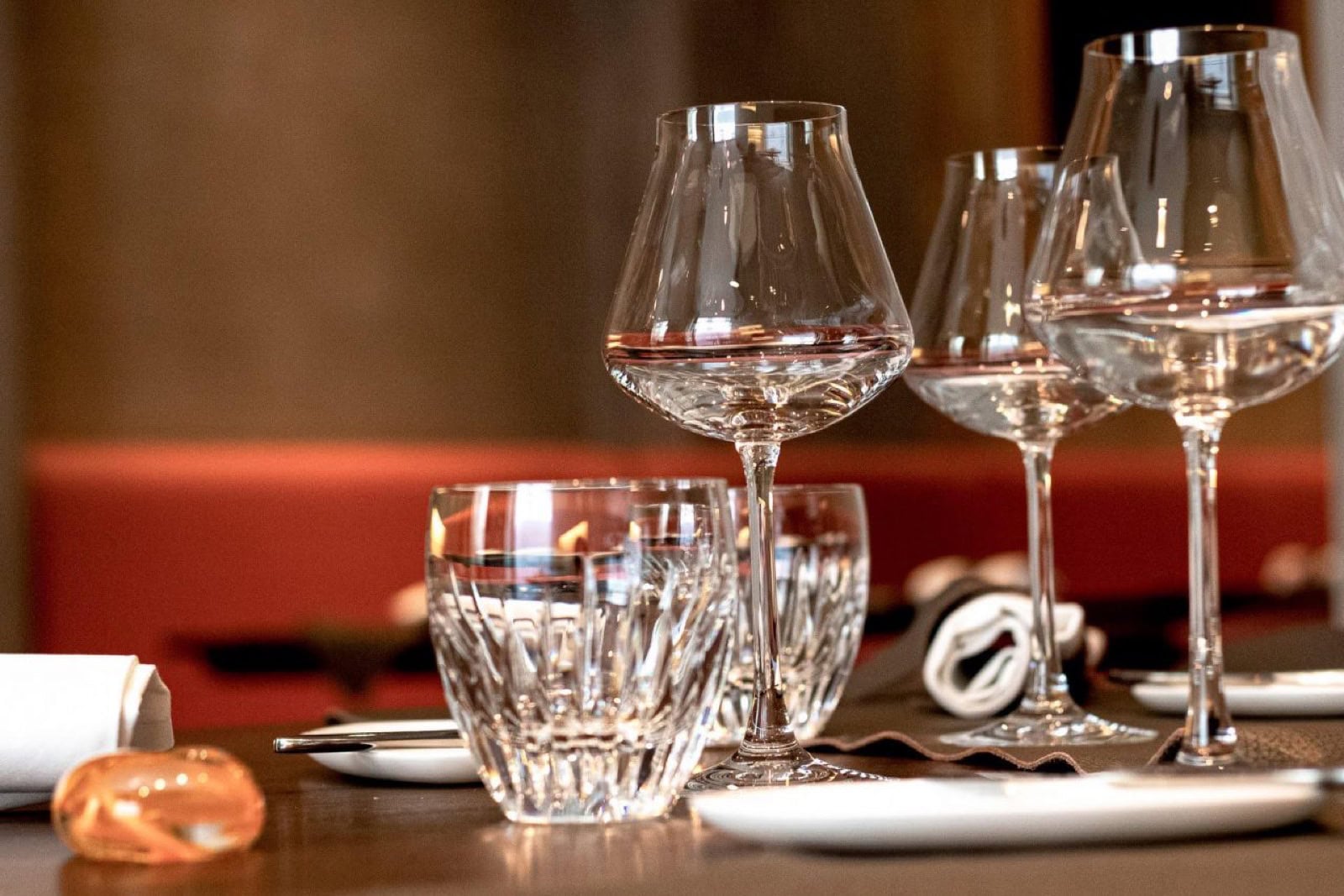
💡 Tip: A blind tasting means you don’t know in advance what you’ll get. The chef cooks from whatever they brought back from the market that morning. So when booking, you must state any allergies very precisely.

  • Price: Vivide tasting menu €75, Étude around €120

Guy Savoy and the classic heavyweight

If your partner appreciates more than just plant-based food and you’re after proper, heavyweight French classics in breathtaking historic surroundings, head to restaurant Guy Savoy. It’s housed in an 18th-century building and serves up perfection. The chefs sweat blood over every portion and the service runs like a perfectly tuned Swiss watch. Lukáš still raves about their famous artichoke soup with truffles.
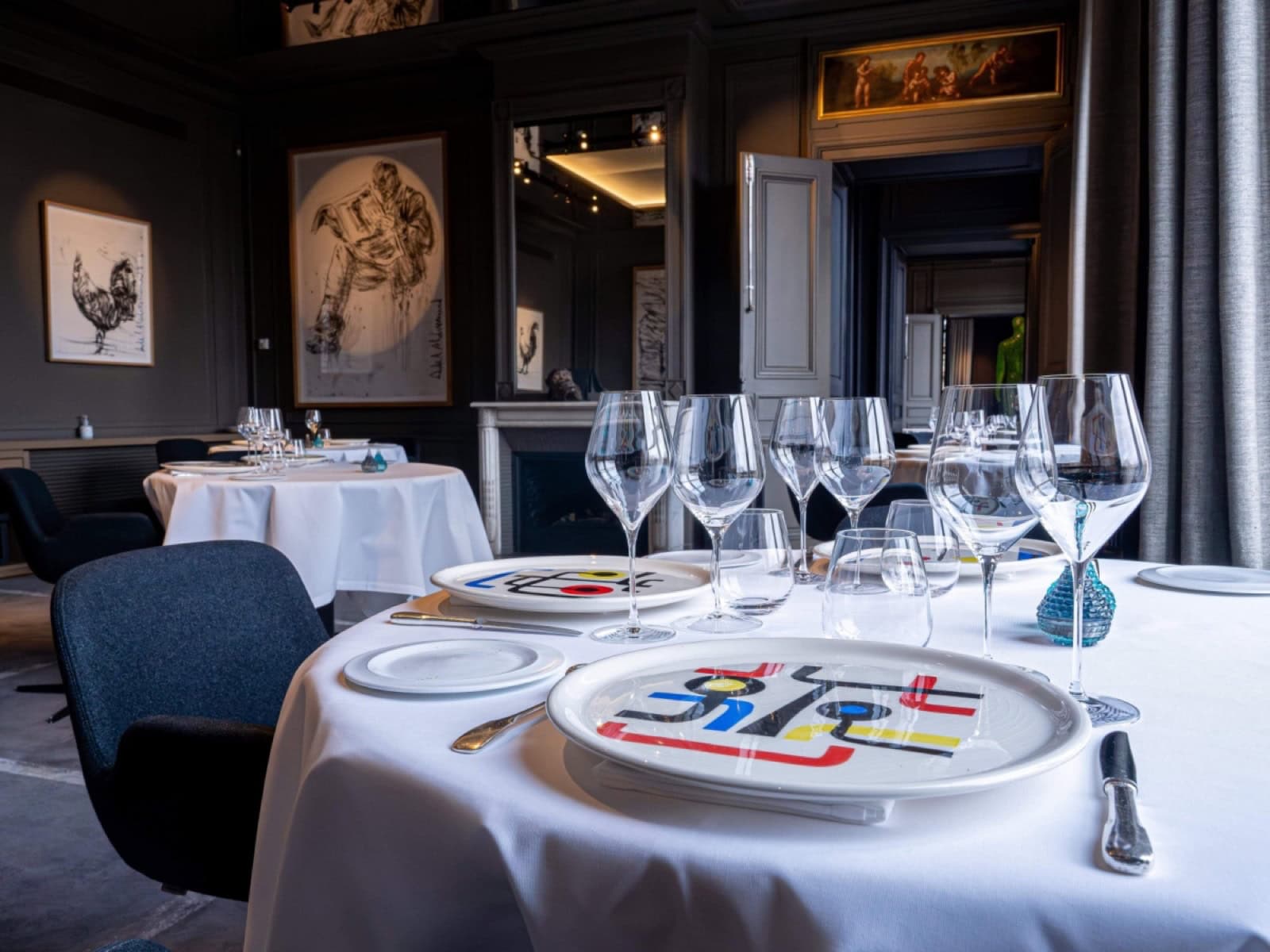
💡 Tip: These three-star palaces enforce a strict dress code. Forget trainers (even the clean designer ones) – men need a jacket and women elegant attire.

  • Where to find it: Monnaie de Paris, 11 Quai de Conti, 6th arrondissement (Metro Pont Neuf, line 7)
  • Price: À la carte items €100–250, tasting over €400
  • Open: Tue–Sat lunch and dinner
lukas a lucka
Lukáš and Lucie recommend
Where to stay in Paris
6 accommodations — hotels, wellness hotels and other lodging options

Bib Gourmand: Top-tier gastronomy at a fraction of the price

Michelin isn’t only about stars. For locals, the much more valuable mark is the one with the face of the little Bibendum man – the so-called Bib Gourmand. This award goes to restaurants offering exceptionally good food at a reasonable price. Try the great spots Le Coucou or Adami in the 9th arrondissement. They’re ideal places for a relaxed evening. It’s louder here, the tables are closer together and the atmosphere is far livelier than in the quiet Michelin sanctuaries.

💡 Tip: The best culinary trick in all of Paris is called the formule midi (lunch menu). Even at the very best venues you’ll get a starter and a main over lunch for an unbelievable €18 to €28.

  • Price: Three-course menu always under €45

The complete vegetarian and vegan map of Paris

Being a vegetarian in Paris no longer means being condemned to a diet of dry baguette and cheese from which you have to desperately pick out bits of bacon. Not at all. The city on the Seine is now one of the most creative places for meat-free dining in Europe. Here are our tried-and-tested addresses where you’ll eat so well that even die-hard carnivores will forget there’s no steak on the plate.

Traditional French cuisine without meat

It would be a shame to be in France and not taste onion soup or hearty stews. A short walk from the Centre Pompidou (which, by the way, is closed for renovation until 2030) you’ll find Le Potager du Marais. It’s exactly the right thing. They make meat-free versions of traditional French dishes, often in a fully vegan rendition. A slightly more modern approach is taken by Le Potager de Charlotte in the 9th arrondissement, where they playfully take old techniques and apply them purely to vegetables.

💡 Tip: If, as a vegetarian, you wander into an ordinary corner brasserie, watch out. Most classic cooking is built on pork lard (saindoux) or bits of bacon (lardons). They’ll happily sprinkle bacon over even a plain salad. Always ask: “Il y a des lardons dedans?” (Is there bacon in it?).

  • Where to find it: Le Potager du Marais, 26 Rue Saint-Paul, 4th arrondissement (Metro Saint-Paul, line 1)
  • Price: Mains €18–22
  • Open: Wed–Sun lunch and dinner

The raw and healthy wave

Sometimes, after all those buttery croissants, your body simply starts crying out for vitamins. An absolute one-off is the bistro 42 Degrés in the 11th arrondissement. It’s the only raw food bistro in France. Nothing in the kitchen is cooked or heated above 42°C, so the ingredients keep all their nutrients. Yet the presentation is a match for haute cuisine. If you need a quick health hit on the go, the Wild & The Moon chain will save you. They make cold-pressed juices and great bowls.
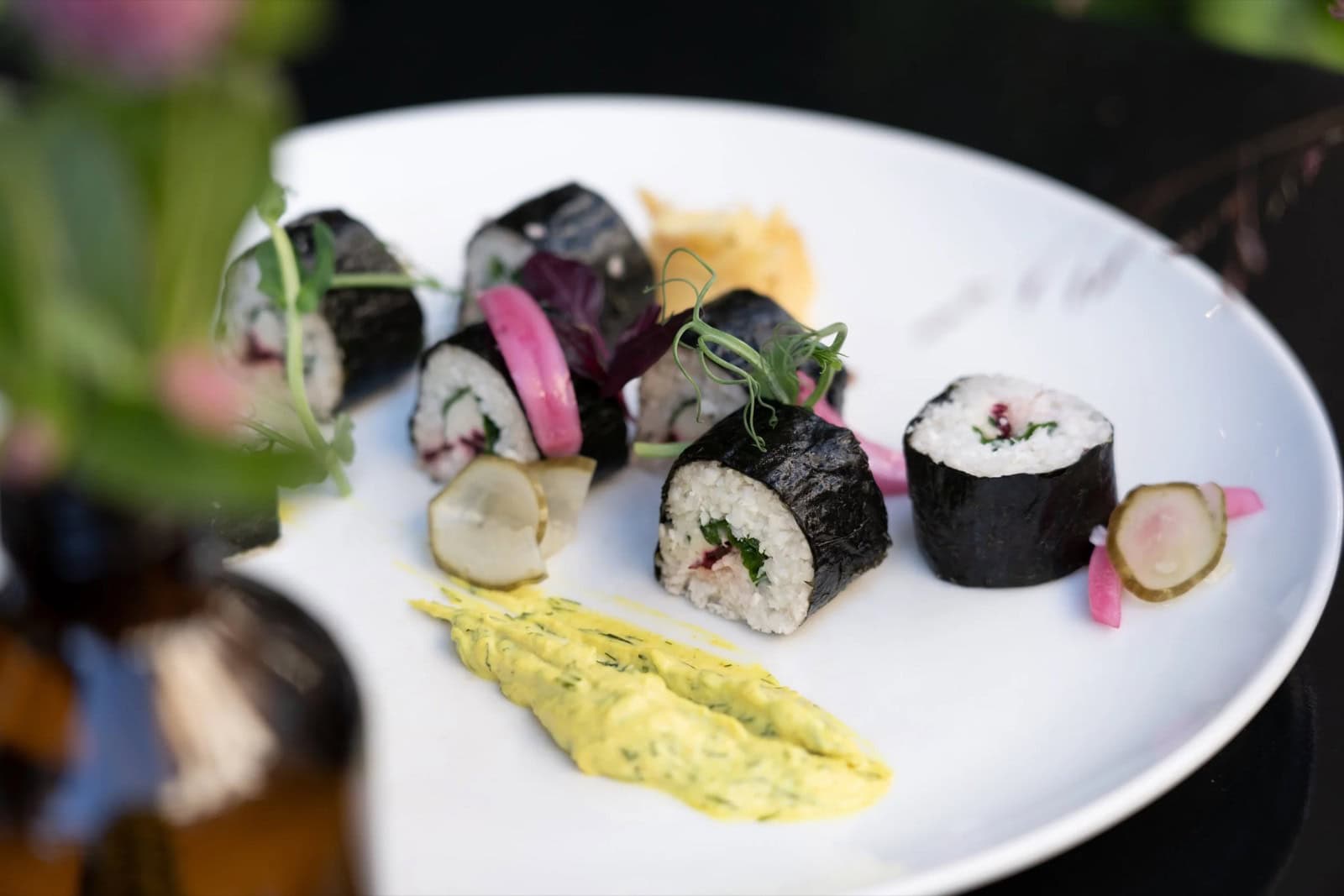
💡 Tip: Wild & The Moon has a branch right in the Marais. It’s a great stop for an afternoon break when you run out of steam after a whole day wandering the cobbled streets. They also have excellent raw desserts.

  • Where to find it: 42 Degrés, 109 Rue du Faubourg Poissonnière, 9th arrondissement (Metro Poissonnière, line 7)
  • Price: 42 Degrés mains around €20, Wild & The Moon juices from €6

Exotic flavours and African rhythms

As soon as European flavours start to bore you, head to the 10th arrondissement near the Canal Saint-Martin. This is home to Jah Jah by Le Tricycle, a spot with a Jamaican and African vibe ruled by a Rastafarian style. The absolute hit here is the Mafé – rice with a rich sauce, avocado, bananas and grilled vegetables. If you love Asian food, Tien Hiang is an institution. Everything here is vegan, and the chefs work so masterfully with plant-based substitutes that their fake duck would easily fool even native Asians.
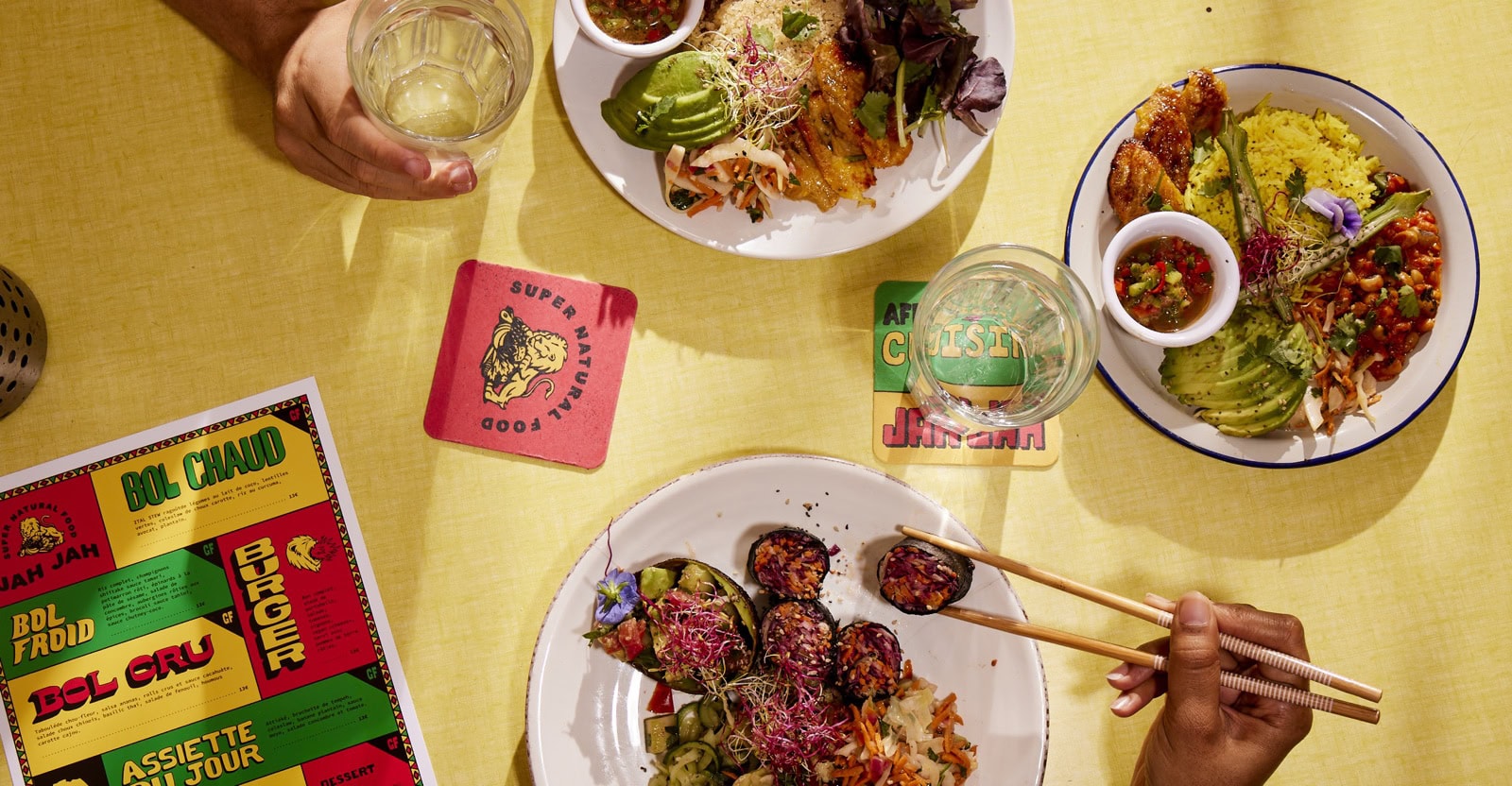
💡 Tip: At Jah Jah they’ll top up your coffee with just about any plant milk you can think of – from coconut to hemp to oat.

  • Where to find it: Jah Jah, 11 Rue des Petites Écuries, 10th arrondissement (Metro Château d’Eau, line 4)
  • Price: Giant bowls around €15

What to eat in Paris: Markets, street food and natural wine

The real Paris – the one locals love and live every day – smells of fresh coriander at the market and drips down your fingers in the form of hot sauce on a street corner. This face of Parisian gastronomy is the most laid-back thing you can experience. No stressful waiting for the next course, no stiff etiquette, just food, aromas and life on the street. Here joy and pleasant chaos rule.

Marché des Enfants Rouges: The oldest market

This is our holy grail. The oldest covered market in Paris has been running since 1615 and sits in the heart of the northern Marais. Today it’s a buzzing gastronomic labyrinth full of fantastic ready-food stalls. While Lukáš goes for the Japanese bento, I reach for the perfect Moroccan vegetable tagine. We find a spot at the wooden tables outside and eat straight from our hands. The atmosphere is completely informal, with nobody frowning at anyone. Try to grab a sandwich at the legendary Chez Alain Miam Miam stall.
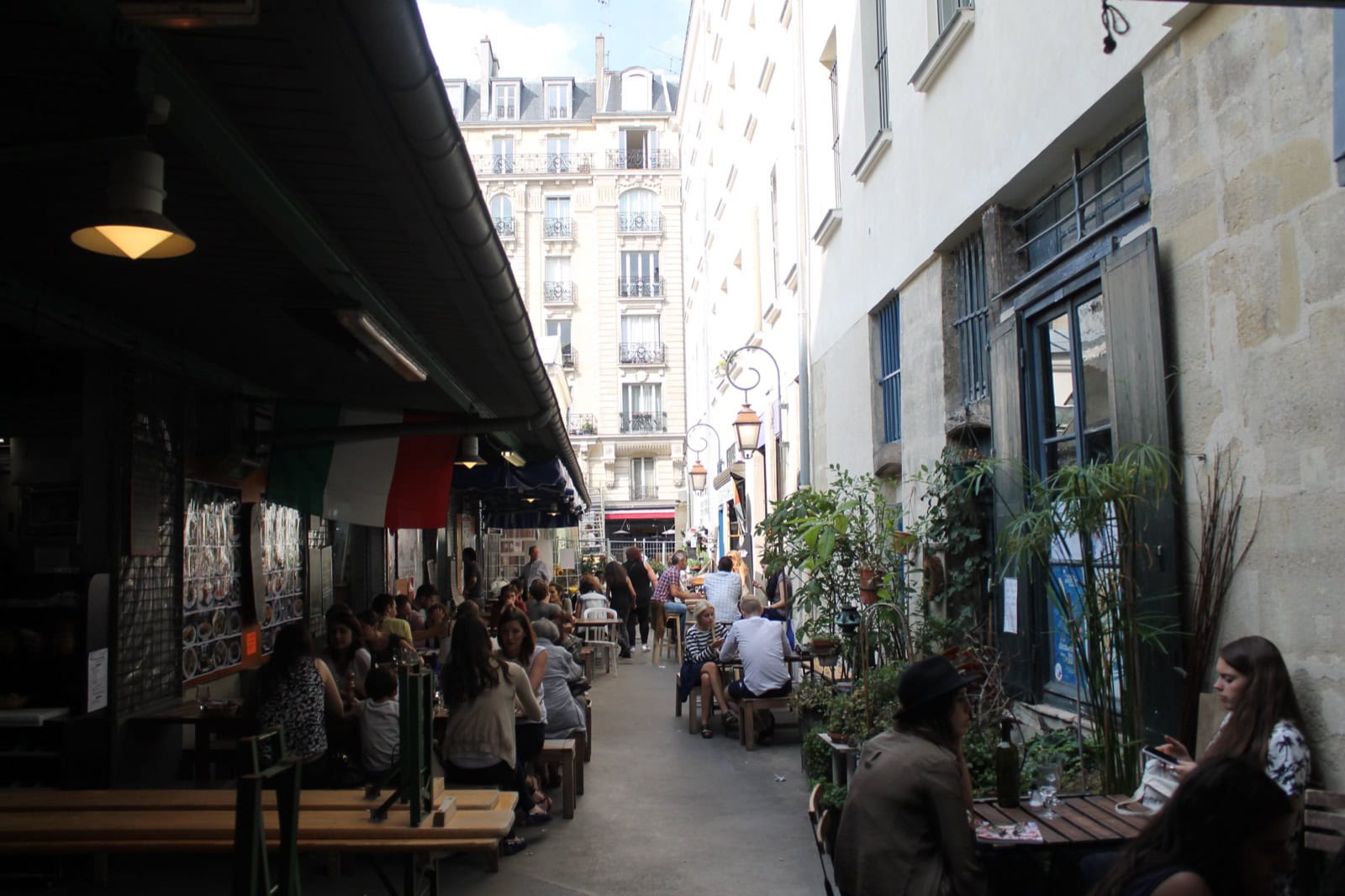
💡 Tip: Come here on a weekday around midday if you can. At the weekend it gets so packed you can barely squeeze between the stalls and tables.

  • Where to find it: 39 Rue de Bretagne, 3rd arrondissement (Metro Arts et Métiers, lines 3 and 11)
  • Price: Ready meals at the stalls €10–15
  • Open: Tue–Sat 8:30–20:30, Sun 8:30–17:00 (closed Monday)

L’As du Fallafel and the Marais war

An absolute must. On Rue des Rosiers in the 4th arrondissement, a daily, merciless battle for the best falafel plays out. The green façade with the L’As du Fallafel sign draws crowds like a magnet. You’ll get a fluffy pita stuffed to bursting with crispy falafel, fried aubergine and tahini. Don’t let the long queue put you off – the system is incredibly fast. Staff walk along the line taking payment in advance.
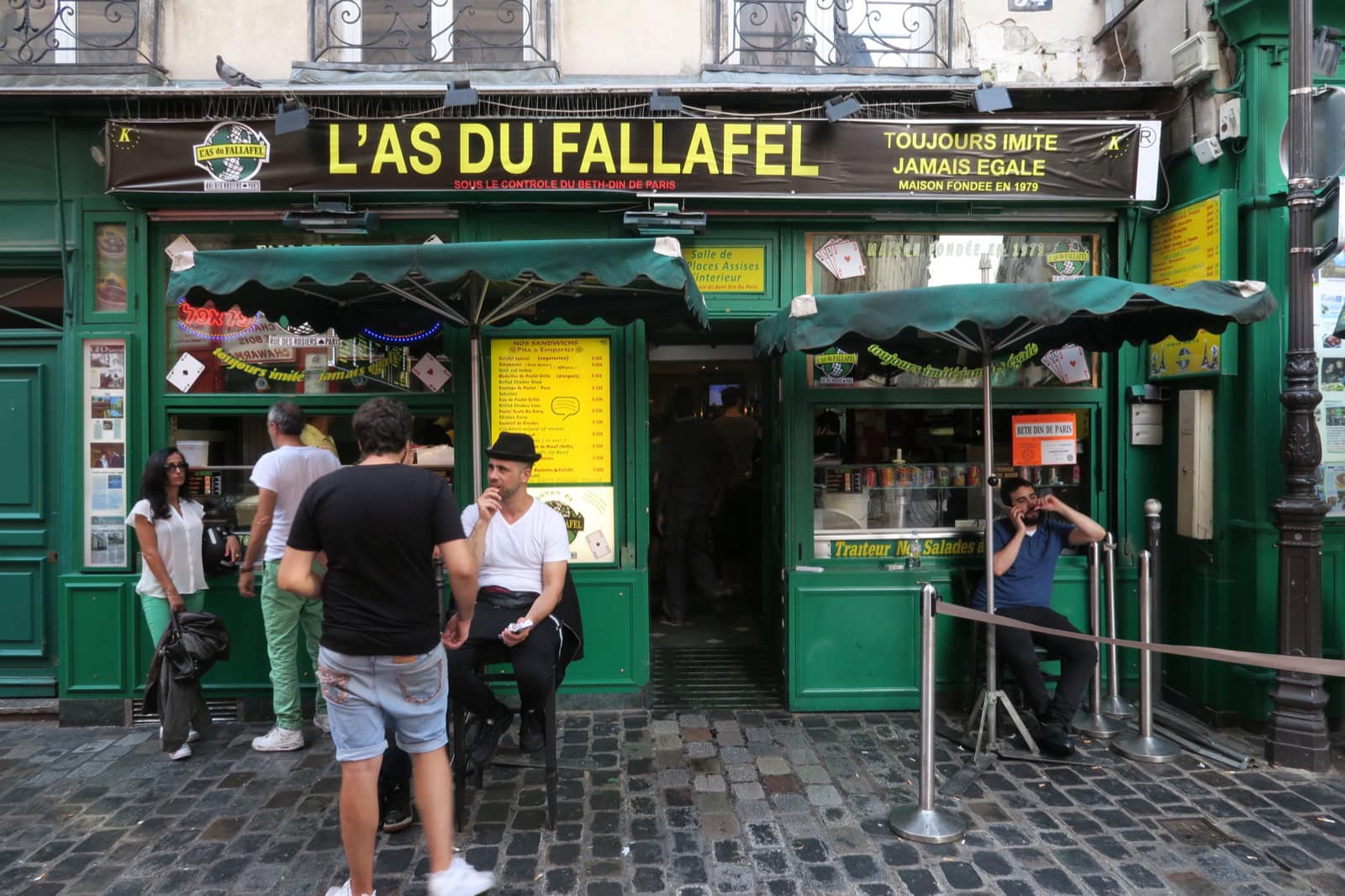
💡 Tip: L’As du Fallafel is a strictly kosher venue. From Friday afternoon to Sunday morning it’s absolutely CLOSED for the Sabbath. If you hit closed doors, there’s a great alternative right opposite – Mi-Va-Mi.

  • Where to find it: 34 Rue des Rosiers, 4th arrondissement (Metro Saint-Paul, line 1)
  • Price: Falafel to go around €8
  • Open: Sun–Thu 12:00–24:00, Fri until 17:00, closed Saturday

Breizh Café and the art of the true galette

Crêpes are of course a classic, but forget the rubbery discs from the warmers under the Eiffel Tower. The real street food is the Breton galette (savoury buckwheat pancakes). They’re delicious with meat-free fillings like cheese, egg and spinach, and they’re naturally gluten-free too. The top of the field is Breizh Café. They use premium ingredients and their Marais venue is wonderfully pleasant. With a crispy galette in hand, you’ll feel like you’re in seventh heaven.
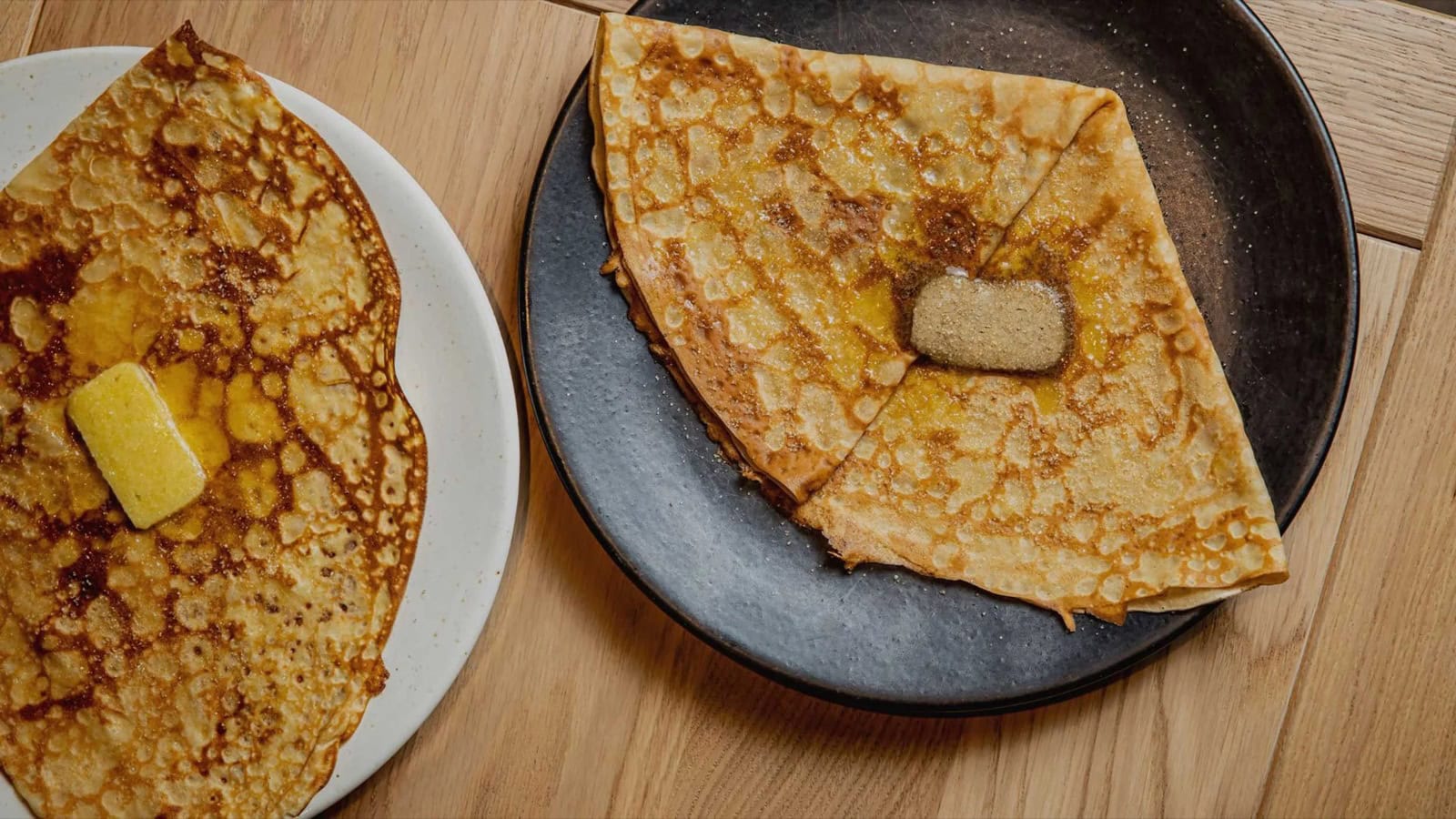
💡 Tip: With a proper Breton galette you traditionally don’t drink wine, but dry apple cider (cidre brut), served to you in little ceramic bowls (bolée).

  • Where to find it: 109 Rue Vieille du Temple, 3rd arrondissement (and other branches)
  • Price: Galettes €10–16
  • Open: Daily lunch and dinner

Caves à Manger and natural wine

I first tasted natural wine in Paris with great scepticism – what on earth is this cloudy drink that smells of a farmyard? – but now I’m hooked. It’s made with minimal intervention, often without filtration and with no added sulphur. The result can be cloudy and smell of the farm. It’s drunk in so-called caves à manger (wine shops with light food). Try the cult Le Verre Volé near the Canal Saint-Martin. The key to a chilled experience is timing. Parisians love apéro from 17:00 to 20:00. At that time the bars are still calm, there’s plenty of space and the staff have time for you.

💡 Tip: By the Canal Saint-Martin you can take a bottle of wine to go from Le Verre Volé (you’ll pay a small corkage fee) and go sit right on the embankment. For a relaxed summer evening it’s the perfect solution.

  • Where to find it: Le Verre Volé, 67 Rue de Lancry, 10th arrondissement (Metro Jacques Bonsergent, line 5)
  • Price: Glass of wine €6–10, small plates €8–15

Morning in Paris: Bakeries, sweets and the third coffee wave

A Parisian morning smells of butter. For Lukáš and me, who never sleep in much when travelling, the early-opening bakeries are a gift from heaven. French baking is a national sport and the coffee culture has finally caught up with world standards. You can choose whether you want to soak up history alongside the ghosts of Hemingway, or have a perfect flat white made from Ethiopian beans in a minimalist spot.

The law of the perfect baguette and croissants

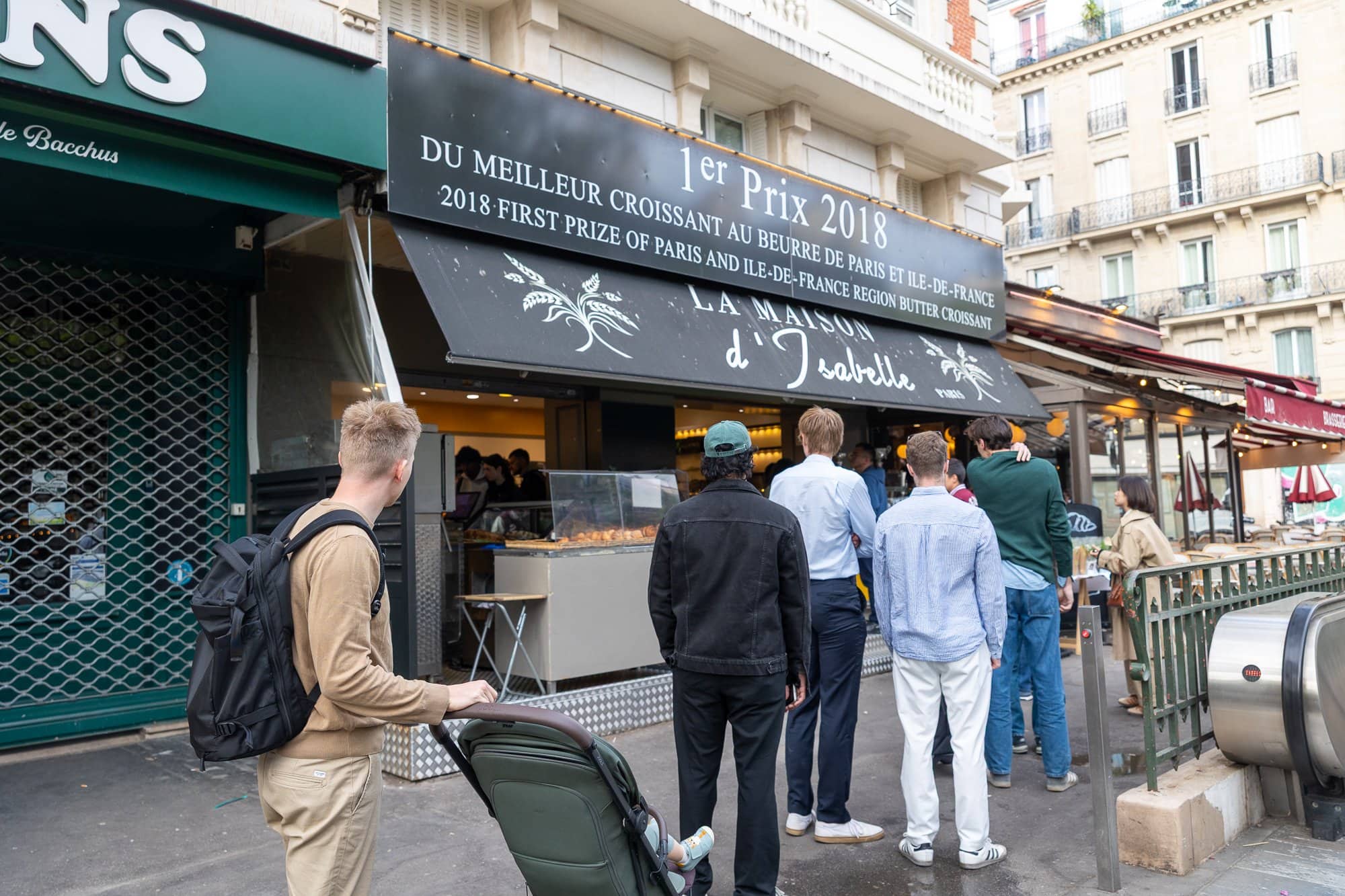
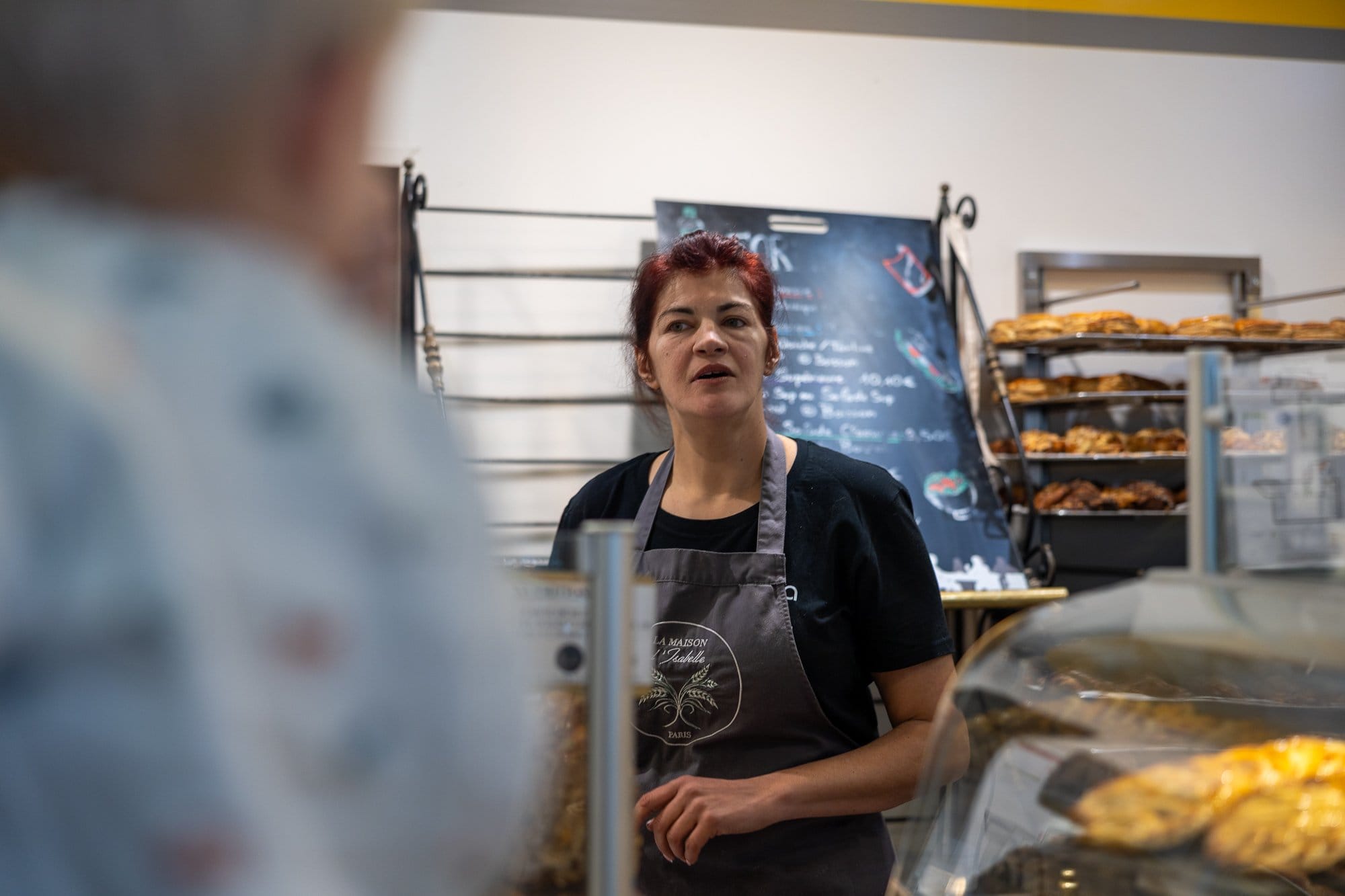
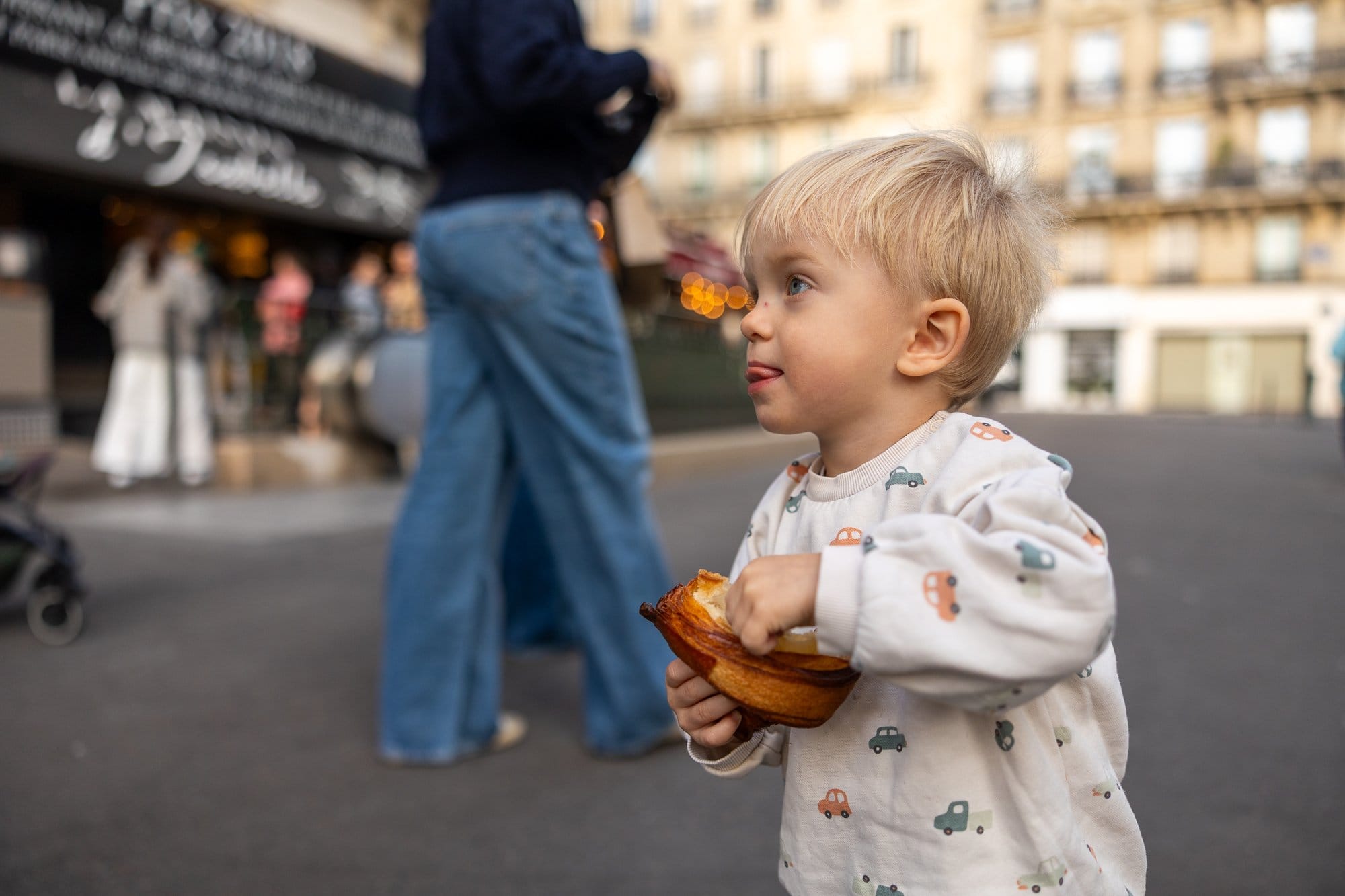
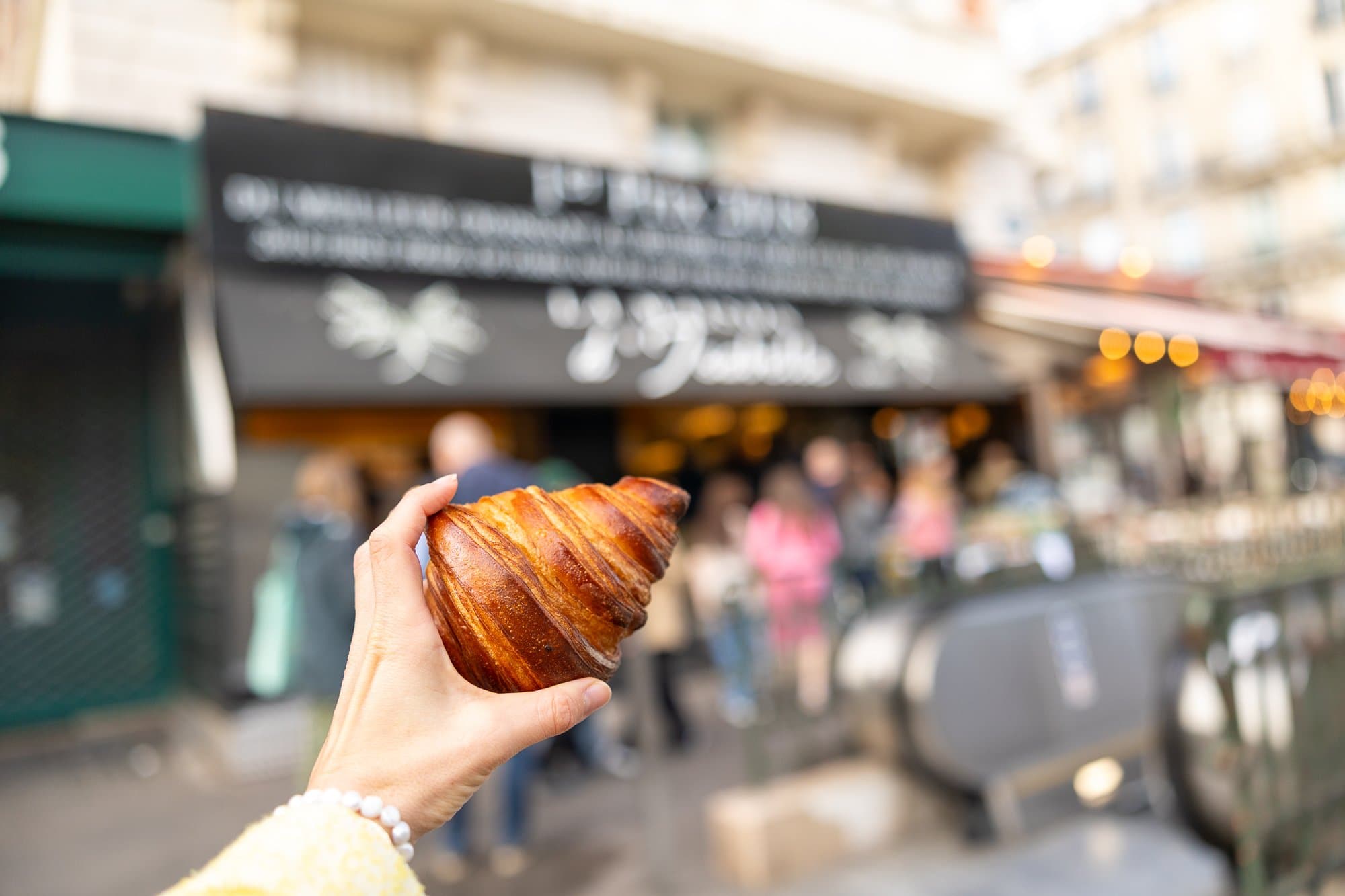
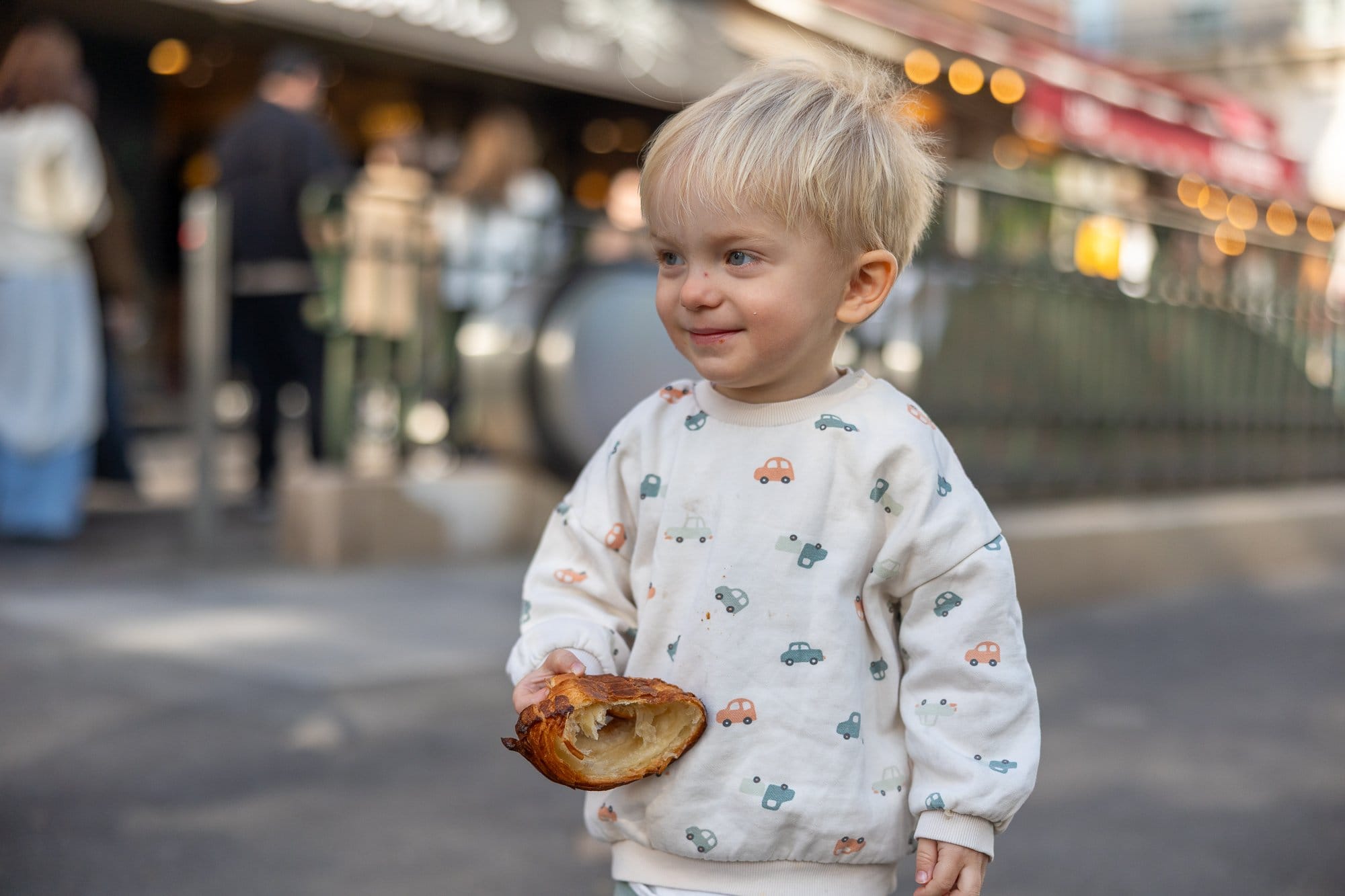
As soon as you step into a boulangerie, never just order “une baguette”. You’d get a plain white loaf. You want a baguette tradition, which by strict law is baked only from flour, water, salt and yeast. And with croissants, watch out for a big trap. The curved croissant (crescent-shaped) is made with margarine. The straight one is the croissant au beurre, full of honest butter. For absolute perfection, head to the historic bakery Du Pain et des Idées in the 10th arrondissement and buy their legendary snail with pistachio and chocolate (escargot pistache-chocolat).
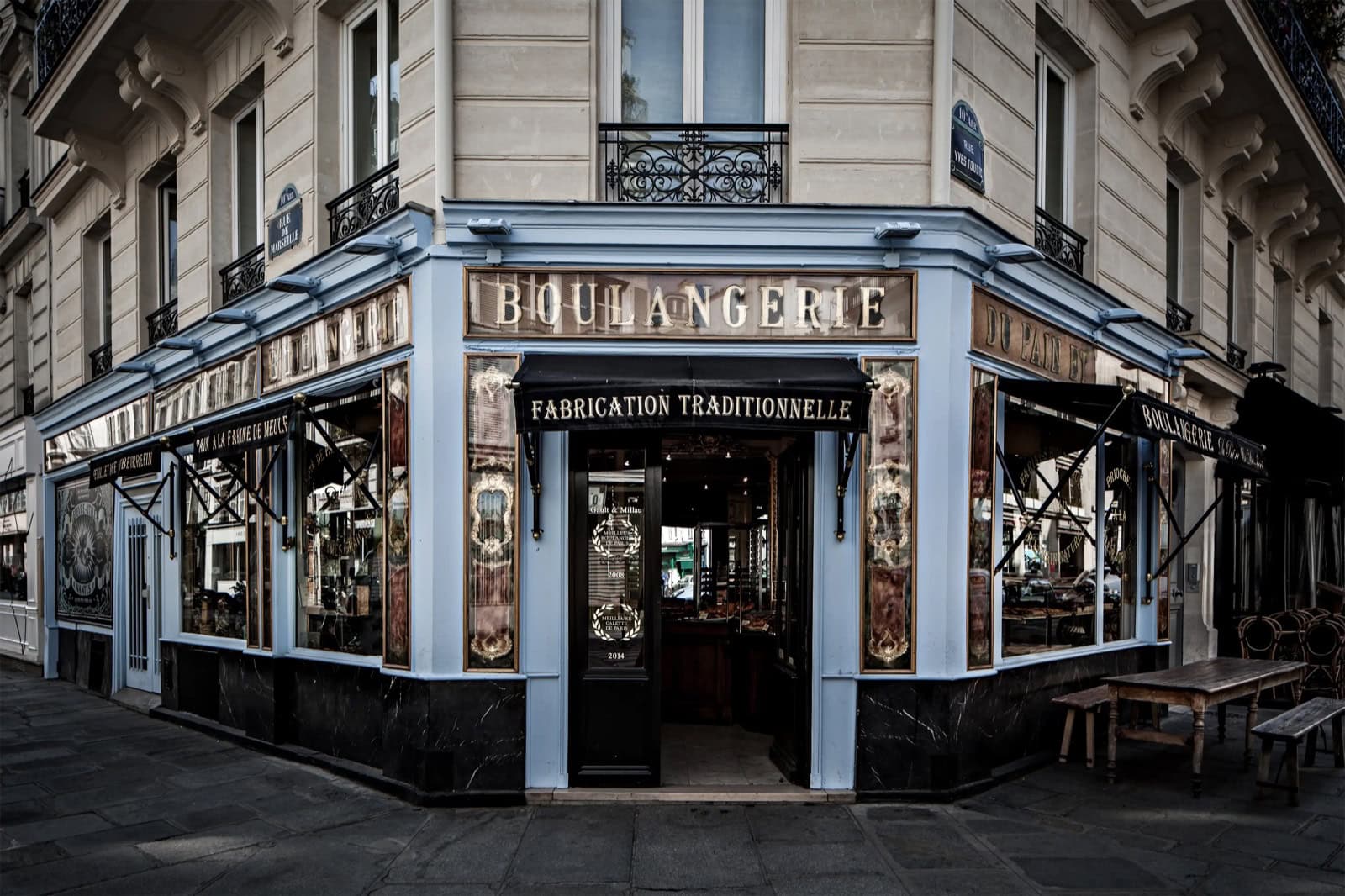
💡 Tip: A baguette is never cut with a knife! It’s broken by hand. Parisians routinely tear off the crispiest end (le quignon) on the way home, right there in the street. We do it too.

  • Where to find it: Du Pain et des Idées, 34 Rue Yves Toudic, 10th arrondissement (Metro République, lines 3, 5, 8, 9, 11)
  • Price: Baguette tradition approx. €1.30, sweet pastries €3–4
  • Open: Mon–Fri 6:45–20:00 (closed weekends!)

Haute Pâtisserie and a visual feast

While a bakery is for everyday bread, a pâtisserie is a boutique reminiscent of a jewellery store. An absolute phenomenon is Cédric Grolet. His hyperrealistic desserts (trompe-l’œil), which look exactly like real fruit, are the most photographed thing on Parisian Instagram, but they taste even better than they look. Beneath a thin chocolate shell hides a fluffy mousse and an explosive centre. The quiet ruler, meanwhile, is Pierre Hermé and his perfect Ispahan-flavoured macarons (rose, raspberry, lychee).
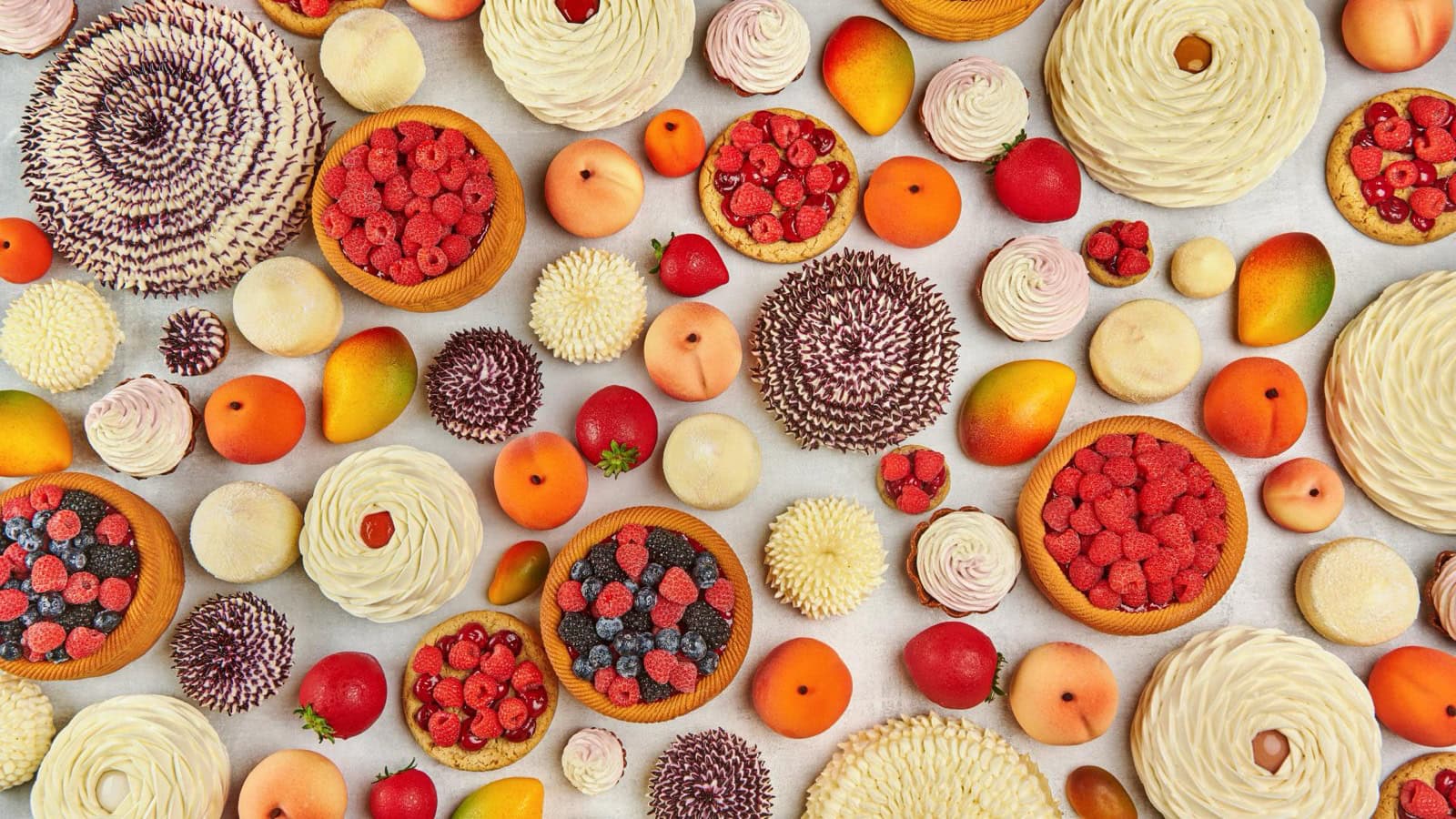
💡 Tip: Gigantic queues form outside Cédric Grolet’s boutiques (by the Opéra and the Louvre) an hour before opening. If you don’t want to wait, split forces. One of you joins the queue while the other enjoys a coffee in a nearby park.

  • Where to find it: Cédric Grolet Opéra, 35 Avenue de l’Opéra, 2nd arrondissement
  • Price: One Grolet dessert costs around €17, a Hermé macaron approx. €3

The ice cream legend Berthillon

Good ice cream can rescue even the most exhausting day, and in Paris you won’t have to compromise at all. Berthillon ice cream on the Île Saint-Louis is an institution that the Chauvin family has run since 1954. They have an unbelievable eight kinds of chocolate ice cream. Their dark chocolate sorbet (chocolat amer) is vegan, without a drop of milk, yet creamier than most classic ice creams.

💡 Tip: The main Berthillon salon is strictly closed on Mondays and Tuesdays. In summer they also tend to take a holiday. Don’t throw in the towel, though – many surrounding cafés on the island are licensed and sell original Berthillon ice cream from their freezers.

  • Where to find it: 29-31 Rue Saint-Louis en l’Île, 4th arrondissement (Metro Pont Marie, line 7)
  • Price: A scoop of ice cream around €3.50

The third-wave coffee revolution

The city on the Seine has been washed over by the third coffee wave, and dozens of independent roasters have sprung up. This is where you’ll get a perfect flat white. The pioneer is the café Ten Belles by the Canal Saint-Martin. KB Coffee Roasters near Pigalle has a great location. KB’s huge advantage is their large outdoor terrace, where you’ll find an ideal refuge and can drink your coffee in peace away from the bustle of the street. Extremely photogenic, meanwhile, is Café Kitsuné in the gardens of the Palais-Royal.
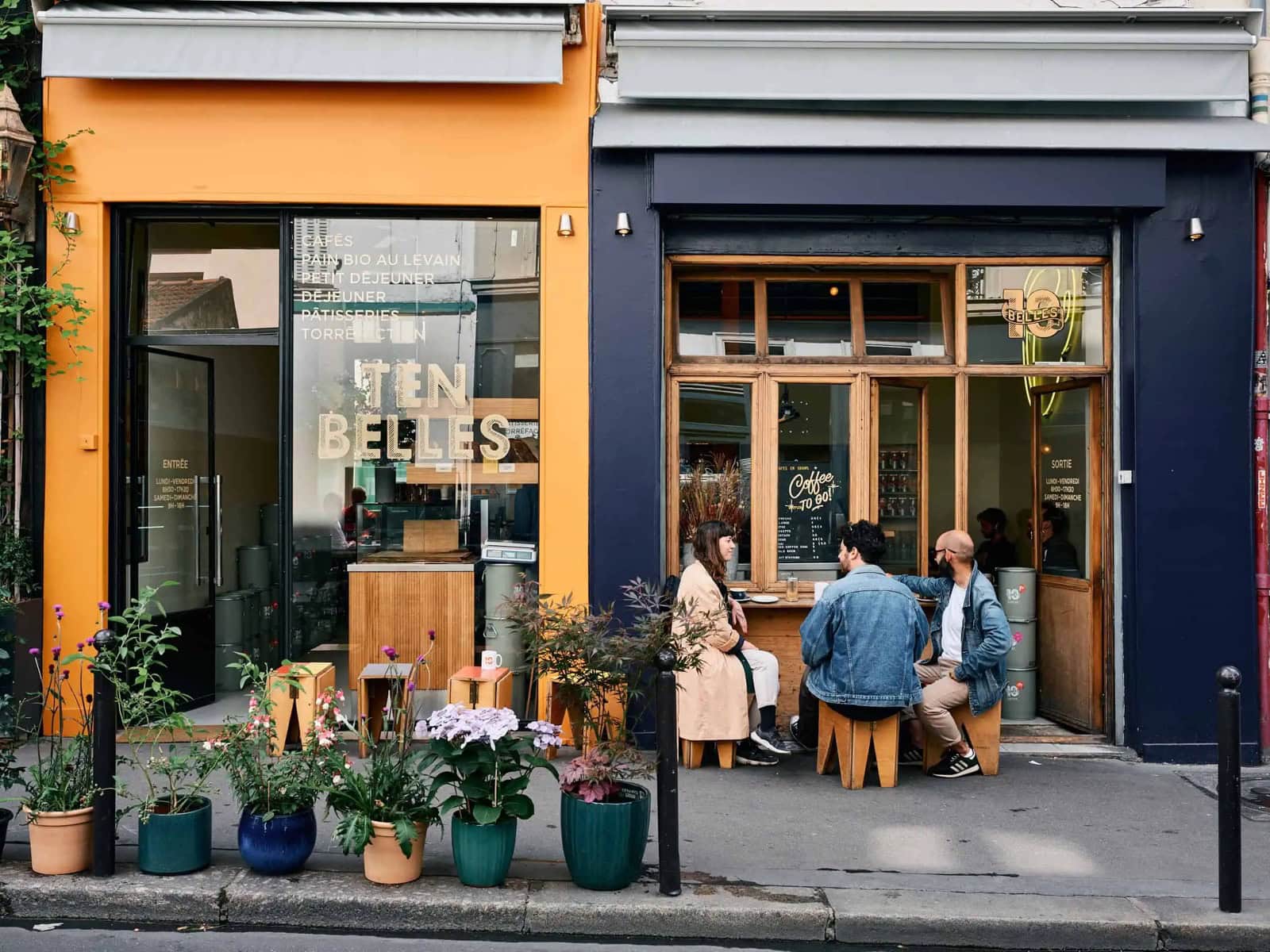
💡 Tip: If you order a cappuccino after lunch in a traditional brasserie, the waiter will bring it but mentally file you under “tourist”. In modern specialty spots (like Ten Belles), though, that doesn’t apply – there a flat white is an all-day standard and they automatically offer oat milk.

  • Where to find it: Ten Belles, 10 Rue de la Grange aux Belles, 10th arrondissement
  • Price: Flat white €5, espresso €2.50

Historic cafés in Saint-Germain

Here you pay for the aura and the history. On Boulevard Saint-Germain stand two of the greatest legends: Café de Flore and Les Deux Magots. This is where existentialism was born, where Sartre and Hemingway wrote. From a culinary point of view the coffee lags a little behind the modern roasters and is fiercely expensive, but the experience is one of a kind. Waiters in classic black-and-white uniforms with long aprons dart between the tables. Sitting on the terrace and watching the street go by is a programme in itself.
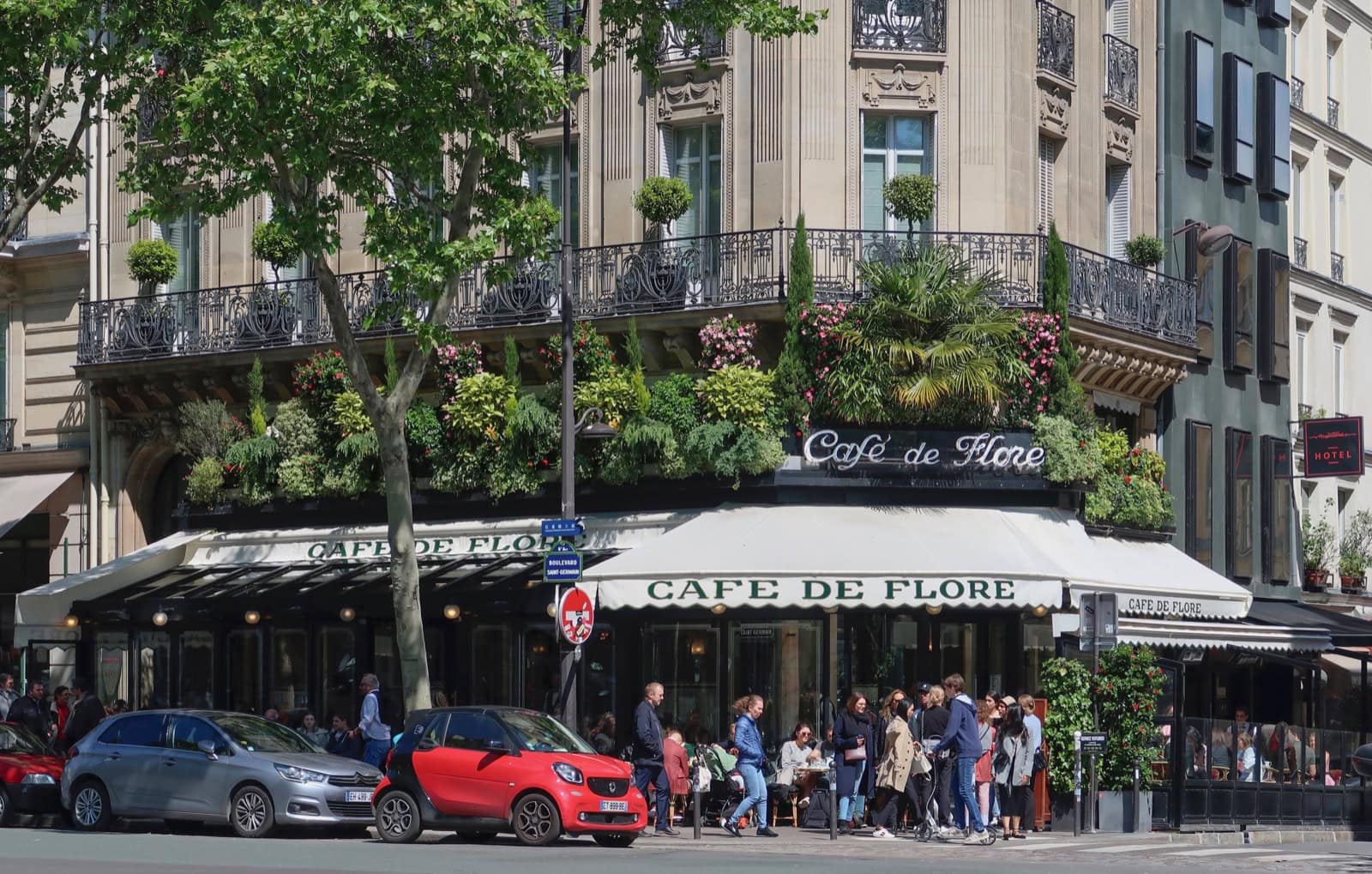
💡 Tip: Inside the historic cafés the tables are crammed five centimetres apart and it’s dim. Always ask for a table outside on the terrace (en terrasse), where there’s more room and where the real Parisian street show plays out.

  • Where to find it: 172 Boulevard Saint-Germain, 6th arrondissement (Metro Saint-Germain-des-Prés, line 4)
  • Price: Espresso on the terrace around €5, hot chocolate €9

Practical info: Etiquette, reservations and how not to get caught out

Paris has its unwritten rules, and following them makes you a welcome guest. Ignore them and you’ll leave with the feeling that the French are arrogant. Emily in Paris exaggerates it, of course, but a basic respect for the culture is simply expected here.

The golden Bonjour rule and tap water

This is absolutely crucial, and we’ve experienced it firsthand: start every entry into any venue with a loud Bonjour. Without a greeting you’re simply thin air to the staff. At the table another great Parisian habit applies. You don’t have to spend on pricey bottled water. Ask for “une carafe d’eau” (a carafe of tap water). It’s your right, the restaurant must provide it free by law, and the water in Paris is very good quality. As for tipping, the bill already includes a service charge (service compris). No tip is left, but for exceptional service you put a few euros in cash on the table.

How and when to book a table

Parisians eat precisely on time. Lunch kitchens run strictly from 12:00 to 14:30. After half past two, only bakeries or tourist traps will save you. Dinners start at 19:30 at the earliest, but restaurants only really fill up around half eight. Reservations at the better bistros are made online (often via The Fork app), and for the most sought-after ones (like Septime or Pink Mamma) you have to set an alarm for the exact day and hour the tables open (often a month in advance).

Tourist traps and food scams

Never, but really never, eat at the restaurants right on the Place du Tertre in Montmartre. It’s the saddest tourist trap in the whole city, with overpriced, rushed food. Likewise, watch out during a picnic on the lawns of the Champ de Mars below the Eiffel Tower. Scammers commonly operate there with fake petitions (pretending to be deaf-mute) or people who suddenly “find” a gold ring on the ground and want to sell it to you. Ignore them and hold on tightly to your bags.

Where to go next

If you now have a clear idea of what to taste in Paris, it’s time to plan the rest of your trip. Find out what to see in Paris and which sights you can skip with a clear conscience. If you’re short on time, we’ve put together a detailed itinerary for Paris in 3 days. And if you’re travelling with the little ones, our guide to Paris with kids will walk you through the pitfalls of pram travel and show you the best playgrounds.

Frequently asked questions

Kolik stojí běžné jídlo v Paříži?

V roce 2026 pořídíte skvělé polední menu (formule midi) v dobrém bistru mezi 18 a 28 € (450–700 Kč). Večerní jídlo v běžné restauraci vyjde na 35–60 € (875–1 500 Kč) na osobu. Street food (falafel, crêpes) stojí kolem 8–12 € (200–300 Kč).

Je těžké se v Paříži stravovat jako vegetarián?

Vůbec ne! Paříž prošla obrovskou zelenou revolucí. Najdete tu špičková čistě veganská bistra i michelinské restaurace (jako nově plně veganská Arpège). V klasických brasseriích si ale vždy hlídejte, zda vám do jídla nepřidali slaninu (lardons).

Kdy mají restaurace otevřeno?

Obědy se podávají striktně mezi 12:00 a 14:30. Poté se kuchyně zavírají a otevírají se znovu až na večeři kolem 19:30. Mezi tímto časem vás zachrání jen pekárny, street food nebo velké brasserie s celodenním provozem (service continu).

Vyplatí se v Paříži rezervovat stůl dopředu?

Do nejžádanějších bister (jako Septime nebo Pink Mamma) rozhodně ano, volná místa mizí klidně měsíc předem. Rezervace se dělají online, často přes aplikaci The Fork. Do běžných brasserií, pekáren a na street food ale rezervaci nepotřebujete.

Musím v restauraci nechávat spropitné?

Ze zákona je poplatek za obsluhu (zhruba 15 %) už započítán v cenách na jídelním lístku. Na účtu uvidíte nápis „service compris“. Dýško tedy není povinné, ale za dobrý servis je slušností nechat na stole 1 až 3 eura v hotovosti.

Jak je to v Paříži s vodou v restauracích?

Nemusíte si kupovat drahou balenou vodu. Stačí obsluhu požádat o „une carafe d’eau“ (karafu vody). Restaurace je povinna vám natočit vodu z kohoutku zdarma. Pařížská voda je výborná a bezpečná k pití.

Kde najdu nejlepší bagetu?

Nikdy si v pekárně nekupujte obyčejnou bagetu (une baguette). Vždy žádejte „une baguette tradition“. Ta je podle zákona pečena bez umělých přísad, má křupavější kůrku a nádherně vláčný střed. Nejlepší pečivo najdete v řemeslných pekárnách (boulangerie artisanale).

Kde se najím mezi obědem a večeří?

Klasické kuchyně mají mezi 14:30 a 19:30 zavřeno. Hlad v tuto dobu zaženete v pekárnách, u street foodu nebo ve velkých brasseriích s celodenním provozem (service continu), jako je Bouillon Chartier. Otevřeno mívají i mezinárodní a asijské podniky.

Tips and Tricks for Your Vacation

Don’t Overpay for Flights

Search for flights on Kayak. It’s our favorite search engine because it scans the websites of all airlines and always finds the cheapest connection.

Book Your Accommodation Smartly

The best experiences we’ve had when looking for accommodation (from Alaska to Morocco) are with Booking.com, where hotels, apartments, and entire houses are usually the cheapest and most widely available.

Don’t Forget Travel Insurance

Good travel insurance will protect you against illness, accidents, theft, or flight cancellations. We’ve had a few hospital visits abroad, so we know how important it is to have proper insurance arranged.

Where we insure ourselves: SafetyWing (best for everyone) and TrueTraveller (for extra-long trips).

Why don’t we recommend any Czech insurance company? Because they have too many restrictions. They set limits on the number of days abroad, travel insurance via a credit card often requires you to pay medical expenses only with that card, and they frequently limit the number of returns to the Czech Republic.

Find the Best Experiences

Get Your Guide is a huge online marketplace where you can book guided walks, trips, skip-the-line tickets, tours, and much more. We always find some extra fun there!
Paris Etiquette: How Not to Be “That Tourist” (Phrasebook, Rules & What NOT to Do)

TL;DRParisian etiquette runs on one unwritten rule: never start a conversation without saying Bonjour first — in bakeries, boutiques, at the till, wherever. Skip it and staff will simply ignore you. Never call a waiter “Garçon” — it’s always Monsieur or Madame. Break your baguette with your hands rather than cutting it, and don’t bother tipping extra — the 1–2 € is already built into the bill. Big faux pas to avoid: eating on the metro, stepping on grass marked Pelouse interdite, and wearing sportswear instead of muted colours. April, May, September and October are the best months to visit, while August and late February into March (Fashion Week) are best avoided. Skip the queue for the Eiffel Tower (€29.40) and head up the Tour Montparnasse (€21) instead, then grab a bite at Place du Tertre.

Paris etiquette is something the city will teach you very quickly. When Paris wakes up in the early morning and the scent of clarified butter drifts from corner bakeries into the cool air, you feel as though you’ve wandered onto the set of a perfectly directed film. People in long coats hurry to work, the first guests are already perched at little pavement tables with espressos, and everything looks effortlessly, impossibly chic.

Yet beneath that romantic surface beats a surprisingly strict and intricate system of social rules. You’ll usually discover this the moment you stride enthusiastically into a café, order a cappuccino in English, and are met with the icy stare of a server making it crystal clear that’s not how things are done here.

Paris won’t open its doors simply because you’ve got a loaded credit card. It will open them the moment you agree to play by its rules.

This city rewards those who make an effort. You don’t need to speak fluent French, but you do need to know when to lower your voice, how to break a baguette properly, and why you simply do not walk on the grass in the park. Master a handful of basic gestures and phrases, and you’ll suddenly find that famously frosty Parisian waiter smiling at you and cheerfully warming your toddler’s snack.

So come on — let me share what Lukáš and I learned, sometimes the hard way. 😅

TL;DR

  • The golden rule of Bonjour: Never begin any conversation, enter a shop, or step into a lift without this greeting. It is the absolute foundation of all Parisian politeness.
  • Waiters are not “Garçon”: Calling them that is a rude, 19th-century insult. Always address staff as Monsieur (sir) or Madame (madam).
  • The tip is included: Every bill already contains a “service compris” charge. Leaving a coin or two (1–2 €) on the table is reserved for genuinely exceptional service.
  • Never cut a baguette: Bread is placed directly on the table beside your plate and broken by hand — never sliced with a knife.
  • The Parisian uniform: Forget bum bags, trail shoes and technical outdoor gear. Locals stick to muted colours (black, beige, navy) and quiet elegance.
  • No eating on the Métro: Nibbling a baguette on the street is perfectly fine; unwrapping a sandwich underground is a massive social taboo.
  • Pelouse interdite: Means keep off the grass. Park wardens are merciless — one blast of the whistle and you’re off immediately.
  • What to skip: Don’t go up the Eiffel Tower (go to Tour Montparnasse instead), avoid restaurants on Place du Tertre, and ignore anyone waving a petition.
  • 2026 updates: Notre-Dame Cathedral has reopened after its restoration; Centre Pompidou is closed for five years; and swimming in the Seine is happening this summer.

When to Visit Paris: Seasons & 2026 Calendar

Choosing the right month will shape your mood far more than you might expect. Paris transforms with every season — sometimes quiet and melancholic, other times buzzing with music until the small hours. 2026 is also packed with specific events that could either enrich your itinerary brilliantly or complicate it unexpectedly.

Spring & Autumn: The Safest Bets

If you can choose, plan your trip for April, May, September or October. Spring brings blossom-lined streets and pleasant temperatures perfect for lingering on café terraces. In my opinion, May is the most photogenic month of all.

Autumn has its own irreplaceable magic, thanks to golden light and the return of Parisians from their holidays (the period known as la rentrée). The city buzzes with fresh energy, new exhibitions open, and bistros launch new menus.

💡 Tip: If you’re visiting in spring, bear in mind that the Paris Marathon takes place on 12 April 2026. Traffic in the centre grinds to a halt and many streets are closed. Navigating the area around the Champs-Élysées with a pushchair that day is a proper adrenaline rush.

January & February: Winter for Shopping and Solitude

The start of the year tends to be grey and drizzly, but it has one enormous advantage: crowds are at an absolute minimum. January also brings the Soldes — state-regulated winter sales — when prices in boutiques tumble to a fraction of their usual levels.

Around the turn of February and March, however, it’s best to give the city a wide berth, as Paris Fashion Week descends. Black limousines clog every street, hotel rates triple, and you won’t find a table in any decent restaurant.

💡 Tip: In the first two weeks of January, every bakery sells Galette des Rois (King’s Cake). Hidden inside the flaky almond pastry is a tiny ceramic figurine. Whoever finds it in their slice gets to wear a paper crown.

Summer 2026: Swimming in the Seine & the August Exodus

June is magical in Paris. The headline event is Nuit Blanche (White Night) on 6 June 2026, when the whole city transforms into an open-air gallery and the streets stay alive until dawn. Then on 21 June comes Fête de la Musique, with free live bands performing on every corner.

July and August bring one of the big novelties of 2026. After a historic clean-up of the river, official swimming spots will open directly in the Seine.

August, though? Lukáš and I once arrived in August and found half our favourite spots displaying a sign: fermeture annuelle (annual closure) — the owners had simply headed to the coast. Lesson learned. The city fills up with tourists, and the heat is relentlessly oppressive.

💡 Tip: On the weekend of 19–20 September 2026, the European Heritage Days (Journées du Patrimoine) take place, opening palaces that are normally off-limits. One important caveat: if you’re planning a day trip outside the city, note that Monet’s famous gardens at Giverny are exceptionally and strictly CLOSED on those two days.

Where to Stay in Paris: Safe, Peaceful & Family-Friendly Neighbourhoods

On our first trip with Lukáš and baby Jonáš in the pushchair, we naively booked a hotel near the Eiffel Tower — and endured the three noisiest nights of our lives. Now we know that choosing the right arrondissement determines which version of Paris you actually experience.

Forget the idea of staying directly next to the famous landmarks if you want to absorb the real city atmosphere. For us, the priorities are safety, proximity to parks, and wide pavements where you can manoeuvre a pushchair without zigzagging around wheelie bins.

6th Arrondissement (Saint-Germain-des-Prés): The Golden Family Choice

This is our absolute favourite part of the Left Bank. It’s remarkably peaceful, strikingly beautiful, and you feel completely safe even at midnight. The star attraction for families is the Jardin du Luxembourg, which is paradise for children. You’ll find legendary cafés, old bookshops and luxury boutiques. It’s one of the pricier neighbourhoods, but the quality of life there is absolutely worth it.

Jonáš immediately fell in love with the little wooden sailing boats you can hire to float on the fountain, while Lukáš and I were won over by the ever-present smell of fresh coffee. Everything is conveniently close, and the Métro connects you easily to both banks of the Seine.

3rd Arrondissement (Northern Marais): Local & Trendy

The historic heart of the Right Bank. While the southern Marais (4th arrondissement) heaves with tourists, the northern part around Rue de Bretagne is a genuine oasis. The streets are flat, there are charming little squares, brilliant bakeries, and the famous covered market Enfants Rouges. The neighbourhood is wonderfully tolerant, very safe and full of independent arts and culture.

I remember spending an entire rainy afternoon in a tucked-away crêperie here, feeling completely like a local. The streets aren’t overrun with cars, and the independent boutiques stock the most beautiful little finds.

15th Arrondissement (Vaugirard): Quiet Residential Haven

If you’re looking for more affordable accommodation that still sits within the broader centre and feels completely safe, the 15th arrondissement is a hidden gem. It’s primarily residential, streets are broad, and there are brilliant local markets. You’re within easy reach of the Eiffel Tower yet nowhere near the camera-toting crowds.

We love coming back here especially for the Sunday markets, where local grandmothers do their weekly shop and stallholders will press a sliver of cheese into your hand with a smile. It feels like a quiet Parisian village tucked inside the metropolis.

Specific Hotels That Meet Our Strict Criteria

These hotels were selected by Lucie: the first two we tried ourselves, and the third was enthusiastically recommended by our friend Petra, who stays there every year:

Hôtel des Grands Hommes (5th arrondissement) A gorgeous hotel directly opposite the Panthéon, a short walk from the Luxembourg Gardens. Rooms have classic French charm with floral wallpaper. They offer free travel cots on request and the staff are genuinely lovely. A double room costs around 220 € per night.

Hôtel Henriette (13th arrondissement) A little away from the busiest centre, this design boutique hotel has a hidden inner courtyard where you can enjoy your morning coffee. It’s an incredibly photogenic spot, and they offer family rooms — a rarity in Paris. Rates are around 160 € per night.

citizenM Paris Gare de Lyon (12th arrondissement) If you prefer a modern, tech-forward stay, this is a reliable choice. Rooms are compact but the beds are enormous — wall to wall. Excellent access to Métro line 14 (fully step-free and ideal for pushchairs). A night here costs around 180 €.

Understanding local etiquette often starts the moment you check in. The owners of boutique hotel Hôbou showed us an authentically French approach — full of warm greetings and genuine personal interest that you simply won’t find in a chain hotel. If that kind of personal touch appeals to you, read my detailed review and then check available rooms.

Paris Etiquette in Practice: Rules for Daily Survival

French society runs on details. You could be wearing the latest looks straight off a Paris runway, but one basic communication blunder and locals will instantly file you under “rude foreigner”. There’s no need to panic, though — a few core principles are all it takes.

The Magic Word Bonjour (and Why You Don’t Exist Without It)

This is the single most important paragraph in this entire guide. In France, the greeting Bonjour (Good day) doesn’t just function as a courtesy. It is the key that unlocks communication — a signal that you recognise the person in front of you as an equal, not a machine there to fulfil your requests.

Stepping into a boulangerie? You must say Bonjour, even if you’re already peering at the display. Entering a small boutique? Bonjour. Approaching the till in a supermarket? Bonjour.

If you walk into a café and launch straight into your order, the server will likely ignore you or respond with deliberate coldness. From around 6pm, the greeting shifts to Bonsoir (Good evening).

💡 Tip: When leaving a shop or restaurant, simply walking out won’t do. Good manners require an Au revoir (Goodbye) and ideally a Bonne journée (Have a good day) or Bonne soirée (Have a good evening) — even if you didn’t buy anything.

How to Behave in a Restaurant and at the Table

Gastronomy is a religion in France, and the dining table is its altar. Timing is absolutely critical. Lunch is served strictly between 12:00 and 14:30. Arrive at three in the afternoon and classic bistro kitchens will be closed — you’ll be left with tourist traps whose doors advertise Service Continu (Continuous Service). Dinner starts no earlier than 7:30pm, though locals tend to arrive after 8.

In a restaurant, never seat yourself unless invited to do so. Wait by the entrance, catch the server’s eye, and say “Bonjour, une table pour deux” (Good day, a table for two).

And now for the crucial bit: never call a waiter “Garçon!” (literally “Boy!”). It’s a relic of the 19th century and is considered a genuine insult today. Always address staff as Monsieur (Sir) or Madame (Madam).

When it comes to bread, a baguette is never cut with a knife. You tear it into small pieces by hand. There’s no need to keep it on your side plate — it’s completely normal to rest a piece directly on the bare tablecloth beside your plate. And your hands? They don’t belong in your lap under the table as in many other cultures; instead, your wrists rest on the edge of the table.

💡 Tip: A tip (service charge) is always included in the price of your meal under the item “service compris”. You don’t need to calculate percentages. If you were happy with the service, it’s customary to leave 1–2 € in coins on the table after lunch. Tips are always left in cash — never added on the card reader.

The Parisian Uniform: What to Wear

Elegance in Paris is not about piling on luxury labels with oversized logos. It’s about understatement and quality materials. Locals love a neutral palette: black, navy, camel, cream and grey. The foundation is a well-cut coat, clean shoes and one statement accessory — a quality leather bag or a silk scarf, for example.

What will instantly mark you out as a tourist — and attract the attention of pickpockets?

  • A bum bag worn around the waist (if you must have one, wear it across your chest).
  • Technical outdoor gear, hiking boots and zip-off cargo trousers. They simply don’t belong in the city.
  • Bermuda shorts and cargo shorts on men (Parisians wear full-length trousers even in warm weather, or at most elegant linen shorts).
  • Bold logos and slogan tees.

Hair follows the coiffé-décoiffé principle — effortlessly tousled, as though a Parisienne just rolled out of bed and ran her fingers through her hair. In reality, she spent twenty minutes in front of the mirror with a texturising spray. I’ve tried it too. The result was more coiffé-catastrophe, but at least I had a laugh. ☺️

💡 Tip: Trainers are absolutely fine in Paris these days. Locals love classic white styles like Veja, adidas Stan Smith or New Balance — but they pair them with an elegant wool coat or a dress, never with a tracksuit.

Social Faux Pas in Public Spaces

Parisians place great value on their privacy, even in public. They are naturally quieter and more discreet than, say, many American tourists. Loud phone conversations on the Métro or talking over one another at a restaurant table will earn you genuinely annoyed looks.

The underground also has one enormous taboo: eating. While you’re perfectly welcome to nibble the end off a fresh baguette as you walk from the bakery, unwrapping a sandwich on the Tube will earn you looks of pure disgust. Sipping from a water bottle is, of course, absolutely fine.

In parks, keep a close eye on the grass. If you see a sign reading Pelouse interdite (Keep off the grass), take it deadly seriously. Parisian parks are patrolled by uniformed wardens who show no mercy — one sharp blast of the whistle and you’re ejected immediately.

Picnics are permitted only in designated areas, typically in the Parc des Buttes-Chaumont or on the specific lawns set aside for that purpose in the Jardin du Luxembourg.

💡 Tip: Whenever you pass through a door — whether entering a shop or going through the Métro barriers — always glance behind you and hold the door for the person following. It’s an automatic social reflex here, and letting a door swing into someone’s face is considered genuinely rude.

What NOT to Do in Paris (and What to Watch Out For)

The internet is full of lists telling you what to see. Far fewer people will honestly tell you what you can comfortably skip. Some things are nothing more than expensive tourist traps that drain both your energy and your wallet — and then there are the specific scams that tend to cluster around the major sights.

Tourist Traps Worth Skipping

Going up the Eiffel Tower — This sounds like heresy, but don’t bother going to the top. You’re looking at hour-long queues, security checks, a ticket costing 29.40 €, and — crucially — from the summit you can’t actually see the Eiffel Tower itself, which is what makes the Paris skyline so magical. Head to the Tour Montparnasse instead. At 21 €, you ride the fastest lift in Europe to get a 360-degree panorama with the Eiffel Tower sitting perfectly in front of you.

Eating on Place du Tertre (Montmartre) — The little square full of painters on the Montmartre hilltop is picturesque, but eating there is a serious mistake. Restaurants here rely on the fact that you’ll never return, so the food is below average and the prices are stratospheric. Have a coffee at most, then walk a few streets downhill — try the Rue des Martyrs for proper food.

Shopping on the Champs-Élysées — This famous avenue long ago ceased to be the romantic promenade you see in films. It’s now a parade of multinational chains, fast food and tourist hordes. For a genuine Parisian shopping experience in independent boutiques, head to Le Marais instead (particularly Rue des Francs-Bourgeois).

💡 Tip: Don’t even put Centre Pompidou, the famous modern art museum with its exposed pipework façade, on your list. The building closed for a complete five-year renovation at the end of 2025 and won’t reopen until 2030.

The Most Common Street Scams in 2026

Paris is generally a safe city, but around its major landmarks operate very skilled, organised groups. Here are the three most common tricks you need to know about:

The golden ring — You’re walking along the Seine when someone stops you, bends down to the pavement, “finds” a large gold ring, and with an innocent expression asks whether you dropped it. Before you can refuse, they’re pressing it into your hand and explaining they need a few euros for food. The ring is, of course, cheap brass. 😅 Ignore it and walk on.

Friendship bracelets at Sacré-Cœur — On the steps below the basilica on Montmartre, groups of men stand with coloured threads. The moment you get close, they’ll try to grab your wrist and start tying a bracelet around it. Before you know it, the bracelet is knotted tight and they’re aggressively demanding 10 €. Keep your hands in your pockets and say firmly: “Non, merci.”

Fake petitions and charities — Around the Eiffel Tower and at the entrance to the Louvre, you’ll often encounter young women carrying clipboards and pens. They present themselves as deaf-mute and ask you to sign a petition for animal or children’s rights. Once you’ve signed, they demand money — and while you’re distracted, an accomplice checks your pockets.

💡 Tip: Watch out for “tickets” to Notre-Dame Cathedral. Since its reopening, touts — both online and on the street — have appeared selling “skip-the-line” entry passes. Entry to Notre-Dame is and has always been COMPLETELY FREE for everyone. Never buy a ticket from anyone.

lukas a lucka
Lukáš and Lucie recommend
Where to stay in Paris
5 accommodations — hotels and other lodging options

Misunderstandings from Language Barriers

English is far less of a taboo in Paris than it was twenty years ago, but the way you use it matters enormously. Never approach someone with the direct question “Do you speak English?”

Always open with a polite “Bonjour, excusez-moi de vous déranger…” (Good day, I’m sorry to disturb you) and only then ask whether they speak English. The difference in willingness to help will be remarkable.

You’ll also encounter a cultural difference at the theatre or in smaller live-music venues. The French don’t applaud with their hands above their heads or whoop with enthusiasm after a performance. They clap quietly, hands close to the body. Start cheering like you’re at a rock concert and you’ll get very puzzled looks.

💡 Tip: If you’re paying by card in a small bakery or at a market for something under 5 €, always apologise in advance (“Désolé, je n’ai pas de monnaie” — Sorry, I don’t have change). Merchants pay high bank fees on small transactions and genuinely appreciate cash.

Where to Eat: Our Favourite Spots Without Tourist Traps

Finding excellent food in Paris isn’t difficult — but finding somewhere that will welcome a foreigner with a small child with genuine warmth takes a little more hunting. Lukáš and I have tried plenty of bistros where we were merely tolerated rather than made to feel at home.

Here are the places we return to with confidence, knowing we’ll get honest cooking, a friendly smile, and the kind of culinary experience that stays with you long after you’ve gone home.

Bouillon Chartier: A Step Back into Old Paris

This place is a legend, and you owe it to yourself to experience it at least once. It’s a vast 19th-century dining hall where waiters in black waistcoats scribble your order directly onto the paper tablecloth. The noise levels are extraordinary, the tables are packed so close together you’ll inevitably strike up a conversation with your neighbours, and the atmosphere is completely one-of-a-kind.

The food won’t earn a Michelin star, but it’s honest French cooking at a fraction of the price you’d pay anywhere else. The snails and French onion soup are excellent, and they’ll always happily rustle up plain pasta for Jonáš. They don’t take reservations, so arrive just before opening time — otherwise expect a long queue.

Miznon in Le Marais: Vegetarian Heaven in Your Hand

When we’ve had our fill of French cheese, we always head to Le Marais for something Middle Eastern. Miznon is an Israeli bistro famous for baking the finest whole roasted cauliflower in the world. I know that sounds absurdly ordinary, but once you taste it, you’ll understand completely.

The cauliflower comes out beautifully crisp on the outside and impossibly tender within, served alongside perfect pitta stuffed with grilled vegetables and falafel. It’s fast, informal, and while squeezing in with a pushchair is a challenge, you can always grab your food to go and settle on a bench in a nearby square.

L’As du Fallafel: The Classic That Never Disappoints

Staying in the same neighbourhood — because just around the corner is this legendary little window. It might sound like a cliché, but the falafel really is extraordinary and will keep you going for half a day. The queue is long but moves incredibly quickly thanks to a team working with the precision of a well-oiled machine.

We always buy ours to take away and eat in the nearest park, giving Jonáš space to run around. It’s the perfect solution when you can’t face a leisurely two-hour lunch and just need to refuel quickly before the next stretch of exploring.

Practical French Phrasebook (Especially for Parents)

You absolutely do not need to learn fluent French before your trip. A handful of anchor points that show you’ve made an effort is all you need. The list below covers the phrases we actually use ourselves. Pronunciation is shown in square brackets, written to be read naturally by an English speaker.

Essential Phrases & Basic Politeness

A few key words act as a social shield. Using them signals respect for local culture. The difference between Pardon and Désolé is small but important. Use Pardon when squeezing past someone in a crowd or accidentally bumping into them lightly. Use Désolé for a genuine apology — when you’ve made a mistake or can’t help someone.

  • Good day: Bonjour [bon-ZHOOR]
  • Good evening: Bonsoir [bon-SWAHR]
  • Goodbye: Au revoir [oh ruh-VWAHR]
  • Please: S’il vous plaît [seel voo PLAY]
  • Thank you (very much): Merci (beaucoup) [mair-SEE boh-KOO]
  • Excuse me (in a crowd): Pardon [par-DON]
  • Excuse me (to get attention): Excusez-moi [ex-kyoo-ZAY mwah]
  • I’m sorry: Désolé(e) [day-zo-LAY]
  • Do you speak English?: Parlez-vous anglais? [par-LAY voo ong-LAY]
  • I don’t understand: Je ne comprends pas [zhuh nuh kom-PRON pah]

💡 Tip: The French link words together fluidly. “S’il vous plaît” doesn’t sound like three separate words — it runs together as something close to “seel-voo-PLAY”. Don’t be afraid to say it quickly.

In a Restaurant or Café

Knowing these phrases will save you real money. Take water, for instance. By law, every French restaurant must provide tap water free of charge. But you need to ask for it correctly. If you simply ask for “de l’eau” (water), they’ll bring you expensive bottled water. The magic words are “une carafe d’eau” — a jug of tap water, always free.

As a vegetarian, I know that France is traditionally a meat-loving country — though that’s changing fast (the legendary Michelin-starred restaurant Arpège went fully vegan in 2026, which is a genuine watershed moment). Even so, it’s worth being able to state your dietary requirements clearly.

  • A table for two, please: Une table pour deux, s’il vous plaît [oon TAH-bluh poor duh, seel voo PLAY]
  • Tap water (free): Une carafe d’eau [oon kah-RAF doh]
  • The menu, please: Le menu, s’il vous plaît [luh muh-NOO, seel voo PLAY]
  • I’m vegetarian: Je suis végétarien(ne) [zhuh swee vay-zhay-tah-RYEH(n)]
  • A coffee (small espresso): Un café [uhn kah-FAY]
  • Coffee with milk (larger): Un café crème / Un café au lait [uhn kah-FAY krem / uhn kah-FAY oh LAY]
  • A glass of red wine: Un verre de vin rouge [uhn vair duh vaN ROOZH]
  • The bill, please: L’addition, s’il vous plaît [lah-dee-SYOHN, seel voo PLAY]

💡 Tip: Once you’ve finished eating and want to compliment the chef, tell your server “C’est délicieux” [say day-lee-SYUH] (It’s delicious). Watch them melt.

Special Section for Travelling with a Toddler

Travelling with Jonáš means we face entirely different logistical challenges from most tourists. Parisian cafés are small and squeezing in with a pushchair can be a real puzzle. These phrases will save your sanity when the baby is crying and you need to act fast.

  • Do you have a high chair?: Avez-vous une chaise haute? [ah-VAY voo oon shayz OHT]
  • Where is the baby changing table?: Où est la table à langer? [oo ay lah TAH-bluh ah lon-ZHAY]
  • Could you just warm this up, please?: Pouvez-vous juste réchauffer, s’il vous plaît? [poo-VAY voo zhüst ray-show-FAY, seel voo PLAY]
  • May I come in with the pushchair?: Puis-je entrer avec la poussette? [pwee-zhuh on-TRAY ah-VEK lah poo-SET]
  • Not spicy, please: Pas épicé, s’il vous plaît [pah ay-pee-SAY, seel voo PLAY]
  • Nappies / nappy: Des couches [day KOOSH]
  • Baby food / purée: Une compote / Une purée [oon kom-POT / oon pyoo-RAY]

💡 Tip: Most traditional Parisian bistros have no baby changing facilities (the loos are typically down a spiral staircase in the basement). If you urgently need to change your baby, head to any large park or the modern self-cleaning public toilets on the street (Sanisettes), which are free of charge and spacious.

In Shops, on the Métro & in Emergencies

This section is purely practical. If you get lost or feel unwell, it helps to know where to turn. Pharmacies (identifiable by the green blinking cross) work brilliantly in France, and pharmacists can often advise you on common ailments without a doctor’s appointment.

  • Where is the Métro?: Où est le métro? [oo ay luh may-TROH]
  • A ticket: Un billet [uhn bee-YAY]
  • How much does it cost?: Combien ça coûte? [kom-BYEH(n) sah KOOT]
  • Can I pay by card?: Je peux payer par carte? [zhuh puh pay-YAY par KART]
  • I’m just browsing, thanks: Je regarde juste, merci [zhuh ruh-GARD zhüst, mair-SEE]
  • Pharmacy: La pharmacie [lah far-mah-SEE]
  • It hurts here: J’ai mal ici [zhay mal ee-SEE]
  • A temperature / fever: De la fièvre [duh lah FYEV-ruh]
  • Call the police: Appelez la police [ah-play lah poh-LEES]

💡 Tip: When you walk into a clothes shop and the assistant asks if you need help, but you just want to browse in peace, smile and say exactly “Je regarde juste, merci.” They’ll immediately give you space.

The Most Photogenic Spots: How to Capture the Best Shots

I remember surfacing from the Métro on Île de la Cité for the first time and nearly letting go of Jonáš’s pushchair because I spun around to photograph a lamp post. Paris is simply unfair — every single corner is worth photographing.

But if you want shots without thousands of tourists in the background, you need to know where to go and precisely when to be there. From my experience in photojournalism, I know that light and timing are everything.

The Eiffel Tower Without the Crowds: Secret Angles

Everyone knows the classic shot from Trocadéro plaza. Try something different this time. Instead of the main esplanade, head to the Passerelle Debilly. This narrow pedestrian bridge gives you a perfect angle on the Tower with the Seine flowing beneath you, and you’ll rarely encounter crowds here.

Another iconic location is the Pont de Bir-Hakeim bridge (Métro line 6). The bridge has two levels: above, green carriages rattle past on the elevated railway, while below, a colonnade of steel pillars frames the Tower perfectly — it looks exactly like a scene from the film Inception.

If you’re after a romantic Parisian street with the Tower’s tip peeking into frame at the far end, make for the cul-de-sac Avenue de Camoens in roughly the 16th arrondissement. It opens onto a small flight of steps, flanked by beautiful townhouses, and there’s complete quiet.

💡 Tip: If you want to shoot long-exposure photos from the Pont Alexandre III with a tripod, arrive just after sunset before it gets completely dark (the so-called blue hour). The golden statues on the bridge glow magnificently against the deepening sky.

Romance on Montmartre

Hilly Montmartre is photogenic from top to bottom. Avoid the main square, though — instead, lose yourself in the side streets.

The most famous spot right now is the pink house La Maison Rose on the corner of Rue de l’Abreuvoir and Rue des Saules. It was once a cabaret and is now a restaurant, and thanks to the series Emily in Paris it draws serious crowds. Aim to arrive before 9am.

The Rue de l’Abreuvoir itself is frequently cited as the most beautiful street in Paris — lined with pastel-coloured houses draped in ivy, with the white dome of Sacré-Cœur rising at its far end.

For something quite different, discover Villa Léandre — a quiet cul-de-sac of art deco cottages with tiny front gardens. You’d never guess you were in a throbbing metropolis; it feels more like somewhere in the English countryside.

💡 Tip: If you’re photographing with a pushchair, Montmartre will be a serious staircase challenge. Use the funicular railway (Funiculaire), which accepts a standard Métro ticket. It saves an enormous amount of energy.

Hidden Lanes and Architectural Gems

One of the most colourful streets in Paris is Rue Crémieux in the 12th arrondissement — a cobbled lane lined with low houses painted in candy shades (pink, yellow, pale blue) that reminds you more of Notting Hill in London than the French capital.

On the Île de la Cité, don’t miss Place Dauphine. This triangular square hides behind the Palais de Justice, with shady trees, benches, locals playing pétanque, and a perfect backdrop for a coffee-in-hand portrait shot. In autumn it has an almost unreal atmosphere.

And for monumental symmetry, stand in Rue Soufflot in the 5th arrondissement. The broad, straight street leads directly to the majestic colonnade of the Panthéon, which at sunset takes on a beautiful golden-honey glow.

💡 Tip: The residents of Rue Crémieux are thoroughly fed up with constant photo shoots and are actively considering closing the street to the public. If you visit, be quick, be quiet, don’t use flash, and under no circumstances sit on anyone’s doorstep.

The Reopened Notre-Dame and the Banks of the Seine

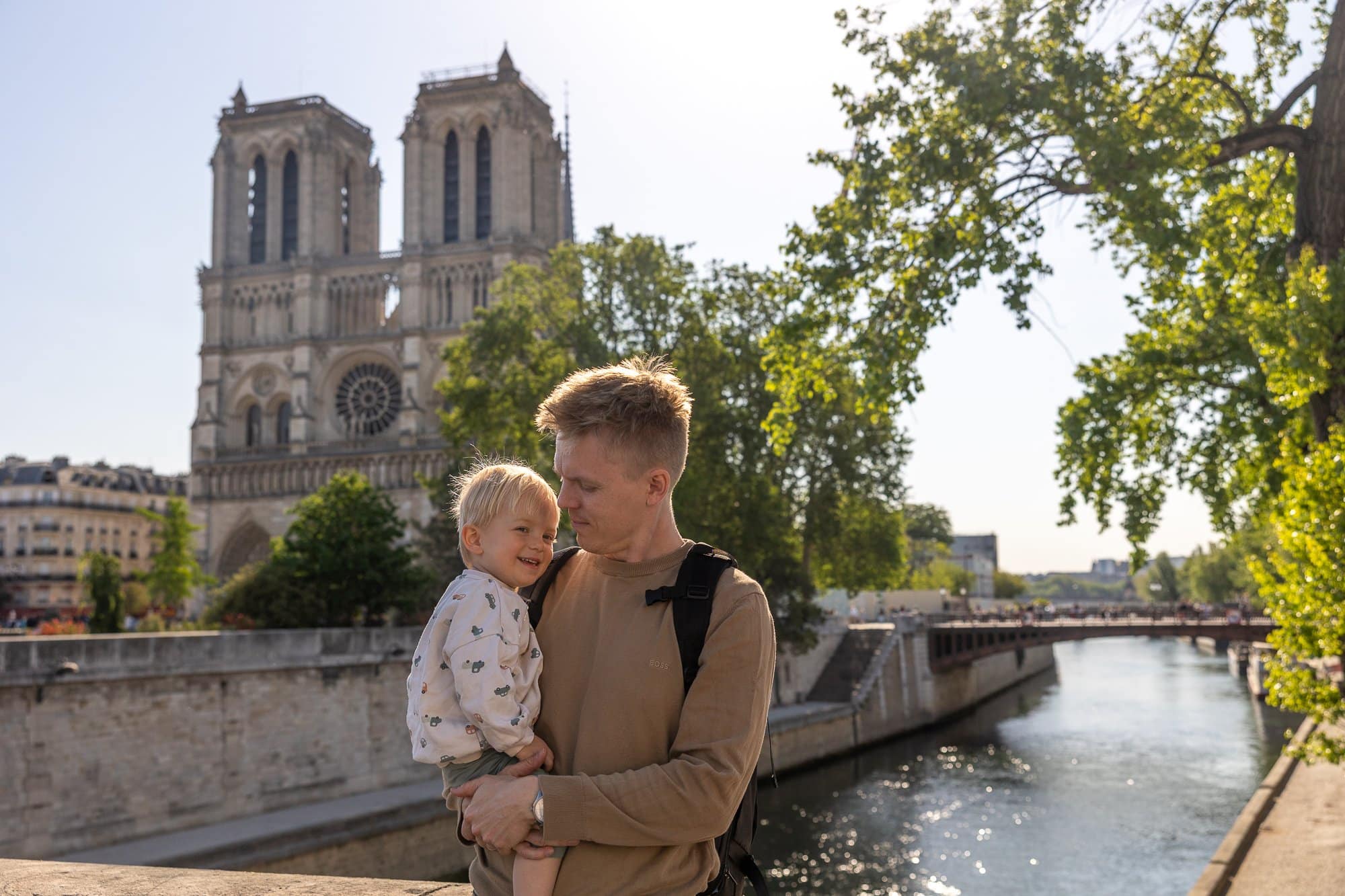
After the devastating fire and years of painstaking restoration, Notre-Dame Cathedral is finally revealed in its full glory once more. Its freshly cleaned and restored façade shines in a way none of us have ever seen before. The best photographs are taken from the bridges on the south side — specifically Pont de l’Archevêché or Pont au Double.

Wonderful framed views of the cathedral also open up through the narrow streets of the Latin Quarter (on the Left Bank), particularly from Rue Galande, where old houses lean in at the foreground and the majestic towers of Notre-Dame form the backdrop.

💡 Tip: For the finest detail shots of Notre-Dame’s façade, arrive just after sunrise. The early morning light falls directly onto the main west front, throwing every newly cleaned statue and gargoyle into sharp, glowing relief.

Practical Information for a Smooth Trip

Navigating Paris with a pushchair gave Lukáš and me a proper headache for the first two days — until we figured out a few things that made everything much simpler. The city has made enormous strides towards sustainability and ecology in recent years, which means fewer cars but also its own quirks when it comes to getting around.

Getting Around & the Pitfalls of the Métro

The Paris Métro is dense and fast, but unfortunately deeply hostile to pushchairs. Most stations have no escalators or lifts — just endless labyrinths of stairs and heavy swing doors. The one fully step-free exception is the sleek purple line 14. If you’re travelling with a toddler, I’d strongly recommend packing an ergonomic baby carrier.

A far better alternative is the above-ground bus network. Buses are spacious, step-free and double as a sightseeing tour.

On the ticketing front, paper carnet tickets are now a thing of the past. Pick up a Navigo Easy contactless card at any RATP ticket office (it costs 2 €) and load it with a book of ten journeys for 17.30 €. You can also pay by tapping your smartphone directly on the reader. If you need a data SIM for your trip, Holafly and Yesim both offer excellent eSIM plans for France.

💡 Tip: For the ultimate sightseeing bus ride at the price of a regular ticket, jump on bus number 69. It passes the Eiffel Tower, the Invalides, the Louvre, the Hôtel de Ville and continues all the way to Place de la Bastille. Bag a window seat and enjoy the show.

Booking in Advance & Safety

In post-Olympic Paris in 2026, one rule applies more than ever before: if you haven’t booked, you won’t get in. The Louvre requires timed-entry tickets bought online in advance (entry costs 22 €), with no walk-up option whatsoever.

The same applies to the popular Musée d’Orsay (16 €). For the famous Paris Catacombs, you need to snap up tickets exactly 7 days before your planned visit — otherwise they’re completely sold out. You can find tours and skip-the-line tickets for most major attractions through GetYourGuide.

On the subject of safety: Paris is a normal major city. During the day you have nothing to worry about, but at night I’d recommend avoiding the area around the northern mainline stations (Gare du Nord and Gare de l’Est in the 10th arrondissement) and the quieter back streets around Pigalle. Keep your bag fastened and worn across your body, don’t leave your phone lying on a café terrace table, and you’ll be absolutely fine.

💡 Tip: When visiting the Louvre, skip the main entrance at the glass pyramid where queues are enormous. Use the secret Porte des Lions (Lion’s Gate) entrance on the south side near the river, or the underground entrance from the Carrousel du Louvre shopping centre.

Read More

If you’d like more detail on planning your itinerary, we’ve put together further in-depth guides with specific maps and our favourite routes:

Frequently Asked Questions

What’s the best way to address a waiter in Paris?

The only proper way is to say Monsieur (Sir) for men and Madame (Madam) for women. Never use the word Garçon (Boy), which is considered very rude and demeaning. To get their attention, simply make eye contact, raise your hand slightly, and smile.

Do I have to tip in Paris?

No, it’s not mandatory. Under French law, service (service compris) is already included in the total price you see on the bill. However, if you were happy with the service, it’s common to leave some small change on the table (€1-2 for coffee or lunch, or 5-10% for a more expensive dinner).

Is water free in Parisian restaurants?

Yes, but you need to ask for it correctly. If you request ‘une carafe d’eau’ (a carafe of water), the server will bring you tap water, which is free and perfectly safe and tasty. If you just order ‘de l’eau’, they’ll bring you bottled water, which you’ll be charged for.

Which months should I avoid visiting Paris?

Definitely skip August. Many family-run bistros and independent shops are closed (fermeture annuelle) because Parisians head off on vacation. The city is packed with tourists only, and it’s often swelteringly hot. Late February and early March can also be tricky due to Fashion Week, when hotel prices skyrocket.

Is it possible to get around Paris with a stroller?

On the streets and in parks it’s fine, but the metro will be a real struggle. The Paris metro is full of stairs and escalators are often missing. The only fully accessible line is Line 14. We strongly recommend parents use the above-ground buses instead, which are spacious and have ramps.

What does the sign ‘Pelouse interdite’ mean in parks?

This sign means it’s strictly forbidden to walk on the grass. In France, lawns in historic parks (like Jardin du Luxembourg) are considered ornamental features, not places to relax. If you step on them, a guard with a whistle will immediately kick you off.

How can I see the Eiffel Tower without the crowds?

Instead of the classic view from Trocadéro, try heading to Pont de Bir-Hakeim bridge, the Passerelle Debilly footbridge, or the quiet Avenue de Camoëns. Timing is also key – for empty photos, you’ll need to arrive ideally just after sunrise, before the city comes to life.

Is there an entrance fee for Notre-Dame Cathedral after the reconstruction?

No, entry to Notre-Dame Cathedral itself is completely free for all visitors following its reopening in December 2024. Be very careful of street touts and dodgy websites trying to sell you fake ‘skip-the-line’ tickets. Only the tower climb or crypt entry typically have fees.

Tips and Tricks for Your Vacation

Don’t Overpay for Flights

Search for flights on Kayak. It’s our favorite search engine because it scans the websites of all airlines and always finds the cheapest connection.

Book Your Accommodation Smartly

The best experiences we’ve had when looking for accommodation (from Alaska to Morocco) are with Booking.com, where hotels, apartments, and entire houses are usually the cheapest and most widely available.

Don’t Forget Travel Insurance

Good travel insurance will protect you against illness, accidents, theft, or flight cancellations. We’ve had a few hospital visits abroad, so we know how important it is to have proper insurance arranged.

Where we insure ourselves: SafetyWing (best for everyone) and TrueTraveller (for extra-long trips).

Why don’t we recommend any Czech insurance company? Because they have too many restrictions. They set limits on the number of days abroad, travel insurance via a credit card often requires you to pay medical expenses only with that card, and they frequently limit the number of returns to the Czech Republic.

Find the Best Experiences

Get Your Guide is a huge online marketplace where you can book guided walks, trips, skip-the-line tickets, tours, and much more. We always find some extra fun there!
Tuscany Wellness Hotels: 12 Thermal Spas the Romans Already Knew

TL;DRTuscany has 12 standout wellness hotels built around thermal water the Etruscans and Romans were already soaking in, ranging from affordable three-star guesthouses to world-class luxury like Terme di Saturnia Natural Spa & Golf Resort, fed by a spring at 37.5°C. The best-known free cascades, Cascate del Mulino near Saturnia, are open round the clock at no cost, as are the wild pools of Fosso Bianco and its White Whale formation at Bagni San Filippo, where the water hits up to 48°C. A night’s stay runs from €100 at hotels such as Terme San Filippo or Admiral Palace up to €1,500 at the luxurious Borgo Santo Pietro. Autumn through spring is the best time for a hot soak, when water at around 38°C feels best against the cool air — summer’s better spent elsewhere.

Healing hot water has been bubbling up from this land since the days when the Etruscans and ancient Romans roamed the peninsula. Today, Tuscany’s thermal spas are world-famous — largely thanks to the iconic cascading pools of the Cascate del Mulino. But the power of this landscape takes many more forms, hidden across valleys stretching from the south of the region all the way to the north.

Finding the perfect wellness hotel in Tuscany means choosing between historic palazzos, contemporary spa resorts and peaceful rural retreats. The combination of hot sulphurous water, views over cypress-lined roads and world-class Italian cuisine creates an experience you simply won’t find anywhere else in Europe.

In this guide, we’ll walk you through 12 carefully selected properties — from budget-friendly hotels to absolute world-class luxury. We’ll also cover the free-access hot springs, practical travel tips for getting there from the UK, and advice on the best time to take a dip. Let’s go! ☺️

TL;DR

How to Choose a Wellness Hotel in Tuscany

Free springs vs. hotel spas — which is right for you?

Natural cascades like the Cascate del Mulino have an undeniable magic, but they come without any facilities. You’ll be getting changed by the car, keeping an eye on your valuables on the bank, and there’s not a shower in sight after your sulphurous soak. It’s a brilliant adventure, but it doesn’t really cut it for a multi-day wellness break.

A hotel spa in Tuscany, on the other hand, offers complete comfort. You walk straight from your room in a bathrobe to a heated pool, with saunas and clean changing facilities all on hand. Most of the better hotels also draw their water from the same healing springs as the free outdoor pools.

When to visit the Tuscan thermal spas

The ideal season for hot-spring bathing runs from autumn through to early spring. When it’s grey and cool outside, water at around 38 °C works like a remedy for both body and mind. Spring itself brings the added bonus of the Val d’Orcia landscape in full bloom.

In summer, the thermals are best avoided. The combination of Italian August sunshine and hot sulphurous water is simply exhausting. If you do visit in summer, look for hotels that have cooler freshwater pools alongside the thermal ones, and save the hot springs for the cooler evenings.

Price range — from affordable spas to world-class luxury

Tuscany caters to all budgets. Three-star hotels with their own thermal pool start at around €100 per night — often older, but very clean and genuinely charming family-run places.

The sweet spot of four-star resorts will set you back €120 to €360 per night. Five-star luxury with Michelin-starred dining and vast spa complexes starts at around €350 and can climb all the way to €1,500 per night.

What you need to know about Tuscan thermal water

The healing water here is quite distinctive. It’s primarily sulphurous and sulphate-rich, emerging at temperatures between 37 and 49 °C. It has strong anti-inflammatory properties, benefits the respiratory system and does wonders for your skin.

You do need to brace yourself for the smell, though. The sulphur scent is reminiscent of hard-boiled eggs and tends to linger in your swimwear even after several washes. In luxury hotels the water is often filtered to remove sediment, but the therapeutic qualities — and that distinctive aroma — remain very much intact.

Comparison table of all 12 hotels

HotelAreaStarsThermal waterPrice/nightBest for
Terme di SaturniaSaturnia⭐⭐⭐⭐⭐Yes (37.5 °C)€350–700World-class luxury & icon
Saturno Fonte PuraSaturnia⭐⭐⭐⭐Yes€130–220More affordable Saturnia
FonteverdeSan Casciano⭐⭐⭐⭐⭐Yes (42 °C)€350–550Medical wellness
ADLER ThermaeBagno Vignoni⭐⭐⭐⭐⭐Yes€440–600Active couples & families
La PostaBagno Vignoni⭐⭐⭐⭐Yes (35–38 °C)€150–360Authentic atmosphere & views
Albergo Le TermeBagno Vignoni⭐⭐⭐⭐Yes€150–250History lovers
Terme San FilippoBagni San Filippo⭐⭐⭐Yes (48 °C)€100–180Wild nature & wild swimming
Grand Hotel La PaceMontecatini⭐⭐⭐⭐⭐No (spa park)€200–350Belle Époque elegance
San Giovanni TermeRapolano⭐⭐⭐⭐Yes (39 °C)€120–200Tranquility & value
Admiral PalaceChianciano⭐⭐⭐⭐No (wellness centre)€100–160Base for day trips
COMO CastelloChianti⭐⭐⭐⭐⭐No (ESPA spa)€320–850Design & gastronomy
Borgo Santo PietroChianti⭐⭐⭐⭐⭐No (holistic spa)€600–1,500Farm-to-table luxury

Saturnia: the icon of Tuscan thermal bathing

1. Terme di Saturnia Natural Spa & Golf Resort

This is the undisputed flagship of the entire region. The resort’s great claim is that the healing sulphurous spring rises directly beneath the main pool. The water maintains a constant 37.5 °C and, thanks to the enormous flow rate, the entire pool replenishes several times a day — guaranteeing exceptional cleanliness.

The estate sprawls across 120 hectares and includes its own 18-hole golf course. Travel+Leisure named it among the top 5 spa resorts in the world in both 2022 and 2023. You’ll also find a large beauty clinic and stunning travertine Roman baths that weave modern design seamlessly through centuries of history.

Prices and practical info: Rooms cost roughly €350 to €700 per night. The hotel’s fine dining restaurant can prepare an outstanding vegetarian menu on request. This resort is the obvious choice for anyone who refuses to compromise on luxury.

👉 Check availability and prices

2. Hotel Saturno Fonte Pura

If you want to experience the power of these waters without the five-star fanfare, this is a brilliant alternative. The hotel sits just above the main thermal valley and has its own sulphurous spring feeding the hotel pool directly.

The atmosphere here is far more intimate and laid-back. Guests consistently praise the cosy, rustic-style rooms and the warm, family-run service. You’ll also avoid the crowds that regularly descend on the more famous resort next door.

Prices and practical info: A very agreeable €130 to €220 per night. It’s a perfect retreat for couples who want the healing waters of Saturnia in a quieter, more affordable package.

👉 Check availability and prices

San Casciano dei Bagni: Medici baths that the whole world has discovered

3. Fonteverde Lifestyle & Thermal Retreat

This resort occupies a magnificent Renaissance villa built in 1607 for the Medici family. The local springs reach 42 °C and are exceptionally rich in fluoride, magnesium and sulphur. Guests have access to six pools in total, three of them outdoors with breathtaking views across the countryside.

San Casciano dei Bagni made international headlines in 2022 when archaeologists here unearthed a hoard of ancient bronze statues buried in the mud — one of the most significant finds in Italy in decades. The hotel spa is built around an “Equilibrium” philosophy that blends a medical approach with deep relaxation.

Prices and practical info: A night in this historic gem costs €350 to €550. The restaurant prides itself on healthy, wholesome cooking and has no trouble catering fully for vegetarians. History buffs and anyone interested in medical wellness will love it here.

👉 Check availability and prices

Bagno Vignoni and Val d’Orcia: thermal springs in the heart of a UNESCO landscape

4. ADLER Spa Resort Thermae

The South Tyrolean ADLER family group has created something truly special here in Tuscany. The resort boasts over 1,000 m² of thermal and sports pools. Its absolute showpiece is a sauna world carved out of an old travertine quarry — it blends into the surrounding landscape in the most remarkable way.

Stays are on a soft all-inclusive basis. The price includes a rich programme of activities, from morning yoga and e-bike hire to guided hikes through the surrounding hills. Afternoon snacks and views over the rolling Val d’Orcia make this resort a genuine oasis of calm.

Prices and practical info: Rates run from €440 to €600 per night, often including excellent half-board. The kitchen is celebrated for its food, and vegetarian, vegan and gluten-free menus are treated as completely standard — not an afterthought.

👉 Check availability and prices

lukas a lucka
Lukáš and Lucie recommend
Where to Stay in Tuscany
6 accommodations — hotels, wellness hotels and other lodging options
⭐ TOP CHOICE ⭐ Luxury
Terme di Saturnia Natural Spa & Golf Resort
Absolute world-class destination directly at the main spring with 37.5°C water that refreshes the pool several times daily. Resort with golf course on 120 hectares, giant beauty clinic and travertine Roman baths. Ranked among the top 5 spa resorts in the world by Travel+Leisure.
★★★★★ from €350/night
Check availability
🏨 Hotel
Hotel Saturno Fonte Pura
A quieter alternative in Saturnia with its own sulphur spring and thermal pool. Intimate family atmosphere in countryside style with cozy rooms and valley views. A more accessible option for Saturnia’s healing waters.
★★★★ from €130/night
Check availability
⭐ Luxury
Fonteverde Lifestyle & Thermal Retreat
Renaissance Medici villa from 1607 with 42°C thermal springs rich in fluorine, magnesium and sulphur. Six pools overlooking Val d’Orcia. The ‘Equilibrium’ medical wellness philosophy combines therapeutic approach with deep relaxation.
★★★★★ from €350/night
Check availability
🌲 Resort
ADLER Spa Resort Thermae
Active wellness resort with over 1000 m² of thermal pools and a unique sauna world built in an old travertine quarry. Soft all-inclusive concept with activity program including yoga, e-bike rental and guided tours. Views of Val d’Orcia.
★★★★★ from €440/night
Check availability
🏨 Hotel
La Posta Hotel & Thermal Spa
Family hotel with iconic Val di Sole thermal pool with 35–38°C water and panoramic view of the medieval tower Rocca d’Orcia. Retro charm of classic Italian villeggiatura with access to private wellness areas for residents.
★★★★ from €150/night
Check availability
🏨 Hotel
Albergo Le Terme
Historic 15th-century Renaissance palace directly on the thermal square of Bagno Vignoni, designed by architect Rossellino as summer residence of Pope Pius II. Intimate wellness with Roman sauna, oriental rasul and mud therapy.
★★★★ from €150/night
Check availability

5. La Posta Hotel & Thermal Spa

Previously known as the Albergo Posta Marcucci, this family hotel hides one of the finest views in the region. Its iconic “Val di Sole” thermal pool, with water at 35–38 °C, frames a panorama dominated by the medieval Rocca d’Orcia tower.

Non-residents can buy day access to the pool (around €15), but staying as a guest gives you access to private wellness areas as well. The atmosphere retains a pleasantly retro feel — think classic Italian villeggiatura from the last century.

Prices and practical info: Rooms range from €150 to €360 per night. The traditional kitchen offers plenty of meat-free Italian classics. It’s the ideal spot for those who want an authentic atmosphere and spectacular views at a sensible price.

👉 Check availability and prices

6. Albergo Le Terme

Staying right on the historic piazza of Bagno Vignoni is an experience in itself. The hotel occupies a 15th-century Renaissance palazzo designed by the celebrated architect Rossellino, which once served as the summer residence of Pope Pius II. History practically seeps from the walls.

The in-house wellness centre is compact but beautifully equipped. You can try a Roman sauna, an oriental rasul or traditional mud therapy. Water from the spring on the piazza flows directly into the hotel’s bathing facilities.

Prices and practical info: A night in this historical gem costs €150 to €250. The restaurant handles vegetarian requests with ease. Ideal for couples who want to soak up the atmosphere of this beautifully quiet little town after the day-trippers have gone home.

👉 Check availability and prices

Bagni San Filippo: wild springs and the White Whale

7. Hotel Terme San Filippo

This is the only thermal hotel in this small village tucked into the forests beneath Monte Amiata. Its greatest asset is its location — it sits just a few steps from the wild Fosso Bianco springs, which you can reach from your room in a bathrobe.

The hotel itself has its own thermal pool fed by water reaching 48 °C. The mud treatments here are particularly well regarded, making use of mineral-rich sediment from the springs. The facilities are older and on the simple side, but everything is clean and well maintained.

Prices and practical info: Prices are very reasonable at €100 to €180 per night. Vegetarian meals are available at the restaurant with advance notice. A wonderful choice for nature lovers and wild swimming enthusiasts.

👉 Check availability and prices

Montecatini Terme: Belle Époque spa elegance

8. Grand Hotel & La Pace

Montecatini Terme is synonymous with aristocratic spa culture, and this hotel — dating back to 1870 — is its crown jewel. The Art Nouveau architecture and frescoes by Galileo Chini transport you to an era when Giacomo Puccini and Marie Curie were regular guests.

The hotel is right next to a grand thermal park that is listed among the Great Spa Towns of Europe — a UNESCO World Heritage Site recognising Europe’s most significant spa destinations. The hotel also has a modern spa with both indoor and outdoor pools, creating a fascinating contrast with the ornate historic interiors.

Prices and practical info: A night steeped in elegance costs €200 to €350. The hotel restaurant offers refined cuisine with plenty of meat-free options. This one is for guests who love history, architecture and the gentle buzz of a classic spa town.

👉 Check availability and prices

Rapolano Terme: thermal springs among the hills of the Crete Senesi

9. San Giovanni Terme Rapolano

If you’re looking for somewhere that hasn’t yet been overrun by international tourists, head to the Crete Senesi. The thermal park here offers six outdoor and two indoor pools fed by healing water at a very pleasant 39 °C.

The countryside around Rapolano is raw and otherworldly — almost lunar — and utterly spellbinding at sunset. The hotel itself holds a very solid rating of 8.7 on Booking.com, and the rooms are stylishly and tastefully furnished.

Prices and practical info: At €120 to €200 per night, this is one of the best value-for-money options in the region. The restaurant regularly serves vegetarian dishes. Perfect for a peaceful escape from the busier spa towns.

👉 Check availability and prices

Chianciano Terme: classic spa town near Val d’Orcia

10. Grand Hotel Admiral Palace

Chianciano Terme is well known for its drinking cures and traditional spa treatments. This hotel’s standout feature is its substantial “Oasi Four Roses” wellness centre, spanning 1,000 m² and featuring a pool, Finnish sauna and Turkish bath.

The building is set in green parkland and positioned strategically. It works brilliantly as a base for day trips by car to Renaissance Montepulciano or to the heart of the Val d’Orcia valley.

Prices and practical info: Most rooms come in between €100 and €160 per night. The hotel food includes plant-based options. Perfect for those who want affordable comfort and plan to spend their days exploring the surrounding heritage sites.

👉 Check availability and prices

Chianti: luxury spa resorts without thermal springs

The Chianti wine region doesn’t have natural thermal springs, but it does have some of the most luxurious spa resorts in all of Italy. Wellness here is built on exceptional therapies, premium skincare and stunning design. If you can live without the sulphurous water and are simply after total pampering, this is absolutely the place for you.

11. COMO Castello del Nero

Staying in a 12th-century castle surrounded by vineyards is a Tuscan dream come true. COMO brought the region’s first ESPA spa here, and across 1,000 m² you’ll find a heated panoramic pool, a vitality pool and an ice fountain.

The resort weaves original historic frescoes together with contemporary Italian design by Paola Navone. The experience is rounded off by the Michelin-starred La Torre restaurant, which sources its ingredients from the estate’s own gardens and local farmers.

Prices and practical info: The price tag reflects the level of luxury — €320 to €850 per night. The COMO Shambhala Cuisine concept centres on delicious, health-focused and largely vegetarian menus. Made for design devotees and fine dining enthusiasts.

👉 Check availability and prices

12. Borgo Santo Pietro

This 13th-century villa in the Sienese hills is a long-time darling of Condé Nast. It operates as a holistic retreat with its own extensive organic farm. The spa uses an exclusive skincare line called “Seed to Skin”, produced on the estate itself from locally grown herbs.

There’s no thermal spring here, but the holistic approach to relaxation has been honed to near perfection. The farm-to-table concept runs through everything — from the Michelin-starred restaurant menus to the treatments in the spa itself.

Prices and practical info: This is the most exclusive property in our selection, at €600 to €1,500 per night. Given the organic farm on the doorstep, the vegetarian food here is in a class of its own. For those who need total privacy and a genuinely holistic approach to luxury.

👉 Check availability and prices

Free-access thermal springs

Cascate del Mulino near Saturnia

Tuscany’s most famous thermal springs are yours to enjoy completely free of charge. The cascades beside the old mill are one of the most photogenic sights in the region. The water sits at a lovely 37.5 °C, and the natural travertine pools are accessible 24 hours a day, seven days a week.

Because this is such a big draw, aim to arrive early in the morning or late in the evening. During the day — especially at weekends — it can get very crowded. Parking nearby is free, but don’t expect changing facilities.

Fosso Bianco and the Balena Bianca in Bagni San Filippo

Hidden deep in the forest, these woodland pools reach temperatures of up to 48 °C. The centrepiece is a vast limestone formation known as the Balena Bianca (White Whale), over which the hot spring cascades, constantly sculpting new shapes in the rock.

Entry is again completely free. A short forest path from the road leads you straight to the springs. The further upstream you venture, the hotter the water — and the more solitude you’ll find.

Bagno Vignoni — the historic piazza with a spring at its heart

This village is unique: instead of cobblestones, its central piazza — the Piazza delle Sorgenti — is filled with a vast pool of steaming hot water. Bear in mind, though, that bathing in the piazza itself is strictly forbidden and the pool is there purely to be admired.

The water flows from the piazza down a series of cascades into the Parco dei Mulini below the cliff. Natural pools used to form there, but it’s worth knowing that bathing in the open air here has been officially banned since 2010 to protect the travertine rock formations. Your best bet is to make use of the excellent hotel spas in the village instead.

Practical tips for a wellness holiday in Tuscany

When to book and how to save money

The best wellness hotels in Tuscany fill up very quickly in autumn and spring. Don’t leave it to the last minute — book your accommodation three to four months ahead. You can save a significant amount by travelling mid-week, when room rates can drop by as much as a third.

Getting around the region

The thermal areas are scattered across hilly countryside where public transport is extremely limited. A hire car is essential — and it also gives you the freedom to pull over whenever a cypress-lined avenue or a panoramic viewpoint catches your eye, which in Tuscany is rather often.

From the UK, the most convenient gateways are Florence (Peretola) or Pisa airports, both well served by direct flights from London and other UK cities with airlines like British Airways, easyJet and Ryanair. From either airport, the main spa towns are an easy one-to-two hour drive.

What to pack

If you’re heading to the free outdoor springs, bring an older pair of swimwear. The sulphurous water can discolour new costumes and the distinctive smell is stubbornly difficult to wash out. Rubber flip-flops are a must, and a bathrobe comes in far more useful than a towel when you’re getting changed in the open air.

One crucial tip: leave all silver jewellery in your room. Hot sulphurous water will turn silver jet-black within seconds, and getting it clean again is a real headache.

Combine the thermal spas with Tuscany’s sights

The best spa villages sit within easy reach of some of Italy’s greatest cultural treasures. From Bagno Vignoni or Chianciano Terme, you’re just a short drive from Renaissance Pienza, the famous wine town of Montepulciano and the magnificent city of Siena. A morning in the hot water followed by an afternoon among historic monuments is, without question, the perfect Tuscan itinerary.

Tips and Tricks for Your Vacation

Don’t Overpay for Flights

Search for flights on Kayak. It’s our favorite search engine because it scans the websites of all airlines and always finds the cheapest connection.

Book Your Accommodation Smartly

The best experiences we’ve had when looking for accommodation (from Alaska to Morocco) are with Booking.com, where hotels, apartments, and entire houses are usually the cheapest and most widely available.

Don’t Forget Travel Insurance

Good travel insurance will protect you against illness, accidents, theft, or flight cancellations. We’ve had a few hospital visits abroad, so we know how important it is to have proper insurance arranged.

Where we insure ourselves: SafetyWing (best for everyone) and TrueTraveller (for extra-long trips).

Why don’t we recommend any Czech insurance company? Because they have too many restrictions. They set limits on the number of days abroad, travel insurance via a credit card often requires you to pay medical expenses only with that card, and they frequently limit the number of returns to the Czech Republic.

Find the Best Experiences

Get Your Guide is a huge online marketplace where you can book guided walks, trips, skip-the-line tickets, tours, and much more. We always find some extra fun there!
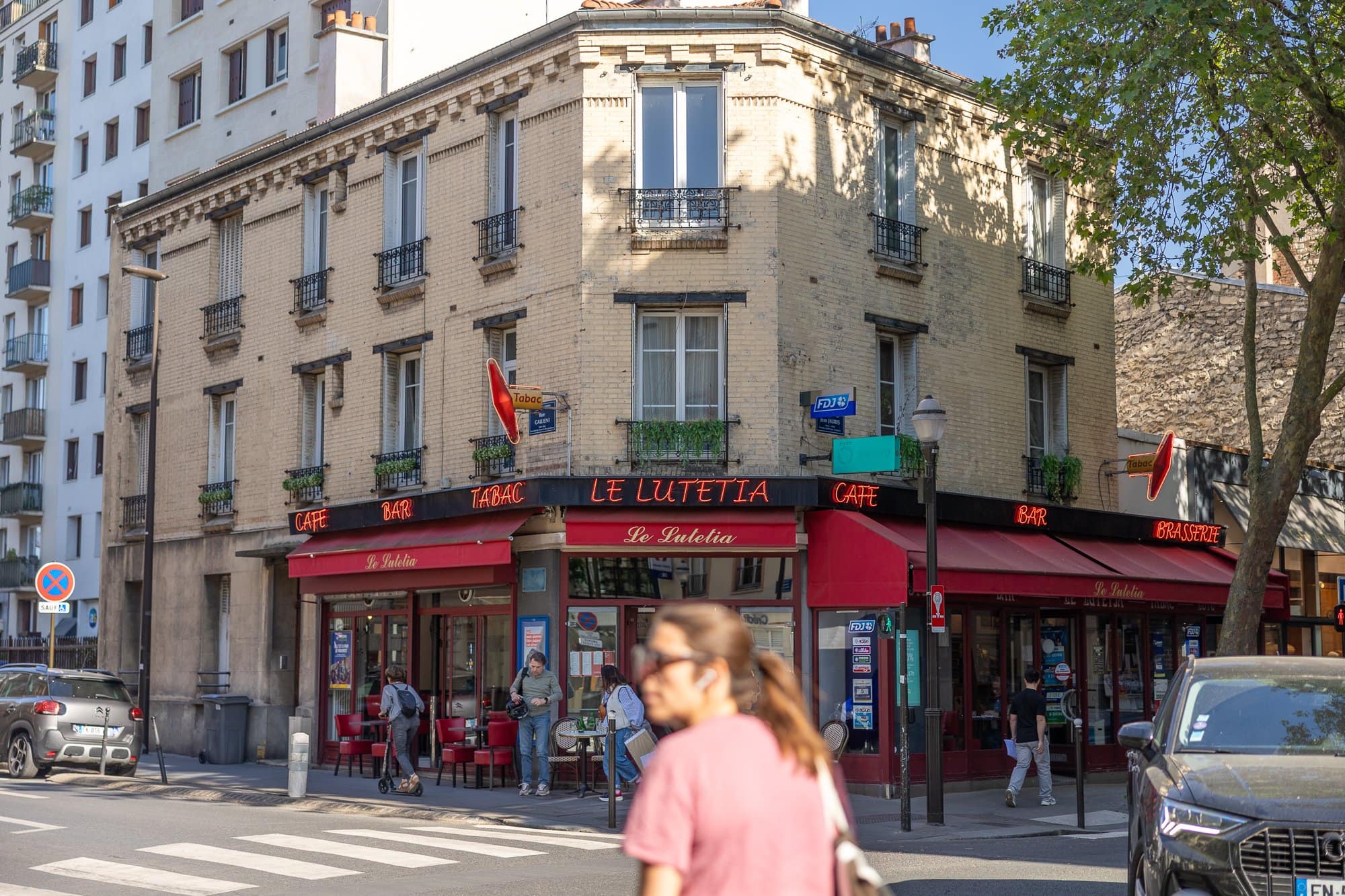
Wellness Hotels in Austria: 12 Places You’ll Return to Year After Year

TL;DRThe best wellness hotels in Austria come down to twelve picks across the country, including AQUA DOME – Tirol Therme Längenfeld, famous for its floating thermal pools (from €180pp), the luxury organic farm hotel Stanglwirt near Kitzbühel (from €250pp), and Styria’s Der Steirerhof, rated a perfect 20 out of 20 by the RELAX Guide. A good four-star thermal hotel runs €150–€300 per person a night, while five-star luxury comes in at €300–€600. Shoulder season in November or April is the cheapest time to go, while winter months are the busiest and most expensive. Aqua Dome is 558 kilometres from Prague, and in the saunas, it’s towels only — no swimwear allowed.

Austria is an absolute paradise when it comes to a relaxing break close to home. When I want to switch off completely for a few days and warm my bones, this is exactly where I head — it’s just a short hop away, and the standard of service is simply unbeatable. People come for top-tier wellness in Austria for the hot thermal springs, the perfectly designed sauna worlds and the breathtaking views of the Alpine peaks.

Every good wellness hotel in Austria prides itself on honest, hearty cuisine and enormous relaxation zones. A generous half-board package included in the room rate is pretty much standard here, so you don’t have to worry about a thing during your stay. If you’re after genuine, no-compromise quality, it pays to follow the ratings of the independent RELAX Guide, which awards the very best resorts its prestigious lilies.

I’ve picked out twelve exceptional places spread across the various federal states. Among them you’ll find sprawling thermal resorts, luxurious adults-only mountain spas and a few unusual architectural gems. Let’s dive in! ☺️

TL;DR

How to Choose a Wellness Hotel in Austria

Thermal resort vs. Alpine wellness — what’s the difference

The basic distinction is simpler than it sounds. Thermal resorts draw on natural healing springs and you’ll typically find them in Styria, Burgenland, Carinthia or the Gastein Valley. The water is naturally hot and rich in minerals that work wonders on tired muscles.

Classic Alpine wellness hotels in Tyrol or Vorarlberg, on the other hand, usually don’t have their own thermal water. But they more than make up for that small shortcoming with enormous heated pools overlooking the glaciers and elaborate sauna worlds.

When to visit Austria’s spas

Austrian spas run year-round and every season has its charm. In winter, guests love the combination of skiing and the sauna — there’s nothing better than warming up in hot water after a day on the slopes. The winter months are naturally the priciest, and hotels fill up fast.

Summer is ideal for pairing your stay with high-altitude hiking and a dip in the outdoor natural pools. If you want to save money, I’d recommend going in the shoulder season — November or April dates offer much friendlier prices and a calmer atmosphere.

Price ranges and what’s included

When comparing prices, bear in mind that in Austria you’re paying for the complete experience. In most cases the rate includes a generous half-board package and unlimited access to the hotel spa, often even to the adjoining public thermal baths.

You can book a quality four-star thermal hotel for roughly €150 to €300 per person per night. Five-star luxury with the highest ratings runs between €300 and €600 per person, depending on the season and room type.

RELAX Guide — how to spot a truly great hotel

The independent RELAX Guide is a huge help when finding your way around the market. Inspectors visit hotels anonymously and rate them on a strict points system out of a maximum of 20. As a mark of quality, they then award one to four lilies.

Achieving a perfect score is extremely difficult. The absolute summit — 20 points and four lilies — has long been held by only a handful of exceptional places, among them Der Steirerhof, Mountain Resort Feuerberg and the prestigious Lanserhof.

The sauna world: in Austria you go without swimwear

The local sauna culture is very similar to the German one. Swimwear is strictly forbidden in all saunas and steam rooms — for hygiene reasons you go with just a towel. If you’re feeling shy, don’t worry: it’s completely natural here and nobody bats an eyelid.

What’s more, most of the better hotels accommodate women by offering dedicated ladies’ hours, or they have a separate smaller spa just for women. Swimwear, of course, is the norm in the pools and relaxation rooms.

Comparison table of all 12 hotels

HotelRegionStarsThermal waterPrice/night (person)Best for
AQUA DOMETyrol⭐⭐⭐⭐SYesfrom €180Lovers of mountains and architecture
StanglwirtTyrol⭐⭐⭐⭐⭐Nofrom €250Fans of organic luxury and tradition
Posthotel AchenkirchTyrol⭐⭐⭐⭐⭐Nofrom €220Couples seeking Asian calm (14+)
Hotel KrallerhofSalzburg⭐⭐⭐⭐⭐Nofrom €300Fans of modern design
TAUERN SPASalzburg⭐⭐⭐⭐SYesfrom €124Families and active sportspeople
MONDI BellevueSalzburg⭐⭐⭐⭐Only in the neighbouring bathsfrom €110 (room)Lovers of history and spa towns
Rogner Bad BlumauStyria⭐⭐⭐⭐SYesfrom €180Artistic souls and colour lovers
Der SteirerhofStyria⭐⭐⭐⭐⭐Yesfrom €268Discerning adult guests (12+)
Hotel PulvererCarinthia⭐⭐⭐⭐⭐Yesfrom €330 (room)Fans of a family atmosphere
Mountain Resort FeuerbergCarinthia⭐⭐⭐⭐⭐Nofrom €220Seekers of high-altitude quiet
Hotel FernblickVorarlberg⭐⭐⭐⭐SNofrom €180Hunters of perfect panoramas
ST. MARTINS ThermeBurgenland⭐⭐⭐⭐SYesfrom €150Lovers of nature and birdlife

Tyrol: Alpine wellness at the highest level

1. AQUA DOME – Tirol Therme Längenfeld

This futuristic complex in the Ötztal valley is easily the most famous of the bunch. Say the words Aqua Dome and most people immediately picture those iconic floating “bowls” of outdoor pools. Bathing in hot water under the stars with a view of three-thousand-metre peaks is an experience you simply never tire of.

The resort sits on the only thermal spring in western Austria. Guests have access to an enormous public thermal area with twelve pools and eleven saunas, as well as a far calmer, exclusive spa reserved for residents only. As a vegetarian, I really appreciate being able to request the excellent vegan and gluten-free menus.

Prices and practical info: A night with half board and thermal-bath access works out at €180–290 per person. From London, your easiest bet is to fly into Innsbruck (with British Airways or easyJet) and then drive the roughly hour-long stretch up the valley, or hire a car from Munich. It’s also a great base for families with children.

👉 Check availability and prices

2. Bio- und Wellnessresort Stanglwirt

The Hauser family has built an absolute legend near Kitzbühel. Their luxurious organic farm is the only Austrian hotel on the prestigious Gold List of Condé Nast Traveler magazine. Stanglwirt keeps its traditional character while delivering service on a par with the world’s finest resorts.

The biggest draw is the iconic Felsenbad, a natural rock pool with stunning views of the Wilder Kaiser massif. The entire wellness area sprawls across more than 12,000 square metres. The on-site organic kitchen, using produce from the farm itself, is famous — and it has no trouble whipping up top-notch meat-free dishes.

Prices and practical info: You’ll pay a premium for this kind of luxury, with rates running between €250 and €450 per person. The grounds also include tennis courts and Lipizzaner stables.

👉 Check availability and prices

3. Posthotel Achenkirch

Just steps from Lake Achensee you’ll find an enormous spa aimed exclusively at adult guests. This hotel stands out for its Asian-inspired atmosphere and incredible sense of calm. The wellness zone here spreads across an impressive 7,000 square metres and offers everything from a hammam to a quiet Zen garden.

People come here not only to unwind in the saunas but also for special traditional Chinese medicine programmes and longevity treatments. The cuisine is top class, and vegetarian, vegan or gluten-free menus are treated as a matter of course rather than a problem to be solved.

Prices and practical info: A stay costs roughly €220–430 per person. The hotel only admits guests aged 14 and over, which guarantees completely undisturbed relaxation.

👉 Check availability and prices

Salzburg: from design spas to mountain thermal baths

4. Hotel Krallerhof – ATMOSPHERE

The new ATMOSPHERE spa in Leogang, designed in 2023 by star architect Hadi Teherani, is breathtaking. The building flows seamlessly along the contours of the mountains, and at its heart lies a huge natural bathing lake. Set into it is a year-round heated 50-metre infinity pool of Olympic dimensions.

The relaxation zones — with a blue grotto and nine saunas — are reserved for adults from 15 only. The design is clean and minimalist, letting the surrounding Alpine landscape take centre stage. The hotel restaurant offers a complete and beautifully thought-out vegetarian menu that will please even the most demanding gourmets.

Prices and practical info: This luxurious experience is reflected in the price of €300–600 per person. Guests are particularly fond of the morning yoga sessions with mountain views.

👉 Check availability and prices

Experiences & tickets
traveler-rated · GetYourGuide
St. Gilgen: Tandem Paragliding Over Wolfgangsee Lake
★★★★★ 5.0 · 8 reviews
from €179
I want this experience →
🔗 These are affiliate links — they don't change your price and help us create content. · All experiences →
lukas a lucka
Lukáš and Lucie recommend
Where to Stay in Austria
6 accommodations — hotels, wellness hotels and other lodging options
⭐ TOP CHOICE 🌲 Resort
AQUA DOME – Tirol Therme Längenfeld
Futuristic complex in the Ötztal valley with iconic floating thermal bowls. The only thermal spring in western Austria, enormous public thermal spa with 12 pools and 11 saunas. Ideal for mountain and architecture lovers.
★★★★ from €180/person
Check availability
⭐ Luxury
Bio- und Wellnessresort Stanglwirt
Legendary luxury organic farm near Kitzbühel on Condé Nast Traveler’s Gold List. Iconic natural rock pool Felsenbad with views of Wilder Kaiser. 12,000 m² wellness area with organic cuisine from their own farm.
★★★★★ from €250/person
Check availability
⭐ Luxury
Posthotel Achenkirch
Enormous Asian-inspired adults-only spa at Lake Achensee. 7,000 m² wellness zone with hammam, zen garden and traditional Chinese medicine programs. For guests aged 14 and over only.
★★★★★ from €220/person
Check availability
⭐ Luxury
Hotel Krallerhof – ATMOSPHERE
Spectacular new ATMOSPHERE spa with giant natural bathing lake and 50m Olympic-sized infinity pool. Modern minimalist design by architect Hadi Teherani. For adults aged 15 and over.
★★★★★ from €300/person
Check availability
🌲 Resort
TAUERN SPA Zell am See–Kaprun
Austria’s largest panoramic hotel spa at 20,000 m² beneath the Kitzsteinhorn glacier. Glass-roofed Skyline pool with views of snow-capped peaks. Fantastic price-performance ratio.
★★★★ from €124/person
Check availability
🏨 Hotel
MONDI Hotel Bellevue Gastein
Beautiful belle époque style hotel in the center of Bad Gastein, steps from the waterfall and cable cars. Own wellness area with two pools, hot tub and sauna. Ideal starting point for the Felsentherme radon spa.
★★★★ from €110/night
Check availability

5. TAUERN SPA Zell am See–Kaprun

Right beneath the Kitzsteinhorn glacier lies a sprawling complex boasting the largest panoramic hotel spa in Austria. The facilities cover an incredible 20,000 square metres. Your best photos will come from the glass-walled rooftop Skyline pool, which looks straight out onto the snowy summits.

The hotel is connected to a huge public thermal complex with twelve pools and a separate children’s world. Personally, I think this resort offers absolutely fantastic value for money. The evening buffets also hide a wide selection of tasty meat-free options.

Prices and practical info: A night with half board starts from just €124–160 per person. Note that in spring 2026 (12 April – 10 May) there will be a partial renovation and the spa will be closed.

👉 Check availability and prices

6. MONDI Hotel Bellevue Gastein

A gorgeous belle époque hotel stands right in the centre of this iconic spa town. If you’re after a classic Bad Gastein wellness experience, this place will win you over with its history and location. You’re just a few steps from the famous waterfall, the cable cars and the renowned Felsentherme radon baths.

The building itself houses a pleasant in-house hotel wellness area with two indoor pools, a whirlpool, a sauna and a steam room. It’s an ideal choice if you want to spend your days hiking in the mountains and your evenings soothing tired muscles. The buffet dining offers plenty of fresh vegetables and vegetarian dishes.

Prices and practical info: A very pleasant price tag of around €110–180 per night (per room). On Booking.com the hotel boasts a high rating of 8.9.

👉 Check availability and prices

Styria: Austria’s thermal paradise

7. Rogner Bad Blumau

This isn’t just an ordinary hotel — it’s the largest inhabitable work of art in the world. The Rogner Bad Blumau complex was designed by the famous architect Friedensreich Hundertwasser, so you won’t find a single straight line here. Golden domes, colourful façades and grass roofs make it look like something out of a fairy tale.

The resort draws water from its own volcanic Vulkania spring, at a pleasant 36–38 °C. You can bathe in fourteen different indoor and outdoor pools and explore the extensive sauna world. The whole operation holds a strict organic certification, and the kitchen is heavily geared towards vegetarians and vegans.

Prices and practical info: Stays with half board range from €180 to €340 per person. The resort has been voted the country’s most popular thermal bath nine times.

👉 Check availability and prices

8. Hotel & Spa Der Steirerhof

This is the absolute pinnacle of Austrian wellness. In the RELAX Guide it holds a fantastic 20 out of 20 points and four lilies. The hotel’s biggest advantage in Bad Waltersdorf is its private thermal world, covering 3,000 square metres and available exclusively to residents.

Alongside seven pools and ten saunas, you’ll also find the first ladies’ spa in Austria. The hotel only admits guests aged 12 and over, so true peace reigns here. The local healthy regional cuisine, which has held the “Grüne Haube” award for over 25 years, is a paradise for lovers of quality vegetable-based and meat-free fare.

Prices and practical info: For this flawless service you’ll pay from €268 per person. The atmosphere is very personal here, and the staff remember the preferences of returning guests.

👉 Check availability and prices

Carinthia: thermal baths among mountains and lakes

9. Thermenwelt Hotel Pulverer

This family-run five-star hotel in Bad Kleinkirchheim is unique in that it has its own thermal spring — quite literally straight from the tap. The healing water fills every pool in the spacious spa area, whose centrepiece is an enormous natural bathing pond with a heated infinity pool.

The spa itself spans 4,200 square metres and conceals ten different saunas as well as a rich range of treatments. The atmosphere here is wonderfully relaxed and warm. In the hotel restaurant, guests rave about the wide choice of fresh dishes, including inventive vegetarian options.

Prices and practical info: A night in this Carinthian gem costs roughly €330–420 per room. It’s an ideal base for exploring the nearby lakes.

👉 Check availability and prices

10. Mountain Resort Feuerberg

Wellness quite literally above the clouds. The resort sits on the Gerlitzen Alpe mountain at an altitude of 1,769 metres. It has long held a place among the TOP 5 hotels in Austria and boasts four lilies from the RELAX Guide. Bathing in the 25-metre infinity pool with a view down into the valley is a truly unforgettable experience.

The 4,500-square-metre complex caters to everyone. You’ll find quiet zones reserved for adults and teens from 14 only, as well as a wonderfully equipped family spa. The award-winning regional cuisine offers a varied menu from which guests preferring plant-based food can easily choose.

Prices and practical info: Prices range between €220 and €400 per person. In winter you can click into your skis right outside the hotel; in summer you can jump straight into a mountain lake.

👉 Check availability and prices

Vorarlberg: design and panoramas in the west

11. Hotel Fernblick Montafon

Experts rate Fernblick as the very best wellness oasis in Vorarlberg. Even though the hotel has no thermal spring of its own, it makes up for it with spectacular pool architecture. The heated Sky Pool is set on massive pillars high above the valley and offers fascinating views of the mountains.

Besides five different pools, there are five saunas, a steam room and beautifully light-filled quiet lounge zones. The whole concept of the hotel revolves around nature and views. At dinner you can look forward to modern, light cuisine with plenty of delicious meat-free courses.

Prices and practical info: A stay works out at roughly €180–320 per person. I’d recommend coming for a longer break — this corner of Austria is a fair way to reach, so the easiest option from the UK is to fly into Zurich or Friedrichshafen and hire a car for the final stretch.

👉 Check availability and prices

Burgenland: sunny thermal baths by Lake Neusiedl

12. ST. MARTINS Therme & Lodge

This place is utterly unique in the Austrian context. The complex is built in the style of an African safari lodge and sits right in the middle of the pristine nature of the Neusiedler See – Seewinkel National Park. Here you can easily combine relaxing in the thermal baths with guided nature expeditions to spot birdlife.

The water in the indoor and outdoor pools is a lovely 32–35 °C. Alongside the classic saunas there’s also a large natural bathing lake that’s wonderfully refreshing in summer. The kitchen works brilliantly with local ingredients and takes care to offer a rich choice of quality vegetarian dishes.

Prices and practical info: A stay with half board starts at €150–280 per person. The resort is hugely popular with nature photographers and families looking for something a little different.

👉 Check availability and prices

Big public thermal baths in Austria

If you’re not planning to stay at a spa hotel but just want to relax for a day trip, Austria is full of huge public spa complexes. They tend to be brilliantly equipped, but be aware that they can get quite busy at weekends and on public holidays.

  • Aqua Dome Längenfeld — a Tyrolean architectural marvel with its floating outdoor bowls.
  • Therme Loipersdorf — the largest thermal baths in all of Austria, with a huge water park and a quiet zone.
  • Tauern Spa Kaprun — a modern complex with a view of the Kitzsteinhorn glacier and a great sauna world.
  • Felsentherme Bad Gastein — the famous radon baths carved directly into the rock face.
  • St. Martins Therme — calm, sunny baths set in the flat landscape by Lake Neusiedl.

Practical tips for a wellness holiday in Austria

How to get there from the UK

The simplest way to reach most of these resorts is to fly into one of Austria’s gateway airports — Innsbruck for Tyrol, Salzburg for the Salzburg region, or Vienna and Graz for the thermal baths of Styria and Burgenland — and then hire a car for the final leg. British Airways, easyJet and Eurowings all serve these routes from London and other major UK airports. For the Vorarlberg spas in the far west, flying into Zurich or Friedrichshafen and driving across is often the quickest option. A car is by far the most comfortable way to get around once you arrive — just remember you’ll need a motorway vignette to use Austria’s motorways.

Half board and what to expect from Austrian cuisine

Austrian hotels are renowned for their generous half-board offerings. In the morning you’ll be greeted by an enormous buffet of local cheeses and breads; in the evening, a multi-course served menu. As a vegetarian, I always appreciate that here the meat-free dishes aren’t a dull afterthought but a fully fledged, creative culinary experience.

What to pack

The basic rule: a hotel bathrobe, towels and usually a pair of flip-flops will be waiting for you in your room, neatly packed in a practical canvas bag. 🎒 So all you really need to bring is two swimsuits for the pools. In Austrian saunas you go strictly without swimwear — just a large towel or sheet.

Combine wellness with skiing or hiking

I love being able to balance lounging in warm water with some active movement. Most Alpine resorts lie right next to the cable cars. So you can enjoy empty ski slopes or high-mountain treks in the morning, then move your tired body straight into the bubble bath in the afternoon with a clear conscience.

Které jsou nejlepší wellness hotely v Rakousku?

K naprosté špičce patří resorty Der Steirerhof, Mountain Resort Feuerberg a bio-hotel Stanglwirt. Tyto hotely dlouhodobě dosahují nejvyšších hodnocení v nezávislých testech kvality a nabízejí prvotřídní spa zázemí i gastronomii.

Co je to RELAX Guide a co znamenají lilie?

RELAX Guide je přísný a nezávislý rakouský průvodce hodnotící wellness hotely. Inspektoři udělují body (max 20) a symboly lilií (1 až 4) za kvalitu služeb, čistotu a vybavení. Čtyři lilie znamenají absolutní luxus bez kompromisů.

Má Aqua Dome vlastní termální vodu?

Ano, Aqua Dome v Längenfeldu využívá vlastní pramen s léčivou termální vodou. Je to vůbec jediný horký termální pramen, který se nachází v západní části Rakouska.

Kolik stojí wellness pobyt v Rakousku?

Kvalitní čtyřhvězdičkové resorty seženete zhruba od 150 do 300 € za osobu na noc, většinou včetně bohaté polopenze. Luxusní pětihvězdičkové hotely s nejlepším hodnocením mohou stát 300 až 600 € za noc.

Chodí se v rakouských saunách nahatý?

Ano, rakouská saunová kultura je striktně bezplavková. Z hygienických důvodů se do saun a parních lázní chodí pouze s čistým ručníkem. Plavky si berte výhradně do bazénů a venkovních jezírek.

Tips and Tricks for Your Vacation

Don’t Overpay for Flights

Search for flights on Kayak. It’s our favorite search engine because it scans the websites of all airlines and always finds the cheapest connection.

Book Your Accommodation Smartly

The best experiences we’ve had when looking for accommodation (from Alaska to Morocco) are with Booking.com, where hotels, apartments, and entire houses are usually the cheapest and most widely available.

Don’t Forget Travel Insurance

Good travel insurance will protect you against illness, accidents, theft, or flight cancellations. We’ve had a few hospital visits abroad, so we know how important it is to have proper insurance arranged.

Where we insure ourselves: SafetyWing (best for everyone) and TrueTraveller (for extra-long trips).

Why don’t we recommend any Czech insurance company? Because they have too many restrictions. They set limits on the number of days abroad, travel insurance via a credit card often requires you to pay medical expenses only with that card, and they frequently limit the number of returns to the Czech Republic.

Find the Best Experiences

Get Your Guide is a huge online marketplace where you can book guided walks, trips, skip-the-line tickets, tours, and much more. We always find some extra fun there!
Wellness Hotels in Karlovy Vary: 12 Best Spa Stays Worth Every Penny

TL;DRBased on reviews and facilities, the best wellness hotels in Karlovy Vary are Grandhotel Pupp, Carlsbad Plaza and Spa Hotel Imperial among the five-star options, while Spa Resort Sanssouci stands out for value among four-star places. The article rounds up 12 hotels in total, with four-star rooms starting at 2000 CZK a night for two and five-star stays running from 3500 to 6500 CZK a night. Every hotel on the list offers medical spa treatments alongside classic wellness — think doctors and therapies using thermal water drawn from more than 80 springs, with the Vřídlo geyser, at 73°C, as the town’s centrepiece. Spring and autumn are the best times to visit, but it’s worth avoiding early July, when the film festival pushes prices up.

When you think of the crown jewel of Central European spa culture, only one place springs to mind — a city founded by Charles IV in the 14th century. The traditional Karlovy Vary spa has been luring European aristocracy for centuries, and since 2021 it has rightfully earned its place on the UNESCO World Heritage List. It’s not just about the stunning colonnaded architecture — it’s the extraordinary power of the natural springs beneath the city. If you’re dreaming of the ultimate restorative escape, Karlovy Vary wellness hotels offer an experience that simply has no equal anywhere in the region.

A stay here is fundamentally different from your average spa weekend. Every top-tier wellness hotel in Karlovy Vary doesn’t just offer saunas and hot tubs — it comes with a fully-fledged balneo (spa-medical) centre. You’ll find doctors, physiotherapists, and treatments using genuine thermal water. The combination of the traditional drinking cure and modern relaxation works wonders on both body and mind.

In this guide, we’ll explore twelve of the best places to stay. From the legendary five-star grandeur of the Grandhotel Pupp to outstanding four-star resorts like Spa Resort Sanssouci. I’ll also share personal tips on how to make the most of the city, where to find the famous Sprudel geyser, and what to watch out for when booking. Find your dream room and let yourself be pampered.

TL;DR — Quick Summary

  • Grandhotel Pupp — The city’s most iconic hotel, with a history stretching back to 1701 and the vast Pupp Royal Spa. From approx. 145 €/night.
  • Carlsbad Plaza — Supremely luxurious 5* Superior with its own spring in the lobby and cryotherapy. From approx. 200–260 €/night.
  • Spa Hotel Imperial — A hilltop landmark with its own funicular and Sprudel water piped directly into the building. From approx. 122–180 €/night.
  • Savoy Westend Hotel — Five connected Art Nouveau villas in the elegant Westend district, with full Ministry of Health accreditation. From approx. 86 €/night.
  • Quisisana Palace — An intimate boutique palace for those who treasure absolute privacy. From approx. 170 €/night.
  • Luxury Spa Hotel Olympic Palace — A gorgeous Art Nouveau listed building with the modern Hera balneo centre. From approx. 140 €/night.
  • Spa Resort Sanssouci — A vast complex delivering complete spa care all under one roof. From approx. 88 €/night.
  • Hotel Dvořák Spa & Wellness — Unbeatable location right on the colonnades and the Teplá river. From approx. 80 €/night.
  • Grandhotel Ambassador — A historic National House with a beautiful pool and hammam. From approx. 86 €/night.
  • Spa Hotel Thermal — An iconic brutalist landmark with a famous outdoor thermal pool. From approx. 80–100 €/night.
  • Hotel Bristol Palace — A tranquil parkland complex with excellent mud baths. From approx. 100 €/night.
  • Parkhotel Richmond — A peaceful retreat with a Japanese garden and its own private spring. From approx. 86 €/night.

How to Choose a Spa Hotel in Karlovy Vary

Medical Spa with Doctors vs. Relaxation Wellness

The golden rule here is that Karlovy Vary hotels are about far more than a hot tub and a sauna. The local speciality is what’s known as medical spa. This means that a wellness hotel in Karlovy Vary will often have its own team of doctors and nurses on site. For a longer stay, you’ll typically have an initial medical consultation, after which specialists will prescribe a personalised programme of treatments. If you’re simply after a weekend Karlovy Vary spa break with a massage, that’s easy to find — but it would be a real shame not to take advantage of the world-class medical expertise available here.

The Drinking Cure and What Karlovy Vary Water Treats

The city sits on a tectonic fault line, which gives rise to over 80 thermal springs. Thirteen of them are used for the traditional drinking cure along the colonnades. The Karlovy Vary thermal baths and spa tradition focuses primarily on treating digestive disorders, metabolic conditions, and musculoskeletal problems. The mineral water is sipped from traditional porcelain cups with a small spout — these keep the water at the right temperature and preserve its mineral content as you stroll between the springs.

Where to Stay — Central Colonnades vs. Peaceful Hillside

It all comes down to what kind of atmosphere you’re after. Staying in the Teplá river valley puts every colonnade and spring just a few steps from your door. It’s lively and full of atmosphere, but it does come with tourist crowds. If you’d prefer a quieter Karlovy Vary wellness hotel, look at accommodation in the Westend district or on the surrounding hillsides. You’ll be rewarded with spectacular views, fresh forest air, and a pleasant health walk down to the springs each morning.

Price Ranges

Good four-star spa accommodation typically runs between 80 and 120 € per night for two people. If you’re aiming for a luxury five-star Karlovy Vary spa experience, budget for 140 to 200 € per night, with the most exclusive suites costing more. Prices fluctuate significantly with the season. The most dramatic spike happens in early July during the International Film Festival, when rooms are booked up far in advance and rates can more than double.

Comparison Table: All 12 Hotels at a Glance

HotelStarsLocationOwn Balneo/ThermalPrice/NightBest For
Grandhotel Pupp⭐⭐⭐⭐⭐City centreYes / Pupp Royal Spafrom 145 €Lovers of tradition & luxury
Carlsbad Plaza⭐⭐⭐⭐⭐ Sup.City centreYes / In-lobby springfrom 200 €Discerning guests, medical spa
Hotel Imperial⭐⭐⭐⭐⭐On the hillYes / Sprudel water on-sitefrom 122 €Peace, views, top-level treatment
Savoy Westend⭐⭐⭐⭐⭐WestendYes / MoH accreditedfrom 86 €Medical stays, large pool
Quisisana Palace⭐⭐⭐⭐⭐City centreYes / Intimate spafrom 170 €Privacy & boutique style
Olympic Palace⭐⭐⭐⭐⭐City centreYes / Balneo Herafrom 140 €Architecture lovers, Art Nouveau fans
Spa Resort Sanssouci⭐⭐⭐⭐Wider centreYes / Full spa carefrom 88 €Everything under one roof
Hotel Dvořák⭐⭐⭐⭐By the colonnadesYes / Indoor poolfrom 80 €Near the springs, city buzz
Grandhotel Ambassador⭐⭐⭐⭐ Sup.Pedestrian zoneYes / Hammamfrom 86 €Sauna lovers & couples
Spa Hotel Thermal⭐⭐⭐⭐City centreYes / Outdoor poolfrom 80 €Views & outdoor swimming
Bristol Palace⭐⭐⭐⭐WestendYes / Mud bathsfrom 100 €Traditional spa treatments
Parkhotel Richmond⭐⭐⭐⭐Riverside parkYes / Štěpánka springfrom 86 €Nature & tranquillity seekers

The Best 5-Star Luxury Hotels

1. Grandhotel Pupp

This is an absolute legend. The neo-Baroque masterpiece designed by architects Fellner and Helmer has been writing its story since 1701. Grandhotel Pupp has hosted virtually every notable statesman, artist, and film star you can think of — and even had a starring role in the Bond film Casino Royale. The atmosphere breathes old-world luxury, yet the service is thoroughly modern. Simply walking across Mírové náměstí (Peace Square) towards the main entrance is an experience in itself.

The hotel’s Pupp Royal Spa is enormous, and guests have access included in their rate. It features a beautiful lap pool with a counter-current jet, hot tubs, three types of sauna, and a salt cave. You can choose from over thirty treatments, including Ayurveda. As someone who eats plant-based, I particularly love the Grand Restaurant — Karlovy Vary’s spa cuisine is generally light and refined, and the chefs here are genuinely brilliant when it comes to vegetarian and dietary menus. A world-class Karlovy Vary wellness hotel thinks of everything.

Prices & practical info: A night for two costs roughly 145 to 240 € depending on season. Parking is available directly at the hotel. The Booking.com rating holds steady at an impressive 9.2.

👉 Check availability and prices

2. Carlsbad Plaza Medical Spa & Wellness

If you’re looking for the most comprehensive medical spa in the city, look no further. This was the first hotel in the Czech Republic to earn the prestigious 5* Superior certification. Carlsbad Plaza sits right in the heart of the spa zone on Mariánskolázeňská Street. Its greatest party trick? You don’t need to go anywhere for your drinking cure — Spring No. 1 flows directly from the hotel’s own fountain in the lobby.

The wellness area spans an almost unbelievable 3,500 square metres, with five pools, seven saunas, and over 250 therapeutic treatments on offer. The real standout is the cryotherapy chamber at -110 °C — an extraordinary immune-system booster. When it comes to dining, the Karlovy Vary spa tradition of light, health-conscious cuisine is taken seriously here, with vegetarian and dietary options treated as standard rather than afterthought.

Prices & practical info: This level of exclusivity comes at roughly 200 to 260 € per night. Guest rating on Booking.com is 9.0.

👉 Check availability and prices

3. Spa Hotel Imperial

The neo-Renaissance building from 1912 rises high above the city, giving Karlovy Vary one of its most distinctive silhouettes. Getting up there is half the fun — the hotel runs its own funicular from the town centre, which is an impossibly romantic touch. Hotel Imperial Karlovy Vary has hosted presidents and tsars in its time. Staying up on the hill means total peace and quiet, clean forest air, and spectacular bird’s-eye views across the entire spa valley.

The hotel has a serious ace up its sleeve: healing water from the famous Sprudel geyser is piped directly into the balneo centre on-site. A team of six doctors oversees more than a hundred treatments, with carbonated mineral baths being a particular local speciality. The wellness area covers 1,600 square metres and features its own CARL’S cosmetics range. This Karlovy Vary wellness hotel also handles vegetarian dining with ease, though the menu is slightly more compact than at the valley resorts.

Prices & practical info: Rooms start at around 122 to 180 € per night. Google reviews give it an excellent score of 4.5 out of 5.

👉 Check availability and prices

4. Savoy Westend Hotel

This stunning complex comprises five beautifully interconnected Art Nouveau villas dating from 1897, set in the prestigious and peaceful Westend district. It’s the only hotel in Karlovy Vary to hold official accreditation from the Czech Ministry of Health. If you’re serious about a genuinely therapeutic Karlovy Vary spa stay — with the highest guaranteed medical standards overseen by the respected Dr Ladislav Špišák — this is the place to book.

Guests enjoy the largest hotel pool in the city, a salt cave, and a choice of over 300 treatments. The restaurant is well-prepared for any dietary requirement and will happily accommodate vegetarian guests. A great Karlovy Vary wellness hotel shows its quality not just in the treatments it offers, but in how readily it adapts to the lifestyles of its guests — and Savoy Westend passes with flying colours.

Prices & practical info: Rates start from a very reasonable 86 € per night, with pool and sauna access included for all guests. Booking.com rating: 8.8.

👉 Check availability and prices

5. Quisisana Palace

If you’re after absolute privacy and Viennese elegance, this boutique palace from 1888 will sweep you off your feet. A proud member of the Small Luxury Hotels of the World collection, it offers just nineteen rooms — many of which feature original painted fresco ceilings. This intimate Karlovy Vary wellness hotel sits right in the centre on Mariánskolázeňská Street, yet the moment you step inside, a remarkable calm takes over.

The spa is small and wonderfully personal — a hot tub, sauna, aromatic steam bath, and a menu of exclusive massages. There’s no vast medical complex here; this is more of a sanctuary for deep, unhurried rest. The in-house Café-Restaurant Quisisana serves outstanding vegetarian dishes prepared with genuine care. For those who find big resort spas overwhelming, this is the most appealing Karlovy Vary spa hotel in the list.

Prices & practical info: Boutique luxury and maximum privacy start from around 170 € per night.

👉 Check availability and prices

lukas a lucka
Lukáš and Lucie recommend
Where to Stay in Karlovy Vary
6 accommodations — wellness hotels and other lodging options
⭐ TOP CHOICE ⭐ Luxury
Grandhotel Pupp
The most famous hotel in the city with tradition since 1701 and enormous Pupp Royal Spa. Neo-baroque jewel by architects Fellner and Helmer, which has hosted statesmen, artists and film stars. Also featured in the Bond film Casino Royale. Huge wellness area with pool, whirlpools, three saunas and salt cave.
★★★★★ from €144/night
Check availability
⭐ Luxury
Carlsbad Plaza Medical Spa & Wellness Hotel
First hotel in the Czech Republic with 5* Superior certification. The most comprehensive medical spa in the city with its own drinking spring right in the lobby. 3,500 m² wellness zone with five pools, seven saunas and over 250 treatment procedures including cryotherapy at -110 °C.
★★★★★ Superior from €200/night
Check availability
⭐ Luxury
Spa Hotel Imperial
Neo-renaissance landmark on a hill above the city from 1912 with its own funicular from the center. Water from Vřídlo is piped directly into the building. Team of six doctors oversees over a hundred procedures, with carbonic baths being a specialty. 1,600 m² wellness area with CARL’S own cosmetic line.
★★★★★ from €122/night
Check availability
⭐ Luxury
Savoy Westend Hotel
Five interconnected Art Nouveau villas from 1897 in the prestigious Westend district. The only hotel with official accreditation from the Czech Ministry of Health, run by renowned Dr. Ladislav Špišák. Largest hotel pool in the city, salt cave and over 300 procedures.
★★★★★ from €86/night
Check availability
⭐ Luxury
Quisisana Palace
Boutique spa palace from 1888, member of the prestigious Small Luxury Hotels of the World network. Only 19 rooms, many with original frescoed ceilings. Intimate spa with whirlpool, sauna, aroma steam bath and exclusive massages. Complete privacy and Viennese elegance.
★★★★★ from €170/night
Check availability
⭐ Luxury
Luxury Spa Hotel Olympic Palace
Protected Art Nouveau monument from 1910 renovated in 2015. Hera balneo center spanning 800 m² with over a hundred procedures using local mineral water. Apollo wellness zone with pool, whirlpool and three types of saunas. In the center, a few minutes from the colonnades.
★★★★★ from €140/night
Check availability

6. Luxury Spa Hotel Olympic Palace

This listed heritage building underwent a magnificent renovation in 2015. The stunning Art Nouveau architecture from 1910 has been seamlessly blended with the very latest facilities and technology. The hotel sits right in the thick of things, with the colonnades just a few minutes’ walk away. If you love historic buildings, this Karlovy Vary wellness hotel will captivate you on a purely aesthetic level before you’ve even unpacked.

The Hera Balneo Centre spans 800 square metres and offers over a hundred treatments using local mineral water. The Apollo Wellness Zone adds a beautiful pool, hot tub, and three types of sauna. The restaurant embraces modern dietary trends with genuine enthusiasm, so rest assured that Karlovy Vary spa life is fully enjoyable here even without meat on the menu.

Prices & practical info: A night comes in at roughly 140 €. Guests on Booking.com are full of praise, with the hotel holding a high score of 9.2.

👉 Check availability and prices

The Best 4-Star Spa Hotels

7. Spa Resort Sanssouci

This large and much-loved complex sits in peaceful greenery just a short distance from the centre. Its main philosophy is “everything under one roof” — the buildings are cleverly linked by underground corridors, meaning you can walk from your room to the doctor’s surgery in your bathrobe without ever stepping outside. Spa Resort Sanssouci is the safe bet if you want genuine, medically supervised spa care without any compromise.

You’ll find a generously sized pool with water features, a sauna world, hot tub, and over a hundred different treatments. With a nutritionist as part of the permanent team, dietary and vegetarian menus are completely taken for granted. This Karlovy Vary wellness hotel is the ideal choice for those wanting to approach their stay in a truly holistic and health-focused way.

Prices & practical info: Rates start from a very accessible 88 € per night, often bundled with half board and selected treatments.

👉 Check availability and prices

8. Hotel Dvořák Spa & Wellness

Six interconnected Art Nouveau buildings enjoy what is arguably the best possible location in the city. The hotel sits on Nová Louka, right alongside the Teplá river and just a few steps from the main drinking colonnades. Every morning you can head straight out with your porcelain cup to take the waters. If you want to be right at the heart of the action and soak up everything that Karlovy Vary’s spa atmosphere has to offer, you’ll be absolutely delighted here.

The spa zone has an indoor pool for year-round swimming, its own medical department, and a wide range of massages from Thai to aromatherapy. Food-wise, the chefs work confidently with plant-based ingredients. As an urban Karlovy Vary wellness hotel, Dvořák delivers reliably and without compromise.

Prices & practical info: Rooms start from around 80 € per night. The hotel’s popularity speaks for itself — over 4,000 positive reviews on Booking.com.

👉 Check availability and prices

9. Grandhotel Ambassador – Národní dům

This 1901 building is another gem from architects Fellner and Helmer. Located directly on Karlovy Vary’s pedestrian zone, it offers 83 elegantly appointed rooms where historic character sits naturally alongside contemporary service. You’re right in the middle of the city, yet the wellness zone inside is a proper sanctuary of calm.

The spa is a genuine pleasure to spend time in. Swim in the indoor pool, warm up in the steam room, Finnish sauna, or sanarium, and cool off at the ice-cold plunge fountain. The highlight for many guests is the traditional hammam. Plant-based dining features naturally throughout the hotel restaurant menu, making this a wonderful choice for couples. This Karlovy Vary wellness hotel consistently delivers an excellent all-round stay.

Prices & practical info: Prices start from 86 € per night — keep an eye out for packages with pre-paid treatments, which offer great value.

👉 Check availability and prices

10. Spa Hotel Thermal

Karlovy Vary isn’t only about Art Nouveau and neo-Baroque. A striking counterpoint is the iconic Thermal — a bold Brutalist masterpiece from the late 1960s that serves each year as the beating heart of the renowned Karlovy Vary Film Festival. Staying here means brushing up against decades of cinematic history. And the wellness on offer gives the whole Karlovy Vary spa experience a dramatic, panoramic new dimension.

The biggest draw is the recently renovated outdoor thermal pool, now part of the Saunia Thermal Resort — the largest pool fed by 100% Sprudel spring water in the entire city. Soaking in hot thermal water outdoors, even in the depths of winter, with sweeping views over the whole of Karlovy Vary spread out below you, is genuinely unforgettable. The hotel’s balneo centre is fully equipped, and the restaurant handles vegetarian cooking with no fuss whatsoever.

Prices & practical info: A night costs roughly 80 to 100 €. Hotel guests get complimentary access to the balneo centre and wellness facilities.

👉 Check availability and prices

11. Hotel Bristol Palace

Bristol Palace serves as the flagship building of the sprawling Bristol Royal complex, made up of five interconnected houses. It stands in a beautiful park in the Westend district, looking out over the city below. This is the perfect place for anyone seeking the classic spa regime — traditional, medically led, and peacefully removed from the main tourist trail. A quiet Karlovy Vary wellness hotel in every sense of the phrase.

Medical care here focuses on digestive and musculoskeletal conditions. The facilities include an indoor pool, saunas, hot tub, mud baths, and Scottish shower hydrotherapy. On the dining front, the hotel’s “Royal Menu” guarantees at least one substantial vegetarian main course every day. Traditional Karlovy Vary spa values meet a thoroughly thoughtful, medically grounded approach.

Prices & practical info: Accommodation starts from 100 € per night. The complex has its own parking.

👉 Check availability and prices

12. Parkhotel Richmond

Richmond is a genuine oasis. Set in a quiet part of the city beside the Teplá river and surrounded by sweeping English-style parkland, the grounds conceal a gorgeous Japanese garden and the hotel’s very own Štěpánka mineral spring. If you need to switch off from the world and clear your head in natural surroundings, this Karlovy Vary wellness hotel is exactly what you’re looking for.

The wellness centre offers a warm pool, a Kneipp water path, a salt tepidarium, and several saunas. Treatments make generous use of local therapeutic peat and thermal water. The kitchen turns out dietary and vegetarian dishes as a matter of course. It’s the kind of place with a warm, almost family-run feel — somewhere guests come back to again and again, drawn by that rare combination of natural beauty and genuine relaxation.

Prices & practical info: Rooms start from 86 € per night, with wellness zone access included for all hotel guests.

👉 Check availability and prices

What to Do in Karlovy Vary Beyond Your Hotel

It would be a real shame to spend your entire stay in a bathrobe. Karlovy Vary has an atmosphere unlike anywhere else, and you need to absorb it out on the streets. The spa centre is perfectly sized for exploring on foot along the Teplá river, and around every corner you’ll find another slice of fascinating history.

The Sprudel Geyser and the Colonnades

The undisputed star of the city is the Sprudel (Vřídlo in Czech). This extraordinary geyser shoots roughly 2,000 litres of water per minute at a temperature of 73 °C, reaching heights of up to twelve metres. You’ll find it in the Vřídelní Colonnade. While you’re exploring, don’t miss the famous Mill Colonnade (Mlýnská), the Market Colonnade (Tržní), or the Park Colonnade (Sadová). Walking between these historic arcades is where you truly feel why Karlovy Vary’s thermal baths and spa heritage are considered a world-class treasure ⛲.

The Drinking Cure and the Spa Cup

The drinking cure follows its own gentle rituals. The water should ideally be drunk straight from the spring, sipped slowly from a traditional porcelain cup with a small drinking spout. Small mouthfuls, an unhurried pace, ideally while strolling from spring to spring in the fresh air — every local spa expert will tell you it’s precisely this combination of minerals and gentle movement that works wonders on the digestion. And the cup itself makes a beautiful souvenir to take home.

Becherovka and Spa Wafers

Locals joke that Becherovka is the city’s thirteenth healing spring. This celebrated herbal liqueur has been made here to a secret recipe since 1807. The other unmissable local indulgence is the warm spa wafer — a thin, crisp disc of pastry that comes in sweet and savoury varieties. As vegetarians, we can enjoy both without a second thought. They’re the perfect flavourful full stop to a day of waters and wellness, and they make your Karlovy Vary spa break feel wonderfully complete.

Practical Tips for Your Karlovy Vary Spa Break

When to Go (and When to Avoid)

The city is at its most beautiful in spring, when everything is in bloom, and in autumn, when the surrounding forests turn extraordinary shades of gold and amber. If you’d rather avoid inflated prices and celebrity crowds, steer clear of early July. During the Karlovy Vary Film Festival, every hotel in the city is fully booked well in advance, and the kind of peaceful, restorative break these hotels are known for simply isn’t on the cards.

How to Do the Drinking Cure Properly

Drink the thermal water before meals rather than with them. Avoid mixing it with alcohol or smoking, as both undermine the therapeutic effect. Bear in mind that the water has a mild laxative quality, so start gently and work your way up. Done well, the Karlovy Vary spa drinking cure teaches you to slow down, listen to your body, and breathe 💆‍♀️.

Getting There and Parking

The spa zone is closed or heavily restricted to general traffic. Always check with your hotel in advance about parking arrangements. Most top-end hotels provide their own garages, parking bays, or a valet parking service. That said, arriving by train or coach from London or other UK cities — with a connection through Prague — is a genuinely pleasant way to travel, and you’ll arrive already in the right, unhurried frame of mind for a spa stay.

Which is the best wellness hotel in Karlovy Vary?

It depends on your preferences. Among the most historically luxurious and sought-after are Grandhotel Pupp, Carlsbad Plaza, and Spa Hotel Imperial. If you’re looking for excellent value for money and comprehensive care, Spa Resort Sanssouci is a great choice.

What does Karlovy Vary thermal water treat?

Water from the local springs is primarily used to treat digestive tract diseases, metabolic disorders, and musculoskeletal problems. It has beneficial effects on the liver, gallbladder, and pancreas.

How much does a wellness stay in Karlovy Vary cost?

Prices for a quality four-star hotel range from roughly 80 to 120 EUR per night for two people. Five-star luxury stays typically start at 140 EUR and can exceed 200 EUR per night.

What is Vřídlo?

Vřídlo is the hottest and most powerful spring in Karlovy Vary. It reaches temperatures over 73°C, spouts around 2,000 liters of water per minute, and can shoot up to 12 meters high. You’ll find it in the glass-enclosed Vřídelní colonnade.

When is the best time to visit Karlovy Vary?

Spring and autumn are ideal, when the weather is pleasant for walking and the town isn’t overcrowded. Unless you’re specifically going for the film festival, avoid early July when hotels are most expensive and fully booked.

Tips and Tricks for Your Vacation

Don’t Overpay for Flights

Search for flights on Kayak. It’s our favorite search engine because it scans the websites of all airlines and always finds the cheapest connection.

Book Your Accommodation Smartly

The best experiences we’ve had when looking for accommodation (from Alaska to Morocco) are with Booking.com, where hotels, apartments, and entire houses are usually the cheapest and most widely available.

Don’t Forget Travel Insurance

Good travel insurance will protect you against illness, accidents, theft, or flight cancellations. We’ve had a few hospital visits abroad, so we know how important it is to have proper insurance arranged.

Where we insure ourselves: SafetyWing (best for everyone) and TrueTraveller (for extra-long trips).

Why don’t we recommend any Czech insurance company? Because they have too many restrictions. They set limits on the number of days abroad, travel insurance via a credit card often requires you to pay medical expenses only with that card, and they frequently limit the number of returns to the Czech Republic.

Find the Best Experiences

Get Your Guide is a huge online marketplace where you can book guided walks, trips, skip-the-line tickets, tours, and much more. We always find some extra fun there!
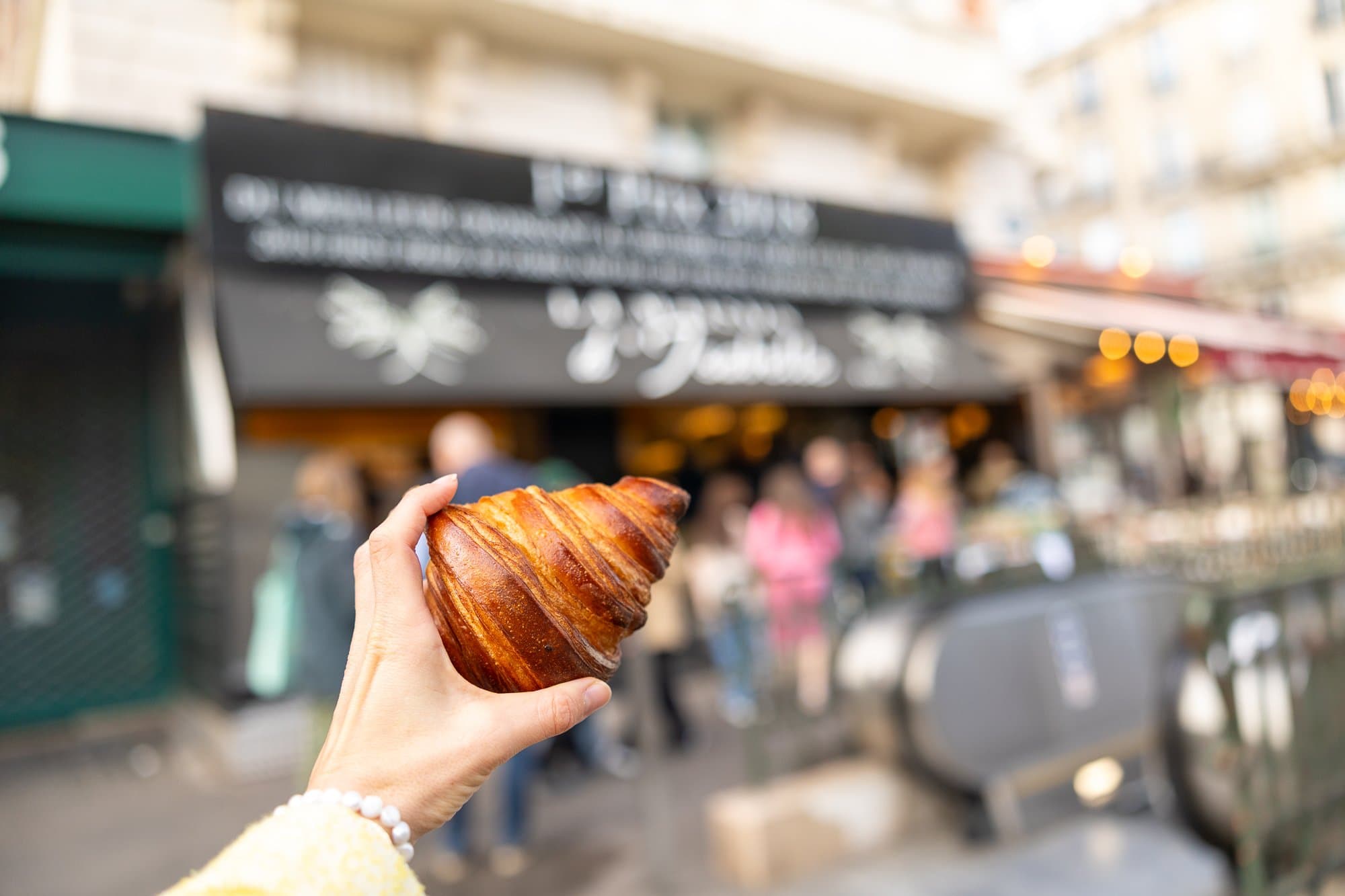
Wellness Hotels in Slovenia & Croatia: 12 Thermal Gems for Less

TL;DRThe best-value wellness breaks are at Slovenian thermal spas like Terme 3000, Terme Čatež and Terme Olimia, where a night with half board and unlimited pool access costs €70 to €250 per person, while luxury Croatian coastal resorts like Grand Park Hotel Rovinj charge €265 to €500 a night. The article covers 12 tried-and-tested hotels in total – eight in Slovenia and four in Croatia, including inland aquaparks in Zagorje and Slavonia (Terme Tuhelj, Bizovačke Toplice). Moravske Toplice, famous for its black thermal water, is the closest option, roughly 4.5 to 5 hours’ drive, with the other spots taking 5.5 to 7 hours. It’s best to travel outside peak season, when accommodation prices drop to their lowest, though the indoor pools run year-round, so a trip makes sense whatever time of year you go.

Did you know there’s a genuine thermal powerhouse waiting to be discovered in Slovenia and Croatia? The best wellness hotels in Slovenia and Croatia offer an unbeatable combination of certified healing waters, massive family aquaparks and year-round reliability — all at prices that make comparable Austrian or Italian resorts look eye-wateringly expensive. From the UK, you can reach many of these resorts by flying into Ljubljana, Zagreb or Trieste, and the value for money is simply outstanding.

The two countries offer a fascinating contrast. Wellness in Slovenia leans heavily towards inland thermal pools with exceptional value, while wellness in Croatia gives you the best of both worlds: affordable inland aquaparks in the Zagorje and Slavonia regions, plus world-class luxury resorts right on the Adriatic coast.

In this guide we cover twelve tried-and-tested destinations — eight popular Slovenian resorts and four Croatian hotels, including one truly extraordinary seaside property. Half-board dining plays a huge role in the overall experience, so we’ll also flag how each resort handles vegetarian options.

TL;DR — Quick Summary

  • Terme Olimia – Slovenia’s best sauna world, from 135 €/person
  • Terme 3000 – unique black thermal water, easy to reach, from 70 €/person
  • Terme Čatež – massive family aquapark with slides, from 80 €/person
  • Thermana Park Laško – modern relaxation above the Savinja river, from 120 €/room
  • Grand Hotel Rogaška – historic belle époque gem with Donat Mg drinking cure, from 150 €/room
  • Terme Ptuj – Roman-themed pools and saunas, from 120 €/room
  • Hotel Balnea Superior – peaceful design hotel for couples, from 185 €/room
  • Terme Zreče – thermal relaxation combined with mountain skiing, from 90 €/person
  • Terme Tuhelj – largest resort in Croatian Zagorje, from 95 €/room
  • Hotel Terme Sveti Martin – Croatia’s healthness resort with organic cuisine, mid-range prices
  • Bizovačke Toplice – Croatia’s hottest and saltiest thermal water, incredibly affordable packages
  • Grand Park Hotel Rovinj – five-star Adriatic luxury, from 265 €/night

How to Choose a Thermal Hotel in Slovenia and Croatia

What Makes Slovenian Thermal Spas Special

Within a surprisingly small area, Slovenia is home to over fifteen massive thermal resorts. One of the biggest advantages is year-round reliability — these aren’t seasonal operations that shut down in September. Most hotels have huge indoor riverside pools that keep the fun going all winter long. Better still, you’re not just soaking in heated tap water; you’re bathing in certified medicinal spring water with proven therapeutic benefits.

Thermal Aquapark vs. Luxury Coastal Wellness

It’s worth thinking about what you actually want before you book. Inland resorts focus on family aquaparks with water slides, lazy rivers and sprawling sauna worlds — all at very accessible prices. The Adriatic coast, on the other hand, is all about high-end design spas with sea views. You won’t find medicinal springs there, but the level of pampering is second to none — for a higher price tag to match.

Best Time to Visit

Thanks to the indoor facilities, a trip makes sense in any month of the year. Summer unlocks enormous outdoor water areas, while winter is perfect for warming up in the saunas — and certain resorts can even be combined with skiing on Rogla mountain. Shoulder seasons (spring and autumn) traditionally offer the biggest discounts on accommodation.

Price Range — Why These Resorts Are Such Good Value

Compared with equivalent resorts in Austria or Italy, these stays are remarkably affordable. A quality four-star hotel with half-board and unlimited pool access typically comes in at 70–150 € per person. For the luxury end of the Croatian coast, you’re naturally looking at 250–500 € per night — but even that competes favourably with comparable five-star spa hotels in Western Europe.

Comparison Table: All 12 Hotels at a Glance

HotelCountryStarsTypePrice/nightBest for
Terme OlimiaSlovenia⭐⭐⭐⭐SWellness / Aquapark135–250 €Couples & families
Terme 3000Slovenia⭐⭐⭐⭐Therapeutic / Aquapark70–110 €Families, recovery
Terme ČatežSlovenia⭐⭐⭐⭐Giant aquaparkFrom 80 €Families with kids
Thermana LaškoSlovenia⭐⭐⭐⭐SWellness / Relax120–180 €Couples, beer lovers
Grand H. RogaškaSlovenia⭐⭐⭐⭐STherapeutic / Historic150–250 €Peaceful retreat
Terme PtujSlovenia⭐⭐⭐⭐SAquapark / SaunasFrom 120 €Active couples
Balnea SuperiorSlovenia⭐⭐⭐⭐SDesign / Relax185–217 €Discerning couples
Terme ZrečeSlovenia⭐⭐⭐⭐SWellness / Sport90–140 €Skiers & hikers
Terme TuheljCroatia⭐⭐⭐⭐Aquapark / Saunas95–119 €Families, friend groups
H. Sveti MartinCroatia⭐⭐⭐⭐Healthness / OrganicMid-rangeActive guests
Bizovačke TopliceCroatia⭐⭐⭐Therapeutic / BudgetFrom 77 € (2 nights)Seniors, budget travellers
Grand P. RovinjCroatia⭐⭐⭐⭐⭐Luxury by the sea265–500+ €The most discerning guests

Slovenia: Central Europe’s Thermal Paradise

1. Terme Olimia – Wellness Hotel Sotelia ⭐⭐⭐⭐S

The most upmarket hotel in the Olimia complex sits in the village of Podčetrtek, right on the Croatian border. Its biggest draw is direct access to Wellness Orhidelia, which has repeatedly been voted Slovenia’s best spa. Guests at Terme Olimia rave about the vast sauna world and the tranquil indoor pools at Termalija, which are included free with every stay.

While adults unwind in the saunas, families with children gravitate to the neighbouring Aqualuna family aquapark, covering 3,000 square metres of slides and splash zones. The water slides here are among the best in the region and will easily keep visitors of all ages entertained for an entire day.

Prices and practical info: A night with half-board comes to roughly 135–250 € per person. Flying from the UK, the closest airports are Ljubljana (EasyJet from London Gatwick/Bristol) or Zagreb (Ryanair from London Stansted). The resort buffets handle gluten-free and vegetarian diets with ease, so putting together a varied meat-free dinner is never a problem.

👉 Check availability and prices

2. Terme 3000 Moravske Toplice – Hotel Ajda ⭐⭐⭐⭐

The resort in the flat Prekmurje region owes its fame to a genuinely unique feature: black thermomineral water drawn from over a kilometre underground. The Terme 3000 complex boasts more than twenty indoor and outdoor pools, plus the thrilling Overloop water slide. If the four-star Hotel Ajda doesn’t quite hit the spot, you can upgrade to the five-star Livada Prestige right on site.

Beyond the pools, the resort has its own golf course and an extensive sauna world. The darkly tinted water has well-documented positive effects on the musculoskeletal system and skin, making it a genuine destination for anyone seeking real physical recovery after sport.

Prices and practical info: Stays start at a very reasonable 70–110 € per person. From the UK, fly into Ljubljana (EasyJet from Gatwick/Bristol) or into Graz, then hire a car — it’s one of the most accessible spots in the region. Meat-lovers in Prekmurje seek out the traditional bograč stew, but what we love far more is the sweet local gibanica pastry, which is always present on the buffet tables.

👉 Check availability and prices

3. Terme Čatež – Hotel Toplice ⭐⭐⭐⭐

If you’re looking for the ultimate family destination, this is it. Terme Čatež in southern Slovenia operates as one of the largest thermal aquaparks in Europe. The indoor winter riviéra spans over 6,500 square metres, offering year-round bathing in therapeutic water that reaches a remarkable 42–63°C at source.

In summer, a vast outdoor riviéra opens up with a pirate island, lazy rivers and wave pools. There’s even the longest water slide in Slovenian thermal resorts — a full 77 metres. On Booking.com, couples rate this resort a very impressive 9.1 for overall facilities.

Prices and practical info: Stays start at a very attractive 80 € per person. The nearest international airport is Ljubljana (EasyJet from London Gatwick/Bristol, roughly 1.5 hours’ drive away) or Zagreb (Ryanair from Stansted, about 1 hour away). The hotel restaurant runs classic buffets where putting together a hearty meat-free plate of vegetables and local cheeses is perfectly straightforward.

👉 Check availability and prices

4. Thermana Park Laško ⭐⭐⭐⭐S

This sleek, glass-clad complex sits in central Slovenia, perched right above the Savinja river. Guests enjoy unlimited access to pools beneath a sweeping glass dome, where the therapeutic water is kept at a pleasant 32–39°C. The local springs are even certified for medicinal drinking cures.

Beyond the sauna world and rich wellness programme, the resort also offers professional Ayurvedic treatments. A stay here pairs brilliantly with a tour of the famous Laško brewery next door — a definite highlight for beer enthusiasts in the group.

Prices and practical info: Expect to pay around 120–180 € per room with half-board. Fly into Ljubljana (EasyJet from Gatwick/Bristol) and it’s about an hour’s drive. The spacious dining room runs a generous buffet that reliably covers vegetarian diets with no fuss.

👉 Check availability and prices

lukas a lucka
Lukáš and Lucie recommend
Where to Stay in Slovenia and Croatia
6 accommodations — hotels, wellness hotels and other lodging options
⭐ TOP CHOICE ⭐ Luxury
Terme Olimia – Wellness Hotel Sotelia
The most luxurious hotel in the Podčetrtek complex with direct access to Orhidelia wellness, which repeatedly wins titles for the best spa in the country. Huge sauna world and peaceful indoor pools Termalija with unlimited free entry. Family water park Aqualuna with 3000 m² area and the best water slides in the region.
★★★★S from €135–250/person
Check availability
🏨 Hotel
Terme 3000 – Hotel Ajda
Resort in the Prekmurje region famous for its unique black thermomineral water gushing from a depth of over 1000 meters. Over 20 indoor and outdoor pools, unique Overloop water slide, own golf course and extensive sauna world. The water has proven positive effects on the musculoskeletal system and skin.
★★★★ from €70–110/person
Check availability
🏨 Hotel
Terme Čatež – Hotel Toplice
One of the largest thermal water parks in Europe, an absolute paradise for families with children. The winter indoor riviera covers over 6500 m², healing water has a temperature of 42–63 °C at the source. In summer, huge outdoor riviera with pirate island, lazy rivers and the longest water slide in Slovenian spas (77 meters).
★★★★ from €80/person
Check availability
⭐ Luxury
Thermana Park Laško
Modern glass complex above the Savinja river with pools under a huge glass dome, where healing water has 32–39 °C. Certified springs also for drinking cure. Professional Ayurvedic treatments, sauna world. The stay can be combined with a visit to the famous Laško brewery.
★★★★S from €120–180/room
Check availability
⭐ Luxury
Grand Hotel Rogaška
Belle époque jewel from the Habsburg era focused on peaceful therapeutic and digestive stays. The main attraction is the healing mineral water Donat Mg with a world record in magnesium content. Seven types of saunas, quality indoor pool, elegant atmosphere and park landscaping ideal for couples.
★★★★S from €150–250/room
Check availability
⭐ Luxury
Terme Ptuj – Grand Hotel Primus
Modern hotel in the oldest city of Slovenia with an impressive ancient theme. Relaxation in Vespasianus pools or huge Flavia sauna world with five saunas and ice cave. The largest number of water slides in the country, lazy river and outdoor Olympic pool. Close to the historic center and renowned wineries.
★★★★S from €120/room
Check availability

5. Grand Hotel Rogaška – Rogaška Slatina ⭐⭐⭐⭐S

Don’t come here expecting a buzzing aquapark — instead, prepare for the refined atmosphere of the Habsburg era. This belle époque masterpiece specialises in gentle therapeutic and digestive wellness stays. The star of the show is the nearby pavilion dispensing Donat Mg, a medicinal mineral water that holds the world record for magnesium content.

The hotel wellness features seven types of sauna and a quality indoor pool for both swimming and relaxation. The architecture and landscaped parkland make this the perfect escape for couples seeking peace, top-notch service and a touch of old-world elegance.

Prices and practical info: Prices range from 150–250 € per stay. Fly into Ljubljana (EasyJet from Gatwick/Bristol) or Zagreb (Ryanair from Stansted) and it’s around an hour’s drive. Given the spa and health focus, the dietary menu here is exceptionally well thought-out — vegetarian choices are fully standard.

👉 Check availability and prices

6. Terme Ptuj – Grand Hotel Primus ⭐⭐⭐⭐S

Located in Slovenia’s oldest town, this modern hotel is themed around a striking Roman aesthetic that runs through every corner of the complex. Guests can relax in the Vespasianus pools or head to the enormous Flavia sauna world, which offers five different saunas plus a refreshing ice cave.

The complex boasts the highest number of water slides in the country, a lazy river and an outdoor Olympic-length pool for serious swimmers. The pool time pairs perfectly with a stroll around Ptuj’s beautiful historic centre and a wine tasting at one of the renowned local wineries.

Prices and practical info: Accommodation starts at 120 €. Fly into Ljubljana or Graz (Ryanair from Stansted to Graz, then under an hour’s drive) for the quickest route. The hotel buffets offer plenty of vegetarian dishes, from fresh salads to hearty hot meat-free mains.

👉 Check availability and prices

7. Hotel Balnea Superior – Dolenjske Toplice ⭐⭐⭐⭐S

This tranquil, design-forward art hotel sits within the spa park of one of Europe’s oldest thermal resorts. It’s a place geared firmly towards relaxing couples rather than families chasing thrills — though the Vitarium and Balnea wellness centre, which spans an impressive 9,200 square metres, has something for everyone.

The therapeutic water here is kept at a delightfully body-temperature-like 32–36°C. The undoubted highlight is the panoramic glass sauna, where you can gaze out into the surrounding greenery mid-ritual — a genuinely special experience.

Prices and practical info: A room with half-board costs 185–217 €. The closest flight option from the UK is Ljubljana (EasyJet from Gatwick/Bristol), around 1.5 hours by car. This is an exceptionally vegetarian-friendly spot, with abundant buffet tables overflowing with fresh, meat-free ingredients.

👉 Check availability and prices

8. Terme Zreče – Hotel Atrij ⭐⭐⭐⭐S

The resort at the foot of the Pohorje range has a brilliant trick up its sleeve: a direct link to the Rogla mountain ski centre. This makes it a genuinely unique destination, offering thermal relaxation and downhill skiing (or summer hiking) under one roof. The pools, kept at up to 35°C, cover 1,600 square metres.

Alongside the water slides and extensive sauna world, the resort is known for its therapeutic treatments — particularly the use of local Pohorje peat and healing bentonite mud, both brilliant for soothing tired muscles after a full day on the slopes.

Prices and practical info: Half-board stays come to 90–140 € per person. Fly into Ljubljana (EasyJet from Gatwick/Bristol) and it’s about an hour and a half’s drive. Carniolan sausage is the regional meat star, but we always head straight for the hearty vegetable soups and local cheeses at the buffet.

👉 Check availability and prices

Croatia: Inland Thermal Spas in Zagorje and Slavonia

9. Terme Tuhelj – Hotel Well ⭐⭐⭐⭐

This is comfortably the largest thermal resort in the entire Croatian Zagorje region, just 40 kilometres from Zagreb. Terme Tuhelj boasts a water world covering over 15,000 square metres, complete with a 250-metre lazy river, wave pool and water slides — fed by the resort’s own source of medicinal mud.

Guests will also find the largest sauna world in Croatia, comprising four Finnish and three steam saunas. The outstanding price-to-quality ratio makes this the obvious choice for families and groups of friends who want excellent facilities without overpaying.

Prices and practical info: Rooms start at just 95–119 €. Fly into Zagreb (Ryanair from London Stansted, then under an hour by car or taxi). While traditional ćevapi sizzles everywhere in the local area, the hotel buffet reliably serves gluten-free and vegetarian options bursting with flavour.

👉 Check availability and prices

10. Hotel Terme Sveti Martin ⭐⭐⭐⭐

This resort in northern Croatia, right on the Slovenian border, bills itself as Europe’s first healthness resort. It blends health-focused wellbeing, active pursuits and quality organic gastronomy sourced from local farms. The complex even has its own nine-hole golf course on site.

Water in both the indoor and outdoor pools is maintained at a pleasant 33°C. Unwind in the modern sauna world, cool off in the ice cave or treat yourself to a massage. Couples consistently rate this place well above average for its calm, unhurried atmosphere.

Prices and practical info: Prices are in line with a quality four-star mid-range standard. Fly into Zagreb (Ryanair from Stansted) and it’s roughly an hour’s drive north. From a food perspective, this is a real treat — the emphasis on organic produce and locally sourced ingredients means genuinely wonderful vegetarian dining.

👉 Check availability and prices

11. Bizovačke Toplice – Hotel Termia ⭐⭐⭐

This complex in eastern Croatia’s Slavonia region offers something genuinely one-of-a-kind. The water here is the hottest and saltiest thermal water in Croatia — at source it reaches an extraordinary 84–96°C, and its iodine and salt content is more reminiscent of Adriatic seawater than a typical inland spring.

The resort has a strong therapeutic and rehabilitation focus, but families will enjoy the adjacent Aquapolis water park. This is by far the most budget-friendly option in our selection — ideal for older travellers or anyone keen to make their money stretch as far as possible.

Prices and practical info: Two-night packages for two people start at an incredible 77 €. The best flight option from the UK is into Osijek airport or Zagreb (both served by Ryanair from Stansted, with Zagreb requiring about 1.5–2 hours’ drive to the resort). Slavonian kulen sausage is the local meat pride, but the hotel restaurant can prepare vegetarian dishes on request.

👉 Check availability and prices

Croatia: Luxury Wellness by the Sea

While the inland resorts rely on hot springs and aquaparks, the Adriatic coast offers a completely different world. Don’t come here looking for therapeutic thermal water — instead, expect world-class design, Michelin-starred gastronomy and perfect relaxation with an endless sea view as your backdrop.

12. Grand Park Hotel Rovinj ⭐⭐⭐⭐⭐

This architectural masterpiece on the Istrian coast represents the ultimate in luxury. Named one of the world’s fifty best hotels for 2025 and a member of the prestigious Leading Hotels of the World, its crowning glory is the vast Albaro Wellness & Spa — at 3,800 square metres, it’s the largest spa in Istria.

Expect designer pools, exclusive sauna rituals and treatments of a genuinely world-class standard. The gastronomic experience is equally exceptional, courtesy of the on-site restaurant Agli Amici, which holds two Michelin stars.

Prices and practical info: This level of luxury starts at 265 € per night and can climb well beyond 500 €. From the UK, fly into Pula (Ryanair from Stansted/Manchester in summer) for the shortest journey — it’s only about 40 minutes to Rovinj. Michelin-starred kitchens are of course perfectly at home conjuring magic from plant-based ingredients, so vegetarians are in very safe hands.

👉 Check availability and prices

Practical Tips for a Thermal Holiday in Slovenia and Croatia

Getting There from the UK

The easiest approach for UK visitors is to fly and hire a car. For Slovenian resorts, the main gateway is Ljubljana airport, served by EasyJet from London Gatwick and Bristol. For Croatian destinations, Ryanair flies to Zagreb from London Stansted year-round, making Zagorje and Slavonia easily accessible. If you’re heading to Istria, Ryanair and other carriers fly into Pula airport in summer — ideal for the Grand Park Hotel Rovinj. Budget a day of travel each way and you’ve got a genuinely rewarding short-break destination.

Half-Board, Aquaparks and Family Holidays

Most resorts operate on a generous half-board buffet model. In our experience, you eat like royalty even without meat 🌿. For families with children, these complexes are particularly good value because unlimited access to the aquaparks is usually bundled into the room rate — meaning once you’ve checked in, you hardly need to spend another penny on-site.

What to Pack and How to Save Money

The essentials are comfortable swimwear, rubber flip-flops and a decent towel — bathrobes are usually provided in the room. To get the best deal, avoid school holidays and peak summer weeks. Hotels frequently offer attractive off-season packages where the per-night price drops dramatically, and booking directly with the hotel often unlocks deals that comparison sites won’t show you.

Which are the best thermal spas in Slovenia?

Terme Olimia ranks among the absolute best thanks to its luxurious sauna world Orhidelia. For families with children, the giant water park at Terme Čatež is unbeatable. If you’re looking for peace and design, Hotel Balnea Superior is an excellent choice.

How far are Slovenian thermal spas from the Czech Republic?

Most resorts are very easily accessible from the Czech Republic. The shortest journey is to Moravske Toplice, which takes about 4.5 to 5 hours. Other locations in central and southern Slovenia take approximately 5.5 to 6 hours by car.

How much does a thermal spa stay in Slovenia cost?

Prices are very reasonable compared to Austria. A night in a four-star hotel with generous half-board and unlimited access to the pools typically costs between 70 and 150 euros per person. The cheapest stays are usually during the off-season.

Are Slovenian thermal spas suitable for families with children?

Absolutely, they’re ideal for families. Resorts like Terme Čatež, Terme 3000, and Terme Ptuj feature enormous indoor and outdoor water parks full of slides. Kids will be entertained all day long, and admission is usually included in your stay.

What is the black thermal water in Moravske Toplice?

It’s a unique thermomineral spring that gushes from a depth of over a thousand meters. The water has a naturally dark color, high temperature, and strong distinctive smell. It’s highly valued for its soothing effects on the skin and help with musculoskeletal problems.

I hope this guide helps you find exactly the right spot to warm your bones and recharge your batteries. Have a wonderful trip — enjoy those bubbles! 💚

Tips and Tricks for Your Vacation

Don’t Overpay for Flights

Search for flights on Kayak. It’s our favorite search engine because it scans the websites of all airlines and always finds the cheapest connection.

Book Your Accommodation Smartly

The best experiences we’ve had when looking for accommodation (from Alaska to Morocco) are with Booking.com, where hotels, apartments, and entire houses are usually the cheapest and most widely available.

Don’t Forget Travel Insurance

Good travel insurance will protect you against illness, accidents, theft, or flight cancellations. We’ve had a few hospital visits abroad, so we know how important it is to have proper insurance arranged.

Where we insure ourselves: SafetyWing (best for everyone) and TrueTraveller (for extra-long trips).

Why don’t we recommend any Czech insurance company? Because they have too many restrictions. They set limits on the number of days abroad, travel insurance via a credit card often requires you to pay medical expenses only with that card, and they frequently limit the number of returns to the Czech Republic.

Find the Best Experiences

Get Your Guide is a huge online marketplace where you can book guided walks, trips, skip-the-line tickets, tours, and much more. We always find some extra fun there!
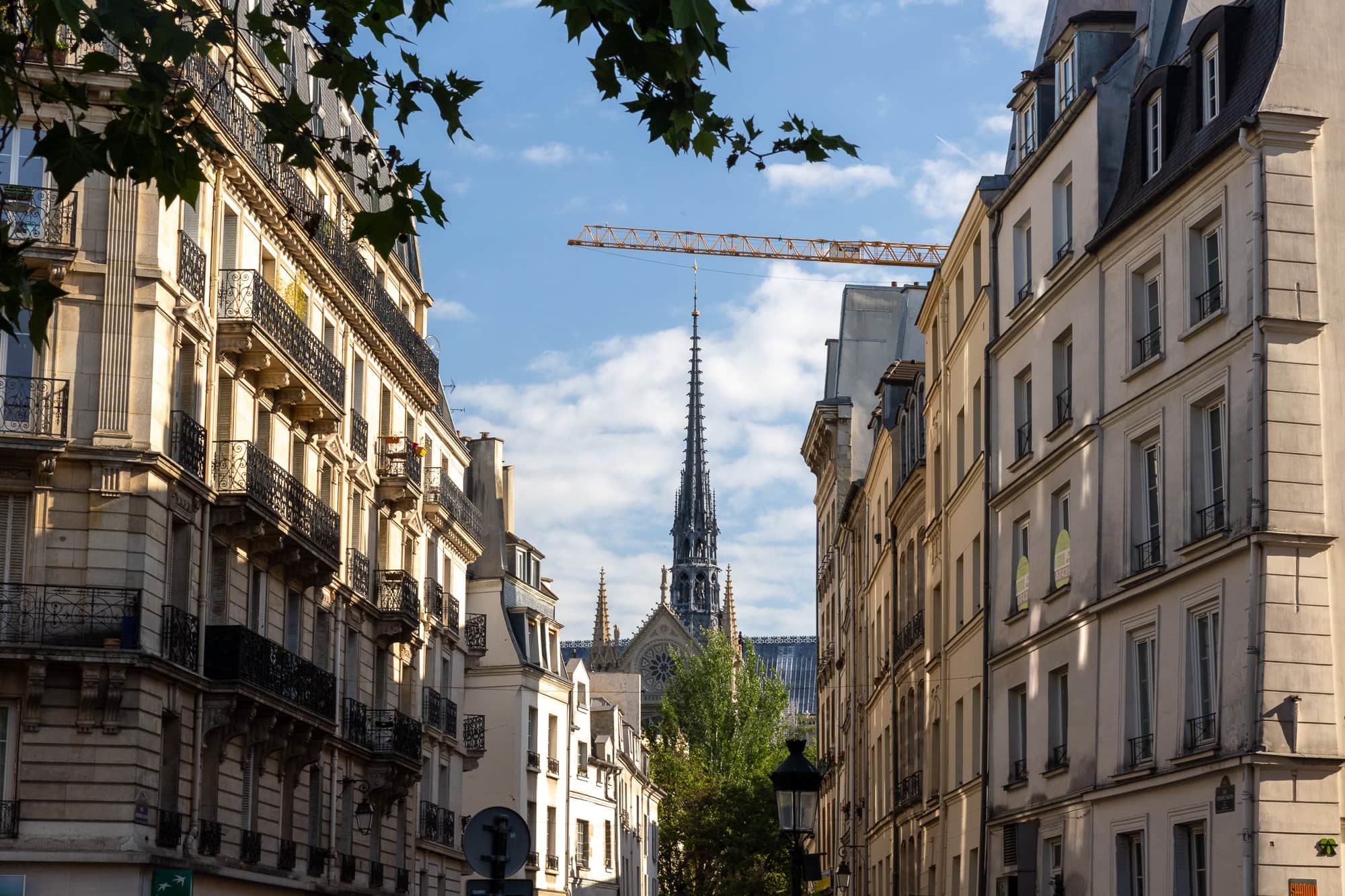
Greece Island Hopping: The Complete Ferry & Islands Guide for 2026

TL;DRIsland hopping in Greece is dead simple once you know the rules: ferries leave Athens from three ports – Piraeus (Cyclades, Crete, Dodecanese), Rafina (Mykonos, Andros, Tinos) and Lavrio (Kea, Kythnos). You can choose between big ferries like Blue Star (Piraeus–Santorini route, about 8 hours, 40–50 euros) and fast SeaJets catamarans (4.5–5 hours, 60–80 euros), though these get cancelled when the meltemi wind blows from May to September. Book tickets online through Ferryhopper.com or Ferries.gr — in high season, months ahead. For 10 days, stick to two or three islands max, three nights each as a minimum, and Athens–Mykonos–Naxos–Santorini is a route that works well. Spend your last night before flying home in Athens, so a cancelled sailing doesn’t wreck your flight.

The image is perfect. You’re sitting on the upper deck, salty wind in your hair, an iced frappé in hand, and a white silhouette rising out of the deep blue Aegean on the horizon. Greece island hopping — skipping from one island to the next — is the absolute essence of a Greek summer. But the reality can catch an unprepared traveller off guard. A wrong port, a cancelled sailing due to wind, or a bout of seasickness can turn that idyllic picture into a logistical nightmare.

The good news is that the Greek ferry network is vast and complex, but once you know how to work it, it’s remarkably reliable. You just need to know the rules of the game — which port to leave from, which vessel to choose, and how to put together a route that actually makes sense.

In this guide, you’ll find a complete practical manual for Greece island hopping: Athens ferry ports, types of vessels, when and where to buy tickets, a ferry vs. flight comparison, five golden rules, and four tried-and-tested routes. Let’s dive in. ☺️

TL;DR

  • Athens has three ports: the main Piraeus (Cyclades, Crete, Dodecanese), the smaller Rafina (Mykonos, Andros, Tinos), and the tiny Lavrio. Always check which one your ferry departs from.
  • Two types of vessel: large, stable conventional ferries (Blue Star) are slower, cheaper and more reliable; fast catamarans (SeaJets) are quicker, pricier, and sensitive to rough seas.
  • Book tickets online via Ferryhopper or Ferries.gr — in peak season, weeks or even months ahead.
  • Watch out for the meltemi wind (May to September). When it blows hard, fast catamarans stay in port; the big ferries keep going.
  • Don’t overdo it: for a 10-day trip, plan a maximum of two to three islands and spend at least three nights on each.
  • Sleep in Athens on your last night before flying home, so a cancelled ferry doesn’t cost you your flight.

Three Athens Ports: Which One to Use

The most common mistake first-time visitors make? Assuming Athens has a single port and that turning up ten minutes before departure is fine. Wrong on both counts. The Greek capital has three separate ferry ports, and they couldn’t be more different from one another.

Piraeus is Greece’s main artery, where the majority of ferries depart for the Cyclades, Crete, and the Dodecanese. From Athens Airport and the city centre, you can reach it directly on the Metro (Blue Line 3). The catch is that Piraeus is enormous — gates are numbered E1 through E12, and the distances between them can run to several kilometres. Always check your departure gate in advance, and arrive at the port at least 45 minutes before sailing, as ferries will not wait.

Rafina is the insider’s secret, especially if you’re flying in. Located on the eastern coast of Attica, a direct bus from Athens Airport gets you there in about 30 minutes. It’s smaller, easier to navigate, and far less chaotic than Piraeus — and it’s where you’ll find ferries to Mykonos, Andros, and Tinos. The third and smallest port, Lavrio, sits to the south of Attica and tends to fly under the tourist radar; it serves as the jumping-off point for the islands of Kea and Kythnos.

Conventional Ferry or High-Speed Catamaran?

On the same route you’ll often find very different vessels with a world of difference in both journey time and price — and your choice of boat will shape your whole experience on the water. There are essentially two types.

Large conventional ferries (Blue Star Ferries, ANEK Lines) are best imagined as floating apartment blocks. They’re enormous, slower, but supremely reliable — complete with open sun decks, restaurants, and vehicle decks for cars. Most importantly, they’re incredibly stable: when the sea gets rough, you’ll barely notice it. Tickets are also cheaper. The Piraeus–Santorini crossing takes a large ferry around 8 hours, with tickets running roughly €40–50.

High-speed catamarans (SeaJets, Hellenic Seaways) practically skim across the surface. Inside, the experience is more like a low-cost flight — you sit in an assigned seat in an air-conditioned cabin and going out on deck is often not permitted at all. You’ll save half the travel time, but you’ll pay roughly twice as much, and crucially, these vessels are extremely susceptible to waves. The same Santorini route takes 4.5 to 5 hours by catamaran, but expect to pay €60–80 for a ticket.

The Meltemi Wind and Seasickness

From mid-May to mid-September, the Aegean is ruled by the meltemi — a strong northerly wind. It brings welcome relief from the heat, but it also kicks up some serious waves, and that’s where it gets tricky. When the meltemi is really blowing, fast catamarans are stuck in port and their sailings are cancelled, while the big conventional ferries carry on regardless.

If you tend to get travel sick even on a bus, steer well clear of high-speed catamarans in July and August. And if seasickness does strike, there’s a simple trick: book a ticket for the lower deck and sit as far back and as central as possible — that’s where the motion is least. Keep some travel sickness tablets (like Dramamine or Kwells, available at any UK pharmacy) to hand just in case.

Where and When to Buy Ferry Tickets

Queuing up at ticket booths in the port is a thing of the past — everything is handled online these days. The two most reliable aggregators are Ferryhopper.com and Ferries.gr, which show all operators side by side. You can even plan a more complex multi-island itinerary and download your e-tickets directly to your phone.

When should you book? In peak season (July and August) and around Greek public holidays, buy your tickets weeks or even months in advance — ferries sell out completely, especially around the Assumption of Mary on 15 August. In May or October, a few days’ notice is usually plenty, and you can often buy on the day. Outside of high season (November to March), watch out for dramatically reduced timetables: some smaller islands may only have one sailing per week.

Ferry or Flight?

Sometimes it simply doesn’t make sense to spend a whole day at sea, especially if you only have a week’s holiday. Greece has an excellent domestic flight network (Aegean Airlines, Olympic Air, Sky Express), with fares starting from around £45–100 when booked ahead. Here’s a quick comparison of the most popular routes.

RouteFerry (time / price)Flight (time / price)
Athens – Santorini4.5–8 hrs / €40–8045 min / €50–120
Athens – Mykonos2.5–5 hrs / €35–7040 min / €50–110
Athens – Crete9–11 hrs (often overnight) / from €4050 min / €50–100
Santorini – Mykonos2–3 hrs / €60–90Direct flights are rarely available

Flying makes the most sense for covering the long distance from Athens. But between the islands themselves — say Naxos to Paros — the ferry remains the only sensible option, or in many cases the only option at all.

5 Golden Rules of Greece Island Hopping

Break these rules and it’ll cost you — in stress, money, or both. They’re worth taking seriously.

  • The three-night rule. Never plan just one or two nights on an island. Every transfer eats up at least half a day (packing, checking out, getting to the port, the crossing, finding your new accommodation). Three nights is the absolute minimum to actually enjoy a place.
  • The greedy traveller’s maths. “We’ve got ten days — we can do five islands!” No, you can’t. You’ll just arrive home exhausted, with all the islands blurring into one. Two to three islands for ten days is the realistic maximum.
  • Stick to one island group. Ferries work brilliantly within island groups (Cyclades, Ionian Islands, Dodecanese). Trying to combine Corfu in the west with Rhodes in the east in a single holiday is logistical madness — you’d need to fly back through Athens.
  • Build in a buffer before your flight home. Always spend your last night in Athens (or on an island with its own airport). One strong meltemi is all it takes for your ferry to be cancelled — and your flight home won’t wait.
  • Respect the meltemi. In July and August, go for Blue Star large ferries. The journey will take longer, but the chances of your sailing actually departing are as close to guaranteed as you’ll get.
lukas a lucka
Lukáš and Lucie recommend
Where to stay on Greek islands
1 accommodation — hotels and other lodging options

Tried-and-Tested Routes: Where to Go

Not sure how to string the islands together? Here are four proven combinations that make sense both logistically and in terms of experience.

The Classic First Trip (10 Days)

Athens → Mykonos → Naxos → Santorini → fly home. The holy grail for first-time visitors to Greece who want to see the icons. You start on Mykonos with its parties and glamour, move on to Naxos for excellent food and beaches, then finish on the dramatic cliffs of Santorini — flying home at the end to save time.

Family-Friendly Island Hopping (7–10 Days)

Athens → Paros → Naxos. With children in tow, there’s no point spending hours on a ferry. Paros and Naxos sit close together — the crossing between them takes just 45 minutes — and Naxos is ideal for families thanks to its long, shallow beach and fine sand at Agios Georgios.

Western Ionian Route (7 Days)

Kefalonia → Lefkada. If you love lush greenery and turquoise water, the Ionian Islands will blow you away. A local ferry from Fiskardo on Kefalonia to Vasiliki on Lefkada connects you to some of the most spectacular cliff beaches in Europe — including the famous Myrtos — and as a bonus, the meltemi barely touches this part of Greece.

Budget & Quick Escape (Weekend to 5 Days)

Athens → Aegina → Hydra. The islands of the Saronic Gulf are practically on Athens’ doorstep. From Piraeus, you’re on Aegina in 40 minutes and on the peaceful, car-free island of Hydra in under two hours. You can even tackle the whole route as a series of day trips from your Athens base.

Where to Stay When Island Hopping in Greece

With island hopping, you’re sorting out accommodation separately on every island, so flexible booking conditions are essential. On each island, aim to stay as close to the port or main town as possible — you really don’t want to be lugging suitcases across the island on departure day. In Athens, choose a hotel near a Metro stop with a direct line to Piraeus.

💡 Accommodation tip: We always search on Booking.com, which tends to have the best cancellation policies. That matters a lot with island hopping — if the meltemi cancels your ferry, you’ll be very glad you can move your reservation without hassle.

In peak season, book accommodation on the most popular islands (Santorini, Mykonos) well in advance — leave it too late and you’ll be left with only the most expensive options.

Further Reading

Before you head off, check out our other articles about Greece:

Frequently Asked Questions

What is island hopping?

Island hopping means jumping from island to island during a single holiday, typically by ferry. In Greece, it’s a popular way to experience multiple islands at once, like the classic route through Mykonos, Naxos, and Santorini. The key is to choose islands from the same group (Cyclades, Ionian Islands) that are well connected by ferry routes.

Which Athens port do ferries to the islands depart from?

Athens has three ports. The main one is Piraeus, where boats depart for the Cyclades, Crete, and the Dodecanese, and which is accessible by metro (blue line 3). Smaller Rafina, near the airport, serves Mykonos, Andros, and Tinos. The smallest, Lavrio, is used for the islands of Kea and Kythnos. Always check in advance which port and gate your boat departs from.

How and when should I buy Greek ferry tickets?

Buy tickets online through aggregators like Ferryhopper or Ferries.gr, which show all companies together and send an e-ticket to your phone. During high season (July, August) and around Greek holidays, book weeks or even months in advance, as ferries often sell out. In May and October, a few days ahead is fine, though off-season there are significantly fewer connections.

Large ferry or fast catamaran?

Large ferries (Blue Star) are slower and cheaper, but stable and reliable even in rough seas. Fast catamarans (SeaJets) cut travel time in half but cost roughly twice as much and are sensitive to waves, so the strong meltemi winds often cancel them. In July and August, when the meltemi blows hardest, it’s safer to bet on the big boats, even though they take longer.

How many islands can I fit into 10 days?

For ten days, two to three islands is ideal—no more. Each transfer eats up at least half a day, and each island deserves at least three nights, otherwise you’ll feel like you’re constantly on the move. Less really is more here; you’ll have time to soak up the atmosphere instead of constantly packing and hunting for ferries.

Can I rely on a ferry on my departure day when island hopping?

Absolutely not. You should always spend your last night before flying home in Athens or on the island your flight departs from. All it takes is stronger meltemi winds, the ferry doesn’t sail, and you miss your flight. Avoid this risk by planning a buffer day and spending your last night as close as possible to your departure airport.

Tips and Tricks for Your Vacation

Don’t Overpay for Flights

Search for flights on Kayak. It’s our favorite search engine because it scans the websites of all airlines and always finds the cheapest connection.

Book Your Accommodation Smartly

The best experiences we’ve had when looking for accommodation (from Alaska to Morocco) are with Booking.com, where hotels, apartments, and entire houses are usually the cheapest and most widely available.

Don’t Forget Travel Insurance

Good travel insurance will protect you against illness, accidents, theft, or flight cancellations. We’ve had a few hospital visits abroad, so we know how important it is to have proper insurance arranged.

Where we insure ourselves: SafetyWing (best for everyone) and TrueTraveller (for extra-long trips).

Why don’t we recommend any Czech insurance company? Because they have too many restrictions. They set limits on the number of days abroad, travel insurance via a credit card often requires you to pay medical expenses only with that card, and they frequently limit the number of returns to the Czech Republic.

Find the Best Experiences

Get Your Guide is a huge online marketplace where you can book guided walks, trips, skip-the-line tickets, tours, and much more. We always find some extra fun there!
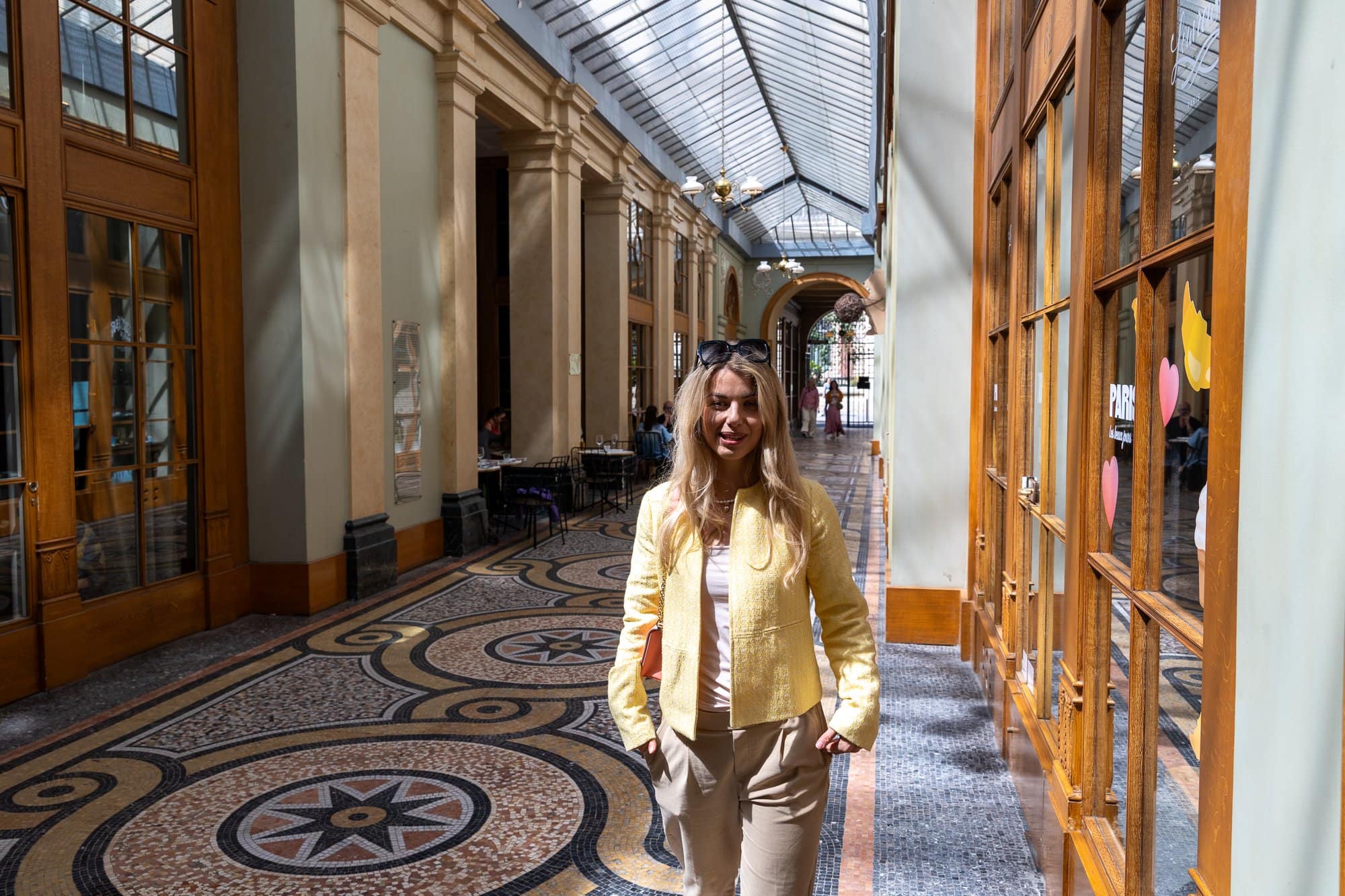
Practical Guide to Greece 2026: Transport, Money, Budget & Safety

TL;DRThis 2026 Greece guide says your best bet is mixing domestic flights (Aegean, Sky Express), ferries from Piraeus or Rafina, and a hire car — and budgeting for the climate tax of €1.50 to €10 a night plus the new cruise ship levy. Daily budgets run from €50 to €80 for backpackers, €265 to €455 for mid-range travellers, and from €490 for luxury, with Mykonos and Santorini costing 40 to 60% more than Naxos or Paros. Carry €100 to €200 in cash, since plenty of tavernas still won’t take cards. Greece is one of the safest countries around — the real risks are summer heat near 42°C, wildfires, pickpockets in Athens, tourist-trap restaurants in Plaka, and dodgy taxi drivers. Travel insurance with repatriation cover is a must too, as an EHIC card alone won’t cut it.

When you start piecing together your Greece itinerary, two things will catch up with you sooner or later: logistics and budget. Greece is not a compact destination you can zip across by train in an afternoon. It’s made up of a mountainous mainland and thousands of islands scattered across two seas — and in recent years, the country has introduced a string of new fees and taxes that can push up the final bill considerably. This Greece travel guide has everything you need to plan a smooth, surprise-free trip.

The good news is that Greece ranks among the safest countries in the world, and with a little preparation you can enjoy your holiday without any nasty surprises. You just need to know how to get around, how much money to bring, what to watch out for, and how to react if nature — or a city scammer — decides to test you.

In this practical guide you’ll find everything you need for a trip to Greece: transport options, money and ATMs, a realistic 2026 budget, new taxes and fees, safety (earthquakes, wildfires, the sea) and the most common tourist scams. Let’s get into it. ☺️

TL;DR

  • Getting around Greece means flying, taking ferries, or hiring a car. Domestic flights (Aegean, Sky Express) often save you hours compared to ferries.
  • Watch out with scooters and quad bikes. Anything over 50cc requires a category A licence — without it, you pay for everything out of pocket if there’s an accident.
  • Cash is still king. Carry 100–200 € in cash and only use ATMs from Greek banks, not Euronet.
  • 2026 budget: backpacker 50–80 € per day, mid-range around 265–455 €, luxury from 490 €.
  • New fees: the climate resilience tax is 1.50–10 € per night (paid at the hotel) plus a cruise passenger tax.
  • Safety: Greece is very safe overall. Watch out for heatwaves, wildfires (SMS alert from 112) and pickpockets or restaurant traps in Athens.
  • Travel insurance with repatriation cover is essential — your EHIC card alone won’t cut it.

Getting Around Greece: Flights, Ferries or Car?

Greece has solid and improving infrastructure, but you need to know when to fly, when to take a ferry, and when to just hire a car.

By Plane

The main hub is Athens’ Eleftherios Venizelos Airport, which handles over 34 million passengers a year, followed by Heraklion (Crete), Thessaloniki, Rhodes and Corfu. From the UK, there are frequent direct flights to Athens and Thessaloniki year-round, with seasonal charter and scheduled services to the islands running from May to October. Airlines including British Airways, easyJet, Jet2 and Ryanair all operate routes from major UK airports. Outside peak season, return flights to Athens can be found for as little as 80–150 €, while direct island routes in summer typically cost 200–400 €.

For inter-island hops, you’ll be choosing between Aegean Airlines, Olympic Air and Sky Express. Short island flights last under an hour and cost 50–120 €, which often makes far more sense than a long, gruelling ferry crossing.

By Ferry

Island hopping is a Greek classic. The main port for the Cyclades is Piraeus in Athens, but if you’re heading to Andros, Tinos or Mykonos straight from the airport, use the closer port of Rafina instead — it’ll save you an hour. For a detailed how-to, check out our guide to island hopping in Greece.

That said, people frequently underestimate ferry logistics. From mid-May to mid-September, the strong meltemi wind regularly causes delays and outright cancellations of high-speed services. If you have a connecting flight home, never leave your ferry transfer from an island to Athens for the very last day.

By Car or Scooter

Hiring a car gives you complete freedom to explore hidden villages and deserted beaches. Outside peak season you can pick up a small car for 25–40 € a day; in summer prices jump to 50–80 €. As a UK citizen, your standard driving licence is valid in Greece. Always insist on zero-excess insurance, though — island roads can be extremely narrow and scrapes from roadside bushes are an everyday occurrence.

⚠️ A word of serious warning. Riding a scooter over 50cc or a quad bike requires a category A motorcycle licence. Many rental shops ignore this and will happily hand over a more powerful machine on a standard car licence. But if there’s an accident, the insurer will check your licence — and if you’re not properly qualified for that vehicle, you’ll be liable for all medical costs and damages yourself, potentially running into tens of thousands of pounds.

Money: Cash, Cards and ATMs in Greece

Greece uses the euro, and these days you can tap your card in supermarkets, petrol stations and hotels without a second thought. In family-run tavernas, market stalls and kiosks, however, you’ll sometimes be met with an apologetic smile and the line “the terminal is broken.” This is often a routine form of tax avoidance, so always carry a cash reserve of 100–200 €.

When you do need an ATM, steer well clear of the blue-and-yellow Euronet machines — their exchange rates and fees are frankly exploitative. Stick to ATMs from official Greek banks (Alpha Bank, Piraeus Bank, Eurobank, National Bank of Greece) and always select “without conversion” when asked about dynamic currency conversion. Tips are usually 5–10% and it’s better to leave them in cash on the table rather than adding them via the card terminal, where the money may not reach your waiter.

💡 If you want to avoid foreign transaction fees altogether, a travel-friendly card like Revolut or Wise can save you a surprising amount over a two-week holiday. Alternatively, consider a Holafly eSIM so you’re always connected and can check your account on the go.

How Much Does a Holiday in Greece Cost in 2026?

Greece is currently around 15–25% cheaper than neighbouring Italy, but it has caught up with Spain and Croatia in terms of pricing. Budgets broadly fall into three tiers.

Travel styleBudget per person per dayOne week for two (total)
Backpacker / budget50–80 €700–1,120 €
Mid-range (couples)265–455 €2,420–5,885 €
Luxuryfrom 490 €from 6,860 €

A dorm bed in a hostel costs 15–25 €, a decent mid-range hotel runs 80–150 € per night, and a room with a caldera view on Santorini can easily top 300 €. Food will set you back around 30–50 € a day if you mix a quick lunch (a gyros pita costs 3.50–5 €) with a sit-down taverna dinner in the evening.

The golden rule: your budget isn’t determined by how you travel — it’s determined by where you go. Mykonos and Santorini are 40–60% more expensive than comparably good experiences on Naxos, Paros or the mainland, where you can often “earn” your sunbed simply by ordering a frappé. The cheapest islands tend to be those without airports and with fewer tourist crowds, like Thassos. Timing matters enormously too — accommodation prices drop by around 40% in October compared to August.

New 2026 Taxes and Fees to Know About

The Greek government is responding to climate change and overtourism with a wave of new charges that can push up your final bill in ways you might not expect.

The Climate Crisis Resilience Fee replaced the old city tax and is always paid in cash at the hotel on arrival — not online in advance. The rate depends on the accommodation category and season: apartments pay 1.50 € per night, three-star hotels 3 €, four-star 7 €, and five-star hotels 10 € per night.

The Cruise Passenger Tax applies to anyone arriving by large cruise ship. During peak season, each passenger pays 20 € to disembark at Santorini or Mykonos, and 5 € at other ports; rates drop in the shoulder season. Don’t forget entry fees for major sights either: the Acropolis and the Palace of Knossos both cost 20 € and operate mandatory timed-entry slots, so your ticket is only valid for a specific time window — book in advance.

Safety in Greece: Earthquakes, Wildfires and the Sea

Search “is Greece safe” and you’ll be met with dramatic headlines. Don’t be put off — Greece consistently ranks among the safest countries in the world and violent crime is rare, especially on the islands. Nature does occasionally flex its muscles, though.

Earthquakes

Greece sits in the most seismically active zone in Europe, so the ground does tremble from time to time. Most of these are micro-tremors you won’t even notice. A classic case of media scaremongering was the Santorini situation in early 2025, when instruments recorded tens of thousands of tremors — yet there were no casualties and no damage to infrastructure. Greek building codes have been among the strictest in Europe since 1995, and modern hotels are built to withstand significant quakes, so cancelling your flights over this really isn’t necessary.

If an earthquake does catch you indoors, follow the Drop, Cover, Hold On rule: get under a sturdy table or press yourself against a load-bearing wall, and don’t run outside where falling debris is a real danger. If strong tremors hit while you’re at the beach, head uphill immediately and move away from the shoreline.

Summer Heat and Wildfires

Summer in Greece no longer means a pleasant 30°C — heatwaves now regularly push 42°C. Air conditioning is standard these days; skip any accommodation that doesn’t have it. Drink water before you feel thirsty, wear a hat, and follow the local lead by taking a siesta in the shade between noon and four.

With heat and drought comes the threat of wildfires. Greece has an excellent early-warning system: when danger is detected, a loud emergency SMS is sent to your mobile from number 112 in both Greek and English, with clear instructions on where to evacuate. During red-alert days, stay out of pine forests, never light fires, and call 199 or 112 if you spot smoke.

lukas a lucka
Lukáš and Lucie recommend
Where to stay in Greece
1 accommodation — hotels and other lodging options

Sea Hazards

The Aegean and Ionian seas look like a calm swimming pool in photos, but looks can be deceiving. The silent danger is rip currents. If one catches you, don’t panic and don’t try to swim straight back to shore against it — swim parallel to the beach until you’re out of the current. Also watch out for the meltemi wind, which can blow a paddleboard or inflatable flamingo kilometres from shore before you know it. Water shoes are a smart choice on rocky beaches, where sea urchins lurk just beneath the surface.

Scams to Watch Out For, Especially in Athens

While crime on the smaller islands is practically non-existent, Athens is a big city with all that entails — and around the Acropolis you need to keep your wits about you.

  • Taxis: flagging down a yellow cab on the street is a sport for the brave (rigged meters, long detours). Download FREE NOW or Uber instead — you’ll see the price upfront.
  • Restaurant traps: in the tourist district of Plaka, touts lure you into restaurants with no prices displayed and the bill for two can easily hit 400 €. Never sit down anywhere without a menu showing prices, and refuse any unsolicited “gifts.”
  • Bar scam: a friendly local or a charming stranger invites you for a drink, disappears after a few rounds, and you’re left with a bill for hundreds of euros and a bouncer at the door. Don’t follow strangers to bars of their choosing.
  • Pickpockets: their hunting ground is the blue Metro line from the airport and the Monastiraki and Syntagma stations. Wear your backpack on your front and keep your wallet in a zipped front pocket.

Health, Pharmacies and Insurance

As a UK citizen travelling post-Brexit, your Global Health Insurance Card (GHIC) entitles you to necessary treatment at state-run facilities — but these are often underfunded, and on many islands you’ll find only a basic health centre. If you break a leg on Naxos, you’ll likely need a helicopter transfer to Athens. That’s why comprehensive travel insurance with a high medical limit and — crucially — repatriation cover is an absolute must for Greece. It costs relatively little and could save you an enormous sum.

Greek pharmacies are marked by a green cross and are genuinely excellent. Pharmacists speak English and often act as a first point of medical contact, sometimes dispensing medicines that would require a prescription elsewhere. Malaria and tropical diseases are not a concern here. The biggest nuisance is mosquitoes — buy your repellent locally, as Greek brands tend to work better on local mosquitoes.

Practical Tips and Emergency Numbers

A few final things to make sure nothing catches you off guard. Tap water is safe to drink in Athens and on the mainland, but on many islands it’s desalinated and not really suited for drinking — buy bottled water there. Plug sockets are the standard European type (Type C and F, 230V), so you’ll need a UK travel adaptor. Greece is two hours ahead of the UK (UTC+3 in summer). As a member of the EU, Greece falls under roaming rules — however, post-Brexit UK travellers are no longer automatically covered by EU roaming, so check with your mobile provider before you go or pick up a local SIM or eSIM. A Holafly eSIM is a convenient option that works from the moment you land.

Most importantly, save these emergency numbers to your phone — they’re all free to call, even without credit:

  • 112: pan-European emergency line (English-speaking operators)
  • 100: police
  • 166: ambulance (EKAB)
  • 199: fire brigade

Where to Stay in Greece

Whether you’re heading to the islands or the mainland, it pays to compare options carefully — and to prioritise accommodation with air conditioning and strong independent reviews, not just pretty photos from a brochure.

💡 Accommodation tip: We usually search on Booking.com, which tends to offer the most flexible cancellation policies. That’s especially valuable for island bookings, where the meltemi can disrupt your ferry plans — a free cancellation reservation gives you the freedom to adapt.

Remember to factor the Climate Crisis Resilience Fee into your accommodation budget for longer stays — it’s always paid on-site and isn’t included in the room rate.

Read More About Greece

Before you head off, check out our other articles about Greece:

Frequently Asked Questions

How much does a holiday in Greece cost?

It depends on your travel style. Backpackers can get by on 50 to 80 euros per day, mid-range travelers should budget around 265 to 455 euros per person per day, and luxury starts at 490 euros. A week for a couple will run from about 2,400 euros upward. Your destination makes the biggest difference though – Mykonos and Santorini are 40 to 60% more expensive than Naxos, Paros, or the mainland.

How much cash should I bring to Greece?

While cards are widely accepted in Greece, you’ll often run into ‘broken terminals’ at family-run tavernas, markets, and kiosks. Always keep an emergency stash of 100 to 200 euros in cash on you. Only withdraw from ATMs belonging to Greek banks (Alpha Bank, Piraeus, Eurobank) – never use the blue-and-yellow Euronet machines, which have terrible exchange rates.

What payment methods work in Greece?

Greece uses the euro, and you can pay by card or cash. Cards are accepted at supermarkets, gas stations, hotels, and larger restaurants, but expect to need cash at small tavernas and kiosks. Leave tips (5 to 10%) in cash on the table. When using ATMs or paying in shops, if asked about currency conversion, always choose to pay in euros – that means ‘without conversion.’

Is Greece safe regarding earthquakes and fires?

Yes, Greece is one of the safest countries in the world. Earthquakes are usually minor, and modern hotels easily withstand them thanks to strict building codes – serious damage is rare. Wildfires are a risk in summer, but Greece has an excellent SMS warning system from the number 112. There’s no reason to cancel your trip over these concerns – you just need to know the basic safety protocols.

What should I watch out for in Greece?

On the islands, practically nothing – crime is minimal. In Athens, watch out for pickpockets (especially on the metro from the airport), dodgy taxis (use the FREE NOW or Uber apps instead), and tourist traps in the Plaka district, where restaurants without posted prices can charge you hundreds of euros. Also be careful of summer heat, riding scooters without a proper license, and the meltemi winds near the water.

Do I need travel insurance for Greece if I have an EHIC card?

Absolutely yes. While your EHIC card covers essential treatment at public hospitals, these are often overcrowded and islands usually only have basic medical centers. If you have a serious injury, you’ll need helicopter or ferry transport to the mainland. Commercial insurance with high medical coverage limits and especially repatriation coverage is essential – it costs a few hundred euros and could save you hundreds of thousands.

Tips and Tricks for Your Vacation

Don’t Overpay for Flights

Search for flights on Kayak. It’s our favorite search engine because it scans the websites of all airlines and always finds the cheapest connection.

Book Your Accommodation Smartly

The best experiences we’ve had when looking for accommodation (from Alaska to Morocco) are with Booking.com, where hotels, apartments, and entire houses are usually the cheapest and most widely available.

Don’t Forget Travel Insurance

Good travel insurance will protect you against illness, accidents, theft, or flight cancellations. We’ve had a few hospital visits abroad, so we know how important it is to have proper insurance arranged.

Where we insure ourselves: SafetyWing (best for everyone) and TrueTraveller (for extra-long trips).

Why don’t we recommend any Czech insurance company? Because they have too many restrictions. They set limits on the number of days abroad, travel insurance via a credit card often requires you to pay medical expenses only with that card, and they frequently limit the number of returns to the Czech Republic.

Find the Best Experiences

Get Your Guide is a huge online marketplace where you can book guided walks, trips, skip-the-line tickets, tours, and much more. We always find some extra fun there!
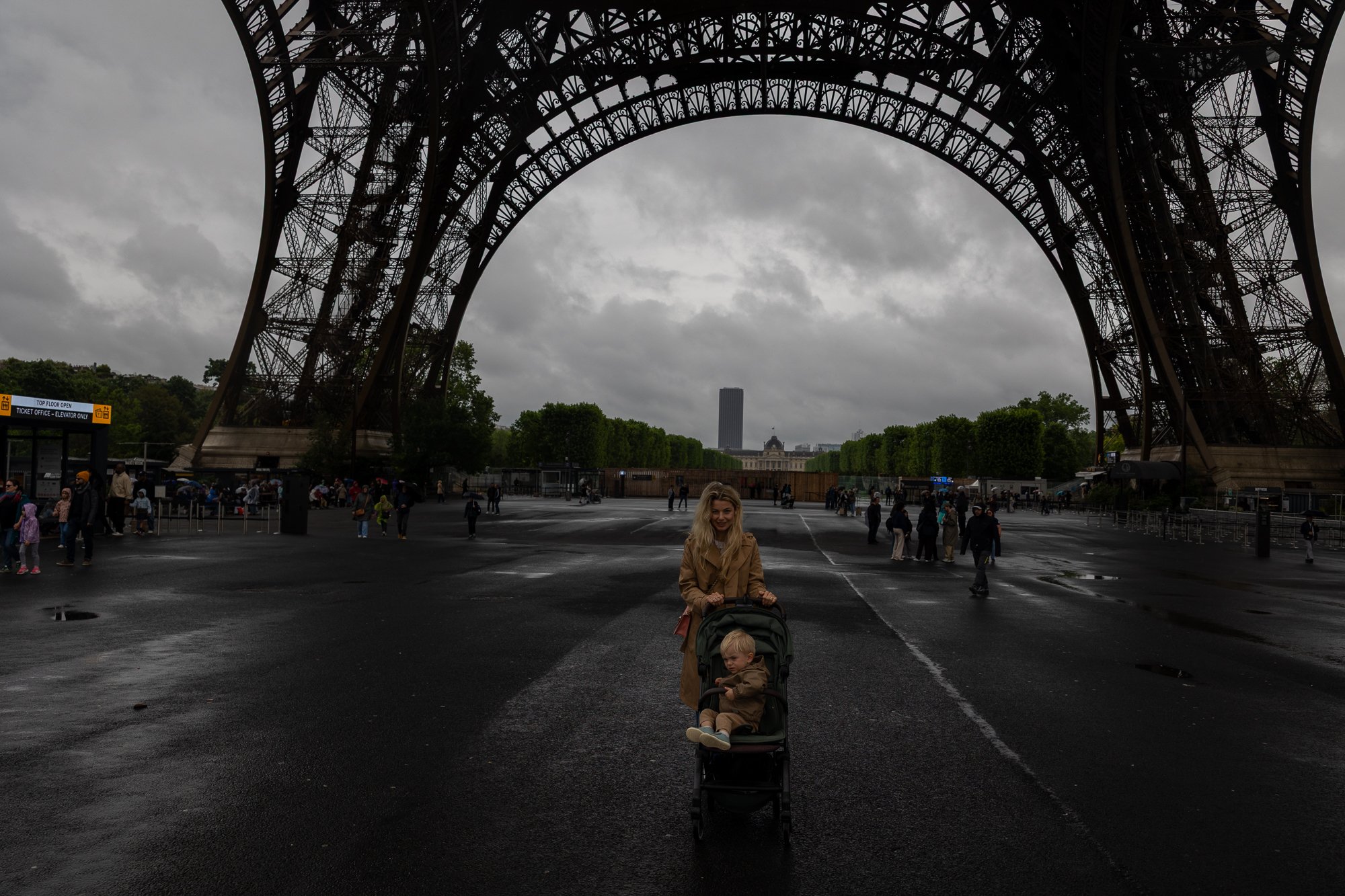
When to Visit Greece: Weather Month by Month in 2026

TL;DRThe best months for a Greek holiday are May and September — the sweet spots with warm weather, lower prices and emptier beaches. September wins for swimming, with sea temperatures of 24–26°C, while July and August bring brutal heat over 35–40°C, crowds and peak prices (sun loungers on Mykonos can run into hundreds of euros). April and October are ideal for sightseeing at places like the Acropolis, Delphi or Meteora, though in October it only stays warm in the south — Crete and Rhodes keep sea temperatures around 22–24°C. From mid-May to mid-September the meltemi wind picks up, cooling the air but playing havoc with ferries in the Cyclades and Dodecanese. Out of season, from November to March, the islands go quiet, so Athens or Thessaloniki are the better bet.

Planning a trip to Greece always comes back to one fundamental question: when should you actually go? You’re certainly not alone in asking — search terms about Greek weather and specific months are typed into Google nearly six million times a month. October is a particular obsession, because everyone secretly hopes to squeeze out one more month of summer without freezing or blowing the holiday budget. Finding the best time to visit Greece really does depend on what kind of trip you’re after.

The truth is, there’s no single universally perfect time to visit Greece. It all depends on whether you’re after swimming, empty ancient ruins, or a buzzing nightlife scene. The country also spans three distinct climate zones, so while it’s already raining in the north come October, you can still be sunbathing in the south.

In this guide, we’ll walk you through Greek weather month by month, demystify the infamous meltemi wind, lay out air and sea temperatures in a handy table, and finish with advice on when to go for your specific goals. Let’s find your perfect travel window. ☺️

TL;DR

  • The two best months are May and September — the so-called sweet spots. Warm weather, reasonable prices, quieter beaches, and in September the sea is like a warm bath.
  • September is king for swimming (water 24–26 °C), followed closely by July and August. In October, stick to the south.
  • July and August are extreme: temperatures above 40 °C, massive crowds, peak prices, and wildfire risk. Perfect only if you love the party scene.
  • The meltemi is a strong northerly wind (May–September) that cools the air but whips up waves and disrupts ferries. Choose coves facing south or south-west.
  • The south has the longest season (Crete, Rhodes), where you can swim well into autumn.
  • Off-season (November–March) the islands go to sleep, but Athens and Thessaloniki make excellent budget city breaks.

Three Climate Zones in Greece

Before picking a month, it’s worth knowing that Greece is far from climatically uniform — each region behaves quite differently. This matters most in autumn, when the gap between north and south becomes most pronounced.

The Ionian Islands in the west (Corfu, Zakynthos, Kefalonia) are lush, wetter, and spared from summer gales. The Cyclades in the middle of the Aegean (Santorini, Mykonos, Naxos) are dry, rocky, and battered by wind in summer. Then there’s the south — Crete and Rhodes — which enjoys the longest season in the entire Mediterranean and where you can swim comfortably well into autumn.

The Meltemi Wind Explained

From mid-May to mid-September, the Aegean is ruled by the meltemi — a strong, dry northerly wind that hits the Cyclades, Crete, and the Dodecanese hardest. It’s a force that can either save your holiday or seriously complicate it.

The good news: the meltemi is your best defence against brutal summer heat. While Athens shimmers at 40 °C in July, a steady breeze on Naxos can make it feel a full ten degrees cooler.

The catch is that the wind kicks up waves, and the Aegean can get seriously choppy. Even seasoned travellers can be caught out by seasickness on ferry crossings, and strong meltemi regularly causes delays or outright cancellations of sailings. If you’re planning island hopping, build in buffer days in case a ferry can’t sail. And at the beach, check the map — bays facing south or south-west are sheltered from the northerly wind and far more comfortable.

Greece Month by Month

Now for the main event. Let’s run through the whole year and set realistic expectations for each month — from the wildflower-filled days of April to the quiet winter sleep of the islands.

April: Blooms, Traditions and Cold Water

April in Greece is all about nature waking up. Everything is extraordinarily green, meadows are in full bloom, the air smells of wild herbs, and temperatures climb to a pleasant 20 °C. These are ideal conditions for hiking and sightseeing — no sweltering heat, no crowds.

If you want to explore the ruins at Delphi, climb up to the monasteries of Meteora, or walk the Samaria Gorge in Crete, April is your month. Swimming is firmly off the agenda though — the sea barely reaches 16–17 °C. The key event of spring is Greek Orthodox Easter, the most important holiday in the Greek calendar, when villages come alive with candlelit processions and whole lambs are roasted on the spit. Bear in mind that many shops and services will have reduced hours over the holiday period.

May: The First Sweet Spot of the Season

Among experienced travellers, May is widely regarded as one of the two best months to visit Greece. The sun already has real warmth, the days are long, but the tourist machine is only just getting started. Beaches are blissfully quiet and accommodation prices are noticeably friendlier than in high summer.

The sea warms to 19–20 °C, so a swim is perfectly doable — it’s refreshing rather than warm, but still. May is brilliant above all for road trips on the mainland, such as a two-week loop around the Peloponnese (Athens, Corinth, Olympia, Kalamata, Nafplio). You’ll also save on Greece’s relatively new cruise passenger levy: in high summer, disembarking from a cruise ship on Santorini or Mykonos costs 20 euros, but in May it’s just 12 euros.

June: The Perfect Compromise

If you want the reassurance of warm weather, a properly warm sea (around 22–23 °C), but still don’t want to fight your way through the crowds, June is the answer. Every taverna and beach bar is open and running at full capacity, ferries are on their summer schedules, but the islands haven’t yet hit breaking point.

This month works especially well for families with younger children who aren’t tied to school holidays. The shallow beaches of Naxos or Corfu offer ideal conditions for little ones, evenings are warm enough for dinner outside in a t-shirt, and the meltemi is still just warming up — so the sea tends to stay calm.

July and August: Peak Season, Crowds and Extremes

This is where the gloves come off. July and August represent the undisputed peak of the season — with everything that entails. Greece welcomed a record-breaking nearly 38 million visitors in 2025, and the overwhelming majority came in these two months.

Expect extreme heat. Temperatures routinely push 35 °C and top 40 °C during heatwaves. In July 2025, a 42 °C heatwave forced the closure of the Athens Acropolis mid-day for safety reasons — a site that now operates with timed entry slots and a daily cap of 20,000 visitors anyway. Extreme heat also brings the very real risk of wildfires; firefighters dealt with up to fifty separate blazes per day last summer.

Prices skyrocket — sunbeds on Mykonos can run into the hundreds of euros and the cruise levy is at its maximum rate. If you’re after parties, nightlife, and packed beach clubs, this is your scene. But if peace and quiet is more your style, escape to lesser-known islands like Skopelos, Symi or Ikaria.

September: The Second Sweet Spot — Sea Like a Warm Bath

Once that first week of September passes and the kids are back at school, Greece lets out a long, collective sigh of relief. September is, for many seasoned travellers, simply the best month to visit Greece.

The sea has been soaking up heat all summer and acts like an enormous radiator, holding at a gorgeous 24–26 °C. The air, meanwhile, cools to a very manageable 28 °C and the meltemi gradually fades, calming the waves along with it. It’s the ultimate month for couples and honeymoons — the romance of Santorini or the winding lanes of Milos takes on a whole new dimension without cruise-ship crowds bearing down on you. And accommodation prices are already starting to fall.

October: The Secret Extended Summer

We arrive at the month that breaks search engine records. October in Greece is a genuine phenomenon, and the answer to whether it’s worth the gamble is: yes — but you need to know where to go.

While the north (Halkidiki, Thassos) can already bring rain and a chilly wind, the south remains firmly in summer mode. Crete and Rhodes are a safe bet in October — thanks to the sea’s enormous thermal mass, the water still hovers around 22–24 °C. You can still catch a real tan on the beach during the day, though evenings will call for a light jacket. Autumn is also a fantastic time to explore Athens, when the atmosphere is more relaxed and the tourist traps are fewer.

lukas a lucka
Lukáš and Lucie recommend
Where to stay in Greece
1 accommodation — hotels and other lodging options

November to March: Greece in Winter Hibernation

Come November, most of the islands effectively shut down for winter. Charter flights stop, hotels close their doors, and even magnets like Santorini and Mykonos return to life at a local pace. A winter island visit is strictly for true adventurers — ferry services on some routes drop to just once a week.

If you want to travel off-season, focus on the mainland. Athens is brilliant for a winter city break — no heat, empty monuments, and often discounted entry fees. Thessaloniki is another superb option, and recently opened a brand-new automated metro line that makes getting around a breeze.

Quick Reference: Greece Weather Month by Month

If you want everything in one place, here’s the full year at a glance — air and sea temperatures, crowd levels, prices, and who each month suits best.

MonthAir TempSea TempCrowdsPricesBest for
April18–20 °C16–17 °CLowLowSightseeing, hiking, nature
May22–25 °C19–20 °CLow/mediumFavourableRoad trips, active couples
June28–30 °C22–23 °CMediumMediumFamilies with young children, first swims
July32–40+ °C24–25 °CExtremeHighestSun-seekers, party lovers
August32–40+ °C25–26 °CExtremeHighestClassic beach holiday (book early)
September26–29 °C24–26 °CMediumFallingHoneymoons, couples, perfect swimming
October22–25 °C22–24 °CLowLowExtended summer in the south, sightseeing
Nov–Mar10–15 °C15–18 °CMinimalLowestCity breaks (Athens, Thessaloniki), slow travel

When to Go for Your Specific Goals

If you already know what you want from your holiday, the choice becomes easy. Here’s a quick cheat sheet based on your priorities.

  • For the best swimming (June to October): July and August are reliable, but September is the undisputed champion — the water is at its warmest and the beaches aren’t as heaving. In October, stay as far south as possible (Crete, Karpathos, Rhodes).
  • For sightseeing and hiking (April, May, October): climbing the Acropolis in 40 °C heat is genuinely punishing. Spring and autumn offer comfortable temperatures around 20 °C for exploring ruins and national parks.
  • For parties and nightlife (July and August): Mykonos, Ios and Zakynthos never sleep in these months — top DJs are in residence and beach clubs are packed to capacity. Just make sure your wallet is ready for it.
  • For a romantic break without the crowds (September): want that iconic Santorini photo without fifty strangers in the background? Fly in September, when the sea is warm, the evenings are dreamy, and the island atmosphere returns to something approaching normal.

When to Book and Where to Stay

Your timing is closely tied to how far in advance you need to book. For July and August — especially on Santorini and Mykonos — book several months ahead. The best hotels and apartments go first, and prices in the final weeks are eye-watering. For May, June and September, a few weeks’ notice is usually sufficient and you can save tens of per cent.

💡 Accommodation tip: We always start our search on Booking.com, which tends to offer the most flexible cancellation policies. That’s particularly handy outside peak season, when the weather and ferry timetables are unpredictable — a free-cancellation booking can save a lot of stress.

If you want to chase warm weather as late into autumn as possible, head south — the season stretches to October on Crete, Karpathos and Rhodes. If spring or autumn sightseeing is more your thing, base yourself in Athens or on the mainland, from where you can easily reach Delphi, Meteora and the Peloponnese as day trips.

Further Reading

Before you book those flights, have a look at our other Greece guides:

Frequently Asked Questions

When is the best time to fly to Greece?

The most versatile months are May and September, the so-called sweet spots. They offer warm weather, reasonable prices, and quieter beaches, plus the sea is at its warmest in September. June is a great compromise for families, while July and August are only worth it if you’re after the party scene or don’t mind scorching temperatures over 40°C and crowds.

When can you swim in Greece?

Swimming season runs roughly from June to October. You’ll enjoy pleasantly warm water (over 24°C) in July, August, and especially September, when temperatures reach 24 to 26°C. In May, it’s around 19 to 20°C, so more refreshing than warm. In October, stick to the south—Crete and Rhodes—where the water stays above 22°C.

What’s the weather like in Greece in October?

October brings a noticeable difference between north and south. While the north (Chalkidiki, Thassos) may see rain and cold winds, the south stays in summer mode. Crete and Rhodes enjoy daytime temperatures of 22 to 25°C with sea temperatures around 22 to 24°C, so you can still swim comfortably. Evenings do call for a light sweater though.

Which Greek island is warmest and has the longest season?

The longest and warmest season belongs to the southern islands, particularly Crete, Rhodes, and Karpathos. Thanks to their location closest to Africa, you can swim here well into October and the season starts earlier than elsewhere. Northern destinations (Thassos, Chalkidiki), on the other hand, cool down the fastest.

What is meltemi and when does it blow the most?

Meltemi is a strong, dry northerly wind that blows across the Aegean Sea roughly from mid-May to mid-September, peaking in July and August. It affects the Cyclades, Crete, and Dodecanese the most. While it cools the air and provides relief from the heat, it whips up waves and can disrupt ferries, so leave some buffer time when island hopping.

When should you go to Greece with kids?

For families with children, June and September are ideal. The weather is warm, the sea is nicely heated, and you’ll avoid the extreme heat and crowds of July and August. Shallow sandy beaches on Naxos, Kos, or Corfu are perfect. If you’re not tied to school holidays, June is the clear winner.

When is Greece cheapest?

The lowest prices are from November to March, though most islands are closed and only the mainland (Athens, Thessaloniki) makes sense. During the main season, May, June, and October offer the best value—the weather is still excellent, but accommodation and flights cost significantly less than in July and August. Avoid peak summer holidays when prices are at their highest.

Tips and Tricks for Your Vacation

Don’t Overpay for Flights

Search for flights on Kayak. It’s our favorite search engine because it scans the websites of all airlines and always finds the cheapest connection.

Book Your Accommodation Smartly

The best experiences we’ve had when looking for accommodation (from Alaska to Morocco) are with Booking.com, where hotels, apartments, and entire houses are usually the cheapest and most widely available.

Don’t Forget Travel Insurance

Good travel insurance will protect you against illness, accidents, theft, or flight cancellations. We’ve had a few hospital visits abroad, so we know how important it is to have proper insurance arranged.

Where we insure ourselves: SafetyWing (best for everyone) and TrueTraveller (for extra-long trips).

Why don’t we recommend any Czech insurance company? Because they have too many restrictions. They set limits on the number of days abroad, travel insurance via a credit card often requires you to pay medical expenses only with that card, and they frequently limit the number of returns to the Czech Republic.

Find the Best Experiences

Get Your Guide is a huge online marketplace where you can book guided walks, trips, skip-the-line tickets, tours, and much more. We always find some extra fun there!
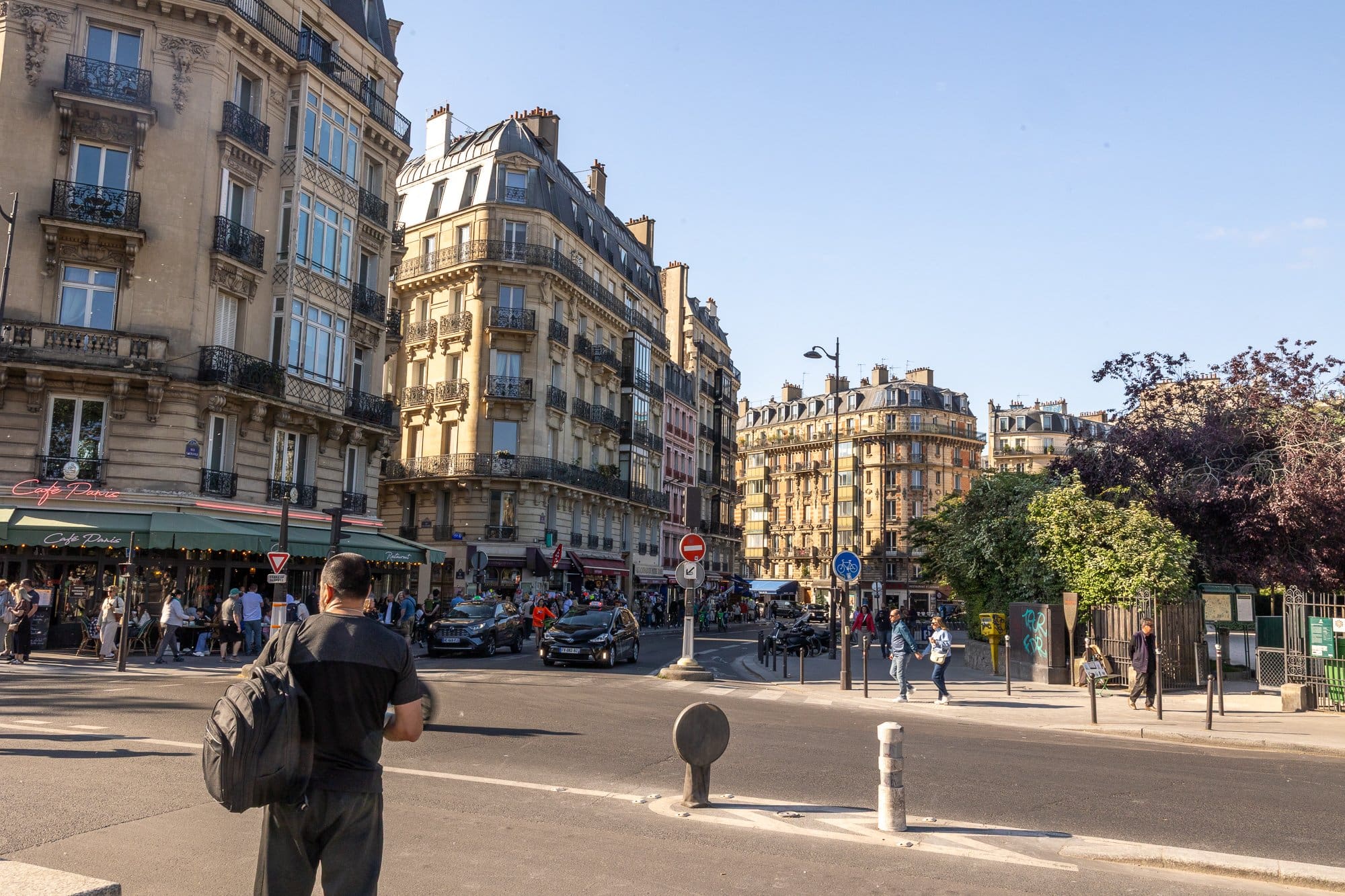
Wellness Hotels in Germany: 12 Hidden Gems Most Travellers Don’t Know About

TL;DRGermany’s wellness hotels run from thermal complexes to Alpine resorts and medical spas, and here are twelve solid picks. Therme Erding tops the list as Europe’s largest thermal complex (185,000 m², 28 pools, 27 slides), with rooms at the Victory Therme Erding from 230 EUR a night. For pure luxury, Schloss Elmau near Garmisch-Partenkirchen has six spas and starts at 590 EUR a night, while the historic Brenners Park-Hotel & Spa in Baden-Baden comes in from 475 EUR a night. Other names worth knowing: Das Kranzbach, Bachmair Weissach with Germany’s first Japanese onsen, Lanserhof Tegernsee — repeatedly ranked the world’s best medical spa — and Ortner’s Resort in Bad Füssing, which has its own sulphur spring, from 240 EUR a night. Prices range from 130 EUR a night at the budget end to 700+ EUR for ultra-luxury stays. Autumn and winter are the best times to go, ideally on weekdays, and one thing to know before you book: nudity is compulsory in German saunas, even in mixed-sex areas.

Germany and wellness? These two go together like a perfect Sunday roast. Just think about it — over 350 spa towns, thermal springs that have been bubbling up since the days of ancient Rome, and a culture of relaxation taken to absolute perfection. While the rest of the world is only just discovering Scandinavian saunas and Japanese onsens, the Germans have been blissfully soaking in hot water for a few millennia already. And along the way, they’ve layered in the very best of modern wellness — from medical spas with doctor-led programmes to alpine resorts with panoramic pools and thermal complexes the size of a small town.

Wellness hotels in Germany offer something you’d struggle to find anywhere else: a combination of Germanic precision, natural thermal springs, and an astonishingly varied range of experiences. Fancy tucking into a sauna deep in the Black Forest? Swimming in healing sulphurous water? Or being pampered at an ultra-luxury resort that once hosted the G7 summit? Germany has all of this — and then some.

In this article you’ll find 12 carefully chosen tips for the best wellness hotels in Germany — from the colossal Therme Erding to the hidden gem Das Kranzbach and the legendary Brenners Park in Baden-Baden. For each one I’ve included practical details on prices, ratings, and who it suits best. Let’s dive in! ☺️

TL;DR

  • Therme Erding — Europe’s largest thermal complex (185,000 m²). Hotel Victory Therme Erding offers themed rooms right inside it, from 230 EUR/night including entry.
  • Schloss Elmau — ultra-luxury retreat with 6 spas, live concerts, and 2 Michelin stars, from 590 EUR/night.
  • Das Kranzbach — Germany’s highest-rated wellness hotel (RELAX GUIDE 4 lilies), absolute peace on a private mountain meadow, from 490 EUR/person including full board.
  • Bachmair Weissach — Germany’s first authentic Japanese onsen, Condé Nast Award 2025, from approx. 600 EUR/night.
  • Lanserhof Tegernsee — repeatedly named the world’s best medical spa, from 500+ EUR/night.
  • Kempinski Berchtesgaden — luxury above the clouds with views of the Watzmann, from 400 EUR/night.
  • Sonnenalp Resort — 20,000 m² wellness complex in Allgäu, one of the largest in Germany, from 310 EUR/night.
  • Das König Ludwig — adults-only with views of Neuschwanstein, Booking 9.4/10, from 430 EUR/night.
  • Hotel Bareiss — 3 Michelin stars for the restaurant + spa in the Black Forest; a foodie’s paradise.
  • Luisenhöhe — medical wellness with sweeping views above Freiburg, 4,400 m² spa, 2 Michelin Keys.
  • Brenners Park-Hotel & Spa — a Baden-Baden icon since 1872, Booking 9.6/10, from 475 EUR/night.
  • Ortner’s Resort — its own sulphur spring in Bad Füssing, best value for money, from 240 EUR/night.
  • Best time to visit: autumn and winter, ideally on weekdays.
  • Good to know: nudity is the rule in German saunas — including mixed-gender areas!

How to Choose a Wellness Hotel in Germany — What to Look For

Before we get into the specific recommendations, let’s clear up a few things that will save you time, money, and possibly a few awkward moments. Because wellness in Germany isn’t simply “pool and sauna” — it’s a whole ecosystem with its own rules, traditions, and (for some visitors) rather surprising customs.

Types of Wellness — What Are You Looking For?

Thermal spas — Germany has hundreds of thermal springs. The largest complexes are in Bavaria (Therme Erding, Bad Füssing, Therme Bad Aibling) and Baden (Baden-Baden). Perfect if you want a mix of relaxation and fun — water slides, wave pools, sauna worlds.

Alpine wellness — mountain resorts in the Bavarian Alps and Allgäu with panoramic pools, crisp mountain air, and the chance to combine spa time with hiking or skiing. Picture this: you’re floating in a warm outdoor pool, snow is falling all around you, and jagged alpine peaks rise up before you. Arguably the most beautiful form of rest that exists.

Kneipp wellness — a tradition founded by Sebastian Kneipp, built on 5 pillars (water, movement, nutrition, herbs, and balance). It has been on the UNESCO Intangible Cultural Heritage list since 2015. The spiritual home is Bad Wörishofen — if you’re curious about Therme Bad Wörishofen, it’s the ideal starting point for exploring this philosophy.

Medical spa — for those who take wellness seriously. Doctor-led programmes, detox, longevity, diagnostics. Lanserhof Tegernsee is the absolute world leader in this category.

Luxury hotel spa — classic hotel wellness at the highest level. Brenners Park, Schloss Elmau, Hotel Bareiss — here it’s about the whole experience: fine dining, impeccable service, stunning interiors, and atmosphere.

When to Go — Season Makes a Big Difference

The best time for a wellness break in Germany is autumn and winter — October through March. Outside it’s grey, cold, and miserable; inside you’re wallowing in hot thermal water. Absolute bliss. Summer is great for alpine resorts, where you can combine spa days with hiking. The golden rule: go on weekdays. At weekends, thermal complexes — especially the big ones like Therme Erding — can get seriously crowded. And dodging German school holidays is doubly important; bear in mind they vary by federal state.

Price Range — Something for Every Budget

German wellness hotels cover the full spectrum:

Important: Nudity in German Saunas Is the Rule!
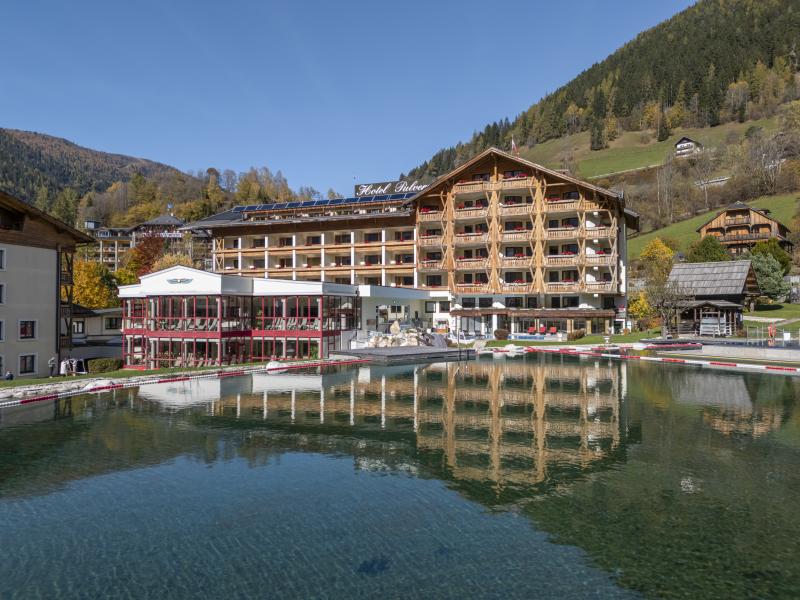
I need to mention this upfront, because it catches plenty of visitors off guard. In German saunas, swimwear is not allowed. That applies even in mixed-gender areas where men and women share the same space. Swimsuits are considered unhygienic (synthetic fabrics release unwanted substances in the heat). If that doesn’t appeal to you, stick to the pool area — swimwear is compulsory there. But honestly, most guests are surprised by how quickly they get used to it. Everyone around you behaves completely naturally, and nobody is remotely interested in what you look like. Just relax ☺️

Comparison Table: All 12 Hotels at a Glance

HotelRegionTypePrice/night for 2RatingBest for
Hotel Victory Therme ErdingBavariaThermalfrom 230 EURBooking 9.0Couples, families, fun
Schloss ElmauBavaria (Alps)Ultra-luxuryfrom 590 EURT+L #2 Spa 2025Couples, culture, luxury
Das KranzbachBavaria (Alps)Alpine luxuryfrom 490 EUR/personRELAX GUIDE 4 liliesCouples, total seclusion
Bachmair WeissachBavaria (Tegernsee)Japanese onsenfrom 600 EURCondé Nast 2025Couples, luxury, wellness
Lanserhof TegernseeBavaria (Tegernsee)Medical spafrom 500+ EURRELAX GUIDE 4 liliesDetox, longevity, health
Kempinski BerchtesgadenBavaria (Alps)Luxury alpinefrom 400 EURMichelin GuideCouples, active holidays
Sonnenalp ResortAllgäuAlpine resortfrom 310 EUR5★Couples, families, active
Das König LudwigAllgäu (Schwangau)Adults-onlyfrom 430 EURBooking 9.4Romantic couples
Hotel BareissBlack ForestGourmet luxuryon requestGoogle 4.7, 3 Michelin★Foodies, couples
LuisenhöheBlack ForestMedical wellnesson request2 Michelin KeysDetox, health
Brenners Park-Hotel & SpaBaden-BadenHistoric luxuryfrom 475 EURBooking 9.6Absolute luxury
Ortner’s ResortBad FüssingThermal healthfrom 240 EURBooking 9.1Health stays, couples

Bavaria: 6 Wellness Hotels from Therme Erding to Alpine Retreats

Bavaria is Germany’s undisputed wellness hotspot. It has the highest concentration of thermal spas in the country, Alpine scenery thrown in as a bonus, and Bavarian hospitality warm enough to make you overeat (those dumplings!). From the colossal Therme Erding to exclusive mountain retreats — here are the six best wellness hotels in the Bayern region.

1. Hotel Victory Therme Erding — A Hotel Inside Europe’s Largest Thermal Complex

Therme Erding. If you haven’t heard of it yet, brace yourself for some jaw-dropping figures. 185,000 m² (that’s roughly 26 football pitches). 28 pools. 27 water slides. 30 saunas. The largest thermal complex in the whole of Europe — and Hotel Victory Therme Erding sits right inside it. Literally. Step out of your room and you’re in a tropical paradise beneath a vast glass dome.

The hotel is themed as a replica of the British warship HMS Victory and a Venetian palace. Sounds kitsch? Perhaps a little. But reviews suggest it works surprisingly well, and guests rave about the level of detail. There are 6 room types — from the Captain’s Cabin overlooking the wave pool to the Admiral’s Cabin, and romantic Serenissima rooms complete with Venetian frescoes. Families can book child-friendly ship-cabin rooms that’ll have young pirates in seventh heaven 😁

A big perk for hotel guests is early entry — you get into the thermal complex before the general public arrives. You’ll appreciate this, because Therme Erding is wildly popular. The Galaxy zone has 27 slides (some with virtual reality!), VitalOase is a calmer section for guests aged 16+ and VitalTherme is the textile-free sauna world. The water rises from a depth of 2,350 metres and is certified as therapeutic — so it’s not just about fun, it’s genuinely good for you.

Prices and practical info: Rooms from 180 EUR/night (excluding thermal entry), from 230 EUR/night including 2-day access. Entry alone: 24–38 EUR depending on zone; children under 3 free; parking free. Booking rating 9.0/10. The essential tip: visit on a weekday. Therme Erding gets very busy at weekends, especially during the winter months.

2. Schloss Elmau — Ultra-Luxury Retreat with 6 Spas and Concerts Under the Stars

Schloss Elmau isn’t just a hotel. It’s a cultural institution, a wellness sanctuary, a gastronomic experience, and an alpine hideaway — all wrapped up in one magnificent castle at 1,008 metres above sea level near Garmisch-Partenkirchen. And yes, this is the very resort that hosted the G7 summit. If it’s good enough for world leaders, it’s probably good enough for us, right? 😅

What makes Schloss Elmau truly exceptional is its 6 separate spas. Three are adults-only (an oriental hammam, a Japanese onsen, and the Shantigiri Spa inspired by Ayurveda) and three are family-friendly. That means you can come here with children and still find total peace — you just choose a different spa. The rooftop infinity pool with views of snow-capped alpine peaks is probably one of the most photographed hotel pools in Europe. And rightly so.

On top of the spa, there’s the Ikigai by Chris Rainer restaurant with 2 Michelin stars and a unique cultural programme — private classical music concerts, literary readings, and lectures. Guests who’ve stayed here consistently say it’s an experience you simply can’t find anywhere else. Travel+Leisure ranked Schloss Elmau #2 Best International Spa 2025.

Prices and practical info: From 590 EUR/night; half-board from an additional 380 EUR/person. TripAdvisor 4/5. It’s a serious investment — but for the combination of wellness, culture, fine dining, and mountain scenery, it’s hard to find anywhere in Europe that comes close for the money.

3. Das Kranzbach — Germany’s Highest-Rated Hidden Gem

Some hotels you simply can’t stumble upon by accident. Das Kranzbach is one of them — it sits on a private mountain meadow at 1,030 metres above sea level near Krün, accessible only via a private road. No passing traffic, no noise, no outside world. Just you, the mountains, and absolute silence.

The story behind this place is fascinating. The main building was commissioned over 100 years ago by British aristocrat Mary Isabel Portman as her private mountain retreat. Today it’s an adults-only hotel (ages 12+) with 5 pools, 8 saunas, and the highest rating of any hotel in Germany in the prestigious RELAX GUIDE — 4 lilies and 20 points. That says it all.

What repeatedly wows guests at Das Kranzbach: full board is included in the price. A gourmet breakfast, a light lunch, afternoon tea with homemade pastries, and a 5-course dinner — all included. The minimum stay is 2 nights, and honestly, you wouldn’t want to leave any sooner.

Prices and practical info: From 490 EUR/person including full board. Booking rating is outstanding. For couples seeking absolute privacy and quiet, Das Kranzbach is probably the finest wellness hotel Bavaria has to offer.

4. Bachmair Weissach — Germany’s First Authentic Japanese Onsen

On the shores of Lake Tegernsee in the village of Rottach-Egern sits a resort that rewrote the rules of German wellness. Bachmair Weissach opened the MIZU ONSEN SPA in 2024, becoming the first hotel in Germany with an authentic Japanese onsen. Three thousand square metres of pure zen.

What does that mean in practice? A hot pool at 42°C, a cold plunge at just 2°C (yes, really), meditative rituals, and a philosophy that treats wellness as a path to inner balance. According to guest reviews: “MIZU Onsen is a truly special experience” — a verdict backed up by the Condé Nast Award 2025. The resort has 140 rooms including 45 suites, and the interiors blend Alpine style with Japanese aesthetics. An unusual combination on paper? Perhaps. In reality, apparently it works perfectly.

Prices and practical info: Packages from 1,790 EUR for 3 nights (including ¾ board and a 150 EUR spa voucher), working out at roughly 600 EUR/night. Not cheap — but for Germany’s first Japanese onsen with this level of facilities, guests say every penny is worth it.

5. Lanserhof Tegernsee — The World’s Best Medical Spa

If there is one place on earth where wellness and medicine meet at the highest possible level, it’s Lanserhof Tegernsee. Repeatedly named the World’s Best Medical Spa. RELAX GUIDE has awarded it 4 lilies — the very highest rating. And when you see the building — a minimalist architectural masterpiece set against the Bavarian landscape — it’s clear that nothing here is done by halves.

Lanserhof isn’t a typical wellness hotel where you lounge by the pool with a glass of prosecco. It’s a place you come to when you genuinely want to understand your body. Medical detox, Kneipp therapy, cutting-edge diagnostics, longevity programmes — all overseen by doctors. Guest numbers are deliberately kept low so every person receives individual attention. No crowds, no rush.

Prices and practical info: From 500+ EUR/night. Prices vary depending on the programme chosen and the length of stay. Ideal for health-conscious travellers who view wellness as an investment in their long-term health, not just a holiday. Check availability and current prices here.

6. Kempinski Hotel Berchtesgaden — Luxury Above the Clouds

At 1,000 metres above sea level, with a sweeping panoramic view of the mighty Watzmann, sits Kempinski Hotel Berchtesgaden. And that view — that’s probably the main reason guests keep coming back. Indoor and outdoor pools gazing out over alpine giants, saunas, hydrotherapy and spa treatments at the standard you’d expect from the Kempinski name.

The location is a huge draw. The emerald Königssee lake is just a few minutes’ drive away, and the historic Eagle’s Nest (Kehlsteinhaus) isn’t far either. Skiing in winter, hiking in summer — and after either, straight back into a heated pool. Alpine wellness at its absolute finest. The Michelin Guide recommends the hotel, and guests consistently praise the combination of luxury, nature, and service.

Prices and practical info: From 400–550 EUR/night depending on season and room type. Day spa access for non-residents: 45 EUR. Perfect for couples who want to combine wellness with an active mountain holiday.

lukas a lucka
Lukáš and Lucie recommend
Where to Stay in Germany
6 accommodations — hotels, wellness hotels and other lodging options
⭐ TOP CHOICE 🏔️ Mountain
Das Kranzbach
Adults-only hotel on a private mountain meadow at 1,030 meters altitude with the highest rating in Germany (RELAX GUIDE 4 lilies). 5 pools, 8 saunas, full board included. Absolute peace and privacy, accessible only via private road.
★★★★ from 490 EUR/person incl. full board
Check availability
🏨 Hotel
Hotel Victory Therme Erding
Hotel located directly inside the largest thermal complex in Europe (185,000 m²). Themed rooms in naval ship and Venetian palace style, early entry to Therme Erding with 28 pools, 27 slides and 30 saunas.
★★★★ from 230 EUR/night with entry
Check availability
⭐ Luxury
Schloss Elmau
Ultra-luxury retreat with 6 spas (3 adults-only, 3 family), classical music concerts, 2 Michelin stars at Ikigai restaurant. G7 Summit venue, Travel+Leisure #2 Best International Spa 2025. Rooftop infinity pool with alpine views.
★★★★ from 590 EUR/night
Check availability
⭐ Luxury
Bachmair Weissach
Germany’s first Japanese onsen (MIZU ONSEN SPA) by Lake Tegernsee. Condé Nast Award 2025. Hot pool 42°C, cold plunge 2°C, meditative rituals. Combination of alpine style with Japanese aesthetics.
★★★★ from approx. 600 EUR/night
Check availability
⭐ Luxury
Lanserhof Tegernsee
Repeatedly the world’s best medical spa, RELAX GUIDE 4 lilies. Medical detox, Kneipp therapy, modern diagnostics, longevity programs under medical supervision. Minimalist architecture.
★★★★ from 500+ EUR/night
Check availability
⭐ Luxury
Kempinski Hotel Berchtesgaden
Luxury hotel at 1,000 meters altitude with panoramic views of Watzmann. Indoor and outdoor pools, saunas, hydrotherapy. Close to Königssee and Eagle’s Nest. Michelin Guide hotel.
★★★★ from 400 EUR/night
Check availability

Allgäu: 2 Alpine Wellness Oases Beneath Panoramic Peaks

Allgäu is the part of Bavaria that gets less attention than Garmisch or Tegernsee — but according to travellers who’ve been there, it’s one of the most beautiful corners of the whole country. Rolling green pastures, alpine peaks, family-run farms, and a peace and quiet you simply won’t find in the better-known destinations. And right in the middle of all this: two truly exceptional wellness hotels.

7. Sonnenalp Resort — 20,000 m² Wellness in the Heart of Allgäu

Twenty thousand square metres. That’s the size of the wellness park at Sonnenalp Resort, making it one of the largest hotel wellness complexes in the whole of Germany. And it’s not just about size — 10 pools (5 indoor + 5 outdoor), a private mountain lake for swimming, a sauna world, and treatments you’d want to write home about.

Sonnenalp is a family-run estate with over 100 years of history — the fifth generation of the Fäßler family welcomes every guest with that warm alpine hospitality. The resort has 224 rooms plus 3 private alpine chalets for those who want even more seclusion. In summer there’s golf on the resort’s own course and hiking; in winter, skiing. There’s a children’s pool and activity programmes for families too — so everyone genuinely gets to switch off.

Prices and practical info: From 310 EUR/night in low season to 1,050+ EUR for premium rooms in peak season. 5-star rated, with reviews repeatedly praising the food quality, cleanliness, and attentiveness of staff.

8. Das König Ludwig — Adults-Only with Views of Neuschwanstein

Imagine: you’re sitting in an outdoor hot tub, glass of wine in hand, and the silhouette of Neuschwanstein Castle is taking shape in the evening light before you. A fairytale? No — this is real life at Das König Ludwig in Schwangau near Füssen. And it’s probably the most romantic wellness hotel you’ll find anywhere in Germany.

Adults-only (blissful peace at last!), 6,600 m² Ludwig Spa with 7 saunas, indoor and outdoor pools, and treatments inspired by Bavarian tradition. In the evening, a 5-course gourmet dinner with a choice from 250+ wines awaits. The Booking.com score speaks for itself: 9.4/10 — with sub-scores of 9.8 for cleanliness, 9.7 for comfort, and 9.8 for staff. Guests repeatedly describe it as “the best wellness experience I’ve ever had.”

Prices and practical info: From 430–510 EUR/night. Perfect for romantic couples after a genuinely magical escape — the views of Neuschwanstein and Forggensee from this hotel are simply unforgettable.

Black Forest: 2 Wellness Hotels Hidden Among the Firs

The Black Forest. Even the name conjures something magical — mystery, tranquillity, the smell of pine. Dark coniferous trees, misty valleys, babbling streams, and half-timbered villages straight out of a Brothers Grimm fairy tale. And tucked within all of this: two wellness hotels that rank among the very best in Germany. The Black Forest is also considered Germany’s gastronomic heartland, so you’ll eat extraordinarily well here too. Wellness hotel Black Forest = a perfect blend of nature, serenity, and world-class cuisine.

9. Hotel Bareiss — 3 Michelin Stars and 5-Star Wellness

Baiersbronn. A village in the Black Forest you might easily overlook on a map — unless you knew it has the highest concentration of Michelin stars of any town in Germany. And Hotel Bareiss is its crowning glory. 5-star Superior, 3 Michelin Keys, and a restaurant — the Schwarzwaldstube — bearing 3 Michelin stars. Eleven generations of the Bareiss family have built something that is now one of the most celebrated hotels in Europe.

The spa is extensive — indoor and outdoor pools, a sauna world, relaxation zones nestled among the Black Forest trees. But let’s be honest: people come to Bareiss primarily for the food. A three-star dinner at the Schwarzwaldstube is a gastronomic experience people talk about for years. A Google rating of 4.7/5 confirms that the combination of wellness and haute cuisine here really does work seamlessly.

Prices and practical info: Prices on request — as tends to be the case with hotels of this calibre. But if you love exceptional food and want luxury wellness to match, Bareiss is quite simply the best option in Germany.

10. Luisenhöhe — Medical Wellness with Views Above Freiburg

In the village of Horben, high above Freiburg, a hotel opened relatively recently that bridges two worlds: medicine and wellness. Luisenhöhe has its own GesundKunft®-SPA concept across 4,400 m² — with indoor and outdoor pools, saunas, and therapeutic treatments under medical supervision. Two Michelin Keys confirm the quality lives up to the ambition.

What guests particularly love about Luisenhöhe: a 4-course dinner and minibar are included in the room rate. No nasty surprises on check-out. The spa is exclusively reserved for hotel guests — no day visitors, no queues. The view from the outdoor pool, looking out over the Black Forest treetops towards Freiburg, is reportedly breathtaking.

Prices and practical info: Prices on request. Perfect for health-conscious travellers who want medical wellness in beautiful surroundings — without the clinical sterility of larger medical spa facilities.

Baden-Baden: A Spa Town with a Thousand-Year Tradition

Baden-Baden is a place where wellness became an art form long before the word itself existed. The Romans were already making use of the town’s 23 thermal springs back in the 2nd century — springs that rise from 2,000 metres below ground at temperatures of 56–69°C. Since 2021 the town has been on the UNESCO World Heritage List as part of the “Great Spa Towns of Europe.” Add in the famous casino (Germany’s oldest), the Lichtentaler Allee promenade lined with century-old trees, and an atmosphere that feels like time stopped somewhere in the Belle Époque. Baden-Baden is simply in a league of its own.

11. Brenners Park-Hotel & Spa — A Legend Since 1872

Some hotels try to create history. Brenners Park has been living it since 1872. More than 150 years of welcoming kings, artists, and statesmen — and today, ordinary mortals who simply want to experience the very best. Part of the prestigious Oetker Collection (the same group as Le Bristol in Paris), it was refurbished in 2023 with interiors inspired by the surrounding Black Forest.

The Villa Stéphanie Spa is the heart of the hotel. Finnish sauna, bio-sauna, steam bath, Roman pool, detox programmes, and a full medical centre. Guests consistently praise the combination of historic elegance and contemporary wellness treatments. A Booking.com score of 9.6/10 and the #1 position out of 51 hotels in Baden-Baden on TripAdvisor say everything.

Since you’re in Baden-Baden, don’t miss the two iconic public thermal complexes within walking distance. Friedrichsbad — historic baths dating from 1877 with a unique 17-step ritual (and yes, it’s all textile-free — the entire ritual). Entry 20–39 EUR. Caracalla Therme — the modern counterpart with 900 m² of water, 7+ saunas, and a more relaxed atmosphere. Entry also 20–39 EUR. Trying both and comparing is highly recommended.

Prices and practical info: Brenners Park from 475 EUR/night in low season to 950+ EUR in peak season. For anyone who wants to experience absolute luxury with genuine historical grandeur, this is the obvious choice. Baden-Baden is the undisputed queen of traditional German thermal spas.

Bad Füssing: A Thermal Paradise with Europe’s Strongest Sulphur Springs

Bad Füssing is a small town you probably wouldn’t search for on a map — yet millions know it well. Every year over 1.6 million visitors come for something that bubbles up from the ground here: the strongest sulphurous (hydrogen sulphide) springs in the whole of Europe. Three thermal complexes, over 10,000 m² of water, and healing properties proven to benefit rheumatic conditions, cardiovascular issues, metabolism, and the spine. This isn’t a glamour destination full of influencers — it’s a place people come to for their health. And that’s its real strength.

12. Ortner’s Resort — Its Own Thermal Spring and the Best Value for Money

Ortner’s Resort is a 5-star hotel with something very few hotels in Europe can boast: its own thermal spring. The largest private hotel thermals in Bavaria — 6 pools filled with healing sulphurous water, a sauna world, and spacious gardens. No need to walk to public baths, no queues. Simply step out of your room and into the thermal water.

Booking.com guests rate Ortner’s 9.1/10, repeatedly mentioning the quality of the water, cleanliness, excellent half-board, and friendly staff. For couples and older guests travelling specifically for a health-focused stay, it’s the best option in Bad Füssing — outstanding value for money in the 5-star bracket.

If you’d like to explore the public thermal complexes too, Bad Füssing has three to choose from. Europa Therme is the largest — 17 pools, a 120-metre artificial river, entry 19.50 EUR for 5 hours. Then there’s Therme Eins, smaller and quieter, and Johannesbad Therme with dedicated therapeutic programmes.

Prices and practical info: Ortner’s Resort from 240 EUR to 470 EUR/night depending on season and room type. For those on a tighter budget, travellers also recommend Hotel Holzapfel — a 4-star hotel with 70+ years of tradition, Booking 9.0/10, from 130 EUR/night. An excellent alternative if you want to spend a few nights in Bad Füssing without a major outlay.

Practical Tips for a Wellness Holiday in Germany

Before you book your hotel and start packing, here are a few things that will make your trip more enjoyable — and a few that could save you from unnecessary embarrassment.

Nudity in Saunas — Yes, Really

I’ll say it again, because it matters: in German saunas, nudity is the absolute rule. Swimwear is not permitted — and that includes mixed-gender areas where men and women share the space. This isn’t some unusual quirk; it’s simply German sauna culture. Swimsuits are considered unhygienic (synthetic fabrics release unwanted substances in high heat). If you’re not comfortable with that, start in the pool area — swimwear is required there. But in the experience of many travellers: after the first visit, it stops being an issue. Everyone around you behaves completely naturally and nobody gives anyone else a second glance. Just go with it ☺️

When to Go

Weekdays = fewer people. That’s probably the single most important rule for wellness in Germany. Large thermal complexes like Therme Erding or Therme Bad Aibling get very busy at weekends and on public holidays. If you can go Monday to Thursday, do it. Avoiding German public holidays and school half-terms is also a smart move — bear in mind these vary by federal state. The best season for wellness is autumn and winter — October through March. Cold outside, warm inside; that contrast is what the whole German sauna philosophy is built around.

What to Bring

Your own large towel (or two), swimwear for the pool areas, and flip-flops. At more upmarket hotels a bathrobe will be waiting in your room; at budget hotels and public thermals you can usually hire one for a small fee (typically 5–15 EUR). In the sauna you’ll need a large towel to sit on — never sit directly on the wood. That’s considered a serious faux pas in Germany.

Kneipp Tradition — UNESCO Heritage

If you’re interested in wellness beyond the basics of “hot pool and sauna,” look into the Kneipp tradition. Sebastian Kneipp was a Bavarian priest who developed a health system in the 19th century built on 5 pillars: water (alternating hot and cold), movement, nutrition, herbs, and inner balance. Since 2015, Kneipp therapy has been inscribed on the UNESCO Intangible Cultural Heritage list. The spiritual home is Bad Wörishofen — a town in Bavaria with a full Kneipp programme at Therme Bad Wörishofen. It’s a fascinatingly modern philosophy, despite being 150 years old.

Price Overview — Summary

  • Budget thermal: from 130 EUR/night — hotels near public thermal complexes (Hotel Holzapfel, Bad Füssing)
  • Mid-range wellness: 200–400 EUR/night — quality wellness hotels with their own spa (Ortner’s, Sonnenalp in low season, Hotel Victory Therme Erding)
  • Luxury: 400–700 EUR/night — 5-star hotels with extensive spa facilities (Kempinski, Das König Ludwig, Brenners Park, Das Kranzbach)
  • Ultra-luxury: 700+ EUR/night — the very best of the best (Schloss Elmau, Bachmair Weissach, Hotel Bareiss)

Worth noting: many hotels offer significant discounts for stays of 3+ nights, during low season, and for direct bookings. It’s always worth checking the hotel’s own website and comparing it with Booking.com — direct bookings are sometimes cheaper and may include extras like spa credit or a room upgrade.

Frequently Asked Questions (FAQ)

How much does a wellness hotel in Germany cost?

The price range is very wide. Budget thermal hotels start from 130 EUR/night for a double room (e.g., Hotel Holzapfel in Bad Füssing). Mid-range wellness hotels with their own spa run between 200–400 EUR/night. Luxury 5-star resorts cost 400–700 EUR/night, and ultra-luxury hotels like Schloss Elmau or Bachmair Weissach start from 600–700+ EUR/night. Many hotels offer better rates for stays of 3 nights or more and during low season (typically January–March and November excluding holidays).

What are the best thermal spas in Germany?

The most famous thermal spas in Germany include Therme Erding (Europe’s largest thermal complex at 185,000 m²), Baden-Baden with its historic Friedrichsbad and modern Caracalla Therme, Bad Füssing with Europe’s strongest sulfur springs, Therme Bad Wörishofen (center of the Kneipp tradition), Therme Bad Aibling, and Therme Bad Reichenhall. Each location has a different character—from family fun to therapeutic stays to luxury relaxation.

Is nudity mandatory in German saunas?

Yes, in the vast majority of German saunas, nudity is the rule—including in mixed areas where men and women are together. Wearing swimwear in the sauna is considered unhygienic and is directly prohibited in many facilities. In pool areas, however, swimwear is mandatory. If you’re not comfortable with nudity in the sauna, start in the pool area and gradually acclimate. Most travelers report that after the first visit, it stops being an issue.

When is the best time to go for wellness in Germany?

The best time for wellness in Germany is autumn and winter—from October to March. The contrast between the cold weather outside and warm water inside is at the heart of German wellness culture. Weekdays (Monday–Thursday) are ideal, when thermal complexes are significantly less crowded. It’s worth avoiding German public holidays and school vacations. Summer, on the other hand, is ideal for Alpine wellness resorts, where you can combine spa treatments with mountain hiking.

What is Therme Erding and why is it so popular?

Therme Erding is Europe’s largest thermal complex with an area of 185,000 m². It offers 28 pools, 27 slides (including virtual reality slides), 30 saunas, and certified healing water from a depth of 2,350 meters. The complex has several zones: Galaxy (adrenaline slides), VitalOase (quieter zone for ages 16+), VitalTherme (textile-free sauna world), and a tropical paradise under a glass dome. Admission ranges from 24 to 38 EUR depending on the zone. Reviews of Therme Erding are overwhelmingly enthusiastic—guests appreciate the variety of offerings and quality of facilities.

What’s the difference between Friedrichsbad and Caracalla Therme in Baden-Baden?

Friedrichsbad is a historic bathhouse from 1877 with a unique 17-step ritual. It’s completely FKK (no swimwear), has neoclassical interiors, and offers a traditional, almost meditative experience. Caracalla Therme is a modern thermal complex with 900 m² of water surface, 7+ saunas, and a more relaxed atmosphere—swimwear is worn in the pool area. Admission to both is 20–39 EUR. Friedrichsbad is for those who want an authentic historical experience, Caracalla for those who prefer modern facilities. Ideally, try both.

What is Kneipp therapy?

Kneipp therapy is a healing method developed by Bavarian priest Sebastian Kneipp in the 19th century. It’s based on 5 pillars: hydrotherapy (alternating hot and cold water), exercise, nutrition, phytotherapy (herbs), and inner balance. Since 2015, it’s been listed on UNESCO’s Intangible Cultural Heritage list. The center of the Kneipp tradition is the town of Bad Wörishofen in Bavaria, where you’ll find Therme Bad Wörishofen and specialized Kneipp facilities. Elements of Kneipp therapy are now used by wellness hotels throughout Germany.

Tips and Tricks for Your Vacation

Don’t Overpay for Flights

Search for flights on Kayak. It’s our favorite search engine because it scans the websites of all airlines and always finds the cheapest connection.

Book Your Accommodation Smartly

The best experiences we’ve had when looking for accommodation (from Alaska to Morocco) are with Booking.com, where hotels, apartments, and entire houses are usually the cheapest and most widely available.

Don’t Forget Travel Insurance

Good travel insurance will protect you against illness, accidents, theft, or flight cancellations. We’ve had a few hospital visits abroad, so we know how important it is to have proper insurance arranged.

Where we insure ourselves: SafetyWing (best for everyone) and TrueTraveller (for extra-long trips).

Why don’t we recommend any Czech insurance company? Because they have too many restrictions. They set limits on the number of days abroad, travel insurance via a credit card often requires you to pay medical expenses only with that card, and they frequently limit the number of returns to the Czech Republic.

Find the Best Experiences

Get Your Guide is a huge online marketplace where you can book guided walks, trips, skip-the-line tickets, tours, and much more. We always find some extra fun there!