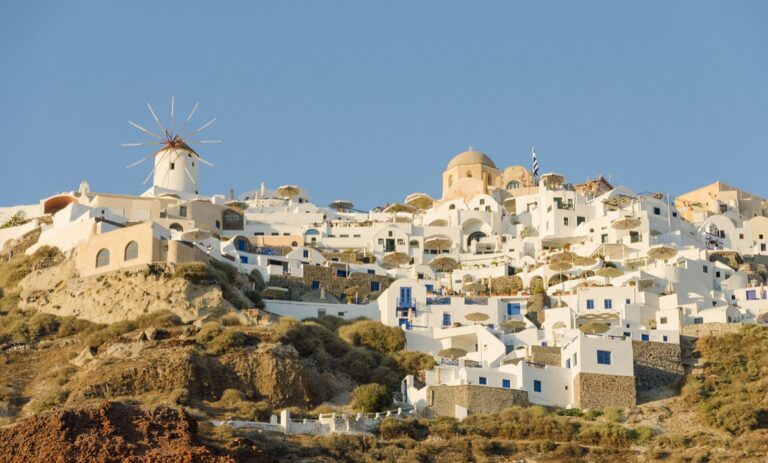
The image is perfect. You’re sitting on the upper deck, salty wind in your hair, an iced frappé in hand, and a white silhouette rising out of the deep blue Aegean on the horizon. Greece island hopping — skipping from one island to the next — is the absolute essence of a Greek summer. But the reality can catch an unprepared traveller off guard. A wrong port, a cancelled sailing due to wind, or a bout of seasickness can turn that idyllic picture into a logistical nightmare.
The good news is that the Greek ferry network is vast and complex, but once you know how to work it, it’s remarkably reliable. You just need to know the rules of the game — which port to leave from, which vessel to choose, and how to put together a route that actually makes sense.
In this guide, you’ll find a complete practical manual for Greece island hopping: Athens ferry ports, types of vessels, when and where to buy tickets, a ferry vs. flight comparison, five golden rules, and four tried-and-tested routes. Let’s dive in. ☺️
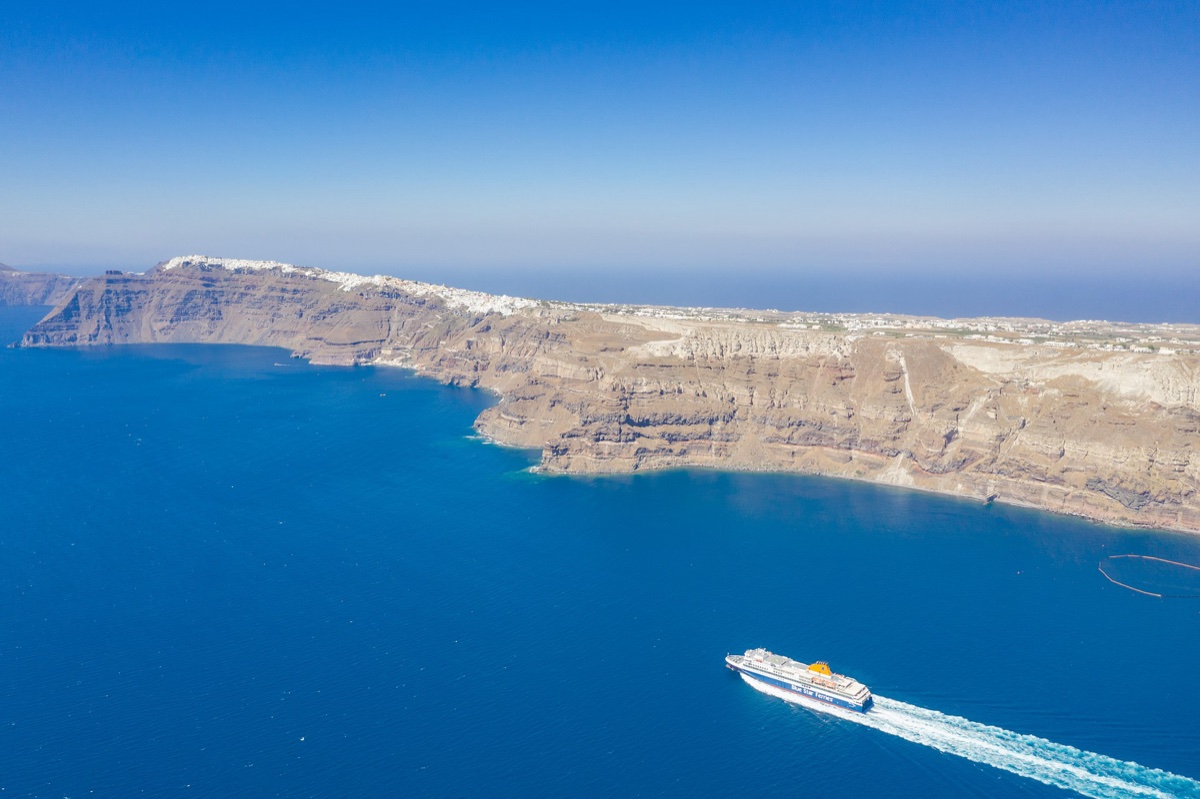
The full destination guide: Greece — guide and what to see
TL;DR
- Athens has three ports: the main Piraeus (Cyclades, Crete, Dodecanese), the smaller Rafina (Mykonos, Andros, Tinos), and the tiny Lavrio. Always check which one your ferry departs from.
- Two types of vessel: large, stable conventional ferries (Blue Star) are slower, cheaper and more reliable; fast catamarans (SeaJets) are quicker, pricier, and sensitive to rough seas.
- Book tickets online via Ferryhopper or Ferries.gr — in peak season, weeks or even months ahead.
- Watch out for the meltemi wind (May to September). When it blows hard, fast catamarans stay in port; the big ferries keep going.
- Don’t overdo it: for a 10-day trip, plan a maximum of two to three islands and spend at least three nights on each.
- Sleep in Athens on your last night before flying home, so a cancelled ferry doesn’t cost you your flight.
Three Athens Ports: Which One to Use
The most common mistake first-time visitors make? Assuming Athens has a single port and that turning up ten minutes before departure is fine. Wrong on both counts. The Greek capital has three separate ferry ports, and they couldn’t be more different from one another.
Piraeus is Greece’s main artery, where the majority of ferries depart for the Cyclades, Crete, and the Dodecanese. From Athens Airport and the city centre, you can reach it directly on the Metro (Blue Line 3). The catch is that Piraeus is enormous — gates are numbered E1 through E12, and the distances between them can run to several kilometres. Always check your departure gate in advance, and arrive at the port at least 45 minutes before sailing, as ferries will not wait.
Rafina is the insider’s secret, especially if you’re flying in. Located on the eastern coast of Attica, a direct bus from Athens Airport gets you there in about 30 minutes. It’s smaller, easier to navigate, and far less chaotic than Piraeus — and it’s where you’ll find ferries to Mykonos, Andros, and Tinos. The third and smallest port, Lavrio, sits to the south of Attica and tends to fly under the tourist radar; it serves as the jumping-off point for the islands of Kea and Kythnos.
Conventional Ferry or High-Speed Catamaran?
On the same route you’ll often find very different vessels with a world of difference in both journey time and price — and your choice of boat will shape your whole experience on the water. There are essentially two types.
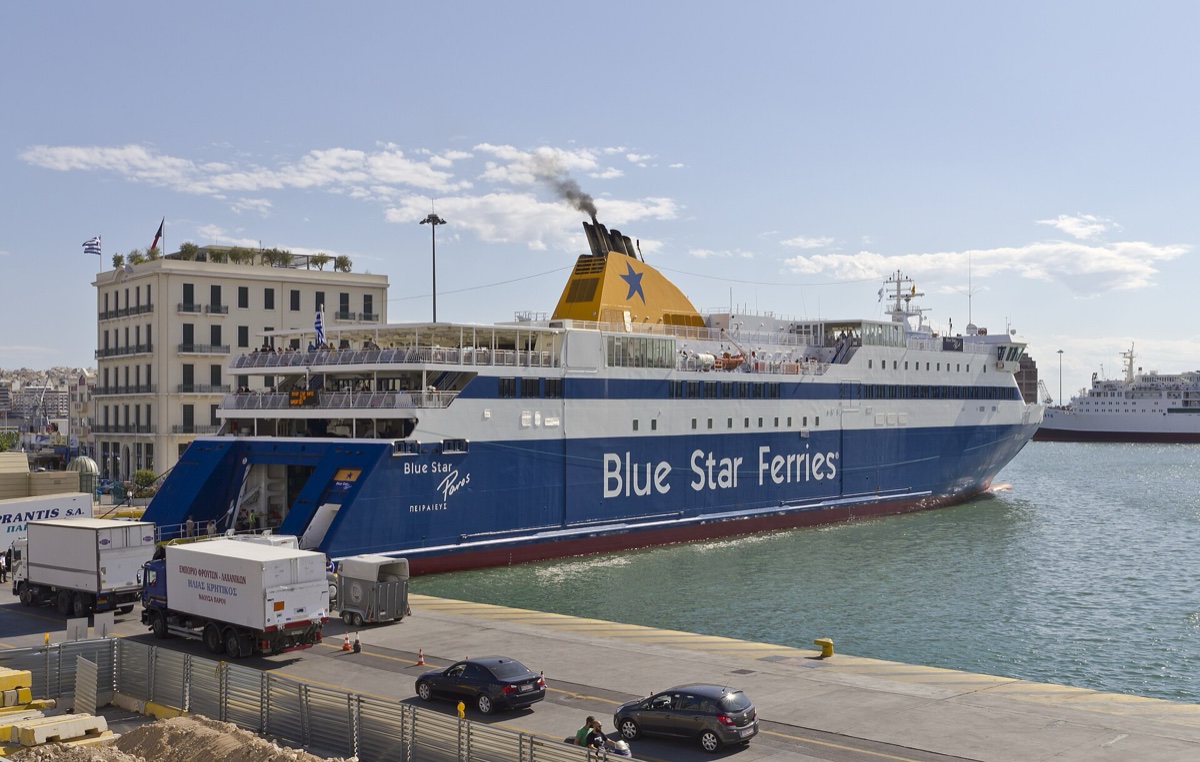
Large conventional ferries (Blue Star Ferries, ANEK Lines) are best imagined as floating apartment blocks. They’re enormous, slower, but supremely reliable — complete with open sun decks, restaurants, and vehicle decks for cars. Most importantly, they’re incredibly stable: when the sea gets rough, you’ll barely notice it. Tickets are also cheaper. The Piraeus–Santorini crossing takes a large ferry around 8 hours, with tickets running roughly €40–50.
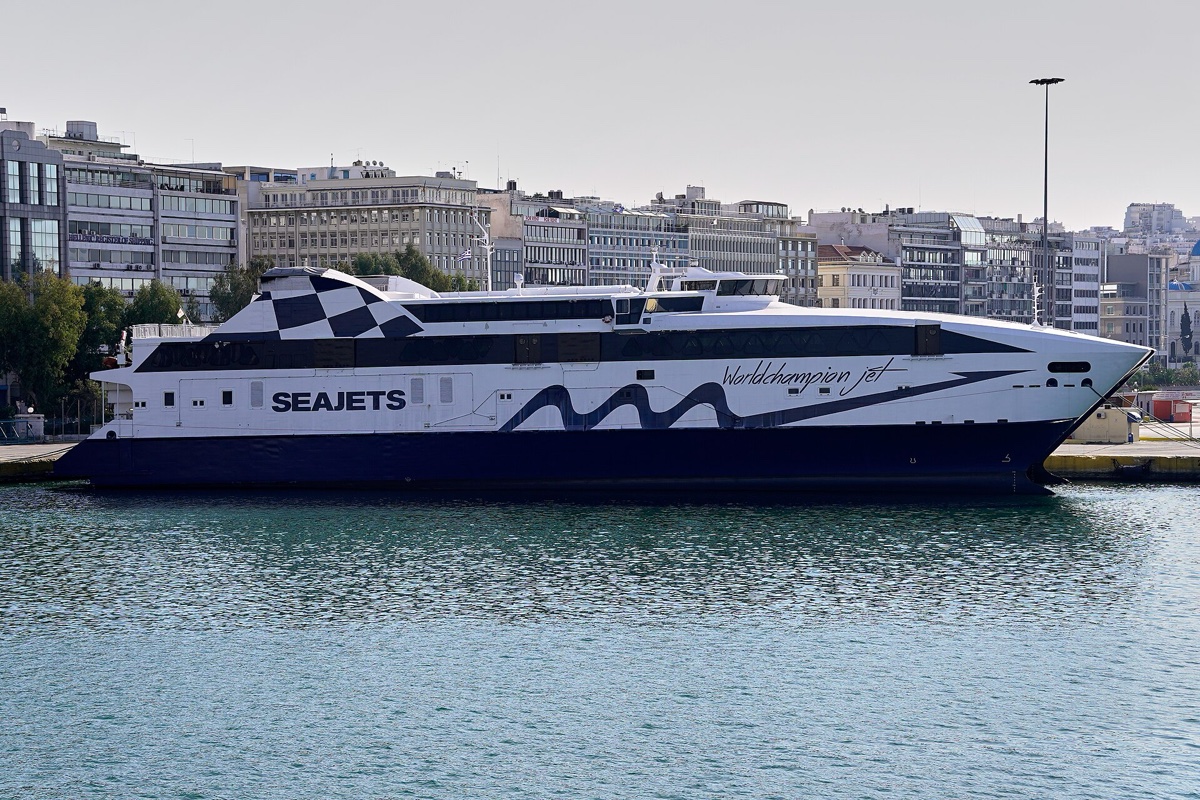
High-speed catamarans (SeaJets, Hellenic Seaways) practically skim across the surface. Inside, the experience is more like a low-cost flight — you sit in an assigned seat in an air-conditioned cabin and going out on deck is often not permitted at all. You’ll save half the travel time, but you’ll pay roughly twice as much, and crucially, these vessels are extremely susceptible to waves. The same Santorini route takes 4.5 to 5 hours by catamaran, but expect to pay €60–80 for a ticket.
The Meltemi Wind and Seasickness
From mid-May to mid-September, the Aegean is ruled by the meltemi — a strong northerly wind. It brings welcome relief from the heat, but it also kicks up some serious waves, and that’s where it gets tricky. When the meltemi is really blowing, fast catamarans are stuck in port and their sailings are cancelled, while the big conventional ferries carry on regardless.
If you tend to get travel sick even on a bus, steer well clear of high-speed catamarans in July and August. And if seasickness does strike, there’s a simple trick: book a ticket for the lower deck and sit as far back and as central as possible — that’s where the motion is least. Keep some travel sickness tablets (like Dramamine or Kwells, available at any UK pharmacy) to hand just in case.
Where and When to Buy Ferry Tickets
Queuing up at ticket booths in the port is a thing of the past — everything is handled online these days. The two most reliable aggregators are Ferryhopper.com and Ferries.gr, which show all operators side by side. You can even plan a more complex multi-island itinerary and download your e-tickets directly to your phone.
When should you book? In peak season (July and August) and around Greek public holidays, buy your tickets weeks or even months in advance — ferries sell out completely, especially around the Assumption of Mary on 15 August. In May or October, a few days’ notice is usually plenty, and you can often buy on the day. Outside of high season (November to March), watch out for dramatically reduced timetables: some smaller islands may only have one sailing per week.
Ferry or Flight?
Sometimes it simply doesn’t make sense to spend a whole day at sea, especially if you only have a week’s holiday. Greece has an excellent domestic flight network (Aegean Airlines, Olympic Air, Sky Express), with fares starting from around £45–100 when booked ahead. Here’s a quick comparison of the most popular routes.
| Route | Ferry (time / price) | Flight (time / price) |
|---|---|---|
| Athens – Santorini | 4.5–8 hrs / €40–80 | 45 min / €50–120 |
| Athens – Mykonos | 2.5–5 hrs / €35–70 | 40 min / €50–110 |
| Athens – Crete | 9–11 hrs (often overnight) / from €40 | 50 min / €50–100 |
| Santorini – Mykonos | 2–3 hrs / €60–90 | Direct flights are rarely available |
Flying makes the most sense for covering the long distance from Athens. But between the islands themselves — say Naxos to Paros — the ferry remains the only sensible option, or in many cases the only option at all.
5 Golden Rules of Greece Island Hopping
Break these rules and it’ll cost you — in stress, money, or both. They’re worth taking seriously.
- The three-night rule. Never plan just one or two nights on an island. Every transfer eats up at least half a day (packing, checking out, getting to the port, the crossing, finding your new accommodation). Three nights is the absolute minimum to actually enjoy a place.
- The greedy traveller’s maths. “We’ve got ten days — we can do five islands!” No, you can’t. You’ll just arrive home exhausted, with all the islands blurring into one. Two to three islands for ten days is the realistic maximum.
- Stick to one island group. Ferries work brilliantly within island groups (Cyclades, Ionian Islands, Dodecanese). Trying to combine Corfu in the west with Rhodes in the east in a single holiday is logistical madness — you’d need to fly back through Athens.
- Build in a buffer before your flight home. Always spend your last night in Athens (or on an island with its own airport). One strong meltemi is all it takes for your ferry to be cancelled — and your flight home won’t wait.
- Respect the meltemi. In July and August, go for Blue Star large ferries. The journey will take longer, but the chances of your sailing actually departing are as close to guaranteed as you’ll get.

Map of points of interest for your phone
Tried-and-Tested Routes: Where to Go
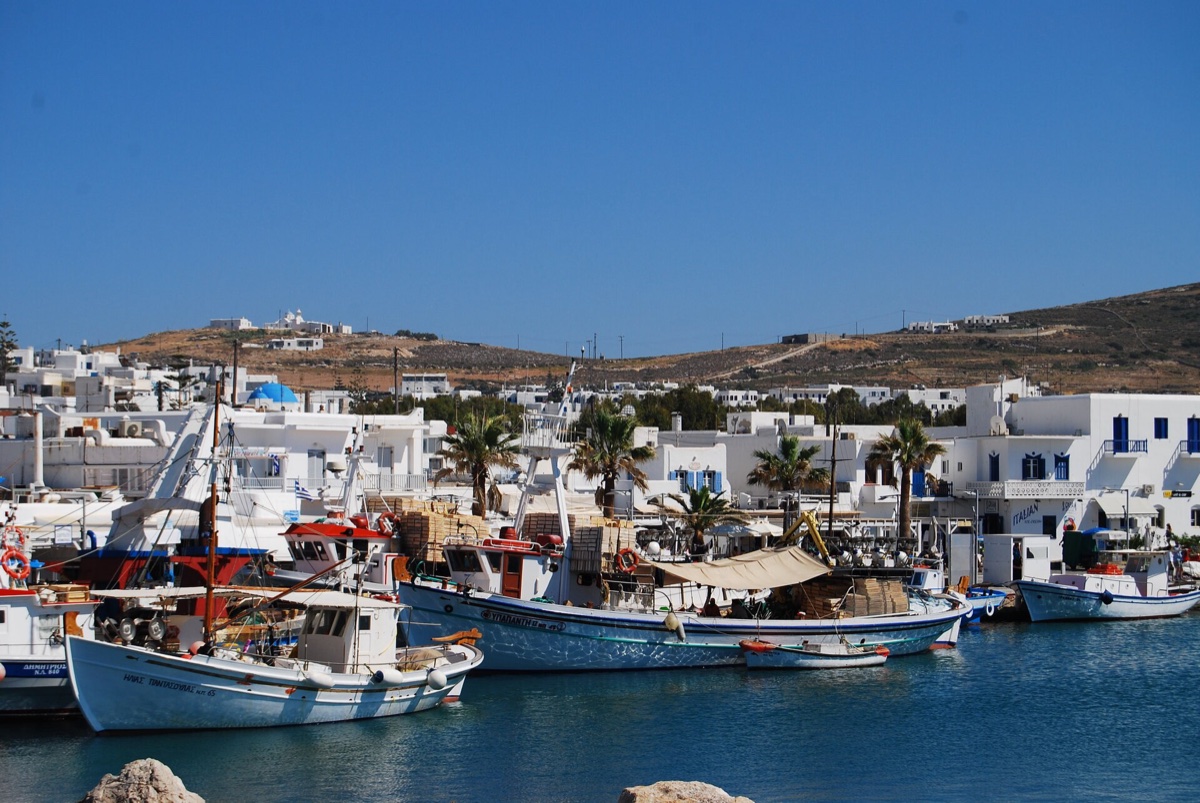
Not sure how to string the islands together? Here are four proven combinations that make sense both logistically and in terms of experience.
The Classic First Trip (10 Days)
Athens → Mykonos → Naxos → Santorini → fly home. The holy grail for first-time visitors to Greece who want to see the icons. You start on Mykonos with its parties and glamour, move on to Naxos for excellent food and beaches, then finish on the dramatic cliffs of Santorini — flying home at the end to save time.
Family-Friendly Island Hopping (7–10 Days)
Athens → Paros → Naxos. With children in tow, there’s no point spending hours on a ferry. Paros and Naxos sit close together — the crossing between them takes just 45 minutes — and Naxos is ideal for families thanks to its long, shallow beach and fine sand at Agios Georgios.
Western Ionian Route (7 Days)
Kefalonia → Lefkada. If you love lush greenery and turquoise water, the Ionian Islands will blow you away. A local ferry from Fiskardo on Kefalonia to Vasiliki on Lefkada connects you to some of the most spectacular cliff beaches in Europe — including the famous Myrtos — and as a bonus, the meltemi barely touches this part of Greece.
Budget & Quick Escape (Weekend to 5 Days)
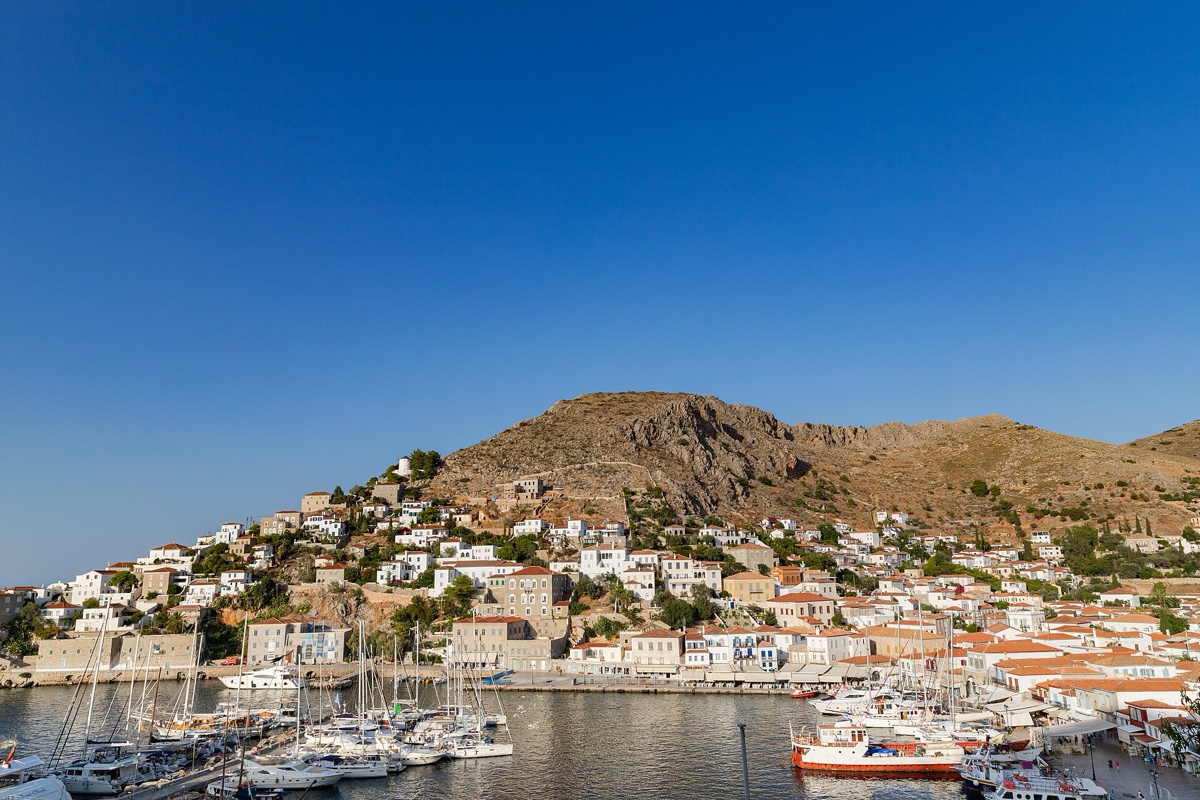
Athens → Aegina → Hydra. The islands of the Saronic Gulf are practically on Athens’ doorstep. From Piraeus, you’re on Aegina in 40 minutes and on the peaceful, car-free island of Hydra in under two hours. You can even tackle the whole route as a series of day trips from your Athens base.
Where to Stay When Island Hopping in Greece
With island hopping, you’re sorting out accommodation separately on every island, so flexible booking conditions are essential. On each island, aim to stay as close to the port or main town as possible — you really don’t want to be lugging suitcases across the island on departure day. In Athens, choose a hotel near a Metro stop with a direct line to Piraeus.
💡 Accommodation tip: We always search on Booking.com, which tends to have the best cancellation policies. That matters a lot with island hopping — if the meltemi cancels your ferry, you’ll be very glad you can move your reservation without hassle.
In peak season, book accommodation on the most popular islands (Santorini, Mykonos) well in advance — leave it too late and you’ll be left with only the most expensive options.
Further Reading
Before you head off, check out our other articles about Greece:
- Where to Go on Holiday in Greece: Islands, Mainland & Tips
- When to Visit Greece: Weather Month by Month
- Best Beaches in Greece: TOP 20 + Practical Tips
- Naxos Holiday: 15 Tips on What to See and Do
Frequently Asked Questions
What is island hopping?
Island hopping means jumping from island to island during a single holiday, typically by ferry. In Greece, it’s a popular way to experience multiple islands at once, like the classic route through Mykonos, Naxos, and Santorini. The key is to choose islands from the same group (Cyclades, Ionian Islands) that are well connected by ferry routes.
Which Athens port do ferries to the islands depart from?
Athens has three ports. The main one is Piraeus, where boats depart for the Cyclades, Crete, and the Dodecanese, and which is accessible by metro (blue line 3). Smaller Rafina, near the airport, serves Mykonos, Andros, and Tinos. The smallest, Lavrio, is used for the islands of Kea and Kythnos. Always check in advance which port and gate your boat departs from.
How and when should I buy Greek ferry tickets?
Buy tickets online through aggregators like Ferryhopper or Ferries.gr, which show all companies together and send an e-ticket to your phone. During high season (July, August) and around Greek holidays, book weeks or even months in advance, as ferries often sell out. In May and October, a few days ahead is fine, though off-season there are significantly fewer connections.
Large ferry or fast catamaran?
Large ferries (Blue Star) are slower and cheaper, but stable and reliable even in rough seas. Fast catamarans (SeaJets) cut travel time in half but cost roughly twice as much and are sensitive to waves, so the strong meltemi winds often cancel them. In July and August, when the meltemi blows hardest, it’s safer to bet on the big boats, even though they take longer.
How many islands can I fit into 10 days?
For ten days, two to three islands is ideal—no more. Each transfer eats up at least half a day, and each island deserves at least three nights, otherwise you’ll feel like you’re constantly on the move. Less really is more here; you’ll have time to soak up the atmosphere instead of constantly packing and hunting for ferries.
Can I rely on a ferry on my departure day when island hopping?
Absolutely not. You should always spend your last night before flying home in Athens or on the island your flight departs from. All it takes is stronger meltemi winds, the ferry doesn’t sail, and you miss your flight. Avoid this risk by planning a buffer day and spending your last night as close as possible to your departure airport.
Tips and Tricks for Your Vacation
Don’t Overpay for Flights
Search for flights on Kayak. It’s our favorite search engine because it scans the websites of all airlines and always finds the cheapest connection.
Book Your Accommodation Smartly
The best experiences we’ve had when looking for accommodation (from Alaska to Morocco) are with Booking.com, where hotels, apartments, and entire houses are usually the cheapest and most widely available.
 🚗 Car rental on the roadVerified rental cars in Greece
Search with the DiscoverCars comparison engine — it compares prices from dozens of local and international rental companies, and most bookings come with free cancellation.
Compare car prices in Greece →Don’t Forget Travel Insurance
Good travel insurance will protect you against illness, accidents, theft, or flight cancellations. We’ve had a few hospital visits abroad, so we know how important it is to have proper insurance arranged.
Where we insure ourselves: SafetyWing (simple monthly subscription) and TrueTraveller (for extra-long trips).
Find the Best Experiences
Get Your Guide is a huge online marketplace where you can book guided walks, trips, skip-the-line tickets, tours, and much more. We always find some extra fun there!