Mention Greece to most people and, alongside ancient columns and blue-domed churches, their minds go straight to the food. And that’s no coincidence. Greek food has a magnetic pull — the words alone generate nearly five million search queries every month from people hungry to know more about the country’s incredible gastronomy.
The secret doesn’t lie in complicated cooking techniques. It rests on the absolute freshness of ingredients, a generous pour of olive oil, and above all, the way Greeks actually eat. Food here isn’t just fuel — it’s a social event, a ritual, and the perfect excuse to sit around a table with family or friends for three hours straight.
And here’s some great news upfront — especially for fellow vegetarians: Greece is one of the most plant-friendly cuisines in the world, thanks to its abundance of vegetable mezedes, pulses, and cheese. In this guide, I’ll walk you through 20 Greek dishes you absolutely must try, along with what to order, when to eat, what to drink, and how to avoid the most common tourist pitfalls. Let’s dive in. ☺️
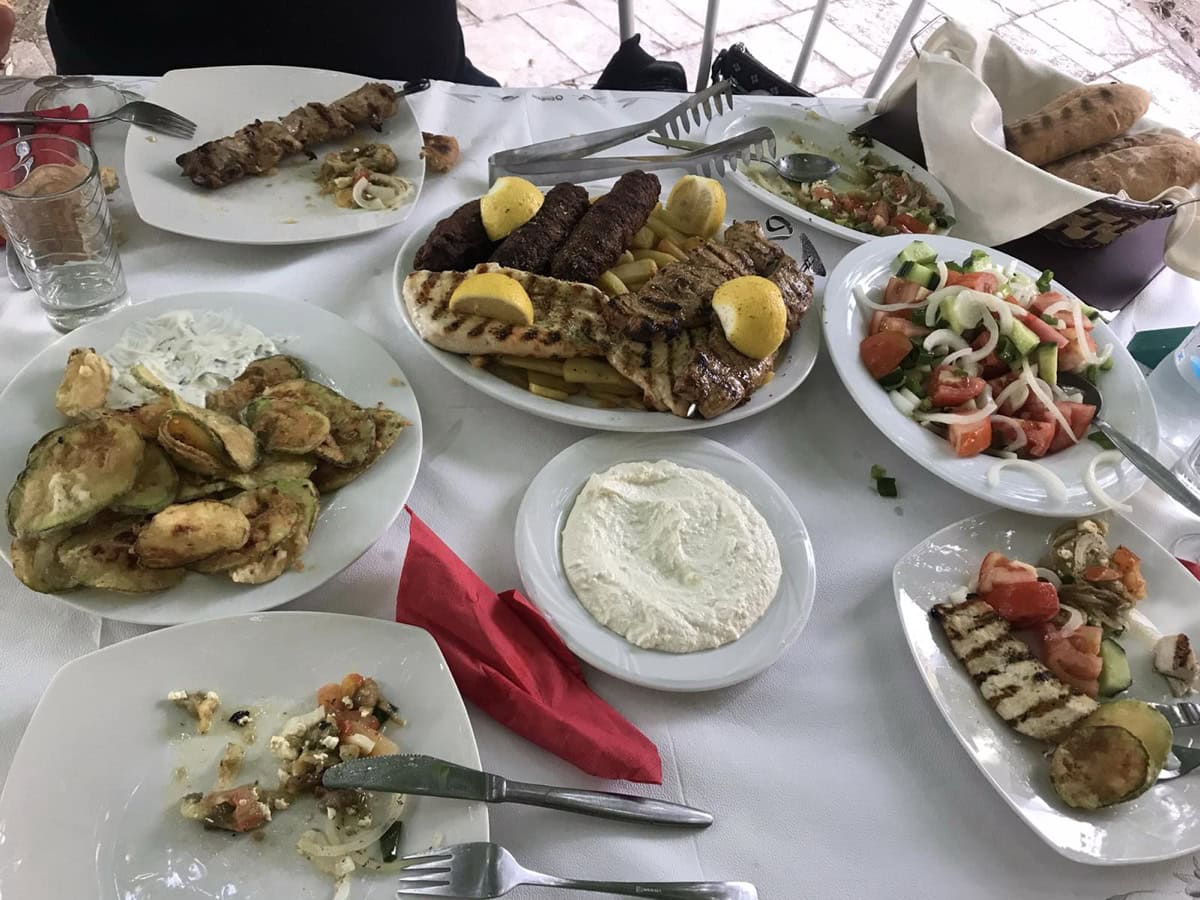
The full destination guide: Greece — guide and what to see
TL;DR
- It all starts with mezedes — small sharing plates placed in the centre of the table for everyone to pick at. Order gradually, not all at once.
- The holy trinity of classics: Greek salad (horiatiki), tzatziki, and baked moussaka. Add pastitsio and stuffed gemista to round it out.
- King of street food is gyros and souvlaki. People often mix them up, but there’s a real difference (explained below). Vegetarian versions are widely available today.
- Vegetarians are very well catered for: fava, gigantes, dakos, meatless gemista orfana, fried saganaki cheese, and dozens of vegetable starters.
- Sweet finish: baklava, galaktoboureko, loukoumades, and Greek yoghurt with honey and walnuts.
- What to drink: iced frappé or freddo espresso during the day; ouzo, tsipouro, or Assyrtiko wine in the evening.
- Watch out for: the bread scam, fish priced by weight, menus without prices, and restaurants with touts at the door.
Taverna Culture: How Greeks Actually Eat
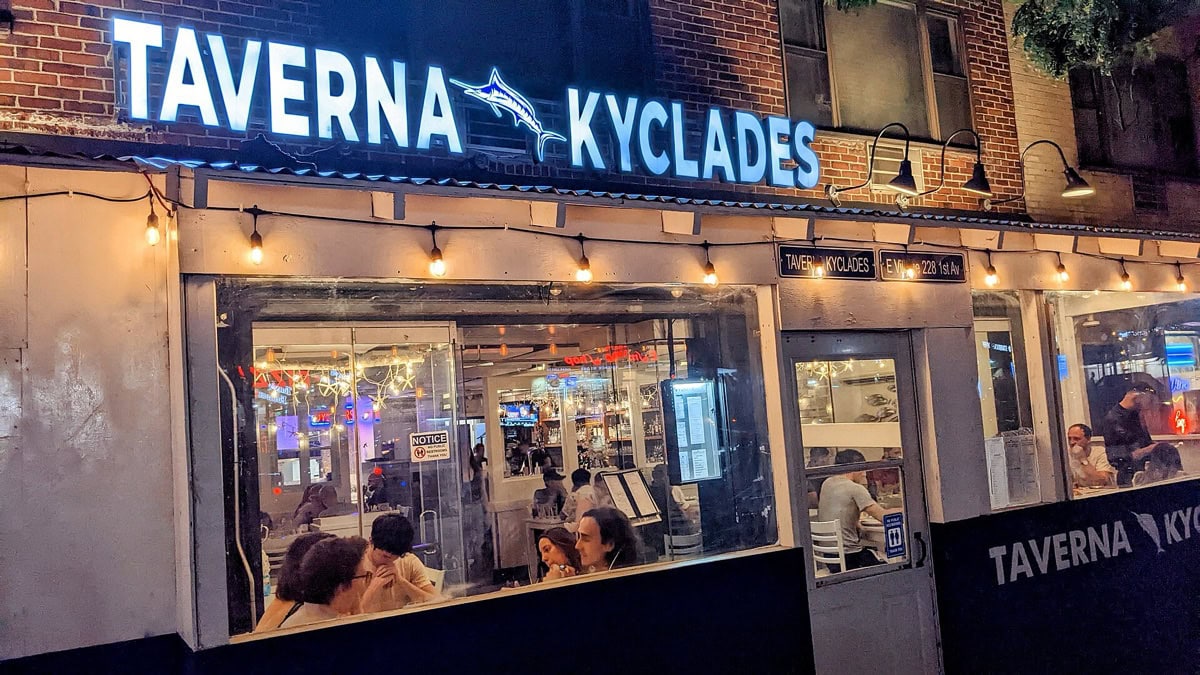
The heart of Greek dining is the taverna. Don’t expect starched white tablecloths and hushed background music, though. A proper Greek taverna is loud, smells of charcoal and sea air, and has paper tablecloths held down by plastic clips to stop them blowing away in the breeze.
The foundation of any taverna meal is the mezedes — small plates of starters and nibbles placed in the centre of the table for everyone to share, with ouzo, tsipouro, or local wine flowing freely alongside. Greeks rarely order a single main course just for themselves; they’d far rather fill the table with a spread of smaller dishes and share everything. It’s a style of eating you’ll fall in love with instantly, because it lets you taste ten different things in one sitting.
Timing matters too. Between 3pm and 6pm, many Greeks observe an afternoon break and plenty of traditional kitchens close or cook only for tourists. Real culinary life doesn’t kick off until after 9pm, so if you turn up at 7, you’ll likely be sharing the room with other tourists.
💡 Tip: As soon as you sit down in touristy areas (such as the Plaka in Athens or on Mykonos), a waiter may bring bread and bottled water without asking. This is the so-called “bread scam” and it’ll appear on your bill as a charge of €1–3 per person. The practice is technically legal, but the charge must be listed on the menu. If it isn’t, you’re perfectly within your rights to dispute it.
The Holy Trinity (and a Few More) Greek Classics
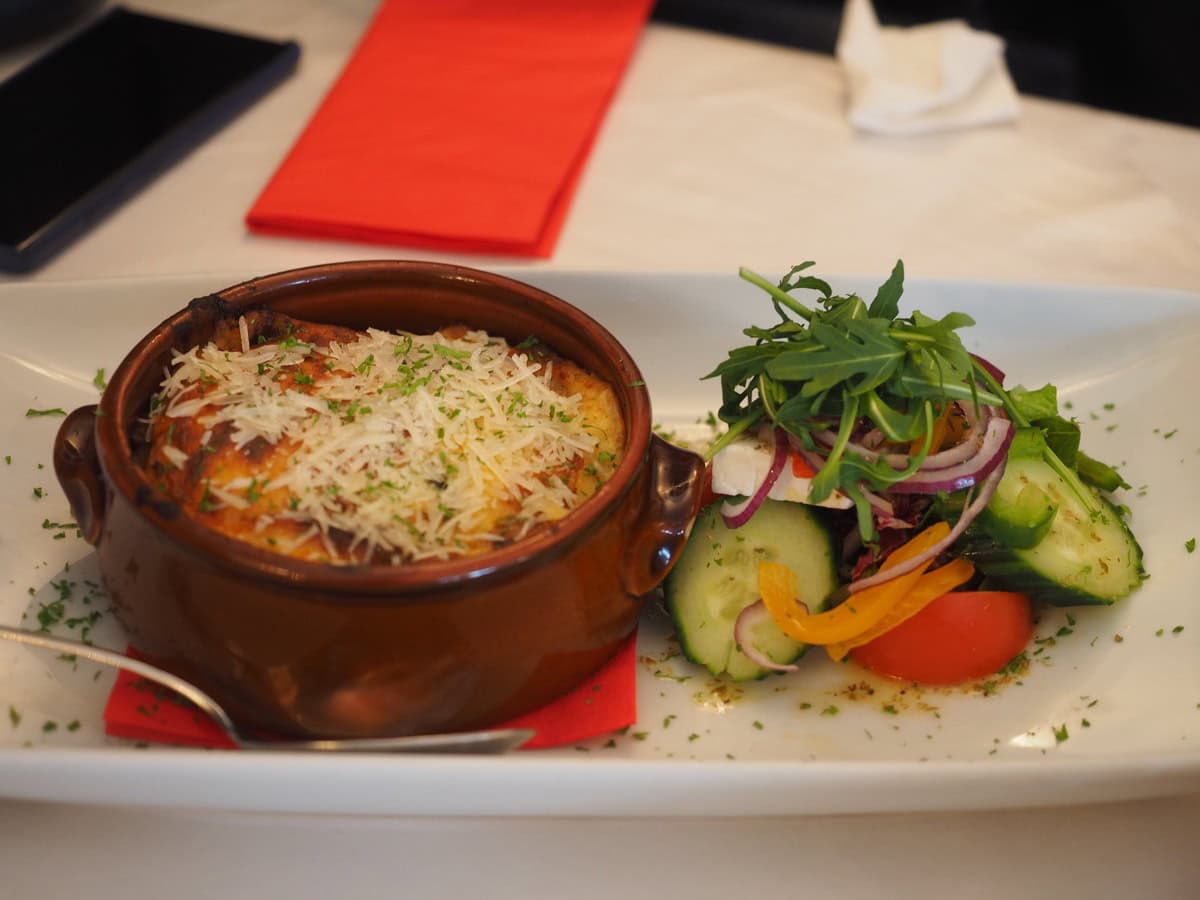
Before you venture into regional specialities, it’s worth mastering the absolute cornerstones of Greek cuisine.
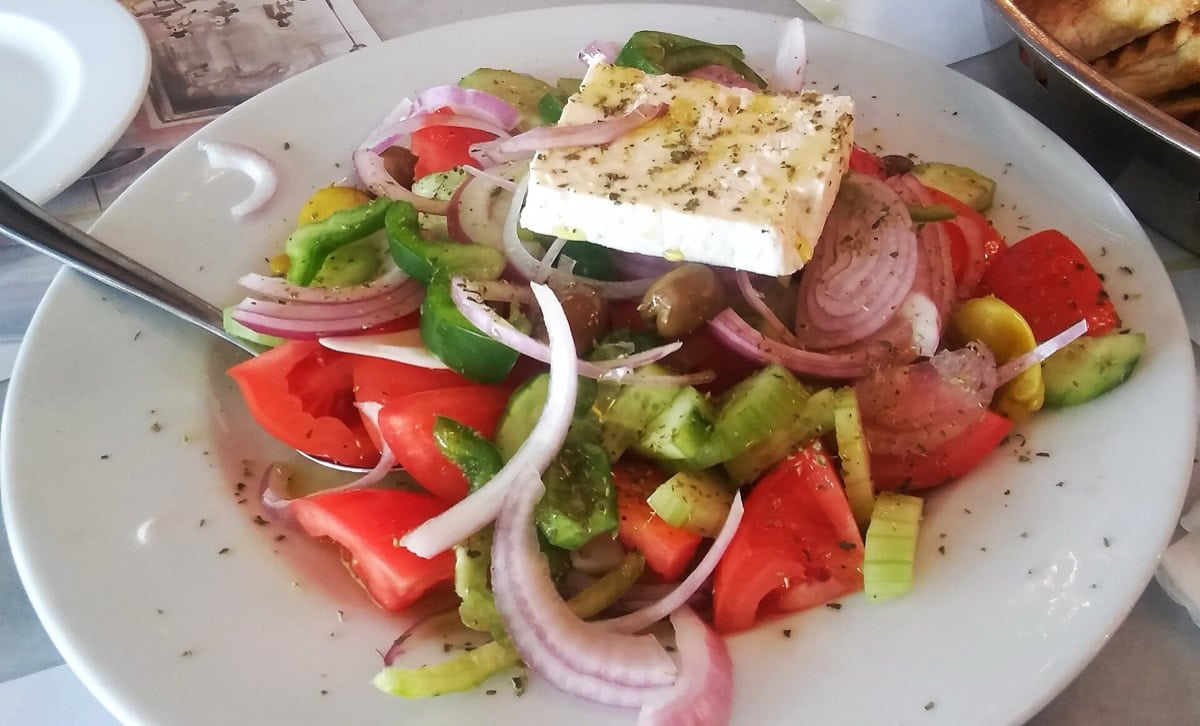
Horiatiki (Greek salad) is the ultimate pillar. It’s built from roughly chopped tomatoes, cucumbers, red onion, Kalamata olives, and green pepper, all drizzled with quality olive oil and scattered with dried oregano. In an authentic horiatiki, you’ll never find shredded lettuce, and the feta isn’t crumbled over the top — it sits as one thick slab on the crown of the salad. On a hot day, it’s one of the finest things you can eat.
Tzatziki you probably know already. Thick Greek yoghurt, grated and squeezed cucumber, plenty of garlic, olive oil, and a dash of vinegar or lemon. It’s the perfect dip for bread and vegetables alike.
Moussaka is the iconic layered dish of aubergine, potato, and minced meat in a tomato-based sauce with a hint of cinnamon, all topped with a thick béchamel and baked until golden. Traditionally made with lamb or beef, many tavernas now serve an excellent vegetarian version with just vegetables. Its cousin, pastitsio, is essentially the Greek answer to lasagne — same concept, but using long hollow pasta tubes instead of sheets.
And then there’s gemista — large tomatoes or peppers stuffed with rice and herbs, then slowly baked in the oven. It comes in a meat version and a meatless one; the latter is called orfana, meaning “orphaned”, and it’s an absolute vegetarian classic.
Street Food: Gyros, Souvlaki, and the Difference Between Them
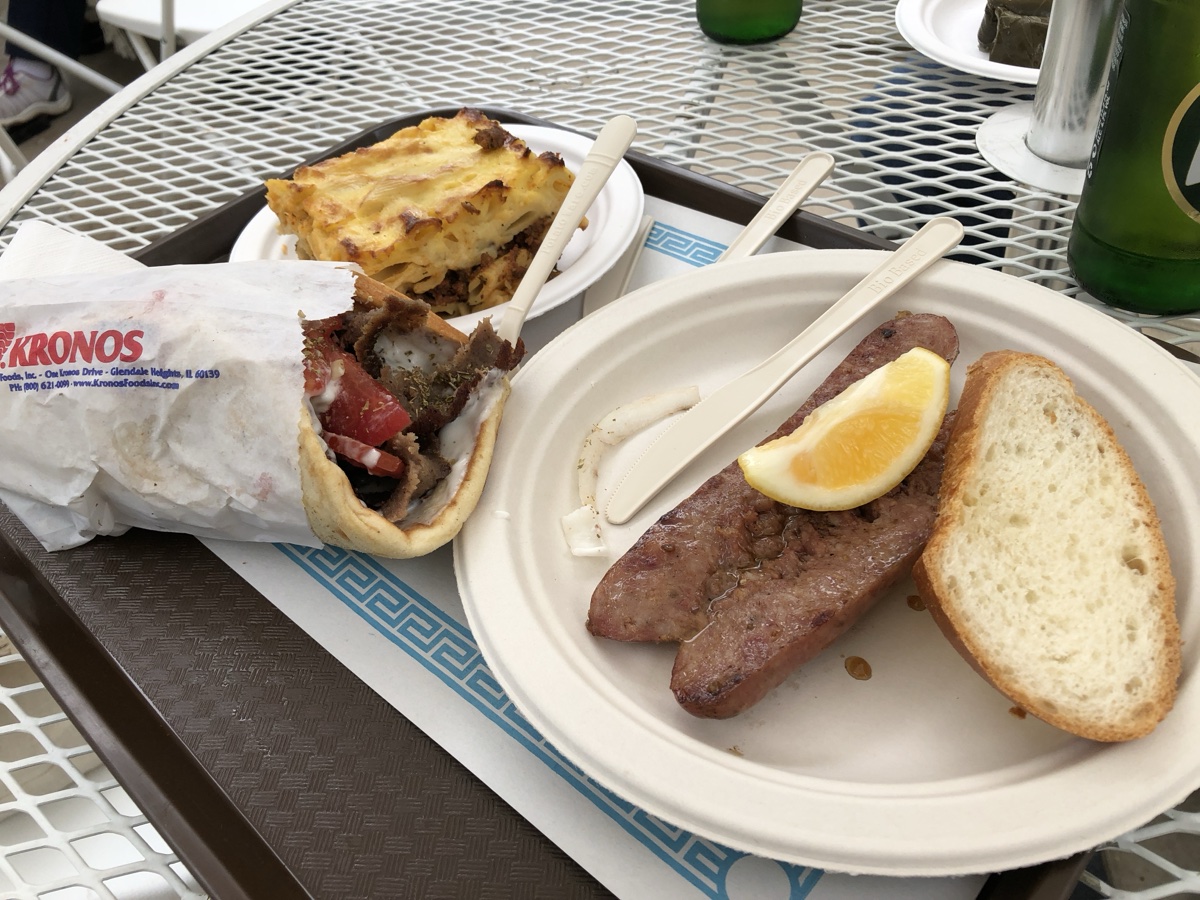
Greece has a rich street food tradition, and two terms dominate it — terms that travellers constantly mix up. Let’s settle this once and for all.
Souvlaki are small chunks of meat (usually pork or chicken) threaded onto a skewer and grilled over charcoal. They can be eaten on their own on a plate with a squeeze of lemon, or wrapped in a pitta with tomatoes, onion, chips, and tzatziki. Gyros, on the other hand, is made from thin slices of meat stacked onto a huge vertical rotisserie spit, slowly roasting and shaved off as it spins. It goes into a pitta in exactly the same way. In short: souvlaki is the skewer, gyros is the spinning spit.
For locals, this is the national fast food — and it costs just a few euros. Vegetarians needn’t despair either: plenty of places now offer gyros made with mushrooms or halloumi, and in any decent-sized town you’ll find falafel in pitta that works just as well.
Once you head inland from the coast into the mountains, a different league awaits. Tavernas up there serve paidakia (chargrilled lamb chops) and kleftiko — lamb slow-roasted in parchment paper. The name kleftiko comes from the Greek word for bandits, who supposedly used to cook stolen meat in underground pits so the smoke wouldn’t give them away. For meat lovers, these are the local legends.
Cheeses You Have to Try
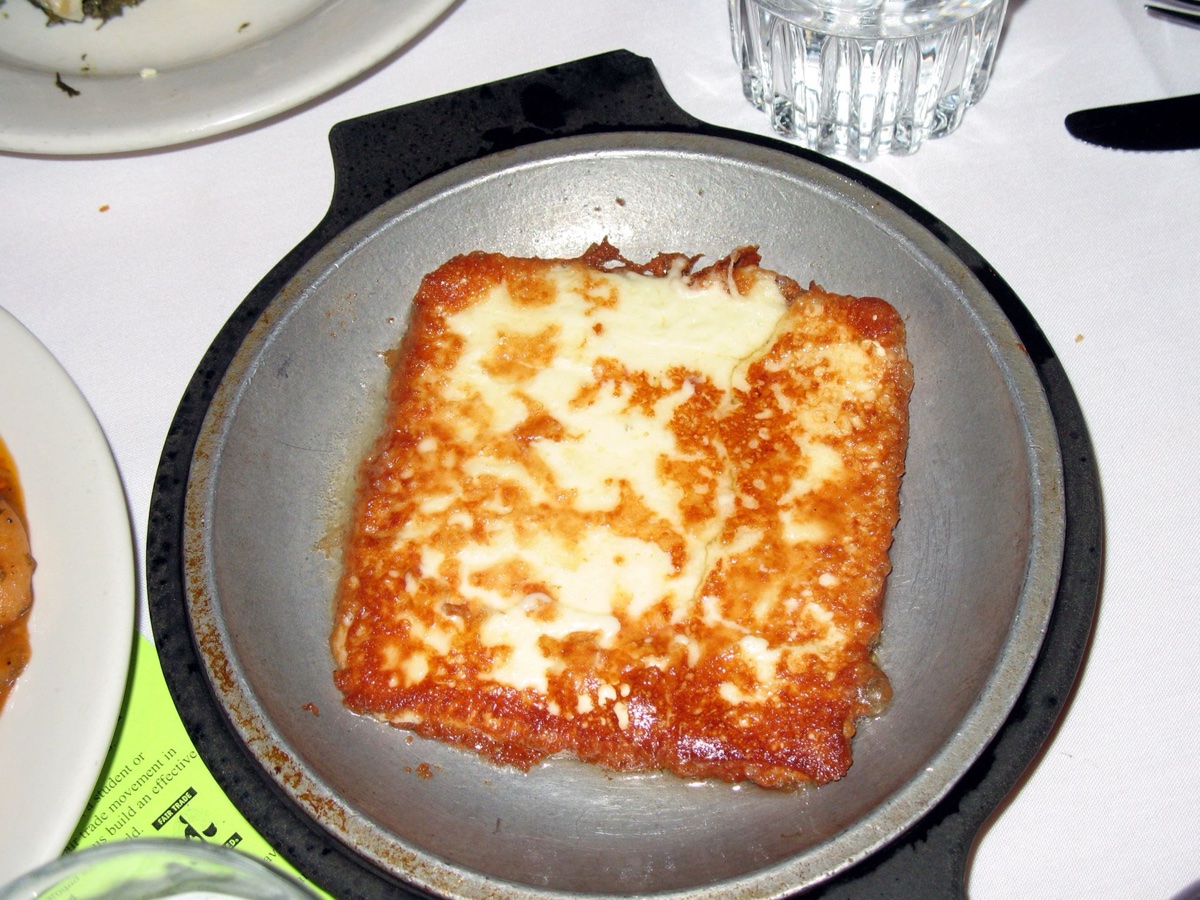
Greeks consume more cheese per person than anyone else in Europe, and honestly, we completely understand why. The lion’s share goes to feta — a salty, crumbly cheese made from sheep’s (and sometimes goat’s) milk with protected designation of origin status. Under EU rules, only cheese made in mainland Greece and on the island of Lesbos can legally be called feta.
But feta is far from the only dairy miracle the country has to offer. Graviera is a hard cheese with a sweet, nutty flavour that pairs beautifully with wine. Manouri is a soft, creamy whey cheese that finds its way into both sweet and savoury pastries.
And then there’s our personal favourite: saganaki. This isn’t actually a type of cheese — it’s a cooking method. A thick slab of hard cheese is dusted in flour and fried in a very hot pan until it has a crisp, golden crust and a molten centre, then served piping hot with a generous squeeze of lemon. As a simple vegetarian starter, it’s hard to beat.
Gifts from the Sea: More Than Just Fish on a Plate
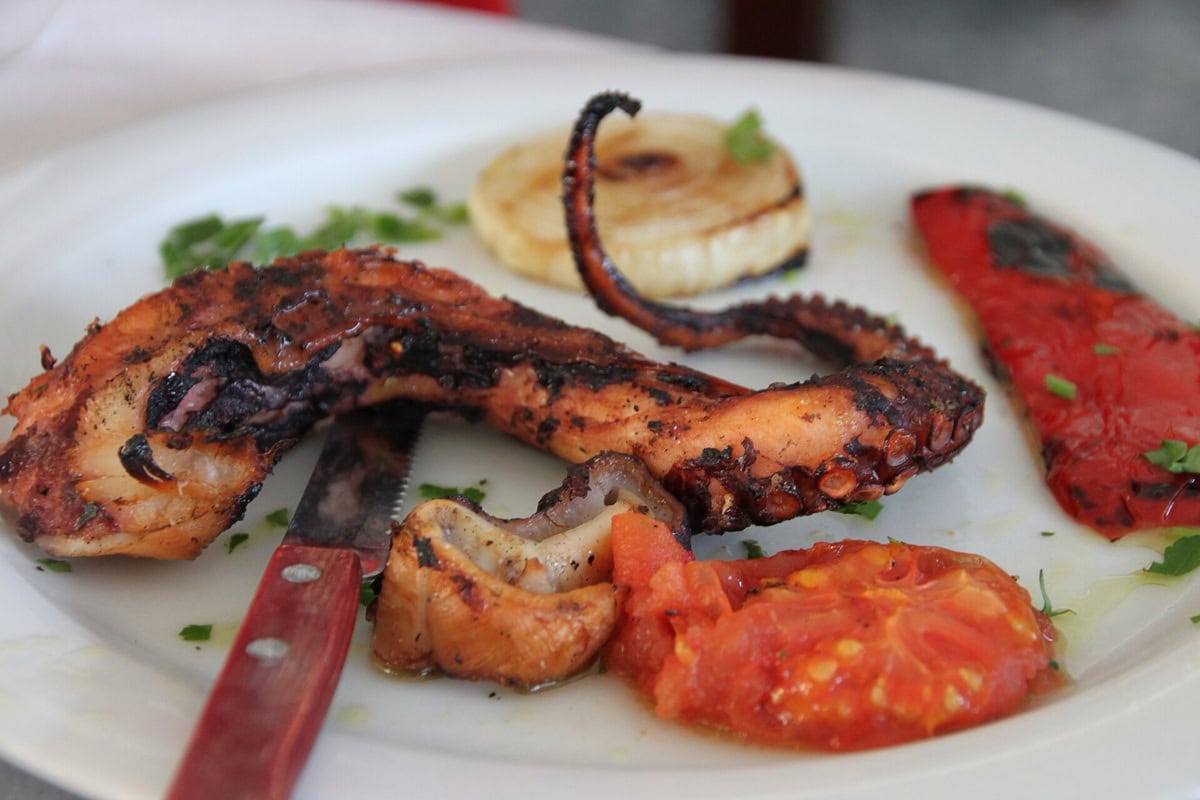
Octopus drying on a line outside a taverna like laundry is one of the most iconic images of the Greek coast. The sun draws out the moisture and intensifies the flavour before they head to the grill. Seafood is a huge deal here, for locals and visitors alike, and it’s something many people simply can’t leave the coast without trying.
Among the most popular seafood dishes: kalamarakia (fried squid rings with lemon), grilled sardines known as sardeles, and garides saganaki — prawns braised in a thick tomato sauce with feta and a splash of ouzo. For whole fish, Greeks love tsipoura (sea bream) and lavraki (sea bass).
⚠️ If you’re ordering seafood, be very careful about pricing. Fresh catches (often listed as “catch of the day”) are sold by weight, not by portion. Before you order any fish, ask to see it, have it weighed, and get the final price confirmed upfront. Otherwise the bill can come as a very nasty shock.
Regional Specialities: Every Island Tastes Different
Greek cuisine is anything but uniform. Every region has its own traditions, local ingredients, and historical influences, so even if you travelled the whole country, you’d be eating something slightly different at every stop. Here’s a quick overview.
| Region | Signature Dishes | Why Try It |
|---|---|---|
| Crete | Dakos (barley rusk with tomatoes and mizithra cheese), kalitsounia (small cheese or herb pastries), raki spirit | The Cretan diet is considered one of the healthiest in the world; food here is earthy and packed with local herbs |
| Corfu & the Ionian Islands | Sofrito (veal in garlic sauce), pastitsada (meat with pasta), bourdeto (spicy fish stew) | These islands were never under Ottoman rule — centuries of Venetian influence shaped a completely different culinary tradition |
| Thessaloniki & Northern Greece | Bougatsa (filo pastry filled with custard or cheese), a distinct style of gyros, heavy spicing | Thessaloniki is Greece’s gastronomic capital, shaped by the flavours of Asia Minor refugees |
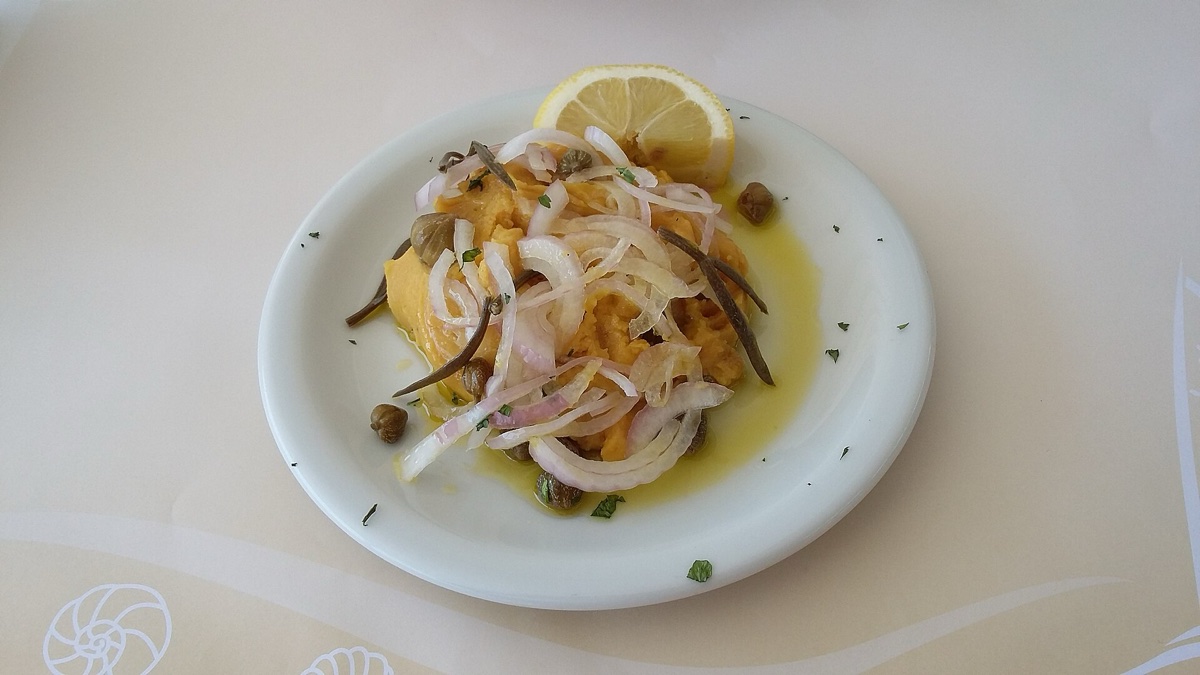
| Santorini | Fava (yellow split pea purée), tomatokeftedes (tomato fritters), Assyrtiko wine | The volcanic soil gives the tomatoes and vines an extraordinarily concentrated flavour |
| Naxos | Naxian potatoes, arseniko cheese, kitron liqueur | The most fertile of the Cyclades islands, which supplies the rest of Greece with its prized potatoes and cheeses |
For vegetarians, this table is something of a treasure trove. Cretan dakos, Santorini’s fava and tomatokeftedes rank among the finest things Greek cuisine has to offer — and not a scrap of meat in sight.

The Sweet Finish
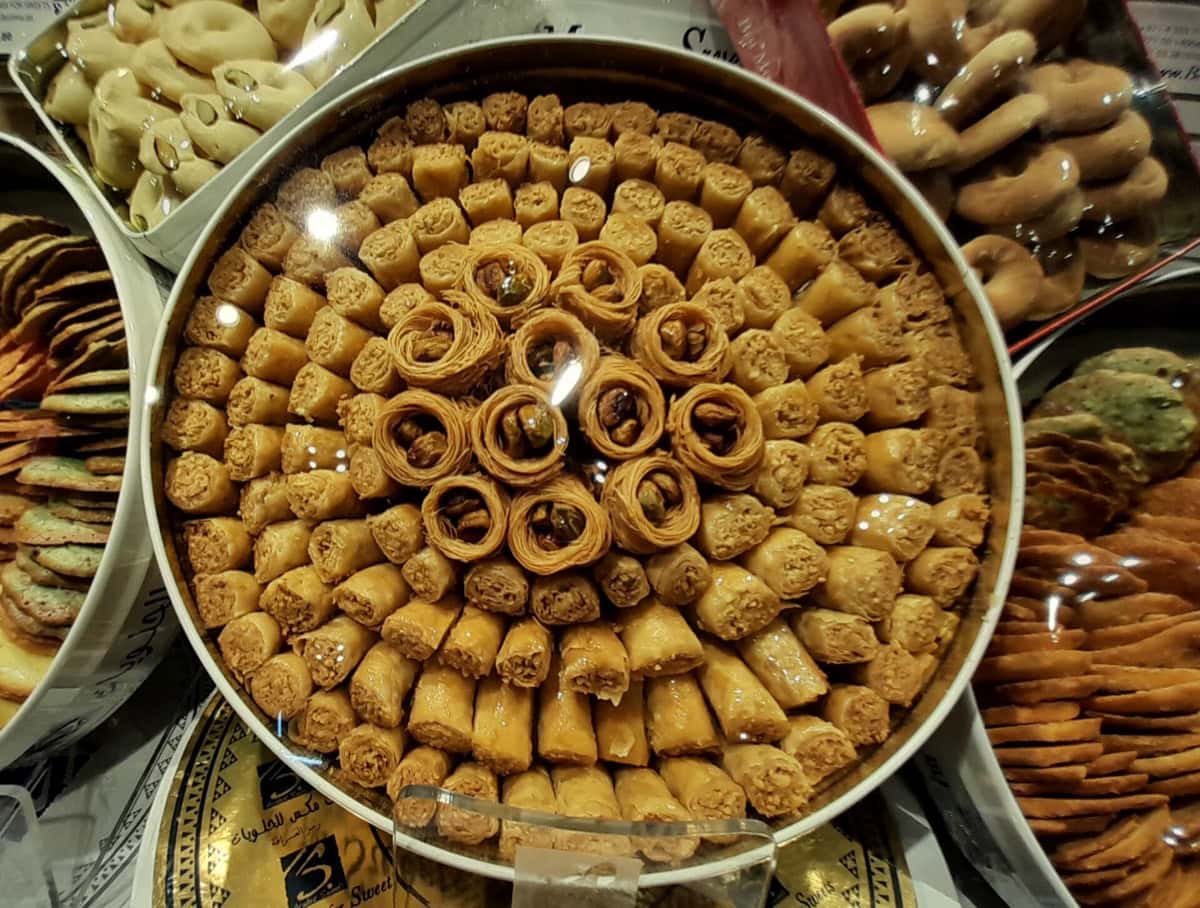
Greek desserts are rich, sticky, and ferociously sweet — honey, nuts, and paper-thin filo pastry play the starring roles in almost all of them. And we’re completely hooked.
The ultimate classic is baklava — layers of pastry with chopped walnuts, drenched in sweet syrup. Going one step further is galaktoboureko, filo pastry filled with a rich semolina custard, also soaked in syrup after baking. And fans of fried food must try loukoumades — small Greek doughnuts fried until golden, drizzled with hot honey, and dusted with cinnamon.
After something lighter? Plain Greek yoghurt with honey and walnuts works brilliantly as a dessert, and in many tavernas they’ll bring it out as a complimentary treat at the end of your meal.
What to Drink: From Frappé to Retsina
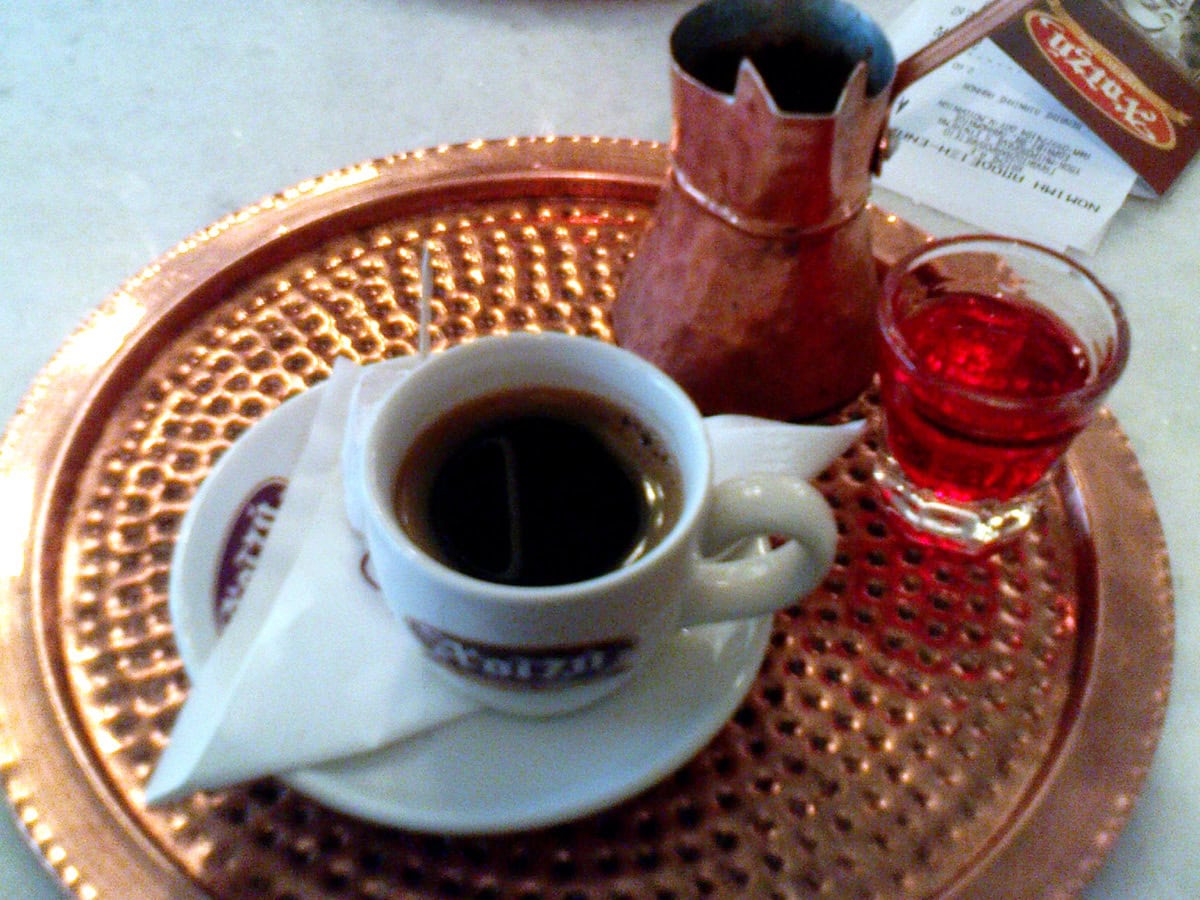
Greeks are a nation of coffee lovers, though their coffee culture has its own distinct character. In summer, two national drinks dominate. The first is frappé — instant coffee shaken with water into a thick foam and served over ice, invented by accident at the Thessaloniki trade fair in the 1950s. The more modern and now wildly popular alternative is freddo espresso: a shot of espresso rapidly chilled and frothed with ice.
Traditional Greek coffee is brewed directly in a small copper pot called a briki, grounds and sugar included. There’s one golden rule: never stir the coffee in the cup, or you’ll disturb the sediment and end up with a mouthful of mud. ☺️
Come evening, it’s time for something stronger. Ouzo is an anise-flavoured spirit that must always be served with ice or cold water — when you add the water, it turns a milky white in a satisfying chemical reaction. A more traditional and potent alternative is tsipouro, known as raki on Crete. Greek wine is also enjoying a real renaissance, so forget cheap carton wine and seek out crisp, mineral Assyrtiko from Santorini or full-bodied red Agiorgitiko from the Peloponnese. A special case is retsina — white wine flavoured with pine resin, which you’ll either love or hate. And beer? You’ll most often find light lagers such as Mythos, Fix, or Alfa, which in the summer heat essentially do the job of water.
How Much Does Food Cost in Greece?
The good news is that eating well in Greece is still very affordable if you steer clear of the most tourist-heavy spots. Prices vary significantly by island — on Mykonos or Santorini, expect to pay roughly double compared to the mainland — but here’s a general sense of what to budget.
A gyros or souvlaki pitta — the classic grab-and-go street food — costs around €3 to €5 and is genuinely filling enough for a full lunch. An iced frappé or freddo espresso at a café runs about €3 to €4, while a Greek salad or a plate of mezedes at a taverna comes to roughly €6 to €9.
For a proper sit-down dinner at a family taverna — a few shared starters, a main course, and a carafe of house wine — budget around €15 to €25 per person. For that price, you’ll eat royally and probably leave feeling you’ve overdone it. Vegetarians often spend less, since vegetable starters and pulses tend to be the cheapest items on the menu.
How Not to Get Stung: Surviving the Tourist Jungle
Greece is a phenomenal place to eat, but in the most heavily visited spots — Athens, Mykonos, Santorini — it’s surprisingly easy to fall into tourist traps. A bit of common sense and a few simple rules will keep you out of trouble.
- A tout outside is a bad sign. If someone is standing in the doorway with a menu, actively pulling people in off the street, walk on. A good taverna doesn’t need one.
- A menu without prices means run. If they hand you a menu with no prices, or tell you they’ll “let you know the price”, get up and leave. It’s an age-old trick that ends with a €200 bill for two portions of calamari.
- Eat where the locals eat. Look for places tucked away down side streets. If there’s a large Greek family at the next table arguing loudly over the food, you’re in exactly the right place.
- Order gradually. Don’t let them bring everything at once. Greeks have starters, eat them, sip their wine, and only then order the next round. Waiters are used to this pace — don’t feel rushed.
A Mini Greek Food Glossary
Knowing a handful of basic phrases will go a long way in any taverna. Locals genuinely appreciate the effort and you’ll often find the welcome becomes noticeably warmer.
- Kalimera – Good morning / good day
- Kalispera – Good evening
- Efcharistó – Thank you
- Parakaló – Please (also “you’re welcome”)
- To logariasmó, parakaló – The bill, please
- Nero – Water
- Krasi – Wine (lefko = white, kokkino = red)
- Yamas! – Cheers!
Where to Eat and Where to Stay
The best rule for finding a great taverna is to wander away from the main tourist drags and watch where the locals congregate. In Athens, neighbourhoods like Psyri and Koukaki are worth seeking out; on the islands, head to inland villages where the food tends to be better and considerably cheaper than on the beach.
💡 Accommodation and experiences tip: We usually book accommodation through Booking.com, which tends to offer the most flexible cancellation policies. And if you want to truly get under the skin of Greek cuisine, a food tour or cooking class with locals is well worth it — you can find and compare the best options on GetYourGuide.
Accommodation in Athens starts from around €60 per night; on the islands, prices climb higher in peak season. Wherever you’re headed, book early — the best-value spots with a great price-to-quality ratio go fast.
Further Reading
Before you head off to eat your way around Greece, check out our other articles on the country:
- Where to Go in Greece: Islands, Mainland & Tips
- Crete Holiday: 34 Things to See and Do
- Athens: 21 Things to See and Do
- Best Beaches in Greece: TOP 20 + Practical Tips
Frequently Asked Questions
What is typical Greek food?
The most typical Greek dishes include Greek horiatiki salad, tzatziki dip, baked moussaka, street food gyros and souvlaki, and stuffed vegetables gemista. Olive oil and feta are essential, along with dozens of small appetizers called mezedes that are shared at the table. As the national fast food, gyros in pita takes the lead.
What can vegetarians eat in Greece?
Greece has one of the most vegetarian-friendly cuisines around. You can safely enjoy Greek salad, tzatziki, fried saganaki cheese, stuffed gemista orfana, Santorinian fava, Cretan dakos, gigantes beans, or stuffed grape leaves dolmades. For street food, you can now find gyros made with mushrooms or halloumi, and the ubiquitous falafel in pita.
What’s the difference between gyros and souvlaki?
Souvlaki are small pieces of meat skewered and grilled over charcoal, while gyros is prepared from thin slices of meat stacked on a large rotating vertical spit, from which it’s gradually shaved off. However, both are wrapped exactly the same way in pita with tzatziki, tomatoes, and fries. Simply put: souvlaki is a skewer, gyros is a spit.
What do Greeks eat for breakfast?
A traditional Greek breakfast is light. It typically consists of fresh bread, Greek yogurt with honey and nuts, seasonal fruit, and coffee. Bougatsa is also popular—crispy filo pastry filled with sweet custard or cheese, eaten mainly in the northern part of the country. A hearty breakfast with eggs and bacon is more of an exception found in tourist hotels.
What do people drink in Greece?
During the day, iced coffees like frappé and freddo espresso reign supreme, along with traditional Greek coffee brewed in a briki pot. In the evening, Greeks sip anise-flavored ouzo or tsipouro spirit (called raki on Crete), both served with ice and water. Wines worth trying include white Assyrtiko from Santorini, red Agiorgitiko, or resin-flavored retsina. The most popular beer is Mythos.
How do you avoid getting ripped off at restaurants in Greece?
Avoid establishments with touts outside the entrance and menus without listed prices. Fish and seafood are sold by weight, so always have your catch weighed and agree on the price beforehand. Watch out for the ‘bread scam’—unsolicited bread and water added to your bill. And most importantly, eat where the locals eat, not where they’re trying to lure you in from the street.
How do you say thank you in Greek?
Thank you in Greek is efcharistó. A few other words that will delight people in a taverna are kaliméra (good morning), kalispéra (good evening), parakaló (please), and yamas (cheers). Greeks are pleased when a foreigner at least tries to speak their language, and they’ll often repay you with a warmer attitude.
Tips and Tricks for Your Vacation
Don’t Overpay for Flights
Search for flights on Kayak. It’s our favorite search engine because it scans the websites of all airlines and always finds the cheapest connection.
Book Your Accommodation Smartly
The best experiences we’ve had when looking for accommodation (from Alaska to Morocco) are with Booking.com, where hotels, apartments, and entire houses are usually the cheapest and most widely available.
 🚗 Car rental on the roadVerified rental cars in Greece
Search with the DiscoverCars comparison engine — it compares prices from dozens of local and international rental companies, and most bookings come with free cancellation.
Compare car prices in Greece →Don’t Forget Travel Insurance
Good travel insurance will protect you against illness, accidents, theft, or flight cancellations. We’ve had a few hospital visits abroad, so we know how important it is to have proper insurance arranged.
Where we insure ourselves: SafetyWing (simple monthly subscription) and TrueTraveller (for extra-long trips).
Find the Best Experiences
Get Your Guide is a huge online marketplace where you can book guided walks, trips, skip-the-line tickets, tours, and much more. We always find some extra fun there!