
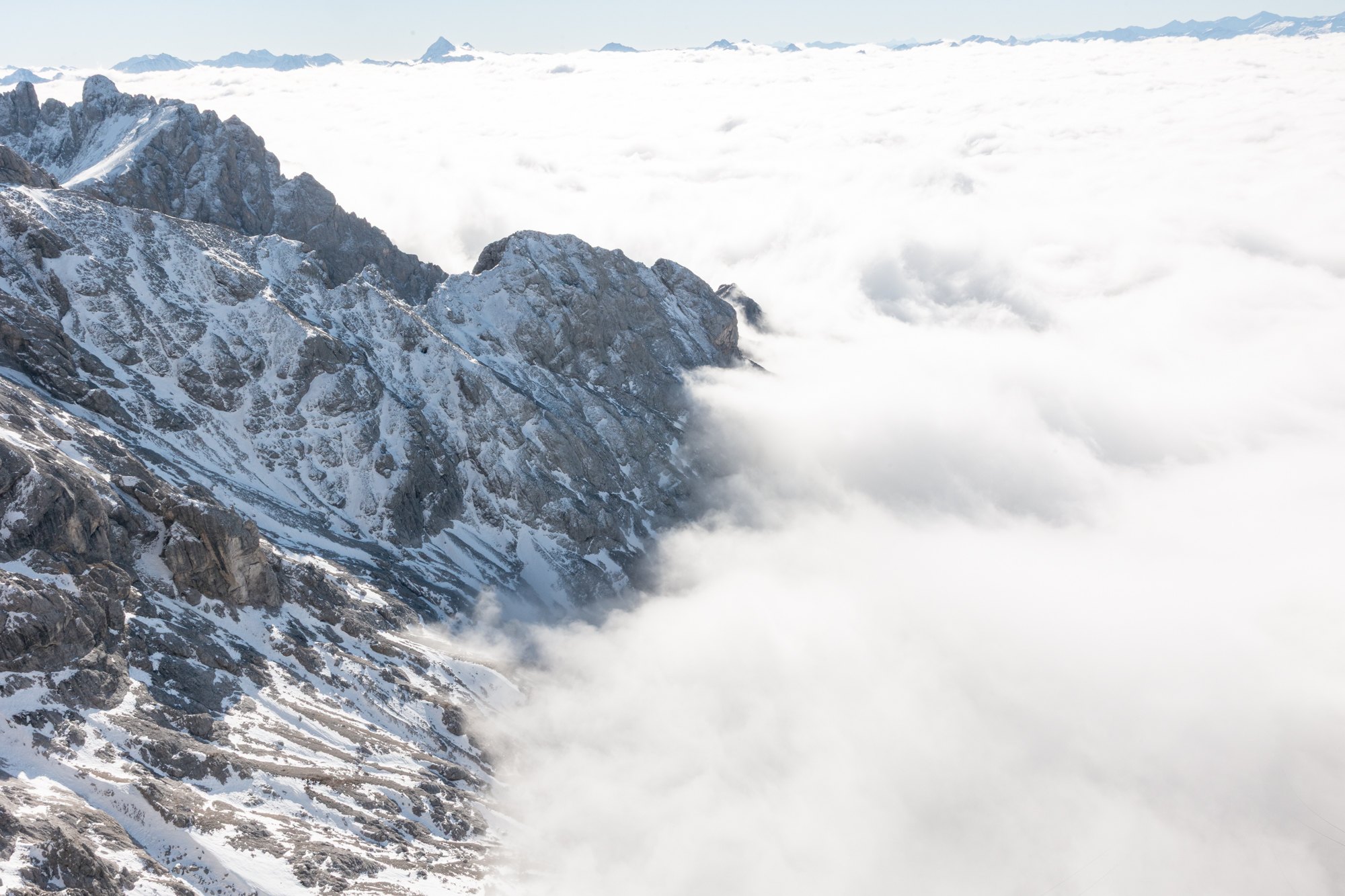
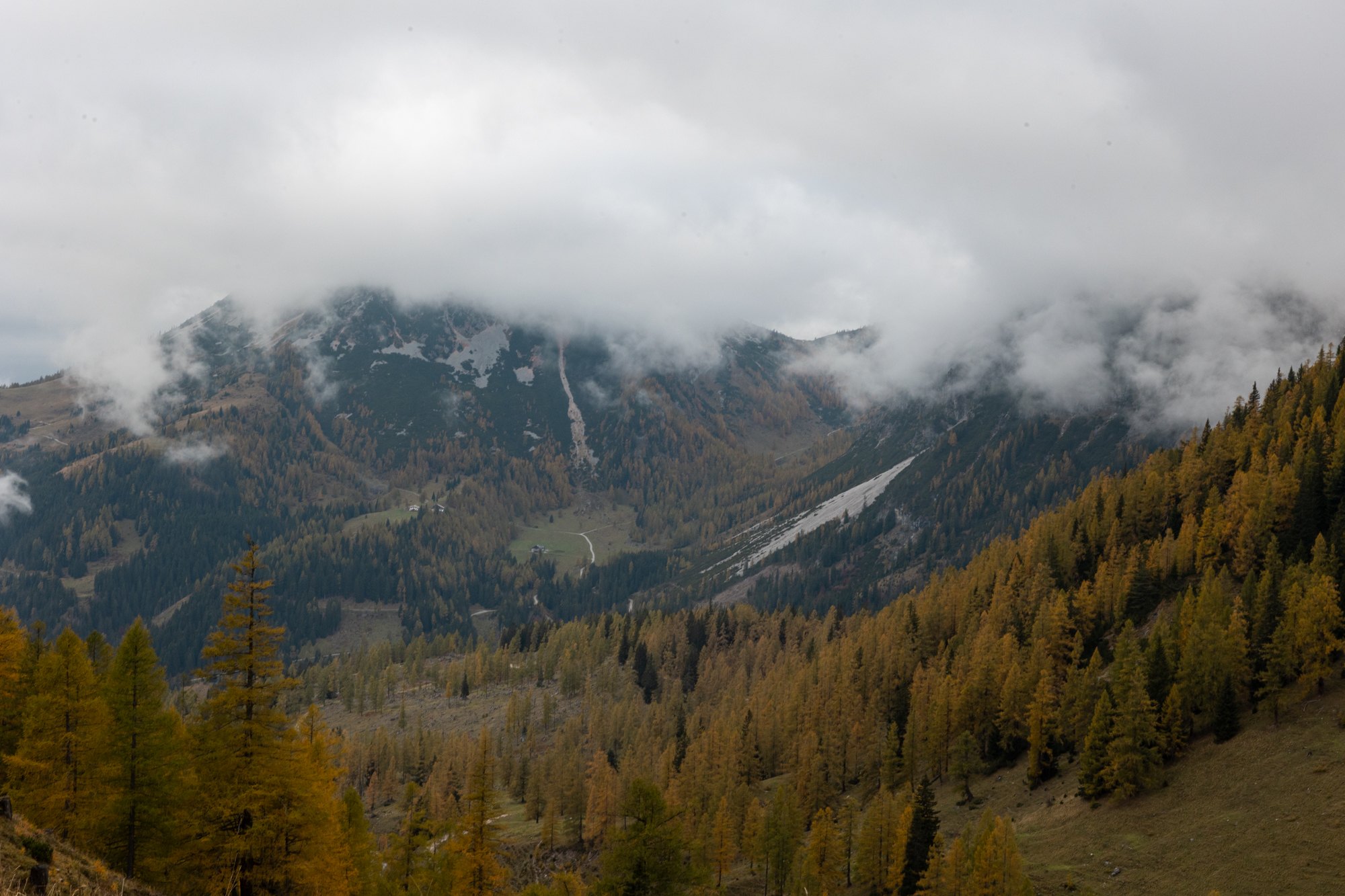
At the end of October, Lukáš and I set off with our little son and some friends and their kids for a few days of rest in a Salzburg valley near the small town of Altenmarkt im Pongau, and honestly, we didn’t really know where we were going or what to expect. In the morning, yellow autumn larches huddled in the valley and heavy clouds seemed glued to the hillsides – but then the cable car carried us up onto Dachstein, Austria’s great limestone massif, and we found ourselves in a completely different world. Above us shone a bright blue sky, snow lay on the platforms, and beneath our feet stretched an endless sea of clouds with only jagged rocky peaks poking through, so it felt like we were literally walking across the heavens. And it’s all within easy reach of much of Central Europe!
Before you jump in the car and type Dachstein into your sat nav, though, I need to warn you about one thing that lots of day-trippers mix up and only find out at the last minute. Dachstein isn’t just one mountain with its highest peak, Hoher Dachstein (2,995 m), but an entire mountain range, part of which belongs to the Hallstatt-Dachstein/Salzkammergut UNESCO World Heritage Site – and people visit two completely different places on opposite sides of the massif. The first is the Dachstein Glacier above the resort of Ramsau am Dachstein in Styria, with the Sky Walk viewing platform and the suspension bridge. The second is Krippenstein in Obertraun above Lake Hallstatt in Upper Austria, with the 5fingers viewpoint and the caves. No road crosses the mountains between them, and driving from one to the other takes about 1.5 hours.
In this article, you’ll find 21 tips on what to see and do on the Dachstein Glacier, on Krippenstein and in the surrounding area, from gorges to lakes, plus a complete overview of prices for 2026. I’ll explain how the mandatory cable car reservation and the toll road work, when it’s best to go so you don’t end up stuck in fog, where to stay and what to wear so you and your kids don’t freeze up there like we did. 😅
Summary
- Two different places on opposite sides of the massif: The Dachstein range splits visitors between the southern side, with the glacier above Ramsau am Dachstein, and the northern side, with the Krippenstein summit above Obertraun and Hallstatt – about 87 km (1.5 hours) apart by car.
- Dachstein Glacier above Ramsau: In just 8 minutes, the panoramic cable car takes you – without a single support pylon – up to around 2,700 m, where the Sky Walk, the suspension bridge (according to the operator, the highest in Austria), the Stairway to Nothingness, the new Himmelsleiter viewpoint and the Ice Palace hidden 6 metres beneath the glacier are waiting for you.
- Dachstein Krippenstein above Hallstatt: The three-section cable car from Obertraun gives you access to the 5fingers viewing platform above a 400-metre drop, the spiral Welterbespirale viewpoint on the summit, the Giant Ice Cave and the Mammoth Cave.
- Cable car prices in 2026: The combined glacier ticket (cable car plus attractions) costs €73 for an adult in summer 2026 and €69 in winter 2026/27, while the complete All in One ticket for Krippenstein, including both caves, costs €66.20 in summer 2026 when bought online.
- Mandatory reservation in summer: With every summer glacier ticket (even with the summer Schladming-Dachstein Card), you have to book a fixed cabin time slot online in advance for €2.90 per person – otherwise, on sold-out days, they may not let you up at all.
- Glacier toll road free with a ticket: Driving up the 6 km Dachsteinstraße mountain road to the cable car’s valley station is free for passengers with a valid ticket, but don’t forget to validate your toll barrier ticket in the machine at the top station before heading back down (without the cable car, you’ll pay €26 according to the current price list).
- When to visit Dachstein: The summer season on the glacier runs from 9 May to 8 November 2026 and the winter season from 25 December 2026 to 29 March 2027 (it’s completely closed between 9 November and 24 December). Krippenstein operates in summer from 1 May to 1 November 2026 and in winter from 19 December 2026 to 29 March 2027.
- What to bring to the mountains: Even in summer, you’ll need warm layers up there, a waterproof windproof jacket, a hat, gloves and sturdy shoes with non-slip soles – and if you’re bringing little kids, leave the pushchair in the car and take a hiking child carrier or a baby carrier instead.
The full destination guide: Austria — guide and what to see
Dachstein Glacier or Krippenstein? Where to Go in Dachstein, Austria
Before you book anything, make sure you’re clear on which side of the range you actually want to visit, because plenty of people book accommodation in Hallstatt in good faith and are then surprised to learn that the famous suspension bridge and the Stairway to Nothingness are about 1.5 hours’ drive away on the opposite side of the mountains. The Dachstein range forms a huge limestone wall on the border of three Austrian states, and no road cuts across it, so you have to choose either the southern Styrian side with the glacier or the northern Upper Austrian side with Krippenstein.
On the south side, the Dachstein Glacier above Ramsau shoots you up into a high-alpine world at around 2,700 m in just 8 minutes. Up there, you walk on glass platforms above the abyss, cross a suspension bridge over a 400-metre drop, and discover the Ice Palace hidden right inside the glacier. On the north side, by contrast, Dachstein Krippenstein above Obertraun reaches 2,108 m, rising about 1,600 metres straight above the surface of Lake Hallstatt. Instead of a glacier, it tempts you with the dramatic 5fingers viewing platform, easy walks across the plateau and two enormous caves near the Schönbergalm middle station (a 15 to 20-minute walk from there).
| Feature | Dachstein Glacier (Dachstein Gletscher) | Dachstein Krippenstein |
|---|---|---|
| :— | :— | :— |
| Location | Above Ramsau am Dachstein, Styria (south side) | In Obertraun near Hallstatt, Upper Austria (north side) |
| Cable car and altitude | 1 section with no pylons in 8 minutes, Hunerkogel top station (approx. 2,700 m) | 3 sections (Schönbergalm 1,350 m, Krippenstein 2,108 m, third section to Gjaid) |
| Main highlights | Sky Walk, suspension bridge, Stairway to Nothingness, Himmelsleiter, Ice Palace | 5fingers viewing platform, Welterbespirale, Giant Ice Cave, Mammoth Cave, Heilbronner Rundweg |
| Adult price (summer 2026) | Combi ticket €73, cable car only €61 | All in One online €66.20, Panorama-Ticket €46.70 |
| Ideal for | Lovers of high-alpine peaks, snow and adrenaline on walkways without much walking | Visitors craving views of Lake Hallstatt, families, dog owners and cave lovers |
| How much time to allow | At least 3 hours, more like half a day with kids | Viewpoints only 2 to 3 hours, about 4 hours with one cave, a full day for both |
| Advance booking | Mandatory cabin time-slot reservation in summer for €2.90 | Tickets can be bought online, cave entry times are only assigned at the ticket office on site |
If you’re drawn to that feeling of “walking on the sky”, want to stand on glass steps right above a sheer rock face and visit the Ice Palace beneath the glacier, then head straight for the Dachstein Glacier above Ramsau – that’s the one we chose, and it was worth every cent. But if you’re dreaming of that iconic photo with Lake Hallstatt far below your feet, want to explore underground ice domes or you’re travelling with a dog (dogs aren’t allowed on the bridge or in the Ice Palace on the glacier, but on Krippenstein they can even go into the caves), Krippenstein will be a much better choice for you. Just don’t even try to squeeze both places into one day – plan a separate trip for each instead.
When to Visit Dachstein, Austria and How to Get There
We found out at the end of October that a trip up to around 2,700 metres above sea level has one huge advantage: within just a few hours’ drive you can swap grey autumn gloom for views that will take your breath away. At the same time, the mountains do whatever they like, and without a bit of planning you might find a total whiteout up top instead of sunshine, or a sold-out cable car cabin.
So before you pack the car and head for Austria, it’s worth checking the cable car operating hours, the mountain road toll and, above all, the mandatory summer time-slot reservation – without it, they may not let you into the panoramic cabin at all in high season.
When to Go to Dachstein: Seasons and How to Tell It Won’t Be Foggy
On the Dachstein Glacier above Ramsau, the summer season runs from 9 May to 8 November 2026. The cable car operates daily from 8:00 to 17:20, while the attractions themselves (the suspension bridge, the Stairway to Nothingness and the Ice Palace) are open from 9:00 to 16:15. Then comes the autumn maintenance break, so from 9 November to 24 December 2026 the glacier is closed and you can’t get up there. Winter operations start on 25 December 2026 and run until 29 March 2027 (cable car 8:00 to 16:20, attractions 9:00 to 15:15) – just keep in mind that from 12 January 2027 it’s usually closed every Tuesday.
If you’re heading to the other side of the massif, to Dachstein Krippenstein above Obertraun, the first two sections of the cable car run in summer from 1 May to 1 November 2026, and the third section up to the Gjaid station joins in from 4 June to 1 November. The first cabin leaves at 8:40 and runs every 15 minutes. In winter you can ride up Krippenstein from 19 December 2026 to 29 March 2027, but the caves are only open in summer: the Giant Ice Cave from 1 May to 1 November and the Mammoth Cave from 9 May to 1 November 2026.
The biggest lottery in the mountains is, of course, the weather – you really don’t want to buy a ticket for seventy euros and then stare into fog at the top. At the end of October we got lucky with a temperature inversion, when it’s grey down below and sunny up top, but by around noon the clouds were already rising. So setting off in the morning on one of the first cable cars is the best thing you can do.
💡 Tip: Before you even leave your accommodation in the morning, take a look at the live glacier webcams (there’s a 360° camera at the top station and one pointing straight at the suspension bridge), check the Dachstein weather forecast for the mountain and the valley and, most importantly, the current operating report, the Gletscherbericht, where you’ll see straight away whether the cable car is running.
Getting to the Dachstein Glacier by Car and How Much the Toll Costs
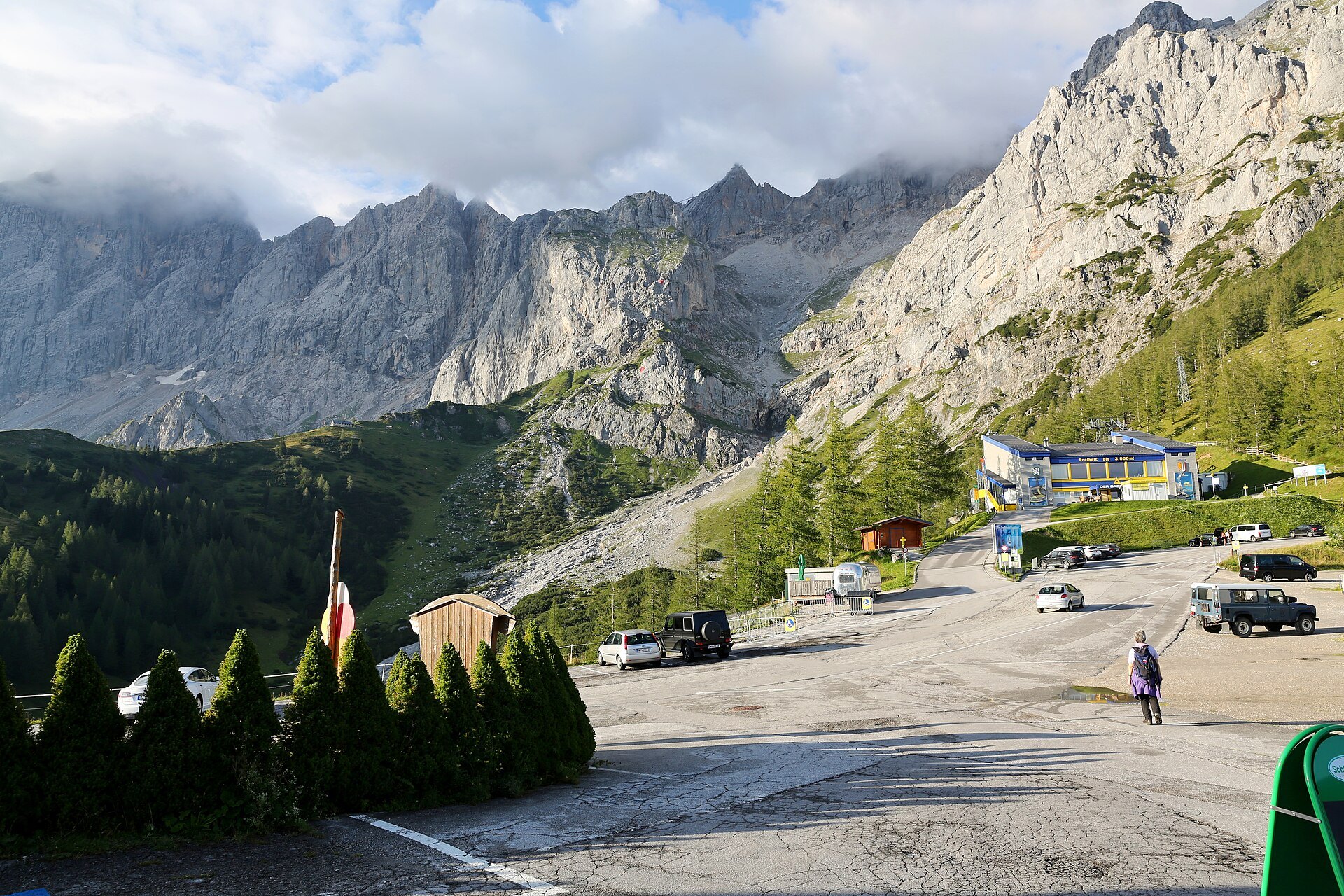
Dachstein is surprisingly easy to reach by car, so it works even for a long weekend. The region sits in the heart of Austria, between Salzburg and Styria, and you can get there along fast motorways from most neighbouring countries. We drove from our accommodation in Altenmarkt im Pongau in the Salzburg region, which is just 31 kilometres from the cable car. If you’re flying in, Salzburg Airport is 90 kilometres away and is served by major carriers such as Ryanair, easyJet and Lufthansa, so you can easily combine a flight with a rental car. On the way you’ll need an Austrian motorway vignette (toll sticker), and for your sat nav, enter the address Dachstein Gletscherbahn, Schildlehen 79, 8972 Ramsau am Dachstein.
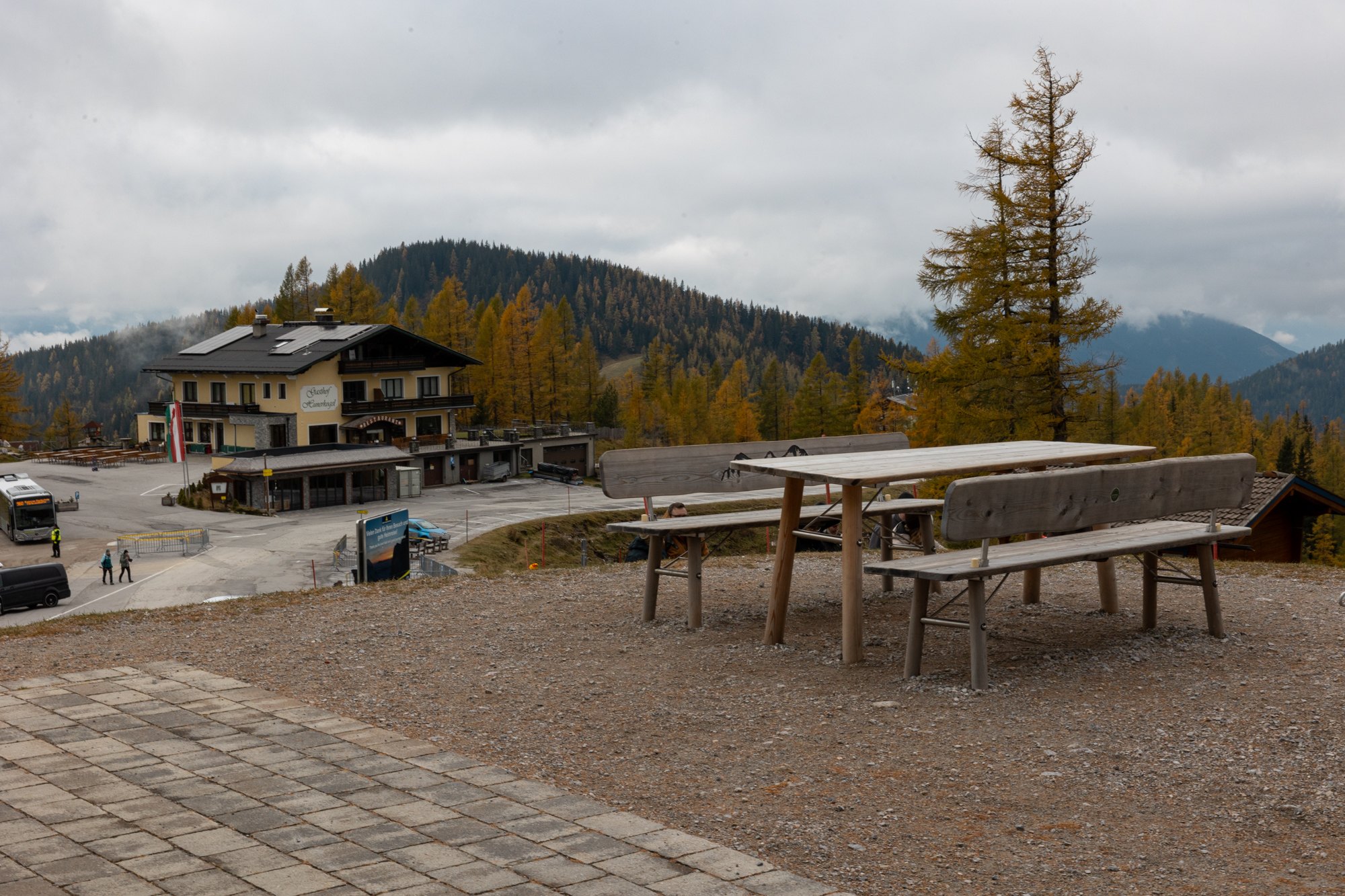
For the last 6 kilometres or so, from the toll booth above Ramsau to the car park at the valley station, you climb the mountain road called Dachsteinstraße, which is a toll road. The good news is that with a valid cable car ticket, the toll is free – but there’s a catch that loads of people forget. The ticket you take at the toll barrier at the bottom has to be validated in the machine at the cable car’s top station before you drive back down, otherwise you’ll pay the toll (entry is also free with the summer Schladming-Dachstein Card). If you’re only driving up without taking the cable car, the Dachsteinstraße toll for a car costs €26 according to the current price list.
The car park sits right by the cable car’s valley station at 1,703 metres above sea level, but its capacity is limited because it’s shared with visitors to the Dachstein-Alm hut. When it fills up in high season, you’ll leave your car at the overflow car park by the toll booth, from where a shuttle will take you up to the cable car. For electric cars, there are two 11 kW chargers at the valley station.
By Bus from Schladming and How to Get to Krippenstein
If you’d rather not deal with a full car park at the valley station, you can leave your car for free in the Planet Planai parking garages in Schladming and hop on a bus. From right there, bus line RVB 960 runs via Ramsau all the way to the final stop, Dachstein Türlwand, by the cable car. The ride takes about 45 to 50 minutes (fares are charged according to the tariff, or covered by the summer Schladming-Dachstein Card). Bear in mind, though, that on busy summer days the buses tend to be packed and there’s a wait for the return trip – plus, between 9 November and 18 December the buses don’t run to the cable car at all.
If you’re heading to Dachstein Krippenstein above Lake Hallstatt instead of the glacier, you’ll drive to the other side of the massif, to the small town of Obertraun (the valley station address is Winkl 34, Obertraun). No road crosses the mountains, so the drive between the two cable cars is about 87 kilometres and takes an hour and a half. At the valley station in Obertraun you’ll find a car park for 200 cars, which fills up quickly in summer. And since the famous village of Hallstatt is just a 10-minute drive away, plenty of day-trippers combine Hallstatt and Krippenstein. You’ll find out how to fit both into one day in tip 19.
How Much Does Dachstein Cost in 2026: Cable Car Prices and Reservations
Honestly, a Dachstein cable car trip isn’t exactly cheap fun, and as a family you’ll definitely feel it in your budget. But for that feeling of standing above the clouds and gazing at the Alpine peaks, I think it’s worth every last euro. On the glacier you can also choose whether to buy a combined ticket including all the attractions or just the cable car on its own (the Sky Walk viewing platform is accessible even without an attractions ticket).
Dachstein Glacier price list (derdachstein.at) for 2026 and winter 2026/27:
| Ticket (Ramsau glacier) | Adult | Youth (born 2008–2010) | Child (born 2011–2020) |
|---|---|---|---|
| :— | :— | :— | :— |
| Combo summer 2026 (cable car + attractions) | €73 | €55.50 | €37.50 |
| Cable car only, summer 2026 | €61 | €46 | €30.50 |
| Attractions only, summer 2026 (bridge, stairway, palace) | €13.50 | €10.50 | €7.50 |
| Combo winter 2026/27 | €69 | €47 | €32 |
| Cable car only, winter 2026/27 | €57 | €43 | €28.50 |
| Dog | €8 per dog | €8 per dog | €8 per dog |
The youngest children, born in 2021 or later, ride for free in winter 2026/27 (they just need a free turnstile ticket with a €3 card deposit). The summer price list ends with children born in 2020, so check at the ticket office whether the little ones ride for free in summer. Prices for summer 2027 haven’t been published yet.
In summer, one rule on the glacier catches loads of people off guard: every summer ticket requires a mandatory cabin seat reservation (Fixplatz) for €2.90 per person. You buy it online at tickets.derdachstein.at, and only with it is your ride at a given time guaranteed – when a sunny day sells out, they may not let you into the cabin without a reservation (in winter, tickets are only sold at the ticket office, and dogs don’t need a reservation).
You’ll save a lot if you stay at a partner hotel or apartment, where you get the summer Schladming-Dachstein Card for free. With a stay of at least two nights, it gives you one free cable car ride up to the glacier and back every seven days (including the toll and the RVB bus). Watch out for two things, though: even with this card you have to pay the mandatory €2.90 reservation fee online, and the card doesn’t cover entry to the attractions at the top, so you’ll need to buy the suspension bridge, Stairway to Nothingness and Ice Palace separately for €13.50 if you want them.
If you’re heading to Dachstein Krippenstein (dachstein-salzkammergut.com), it pays to buy your tickets online, as they tend to be a bit more expensive at the ticket office (for example, the All in One ticket costs €67.90 at the counter instead of €66.20). With the Austrian Klimaticket you get a 10% discount on the Panorama-Ticket at the ticket office, children born in 2020 or later ride for free when accompanied by a parent, and with family tickets the third and every additional child gets in free. Dogs cost €11.50 per day here.
Krippenstein cable car and caves price list for summer 2026 (when buying online):
| Ticket (Krippenstein Obertraun) | Adult | Child (born 2010–2019) |
|---|---|---|
| :— | :— | :— |
| Panorama-Ticket (cable car sections 1 to 3, no caves) | €46.70 | €25.70 |
| Höhlenticket (cable car section 1 + both caves) | €50.20 | €27.60 |
| All in One (all cable car sections + both caves) | €66.20 | €36.40 |
| All in One afternoon (from 12:00, in high season from 13:00, 1 cave) | €62.20 | €34.20 |
| Family All in One (2 parents + children) | €180.40 | included (3rd and additional children free) |
| Family Panorama-Ticket (2 parents + children) | €127.20 | included (3rd and additional children free) |
💡 Tip: Even if you buy your Krippenstein ticket online in advance, you can’t book a specific cave tour time online – it’s only assigned at the ticket office at the Schönbergalm middle station. As soon as you arrive, get off the first cable car and go sign up straight away, because by around noon you can easily wait an hour or two to get into the ice cave.
Where to Stay Near Dachstein: Ramsau, Obertraun and Gosau
Before you start picking a specific hotel or guesthouse, get one important thing clear: which side of the massif are you actually heading to? No road crosses the mountains themselves, and driving from the south side to the north takes about an hour and a half by car, so choose your base according to which cable car you plan to ride. If the glacier with the Sky Walk and the suspension bridge is what draws you, look for a place to sleep on the high plateau in Ramsau am Dachstein. If you’re more interested in Krippenstein, the 5fingers viewing platform and the ice caves, go for Obertraun or neighbouring Hallstatt right on the lake. On our autumn trip, we based ourselves in the Salzburg valley in Altenmarkt im Pongau, which is a pleasant 31 kilometres from the valley station of the glacier cable car, so this option also makes sense if you’re exploring the region over several days.
Ramsau am Dachstein: Hotels Close to the Glacier
For both an active holiday and some proper downtime, the four-star wellness and active Hotel Annelies is a great base, with a 4.9 rating on Google. After a full day of walking in the mountains, an infinity pool, a sauna and yoga classes are waiting to help your body recover. Add excellent food and family suites, and you’ll feel right at home here whether you’re travelling as a couple or with kids.
Couples who are mainly after peace and quiet will love the four-star Superior Hotel Rösslhof, rated 4.9 on Google. The whole hotel has just 20 rooms, and its biggest draw is an outdoor infinity pool, heated all year round, with views of the mountains.
Families with children who want everything close at hand in both summer and winter will be well served by the four-star Superior Hotel Lindenhof, rated 4.8 on Google. This family-run hotel will please both fans of swimming in an infinity pool and those who’d rather cool off in a natural swimming pond on warm days. In winter, you can set off cross-country skiing practically from the front door, as the trails run right past the hotel, and kids can learn their first turns on the local beginners’ lift.
Another excellent choice for families with younger children is Hotel Matschner, where the little ones get an outdoor playground, a kids’ cross-country ski park and a free cot for children under 5. A big bonus is the underground passage leading straight from the hotel to the Dachsteinbad swimming pool with its children’s pool, so even on a rainy day you won’t have to worry about where to take the kids. You don’t need to think about food either, because the hotel offers ¾ board with breakfast, afternoon cakes and a four-course dinner.
Travelling to the Alps with your four-legged friend? Take a look at the four-star Hotel Almfrieden & Romantikchalet, which is very dog-friendly and will host up to two dogs free of charge. Besides cosy facilities and half board, you’ll also find spacious family rooms for two to five people.
If you’d like to wake up right on the high plateau with a view of Dachstein, you’ll love Hotel Garni Ramsauer Alm. Right next to the hotel there’s an enclosure with bison and ibex, which is sure to keep little explorers entertained – especially since kids under 4 stay for free. And when you get back from a hike, the hotel’s sauna area comes in very handy.
On the edge of the forest above the village stands the three-star Hotel Sporthof Austria, which holds a lovely 4.9 rating on Google. Parents will appreciate the children’s playroom and outdoor playground, while the hotel wellness area and hearty half board take care of your post-hike recovery.
Obertraun and Hallstatt: Where to Stay for Krippenstein
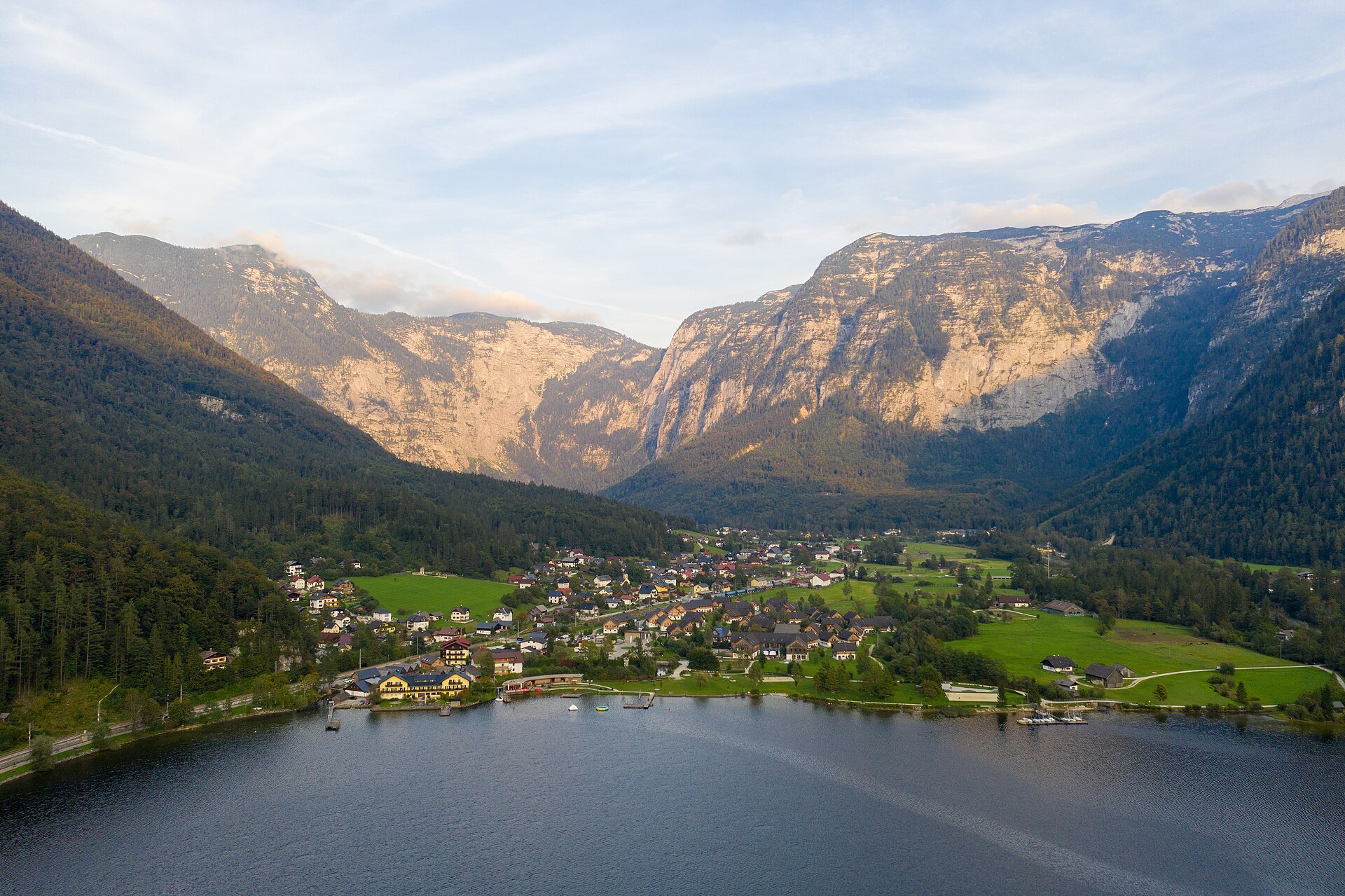
Heading mainly to Krippenstein, the 5fingers viewing platform and the caves? Check out Dormio Resort Obertraun, which sits right on the shore of Lake Hallstatt. It’s made up of 82 chalets for 2 to 16 people, making it an ideal base for a family or a bigger group of friends who want their privacy while still enjoying the indoor pool, wellness area, restaurant and small minimarket on site. In the summer season, there’s also a kids’ club for children aged 2 to 9.
Right on the lakeshore next to the public beach in Obertraun is the Seehotel am Hallstättersee, from where you can hop on a boat straight to neighbouring Hallstatt. It’s ideal for couples or a family with one child who already sleeps in their own bed.
If you prefer smaller places, you’ll like the little B&B Haus Salzkammergut in Obertraun, which has a perfect 5.0 rating on Google.
Would you rather stay right in Hallstatt? The family-run boutique hotel Fenix Hall Hallstatt is about 900 metres from the centre, and in the morning you’ll be treated to a breakfast that includes vegetarian and vegan options too.
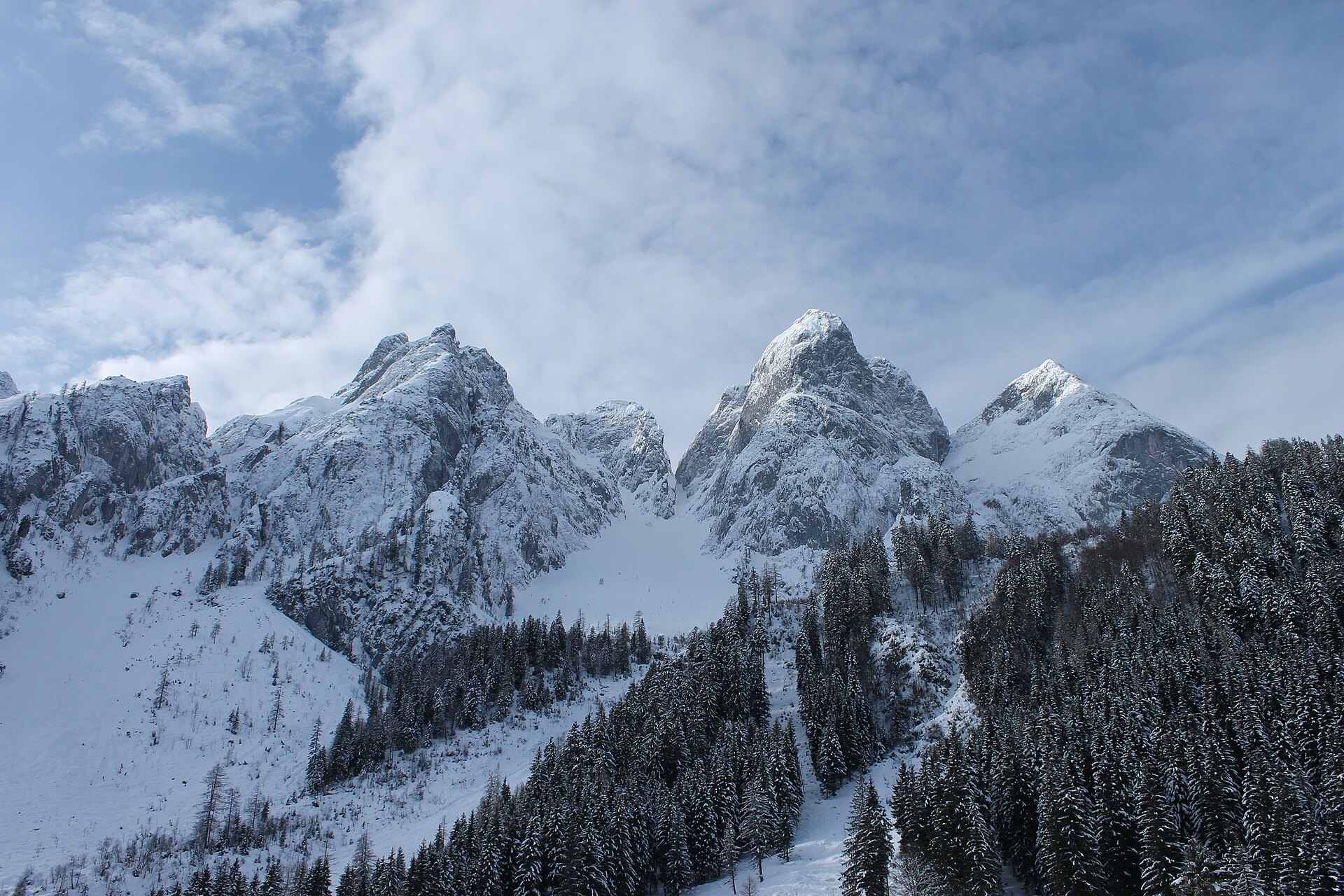
Gosau and the COOEE alpin Hotel Dachstein
While searching for accommodation, you’ll probably also come across the COOEE alpin Hotel Dachstein. It’s worth knowing, though, that despite its name it isn’t near the glacier in Ramsau, but in the Gosau valley below the Gosaukamm ridge. From here, it would take you over an hour by car to reach the valley station of the glacier cable car. On the other hand, you’re only about 14 kilometres from Hallstatt, and right in the Gosau valley lies Lake Vorderer Gosausee, whose surface mirrors Dachstein itself on windless days and which is circled by an easy 4.2-kilometre loop that’s suitable even for pushchairs. The hotel itself is a great choice for families and winter holidays, offering spacious family rooms of 42 to 48 m², saunas and half board with an evening buffet, and in winter the ski bus to the Dachstein West ski area stops right outside the hotel.
Dachstein Glacier: 7 Experiences Above a Sea of Clouds
Up on the glacier, we walked across the suspension bridge, the Stairway to Nothingness and through the Ice Palace together. Lukáš carried our little one in a baby carrier the whole time, because a pushchair simply wouldn’t work up here.
Allow at least three hours for your visit to the glacier – with kids, more like half a day – as all the main attractions are right by the top station on the Hunerkogel summit. It’s definitely not cheap, but in my opinion it’s worth the price.
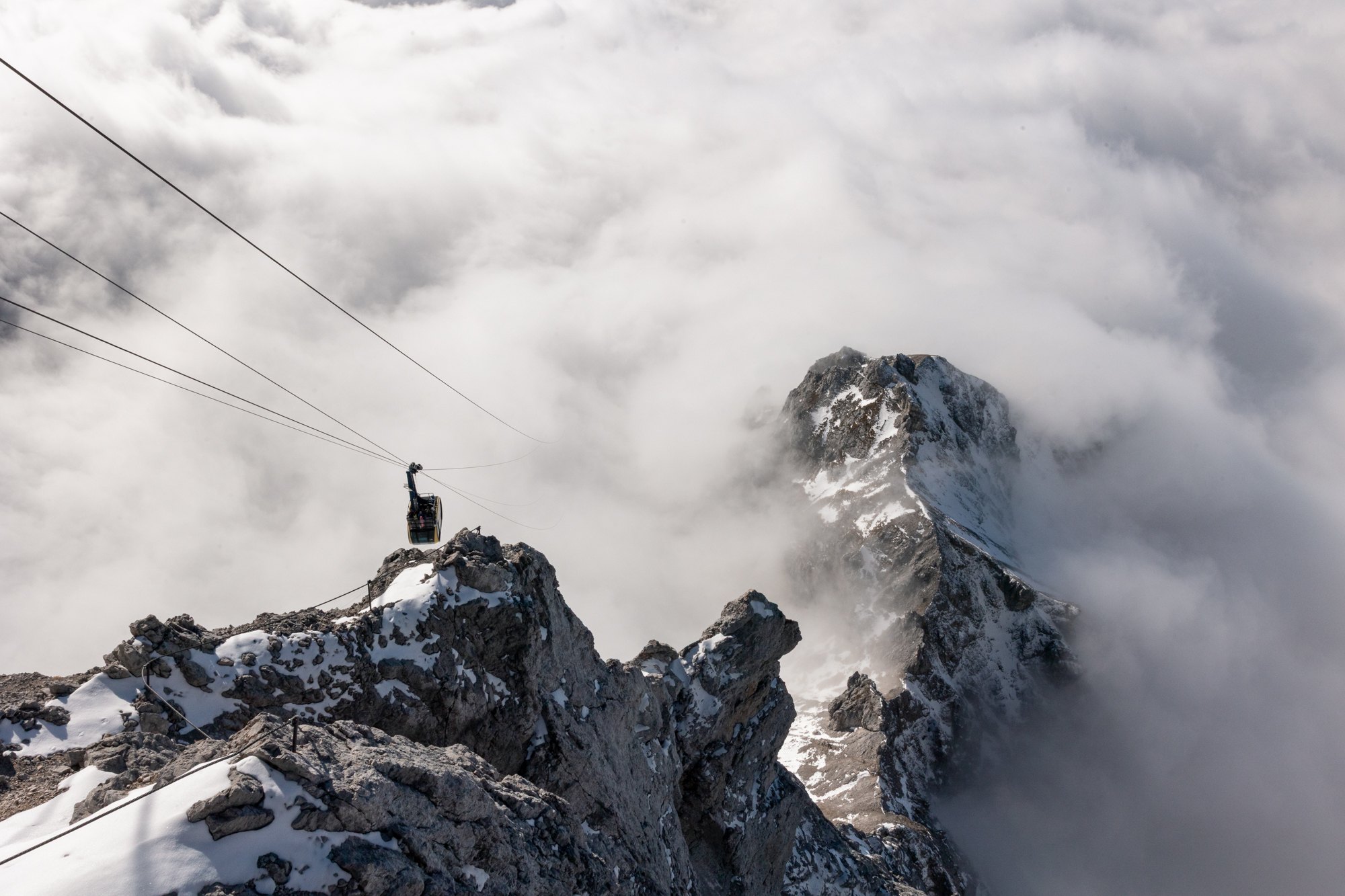
1. Panoramic Glacier Cable Car – 8 Minutes Without a Single Pylon
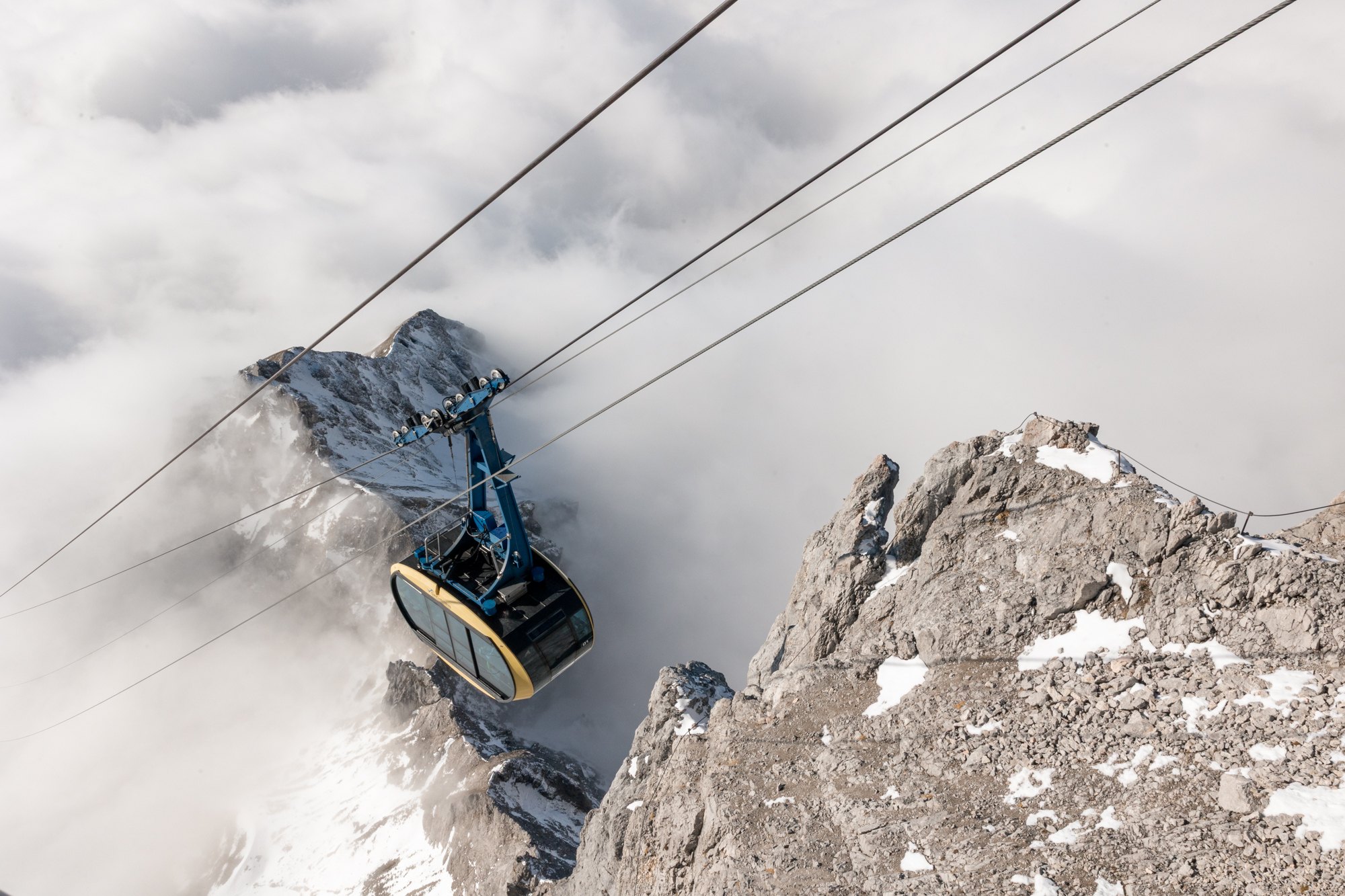
The ride up on the Dachstein Gletscherbahn cable car (formerly known as the Südwandbahn) is breathtaking in itself. From the valley station at 1,703 metres, the cabin carries you up to Hunerkogel at around 2,700 metres, covering an elevation gain of about 997 vertical metres. The cable car has been running since 1969, but since 2013 two glazed panoramic cabins of an aerial tramway have travelled along the 2,175-metre route.
There’s not a single support pylon along the entire route, so the cabin glides at up to 43 km/h and, in places, as high as 210 metres above Dachstein’s sheer south face. Each cabin holds 54 passengers plus an attendant, and after an 8-minute ride you’re at the top. There’s even an open balcony on the cabin roof for about 10 people, but it can’t be reserved – it all depends on which of the two cabins happens to be running.
If you want to skip the paid attractions, a cable-car-only ticket in summer 2026 costs €61 for adults, €46 for youths and €30.50 for children, while in winter 2026/27 you’ll pay €57 for an adult. In the summer season (9 May to 8 November 2026), however, every ticket – and even the summer Schladming-Dachstein Card – requires a seat reservation in the cabin (the so-called Fixplatz) for €2.90 per person. Only with this reservation is your ride guaranteed, and on a sold-out day they may not let you on without it.
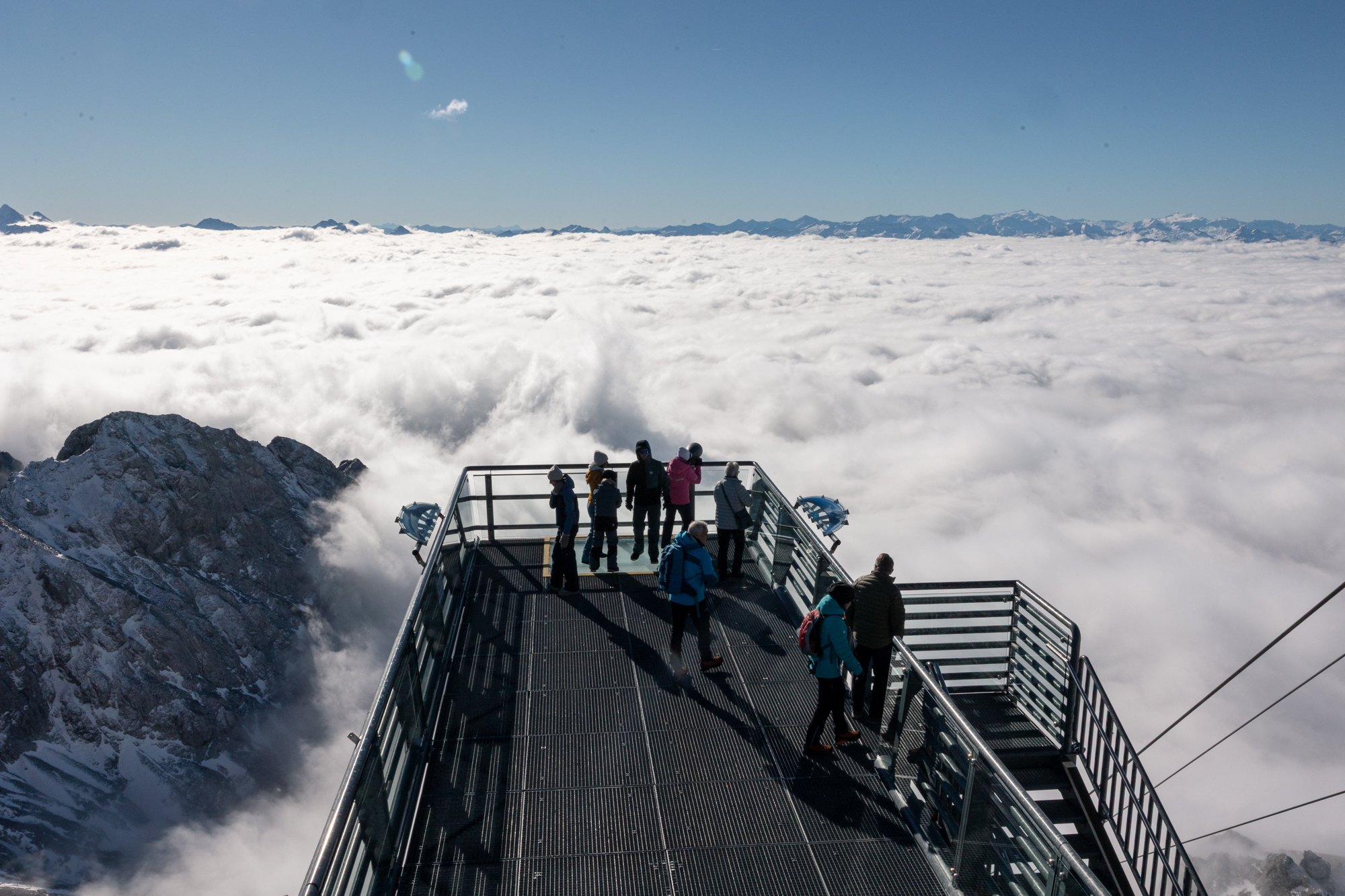
2. Sky Walk – A Viewing Platform Above a 250-Metre Rock Face
Right next to the top cable car station, at around 2,700 metres above sea level, you’ll find the Dachstein Sky Walk. This viewing platform hangs over the sheer 250-metre face of the Hunerkogel. Part of the floor is glass, so you can look straight down into the drop beneath your feet, and the whole structure, built from 40 tonnes of steel, can handle winds of up to 210 km/h. It opened in 2005 and holds up to 150 people.
On clear days you can see as far as Slovenia and the Czech Republic. For us, though, the clouds started rising around noon and slowly swallowed the rocks. Before you head up, check the webcam at the top station, which has both a 360° camera and a view of the bridge itself.
The best part is that you can visit the Sky Walk without an attractions ticket. There’s also a circular path around the station with loungers, and the viewing platform has step-free access via a service lift. If you’re coming with a wheelchair, you just need to arrange it in advance.
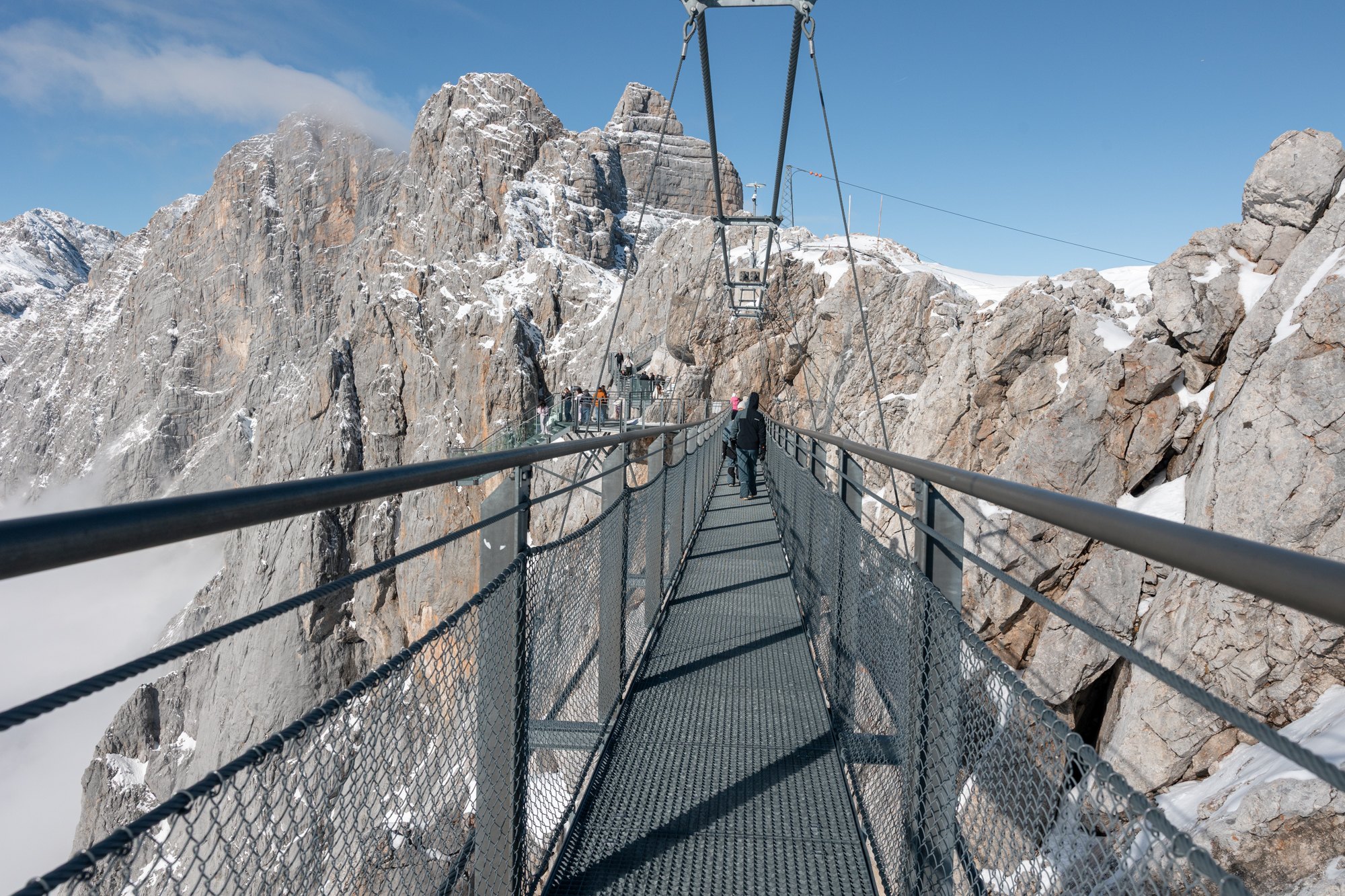
3. Suspension Bridge – Austria’s Highest Suspension Bridge
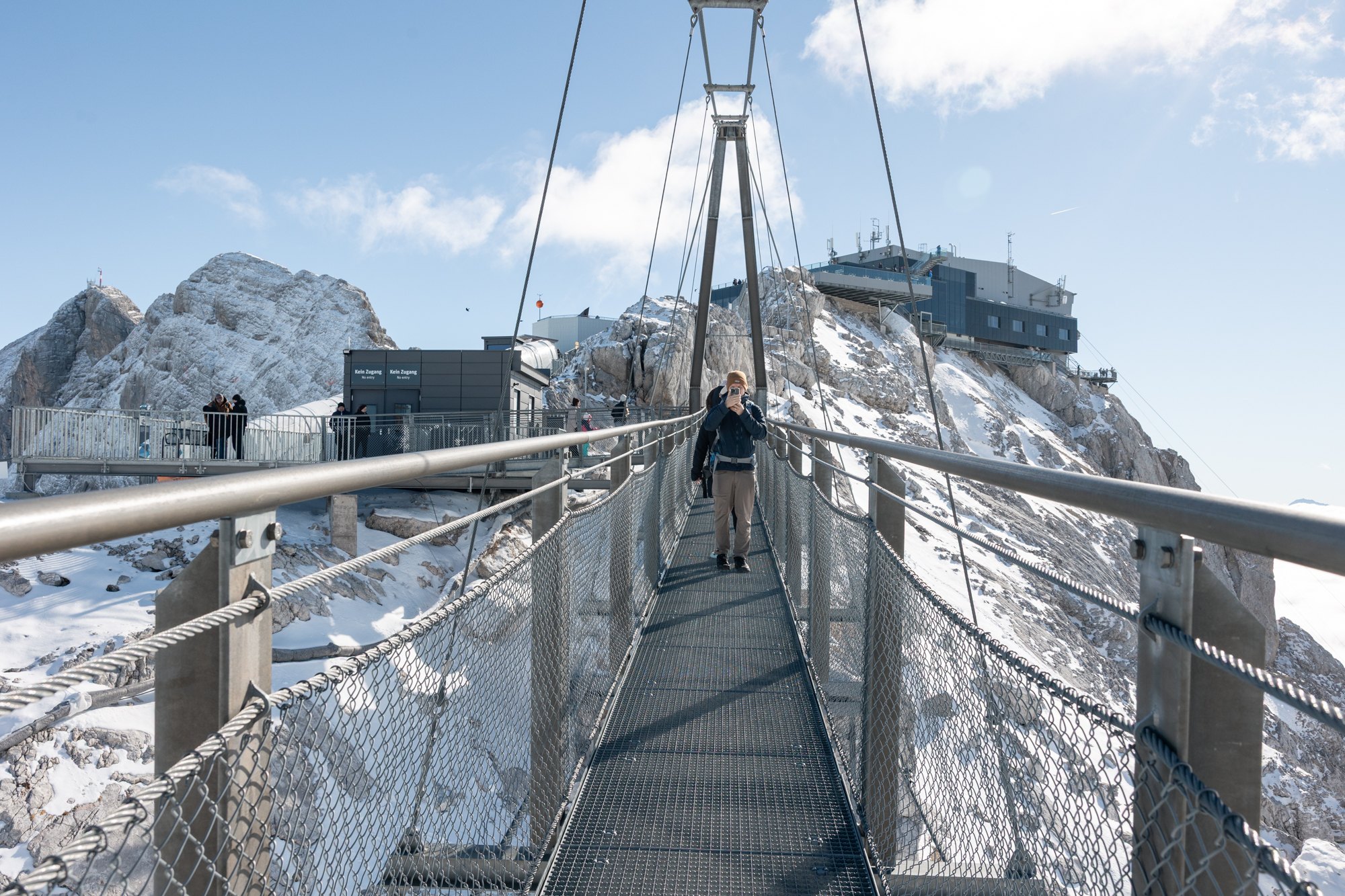
If you like a bit of adrenaline, head out onto the suspension bridge (Hängebrücke), which the operator says is the highest suspension bridge in Austria. It opened in 2013, is about 100 metres long and just one metre wide. There’s roughly 400 metres of nothing below you, the wind blows across the bridge and the whole thing sways as you walk.
Lukáš and I crossed the bridge with our little one in a child carrier on Lukáš’s back, because you can’t take a pushchair or a wheelchair across. Think carefully about whether you’re up for it, since crossing this bridge is the only way to reach the Ice Palace and the Stairway to Nothingness. If you’re travelling with a dog, keep in mind that dogs aren’t allowed on the bridge, the stairs or in the palace, even though they can ride the cable car on a lead, with a muzzle and a ticket costing €8 in summer 2026.
Access to the bridge is part of a three-attraction package (together with the Stairway to Nothingness and the Ice Palace), which is included in the combined cable car ticket at €73 per adult in summer 2026, €55.50 for youths and €37.50 for children (in winter 2026/27 the adult combined ticket costs €69). If you only have a cable car ticket or the Schladming-Dachstein Card, which doesn’t cover the attractions, you can buy the attractions on their own for €13.50 per adult in summer 2026.
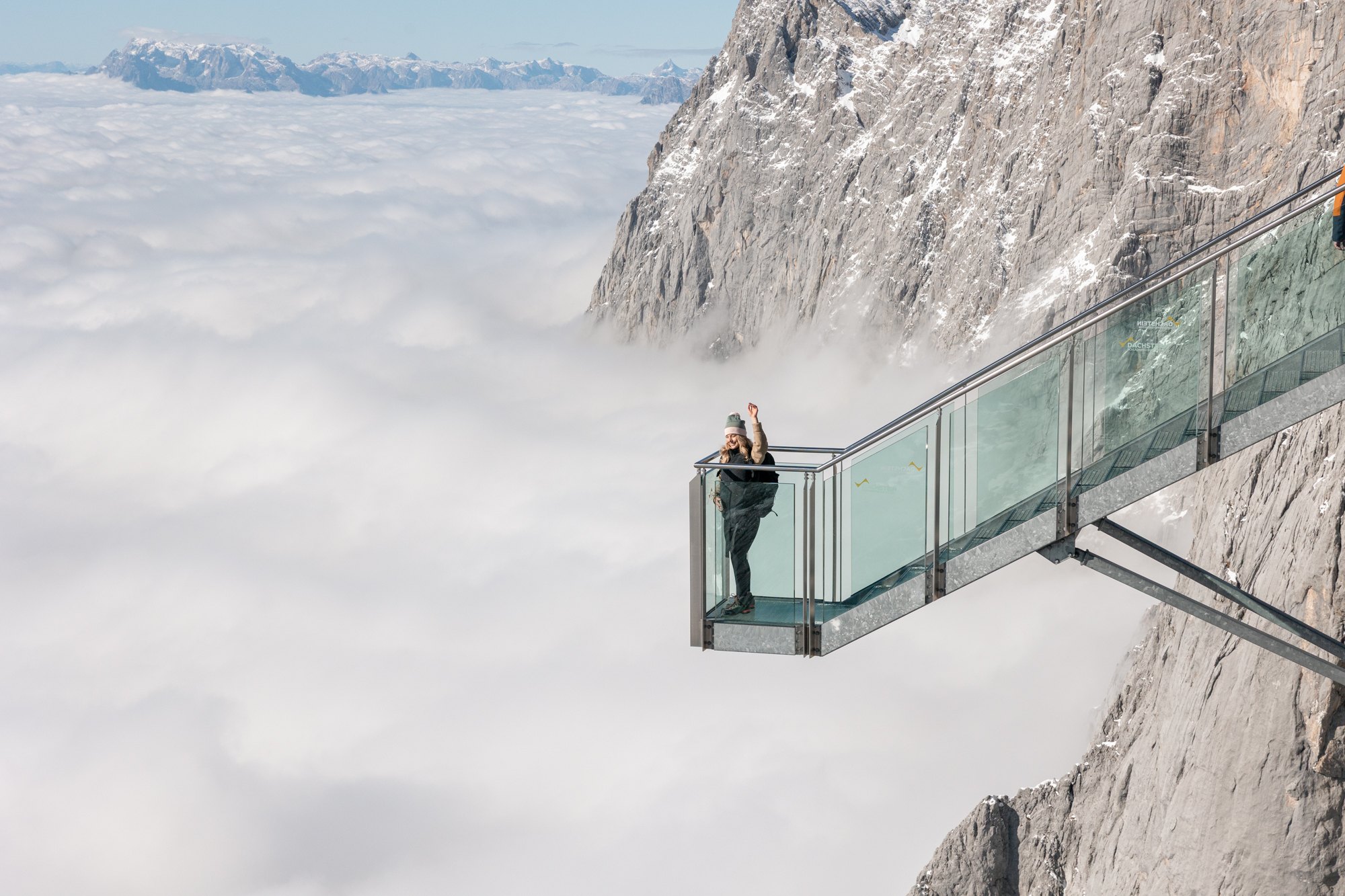
4. Stairway to Nothingness and the New Himmelsleiter (Stairway to Heaven)
Just past the suspension bridge is the Stairway to Nothingness (Treppe ins Nichts), which we tried as well. It’s 14 narrow steps leading down to a small glass platform suspended about 400 metres above the foot of the rock face. It opened in 2013, and looking through the glass into the void below you is one of the most intense moments on the glacier.
Since no more than 4 people at a time are allowed on the glass platform, a queue for photos tends to form at the stairs. In the 2026 summer season, the attractions are open daily from 9:00 am to 4:15 pm, and in the winter season from 9:00 am to 3:15 pm. Because of the queues, it’s best to head to the bridge first thing in the morning.
Alongside the Stairway to Nothingness, there’s also a new addition at the top station called the Himmelsleiter, Dachstein’s “stairway to heaven”. You access it from the restaurant’s panoramic terrace, and 12 steps lead you up to a glass platform that juts out about 4.8 metres beyond the façade into thin air. If you don’t fancy climbing down below the level of the bridge, this is where you can try standing on glass just a few steps from the terrace.
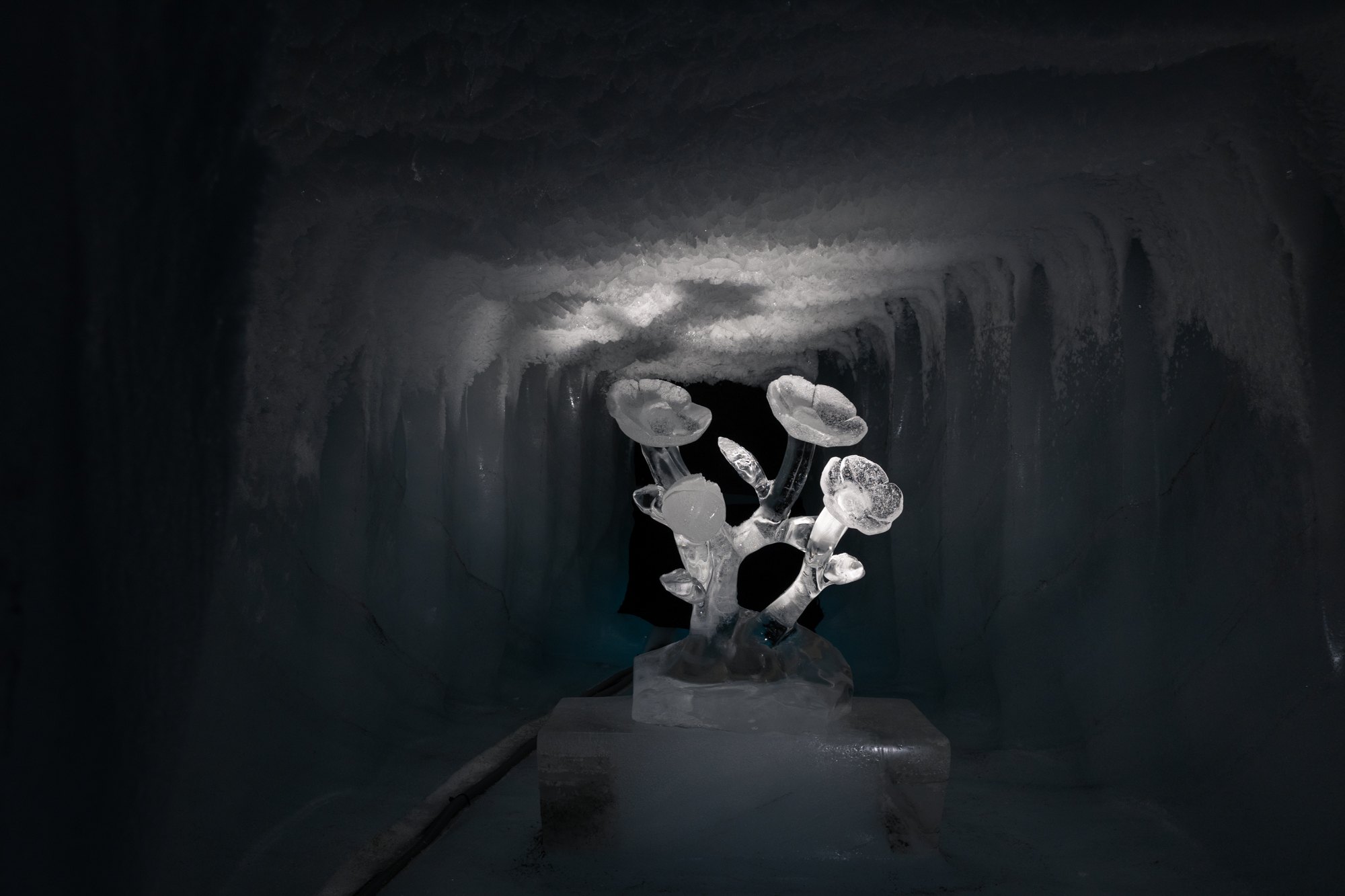
5. Ice Palace – 6 Metres Beneath the Glacier
Only about three minutes’ walk from the top station across the suspension bridge, we also reached the Ice Palace (Eispalast), which sits right inside the glacier. It was built in 2007 about 6 metres below the glacier’s surface, and the temperature inside stays around 0 °C all year round.
In the underground passages you’ll see ice sculptures, pillars and a crystal dome, all lit up in colourful light. The visit also includes the Explore the Glacier exhibition about glaciers and the explorer Friedrich Simony, with a new exhibition planned for winter 2026/27. Since you’re tucked away under the ice, the Ice Palace is a great choice in poorer weather too, or when the clouds rise around noon and cover the rocks, just like they did for us.
💡 Tip: The floor in the Ice Palace is slippery and it’s around freezing inside all year, so make sure you bring sturdy shoes with non-slip soles and warm layers, even in summer.
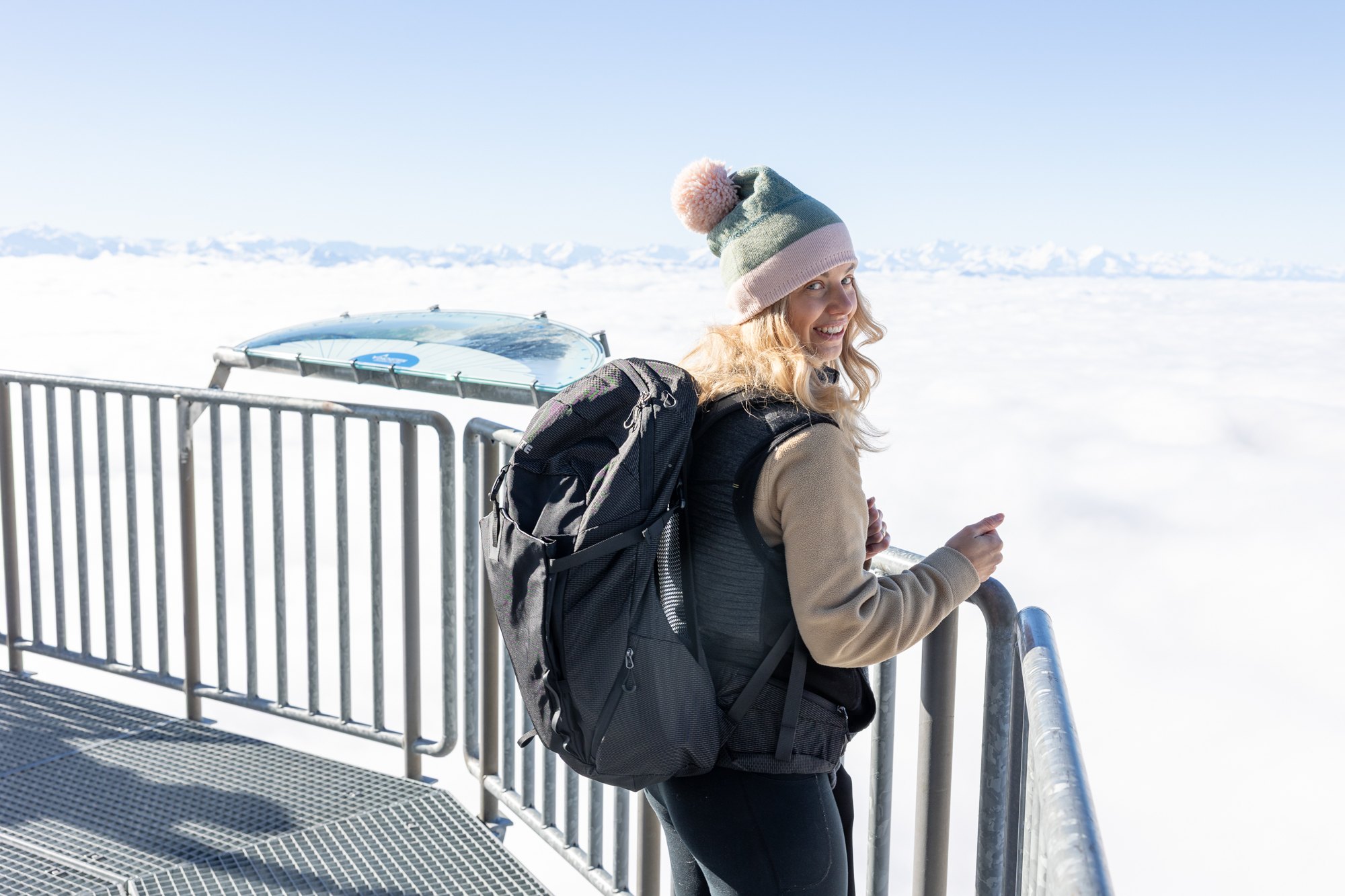
6. Gletscherrestaurant and Free Views
Right inside the top cable car station is the Dachstein Gletscherrestaurant, a pleasant restaurant with a 280-degree view of the surrounding mountains. It has around 220 seats inside and another 120 on the outdoor terrace. The state border between Styria and Upper Austria runs straight through the middle of the restaurant, and the space also includes the Himmelsbar.
The menu has a separate vegetarian section called “Fleischlos glücklich” (“happy without meat”), featuring fried cheese with salad, celeriac schnitzel with potato salad, vegetable curry with rice and a vegan lentil stew (Eintopf). If you’re craving something sweet, there’s strudel, Germknödel (a yeast dumpling) or Topfenknödel (quark dumplings).
From May to August, the restaurant hosts Sunday sunrise breakfasts, and in September and October there’s Saturday fondue at sunset. And if you’d rather skip the restaurant, there’s a circular path with loungers outside around the top station, where you can enjoy the views for free.
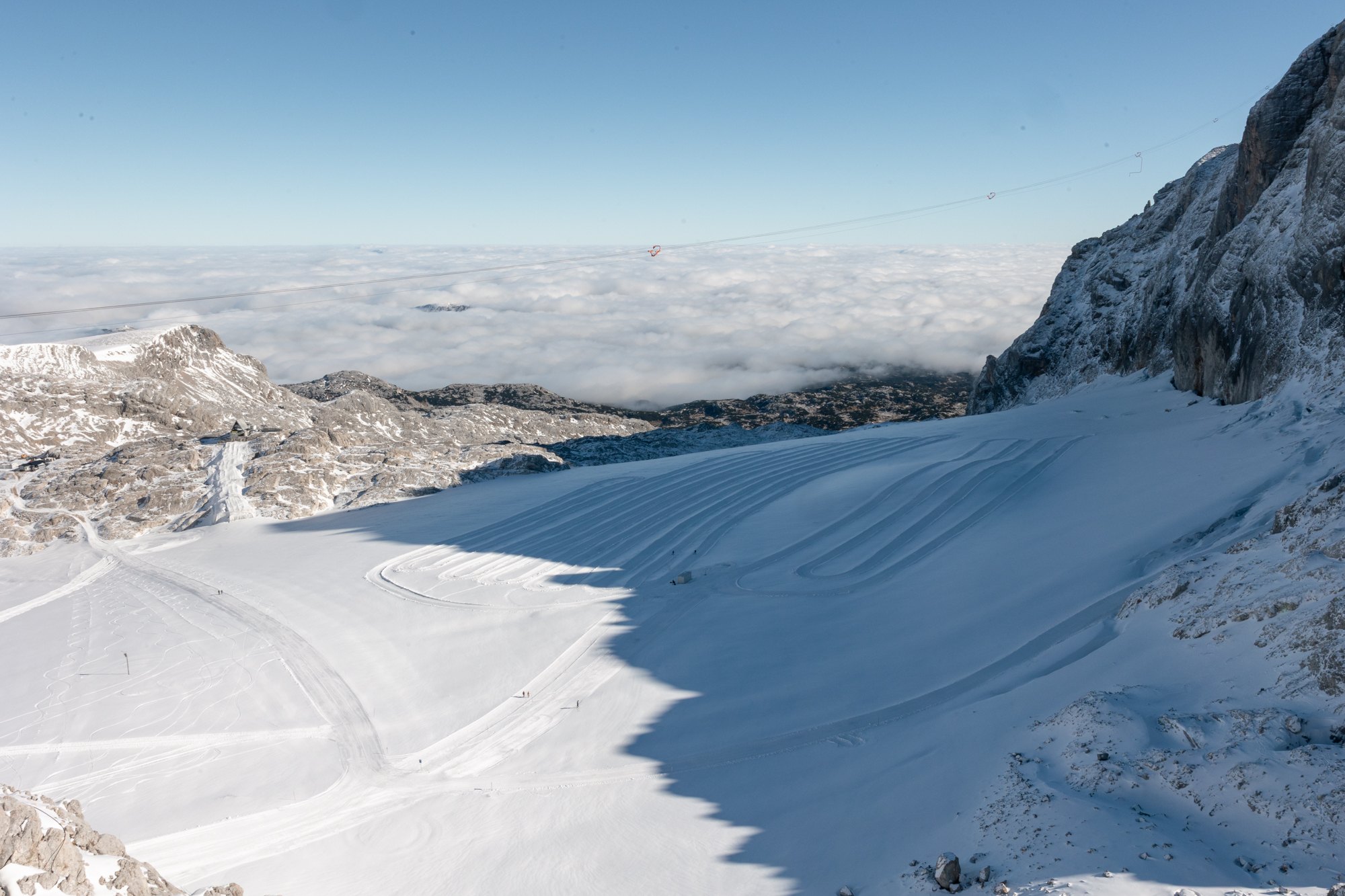
7. Gletscherweg to the Seethalerhütte – For Experienced Hikers Only
From the top cable car station, the Gletscherweg trail runs across the glacier to the Seethalerhütte hut. We didn’t have proper warm clothing for ourselves or the kids, so we didn’t attempt any trekking up there. 😅 Even though the route is only 4 kilometres with 190 metres of ascent and descent and takes about 1.5 to 2 hours, it’s a high-alpine glacier hike.
You’ll need to be sure-footed and properly equipped, and because the glacier is melting, the trail isn’t always passable. Before you set off, check the current conditions in the daily Gletscherbericht (glacier report) on the operator’s website.
The trail ends at the Seethalerhütte at 2,740 metres, the highest mountain hut in Upper Austria, which has stood in a new building since 2018. You’ll find more about climbing to the summit of the Hoher Dachstein in tip 14.
💡 Tip: In summer 2026, the Seethalerhütte is open from 9 May to 19 October, but since it’s looking for a new tenant from 2027, always double-check the opening hours before you go.
Dachstein Krippenstein: 6 Tips Above Lake Hallstatt
While the glacier above Ramsau tempts you with year-round snow, on the opposite side of the massif Dachstein Krippenstein (2,108 m) towers over Lake Hallstatt, rising about 1,600 metres straight up from the water. This is where those famous photos with the baroque frame come from, showing Hallstatt and the whole lake like a painting, and the mountain also hides giant caves deep inside. Driving from Ramsau around the massif takes about an hour and a half, and the valley cable car station is right in the village of Obertraun.
It’s easy to plan a trip to Krippenstein around how much time and energy you have. If you’re only going up to the 5fingers viewing platform, about 2 to 3 hours will be enough; with a tour of the ice cave, allow more like four hours, and the full loop including both caves can easily take a whole day. You’ll find all the latest information and operating times on the official Dachstein Salzkammergut website.
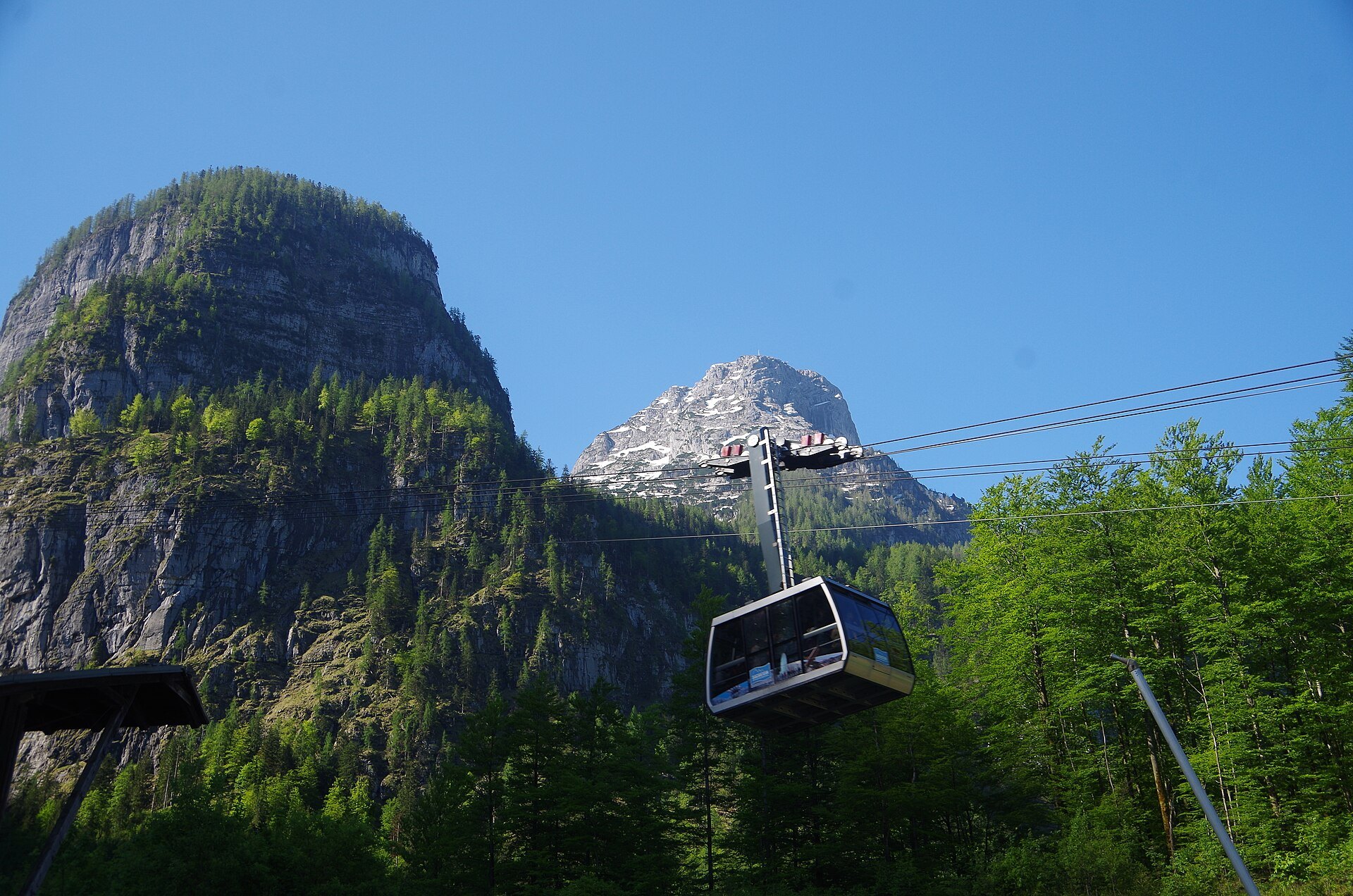
8. Krippenstein Cable Car – Three Sections and How to Combine Them
A system of three connecting cable cars climbs up to Krippenstein, and you can combine them however you like. The first section takes you from Obertraun to the Schönbergalm middle station (around 1,350 m), where both caves are; the second continues to the top of Krippenstein (2,108 m) and its viewpoints; and the third heads down to the Gjaid station. In summer 2026, the first two sections run from 1 May to 1 November, the third from 4 June, and the cabins leave every 15 minutes from as early as 8:40 am.
If you’re only after the views and not the caves, buy the Panorama-Ticket for all three sections online for €46.70 per adult and €25.70 for children born between 2010 and 2019. The full All in One ticket, covering all the cable cars and both caves, costs €66.20 online for an adult and €36.40 for a child, while at the ticket office you’ll pay €67.90 per adult.
Families will save with the family All in One ticket for €180.40 or the family Panorama-Ticket for €127.20. The third and every additional child rides for free, and children born in 2020 or later pay nothing at all when accompanied by a parent. Unlike the glacier, dogs are allowed here for €11.50 per day, and on a lead with a muzzle they can even go into the caves. At the valley station (Winkl 34, Obertraun) there’s a car park for 200 cars that fills up quickly in summer, so set off early in the morning.
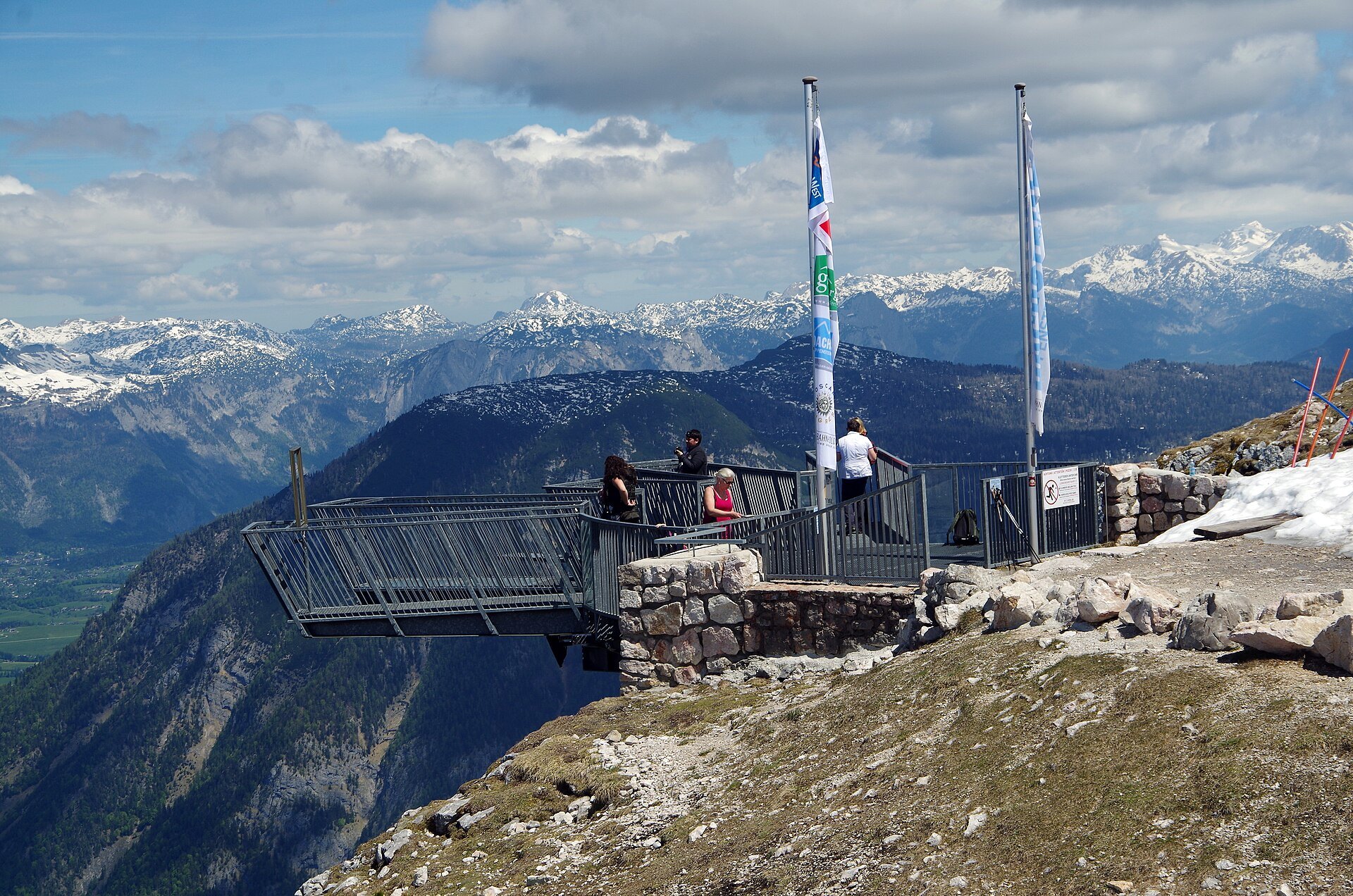
9. 5fingers – Five Fingers Above a 400-Metre Drop
You’ll never forget standing at the very end of a walkway with a sheer drop of more than 400 metres below you and Lake Hallstatt far beneath your feet. The 5fingers viewing platform is shaped like five fingers. Each one measures roughly four metres by one metre and gives you a slightly different view. One finger is made entirely of glass. Another has a large baroque frame for photos with Lake Hallstatt below you, and the last one has a telescope mounted on it.
From the top station just below the summit of Krippenstein (2,108 m), it takes 35 to 40 minutes on an easy path to get here, and kids can manage it too. The surface is rocky, though, so leave the pushchair at the bottom and bring a baby carrier instead. If 5fingers is the only viewpoint you’re heading for, about 2 to 3 hours is enough for the whole trip. Coming early in spring, in May or June? Expect snow on the path. And if your dog is coming along, keep in mind that the metal grating on the platform can frighten dogs.
💡 Tip: There are often queues for photos at the 5fingers platform, so catch the very first cable car up at 8:40 am.
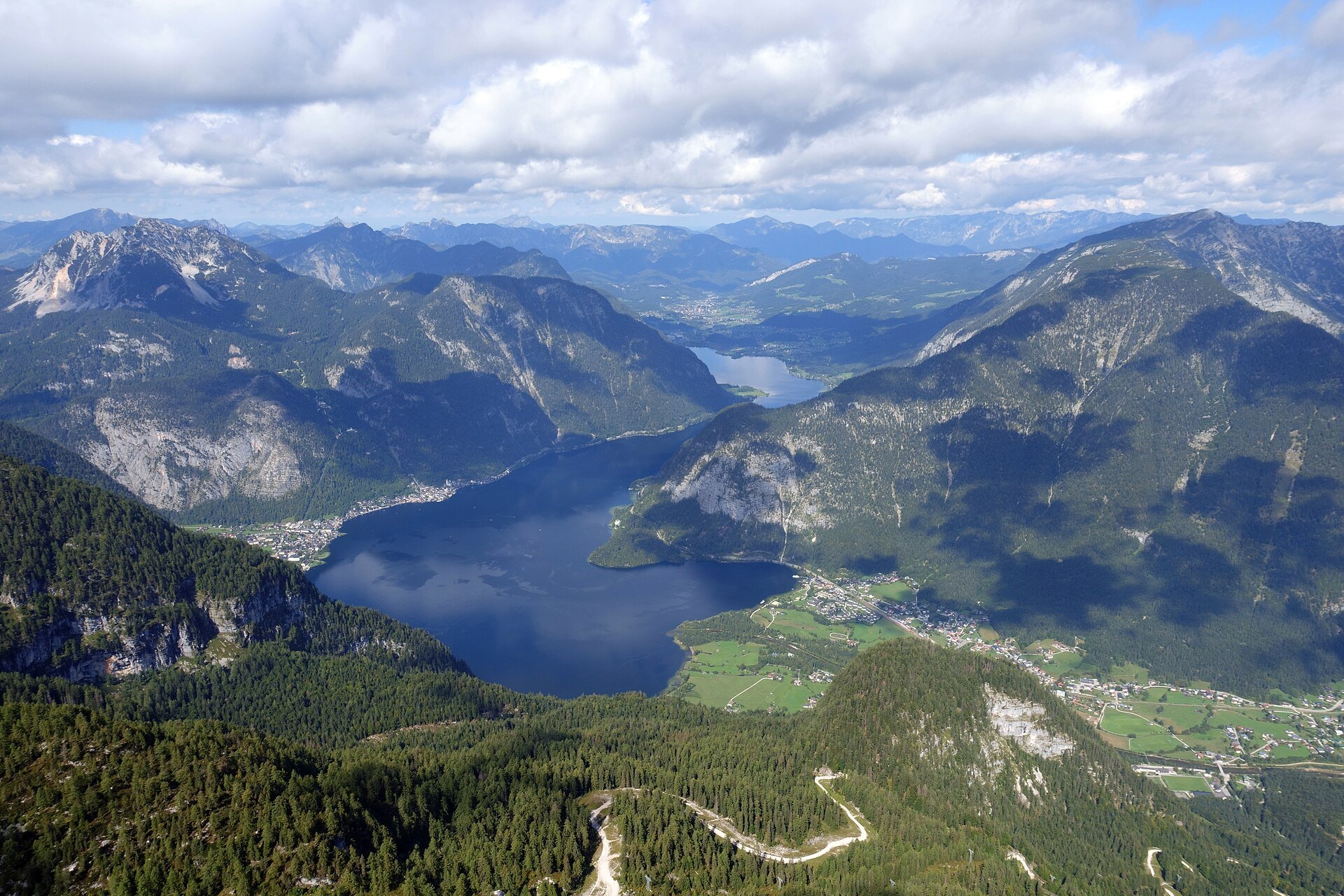
10. Welterbespirale – A Viewpoint Right on the Summit
Just 15 minutes’ walk from the top station of the second cable car, you’ll find the Welterbespirale viewpoint on the very summit of Krippenstein. It’s shaped a bit like a ship, and a spiral climb takes you up to a 360-degree panorama that you can take in at your leisure from the wooden loungers set out there. On the way you’ll also pass the Welterbeblick viewpoint, which looks out over the Dachstein Glacier. The cable cars are step-free all the way to this viewpoint.
So if you’re travelling with a pushchair and don’t fancy the rocky path to 5fingers, stick with the Welterbeblick viewpoint, which you can reach step-free by cable car. But if you want to see both summit viewpoints and walk out to 5fingers as well, plan on spending at least 2 to 3 hours up top.
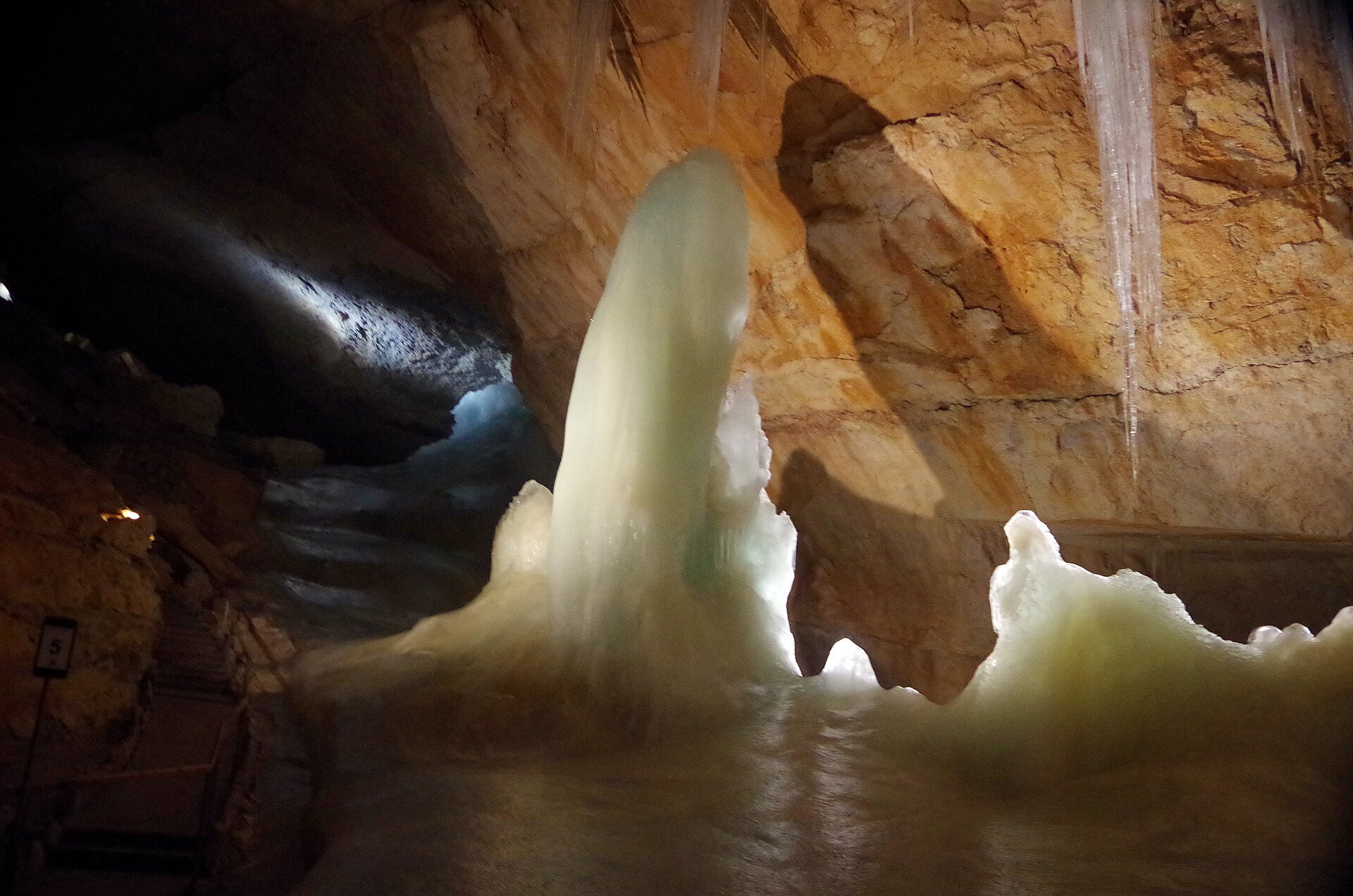
11. Giant Ice Cave – A Frozen World at −2 °C
On a summer’s day you zip up a warm jacket, step into the rock, and moments later you’re standing in underground chambers where the temperature stays at a freezing −2 °C. The Giant Ice Cave (Dachstein-Rieseneishöhle) was officially discovered in 1910 and holds around 13,000 cubic metres of ice. Of its 2.7 kilometres of passages, about 800 metres are open to visitors. You walk them with a guide and also get to see a light and sound show inside.
From the Schönbergalm middle station it’s a 15 to 20-minute walk to the entrance, and the tour itself lasts 50 minutes. Children of any age are allowed in, but since there are stairs inside, bring a baby carrier rather than a pushchair. Entry to the cave is included in both the combined All in One ticket and the Höhlenticket cave ticket. In 2026 the cave is open from 1 May to 1 November. Shorts are a bad idea, so make sure you bring a warm jacket and long trousers for the tour.
💡 Tip: Tour times are allocated at the ticket office at Schönbergalm, so sign up there as soon as you arrive.
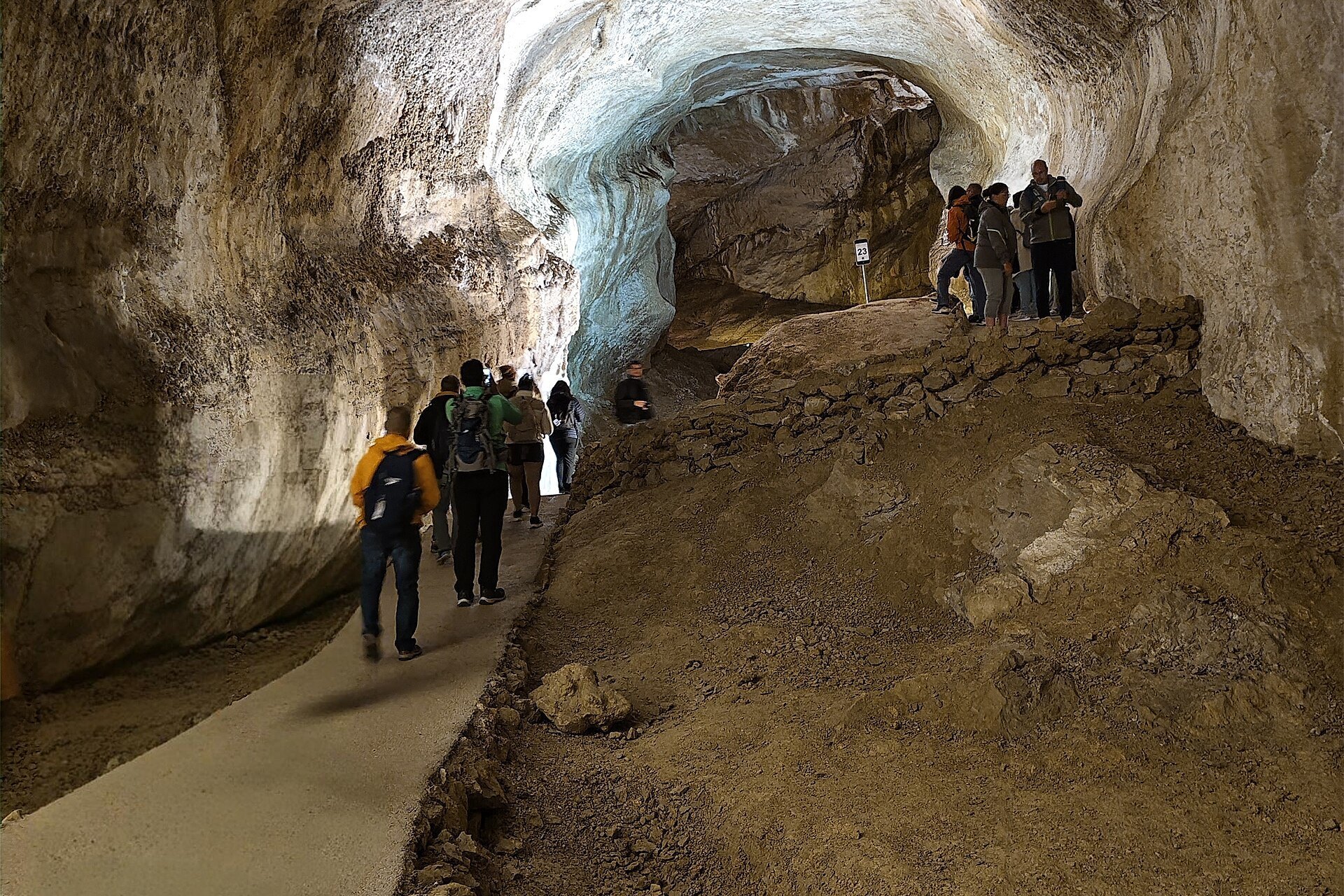
12. Mammoth Cave – 70 Kilometres of Passages
The Schönbergalm middle station is also where the path to the Mammoth Cave (Mammuthöhle) begins, a 15 to 20-minute walk from the cable car. Unlike its neighbour, it’s mostly dry rock with no ice, but its sheer size will blow you away: more than 70 kilometres of passages have been explored so far. On the 50-minute guided tour you cover just under one kilometre underground. The temperature inside hovers around +3 °C, so warm clothes come in handy here too.
In 2026 the Mammoth Cave is open from 9 May to 1 November, and just like in the ice cave, dogs are welcome on a lead and wearing a muzzle. If you want to see both caves but aren’t planning to ride the second section of the cable car up to the Krippenstein summit, get the Höhlenticket for €50.20 per adult and €27.60 per child. It covers the first section of the cable car and entry to both caves. If you don’t reach the cable car until the afternoon, from 12:00 (from 13:00 in high season), you can use the afternoon All in One ticket for €62.20 per adult and €34.20 per child, which is valid on all sections of the cable car and for one cave.
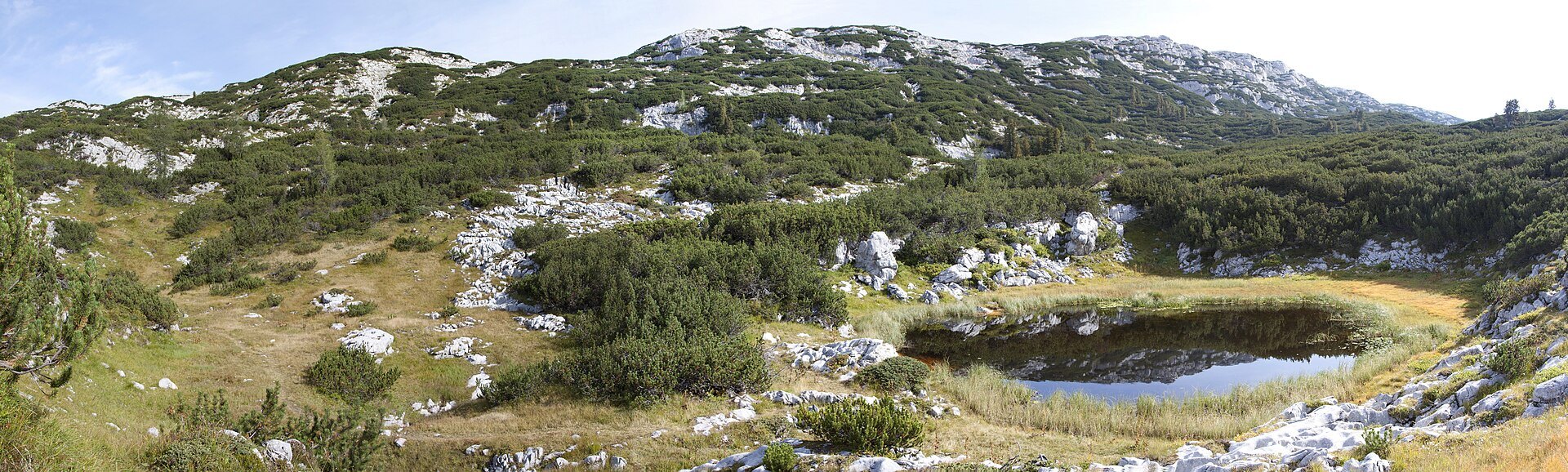
13. Heilbronner Rundweg and Dachstein-Hai – A Family Hike Across the Plateau
If you want to do more on Krippenstein than just tick off the viewpoints, set off from the top station below the Krippenstein summit (2,108 m) on the family-friendly Heilbronner Rundweg trail. It crosses the high plateau to Gjaid, the third cable car station, where you can ride comfortably back up to the Krippenstein summit. That means you’ll walk about 8 kilometres with very little elevation gain in a pleasant 2.5 to 3 hours. The third section of the cable car only runs from 4 June to 1 November in the 2026 summer season, so plan this hike for June or later so you can take the gondola back at the end of the trail.
The big draw along the way is Dachstein-Hai, an eight-metre shark made of rusted steel, and you can climb a ladder right into its jaws. The trail also takes you to the peaceful mountain tarn of Hirzkarsee and past the Heilbronner Kreuz memorial. It commemorates the tragedy of 15 April 1954, when ten pupils and three teachers from a school group from Heilbronn in Germany died here in a snowstorm. The return ride on the third section of the cable car from Gjaid station is included in both the Panorama-Ticket and the full All in One packages, so you won’t have to slog back uphill at the end of the hike.
Hoher Dachstein: Summit Climb and Via Ferratas
At the cable car top station you can enjoy the views without any climbing gear, but right above you rises a peak that has drawn mountaineers since 1834. According to surviving records, that’s when Peter Karl Thurwieser and the Gappmayr brothers from Filzmoos first reached the top. Hoher Dachstein itself stands 2,995 metres tall, although you may still come across 2,996 metres in guidebooks, a figure taken from an old map from 1877. Feel free to forgive it that extra metre. It’s still the highest mountain in both Styria and Upper Austria, as the border between the two states runs right across the summit, and the whole Hallstatt-Dachstein/Salzkammergut area has been a UNESCO World Heritage Site since 1997.
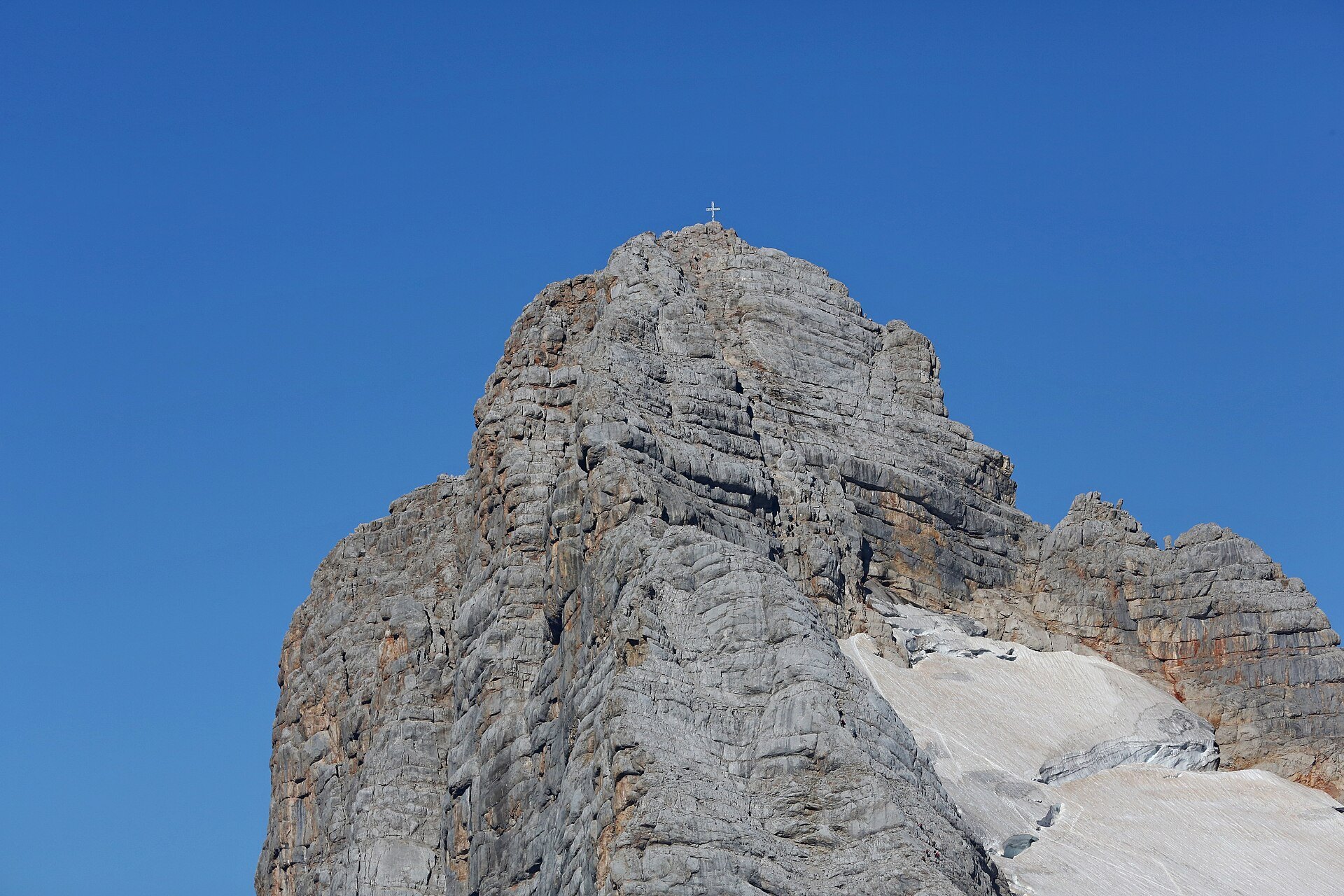
14. Climbing Hoher Dachstein by the Normal Route with a Mountain Guide
Looking up from the cable car top station, you might think the summit is only a short way off. I have to be honest and warn you, though: climbing Hoher Dachstein is definitely not a stroll for regular hikers. Even the so-called normal routes lead either over the Schulter (“shoulder”) or across the Randkluft, the bergschrund at the edge of the glacier. They’re graded B in themselves, and the final protected section from the Seethalerhütte hut is graded C. Both of them start with a crossing of a crevassed glacier, where it’s easy to get into serious trouble without experience and a full set of gear.
From the Seethalerhütte (2,740 m), the final ascent only takes about an hour with 265 metres of elevation gain and includes a protected section graded C, but first you have to cross the ice safely to reach the rock. A rope, harness and crampons are a must, and so is knowing how to do a crevasse rescue. If you’ve never moved around on a glacier before, head for the summit only with a certified mountain guide. You can book one through local offices such as Bergführerbüro Ramsau or Alpinschule Raffalt, who will take you safely from the top station of the Dachstein cable car all the way to the summit. Apparently the view from up there makes every step worth it.
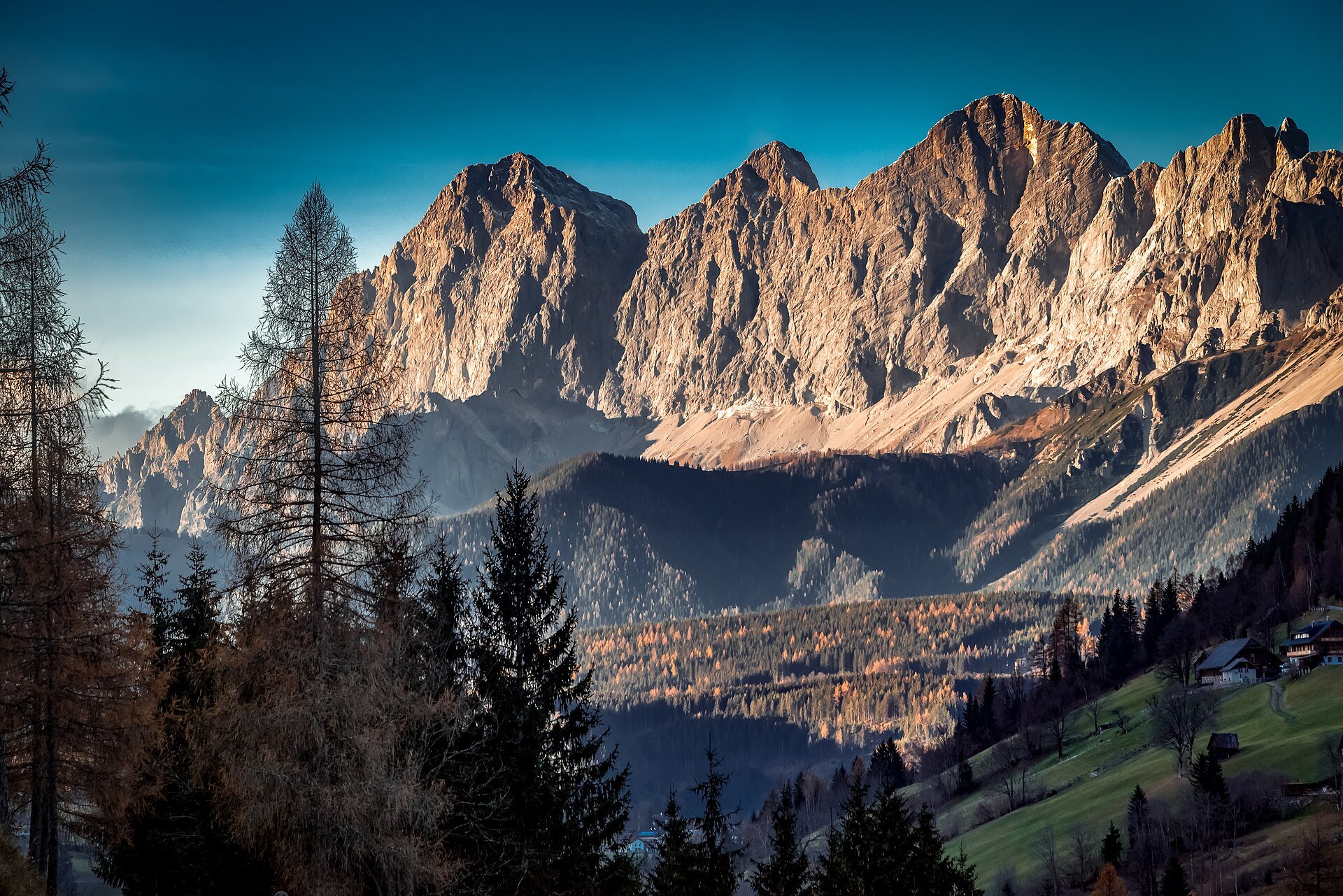
15. Johann-Klettersteig and the Dachstein Super Ferrata
If you’re a seasoned via ferrata climber and the classic route across the glacier feels too tame, the area around the Dachstein Glacier has no fewer than 14 via ferratas waiting for you, led by the legendary Johann-Klettersteig. This climbing treat goes straight up the sheer south face, is graded very difficult at D/E and starts from the Dachstein-Südwandhütte hut at 1,871 metres. Right at the start there’s often an old snowfield even in summer, so crampons will come in handy. The whole ascent takes 6 to 7.5 hours of seriously hard work with huge exposure, and on summer weekends queues reportedly build up on the steel cables, so it’s better to go on a weekday.
For the strongest climbers with iron fitness, there’s the Dachstein Super Ferrata, which links three via ferratas into one giant vertical adventure. You start on the Anna-Klettersteig (grade C/D), carry straight on to the demanding Johann (D/E) and then follow the normal route all the way to the summit of Hoher Dachstein. All in all, that’s about 9 hours of climbing – and after that, you’ll have earned your evening rest in the valley like few others.
Around Dachstein, Austria: 6 Day Trips for Families and Hikers
It would be a shame to come all the way to Dachstein just for one cable car ride and then rush straight home. Both sides of the massif are full of beautiful spots where families with young kids and fans of easy lakeside strolls will have a great time. And if, after a day on the glacier or up on Krippenstein, you fancy a more relaxed pace at a lower altitude, the surrounding valleys, gorges and crystal-clear lakes make the perfect backdrop.
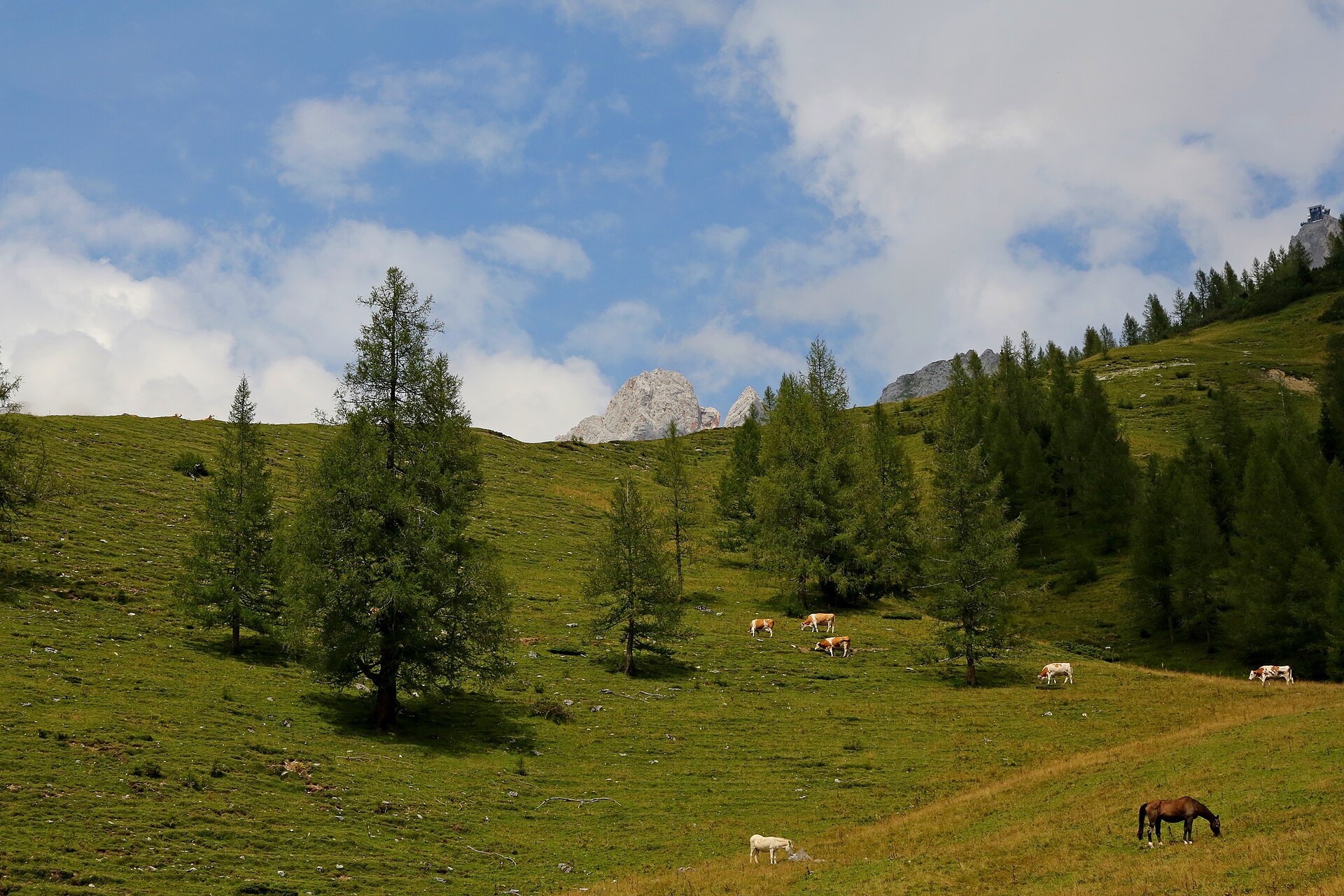
16. Ramsau am Dachstein – Alpine Coaster, Archery and a Gorge
The sunny plateau of Ramsau am Dachstein sits right below the monumental south faces of the massif. Besides being a traditional cross-country skiing hub, in summer it’s packed with attractions for families with kids. The main draw is Rittisberg hill with its year-round alpine coaster, the Rittisberg Coaster: in summer 2026 one ride costs €11 for adults and €8.50 for children aged 8 to 15. Right by the top station of the Rittisberg cable car, younger kids can let off steam in the new Kalis Spielhaus play area. On top of that, from 23 May to 27 September 2026 you can try 3D archery at Bogensport am Rittisberg, on a course with around 20 animal-shaped targets.
If wild nature is more your thing, head to the Silberkarklamm gorge, where boardwalks and bridges take you along a lovely 3.3-kilometre loop that takes about two hours. The entrance fee is a reasonable €5.50 for adults and €3.50 for children. Just keep an eye on the dates if you’re planning an autumn or spring trip, because the gorge is closed from 12 October 2026 until mid-May 2027.
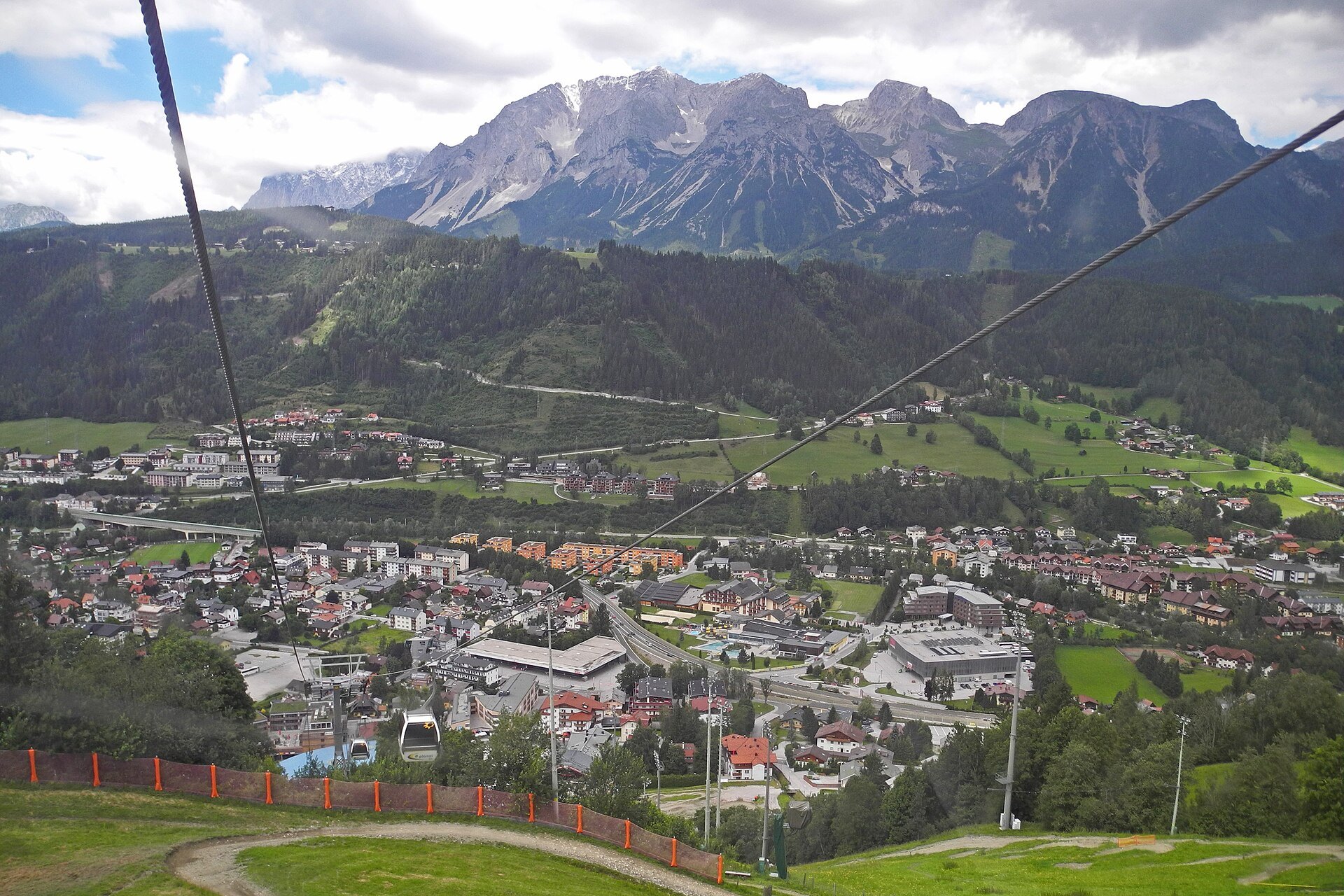
17. Planai above Schladming – Hopsiland for Kids
Above the mountain town of Schladming rises Planai, and this is a real paradise for little explorers. Once you ride up on the Planai gondola (in 2026 it runs in the summer season from 14 May to 1 November), the Hopsiland Planai kids’ park awaits at the top. Add a 4-kilometre family trail that takes roughly an hour and a half at a slow pace, and you’ve got an afternoon the kids will love. Along the way they’ll be kept busy with a marble run, slides, balancing and climbing, so the classic “my legs hurt” probably won’t even cross anyone’s mind. 😉
The big bonus is that if you’re staying at a participating property and have the summer Schladming-Dachstein Card, the Planai cable car is free, so you can happily spend the whole afternoon here without paying anything extra for tickets. For more day trip ideas in the area, check out our separate guide to Schladming and the Ski Amadé region.
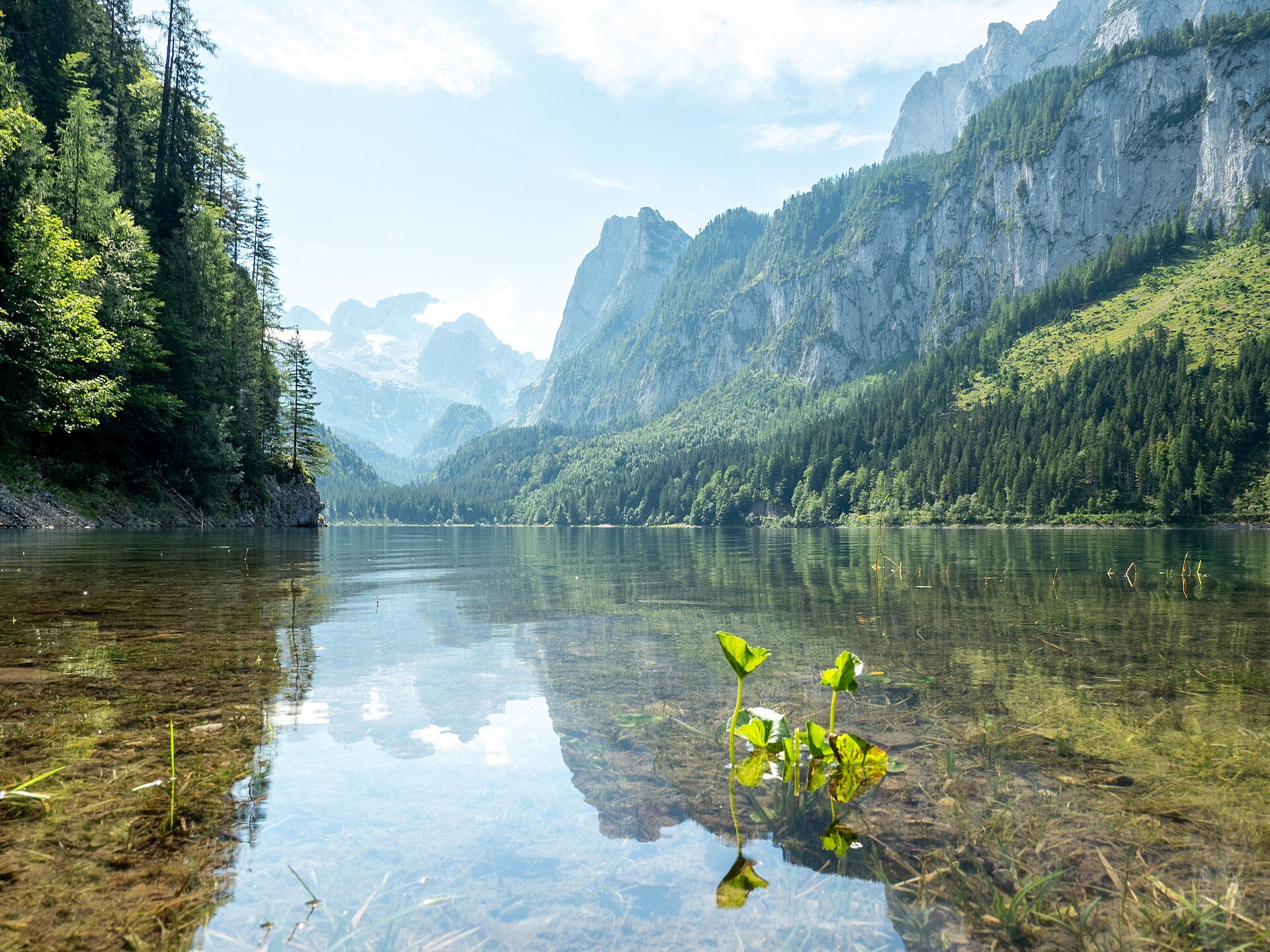
18. Gosausee – Dachstein Reflected in the Lake
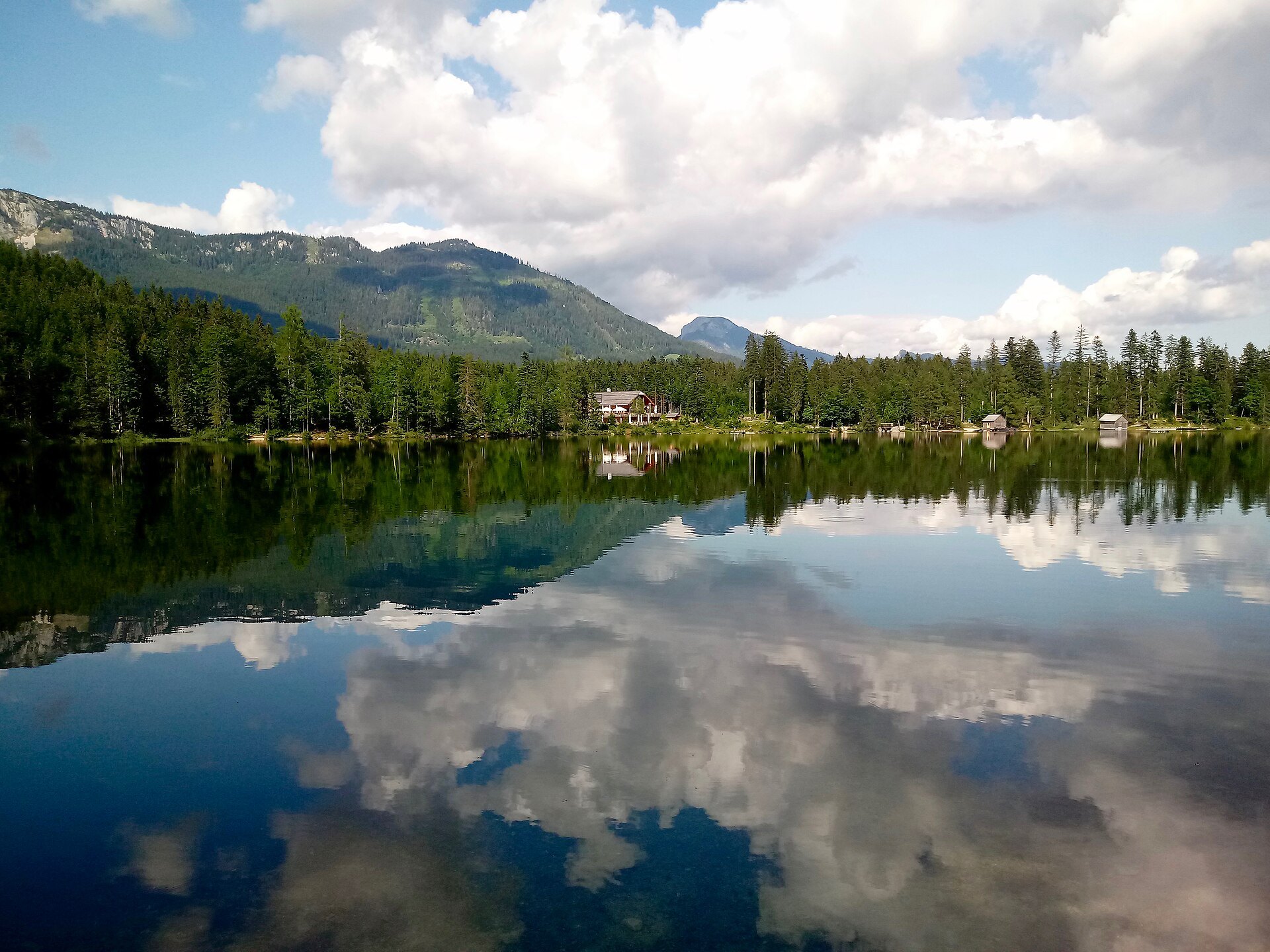
If you’re looking for a place to see Dachstein in all its glory without paying for a pricey cable car, you’ll love Lake Vorderer Gosausee in the village of Gosau. It lies at an altitude of 940 metres, about 26 kilometres from Obertraun, and on a windless day the Dachstein massif is mirrored right in its calm surface – people say it looks just like a postcard. Right by the lake there’s a paid car park with 516 spaces, from where you can set off on your walk straight away.
An easy 4.2-kilometre loop runs around the water. At a leisurely pace it takes about an hour, and you’ll manage it easily even with a pushchair or small kids. The trail is normally passable from May to October, making it an ideal relaxing destination in spring, summer or during the colourful autumn. In winter, however, the path around the lake is closed due to avalanche danger, which is worth keeping in mind if you’re coming off-season.
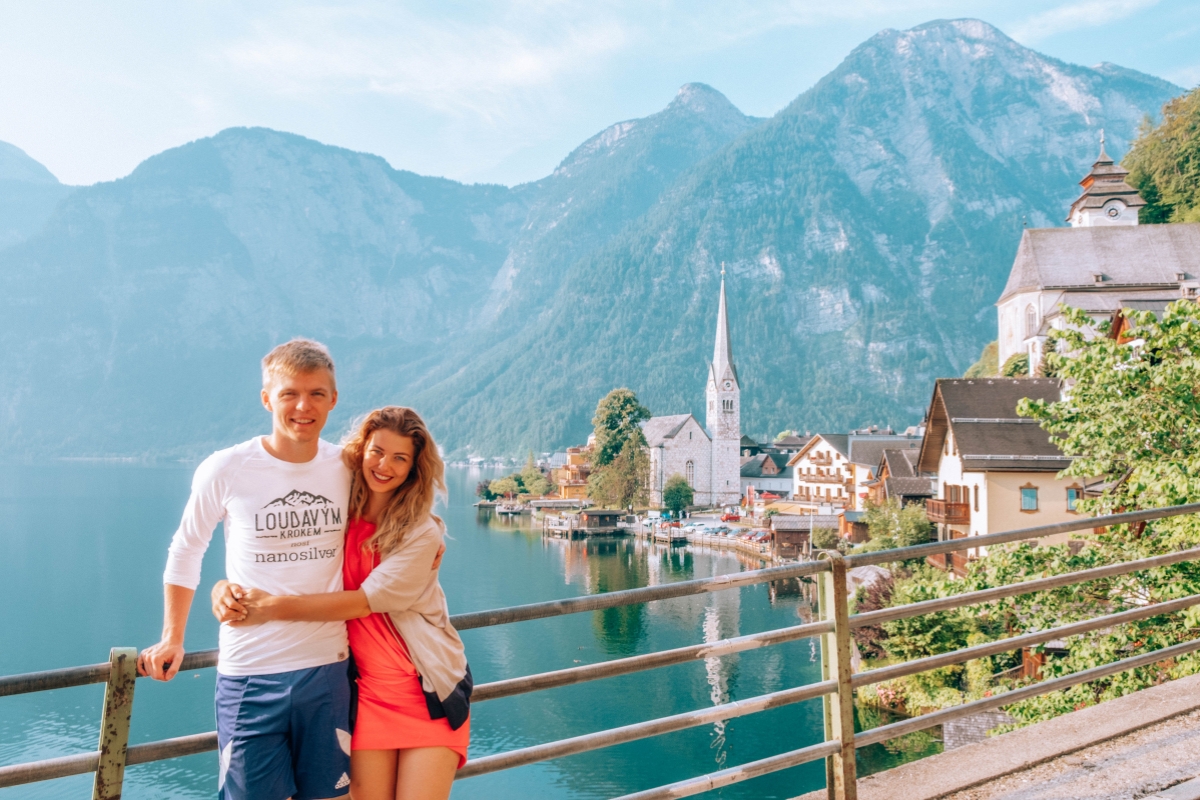
19. Hallstatt – Combine It with Krippenstein
It would be a pity to head to the northern side of the massif and skip the famous Hallstatt, because from the Krippenstein cable car in Obertraun you can reach this picturesque lakeside town in just 10 minutes by car. Plenty of visitors try to fit both places into a single day, which is only doable with an early morning start.
In the afternoon, Hallstatt has a huge parking problem, so if you don’t want to circle around full car park barriers and lose your nerve, you’ll need to plan your day carefully. Before you set off, it’s also worth checking what the weather in Hallstatt is usually like, so you know what to prepare for both by the lake and up in the mountains. Ideally, take the first morning cable car up into the mountains, or start with a stroll through the town’s lanes first thing in the morning, before the biggest crowds arrive.
20. Ödensee and the Three Lakes of the Ausseerland
If quieter waters appeal to you more, head to the neighbouring Ausseerland region, home to the spring-fed moorland lake Ödensee. In summer it’s said to be great for a swim, and a pleasant loop of about 2.3 kilometres runs along the shore, taking around 45 minutes. And if you have a soft spot for Austrian lakes in general, you’ll be in your element here.
A wonderful experience in the area is the so-called Drei-Seen-Tour (Three Lakes Tour), which links the lakes Grundlsee, Toplitzsee and Kammersee. The trip combines a boat ride across Grundlsee, a walk to the mysterious Toplitzsee and then a ride in a traditional wooden boat all the way to the remote Kammersee. Just check the forecast beforehand, because in bad weather the boat on Toplitzsee doesn’t run at all.
21. Dachstein in Winter – Glacier Cross-Country Skiing and Ski Touring
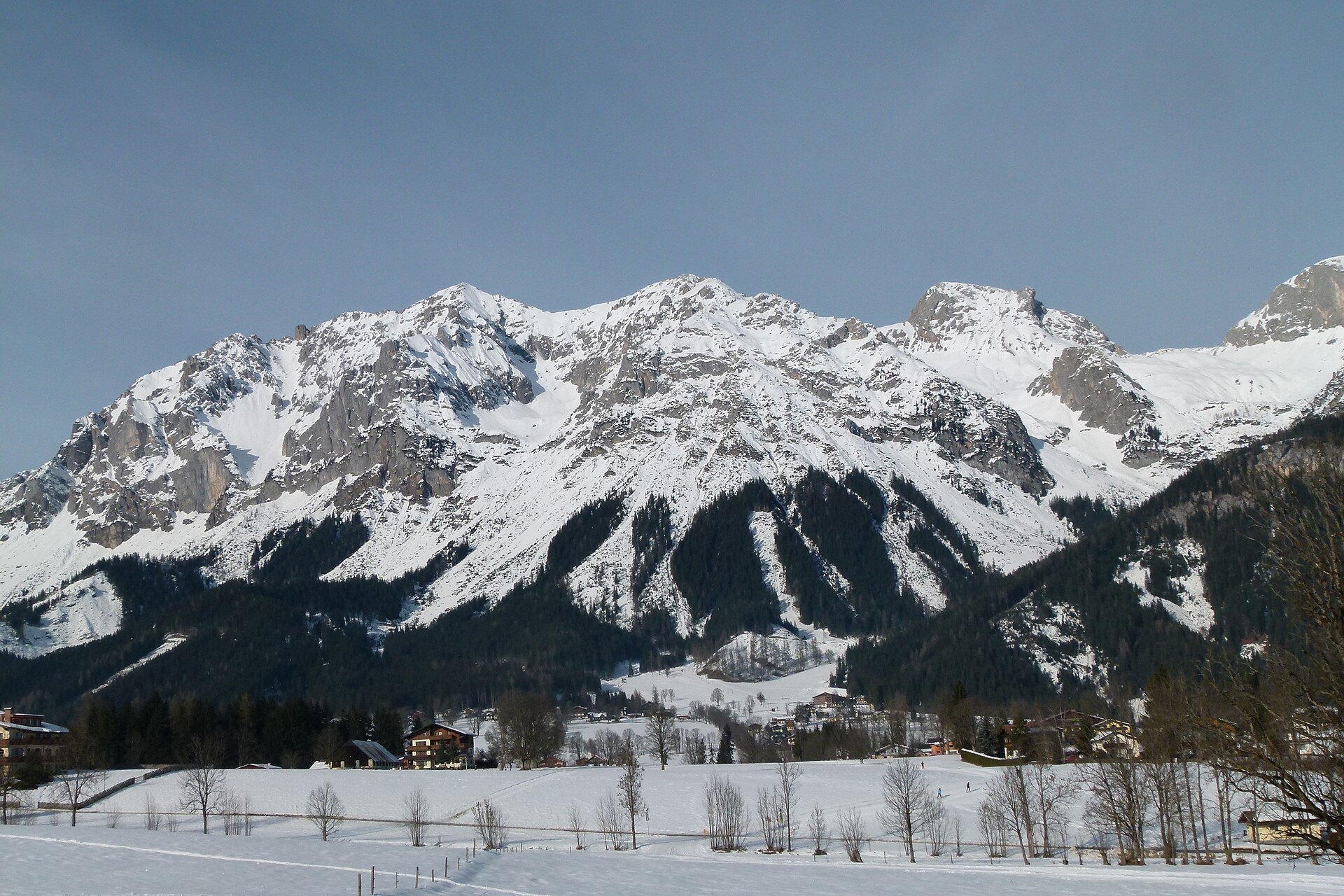
You might remember that people used to go downhill skiing right up on the glacier, but I have to warn you that there’s no more downhill skiing on the glacier – the ski area there closed for good after the 2022/2023 season. Winter at 2,700 metres certainly hasn’t gone to sleep, though; these days it mainly belongs to cross-country skiers and ski tourers. Cross-country skiers get up to 15 kilometres of groomed glacier trails for both classic and skate skiing, where national teams already train in autumn, while ski tourers can enjoy on-piste and off-piste tours or a practice park for avalanche transceivers.
A day ticket for cross-country skiers and ski tourers costs €62.50 in the 2026/2027 winter season. But if what you’re really after is classic downhill pistes and skiing in Austria, set your sights on the Dachstein West ski area on the northwestern side of the massif, between the villages of Gosau, Russbach and Annaberg. It offers around 50 kilometres of slopes (the season runs from 4 December 2026 to 29 March 2027) – or head to the Schladming resort instead.
Dachstein with Kids, a Dog or a Fear of Heights: What to Know Before You Go
At the end of October, we made a classic beginner’s mistake: we didn’t have proper warm clothes for ourselves or the kids, so we skipped any kind of trek. Lukáš carried our little one in a hiking carrier, and we still enjoyed the trip so much that I think it was worth the price.
What to Wear, Even in Summer
The difference between the valley and the glacier at 2,700 metres can be huge. On 17 November 2026, for example, the forecast showed 7 °C in the valley but 0 °C and 65 km/h winds up top – and even in summer it’s noticeably colder at the top than down below. The key is dressing in layers, like an onion, with a waterproof, windproof jacket, plus a hat and gloves in your backpack whatever the season.
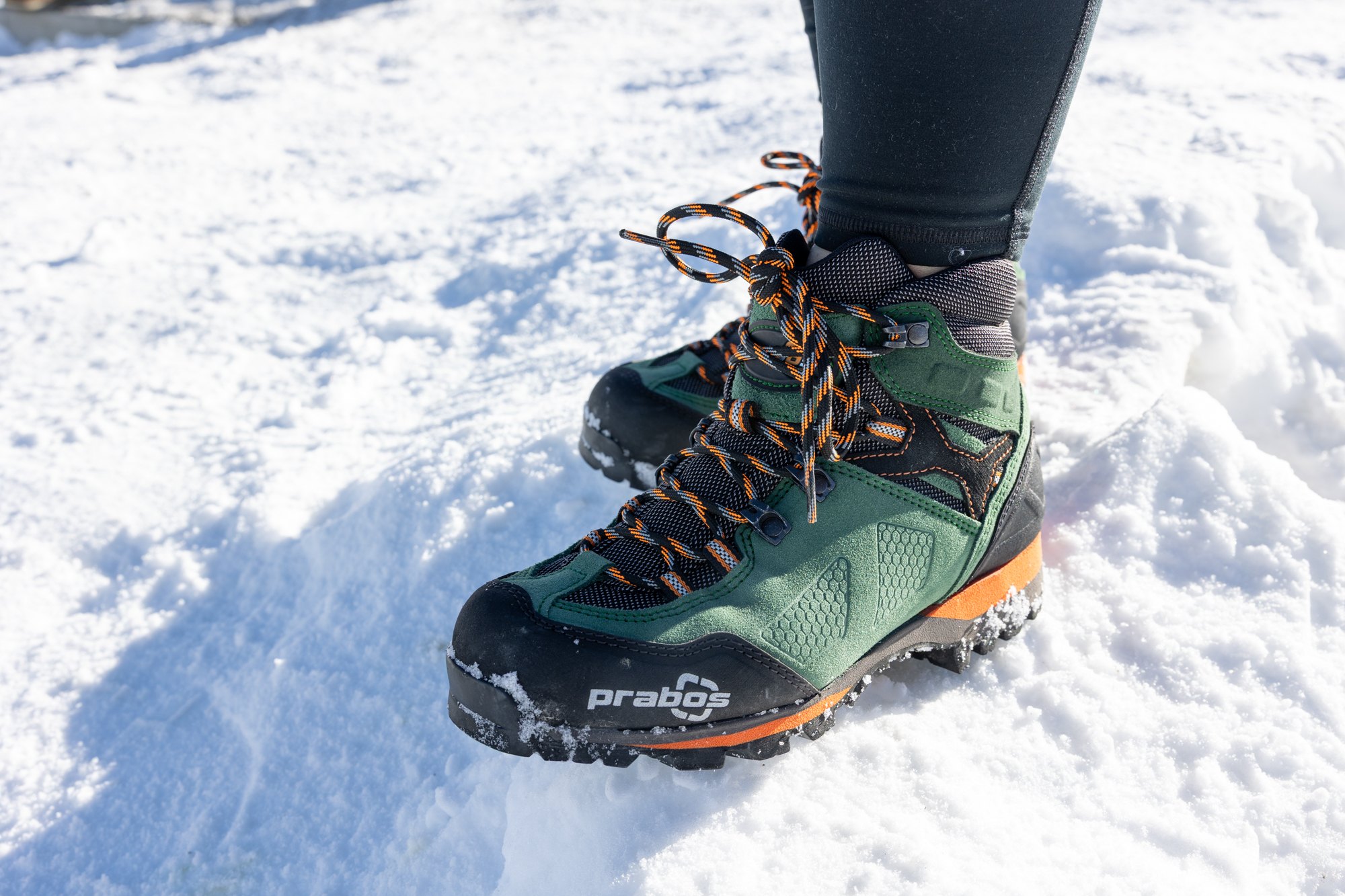
Just as important are sturdy shoes with non-slip soles, because the snow around the top station and the icy floor of the Ice Palace are slippery in ordinary trainers. Inside the Ice Palace itself, the temperature stays around 0 °C all year round, and in the Giant Ice Cave on Krippenstein it even drops to −2 °C, so leave the shorts in the car and pack long trousers. Don’t forget sunglasses and sunscreen either – the strong mountain sun reflecting off the snow above the sea of clouds can burn your face in no time.
With Kids: A Carrier Instead of a Pushchair, and the 2,700 m Altitude
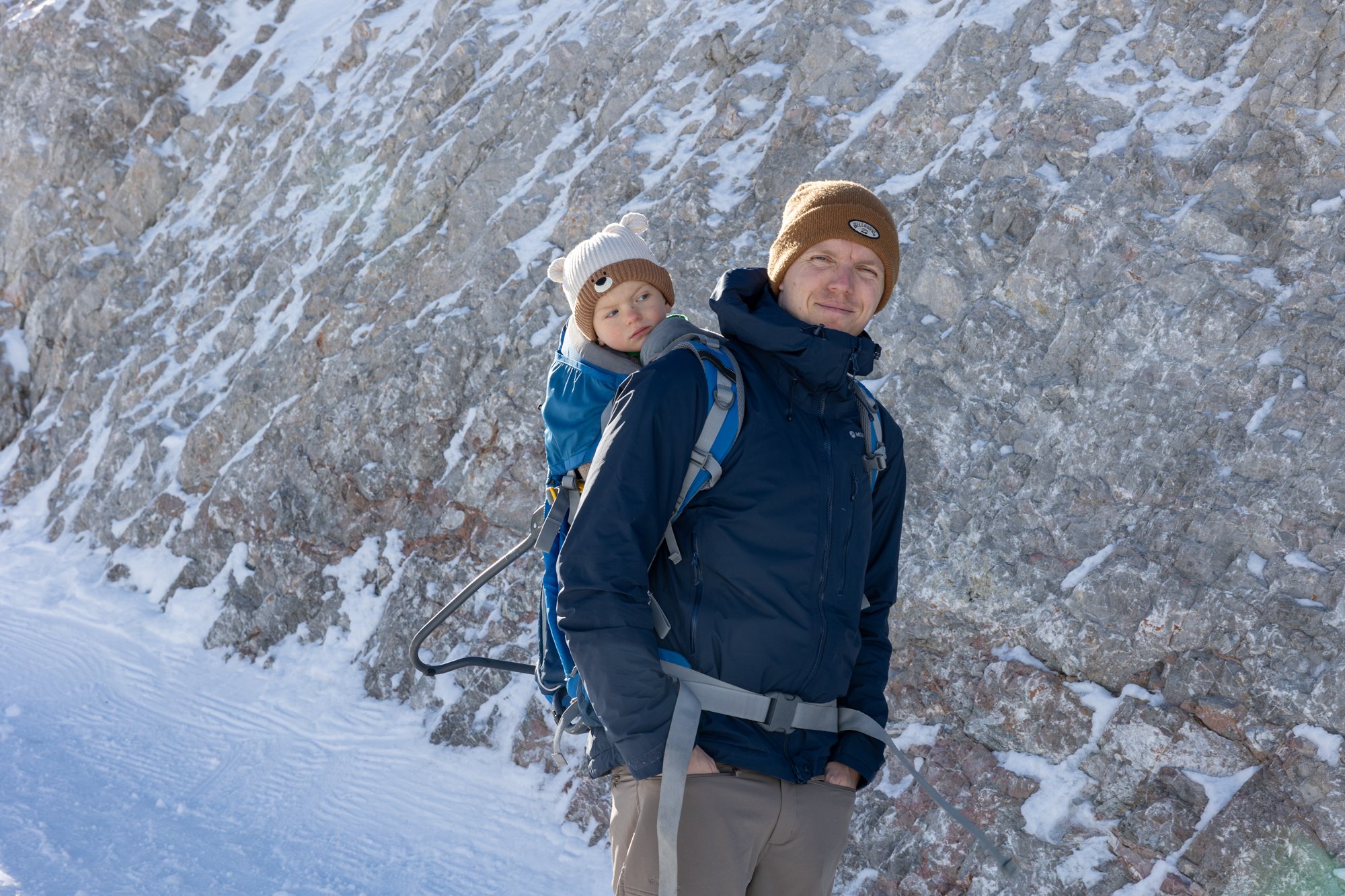
If you’re heading up with small children, leave the pushchair in the boot of the car and bring a hiking carrier or baby carrier instead, just like Lukáš and I did. With a pushchair, you won’t get onto the suspension bridge, the Stairway to Nothingness or into the Ice Palace on the glacier. On Krippenstein, you won’t manage the rocky path to the 5fingers viewpoint, and the ice caves are full of stairs. Set aside at least half a day for the glacier trip itself with kids, so you’re never in a rush.
Parents of young children often wonder whether climbing almost a thousand metres in an eight-minute ride could harm them. According to the Austrian Society for Mountain Medicine, a short cable car trip above 2,500 metres is fine for healthy children of all ages, including infants. With very young babies, just think twice about staying up for several hours because of the wind, cold and keeping them hydrated, and take care with children who have a cold, as they find it harder to equalise the pressure in their ears. In winter 2026/27, children born in 2021 or later ride for free (they only need a free turnstile ticket with a €3 deposit for the chip card). The summer price list ends with children born in 2020, so check at the ticket office whether the youngest ride free in summer – and don’t forget to add the mandatory cabin seat reservation for €2.90.
With a Dog and with a Fear of Heights
You can bring your four-legged friend up to the glacier: in 2026 you’ll pay €8 for a dog, and unlike humans, dogs don’t need the summer cabin seat reservation. However, they’re only allowed on the cable car on a lead and wearing a muzzle, which you can buy at the ticket office for €9.50 if needed. Expect big restrictions at the top, though: dogs aren’t allowed on the suspension bridge, the Stairway to Nothingness or into the Ice Palace. On neighbouring Krippenstein, on the other hand, a day ticket for your dog costs €11.50, and with a muzzle and lead they can even go into the caves (only the metal grating on 5fingers might spook them).
Vertigo is also a big topic on Dachstein, because the only way into the Ice Palace is across the suspension bridge. If you have a strong fear of heights, consider buying just the standalone cable car ticket for summer 2026 at €61, without the attractions. With it, you’ll still get to see the Sky Walk viewing platform, the restaurant with its terrace and the Himmelsleiter (accessed from the terrace), and you can always buy the €13.50 attractions ticket at the ticket office later if you change your mind. A calmer alternative for more sensitive souls is a walk across the Krippenstein plateau or the caves near the Schönbergalm middle station. 😉
Where to Go Next in Austria
If you’d like to extend your stay below Dachstein with a few more places nearby, take a look at our other Austrian guides:
- Altenmarkt im Pongau is a quiet valley in the Salzburg region just 31 kilometres from the bottom station of the Dachstein cable car – it’s where we set off for the glacier at the end of October.
- Hallstatt, Austria is only about a 10-minute drive from Obertraun below Krippenstein, and in a separate article we also cover what the weather in Hallstatt tends to be like.
- Schladming and the Ski amadé area lie just beyond the Ramsau plateau, and bus 960 runs from the Planet Planai car park in Schladming all the way to the glacier cable car.
- Austrian lakes will help you plan stops at mountain lakes along your route to Styria or the Salzkammergut.
- Salzburg, Austria makes a lovely stop along the way, and Salzburg Airport is about 90 kilometres from the bottom station of the glacier cable car.
- The best thermal spas in Austria and our overview of skiing in Austria will come in handy if you’re heading to the mountains in the colder months for snow and warm water.
Frequently Asked Questions
How long does the Dachstein cable car ride take?
The ride on the panoramic Dachstein Gletscherbahn cable car from the base station in Ramsau (1,703 m) up to the top station at Hunerkogel (about 2,700 m) takes 8 minutes. Along the way, the cabin climbs 997 meters in elevation over a route 2,175 meters long without a single support pillar.
How much does the Dachstein cable car cost?
In the 2026 summer season, the full ticket (cable car up and down including the suspension bridge, Stairway to Nothingness, and the Ice Palace) costs €73 (about 1,780 CZK) for an adult, €55.50 (about 1,360 CZK) for youths, and €37.50 (about 920 CZK) for children, while the cable car alone without the attractions costs an adult €61 (about 1,490 CZK). On neighboring Krippenstein, the 2026 summer All in One ticket covering all cable car sections and both caves costs €66.20 (about 1,620 CZK) for an adult and €36.40 (about 890 CZK) for a child when bought online.
Do I need to book the cable car in advance?
Yes, during the summer season every glacier cable car ticket above Ramsau requires a mandatory time-slot booking (Fixplatz) for a fee of €2.90 (about 70 CZK) per person, even if you have a Schladming-Dachstein summer card. Without a booking, on busy days there’s no guarantee you’ll actually get on a cabin, whereas in winter tickets are sold without reservations directly at the counter.
Where does the Dachstein cable car depart from?
It depends on which side of the massif you’re heading to, since the two spots are 87 kilometers apart by car. The glacier cable car (Sky Walk, suspension bridge, Ice Palace) departs from Ramsau am Dachstein in Styria (address Schildlehen 79), while the Krippenstein cable car (5fingers, ice caves) starts from Obertraun in Upper Austria by Lake Hallstatt (address Winkl 34).
How high is Dachstein?
The highest peak of the range, Hoher Dachstein, measures 2,995 meters above sea level according to current surveys, while the commonly cited figure of 2,996 meters comes from an old map dating back to 1877. The top station of the glacier cable car sits at around 2,700 meters, and the summit of Krippenstein is 2,108 meters high.
Is Sky Walk at the same place as 5fingers?
No, these two viewpoints are located on opposite sides of the mountain massif, and there’s no direct road over the mountains connecting them. The Sky Walk viewpoint is by the top station of the glacier cable car above Ramsau, while the 5fingers platform is on Krippenstein above Obertraun and Lake Hallstatt, about a 1.5-hour drive away.
Can you reach the Ice Palace without crossing the suspension bridge?
No, both the Ice Palace (Eispalast) and the Stairway to Nothingness are reached by a single access route that leads directly across the hundred-meter suspension bridge over a 400-meter drop. If you’d rather skip the bridge because of a fear of heights, you can still enjoy the Sky Walk, the restaurant terrace, and the Himmelsleiter (accessed from the terrace).
Can I bring a stroller or a dog to Dachstein?
With a stroller on the glacier, you won’t be able to access the suspension bridge, the Stairway to Nothingness, or the Ice Palace, and on Krippenstein you can’t push one along the rocky path to 5fingers or up the stairs in the caves, so bring a baby carrier instead. Dogs are allowed on the glacier cable car for €8 (about 200 CZK) on a leash and with a muzzle, but dogs are not allowed on the suspension bridge, the stairs, or in the Ice Palace; on Krippenstein, for €11.50 (about 280 CZK) they can even go into the caves with a muzzle and leash.
Can you ski on Dachstein?
Downhill skiing directly on the Dachstein glacier came to an end after the 2022/23 season, and the lifts no longer run there. In winter, the glacier offers up to 15 kilometers of cross-country trails and ski touring routes for a day pass of €62.50 (about 1,530 CZK), while for downhill slopes you’ll need to head to nearby Schladming or the Dachstein West area (Gosau, Russbach, and Annaberg).
How long does it take to climb Hoher Dachstein?
The glacier loop from the top station to the Seethalerhütte hut (2,740 m) and back covers 4 km and takes about 1.5 to 2 hours; from there, reaching the actual summit of Hoher Dachstein (2,995 m) via the via ferrata of difficulty grade C takes roughly another hour. This is a serious high-alpine tour that involves crossing a glacier, requiring crampons, a harness, a rope, and, if you lack experience, a mountain guide.
Tips and Tricks for Your Vacation
Don’t Overpay for Flights
Search for flights on Kayak. It’s our favorite search engine because it scans the websites of all airlines and always finds the cheapest connection.
Book Your Accommodation Smartly
The best experiences we’ve had when looking for accommodation (from Alaska to Morocco) are with Booking.com, where hotels, apartments, and entire houses are usually the cheapest and most widely available.
 🚗 Car rental on the roadVerified rental cars in Austria
Search with the DiscoverCars comparison engine — it compares prices from dozens of local and international rental companies, and most bookings come with free cancellation.
Compare car prices in Austria →Don’t Forget Travel Insurance
Good travel insurance will protect you against illness, accidents, theft, or flight cancellations. We’ve had a few hospital visits abroad, so we know how important it is to have proper insurance arranged.
Where we insure ourselves: SafetyWing (simple monthly subscription) and TrueTraveller (for extra-long trips).
Find the Best Experiences
Get Your Guide is a huge online marketplace where you can book guided walks, trips, skip-the-line tickets, tours, and much more. We always find some extra fun there!