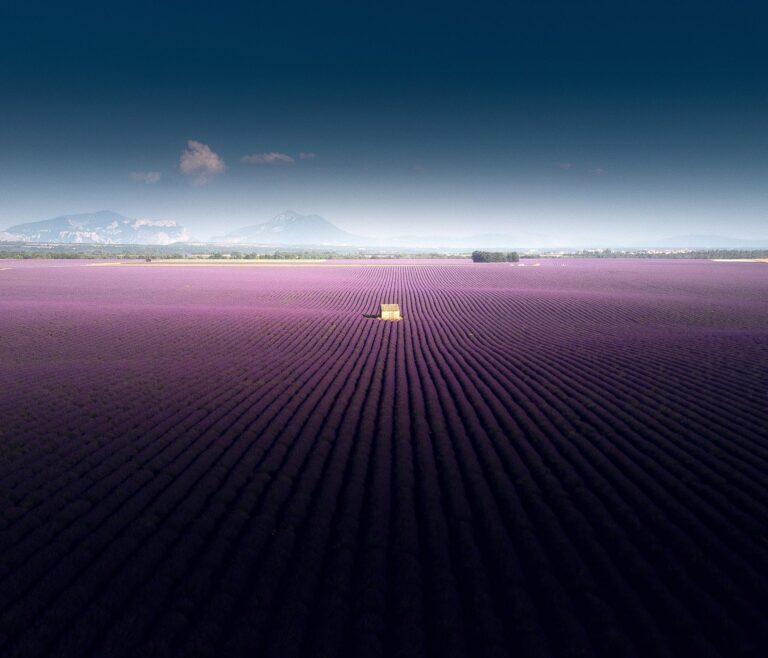
Picture a landscape where the sun-baked hills of Provence suddenly vanish, replaced by an absolute, endless flatness. Dizzying heights and cliffs dissolve into a horizon that breathes salt, untamed wind and the scent of wild reeds. Welcome to the Camargue, France — the unique delta of the Rhône River in the south of the country, rightly nicknamed Europe’s Wild West. This rugged, uncompromising slice of nature shows you a completely different face of France than the one you know from polished lavender fields.
In this article I bring you 12 tips on what to see and do in the Camargue, so you can take away the very best experiences from this wetland paradise. I’ll tell you where to base yourself strategically, how to dodge the dreaded summer mosquito swarms, and where to find the best spots for watching the iconic pink flamingos and the semi-wild white horses. Get ready for a place where nature still rules with a firm hand, and where time is measured more by the strength of the wind than by the clock.
TL;DR
- Main draws: Wild animals living in their natural habitat. Don’t miss the Pont de Gau ornithological park with its thousands of flamingos, and the plains where the white Camargue horses graze.
- Historic gem: You absolutely must visit the medieval town of Aigues-Mortes, encircled by mighty ramparts that look like a film set in the flat landscape.
- Natural wonder: Right behind the walls you’ll find the Salin d’Aigues-Mortes salt pans, where a special algae turns the water an incredibly intense pink, even blood-red.
- When to go: The best time is undoubtedly spring or autumn. Summer brings scorching heat and the wetlands turn into a breeding ground for aggressive mosquitoes.
- Getting around: You’ll definitely need a rental car, as public transport in this nature reserve is very limited and the distances are deceptively long.
- Local wind: Expect the strong wind called the mistral, which blows for a large part of the year and can dramatically lower the feels-like temperature, so pack an extra layer.
The full destination guide: Provence — guide and what to see
When to Visit the Camargue and What to Prepare For
The Camargue is a destination that doesn’t forgive bad timing, so think your dates through carefully. While you can admire the nearby Provençal towns all year round, this wetland ecosystem requires a bit more strategy. If you come in July or August, brace yourself for scorching sun with nowhere to hide in the treeless, flat landscape. The summer months also bring one major problem: enormous swarms of mosquitoes. As soon as the sun sets, lingering on an outdoor terrace can quickly turn into a fight for survival, and ordinary repellents often work only to a very limited degree here.
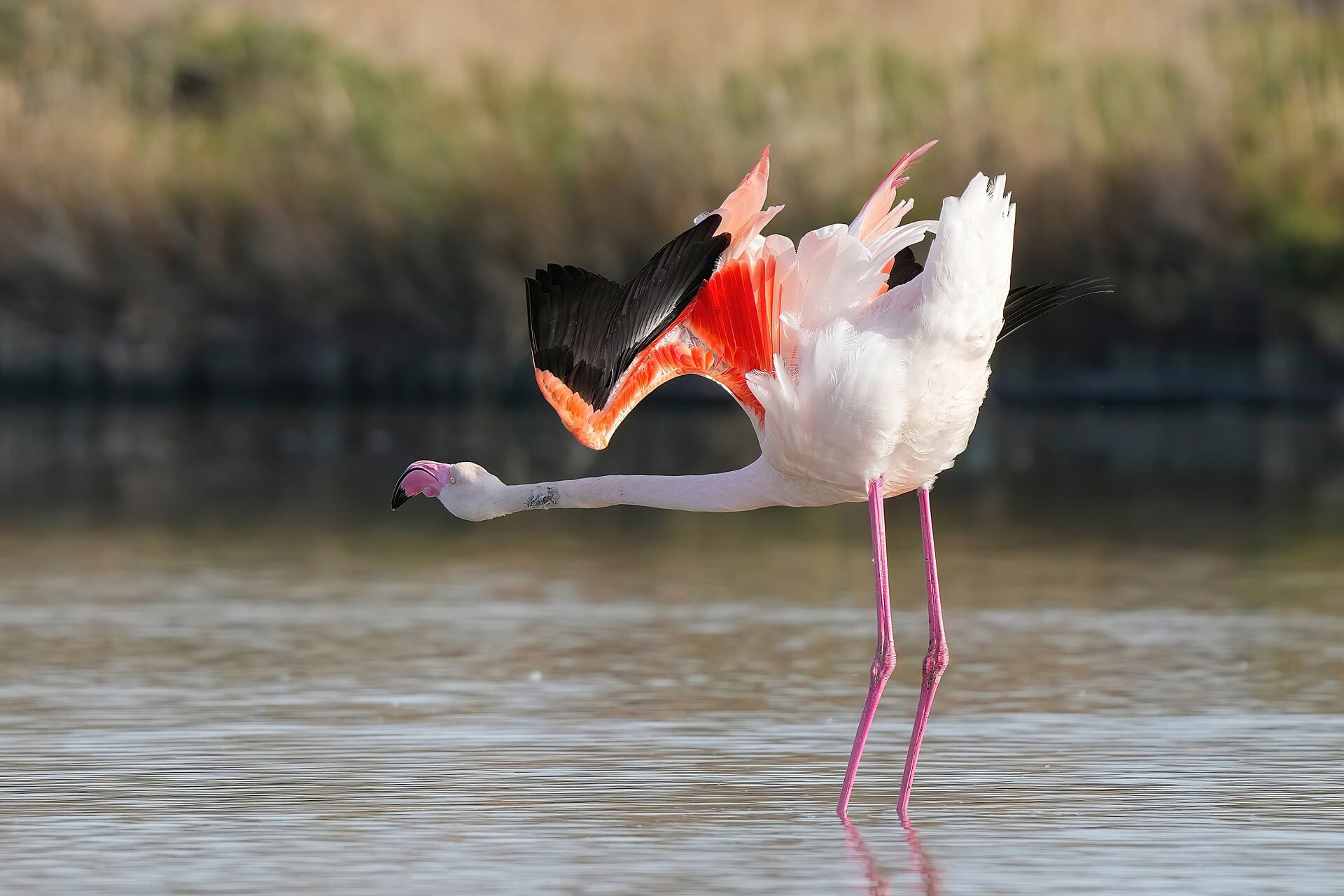
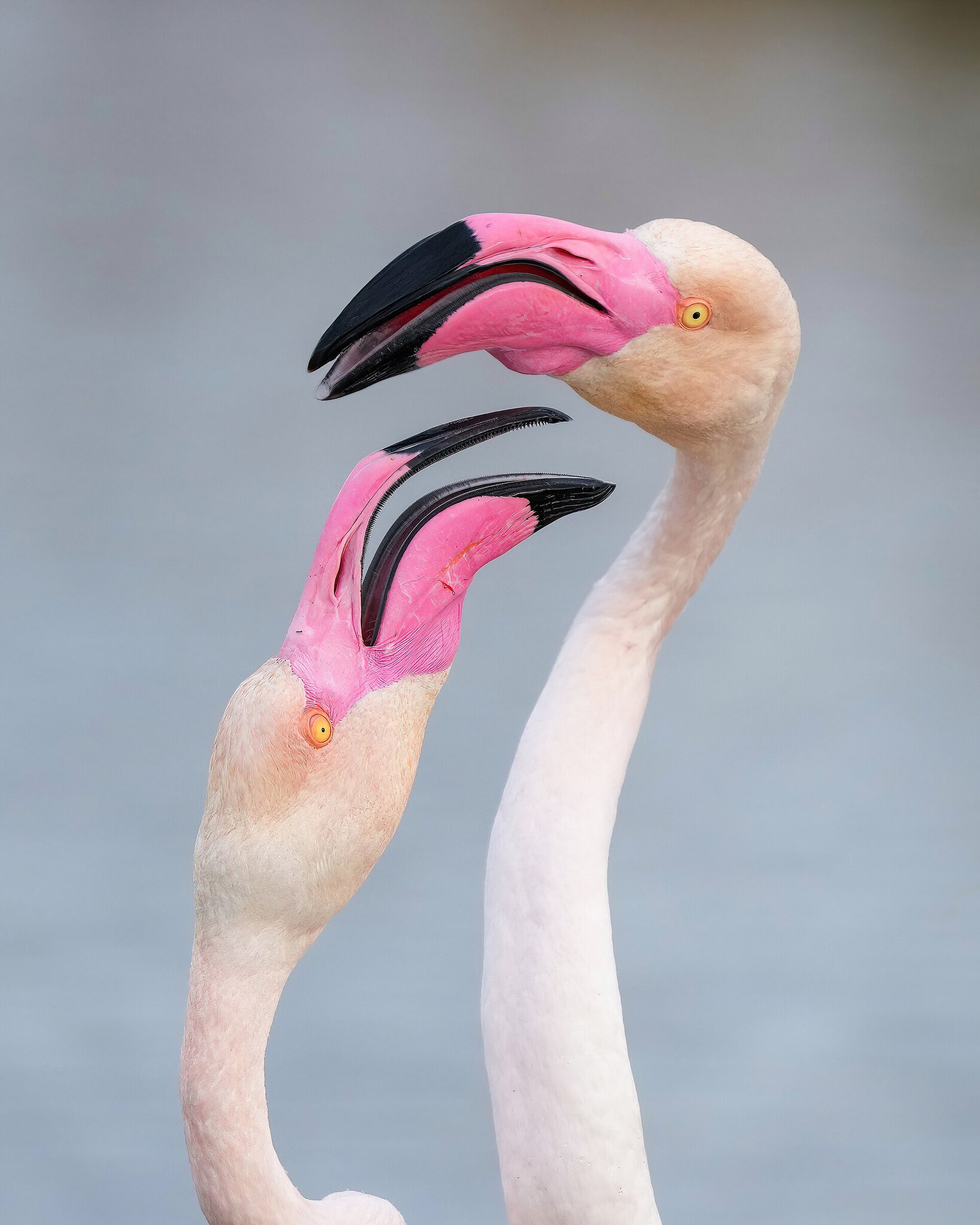
The absolutely ideal time to visit is therefore spring, specifically April and May. Temperatures hover around a pleasant 20 to 24 degrees, and you also get a unique chance to watch the flamingos’ courtship rituals. Hundreds of birds turn their heads in synchrony and spread their wings during this period — an utterly breathtaking spectacle. Autumn is also a great choice, especially September and October, when the summer crowds have thinned and the sea is still beautifully warm after the long summer. Autumn is, on top of that, the very best time to visit the salt pans, because the salt concentration peaks and the water turns the most intense shades of red.
When planning your trip you also have to factor in the ever-present mistral wind, which is inseparable from this region. This cold, dry northwesterly can blow with brutal force for several days on end. It does sweep the sky beautifully clean and produce the incredibly sharp light that has lured painters here for centuries, but cycling against it is the equivalent of a solid gym workout. If you’re flying from the UK, I’d recommend looking for flights to Marseille or Nice, served by carriers such as easyJet, Ryanair and British Airways from London and other major UK airports. From there, a rental car will get you to the heart of the delta in under two hours, with weekly rental prices for a small car running around 250 to 300 euros in 2026.
Where to Stay in the Camargue
💡 Tip for accommodation and experiences: We like to look for places to stay on Booking.com, which usually has the best cancellation terms. Tickets, tours and activities are then worth comparing and booking through GetYourGuide.
Although the Camargue is a sprawling nature reserve, you’ll find several strategic spots that make a perfect base for day trips. It’s entirely up to you whether you prefer historic lanes, proximity to the sea, or sleeping in splendid isolation surrounded by nature. Given the high demand, especially in spring and autumn, I strongly recommend booking your accommodation on Booking well in advance — even half a year ahead.
If you love history and evening strolls along stone lanes, stay in the charming little town of Aigues-Mortes. The place is full of excellent restaurants, small boutiques and cafés where you can sip your morning coffee with a view of the majestic ramparts. A great choice here is, for example, the Hôtel des Remparts, set in a historic building and offering a wonderful atmosphere right in the thick of things. A double room here costs roughly 130 euros a night in 2026, which is a very fair price for such a location.
For those who want to soak up the seaside atmosphere and be just a short walk from the beach, Saintes-Maries-de-la-Mer is the ideal choice. This buzzing little town serves as the unofficial capital of the whole region and offers a great mix of culture and beach relaxation. You could stay, for instance, at Vila de la Mar, a stylish hotel with a pool where you can unwind beautifully after a full day of exploring. But if you’re after total peace and want to experience authentic life on a local farm, look for “mas”-style accommodation scattered right out in the wetlands. A lovely experience is offered, for example, by Mas des Barres, where you wake up in the morning and can watch white horses grazing right from your window.
Camargue, France: 12 Tips on What to See and Do in the Land of Flamingos
Let’s now take a look together at the specific tips and places that make this region so exceptional. I’ve put together a varied mix of activities for you, from admiring historic fortresses and wandering through wild nature to tasting local rice specialities. To enjoy the area to the fullest, I’d recommend setting aside at least three full days for exploring.
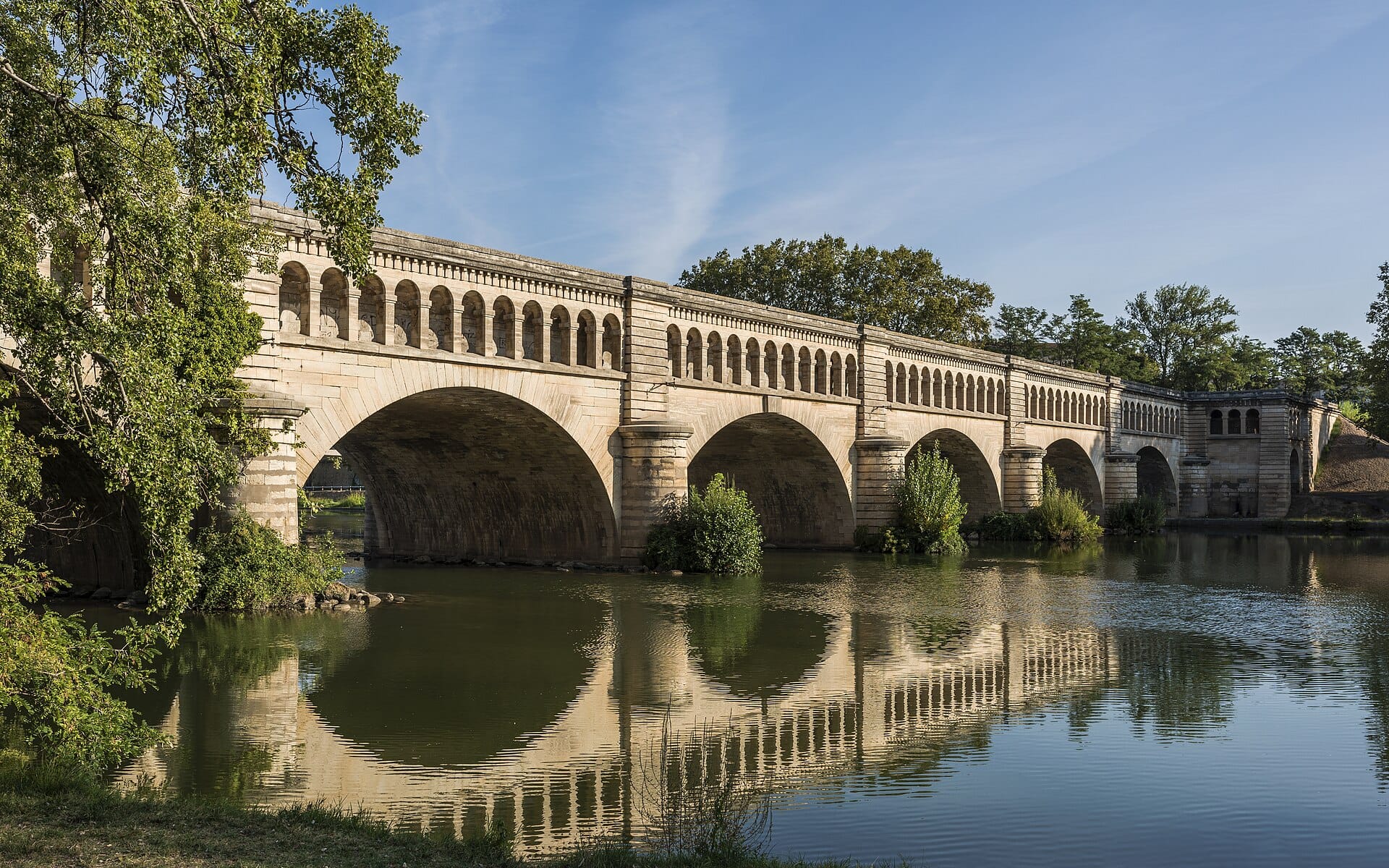
1. Pont de Gau Ornithological Park
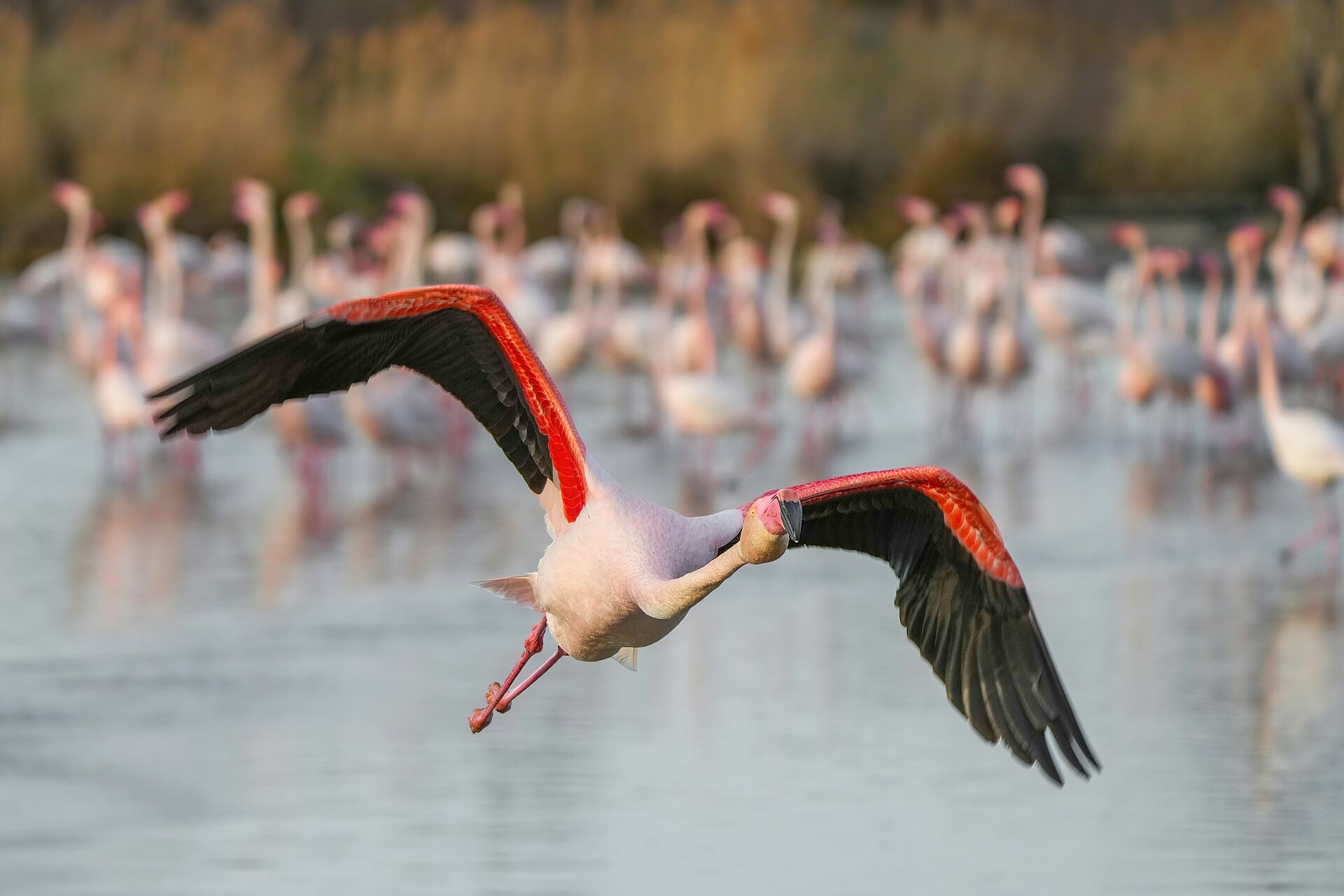
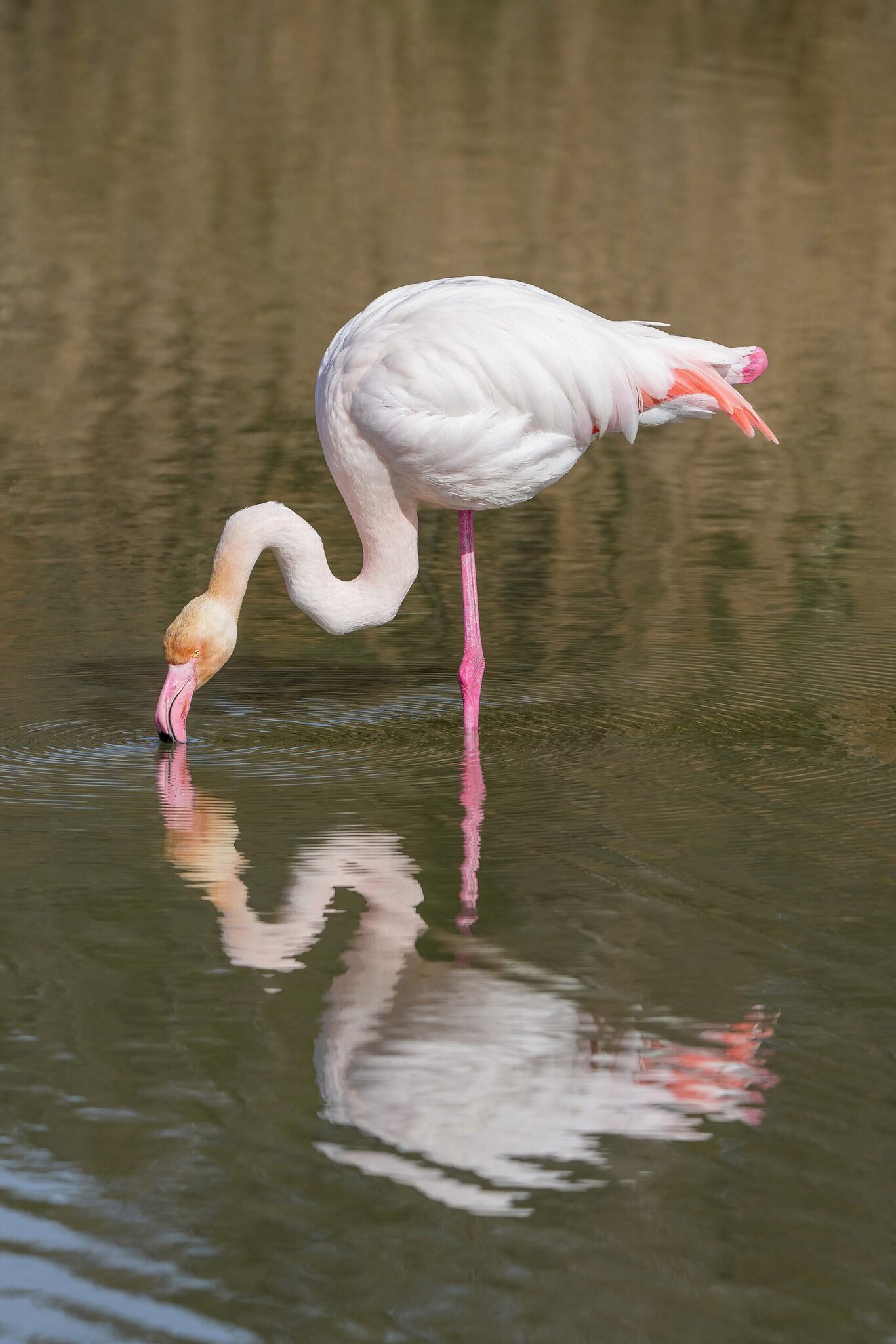
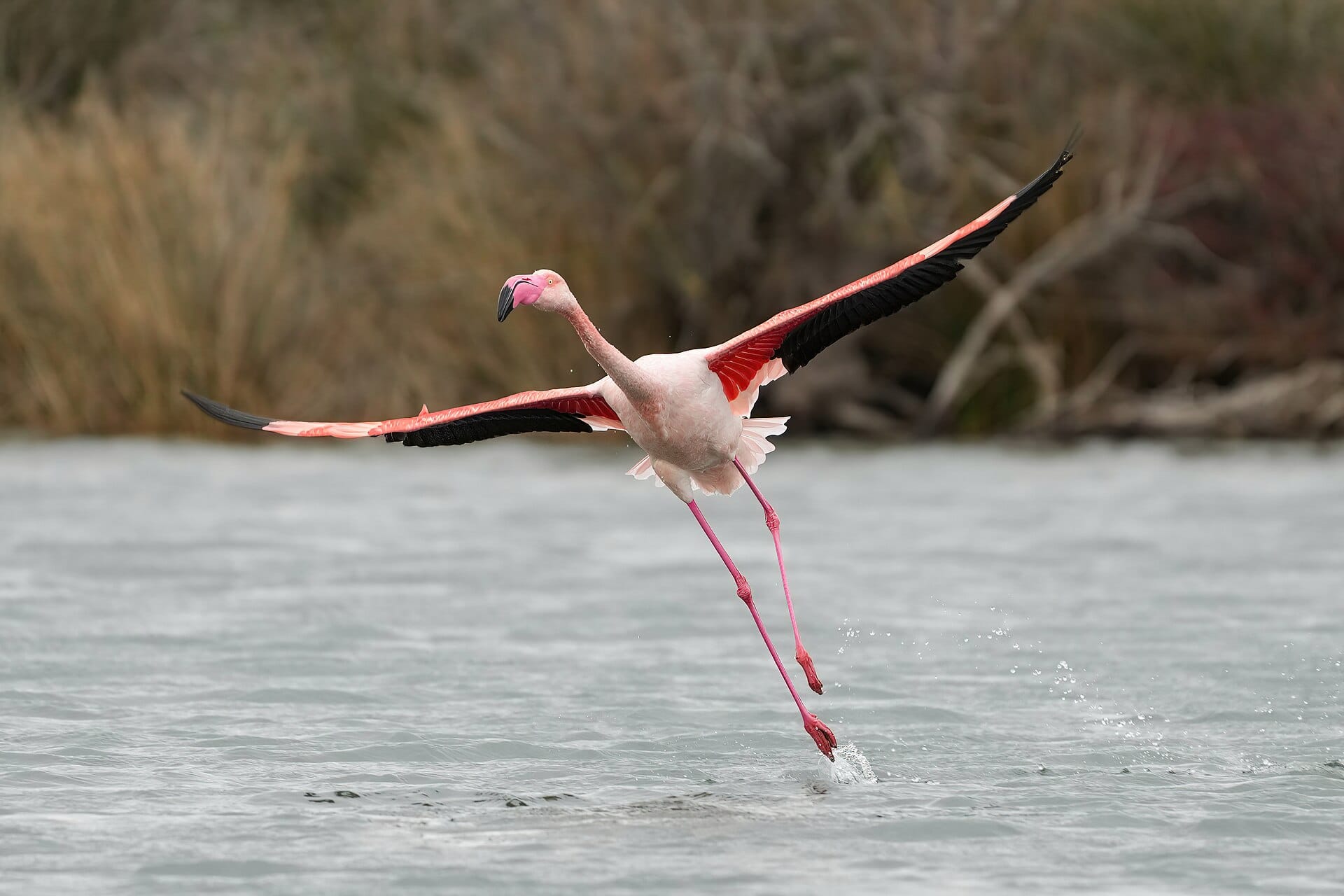
If there’s one single place you absolutely cannot miss in the Camargue, it’s the Parc Ornithologique de Pont de Gau. Forget classic zoos with cages — this is a vast protected wetland where wild birds fly in entirely of their own accord in search of food. You walk along carefully maintained wooden boardwalks while hundreds of pink flamingos wade through the shallow lagoons, often just a few metres away from you — an utterly fascinating and immensely photogenic experience.
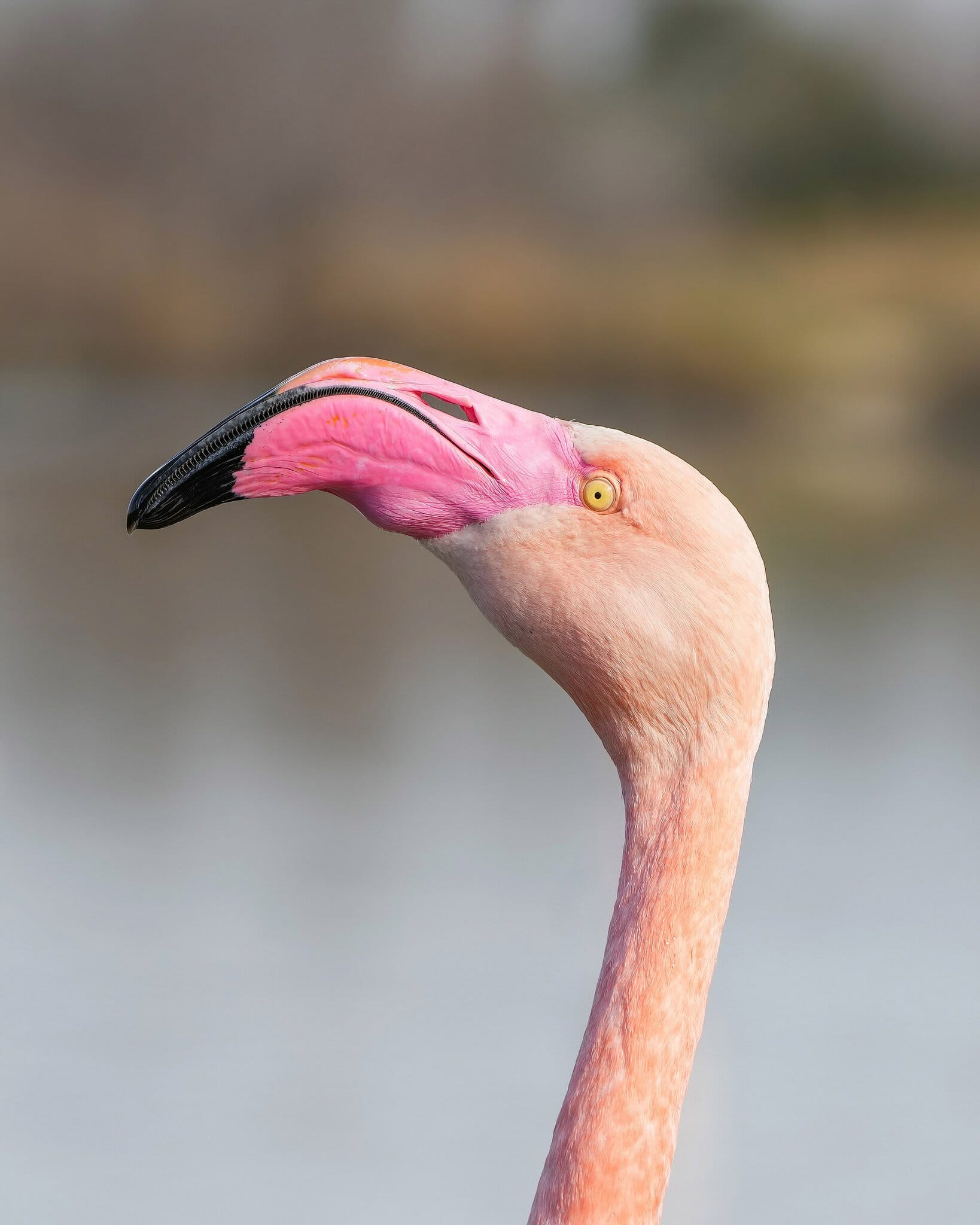
The secret to their gorgeous colour lies in the local diet, as flamingos are born grey and only acquire their iconic pink hue by eating tiny crustaceans rich in beta-carotene. The more brine shrimp the bird eats, the more intense its colouring. The park is divided into several loops of varying length; the shortest takes about an hour and a half, but I’d recommend setting aside half a day for your visit. You’ll find plenty of benches and observation hides where you can sit quietly and simply watch the birdlife bustle.
💡 Tip: Ideally buy your tickets first thing in the morning, as soon as the park opens, to avoid the biggest crowds and enjoy the magical early light. Admission in 2026 costs around 8 euros, and a huge advantage is that your ticket is valid for the whole day. So you can stroll through the park in the morning, head off for lunch, and return in the late afternoon for the golden hour, when the sky turns incredible shades and the birds are most active.
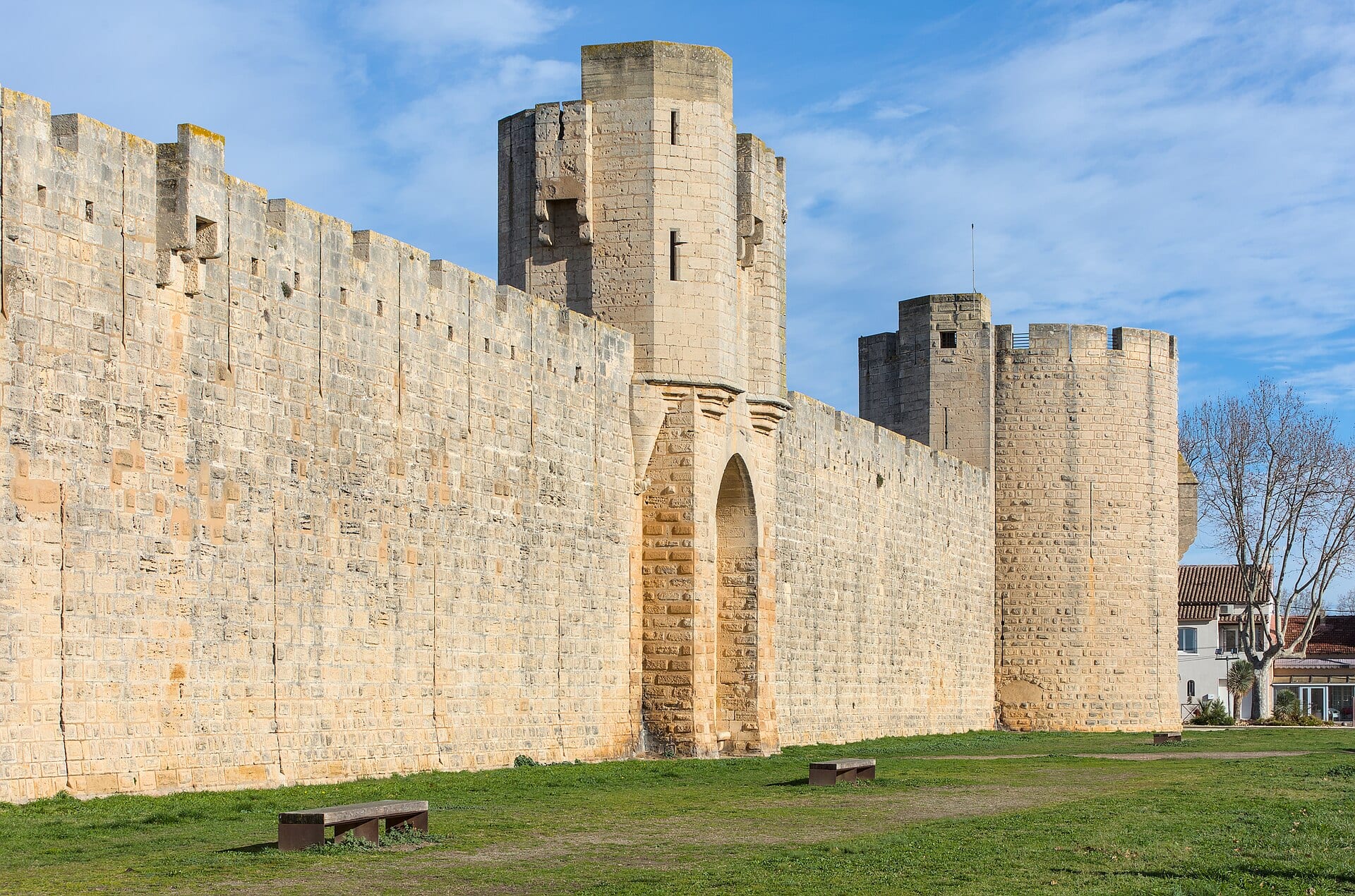
2. Aigues-Mortes and Its Massive Ramparts
In an utterly flat landscape, where your eye normally finds no reference point at all, the town of Aigues-Mortes appears like a complete apparition. This perfectly preserved medieval town was built in the 13th century by King Louis IX as the launching port for his crusades, since France at the time had no other access to the Mediterranean. The entire historic centre is wrapped in majestic ramparts more than a kilometre and a half long, preserved in such perfect condition that you’ll feel like you’re on a historical film set.
The greatest experience is the walk along these ramparts, for which you can buy a ticket. Once you climb up, a stunning double view opens up that you won’t find anywhere else. On one side you’ll look down onto narrow stone lanes teeming with tourists, and on the other the endless pink salt pans stretch out before you all the way to the horizon. The walk along the walkways takes about an hour and a half, and along the way you pass several watchtowers, the most famous of which is the Tour de Constance, which once served as a harsh prison.
💡 Tip: After touring the ramparts, definitely lose yourself in the maze of lanes inside the town. The central point is Place Saint-Louis, where you’ll find plenty of shady cafés and excellent bakeries. Try the local sweet speciality called fougasse d’Aigues-Mortes, a fluffy cake scented with orange blossom that will melt on your tongue.
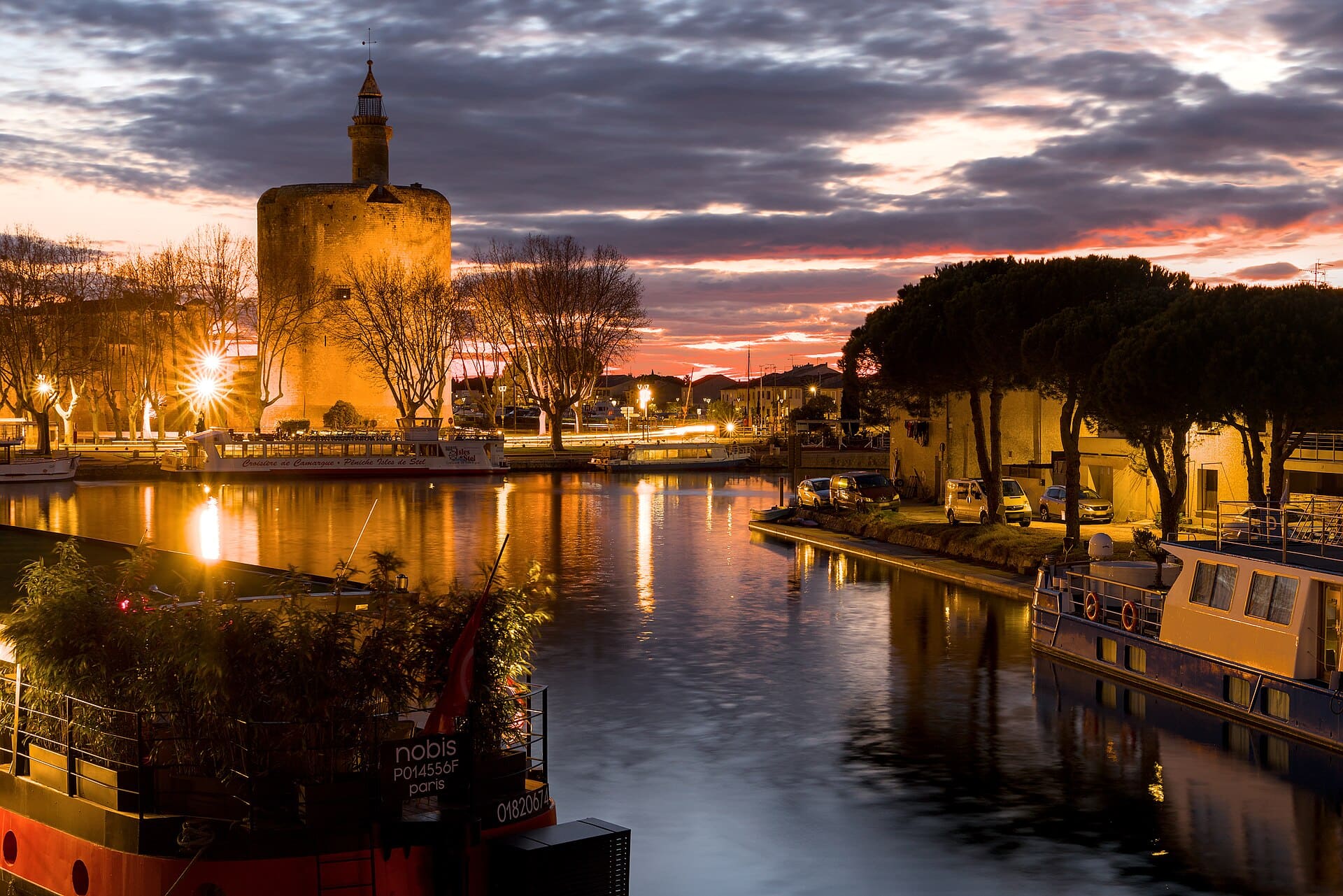
3. The Pink Salt Pans of Salin d’Aigues-Mortes
Right outside the gates of the medieval town lies a place that looks more like another planet than the south of France. The Salin d’Aigues-Mortes is a huge system of shallow pools used for evaporating seawater and harvesting salt, which has been operating here since the days of the ancient Romans. But what draws visitors from all over the world is the colour of the water. Thanks to a microscopic algae that produces carotenoids, the lagoons turn unbelievable shades of pink, purple and sometimes even blood-red.
The contrast of this coloured water against the bright blue sky and the enormous white mounds of harvested salt, known as camelles, is an absolutely fascinating sight. These salt mountains rise to a height of several dozen metres and look like snow-capped peaks in the middle of a sunny plain. The site is so vast that you can’t just explore it on a whim on foot — you have to take an official tour. You can choose a ride on a special tourist train, which is great for families, or tour the area with a guide on a rented bike, which gives you a much greater sense of freedom.
💡 Tip: If you want to see the water really richly coloured, time your visit for late summer or autumn, when the concentration of algae and salt is at its absolute highest due to the strong evaporation. Don’t forget to pack a good pair of sunglasses, as the midday sun reflecting off the dazzling white salt crystals can be seriously blinding.
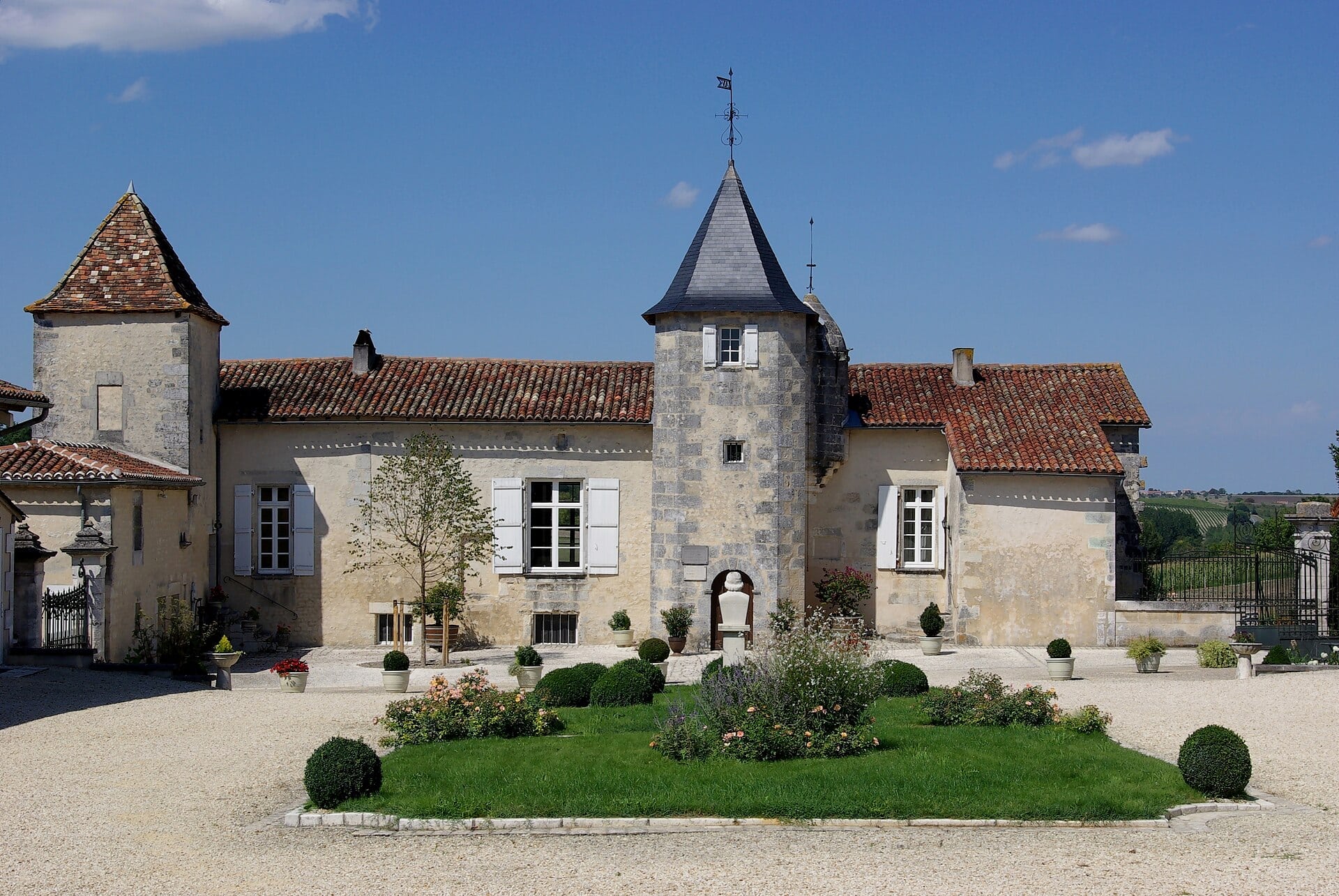
4. The Alternative Salt Works at Salin de Giraud
If the salt pans near Aigues-Mortes feel too touristy and crowded for you, I have a great alternative that lies at the opposite, eastern end of the delta. The little town of Salin de Giraud was built at the end of the nineteenth century specifically for the salt-works labourers, and its architecture is completely different from the rest of the region. You’ll see long rows of red-brick houses with shady front gardens that will remind you more of northern France or a Belgian mining village than of typical sun-drenched Provence.
Just outside the town stretch more sprawling salt flats, again playing in every shade of pink and red. The atmosphere here is much calmer and rawer — there aren’t as many tourist trains around, and you’ve got a better chance of enjoying the quiet beauty of the landscape all to yourself. You’ll find a raised viewing platform offering a fantastic panoramic view of the endless salt lagoons and the giant white mounds of salt waiting to be processed.
💡 Tip: On the way to Salin de Giraud, definitely make a stop at the free Point de vue du Sel viewpoint. From this little hill, a breathtaking view opens up over the geometrically perfect rectangles of differently coloured water. In 2026 a repaired access road now leads here, so you can reach the viewpoint comfortably even in an ordinary car.
5. Saintes-Maries-de-la-Mer: Capital of the Marshes
The heart of the whole region, where the scent of the sea mingles with the traditions of the local herdsmen, is the coastal town of Saintes-Maries-de-la-Mer. The place has a truly unique atmosphere, because classic Provençal culture meets Roma culture here. According to legend, Mary Salome and Mary Jacobe once arrived here long ago on a boat with no sails or oars, accompanied by their dark-skinned servant Sara. It is she who became the central figure of local folklore and one of the main reasons people travel here.
The dominant feature of the whole town is the fortified Romanesque church, which more than anything resembles an impregnable military fortress. And it’s no wonder — in the past it had to protect the inhabitants from pirate raids. In its dark crypt you’ll find the statue of Black Sara, the patron saint of the Roma from all across Europe. Every year at the end of May, thousands of pilgrims gather here to carry the statue out of the crypt and, accompanied by wild guitar music, take it all the way into the sea. It’s an utterly elemental and deafening event that you won’t forget any time soon.
💡 Tip: Even if you don’t catch the famous pilgrimage, visiting the church is well worth it. I recommend paying the small fee of around 3 euros to climb up to the church roof. From its paved walkway you get the most beautiful view over the whole town, the white houses with red roofs, and the endless sea stretching into the distance.

6. Watching the Semi-Wild White Camargue Horses
Probably no other image is so strongly associated with this region as a herd of beautiful white Camargue horses wading through the shallow salt water with their manes flowing. The Camargue horse is one of the oldest breeds in the world and is inseparable from this rugged land. The curious thing is that the foals are born dark brown or even completely black, and their coats only begin to turn white around the fourth year of life. The animals are of smaller stature but immensely hardy and perfectly adapted to life in the damp marshes and reeds.
They don’t live entirely wild, but semi-wild. They have their owners among the local breeders, yet they spend most of the year roaming freely on vast pastures, feeding on the coarse salt-tolerant vegetation. You’ll very often spot the horses just from your car window as you drive between the various little towns. All you have to do is slow down, pull over at the side of the road, and you can drink in the sight of these majestic animals standing calmly belly-deep in the water, ignoring the world around them.
💡 Tip: If you want a 100% guarantee of seeing the horses really up close and in their natural environment, head to the area called Domaine de Méjanes. Around the nearby Vaccarès lake there are vast grounds where the herds regularly graze right up against the fences and enclosures — something you and your cameras will appreciate.

7. Horse Riding Right Through the Wetlands
Seeing the horses from a distance is one thing, but watching the inaccessible corners of the delta from their backs — places you’d never reach on foot — that’s the real experience. Horse riding is one of the most popular activities here, and you don’t need any prior experience whatsoever. The local horses are incredibly calm, used to tourists, and will safely walk you through shallow lagoons, narrow sand dunes and dense reeds.
You can set off with the local cowboys, known here as gardians. These men in their distinctive hats, checked shirts and with tridents in hand know this landscape like the back of their hand. During a two-hour ride you’ll see herons taking flight from horseback, hidden lagoons, and reach places where you’ll hear only the lapping of water and the rustle of the wind. The tours can be easily and reliably booked online in advance through GetYourGuide, which I warmly recommend doing, because in season the best stables are sold out weeks in advance.
💡 Tip: When choosing a stable, watch out for the ones located right by the main road before the entrance to Saintes-Maries-de-la-Mer. These are often mass tourist traps where the horses cart one group after another around in the blistering heat. Better to pay a little extra for a small family-run stable set deeper in the reserve, where the approach to the animals is far more sensitive and personal.
8. Black Bulls and a Visit to a Traditional Manade
The third piece of the local holy trinity of animals is the small, robust and dangerous-looking black bulls. You’ll recognise the raço di biòu breed at first glance by its lyre-shaped horns curving vertically upwards. These bulls are raised on traditional farms called manades, and their main job is to take part in the local bull games, the so-called course camarguaise. Unlike the bloody Spanish corrida, the bulls here are not harmed in any way and are never killed.
The whole game rests on the incredible agility of young men (raseteurs), who try to snatch small tassels and cockades from the bull’s horns using special combs. Bulls that are clever and fast enough become genuine local celebrities. Their names appear on posters all over the region, and the very best individuals even receive grand stone tombstones after their natural death. If you want to peek behind the scenes of this world, many manades offer visitors tours on tractor-drawn carts that take you right into the middle of the black herd.
💡 Tip: If you come across a poster announcing a course camarguaise in the local arena, definitely buy a ticket. It’s a deeply rooted cultural event full of emotion, brass bands and a cheering crowd. Admission in 2026 costs roughly 15 euros, and it gives you a truly authentic taste of the atmosphere of southern France.
9. Wild Beaches and the Rhône Delta
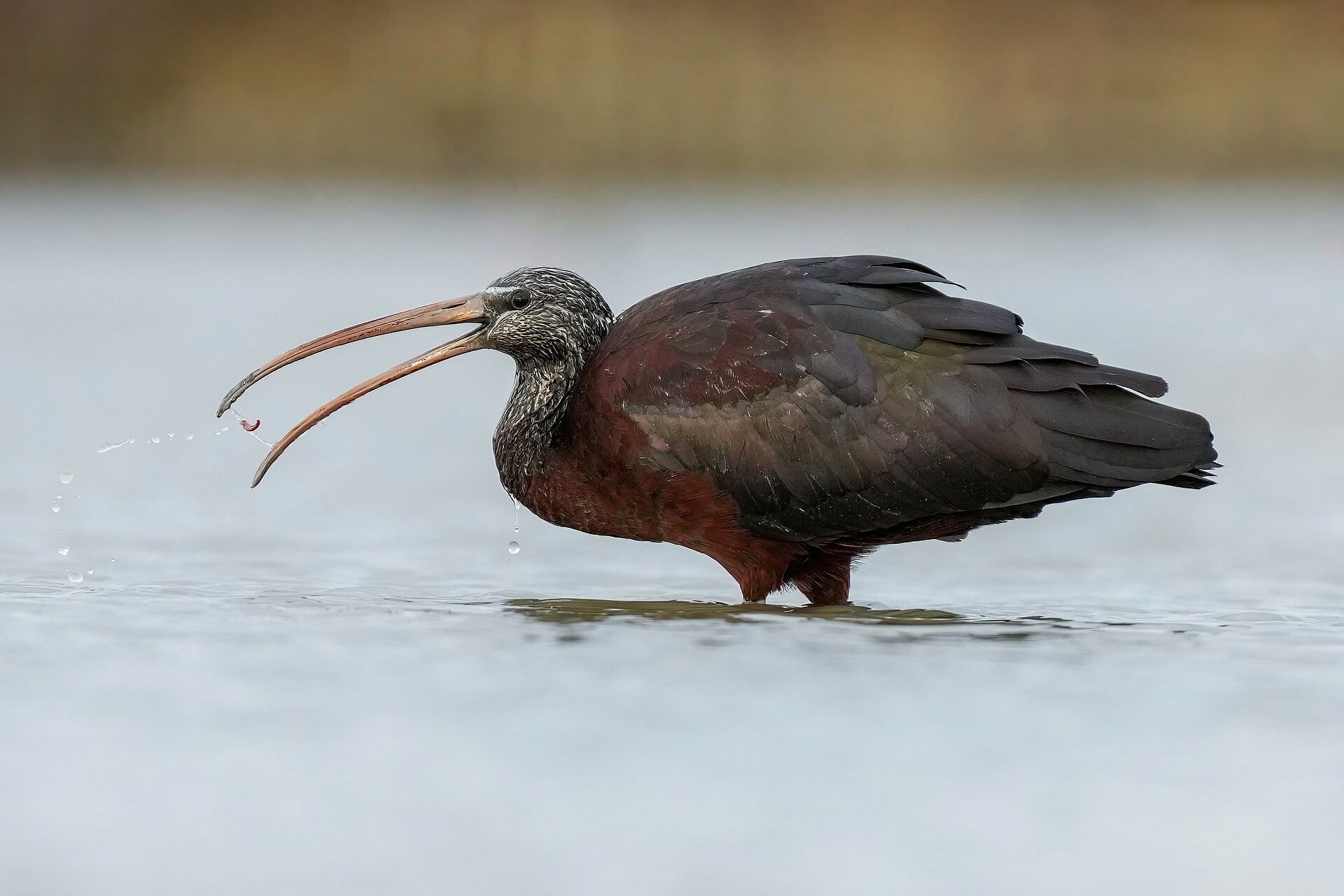
When you grow tired of exploring the marshes, just drive a few kilometres further and you’ll find yourself on the shores of the Mediterranean. These beaches, however, have nothing in common with the crowded resorts of the French Riviera, where you have to pay for expensive sun loungers. The beaches of the Camargue are endless, wild, made of fine sand and fringed with dunes covered in hardy grass. They’re places where you can walk for hours without meeting almost anyone.
Probably the most famous is Plage de Piémanson, a vast sand spit on the eastern side of the delta, which used to function as a giant wild campsite before parking caravans directly on the sand was banned for nature conservation reasons. Today it’s a beautiful, clean stretch of coast that you’ll appreciate above all for its raw beauty. A great alternative closer to the west is Plage de l’Espiguette with its impressive dunes, which in some places reach a height of up to ten metres and give the landscape an almost desert-like character.
💡 Tip: On these beaches you’ll find practically no infrastructure — no ice cream stands, no showers — so you have to bring all your water and food supplies with you. Also bear in mind that if the mistral happens to be blowing, the fine sand turns into a rather unpleasant exfoliating scrub, and swimming in the waves can be tricky in such weather.
10. Cycling Through the Wetlands (and Battling the Wind)
Thanks to the fact that the whole area is utterly flat, without a single notable hill, the idea of exploring it from the saddle of a bicycle naturally suggests itself. And indeed, you’ll find dozens of kilometres of perfectly marked gravel and asphalt cycle paths leading along irrigation canals, between rice fields and right past the horse enclosures. A bike gives you the luxury of stopping absolutely anywhere, which is often not possible by car on the narrow roads for safety reasons.
But there’s one big catch I have to honestly warn you about. As soon as the mistral leans into the flat landscape, even the gentlest cycling outing turns into pure purgatory. Pedalling kilometres across open country against a strong headwind requires a hefty dose of patience and strong thighs. You’ll find bike rentals in every larger town, and a standard city or trekking bike rents for roughly 18 euros a day.
💡 Tip: If you want to spare yourself the agony of the wind, I warmly recommend paying a little extra straight away for an e-bike, which rents here for around 35 to 40 euros a day in 2026. With the help of the electric motor, the mistral will be no obstacle for you, and you’ll be able to calmly enjoy the views of fluttering herons and grazing cattle.
11. Tasting the Local Rice and Specialities
As you drive through the delta, you’ll soon notice that a large part of the farmland isn’t pasture but vast fields flooded with fresh water from the Rhône. The Camargue is, in fact, the most important rice-growing region in all of France. The unique local microclimate and the combination of salty soil flushed with fresh river water give the rice a distinctive flavour. You’ll come across the classic white variety, but the absolute icon is the local red rice (riz rouge), which has a slightly nutty taste and is great in salads or as a side dish.
Local restaurants love to serve rice as a side to gardiane de taureau, a very thick, slow-cooked stew of bull meat braised in strong red wine and scented with local herbs. It’s a hearty, filling dish that’s especially warming in the colder months. As a vegetarian I personally can’t vouch for the taste of this meat ragout, but if you don’t eat meat you can enjoy excellent local cheeses, Provençal vegetable tarts, or buy yourself a cloth bag of the renowned sea salt labelled fleur de sel (salt flower), which is hand-harvested and ranks among the finest in the world.
💡 Tip: If you want to buy local rice or salt as a souvenir, avoid the overpriced tourist shops in the centre of Saintes-Maries-de-la-Mer. Better to stop at one of the stalls right along the main roads, or pop into an ordinary large supermarket around Aigues-Mortes, where you can pick up the very same local products in beautiful packaging for half the price.
12. A Boat Trip Along the Rhône Delta
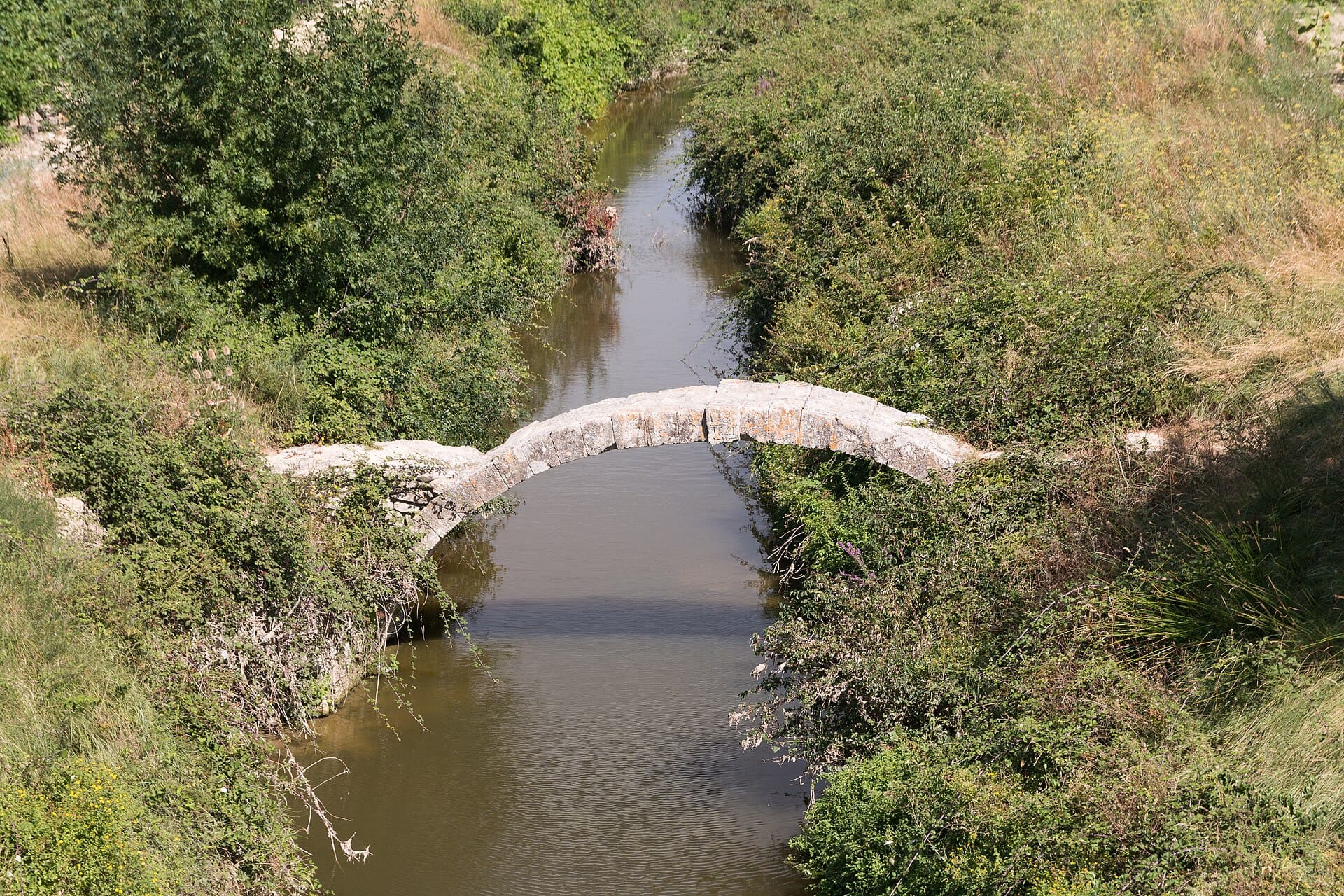
If you want a break from driving or pedalling, the best way to soak up the atmosphere of the wetlands is to board an excursion boat. In this area the Rhône splits into two main branches, creating a complex system of canals you simply can’t reach over land. Traditional excursion boats, known as tiki, most often set off from the harbour in Saintes-Maries-de-la-Mer and take you on a leisurely cruise lasting about an hour and a half.
During the cruise the captain provides commentary on the local fauna and flora, and the boat often stops near the banks so you can calmly photograph the horses or bulls grazing in the shallows. From the deck you also have a great view of the sky full of migratory birds and herons. It’s a completely undemanding activity that even small children or older travellers can manage — those who otherwise couldn’t handle long walks in the heat.
💡 Tip: If you want a slightly more intimate experience than on a large sightseeing boat with dozens of other tourists, I’d recommend renting a small boat for a few people or going on a guided canoe trip. From the lower perspective at water level, you perceive the surrounding nature far more intensely and feel like a true part of this quiet, watery world.
Map of points of interest for your phone
Where to Go Next from the Camargue
Once you’ve had just about enough of the marshes, mosquitoes and salt, it would be a great shame not to look around the surrounding area, which offers entirely different scenery and experiences. This whole region is a perfect springboard for discovering other corners of southern France.
- If you long for rolling hills, cypress trees and romantic villages clinging to cliffs, head off to explore Provence. The contrast between the flat Camargue and the hilly Provençal countryside will absolutely win you over.
- If history and ancient architecture fascinate you, don’t miss a trip to see the Roman monuments. A huge amphitheatre and a stunning aqueduct await you if you visit Nîmes and the Pont du Gard, which is just a short hour’s drive from the edge of the delta.
- For art and in the footsteps of Vincent van Gogh, head to the nearby town of Arles, which forms the figurative northern gateway to the whole wetland region and will charm you with its narrow lanes and its arena.
Frequently Asked Questions
How many days do I need to visit Camargue?
To have enough time to leisurely see the ornithological park, visit the salt pans, explore historic Aigues-Mortes, and take a horseback ride through the wetlands, I recommend setting aside 2 to 3 full days. If you only come here for an afternoon trip, you’ll manage to see the flamingos, but you’ll miss out on the overall slow-paced atmosphere of this rugged land.
Are the mosquitoes in the wetlands really that terrible?
Yes, unfortunately it’s true. Given that this is a huge area of stagnant salt and fresh water, mosquitoes are an integral part of the local ecosystem. The worst situation is in July and August, especially after sunset and on days when there’s no wind. In spring and autumn months, the situation is much more bearable.
Can you swim in the sea in Camargue?
Absolutely. In the south of the reserve you’ll find long kilometres of wild sandy beaches, the most popular being Plage de Piémanson or Plage de l’Espiguette. The water is clean and the shores slope very gently into the sea. Just bear in mind that there’s no shade on the beaches, nor typical tourist facilities with showers and toilets.
When are flamingos the most pink?
Flamingos get their vibrant color from their diet, specifically from tiny crustaceans. The pinkest coloring is seen in adult individuals during spring and early summer, when they’re preparing for mating season and their plumage shines in the most intense shades. Chicks and young birds, on the other hand, are colored grey to dirty white.
Can you pay by card everywhere?
At larger hotels, official monuments, the ornithological park, and better restaurants, you can pay by card without any problems. Nevertheless, I warmly recommend having some cash in euros on you, which you’ll find useful at smaller fruit stands by the road, when buying small souvenirs, or at markets.
Do I need a rental car to explore the delta?
I’d say a car is almost essential here. Although buses run to Aigues-Mortes or Saintes-Maries-de-la-Mer from larger cities, public transport within the nature reserve itself is minimal. Plus, with a car you get the freedom to pull over whenever you spot horses grazing, or to drive out to more remote wild beaches.
Do they kill bulls at the local bullfight?
No, absolutely not. The local course camarguaise is more a game of skill and speed than a bloody fight. The task of the men in the arena is to snatch small ribbons from the bull’s horns, while the animal must not be physically harmed in any way. After 15 minutes in the arena, the bull returns to pasture, and the most skilful bulls live to a ripe old age.
Is this destination suitable for families with children?
Camargue is absolutely fantastic for children. The opportunity to see hundreds of flamingos just a few metres away, a ride on the tourist train between pink salt mountains, or a safe ride on gentle Camargue horses will entertain children of all ages. Just be extra careful in summer with the aggressive sun and use strong repellents.
Tips and Tricks for Your Vacation
Don’t Overpay for Flights
Search for flights on Kayak. It’s our favorite search engine because it scans the websites of all airlines and always finds the cheapest connection.
Book Your Accommodation Smartly
The best experiences we’ve had when looking for accommodation (from Alaska to Morocco) are with Booking.com, where hotels, apartments, and entire houses are usually the cheapest and most widely available.
 🚗 Car rental on the roadVerified rental cars in Provence
Search with the DiscoverCars comparison engine — it compares prices from dozens of local and international rental companies, and most bookings come with free cancellation.
Compare car prices in Provence →Don’t Forget Travel Insurance
Good travel insurance will protect you against illness, accidents, theft, or flight cancellations. We’ve had a few hospital visits abroad, so we know how important it is to have proper insurance arranged.
Where we insure ourselves: SafetyWing (simple monthly subscription) and TrueTraveller (for extra-long trips).
Find the Best Experiences
Get Your Guide is a huge online marketplace where you can book guided walks, trips, skip-the-line tickets, tours, and much more. We always find some extra fun there!