

Have you ever stood on the shore and felt like you were staring at a perfectly painted picture? Lukáš and I absolutely love the sea and the oceans, and over the years we’ve discovered some of the most beautiful beaches in the world — places that genuinely left us speechless, whether it was a hidden turquoise cove on our beloved Sardinia or, at the other extreme, a black-sand beach lashed by icy waves in Iceland.
So I’ve put together 16 of the most beautiful beaches in the world for you — from the ones where we kicked off our shoes and dug our toes into the sand, to the ones we still only dream about. You’ll find European gems with white pebbles, dreamy pinkish lagoons, and the whitest sand spits all the way out in Australia and the Caribbean.
And since beaches aren’t just for looking at, I’ll also show you why some of them are pink or black, and most importantly, I’ll tell you when to visit each one so you can dodge the biggest crowds and the worst of the weather.
TL;DR
The best beaches in the world include Italy’s Cala Goloritzé on Sardinia, crowned the outright winner for 2025, the dazzling white Whitehaven Beach in Australia, and the Seychelles’ Anse Source d’Argent fringed by giant granite boulders. In Europe, you’ll also be wowed by Portugal’s famous Praia da Marinha in the Algarve, the pinkish Greek lagoon of Elafonissi, and Croatia’s iconic Zlatni rat.

Summary
- The most beautiful beach in the world for 2025: The prestigious industry poll was won by Sardinia’s Cala Goloritzé, which lures visitors with glowing turquoise water and tiny white pebbles.
- The whitest sand on the planet: Australia’s Whitehaven Beach is made of 98.9% pure silica, which means the sand never heats up, even at high noon.
- The pinkest hue: The Bahamas’ Pink Sands Beach and Crete’s Elafonissi get their unique colour from the crushed shells of microscopic organisms called foraminifera.
- The most dramatic scenery: Iceland’s black volcanic beach Reynisfjara fascinates with its basalt columns — but swimming is strictly forbidden and life-threatening because of treacherous sneaker waves.
- The best swimming in Europe: Portugal’s Algarve, Italy’s Sardinia and the Greek islands offer countless stunning coves sheltered by steep limestone cliffs.
- The clearest Caribbean water: The island nation of Turks and Caicos boasts the flawless Grace Bay, where underwater visibility commonly reaches an incredible twenty metres.
- Current warning for Greece: The famous Navagio Shipwreck Beach on Zakynthos is completely closed to all access until at least the end of October 2026 due to a genuine risk of landslides.
- An Arctic paradise: Norway’s Lofoten Islands prove that white sand and Caribbean sea colours can be found deep beyond the Arctic Circle too — although the water here is reserved strictly for the truly hardy.
16 of the Most Beautiful Beaches in the World
I’ve ordered them from the European gems that are within easy reach all the way to far-flung tropical paradises. For each beach you’ll find out what makes it special, the colour of its sand and water, and when it’s worth visiting.
1. Zlatni rat (Brač, Croatia)
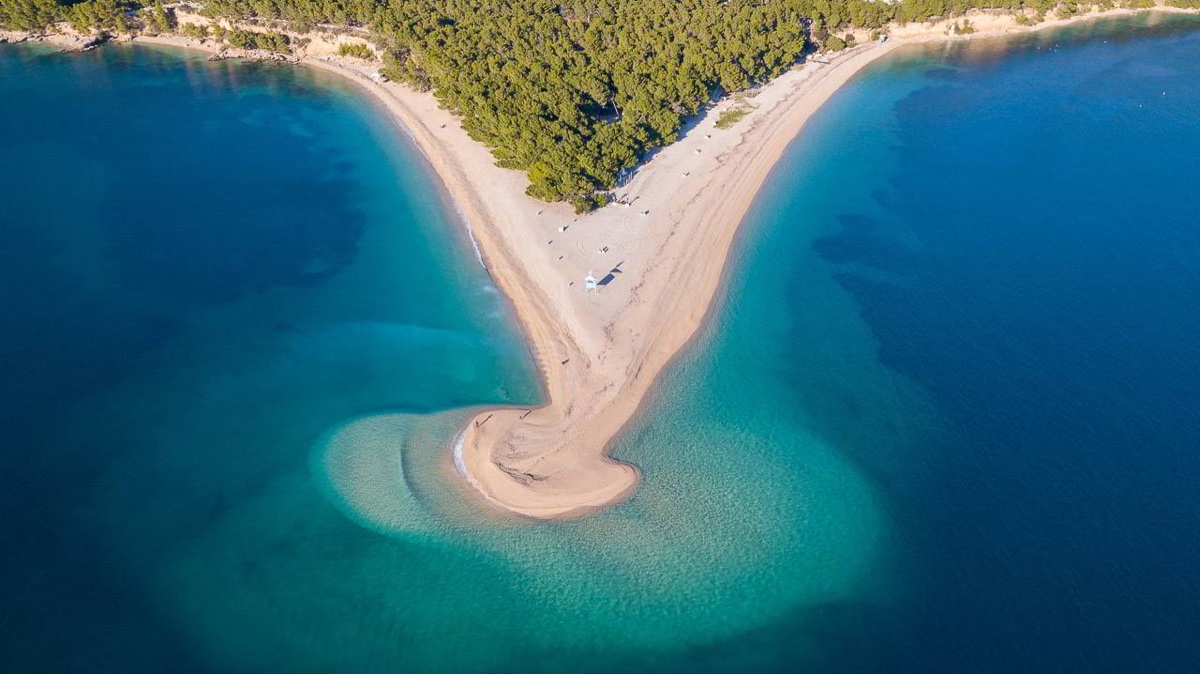
On the southern Dalmatian island of Brač, right by the popular little town of Bol, lies a beach that is an absolute phenomenon and appears on most of the country’s promotional material. Zlatni rat, or the Golden Horn, is an incredible spit of fine white pebbles that juts about five hundred metres out into the crystal-clear sea. Lukáš and I have travelled around Croatia several times now, and this beach has always fascinated us with the way it changes shape according to the prevailing wind and the sea currents, so the tip swings to the east one day and to the west the next.
Because the beach is made of pale pebbles rather than fine sand, the water is a gorgeous turquoise and emerald with fantastic clarity. The swimming here is superb, and the spot is also a renowned windsurfing destination thanks to the reliable afternoon maestral wind. From the centre of Bol you can reach it on a pleasant twenty-minute stroll along the pine-lined promenade.
💡 Tip: If you want to enjoy the Golden Horn in peace and with pleasantly warm water, come in June or September, because it gets seriously crowded during the summer holidays. You’ll find more great tips in our separate article on the island of Brač (Zlatni rat).
2. Stiniva (Vis, Croatia)
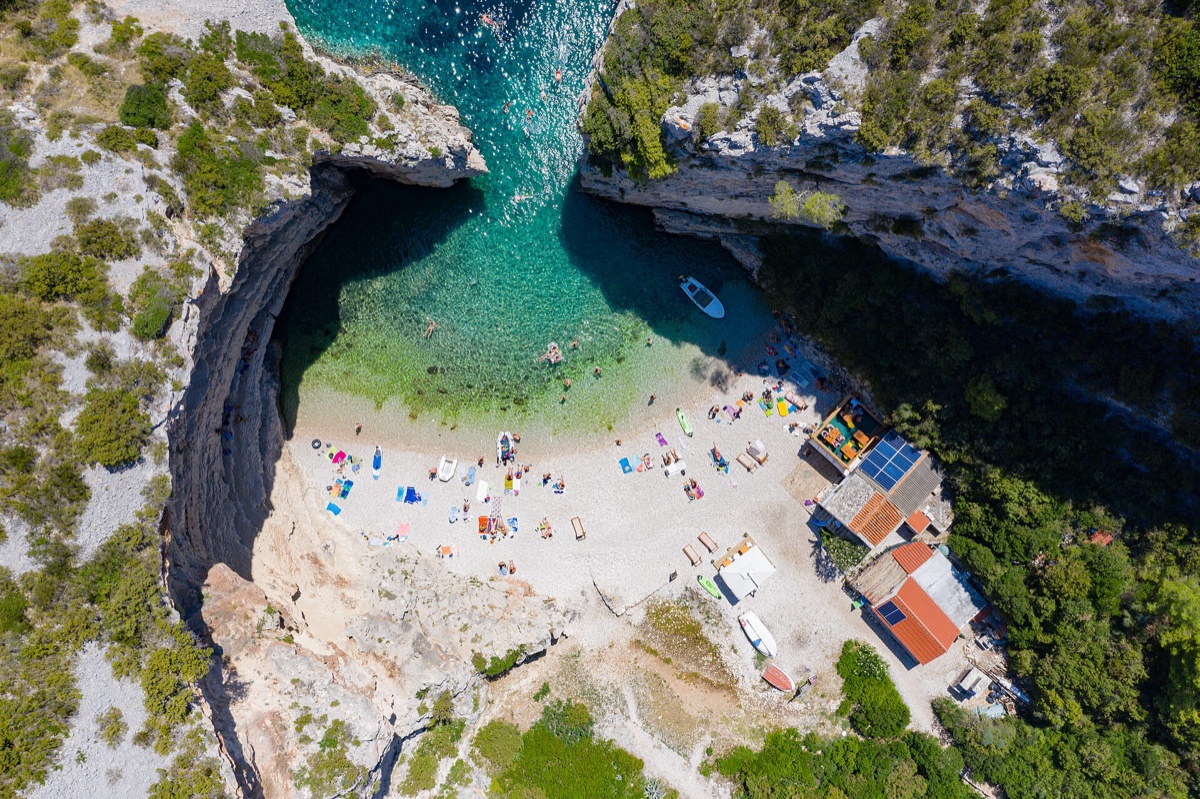
If you’re after something truly unique and a touch dramatic, you have to head to the southern coast of the island of Vis, where the stunning Stiniva cove hides away. It’s an extraordinarily narrow beach hemmed in by tall cliffs that form an almost perfect closed ring around it, with only a ten-metre gap leading out to the open sea. This whole geological wonder was created long ago when the roof of a huge original cave collapsed, and Stiniva was even named the most beautiful beach in Europe back in 2016.
The combination of white pebbles and the narrow rocky opening turns the water in the cove into a distinctly turquoise natural pool that’s absolutely ideal for swimming. Getting there is a little trickier, though — you can either come by boat from the towns of Vis or Komiža, or take the steep walk down from the hamlet of Žužec. The descent takes about twenty-five minutes, there’s no railing whatsoever and the rocks are quite slippery, so sturdy footwear is an absolute must.
💡 Tip: Seasoned travellers recommend visiting Stiniva early in the morning or late in the afternoon, since between 10am and 4pm the tiny beach tends to be packed with passengers from excursion boats. After four o’clock the sun and the crowds both leave the cove, and the place takes on its true magical atmosphere.
3. Cala Goloritzé (Sardinia, Italy)
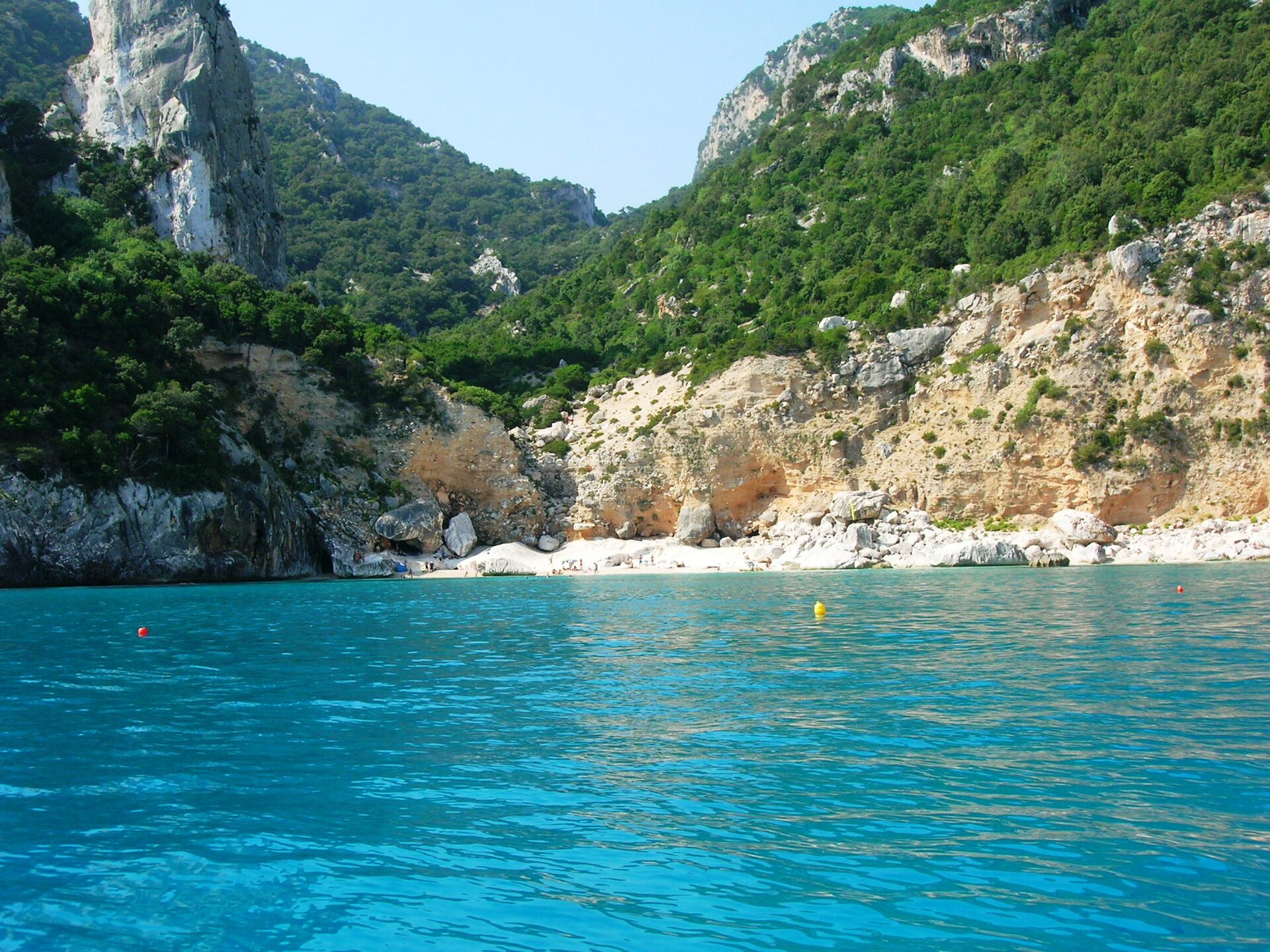
Sardinia is our absolute favourite, and Cala Goloritzé, set on the east coast in the Golfo di Orosei, is probably the most beautiful gem you can discover there. Its exceptional status is confirmed by the fact that it was crowned the outright winner of the prestigious World’s 50 Best Beaches poll for 2025, decided by a jury of more than a thousand tourism professionals. Towering majestically over the entire UNESCO-protected cove is the limestone spire of Monte Caroddi, over a hundred and forty metres high and beloved by climbers from all over the world.
What makes this beach unusual is that it isn’t made of classic sand but of tiny white pebbles that look like grains of rice, lending the water an unusually bright, glowing turquoise. We walked down to it from the Golgo plateau, and the trek took us about an hour and a half going down — the return journey back up the steep hill in the heat was considerably harder. It’s absolutely crucial to know that entry costs seven euros and requires a booking at least 72 hours in advance via the Heart of Sardinia app, because the daily limit is strictly capped at around two hundred and fifty people.
💡 Tip: Excursion boats are strictly forbidden from coming within two hundred metres of the shore, so if you arrive by sea, you’ll have to swim from the boat to the beach. The best time to visit is definitely May, June or September, which you can read more about in our guide to the most beautiful beaches in Sardinia.
4. Spiaggia La Pelosa (Sardinia, Italy)
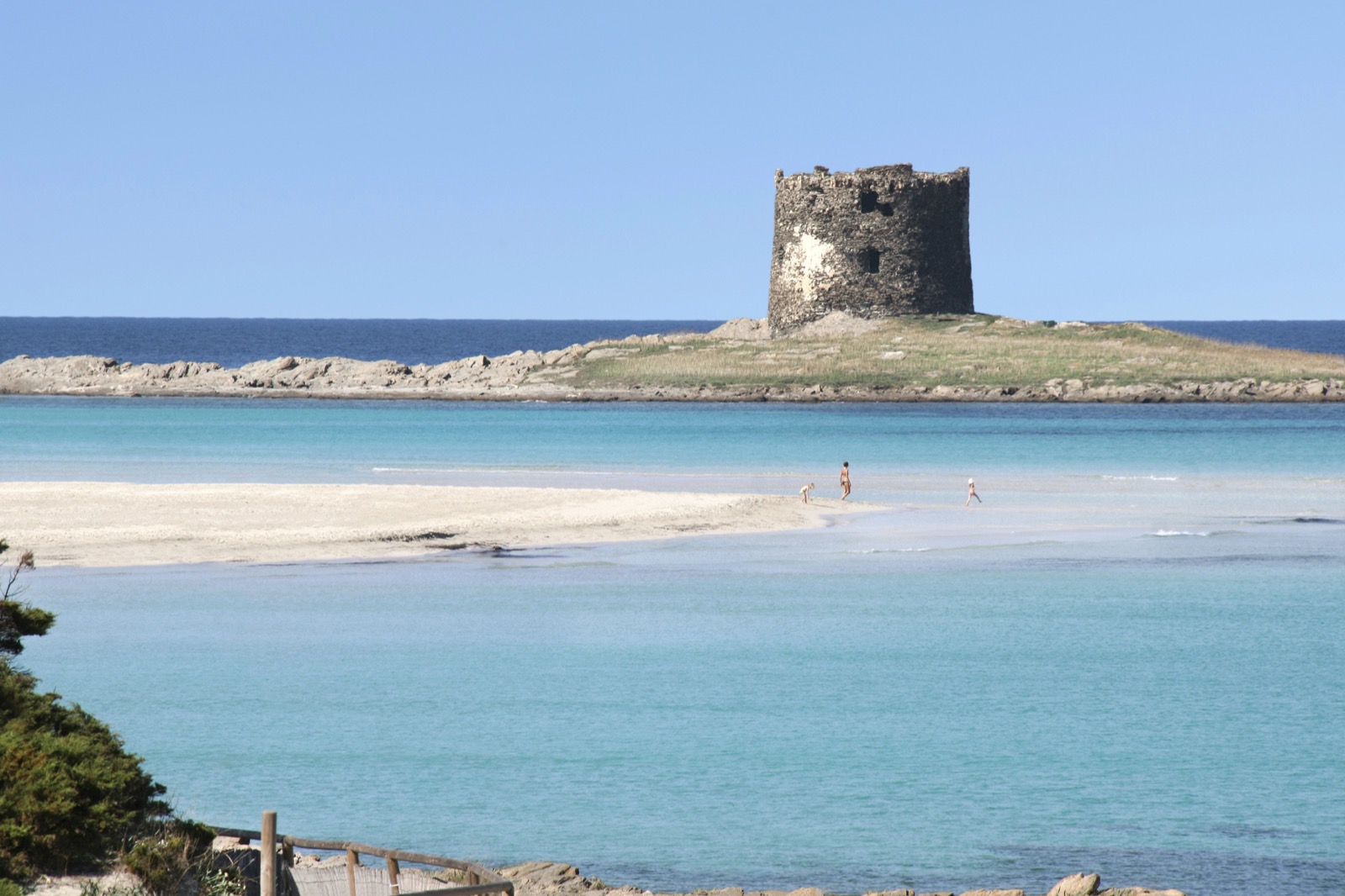
At the very northwestern tip of Sardinia, near the town of Stintino, you’ll find a place that looks as if someone cut it straight out of a luxury Caribbean brochure. La Pelosa boasts incredibly fine white sand and beautifully shallow water that stretches far out to sea, creating an enormous natural pool with a view of the ancient Torre della Pelosa watchtower. The swimming here is incredibly pleasant, and thanks to the sun-warmed shallows, it’s an absolute paradise for families with little kids.
This beach is very strictly protected and regulated, however, to prevent its destruction and the gradual loss of its sand. During the summer season from June to September, the daily capacity is limited to fifteen hundred visitors, and you have to book your entry well in advance through the official website. On top of that, there’s a strict ban on placing classic cloth towels directly on the sand — all visitors must use solid straw mats.
💡 Tip: When you leave the beach, don’t forget to carefully rinse your feet at the showers provided, so the precious white sand isn’t carried away from the area. The ideal month to visit is September, when the sea is still lovely and warm and the pressure on the booking system is a little lighter.
5. Cala Luna (Sardinia, Italy)
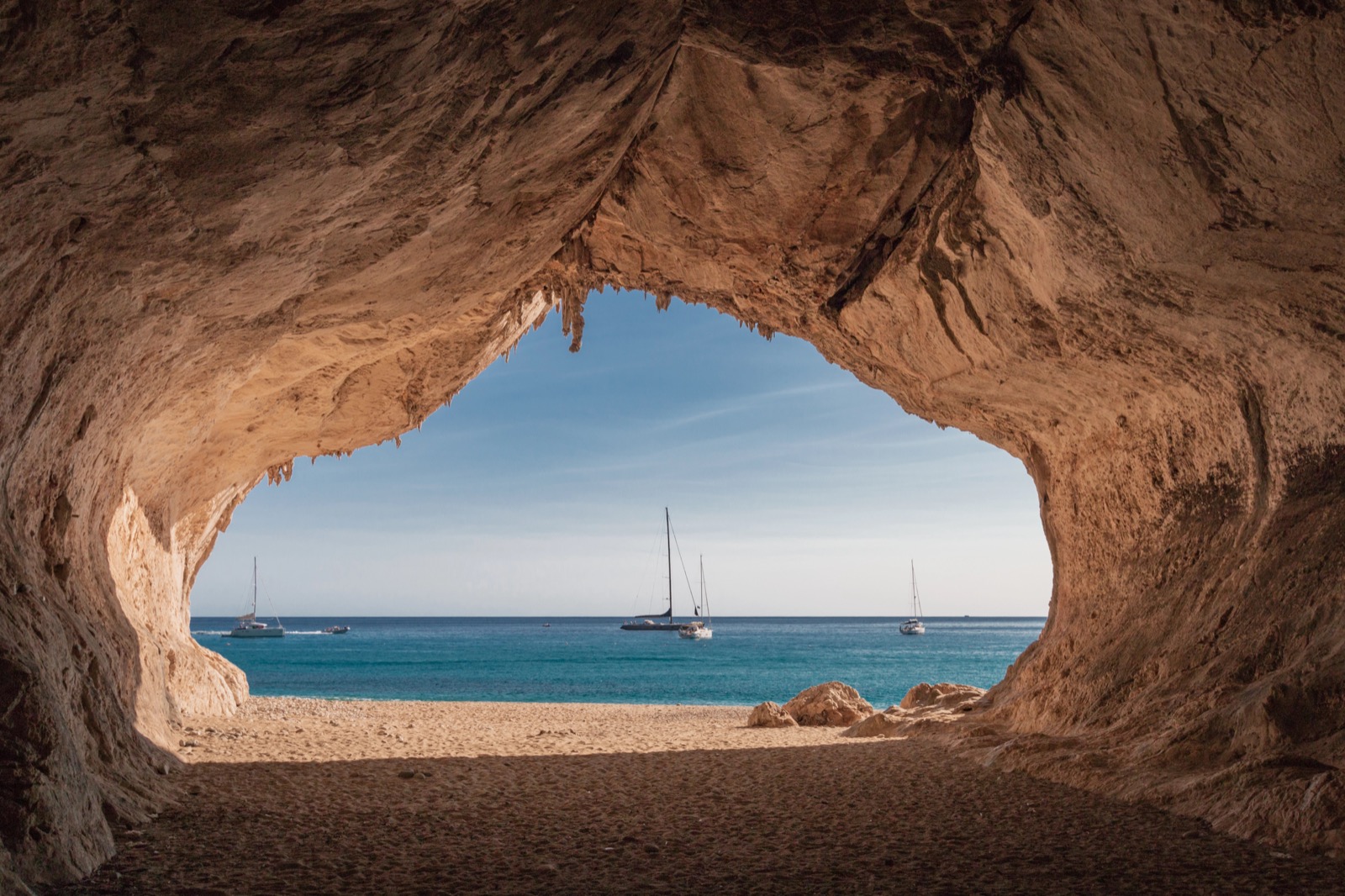
Back to Sardinia’s wild east coast and the Golfo di Orosei, home to the breathtaking Cala Luna. This wide beach forms a perfect crescent moon and is backed by enormous limestone cliffs that open up into deep, highly photogenic caves offering merciful shade. The whole scene feels so raw and cinematic that the famous film Swept Away, starring Madonna, was once shot here.
The sea here plays in every shade of blue and turquoise, and the fine pebbles on the shore blend seamlessly into pale sand. We arrived by boat from the nearby port of Cala Gonone, which is by far the most comfortable and popular way to get here, although more adventurous souls can also reach it on foot via a demanding trek over the Supramonte mountains. The water is very calm, and the caves in the cliffs practically beg you to explore them in the afternoon with a camera in hand.
💡 Tip: If you come in spring or early summer, you’ll see beautifully blooming oleanders behind the beach and a freshwater lagoon that gives the scenery an even more romantic feel.
6. Praia da Marinha (Algarve, Portugal)
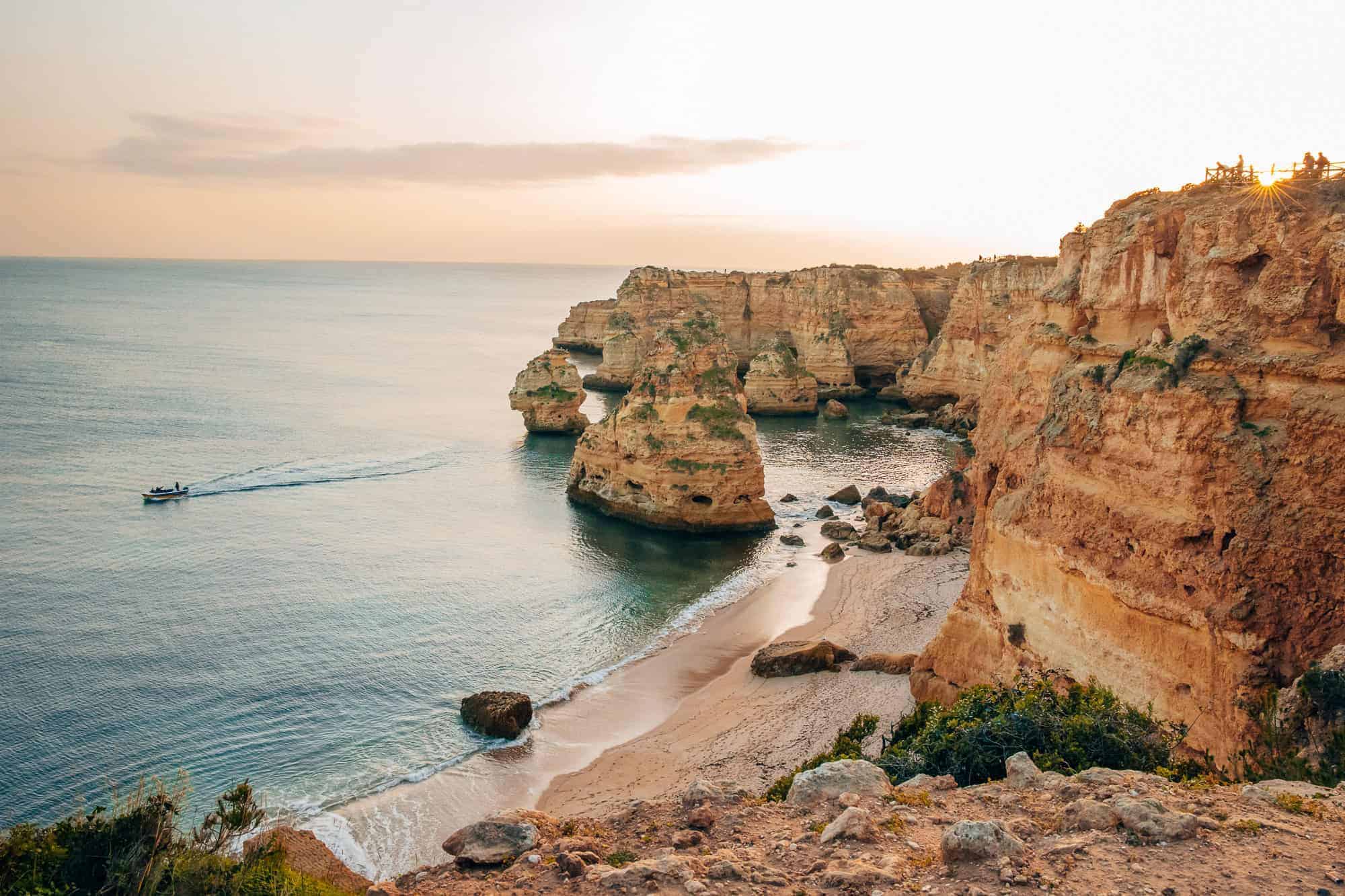
We simply adore Portugal’s southern Algarve coast, and Praia da Marinha is probably the most iconic beach you’ll see there. It’s exactly the place you see on every postcard and in every guidebook, thanks to its fantastic golden-to-ochre sandstone cliffs and two famous natural arches rising straight out of the sea. In the afternoon sun the cliffs practically glow honey-coloured, and the contrast with the turquoise water is absolutely breathtaking.
To get down to the water you have to descend a fairly steep staircase from the cliff, and while the large car park at the top is free, in summer it’s usually full by around ten in the morning. The cove is beautifully sheltered from the big waves of the open ocean, so the water here is surprisingly calm and offers some of the best snorkelling conditions in all of Portugal. At low tide, fascinating rock pools full of marine life are also revealed at the eastern end of the beach.
💡 Tip: Up on the cliffs, the famous Sete Vales Suspensos trail — the Seven Hanging Valleys — begins, taking you past the most beautiful viewpoints in the area. We’ve written up everything about this region in our article on the most beautiful beaches in Portugal.
7. Praia de Benagil and the Cave (Algarve, Portugal)
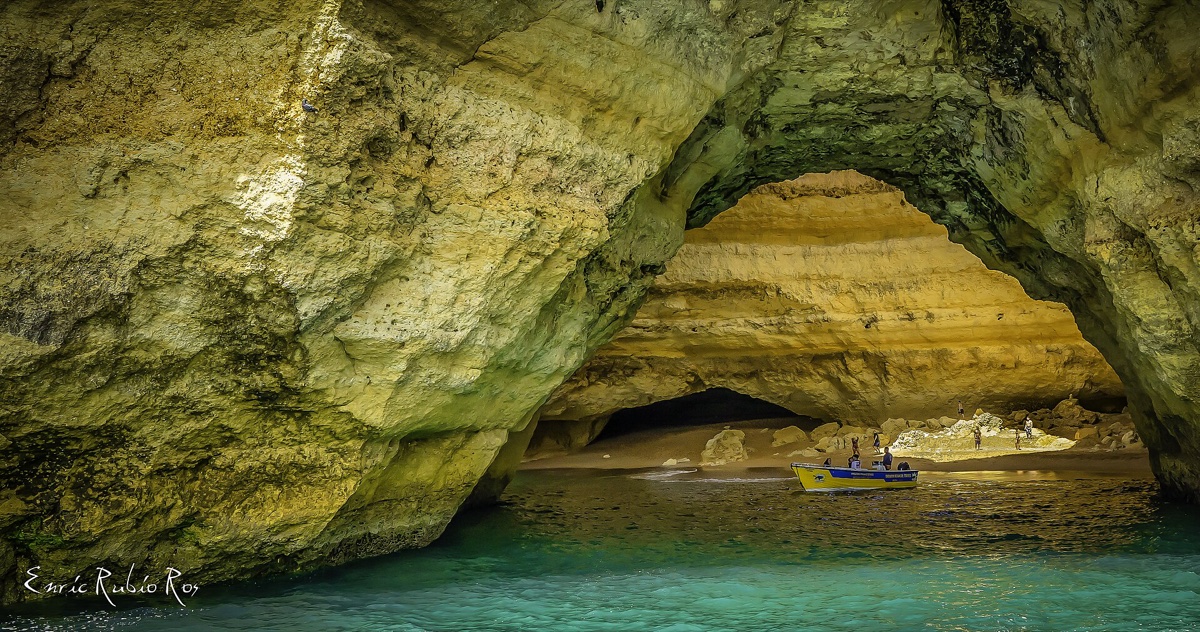
While you’re in the Algarve near the town of Lagoa, you definitely shouldn’t miss Praia de Benagil and, above all, the cave of the same name hidden just a short distance away. Above the small public beach, in the rock, sits Portugal’s most famous sea cave, resembling an enormous cathedral, with a huge circular opening in its ceiling known as the eye or the chimney. Sunlight pours beautifully through this opening, illuminating the golden sand hidden inside the cave.
We highly recommend setting off early in the morning, when the sea is calmer and there aren’t so many day-trippers inside the cave. It’s vital to know that the cave can only be reached by water — either on a rented sea kayak or paddleboard, or as part of an organised excursion on a smaller boat with companies like Tortuga or Didi. For safety reasons, walking inside the cave is currently partly restricted, and from above on land the famous opening is protected by a wooden fence so no one falls in.
💡 Tip: Kayak trips give you a far greater sense of freedom than a packed motorboat, and you can also explore other smaller caves in the area that the bigger boats simply can’t fit into. You’ll find more practical information in our guide to the beaches and Benagil near Lagos.
8. Navagio (Zakynthos, Greece)
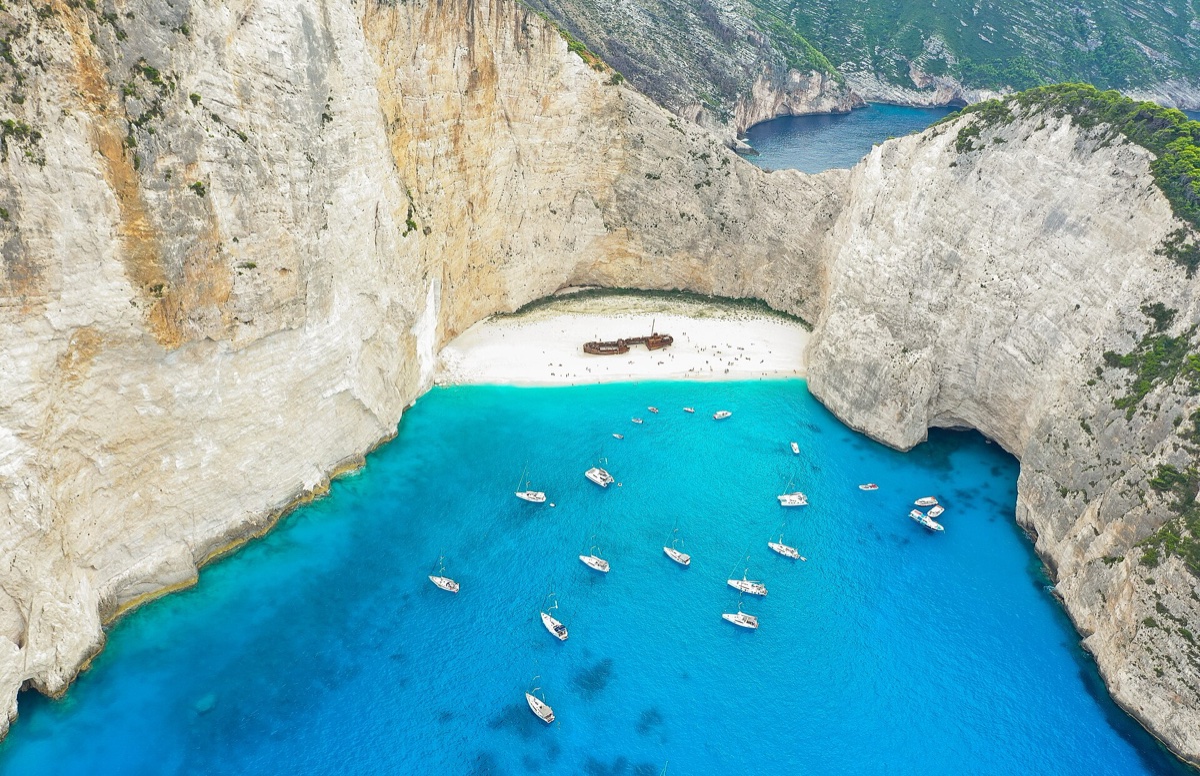
One of the most photographed beaches in all of Greece is undoubtedly Navagio, on the Ionian island of Zakynthos, which has even won an award for the most iconic beach scenery. In the middle of a cove hemmed in by steep limestone cliffs rests the enormous rusting wreck of the MV Panagiotis, which ran aground here in 1980 and to this day creates an incredible contrast with the dazzling white pebbles and the neon-blue water. It used to be reachable only by excursion boat, but the situation has changed dramatically in recent years.
Heads up — there’s one major piece of news: until at least 31 October 2026, the beach is completely closed to access due to a high risk of rockfalls. After the earthquake in September 2022, part of the cliff fell directly onto the sand, so today you can’t set foot on the beach itself at all, and excursion boats can only anchor about twenty to thirty metres offshore. But you can still safely admire and photograph all that fascinating beauty from the official viewpoint perched high on the cliffs above the beach.
💡 Tip: The viewpoint above tends to be absolutely packed with tour buses at midday, so set off early in the morning to have this amazing view almost to yourself. Find plenty of inspiration for other Greek islands in our article on the best beaches in Greece.
9. Elafonissi (Crete, Greece)
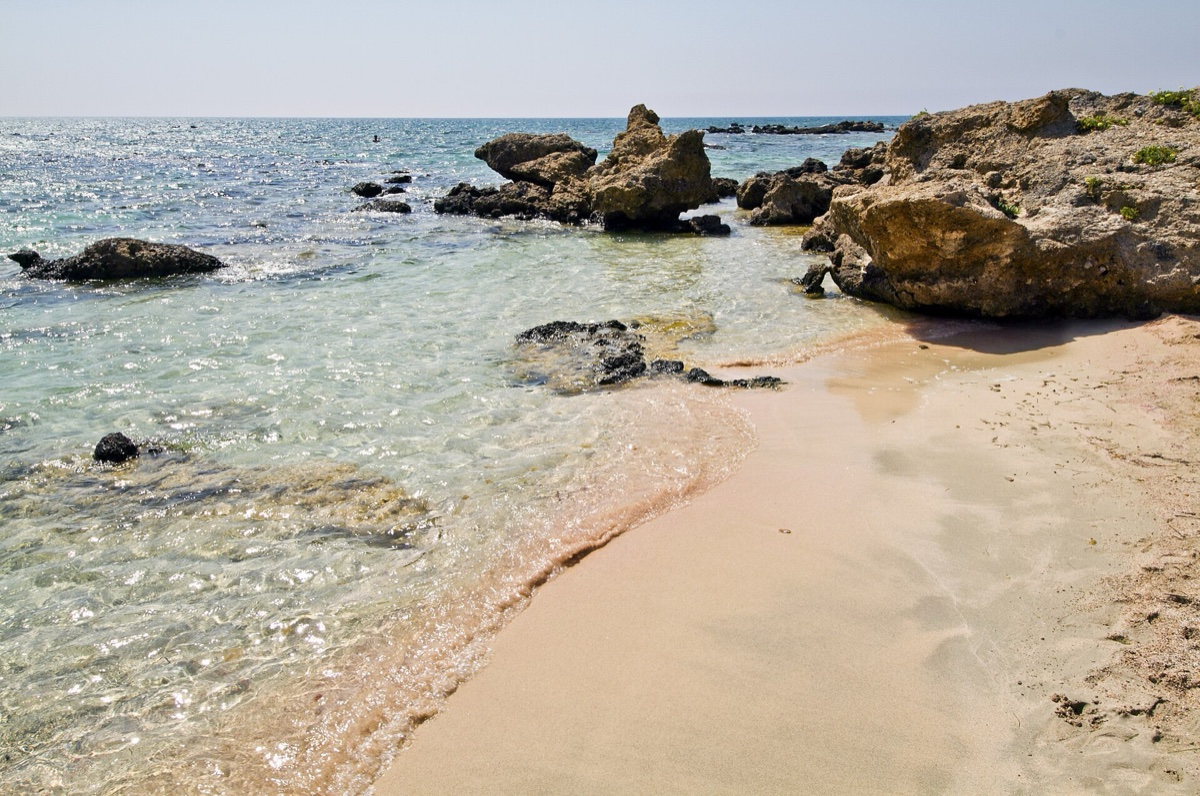
Crete draws millions of tourists, and one of the main reasons is the famous Elafonissi beach at its very southwestern tip. Its biggest claim to fame, and a real tourist magnet, is its incredibly fine white sand that takes on a clear pink tint at the water’s edge, giving the whole place a very exotic, Caribbean feel. The pink colour isn’t down to magic but to the gradual crushing of fragments of shells and coral organisms mixed with the pale sand.
The beach actually forms a gorgeous shallow lagoon that connects the mainland with the adjacent islet of Elafonissi, with the water usually only waist-deep when you wade across. It’s an absolutely ideal spot for families with small children, because the water is very calm and warmed by the sun like a bathtub. The whole area falls within the Natura 2000 protected zone, and there’s a very strict ban on taking away any of the pink sand, under threat of a hefty fine.
💡 Tip: You’ll see the strongest pink shade right where the waves spread out onto the sand, and especially in the late afternoon light, when the biggest crowds have also disappeared and the beach turns into a perfectly peaceful paradise.
10. Balos (Crete, Greece)
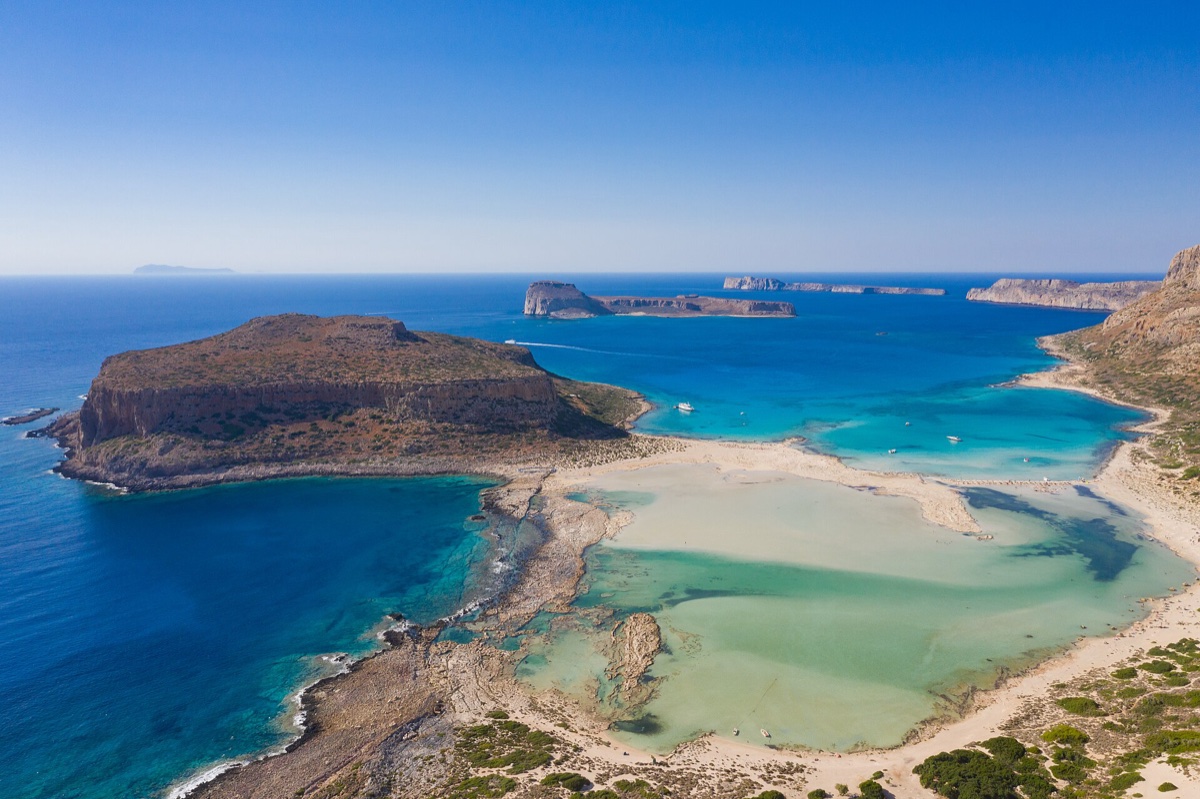
At the northwestern tip of Crete, on the Gramvousa peninsula, lies another incredible lagoon that goes by the name of Balos and makes a great alternative to pink Elafonissi. This natural paradise offers breathtakingly shallow, warm water that sometimes also creates subtle pinkish reflections on the white sand, and the view from the elevated bluff down to the lagoon is one of the most beautiful photos in all of Greece.
Getting here is a bit more of an adventure, since you can either come on an organised boat from the port of Kissamos, or by car along a very dusty, rocky track followed by a longer walk down. It’s that descent that earns you the famous iconic view, which you’ll never see from a boat deck. Here too, the shallows are absolutely perfect for all ages, and swimming in the turquoise water is a once-in-a-lifetime experience.
💡 Tip: If you drive, be very careful with the car’s undercarriage, because the road to the car park isn’t paved and some rental companies explicitly don’t provide insurance for this particular route.
11. Kvalvika and Haukland (Lofoten, Norway)
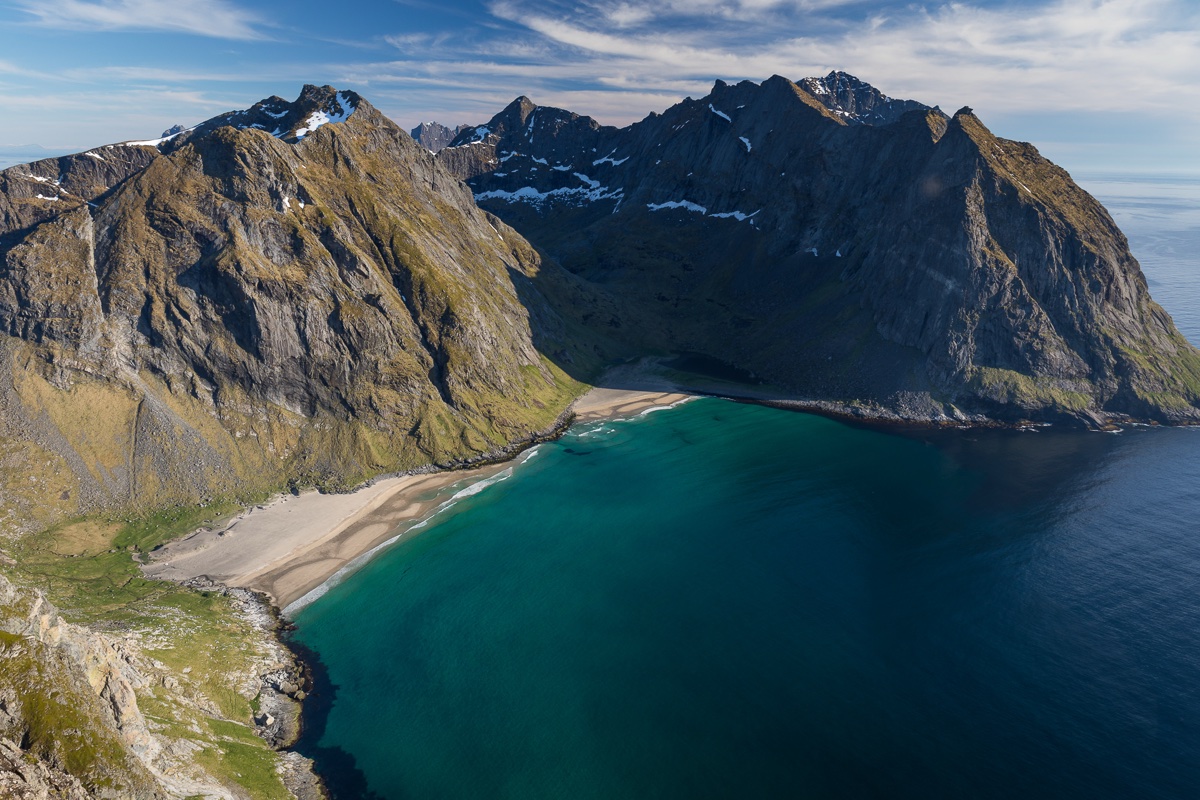
Who says the most beautiful beaches have to be in the tropics where it’s scorching hot? Far up in northern Norway, deep beyond the Arctic Circle, lie the Lofoten Islands, which hide absolute Arctic treasures of white sand and turquoise water that genuinely take your breath away. Haukland is an easily accessible beach right by the road, ranked by prestigious magazines as one of the most beautiful in Europe, and it even has a little café and a kayak rental.
Kvalvika, by contrast, is a wild and hidden cove in Lofotodden National Park, which you reach on foot via a roughly hour-and-a-half trek across boggy ground. It’s one of the most popular spots for wild camping in tents, and the incredible paradox is that although the sea looks like the Caribbean, the water barely tops ten degrees even in the height of summer. Swimming is therefore reserved for hardy cold-water lovers, but the scenery of steep mountains and the midnight sun more than makes up for it.
💡 Tip: If you love photography, be sure to head up to the viewpoint from the summit of Ryten, from which you’ll see the whole of Kvalvika beach laid out below you from a stunning bird’s-eye perspective. Read more about this Arctic paradise in our article on the beaches of Lofoten.
12. Reynisfjara (Iceland)
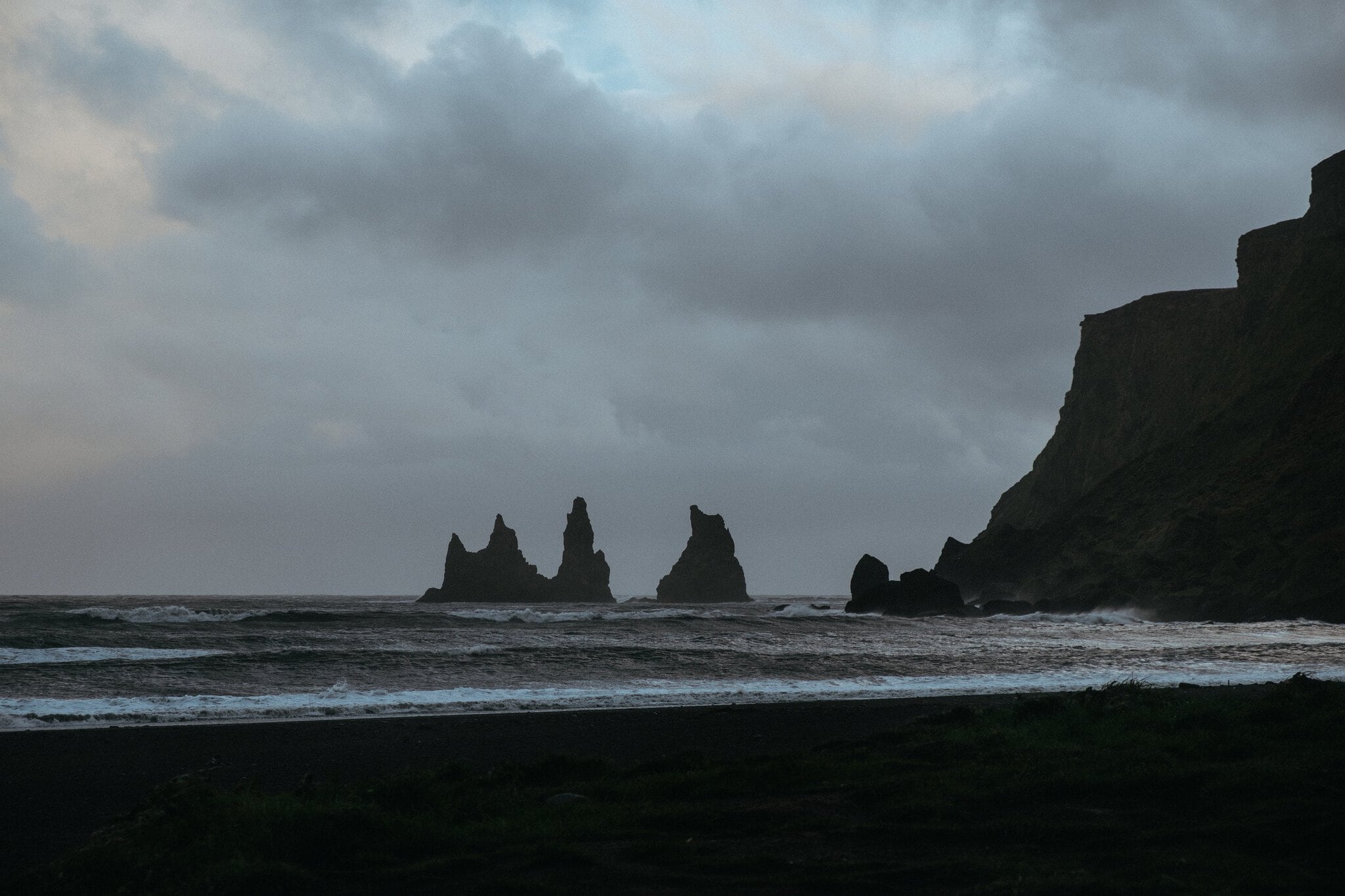
Iceland is utterly magical, and Lukáš and I have the most beautiful travel memories from there — although the black beach of Reynisfjara near the town of Vík sometimes sent shivers down our spines out of sheer respect for the power of nature. The sand here is deep black, of volcanic origin, and the whole scene — with its enormous geometric basalt columns, the wild cliff and the raging grey-blue ocean — looks like something out of a fantasy film.
It’s vital to understand that Reynisfjara is beautiful, but very dangerous. Swimming here is absolutely forbidden and life-threatening because of so-called sneaker waves, which surge far up the shore at huge speed without any warning and can drag a person into the icy sea. In February 2026, part of the basalt columns even collapsed here after a series of strong storms, and there’s a permanent safety traffic light on site warning tourists of the current risk.
💡 Tip: Never, and I really mean never turn your back on the sea at this beach, and keep a safe distance from the water even when the ocean seems relatively calm. For more trip ideas, check out our article on the south coast of Iceland (Reynisfjara).
13. Whitehaven Beach (Whitsundays, Australia)
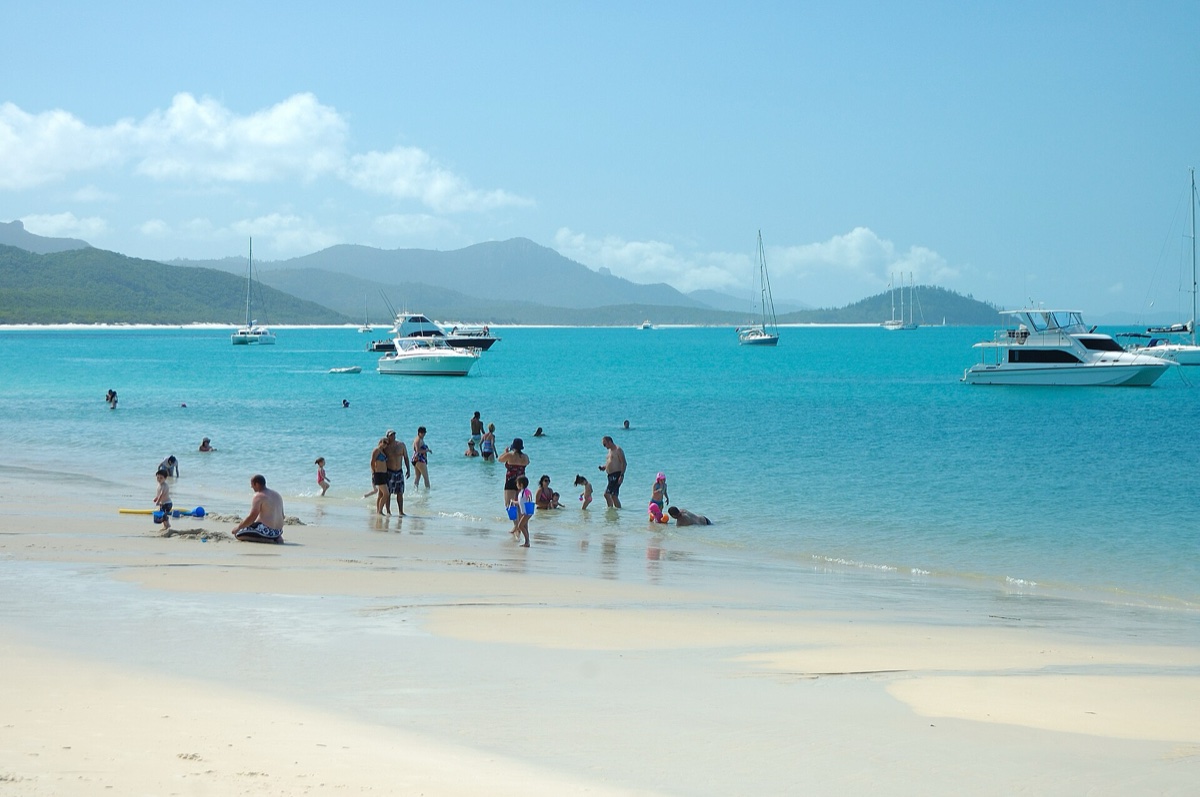
If we cross to the other side of the planet, to the famous Great Barrier Reef in Australia, we come across a place that holds the record for what’s probably the whitest beach in the world. Whitehaven Beach in the Whitsunday Islands is an incredible seven kilometres long, and its sand is 98.9% pure silica, which means the grains reflect sunlight perfectly and you can walk barefoot across them even in the fiercest midday heat, because they simply never heat up.
You can only reach this beauty by excursion boat or luxury seaplane from the ports of Airlie Beach or Hamilton Island, since the whole area is a strictly protected national park. At the Hill Inlet mouth, the water creates amazing swirling patterns with the white sand that rank among the most photographed natural phenomena in all of Australia, and swimming in the turquoise water is sheer bliss.
💡 Tip: The best time to visit is June to October, when you’ll avoid the season of venomous jellyfish and won’t have to swim in special protective stinger suits.
14. Anse Source d’Argent (Seychelles)
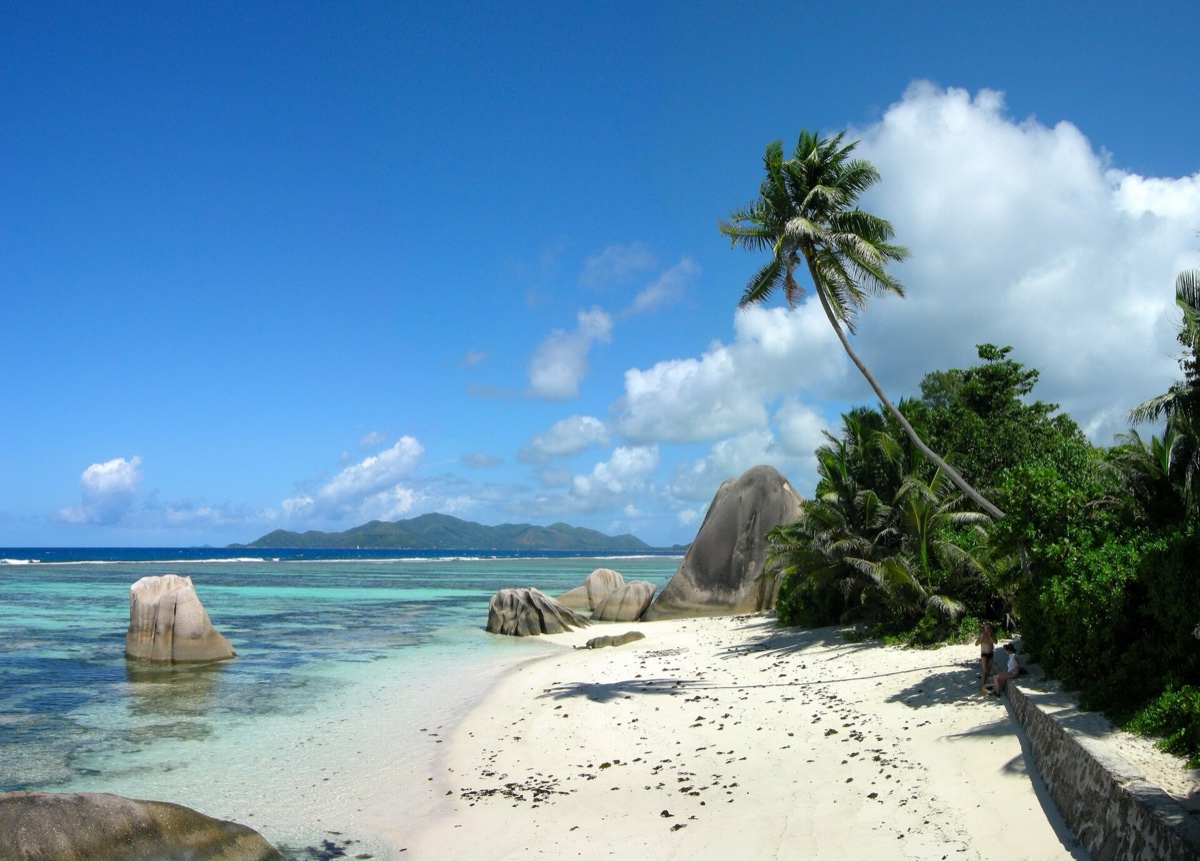
For many people the Seychelles in the Indian Ocean are synonymous with perfect, undisturbed exotica, and the beach of Anse Source d’Argent on the smaller island of La Digue is arguably the most photographed coastline in the world. Its huge advantage and absolute uniqueness are the giant, prehistoric-looking granite boulders smoothed into soft shapes, which frame the fine coral sand and, together with the shallow turquoise lagoon, create scenery that will make your jaw drop.
Access to the beach is via the old coconut and vanilla plantation of L’Union Estate, where a daily entrance fee of about a hundred and fifteen Seychellois rupees is charged. The lagoon is protected by a coral reef, so the water is very calm and safe for swimming, although at high tide the sandy beach itself shrinks considerably. The granite boulders have a subtle pinkish hue, and your photos here will look perfect even without any filters.
💡 Tip: As with so many other famous spots, crowds of day-trippers pour in from neighbouring islands at midday, so set off either early in the morning or just before sunset, when the surrounding granite turns incredible warm tones.
15. Grace Bay (Providenciales, Turks and Caicos)
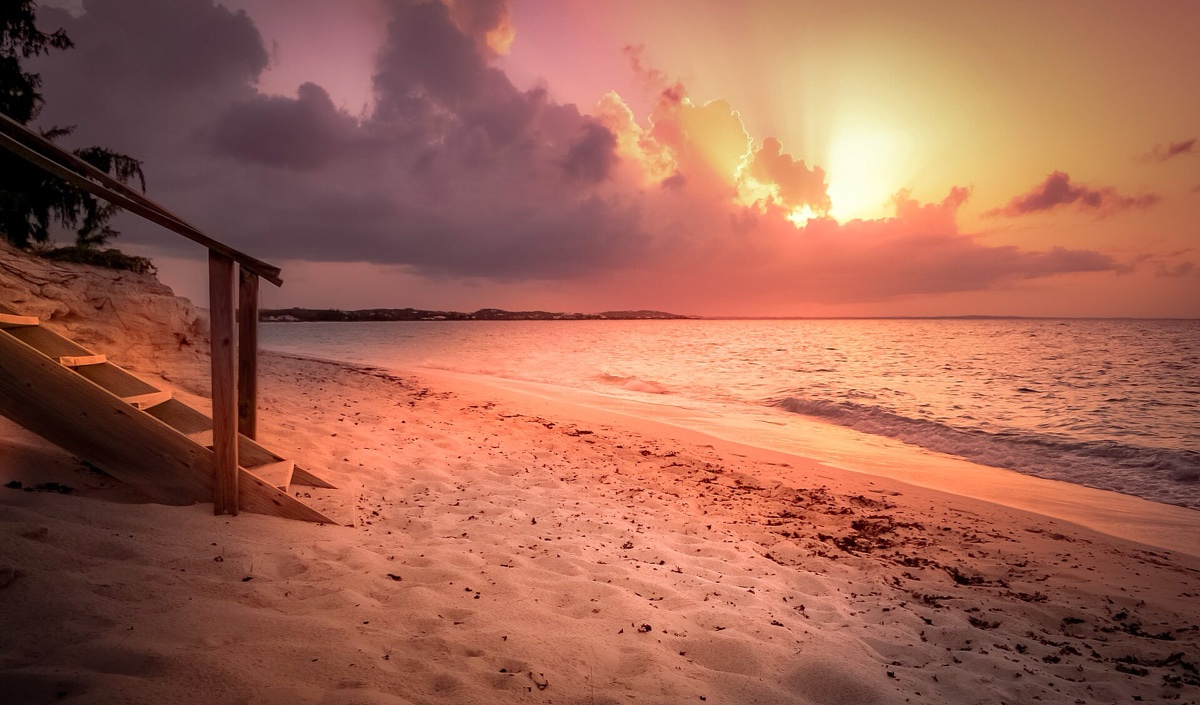
The Caribbean boasts an endless number of perfect beaches, but Grace Bay on the island of Providenciales in the Turks and Caicos archipelago is simply in a league of its own. It regularly wins worldwide awards as the very best beach destination, and travellers often describe it as the place with the clearest water on the entire planet. The average underwater visibility here commonly reaches an impressive twenty metres, and you’ll see every detail beneath the surface.
The beach stretches for about five kilometres, is lined with luxury resorts, and its sand is made of crushed coral without a single sharp rock or annoying patch of seaweed. Around a kilometre and a half offshore there’s also an enormous barrier reef that reliably shields the beach from the Atlantic swell, which is why the warm local shallows are a perfectly safe playground for relaxed swimming and for little kids.
💡 Tip: For a trip to the Caribbean, choose the months between December and April, when dry weather is guaranteed in the region and you’ll safely avoid the unpredictable hurricane season, which peaks in late summer and autumn.
16. Railay (Thailand)
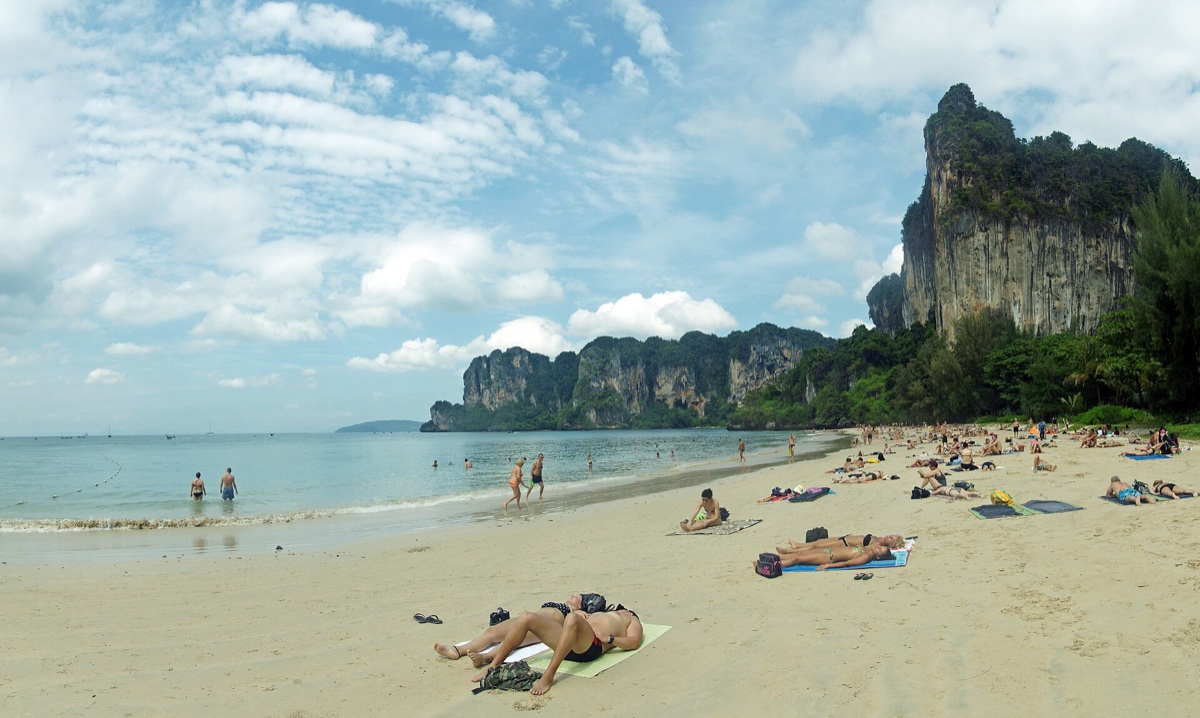
To round off our big selection, let’s head to ever-popular Thailand, straight to Krabi province, home to the fairy-tale cove of Railay. Although this beach sits right on the Thai mainland, you can only reach it on a traditional long-tail wooden boat from the town of Ao Nang, because the entire area is cut off from the rest of the mainland by impenetrable, enormous limestone cliffs. It’s precisely these cliffs, dropping sheer into the emerald water, that make the place an absolute visual paradise and a mecca for climbers.
The sand here is dazzling white, and thanks to the surrounding cliffs and vegetation the water takes on a gorgeously rich green-blue colour. The atmosphere is very laid-back and noticeably calmer than on the big Thai islands, and you won’t find any cars or roads here, just little paths between the trees. The sea is ideal for swimming, and there are countless little secret caves and viewpoints to explore in the surrounding area.
💡 Tip: Travel to Thailand and the Andaman Sea ideally between November and April, during the dry season when the sea is beautifully calm, whereas in summer a strong monsoon and big waves take over.
A Handy Comparison Table
| Beach name | Country | What makes it special | Best time to visit |
|---|---|---|---|
| Zlatni rat | Croatia | White pebble horn that changes shape | June and September |
| Stiniva | Croatia | Cove hidden among enormous cliffs | May and June |
| Cala Goloritzé | Italy (Sardinia) | Winner of the World’s Best Beach poll 2025 | May to September |
| La Pelosa | Italy (Sardinia) | Shallow natural pool with Caribbean looks | June and September |
| Cala Luna | Italy (Sardinia) | Large photogenic caves right on the beach | May, June and September |
| Praia da Marinha | Portugal | Ochre sandstone cliffs and rock arches | May, June and September |
| Praia de Benagil | Portugal | Sea cave with a circular hole in its ceiling | May to September |
| Navagio | Greece | Rusting shipwreck and neon water (now closed) | June and September |
| Elafonissi | Greece | Pinkish sand and a very shallow warm lagoon | Late September and October |
| Balos | Greece | Iconic clifftop view over a shallow lagoon | May to September |
| Kvalvika | Norway | Arctic beach with wild camping options | July and August |
| Reynisfjara | Iceland | Black sand, basalt columns and treacherous waves | Year-round (with caution) |
| Whitehaven Beach | Australia | The whitest silica sand on the planet | June to October |
| Anse Source d’Argent | Seychelles | Enormous prehistoric granite boulders and coral | April, May, October |
| Grace Bay | Turks and Caicos | The clearest water and total Caribbean calm | December to April |
| Railay | Thailand | Limestone cliffs reachable only by traditional boat | November to April |
Fun Facts and Records
Let’s take a look at a few records and curiosities that people ask about most often when it comes to the most beautiful beaches in the world.
The most beautiful beach in the world for 2025
According to the highly prestigious World’s 50 Best Beaches poll, the outright winner for 2025 was Italy’s Cala Goloritzé on the island of Sardinia, decided by a jury made up of more than a thousand tourism professionals. Second and third place in various polls are often taken by the Seychelles’ Anse Source d’Argent or Australia’s Whitehaven Beach.
Where to find the whitest sand of all
This stunning geological record is held by Australia’s Whitehaven Beach, whose sand is 98.9% absolutely pure silica. Thanks to this unique composition, the grains intensely reflect heat and sunlight, so even at tropical noon the sand stays very pleasantly cool underfoot.
Why some beaches are pink
The fairy-tale pink colour on the Bahamas’ Pink Sands Beach or Crete’s Elafonissi isn’t created by magic, but by the crushed shells of microscopic single-celled organisms known scientifically as foraminifera. These reddish-pink creatures gradually mix in the sea with classic white coral sand to create that subtle coloured tint.
What black sand is actually made of
Black beaches like Iceland’s Reynisfjara or Hawaii’s Punaluʻu always have a clear volcanic origin, because they form when molten lava from a volcano flows into the sea, rapidly solidifies, and is then gradually ground down by strong waves into tiny, deep-black grains.
Where the longest beach in the world is
An intriguing geographical record-holder is Brazil’s Praia do Cassino, which, according to satellite measurements, stretches for an incredible two hundred and fifty-four kilometres from the city of Rio Grande all the way to the border with Uruguay.
Does green sand really exist?
Yes, it’s extremely rare, but on Hawaii’s Big Island you’ll find Papakōlea Beach with its bright green sand, caused by a high concentration of a heavy volcanic mineral called olivine. There are only two main beaches in the world with this phenomenon — the other lies in the remote Galápagos.
Where to Next
If you’re planning a summer holiday full of swimming in Europe, be sure to check out our big article on what we think are the very most beautiful beaches in Croatia. And if you’d like to explore more Italian gems and coves with giant granite boulders, you’ll be utterly charmed by the La Maddalena archipelago, which lies just a short boat ride from northern Sardinia.
Lovers of Greece and volcanic colours, meanwhile, will be guaranteed to fall for the island of Milos, Greece, where you’ll find a fantastic lunar landscape and the white Sarakiniko cliffs dropping straight into the deep blue sea.
Frequently Asked Questions
Which beach is the most beautiful in the world?
According to the prestigious World’s 50 Best Beaches ranking for 2025, Cala Goloritzé located on the island of Sardinia won by a landslide. However, since beauty is always very subjective, the eternal and hugely popular contenders for this title also include the stunning Anse Source d’Argent in the Seychelles and Australia’s Whitehaven Beach.
Which beach has the whitest sand?
The title of the whitest sand is rightfully held by Australia’s Whitehaven Beach in the Whitsundays archipelago, whose sand is made up of almost ninety-nine percent pure quartz. It perfectly reflects the harsh sunlight, and a huge advantage is that it doesn’t heat up at all in direct sun.
Why is the sand pink on some beaches?
The pink color of the sand comes from finely crushed shells of microscopic organisms called foraminifera and tiny fragments of red coral, which mix with white sand over time. Among the most famous pink beaches are Pink Sands in the Bahamas and Europe’s Elafonissi in Crete.
What creates black sand?
Black sand always has a clearly volcanic origin and forms when molten volcanic lava rapidly solidifies in the sea, shatters into pieces, and powerful waves gradually grind it into black grains. Beautiful examples include Iceland’s Reynisfjara or the beaches in Hawaii.
Which are the most beautiful beaches in Europe?
Italian Cala Goloritzé and La Pelosa in Sardinia are undoubtedly among Europe’s finest, along with the stunning Praia da Marinha in Portugal’s Algarve, Croatia’s Stiniva cove and the iconic Zlatni Rat, Greece’s Elafonissi, and the arctic Haukland beach in Norway’s Lofoten Islands.
Where is the clearest water in the world?
For the destination with the most crystal-clear water, travelers very often point to the perfect Caribbean beach of Grace Bay in the Turks and Caicos Islands, where visibility regularly reaches twenty meters. Extremely clean water can also be found in many Sardinian and Greek pebble coves.
Does a green beach really exist?
Yes, on the Hawaiian island of Big Island you’ll find the unique Papakōlea beach, also known as Green Sand Beach, which has a green color thanks to the high content of the volcanic mineral olivine. This is one of only two large green beaches on the entire planet.
Can you swim at the black beach Reynisfjara in Iceland?
Absolutely not, swimming is strictly forbidden here and is life-threatening due to so-called sneaker waves, which strike deep onto the shore without warning and can sweep a person into the icy sea. The beach is exclusively for careful walks and photography, and it is absolutely essential to stay safely away from the water and always respect the current warnings of the local safety signal system.
Which is the longest beach in the world?
This record is held by Brazil’s Praia do Cassino, which according to satellite measurements stretches for an incredible length of approximately 254 kilometers. However, due to the so-called coastline paradox, measurement methodologies may vary slightly among different geographers.
When is the best time for the most beautiful beaches?
Always depends on the specific destination. Southern Europe (Sardinia, Croatia or the Algarve) is best in June and September, the Caribbean and Thailand in winter from December to April, and Australia’s Whitehaven ideally from June to October, when there’s no danger from jellyfish.
Tips and Tricks for Your Vacation
Don’t Overpay for Flights
Search for flights on Kayak. It’s our favorite search engine because it scans the websites of all airlines and always finds the cheapest connection.
Book Your Accommodation Smartly
The best experiences we’ve had when looking for accommodation (from Alaska to Morocco) are with Booking.com, where hotels, apartments, and entire houses are usually the cheapest and most widely available.
Don’t Forget Travel Insurance
Good travel insurance will protect you against illness, accidents, theft, or flight cancellations. We’ve had a few hospital visits abroad, so we know how important it is to have proper insurance arranged.
Where we insure ourselves: SafetyWing (simple monthly subscription) and TrueTraveller (for extra-long trips).
Find the Best Experiences
Get Your Guide is a huge online marketplace where you can book guided walks, trips, skip-the-line tickets, tours, and much more. We always find some extra fun there!


