

When Lukáš came back from a medical check-up with a diagnosis of flat feet, we started looking into whether barefoot shoes could help. In this article, we’ve compiled everything we learned during our in-depth research. You’ll find out what barefoot shoes are, what health issues they can address, how to choose the right size, and which brands came out on top in our review.
What Are Barefoot Shoes?
Barefoot shoes are specially designed footwear that mimics the experience of walking barefoot. Think of them as a compromise between walking completely unshod and wearing conventional shoes. Their main advantage is naturalness. The idea is to get back to our roots — to the kind of walking that nature intended for us.
Why Wear Barefoot Shoes?
If we look at the evolution of the human foot, we’ll discover that thousands of years ago our ancestors walked exclusively barefoot. Modern shoes with their various insoles and heels are actually a very recent invention. And as numerous studies show, our bodies can respond to these unnatural additions with a range of health problems.
Key Benefits of Wearing Barefoot Shoes
- Improved posture: Without heels and insoles, your body is forced into a more natural position. This can lead to better overall posture and reduce pain in your back, hips, knees, and neck.
- Stronger foot and leg muscles: Wearing barefoot shoes naturally activates and strengthens the muscles in your feet and lower limbs, which can improve stability and help prevent injuries.
- Natural gait: Barefoot shoes allow your toes and feet to move freely, promoting a healthy walking pattern.
- Better proprioception: Proprioception is our awareness of body position and movement. Barefoot footwear provides better ground contact, improving our ability to sense and respond to our environment.
- Prevention and treatment of foot problems: Barefoot shoes can help prevent or address a range of foot issues, including flat feet, hammer toes, bunions, and plantar fasciitis (inflammation of the tissue on the sole of the foot).
- Comfort: Many people find that barefoot shoes are simply more comfortable than traditional footwear because they allow the feet to move more naturally.
Disadvantages of Barefoot Shoes
Barefoot shoes do have some drawbacks worth mentioning.
- Price: Barefoot shoes tend to be more expensive than conventional footwear.
- Adjustment period: Getting used to barefoot shoes can take a while, and they may feel uncomfortable at first. However, this varies greatly from person to person.
What Makes Barefoot Shoes Special
Proper barefoot shoes should have the following characteristics:
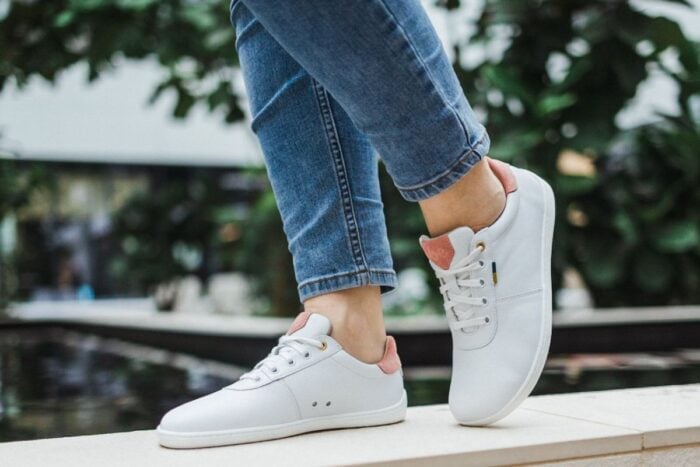
- Flexible and thin sole: The sole should bend both crosswise and lengthwise to allow proper muscle engagement while walking. It’s typically thin (3–6 mm), which provides better ground feel and surface contact.
- Zero drop: Barefoot shoes should have no height difference between the heel and the toe, supporting a natural foot position and allowing unrestricted movement. This helps prevent issues associated with shortening of the Achilles tendon.
- Wide toe box: It’s crucial that the shoes provide enough room for toe movement. A wide toe box ensures your toes aren’t squeezed together and allows the foot muscles to strengthen properly.
- No arch support: Barefoot shoes have no built-in arch support and no internal heel cushioning. This lets the foot work naturally and build strength on its own.
- Lightweight: Barefoot shoes should be light so they don’t restrict foot movement. A lightweight design ensures comfort and freedom of motion.
What Barefoot Shoes Can Help With
Barefoot shoes can help with back pain, hip problems, and issues with your arches. Let’s take a closer look at each one.
Flat Feet
Many doctors still prescribe orthotic insoles, but these only act as passive support for the transverse and longitudinal arches — they literally prop the arch up. When you support your arch with an insole, you don’t teach your feet to use the arch on their own. You’re not strengthening the muscles or learning to control them, so you’re not addressing the root cause. Barefoot shoes, on the other hand, can actually help with this problem by training your arches to work again and strengthening the muscles where it matters most.
Common Foot Problems
- Fallen arches: This condition occurs when the longitudinal arch of the foot loses its normal height and elasticity. It can cause pain and discomfort while walking, and tends to worsen over time.
- Bunions: A bunion is a deformity where the big toe gradually bends towards the other toes. This can lead to pain, redness, and difficulty finding suitable footwear.
- Heel spurs: These are bony growths on the heel that can cause pain while walking. Heel spurs are often associated with inflammation of the plantar fascia, the tissue on the underside of the foot.
- Plantar fasciitis: This is an inflammation of the plantar fascia that causes pain on the bottom of the heel or along the foot. The pain is often most intense with the first steps in the morning.
- Tailor’s bunion (bunionette): This is a deformity where the little toe bends inward towards the other toes. It can cause pain and discomfort while walking and limited toe mobility.
According to a survey, 76% of respondents reported improvement in foot problems after switching to barefoot shoes. Among those who wear both barefoot and conventional shoes, only 61% noticed improvement. Those who wear barefoot shoes exclusively reported improvement in 81% of cases.
Knee Pain
Barefoot shoes can help with knee pain in several ways:
- Natural foot positioning: Wearing barefoot shoes promotes a natural foot position and proper biomechanics. When you walk barefoot or in barefoot shoes, you allow your feet to work and adapt to the terrain. This can help reduce the excessive impact and pressure on the knees that’s often associated with walking in rigid conventional shoes.
- Better load distribution: Barefoot shoes typically have a thin and flexible sole, which allows for better load distribution while walking. Instead of concentrating pressure on the heel upon impact, barefoot shoes encourage the force to shift towards the forefoot. This can reduce the strain on your knees and minimise potential pain.
- Stronger muscles around the knee: Walking barefoot requires more muscle engagement, particularly in the feet and thighs. Wearing barefoot shoes can stimulate these muscles and help strengthen stability around the knee. Stronger muscles act as natural joint support and reduce the risk of pain and injury.
- Gait correction: Many people have poor walking patterns that put undue stress on their knees. Barefoot shoes can help adjust and correct your gait because they require more active and precise foot movement. This can reduce uneven strain on the knees and provide relief from pain.
Hip Pain
According to a survey, 38% of respondents wearing barefoot shoes reported improvement in hip problems. But how exactly do barefoot shoes help with hip pain?
- More even hip loading: Properly positioned feet can transfer force and pressure more smoothly and evenly to the hips, which can reduce excessive strain and potential pain.
- Better posture: Barefoot shoes promote a natural body alignment while walking. In rigid conventional shoes, the hips can shift forward and the pelvis can tilt too far, causing unnatural tension and hip pain. Barefoot shoes allow freer hip movement and a more natural stance.
- Stronger muscles around the hips: Wearing barefoot shoes requires greater engagement of the leg and thigh muscles, including those around the hips. This strengthens and stabilises these muscles, which can help reduce pressure and tension on the hips. Stronger muscles around the hips act as protection and support for the joints, lowering the risk of pain.
Back Pain
According to a survey, 55% of respondents noticed improvement in back pain while wearing barefoot shoes. If you suffer from frequent back pain, barefoot shoes could make a real difference:
- Better body alignment: Wearing barefoot shoes supports natural body alignment while walking. Whereas rigid conventional shoes can restrict foot movement and distort spinal positioning, barefoot shoes allow freer foot movement and a more natural spinal alignment. This can help reduce tension and stress on the back, including the lower back.
- Muscle strengthening: Wearing barefoot shoes requires greater activity in the leg muscles, including the back muscles. This strengthens and stabilises these muscles, which can support better spinal alignment and reduce strain on the back. Stronger back muscles can also provide better support and protection for the spine.
- Better shock absorption: Barefoot shoes often have a thin and flexible sole that allows for better shock absorption while walking. This reduces the impact and stress on the spine and back. Softer shock absorption can be particularly beneficial for people with sensitive backs and help reduce pain.
- Improved stability and balance: Thanks to the natural foot movement and greater muscle activation that comes with wearing barefoot shoes, your overall stability and balance improve. Better stability can help correct postural imbalances and potential overloading of the back, which can lead to reduced back pain.
Headaches
If you frequently suffer from headaches and you’ve already tried everything else, barefoot shoes might be worth a shot. According to the survey mentioned above, 36% of respondents reported fewer headaches while wearing barefoot shoes.
Wearing barefoot shoes allows your feet to respond naturally to surface irregularities and improves body position awareness. This enhanced proprioception can help reduce tension and stress throughout the body, including the head.
Because barefoot shoes have a wider toe box, they reduce pressure on the feet and promote better blood circulation. Improved circulation can help reduce the tension and headaches that can be caused by poor blood flow.
Wearing barefoot shoes can help reduce neck and shoulder tension by promoting proper posture and allowing muscles to work more efficiently. When the muscles in your neck and shoulders aren’t overworked, headache pain and tension can decrease significantly.
Fatigue
People who wear barefoot shoes often say they feel less tired overall. Wearing barefoot shoes requires greater engagement of the foot muscles, as they don’t offer as much cushioning and support as conventional footwear. This strengthens the foot muscles and improves their performance. As a result, you won’t feel as fatigued after long periods of standing or walking.
Weak Pelvic Floor
As many of us know, the function of the foot arch also affects the pelvic floor. Wearing barefoot shoes demands better stability and balance, which means the pelvic floor muscles have to work harder to maintain correct body alignment. This strengthens the pelvic floor muscles and improves their tone and function.
Best Barefoot Shoes Brands for Women and Men
Gone are the days when barefoot shoes were considered ugly — today there are plenty of stylish designs that can hold their own against conventional footwear. Barefoot ballet flats have become particularly popular recently, and they’re almost indistinguishable from standard ones. We’d recommend checking out Little Shoes for a fantastic selection.
Best Barefoot Shoes Brands for Adults
One of the most popular brands is undoubtedly Be Lenka, which offers everything from sandals and ballet flats to trainers. You might be pleased to know that these beautiful shoes come from a Slovak manufacturer, with products made in the Czech Republic and Slovakia.
VIVOBAREFOOT is another hugely popular choice, widely recommended by physiotherapists. It’s a UK-born brand and one of the largest barefoot shoe manufacturers in the world. They’re also among the highest quality on the market. These shoes are suitable for running too. This is the brand I personally chose, and it was love at first wear.
Another interesting brand is Angles Fashion, which produces stylish winter barefoot boots — some of them look remarkably like fashionable knee-high boots.
For more budget-friendly options, check out Anatomic and Bosky — they offer excellent ultra-lightweight barefoot shoes that are ideal for travelling.
The Czech brand Vasky has also recently started producing barefoot shoes. Unfortunately, we can’t fully recommend them, as our experience with this brand hasn’t been the best. I once had a lovely pair of their slippers that stained my feet so badly I ended up throwing them away. So I’d personally steer clear of Vasky barefoot shoes, but if anyone has had a different experience, we’d love to hear about it.
Best Children’s Barefoot Shoes
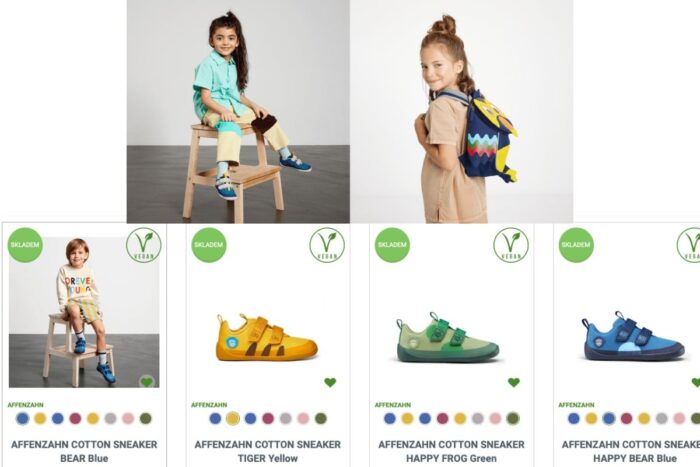
If you’re looking for great children’s barefoot shoes, try the brand Fare Bare, which makes wonderful sandals. Our beloved Be Lenka also produces barefoot shoes for kids.
You might also be interested in Affenzahn, which makes children’s cotton barefoot shoes with an ergonomic shape. Their little shoes are incredibly light, fasten easily with Velcro, and are perfectly breathable — ideal even for first steps. You’ll appreciate their very thin, flexible, and non-slip sole that supports the natural dynamics of walking and gradual foot roll.
How to Choose the Right Size of Barefoot Shoes
Choosing barefoot shoes involves two steps. First, measure your foot length, then add 0.5–1.2 cm to get your ideal shoe size.
How to Measure Your Foot Size: Step by Step
- Place a sheet of paper on a flat surface.
- Stand on the paper.
- Put your full weight on the foot, as a weight-bearing foot is longer.
- Use a pencil to mark the heel and the tip of the longest toe.
- Measure the distance between the two marks with a ruler.
- This measurement is your foot length.
Frequently Asked Questions
Why are barefoot shoes healthy?
Barefoot shoes support healthy walking and a natural posture. This also means they can help prevent and relieve certain health problems, such as pain in the back, knees, hips and neck.
Who should wear barefoot shoes?
Barefoot shoes are suitable for everyone.
Where can I buy barefoot shoes?
In the Czech market, the largest retailers include Naboso.cz and Littleshoes.cz.
What can barefoot shoes help with?
They help prevent and treat certain health problems, such as pain in the back, hips, knees, and neck.
Do barefoot shoes help with flat feet?
For flat feet, exercise helps, but the most important thing is to give the foot room to move freely, and that’s exactly what barefoot shoes are good for. That’s why barefoot shoes can be far more suitable than orthopedic insoles, which only passively support the foot. They help not only to prevent flat feet but are also suitable for anyone who already has flat feet, including flat feet, hammer toes, bunions (growths on the big toe) and plantar fasciitis (inflammation of the surface ligament on the sole of the foot).
Will barefoot shoes help with hammer toes?
Yes, conventional shoes restrict the foot and don’t force it to strengthen its muscles. Barefoot shoes give your feet room, strengthen the arch, and prevent hammer toes and bunions. If you have problems with hammer toes, barefoot shoes are ideal for this.
Are barefoot shoes suitable for bunions?
Yes, barefoot shoes help with bunions because, unlike regular footwear, they give your feet room and help strengthen the muscles in the foot.
Are barefoot shoes suitable for plantar fasciitis?
Yes, barefoot shoes are also recommended for plantar fasciitis.
Are barefoot shoes suitable for bunions on the big toe?
Yes, barefoot shoes are also recommended for bunions.
Can you run in barefoot shoes?
Yes, there are barefoot running shoes too. However, there still aren’t many studies to say whether this is better than running in regular shoes.
What are some affordable barefoot shoes?
More affordable brands include Bosky and Anatomic.
What are the best barefoot shoes?
It’s a matter of preference, but we really like Be Lenky, VIVABAREFOOT, and for winter, Angles Fashion.
Sources
Bonacci, Jason, et al. “Take your shoes off to reduce patellofemoral joint stress during running.” British journal of sports medicine 48.6 (2014): 425-428.
KLIMPERA, Lukáš. Jak vyléčit ploché nohy? Boty pomohou, vložky ne vždy. AHINSA shoes [online]. 2023, 03 February 2023. Available at: https://ahinsashoes.cz/blogs/news/jak-vylecit-ploche-nohy
Tips and Tricks for Your Vacation
Don’t Overpay for Flights
Search for flights on Kayak. It’s our favorite search engine because it scans the websites of all airlines and always finds the cheapest connection.
Book Your Accommodation Smartly
The best experiences we’ve had when looking for accommodation (from Alaska to Morocco) are with Booking.com, where hotels, apartments, and entire houses are usually the cheapest and most widely available.
Don’t Forget Travel Insurance
Good travel insurance will protect you against illness, accidents, theft, or flight cancellations. We’ve had a few hospital visits abroad, so we know how important it is to have proper insurance arranged.
Where we insure ourselves: SafetyWing (simple monthly subscription) and TrueTraveller (for extra-long trips).
Find the Best Experiences
Get Your Guide is a huge online marketplace where you can book guided walks, trips, skip-the-line tickets, tours, and much more. We always find some extra fun there!


