When most people picture summer in France, they think of Provence or the crowded beaches of the French Riviera. But if you’re after the real France without the crowds, I’d point you straight to the very heart of the country — to Auvergne, France.
This is where you’ll find the vast Massif Central and its green volcanic heart, the breathtaking Auvergne region. This quiet land of extinct volcanoes is guaranteed to win you over with its raw beauty and untouched nature.
In the lines below you’ll find 13 tips for places you simply have to visit here. You’ll quickly understand why this peaceful corner is the perfect cure for overtourism.
TL;DR
- Where to start: The ideal base for exploring the area is the city of Clermont-Ferrand, with its unique black cathedral.
- The volcanic chain: The Chaîne des Puys offers over 80 sleeping volcanoes listed by UNESCO.
- Best view: A panoramic cog train whisks you comfortably and quickly to the top of the most famous volcano, Puy de Dôme.
- For families: The Vulcania science and adventure park takes you on an interactive journey through the secrets of the Earth’s core.
- Architectural wonder: In Le Puy-en-Velay you’ll find a stunning chapel built atop a steep rocky pinnacle.
- Spa elegance: The town of Vichy will delight fans of luxurious Belle Époque architecture and hot mineral springs.
- Gastronomy: The region is famous for its cheese trail, where you can taste five renowned cheeses with protected designation of origin.
The full destination guide: France — guide and what to see
When to Visit Auvergne and What Weather to Expect

Auvergne is primarily a summer destination, best visited from May until the end of September. In these months the landscape turns an unbelievably lush green and the weather practically begs you to set off on long ridge walks. While the south of France grinds to a halt in August and temperatures often hit an unpleasant forty degrees, up in the volcanic mountains you breathe fresh, far cooler air. Expect it to be roughly five to ten degrees cooler here than in Provence during summer — something you’ll appreciate on every climb.
July and August are therefore the perfect choice for those of you who struggle with extreme summer heat and prefer an active holiday. At lower elevations, daytime temperatures hover around a pleasant twenty-five degrees, but the volcano summits are much windier and the weather can change very quickly. If you’d like to go in winter, things get trickier. The winter season from late December to March can offer some nice local skiing at the Super-Besse resort, but snow conditions here are fairly unpredictable due to the altitude staying under two thousand metres. This is simply not the glacier-packed Savoie, so during a mild winter many tourist services and mountain lodges stay completely closed.
When planning your trip, also keep in mind that you really can’t get by without a car in this rural region, since public transport outside the larger towns is very sparse. A huge advantage is the A75 motorway cutting through the Massif Central from north to south — it’s largely completely free, which is a rare and very welcome exception in France. Do watch out, though, for the Free-Flow system on regular toll sections, where there are no traditional barriers and you have to pay the toll online within seventy-two hours based on your number plate to avoid unpleasant, hefty fines.
Where to Stay in Auvergne
💡 Tip for accommodation and experiences: We like to look for places to stay on Booking.com, which usually has the best cancellation terms. It’s worth comparing and booking tickets, tours and activities through GetYourGuide.
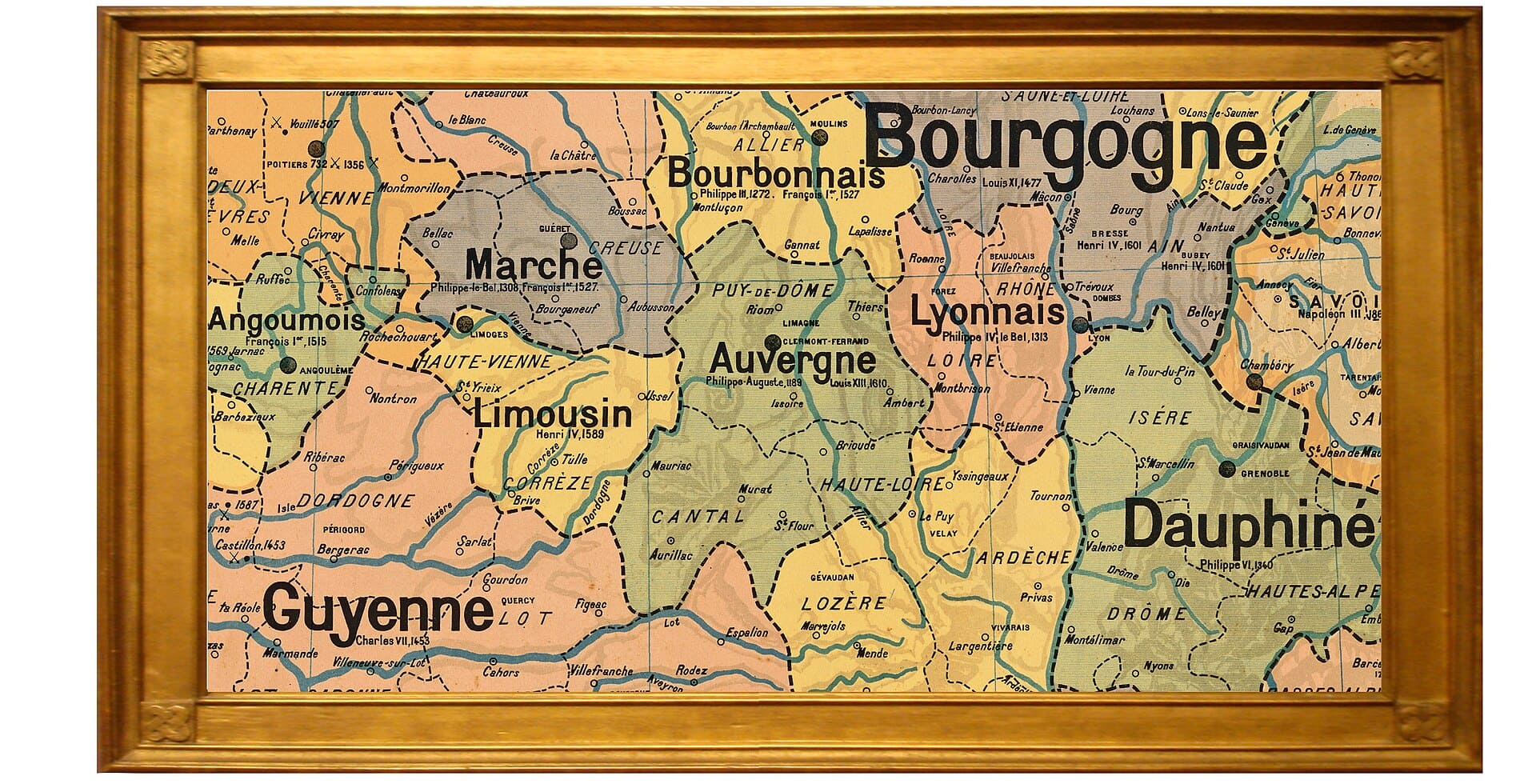
When planning your trip, you need to realise that Auvergne is a genuinely vast rural region and a strategic choice of accommodation will save you hours of pointless driving. Given how hard the smaller villages are to reach, I recommend picking places from which you can easily get to the main motorways and larger roads. Always book your accommodation well in advance through platforms like Booking, because capacity vanishes quickly during the summer season and the choice in more remote areas is very limited.
The most logical starting point is the university city of Clermont-Ferrand, which sits right at the foot of the volcanoes. From the UK it’s easiest to fly into Lyon or Paris and drive on, or take the TGV high-speed train from Paris, which gets you here in under three and a half hours. You’ll find great facilities, plenty of restaurants and excellent road connections. Right in the centre you can stay, for example, at the popular Hôtel Littéraire Alexandre Vialatte, which offers wonderful views over the city and the volcanic hills behind it.
If you’re after more peace and nature, the spa town of Le Mont-Dore makes a brilliant base for mountain hikes. It feels a little like something from another century, set in a deep valley just a stone’s throw from the highest peak in the whole massif, so you can head out on walks practically straight from your hotel door. Try the traditional Hôtel du Puy Ferrand, where you can soak up the mountain atmosphere to the full and warm up by the fireplace after a day on the trail.
For lovers of history and spa elegance, an overnight stay in the beautiful town of Vichy in the north of the region is a great option. The Mercure Vichy Thermalia offers all the comforts of the modern era surrounded by historic colonnades — an absolutely ideal choice for the calmer, more restful part of your holiday after a demanding day clambering around extinct craters.
13 Tips: What to See and Do in Auvergne, France
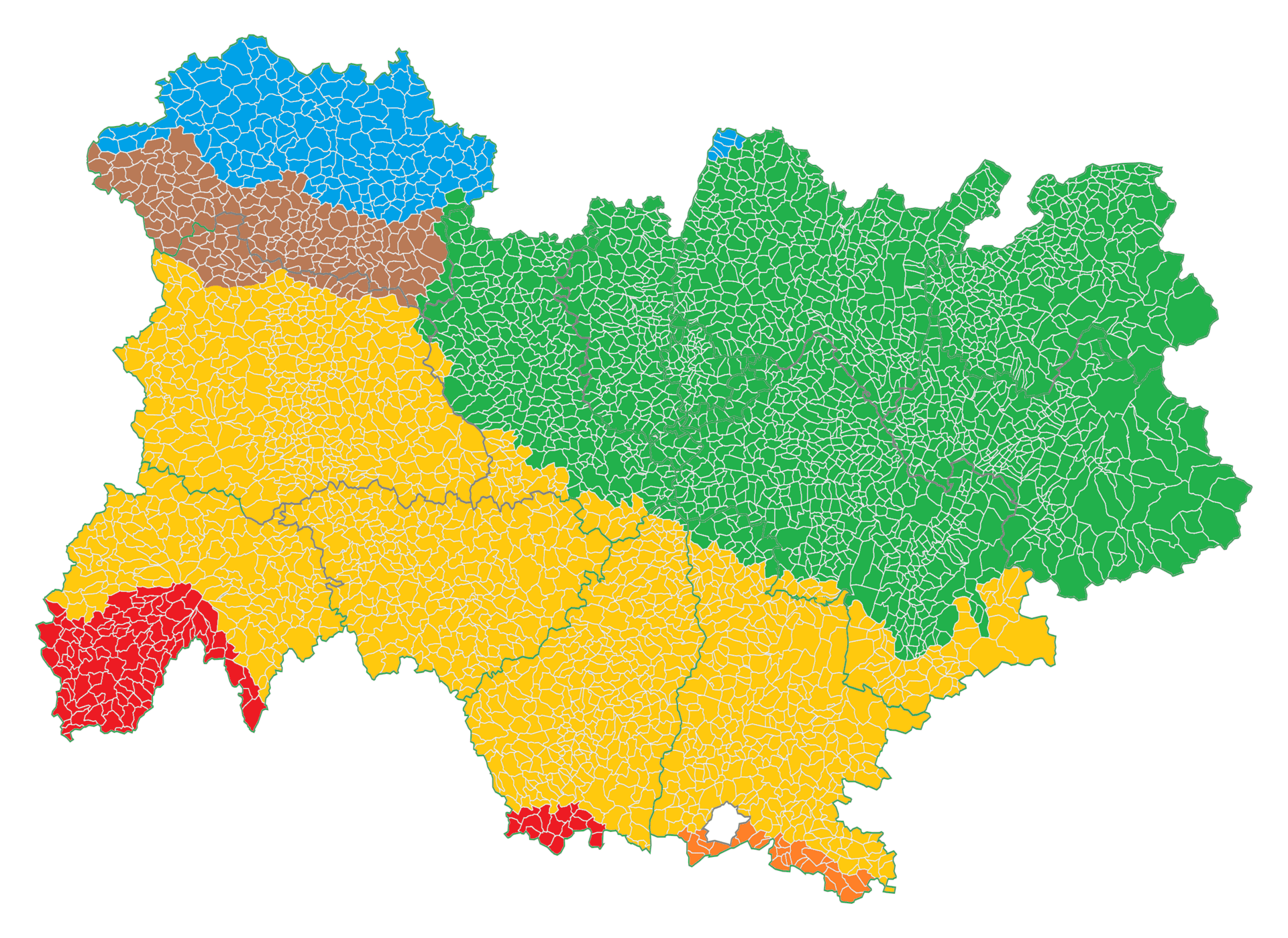
Let’s take a look together at the very best this fascinating corner of France has to offer. Pack a comfortable pair of shoes, because most of the most beautiful spots require at least a little physical effort — but I promise you those breathtaking views over the green craters are absolutely worth it.
1. Clermont-Ferrand and the Dark Cathedral
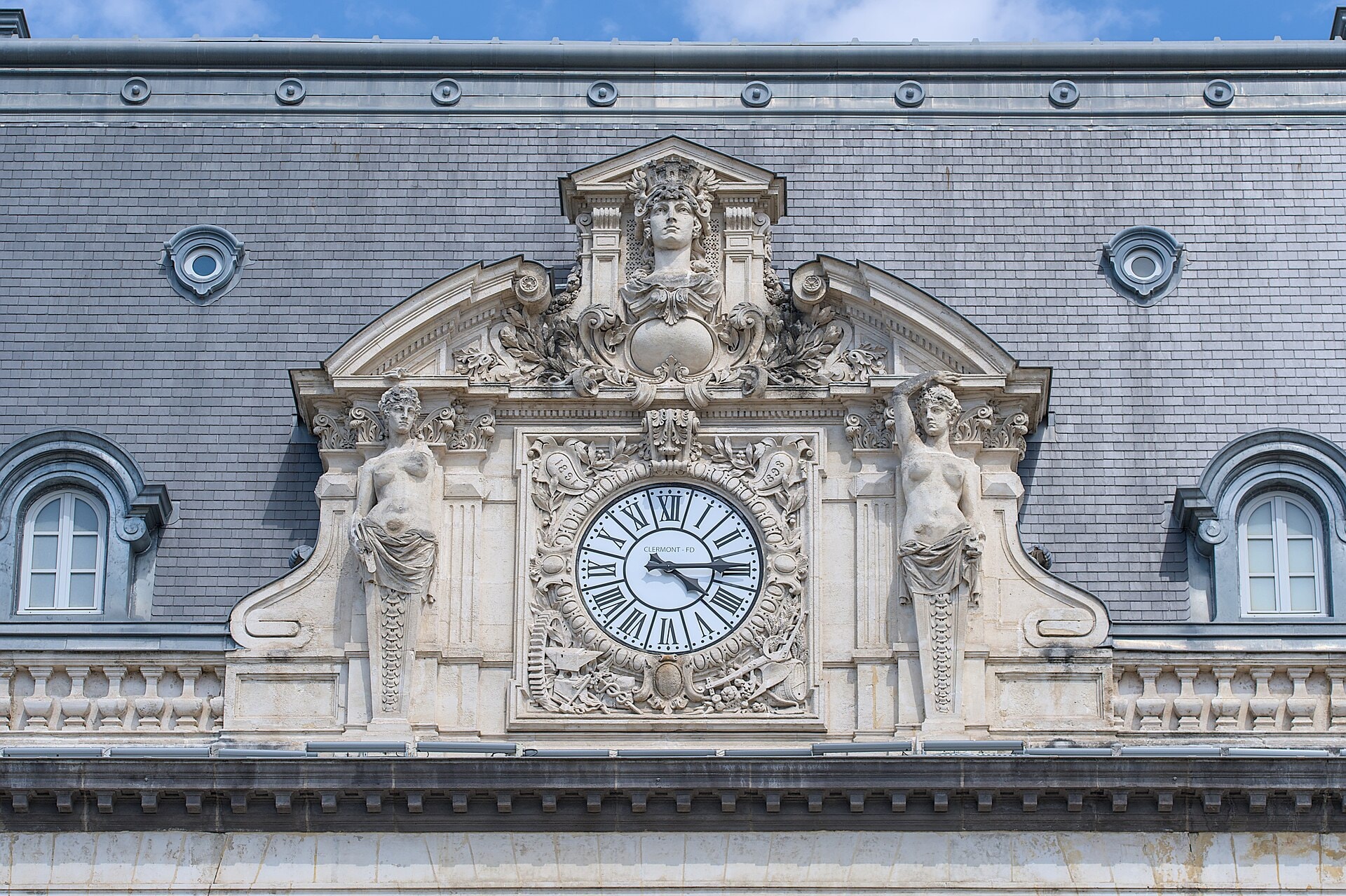
Your first encounter with the region will probably be its capital, Clermont-Ferrand, whose skyline grabs your attention from afar. Two towers of the Notre-Dame-de-l’Assomption cathedral rise above the city, built entirely from black volcanic stone known as pierre de Volvic. At first glance the building looks a little dark and almost gothic-horror, but inside it hides incredibly detailed and colourful stained-glass windows.
The city itself has a very lively university atmosphere and is known worldwide as the home of the Michelin brand, so you’ll find countless excellent bistros and cafés here. As a contrast to the black cathedral, be sure to look at the Romanesque basilica of Notre-Dame-du-Port, listed by UNESCO as an important stop on the famous pilgrimage route to Santiago de Compostela.
When driving into the centre, watch out for the low-emission zones, as the rules are enforced very strictly. The Crit’Air eco-sticker is mandatory for all foreign cars, and following a recent court ruling, entering without one can lead to fines of between 68 and 375 euros. You have to order the sticker online for around five euros well in advance and have it delivered home — you can’t sort it out on the spot.
💡 Tip: Don’t miss the modern L’Aventure Michelin museum, where you’ll learn not only all about the history of the famous tyres but also about the origins of the legendary star-studded gastronomic guide.
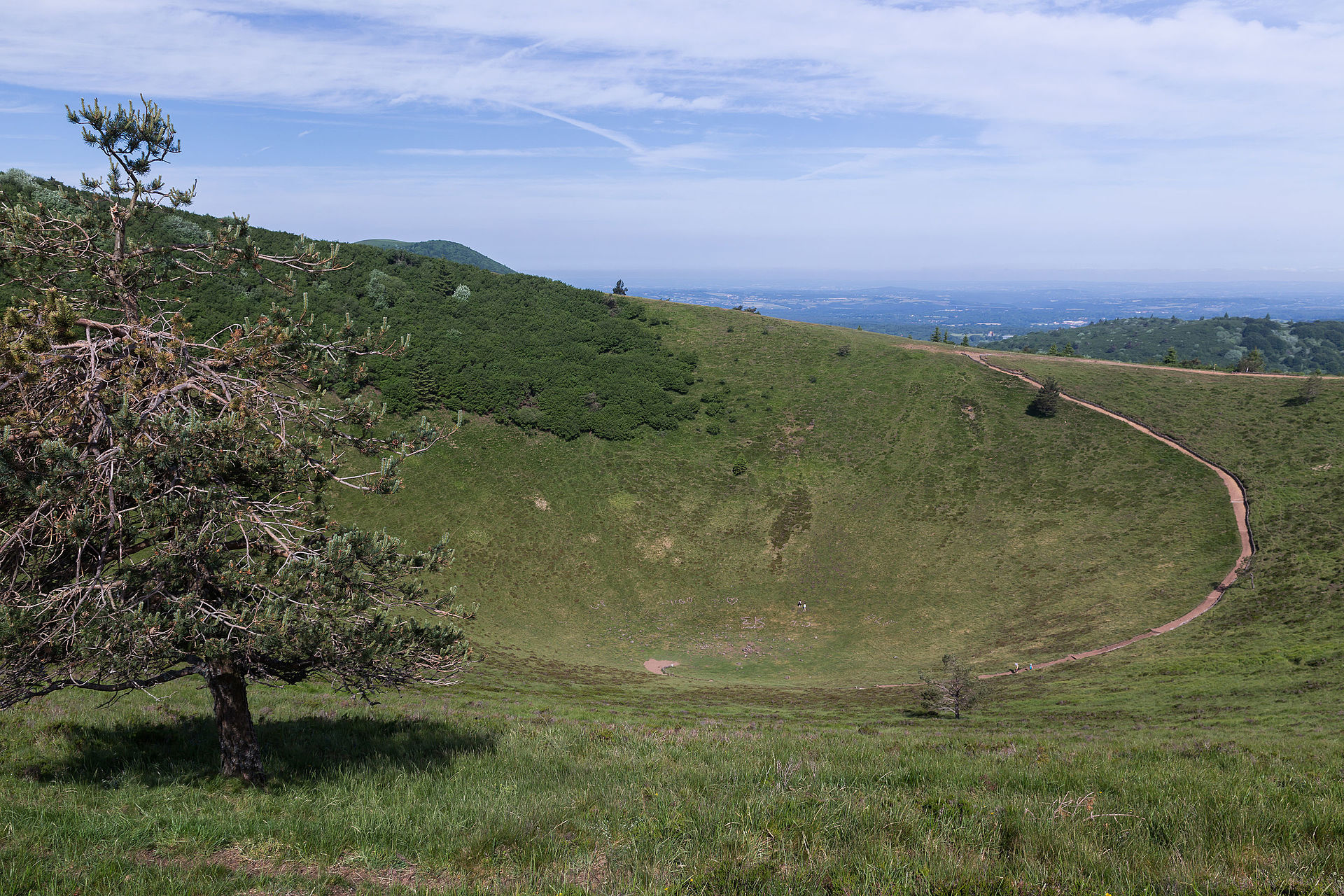
2. Puy de Dôme and the Panoramic Cog Train
The highest and by far the most famous point of the entire volcanic chain is the majestic Puy de Dôme summit. At 1,465 metres above sea level it dominates the whole horizon, and in good summer weather you can see tens of kilometres in every direction. If you enjoy a proper climb, you can head up on foot along the old Roman path Chemin des Muletiers, which guarantees lovely views the whole way up the steep ascent.
For those of you who want to spare your knees or are travelling with younger children, there’s a great alternative running from roughly late February to mid-November: the Panoramique des Dômes cog railway. This electric train carries you comfortably to the top in fifteen minutes, and the ride itself is a huge experience, as the track spirals around the mountain and gradually opens up views over the craters.
In summer you’ll pay around 18.60 euros for an adult return ticket and about 11.70 euros for a child. Up at the top, alongside the breathtaking views, you’ll also find the surprising ruins of an ancient Roman temple to the god Mercury and the fascinating spectacle of paragliders, who use this spot as their legendary launch site for flights over the volcanoes.
💡 Tip: The cog train gets very busy in the summer months and long queues form, so it’s best to buy your tickets online in advance for a specific departure time.
3. Chaîne des Puys and 80 Sleeping Giants
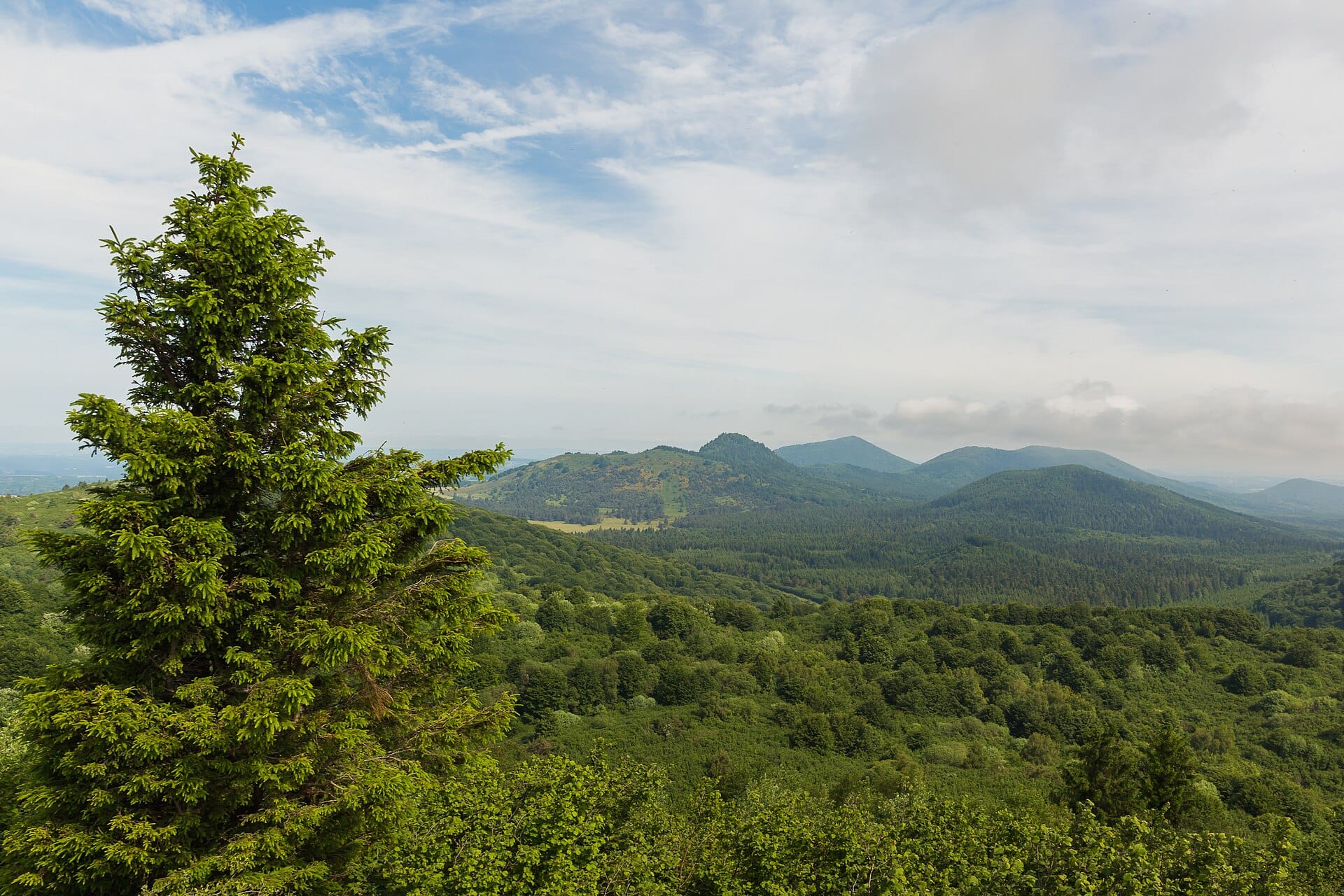
Just beyond the boundaries of Clermont-Ferrand begins a true geological wonder unlike anything else in Europe, reminiscent of illustrations from a Jules Verne novel. The Chaîne des Puys is a stunning belt roughly thirty kilometres long, made up of more than eighty perfectly preserved volcanic cones, domes and deep craters. In 2018 this enormous plateau was inscribed on the UNESCO World Heritage List as the very first — and so far only — purely geological monument in France.
There’s no need to worry in the slightest: all the volcanoes here have long been extinct, and the last eruption took place roughly eight thousand years ago. So today you can safely wander a densely forested landscape draped in a soft green carpet of grass, where you’ll probably meet more grazing cows on the roads than oncoming cars.
The most beautiful way to explore this area is to lace up some sturdy boots and head out on long hikes. Marked trails lead you right through the old craters, called maars, which at sunset take on an incredibly romantic, deep atmosphere full of a calm that’s becoming ever rarer in today’s Europe.
💡 Tip: If you want a truly unforgettable experience, try booking a hot-air balloon flight, because the bird’s-eye view of dozens of green craters will absolutely take your breath away.
4. Vulcania, an Adventure Park Not Just for Kids
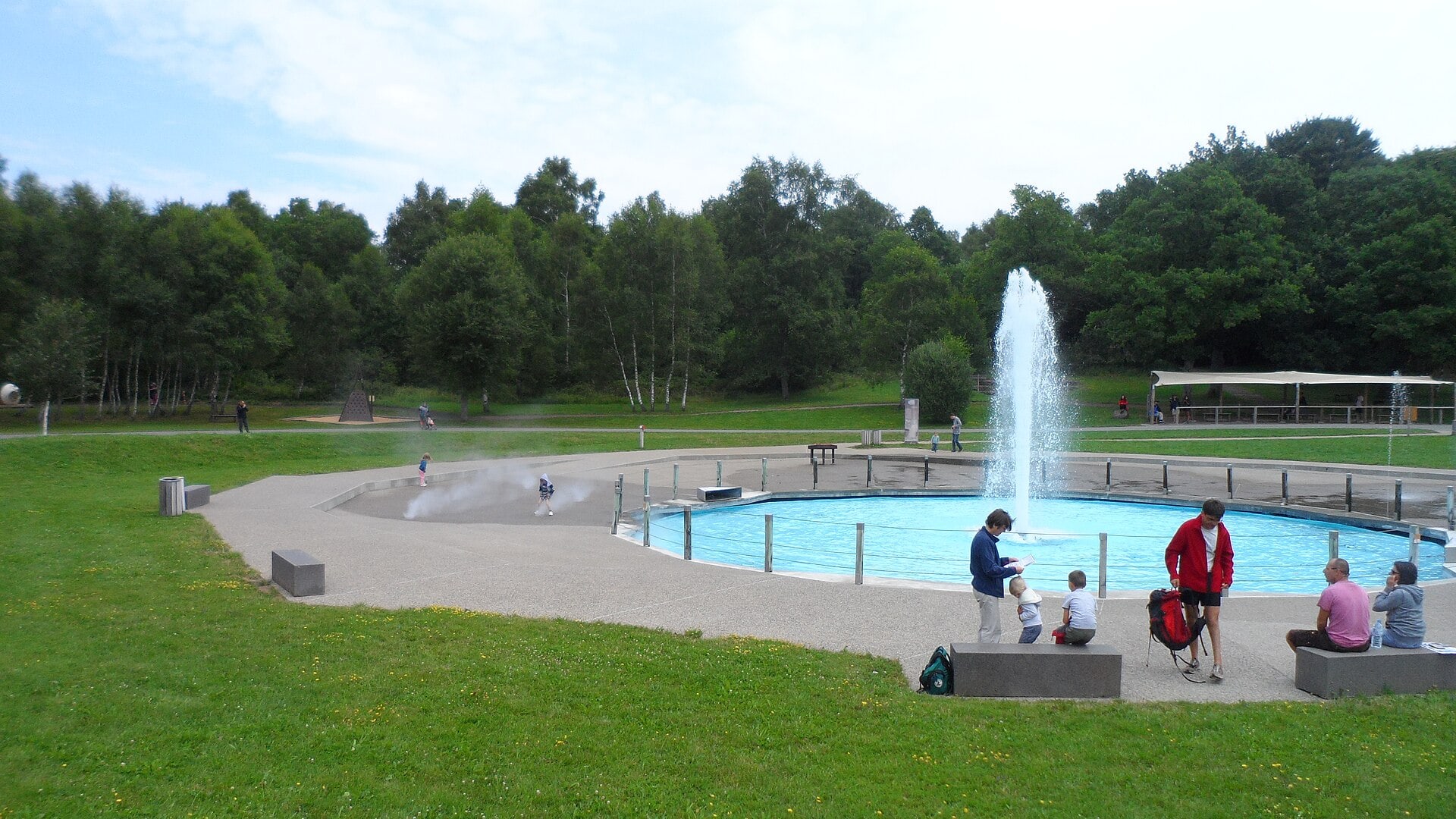
If you’re travelling with family, or you’re simply fascinated by geology and natural forces, definitely don’t miss Vulcania park. It’s just a short hop from Clermont-Ferrand and it’s no ordinary amusement park with classic rollercoasters and candy floss. It’s more of a unique interactive science centre, cleverly sunk deep into the hard volcanic rock, so the building’s architecture alone commands huge respect.
During your visit you’ll easily come to understand exactly how the enormous forces hidden deep beneath the Earth’s crust work. Thanks to amazing 3D projections, dynamic cinemas and very realistic earthquake simulators, you’ll experience first-hand what it’s like to stand right at the birth of a volcano. Most of the attractions are cleverly designed and do a brilliant job of entertaining adult visitors too.
Ticket prices for the current season run to around 32.50 euros for an adult and 27 euros for a child’s ticket. The park is fairly large, so set aside a whole day to explore it thoroughly, because there really is a huge number of attractions and educational trails here.
💡 Tip: Special shuttle buses run to the park from Clermont-Ferrand, so you can easily get here even if you don’t feel like driving or you arrive in the region by train.
5. Le Mont-Dore and the Rugged Puy de Sancy
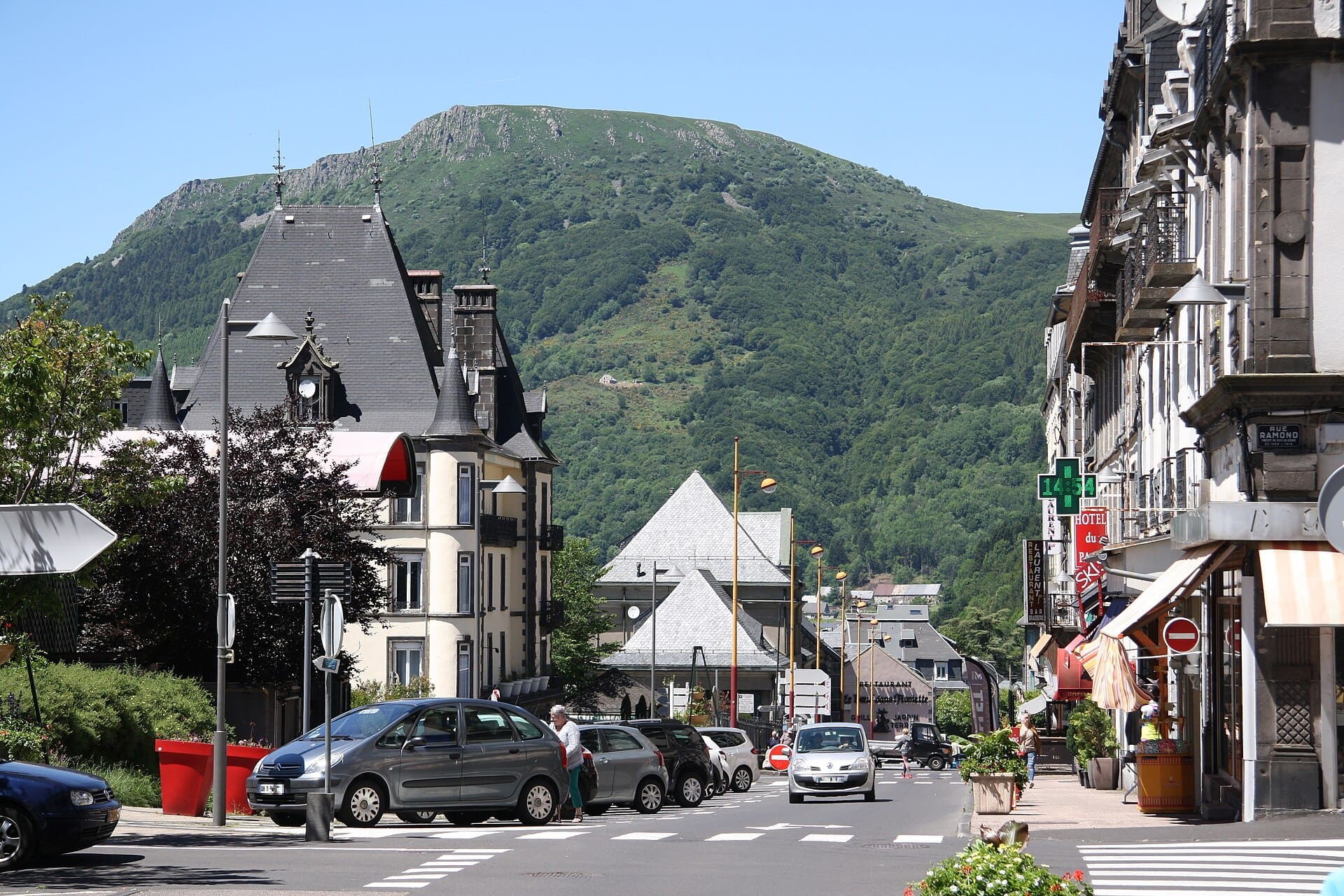
While the more northerly areas resemble neat, rounded green hillocks, a little further south the landscape changes beyond recognition and takes on a far harsher character. The Monts Dore massif is geologically older, more eroded and with its more dramatic appearance and steep slopes it looks more like the Alps. This is precisely where the famous Puy de Sancy summit lies — at a respectable 1,885 metres, it’s the highest point in the entire central French massif.
The base camp for this wild area is the charming spa town of Le Mont-Dore, which in the summer months becomes a perfect paradise for keen walkers. You can tackle the ascent of Puy de Sancy itself either on foot through the picturesque Val de Courre valley, or give yourself a big helping hand with the cable car and then walk just the last few hundred wooden steps along well-maintained paths.
The view from Sancy is wonderfully raw and rocky, and on a clear day you can see all the way to the snowy peaks of the French Alps. After the demanding descent, I recommend dropping into one of the local pubs and rewarding yourself with a huge portion of truffade — delicious baked potatoes with an enormous amount of local cheese.
💡 Tip: The weather at the summit changes incredibly quickly and unpredictably, so even when the warm sun is shining down in the valley, you can be freezing in thick fog up top — always pack a good windproof jacket.
6. Le Puy-en-Velay and the Chapel Balancing on a Needle
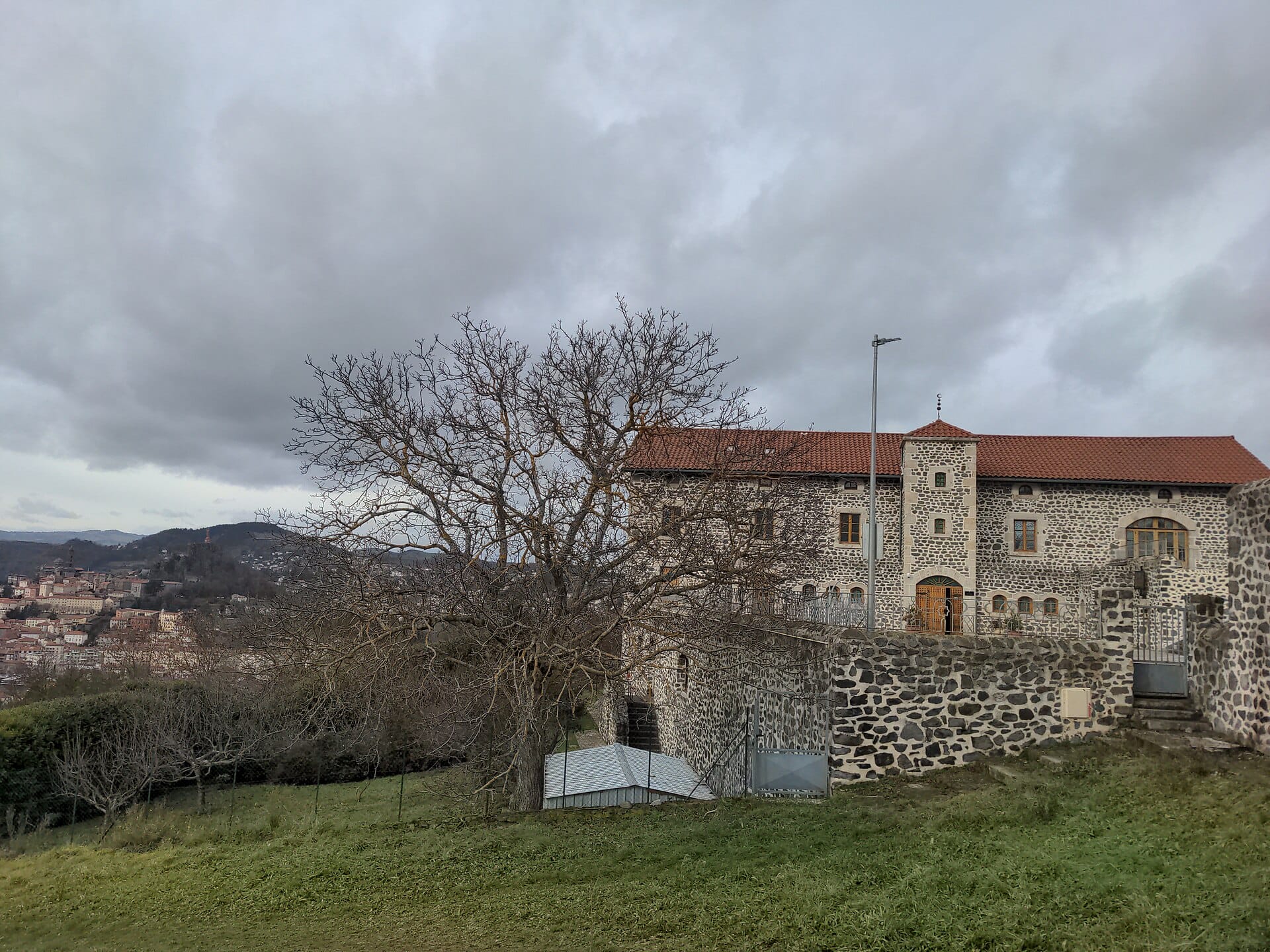
If there’s one place in central France that will make your jaw literally drop in amazement, it’s the fascinating town of Le Puy-en-Velay. The local topography utterly defies common sense, because from the flat valley floor, steep volcanic chimneys known as dykes suddenly soar towards the sky. They’re essentially just the solidified lava cores of ancient volcanoes, whose softer outer layers were carried away long ago by gradual erosion — and people built stunning stone monuments on their peaks.
The most impressive of all is the Romanesque chapel of Saint-Michel d’Aiguilhe, which dates back to the tenth century. This incredible structure balances atop an 82-metre-high stone chimney and from a distance it looks as though it landed there from another world entirely. To reach it and admire its beautiful architecture influenced by Córdoban mosaic patterns, you have to climb a solid 268 steps carved directly into the bare rock.
The bird’s-eye view of the whole town and the surrounding volcanic landscape is absolutely fantastic, and you’ll quickly understand why this spot appears so often on postcards. It really does feel like an elaborate film set.
💡 Tip: The steps up are fairly narrow and steep, so in the hot summer months set off first thing in the morning as soon as the site opens, to avoid the unpleasant heat of the sun beating down on the warmed-up rock.
7. Notre-Dame Cathedral and the Famous Pilgrimage Route
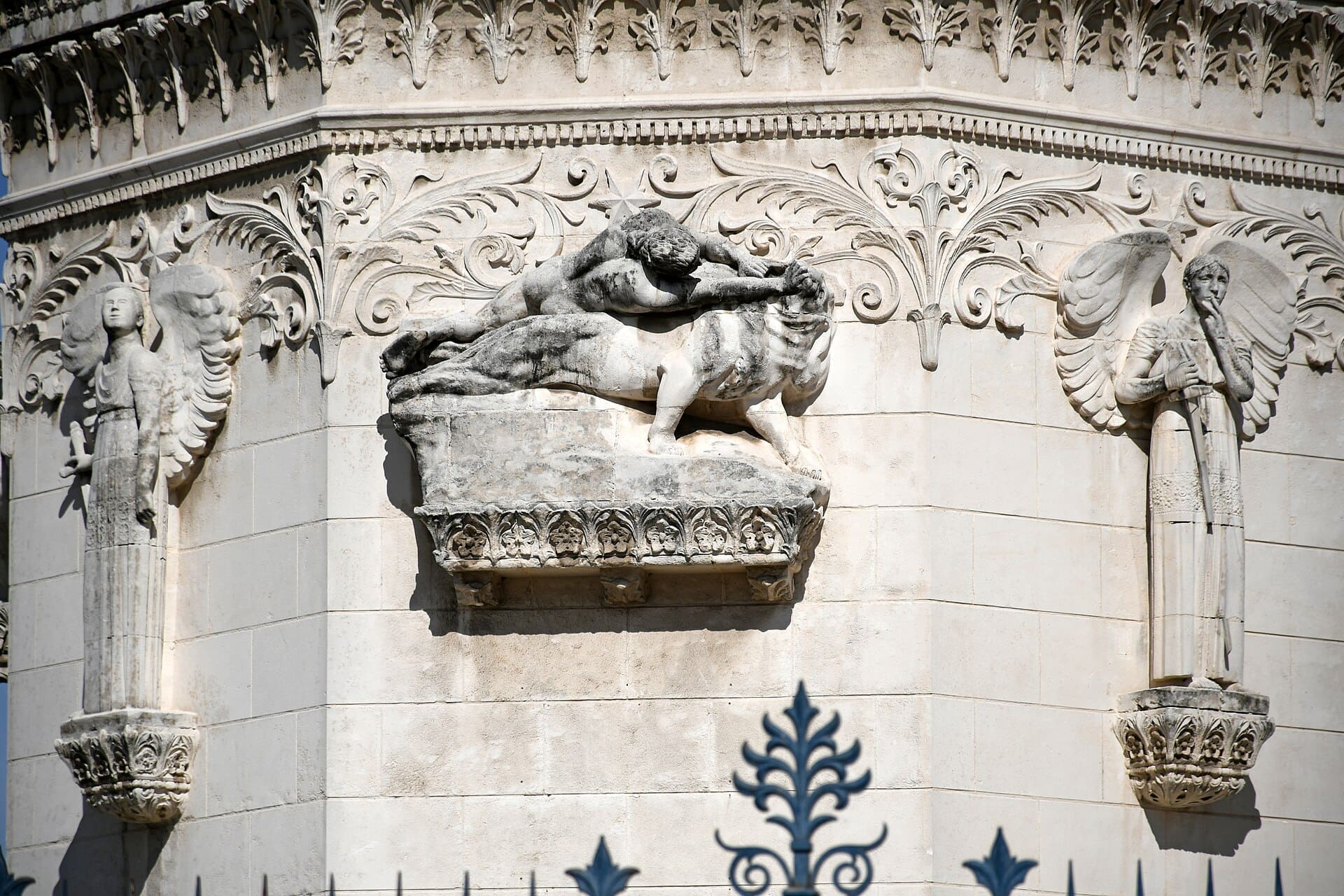
Le Puy-en-Velay isn’t just known for the incredible chapel on its needle — it also holds enormous Europe-wide spiritual significance reaching deep into history. The beautiful local Notre-Dame cathedral, listed by UNESCO, is the historic starting point of one of the most important pilgrimage routes to Santiago de Compostela. This is the famous Via Podiensis route, also known as the GR65 long-distance trail, from which pilgrims set off on a respectable 736-kilometre march towards the Pyrenees.
Every morning, after the early mass, dozens of people gather on the huge steps in front of the cathedral with their backpacks and the traditional scallop shells, ready to take their first steps westward. Thanks to them, the whole town has a constantly buzzing, international and incredibly friendly atmosphere. Even just watching this morning bustle from a café is a wonderful experience.
Not far from the cathedral, on yet another volcanic formation, stands a giant pinkish statue of the Virgin Mary that hides a fascinating fact. This monumental statue was actually cast from 213 Russian cannons, captured by the French army during the brutal Crimean War at the siege of Sevastopol.
💡 Tip: A huge local speciality is the green lentil of Le Puy, which boasts a protected designation of origin — in restaurants you’ll get it as a delicious, hearty soup full of flavour that will perfectly fill you up after a long day.

8. Vichy Spa and Belle Époque Elegance
On the northern edge of the region lies a town with a completely different atmosphere from the rest of the rugged volcanic countryside full of cows and green pastures. The town of Vichy is the perfect essence of nineteenth-century French elegance — the famous era known as the Belle Époque. Here you can briefly forget your dusty hiking boots and enjoy promenades full of ornate cast-iron details, glass awnings and grand historic buildings.
For decades Vichy was synonymous with luxurious health retreats, and today it’s returning fully to this rich tradition. You’ll find beautiful covered colonnades, historic casinos and a magnificent opera house here, all surrounded by carefully tended parks lining the peaceful River Allier. It’s an ideal place to recharge your batteries.
The town also holds a fascinating distinction. In 2021, Vichy was inscribed on the UNESCO World Heritage List as part of an exclusive group of just eleven famous European spa towns. It shares this prestigious label with renowned spa towns such as Bath in England and Baden-Baden in Germany, so spotting the shared architectural parallels will certainly keep you entertained as you stroll around.
💡 Tip: Be sure to try the famous Vichy pastilles — refreshing white sweets made from salts extracted from the local healing mineral springs, which you can buy in lovely retro tins on every corner.
9. The Auvergne Cheese Trail and Five Kings
If you love good food, you’ll be in absolute seventh heaven in Auvergne — but you need to prepare yourself for one major change. Forget about wine for a moment, because in this mountain region cheese reigns supreme. The local cows graze on volcanic slopes full of wild herbs, which gives the local milk a specific and incredibly rich flavour. The region rightly boasts five cheeses with the prestigious protected designation of origin, forming the perfect cheese board — a highlight of Auvergne food.
The most famous of them is the hard cheese Cantal, whose roots reportedly date back to the days of the ancient Gauls, and the creamy Saint-Nectaire, scented with mushrooms and damp earth. True connoisseurs will appreciate Salers cheese, which has extremely strict rules and may only be made from mid-April to mid-November using milk from cows grazing outdoors. For lovers of bolder flavours, there’s the pungent blue cheese Bleu d’Auvergne or the slightly milder cylindrical Fourme d’Ambert.
The best way to get to know all these delicacies is to set off by car along the official Cheese Trail, which takes you to dozens of small farms and dairies where you can taste directly from local producers and enthusiasts, who’ll gladly explain the whole maturing process to you.
💡 Tip: When buying Saint-Nectaire cheese, look for the oval green mark on its rind, which guarantees it’s a so-called farmhouse cheese made by the traditional hand-crafted method right on the farm.
10. The Mysterious Volcanic Lake Lac Pavin
The region’s stormy volcanic activity left behind not only beautiful green hills but also created huge amounts of water in the form of many unique mountain lakes. The most visually striking and definitely the most mysterious of them is undoubtedly Lac Pavin. It’s a perfect circular maar, which in geological terms means an old volcanic crater formed by an enormous explosion, gradually flooded over time by rain and groundwater.
The lake is surrounded on all sides by dense, dark forests, and its water has an unusually deep blue, almost inky colour, while the bottom lies at a respectable depth of ninety metres. No wonder this place looks a little sinister at first glance, and plenty of local ghost stories and legends about demons are tied to it.
Swimming is strictly forbidden here for understandable reasons, but you can walk all the way around the lake along a very pleasant and easy forest path. The whole walk takes about an hour, and from several viewpoints you’ll get a wonderful view of the perfectly round surface of the water reflecting the surrounding trees.
💡 Tip: If you fancy a slightly more active break and aren’t afraid of the deep water beneath you, you can hire a small boat at the shore and explore the lake’s mysterious waters up close from its quiet centre.
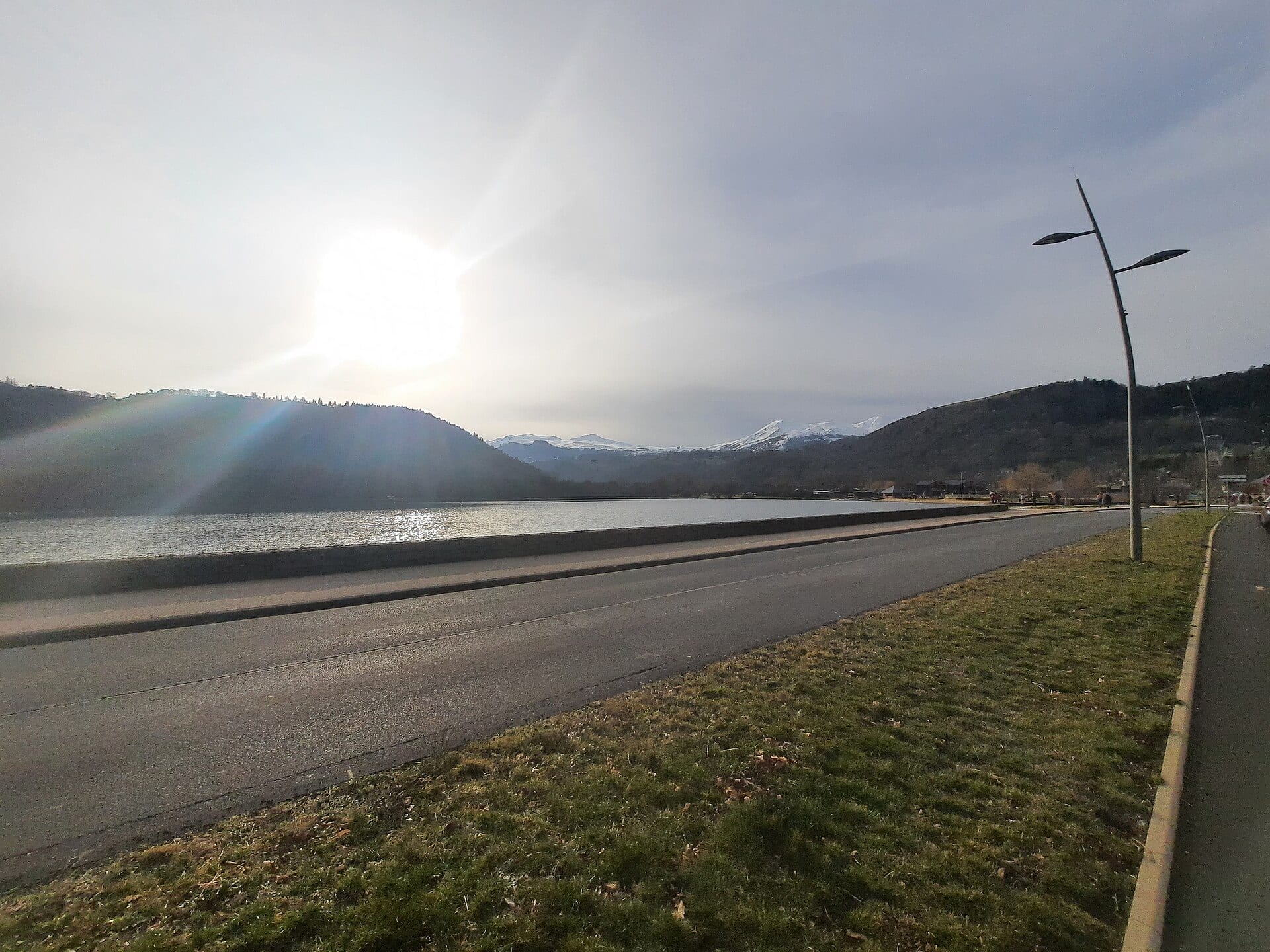
11. Swimming with a View at Lac Chambon
If, after a demanding mountain hike, you’re looking for more of a classic summer refresh and a relaxing time in the sun, head just a couple of valleys over to the gorgeous Lac Chambon. Unlike the deep, dark and very cold Pavin, this lake is fairly shallow, so its water warms up quickly and pleasantly in the summer months. It’s an absolutely ideal and safe stop for families with younger children, or for those of you who simply want to swim in clean, natural surroundings.
Around the lake you’ll find two beautifully maintained beaches with all the facilities you need. Straight from the water you get a stunning view of the surrounding steep volcanic massifs, which gives an ordinary swim a whole new, slightly adventurous dimension. The beaches are bordered by spacious grassy areas that practically beg for an afternoon picnic with a fresh French baguette and local cheese.
The lake’s tourist infrastructure is brilliant, so you can easily hire pedalos, popular paddleboards, or set off on a bike along the maintained cycle paths that follow the shores and offer plenty of shady spots to rest after a good lunch.
💡 Tip: If you stay by the water until evening, definitely wait for the sunset, when the surface of the lake turns orange and the surrounding volcanic peaks form an absolutely magical dark silhouette.
12. The Medieval Castle of Murol and Knightly Tournaments
If rich history appeals to you more than water-based fun, take a short detour from the lakes to the magnificent Château de Murol. This majestic fortress dating back to the twelfth century rises on a steep basalt spur and dominates the whole surrounding landscape from afar. But it’s no ordinary, empty ruin you’d run through in a few minutes and then move on.
The local historical society puts on brilliant performances in period costume and grand reconstructions of medieval life here during the summer season. Experienced actors will show you knightly tournaments on horseback, demonstrations of traditional falconry and old crafts in practice. It’s an absolutely fantastic stop, especially if you’ve got children in the car who are getting a bit bored of daily mountain walks and need a more action-packed programme.
From the ramparts you also get a perfect view deep into the valley and over the nearby Lac Chambon. In 2026, admission to the castle with the full day’s programme will cost an adult around twelve euros, which is a very fair price for such a generous helping of honest medieval entertainment.
💡 Tip: The programme of performances changes depending on the day of the week, so check the castle’s official website in advance so you don’t miss the best knightly duels.
13. White Water in the Gorges de l’Allier
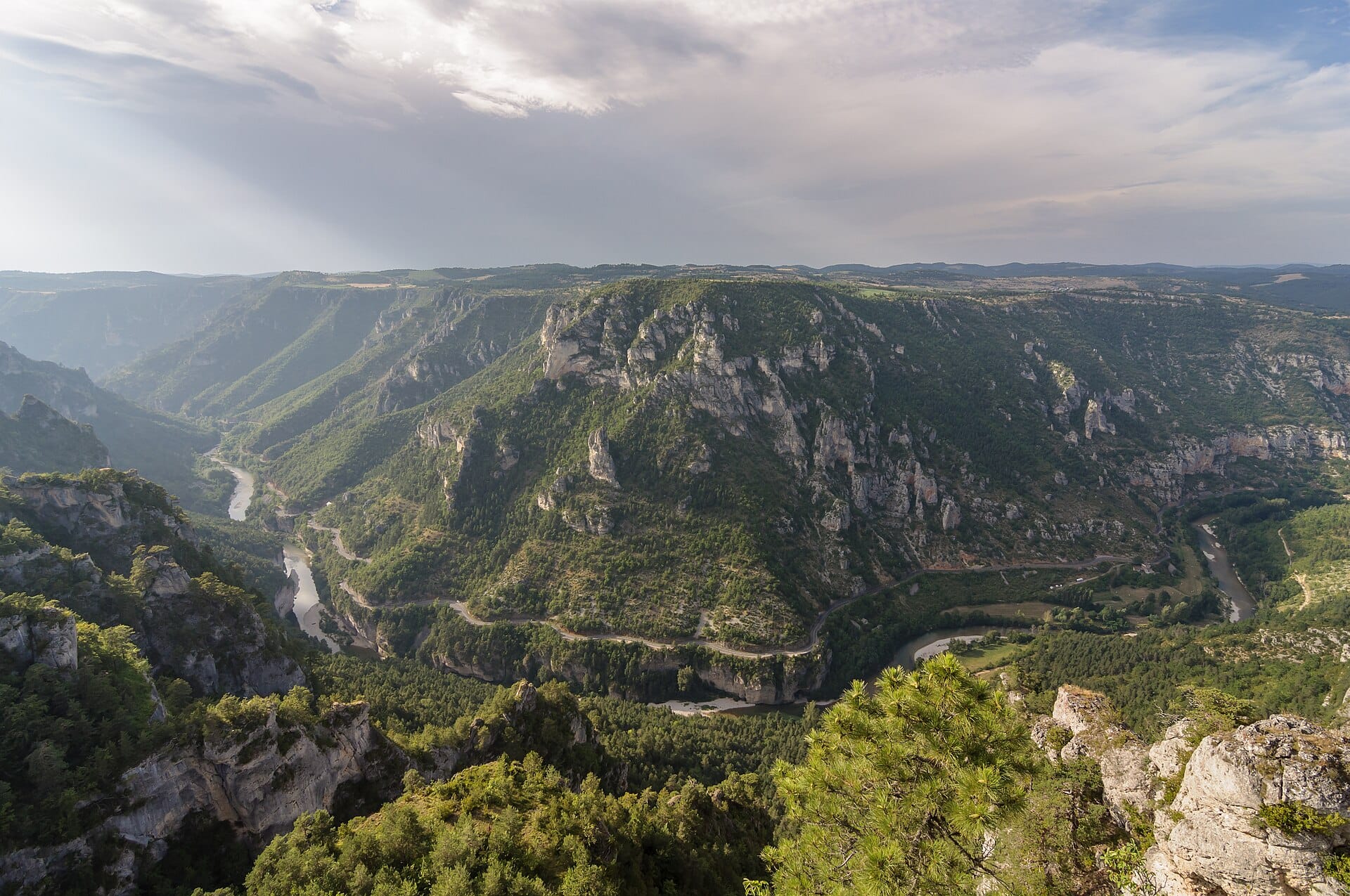
For a proper dose of adrenaline and untamed nature, head to the south of the region into the deep canyon of the Gorges de l’Allier. Over millennia, the fast-flowing River Allier has carved breathtaking, steep gorges into the hard volcanic rock. Today it’s one of the very best spots in all of France for keen lovers of rafting and canoeing, drawing paddlers from across Europe in summer.
The surrounding villages have plenty of well-established hire centres where they’ll happily explain the basics and kit you out with a helmet, life jacket and paddles. You can choose from several stretches of river of varying difficulty — from calmer ones suitable even for complete beginners and families with children, to wild rapids that will reliably test your paddling skills and muscles. The river forms deep pools fringed by pristine forests, where with a bit of luck you’ll spot rare species of birds.
If you don’t fancy getting into the cold water, there’s also a much drier way to admire this natural gem. A special tourist train runs through the canyon, slowly conquering the incredibly steep slopes and passing through dark tunnels in places you’d have no chance of reaching by car.
💡 Tip: Rafting trips and tickets for the scenic train tend to sell out very quickly during the peak summer season. Definitely book your spot online a few days in advance, or use GetYourGuide to search for available activities.
Map of points of interest for your phone
Where to Go Next from Auvergne
Once you’ve explored all the extinct volcanoes, you can move smoothly on to other amazing places located relatively nearby. If you find yourself craving the buzz of a big city and top-class gastronomy, just hop in the car and after roughly two hours’ drive eastward you’ll reach the city of Lyon. This vibrant heart of France offers a completely different, far more urban atmosphere full of Renaissance palaces and mysterious hidden passageways called traboules.
To the south, meanwhile, opens up the warm gateway to sunny, fragrant Provence. As soon as you descend from the mountains to lower elevations, the architecture, the scents in the air and the temperature itself begin to change dramatically. You can explore the nearby Rhône valley with its famous vineyards, or head even further to the stunning Pont du Gard aqueduct. France is an incredibly varied country, and these quiet volcanic peaks are just one of its many magical fragments.
Frequently Asked Questions
Is it necessary to travel to Auvergne by car?
Yes, having your own car or rental car is an absolute necessity for this region if you really want to explore the nature. Public transport works quite well between major cities like Clermont-Ferrand and Paris thanks to the TGV high-speed trains, but buses to mountain villages, volcanic lakes, or trailheads run very infrequently or not at all. Without a car, you’d miss out on the most beautiful and remote spots.
Do they speak English in the region?
English is definitely not a given here, especially at small cheese farms and among older residents in the countryside. It always pays to start a conversation with a polite French greeting “Bonjour” and only then ask with a smile about speaking a foreign language. This small gesture of respect will open many doors and hearts of the locals, even if you end up communicating over a piece of cheese with hand gestures and body language.
How much does the highway toll cost?
The huge advantage is that the A75 motorway cutting through the Massif Central from north to south is completely free, which is an absolute and very pleasant rarity in France. However, if you’re coming from Paris or Lyon on the standard toll sections, expect to pay around €9.50 per hundred kilometres driven. Also be very careful about new sections without toll booths, where you must pay the fee online using your licence plate number within three days.
Is hiking on volcanoes difficult?
The majority of craters in the Chaîne des Puys area offer very pleasant and well-marked trails that can easily be managed by occasional hikers or families with older children, as the hills here tend to have gentler shapes. However, if you choose the more rugged massif around the highest peak Puy de Sancy, be prepared for serious high-mountain elevation gain and rocky terrain that requires really sturdy ankle-supporting footwear and good fitness.
When are the local restaurants open?
Auvergne is typical French countryside, where traditional and unchanging lunch and dinner times are strictly observed. Hot meals are served only between noon and 2 PM, with evening service then usually starting at 7 PM sharp. If you arrive at a restaurant at quarter to three, the kitchen will already be uncompromisingly closed and you’ll get a coffee at best, or a packaged baguette at a nearby gas station.
Are the volcanoes in Auvergne still active?
You don’t need to have the slightest worry, all volcanoes in the region have long been considered extinct and completely safe to explore. The last volcanic activity here took place approximately eight thousand years ago. Today these fascinating craters are covered in lush green grass and trees. Huge herds of cows graze cheerfully on their slopes, and their milk is used to make the finest French cheeses.
What do I have to try from the local cuisine?
The region is world-famous for its excellent cheeses with protected designation of origin. Don’t miss the ancient hard cheese Cantal or the creamy Saint-Nectaire, which you can easily buy in absolutely every town. A great local specialty for vegetarians is also the green lentils from Le Puy, which are cooked in local bistros into very thick and hearty soups, or the delicious baked potatoes with cheese called truffade.
Tips and Tricks for Your Vacation
Don’t Overpay for Flights
Search for flights on Kayak. It’s our favorite search engine because it scans the websites of all airlines and always finds the cheapest connection.
Book Your Accommodation Smartly
The best experiences we’ve had when looking for accommodation (from Alaska to Morocco) are with Booking.com, where hotels, apartments, and entire houses are usually the cheapest and most widely available.
 🚗 Car rental on the roadVerified rental cars in France
Search with the DiscoverCars comparison engine — it compares prices from dozens of local and international rental companies, and most bookings come with free cancellation.
Compare car prices in France →Don’t Forget Travel Insurance
Good travel insurance will protect you against illness, accidents, theft, or flight cancellations. We’ve had a few hospital visits abroad, so we know how important it is to have proper insurance arranged.
Where we insure ourselves: SafetyWing (simple monthly subscription) and TrueTraveller (for extra-long trips).
Find the Best Experiences
Get Your Guide is a huge online marketplace where you can book guided walks, trips, skip-the-line tickets, tours, and much more. We always find some extra fun there!